EP3676586B1 - Befestigungsverfahren und temperatursensor - Google Patents
Befestigungsverfahren und temperatursensor Download PDFInfo
- Publication number
- EP3676586B1 EP3676586B1 EP18753408.6A EP18753408A EP3676586B1 EP 3676586 B1 EP3676586 B1 EP 3676586B1 EP 18753408 A EP18753408 A EP 18753408A EP 3676586 B1 EP3676586 B1 EP 3676586B1
- Authority
- EP
- European Patent Office
- Prior art keywords
- securing
- capillary
- region
- optical waveguide
- temperature
- Prior art date
- Legal status (The legal status is an assumption and is not a legal conclusion. Google has not performed a legal analysis and makes no representation as to the accuracy of the status listed.)
- Active
Links
Images

Classifications
-
- G—PHYSICS
- G01—MEASURING; TESTING
- G01K—MEASURING TEMPERATURE; MEASURING QUANTITY OF HEAT; THERMALLY-SENSITIVE ELEMENTS NOT OTHERWISE PROVIDED FOR
- G01K11/00—Measuring temperature based upon physical or chemical changes not covered by groups G01K3/00, G01K5/00, G01K7/00 or G01K9/00
- G01K11/32—Measuring temperature based upon physical or chemical changes not covered by groups G01K3/00, G01K5/00, G01K7/00 or G01K9/00 using changes in transmittance, scattering or luminescence in optical fibres
- G01K11/3206—Measuring temperature based upon physical or chemical changes not covered by groups G01K3/00, G01K5/00, G01K7/00 or G01K9/00 using changes in transmittance, scattering or luminescence in optical fibres at discrete locations in the fibre, e.g. using Bragg scattering
-
- C—CHEMISTRY; METALLURGY
- C03—GLASS; MINERAL OR SLAG WOOL
- C03B—MANUFACTURE, SHAPING, OR SUPPLEMENTARY PROCESSES
- C03B23/00—Re-forming shaped glass
- C03B23/20—Uniting glass pieces by fusing without substantial reshaping
- C03B23/207—Uniting glass rods, glass tubes, or hollow glassware
-
- G—PHYSICS
- G01—MEASURING; TESTING
- G01K—MEASURING TEMPERATURE; MEASURING QUANTITY OF HEAT; THERMALLY-SENSITIVE ELEMENTS NOT OTHERWISE PROVIDED FOR
- G01K11/00—Measuring temperature based upon physical or chemical changes not covered by groups G01K3/00, G01K5/00, G01K7/00 or G01K9/00
- G01K11/32—Measuring temperature based upon physical or chemical changes not covered by groups G01K3/00, G01K5/00, G01K7/00 or G01K9/00 using changes in transmittance, scattering or luminescence in optical fibres
-
- G—PHYSICS
- G02—OPTICS
- G02B—OPTICAL ELEMENTS, SYSTEMS OR APPARATUS
- G02B6/00—Light guides; Structural details of arrangements comprising light guides and other optical elements, e.g. couplings
- G02B6/02—Optical fibres with cladding with or without a coating
- G02B6/02057—Optical fibres with cladding with or without a coating comprising gratings
- G02B6/02076—Refractive index modulation gratings, e.g. Bragg gratings
- G02B6/0208—Refractive index modulation gratings, e.g. Bragg gratings characterised by their structure, wavelength response
- G02B6/021—Refractive index modulation gratings, e.g. Bragg gratings characterised by their structure, wavelength response characterised by the core or cladding or coating, e.g. materials, radial refractive index profiles, cladding shape
- G02B6/02104—Refractive index modulation gratings, e.g. Bragg gratings characterised by their structure, wavelength response characterised by the core or cladding or coating, e.g. materials, radial refractive index profiles, cladding shape characterised by the coating external to the cladding, e.g. coating influences grating properties
-
- G—PHYSICS
- G02—OPTICS
- G02B—OPTICAL ELEMENTS, SYSTEMS OR APPARATUS
- G02B6/00—Light guides; Structural details of arrangements comprising light guides and other optical elements, e.g. couplings
- G02B6/02—Optical fibres with cladding with or without a coating
- G02B6/02057—Optical fibres with cladding with or without a coating comprising gratings
- G02B6/02076—Refractive index modulation gratings, e.g. Bragg gratings
- G02B6/02171—Refractive index modulation gratings, e.g. Bragg gratings characterised by means for compensating environmentally induced changes
- G02B6/02176—Refractive index modulation gratings, e.g. Bragg gratings characterised by means for compensating environmentally induced changes due to temperature fluctuations
- G02B6/0218—Refractive index modulation gratings, e.g. Bragg gratings characterised by means for compensating environmentally induced changes due to temperature fluctuations using mounting means, e.g. by using a combination of materials having different thermal expansion coefficients
-
- G—PHYSICS
- G02—OPTICS
- G02B—OPTICAL ELEMENTS, SYSTEMS OR APPARATUS
- G02B6/00—Light guides; Structural details of arrangements comprising light guides and other optical elements, e.g. couplings
- G02B6/24—Coupling light guides
- G02B6/241—Light guide terminations
-
- G—PHYSICS
- G02—OPTICS
- G02B—OPTICAL ELEMENTS, SYSTEMS OR APPARATUS
- G02B6/00—Light guides; Structural details of arrangements comprising light guides and other optical elements, e.g. couplings
- G02B6/24—Coupling light guides
- G02B6/36—Mechanical coupling means
- G02B6/3616—Holders, macro size fixtures for mechanically holding or positioning fibres, e.g. on an optical bench
- G02B6/3624—Fibre head, e.g. fibre probe termination
Definitions
- Embodiments of the disclosure relate to a fastening method, a temperature sensor that can be obtained by a fastening method.
- a fiber Bragg grating integrated into an optical fiber can be used as a temperature sensor.
- a thermally induced change in length of the fiber Bragg grating causes a shift in the spectral reflection maximum of the grating.
- a fiber Bragg grating sensor is also sensitive to other mechanical expansions and compressions in the form of external disturbances. This sensitivity to external disturbances must be decoupled mechanically.
- One possibility is to surround the area of the optical waveguide in which the fiber Bragg grating is formed with a capillary and to mechanically attach this capillary to the optical waveguide.
- a solution is desirable in which the reliability of a mechanical connection between an optical fiber and a capillary is guaranteed, while at the same time having good temperature sensitivity and/or low signal attenuation.
- Embodiments of the present disclosure provide a fastening method having the features of claim 1. Furthermore, embodiments of the present disclosure specify a fastening device with the features of claim 10. Further, embodiments of the present disclosure provide use of a fastening device disclosed herein to perform a method disclosed herein. Additionally, embodiments of the present disclosure provide an optical fiber that includes at least one integrated temperature sensor element, wherein the temperature sensor can be obtained by a method described herein.
- a fastening method comprises: providing an optical waveguide made of a material with a first melting temperature, wherein a sensor region of the optical waveguide comprises at least one integrated temperature sensor element, providing a capillary made of a material with a second melting temperature, such that the capillary surrounds the sensor area of the optical waveguide at least in some areas and that a fastening area of the capillary is located at a distance from the sensor area, the second melting temperature being lower than the first melting temperature, the temperature sensor element being arranged in an end area of the optical waveguide and the end area being inserted into the capillary, so that one end of the capillary is exposed; Attaching the attachment portion of the capillary to the optical fiber, comprising heating the attachment portion of the capillary to a heating temperature equal to or greater than the second melting temperature, and heating the exposed end of the capillary to a heating temperature equal to or greater than second melting temperature is.
- a fastening device disclosed herein comprises: an insertion region for a capillary that at least partially surrounds a sensor region of an optical fiber, the capillary comprising a fastening region that can be arranged at a distance from the sensor region of the optical fiber, a detector that is configured to have a marker to detect on the capillary provided on the capillary to indicate the attachment area of the capillary; and a heating area configured to heat the attachment area of the capillary, preferably automatically for a predetermined period of time, when the detector detects the attachment area.
- the fastening device described herein can be used to perform the fastening method described herein.
- a temperature sensor is obtained by performing an attachment method described herein.
- a fastening device described herein can again be used to carry out the fastening method.
- the temperature sensor obtained has an optical waveguide, which in turn has an integrated temperature sensor element.
- a temperature sensor element integrated into an optical fiber along the axial direction is typically a fiber Bragg grating.
- a fiber Bragg grating is an optical interference filter that reflects light with a specific wavelength or light that lies in a specific wavelength range. The specific wavelength or the specific wavelength range is influenced by an expansion or compression of the fiber Bragg grating in the axial direction of the optical waveguide. Measuring light striking the fiber Bragg grating is reflected on the grating depending on its wavelength, or only wavelength components of the measuring light that lie within a reflection bandwidth of the grating are reflected by the grating. The wavelength dependence can be influenced by the expansion or compression.
- this area (hereinafter referred to as the sensor area) of the optical waveguide is mechanically decoupled by the method described herein.
- the optical path of the optical waveguide is not affected or is not significantly affected, and there is essentially no additional signal attenuation caused by the fastening method.
- the exposed end of the capillary is heated to a heating temperature that is equal to or greater than the second melting temperature, the end that is opposite the fastening area is also correspondingly sealed, so that foreign material cannot penetrate into the interior of the capillary can be avoided.
- the process is also adhesive-free. This means that the temperature behavior can be prevented from being influenced by adhesives used in conventional processes.
- the operating temperature can also be above a range in which adhesive conventionally used for fastening would not be usable.
- the absence of adhesive means that it cannot creep into the area of the temperature sensor element and affect it.
- the connection between the capillary and the optical waveguide is carried out by a splicing process. Due to the targeted melting of the capillary in the fastening area, the fastening area of the capillary changes its inner diameter at least in sections. The fastening area comes into mechanical contact with the optical fiber and holds it in position through friction. Because the fastening area is spaced from the sensor area of the optical waveguide, the sensor area is essentially not influenced. The result is an adhesive-free and tight connection.
- a splicer is used to heat the defined location on the capillary corresponding to the attachment area to the heating temperature.
- the capillary melts and then hardens again in the deformed state, in which it has mechanical contact with the optical waveguide.
- the optical path of the optical waveguide is not affected or is not significantly affected.
- a non-limiting example of the material of the capillary is borosilicate.
- a non-limiting example of the material of the optical fiber is fiberglass (silicon dioxide).
- the first melting temperature, ie that of the optical waveguide, is then at approx. 1000 °C.
- the second melting temperature, ie that of the capillary is then around 700 °C.
- the heating temperature is less than the first melting temperature. This makes it easy to ensure that the material of the optical waveguide remains in the unmelted state during the fastening process and thus the optical path is not impaired.
- the heating temperature which according to the embodiment is smaller than the first melting temperature, is at least the heating temperature with which the attachment region of the capillary is heated.
- the heating temperature which according to the embodiment is smaller than the first melting temperature, can also be the heating temperature at which the exposed end of the capillary is heated.
- attaching further includes heating the attachment area to the heating temperature for a period of a predetermined duration, and then allowing the attachment area to cool. This can ensure that the capillary is securely connected to the optical fiber and that the capillary remains securely in its position after the fastening process has been completed.
- the heating temperature is chosen to be equal to or greater than the first melting temperature.
- the heating of the attachment region of the capillary to the heating temperature occurs during a period of a predetermined duration, the predetermined duration of the period being selected such that the material of the optical waveguide heats up to a temperature lower than the first during attachment Melting temperature is. The attachment area is then allowed to cool.
- the choice of time period ensures that the heat cannot spread to the optical fiber in such a way that it melts. According to this aspect, a quicker fixing process can be achieved.
- the fastening further comprises temporarily fixing the fastening area before heating, namely relative to at least the axial direction of the optical waveguide; after allowing to cool, the fixation is released.
- the predetermined period of time is at least long enough for the material of the capillary in the fastening area to melt for a given diameter, material thickness and extension of the fastening area in the axial direction.
- the predetermined period of time is also at most long enough for the material of the optical waveguide to remain in the unmelted state.
- the predetermined period of time is at most so long that a region of the capillary that surrounds the sensor region of the optical waveguide remains in the unmelted state.
- the fastening area of the capillary is provided so that it runs all around an axis of the capillary, and after fastening, the fastening area rests all around in a friction-locking manner on the peripheral surface of the optical waveguide.
- the fastening area abuts the circumferential surface of the optical waveguide in a sealing manner.
- the capillary can be securely fixed to the optical fiber by means of an all-round friction connection.
- a circumferential seal can help prevent foreign material from entering the interior of the capillary.
- the attachment region of the capillary has at least an axial extent suitable to withstand a predetermined force in the axial direction between the capillary and the optical fiber after attachment.
- Fig. 1 shows a schematic representation of an optical waveguide 10 with a sensor region 11 arranged at the end.
- a fiber Bragg grating is formed as a temperature sensor element 12, for example.
- the optical waveguide 10 of the embodiment is formed, as a non-limiting example, from SiO 2 with a first melting temperature of approximately 1000 ° C.
- a capillary 20, which, as a non-limiting example, is made of borosilicate with a second melting temperature of approximately 700 ° C, surrounds the sensor area 11 of the optical waveguide 10 all around.
- the capillary 20 extends in an axial direction of the optical waveguide 10 away from the end region 13 and has a fastening region 21 in a section that is at a certain distance from the sensor region 11 of the optical waveguide 10.
- An example of a marking 22 is attached to the fastening area 21.
- the marking 22 can be optical, but it can also alternatively or additionally be machine detectable, for example magnetic or the like.
- Fig. 2 shows the optical waveguide 10 with the capillary 20 on a schematically illustrated fastening device 50, which can be used as an example to carry out the method.
- the fastening device 50 includes an insertion area 51 for the capillary 20, a detector 52 configured to detect the marking 22 on the Capillary 20 to detect, as well as a heating area 53, which is configured to heat the attachment area 21 of the capillary 20 when the detector 52 has detected the marking 22 and, if necessary, has determined its position.
- the optical waveguide 10 is formed from a material that has a first melting temperature.
- a sensor area of the optical waveguide 10 includes the fiber Bragg grating as an integrated temperature sensor element 12.
- the capillary 20 is provided such that the capillary 20 surrounds the sensor area 11 of the optical waveguide 10 at least in some areas and that the fastening area 21 of the capillary 20 is axially spaced from the sensor area 11.
- the capillary 20 has a second melting temperature that is lower than the first melting temperature of the optical waveguide 10.
- the fastening area 21 of the capillary 20 is fastened to the optical waveguide 10.
- the fastening area 21 of the capillary 20 is heated to a heating temperature.
- the heating temperature is equal to or greater than the second melting temperature. The heating takes place, for example, with the heating area 53 of the fastening device 50.
- an exposed end 23 of the capillary is also heated at 1004 to a heating temperature that is equal to or greater than the second melting temperature. Heating the exposed end 23 can also be done with the heating area 53 of the fastening device 50.
- a further marking (not shown) can be provided on the exposed end 23 of the capillary 20, which the detector 52 detects and, if necessary, after a corresponding position determination, causes the heating area 53 to heat the exposed end 23 in the area of the further marking. It can also be provided that the detector 52 detects the end of the capillary 20 (the exposed end 23) without marking and causes the heating area 53 there to heat the exposed end 23. It can also be provided that the exposed end 23 is heated without detection, for example by externally positioning the heating area 53.
- the capillary 20 is reliably connected to the optical waveguide 10 by means of friction with its fastening area 21 without adhesive and is sealed all around. At the exposed end 23, the tightness is also guaranteed by the heating process.
Landscapes
- Physics & Mathematics (AREA)
- General Physics & Mathematics (AREA)
- Optics & Photonics (AREA)
- Chemical & Material Sciences (AREA)
- Engineering & Computer Science (AREA)
- Materials Engineering (AREA)
- Organic Chemistry (AREA)
- Optical Couplings Of Light Guides (AREA)
- Light Guides In General And Applications Therefor (AREA)
- Measuring Temperature Or Quantity Of Heat (AREA)
- Clamps And Clips (AREA)
Description
- Ausführungsformen der Offenbarung betreffen ein Befestigungsverfahren, einen Temperatursensor, der durch ein Befestigungsverfahren erhalten werden kann.
- Ein in einen Lichtwellenleiter integriertes Faser-Bragg-Gitter ist als Temperatursensor verwendbar. Eine thermisch bedingte Längenänderung des Faser-Bragg-Gitters bewirkt eine Verschiebung des spektralen Reflexionsmaximums des Gitters. Durch Beaufschlagung des Gitters mit Licht und einem Auswerten des Reflexionsmaximums kann auf die Temperatur des Gitters zurückgeschlossen werden.
- Neben der zur Temperaturmessung erwünschten Temperaturempfindlichkeit ist ein Faser-Bragg-Gitter-Sensor auch empfindlich gegenüber anderweitigen mechanischen Dehnungen und Stauchungen in Form von externen Störungen. Diese Empfindlichkeit gegenüber den externen Störungen muss mechanisch entkoppelt werden. Eine Möglichkeit besteht darin, den Bereich des Lichtwellenleiters, in dem das Faser-Bragg-Gitter ausgebildet ist, mit einer Kapillare zu umgeben und diese Kapillare mechanisch an dem Lichtwellenleiter zu befestigen.
- Es ist bekannt, einen Klebstoff zum Befestigen der Kapillare am Lichtwellenleiter zu verwenden. Die Faser wird in die Kapillare eingeklebt, was sich allerdings nachteilig auf die Temperaturempfindlichkeit auswirken kann. Ferner kann die Verklebung bis zum Faser-Bragg-Gitter vorkriechen und diesen Bereich verkleben, was zu einem Funktionsausfall führen kann.
- Des Weiteren sind Verfahren zum mechanischen Befestigen einer Kapillare an einem Bereich eines Lichtwellenleiters bekannt, bei welchen der optische Pfad des Lichtwellenleiters direkt mit einer Fused-Silica-Kapillare verspleißt wird. Die
US 2002/0009279 A1 offenbart eine optische Einmodenfaser mit einem Faser-Bragg-Gitter, wobei eine Hülse durch Wärmebehandlung mit einem Bereich der Faser verbunden wird, in welchem der Außendurchmesser der Faser vergrößert ist.EP 1 144 969 A2 undEP 1 145 059 B1 offenbaren ebenfalls optische Fasern mit Bragg-Gittern, die von einer Kapillare umgeben sind, wobei die Kapillaren jeweils durch Verschmelzen mit den Fasern verbunden sind. - Hierdurch kommt es zu einer starken und unerwünschten Signaldämpfung und damit zu einer Verschlechterung der Messsignale. Es ist eine Lösung wünschenswert, bei welcher die Zuverlässigkeit einer mechanischen Verbindung zwischen einem Lichtwellenleiter und einer Kapillare gewährleistet ist, bei gleichzeitig guter Temperaturempfindlichkeit und/oder niedriger Signaldämpfung.
- Ausführungsformen der vorliegenden Offenbarung stellen ein Befestigungsverfahren mit den Merkmalen des Anspruchs 1 bereit. Ferner geben Ausführungsformen der vorliegenden Offenbarung eine Befestigungsvorrichtung mit den Merkmalen des Anspruchs 10 an. Des Weiteren geben Ausführungsformen der vorliegenden Offenbarung eine Verwendung einer hierin offenbarten Befestigungsvorrichtung zur Durchführung eines hierin offenbarten Verfahrens an. Außerdem geben Ausführungsformen der vorliegenden Offenbarung einen Lichtwellenleiter an, der mindestens ein integriertes Temperatursensorelement umfasst, wobei der Temperatursensor durch ein hierin beschriebenes Verfahren erhalten werden kann.
- Gemäß einer Ausführungsform wird ein Befestigungsverfahren angegeben, das Folgendes umfasst: Bereitstellen eines Lichtwellenleiters aus einem Material mit einer ersten Schmelztemperatur, wobei ein Sensorbereich des Lichtwellenleiters mindestens ein integriertes Temperatursensorelement umfasst, Bereitstellen einer Kapillare aus einem Material mit einer zweiten Schmelztemperatur, derart, dass die Kapillare den Sensorbereich des Lichtwellenleiters zumindest bereichsweise umgibt und dass sich ein Befestigungsbereich der Kapillare beabstandet von dem Sensorbereich befindet, wobei die zweite Schmelztemperatur niedriger als die erste Schmelztemperatur ist, wobei das Temperatursensorelement in einem Endbereich des Lichtwellenleiters angeordnet ist und der Endbereich in die Kapillare eingeführt ist, so dass ein Ende der Kapillare freiliegt; Befestigen des Befestigungsbereichs der Kapillare am Lichtwellenleiter, umfassend ein Erwärmen des Befestigungsbereichs der Kapillare auf eine Erwärmungstemperatur, die gleich groß wie oder größer als die zweite Schmelztemperatur ist, und Erwärmen des freiliegenden Endes der Kapillare auf eine Erwärmungstemperatur, die gleich groß wie oder größer als die zweite Schmelztemperatur ist.
- Eine hierin offenbarte Befestigungsvorrichtung weist Folgendes auf: Einen Einführungsbereich für eine Kapillare, die einen Sensorbereich eines Lichtwellenleiters zumindest bereichsweise umgibt, wobei die Kapillare einen Befestigungsbereich umfasst, der beabstandet von dem Sensorbereich des Lichtwellenleiters anordenbar ist, einen Detektor, der dazu konfiguriert ist, eine Markierung an der Kapillare zu detektieren, die an der Kapillare bereitgestellt ist, um den Befestigungsbereich der Kapillare anzuzeigen; und einen Erwärmungsbereich, der dazu konfiguriert ist, den Befestigungsbereich der Kapillare zu erwärmen, vorzugsweise für eine vorbestimmte Zeitdauer automatisch zu erwärmen, wenn der Detektor den Befestigungsbereich detektiert.
- Beispielsweise kann die hierin beschriebene Befestigungsvorrichtung zum Durchführen des hierin beschriebenen Befestigungsverfahrens verwendet werden.
- Bei Ausführungsformen wird ein Temperatursensor erhalten, in dem ein hierin beschriebenes Befestigungsverfahren durchgeführt wird. Zur Durchführung des Befestigungsverfahrens kann wiederum eine hierin beschriebene Befestigungsvorrichtung verwendet werden. Der erhaltene Temperatursensor weist einen Lichtwellenleiter auf, der seinerseits wiederum ein integriertes Temperatursensorelement aufweist.
- Ein Temperatursensorelement, das entlang der Axialrichtung in einen Lichtwellenleiter integriert ist, ist typischerweise ein Faser-Bragg-Gitter. Ein Faser-Bragg-Gitter ist ein optisches Interferenzfilter, das Licht mit einer bestimmten Wellenlänge bzw. Licht, das in einem bestimmten Wellenlängenbereich liegt, reflektiert. Die bestimmte Wellenlänge bzw. der bestimmte Wellenlängenbereich wird über eine Ausdehnung bzw. Stauchung des Faser-Bragg-Gitters in Axialrichtung des Lichtwellenleiters beeinflusst. Auf das Faser-Bragg-Gitter auftreffendes Messlicht wird am Gitter in Abhängigkeit von seiner Wellenlänge reflektiert, bzw. es werden nur Wellenlängenanteile des Messlichts vom Gitter reflektiert, die innerhalb einer Reflexionsbandbreite des Gitters liegen. Die Wellenlängenabhängigkeit ist durch die Ausdehnung bzw. Stauchung beeinflussbar.
- Um vorwiegend eine temperaturinduzierte Ausdehnung bzw. Stauchung des Bereichs des Lichtwellenleiters zu messen, der das Faser-Bragg-Gitter enthält, wird dieser Bereich (nachfolgend als Sensorbereich bezeichnet) des Lichtwellenleiters durch das hierin beschriebene Verfahren mechanisch entkoppelt.
- Dadurch, dass nur die Kapillare geschmolzen wird, wird der optische Pfad des Lichtwellenleiters nicht oder nicht nennenswert beeinflusst, und es ergibt sich im Wesentlichen keine zusätzliche Signaldämpfung durch das Befestigungsverfahren.
- Dadurch, dass das freiliegende Ende der Kapillare auf eine Erwärmungstemperatur erwärmt wird, die gleich groß wie oder größer ist als die zweite Schmelzemperatur, ist auch das Ende, das dem Befestigungsbereich gegenüberliegt, entsprechend abgedichtet, so dass ein Eindringen von Fremdmaterial in den Innenraum der Kapillare vermieden werden kann.
- Das Verfahren ist zudem klebstofffrei. Dadurch kann eine Beeinflussung des Temperaturverhaltens durch Klebstoff, der in herkömmlichen Verfahren zum Einsatz kommt, vermieden werden. Außerdem kann die Betriebstemperatur auch oberhalb eines Bereichs liegen, in welchem herkömmlich zum Befestigen verwendeter Klebstoff nicht einsatzfähig wäre. Durch die Abwesenheit von Klebstoff kann dieser nicht in den Bereich des Temperatursensorelements kriechen und dieses beeinträchtigen.
- Die Verbindung zwischen der Kapillare und dem Lichtwellenleiter erfolgt verfahrensgemäß durch einen Spleißvorgang. Durch das gezielte Schmelzen der Kapillare im Befestigungsbereich verändert der Befestigungsbereich der Kapillare zumindest abschnittsweise seinen Innendurchmesser. Der Befestigungsbereich kommt mit dem Lichtwellenleiter in mechanischen Kontakt und hält diesen durch Reibung in Position. Dadurch, dass der Befestigungsbereich von dem Sensorbereich des Lichtwellenleiters beabstandet ist, wird der Sensorbereich im Wesentlichen nicht beeinflusst. Es ergibt sich eine klebstofffreie und dichte Verbindung.
- Beispielsweise wird zum Durchführen des Verfahrens ein Spleißgerät dazu verwendet, die definierte Stelle an der Kapillare, die dem Befestigungsbereich entspricht, auf die Erwärmungstemperatur zu erwärmen. Dadurch schmilzt (lediglich) die Kapillare und härtet anschließend im verformten Zustand wieder aus, in welchem sie einen mechanischen Kontakt mit dem Lichtwellenleiter hat. Der optische Pfad des Lichtwellenleiters wird dadurch nicht oder nicht nennenswert beeinträchtigt.
- Ein nicht-einschränkendes Beispiel für das Material der Kapillare ist Borosilikat. Ein nicht-einschränkendes Beispiel für das Material des Lichtwellenleiters ist Glasfaser (Siliciumdioxid). Die erste Schmelztemperatur, d. h. diejenige des Lichtwellenleiters, liegt dann bei ca. 1000 °C. Die zweite Schmelztemperatur, d. h. diejenige der Kapillare, liegt dann bei ca. 700 °C.
- Bei Ausführungsformen ist die Erwärmungstemperatur kleiner als die erste Schmelztemperatur. Dadurch kann auf einfache Weise sichergestellt werden, dass das Material des Lichtwellenleiters während des Befestigungsvorgangs im ungeschmolzenen Zustand verbleibt und damit der optische Pfad nicht beeinträchtigt wird. Die Erwärmungstemperatur, die gemäß der Ausführungsform kleiner ist als die erste Schmelztemperatur, ist zumindest die Erwärmungstemperatur, mit welcher der Befestigungsbereich der Kapillare erwärmt wird. Zusätzlich kann auch die Erwärmungstemperatur, die gemäß der Ausführungsform kleiner ist als die erste Schmelztemperatur, die Erwärmungstemperatur sein, mit welcher das freiliegende Ende der Kapillare erwärmt wird.
- Bei Ausführungsformen umfasst das Befestigen weiter ein Erwärmen des Befestigungsbereichs auf die Erwärmungstemperatur während eines Zeitraums mit einer vorbestimmten Dauer, und ein anschließendes Erkaltenlassen des Befestigungsbereichs. Dadurch kann gewährleistet werden, dass die Kapillare sicher mit dem Lichtwellenleiter verbunden wird, und dass nach dem Abschluss des Befestigungsvorgangs die Kapillare sicher in ihrer Position verbleibt.
- Es ist auch möglich, dass die Erwärmungstemperatur gleich groß wie oder größer als die erste Schmelztemperatur gewählt wird. Gemäß diesem Aspekt erfolgt das Erwärmen des Befestigungsbereichs der Kapillare auf die Erwärmungstemperatur während eines Zeitraums mit einer vorbestimmten Dauer, wobei die vorbestimmte Dauer des Zeitraums so gewählt ist, dass sich das Material des Lichtwellenleiters während des Befestigens auf eine Temperatur erwärmt, die kleiner als die erste Schmelztemperatur ist. Anschließend wird der Befestigungsbereich erkalten gelassen.
- Durch die Wahl der Zeitdauer wird gemäß diesem Aspekt gewährleistet, dass sich die Wärme nicht derart bis zum Lichtwellenleiter ausbreiten kann, dass dieser schmilzt. Gemäß diesem Aspekt kann ein zügigerer Befestigungsvorgang erzielt werden.
- Bei Ausführungsformen umfasst das Befestigen weiter ein zeitweises Fixieren des Befestigungsbereichs vor dem Erwärmen, und zwar relativ zumindest zu der Axialrichtung des Lichtwellenleiters, nach dem Erkaltenlassen wird die Fixierung gelöst.
- Dadurch kann gewährleistet werden, dass sich die Kapillare entlang der Achse des Lichtwellenleiters nicht verschiebt, bevor sie durch das Erkalten reibschlüssig mit diesem Verbunden ist, so dass die optischen Eigenschaften des Lichtwellenleiters nicht durch eine ungewollte Verschiebung der Kapillare beeinträchtigt werden.
- Bei Ausführungsformen ist die vorbestimmte Zeitdauer mindestens so lang, dass bei gegebenem Durchmesser, gegebener Materialstärke und gegebener Ausdehnung des Befestigungsbereichs in Axialrichtung das Material der Kapillare im Befestigungsbereich schmilzt. Die vorbestimmte Zeitdauer ist zudem maximal so lang, dass das Material des Lichtwellenleiters im ungeschmolzenen Zustand verbleibt.
- Dadurch kann gewährleistet werden, dass die Verbindung zwischen dem Befestigungsbereich der Kapillare und dem Lichtwellenleiter sicher und zuverlässig erfolgt.
- Bei Ausführungsformen ist die vorbestimmte Zeitdauer maximal so lang, dass ein Bereich der Kapillare, der den Sensorbereich des Lichtwellenleiters umgibt, im ungeschmolzenen Zustand verbleibt.
- Dadurch kann gewährleistet werden, dass der Sensorbereich des Lichtwellenleiters bzw. das dort enthaltene Temperatursensorelement weitgehend unbeeinflusst von geschmolzenem Kapillarmaterial bleibt, so dass die optischen Eigenschaften nicht beeinträchtigt werden.
- Bei Ausführungsformen ist der Befestigungsbereich der Kapillare um eine Achse der Kapillare umlaufend bereitgestellt, und der Befestigungsbereich liegt nach dem Befestigen umlaufend reibschlüssig an der Umfangsfläche des Lichtwellenleiters an. Alternativ oder zusätzlich liegt der Befestigungsbereich gemäß diesem Aspekt umlaufend abdichtend an der Umfangsfläche des Lichtwellenleiters an.
- Durch einen umlaufend gewährleisteten Reibschluss kann die Kapillare sicher am Lichtwellenleiter fixiert werden. Eine umlaufende Abdichtung kann dazu beitragen, ein Eindringen von Fremdmaterial in den Innenraum der Kapillare zu vermeiden.
- Bei Ausführungsformen weist der Befestigungsbereich der Kapillare mindestens eine axiale Ausdehnung, die geeignet ist, um nach dem Befestigen einer vorbestimmten Kraft in Axialrichtung zwischen der Kapillare und dem Lichtwellenleiter zu widerstehen.
- Ausführungsformen der Erfindung sind in den Zeichnungen dargestellt und in der nachfolgenden Beschreibung näher erläutert. In den Zeichnungen zeigen:
- Fig. 1
- eine schematische Darstellung eines Lichtwellenleiters und einer Kapillare zur Erläuterung eines Befestigungsverfahrens gemäß einer Ausführungsform;
- Fig. 2
- eine schematische Darstellung des Lichtwellenleiters und der Kapillare aus
Fig. 1 an einer Befestigungsvorrichtung, die zum Durchführen eines Befestigungsverfahrens gemäß einer Ausführungsform geeignet ist, - Fig. 3
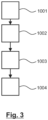
- ein Ablaufdiagramm eines Befestigungsverfahrens gemäß einer Ausführungsform.
- Nachstehend werden Ausführungsformen der Erfindung näher erläutert. Die Zeichnungen dienen der Veranschaulichung eines oder mehrerer Beispiele von Ausführungsformen der Erfindung.
-
Fig. 1 zeigt eine schematische Darstellung eines Lichtwellenleiters 10 mit einem endseitig angeordneten Sensorbereich 11. Im Sensorbereich 11, der in einem Endbereich 13 des Lichtwellenleiters 10 vorgesehen ist, ist als ein Temperatursensorelement 12 beispielhaft ein Faser-Bragg-Gitter ausgebildet. Der Lichtwellenleiter 10 der Ausführungsform ist als nicht-einschränkendes Beispiel aus SiO2 mit einer ersten Schmelztemperatur von ca. 1000 °C ausgebildet. - Eine Kapillare 20, die ist als nicht-einschränkendes Beispiel aus Borosilikat mit einer zweiten Schmelztemperatur von ca. 700 °C ausgebildet ist, umgibt den Sensorbereich 11 des Lichtwellenleiters 10 umlaufend. Die Kapillare 20 erstreckt sich in einer Axialrichtung des Lichtwellenleiters 10 vom Endbereich 13 weg und weist in einem Abschnitt, der sich in einem gewissen Abstand vom Sensorbereich 11 des Lichtwellenleiters 10 befindet, einen Befestigungsbereich 21 auf. Am Befestigungsbereich 21 ist beispielhaft eine Markierung 22 angebracht. Die Markierung 22 kann optisch sein, sie kann aber auch alternativ oder zusätzlich maschinendetektierbar sein, beispielsweise magnetisch oder dergleichen.
-
Fig. 2 zeigt den Lichtwellenleiter 10 mit der Kapillare 20 an einer schematisch dargestellten Befestigungsvorrichtung 50, die beispielhaft zur Durchführung des Verfahrens verwendet werden kann. Die Befestigungsvorrichtung 50 umfasst einen Einführungsbereich 51 für die Kapillare 20, einen Detektor 52, der dazu konfiguriert ist, die Markierung 22 an der Kapillare 20 zu detektieren, sowie einen Erwärmungsbereich 53, der dazu konfiguriert ist, den Befestigungsbereich 21 der Kapillare 20 zu erwärmen, wenn der Detektor 52 die Markierung 22 detektiert hat und ggf. ihre Position bestimmt hat. - Eine Ausführungsform des Verfahrens wird anhand eines Ablaufdiagramms aus
Fig. 3 unter weiterer Bezugnahme auf dieFig. 1 und 2 erläutert. - In 1001 wird der Lichtwellenleiter 10 bereitgestellt. Der Lichtwellenleiter 10 ist aus einem Material ausgebildet, das eine erste Schmelztemperatur hat. Ein Sensorbereich des Lichtwellenleiters 10 umfasst das Faser-Bragg-Gitter als ein integriertes Temperatursensorelement 12.
- In 1002 wird die Kapillare 20 so bereitgestellt, dass die Kapillare 20 den Sensorbereich 11 des Lichtwellenleiters 10 zumindest bereichsweise umgibt und dass sich der Befestigungsbereich 21 der Kapillare 20 axial beabstandet von dem Sensorbereich 11 befindet. Die Kapillare 20 hat eine zweite Schmelztemperatur, die niedriger als die erste Schmelztemperatur des Lichtwellenleiters 10 ist.
- In 1003 wird der Befestigungsbereich 21 der Kapillare 20 am Lichtwellenleiter 10 befestigt. Beim Befestigen wird der Befestigungsbereich 21 der Kapillare 20 auf eine Erwärmungstemperatur erwärmt. Die Erwärmungstemperatur ist gleich groß wie oder größer als die zweite Schmelztemperatur. Das Erwärmen erfolgt beispielsweise mit dem Erwärmungsbereich 53 der Befestigungsvorrichtung 50.
- Bei der Ausführungsform wird in 1004 außerdem ein freiliegendes Ende 23 der Kapillare auf eine Erwärmungstemperatur erwärmt, die gleich groß wie oder größer als die zweite Schmelztemperatur ist. Das Erwärmen des freiliegenden Endes 23 kann ebenfalls mit dem Erwärmungsbereich 53 der Befestigungsvorrichtung 50 erfolgen. Es kann eine weitere Markierung (nicht dargestellt) am freiliegenden Ende 23 der Kapillare 20 bereitgestellt sein, die der Detektor 52 detektiert und ggf. nach einer entsprechenden Positionsbestimmung den Erwärmungsbereich 53 veranlasst, im Bereich der weiteren Markierung das freiliegende Ende 23 zu erwärmen. Es kann auch vorgesehen sein, dass der Detektor 52 das Ende der Kapillare 20 (das freiliegende Ende 23) markierungslos detektiert und dort den Erwärmungsbereich 53 veranlasst, das freiliegende Ende 23 zu erwärmen. Es kann auch vorgesehen sein, dass das freiliegende Ende 23 ohne eine Detektion erwärmt wird, beispielsweise durch eine von extern vorgenommene Positionierung des Erwärmungsbereichs 53.
- Dadurch wird ein Temperatursensor erhalten, dessen Temperatursensorelement 12 von unerwünschten mechanischen Einflüssen mittels der Kapillare 20 weitgehend entkoppelt ist. Die Kapillare 20 ist klebstofffrei zuverlässig mit ihrem Befestigungsbereich 21 mittels Reibung mit dem Lichtwellenleiter 10 verbunden und umlaufend abgedichtet. Am freiliegenden Ende 23 ist außerdem die Dichtigkeit durch den Erwärmungsvorgang gewährleistet.
Claims (10)
- Befestigungsverfahren, umfassend:Bereitstellen (1001) eines Lichtwellenleiters (10) aus einem Material mit einer ersten Schmelztemperatur, wobei ein Sensorbereich (11) des Lichtwellenleiters mindestens ein integriertes Temperatursensorelement (12) umfasst;Bereitstellen (1002) einer Kapillare (20) aus einem Material mit einer zweiten Schmelztemperatur, derart, dass die Kapillare (20) den Sensorbereich (11) des Lichtwellenleiters (10) zumindest bereichsweise umgibt und dass sich ein Befestigungsbereich (21) der Kapillare beabstandet von dem Sensorbereich (11) befindet, wobei die zweite Schmelztemperatur niedriger als die erste Schmelztemperatur ist, wobei das Temperatursensorelement (12) in einem Endbereich (13) des Lichtwellenleiters angeordnet ist und der Endbereich in die Kapillare (20) eingeführt ist, so dass ein Ende (23) der Kapillare (20) freiliegt;Befestigen (1003) des Befestigungsbereichs der Kapillare (20) am Lichtwellenleiter (10), umfassend ein Erwärmen des Befestigungsbereichs der Kapillare (20) auf eine Erwärmungstemperatur, die gleich groß wie oder größer als die zweite Schmelztemperatur ist;Erwärmen (1004) des freiliegenden Endes (23) der Kapillare (20) auf eine Erwärmungstemperatur, die gleich groß wie oder größer als die zweite Schmelztemperatur ist.
- Befestigungsverfahren nach Anspruch 1, wobei die Erwärmungstemperatur kleiner als die erste Schmelztemperatur ist.
- Befestigungsverfahren nach Anspruch 1 oder 2, wobei das Befestigen umfasst:Erwärmen des Befestigungsbereichs (21) auf die Erwärmungstemperatur für eine vorbestimmte Zeitdauer; undErkaltenlassen des Befestigungsbereichs (21).
- Befestigungsverfahren nach Anspruch 1, wobei das Befestigen umfasst:Erwärmen des Befestigungsbereichs (21) auf die Erwärmungstemperatur, wobei die Erwärmungstemperatur gleich groß wie oder größer als die erste Schmelztemperatur ist, für eine vorbestimmte Zeitdauer, wobei die vorbestimmte Zeitdauer so gewählt ist, dass sich das Material des Lichtwellenleiters (10) während des Befestigens auf eine Temperatur erwärmt, die kleiner als die erste Schmelztemperatur ist; undErkaltenlassen des Befestigungsbereichs.
- Befestigungsverfahren nach Anspruch 3 oder 4, wobei das Befestigen ferner umfasst:zeitweises Fixieren des Befestigungsbereichs (21) relativ zumindest zur Axialrichtung des Lichtwellenleiters (10) vor dem Erwärmen; undLösen der Fixierung nach dem Erkaltenlassen.
- Befestigungsverfahren nach einem der Ansprüche 3 bis 5,
wobei die vorbestimmte Zeitdauer mindestens so lang ist, dass bei gegebenem Durchmesser, gegebener Materialstärke und gegebener Ausdehnung des Befestigungsbereichs in Axialrichtung das Material der Kapillare (20) im Befestigungsbereich (21) schmilzt, und wobei die vorbestimmte Zeitdauer maximal so lang ist, dass das Material des Lichtwellenleiters (10) im ungeschmolzenen Zustand verbleibt. - Befestigungsverfahren nach einem der Ansprüche 3 bis 6,
wobei die vorbestimmte Zeitdauer maximal so lang ist, dass ein Bereich der Kapillare (20), der den Sensorbereich (11) des Lichtwellenleiters umgibt, im ungeschmolzenen Zustand verbleibt. - Befestigungsverfahren nach einem der vorhergehenden Ansprüche, wobei der Befestigungsbereich (21) der Kapillare (20) um eine Achse der Kapillare (20) umlaufend bereitgestellt ist, und wobei der Befestigungsbereich (21) nach dem Befestigen umlaufend reibschlüssig und/oder umlaufend abdichtend an der Umfangsfläche des Lichtwellenleiters (10) anliegt.
- Befestigungsverfahren nach einem der vorhergehenden Ansprüche, wobei der Befestigungsbereich der Kapillare (20) mindestens eine axiale Ausdehnung aufweist, die geeignet ist, um nach dem Befestigen einer vorbestimmten Kraft in Axialrichtung zwischen der Kapillare (20) und dem Lichtwellenleiter (10) zu widerstehen.
- Temperatursensor, umfassend einen Lichtwellenleiter (10) mit mindestens einem integrierten Temperatursensorelement (12), dadurch gekennzeichnet, dass der Temperatursensor durch ein Befestigungsverfahren nach einem der Ansprüche 1 bis 9 erhalten werden kann.
Priority Applications (1)
| Application Number | Priority Date | Filing Date | Title |
|---|---|---|---|
| EP22191620.8A EP4129937B1 (de) | 2017-08-31 | 2018-08-10 | Befestigungsvorrichtung und verwendung einer befestigungsvorrichtung |
Applications Claiming Priority (2)
| Application Number | Priority Date | Filing Date | Title |
|---|---|---|---|
| DE102017120062.2A DE102017120062B4 (de) | 2017-08-31 | 2017-08-31 | Befestigungsverfahren, Befestigungsvorrichtung, Verwendung einer Befestigungsvorrichtung und Temperatursensor |
| PCT/EP2018/071789 WO2019042747A1 (de) | 2017-08-31 | 2018-08-10 | Befestigungsverfahren, befestigungsvorrichtung, verwendung einer befestigungsvorrichtung und temperatursensor |
Related Child Applications (2)
| Application Number | Title | Priority Date | Filing Date |
|---|---|---|---|
| EP22191620.8A Division-Into EP4129937B1 (de) | 2017-08-31 | 2018-08-10 | Befestigungsvorrichtung und verwendung einer befestigungsvorrichtung |
| EP22191620.8A Division EP4129937B1 (de) | 2017-08-31 | 2018-08-10 | Befestigungsvorrichtung und verwendung einer befestigungsvorrichtung |
Publications (4)
| Publication Number | Publication Date |
|---|---|
| EP3676586A1 EP3676586A1 (de) | 2020-07-08 |
| EP3676586B1 true EP3676586B1 (de) | 2023-10-25 |
| EP3676586C0 EP3676586C0 (de) | 2023-10-25 |
| EP3676586B8 EP3676586B8 (de) | 2023-11-29 |
Family
ID=63174276
Family Applications (2)
| Application Number | Title | Priority Date | Filing Date |
|---|---|---|---|
| EP18753408.6A Active EP3676586B8 (de) | 2017-08-31 | 2018-08-10 | Befestigungsverfahren und temperatursensor |
| EP22191620.8A Active EP4129937B1 (de) | 2017-08-31 | 2018-08-10 | Befestigungsvorrichtung und verwendung einer befestigungsvorrichtung |
Family Applications After (1)
| Application Number | Title | Priority Date | Filing Date |
|---|---|---|---|
| EP22191620.8A Active EP4129937B1 (de) | 2017-08-31 | 2018-08-10 | Befestigungsvorrichtung und verwendung einer befestigungsvorrichtung |
Country Status (6)
| Country | Link |
|---|---|
| US (1) | US20200191662A1 (de) |
| EP (2) | EP3676586B8 (de) |
| CN (1) | CN111051833A (de) |
| DE (1) | DE102017120062B4 (de) |
| ES (2) | ES2968173T3 (de) |
| WO (1) | WO2019042747A1 (de) |
Citations (1)
| Publication number | Priority date | Publication date | Assignee | Title |
|---|---|---|---|---|
| EP1144969B1 (de) * | 1998-12-04 | 2010-09-08 | CiDra Corporation | Spannungsisolierter temperatursensor mit einem bragg-gitter |
Family Cites Families (7)
| Publication number | Priority date | Publication date | Assignee | Title |
|---|---|---|---|---|
| US4902323A (en) * | 1988-10-24 | 1990-02-20 | Corning Incorporated | Method of making fiber optic coupler |
| GB2326471B (en) * | 1997-06-19 | 2001-05-30 | British Aerospace | A strain isolated optical fibre bragg grating sensor |
| US6507693B2 (en) | 1998-05-06 | 2003-01-14 | Cidra Corporation | Optical filter device having creep-resistant optical fiber attachments |
| DE69942749D1 (de) * | 1998-12-04 | 2010-10-21 | Cidra Corp | Spannungsisolierter temperatursensor mit einem bragg-gitter |
| US6519388B1 (en) * | 1998-12-04 | 2003-02-11 | Cidra Corporation | Tube-encased fiber grating |
| US20030202763A1 (en) * | 2002-04-24 | 2003-10-30 | Starodubov Dmitry S. | Method for forming a protective coating on an optical fiber |
| JP6082523B2 (ja) * | 2011-08-01 | 2017-02-15 | 古河電気工業株式会社 | マルチコアファイバの接続方法、マルチコアファイバ、マルチコアファイバの製造方法 |
-
2017
- 2017-08-31 DE DE102017120062.2A patent/DE102017120062B4/de active Active
-
2018
- 2018-08-10 WO PCT/EP2018/071789 patent/WO2019042747A1/de not_active Ceased
- 2018-08-10 CN CN201880055888.5A patent/CN111051833A/zh active Pending
- 2018-08-10 ES ES18753408T patent/ES2968173T3/es active Active
- 2018-08-10 EP EP18753408.6A patent/EP3676586B8/de active Active
- 2018-08-10 ES ES22191620T patent/ES2995048T3/es active Active
- 2018-08-10 US US16/643,481 patent/US20200191662A1/en not_active Abandoned
- 2018-08-10 EP EP22191620.8A patent/EP4129937B1/de active Active
Patent Citations (1)
| Publication number | Priority date | Publication date | Assignee | Title |
|---|---|---|---|---|
| EP1144969B1 (de) * | 1998-12-04 | 2010-09-08 | CiDra Corporation | Spannungsisolierter temperatursensor mit einem bragg-gitter |
Also Published As
| Publication number | Publication date |
|---|---|
| DE102017120062A1 (de) | 2019-02-28 |
| US20200191662A1 (en) | 2020-06-18 |
| EP3676586B8 (de) | 2023-11-29 |
| WO2019042747A1 (de) | 2019-03-07 |
| EP4129937C0 (de) | 2024-08-21 |
| ES2995048T3 (en) | 2025-02-05 |
| EP4129937B1 (de) | 2024-08-21 |
| EP3676586C0 (de) | 2023-10-25 |
| ES2968173T3 (es) | 2024-05-08 |
| CN111051833A (zh) | 2020-04-21 |
| EP3676586A1 (de) | 2020-07-08 |
| DE102017120062B4 (de) | 2019-10-17 |
| EP4129937A1 (de) | 2023-02-08 |
Similar Documents
| Publication | Publication Date | Title |
|---|---|---|
| DE10012291C1 (de) | Verfahren zur faseroptischen Temperaturmessung und faseroptischer Temperatursensor | |
| DE69816534T2 (de) | Zugisolierter faseroptischer Sensor mit einem Bragg-Gitter | |
| DE69324623T2 (de) | Verbindung zwischen optischer Faser und Steigwellenleiter | |
| EP0870192B1 (de) | Messeinrichtung | |
| DE102008047277A1 (de) | Optische Einrichtung, insbesondere Bilderfassungskamera zur Anwendung in einem Kraftfahrzeug | |
| DE102007048817B4 (de) | Sensor zum Messen von Spannungen in einem Substrat | |
| DE3630163C2 (de) | Zentriervorrichung zum Zentrieren von Lichtleiter-Fasern während des Schweissens | |
| EP3676586B1 (de) | Befestigungsverfahren und temperatursensor | |
| EP2733474B1 (de) | Dehnungsmessstreifen und mechanische Komponente | |
| DE102010013897B4 (de) | Optische Messeinrichtung und Lichtwellenleiter | |
| DE3205798C2 (de) | ||
| DE19948372C2 (de) | Faseroptisches Sende-Bauelement mit präzise einstellbarer Einkopplung | |
| DE102020202834A1 (de) | Lichtwellenleiter-Detektionsvorrichtung und Verfahren zur Detektion mechanischer Verformung unter Verwendung einer Lichtwellenleiter-Detektionsvorrichtung | |
| DE19610885B4 (de) | Wärmeübergangsmeßgerät | |
| DE102017201523A1 (de) | Faseroptische Erfassungseinrichtung sowie Verfahren zum Betreiben einer solchen faseroptischen Erfassungseinrichtung | |
| EP4005697B1 (de) | Vorrichtung und verfahren zur temperaturerfassung in einer seitenwandplatte einer giesskokille | |
| EP2812667B1 (de) | Messanordnung und verfahren zur erfassung der kraftbeanspruchung bei einem biegeweichen objekt | |
| DE102007013466A1 (de) | Elektrischer Transformator | |
| WO2018141502A1 (de) | Faseroptische erfassungseinrichtung sowie verfahren zum betreiben einer solchen faseroptischen erfassungseinrichtung | |
| CH501919A (de) | Glaselektrode zum Messen von Ionenkonzentrationen | |
| DE10140482A1 (de) | Verfahren und Vorrichtung zur Störgrößenkompensation eines optischen Sensors | |
| DE3942556C2 (de) | ||
| WO2019180161A1 (de) | Temperatursensor | |
| WO2007000324A2 (de) | Optischer dehnungsmessstreifen | |
| EP1706719A1 (de) | Optischer sensor |
Legal Events
| Date | Code | Title | Description |
|---|---|---|---|
| STAA | Information on the status of an ep patent application or granted ep patent |
Free format text: STATUS: UNKNOWN |
|
| STAA | Information on the status of an ep patent application or granted ep patent |
Free format text: STATUS: THE INTERNATIONAL PUBLICATION HAS BEEN MADE |
|
| PUAI | Public reference made under article 153(3) epc to a published international application that has entered the european phase |
Free format text: ORIGINAL CODE: 0009012 |
|
| STAA | Information on the status of an ep patent application or granted ep patent |
Free format text: STATUS: REQUEST FOR EXAMINATION WAS MADE |
|
| 17P | Request for examination filed |
Effective date: 20200311 |
|
| AK | Designated contracting states |
Kind code of ref document: A1 Designated state(s): AL AT BE BG CH CY CZ DE DK EE ES FI FR GB GR HR HU IE IS IT LI LT LU LV MC MK MT NL NO PL PT RO RS SE SI SK SM TR |
|
| AX | Request for extension of the european patent |
Extension state: BA ME |
|
| DAV | Request for validation of the european patent (deleted) | ||
| DAX | Request for extension of the european patent (deleted) | ||
| STAA | Information on the status of an ep patent application or granted ep patent |
Free format text: STATUS: EXAMINATION IS IN PROGRESS |
|
| 17Q | First examination report despatched |
Effective date: 20220224 |
|
| REG | Reference to a national code |
Ref country code: DE Ref legal event code: R079 Free format text: PREVIOUS MAIN CLASS: G01K0011320000 Ipc: G01K0011320600 Ref document number: 502018013516 Country of ref document: DE |
|
| GRAP | Despatch of communication of intention to grant a patent |
Free format text: ORIGINAL CODE: EPIDOSNIGR1 |
|
| STAA | Information on the status of an ep patent application or granted ep patent |
Free format text: STATUS: GRANT OF PATENT IS INTENDED |
|
| RIC1 | Information provided on ipc code assigned before grant |
Ipc: G01K 11/32 20060101ALI20230503BHEP Ipc: G02B 6/36 20060101ALI20230503BHEP Ipc: C03B 23/207 20060101ALI20230503BHEP Ipc: G02B 6/24 20060101ALI20230503BHEP Ipc: G01K 11/3206 20210101AFI20230503BHEP |
|
| INTG | Intention to grant announced |
Effective date: 20230601 |
|
| GRAS | Grant fee paid |
Free format text: ORIGINAL CODE: EPIDOSNIGR3 |
|
| GRAA | (expected) grant |
Free format text: ORIGINAL CODE: 0009210 |
|
| STAA | Information on the status of an ep patent application or granted ep patent |
Free format text: STATUS: THE PATENT HAS BEEN GRANTED |
|
| REG | Reference to a national code |
Ref country code: DE Ref legal event code: R081 Ref document number: 502018013516 Country of ref document: DE Owner name: VC VIII POLYTECH HOLDING APS, DK Free format text: FORMER OWNER: ANMELDERANGABEN UNKLAR / UNVOLLSTAENDIG, 80297 MUENCHEN, DE |
|
| AK | Designated contracting states |
Kind code of ref document: B1 Designated state(s): AL AT BE BG CH CY CZ DE DK EE ES FI FR GB GR HR HU IE IS IT LI LT LU LV MC MK MT NL NO PL PT RO RS SE SI SK SM TR |
|
| REG | Reference to a national code |
Ref country code: GB Ref legal event code: FG4D Free format text: NOT ENGLISH |
|
| REG | Reference to a national code |
Ref country code: CH Ref legal event code: EP |
|
| RAP2 | Party data changed (patent owner data changed or rights of a patent transferred) |
Owner name: VC VIII POLYTECH HOLDING APS |
|
| REG | Reference to a national code |
Ref country code: DE Ref legal event code: R096 Ref document number: 502018013516 Country of ref document: DE |
|
| REG | Reference to a national code |
Ref country code: CH Ref legal event code: PK Free format text: BERICHTIGUNG B8 |
|
| REG | Reference to a national code |
Ref country code: IE Ref legal event code: FG4D Free format text: LANGUAGE OF EP DOCUMENT: GERMAN |
|
| U01 | Request for unitary effect filed |
Effective date: 20231123 |
|
| U07 | Unitary effect registered |
Designated state(s): AT BE BG DE DK EE FI FR IT LT LU LV MT NL PT SE SI Effective date: 20231129 |
|
| PG25 | Lapsed in a contracting state [announced via postgrant information from national office to epo] |
Ref country code: GR Free format text: LAPSE BECAUSE OF FAILURE TO SUBMIT A TRANSLATION OF THE DESCRIPTION OR TO PAY THE FEE WITHIN THE PRESCRIBED TIME-LIMIT Effective date: 20240126 |
|
| PG25 | Lapsed in a contracting state [announced via postgrant information from national office to epo] |
Ref country code: IS Free format text: LAPSE BECAUSE OF FAILURE TO SUBMIT A TRANSLATION OF THE DESCRIPTION OR TO PAY THE FEE WITHIN THE PRESCRIBED TIME-LIMIT Effective date: 20240225 |
|
| PG25 | Lapsed in a contracting state [announced via postgrant information from national office to epo] |
Ref country code: IS Free format text: LAPSE BECAUSE OF FAILURE TO SUBMIT A TRANSLATION OF THE DESCRIPTION OR TO PAY THE FEE WITHIN THE PRESCRIBED TIME-LIMIT Effective date: 20240225 Ref country code: GR Free format text: LAPSE BECAUSE OF FAILURE TO SUBMIT A TRANSLATION OF THE DESCRIPTION OR TO PAY THE FEE WITHIN THE PRESCRIBED TIME-LIMIT Effective date: 20240126 |
|
| REG | Reference to a national code |
Ref country code: ES Ref legal event code: FG2A Ref document number: 2968173 Country of ref document: ES Kind code of ref document: T3 Effective date: 20240508 |
|
| PG25 | Lapsed in a contracting state [announced via postgrant information from national office to epo] |
Ref country code: RS Free format text: LAPSE BECAUSE OF FAILURE TO SUBMIT A TRANSLATION OF THE DESCRIPTION OR TO PAY THE FEE WITHIN THE PRESCRIBED TIME-LIMIT Effective date: 20231025 Ref country code: PL Free format text: LAPSE BECAUSE OF FAILURE TO SUBMIT A TRANSLATION OF THE DESCRIPTION OR TO PAY THE FEE WITHIN THE PRESCRIBED TIME-LIMIT Effective date: 20231025 Ref country code: NO Free format text: LAPSE BECAUSE OF FAILURE TO SUBMIT A TRANSLATION OF THE DESCRIPTION OR TO PAY THE FEE WITHIN THE PRESCRIBED TIME-LIMIT Effective date: 20240125 Ref country code: HR Free format text: LAPSE BECAUSE OF FAILURE TO SUBMIT A TRANSLATION OF THE DESCRIPTION OR TO PAY THE FEE WITHIN THE PRESCRIBED TIME-LIMIT Effective date: 20231025 |
|
| PG25 | Lapsed in a contracting state [announced via postgrant information from national office to epo] |
Ref country code: CZ Free format text: LAPSE BECAUSE OF FAILURE TO SUBMIT A TRANSLATION OF THE DESCRIPTION OR TO PAY THE FEE WITHIN THE PRESCRIBED TIME-LIMIT Effective date: 20231025 |
|
| REG | Reference to a national code |
Ref country code: DE Ref legal event code: R097 Ref document number: 502018013516 Country of ref document: DE |
|
| PG25 | Lapsed in a contracting state [announced via postgrant information from national office to epo] |
Ref country code: SK Free format text: LAPSE BECAUSE OF FAILURE TO SUBMIT A TRANSLATION OF THE DESCRIPTION OR TO PAY THE FEE WITHIN THE PRESCRIBED TIME-LIMIT Effective date: 20231025 |
|
| PG25 | Lapsed in a contracting state [announced via postgrant information from national office to epo] |
Ref country code: SM Free format text: LAPSE BECAUSE OF FAILURE TO SUBMIT A TRANSLATION OF THE DESCRIPTION OR TO PAY THE FEE WITHIN THE PRESCRIBED TIME-LIMIT Effective date: 20231025 Ref country code: SK Free format text: LAPSE BECAUSE OF FAILURE TO SUBMIT A TRANSLATION OF THE DESCRIPTION OR TO PAY THE FEE WITHIN THE PRESCRIBED TIME-LIMIT Effective date: 20231025 Ref country code: RO Free format text: LAPSE BECAUSE OF FAILURE TO SUBMIT A TRANSLATION OF THE DESCRIPTION OR TO PAY THE FEE WITHIN THE PRESCRIBED TIME-LIMIT Effective date: 20231025 Ref country code: CZ Free format text: LAPSE BECAUSE OF FAILURE TO SUBMIT A TRANSLATION OF THE DESCRIPTION OR TO PAY THE FEE WITHIN THE PRESCRIBED TIME-LIMIT Effective date: 20231025 |
|
| U20 | Renewal fee for the european patent with unitary effect paid |
Year of fee payment: 7 Effective date: 20240701 |
|
| PLBE | No opposition filed within time limit |
Free format text: ORIGINAL CODE: 0009261 |
|
| STAA | Information on the status of an ep patent application or granted ep patent |
Free format text: STATUS: NO OPPOSITION FILED WITHIN TIME LIMIT |
|
| 26N | No opposition filed |
Effective date: 20240726 |
|
| REG | Reference to a national code |
Ref country code: CH Ref legal event code: PL |
|
| PG25 | Lapsed in a contracting state [announced via postgrant information from national office to epo] |
Ref country code: MC Free format text: LAPSE BECAUSE OF FAILURE TO SUBMIT A TRANSLATION OF THE DESCRIPTION OR TO PAY THE FEE WITHIN THE PRESCRIBED TIME-LIMIT Effective date: 20231025 Ref country code: CH Free format text: LAPSE BECAUSE OF NON-PAYMENT OF DUE FEES Effective date: 20240831 |
|
| PGFP | Annual fee paid to national office [announced via postgrant information from national office to epo] |
Ref country code: GB Payment date: 20250623 Year of fee payment: 8 |
|
| PG25 | Lapsed in a contracting state [announced via postgrant information from national office to epo] |
Ref country code: IE Free format text: LAPSE BECAUSE OF NON-PAYMENT OF DUE FEES Effective date: 20240810 |
|
| U20 | Renewal fee for the european patent with unitary effect paid |
Year of fee payment: 8 Effective date: 20250625 |
|
| PG25 | Lapsed in a contracting state [announced via postgrant information from national office to epo] |
Ref country code: CY Free format text: LAPSE BECAUSE OF FAILURE TO SUBMIT A TRANSLATION OF THE DESCRIPTION OR TO PAY THE FEE WITHIN THE PRESCRIBED TIME-LIMIT; INVALID AB INITIO Effective date: 20180810 |
|
| PGFP | Annual fee paid to national office [announced via postgrant information from national office to epo] |
Ref country code: ES Payment date: 20251027 Year of fee payment: 8 |
|
| PG25 | Lapsed in a contracting state [announced via postgrant information from national office to epo] |
Ref country code: HU Free format text: LAPSE BECAUSE OF FAILURE TO SUBMIT A TRANSLATION OF THE DESCRIPTION OR TO PAY THE FEE WITHIN THE PRESCRIBED TIME-LIMIT; INVALID AB INITIO Effective date: 20180810 |