EP3677545A1 - Verfahren zur herstellung eines methylkieselsäure-hydrogels mit eigenschaften supramolekularer strukturen und mit diesem verfahren hergestelltes hydrogel - Google Patents
Verfahren zur herstellung eines methylkieselsäure-hydrogels mit eigenschaften supramolekularer strukturen und mit diesem verfahren hergestelltes hydrogel Download PDFInfo
- Publication number
- EP3677545A1 EP3677545A1 EP18850878.2A EP18850878A EP3677545A1 EP 3677545 A1 EP3677545 A1 EP 3677545A1 EP 18850878 A EP18850878 A EP 18850878A EP 3677545 A1 EP3677545 A1 EP 3677545A1
- Authority
- EP
- European Patent Office
- Prior art keywords
- hydrogel
- properties
- acid agent
- gaseous
- reactor
- Prior art date
- Legal status (The legal status is an assumption and is not a legal conclusion. Google has not performed a legal analysis and makes no representation as to the accuracy of the status listed.)
- Granted
Links
Images
Classifications
-
- C—CHEMISTRY; METALLURGY
- C07—ORGANIC CHEMISTRY
- C07F—ACYCLIC, CARBOCYCLIC OR HETEROCYCLIC COMPOUNDS CONTAINING ELEMENTS OTHER THAN CARBON, HYDROGEN, HALOGEN, OXYGEN, NITROGEN, SULFUR, SELENIUM OR TELLURIUM
- C07F7/00—Compounds containing elements of Groups 4 or 14 of the Periodic Table
- C07F7/02—Silicon compounds
- C07F7/08—Compounds having one or more C—Si linkages
- C07F7/18—Compounds having one or more C—Si linkages as well as one or more C—O—Si linkages
- C07F7/1804—Compounds having Si-O-C linkages
- C07F7/1872—Preparation; Treatments not provided for in C07F7/20
- C07F7/188—Preparation; Treatments not provided for in C07F7/20 by reactions involving the formation of Si-O linkages
-
- C—CHEMISTRY; METALLURGY
- C01—INORGANIC CHEMISTRY
- C01B—NON-METALLIC ELEMENTS; COMPOUNDS THEREOF; METALLOIDS OR COMPOUNDS THEREOF NOT COVERED BY SUBCLASS C01C
- C01B33/00—Silicon; Compounds thereof
- C01B33/113—Silicon oxides; Hydrates thereof
- C01B33/12—Silica; Hydrates thereof, e.g. lepidoic silicic acid
- C01B33/14—Colloidal silica, e.g. dispersions, gels, sols
- C01B33/155—Preparation of hydroorganogels or organogels
-
- C—CHEMISTRY; METALLURGY
- C08—ORGANIC MACROMOLECULAR COMPOUNDS; THEIR PREPARATION OR CHEMICAL WORKING-UP; COMPOSITIONS BASED THEREON
- C08G—MACROMOLECULAR COMPOUNDS OBTAINED OTHERWISE THAN BY REACTIONS ONLY INVOLVING UNSATURATED CARBON-TO-CARBON BONDS
- C08G77/00—Macromolecular compounds obtained by reactions forming a linkage containing silicon with or without sulfur, nitrogen, oxygen or carbon in the main chain of the macromolecule
- C08G77/02—Polysilicates
-
- C—CHEMISTRY; METALLURGY
- C08—ORGANIC MACROMOLECULAR COMPOUNDS; THEIR PREPARATION OR CHEMICAL WORKING-UP; COMPOSITIONS BASED THEREON
- C08G—MACROMOLECULAR COMPOUNDS OBTAINED OTHERWISE THAN BY REACTIONS ONLY INVOLVING UNSATURATED CARBON-TO-CARBON BONDS
- C08G77/00—Macromolecular compounds obtained by reactions forming a linkage containing silicon with or without sulfur, nitrogen, oxygen or carbon in the main chain of the macromolecule
- C08G77/04—Polysiloxanes
-
- C—CHEMISTRY; METALLURGY
- C08—ORGANIC MACROMOLECULAR COMPOUNDS; THEIR PREPARATION OR CHEMICAL WORKING-UP; COMPOSITIONS BASED THEREON
- C08G—MACROMOLECULAR COMPOUNDS OBTAINED OTHERWISE THAN BY REACTIONS ONLY INVOLVING UNSATURATED CARBON-TO-CARBON BONDS
- C08G77/00—Macromolecular compounds obtained by reactions forming a linkage containing silicon with or without sulfur, nitrogen, oxygen or carbon in the main chain of the macromolecule
- C08G77/04—Polysiloxanes
- C08G77/06—Preparatory processes
-
- C—CHEMISTRY; METALLURGY
- C08—ORGANIC MACROMOLECULAR COMPOUNDS; THEIR PREPARATION OR CHEMICAL WORKING-UP; COMPOSITIONS BASED THEREON
- C08G—MACROMOLECULAR COMPOUNDS OBTAINED OTHERWISE THAN BY REACTIONS ONLY INVOLVING UNSATURATED CARBON-TO-CARBON BONDS
- C08G77/00—Macromolecular compounds obtained by reactions forming a linkage containing silicon with or without sulfur, nitrogen, oxygen or carbon in the main chain of the macromolecule
- C08G77/04—Polysiloxanes
- C08G77/06—Preparatory processes
- C08G77/08—Preparatory processes characterised by the catalysts used
-
- C—CHEMISTRY; METALLURGY
- C08—ORGANIC MACROMOLECULAR COMPOUNDS; THEIR PREPARATION OR CHEMICAL WORKING-UP; COMPOSITIONS BASED THEREON
- C08G—MACROMOLECULAR COMPOUNDS OBTAINED OTHERWISE THAN BY REACTIONS ONLY INVOLVING UNSATURATED CARBON-TO-CARBON BONDS
- C08G77/00—Macromolecular compounds obtained by reactions forming a linkage containing silicon with or without sulfur, nitrogen, oxygen or carbon in the main chain of the macromolecule
- C08G77/04—Polysiloxanes
- C08G77/14—Polysiloxanes containing silicon bound to oxygen-containing groups
- C08G77/16—Polysiloxanes containing silicon bound to oxygen-containing groups to hydroxy groups
-
- C—CHEMISTRY; METALLURGY
- C08—ORGANIC MACROMOLECULAR COMPOUNDS; THEIR PREPARATION OR CHEMICAL WORKING-UP; COMPOSITIONS BASED THEREON
- C08G—MACROMOLECULAR COMPOUNDS OBTAINED OTHERWISE THAN BY REACTIONS ONLY INVOLVING UNSATURATED CARBON-TO-CARBON BONDS
- C08G2210/00—Compositions for preparing hydrogels
Definitions
- the present invention relates to chemistry, particularly to synthesis of chemical compounds - polymethylsiloxanes (methylsilicic acid hydrogels), and can be used in medicine and veterinary science as a sorbent that has selective properties.
- These compounds are cross-linked polymers of complex topology surrounded by a hydration shell.
- the main method of their producing is to carry out polycondensation from an alkaline phase.
- the polymer is branched to form an intermediate structure of the form: (CH 3 Si) n O (n-1+k) OH (n+2-2k) (1) where 0 ⁇ k ⁇ 1 2 ⁇ n + 3 2 + 1 2 ⁇ ⁇ 1 n .
- the above reaction is an intramolecular polycondensation process and is accompanied by cyclization of the molecule.
- the polymer chain growth in the example of polycondensation interaction of two molecules with structures of intermediate topologies m ⁇ n and 0 ⁇ k ⁇ 1 2 ⁇ n + 3 2 + 1 2 ⁇ ⁇ 1 n ; 0 ⁇ q ⁇ 1 2 ⁇ m + 3 2 + 1 2 ⁇ ⁇ 1 m ) is expressed as a chemical equation: (CH 3 Si) n O (n-1+k) OH (n+2-2k) + (CH 3 Si) m O (m-1+q) OH (m+2-2q) ⁇ (CH 3 Si) (n+m) O (m+n-2+k+q-2k-2q-2p) OH (n+m+4-2k-2q-2p) + pH 2 O, where 1 ⁇ p ⁇ 1 2 ⁇ m + 2 ⁇ 2 q .
- a method of producing a methylsilicic acid hydrogel comprising the following steps: preparing a working mixture of methyltriethoxysilane and an organic solvent, preparing a hydrolyzed mixture of hydrochloric acid and purified water, preparing an alkaline solution, hydrolyzing methyltriethoxysilane in the presence of an acidic catalyst with subsequent alkaline treatment, lefting the reaction mass to stand, comminuting the resultant methylsilicic acid alcogel, and then washing it with purified water to give a methylsilicic acid hydrogel.
- an aqueous solution of ethanol with ethyl alcohol in a proportion by volume of from 60 to 96.5% is used as an organic solvent, and the volume ratio of methyltriethoxysilane to the organic solvent in the form of an aqueous ethanol solution is (1-1.2):(2-2.7), respectively, the methyltriethoxysilane is used in a proportion by mass of the basic substance of at least 98%, and methyltriethoxysilane is hydrolyzed in a volume ratio of the working mixture to hydrolyzing mixture of (3-3.5):(0.7-1.5), respectively, the time for introducing the hydrolyzing mixture into the reaction mass is 30-40 min., and the resultant reaction mass is left to stand for 3-3.5 hours at a pH of at least 3, and after completion of the methyltriethoxysilane hydrolysis, an alkaline solution is introduced into the resultant reaction mass at a temperature of 16-30°C, and then the resultant methylsilicic acid alcohydrogel is
- the method has the following disadvantages.
- the necessary condition is the presence of a strong alkaline medium (for the complete course of the saponification reaction the concentration of the alkali should be at least 5 mol/l) and the increased temperature of the reaction mixture (at least 60°C).
- the use of acids in the polycondensation stage for alcoholic solutions results in the formation of a by-product - diethyl ether. Since the product has adsorption properties, it adsorbs both the reaction products and the ethyl alcohol from the solvent medium.
- the resultant product produced by this method contains related substances: ethyl alcohol, diethyl ether and unsaponified ethoxysilane. Removal of these substances from the product requires large amounts of purified water and cannot be carried out completely in accordance with the conditions specified in the production method.
- the use of acids in the polycondensation stage for alcoholic solutions results in the formation of a by-product - diethyl ether. Since the product has adsorption properties, it adsorbs both the reaction products and the ethyl alcohol from the solvent medium.
- the resulting product produced by this method comprises the following related substances: ethyl alcohol and diethyl ether. The removal of these substances from the product also requires large amounts of purified water and cannot be carried out completely in accordance with the conditions specified in the production method.
- a method of producing a methylsilicic acid hydrogel in which a polycondensation process of a solution of sodium (or potassium) methyl siliconate of concentration of 1.75 to 2.30 mol/l is carried out by adding a solution of a strong acid to form a hydrogel, which after holding for 30-90 min (aging) is comminuted and then activated by adding a dilute solution of a strong acid of concentration of 0.04 to 0.15 g*eq/l, with subsequent washing out with water until neutral reaction [ RU 94008432 A1 , C08G 77/02, 1995].
- the formed gel is treated with dilute solutions of strong acids (activation stage), resulting in final condensation of the hydroxyl groups and, thus leading to loss of properties of supramolecular structures and loss of conformational mobility.
- the above method has the following disadvantages.
- one of the components of the mixture is a strong acid
- the other is an alkaline solution of sodium methyl siliconate
- a salt of a strong alkali and a strong acid is formed, which does not have a protective effect on OH groups (solutions of such salts have an acidity close to neutral).
- transformations in the system entirely depend on the ratio of the alkaline component, which decreases with the synthesis and the strongly acid component.
- low molecular weight fractions of the product which contribute to the reduction of the adsorption capacity that is positioned as the main characteristic for it.
- the formation of low molecular weight fractions should be considered as related substances from the point of integrity of the composition of the active pharmaceutical ingredient, which is a methylsilicic acid hydrogel.
- Such hydrogel has purely sorptive properties with low selectivity.
- this hydrogel has purely sorptive properties with low selectivity, and is non-uniform in physical and chemical characteristics, which complicates its standardization.
- dilute solutions of strong acids results in the formation of low molecular weight fractions of the product (related substances), which contribute to the reduction of the adsorption capacity, which is positioned as the main characteristic for it.
- the second object of the invention is to provide a hydrogel which should have developed selective adsorption properties and, in addition, properties of supramolecular structures, to use it in medicine and veterinary science as an individual substance with therapeutic properties, and as a matrix for complex compositions with functions of controlled and/or prolonged release and/or targeted delivery of substance.
- the method using a solution of sodium methyl siliconate using a solution of sodium methyl siliconate, according to the invention, a gaseous acid agent is passed through the solution of sodium methyl siliconate fed into a reactor for bubbling, the resulting product is floated in a neck of the reactor, after the end of the process the product is discharged from the reactor, vacuumised to remove residual gas, and washed with water purified to pH 6.5-7.0 without residual amounts of anions, producing the methylsilicic acid hydrogel with properties of supramolecular structures, which is described by the formula: [ ⁇ CH 3 Si(OH) 2 ,O 0,5 ⁇ a / n ⁇ CH 3 Si(OH)O ⁇ b / n ⁇ CH 3 SiO 1,5 ⁇ c / n ⁇ ⁇ xH 2 O, where 11 ⁇ x ⁇ 35 ; 0 ⁇ a n ⁇ 0,38 ; 0,19 ⁇
- the bubbling time is 45 minutes, and the bubbling rate is 333 ml of gaseous agent per minute.
- a gaseous acid agent is carbon dioxide, which is fed through the bottom valve of the reactor by operating in a closed system.
- a gaseous acid agent is carbon dioxide, which is fed through the top valve of the reactor by operating in an open system.
- a gaseous acid agent is sulfur (IV) oxide - SO 2 .
- a gaseous acid agent is hydrogen sulfide - H 2 S.
- a gaseous acid agent is sulfur (VI) oxide - SO 3 .
- a gaseous acid agent is hydrogen chloride - HCl.
- the solution of sodium methyl siliconate can be fed dropwise through a comb over the hydrophobic surface of the trough placed in the gaseous acid agent medium for 20 minutes.
- the second object of the invention is accomplished by producing, according to the method of claim 1, a methylsilicic acid hydrogel with properties of supramolecular structures, which is described by the formula: [ ⁇ CH 3 Si(OH) 2 O 0,5 ⁇ a / n ⁇ CH 3 S i (OH)O ⁇ b / n ⁇ CH 3 SiO 1,5 ⁇ c / n ⁇ ⁇ xH 2 O, where 11 ⁇ x ⁇ 35 ; 0 ⁇ a n ⁇ 0,38 ; 0,19 ⁇ b n ⁇ 0,9 ; 0,11 ⁇ c n ⁇ 0,49 .
- the inventive method is controllable, highly technological, environmentally friendly and cost-effective.
- the produced methylsilicic acid hydrogel has developed selective adsorption properties and, in addition, properties of supramolecular structures, which makes it possible to use it in medicine and veterinary science as an individual substance with therapeutic properties, and as a matrix for complex compositions with functions of controlled and/or prolonged release and/or targeted delivery of substance.
- the solution of salt formed by interaction of a weak acid and a strong base performs the protective function of non-condensed hydroxyl groups, since the acidity of solutions of such salts is alkaline.
- the polymer is characterized as a preorganized conformationally mobile polymer.
- the reaction proceeds in a three-phase system: initial liquid, temporary gas and solid, which is formed.
- initial liquid temporary gas
- solid which is formed.
- the branching of the polymer in the gas phase is not hindered by counteracting the viscosity of the liquid medium.
- the resulting polymer is obtained with a smaller mesh size, which determines the intensity of the selective properties.
- the formed gel is not treated with acid solutions, which does not cause the final condensation of the hydroxyl groups and makes it possible to form properties of supramolecular structures, and provides the conformational mobility.
- the resulting product has sorptive properties with increased selectivity and has the properties of supramolecular structures.
- salt solutions e.g. sodium carbonate
- waste water do not require creation of additional complex for disposal of waste and their further use or disposal, which makes the process economically advantageous and environmentally friendly.
- Formula (2) can be also written as gross form of Formula (1): (CH 3 Si (a+b+c) O (0,5a+b+1,5c) OH (2a+b)
- Chemical Formula (2) describes all possible structures of polymethylsiloxanes. It should be noted that from the point of features of formation and properties of the siloxane bond [ Siloxane Bond. Voronkov M.G., Mileshkevich V.P., Yuzhelevsky Yu.A. Novosibirsk, "Nauka", 1976, 413 p .] the following structures and fragments are inadmissible:
- Chemical Formula (3) is a generalization of Formulas (1) and (2).
- Table 2 shows the basic transformations of molecules of Formula (4) in the polycondensation process by the example of molecules with the formulas M a D b T c and M x D y T x .
- Table 2 Basic transformations of molecules in the polycondensation process Type of polycondensation Type Description Reaction Intermolecular M-M Interact mono-linked fragments containing two OH groups M a D b T c + M x D y T z ⁇ M (a + x-2) D (b + y + 2) T (c + z) + H 2 O Intramolecular M-M M a D b T c ⁇ M (a-2) D (b + 2) T (c) + H 2 O Intermolecular M-D Interact mono-linked fragments containing two OH groups and one OH group, respectively M a D b T c + M x D y T z ⁇ M (a + x-1) D (b + y) T (c + z +
- Modelling of molecules and calculation of molecular parameters with a chain size of up to 50 links in various conformations was carried out in the medium of HyperChem 8.09 software package using the semi-empirical quantum-chemical method AMI (extended Hückel method), using the theory of interaction of a system of charged particles.
- the further optimization of this system was carried out by minimizing the energy and its gradient (rate of change of energy) using the Polack-Ribier algorithm.
- Intermolecular and intramolecular interactions were modelled using examples of systems containing a hydrate environment and/or starting reagents (time point "zero" to enter into interaction), and/or intermediate reaction products and/or polycondensation reaction products.
- the geometric characteristics of the molecules were processed by comparing the differences in the normalized coordinates of silicon atoms in model molecules in the presence of the hydrated environment and without it. Visualization of the obtained data was carried out by finding a point equidistant from geometric coordinates of atoms of the model of the molecule. Subsequently, based on a set of distances from the equidistant point to the atoms of the molecule, the topology of the molecule in polar coordinates was built.
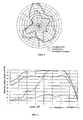
- FIGURE 1 shows an example of a topogram of molecules with equal number of links: fully cyclic ( M 0 D 0 T c/n ), original linear form ( M 2/n D b/n T 0 ) and linear form with a hydration shell ( M 2/n D b/n T 0 ⁇ 45H 2 O ) .
- the presence of OH groups significantly affects the conformation of the molecule, and the presence of a hydration shell does not significantly affect the change in the conformation of the molecule.
- thermogravimetry cryoscopy
- amperometric titration titration of water according to the method of K. Fisher, IR, and UV-VIS spectroscopy.
- the condition for the preorganization of the structure of the substance obtained by the inventive method is the rigidity of its backbone.
- the substance is positioned as a host, tuned to a specific guest and determines the selectivity of the host.
- the backbone rigidity is provided by the presence of maximum number of T-fragments in the molecule, based on the data presented in Table 1, Formulas (4) and (5).
- the conformation mobility of the molecule is provided by the maximum content of OH groups.
- Elasticity and mobility of the molecule are provided by D-fragments.
- the variation ranges of the coefficients of Chemical Formula (5) will be: 0 ⁇ a n ⁇ 0,38 ; 0,16 ⁇ b n ⁇ 0,90 ; 0,11 ⁇ c n ⁇ 0,60 .
- the calculated content of OH groups of the compound will be from 16% to 24%.
- the gel-formation time of hydrogels obtained by the closest prior art method using a solution of a strong acid of various volumes, by pouring to a fixed volume of sodium methylsiliconate has an exponential dependence on the molar ratio of components. This is indicative of the progress of the gelation reaction according to the radical chain type, since gelation also occurs in the presence of small amounts of a strong acid.
- the gelation steps have been proposed to be described as follows.
- one of the components of the mixture is a strong acid
- the other is an alkaline solution of sodium methyl siliconate
- a salt of a strong alkali and a strong acid is formed, which does not have a protective effect on OH groups (solutions of such salts have an acidity close to neutral).
- transformations in the system entirely depend on the ratio of the alkaline component, which decreases with the synthesis and the strongly acidic component.
- gaseous acid agents such as:
- methylsilicic acid hydrogels produced according to the examples set forth below were subjected to a complex of studies and unexpectedly had the properties of supramolecular compounds.
- Example 1 Producing a methylsilicic acid hydrogel with supramolecular properties.
- Example 2 The ratio of the feedstock was the same as in Example 1.
- the feeding method was feeding through the top valve of the reactor. The process was carried out in an open system. The resulting product was floated in the neck of the reactor. Further steps were the same as in Example 1. Yield was 232 g (71% of polymethylsiloxane in sodium methyl siliconate).
- the sample code for the example - MSAHG CO 2 2
- Example 3 A 20-liter cube-shaped container was filled with carbon dioxide for 3 ⁇ 4 of the volume.
- an elastic fluoroplastic chute with sides closed in a ring, equipped with transverse troughs arranged at an angle of 45° in the horizontal plane to the main chute.
- the design was put on two shafts forming an endless conveyor belt. One of the shafts was connected through a gear to an electric motor. The angle of inclination to the container was 15-30°. The linear velocity of movement along the chute bottom upward ranged from 30 to 60 cm/min.
- the solution of methyl siliconate was fed dropwise through a comb with six nozzles. The total volume of sodium methyl siliconate was 200 ml. The process took 20 minutes.
- Examples 4-6 The equipment used and the process applied were the same as described in Examples 1-3, except that sulfur oxide (IV) - SO 2 was used as a gas.
- the product yield was 228 g (71%); 222 g (68%); 231 g (70%), respectively.
- sample codes for the examples - MSAHG SO 2 4, MSAHG SO 2 5, MSAHG SO 2 6 , respectively.
- Examples 7-9 The equipment used and the process applied were the same as described in Examples 1-3, except that hydrogen sulfide - H 2 S was used as a gas.
- the product yield was 230 g (67%); 228 g (70%); 220 g (66%), respectively.
- the product yield was 242 g (69%); 230 g (68%); 245 g (71%), respectively.
- sample codes for the examples - MSAHG SO 3 10, MSAHG SO 3 11 , MSAHG SO 3 12 , respectively.
- Examples 13-15 The equipment used and the process applied were the same as described in Examples 1-3, except that gaseous hydrogen chloride - HCl was used as a gas.
- the product yield was 234 g (72%); 236 g (72%); 237 g (68%), respectively.
- Aqueous solutions of indicators of methyl orange (MO), Congo red (CR), Bengal pink (BP), and protein - bovine serum albumin V (BSA) were used as adsorbate.
- BSA protein - bovine serum albumin V
- UV-VIS spectrophotometry was performed for the biuret complex after treatment of an aliquot of the protein solution with a biuret reagent.
- the types of structure of the samples were studied using IR spectrometry and a mixed water detection method.
- IR spectrometry For IR spectrometry, test portions of samples were preliminary placed in paraffin oil and dispersed to form a homogenous suspension. The resulting mixture was placed in a heating cabinet, heated to 150° C and kept at this temperature for 1:00 to completely remove water from the hydrogel. After cooling the mixture was redispersed. For all the samples prepared, the IR spectrum was recorded on an IRAffinity-lS FT-IR spectrometer. In parallel, the IR spectrum of pure paraffin oil was recorded to further subtract it from the main spectrum.
- the obtained IR spectra were processed using Fourier transformation of spectra with emphasis on the range of wave numbers in the ranges of 1200-1000 cm -1 (Si-O-Si - bond) and 800-650 cm -1 (Skeletal vibrations of the molecule). In cases of presence of an overwhelming number of T-fragments in the molecules, both increase in the intensity of absorption lines in the range of 800-650 cm -1 and a shift in the position of the line within the range were observed.
- the samples were further treated with solutions of hydrochloric acid of different concentration, provoking polycondensation of the hydrogel and formation of T-fragments according to the schemes shown in Table 2. Value of intensity for completely dehydrated samples was used as the reference point of the intensity value on the IR spectrum (formula M 0 D 0 T 1 ) .
- thermogravimetry and titration of water according to K. Fisher method.
- the thermogravimetric method for water determination was used based on the conventional techniques of this control. The results of determining the total amount of water were the starting points for further calculation of composition of the samples.
- hydrogels produced by using the known methods [ UA No. 82774 ] are mainly described by formulas with ranges of coefficients: 0.05 ⁇ a n ⁇ 0.24 ; 0.07 ⁇ b n ⁇ 0.18 ; 0.63 ⁇ c n ⁇ 0.85 , have a ratio of D- and T- fragments from 0.06 to 0.11 and a content of OH groups from 12 to 26%.
- Hydrogels produced by the method are described by formulas with ranges of coefficients: 0 ⁇ a n ⁇ 0.38 ; 0.19 ⁇ b n ⁇ 0.9 ; 0,11 ⁇ c n ⁇ 0.49 , have a ratio of D- and T-fragments from 0.10 to 0.15 and the content of OH groups from 20 to 24%.
- the UV-VIS absorption spectra were previously recorded for equivalent solutions of the indicated substances (MO, CR, BP, BSA) at a pH in the range from 1.0 to 9.0, and vice versa - from 9.0 to 1.0 for adsorbate solutions other than BSA, and at a pH in the range from 3.0 to 8.0 and vice versa - rom 9.0 to 1.0 for BSA solutions.
- the temperature range of the solutions was varied from 40° to 60° C for BSA solutions and in the range from 40° to 80° C for solutions of other adsorbates.
- the study of the properties of host-guest hydrogels was carried out by first adding hydrochloric acid in an amount sufficient to achieve a pH of 1.0 by the solution to the system containing the hydrogel and the adsorbate solution.
- the previously measured adsorption activity in units of mg/g normalizing in the scale range from 0 to 1 (0-100%).
- the samples of hydrogels produced by the claimed method have a supramolecular, partially renewable property of host-guest type.
- locking of the guest occurs at fairly low pH values and continues for pH values up to 8.5 units.
- Also unexpected was the ability of the samples to reappear similar effects. Given the fact that the pH value is quite close to the pH of the human stomach and intestines, manifestations of discovered properties will be useful from a medical point of view.
- Samples of hydrogels produced by the claimed method demonstrated the typical behavior of supramolecular structures of the host- guest type as a preorganized conformationally mobile host.
- Decantation with purified water was carried out with measurement of the optical density of the solution and calculation of the adsorbate concentration.
- the hydrogels produced according to the method of the claimed invention, as decanting with a purified water was carried out, partially desorbed the adsorbate in the range of 20-30% (MO, CR, BP) and 35-50% (BSA) and behaved like the graph in Fig. 2 as the pH of the solution changed.
- Heating of solutions and aging at temperatures in the range from 40 to 60 (80)° C do not cause obvious changes of values.
Landscapes
- Chemical & Material Sciences (AREA)
- Organic Chemistry (AREA)
- Chemical Kinetics & Catalysis (AREA)
- Health & Medical Sciences (AREA)
- Medicinal Chemistry (AREA)
- Polymers & Plastics (AREA)
- Dispersion Chemistry (AREA)
- Inorganic Chemistry (AREA)
- Silicon Polymers (AREA)
- Solid-Sorbent Or Filter-Aiding Compositions (AREA)
Applications Claiming Priority (2)
| Application Number | Priority Date | Filing Date | Title |
|---|---|---|---|
| UAA201708754A UA115857C2 (uk) | 2017-08-30 | 2017-08-30 | Спосіб одержання гідрогелю метилкремнієвої кислоти з властивостями супрамолекулярних структур і гідрогель, одержаний цим способом |
| PCT/UA2018/000069 WO2019045667A1 (ru) | 2017-08-30 | 2018-07-09 | Способ получения гидрогеля метилкремниевой кислоты со свойствами супрамолекулярных структур и гидрогель, полученный этим способом |
Publications (3)
| Publication Number | Publication Date |
|---|---|
| EP3677545A1 true EP3677545A1 (de) | 2020-07-08 |
| EP3677545A4 EP3677545A4 (de) | 2021-01-20 |
| EP3677545B1 EP3677545B1 (de) | 2023-05-03 |
Family
ID=60955784
Family Applications (1)
| Application Number | Title | Priority Date | Filing Date |
|---|---|---|---|
| EP18850878.2A Active EP3677545B1 (de) | 2017-08-30 | 2018-07-09 | Verfahren zur herstellung eines methylkieselsäure-hydrogels mit eigenschaften supramolekularer strukturen und mit diesem verfahren hergestelltes hydrogel |
Country Status (10)
| Country | Link |
|---|---|
| US (2) | US11104694B2 (de) |
| EP (1) | EP3677545B1 (de) |
| CN (1) | CN111194295B (de) |
| CZ (1) | CZ309566B6 (de) |
| EA (1) | EA202000102A1 (de) |
| GB (1) | GB2579005B (de) |
| PL (1) | PL244824B1 (de) |
| RU (1) | RU2756828C2 (de) |
| UA (1) | UA115857C2 (de) |
| WO (1) | WO2019045667A1 (de) |
Families Citing this family (2)
| Publication number | Priority date | Publication date | Assignee | Title |
|---|---|---|---|---|
| CN111875883B (zh) * | 2020-07-25 | 2021-11-19 | 浙江森川家具有限公司 | 一种纳米抗菌防污桌椅塑料颗粒及制备方法 |
| US20250144598A1 (en) | 2023-11-02 | 2025-05-08 | Bioline Pharmaceutical Ag | Polymethylsiloxane polyhydrate having supramolecular properties of a molecular capsule, method for its production, and sorbent containing thereof |
Family Cites Families (14)
| Publication number | Priority date | Publication date | Assignee | Title |
|---|---|---|---|---|
| US3335017A (en) * | 1962-03-14 | 1967-08-08 | Warren S D Co | Paper with release coating and process for making same |
| US4252569A (en) * | 1976-10-20 | 1981-02-24 | General Electric Company | Process for preparing alkali metal siliconates |
| RU2111979C1 (ru) | 1994-03-11 | 1998-05-27 | Юрий Николаевич Шевченко | Гидрогели метилкремневой кислоты как адсорбенты среднемолекулярных метаболитов и способ их получения |
| UA72402A (en) | 2003-12-23 | 2005-02-15 | Valerii Mytrofanovych Frolov | Method for treating recurrent herpes |
| DE102005040323A1 (de) * | 2005-08-25 | 2007-03-15 | Wacker Chemie Ag | Organopolysiloxane und ein Verfahren zu ihrer Herstellung |
| FR2895410B1 (fr) * | 2005-12-23 | 2008-03-21 | Rhodia Recherches & Tech | Procede de preparation d'une resine silicone |
| UA82774C2 (uk) | 2006-09-20 | 2008-05-12 | Tolcheiev Yurii Zakharovych | Спосіб одержання сорбенту на основі гідрогелю метилкремнієвої кислоти |
| EP2116564B1 (de) * | 2007-02-09 | 2014-03-19 | Bioline Pharmaceutical AG | Adsorptionsmittel und herstellungsverfahren dafür |
| UA90988C2 (ru) | 2009-12-16 | 2010-06-10 | Геннадий Иванович Кабачный | Способ получения гидрогеля метилкремниевой кислоты |
| US20160144038A1 (en) * | 2014-11-20 | 2016-05-26 | Broda International, LLC | Water-soluble supramolecular complexes |
| DE102011087931A1 (de) * | 2011-12-07 | 2013-06-13 | Wacker Chemie Ag | Herstellung hochmolekularer Siliconharze |
| CN106794996B (zh) * | 2014-10-03 | 2026-06-16 | 亚斯朋空气凝胶公司 | 改良的疏水性气凝胶材料 |
| EP3215129A2 (de) * | 2014-11-04 | 2017-09-13 | invenres GmbH | Pharmazeutisches präparat sowie verfahren zu dessen herstellung und verwendung |
| DE102015211812A1 (de) * | 2015-06-25 | 2016-12-29 | Wacker Chemie Ag | Wirtschaftliches Verfahren zur Herstellung von organisch modifizierten Lyo- oder Aerogelen |
-
2017
- 2017-08-30 UA UAA201708754A patent/UA115857C2/uk unknown
-
2018
- 2018-07-09 WO PCT/UA2018/000069 patent/WO2019045667A1/ru not_active Ceased
- 2018-07-09 CZ CZ2020-101A patent/CZ309566B6/cs unknown
- 2018-07-09 CN CN201880064011.2A patent/CN111194295B/zh active Active
- 2018-07-09 EP EP18850878.2A patent/EP3677545B1/de active Active
- 2018-07-09 GB GB2003007.8A patent/GB2579005B/en active Active
- 2018-07-09 PL PL434215A patent/PL244824B1/pl unknown
- 2018-07-09 RU RU2020111213A patent/RU2756828C2/ru active IP Right Revival
- 2018-07-09 US US16/642,963 patent/US11104694B2/en active Active
- 2018-07-09 EA EA202000102A patent/EA202000102A1/ru unknown
-
2021
- 2021-07-27 US US17/443,677 patent/US20220119423A1/en not_active Abandoned
Also Published As
| Publication number | Publication date |
|---|---|
| PL244824B1 (pl) | 2024-03-11 |
| US20200308199A1 (en) | 2020-10-01 |
| GB2579005B (en) | 2021-01-20 |
| WO2019045667A1 (ru) | 2019-03-07 |
| EP3677545B1 (de) | 2023-05-03 |
| US20220119423A1 (en) | 2022-04-21 |
| UA115857C2 (uk) | 2017-12-26 |
| EA202000102A1 (ru) | 2020-06-24 |
| GB2579005A (en) | 2020-06-03 |
| US11104694B2 (en) | 2021-08-31 |
| RU2020111213A3 (de) | 2021-10-01 |
| RU2756828C2 (ru) | 2021-10-06 |
| GB202003007D0 (en) | 2020-04-15 |
| CN111194295B (zh) | 2022-09-20 |
| PL434215A1 (pl) | 2021-05-31 |
| CZ2020101A3 (cs) | 2020-04-29 |
| CZ309566B6 (cs) | 2023-04-19 |
| RU2020111213A (ru) | 2021-10-01 |
| CN111194295A (zh) | 2020-05-22 |
| EP3677545A4 (de) | 2021-01-20 |
Similar Documents
| Publication | Publication Date | Title |
|---|---|---|
| Żeglin et al. | A study of interaction between hydrogen peroxide and silica gel by FTIR spectroscopy and quantum chemistry | |
| Ayers et al. | Synthesis and properties of chitosan–silica hybrid aerogels | |
| US20220119423A1 (en) | Method of producing a methylsilicic acid hydrogel with properties of supramolecular structures, and a hydrogel produced using this method | |
| Li et al. | One-step synthesis of hydrophobic silica aerogel via in situ surface modification | |
| Racles et al. | Synthesis and characterization of water soluble saccharide functionalized polysiloxanes and their use as polymer surfactants for the stabilization of polycaprolactone nanoparticles | |
| EP2376544B1 (de) | Verfahren zur herstellung eines funktionalisierten dienelastomers wie polybutadien | |
| Airoldi et al. | Chitosan–organosilane hybrids—Syntheses, characterization, copper adsorption, and enzyme immobilization | |
| Melo et al. | Synthesized cellulose/succinic anhydride as an ion exchanger. Calorimetry of divalent cations in aqueous suspension | |
| Bulychev et al. | Nanostructure of organic-inorganic composite materials based on polymer hydrogels | |
| Ke et al. | Aqueous biphasic systems containing customizable poly (ionic liquid) s for highly efficient extractions | |
| Akae et al. | Aggregation Behavior of Cyclodextrin‐Based [3] Rotaxanes | |
| Stauber | Tailoring metallosupramolecular glycoassemblies for enhancing lectin recognition | |
| Kurmaz et al. | Mesoporous networks of N-vinylpyrrolidone with (di) methacrylates as precursors of ecological molecular imprinted polymers | |
| Petrova et al. | Chemical properties of N-2-Sulfoethylchitosan with a medium degree of substitution | |
| Kulik et al. | Interactions between bioactive ferulic acid and fumed silica by UV–vis spectroscopy, FT-IR, TPD MS investigation and quantum chemical methods | |
| CN104927056B (zh) | 一种双组份催化体系合成乙烯基氟硅油的制备方法 | |
| EP2116564B1 (de) | Adsorptionsmittel und herstellungsverfahren dafür | |
| Innocenzi et al. | Sol‐to‐gel transition in fast evaporating systems observed by in situ time‐resolved infrared spectroscopy | |
| Schade et al. | Characterising the interfacial bonding in organic-inorganic hybrid materials from their thermal stability | |
| Asmussen et al. | Synthesis of silsesquioxanes based in (3-methacryloxypropyl)-trimethoxysilane using methacrylate monomers as reactive solvents | |
| Kirilina et al. | Organic-inorganic hybrid hydrogels based on linear poly (N-vinylpyrrolidone) and products of hydrolytic polycondensation of tetramethoxysilane | |
| EA041207B1 (ru) | Способ получения гидрогеля метилкремниевой кислоты со свойствами супрамолекулярных структур и гидрогель, полученный этим способом | |
| RU2714728C1 (ru) | Способ получения полиметилсилсесквиоксанового гидрогеля | |
| JP7481784B2 (ja) | 末端アルケニル官能性シリル化多糖類 | |
| Grzelka et al. | Polysiloxanol condensation and disproportionation in the presence of a superacid |
Legal Events
| Date | Code | Title | Description |
|---|---|---|---|
| STAA | Information on the status of an ep patent application or granted ep patent |
Free format text: STATUS: THE INTERNATIONAL PUBLICATION HAS BEEN MADE |
|
| PUAI | Public reference made under article 153(3) epc to a published international application that has entered the european phase |
Free format text: ORIGINAL CODE: 0009012 |
|
| STAA | Information on the status of an ep patent application or granted ep patent |
Free format text: STATUS: REQUEST FOR EXAMINATION WAS MADE |
|
| 17P | Request for examination filed |
Effective date: 20200309 |
|
| AK | Designated contracting states |
Kind code of ref document: A1 Designated state(s): AL AT BE BG CH CY CZ DE DK EE ES FI FR GB GR HR HU IE IS IT LI LT LU LV MC MK MT NL NO PL PT RO RS SE SI SK SM TR |
|
| AX | Request for extension of the european patent |
Extension state: BA ME |
|
| RBV | Designated contracting states (corrected) |
Designated state(s): AL AT BE BG CH CY DE DK EE ES FI FR GR HR HU IE IS IT LI LT LU LV MC MK MT NL NO PT RO RS SE SI SK SM TR |
|
| DAV | Request for validation of the european patent (deleted) | ||
| DAX | Request for extension of the european patent (deleted) | ||
| A4 | Supplementary search report drawn up and despatched |
Effective date: 20201218 |
|
| RIC1 | Information provided on ipc code assigned before grant |
Ipc: C08G 77/04 20060101ALI20201214BHEP Ipc: C01B 33/155 20060101AFI20201214BHEP Ipc: C08G 77/06 20060101ALI20201214BHEP |
|
| GRAP | Despatch of communication of intention to grant a patent |
Free format text: ORIGINAL CODE: EPIDOSNIGR1 |
|
| STAA | Information on the status of an ep patent application or granted ep patent |
Free format text: STATUS: GRANT OF PATENT IS INTENDED |
|
| INTG | Intention to grant announced |
Effective date: 20210510 |
|
| GRAJ | Information related to disapproval of communication of intention to grant by the applicant or resumption of examination proceedings by the epo deleted |
Free format text: ORIGINAL CODE: EPIDOSDIGR1 |
|
| STAA | Information on the status of an ep patent application or granted ep patent |
Free format text: STATUS: REQUEST FOR EXAMINATION WAS MADE |
|
| INTC | Intention to grant announced (deleted) | ||
| GRAP | Despatch of communication of intention to grant a patent |
Free format text: ORIGINAL CODE: EPIDOSNIGR1 |
|
| STAA | Information on the status of an ep patent application or granted ep patent |
Free format text: STATUS: GRANT OF PATENT IS INTENDED |
|
| INTG | Intention to grant announced |
Effective date: 20211019 |
|
| GRAJ | Information related to disapproval of communication of intention to grant by the applicant or resumption of examination proceedings by the epo deleted |
Free format text: ORIGINAL CODE: EPIDOSDIGR1 |
|
| STAA | Information on the status of an ep patent application or granted ep patent |
Free format text: STATUS: REQUEST FOR EXAMINATION WAS MADE |
|
| INTC | Intention to grant announced (deleted) | ||
| GRAP | Despatch of communication of intention to grant a patent |
Free format text: ORIGINAL CODE: EPIDOSNIGR1 |
|
| STAA | Information on the status of an ep patent application or granted ep patent |
Free format text: STATUS: GRANT OF PATENT IS INTENDED |
|
| INTG | Intention to grant announced |
Effective date: 20220518 |
|
| GRAJ | Information related to disapproval of communication of intention to grant by the applicant or resumption of examination proceedings by the epo deleted |
Free format text: ORIGINAL CODE: EPIDOSDIGR1 |
|
| STAA | Information on the status of an ep patent application or granted ep patent |
Free format text: STATUS: REQUEST FOR EXAMINATION WAS MADE |
|
| INTC | Intention to grant announced (deleted) | ||
| GRAP | Despatch of communication of intention to grant a patent |
Free format text: ORIGINAL CODE: EPIDOSNIGR1 |
|
| STAA | Information on the status of an ep patent application or granted ep patent |
Free format text: STATUS: GRANT OF PATENT IS INTENDED |
|
| INTG | Intention to grant announced |
Effective date: 20221110 |
|
| GRAS | Grant fee paid |
Free format text: ORIGINAL CODE: EPIDOSNIGR3 |
|
| GRAA | (expected) grant |
Free format text: ORIGINAL CODE: 0009210 |
|
| STAA | Information on the status of an ep patent application or granted ep patent |
Free format text: STATUS: THE PATENT HAS BEEN GRANTED |
|
| AK | Designated contracting states |
Kind code of ref document: B1 Designated state(s): AL AT BE BG CH CY DE DK EE ES FI FR GR HR HU IE IS IT LI LT LU LV MC MK MT NL NO PT RO RS SE SI SK SM TR |
|
| REG | Reference to a national code |
Ref country code: AT Ref legal event code: REF Ref document number: 1564476 Country of ref document: AT Kind code of ref document: T Effective date: 20230515 Ref country code: CH Ref legal event code: EP |
|
| REG | Reference to a national code |
Ref country code: DE Ref legal event code: R096 Ref document number: 602018049373 Country of ref document: DE |
|
| REG | Reference to a national code |
Ref country code: IE Ref legal event code: FG4D |
|
| P01 | Opt-out of the competence of the unified patent court (upc) registered |
Effective date: 20230609 |
|
| REG | Reference to a national code |
Ref country code: LT Ref legal event code: MG9D |
|
| REG | Reference to a national code |
Ref country code: NL Ref legal event code: MP Effective date: 20230503 |
|
| REG | Reference to a national code |
Ref country code: AT Ref legal event code: MK05 Ref document number: 1564476 Country of ref document: AT Kind code of ref document: T Effective date: 20230503 |
|
| REG | Reference to a national code |
Ref country code: DE Ref legal event code: R082 Ref document number: 602018049373 Country of ref document: DE Representative=s name: MAIWALD GMBH, DE |
|
| PG25 | Lapsed in a contracting state [announced via postgrant information from national office to epo] |
Ref country code: SE Free format text: LAPSE BECAUSE OF FAILURE TO SUBMIT A TRANSLATION OF THE DESCRIPTION OR TO PAY THE FEE WITHIN THE PRESCRIBED TIME-LIMIT Effective date: 20230503 Ref country code: PT Free format text: LAPSE BECAUSE OF FAILURE TO SUBMIT A TRANSLATION OF THE DESCRIPTION OR TO PAY THE FEE WITHIN THE PRESCRIBED TIME-LIMIT Effective date: 20230904 Ref country code: NO Free format text: LAPSE BECAUSE OF FAILURE TO SUBMIT A TRANSLATION OF THE DESCRIPTION OR TO PAY THE FEE WITHIN THE PRESCRIBED TIME-LIMIT Effective date: 20230803 Ref country code: NL Free format text: LAPSE BECAUSE OF FAILURE TO SUBMIT A TRANSLATION OF THE DESCRIPTION OR TO PAY THE FEE WITHIN THE PRESCRIBED TIME-LIMIT Effective date: 20230503 Ref country code: ES Free format text: LAPSE BECAUSE OF FAILURE TO SUBMIT A TRANSLATION OF THE DESCRIPTION OR TO PAY THE FEE WITHIN THE PRESCRIBED TIME-LIMIT Effective date: 20230503 Ref country code: AT Free format text: LAPSE BECAUSE OF FAILURE TO SUBMIT A TRANSLATION OF THE DESCRIPTION OR TO PAY THE FEE WITHIN THE PRESCRIBED TIME-LIMIT Effective date: 20230503 |
|
| PG25 | Lapsed in a contracting state [announced via postgrant information from national office to epo] |
Ref country code: RS Free format text: LAPSE BECAUSE OF FAILURE TO SUBMIT A TRANSLATION OF THE DESCRIPTION OR TO PAY THE FEE WITHIN THE PRESCRIBED TIME-LIMIT Effective date: 20230503 Ref country code: LV Free format text: LAPSE BECAUSE OF FAILURE TO SUBMIT A TRANSLATION OF THE DESCRIPTION OR TO PAY THE FEE WITHIN THE PRESCRIBED TIME-LIMIT Effective date: 20230503 Ref country code: LT Free format text: LAPSE BECAUSE OF FAILURE TO SUBMIT A TRANSLATION OF THE DESCRIPTION OR TO PAY THE FEE WITHIN THE PRESCRIBED TIME-LIMIT Effective date: 20230503 Ref country code: IS Free format text: LAPSE BECAUSE OF FAILURE TO SUBMIT A TRANSLATION OF THE DESCRIPTION OR TO PAY THE FEE WITHIN THE PRESCRIBED TIME-LIMIT Effective date: 20230903 Ref country code: HR Free format text: LAPSE BECAUSE OF FAILURE TO SUBMIT A TRANSLATION OF THE DESCRIPTION OR TO PAY THE FEE WITHIN THE PRESCRIBED TIME-LIMIT Effective date: 20230503 Ref country code: GR Free format text: LAPSE BECAUSE OF FAILURE TO SUBMIT A TRANSLATION OF THE DESCRIPTION OR TO PAY THE FEE WITHIN THE PRESCRIBED TIME-LIMIT Effective date: 20230804 |
|
| PG25 | Lapsed in a contracting state [announced via postgrant information from national office to epo] |
Ref country code: FI Free format text: LAPSE BECAUSE OF FAILURE TO SUBMIT A TRANSLATION OF THE DESCRIPTION OR TO PAY THE FEE WITHIN THE PRESCRIBED TIME-LIMIT Effective date: 20230503 |
|
| PG25 | Lapsed in a contracting state [announced via postgrant information from national office to epo] |
Ref country code: SK Free format text: LAPSE BECAUSE OF FAILURE TO SUBMIT A TRANSLATION OF THE DESCRIPTION OR TO PAY THE FEE WITHIN THE PRESCRIBED TIME-LIMIT Effective date: 20230503 |
|
| PG25 | Lapsed in a contracting state [announced via postgrant information from national office to epo] |
Ref country code: SM Free format text: LAPSE BECAUSE OF FAILURE TO SUBMIT A TRANSLATION OF THE DESCRIPTION OR TO PAY THE FEE WITHIN THE PRESCRIBED TIME-LIMIT Effective date: 20230503 Ref country code: SK Free format text: LAPSE BECAUSE OF FAILURE TO SUBMIT A TRANSLATION OF THE DESCRIPTION OR TO PAY THE FEE WITHIN THE PRESCRIBED TIME-LIMIT Effective date: 20230503 Ref country code: RO Free format text: LAPSE BECAUSE OF FAILURE TO SUBMIT A TRANSLATION OF THE DESCRIPTION OR TO PAY THE FEE WITHIN THE PRESCRIBED TIME-LIMIT Effective date: 20230503 Ref country code: EE Free format text: LAPSE BECAUSE OF FAILURE TO SUBMIT A TRANSLATION OF THE DESCRIPTION OR TO PAY THE FEE WITHIN THE PRESCRIBED TIME-LIMIT Effective date: 20230503 Ref country code: DK Free format text: LAPSE BECAUSE OF FAILURE TO SUBMIT A TRANSLATION OF THE DESCRIPTION OR TO PAY THE FEE WITHIN THE PRESCRIBED TIME-LIMIT Effective date: 20230503 |
|
| REG | Reference to a national code |
Ref country code: DE Ref legal event code: R097 Ref document number: 602018049373 Country of ref document: DE |
|
| PG25 | Lapsed in a contracting state [announced via postgrant information from national office to epo] |
Ref country code: MC Free format text: LAPSE BECAUSE OF FAILURE TO SUBMIT A TRANSLATION OF THE DESCRIPTION OR TO PAY THE FEE WITHIN THE PRESCRIBED TIME-LIMIT Effective date: 20230503 |
|
| PG25 | Lapsed in a contracting state [announced via postgrant information from national office to epo] |
Ref country code: MC Free format text: LAPSE BECAUSE OF FAILURE TO SUBMIT A TRANSLATION OF THE DESCRIPTION OR TO PAY THE FEE WITHIN THE PRESCRIBED TIME-LIMIT Effective date: 20230503 |
|
| REG | Reference to a national code |
Ref country code: CH Ref legal event code: PL |
|
| PLBE | No opposition filed within time limit |
Free format text: ORIGINAL CODE: 0009261 |
|
| STAA | Information on the status of an ep patent application or granted ep patent |
Free format text: STATUS: NO OPPOSITION FILED WITHIN TIME LIMIT |
|
| REG | Reference to a national code |
Ref country code: BE Ref legal event code: MM Effective date: 20230731 |
|
| PG25 | Lapsed in a contracting state [announced via postgrant information from national office to epo] |
Ref country code: LU Free format text: LAPSE BECAUSE OF NON-PAYMENT OF DUE FEES Effective date: 20230709 |
|
| PG25 | Lapsed in a contracting state [announced via postgrant information from national office to epo] |
Ref country code: LU Free format text: LAPSE BECAUSE OF NON-PAYMENT OF DUE FEES Effective date: 20230709 |
|
| 26N | No opposition filed |
Effective date: 20240206 |
|
| REG | Reference to a national code |
Ref country code: IE Ref legal event code: MM4A |
|
| PG25 | Lapsed in a contracting state [announced via postgrant information from national office to epo] |
Ref country code: CH Free format text: LAPSE BECAUSE OF NON-PAYMENT OF DUE FEES Effective date: 20230731 |
|
| PG25 | Lapsed in a contracting state [announced via postgrant information from national office to epo] |
Ref country code: SI Free format text: LAPSE BECAUSE OF FAILURE TO SUBMIT A TRANSLATION OF THE DESCRIPTION OR TO PAY THE FEE WITHIN THE PRESCRIBED TIME-LIMIT Effective date: 20230503 |
|
| PG25 | Lapsed in a contracting state [announced via postgrant information from national office to epo] |
Ref country code: SI Free format text: LAPSE BECAUSE OF FAILURE TO SUBMIT A TRANSLATION OF THE DESCRIPTION OR TO PAY THE FEE WITHIN THE PRESCRIBED TIME-LIMIT Effective date: 20230503 Ref country code: BE Free format text: LAPSE BECAUSE OF NON-PAYMENT OF DUE FEES Effective date: 20230731 |
|
| PG25 | Lapsed in a contracting state [announced via postgrant information from national office to epo] |
Ref country code: IE Free format text: LAPSE BECAUSE OF NON-PAYMENT OF DUE FEES Effective date: 20230709 |
|
| PG25 | Lapsed in a contracting state [announced via postgrant information from national office to epo] |
Ref country code: IE Free format text: LAPSE BECAUSE OF NON-PAYMENT OF DUE FEES Effective date: 20230709 |
|
| PG25 | Lapsed in a contracting state [announced via postgrant information from national office to epo] |
Ref country code: BG Free format text: LAPSE BECAUSE OF FAILURE TO SUBMIT A TRANSLATION OF THE DESCRIPTION OR TO PAY THE FEE WITHIN THE PRESCRIBED TIME-LIMIT Effective date: 20230503 |
|
| PG25 | Lapsed in a contracting state [announced via postgrant information from national office to epo] |
Ref country code: BG Free format text: LAPSE BECAUSE OF FAILURE TO SUBMIT A TRANSLATION OF THE DESCRIPTION OR TO PAY THE FEE WITHIN THE PRESCRIBED TIME-LIMIT Effective date: 20230503 |
|
| PG25 | Lapsed in a contracting state [announced via postgrant information from national office to epo] |
Ref country code: CY Free format text: LAPSE BECAUSE OF FAILURE TO SUBMIT A TRANSLATION OF THE DESCRIPTION OR TO PAY THE FEE WITHIN THE PRESCRIBED TIME-LIMIT; INVALID AB INITIO Effective date: 20180709 |
|
| PG25 | Lapsed in a contracting state [announced via postgrant information from national office to epo] |
Ref country code: HU Free format text: LAPSE BECAUSE OF FAILURE TO SUBMIT A TRANSLATION OF THE DESCRIPTION OR TO PAY THE FEE WITHIN THE PRESCRIBED TIME-LIMIT; INVALID AB INITIO Effective date: 20180709 |
|
| PGFP | Annual fee paid to national office [announced via postgrant information from national office to epo] |
Ref country code: DE Payment date: 20250725 Year of fee payment: 8 |
|
| PG25 | Lapsed in a contracting state [announced via postgrant information from national office to epo] |
Ref country code: TR Free format text: LAPSE BECAUSE OF FAILURE TO SUBMIT A TRANSLATION OF THE DESCRIPTION OR TO PAY THE FEE WITHIN THE PRESCRIBED TIME-LIMIT Effective date: 20230503 |
|
| PGFP | Annual fee paid to national office [announced via postgrant information from national office to epo] |
Ref country code: IT Payment date: 20260506 Year of fee payment: 9 |
|
| PGFP | Annual fee paid to national office [announced via postgrant information from national office to epo] |
Ref country code: FR Payment date: 20260630 Year of fee payment: 9 |