EP3684196B1 - Low sodium salt substitute with potassium chloride - Google Patents
Low sodium salt substitute with potassium chloride Download PDFInfo
- Publication number
- EP3684196B1 EP3684196B1 EP18855922.3A EP18855922A EP3684196B1 EP 3684196 B1 EP3684196 B1 EP 3684196B1 EP 18855922 A EP18855922 A EP 18855922A EP 3684196 B1 EP3684196 B1 EP 3684196B1
- Authority
- EP
- European Patent Office
- Prior art keywords
- salt substitute
- salt
- acid
- precursor
- chloride
- Prior art date
- Legal status (The legal status is an assumption and is not a legal conclusion. Google has not performed a legal analysis and makes no representation as to the accuracy of the status listed.)
- Active
Links
Images

Classifications
-
- A—HUMAN NECESSITIES
- A23—FOODS OR FOODSTUFFS; TREATMENT THEREOF, NOT COVERED BY OTHER CLASSES
- A23L—FOODS, FOODSTUFFS OR NON-ALCOHOLIC BEVERAGES, NOT OTHERWISE PROVIDED FOR; PREPARATION OR TREATMENT THEREOF
- A23L27/00—Spices; Flavouring agents or condiments; Artificial sweetening agents; Table salts; Dietetic salt substitutes; Preparation or treatment thereof
- A23L27/40—Table salts; Dietetic salt substitutes
- A23L27/45—Salt substitutes completely devoid of sodium chloride
-
- A—HUMAN NECESSITIES
- A23—FOODS OR FOODSTUFFS; TREATMENT THEREOF, NOT COVERED BY OTHER CLASSES
- A23L—FOODS, FOODSTUFFS OR NON-ALCOHOLIC BEVERAGES, NOT OTHERWISE PROVIDED FOR; PREPARATION OR TREATMENT THEREOF
- A23L27/00—Spices; Flavouring agents or condiments; Artificial sweetening agents; Table salts; Dietetic salt substitutes; Preparation or treatment thereof
- A23L27/40—Table salts; Dietetic salt substitutes
-
- A—HUMAN NECESSITIES
- A23—FOODS OR FOODSTUFFS; TREATMENT THEREOF, NOT COVERED BY OTHER CLASSES
- A23L—FOODS, FOODSTUFFS OR NON-ALCOHOLIC BEVERAGES, NOT OTHERWISE PROVIDED FOR; PREPARATION OR TREATMENT THEREOF
- A23L29/00—Foods or foodstuffs containing additives; Preparation or treatment thereof
- A23L29/20—Foods or foodstuffs containing additives; Preparation or treatment thereof containing gelling or thickening agents
- A23L29/294—Inorganic additives, e.g. silica
-
- A—HUMAN NECESSITIES
- A23—FOODS OR FOODSTUFFS; TREATMENT THEREOF, NOT COVERED BY OTHER CLASSES
- A23L—FOODS, FOODSTUFFS OR NON-ALCOHOLIC BEVERAGES, NOT OTHERWISE PROVIDED FOR; PREPARATION OR TREATMENT THEREOF
- A23L33/00—Modifying nutritive qualities of foods; Dietetic products; Preparation or treatment thereof
- A23L33/10—Modifying nutritive qualities of foods; Dietetic products; Preparation or treatment thereof using additives
-
- A—HUMAN NECESSITIES
- A23—FOODS OR FOODSTUFFS; TREATMENT THEREOF, NOT COVERED BY OTHER CLASSES
- A23L—FOODS, FOODSTUFFS OR NON-ALCOHOLIC BEVERAGES, NOT OTHERWISE PROVIDED FOR; PREPARATION OR TREATMENT THEREOF
- A23L33/00—Modifying nutritive qualities of foods; Dietetic products; Preparation or treatment thereof
- A23L33/10—Modifying nutritive qualities of foods; Dietetic products; Preparation or treatment thereof using additives
- A23L33/16—Inorganic salts, minerals or trace elements
-
- A—HUMAN NECESSITIES
- A23—FOODS OR FOODSTUFFS; TREATMENT THEREOF, NOT COVERED BY OTHER CLASSES
- A23V—INDEXING SCHEME RELATING TO FOODS, FOODSTUFFS OR NON-ALCOHOLIC BEVERAGES AND LACTIC OR PROPIONIC ACID BACTERIA USED IN FOODSTUFFS OR FOOD PREPARATION
- A23V2002/00—Food compositions, function of food ingredients or processes for food or foodstuffs
Definitions
- the present disclosure is related to a low sodium salt substitute with potassium chloride.
- Salt or sodium chloride (NaCl)
- NaCl sodium chloride
- salt imparts a desirable flavor to food, too much use can result in long term adverse health risks.
- Exceeding the recommended daily intake of sodium is a significant risk factor in developing high blood pressure and a cause or contributing factor in the rising incidence of heart disease.
- medical professionals and governmental authorities recommend a reduction in per capita salt consumption of from about 10 to 12 g per day to a level of about 6 g per day, which is equivalent to 2400 mg of sodium.
- salt substitutes there are a variety of salt substitutes on the market.
- One approach to production of salt substitutes involves combining sodium and potassium salts, or occasionally magnesium salts, in various ratios and adding a wide variety of other additives to this mix.
- the other additives are typically added to mask or at least partially reduce the metallic or bitter taste of potassium that has been associated with salt substitutes containing potassium.
- off flavors in salt substitutes have limited their widespread acceptance.
- US 2014/044846 A1 and US 2014/255589 A1 describe low sodium salt compositions.
- US 3,505, 082 and EP 0 124 254 A1 describes salt substitute compositions.
- a salt substitute precursor includes a mixture of water, potassium chloride and sodium chloride, a food grade acid, and an anticaking agent.
- a pH of the salt substitute precursor is between 2 and 4, and the salt substitute precursor is a saturated or supersaturated solution, a suspension, or a slurry.
- the salt substitute precursor is free of a carrier selected from cereal flours and starches, fruit flours and starches, root flours and starches, monosaccharides, disaccharides, oligosaccharides, polysaccharides, and natural and artificial sweeteners.
- Implementations of the first general aspect may include one or more of the following features.
- the food grade acid may be citric acid.
- the anticaking agent may include at least one of sodium aluminosilicate, sodium ferrocyanide, potassium ferrocyanide, calcium carbonate, magnesium carbonate, tricalcium phosphate, and silicon dioxide.
- the salt substitute precursor is a homogeneous solution.
- a pH of the salt substitute precursor is typically in a range between 3 and 4.
- the salt substitute precursor may include less than 80 wt% water, less than 70 wt% water, less than 65 wt% water, or less than 60 wt% water.
- a salt substitute in a second general aspect, includes a chloride salt, a food grade acid, and an anticaking agent.
- the salt substitute includes potassium chloride, and is in the form of a combined crystalline solid comprising particles including at least 95 wt% of the chloride salt, up to 1 wt% of the food grade acid, and up to 1 wt% of the anticaking agent.
- Each particle of the combined crystalline solid comprises a region consisting essentially of potassium chloride in direct contact with a region consisting essentially of sodium chloride.
- the salt substitute is free of a carrier selected from cereal flours and starches, fruit flours and starches, root flours and starches, monosaccharides, disaccharides, oligosaccharides, polysaccharides, and natural and artificial sweeteners.
- Implementations of the second general aspect may include one or more of the following features.
- the salt substitute includes at least 98 wt% of the chloride salt, up to 1 wt% of the food grade acid, and up to 1 wt% of the anticaking agent. In one implementation, the salt substitute includes at least 99 wt% of the chloride salt, up to 0.1 wt% of the food grade acid; and up to 0.1 wt% of the anticaking agent.
- the chloride salt includes at least 99 wt% potassium chloride. In some cases, the chloride salt includes 1 wt% to 90 wt% sodium chloride and 10 wt% to 99 wt% potassium chloride.
- the food grade acid may include at least one of acetic acid, ascorbic acid, benzoic acid, citric acid, fumaric acid, lactic acid, malic acid, tartaric acid, succinic acid, lemon juice, hydrochloric acid, and phosphoric acid.
- the salt substitute includes at least 0.01 wt% of the food grade acid (e.g., 0.01 wt% to 0.5 wt% of the food grade acid, or 0.01 wt% to 0.1 wt% of the food grade acid).
- the anticaking agent typically includes at least one of sodium aluminosilicate, sodium ferrocyanide, potassium ferrocyanide, calcium carbonate, magnesium carbonate, tricalcium phosphate, and silicon dioxide.
- the salt substitute may include at least 0.001 wt% or at least 0.01 wt% of the anticaking agent.
- An aqueous solution formed by dissolving the salt substitute in water having a pH of 7 yields a solution having a pH between 4 and 5.
- the salt substitute is substantially free of a metallic taste.
- making a salt substitute includes forming a salt substitute precursor, providing the salt substitute precursor to a centrifuge, and centrifuging the salt substitute precursor to yield a salt substitute in the form of a solid and a centrate.
- the salt substitute precursor includes a mixture of water, a chloride salt, a food grade acid, and an anticaking agent.
- the chloride salt includes potassium chloride and sodium chloride.
- the salt substitute precursor is a saturated or supersaturated solution, a suspension, or a slurry, the salt substitute precursor is free of a carrier selected from cereal flours and starches, fruit flours and starches, root flours and starches, monosaccharides, disaccharides, oligosaccharides, polysaccharides, and natural and artificial sweeteners, and a pH of the salt substitute precursor is between 2 and 5.
- the salt substitute is in the form of a combined crystalline solid comprising particles, where each particle of the combined crystalline solid comprises a region consisting essentially of potassium chloride in direct contact with a region consisting essentially of sodium chloride.
- Implementations of the third general aspect may include one or more of the following features.
- the salt substitute may be washed with the centrate.
- a temperature of the salt substitute precursor provided to the centrifuge is typically less than 115.6 °C (240 °F).
- a pH of the salt substitute precursor is typically between 2 and 4.
- FIG. 1 shows process 100 for preparing a salt substitute with potassium.
- a salt substitute precursor is formed.
- the salt substitute precursor includes water, a chloride salt, a food grade acid, and an anticaking agent.
- the chloride salt includes potassium chloride, and may also include sodium chloride.
- the salt substitute precursor may be formed by combining components including water, a chloride salt, a food grade acid, and an anticaking agent.
- Suitable food grade acids include organic acids and mineral acids. Examples of suitable organic food grade acids include acetic acid, ascorbic acid, benzoic acid, citric acid, fumaric acid, lactic acid, succinic acid, malic acid, tartaric acid, and compositions such as lemon juice that include one or more organic acids. Examples of suitable mineral acids include hydrochloric acid and phosphoric acid.
- Suitable anticaking agents include sodium aluminosilicate, sodium ferrocyanide, potassium ferrocyanide, calcium carbonate, magnesium carbonate, tricalcium carbonate, and silicon dioxide.
- the salt substitute precursor consists of or consists essentially of a mixture of water, potassium chloride, a food grade acid, and an anticaking agent.
- the phrase "consists essentially of” generally refers to a composition that includes at least 99 wt% of the components that follow the phrase.
- these components make up at least 99 wt% of the salt substitute precursor.
- the salt substitute precursor includes sodium, and the salt substitute precursor is formed by combining sodium chloride with other salt substitute precursor components.
- the salt substitute precursor consists of or consists essentially of a mixture of water, potassium chloride, sodium chloride, a food grade acid, and an anticaking agent.
- the salt substitute precursor is free or substantially free of a carrier.
- carrier generally refers cereal flours or starches (such as wheat flour and rice flour), fruit flour or starches (such as banana flour), root flours or starches (such as potato flour and tapioca flour), monosaccharides, disaccharides, oligosaccharides, polysaccharides (such as maltodextrin), and natural and artificial sweeteners (such as honey, cane sugar, beet sugar, and Stevia), and "substantially free" of a carrier refers to 1 wt% or less of a carrier.
- the salt substitute precursor may include one or more additional components, such as one or more mineral salts. Examples of suitable mineral salts include magnesium chloride and calcium chloride.
- Forming the salt substitute precursor includes mixing the components of the salt substitute precursor to yield a homogenous solution or a mixture including suspended solids.
- Mixing the components of the salt substitute precursor may occur at any temperature above a freezing point and below a boiling point of the salt substitute precursor. In some cases, mixing the components of the salt substitute precursor occurs at a temperature between ambient temperature and 115.6 °C (240 °F). In some examples, mixing the components of the salt substitute precursor occurs at a temperature between -6.7 °C (20 °F) and 115.6 °C (240 °F), between 26.7 °C (80 °F) and 82.2 °C (180 °F), or between 37.8 °C (100 °F) and 71.1 °C (160 °F).
- Forming the salt substitute precursor typically includes heating the components of the salt substitute precursor.
- the salt substitute precursor may be heated to a boiling temperature of the salt substitute precursor.
- the salt substitute precursor is heated to a temperature of at least 10 °C (50 °F) or at least 48.9 °C (120 °F).
- the salt substitute precursor is heated to a temperature of at least 60 °C (140 °F), at least 71.1 °C (160 °F), or at least 115.6 °C (240 °F).
- the salt substitute precursor may be heated to a temperature suitable to achieve a total dissolved and suspended solids content of 25 wt% to 50 wt%, 20 wt% to 80 wt%, 40 wt% to 80 wt%, or 45 wt% to 75 wt% total solids.
- the salt substitute precursor typically occurs for a length of time sufficient to form a homogenous solution, a suspension, or a slurry.
- the salt substitute precursor is heated and mixed for a length of time in a range between 1 and 100 minutes, between 10 and 90 minutes, between 15 minutes and 80 minutes, between 20 minutes or 40 minutes, or between 20 minutes and 60 minutes.
- the salt substitute precursor may include 0.1 wt% to 5 wt%, 0.1 wt% to 4 wt%, 0.1 wt% to 3 wt%, 0.1 wt% to 2 wt%, or 0.1 wt% to 1 wt% food grade acid.
- the salt substitute precursor includes 0.1 wt% to 5 wt%, 0.1 wt% to 4 wt%, 0.1 wt% to 3 wt%, 0.1 wt% to 2 wt%, or 0.1 wt% to 1 wt% anticaking agent.
- a pH of the salt substitute precursor may be less than 7, less than 6, less than 5, or less than 4. In some cases, a pH of the salt substitute precursor is between 2 and 4, between 2 and 5, between 3 and 6, between 4 and 6, between 3 and 5, between 3.5 and 5.5, between 3 and 4, or between 4 and 5.
- the salt substitute precursor may be a homogeneous solution, or may include suspended solids. In some cases, the salt substitute precursor is a saturated or supersaturated solution. In one example, the solids content of the salt substitute precursor exceeds the saturation point by at least 10 wt%.
- the salt substitute precursor may include 20 wt% to 80 wt%, 40 wt% to 80 wt%, or 45 wt% to 75 wt% total solids.
- the salt substitute precursor includes 30 to 45 wt% total solids.
- the salt substitute precursor typically includes less than 80 wt% water.
- the salt substitute precursor includes less than 75 wt%, less than 70 wt%, less than 65 wt%, or less than 60 wt% water.
- the salt substitute precursor includes 5 wt% to 25 wt% water.
- a salt substitute precursor including, consisting of, or consisting essentially of a mixture of water, potassium chloride, a food grade acid, and an anticaking agent
- suitable amounts of these components include 20 wt% to 75 wt% water, 20 wt% to 75 wt% potassium chloride, 0.1 wt% to 5 wt% food grade acid, and 0.1 wt% to 5 wt% anticaking agent.
- embodiments include all combinations of various component ranges disclosed herein.
- a salt substitute precursor including, consisting of, or consisting essentially of a mixture of water, potassium chloride, sodium chloride, a food grade acid, and an anticaking agent
- suitable amounts of these components include 20 wt% to 95 wt% water, 2 wt% to 75 wt% potassium chloride, 2 wt% to 75 wt% sodium chloride, 0.1 wt% to 5 wt% food grade acid, and 0.1 wt% to 5 wt% anticaking agent.
- embodiments include all combinations of various component ranges disclosed herein.
- the salt substitute precursor from 102 is centrifuged to yield a centrate and a salt substitute in the form of a solid.
- the salt substitute precursor may be provided to the centrifuge continuously or intermittently via a conduit.
- a temperature of the salt substitute precursor provided to the centrifuge is typically above -6.7 °C (20 °F) and up to 115.6 °C (240 °F). In some cases, the salt substitute precursor is at ambient temperature before centrifuging.
- Suitable centrifuges include but are not limited to pusher centrifuges, disc stack centrifuges, decanter centrifuges, and basket centrifuges.
- the salt substitute may be in the form of a solid cake or in particulate form.
- the salt substitute typically includes at least 90 wt% total solids or at least 99 wt% total solids. In some cases, the salt substitute includes 90 wt% to 95 wt% total solids.
- a water content of the salt substitute is typically less than 10 wt%, less than 5 wt%, or less than 2 wt%.
- the salt substitute with less than 10 wt%, less than 5 wt%, or less than 2 wt% water can be prepared from the salt substitute precursor without the addition of heat to remove the water.
- the centrate from 104 typically has a solids content between 20 wt% and 50 wt%, or between 30 wt% and 40 wt%.
- a pH of the centrate is typically in a range between 2 and 4 or between 2 and 5, for example, between 2 and 3, or between 3 and 4.
- the salt substitute is washed. Washing the salt substitute typically includes contacting the salt substitute with a wash liquid including water, with or without one or more other solvents.
- the wash liquid may include one or more additives.
- the wash liquid includes a food grade acid, such as citric acid.
- the centrate is collected and used as the wash liquid. When the centrate is used as the wash liquid, salt substitute precursor components remaining in the centrate may be added to the salt substitute, thereby increasing recovery of the components in the salt substitute precursor.
- the salt substitute formed during 104 may be washed while the salt substitute is being formed. That is, 104 and 106 may occur at the same time.
- the salt substitute is dried to yield a dry salt substitute.
- Drying the salt substitute may include heating the salt substitute to reduce a water content of the salt substitute to less than 5 wt%, less than 4 wt%, less than 3 wt%, less than 2 wt%, or less than 1 wt%.
- suitable dryers include fluid bed dryers, rotary dryers, flash dryers, belt dryers, microwave dryers, and tray dryers.
- the salt substitute is milled. Milling may include forming particles or reducing a particle size of the salt substitute.
- the salt substitute is sifted.
- the salt substitute is packaged.
- the salt substitute is in crystalline form.
- the salt substitute includes, consists of, or consists essentially of a chloride salt, a food grade acid, and an anticaking agent.
- the salt substitute may be a chemically homogeneous composition that includes, consists of, or consists essentially of potassium chloride or ionic components thereof (e.g., potassium ions and chloride ions), citric acid or ionic components thereof (e.g., citrate and hydrogen ions), and an anticaking agent or ionic components thereof (e.g., anions, cations, conjugate acids, or conjugate bases of the anticaking agent).
- the salt substitute includes, consists of, or consists essentially of potassium chloride or ionic components thereof, sodium chloride or ionic components thereof (e.g., sodium ions and chloride ions), citric acid or ionic components thereof, and an anticaking agent or ionic components thereof.
- the salt substitute is typically a combined crystalline solid in the form of particles, where each particle includes a region consisting of or consisting essentially of potassium chloride in direct contact with a region consisting of or consisting essentially of sodium chloride.
- a component is understood to include its ionic and nonionic forms.
- potassium chloride is understood to include any combination of potassium chloride, potassium ions, and chloride ions
- citric acid is understood to include any combination of citric acid and its conjugate base(s) (e.g., citrate) and hydrogen or hydronium ions
- sodium chloride is understood to include any combination of sodium chloride, sodium ions, and chloride ions
- antagonisticaking agent is understood to include any combination of the anticaking agent, and its nonionic and ionic forms, including its conjugate acid(s), base(s), or both.
- the salt substitute includes at least 1 wt% citric acid. In one example, the salt substitute includes 0.8 wt% to 5 wt% citric acid. In some examples, the salt substitute includes 0.01 wt% to 2 wt%, 0.01 wt% to 1 wt%, 0.01 wt% to 0.5 wt%, 0.01 wt% to 0.4 wt%, 0.01 wt% to 0.3 wt%, 0.01 wt% to 0.2 wt%, or 0.01 wt% to 0.1 wt% citric acid. In some examples, the salt substitute includes at least 96 wt%, at least 98 wt%, or at least 99 wt% potassium chloride.
- the salt substitute may include 0.1 wt% to 1 wt%, 0.1 wt% to 2 wt%, 0.1 wt% to 3 wt%, 0.1 wt% to 4 wt%, or 0.1 wt% to 5 wt% of the anticaking agent.
- the salt substitute includes, consists of, or consists essentially of potassium chloride, food grade acid, an anticaking agent, and sodium chloride.
- the salt substitute typically includes up to 1 wt% or up to 0.1 wt% food grade acid.
- up to refers to "up to and including.”
- up to 0.1 wt% includes values of 0.1 wt% and less.
- the salt substitute can include up to 0.1 wt%, up to 0.2 wt%, up to 0.3 wt%, up to 0.4 wt%, up to 0.5 wt%, up to 1 wt%, or up to 2 wt% food grade acid.
- an amount of food grade acid in the salt substitute is 10% or less or 5% or less of the food grade acid in the salt substitute precursor.
- the chloride salt may include 10 wt% to 99 wt% potassium chloride and 1 wt% to 90 wt% sodium chloride, or 20 wt% to 99 wt% potassium chloride and 0 wt% to 80 wt% sodium chloride.
- the salt substitute may include 0.1 wt% to 5 wt% of the anticaking agent.
- the salt substitute typically has a particle size in a range of 25 ⁇ m to 1000 ⁇ m. The particle size can be adjusted by altering processing conditions or milling the salt substitute to achieve a size desired for an intended application.
- a density of the salt substitute is typically in a range between 58 pounds/cubic foot (0.8 grams/cubic centimeter) and 72 pounds/cubic foot (1.2 grams/cubic centimeter).
- the salt substitute when dissolved in water having a pH of 7, typically yields a solution having a pH between 2 and 5, between 3 and 5, or between 4 and 5.
- one or more of the operations in FIG. 1 may be omitted. That is, one or more of the operations in FIG. 1 may be optional. In some examples, 110, 112, 114, or any combination thereof may be omitted. In certain cases, one or more of the operations depicted in FIG. 1 is replaced or combined with another operation, the order of one or more the operations is interchanged, two or more operations occur simultaneously or continuously, an additional operation is added, or any combination thereof.
- the salt substitute described herein may be used as a substitute for salt (i.e., sodium chloride), or in addition to or blended with sodium chloride.
- the salt substitute is advantageously substantially free of a metallic taste.
- the salt substitute described herein may be used in a variety of applications as table salt, inclusion in processed foods such as snack foods, baked goods, to season meats and poultries, and for other food items that have included salt.
- Example 1 In this example, 121 gallons of water was added to a batching tank. The water was 82.2 °C (180.0 °F) when added. 226.8 kg (500 pounds) of potassium chloride was added to the water to yield a slurry. 1.13 kg (2.5 pounds) of magnesium carbonate was added to the slurry. 3.6 kg (8.0 pounds) of citric acid was added to the slurry. The pH was tested to be 3.79. The slurry was held for 1 hour, during which time the temperature fell to between 43.3 °C (110 °F) and 48.9 °C (120 °F).
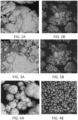
- FIGS. 2A and 2B show energy dispersive X-ray spectroscopy (EDS) and scanning electron microscopy (SEM) images, respectively, of the salt substitute of Example 1.
- the salt substitute is in the form of a combined crystalline solid comprising particles 200.
- red portions 202 of particles 200 correspond to potassium
- green portions 204 of particles 200 correspond to sodium.
- particles 200 include regions 202 consisting essentially of potassium chloride and regions 204 consisting essentially of sodium chloride, with regions 202 and 204 in direct contact.
- the scale bars in FIGS. 2A and 2B are 100 ⁇ m and 500 ⁇ m, respectively.
- the magnification in FIG. 2B is 150x.
- Example 2 In this example, 121 gallons of water was added to a batching tank. The water was 80.8 °C (177.4 °F) when added. 226.8 kg (500 pounds) of potassium chloride, which included 0.005 wt% or 2.5 pounds of magnesium carbonate, was added to the water to yield a slurry. 3.6 kg (8.0 pounds) of citric acid was added to the slurry. The pH was tested to be 2.98. The slurry was held for 1 hour, during which time the temperature fell to 47.8 °C (118 °F). After 1 hour hold time, 226.8 kg (500 pounds) of sodium chloride was added to the slurry, and the pH was retested and found to be 2.64. The slurry was 53.78 wt% solids. The slurry was then provided to a pusher centrifuge (BP Littleford, Model S-200 Centrifuge) and dried.
- BP Littleford, Model S-200 Centrifuge BP Littleford, Model S-200 Centrif
- FIGS. 3A and 3B show EDS and SEM images, respectively, of the salt substitute of Example 2.
- the salt substitute is in the form of a combined crystalline solid comprising particles 200.
- red portions 302 of particles 300 correspond to potassium
- green portions 304 of particles 300 correspond to sodium.
- particles 300 include regions 302 consisting essentially of potassium chloride and regions 304 consisting essentially of sodium chloride, with regions 302 and 304 in direct contact.
- the scale bars in FIGS. 3A and 3B are 100 ⁇ m and 500 ⁇ m, respectively.
- the magnification in FIG. 3B is 150x.
- Example 3 In this example, 301.6 kg (665 lbs) of potassium chloride, 1.51 kg (3.325 lbs) of magnesium carbonate, and 3.016 kg (6.65 lbs) of citric acid were mixed in 347.5 kg (766 lbs) of water and blended at 48.9 °C (120 °F) to yield a slurry.
- the slurry contained 46.8% solids, and the pH was 3.25.
- the slurry was held in suspension by tank agitation.
- the slurry was fed to a pusher centrifuge at 1.634 kg/s (216.2 lb/min), and a solid cake was created at 0.395 kg/s (52.2 lb/min) and 2.5 wt% moisture.
- the cake was further dried in an infrared oven to reduce the moisture content to less than 1 wt%.
- the salt substitute was sampled for taste, and reflected a clean profile with little to no metallic aftertaste.
- Example 4 In this example, 147.4 kg (325 lbs) of potassium chloride, 147.4 kg (325 lbs) of sodium chloride, 1.474 kg (3.25 lbs) of magnesium carbonate, and 2.94 kg (6.5 lbs) of citric acid were mixed in 347.5 kg (766 lbs) of water and blended at 48.9 °C (120 °F).
- the slurry contained 46.3 wt% solids, and the pH was 3.2.
- the slurry was held in suspension by tank agitation.
- the slurry feed rate to the pusher centrifuge was 1.294 kg/s (171.2 lb/min), and a solid cake was created at 0.37 kg/s (49 lb/min) at 2.89% moisture.
- the cake was further dried in an infrared oven to reduce the moisture content to less than 1 wt%.
- the salt substitute was sampled for taste, and reflected a clean profile with little to no metallic aftertaste.
- Table 1A lists components used to prepare Salt Substitutes A-O, as well as properties of the salt substitute precursor, the salt substitute, and the centrate. Examples 1 and 2 correspond to Tests D and E, respectively, in Table 1.
- Table 1B lists components used to prepare Salt Substitutes P-U, as well as properties of the salt substitute precursor, the salt substitute, and the centrate.
- the procedure used to prepare Salt Substitutes A-U generally corresponds to procedures described in Examples 1-4.
- the salt substitute precursor was held for 1 hour between 40.6 °C (105 °F) and 51.7 °C (125 °F) before centrifugation.
- Salt Substitutes L1-L3 differed by the temperature of the slurry provided to the centrifuge, with temperatures of 23.9 °C (75 °F), 29.4 °C (85 °F) and 35 °C (95 °F), respectively.
- Salt Substitutes P1-P9 differed by the length of the hold time in the slurry before centrifugation.
- the amount of citric acid (i.e., citric acid plus citrate) in Salt Substitutes N, O, and S was measured three times, with the average result being 400 ppm by weight (0.04 wt%), 1003 ppm by weight (0.10 wt%), and 684 ppm (0.07 wt%), respectively.
- Table 1A Table 1A.
- Salt Substitute Tests P-U. Salt Substitute Precursor Salt Substitute Centrate Hold Time (min) KCl/NaCl Wt. Ratio Test Water (Gallons) KCl (lbs) NaCl (lbs) Citric (lbs) MgCO 3 (lbs) Solids (wt%) pH Moisture (wt%) pH Solids (wt%) pH P1 60.00 1492.50 22.00 7.50 72.12 3.32 3.11 4.70 31.80 3.84 0 P2 60.00 1492.50 22.00 7.50 72.12 3.32 3.04 4.76 29.96 3.85 5 P3 60.00 1492.50 22.00 7.50 72.12 3.32 2.78 4.69 31.16 3.87 10 P4 60.00 1492.50 22.00 7.50 72.12 3.32 2.50 4.69 30.22 3.86 15 P5 60.00 1492.50 22.00 7.50 72.12 3.32 3.19 4.68 31.76 3.88 20 P6 60.00 1492.50 22.00 7.50 72.12 3.32 1.92 4.72
- Table 2 lists RO-TAP test results (particle size distribution by weight in US20-US200 Mesh) for 100 grams of Salt Substitutes M and O.
- Table 3 lists RO-TAP test results (particle size distribution by weight in US20-US400 Mesh) for 100 grams of Salt Substitutes P-T.
- Table 4 lists average bulk density (tapped and untapped) for 100 g of Salt Substitutes P-T in g/cm 3 and lb/ft 3 .
- the bulk density ranges from about 961.1 (60 lb/ft 3 ) to about 1281.5 (80 lb/ft 3 ) (tapped and untapped) for these samples, which is similar to the reported ranges of various types of commercially available sodium chloride.
- Table 4 Bulk density of Salt Substitutes P-T.
- Comparative Example 1 Water (35 pounds, 15.9 kg) was heated to 180 °F (82 °C) in a stirred, jacketed kettle. To the heated water, potassium chloride (6 pounds, 2.7 kg) and sodium chloride (9 pounds, 4.1 kg) were added, stirred, and dissolved. Next, citric acid (0.22 pounds, 100 g) was added followed by the slow addition of maltodextrin (6 pounds, 2.7 kg) in small amounts, which dissolved slowly into the solution. The pH of the formulation was measured at 2.16. The completed solution was then transferred to a stainless steel vessel, through which it was pumped into the spray dryer. The spray-dried formulation was packed and stored in plastic, resealable bags.
- FIGS. 4A and 4B show EDS and SEM images, respectively, of the salt substitute of Comparative Example 1.
- the salt substitute is in the form of homogenous particles 400, where red portions of particles 400 correspond to potassium, and green portions of particles 400 correspond to sodium. Particles 400 do not include regions consisting essentially of potassium chloride and regions consisting essentially of sodium chloride in direct contact.
- the scale bars in FIGS. 4A and 4B are 90 ⁇ m and 200 ⁇ m, respectively.
- the magnification in FIG. 4B is 150x.
Landscapes
- Chemical & Material Sciences (AREA)
- Life Sciences & Earth Sciences (AREA)
- Polymers & Plastics (AREA)
- Nutrition Science (AREA)
- Engineering & Computer Science (AREA)
- Food Science & Technology (AREA)
- Health & Medical Sciences (AREA)
- Inorganic Chemistry (AREA)
- Mycology (AREA)
- Dispersion Chemistry (AREA)
- Seasonings (AREA)
- Coloring Foods And Improving Nutritive Qualities (AREA)
- Pharmaceuticals Containing Other Organic And Inorganic Compounds (AREA)
- Organic Low-Molecular-Weight Compounds And Preparation Thereof (AREA)
Applications Claiming Priority (2)
| Application Number | Priority Date | Filing Date | Title |
|---|---|---|---|
| US201762560117P | 2017-09-18 | 2017-09-18 | |
| PCT/US2018/037857 WO2019055082A1 (en) | 2017-09-18 | 2018-06-15 | LOW SODIUM SALT SUBSTITUTE COMPRISING POTASSIUM CHLORIDE |
Publications (4)
| Publication Number | Publication Date |
|---|---|
| EP3684196A1 EP3684196A1 (en) | 2020-07-29 |
| EP3684196A4 EP3684196A4 (en) | 2020-11-11 |
| EP3684196B1 true EP3684196B1 (en) | 2024-09-04 |
| EP3684196C0 EP3684196C0 (en) | 2024-09-04 |
Family
ID=65723020
Family Applications (1)
| Application Number | Title | Priority Date | Filing Date |
|---|---|---|---|
| EP18855922.3A Active EP3684196B1 (en) | 2017-09-18 | 2018-06-15 | Low sodium salt substitute with potassium chloride |
Country Status (11)
| Country | Link |
|---|---|
| US (1) | US11051539B2 (pl) |
| EP (1) | EP3684196B1 (pl) |
| JP (1) | JP7274462B2 (pl) |
| CN (1) | CN111093391A (pl) |
| AR (1) | AR113066A1 (pl) |
| AU (1) | AU2018332654B2 (pl) |
| CA (1) | CA3075623C (pl) |
| ES (1) | ES2995057T3 (pl) |
| MX (1) | MX2020002891A (pl) |
| PL (1) | PL3684196T3 (pl) |
| WO (1) | WO2019055082A1 (pl) |
Families Citing this family (3)
| Publication number | Priority date | Publication date | Assignee | Title |
|---|---|---|---|---|
| MY209578A (en) * | 2020-03-03 | 2025-07-23 | Omya Int Ag | Anticaking agent |
| CN117122040A (zh) * | 2023-08-15 | 2023-11-28 | 中盐安徽润华强旺盐业有限公司 | 鲜咸合一低钠调味盐及其制备方法 |
| GB2635182A (en) * | 2023-11-01 | 2025-05-07 | Frito Lay Trading Co Gmbh | Salt substitute compositions |
Family Cites Families (187)
| Publication number | Priority date | Publication date | Assignee | Title |
|---|---|---|---|---|
| US82A (en) | 1836-11-17 | Spiral bit with countersink for setting screws | ||
| US3505A (en) | 1844-03-26 | Mill-btjsh | ||
| US1874055A (en) | 1928-05-19 | 1932-08-30 | Firm Chemisch Pharmazeutische | Process for preparing suitable substitutes for table salt for flavoring purposes |
| GB312088A (en) | 1928-05-19 | 1930-05-08 | Chemisch Pharmazeutische Ag Ba | A process for preparing substitutes for table salt suitable for flavouring purposes |
| US1978040A (en) | 1931-09-14 | 1934-10-23 | Firm Daitz Patents Foundation | Process for maintaining the sprinkling capability of finely granular table salt |
| US2500919A (en) | 1948-12-03 | 1950-03-21 | Louis Milani Foods Inc | Sodium-free flavoring compositions |
| US2601112A (en) | 1950-03-31 | 1952-06-17 | Us Vitamin Corp | Saline composition |
| GB713803A (en) | 1951-04-03 | 1954-08-18 | Fougera & Co Inc E | Dietary salt substitute |
| US2596333A (en) | 1951-04-03 | 1952-05-13 | Fougera & Co Inc E | Dietary salt substitute |
| US2742366A (en) | 1952-10-18 | 1956-04-17 | Little Inc A | Salt substitute and method of preparing the same |
| US2829056A (en) | 1956-01-24 | 1958-04-01 | Mead Johnson & Co | Dietary seasoning composition |
| US2824008A (en) | 1956-03-12 | 1958-02-18 | Giulio C Perri | Salt substitute |
| US2874027A (en) | 1956-05-07 | 1959-02-17 | Int Minerals & Chem Corp | Preparation of alkali metal phosphates |
| US2900268A (en) | 1956-11-15 | 1959-08-18 | John C Rankin | Process for preparing hydroxyalkylated cereal flour |
| US2968566A (en) | 1959-01-07 | 1961-01-17 | Pharmacodynamics Inc | Composition useful with comestibles |
| GB911130A (en) | 1959-11-10 | 1962-11-21 | Dominion Tar & Chemical Co | Salt production |
| US3514296A (en) | 1967-01-16 | 1970-05-26 | Morton Int Inc | Salt substitute |
| US3505082A (en) | 1967-06-12 | 1970-04-07 | Morton Int Inc | Salt substitute composition |
| US3860732A (en) | 1970-03-30 | 1975-01-14 | Cumberland Packing Corp | Salt substitute |
| US3782974A (en) | 1971-08-02 | 1974-01-01 | J Lontz | Dietetic salt substitute composition |
| FR2196151A1 (en) | 1972-08-18 | 1974-03-15 | Grimberg George | Dietetic sodium-free salt mixture - for use by patients with renal insuffic--iency or hypertension |
| IL45392A (en) | 1974-08-02 | 1977-07-31 | Cumberland Packing Corp | Table salt substitute |
| US4076846A (en) | 1974-11-22 | 1978-02-28 | Sumitomo Bakelite Company Limited | Protein-starch binary molding composition and shaped articles obtained therefor |
| US4066799A (en) | 1975-12-22 | 1978-01-03 | Miles Laboratories, Inc. | Sodium chloride flavor substitute composition and use thereof |
| US4068006A (en) | 1976-10-07 | 1978-01-10 | Akzona Incorporated | Salt seasoning mixture |
| US4216244A (en) | 1978-09-19 | 1980-08-05 | Allen Alfred E Jr | Low sodium salt seasoning |
| US4243691A (en) | 1979-05-18 | 1981-01-06 | The Procter & Gamble Company | Sodium-free salt substitute |
| US4297375A (en) | 1979-09-21 | 1981-10-27 | Standard Oil Company (Indiana) | Salt substitutes having reduced bitterness |
| DE3021298A1 (de) | 1980-06-06 | 1982-01-07 | Basf Ag, 6700 Ludwigshafen | Streng natriumarmes diaetsalz und dessen herstellung |
| US4293535A (en) | 1980-08-22 | 1981-10-06 | General Electric Company | Molten salt synthesis of alkaline zirconate powder |
| DE3107800A1 (de) | 1981-02-28 | 1982-09-16 | Merck Patent Gmbh, 6100 Darmstadt | Salzgemisch, verfahren zu seiner herstellung und verwendung |
| JPS57186460A (en) | 1981-05-14 | 1982-11-16 | Tanpei Seiyaku Kk | Low sodium salt substitute and food containing the same |
| EP0083640A1 (en) | 1981-07-13 | 1983-07-20 | OLIVER, Stuart McCornack | Flavoring system for sodium reduced foods |
| CA1155330A (en) | 1981-10-20 | 1983-10-18 | John R. Shackelford | Salt substitutes having reduced bitterness |
| US4473595A (en) | 1982-01-04 | 1984-09-25 | Rood Robert P | Low-sodium salt substitute |
| US5064663A (en) | 1982-08-23 | 1991-11-12 | Burns Philp Food, Inc. | Sodium chloride substitute containing autolyzed yeast and ammonium chloride |
| US4451494A (en) | 1982-09-10 | 1984-05-29 | Roan Iii Charles F | Sodium-free salt substitute |
| CA1221576A (en) | 1983-03-30 | 1987-05-12 | Henry Arciszewski | Salt substitute composition |
| US4556566A (en) | 1983-06-30 | 1985-12-03 | Mallinckrodt, Inc. | Salt substitute containing potassium chloride coated with a mixture of maltodextrin and sodium chloride and method of preparation |
| DE3466466D1 (en) | 1983-06-30 | 1987-11-05 | Mallinckrodt Inc | Salt substitute blends of potassium chloride and maltodextrin and method of preparation |
| US4560574A (en) | 1983-06-30 | 1985-12-24 | Mallinckrodt, Inc. | Salt substitute containing potassium chloride, maltodextrin and sodium chloride and method of preparation |
| US4556578A (en) | 1983-06-30 | 1985-12-03 | Mallinckrodt, Inc. | NaCl-Free salt substitute containing potassium chloride, maltodextrin and potassium bitartrate and method of preparation |
| US4556577A (en) | 1983-06-30 | 1985-12-03 | Mallinckrodt, Inc. | Admixture of potassium chloride and maltodextrin as salt substitute and method of preparation |
| US4556567A (en) | 1983-06-30 | 1985-12-03 | Mallinckrodt, Inc. | Salt substitute containing potassium chloride coated with maltodextrin and method of preparation |
| US4556568A (en) | 1983-06-30 | 1985-12-03 | Mallinckrodt, Inc. | Salt substitute containing potassium chloride coated with a mixture including maltodextrin and potassium bitartrate and method of preparation |
| US4486456A (en) | 1983-09-19 | 1984-12-04 | Thompson Jerome B | Sodium-reduced baked dough products and method |
| FI834309A7 (fi) | 1983-11-24 | 1985-05-25 | Pharmaconsult Oy | Suolaseos. |
| DK148784D0 (da) | 1984-02-29 | 1984-02-29 | Nexus Aps | Pulverprodukt |
| DE3418644A1 (de) | 1984-05-18 | 1985-11-28 | Diamalt AG, 8000 München | Natriumarmes, als kochsalzsubstitut geeignetes salzgemisch |
| GB8507977D0 (en) | 1985-03-27 | 1985-05-01 | Howard Foundation | Culinary seasoning compositions |
| GR861162B (en) | 1985-05-06 | 1986-09-01 | Unilever Nv | Improved protein hydrolysate |
| DE3541802A1 (de) | 1985-11-22 | 1987-05-27 | Diamalt Ag | Diaetetische speisewuerze |
| US4734290A (en) | 1985-12-12 | 1988-03-29 | Mallinckrodt, Inc. | Process for preparing a coated-particle salt substitute composition |
| JPH0622458B2 (ja) | 1986-01-18 | 1994-03-30 | 株式会社味食研 | 食塩代用品 |
| SU1375237A1 (ru) | 1986-04-18 | 1988-02-23 | Ивановский государственный медицинский институт им.А.С.Бубнова | Заменитель поваренной соли,обладающий антигипертензивным действием |
| DK273888A (da) | 1987-05-20 | 1988-11-21 | Chugai Pharmaceutical Co Ltd | Salterstatning og krydderier med et indhold deraf |
| SE465669B (sv) | 1988-07-15 | 1991-10-14 | Hanson & Moehring Ab | Salt foer livsmedelsaendamaal samt foerfarande foer dess framstaellning |
| US5034378A (en) | 1988-12-15 | 1991-07-23 | James P. Cox | Synergistic flavor enhancement nutritional compositions and methods |
| US5094862A (en) | 1989-08-25 | 1992-03-10 | Warner-Lambert Company | Salt substitute granule and method of making same |
| AT403237B (de) | 1989-09-08 | 1997-12-29 | Salinen Austria Ges M B H | Natriumreduziertes speisesalz |
| US5098723A (en) | 1989-09-15 | 1992-03-24 | Dubois Grant E | Low sodium salt composition and method of preparing |
| US5098724A (en) | 1989-09-15 | 1992-03-24 | Dubois Grant E | Low sodium salt composition and method of preparing |
| GB2237720B (en) | 1989-11-08 | 1993-12-15 | Patrick Hylton Heron | Potassium-enriched dietary salt substitute |
| US5106632A (en) | 1990-01-23 | 1992-04-21 | Warner-Lambert Company | Enhanced sweetness of acesulfame-k in edible compositions |
| US5213838A (en) | 1991-01-23 | 1993-05-25 | Morris Sheikh | Sodium-free salt substitute containing citrates and method for producing the same |
| DK44891D0 (da) | 1991-03-12 | 1991-03-12 | Gunnar Olof Sundien | Partikelformet mineralsaltkomposition og fremgangsmaade til fremstilling af samme |
| US5447543A (en) | 1991-06-10 | 1995-09-05 | Exportadora De Sal, S.A. De C.V. | Process for crystallizing inorganic salts |
| US5173323A (en) | 1991-07-22 | 1992-12-22 | Omari Yunis J | Process for removing the bitterness from potassium chloride |
| DE4133094A1 (de) | 1991-10-05 | 1993-04-08 | Solvay Deutschland | Verfahren zur molkenpermeataufarbeitung |
| DK170015B1 (da) * | 1992-03-19 | 1995-05-01 | Sudurnesja Hitaveita | Saltprodukt samt fremgangsmåde til dets fremstilling |
| US5288510A (en) | 1992-05-18 | 1994-02-22 | George Gregory | Palatable low salt substitutes |
| US5370882A (en) | 1993-01-26 | 1994-12-06 | Nestec S.A. | Taste-enhancement of sodium chloride-reduced compositions |
| DE9302125U1 (de) | 1993-02-15 | 1993-04-22 | BHS-Bayerische Berg-, Hütten- und Salzwerke AG, 8000 München | Als Kochsalzersatz geeignetes Salzgemisch |
| US5562942A (en) | 1993-10-05 | 1996-10-08 | Koh; Hen-Sik | Salt compositions |
| WO1995018546A1 (en) | 1994-01-11 | 1995-07-13 | George Gregory | Palatable low salt substitutes |
| TW287090B (pl) | 1994-12-07 | 1996-10-01 | Fujisawa Yakusin Kogyo Kk | |
| US5897908A (en) | 1995-01-23 | 1999-04-27 | Board Of Trustees Operating Michigan State University | Composition and method for producing a salty taste |
| HU212837B (en) | 1995-10-06 | 1997-02-28 | Farsang | Sodium-poor, containing, magnesium and potassimum vegetables and spice mixture repast salt mixture |
| GB9520923D0 (en) | 1995-10-12 | 1995-12-13 | Procter & Gamble | Detergent compositions |
| JP2887105B2 (ja) | 1996-04-24 | 1999-04-26 | 幸子 林 | 飲料水および塩の製造方法および製造装置 |
| US6090419A (en) | 1996-05-02 | 2000-07-18 | Mccormick & Company, Inc. | Salt compositions and method of preparation |
| IL118460A (en) | 1996-05-28 | 1999-09-22 | Dead Sea Works Ltd | Edible salt mixture |
| US6048569A (en) | 1996-06-21 | 2000-04-11 | Garcia; Fernando Horacio | Comestible liquid sea salt having a low sodium content and method for producing the same |
| ATE249758T1 (de) | 1996-07-15 | 2003-10-15 | Fujisawa Pharmaceutical Co | Funktionelle natriumchloridzusammensetzungen |
| US5871803A (en) | 1997-05-30 | 1999-02-16 | Campbell Soup Company | Salt flavor enhancing compositions, food products including such compositions, and methods for preparing such products |
| FI973929A7 (fi) | 1997-10-10 | 1999-04-11 | Slk Found | WOF inhibiittori |
| AR011559A1 (es) | 1998-01-22 | 2000-08-30 | Cohen Gloria Virginia | Sustituto de la sal de mesa en base a sales de potasio |
| FR2773955B1 (fr) | 1998-01-26 | 2000-04-07 | Sanofi Sa | Composition dietetique sous forme d'un sel de substitution du sel de table |
| FI104783B (fi) | 1998-02-12 | 2000-04-14 | Valio Oy | Herasuolajauhe, menetelmä sen valmistamiseksi ja sen käyttö |
| US6541050B1 (en) | 1998-11-27 | 2003-04-01 | Campbell Soup Company | Salt flavor enhancing compositions, food products including such compositions, and methods for preparing such products |
| US20030008046A1 (en) | 1998-12-18 | 2003-01-09 | Paula A. Gerlat | Use of n-neohexyl-a-aspartyl-l-phenylalanine methyl ester as a flavor modifier |
| DE19902395C2 (de) | 1999-01-22 | 2001-05-03 | Kali & Salz Ag | Verfahren zur Verengung des Kornspektrums von Kalium- und Natriumchloridkristallisaten zur Verbesserung der Rieseleigenschaften |
| FI110474B (fi) | 1999-01-27 | 2003-02-14 | Modulpo Salts Oy | Ravintofysiologinen suolatuote, sen käyttö ja menetelmä sen valmistamiseksi |
| BR0113199A (pt) * | 2000-08-14 | 2003-07-08 | Unilever Nv | Composição comestìvel de sal, granulada, de livre escoamento, misturas, e, processo de obtenção de uma composição de sal comestìvel granulada, de livre escoamento |
| JP4182644B2 (ja) | 2001-02-09 | 2008-11-19 | 味の素株式会社 | 調味料組成物およびそれを用いてなる食品の製造方法 |
| DE60202609T2 (de) * | 2001-07-09 | 2005-12-29 | Akzo Nobel N.V. | Verfahren zur herstellung von hochreinem feuchtem salz, so erhältliches feuchtes salz und verwendung davon bei einem elektrolyseverfahren |
| US6632467B1 (en) | 2001-09-19 | 2003-10-14 | Mafalda Salvi | Solid condiment comprising a solid and a liquid |
| US6753023B2 (en) | 2001-10-12 | 2004-06-22 | California Natural Products | Rice-flour hydrolysates fat substitute |
| US6743461B1 (en) | 2001-11-09 | 2004-06-01 | Ecosalt Corporation | Salt substitute compositions |
| FR2833466B1 (fr) | 2001-12-17 | 2004-08-06 | Larena Sa | Composition de sel pauvre en chlorure de sodium et riche en sel organique de potassium et ses utilisations |
| CN1304292C (zh) * | 2002-01-31 | 2007-03-14 | 科学和工业研究委员会 | 从盐卤中回收低钠盐的方法 |
| TWI261521B (en) | 2002-02-05 | 2006-09-11 | Shiang-Kuen Mau | Composition for reducing or removing nitrosamine resulting from chewing betel quid |
| CA2372587C (en) | 2002-03-11 | 2003-10-07 | Ocean Nutrition Canada Ltd. | Fish hydrolysates as salt replacement |
| JP2004052449A (ja) | 2002-07-23 | 2004-02-19 | Yonekyu Corp | 地層からの海洋深層水の採取方法およびそれを用いた食用塩の製造方法 |
| GB0230274D0 (en) | 2002-12-30 | 2003-02-05 | Vivotec Ltd | Composition |
| US7402328B2 (en) | 2003-12-08 | 2008-07-22 | Ramon Efrain Vasquez | Stable sodium-free or low-sodium aqueous solution of agreeable saltiness taste |
| US7220435B2 (en) * | 2003-12-23 | 2007-05-22 | Council Of Scientific & Industrial Research | Process for the production of glycine enriched NaCI crystals with improved flow |
| US20050142219A1 (en) | 2003-12-26 | 2005-06-30 | Diversified Natural Products, Inc. | Essentially sodium-free potassium salt derived from seaweed |
| WO2005094615A1 (en) | 2004-03-03 | 2005-10-13 | Ecosalt Corporation | Non-bitter sodium-free or low-sodium salt composition |
| CN1559436A (zh) | 2004-03-12 | 2005-01-05 | 杨理林 | 一种口服补液盐闪溶片剂及其制备方法 |
| EP1734838A2 (en) | 2004-03-15 | 2006-12-27 | TVD Taste Virtual Dimensions, Inc. | Salt substitute comprising biocompatible polymer |
| US7208189B2 (en) | 2004-04-06 | 2007-04-24 | Council Of Scientific And Industrial Research | Low sodium salt of botanic origin |
| US20060024422A1 (en) | 2004-07-30 | 2006-02-02 | Cumberland Packing Corp. | Salt substitute compositions having N-neohexyl-a-aspartyl-l- phenylalanine methyl ester for modifying flavor and methods of manufacturing the same |
| CN1993059B (zh) | 2004-08-03 | 2011-04-20 | 味之素株式会社 | 调味品组合物、调味品材料和使用它们制造食品的方法 |
| US8231925B2 (en) | 2004-08-20 | 2012-07-31 | Cargill, Incorporated | Ingredient systems comprising trehalose, food products containing trehalose, and methods of making same |
| AU2005277172A1 (en) | 2004-08-20 | 2006-03-02 | Cargill, Incorporated | Ingredient systems comprising trehalose, food products containing trehalose, and methods of making same |
| US7427421B2 (en) | 2004-09-10 | 2008-09-23 | International Flavors & Fragrances Inc. | Saturated and unsaturated N-alkamides exhibiting taste and flavor enhancement effect in flavor compositions |
| US7666409B2 (en) | 2004-11-16 | 2010-02-23 | Kao Corporation | Low salt liquid seasoning with antihypertensive activity |
| US7455872B2 (en) | 2005-06-20 | 2008-11-25 | Redpoint Bio Corporation | Compositions and methods for producing a salty taste in foods or beverages |
| US7452563B2 (en) | 2005-06-20 | 2008-11-18 | Redpoint Bio Corporation | Compositions and methods for producing flavored seasonings that contain reduced quantities of common salt |
| ES2341802T3 (es) | 2005-09-05 | 2010-06-28 | Immatics Biotechnologies Gmbh | Peptidos asociados a tumores unidos promiscuamente a moleculas del antigeno de leucocito humano (hla) de clase ii. |
| US9629384B2 (en) | 2005-09-14 | 2017-04-25 | S & P Ingredient Development, Llc | Low sodium salt composition |
| US20070059428A1 (en) | 2005-09-14 | 2007-03-15 | Chigurupati Sambasiva R | Low-sodium salt composition |
| US20080193591A1 (en) | 2005-12-26 | 2008-08-14 | Yaizu Suisankagaku Industry Co., Ltd. | Taste Improving Agent for Food and Beverage Containing Potassium Chloride, Process for Producing Food and Beverage Containing Potassium Chloride and Food and Beverage Containing Potassium Chloride Produced by the Process |
| KR100759090B1 (ko) | 2006-02-16 | 2007-09-17 | 박상영 | 알칼리성분이 풍부한 식품첨가제 및 그 제조방법 |
| US9149061B2 (en) | 2006-04-11 | 2015-10-06 | Jungbunzlauer Ladenburg Gmbh | Salt replacement mixture with reduced NaCI content |
| FR2900799A1 (fr) | 2006-05-15 | 2007-11-16 | Lesaffre & Cie | Nouvel agent substitut du sel naci, son utilisation et produits en contenant |
| US20070292592A1 (en) | 2006-06-15 | 2007-12-20 | Mccormick & Company | Salt replacing composition, process for its preparation and food systems containing such composition |
| US7867520B2 (en) | 2006-06-21 | 2011-01-11 | Adeka Corporation | Flavor improving agent |
| JP5265142B2 (ja) | 2006-06-21 | 2013-08-14 | 株式会社Adeka | 塩味強化剤を含有する食塩組成物 |
| US20080038411A1 (en) | 2006-06-30 | 2008-02-14 | Michael Jensen | Seasoning and method for enhancing and potentiating food flavor |
| US20080003339A1 (en) | 2006-06-30 | 2008-01-03 | Clinton Johnson | Seasoning and method for seasoning a food product utilizing small particle sea salt |
| US7923047B2 (en) | 2006-06-30 | 2011-04-12 | Conagra Foods Rdm, Inc. | Seasoning and method for seasoning a food product while reducing dietary sodium intake |
| US20080008790A1 (en) | 2006-06-30 | 2008-01-10 | Michael Jensen | Seasoned food, seasoning, and method for seasoning a food product |
| US7989016B2 (en) | 2006-10-05 | 2011-08-02 | Sambasiva Rao Chigurupati | Method for producing a low sodium salt composition |
| US8802181B2 (en) * | 2006-10-05 | 2014-08-12 | S & P Ingredient Development, Llc | Low sodium salt composition |
| US20100047391A1 (en) | 2006-12-19 | 2010-02-25 | Frank Richard Meijer | Reduced-salt dairy product with improved taste |
| FI20075086L (fi) | 2007-02-07 | 2008-08-08 | Slk Foundation | Aromikoostumus |
| US20080199595A1 (en) | 2007-02-15 | 2008-08-21 | Mccormick & Company | Salt replacing composition, process for its preparation and food systems containing such composition |
| US7820225B2 (en) | 2007-03-07 | 2010-10-26 | Exportadora De Sal, S.A. De C.V. | Low sodium salt compositions and methods of preparation and uses thereof |
| US7854956B2 (en) | 2007-03-07 | 2010-12-21 | Exportadora De Sal, S.A. De C.V. | Low sodium salt compositions and methods of preparation and uses thereof |
| AU2008228771A1 (en) | 2007-03-22 | 2008-09-25 | Ecosalt Corporation | Non-bitter sodium-free or low-sodium salt composition |
| JPWO2008120726A1 (ja) | 2007-03-30 | 2010-07-15 | 国立大学法人広島大学 | 塩味増強剤、飲食品および飲食品の製造方法 |
| JP4824628B2 (ja) | 2007-05-25 | 2011-11-30 | 日清食品ホールディングス株式会社 | 食塩代替物、及び減塩加工食品とその製造方法 |
| JP5251019B2 (ja) * | 2007-05-31 | 2013-07-31 | 味の素株式会社 | 塩類の固結防止方法 |
| CL2007002915A1 (es) | 2007-10-10 | 2008-04-25 | Cox Y Compania S A | Composicion para alimentos, suplementos nutritivos, productos nutraceuticos u otros de consumo humano que comprende cloruro de sodio, cloruro de potasio, acidos y edulcorantes, donde las proporciones de dichos componentes confieren a la composicion p |
| US20090104330A1 (en) | 2007-10-19 | 2009-04-23 | Mccormick & Company, Inc. | Reduced sodium salty taste composition, process for its preparation and food systems containing such composition |
| FR2922728B1 (fr) | 2007-10-26 | 2011-06-24 | Lesaffre & Cie | Nouvel agent substitut du sel nacl, son utilisation et produits en contenant. |
| RU2010136981A (ru) | 2008-02-06 | 2012-03-20 | Кэмбелл Суп Компани (US) | Способы и композиции для снижения содержания натрия в пищевых продуктах |
| AU2009224376A1 (en) | 2008-03-14 | 2009-09-17 | Nippon Suisan Kaisha, Ltd. | Salty taste enhancer and food or drink containing same |
| WO2009116050A1 (en) | 2008-03-19 | 2009-09-24 | Greensalt Ltd. | Salt substitute |
| US8501253B2 (en) | 2008-03-21 | 2013-08-06 | Smart Salt, Inc. | Carnallite-like food salts and products thereof |
| US8932661B2 (en) | 2008-03-24 | 2015-01-13 | Nippon Suisan Kaisha, Ltd. | Salty taste enhancer and food or drink containing same |
| KR20090105762A (ko) | 2008-04-03 | 2009-10-07 | 전남대학교산학협력단 | 대체염을 이용한 저염 오이지의 제조 기술 |
| GB0807919D0 (pl) | 2008-05-01 | 2008-06-04 | Moorlodge Biotech Ventures Ltd | |
| DE102008024206A1 (de) | 2008-05-14 | 2009-11-19 | Symrise Gmbh & Co. Kg | Aromakompositionen und Zubereitungen umfassend Nα-β-Alanyl-Dipeptide |
| JP5452893B2 (ja) | 2008-06-25 | 2014-03-26 | 小川香料株式会社 | カリウム塩又はカリウム塩含有飲食品の呈味改善剤 |
| US20100227023A1 (en) | 2009-03-06 | 2010-09-09 | Danisco A/S | Seasoning blend |
| US20100239740A1 (en) | 2009-03-17 | 2010-09-23 | Meyer Richard S | Low sodium salt substitute compositions |
| GB0906379D0 (en) | 2009-04-14 | 2009-05-20 | Kencryst Ltd | Reduced sodium salt |
| WO2011040505A1 (ja) | 2009-10-02 | 2011-04-07 | ハウス食品株式会社 | 塩味が補強又は増強された食品組成物及び異味が抑制された塩化カリウム含有組成物 |
| US20120232166A1 (en) | 2009-10-12 | 2012-09-13 | Finley John W | Masking Bitter Flavors |
| CN102187990A (zh) * | 2010-03-09 | 2011-09-21 | 中盐国本盐业有限公司 | 一种食用盐 |
| MY174578A (en) | 2010-08-06 | 2020-04-28 | Matsutani Kagaku Kogyo Kk | Method for improving salty taste of food or beverage and salty taste improving agent |
| US20120128830A1 (en) | 2010-11-18 | 2012-05-24 | Sambasiva Rao Chigurupati | Novel low sodium salt composition |
| US20120164287A1 (en) | 2010-12-23 | 2012-06-28 | Pamela Lynn Lundberg | Pasta Product Having Reduced Sodium Anti-Boil-Over Composition With Enhanced Cheese Flavor Notes |
| CA2823970C (en) | 2011-01-06 | 2019-03-05 | Holista Biotech Sdn. Bhd. | Reduced sodium composition |
| MX350838B (es) * | 2011-02-11 | 2017-09-18 | Grain Proc Corporation * | Composicion de sal. |
| FR2973989A1 (fr) | 2011-04-15 | 2012-10-19 | Nutrionix | Nouvel agent substitut du sel nacl, son utilisation et produits en contenant |
| BR112013030729A2 (pt) | 2011-06-03 | 2016-12-06 | Icl Performance Products Lp | preparação de carnalita e usos da mesma em aplicações comestíveis |
| ES2714303T3 (es) | 2011-08-25 | 2019-05-28 | Working Bugs Llc | Sustituto de sal libre de sodio mejorado |
| JP6022463B2 (ja) | 2011-09-30 | 2016-11-09 | 理研ビタミン株式会社 | 呈味改善剤 |
| WO2013058758A2 (en) | 2011-10-20 | 2013-04-25 | Chromocell Corporation | Compounds, compositions, and methods for reducing or eliminating bitter taste |
| EP2789246B1 (en) | 2011-12-06 | 2019-03-13 | Nippon Suisan Kaisha, Ltd. | Taste-improving agent and taste improvement method for a foodstuff |
| WO2013085858A2 (en) | 2011-12-08 | 2013-06-13 | Dow Global Technologies Llc | Salt composition |
| US20140314943A1 (en) | 2011-12-08 | 2014-10-23 | Dow Global Technologies Llc | Salt composition |
| US8999425B2 (en) | 2012-01-04 | 2015-04-07 | Jcr Technologies Llc | Low sodium salt substitute compositions |
| US20130196001A1 (en) | 2012-01-30 | 2013-08-01 | Health & Science, LLC | Salt replacement compositions and methods of using same |
| FR2989556B1 (fr) | 2012-04-24 | 2014-05-23 | Midi & Salines Est Salins | Substitut de sel |
| EP2872446B1 (en) * | 2012-07-12 | 2020-01-22 | Nouryon Chemicals International B.V. | Free flowing salt composition prepared by evaporative crystallization |
| WO2014071394A1 (en) | 2012-11-05 | 2014-05-08 | S & P Ingredient Development, Llc | A low sodium salt composition |
| WO2014081968A1 (en) * | 2012-11-21 | 2014-05-30 | S&P Ingredient Development Llc | Compostions of low sodium salt and methods of making and using |
| WO2014127003A2 (en) | 2013-02-13 | 2014-08-21 | The Trustees Of Columbia University In The City Of New York | Modulation of salty taste perception by altering the function of bitter- or pkd2l1-expressing taste receptor cells |
| US20150056338A1 (en) | 2013-08-20 | 2015-02-26 | S&P Ingredient Development Llc | Salt compositions and methods of making and using |
| FR3012293A1 (fr) | 2013-10-31 | 2015-05-01 | Setalg | Ingredient alimentaire d'origine algale et son utilisation comme substitut de sel et exhausteur de gout |
| US9247762B1 (en) | 2014-09-09 | 2016-02-02 | S & P Ingredient Development, Llc | Salt substitute with plant tissue carrier |
| JP2017158543A (ja) * | 2016-03-04 | 2017-09-14 | 味の素株式会社 | 塩味増強組成物 |
-
2018
- 2018-06-15 CA CA3075623A patent/CA3075623C/en active Active
- 2018-06-15 AU AU2018332654A patent/AU2018332654B2/en not_active Ceased
- 2018-06-15 MX MX2020002891A patent/MX2020002891A/es unknown
- 2018-06-15 ES ES18855922T patent/ES2995057T3/es active Active
- 2018-06-15 PL PL18855922.3T patent/PL3684196T3/pl unknown
- 2018-06-15 EP EP18855922.3A patent/EP3684196B1/en active Active
- 2018-06-15 US US16/347,288 patent/US11051539B2/en active Active
- 2018-06-15 CN CN201880060235.6A patent/CN111093391A/zh active Pending
- 2018-06-15 JP JP2020515972A patent/JP7274462B2/ja active Active
- 2018-06-15 WO PCT/US2018/037857 patent/WO2019055082A1/en not_active Ceased
- 2018-09-17 AR ARP180102640A patent/AR113066A1/es active IP Right Grant
Also Published As
| Publication number | Publication date |
|---|---|
| ES2995057T3 (en) | 2025-02-05 |
| JP7274462B2 (ja) | 2023-05-16 |
| AU2018332654A1 (en) | 2020-04-16 |
| JP2020533999A (ja) | 2020-11-26 |
| AU2018332654B2 (en) | 2022-07-21 |
| CN111093391A (zh) | 2020-05-01 |
| MX2020002891A (es) | 2021-01-08 |
| EP3684196A4 (en) | 2020-11-11 |
| AR113066A1 (es) | 2020-01-22 |
| CA3075623A1 (en) | 2019-03-21 |
| CA3075623C (en) | 2023-11-14 |
| US11051539B2 (en) | 2021-07-06 |
| BR112020005285A2 (pt) | 2020-09-24 |
| US20190281875A1 (en) | 2019-09-19 |
| EP3684196C0 (en) | 2024-09-04 |
| EP3684196A1 (en) | 2020-07-29 |
| WO2019055082A1 (en) | 2019-03-21 |
| PL3684196T3 (pl) | 2025-03-10 |
Similar Documents
| Publication | Publication Date | Title |
|---|---|---|
| EP2988613B1 (en) | A low sodium salt composition | |
| DK2668855T3 (en) | PROCEDURE FOR PREPARING A SALT COMPOSITION WITH LOW SODIUM CONTENT | |
| JP2018109192A (ja) | 抑制された非α化顆粒デンプンの製造方法 | |
| EP3684196B1 (en) | Low sodium salt substitute with potassium chloride | |
| JP6470099B2 (ja) | 澱粉分解物、並びに該澱粉分解物を用いた粉飴、シラップ及び飲食品 | |
| CN115916846A (zh) | 抑制的多孔颗粒淀粉及其制备和使用方法 | |
| EP2030512B1 (en) | Flavor improving agent | |
| WO2022009891A1 (ja) | 風味増強剤 | |
| JP5160049B2 (ja) | ヘスペリジン組成物 | |
| AU2021240906A1 (en) | Porous starch as spray-drying aid in the preparation of flavor powders | |
| JP6478644B2 (ja) | カルボキシメチル化澱粉の製造方法、カルボキシメチル化澱粉及びその用途 | |
| EP2517576B1 (en) | The use of soluble tomato solids for reducing the salt content of food products | |
| EP1008306A2 (en) | Polysaccharide which can reduce viscosity resulting from psyllium, and foods containing the polysaccharide and psyllium | |
| JP4753921B2 (ja) | 澱粉麺入り加圧加熱調理食品の製造法 | |
| JP2004097146A (ja) | 顆粒食品とその製造方法 | |
| KR102951526B1 (ko) | 굳는 현상이 감소된 고구마 분말의 제조 방법 | |
| CN107105754B (zh) | 包含气体的颗粒食品组合物 | |
| JP6887598B2 (ja) | 鉄含有飲食品 | |
| JPH0731405A (ja) | 夕顔ピューレ | |
| JP7545367B2 (ja) | 粉末状褐藻類 | |
| JP3194672B2 (ja) | カルシウムおよびマグネシウム経口補給剤、およびそれを配合してなる食品 | |
| US20010051203A1 (en) | Polysaccharide capable of reducing the viscosity of a hydrated psyllium, and foods containing the polysaccharide and psyllium | |
| BR112020005285B1 (pt) | Precursor de substituto de sal e método para produzir substituto de sal | |
| KR20180022213A (ko) | 한라봉 라떼 파우더 및 이의 제조방법 | |
| JPH05236892A (ja) | 餅または団子 |
Legal Events
| Date | Code | Title | Description |
|---|---|---|---|
| STAA | Information on the status of an ep patent application or granted ep patent |
Free format text: STATUS: THE INTERNATIONAL PUBLICATION HAS BEEN MADE |
|
| PUAI | Public reference made under article 153(3) epc to a published international application that has entered the european phase |
Free format text: ORIGINAL CODE: 0009012 |
|
| STAA | Information on the status of an ep patent application or granted ep patent |
Free format text: STATUS: REQUEST FOR EXAMINATION WAS MADE |
|
| 17P | Request for examination filed |
Effective date: 20200420 |
|
| AK | Designated contracting states |
Kind code of ref document: A1 Designated state(s): AL AT BE BG CH CY CZ DE DK EE ES FI FR GB GR HR HU IE IS IT LI LT LU LV MC MK MT NL NO PL PT RO RS SE SI SK SM TR |
|
| AX | Request for extension of the european patent |
Extension state: BA ME |
|
| A4 | Supplementary search report drawn up and despatched |
Effective date: 20201013 |
|
| RIC1 | Information provided on ipc code assigned before grant |
Ipc: A23L 27/40 20160101AFI20201007BHEP Ipc: A23L 33/10 20160101ALI20201007BHEP Ipc: A23L 29/294 20160101ALI20201007BHEP |
|
| DAV | Request for validation of the european patent (deleted) | ||
| DAX | Request for extension of the european patent (deleted) | ||
| STAA | Information on the status of an ep patent application or granted ep patent |
Free format text: STATUS: EXAMINATION IS IN PROGRESS |
|
| 17Q | First examination report despatched |
Effective date: 20230209 |
|
| GRAP | Despatch of communication of intention to grant a patent |
Free format text: ORIGINAL CODE: EPIDOSNIGR1 |
|
| STAA | Information on the status of an ep patent application or granted ep patent |
Free format text: STATUS: GRANT OF PATENT IS INTENDED |
|
| INTG | Intention to grant announced |
Effective date: 20240404 |
|
| GRAS | Grant fee paid |
Free format text: ORIGINAL CODE: EPIDOSNIGR3 |
|
| GRAA | (expected) grant |
Free format text: ORIGINAL CODE: 0009210 |
|
| STAA | Information on the status of an ep patent application or granted ep patent |
Free format text: STATUS: THE PATENT HAS BEEN GRANTED |
|
| AK | Designated contracting states |
Kind code of ref document: B1 Designated state(s): AL AT BE BG CH CY CZ DE DK EE ES FI FR GB GR HR HU IE IS IT LI LT LU LV MC MK MT NL NO PL PT RO RS SE SI SK SM TR |
|
| REG | Reference to a national code |
Ref country code: GB Ref legal event code: FG4D |
|
| REG | Reference to a national code |
Ref country code: CH Ref legal event code: EP |
|
| REG | Reference to a national code |
Ref country code: IE Ref legal event code: FG4D |
|
| REG | Reference to a national code |
Ref country code: DE Ref legal event code: R096 Ref document number: 602018074095 Country of ref document: DE |
|
| U01 | Request for unitary effect filed |
Effective date: 20241002 |
|
| RAP4 | Party data changed (patent owner data changed or rights of a patent transferred) |
Owner name: S & P INGREDIENT DEVELOPMENT, LLC |
|
| U07 | Unitary effect registered |
Designated state(s): AT BE BG DE DK EE FI FR IT LT LU LV MT NL PT RO SE SI Effective date: 20241016 |
|
| PG25 | Lapsed in a contracting state [announced via postgrant information from national office to epo] |
Ref country code: NO Free format text: LAPSE BECAUSE OF FAILURE TO SUBMIT A TRANSLATION OF THE DESCRIPTION OR TO PAY THE FEE WITHIN THE PRESCRIBED TIME-LIMIT Effective date: 20241204 |
|
| PG25 | Lapsed in a contracting state [announced via postgrant information from national office to epo] |
Ref country code: GR Free format text: LAPSE BECAUSE OF FAILURE TO SUBMIT A TRANSLATION OF THE DESCRIPTION OR TO PAY THE FEE WITHIN THE PRESCRIBED TIME-LIMIT Effective date: 20241205 |
|
| PG25 | Lapsed in a contracting state [announced via postgrant information from national office to epo] |
Ref country code: HR Free format text: LAPSE BECAUSE OF FAILURE TO SUBMIT A TRANSLATION OF THE DESCRIPTION OR TO PAY THE FEE WITHIN THE PRESCRIBED TIME-LIMIT Effective date: 20240904 |
|
| PG25 | Lapsed in a contracting state [announced via postgrant information from national office to epo] |
Ref country code: RS Free format text: LAPSE BECAUSE OF FAILURE TO SUBMIT A TRANSLATION OF THE DESCRIPTION OR TO PAY THE FEE WITHIN THE PRESCRIBED TIME-LIMIT Effective date: 20241204 |
|
| PG25 | Lapsed in a contracting state [announced via postgrant information from national office to epo] |
Ref country code: RS Free format text: LAPSE BECAUSE OF FAILURE TO SUBMIT A TRANSLATION OF THE DESCRIPTION OR TO PAY THE FEE WITHIN THE PRESCRIBED TIME-LIMIT Effective date: 20241204 Ref country code: NO Free format text: LAPSE BECAUSE OF FAILURE TO SUBMIT A TRANSLATION OF THE DESCRIPTION OR TO PAY THE FEE WITHIN THE PRESCRIBED TIME-LIMIT Effective date: 20241204 Ref country code: HR Free format text: LAPSE BECAUSE OF FAILURE TO SUBMIT A TRANSLATION OF THE DESCRIPTION OR TO PAY THE FEE WITHIN THE PRESCRIBED TIME-LIMIT Effective date: 20240904 Ref country code: GR Free format text: LAPSE BECAUSE OF FAILURE TO SUBMIT A TRANSLATION OF THE DESCRIPTION OR TO PAY THE FEE WITHIN THE PRESCRIBED TIME-LIMIT Effective date: 20241205 |
|
| REG | Reference to a national code |
Ref country code: ES Ref legal event code: FG2A Ref document number: 2995057 Country of ref document: ES Kind code of ref document: T3 Effective date: 20250205 |
|
| PG25 | Lapsed in a contracting state [announced via postgrant information from national office to epo] |
Ref country code: IS Free format text: LAPSE BECAUSE OF FAILURE TO SUBMIT A TRANSLATION OF THE DESCRIPTION OR TO PAY THE FEE WITHIN THE PRESCRIBED TIME-LIMIT Effective date: 20250104 |
|
| PG25 | Lapsed in a contracting state [announced via postgrant information from national office to epo] |
Ref country code: SM Free format text: LAPSE BECAUSE OF FAILURE TO SUBMIT A TRANSLATION OF THE DESCRIPTION OR TO PAY THE FEE WITHIN THE PRESCRIBED TIME-LIMIT Effective date: 20240904 |
|
| PG25 | Lapsed in a contracting state [announced via postgrant information from national office to epo] |
Ref country code: CZ Free format text: LAPSE BECAUSE OF FAILURE TO SUBMIT A TRANSLATION OF THE DESCRIPTION OR TO PAY THE FEE WITHIN THE PRESCRIBED TIME-LIMIT Effective date: 20240904 |
|
| PG25 | Lapsed in a contracting state [announced via postgrant information from national office to epo] |
Ref country code: SK Free format text: LAPSE BECAUSE OF FAILURE TO SUBMIT A TRANSLATION OF THE DESCRIPTION OR TO PAY THE FEE WITHIN THE PRESCRIBED TIME-LIMIT Effective date: 20240904 |
|
| PLBE | No opposition filed within time limit |
Free format text: ORIGINAL CODE: 0009261 |
|
| STAA | Information on the status of an ep patent application or granted ep patent |
Free format text: STATUS: NO OPPOSITION FILED WITHIN TIME LIMIT |
|
| 26N | No opposition filed |
Effective date: 20250605 |
|
| REG | Reference to a national code |
Ref country code: CH Ref legal event code: H13 Free format text: ST27 STATUS EVENT CODE: U-0-0-H10-H13 (AS PROVIDED BY THE NATIONAL OFFICE) Effective date: 20260127 |
|
| PG25 | Lapsed in a contracting state [announced via postgrant information from national office to epo] |
Ref country code: MC Free format text: LAPSE BECAUSE OF FAILURE TO SUBMIT A TRANSLATION OF THE DESCRIPTION OR TO PAY THE FEE WITHIN THE PRESCRIBED TIME-LIMIT Effective date: 20240904 |
|
| GBPC | Gb: european patent ceased through non-payment of renewal fee |
Effective date: 20250615 |
|
| U90 | Renewal fees not paid: noting of loss of rights |
Free format text: RENEWAL FEE NOT PAID FOR YEAR 08 Effective date: 20260127 |
|
| PG25 | Lapsed in a contracting state [announced via postgrant information from national office to epo] |
Ref country code: GB Free format text: LAPSE BECAUSE OF NON-PAYMENT OF DUE FEES Effective date: 20250615 |
|
| PG25 | Lapsed in a contracting state [announced via postgrant information from national office to epo] |
Ref country code: IE Free format text: LAPSE BECAUSE OF NON-PAYMENT OF DUE FEES Effective date: 20250615 |