EP3684827B1 - Ionische polymere und ihre verwendung in der biomasseverarbeitung - Google Patents
Ionische polymere und ihre verwendung in der biomasseverarbeitung Download PDFInfo
- Publication number
- EP3684827B1 EP3684827B1 EP18783115.1A EP18783115A EP3684827B1 EP 3684827 B1 EP3684827 B1 EP 3684827B1 EP 18783115 A EP18783115 A EP 18783115A EP 3684827 B1 EP3684827 B1 EP 3684827B1
- Authority
- EP
- European Patent Office
- Prior art keywords
- biomass
- ionic
- sugars
- ionic polymer
- group
- Prior art date
- Legal status (The legal status is an assumption and is not a legal conclusion. Google has not performed a legal analysis and makes no representation as to the accuracy of the status listed.)
- Active
Links
Images




Classifications
-
- B—PERFORMING OPERATIONS; TRANSPORTING
- B01—PHYSICAL OR CHEMICAL PROCESSES OR APPARATUS IN GENERAL
- B01J—CHEMICAL OR PHYSICAL PROCESSES, e.g. CATALYSIS OR COLLOID CHEMISTRY; THEIR RELEVANT APPARATUS
- B01J31/00—Catalysts comprising hydrides, coordination complexes or organic compounds
- B01J31/02—Catalysts comprising hydrides, coordination complexes or organic compounds containing organic compounds or metal hydrides
- B01J31/06—Catalysts comprising hydrides, coordination complexes or organic compounds containing organic compounds or metal hydrides containing polymers
- B01J31/08—Ion-exchange resins
-
- C—CHEMISTRY; METALLURGY
- C07—ORGANIC CHEMISTRY
- C07D—HETEROCYCLIC COMPOUNDS
- C07D307/00—Heterocyclic compounds containing five-membered rings having one oxygen atom as the only ring hetero atom
- C07D307/02—Heterocyclic compounds containing five-membered rings having one oxygen atom as the only ring hetero atom not condensed with other rings
- C07D307/34—Heterocyclic compounds containing five-membered rings having one oxygen atom as the only ring hetero atom not condensed with other rings having two or three double bonds between ring members or between ring members and non-ring members
- C07D307/38—Heterocyclic compounds containing five-membered rings having one oxygen atom as the only ring hetero atom not condensed with other rings having two or three double bonds between ring members or between ring members and non-ring members with substituted hydrocarbon radicals attached to ring carbon atoms
- C07D307/40—Radicals substituted by oxygen atoms
- C07D307/46—Doubly bound oxygen atoms, or two oxygen atoms singly bound to the same carbon atom
- C07D307/48—Furfural
- C07D307/50—Preparation from natural products
-
- C—CHEMISTRY; METALLURGY
- C07—ORGANIC CHEMISTRY
- C07H—SUGARS; DERIVATIVES THEREOF; NUCLEOSIDES; NUCLEOTIDES; NUCLEIC ACIDS
- C07H1/00—Processes for the preparation of sugar derivatives
- C07H1/06—Separation; Purification
- C07H1/08—Separation; Purification from natural products
-
- C—CHEMISTRY; METALLURGY
- C07—ORGANIC CHEMISTRY
- C07H—SUGARS; DERIVATIVES THEREOF; NUCLEOSIDES; NUCLEOTIDES; NUCLEIC ACIDS
- C07H3/00—Compounds containing only hydrogen atoms and saccharide radicals having only carbon, hydrogen, and oxygen atoms
- C07H3/02—Monosaccharides
-
- C—CHEMISTRY; METALLURGY
- C07—ORGANIC CHEMISTRY
- C07H—SUGARS; DERIVATIVES THEREOF; NUCLEOSIDES; NUCLEOTIDES; NUCLEIC ACIDS
- C07H3/00—Compounds containing only hydrogen atoms and saccharide radicals having only carbon, hydrogen, and oxygen atoms
- C07H3/04—Disaccharides
-
- C—CHEMISTRY; METALLURGY
- C07—ORGANIC CHEMISTRY
- C07H—SUGARS; DERIVATIVES THEREOF; NUCLEOSIDES; NUCLEOTIDES; NUCLEIC ACIDS
- C07H3/00—Compounds containing only hydrogen atoms and saccharide radicals having only carbon, hydrogen, and oxygen atoms
- C07H3/06—Oligosaccharides, i.e. having three to five saccharide radicals attached to each other by glycosidic linkages
-
- C—CHEMISTRY; METALLURGY
- C08—ORGANIC MACROMOLECULAR COMPOUNDS; THEIR PREPARATION OR CHEMICAL WORKING-UP; COMPOSITIONS BASED THEREON
- C08F—MACROMOLECULAR COMPOUNDS OBTAINED BY REACTIONS ONLY INVOLVING CARBON-TO-CARBON UNSATURATED BONDS
- C08F226/00—Copolymers of compounds having one or more unsaturated aliphatic radicals, each having only one carbon-to-carbon double bond, and at least one being terminated by a single or double bond to nitrogen or by a heterocyclic ring containing nitrogen
- C08F226/06—Copolymers of compounds having one or more unsaturated aliphatic radicals, each having only one carbon-to-carbon double bond, and at least one being terminated by a single or double bond to nitrogen or by a heterocyclic ring containing nitrogen by a heterocyclic ring containing nitrogen
-
- B—PERFORMING OPERATIONS; TRANSPORTING
- B01—PHYSICAL OR CHEMICAL PROCESSES OR APPARATUS IN GENERAL
- B01J—CHEMICAL OR PHYSICAL PROCESSES, e.g. CATALYSIS OR COLLOID CHEMISTRY; THEIR RELEVANT APPARATUS
- B01J2231/00—Catalytic reactions performed with catalysts classified in B01J31/00
- B01J2231/60—Reduction reactions, e.g. hydrogenation
-
- B—PERFORMING OPERATIONS; TRANSPORTING
- B01—PHYSICAL OR CHEMICAL PROCESSES OR APPARATUS IN GENERAL
- B01J—CHEMICAL OR PHYSICAL PROCESSES, e.g. CATALYSIS OR COLLOID CHEMISTRY; THEIR RELEVANT APPARATUS
- B01J2531/00—Additional information regarding catalytic systems classified in B01J31/00
- B01J2531/001—General concepts, e.g. reviews, relating to catalyst systems and methods of making them, the concept being defined by a common material or method/theory
- B01J2531/002—Materials
Definitions
- the invention provides ionic polymers (IP) consisting of anions and a polymeric backbone containing cations.
- IP ionic polymers
- the invention also provides the ionic polymers incorporated in membranes or attached to solid supports and use of the ionic polymers in processing of biomass.
- Lignocellulosic biomass (or simply biomass) is comprised primarily of cellulose, hemicellulose and lignin, which, depending on the biomass type, are cross-linked, trapped or even non-covalently attached to each other or covalently attached to each other by acidic residues.
- the selective cleavage of chemical bonds results in formation of different types of poly and/or oligosaccharides, e.g. ⁇ -glucan, fructan, xylan, arabinoxylan, mannan, galactan or combination of thereof with variable degree of polymerization.
- Polyphenols and carbohydrates including some polysaccharides and oligosaccharides which are selectively utilized by host microorganism conferring a health benefit are known as prebiotic ( Glenn R. Gibson, Nature Reviews Gastroenterology & Hepatology volume 14, pages 491-502 (2017 )).
- Most oligosaccharides used as prebiotics at present are produced by hydrolysis from natural sources, obtained by hydrothermal, an enzymatic or acid/base hydrolysis of polysaccharides and combinations thereof.
- Enzymatic hydrolysis can be more targeted avoiding some of the byproducts formation of the other two processes but efficiency of the process is much lower with long reaction times, additional pre-treatment and post-treatment required as well as lower yield and productivity.
- sulfonic acid (-SO 3 H) functionalized solid catalysts exhibit highly efficient catalytic performance for cellulose hydrolysis and show different catalytic effects depending on the morphology of the support.
- ionic liquids have been utilized in the processing of biomass.
- the studies demonstrated the benefits of using an ionic liquid in the hydrolysis of cellulose.
- the dissolution of the cellulose allows for increased reaction rates due to the accessibility of the glucosidic bonds in the cellulose.
- Another report suggested the use of ILs, again as a solvent for cellulose, but with solid acid catalysts for the hydrolysis of cellulose. While this system demonstrated the ability to convert cellulose to simple sugars, heterogeneous catalysis can have low yields due to inefficient mixing.
- IPs highly catalytically active ionic polymers
- An aspect of the present invention provides an ionic polymer (IP) consisting of a first monomer of formula I or consisting of a first monomer of formula I and at least one second monomer selected from the group consisting of wherein
- a further aspect of the present invention provides an ionic polymer network comprising cross-linked one or more ionic polymers of the present invention.
- Another aspect of the present invention provides a polymer membrane incorporating one or more ionic polymers of the present invention or the ionic polymer network of the present invention.
- Another aspect of the present invention provides use of ionic polymers of the present invention or a combination thereof, the ionic polymer network of the present invention, the solid support of the present invention or the polymer membrane of the present invention to produce fine chemicals from biomass.
- the term "monomer” refers to a molecule that can undergo polymerization or copolymerization thereby contributing constitutional units to the essential structure of a macromolecule (a polymer).
- An aspect of the invention provides ionic polymers consisting of anions and a polymeric backbone containing cations.
- the invention provides an ionic polymer (IP) consisting of a first monomer of formula I or consisting of a first monomer of formula I and at least one second monomer selected from the group consisting of wherein
- n is not 4.
- C 1 -C 6 carboxylate are selected from the group comprising formate, acetate, propionate, butyrate, hexanoate, maleate, fumarate, oxalate, lactate, pyruvate.
- the resulting ionic polymer combines the general properties of the ionic monomer and the enabling properties of a solid catalyst due to the presence of acidic groups.
- a salt is prepared with a cation and an anion, wherein both the cation and the anion contain styrene groups that can be polymerized using AIBN. It is essentially a very simple method and the ionic polymer is purified by removal of the excess AIBN by washing and filtration.
- a salt that is composed of the 1-(1-vinylimidazolium)ethyl-3-vinylimdazolium] [dichloride]) is prepared.
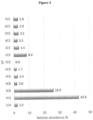
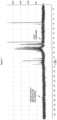
- Example 40 of US20160032038A1 Preparation of poly(styrene-co-(1-vinyl-1H-imidazole)-co-divinylbenzene) resulted a product that after extensive washing still had the presence of initial components (see Figure 1 ).
- Spent Coffee Grounds (SCG) decomposition (specific low degree of polymerization (DP)) 500 mg SCG, 20 mg of the ionic polymer poly[1-(1-vinylimidazolium)ethyl-3-vinylimdazolium] [dichloride]-co-3-carboxypropyl-1-vinylimidazolium] [chloride] and 10 ml of H 2 O were placed in a reactor, sealed and the reaction mixture was then heated at 200 °C for 30 min. After reaction the mixture was cooled to room temperature, diluted with water (50 ml) and filtered for further analysis. The obtained products (% per 100 mg of initial coffee loading): Monosaccharides 3.12% Disaccharides 3.45% Trisaccharides 2.30% HMF 1%
Landscapes
- Chemical & Material Sciences (AREA)
- Organic Chemistry (AREA)
- Health & Medical Sciences (AREA)
- Engineering & Computer Science (AREA)
- General Health & Medical Sciences (AREA)
- Life Sciences & Earth Sciences (AREA)
- Biochemistry (AREA)
- Biotechnology (AREA)
- Genetics & Genomics (AREA)
- Molecular Biology (AREA)
- Chemical Kinetics & Catalysis (AREA)
- Polymers & Plastics (AREA)
- Medicinal Chemistry (AREA)
- Materials Engineering (AREA)
- Addition Polymer Or Copolymer, Post-Treatments, Or Chemical Modifications (AREA)
- Organic Low-Molecular-Weight Compounds And Preparation Thereof (AREA)
- Furan Compounds (AREA)
- Saccharide Compounds (AREA)
- Treatment Of Sludge (AREA)
- Compositions Of Macromolecular Compounds (AREA)
- Catalysts (AREA)
Claims (19)
- Ionisches Polymer (IP) bestehend aus einem ersten Monomer der Formel I


 n und m unabhängig ausgewählt sind aus 1, 2, 3, 4, 5, 6;z und w unabhängig ausgewählt sind aus 0, 1, 2, 3;Z1, Z2 and Z3 Kationen ssind, die jeweils unabhängig ausgewählt sind aus der Gruppe umfassend:
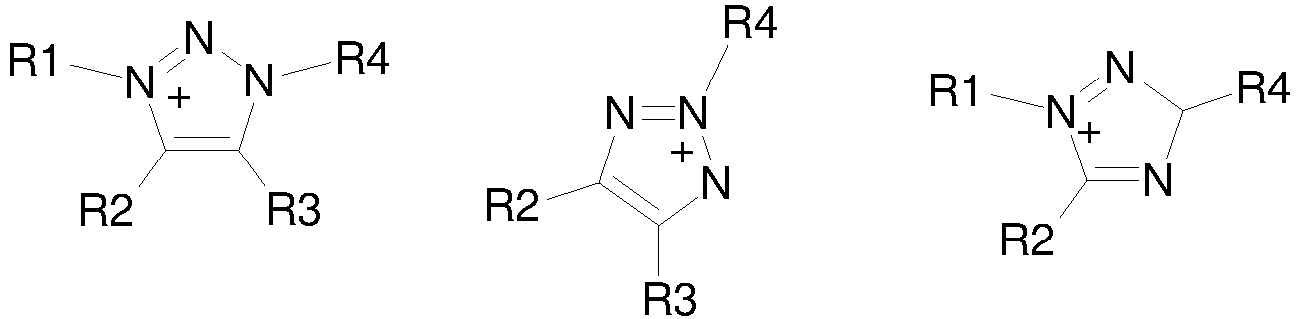

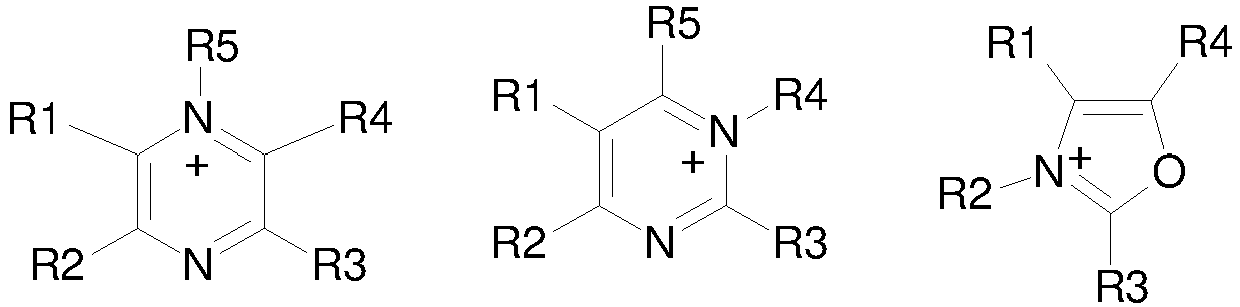

 R1, R2, R3, R4, R5, R6 und R7 jeweils unabhängig voneinander aus der Gruppe ausgewählt sind, die eine Bindung, H, C1-C6-Alkyl, Allyl, CH3-(CH2)p-O-(CH2)q-CH3, C1-C6-Alkoxy, C1-C6-Alkoxyalkyl, Benzyl, -SO3H, -(CH2)q-SO3H umfasst, vorausgesetzt, dass zwei von R1, R2, R3, R4, R5, R6 und R7 jeweils eine Bindung sind;p und q unabhängig ausgewählt sind aus 0, 1, 2, 3, 4, 5, 6;L ein optionaler Linker ist und jedes Vorkommen von L, wenn vorhanden, unabhängig ausgewählt ist aus substituiertem oder unsubstituiertem C1-C20-Alkylen, Alkenylen, Alkinylen und substituiertem oder unsubstituiertem C5-C10-Aryl, wobei die Substituenten ausgewählt sind aus der Gruppe umfassend H, -SO3H, -COOH, -[P(=O)(OH)2], -[P(=O)(OH)], -O-SO3H, -O-COOH, -O-[P(=O)(OH)2], -O-[P(=O)(OH)];A eine optionale Säuregruppe ist und jedes Vorkommen von A, wenn vorhanden, unabhängig ausgewählt ist aus der Gruppe umfassend H, -SO3H, -COOH, -[P(=O)(OH)2], - [P(=O)(OH)], -O-SO3H, -O-COOH, -O-[P(=O)(OH)2], -O-[P(=O)(OH)], -CH2-COOH;X ausgewählt ist aus der Gruppe umfassend F-, Cl-, Br-, I-, ClO4-, BF4 -, PF6 -, AsF6 -, SbF6 -, NO2 -, NO3 -, HSO4 -, SO4 2-, PO4 3-, HPO4 2-, CF3CO2 -, CF3CO3 -, CO3 2-, CF3SO3 -, C1-C6 carboxylate, CN-, SCN-, OCN-, CNO-, N3 -, Tosylat, Mesylat, Trifluormethansulfonat, Trifluorethansulfonat, Di-Trifluormethansulfonylamino, Docusat, Xylensulfonat;
 - Ionisches Polymer (IP) nach Anspruch 1, wobei z und w 0 oder 1 sind.
- Ionisches Polymer (IP) nach einem der Ansprüche 1-2, wobei Z1, Z2 and Z3 Kationen sind, die jeweils unabhängig ausgewählt sind aus der Gruppe umfassend:


- Ionisches Polymer (IP) nach einem der Ansprüche 1-3, wobei A, wenn vorhanden, unabhängig ausgewählt ist aus der Gruppe umfassend H, -SO3H, -COOH, -O-COOH, -CH2-COOH.
- Ionisches Polymer (IP) nach einem der Ansprüche 1-4, wobei L nicht vorhanden ist.
- Ionisches Polymer (IP) nach einem der Ansprüche 1-5, wobei A nicht vorhanden ist oder A unabhängig ausgewählt ist aus der Gruppe umfassend H, -COOH, -CH2-COOH.
- Ionisches Polymer (IP) nach Anspruch 1, wobei das erste Monomer gemäß Formel I ausgewählt ist aus der Gruppe umfassend


- Ionisches Polymer (IP) nach Anspruch 1 oder 7, wobei das zweite Monomer gemäß Formel II ist
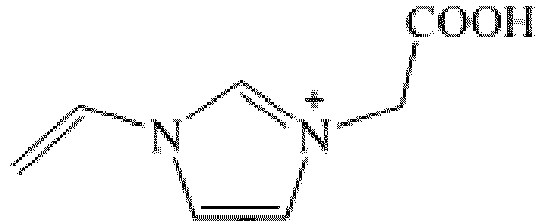
- Ionisches Polymer (IP) nach Anspruch 1, ausgewählt aus der Gruppe umfassend
 IP 1: X=ClIP 2:


- Ionisches Polymer-Netzwerk umfassend ein oder mehrere ionische Polymere nach einem der Ansprüche 1-9, die vernetzt sind.
- Ionisches Polymer-Netzwerk nach Anspruch 10, wobei das ionische Polymer-Netzwerk ferner einen Metall-Katalysator umfasst.
- Fester Träger, der zumindest eine Oberfläche umfassend ein oder mehrere ionische Polymere nach einem der Ansprüche 1-9 oder das ionische Polymer-Netzwerk nach einem der Ansprüche 10-11 aufweist.
- Polymermembran, die ein oder mehrere ionische Polymere nach einem der Ansprüche 1-9 oder das ionische Polymer-Netzwerk nach einem der Ansprüche 10-11 inkorporiert.
- Verwendung von ionischen Polymeren nach einem der Ansprüche 1 bis 9 oder einer Kombination davon, des ionischen Polymernetzwerks nach einem der Ansprüche 10 bis 11, des festen Trägers nach Anspruch 12 oder der Polymermembran nach Anspruch 13 zur Hydrolyse von Biomasse und zur Herstellung von Feinchemikalien aus Biomasse, wobei die Feinchemikalien ausgewählt sind aus der Gruppe umfassend Lipide, Zucker, Furanverbindungen, Huminstoffe, Polyphenole und/oder Pektinverbindungen.
- Verfahren zur Herstellung eines oder mehrerer Feinchemikalien, die aus der Gruppe ausgewählt sind, die Lipide, Zucker, Furanverbindungen, Humine, Polyphenole und/oder Pektinverbindungen umfasst, aus Biomasse, wobei das Verfahren die Schritte umfasst:a) Bereitstellen von Biomasse;b) optional Bestimmen des Gehalts an Lipiden und/oder Zuckern in der Biomasse;c) optional Vorbehandeln der Biomasse;d) Inkontaktbringen der Biomasse mit einem Katalysator, um ein Reaktionsgemisch zu bilden, wobei der Katalysator ein ionisches Polymer nach einem der Ansprüche 1-9 oder eine Kombination von ionischen Polymeren nach einem der Ansprüche 1-9, das ionische Polymer-Netzwerk nach einem der Ansprüche 10-11, ein auf einem festen Träger geträgertes ionisches Polymer nach Anspruch 12 und/oder eine Membran nach Anspruch 13 ist;e) Abbauen der Biomasse in dem Reaktionsgemisch, um eine flüssige Phase und eine feste Phase zu produzieren, wobei die flüssige Phase den einen oder die mehreren Feinchemikalien beinhaltet, und die feste Phase die restliche Biomasse beinhaltet;f) Abtrennen zumindest eines Teils der flüssigen Phase von der festen Phase; undg) Gewinnen der einen oder der mehreren Feinchemikalien aus der abgetrennten flüssigen Phase.
- Verfahren nach Anspruch 15, wobei der Schritt d) darin besteht, ein geeignetes wasserbasiertes oder organisches Lösungsmittel und eine wirksame Menge des Katalysators zu der Biomasse hinzuzufügen, um ein Reaktionsgemisch zu bilden, und der Abbauschritt e) darin besteht, das Reaktionsgemisch von Schritt d) über eine geeignete Zeit zu erwärmen und in der Folge auf Raumtemperatur abzukühlen.
- Verfahren zur Produktion von C5- und C6-Zuckern, Furfural, 5-Hydroxymethylfurfural (HMF) und Derivaten von HMF aus Biomasse, wobei das Verfahren die Schritte umfasst:a) Bereitstellen von Biomasse;b) optional Bestimmen des Zuckergehalts in der Biomasse;c) optional Vorbehandeln der Biomasse;d) Inkontaktbringen der Biomasse mit einem Katalysator, um ein Reaktionsgemisch zu bilden, wobei der Katalysator ein ionisches Polymer nach einem der Ansprüche 1-9 oder eine Kombination von ionischen Polymeren nach einem der Ansprüche 1-9, das ionische Polymer-Netzwerk nach einem der Ansprüche 10-11, ein auf einem festen Träger geträgertes ionisches Polymer nach Anspruch 12 und/oder eine Membran nach Anspruch 13 ist;e) Abbauen der Biomasse in dem Reaktionsgemisch, um eine erste flüssige Phase und eine erste feste Phase zu produzieren, wobei die erste Phase C5-Oligomer-Zucker und/oder C5-Monomer -Zucker beinhaltet und ferner Furfural beinhalten kann, wenn die Zeit des Abbauschritts verlängert wird, und die erste feste Phase Restmaterial umfasst;f) Abtrennen zumindest eines Teils der ersten flüssigen Phase von der ersten festen Phase;g) Gewinnen von C5-Oligomer-Zuckern und/oder C5-Monomer-Zuckern und/oder Furfural aus der abgetrennten ersten flüssigen Phase;h) Inkontaktbringen der ersten flüssigen Phase, die Restmaterial beinhaltet, mit demselben Katalysator wie in Schritt d) oder mit einem unterschiedlichen Katalysator, um ein Reaktionsgemisch zu bilden, wobei der Katalysator ein ionisches Polymer nach einem der Ansprüche 1-9 oder eine Kombination von ionischen Polymeren nach einem der Ansprüche 1-9, das ionische Polymer-Netzwerk nach einem der Ansprüche 10-11, ein auf einem festen Träger geträgertes ionisches Polymer nach Anspruch 12 und/oder eine Membran nach Anspruch 13 ist;i) weiteres Abbauen der ersten festen Phase, die Restmaterial beinhaltet, in dem Reaktionsgemisch, um eine zweite flüssige Phase und eine zweite feste Phase zu produzieren, wobei die zweite flüssige Phase C6-Oligomer-Zucker und/oder C6-Monomer-Zucker beinhaltet und ferner 5-Hydroxymethylfurfural (HMF) und Derivate von HMF und/oder Humine beinhalten kann, wenn die Zeit des Abbauschritts verlängert wird, und die zweite feste Phase Restmaterial beinhaltet;f) Abtrennen zumindest eines Teils der zweiten flüssigen Phase von der zweiten festen Phase; undk) Gewinnen von C6-Oligomer-Zuckern und/oder C6-Monomer-Zuckern und/oder 5-Hydroxymethylfurfural (HMF) und Derivaten von HMF und/oder Huminen aus der abgetrennten zweiten flüssigen Phase.
- Verfahren nach Anspruch 17, wobei der Schritt d) darin besteht, ein geeignetes wasserbasiertes oder organisches Lösungsmittel und eine wirksame Menge des Katalysators zu der Biomasse hinzuzufügen, um ein Reaktionsgemisch zu bilden, und die Abbauschritte e) und i) darin bestehen, das Reaktionsgemisch über eine geeignete Zeit zu erwärmen und in der Folge auf Raumtemperatur abzukühlen.
- Verfahren nach einem der Ansprüche 15 bis 18, wobei die Biomasse ausgewählt ist aus der Gruppe umfassend cellulosische, chitinöse, ölige oder lignocellulosische Materialien.
Applications Claiming Priority (2)
| Application Number | Priority Date | Filing Date | Title |
|---|---|---|---|
| IBPCT/IB2017/055670 | 2017-09-19 | ||
| PCT/IB2018/057206 WO2019058270A1 (en) | 2017-09-19 | 2018-09-19 | IONIC POLYMERS AND ASSOCIATED USE IN THE TREATMENT OF A BIOMASS |
Publications (3)
| Publication Number | Publication Date |
|---|---|
| EP3684827A1 EP3684827A1 (de) | 2020-07-29 |
| EP3684827B1 true EP3684827B1 (de) | 2025-07-02 |
| EP3684827C0 EP3684827C0 (de) | 2025-07-02 |
Family
ID=63794557
Family Applications (1)
| Application Number | Title | Priority Date | Filing Date |
|---|---|---|---|
| EP18783115.1A Active EP3684827B1 (de) | 2017-09-19 | 2018-09-19 | Ionische polymere und ihre verwendung in der biomasseverarbeitung |
Country Status (9)
| Country | Link |
|---|---|
| US (1) | US11925925B2 (de) |
| EP (1) | EP3684827B1 (de) |
| JP (1) | JP7386164B2 (de) |
| CN (1) | CN111356711B (de) |
| BR (1) | BR112020005508A2 (de) |
| CA (1) | CA3075953A1 (de) |
| ES (1) | ES3038733T3 (de) |
| SG (1) | SG11202002077SA (de) |
| WO (1) | WO2019058270A1 (de) |
Families Citing this family (12)
| Publication number | Priority date | Publication date | Assignee | Title |
|---|---|---|---|---|
| JP7458147B2 (ja) | 2016-01-13 | 2024-03-29 | ストラ エンソ オーユーイー | 2,5-フランジカルボン酸ならびにその中間体および誘導体の製造方法 |
| CA3069521A1 (en) | 2017-07-12 | 2019-01-17 | Stora Enso Oyj | Purified 2,5-furandicarboxylic acid pathway products |
| CN115335388A (zh) * | 2020-02-04 | 2022-11-11 | 埃姆比昂技术公司 | 用于水解蛋白质和含蛋白质的原料的离子聚合物的用途 |
| CN115334897A (zh) * | 2020-02-04 | 2022-11-11 | 埃姆比昂技术公司 | 离子聚合物在用于制备动物饲料添加剂的生物质加工中的用途 |
| CN111454475B (zh) * | 2020-03-24 | 2022-05-31 | 深圳市燃气集团股份有限公司 | 一种氢燃料电池用质子交换膜材料及其制备方法与应用 |
| TWI741662B (zh) * | 2020-06-30 | 2021-10-01 | 國立成功大學 | 用於電解質之交聯劑、包含該交聯劑的電解質組成物及鋰離子電池 |
| CN112625013A (zh) * | 2021-01-22 | 2021-04-09 | 江西农业大学 | 一种微波加热下木糖制备糠醛的方法 |
| CN112920331B (zh) * | 2021-01-27 | 2023-02-17 | 云南师范大学 | 一种微纤化纤维素增强聚乙烯基咪唑冰冻凝胶及其制备方法 |
| CN113387890B (zh) * | 2021-06-17 | 2022-11-15 | 中国科学院过程工程研究所 | 一种离子液体、聚离子液体及其制备方法和应用 |
| JP2025506401A (ja) | 2022-02-03 | 2025-03-11 | エンビオン テクノロジーズ エスエー | 皮膚適用のためのバイオマス抽出物 |
| EP4619152A1 (de) * | 2022-11-15 | 2025-09-24 | Regents of the University of Michigan | Ionenaustauschmembranen und verfahren zu ihrer herstellung |
| WO2025093732A1 (en) | 2023-11-03 | 2025-05-08 | Embion Technologies Sa | Microbiome modulator composition for enhancing the immune system |
Citations (2)
| Publication number | Priority date | Publication date | Assignee | Title |
|---|---|---|---|---|
| CN101635200B (zh) * | 2009-08-18 | 2011-07-27 | 苏州大学 | 一种染料敏化太阳能电池电解质及其制备方法和应用 |
| CN103304832A (zh) * | 2013-06-07 | 2013-09-18 | 常州大学 | 一种基于双咪唑阳离子交联剂的阴离子交换膜的制备方法 |
Family Cites Families (13)
| Publication number | Priority date | Publication date | Assignee | Title |
|---|---|---|---|---|
| JPH0610194B2 (ja) * | 1985-05-09 | 1994-02-09 | 旭電化工業株式会社 | ビオロゲン誘導体及びその製造方法 |
| GB2374072B (en) * | 2000-06-16 | 2004-09-22 | Nippon Catalytic Chem Ind | Crosslinked polymer method for manufacturing it and use thereof |
| JP4004756B2 (ja) * | 2000-07-26 | 2007-11-07 | 株式会社日本触媒 | 高分子架橋体およびその製造方法並びに使用方法および架橋剤 |
| US8703902B2 (en) * | 2004-11-10 | 2014-04-22 | University Of Wyoming | Polymers and copolymers of ionic liquids as radio frequency absorbing materials |
| CN104232704A (zh) * | 2007-03-14 | 2014-12-24 | 托莱多大学 | 生物质预处理 |
| EP2257669B1 (de) | 2008-02-19 | 2017-03-22 | The Board Of Trustees Of The University Of Alabama | Ionisch flüssige systeme zur verarbeitung von biomasse, deren bestandteile und/oder derivate sowie mischungen davon |
| WO2009114830A2 (en) | 2008-03-14 | 2009-09-17 | University Of Hawaii | Methods and compositions for extraction and transesterification of biomass components |
| US8575374B1 (en) | 2010-10-21 | 2013-11-05 | Hugh C. DeLong | Ionic liquids processing of biomass to reducing sugars and other dehydration products |
| CN102050919B (zh) * | 2010-11-12 | 2012-12-26 | 西北师范大学 | 负载型咪唑离子液体交联聚合物纳米粒子及其制备和应用 |
| US9339803B2 (en) | 2011-10-31 | 2016-05-17 | Board Of Trustees Of The University Of Arkansas | Catalytic membranes and applications thereof |
| JP2016512569A (ja) * | 2013-03-14 | 2016-04-28 | ミドリ ユーエスエー,インコーポレイテッド | 高分子イオン性塩触媒及びその製造方法 |
| EP3219737A1 (de) * | 2016-03-16 | 2017-09-20 | Ecole Polytechnique Federale De Lausanne (Epfl) | Ionische polymere und verwendung davon bei der verarbeitung von biomasse |
| CN106632164B (zh) * | 2016-12-29 | 2018-12-04 | 江南大学 | 一种磁性金属氧化物交联酸性聚离子液体的制备及其应用 |
-
2018
- 2018-09-19 ES ES18783115T patent/ES3038733T3/es active Active
- 2018-09-19 EP EP18783115.1A patent/EP3684827B1/de active Active
- 2018-09-19 CA CA3075953A patent/CA3075953A1/en active Pending
- 2018-09-19 JP JP2020537298A patent/JP7386164B2/ja active Active
- 2018-09-19 BR BR112020005508-5A patent/BR112020005508A2/pt not_active Application Discontinuation
- 2018-09-19 US US16/648,351 patent/US11925925B2/en active Active
- 2018-09-19 WO PCT/IB2018/057206 patent/WO2019058270A1/en not_active Ceased
- 2018-09-19 SG SG11202002077SA patent/SG11202002077SA/en unknown
- 2018-09-19 CN CN201880074358.5A patent/CN111356711B/zh active Active
Patent Citations (2)
| Publication number | Priority date | Publication date | Assignee | Title |
|---|---|---|---|---|
| CN101635200B (zh) * | 2009-08-18 | 2011-07-27 | 苏州大学 | 一种染料敏化太阳能电池电解质及其制备方法和应用 |
| CN103304832A (zh) * | 2013-06-07 | 2013-09-18 | 常州大学 | 一种基于双咪唑阳离子交联剂的阴离子交换膜的制备方法 |
Also Published As
| Publication number | Publication date |
|---|---|
| US20200246785A1 (en) | 2020-08-06 |
| ES3038733T3 (en) | 2025-10-14 |
| CN111356711B (zh) | 2022-06-10 |
| US11925925B2 (en) | 2024-03-12 |
| JP7386164B2 (ja) | 2023-11-24 |
| EP3684827C0 (de) | 2025-07-02 |
| CN111356711A (zh) | 2020-06-30 |
| EP3684827A1 (de) | 2020-07-29 |
| CA3075953A1 (en) | 2019-03-28 |
| WO2019058270A1 (en) | 2019-03-28 |
| SG11202002077SA (en) | 2020-04-29 |
| BR112020005508A2 (pt) | 2020-10-06 |
| JP2020534428A (ja) | 2020-11-26 |
Similar Documents
| Publication | Publication Date | Title |
|---|---|---|
| EP3684827B1 (de) | Ionische polymere und ihre verwendung in der biomasseverarbeitung | |
| Luo et al. | High efficiency and clean separation of eucalyptus components by glycolic acid pretreatment | |
| EP3430061B1 (de) | Ionische polymere und verwendung davon bei der verarbeitung von biomasse | |
| Vázquez et al. | Refining of autohydrolysis liquors for manufacturing xylooligosaccharides: evaluation of operational strategies | |
| Ziemiński et al. | Effects of hydrothermal pretreatment of sugar beet pulp for methane production | |
| Sánchez-Bastardo et al. | Extraction of arabinoxylans from wheat bran using hydrothermal processes assisted by heterogeneous catalysts | |
| JP4603627B2 (ja) | 単糖類の製造方法 | |
| Kim et al. | Efficient conversion of glucosamine to levulinic acid in a sulfamic acid-catalyzed hydrothermal reaction | |
| JP2011092151A (ja) | 植物系原料の処理方法 | |
| Benkő et al. | Heat extraction of corn fiber hemicellulose | |
| EP2616490A1 (de) | Gleichzeitige hydrolyse und hydrierung von cellulose | |
| Jacquemin et al. | Performance evaluation of a semi-industrial production process of arabinoxylans from wheat bran | |
| EP2304058A1 (de) | Entkristallisierung von cellulosebiomasse mit einer säuremischung aus phosphor- und schwefelsäuren | |
| EP2534123B1 (de) | Verfahren zur verarbeitung einer lignozellulose- oder zellulosebiomasse durch feste lewis-säuren auf wolframbasis | |
| Rincón et al. | Combined extraction/purification-catalytic microwave-assisted conversion of Laurus nobilis L. pruning waste polysaccharides into methyl levulinate | |
| Monroy et al. | Utilization of deep eutectic solvents in the production of high‐value compounds from biomass | |
| Wolf et al. | Depolymerization of hemicelluloses utilizing hydrothermal and acid catalyzed processes proceed by ultrafiltration as fractionation media | |
| US20160297845A1 (en) | Process for isolating c5 sugars from biomass hydrolyzate | |
| Xiao et al. | Biochemical coupling strategy promotes saccharification of bamboo leaves biomass via xylanase and heteropolyacids | |
| Zhang et al. | Valorization of Lignocellulose with One‐Step Acidified Monophasic Phenoxyethanol Fractionation | |
| Mu et al. | Selective separation of poplar hemicellulose and simultaneous enrichment of soluble xylose in the hydrolysate by itaconic acid pretreatment | |
| CN107540721A (zh) | 一种基于凹土基催化剂催化纤维木质素的阿魏酸酯制备方法 | |
| EP4431487A1 (de) | Verfahren zur gewinnung einer alkansäure | |
| Gromov | Catalytic methods of cellulose transformation in pure water into valuable chemical substances | |
| Sudakova et al. | Green biorefinery of larch wood biomass with obtaining of bioactive compounds, functional polymers and nanoporous materials |
Legal Events
| Date | Code | Title | Description |
|---|---|---|---|
| STAA | Information on the status of an ep patent application or granted ep patent |
Free format text: STATUS: UNKNOWN |
|
| STAA | Information on the status of an ep patent application or granted ep patent |
Free format text: STATUS: THE INTERNATIONAL PUBLICATION HAS BEEN MADE |
|
| PUAI | Public reference made under article 153(3) epc to a published international application that has entered the european phase |
Free format text: ORIGINAL CODE: 0009012 |
|
| STAA | Information on the status of an ep patent application or granted ep patent |
Free format text: STATUS: REQUEST FOR EXAMINATION WAS MADE |
|
| 17P | Request for examination filed |
Effective date: 20200409 |
|
| AK | Designated contracting states |
Kind code of ref document: A1 Designated state(s): AL AT BE BG CH CY CZ DE DK EE ES FI FR GB GR HR HU IE IS IT LI LT LU LV MC MK MT NL NO PL PT RO RS SE SI SK SM TR |
|
| AX | Request for extension of the european patent |
Extension state: BA ME |
|
| RIN1 | Information on inventor provided before grant (corrected) |
Inventor name: FEI, ZHAOFU Inventor name: SIANKEVICH, SVIATLANA Inventor name: SAVOGLIDIS, GEORGIOS Inventor name: DYSON, PAUL JOSEPH |
|
| DAV | Request for validation of the european patent (deleted) | ||
| DAX | Request for extension of the european patent (deleted) | ||
| STAA | Information on the status of an ep patent application or granted ep patent |
Free format text: STATUS: EXAMINATION IS IN PROGRESS |
|
| 17Q | First examination report despatched |
Effective date: 20210916 |
|
| GRAP | Despatch of communication of intention to grant a patent |
Free format text: ORIGINAL CODE: EPIDOSNIGR1 |
|
| STAA | Information on the status of an ep patent application or granted ep patent |
Free format text: STATUS: GRANT OF PATENT IS INTENDED |
|
| INTG | Intention to grant announced |
Effective date: 20250127 |
|
| GRAS | Grant fee paid |
Free format text: ORIGINAL CODE: EPIDOSNIGR3 |
|
| GRAA | (expected) grant |
Free format text: ORIGINAL CODE: 0009210 |
|
| STAA | Information on the status of an ep patent application or granted ep patent |
Free format text: STATUS: THE PATENT HAS BEEN GRANTED |
|
| AK | Designated contracting states |
Kind code of ref document: B1 Designated state(s): AL AT BE BG CH CY CZ DE DK EE ES FI FR GB GR HR HU IE IS IT LI LT LU LV MC MK MT NL NO PL PT RO RS SE SI SK SM TR |
|
| REG | Reference to a national code |
Ref country code: GB Ref legal event code: FG4D |
|
| REG | Reference to a national code |
Ref country code: CH Ref legal event code: EP |
|
| REG | Reference to a national code |
Ref country code: DE Ref legal event code: R096 Ref document number: 602018083213 Country of ref document: DE |
|
| REG | Reference to a national code |
Ref country code: IE Ref legal event code: FG4D |
|
| U01 | Request for unitary effect filed |
Effective date: 20250730 |
|
| U07 | Unitary effect registered |
Designated state(s): AT BE BG DE DK EE FI FR IT LT LU LV MT NL PT RO SE SI Effective date: 20250805 |
|
| REG | Reference to a national code |
Ref country code: CH Ref legal event code: U11 Free format text: ST27 STATUS EVENT CODE: U-0-0-U10-U11 (AS PROVIDED BY THE NATIONAL OFFICE) Effective date: 20251001 |
|
| REG | Reference to a national code |
Ref country code: ES Ref legal event code: FG2A Ref document number: 3038733 Country of ref document: ES Kind code of ref document: T3 Effective date: 20251014 |
|
| PGFP | Annual fee paid to national office [announced via postgrant information from national office to epo] |
Ref country code: GB Payment date: 20250916 Year of fee payment: 8 |
|
| U20 | Renewal fee for the european patent with unitary effect paid |
Year of fee payment: 8 Effective date: 20250916 |
|
| PG25 | Lapsed in a contracting state [announced via postgrant information from national office to epo] |
Ref country code: IS Free format text: LAPSE BECAUSE OF FAILURE TO SUBMIT A TRANSLATION OF THE DESCRIPTION OR TO PAY THE FEE WITHIN THE PRESCRIBED TIME-LIMIT Effective date: 20251102 |
|
| PG25 | Lapsed in a contracting state [announced via postgrant information from national office to epo] |
Ref country code: NO Free format text: LAPSE BECAUSE OF FAILURE TO SUBMIT A TRANSLATION OF THE DESCRIPTION OR TO PAY THE FEE WITHIN THE PRESCRIBED TIME-LIMIT Effective date: 20251002 |
|
| PG25 | Lapsed in a contracting state [announced via postgrant information from national office to epo] |
Ref country code: HR Free format text: LAPSE BECAUSE OF FAILURE TO SUBMIT A TRANSLATION OF THE DESCRIPTION OR TO PAY THE FEE WITHIN THE PRESCRIBED TIME-LIMIT Effective date: 20250702 |
|
| PG25 | Lapsed in a contracting state [announced via postgrant information from national office to epo] |
Ref country code: GR Free format text: LAPSE BECAUSE OF FAILURE TO SUBMIT A TRANSLATION OF THE DESCRIPTION OR TO PAY THE FEE WITHIN THE PRESCRIBED TIME-LIMIT Effective date: 20251003 |
|
| PGFP | Annual fee paid to national office [announced via postgrant information from national office to epo] |
Ref country code: CH Payment date: 20251001 Year of fee payment: 8 |
|
| PG25 | Lapsed in a contracting state [announced via postgrant information from national office to epo] |
Ref country code: CZ Free format text: LAPSE BECAUSE OF FAILURE TO SUBMIT A TRANSLATION OF THE DESCRIPTION OR TO PAY THE FEE WITHIN THE PRESCRIBED TIME-LIMIT Effective date: 20250702 |
|
| PG25 | Lapsed in a contracting state [announced via postgrant information from national office to epo] |
Ref country code: PL Free format text: LAPSE BECAUSE OF FAILURE TO SUBMIT A TRANSLATION OF THE DESCRIPTION OR TO PAY THE FEE WITHIN THE PRESCRIBED TIME-LIMIT Effective date: 20250702 |
|
| PG25 | Lapsed in a contracting state [announced via postgrant information from national office to epo] |
Ref country code: RS Free format text: LAPSE BECAUSE OF FAILURE TO SUBMIT A TRANSLATION OF THE DESCRIPTION OR TO PAY THE FEE WITHIN THE PRESCRIBED TIME-LIMIT Effective date: 20251002 |
|
| PGFP | Annual fee paid to national office [announced via postgrant information from national office to epo] |
Ref country code: ES Payment date: 20251001 Year of fee payment: 8 |
|
| PG25 | Lapsed in a contracting state [announced via postgrant information from national office to epo] |
Ref country code: SM Free format text: LAPSE BECAUSE OF FAILURE TO SUBMIT A TRANSLATION OF THE DESCRIPTION OR TO PAY THE FEE WITHIN THE PRESCRIBED TIME-LIMIT Effective date: 20250702 |
|
| PG25 | Lapsed in a contracting state [announced via postgrant information from national office to epo] |
Ref country code: SK Free format text: LAPSE BECAUSE OF FAILURE TO SUBMIT A TRANSLATION OF THE DESCRIPTION OR TO PAY THE FEE WITHIN THE PRESCRIBED TIME-LIMIT Effective date: 20250702 |