EP3688079B1 - Verfahren zur herstellung von extrudierten polyamidschäumen - Google Patents
Verfahren zur herstellung von extrudierten polyamidschäumen Download PDFInfo
- Publication number
- EP3688079B1 EP3688079B1 EP18786544.9A EP18786544A EP3688079B1 EP 3688079 B1 EP3688079 B1 EP 3688079B1 EP 18786544 A EP18786544 A EP 18786544A EP 3688079 B1 EP3688079 B1 EP 3688079B1
- Authority
- EP
- European Patent Office
- Prior art keywords
- polyamide
- foam composition
- extruder
- compounded
- polyamide foam
- Prior art date
- Legal status (The legal status is an assumption and is not a legal conclusion. Google has not performed a legal analysis and makes no representation as to the accuracy of the status listed.)
- Active
Links
Images







Classifications
-
- C—CHEMISTRY; METALLURGY
- C08—ORGANIC MACROMOLECULAR COMPOUNDS; THEIR PREPARATION OR CHEMICAL WORKING-UP; COMPOSITIONS BASED THEREON
- C08L—COMPOSITIONS OF MACROMOLECULAR COMPOUNDS
- C08L77/00—Compositions of polyamides obtained by reactions forming a carboxylic amide link in the main chain; Compositions of derivatives of such polymers
-
- B—PERFORMING OPERATIONS; TRANSPORTING
- B29—WORKING OF PLASTICS; WORKING OF SUBSTANCES IN A PLASTIC STATE IN GENERAL
- B29B—PREPARATION OR PRETREATMENT OF THE MATERIAL TO BE SHAPED; MAKING GRANULES OR PREFORMS; RECOVERY OF PLASTICS OR OTHER CONSTITUENTS OF WASTE MATERIAL CONTAINING PLASTICS
- B29B7/00—Mixing; Kneading
- B29B7/30—Mixing; Kneading continuous, with mechanical mixing or kneading devices
- B29B7/58—Component parts, details or accessories; Auxiliary operations
- B29B7/60—Component parts, details or accessories; Auxiliary operations for feeding, e.g. end guides for the incoming material
- B29B7/603—Component parts, details or accessories; Auxiliary operations for feeding, e.g. end guides for the incoming material in measured doses, e.g. proportioning of several materials
-
- B—PERFORMING OPERATIONS; TRANSPORTING
- B29—WORKING OF PLASTICS; WORKING OF SUBSTANCES IN A PLASTIC STATE IN GENERAL
- B29B—PREPARATION OR PRETREATMENT OF THE MATERIAL TO BE SHAPED; MAKING GRANULES OR PREFORMS; RECOVERY OF PLASTICS OR OTHER CONSTITUENTS OF WASTE MATERIAL CONTAINING PLASTICS
- B29B7/00—Mixing; Kneading
- B29B7/74—Mixing; Kneading using other mixers or combinations of mixers, e.g. of dissimilar mixers ; Plant
- B29B7/7404—Mixing devices specially adapted for foamable substances
-
- B—PERFORMING OPERATIONS; TRANSPORTING
- B29—WORKING OF PLASTICS; WORKING OF SUBSTANCES IN A PLASTIC STATE IN GENERAL
- B29B—PREPARATION OR PRETREATMENT OF THE MATERIAL TO BE SHAPED; MAKING GRANULES OR PREFORMS; RECOVERY OF PLASTICS OR OTHER CONSTITUENTS OF WASTE MATERIAL CONTAINING PLASTICS
- B29B7/00—Mixing; Kneading
- B29B7/74—Mixing; Kneading using other mixers or combinations of mixers, e.g. of dissimilar mixers ; Plant
- B29B7/7476—Systems, i.e. flow charts or diagrams; Plants
- B29B7/7485—Systems, i.e. flow charts or diagrams; Plants with consecutive mixers, e.g. with premixing some of the components
-
- B—PERFORMING OPERATIONS; TRANSPORTING
- B29—WORKING OF PLASTICS; WORKING OF SUBSTANCES IN A PLASTIC STATE IN GENERAL
- B29B—PREPARATION OR PRETREATMENT OF THE MATERIAL TO BE SHAPED; MAKING GRANULES OR PREFORMS; RECOVERY OF PLASTICS OR OTHER CONSTITUENTS OF WASTE MATERIAL CONTAINING PLASTICS
- B29B7/00—Mixing; Kneading
- B29B7/80—Component parts, details or accessories; Auxiliary operations
- B29B7/82—Heating or cooling
- B29B7/826—Apparatus therefor
-
- B—PERFORMING OPERATIONS; TRANSPORTING
- B29—WORKING OF PLASTICS; WORKING OF SUBSTANCES IN A PLASTIC STATE IN GENERAL
- B29B—PREPARATION OR PRETREATMENT OF THE MATERIAL TO BE SHAPED; MAKING GRANULES OR PREFORMS; RECOVERY OF PLASTICS OR OTHER CONSTITUENTS OF WASTE MATERIAL CONTAINING PLASTICS
- B29B9/00—Making granules
- B29B9/02—Making granules by dividing preformed material
- B29B9/06—Making granules by dividing preformed material in the form of filamentary material, e.g. combined with extrusion
-
- B—PERFORMING OPERATIONS; TRANSPORTING
- B29—WORKING OF PLASTICS; WORKING OF SUBSTANCES IN A PLASTIC STATE IN GENERAL
- B29B—PREPARATION OR PRETREATMENT OF THE MATERIAL TO BE SHAPED; MAKING GRANULES OR PREFORMS; RECOVERY OF PLASTICS OR OTHER CONSTITUENTS OF WASTE MATERIAL CONTAINING PLASTICS
- B29B9/00—Making granules
- B29B9/12—Making granules characterised by structure or composition
-
- B—PERFORMING OPERATIONS; TRANSPORTING
- B29—WORKING OF PLASTICS; WORKING OF SUBSTANCES IN A PLASTIC STATE IN GENERAL
- B29C—SHAPING OR JOINING OF PLASTICS; SHAPING OF MATERIAL IN A PLASTIC STATE, NOT OTHERWISE PROVIDED FOR; AFTER-TREATMENT OF THE SHAPED PRODUCTS, e.g. REPAIRING
- B29C48/00—Extrusion moulding, i.e. expressing the moulding material through a die or nozzle which imparts the desired form; Apparatus therefor
- B29C48/25—Component parts, details or accessories; Auxiliary operations
- B29C48/36—Means for plasticising or homogenising the moulding material or forcing it through the nozzle or die
- B29C48/395—Means for plasticising or homogenising the moulding material or forcing it through the nozzle or die using screws surrounded by a cooperating barrel, e.g. single screw extruders
- B29C48/40—Means for plasticising or homogenising the moulding material or forcing it through the nozzle or die using screws surrounded by a cooperating barrel, e.g. single screw extruders using two or more parallel screws or at least two parallel non-intermeshing screws, e.g. twin screw extruders
- B29C48/405—Intermeshing co-rotating screws
-
- B—PERFORMING OPERATIONS; TRANSPORTING
- B29—WORKING OF PLASTICS; WORKING OF SUBSTANCES IN A PLASTIC STATE IN GENERAL
- B29C—SHAPING OR JOINING OF PLASTICS; SHAPING OF MATERIAL IN A PLASTIC STATE, NOT OTHERWISE PROVIDED FOR; AFTER-TREATMENT OF THE SHAPED PRODUCTS, e.g. REPAIRING
- B29C48/00—Extrusion moulding, i.e. expressing the moulding material through a die or nozzle which imparts the desired form; Apparatus therefor
- B29C48/25—Component parts, details or accessories; Auxiliary operations
- B29C48/36—Means for plasticising or homogenising the moulding material or forcing it through the nozzle or die
- B29C48/395—Means for plasticising or homogenising the moulding material or forcing it through the nozzle or die using screws surrounded by a cooperating barrel, e.g. single screw extruders
- B29C48/40—Means for plasticising or homogenising the moulding material or forcing it through the nozzle or die using screws surrounded by a cooperating barrel, e.g. single screw extruders using two or more parallel screws or at least two parallel non-intermeshing screws, e.g. twin screw extruders
- B29C48/41—Intermeshing counter-rotating screws
-
- C—CHEMISTRY; METALLURGY
- C08—ORGANIC MACROMOLECULAR COMPOUNDS; THEIR PREPARATION OR CHEMICAL WORKING-UP; COMPOSITIONS BASED THEREON
- C08J—WORKING-UP; GENERAL PROCESSES OF COMPOUNDING; AFTER-TREATMENT NOT COVERED BY SUBCLASSES C08B, C08C, C08F, C08G or C08H
- C08J9/00—Working-up of macromolecular substances to porous or cellular articles or materials; After-treatment thereof
- C08J9/0061—Working-up of macromolecular substances to porous or cellular articles or materials; After-treatment thereof characterized by the use of several polymeric components
-
- C—CHEMISTRY; METALLURGY
- C08—ORGANIC MACROMOLECULAR COMPOUNDS; THEIR PREPARATION OR CHEMICAL WORKING-UP; COMPOSITIONS BASED THEREON
- C08J—WORKING-UP; GENERAL PROCESSES OF COMPOUNDING; AFTER-TREATMENT NOT COVERED BY SUBCLASSES C08B, C08C, C08F, C08G or C08H
- C08J9/00—Working-up of macromolecular substances to porous or cellular articles or materials; After-treatment thereof
- C08J9/04—Working-up of macromolecular substances to porous or cellular articles or materials; After-treatment thereof using blowing gases generated by a previously added blowing agent
- C08J9/12—Working-up of macromolecular substances to porous or cellular articles or materials; After-treatment thereof using blowing gases generated by a previously added blowing agent by a physical blowing agent
- C08J9/122—Hydrogen, oxygen, CO2, nitrogen or noble gases
-
- C—CHEMISTRY; METALLURGY
- C08—ORGANIC MACROMOLECULAR COMPOUNDS; THEIR PREPARATION OR CHEMICAL WORKING-UP; COMPOSITIONS BASED THEREON
- C08L—COMPOSITIONS OF MACROMOLECULAR COMPOUNDS
- C08L51/00—Compositions of graft polymers in which the grafted component is obtained by reactions only involving carbon-to-carbon unsaturated bonds; Compositions of derivatives of such polymers
- C08L51/06—Compositions of graft polymers in which the grafted component is obtained by reactions only involving carbon-to-carbon unsaturated bonds; Compositions of derivatives of such polymers grafted on to homopolymers or copolymers of aliphatic hydrocarbons containing only one carbon-to-carbon double bond
-
- C—CHEMISTRY; METALLURGY
- C08—ORGANIC MACROMOLECULAR COMPOUNDS; THEIR PREPARATION OR CHEMICAL WORKING-UP; COMPOSITIONS BASED THEREON
- C08L—COMPOSITIONS OF MACROMOLECULAR COMPOUNDS
- C08L63/00—Compositions of epoxy resins; Compositions of derivatives of epoxy resins
-
- B—PERFORMING OPERATIONS; TRANSPORTING
- B29—WORKING OF PLASTICS; WORKING OF SUBSTANCES IN A PLASTIC STATE IN GENERAL
- B29B—PREPARATION OR PRETREATMENT OF THE MATERIAL TO BE SHAPED; MAKING GRANULES OR PREFORMS; RECOVERY OF PLASTICS OR OTHER CONSTITUENTS OF WASTE MATERIAL CONTAINING PLASTICS
- B29B7/00—Mixing; Kneading
- B29B7/30—Mixing; Kneading continuous, with mechanical mixing or kneading devices
- B29B7/34—Mixing; Kneading continuous, with mechanical mixing or kneading devices with movable mixing or kneading devices
- B29B7/38—Mixing; Kneading continuous, with mechanical mixing or kneading devices with movable mixing or kneading devices rotary
- B29B7/46—Mixing; Kneading continuous, with mechanical mixing or kneading devices with movable mixing or kneading devices rotary with more than one shaft
- B29B7/48—Mixing; Kneading continuous, with mechanical mixing or kneading devices with movable mixing or kneading devices rotary with more than one shaft with intermeshing devices, e.g. screws
-
- C—CHEMISTRY; METALLURGY
- C08—ORGANIC MACROMOLECULAR COMPOUNDS; THEIR PREPARATION OR CHEMICAL WORKING-UP; COMPOSITIONS BASED THEREON
- C08J—WORKING-UP; GENERAL PROCESSES OF COMPOUNDING; AFTER-TREATMENT NOT COVERED BY SUBCLASSES C08B, C08C, C08F, C08G or C08H
- C08J2201/00—Foams characterised by the foaming process
- C08J2201/02—Foams characterised by the foaming process characterised by mechanical pre- or post-treatments
- C08J2201/026—Crosslinking before of after foaming
-
- C—CHEMISTRY; METALLURGY
- C08—ORGANIC MACROMOLECULAR COMPOUNDS; THEIR PREPARATION OR CHEMICAL WORKING-UP; COMPOSITIONS BASED THEREON
- C08J—WORKING-UP; GENERAL PROCESSES OF COMPOUNDING; AFTER-TREATMENT NOT COVERED BY SUBCLASSES C08B, C08C, C08F, C08G or C08H
- C08J2201/00—Foams characterised by the foaming process
- C08J2201/02—Foams characterised by the foaming process characterised by mechanical pre- or post-treatments
- C08J2201/03—Extrusion of the foamable blend
-
- C—CHEMISTRY; METALLURGY
- C08—ORGANIC MACROMOLECULAR COMPOUNDS; THEIR PREPARATION OR CHEMICAL WORKING-UP; COMPOSITIONS BASED THEREON
- C08J—WORKING-UP; GENERAL PROCESSES OF COMPOUNDING; AFTER-TREATMENT NOT COVERED BY SUBCLASSES C08B, C08C, C08F, C08G or C08H
- C08J2203/00—Foams characterized by the expanding agent
- C08J2203/06—CO2, N2 or noble gases
-
- C—CHEMISTRY; METALLURGY
- C08—ORGANIC MACROMOLECULAR COMPOUNDS; THEIR PREPARATION OR CHEMICAL WORKING-UP; COMPOSITIONS BASED THEREON
- C08J—WORKING-UP; GENERAL PROCESSES OF COMPOUNDING; AFTER-TREATMENT NOT COVERED BY SUBCLASSES C08B, C08C, C08F, C08G or C08H
- C08J2203/00—Foams characterized by the expanding agent
- C08J2203/08—Supercritical fluid
-
- C—CHEMISTRY; METALLURGY
- C08—ORGANIC MACROMOLECULAR COMPOUNDS; THEIR PREPARATION OR CHEMICAL WORKING-UP; COMPOSITIONS BASED THEREON
- C08J—WORKING-UP; GENERAL PROCESSES OF COMPOUNDING; AFTER-TREATMENT NOT COVERED BY SUBCLASSES C08B, C08C, C08F, C08G or C08H
- C08J2377/00—Characterised by the use of polyamides obtained by reactions forming a carboxylic amide link in the main chain; Derivatives of such polymers
-
- C—CHEMISTRY; METALLURGY
- C08—ORGANIC MACROMOLECULAR COMPOUNDS; THEIR PREPARATION OR CHEMICAL WORKING-UP; COMPOSITIONS BASED THEREON
- C08J—WORKING-UP; GENERAL PROCESSES OF COMPOUNDING; AFTER-TREATMENT NOT COVERED BY SUBCLASSES C08B, C08C, C08F, C08G or C08H
- C08J2400/00—Characterised by the use of unspecified polymers
- C08J2400/10—Polymers characterised by the presence of specified groups, e.g. terminal or pendant functional groups
- C08J2400/104—Polymers characterised by the presence of specified groups, e.g. terminal or pendant functional groups containing oxygen atoms
-
- C—CHEMISTRY; METALLURGY
- C08—ORGANIC MACROMOLECULAR COMPOUNDS; THEIR PREPARATION OR CHEMICAL WORKING-UP; COMPOSITIONS BASED THEREON
- C08J—WORKING-UP; GENERAL PROCESSES OF COMPOUNDING; AFTER-TREATMENT NOT COVERED BY SUBCLASSES C08B, C08C, C08F, C08G or C08H
- C08J2451/00—Characterised by the use of graft polymers in which the grafted component is obtained by reactions only involving carbon-to-carbon unsaturated bonds; Derivatives of such polymers
- C08J2451/06—Characterised by the use of graft polymers in which the grafted component is obtained by reactions only involving carbon-to-carbon unsaturated bonds; Derivatives of such polymers grafted on to homopolymers or copolymers of aliphatic hydrocarbons containing only one carbon-to-carbon double bond
-
- C—CHEMISTRY; METALLURGY
- C08—ORGANIC MACROMOLECULAR COMPOUNDS; THEIR PREPARATION OR CHEMICAL WORKING-UP; COMPOSITIONS BASED THEREON
- C08L—COMPOSITIONS OF MACROMOLECULAR COMPOUNDS
- C08L2203/00—Applications
- C08L2203/14—Applications used for foams
Definitions
- the present disclosure provides a method for producing polyamide foams by an extrusion foaming process where the polyamide foams produced have improved properties.
- Polyamides are formed from precursors such as caprolactam via hydrolysis, polyaddition, and polycondensation reactions.
- hydrolysis opens the ring of the caprolactam monomer forming two end groups, including one amine end group and one carboxyl end group.
- Polyaddition combines caprolactam monomers into intermediate molecular weight oligomers, and polycondensation combines oligomers into higher molecular weight polymers.
- Polyamide 6 (PA6) foams can be prepared by various methods including extruding PA 6 base resins with a blowing agent. However, it may be difficult to produce PA6 foams with low density and small cell size via extrusion due to the high extrusion temperature and poor melting strength of PA 6. Improvements in the foregoing are desired.
- Processes for producing polyamide foams are, for example, disclosed in US 2017/259474 , in US 2017/253710 , and in US 2011/294910 .
- the present disclosure provides a continuous method of producing polyamide foams by an extrusion foaming process.
- the polyamide foam includes a polyamide resin compounded with a composite chain extender including an epoxy chain extender and a maleic anhydride grafted polypropylene (MAPP) wax.
- MAPP maleic anhydride grafted polypropylene
- the produced polyamide foams have improved properties, including a smooth surface, low density, and small cell size.
- the present invention provides a polyamide foam composition, including a polyamide resin and a composite chain extender including an epoxy chain extender and a maleic anhydride grafted polypropylene (MAPP) wax.
- a polyamide foam composition including a polyamide resin and a composite chain extender including an epoxy chain extender and a maleic anhydride grafted polypropylene (MAPP) wax.
- MAPP maleic anhydride grafted polypropylene
- the polyamide resin is present in an amount of between 92 wt.% and 98 wt.%, based on the total weight of the polyamide foam composition.
- the epoxy chain extender may be present in an amount of between 1 wt.% and 3 wt.%, based on the total weight of the polyamide foam composition.
- the MAPP wax may be present in an amount of between 1 wt.% and 5 wt.%, based on the total weight of the polyamide foam composition.
- the polyamide foam composition may have an average cell size between 50 ⁇ m and 700 ⁇ m, and/or a density between 0.1 g/cm 3 and 1.0 g/cm 3 .
- the polyamide foam composition may further include at least one additive selected from antioxidants, nucleating additives, pigments, fire retardants, antistatic additives, and ultraviolet (UV) stabilizers.
- the present invention provides a method of producing a polyamide foam composition, including the steps of: a compounding step, including feeding a polyamide resin and a maleic anhydride grafted polypropylene (MAPP) wax into an extruder at a first location; and feeding an epoxy chain extender into the extruder at a second location downstream from the first location to form a compounded polyamide; and an extrusion foaming step, including extruding the compounded polyamide with a blowing agent in an extruder to form a polyamide foam.
- a compounding step including feeding a polyamide resin and a maleic anhydride grafted polypropylene (MAPP) wax into an extruder at a first location
- MAPP maleic anhydride grafted polypropylene
- an extrusion foaming step including extruding the compounded polyamide with a blowing agent in an extruder to form a polyamide foam.
- the compounding step may include, after the feeding steps, the additional steps of cooling the compounded polyamide; drying the compounded polyamide; and pelletizing the compounded polyamide.
- the compounding step may be carried out using a co-rotating twin screw extruder, a counter-rotating intermeshing twin screw extruder or a single screw extruder.
- the extrusion foaming step may include the additional steps of feeding the compounded polyamide into the extruder at a first location; adding a physical blowing agent to the compounded polyamide in the extruder at a second location downstream of the first location; mixing the compounded polyamide and the blowing agent in a static mixer; and conveying the compounded polyamide and the blowing agent through a die to form the polyamide foam composition.
- the blowing agent may be supercritical carbon dioxide.
- the polyamide foam composition includes polyamide resin in an amount between 92 wt.% and 98 wt.%, and may include epoxy chain extender in an amount between 1 wt.% and 3 wt.% and MAPP wax in an amount between 1 wt.% and 5 wt.%, based on the total weight of the polyamide foam composition.
- the polyamide foam composition may have at least one of the following properties: an average cell size between 50 ⁇ m and 700 ⁇ m; and a density between 0.1 g/cm 3 and 1.0 g/cm 3 .
- the compounded polyamide may have a shear viscosity of between 10,000 Pa.s to 150,000 Pa.s.
- the present disclosure provides a continuous method of producing polyamide foams by an extrusion foaming process.
- the polyamide foam includes a polyamide resin compounded with a composite chain extender including an epoxy chain extender and a maleic anhydride grafted polypropylene (MAPP) wax.
- MAPP maleic anhydride grafted polypropylene
- the produced polyamide foams have improved properties, including a smooth surface, low density, and small cell size.
- the present polyamide foam compositions are formed from a polyamide resin which has been compounded with certain additives that promote the desirable foam structure described herein.
- the compounded polyamide resin includes a polyamide base resin, a composite chain extender including an epoxy chain extender and a maleic anhydride grafted polypropylene (MAPP) wax, and other additives.
- MAPP maleic anhydride grafted polypropylene
- the polyamide base resin is the bulk resin or majority component of the ultimate foamed composition, and may be in the form of a PA 6 polymer formed from caprolactam monomers, a PA 66 polymer formed from hexamethylene diamine and adipic acid monomers, or a PA 6/66 copolymer, for example.
- Other types of polyamide polymers may also be used, as well as combinations of different types of polyamide polymers.
- PA 6/66 copolymers are synthesized from both caprolactam monomers and adipic acid/hexamethylene diamine monomers.
- the adipic acid and hexamethylene diamine components of the adipic acid/hexamethylene diamine monomers may be provided in a salt of 1:1 molar proportion, referred to as "AH salt", which may be either in solid form or in the form of an aqueous solution.
- AH salt a salt of 1:1 molar proportion
- caprolactam monomers and AH salt monomers are polymerized together to produce PA 6/66 copolymers including a majority component of monomers based on caprolactam and a minority component of monomers based on AH salt, i.e., adipic acid and hexamethylene diamine.
- polymer chains of polyamide 6/66 copolymers include monomers, or repeating units, based on caprolactam and monomers, or repeating units, based on adipic acid/hexamethylene diamine which may be mutually present in the polymer chains according to a random or near random distribution.
- the polyamide base resin may have a relative viscosity (RV) as little as 2.6, 2.8, 3.0, or 3.2, or as great as 3.6, 3.8, 4.0, or 4.2, or within any range defined between any two of the foregoing values, such as between 2.6 and 4.2, 2.8 and 4.0, 3.0 and 3.8, and 3.2 and 3.6, for example, as determined by a viscometer according to ASTM D798.
- RV relative viscosity
- the polyamide resin is present in an amount of between 92 wt.% and 98 wt.%, based on the total weight of the polyamide foam composition.
- the polyamide base resin is present in an amount as little as 92 wt.%, or 94 wt.%, or as great as 96 wt.%, or 98 wt.%, of the total weight of the ultimate polyamide foam composition, including all additives, or may be present within any range defined between any two of the foregoing values, such as between 94 wt.% and 96 wt.%, for example.
- the polyamide base resin is compounded with a composite chain extender which, as described below, is a combination of an epoxy chain extender and a maleic anhydride grafted polypropylene (MAPP) wax.
- a composite chain extender which, as described below, is a combination of an epoxy chain extender and a maleic anhydride grafted polypropylene (MAPP) wax.
- the first component of the composite chain extender is an epoxy compound.
- the epoxy groups of the epoxy compound may react with the amine end groups and the carboxyl end groups of the polyamide chains of the polyamide base resin.
- the chain extender may react with the end groups of the polyamide base resin to make the polyamide chains grow longer and/or to branch the polyamide chains, which results in an increase in the intrinsic viscosity of the compounded polyamide.
- Exemplary epoxy chain extenders include a styrene-GMA copolymer containing epoxy groups which has a density of 0.92 g/cm 3 and has a weight average molecular weight (Mw) of less than 25,000.
- Exemplary epoxy chain extenders include an aliphatic ester copolymer containing active functional groups.
- epoxy chain extender of the polyamide foam composition is present in an amount as little as 1 wt.%, 1.5 wt.%, or 2 wt.%, or as great as 2.5 wt.%, 3 wt.%, or 5 wt.%, or within any range defined between any two of the foregoing values, such as between 1 wt.% and 5 wt.%, 1 wt.% and 3 wt.%, or 1.5 wt.% and 2.5 wt.%, for example, based on the total weight of the polyamide foam composition.
- the second component of the composite chain extender is a maleic anhydride grafted polypropylene (MAPP) wax.
- Maleic anhydride groups may react with the amine end groups of the polyamide chains.
- the MAPP wax may include a high amount of reactive functional maleic anhydride groups, and the reaction of the chain extender with the amine end groups of the polyamide makes the polyamide chains grow longer and/or branches the polyamide chains, which results in an increase in the intrinsic viscosity of the compounded polyamide.
- the MAPP wax has a content of maleic anhydride content greater than 1 wt.%, greater than 2 wt.%, greater than 5 wt.%, greater than 7 wt.%, greater than 9 wt.%, or greater than 10 wt.% based on the total weight of the MAPP wax.
- Exemplary MAPP waxes have a number average molecular weight (Mn) as little as 500 g/mol, 1000 g/mol, or 2000 g/mol, or as high as 10000 g/mol, 15000 g/mol, or 20000 g/mol, or within any range defined between any two of the foregoing values, such as 500 g/mol to 20000 g/mol, 2000 g/mol to 15000 g/mol, or 2000 g/mol to 10000 g/mol, for example.
- Mn number average molecular weight
- the MAPP wax is present in an amount as little as 1 wt.%, 1.5 wt.%, or 2 wt.%, or as great as 2.5 wt.%, 3 wt.%, or 5 wt.%, or within any range defined between any two of the foregoing values, such as between 1 wt. % and 5 wt. %, 1 wt. % and 3 wt. %, or 1.5 wt. % and 2.5 wt. %, for example, based on the total weight of the polyamide foam composition.
- the polyamide foam composition contains additional additives.
- additives may include antioxidants, nucleating additives, pigments, fire retardants, antistatic additives, ultraviolet (UV) stabilizers, and other suitable additives such as heat stabilizers and flexibilizers.
- Lubricants and anti-wear additives may be also be added as desired.
- Exemplary heat stabilizers include copper iodide, potassium iodide, potassium bromide, sodium iodide, potassium chloride, other copper halides, and other metallic halides.
- Exemplary UV stabilizers may include a hindered amine light stabilizer ("HALS"), such as N,N'-Bis-2,2,6,6-tetramethyl-4-piperidinyl-1,3-benzene dicarboxamide, for example.
- Exemplary flexibilizers may include polyolefins and polystyrene flexibilizers, such as polyolefin elastomers, for example.
- Exemplary nucleating additives may include small size talcum powder, silicon dioxide powder, aluminium oxide powder and montmorillonoid powder.
- Exemplary fire retardants may include tripolycyanamide, antimonous oxide, zinc borate, and brominated flame retardant, such as decabromodiphenyl ether and decabromodiphenyl ethane, for example; and may also include phosphorus flame retardants, such as red phosphorus, for example.
- Exemplary antioxidants include amine antioxidants, such as diphenylamine, p-phenylenediamine, and dihydro-quinoline; and may also include hindered phenol antioxidants, such as 2,6-di-tert-butyl-4-methylphenol and pentaerythrotol, for example.
- Exemplary antistatic additives include alkyl sulfonic acid alkali metal salt and aminodithioformic acid alkali metal salt, for example.
- the other additives of the polyamide foam composition comprises as little as 0 wt.%, 0.5 wt.%, 1.0 wt.%, 1.5 wt.%, or 2.0 wt.%, or as great as 2.5 wt.%, 3.0 wt.%, 3.5 wt.%, 4.0 wt.%, 4.5 wt.%, or 5.0 wt.%, or within any range defined between any two of the foregoing values, such as 0 wt.% to 5.0 wt.%, 0.5 wt.% to 4.5 wt.%, 1.0 wt.% to 4.0 wt.%, 1.5 wt.% to 3.5 wt.%, or 2.0 wt.% to 2.5 wt.%, for example, based on the total weight of the polyamide foam composition.
- a method of producing the polyamide foam compositions includes a compounding step, in which the base polyamide resin is compounded with the additional components discussed above, and an extrusion foaming step, in which the compounded polyamide composition is extruded with a blowing agent to form a polyamide foam.
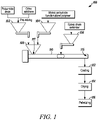
- the polyamide foam composition is prepared by a compounding apparatus 100, shown in Fig. 1 , which includes a compounding extruder 110.
- Compounding extruder 110 may be a co-rotating twin-screw extruder or a counter-rotating inter-meshing twin screw extruder, for example, and is used to implement a reactive extrusion, and has greater productivity, a simpler deign, and is more productive than using a batch reactor.
- raw polyamide in the form of polyamide resin pellets or chips, for example, as well as other additives such as antioxidants or nucleating agents, are premixed and added into feeder 102.
- Maleic anhydride grafted polypropylene (MAPP) wax is added into feeder 104.
- the compounds in feeders 102 and 104 are fed into main hopper 108 and thence into compounding extruder 110 at a first location located generally upstream with respect to the compounding extruder 110.
- Epoxy chain extender is fed to compounding extruder 110 through side feeder 106 and mixed with the polyamide composite in compounding extruder 110, which is completely melted at this location within compounding extruder 110.
- Epoxy chain extender is fed from side feeder 106, located downstream of the main hopper, rather than through main hopper 108 along with the polyamide resin and maleic anhydride functionalized polymer, to prevent the formation of excessively thickened polyamide materials, which may result in instability during extrusion, or even process failure due to an intolerable increase in melt pressure.
- Feeders 102, 104, and 106 may be loss-in-weight feeders which have a less than 0.5 wt.% feeding accuracy as measured by weight loss feeders. However, it is within the scope of the present disclosure that alternate feeders may be used for feeders 102, 104, and 106.
- Compounding extruder 110 compounds the components of the polyamide resin using mixing elements and forward kneading blocks in the mixing section disposed between the inlet of side feeder 106 and vacuum port 115. By mixing the components in the foregoing mixing section, a uniform distribution of the epoxy chain extender in the polyamide matrix is provided. In addition, low processing temperature and high output are preferred process parameters which are provided by an exemplary extruder such as compounding extruder 110.
- the polyamide is cooled at 112, such as in a water bath 112, dried at 114, such as via wind blowers, and then pelletized at 116. Thereafter, the resulting pellets may be further dried, such as for 4-6 hours at about 90°C, for example, to remove retained moisture.
- foaming extruder 150 may be a single screw extruder, and may be equipped with one or more static mixing devices 152. Static mixing devices 152 have specific structure(s) to ensure the complete dissolution of a blowing agent in the melted polyamide materials within foaming extruder 150.
- the blowing agent is supercritical carbon dioxide (CO 2 ), which is environmental friendly, inexpensive and inflammable in comparison to hydrocarbons and chlorofluorocarbons. However, it is within the scope of the present disclosure that alternate blowing agents may be used.
- the compounded polyamide is fed through hopper 156, and supercritical carbon dioxide is injected into a melting zone MZ (from T2 zone to T4 zone) of foaming extruder 150 by means of a metering unit (not shown) and then dissolved in the melted polyamide composite.
- the temperature of zone T1 closest to the hopper 156 is generally set relatively low, which may be as low as 130°C, 140°C, 150°C, 160°C, 170°C, or as high as 180°C, 190°C, 200°C, 210°C, 220°C.
- the melting zone MZ (from zone T2 to zone T4) of foaming extruder 150 may operate at a range of temperature, which may be as low as 220°C, 230°C, or 240°C, or as high as 270°C, 275°C, or 280°C, or within any range defined between any two of the foregoing values, such as between 220°C and 280°C, between 230°C and 275°C, or between 240°C and 270°C, for example.
- a substantially constant pressure is maintained throughout the foaming extruder 150 and, by operating at a constant pressure, a stable foaming process and formation of a homogenous cell structure of rod foams may be achieved.
- the operating temperature of static mixer 152 may be as low as 200°C, 205°C, or 210°C, or as high as 265°C, 270°C, or 275°C, or within any range defined between any two of the foregoing values, such as between 200°C and 275°C, between 205°C and 270°C, or between 210°C and 265°C, for example.
- the operating temperature of rod die 154 may be as low as 200°C, 205°C, or 210°C, or as high as 265°C, 270°C, or 275°C, or within any range defined between any two of the foregoing values, such as between 200°C and 275°C, between 205°C and 270°C, or between 210°C and 265°C, for example.
- Polyamide foam compositions synthesized as described above exhibit an improved appearance, low density, and small cell size.
- the polyamide foam compositions have a density, measured according to ASTM D792, of as little as 0.1 g/m 3 , 0.2 g/m 3 , 0.4 g/m 3 , or 0.6 g/m 3 , or as great as 0.7 g/m 3 , 0.8 g/m 3 , 0.9 g/m 3 , or 1.0 g/m 3 , or within any range defined between any two of the foregoing values, such as 0.1 g/m 3 to 1.0 g/m 3 ; 0.2 g/m 3 to 0.9 g/m 3 ; 0.4 g/m 3 to 0.8 g/m 3 , or 0.6 g/m 3 to 0.9 g/m 3 , for example.
- the polyamide foam compositions have an average cell size, determined according to ASTM D3576-2004, of as little as 50 ⁇ m, 100 ⁇ m, 200 ⁇ m, or 300 ⁇ m, or as great as 400 ⁇ m, 500 ⁇ m, 600 ⁇ m, or 700 ⁇ m, or within any range defined between any two of the foregoing values, such as 50 ⁇ m to 700 ⁇ m; 100 ⁇ m to 600 ⁇ m; 200 ⁇ m to 500 ⁇ m, or 300 ⁇ m to 400 ⁇ m, for example.
- the polyamide composites formed by the compounding process exhibit an increase in viscosity and melt strength.
- a composite chain extender contributes to increases in viscosity and melt strength of the polyamide foam.
- the polyamide composites have a shear viscosity, determined according to ASTM D4440, of as little as 10,000 Pa.s, 25,000 Pa.s, or 50,000 Pa.s, or as great as 100,000 Pa.s, 125,000 Pa.s, or 150,000 Pa.s, or within any range defined between any two of the foregoing values, such as 10,000 Pa.s to 150,000 Pa.s, 25,000 Pa.s to 125,000 Pa.s, or 50,000 Pa.s to 100,000 Pa.s, for example.
- viscosity is an indicator of the melt strength of the polyamide material.
- High viscosity indicates that the molecular weight and the branching degree of molecular chains are high, which results in high entanglement of molecular chains and thus high melt strength of the polyamide material.
- any range defined between any two of the foregoing values literally means that any range may be selected from any two of the values listed prior to such phrase regardless of whether the values are in the lower part of the listing or in the higher part of the listing.
- a pair of values may be selected from two lower values, two higher values, or a lower value and a higher value.
- the shear viscosity of the samples in this Example was determined by a parallel plate rheometer.
- the polyamide 6 (PA 6) resin e.g., H95ZIT manufactured by AdvanSix Resins & Chemicals LLC used in this Example had a relative viscosity (RV) of 3.3.
- the epoxy chain extender used was CE311 sourced from Ningbo Seven New Material Technology Co., LTD.
- a first maleic anhydride grafted polypropylene (MAPP) wax used was A-C ® 950, having a Saponification number of 50 mg KOH/g, and manufactured by Honeywell.
- MAFP maleic anhydride-functionalized polypropylene
- MA-EO ethylene-octene elastomer grafted maleic anhydride
- Fusabond ® N493, manufactured by DuPont is used as an ethylene-octene elastomer grafted maleic anhydride and has an acid modification rate of 0.5%.
- Samples A-G compositional data are shown in Table 1 below. Only Samples D and G are according to the invention. Table 1 No# PA6 resin, (RV3.3, wt.
- Samples A-G were implemented using a co-rotating inter-meshing twin screw extruder (Leitritz 27 mm) generally indicated as 110 in Fig. 1 .
- the components for each sample were accurately into the extruder in the proportion shown in Table 1 using weight loss feeders.
- Polyamide resin and MAFP were fed from the main throat (117, Fig. 1 ), and epoxy chain extender (CE311) was fed from side feeder (106, Fig. 1 ).
- the compound was then extruded, cooled in a water bath (112, Fig. 1 ), dried by wind blowers (114, Fig. 1 ), and then pelletized (116, Fig. 1 ).
- the resulting pellets were dried for between 4-6 hours at 90°C to remove retained moisture.
- the compounding extruder was operated at a screw speed of 450 revolutions per minute (rpm), and the barrel temperatures of extruder 110 varied from 180°C - 235°C - 235°C - 230°C - 225°C - 225°C - 225°C - 225°C - 225°C - 235°C (Die) depending on the location of extruder 110.
- Extruder 110 had a throughput of 15 kg/hr.
- Polyamide resin and MAPP wax are fed into main throat 117 of the compounding extruder and conveyed by conveying screw elements. Due to the pitch decease within the compounding extruder, the mixture was compressed, and subjected to a strong shear force.
- kneading blocks (2 forward kneading elements and 1 reversing kneading element with a 30 degree stagger angle) form a dam and operate to input mechanical energy to the mixture in order to fully melt the mixture.
- the epoxy chain extender was incorporated through the side feeder where the mixture is again compressed by a steep pitch screw flight within the compounding extruder. Forward kneading blocks and mixing elements were used to prevent high shear heating which could result in many undesirable side reactions in the mixing section between the side feeder and vacuum port.
- the first mixing zone of the compounding extruder was composed of 1 forward kneading block and 1 mixing element
- the second mixing zone of the compounding extruder was composed of 1 forward kneading block, 1 mixing element, and 2 wide pieces with 90 stagger angle for sealing purposes.
- Shear viscosity was determined by a parallel plate rheometer (TA instruments AR2000ex rheometer) operating at an angular frequency of 0.1 radians per second, at a temperature of 235° C, and at a constant strain amplitude of 1.5 %. Further, the shear viscosity testing was completed under Nitrogen atmospheric conditions.
- samples including the compound chain extender including both the epoxy chain extender and the MAPP wax (Samples D and G) exhibited the greatest prominent effect on improving the viscosity of polyamide materials when compared with adopting a single chain extender or using other compound chain extension system which contains the epoxy chain extender and other maleic anhydride functionalized polymer (MAFP or MA-EO).
- MAFP or MA-EO maleic anhydride functionalized polymer
- the increase in shear viscosity of Samples D and G is that MAPP wax has higher concentrated functional groups than other maleic anhydride functionalized polymers (e.g., MAFP or MA-EO), which thereby improves the viscosity of polyamide material.
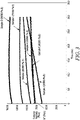
- the melt stability of the compounded polyamide was evaluated by using a parallel plate rheometer (TA instruments AR2000ex rheometer) according to ASTM D4440 operating at a fixed oscillation frequency of 1 hertz (Hz), and the changes in complex viscosity were observed over a specified period of time (e.g., 30 mins). If the change in complex viscosity was large, poor melt stability for the Sample was exhibited. Otherwise, the melt stability of the test sample was determined to be acceptable.
- the testing temperature was set as 235° C and the test was performed under Nitrogen atmospheric conditions. The results are shown in Fig. 3 and discussed further herein.
- the chain extension of polyamide molecular chains occurs during extrusion, and it is a reactive extrusion process.
- the decrease of screw speed and throughput results in a longer residence time for the polyamide resin within the extruder.
- a longer residence time yields a more complete reaction between the extender and polyamide resin, thereby, avoiding secondary reactions in processing steps occurring further downstream.
- the melt stability of the polyamide composites can be improved by using the composite chain extender (epoxy chain extender + MAPP wax) instead of a single, epoxy chain extender can improve the melt stability of the final products, and by adding MAPP wax (or MAPP wax II) instead of decreasing production capacity or modifying equipment configuration to elongate the residence time within the extruder.
- MAPP wax or MAPP wax II
- a reasonable explanation of the effect of MAPP wax (or MAPP wax II) on the melt stability of polyamide composites is that the MAPP wax (or MAPP wax II) has a high content of reactive maleic anhydride functional groups. When the reactive maleic anhydride functional groups react, a steric hindrance effect of the molecular chain inhibits further reaction of the remaining reactive maleic anhydride functional groups, thus avoiding the occurrence of secondary reactions in downstream processing steps.
- Table 3 shows the compositions and shear viscosity of the trial samples, and Table 4 shows the foaming results for the samples. Only Samples G, D and H are according to the invention. As shown in Table 3, the highest viscosity tested was 140000 Pa.s and the lowest viscosity tested was 20000 Pa.s. The components as listed in Table 3 correspond with the components of Tables 1 and 2 above, as applicable. Accordingly, a PA6/66 copolymer (PA6,66 resin) is experimented with for the extrusion foaming trials discussed further herein.
- the PA6,66 resin used is H133 (manufactured by Honeywell Shanghai Lab) with a PA66 content of about 23 wt%, a relative viscosity of 3.7, and a melting point of 190°C.
- Extrusion foaming trials were carried out with a single screw extruder having a screw diameter of 45 mm and a length to diameter (L/D) ratio of 40 and a static mixer and a rod die with a diameter of 3 mm following the extruder.
- Supercritical fluid carbon dioxide was selected as a physical blowing agent because it is environmental friendly, inexpensive and inflammable in comparison to hydrocarbons and chlorofluorocarbons.
- the compounded polyamide was fed manually through the hopper, and supercritical carbon dioxide was injected into the melting zone of the extruder by a metering unit. The supercritical carbon dioxide then dissolved in the melted compounded polyamide. The pressure was maintained throughout the extruder as a rapid pressure drop creates a homogenous cell structure of rod foams.
- Table 3 Sample No# PA6 resin, (RV3.3, wt. %) PA6.66 resin, (RV3.7, wt. %) Epoxy Chain Extender (wt. %) MAPP Wax (wt. %) MAPP Wax II (wt. %) MA-EO (wt.
- Example 1 The foaming conditions of Examples 1 and 3 are listed below in Table 5 where T1-T6 refer to locations in foaming extruder 150 of Fig. 2 . Only Example 1 is according to the invention. Table 5 Foaming parameters Example 1 (G -140000 Pa.S) Example 3 (F - 78000 Pa.S) T1 (°C) 160 T2 (°C) 270 T3 (°C) 265 T4 (°C) 265 Temperature of static mixer (T5, °C) 265 Temperature of die (T6, °C) 255 Melt throughput (Kg/h) 5 Gas injection (g/min) 1.65 Die pressure (bar) 7 9
- Example 1 has a greater viscosity than Example 3 (Sample F), while Example 1 (Sample G) foamed at a lower die pressure. Therefore, the addition of MAPP wax can improve the processing ability of the foaming.
- high viscosity materials are more difficult to process than low viscosity materials.
- the extrusion of the high viscosity material has higher equipment torque and higher die pressure than the extrusion of the low viscosity material. But in the present case, the result is the opposite, the extrusion of sample G (140000 Pa. S) has lower die pressure than that of sample F (78000 Pa. S), because sample G contains MAPP wax, and the lubricating effect of MAPP wax improves the processability of the high viscosity material and also reduces the die pressure.
- Example 2 T1 (°C) 160 T2 (°C) 270 T3 (°C) 265 T4 (°C) 265 Temperature of static mixer (T5, °C) 265 Temperature of die (T6, °C) 240 Melt throughput (Kg/h) 5 Gas injection (g/min) 1.65 Die pressure (bar) 11-12
- Example 2 (Sample D (96000 Pa.s)) can also be foamed with its high viscosity.
- the resulting polyamide foam composition has a small cell size, but a relatively high density due to the high melt strength of the polyamide composites at a low temperature. This high melt strength has an inhibiting effect on the bubble growth and expanding, and therefore, results in a relatively high density and the formation of a small cell structure.
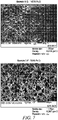
- the density and the cell size of foamed Example 2 (Sample D (96000 Pa.s)) are 0.8417 g/cm 3 and 200 ⁇ m, respectively as shown in the surface morphology and cross section view of Fig. 8 and in Table 4.
- Example 7 (Sample J (20000 Pa.s)) failed to foam. Furthermore, secondary reactions occurred during foaming which caused the increase in the degree of cross-linking between the polyamide materials and the continual increase of the die pressure.
- Example 6 foamed successfully and have corresponding rheological properties to those shown in Fig. 3 .
- the resulting polyamide foam composition prepared by Example 6 had a rough surface and a relative large cell size.
- the density and the cell size for Example 6 are 0.3582 g/cm 3 and 600 ⁇ m, respectively, as shown in the surface morphology and cross section view of Fig. 9 and in Table 4.
- Example 8 and Example 9 two examples not according to the invention, are composed of different polyamide resins. Examples 8 and 9 also had low melt strength. Moreover, the processing temperatures for Examples 8 and 9 were set relatively low close to the melting point of the resin in comparison to the Examples discussed above. The foaming conditions of Example 8 and Example 9 are shown below.
- Example 8 (M-PA6.66 resin)
- Example 9 (A-PA6 resin) T1 (°C) 130 180 T2 (°C) 225 250 T3 (°C) 220 260 T4 (°C) 220 250 Temperature of static mixer (T5, °C) 210 235 Temperature of die (T6, °C) 210 235 Melt throughput (Kg/h) 5 5 Gas injection (g/min) 1.1 1.1 Die pressure (bar) 9-10 2-3
- Example 9 A-PA6 resin
- Example 8 M-PA6,66 resin
- the cross section view of Examples 8 and 9 are shown in Fig. 10 where Example 8 has a density of 0.268 g/cm 3 and Example 9 failed to foam.
- the surface morphology of Examples 8 and 9 are shown in Fig. 11 where Examples 8 and 9 both had rough surfaces.
- Example 4 (H - 42000 Pa.s) T1 (°C) 160 T2 (°C) 270 T3 (°C) 260 T4 (°C) 250 Temperature of static mixer (T5, °C) 245 Temperature of die (T6, °C) 245 Melt throughput (Kg/h) 5 Gas injection (g/min) 1.1 Die pressure (bar) 5-6
- Example 4 (Sample H (42000 Pa.s)) foamed successfully, and the polyamide foam compositions had a uniform cell structure.
- Example 4 (Sample H (42000 Pa.s)) has a similar viscosity with Example 6 (Sample K (48000 Pa.s)).
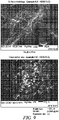
- the foaming results of Table 4 and Fig. 12 showed that the foam of Example 4 (Sample H, 42000Pa.s) has a smoother surface and smaller cell structure than the foam of Example 6 (Sample K, 48000 Pa.s).
- Example 4 indicates that the addition of a MAPP wax (as in Example 4, MAPP wax II) favors the formation of a smooth surface on the polyamide foam.
- the density and the cell size of foamed Example 4 are 0.2488 g/cm 3 and 300 ⁇ m, respectively, as shown in the surface morphology and cross section view of Fig. 13 and in Table 4.
- foams with better properties such as density, appearance, and cell structure
- material feeding was reduced while the gas continued to be injected into the extruder.
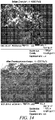
- foam samples with a smaller cell structure and a lower density were obtained as shown in Fig. 14 .
- improved foam properties were realized because a longer residence time of polyamide composites within the extruder due to the change in operation parameters mentioned above. By increasing the residence time, a more complete dissolution of the physical blowing agent in the melted polyamide composites, and thus resulting in the formation of low density foams.
- Example 5 an example according to the invention, are similar to that of Example 4 except for a difference in the gas injection rate of 2.2 g/min instead of 1.1 g/min used for Example 4.
- the whole foaming process is continuous and stable.
- a polyamide foam composition with a lower density and a smaller cell size was obtained as a result of the altered processing parameters.
- the density of the Example 5 foam composition was 0.1373 g/cm 3 and the cell size was 100 ⁇ m.
- the surface morphology (via SEM) and cross section view were shown in Fig. 15 .
Landscapes
- Chemical & Material Sciences (AREA)
- Engineering & Computer Science (AREA)
- Health & Medical Sciences (AREA)
- Organic Chemistry (AREA)
- Chemical Kinetics & Catalysis (AREA)
- Medicinal Chemistry (AREA)
- Polymers & Plastics (AREA)
- Mechanical Engineering (AREA)
- Materials Engineering (AREA)
- Manufacture Of Porous Articles, And Recovery And Treatment Of Waste Products (AREA)
- Compositions Of Macromolecular Compounds (AREA)
- Processing And Handling Of Plastics And Other Materials For Molding In General (AREA)
- Emergency Medicine (AREA)
- General Chemical & Material Sciences (AREA)
Claims (14)
- Polyamidschaumstoffzusammensetzung, umfassend:ein Polyamidharz undein zusammengesetztes Kettenverlängerungsmittel, das ein Epoxid-Kettenverlängerungsmittel und ein mit Maleinsäureanhydrid gepfropftes Polypropylenwachs (MAPP-Wachs) enthält,wobei das Polyamidharz in einer Menge zwischen 92 Gew.-% und 98 Gew.-%, bezogen auf das Gesamtgewicht der Polyamidschaumstoffzusammensetzung, vorliegt.
- Polyamidschaumstoffzusammensetzung nach Anspruch 1, wobei das Epoxid-Kettenverlängerungsmittel in einer Menge zwischen 1 Gew.-% und 3 Gew.-%, bezogen auf das Gesamtgewicht der Polyamidschaumstoffzusammensetzung, vorliegt.
- Polyamidschaumstoffzusammensetzung nach Anspruch 2, wobei das MAPP-Wachs in einer Menge zwischen 1 Gew.-% und 5 Gew.-%, bezogen auf das Gesamtgewicht der Polyamidschaumstoffzusammensetzung, vorliegt.
- Polyamidschaumstoffzusammensetzung nach Anspruch 1, wobei die Polyamidschaumstoffzusammensetzung eine gemäß ASTM D3576-2004 bestimmte durchschnittliche Zellengröße zwischen 50 µm und 700 µm aufweist.
- Polyamidschaumstoffzusammensetzung nach Anspruch 1, wobei die gemäß ASTM D792 gemessene Dichte der Polyamidschaumstoffzusammensetzung zwischen 0,1 g/cm3 und 1,0 g/cm3 liegt.
- Polyamidschaumstoffzusammensetzung nach Anspruch 1, ferner umfassend mindestens ein Additiv, das aus Antioxidantien, Nukleierungsadditiven, Pigmenten, Flammschutzmitteln, Antistatikadditiven und Ultraviolett(UV)-Stabilisatoren ausgewählt ist.
- Verfahren zur Herstellung einer Polyamidschaumstoffzusammensetzung, das die folgenden Schritte umfasst:einen Compoundierungsschritt, umfassend:das Einspeisen eines Polyamidharzes und eines mit Maleinsäureanhydrid gepfropften Polypropylenwachses (MAPP-Wachses) in einen Extruder an einer ersten Stelle; unddas Einspeisen eines Epoxid-Kettenverlängerungsmittels in den Extruder an einer zweiten Stelle, die stromabwärts der ersten Stelle liegt, zur Bildung eines compoundierten Polyamids; undeinen Extrusionsverschäumungsschritt, umfassend:das Extrudieren des compoundierten Polyamids mit einem Treibmittel in einen Extruder zur Bildung eines Polyamidschaumstoffs,wobei die Polyamidschaumstoffzusammensetzung das Polyamidharz in einer Menge zwischen 92 Gew.-% und 98 Gew.-%, bezogen auf das Gesamtgewicht der Polyamidschaumstoffzusammensetzung, umfasst.
- Verfahren nach Anspruch 7, wobei der Compoundierungsschritt ferner nach den Einspeisungsschritten die folgenden zusätzlichen Schritte umfasst:das Abkühlen des compoundierten Polyamids;das Trocknen des compoundierten Polyamids unddas Pelletieren des compoundierten Polyamids.
- Verfahren nach Anspruch 7, wobei der Compoundierungsschritt unter Verwendung eines gleichläufigen Doppelschneckenextruders, eines gegenläufigen kämmenden Doppelschneckenextruders oder eines Einschneckenextruders durchgeführt wird.
- Verfahren nach Anspruch 7, wobei der Extrusionsschritt die folgenden zusätzlichen Schritte umfasst:das Einspeisen des compoundierten Polyamids in den Extruder an einer ersten Stelle;das Zugeben eines physikalischen Treibmittels zu dem compoundierten Polyamid in den Extruder an einer zweiten Stelle, die stromabwärts der ersten Stelle liegt;das Mischen des compoundierten Polyamids und des Treibmittels in einem statischen Mischer unddas Befördern des compoundierten Polyamids und des Treibmittels durch eine Düse zur Bildung der Polyamidschaumstoffzusammensetzung.
- Verfahren nach Anspruch 10, wobei es sich bei dem Treibmittel um überkritisches Kohlendioxid handelt.
- Verfahren nach Anspruch 7, wobei die Polyamidschaumstoffzusammensetzung Folgendes umfasst:Epoxid-Kettenverlängerungsmittel in einer Menge zwischen 1 Gew.-% und 3 Gew.-% undMAPP-Wachs in einer Menge zwischen 1 Gew.-% und 5 Gew.-%, bezogen auf das Gesamtgewicht der Polyamidschaumstoffzusammensetzung.
- Verfahren nach Anspruch 7, wobei die Polyamidschaumstoffzusammensetzung mindestens eine der folgenden Eigenschaften aufweist:eine gemäß ASTM D3576-2004 bestimmte durchschnittliche Zellengröße zwischen 50 µm und 700 µm undeine gemäß ASTM D792 gemessene Dichte zwischen 0,1 g/cm3 und 1,0 g/cm3.
- Verfahren nach Anspruch 7, wobei das compoundierte Polyamid eine gemäß ASTM D4440 bestimmte Scherviskosität zwischen 10.000 Pa.s bis 150.000 Pa.s aufweist.
Applications Claiming Priority (2)
| Application Number | Priority Date | Filing Date | Title |
|---|---|---|---|
| CN2017103574 | 2017-09-27 | ||
| PCT/US2018/052562 WO2019067400A1 (en) | 2017-09-27 | 2018-09-25 | PROCESS FOR THE PREPARATION OF EXTRUDED POLYAMIDE FOAMS |
Publications (2)
| Publication Number | Publication Date |
|---|---|
| EP3688079A1 EP3688079A1 (de) | 2020-08-05 |
| EP3688079B1 true EP3688079B1 (de) | 2022-11-23 |
Family
ID=63858120
Family Applications (1)
| Application Number | Title | Priority Date | Filing Date |
|---|---|---|---|
| EP18786544.9A Active EP3688079B1 (de) | 2017-09-27 | 2018-09-25 | Verfahren zur herstellung von extrudierten polyamidschäumen |
Country Status (8)
| Country | Link |
|---|---|
| US (1) | US11332592B2 (de) |
| EP (1) | EP3688079B1 (de) |
| JP (1) | JP7065952B2 (de) |
| KR (2) | KR20200059263A (de) |
| CA (1) | CA3076140C (de) |
| ES (1) | ES2935388T3 (de) |
| MX (1) | MX2020003905A (de) |
| WO (1) | WO2019067400A1 (de) |
Families Citing this family (6)
| Publication number | Priority date | Publication date | Assignee | Title |
|---|---|---|---|---|
| MX2022004816A (es) * | 2019-10-24 | 2022-05-16 | Invista Textiles Uk Ltd | Composiciones de poliamida y articulos fabricados a partir de estas. |
| CN114015109B (zh) * | 2021-12-27 | 2023-04-07 | 黎明职业大学 | 一种高熔体强度尼龙发泡材料的制备方法 |
| CN117402490A (zh) * | 2022-07-06 | 2024-01-16 | 上海凯赛生物技术股份有限公司 | 一种聚酰胺材料及其制备方法 |
| KR20250097880A (ko) | 2022-10-25 | 2025-06-30 | 바스프 에스이 | 열 안정성이 높은 폴리아미드 폼 |
| CN115594967B (zh) * | 2022-10-27 | 2024-03-26 | 北京化工大学 | 一种长碳链聚酰胺发泡材料及其制备方法 |
| FR3163373A1 (fr) | 2024-06-18 | 2025-12-19 | Arkema France | Polyamide branché pour la fabrication d’une mousse |
Citations (1)
| Publication number | Priority date | Publication date | Assignee | Title |
|---|---|---|---|---|
| CN108976427A (zh) * | 2018-07-04 | 2018-12-11 | 华东理工大学 | 一种改性树脂、原料组合物、制备方法、发泡材料和应用 |
Family Cites Families (11)
| Publication number | Priority date | Publication date | Assignee | Title |
|---|---|---|---|---|
| JP3453313B2 (ja) | 1998-09-30 | 2003-10-06 | 積水化成品工業株式会社 | ポリアミド系樹脂発泡体及びその製造方法 |
| CN200950534Y (zh) | 2006-09-29 | 2007-09-19 | 深圳创维-Rgb电子有限公司 | 交流过压保护电路 |
| CN201041938Y (zh) | 2007-02-12 | 2008-03-26 | 深圳创维-Rgb电子有限公司 | 一种lcd-tv电源欠压保护电路 |
| US7697252B2 (en) | 2007-08-15 | 2010-04-13 | Leviton Manufacturing Company, Inc. | Overvoltage device with enhanced surge suppression |
| US20110294910A1 (en) * | 2010-04-27 | 2011-12-01 | Basf Se | Expandable pelletized polyamide material |
| CN103360759B (zh) | 2012-04-10 | 2017-09-12 | 上海杰事杰新材料(集团)股份有限公司 | 一种发泡用高熔体强度聚酰胺材料及其制备方法 |
| CN105283493B (zh) * | 2013-05-15 | 2018-07-03 | 东洋纺株式会社 | 用于发泡成型体的聚酰胺树脂组合物及包含其的聚酰胺树脂的发泡成型体 |
| DE102014216992A1 (de) * | 2014-08-26 | 2016-03-03 | Adidas Ag | Expandierte Polymerpellets |
| CN104821554A (zh) | 2015-05-19 | 2015-08-05 | 中国兵器工业集团第二一四研究所苏州研发中心 | 一种稳压管构成dc/dc电源输入过压欠压保护装置 |
| CN105226604B (zh) | 2015-09-30 | 2018-03-16 | 深圳创维数字技术有限公司 | 一种欠过压保护电路以及机顶盒 |
| CN206452095U (zh) | 2016-12-08 | 2017-08-29 | 深圳创维数字技术有限公司 | 一种过欠压保护电路和机顶盒 |
-
2018
- 2018-09-25 MX MX2020003905A patent/MX2020003905A/es unknown
- 2018-09-25 KR KR1020207011603A patent/KR20200059263A/ko not_active Ceased
- 2018-09-25 JP JP2020517319A patent/JP7065952B2/ja active Active
- 2018-09-25 KR KR1020237034905A patent/KR20230147214A/ko not_active Ceased
- 2018-09-25 US US16/649,780 patent/US11332592B2/en active Active
- 2018-09-25 CA CA3076140A patent/CA3076140C/en active Active
- 2018-09-25 WO PCT/US2018/052562 patent/WO2019067400A1/en not_active Ceased
- 2018-09-25 EP EP18786544.9A patent/EP3688079B1/de active Active
- 2018-09-25 ES ES18786544T patent/ES2935388T3/es active Active
Patent Citations (1)
| Publication number | Priority date | Publication date | Assignee | Title |
|---|---|---|---|---|
| CN108976427A (zh) * | 2018-07-04 | 2018-12-11 | 华东理工大学 | 一种改性树脂、原料组合物、制备方法、发泡材料和应用 |
Also Published As
| Publication number | Publication date |
|---|---|
| WO2019067400A1 (en) | 2019-04-04 |
| CA3076140C (en) | 2023-01-31 |
| ES2935388T3 (es) | 2023-03-06 |
| MX2020003905A (es) | 2020-08-20 |
| BR112020005512A2 (pt) | 2020-10-27 |
| US20200317878A1 (en) | 2020-10-08 |
| JP2020535262A (ja) | 2020-12-03 |
| KR20200059263A (ko) | 2020-05-28 |
| KR20230147214A (ko) | 2023-10-20 |
| JP7065952B2 (ja) | 2022-05-12 |
| EP3688079A1 (de) | 2020-08-05 |
| US11332592B2 (en) | 2022-05-17 |
| CA3076140A1 (en) | 2019-04-04 |
Similar Documents
| Publication | Publication Date | Title |
|---|---|---|
| US11332592B2 (en) | Method for preparing extruded polyamide foams | |
| EP2872568B1 (de) | Olefin-maleinanhydrid-copolymer-zusammensetzungen und verwendungen davon | |
| CN101432319A (zh) | 颗粒状聚合物产品及其制备方法 | |
| EP2072563B2 (de) | Polymermischung für thermoplastische zelluläre Materialien | |
| US7528198B2 (en) | Fluororesin composition, process for preparing the same and cable coated with the same | |
| EP2009043B1 (de) | Konzentrat aus polyfunktionalen verbindungen für die herstellung geschäumter polyestermaterialien | |
| CN106029746A (zh) | 新型泡沫材料 | |
| JPH07164434A (ja) | 重合α−オレフィン樹脂を配合する方法 | |
| CN103975004A (zh) | 高压缩强度挤塑san泡沫 | |
| CN110054890B (zh) | 一种具有高阻燃性的生物基pa56复合材料及其制备方法 | |
| WO2025130763A1 (en) | A polyamide composition, a process for preparing the same, and a process for preparing a lightweight material from the same | |
| JP5568350B2 (ja) | ポリプロピレン系改質樹脂の製造方法 | |
| JP4361753B2 (ja) | 難燃性ポリアミド樹脂組成物の製造方法 | |
| US20050070617A1 (en) | Low density rigid polyamide foam and method for production | |
| EP4299662A1 (de) | Thermoplastische vulkanisate aus polyamid und bimsm-kautschuk | |
| BR112020005512B1 (pt) | Composição de espuma de poliamida, e método de produção de uma composição de espuma de poliamida | |
| US20110266487A1 (en) | Cellular polyester made of post-consumer flakes and the use of products made thereof | |
| CN112111105A (zh) | 一种高强度电源支架 | |
| EP3917998A1 (de) | Verfahren zur herstellung eines intrinsisch geschäumten polyamids und formkörper daraus | |
| KR20230075843A (ko) | 펠릿형 폴리프로필렌 수지의 제조방법, 펠릿형 폴리프로필렌 수지 및 이를 포함하는 성형품 |
Legal Events
| Date | Code | Title | Description |
|---|---|---|---|
| STAA | Information on the status of an ep patent application or granted ep patent |
Free format text: STATUS: UNKNOWN |
|
| STAA | Information on the status of an ep patent application or granted ep patent |
Free format text: STATUS: THE INTERNATIONAL PUBLICATION HAS BEEN MADE |
|
| PUAI | Public reference made under article 153(3) epc to a published international application that has entered the european phase |
Free format text: ORIGINAL CODE: 0009012 |
|
| STAA | Information on the status of an ep patent application or granted ep patent |
Free format text: STATUS: REQUEST FOR EXAMINATION WAS MADE |
|
| 17P | Request for examination filed |
Effective date: 20200326 |
|
| AK | Designated contracting states |
Kind code of ref document: A1 Designated state(s): AL AT BE BG CH CY CZ DE DK EE ES FI FR GB GR HR HU IE IS IT LI LT LU LV MC MK MT NL NO PL PT RO RS SE SI SK SM TR |
|
| AX | Request for extension of the european patent |
Extension state: BA ME |
|
| DAV | Request for validation of the european patent (deleted) | ||
| DAX | Request for extension of the european patent (deleted) | ||
| GRAP | Despatch of communication of intention to grant a patent |
Free format text: ORIGINAL CODE: EPIDOSNIGR1 |
|
| STAA | Information on the status of an ep patent application or granted ep patent |
Free format text: STATUS: GRANT OF PATENT IS INTENDED |
|
| INTG | Intention to grant announced |
Effective date: 20220128 |
|
| GRAJ | Information related to disapproval of communication of intention to grant by the applicant or resumption of examination proceedings by the epo deleted |
Free format text: ORIGINAL CODE: EPIDOSDIGR1 |
|
| STAA | Information on the status of an ep patent application or granted ep patent |
Free format text: STATUS: REQUEST FOR EXAMINATION WAS MADE |
|
| GRAP | Despatch of communication of intention to grant a patent |
Free format text: ORIGINAL CODE: EPIDOSNIGR1 |
|
| STAA | Information on the status of an ep patent application or granted ep patent |
Free format text: STATUS: GRANT OF PATENT IS INTENDED |
|
| INTC | Intention to grant announced (deleted) | ||
| INTG | Intention to grant announced |
Effective date: 20220707 |
|
| RIN1 | Information on inventor provided before grant (corrected) |
Inventor name: WANG, MIN Inventor name: ZHA, MIN |
|
| GRAS | Grant fee paid |
Free format text: ORIGINAL CODE: EPIDOSNIGR3 |
|
| GRAA | (expected) grant |
Free format text: ORIGINAL CODE: 0009210 |
|
| STAA | Information on the status of an ep patent application or granted ep patent |
Free format text: STATUS: THE PATENT HAS BEEN GRANTED |
|
| AK | Designated contracting states |
Kind code of ref document: B1 Designated state(s): AL AT BE BG CH CY CZ DE DK EE ES FI FR GB GR HR HU IE IS IT LI LT LU LV MC MK MT NL NO PL PT RO RS SE SI SK SM TR |
|
| REG | Reference to a national code |
Ref country code: GB Ref legal event code: FG4D |
|
| REG | Reference to a national code |
Ref country code: CH Ref legal event code: EP |
|
| REG | Reference to a national code |
Ref country code: DE Ref legal event code: R096 Ref document number: 602018043415 Country of ref document: DE |
|
| REG | Reference to a national code |
Ref country code: AT Ref legal event code: REF Ref document number: 1533123 Country of ref document: AT Kind code of ref document: T Effective date: 20221215 |
|
| REG | Reference to a national code |
Ref country code: IE Ref legal event code: FG4D |
|
| REG | Reference to a national code |
Ref country code: NL Ref legal event code: FP |
|
| REG | Reference to a national code |
Ref country code: ES Ref legal event code: FG2A Ref document number: 2935388 Country of ref document: ES Kind code of ref document: T3 Effective date: 20230306 |
|
| REG | Reference to a national code |
Ref country code: LT Ref legal event code: MG9D |
|
| REG | Reference to a national code |
Ref country code: AT Ref legal event code: MK05 Ref document number: 1533123 Country of ref document: AT Kind code of ref document: T Effective date: 20221123 |
|
| PG25 | Lapsed in a contracting state [announced via postgrant information from national office to epo] |
Ref country code: SE Free format text: LAPSE BECAUSE OF FAILURE TO SUBMIT A TRANSLATION OF THE DESCRIPTION OR TO PAY THE FEE WITHIN THE PRESCRIBED TIME-LIMIT Effective date: 20221123 Ref country code: PT Free format text: LAPSE BECAUSE OF FAILURE TO SUBMIT A TRANSLATION OF THE DESCRIPTION OR TO PAY THE FEE WITHIN THE PRESCRIBED TIME-LIMIT Effective date: 20230323 Ref country code: NO Free format text: LAPSE BECAUSE OF FAILURE TO SUBMIT A TRANSLATION OF THE DESCRIPTION OR TO PAY THE FEE WITHIN THE PRESCRIBED TIME-LIMIT Effective date: 20230223 Ref country code: LT Free format text: LAPSE BECAUSE OF FAILURE TO SUBMIT A TRANSLATION OF THE DESCRIPTION OR TO PAY THE FEE WITHIN THE PRESCRIBED TIME-LIMIT Effective date: 20221123 Ref country code: FI Free format text: LAPSE BECAUSE OF FAILURE TO SUBMIT A TRANSLATION OF THE DESCRIPTION OR TO PAY THE FEE WITHIN THE PRESCRIBED TIME-LIMIT Effective date: 20221123 Ref country code: AT Free format text: LAPSE BECAUSE OF FAILURE TO SUBMIT A TRANSLATION OF THE DESCRIPTION OR TO PAY THE FEE WITHIN THE PRESCRIBED TIME-LIMIT Effective date: 20221123 |
|
| PG25 | Lapsed in a contracting state [announced via postgrant information from national office to epo] |
Ref country code: RS Free format text: LAPSE BECAUSE OF FAILURE TO SUBMIT A TRANSLATION OF THE DESCRIPTION OR TO PAY THE FEE WITHIN THE PRESCRIBED TIME-LIMIT Effective date: 20221123 Ref country code: PL Free format text: LAPSE BECAUSE OF FAILURE TO SUBMIT A TRANSLATION OF THE DESCRIPTION OR TO PAY THE FEE WITHIN THE PRESCRIBED TIME-LIMIT Effective date: 20221123 Ref country code: LV Free format text: LAPSE BECAUSE OF FAILURE TO SUBMIT A TRANSLATION OF THE DESCRIPTION OR TO PAY THE FEE WITHIN THE PRESCRIBED TIME-LIMIT Effective date: 20221123 Ref country code: IS Free format text: LAPSE BECAUSE OF FAILURE TO SUBMIT A TRANSLATION OF THE DESCRIPTION OR TO PAY THE FEE WITHIN THE PRESCRIBED TIME-LIMIT Effective date: 20230323 Ref country code: HR Free format text: LAPSE BECAUSE OF FAILURE TO SUBMIT A TRANSLATION OF THE DESCRIPTION OR TO PAY THE FEE WITHIN THE PRESCRIBED TIME-LIMIT Effective date: 20221123 Ref country code: GR Free format text: LAPSE BECAUSE OF FAILURE TO SUBMIT A TRANSLATION OF THE DESCRIPTION OR TO PAY THE FEE WITHIN THE PRESCRIBED TIME-LIMIT Effective date: 20230224 |
|
| P01 | Opt-out of the competence of the unified patent court (upc) registered |
Effective date: 20230502 |
|
| PG25 | Lapsed in a contracting state [announced via postgrant information from national office to epo] |
Ref country code: SM Free format text: LAPSE BECAUSE OF FAILURE TO SUBMIT A TRANSLATION OF THE DESCRIPTION OR TO PAY THE FEE WITHIN THE PRESCRIBED TIME-LIMIT Effective date: 20221123 Ref country code: RO Free format text: LAPSE BECAUSE OF FAILURE TO SUBMIT A TRANSLATION OF THE DESCRIPTION OR TO PAY THE FEE WITHIN THE PRESCRIBED TIME-LIMIT Effective date: 20221123 Ref country code: EE Free format text: LAPSE BECAUSE OF FAILURE TO SUBMIT A TRANSLATION OF THE DESCRIPTION OR TO PAY THE FEE WITHIN THE PRESCRIBED TIME-LIMIT Effective date: 20221123 Ref country code: DK Free format text: LAPSE BECAUSE OF FAILURE TO SUBMIT A TRANSLATION OF THE DESCRIPTION OR TO PAY THE FEE WITHIN THE PRESCRIBED TIME-LIMIT Effective date: 20221123 Ref country code: CZ Free format text: LAPSE BECAUSE OF FAILURE TO SUBMIT A TRANSLATION OF THE DESCRIPTION OR TO PAY THE FEE WITHIN THE PRESCRIBED TIME-LIMIT Effective date: 20221123 |
|
| REG | Reference to a national code |
Ref country code: DE Ref legal event code: R097 Ref document number: 602018043415 Country of ref document: DE |
|
| PG25 | Lapsed in a contracting state [announced via postgrant information from national office to epo] |
Ref country code: SK Free format text: LAPSE BECAUSE OF FAILURE TO SUBMIT A TRANSLATION OF THE DESCRIPTION OR TO PAY THE FEE WITHIN THE PRESCRIBED TIME-LIMIT Effective date: 20221123 Ref country code: AL Free format text: LAPSE BECAUSE OF FAILURE TO SUBMIT A TRANSLATION OF THE DESCRIPTION OR TO PAY THE FEE WITHIN THE PRESCRIBED TIME-LIMIT Effective date: 20221123 |
|
| PLBE | No opposition filed within time limit |
Free format text: ORIGINAL CODE: 0009261 |
|
| STAA | Information on the status of an ep patent application or granted ep patent |
Free format text: STATUS: NO OPPOSITION FILED WITHIN TIME LIMIT |
|
| 26N | No opposition filed |
Effective date: 20230824 |
|
| PG25 | Lapsed in a contracting state [announced via postgrant information from national office to epo] |
Ref country code: SI Free format text: LAPSE BECAUSE OF FAILURE TO SUBMIT A TRANSLATION OF THE DESCRIPTION OR TO PAY THE FEE WITHIN THE PRESCRIBED TIME-LIMIT Effective date: 20221123 |
|
| REG | Reference to a national code |
Ref country code: CH Ref legal event code: PL |
|
| PG25 | Lapsed in a contracting state [announced via postgrant information from national office to epo] |
Ref country code: LU Free format text: LAPSE BECAUSE OF NON-PAYMENT OF DUE FEES Effective date: 20230925 |
|
| PG25 | Lapsed in a contracting state [announced via postgrant information from national office to epo] |
Ref country code: LU Free format text: LAPSE BECAUSE OF NON-PAYMENT OF DUE FEES Effective date: 20230925 Ref country code: MC Free format text: LAPSE BECAUSE OF FAILURE TO SUBMIT A TRANSLATION OF THE DESCRIPTION OR TO PAY THE FEE WITHIN THE PRESCRIBED TIME-LIMIT Effective date: 20221123 |
|
| REG | Reference to a national code |
Ref country code: IE Ref legal event code: MM4A |
|
| PG25 | Lapsed in a contracting state [announced via postgrant information from national office to epo] |
Ref country code: IE Free format text: LAPSE BECAUSE OF NON-PAYMENT OF DUE FEES Effective date: 20230925 |
|
| PG25 | Lapsed in a contracting state [announced via postgrant information from national office to epo] |
Ref country code: CH Free format text: LAPSE BECAUSE OF NON-PAYMENT OF DUE FEES Effective date: 20230930 |
|
| PG25 | Lapsed in a contracting state [announced via postgrant information from national office to epo] |
Ref country code: IE Free format text: LAPSE BECAUSE OF NON-PAYMENT OF DUE FEES Effective date: 20230925 Ref country code: CH Free format text: LAPSE BECAUSE OF NON-PAYMENT OF DUE FEES Effective date: 20230930 |
|
| PG25 | Lapsed in a contracting state [announced via postgrant information from national office to epo] |
Ref country code: BG Free format text: LAPSE BECAUSE OF FAILURE TO SUBMIT A TRANSLATION OF THE DESCRIPTION OR TO PAY THE FEE WITHIN THE PRESCRIBED TIME-LIMIT Effective date: 20221123 |
|
| PG25 | Lapsed in a contracting state [announced via postgrant information from national office to epo] |
Ref country code: BG Free format text: LAPSE BECAUSE OF FAILURE TO SUBMIT A TRANSLATION OF THE DESCRIPTION OR TO PAY THE FEE WITHIN THE PRESCRIBED TIME-LIMIT Effective date: 20221123 |
|
| PG25 | Lapsed in a contracting state [announced via postgrant information from national office to epo] |
Ref country code: CY Free format text: LAPSE BECAUSE OF FAILURE TO SUBMIT A TRANSLATION OF THE DESCRIPTION OR TO PAY THE FEE WITHIN THE PRESCRIBED TIME-LIMIT; INVALID AB INITIO Effective date: 20180925 |
|
| PG25 | Lapsed in a contracting state [announced via postgrant information from national office to epo] |
Ref country code: HU Free format text: LAPSE BECAUSE OF FAILURE TO SUBMIT A TRANSLATION OF THE DESCRIPTION OR TO PAY THE FEE WITHIN THE PRESCRIBED TIME-LIMIT; INVALID AB INITIO Effective date: 20180925 |
|
| PGFP | Annual fee paid to national office [announced via postgrant information from national office to epo] |
Ref country code: NL Payment date: 20250704 Year of fee payment: 8 |
|
| PGFP | Annual fee paid to national office [announced via postgrant information from national office to epo] |
Ref country code: DE Payment date: 20250702 Year of fee payment: 8 |
|
| PGFP | Annual fee paid to national office [announced via postgrant information from national office to epo] |
Ref country code: IT Payment date: 20250825 Year of fee payment: 8 |
|
| PGFP | Annual fee paid to national office [announced via postgrant information from national office to epo] |
Ref country code: BE Payment date: 20250703 Year of fee payment: 8 Ref country code: GB Payment date: 20250703 Year of fee payment: 8 |
|
| PGFP | Annual fee paid to national office [announced via postgrant information from national office to epo] |
Ref country code: FR Payment date: 20250808 Year of fee payment: 8 |
|
| PG25 | Lapsed in a contracting state [announced via postgrant information from national office to epo] |
Ref country code: TR Free format text: LAPSE BECAUSE OF FAILURE TO SUBMIT A TRANSLATION OF THE DESCRIPTION OR TO PAY THE FEE WITHIN THE PRESCRIBED TIME-LIMIT Effective date: 20221123 |
|
| PGFP | Annual fee paid to national office [announced via postgrant information from national office to epo] |
Ref country code: ES Payment date: 20251015 Year of fee payment: 8 |