EP3689310A1 - Élément élastique et article vestimentaire jetable utilisant cet élément élastique - Google Patents
Élément élastique et article vestimentaire jetable utilisant cet élément élastique Download PDFInfo
- Publication number
- EP3689310A1 EP3689310A1 EP18862592.5A EP18862592A EP3689310A1 EP 3689310 A1 EP3689310 A1 EP 3689310A1 EP 18862592 A EP18862592 A EP 18862592A EP 3689310 A1 EP3689310 A1 EP 3689310A1
- Authority
- EP
- European Patent Office
- Prior art keywords
- sheet
- stretchable
- joint
- joint bands
- elastic
- Prior art date
- Legal status (The legal status is an assumption and is not a legal conclusion. Google has not performed a legal analysis and makes no representation as to the accuracy of the status listed.)
- Granted
Links
Images









Classifications
-
- A—HUMAN NECESSITIES
- A41—WEARING APPAREL
- A41B—SHIRTS; UNDERWEAR; BABY LINEN; HANDKERCHIEFS
- A41B9/00—Undergarments
- A41B9/001—Underpants or briefs
-
- A—HUMAN NECESSITIES
- A41—WEARING APPAREL
- A41B—SHIRTS; UNDERWEAR; BABY LINEN; HANDKERCHIEFS
- A41B17/00—Selection of special materials for underwear
-
- A—HUMAN NECESSITIES
- A41—WEARING APPAREL
- A41B—SHIRTS; UNDERWEAR; BABY LINEN; HANDKERCHIEFS
- A41B9/00—Undergarments
- A41B9/004—Undergarments characterized by the crotch
-
- A—HUMAN NECESSITIES
- A61—MEDICAL OR VETERINARY SCIENCE; HYGIENE
- A61F—FILTERS IMPLANTABLE INTO BLOOD VESSELS; PROSTHESES; DEVICES PROVIDING PATENCY TO, OR PREVENTING COLLAPSING OF, TUBULAR STRUCTURES OF THE BODY, e.g. STENTS; ORTHOPAEDIC, NURSING OR CONTRACEPTIVE DEVICES; FOMENTATION; TREATMENT OR PROTECTION OF EYES OR EARS; BANDAGES, DRESSINGS OR ABSORBENT PADS; FIRST-AID KITS
- A61F13/00—Bandages or dressings; Absorbent pads
- A61F13/15—Absorbent pads, e.g. sanitary towels, swabs or tampons for external or internal application to the body; Supporting or fastening means therefor; Tampon applicators
- A61F13/15577—Apparatus or processes for manufacturing
- A61F13/15585—Apparatus or processes for manufacturing of babies' napkins, e.g. diapers
-
- A—HUMAN NECESSITIES
- A61—MEDICAL OR VETERINARY SCIENCE; HYGIENE
- A61F—FILTERS IMPLANTABLE INTO BLOOD VESSELS; PROSTHESES; DEVICES PROVIDING PATENCY TO, OR PREVENTING COLLAPSING OF, TUBULAR STRUCTURES OF THE BODY, e.g. STENTS; ORTHOPAEDIC, NURSING OR CONTRACEPTIVE DEVICES; FOMENTATION; TREATMENT OR PROTECTION OF EYES OR EARS; BANDAGES, DRESSINGS OR ABSORBENT PADS; FIRST-AID KITS
- A61F13/00—Bandages or dressings; Absorbent pads
- A61F13/15—Absorbent pads, e.g. sanitary towels, swabs or tampons for external or internal application to the body; Supporting or fastening means therefor; Tampon applicators
- A61F13/15577—Apparatus or processes for manufacturing
- A61F13/15699—Forming webs by bringing together several webs, e.g. by laminating or folding several webs, with or without additional treatment of the webs
-
- A—HUMAN NECESSITIES
- A61—MEDICAL OR VETERINARY SCIENCE; HYGIENE
- A61F—FILTERS IMPLANTABLE INTO BLOOD VESSELS; PROSTHESES; DEVICES PROVIDING PATENCY TO, OR PREVENTING COLLAPSING OF, TUBULAR STRUCTURES OF THE BODY, e.g. STENTS; ORTHOPAEDIC, NURSING OR CONTRACEPTIVE DEVICES; FOMENTATION; TREATMENT OR PROTECTION OF EYES OR EARS; BANDAGES, DRESSINGS OR ABSORBENT PADS; FIRST-AID KITS
- A61F13/00—Bandages or dressings; Absorbent pads
- A61F13/15—Absorbent pads, e.g. sanitary towels, swabs or tampons for external or internal application to the body; Supporting or fastening means therefor; Tampon applicators
- A61F13/45—Absorbent pads, e.g. sanitary towels, swabs or tampons for external or internal application to the body; Supporting or fastening means therefor; Tampon applicators characterised by the shape
- A61F13/49—Absorbent pads, e.g. sanitary towels, swabs or tampons for external or internal application to the body; Supporting or fastening means therefor; Tampon applicators characterised by the shape specially adapted to be worn around the waist, e.g. diapers, nappies
-
- A—HUMAN NECESSITIES
- A61—MEDICAL OR VETERINARY SCIENCE; HYGIENE
- A61F—FILTERS IMPLANTABLE INTO BLOOD VESSELS; PROSTHESES; DEVICES PROVIDING PATENCY TO, OR PREVENTING COLLAPSING OF, TUBULAR STRUCTURES OF THE BODY, e.g. STENTS; ORTHOPAEDIC, NURSING OR CONTRACEPTIVE DEVICES; FOMENTATION; TREATMENT OR PROTECTION OF EYES OR EARS; BANDAGES, DRESSINGS OR ABSORBENT PADS; FIRST-AID KITS
- A61F13/00—Bandages or dressings; Absorbent pads
- A61F13/15—Absorbent pads, e.g. sanitary towels, swabs or tampons for external or internal application to the body; Supporting or fastening means therefor; Tampon applicators
- A61F13/45—Absorbent pads, e.g. sanitary towels, swabs or tampons for external or internal application to the body; Supporting or fastening means therefor; Tampon applicators characterised by the shape
- A61F13/49—Absorbent pads, e.g. sanitary towels, swabs or tampons for external or internal application to the body; Supporting or fastening means therefor; Tampon applicators characterised by the shape specially adapted to be worn around the waist, e.g. diapers, nappies
- A61F13/49007—Form-fitting, self-adjusting disposable diapers
- A61F13/49009—Form-fitting, self-adjusting disposable diapers with elastic means
-
- A—HUMAN NECESSITIES
- A61—MEDICAL OR VETERINARY SCIENCE; HYGIENE
- A61F—FILTERS IMPLANTABLE INTO BLOOD VESSELS; PROSTHESES; DEVICES PROVIDING PATENCY TO, OR PREVENTING COLLAPSING OF, TUBULAR STRUCTURES OF THE BODY, e.g. STENTS; ORTHOPAEDIC, NURSING OR CONTRACEPTIVE DEVICES; FOMENTATION; TREATMENT OR PROTECTION OF EYES OR EARS; BANDAGES, DRESSINGS OR ABSORBENT PADS; FIRST-AID KITS
- A61F13/00—Bandages or dressings; Absorbent pads
- A61F13/15—Absorbent pads, e.g. sanitary towels, swabs or tampons for external or internal application to the body; Supporting or fastening means therefor; Tampon applicators
- A61F13/45—Absorbent pads, e.g. sanitary towels, swabs or tampons for external or internal application to the body; Supporting or fastening means therefor; Tampon applicators characterised by the shape
- A61F13/49—Absorbent pads, e.g. sanitary towels, swabs or tampons for external or internal application to the body; Supporting or fastening means therefor; Tampon applicators characterised by the shape specially adapted to be worn around the waist, e.g. diapers, nappies
- A61F13/49007—Form-fitting, self-adjusting disposable diapers
- A61F13/49009—Form-fitting, self-adjusting disposable diapers with elastic means
- A61F13/49014—Form-fitting, self-adjusting disposable diapers with elastic means the elastic means is located at the side panels
-
- A—HUMAN NECESSITIES
- A61—MEDICAL OR VETERINARY SCIENCE; HYGIENE
- A61F—FILTERS IMPLANTABLE INTO BLOOD VESSELS; PROSTHESES; DEVICES PROVIDING PATENCY TO, OR PREVENTING COLLAPSING OF, TUBULAR STRUCTURES OF THE BODY, e.g. STENTS; ORTHOPAEDIC, NURSING OR CONTRACEPTIVE DEVICES; FOMENTATION; TREATMENT OR PROTECTION OF EYES OR EARS; BANDAGES, DRESSINGS OR ABSORBENT PADS; FIRST-AID KITS
- A61F13/00—Bandages or dressings; Absorbent pads
- A61F13/15—Absorbent pads, e.g. sanitary towels, swabs or tampons for external or internal application to the body; Supporting or fastening means therefor; Tampon applicators
- A61F13/45—Absorbent pads, e.g. sanitary towels, swabs or tampons for external or internal application to the body; Supporting or fastening means therefor; Tampon applicators characterised by the shape
- A61F13/49—Absorbent pads, e.g. sanitary towels, swabs or tampons for external or internal application to the body; Supporting or fastening means therefor; Tampon applicators characterised by the shape specially adapted to be worn around the waist, e.g. diapers, nappies
- A61F13/49007—Form-fitting, self-adjusting disposable diapers
- A61F13/49009—Form-fitting, self-adjusting disposable diapers with elastic means
- A61F13/4902—Form-fitting, self-adjusting disposable diapers with elastic means characterised by the elastic material
-
- A—HUMAN NECESSITIES
- A61—MEDICAL OR VETERINARY SCIENCE; HYGIENE
- A61F—FILTERS IMPLANTABLE INTO BLOOD VESSELS; PROSTHESES; DEVICES PROVIDING PATENCY TO, OR PREVENTING COLLAPSING OF, TUBULAR STRUCTURES OF THE BODY, e.g. STENTS; ORTHOPAEDIC, NURSING OR CONTRACEPTIVE DEVICES; FOMENTATION; TREATMENT OR PROTECTION OF EYES OR EARS; BANDAGES, DRESSINGS OR ABSORBENT PADS; FIRST-AID KITS
- A61F13/00—Bandages or dressings; Absorbent pads
- A61F13/15—Absorbent pads, e.g. sanitary towels, swabs or tampons for external or internal application to the body; Supporting or fastening means therefor; Tampon applicators
- A61F13/45—Absorbent pads, e.g. sanitary towels, swabs or tampons for external or internal application to the body; Supporting or fastening means therefor; Tampon applicators characterised by the shape
- A61F13/49—Absorbent pads, e.g. sanitary towels, swabs or tampons for external or internal application to the body; Supporting or fastening means therefor; Tampon applicators characterised by the shape specially adapted to be worn around the waist, e.g. diapers, nappies
- A61F13/496—Absorbent pads, e.g. sanitary towels, swabs or tampons for external or internal application to the body; Supporting or fastening means therefor; Tampon applicators characterised by the shape specially adapted to be worn around the waist, e.g. diapers, nappies in the form of pants or briefs
-
- A—HUMAN NECESSITIES
- A61—MEDICAL OR VETERINARY SCIENCE; HYGIENE
- A61F—FILTERS IMPLANTABLE INTO BLOOD VESSELS; PROSTHESES; DEVICES PROVIDING PATENCY TO, OR PREVENTING COLLAPSING OF, TUBULAR STRUCTURES OF THE BODY, e.g. STENTS; ORTHOPAEDIC, NURSING OR CONTRACEPTIVE DEVICES; FOMENTATION; TREATMENT OR PROTECTION OF EYES OR EARS; BANDAGES, DRESSINGS OR ABSORBENT PADS; FIRST-AID KITS
- A61F13/00—Bandages or dressings; Absorbent pads
- A61F13/15—Absorbent pads, e.g. sanitary towels, swabs or tampons for external or internal application to the body; Supporting or fastening means therefor; Tampon applicators
- A61F13/45—Absorbent pads, e.g. sanitary towels, swabs or tampons for external or internal application to the body; Supporting or fastening means therefor; Tampon applicators characterised by the shape
- A61F13/49—Absorbent pads, e.g. sanitary towels, swabs or tampons for external or internal application to the body; Supporting or fastening means therefor; Tampon applicators characterised by the shape specially adapted to be worn around the waist, e.g. diapers, nappies
- A61F13/496—Absorbent pads, e.g. sanitary towels, swabs or tampons for external or internal application to the body; Supporting or fastening means therefor; Tampon applicators characterised by the shape specially adapted to be worn around the waist, e.g. diapers, nappies in the form of pants or briefs
- A61F13/4963—Absorbent pads, e.g. sanitary towels, swabs or tampons for external or internal application to the body; Supporting or fastening means therefor; Tampon applicators characterised by the shape specially adapted to be worn around the waist, e.g. diapers, nappies in the form of pants or briefs characterized by the seam
-
- A—HUMAN NECESSITIES
- A61—MEDICAL OR VETERINARY SCIENCE; HYGIENE
- A61F—FILTERS IMPLANTABLE INTO BLOOD VESSELS; PROSTHESES; DEVICES PROVIDING PATENCY TO, OR PREVENTING COLLAPSING OF, TUBULAR STRUCTURES OF THE BODY, e.g. STENTS; ORTHOPAEDIC, NURSING OR CONTRACEPTIVE DEVICES; FOMENTATION; TREATMENT OR PROTECTION OF EYES OR EARS; BANDAGES, DRESSINGS OR ABSORBENT PADS; FIRST-AID KITS
- A61F13/00—Bandages or dressings; Absorbent pads
- A61F13/15—Absorbent pads, e.g. sanitary towels, swabs or tampons for external or internal application to the body; Supporting or fastening means therefor; Tampon applicators
- A61F13/51—Absorbent pads, e.g. sanitary towels, swabs or tampons for external or internal application to the body; Supporting or fastening means therefor; Tampon applicators characterised by the outer layers of the pads
-
- A—HUMAN NECESSITIES
- A61—MEDICAL OR VETERINARY SCIENCE; HYGIENE
- A61F—FILTERS IMPLANTABLE INTO BLOOD VESSELS; PROSTHESES; DEVICES PROVIDING PATENCY TO, OR PREVENTING COLLAPSING OF, TUBULAR STRUCTURES OF THE BODY, e.g. STENTS; ORTHOPAEDIC, NURSING OR CONTRACEPTIVE DEVICES; FOMENTATION; TREATMENT OR PROTECTION OF EYES OR EARS; BANDAGES, DRESSINGS OR ABSORBENT PADS; FIRST-AID KITS
- A61F13/00—Bandages or dressings; Absorbent pads
- A61F13/15—Absorbent pads, e.g. sanitary towels, swabs or tampons for external or internal application to the body; Supporting or fastening means therefor; Tampon applicators
- A61F13/51—Absorbent pads, e.g. sanitary towels, swabs or tampons for external or internal application to the body; Supporting or fastening means therefor; Tampon applicators characterised by the outer layers of the pads
- A61F13/515—Absorbent pads, e.g. sanitary towels, swabs or tampons for external or internal application to the body; Supporting or fastening means therefor; Tampon applicators characterised by the outer layers of the pads characterised by the interconnection of the topsheet and the backsheet
-
- B—PERFORMING OPERATIONS; TRANSPORTING
- B29—WORKING OF PLASTICS; WORKING OF SUBSTANCES IN A PLASTIC STATE IN GENERAL
- B29C—SHAPING OR JOINING OF PLASTICS; SHAPING OF MATERIAL IN A PLASTIC STATE, NOT OTHERWISE PROVIDED FOR; AFTER-TREATMENT OF THE SHAPED PRODUCTS, e.g. REPAIRING
- B29C65/00—Joining or sealing of preformed parts, e.g. welding of plastics materials; Apparatus therefor
- B29C65/02—Joining or sealing of preformed parts, e.g. welding of plastics materials; Apparatus therefor by heating, with or without pressure
- B29C65/08—Joining or sealing of preformed parts, e.g. welding of plastics materials; Apparatus therefor by heating, with or without pressure using ultrasonic vibrations
- B29C65/083—Joining or sealing of preformed parts, e.g. welding of plastics materials; Apparatus therefor by heating, with or without pressure using ultrasonic vibrations using a rotary sonotrode or a rotary anvil
- B29C65/086—Joining or sealing of preformed parts, e.g. welding of plastics materials; Apparatus therefor by heating, with or without pressure using ultrasonic vibrations using a rotary sonotrode or a rotary anvil using a rotary anvil
-
- B—PERFORMING OPERATIONS; TRANSPORTING
- B29—WORKING OF PLASTICS; WORKING OF SUBSTANCES IN A PLASTIC STATE IN GENERAL
- B29C—SHAPING OR JOINING OF PLASTICS; SHAPING OF MATERIAL IN A PLASTIC STATE, NOT OTHERWISE PROVIDED FOR; AFTER-TREATMENT OF THE SHAPED PRODUCTS, e.g. REPAIRING
- B29C66/00—General aspects of processes or apparatus for joining preformed parts
- B29C66/01—General aspects dealing with the joint area or with the area to be joined
- B29C66/05—Particular design of joint configurations
- B29C66/10—Particular design of joint configurations particular design of the joint cross-sections
- B29C66/11—Joint cross-sections comprising a single joint-segment, i.e. one of the parts to be joined comprising a single joint-segment in the joint cross-section
- B29C66/112—Single lapped joints
- B29C66/1122—Single lap to lap joints, i.e. overlap joints
-
- B—PERFORMING OPERATIONS; TRANSPORTING
- B29—WORKING OF PLASTICS; WORKING OF SUBSTANCES IN A PLASTIC STATE IN GENERAL
- B29C—SHAPING OR JOINING OF PLASTICS; SHAPING OF MATERIAL IN A PLASTIC STATE, NOT OTHERWISE PROVIDED FOR; AFTER-TREATMENT OF THE SHAPED PRODUCTS, e.g. REPAIRING
- B29C66/00—General aspects of processes or apparatus for joining preformed parts
- B29C66/01—General aspects dealing with the joint area or with the area to be joined
- B29C66/05—Particular design of joint configurations
- B29C66/20—Particular design of joint configurations particular design of the joint lines, e.g. of the weld lines
- B29C66/21—Particular design of joint configurations particular design of the joint lines, e.g. of the weld lines said joint lines being formed by a single dot or dash or by several dots or dashes, i.e. spot joining or spot welding
-
- B—PERFORMING OPERATIONS; TRANSPORTING
- B29—WORKING OF PLASTICS; WORKING OF SUBSTANCES IN A PLASTIC STATE IN GENERAL
- B29C—SHAPING OR JOINING OF PLASTICS; SHAPING OF MATERIAL IN A PLASTIC STATE, NOT OTHERWISE PROVIDED FOR; AFTER-TREATMENT OF THE SHAPED PRODUCTS, e.g. REPAIRING
- B29C66/00—General aspects of processes or apparatus for joining preformed parts
- B29C66/01—General aspects dealing with the joint area or with the area to be joined
- B29C66/344—Stretching or tensioning the joint area during joining
-
- B—PERFORMING OPERATIONS; TRANSPORTING
- B29—WORKING OF PLASTICS; WORKING OF SUBSTANCES IN A PLASTIC STATE IN GENERAL
- B29C—SHAPING OR JOINING OF PLASTICS; SHAPING OF MATERIAL IN A PLASTIC STATE, NOT OTHERWISE PROVIDED FOR; AFTER-TREATMENT OF THE SHAPED PRODUCTS, e.g. REPAIRING
- B29C66/00—General aspects of processes or apparatus for joining preformed parts
- B29C66/40—General aspects of joining substantially flat articles, e.g. plates, sheets or web-like materials; Making flat seams in tubular or hollow articles; Joining single elements to substantially flat surfaces
- B29C66/41—Joining substantially flat articles ; Making flat seams in tubular or hollow articles
-
- B—PERFORMING OPERATIONS; TRANSPORTING
- B29—WORKING OF PLASTICS; WORKING OF SUBSTANCES IN A PLASTIC STATE IN GENERAL
- B29C—SHAPING OR JOINING OF PLASTICS; SHAPING OF MATERIAL IN A PLASTIC STATE, NOT OTHERWISE PROVIDED FOR; AFTER-TREATMENT OF THE SHAPED PRODUCTS, e.g. REPAIRING
- B29C66/00—General aspects of processes or apparatus for joining preformed parts
- B29C66/40—General aspects of joining substantially flat articles, e.g. plates, sheets or web-like materials; Making flat seams in tubular or hollow articles; Joining single elements to substantially flat surfaces
- B29C66/41—Joining substantially flat articles ; Making flat seams in tubular or hollow articles
- B29C66/43—Joining a relatively small portion of the surface of said articles
- B29C66/433—Casing-in, i.e. enclosing an element between two sheets by an outlined seam
-
- B—PERFORMING OPERATIONS; TRANSPORTING
- B29—WORKING OF PLASTICS; WORKING OF SUBSTANCES IN A PLASTIC STATE IN GENERAL
- B29C—SHAPING OR JOINING OF PLASTICS; SHAPING OF MATERIAL IN A PLASTIC STATE, NOT OTHERWISE PROVIDED FOR; AFTER-TREATMENT OF THE SHAPED PRODUCTS, e.g. REPAIRING
- B29C66/00—General aspects of processes or apparatus for joining preformed parts
- B29C66/70—General aspects of processes or apparatus for joining preformed parts characterised by the composition, physical properties or the structure of the material of the parts to be joined; Joining with non-plastics material
- B29C66/72—General aspects of processes or apparatus for joining preformed parts characterised by the composition, physical properties or the structure of the material of the parts to be joined; Joining with non-plastics material characterised by the structure of the material of the parts to be joined
- B29C66/729—Textile or other fibrous material made from plastics
- B29C66/7294—Non woven mats, e.g. felt
-
- B—PERFORMING OPERATIONS; TRANSPORTING
- B29—WORKING OF PLASTICS; WORKING OF SUBSTANCES IN A PLASTIC STATE IN GENERAL
- B29C—SHAPING OR JOINING OF PLASTICS; SHAPING OF MATERIAL IN A PLASTIC STATE, NOT OTHERWISE PROVIDED FOR; AFTER-TREATMENT OF THE SHAPED PRODUCTS, e.g. REPAIRING
- B29C66/00—General aspects of processes or apparatus for joining preformed parts
- B29C66/80—General aspects of machine operations or constructions and parts thereof
- B29C66/81—General aspects of the pressing elements, i.e. the elements applying pressure on the parts to be joined in the area to be joined, e.g. the welding jaws or clamps
- B29C66/814—General aspects of the pressing elements, i.e. the elements applying pressure on the parts to be joined in the area to be joined, e.g. the welding jaws or clamps characterised by the design of the pressing elements, e.g. of the welding jaws or clamps
- B29C66/8141—General aspects of the pressing elements, i.e. the elements applying pressure on the parts to be joined in the area to be joined, e.g. the welding jaws or clamps characterised by the design of the pressing elements, e.g. of the welding jaws or clamps characterised by the surface geometry of the part of the pressing elements, e.g. welding jaws or clamps, coming into contact with the parts to be joined
- B29C66/81427—General aspects of the pressing elements, i.e. the elements applying pressure on the parts to be joined in the area to be joined, e.g. the welding jaws or clamps characterised by the design of the pressing elements, e.g. of the welding jaws or clamps characterised by the surface geometry of the part of the pressing elements, e.g. welding jaws or clamps, coming into contact with the parts to be joined comprising a single ridge, e.g. for making a weakening line; comprising a single tooth
- B29C66/81429—General aspects of the pressing elements, i.e. the elements applying pressure on the parts to be joined in the area to be joined, e.g. the welding jaws or clamps characterised by the design of the pressing elements, e.g. of the welding jaws or clamps characterised by the surface geometry of the part of the pressing elements, e.g. welding jaws or clamps, coming into contact with the parts to be joined comprising a single ridge, e.g. for making a weakening line; comprising a single tooth comprising a single tooth
-
- B—PERFORMING OPERATIONS; TRANSPORTING
- B29—WORKING OF PLASTICS; WORKING OF SUBSTANCES IN A PLASTIC STATE IN GENERAL
- B29C—SHAPING OR JOINING OF PLASTICS; SHAPING OF MATERIAL IN A PLASTIC STATE, NOT OTHERWISE PROVIDED FOR; AFTER-TREATMENT OF THE SHAPED PRODUCTS, e.g. REPAIRING
- B29C66/00—General aspects of processes or apparatus for joining preformed parts
- B29C66/80—General aspects of machine operations or constructions and parts thereof
- B29C66/81—General aspects of the pressing elements, i.e. the elements applying pressure on the parts to be joined in the area to be joined, e.g. the welding jaws or clamps
- B29C66/814—General aspects of the pressing elements, i.e. the elements applying pressure on the parts to be joined in the area to be joined, e.g. the welding jaws or clamps characterised by the design of the pressing elements, e.g. of the welding jaws or clamps
- B29C66/8141—General aspects of the pressing elements, i.e. the elements applying pressure on the parts to be joined in the area to be joined, e.g. the welding jaws or clamps characterised by the design of the pressing elements, e.g. of the welding jaws or clamps characterised by the surface geometry of the part of the pressing elements, e.g. welding jaws or clamps, coming into contact with the parts to be joined
- B29C66/81433—General aspects of the pressing elements, i.e. the elements applying pressure on the parts to be joined in the area to be joined, e.g. the welding jaws or clamps characterised by the design of the pressing elements, e.g. of the welding jaws or clamps characterised by the surface geometry of the part of the pressing elements, e.g. welding jaws or clamps, coming into contact with the parts to be joined being toothed, i.e. comprising several teeth or pins, or being patterned
-
- B—PERFORMING OPERATIONS; TRANSPORTING
- B29—WORKING OF PLASTICS; WORKING OF SUBSTANCES IN A PLASTIC STATE IN GENERAL
- B29C—SHAPING OR JOINING OF PLASTICS; SHAPING OF MATERIAL IN A PLASTIC STATE, NOT OTHERWISE PROVIDED FOR; AFTER-TREATMENT OF THE SHAPED PRODUCTS, e.g. REPAIRING
- B29C66/00—General aspects of processes or apparatus for joining preformed parts
- B29C66/80—General aspects of machine operations or constructions and parts thereof
- B29C66/83—General aspects of machine operations or constructions and parts thereof characterised by the movement of the joining or pressing tools
- B29C66/834—General aspects of machine operations or constructions and parts thereof characterised by the movement of the joining or pressing tools moving with the parts to be joined
- B29C66/8351—Jaws mounted on rollers, cylinders, drums, bands, belts or chains; Flying jaws
- B29C66/83511—Jaws mounted on rollers, cylinders, drums, bands, belts or chains; Flying jaws jaws mounted on rollers, cylinders or drums
-
- B—PERFORMING OPERATIONS; TRANSPORTING
- B32—LAYERED PRODUCTS
- B32B—LAYERED PRODUCTS, i.e. PRODUCTS BUILT-UP OF STRATA OF FLAT OR NON-FLAT, e.g. CELLULAR OR HONEYCOMB, FORM
- B32B27/00—Layered products comprising a layer of synthetic resin
- B32B27/12—Layered products comprising a layer of synthetic resin next to a fibrous or filamentary layer
-
- B—PERFORMING OPERATIONS; TRANSPORTING
- B32—LAYERED PRODUCTS
- B32B—LAYERED PRODUCTS, i.e. PRODUCTS BUILT-UP OF STRATA OF FLAT OR NON-FLAT, e.g. CELLULAR OR HONEYCOMB, FORM
- B32B27/00—Layered products comprising a layer of synthetic resin
- B32B27/32—Layered products comprising a layer of synthetic resin comprising polyolefins
-
- B—PERFORMING OPERATIONS; TRANSPORTING
- B32—LAYERED PRODUCTS
- B32B—LAYERED PRODUCTS, i.e. PRODUCTS BUILT-UP OF STRATA OF FLAT OR NON-FLAT, e.g. CELLULAR OR HONEYCOMB, FORM
- B32B5/00—Layered products characterised by the non- homogeneity or physical structure, i.e. comprising a fibrous, filamentary, particulate or foam layer; Layered products characterised by having a layer differing constitutionally or physically in different parts
- B32B5/02—Layered products characterised by the non- homogeneity or physical structure, i.e. comprising a fibrous, filamentary, particulate or foam layer; Layered products characterised by having a layer differing constitutionally or physically in different parts characterised by structural features of a fibrous or filamentary layer
- B32B5/022—Non-woven fabric
-
- B—PERFORMING OPERATIONS; TRANSPORTING
- B32—LAYERED PRODUCTS
- B32B—LAYERED PRODUCTS, i.e. PRODUCTS BUILT-UP OF STRATA OF FLAT OR NON-FLAT, e.g. CELLULAR OR HONEYCOMB, FORM
- B32B7/00—Layered products characterised by the relation between layers; Layered products characterised by the relative orientation of features between layers, or by the relative values of a measurable parameter between layers, i.e. products comprising layers having different physical, chemical or physicochemical properties; Layered products characterised by the interconnection of layers
- B32B7/04—Interconnection of layers
- B32B7/12—Interconnection of layers using interposed adhesives or interposed materials with bonding properties
-
- A—HUMAN NECESSITIES
- A41—WEARING APPAREL
- A41B—SHIRTS; UNDERWEAR; BABY LINEN; HANDKERCHIEFS
- A41B2300/00—Details of shirts, underwear, baby linen or handkerchiefs not provided for in other groups of this subclass
- A41B2300/20—Inserts
- A41B2300/22—Elastic inserts
-
- A—HUMAN NECESSITIES
- A41—WEARING APPAREL
- A41B—SHIRTS; UNDERWEAR; BABY LINEN; HANDKERCHIEFS
- A41B2400/00—Functions or special features of shirts, underwear, baby linen or handkerchiefs not provided for in other groups of this subclass
- A41B2400/52—Functions or special features of shirts, underwear, baby linen or handkerchiefs not provided for in other groups of this subclass disposable
-
- A—HUMAN NECESSITIES
- A41—WEARING APPAREL
- A41B—SHIRTS; UNDERWEAR; BABY LINEN; HANDKERCHIEFS
- A41B2500/00—Materials for shirts, underwear, baby linen or handkerchiefs not provided for in other groups of this subclass
- A41B2500/30—Non-woven
-
- A—HUMAN NECESSITIES
- A41—WEARING APPAREL
- A41B—SHIRTS; UNDERWEAR; BABY LINEN; HANDKERCHIEFS
- A41B2500/00—Materials for shirts, underwear, baby linen or handkerchiefs not provided for in other groups of this subclass
- A41B2500/50—Synthetic resins or rubbers
- A41B2500/52—Synthetic resins or rubbers in sheet form
-
- A—HUMAN NECESSITIES
- A61—MEDICAL OR VETERINARY SCIENCE; HYGIENE
- A61F—FILTERS IMPLANTABLE INTO BLOOD VESSELS; PROSTHESES; DEVICES PROVIDING PATENCY TO, OR PREVENTING COLLAPSING OF, TUBULAR STRUCTURES OF THE BODY, e.g. STENTS; ORTHOPAEDIC, NURSING OR CONTRACEPTIVE DEVICES; FOMENTATION; TREATMENT OR PROTECTION OF EYES OR EARS; BANDAGES, DRESSINGS OR ABSORBENT PADS; FIRST-AID KITS
- A61F13/00—Bandages or dressings; Absorbent pads
- A61F13/15—Absorbent pads, e.g. sanitary towels, swabs or tampons for external or internal application to the body; Supporting or fastening means therefor; Tampon applicators
- A61F13/15577—Apparatus or processes for manufacturing
- A61F2013/15821—Apparatus or processes for manufacturing characterized by the apparatus for manufacturing
- A61F2013/15861—Apparatus or processes for manufacturing characterized by the apparatus for manufacturing for bonding
-
- A—HUMAN NECESSITIES
- A61—MEDICAL OR VETERINARY SCIENCE; HYGIENE
- A61F—FILTERS IMPLANTABLE INTO BLOOD VESSELS; PROSTHESES; DEVICES PROVIDING PATENCY TO, OR PREVENTING COLLAPSING OF, TUBULAR STRUCTURES OF THE BODY, e.g. STENTS; ORTHOPAEDIC, NURSING OR CONTRACEPTIVE DEVICES; FOMENTATION; TREATMENT OR PROTECTION OF EYES OR EARS; BANDAGES, DRESSINGS OR ABSORBENT PADS; FIRST-AID KITS
- A61F13/00—Bandages or dressings; Absorbent pads
- A61F13/15—Absorbent pads, e.g. sanitary towels, swabs or tampons for external or internal application to the body; Supporting or fastening means therefor; Tampon applicators
- A61F13/15577—Apparatus or processes for manufacturing
- A61F2013/15821—Apparatus or processes for manufacturing characterized by the apparatus for manufacturing
- A61F2013/15861—Apparatus or processes for manufacturing characterized by the apparatus for manufacturing for bonding
- A61F2013/15878—Apparatus or processes for manufacturing characterized by the apparatus for manufacturing for bonding by thermal bonding
- A61F2013/15886—Apparatus or processes for manufacturing characterized by the apparatus for manufacturing for bonding by thermal bonding by spot bonding
-
- A—HUMAN NECESSITIES
- A61—MEDICAL OR VETERINARY SCIENCE; HYGIENE
- A61F—FILTERS IMPLANTABLE INTO BLOOD VESSELS; PROSTHESES; DEVICES PROVIDING PATENCY TO, OR PREVENTING COLLAPSING OF, TUBULAR STRUCTURES OF THE BODY, e.g. STENTS; ORTHOPAEDIC, NURSING OR CONTRACEPTIVE DEVICES; FOMENTATION; TREATMENT OR PROTECTION OF EYES OR EARS; BANDAGES, DRESSINGS OR ABSORBENT PADS; FIRST-AID KITS
- A61F13/00—Bandages or dressings; Absorbent pads
- A61F13/15—Absorbent pads, e.g. sanitary towels, swabs or tampons for external or internal application to the body; Supporting or fastening means therefor; Tampon applicators
- A61F13/45—Absorbent pads, e.g. sanitary towels, swabs or tampons for external or internal application to the body; Supporting or fastening means therefor; Tampon applicators characterised by the shape
- A61F13/49—Absorbent pads, e.g. sanitary towels, swabs or tampons for external or internal application to the body; Supporting or fastening means therefor; Tampon applicators characterised by the shape specially adapted to be worn around the waist, e.g. diapers, nappies
- A61F13/49007—Form-fitting, self-adjusting disposable diapers
- A61F13/49009—Form-fitting, self-adjusting disposable diapers with elastic means
- A61F13/4902—Form-fitting, self-adjusting disposable diapers with elastic means characterised by the elastic material
- A61F2013/49022—Form-fitting, self-adjusting disposable diapers with elastic means characterised by the elastic material being elastomeric sheet
-
- B—PERFORMING OPERATIONS; TRANSPORTING
- B29—WORKING OF PLASTICS; WORKING OF SUBSTANCES IN A PLASTIC STATE IN GENERAL
- B29C—SHAPING OR JOINING OF PLASTICS; SHAPING OF MATERIAL IN A PLASTIC STATE, NOT OTHERWISE PROVIDED FOR; AFTER-TREATMENT OF THE SHAPED PRODUCTS, e.g. REPAIRING
- B29C66/00—General aspects of processes or apparatus for joining preformed parts
- B29C66/80—General aspects of machine operations or constructions and parts thereof
- B29C66/83—General aspects of machine operations or constructions and parts thereof characterised by the movement of the joining or pressing tools
- B29C66/834—General aspects of machine operations or constructions and parts thereof characterised by the movement of the joining or pressing tools moving with the parts to be joined
- B29C66/8341—Roller, cylinder or drum types; Band or belt types; Ball types
- B29C66/83411—Roller, cylinder or drum types
- B29C66/83415—Roller, cylinder or drum types the contact angle between said rollers, cylinders or drums and said parts to be joined being a non-zero angle
-
- B—PERFORMING OPERATIONS; TRANSPORTING
- B29—WORKING OF PLASTICS; WORKING OF SUBSTANCES IN A PLASTIC STATE IN GENERAL
- B29L—INDEXING SCHEME ASSOCIATED WITH SUBCLASS B29C, RELATING TO PARTICULAR ARTICLES
- B29L2031/00—Other particular articles
- B29L2031/48—Wearing apparel
- B29L2031/4871—Underwear
- B29L2031/4878—Diapers, napkins
-
- B—PERFORMING OPERATIONS; TRANSPORTING
- B32—LAYERED PRODUCTS
- B32B—LAYERED PRODUCTS, i.e. PRODUCTS BUILT-UP OF STRATA OF FLAT OR NON-FLAT, e.g. CELLULAR OR HONEYCOMB, FORM
- B32B2274/00—Thermoplastic elastomer material
-
- B—PERFORMING OPERATIONS; TRANSPORTING
- B32—LAYERED PRODUCTS
- B32B—LAYERED PRODUCTS, i.e. PRODUCTS BUILT-UP OF STRATA OF FLAT OR NON-FLAT, e.g. CELLULAR OR HONEYCOMB, FORM
- B32B2555/00—Personal care
- B32B2555/02—Diapers or napkins
Definitions
- the present invention relates to an elastic member having a stretchable structure in which an elastic sheet such as an elastic film is interposed between a first sheet layer and a second sheet layer, and a disposable wearing article including this elastic member.
- a disposable wearing article such as a disposable diaper
- a method of imparting elasticity a method of attaching an elongated elastic member such as rubber thread in a state of being stretched in a longitudinal direction has been widely adopted.
- a mode in which rubber threads are fixed in a state of being arranged side by side with an interval in the width has been adopted.
- a method of attaching an elastic sheet in a state of being stretched in a direction of imparting elasticity has been proposed. (For example, see Patent Literature 1 and Patent Literature 2).
- the elastic member including the elastic sheet is obtained when an elastic film is stacked between a first sheet layer and a second sheet layer, and, in a state in which the elastic film is stretched in an stretchable direction, the first sheet layer and the second sheet layer are bonded by a plurality of dotted sheet joined portions arranged at intervals in the stretchable direction and a direction orthogonal thereto through joint holes formed in the elastic film. Further, in this elastic member, in a natural length state, as the elastic sheet contracts between the sheet joined portions, the intervals between the sheet joined portions decrease, and pleats are formed to extend in a direction intersecting the stretchable direction between the sheet joined portions in the first sheet layer and the second sheet layer.
- a stretchable region by this elastic sheet is advantageous in that surface fitting is excellent, there is no bonding between the first sheet layer and the second sheet layer, and the elastic sheet, the structure is significantly flexible due to extremely little bonding between the first sheet layer and the second sheet layer, and the joint holes of the elastic sheet also contribute to improvement in air permeability.
- the elastic member used for the disposable wearing article not only has functional requirements such as air permeability, fitting, and flexibility, but also requires appearance close to cloth.
- an elastic member including a conventional elastic sheet sheet joined portions and joint holes of the elastic film are basically disposed in a non-directional pattern such as a staggered pattern.
- a non-directional pattern such as a staggered pattern.
- a main object of the invention is to improve the aesthetics of the elastic member including the elastic sheet.
- An elastic member solving the above-mentioned problem and a disposable wearing article including this elastic member are as follows.
- An elastic member having an elastic sheet stretchable structure in which an elastic sheet is interposed between a first sheet layer and a second sheet layer and the first sheet layer and the second sheet layer are bonded through joint holes penetrating the elastic sheet or via the elastic sheet at a plurality of sheet joined portions arranged at intervals, in which the first sheet layer and the second sheet layer are formed of a material having translucency and the elastic sheet is visually recognizable through the first sheet layer and the second sheet layer, a region having the elastic sheet stretchable structure has a stretchable region that contracts in an stretchable direction by contraction of the elastic sheet and is extensible in the stretchable direction, first non-joint bands linearly continuous along a first direction intersecting the stretchable direction at an acute angle are repeatedly present at intervals in a direction orthogonal to the first direction as non-joint bands in which a portion not having the sheet joined portions is continuous in an unfolded state in the stretchable region, a plurality of sheet joined portions and joint holes are provided at intervals between adjacent first non-joint bands in the stretch
- the inventors have found that in the elastic member including the elastic sheet, since transparency of a part having the elastic sheet decreases in a case in which the first sheet layer and the second sheet layer have translucency and the elastic sheet is visually recognizable through the first sheet layer and the second sheet layer as in the case of using a nonwoven fabric in the first sheet layer and the second sheet layer, a linear pattern can be effectively added by devising arrangement of the sheet joined portions and the joint holes. That is, as in the present aspect, when the unit structure including the plurality of first non-joint bands having different first widths is repeatedly present in the direction orthogonal to the first direction in the stretchable region, a similar magnitude change in width is formed in a continuous portion of the elastic sheet inside the first non-joint bands.
- the width of the first non-joint bands when the width of the first non-joint bands is narrow, the width of the continuous portion of the elastic sheet on the inside is narrowed. Further, when the width of the first non-joint bands is wide, the width of the continuous portion of the elastic sheet on the inside is widened. Further, when there is a change in width in the direction orthogonal to the first direction in the continuous portion of the elastic sheet in the first non-joint bands, both the continuous portion of the elastic sheet in first non-joint bands having a wide width and the continuous portion of the elastic sheet in first non-joint bands having a narrow width are visually emphasized.
- a maximum value of the first widths in the first non-joint bands is a maximum value of widths in a direction orthogonal to a continuous direction in all the non-joint bands.
- the maximum value of the first widths in the first non-joint bands is smaller than a maximum value of a first interval determined as an interval in the direction orthogonal to the first direction in the adjacent first non-joint bands.
- the oblique stripe pattern due to the contraction pleats of the first non-joint bands and the continuous portion of the elastic sheet inside thereof is more strongly visually recognized, which is preferable.
- the elastic member according to any one of the first to third aspects in which in the stretchable region, second non-joint bands linearly continuous along a second direction intersecting the stretchable direction at an acute angle other than the first direction is repeatedly present as the non-joint bands at intervals in a direction orthogonal to the second direction and all second widths determined as widths in the direction orthogonal to the second direction in the second non-joint bands are the same, or the second non-joint bands are not included.
- the non-joint bands are formed in an oblique lattice shape in the stretchable region
- the first non-joint bands correspond to portions continuous in one direction in the non-joint bands having the oblique lattice shape
- the second non-joint bands correspond to portions continuous in another direction in the non-joint bands having the oblique lattice shape
- the first direction and the second direction are opposite to each other in terms of inclination with respect to the stretchable direction
- each of acute intersecting angles between the first and second directions and the stretchable direction is 5 to 45 degrees in the unfolded state of the stretchable region.
- the oblique stripe pattern due to the contraction pleats of the first non-joint bands and the continuous portion of the elastic sheet inside thereof is more strongly visually recognized. Further, when the acute intersecting angles between the first and second directions and the stretchable direction are 5 to 45 degrees, sufficient elasticity in the stretchable region can be ensured.
- the elastic member according to the fifth aspect in which all the sheet joined portions in the stretchable region have an elongated shape in which an acute intersecting angle between a longitudinal direction and a direction orthogonal to the stretchable direction is within 10 degrees and a maximum dimension in the stretchable direction is 0.1 to 0.4 mm.
- the sheet joined portions are aligned in the first direction between the adjacent first non-joint bands.
- all the sheet joined portions are formed in an elongated shape in the direction orthogonal to the stretchable direction as in the present aspect, it is possible to ensure a large dimension of the first non-joint bands in the stretchable direction, and to suppress a decrease in elasticity.
- the unit structure includes a plurality of first wide non-joint bands having a maximum first width and a plurality of first narrow non-joint bands having a narrower first width than the maximum first width adjacent to each other in the direction orthogonal to the first direction, sheet joined portions having an elongated shape in which an acute intersecting angle between a longitudinal direction and the second direction is within 5 degrees and a dimension in a direction orthogonal to the longitudinal direction is 0.1 to 0.4 mm are aligned at intervals in the first direction between the adjacent first wide non-joint bands, and sheet joined portions having an elongated shape in which an acute intersecting angle between a longitudinal direction and the first direction is 45 degrees or more and a dimension in a direction orthogonal to the longitudinal direction is 0.1 to 0.4 mm are aligned at intervals in the first direction between the adjacent first narrow non-joint bands.
- the contraction pleats of the first non-joint bands and the continuous portion of the elastic sheet therein are particularly visually emphasized using the area of fewer sheet joined portions, which is preferable.
- An underpants-type disposable wearing article including:
- the elastic member described above is suitable for the outer member of the underpants-type disposable wearing article as in the present aspect.
- the invention is advantageous in that aesthetics of the elastic member including the elastic sheet is improved.
- a dotted pattern portion in a cross-sectional view illustrates bonding means such as a hotmelt adhesive.
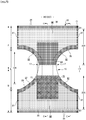
- Fig. 1 to Fig. 6 illustrate the underpants-type disposable diaper.
- a reference character LD longitudinal direction
- a reference character WD denotes a width direction.
- the underpants-type disposable diaper (hereinafter also simply referred to as a diaper) includes an outer member 20 forming a front body F and a back body B, and an inner member 10 fixed to and integrated with an inner surface of the outer member 20, and the inner member 10 is formed by interposing an absorbent body 13 between a liquid pervious top sheet 11 and a liquid impervious sheet 12.
- the inner member 10 and the outer member 20 are folded at a center in the front-back direction LD (longitudinal direction) corresponding to a boundary between the front body F and the back body B, and both side portions thereof are bonded to each other by thermal welding or the hotmelt adhesive to form side seal portions 21, thereby obtaining the underpants-type disposable diaper in which a waist opening and a pair of right and left leg openings are formed.
- bonding means such as a hotmelt adhesive
- the inner member 10 has a structure in which the absorbent body 13 is interposed between the top sheet 11 and the liquid impervious sheet 12 made of polyethylene, etc. and absorbs and holds excretion fluid passing through the top sheet 11.
- a planar shape of the inner member 10 is not particularly limited. However, a substantially rectangular shape is generally adopted as illustrated in Fig. 1 .
- a perforated or non-perforated nonwoven fabric, a porous plastic sheet, etc. is preferably used as the top sheet 11 that covers the front surface side (skin side) of the absorbent body 13.
- a material fiber constituting the nonwoven fabric it is possible to adopt a regenerated fiber such as rayon and cupra or a natural fiber such as cotton in addition to a polyolefin-based synthetic fiber such as polyethylene or polypropylene, a polyester-based synthetic fiber, a polyamide-based synthetic fiber, etc., and it is possible to use a nonwoven fabric obtained by an appropriate processing method such as a spunlace method, a spunbond method, a thermal bond method, a meltblown method, a needle punch method, etc.
- a liquid impervious plastic sheet such as polyethylene or polypropylene may be used.
- a sheet having a moisture penetration property may be preferably used from a viewpoint of preventing stuffiness. Examples thereof include a microporous sheet obtained by melt-kneading an inorganic filler in a polyolefin resin such as polyethylene or polypropylene to form a sheet, and then stretching the sheet in a uniaxial or biaxial direction.
- the absorbent body 13 it is possible to use a known one, for example, a pulp fiber stack, an assembly of filaments of cellulose acetate, etc., or a nonwoven fabric-based body mixed with a high-absorbent polymer as necessary or fixed. To hold the shape and the polymer, the absorbent body 13 can be wrapped in a package sheet 14 having a liquid pervious and liquid retaining property such as crepe paper as necessary.
- the absorbent body 13 is formed into a substantially hourglass shape having a narrower portion 13N narrower than both front and back sides at a crotch portion.
- a size of the narrower portion 13N can be determined as appropriate.
- a length of the narrower portion 13N in the front-back direction can be set to about 20 to 50% of a maximum length of the diaper, and a width of a narrowest portion thereof can be set to about 40 to 60% of a maximum width of the absorbent body 13.
- non-absorbent body side portions 17 not having the absorbent body 13 are formed at a portion corresponding to the narrower portion 13N of the absorbent body 13 in the inner member 10.
- the liquid impervious sheet 12 is folded back to the back surface side on both sides of the absorbent body 13 in the width direction together with the top sheet 11. As this liquid impervious sheet 12, it is desirable to use an opaque sheet so that brown color of excreta or urine is not seen.
- a pigment or a filler such as calcium carbonate, titanium oxide, zinc oxide, white carbon, clay, talc, or barium sulfate added to plastic and formed into a film is preferably used.
- each of the three-dimensional gathers 90 fits around the legs are formed on both side portions of the inner member 10.
- each of the three-dimensional gathers 90 includes a fixed portion 91 fixed to a side portion of the back surface of the inner member 10, a main unit section 92 stretchable from the fixed portion 91 up to a side portion of the front surface of the inner member 10 through a side of the inner member 10, a fallen portion 93 formed by front and back end portions of the main unit section 92 fixed to the side portion of the front surface of the inner member 10 (top sheet 11 in the illustrated example) in a fallen state using a hotmelt adhesive 95b, etc., and a free portion 94 formed between parts of the fallen portion 93 which are not fixed.
- Each of these portions is formed of a gather sheet 95 that is a duplicate sheet obtained by folding a sheet such as a nonwoven fabric.
- the gather sheet 95 is attached over the entire inner member 10 in the front-back direction, the fallen portion 93 is provided on the front side and the back side of each of the non-absorbent body side portions 17, and the free portion 94 extends to both the front and back sides of the non-absorbent body side portion 17.
- gather elastic members 96 are disposed at tip portions of the free portion. As illustrated in Fig. 5 , the gather elastic members 96 are for raising the free portion 94 by an elastic contraction force in a product state.
- a fixing structure of the gather elastic members 96 and the gather sheets 95 is not particularly limited.
- the gather elastic members 96 are attached and fixed to the gather sheets 95 through a hotmelt adhesive at positions of the gather elastic members 96, and facing surfaces of the gather sheets 95 are bonded to each other.
- the hotmelt adhesive is not present at the positions of the gather elastic members 96. Therefore, the gather elastic members 96 and the gather sheets 95 are not attached to each other, and the facing surfaces of the gather sheets 95 are not bonded to each other at positions having the gather elastic members 96.
- the gather elastic members 96 it is possible to use normally used materials such as polystyrene-based rubber, polyolefin-based rubber, polyurethane-based rubber, polyester-based rubber, polyurethane, polyethylene, polystyrene, styrene-butadiene copolymer, silicone, polyester, etc.
- a fineness is set to 925 dtex or less
- a tension is set to 150 to 350%
- an interval is set to 7.0 mm or less.
- the gather elastic members 96 it is possible to use a tape-like member having a certain width in addition to an elongated member as in the illustrated example.
- a material fiber constituting the gather sheets 95 described above similarly to the top sheet 11, it is possible to adopt a regenerated fiber such as rayon or cupra or a natural fiber such as cotton in addition to a polyolefin-based synthetic fiber such as polyethylene or polypropylene, a polyester-based synthetic fiber, a polyamide-based synthetic fiber, etc., and it is possible to use a nonwoven fabric obtained by an appropriate processing method such as a spunbond method, a thermal bond method, a meltblown method, a needle punch method, etc.
- a nonwoven fabric that suppresses a basis weight and has excellent air permeability.
- a water repellent nonwoven fabric coated with a silicone-based, paraffin metal-based, or alkylchromic chloride-based water repellent agent it is preferable to use a water repellent nonwoven fabric coated with a silicone-based, paraffin metal-based, or alkylchromic chloride-based water repellent agent, etc.
- the back surface of the inner member 10 is bonded to the inner surface of the outer member 20 by a hotmelt adhesive, etc. in an inner/outer fixing region 10B (shaded region).
- the inner/outer fixing region 10B may be determined as appropriate and may correspond to almost the entire inner member 10 in a width direction WD. However, it is preferable that both ends in the width direction are not fixed to the outer member 20.
- the outer member 20 includes at least the lower torso portion T of the front body F and the lower torso portion T of the back body B, and further includes an intermediate portion L corresponding to a range in the front-back direction between the lower torso portion T of the front body F and the lower torso portion T of the back body B in the illustrated example.
- side edges of the outer member 20 may be located on a central side of side edges of the inner member 10 in the width direction or located on an outer side thereof in the width direction.
- the outer member 20 of the illustrated example has an elastic sheet stretchable structure 20X in which an elastic sheet 30 is interposed between the translucent first sheet layer 20A and second sheet layer 20B as illustrated in Fig. 2 and Fig. 4 to Fig. 6 except for a middle of the intermediate portion L in the front-back direction and the first sheet layer 20A and the second sheet layer 20B are bonded through joint holes 31 penetrating the elastic sheet 30 at a plurality of sheet joined portions 40 arranged at intervals as illustrated in Fig. 9 .
- a region having this elastic sheet stretchable structure includes a stretchable region that contracts in the width direction by contraction of the elastic sheet and is extensible in the width direction (that is, the stretchable direction ED is the width direction WD of the diaper).
- the first sheet layer 20A and the second sheet layer 20B may be indirectly bonded through the elastic sheet 30 instead of through the joint holes 31 of the elastic sheet 30.
- a planar shape of the outer member 20 is formed by concave around-leg lines 29 so that both side edges of the intermediate portion L in the width direction form leg openings, respectively, and has a shape similar to an hourglass as a whole.
- the outer member 20 may be formed separately in the front body F and the back body B, and both bodies may be disposed to be separated in the front-back direction LD of the diaper at the crotch portion.
- FIG. 1 and Fig. 2 An embodiment illustrated in Fig. 1 and Fig. 2 is an embodiment in which the elastic sheet stretchable structure 20X extends up to waist end portions 23.
- the stretchable structure may be provided by conventional elongated waist portion elastic members 24 without providing the elastic sheet stretchable structure 20X in the waist end portions 23 as illustrated in Fig. 7 and Fig. 8 .
- the waist portion elastic members 24 are elongated elastic members such as a plurality of rubber threads disposed at intervals in the front-back direction LD, and apply a stretching force to tighten a waist of a body.
- the waist portion elastic members 24 are not disposed substantially in a bundle at close intervals, and three or more waist portion elastic members 24, preferably five or more waist portion elastic members 24 are disposed at intervals of about 3 to 8 mm in the front-back direction to form a predetermined stretchable zone.
- a stretch rate the waist portion elastic members 24 at the time of fixing can be determined as appropriate, and may be set to about 230 to 320% for a normal adult.
- rubber threads are used in the illustrated example. However, other elongated elastic members such as flat rubber may be used.
- the elastic sheet 30 may be provided at the waist end portions 23, and the elongated waist portion elastic members 24 may be provided at positions overlapping the elastic sheet 30, so that a stretchable structure using both elastic members can be provided.
- the elongated elastic members extending along leg openings are not provided at edge portions of the leg openings in the outer member 20.
- the elongated elastic members may be provided at positions overlapping the elastic sheet 30 at the edge portions or instead of the elastic sheet 30 at the edge portions.
- the elastic sheet stretchable structure 20X may not be provided in the intermediate portion L between the lower torso portion T of the front body F and the lower torso portion T of the back body B, the elastic sheet stretchable structure 20X may be continuously provided in the front-back direction LD from the inside of the lower torso portion T of the front body F to the inside of the lower torso portion T of the back body B via the intermediate portion L, or the elastic sheet stretchable structure 20X may be provided only in one of the front body F and the back body B.
- a region having the elastic sheet stretchable structure 20X in the outer member 20 has a stretchable region that can be stretched and contracted in the width direction WD.
- the stretchable region 80 contracts in the width direction WD by a contraction force of the elastic sheet 30 and is extensible in the width direction WD. More specifically, in a state where the elastic sheet 30 is stretched in the width direction WD, the first sheet layer 20A and the second sheet layer 20B are bonded through the joint holes 31 of the elastic sheet 30 at intervals in each of the width direction WD and the front-back direction LD orthogonal thereto (the direction LD orthogonal to the stretchable direction)to form a plurality of sheet joined portions 40, thereby forming the elastic sheet stretchable structure 20X.
- the elastic sheet 30 is left without disconnection in the width direction WD, and the sheet joined portions 40 are disposed such that the first sheet layer 20A and the second sheet layer 20B contract by the contraction force of the elastic sheet 30 and contraction pleats 25 are formed, thereby imparting such elasticity.
- the stretchable region 80 may have a portion 32 in which the elastic sheet 30 is linearly continuous along the width direction WD as in an example illustrated in Fig. 9 and may not have the portion 32 as in an example illustrated in Fig. 11 and an example illustrated in Fig. 15 .
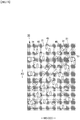
- An arrangement pattern of the sheet joined portions 40 in the stretchable region 80 is preferably as in the example illustrated in Fig. 9 , as in the example illustrated in Fig. 11 , and as in the example illustrated in Fig. 15 . That is, in these examples, in the stretchable region 80, as non-joint bands 51 and 52 in which a part not having the sheet joined portions 40 is continuous in the unfolded state, a first non-joint band 51 linearly continuous along a first direction 51d intersecting the stretchable direction ED at an acute angle (acute intersecting angle ⁇ 1) is repeatedly present at intervals in a direction orthogonal to the first direction 51d.
- a plurality of sheet joined portions 40 and joint holes 31 are provided at intervals between adjacent first non-joint bands 51 in the stretchable region 80. Further, characteristically, a unit structure including a plurality of the first non-joint bands 51 having different first widths 51w determined as widths in the direction orthogonal to the first direction 51d is repeatedly present in the direction orthogonal to the first direction 51d in the stretchable region 80.
- the unit structure including the plurality of the first non-joint bands 51 having different first widths 51w is repeatedly present in the direction orthogonal to the first direction 51d in the stretchable region 80, a similar magnitude change in width is formed in a continuous portion of the elastic sheet 30 inside the first non-joint bands 51. That is, when the width 51w of the first non-joint bands 51 is narrow, the width of the continuous portion of the elastic sheet 30 on the inside is narrowed. Further, when the width 51w of the first non-joint bands 51 is wide, the width of the continuous portion of the elastic sheet 30 on the inside is widened.
- both the continuous portion of the elastic sheet 30 in first non-joint bands 51 having a wide width and the continuous portion of the elastic sheet 30 in first non-joint bands 51 having a narrow width are visually emphasized.
- an appearance having beautiful oblique stripe patterns is exhibited.
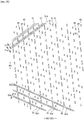
- the first sheet layer 20A and the second sheet layer 20B between the sheet joined portions 40 swell in a direction in which they are separated from each other, thereby forming contraction pleats 25 extending in the front-back direction LD in the natural length state as illustrated in Fig. 9 and Fig. 14(b) . Further, in the worn state of being stretched to some extent in the width direction WD, the contraction pleats 25 are left even though the contraction pleats 25 are extended.
- the unit structure described above is not limited by the magnitude of the width 51w as long as the plurality of first non-joint bands 51 having different first widths 51w is included. However, it is preferable that a large first width 51w in the first non-joint bands 51 is 1.2 to 60 times that of a first non-joint band 51 having a closest width 51w and a small first width 51w is 0.01 to 0.8 times that of the first non-joint band 51 having the closest width 51w.
- the first widths 51w in all the first non-joint bands 51 may be different from each other, and a first width 51w in some of the plurality of non-joint bands 51 may be different from a first width 51w of one or a plurality of other first non-joint bands 51 as illustrated in the figure.
- a maximum value of the first widths 51w in the first non-joint bands 51 is a maximum value of widths in a direction orthogonal to a continuous direction in all the common non-joint bands 51 and 52 having different inclination directions since an oblique stripe pattern due to the contraction pleats 25 of the first non-joint bands 51 and the continuous portion of the elastic sheet 30 therein is more strongly visually recognized in the stretchable region 80.
- the maximum value of the first widths 51w in the first non-joint bands 51 can be determined as appropriate, and is preferably 1.2 to 60 times that of the first non-joint band 51 having the closest width 51w.
- widths of all the non-joint bands 51 and 52 including the first non-joint bands 51 in the direction orthogonal to the continuous direction are not limited and are preferably within a range of 0.02 to 5 mm in a normal case.
- the widths of the non-joint bands 51 and 52 in the direction orthogonal to the continuous direction are the first width 51w in the first non-joint bands 51, which correspond to the linearly continuous portion. Therefore, the widths are equal widths.
- a first interval 51s determined as an interval between the adjacent first non-joint bands 51 in the direction orthogonal to the first direction 51d can be determined as appropriate. Therefore, the first interval 51s may be the same as, wider than, or narrower than the first width 51w of the adjacent first non-joint bands 51. As one preferable example, it is possible to mention a mode in which the maximum value of the first widths 51w of the first non-joint bands 51 is smaller than a maximum value of the first interval 51s in the unit structure. In this way, by forming a wide interval portion in the unit structure, the oblique stripe pattern due to the contraction pleats 25 of the first non-joint bands 51 and the continuous portion of the elastic sheet 30 inside thereof is more strongly visually recognized.
- the maximum value of the first widths 51w of the first non-joint bands 51 can be determined as appropriate, and is preferably 0.01 to 9 times the maximum value of the first interval 51s.
- intervals between all the non-joint bands 51 and 52 including the first non-joint bands 51 in the direction orthogonal to the continuous direction are not particularly limited and are preferably within a range of 0.3 to 50 mm in a normal case.
- the intervals between the non-joint bands 51 and 52 in the direction orthogonal to the continuous direction correspond to the first interval 51s in the first non-joint bands 51 and correspond to equal intervals in the continuous direction.
- the second non-joint bands 52 linearly continuous along a second direction 52d intersecting the stretchable direction ED at an acute angle (acute angle ⁇ 2 formed by intersecting) other than the first direction 51d may be repeatedly present at intervals in a direction orthogonal to the second direction 52d, or the second non-joint bands 52 may not be present.
- the non-joint bands 51 and 52 are formed in an oblique lattice shape in the stretchable region 80, the first non-joint bands 51 are continuous portions in one direction in the non-joint bands 51 and 52 having the oblique lattice shape, and the second non-joint bands 52 are continuous portions in another direction in the non-joint bands 51 and 52 having the oblique lattice shape.
- the first direction 51d and the second direction 52d are opposite to each other in terms of inclination with respect to the stretchable direction ED.
- a maximum elongation of the stretchable region 80 in the width direction WD is 190% or more (preferably 200 to 220%).
- the maximum elongation of the stretchable region 80 is substantially determined by the stretch rate of the elastic sheet 30 at the time of manufacture, and the maximum elongation decreases due to factors that inhibit contraction in the width direction WD based thereon.
- a main factor of such inhibition is a ratio of the length L of the sheet joined portions 40 per unit length in the width direction WD, and the maximum elongation decreases as this ratio increases.
- the maximum elongation of the stretchable region 80 can be adjusted by the area ratio of the sheet joined portions 40.
- the stretching stress of the stretchable region 80 can be adjusted mainly by a sum of orthogonal dimensions 32w (equal to intervals 31d of the joint holes) of the portion 32 in which the elastic sheet 30 is linearly continuous along the width direction WD (see Fig. 9(a) ).
- the stretching stress can be adjusted by an acute intersecting angle between the continuous direction of the non-joint bands 51 and 52 and the stretchable direction ED.
- each of the acute intersecting angles ⁇ 1 and ⁇ 2 between the continuous direction of the non-joint bands 51 and 52 and the stretchable direction ED in the unfolded state is set to be more than 0 degrees and 45 degrees or less, particularly a range of 10 to 30 degrees.
- the area ratio of the sheet joined portions 40 and the area of each of the sheet joined portions 40 in the stretchable region 80 can be determined as appropriate and are preferably within the following ranges in a normal case.
- the maximum elongation and stretching stress of the stretchable region 80 can be adjusted by the area of the sheet joined portions 40.
- a plurality of regions having different area ratios of the sheet joined portions 40 may be provided in the stretchable region 80 to change fitting according to the site.
- edge portion regions 82 of leg openings correspond to a flexibly stretching and contracting region in which the area ratio of the sheet joined portions 40 is high comparing to other regions, and thus the stretching stress is weak.
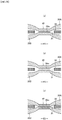
- a shape of each of the sheet joined portions 40 and the joint holes 31 in the natural length state can be determined as appropriate, and may be set to any shape such as a perfect circle, an ellipse, a polygon such as a triangle, a rectangle (see Fig. 9 , Fig. 11 , and Fig. 15 ), or a rhombus (see Fig. 10(b) ), a convex lens shape (see Fig. 10(a) ), a concave lens shape (see Fig. 10(c) ), a star shape, a cloud shape, etc.
- the dimensions of the individual sheet joined portions are not particularly limited.
- a maximum length 40y (approximately equal to a dimension 31y of the joint holes 31 in the orthogonal direction) is preferably 0.5 to 3.0 mm, particularly preferably 0.7 to 1.1 mm, and a maximum width 40x is preferably 0.1 to 3.0 mm, particularly 0.1 to 1.1 mm in the case of a shape that is long in a direction XD orthogonal to the stretchable direction.
- the sheet joined portions 40 are aligned in the first direction 51d.
- all the sheet joined portions 40 have an elongated shape in which an acute intersecting angle ⁇ 3 between the longitudinal direction and the direction orthogonal to the stretchable direction ED is within 10 degrees and a maximum dimension 40e in the stretchable direction ED is 0.1 to 0.4 mm since it is possible to ensure a larger dimension of the first non-joint bands 51 in the stretchable direction ED and to suppress a decrease in elasticity.
- the unit structure when the unit structure includes a plurality of first wide non-joint bands 51 having a maximum first width 51w and a plurality of first narrow non-joint bands 51 having a narrower first width 51w adjacent to each other in the direction orthogonal to the first direction 51d, it is preferable that sheet joined portions 40 having an elongated shape in which the acute intersecting angle between the longitudinal direction and the second direction 52d is within 5 degrees and a maximum dimension 40f in the direction orthogonal to the longitudinal direction is 0.1 to 0.4 mm are aligned at intervals in the first direction 51d between the adjacent first wide non-joint bands 51.
- sheet joined portions 40 having an elongated shape in which the acute intersecting angle ⁇ 3 between the longitudinal direction and the first direction 51d is 45 degrees or more and a maximum dimension 40g in the direction orthogonal to the longitudinal direction is 0.1 to 0.4 mm are aligned at intervals in the first direction 51d between the adjacent first narrow non-joint bands 51.
- One row or a plurality of rows of the sheet joined portions 40 may be located between the adjacent non-joint bands 51 and 52.
- intervals between the sheet joined portions 40 in a row direction are regular. However, all the intervals may not be constant, and some intervals may be different.
- a non-stretchable region 70 may be provided at least on one side of the stretchable region 80 in the width direction.
- the non-stretchable region 70 means that a maximum elongation in the stretchable direction is 120% or less.
- the maximum elongation of the non-stretchable region 70 is preferably 110% or less, and more preferably 100%.
- Arrangement of the stretchable region 80 and the non-stretchable region 70 can be determined as appropriate.
- a portion overlapping the absorbent body 13 is a region not requiring stretching and contraction.
- the non-stretchable region 70 may be provided from a region overlapping the absorbent body 13 to a region not overlapping the absorbent body 13 away from the region in the width direction WD or the front-back direction LD, and the non-stretchable region 70 may be provided only in the region not overlapping the absorbent body 13.
- each of the sheet joined portions 40 in the non-stretchable region 70 is not particularly limited, and may be appropriately selected from the same shapes as those described in the section of the stretchable region 80.
- the area ratio of the sheet joined portions 40 and the area of each of the sheet joined portions 40 in the non-stretchable region can be determined as appropriate. However, in a normal case, the area ratio and the area are preferably within the following ranges since the non-stretchable region 70 does not become hard due to the small area of each of the sheet joined portions 40 and the low area ratio of the sheet joined portions 40.
- the non-stretchable region 70 can be formed by densely disposing the sheet joined portions 40 so that the first sheet layer and the second sheet layer are prevented from being contracted by the contraction force of the elastic sheet 30 to form pleats.
- Specific examples of a method for forming the non-stretchable region 70 include those shown in, for example, JP 5980355 B2 , JP 5918877 B2 , JP 5980367 B2 , and JP 6049228 B2 .
- first sheet layer 20A and the second sheet layer 20B are bonded in the sheet joined portions 40 through the joint holes 31 formed in the elastic sheet 30, it is desirable that the first sheet layer 20A and the second sheet layer 20B are not bonded to the elastic sheet 30 except at least between the first sheet layer 20A and the second sheet layer 20B in the sheet joined portions 40.
- Bonding means for the first sheet layer 20A and the second sheet layer 20B in the sheet joined portions 40 is not particularly limited.
- the first sheet layer 20A and the second sheet layer 20B may be bonded to each other in the sheet joined portions 40 using a hotmelt adhesive or using bonding means by material welding such as heat sealing or ultrasonic sealing.
- first sheet layer 20A and the second sheet layer 20B are bonded through the joint holes 31 of the elastic sheet 30 in the sheet joined portions 40
- the sheet joined portions 40 are formed by material welding
- a particularly preferable mode is that the first sheet layer 20A and the second sheet layer 20B are bonded by the molten and solidified material 20m of the part of the first sheet layer 20A and the second sheet layer 20B and the molten and solidified material 30m of all or the most part of the elastic sheet 30 in the sheet joined portions 40.
- the molten and solidified material 30m of the elastic sheet 30 shown in white is seen between molten and solidified materials 20m of fibers of the first sheet layer 20A or the second sheet layer 20B shown in black.
- the molten and solidified material of the elastic sheet 30 is not seen between molten and solidified materials 20m of fibers of the first sheet layer 20A or the second sheet layer 20B.
- first sheet layer 20A and the second sheet layer 20B are bonded using the molten and solidified material 20m of the most part or the part of at least one of the first sheet layer 20A and the second sheet layer 20B as an adhesive as in the first adhesive mode or the third adhesive mode, it is preferable that a part of the first sheet layer 20A and the second sheet layer 20B is not melted since the sheet joined portions 40 are not hardened.
- a case in which a part of the first sheet layer 20A and the second sheet layer 20B does not melt includes a mode in which cores (including a central part of a single component fiber in addition to a core in a composite fiber) are left for all fibers of the sheet joined portions 40 while a surrounding part thereof (including a part of a surface layer side of the single component fiber in addition to a sheath in the composite fiber) melts, and a mode in which even though some fibers do not melt at all, remaining fibers all melt or even though cores are left, a surrounding part thereof melts.
- peel strength becomes high.
- the elastic sheet 30 is interposed between the first sheet layer 20A and the second sheet layer 20B, a site corresponding to the sheet joined portions 40 is pressurized and heated, and only the elastic sheet 30 is melted. In this way, manufacturing can be performed.
- the elastic sheet 30 is interposed between the first sheet layer 20A and the second sheet layer 20B, a site corresponding to the sheet joined portions 40 is pressurized and heated, and at least one of the first sheet layer 20A and the second sheet layer 20B and the elastic sheet 30 are melted. In this way, manufacturing can be performed.
- the melting point of the elastic sheet 30 is preferably about 80 to 145°C
- the melting point of the first sheet layer 20A and the second sheet layer 20B is preferably about 85 to 190°C, particularly 150 to 190°C
- a difference between the melting point of the first sheet layer 20A and the second sheet layer 20B and the melting point of the elastic sheet 30 is preferably about 60 to 90°C.
- the heating temperature is preferably set to about 100 to 150°C.
- the molten and solidified material 30m of the elastic sheet 30 may penetrate between fibers over the entire first sheet layer 20A and second sheet layer 20B in the thickness direction in the sheet joined portions 40 as illustrated in Fig. 19(c) .
- flexibility of the sheet joined portions 40 becomes high.
- Fig. 21 illustrates an example of an ultrasonic sealing device suitable for forming the second welding mode and the third welding mode.
- this ultrasonic sealing device when the sheet joined portions 40 are formed, the first sheet layer 20A, the elastic sheet 30, and the second sheet layer 20B are fed between an anvil roll 60 having projections 60a formed in the pattern of the sheet joined portions 40 on an outer surface and an ultrasonic horn 61.
- the elastic sheet 30 is stretched to a predetermined stretch rate in an MD (machine direction, flow direction) through a path from a nip position by the feed drive roll 63 and the nip roll 62 to a seal position by the anvil roll 60 and the ultrasonic horn 61.
- the stretch rate of the elastic sheet 30 can be set by selecting a speed difference between the anvil roll 60 and the feed drive roll 63, and can be set to about 300% to 500%, for example.
- Reference character 62 indicates the nip roll.
- the first sheet layer 20A, the elastic sheet 30, and the second sheet layer 20B fed between the anvil roll 60 and the ultrasonic horn 61 are heated by ultrasonic vibration energy of the ultrasonic horn 61 while being pressurized between the projections 60a and the ultrasonic horn 61 in a state of being stacked in this order.
- the joint holes 31 are formed in the elastic sheet 30.
- the first sheet layer 20A and the second sheet layer 20B are bonded through the joint holes 31.
- joint holes 31 are formed when portions corresponding to the projections 60a of the anvil roll 60 in the elastic sheet 30 are melted and detached from the surroundings.
- a portion between adjacent joint holes 31 aligned in the stretchable direction ED in the elastic sheet 30 is cut from portions on both sides in the stretchable direction by the joint holes 31 as illustrated in Fig. 9(a) , Fig. 12 , and Fig. 13 , and loses support on both sides in a contracting direction.
- a center side in the direction LD orthogonal to the stretchable direction ED more contracts until the center side is balanced with a center side in the stretchable direction, and the joint holes 31 enlarge in the stretchable direction ED.
- a constituent material of the first sheet layer 20A and the second sheet layer 20B can be used without particular limitation as long as the constituent material is a sheet-like material having translucency and allowing the elastic sheet 30 to be visually recognized.
- the constituent material has air permeability. Therefore, it is preferable to use a nonwoven fabric from these viewpoints and in terms of flexibility.
- a row material of the nonwoven fabric is not particularly limited.
- examples thereof may include a polyolefin-based synthetic fiber such as polyethylene or polypropylene, a polyester-based synthetic fiber, a polyamide-based synthetic fiber, etc., a recycled fiber such as rayon or cupra, a natural fiber such as cotton, or a mixed fiber, a composite fiber, etc. in which two or more of these materials are used.
- the nonwoven fabric may be manufactured by any processing.
- a method of fiber bonding in the nonwoven fabric it is possible to adopt any one of chemical means such as an adhesive or a solvent, physical means such as heating, or so-called entanglement.
- chemical means such as an adhesive or a solvent
- physical means such as heating, or so-called entanglement.
- a spunlace method for example, it is possible to adopt a spunlace method, a spunbond method, a thermal bond method, a meltblown method, a needle punch method, an air through method, a point bond method, etc.
- a basis weight is preferably set to about 10 to 25 g/m 2 .
- a part or all of the first sheet layer 20A and the second sheet layer 20B may correspond to a pair of layers faced to each other by folding a single material.
- a constituent material located on the outside may be used as the second sheet layer 20B, a folded portion 20C folded back to an internal surface side at a waist opening edge thereof may be used as the first sheet layer 20A, and the elastic sheet 30 may be interposed therebetween.
- a constituent material located on the inside may be used as the first sheet layer 20A
- a constituent material located on the outside may be used as the second sheet layer 20B
- the elastic sheet 30 may be interposed therebetween.
- constituent material of the first sheet layer 20A and the constituent material of the second sheet layer 20B may be individually provided over the entire region in the front-back direction LD, and the elastic sheet 30 may be interposed between the constituent material of the first sheet layer 20A and the constituent material of the second sheet layer 20B without folding back the constituent materials.
- the elastic sheet 30 is not particularly limited, and may correspond to a stretchable nonwoven fabric in addition to the elastic film as long as the sheet is made of a thermoplastic resin having elasticity. Further, as the elastic sheet 30, in addition to a non-porous sheet, it is possible to use a sheet in which a plurality of holes or slits is formed for ventilation.
- the elastic sheet 30 has a tensile strength in the width direction WD (stretchable direction ED, MD) of 8 to 25 N/35 mm, a tensile strength in the front-back direction LD (direction XD orthogonal to the stretchable direction, CD (cross direction)) of 5 to 20 N/35 mm, a tensile elongation in the width direction WD of 450 to 1,050%, and a tensile elongation in the front-back direction LD of 450 to 1,400%.
- a thickness of the elastic sheet 30 is not particularly limited. However, the thickness is preferably about 20 to 40 ⁇ m.
- the invention can be used for elastic members in general disposable wearing articles such as various disposable diapers of a tape type, a pad type, etc., a sanitary napkin, a disposable wearing article for swimming or playing in the water, etc. in addition to the underpants-type disposable diaper as in the above example.
Landscapes
- Health & Medical Sciences (AREA)
- Engineering & Computer Science (AREA)
- Mechanical Engineering (AREA)
- Animal Behavior & Ethology (AREA)
- Public Health (AREA)
- Heart & Thoracic Surgery (AREA)
- Vascular Medicine (AREA)
- Life Sciences & Earth Sciences (AREA)
- Epidemiology (AREA)
- General Health & Medical Sciences (AREA)
- Biomedical Technology (AREA)
- Veterinary Medicine (AREA)
- Textile Engineering (AREA)
- Manufacturing & Machinery (AREA)
- Chemical & Material Sciences (AREA)
- Materials Engineering (AREA)
- Absorbent Articles And Supports Therefor (AREA)
Applications Claiming Priority (3)
| Application Number | Priority Date | Filing Date | Title |
|---|---|---|---|
| JP2017187179A JP6546237B2 (ja) | 2017-09-27 | 2017-09-27 | 伸縮部材及びこの伸縮部材を有する使い捨て着用物品 |
| JP2017226329A JP6492152B1 (ja) | 2017-11-24 | 2017-11-24 | 伸縮部材及びこの伸縮部材を有する使い捨て着用物品 |
| PCT/JP2018/035309 WO2019065572A1 (fr) | 2017-09-27 | 2018-09-25 | Élément élastique et article vestimentaire jetable utilisant cet élément élastique |
Publications (3)
| Publication Number | Publication Date |
|---|---|
| EP3689310A1 true EP3689310A1 (fr) | 2020-08-05 |
| EP3689310A4 EP3689310A4 (fr) | 2021-06-16 |
| EP3689310B1 EP3689310B1 (fr) | 2023-12-20 |
Family
ID=65902918
Family Applications (1)
| Application Number | Title | Priority Date | Filing Date |
|---|---|---|---|
| EP18862592.5A Active EP3689310B1 (fr) | 2017-09-27 | 2018-09-25 | Élément élastique et article vestimentaire jetable utilisant cet élément élastique |
Country Status (6)
| Country | Link |
|---|---|
| US (1) | US20200214362A1 (fr) |
| EP (1) | EP3689310B1 (fr) |
| KR (1) | KR102519503B1 (fr) |
| CN (1) | CN110868979B (fr) |
| RU (1) | RU2752879C1 (fr) |
| WO (1) | WO2019065572A1 (fr) |
Cited By (1)
| Publication number | Priority date | Publication date | Assignee | Title |
|---|---|---|---|---|
| EP4018987A1 (fr) | 2020-12-23 | 2022-06-29 | Mondi AG | Stratifié lié par extension et procédé de production d'un stratifié à étirage directionnel de machine |
Families Citing this family (2)
| Publication number | Priority date | Publication date | Assignee | Title |
|---|---|---|---|---|
| JP7256775B2 (ja) * | 2020-08-11 | 2023-04-12 | 大王製紙株式会社 | 使い捨て着用物品 |
| JP7845852B2 (ja) * | 2021-12-28 | 2026-04-14 | 株式会社リブドゥコーポレーション | 吸収性物品 |
Family Cites Families (20)
| Publication number | Priority date | Publication date | Assignee | Title |
|---|---|---|---|---|
| JPS5918877B2 (ja) | 1976-05-31 | 1984-05-01 | 宏 柊元 | 光半導体素子 |
| JPS6049228B2 (ja) | 1977-06-28 | 1985-10-31 | 株式会社日本触媒 | 新規な結晶形ρ型銅フタロシアニンの製造方法 |
| US6830800B2 (en) * | 1999-12-21 | 2004-12-14 | The Procter & Gamble Company | Elastic laminate web |
| RU2345747C2 (ru) * | 2004-06-22 | 2009-02-10 | Ска Хайджин Продактс Аб | Поглощающее изделие, содержащее эластичный ламинат |
| WO2009028236A1 (fr) * | 2007-08-28 | 2009-03-05 | Kao Corporation | Feuille mise en forme et article absorbant utilisant une telle feuille |
| JP5100359B2 (ja) * | 2007-12-21 | 2012-12-19 | 花王株式会社 | 伸縮性複合シート及びその製造方法 |
| US9675501B2 (en) * | 2011-12-19 | 2017-06-13 | Kimberly-Clark Worldwide, Inc. | Absorbent article including superabsorbent yarn |
| JP5210447B1 (ja) * | 2012-10-29 | 2013-06-12 | 王子ネピア株式会社 | 使い捨ておむつ |
| EP2979670B1 (fr) * | 2013-03-29 | 2018-12-12 | Daio Paper Corporation | Structure élastique pour article absorbant et procédé pour fabriquer une structure élastique pour article absorbant |
| JP6192003B2 (ja) * | 2013-03-29 | 2017-09-06 | 大王製紙株式会社 | 吸収性物品の伸縮構造 |
| JP6311872B2 (ja) | 2014-04-18 | 2018-04-18 | 日本製紙クレシア株式会社 | パンツ型吸収性物品 |
| JP5896187B1 (ja) * | 2014-08-20 | 2016-03-30 | 王子ホールディングス株式会社 | 使い捨ておむつ及びクッションシート |
| JP6314822B2 (ja) * | 2014-12-26 | 2018-04-25 | 王子ホールディングス株式会社 | 使い捨ておむつ及びクッションシート |
| RU2708267C2 (ru) * | 2015-01-30 | 2019-12-05 | Дайо Пейпер Корпорейшн | Одноразовый подгузник |
| JP5980367B1 (ja) | 2015-03-31 | 2016-08-31 | 大王製紙株式会社 | 吸収性物品の製造方法 |
| KR102519506B1 (ko) * | 2015-01-30 | 2023-04-06 | 다이오 페이퍼 코퍼레이션 | 흡수성 물품 및 그 제조 방법 |
| JP5967736B1 (ja) | 2015-03-31 | 2016-08-10 | 大王製紙株式会社 | 吸収性物品 |
| JP6052746B1 (ja) * | 2015-09-30 | 2016-12-27 | 大王製紙株式会社 | 使い捨ておむつ |
| JP5980355B2 (ja) * | 2015-01-30 | 2016-08-31 | 大王製紙株式会社 | 吸収性物品の伸縮構造、及びこれを用いたパンツタイプ使い捨ておむつ |
| JP6082418B2 (ja) * | 2015-03-30 | 2017-02-15 | 大王製紙株式会社 | パンツタイプ使い捨ておむつ |
-
2018
- 2018-09-25 WO PCT/JP2018/035309 patent/WO2019065572A1/fr not_active Ceased
- 2018-09-25 EP EP18862592.5A patent/EP3689310B1/fr active Active
- 2018-09-25 CN CN201880045734.8A patent/CN110868979B/zh active Active
- 2018-09-25 RU RU2020107704A patent/RU2752879C1/ru active
- 2018-09-25 US US16/636,863 patent/US20200214362A1/en active Pending
- 2018-09-25 KR KR1020207003284A patent/KR102519503B1/ko active Active
Cited By (1)
| Publication number | Priority date | Publication date | Assignee | Title |
|---|---|---|---|---|
| EP4018987A1 (fr) | 2020-12-23 | 2022-06-29 | Mondi AG | Stratifié lié par extension et procédé de production d'un stratifié à étirage directionnel de machine |
Also Published As
| Publication number | Publication date |
|---|---|
| US20200214362A1 (en) | 2020-07-09 |
| CN110868979A (zh) | 2020-03-06 |
| KR20200060706A (ko) | 2020-06-01 |
| EP3689310A4 (fr) | 2021-06-16 |
| RU2752879C1 (ru) | 2021-08-11 |
| WO2019065572A1 (fr) | 2019-04-04 |
| EP3689310B1 (fr) | 2023-12-20 |
| KR102519503B1 (ko) | 2023-04-07 |
| CN110868979B (zh) | 2021-05-11 |
Similar Documents
| Publication | Publication Date | Title |
|---|---|---|
| EP3689309B1 (fr) | Élément étirable et article jetable destiné à être porté comportant un élément étirable | |
| EP3689307B1 (fr) | Élément élastique et article vestimentaire jetable ayant cet élément élastique | |
| KR20210016345A (ko) | 일회용 착용 물품 | |
| EP3689310B1 (fr) | Élément élastique et article vestimentaire jetable utilisant cet élément élastique | |
| JP7139276B2 (ja) | パンツタイプ使い捨て着用物品及びその製造方法 | |
| EP4393463A1 (fr) | Article vestimentaire jetable du type culotte | |
| US12403046B2 (en) | Disposable wearing article | |
| JP2020157001A5 (fr) | ||
| EP3689308B1 (fr) | Élément élastique et article vestimentaire jetable utilisant cet élément élastique | |
| US20260115057A1 (en) | Elastic member and disposable wearing article including elastic member | |
| JP7387253B2 (ja) | 使い捨て着用物品 | |
| EP3689311B1 (fr) | Élément élastique, article vestimentaire jetable utilisant cet élément élastique, et procédé de production d'élément élastique | |
| US20260096935A1 (en) | Elastic member and disposable wearing article including elastic member | |
| JP7576998B2 (ja) | パンツタイプ使い捨て着用物品及びその製造方法 | |
| JP2019166217A5 (fr) | ||
| JP6546251B2 (ja) | 伸縮部材及びこの伸縮部材を有する使い捨て着用物品、並びに伸縮部材の製造方法 | |
| JP6492152B1 (ja) | 伸縮部材及びこの伸縮部材を有する使い捨て着用物品 |
Legal Events
| Date | Code | Title | Description |
|---|---|---|---|
| STAA | Information on the status of an ep patent application or granted ep patent |
Free format text: STATUS: THE INTERNATIONAL PUBLICATION HAS BEEN MADE |
|
| PUAI | Public reference made under article 153(3) epc to a published international application that has entered the european phase |
Free format text: ORIGINAL CODE: 0009012 |
|
| STAA | Information on the status of an ep patent application or granted ep patent |
Free format text: STATUS: REQUEST FOR EXAMINATION WAS MADE |
|
| 17P | Request for examination filed |
Effective date: 20200206 |
|
| AK | Designated contracting states |
Kind code of ref document: A1 Designated state(s): AL AT BE BG CH CY CZ DE DK EE ES FI FR GB GR HR HU IE IS IT LI LT LU LV MC MK MT NL NO PL PT RO RS SE SI SK SM TR |
|
| AX | Request for extension of the european patent |
Extension state: BA ME |
|
| DAV | Request for validation of the european patent (deleted) | ||
| DAX | Request for extension of the european patent (deleted) | ||
| REG | Reference to a national code |
Ref country code: DE Ref legal event code: R079 Free format text: PREVIOUS MAIN CLASS: A61F0013510000 Ipc: B29C0065080000 Ref country code: DE Ref legal event code: R079 Ref document number: 602018063025 Country of ref document: DE Free format text: PREVIOUS MAIN CLASS: A61F0013510000 Ipc: B29C0065080000 |
|
| A4 | Supplementary search report drawn up and despatched |
Effective date: 20210517 |
|
| RIC1 | Information provided on ipc code assigned before grant |
Ipc: B29C 65/08 20060101AFI20210510BHEP Ipc: A61F 13/51 20060101ALI20210510BHEP Ipc: A61F 13/49 20060101ALI20210510BHEP Ipc: A61F 13/496 20060101ALI20210510BHEP |
|
| STAA | Information on the status of an ep patent application or granted ep patent |
Free format text: STATUS: EXAMINATION IS IN PROGRESS |
|
| 17Q | First examination report despatched |
Effective date: 20220914 |
|
| GRAP | Despatch of communication of intention to grant a patent |
Free format text: ORIGINAL CODE: EPIDOSNIGR1 |
|
| STAA | Information on the status of an ep patent application or granted ep patent |
Free format text: STATUS: GRANT OF PATENT IS INTENDED |
|
| INTG | Intention to grant announced |
Effective date: 20230929 |
|
| GRAS | Grant fee paid |
Free format text: ORIGINAL CODE: EPIDOSNIGR3 |
|
| GRAA | (expected) grant |
Free format text: ORIGINAL CODE: 0009210 |
|
| STAA | Information on the status of an ep patent application or granted ep patent |
Free format text: STATUS: THE PATENT HAS BEEN GRANTED |
|
| AK | Designated contracting states |
Kind code of ref document: B1 Designated state(s): AL AT BE BG CH CY CZ DE DK EE ES FI FR GB GR HR HU IE IS IT LI LT LU LV MC MK MT NL NO PL PT RO RS SE SI SK SM TR |
|
| REG | Reference to a national code |
Ref country code: GB Ref legal event code: FG4D |
|
| REG | Reference to a national code |
Ref country code: CH Ref legal event code: EP |
|
| REG | Reference to a national code |
Ref country code: DE Ref legal event code: R096 Ref document number: 602018063025 Country of ref document: DE |
|
| REG | Reference to a national code |
Ref country code: IE Ref legal event code: FG4D |
|
| PG25 | Lapsed in a contracting state [announced via postgrant information from national office to epo] |
Ref country code: GR Free format text: LAPSE BECAUSE OF FAILURE TO SUBMIT A TRANSLATION OF THE DESCRIPTION OR TO PAY THE FEE WITHIN THE PRESCRIBED TIME-LIMIT Effective date: 20240321 |
|
| REG | Reference to a national code |
Ref country code: LT Ref legal event code: MG9D |
|
| PG25 | Lapsed in a contracting state [announced via postgrant information from national office to epo] |
Ref country code: LT Free format text: LAPSE BECAUSE OF FAILURE TO SUBMIT A TRANSLATION OF THE DESCRIPTION OR TO PAY THE FEE WITHIN THE PRESCRIBED TIME-LIMIT Effective date: 20231220 |
|
| REG | Reference to a national code |
Ref country code: NL Ref legal event code: MP Effective date: 20231220 |
|
| PG25 | Lapsed in a contracting state [announced via postgrant information from national office to epo] |
Ref country code: ES Free format text: LAPSE BECAUSE OF FAILURE TO SUBMIT A TRANSLATION OF THE DESCRIPTION OR TO PAY THE FEE WITHIN THE PRESCRIBED TIME-LIMIT Effective date: 20231220 |
|
| PG25 | Lapsed in a contracting state [announced via postgrant information from national office to epo] |
Ref country code: LT Free format text: LAPSE BECAUSE OF FAILURE TO SUBMIT A TRANSLATION OF THE DESCRIPTION OR TO PAY THE FEE WITHIN THE PRESCRIBED TIME-LIMIT Effective date: 20231220 Ref country code: GR Free format text: LAPSE BECAUSE OF FAILURE TO SUBMIT A TRANSLATION OF THE DESCRIPTION OR TO PAY THE FEE WITHIN THE PRESCRIBED TIME-LIMIT Effective date: 20240321 Ref country code: FI Free format text: LAPSE BECAUSE OF FAILURE TO SUBMIT A TRANSLATION OF THE DESCRIPTION OR TO PAY THE FEE WITHIN THE PRESCRIBED TIME-LIMIT Effective date: 20231220 Ref country code: ES Free format text: LAPSE BECAUSE OF FAILURE TO SUBMIT A TRANSLATION OF THE DESCRIPTION OR TO PAY THE FEE WITHIN THE PRESCRIBED TIME-LIMIT Effective date: 20231220 Ref country code: BG Free format text: LAPSE BECAUSE OF FAILURE TO SUBMIT A TRANSLATION OF THE DESCRIPTION OR TO PAY THE FEE WITHIN THE PRESCRIBED TIME-LIMIT Effective date: 20240320 |
|
| REG | Reference to a national code |
Ref country code: AT Ref legal event code: MK05 Ref document number: 1642131 Country of ref document: AT Kind code of ref document: T Effective date: 20231220 |
|
| PG25 | Lapsed in a contracting state [announced via postgrant information from national office to epo] |
Ref country code: NL Free format text: LAPSE BECAUSE OF FAILURE TO SUBMIT A TRANSLATION OF THE DESCRIPTION OR TO PAY THE FEE WITHIN THE PRESCRIBED TIME-LIMIT Effective date: 20231220 |
|
| PG25 | Lapsed in a contracting state [announced via postgrant information from national office to epo] |
Ref country code: SE Free format text: LAPSE BECAUSE OF FAILURE TO SUBMIT A TRANSLATION OF THE DESCRIPTION OR TO PAY THE FEE WITHIN THE PRESCRIBED TIME-LIMIT Effective date: 20231220 Ref country code: RS Free format text: LAPSE BECAUSE OF FAILURE TO SUBMIT A TRANSLATION OF THE DESCRIPTION OR TO PAY THE FEE WITHIN THE PRESCRIBED TIME-LIMIT Effective date: 20231220 Ref country code: NO Free format text: LAPSE BECAUSE OF FAILURE TO SUBMIT A TRANSLATION OF THE DESCRIPTION OR TO PAY THE FEE WITHIN THE PRESCRIBED TIME-LIMIT Effective date: 20240320 Ref country code: NL Free format text: LAPSE BECAUSE OF FAILURE TO SUBMIT A TRANSLATION OF THE DESCRIPTION OR TO PAY THE FEE WITHIN THE PRESCRIBED TIME-LIMIT Effective date: 20231220 Ref country code: LV Free format text: LAPSE BECAUSE OF FAILURE TO SUBMIT A TRANSLATION OF THE DESCRIPTION OR TO PAY THE FEE WITHIN THE PRESCRIBED TIME-LIMIT Effective date: 20231220 Ref country code: HR Free format text: LAPSE BECAUSE OF FAILURE TO SUBMIT A TRANSLATION OF THE DESCRIPTION OR TO PAY THE FEE WITHIN THE PRESCRIBED TIME-LIMIT Effective date: 20231220 |
|
| PG25 | Lapsed in a contracting state [announced via postgrant information from national office to epo] |
Ref country code: IS Free format text: LAPSE BECAUSE OF FAILURE TO SUBMIT A TRANSLATION OF THE DESCRIPTION OR TO PAY THE FEE WITHIN THE PRESCRIBED TIME-LIMIT Effective date: 20240420 |
|
| PG25 | Lapsed in a contracting state [announced via postgrant information from national office to epo] |
Ref country code: AT Free format text: LAPSE BECAUSE OF FAILURE TO SUBMIT A TRANSLATION OF THE DESCRIPTION OR TO PAY THE FEE WITHIN THE PRESCRIBED TIME-LIMIT Effective date: 20231220 Ref country code: CZ Free format text: LAPSE BECAUSE OF FAILURE TO SUBMIT A TRANSLATION OF THE DESCRIPTION OR TO PAY THE FEE WITHIN THE PRESCRIBED TIME-LIMIT Effective date: 20231220 |
|
| PG25 | Lapsed in a contracting state [announced via postgrant information from national office to epo] |
Ref country code: SK Free format text: LAPSE BECAUSE OF FAILURE TO SUBMIT A TRANSLATION OF THE DESCRIPTION OR TO PAY THE FEE WITHIN THE PRESCRIBED TIME-LIMIT Effective date: 20231220 |
|
| PG25 | Lapsed in a contracting state [announced via postgrant information from national office to epo] |
Ref country code: SM Free format text: LAPSE BECAUSE OF FAILURE TO SUBMIT A TRANSLATION OF THE DESCRIPTION OR TO PAY THE FEE WITHIN THE PRESCRIBED TIME-LIMIT Effective date: 20231220 Ref country code: SK Free format text: LAPSE BECAUSE OF FAILURE TO SUBMIT A TRANSLATION OF THE DESCRIPTION OR TO PAY THE FEE WITHIN THE PRESCRIBED TIME-LIMIT Effective date: 20231220 Ref country code: RO Free format text: LAPSE BECAUSE OF FAILURE TO SUBMIT A TRANSLATION OF THE DESCRIPTION OR TO PAY THE FEE WITHIN THE PRESCRIBED TIME-LIMIT Effective date: 20231220 Ref country code: IT Free format text: LAPSE BECAUSE OF FAILURE TO SUBMIT A TRANSLATION OF THE DESCRIPTION OR TO PAY THE FEE WITHIN THE PRESCRIBED TIME-LIMIT Effective date: 20231220 Ref country code: IS Free format text: LAPSE BECAUSE OF FAILURE TO SUBMIT A TRANSLATION OF THE DESCRIPTION OR TO PAY THE FEE WITHIN THE PRESCRIBED TIME-LIMIT Effective date: 20240420 Ref country code: EE Free format text: LAPSE BECAUSE OF FAILURE TO SUBMIT A TRANSLATION OF THE DESCRIPTION OR TO PAY THE FEE WITHIN THE PRESCRIBED TIME-LIMIT Effective date: 20231220 Ref country code: CZ Free format text: LAPSE BECAUSE OF FAILURE TO SUBMIT A TRANSLATION OF THE DESCRIPTION OR TO PAY THE FEE WITHIN THE PRESCRIBED TIME-LIMIT Effective date: 20231220 Ref country code: AT Free format text: LAPSE BECAUSE OF FAILURE TO SUBMIT A TRANSLATION OF THE DESCRIPTION OR TO PAY THE FEE WITHIN THE PRESCRIBED TIME-LIMIT Effective date: 20231220 |
|
| PG25 | Lapsed in a contracting state [announced via postgrant information from national office to epo] |
Ref country code: PL Free format text: LAPSE BECAUSE OF FAILURE TO SUBMIT A TRANSLATION OF THE DESCRIPTION OR TO PAY THE FEE WITHIN THE PRESCRIBED TIME-LIMIT Effective date: 20231220 Ref country code: PT Free format text: LAPSE BECAUSE OF FAILURE TO SUBMIT A TRANSLATION OF THE DESCRIPTION OR TO PAY THE FEE WITHIN THE PRESCRIBED TIME-LIMIT Effective date: 20240422 |
|
| PG25 | Lapsed in a contracting state [announced via postgrant information from national office to epo] |
Ref country code: PT Free format text: LAPSE BECAUSE OF FAILURE TO SUBMIT A TRANSLATION OF THE DESCRIPTION OR TO PAY THE FEE WITHIN THE PRESCRIBED TIME-LIMIT Effective date: 20240422 Ref country code: PL Free format text: LAPSE BECAUSE OF FAILURE TO SUBMIT A TRANSLATION OF THE DESCRIPTION OR TO PAY THE FEE WITHIN THE PRESCRIBED TIME-LIMIT Effective date: 20231220 |
|
| REG | Reference to a national code |
Ref country code: DE Ref legal event code: R097 Ref document number: 602018063025 Country of ref document: DE |
|
| PG25 | Lapsed in a contracting state [announced via postgrant information from national office to epo] |
Ref country code: DK Free format text: LAPSE BECAUSE OF FAILURE TO SUBMIT A TRANSLATION OF THE DESCRIPTION OR TO PAY THE FEE WITHIN THE PRESCRIBED TIME-LIMIT Effective date: 20231220 |
|
| PLBE | No opposition filed within time limit |
Free format text: ORIGINAL CODE: 0009261 |
|
| STAA | Information on the status of an ep patent application or granted ep patent |
Free format text: STATUS: NO OPPOSITION FILED WITHIN TIME LIMIT |
|
| PG25 | Lapsed in a contracting state [announced via postgrant information from national office to epo] |
Ref country code: SI Free format text: LAPSE BECAUSE OF FAILURE TO SUBMIT A TRANSLATION OF THE DESCRIPTION OR TO PAY THE FEE WITHIN THE PRESCRIBED TIME-LIMIT Effective date: 20231220 |
|
| PG25 | Lapsed in a contracting state [announced via postgrant information from national office to epo] |
Ref country code: SI Free format text: LAPSE BECAUSE OF FAILURE TO SUBMIT A TRANSLATION OF THE DESCRIPTION OR TO PAY THE FEE WITHIN THE PRESCRIBED TIME-LIMIT Effective date: 20231220 Ref country code: DK Free format text: LAPSE BECAUSE OF FAILURE TO SUBMIT A TRANSLATION OF THE DESCRIPTION OR TO PAY THE FEE WITHIN THE PRESCRIBED TIME-LIMIT Effective date: 20231220 |
|
| 26N | No opposition filed |
Effective date: 20240923 |
|
| PG25 | Lapsed in a contracting state [announced via postgrant information from national office to epo] |
Ref country code: MC Free format text: LAPSE BECAUSE OF FAILURE TO SUBMIT A TRANSLATION OF THE DESCRIPTION OR TO PAY THE FEE WITHIN THE PRESCRIBED TIME-LIMIT Effective date: 20231220 |
|
| REG | Reference to a national code |
Ref country code: CH Ref legal event code: PL |
|
| PG25 | Lapsed in a contracting state [announced via postgrant information from national office to epo] |
Ref country code: LU Free format text: LAPSE BECAUSE OF NON-PAYMENT OF DUE FEES Effective date: 20240925 |
|
| REG | Reference to a national code |
Ref country code: BE Ref legal event code: MM Effective date: 20240930 |
|
| PG25 | Lapsed in a contracting state [announced via postgrant information from national office to epo] |
Ref country code: BE Free format text: LAPSE BECAUSE OF NON-PAYMENT OF DUE FEES Effective date: 20240930 |
|
| PG25 | Lapsed in a contracting state [announced via postgrant information from national office to epo] |
Ref country code: CH Free format text: LAPSE BECAUSE OF NON-PAYMENT OF DUE FEES Effective date: 20240930 |
|
| PG25 | Lapsed in a contracting state [announced via postgrant information from national office to epo] |
Ref country code: IE Free format text: LAPSE BECAUSE OF NON-PAYMENT OF DUE FEES Effective date: 20240925 |
|
| PGFP | Annual fee paid to national office [announced via postgrant information from national office to epo] |
Ref country code: DE Payment date: 20250730 Year of fee payment: 8 |
|
| PGFP | Annual fee paid to national office [announced via postgrant information from national office to epo] |
Ref country code: TR Payment date: 20250918 Year of fee payment: 8 |
|
| PGFP | Annual fee paid to national office [announced via postgrant information from national office to epo] |
Ref country code: GB Payment date: 20250807 Year of fee payment: 8 |
|
| PGFP | Annual fee paid to national office [announced via postgrant information from national office to epo] |
Ref country code: FR Payment date: 20250808 Year of fee payment: 8 |
|
| PG25 | Lapsed in a contracting state [announced via postgrant information from national office to epo] |
Ref country code: CY Free format text: LAPSE BECAUSE OF FAILURE TO SUBMIT A TRANSLATION OF THE DESCRIPTION OR TO PAY THE FEE WITHIN THE PRESCRIBED TIME-LIMIT; INVALID AB INITIO Effective date: 20180925 |
|
| PG25 | Lapsed in a contracting state [announced via postgrant information from national office to epo] |
Ref country code: HU Free format text: LAPSE BECAUSE OF FAILURE TO SUBMIT A TRANSLATION OF THE DESCRIPTION OR TO PAY THE FEE WITHIN THE PRESCRIBED TIME-LIMIT; INVALID AB INITIO Effective date: 20180925 |