EP3713351A1 - Procédé de transmission d'informations, procédé d'attribution de ressources, dispositif terminal et dispositif de réseau - Google Patents
Procédé de transmission d'informations, procédé d'attribution de ressources, dispositif terminal et dispositif de réseau Download PDFInfo
- Publication number
- EP3713351A1 EP3713351A1 EP18880608.7A EP18880608A EP3713351A1 EP 3713351 A1 EP3713351 A1 EP 3713351A1 EP 18880608 A EP18880608 A EP 18880608A EP 3713351 A1 EP3713351 A1 EP 3713351A1
- Authority
- EP
- European Patent Office
- Prior art keywords
- index
- address
- mapping relationship
- terminal device
- relationship information
- Prior art date
- Legal status (The legal status is an assumption and is not a legal conclusion. Google has not performed a legal analysis and makes no representation as to the accuracy of the status listed.)
- Ceased
Links
- 238000000034 method Methods 0.000 title claims abstract description 118
- 230000005540 biological transmission Effects 0.000 title claims abstract description 27
- 238000013468 resource allocation Methods 0.000 title claims abstract description 13
- 238000013507 mapping Methods 0.000 claims abstract description 487
- 238000012545 processing Methods 0.000 claims description 66
- 230000015654 memory Effects 0.000 description 30
- 238000010586 diagram Methods 0.000 description 10
- 238000004891 communication Methods 0.000 description 9
- 230000001360 synchronised effect Effects 0.000 description 5
- 230000006870 function Effects 0.000 description 4
- 230000008878 coupling Effects 0.000 description 3
- 238000010168 coupling process Methods 0.000 description 3
- 238000005859 coupling reaction Methods 0.000 description 3
- 239000000969 carrier Substances 0.000 description 2
- 238000004590 computer program Methods 0.000 description 2
- 238000001514 detection method Methods 0.000 description 2
- 238000005516 engineering process Methods 0.000 description 2
- 230000003993 interaction Effects 0.000 description 2
- 230000003068 static effect Effects 0.000 description 2
- 230000001413 cellular effect Effects 0.000 description 1
- 239000003795 chemical substances by application Substances 0.000 description 1
- 238000013461 design Methods 0.000 description 1
- 238000011156 evaluation Methods 0.000 description 1
- 230000000977 initiatory effect Effects 0.000 description 1
- 230000007774 longterm Effects 0.000 description 1
- 230000003287 optical effect Effects 0.000 description 1
- 238000001228 spectrum Methods 0.000 description 1
Images

Classifications
-
- H—ELECTRICITY
- H04—ELECTRIC COMMUNICATION TECHNIQUE
- H04W—WIRELESS COMMUNICATION NETWORKS
- H04W72/00—Local resource management
- H04W72/50—Allocation or scheduling criteria for wireless resources
- H04W72/51—Allocation or scheduling criteria for wireless resources based on terminal or device properties
-
- H—ELECTRICITY
- H04—ELECTRIC COMMUNICATION TECHNIQUE
- H04L—TRANSMISSION OF DIGITAL INFORMATION, e.g. TELEGRAPHIC COMMUNICATION
- H04L5/00—Arrangements affording multiple use of the transmission path
- H04L5/0001—Arrangements for dividing the transmission path
- H04L5/0003—Two-dimensional division
- H04L5/0005—Time-frequency
- H04L5/0007—Time-frequency the frequencies being orthogonal, e.g. OFDM(A) or DMT
- H04L5/001—Time-frequency the frequencies being orthogonal, e.g. OFDM(A) or DMT the frequencies being arranged in component carriers
-
- H—ELECTRICITY
- H04—ELECTRIC COMMUNICATION TECHNIQUE
- H04L—TRANSMISSION OF DIGITAL INFORMATION, e.g. TELEGRAPHIC COMMUNICATION
- H04L5/00—Arrangements affording multiple use of the transmission path
- H04L5/003—Arrangements for allocating sub-channels of the transmission path
- H04L5/0032—Distributed allocation, i.e. involving a plurality of allocating devices, each making partial allocation
- H04L5/0033—Distributed allocation, i.e. involving a plurality of allocating devices, each making partial allocation each allocating device acting autonomously, i.e. without negotiation with other allocating devices
-
- H—ELECTRICITY
- H04—ELECTRIC COMMUNICATION TECHNIQUE
- H04L—TRANSMISSION OF DIGITAL INFORMATION, e.g. TELEGRAPHIC COMMUNICATION
- H04L5/00—Arrangements affording multiple use of the transmission path
- H04L5/0091—Signalling for the administration of the divided path, e.g. signalling of configuration information
-
- H—ELECTRICITY
- H04—ELECTRIC COMMUNICATION TECHNIQUE
- H04L—TRANSMISSION OF DIGITAL INFORMATION, e.g. TELEGRAPHIC COMMUNICATION
- H04L61/00—Network arrangements, protocols or services for addressing or naming
- H04L61/45—Network directories; Name-to-address mapping
- H04L61/4541—Directories for service discovery
-
- H—ELECTRICITY
- H04—ELECTRIC COMMUNICATION TECHNIQUE
- H04L—TRANSMISSION OF DIGITAL INFORMATION, e.g. TELEGRAPHIC COMMUNICATION
- H04L67/00—Network arrangements or protocols for supporting network services or applications
- H04L67/50—Network services
- H04L67/51—Discovery or management thereof, e.g. service location protocol [SLP] or web services
-
- H—ELECTRICITY
- H04—ELECTRIC COMMUNICATION TECHNIQUE
- H04W—WIRELESS COMMUNICATION NETWORKS
- H04W4/00—Services specially adapted for wireless communication networks; Facilities therefor
- H04W4/30—Services specially adapted for particular environments, situations or purposes
- H04W4/40—Services specially adapted for particular environments, situations or purposes for vehicles, e.g. vehicle-to-pedestrians [V2P]
- H04W4/46—Services specially adapted for particular environments, situations or purposes for vehicles, e.g. vehicle-to-pedestrians [V2P] for vehicle-to-vehicle communication [V2V]
-
- H—ELECTRICITY
- H04—ELECTRIC COMMUNICATION TECHNIQUE
- H04W—WIRELESS COMMUNICATION NETWORKS
- H04W72/00—Local resource management
- H04W72/04—Wireless resource allocation
- H04W72/044—Wireless resource allocation based on the type of the allocated resource
- H04W72/0453—Resources in frequency domain, e.g. a carrier in FDMA
-
- H—ELECTRICITY
- H04—ELECTRIC COMMUNICATION TECHNIQUE
- H04W—WIRELESS COMMUNICATION NETWORKS
- H04W72/00—Local resource management
- H04W72/20—Control channels or signalling for resource management
- H04W72/21—Control channels or signalling for resource management in the uplink direction of a wireless link, i.e. towards the network
-
- H—ELECTRICITY
- H04—ELECTRIC COMMUNICATION TECHNIQUE
- H04W—WIRELESS COMMUNICATION NETWORKS
- H04W72/00—Local resource management
- H04W72/20—Control channels or signalling for resource management
- H04W72/23—Control channels or signalling for resource management in the downlink direction of a wireless link, i.e. towards a terminal
-
- H—ELECTRICITY
- H04—ELECTRIC COMMUNICATION TECHNIQUE
- H04W—WIRELESS COMMUNICATION NETWORKS
- H04W72/00—Local resource management
- H04W72/20—Control channels or signalling for resource management
- H04W72/25—Control channels or signalling for resource management between terminals via a wireless link, e.g. sidelink
-
- H—ELECTRICITY
- H04—ELECTRIC COMMUNICATION TECHNIQUE
- H04W—WIRELESS COMMUNICATION NETWORKS
- H04W92/00—Interfaces specially adapted for wireless communication networks
- H04W92/16—Interfaces between hierarchically similar devices
- H04W92/18—Interfaces between hierarchically similar devices between terminal devices
-
- H—ELECTRICITY
- H04—ELECTRIC COMMUNICATION TECHNIQUE
- H04L—TRANSMISSION OF DIGITAL INFORMATION, e.g. TELEGRAPHIC COMMUNICATION
- H04L2101/00—Indexing scheme associated with group H04L61/00
- H04L2101/60—Types of network addresses
- H04L2101/618—Details of network addresses
- H04L2101/622—Layer-2 addresses, e.g. medium access control [MAC] addresses
-
- H—ELECTRICITY
- H04—ELECTRIC COMMUNICATION TECHNIQUE
- H04W—WIRELESS COMMUNICATION NETWORKS
- H04W4/00—Services specially adapted for wireless communication networks; Facilities therefor
- H04W4/30—Services specially adapted for particular environments, situations or purposes
- H04W4/40—Services specially adapted for particular environments, situations or purposes for vehicles, e.g. vehicle-to-pedestrians [V2P]
Definitions
- Embodiments of the present invention relates to the field of communication and, in particular, to an information transmission method, a resource allocation method, a terminal device, and a network device.
- An internet of vehicles system is a sidelink (SL) transmission technology based on Long Term Evaluation Vehicle to Vehicle (LTE V2V). Unlike the traditional LTE system, where communication data is received or sent by a base station, the internet of vehicles system uses a terminal-to-terminal direct communication method. Therefore, the internet of vehicles system has higher spectrum efficiency and lower transmission delay.
- SL sidelink
- LTE V2V Long Term Evaluation Vehicle to Vehicle
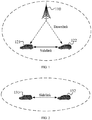
- the 3rd Generation Partnership Project (3GPP) Rel-14 standardizes the Vehicle to Everything (V2X) in the internet of vehicles technology, and defines two transmission modes: Mode 3 and Mode 4. Specifically, in Mode 3, as shown in FIG. 1 , a transmission resource of a vehicle terminal (a vehicle terminal 121 and a vehicle terminal 122) is allocated by a base station 110, and the vehicle terminal sends data on a sidelink according to the resource allocated by the base station 110.
- the base station 110 may allocate a resource to the terminal for single transmission, and may also allocate a resource to the terminal for semi-persistent transmission.
- a vehicle terminal adopts a sensing plus reservation transmission method. Specifically, the vehicle terminal acquires a set of available transmission resources by sensing in a resource pool, and the terminal randomly selects one resource from the set for data transmission.
- a terminal device may support multiple services, each service having a layer 2 address, and the terminal device reports to a network device that each layer 2 address corresponds to at least one carrier (for example, if there are a total of 8 carriers, service 1 corresponds to carrier 1, carrier 2, and carrier 3, and service 2 corresponds to carrier 2, carrier 3, and carrier 4).
- the terminal device also reports to the network device data amounts corresponding to different layer 2 addresses.
- the network device allocates a resource for D2D transmission to the terminal device according to the at least one carrier and data amount corresponding to the layer 2 address reported by the terminal device.
- an information transmission method a resource allocation method, a terminal device, and a network device, which enable a network device to allocate a resource to a terminal device accurately.
- an information transmission method including:
- the terminal device converts the address of the service. Specifically, at least one first carrier corresponding to the first address is converted into at least one first carrier corresponding to the first index.
- the converted mapping relationship is reported to the network device, so that the network device can determine at least one first carrier corresponding to the first address according to the first index.
- the method further includes: obtaining, by the terminal device, a first data amount of the first service; determining, by the terminal device, fourth mapping relationship information according to the first mapping relationship information, the second mapping relationship information and the first index, where the fourth mapping relationship information includes a mapping relationship between the first index and the first data amount; and sending, by the terminal device, the fourth mapping relationship information to the network device.
- the first address and the first index are different.
- the first mapping relationship information further includes a mapping relationship between a second service and a second address
- the second mapping relationship information further includes a mapping relationship between the second service and at least one second carrier
- the method further includes: determining, by the terminal device, a second index corresponding to the second service, where the first index is different from the second index; determining, by the terminal device, the third mapping relationship information according to the first mapping relationship information, the second mapping relationship information and the second index, where the third mapping relationship information further includes a mapping relationship between the second index and the at least one second carrier.
- the first address and the second address are different.
- the first address and the second address are the same.
- the second address and the second index are different.
- the second address and the second index are the same.
- the determining, by the terminal device, the first index corresponding to the first address includes: generating, by the terminal device, an address list, where the address list includes the first address; and determining, by the terminal device, an order of the first address in the address list as the first index.
- the address list further includes the second address, and an order of the second address in the address list is a second index corresponding to a second service.
- the method further includes: sending, by the terminal device, the address list to the network device.
- the determining, by the terminal device, the first index corresponding to the first service includes: determining, by the terminal device, an index corresponding to the first address as the first index.
- the method further includes: generating, by the terminal device, fifth mapping relationship information, where the fifth mapping relationship information includes a mapping relationship between the first address and the first index; and sending, by the terminal device, the fifth mapping relationship to the network device.
- the first index is a third address of the first service determined by an access layer of the terminal device.
- the method further includes: sending, by the terminal device, the first index to the network device.
- a resource allocation method including:
- the allocating, by the network device, the resource to the terminal device according to the at least one first carrier includes: obtaining, by the network device, fourth mapping relationship information, where the fourth mapping relationship information includes a mapping relationship between the first index and a first data amount; and allocating, by the network device, the resource to the terminal device according to the at least one first carrier and the first data amount.
- the first address and the first index are different.
- the third mapping relationship information further includes a mapping relationship between the second index and at least one second carrier, and the first index and the second index are different.
- the first address and the second address are different.
- the first address and the second address are the same.
- the second address and the second index are different.
- the second address and the second index are the same.
- the determining, by the network device, the first index includes: receiving, by the network device, an address list sent by the terminal device; and determining, by the network device, an order of the first address in the address list in the address list as the first index.
- the address list further includes the second address, and an order of the second address in the address list is a second index corresponding to the second address.
- the determining, by the network device, the first index includes: receiving, by the network device, the first index sent by the terminal device.
- the first index is a third address determined by an access layer of the terminal device.
- the method further includes: receiving, by the network device, fifth mapping relationship information sent by the terminal device, where the fifth mapping relationship information includes a mapping relationship between the first address and the first index; so that the network device determines the first address according to the fifth mapping relationship and the first index.
- a terminal device including:
- a terminal device including:
- a network device including:
- a network device including:
- an information transmission method including:
- an information transmission method including:
- a terminal device including:
- a terminal device including:
- a network device including:
- a network device including:
- an information transmission method including:
- a resource allocation method including:
- a terminal device including:
- a network device including:
- a terminal device including:
- a network device including:
- a computer-readable medium for storing a computer program, where the computer program includes instructions for executing the above method embodiments.
- a computer chip including: an input interface, an output interface, at least one processor and a memory, where the processor is configured to execute codes in the memory, and, when the codes are executed, the processor can implement various processes executed by the network device in the above method embodiments.
- a computer chip including: an input interface, an output interface, at least one processor and a memory, where the processor is configured to execute codes in the memory, and, when the codes are executed, the processor can implement various processes executed by the terminal device in the above method embodiments.
- a communication system including the above network device and terminal device.
- the embodiments of the present invention may be applied to any terminal device-to-terminal device communication framework, for example, Vehicle to Vehicle (V2V), Vehicle to Everything (V2X), Device to Device (D2D), and the like. That is, the vehicle terminal-to-vehicle terminal system framework shown in FIG. 2 is only an example of the embodiments of the present invention, and the embodiments of the present invention are not limited thereto.
- V2V Vehicle to Vehicle
- V2X Vehicle to Everything
- D2D Device to Device
- the terminal device in the embodiments of the present invention may be any device or apparatus configured with a physical layer and a media access control layer.
- the terminal device may also be referred to as an access terminal, for example, User Equipment (UE), user unit, user station, mobile station, mobile platform, remote station, remote terminal, mobile device, user terminal, terminal, wireless communication device, user agent, or user apparatus.
- the access terminal may be a cellular phone, a cordless phone, a Session Initiation Protocol (SIP) phone, a Wireless Local Loop (WLL) station, a Personal Digital Linear Assistant (PDA), a handheld device with wireless communication function, a computing device, or other linear processing devices connected to a wireless modem, in-vehicle devices, wearable devices, and the like.
- SIP Session Initiation Protocol
- WLL Wireless Local Loop
- PDA Personal Digital Linear Assistant
- the embodiments of the present invention are described by taking a vehicle terminal as an example, but it is not limited thereto.
- a short transmission time interval (short TTI) resource pool is introduced on the basis of a traditional long transmission time interval (long TTI) resource pool. That is, in the sensing method of the embodiments of the present invention, when the terminal device needs to select a resource, if there are both a short TTI resource pool and a long TTI resource pool, the terminal device may selectively sense the resource pools.
- a terminal device may support multiple services, each service having a layer 2 address, and the terminal device reports to a network device that each layer 2 address corresponds to at least one carrier (for example, if there are a total of 8 carriers, service 1 corresponds to carrier 1, carrier 2, and carrier 3, and service 2 corresponds to carrier 2, carrier 3, and carrier 4).
- the terminal device also reports to the network device a data amount corresponding to different layer 2 addresses.
- the network device allocates a resource for D2D transmission to the terminal device according to the at least one carrier and data amount corresponding to the layer 2 address reported by the terminal device.
- an embodiment of the present invention proposes an information transmission method, which enables the network device to allocate a resource to the terminal device accurately.
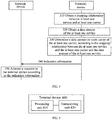
- the method includes:
- a terminal device obtains first mapping relationship information and second mapping relationship information.
- step 220 the terminal device determines a first index.
- step 230 the terminal device determines third mapping relationship information according to the first mapping relationship information, the second mapping relationship information and the first index.
- step 240 the terminal device sends the third mapping relationship information to a network device.
- step 250 the network device determines the at least one first carrier corresponding to the first index.
- step 260 the network device allocates a resource to the terminal device according to the at least one first carrier
- the first mapping relationship information includes a mapping relationship between a first service and a first address
- the second mapping relationship information includes a mapping relationship between the first service and the at least one first carrier.
- the terminal device determines the first index corresponding to the first service; the terminal device determines the third mapping relationship information according to the first mapping relationship information, the second mapping relationship information and the first index, where the third mapping relationship information includes a mapping relationship between the first index and the at least one first carrier; and the terminal device sends the third mapping relationship information to the network device.
- the network device receives the third mapping relationship information sent by the terminal device, where the third mapping relationship information includes the mapping relationship between the first index and the at least one first carrier; the network device determines the at least one first carrier corresponding to the first index according to the third mapping relationship information and the first index; and the network device allocates the resource to the terminal device according to the at least one first carrier.
- the terminal device converts the address of the service. Specifically, at least one first carrier corresponding to the first address is converted into at least one first carrier corresponding to the first index.
- the converted mapping relationship is reported to the network device, so that the network device can determine at least one first carrier corresponding to the first address according to the first index.
- the terminal device may also obtain a first data amount of the first service; the terminal device determines fourth mapping relationship information according to the first mapping relationship information, the second mapping relationship information and the first index, where the fourth mapping relationship information includes a mapping relationship between the first index and the first data amount; and the terminal device sends the fourth mapping relationship information to the network device.
- the network device may allocate the resource to the terminal device according to the at least one first carrier and the first data amount.
- the first address and the first index may be different or the same, which is not specifically limited in the embodiment of the present invention.
- the first address and the first index being the same may be interpreted as that the terminal device directly determines the first address as the first index.
- the first address and the first index being different may be interpreted as that the first index determined by the terminal device is different from the first address.
- the first mapping relationship information further includes a mapping relationship between a second service and a second address
- the second mapping relationship information further includes a mapping relationship between the second service and at least one second carrier.
- the terminal device determines a second index corresponding to the second service, where the first index and the second index are different; the terminal device determines the third mapping relationship information according to the first mapping relationship information, the second mapping relationship information and the second index, where the third mapping relationship information further includes a mapping relationship between the second index and the at least one second carrier.
- the first mapping relationship and the second mapping relationship are converted into the third mapping relationship and the fourth mapping relationship, and are reported to the network device. Therefore, when the first address and the second address are the same (that is, when the addresses conflict), the terminal device may make the conflicted first address and the second address correspond to different indexes, which can prevent the network device from being unable to clearly distinguish among the conflicted addresses, thereby allocating the resource to the terminal device accurately.
- the method of the embodiment of the present invention may be used for addresses that do not conflict, that is, when the first address and the second address are different.
- the terminal device converts the reported mapping relationship from the above first mapping relationship to the above third mapping relationship and the fourth mapping relationship regardless of whether there is a conflict in the addresses of the services.
- the second address and the second index may be the same or different, that is, the terminal device may directly determine the second address as the second index.
- the second index determined by the terminal device may also be different from the second address.
- the terminal device needs to determine the second index.
- the terminal device may determine the first index and the second index, and the terminal device may also only determine the first index. That is, for the first service, the terminal device may convert the first mapping relationship and the second mapping relationship into the third mapping relationship and the fourth mapping relationship and report the third mapping relationship and the fourth mapping relationship to the network device. However, for the second service, the terminal device may directly report the first mapping relationship and the second mapping relationship to the network device.
- the terminal device generates an address list, where the address list includes the first address; and the terminal device determines an order of the first address in the address list as the first index corresponding to the first address.
- the address list may further include the second address mentioned above, and an order of the second address in the address list is the second index corresponding to the second service.
- the terminal device may send the address list to the network device.
- the network device receives the address list sent by the terminal device; and determines the order of the first address in the address list in the address list as the first index. Further, the resource is allocated to the terminal device according to the first index, the third mapping relationship information and fourth mapping relationship information.
- the terminal device may send to the network device in the form of the address list, or may sequentially send to the network device in the order of the address list, which is not specifically limited in the embodiment of the present invention.
- the terminal device may determine an index corresponding to the first address as the first index.
- the terminal device may directly generate fifth mapping relationship information, where the fifth mapping relationship information includes a mapping relationship between the first address and the first index. Therefore, after receiving the first index sent by the terminal device, the network device may directly determine the at least one first carrier corresponding to the first index according to the first index and the third mapping relationship, and may also directly determine the first data amount corresponding to the first index according to the first index and the fourth mapping relationship, thereby allocating the resource to the terminal device according to the at least one first carrier and the first data amount.
- the fifth mapping relationship information is further reported to the network device. Therefore, when the network device needs to know a specific address, it may directly determine the first address corresponding to the first index according to the fifth mapping relationship information and the first index.
- the first index is a third address of the first service determined by an access layer of the terminal device.
- the terminal device may directly send the first index to the network device.
- the network device receives the first index sent by the terminal device, and allocates the resource to the terminal device based on the first index, the third mapping relationship information and fourth mapping relationship information.
- the terminal device may also report the third mapping relationship or the fourth mapping relationship to the network device, and achieve the purpose of resource allocation to the terminal device by the network device in combination with other reported information.
- the following uses the terminal device reporting the fourth mapping relationship to the network device as an example for description:
- the terminal device obtains first mapping relationship information and second mapping relationship information, where the first mapping relationship information includes a mapping relationship between a first service and a first address, and the second mapping relationship information includes a mapping relationship between the first service and at least one first carrier; the terminal device determines at least one first index corresponding to the first service; the terminal device obtains a first data amount of the first service; the terminal device determine fourth mapping relationship information according to the first mapping relationship information, the second mapping relationship information and the at least one first index, where the fourth mapping relationship information includes a mapping relationship between the at least one first index and the first data amount; and the terminal device sends the fourth mapping relationship information to the network device.
- the terminal device determines a first list according to the first mapping relationship information and the second mapping relationship information, where the first list includes the at least one first carrier corresponding to the first address; and the terminal device sends the first list to the network device.
- the terminal device converts the address of the service. Specifically, the first mapping relationship and the second mapping relationship are converted into the fourth mapping relationship and the first list to report to the network device, so that the network device can determine, according to the at least one first index, the first data amount corresponding to the at least one first index and the at least one first carrier corresponding to the first address.
- the first address and the at least one first index may be different or the same, which is not specifically limited in the embodiment of the present invention.
- the first address and the at least one first index being the same may be interpreted as that when the at least one first index includes only one first index, the terminal device directly determines the first address as the at least one first index.
- the first address and the at least one first index being different may be interpreted as that each first index of the at least one first index determined by the terminal device is different from the first address.
- the first mapping relationship information further includes a mapping relationship between a second service and a second address
- the second mapping relationship information further includes a mapping relationship between the second service and at least one second carrier.
- the terminal device determines the at least one second index corresponding to the second service, where each first index of the at least one first index is different from each second index of the at least one second index; the terminal device obtains a second data amount of the second service; the terminal device determines the fourth mapping relationship information according to the first mapping relationship information, the second mapping relationship information and the at least one second index, where the fourth mapping relationship information further includes a mapping relationship between the at least one second index and the second data amount.
- the second address and the at least one second index may be the same, and the second address may also be different from each index of the at least one second index, that is, the terminal device may directly determine the second address as the at least one second index.
- Each second index of the at least one second index determined by the terminal device may also be different from the second address.
- the network device can achieve the purpose of resource allocation to the terminal device. Specifically, the network device can determine, according to the at least one first index, the first data amount corresponding to the at least one first index and the at least one first carrier corresponding to the first address. Therefore, in the embodiment of the present invention, there needs to be a certain relationship between the at least one first index and the first address, so that the network device can accurately correlate the first data amount corresponding to the at least one first index with the at least one first carrier corresponding to the first address, thereby allocating the resource to the terminal device.
- the terminal device generates an address list, where the address list includes the first address; and the terminal device determines the at least one first index according to an order of the first address in the address list. For example, the terminal device may determine one index according to the order of the first address in the address list, and determine the one index as the at least one first index. As another example, the terminal device determines a carrier list according to the order of the first address in the address list, where the carrier list includes a carrier corresponding to each address in the address list; the terminal device determines the at least one index according to an order of each first carrier of the at least one first carrier in the carrier list, and determines the at least one index as the at least one first index.
- the terminal device sends the address list to the network device. It should be noted that, in the embodiment of the present invention, the terminal device may send to the network device in the form of the address list, or may sequentially send to the network device in an order of the address list, which is not specifically limited in the embodiment of the present invention.
- the terminal device may directly send the at least one first index to the network device.
- the terminal device may determine an index corresponding to the first address as the at least one first index.
- the terminal device may directly generate fifth mapping relationship information, where the fifth mapping relationship information includes a mapping relationship between the first address and the at least one first index. Therefore, after receiving at least one first index sent by the terminal device, the network device may determine the first address according to the at least one first index and the fifth mapping relationship, and then determine a first list, that is, the at least one first carrier corresponding to the first address.
- the terminal device needs to report the fifth mapping relationship information to the network device. Therefore, when the network device needs to know a specific address, it may directly determine the first address corresponding to the at least one first index according to the fifth mapping relationship information and the at least one first index.
- the one first index when the at least one first index includes only one first index, the one first index may be a third address of the first service determined by an access layer of the terminal device.
- the network device may directly determine the first address corresponding to the at least one first index according to the third address.
- the implementation manner in which the terminal device sends information to the network device, the terminal device determines the at least one first index, the terminal device determines the first data amount corresponding to the at least one first index, and the terminal device determines the at least one first carrier corresponding to the at least one first index is similar to the implementation manner in which the network device receives the information sent by the terminal device, the network device determines the at least one first index, the network device determines the first data amount corresponding to the at least one first index, and the network device determines the at least one first carrier corresponding to the at least one first index. To avoid repetition, details are not described herein again.
- FIG. 4 is a schematic diagram of another interaction method of a terminal device and a network device according to an embodiment of the present invention.
- the method includes:
- step 310 the terminal device obtains a mapping relationship between at least one service and at least one carrier.
- step 320 the terminal device obtains a data amount of the at least one service.
- step 330 the terminal device determines a data amount on each carrier of the at least one carrier, according to the mapping relationship between the at least one service and the at least one carrier and the data amount of the at least one service.
- step 340 the terminal device sends indication information to a network device.
- step 350 the network device allocates a resource to the terminal device according to the indication information.
- the indication information is used to indicate the data amount on each carrier.
- the network device may directly determine the data amount on each carrier according to the indication information, and then allocate the resource to the terminal device, which may directly avoid indicating the carrier and data amount corresponding to each address to the network device through address mapping. Furthermore, it is possible to avoid a situation where addresses conflict.
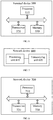
- FIG. 5 is a schematic block diagram of a terminal device according to an embodiment of the present invention.
- the terminal device 400 includes:
- processing unit 410 is further configured to:
- the first address and the first index are different.
- the first mapping relationship information further includes a mapping relationship between a second service and a second address
- the second mapping relationship information further includes a mapping relationship between the second service and at least one second carrier
- the processing unit 410 is further configured to: determine a second index corresponding to the second service, where the first index is different from the second index; and determine the third mapping relationship information according to the first mapping relationship information, the second mapping relationship information and the second index, where the third mapping relationship information further includes a mapping relationship between the second index and the at least one second carrier.
- the first address and the second address are different.
- the first address and the second address are the same.
- the second address and the second index are different.
- the second address and the second index are the same.
- the processing unit 410 is specifically configured to: generate an address list, where the address list includes the first address; and determine an order of the first address in the address list as the first index.
- the address list further includes the second address, and an order of the second address in the address list is a second index corresponding to a second service.
- the transceiving unit 420 is further configured to: send the address list to the network device.
- the processing unit 410 is specifically configured to: determine an index corresponding to the first address as the first index.
- the processing unit 410 is further configured to generate fifth mapping relationship information, where the fifth mapping relationship information includes a mapping relationship between the first address and the first index; and the transceiving unit 420 is further configured to send the fifth mapping relationship to the network device.
- the first index is a third address of the first service determined by an access layer of the terminal device.
- the transceiving unit 420 is further configured to: send the first index to the network device.
- the processing unit 410 may be implemented by a processor, and the transceiving unit 420 may be implemented by a transceiver.
- the terminal device 500 may include a processor 510, a transceiver 520 and a memory 530.
- the memory 530 may be used to store indication information, and may also be used to store codes, instructions, and the like executed by the processor 510.
- Various components in the terminal device 500 are connected through a bus system, where the bus system includes a power bus, a control bus and a status signal bus in addition to a data bus.
- the terminal device 500 shown in FIG. 6 may implement the processes implemented by the terminal device in the above method embodiments shown in FIGS. 3 and 4 . To avoid repetition, details are not described herein again.
- FIG. 7 is a schematic block diagram of a network device according to an embodiment of the present invention.
- the network device 600 includes:
- the processing unit 610 is specifically configured to: obtain fourth mapping relationship information, where the fourth mapping relationship information includes a mapping relationship between the first index and a first data amount; and allocate the resource to the terminal device according to the at least one first carrier and the first data amount.
- the first address and the first index are different.
- the third mapping relationship information further includes a mapping relationship between the second index and at least one second carrier, and the first index and the second index are different.
- the first address and the second address are different.
- the first address and the second address are the same.
- the second address and the second index are different.
- the second address and the second index are the same.
- the processing unit 610 is specifically configured to: receive an address list sent by the terminal device; and determine an order of the first address in the address list in the address list as the first index.
- the address list further includes the second address, and an order of the second address in the address list is a second index corresponding to the second address.
- the transceiving unit 620 is further configured to: receive the first index sent by the terminal device.
- the first index is a third address determined by an access layer of the terminal device.
- the transceiving unit 620 is further configured to: receive fifth mapping relationship information sent by the terminal device, where the fifth mapping relationship information includes a mapping relationship between the first address and the first index; so that the network device determines the first address according to the fifth mapping relationship and the first index.
- the processing unit 610 may be implemented by a processor, and the transceiving unit 620 may be implemented by a transceiver.
- the terminal device 700 may include a processor 710, a transceiver 720, and a memory 730.
- the memory 730 may be used to store indication information, and may also be used to store codes, instructions, and the like executed by the processor 710.
- Various components in the terminal device 700 are connected through a bus system, where the bus system includes a power bus, a control bus and a status signal bus in addition to a data bus.
- the terminal device 700 shown in FIG. 8 may implement the processes implemented by the terminal device in the above method embodiments shown in FIGS. 3 and 4 . To avoid repetition, details are not described herein again.
- a terminal device and a network device are also provided.
- the terminal device includes:
- the processing unit is further configured to: determine a first list according to the first mapping relationship information and the second mapping relationship information, where the first list includes the at least one first carrier corresponding to the first address; and the transceiving unit is further configured to send the first list to the network device.
- the first address is different from each first index of the at least one first index.
- the first mapping relationship information further includes a mapping relationship between a second service and a second address
- the second mapping relationship information further includes a mapping relationship between the second service and at least one second carrier
- the processing unit is further configured to: determine at least one second index corresponding to the second service, where each first index of the at least one first index is different from each second index of the at least one second index; obtain a second data amount of the second service; and determine the fourth mapping relationship information according to the first mapping relationship information, the second mapping relationship information and the at least one second index, where in the fourth mapping relationship information further includes a mapping relationship between the at least one second index and the second data amount.
- the first address and the second address are different.
- the first address and the second address are the same.
- the second address is different from each second index of the at least one second index.
- the at least one second index includes only one second index, and the second address and the one second index are the same.
- the processing unit is specifically configured to: generate an address list, where the address list includes the first address; and determine the at least one first index according to an order of the first address in the address list.
- processing unit is further specifically configured to: determine one index according to the order of the first address in the address list, and determine the one index as the at least one first index.
- the first address corresponds to at least one first carrier; and the processing unit is further specifically configured to: determine a carrier list according to the order of the first address in the address list, where the carrier list includes a carrier corresponding to each address in the address list; and determine at least one index according to an order of each first carrier of the at least one first carrier in the carrier list, and determine the at least one index as the at least one first index.
- the transceiving unit is further configured to: send the address list to the network device.
- the processing unit is specifically configured to: determine an index corresponding to the first address as the at least one first index.
- the processing unit is further specifically configured to: generate fifth mapping relationship information, where the fifth mapping relationship information includes a mapping relationship between the first address and the at least one first index; and the transceiving unit is further configured to send the fifth mapping relationship to the network device.
- the at least one first index includes only one first index, and the one first index is a third address of the first service determined by an access layer of the terminal device.
- the terminal device further includes: sending, by the terminal device, the at least one first index to the network device.
- the network device includes:
- the transceiving unit is further configured to: receive a first list sent by the terminal device, where the first list includes at least one first carrier corresponding to a first address; and the processing unit is specifically configured to: allocate the resource to the terminal device according to the at least one first carrier and the first data amount.
- the first address is different from each first index of the at least one first index.
- the fourth mapping relationship information further includes a mapping relationship between at least one second index and a second data amount, and each first index of the at least one first index is different from each second index of the at least one second index.
- the first address and the second address are different.
- the first address and the second address are the same.
- the second address is different from each second index of the at least one second index.
- the at least one second index includes only one second index, and the second address and the one second index are the same.
- the transceiving unit is specifically configured to: receive an address list sent by the terminal device; and the processing unit is specifically configured to: determine the at least one first index according to an order of the first address in the address list in the address list.
- processing unit is further specifically configured to: determine one index according to the order of the first address in the address list, and determine the one index as the at least one first index.
- the first address corresponds to at least one first carrier; and the processing unit is further specifically configured to: determine a carrier list according to the order of the first address in the address list, where the carrier list includes a carrier corresponding to each address in the address list; and determine at least one index according to an order of each first carrier of the at least one first carrier in the carrier list, and determine the at least one index as the at least one first index.
- the processing unit is specifically configured to: receive the at least one first index sent by the terminal device.
- the at least one first index includes only one first index, and the one first index is a third address determined by an access layer of the terminal device.
- the transceiving unit is further configured to: receive fifth mapping relationship information sent by the terminal device, where the fifth mapping relationship information includes a mapping relationship between the first address and the at least one first index; so that the processing unit determines the first address according to the fifth mapping relationship and the at least one first index.
- a terminal device and a network device are also provided.
- the terminal device includes: a transceiving unit, configured to: obtain a mapping relationship between at least one service and at least one carrier; and obtain a data amount of the at least one service; and a processing unit, configured to determine a data amount on each carrier of the at least one carrier, according to the mapping relationship between the at least one service and the at least one carrier and the data amount of the at least one service; where the transceiving unit is further configured to send indication information to the network device, where the indication information is used to indicate the data amount on each carrier.
- the network device includes: a transceiving unit, configured to receive indication information sent by a terminal device, where the indication information is used to indicate a data amount on each carrier of at least one carrier; and a processing unit, configured to allocate a resource to the terminal device according to the indication information.
- the transceiving unit in the terminal device and the network device may be implemented by a transceiver, and the processing unit may be implemented by a processor. That is, the method embodiments in the embodiments of the present invention may be applied to a processor, or implemented by a processor.
- each step of the method embodiments in the embodiments of the present invention may be completed by using an integrated logic circuit of hardware or an instruction in the form of software in the processor. More specifically, the steps of the method disclosed in combination with the embodiments of the present invention may be directly implemented by a hardware decoding processor, or may be performed by a combination of hardware and software modules in the decoding processor.
- the software module may be located in a mature storage medium in the art such as a random access memory, a flash memory, a read-only memory, a programmable read-only memory, or an electrically erasable and programmable memory, a register, and the like.
- the storage medium is located in a memory, and the processor reads the information in the memory and completes the steps of the above methods in combination with its hardware.
- the processor may be an integrated circuit chip with signal processing capabilities, and may implement or execute the methods, steps, and logic block diagrams disclosed in the embodiments of the present invention.
- the above processor may be a general-purpose processor, a digital signal processor (DSP), an application specific integrated circuit (ASIC), a field programmable gate array (FPGA), or other programmable logic devices, transistor logic devices, discrete hardware components, and the like.
- the general-purpose processor may be a microprocessor or the processor may be any conventional processor, and the like.
- the memory may be a volatile memory or a non-volatile memory, or may include both volatile and non-volatile memories.
- the non-volatile memory may be a read-only memory (ROM), a programmable read-only memory (PROM), an erasable programmable read-only memory (erasable PROM, EPROM), or an electrically erasable programmable read-only memory (electrically EPROM, EEPROM) or a flash memory.
- the volatile memory may be a random access memory (RAM), which is used as an external cache. It should be understood that the above memory is exemplary but not restrictive.
- the memory in the embodiment of the present invention may also be a static random access memory (static RAM, SRAM), a dynamic random access memory (dynamic RAM, DRAM), a synchronous dynamic random access memory (synchronous DRAM, SDRAM), a double data rate synchronous dynamic random access memory (double data rate SDRAM, DDR SDRAM), an enhanced synchronous dynamic random access memory (enhanced SDRAM, ESDRAM), a synchronous link dynamic random access memory (synch link DRAM, SLDRAM) and a direct rambus random access memory (Direct Rambus RAM, DR RAM), and the like. That is, the memory of the systems and methods described herein is intended to include, but is not limited to, these and any other suitable types of memory.
- the word “when” as used herein may be interpreted as “if' or “if' or “when” or “responding to determination of' or “responding to detection of'.
- the phrase “if it is determined” or “if it is detected (the stated condition or event)” may be interpreted as “when it is determined” or “responding to determination of” or “when it is detected (the stated condition or event)” or “responding to detection of (the stated condition or event)”.
- the disclosed systems, apparatuses, and methods may be implemented in other ways.
- the apparatus embodiments described above are only exemplary.
- the division of the unit is only a logical function division.
- multiple units or components may be combined, or may be integrated into another system, or some features may be ignored or not implemented.
- the displayed or discussed mutual coupling or direct coupling or communication connection may be indirect coupling or communication connection through some interfaces, apparatuses or units, which may be electrical, mechanical or other forms.
- the units described as separate components may or may not be physically separated, and the components displayed as units may or may not be physical units, may be located in one place, or may be distributed on multiple network units. Some or all of the units may be selected according to actual needs to achieve the objectives of the embodiments of the present invention.
- the functional units in the embodiments of the present invention may be integrated into one processing unit, or each of the units may exist separately physically, or two or more units may be integrated into one unit.
- the technical solutions of the embodiments of the present invention essential or a part thereof that contributes to the prior art or a part of the technical solutions may be embodied in the form of a software product, which is stored in a storage medium, including a plurality of instructions for causing a computer device (which may be a personal computer, a server, or a network device, and the like) to perform all or part of the steps of the methods described in the embodiments of the present invention.
- the above storage medium includes various media that may store program codes, such as a U disk, a mobile hard disk, a read-only memory, a random access memory, a magnetic disk, or an optical disk.
Landscapes
- Engineering & Computer Science (AREA)
- Signal Processing (AREA)
- Computer Networks & Wireless Communication (AREA)
- Mobile Radio Communication Systems (AREA)
Applications Claiming Priority (2)
| Application Number | Priority Date | Filing Date | Title |
|---|---|---|---|
| PCT/CN2017/112943 WO2019100342A1 (fr) | 2017-11-24 | 2017-11-24 | Procédé de transmission d'informations, procédé d'attribution de ressources, dispositif terminal et dispositif de réseau |
| PCT/CN2018/080559 WO2019100629A1 (fr) | 2017-11-24 | 2018-03-26 | Procédé de transmission d'informations, procédé d'attribution de ressources, dispositif terminal et dispositif de réseau |
Publications (2)
| Publication Number | Publication Date |
|---|---|
| EP3713351A1 true EP3713351A1 (fr) | 2020-09-23 |
| EP3713351A4 EP3713351A4 (fr) | 2020-09-30 |
Family
ID=66630353
Family Applications (1)
| Application Number | Title | Priority Date | Filing Date |
|---|---|---|---|
| EP18880608.7A Ceased EP3713351A4 (fr) | 2017-11-24 | 2018-03-26 | Procédé de transmission d'informations, procédé d'attribution de ressources, dispositif terminal et dispositif de réseau |
Country Status (7)
| Country | Link |
|---|---|
| US (1) | US11303607B2 (fr) |
| EP (1) | EP3713351A4 (fr) |
| JP (1) | JP2021505025A (fr) |
| KR (1) | KR20200088882A (fr) |
| CN (1) | CN110741704B (fr) |
| AU (1) | AU2018373865A1 (fr) |
| WO (2) | WO2019100342A1 (fr) |
Family Cites Families (16)
| Publication number | Priority date | Publication date | Assignee | Title |
|---|---|---|---|---|
| US20090234717A1 (en) * | 2002-10-15 | 2009-09-17 | Wiggins Randall T | Targeted information content delivery using a combination of environmental and demographic information |
| EP1929716B1 (fr) * | 2005-08-24 | 2016-04-13 | Telefonaktiebolaget LM Ericsson (publ) | Porteuses conservees |
| CN101631061B (zh) * | 2008-07-15 | 2011-08-31 | 中国移动通信集团公司 | 一种资源节点信息通知方法及网络实体装置 |
| KR101104963B1 (ko) * | 2008-12-19 | 2012-01-12 | 한국전자통신연구원 | 기지국의 제어채널 관리장치와, 사용자 단말의 제어채널 검색장치 및 이동통신 시스템의 제어채널 할당방법 |
| WO2011139069A2 (fr) * | 2010-05-03 | 2011-11-10 | Samsung Electronics Co., Ltd. | Procédé et système de transfert de données dans un environnement à agrégation de porteuses |
| CN103582139B (zh) * | 2013-11-22 | 2017-07-04 | 中国电子科技集团公司第五十四研究所 | Tdma星状网综合业务中心交换与信道分配方法 |
| WO2016108555A1 (fr) * | 2014-12-30 | 2016-07-07 | Lg Electronics Inc. | Procédé et appareil de transmission de radiorecherche pour une communication v2x dans un système de communication sans fil |
| JP6521541B2 (ja) * | 2014-12-31 | 2019-05-29 | 華為技術有限公司Huawei Technologies Co.,Ltd. | Internet−of−vehicles通信方法および装置 |
| US10327169B2 (en) * | 2015-05-08 | 2019-06-18 | Lg Electronics Inc. | Method for terminal for carrying out V2X communication in wireless communication system and terminal utilizing the method |
| CN106412794B (zh) * | 2015-07-21 | 2020-01-07 | 电信科学技术研究院 | 一种资源分配的方法和设备 |
| CN112533180B (zh) * | 2015-08-31 | 2024-03-26 | 华为技术有限公司 | 一种设备到设备d2d业务传输方法、装置及设备 |
| US10383147B2 (en) * | 2015-12-28 | 2019-08-13 | Samsung Electronics Co., Ltd. | Methods and apparatus for resource collision avoidance in vehicle to vehicle communication |
| CN106982172B (zh) * | 2016-01-18 | 2020-04-28 | 华为技术有限公司 | 确定极化码传输块大小的方法和通信设备 |
| US10367677B2 (en) * | 2016-05-13 | 2019-07-30 | Telefonaktiebolaget Lm Ericsson (Publ) | Network architecture, methods, and devices for a wireless communications network |
| CN106506633B (zh) * | 2016-11-03 | 2019-05-24 | 中国联合网络通信集团有限公司 | 一种业务分流方法、设备及系统 |
| CN106603435B (zh) * | 2016-12-28 | 2019-10-15 | 北京华为数字技术有限公司 | 分配端口块资源的方法及装置 |
-
2017
- 2017-11-24 WO PCT/CN2017/112943 patent/WO2019100342A1/fr not_active Ceased
-
2018
- 2018-03-26 EP EP18880608.7A patent/EP3713351A4/fr not_active Ceased
- 2018-03-26 AU AU2018373865A patent/AU2018373865A1/en not_active Abandoned
- 2018-03-26 JP JP2020528334A patent/JP2021505025A/ja not_active Withdrawn
- 2018-03-26 WO PCT/CN2018/080559 patent/WO2019100629A1/fr not_active Ceased
- 2018-03-26 CN CN201880036996.8A patent/CN110741704B/zh active Active
- 2018-03-26 KR KR1020207018094A patent/KR20200088882A/ko not_active Withdrawn
-
2020
- 2020-05-20 US US16/879,221 patent/US11303607B2/en active Active
Also Published As
| Publication number | Publication date |
|---|---|
| WO2019100342A1 (fr) | 2019-05-31 |
| KR20200088882A (ko) | 2020-07-23 |
| WO2019100629A1 (fr) | 2019-05-31 |
| US20200280533A1 (en) | 2020-09-03 |
| JP2021505025A (ja) | 2021-02-15 |
| US11303607B2 (en) | 2022-04-12 |
| AU2018373865A1 (en) | 2020-07-09 |
| CN110741704A (zh) | 2020-01-31 |
| CN110741704B (zh) | 2023-07-25 |
| EP3713351A4 (fr) | 2020-09-30 |
Similar Documents
| Publication | Publication Date | Title |
|---|---|---|
| EP3518589B1 (fr) | Procédé et dispositif de répartition de puissance | |
| US11109353B2 (en) | Data transmission method, terminal device, and network device | |
| JP7369691B2 (ja) | リソース割り当て用の方法、ネットワーク装置及び通信装置 | |
| EP4002935B1 (fr) | Procédé de communication sans fil, dispositif terminal et support de stockage lisible par ordinateur | |
| KR20200135796A (ko) | 무선 통신 방법, 사용자 기기 및 네트워크 기기 | |
| EP3113401B1 (fr) | Procédé et dispositif de transmission d'informations | |
| US11303607B2 (en) | Information transmission method, terminal device, and network device for allocating a resource | |
| KR102014758B1 (ko) | 탐색 정보 송신 방법, 디바이스, 및 통신 시스템 | |
| RU2745417C1 (ru) | Способ мониторинга и оконечное устройство в системе интернета транспортных средств | |
| CN110663278B (zh) | 设备对设备通信的方法和终端设备 | |
| US11102795B2 (en) | Data generation method, method for configuring logical channel, terminal device and chip | |
| US12089277B2 (en) | Method for sending information, method for receiving information and device |
Legal Events
| Date | Code | Title | Description |
|---|---|---|---|
| STAA | Information on the status of an ep patent application or granted ep patent |
Free format text: STATUS: THE INTERNATIONAL PUBLICATION HAS BEEN MADE |
|
| PUAI | Public reference made under article 153(3) epc to a published international application that has entered the european phase |
Free format text: ORIGINAL CODE: 0009012 |
|
| STAA | Information on the status of an ep patent application or granted ep patent |
Free format text: STATUS: REQUEST FOR EXAMINATION WAS MADE |
|
| 17P | Request for examination filed |
Effective date: 20200619 |
|
| AK | Designated contracting states |
Kind code of ref document: A1 Designated state(s): AL AT BE BG CH CY CZ DE DK EE ES FI FR GB GR HR HU IE IS IT LI LT LU LV MC MK MT NL NO PL PT RO RS SE SI SK SM TR |
|
| AX | Request for extension of the european patent |
Extension state: BA ME |
|
| A4 | Supplementary search report drawn up and despatched |
Effective date: 20200828 |
|
| RIC1 | Information provided on ipc code assigned before grant |
Ipc: H04W 72/12 20090101AFI20200824BHEP Ipc: H04W 72/04 20090101ALI20200824BHEP |
|
| DAV | Request for validation of the european patent (deleted) | ||
| DAX | Request for extension of the european patent (deleted) | ||
| STAA | Information on the status of an ep patent application or granted ep patent |
Free format text: STATUS: EXAMINATION IS IN PROGRESS |
|
| 17Q | First examination report despatched |
Effective date: 20210527 |
|
| REG | Reference to a national code |
Ref country code: DE Ref legal event code: R003 |
|
| STAA | Information on the status of an ep patent application or granted ep patent |
Free format text: STATUS: THE APPLICATION HAS BEEN REFUSED |
|
| 18R | Application refused |
Effective date: 20220328 |