EP3717486B1 - Pyrazolopyrimidine mit aktivität gegen rsv - Google Patents
Pyrazolopyrimidine mit aktivität gegen rsv Download PDFInfo
- Publication number
- EP3717486B1 EP3717486B1 EP18807356.3A EP18807356A EP3717486B1 EP 3717486 B1 EP3717486 B1 EP 3717486B1 EP 18807356 A EP18807356 A EP 18807356A EP 3717486 B1 EP3717486 B1 EP 3717486B1
- Authority
- EP
- European Patent Office
- Prior art keywords
- mmol
- compound
- methyl
- etoac
- dcm
- Prior art date
- Legal status (The legal status is an assumption and is not a legal conclusion. Google has not performed a legal analysis and makes no representation as to the accuracy of the status listed.)
- Active
Links
Images

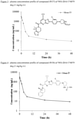
Classifications
-
- C—CHEMISTRY; METALLURGY
- C07—ORGANIC CHEMISTRY
- C07D—HETEROCYCLIC COMPOUNDS
- C07D487/00—Heterocyclic compounds containing nitrogen atoms as the only ring hetero atoms in the condensed system, not provided for by groups C07D451/00 - C07D477/00
- C07D487/02—Heterocyclic compounds containing nitrogen atoms as the only ring hetero atoms in the condensed system, not provided for by groups C07D451/00 - C07D477/00 in which the condensed system contains two hetero rings
- C07D487/04—Ortho-condensed systems
-
- A—HUMAN NECESSITIES
- A61—MEDICAL OR VETERINARY SCIENCE; HYGIENE
- A61P—SPECIFIC THERAPEUTIC ACTIVITY OF CHEMICAL COMPOUNDS OR MEDICINAL PREPARATIONS
- A61P31/00—Antiinfectives, i.e. antibiotics, antiseptics, chemotherapeutics
- A61P31/12—Antivirals
- A61P31/14—Antivirals for RNA viruses
- A61P31/16—Antivirals for RNA viruses for influenza or rhinoviruses
-
- C—CHEMISTRY; METALLURGY
- C07—ORGANIC CHEMISTRY
- C07D—HETEROCYCLIC COMPOUNDS
- C07D495/00—Heterocyclic compounds containing in the condensed system at least one hetero ring having sulfur atoms as the only ring hetero atoms
- C07D495/02—Heterocyclic compounds containing in the condensed system at least one hetero ring having sulfur atoms as the only ring hetero atoms in which the condensed system contains two hetero rings
- C07D495/04—Ortho-condensed systems
-
- C—CHEMISTRY; METALLURGY
- C07—ORGANIC CHEMISTRY
- C07D—HETEROCYCLIC COMPOUNDS
- C07D513/00—Heterocyclic compounds containing in the condensed system at least one hetero ring having nitrogen and sulfur atoms as the only ring hetero atoms, not provided for in groups C07D463/00, C07D477/00 or C07D499/00 - C07D507/00
- C07D513/02—Heterocyclic compounds containing in the condensed system at least one hetero ring having nitrogen and sulfur atoms as the only ring hetero atoms, not provided for in groups C07D463/00, C07D477/00 or C07D499/00 - C07D507/00 in which the condensed system contains two hetero rings
- C07D513/04—Ortho-condensed systems
-
- C—CHEMISTRY; METALLURGY
- C07—ORGANIC CHEMISTRY
- C07D—HETEROCYCLIC COMPOUNDS
- C07D519/00—Heterocyclic compounds containing more than one system of two or more relevant hetero rings condensed among themselves or condensed with a common carbocyclic ring system not provided for in groups C07D453/00 or C07D455/00
-
- A—HUMAN NECESSITIES
- A61—MEDICAL OR VETERINARY SCIENCE; HYGIENE
- A61K—PREPARATIONS FOR MEDICAL, DENTAL OR TOILETRY PURPOSES
- A61K31/00—Medicinal preparations containing organic active ingredients
- A61K31/33—Heterocyclic compounds
- A61K31/395—Heterocyclic compounds having nitrogen as a ring hetero atom, e.g. guanethidine or rifamycins
- A61K31/495—Heterocyclic compounds having nitrogen as a ring hetero atom, e.g. guanethidine or rifamycins having six-membered rings with two or more nitrogen atoms as the only ring heteroatoms, e.g. piperazine or tetrazines
- A61K31/505—Pyrimidines; Hydrogenated pyrimidines, e.g. trimethoprim
- A61K31/519—Pyrimidines; Hydrogenated pyrimidines, e.g. trimethoprim ortho- or peri-condensed with heterocyclic rings
-
- A—HUMAN NECESSITIES
- A61—MEDICAL OR VETERINARY SCIENCE; HYGIENE
- A61K—PREPARATIONS FOR MEDICAL, DENTAL OR TOILETRY PURPOSES
- A61K45/00—Medicinal preparations containing active ingredients not provided for in groups A61K31/00 - A61K41/00
- A61K45/06—Mixtures of active ingredients without chemical characterisation, e.g. antiphlogistics and cardiaca
-
- A—HUMAN NECESSITIES
- A61—MEDICAL OR VETERINARY SCIENCE; HYGIENE
- A61P—SPECIFIC THERAPEUTIC ACTIVITY OF CHEMICAL COMPOUNDS OR MEDICINAL PREPARATIONS
- A61P31/00—Antiinfectives, i.e. antibiotics, antiseptics, chemotherapeutics
- A61P31/12—Antivirals
- A61P31/14—Antivirals for RNA viruses
Definitions
- the invention concerns compounds having antiviral activity, in particular, having an inhibitory activity on the replication of the respiratory syncytial virus (RSV).
- the invention further concerns pharmaceutical compositions comprising these compounds and the compounds for use in the treatment of respiratory syncytial virus infection.
- Human RSV or Respiratory Syncytial Virus is a large RNA virus, member of the family of Pneumoviridae , genus Orthopneumovirus together with bovine RSV virus.
- Human RSV is responsible for a spectrum of respiratory tract diseases in people of all ages throughout the world. It is the major cause of lower respiratory tract illness during infancy and childhood. Over half of all infants encounter RSV in their first year of life, and almost all within their first two years. The infection in young children can cause lung damage that persists for years and may contribute to chronic lung disease in later life (chronic wheezing, asthma). Older children and adults often suffer from a (bad) common cold upon RSV infection. In old age, susceptibility again increases, and RSV has been implicated in a number of outbreaks of pneumonia in the aged resulting in significant mortality.
- ribavirin a nucleoside analogue that provides an aerosol treatment for serious RSV infection in hospitalized children.
- the other two drugs, RespiGam ® (RSV-IG) and Synagis ® (palivizumab), polyclonal and monoclonal antibody immunostimulants, are intended to be used in a preventive way. Both are very expensive, and require parenteral administration.
- the compounds of the present invention have unexpected better plasma concentration profiles than the pyrazolopyrimidine compounds of WO-2016/174079 bearing a substituted pyrrolidine moiety as demonstrated in Pharmacological Example E.2.
- the present invention relates to compounds of formula (I) including any stereochemically isomeric form thereof, wherein
- the invention includes all stereoisomers of the compounds of the invention either as a pure stereoisomer or as a mixture of two or more stereoisomers.
- Enantiomers are stereoisomers that are non-superimposable mirror images of each other. A 1:1 mixture of a pair of enantiomers is a racemate or racemic mixture.
- Diastereomers (or diastereoisomers) are stereoisomers that are not enantiomers, i.e. they are not related as mirror images. If a compound contains a double bond, the substituents may be in the E or the Z configuration.
- Substituents on bivalent cyclic (partially) saturated radicals may have either the cis- or trans-configuration; for example if a compound contains a disubstituted cycloalkyl group, the substituents may be in the cis or trans configuration.
- stereoisomers also includes any rotamers, also called conformational isomers, the compounds of formula (I) may form.
- the invention includes enantiomers, diastereomers, racemates, E isomers, Z isomers, cis isomers, trans isomers, rotamers, and mixtures thereof, whenever chemically possible.
- the absolute configuration is specified according to the Cahn-Ingold-Prelog system.
- the configuration at an asymmetric atom is specified by either R or S.
- Resolved stereoisomers whose absolute configuration is not known can be designated by (+) or (-) depending on the direction in which they rotate plane polarized light.
- resolved enantiomers whose absolute configuration is not known can be designated by (+) or (-) depending on the direction in which they rotate plane polarized light.
- stereoisomer is substantially free, i.e. associated with less than 50%, preferably less than 20%, more preferably less than 10%, even more preferably less than 5%, in particular less than 2% and most preferably less than 1%, of the other stereoisomers.
- a compound of formula (I) is for instance specified as (R)
- a compound of formula (I) is for instance specified as E
- Z Z isomer
- a compound of formula (I) is for instance specified as cis, this means that the compound is substantially free of the trans isomer.
- the pharmaceutically acceptable acid addition salts as mentioned hereinabove are meant to comprise the therapeutically active non-toxic acid addition salt forms that the compounds of formula (I) are able to form.
- These pharmaceutically acceptable acid addition salts can conveniently be obtained by treating the base form with such appropriate acid.
- Appropriate acids comprise, for example, inorganic acids such as hydrohalic acids, e.g. hydrochloric or hydrobromic acid, sulfuric, nitric, phosphoric and the like acids; or organic acids such as, for example, acetic, propanoic, hydroxyacetic, lactic, pyruvic, oxalic (i.e. ethanedioic), malonic, succinic (i.e.
- butane-dioic acid maleic, fumaric, malic, tartaric, citric, methanesulfonic, ethanesulfonic, benzenesulfonic, p toluenesulfonic, cyclamic, salicylic, p aminosalicylic, pamoic and the like acids.
- salt forms can be converted by treatment with an appropriate base into the free base form.
- the compounds of formula (I) may exist in both unsolvated and solvated forms.
- 'solvate' is used herein to describe a molecular association comprising a compound of the invention and one or more pharmaceutically acceptable solvent molecules, e.g. water or ethanol.
- solvent molecules e.g. water or ethanol.
- 'hydrate' is used when said solvent is water.
- compounds of formula (I) may contain the stated atoms in any of their natural or non-natural isotopic forms.
- embodiments of the invention that may be mentioned include those in which (a) the compound of formula (I) is not isotopically enriched or labelled with respect to any atoms of the compound; and (b) the compound of formula (I) is isotopically enriched or labelled with respect to one or more atoms of the compound.
- Compounds of formula (I) that are isotopically enriched or labelled (with respect to one or more atoms of the compound) with one or more stable isotopes include, for example, compounds of formula (I) that are isotopically enriched or labelled with one or more atoms such as deuterium, 13 C, 14 C, 14 N, 15 O or the like.
- a first group of compounds are compounds of formula (I) wherein X 1 is CR 11 and X 2 is CR 11 and X 3 is CR 11 .
- a second group of compounds are compounds of formula (I) wherein X 1 is N and X 2 is CR 11 and X 3 is CR 11 ; or X 1 is CR 11 and X 2 is N and X 3 is CR 11 ; or X 1 is N and X 2 is CR 11 and X 3 is N.
- a third group of compounds are compounds of formula (I) wherein X 1 is N and X 2 is CR 11 and X 3 is CR 11 .
- a third group of compounds are compounds of formula (I) X 1 is CR 11 and X 2 is N and X 3 is CR 11 .
- a fourth group of compounds are compounds of formula (I) wherein X 1 is N and X 2 is CR 11 and X 3 is N.
- the invention concerns compounds of formula (I), including any stereochemically isomeric form thereof, wherein wherein
- the invention concerns compounds of formula (I), including any stereochemically isomeric form thereof, wherein wherein
- the invention concerns compounds of formula (I), including any stereochemically isomeric form thereof, wherein wherein
- Compounds of formula (I) can generally be prepared by reacting an intermediate of formula (II) with an intermediate of formula (III) in a reaction-inert solvent.
- Compounds of formula (I) can also be prepared by reacting an intermediate of formula (IV) with an intermediate of formula (V) in a reaction-inert solvent.
- the compounds of formula (I) may further be prepared by converting compounds of formula (I) into each other according to art-known group transformation reactions.
- the starting materials and some of the intermediates are known compounds and are commercially available or may be prepared according to conventional reaction procedures generally known in the art.
- the compounds of formula (I) as prepared in the hereinabove described processes may be synthesized in the form of racemic mixtures of enantiomers which can be separated from one another following art-known resolution procedures.
- Those compounds of formula (I) that are obtained in racemic form may be converted into the corresponding diastereomeric salt forms by reaction with a suitable chiral acid.
- Said diastereomeric salt forms are subsequently separated, for example, by selective or fractional crystallization and the enantiomers are liberated therefrom by alkali.
- An alternative manner of separating the enantiomeric forms of the compounds of formula (I) involves liquid chromatography using a chiral stationary phase.
- Said pure stereochemically isomeric forms may also be derived from the corresponding pure stereochemically isomeric forms of the appropriate starting materials, provided that the reaction occurs stereospecifically.
- said compound will be synthesized by stereospecific methods of preparation. These methods will advantageously employ enantiomerically pure starting materials.
- the compounds of formula (I) show antiviral properties.
- Viral infections treatable using the compounds and methods of the present invention include those infections brought on by Pneumoviridae and in particular by human and bovine respiratory syncytial virus (RSV).
- RSV respiratory syncytial virus
- a number of the compounds of this invention moreover are active against mutated strains of RSV.
- many of the compounds of this invention show a favorable pharmacokinetic profile and have attractive properties in terms of bioavailabilty, including an acceptable half-life, AUC and peak values and lacking unfavourable phenomena such as insufficient quick onset and tissue retention.
- the in vitro antiviral activity against RSV of the present compounds was tested in a test as described in the experimental part of the description, and may also be demonstrated in a virus yield reduction assay.
- the in vivo antiviral activity against RSV of the present compounds may be demonstrated in a test model using cotton rats as described in Wyde et al. in Antiviral Research, 38, p. 31 - 42(1998 ).
- compositions comprising at least one pharmaceutically acceptable carrier and a therapeutically effective amount of a compound of formula (I). Also provided are pharmaceutical compositions comprising a pharmaceutically acceptable carrier, a therapeutically active amount of a compound of formula (I), and another antiviral agentwhich is a RSV inhibiting compound.
- compositions of this invention an effective amount of the particular compound, in base or acid addition salt form, as the active ingredient is combined in intimate admixture with at least one pharmaceutically acceptable carrier, which carrier may take a wide variety of forms depending on the form of preparation desired for administration.
- pharmaceutically acceptable carrier which carrier may take a wide variety of forms depending on the form of preparation desired for administration.
- These pharmaceutical compositions are desirably in unitary dosage form suitable, preferably, for oral administration, rectal administration, percutaneous administration or parenteral injection.
- any of the usual liquid pharmaceutical carriers may be employed, such as for instance water, glycols, oils, alcohols and the like in the case of oral liquid preparations such as suspensions, syrups, elixirs and solutions; or solid pharmaceutical carriers such as starches, sugars, kaolin, lubricants, binders, disintegrating agents and the like in the case of powders, pills, capsules and tablets. Because of their easy administration, tablets and capsules represent the most advantageous oral dosage unit form, in which case solid pharmaceutical carriers are obviously employed.
- the pharmaceutical carrier will mainly comprise sterile water, although other ingredients may be included in order to improve solubility of the active ingredient.
- Injectable solutions may be prepared for instance by using a pharmaceutical carrier comprising a saline solution, a glucose solution or a mixture of both. Injectable suspensions may also be prepared by using appropriate liquid carriers, suspending agents and the like.
- the pharmaceutical carrier may optionally comprise a penetration enhancing agent and/or a suitable wetting agent, optionally combined with minor proportions of suitable additives which do not cause a significant deleterious effect to the skin. Said additives may be selected in order to facilitate administration of the active ingredient to the skin and/or be helpful for preparing the desired compositions.
- These topical compositions may be administered in various ways, e.g., as a transdermal patch, a spot-on or an ointment. Addition salts of the compounds of formula (I), due to their increased water solubility over the corresponding base form, are obviously more suitable in the preparation of aqueous compositions.
- Dosage unit form refers to physically discrete units suitable as unitary dosages, each unit containing a predetermined amount of active ingredient calculated to produce the desired therapeutic effect in association with the required pharmaceutical carrier.
- dosage unit forms are tablets (including scored or coated tablets), capsules, pills, powder packets, wafers, injectable solutions or suspensions, teaspoonfuls, tablespoonfuls and the like, and segregated multiples thereof.
- the pharmaceutical compositions of the present invention may take the form of solid dose forms, for example, tablets (both swallowable and chewable forms), capsules or gelcaps, prepared by conventional means with pharmaceutically acceptable excipients and carriers such as binding agents (e.g. pregelatinised maize starch, polyvinylpyrrolidone, hydroxypropylmethylcellulose and the like), fillers (e.g. lactose, microcrystalline cellulose, calcium phosphate and the like), lubricants (e.g. magnesium stearate, talc, silica and the like), disintegrating agents (e.g. potato starch, sodium starch glycollate and the like), wetting agents (e.g. sodium laurylsulphate) and the like.
- Such tablets may also be coated by methods well known in the art.
- Liquid preparations for oral administration may take the form of e.g. solutions, syrups or suspensions, or they may be formulated as a dry product for admixture with water and/or another suitable liquid carrier before use.
- Such liquid preparations may be prepared by conventional means, optionally with other pharmaceutically acceptable additives such as suspending agents (e.g. sorbitol syrup, methylcellulose, hydroxypropylmethylcellulose or hydrogenated edible fats), emulsifying agents (e.g. lecithin or acacia), non aqueous carriers (e.g. almond oil, oily esters or ethyl alcohol), sweeteners, flavours, masking agents and preservatives (e.g. methyl or propyl p-hydroxybenzoates or sorbic acid).
- suspending agents e.g. sorbitol syrup, methylcellulose, hydroxypropylmethylcellulose or hydrogenated edible fats
- emulsifying agents e.g. lecithin or acacia
- Pharmaceutically acceptable sweeteners useful in the pharmaceutical compositions of the invention comprise preferably at least one intense sweetener such as aspartame, acesulfame potassium, sodium cyclamate, alitame, a dihydrochalcone sweetener, monellin, stevioside sucralose (4,1',6'-trichloro-4,1',6'-trideoxygalactosucrose) or, preferably, saccharin, sodium or calcium saccharin, and optionally at least one bulk sweetener such as sorbitol, mannitol, fructose, sucrose, maltose, isomalt, glucose, hydrogenated glucose syrup, xylitol, caramel or honey.
- intense sweetener such as aspartame, acesulfame potassium, sodium cyclamate, alitame, a dihydrochalcone sweetener, monellin, stevioside sucralose (4,1',6'-trichloro-4,
- Intense sweeteners are conveniently used in low concentrations.
- concentration may range from about 0.04% to 0.1% (weight/volume) of the final formulation.
- the bulk sweetener can effectively be used in larger concentrations ranging from about 10% to about 35%, preferably from about 10% to 15% (weight/volume).
- the pharmaceutically acceptable flavours which can mask the bitter tasting ingredients in the low-dosage formulations are preferably fruit flavours such as cherry, raspberry, black currant or strawberry flavour. A combination of two flavours may yield very good results.
- stronger pharmaceutically acceptable flavours may be required such as Caramel Chocolate, Mint Cool, Fantasy and the like.
- Each flavour may be present in the final composition in a concentration ranging from about 0.05% to 1% (weight/volume). Combinations of said strong flavours are advantageously used.
- a flavour is used that does not undergo any change or loss of taste and/or color under the circumstances of the formulation.
- the compounds of formula (I) may be formulated for parenteral administration by injection, conveniently intravenous, intra-muscular or subcutaneous injection, for example by bolus injection or continuous intravenous infusion.
- Formulations for injection may be presented in unit dosage form, e.g. in ampoules or multi-dose containers, including an added preservative. They may take such forms as suspensions, solutions or emulsions in oily or aqueous vehicles, and may contain formulating agents such as isotonizing, suspending, stabilizing and/or dispersing agents.
- the active ingredient may be present in powder form for mixing with a suitable vehicle, e.g. sterile pyrogen free water, before use.
- the compounds of formula (I) may also be formulated in rectal compositions such as suppositories or retention enemas, e.g. containing conventional suppository bases such as cocoa butter and/or other glycerides.
- an antivirally effective daily amount would be from 0.01 mg/kg to 500 mg/kg body weight, more preferably from 0.1 mg/kg to 50 mg/kg body weight. It may be appropriate to administer the required dose as two, three, four or more sub-doses at appropriate intervals throughout the day. Said sub-doses may be formulated as unit dosage forms, for example, containing 1 to 1000 mg, and in particular 5 to 200 mg of active ingredient per unit dosage form.
- the exact dosage and frequency of administration depends on the particular compound of formula (I) used, the particular condition being treated, the severity of the condition being treated, the age, weight, sex, extent of disorder and general physical condition of the particular patient as well as other medication the individual may be taking, as is well known to those skilled in the art. Furthermore, it is evident that said effective daily amount may be lowered or increased depending on the response of the treated subject and/or depending on the evaluation of the physician prescribing the compounds of the instant invention. The effective daily amount ranges mentioned hereinabove are therefore only guidelines.
- the combination of another antiviral agent and a compound of formula (I) can be used as a medicine.
- the present invention also relates to a product containing (a) a compound of formula (I), and (b) another antiviral compound, as a combined preparation for simultaneous, separate or sequential use in antiviral treatment.
- the different drugs may be combined in a single preparation together with pharmaceutically acceptable carriers.
- the compounds of the present invention may be combined with interferon-beta or tumor necrosis factor-alpha in order to treat or prevent RSV infections.
- Other antiviral compounds (b) to be combined with a compound of formula (I) for use in the treatment of RSV are RSV fusion inhibitors or RSV polymerase inhibitors.
- RSV inhibiting compounds selected from ribavirin, lumicitabine, presatovir, ALX-0171, MDT-637, BTA-9881, BMS-433771, YM-543403, A-60444, TMC-353121, RFI-641, CL-387626, MBX-300, 3-( ⁇ 5-chloro-1-[3-(methylsulfonyl)propyl]-1 H -benzimidazol-2-yl ⁇ methyl)-1-cyclopropyl-1,3-dihydro-2H-imidazo[4,5-c]pyridin-2-one, 3-[[7-chloro-3-(2-ethylsulfonyl-ethyl)imidazo[1,2-a]pyridin-2-yl]methyl]-1-cyclopropyl-imidazo[4,5-c]pyridin-2-one, and 3-( ⁇ 5-chloro-1-[3-(methylsulfonyl-ethyl)imidazo[
- R ⁇ or S ⁇ (or ⁇ R or ⁇ S) when the absolute stereochemistry is undetermined although the compound itself has been isolated as a single stereoisomer and is enantiomerically pure.
- 1,4-Dioxane (20 mL) was added and the mixture was purged again with nitrogen. Palladium acetate (42.9 mg, 191 ⁇ mol) was added. The reaction mixture was purged with nitrogen and stirred at 100°C for 17 h. The mixture was diluted with EtOAc and H 2 O. The layers were separated and the aqueous phase was extracted with EtOAc (twice). The combined organic extracts were washed with brine, dried over MgSO 4 , filtered and the solvent was removed under reduced pressure.
- Intermediate I2 was synthesized from ( S )-pyrrolidine-3-carbonitrile hydrochloride [1153950-49-2] and (1 R )-2-[2-(4-bromo-2-fluorophenyl)-7-cyclopropylpyrazolo[1,5-a]pyrimidine-5-carbonyl]-1-methyl-1,2,3,4-tetrahydroisoquinoline [2035421-61-3] according to the procedure reported for the synthesis of intermediate I1 .
- the purification was carried out by preparative LC (irregular SiOH, 15-40 ⁇ m, 40 g Grace ® , liquid injection (DCM), mobile phase gradient: heptane / EtOAc from 90:10 to 40:60). The residue (997 mg) was taken up in MeCN and concentrated under reduced pressure to afford intermediate 12 (840 mg, 84%) as a yellow solid.
- the crude mixture was purified by preparative LC (irregular SiOH, 15-40 ⁇ m, 12 g GraceResolv TM , dry loading (Celite ® ), mobile phase gradient: DCM / (MeOH/AcOH 9:1) from 100:0 to 94:6).
- the product was taken up in EtOAc and a IN aqueous solution of HCl was added.
- the layers were separated and the organic phase was washed with IN aqueous solution of HCl (twice), dried over MgSO 4 , filtered and the solvent was removed under reduced pressure.
- the residue (88 mg) was triturated with MeOH.
- the solid was filtered off and dried under high vacuum at 50°C for 18 h to afford compound 2 (76 mg, 41%) as an orange solid.
- Phenyl chloroformate (98.0 ⁇ L, 0.78 mmol) was added to a mixture of intermediate I3 (331 mg, 0.52 mmol, 87% purity) and triethylamine (220 ⁇ L, 1.58 mmol) in DCM (7 mL) at 0°C. The reaction mixture was stirred at rt for 18 h. The reaction mixture was diluted with DCM and H 2 O. The layers were separated and the aqueous phase was extracted with DCM (twice). The combined organic extracts were dried over MgSO 4 , filtered and evaporated under reduced pressure.
- the solid (110 mg) was purified by preparative LC (irregular SiOH, 15-40 ⁇ m, 24 g GraceResolv TM , liquid injection (DCM), mobile phase gradient: DCM / MeOH from 100:0 to 97:3). The residue was re-crystallized from MeOH, filtered off and dried under high vacuum at 50°C for 3 h to afford compound 4 (81 mg, 56%) as a pale yellowish solid.
- 1,4-Dioxane (4.5 mL) was added and the mixture was purged again with nitrogen. Palladium acetate (6.33 mg, 28.2 ⁇ mol) was added. The reaction mixture was purged with nitrogen and stirred at 100°C for 17 h. The reaction mixture was diluted with EtOAc and H 2 O. The layers were separated and the aqueous phase was extracted with EtOAc (twice). The combined organic extracts were washed with brine, dried over MgSO 4 , filtered and the solvent was removed under reduced pressure.
- Compound 6 was synthesized from (1 R )-2-[2-(4-bromo-2-fluorophenyl)-7-cyclopropyl-pyrazolo[1,5-a]pyrimidine-5-carbonyl]-1-methyl-1,2,3,4-tetrahydroisoquinoline [2035421-61-3] and 2-thia-6-azaspiro[3.4]octane 2,2-dioxide [1823947-89-2] according to the procedure reported for the synthesis of compound 5.
- Compound 6 (86 mg, 58%) was obtained as a yellow solid.
- the reaction mixture was stirred at 100°C for 7 h.
- the reaction mixture was poured out into water and the aqueous phase was extracted with EtOAc (twice).
- the combined organic extracts were dried over MgSO 4 , filtered and evaporated to dryness.
- the crude mixture was purified by preparative LC (irregular SiOH, 15-40 ⁇ m, 40 g GraceResolv TM , liquid injection (DCM), mobile phase gradient: DCM / MeOH / aq.NH 3 from 100:0:0 to 98:2:0.2).
- the residue (191 mg) was co-evaporated with EtOH (5 times) and triturated with EtOH/Et 2 O (1:9).
- the solid was filtered off and dried under high vacuum at 50°C for 2 h to give compound 7 (140 mg, 53%) as a yellow solid.
- Intermediate I10 (310 mg, 92%) was synthesized from intermediate I12 according to the procedure reported for the synthesis of intermediate I9 .
- the reaction mixture was stirred at 100°C for 18 h.
- the reaction mixture was poured out into water and the aqueous phase was extracted with EtOAc (twice).
- the combined organic extracts were dried over MgSO 4 , filtered and evaporated to dryness.
- the crude mixture was purified by preparative LC (irregular SiOH, 15-40 ⁇ m, 40 g GraceResolv TM , liquid injection (DCM), mobile phase gradient: DCM / MeOH / aq.NH 3 from 100:0:0 to 98:2:0.2).
- the residue (221 mg) was co-evaporated with EtOH (5 times) and triturated with Et 2 O.
- the solid was filtered off and dried under high vacuum at 50°C for 18 h to afford compound 9 (102 mg, 37%) as a yellow solid.
- the reaction mixture was stirred at 100°C for 7 h.
- the reaction mixture was poured out into water and the aqueous phase was extracted with EtOAc (twice).
- the combined organic extracts were dried over MgSO 4 , filtered and concentrated to dryness.
- the crude mixture was purified by preparative LC (irregular SiOH, 15-40 ⁇ m, 40 g GraceResolv TM , liquid injection (DCM), mobile phase gradient: DCM / MeOH / aq.NH 3 from 100:0:0 to 98:2:0.2).
- the residue (256 mg) was co-evaporated with EtOH (5 times) and triturated with EtOH/Et 2 O (1:9).
- the solid was filtered off and dried under high vacuum at 50°C for 2 h to afford compound 11 (148 mg, 52%) as a yellow solid.
- Tris(dibenzylideneacetone)dipalladium (43.9 mg, 48.0 ⁇ mol) and ( ⁇ )-BINAP (59.7 mg, 96.0 ⁇ mol) were added.
- the reaction mixture was stirred at 100°C for 18 h.
- the reaction mixture was poured out into water and the aqueous phase was extracted with DCM.
- the combined organic extracts were washed with brine, dried over MgSO 4 , filtered and concentrated to dryness.
- the crude mixture was purified by preparative LC (regular SiOH, 30 ⁇ m, 25 g Interchim ® , liquid injection (DCM), mobile phase gradient: heptane / EtOAc from 80:20 to 0:100).
- the residue (65 mg) was taken up in MeCN and DIPE and partially evaporated.
- the solid was filtered off and dried under high vacuum at 50°C for 16 h and then at 60°C for 24 h to afford compound 13 (45 mg, 18%).
- CDI (2.15 g, 13.3 mmol) was added to a solution of compound 13 (3.39 g, 6.63 mmol) in THF (25 mL). The reaction mixture was stirred at rt for 1 h. Ammonia (28% in H 2 O, 24.8 mL, 367 mmol) was added and the reaction mixture was stirred at rt for 18 h. The reaction mixture was diluted with H 2 O, brine and EtOAc. The layers were separated and the aqueous phase was extracted with EtOAc (twice). The combined organic extracts were dried over MgSO 4 , filtered and concentrated in vacuo.
- the crude mixture was purified by preparative LC (irregular SiOH, 15-40 ⁇ m, 330 g GraceResolv TM , liquid injection (DCM), mobile phase gradient: DCM / EtOAc from 100:0 to 80:20).
- the residue (2.8 g) was triturated with MeCN.
- the solid was filtered off and dried under high vacuum at 50°C for 2 h.
- the solid (1.87 g) was triturated again with MeCN, filtered off and dried under high vacuum at 50°C overnight.
- the product (1.32 g) was suspended in MeOH (20 mL) and the solution was stirred at rt for 18 h.
- the solid was filtered off and dried under high vacuum at 50°C to give compound 77 (951 mg, 26%) as a pale yellow solid.
- CDI (1.97 g, 12.1 mmol) was added to a solution of compound 14 (3.11 g, 6.07 mmol) in THF (23 mL). The reaction mixture was stirred at rt for 1 h. Ammonia (28% in H 2 O, 22.7 mL, 336 mmol) was added and the reaction mixture was stirred at rt for 6 h. The reaction mixture was diluted with H 2 O, brine and EtOAc. The layers were separated and the aqueous phase was extracted with EtOAc (twice). The combined organic extracts were dried over MgSO 4 , filtered and concentrated in vacuo.
- the crude mixture was purified by preparative LC (irregular SiOH, 15-40 ⁇ m, 330 g GraceResolv TM , liquid injection (DCM), mobile phase gradient: DCM / EtOAc from 100:0 to 80:20).
- the residue (2.4 g) was triturated with MeCN.
- the solid was filtered off and dried under high vacuum at 50°C.
- the solid was triturated again with MeCN, filtered off and dried under high vacuum at 50°C overnight.
- the product (1.03 g) was suspended in MeOH (25 mL) and stirred at rt for 18 h. The solid was filtered off and dried under high vacuum at 50°C to give compound 78 (825 mg, 25%) as a yellow solid.
- a second purification was performed by reverse phase (spherical C18, 25 ⁇ m, 40 g YMC-ODS-25, dry loading (Celite ® ), mobile phase gradient: (0.2% aq.NH 4 HCO 3 ) / MeCN from 40:60 to 0:100).
- the residue was co-evaporated with EtOH (3 times) and triturated with EtOH.
- the solid was filtered off and dried under high vacuum at 50°C for 18 h to afford compound 15 (75 mg, 27 %) as a yellow solid.
- Compound 16 was synthesized from (1 R )-2-[2-(4-bromo-2-fluorophenyl)-7-cyclopropyl-pyrazolo[1,5-a]pyrimidine-5-carbonyl]-1-methyl-1,2,3,4-tetrahydroisoquinoline [2035421-61-3] and intermediate I18 according to the procedure reported for the synthesis of compound 15 .
- the crude mixture was purified by preparative LC (irregular SiOH, 15-40 ⁇ m, 40 g GraceResolv TM , liquid injection (DCM), mobile phase gradient: DCM / MeOH / aq.NH 3 from 100:0:0 to 98:2:0.2).
- a second purification was performed by reverse phase (spherical C18, 25 ⁇ m, 40 g YMC-ODS-25, dry loading (Celite ® ), mobile phase gradient: (0.2% aq.NH 4 HCO 3 ) / MeCN from 40:60 to 0:100).
- the residue was co-evaporated with EtOH (5 times) and triturated with EtOH/Et 2 O (1:9).
- the solid was filtered off and dried under high vacuum at 50°C for 2 h to give compound 16 (54 mg, 20 %) as a white solid.
- a second purification was performed by preparative LC (spherical C18 25 ⁇ m, 40 g YMC-ODS-25, loading (MeCN, H 2 O), mobile phase gradient: (0.2% aq. NH 4 HCO 3 ) / MeCN from 50:50 to 0:100).
- the fractions containing the product were combined and a 10% aqueous solution of KHSO 4 was added.
- the layers were separated and the aqueous phase was extracted with EtOAc.
- the combined organic extracts were washed with H 2 O, dried over MgSO 4 , filtered and evaporated under reduced pressure.
- the residue (105 mg) was purified by preparative LC (irregular SiOH, 15-40 ⁇ m, 40 g GraceResolv TM , liquid injection (DCM), mobile phase gradient: heptane / EtOAc from 50:50 to 0:100).
- the residue was triturated and co-evaporated with Et 2 O (twice) and dried under high vacuum at 50°C for 18 h to give compound 17 (54 mg, 32%) as a yellow solid.
- Compound 18 was synthesized from (1 R )-2-[2-(4-bromo-2-fluorophenyl)-7-cyclopropyl-pyrazolo[1,5-a]pyrimidine-5-carbonyl]-1-methyl-1,2,3,4-tetrahydroisoquinoline [2035421-61-3] and ( S )-3-(methylsulfonyl)pyrrolidine [290328-57-3] according to the procedure reported for the synthesis of compound 17 .
- the crude mixture was purified by preparative LC (irregular SiOH, 15-40 ⁇ m, 40 g GraceResolv TM , liquid injection (DCM), mobile phase gradient: heptane / EtOAc from 50:50 to 0:100).
- a second purification was performed by preparative LC (spherical C18 25 ⁇ m, 40 g YMC-ODS-25, loading (MeCN, H 2 O), mobile phase gradient (0.2% aq.NH 4 HCO 3 ) / MeCN from 50:50 to 0:100).
- the fractions containing the product were combined and a 10% aqueous solution of KHSO 4 was added.
- the layers were separated and the aqueous phase was extracted with EtOAc.
- the organic phase was washed with H 2 O, dried over MgSO 4 , filtered and evaporated under reduced pressure. The residue was triturated and co-evaporated with Et 2 O (twice) and dried under high vacuum at 50°C for 18 h to give compound 18 (67 mg, 40%) as a pale red solid.
- Tris(dibenzylideneacetone)dipalladium (140 mg, 153 ⁇ mol) was added.
- the reaction mixture was purged with nitrogen and stirred at 100°C for 18 h.
- a 10% aqueous solution of KHSO 4 was added until pH 6.
- the aqueous phase was extracted with EtOAc.
- the combined organic extracts were washed with H 2 O, dried over MgSO 4 , filtered and evaporated under reduced pressure.
- the crude mixture was purified by preparative LC (irregular SiOH, 15-40 ⁇ m, 80 g GraceResolv TM , liquid injection (DCM), mobile phase gradient: DCM / MeOH from 100:0 to 95:5).
- 1,4-Dioxane (9 mL) was added and the mixture was purged again with nitrogen. Tris(dibenzylideneacetone)dipalladium (70.3 mg, 76.8 ⁇ mol) was added. The reaction mixture was purged with nitrogen and stirred at 100°C for 18 h. The reaction mixture was diluted with EtOAc and brine. The layers were separated and the aqueous phase was extracted. The combined organic extracts were washed with H 2 O, dried over MgSO 4 , filtered and evaporated under reduced pressure.
- the crude mixture was purified by preparative LC (irregular SiOH, 15-40 ⁇ m, 40 g GraceResolv TM , liquid injection (DCM), mobile phase gradient: heptane / EtOAc from 50:50 to 0:100).
- a second purification was performed by preparative LC (spherical C18 25 ⁇ m, 40 g YMC-ODS-25, loading (MeCN, H 2 O), mobile phase gradient (0.2% aq.NH 4 HCO 3 ) / MeCN from 50:50 to 0:100).
- the fractions containing the product were combined and a 10% aqueous solution of KHSO 4 was added.
- the layers were separated and the aqueous phase was extracted with EtOAc.
- the reaction mixture was stirred at 100°C for 16 h. H 2 O (3.8 mL) was added and the reaction mixture was stirred at rt for 1 h. The reaction mixture was diluted with H 2 O and EtOAc. The layers were separated and the aqueous phase was extracted with EtOAc. The combined organic extracts were washed with brine, dried over MgSO 4 , filtered and the solvent was evaporated in vacuo.
- the crude mixture was purified by preparative LC (regular SiOH, 30 ⁇ m, 25 g Interchim ® , liquid injection (DCM), mobile phase gradient: DCM / MeOH from 99.8:0.2 to 90:10). The residue was solubilized in EtOAc and the mixture was evaporated under vacuum (twice). The residue was dissolved in EtOAc and a precipitate was observed upon the addition of heptane. The solid was filtered off and dried under high vacuum at 40°C for 16 h to give compound 79 (143 mg, 42%).
- the reaction mixture was purged with nitrogen and stirred at 100°C for 18 h.
- the reaction mixture was diluted with EtOAc and H 2 O.
- the layers were separated and the aqueous phase was extracted with EtOAc (twice).
- the combined organic extracts were washed with brine, dried over MgSO 4 , filtered and the solvent was removed under reduced pressure.
- the crude mixture was purified by preparative LC (irregular SiOH, 15-40 ⁇ m, 40 g Grace ® , liquid injection (DCM), mobile phase gradient: heptane / EtOAc from 100:0 to 70:30) to afford intermediate 122 (490 mg, 88%).
- Lithium hydroxide monohydrate (104 mg, 2.45 mmol) was added to a solution of intermediate 122 (490 mg, 823 ⁇ mol) in THF (10 mL), MeOH (3 mL) and H 2 O (1.2 mL). The reaction mixture was stirred at rt for 3 h. Few drops of H 2 O were added followed by the addition of a 3N aqueous solution of HCl. The layers were separated and the aqueous phase was extracted with DCM (twice). The combined organic extracts were washed with H 2 O, dried over MgSO 4 , filtered and evaporated under reduced pressure.
- the crude mixture was purified by preparative LC (irregular SiOH, 15-40 ⁇ m, 12 g Grace ® , liquid injection (DCM), mobile phase gradient: DCM /MeOH from 100:0 to 97:3) to deliver a mixture of diastereomers (250 mg, 53%).
- a purification was performed via chiral SFC (Stationary phase: Chiralpak AS-H 5 ⁇ m 250 ⁇ 20mm, Mobile phase: 65% CO 2 , 35% i- PrOH) to afford the diastereomers 123 (120 mg, 26%) and 124 (122 mg, 26%).
- the diastereomers were purified separately by preparative LC (irregular SiOH, 15-40 ⁇ m, 12 g Grace ® , liquid injection (DCM), mobile phase gradient: DCM / MeOH from 100:0 to 97:3) to give 123 (95 mg, 20%) and 124 (92 mg, 20%).
- preparative LC irregular SiOH, 15-40 ⁇ m, 12 g Grace ® , liquid injection (DCM), mobile phase gradient: DCM / MeOH from 100:0 to 97:3) to give 123 (95 mg, 20%) and 124 (92 mg, 20%).
- the reaction mixture was purged with nitrogen and stirred at 100°C for 18 h.
- the reaction mixture was diluted with EtOAc and H 2 O.
- the layers were separated and the aqueous phase was extracted with EtOAc (twice).
- the combined organic extracts were washed with brine, dried over MgSO 4 , filtered and the solvent was removed under reduced pressure.
- the crude mixture was purified by preparative LC (irregular SiOH, 15-40 ⁇ m, 40 g Grace ® , liquid injection (DCM), mobile phase gradient: heptane / EtOAc from 100:0 to 70:30) to afford intermediate 126 (440 mg, 72%).
- Lithium hydroxide monohydrate (92.1 mg, 2.19 mmol) was added to a solution of intermediate 126 (440 mg, 0.73 mmol) in THF (10 mL), MeOH (3 mL) and H 2 O (1.2 mL). The reaction mixture was stirred at rt for 18 h. Few drops of H 2 O were added followed by the addition of a 3N aqueous solution of HCl. The layers were separated and the aqueous phase was extracted with DCM (twice). The combined organic extracts were washed with H 2 O, dried over MgSO 4 , filtered and evaporated under reduced pressure.
- the crude mixture was purified by preparative LC (irregular SiOH, 15-40 ⁇ m, 12 g Grace ® , liquid injection (DCM), mobile phase gradient: DCM / MeOH from 100:0 to 97:3).
- the diastereoisomers (220 mg) were separated via chiral SFC (Stationary phase: Chiralpak ASH 5 ⁇ m 250 ⁇ 20mm, Mobile phase: 65% CO 2 , 35% i -PrOH) to give 127 (94 mg) and 128 (94 mg).
- the two separated diastereoisomers were taken up in DIPE and the solids were filtered off and dried under vacuum at 50°C.
- the diastereoisomers were purified separately by preparative LC (irregular SiOH, 15-40 ⁇ m, 12 g Grace ® , liquid injection (DCM), mobile phase gradient: DCM / MeOH from 100:0 to 97:3) to afford intermediates 127 (78 mg, 18%) and 128 (70 mg, 17%).
- preparative LC irregular SiOH, 15-40 ⁇ m, 12 g Grace ® , liquid injection (DCM), mobile phase gradient: DCM / MeOH from 100:0 to 97:3) to afford intermediates 127 (78 mg, 18%) and 128 (70 mg, 17%).
- Lithium bis(trimethylsilyl)amide (1.5 M in THF, 18.4 mL, 27.6 mmol) was added to a solution of intermediate 135 (2.50 g, 9.21 mmol) in THF (37.5 mL) at -10°C under nitrogen. The reaction mixture was stirred at -10°C for 2 h. Iodomethane (1.37 mL, 22.1 mmol) was added and the reaction mixture was stirred at rt for 4 h. The reaction mixture was diluted with EtOAc and the organic phase was washed with H 2 O, brine, dried over MgSO 4 and the solvent was evaporated under reduced pressure.
- the crude mixture was purified by preparative LC (irregular SiOH, 15-40 ⁇ m, 24 g Grace ® , liquid injection (DCM), mobile phase gradient: heptane / EtOAc from 100:0 to 70:30).
- the enantiomers were separated via chiral SFC (Stationary phase: Lux amylose 2 5 ⁇ m 250 ⁇ 21.2mm, Mobile phase: 90% CO 2 , 10% i -PrOH) to afford intermediates 136 (850 mg, 32%) and 137 (850 mg, 32%).
- Intermediate 130 was synthesized from intermediate 137 according to the procedure reported for the synthesis of intermediate 129. The product was used in the next step without further purification.
- the reaction mixture was purged with nitrogen and stirred at 100°C for 18 h.
- the reaction mixture was diluted with EtOAc and H 2 O.
- the layers were separated and the aqueous phase was extracted with EtOAc (twice).
- the combined organic extracts were washed with brine, dried over MgSO 4 , filtered and the solvent was evaporated under reduced pressure.
- the crude mixture was purified by preparative LC (irregular SiOH, 15-40 ⁇ m, 12 g Grace ® , liquid injection (DCM), mobile phase gradient: heptane / EtOAc from 100:0 to 75:25) to afford intermediate 131 (190 mg, 69%).
- Lithium hydroxide monohydrate (65.4 mg, 1.56 mmol) was added to a solution of intermediate 131 (0.19 g, 0.31 mmol) in THF (5 mL), MeOH (2 mL) and H 2 O (0.4 mL). The reaction mixture was stirred at rt for 24 h and at 60°C for 24 h. Few drops of H 2 O were added followed by the addition of a 3N aqueous solution of HCl. The layers were separated and the aqueous phase was extracted with DCM (twice). The combined organic extracts were washed with H 2 O, dried over MgSO 4 , filtered and evaporated under reduced pressure. The product 133 (210 mg) was used in the next step without further purification.
- Intermediate 134 was synthesized from intermediate 132 according to the procedure reported for the synthesis of intermediate 133. The reaction mixture was stirred at 60°C for 24 h. The product 134 (155 mg) was used in the next step without further purification.
- Lithium hydroxide monohydrate (24.5 mg, 0.59 mmol) was added to a solution of intermediate 138 (0.12 g, 195 ⁇ mol) in THF (5 mL), MeOH (1 mL) and H 2 O (0.6 mL). The reaction mixture was stirred at rt for 24 h and at 60°C for another 24 h. Few drops of H 2 O were added followed by a 3N aqueous solution of HCl. The layers were separated and the aqueous phase was extracted with DCM (twice). The combined organic extracts were washed with H 2 O, dried over MgSO 4 , filtered and evaporated under reduced pressure.
- Intermediate 141 was synthesized from (1 R )-2-[2-(4-bromo-2-fluorophenyl)-7-cyclo-propylpyrazolo[1,5-a]pyrimidine-5-carbonyl]-1-methyl-1,2,3,4-tetrahydroisoquinoline [2035421-61-3] and ( S )-3-(boc-amino)pyrrolidine [122536-76-9] according to the procedure reported for the synthesis of intermediate 140.
- Intermediate 141 (570 mg, 98%) was obtained as a yellow foam.
- Intermediate 143 was synthesized from intermediate 141 according to the procedure reported for the synthesis of intermediate 142. Intermediate 143 (450 mg) was obtained as a yellow gum and engaged in the next step without further purification.
- Dimethylphosphinic chloride (360 ⁇ L, 0.72 mmol) was added to a mixture of intermediate 142 (354 mg, 638 ⁇ mol, 92% purity), DIPEA (242 ⁇ L, 1.40 mmol) and DMAP (7.79 mg, 63.8 ⁇ mol) in DCM (5.6 mL). The reaction mixture was stirred at rt for 2 h. The reaction mixture was diluted with DCM and washed with a 10% aqueous solution of NaHCO 3 . The organic phase was dried over MgSO 4 , filtered and evaporated under reduced pressure.
- the reaction mixture was stirred at 100°C for 18 h.
- the reaction mixture was poured out into water and the aqueous phase was extracted with EtOAc.
- the combined organic extracts were washed with brine, dried over MgSO 4 and concentrated to dryness.
- the crude mixture was purified by preparative LC (irregular SiOH, 15-40 ⁇ m, 40 g GraceResolv TM , liquid injection (DCM), mobile phase gradient: heptane / EtOAc from 90:10 to 50:50) to afford intermediate 145 (260 mg, 33%) as a yellowish solid.
- Lithium hydroxide monohydrate (151 mg, 3.59 mmol) was added to a solution of intermediate 145 (680 mg, 1.20 mmol) in THF (27 mL) and H 2 O (6.8 mL). The reaction mixture was stirred at rt for 16 h. A 10% aqueous solution of KHSO 4 was added until pH 6. The aqueous phase was extracted with EtOAc. The combined organic extracts were washed with H 2 O, dried over MgSO 4 , filtered and evaporated under reduced pressure.
- the crude mixture was purified by preparative LC (irregular SiOH, 15-40 ⁇ m, 80 g GraceResolv TM , liquid injection (DCM), mobile phase gradient: DCM / i -PrOH from 100:0 to 80:20) to afford a mixture of diasteroisomers (550 mg, 83%) as a yellow oil.
- preparative LC irregular SiOH, 15-40 ⁇ m, 80 g GraceResolv TM , liquid injection (DCM), mobile phase gradient: DCM / i -PrOH from 100:0 to 80:20
- the sample was combined with another sample (123 mg) and the diastereoisomers were separated via chiral SFC (Stationary phase: CHIRACEL OJ-H 5 ⁇ m 250 ⁇ 30mm, Mobile phase: 58% CO 2 , 42% MeOH(0.3% i -PrNH 2 )).
- Four fractions (A, B, C and D) were isolated. After evaporation of the solvent, the residue of fraction A was taken up in EtOH, the solid was filtered off and dried under vacuum at 50°C for 16 h to give compound 32 (94 mg, 11%).
- the residue of fraction B was crystallized from EtOAc, filtered off and dried under vacuum at 50°C for 16 h to give compound 35 (168 mg, 20%).
- Lithium hydroxide monohydrate (995 mg, 23.7 mmol) was added to a solution of intermediate 1166 (1.93 g, 3.32 mmol) in THF (34 mL) and H 2 O (11 mL). The reaction mixture was stirred at rt for 16 h and at 50°C for 6 h. A 10% aqueous solution of KHSO 4 was added until pH 6 and the aqueous phase was extracted with EtOAc. The combined organic extracts were washed with H 2 O, dried over MgSO 4 , filtered and concentrated in vacuo.
- the crude mixture was purified by preparative LC (irregular SiOH, 15-40 ⁇ m, 80 g GraceResolv TM , liquid injection (DCM), mobile phase gradient: DCM / i -PrOH from 100:0 to 80:20) to deliver a mixture of diastereoisomers (1.3 g, 82%).
- the diastereoisomers (700 mg) were separated by chiral SFC (Stationary phase: CHIRALPAK AS-H 5 ⁇ m 250 ⁇ 20mm, Mobile phase: 60% CO 2 , 40% MeOH (0.3% i- PrNH 2 )). The separated diastereoisomers were taken up in Et 2 O.
- Compound 38 was synthesized from (3 S )-1-(4-(7-cyclopropyl-5-[(1 R )-1-methyl-1,2,3,4-tetrahydroisoquinoline-2-carbonyl]pyrazolo [1,5-a]pyrimidin-2-yl ⁇ -3-fluorophenyl)pyrrolidine-3-carboxylic acid [2035416-78-3] and dimethylamine (2.0 M in THF) [124-40-3] according to the procedure reported for the synthesis of compound 37.
- Compound 39 was synthesized from (3 S )-1-(4-(7-cyclopropyl-5-[(1 R )-1-methyl-1,2,3,4-tetrahydroisoquinoline-2-carbonyl]pyrazolo[1,5-a]pyrimidin-2-yl ⁇ -3-fluorophenyl)-pyrrolidine-3-carboxylic acid [2035416-78-3] and cyanamide [420-04-2] according to the procedure reported for the synthesis of compound 37.
- the crude mixture was purified by preparative LC (irregular SiOH, 15-40 ⁇ m, 24 g GraceResolv TM , liquid injection (DCM), mobile phase gradient: DCM / i -PrOH from 100:0 to 50:50) to give a yellow oil (90 mg).
- a second purification was performed by preparative LC (spherical C18, 25 ⁇ m, 40 g YMC-ODS-25, dry loading (Celite ® ), mobile phase gradient: (0.2% aq.NH 4 HCO 3 ) / MeCN from 85:15 to 45:55) to give after freeze-drying compound 39 (70.0 mg, 27%) as a yellow solid.
- the crude mixture was purified by preparative LC (spherical C18, 25 ⁇ m, 40 g YMC-ODS-25, dry loading (Celite ® ), mobile phase gradient: (0.2% aq.NH 4 HCO 3 ) / MeCN from 85:15 to 45:55).
- the fractions containing the product were combined and IN aqueous solution of HCl and EtOAc were added.
- the layers were separated and the aqueous phase was extracted.
- the organic phase was washed with brine, dried over MgSO 4 , filtered and evaporated under reduced pressure.
- the mixture was purified by preparative LC (spherical C18 25 ⁇ m, 40 g YMC-ODS-25, dry loading (Celite ® ), mobile phase gradient (0.2% aq.NH 4 HCO 3 ) / MeCN from 75:25 to 50:50).
- the residue (182 mg) was dissolved in MeCN (5 mL) and CDI (180 mg, 1.11 mmol) was added.
- the mixture was stirred at rt for 2 h and DBU (221 ⁇ L, 1.48 mmol) and methanesulfonamide (141 mg, 1.48 mmol) were added.
- the reaction mixture was stirred at 80°C for 16 h. Brine, an aqueous solution of IN HCl and EtOAc were added.
- HATU 207 mg, 546 ⁇ mol was added to a mixture of intermediate 1172 (134 mg, 420 ⁇ mol), (1 R )-1-methyl-1,2,3,4-tetrahydroisoquinoline [84010-66-2] (68.0 mg, 462 ⁇ mol) and DIPEA (220 ⁇ L, 1.26 mmol) in DMF (3.8 mL).
- the reaction mixture was stirred at rt for 16 h.
- the reaction mixture was diluted with H 2 O.
- the layers were separated and the aqueous phase was extracted with EtOAc.
- the combined organic extracts were washed with brine (3 times), dried over MgSO 4 , filtered and evaporated to dryness.
- the reaction mixture was heated at 80°C using a single mode microwave (Biotage ® Initiator EXP 60) with a power output ranging from 0 to 400 W for 30 min.
- the reaction mixture was combined with another fraction (15 mg, 33.5 ⁇ mol) and diluted with H 2 O and EtOAc. The layers were separated and the organic phase was washed with brine (twice), dried over MgSO 4 , filtered and concentrated in vacuo.
- the crude mixture was purified by flash chromatography (irregular SiOH, 15-40 ⁇ m, 12 g GraceResolv TM , liquid injection (DCM), mobile phase gradient: heptane / EtOAc from 50:50 to 0:100).
- the residue (88 mg) was purified by reverse phase (spherical C18, 25 ⁇ m, 40 g YMC-ODS-25, dry loading (Celite ® ), mobile phase gradient: (0.2% aq.NH 4 HCO 3 ) / MeCN from 65:35 to 0:100).
- the fractions containing the product were combined, concentrated to dryness and co-evaporated with MeOH and MeCN (twice).
- the solid was dried under high vacuum at 60°C for 16 h to give compound 84 (58 mg, 52%) as an orange solid.
- the reaction mixture was stirred at 100°C for 18 h.
- the reaction mixture was diluted with EtOAc and H 2 O.
- the layers were separated and the aqueous phase was extracted with EtOAc (twice).
- the combined organic extracts were dried over MgSO 4 , filtered and the solvent was removed under reduced pressure.
- the crude mixture was purified by preparative LC (irregular SiOH, 15-40 ⁇ m, 40 g GraceResolv TM , liquid injection (DCM / heptane), mobile phase gradient: heptane / EtOAc from 80:20 to 60:40) to afford intermediate 151 (880 mg, 58%) as a colorless oil.
- Intermediate 152 was synthesized from 4-bromo-1-chloro-2-fluorobenzene [60811-18-9] and methyl (3 S )-3-pyrrolidinylacetate hydrochloride [1024038-33-2] according to the procedure reported for the synthesis of intermediate 151.
- the crude mixture was purified by preparative LC (irregular SiOH, 15-40 ⁇ m, 40 g GraceResolv TM , dry loading (SiOH), mobile phase: heptane / EtOAc 80:20) to afford intermediate 152 (830 mg, 55%) as a colorless oil.
- Intermediate 154 was synthesized from intermediate 152 according to the procedure reported for the synthesis of intermediate 153. Intermediate 154 (800 mg, quant.) was obtained as a white solid.
- Intermediate 158 was synthesized from intermediate 156 according to the procedure reported for the synthesis of intermediate 157. Intermediate 158 (741 mg, 85%, 91% purity) was obtained as a white solid.
- Intermediate 150 was synthesized from intermediate 158 according to the procedure reported for the synthesis of intermediate 149. Intermediate 150 (935 mg, 77%, 83% purity) was obtained as a grey solid.
- a sealed tube was charge with 2-bromo-7-cyclopropyl-5-[(4 ⁇ R )-4-methyl-4,5,6,7-tetrahydro-thieno[3,2-c]pyridine-5-carbonyl]pyrazolo[1,5-a]pyrimidine [2035420-09-6] (200 mg, 0.479 mmol), intermediate 149 (278 mg, 0.67 mmol, 84% purity), potassium phosphate tribasic (305 mg, 1.44 mmol), 1,4-dioxane (6 mL) and H 2 O (2 mL) and purged with nitrogen.
- the crude mixture was purified by preparative LC (irregular SiOH, 15-40 ⁇ m, 24 g GraceResolv TM , liquid injection (DCM), mobile phase gradient: DCM / MeOH / aq.NH 3 from 100:0:0 to 96:4:0.4).
- the residue was co-evaporated with MeOH and triturated with MeOH.
- the solid was filtered off and dried under high vacuum at 50°C for 24 h to give compound 42 (115 mg, 43%) as a yellow solid.
- Compound 43 was synthesized from 2-bromo-7-cyclopropyl-5-[(4 ⁇ R )-4-methyl-4,5,6,7-tetrahydro-thieno[3,2-c]pyridine-5-carbonyl]pyrazolo[1,5-a]pyrimidine [2035420-09-6] and intermediate 150 according to the procedure reported for the synthesis of compound 42.
- Compound 43 (161 mg, 60%) was obtained as a yellow solid.
- the reaction mixture was diluted with EtOAc and H 2 O. The layers were separated and the aqueous phase was extracted with EtOAc (twice). The combined organic extracts were washed with brine, dried over MgSO 4 , filtered and evaporated under reduced pressure.
- the crude mixture was purified by preparative LC (irregular SiOH, 15-40 ⁇ m, 120 g GraceResolv TM , liquid injection (heptane), mobile phase gradient: heptane / EtOAc from 100:0 to 70:30).
- the enantiomers (3.81 g) were separated via chiral SFC (Stationary phase: Whelk O1 (S,S) 5 ⁇ m 250 ⁇ 21.1mm, Mobile phase: 90% CO 2 , 10% MeOH) to afford 161 (1.7 g, 26%) as a colorless oil and 162 (1.67 g, 26%) as a colorless oil.
- Intermediate 164 was synthesized from intermediate 162 according to the procedure reported for the synthesis of intermediate 163. Intermediate 164 (395 mg, 99%) was obtained as a yellow solid.
- Intermediate 166 was synthesized from intermediate 164 according to the procedure reported for the synthesis of intermediate 165. Intermediate 166 (401 mg, quant.) was used in the next step without any purification.
- Intermediate 168 was synthesized from intermediate 166 according to the procedure reported for the synthesis of intermediate 167. Intermediate 168 (259 mg, 69%) was obtained as a yellowish solid.
- Intermediate 160 was synthesized from intermediate 168 according to the procedure reported for the synthesis of intermediate 159.
- the crude mixture was purified by preparative LC (irregular SiOH, 15-40 ⁇ m, 24 g Grace ® , liquid injection (DCM), mobile phase gradient: DCM / MeOH from 100:0 to 95:5) to afford intermediate 160 (449 mg, 89%, 70% purity) as a yellowish oil that crystallized on standing.
- preparative LC irregular SiOH, 15-40 ⁇ m, 24 g Grace ® , liquid injection (DCM), mobile phase gradient: DCM / MeOH from 100:0 to 95:5
- the crude mixture was purified by preparative LC (irregular SiOH, 15-40 ⁇ m, 24 g GraceResolv TM , mobile phase gradient: heptane / (EtOAc/MeOH 9:1) from 70:30 to 50:50). The residue was triturated with pentane and the solid was filtered off and dried under high vacuum at 50°C for 30 h to give compound 44 (193 mg, 58%) as a yellow solid.
- Compound 45 was synthesized from 2-bromo-7-cyclopropyl-5-[(4 ⁇ R )-4-methyl-4,5,6,7-tetrahydro-thieno[3,2-c]pyridine-5-carbonyl]pyrazolo[1,5-a]pyrimidine [2035420-09-6] and intermediate 160 according to the procedure reported for the synthesis of compound 44.
- Compound 45 (275 mg, 71%) was obtained as a yellow solid.
- the crude mixture was purified by preparative LC (irregular SiOH, 15-40 ⁇ m, 80 g Grace ® , liquid injection (DCM), mobile phase gradient: DCM / MeOH from 100:0 to 96:4).
- the residue was co-evaporated with MeOH and triturated in MeOH.
- the solid was filtered off, rinsed with MeOH and dried under high vacuum at 50°C for 24 h to give compound 46 (210 mg, 80%) as a yellow solid.
- Oxalyl chloride (2.0 M in DCM, 67.5 mL, 135 mmol) and oxalyl chloride neat (11.5 mL, 136 mmol) were added dropwise to a solution of intermediate I74 (48.2 g, 266 mmol) in DCM (2.7 L) at 10°C.
- the resulting mixture was stirred at rt for 30 min and cooled down to -10°C.
- Iron chloride (III) [7705-08-0] (52.0 g, 0.32 mol) was added portionwise.
- the reaction mixture was stirred at rt for 16 h.
- the reaction mixture was quenched by the addition of a 3N aqueous solution of HCl and diluted with DCM.
- the crude mixture was purified by preparative LC (irregular SiOH, 15-40 ⁇ m, 80 g GraceResolv TM , liquid injection (DCM), mobile phase gradient: DCM / MeOH from 100:0 to 96:4).
- the pure fractions were combined while fractions containing impurities were subjected to a second purification by preparative LC (irregular SiOH, 15-40 ⁇ m, 80 g GraceResolv TM , liquid injection (DCM), mobile phase gradient: DCM / MeOH from 100:0 to 98:2).
- the residue was co-evaporated with MeOH and triturated in MeOH.
- the solid was filtered off, rinsed with MeOH and dried under high vacuum at 50°C for 24 h to give compound 47 (185 mg, 71%) as a yellow solid.
- HATU (6.91 g, 18.2 mmol) was added to a mixture of potassium 2-bromo-7-cyclopropyl-pyrazolo[1,5-a]pyrimidine-5-carboxylate [2035418-56-3] (3.23 g, 10.1 mmol), intermediate I83 (2.00 g, 12.1 mmol) and DIPEA (4.35 mL, 25.2 mmol) in DMF (50 mL). The reaction mixture was stirred at rt for 18 h. A saturated aqueous solution of NaHCO 3 , brine, H 2 O and EtOAc were added. The layers were separated and the aqueous phase was extracted with EtOAc.
- the crude mixture was purified by preparative LC (regular SiOH, 30 ⁇ m, 25 g Interchim ® , liquid injection (DCM), mobile phase gradient: heptane / EtOAc / AcOH from 90:10:0.25 to 60:40:1).
- the residue was co-evaporated with MeOH and triturated in MeOH.
- the solid was filtered off, rinsed with MeOH and dried under high vacuum at 50°C for 2 days to afford a white solid (250 mg).
- the batch was split in two samples A and B that were purified independently by preparative LC (Stationary phase: irregular SiOH 40 g, Mobile phase: 98% DCM, 2% MeOH). Compound 48 was dried under high vacuum to give a yellow solid (50 mg, 20%).
- Lithium hydroxide monohydrate (41.9 mg, 1.00 mmol) was added to a solution of intermediate I87 (120 mg, 0.33 mmol, 84% purity) in THF (2.9 mL) and H 2 O (0.9 mL). The reaction mixture was stirred at rt for 16 h. A 10% aqueous solution of KHSO 4 was added until pH 6 and the aqueous phase was extracted with EtOAc. The combined organic extracts were washed with H 2 O, dried over MgSO 4 , filtered and concentrated under reduced pressure.
- the crude mixture was purified by preparative LC (regular SiOH, 30 ⁇ m, 24 g Interchim ® , liquid injection (DCM), mobile phase gradient: DCM / i -PrOH from 100:0 to 80:20).
- a second purification was performed by preparative LC (regular SiOH, 30 ⁇ m, 24 g Interchim ® , liquid injection (DCM), mobile phase gradient: DCM / i -PrOH from 100:0 to 80:20).
- the mixture (79 mg) was purified by preparative LC (spherical C18 25 ⁇ m, 40 g YMC-ODS-25, dry loading (Celite ® ), mobile phase gradient: (0.2% aq.NH 4 HCO 3 ) / MeCN from 65:35 to 25:75).
- the residue was taken up in MeCN and DIPE, concentrated under reduced pressure and dried under high vacuum at 50°C for 16 h to give compound 49 (70 mg, 60%) as a white solid.
- the crude mixture was purified by preparative LC (irregular SiOH, 15-40 ⁇ m, 12 g GraceResolv TM , liquid injection (DCM), mobile phase gradient: DCM / i -PrOH from 100:0 to 80:20) to afford intermediate I89 (220 mg, 96%) as a yellow oil.
- preparative LC irregular SiOH, 15-40 ⁇ m, 12 g GraceResolv TM , liquid injection (DCM), mobile phase gradient: DCM / i -PrOH from 100:0 to 80:20
- the crude mixture was purified by preparative LC (irregular SiOH, 30 ⁇ m, 24 g GraceResolv TM , liquid injection (DCM), mobile phase gradient: DCM / i -PrOH from 99:1 to 80:20).
- a second purification was carried out by reverse phase (spherical C18 25 ⁇ m, 40 g YMC-ODS-25, liquid injection (MeCN / H 2 O), mobile phase gradient: (0.2% aq.NH 4 HCO 3 ) / MeCN from 65:35 to 25:75).
- the residue was taken up in MeCN.
- the solid was filtered off and dried under high vacuum at 50°C for 16 h to give compound 50 (190 mg, 47%).
- Lithium hydroxide monohydrate (45.4 mg, 1.08 mmol) was added to a solution of intermediate I90 (200 mg, 361 ⁇ mol) in THF (3.1 mL) and H 2 O (980 ⁇ L). The reaction mixture was stirred at rt for 16 h. A 10% aqueous solution of KHSO 4 was added until pH 6 and the aqueous phase was extracted with EtOAc. The organic phase was washed with H 2 O, dried over MgSO 4 , filtered and concentrated under reduced pressure.
- the reaction mixture was poured out into water and the aqueous phase was extracted with EtOAc and filtered over Celite ® . The filtrate was washed with brine, dried over MgSO 4 , filtered and evaporated to dryness.
- the crude mixture was purified by preparative LC (irregular SiOH, 15-40 ⁇ m, 12 g GraceResolv TM , liquid injection (DCM), mobile phase gradient: heptane / EtOAc from 90:10 to 40:60) to afford intermediate I95 (32 mg, 13%) as a colorless oil.
- Lithium hydroxide monohydrate (90.8 mg, 2.16 mmol) was added to a solution of intermediate I93 (400 mg, 0.72 mmol) in THF (6.3 mL) and H 2 O (2.0 mL). The reaction mixture was stirred at rt for 16 h. A 10% aqueous solution of KHSO 4 was added until pH 6 and the aqueous phase was extracted with EtOAc. The organic layer was washed with H 2 O, dried over MgSO 4 , filtered and concentrated under reduced pressure.
- the crude mixture was purified by preparative LC (regular SiOH, 30 ⁇ m, 24 g GraceResolv TM , liquid injection (DCM), mobile phase gradient: DCM / i -PrOH from 100:0 to 70:30).
- the residue 120 mg was dissolved in DCM and washed with a 1% aqueous solution of NaHCO 3 (3 times), brine, dried over MgSO 4 , filtered and concentrated in vacuo to give compound 52 (90 mg, 50%).
- the crude mixture was purified by preparative LC (irregular SiOH, 15-40 ⁇ m, 24 g GraceResolv TM , liquid injection (DCM), mobile phase gradient: DCM / i -PrOH from 100:0 to 80:20) to afford intermediate I96 (140 mg, 89%) as a yellow oil.
- preparative LC irregular SiOH, 15-40 ⁇ m, 24 g GraceResolv TM , liquid injection (DCM), mobile phase gradient: DCM / i -PrOH from 100:0 to 80:20
- the crude mixture was purified by preparative LC (irregular SiOH, 15-40 ⁇ m, 24 g GraceResolv TM , liquid injection (DCM), mobile phase gradient: DCM / i -PrOH from 99:1 to 80:20).
- a second purification was carried out by reverse phase (spherical C18 25 ⁇ m, 40 g YMC-ODS-25, liquid injection (MeCN, H 2 O), mobile phase gradient (0.2% aq.NH 4 HCO 3 ) / MeCN from 65:35 to 25:75).
- the residue was crystallized from EtOH, filtered off and dried under high vacuum at 50°C for 16 h to give compound 53 (90 mg, 35%).
- the crude mixture was purified by preparative LC (irregular SiOH, 15-40 ⁇ m, 24 g GraceResolv TM , liquid injection (DCM), mobile phase gradient: DCM / MeOH from 100:0 to 92:8).
- a second purification was carried out: preparative LC (spherical C18 25 ⁇ m, 40 g YMC-ODS-25, dry loading (Celite ® ), mobile phase gradient: (0.2% aq.NH 4 HCO 3 ) / MeCN from 85:15 to 45:55).
- the product was freeze-dried to give compound 54 (140 mg, 66%) as a white solid.
- the crude mixture was purified by preparative LC (irregular SiOH, 15-40 ⁇ m, 40 g GraceResolv TM , liquid injection (DCM), mobile phase gradient: DCM / EtOAc from 100:0 to 70:30).
- a second purification was performed by preparative LC (irregular SiOH, 15-40 ⁇ m, 24 g GraceResolv TM , liquid injection (DCM), mobile phase gradient: heptane / (EtOAc/MeOH (9:1)) from 90:10 to 60:40) to afford intermediate I186 (100 mg, 26%) as a pale yellow solid.
- the crude mixture was purified by preparative LC (irregular SiOH, 15-40 ⁇ m, 80 g Grace ® , dry loading (SiOH), mobile phase gradient: heptane / EtOAc from 100:0 to 60:40).
- the residue (397 mg) was purified by preparative LC (spherical C18 25 ⁇ m, 40 g YMC-ODS-25, dry loading (C18), mobile phase gradient: (0.2% aq.NH 4 HCO 3 ) / MeCN from 60:40 to 0:100) to afford intermediate I99 (320 mg, 88%) as a yellow solid.
- Lithium hydroxide monohydrate (117 mg, 2.80 mmol) was added to a solution of intermediate I99 (320 mg, 0.56 mmol) in THF (9 mL) and H 2 O (1.8 mL). The reaction mixture was stirred at rt for 20 h. A 10% aqueous solution of KHSO 4 and EtOAc were added. The layers were separated and the aqueous phase was extracted with EtOAc. The combined organic extracts were washed with brine, dried over MgSO 4 , filtered and concentrated under reduced pressure.
- the crude mixture was purified by preparative LC (spherical C18 25 ⁇ m, 40 g YMC-ODS-25, dry loading (C18), mobile phase gradient (0.2% aq.NH 4 HCO 3 ) / MeCN from 60:40 to 0:100).
- a second purification was carried out: preparative LC (spherical C18 25 ⁇ m, 40 g YMC-ODS-25, dry loading (C18), mobile phase gradient: (0.2% aq.NH 4 HCO 3 ) / MeCN from 60:40 to 0:100).
- Intermediate I109 (880 mg, 54%, 87% purity) was synthesized from intermediate I103 and 4-methoxyphenylboronic acid [5720-07-0] according to the procedure reported for the synthesis of intermediate I104.
- Intermediate I110 (150 mg, 90%) was synthesized from intermediate I109 and lithium hydroxide monohydrate according to the procedure reported for the synthesis of intermediate I105.
- Intermediate I111 (740 mg, 48%) was synthesized from intermediate I110 and (1 R )-1-methyl-1,2,3,4-tetrahydroisoquinolone hydrochloride [84010-67-3] according to the procedure reported for the synthesis of intermediate 1106 with a reaction time of 48 h.
- Intermediate I112 (290 mg, 67%) was synthesized from intermediate I111 and ( S )-methyl pyrrolidine-3-carboxylate hydrochloride [1099646-61-3] according to the procedure reported for the synthesis of intermediate I107 with a shorter reaction time of 5 h.
- Intermediate I113 was synthesized from intermediate I112 according to the procedure reported for the synthesis of intermediate I108. The crude mixture was purified by flash chromatography over silica gel (15-40 ⁇ m, cartridge 24 g, mobile phase gradient: DCM / MeOH from 100:0 to 97:3) to afford intermediate I113 (245 mg, 93%).
- Intermediate I114 (1.35 g, 70%, 88% purity) was synthesized from intermediate I103 and 4-tolylboronic acid [5720-05-8] according to the procedure reported for the synthesis of intermediate I104.
- Intermediate I115 (1.5 g) was synthesized from intermediate I114 and lithium hydroxide monohydrate according to the procedure reported for the synthesis of intermediate I105 .
- Intermediate I116 (1.25 g, 65%) was synthesized from intermediate I115 and (1 R )-1-methyl-1,2,3,4-tetrahydroisoquinoline hydrochloride [84010-67-3] according to the procedure reported for the synthesis of intermediate I106.
- Intermediate I117 (300 mg, 61%) was synthesized from intermediate I116 and ( S )-methyl pyrrolidine-3-carboxylate hydrochloride [1099646-61-3] according to the procedure reported for the synthesis of intermediate I107.
Landscapes
- Chemical & Material Sciences (AREA)
- Organic Chemistry (AREA)
- Health & Medical Sciences (AREA)
- Life Sciences & Earth Sciences (AREA)
- Virology (AREA)
- Medicinal Chemistry (AREA)
- Pharmacology & Pharmacy (AREA)
- Veterinary Medicine (AREA)
- Public Health (AREA)
- General Health & Medical Sciences (AREA)
- Animal Behavior & Ethology (AREA)
- Molecular Biology (AREA)
- Nuclear Medicine, Radiotherapy & Molecular Imaging (AREA)
- Communicable Diseases (AREA)
- General Chemical & Material Sciences (AREA)
- Chemical Kinetics & Catalysis (AREA)
- Oncology (AREA)
- Epidemiology (AREA)
- Pulmonology (AREA)
- Pharmaceuticals Containing Other Organic And Inorganic Compounds (AREA)
- Nitrogen Condensed Heterocyclic Rings (AREA)
- Nitrogen And Oxygen Or Sulfur-Condensed Heterocyclic Ring Systems (AREA)
Claims (15)
- Verbindung der Formel (I)

 A für steht;n für 0, 1 oder 2 steht;m für 1 oder 2 steht;X1, X2 und X3 ausgewählt sind aus X1 steht für CR11 und X2 steht für CR11 und X3 steht für CR11,oder X1 steht für N und X2 steht für CR11 und X3 steht für CR11,oder X1 steht für CR11 und X2 steht für N und X3 steht für CR11,oder X1 steht für N und X2 steht für CR11 und X3 steht für N,wobei R11 jeweils unabhängig aus der Gruppe bestehend aus Wasserstoff, Halogen, Hydroxy, C1-4-Alkyl, C1-4-Alkyloxy, C1-4-Alkyloxy-C1-4-alkyloxy und Hydroxy-C1-4-Alkyloxy ausgewählt ist;R1 für CH3 steht;R2 für Wasserstoff oder Halogen steht;R3 für Halogen steht;R4 für C3-6-Cycloalkyl; Phenyl; Phenyl, das durch 1 Substituent, der aus Halogen, Cyano, C1-4-Alkyl, Polyhalogen-C1-4-alkyl und C1-4-Alkyloxy ausgewählt ist, substituiert ist, oder Heteroaryl steht;R5 für Wasserstoff, C1-4-Alkyl oder Hydroxy-C1-4-alkyl steht;R6 jeweils unabhängig aus der Gruppe bestehend aus Wasserstoff, C1-4-Alkyl, Hydroxy, Halogen und C1-4-Alkyloxy ausgewählt ist;R6a jeweils unabhängig aus der Gruppe bestehend aus Wasserstoff und Halogen ausgewählt ist;R7 für Wasserstoff, C1-4-Alkyl oder Hydroxy-C1-4-alkyl steht;R8 für -OH,-CN,-O-(CO) -NR12R13,-C1-4-Alkyl-(CO) -NR12R13,- (CO)-NR12R13,- (CS)-NR12R13,- (CO)-NR12-CN,- (CO)-NR12-SO2-R14,-NR12-(CO)-R14,-NR12-(CO)-O-R14,-NR12-SO2-R14,-NH2,-NR12-R15 ;-SO2-R14,-SO2-NR12R13,-SO2-NR12-(CO)-R14 oder-SO(=NH)(-R14) oderHeteroaryl1steht,wobeiR12 und R13 jeweils unabhängig aus Wasserstoff und C1-4-Alkyl ausgewählt sind undR14 für C1-4-Alkyl oder Polyhalogen-C1-4-alkyl steht;R15 für Di(C1-4-alkyl -P(=O)- oder Polyhalogen-C1-4-alkyl steht;oder R7 und R8 zusammengenommen -CH2-(SO2)-CH2- oder -CH2-O-CH2- bilden;R9 jeweils unabhängig aus der Gruppe bestehend aus Wasserstoff und C1-4-Alkyl ausgewählt ist;R10 für Wasserstoff steht;dann, wenn n = 1 und m = 1, R8 und R9 zusammengenommen -HC2-(CO)-O- bilden;Heteroaryl für Pyridinyl oder Pyrimidinyl steht, wobei Heteroaryl jeweils gegebenenfalls durch einen Substituenten, der aus Halogen ausgewählt ist, substituiert ist;Heteroaryl1 für Tetrazolyl oder 5-Oxo-4,5-dihydro-1,2,4-Oxadiazolyl steht.
- Verbindung nach Anspruch 1, wobei X1 für CR11 steht und X2 für CR11 steht und X3 für CR11 steht.
- Verbindung nach Anspruch 1, wobei X1 für N steht und X2 für CR11 steht und X3 für CR11 steht oder X1 für CR11 steht und X2 für N steht und X3 für CR11 steht oder X1 für N steht und X2 für CR11 steht und X3 für N steht.
- Verbindung nach einem der Ansprüche 1 bis 3, wobei der Rest A die Formel (a-1) aufweist.
- Verbindung nach einem der Ansprüche 1 bis 4, wobei n für 0 steht und m für 1 steht.
- Verbindung nach einem der Ansprüche 1 bis 4, wobei n für 1 steht und m für 1 steht.
- Verbindung nach Anspruch 1, wobeiA für
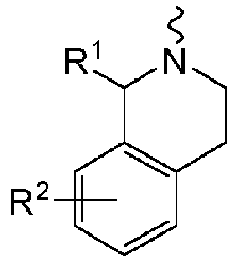 n für 0 oder 1 steht;m für 1 steht;X1, X2 und X3 ausgewählt sind aus X1 steht für CR11 und X2 steht für CR11 und X3 steht für CR11, wobei R11 jeweils für Wasserstoff steht;R1 für CH3 steht;R2 für Wasserstoff steht;R3 für Halogen steht;R4 für C3-6-Cycloalkyl oder Heteroaryl steht;R5 für Wasserstoff steht;R6 jeweils unabhängig aus der Gruppe bestehend aus Wasserstoff, Hydroxy und Halogen ausgewählt ist;R6a jeweils für Wasserstoff steht;R7 für Wasserstoff oder Hydroxy-C1-4-alkyl steht;R8 für -OH,-C1-4-Alkyl-(CO)-NR12R13 oder-(CO)-NR12R13steht, wobeiR12 und R13 jeweils unabhängig aus Wasserstoff und C1-4-Alkyl ausgewählt sind;R10 für Wasserstoff steht;Heteroaryl für Pyridinyl steht;oder ein pharmazeutisch unbedenkliches Säureadditionssalz davon.
- Verbindung nach Anspruch 1, wobeiA für
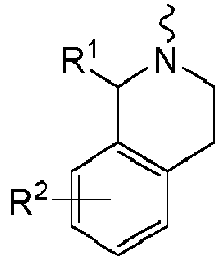 n für 1 steht;m für 1 steht;X1, X2 und X3 ausgewählt sind aus X1 steht für CR11 und X2 steht für CR11 und X3 steht für CR11, wobei R11 jeweils für Wasserstoff steht;R1 für CH3 steht;R2 für Wasserstoff steht;R3 für Halogen steht;R4 für C3-6-Cycloalkyl steht;R5 für Wasserstoff steht;R6 jeweils unabhängig aus der Gruppe bestehend aus Wasserstoff, Hydroxy und Halogen ausgewählt ist;R6a jeweils für Wasserstoff steht;R7 für Wasserstoff oder Hydroxy-C1-4-alkyl steht;R8 für -OH oder- (CO)-NR12R13steht, wobeiR12 und R13 jeweils unabhängig aus Wasserstoff und C1-4-Alkyl ausgewählt sind;R10 für Wasserstoff steht;oder ein pharmazeutisch unbedenkliches Säureadditionssalz davon.
- Verbindung nach Anspruch 1, wobeiA für
 n für 1 steht;m für 1 steht;X1, X2 und X3 ausgewählt sind aus X1 steht für CR11 und X2 steht für CR11 und X3 steht für CR11, wobei R11 jeweils für Wasserstoff steht;R1 für CH3 steht;R2 für Wasserstoff steht;R3 für Halogen steht;R4 für C3-6-Cycloalkyl steht;R5 für Wasserstoff steht;R6 jeweils unabhängig aus der Gruppe bestehend aus Wasserstoff und Hydroxy ausgewählt ist;R6a jeweils für Wasserstoff steht;R7 für Wasserstoff steht;R8 für -OH oder- (CO)-NR12R13steht, wobeiR12 und R13 jeweils unabhängig aus Wasserstoff und C1-4-Alkyl ausgewählt sind;R10 für Wasserstoff steht;oder ein pharmazeutisch unbedenkliches Säureadditionssalz davon.
- Verbindung nach Anspruch 1, wobei die Verbindung aus


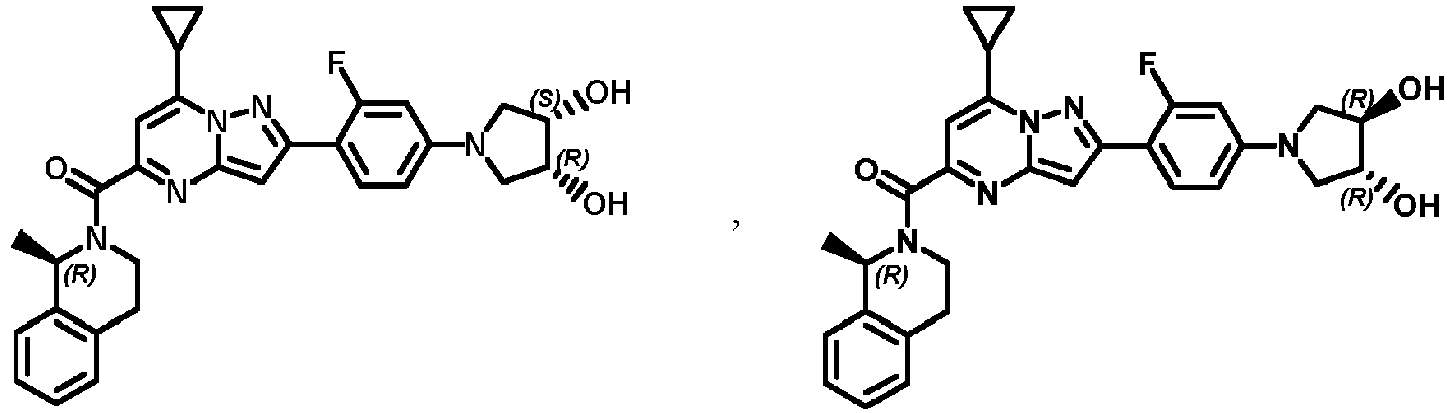


- Pharmazeutische Zusammensetzung, umfassend einen pharmazeutisch unbedenklichen Träger und eine therapeutisch wirksame Menge einer Verbindung nach einem der Ansprüche 1 bis 10.
- Pharmazeutische Zusammensetzung nach Anspruch 11, die ferner ein anderes antivirales Mittel umfasst, bei dem es sich um eine den Respiratory-Syncytial-Virus (RSV) inhibierende Verbindung handelt.
- Verfahren zur Herstellung einer pharmazeutischen Zusammensetzung nach einem der Ansprüche 11 bis 12, bei dem man eine therapeutisch wirksame Menge einer Verbindung nach einem der Ansprüche 1 bis 10 innig mit einem pharmazeutisch unbedenklichen Träger mischt.
- Verbindung nach einem der Ansprüche 1 bis 10 zur Verwendung als Medizin.
- Verbindung nach einem der Ansprüche 1 bis 10 oder pharmazeutische Zusammensetzung nach einem der Ansprüche 11 bis 12 zur Verwendung bei der Behandlung einer Infektion mit dem Respiratory-Syncytial-Virus.
Applications Claiming Priority (2)
| Application Number | Priority Date | Filing Date | Title |
|---|---|---|---|
| EP17204280 | 2017-11-29 | ||
| PCT/EP2018/082828 WO2019106004A1 (en) | 2017-11-29 | 2018-11-28 | Pyrazolopyrimidines having activity against the respiratory syncytial virus (rsv) |
Publications (2)
| Publication Number | Publication Date |
|---|---|
| EP3717486A1 EP3717486A1 (de) | 2020-10-07 |
| EP3717486B1 true EP3717486B1 (de) | 2022-03-23 |
Family
ID=60582408
Family Applications (1)
| Application Number | Title | Priority Date | Filing Date |
|---|---|---|---|
| EP18807356.3A Active EP3717486B1 (de) | 2017-11-29 | 2018-11-28 | Pyrazolopyrimidine mit aktivität gegen rsv |
Country Status (19)
| Country | Link |
|---|---|
| US (1) | US11339165B2 (de) |
| EP (1) | EP3717486B1 (de) |
| JP (1) | JP7273814B2 (de) |
| KR (1) | KR20200094136A (de) |
| CN (1) | CN111417635B (de) |
| AR (1) | AR113853A1 (de) |
| AU (1) | AU2018377993B2 (de) |
| BR (1) | BR112020009507A2 (de) |
| CA (1) | CA3079126A1 (de) |
| CL (1) | CL2020001353A1 (de) |
| EA (1) | EA202091341A1 (de) |
| ES (1) | ES2918186T3 (de) |
| IL (1) | IL274898A (de) |
| MA (1) | MA51197A (de) |
| MX (1) | MX2020005570A (de) |
| PH (1) | PH12020550673A1 (de) |
| SG (1) | SG11202004692UA (de) |
| TW (1) | TW201932470A (de) |
| WO (1) | WO2019106004A1 (de) |
Families Citing this family (4)
| Publication number | Priority date | Publication date | Assignee | Title |
|---|---|---|---|---|
| CA3087926A1 (en) | 2018-01-31 | 2019-08-08 | Janssen Sciences Ireland Unlimited Company | Cycloalkyl substituted pyrazolopyrimidines having activity against rsv |
| AU2019260109B2 (en) | 2018-04-23 | 2023-07-13 | Janssen Sciences Ireland Unlimited Company | Heteroaromatic compounds having activity against RSV |
| BR102020023560A8 (pt) * | 2019-11-19 | 2023-02-07 | Johnson & Johnson Consumer Inc | Composições e métodos para tratar os olhos |
| TWI839652B (zh) | 2020-10-28 | 2024-04-21 | 日商鹽野義製藥股份有限公司 | 具有抗病毒活性的醯胺衍生物 |
Family Cites Families (45)
| Publication number | Priority date | Publication date | Assignee | Title |
|---|---|---|---|---|
| CN1175259A (zh) | 1994-12-22 | 1998-03-04 | 生化制药有限公司 | 低分子量双环凝血酶抑制剂 |
| WO1997001275A1 (en) | 1995-06-29 | 1997-01-16 | Merck & Co., Inc. | Combinations of inhibitors of farnesyl-protein transferase |
| ZA9610738B (en) | 1995-12-22 | 1997-06-24 | Warner Lambert Co | Subtype selective nmda receptor ligands and the use thereof |
| US5977134A (en) | 1996-12-05 | 1999-11-02 | Merck & Co., Inc. | Inhibitors of farnesyl-protein transferase |
| US5972966A (en) | 1996-12-05 | 1999-10-26 | Merck & Co., Inc. | Inhibitors of farnesyl-protein transferase |
| US6177443B1 (en) | 1997-03-07 | 2001-01-23 | Novo Nordisk A/S | 4,5,6,7-tetrahydro-thieno[3, 2-C]pyridine derivatives, their preparation and use |
| KR20020063837A (ko) | 1999-07-19 | 2002-08-05 | 시오노기세이야쿠가부시키가이샤 | 아실옥시메톡시카르보닐 측쇄를 갖는 삼환 화합물 |
| EP1113007A1 (de) | 1999-12-24 | 2001-07-04 | Pfizer Inc. | Tetrahydroisochinolin-Verbindungen zur Verwendung als Östrogen-Agonisten/-Antagonisten |
| WO2003016274A2 (en) | 2001-08-21 | 2003-02-27 | Sepracor, Inc. | 2-substituted piperidines that are ligands for monoamine receptors and transporters |
| CA2483306A1 (en) | 2002-04-23 | 2003-11-06 | Shionogi & Co., Ltd. | Pyrazolo[1,5-a]pyrimidine derivative and nad(p)h oxidase inhibitor containing the same |
| EP1560573B1 (de) | 2002-09-20 | 2008-12-03 | Medisyn Technologies, Inc. | Therapeutische verwendung von mitgliedern der n,n-dicylcohexyl-2-hydroxy-7,7-dimethylbicyclo[2.2.1]hept-1-ylmethanesulphonamide-familie |
| EP1546132A1 (de) | 2002-09-26 | 2005-06-29 | Pfizer Limited | Pyrazole derivate als reverse transcriptase inhibitoren |
| WO2004037817A1 (ja) | 2002-10-25 | 2004-05-06 | Mitsubishi Pharma Corporation | N−オキシド化合物 |
| TW200505902A (en) | 2003-03-20 | 2005-02-16 | Schering Corp | Cannabinoid receptor ligands |
| WO2004087153A2 (en) | 2003-03-28 | 2004-10-14 | Chiron Corporation | Use of organic compounds for immunopotentiation |
| FR2856596B1 (fr) | 2003-06-27 | 2007-04-27 | Bioprojet Soc Civ | Nouvelle association medicamenteuse psychiatrique et utilisation d'une antagoniste ou agoniste inverse du recepteur h3 de l'histamine pour preparer un medicament prevenant des effets indesirables de psychotropes. |
| EP1671962A1 (de) | 2003-10-10 | 2006-06-21 | Ono Pharmaceutical Co., Ltd. | Neue kondensierte heterocyclische verbindung und deren verwendung |
| WO2005042530A1 (en) | 2003-10-30 | 2005-05-12 | Boehringer Ingelheim (Canada) Ltd. | Rsv polymerase inhibitors |
| AR046959A1 (es) | 2003-12-18 | 2006-01-04 | Tibotec Pharm Ltd | Morfolinilo que contiene bencimidazoles como inhibidores de la replicacion del virus sincitial respiratorio |
| CA2551178C (en) | 2003-12-24 | 2012-11-06 | Biota Scientific Management Pty Ltd | Polycyclic agents for the treatment of respiratory syncytial virus infections |
| AU2005283326B2 (en) | 2004-09-13 | 2011-07-21 | Ono Pharmaceutical Co., Ltd. | Nitrogenous heterocyclic derivative and medicine containing the same as an active ingredient |
| EP2316458A1 (de) | 2004-09-20 | 2011-05-04 | Xenon Pharmaceuticals Inc. | Pyridazin-Derivate zur Verhinderung menschlicher Stearoyl-coa-desaturas |
| WO2007044085A2 (en) | 2005-05-19 | 2007-04-19 | Xenon Pharmaceuticals Inc. | Heteroaryl compounds and their uses as therapeutic agents |
| AU2006260969B2 (en) | 2005-06-20 | 2011-11-17 | Janssen Sciences Ireland Uc | 1- ( 2-amino-3- (substituted alkyl)-3H-benzimidazolylmethyl) -3-substituted-1,3-dihydro-benzoimidazol-2-ones with activity on respiratory syncytial virus |
| US7507842B2 (en) | 2005-08-12 | 2009-03-24 | Radiorx, Inc. | Cyclic nitro compounds, pharmaceutical compositions thereof and uses thereof |
| CN101360736A (zh) | 2005-11-23 | 2009-02-04 | 阿斯利康(瑞典)有限公司 | L-丙氨酸衍生物 |
| US20080176870A1 (en) | 2006-11-20 | 2008-07-24 | Bert Nolte | Heterobicyclic metalloprotease inhibitors |
| CN101842098A (zh) | 2007-08-10 | 2010-09-22 | 基因实验室技术有限公司 | 用于治疗病毒感染的含氮的二环化学实体 |
| MX2010006243A (es) | 2007-12-06 | 2010-08-31 | Schering Corp | Moduladores de gamma secretasa. |
| AR073739A1 (es) | 2008-09-10 | 2010-12-01 | Kalypsys Inc | Aminopirimidinas como inhibidores de los receptores de histamina |
| CA2738453C (en) | 2008-10-23 | 2017-07-04 | Boehringer Ingelheim International Gmbh | Urea derivatives of substituted nortropanes, medicaments containing such compounds and their use |
| US20100204265A1 (en) | 2009-02-09 | 2010-08-12 | Genelabs Technologies, Inc. | Certain Nitrogen Containing Bicyclic Chemical Entities for Treating Viral Infections |
| WO2010104306A2 (ko) | 2009-03-07 | 2010-09-16 | 주식회사 메디젠텍 | 세포핵에서 세포질로의 gsk3의 이동을 억제하는 화합물을 함유하는 세포핵에서 세포질로의 gsk3 이동에 의해 발생되는 질환의 치료 또는 예방용 약학적 조성물 |
| WO2010111058A1 (en) | 2009-03-23 | 2010-09-30 | Merck Sharp & Dohme Corp. | P2x3, receptor antagonists for treatment of pain |
| EP2853531A3 (de) | 2009-06-11 | 2015-08-12 | AbbVie Bahamas Ltd. | Antivirale Verbindungen |
| US8937150B2 (en) | 2009-06-11 | 2015-01-20 | Abbvie Inc. | Anti-viral compounds |
| CN102958933B (zh) * | 2010-06-24 | 2016-02-03 | 吉里德科学公司 | 作为抗病毒药的吡唑并[1,5-a]嘧啶类 |
| EA027855B1 (ru) * | 2012-04-17 | 2017-09-29 | Гайлид Сайэнсиз, Инк. | Соединения и способы для противовирусной терапии |
| CA2924527C (en) | 2013-09-20 | 2022-07-12 | University Of Pittsburgh - Of The Commonwealth System Of Higher Education | Compounds for treating prostate cancer |
| JP6510539B2 (ja) | 2014-01-09 | 2019-05-08 | ザ ジェイ. デヴィッド グラッドストーン インスティテューツ, ア テスタメンタリー トラスト エスタブリッシュド アンダー ザ ウィル オブ ジェイ. デヴィッド グラッドストーン | 置換ベンゾオキサジン及び関連化合物 |
| KR101551313B1 (ko) | 2014-07-28 | 2015-09-09 | 충남대학교산학협력단 | 신규한 인덴 유도체, 이의 제조방법 및 이를 유효성분으로 함유하는 망막 질환의 예방 또는 치료용 약학적 조성물 |
| CN107108556B (zh) | 2014-11-03 | 2020-09-29 | 艾欧米制药有限公司 | 药用化合物 |
| AU2015359624B2 (en) | 2014-12-08 | 2020-01-02 | Janssen Sciences Ireland Uc | Piperidine substituted pyrazolo[1,5-a]pyrimidine derivatives with inhibitory activity on the replication of the respiratory syncytial virus (RSV) |
| CN105777632A (zh) | 2015-01-09 | 2016-07-20 | 成都贝斯凯瑞生物科技有限公司 | 芳环并氮杂环衍生物及其应用 |
| JO3637B1 (ar) | 2015-04-28 | 2020-08-27 | Janssen Sciences Ireland Uc | مركبات بيرازولو- وترايازولو- بيريميدين مضادة للفيروسات rsv |
-
2018
- 2018-11-27 TW TW107142176A patent/TW201932470A/zh unknown
- 2018-11-28 SG SG11202004692UA patent/SG11202004692UA/en unknown
- 2018-11-28 MX MX2020005570A patent/MX2020005570A/es unknown
- 2018-11-28 EP EP18807356.3A patent/EP3717486B1/de active Active
- 2018-11-28 BR BR112020009507-9A patent/BR112020009507A2/pt not_active IP Right Cessation
- 2018-11-28 CN CN201880077163.6A patent/CN111417635B/zh not_active Expired - Fee Related
- 2018-11-28 CA CA3079126A patent/CA3079126A1/en active Pending
- 2018-11-28 US US16/768,049 patent/US11339165B2/en not_active Expired - Fee Related
- 2018-11-28 MA MA051197A patent/MA51197A/fr unknown
- 2018-11-28 AR ARP180103493A patent/AR113853A1/es unknown
- 2018-11-28 AU AU2018377993A patent/AU2018377993B2/en not_active Ceased
- 2018-11-28 WO PCT/EP2018/082828 patent/WO2019106004A1/en not_active Ceased
- 2018-11-28 EA EA202091341A patent/EA202091341A1/ru unknown
- 2018-11-28 JP JP2020529417A patent/JP7273814B2/ja active Active
- 2018-11-28 ES ES18807356T patent/ES2918186T3/es active Active
- 2018-11-28 KR KR1020207013976A patent/KR20200094136A/ko not_active Ceased
-
2020
- 2020-05-21 PH PH12020550673A patent/PH12020550673A1/en unknown
- 2020-05-22 CL CL2020001353A patent/CL2020001353A1/es unknown
- 2020-05-25 IL IL274898A patent/IL274898A/en unknown
Also Published As
| Publication number | Publication date |
|---|---|
| CL2020001353A1 (es) | 2020-09-25 |
| JP2021504408A (ja) | 2021-02-15 |
| EP3717486A1 (de) | 2020-10-07 |
| ES2918186T3 (es) | 2022-07-14 |
| US20200361942A1 (en) | 2020-11-19 |
| MX2020005570A (es) | 2020-09-14 |
| MA51197A (fr) | 2020-10-07 |
| US11339165B2 (en) | 2022-05-24 |
| SG11202004692UA (en) | 2020-06-29 |
| IL274898A (en) | 2020-07-30 |
| WO2019106004A1 (en) | 2019-06-06 |
| KR20200094136A (ko) | 2020-08-06 |
| AR113853A1 (es) | 2020-06-17 |
| PH12020550673A1 (en) | 2021-07-26 |
| AU2018377993B2 (en) | 2023-01-12 |
| BR112020009507A2 (pt) | 2020-11-03 |
| EA202091341A1 (ru) | 2020-08-26 |
| AU2018377993A1 (en) | 2020-04-23 |
| JP7273814B2 (ja) | 2023-05-15 |
| CN111417635B (zh) | 2024-01-02 |
| CA3079126A1 (en) | 2019-06-06 |
| CN111417635A (zh) | 2020-07-14 |
| TW201932470A (zh) | 2019-08-16 |
Similar Documents
| Publication | Publication Date | Title |
|---|---|---|
| EP3986896B1 (de) | Egfr-inhibitoren zur behandlung von krebs | |
| EP3740478B1 (de) | Kondensierte imidazolderivate als il-17-modulatoren | |
| EP3788040B1 (de) | Pyridazinone als parp7-inhibitoren | |
| EP4667458A1 (de) | Pharmazeutische zusammensetzung zur behandlung von krebs mit sos1-inhibitor und antikrebsmittel | |
| EP3788042B1 (de) | Bcl-2-inhibitoren | |
| EP3608321B1 (de) | 1h-imidazo[4,5-h]chinazolin-verbindung als proteinkinaseinhibitor | |
| EP3230287B1 (de) | Piperidin-substituierte pyrazolo[1,5-a]pyrimidin-derivate mit hemmender wirkung auf die replikation des respiratorischen synzytalvirus (rsv) | |
| EP2534151B1 (de) | 8-methyl-1-phenyl-imidazol[1,5-a]pyrazin-verbindungen | |
| EP3601216B1 (de) | Substituierte dihydroindol-4-carboxamide und analoge davon sowie verfahren zur verwendung davon zur behandlung von hepatitis b infektion | |
| EP3145512B1 (de) | Substituierte heterobicyclische ethynylverbindungen als tyrosinkinaseinhibitoren | |
| EP3580208B1 (de) | 2-(3-(1h-benzo[d]imidazol-1-yl)propyl)piperidin-3-ol-derivate und ähnliche verbindungen als prs inhibitoren zur behandlung von z.b. krebs | |
| EP3288942B1 (de) | Rsv-antivirale pyrazolo- und triazolopyrimidin-verbindungen | |
| EP4137484A1 (de) | Tricyclische verbindungen als egfr-hemmer | |
| JP7273814B2 (ja) | 呼吸器合胞体ウイルス(rsv)に対する活性を有するピラゾロピリミジン | |
| EP3746444B1 (de) | Cycloalkylsubstituierte pyrazolopyrimidine mit aktivität gegen rsv | |
| EP3784667B1 (de) | Heteroaromatische verbindungen mit aktivität gegen rsv | |
| EP3887372B1 (de) | Heteroaromatische verbindungen mit anti-rsv aktivität | |
| EP4169575B1 (de) | Kondensierte ringverbindungen zur hemmung von h-pgds | |
| EP3230288B1 (de) | Piperidin-substituierte tricyclische pyrazolo[1,5-a]pyrimidin-derivate mit hemmender wirkung auf die replikation des respiratorischen synzytalvirus (rsv) | |
| EP3548495B1 (de) | Pyrazolopyrimidinderivate als cam-kinaseinhibitoren | |
| EP4089079A1 (de) | Ror-gamma-t-inhibitor, herstellungsverfahren dafür und verwendung davon | |
| CN113493439A (zh) | 取代的丙烯酰胺衍生物及其组合物及用途 | |
| EA040266B1 (ru) | Пиразолопиримидины, обладающие активностью в отношении респираторно-синцитиального вируса (rsv) | |
| HK40087512A (en) | Condensed ring compounds that inhibit h-pgds | |
| HK40087512B (en) | Condensed ring compounds that inhibit h-pgds |
Legal Events
| Date | Code | Title | Description |
|---|---|---|---|
| STAA | Information on the status of an ep patent application or granted ep patent |
Free format text: STATUS: UNKNOWN |
|
| STAA | Information on the status of an ep patent application or granted ep patent |
Free format text: STATUS: THE INTERNATIONAL PUBLICATION HAS BEEN MADE |
|
| PUAI | Public reference made under article 153(3) epc to a published international application that has entered the european phase |
Free format text: ORIGINAL CODE: 0009012 |
|
| STAA | Information on the status of an ep patent application or granted ep patent |
Free format text: STATUS: REQUEST FOR EXAMINATION WAS MADE |
|
| 17P | Request for examination filed |
Effective date: 20200629 |
|
| AK | Designated contracting states |
Kind code of ref document: A1 Designated state(s): AL AT BE BG CH CY CZ DE DK EE ES FI FR GB GR HR HU IE IS IT LI LT LU LV MC MK MT NL NO PL PT RO RS SE SI SK SM TR |
|
| AX | Request for extension of the european patent |
Extension state: BA ME |
|
| STAA | Information on the status of an ep patent application or granted ep patent |
Free format text: STATUS: EXAMINATION IS IN PROGRESS |
|
| 17Q | First examination report despatched |
Effective date: 20210831 |
|
| GRAP | Despatch of communication of intention to grant a patent |
Free format text: ORIGINAL CODE: EPIDOSNIGR1 |
|
| STAA | Information on the status of an ep patent application or granted ep patent |
Free format text: STATUS: GRANT OF PATENT IS INTENDED |
|
| INTG | Intention to grant announced |
Effective date: 20211104 |
|
| GRAS | Grant fee paid |
Free format text: ORIGINAL CODE: EPIDOSNIGR3 |
|
| GRAA | (expected) grant |
Free format text: ORIGINAL CODE: 0009210 |
|
| STAA | Information on the status of an ep patent application or granted ep patent |
Free format text: STATUS: THE PATENT HAS BEEN GRANTED |
|
| AK | Designated contracting states |
Kind code of ref document: B1 Designated state(s): AL AT BE BG CH CY CZ DE DK EE ES FI FR GB GR HR HU IE IS IT LI LT LU LV MC MK MT NL NO PL PT RO RS SE SI SK SM TR |
|
| REG | Reference to a national code |
Ref country code: GB Ref legal event code: FG4D |
|
| REG | Reference to a national code |
Ref country code: CH Ref legal event code: EP |
|
| REG | Reference to a national code |
Ref country code: IE Ref legal event code: FG4D |
|
| REG | Reference to a national code |
Ref country code: DE Ref legal event code: R096 Ref document number: 602018032708 Country of ref document: DE |
|
| REG | Reference to a national code |
Ref country code: AT Ref legal event code: REF Ref document number: 1477365 Country of ref document: AT Kind code of ref document: T Effective date: 20220415 |
|
| REG | Reference to a national code |
Ref country code: SE Ref legal event code: TRGR |
|
| REG | Reference to a national code |
Ref country code: NL Ref legal event code: FP |
|
| REG | Reference to a national code |
Ref country code: LT Ref legal event code: MG9D |
|
| REG | Reference to a national code |
Ref country code: ES Ref legal event code: FG2A Ref document number: 2918186 Country of ref document: ES Kind code of ref document: T3 Effective date: 20220714 |
|
| PG25 | Lapsed in a contracting state [announced via postgrant information from national office to epo] |
Ref country code: RS Free format text: LAPSE BECAUSE OF FAILURE TO SUBMIT A TRANSLATION OF THE DESCRIPTION OR TO PAY THE FEE WITHIN THE PRESCRIBED TIME-LIMIT Effective date: 20220323 Ref country code: NO Free format text: LAPSE BECAUSE OF FAILURE TO SUBMIT A TRANSLATION OF THE DESCRIPTION OR TO PAY THE FEE WITHIN THE PRESCRIBED TIME-LIMIT Effective date: 20220623 Ref country code: LT Free format text: LAPSE BECAUSE OF FAILURE TO SUBMIT A TRANSLATION OF THE DESCRIPTION OR TO PAY THE FEE WITHIN THE PRESCRIBED TIME-LIMIT Effective date: 20220323 Ref country code: HR Free format text: LAPSE BECAUSE OF FAILURE TO SUBMIT A TRANSLATION OF THE DESCRIPTION OR TO PAY THE FEE WITHIN THE PRESCRIBED TIME-LIMIT Effective date: 20220323 Ref country code: BG Free format text: LAPSE BECAUSE OF FAILURE TO SUBMIT A TRANSLATION OF THE DESCRIPTION OR TO PAY THE FEE WITHIN THE PRESCRIBED TIME-LIMIT Effective date: 20220623 |
|
| REG | Reference to a national code |
Ref country code: AT Ref legal event code: MK05 Ref document number: 1477365 Country of ref document: AT Kind code of ref document: T Effective date: 20220323 |
|
| PG25 | Lapsed in a contracting state [announced via postgrant information from national office to epo] |
Ref country code: LV Free format text: LAPSE BECAUSE OF FAILURE TO SUBMIT A TRANSLATION OF THE DESCRIPTION OR TO PAY THE FEE WITHIN THE PRESCRIBED TIME-LIMIT Effective date: 20220323 Ref country code: GR Free format text: LAPSE BECAUSE OF FAILURE TO SUBMIT A TRANSLATION OF THE DESCRIPTION OR TO PAY THE FEE WITHIN THE PRESCRIBED TIME-LIMIT Effective date: 20220624 Ref country code: FI Free format text: LAPSE BECAUSE OF FAILURE TO SUBMIT A TRANSLATION OF THE DESCRIPTION OR TO PAY THE FEE WITHIN THE PRESCRIBED TIME-LIMIT Effective date: 20220323 |
|
| PG25 | Lapsed in a contracting state [announced via postgrant information from national office to epo] |
Ref country code: SM Free format text: LAPSE BECAUSE OF FAILURE TO SUBMIT A TRANSLATION OF THE DESCRIPTION OR TO PAY THE FEE WITHIN THE PRESCRIBED TIME-LIMIT Effective date: 20220323 Ref country code: SK Free format text: LAPSE BECAUSE OF FAILURE TO SUBMIT A TRANSLATION OF THE DESCRIPTION OR TO PAY THE FEE WITHIN THE PRESCRIBED TIME-LIMIT Effective date: 20220323 Ref country code: RO Free format text: LAPSE BECAUSE OF FAILURE TO SUBMIT A TRANSLATION OF THE DESCRIPTION OR TO PAY THE FEE WITHIN THE PRESCRIBED TIME-LIMIT Effective date: 20220323 Ref country code: PT Free format text: LAPSE BECAUSE OF FAILURE TO SUBMIT A TRANSLATION OF THE DESCRIPTION OR TO PAY THE FEE WITHIN THE PRESCRIBED TIME-LIMIT Effective date: 20220725 Ref country code: EE Free format text: LAPSE BECAUSE OF FAILURE TO SUBMIT A TRANSLATION OF THE DESCRIPTION OR TO PAY THE FEE WITHIN THE PRESCRIBED TIME-LIMIT Effective date: 20220323 Ref country code: CZ Free format text: LAPSE BECAUSE OF FAILURE TO SUBMIT A TRANSLATION OF THE DESCRIPTION OR TO PAY THE FEE WITHIN THE PRESCRIBED TIME-LIMIT Effective date: 20220323 Ref country code: AT Free format text: LAPSE BECAUSE OF FAILURE TO SUBMIT A TRANSLATION OF THE DESCRIPTION OR TO PAY THE FEE WITHIN THE PRESCRIBED TIME-LIMIT Effective date: 20220323 |
|
| VS25 | Lapsed in a validation state [announced via postgrant information from nat. office to epo] |
Ref country code: MD Free format text: LAPSE BECAUSE OF FAILURE TO SUBMIT A TRANSLATION OF THE DESCRIPTION OR TO PAY THE FEE WITHIN THE PRESCRIBED TIME-LIMIT Effective date: 20220323 |
|
| PG25 | Lapsed in a contracting state [announced via postgrant information from national office to epo] |
Ref country code: PL Free format text: LAPSE BECAUSE OF FAILURE TO SUBMIT A TRANSLATION OF THE DESCRIPTION OR TO PAY THE FEE WITHIN THE PRESCRIBED TIME-LIMIT Effective date: 20220323 Ref country code: IS Free format text: LAPSE BECAUSE OF FAILURE TO SUBMIT A TRANSLATION OF THE DESCRIPTION OR TO PAY THE FEE WITHIN THE PRESCRIBED TIME-LIMIT Effective date: 20220723 Ref country code: AL Free format text: LAPSE BECAUSE OF FAILURE TO SUBMIT A TRANSLATION OF THE DESCRIPTION OR TO PAY THE FEE WITHIN THE PRESCRIBED TIME-LIMIT Effective date: 20220323 |
|
| REG | Reference to a national code |
Ref country code: DE Ref legal event code: R097 Ref document number: 602018032708 Country of ref document: DE |
|
| PLBE | No opposition filed within time limit |
Free format text: ORIGINAL CODE: 0009261 |
|
| STAA | Information on the status of an ep patent application or granted ep patent |
Free format text: STATUS: NO OPPOSITION FILED WITHIN TIME LIMIT |
|
| PG25 | Lapsed in a contracting state [announced via postgrant information from national office to epo] |
Ref country code: DK Free format text: LAPSE BECAUSE OF FAILURE TO SUBMIT A TRANSLATION OF THE DESCRIPTION OR TO PAY THE FEE WITHIN THE PRESCRIBED TIME-LIMIT Effective date: 20220323 |
|
| 26N | No opposition filed |
Effective date: 20230102 |
|
| PG25 | Lapsed in a contracting state [announced via postgrant information from national office to epo] |
Ref country code: SI Free format text: LAPSE BECAUSE OF FAILURE TO SUBMIT A TRANSLATION OF THE DESCRIPTION OR TO PAY THE FEE WITHIN THE PRESCRIBED TIME-LIMIT Effective date: 20220323 |
|
| PG25 | Lapsed in a contracting state [announced via postgrant information from national office to epo] |
Ref country code: MC Free format text: LAPSE BECAUSE OF FAILURE TO SUBMIT A TRANSLATION OF THE DESCRIPTION OR TO PAY THE FEE WITHIN THE PRESCRIBED TIME-LIMIT Effective date: 20220323 |
|
| REG | Reference to a national code |
Ref country code: SE Ref legal event code: EUG |
|
| PG25 | Lapsed in a contracting state [announced via postgrant information from national office to epo] |
Ref country code: SE Free format text: LAPSE BECAUSE OF NON-PAYMENT OF DUE FEES Effective date: 20221129 Ref country code: LU Free format text: LAPSE BECAUSE OF NON-PAYMENT OF DUE FEES Effective date: 20221128 |
|
| PG25 | Lapsed in a contracting state [announced via postgrant information from national office to epo] |
Ref country code: IT Free format text: LAPSE BECAUSE OF NON-PAYMENT OF DUE FEES Effective date: 20221128 |
|
| PGFP | Annual fee paid to national office [announced via postgrant information from national office to epo] |
Ref country code: NL Payment date: 20231013 Year of fee payment: 6 Ref country code: FR Payment date: 20230929 Year of fee payment: 6 |
|
| PGFP | Annual fee paid to national office [announced via postgrant information from national office to epo] |
Ref country code: GB Payment date: 20231006 Year of fee payment: 6 |
|
| PGFP | Annual fee paid to national office [announced via postgrant information from national office to epo] |
Ref country code: ES Payment date: 20231212 Year of fee payment: 6 |
|
| PGFP | Annual fee paid to national office [announced via postgrant information from national office to epo] |
Ref country code: IE Payment date: 20231009 Year of fee payment: 6 Ref country code: DE Payment date: 20231003 Year of fee payment: 6 Ref country code: CH Payment date: 20231201 Year of fee payment: 6 |
|
| PGFP | Annual fee paid to national office [announced via postgrant information from national office to epo] |
Ref country code: BE Payment date: 20231016 Year of fee payment: 6 |
|
| PG25 | Lapsed in a contracting state [announced via postgrant information from national office to epo] |
Ref country code: CY Free format text: LAPSE BECAUSE OF FAILURE TO SUBMIT A TRANSLATION OF THE DESCRIPTION OR TO PAY THE FEE WITHIN THE PRESCRIBED TIME-LIMIT Effective date: 20220323 |
|
| PG25 | Lapsed in a contracting state [announced via postgrant information from national office to epo] |
Ref country code: MK Free format text: LAPSE BECAUSE OF FAILURE TO SUBMIT A TRANSLATION OF THE DESCRIPTION OR TO PAY THE FEE WITHIN THE PRESCRIBED TIME-LIMIT Effective date: 20220323 Ref country code: HU Free format text: LAPSE BECAUSE OF FAILURE TO SUBMIT A TRANSLATION OF THE DESCRIPTION OR TO PAY THE FEE WITHIN THE PRESCRIBED TIME-LIMIT; INVALID AB INITIO Effective date: 20181128 |
|
| PG25 | Lapsed in a contracting state [announced via postgrant information from national office to epo] |
Ref country code: MT Free format text: LAPSE BECAUSE OF FAILURE TO SUBMIT A TRANSLATION OF THE DESCRIPTION OR TO PAY THE FEE WITHIN THE PRESCRIBED TIME-LIMIT Effective date: 20220323 |
|
| REG | Reference to a national code |
Ref country code: DE Ref legal event code: R119 Ref document number: 602018032708 Country of ref document: DE |
|
| REG | Reference to a national code |
Ref country code: CH Ref legal event code: PL |
|
| REG | Reference to a national code |
Ref country code: NL Ref legal event code: MM Effective date: 20241201 |
|
| REG | Reference to a national code |
Ref country code: CH Ref legal event code: PL |
|
| GBPC | Gb: european patent ceased through non-payment of renewal fee |
Effective date: 20241128 |
|
| PG25 | Lapsed in a contracting state [announced via postgrant information from national office to epo] |
Ref country code: CH Free format text: LAPSE BECAUSE OF NON-PAYMENT OF DUE FEES Effective date: 20241130 |
|
| PG25 | Lapsed in a contracting state [announced via postgrant information from national office to epo] |
Ref country code: NL Free format text: LAPSE BECAUSE OF NON-PAYMENT OF DUE FEES Effective date: 20241201 |
|
| REG | Reference to a national code |
Ref country code: BE Ref legal event code: MM Effective date: 20241130 |
|
| PG25 | Lapsed in a contracting state [announced via postgrant information from national office to epo] |
Ref country code: DE Free format text: LAPSE BECAUSE OF NON-PAYMENT OF DUE FEES Effective date: 20250603 |
|
| PG25 | Lapsed in a contracting state [announced via postgrant information from national office to epo] |
Ref country code: GB Free format text: LAPSE BECAUSE OF NON-PAYMENT OF DUE FEES Effective date: 20241128 Ref country code: BE Free format text: LAPSE BECAUSE OF NON-PAYMENT OF DUE FEES Effective date: 20241130 |
|
| PG25 | Lapsed in a contracting state [announced via postgrant information from national office to epo] |
Ref country code: FR Free format text: LAPSE BECAUSE OF NON-PAYMENT OF DUE FEES Effective date: 20241130 |
|
| PG25 | Lapsed in a contracting state [announced via postgrant information from national office to epo] |
Ref country code: IE Free format text: LAPSE BECAUSE OF NON-PAYMENT OF DUE FEES Effective date: 20241128 |
|
| VS25 | Lapsed in a validation state [announced via postgrant information from nat. office to epo] |
Ref country code: MA Free format text: FAILURE TO ELECT DOMICILE IN THE NATIONAL COUNTRY Effective date: 20220624 |
|
| PG25 | Lapsed in a contracting state [announced via postgrant information from national office to epo] |
Ref country code: TR Free format text: LAPSE BECAUSE OF FAILURE TO SUBMIT A TRANSLATION OF THE DESCRIPTION OR TO PAY THE FEE WITHIN THE PRESCRIBED TIME-LIMIT Effective date: 20220323 |
|
| REG | Reference to a national code |
Ref country code: ES Ref legal event code: FD2A Effective date: 20260105 |
|
| PG25 | Lapsed in a contracting state [announced via postgrant information from national office to epo] |
Ref country code: ES Free format text: LAPSE BECAUSE OF NON-PAYMENT OF DUE FEES Effective date: 20241129 |