EP3719034A2 - Procédé de préparation d'une composition contenant un facteur 8 capable de contrôler la teneur en facteur de von willebrand (vwf) et facteur de von willebrand - Google Patents
Procédé de préparation d'une composition contenant un facteur 8 capable de contrôler la teneur en facteur de von willebrand (vwf) et facteur de von willebrand Download PDFInfo
- Publication number
- EP3719034A2 EP3719034A2 EP18870991.9A EP18870991A EP3719034A2 EP 3719034 A2 EP3719034 A2 EP 3719034A2 EP 18870991 A EP18870991 A EP 18870991A EP 3719034 A2 EP3719034 A2 EP 3719034A2
- Authority
- EP
- European Patent Office
- Prior art keywords
- vwf
- eluate
- fviii
- factor
- von willebrand
- Prior art date
- Legal status (The legal status is an assumption and is not a legal conclusion. Google has not performed a legal analysis and makes no representation as to the accuracy of the status listed.)
- Granted
Links
Images




Classifications
-
- C—CHEMISTRY; METALLURGY
- C07—ORGANIC CHEMISTRY
- C07K—PEPTIDES
- C07K14/00—Peptides having more than 20 amino acids; Gastrins; Somatostatins; Melanotropins; Derivatives thereof
- C07K14/435—Peptides having more than 20 amino acids; Gastrins; Somatostatins; Melanotropins; Derivatives thereof from animals; from humans
- C07K14/745—Blood coagulation or fibrinolysis factors
- C07K14/755—Factors VIII, e.g. factor VIII C (AHF), factor VIII Ag (VWF)
-
- A—HUMAN NECESSITIES
- A61—MEDICAL OR VETERINARY SCIENCE; HYGIENE
- A61K—PREPARATIONS FOR MEDICAL, DENTAL OR TOILETRY PURPOSES
- A61K38/00—Medicinal preparations containing peptides
- A61K38/16—Peptides having more than 20 amino acids; Gastrins; Somatostatins; Melanotropins; Derivatives thereof
- A61K38/17—Peptides having more than 20 amino acids; Gastrins; Somatostatins; Melanotropins; Derivatives thereof from animals; from humans
- A61K38/36—Blood coagulation or fibrinolysis factors
- A61K38/37—Factors VIII
-
- B—PERFORMING OPERATIONS; TRANSPORTING
- B01—PHYSICAL OR CHEMICAL PROCESSES OR APPARATUS IN GENERAL
- B01D—SEPARATION
- B01D15/00—Separating processes involving the treatment of liquids with solid sorbents; Apparatus therefor
- B01D15/08—Selective adsorption, e.g. chromatography
- B01D15/10—Selective adsorption, e.g. chromatography characterised by constructional or operational features
- B01D15/18—Selective adsorption, e.g. chromatography characterised by constructional or operational features relating to flow patterns
- B01D15/1864—Selective adsorption, e.g. chromatography characterised by constructional or operational features relating to flow patterns using two or more columns
- B01D15/1871—Selective adsorption, e.g. chromatography characterised by constructional or operational features relating to flow patterns using two or more columns placed in series
-
- B—PERFORMING OPERATIONS; TRANSPORTING
- B01—PHYSICAL OR CHEMICAL PROCESSES OR APPARATUS IN GENERAL
- B01D—SEPARATION
- B01D15/00—Separating processes involving the treatment of liquids with solid sorbents; Apparatus therefor
- B01D15/08—Selective adsorption, e.g. chromatography
- B01D15/10—Selective adsorption, e.g. chromatography characterised by constructional or operational features
- B01D15/24—Selective adsorption, e.g. chromatography characterised by constructional or operational features relating to the treatment of the fractions to be distributed
-
- B—PERFORMING OPERATIONS; TRANSPORTING
- B01—PHYSICAL OR CHEMICAL PROCESSES OR APPARATUS IN GENERAL
- B01D—SEPARATION
- B01D15/00—Separating processes involving the treatment of liquids with solid sorbents; Apparatus therefor
- B01D15/08—Selective adsorption, e.g. chromatography
- B01D15/26—Selective adsorption, e.g. chromatography characterised by the separation mechanism
- B01D15/36—Selective adsorption, e.g. chromatography characterised by the separation mechanism involving ionic interaction, e.g. ion-exchange, ion-pair, ion-suppression or ion-exclusion
- B01D15/361—Ion-exchange
- B01D15/362—Cation-exchange
-
- B—PERFORMING OPERATIONS; TRANSPORTING
- B01—PHYSICAL OR CHEMICAL PROCESSES OR APPARATUS IN GENERAL
- B01D—SEPARATION
- B01D15/00—Separating processes involving the treatment of liquids with solid sorbents; Apparatus therefor
- B01D15/08—Selective adsorption, e.g. chromatography
- B01D15/26—Selective adsorption, e.g. chromatography characterised by the separation mechanism
- B01D15/36—Selective adsorption, e.g. chromatography characterised by the separation mechanism involving ionic interaction, e.g. ion-exchange, ion-pair, ion-suppression or ion-exclusion
- B01D15/361—Ion-exchange
- B01D15/363—Anion-exchange
-
- C—CHEMISTRY; METALLURGY
- C07—ORGANIC CHEMISTRY
- C07K—PEPTIDES
- C07K1/00—General methods for the preparation of peptides, i.e. processes for the organic chemical preparation of peptides or proteins of any length
- C07K1/14—Extraction; Separation; Purification
- C07K1/16—Extraction; Separation; Purification by chromatography
- C07K1/18—Ion-exchange chromatography
Definitions
- the present invention relates to a method of preparing a composition comprising factor VIII (FVIII) and von Willebrand factor (vWF), wherein the content of the von Willebrand factor (vWF) can be controlled and, more specifically, to a method for preparing a composition comprising factor VIII (FVIII) and von Willebrand factor (vWF) wherein the content of the von Willebrand factor (vWF) can be controlled by separately purifying the factor VIII (FVIII) and the von Willebrand factor (vWF) from plasma in a single process and mixing the factor VIII (FVIII) with the von Willebrand factor (vWF) at an appropriate ratio.
- FVIII factor VIII
- vWF von Willebrand factor
- the anti-hemophilia factor is a protein coenzyme that has the function of facilitating the formation of fibrin clots by promoting the activity of factor X during blood clotting.
- Factor VIII corrects defects of blood clotting in the plasma of hemophilia patients and circulates in the plasma in the form of a complex with von Willebrand factor (hereinafter referred to as "vWF").
- vWF von Willebrand factor
- vWF is a protein that can change the defects of platelet functions in von Willebrand deficiency and forms a complex with factor VIII.
- vWF is a hemostatic factor which is produced in vascular endothelial cells or bone marrow megakaryocytes and present as a multimeric structure (having a molecular weight of 500 to 20,000 kDa) in which a single subunit including 2050 amino acid residues (monomer having a molecular weight of about 250 kDa) is linked via a disulfide bond.
- the concentration of vWF in the blood is about 10 ⁇ g/ml, and as the molecular weight thereof increases, inactivity thereof increases.
- vWF has two major functions as a hemostatic factor.
- One is the function as a carrier protein that stabilizes the blood-clotting factor VIII by binding thereto and the other is the function of forming a thrombus by adhering platelets to tissues in the vascular endothelial cells of the injured vascular wall and aggregating the same.
- factor VIII clotting protein A part of the factor VIII/von Willebrand complex having blood-clotting activity is called "factor VIII clotting protein", “VIII clotting activity”, or simply “factor VIII:C”, and other part having the activity of correcting defects in platelet function in von Willebrand deficiency is referred to as "factor-VIII-related antigen", “VIII:Ag”, “VIII:RP factor”, or “vWF”.
- factor-VIII-related antigen "VIII:Ag”
- VIII:RP factor vWF
- This complex is formed via a non-covalent bond and may be divided into two proteins, each having its own characteristics under appropriate conditions.
- Tuddenham et al. reported a method for separating factor VIII:C from vWF using immunoadsorption chromatography (see: E.G.D. Tuddenham et al., Journal of Laboratory Clinical Medicine, 93:40 (1979 )). That is, factor VIII:C is separated from vWF and other plasma proteins using chromatography using a column packed with agarose beads bound with multivalent antiserum against vWF (anti-vWF). Plasma containing VIII:C/vWF is made to pass through a column on which both VIII:C and vWF are adsorbed, undesired plasma proteins are removed from the column by washing with buffer, and the desired factor VIII:C is then obtained by eluting with calcium ions.
- the final product still contains vWF and other plasma proteins. These impurities are considered to be due to the use of multivalent antiserum that binds to agarose beads. Since most immunoglobulins that constitute antiserum are not specific for vWF, the degree of binding of vWF-specific antibodies to agarose is relatively low due to competition with other types of antibodies. For this reason, the final product is often contaminated with other plasma proteins.
- Austin et al. also reported a method for separating factor VIII:C from vWF and ristocetin cofactors through chromatography using a column packed with aminohexyl-substituted agarose. (see: D.E.G. Austen, British Journal of Haematology, 43:669 (1979 )). This method is improved with regard to human and swine VIII:C/vWF complexes, but has a problem in that the final product still includes impurities.
- Zimmerman et al. reported a method for separating high-purity factor VIII:C at a high concentration from vWF using two-step purification (see: USP 4,361,509 ). That is, the first step is immunoadsorption of the factor VIII:C contained in the plasma and the concentrate, and the adsorbent used therefor is a vWF-specific monoclonal antibody having an appropriate medium such as agarose beads bound thereto.
- the monoclonal antibody used herein is obtained by producing a monoclonal antibody from the ascites of the mouse and then purifying the same.
- Plasma containing VIII:C/vWF is made to pass through a column packed with an electro-adsorbent, so that VIII:C/vWF is first adsorbed, unadsorbed proteins are removed from the column by washing with a buffer, and only the adsorbed factor VIII:C is eluted by treating with a calcium-containing solution.
- the vWF moiety remains adsorbed to the anti-vWF monoclonal antibody bound to the medium.
- the factor VIII:C thus recovered is highly pure and almost completely free of impurities, but the concentration thereof is, disadvantageously, too low for use in medicine.
- the second step of this process is concentration of the purified factor VIII:C using affinity chromatography.
- the present inventors have found that the content of vWF can be controlled by performing two elution processes using anion exchange chromatography and one additional elution process using cation exchange chromatography and mixing the eluate obtained during each elution in one process at a desired ratio, if necessary, in the process of separating and purifying the factor VIII and vWF from plasma, and thus a composition having a vWF content and a content ratio of the factor VIII and vWF, which are artificially controlled, can be separated and purified at high purity and high concentration. Based on this finding, the present invention has been completed.
- the above and other objects can be accomplished by the provision of a method of preparing a composition comprising factor VIII and von Willebrand factor (FVIII/vWF) with a controlled content of the von Willebrand factor (vWF), the method comprising:
- a pharmaceutical composition for treating a blood-clotting disorder comprising, as an active ingredient, a composition comprising factor VIII and von Willebrand factor (FVIII/vWF) prepared by the method.
- a method of treating a blood-clotting disorder comprising administering the composition to a patient with a blood-clotting disorder.
- compositions for the preparation of a drug for treating a blood-clotting disorder are provided.
- the present invention is based on the finding that, by performing two elution processes using anion exchange chromatography and one additional elution process using cation exchange chromatography and mixing the eluate obtained during each elution in one process at a desired ratio, if necessary, in the process of separating and purifying the factor VIII and von Willebrand factor (vWF) from plasma, the loss of the von Willebrand factor (vWF) during anion exchange chromatography can be alleviated and the content of the vWF can be controlled, and the complex of factor VIII (FVIII) and vWF, having a controlled vWF content, can be separated and purified at high purity and high concentration.
- the present invention relates to a method of preparing a composition comprising factor VIII/von Willebrand factor (FVIII/vWF), with a controlled content of the von Willebrand factor (vWF) .
- the method may comprise:
- the plasma sample isolated from the human body in the present invention may be obtained by a method including: (i) freezing the plasma sample isolated from the human body, dissolving the resulting precipitate, forming a cold precipitate and removing impurities; and (ii) sterilizing the product of step (i) through treatment with a detergent.
- the factor VIII (FVIII) and von Willebrand factor (vWF) can be purified from the plasma sample isolated from the human body, and additionally, in order to extract the factor VIII (FVIII) and von Willebrand factor (vWF) present in the frozen plasma precipitate, in the step of dissolving the frozen plasma precipitate, the frozen plasma precipitate is added to the extract and then dissolved at a temperature of 23 to 27°C for 3 to 5 hours while stirring at 200 to 300 rpm and.
- the frozen plasma precipitate is dissolved in an extracting solution containing heparin 1.5 ⁇ 0.5 IU/cryopaste kg (green cross, sodium heparinate, Cat. No. 50-1341-7), ethanol 1 ⁇ 0.5%/cryopaste kg (Korean alcohol, Cat. No. 40000533), and water for injection 3 L/cryopaste kg, but this extracting solution may be replaced with an extracting solution commonly used in the art.
- the step of dissolving the precipitate may be modified to be suitable for the unfrozen serum.
- an aluminum hydroxide gel is added to the dissolved precipitate to form a cold precipitate.
- the dissolved precipitate is stirred at 22 to 28°C and at 200 to 300 rpm for 5 to 10 minutes, the pH is adjusted to 6.1 to 6.6, and the dissolved precipitate is slowly allowed to cool to a temperature of 10 to 14°C over a period of 30 minutes to 90 minutes to form a cold precipitate.
- the aluminum hydroxide gel added is preferably 150 to 250 g of a formulation of a 1 to 3% aluminum hydroxide gel suspension per 1 kg of the frozen plasma precipitate, but the amount may be appropriately added or subtracted depending on the state of the plasma precipitate.
- the cold precipitate is applied to a centrifuge at a input rate of 5 to 7 L/min and centrifuged at a rate of 3,000 rpm or more and at a constant temperature of 10 to 14°C, and the centrifuged solution is collected by clarification-filtration.
- the product of step (i) is sterilized by treatment with a detergent.
- the solvent and detergent may be used without limitation, as long as they can inactivate viruses, particularly lipid-enveloped viruses.
- the detergent may be selected from the group consisting of nonionic and ionic detergents, and is preferably substantially unmodified.
- a nonionic detergent is preferred, and tri-n-butyl phosphate (TNBP), as disclosed in US Pat. No. 4,764,369 , is most preferred as the solvent, but the present invention is not limited thereto.
- TNBP tri-n-butyl phosphate
- the virus-inactivating agent particularly preferable for implementing the present invention is a mixture of one or more selected from TNBP and polysorbate 80 (Tween 80), Triton X-100 and Triton X-45, but is not limited thereto.
- a preferred detergent mixture is added such that the concentration of TNBP in the clarified solution is within the range of 0.2 to 0.6% by weight, specifically 0.24 to 0.36% by weight, and the concentration of polysorbate 80 is within the range of 0.6 to 1.5% by weight, specifically, 0.8 to 1.2% by weight.
- the detergent mixture is treated under conditions capable of forming a solution substantially free of risk from viral activity by inactivating lipid-enveloped viruses.
- the reaction temperature in the above conditions is specifically 4 to 30°C, more specifically 19 to 28°C, and most specifically 26 to 27°C
- the reaction time is specifically 1 to 24 hours, more specifically 4 to 12 hours, and most specifically about 5 to 7 hours
- the detergent mixture is preferably treated while slowly stirring the same at 40 to 80 rpm.
- Toyopearl DEAE 650M resin is used as an anion exchange resin in the anion exchange chromatography of step (a), and a Na + -controlling liquid is added such that the Na + concentration of the detergent-treated solution is adjusted to 120 to 150 mmol/L, the pH is adjusted to 6.8 to 7.2, and the detergent-treated solution is applied into the column at a flow rate of 80 to 120 cm/hour and adsorbed onto the resin.
- re-equilibration is performed by applying a re-equilibration buffer in an amount of 4 to 6 times the volume of the column at a flow rate of 80 to 120 cm/hour, and then a primary eluate is eluted by applying a first elution buffer in an amount of 4 to 6 times the volume of the column at a flow rate of 80 to 120 cm/hour.
- the first elution buffer contains 150 to 170 mM NaCl, 8 to 12 mM Na-citrate ⁇ H 2 O, 100 to 140 mM glycine and 0.5 to 1.5 mM CaCl 2 ⁇ 2H 2 0, and the pH can be specifically adjusted to 6.6 to 7.4, more specifically, the pH can be adjusted to 6.8 to 7.2, and most specifically, the pH can be adjusted to 6.9 to 7.1.
- SP Sepharose resin is used as a cation exchange resin in the cation exchange chromatography of step (b), and the primary eluate is applied into the column at a flow rate of 180 to 200 cm/hour and adsorbed onto the resin. Then, an elution buffer is applied into the column onto which the primary eluate adsorbed in an amount of 4 to 6 times the volume of the column at a flow rate of 230 to 270 cm/hour to elute an eluate.
- the elution buffer to obtain the eluate through cation exchange chromatography contains 380 to 420 mM NaCl, 8 to 12 mM Na-citrate ⁇ H 2 O, 100 to 140 mM glycine and 0.5 to 1.5 mM CaCl 2 ⁇ 2H 2 0, and the pH can be specifically adjusted to 6.0 to 7.0, more specifically, the pH can be adjusted to 6.3 to 6.7, and most specifically, the pH can be adjusted to 6.4 to 6.6.
- a second elution buffer is appliedapplied in an amount of 2 to 4 times the volume of the column into the column used for obtaining the primary eluate at a flow rate of 30 to 60 cm/hour to elute a secondary eluate.
- the second elution buffer contains 230 to 270 mM NaCl, 8 to 12 mM Na-citrate ⁇ H 2 O, 100 to 140 mM glycine and 0.5 to 1.5 mM CaCl 2 ⁇ 2H 2 0, and the pH can be specifically adjusted to 6.6 to 7.4, more specifically, the pH can be adjusted to 6.8 to 7.2, and most specifically, the pH can be adjusted to 6.9 to 7.1.
- the steps (b) and (c) may be performed simultaneously, or may be performed in an appropriately changed order.
- the eluate of the anion exchange chromatography of step (a) may contain a mixture of the factor VIII and vWF
- the eluate of the cation exchange chromatography of step (b) may contain vWF
- the factor VIII is present in an amount of 0.01% by weight or less.
- the eluate of the cation exchange chromatography of step (b) and the secondary eluate of the anion exchange chromatography of step (c) may be mixed in a volume ratio of 9:1 to 1:9.
- the anion exchange resin used herein may be substituted with a diethylaminoethyl (DEAE) or quaternary ammonium group, but is not limited thereto. Specifically, either an anion exchange resin having a strongly basic quaternary ammonium group or a weakly basic diethylaminoethyl (DEAE) group may be selected and used.
- DEAE diethylaminoethyl
- the strongly basic anion exchange resin includes, but is not limited to, Q Sepharose Fast Flow, Q Sepharose High Performance, Resource Q, Source 15Q, Source 30Q, Mono Q, Mini Q, Capto Q, Capto Q ImpRes, Q HyperCel, Q-Ceramic HyperD F, Nuvia Q, UNOsphere Q, Macro-prep high Q, Macro-prep 25 Q, Fractogel EMD TMAE (S), Fractogel EMD TMAE Hicap (M), Fractogel EMD TMAE (M), Eshmuno Q, Toyopearl QAE-550C, Toyopearl SuperQ-650C, Toyopearl GigaCap Q-650M, Toyopearl Q-600C AR, Toyopearl SuperQ-650M, Toyopearl SuperQ-650S, TSKgel SuperQ-5PW (30), TSKgel SuperQ-5PW (20), TSKgel SuperQ-5PW, and the like, but
- the example of the weakly basic anion exchange resin includes, but is not limited to, Toyopearl DEAE, DEAE Sepharose Fast Flow, Eshmuno Q, Fractogel EMD DEAE and the like, and any other weakly basic anion exchange resin known in the art may be used. More specifically, the anion exchange chromatography may be carried out using an anion exchange chromatography resin selected from the group consisting of Toyopearl DEAE, Q Sepharose Fast Flow, DEAE Sepharose Fast Flow, Mono Q, Capto Q, Fractogel EMD TMAE (M), Eshmuno Q, Toyopearl GigaCap Q-650M and Fractogel EMD DEAE.
- an anion exchange chromatography resin selected from the group consisting of Toyopearl DEAE, Q Sepharose Fast Flow, DEAE Sepharose Fast Flow, Mono Q, Capto Q, Fractogel EMD TMAE (M), Eshmuno Q, Toyopear
- the appropriate volume of resin used for the anion exchange chromatography is determined based on the column dimensions, i.e., the diameter of the column and the height of the resin, and depends, for example, on the amount of immunoglobulin solution in the solution that is applied and the binding performance of the resin that is used.
- the anion exchange resin Prior to anion exchange chromatography, the anion exchange resin is specifically equilibrated with a buffer to allow the resin to bind to a counter ion thereof.
- Toyopearl DEAE 650M resin is used as the anion exchange resin, and any equalibration buffer, wash buffer and elution buffer known in the art, such as sodium phosphate buffer, citric acid buffer or acetic acid buffer, may be used as the column buffer.
- any equalibration buffer, wash buffer and elution buffer known in the art such as sodium phosphate buffer, citric acid buffer or acetic acid buffer, may be used as the column buffer.
- the cation exchange resin may be Sephadex, Sepharose, HyperCel, Source, SP Sepharose, SP Sepharose Fast Flow, Fractogel EMD SO3 or the like, but is not limited thereto, and any cation exchange resin known in the art may be used.
- SP Sepharose resin is used as the cation exchange resin.
- any equalibration buffer, wash buffer and elution buffer known in the art, such as sodium phosphate buffer, citric acid buffer or acetic acid buffer may be used as the column buffer.
- step (d) of the present invention the eluate of the cation exchange chromatography obtained in step (b) and the secondary eluate of the anion exchange chromatography obtained in step (c) are mixed, and the titer of factor VIII (FVIII) and von Willebrand factor (vWF) is 1:0.6 to 1:1.4, specifically 1:1.
- the titer of the factor VIII (FVIII) and the von Willebrand factor (vWF) in the primary eluate and the secondary eluate, and the titer of the von Willebrand factor (vWF) in the eluate are measured to determine the degree of mixing.
- the method may further comprise, after the step (d), (e) concentrating the mixed solution such that the concentration of the factor VIII (FVIII) is adjusted to 125 IU/mL or more; and (f) adding the secondary eluate obtained in step (c) to further control the titer of the factor VIII (FVIII) and the von Willebrand factor (vWF).
- the mixture is concentrated and micro-filtered.
- the mixture is concentrated using a 100 kDa cut-off size () membrane made of cellulose acetate.
- the factor VIII (FVIII) is preferably concentrated to a concentration of 125 IU/mL or more.
- step (f) the secondary eluate obtained in step (c) may be added to further control the titer of the factor VIII (FVIII) and the von Willebrand factor (vWF). At this time, the titer of the factor VIII (FVIII) and the von Willebrand factor (vWF) is controlled depending on the amount of the secondary eluate that is added.
- the formulation is prepared by applying a formulation buffer.
- the formulation buffer contains 8.9 to 9.1 mg/mL of glycine, 2.8 to 3.2 mg/mL of Na-citrate ⁇ 2H 2 O, 0.1 to 0.2 mg/mL of CaCl 2 ⁇ 2H 2 O, 20 to 30 mg/mL of sucrose, and 1.0 to 1.5 mg/mL of Polysorbate 80.
- microfiltration is appropriately performed so that the factor VIII (FVIII) and the von Willebrand factor (vWF) can be purified with high purity.
- the present invention relates to a pharmaceutical composition for treating a blood-clotting disorder comprising, as an active ingredient, a composition comprising factor VIII and von Willebrand factor (FVIII/vWF) prepared by the method.
- a pharmaceutical composition for treating a blood-clotting disorder comprising, as an active ingredient, a composition comprising factor VIII and von Willebrand factor (FVIII/vWF) prepared by the method.
- the titer of the factor VIII (FVIII) and the von Willebrand factor (vWF) may be 1:0.2 to 1:3.0, preferably 1:0.6 to 1:2.8, but is not limited thereto.
- the blood-clotting disorder may be hemophilia A or von Willebrand deficiency, but is not limited thereto.
- the pharmaceutical composition according to the present invention may further contain a pharmaceutically acceptable carrier.
- the pharmaceutically acceptable carrier contained in the pharmaceutical composition may include a pharmaceutically acceptable carrier commonly used in the preparation, such as lactose, dextrose, sucrose, sorbitol, mannitol, starch, gum acacia, calcium phosphate, alginate, gelatin, calcium silicate, microcrystalline cellulose, polyvinylpyrrolidone, cellulose, water, syrup, methylcellulose, methylhydroxybenzoate, propylhydroxy benzoate, talc, magnesium stearate, mineral oil and the like.
- the pharmaceutical composition may further contain a lubricant, a wetting agent, a sweetener, a flavoring agent, an emulsifier, a suspending agent, a preservative, or the like, in addition to the ingredients described above.
- the composition may be prepared into a unit dose form, or may be incorporated into a multi-dose container through formulation using a pharmaceutically acceptable carrier and excipient according to an ordinary method.
- the formulation may be in the form of a solution in an oil or aqueous medium, a suspension, a syrup or an emulsion, or may be in the form of an extract, a powder, a granule, a tablet or a capsule.
- the composition may further contain a dispersant or a stabilizer.
- the composition may be administered alone as a single therapeutic agent or in combination with another therapeutic agent. In this case, the composition of the present invention may be administered sequentially or simultaneously with a conventional therapeutic agent.
- the present invention provides a method of treating a blood-clotting disorder comprising administering the composition to a patient with a blood-clotting disorder.
- composition according to the present invention may be administered to a subject through a variety of routes and a dosage depending on the condition of the patient and the presence of side effects, and the optimum administration method and dosage may be selected within an appropriate range by those skilled in the art.
- the composition may be administered in combination with other drugs or physiologically active substances, the therapeutic effect of which is known for the disease to be treated, or may be formulated as a combination with other drugs.
- the present invention provides the use of the composition for the preparation of a drug for treating a blood-clotting disorder.
- Example 1 Process of purifying factor VIII/von Willebrand (FVIII/vWF) complex
- the plasma-frozen cryoprecipitate was added to an extraction buffer (containing heparin 1.5 ⁇ 0.5 IU/cryopaste kg (Green Cross, Sodium Heparin, Cat. No. 50-1341-7), ethanol 1 ⁇ 0.5% / cryopaste kg (Korean alcohol) and water for injection 3 L/ cryopaste kg) and dissolved at 25 ⁇ 1°C for 4 hours after addition of the cryoprecipitate while stirring at 250 rpm, and then the pH was adjusted to 7.1 ⁇ 0.1.
- an extraction buffer containing heparin 1.5 ⁇ 0.5 IU/cryopaste kg (Green Cross, Sodium Heparin, Cat. No. 50-1341-7), ethanol 1 ⁇ 0.5% / cryopaste kg (Korean alcohol) and water for injection 3 L/ cryopaste kg
- a suspension (200 g/cryopaste kg) of 2% aluminum hydroxide gel [Al(OH) 3 gel, Brenntag, Cat. No. A1090S] was added to the dissolved precipitate solution and stirred at 250 rpm and at 24 to 26°C for 5 to 10 minutes. After adjusting the pH to 6.3 to 6.4, the temperature of the liquid was gradually dropped to 10 to 13°C for 60 minutes to form a cold precipitate. After adjusting the rotation speed of a centrifuge (GEA, BKB45) to 5,400 rpm, centrifugation was performed by applying the cold precipitate into the centrifuge at a input rate of 5 to 7 L/min while maintaining the temperature at 10 to 14°C. The centrifuged solution was collected by clarifying filtration through a 2.0/1.2 ⁇ m filter (Merck Millipore, PolySep II).
- the temperature of the liquid that had undergone the clarifying filtration was adjusted to 26 to 27°C, and the pH was adjusted to 6.9 to 7.1.
- an inactivation solution was added for 20 minutes to 60 minutes such that tri-n-butyl phosphate (TNBP) (Merck Millipore, Cat. No. 1.00002) and polysorbate 80 (J. T. Baker, Cat. No. 4117) were present in amounts of 0.3 ⁇ 0.06% and 1.0 ⁇ 0.2%, respectively, and the solution was then further stirred for 30 minutes.
- the stirred solution was collected by microfiltration through a 0.45/0.2 ⁇ m filter (Sartorius, Sartobran P).
- the S/D pretreated solution was inactivated at 26 to 27°C for 5 to 7 hours while slowly stirring at 40 to 80 rpm.
- Toyopearl DEAE 650M resin (Tosoh, Cat. No. 0007974) was packed into a column to a height of 23 ⁇ 2 cm.
- a Na + -controlling liquid was added such that the concentration of Na + in the S/D treated solution was 135 ⁇ 13.5 mmol/L, and the pH was adjusted to 6.9 to 7.1.
- the pH-adjusted solution was subjected to clarifying filtration and then injected into a column and adsorbed at a flow rate of 100 cm/hour.
- re-equilibration was performed by flowing 4 to 6 CV of a re-equilibration buffer (120 mM NaCl, 10 mM Na-citrate ⁇ 2H 2 O, 120 mM glycine, pH 7.0 ⁇ 0.1) at a flow rate of 100 cm/hour.
- a re-equilibration buffer 120 mM NaCl, 10 mM Na-citrate ⁇ 2H 2 O, 120 mM glycine, pH 7.0 ⁇ 0.1
- primary elution was performed by flowing 4 to 6 CV of a first elution buffer (160 mM NaCl, 10 mM Na-citrate ⁇ 2H 2 O, 120 mM glycine, 1 mM CaCl 2 ⁇ 2H 2 O, pH 7.0 ⁇ 0.1) at a flow rate of 100 cm/hour.
- secondary elution was performed by flowing 3 CV of a second elution buffer (250 mM NaCl, 10 mM Na-citrate ⁇ 2H 2 O, 120 mM glycine, 1 mM CaCl 2 ⁇ 2H 2 O, pH 7.0 ⁇ 0.1) at a flow rate of 45 cm/hour.
- a second elution buffer 250 mM NaCl, 10 mM Na-citrate ⁇ 2H 2 O, 120 mM glycine, 1 mM CaCl 2 ⁇ 2H 2 O, pH 7.0 ⁇ 0.1
- SP Sepharose resin (GE, Cat. No. 17-0729) was packed into a column to a height of 17 ⁇ 1.7 cm.
- the primary eluate collected through anion exchange chromatography was collected by microfiltration through a 0.45/0.2 um filter (Sartorius, Sartobran P).
- the micro-filtered solution was applied into a column and adsorbed at a flow rate of 200 cm/hour. After adsorption, washing was performed by flowing 5 CV of a wash buffer (260 mM NaCl, 10 mM Na-citrate ⁇ 2H 2 O, 120 mM glycine, 1 mM CaCl 2 ⁇ 2H 2 O, pH 6.5 ⁇ 0.1) at a flow rate of 250 cm/hour.
- a wash buffer 260 mM NaCl, 10 mM Na-citrate ⁇ 2H 2 O, 120 mM glycine, 1 mM CaCl 2 ⁇ 2H 2 O, pH 6.5 ⁇ 0.1
- elution was performed by flowing 5 CV of a elution buffer(400 mM NaCl, 10 mM Na-citrate ⁇ 2H 2 O, 120 mM glycine, 1 mM CaCl 2 ⁇ 2H 2 O, pH: 6.5 ⁇ 0.1) at a flow rate of 250 cm/hour.
- the collected eluate (tertiary eluate) was mixed with CEX equilibration buffer (10 mM Na-citrate ⁇ 2H 2 O, 120 mM glycine, 1 mM CaCl 2 ⁇ 2H 2 O, pH 6.5 ⁇ 0.1) in an amount of 0.6 times the volume of the eluate.
- the standard (NIBSC, blood-clotting factor VIII:C concentrate, human (07/350) or standard equivalent thereto) was diluted to 1.0 IU/mL in an FVIII-deficient plasma (Siemens, Cat. No. OTXW100) and then diluted 5-, 10-, 20- and 40-fold with CA system buffer (Siemens, Cat. No. B4265-35) containing 1% albumin.
- Each sample was diluted to 1.0 IU/mL of factor VIII with FVIII-deficient plasma (Siemens, Cat. No. OTXW100) and then diluted 16-, 18-, 20- and 22-fold with CA system buffer containing 1% albumin.
- the time taken for clotting of the standard and sample was measured using a coagulometer (Merlin medical, MC10 Plus) to analyze the activated partial thromboplastin time (aPTT).
- aPTT activated partial thromboplastin time
- titer value of sample IU / mL Sample measurement result % ⁇ dilution factor fold ⁇ 0.002 correction factor ⁇ standard titer IU / mL
- the collected secondary eluate of anion exchange chromatography and the diluted eluate (tertiary eluate) of cation exchange chromatography were subjected to process inspection, and a mix solution prepared by mixing FVIII and vWF in a total titer ratio of 1:1 was collected by microfiltration through a 0.45/0.2 um filter (Sartorius, Sartobran P).
- the vWF added solution was concentrated to adjust the FVIII concentration to 125 IU/mL or more using a 100 kDa cut-off size 100 kDa membrane (Sartorius, Hydrosart) made of cellulose acetate.
- the concentrated solution was collected by microfiltration through a 0.45/0.2 um filter (Sartorius, Sartobran P), which was used as a stock fraction.
- the titer of FVIII was adjusted to 125 IU/mL through the addition of anion exchange chromatography second elution buffer (250 mM NaCl, 10 mM Na-citrate ⁇ 2H 2 O, 120 mM glycine, 1 mM CaCl 2 ⁇ 2H 2 O, pH 7.0 ⁇ 0.1).
- the titer and Na + concentration were adjusted to 100 IU/mL and 200 ⁇ 50 mM, respectively, through the addition of a formulation buffer (8.97 mg/mL of glycine, 2.936 mg/mL of Na-citrate ⁇ 2H 2 O, 0.16 mg/mL of CaCl 2 ⁇ 2H 2 O, 25.0 mg/mL of sucrose, and 1.25 mg/mL of Polysorbate 80).
- the filtrate collected by sterile filtration through a 0.45/0.2 um filter (Sartorius, Sartobran P) was used as a final stock solution and refrigerated until filling.
- Fibrinogen content was tested using a commercially available human fibrinogen ELISA kit (manufactured by Assaypro, Cat. No. EF1040-1) in accordance with the manual provided by the kit manufacturer.
- Fibronectin content was tested using a commercially available human fibronectin ELISA kit (manufactured by Assaypro, Cat. No. EF1045-1) in accordance with the manual provided by the kit manufacturer.
- FII content was tested using a commercially available human prothrombin ELISA kit (manufactured by Assaypro, Cat. No. EP3023-1) in accordance with the manual provided by the kit manufacturer.
- FX content was tested using a commercially available human fibrinogen ELISA kit (manufactured by Assaypro, Cat. No. EF1010-1) in accordance with the manual provided by the kit manufacturer.
- IgA content was tested using a commercially available human IgA ELISA quantitation set (manufactured by Bethyl, Cat. No. E80-102) and an ELISA Starter Accessory Kit (manufactured by Bethyl, Cat. No. E101) in accordance with the manual provided by the kit manufacturer.
- IgM content was tested using a commercially available human IgM ELISA quantitation set (manufactured by Bethyl, Cat. No. E80-102) and an ELISA Starter Accessory Kit (manufactured by Bethyl, Cat. No. E101) in accordance with the manual provided by the kit manufacturer.
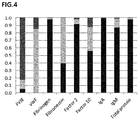
- the analysis showed that the removal of major impurities such as fibrinogen, fibronectin, FII and FX during the cold precipitation and centrifugation processes and the removal of IgA and IgM during the AEX process are important in determining quality.
- the analysis showed that some impurities remaining in the AEX primary eluate were removed through the CEX process, and the amounts of residual impurities according to the process of the present invention are shown in Table 2 below. As can be seen from the following table, the levels of impurities that may affect the safety of the purified product are equal to or higher than those of conventional products.
- Example 3 SDS-PAGE [non-reducing condition] analysis of process product obtained during each step
- the recovery rate of titer of FVIII in the AEX process step was determined. As can be seen from Table 3, the result of analysis of three batches showed that the FVIII titer recovery rate was 85% in the AEX process, and the discarded FVIII in the unadsorbed and washed liquids during the column process was about 15% of the load.
- the AEX eluate and the CEX eluate were mixed and concentrated, and then each sample was diluted in the same amount of a reducing loading buffer and a non-reducing loading buffer and loaded on a 4-12% Bis-Tris gel, and electrophoresis was performed at 120 V for 90 minutes. The result showed that a product with an improved vWF ratio could be obtained ( FIG. 5 ).
- HMWM high-molecular-weight multimer
- the vWF multimer pattern was found to be similar to that of normal plasma containing rich high-molecular-weight multimers ( FIG. 6 ). This means that the addition of purified vWF to low-ratio vWF:Rco/FVIII:C can yield products containing high-molecular-weight vWF multimers.
- Example 7 Purification of product having controlled mixing ratio of FVIII and vWF
- Concentrated FVIII and vWF coexist in the AEX eluate of Example 1, and vWF is present in the CEX eluate (see FIG. 3 , Lane 5 and Lane 9).
- the ratio of FVIII and vWF can be adjusted depending on the mixing ratio of AEX eluate and CEX eluate.
- Table 6 shows that the ratio of FVIII and vWF is adjusted according to the mixing ratio of the AEX eluate and the CEX eluate, and that there is almost no change in the content of the major impurities per unit of the titer of FVIII, even when the mixing ratio is adjusted.
- the present invention has an effect of preparing a composition comprising factor VIII (FVIII) and a varying content of von Willebrand factor (vWF) i) without increasing the amount of impurities other than the von Willebrand factor (vWF), compared to a separately purified product of factor VIII (FVIII), ii) without significantly increasing the processing time (within 3 hours) compared to a separate purification process of factor VIII (FVIII), and iii) without changing the yield of the factor VIII (FVIII).
- FVIII factor VIII
- vWF von Willebrand factor
Landscapes
- Chemical & Material Sciences (AREA)
- Health & Medical Sciences (AREA)
- Life Sciences & Earth Sciences (AREA)
- Analytical Chemistry (AREA)
- Organic Chemistry (AREA)
- Chemical Kinetics & Catalysis (AREA)
- Medicinal Chemistry (AREA)
- Proteomics, Peptides & Aminoacids (AREA)
- General Health & Medical Sciences (AREA)
- Molecular Biology (AREA)
- Biochemistry (AREA)
- Biophysics (AREA)
- Genetics & Genomics (AREA)
- Hematology (AREA)
- Gastroenterology & Hepatology (AREA)
- Zoology (AREA)
- Toxicology (AREA)
- Engineering & Computer Science (AREA)
- Bioinformatics & Cheminformatics (AREA)
- Immunology (AREA)
- Pharmacology & Pharmacy (AREA)
- Epidemiology (AREA)
- Animal Behavior & Ethology (AREA)
- Public Health (AREA)
- Veterinary Medicine (AREA)
- Medicines That Contain Protein Lipid Enzymes And Other Medicines (AREA)
- Peptides Or Proteins (AREA)
Applications Claiming Priority (2)
| Application Number | Priority Date | Filing Date | Title |
|---|---|---|---|
| KR20170141444 | 2017-10-27 | ||
| PCT/KR2018/012820 WO2019083319A2 (fr) | 2017-10-27 | 2018-10-26 | Procédé de préparation d'une composition contenant un facteur 8 capable de contrôler la teneur en facteur de von willebrand (vwf) et facteur de von willebrand |
Publications (4)
| Publication Number | Publication Date |
|---|---|
| EP3719034A2 true EP3719034A2 (fr) | 2020-10-07 |
| EP3719034A4 EP3719034A4 (fr) | 2021-07-28 |
| EP3719034C0 EP3719034C0 (fr) | 2025-01-01 |
| EP3719034B1 EP3719034B1 (fr) | 2025-01-01 |
Family
ID=66247284
Family Applications (1)
| Application Number | Title | Priority Date | Filing Date |
|---|---|---|---|
| EP18870991.9A Active EP3719034B1 (fr) | 2017-10-27 | 2018-10-26 | Procédé de préparation d'une composition contenant un facteur 8 capable de contrôler la teneur en facteur de von willebrand (vwf) |
Country Status (6)
| Country | Link |
|---|---|
| US (1) | US11608358B2 (fr) |
| EP (1) | EP3719034B1 (fr) |
| KR (1) | KR102388176B1 (fr) |
| CN (1) | CN111491949B (fr) |
| CA (1) | CA3079956C (fr) |
| WO (1) | WO2019083319A2 (fr) |
Families Citing this family (2)
| Publication number | Priority date | Publication date | Assignee | Title |
|---|---|---|---|---|
| US20220305089A1 (en) * | 2019-08-16 | 2022-09-29 | Octapharma Ag | Stabilizing buffer for factor viii and vwf |
| US11155310B2 (en) * | 2019-10-07 | 2021-10-26 | Honda Motor Co., Ltd. | Asymmetrical tailgate |
Family Cites Families (10)
| Publication number | Priority date | Publication date | Assignee | Title |
|---|---|---|---|---|
| US4361509A (en) | 1981-12-14 | 1982-11-30 | Scripps Clinic And Research Foundation | Ultrapurification of factor VIII using monoclonal antibodies |
| US4764369A (en) | 1983-07-14 | 1988-08-16 | New York Blood Center Inc. | Undenatured virus-free biologically active protein derivatives |
| IT1256622B (it) | 1992-12-04 | 1995-12-12 | Sclavo Spa | Processo per l'estrazione del complesso fattore viii-fattore von willebrand (fviii:c-fvw) da plasma umano totale. |
| JP3820307B2 (ja) | 1997-10-23 | 2006-09-13 | 保芦 将人 | 逆転写酵素阻害剤 |
| US6531577B1 (en) * | 1997-12-15 | 2003-03-11 | Hemasure Denmark A/S | von Willebrand factor (vWF)-containing preparation, process for preparing vWF-containing preparations, and use of such preparations |
| FR2920429B1 (fr) | 2007-08-30 | 2012-10-05 | Lfb Biotechnologies | Procede de purification du facteur viii et du facteur von willebrand |
| IT1396528B1 (it) | 2009-01-19 | 2012-12-14 | Kedrion Spa | Nuovo processo di purificazione altamente selettivo di due proteine plasmatiche: von willebrand factor (vwf) e fibronectina (fn). |
| WO2015021423A2 (fr) * | 2013-08-08 | 2015-02-12 | Biogen Idec Ma Inc. | Purification de molécules chimères du facteur viii |
| GB201506117D0 (en) | 2015-04-10 | 2015-05-27 | Ge Healthcare Bio Sciences Ab | Method for chromatography |
| CN105622746A (zh) * | 2016-02-04 | 2016-06-01 | 江西博雅生物制药股份有限公司 | 一种从冷沉淀提取凝血因子ⅷ的废料中提取人血管性血友病因子的制备工艺 |
-
2018
- 2018-10-26 EP EP18870991.9A patent/EP3719034B1/fr active Active
- 2018-10-26 CN CN201880075786.XA patent/CN111491949B/zh active Active
- 2018-10-26 US US16/758,386 patent/US11608358B2/en active Active
- 2018-10-26 CA CA3079956A patent/CA3079956C/fr active Active
- 2018-10-26 WO PCT/KR2018/012820 patent/WO2019083319A2/fr not_active Ceased
- 2018-10-26 KR KR1020207013083A patent/KR102388176B1/ko active Active
Also Published As
| Publication number | Publication date |
|---|---|
| EP3719034C0 (fr) | 2025-01-01 |
| WO2019083319A3 (fr) | 2019-06-20 |
| CA3079956A1 (fr) | 2019-05-02 |
| WO2019083319A2 (fr) | 2019-05-02 |
| EP3719034B1 (fr) | 2025-01-01 |
| CN111491949B (zh) | 2024-01-09 |
| US20200247843A1 (en) | 2020-08-06 |
| CN111491949A (zh) | 2020-08-04 |
| EP3719034A4 (fr) | 2021-07-28 |
| KR102388176B1 (ko) | 2022-04-19 |
| KR20200060504A (ko) | 2020-05-29 |
| US11608358B2 (en) | 2023-03-21 |
| CA3079956C (fr) | 2023-06-27 |
Similar Documents
| Publication | Publication Date | Title |
|---|---|---|
| RU2266914C2 (ru) | Способ получения igg | |
| KR101593265B1 (ko) | 혈장으로부터 IgG가 풍부한 조성물을 준비하는 방법 | |
| US5869617A (en) | High and low molecular weight fractions of von Willebrand Factor and preparations of same | |
| JP2002517516A (ja) | 静脈投与用免疫グロブリン及び他の免疫グロブリン生成物の製造法 | |
| SK279533B6 (sk) | Spôsob prípravy štandardizovaného vysoko čistého k | |
| JP7073333B2 (ja) | 免疫グロブリン組成物を調製するためのプロセス | |
| DK162896B (da) | Fremgangsmaade til oprensning af factor viii:c samt farmaceutisk praeparat indeholdende denne | |
| NO324659B1 (no) | Utvinning av von Willebrand-faktor ved kationebytterkromatografi samt preparat inneholdende slik faktor og anvendelse derav. | |
| US6579723B1 (en) | Method of recovering highly purified vWF or factor VIII/vWF-complex | |
| JP6165143B2 (ja) | 血漿由来の免疫グロブリン組成物の血栓塞栓症の可能性を軽減する方法 | |
| RU2649363C2 (ru) | СПОСОБЫ СНИЖЕНИЯ И/ИЛИ УДАЛЕНИЯ FXI и FXIa ИЗ РАСТВОРОВ, СОДЕРЖАЩИХ УКАЗАННЫЕ ФАКТОРЫ СВЕРТЫВАНИЯ | |
| EP3719034B1 (fr) | Procédé de préparation d'une composition contenant un facteur 8 capable de contrôler la teneur en facteur de von willebrand (vwf) | |
| US6307032B1 (en) | Highly purified factor VIII complex | |
| US7659247B2 (en) | Production of a von Willebrand factor preparation having a high specific activity | |
| US20220380439A1 (en) | Purification of fviii from plasma using silicon oxide adsorption | |
| US7939643B2 (en) | Production of a von Willebrand factor preparation using hydroxylapatite | |
| AU2024351533A1 (en) | IMMUNOGLOBULIN FORMULATIONS DEPLETED IN IgA | |
| HUE025551T2 (en) | A method of producing virus-inactivated FV concentrate starting from human plasma, which can be increased to industrial sizes | |
| EA051382B1 (ru) | Процесс получения композиций иммуноглобулинов |
Legal Events
| Date | Code | Title | Description |
|---|---|---|---|
| STAA | Information on the status of an ep patent application or granted ep patent |
Free format text: STATUS: THE INTERNATIONAL PUBLICATION HAS BEEN MADE |
|
| PUAI | Public reference made under article 153(3) epc to a published international application that has entered the european phase |
Free format text: ORIGINAL CODE: 0009012 |
|
| STAA | Information on the status of an ep patent application or granted ep patent |
Free format text: STATUS: REQUEST FOR EXAMINATION WAS MADE |
|
| PUAB | Information related to the publication of an a document modified or deleted |
Free format text: ORIGINAL CODE: 0009199EPPU |
|
| PUAI | Public reference made under article 153(3) epc to a published international application that has entered the european phase |
Free format text: ORIGINAL CODE: 0009012 |
|
| 17P | Request for examination filed |
Effective date: 20200514 |
|
| AK | Designated contracting states |
Kind code of ref document: A2 Designated state(s): AL AT BE BG CH CY CZ DE DK EE ES FI FR GB GR HR HU IE IS IT LI LT LU LV MC MK MT NL NO PL PT RO RS SE SI SK SM TR |
|
| AX | Request for extension of the european patent |
Extension state: BA ME |
|
| DAV | Request for validation of the european patent (deleted) | ||
| DAX | Request for extension of the european patent (deleted) | ||
| A4 | Supplementary search report drawn up and despatched |
Effective date: 20210625 |
|
| RIC1 | Information provided on ipc code assigned before grant |
Ipc: C07K 14/755 20060101AFI20210621BHEP Ipc: C07K 1/18 20060101ALI20210621BHEP Ipc: B01D 15/36 20060101ALI20210621BHEP Ipc: B01D 15/18 20060101ALI20210621BHEP Ipc: B01D 15/24 20060101ALI20210621BHEP |
|
| STAA | Information on the status of an ep patent application or granted ep patent |
Free format text: STATUS: EXAMINATION IS IN PROGRESS |
|
| 17Q | First examination report despatched |
Effective date: 20240118 |
|
| REG | Reference to a national code |
Ref country code: DE Ref legal event code: R079 Free format text: PREVIOUS MAIN CLASS: C07K0014755000 Ipc: B01D0015360000 Ref country code: DE Ref legal event code: R079 Ref document number: 602018078211 Country of ref document: DE Free format text: PREVIOUS MAIN CLASS: C07K0014755000 Ipc: B01D0015360000 |
|
| GRAP | Despatch of communication of intention to grant a patent |
Free format text: ORIGINAL CODE: EPIDOSNIGR1 |
|
| STAA | Information on the status of an ep patent application or granted ep patent |
Free format text: STATUS: GRANT OF PATENT IS INTENDED |
|
| INTG | Intention to grant announced |
Effective date: 20241008 |
|
| RIC1 | Information provided on ipc code assigned before grant |
Ipc: B01D 15/24 20060101ALI20240927BHEP Ipc: B01D 15/18 20060101ALI20240927BHEP Ipc: A61K 38/37 20060101ALI20240927BHEP Ipc: C07K 14/755 20060101ALI20240927BHEP Ipc: B01D 15/36 20060101AFI20240927BHEP |
|
| GRAS | Grant fee paid |
Free format text: ORIGINAL CODE: EPIDOSNIGR3 |
|
| GRAA | (expected) grant |
Free format text: ORIGINAL CODE: 0009210 |
|
| STAA | Information on the status of an ep patent application or granted ep patent |
Free format text: STATUS: THE PATENT HAS BEEN GRANTED |
|
| AK | Designated contracting states |
Kind code of ref document: B1 Designated state(s): AL AT BE BG CH CY CZ DE DK EE ES FI FR GB GR HR HU IE IS IT LI LT LU LV MC MK MT NL NO PL PT RO RS SE SI SK SM TR |
|
| REG | Reference to a national code |
Ref country code: GB Ref legal event code: FG4D |
|
| REG | Reference to a national code |
Ref country code: CH Ref legal event code: EP |
|
| REG | Reference to a national code |
Ref country code: DE Ref legal event code: R096 Ref document number: 602018078211 Country of ref document: DE |
|
| REG | Reference to a national code |
Ref country code: IE Ref legal event code: FG4D |
|
| U01 | Request for unitary effect filed |
Effective date: 20250110 |
|
| U07 | Unitary effect registered |
Designated state(s): AT BE BG DE DK EE FI FR IT LT LU LV MT NL PT RO SE SI Effective date: 20250117 |
|
| PG25 | Lapsed in a contracting state [announced via postgrant information from national office to epo] |
Ref country code: PL Free format text: LAPSE BECAUSE OF FAILURE TO SUBMIT A TRANSLATION OF THE DESCRIPTION OR TO PAY THE FEE WITHIN THE PRESCRIBED TIME-LIMIT Effective date: 20250101 |
|
| PG25 | Lapsed in a contracting state [announced via postgrant information from national office to epo] |
Ref country code: ES Free format text: LAPSE BECAUSE OF FAILURE TO SUBMIT A TRANSLATION OF THE DESCRIPTION OR TO PAY THE FEE WITHIN THE PRESCRIBED TIME-LIMIT Effective date: 20250101 |
|
| PG25 | Lapsed in a contracting state [announced via postgrant information from national office to epo] |
Ref country code: NO Free format text: LAPSE BECAUSE OF FAILURE TO SUBMIT A TRANSLATION OF THE DESCRIPTION OR TO PAY THE FEE WITHIN THE PRESCRIBED TIME-LIMIT Effective date: 20250401 Ref country code: IS Free format text: LAPSE BECAUSE OF FAILURE TO SUBMIT A TRANSLATION OF THE DESCRIPTION OR TO PAY THE FEE WITHIN THE PRESCRIBED TIME-LIMIT Effective date: 20250501 |
|
| PG25 | Lapsed in a contracting state [announced via postgrant information from national office to epo] |
Ref country code: HR Free format text: LAPSE BECAUSE OF FAILURE TO SUBMIT A TRANSLATION OF THE DESCRIPTION OR TO PAY THE FEE WITHIN THE PRESCRIBED TIME-LIMIT Effective date: 20250101 |
|
| PG25 | Lapsed in a contracting state [announced via postgrant information from national office to epo] |
Ref country code: GR Free format text: LAPSE BECAUSE OF FAILURE TO SUBMIT A TRANSLATION OF THE DESCRIPTION OR TO PAY THE FEE WITHIN THE PRESCRIBED TIME-LIMIT Effective date: 20250402 |
|
| PG25 | Lapsed in a contracting state [announced via postgrant information from national office to epo] |
Ref country code: CZ Free format text: LAPSE BECAUSE OF FAILURE TO SUBMIT A TRANSLATION OF THE DESCRIPTION OR TO PAY THE FEE WITHIN THE PRESCRIBED TIME-LIMIT Effective date: 20250101 |
|
| PG25 | Lapsed in a contracting state [announced via postgrant information from national office to epo] |
Ref country code: SM Free format text: LAPSE BECAUSE OF FAILURE TO SUBMIT A TRANSLATION OF THE DESCRIPTION OR TO PAY THE FEE WITHIN THE PRESCRIBED TIME-LIMIT Effective date: 20250101 |
|
| PG25 | Lapsed in a contracting state [announced via postgrant information from national office to epo] |
Ref country code: SK Free format text: LAPSE BECAUSE OF FAILURE TO SUBMIT A TRANSLATION OF THE DESCRIPTION OR TO PAY THE FEE WITHIN THE PRESCRIBED TIME-LIMIT Effective date: 20250101 |
|
| PLBE | No opposition filed within time limit |
Free format text: ORIGINAL CODE: 0009261 |
|
| STAA | Information on the status of an ep patent application or granted ep patent |
Free format text: STATUS: NO OPPOSITION FILED WITHIN TIME LIMIT |
|
| U20 | Renewal fee for the european patent with unitary effect paid |
Year of fee payment: 8 Effective date: 20251022 |
|
| 26N | No opposition filed |
Effective date: 20251002 |