EP3724523B1 - Dispositif de fixation, ensemble de fixation comprenant un tel dispositif et procede de fabrication d'un tel ensemble - Google Patents
Dispositif de fixation, ensemble de fixation comprenant un tel dispositif et procede de fabrication d'un tel ensemble Download PDFInfo
- Publication number
- EP3724523B1 EP3724523B1 EP18833919.6A EP18833919A EP3724523B1 EP 3724523 B1 EP3724523 B1 EP 3724523B1 EP 18833919 A EP18833919 A EP 18833919A EP 3724523 B1 EP3724523 B1 EP 3724523B1
- Authority
- EP
- European Patent Office
- Prior art keywords
- section
- support
- longitudinal axis
- angle
- assembly
- Prior art date
- Legal status (The legal status is an assumption and is not a legal conclusion. Google has not performed a legal analysis and makes no representation as to the accuracy of the status listed.)
- Active
Links
Images


Classifications
-
- F—MECHANICAL ENGINEERING; LIGHTING; HEATING; WEAPONS; BLASTING
- F16—ENGINEERING ELEMENTS AND UNITS; GENERAL MEASURES FOR PRODUCING AND MAINTAINING EFFECTIVE FUNCTIONING OF MACHINES OR INSTALLATIONS; THERMAL INSULATION IN GENERAL
- F16B—DEVICES FOR FASTENING OR SECURING CONSTRUCTIONAL ELEMENTS OR MACHINE PARTS TOGETHER, e.g. NAILS, BOLTS, CIRCLIPS, CLAMPS, CLIPS OR WEDGES; JOINTS OR JOINTING
- F16B37/00—Nuts or like thread-engaging members
- F16B37/04—Devices for fastening nuts to surfaces, e.g. sheets, plates
- F16B37/06—Devices for fastening nuts to surfaces, e.g. sheets, plates by means of welding or riveting
- F16B37/062—Devices for fastening nuts to surfaces, e.g. sheets, plates by means of welding or riveting by means of riveting
- F16B37/065—Devices for fastening nuts to surfaces, e.g. sheets, plates by means of welding or riveting by means of riveting by deforming the material of the nut
- F16B37/067—Devices for fastening nuts to surfaces, e.g. sheets, plates by means of welding or riveting by means of riveting by deforming the material of the nut the material of the nut being deformed by a threaded member generating axial movement of the threaded part of the nut, e.g. blind rivet type
-
- F—MECHANICAL ENGINEERING; LIGHTING; HEATING; WEAPONS; BLASTING
- F16—ENGINEERING ELEMENTS AND UNITS; GENERAL MEASURES FOR PRODUCING AND MAINTAINING EFFECTIVE FUNCTIONING OF MACHINES OR INSTALLATIONS; THERMAL INSULATION IN GENERAL
- F16B—DEVICES FOR FASTENING OR SECURING CONSTRUCTIONAL ELEMENTS OR MACHINE PARTS TOGETHER, e.g. NAILS, BOLTS, CIRCLIPS, CLAMPS, CLIPS OR WEDGES; JOINTS OR JOINTING
- F16B19/00—Bolts without screw-thread; Pins, including deformable elements; Rivets
- F16B19/04—Rivets; Spigots or the like fastened by riveting
- F16B19/06—Solid rivets made in one piece
-
- F—MECHANICAL ENGINEERING; LIGHTING; HEATING; WEAPONS; BLASTING
- F16—ENGINEERING ELEMENTS AND UNITS; GENERAL MEASURES FOR PRODUCING AND MAINTAINING EFFECTIVE FUNCTIONING OF MACHINES OR INSTALLATIONS; THERMAL INSULATION IN GENERAL
- F16B—DEVICES FOR FASTENING OR SECURING CONSTRUCTIONAL ELEMENTS OR MACHINE PARTS TOGETHER, e.g. NAILS, BOLTS, CIRCLIPS, CLAMPS, CLIPS OR WEDGES; JOINTS OR JOINTING
- F16B19/00—Bolts without screw-thread; Pins, including deformable elements; Rivets
- F16B19/04—Rivets; Spigots or the like fastened by riveting
- F16B19/08—Hollow rivets; Multi-part rivets
- F16B19/086—Self-piercing rivets
Definitions
- the invention relates to fixing devices, and more particularly to fixing devices suitable for supports made of composite material.
- composite material a material comprising a matrix made from a thermoplastic material, such as polyolefins, polyamides or polypropylenes, or from a thermosetting material, such as unsaturated polyesters, polyepoxides or polyurethanes.
- a composite material can comprise reinforcements made from a material distinct from the matrix, for example glass, carbon, aramid or other fibres, taken alone or in combination.
- a part is fixed on a support using an insert previously fixed on the support.
- An insert can be a nut, a rivet, a screw or a stud, or even an insert having a spacer function or a ball joint function.
- a nut is a threaded hollow element, that is to say which has an internal thread, intended to be fixed to a threaded part.
- a rivet is an assembly element of flat parts.
- a screw or stud is a threaded element, that is to say which has an external thread capable of receiving the internal thread of a part to be fixed to the support.
- An insert with a spacer function makes it possible to maintain a constant distance between the part and the support.
- An insert with a ball joint function comprises a spherical head in order, in particular, to provide a ball joint connection.
- inserts intended to be fixed on supports made of composite material must be suitable for resisting tensile and shearing forces in order to guarantee a good resistance of the mechanical connection between the support on which they are fixed and the part which one wishes to fix to the insert, that is to say to the support.
- inserts whose body is embedded in a thermoplastic or thermosetting resin.
- Some inserts comprise a body extending along a longitudinal axis, such as a barrel, and a base welded or crimped to one end of the body.
- the base has the shape of a circular or parallelepipedal plate.
- the base is also perforated, that is to say that several through circular orifices are formed in the base.
- the circular orifices are intended to allow reinforcement fibers and resin to penetrate so as to create gripping and reinforcement zones.
- These inserts have their base integrated into the support.
- the support is molded by injecting a resin on the insert so as to embed the base in the resin to mechanically fix the insert to the support when the resin hardens.
- resin is a fluid material that can harden under the effect of heat and which is made from polyester and glass fibers.
- these inserts require prior preparation for the assembly of the body and the base.
- the insert is made from a material other than resin, for example steel, good mechanical strength between the insert and the support is difficult to obtain. Indeed, the penetration of the resin into the circular orifices is random, and in this case the reinforcing fibers are not distributed sufficiently around the base. The insert is then poorly anchored within the molded support.
- a plate consisting of a composite material with fibrous reinforcements in a matrix consisting of a thermoplastic polymer, and a metal part comprising a mechanical interface to perform technical functions of the joint, such as a pivot connection or indexing angular.
- the metal part further comprises a plate comprising a plurality of cylindrical pins substantially perpendicular to the plate and which penetrate into the plate to bind the metal part to the plate.
- flanged holes can be made in the plate, and form coupling patterns which penetrate into the plate.
- the document EP2947336 discloses a blind nut with an internal thread.
- the blind nut includes a hollow tubular portion adjacent to the internal thread and a flange.
- a portion of the tubular part can be plastically deformed so as to increase its diameter, and fix the nut to a fastener.
- the part with the internal thread comprises a first straight part adjacent to the tubular part, a first conical portion whose external diameter gradually decreases from the first straight part as well as a second straight part whose external diameter is smaller than the first straight part, a second conical part with a progressive outer diameter decreasing from the first straight part, and a third straight part with a smaller outer diameter than the second straight part.
- the document FROM 10 2014 206787 discloses a semi-tubular punch rivet for joining parts without pre-drilling.
- the rivet includes a rivet head and an adjacent rivet shank.
- the rivet shank defines a concentric recess and a rivet base with a punched edge.
- the rivet foot has a larger outside diameter than the rest of the rivet shank.
- the document JP H10 61628 discloses an element having a hemispherical or trapezoidal head surmounted by a stem and terminated by a point.
- the tip has two portions each having a different angle with respect to the longitudinal axis.
- the tip is defined by a frustoconical portion and a conical portion.
- the document FR 2 734 143 discloses a pyrotechnic nailing box with a fixing nail having a conical tip followed by a frustoconical portion and a circular section
- An object of the invention consists in overcoming these drawbacks, and more particularly in providing a means for fixing an insert to a support made of composite material while guaranteeing good mechanical strength between the insert and the support, and more particularly a means for fixing the insert by drilling the support.
- a fixation device comprising a shaft extending along a longitudinal axis and a distal end comprising a first section adjacent to the shaft and having an inclined outer surface at a first angle relative to the longitudinal axis.
- the distal end comprises a second section adjacent to the first section and having an outer surface inclined at a second angle relative to the longitudinal axis, the respective outer surfaces of the first and second sections flaring out in the same direction and the first and second angles having different respective values.
- a fixing device is provided, one end of which is particularly suitable for fixing the fixing device to a support made of composite material by drilling the support.
- the end forms a convex or concave point which facilitates the drilling of the support.
- Such a fixing device can be used by piercing the support by a translation of the device and by exerting a sufficient pressure force. The need to rotate the device to perform the drilling is avoided.
- the first and second sections may have a tapered outer surface.
- the frustoconical outer surfaces of the first and second sections can widen in the direction of the barrel and the second angle is strictly greater than the first angle.
- the device comprises a proximal end opposite the distal end, the tapered outer surfaces of the first and second sections being able to widen in a direction opposite to the proximal end and the second angle being strictly less than the first angle.
- the barrel has an undercut section, wherein grooves extending along the longitudinal axis are formed on an outer surface of the undercut section.
- the grooves facilitate the insertion of the fixing device within a support made of composite material.
- the barrel is hollow and the release section has a thread located on an interior surface of the release section.
- the device may comprise a support head adjacent to the barrel and located opposite the distal end, the barrel comprising a crimping section extending between the support head and the release section and being deformable to forming a crimping bead, a separation section extending between the bearing head and the crimping section, and a shoulder formed between the separation section and the crimping section.
- the bearing head can extend radially with respect to the longitudinal axis and has a projecting length of the separation section that is less than a length of the separation section extending along the longitudinal axis.
- the device may be hollow in which a through hole is formed within the distal end.
- a fixing assembly comprising a support and a fixing device, as defined above, mounted on the support.
- a method of manufacturing a fastening assembly comprising a hole in the support of the assembly by introducing the fastening device of the assembly into the support.
- the bore may include heating of the support of the assembly.
- a fixing device 1, or insert comprising a shaft 2 and a distal end 3.
- the device 1 is intended to be mounted on a support 4 made of composite material, as illustrated in the figures 6 to 10 .
- the device 1 is particularly suitable for being introduced into such a support 4 by piercing the support 4.
- the shaft 2 extends along a longitudinal axis A.
- the distal end 3 is located at a termination of the barrel 2.
- the distal end 3 comprises a first section 5 adjacent to the barrel 2 and having an outer surface inclined at a first angle 6 with respect to the longitudinal axis A.
- the first angle 6 corresponds to the angular sector located between the outer surface of the first section 5 and the longitudinal axis A and which is visible from the outside of the fixing device 1. More precisely, the first angle 6 corresponds to the complementary angle adjacent to the angle between a straight line normal to the outer surface of the first section 5 and the longitudinal axis A.
- the distal end 3 comprises a second section 7 adjacent to the first section 5 and having an outer surface inclined at a second angle 8 with respect to the longitudinal axis A.
- the second angle 8 corresponds to the angular sector located between the outer surface of the second section 7 and the longitudinal axis A and which is visible from the outside of the fixing device 1.
- the second angle 8 corresponds to the complementary angle adjacent to the angle between a straight line normal to the outer surface of the second section 7 and the longitudinal axis A. More particularly, the respective outer surfaces of the first and second sections 5, 7 flare out in the same direction. The direction may correspond to the orientation of the barrel 2 towards the distal end 3, as illustrated in the figures 3, 3b and 4 , or the opposite orientation, as shown in the figures 1, 2 And 5 to 10 . Furthermore, the first and second angles 6, 8 have different respective values. Thus, a distal end 3 is obtained having two sections 5, 7 inclined differently to facilitate the drilling of a support 4 made of composite material by the device 1. For example, the first and second sections 5, 7 each have a frustoconical external surface , which facilitates the manufacture of the device 1. In addition, the shaft 2 has a proximal end 9 located opposite the distal end 3.
- the outer surfaces of the first and second sections 5, 7 are respectively frustoconical and widen in the direction of the shaft 2.
- the second angle 8 has a value strictly greater than that of the first angle 6.
- the first and second angles 6, 8 are acute.
- the first angle ⁇ has a value comprised between 30° and 45° and the second angle ⁇ has a value comprised between 50° and 55°.
- the inclination of the second section 7 makes it possible to bear on the support 4 without cutting the reinforcing fibers.
- the first section 5 makes it possible to separate the reinforcing fibers during the drilling of the support 4 by the device 1.
- the outer surfaces of the first and second sections 5, 7 are respectively tapered and flare in a direction opposite to the proximal end 9. Furthermore, the second angle 8 has a value strictly lower than that of the first angle 6. According to this second embodiment, the first and second angles 6, 8 are obtuse.
- the first angle ⁇ has a value comprised between 135° and 150° and the second angle ⁇ has a value comprised between 125° and 130°.
- the outer surfaces of the first and second sections 5, 7 are respectively frustoconical and conical and widen in a direction opposite to the proximal end 9.
- the first and second angles 6, 8 are obtuse.
- the barrel 2 may further comprise a clearance section 10.
- Grooves 11 extending along the longitudinal axis A are formed on an outer surface of the clearance section 10.
- the grooves 11 correspond to long notches open towards the outside of the device 1, that is to say that a bottom of a groove 11 is visible from the outside of the device 1.
- the grooves 11 have a section that is partly rectangular, or in the shape of a dovetail , or partly parallelepipedic, or partly spherical. In particular, the grooves 11 open out at the junction between the release section 10 and the distal end 3.
- External parts 12 of the outer surface of the release section 10 each located between two grooves 11 have a shape parallelepipedal.
- the outer portions 12 may be strip-like.
- the outer parts 12 have two edges 13, 14 extending along the longitudinal axis A.
- the grooves 11 promote the flow of the reinforcing fibers separated from the material of the support 4 during the introduction of the device 1 within of support 4, as shown in figure 7 .
- the grooves 11 also make it possible to increase the outer surface of the release section 10 in contact with the material of the support 4.
- the grooves 11 facilitate the introduction of the device 1 by limiting a discharge of material towards the front of the device 1, that is to say towards the distal end 3 of the device 1.
- the material of the support 4 located in front of the device 1 is pushed back radially by the distal end 3.
- the pushed back material is evacuated by the grooves 11 along the release section 10.
- the device 1 can also comprise a support head 16 adjacent to the barrel 2 and located at the level of the proximal end 9, that is to say located opposite the distal end 3
- the bearing head 16 extends radially with respect to the longitudinal axis A.
- the bearing head 16 extends along a transverse axis B perpendicular to the axis longitudinal a.
- the barrel 2 comprises a crimping section 17, deformable to form a crimping bead 18, during a crimping operation of the fastening device 1 on the support 4, as illustrated in figure 9 .
- the crimping section 17 extends between the support head 16 and the release section 10.
- the barrel 2 may include a separation section 19 extending between the support head 16 and the crimping section 17.
- the barrel 2 may include a shoulder 20 formed between the separation section 19 and the crimping section 17.
- the thickness of the separation section 19 is greater than that of the crimping section 17.
- the height of the separation section 19 is adapted to the thickness of the support 4, so that, when crimping the device 1, the support 4 is wedged between the support head 16 and the crimping bead 18, as illustrated in there figure 9 .
- the bearing head 16 forms a collar projecting from an outer surface of the separation section 19.
- the bearing head 16 has a projecting length of the separation section 19 less than a length of the separation section 19 s 'extending along the longitudinal axis A.
- the barrel 2 includes an anti-rotation section 30 extending between the first section 5 and the release section 10.
- the device 1 comprises an end section 31 located at its proximal end 9.
- the end section 31 extends from the support head 16 in the direction opposite to the release section 10.
- the end section 31 may include an external thread 32 and the device 1 is a screw or a stud.
- the barrel 2 is hollow.
- the release section 10 has an internal thread 15, as shown in the figures 6 to 9 , the device is then a nut.
- the internal thread 15 extends over part of an inner surface of the release section 10.
- the internal thread 15 extends only over the inner surface of the release section 10.
- the barrel 2 is hollow and the device 1 is blind, that is to say the second section 7 is closed.
- the second section 7 comprises an end surface 21 extending radially with respect to the longitudinal axis A, to close the second section 7.
- a straight line normal to the end surface 21 is parallel to the longitudinal axis A.
- the end surface 21 is flat, and in this case, it makes it possible to limit the ruptures of the reinforcing fibers of the support, compared to a conventional pointed end. In addition, it protects the users who manipulate the device 1, and prevents them from injuring themselves.
- the device 1 the shaft 2 is hollow and the device 1 is blind.
- the outer surfaces of the first and second sections 5, 7 flare in a direction opposite to the proximal end 9.
- the first section 5 is frustoconical and the second section 7 is conical, the apex of which is denoted by the reference 23
- the distal end 3 is pointed and located inside the shaft 2. The tip of the distal end 3 cannot injure a user who manipulates the device 1.
- the device 1 is hollow and a through hole 22 can be formed within the distal end 3.
- the through hole 22 is shaped to receive a pin 40 to pierce the support 4.
- the device 1 can be made in a single one-piece piece.
- the device 1 can be metallic or made of thermoplastic material.
- the fastening assembly 41 comprises the support 4 and the fastening device 1 mounted on the support 4.
- the fastening assembly 41 is intended to receive a part fixed to the device 1.
- the device 1 is placed opposite a first side of the support 4, ready to be introduced into the support 4.
- the support 4 may comprise a reinforcing plate 42 located on a second side opposite the first side.
- the support 4 is pierced with the device 1.
- a mold is used to control the pressure exerted on the support 4.
- the material of the support 4 is separated by the distal end 3 of the device 1, then the discarded material is evacuated by the grooves 11 of the clearance section 10.
- the device 1 is introduced into the support 4, until the support head 16 of the device 1 is in contact with the first side of the support 4, as shown on the figure 8 .
- the method can comprise heating the support 4 during the introduction of the fixing device 1 within the support 4, in order to facilitate the penetration of the device 1. Then, when the device 1 comprises a crimping section 17, the device 1 is crimped to the support 4, by deforming the crimping section 17 so as to create the crimping bead 18 and to wedge the support 4 between the bearing head 16 and the bead 18, as illustrated in the figure 9 .
- the crimping of the device 1 makes it possible to effectively fix the device 1 to the support 4, by increasing the resistance of the device 1 to tearing.
- FIG 10 another mode of implementation of the method of manufacturing the fixing assembly 41 has been shown.
- a pin 40 whether rotating or not, passes through the through-orifice 22 of the device 1.
- the pin 40 initiates the drilling of the support 4, and the distal end 3 of the device 1 comes into contact with the material of the support 4 separated by the pin 40.
- the end 3 participates in the drilling and also moves the material of the support 4.
- the fixing device which has just been described makes it possible to improve the mechanical strength of an insert with a support made of composite material.
- the insert is particularly suitable in the automotive, aeronautical and aerospace fields.
Landscapes
- Engineering & Computer Science (AREA)
- General Engineering & Computer Science (AREA)
- Mechanical Engineering (AREA)
- Connection Of Plates (AREA)
- Insertion Pins And Rivets (AREA)
- Joining Of Building Structures In Genera (AREA)
Description
- L'invention concerne les dispositifs de fixation, et plus particulièrement les dispositifs de fixation adaptés pour des supports en matériau composite.
- Actuellement, on a de plus en plus besoin de fixer des pièces sur des supports en matériau composite. On entend par matériau composite, un matériau comprenant une matrice réalisée à partir d'un matériau thermoplastique, tels que les polyoléfines, les polyamides ou les polypropylènes, ou d'un matériau thermodurcissable, tels que les polyesters insaturés, les polyépoxydes ou les polyuréthanes. Un matériau composite peut comprendre des renforts réalisés dans un matériau distinct de la matrice, par exemple des fibres de verre, de carbone, d'aramide, ou autres, pris seuls ou en combinaison. De manière générale, on fixe une pièce sur un support à l'aide d'un insert préalablement fixé sur le support. Un insert peut être un écrou, un rivet, une vis ou un goujon, ou encore un insert ayant une fonction entretoise ou une fonction rotule. Un écrou est un élément creux taraudé, c'est-à-dire qui comporte un filetage interne, destiné à être fixée à une pièce filetée. Un rivet est un élément d'assemblage de pièces plates. Une vis ou goujon est un élément fileté, c'est-à-dire qui comporte un filetage externe apte à recevoir le filetage interne d'une pièce à fixer au support. Un insert à fonction entretoise permet de maintenir un écartement constant entre la pièce et le support. Un insert à fonction rotule comporte une tête sphérique pour, notamment, offrir une liaison rotule.
- Ces inserts destinés à être fixés sur des supports en matériau composite doivent être adaptés pour résister à des forces de traction et de cisaillement afin de garantir une bonne tenue de la liaison mécanique entre le support sur lequel ils sont fixés et la pièce que l'on souhaite fixer à l'insert, c'est-à-dire au support.
- Il existe des inserts dont le corps est noyé dans une résine thermoplastique ou thermodurcissable. Certains inserts comportent un corps s'étendant le long d'un axe longitudinal, tel un fût, et une embase soudée ou sertie à une extrémité du corps. L'embase a une forme d'une plaque circulaire ou parallélépipédique. L'embase est en outre perforée, c'est-à-dire que plusieurs orifices circulaires traversants sont formés dans l'embase. Les orifices circulaires sont destinés à laisser pénétrer des fibres de renfort et de la résine de manière à créer des zones d'accroche et de renfort. Ces inserts ont leur embase intégrée dans le support. Le support est moulé en injectant une résine sur l'insert de manière à noyer l'embase dans la résine pour fixer mécaniquement l'insert au support lorsque la résine durcie. En général, la résine est un matériau fluide qui peut durcir sous l'effet de la chaleur et qui est réalisée à partir de polyester et de fibres de verre. Mais ces inserts nécessitent une préparation préalable pour l'assemblage du corps et de l'embase. En particulier, lorsque l'insert est réalisé à partir d'un matériau différent de la résine, par exemple en acier, une bonne tenue mécanique entre l'insert et le support est difficile à obtenir. En effet, la pénétration de la résine dans les orifices circulaires est aléatoire, et dans ce cas les fibres de renfort ne se répartissent pas suffisamment autour de l'embase. L'insert est alors mal ancré au sein du support moulé.
- On peut citer la demande de brevet français
FR3021899 - Mais ces inserts n'offrent pas une tenue mécanique suffisante avec le support. Si ces inserts sont performants en travail de couple et de cisaillement, ils n'offrent pas une tenue mécanique axiale suffisante avec le support si ce dernier est soumis à de forts efforts en flexion.
- On peut citer, par exemple, la demande de brevet français
FR3013253 - On peut en outre citer la demande de brevet français
FR3017316 - Le document
EP2947336 divulgue un écrou aveugle avec un filetage interne. L'écrou aveugle comprend une partie tubulaire creuse adjacente au filetage interne et une bride. - Une portion de la partie tubulaire peut être déformée plastiquement de manière à augmenter son diamètre, et fixer l'écrou à une pièce de fixation. La partie avec le filetage interne comprend une première partie droite adjacente à la partie tubulaire, une première portion conique dont le diamètre extérieur diminue progressivement à partir de la première partie droite ainsi qu'une deuxième partie droite dont le diamètre extérieur est inférieur à la première partie droite, une deuxième partie conique avec un diamètre extérieur progressif décroissant à partir de la première partie droite, et une troisième partie droite avec un diamètre extérieur plus petit que la deuxième partie droite.
- Le document
DE 10 2014 206787 divulgue un rivet poinçon semi-tubulaire pour l'assemblage de pièces sans pré-perçage. Le rivet comprend une tête de rivet et une tige de rivet adjacente. La tige du rivet définit un évidement concentrique et une base de rivet avec un bord poinçonné. Le pied du rivet a un diamètre extérieur plus grand que le reste de la tige du rivet. - Le document
JP H10 61628 FR 2 734 143 - Un objet de l'invention consiste à pallier ces inconvénients, et plus particulièrement à fournir un moyen pour fixer un insert sur un support en matériau composite en garantissant une bonne tenue mécanique entre l'insert et le support, et plus particulièrement un moyen pour fixer l'insert par perçage du support.
- Selon un aspect de l'invention, il est proposé un dispositif de fixation selon la revendication 1, comprenant un fût s'étendant le long d'un axe longitudinal et une extrémité distale comportant un premier tronçon adjacent au fût et ayant une surface extérieure inclinée selon un premier angle par rapport à l'axe longitudinal.
- L'extrémité distale comporte un deuxième tronçon adjacent au premier tronçon et ayant une surface extérieure inclinée selon un deuxième angle par rapport à l'axe longitudinal, les surfaces extérieures respectives des premier et deuxième tronçons s'évasant selon une même direction et les premier et deuxième angles ayant des valeurs respectives différentes.
- Ainsi, on fournit un dispositif de fixation dont une extrémité est particulièrement adaptée pour fixer le dispositif de fixation à un support en matériau composite par perçage du support. L'extrémité forme une pointe convexe ou concave qui facilite le perçage du support. Un tel dispositif de fixation peut être utilisé en perçant le support par une translation du dispositif et en exerçant une force de pression suffisante. On évite d'avoir à animer en rotation le dispositif pour effectuer le perçage.
- Les premier et deuxième tronçons peuvent avoir une surface extérieure tronconique.
- Selon un mode de réalisation, les surfaces extérieures tronconiques des premier et deuxième tronçons peuvent s'évaser en direction du fût et le deuxième angle est strictement supérieur au premier angle.
- Selon un mode de réalisation, le dispositif comporte une extrémité proximale opposée à l'extrémité distale, les surfaces extérieures tronconiques des premier et deuxième tronçons pouvant s'évaser selon une direction opposée à l'extrémité proximale et le deuxième angle étant strictement inférieur au premier angle.
- Le fût comporte un tronçon de dégagement, des rainures s'étendant le long de l'axe longitudinal étant formées sur une surface extérieure du tronçon de dégagement.
- Les rainures facilitent l'insertion du dispositif de fixation au sein d'un support en matériau composite.
- Le fût est creux et le tronçon de dégagement comporte un filetage situé sur une surface intérieure du tronçon de dégagement.
- Le dispositif peut comporter une tête d'appui adjacente au fût et située à l'opposé de l'extrémité distale, le fût comportant, un tronçon de sertissage s'étendant entre la tête d'appui et le tronçon de dégagement et étant déformable pour former un bourrelet de sertissage, un tronçon de séparation s'étendant entre la tête d'appui et le tronçon de sertissage, et un épaulement formé entre le tronçon de séparation et le tronçon de sertissage.
- La tête d'appui peut s'étendre radialement par rapport à l'axe longitudinal et a une longueur en saillie du tronçon de séparation inférieure à une longueur du tronçon de séparation s'étendant le long de l'axe longitudinal.
- Le dispositif peut être creux dans lequel un orifice traversant est formé au sein de l'extrémité distale.
- Selon un autre aspect, il est proposé un ensemble de fixation comprenant un support et un dispositif de fixation, tel que défini ci-avant, monté sur le support.
- Selon encore un autre aspect, il est proposé un procédé de fabrication d'un ensemble de fixation, tel que défini ci-avant, comprenant un perçage du support de l'ensemble par une introduction du dispositif de fixation de l'ensemble au sein du support.
- Le perçage peut comporter un chauffage du support de l'ensemble.
- D'autres avantages et caractéristiques ressortiront plus clairement de la description qui va suivre de modes particuliers de réalisation et de mise en oeuvre de l'invention donnés à titre d'exemples non limitatifs et représentés aux dessins annexés, dans lesquels :
- la
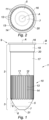
figure 1 , illustre schématiquement une vue latérale d'un mode de réalisation d'un dispositif de fixation selon l'invention ; - la
figure 2 , illustre schématiquement une vue de dessous du dispositif illustré à lafigure 1 ; - la
figure 3 , illustre de façon schématique une vue en coupe d'un autre mode de réalisation du dispositif de fixation ; - la
figure 3b , illustre schématiquement une vue en coupe d'encore un autre mode de réalisation du dispositif de fixation ; - la
figure 4 , illustre de façon schématique une vue en perspective du mode de réalisation du dispositif de fixation illustré à lafigure 3 ; - la
figure 5 , illustre schématiquement une vue latérale d'un exemple non couvert par le texte des revendications - les
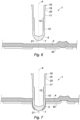
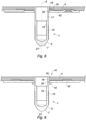
figures 6 à 9 , illustrent de façon schématique des vues en coupe des principales étapes d'un mode de mise en oeuvre d'un procédé de fabrication d'un ensemble de fixation ; et - la
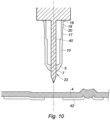
figure 10 , illustre schématiquement une vue en coupe d'un autre mode de mise en oeuvre du procédé de fabrication d'un ensemble de fixation. - Sur les
figures 1 à 10 , on a représenté un dispositif de fixation 1, ou insert, comprenant un fût 2 et une extrémité distale 3. Le dispositif 1 est destiné à être monté sur un support 4 en matériau composite, comme illustré sur lesfigures 6 à 10 . En outre, le dispositif 1 est particulièrement adapté pour être introduit au sein d'un tel support 4 par perçage du support 4. Le fût 2 s'étend le long d'un axe longitudinal A. L'extrémité distale 3 est située à une terminaison du fût 2. L'extrémité distale 3 comporte un premier tronçon 5 adjacent au fût 2 et ayant une surface extérieure inclinée selon un premier angle 6 par rapport à l'axe longitudinal A. Le premier angle 6 correspond au secteur angulaire situé entre la surface extérieure du premier tronçon 5 et l'axe longitudinal A et qui est visible depuis l'extérieur du dispositif de fixation 1. Plus précisément, le premier angle 6 correspond à l'angle complémentaire adjacent à l'angle entre une droite normale à la surface extérieure du premier tronçon 5 et l'axe longitudinal A. En outre, l'extrémité distale 3 comporte un deuxième tronçon 7 adjacent au premier tronçon 5 et ayant une surface extérieure inclinée selon un deuxième angle 8 par rapport à l'axe longitudinal A. Le deuxième angle 8 correspond au secteur angulaire situé entre la surface extérieure du deuxième tronçon 7 et l'axe longitudinal A et qui est visible depuis l'extérieur du dispositif de fixation 1. Plus précisément, le deuxième angle 8 correspond à l'angle complémentaire adjacent à l'angle entre une droite normale à la surface extérieure du deuxième tronçon 7 et l'axe longitudinal A. Plus particulièrement, les surfaces extérieures respectives des premier et deuxième tronçons 5, 7 s'évasent selon une même direction. La direction peut correspondre à l'orientation du fût 2 vers l'extrémité distale 3, comme illustré sur lesfigures 3, 3b et 4 , ou à l'orientation opposée, comme illustré sur lesfigures 1, 2 et5 à 10 . En outre, les premier et deuxième angles 6, 8 ont des valeurs respectives différentes. Ainsi, on obtient une extrémité distale 3 ayant deux tronçons 5, 7 inclinés différemment pour faciliter le perçage d'un support 4 en matériau composite par le dispositif 1. Par exemple, les premier et deuxième tronçons 5, 7 ont chacun une surface extérieure tronconique, ce qui facilite la fabrication du dispositif 1. En outre, le fût 2 comporte une extrémité proximale 9 située à l'opposé de l'extrémité distale 3. - Selon un premier mode de réalisation, illustré aux
figures 1 et 2 , les surfaces extérieures des premier et deuxième tronçons 5, 7 sont respectivement tronconiques et s'évasent en direction du fût 2. En outre, le deuxième angle 8 a une valeur strictement supérieure à celle du premier angle 6. Selon ce premier mode de réalisation, les premier et deuxième angles 6, 8 sont aigus. Avantageusement, le premier angle 6 a une valeur comprise entre 30° et 45° et le deuxième angle 8 a une valeur comprise entre 50° et 55°. L'inclinaison du deuxième tronçon 7 permet de prendre appui sur le support 4 sans couper les fibres de renfort. Le premier tronçon 5 permet d'écarter les fibres de renfort lors du perçage du support 4 par le dispositif 1. - Selon un deuxième mode de réalisation, illustré sur les
figures 3 et 4 , les surfaces extérieures des premier et deuxième tronçons 5, 7 sont respectivement tronconiques et s'évasent selon une direction opposée à l'extrémité proximale 9. Par ailleurs, le deuxième angle 8 a une valeur strictement inférieure à celle du premier angle 6. Selon ce deuxième mode de réalisation, les premier et deuxième angles 6, 8 sont obtus. Avantageusement, le premier angle 6 a une valeur comprise entre 135° et 150° et le deuxième angle 8 a une valeur comprise entre 125° et 130°. - Selon un troisième mode de réalisation, illustré sur la
figure 3b , les surfaces extérieures des premier et deuxième tronçons 5, 7 sont respectivement tronconique et conique et s'évasent selon une direction opposée à l'extrémité proximale 9. Les premier et deuxième angles 6, 8 sont obtus. - Le fût 2 peut en outre comporter un tronçon de dégagement 10. Des rainures 11 s'étendant le long de l'axe longitudinal A sont formées sur une surface extérieure du tronçon de dégagement 10. Les rainures 11 correspondent à des entailles longues ouvertes vers l'extérieur du dispositif 1, c'est-à-dire qu'un fond d'une rainure 11 est visible depuis l'extérieur du dispositif 1. Les rainures 11 ont une section en partie rectangulaire, ou en forme de queue d'aronde, ou en partie parallélépipédique, ou encore en partie sphérique. En particulier, les rainures 11 sont débouchantes au niveau de la jonction entre le tronçon de dégagement 10 et l'extrémité distale 3. Des parties externes 12 de la surface extérieure du tronçon de dégagement 10 situées, chacune, entre deux rainures 11 ont une forme parallélépipédique. Les parties externes 12 peuvent être semblables à des bandes. Les parties externes 12 présentent deux arêtes 13, 14 s'étendant le long de l'axe longitudinal A. Les rainures 11 favorisent l'écoulement des fibres de renfort écartées de la matière du support 4 lors de l'introduction du dispositif 1 au sein du support 4, comme illustré à la
figure 7 . Les rainures 11 permettent en outre d'augmenter la surface extérieure du tronçon de dégagement 10 en contact avec la matière du support 4. Les rainures 11 favorisent l'introduction du dispositif 1 en limitant un refoulement de matière vers l'avant du dispositif 1, c'est-à-dire vers l'extrémité distale 3 du dispositif 1. Par ailleurs, lors de l'introduction du dispositif 1 au sein du support 4, la matière du support 4 située en avant du dispositif 1 est repoussée radialement par l'extrémité distale 3. La matière repoussée est évacuée par les rainures 11 le long du tronçon de dégagement 10. - De manière générale, le dispositif 1 peut en outre comprendre une tête d'appui 16 adjacente au fût 2 et située au niveau de l'extrémité proximale 9, c'est-à-dire située à l'opposé de l'extrémité distale 3. Avantageusement, la tête d'appui 16 s'étend radialement par rapport à l'axe longitudinal A. En d'autres termes, la tête d'appui 16 s'étend le long d'un axe transverse B perpendiculaire à l'axe longitudinal A.
- Selon une variante, le fût 2 comporte un tronçon de sertissage 17, déformable pour former un bourrelet de sertissage 18, lors d'une opération de sertissage du dispositif de fixation 1 sur le support 4, comme illustré à la
figure 9 . Le tronçon de sertissage 17 s'étend entre la tête d'appui 16 et le tronçon de dégagement 10. - En outre, le fût 2 peut comporter un tronçon de séparation 19 s'étendant entre la tête d'appui 16 et le tronçon de sertissage 17. Par ailleurs, le fût 2 peut comporter un épaulement 20 formé entre le tronçon de séparation 19 et le tronçon de sertissage 17. Avantageusement, l'épaisseur du tronçon de séparation 19 est supérieure à celle du tronçon de sertissage 17. Ainsi, le tronçon de séparation 19 est moins facilement déformable que le tronçon de sertissage 17 et favorise le sertissage du dispositif 1. La hauteur du tronçon de séparation 19 est adaptée à l'épaisseur du support 4, de manière que, lors du sertissage du dispositif 1, le support 4 soit coincé entre la tête d'appui 16 et le bourrelet de sertissage 18, comme illustré sur la
figure 9 . - La tête d'appui 16 forme une collerette en saillie d'une surface externe du tronçon de séparation 19. Avantageusement, la tête d'appui 16 a une longueur en saillie du tronçon de séparation 19 inférieure à une longueur du tronçon de séparation 19 s'étendant le long de l'axe longitudinal A. Ainsi, on réduit la longueur radiale de la tête d'appui 16 pour éviter le tassement en surépaisseur des fibres de renfort qui pourraient s'accumuler autour du dispositif 1 lors de l'opération de perçage ou de perforation du support 4. Une surépaisseur des fibres de renfort serait défavorable à l'assemblage du dispositif 1 avec le support 4, car elle pourrait décaler la position du dispositif 1 par rapport à un axe perpendiculaire au support 4, ce qui pourrait nuire à un sertissage ultérieur du dispositif 1 au support 4.
- La
figure 5 illustre un exemple dont le dispositif 1 est plein, et dans ce cas il ne comporte pas un tronçon de sertissage 17. Selon ce mode de réalisation, le fût 2 comporte un tronçon anti-rotation 30 s'étendant entre le premier tronçon 5 et le tronçon de dégagement 10. En outre, le dispositif 1 comporte un tronçon d'extrémité 31 situé au niveau de son extrémité proximale 9. En d'autres termes le tronçon d'extrémité 31 s'étend depuis la tête d'appui 16 dans la direction opposée au tronçon de dégagement 10. En outre le tronçon d'extrémité 31 peut comporter un filetage externe 32 et le dispositif 1 est une vis ou un goujon. - Selon l'invention, le fût 2 est creux. Le tronçon de dégagement 10 comporte un filetage interne 15, comme illustré sur les
figures 6 à 9 , le dispositif est alors un écrou. Par exemple, le filetage interne 15 s'étend sur une partie d'une surface intérieure du tronçon de dégagement 10. Préférentiellement, le filetage interne 15 s'étend uniquement sur la surface intérieure du tronçon de dégagement 10. Préférentiellement, le fût 2 est creux et le dispositif 1 est borgne, c'est-à-dire que le deuxième tronçon 7 est fermé. Selon le premier mode de réalisation, illustré sur lesfigures 1, 2 ;5 à 9 , et selon le deuxième mode de réalisation, illustré sur lesfigures 3 et 4 , le deuxième tronçon 7 comporte une surface d'extrémité 21 s'étendant radialement par rapport à l'axe longitudinal A, pour fermer le deuxième tronçon 7. En d'autres termes, une droite normale à la surface d'extrémité 21 est parallèle à l'axe longitudinal A. Préférentiellement, la surface d'extrémité 21 est plane, et dans ce cas, elle permet de limiter les ruptures des fibres de renfort du support, par rapport à une extrémité pointue classique. En outre, elle protège les utilisateurs qui manipulent le dispositif 1, et les empêche de se blesser. - Selon le troisième mode de réalisation, illustré sur la
figure 3b , le dispositif 1 le fût 2 est creux et le dispositif 1 est borgne. Les surfaces extérieures des premier et deuxième tronçons 5, 7 s'évasent selon une direction opposée à l'extrémité proximale 9. En outre, le premier tronçon 5 est tronconique et le deuxième tronçon 7 est conique dont le sommet est noté par la référence 23. Dans ce cas, l'extrémité distale 3 est pointue et située à l'intérieure du fût 2. La pointe de l'extrémité distale 3 ne peut pas blesser un utilisateur qui manipule le dispositif 1. - Selon encore un autre mode de réalisation, illustré sur la
figure 10 , le dispositif 1 est creux et un orifice traversant 22 peut être formé au sein de l'extrémité distale 3. L'orifice traversant 22 est conformé pour recevoir une broche 40 pour percer le support 4. - Le dispositif 1 peut être réalisé en une seule pièce monobloc. Le dispositif 1 peut être métallique ou réalisé en matériau thermoplastique.
- Sur les
figures 6 à 9 , on a représenté les principales étapes d'un procédé de fabrication d'un ensemble de fixation 41. L'ensemble de fixation 41 comporte le support 4 et le dispositif de fixation 1 monté sur le support 4. L'ensemble de fixation 41 est destiné à recevoir une pièce fixée sur le dispositif 1. - Sur la
figure 6 , on place le dispositif 1 en regard d'un premier côté du support 4, prêt à être introduit au sein du support 4. Le support 4 peut comporter une plaque de renfort 42 située d'un deuxième côté opposé au premier côté. Sur lafigure 7 , on perce le support 4 avec le dispositif 1. De préférence on utilise un moule pour maîtriser la pression exercée sur le support 4. Lors du perçage, la matière du support 4 est écarté par l'extrémité distale 3 du dispositif 1, puis la matière écartée est évacuée par les rainures 11 du tronçon de dégagement 10. Le dispositif 1 est introduit au sein du support 4, jusqu'à ce que la tête d'appui 16 du dispositif 1 soit en contact avec le premier côté du support 4, comme illustré sur lafigure 8 . Avantageusement, le procédé peut comprendre un chauffage du support 4 lors de l'introduction du dispositif de fixation 1 au sein du support 4, afin de faciliter la pénétration du dispositif 1. Puis, lorsque le dispositif 1 comporte un tronçon de sertissage 17, on sertit le dispositif 1 au support 4, en déformant le tronçon de sertissage 17 de manière à créer le bourrelet de sertissage 18 et pour coincer le support 4 entre la tête d'appui 16 et le bourrelet 18, comme illustré sur lafigure 9 . Le sertissage du dispositif 1 permet de fixer efficacement le dispositif 1 au support 4, en augmentant la tenue du dispositif 1 à l'arrachement. - Sur la
figure 10 , on a représenté un autre mode de mise en oeuvre du procédé de fabrication de l'ensemble de fixation 41. Dans cet autre mode, une broche 40, animée ou non en rotation, passe à travers l'orifice traversant 22 du dispositif 1. La broche 40 initialise le perçage du support 4, et l'extrémité distale 3 du dispositif 1 vient en contact de la matière du support 4 écarté par la broche 40. L'extrémité 3 participe au perçage et écarte également la matière du support 4. - Le dispositif de fixation qui vient d'être décrit permet d'améliorer la tenue mécanique d'un insert avec un support en matériau composite. L'insert est particulièrement adapté dans le domaine de l'automobile, l'aéronautique et l'aérospatial.
Claims (10)
- Dispositif de fixation, comprenant un fût (2) s'étendant le long d'un axe longitudinal (A) et une extrémité distale (3) comportant un premier tronçon (5) adjacent au fût (2) et ayant une surface extérieure inclinée selon un premier angle (6) par rapport à l'axe longitudinal (A), dans lequel l'extrémité distale (3) comporte un deuxième tronçon (7) adjacent au premier tronçon (5) et ayant une surface extérieure inclinée selon un deuxième angle (8) par rapport à l'axe longitudinal (A), les surfaces extérieures respectives des premier et deuxième tronçons (5, 7) s'évasant selon une même direction et les premier et deuxième angles (6, 8) ayant des valeurs respectives différentes,
caractérisé en ce que le fût (2) comporte un tronçon de dégagement (10), des rainures (11) s'étendant le long de l'axe longitudinal (A) étant formées sur une surface extérieure du tronçon de dégagement (10) et en ce que le fût (2) est creux et le tronçon de dégagement (10) comporte un filetage (15) situé sur une surface intérieure du tronçon de dégagement (10). - Dispositif de fixation selon la revendication 1, dans lequel les premier et deuxième tronçons (5, 7) ont une surface extérieure tronconique.
- Dispositif de fixation selon la revendication 2, dans lequel les surfaces extérieures tronconiques des premier et deuxième tronçons (5, 7) s'évasent en direction du fût (2) et le deuxième angle (8) est strictement supérieur au premier angle (6).
- Dispositif de fixation selon la revendication 2, comportant une extrémité proximale (9) opposée à l'extrémité distale (3), les surfaces extérieures tronconiques des premier et deuxième tronçons (5, 7) s'évasant selon une direction opposée à l'extrémité proximale (9) et le deuxième angle (8) étant strictement inférieur au premier angle (6).
- Dispositif de fixation selon l'une quelconque des revendications 1 à 4, comportant une tête d'appui (16) adjacente au fût (2) et située à l'opposé de l'extrémité distale (3), le fût (2) comportant, un tronçon de sertissage (17) s'étendant entre la tête d'appui (16) et le tronçon de dégagement (10) et étant déformable pour former un bourrelet de sertissage (18), un tronçon de séparation (19) s'étendant entre la tête d'appui (16) et le tronçon de sertissage (17), et un épaulement (20) formé entre le tronçon de séparation (19) et le tronçon de sertissage (17).
- Dispositif de fixation selon la revendication 5, dans lequel la tête d'appui (16) s'étend radialement par rapport à l'axe longitudinal (A) et a une longueur en saillie du tronçon de séparation (19) inférieure à une longueur du tronçon de séparation (19) s'étendant le long de l'axe longitudinal (A).
- Dispositif de fixation selon l'une des revendications 1 à 6, dans lequel un orifice traversant (22) est formé au sein de l'extrémité distale (3).
- Ensemble de fixation comprenant un support (4) et un dispositif de fixation (1) selon l'une des revendications 1 à 7 monté sur le support (4).
- Procédé de fabrication d'un ensemble selon la revendication 8, comprenant un perçage du support (4) de l'ensemble par une introduction du dispositif de fixation (1) de l'ensemble au sein du support (4).
- Procédé selon la revendication 9, dans lequel le perçage comporte un chauffage du support (4) de l'ensemble.
Applications Claiming Priority (2)
| Application Number | Priority Date | Filing Date | Title |
|---|---|---|---|
| FR1761932A FR3076326B1 (fr) | 2017-12-11 | 2017-12-11 | Dispositif de fixation, ensemble de fixation comprenant un tel dispositif et procede de fabrication d’un tel ensemble |
| PCT/FR2018/053210 WO2019115935A1 (fr) | 2017-12-11 | 2018-12-11 | Dispositif de fixation, ensemble de fixation comprenant un tel dispositif et procede de fabrication d'un tel ensemble |
Publications (2)
| Publication Number | Publication Date |
|---|---|
| EP3724523A1 EP3724523A1 (fr) | 2020-10-21 |
| EP3724523B1 true EP3724523B1 (fr) | 2023-06-21 |
Family
ID=61132693
Family Applications (1)
| Application Number | Title | Priority Date | Filing Date |
|---|---|---|---|
| EP18833919.6A Active EP3724523B1 (fr) | 2017-12-11 | 2018-12-11 | Dispositif de fixation, ensemble de fixation comprenant un tel dispositif et procede de fabrication d'un tel ensemble |
Country Status (3)
| Country | Link |
|---|---|
| EP (1) | EP3724523B1 (fr) |
| FR (1) | FR3076326B1 (fr) |
| WO (1) | WO2019115935A1 (fr) |
Family Cites Families (5)
| Publication number | Priority date | Publication date | Assignee | Title |
|---|---|---|---|---|
| FR2374143A1 (fr) * | 1976-12-17 | 1978-07-13 | Alsetex | Dispositif pyrotechnique pour la fixation d'un objet sur une paroi, notamment metallique |
| JPH1061628A (ja) * | 1996-08-26 | 1998-03-06 | Hino Motors Ltd | リベット |
| US9514734B1 (en) | 2011-06-30 | 2016-12-06 | The United States Of America As Represented By The Administrator Of National Aeronautics And Space Administration | Acoustic liners for turbine engines |
| DE102014206787A1 (de) * | 2014-04-08 | 2015-10-08 | Volkswagen Aktiengesellschaft | Halbholstanzniet mit großem Stanzdurchmesser und Verfahren zur Herstellung eines Werkstückverbunds |
| JP6349609B2 (ja) * | 2014-05-22 | 2018-07-04 | ポップリベット・ファスナー株式会社 | ブラインドナット |
-
2017
- 2017-12-11 FR FR1761932A patent/FR3076326B1/fr active Active
-
2018
- 2018-12-11 EP EP18833919.6A patent/EP3724523B1/fr active Active
- 2018-12-11 WO PCT/FR2018/053210 patent/WO2019115935A1/fr not_active Ceased
Also Published As
| Publication number | Publication date |
|---|---|
| WO2019115935A1 (fr) | 2019-06-20 |
| FR3076326A1 (fr) | 2019-07-05 |
| FR3076326B1 (fr) | 2020-01-31 |
| EP3724523A1 (fr) | 2020-10-21 |
Similar Documents
| Publication | Publication Date | Title |
|---|---|---|
| EP0398403B1 (fr) | Organe de rivetage aveugle, procédé d'assemblage et assemblages obtenus | |
| EP2917969B1 (fr) | Dispositif de fixation d'une cosse de raccordement electrique sur un support | |
| EP2960531B1 (fr) | Pièce à sertir sur un support, dispositif comprenant une telle pièce et procédés de fabrication d'une telle pièce et d'un tel dispositif | |
| CA2987870A1 (fr) | Fixation installee d'un seul cote | |
| EP2552622B1 (fr) | Organe de rivetage et outil de pose adapté | |
| EP0512049B1 (fr) | Procede d'assemblage de materiaux et organe de rivetage pour sa mise en oeuvre | |
| FR2489902A1 (fr) | Element de liaison | |
| FR2529488A1 (fr) | Embrayage a friction monte par rivetage des ressorts a lames avec le plateau de pression, et procede de rivetage correspondant | |
| EP1941167B1 (fr) | Rivet aveugle et son procede d'enlevement | |
| WO2017072430A1 (fr) | Rivet auto-perceur a haute resistance mecanique a l'arrachement et au cisaillement | |
| FR2686130A1 (fr) | Dispositif de fixation a butee-guide axiale escamotable. | |
| EP3338988B1 (fr) | Insert destiné à être monté sur un support et ensemble de fixation comprenant un tel insert | |
| EP1958715B1 (fr) | Procédé d'assemblage d'au moins deux éléments par l'intermédiaire d'un rivet à sertir | |
| WO2019115935A1 (fr) | Dispositif de fixation, ensemble de fixation comprenant un tel dispositif et procede de fabrication d'un tel ensemble | |
| EP2657542B1 (fr) | Procédé de fixation d'un écrou à sertir sans tête sur un panneau sandwich | |
| EP2886883B1 (fr) | Composant de fixation et d'assemblage auto-perceur | |
| EP3440365B1 (fr) | Composant de fixation et procédé de fabrication d'une pièce composite avec ce composant | |
| FR2925627A1 (fr) | Dispositif de fixation et procede de serrage d'une piece. | |
| EP3089859B1 (fr) | Procede pour la fixation d'un element sur un pion | |
| FR2732417A1 (fr) | Piece d'insertion metallique pour thermoplastique, a tenue mecanique renforcee | |
| FR3058485A3 (fr) | Insert, dispositif de fixation comprenant un tel insert, et procedes de fabrication d'un tel dispositif | |
| EP1141652B1 (fr) | Dispositif et procede de fixation d'un systeme d'amor age sur un corps d'une grenade | |
| FR2565303A1 (fr) | Rivet compose a poser en aveugle avec cheville de sertissage s'ajustant automatiquement | |
| FR3014968A1 (fr) | Insert filete pour panneau sandwich | |
| FR2959431A1 (fr) | Dispositif d'assemblage a sertir |
Legal Events
| Date | Code | Title | Description |
|---|---|---|---|
| STAA | Information on the status of an ep patent application or granted ep patent |
Free format text: STATUS: UNKNOWN |
|
| STAA | Information on the status of an ep patent application or granted ep patent |
Free format text: STATUS: THE INTERNATIONAL PUBLICATION HAS BEEN MADE |
|
| PUAI | Public reference made under article 153(3) epc to a published international application that has entered the european phase |
Free format text: ORIGINAL CODE: 0009012 |
|
| STAA | Information on the status of an ep patent application or granted ep patent |
Free format text: STATUS: REQUEST FOR EXAMINATION WAS MADE |
|
| 17P | Request for examination filed |
Effective date: 20200611 |
|
| AK | Designated contracting states |
Kind code of ref document: A1 Designated state(s): AL AT BE BG CH CY CZ DE DK EE ES FI FR GB GR HR HU IE IS IT LI LT LU LV MC MK MT NL NO PL PT RO RS SE SI SK SM TR |
|
| AX | Request for extension of the european patent |
Extension state: BA ME |
|
| DAV | Request for validation of the european patent (deleted) | ||
| DAX | Request for extension of the european patent (deleted) | ||
| RAP3 | Party data changed (applicant data changed or rights of an application transferred) |
Owner name: BOLLHOFF OTALU |
|
| GRAP | Despatch of communication of intention to grant a patent |
Free format text: ORIGINAL CODE: EPIDOSNIGR1 |
|
| STAA | Information on the status of an ep patent application or granted ep patent |
Free format text: STATUS: GRANT OF PATENT IS INTENDED |
|
| INTG | Intention to grant announced |
Effective date: 20220912 |
|
| GRAJ | Information related to disapproval of communication of intention to grant by the applicant or resumption of examination proceedings by the epo deleted |
Free format text: ORIGINAL CODE: EPIDOSDIGR1 |
|
| STAA | Information on the status of an ep patent application or granted ep patent |
Free format text: STATUS: REQUEST FOR EXAMINATION WAS MADE |
|
| GRAS | Grant fee paid |
Free format text: ORIGINAL CODE: EPIDOSNIGR3 |
|
| STAA | Information on the status of an ep patent application or granted ep patent |
Free format text: STATUS: GRANT OF PATENT IS INTENDED |
|
| GRAP | Despatch of communication of intention to grant a patent |
Free format text: ORIGINAL CODE: EPIDOSNIGR1 |
|
| INTC | Intention to grant announced (deleted) | ||
| INTG | Intention to grant announced |
Effective date: 20230206 |
|
| GRAA | (expected) grant |
Free format text: ORIGINAL CODE: 0009210 |
|
| STAA | Information on the status of an ep patent application or granted ep patent |
Free format text: STATUS: THE PATENT HAS BEEN GRANTED |
|
| AK | Designated contracting states |
Kind code of ref document: B1 Designated state(s): AL AT BE BG CH CY CZ DE DK EE ES FI FR GB GR HR HU IE IS IT LI LT LU LV MC MK MT NL NO PL PT RO RS SE SI SK SM TR |
|
| REG | Reference to a national code |
Ref country code: CH Ref legal event code: EP |
|
| REG | Reference to a national code |
Ref country code: DE Ref legal event code: R096 Ref document number: 602018052202 Country of ref document: DE |
|
| REG | Reference to a national code |
Ref country code: AT Ref legal event code: REF Ref document number: 1581088 Country of ref document: AT Kind code of ref document: T Effective date: 20230715 |
|
| REG | Reference to a national code |
Ref country code: IE Ref legal event code: FG4D Free format text: LANGUAGE OF EP DOCUMENT: FRENCH |
|
| REG | Reference to a national code |
Ref country code: LT Ref legal event code: MG9D |
|
| REG | Reference to a national code |
Ref country code: NL Ref legal event code: MP Effective date: 20230621 |
|
| PG25 | Lapsed in a contracting state [announced via postgrant information from national office to epo] |
Ref country code: SE Free format text: LAPSE BECAUSE OF FAILURE TO SUBMIT A TRANSLATION OF THE DESCRIPTION OR TO PAY THE FEE WITHIN THE PRESCRIBED TIME-LIMIT Effective date: 20230621 Ref country code: NO Free format text: LAPSE BECAUSE OF FAILURE TO SUBMIT A TRANSLATION OF THE DESCRIPTION OR TO PAY THE FEE WITHIN THE PRESCRIBED TIME-LIMIT Effective date: 20230921 |
|
| REG | Reference to a national code |
Ref country code: AT Ref legal event code: MK05 Ref document number: 1581088 Country of ref document: AT Kind code of ref document: T Effective date: 20230621 |
|
| PG25 | Lapsed in a contracting state [announced via postgrant information from national office to epo] |
Ref country code: RS Free format text: LAPSE BECAUSE OF FAILURE TO SUBMIT A TRANSLATION OF THE DESCRIPTION OR TO PAY THE FEE WITHIN THE PRESCRIBED TIME-LIMIT Effective date: 20230621 Ref country code: NL Free format text: LAPSE BECAUSE OF FAILURE TO SUBMIT A TRANSLATION OF THE DESCRIPTION OR TO PAY THE FEE WITHIN THE PRESCRIBED TIME-LIMIT Effective date: 20230621 Ref country code: LV Free format text: LAPSE BECAUSE OF FAILURE TO SUBMIT A TRANSLATION OF THE DESCRIPTION OR TO PAY THE FEE WITHIN THE PRESCRIBED TIME-LIMIT Effective date: 20230621 Ref country code: LT Free format text: LAPSE BECAUSE OF FAILURE TO SUBMIT A TRANSLATION OF THE DESCRIPTION OR TO PAY THE FEE WITHIN THE PRESCRIBED TIME-LIMIT Effective date: 20230621 Ref country code: HR Free format text: LAPSE BECAUSE OF FAILURE TO SUBMIT A TRANSLATION OF THE DESCRIPTION OR TO PAY THE FEE WITHIN THE PRESCRIBED TIME-LIMIT Effective date: 20230621 Ref country code: GR Free format text: LAPSE BECAUSE OF FAILURE TO SUBMIT A TRANSLATION OF THE DESCRIPTION OR TO PAY THE FEE WITHIN THE PRESCRIBED TIME-LIMIT Effective date: 20230922 |
|
| PG25 | Lapsed in a contracting state [announced via postgrant information from national office to epo] |
Ref country code: FI Free format text: LAPSE BECAUSE OF FAILURE TO SUBMIT A TRANSLATION OF THE DESCRIPTION OR TO PAY THE FEE WITHIN THE PRESCRIBED TIME-LIMIT Effective date: 20230621 |
|
| PG25 | Lapsed in a contracting state [announced via postgrant information from national office to epo] |
Ref country code: SK Free format text: LAPSE BECAUSE OF FAILURE TO SUBMIT A TRANSLATION OF THE DESCRIPTION OR TO PAY THE FEE WITHIN THE PRESCRIBED TIME-LIMIT Effective date: 20230621 |
|
| PG25 | Lapsed in a contracting state [announced via postgrant information from national office to epo] |
Ref country code: ES Free format text: LAPSE BECAUSE OF FAILURE TO SUBMIT A TRANSLATION OF THE DESCRIPTION OR TO PAY THE FEE WITHIN THE PRESCRIBED TIME-LIMIT Effective date: 20230621 |
|
| PG25 | Lapsed in a contracting state [announced via postgrant information from national office to epo] |
Ref country code: IS Free format text: LAPSE BECAUSE OF FAILURE TO SUBMIT A TRANSLATION OF THE DESCRIPTION OR TO PAY THE FEE WITHIN THE PRESCRIBED TIME-LIMIT Effective date: 20231021 |
|
| PG25 | Lapsed in a contracting state [announced via postgrant information from national office to epo] |
Ref country code: SM Free format text: LAPSE BECAUSE OF FAILURE TO SUBMIT A TRANSLATION OF THE DESCRIPTION OR TO PAY THE FEE WITHIN THE PRESCRIBED TIME-LIMIT Effective date: 20230621 Ref country code: SK Free format text: LAPSE BECAUSE OF FAILURE TO SUBMIT A TRANSLATION OF THE DESCRIPTION OR TO PAY THE FEE WITHIN THE PRESCRIBED TIME-LIMIT Effective date: 20230621 Ref country code: RO Free format text: LAPSE BECAUSE OF FAILURE TO SUBMIT A TRANSLATION OF THE DESCRIPTION OR TO PAY THE FEE WITHIN THE PRESCRIBED TIME-LIMIT Effective date: 20230621 Ref country code: PT Free format text: LAPSE BECAUSE OF FAILURE TO SUBMIT A TRANSLATION OF THE DESCRIPTION OR TO PAY THE FEE WITHIN THE PRESCRIBED TIME-LIMIT Effective date: 20231023 Ref country code: IS Free format text: LAPSE BECAUSE OF FAILURE TO SUBMIT A TRANSLATION OF THE DESCRIPTION OR TO PAY THE FEE WITHIN THE PRESCRIBED TIME-LIMIT Effective date: 20231021 Ref country code: ES Free format text: LAPSE BECAUSE OF FAILURE TO SUBMIT A TRANSLATION OF THE DESCRIPTION OR TO PAY THE FEE WITHIN THE PRESCRIBED TIME-LIMIT Effective date: 20230621 Ref country code: EE Free format text: LAPSE BECAUSE OF FAILURE TO SUBMIT A TRANSLATION OF THE DESCRIPTION OR TO PAY THE FEE WITHIN THE PRESCRIBED TIME-LIMIT Effective date: 20230621 Ref country code: CZ Free format text: LAPSE BECAUSE OF FAILURE TO SUBMIT A TRANSLATION OF THE DESCRIPTION OR TO PAY THE FEE WITHIN THE PRESCRIBED TIME-LIMIT Effective date: 20230621 Ref country code: AT Free format text: LAPSE BECAUSE OF FAILURE TO SUBMIT A TRANSLATION OF THE DESCRIPTION OR TO PAY THE FEE WITHIN THE PRESCRIBED TIME-LIMIT Effective date: 20230621 |
|
| PG25 | Lapsed in a contracting state [announced via postgrant information from national office to epo] |
Ref country code: PL Free format text: LAPSE BECAUSE OF FAILURE TO SUBMIT A TRANSLATION OF THE DESCRIPTION OR TO PAY THE FEE WITHIN THE PRESCRIBED TIME-LIMIT Effective date: 20230621 |
|
| REG | Reference to a national code |
Ref country code: DE Ref legal event code: R097 Ref document number: 602018052202 Country of ref document: DE |
|
| PLBE | No opposition filed within time limit |
Free format text: ORIGINAL CODE: 0009261 |
|
| STAA | Information on the status of an ep patent application or granted ep patent |
Free format text: STATUS: NO OPPOSITION FILED WITHIN TIME LIMIT |
|
| PG25 | Lapsed in a contracting state [announced via postgrant information from national office to epo] |
Ref country code: DK Free format text: LAPSE BECAUSE OF FAILURE TO SUBMIT A TRANSLATION OF THE DESCRIPTION OR TO PAY THE FEE WITHIN THE PRESCRIBED TIME-LIMIT Effective date: 20230621 |
|
| PG25 | Lapsed in a contracting state [announced via postgrant information from national office to epo] |
Ref country code: SI Free format text: LAPSE BECAUSE OF FAILURE TO SUBMIT A TRANSLATION OF THE DESCRIPTION OR TO PAY THE FEE WITHIN THE PRESCRIBED TIME-LIMIT Effective date: 20230621 |
|
| 26N | No opposition filed |
Effective date: 20240322 |
|
| PG25 | Lapsed in a contracting state [announced via postgrant information from national office to epo] |
Ref country code: SI Free format text: LAPSE BECAUSE OF FAILURE TO SUBMIT A TRANSLATION OF THE DESCRIPTION OR TO PAY THE FEE WITHIN THE PRESCRIBED TIME-LIMIT Effective date: 20230621 Ref country code: IT Free format text: LAPSE BECAUSE OF FAILURE TO SUBMIT A TRANSLATION OF THE DESCRIPTION OR TO PAY THE FEE WITHIN THE PRESCRIBED TIME-LIMIT Effective date: 20230621 |
|
| REG | Reference to a national code |
Ref country code: CH Ref legal event code: PL |
|
| PG25 | Lapsed in a contracting state [announced via postgrant information from national office to epo] |
Ref country code: LU Free format text: LAPSE BECAUSE OF NON-PAYMENT OF DUE FEES Effective date: 20231211 |
|
| PG25 | Lapsed in a contracting state [announced via postgrant information from national office to epo] |
Ref country code: MC Free format text: LAPSE BECAUSE OF FAILURE TO SUBMIT A TRANSLATION OF THE DESCRIPTION OR TO PAY THE FEE WITHIN THE PRESCRIBED TIME-LIMIT Effective date: 20230621 |
|
| GBPC | Gb: european patent ceased through non-payment of renewal fee |
Effective date: 20231211 |
|
| REG | Reference to a national code |
Ref country code: BE Ref legal event code: MM Effective date: 20231231 |
|
| PG25 | Lapsed in a contracting state [announced via postgrant information from national office to epo] |
Ref country code: MC Free format text: LAPSE BECAUSE OF FAILURE TO SUBMIT A TRANSLATION OF THE DESCRIPTION OR TO PAY THE FEE WITHIN THE PRESCRIBED TIME-LIMIT Effective date: 20230621 Ref country code: LU Free format text: LAPSE BECAUSE OF NON-PAYMENT OF DUE FEES Effective date: 20231211 |
|
| REG | Reference to a national code |
Ref country code: IE Ref legal event code: MM4A |
|
| PG25 | Lapsed in a contracting state [announced via postgrant information from national office to epo] |
Ref country code: IE Free format text: LAPSE BECAUSE OF NON-PAYMENT OF DUE FEES Effective date: 20231211 |
|
| PG25 | Lapsed in a contracting state [announced via postgrant information from national office to epo] |
Ref country code: GB Free format text: LAPSE BECAUSE OF NON-PAYMENT OF DUE FEES Effective date: 20231211 |
|
| PG25 | Lapsed in a contracting state [announced via postgrant information from national office to epo] |
Ref country code: BE Free format text: LAPSE BECAUSE OF NON-PAYMENT OF DUE FEES Effective date: 20231231 |
|
| PG25 | Lapsed in a contracting state [announced via postgrant information from national office to epo] |
Ref country code: CH Free format text: LAPSE BECAUSE OF NON-PAYMENT OF DUE FEES Effective date: 20231231 |
|
| PG25 | Lapsed in a contracting state [announced via postgrant information from national office to epo] |
Ref country code: IE Free format text: LAPSE BECAUSE OF NON-PAYMENT OF DUE FEES Effective date: 20231211 Ref country code: GB Free format text: LAPSE BECAUSE OF NON-PAYMENT OF DUE FEES Effective date: 20231211 Ref country code: CH Free format text: LAPSE BECAUSE OF NON-PAYMENT OF DUE FEES Effective date: 20231231 Ref country code: BE Free format text: LAPSE BECAUSE OF NON-PAYMENT OF DUE FEES Effective date: 20231231 |
|
| PG25 | Lapsed in a contracting state [announced via postgrant information from national office to epo] |
Ref country code: BG Free format text: LAPSE BECAUSE OF FAILURE TO SUBMIT A TRANSLATION OF THE DESCRIPTION OR TO PAY THE FEE WITHIN THE PRESCRIBED TIME-LIMIT Effective date: 20230621 |
|
| PG25 | Lapsed in a contracting state [announced via postgrant information from national office to epo] |
Ref country code: BG Free format text: LAPSE BECAUSE OF FAILURE TO SUBMIT A TRANSLATION OF THE DESCRIPTION OR TO PAY THE FEE WITHIN THE PRESCRIBED TIME-LIMIT Effective date: 20230621 |
|
| PG25 | Lapsed in a contracting state [announced via postgrant information from national office to epo] |
Ref country code: CY Free format text: LAPSE BECAUSE OF FAILURE TO SUBMIT A TRANSLATION OF THE DESCRIPTION OR TO PAY THE FEE WITHIN THE PRESCRIBED TIME-LIMIT; INVALID AB INITIO Effective date: 20181211 |
|
| PG25 | Lapsed in a contracting state [announced via postgrant information from national office to epo] |
Ref country code: HU Free format text: LAPSE BECAUSE OF FAILURE TO SUBMIT A TRANSLATION OF THE DESCRIPTION OR TO PAY THE FEE WITHIN THE PRESCRIBED TIME-LIMIT; INVALID AB INITIO Effective date: 20181211 |
|
| PG25 | Lapsed in a contracting state [announced via postgrant information from national office to epo] |
Ref country code: TR Free format text: LAPSE BECAUSE OF FAILURE TO SUBMIT A TRANSLATION OF THE DESCRIPTION OR TO PAY THE FEE WITHIN THE PRESCRIBED TIME-LIMIT Effective date: 20230621 |
|
| PGFP | Annual fee paid to national office [announced via postgrant information from national office to epo] |
Ref country code: DE Payment date: 20251222 Year of fee payment: 8 |
|
| PGFP | Annual fee paid to national office [announced via postgrant information from national office to epo] |
Ref country code: FR Payment date: 20251219 Year of fee payment: 8 |