EP3725362B1 - Dispositif implantable pour la stimulation d'un coeur humain ou animal - Google Patents
Dispositif implantable pour la stimulation d'un coeur humain ou animal Download PDFInfo
- Publication number
- EP3725362B1 EP3725362B1 EP20165103.1A EP20165103A EP3725362B1 EP 3725362 B1 EP3725362 B1 EP 3725362B1 EP 20165103 A EP20165103 A EP 20165103A EP 3725362 B1 EP3725362 B1 EP 3725362B1
- Authority
- EP
- European Patent Office
- Prior art keywords
- stimulation
- treatment
- atrial
- ventricular
- heart
- Prior art date
- Legal status (The legal status is an assumption and is not a legal conclusion. Google has not performed a legal analysis and makes no representation as to the accuracy of the status listed.)
- Active
Links
Images



Classifications
-
- A—HUMAN NECESSITIES
- A61—MEDICAL OR VETERINARY SCIENCE; HYGIENE
- A61N—ELECTROTHERAPY; MAGNETOTHERAPY; RADIATION THERAPY; ULTRASOUND THERAPY
- A61N1/00—Electrotherapy; Circuits therefor
- A61N1/18—Applying electric currents by contact electrodes
- A61N1/32—Applying electric currents by contact electrodes alternating or intermittent currents
- A61N1/36—Applying electric currents by contact electrodes alternating or intermittent currents for stimulation
- A61N1/362—Heart stimulators
-
- A—HUMAN NECESSITIES
- A61—MEDICAL OR VETERINARY SCIENCE; HYGIENE
- A61N—ELECTROTHERAPY; MAGNETOTHERAPY; RADIATION THERAPY; ULTRASOUND THERAPY
- A61N1/00—Electrotherapy; Circuits therefor
- A61N1/18—Applying electric currents by contact electrodes
- A61N1/32—Applying electric currents by contact electrodes alternating or intermittent currents
- A61N1/38—Applying electric currents by contact electrodes alternating or intermittent currents for producing shock effects
- A61N1/39—Heart defibrillators
- A61N1/3956—Implantable devices for applying electric shocks to the heart, e.g. for cardioversion
- A61N1/3962—Implantable devices for applying electric shocks to the heart, e.g. for cardioversion in combination with another heart therapy
- A61N1/39622—Pacing therapy
-
- A—HUMAN NECESSITIES
- A61—MEDICAL OR VETERINARY SCIENCE; HYGIENE
- A61N—ELECTROTHERAPY; MAGNETOTHERAPY; RADIATION THERAPY; ULTRASOUND THERAPY
- A61N1/00—Electrotherapy; Circuits therefor
- A61N1/02—Details
- A61N1/025—Digital circuitry features of electrotherapy devices, e.g. memory, clocks, processors
-
- A—HUMAN NECESSITIES
- A61—MEDICAL OR VETERINARY SCIENCE; HYGIENE
- A61N—ELECTROTHERAPY; MAGNETOTHERAPY; RADIATION THERAPY; ULTRASOUND THERAPY
- A61N1/00—Electrotherapy; Circuits therefor
- A61N1/18—Applying electric currents by contact electrodes
- A61N1/32—Applying electric currents by contact electrodes alternating or intermittent currents
- A61N1/36—Applying electric currents by contact electrodes alternating or intermittent currents for stimulation
- A61N1/362—Heart stimulators
- A61N1/3621—Heart stimulators for treating or preventing abnormally high heart rate
- A61N1/3622—Heart stimulators for treating or preventing abnormally high heart rate comprising two or more electrodes co-operating with different heart regions
-
- A—HUMAN NECESSITIES
- A61—MEDICAL OR VETERINARY SCIENCE; HYGIENE
- A61N—ELECTROTHERAPY; MAGNETOTHERAPY; RADIATION THERAPY; ULTRASOUND THERAPY
- A61N1/00—Electrotherapy; Circuits therefor
- A61N1/18—Applying electric currents by contact electrodes
- A61N1/32—Applying electric currents by contact electrodes alternating or intermittent currents
- A61N1/36—Applying electric currents by contact electrodes alternating or intermittent currents for stimulation
- A61N1/362—Heart stimulators
- A61N1/3621—Heart stimulators for treating or preventing abnormally high heart rate
- A61N1/3624—Heart stimulators for treating or preventing abnormally high heart rate occurring in the atrium, i.e. atrial tachycardia
-
- A—HUMAN NECESSITIES
- A61—MEDICAL OR VETERINARY SCIENCE; HYGIENE
- A61N—ELECTROTHERAPY; MAGNETOTHERAPY; RADIATION THERAPY; ULTRASOUND THERAPY
- A61N1/00—Electrotherapy; Circuits therefor
- A61N1/18—Applying electric currents by contact electrodes
- A61N1/32—Applying electric currents by contact electrodes alternating or intermittent currents
- A61N1/36—Applying electric currents by contact electrodes alternating or intermittent currents for stimulation
- A61N1/362—Heart stimulators
- A61N1/365—Heart stimulators controlled by a physiological parameter, e.g. heart potential
- A61N1/36507—Heart stimulators controlled by a physiological parameter, e.g. heart potential controlled by gradient or slope of the heart potential
-
- A—HUMAN NECESSITIES
- A61—MEDICAL OR VETERINARY SCIENCE; HYGIENE
- A61N—ELECTROTHERAPY; MAGNETOTHERAPY; RADIATION THERAPY; ULTRASOUND THERAPY
- A61N1/00—Electrotherapy; Circuits therefor
- A61N1/18—Applying electric currents by contact electrodes
- A61N1/32—Applying electric currents by contact electrodes alternating or intermittent currents
- A61N1/36—Applying electric currents by contact electrodes alternating or intermittent currents for stimulation
- A61N1/362—Heart stimulators
- A61N1/365—Heart stimulators controlled by a physiological parameter, e.g. heart potential
- A61N1/36592—Heart stimulators controlled by a physiological parameter, e.g. heart potential controlled by the heart rate variability
-
- A—HUMAN NECESSITIES
- A61—MEDICAL OR VETERINARY SCIENCE; HYGIENE
- A61N—ELECTROTHERAPY; MAGNETOTHERAPY; RADIATION THERAPY; ULTRASOUND THERAPY
- A61N1/00—Electrotherapy; Circuits therefor
- A61N1/18—Applying electric currents by contact electrodes
- A61N1/32—Applying electric currents by contact electrodes alternating or intermittent currents
- A61N1/36—Applying electric currents by contact electrodes alternating or intermittent currents for stimulation
- A61N1/362—Heart stimulators
- A61N1/37—Monitoring; Protecting
- A61N1/371—Capture, i.e. successful stimulation
-
- A—HUMAN NECESSITIES
- A61—MEDICAL OR VETERINARY SCIENCE; HYGIENE
- A61N—ELECTROTHERAPY; MAGNETOTHERAPY; RADIATION THERAPY; ULTRASOUND THERAPY
- A61N5/00—Radiation therapy
- A61N5/06—Radiation therapy using light
- A61N5/0601—Apparatus for use inside the body
-
- A—HUMAN NECESSITIES
- A61—MEDICAL OR VETERINARY SCIENCE; HYGIENE
- A61N—ELECTROTHERAPY; MAGNETOTHERAPY; RADIATION THERAPY; ULTRASOUND THERAPY
- A61N5/00—Radiation therapy
- A61N5/06—Radiation therapy using light
- A61N5/0613—Apparatus adapted for a specific treatment
-
- A—HUMAN NECESSITIES
- A61—MEDICAL OR VETERINARY SCIENCE; HYGIENE
- A61D—VETERINARY INSTRUMENTS, IMPLEMENTS, TOOLS, OR METHODS
- A61D99/00—Subject matter not provided for in other groups of this subclass
-
- A—HUMAN NECESSITIES
- A61—MEDICAL OR VETERINARY SCIENCE; HYGIENE
- A61N—ELECTROTHERAPY; MAGNETOTHERAPY; RADIATION THERAPY; ULTRASOUND THERAPY
- A61N1/00—Electrotherapy; Circuits therefor
- A61N1/18—Applying electric currents by contact electrodes
- A61N1/32—Applying electric currents by contact electrodes alternating or intermittent currents
- A61N1/36—Applying electric currents by contact electrodes alternating or intermittent currents for stimulation
- A61N1/362—Heart stimulators
- A61N1/365—Heart stimulators controlled by a physiological parameter, e.g. heart potential
- A61N1/368—Heart stimulators controlled by a physiological parameter, e.g. heart potential comprising more than one electrode co-operating with different heart regions
- A61N1/3682—Heart stimulators controlled by a physiological parameter, e.g. heart potential comprising more than one electrode co-operating with different heart regions with a variable atrioventricular delay
-
- A—HUMAN NECESSITIES
- A61—MEDICAL OR VETERINARY SCIENCE; HYGIENE
- A61N—ELECTROTHERAPY; MAGNETOTHERAPY; RADIATION THERAPY; ULTRASOUND THERAPY
- A61N1/00—Electrotherapy; Circuits therefor
- A61N1/18—Applying electric currents by contact electrodes
- A61N1/32—Applying electric currents by contact electrodes alternating or intermittent currents
- A61N1/38—Applying electric currents by contact electrodes alternating or intermittent currents for producing shock effects
- A61N1/39—Heart defibrillators
- A61N1/395—Heart defibrillators for treating atrial fibrillation
-
- A—HUMAN NECESSITIES
- A61—MEDICAL OR VETERINARY SCIENCE; HYGIENE
- A61N—ELECTROTHERAPY; MAGNETOTHERAPY; RADIATION THERAPY; ULTRASOUND THERAPY
- A61N5/00—Radiation therapy
- A61N5/06—Radiation therapy using light
- A61N2005/0626—Monitoring, verifying, controlling systems and methods
Definitions
- the present invention relates to an implantable arrangement for stimulating a human or animal heart according to the preamble of claim 1 and a computer program product suitable for control according to the preamble of claim 12.
- Implantable arrangements for stimulating a human or animal heart have been known for a long time. They can perform different functions. Among other things, it is known to use such cardiac pacemakers for the treatment of atrial arrhythmias. Various stimulation programs can be carried out by an appropriate cardiac pacemaker in order to bring the treated heart back to a normal state.
- the U.S. 6,876,880 B2 describes, for example, the possibility that different atrial stimulations take place one after the other. It is also described in that US patent that the success of the treatment depends on the condition of the heart. That US patent therefore opens up the possibility of carrying out atrial stimulations that have already been unsuccessfully carried out again if a certain time has elapsed or if the state of the heart has changed in some other way. In this way, an improved treatment of atrial arrhythmia should be achieved. However, the success of this approach is only moderate, since ultimately depends on a spontaneous change in the state of the heart or on the elapse of a sufficiently large amount of time.
- the U.S. 7,107,098 B2 describes a method and apparatus for generating and selecting therapies or therapy hierarchies suitable for treating atrial or ventricular tachycardias. Provision is made here to store an effectiveness of a therapy achieved in the past and then to assign this therapy to a higher hierarchy.
- the U.S. 7,280,869 B2 describes a method for determining whether a tachycardiac arrhythmia has terminated.
- a heartbeat pattern that represents a sequence of atrial and ventricular depolarizations is used for this determination.
- U.S. 2009/270936 describes a method and system for providing coordinated ventricular overdrive and triggered pacing through an implantable system.
- US2010/249862 discloses techniques for controlling ventricular pacing during an episode of atrial fibrillation (AF) by a cardiac pacemaker, implantable cardioverter defibrillator (ICD), or other implantable medical device.
- AF atrial fibrillation
- ICD implantable cardioverter defibrillator
- US2013/261685 discloses the detection of a cardiac arrhythmia such. B. a tachycardia or a fibrillation episode (atrial or ventricular). In response to the detected arrhythmia, coordinated electrical stimulation therapy may be performed with at least one of defibrillation shock therapy, pre-shock conditioning therapy, and post-shock conditioning therapy.
- U.S. 2004/138715 discloses a system and method for an implantable cardiac pacing device for delivering antitachycardia pacing to the atrium upon detection of an atrial tachycardia in combination with automatic resynchronization of ventricular pacing immediately after the last atrial pulse of the antitachycardia scheme
- the object of the present invention is to provide a cardiac pacemaker which enables improved treatment of tachycardic atrial arrhythmias.
- the assembly is intended in particular for permanent implantation in a human or animal patient.
- the patient is preferably a mammal, for example a mammal selected from the group consisting of rodents, horses, dogs and cats.
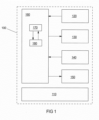
- the arrangement has a processor, a memory device, an atrial stimulation device, a ventricular stimulation device and a first detection device.
- the first detection device serves to detect an atrial tachycardia, ie a beating of the atria of the heart at an abnormally increased frequency.
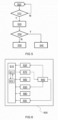
- the arrangement is characterized in that the memory device has a computer-readable program that causes the processor to carry out the steps explained below when it is executed on the processor. First of all, the first detection device detects whether there is an atrial tachycardia to be treated in a human or animal heart of the patient in whom the implantable arrangement was implanted.
- Such a tachycardia which can also be referred to as tachycardia requiring treatment, is characterized in that the atrial rhythm exceeds a critical rate and/or the resulting ventricular rhythm exceeds or falls below a critical rate and/or the atrial rhythm is classified as unstable and/or the resulting ventricular rhythm exhibits significant rate fluctuations.
- Atrial tachycardia requiring treatment includes, in addition to a non-pathological atrial tachycardia, also a pathological atrial tachycardia, which is also known as atrial fibrillation or atrial fibrillation.
- the method performed by the processor relates only to the non-pathological atrial tachycardia or only to the pathological atrial tachycardia.
- ventricular conditioning stimulation is performed using the ventricular stimulation device.
- This ventricular conditioning stimulation places the heart in a state in which it is more receptive to subsequent atrial stimulation.
- the heart is thus specifically brought into a state in which it is more susceptible to subsequent treatments. Consequently, with the arrangement claimed according to the invention, there is no waiting for the heart to be converted into another state by itself or by previous atrial treatments. Rather, an active change in the cardiac status is brought about by means of ventricular conditioning stimulation.
- a large number of conditioning stimulations known per se are possible in order to achieve such a change in the cardiac status.
- an atrial anti-tachycardia pacing is performed.
- the atrial stimulation device is used for this.
- Such an atrial antitachycardia stimulation is also known under the technical term atrial ATP (the abbreviation ATP stands for the English technical term “antitachycardia pacing”). ATP is sometimes also referred to as anti-tachycardia pacemaker therapy.
- the heart Since the heart is much more susceptible to the atrial ATP performed by the simultaneous or previous ventricular conditioning stimulation than without ventricular conditioning stimulation, the therapeutic success of the atrial ATP can be increased. This makes it possible for the treated patient's heart to beat faster in a normal rhythm again and for pathological consequences of atrial tachycardia such as drops in performance, dizziness and thrombus formation to occur much less frequently.
- Atrial anti-tachycardia pacing occurs only while ventricular conditioning pacing is being performed.
- the atrial anti-tachycardia stimulation takes place only after the execution of the ventricular conditioning stimulation.
- the atrial anti-tachycardia stimulation takes place both during and after the execution of the ventricular conditioning stimulation.
- the atrial stimulation device is designed to carry out the atrial anti-tachycardia stimulation as electrical stimulation or as optical stimulation. It therefore offers different options for treating the detected atrial tachycardia. In this case, different treatment variants can be selected, in particular taking into account the severity of the detected atrial tachycardia.
- the program causes the processor to execute the ventricular conditioning pacing as right ventricular overdrive pacing.
- Overdrive pacing paces the corresponding ventricle at a rate faster than the usual (intrinsic) ventricular rate. This can increase the rate of the ventricular rhythm.
- the program causes the processor to execute the ventricular conditioning pacing as left ventricular overdrive pacing.
- the ventricular conditioning stimulation can therefore only affect, in particular increase, the frequency of the ventricular rhythm of a single ventricle in a targeted manner.
- a further variant provides for the program to cause the processor to stimulate both ventricles equally.
- ventricular conditioning pacing is performed as biventricular overdrive pacing. In this way, a simultaneous increase in the rate of the intrinsic ventricular rhythm of both ventricles can be achieved.
- the program causes the processor to execute the ventricular conditioning pacing as a biventricular overdrive pacing, specifying a VV time that deviates from a regular pacing.
- the VV time (also as VV delay) indicates the time that elapses between stimulation of the right and left ventricle. It is also known as the intraventricular delay time. If both ventricles are paced at the same time, the VV time is zero. However, it is typically greater than zero in order to achieve later stimulation of the left ventricle than the right ventricle.
- the program causes the processor to perform ventricular conditioning pacing to compensate for ventricular pauses. This can be achieved, for example, by adjusting the level of ventricular conditioning pacing and/or adjusting VV timing and/or delivering additional ventricular stimuli and/or adjusting alternative ventricular pacing vectors (e.g., between right and left ventricular electrodes).
- the program causes the processor to lock the ventricular conditioning pacing to the detected atrial tachycardia with a short AV delay.
- a ratio of n:1 is specified.
- the program causes the processor to lock ventricular conditioning pacing with an AV delay of 10 to 110 ms to detected atrial tachycardia actions in a ratio n:1, where n is the number of detected atrial tachycardia actions and n is 2 to 6 amounts to.
- the AV time also known as AV delay indicates the time that elapses between stimulation of the right atrium and the right ventricle. It is also known as the atrio-ventricular delay time.
- the ventricular conditioning stimulation is also adapted to the detected atrial tachycardia, a particularly advantageous reaction of the heart treated in this way to the ventricular conditioning stimulation can be expected, so that simultaneous or subsequent atrial anti-tachycardia stimulation is particularly effective can be carried out.
- the program causes the processor to perform ventricular conditioning pacing in a manner to achieve a specific physiological goal.
- the conditioning stimulation can be carried out in such a way that the pressure in the left and/or right atrium is reduced at least briefly.
- the conditioning stimulation can be carried out in such a way that the risk of mitral valve regurgitation is reduced at least for a short time or avoided entirely.
- the conditioning stimulation can be carried out in such a way that the preload of the heart is reduced at least for a short time.
- the conditioning stimulation can be carried out in such a way that the blood pressure of a patient whose heart is being stimulated by the implantable arrangement is lowered at least for a short time.
- the conditioning stimulation can finally be carried out in such a way that a myocardial oxygen balance is improved at least for a short time.
- the implantable arrangement has a second detection device, which is used to detect an effect of the ventricular conditioning stimulation on the atrial anti-tachycardia stimulation.
- This second detection device which can also include parts of the first detection device, makes it possible to indirectly or directly (ie directly or indirectly) detect the cardiac effect achieved by the ventricular conditioning stimulation. As a result, the overall effectiveness of the stimulation carried out by the implantable arrangement can be improved. Because in this way it is possible to receive positive feedback on the effect achieved in relation to the cardiac status.
- the second detection device can, for example, use the same electrode that also uses the first detection device. It is therefore fundamentally conceivable that the second detection device detects the effect of the ventricular conditioning stimulation in the atrium of the heart being treated.
- the program causes the processor to determine a success of the atrial anti-tachycardia pacing and those associated with this pacing store ventricular conditioning pacing performed.
- pairs of values can be formed which each include the success of the atrial anti-tachycardia stimulation and the ventricular conditioning stimulation carried out during or beforehand.
- At least one value pair can then be selected from the stored value pairs for a subsequent treatment of the heart.
- the value pair can be selected with which the best success of the atrial anti-tachycardia stimulation was achieved.
- a pair of values can be excluded in which the desired success of the atrial anti-tachycardia stimulation could not be achieved despite ventricular conditioning stimulation.
- the storage can take place in the memory device of the implantable arrangement.
- a further memory device can be provided in the implantable arrangement, which is used to store the pairs of values.
- the invention finds application in a method for controlling the operation of the implantable device for stimulating a human or animal heart, which is not part of the invention.
- This procedure has the steps outlined below.
- a first detection device detects whether there is an atrial tachycardia to be treated (requiring treatment) in a human or animal heart.
- At least one ventricular conditioning stimulation pulse is generated in a ventricular stimulation device.
- a pulse sequence made up of pulses with the same or different amplitudes and constant, increasing or decreasing frequency can also be selected.
- At least one pulse for an atrial anti-tachycardia stimulation is generated in an atrial stimulation device.
- this at least one pulse can likewise be a pulse sequence of different pulses with the same or different amplitudes, in which case the frequency between the individual pulses can be designed to remain the same, increase or decrease.
- This Method thus relates to the generation of at least one ventricular conditioning pacing pulse and at least one atrial pacing pulse within the implantable assembly.
- One aspect of the present invention relates to a non-volatile computer program product according to claim 12.
- a first detection device detects whether there is an atrial tachycardia to be treated in a human or animal heart.
- ventricular conditioning stimulation is performed using a ventricular stimulation device.
- an atrial anti-tachycardia stimulation is executed by means of an atrial stimulation device.
- the invention also finds use in a method of treating a human or animal subject in need of such treatment.
- This method does not form part of the invention and the treatment is carried out using an implantable device for stimulating the patient's heart.
- the arrangement has a processor, a memory device, an atrial stimulation device, a ventricular stimulation device and a first detection device for detecting an atrial tachycardia.
- the procedure includes the steps explained below.
- the first detection device detects whether there is an atrial tachycardia to be treated in the heart.
- ventricular conditioning stimulation is carried out using the ventricular stimulation device.
- an atrial anti-tachycardia stimulation is performed using the atrial stimulation device.
- This method thus has an immediate therapeutic effect on the treated human or animal heart in order to treat a detected atrial tachycardia and to bring the treated heart, in particular the atrium of the treated heart, back into a normal rhythm.
- One aspect of the present invention relates to an implantable arrangement for treating a human or animal heart with the features explained below.
- Such an arrangement has a processor, a memory device, a treatment device with a treatment electrode and a detection device for detecting a cardiac event requiring treatment.
- the arrangement is distinguished in that the memory device has a computer-readable program which causes the processor to carry out the steps explained below when the program is executed on the processor.
- the detection device detects whether a cardiac event to be treated has occurred in the human or animal heart.
- This cardiac event can be, for example, a cardiac arrhythmia, such as an atrial or ventricular tachycardia, or cardiac arrest.
- a position of the treatment electrode is determined beforehand. Instead of a position of the treatment electrode, a variable that correlates with this position can also be determined.
- the position of a treatment electrode is understood to be the position of a conductive section of the treatment electrode. Such a conductive section is also referred to as an electrode pole.
- the position of the treatment electrode or the variable that correlates with the position is then compared with a reference variable.
- a cardiac treatment using the treatment device and the treatment electrode is carried out when the position of the Treatment electrode or when the size correlating with the position matches the reference size within a definable tolerance.
- the treatment electrode has an inadequate position. Then (initially) no cardiac treatment is carried out. Because then such cardiac treatment could result in greater harm than benefit. If, for example, two electrodes are too close together or one electrode is no longer located in the atrium but in the ventricle of a heart, the performance of a cardiac treatment could result in undesirable, sometimes serious side effects that must be avoided.
- the reference variable is determined in such a way that a position of the treatment electrode is considered inadequate if such a position makes treatment success unlikely, a treatment delivery could have side effects with (possibly unforeseeable) consequences, or if a treatment delivery has damaging consequences for the treated heart.
- the actually required cardiac treatment is not carried out until a decision has been made as to whether a treatment should nevertheless be carried out despite the position of the treatment electrode being determined to be inadequate.
- the benefit of a cardiac treatment that is nevertheless carried out can be greater than the damage to be expected. Therefore, in a variant, the possibility of a manual or automated intervention in the program executed by the processor is provided in order to still enable a cardiac treatment, even if the determined position of the treatment electrode initially speaks against such a treatment.
- the arrangement is suitable for temporary or permanent implantation, permanent implantation of the arrangement in a human or animal patient being provided in particular.
- the patient is a mammal, for example a mammal selected from the group consisting of rodents, horses, dogs and cats.
- the treatment device and the treatment electrode can be a device and an electrode that are suitable for any type of treatment of a human or animal heart.
- the treatment electrode can be a stimulation electrode with which human or animal heart tissue can be stimulated.
- the treatment electrode can also be a defibrillation electrode.
- the exact configuration of the treatment electrode is not of particular importance for the presently claimed invention.
- the implantable arrangement has more than one treatment device and more than one treatment electrode.
- a treatment electrode is provided for each region of the heart to be treated.
- a plurality of treatment electrodes can be connected to a single treatment device.
- each treatment electrode is typically assigned exactly one treatment device.
- the implantable arrangement has more than one detection device.
- one detection device can be provided for each region of the heart that is to be treated.
- the different regions of the heart to be treated can be, for example, the left atrium, the left ventricle, the right atrium or the right ventricle of a human or animal heart.
- the position of the treatment electrode to be determined is a position of the treatment electrode relative to a reference point of the arrangement.
- This reference point can, for example, another treatment electrode be arrangement.
- the reference point can also be a reference electrode of the arrangement.
- part of the housing of the implantable arrangement can be designed in the form of a reference electrode.
- the relative position of the treatment electrode or the variable correlating with this relative position is determined by determining a distance between the treatment electrode and the reference point. This distance is then compared to a reference distance that serves as a reference variable. By determining the distance in this way, it can be determined whether a relative displacement of the electrodes under consideration has taken place. It is possible to determine a single distance between the treatment electrode and the reference point or two or more distances between different treatment electrodes and/or between one or more treatment electrodes and a reference electrode. It is possible to weight the individual distances differently when calculating a variable that correlates with the distance.
- a relative change in position of an electrode in which a change in position can have particularly serious consequences for a successful treatment, can be weighted more heavily than a relative change in position of an electrode, in which a change in position can have a less serious effect on a successful treatment.
- the program causes the processor to determine the relative position of the treatment electrode by measuring an electrical current and/or by measuring an electrical voltage between the treatment electrode and the reference point. For example, if the distance between different treatment electrodes or between a treatment electrode and a reference electrode is to be determined, a voltage is applied between these electrodes. One of the electrodes serves as a current sink. In each case, pairs of electrodes are then selected from two of the n electrodes under consideration and the voltage present between these electrodes is determined. If the implantable arrangement has a total of n electrodes (treatment electrodes and reference electrodes), this results in n ! n ⁇ 2 ! 2 !
- electrical voltages are applied between at least two and a maximum of n ⁇ 1 electrode poles. Subsequently, a measurement of the voltage is carried out between electrode poles, of which at least one pole is not involved in the voltage generation.
- an electric current is fed in between at least two and at most n-1 electrode poles. At least one electrode pole serves as a current sink. A measurement of the voltage or current is then carried out between at least two of the n electrode poles.
- the electric current and/or the voltage is delivered via at least one treatment electrode (340, 341, 342, 640) and measured using at least one treatment electrode (340, 341, 342, 640) and/or reference electrode.
- the measurement is made immediately after the electrical current and/or voltage is delivered, so that an effect produced by the current/voltage applied can be measured directly.
- the effect can be a physiological effect produced by the current/voltage.
- the reference point or the reference electrode is located in the region of the patient's thorax.
- part of the housing of the implantable arrangement can serve as a reference electrode. Then the distance between the electrodes arranged in the heart and the reference electrode is relatively large.
- the voltage applied to the electrodes has a frequency in a range from 0 to 1 MHz, in particular 0.1 to 0.9 MHz, in particular 0.2 to 0.8 MHz, in particular 0.3 to 0.7 MHz , in particular 0.4 to 0.6 MHz, in particular 0.5 to 1 MHz.
- the voltage applied to the electrodes is a pulsed voltage with a pulse duration in a range from 10 ⁇ s to 100 ms, in particular 100 ⁇ s to 10 ms, in particular 500 ⁇ s to 5 ms, in particular 750 ⁇ s to 2 5 ms, in particular 900 ⁇ s to 2 ms, in particular 1 ms to 1.5 ms.
- the intervals between the individual pulses can cover a very wide time range. For example, it is possible to emit a large number of pulses in quick succession to determine the position of the treatment electrode, in order to then insert a longer pause until the next position determination.
- the times that elapse between individual pulses can be 10 ⁇ s to 2 years, in particular 50 ⁇ s to 1.9 years, in particular 100 ⁇ s to 1.8 years, in particular 1 ms to 1.7 years, in particular 500 ms up to 1.6 years, in particular 1 second to 1.5 years, in particular 10 seconds to 1.4 years, in particular 1 minute to 1.3 years, in particular 10 minutes to 1.2 years, in particular 1 hour to 1 year, in particular 1 day to 0.5 years, in particular 1 week to 0.25 years, in particular 2 weeks to 1 month. It is also conceivable that the pulse intervals during individual measurements are in an interval consisting of the shorter time intervals (e.g.
- a measurement has a large number of individual measurement pulses that are emitted in the form of a so-called burst.
- At least one measurement per year is carried out in order to enable continuous monitoring of the position of the treatment electrode.
- the voltage applied to the electrodes or the currents introduced into the electrodes are measured in the form of an impedance measurement.
- an impedance measurement for this purpose, for example, 2-pole, 3-pole and/or 4-pole impedance measurement methods can be used.
- the current fed into the electrodes or the voltage applied to the electrodes can be measured directly via the electrical fields generated in the patient's body.
- an indirect measurement is also considered in an alternative embodiment. This is because the voltage applied or the current fed in generates an excitation of a region of the heart on which one of the electrodes involved in the measurement is positioned, which subsequently spreads to another region of the heart. This leads to a physiological delay in the spread of excitation.
- the effect of the injected current or applied voltage can be determined based on the pattern of the excitation propagation and/or the physiological delay of the excitation propagation.
- the current or voltage creates electrical fields that cause a certain effect in the body.
- This effect and/or the effect determined indirectly via the delayed physiological effect of the current or the voltage represents a characteristic parameter for the position of the treatment electrode, in particular for the distance of the treatment electrode from a reference point, such as a reference electrode.
- This parameter is a variable correlating with the position within the meaning of the present invention.
- the processor is caused by the program to evaluate the detected delayed physiological effect.
- a plausibility check to be carried out in order to check whether the detected physiological delay is due to the assumed position of the treatment electrode.
- Limit values can be specified for this plausibility check, which must be complied with within a tolerance range that can also be specified. If a delayed physiological effect that is much too large or a delayed physiological effect that is far too small is detected, this plausibility check can lead to the result obtained being incorrect is not considered to be outside the area to be complied with from the outset. Rather, this can be an indication that the measurement is faulty and must be carried out again.
- this value can, for example, be permanently specified or freely programmable. In such a case, it is also possible that a corresponding value can be selected from a large number of exemplary values. These exemplary values can be predefined in ranges that are meaningful for the respective application and can be made available for selection, for example, in intervals that experience has shown to be practical.
- a direct effect of the electric fields generated in the body is used to determine whether a permitted minimum distance between two electrodes is maintained or fallen below. For example, it can be checked whether a measurement signal determined as a result of an applied voltage or a fed-in current does not exceed a threshold value serving as a reference variable. If the threshold is not exceeded, the minimum distance is maintained.
- the sensitivity of determining a distance between two electrodes can be increased by combining different measurement methods with one another. For example, if the result obtained by determining the immediate effect of the applied voltage or the fed current was that a minimum distance was not undercut, an additional check can be carried out to determine whether the physiological delay achieved by the applied voltage or the fed current is delayed Effect does not fall below a definable delay time. If the defined delay time is not fallen below, there are two with different Measurement method received confirmations that a minimum distance between the electrodes is not fallen below.
- the position of the treatment electrode is an absolute position of the treatment electrode within a human or animal heart when the arrangement is implanted in a human or animal. This means that in this case the position is determined independently of other components of the arrangement then implanted.
- absolute position refers to the arrangement of the treatment electrode in the heart or in a specific region of the heart.
- the treatment electrode has an acceleration sensor in one variant.
- a movement of the treatment electrode within the heart can be tracked with such an acceleration sensor, which can be designed, for example, as a linear acceleration sensor or as a rotation rate sensor or gyroscope.
- the program prompts the processor to create an acceleration profile for the treatment electrode using acceleration data obtained by the acceleration sensor.
- the processor is caused to correlate this acceleration profile with the heart rhythm of the human or animal heart in which the corresponding treatment electrode is located. In this way it is possible to determine whether the treatment electrode follows the movements of the region of the heart in which the treatment electrode is arranged or suspected. If the acceleration profile of a ventricular treatment lead is synchronous with the ventricular heart rhythm of the corresponding cardiac ventricle, the treatment lead is still located in the ventricle in which it was originally placed. If, on the other hand, a correlation of the acceleration profile of the treatment electrode and the heart rhythm of a certain heart region shows that the treatment electrode follows the movements of a heart region in which it should not be located (e.g.
- an atrial treatment electrode follows a ventricular heart rhythm
- a dislocation of the treatment electrode has taken place, which regularly excludes further response of this treatment electrode for carrying out a cardiac therapy.
- the expected therapeutic success would not occur. Rather, (serious) side effects of a corresponding cardiac treatment would have to be expected. In this case, the treatment electrode would first have to be relocated so that the desired treatment success can actually be achieved.
- the absolute position of the treatment electrode when determining the absolute position of the treatment electrode, data from sensors that are arranged outside of the human or animal heart and are not influenced by the movements of the heart are also recorded. By using such supplementary sensor data, any artifacts that may otherwise occur can be reduced or even eliminated. This increases the accuracy of determining the absolute position of the treatment electrode.
- the arrangement has a patient condition sensor.
- a patient condition sensor serves to determine a body position or an activity condition of a patient in whom the arrangement has been implanted.
- a patient condition sensor can be a position sensor, for example, which can be used to determine whether the patient is in an upright position or a horizontal position.
- a patient condition sensor suitable for determining the patient's activity level is, for example, a sensor that can be used to monitor the patient's heart rate.
- the heart rate is typically monitored directly by one or more electrodes of the arrangement for treating the heart, so that the sensors already present in the arrangement can take over the function of the patient condition sensor, which is why a separate patient condition sensor is not absolutely necessary in such a case.
- the program causes the processor to store a history of the position of the treatment electrode over time. In this way it is possible to Determine the trend in the position of the treatment electrode. For example, an incipient dislocation of the treatment electrode can be detected at an early stage if a change in the position of the treatment electrode that is still within the specified tolerance range is detected and at the same time it can be seen that this change in position is in exactly one direction (e.g. an increasing distance or a decreasing distance) takes place. Such a progression analysis of the position of the treatment electrode can also determine the positional stability of the treatment electrode. In this way, for example, an impending loose contact of the treatment electrode can be detected at an early stage.
- the program prompts the processor to store only those values of the position of the treatment electrode that were obtained when the patient was in a defined body position and/or in a defined state of activity.
- the data obtained from the optionally provided patient condition sensor are preferably used.
- an overall more reliable trend of a change in the position of the treatment electrode can be determined. Because if the measurements obtained to assess the position of the treatment electrode are only stored if they relate to a comparable body position of the patient or a comparable activity level of the patient, the stored values can be compared better overall. Then more precise statements about the positional stability of the treatment electrode can be made. Artifacts are minimized or eliminated in this way.
- the program prompts the processor to determine the position of the treatment electrode even if no cardiac treatment of the corresponding human or animal heart is to be carried out.
- measurement data that provide information about the position of the treatment electrode can also be obtained independently of a cardiac treatment. If such data is obtained at regular or irregular intervals, statements can be made about the positional stability of the treatment electrode. This is how an early Recognize (incipient) dislocation of the treatment electrode, which can then be corrected if necessary before cardiac treatment becomes necessary.
- the program causes the processor to perform a cardiac treatment after a presettable time has elapsed or in response to a signal if a cardiac event to be treated has previously been detected.
- this cardiac treatment is carried out by means of the treatment device and the treatment electrode, independently of the previously determined position of the treatment electrode. This means that even if an inadequate position of the treatment electrode was determined, this safety step still enables cardiac treatment.
- the detected deviation of the position of the treatment electrode from the expected position is relatively small, but at the same time the cardiac event to be treated is relatively serious. Then, in consideration of the patient's interests, carrying out a cardiac treatment while accepting side effects can be more advantageous overall than stopping such a cardiac treatment.
- a signal that causes the processor to perform a cardiac treatment independent of the determined position of the treatment electrode can be, for example, an external input signal generated by a physician.
- a doctor while weighing the interests of the patient and the medical risk of a cardiac treatment—has the option of carrying out a cardiac treatment despite an apparently or actually dislocated treatment electrode.
- the arrangement has at least one device for emitting and/or receiving acoustic waves.
- This device is used to determine the position of the treatment electrode.
- the acoustic waves can be ultrasonic waves, for example.
- an emitter for acoustic waves can be arranged on the treatment electrode.
- a receiver for the acoustic waves emitted by the emitter can be arranged at the reference point. Additional information about the distance between the treatment electrode and the reference point can be obtained.
- the delay that occurs as a result of the acoustic signal propagation in the heart or in the patient's body is orders of magnitude smaller than a physiological delay in the generation of excitation as a result of introducing a current pulse into the heart.
- a combined evaluation of the immediate effect of an applied current or an applied voltage by means of the electric fields generated in the heart and/or the delayed physiological excitation due to the applied voltage or the applied current and/or the emitted and received acoustic signals work in up to three different time levels, which enables a very precise determination of the position of the treatment electrode.
- the emitter of the acoustic waves or acoustic signals not on the electrode but on the reference point and the receiver on the electrode. It is also possible to use a transceiver for acoustic signals instead of a receiver separate from the emitter. It is also possible to attach the emitter, the receiver or the transceiver to another component of the implantable arrangement instead of to the electrode. In such a case, it makes sense to provide a reflective element on the electrode, which reflects the acoustic signals directed at the electrode. In such a case, relevant data for determining the distance of the electrode from the emitter, the receiver or the transceiver can also be obtained from the course of the acoustic signals towards the electrode and/or away from the electrode.
- the arrangement has at least one device for transmitting and/or receiving electromagnetic waves.
- This embodiment of the device serves to determine the position of the treatment electrode by measuring the distance with electromagnetic waves.
- the electromagnetic waves can have a frequency in the range from 1 MHz to 1 GHz, in particular from 10 MHz to 900 GHz, in particular from 100 MHz to 800 GHz, in particular from 500 MHz to 700 GHz, in particular from 1 GHz to 600 GHz, in particular from 10 GHz to 500 GHz, in particular from 100 GHz to 400 GHz, in particular from 200 GHz to 300 GHz.
- the electromagnetic waves are galvanically fed into the tissue.
- the electromagnetic waves are fed into the heart tissue in the frequency range from 300 MHz to the infrared range, i.e. 300 GHz.
- a distance between the treatment electrode and the reference point can then be determined on the basis of a transmission measurement of the electromagnetic waves.
- electromagnetic waves in the visible frequency range can be used instead of acoustic waves. Suitable frequency ranges are between 400 THz and 800 THz, in particular between 500 THz and 700 THz, in particular between 550 THz and 650 THz.
- Emitters and receivers or transceivers can also be used in the case of electromagnetic waves. An arrangement of an emitter, a receiver or a transceiver on the electrode is possible, but not mandatory.
- the cardiac event to be detected and to be treated using the implantable arrangement is an atrial tachycardia.
- the cardiac treatment is atrial anti-tachycardia pacing.
- the treatment electrode can also be referred to as a stimulation electrode.
- the invention is used in a method for controlling the operation of an implantable arrangement for treating a human or animal heart, in particular an implantable arrangement according to the explanations above.
- This method does not form part of the invention and includes the steps outlined below First, a detection device is used to determine whether a cardiac event to be treated has occurred in a human or animal heart.
- a location of a treatment electrode is determined.
- a variable that correlates with this position of the treatment electrode can be determined.
- the position of the treatment electrode or the variable correlating with the position is then compared with a reference variable.
- a pulse for a cardiac treatment is generated in a treatment device of the arrangement. This impulse can then be passed on via a treatment electrode.
- An aspect of the present description which does not form part of the invention relates to a non-transitory computer program product having computer-readable code which, when executed on the processor, causes a processor to carry out the steps explained below.
- a detection device is used to determine whether a cardiac event to be treated has occurred in the human or animal heart.
- a cardiac event to be treated is initially not yet treated. Instead, a position of a treatment electrode is determined beforehand. Instead of a position of the treatment electrode, a variable that correlates with this position can also be determined.
- the position of the treatment electrode or the variable that correlates with the position is then compared with a reference variable.
- a cardiac treatment using a treatment device to which the treatment electrode is assigned is carried out when the position of the treatment electrode or when the variable correlating with the position matches the reference variable within a predeterminable tolerance.
- the treatment electrode has an inadequate position. Then (initially) no cardiac treatment is carried out. Because then such a cardiac treatment could result in greater damage than benefit.
- Another aspect of the present description relates to a method for treating a human or animal patient who requires such treatment by means of an implantable arrangement for treating a human or animal heart, the arrangement having a processor, a memory device, a treatment device with a treatment electrode and has a detection device for detecting a cardiac event requiring treatment.
- the method is not part of the invention and comprises the steps explained below.
- the detection device detects whether a cardiac event to be treated has occurred in the patient's heart.
- a position of the treatment electrode or a variable correlating with this position is determined.
- the position of the treatment electrode or the variable correlating with the position is compared with a reference variable. if the position of the treatment electrode or the variable correlating with the position matches the reference variable within a predefinable tolerance, a cardiac treatment is carried out using the treatment device and the treatment electrode.
- an implantable arrangement for the diagnostic and/or therapeutic treatment of a human or animal patient with the features explained below.
- Such an arrangement has a processor, a memory device, a processing device and a remote data transmission device.
- the treatment device serves to carry out a diagnostic and/or therapeutic treatment of the patient in whom the arrangement was implanted.
- the remote data transmission device can be used to send data, in particular wirelessly, via remote data transmission networks known per se, such as WLAN or mobile radio, to a receiver located at a distance from the implantable arrangement.
- the memory device has a computer-readable program that prompts the processor to carry out the steps explained below when the program is executed on the processor.
- the treatment facility typically has a large number of different treatment functionalities. Each of these handling functionalities can typically be deactivated independently of other handling functionalities. It is also possible that certain treatment functionalities form a group that is deactivated together.
- the deactivation means that a therapeutic or diagnostic treatment of the patient defined by the treatment functionality can no longer be carried out by the treatment facility. This is only possible again when the treatment functionality has been reactivated. As already explained at the outset, with the solutions known from the prior art it is necessary for a patient to visit a specialist doctor in order to have such a reactivation of the treatment functionality carried out.
- the deactivated treatment functionality is then reactivated on the basis of the reactivation data received. If various treatment functionalities were previously deactivated, the reactivation data may contain information about which of the deactivated treatment functionalities should be reactivated. It is also possible that all previously deactivated treatment functionalities are always reactivated by the reactivation data received.
- a reactivation of the treatment functionality means that a diagnostic and/or therapeutic treatment corresponding to the treatment functionality can then be carried out again.
- the program prompts the processor to send status data by means of the remote data transmission device.
- This status data indicates whether a specific treatment functionality of the treatment device is activated or deactivated.
- This status data can then be received by a remotely located computer (e.g. at a doctor specializing in implants). The physician or other user of the remote computer can then see which treatment functionalities have been deactivated by the implantable device in order to decide whether it is in the interest of the patient to reactivate those treatment functionalities.
- the status data can be transmitted in encrypted form. The well-known conventional encryption mechanisms are suitable for this.
- one or more handling functionalities can be assigned to a first group and one or more other handling functionalities to a second group.
- the two groups can then be treated differently with regard to reactivation.
- the program causes the processor to allow reactivation of one or more processing functionalities associated with the first group based on the reactivation data received.
- the program causes the processor not to allow reactivation of one or more treatment functionalities associated with the second group.
- the processor uses assignment data in one variant.
- This assignment data can be stored in the memory device of the implantable arrangement or transmitted to the arrangement in some other way.
- assignment data flexible assignment of treatment functionalities to the first group or to the second group is possible.
- assignment data can provide that a specific treatment functionality is to be assigned to the first group at a first point in time. At a later point in time, such assignment data can cause the same treatment functionality to be assigned to the second group.
- the association data can, for example, take into account a state of health of the patient that enables or requires a facilitated or a more difficult reactivation of specific treatment functionalities.
- transmission of assignment data to the implantable arrangement by means of the remote data transmission device is ruled out.
- the arrangement has a near-field telemetry device.
- the program causes the processor to receive association data via the near-field telemetry device.
- the program causes the processor to receive association data via the near-field telemetry device.
- the assignment data sent to the implantable arrangement by means of the near-field telemetry device or in some other way can, for example, enable specific treatment functionalities to be temporarily assigned to the first group of treatment functionalities. It may then be possible, for example, within a time window lasting for example 1 minute to 10 hours, in particular 5 minutes to 5 hours, in particular 10 minutes to 2 hours, in particular 20 minutes to 1.5 hours, in particular 30 minutes to 1 hour allow the previously disabled treatment functionality to be reactivated. The corresponding treatment functionality is then automatically assigned to the second group. It is then no longer possible to reactivate the treatment functionality. If reactivation has not taken place within the time window, new assignment data must first be sent to the implantable arrangement in order to open up the fundamental possibility of reactivation of the deactivated treatment functionality again.
- the implantable arrangement is an arrangement for treating, in particular for stimulating, a human or animal heart.
- the arrangement can be a heart pacemaker that has different functionalities.
- the arrangement can be, for example, an implantable arrangement for stimulating a human or animal heart, which is provided and set up to carry out an atrial anti-tachycardia stimulation.
- any other functionalities are also conceivable.
- the arrangement can also be a medical product that is used for completely different diagnostic and/or therapeutic applications within a patient.
- medical products include implantable defibrillators, neurostimulators, implantable medication pumps and heart support pumps (Ventricular Assist Devices).
- the treatment device has at least one treatment functionality selected from the group consisting of ventricular stimulation, ventricular conditioning stimulation, atrial stimulation, atrial anti-tachycardia stimulation and defibrillation.
- the ventricular stimulation can be, for example, a right ventricular overdrive stimulation, a left ventricular overdrive stimulation or a biventricular overdrive stimulation.
- the biventricular overdrive stimulation can be carried out, for example, with a VV time that deviates from a regular stimulation.
- An aspect of the present description which does not form part of the invention relates to a treatment arrangement comprising an implantable arrangement for diagnostic and/or therapeutic treatment of a human or animal patient as described above and a remote access device located remotely therefrom.
- the implantable arrangement has a first processor, a first memory device, a treatment device and a first remote data transmission device.
- the remote access device has a second processor, a second memory device and a second remote data transmission device.
- the remote access device can be an ordinary computer.
- the first storage device has a first computer-readable program that, when executed on the first processor, causes the first processor to carry out the steps explained below.
- the treatment functionality will be disabled. The treatment defined by the treatment functionality can then no longer be carried out.
- the deactivated treatment functionality can then be reactivated, taking into account the reactivation data received.
- the second storage device has a second computer-readable program that causes the second processor to carry out the steps explained below when the program is executed on the processor.
- Wake-up data is generated in response to an input or a program request. These reactivation data are then sent using the second remote data transmission device.
- the steps of generating the reactivation data and sending the reactivation data typically take place before the step of receiving the reactivation data by means of the first remote data transmission device. It is possible and contemplated that the reactivation data have already been generated and are only sent using the second remote data transmission device when reactivation of a specific treatment functionality is required, so that they can be received with the first data transmission device.
- An input that causes the generation of reactivation data can be, for example, a user input at the remote access device.
- a physician may prompt for generation of reactivation data through input at a user interface.
- the doctor can convince himself beforehand by telephone or in another way that reactivation of the treatment functionality no longer poses a risk to the patient, for example because the patient's condition has changed in the meantime.
- the second program prompts the second processor to receive status data of the implantable arrangement by means of the second remote data transmission device before the reactivation data is generated.
- This status data indicates whether a specific treatment functionality of the treatment facility is activated or deactivated. Only when a treatment functionality is actually deactivated does reactivation data relating to this treatment functionality have to be sent. The status data may also indicate whether or not remote reactivation is allowed for the particular treatment functionality.
- a doctor commissioned with the reactivation of a treatment functionality to first check the status of the corresponding implantable arrangement. This can be done on the basis of status data that is sent from the first remote data transmission device to the second remote data transmission device. If the doctor then recognizes that a specific treatment functionality has been deactivated, but at the same time he has information that the patient is no longer at risk due to a change in the patient's condition that has taken place in the meantime, the doctor can generate the required reactivation data in the remote access device. Such a change in the patient's condition can have occurred, for example, as a result of drug treatment.
- the basic possibility of reactivation of a treatment functionality cannot be changed remotely.
- a treatment functionality is marked as not being able to be reactivated remotely, it is not possible for a doctor to remotely change this marking so that reactivation via remote access is possible.
- this requires interaction with the implantable arrangement in much greater proximity, for example through direct access or access via a near-field telemetry device. This makes unauthorized access to the implantable arrangement and the activity status of the individual treatment functionalities significantly more difficult.
- One aspect of the present description which is not part of the invention relates to a method for controlling the operation of an implantable arrangement for the diagnostic and/or therapeutic treatment of a human or animal patient in accordance with the explanations above.
- This method does not form part of the invention and includes the steps outlined below.
- the deactivated treatment functionality Only when reactivation data has been received by means of a remote data transmission device can the deactivated treatment functionality be reactivated on the basis of the reactivation data received. On the other hand, if such reactivation data is not received, the treatment functionality remains in its deactivated state.
- the invention relates to a computer program product having computer-readable code which, when executed on the processor, causes a processor to carry out the steps explained below.
- a reactivation of the treatment functionality is only possible if reactivation data are available. This reactivation data is received by means of a remote data transmission device. Once received, the reactivation data can be used to reactivate previously disabled treatment functionality. If no reactivation data is received, the treatment functionality remains in its disabled state.
- An aspect of the present specification which does not form part of the invention relates to a method of treating a human or animal subject in need of such treatment.
- This method does not form part of the invention and the treatment is carried out using an implantable assembly for diagnostic and/or therapeutic treatment.
- the arrangement has a processor, a memory device, a processing device and a remote data transmission device. The method includes the steps explained in more detail below.
- the treatment functionality will be disabled. It remains in its deactivated state until reactivated based on reactivation data.
- Such reactivation data can be received by means of the remote data transmission device. After receiving the reactivation data, the previously deactivated treatment functionality can be reactivated.
- a diagnostic and/or therapeutic treatment defined by the treatment functionality can then be carried out on the patient.
- One aspect of the present description which is not part of the invention, relates to an implantable arrangement for stimulating a human or animal heart with the features explained below.
- Such an arrangement is not part of the invention and is intended in particular for permanent implantation in a human or animal patient.
- the patient is preferably a mammal, for example a mammal selected from the group consisting of rodents, horses, dogs and cats.
- the arrangement has a processor, a memory device, an atrial stimulation device and a detection device for detecting an atrial tachycardia.
- the memory device has a computer-readable program that causes the processor to carry out the steps explained below when the program is executed on the processor.
- the detection device detects whether an atrial tachycardia to be treated is present in a human or animal heart.
- an atrial anti-tachycardia stimulation is carried out by means of the atrial stimulation device.
- post-treatment atrial pacing is performed.
- the atrial stimulation device is also used for this purpose.
- Post-treatment pacing causes a change in cardiac status, thereby increasing the long-term therapeutic success rate of atrial overpacing performed during atrial anti-tachycardia pacing.
- the atrial follow-up treatment achieves a lasting effect of atrial anti-tachycardia stimulation. This is because the treated heart tends less to fall back into a state of atrial tachycardia as a result of the atrial follow-up treatment.
- the program prompts the processor, after the atrial anti-tachycardia stimulation has been carried out, to first use the detection device to check whether the atrial tachycardia could be terminated by the stimulation carried out.
- a termination detection of the atrial tachycardia therefore takes place. Only if termination of the atrial tachycardia is positively determined will post-treatment atrial pacing be performed. The result of this is that the atrial post-treatment stimulation is carried out at a time when the treated heart no longer requires atrial antitachycardia stimulation so that the previously detected atrial tachycardia can be terminated.
- the program causes the processor to execute the post-treatment atrial pacing as an atrial overpace.
- This atrial overstimulation differs from that in the context of atrial anti-tachycardia overstimulation in that, firstly, it is longer-term than atrial anti-tachycardia overstimulation, i.e. in the range from minutes to days.
- the atrial follow-up is designed to range up to 7 days, 6 days, 5 days, 4 days, 3 days, 2 days, or 1 day.
- the atrial aftertreatment is designed to range up to 120 minutes, 60 minutes, 30 minutes, 20 minutes, 10 minutes, 5 minutes, 4 minutes, 3 minutes, 2 minutes, 1 minute, or 0.5 minutes.
- post-treatment atrial pacing differs from the well-known anti-tachycardia hyperpacing in that it is only retrieved when there is no tachycardia intrinsic (heart's own) atrial activity, i.e., for example, when the atrial intrinsic heart rhythm is below 100 bpm.
- post-treatment atrial pacing is delivered at a pacing rate of less than or equal to 200 bpm, 180 bpm, 150 bpm, 140 bpm, 130 bpm, 120 bpm, 110 bpm, or 100 bpm.
- stimulation frequencies of 375 bpm, or in the case of high-frequency bursts, frequencies of up to 3000 bpm (50 Hz) are used in the well-known anti-tachycardic overstimulation.
- the post-treatment atrial pacing is performed as right atrial overdrive pacing.
- the corresponding atrium is paced at a rate higher than the usual (intrinsic) rate tachycardic atrial rate.
- the pacing rate for overdrive pacing is lower than for atrial anti-tachycardia pacing (eg less than or equal to 130 bpm).
- the program causes the processor to execute the post-treatment atrial pacing as left atrial overdrive pacing.
- post-treatment atrial pacing can target the rate of the atrial rhythm of a single atrium, specifically delaying the return from a tachycardic state to a normal state.
- a further variant provides for the atrial post-treatment stimulation to be in the form of a biatrial overdrive stimulation.
- the program causes the processor to increase the atrial rate of the rhythm of both atria.
- Such overdrive post-treatment of one or both atria brings the heart back to normal after atrial anti-tachycardia pacing more slowly than if no post-treatment pacing were performed.
- a gentle transition is therefore achieved between the atrial anti-tachycardia stimulation and the normal heart rhythm, which causes gentle treatment of the heart and ensures a more sustained effect of the atrial anti-tachycardia stimulation.
- the program causes the processor to execute the post-treatment atrial pacing for a first period of time.
- this first period of time can be predetermined. It is therefore a defined period of time ranging from 1 minute to 7 days.
- the atrial post-treatment stimulation is not carried out for a (fixed) period of time, but is based on the heart rhythm of the patient being treated.
- the program causes the processor to carry out the atrial post-treatment stimulation during a defined number of heart cycles. In this variant can be even more individual to the different heart rhythms of each patients are addressed, which can further increase the sustainability of post-treatment stimulation.
- the program causes the processor to perform post-treatment atrial pacing in a manner to achieve a specific physiological goal.
- the post-treatment stimulation can be carried out in such a way that the pressure in the left and/or right atrium is reduced at least briefly.
- the post-treatment stimulation can be carried out in such a way that the risk of mitral valve regurgitation is reduced at least for a short time or avoided entirely.
- the post-treatment stimulation can be carried out in such a way that the preload of the heart is reduced at least for a short time.
- the post-treatment stimulation can be carried out in such a way that the blood pressure of a patient whose heart is being stimulated by the implantable arrangement is at least temporarily lowered.
- the post-treatment stimulation can finally be carried out in such a way that a myocardial oxygen balance is improved, at least for a short time.
- the atrial stimulation device is designed to carry out the atrial anti-tachycardia stimulation and/or the atrial post-treatment stimulation as electrical stimulation or as optical stimulation.
- the atrial antitachycardia stimulation can be carried out using different physical principles of action, but also the atrial post-treatment stimulation.
- the different treatment variants that are available can be selected in particular taking into account the severity of the detected atrial tachycardia and the resulting post-treatment stimulation that is meaningfully to be carried out.
- An aspect of the present description which does not form part of the invention relates to a method for controlling the operation of an implantable device for pacing a human or animal heart. This method is not part of the invention.
- This method is particularly suitable for controlling the operation of a implantable arrangement according to the previous explanations.
- This control method has the steps explained below.
- a detection device is used to determine whether there is an atrial tachycardia to be treated in a human or animal heart.
- Atrial tachycardia to be treated If such an atrial tachycardia to be treated has been detected, at least one pulse for an atrial anti-tachycardia stimulation is generated in an atrial stimulation device.
- At least one pulse for atrial post-treatment pacing is generated in the atrial pacing device. It can be checked beforehand whether there is still an atrial tachycardia to be treated in the human or animal heart. The generation of the at least one pulse for the atrial post-treatment stimulation can be made dependent on whether a termination of a previously detected atrial tachycardia requiring treatment was determined. For this purpose, a corresponding detector signal can serve as an input variable for the control method.
- An aspect of the present description which does not form part of the invention relates to a computer program product having computer-readable code which causes a processor to carry out the steps explained below when the code is executed on the processor.
- a detection device is used to determine whether there is an atrial tachycardia to be treated in a human or animal heart.
- an atrial anti-tachycardia stimulation is carried out by means of an atrial stimulation device.
- an atrial post-treatment stimulation is carried out, in particular also by means of the atrial stimulation device.
- An aspect of the present specification which does not form part of the invention relates to a method of treating a human or animal subject in need of such treatment. This method is not part of the invention.
- An implantable arrangement is used to stimulate the patient's heart. This arrangement has a processor, a memory device, an atrial stimulation device and a detection device for detecting an atrial tachycardia. The treatment method has the steps explained below.
- the detection device checks whether there is an atrial tachycardia to be treated in the patient's heart.
- an atrial anti-tachycardia stimulation is carried out by means of the atrial stimulation device.
- Atrial post-treatment pacing After performing the atrial anti-tachycardia pacing, atrial post-treatment pacing is performed.
- This post-treatment atrial pacing returns the patient's heart to a normal state with a usual cardiac rhythm more slowly than if the atrial anti-tachycardia pacing were abruptly terminated. This smoother transition to a normal heart rhythm achieves a sustained and longer-lasting therapeutic effect of the atrial anti-tachycardia stimulation that is carried out.
- One aspect of the present description which is not part of the invention, relates to an implantable arrangement for stimulating a human or animal heart with the features explained below.
- Such an arrangement is intended in particular for permanent implantation in a human or animal patient.
- Such an implantable arrangement has a processor, a memory device, a stimulation device and a first detection device for detecting a cardiac arrhythmia of a heart region.
- the memory device has a computer-readable program that causes the processor to carry out the steps explained below when the program is executed on the processor.
- the first detection device detects whether there is a cardiac arrhythmia in a heart region of a heart of a human or animal patient.
- the presence of a cardiac arrhythmia can be assumed if the beginning or the presence of a cardiac arrhythmia can be detected.
- a suitable stimulation strategy is selected using a selection criterion.
- the selection criterion includes a measured variable or a variable calculated from the measured variable.
- the metric is selected from the group comprising a physiological metric of the patient, a pathophysiological metric of the patient, and a non-physiological metric indicative of a condition of the patient.
- the group available for selection consists of the measured variables listed above or a subset thereof.
- the selection criterion can include more than one of these measured variables, which can also be offset against one another. A different weighting of individual or all measurement variables is possible.
- the status of the heart is recorded prior to aATP delivery.
- the status can be represented by various parameters, which are described within the scope of this description. On the basis of at least one of these parameters, a suitable point in time for aATP therapy delivery with a high probability of successful therapy can be determined.
- the region of the heart in which the cardiac arrhythmia was detected is then stimulated with the selected stimulation strategy.
- the stimulation device is used for this.
- the stimulation device can be an atrial stimulation device or a ventricular stimulation device. In this case, one atrium or both atria and/or one or both ventricles can be stimulated by the stimulation device be stimulated.
- the stimulation of the heart region or regions is carried out with the aim of ending the detected cardiac arrhythmia.
- the cardiac arrhythmia can be, for example, an atrial tachycardia/tachyarrhythmia (AT) or an atrial fibrillation (AFib).
- the selected stimulation strategy is used to carry out a stimulation that leads to termination of the detected cardiac arrhythmia such as the detected AT/AFib within a short period of time using the lowest possible amount of energy and whose termination success is long-lasting, i.e. until the recurrence of AT/ AFib a long time elapses.
- a success and/or an efficiency of the stimulation carried out are then recorded. This can be done by means of the first detection device and/or a further detection device of the arrangement.
- a successful stimulation is, for example, the restoration of a normal heart rhythm.
- Indicators of the efficiency of a performed stimulation are, for example, the time required to restore a normal cardiac rhythm, the energy required for this, or the time that elapses from the first AT/AFib termination until AT/AFib occurs again. If this time increases for successive AT/AFib, this speaks for the effectiveness of the stimulation.
- the stimulation strategy is optimized so that better success and/or higher efficiency can be achieved in a subsequent stimulation with an optimized stimulation strategy.
- the optimization of the stimulation strategy includes changing the stimulation strategy in relation to at least one parameter. This parameter is selected from the group comprising a form of treatment, a number of treatments, a combination of different treatments, a frequency of treatments and a point in time of the treatment. In particular, the group consists of the parameters listed above or a subset thereof.
- form of treatment is understood to mean, in particular, an arrangement and/or a pattern of electrical impulses that are emitted by the stimulation device as part of a stimulation.
- the point in time of the treatment can be selected, for example, in such a way that a particularly good result or a particularly high efficiency of the stimulation can be expected. This is because a stimulation that is delivered during a specific phase of a heart cycle can, in principle, have a higher success rate for treating a cardiac arrhythmia than a stimulation that is delivered at a different point in time in the heart rhythm.
- the measured variable is a hemodynamic measured variable of the patient, an amplitude of an intracardiac electrogram, an amplitude of a Farfield signal, an amplitude of an electrocardiogram signal, an amplitude of an atrial signal, a systemic blood pressure an arterial blood pressure, a venous blood pressure, a blood pressure in one of the heart chambers, a pulmonary artery blood pressure (PAP blood pressure), another blood pressure, a change in one of the aforementioned blood pressures, a change in a morphology of a detected signal, and an impedance change of a detected signal, a measured value that allows conclusions to be drawn about a regularity or irregularity of the patient's heart rhythm, a body position of the patient, a contractility of the heart muscle, or a change in the contractility of the heart muscle.
- the measured variable can also be a variable that specifies or reflects one of the aforementioned variables.
- the measured variable is a hemodynamic measured variable of the patient
- the measured variable can be determined by the implantable arrangement itself using the first detection device or using a further detection device. It is then not necessary to provide an additional sensor device for detecting the measured variable.
- such an additional sensor device is provided, which is designed independently of the implantable arrangement for stimulating the human or animal heart.
- Such an additional sensor device makes it particularly easy to determine not only hemodynamic parameters but also other physiological parameters of the patient, so that the possible physiological, pathophysiological or non-physiological measured variables that are available for selecting the measured variable are expanded.
- the efficiency of the stimulation is a physiological efficiency.
- the length of time that is required for a recognized To successfully treat cardiac arrhythmia using the selected stimulation strategy a measure suitable for determining the physiological efficiency.
- the efficiency can be a non-physiological efficiency, namely an efficiency of the energy required for the stimulation.
- Any implantable device for stimulating the human or animal heart has an energy source that contains a finite amount of energy. The service life of such arrangements depends largely on the use of energy. If the energy consumption can be reduced with at least the same success of the stimulations carried out, the service life of the stimulation arrangement is increased. This is associated with considerable patient comfort, since a surgical intervention to replace the stimulation arrangement or the energy source of the stimulation arrangement is only required at a later point in time.
- stimulation strategies that have proven particularly promising or efficient in the past for a specific type of cardiac arrhythmia are given higher priority than other stimulation strategies. Then these higher-priority stimulation strategies are preferentially selected when carrying out renewed stimulation in order to carry out the stimulation. In this way, stimulation strategies that are likely to be successful can be given priority. This typically leads to an increase in the success or an increase in the efficiency of the stimulation carried out.
- the program prompts the processor to store the selection criterion, the stimulation strategy used and the success achieved with it and/or the efficiency achieved with it in the memory device. The stored stimulation strategy is then prioritized depending on the success achieved and/or the efficiency achieved.
- This storage can take place, for example, in the form of a ranking table, with stimulation strategies listed above in the ranking table having a higher priority than stimulation strategies listed below and being selected preferentially in a subsequent selection of a suitable stimulation strategy.
- Other types of prioritization or hierarchy of the different available stimulation strategies are also conceivable.
- one variant is provided, at least temporarily completely excluding a stimulation strategy with a low prioritization from the stimulation strategies available for selection .
- a low-priority stimulation strategy as an executable stimulation strategy for a first period of time.
- the first period of time can be a few minutes, hours or 2-5 days, for example.
- the program causes the processor in this variant to exclude a low-priority stimulation strategy for a first period of time from the stimulation strategies that can be implemented for an upcoming stimulation.
- the stimulation device is an atrial stimulation device, ie a stimulation device which is provided and set up for stimulating one atrium or both atria.
- the executable stimulation strategies are strategies by means of which an atrial anti-tachycardia stimulation (atrial ATP) can be applied.
- the stimulation strategy to be implemented is cardioversion, in particular through an atrial treatment.
- the arrangement for stimulating the heart is designed to take the ventricular activity of the heart into account when selecting the atrial therapy.
- the background to this is that there may be fundamental risks involved in performing stimulation therapy in the atria in the presence of ventricular tachycardia (VT).
- VT ventricular tachycardia
- a so-called retrograde conduction can occur, ie the VT is conducted back into the atrium via the cardiac conduction system and causes the atrium to be stimulated.
- the atrial capture caused by VT cannot be terminated by antitachycardia pacing therapy in the atrium. Therefore, the pacemaker implant should not interpret such a capture as an AT/AFib that can be terminated by atrial stimulation.
- the ventricular activity must be measured and used in deciding on the application, type and timing of the atrial stimulation therapy should also be taken into account. For this purpose, it can be measured, for example, whether a high ventricular heart rate (ie a VT) is present.
- a high ventricular heart rate ie a VT
- VT a high ventricular heart rate
- Known methods of detection via an ECG can be used to detect retrograde conduction. For example, a 2:1 retrograde conduction on a surface ECG can be identified by P waves being visible after every other R wave.
- the present arrangement for stimulating the heart it is designed to determine the risk of retrograde conduction of a ventricular tachycardia to the atria and to adapt the stimulation to be delivered in such a way that this risk is kept as low as possible.
- the program causes the processor to first determine a ventricular cardiac rhythm (ie, ventricular activity). The risk of retrograde conduction of a ventricular tachycardia in at least one atrium is then assessed on the basis of the determined ventricular heart rhythm.
- a pacing intended to treat the atrial tachycardia is then adjusted in time and/or location, if necessary, taking into account the risk of retrograde conduction of a ventricular tachycardia.
- the delivery of an atrial pace can be prevented if the atrial capture is caused by a VT and thus cannot be terminated by an atrial pace. If such a state is recognized, the arrangement for stimulation according to the invention cannot, for example, carry out the atrial anti-tachycardia stimulation to be carried out or delay it in time.
- discrimination characteristics such as the ratio of atrial to ventricular rhythm or the ventricular signal morphology are preferably derived and used to adapt the location and/or time of the atrial anti-tachycardia stimulation used. It is possible to completely prevent a planned atrial anti-tachycardia pacing if the risk of retrograde conduction of a ventricular tachycardia has been assessed as too high.
- the stimulation device is provided and set up to carry out the stimulation as electrical stimulation or as optical stimulation.
- the stimulation device offers different options for treating the previously detected cardiac arrhythmia. Which physical principle is selected for the corresponding treatment can be decided, for example, taking into account the severity of the detected cardiac arrhythmia.
- One aspect of the present invention relates to a method for controlling the operation of an implantable arrangement for stimulating a human or animal heart.
- the control of the operation of an implantable arrangement is provided in accordance with the previous explanations.
- This control method includes the steps explained below.
- a first detection device is used to check whether there is a cardiac arrhythmia in a cardiac region of a heart of a human or animal patient.
- a suitable stimulation strategy is then selected.
- a selection criterion is used for this, which includes a measured variable or a variable calculated from a measured variable.
- the measured variable is a physiological measured variable of the patient, a pathophysiological measured variable of the patient and/or a non-physiological measured variable that indicates a condition of the patient.
- a combination of different measured variables is conceivable.
- the various measured variables can be offset against each other and, if necessary, weighted differently.
- At least one pulse for stimulating the region of the heart in which the cardiac arrhythmia was detected is generated in a stimulation device.
- the type, form and duration of the at least one pulse is decided on the basis of the selected stimulation strategy. This thus defines the pulse to be generated and further develops it.
- Data on the success and/or efficiency of a stimulation that has been carried out is then recorded and made available for further processing. This data is then used as part of the control process with a predetermined success and / or compared to the efficiency criterion. If the specifiable success and/or efficiency criterion has been reached, no further method step is required. If, on the other hand, the definable success and/or efficiency criterion has not been reached, the stimulation strategy is optimized. This optimization serves to achieve better success and/or greater efficiency in a subsequent stimulation with an optimized stimulation strategy. The optimization includes changing the stimulation strategy with respect to at least one parameter. These parameters can be, for example, a form of treatment, a number of treatments, a combination of different treatments, a frequency of treatments and/or a point in time of the treatment. The aforementioned parameters can be used individually or in any combination with one another.
- An aspect of the present description which does not form part of the invention, relates to a computer program product having computer-readable code that causes a processor to carry out the steps explained below when the code is executed on the processor.
- a first detection device is used to detect whether there is a cardiac arrhythmia in a heart region of a heart of a human or animal patient.
- a suitable stimulation strategy is then selected using a selection criterion.
- the selection criterion includes a measured variable or a variable calculated from a measured variable.
- the measured variable can be a physiological measured variable of the patient, a pathophysiological measured variable of the patient and/or a non-physiological measured variable that indicates a condition of the patient.
- the program causes the processor to stimulate the region of the heart in which the cardiac arrhythmia was detected. This stimulation takes place using a stimulation device, the type of stimulation being defined by the selected stimulation strategy.
- a success and/or an efficiency of the stimulation carried out are then recorded.
- This recorded success and/or this recorded efficiency are then compared with a predefinable success and/or efficiency criterion.
- the stimulation strategy is optimized. This serves to achieve better success and/or greater efficiency in a subsequent stimulation with an optimized stimulation strategy.
- the optimization includes a change in the stimulation strategy in relation to at least one parameter.
- the parameter can be a form of treatment, a number of treatments, a combination of different treatments, a frequency of treatments and/or a time of treatment. Any combinations and subsets of the aforementioned parameters can be taken into account.
- An aspect of the present specification which does not form part of the invention relates to a method of treating a human or animal subject in need of such treatment.
- This method is not part of the invention and is carried out using an implantable arrangement for stimulating the heart of the patient, the arrangement having a processor, a memory device, a stimulation device and a first detection device for detecting a cardiac arrhythmia in a region of the heart.
- the treatment procedure includes the steps explained below.
- the first detection device detects whether there is a cardiac arrhythmia in a heart region of a heart of a human or animal patient.
- a suitable stimulation strategy is selected using a selection criterion.
- the selection criteria include a Measured variable or a variable calculated from the measured variable.
- the measured variable is a physiological measured variable of the patient, a pathophysiological measured variable of the patient and/or a non-physiological measured variable that indicates a condition of the patient. It is possible to provide more than one measured variable, with any combination of the aforementioned measured variables or of measured variables from these groups of measured variables being able to be used.
- the region of the heart in which the cardiac arrhythmia was detected is then stimulated using the stimulation device using the selected stimulation strategy.
- a success and/or an efficiency of the stimulation carried out are then detected. This can be done using the first detection device or a further detection device of the implantable arrangement.
- the detected success and/or the detected efficiency are then compared with a predefinable success and/or efficiency criterion.
- the stimulation strategy is optimized so that better success and/or greater efficiency can be achieved in a subsequent stimulation with an optimized stimulation strategy.
- the optimization includes changing the stimulation strategy with respect to at least one parameter.
- This parameter is selected from the group comprising a form of treatment, a number of treatments, a combination of different treatments, a frequency of treatments and a time of treatment.
- the group can in particular consist of the parameters mentioned above. Any combinations and subsets of the aforementioned parameters are also conceivable.
- the figure 1 shows a block diagram of an embodiment of a cardiac pacemaker 100, which is used as an implantable arrangement for stimulating the human or animal heart.
- the cardiac pacemaker 100 has an energy source 110, a first detection device 120, an atrial stimulation device 130, a second detection device 140 and a ventricular stimulation device 150.
- the first detection device 120, the atrial stimulation device 130, the second detection device 140 and the ventricular stimulation device 150 are operatively connected to a control device 160.
- the control device 160 is assigned a processor 170 and a memory 180.
- the memory 180 contains program information that the processor 170 to perform certain steps when the program is executed on the processor 170.
- the processor 170 uses the control device 160 to cause the ventricular stimulation device 130 to carry out ventricular conditioning stimulation of one or both heart ventricles.
- the effect of this ventricular conditioning stimulation is optionally detected by the second detection device 140 and communicated to the processor 170 via the control device 160 .
- the processor 170 together with the control device 160 ensures that the atrial stimulation device 150 performs anti-tachycardia stimulation of the (right) atrium of the heart to be treated.
- the energy required for the operation of the individual components of the pacemaker 100 is provided by the energy source 110 .
- the figure 2 shows the schematic flowchart of an embodiment of an atrial therapy, for example, by means of the pacemaker 100 of figure 1 can be carried out.
- a first step the atrial rhythm of the patient wearing the cardiac pacemaker is continuously monitored 210 . If an atrial tachycardia requiring treatment is determined in a decision step 220 within the scope of this atrial rhythm monitoring 210 , a ventricular pretreatment 230 is carried out.
- n denotes a negative decision or a negative result of a previously carried out check
- y denotes a positive decision or a positive result of a previously carried out check.
- the ventricular pre-treatment 230 can be implemented, for example, in the form of ventricular stimulation, which is triggered by every second atrial excitation and with a short AV time of, for example, 10 ms. A ventricular contraction is then already initiated in a phase with a still reduced ventricular filling. The ventricular contraction is thus carried out under reduced preload, so that a negative inotropic effect is achieved and a reduced systemic blood pressure results for a short time. The reduction in blood pressure generated in this way increases the success of therapy of an atrial ATP carried out at the same time or subsequently.
- Ventricular conditioning pacing (ventricular pretreatment) is initially scheduled until a specified pretreatment time is reached. It is therefore checked in a checking step 240 whether the specified pre-treatment time has already been reached. If so, an atrial ATP 250 is then delivered. After the atrial ATP 250 has been delivered, a post-ATP treatment 260 can optionally be carried out. Alternatively, the pacemaker may revert to continuous rhythm monitoring 210 immediately after delivery of the atrial ATP 250 .
- FIG. 3 shows a thorax 300 of a human patient in which a cardiac pacemaker was implanted as an arrangement for treating the heart, in order to clarify the functional principle of an electrode position determination.
- the heart 310 is shown schematically in a central area of the thorax 300 .
- the heart 310 has different heart regions 320, 321 and 322. This can be the left or right ventricle or an atrium of the heart 310, for example.
- a first electrode 330 is arranged in the first heart region 320 .
- a second electrode 331 is arranged in the second heart region 321 .
- a third electrode 332 is arranged in the third heart region 322 .
- the first electrode 330, the second electrode 331 and the third electrode 332 each have a terminally arranged conductive section 340, 341 and 342, which can also be referred to as an electrode pole.
- a fourth electrode 333 is arranged outside of the heart 310 in the area of the thorax 300, which also has a conductive section 343 at the end.
- a first distance 350 between the first electrode pole 340 of the first electrode 330 and the second electrode pole 341 of the second electrode 331 can now be determined.
- a second distance 351 between the second electrode pole 341 of the second electrode 331 and the third electrode pole 342 of the third electrode 332 can be determined in the same way.
- a third distance 352 between the first electrode pole 340 of the first electrode 330 and the third electrode pole 342 of the third electrode 332 can be determined. It is also possible to determine a distance between each of the electrode poles 340, 341, 342 and the reference electrode pole 343 of the reference electrode 342.
- Such a fourth distance 353 is in FIG figure 3 shown by way of example only for the distance between the second electrode pole 341 of the second electrode 331 and the reference electrode pole 343 of the reference electrode 333 .
- the first electrode 330, the second electrode 331 and/or the third electrode 332 are only used for a cardiac treatment if the distances 350, 351, 352 and/or 353 lie within predeterminable ranges. If, on the other hand, one of the determined distances 350, 351, 352 and/or 353 is too small or too large, a cardiac treatment is initially not carried out since at least one electrode is in an inadequate position.
- the figure 4 shows in a schematic way the time sequence of a cardiac treatment, in which the position of a treatment electrode is first checked. The events taking place are shown on a time axis 400 .
- a therapy trigger 410 plans a specific cardiac therapy 420, which can also be referred to as a cardiac treatment. In this case, this cardiac therapy 420 is planned by the therapy trigger 410 because a cardiac event that was classified as requiring treatment was previously detected by means of a detection device. However, before the cardiac therapy 420 is delivered, it is checked in a time period 430 whether the electrodes required for the cardiac therapy 420 (compare the figure 3 ) are in a position adequate for cardiac therapy 420 . Cardiac therapy 420 is only actually performed if this is the case. Otherwise, the implementation of the cardiac therapy 420 is in any case initially prevented.
- the figure 5 shows a flowchart of a schematic sequence of a method for treating a human or animal heart, in which before carrying out a cardiac therapy to verify correct electrode placement.
- a first step the patient's cardiac rhythm is continuously monitored 500 . If a cardiac event that requires treatment is determined, after a first decision step 510, a position determination 520 of at least one treatment electrode of a cardiac pacemaker is initiated. As part of this position determination 520, it is determined whether the position of the treatment electrode matches a predeterminable reference position.
- a cardiac treatment 540 can be carried out using the treatment electrode. If, on the other hand, it is determined in the second decision step 530 that the determined position of the treatment electrode does not match the expected position, the cardiac pacemaker is switched to a waiting state 550 . From this waiting state 550, the pacemaker can be transferred back to the continuous rhythm monitoring 500. Alternatively, it is also possible to trigger a cardiac treatment manually, for example.
- FIG. 6 shows a simplified block diagram of an implantable heart pacemaker 600, which determines the position of at least one treatment electrode.
- the cardiac pacemaker 600 serves as an implantable device for treating a human or animal heart. It has a control device 610 which is equipped with a processor 611 and a memory device 612 .
- a detection device 620 checks whether a cardiac event to be treated has occurred in the human or animal heart of the patient in whom the cardiac pacemaker 600 was implanted. Detection device 620 transmits the result of this check to control device 610.
- the processor 611 uses the control device 610 to cause a position checking device 630 to check the position of a treatment electrode 640 .
- the position checking device 630 compares the determined position of the electrode 640 with a reference position. Additional data that provide information about the position of the treatment electrode 640 can by means of an additional position sensor or acceleration sensor 650.
- the data provided by position determination device 630 and optionally by additional sensors 650 are evaluated in an analysis device 660 . If the result is that the position of the treatment electrode 640 corresponds to a position that is adequate for the upcoming cardiac therapy, the processor 611 controls a therapy device 670 via the control device 610, which applies therapy by means of the treatment electrode 640 to the corresponding region of the heart that is adequate for the treatment of the cardiac event gives.
- the data on the position of the treatment electrode 640 recorded by the position determination device 630 can be stored together with time information in a trend memory 680 in order to be able to evaluate or recognize a trend in the change in position of the treatment electrode 640 .
- the therapy device 670 is not controlled to deliver a cardiac treatment. Instead, no cardiac treatment is initially carried out.
- the treatment electrode 640 can also act as a detection electrode at the same time and can thus already be used together with the detection device 620 in the detection of a cardiac event to be treated.
- the figure 7 shows an embodiment of a treatment arrangement 700 with an implant 705, which serves as an implantable arrangement for the diagnostic and/or therapeutic treatment of a human or animal patient.
- the implant 705 has a first control device 710 with a first processor 711 and a first memory device 712 on.
- a detection device 720 is provided, which checks a specific physiological parameter of a patient in whom the implant 700 is implanted. For example, a heart rhythm of the patient can be monitored with the detection device 720 .
- the implant 700 has a treatment device 730 with which a diagnostic and/or therapeutic treatment of the patient can take place.
- This treatment device 730 has a large number of different treatment functionalities, each of which defines a specific treatment.
- a treatment functionality can also specify a sequence of specific diagnostic and/or therapeutic treatments.
- the implant 705 also has a first remote data transmission device 740, with which data can be sent and/or received by the control device 710 or the processor 711.
- the remote data transmission device 740 preferably operates wirelessly.
- the treatment assembly 700 also includes a remote access device 750 remotely located from the implant 705 .
- the remote access device 750 may be located in a hospital or doctor's office. It is possible to establish communication contact with the implant 705 by means of the remote access device 750 .
- the remote access device 750 has a second processor 760 , a second memory device 770 , a user interface 780 and a second remote data transmission device 790 .
- the second processor 760 can call up program information from the second memory device 770 in order to then carry out a corresponding program. It is possible by means of the user interface 780 to make inputs for the further processing of data by the second processor 760 . For example, a physician may use user interface 780 to manually initiate reactivation of previously disabled treatment functionality. The second processor 760 will then send reactivation data to the first data transmission unit 740 of the implant 705 via the second remote data transmission device 790 . If the first processor 711 of the implant 705 receives such reactivation data, it can forward this to the treatment facility 730 and reactivate a previously deactivated treatment functionality of the treatment device 730 .
- the implant 705 and the remote access device 750 can be located a few meters, a few kilometers, but also hundreds or thousands of kilometers apart. However, by selecting suitable data transmission protocols, reliable communication between the first data transmission device 740 arranged in the implant 705 and the second remote data transmission device 790 arranged in the remote access device 750 can be guaranteed.
- the figure 8 shows a flow chart for the schematic representation of an exemplary sequence of a method that can be performed by an embodiment of an implantable arrangement for diagnostic and / or therapeutic treatment of a human or animal patient, such as the implant 705 of FIG figure 7 .
- This flow chart refers to the specific application in the field of atrial anti-tachycardia stimulation. That is, it will be under the in the figure 8 illustrated embodiment assumes that the implant is a cardiac pacemaker, ie an arrangement for stimulating the human or animal heart.
- a first step 800 it is checked whether the delivery of an atrial anti-tachycardia therapy is activated.
- Such delivery of an atrial anti-tachycardia therapy represents a treatment functionality that can be performed by the treatment or stimulation device of the corresponding implant. If it is determined during this check that the delivery of an atrial anti-tachycardia therapy is released, such an atrial anti-tachycardia therapy 810 can be delivered.
- a presettable time which is 48 hours in the exemplary embodiment described here.
- further delivery of an atrial anti-tachycardia stimulation is suppressed.
- an atrial anti-tachycardia pacing is required, the patient's risk of thrombosis increases due to the atrial tachycardia that has not yet been successfully treated.
- the patient must now go to his family doctor for a family doctor examination 820.
- the patient receives drug anticoagulant therapy.
- the administration of anticoagulant medication reduces the patient's risk of thrombosis.
- This information that the patient has received such anticoagulant therapy is passed on to an implant doctor, i.e. a doctor who specializes in implants such as cardiac pacemakers.
- this implant doctor can then reactivate the possibility of delivering an atrial anti-tachycardia stimulation by means of remote access. To do this, the doctor sends release data to the patient's pacemaker, which leads to a reactivation of the deactivated treatment functionality.
- Atrial anti-tachycardic stimulations can be delivered again if this should still be necessary due to the patient's heart condition. If the patient's atrial heart rhythm has returned to normal in the meantime, the option of delivering atrial anti-tachycardia pacing remains activated. If an atrial tachycardia occurs again, an appropriate atrial anti-tachycardia treatment can then be carried out.
- the figure 9 shows a block diagram of an embodiment of a cardiac pacemaker 900, which serves as an implantable arrangement for stimulating the human or animal heart.
- the cardiac pacemaker 900 has an energy source 910 with which the individual components of the cardiac pacemaker 900 are supplied with electrical energy.
- the cardiac pacemaker 900 has a detection device 920 , an atrial stimulation device 930 and a control device 940 which is operatively connected both to the detection device 920 and to the atrial stimulation device 930 .
- a processor 950 and a memory device 960 are assigned to the control device 940 and are operatively connected to one another.
- the storage device 960 contains program information which causes the processor 950 to carry out certain steps when the program is executed on the processor 950.
- the processor 950 retrieves program information from the storage device 960 which causes it to first request information from the detection device 920 as to whether an atrial tachycardia has been detected in a human or animal heart. If so, the processor causes the atrial pacing device 930 to perform atrial anti-tachycardia pacing of the affected atrium. The processor 950 then causes the atrial stimulation device 930 to perform atrial post-treatment pacing in order to increase the therapeutic effect of the performed atrial anti-tachycardia pacing.
- the processor 950 can first call up further information from the detection device 920 as to whether the previously detected atrial tachycardia was ended by the atrial anti-tachycardia stimulation already carried out. He can suspend the implementation of the atrial post-treatment stimulation using the atrial stimulation device 930 until the detection device 920 has determined positive information about a termination of the previously detected atrial tachycardia.
- the figure 10 shows a schematic flow chart of an embodiment of an atrial therapy, which is carried out, for example, by means of the heart pacemaker 900 of FIG figure 9 can be carried out.
- a first step the atrial rhythm of a patient wearing the cardiac pacemaker is continuously monitored 1010 . If it is determined in a decision step 1020 within the scope of this atrial rhythm monitoring 1010 that an atrial tachycardia requiring treatment is present, an atrial anti-tachycardia stimulation 1030, which can also be referred to as atrial ATP, is then carried out or delivered. An atrial post-treatment 1040 then takes place, which can also be referred to as ATP post-treatment. This post-treatment is performed at a slower pacing rate than the atrial anti-tachycardia pacing 1030, but still at a rate greater than the normal (intrinsic) atrial heart rate.
- the pacemaker Upon completion of post-treatment atrial pacing 1040, the pacemaker is returned to a continuous rhythm monitoring 1010 state.
- the decision as to when the atrial post-treatment stimulation 1040 is ended can be made, for example, as a function of an elapsed time or as a function of a specific number of cardiac cycles of the patient.
- the figure 11 shows a block diagram of a heart pacemaker 1100, which serves as an implantable arrangement for stimulating the human or animal heart.
- the cardiac pacemaker 1100 has an energy source 1110, an atrial detection device 1120, an atrial stimulation device 1130, a ventricular detection device 1140, a ventricular stimulation device 1150 and a control device 1160.
- a processor 1170 and a data memory 1180 are assigned to the control device 1160 .
- the processor 1170 can retrieve data from the data storage 1180, for example to allow a program to be executed on the processor 1170.
- the atrial detection device 1120, the atrial stimulation device 1130, the ventricular detection device 1140 and the ventricular stimulation device 1150 are operatively connected to the control device 1160 so that the processor can receive signals from the individual devices or send them to the individual devices.
- a success or an efficiency of a stimulation previously carried out by means of the atrial stimulation device 1130 or the ventricular stimulation device 1150 can be stored in the data memory 1180 .
- the stimulation strategy on which the corresponding stimulation is based and the cardiac arrhythmia previously detected by the atrial detection device 1120 and/or the ventricular detection device 1140 are typically also stored.
- the figure 12 shows a schematic flow chart for a method with which different cardiac arrhythmias can be distinguished from one another. This method can be controlled by a cardiac pacemaker, such as the 1100 cardiac pacemaker figure 11 be performed.
- a first step 1210 the atrial heart rhythm of the patient in whom the appropriate pacemaker was implanted is monitored continuously. If, as part of this continuous rhythm monitoring 1210, an atrial tachyarrhythmia or an atrial tachycardia is detected in a decision step 1220, the patient's ventricular rhythm is also monitored 1230 .
- a more detailed analysis of the detected atrial rhythm and the detected ventricular rhythm with respect to the resulting cardiac rhythm and atrioventricular (AV) conduction is performed.
- the resulting heart rhythm is divided into three rhythm categories 1250, 1260 and 1270.
- the first rhythm category 1250 includes a presence of a VT or even a VT with retrograde conduction.
- the second rhythm category 1260 includes atrial tachycardia/tachyarrhythmia (AT) and atrial fibrillation (AFib).
- the third rhythm category 1270 includes anterograde conduction of atrial tachycardia/tachyarrhythmia and supraventricular tachycardia (SVT).
- a stimulation strategy subsequently selected that includes an atrial anti-tachycardia stimulation Only when a resulting heart rhythm of the second category 1260 was detected, ie a heart rhythm that includes an atrial tachycardia/tachyarrhythmia or an atrial fibrillation, is a stimulation strategy subsequently selected that includes an atrial anti-tachycardia stimulation.
- the details of the delivery of this atrial anti-tachycardia pacing are given in the figure 13 shown in more detail.
- a heart rhythm of the second category 1260 is identified during the categorization of the resulting heart rhythm, that is to say a heart rhythm which includes an atrial tachycardia or an atrial fibrillation, a flow chart for an atrial anti-tachycardia stimulation is activated 1310 .
- At least one measured variable is determined 1320, namely a physiological measured variable of the patient and/or a pathophysiological measured variable of the patient and/or a non-physiological measured variable that indicates a condition of the patient.
- This can, for example, be a measured variable that specifies the position of the patient's body.
- This measured variable or a variable calculated from this measured variable would then be used to form a selection criterion.
- This selection criterion takes into account the condition of the patient in the broadest sense.
- a checking step 1330 it is checked whether the condition or condition of the patient meets the basic requirements for stimulation. It is therefore checked whether there are suitable stimulation strategies for the selection criterion formed. If this is not the case, no stimulation is carried out (initially). Further measured variables can then be recorded in order to characterize the patient's condition even more precisely and to form a new selection criterion.
- the overstimulation therapies available in the pacemaker's internal data memory are called up in a subsequent selection step 1340 .
- those stimulation strategies are then selected in a further selection step 1350 that best correspond to the conditions or measured variables of the patient determined in determination step 1320 .
- the form, the design and the composition of the available stimulation strategies are taken into account in particular.
- the success rate in the previous applications of the stimulation strategies can be taken into account.
- the selected pacing strategy(s) are subsequently delivered to the patient in a stimulation delivery step 1360, with the order of the delivered stimulations resulting from their previous prioritization.
- step 1370 If it was finally determined in decision step 1370 that the atrial tachycardia was terminated, this success is recorded in the internal data memory of the pacemaker discarded. In addition, the information is stored there that this stimulation strategy was successful. In addition, this pacing strategy is assigned a higher priority value. This is done in storage step 1390 . The pacemaker is then returned to a state of continuous rhythm monitoring 1210 .
- Appropriate categorization of a detected cardiac arrhythmia, selection of suitable stimulation strategies based on measured variables that are related to the patient's condition, and prioritization and optimization of the various stimulation strategies can result in extremely efficient treatment of cardiac arrhythmias.
- This treatment requires far less energy than the treatments known from the prior art. This is because, by optimizing and prioritizing different stimulation strategies, stimulation strategies that are not very promising for the respectively detected cardiac arrhythmia are not used at all. This reduces the energy consumption of the corresponding cardiac pacemaker and thus extends its service life.
Landscapes
- Health & Medical Sciences (AREA)
- Cardiology (AREA)
- Engineering & Computer Science (AREA)
- Biomedical Technology (AREA)
- Life Sciences & Earth Sciences (AREA)
- Animal Behavior & Ethology (AREA)
- Radiology & Medical Imaging (AREA)
- Nuclear Medicine, Radiotherapy & Molecular Imaging (AREA)
- General Health & Medical Sciences (AREA)
- Public Health (AREA)
- Veterinary Medicine (AREA)
- Heart & Thoracic Surgery (AREA)
- Pathology (AREA)
- Biophysics (AREA)
- Physiology (AREA)
- Electrotherapy Devices (AREA)
- Radiation-Therapy Devices (AREA)
Claims (12)
- Ensemble implantable pour la stimulation d'un coeur humain ou animal, présentant un processeur (170), un dispositif de mémoire (180), un dispositif de stimulation atriale (130), un dispositif de stimulation ventriculaire (150) et un premier dispositif de détection (120) permettant de détecter une tachycardie atriale,
dans lequelle dispositif de mémoire (180) présente un programme lisible par ordinateur qui, lorsqu'il est exécuté par le processeur (170), fait en sorte que le processeur (170) exécute les étapes suivantes :a) la détection (210), au moyen du premier dispositif de détection (120), si une tachycardie atriale devant être traitée est présente dans un coeur humain ou animal,b) si une tachycardie atriale devant être traitée est présente, l'exécution d'une stimulation de conditionnement ventriculaire (230) au moyen du dispositif de stimulation ventriculaire (150),caractérisé en ce quele programme fait en sorte que le processeur exécute l'étape suivante :
c) l'exécution d'une stimulation anti-tachycardie atriale sous forme d'une séquence d'impulsions de stimulation de 2 à 20 impulsions ou d'une rafale de haute fréquence avec une fréquence jusqu'à 50 Hz et une durée jusqu'à 60 secondes (250) au moyen du dispositif de stimulation atriale (120) pendant et/ou après l'exécution de la stimulation de conditionnement ventriculaire (230). - Ensemble implantable selon la revendication 1, caractérisé en ce que le dispositif de stimulation atriale (130) est conçu pour exécuter la stimulation anti-tachycardie atriale (250) sous forme de stimulation électrique ou de stimulation optique.
- Ensemble implantable selon la revendication 1ou la revendication 2, caractérisé en ce que le programme fait en sorte que le processeur (170) exécute la stimulation de conditionnement ventriculaire (230) sous forme de stimulation « overdrive » (surmultipliée) ventriculaire droite.
- Ensemble implantable selon la revendication 1 ou la revendication 2, caractérisé en ce que le programme fait en sorte que le processeur (170) exécute la stimulation de conditionnement ventriculaire (230) sous forme de stimulation « overdrive » ventriculaire gauche.
- Ensemble implantable selon la revendication 1 ou la revendication 2, caractérisé en ce que le programme fait en sorte que le processeur (170) exécute la stimulation de conditionnement ventriculaire (230) sous forme de stimulation « overdrive » biventriculaire.
- Ensemble implantable selon la revendication 5, caractérisé en ce que le programme fait en sorte que le processeur (170) exécute la stimulation de conditionnement ventriculaire (230) sous forme de stimulation « overdrive » biventriculaire avec un délai V V déviant d'une stimulation régulière.
- Ensemble implantable selon l'une des revendications précédentes, caractérisé en ce que le programme fait en sorte que le processeur (170) exécute la stimulation de conditionnement ventriculaire (230) de telle manière que des pauses ventriculaires soient compensées.
- Ensemble implantable selon l'une des revendications précédentes, caractérisé en ce que le programme fait en sorte que le processeur (170) couple la stimulation de conditionnement ventriculaire (230) avec un délai A V de 10 à 110 ms sur des actions détectées de la tachycardie atriale dans un rapport n : 1, où n correspond au nombre d'actions détectées de la tachycardie atriale et n est égal à n = 2 à 6.
- Ensemble implantable selon l'une des revendications précédentes, caractérisé en ce que le programme fait en sorte que le processeur (170) exécute la stimulation de conditionnement ventriculaire (230) de telle manière que la pression dans l'atrium gauche et/ou droit est diminuée au moins pour une courte durée, de sorte que le risque d'une régurgitation de la valve mitrale est réduite ou empêchée au moins pour une courte durée, que la surcharge du coeur est réduite au moins pour une courte durée, que la pression artérielle d'un patient, dont le coeur est stimulé par l'ensemble est diminuée au moins pour une courte durée, et/ou que le bilan en oxygène myocardique est amélioré au moins pour une courte durée, en ce qu'un délai AV déterminé comme optimal pour le patient, et/ou une stimulation biventriculaire, et/ou une fréquence de stimulation ventriculaire élevée, est réglé(e).
- Ensemble implantable selon l'une des revendications précédentes, caractérisé en ce que l'ensemble présente un deuxième dispositif de détection (140), où le premier dispositif de détection (120) et/ou le deuxième dispositif de détection(140) servent à la détection d'un effet de la stimulation de conditionnement ventriculaire (230) sur la stimulation anti-tachycardie atriale (250).
- Ensemble implantable selon l'une des revendications précédentes, caractérisé en ce que le programme fait en sorte que le processeur (170) enregistre une réussite de la stimulation anti-tachycardie atriale (250) et de la stimulation de conditionnement ventriculaire (230) réalisée afin de choisir à partir de paires de valeurs enregistrées de la réussite de la stimulation anti-tachycardie atriale (250) et de la stimulation de conditionne ventriculaire (230) réalisée au moins une paire de valeurs pour le traitement ultérieur du coeur.
- Produit-programme informatique pourvu d'un code lisible par ordinateur qui fait en sorte que le processeur (170) d'un ensemble implantable selon l'une des revendications 1 à 11 exécute les étapes suivantes, lorsqu'il est exécuté sur le processeur (170) :a) la détection au moyen du premier dispositif de détection (120) s'il y a une tachycardie atriale devant être traitée dans un coeur humain ou animal,b) s'il y a une tachycardie atriale devant être traitée, l'exécution d'une stimulation de conditionnement ventriculaire (230) au moyen d'un dispositif de stimulation ventriculaire (150), etc) l'exécution d'une stimulation anti-tachycardie atriale (250) au moyen du dispositif de stimulation atrial (130) pendant et/ou après l'exécution de la stimulation de conditionnement ventriculaire (230).
Applications Claiming Priority (1)
| Application Number | Priority Date | Filing Date | Title |
|---|---|---|---|
| DE102019110286.3A DE102019110286A1 (de) | 2019-04-18 | 2019-04-18 | Implantierbare Anordnung zur Stimulation eines menschlichen oder tierischen Herzens |
Publications (2)
| Publication Number | Publication Date |
|---|---|
| EP3725362A1 EP3725362A1 (fr) | 2020-10-21 |
| EP3725362B1 true EP3725362B1 (fr) | 2023-04-26 |
Family
ID=69960333
Family Applications (1)
| Application Number | Title | Priority Date | Filing Date |
|---|---|---|---|
| EP20165103.1A Active EP3725362B1 (fr) | 2019-04-18 | 2020-03-24 | Dispositif implantable pour la stimulation d'un coeur humain ou animal |
Country Status (6)
| Country | Link |
|---|---|
| US (1) | US11672987B2 (fr) |
| EP (1) | EP3725362B1 (fr) |
| JP (1) | JP2020175183A (fr) |
| CN (1) | CN111821571A (fr) |
| DE (1) | DE102019110286A1 (fr) |
| SG (1) | SG10202002937UA (fr) |
Family Cites Families (26)
| Publication number | Priority date | Publication date | Assignee | Title |
|---|---|---|---|---|
| CN1020066C (zh) * | 1987-09-30 | 1993-03-17 | 中国人民解放军总医院 | 通过电刺激检测心功能的装置 |
| US6141586A (en) * | 1996-08-19 | 2000-10-31 | Mower Family Chf Treatment Irrevocable Trust | Method and apparatus to allow cyclic pacing at an average rate just above the intrinsic heart rate so as to maximize inotropic pacing effects at minimal heart rates |
| US6337995B1 (en) * | 1996-08-19 | 2002-01-08 | Mower Chf Treatment Irrevocable Trust | Atrial sensing and multiple site stimulation as intervention for atrial fibrillation |
| US5840079A (en) * | 1997-03-27 | 1998-11-24 | Medtronic, Inc. | Method and apparatus for treatment of atrial fibrillation |
| US6611713B2 (en) * | 1999-11-30 | 2003-08-26 | Patrick Schauerte | Implantable device for diagnosing and distinguishing supraventricular and ventricular tachycardias |
| US6876880B2 (en) * | 2001-12-20 | 2005-04-05 | Medtronic, Inc. | Automated reapplication of atrial pacing therapies |
| US7305265B2 (en) * | 2002-11-25 | 2007-12-04 | Terumo Kabushiki Kaisha | Heart treatment equipment for treating heart failure |
| US7162300B2 (en) * | 2003-01-13 | 2007-01-09 | Medtronic, Inc. | Synchronized atrial anti-tachy pacing system and method |
| US7107098B2 (en) * | 2003-02-20 | 2006-09-12 | Medtronic, Inc. | Method and apparatus for generation and selection of tachycardia therapy hierarchy |
| US7363081B1 (en) * | 2003-09-08 | 2008-04-22 | Pacesetter, Inc. | System and method for providing preventive overdrive pacing and antitachycardia pacing using an implantable cardiac stimulation device |
| US7233824B2 (en) * | 2003-10-07 | 2007-06-19 | Medtronic, Inc. | Secure and efficacious therapy delivery for an extra-systolic stimulation pacing engine |
| US7280869B2 (en) * | 2004-12-03 | 2007-10-09 | Medtronic, Inc. | Arrhythmia termination detection based on beat pattern |
| US7689279B2 (en) * | 2005-11-10 | 2010-03-30 | Medtronic, Inc. | Pacing device for minimizing ventricular pauses after delivery of atrial anti-tachycardia pacing therapy |
| US8064998B2 (en) * | 2007-09-28 | 2011-11-22 | Biotronik Crm Patent Ag | Heart stimulating system |
| WO2009075742A2 (fr) * | 2007-12-12 | 2009-06-18 | Cardiac Pacemakers, Inc. | Stimulation de secours pendant une tachycardie |
| CN101925381B (zh) * | 2008-01-29 | 2014-02-26 | 心脏起搏器股份公司 | 可配置的间歇性起搏治疗 |
| DE102008020022A1 (de) * | 2008-04-22 | 2009-10-29 | Biotronik Crm Patent Ag | Antitachykarder Herzstimulator |
| US20090270936A1 (en) * | 2008-04-29 | 2009-10-29 | Pacesetter, Inc. | Implantable medical device with coordinated ventricular overdrive and trigger mode pacing |
| US8755881B2 (en) * | 2009-01-30 | 2014-06-17 | Medtronic, Inc. | Pacing therapy adjustment based on ventriculo-atrial delay |
| US8340765B2 (en) | 2009-03-24 | 2012-12-25 | Pacesetter, Inc. | System and method for controlling ventricular pacing during AF based on underlying ventricular rates using an implantable medical device |
| US9433791B2 (en) * | 2011-05-11 | 2016-09-06 | Medtronic, Inc. | AV nodal stimulation during atrial tachyarrhythmia to prevent inappropriate therapy delivery |
| US20130261685A1 (en) * | 2012-03-29 | 2013-10-03 | Cardiac Pacemakers, Inc. | Coordinated his-bundle pacing and high energy therapy |
| CN103157184A (zh) * | 2012-10-23 | 2013-06-19 | 杭州赫贝科技有限公司 | 一种制作室性心动过速和房型心动过速模型的装置及方法 |
| CN105163803B (zh) * | 2013-03-15 | 2017-11-17 | 美敦力公司 | 调制起搏速率以提高心房纤颤期间的有效心室夺获的百分比 |
| US9999775B2 (en) * | 2016-07-29 | 2018-06-19 | Medtronic, Inc. | System and method for controlling cardiac pacing mode switching |
| US10870000B2 (en) * | 2017-03-27 | 2020-12-22 | Biotronik Se & Co. Kg | Multi-electrode stimulation therapy with reduced energy |
-
2019
- 2019-04-18 DE DE102019110286.3A patent/DE102019110286A1/de not_active Withdrawn
-
2020
- 2020-03-18 JP JP2020047064A patent/JP2020175183A/ja active Pending
- 2020-03-20 US US16/825,678 patent/US11672987B2/en active Active
- 2020-03-24 EP EP20165103.1A patent/EP3725362B1/fr active Active
- 2020-03-30 SG SG10202002937UA patent/SG10202002937UA/en unknown
- 2020-04-08 CN CN202010268079.1A patent/CN111821571A/zh active Pending
Also Published As
| Publication number | Publication date |
|---|---|
| JP2020175183A (ja) | 2020-10-29 |
| US20200330761A1 (en) | 2020-10-22 |
| SG10202002937UA (en) | 2020-11-27 |
| CN111821571A (zh) | 2020-10-27 |
| DE102019110286A1 (de) | 2020-10-22 |
| EP3725362A1 (fr) | 2020-10-21 |
| US11672987B2 (en) | 2023-06-13 |
Similar Documents
| Publication | Publication Date | Title |
|---|---|---|
| DE60222071T2 (de) | Implantierbares Herzschrittmachersystem mit Kalibrierung für automatische Erregungsbestätigung | |
| DE60012951T2 (de) | System zur regelung des herzrhythmus mit arrhythmievorhersage- und prävention | |
| DE69731041T2 (de) | Implantierbare Vorrichtung zur Vorhofdefibrillation | |
| EP2060299B1 (fr) | Stimulateur cardiaque bi-ventriculaire | |
| DE69720058T2 (de) | Vorrichtung für diagnose und behandlung von arrhytmien | |
| DE69700748T2 (de) | Egm aufzeichnungssystem für implantierbare medizinische vorrichtung | |
| DE69631761T2 (de) | Vorrichtung für herzstimulatoren mit veränderlicher frequenz | |
| DE60122820T2 (de) | Vorrichtung zur Verringerung der Effekte von evozierten Potentialen bei Polarisationsmessungen in einem Herzschrittmachersystem mit automatischer Erfassung des Einfanges | |
| DE69222362T2 (de) | Implantierbare Vorrichtung zur Herzrhythmuskorrektur, Herzreizung und Defibrillation mit unterschiedlichen Stimulationsfrequenzen zum unterstützen von Bradykardien | |
| DE60022754T2 (de) | Diagnose und behandlung von arrhythmien | |
| DE60308203T2 (de) | Gerät zur bestimmung des stimulationschwellwertes | |
| DE602004006228T2 (de) | Identifikation alternierender t-wellen | |
| DE102008002331A1 (de) | Elektrotherapieeinrichtung zur Behandlung tachykarder Rythmusstörungen eines Herzens | |
| EP3025759A1 (fr) | Appareil implantable actif adapté pour une utilisation avec irm | |
| EP3725368B1 (fr) | Dispositif pouvant être implanté destiné à la stimulation d'un coeur humain ou animal | |
| EP3025757A1 (fr) | Appareil actif implantable pour mrt et capteur mrt | |
| EP3725362B1 (fr) | Dispositif implantable pour la stimulation d'un coeur humain ou animal | |
| EP3725361B1 (fr) | Agencement pouvant être implanté permettant de traiter un coeur humain ou animal | |
| EP3733240B1 (fr) | Dispositif pouvant être implanté destiné à la stimulation d'un c ur humain ou animal | |
| EP2422843B1 (fr) | Appareil de thérapie électronique implantable | |
| EP3789082B1 (fr) | Dispositif implantable destiné à la détection de signaux électriques d'un coeur humain ou animal | |
| EP3725363A1 (fr) | Dispositif pouvant être implanté destiné au traitement diagnostique et/ou thérapeutique d'un coeur humain ou animal | |
| EP3586914B1 (fr) | Dispositif d'activation des structures cellulaires au moyen de l'énergie électromagnétique | |
| EP2140910A1 (fr) | Stimulateur cardiaque destiné au traitement des rythmes tachycardiques | |
| DE60314675T2 (de) | Vorrichtung zum dynamischen Einstellen einer nichtlinearen Antwortsfunktion zur Schnellgangsreizung eines Herzens |
Legal Events
| Date | Code | Title | Description |
|---|---|---|---|
| PUAI | Public reference made under article 153(3) epc to a published international application that has entered the european phase |
Free format text: ORIGINAL CODE: 0009012 |
|
| STAA | Information on the status of an ep patent application or granted ep patent |
Free format text: STATUS: THE APPLICATION HAS BEEN PUBLISHED |
|
| AK | Designated contracting states |
Kind code of ref document: A1 Designated state(s): AL AT BE BG CH CY CZ DE DK EE ES FI FR GB GR HR HU IE IS IT LI LT LU LV MC MK MT NL NO PL PT RO RS SE SI SK SM TR |
|
| AX | Request for extension of the european patent |
Extension state: BA ME |
|
| STAA | Information on the status of an ep patent application or granted ep patent |
Free format text: STATUS: REQUEST FOR EXAMINATION WAS MADE |
|
| 17P | Request for examination filed |
Effective date: 20210415 |
|
| RBV | Designated contracting states (corrected) |
Designated state(s): AL AT BE BG CH CY CZ DE DK EE ES FI FR GB GR HR HU IE IS IT LI LT LU LV MC MK MT NL NO PL PT RO RS SE SI SK SM TR |
|
| GRAP | Despatch of communication of intention to grant a patent |
Free format text: ORIGINAL CODE: EPIDOSNIGR1 |
|
| STAA | Information on the status of an ep patent application or granted ep patent |
Free format text: STATUS: GRANT OF PATENT IS INTENDED |
|
| RIC1 | Information provided on ipc code assigned before grant |
Ipc: A61N 1/368 20060101ALN20220924BHEP Ipc: A61N 1/39 20060101ALI20220924BHEP Ipc: A61N 1/362 20060101AFI20220924BHEP |
|
| INTG | Intention to grant announced |
Effective date: 20221021 |
|
| RIC1 | Information provided on ipc code assigned before grant |
Ipc: A61N 1/368 20060101ALN20221010BHEP Ipc: A61N 1/39 20060101ALI20221010BHEP Ipc: A61N 1/362 20060101AFI20221010BHEP |
|
| GRAS | Grant fee paid |
Free format text: ORIGINAL CODE: EPIDOSNIGR3 |
|
| GRAA | (expected) grant |
Free format text: ORIGINAL CODE: 0009210 |
|
| STAA | Information on the status of an ep patent application or granted ep patent |
Free format text: STATUS: THE PATENT HAS BEEN GRANTED |
|
| AK | Designated contracting states |
Kind code of ref document: B1 Designated state(s): AL AT BE BG CH CY CZ DE DK EE ES FI FR GB GR HR HU IE IS IT LI LT LU LV MC MK MT NL NO PL PT RO RS SE SI SK SM TR |
|
| REG | Reference to a national code |
Ref country code: GB Ref legal event code: FG4D Free format text: NOT ENGLISH |
|
| REG | Reference to a national code |
Ref country code: CH Ref legal event code: EP |
|
| REG | Reference to a national code |
Ref country code: DE Ref legal event code: R096 Ref document number: 502020003057 Country of ref document: DE |
|
| REG | Reference to a national code |
Ref country code: AT Ref legal event code: REF Ref document number: 1562400 Country of ref document: AT Kind code of ref document: T Effective date: 20230515 |
|
| REG | Reference to a national code |
Ref country code: IE Ref legal event code: FG4D Free format text: LANGUAGE OF EP DOCUMENT: GERMAN |
|
| P01 | Opt-out of the competence of the unified patent court (upc) registered |
Effective date: 20230612 |
|
| REG | Reference to a national code |
Ref country code: LT Ref legal event code: MG9D |
|
| REG | Reference to a national code |
Ref country code: NL Ref legal event code: MP Effective date: 20230426 |
|
| PG25 | Lapsed in a contracting state [announced via postgrant information from national office to epo] |
Ref country code: NL Free format text: LAPSE BECAUSE OF FAILURE TO SUBMIT A TRANSLATION OF THE DESCRIPTION OR TO PAY THE FEE WITHIN THE PRESCRIBED TIME-LIMIT Effective date: 20230426 |
|
| PG25 | Lapsed in a contracting state [announced via postgrant information from national office to epo] |
Ref country code: SE Free format text: LAPSE BECAUSE OF FAILURE TO SUBMIT A TRANSLATION OF THE DESCRIPTION OR TO PAY THE FEE WITHIN THE PRESCRIBED TIME-LIMIT Effective date: 20230426 Ref country code: PT Free format text: LAPSE BECAUSE OF FAILURE TO SUBMIT A TRANSLATION OF THE DESCRIPTION OR TO PAY THE FEE WITHIN THE PRESCRIBED TIME-LIMIT Effective date: 20230828 Ref country code: NO Free format text: LAPSE BECAUSE OF FAILURE TO SUBMIT A TRANSLATION OF THE DESCRIPTION OR TO PAY THE FEE WITHIN THE PRESCRIBED TIME-LIMIT Effective date: 20230726 Ref country code: ES Free format text: LAPSE BECAUSE OF FAILURE TO SUBMIT A TRANSLATION OF THE DESCRIPTION OR TO PAY THE FEE WITHIN THE PRESCRIBED TIME-LIMIT Effective date: 20230426 |
|
| PG25 | Lapsed in a contracting state [announced via postgrant information from national office to epo] |
Ref country code: RS Free format text: LAPSE BECAUSE OF FAILURE TO SUBMIT A TRANSLATION OF THE DESCRIPTION OR TO PAY THE FEE WITHIN THE PRESCRIBED TIME-LIMIT Effective date: 20230426 Ref country code: PL Free format text: LAPSE BECAUSE OF FAILURE TO SUBMIT A TRANSLATION OF THE DESCRIPTION OR TO PAY THE FEE WITHIN THE PRESCRIBED TIME-LIMIT Effective date: 20230426 Ref country code: LV Free format text: LAPSE BECAUSE OF FAILURE TO SUBMIT A TRANSLATION OF THE DESCRIPTION OR TO PAY THE FEE WITHIN THE PRESCRIBED TIME-LIMIT Effective date: 20230426 Ref country code: LT Free format text: LAPSE BECAUSE OF FAILURE TO SUBMIT A TRANSLATION OF THE DESCRIPTION OR TO PAY THE FEE WITHIN THE PRESCRIBED TIME-LIMIT Effective date: 20230426 Ref country code: IS Free format text: LAPSE BECAUSE OF FAILURE TO SUBMIT A TRANSLATION OF THE DESCRIPTION OR TO PAY THE FEE WITHIN THE PRESCRIBED TIME-LIMIT Effective date: 20230826 Ref country code: HR Free format text: LAPSE BECAUSE OF FAILURE TO SUBMIT A TRANSLATION OF THE DESCRIPTION OR TO PAY THE FEE WITHIN THE PRESCRIBED TIME-LIMIT Effective date: 20230426 Ref country code: GR Free format text: LAPSE BECAUSE OF FAILURE TO SUBMIT A TRANSLATION OF THE DESCRIPTION OR TO PAY THE FEE WITHIN THE PRESCRIBED TIME-LIMIT Effective date: 20230727 |
|
| PG25 | Lapsed in a contracting state [announced via postgrant information from national office to epo] |
Ref country code: FI Free format text: LAPSE BECAUSE OF FAILURE TO SUBMIT A TRANSLATION OF THE DESCRIPTION OR TO PAY THE FEE WITHIN THE PRESCRIBED TIME-LIMIT Effective date: 20230426 |
|
| PG25 | Lapsed in a contracting state [announced via postgrant information from national office to epo] |
Ref country code: SK Free format text: LAPSE BECAUSE OF FAILURE TO SUBMIT A TRANSLATION OF THE DESCRIPTION OR TO PAY THE FEE WITHIN THE PRESCRIBED TIME-LIMIT Effective date: 20230426 |
|
| REG | Reference to a national code |
Ref country code: DE Ref legal event code: R097 Ref document number: 502020003057 Country of ref document: DE |
|
| PG25 | Lapsed in a contracting state [announced via postgrant information from national office to epo] |
Ref country code: SM Free format text: LAPSE BECAUSE OF FAILURE TO SUBMIT A TRANSLATION OF THE DESCRIPTION OR TO PAY THE FEE WITHIN THE PRESCRIBED TIME-LIMIT Effective date: 20230426 Ref country code: SK Free format text: LAPSE BECAUSE OF FAILURE TO SUBMIT A TRANSLATION OF THE DESCRIPTION OR TO PAY THE FEE WITHIN THE PRESCRIBED TIME-LIMIT Effective date: 20230426 Ref country code: RO Free format text: LAPSE BECAUSE OF FAILURE TO SUBMIT A TRANSLATION OF THE DESCRIPTION OR TO PAY THE FEE WITHIN THE PRESCRIBED TIME-LIMIT Effective date: 20230426 Ref country code: EE Free format text: LAPSE BECAUSE OF FAILURE TO SUBMIT A TRANSLATION OF THE DESCRIPTION OR TO PAY THE FEE WITHIN THE PRESCRIBED TIME-LIMIT Effective date: 20230426 Ref country code: DK Free format text: LAPSE BECAUSE OF FAILURE TO SUBMIT A TRANSLATION OF THE DESCRIPTION OR TO PAY THE FEE WITHIN THE PRESCRIBED TIME-LIMIT Effective date: 20230426 Ref country code: CZ Free format text: LAPSE BECAUSE OF FAILURE TO SUBMIT A TRANSLATION OF THE DESCRIPTION OR TO PAY THE FEE WITHIN THE PRESCRIBED TIME-LIMIT Effective date: 20230426 |
|
| PLBE | No opposition filed within time limit |
Free format text: ORIGINAL CODE: 0009261 |
|
| STAA | Information on the status of an ep patent application or granted ep patent |
Free format text: STATUS: NO OPPOSITION FILED WITHIN TIME LIMIT |
|
| 26N | No opposition filed |
Effective date: 20240129 |
|
| PG25 | Lapsed in a contracting state [announced via postgrant information from national office to epo] |
Ref country code: SI Free format text: LAPSE BECAUSE OF FAILURE TO SUBMIT A TRANSLATION OF THE DESCRIPTION OR TO PAY THE FEE WITHIN THE PRESCRIBED TIME-LIMIT Effective date: 20230426 |
|
| PG25 | Lapsed in a contracting state [announced via postgrant information from national office to epo] |
Ref country code: SI Free format text: LAPSE BECAUSE OF FAILURE TO SUBMIT A TRANSLATION OF THE DESCRIPTION OR TO PAY THE FEE WITHIN THE PRESCRIBED TIME-LIMIT Effective date: 20230426 Ref country code: IT Free format text: LAPSE BECAUSE OF FAILURE TO SUBMIT A TRANSLATION OF THE DESCRIPTION OR TO PAY THE FEE WITHIN THE PRESCRIBED TIME-LIMIT Effective date: 20230426 |
|
| PG25 | Lapsed in a contracting state [announced via postgrant information from national office to epo] |
Ref country code: BG Free format text: LAPSE BECAUSE OF FAILURE TO SUBMIT A TRANSLATION OF THE DESCRIPTION OR TO PAY THE FEE WITHIN THE PRESCRIBED TIME-LIMIT Effective date: 20230426 |
|
| PG25 | Lapsed in a contracting state [announced via postgrant information from national office to epo] |
Ref country code: LU Free format text: LAPSE BECAUSE OF NON-PAYMENT OF DUE FEES Effective date: 20240324 |
|
| PG25 | Lapsed in a contracting state [announced via postgrant information from national office to epo] |
Ref country code: MC Free format text: LAPSE BECAUSE OF FAILURE TO SUBMIT A TRANSLATION OF THE DESCRIPTION OR TO PAY THE FEE WITHIN THE PRESCRIBED TIME-LIMIT Effective date: 20230426 |
|
| GBPC | Gb: european patent ceased through non-payment of renewal fee |
Effective date: 20240324 |
|
| PG25 | Lapsed in a contracting state [announced via postgrant information from national office to epo] |
Ref country code: MC Free format text: LAPSE BECAUSE OF FAILURE TO SUBMIT A TRANSLATION OF THE DESCRIPTION OR TO PAY THE FEE WITHIN THE PRESCRIBED TIME-LIMIT Effective date: 20230426 Ref country code: LU Free format text: LAPSE BECAUSE OF NON-PAYMENT OF DUE FEES Effective date: 20240324 Ref country code: BG Free format text: LAPSE BECAUSE OF FAILURE TO SUBMIT A TRANSLATION OF THE DESCRIPTION OR TO PAY THE FEE WITHIN THE PRESCRIBED TIME-LIMIT Effective date: 20230426 |
|
| REG | Reference to a national code |
Ref country code: BE Ref legal event code: MM Effective date: 20240331 |
|
| PG25 | Lapsed in a contracting state [announced via postgrant information from national office to epo] |
Ref country code: BE Free format text: LAPSE BECAUSE OF NON-PAYMENT OF DUE FEES Effective date: 20240331 |
|
| PG25 | Lapsed in a contracting state [announced via postgrant information from national office to epo] |
Ref country code: GB Free format text: LAPSE BECAUSE OF NON-PAYMENT OF DUE FEES Effective date: 20240324 |
|
| PG25 | Lapsed in a contracting state [announced via postgrant information from national office to epo] |
Ref country code: GB Free format text: LAPSE BECAUSE OF NON-PAYMENT OF DUE FEES Effective date: 20240324 Ref country code: BE Free format text: LAPSE BECAUSE OF NON-PAYMENT OF DUE FEES Effective date: 20240331 |
|
| PGFP | Annual fee paid to national office [announced via postgrant information from national office to epo] |
Ref country code: AT Payment date: 20250417 Year of fee payment: 5 |
|
| PGFP | Annual fee paid to national office [announced via postgrant information from national office to epo] |
Ref country code: CH Payment date: 20250401 Year of fee payment: 6 |
|
| PG25 | Lapsed in a contracting state [announced via postgrant information from national office to epo] |
Ref country code: CY Free format text: LAPSE BECAUSE OF FAILURE TO SUBMIT A TRANSLATION OF THE DESCRIPTION OR TO PAY THE FEE WITHIN THE PRESCRIBED TIME-LIMIT; INVALID AB INITIO Effective date: 20200324 |
|
| PG25 | Lapsed in a contracting state [announced via postgrant information from national office to epo] |
Ref country code: HU Free format text: LAPSE BECAUSE OF FAILURE TO SUBMIT A TRANSLATION OF THE DESCRIPTION OR TO PAY THE FEE WITHIN THE PRESCRIBED TIME-LIMIT; INVALID AB INITIO Effective date: 20200324 |
|
| PG25 | Lapsed in a contracting state [announced via postgrant information from national office to epo] |
Ref country code: TR Free format text: LAPSE BECAUSE OF FAILURE TO SUBMIT A TRANSLATION OF THE DESCRIPTION OR TO PAY THE FEE WITHIN THE PRESCRIBED TIME-LIMIT Effective date: 20230426 |
|
| REG | Reference to a national code |
Ref country code: CH Ref legal event code: U11 Free format text: ST27 STATUS EVENT CODE: U-0-0-U10-U11 (AS PROVIDED BY THE NATIONAL OFFICE) Effective date: 20260401 |
|
| PGFP | Annual fee paid to national office [announced via postgrant information from national office to epo] |
Ref country code: DE Payment date: 20260320 Year of fee payment: 7 Ref country code: IE Payment date: 20260323 Year of fee payment: 7 |
|
| PGFP | Annual fee paid to national office [announced via postgrant information from national office to epo] |
Ref country code: FR Payment date: 20260325 Year of fee payment: 7 |