EP3728363B1 - Harnstoffgruppe mit antiablauf-rheologiesteuerungsmitteln - Google Patents
Harnstoffgruppe mit antiablauf-rheologiesteuerungsmitteln Download PDFInfo
- Publication number
- EP3728363B1 EP3728363B1 EP18822373.9A EP18822373A EP3728363B1 EP 3728363 B1 EP3728363 B1 EP 3728363B1 EP 18822373 A EP18822373 A EP 18822373A EP 3728363 B1 EP3728363 B1 EP 3728363B1
- Authority
- EP
- European Patent Office
- Prior art keywords
- formulation
- groups
- carbon atoms
- liquid
- mol
- Prior art date
- Legal status (The legal status is an assumption and is not a legal conclusion. Google has not performed a legal analysis and makes no representation as to the accuracy of the status listed.)
- Active
Links
Classifications
-
- C—CHEMISTRY; METALLURGY
- C08—ORGANIC MACROMOLECULAR COMPOUNDS; THEIR PREPARATION OR CHEMICAL WORKING-UP; COMPOSITIONS BASED THEREON
- C08G—MACROMOLECULAR COMPOUNDS OBTAINED OTHERWISE THAN BY REACTIONS ONLY INVOLVING UNSATURATED CARBON-TO-CARBON BONDS
- C08G18/00—Polymeric products of isocyanates or isothiocyanates
- C08G18/06—Polymeric products of isocyanates or isothiocyanates with compounds having active hydrogen
- C08G18/08—Processes
- C08G18/10—Prepolymer processes involving reaction of isocyanates or isothiocyanates with compounds having active hydrogen in a first reaction step
-
- C—CHEMISTRY; METALLURGY
- C07—ORGANIC CHEMISTRY
- C07C—ACYCLIC OR CARBOCYCLIC COMPOUNDS
- C07C275/00—Derivatives of urea, i.e. compounds containing any of the groups, the nitrogen atoms not being part of nitro or nitroso groups
- C07C275/04—Derivatives of urea, i.e. compounds containing any of the groups, the nitrogen atoms not being part of nitro or nitroso groups having nitrogen atoms of urea groups bound to acyclic carbon atoms
- C07C275/20—Derivatives of urea, i.e. compounds containing any of the groups, the nitrogen atoms not being part of nitro or nitroso groups having nitrogen atoms of urea groups bound to acyclic carbon atoms of an unsaturated carbon skeleton
- C07C275/24—Derivatives of urea, i.e. compounds containing any of the groups, the nitrogen atoms not being part of nitro or nitroso groups having nitrogen atoms of urea groups bound to acyclic carbon atoms of an unsaturated carbon skeleton containing six-membered aromatic rings
-
- C—CHEMISTRY; METALLURGY
- C07—ORGANIC CHEMISTRY
- C07C—ACYCLIC OR CARBOCYCLIC COMPOUNDS
- C07C275/00—Derivatives of urea, i.e. compounds containing any of the groups, the nitrogen atoms not being part of nitro or nitroso groups
- C07C275/04—Derivatives of urea, i.e. compounds containing any of the groups, the nitrogen atoms not being part of nitro or nitroso groups having nitrogen atoms of urea groups bound to acyclic carbon atoms
- C07C275/18—Derivatives of urea, i.e. compounds containing any of the groups, the nitrogen atoms not being part of nitro or nitroso groups having nitrogen atoms of urea groups bound to acyclic carbon atoms of a saturated carbon skeleton containing rings
-
- C—CHEMISTRY; METALLURGY
- C08—ORGANIC MACROMOLECULAR COMPOUNDS; THEIR PREPARATION OR CHEMICAL WORKING-UP; COMPOSITIONS BASED THEREON
- C08G—MACROMOLECULAR COMPOUNDS OBTAINED OTHERWISE THAN BY REACTIONS ONLY INVOLVING UNSATURATED CARBON-TO-CARBON BONDS
- C08G18/00—Polymeric products of isocyanates or isothiocyanates
- C08G18/06—Polymeric products of isocyanates or isothiocyanates with compounds having active hydrogen
- C08G18/08—Processes
- C08G18/16—Catalysts
- C08G18/22—Catalysts containing metal compounds
- C08G18/24—Catalysts containing metal compounds of tin
-
- C—CHEMISTRY; METALLURGY
- C08—ORGANIC MACROMOLECULAR COMPOUNDS; THEIR PREPARATION OR CHEMICAL WORKING-UP; COMPOSITIONS BASED THEREON
- C08G—MACROMOLECULAR COMPOUNDS OBTAINED OTHERWISE THAN BY REACTIONS ONLY INVOLVING UNSATURATED CARBON-TO-CARBON BONDS
- C08G18/00—Polymeric products of isocyanates or isothiocyanates
- C08G18/06—Polymeric products of isocyanates or isothiocyanates with compounds having active hydrogen
- C08G18/28—Polymeric products of isocyanates or isothiocyanates with compounds having active hydrogen characterised by the compounds used containing active hydrogen
- C08G18/2805—Compounds having only one group containing active hydrogen
- C08G18/2815—Monohydroxy compounds
- C08G18/282—Alkanols, cycloalkanols or arylalkanols including terpenealcohols
- C08G18/2825—Alkanols, cycloalkanols or arylalkanols including terpenealcohols having at least 6 carbon atoms
-
- C—CHEMISTRY; METALLURGY
- C08—ORGANIC MACROMOLECULAR COMPOUNDS; THEIR PREPARATION OR CHEMICAL WORKING-UP; COMPOSITIONS BASED THEREON
- C08G—MACROMOLECULAR COMPOUNDS OBTAINED OTHERWISE THAN BY REACTIONS ONLY INVOLVING UNSATURATED CARBON-TO-CARBON BONDS
- C08G18/00—Polymeric products of isocyanates or isothiocyanates
- C08G18/06—Polymeric products of isocyanates or isothiocyanates with compounds having active hydrogen
- C08G18/28—Polymeric products of isocyanates or isothiocyanates with compounds having active hydrogen characterised by the compounds used containing active hydrogen
- C08G18/30—Low-molecular-weight compounds
- C08G18/32—Polyhydroxy compounds; Polyamines; Hydroxyamines
- C08G18/3225—Polyamines
-
- C—CHEMISTRY; METALLURGY
- C08—ORGANIC MACROMOLECULAR COMPOUNDS; THEIR PREPARATION OR CHEMICAL WORKING-UP; COMPOSITIONS BASED THEREON
- C08G—MACROMOLECULAR COMPOUNDS OBTAINED OTHERWISE THAN BY REACTIONS ONLY INVOLVING UNSATURATED CARBON-TO-CARBON BONDS
- C08G18/00—Polymeric products of isocyanates or isothiocyanates
- C08G18/06—Polymeric products of isocyanates or isothiocyanates with compounds having active hydrogen
- C08G18/28—Polymeric products of isocyanates or isothiocyanates with compounds having active hydrogen characterised by the compounds used containing active hydrogen
- C08G18/30—Low-molecular-weight compounds
- C08G18/32—Polyhydroxy compounds; Polyamines; Hydroxyamines
- C08G18/3225—Polyamines
- C08G18/3228—Polyamines acyclic
-
- C—CHEMISTRY; METALLURGY
- C08—ORGANIC MACROMOLECULAR COMPOUNDS; THEIR PREPARATION OR CHEMICAL WORKING-UP; COMPOSITIONS BASED THEREON
- C08G—MACROMOLECULAR COMPOUNDS OBTAINED OTHERWISE THAN BY REACTIONS ONLY INVOLVING UNSATURATED CARBON-TO-CARBON BONDS
- C08G18/00—Polymeric products of isocyanates or isothiocyanates
- C08G18/06—Polymeric products of isocyanates or isothiocyanates with compounds having active hydrogen
- C08G18/28—Polymeric products of isocyanates or isothiocyanates with compounds having active hydrogen characterised by the compounds used containing active hydrogen
- C08G18/40—High-molecular-weight compounds
- C08G18/4009—Two or more macromolecular compounds not provided for in one single group of groups C08G18/42 - C08G18/64
- C08G18/4063—Mixtures of compounds of group C08G18/62 with other macromolecular compounds
-
- C—CHEMISTRY; METALLURGY
- C08—ORGANIC MACROMOLECULAR COMPOUNDS; THEIR PREPARATION OR CHEMICAL WORKING-UP; COMPOSITIONS BASED THEREON
- C08G—MACROMOLECULAR COMPOUNDS OBTAINED OTHERWISE THAN BY REACTIONS ONLY INVOLVING UNSATURATED CARBON-TO-CARBON BONDS
- C08G18/00—Polymeric products of isocyanates or isothiocyanates
- C08G18/06—Polymeric products of isocyanates or isothiocyanates with compounds having active hydrogen
- C08G18/70—Polymeric products of isocyanates or isothiocyanates with compounds having active hydrogen characterised by the isocyanates or isothiocyanates used
- C08G18/71—Monoisocyanates or monoisothiocyanates
-
- C—CHEMISTRY; METALLURGY
- C08—ORGANIC MACROMOLECULAR COMPOUNDS; THEIR PREPARATION OR CHEMICAL WORKING-UP; COMPOSITIONS BASED THEREON
- C08G—MACROMOLECULAR COMPOUNDS OBTAINED OTHERWISE THAN BY REACTIONS ONLY INVOLVING UNSATURATED CARBON-TO-CARBON BONDS
- C08G18/00—Polymeric products of isocyanates or isothiocyanates
- C08G18/06—Polymeric products of isocyanates or isothiocyanates with compounds having active hydrogen
- C08G18/70—Polymeric products of isocyanates or isothiocyanates with compounds having active hydrogen characterised by the isocyanates or isothiocyanates used
- C08G18/71—Monoisocyanates or monoisothiocyanates
- C08G18/714—Monoisocyanates or monoisothiocyanates containing nitrogen in addition to isocyanate or isothiocyanate nitrogen
-
- C—CHEMISTRY; METALLURGY
- C08—ORGANIC MACROMOLECULAR COMPOUNDS; THEIR PREPARATION OR CHEMICAL WORKING-UP; COMPOSITIONS BASED THEREON
- C08G—MACROMOLECULAR COMPOUNDS OBTAINED OTHERWISE THAN BY REACTIONS ONLY INVOLVING UNSATURATED CARBON-TO-CARBON BONDS
- C08G18/00—Polymeric products of isocyanates or isothiocyanates
- C08G18/06—Polymeric products of isocyanates or isothiocyanates with compounds having active hydrogen
- C08G18/70—Polymeric products of isocyanates or isothiocyanates with compounds having active hydrogen characterised by the isocyanates or isothiocyanates used
- C08G18/72—Polyisocyanates or polyisothiocyanates
- C08G18/74—Polyisocyanates or polyisothiocyanates cyclic
- C08G18/76—Polyisocyanates or polyisothiocyanates cyclic aromatic
- C08G18/7614—Polyisocyanates or polyisothiocyanates cyclic aromatic containing only one aromatic ring
-
- C—CHEMISTRY; METALLURGY
- C08—ORGANIC MACROMOLECULAR COMPOUNDS; THEIR PREPARATION OR CHEMICAL WORKING-UP; COMPOSITIONS BASED THEREON
- C08G—MACROMOLECULAR COMPOUNDS OBTAINED OTHERWISE THAN BY REACTIONS ONLY INVOLVING UNSATURATED CARBON-TO-CARBON BONDS
- C08G18/00—Polymeric products of isocyanates or isothiocyanates
- C08G18/06—Polymeric products of isocyanates or isothiocyanates with compounds having active hydrogen
- C08G18/70—Polymeric products of isocyanates or isothiocyanates with compounds having active hydrogen characterised by the isocyanates or isothiocyanates used
- C08G18/72—Polyisocyanates or polyisothiocyanates
- C08G18/77—Polyisocyanates or polyisothiocyanates having heteroatoms in addition to the isocyanate or isothiocyanate nitrogen and oxygen or sulfur
- C08G18/78—Nitrogen
- C08G18/79—Nitrogen characterised by the polyisocyanates used, these having groups formed by oligomerisation of isocyanates or isothiocyanates
- C08G18/791—Nitrogen characterised by the polyisocyanates used, these having groups formed by oligomerisation of isocyanates or isothiocyanates containing isocyanurate groups
- C08G18/792—Nitrogen characterised by the polyisocyanates used, these having groups formed by oligomerisation of isocyanates or isothiocyanates containing isocyanurate groups formed by oligomerisation of aliphatic and/or cycloaliphatic isocyanates or isothiocyanates
-
- C—CHEMISTRY; METALLURGY
- C08—ORGANIC MACROMOLECULAR COMPOUNDS; THEIR PREPARATION OR CHEMICAL WORKING-UP; COMPOSITIONS BASED THEREON
- C08L—COMPOSITIONS OF MACROMOLECULAR COMPOUNDS
- C08L75/00—Compositions of polyureas or polyurethanes; Compositions of derivatives of such polymers
- C08L75/02—Polyureas
-
- C—CHEMISTRY; METALLURGY
- C09—DYES; PAINTS; POLISHES; NATURAL RESINS; ADHESIVES; COMPOSITIONS NOT OTHERWISE PROVIDED FOR; APPLICATIONS OF MATERIALS NOT OTHERWISE PROVIDED FOR
- C09D—COATING COMPOSITIONS, e.g. PAINTS, VARNISHES OR LACQUERS; FILLING PASTES; CHEMICAL PAINT OR INK REMOVERS; INKS; CORRECTING FLUIDS; WOODSTAINS; PASTES OR SOLIDS FOR COLOURING OR PRINTING; USE OF MATERIALS THEREFOR
- C09D175/00—Coating compositions based on polyureas or polyurethanes; Coating compositions based on derivatives of such polymers
- C09D175/02—Polyureas
-
- C—CHEMISTRY; METALLURGY
- C09—DYES; PAINTS; POLISHES; NATURAL RESINS; ADHESIVES; COMPOSITIONS NOT OTHERWISE PROVIDED FOR; APPLICATIONS OF MATERIALS NOT OTHERWISE PROVIDED FOR
- C09D—COATING COMPOSITIONS, e.g. PAINTS, VARNISHES OR LACQUERS; FILLING PASTES; CHEMICAL PAINT OR INK REMOVERS; INKS; CORRECTING FLUIDS; WOODSTAINS; PASTES OR SOLIDS FOR COLOURING OR PRINTING; USE OF MATERIALS THEREFOR
- C09D175/00—Coating compositions based on polyureas or polyurethanes; Coating compositions based on derivatives of such polymers
- C09D175/04—Polyurethanes
-
- C—CHEMISTRY; METALLURGY
- C09—DYES; PAINTS; POLISHES; NATURAL RESINS; ADHESIVES; COMPOSITIONS NOT OTHERWISE PROVIDED FOR; APPLICATIONS OF MATERIALS NOT OTHERWISE PROVIDED FOR
- C09D—COATING COMPOSITIONS, e.g. PAINTS, VARNISHES OR LACQUERS; FILLING PASTES; CHEMICAL PAINT OR INK REMOVERS; INKS; CORRECTING FLUIDS; WOODSTAINS; PASTES OR SOLIDS FOR COLOURING OR PRINTING; USE OF MATERIALS THEREFOR
- C09D4/00—Coating compositions, e.g. paints, varnishes or lacquers, based on organic non-macromolecular compounds having at least one polymerisable carbon-to-carbon unsaturated bond ; Coating compositions, based on monomers of macromolecular compounds of groups C09D183/00 - C09D183/16
-
- C—CHEMISTRY; METALLURGY
- C09—DYES; PAINTS; POLISHES; NATURAL RESINS; ADHESIVES; COMPOSITIONS NOT OTHERWISE PROVIDED FOR; APPLICATIONS OF MATERIALS NOT OTHERWISE PROVIDED FOR
- C09D—COATING COMPOSITIONS, e.g. PAINTS, VARNISHES OR LACQUERS; FILLING PASTES; CHEMICAL PAINT OR INK REMOVERS; INKS; CORRECTING FLUIDS; WOODSTAINS; PASTES OR SOLIDS FOR COLOURING OR PRINTING; USE OF MATERIALS THEREFOR
- C09D5/00—Coating compositions, e.g. paints, varnishes or lacquers, characterised by their physical nature or the effects produced; Filling pastes
-
- C—CHEMISTRY; METALLURGY
- C09—DYES; PAINTS; POLISHES; NATURAL RESINS; ADHESIVES; COMPOSITIONS NOT OTHERWISE PROVIDED FOR; APPLICATIONS OF MATERIALS NOT OTHERWISE PROVIDED FOR
- C09D—COATING COMPOSITIONS, e.g. PAINTS, VARNISHES OR LACQUERS; FILLING PASTES; CHEMICAL PAINT OR INK REMOVERS; INKS; CORRECTING FLUIDS; WOODSTAINS; PASTES OR SOLIDS FOR COLOURING OR PRINTING; USE OF MATERIALS THEREFOR
- C09D7/00—Features of coating compositions, not provided for in group C09D5/00; Processes for incorporating ingredients in coating compositions
- C09D7/40—Additives
- C09D7/43—Thickening agents
Definitions
- the invention relates to urea group containing products, their preparation, and their use as rheology control agents (hereinafter also referred to as "rheology additives" or “rheology agents”). Additionally, the invention relates to rheology control agents comprising urea group containing products and their use. The invention further relates to liquid compositions comprising the urea group containing products and to an article coated with the liquid composition.
- the rheology of liquid coating systems is controlled using primarily organically modified bentonites, silicas, hydrogenated castor oil, and polyamide waxes. These substances are mostly dry solids, which must be processed to a semi-finished form using solvents and shearing forces, and/or introduced into the liquid coating system by means of targeted temperature control. If these temperatures are not observed, crystallites occur in the finished coating system, and can not only lead to poor rheological performance, but also to defects in the coating.
- WO 02/04579 describes ureas, which are used for thickening fats or oils. These thickeners are prepared by stoichiometric reaction of primary amines with diisocyanates in the fat or oil which is to be thickened.
- Patent specification US 5,554,586 likewise describes the thickening of oils in situ. In this case, a mixture of primary monofunctional amines with polyoxyalkylene diamines is reacted with diisocyanates in the oil to be thickened.
- US 2005/0182205 and WO 95/09201 both describe the thickening of molding compounds (bulk molding compounds, BMC, and sheet molding compounds, SMC) using urea derivatives that are obtained by reacting isocyanates with diamines or triamines.
- isocyanate component it is possible to use aliphatic or aromatic diisocyanates, but also reaction products of diisocyanates with polyetherdiols or polyesterdiols.
- the amine component low molecular weight diamines and triamines, and polyamines, are employed.
- the urea compounds are prepared by mixing the amine component and isocyanate component in the corresponding resin.
- EP 1188779 describes a process for preparing a solution which is effective as a thixotropic agent and comprises urea-urethanes, and the use of this solution for the thickening of coating materials.
- urea-urethanes are obtained by reacting monohydroxy compounds with an excess of tolylene diisocyanate, removing the unreacted portion of the tolylene diisocyanate from the reaction mixture, and further reacting the resulting monoisocyanate adducts with diamines in a molar ratio of 2:1, in a solvent, to form urea-urethanes.
- EP-A-0006252 describes analogous urea-urethanes, which are obtained by stoichiometric reaction of monohydroxy compounds with diisocyanates and diamines.
- Patent specification DE 10241853 B3 describes polymeric urea-urethanes obtainable by a first reaction of an excess of diisocyanate with a polyol, to form a double-sidedly NCO-terminated urethane polymer, present alongside excess diisocyanate, and subsequent second reaction of the mixture of the double-sided NCO-terminated urethane prepolymer and the excess diisocyanate, on the one hand, and a mixture of a primary monoamine and a primary diamine, on the other.
- Reaction media used are polar aprotic solvents.
- the urea-urethane solutions obtained in this way are used as rheology control agents in liquid polymer systems.
- Patent specification EP 1 630 191 describes a process for producing (poly)urea powders by means of spray drying.
- the (poly)urea powders obtained may consist either of monourea compounds or of polyurea compounds, and preferably have a low molecular weight. These (poly)urea compounds preferably have only a few urea groups.
- the (poly)urea powders are intended for use in compositions which are said to be suitable as lubricants, thickeners and/or processing agents. For these purposes the (poly)urea powders are intended for dispersion into a base oil and/or solvent. During the preparation or the use, the (poly)urea particles are present in the form of a solid or suspension.
- EP 2 931 771 discloses a composition that is effective as a rheology additive and contains 15 to 95% by weight of an oxygen compound, 5 to 75% by weight of a urea compound, 0 to 50% by weight of an ionogenic compound and 0 to 35% weight of an organic solvent.
- the sag resistance, particularly at high layer thicknesses still needs to be improved.
- the new rheology control agents ought to be distinguished by a strong rheological activity. Moreover, they ought to be suitable for adjusting the sagging characteristics of coating systems, particularly clear coat compositions. Such clear coat compositions should preferably be suitable for automotive coating, including automotive OEM coating and automotive repair and refinish coating.
- the rheology control agents ought to exhibit good compatibility and a good rheological activity. With this class of substance, it ought to be possible to obtain rheology control agents for use in media with different polarities.
- the new rheology agents are to be easily obtainable and easy to process, it being an advantage if they are dust-free and can be incorporated without great cost or complexity into other systems. Moreover, they ought ideally to be transparent and to have no tendency to form bits in paints, for example. Such properties as high transparency and no tendency to form bits are particularly important in clear coat compositions for high quality coatings as required in the field of automotive OEM and repair/refinish coatings, where an influence on the transparency and gloss of the cured coating layer on the substrate must be minimized. In one particularly desirable embodiment, therefore, the rheology agents are to be in the form of a solution.
- urea group containing product means any product, particularly any reaction product containing one or more of species of formula (I) defined as above.
- the average of 76 mol-% to 100 mol-% of all R 3 groups is calculated on the total number of moles of R 3 groups contained in the urea containing product of formula (I). Therefore, the proviso that on average 76 to 100 mol-% of the hydrocarbyl groups R 3 must be hydrocarbyl groups having 2 or 3 carbon atoms is satisfied even if the urea group containing product contains single species wherein no residues R 3 having 2 or 3 carbon atoms are contained if the collective of all species of formula (I) satisfy this requirement.
- organic group means a carbon containing group selected from “aliphatic groups” and “aromatic groups”, wherein the term “aliphatic group” encompasses non-aromatic, acyclic and cyclic, saturated and unsaturated carbon containing groups.
- organic groups can also contain aliphatic and aromatic moieties at the same time.
- an aliphatic group which contains one or more aromatic groups as substituents is called araliphatic group.
- aromatic groups may comprise aliphatic substituents.
- Organic groups may also contain one or more heteroatoms. Preferred heteroatoms are oxygen, nitrogen, sulfur and halide atoms. Most preferred heteroatoms are oxygen and nitrogen.
- hydrocarbyl groups denotes for an organic group which consists of carbon and hydrogen atoms, only.
- Groups R 1 are independently selected from organic groups having 4 to 200 carbon atoms, preferably 4 to 150 carbon atoms and most preferred 4 to 100 carbon atoms.
- the R 1 groups are preferably aliphatic groups having 4 to 150 carbon atoms or aromatic groups having 6 to 150 carbon atoms. If R 1 contains aliphatic and aromatic moieties, R 1 is an araliphatic group, in case the atom in R 1 which is bound to X is not part of an aromatic moiety.
- aliphatic group refers to a radical of an acyclic or cyclic, saturated or unsaturated carbon compound that does not contain aromatic structures (see: IUPAC Compendium of Chemical Terminology, 2nd Ed. (The “Gold Book") A. D. McNaught and A. Wilkinson, Blackwell Scientific Publications, Oxford (1997 ) XML online corrected version: http://goldbook.iupac.org (2006-) created by M. Nic, J. Jirat, B. Kosata; updates compiled by A. Jenkins, ISBN 0-9678550-9-8, https://doi.org/10.1351/goldbook).
- aliphatic groups or radicals may contain heteroatoms such as, for example, oxygen or nitrogen.
- oxygen can be present in an aliphatic group in form of ether and/or ester groups.
- a polyoxyalkylene group is a heteroatom (in this case oxygen) containing aliphatic group.
- R 1 is an aliphatic group having 4 to 150, more preferably 6 to 125 and most preferred 8 to 100 or 8 to 70 carbon atoms.
- Such aliphatic group R 1 can be saturated or unsaturated, branched or linear and can contain heteroatoms, particularly preferred oxygen atoms and/or nitrogen atoms as hetero atoms.
- Heteroatoms may be contained as single atoms, e.g. -O- or -S-forming ether groups or thio ether groups or in form of carbon and/or hydrogen containing functional groups as, e. g. ester groups, amide groups, carboxyl groups, amino groups or hydroxyl groups.
- R 1 comprises functional groups which are reactive to isocyanate groups under the conditions of forming the urea group containing product, as e. g. amine groups and hydroxyl groups or carboxyl groups, these functional groups must be blocked with protective groups.
- the protective groups are removed after the urea group containing product formation reaction has run its course. Suitable blocking agents and measures for removing them are known to the skilled person.
- the amino groups may also be in salified or quaternized form.
- the carboxyl groups may likewise be in salified form.
- R 1 R a .
- R a is an aromatic hydrocarbyl group having 6 to 20 carbon atoms or an aliphatic hydrocarbyl group having 4 to 50, more preferably 4 to 30 and most preferably 4 to 20 carbon atoms.
- the t residues [O-R b ] independently contain 2 to 8 carbon atoms, more preferred 2 to 4 or even 2 and/or 3 carbon atoms.
- residues [OR b ] can be contained in any sequence, particularly a random sequence, a gradient sequence or in two or more blocks.
- Such ether groups can be formed by ring-opening addition or ring-opening addition polymerization of oxiranes to mono alcohols R a -OH.
- Preferred oxiranes are ethylene oxide, propylene oxide and their mixtures.
- R a is a linear or branched saturated hydrocarbyl group having 1 to 18, preferably 1 to 12, even more preferably 1 to 4 carbon atoms and R b is selected from ethylene and propylene groups.
- R b does not denote for CHR d -CHR d , but a linear or branched alkylene group as described above for R b .
- Such ester groups can be formed by ring-opening polymerization of lactones to using mono alcohols R a -OH as chain starters. Preferred lactones are epsilon-caprolactone and delta-valerolactone and their mixtures.
- Groups X are selected from O and NR 4 groups, wherein R 4 is a hydrogen, an aliphatic group having 1 to 30 carbon atoms, preferably 1 to 20, more preferably 1 to 10 and most preferably 1 to 7 carbon atoms or an aromatic group having 6 to 30 carbon atoms, preferably 6 to 20, more preferably 6 to 10 and most preferably 6 or 7 carbon atoms.
- R 4 is an aliphatic group, it is most preferably a hydrocarbyl group containing the number of carbon atoms as defined in the previous paragraph. If R 4 is an aromatic group, it is most preferably a hydrocarbyl group containing the number of carbon atoms as defined in the previous paragraph. Most preferably R 4 is hydrogen.
- X denotes for O or NH, most preferably O.
- Groups R 2 are independently selected from hydrocarbyl groups having 4 to 40 carbon atoms, preferably 5 to 20, more preferred 6 to 15, most preferred 7 to 13 carbon atoms.
- the hydrocarbyl groups R 2 are aromatic or aliphatic. In case of aliphatic hydrocarbyl groups, cycloaliphatic hydrocarbyl groups are preferred.
- the R 2 groups are divalent groups since they are only bound to the adjacent NH groups of the species of formula (I).
- Preferred groups R 2 are selected from and wherein the asterisk symbol * denotes the positions where R 2 is bound to the adjacent NH groups in the species of formula (I). From the above groups the most preferred groups are toluylene groups (2,4- and 2,6-isomers and mixtures thereof) and the 3-methylen-3,5,5-trimethylcyclohexyl group, under which toluylene groups, particularly the 2,4- and 2,6-isomers and mixtures thereof are utmost preferred.
- Groups R 3 are independently selected from hydrocarbyl groups having 2 to 40 carbon atoms, preferably 2 to 20 carbon atoms, more preferred 2 to 12, most preferably 2 to 8 carbon atoms, with the proviso that on average 76 to 100 mol%, preferably 78 to 100 mol-%, more preferably 80 to 100 mol-% and even more preferably 84 or 85 to 100 mol-%, most preferably 90 to 100 or 95 to 100 mol% of all R 3 groups contained in the one or more species of formula (I) are hydrocarbyl groups having 2 or 3 carbon atoms, most preferably 2 carbon atoms.
- 100 mol% of all R 3 groups contained in the one or more species of formula (I) are hydrocarbyl groups having 2 or 3 carbon atoms, most preferably 2 carbon atoms.
- Particularly preferred all R 3 groups are hydrocarbyl groups having two carbon atoms, i. e. are ethylene groups.
- the R 3 groups are divalent groups since they are only bound to the adjacent NH groups of the species of formula (I).
- R 3 is a hydrocarbyl groups having 3 carbon atoms
- R 3 can either be -CH 2 -CH 2 -CH 2 - , -CH 2 CH(CH 3 )- or -CH(CH 3 )-CH 2 - under which the "methyl-substituted ethylene" groups -CH 2 CH(CH 3 )- or -CH(CH 3 )-CH 2 - are preferred.
- most preferred R 3 denotes for an unsubstituted ethylene group.
- proviso percentage ranges apply irrespectively of the possibility that the group of hydrocarbyl groups having 2 or 3 carbon atoms, consists of hydrocarbyl groups having only 2 carbon atoms or consists of hydrocarbyl groups having only 3 carbon atoms or consists of a mixture of hydrocarbyl groups having 2 and 3 carbon atoms, respectively. Most preferred the before mentioned proviso percentage ranges apply in case the group of hydrocarbyl groups having 2 or 3 carbon atoms consists of -CH 2 -CH 2 - groups.
- the urea group containing product of the invention can be obtained by first reacting one or more components R 1 -XH with one or more diisocyanates OCN-R 2 -NCO to form one or more monoisocyanato adducts having the following formula (II) R 1 -X-(CO)-NH-R 2 -NCO (II), wherein R 1 , R 2 and X are defined as above.
- This reaction is usually carried out with a molar excess of diisocyanates OCN-R 2 -NCO to prevent the formation of by-products.
- the excess of diisocyanates OCN-R 2 -NCO can be removed, e.g. by distillation, before carrying out the following second step.
- the second step it is possible to leave the excessive amount of diisocyanates OCN-R 2 -NCO in the mixture, if at least some of the diisocyanates OCN-R 2 -NCO used in the first step are the same as used in the second step. If the diisocyanates OCN-R 2 -NCO used in the first step are the same as those used in the second step and if the excessive amount used in the first step equals the amount to be used for forming a mixture in the second step, i.e. the crude product obtained in the first step is the same as the mixture to be formed in the second step, the second step can even be skipped and it can directly be proceeded with the third step.
- the one or more adducts of formula (II) are mixed with one or more diisocyanates OCN-R 2 -NCO, wherein R 2 is defined as above to form a mixture.
- this mixture is further reacted with one or more diamines H 2 N-R 3 -NH 2 , wherein R 3 is defined as above to give a urea group containing product of the invention, containing one or more species of formula (I).
- n can be adjusted by the stoichiometry between species of formula (II), diisocyanates OCN-R 2 -NCO and diamines H 2 N-R 3 -NH 2 .
- the species of formula (II) will form the two terminal moieties of the species of formula (I).
- ionogenic compounds preferably salts are used containing cations of elements of the main groups I and II of the Periodic Table of the Elements (alkali and alkaline earth metals) or ammonium ions, preferably lithium, calcium or magnesium, particularly preferably lithium and calcium cations, and containing as anions preferably monovalent anions, particularly preferably halides, pseudohalides, formate, acetate and/or nitrate, most particularly preferably chloride, acetate and/or nitrate.
- ionogenic compounds are soluble inorganic lithium salts, such as lithium chloride or lithium nitrate, for example.
- ionic liquids When ionic liquids are used as a carrier and/or solvent, it is possible to forego the use of the above stabilizers.
- ionic liquids i.e. organic salts with a melting point ⁇ 80°C
- ionogenic compounds i.e. organic salts with a melting point ⁇ 80°C
- the amount of ionogenic compound, preferably lithium compound is preferably 0.2 to 2.5, more preferably 0.1 to 1.5 and even more preferably 0.6 to 1.0 times the molar amount of the one or more diamines H 2 N-R 3 -NH 2 .
- aprotic polar organic solvent Suitable solvents are selected from the group of amides, preferably cyclic amides (i. e. lactams), and sulfoxides, preferably dimethyl sulfoxide.
- amides preferably cyclic amides (i. e. lactams)
- sulfoxides preferably dimethyl sulfoxide.
- ionic liquids which are organic salts with a melting point ⁇ 80°C can be used instead of the before mentioned aprotic organic solvents or in combination with them.
- suitable aprotic solvents which can be used in the manufacture of the urea group containing products of the invention are listed in the section on liquid compositions as suitable carrier media for the rheology control agents.
- solvents selected from the group of N-alkyl-lactams, preferable N-alkyl butyrolactams and even more preferred N-C 1-6 -alkyl-butyrolactams, like N-butyl-butyrolactam.
- the solvents can serve as a carrier medium of the liquid compositions of the invention.
- reaction conditions such as reaction temperature, reaction time and dosing rates, are known to the skilled person and are illustrated in more detail in the working examples.
- Suitable components R 1 -XH are those, wherein R 1 and X are defined as above.
- Organic group R 1 may comprise polar functional groups such as, for example, ether, ester or amide groups or heteroaromatic moieties. Also, present may be amine groups and hydroxyl groups, with these functional groups being blocked. Where carboxyl groups are present, they too may be blocked.
- the protective groups are removed after the urea group containing product formation reaction has run its course. Suitable blocking agents and measures for removing them are known to the skilled person.
- the amino groups may also be in salified or quaternized form.
- the carboxyl groups may likewise be in salified form.
- residue R 1 does not contain functional groups which are apt to react with isocyanate groups under the conditions of the formation of the urea containing product of the present invention, particularly preferred R 1 does not contain primary amino groups, secondary amino groups, hydroxyl groups and carboxyl groups.
- R 1 -OH isocyanate groups
- components R 1 -XH wherein X is oxygen and R 1 is defined as above are saturated, linear, branched or cyclic aliphatic monoalcohols having 4 to 100 carbon atoms or aromatic monoalcohols having 6 to 100 carbon atoms.
- Examples of such monoalcohols are n-butanol, 2-ethylhexanol, isotridecyl alcohol, Guerbet alcohols with a chain length of C 10 to C 24 , oleyl alcohol, linoleyl alcohol, lauryl alcohol, stearyl alcohol, cyclohexanol or the alkyl-substituted derivatives thereof, and benzyl alcohol.
- alkoxylation products of the alcohols recited above in which case it is also possible to use lower alcohols such as methanol or allyl alcohol, for example, as a starter component for an alkoxylation, where the methyl and allyl groups are examples for groups R a as defined above.
- the polyethers thus prepared preferably comprise, among others, ethylene oxide units and/or propylene oxide units or less preferred butylene oxide units and styrene oxide units in the chain, and may have these units, particularly ethylene oxide units and propylene oxide units in any order, as e.g. randomly distributed, as a gradient or in blocks.
- aromatic alcohols such as phenols or substituted phenols like alkylphenols, for example, as a starting component.
- ester groups or polyester groups into the alcohol component, by reaction, for example, of lactones such as epsilon-caprolactone with the above-recited alcohols or alkoxylated alcohols.
- Monoalcohols R 1 -OH are preferred over the monoamines R 1 -NHR 4 , which are presented in the following.
- components R 1 -XH wherein X is NR 4 , and R 1 and R 4 are defined as above are aliphatic monoamines which preferably are linear, branched or cyclic amines having 4 to 100 carbon atoms or aromatic monoamines having 6 to 100 carbon atoms.
- R 1 is further defined to be a hydrocarbyl group
- monoamines wherein R 1 is further defined to be a hydrocarbyl group are butyl amine, sec- and tert-butylamine, 3-methyl-1-butanamine, hexylamine, 2-ethylhexylamine, octylamine, cocoylamine, cyclopentylamine, cyclohexylamine, tridecylamine, oleylamine, octadecylamine, benzylamine, 2-phenylethylamine, 1-methylbenzylamine and the mixtures of C 12 -C 22 amines that are known under the tradename Armeen from Akzo Nobel.
- R 1 contains heteroatoms
- polyoxyalkylenemonoamines which contain alkylene oxide units, and particularly ethylene oxide units and/or propylene oxide units and which are for example known under the tradenames Jeffamine® M600, M1000, M2005, M2070, M2095, XTJ-435 and XTJ-436 from Huntsman.
- Suitable secondary amines are, for example, diethylamine, dipropylamine, diisopropylamine, dibutylamine, diisobutylamine, dihexylamine, dioctylamine, dicyclopentylamine, dicyclohexylamine, ditridecylamine, dioctadecylamine or diphenylamine.
- Suitable diisocyanates OCN-R 2 -NCO are those, wherein R 2 is defined as above.
- diisocyanates are 1,4-tetramethylene diisocyanate, 1,5-pentamethylene diisocyanate, 1,6-hexamethylene diisocyanate, 2,2,4-trimethyl-1,6-hexamethylene diisocyanate, 2,4,4-trimethyl-1,6-hexamethylene diisocyanate, 1,10-decamethylene diisocyanate, 1,4-cyclohexane diisocyanate, isophorone diisocyanate, p-phenylene diisocyanate, m-phenylene diisocyanate, 2,6-toluene diisocyanate, 2,4-toluene diisocyanate and mixtures thereof, p- and m-xylylene diisocyanate, ⁇ , ⁇ , ⁇ ', ⁇ '-tetramethyl-1,3-xylylene diisocyanate, 4,4'-diisocyanatodicyclohexylmethane, 3,3'-d
- Suitable diamines H 2 N-R 3 -NH 2 are those, wherein R 3 is defined as above.
- diamines are e.g. acyclic aliphatic diamines as ethylenediamine, 1,2-and 1,3-propanediamine, 1,4-butanediamine, 1,5-pentanediamine, neopentanediamine, 1,6-hexamethylenediamine, 1,8-octamethylenediamine, 1,10-decamethylenediamime, 1,12-dodecamethylenediamine; cycloaliphatic diamines as cyclohexyldiamine, 4,4'-diaminodicyclohexylmethane, 3,3'-dimethyl-4,4'-diaminodicyclohexylmethane, isophorone-diamine; and araliphatic diamines like para- and meta-xylylenediamine or isomeric xylylenediamines; and aromatic diamines like 4,4-diaminodiphenylmethane, 3,3'-di
- Preferred diamines are selected from ethylenediamine, 1,2-diaminopropane, and 1,3-diaminopropane. More preferred, the diamines are selected from ethylenediamine and 1,2-diaminopropane. The most preferred diamine is ethylenediamine, which contributes to the fulfillment of the proviso, that on average 76 to 100 mol-% of the hydrocarbyl groups R 3 must be hydrocarbyl groups having 2 or 3 carbon atoms.
- Liquid Compositions comprising the urea group containing product of the invention
- liquid composition denotes a composition, i. e. a matter of at least two substances, being liquid, i. e. flowable at 23 °C and 100 kPa, wherein one of the at least two substances is the urea group containing product of the invention.
- liquid composition as used herein also includes semi-finished products and final products, which themselves contain the rheology control agent comprising at least one urea group containing product of the invention, and preferably a carrier medium and a further ingredient which is different from the at least one urea group containing product of the invention and the carrier medium.
- a semi-finished product is a mill base containing pigments and/or fillers and dispersants and the like, while an example for a final product is a coating composition containing such mill base.
- the liquid composition of the invention may comprise constituents such as film-forming resins.
- film-forming resins are polyurethanes (1-component and 2-component systems), polyaspartics, polyacrylates, polyester resins, alkyd resins, and epoxy resins, PVC plastisols, PVC organosols, thermoplastics, and unsaturated polyester resins.
- Such liquid compositions are preferably converted into a solid state by usual thermal processes, but also other mechanisms, such as free-radical copolymerization or polyaddition, for example.
- Such liquid compositions are, for example, solventborne, aqueous, or solvent-free.
- the liquid composition consists of the urea group containing product of the invention and a carrier medium.
- the carrier medium can be the solvent or mixture of solvents wherein the manufacture of the urea group containing product of the present invention was carried out.
- the liquid composition is preferably substantially clear to hazy, has preferably low- to medium-viscosity, forms a solution or dispersion having preferred active ingredient fractions, i. e. fractions of the urea group containing product of the invention from 5 to 70 % by weight, more preferably 10 to 55% by weight, and most preferably 15 to 50% by weight or 20 to 45% by weight, based on the total weight of the liquid composition.
- the liquid composition can e.g. be used as a rheology control agent which comprises at least one urea group containing product of the invention.
- carrier media are organic solvents, which may be polar or non-polar.
- the urea group containing product may be present, for example, in solution or dispersion in the carrier medium.
- the rheology control agent itself may take the form of a solution, dispersion such as emulsion or suspension, gel or paste. Where the rheology control agent is to be in the form of a solution, it is preferred to use polar aprotic solvents.
- the rheology control agents according to the invention are present as a solution in aprotic organic solvents.
- aprotic organic solvents Particularly suitable are polar, aprotic organic solvents, very particularly those which are selected from the group consisting of linear amides, lactams, sulfoxides and ionic liquids (i.e. organic salts with a melting point ⁇ 80°C). It is therefore preferred to use such solvents as carrier medium and/or to carry out the preparation of the inventive rheology control agents in these polar, aprotic organic solvents or ionic liquids.
- Such a liquid composition preferably comprises or consists of
- such a liquid composition comprises or consists of
- such a liquid composition comprises or consists of
- such a liquid composition comprises or consists of
- Particularly preferred polar aprotic organic solvents are substituted or unsubstituted, preferably unsubstituted N-alkylbutyrolactams, dialkyl sulfoxides, substituted or unsubstituted amides, especially carboxamides.
- N-alkylbutyrolactams are N-methylbutyrolactam, N-ethylbutyrolactam, N-butylbutyrolactam, N-octylbutyrolactam and N-hydroxyethyl butyrolactam.
- An example of a dialkyl sulfoxide is dimethyl sulfoxide.
- linear amides are N,N-dimethylformamide, N,N-dimethylacetamide, N,N-dialkylamidoalkyl esters, N,N-dialkylamidoalkyl ethers, hexamethylphosphoric triamide and acylmorpholines.
- Preferred ionic liquids suitable as solvents are substituted imidazolium salts, e.g.
- N-alkylbutyrolactams whose nitrogen-bonded alkyl radical is linear or branched, preferably linear, and the alkyl radical contains 1 to 20 or preferably 1 to 16, more preferably 1 to 12 and most preferably 3 to 10 carbon atoms, and also N,N-dimethylamidoalkyl ester, N,N-dimethylamidoalkyl ether, formylmorpholine and acetylmorpholine.
- those solvents are particularly preferred which have a corresponding miscibility with water, e.g. N-methylbutyrolactam, N-ethylbutyrolactam, N-propylbutyrolactam, N-butyl-butyrolactam, and dimethyl sulfoxide.
- ionogenic compounds can be used.
- ionogenic compounds preferably salts are used containing cations of elements of the main groups I and II of the Periodic Table of the Elements (alkali and alkaline earth metals) or ammonium ions, preferably lithium, calcium or magnesium, particularly preferably lithium and calcium cations, and containing as anions preferably monovalent anions, particularly preferably halides, pseudohalides, formate, acetate and/ or nitrate, most particularly preferably chloride, acetate and/ or nitrate.
- the rheology control agents which comprise at least one urea group containing product of the invention and preferably a carrier medium, can be easily incorporated into coating compositions and polymeric systems.
- Working with liquid compositions has the further advantages that they can be processed in dust-free form, are easily pumpable and dosable, are substantially transparent, exhibit particularly good compatibility with other systems, and do not produce bits in paints and coatings, for example.
- the invention also relates to the use of the urea group containing products of the invention or the rheology control agents comprising those products for the rheology control of liquid composition which are in the form of semi-finished products and final products.
- liquid compositions are preferably selected from a coating composition, most preferred a clear coat composition, a plastic formulation, a pigment paste (e.g.
- an effect pigment paste a sealant formulation, a cosmetic formulation, a ceramic formulation, an adhesive formulation or a liquid formulation for use in gas and oil production, a formulation for the manufacture of electrical components and circuits, a liquid formulation for use in energy storage media, a cleaning agent, a potting compound, a building material formulation, a lubricant, a filling compound, a wax emulsion, a metal-processing product, a metal-working fluid, a composition in the form of a spraying agent (for example as a so-called deposition aid in plant protection agents, or generally used for drift reduction), a printing ink or as an ink, for example an ink jet ink.
- a spraying agent for example as a so-called deposition aid in plant protection agents, or generally used for drift reduction
- a printing ink or as an ink for example an ink jet ink.
- the invention preferably relates to the liquid compositions comprising 0.05 to 10.00 % by weight, preferably 0.10 to 8.00 % by weight and even more preferred 0.20 to 5.00 % by weight of the urea group containing products of the invention in form of a rheology control agent of the present invention, based on the total weight of the liquid composition according to the invention.
- the liquid composition containing the urea group containing product according to the present invention is a clear coat composition, preferably a 1-component or 2-component clear coat composition, most preferably a 2-component clear coat composition.
- a 2-component clear coat composition is a coating composition which cures by chemical reaction upon mixing a cross-linking component comprising a cross-linking agent with a base component comprising a polymeric binder.
- the cross-linking agent has reactive groups which react with reactive groups of the polymeric binder upon mixing the cross-linking component with the base component.
- cross-linking agent is selected from the group of polyisocyanates
- polymeric binder is preferably selected from the groups of polyols, most preferably polyester polyols, polyether polyol and poly(meth)acrylate polyols.
- the 2-component clear coat compositions of the present invention are suitable in automotive OEM and repair coating applications, particularly as coating composition for refinish and repair coatings.
- Yet another subject of the present invention is an article coated with a liquid composition, the liquid composition being a coating composition and even more preferably a clear coat composition such as a 1-component clear coat composition or 2-component clear coat composition as described above.
- liquid compositions wherein the urea group containing products of the present invention and the rheology control additives of the present invention can be used are preferably solvent-based or solvent-free paints, printing inks and inks and lacquers as e.g. lacquers for varnishing of plastics, wire enamels, coating compositions for coating foodstuffs and seeds, and as so-called color resists, which are used for color filters, for example in flat panel displays such as liquid-crystal displays.
- the field of application lacquers also includes pasty materials which generally have a very high proportion of solids and a small proportion of liquid components, for example so-called pigment pastes or also pastes based on effect pigments, for example metal effect pigments such as, for example, aluminum pigments, silver pigments, brass pigments, zinc pigments, copper pigments, bronze pigments such as gold bronzes, fire-dyed bronzes or iron oxide aluminum pigments.
- effect pigments also include, for example, interference pigments or pearlescent pigments such as, for example, metal oxide mica pigments, fish silver, bismuth oxide chloride or basic lead carbonate.
- the plastic formulations can be (liquid) starting materials to produce plastic materials, which are preferably converted into a duromer by a chemical cross-linking process ("curing").
- Preferred plastic preparations are unsaturated polyester resins, vinyl ester resins, acrylate resins, epoxy resins, polyurethane resins, formaldehyde resins (such as melamine-formaldehyde or ureaformaldehyde). These can be cured under very different conditions, e.g. at room temperature (cold-curing systems) or at elevated temperature (hot-curing systems), optionally with application of pressure ("closed mold” application, sheet molding compound or bulk molding compound).
- the plastic formulations also include PVC plastisols.
- the cosmetic preparations can be various liquid compositions which are used in the so-called personal care or healthcare sector, e.g. lotions, creams, pastes such as, for example, toothpaste, foams such as, for example, shaving foam, gels such as, for example, shaving gels, shower gels or active ingredients in gel formulations, hair shampoos, liquid soaps, nail varnishes, lipsticks and hair dyes.
- lotions, creams, pastes such as, for example, toothpaste
- foams such as, for example, shaving foam
- gels such as, for example, shaving gels, shower gels or active ingredients in gel formulations, hair shampoos, liquid soaps, nail varnishes, lipsticks and hair dyes.
- wax emulsions are preferably dispersions of solid waxes in particulate form at room temperature in water or an organic medium.
- the building material formulations may be liquid or paste-like materials, which are used in the construction sector and solidify after curing.
- Examples are hydraulic binders such as concrete, cement, mortar, tile glue and plaster.
- the metal working fluids may be cutting liquids, drilling fluids (such as are used in metal processing), release agents (often in the form of aqueous emulsions, for example, aluminum die casting and foundry applications), foundry washes (foundry coatings) and liquids for the surface treatment of metals (for example "surface finishing", surface treatment and plating).
- the lubricants serve to reduce friction and wear, as well as to provide power, cooling, vibration dampening, sealing action and corrosion protection, liquid lubricants being preferred here.
- the liquid formulations for use in gas and oil production are preferably oil-based fluids, which are used in the development of a deposit or also in the subsequent exploitation thereof (for example drilling, completion, stimulation, and production). Preference is given here to drilling muds, also referred to as drilling fluids.
- An application area for a corresponding formulation is, for example, the so-called “hydraulic fracturing”.
- a further area of application is aqueous drilling muds.
- Cleaning agents can be used to clean a wide range of objects. They effect or assist the removal of impurities, residues and attachments.
- the cleaners also include detergents (such as for cleaning textiles, their precursors, leather, and dishes), and personal care products.
- the adhesives can be all adhesives materials which are liquid under processing conditions and which can join parts by surface adhesion and internal strength.
- the rheology control agents are further useful as anti-settling agents, preferably for increasing the storage stability of compositions wherein they are used.
- any of the above liquid compositions of the invention may further comprise customary additives.
- additives are antiblocking agents, stabilizers, antioxidants, pigments, wetting agents, dispersants, emulsifiers, UV absorbers, free-radical scavengers, slip additives, defoamers, adhesion promoters, leveling agents, waxes, nanoparticles, film-forming auxiliaries, flame retardants and rheology additives which differ from the rheology control additives of the present invention.
- Preferred additives are wetting agents, dispersants and/or emulsifiers and rheology additives which differ from the rheology control additives of the present invention.
- the urea group containing product according to the invention provides excellent thickening properties, it is possible to use it in combination with other rheology control agents, if so desired.
- other rheology control agents include clay based thickeners (including organoclays), other urea compounds, (poly)amides, polysaccharides (like cellulose derivatives, guar, xanthan), polyacrylates, or associative thickeners.
- the urea group containing product of the invention can be used in combination with other thickeners affecting the low, medium, and/or high shear performance of the liquid composition that needs to be modified concerning its rheological behavior.
- the urea group containing products of the invention are preferably used in such a way that in a liquid composition, where the liquid composition is a semi-finished or final product, there is preferably 0.05 % to 10.00 % by weight, more preferably 0.10 % to 8.00 % by weight, and very preferably 0.20 % to 5.00 % by weight, even more preferred 0.50 % to 2.50 % by weight of the urea group containing product, based on the total weight of the liquid composition.
- Table 1 Aromatic diisocyanates Product name Chemical Composition Manufacturer TDI T100 2,4-toluylene diisocyanate Covestro AG TDI T80 80/20 mixture of 2,4-toluylene diisocyanate and 2,6-toluylene diisocyanate Covestro AG TDI T65 65/35 mixture of 2,4-toluylene diisocyanate and 2,6-toluylene diisocyanate Covestro AG
- Table 4 Raw Materials Product name Chemical Composition Supplier Setal 1603 BA-78 polyester polyol 78 wt.-% in butylacetate Nuplex Resins B.V. Setalux 1903 BA-75 acrylate polyol 75 wt.% in butylacetate Nuplex Resins B.V.
- Butylacetat n-butylacetate Overlack GmbH Dowanol PMA 1,2-propanediol monoacetate monomethylether Dow Chemical Tinuvin 1130 hydroxyphenylbenzotriazole (UV absorber) BASF Tinuvin 292 bis- and methyl-(1,2,2,6,6-pentamethyl-4-piperidyl)-sebacate (light stabilizer) BASF TinStab BL 277 dibutyltin dilaurate (catalyst) Akcros Chemicals Ltd. BYK-378 leveling agent BYK-Chemie GmbH Tolonate HDT-LV Solvent-free hexamethylene diisocyanate trimer Vencore Chemicals JV
- Test System 1 2-component-PU Clear Coat for Automotive Repair
- the clear coat composition was prepared according to the formulation shown in Table 5. 200 g of component A was weighed into a 870 ml polyethylene beaker and 8 g of a rheology control additive containing a species according to formula (I) was incorporated using a Dispermat CV (Getzmann) with a 4 cm tooth disk for 2 min at 1000 rpm. Subsequently, the samples were stored at room temperature for 48 hours. For the application, the addition of 100 g of component B was carried out by stirring with a spatula until the clear coat composition was optically homogeneous. The run-out time of the clear coat composition was then determined using a DIN 4 mm outlet beaker (BYK-Gardner GmbH).
- the clear coat composition was diluted with a solvent mixture (butylacetate/Dowanol PMA; 40:60 w/w) to the extent that it had a DIN 4 run-out time of 21 s (+/- 1 s) for the application.
- the application of the clear coat composition was carried out by means of pneumatic spray application (LacTec paint shop, spray gun De VILBISS 797 "air cap", 1.3mm nozzle, air flow speed: 0.6 m/s) on vertically suspended, primed and perforated steel plates (N / 16300500L cold rolled fine sheet incl 16 holes a 10mm with protective coating (gray/white, application side gray 300 x 500 x 0.60 - 0.70 mm)
- the clear coat composition was applied in three spray passes to determine the sag limit of the clear coat composition (the dry coat thickness of the clear lacquer was between 20-70 ⁇ m) After the spraying application, the coated sheets were vented vertically at room temperature for 10 minutes and then dried vertically at 60 °C
- the determination of the sag limit was made by optically determining that spot on the perforated plate, that had no clear coat accumulation under the hole (no distinct bead or runner formation).
- the determination of the dry layer thickness above and below the determined hole was carried out by means of a 3-fold measurement and the subsequent averaging with the dry-film measuring device Byko-Test 1500 (BYK-Gardner GmbH). The test results are shown in Table 6.
- Test System 2 2-component-PU Clear Coat for Automotive Repair
- the clear coat composition used is the one according table 5.
- the clear coat compositions were prepared according to the same procedure as described for Test System 1.
- the rheology additives used are shown in table 7. Testing was carried out the same way as for Test System 1. The only difference to Test System 1 was that the spraying device for pneumatic spray application was changed to a spraying unit of Eisenmann LaTec GmbH (spray gun AGMD Pro (De Vilbiss), 1.2 mm nozzle De Vilbiss GTI PRO High Efficiency TE 40 C; air flow speed: 0.6 m/s). Results of the sag limit tests are shown in table 7. Table 7: Results Clear Coat Composition Rheology Additive Sag limit [ ⁇ m] 14 Reference (no additive) 25 15 C8 33 16 C9 34 17 E7 52 18 E6 55 19 E8 >64 20 E9 >64 21 C10 28
- Table 7 shows that Comparative Rheology Additives C8 (making use of a mixture of 75 mol-% ethylenediamine and 25 mol-% of m-xylylenediamine in its manufacture) and C9 (making use of a mixture of 75 mol-% ethylenediamine and 25 mol-% of 1,4-diaminobutane in its manufacture) cause low sag limits in the respective, non-inventive clear coat compositions 15 and 16. If the molar ratio of ethylenediamine to m-xylylenediamine is increased to e.g. 85:15 (E7), 90:10 (E6) and 95:5 (E8) a much higher sag resistance is obtained for the clear coat composition.
- Comparative Rheology Additive C10 causes a low sag limit. Comparative Rheology Additive C10 represents a urea group containing compound of formula (I), wherein n is 1.
Landscapes
- Chemical & Material Sciences (AREA)
- Organic Chemistry (AREA)
- Health & Medical Sciences (AREA)
- Chemical Kinetics & Catalysis (AREA)
- Medicinal Chemistry (AREA)
- Polymers & Plastics (AREA)
- Life Sciences & Earth Sciences (AREA)
- Engineering & Computer Science (AREA)
- Materials Engineering (AREA)
- Wood Science & Technology (AREA)
- Polyurethanes Or Polyureas (AREA)
- Paints Or Removers (AREA)
Claims (16)
- Harnstoffgruppen enthaltendes Produkt, umfassend eine oder mehrere Spezies der Formel (I)
R1-X-(C=O)-[NH-R2-NH-(C=O)-NH-R3-NH-(C=O)]n-NH-R2-NH-(C=O)-X-R1 (I),
wobei R1 unabhängig aus organischen Gruppen mit 4 bis 200 Kohlenstoffatomen ausgewählt ist,X für O oder NR4 steht, wobei R4 für ein Wasserstoffatom oder eine aliphatische oder aromatische Gruppe mit 1 bis 30 Kohlenstoffatomen steht,R2 unabhängig aus Hydrocarbylgruppen mit 4 bis 40 Kohlenstoffatomen ausgewählt ist,R3 unabhängig aus Hydrocarbylgruppen mit 2 bis 40 Kohlenstoffatomen ausgewählt ist und wobei durchschnittlich 76 bis 100 Mol-% aller R3-Gruppen, die in der einen bzw. den mehreren Spezies der Formel (I) enthalten sind, Hydrocarbylgruppen mit 2 oder 3 Kohlenstoffatomen sind undn für eine ganze Zahl von 2 bis 150 steht. - Harnstoffverbindung nach Anspruch 1, wobei mindestens 80 Mol-% aller R3-Gruppen Ethylengruppen sind.
- Harnstoffverbindung nach einem der vorhergehenden Ansprüche, wobei X für O steht.
- Harnstoffverbindung nach einem der vorhergehenden Ansprüche, wobei R1 durch
Ra-[O-(C=O)s-Rb]t
wiedergegeben wird unddie Variablen Ra unabhängig voneinander für eine aromatische Hydrocarbylgruppe mit 6 bis 40 Kohlenstoffatomen oder eine aliphatische Hydrocarbylgruppe mit 1 bis 40 Kohlenstoffatomen, weiter bevorzugt eine lineare Alkylgruppen mit 1 bis 40 Kohlenstoffatomen oder eine verzweigte Alkylgruppe mit 3 bis 40 Kohlenstoffatomen oder eine lineare oder verzweigte Alkenylgruppe mit 4 bis 40 Kohlenstoffatomen, stehen;die Variablen Rb unabhängig voneinander füreine lineare oder verzweigte Alkylengruppe mit 2 bis 18 und weiter bevorzugt 2 bis 6 Kohlenstoffatomen
odereine Gruppe CHRd-CHRd, wobei ein Rd für Wasserstoff steht und das andere Rd aus der Gruppe bestehend ausaromatischen Gruppen mit 6 bis 12 Kohlenstoffatomen undGruppen der Formel CH2-O-(C=O)m-Re, wobeistehen;m = 0 oder 1 undRe für eine aliphatische Gruppe mit 1 bis 15 Kohlenstoffatomen oder eine aromatische Gruppe mit 6 bis 20 Kohlenstoffatomen steht,ausgewählt ist,t = 0 bis 98 undunabhängig voneinander in den t Resten [O-(C=O)s-Rb] s = 0 oder 1;mit der Maßgabe, dass die Zahl der Kohlenstoffatome in Ra plus die Zahl der Kohlenstoffatome in den Resten [O-(C=O)s-Rb](i) 4 bis 200 beträgt, wenn Ra aliphatisch ist und(ii) 6 bis 200 beträgt, wenn Ra aromatisch ist. - Harnstoffverbindung nach einem der vorhergehenden Ansprüche, wobei R2 aus

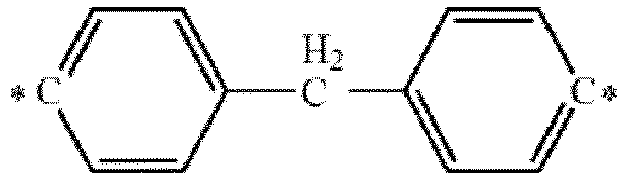
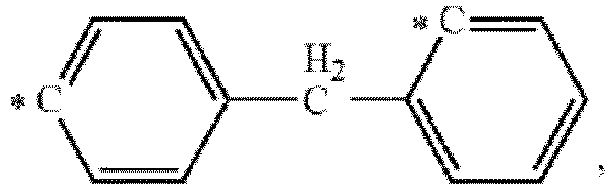

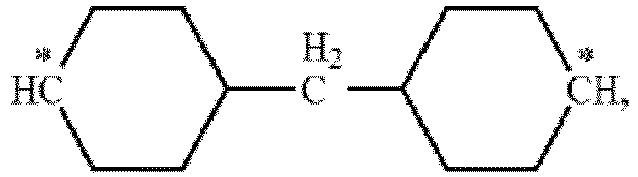


und das Sternchensymbol * die Positionen anzeigt, an denen R2 an die benachbarten NH-Gruppen in den Spezies der Formel (I) gebunden ist. - Verfahren zur Herstellung eines Harnstoffgruppen enthaltenden Produkts gemäß einem der vorhergehenden Ansprüche durch
Umsetzung einer oder mehrerer Komponenten R1-XH mit einem oder mehreren Diisocyanaten OCN-R2-NCO zur Bildung einer oder mehrerer Monoisocyanato-Addukte der folgenden Formel (II)
R1-X-(CO)-NH-R2-NCO (II)
und anschließende Umsetzung einer Mischung der Monoisocyanato-Addukte der Formel (II) und eines oder mehrerer Diisocyanate OCN-R2-NCO mit einem oder mehreren Diaminen H2N-R3-NH2,
wobei R1, R2, R3 und X unabhängig wie für die Spezies der Formel (I) aus Anspruch 1 definiert sind. - Flüssige Zusammensetzung, umfassend die Harnstoffverbindung nach einem der Ansprüche 1 bis 5 und ein Trägermedium.
- Flüssige Zusammensetzung nach Anspruch 7, wobei das Trägermedium ein Amid, ein Sulfoxid und/oder eine ionische Flüssigkeit umfasst.
- Flüssige Zusammensetzung nach Anspruch 7 oder 8, umfassend oder bestehend aus(a) 5 bis 70 Gew.-% eines oder mehrerer erfindungsgemäßer Harnstoffgruppen enthaltender Produkte,(b) 30 bis 95 Gew.-% eines oder mehrerer polarer aprotischer Lösungsmittel und/oder einer oder mehrerer ionischer Flüssigkeiten und(c) 0 bis 8 Gew.-% einer oder mehrerer ionogener Verbindungen,wobei sich die Mengen von (a), (b) und (c) auf das Gesamtgewicht der flüssigen Zusammensetzung beziehen.
- Flüssige Zusammensetzung nach Anspruch 7 oder 8, die ausgewählt ist aus der Gruppe bestehend aus einer Beschichtungszusammensetzung, einer Klarlackzusammensetzung, einem Lack, einem Color Resist, einer Kunststoffformulierung, einer Pigmentpaste, einer Effektpigmentpaste, einer Dichtstoffformulierung, einem Drahtlack, einer Kosmetikformulierung, einer Keramikformulierung, einer flüssigen Formulierung zur Verwendung bei der Gas- und Ölförderung, einer Zusammensetzung zur Herstellung von elektrischen Bauteilen und Schaltungen, einer flüssigen Formulierung zur Verwendung in Energiespeichermedien, einem Reinigungsmittel, einer Vergussmasse, einer Baustoffformulierung, einem Schmiermittel, einer Spachtelmasse, einer Wachsemulsion, einem Metallverarbeitungsprodukt oder einer Metallbearbeitungsflüssigkeit, einer flüssigen Formulierung in Form eines Sprühmittels, eines sogenannten Deposition Aid, einer Tinte, einer Druckfarbe und einer Tintenstrahltinte.
- Flüssige Zusammensetzung nach Anspruch 10, dadurch gekennzeichnet, dass es sich bei der flüssigen Zusammensetzung um eine Beschichtungszusammensetzung aus der Gruppe der Klarlackzusammensetzungen handelt, wobei es sich bei der Klarlackzusammensetzung um eine einkomponentige Klarlackzusammensetzung oder eine zweikomponentige Klarlackzusammensetzung handelt.
- Flüssige Zusammensetzung nach Anspruch 11, bei der es sich um eine zweikomponentige Klarlackzusammensetzung handelt, dieeine Grundkomponente (A), die das Harnstoffgruppen enthaltende Produkt gemäß einem der Ansprüche 1 bis 5 und ein polymeres Bindemittel mit reaktiven Gruppen enthält; undeine Vernetzungskomponente (B), die einen Vernetzer mit reaktiven Gruppen, die gegenüber den reaktiven Gruppen des polymeren Bindemittels in der Grundkomponente (A) reaktiv sind, enthält;umfasst.
- Verwendung der flüssigen Zusammensetzung nach einem der Ansprüche 7 bis 9 als Rheologiesteuerungsmittel.
- Verwendung nach Anspruch 13, wobei das Rheologiesteuerungsmittel zur Steuerung der Rheologie einer Beschichtungszusammensetzung, einer Klarlackzusammensetzung, eines Lacks, eines Color Resist, einer Kunststoffformulierung, einer Pigmentpaste, einer Effektpigmentpaste, einer Dichtstoffformulierung, eines Drahtlacks, einer Kosmetikformulierung, einer Keramikformulierung, einer flüssigen Formulierung zur Verwendung bei der Gas- und Ölförderung, einer Zusammensetzung zur Herstellung von elektrischen Bauteilen und Schaltungen, einer flüssigen Formulierung zur Verwendung in Energiespeichermedien, eines Reinigungsmittels, einer Vergussmasse, einer Baustoffformulierung, eines Schmiermittels, einer Spachtelmasse, einer Wachsemulsion, eines Metallverarbeitungsprodukts oder einer Metallbearbeitungsflüssigkeit, einer flüssigen Formulierung in Form eines Sprühmittels, eines sogenannten Deposition Aid, einer Tinte, einer Druckfarbe und einer Tintenstrahltinte verwendet wird.
- Verfahren zur Rheologieeinstellung, umfassend den Schritt des Zugewinns der flüssigen Zusammensetzung nach einem der Ansprüche 7 bis 9 zu einer Beschichtungszusammensetzung, einer Klarlackzusammensetzung, einem Lack, einem Color Resist, einer Kunststoffformulierung, einer Pigmentpaste, einer Effektpigmentpaste, einer Dichtstoffformulierung, einem Drahtlack, einer Kosmetikformulierung, einer Keramikformulierung, einer flüssigen Formulierung zur Verwendung bei der Gas- und Ölförderung, einer Zusammensetzung zur Herstellung von elektrischen Bauteilen und Schaltungen, einer flüssigen Formulierung zur Verwendung in Energiespeichermedien, einem Reinigungsmittel, einer Vergussmasse, einer Baustoffformulierung, einem Schmiermittel, einer Spachtelmasse, einer Wachsemulsion, einem Metallverarbeitungsprodukt oder einer Metallbearbeitungsflüssigkeit, einer flüssigen Formulierung in Form eines Sprühmittels, einem sogenannten Deposition Aid, einer Tinte, einer Druckfarbe und einer Tintenstrahltinte.
- Gegenstand, beschichtet miti. einer flüssigen Zusammensetzung gemäß Anspruch 10, wobei es sich bei der flüssigen Zusammensetzung um eine Beschichtungszusammensetzung handelt; oderii. einer flüssigen Zusammensetzung gemäß Anspruch 11 oder 12.
Applications Claiming Priority (2)
| Application Number | Priority Date | Filing Date | Title |
|---|---|---|---|
| EP17209527 | 2017-12-21 | ||
| PCT/EP2018/086357 WO2019122222A1 (en) | 2017-12-21 | 2018-12-20 | Urea group containing anti-sagging rheology control agents |
Publications (2)
| Publication Number | Publication Date |
|---|---|
| EP3728363A1 EP3728363A1 (de) | 2020-10-28 |
| EP3728363B1 true EP3728363B1 (de) | 2021-11-17 |
Family
ID=60954743
Family Applications (1)
| Application Number | Title | Priority Date | Filing Date |
|---|---|---|---|
| EP18822373.9A Active EP3728363B1 (de) | 2017-12-21 | 2018-12-20 | Harnstoffgruppe mit antiablauf-rheologiesteuerungsmitteln |
Country Status (7)
| Country | Link |
|---|---|
| US (1) | US11702385B2 (de) |
| EP (1) | EP3728363B1 (de) |
| JP (1) | JP7035198B2 (de) |
| KR (1) | KR102416797B1 (de) |
| CN (1) | CN111491969B (de) |
| ES (1) | ES2904482T3 (de) |
| WO (1) | WO2019122222A1 (de) |
Families Citing this family (5)
| Publication number | Priority date | Publication date | Assignee | Title |
|---|---|---|---|---|
| EP3728363B1 (de) | 2017-12-21 | 2021-11-17 | Byk-Chemie GmbH | Harnstoffgruppe mit antiablauf-rheologiesteuerungsmitteln |
| US20240002582A1 (en) * | 2020-12-04 | 2024-01-04 | Byk-Chemie Gmbh | Rheology control agent |
| FR3117124B1 (fr) * | 2020-12-07 | 2023-12-01 | Arkema France | Composition thixotropique à base de diurée-diuréthane |
| JP2025522872A (ja) * | 2022-07-06 | 2025-07-17 | ビック-ケミー ゲゼルシャフト ミット ベシュレンクテル ハフツング | 環状アミドを含む組成物 |
| KR20240054425A (ko) * | 2022-10-18 | 2024-04-26 | 현대자동차주식회사 | 내치핑성이 향상된 자동차 중도용 도료 조성물 |
Family Cites Families (32)
| Publication number | Priority date | Publication date | Assignee | Title |
|---|---|---|---|---|
| US3766070A (en) * | 1970-10-01 | 1973-10-16 | Shell Oil Co | Diurethane diurea thickened grease compositions |
| US3893956A (en) | 1972-12-11 | 1975-07-08 | August Merckens Nachfolger Kom | Thixotropic coating agents based on urea adduct of polyamine and diisocyanates |
| NL176864C (nl) | 1976-11-25 | 1985-06-17 | Akzo Nv | Werkwijze voor de bereiding van een thixotrope bekledingssamenstelling. |
| DE2822908C2 (de) | 1978-05-26 | 1980-03-20 | Byk-Mallinckrodt Chemische Produkte Gmbh, 4230 Wesel | Thixotropiemittel für Überzugsmittel |
| NL8500475A (nl) | 1985-02-20 | 1986-09-16 | Akzo Nv | Thixotrope bekledingssamenstelling. |
| NL8500476A (nl) | 1985-02-20 | 1986-09-16 | Akzo Nv | Thixotrope bekledingssamenstelling. |
| WO1995009201A1 (en) | 1993-09-28 | 1995-04-06 | Cambridge Industries, Inc. | Polyeurea modified unsaturated polyester compositions |
| JPH08176268A (ja) | 1994-12-26 | 1996-07-09 | Mitsui Toatsu Chem Inc | ポリウレタンウレア成形物の製造方法 |
| US5554586A (en) | 1995-02-27 | 1996-09-10 | Texaco Inc. | Polyurea thickener and grease composition |
| JPH09302062A (ja) | 1996-05-10 | 1997-11-25 | Toyobo Co Ltd | 安定化ポリウレタンウレア重合体溶液及びポリウレタンウレア重合体からなる弾性糸 |
| EP0964880B1 (de) | 1997-03-05 | 2001-08-29 | Du Pont-Toray Company, Ltd. | Stabile polyurethanharnstofflösungen |
| DE19919482C2 (de) | 1999-04-29 | 2001-04-26 | Byk Chemie Gmbh | Verfahren zur Herstellung eines Thixotropie-Mittels und dessen Verwendung |
| AU2001271634B2 (en) | 2000-07-11 | 2005-04-07 | Exxonmobil Research And Engineering Company | Lubricating grease composition and preparation |
| DE10039837C2 (de) | 2000-08-16 | 2003-03-20 | Byk Chemie Gmbh | Verfahren zur Herstellung einer lagerstabilen, rheologisch wirksamen Harnstoffurethan-Lösung mit breiter Verträglichkeit |
| US6617468B2 (en) | 2000-08-16 | 2003-09-09 | Byk-Chemie Gmbh | Rheologically active urea urethane compounds |
| US6620769B1 (en) | 2000-11-21 | 2003-09-16 | Hercules Incorporated | Environmentally acceptable fluid polymer suspension for oil field services |
| DE10126647A1 (de) | 2001-06-01 | 2002-12-12 | Basf Coatings Ag | Rheologiehilfsmittel, Verfahren zu seiner Herstellung und seine Verwendung |
| ATE325140T1 (de) | 2002-01-17 | 2006-06-15 | Arkema | Supramolekularpolymere |
| DE10241853B3 (de) | 2002-09-09 | 2004-01-22 | Byk-Chemie Gmbh | Polymeres Harnstoffurethan als Rheologiesteuerungsmittel und Verfahren zur Herstellung |
| US20050182205A1 (en) | 2004-02-17 | 2005-08-18 | Guha Probir K. | Polymeric thickener for molding compounds |
| ATE421549T1 (de) | 2004-08-11 | 2009-02-15 | Rhein Chemie Rheinau Gmbh | Verfahren zur herstellung pulverförmiger (poly)harnstoffe mittels sprühtrocknung |
| WO2007105258A1 (ja) | 2006-03-07 | 2007-09-20 | The Yokohama Rubber Co., Ltd. | 揺変性付与剤およびこれを用いた硬化性樹脂組成物ならびに硬化性樹脂組成物の使用方法 |
| DE102008059702A1 (de) | 2008-12-01 | 2010-06-02 | Byk-Chemie Gmbh | Verfahren zur Herstellung rheologisch wirksamer Harnstoffurethane in organischen Salzen |
| EP2292675A1 (de) * | 2009-09-08 | 2011-03-09 | BYK-Chemie GmbH | Polyharnstoffe als Rheologiesteuerungsmittel |
| ES2604115T3 (es) | 2012-12-15 | 2017-03-03 | Byk-Chemie Gmbh | Composición para el control de la reología |
| PL3131962T3 (pl) | 2014-04-15 | 2018-09-28 | Byk-Chemie Gmbh | Kompozycja do regulowania właściwości reologicznych |
| WO2015158794A1 (de) | 2014-04-15 | 2015-10-22 | Byk-Chemie Gmbh | Als rheologiesteuerungsmittel geeignete lagerstabile harnstoffzubereitungen |
| DE102015004640A1 (de) | 2014-04-15 | 2015-10-15 | Byk-Chemie Gmbh | Rheologiesteuerungsmittel umfassend eine Wirkstoffkombination |
| JP6580166B2 (ja) | 2015-07-27 | 2019-09-25 | ビイク−ヒエミー ゲゼルシャフト ミツト ベシユレンクテル ハフツングBYK−Chemie GmbH | レオロジーコントロールのためのウレアウレタン |
| CN106590376B (zh) * | 2016-12-27 | 2018-11-13 | 苏州中材非金属矿工业设计研究院有限公司 | 一种抗流挂单组份聚脲涂料及其制备方法 |
| EP3728363B1 (de) | 2017-12-21 | 2021-11-17 | Byk-Chemie GmbH | Harnstoffgruppe mit antiablauf-rheologiesteuerungsmitteln |
| CN113840858B (zh) | 2019-03-14 | 2023-12-15 | 毕克化学有限公司 | 含有环酰胺的流变控制添加剂 |
-
2018
- 2018-12-20 EP EP18822373.9A patent/EP3728363B1/de active Active
- 2018-12-20 WO PCT/EP2018/086357 patent/WO2019122222A1/en not_active Ceased
- 2018-12-20 CN CN201880082553.2A patent/CN111491969B/zh active Active
- 2018-12-20 JP JP2020534590A patent/JP7035198B2/ja active Active
- 2018-12-20 ES ES18822373T patent/ES2904482T3/es active Active
- 2018-12-20 KR KR1020207020724A patent/KR102416797B1/ko active Active
- 2018-12-20 US US16/955,430 patent/US11702385B2/en active Active
Also Published As
| Publication number | Publication date |
|---|---|
| JP7035198B2 (ja) | 2022-03-14 |
| JP2021507075A (ja) | 2021-02-22 |
| ES2904482T3 (es) | 2022-04-05 |
| CN111491969B (zh) | 2022-05-24 |
| WO2019122222A1 (en) | 2019-06-27 |
| EP3728363A1 (de) | 2020-10-28 |
| KR20200099570A (ko) | 2020-08-24 |
| KR102416797B1 (ko) | 2022-07-05 |
| CN111491969A (zh) | 2020-08-04 |
| US20210070697A1 (en) | 2021-03-11 |
| US11702385B2 (en) | 2023-07-18 |
Similar Documents
| Publication | Publication Date | Title |
|---|---|---|
| EP3728363B1 (de) | Harnstoffgruppe mit antiablauf-rheologiesteuerungsmitteln | |
| JP5981844B2 (ja) | レオロジー調節剤としてのポリ尿素 | |
| KR102555666B1 (ko) | 리올로지 제어용 우레아우레탄 | |
| JP4128786B2 (ja) | 新規ポリウレタンおよび水性系の増粘におけるその使用 | |
| CN113840858B (zh) | 含有环酰胺的流变控制添加剂 | |
| KR20150095873A (ko) | 유동성 조절용 조성물 | |
| CN110785447B (zh) | 适合作为增稠剂的聚合物 | |
| EP3728382B1 (de) | Harnstoff- und urethangruppenhaltiges rheologiekontrolladditiv mit antiabsetzeigenschaft | |
| WO2020141120A1 (en) | Urea group containing rheology control additive | |
| WO2026027417A1 (en) | Rheology control agent |
Legal Events
| Date | Code | Title | Description |
|---|---|---|---|
| STAA | Information on the status of an ep patent application or granted ep patent |
Free format text: STATUS: UNKNOWN |
|
| STAA | Information on the status of an ep patent application or granted ep patent |
Free format text: STATUS: THE INTERNATIONAL PUBLICATION HAS BEEN MADE |
|
| PUAI | Public reference made under article 153(3) epc to a published international application that has entered the european phase |
Free format text: ORIGINAL CODE: 0009012 |
|
| STAA | Information on the status of an ep patent application or granted ep patent |
Free format text: STATUS: REQUEST FOR EXAMINATION WAS MADE |
|
| 17P | Request for examination filed |
Effective date: 20200721 |
|
| AK | Designated contracting states |
Kind code of ref document: A1 Designated state(s): AL AT BE BG CH CY CZ DE DK EE ES FI FR GB GR HR HU IE IS IT LI LT LU LV MC MK MT NL NO PL PT RO RS SE SI SK SM TR |
|
| AX | Request for extension of the european patent |
Extension state: BA ME |
|
| DAV | Request for validation of the european patent (deleted) | ||
| DAX | Request for extension of the european patent (deleted) | ||
| GRAP | Despatch of communication of intention to grant a patent |
Free format text: ORIGINAL CODE: EPIDOSNIGR1 |
|
| STAA | Information on the status of an ep patent application or granted ep patent |
Free format text: STATUS: GRANT OF PATENT IS INTENDED |
|
| INTG | Intention to grant announced |
Effective date: 20210608 |
|
| GRAS | Grant fee paid |
Free format text: ORIGINAL CODE: EPIDOSNIGR3 |
|
| GRAA | (expected) grant |
Free format text: ORIGINAL CODE: 0009210 |
|
| STAA | Information on the status of an ep patent application or granted ep patent |
Free format text: STATUS: THE PATENT HAS BEEN GRANTED |
|
| AK | Designated contracting states |
Kind code of ref document: B1 Designated state(s): AL AT BE BG CH CY CZ DE DK EE ES FI FR GB GR HR HU IE IS IT LI LT LU LV MC MK MT NL NO PL PT RO RS SE SI SK SM TR |
|
| REG | Reference to a national code |
Ref country code: GB Ref legal event code: FG4D |
|
| REG | Reference to a national code |
Ref country code: IE Ref legal event code: FG4D |
|
| REG | Reference to a national code |
Ref country code: DE Ref legal event code: R096 Ref document number: 602018026948 Country of ref document: DE |
|
| REG | Reference to a national code |
Ref country code: AT Ref legal event code: REF Ref document number: 1448012 Country of ref document: AT Kind code of ref document: T Effective date: 20211215 |
|
| REG | Reference to a national code |
Ref country code: NL Ref legal event code: FP |
|
| REG | Reference to a national code |
Ref country code: LT Ref legal event code: MG9D |
|
| REG | Reference to a national code |
Ref country code: ES Ref legal event code: FG2A Ref document number: 2904482 Country of ref document: ES Kind code of ref document: T3 Effective date: 20220405 |
|
| REG | Reference to a national code |
Ref country code: AT Ref legal event code: MK05 Ref document number: 1448012 Country of ref document: AT Kind code of ref document: T Effective date: 20211117 |
|
| PG25 | Lapsed in a contracting state [announced via postgrant information from national office to epo] |
Ref country code: RS Free format text: LAPSE BECAUSE OF FAILURE TO SUBMIT A TRANSLATION OF THE DESCRIPTION OR TO PAY THE FEE WITHIN THE PRESCRIBED TIME-LIMIT Effective date: 20211117 Ref country code: LT Free format text: LAPSE BECAUSE OF FAILURE TO SUBMIT A TRANSLATION OF THE DESCRIPTION OR TO PAY THE FEE WITHIN THE PRESCRIBED TIME-LIMIT Effective date: 20211117 Ref country code: FI Free format text: LAPSE BECAUSE OF FAILURE TO SUBMIT A TRANSLATION OF THE DESCRIPTION OR TO PAY THE FEE WITHIN THE PRESCRIBED TIME-LIMIT Effective date: 20211117 Ref country code: BG Free format text: LAPSE BECAUSE OF FAILURE TO SUBMIT A TRANSLATION OF THE DESCRIPTION OR TO PAY THE FEE WITHIN THE PRESCRIBED TIME-LIMIT Effective date: 20220217 Ref country code: AT Free format text: LAPSE BECAUSE OF FAILURE TO SUBMIT A TRANSLATION OF THE DESCRIPTION OR TO PAY THE FEE WITHIN THE PRESCRIBED TIME-LIMIT Effective date: 20211117 |
|
| PG25 | Lapsed in a contracting state [announced via postgrant information from national office to epo] |
Ref country code: IS Free format text: LAPSE BECAUSE OF FAILURE TO SUBMIT A TRANSLATION OF THE DESCRIPTION OR TO PAY THE FEE WITHIN THE PRESCRIBED TIME-LIMIT Effective date: 20220317 Ref country code: SE Free format text: LAPSE BECAUSE OF FAILURE TO SUBMIT A TRANSLATION OF THE DESCRIPTION OR TO PAY THE FEE WITHIN THE PRESCRIBED TIME-LIMIT Effective date: 20211117 Ref country code: PT Free format text: LAPSE BECAUSE OF FAILURE TO SUBMIT A TRANSLATION OF THE DESCRIPTION OR TO PAY THE FEE WITHIN THE PRESCRIBED TIME-LIMIT Effective date: 20220317 Ref country code: PL Free format text: LAPSE BECAUSE OF FAILURE TO SUBMIT A TRANSLATION OF THE DESCRIPTION OR TO PAY THE FEE WITHIN THE PRESCRIBED TIME-LIMIT Effective date: 20211117 Ref country code: NO Free format text: LAPSE BECAUSE OF FAILURE TO SUBMIT A TRANSLATION OF THE DESCRIPTION OR TO PAY THE FEE WITHIN THE PRESCRIBED TIME-LIMIT Effective date: 20220217 Ref country code: LV Free format text: LAPSE BECAUSE OF FAILURE TO SUBMIT A TRANSLATION OF THE DESCRIPTION OR TO PAY THE FEE WITHIN THE PRESCRIBED TIME-LIMIT Effective date: 20211117 Ref country code: HR Free format text: LAPSE BECAUSE OF FAILURE TO SUBMIT A TRANSLATION OF THE DESCRIPTION OR TO PAY THE FEE WITHIN THE PRESCRIBED TIME-LIMIT Effective date: 20211117 Ref country code: GR Free format text: LAPSE BECAUSE OF FAILURE TO SUBMIT A TRANSLATION OF THE DESCRIPTION OR TO PAY THE FEE WITHIN THE PRESCRIBED TIME-LIMIT Effective date: 20220218 |
|
| PG25 | Lapsed in a contracting state [announced via postgrant information from national office to epo] |
Ref country code: SM Free format text: LAPSE BECAUSE OF FAILURE TO SUBMIT A TRANSLATION OF THE DESCRIPTION OR TO PAY THE FEE WITHIN THE PRESCRIBED TIME-LIMIT Effective date: 20211117 Ref country code: SK Free format text: LAPSE BECAUSE OF FAILURE TO SUBMIT A TRANSLATION OF THE DESCRIPTION OR TO PAY THE FEE WITHIN THE PRESCRIBED TIME-LIMIT Effective date: 20211117 Ref country code: RO Free format text: LAPSE BECAUSE OF FAILURE TO SUBMIT A TRANSLATION OF THE DESCRIPTION OR TO PAY THE FEE WITHIN THE PRESCRIBED TIME-LIMIT Effective date: 20211117 Ref country code: EE Free format text: LAPSE BECAUSE OF FAILURE TO SUBMIT A TRANSLATION OF THE DESCRIPTION OR TO PAY THE FEE WITHIN THE PRESCRIBED TIME-LIMIT Effective date: 20211117 Ref country code: DK Free format text: LAPSE BECAUSE OF FAILURE TO SUBMIT A TRANSLATION OF THE DESCRIPTION OR TO PAY THE FEE WITHIN THE PRESCRIBED TIME-LIMIT Effective date: 20211117 Ref country code: CZ Free format text: LAPSE BECAUSE OF FAILURE TO SUBMIT A TRANSLATION OF THE DESCRIPTION OR TO PAY THE FEE WITHIN THE PRESCRIBED TIME-LIMIT Effective date: 20211117 |
|
| REG | Reference to a national code |
Ref country code: CH Ref legal event code: PL |
|
| REG | Reference to a national code |
Ref country code: DE Ref legal event code: R097 Ref document number: 602018026948 Country of ref document: DE |
|
| PG25 | Lapsed in a contracting state [announced via postgrant information from national office to epo] |
Ref country code: MC Free format text: LAPSE BECAUSE OF FAILURE TO SUBMIT A TRANSLATION OF THE DESCRIPTION OR TO PAY THE FEE WITHIN THE PRESCRIBED TIME-LIMIT Effective date: 20211117 |
|
| PLBE | No opposition filed within time limit |
Free format text: ORIGINAL CODE: 0009261 |
|
| STAA | Information on the status of an ep patent application or granted ep patent |
Free format text: STATUS: NO OPPOSITION FILED WITHIN TIME LIMIT |
|
| REG | Reference to a national code |
Ref country code: BE Ref legal event code: MM Effective date: 20211231 |
|
| 26N | No opposition filed |
Effective date: 20220818 |
|
| PG25 | Lapsed in a contracting state [announced via postgrant information from national office to epo] |
Ref country code: LU Free format text: LAPSE BECAUSE OF NON-PAYMENT OF DUE FEES Effective date: 20211220 Ref country code: IE Free format text: LAPSE BECAUSE OF NON-PAYMENT OF DUE FEES Effective date: 20211220 Ref country code: AL Free format text: LAPSE BECAUSE OF FAILURE TO SUBMIT A TRANSLATION OF THE DESCRIPTION OR TO PAY THE FEE WITHIN THE PRESCRIBED TIME-LIMIT Effective date: 20211117 |
|
| PG25 | Lapsed in a contracting state [announced via postgrant information from national office to epo] |
Ref country code: SI Free format text: LAPSE BECAUSE OF FAILURE TO SUBMIT A TRANSLATION OF THE DESCRIPTION OR TO PAY THE FEE WITHIN THE PRESCRIBED TIME-LIMIT Effective date: 20211117 Ref country code: BE Free format text: LAPSE BECAUSE OF NON-PAYMENT OF DUE FEES Effective date: 20211231 |
|
| PG25 | Lapsed in a contracting state [announced via postgrant information from national office to epo] |
Ref country code: LI Free format text: LAPSE BECAUSE OF NON-PAYMENT OF DUE FEES Effective date: 20211231 Ref country code: CH Free format text: LAPSE BECAUSE OF NON-PAYMENT OF DUE FEES Effective date: 20211231 |
|
| PG25 | Lapsed in a contracting state [announced via postgrant information from national office to epo] |
Ref country code: CY Free format text: LAPSE BECAUSE OF FAILURE TO SUBMIT A TRANSLATION OF THE DESCRIPTION OR TO PAY THE FEE WITHIN THE PRESCRIBED TIME-LIMIT Effective date: 20211117 |
|
| PG25 | Lapsed in a contracting state [announced via postgrant information from national office to epo] |
Ref country code: HU Free format text: LAPSE BECAUSE OF FAILURE TO SUBMIT A TRANSLATION OF THE DESCRIPTION OR TO PAY THE FEE WITHIN THE PRESCRIBED TIME-LIMIT; INVALID AB INITIO Effective date: 20181220 |
|
| P01 | Opt-out of the competence of the unified patent court (upc) registered |
Effective date: 20230825 |
|
| PG25 | Lapsed in a contracting state [announced via postgrant information from national office to epo] |
Ref country code: MK Free format text: LAPSE BECAUSE OF FAILURE TO SUBMIT A TRANSLATION OF THE DESCRIPTION OR TO PAY THE FEE WITHIN THE PRESCRIBED TIME-LIMIT Effective date: 20211117 |
|
| PG25 | Lapsed in a contracting state [announced via postgrant information from national office to epo] |
Ref country code: TR Free format text: LAPSE BECAUSE OF FAILURE TO SUBMIT A TRANSLATION OF THE DESCRIPTION OR TO PAY THE FEE WITHIN THE PRESCRIBED TIME-LIMIT Effective date: 20211117 |
|
| PG25 | Lapsed in a contracting state [announced via postgrant information from national office to epo] |
Ref country code: MT Free format text: LAPSE BECAUSE OF FAILURE TO SUBMIT A TRANSLATION OF THE DESCRIPTION OR TO PAY THE FEE WITHIN THE PRESCRIBED TIME-LIMIT Effective date: 20211117 |
|
| PGFP | Annual fee paid to national office [announced via postgrant information from national office to epo] |
Ref country code: DE Payment date: 20251211 Year of fee payment: 8 |
|
| PGFP | Annual fee paid to national office [announced via postgrant information from national office to epo] |
Ref country code: GB Payment date: 20251219 Year of fee payment: 8 |
|
| PGFP | Annual fee paid to national office [announced via postgrant information from national office to epo] |
Ref country code: IT Payment date: 20251223 Year of fee payment: 8 |
|
| PGFP | Annual fee paid to national office [announced via postgrant information from national office to epo] |
Ref country code: NL Payment date: 20251219 Year of fee payment: 8 Ref country code: FR Payment date: 20251229 Year of fee payment: 8 |
|
| PGFP | Annual fee paid to national office [announced via postgrant information from national office to epo] |
Ref country code: ES Payment date: 20260130 Year of fee payment: 8 |