EP3729151B1 - Bending-loss insensitive single mode fibre, with a shallow trench, and corresponding optical system - Google Patents
Bending-loss insensitive single mode fibre, with a shallow trench, and corresponding optical system Download PDFInfo
- Publication number
- EP3729151B1 EP3729151B1 EP17851832.0A EP17851832A EP3729151B1 EP 3729151 B1 EP3729151 B1 EP 3729151B1 EP 17851832 A EP17851832 A EP 17851832A EP 3729151 B1 EP3729151 B1 EP 3729151B1
- Authority
- EP
- European Patent Office
- Prior art keywords
- core
- radius
- cladding
- single mode
- optical fibre
- Prior art date
- Legal status (The legal status is an assumption and is not a legal conclusion. Google has not performed a legal analysis and makes no representation as to the accuracy of the status listed.)
- Active
Links
Images

Classifications
-
- G—PHYSICS
- G02—OPTICS
- G02B—OPTICAL ELEMENTS, SYSTEMS OR APPARATUS
- G02B6/00—Light guides; Structural details of arrangements comprising light guides and other optical elements, e.g. couplings
- G02B6/02—Optical fibres with cladding with or without a coating
- G02B6/028—Optical fibres with cladding with or without a coating with core or cladding having graded refractive index
- G02B6/0281—Graded index region forming part of the central core segment, e.g. alpha profile, triangular, trapezoidal core
-
- G—PHYSICS
- G02—OPTICS
- G02B—OPTICAL ELEMENTS, SYSTEMS OR APPARATUS
- G02B6/00—Light guides; Structural details of arrangements comprising light guides and other optical elements, e.g. couplings
- G02B6/02—Optical fibres with cladding with or without a coating
- G02B6/02004—Optical fibres with cladding with or without a coating characterised by the core effective area or mode field radius
- G02B6/02009—Large effective area or mode field radius, e.g. to reduce nonlinear effects in single mode fibres
-
- G—PHYSICS
- G02—OPTICS
- G02B—OPTICAL ELEMENTS, SYSTEMS OR APPARATUS
- G02B6/00—Light guides; Structural details of arrangements comprising light guides and other optical elements, e.g. couplings
- G02B6/02—Optical fibres with cladding with or without a coating
- G02B6/036—Optical fibres with cladding with or without a coating core or cladding comprising multiple layers
-
- G—PHYSICS
- G02—OPTICS
- G02B—OPTICAL ELEMENTS, SYSTEMS OR APPARATUS
- G02B6/00—Light guides; Structural details of arrangements comprising light guides and other optical elements, e.g. couplings
- G02B6/02—Optical fibres with cladding with or without a coating
- G02B6/036—Optical fibres with cladding with or without a coating core or cladding comprising multiple layers
- G02B6/03616—Optical fibres characterised both by the number of different refractive index layers around the central core segment, i.e. around the innermost high index core layer, and their relative refractive index difference
- G02B6/03622—Optical fibres characterised both by the number of different refractive index layers around the central core segment, i.e. around the innermost high index core layer, and their relative refractive index difference having 2 layers only
- G02B6/03627—Optical fibres characterised both by the number of different refractive index layers around the central core segment, i.e. around the innermost high index core layer, and their relative refractive index difference having 2 layers only arranged - +
-
- G—PHYSICS
- G02—OPTICS
- G02B—OPTICAL ELEMENTS, SYSTEMS OR APPARATUS
- G02B6/00—Light guides; Structural details of arrangements comprising light guides and other optical elements, e.g. couplings
- G02B6/02—Optical fibres with cladding with or without a coating
- G02B6/036—Optical fibres with cladding with or without a coating core or cladding comprising multiple layers
- G02B6/03616—Optical fibres characterised both by the number of different refractive index layers around the central core segment, i.e. around the innermost high index core layer, and their relative refractive index difference
- G02B6/03638—Optical fibres characterised both by the number of different refractive index layers around the central core segment, i.e. around the innermost high index core layer, and their relative refractive index difference having 3 layers only
- G02B6/0365—Optical fibres characterised both by the number of different refractive index layers around the central core segment, i.e. around the innermost high index core layer, and their relative refractive index difference having 3 layers only arranged - - +
Definitions
- the invention relates to single-mode optical fibres used in optical transmission systems, optical transmission systems comprising such single mode fibres, and fabrication methods thereof. More specifically, the present invention relates to single-mode optical fibres, which are bending-loss insensitive, and compliant with the ITU-T G.657.A2 standard.
- SMFs single-mode optical fibres
- SSMFs standard single-mode fibres
- the International Telecommunication Union has defined several standards with which a standard optical transmission fibre should comply.
- the ITU-T G. 652 recommendation (Last revision of November 2016) describes the characteristics of single-mode fibre and cable-based networks, which can answer the growing demand for broadband services.
- the ITU-T G. 652 recommendation has several attributes (i.e. A, B, C and D) defining the fibre attributes of a single mode optical fibre.
- the ITU-T G. 657 recommendation focuses more precisely on bending-loss insensitive single mode optical fibres, which show strongly improved bending performance compared with the existing ITU-T G.652 single-mode fibre and cables. Actually, such improved bending performance is necessary, due to the high density network of distribution and drop cables in the access network, as well as to the limited space and the many manipulations needed, which ask for operator-friendly fibre performance and low bending sensitivity.
- the ITU-T G. 657 recommendation describes two categories (A and B) of single-mode optical fibre cable which are suitable for use in access networks, including inside buildings at the end of these networks. Both categories A and B contain two subcategories which differ in macrobending loss.
- Category A fibres are optimized for reduced macrobending loss and tighter dimensional specifications compared to ITU-T G.652.D fibres and can be deployed throughout the access network. These fibres are suitable to be used in the O, E, S, C and L-band (i.e., throughout the 1260 to 1625 nm range). Fibres and requirements in this category are a subset of ITU-T G.652.D and therefore compliant with ITU-T G.652.D fibres and have the same transmission and interconnection properties.
- Subcategory ITU-T G.657.A1 fibres are appropriate for a minimum design radius of 10 mm.
- Subcategory ITU-T G.657.A2 fibres are appropriate for a minimum design radius of 7.5 mm.
- Table 1 in the ITU-T G.657 Recommendation (ITU-T G.657 category A attributes; November 2016 Issue) provides the ranges or limits on values of the single-mode fibre characteristics in order for them to comply with the ITU-T G.657.A recommendation.
- Macrobending loss observed in uncabled fibres varies with wavelength, bend radius and the number of turns about a mandrel with a specified radius.
- macrobending loss shall not exceed the maximum value given in the below table for the specified wavelength(s), bend radii and number of turns.
- the ITU-T G.657.A recommendation does not provide any specific requirement as regards the refractive index profile of the optical fibre, which does not need to be known according to the standard, it must be noted that single mode optical fibres with trench assisted refractive index profiles have been introduced in the market. Thanks to this design, improved macro-bending losses can be reached, compared to legacy step index designs. Furthermore, it is this profile design type which is used to manufacture fibres compliant with the ITU-T G. 657. A2 recommendation.
- Table 1 - ITU-T G.657.A attributes Fibre attributes Attribute Detail Value Unit Mode field diameter Wavelength 1310 nm Range of nominal values 8.6-9.2 ⁇ m Tolerance ⁇ 0.4 ⁇ m Cladding diameter Nominal 125.0 ⁇ m Tolerance ⁇ 0.7 ⁇ m Core concentricity error Maximum 0.5 ⁇ m Cladding non-circularity Maximum 1.0 % Cable cut-off wavelength Maximum 1 260 nm Uncabled fibre macrobending loss (Notes 1, 2) ITU-T G.657.A1 ITU-T G.657-A2 Radius 15 10 15 10 7.5 mm Number of turns 10 1 10 1 1 Max. at 1 550 nm 0.25 0.75 0.03 0.1 0.5 dB Max.
- bend insensitive single mode fibres require a deep trench in the cladding.
- single mode fibres without such a deep trench in the cladding can comply with the worst G.657.A category, i.e. G.657.A1, but not with the G.657.A2 category, because of their high macro-bending losses level for 7.5mm and 10mm bend radii.
- the ITU-T G. 657. A2 specification accepts nominal Mode Field Diameter (MFD) at a wavelength of 1310nm comprised between 8.6 ⁇ m and 9.2 ⁇ m.
- the ITU-T G. 652.D standard also accepts nominal Mode Field Diameter (MFD) at a wavelength of 1310nm comprised between 8.6 ⁇ m and 9.2 ⁇ m.
- commercialized G. 652.D fibres are generally targeting a nominal MFD at 1310nm at the high end of the specification, that is, between 9.0 ⁇ m and 9.2 ⁇ m
- the currently commercialized G. 657.A fibres are generally designed to have a Mode Field Diameter at the low end of the specification, i.e. between 8.6 ⁇ m and 8.8 ⁇ m.
- most G. 657.A fibres manufacturers had to play on the Mode Field Diameter, and lower it, in order to achieve the demanding requirements of the G. 657.A standard as regards macrobending losses.
- G.657.A2 fibre without trench and that is targeting a nominal MFD at 1310nm between 9.0 and 9.2 ⁇ m.
- Patent document WO2015/092464 in the name of the Applicant, describes a single mode optical fibre having a core and a cladding, the core refractive index profile having a trapezoid-like shape.
- the transition part of the trapezoid-like core refractive index profile is obtained by gradually changing a concentration of at least two dopants from a concentration in the centre part of the core to a concentration in a cladding part adjacent to the core.
- trapezoid core shape is a well-known solution to control extra losses or to design non-zero dispersion shifted fibres, and is also easier to manufacture than well-known alpha core shapes, used for multimode fibres.
- profile designs disclosed in this patent document are not compliant with the ITU-T G.657.A2 recommendation, and have Mode Field Diameters at 1310nm below 9.0 ⁇ m.
- Patent document US 7,187,833 discloses an optical waveguide fibre having a multi-segmented core surrounded by a cladding, the core having a central segment and an annular segment surrounding the central segment.
- the central segment has a positive relative refractive index profile
- the annular segment has a negative relative refractive index profile.
- the optical fibre exhibits an effective area of greater than about 75 ⁇ m 2 at a wavelength of about 1550 nm, a dispersion slope of less than 0.07 ps/nm 2 /km at a wavelength of about 1550 nm, a zero-dispersion wavelength of between about 1290 nm and 1330 nm, and an attenuation of less than 0.20 dB/km, and preferably less than 0.19 dB/km, at a wavelength of about 1550 nm.
- Patent document US 8,849,082 discloses an optical fibre comprising: (I) a germania doped central core region having outer radius r 1 and (II) a maximum relative refractive index ⁇ 1max and a cladding region including (i) a first inner cladding region having an outer radius r 2 >5 microns and refractive index ⁇ 2 ; (ii) a second inner cladding region having an outer radius r 3 >9 microns and comprising refractive index ⁇ 3 ; and (iii) an outer cladding region surrounding the inner cladding region and comprising refractive index ⁇ 4 , wherein ⁇ 1max > ⁇ 4 , ⁇ 2 > ⁇ 3 , and wherein 0.01% ⁇ 4 -A 3 ⁇ 0.09%, said fibre exhibits a 22m cable cutoff less than or equal to 1260 nm, and 0.25 ⁇ r 1/ r 2 ⁇ 0.85.
- none of these prior art designs corresponds to a single mode fibre which would be compliant with the ITU-T G.657.A2 recommendation, which cladding would not comprise a deep trench, and which would target a nominal MFD at 1310nm ranging from 9.0 ⁇ m to 9.2 ⁇ m.
- a bending-loss insensitive single mode optical fibre having a Mode Field Diameter greater than or equal to 9.0 ⁇ m at a 1310nm wavelength is disclosed.
- Such an optical fibre has a core surrounded by a cladding, the core refractive index profile having a trapezoid-like shape.
- a centre part of the core has a radius r 0 and a refractive index n 0 and a transition part of the trapezoid-like core refractive index profile ranges from radius r 0 to a radius r 1 >r 0 with a trapezoid ratio r 0 / r 1 of the centre part of the core's radius r 0 to the transition part's radius r 1 between 0.1 and 0.6, preferably between 0.2 and 0.5, and more preferably between 0.25 and 0.45.
- the cladding comprises at least one region of depressed refractive index, called a trench, ranging from radius r 2 > r 1 to radius r 3 >r 2 and having a refractive index n t , and an outer cladding ranging from radius r 3 to the end of a glass part of the single mode fibre and having a refractive index n 4 .
- the single mode optical fibre fulfils the following criterion: 25.7 ⁇ 10 ⁇ 3 ⁇ V 01 ⁇ 0.2326 V 02 ⁇ 26.8 ⁇ 10 ⁇ 3 .
- a single mode optical fibre according to an embodiment of the present disclosure has a core with a refractive index profile showing a trapezoid shape, instead of the more usual step shape. It is well known that such a trapezoid shape allows reducing the extra scattering losses in the single mode optical fibre, without degrading Rayleigh scattering, or to design non-zero dispersion shifted fibres. However, such a trapezoid shape is here used to enable the single mode optical fibre to be compliant with the ITU-T G.657.A2 standard, while avoiding adding a deep trench in the cladding.
- Such a trapezoid shape of the core is instead combined with a large, but shallow, trench in the cladding (as defined by the range of allowed values for V 02 ), which advantageously replaces the deep trench needed so far for achieving compliance with the ITU-T G.657.A2 standard.
- such a trapezoid shape is easier to manufacture, as compared to the alpha-shaped refractive index profile from the prior art, which is not adequate for the small core diameter of single mode optical fibres.
- Such a trapezoid shape may be achieved through a gradual change in the concentration of two or more dopants in the transition part from the centre part of the core to the cladding, as disclosed for example in patent document WO2015/092464 .
- such a bending-loss insensitive single mode optical fibre has a nominal Mode Field Diameter at the 1310nm wavelength, which is between 9.0 ⁇ m and 9.2 ⁇ m, i.e. at the high end of the ITU-T G.657.A2 standardized range: these nominal MFD values are hence compatible with those of the commercialized ITU-T G.652.D compliant single mode fibres. Their splicing is easier for the user, as it does not induce artefacts in the OTDR.
- the optical fibre of the present disclosure should fulfil the criterion: 25.7 ⁇ 10 -3 ⁇ V 01 - 0.2326 V 02 ⁇ 26.8 ⁇ 10 -3 , in order for it to comply with the requirements of the ITU-T G.657.A2 Recommendation at a MFD at 1310nm between 9.0 and 9.2 microns.
- a range for the ratio r 0 / r 1 between 0.1 and 0.6 is required to have a Zero chromatic Dispersion Wavelength (ZDW) between 1300 nm and 1324 nm (which is required for compliance with the ITU G657.A2 standard).
- ZDW Zero chromatic Dispersion Wavelength
- a preferred range for r 0 / r 1 is between 0.2 and 0.5, while an even narrower range between 0.25 and 0.45 provides a robust working range.
- r 2 r 1 and a trench ranging from r 2 to r 3 surrounds the core.
- the cladding comprises an intermediate cladding ranging from radius r 1 to radius r 2 >r 1 and having a refractive index n 2 , and the trench surrounds the intermediate cladding.
- the refractive-index difference of the intermediate cladding with respect to the outer cladding ⁇ n 2 0.
- the intermediate cladding hence presents a refractive index which is equivalent to that of the external cladding.
- Such an intermediate cladding is void of any dopant and constitutes a buffer zone between the up-doped core and the down-doped trench.
- the core outer radius r 1 is between 5.4 ⁇ m and 8.0 ⁇ m.
- the trench outer radius r 3 is between 16 ⁇ m and 22 ⁇ m.
- such an optical fibre has a Mode Field Diameter at 1310nm between 9.0 ⁇ m and 9.2 ⁇ m.
- said optical fibre has a maximum Cable cut-off wavelength of 1240nm.
- the ITU-T G.657.A2 Recommendation specifies a maximum value of the Cable Cut-off Wavelength of 1260nm. However, it appears reasonable to target a lower maximum Cable Cut-off Wavelength, around 1240nm, to ensure that all manufactured optical fibres will pass the cable cut-off recommendation. Targeting a cable cut-off wavelength at 1260nm is not robust as it would induce 50% of the produced optical fibres out of the G. 657.A2 Recommendation, because of manufacturing defects. Targeting cable cut-off wavelength below 1240nm is needed to ensure a robust production.
- the Cable Cut-Off wavelength corresponds to the cut-off wavelength in cable ⁇ cc such as defined by Subcommittee 86A of the International Electrotechnical Commission in the IEC 60793-1-44 standard.
- said optical fibre complies with the requirements of the ITU-T G.657.A2 standard.
- the present invention also relates to an optical fibre transmission system comprising at least one single mode fibre according to the invention.
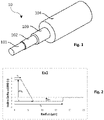
- the optical fiber 10 generally has a glass core 101 surrounded by a glass cladding. More precisely, the optical fiber 10 comprises three or four abutting concentric regions, namely:
- the trench 103 directly abuts the core 101, and ranges from an inner radius r 1 to an outer radius r 3 .
- the glass core 101 generally has an outer radius r 1 between 5.4 ⁇ m and 8.0 ⁇ m. Moreover, the depressed cladding 103 has an outer radius r 3 between 16 ⁇ m and 22 ⁇ m.
- the core 101 has a trapezoid shape, with a small basis radius r 0 and a large basis radius r 1 .
- the small basis over large basis trapezoid ratio r 0/ r 1 is ranging from 0.1 to 0.6, typically ranging from about 0.2 to about 0.5, preferably from about 0.25 to about 0.45.
- the core 101 and the cladding generally comprise silica, specifically silica glass.
- the cross-section of the optical fiber 10 may be generally circular-symmetric with respect to the center of the core 101.
- the radius of the glass portion of the optical fiber 10 is about 62.5 ⁇ m.
- the dimensions of the cladding may be adjusted so that the radius of the glass portion of the optical fiber may be greater than or less than 62.5 ⁇ m.
- the optical fiber 10 also comprises a coating surrounding the cladding. Such a coating may comprise several layers, and it may notably be a dual-layer coating, although these different layers are not shown on figure 1 .
- the different portions in the cladding may comprise pure silica glass (SiO 2 ), silica glass with one or more dopants, which increase the index of refraction (e.g. GeO 2 or any other known dopant), such as when the portion of the cladding is "up-doped” " (e.g. for the intermediate cladding 102), or silica glass with a dopant, which decreases the index of refraction, such as fluorine, such as when the portion of the cladding is "down-doped” (e.g. for the trench 103).
- dopants which increase the index of refraction
- germanO 2 or any other known dopant such as when the portion of the cladding is "up-doped" " (e.g. for the intermediate cladding 102)
- silica glass with a dopant which decreases the index of refraction, such as fluorine, such as when the portion of the cladding is "down-doped” (e
- the trapezoid shape of the core 101 may be obtained by gradually adjusting the concentration of at least two dopants in the center part of the core.
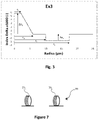
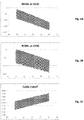
- Figures 2 and 3 show diagrams of the index profile of a fibre constituting a first (referenced as Ex1) and a second (referenced as Ex3) embodiment of the invention.
- the index profile is a trapezoid type index profile with a trench, and it presents, starting from the centre of the fibre:
- the fibre as a whole thus constitutes a fibre having a so-called "trapezoid-like" profile.
- the centre part of the core 101 has a radius r 0 and an index difference ⁇ n 0 relative to the outer cladding.
- the refractive index difference decreases substantially linearly.
- the refractive index of the core typically has a trapezoid shape. Accordingly, the refractive-index difference ⁇ n(r) between the central core and the outer cladding depends on the distance r from the centre of the optical fibre (e.g. decreasing as the distance from the centre of the optical fibre increases).
- the term "refractive-index difference" does not exclude a refractive-index difference of zero.
- the depressed cladding, or buried trench, 103 has a radius r 3 and a refractive-index difference ⁇ n t with respect to the outer cladding that is typically constant.
- buried trench is used to designate a radial portion of the optical fibre having a refractive index lower than the refractive index of the outer cladding.
- the outer cladding 104 ranges from a radius r 3 to the end of the glass part of the single mode fibre.
- the index profile is a trapezoid type index profile with a trench, and it presents, starting from the centre of the fibre:
- the fibre as a whole thus constitutes a fibre having a so-called "trapezoid-like" profile.
- the centre part of the core 101 has a radius r 0 and an index difference ⁇ n 0 relative to the outer cladding.
- the refractive index difference decreases substantially linearly.
- the refractive index of the core typically has a trapezoid shape. Accordingly, the refractive-index difference ⁇ n(r) between the central core and the outer cladding depends on the distance r from the centre of the optical fibre (e.g. decreasing as the distance from the centre of the optical fibre increases).
- the term "refractive-index difference" does not exclude a refractive-index difference of zero.
- the depressed cladding, or buried trench, 103 has a radius r 3 and a refractive-index difference ⁇ n t with respect to the outer cladding that is typically constant.
- the term "buried trench" is used to designate a radial portion of the optical fibre having a refractive index lower than the refractive index of the outer cladding.
- the outer cladding 104 ranges from a radius r 3 to the end of the glass part of the single mode fibre.
- Figures 2 and 3 differ from each other by the presence of an intermediate cladding 102 between the trapezoid core and the trench.
- Table 2 draws a comparison of the refractive index designs of two exemplary embodiments Ex1 and Ex2 of figure 2 with an equivalent step index single mode fibre Comp Ex.
- the values in Table 2 correspond to the theoretical refractive-index profiles.
- the first column of Table 2 lists the exemplary and comparative optical fibres. The following columns provide, for each single mode fibre listed in the first column:
- Table 3 below details the refractive index design of exemplary embodiments Ex3 and Ex4 of figure 3 .
- the values in Table 3 correspond to the theoretical refractive-index profiles. It must be noted that the overall refractive-index profile of exemplary embodiment Ex4 corresponds to the one depicted in figure 3 , except for the fact that the refractive index difference of the intermediate cladding is not zero.
- TABLE 3 Ratio r 1 r 2 r 3 ⁇ n 0 ⁇ n 2 ⁇ n t r 0/ r 1 ( ⁇ m) ( ⁇ m) ( ⁇ m) ⁇ 1000 ⁇ 1000 ⁇ 1000 Ex3 0.35 5.91 10.00 17.50 5.77 0.00 -1.75 Ex4 0.35 5.78 10.00 17.50 5.87 0.20 -2.00
- the first column of Table 3 gives the reference of the exemplary optical fibres.
- the following columns provide for the single mode fibres listed in the first column:
- the core index ⁇ n 0 is typically ranging from about 5.0 ⁇ 10 -3 to about 6.0 ⁇ 10 -3 ; the trench index ⁇ n t is typically ranging from about -2.0 ⁇ 10 -3 to about -0.9 ⁇ 10 -3 .
- Table 4 shows optical transmission characteristics for optical single mode fibres having the refractive-index profiles depicted in Table 2 and Table 3, compared with the optical transmission characteristics recommended in the ITU-T G.657.A2 standard.
- the first column identifies the minimum and maximum G.657.A2 recommended range, and the exemplary and comparative optical fibres.
- the next columns provide, for each optical fibre:
- the comparative example Comp Ex corresponding to a step-index single mode fibre, presents the same MFD at 1310nm and Cable Cut-off as examples Ex1 to Ex3.
- examples Ex1 to Ex4 are all compliant with ITU-T G.657.A2 Recommendation, which is not the case of the comparative example Comp Ex.
- the cable cutoff target needs to be significantly below the maximum accepted level of 1260nm. Targeting a cable cutoff at 1260nm is not robust as it will by definition induce 50% of the production out of the ranges of values recommended by the G.657.A2 standard.
- the cable cutoff wavelength is targeted to be around 1210nm that is ensuring robust production, i.e nearly all fibers can pass the cable cutoff recommendation. More generally, targeting cable cutoff below 1240nm is recommended to ensure a robust production.
- Table 5 shows macrobending losses for optical fibres having the refractive-index profiles depicted in Tables 2 and 3 for the wavelengths of 1550 nanometres and 1625 nanometres for radii of curvature of 15 millimetres, 10 millimetres, 7,5 millimetres and 5 millimetres, such as:
- Table 5 also provides the maximum recommended value by the ITU-T G.657.A2 standard. TABLE 5 R15BL at 1550 R10BL at 1550 R7.5BL at 1550 R5BL at 1550 R15BL at 1625 R10BL at 1625 R7.5BL at 1625 R5BL at 1625 (dB/10T) (dB/1T) (dB/1T) (dB/10T) (dB/1T) (dB/1T) G.657.A2 max 0.03 0.1 0.5 0.1 0.2 1.0 Comp Ex 0.022 0.17 1.3 10 0.14 0.55 3.0 16 Ex1 0.013 0.05 0.3 1.4 0.08 0.17 0.6 2.6 Ex2 0.016 0.04 0.1 1.0 0.08 0.10 0.3 1.8 Ex3 0.016 0.06 0.3 1.3 0.08 0.16 0.6 2.4 Ex4 0.009 0.04 0.2 0.9 0.05 0.11 0.4 1.7
- the optical fibres according to embodiments of the invention show bending losses, which are less than the comparative optical fibre, which has a step-index profile.
- Table 6 below provides the features of three other exemplary optical fibres Ex5 to Ex7, which refractive index profile corresponds to the one depicted in figure 2 , but which, contrarily to the exemplary fibres of Table 2, target a MFD at 1310nm of 9.2 microns.
- Table 6 The structure and units of Table 6 is identical to that of Table 2 and is therefore not detailed here.
- Table 7 below corresponds to Table 4 above and provides the optical characteristics of exemplary optical fibres Ex5-Ex7;
- Table 8 below corresponds to Table 5 above and provides the macrobending losses of exemplary optical fibres Ex5-Ex7.
- Each section of the optical fibre profile may be defined using surface integrals.
- surface should not be understood geometrically but rather should be understood as a value having two dimensions.
- the central core may define a surface integral V 01 and the cladding may define a surface integral V 02 respectively defined by the following equations:
- V 01 ⁇ 0 r 1 ⁇ n r . dr ⁇ ⁇ n 0 r 1 + r 0 + ⁇ n 2 r 1 ⁇ r 0 2
- V 02 ⁇ r 1 ⁇ ⁇ n r . dr ⁇ r 2 ⁇ r 1 ⁇ ⁇ n 2 + r 3 ⁇ r 2 ⁇ ⁇ n t
- the cladding surface integral may be expressed as: V 02 ⁇ r 3 ⁇ r 2 ⁇ ⁇ n t
- Table 9 (below) completes Tables 2, 3 and 6 (above) with the values of the surface integrals V 01 and V 02 described above for the exemplary embodiments of the invention Ex1 to Ex7, as well as for their comparative step index single mode fibre Comp Ex. All the examples in Table 9 are hence the same as in Tables 2, 3 and 6. The values in Table 9 correspond to the theoretical refractive-index profiles.
- the first column in Table 9 lists the exemplary and comparative optical fibres.
- the three other columns provide respective values for the surface integrals V 01 and V 02 , as well as for the polynomial V 01 -0.2326V 02 .
- the integrals in Table 9 have been multiplied by 1000.
- Tables 10 to 13 provide the features of further exemplary optical fibres Ex8 to Ex35, according to embodiments of the present disclosure, which refractive index profile corresponds to the one depicted in figure 2 . More precisely, Table 10 corresponds to Table 6, and provides:
- Table 11 corresponds to Table 4 above and provides the optical characteristics of exemplary optical fibres Ex8-Ex35;
- Table 12 corresponds to Table 5 above and provides the macrobending losses of exemplary optical fibres Ex8-Ex35.
- Table 13 corresponds to Table 9 above and provides the values of the surface integrals V 01 and V 02 described above for the exemplary embodiments of the invention Ex8 to Ex35.
- the structure and units in Tables 10-13 are the same as in the previously described corresponding tables.
- Optical fibres according to embodiments of the invention typically target a MFD at 1310nm greater than or equal to 9 microns, and have the following properties:
- CO cable cut-off wavelength
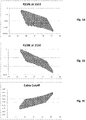
- Figure 7 illustrates an optical link 70 according to an embodiment of the present disclosure.
- Such an optical link comprises p spans of optical fibers, with p ⁇ 2, which are spliced together.
- Figure 7 only shows optical fiber 70 1 and optical fiber 70 p , all the other potential optical fibers in the optical link being symbolized by dashed lines.
- At least one of the optical fibers in optical link 70 is such that it comprises the features of one embodiment described above.
- At least one of the optical fibers complies with the requirements of ITU-T G.657.A2 Recommendation, targets a Mode Field Diameter at 1310nm greater than or equal to 9 microns and shows the specific design of the refractive index profile described above in relation to figures 2 and 3 , and notably, a trapezoid core, with a large but shallow trench.
- This optical fiber may be spliced in optical link 70 with a standard single-mode optical fiber compliant with the requirements of ITU-T.G. 652.D recommendation.
- Such a manufacturing method comprises a first step of Chemical Vapour Deposition to form a core rod.
- a first step of Chemical Vapour Deposition doped or non-doped glass layers are deposited.
- the deposited glass layers form the core refractive index profile of the final optical.
- the core rod is provided with an external overcladding for increasing its diameter to form a preform.
- the overcladding may be derived from pre-formed silica tubes or by deposition of glass layers on the outer circumference of the core rod.
- Various techniques could be used for providing an overcladding by deposition of glass layers, such as Outside Vapour Deposition (OVD) or Advanced Plasma and Vapour Deposition (APVD).
- ODD Outside Vapour Deposition
- AAVD Advanced Plasma and Vapour Deposition
- the optical fibre is obtained by drawing the preform in a fibre drawing tower.
- a tube or substrate is generally mounted horizontally and held in a glass-making lathe. Thereafter, the tube or substrate is rotated and heated or energised locally for depositing components that determine the composition of the core-rod.
- the composition of the core-rod determines the optical characteristics of the fibre.
- both the centre part and the transition part of the core, the intermediate cladding and the trench are typically obtained using plasma chemical vapour deposition (PCVD) or furnace chemical vapour deposition (FCVD), which enable large quantities of fluorine and germanium to be incorporated into the silica and which enable a gradual change of their concentrations in the transition part of the core.
- PCVD plasma chemical vapour deposition
- FCVD furnace chemical vapour deposition
- the PCVD technique is for example described in patent document US Re30,635 or US 4,314,833 .
- VAD vapour axial deposition
- OTD outside vapour deposition
- Optical fibres in accordance with the present invention are well suited for use in various optical communication systems. They are particularly suited for terrestrial transmission systems, as well as for fibre-to-the-home (FTTH) systems.
- FTTH fibre-to-the-home
- optical fibres are typically compatible with conventional optical fibres, which make them appropriate for use in many optical communication systems.
- the optical fibres according to embodiments of the invention are typically compatible with conventional optical fibres with respect to mode field diameter, thereby facilitating good fibre-to-fibre coupling.
Landscapes
- Physics & Mathematics (AREA)
- General Physics & Mathematics (AREA)
- Optics & Photonics (AREA)
- Mechanical Coupling Of Light Guides (AREA)
- Optical Fibers, Optical Fiber Cores, And Optical Fiber Bundles (AREA)
- Optical Couplings Of Light Guides (AREA)
Applications Claiming Priority (1)
| Application Number | Priority Date | Filing Date | Title |
|---|---|---|---|
| PCT/IB2017/001722 WO2019122943A1 (en) | 2017-12-21 | 2017-12-21 | Bending-loss insensitve single mode fibre, with a shallow trench, and corresponding optical system |
Publications (2)
| Publication Number | Publication Date |
|---|---|
| EP3729151A1 EP3729151A1 (en) | 2020-10-28 |
| EP3729151B1 true EP3729151B1 (en) | 2022-04-06 |
Family
ID=61628369
Family Applications (1)
| Application Number | Title | Priority Date | Filing Date |
|---|---|---|---|
| EP17851832.0A Active EP3729151B1 (en) | 2017-12-21 | 2017-12-21 | Bending-loss insensitive single mode fibre, with a shallow trench, and corresponding optical system |
Country Status (8)
| Country | Link |
|---|---|
| US (1) | US10962708B2 (da) |
| EP (1) | EP3729151B1 (da) |
| CN (1) | CN111512200B (da) |
| DK (1) | DK3729151T3 (da) |
| ES (1) | ES2916334T3 (da) |
| PL (1) | PL3729151T3 (da) |
| RU (1) | RU2755736C1 (da) |
| WO (1) | WO2019122943A1 (da) |
Families Citing this family (8)
| Publication number | Priority date | Publication date | Assignee | Title |
|---|---|---|---|---|
| PL3729151T3 (pl) | 2017-12-21 | 2022-07-25 | Draka Comteq France | Niewrażliwy na zginanie światłowód jednomodowy z płytkim rowkiem oraz odpowiedni system optyczny |
| JPWO2021079788A1 (da) * | 2019-10-24 | 2021-04-29 | ||
| US20230384513A1 (en) * | 2020-10-22 | 2023-11-30 | Ofs Fitel, Llc | Increasing total data capacity in optical transmission systems |
| US11860408B2 (en) | 2021-03-09 | 2024-01-02 | Corning Incorporated | Optical fiber for data centers |
| CN118202282A (zh) * | 2021-07-26 | 2024-06-14 | Ofs菲特尔有限责任公司 | 包括三角形沟槽轮廓的光纤 |
| CN113716862B (zh) * | 2021-09-01 | 2023-03-21 | 中天科技光纤有限公司 | 光纤的制备方法及其装置 |
| US12353002B2 (en) * | 2022-12-22 | 2025-07-08 | Sterlite Technologies Limited | Optical fiber with improved microbending performance |
| FR3154513B1 (fr) | 2023-10-18 | 2025-12-26 | Draka Comteq France Sas | Fibre optique monomode optimisée pour fonctionner en bande o et e, et système de transmission optique correspondant |
Family Cites Families (77)
| Publication number | Priority date | Publication date | Assignee | Title |
|---|---|---|---|---|
| DE2444100C3 (de) | 1974-09-14 | 1979-04-12 | Philips Patentverwaltung Gmbh, 2000 Hamburg | Verfahren zur Herstellung von innenbeschichteten Glasrohren zum Ziehen von Lichtleitfasern |
| DE2929166A1 (de) | 1979-07-19 | 1981-01-29 | Philips Patentverwaltung | Verfahren zur herstellung von lichtleitfasern |
| US4516826A (en) | 1983-04-21 | 1985-05-14 | At&T Technologies, Inc. | Single mode lightguide fiber having a trapezoidal refractive index profile |
| JPS6252508A (ja) | 1985-09-02 | 1987-03-07 | Nippon Telegr & Teleph Corp <Ntt> | 光フアイバ |
| US4852968A (en) | 1986-08-08 | 1989-08-01 | American Telephone And Telegraph Company, At&T Bell Laboratories | Optical fiber comprising a refractive index trench |
| JPH0948629A (ja) | 1995-08-01 | 1997-02-18 | Sumitomo Electric Ind Ltd | 光ファイバおよびその製造方法 |
| JP3386948B2 (ja) | 1996-02-08 | 2003-03-17 | 株式会社フジクラ | 光ファイバ |
| ZA9711125B (en) * | 1996-12-12 | 1998-09-22 | Sumitomo Electric Industries | Single-mode optical fiber |
| JPH10274720A (ja) * | 1997-01-29 | 1998-10-13 | Sumitomo Electric Ind Ltd | シングルモード光ファイバ |
| DE19839870A1 (de) | 1998-09-02 | 2000-03-09 | Deutsche Telekom Ag | Optische Single-Mode-Lichtleitfaser |
| FR2790107B1 (fr) | 1999-02-18 | 2001-05-04 | Cit Alcatel | Fibre de ligne pour systemes de transmission a fibre optique a multiplexage en longueurs d'onde |
| FR2784197B1 (fr) * | 1998-10-05 | 2000-12-15 | Cit Alcatel | Fibre optique monomode a dispersion decalee a grande aire effective |
| WO2000026709A1 (fr) | 1998-11-02 | 2000-05-11 | Sumitomo Electric Industries, Ltd. | Fibre optique a mode unique et procede de production de ladite fibre |
| FR2828937B1 (fr) | 2001-08-23 | 2004-02-06 | Cit Alcatel | Fibre optique pour systeme de transmission a multiplexage en longueurs d'ondes |
| AU2001225460A1 (en) * | 2000-09-27 | 2002-04-08 | Sterlite Optical Technologies Ltd. | Dispersion optimized fiber with low dispersion and optical loss |
| CN1262856C (zh) | 2001-04-30 | 2006-07-05 | 斯德莱特光学技术有限公司 | 具有低色散斜率的色散位移光纤 |
| JP3986842B2 (ja) | 2001-07-26 | 2007-10-03 | 株式会社フジクラ | ノンゼロ分散シフト光ファイバ用光ファイバ母材の製法 |
| US6771865B2 (en) | 2002-03-20 | 2004-08-03 | Corning Incorporated | Low bend loss optical fiber and components made therefrom |
| US7187833B2 (en) | 2004-04-29 | 2007-03-06 | Corning Incorporated | Low attenuation large effective area optical fiber |
| US7221838B2 (en) | 2004-06-23 | 2007-05-22 | Furukawa Electric North America, Inc. | Optical fibers with reduced splice loss and methods for making same |
| EP1777559A4 (en) | 2004-08-10 | 2010-03-24 | Fujikura Ltd | OPTICAL SINGLE FIBER |
| US7171090B2 (en) | 2005-06-30 | 2007-01-30 | Corning Incorporated | Low attenuation optical fiber |
| FR2893149B1 (fr) * | 2005-11-10 | 2008-01-11 | Draka Comteq France | Fibre optique monomode. |
| FR2896795B1 (fr) | 2006-01-27 | 2008-04-18 | Draka Compteq France | Procede de fabrication d'une preforme de fibre optique |
| FR2900739B1 (fr) | 2006-05-03 | 2008-07-04 | Draka Comteq France | Fibre de compensation de la dispersion chromatique |
| US7450807B2 (en) | 2006-08-31 | 2008-11-11 | Corning Incorporated | Low bend loss optical fiber with deep depressed ring |
| FR2908250B1 (fr) | 2006-11-03 | 2009-01-09 | Draka Comteq France Sa Sa | Fibre de compensation de la dispersion chromatique |
| EP1930753B1 (en) | 2006-12-04 | 2015-02-18 | Draka Comteq B.V. | Optical fiber with high Brillouin threshold power and low bending losses |
| FR2914751B1 (fr) | 2007-04-06 | 2009-07-03 | Draka Comteq France | Fibre optique monomode |
| WO2008136918A2 (en) | 2007-05-07 | 2008-11-13 | Corning Incorporated | Large effective area fiber |
| FR2922657B1 (fr) | 2007-10-23 | 2010-02-12 | Draka Comteq France | Fibre multimode. |
| DK2206001T3 (da) | 2007-11-09 | 2014-07-07 | Draka Comteq Bv | Optisk fiber, der er modstandsdygtig over for mikrobøjning |
| FR2929716B1 (fr) | 2008-04-04 | 2011-09-16 | Draka Comteq France Sa | Fibre optique a dispersion decalee. |
| FR2930997B1 (fr) | 2008-05-06 | 2010-08-13 | Draka Comteq France Sa | Fibre optique monomode |
| EP2187486B1 (en) | 2008-11-12 | 2014-04-23 | Draka Comteq B.V. | Amplifying optical fiber and method of manufacturing |
| FR2941540B1 (fr) | 2009-01-27 | 2011-05-06 | Draka Comteq France | Fibre optique monomode presentant une surface effective elargie |
| FR2941541B1 (fr) | 2009-01-27 | 2011-02-25 | Draka Comteq France | Fibre optique monomode |
| FR2946436B1 (fr) | 2009-06-05 | 2011-12-09 | Draka Comteq France | Fibre optique multimode a tres large bande passante avec une interface coeur-gaine optimisee |
| CN101598834B (zh) * | 2009-06-26 | 2011-01-19 | 长飞光纤光缆有限公司 | 一种单模光纤及其制造方法 |
| FR2949870B1 (fr) | 2009-09-09 | 2011-12-16 | Draka Compteq France | Fibre optique multimode presentant des pertes en courbure ameliorees |
| FR2953605B1 (fr) | 2009-12-03 | 2011-12-16 | Draka Comteq France | Fibre optique multimode a large bande passante et a faibles pertes par courbure |
| FR2953030B1 (fr) | 2009-11-25 | 2011-11-18 | Draka Comteq France | Fibre optique multimode a tres large bande passante avec une interface coeur-gaine optimisee |
| FR2957153B1 (fr) | 2010-03-02 | 2012-08-10 | Draka Comteq France | Fibre optique multimode a large bande passante et a faibles pertes par courbure |
| US9014525B2 (en) | 2009-09-09 | 2015-04-21 | Draka Comteq, B.V. | Trench-assisted multimode optical fiber |
| FR2953029B1 (fr) | 2009-11-25 | 2011-11-18 | Draka Comteq France | Fibre optique multimode a tres large bande passante avec une interface coeur-gaine optimisee |
| FR2953606B1 (fr) | 2009-12-03 | 2012-04-27 | Draka Comteq France | Fibre optique multimode a large bande passante et a faibles pertes par courbure |
| FR2950156B1 (fr) | 2009-09-17 | 2011-11-18 | Draka Comteq France | Fibre optique multimode |
| US7876990B1 (en) | 2009-11-25 | 2011-01-25 | Corning Incorporated | Low loss optical fiber |
| EP2352046B1 (en) | 2010-02-01 | 2018-08-08 | Draka Comteq B.V. | Non-zero dispersion shifted optical fiber having a short cutoff wavelength |
| EP2352047B1 (en) | 2010-02-01 | 2019-09-25 | Draka Comteq B.V. | Non-zero dispersion shifted optical fiber having a large effective area |
| US8542969B2 (en) | 2010-02-26 | 2013-09-24 | Corning Incorporated | Low bend loss optical fiber |
| ES2539824T3 (es) * | 2010-03-17 | 2015-07-06 | Draka Comteq B.V. | Fibra óptica de modo único con reducidas pérdidas por curvatura |
| FR2962230B1 (fr) | 2010-07-02 | 2012-07-27 | Draka Comteq France | Fibre optique monomode |
| KR101115623B1 (ko) | 2010-07-09 | 2012-02-15 | 주식회사 하이닉스반도체 | 불휘발성 메모리 장치 및 이의 동작 방법 |
| FR2963787B1 (fr) * | 2010-08-10 | 2012-09-21 | Draka Comteq France | Procede de fabrication d'une preforme de fibre optique |
| FR2966256B1 (fr) | 2010-10-18 | 2012-11-16 | Draka Comteq France | Fibre optique multimode insensible aux pertes par |
| US9507084B2 (en) * | 2010-12-03 | 2016-11-29 | Ofs Fitel, Llc | Single-mode, bend-compensated, large-mode-area optical fibers designed to accomodate simplified fabrication and tighter bends |
| DK2482106T5 (da) | 2011-01-31 | 2014-09-22 | Draka Comteq Bv | Multimode-fiber |
| FR2971061B1 (fr) | 2011-01-31 | 2013-02-08 | Draka Comteq France | Fibre optique a large bande passante et a faibles pertes par courbure |
| EP2495589A1 (en) | 2011-03-04 | 2012-09-05 | Draka Comteq B.V. | Rare earth doped amplifying optical fiber for compact devices and method of manufacturing thereof |
| CN102116897A (zh) | 2011-03-04 | 2011-07-06 | 北京交通大学 | 对泵浦光高效率吸收的包层泵浦光纤 |
| EP2503368A1 (en) | 2011-03-24 | 2012-09-26 | Draka Comteq B.V. | Multimode optical fiber with improved bend resistance |
| EP2506044A1 (en) | 2011-03-29 | 2012-10-03 | Draka Comteq B.V. | Multimode optical fiber |
| EP2518546B1 (en) | 2011-04-27 | 2018-06-20 | Draka Comteq B.V. | High-bandwidth, radiation-resistant multimode optical fiber |
| DK2527893T3 (da) | 2011-05-27 | 2013-12-16 | Draka Comteq Bv | Optisk singlemode fiber |
| CN202171655U (zh) * | 2011-05-27 | 2012-03-21 | 成都富通光通信技术有限公司 | 适用于超高速长距离密集波分复用的色散优化单模光纤 |
| ES2451369T3 (es) | 2011-06-09 | 2014-03-26 | Draka Comteq Bv | Fibra óptica de modo único |
| CN102193142B (zh) | 2011-06-28 | 2013-06-26 | 长飞光纤光缆有限公司 | 一种抗弯曲大芯径高数值孔径多模光纤 |
| DK2541292T3 (da) | 2011-07-01 | 2014-12-01 | Draka Comteq Bv | Optisk multimode fiber |
| US8588568B2 (en) | 2011-11-04 | 2013-11-19 | Corning Incorporated | Bend loss resistant multi-mode fiber |
| NL2007831C2 (en) | 2011-11-21 | 2013-05-23 | Draka Comteq Bv | Apparatus and method for carrying out a pcvd deposition process. |
| US8849082B2 (en) | 2011-11-29 | 2014-09-30 | Corning Incorporated | Low bend loss optical fiber |
| US8666214B2 (en) * | 2011-11-30 | 2014-03-04 | Corning Incorporated | Low bend loss optical fiber |
| US8588569B2 (en) * | 2011-11-30 | 2013-11-19 | Corning Incorporated | Low bend loss optical fiber |
| CN102540327A (zh) * | 2012-01-10 | 2012-07-04 | 长飞光纤光缆有限公司 | 弯曲不敏感单模光纤 |
| PT3084490T (pt) * | 2013-12-20 | 2021-02-05 | Draka Comteq Bv | Fibra monomodo com um núcleo trapezoidal que exibe perdas reduzidas |
| PL3729151T3 (pl) | 2017-12-21 | 2022-07-25 | Draka Comteq France | Niewrażliwy na zginanie światłowód jednomodowy z płytkim rowkiem oraz odpowiedni system optyczny |
-
2017
- 2017-12-21 PL PL17851832.0T patent/PL3729151T3/pl unknown
- 2017-12-21 US US16/954,758 patent/US10962708B2/en active Active
- 2017-12-21 CN CN201780097859.0A patent/CN111512200B/zh active Active
- 2017-12-21 DK DK17851832.0T patent/DK3729151T3/da active
- 2017-12-21 WO PCT/IB2017/001722 patent/WO2019122943A1/en not_active Ceased
- 2017-12-21 ES ES17851832T patent/ES2916334T3/es active Active
- 2017-12-21 EP EP17851832.0A patent/EP3729151B1/en active Active
- 2017-12-21 RU RU2020123938A patent/RU2755736C1/ru active
Also Published As
| Publication number | Publication date |
|---|---|
| CN111512200B (zh) | 2022-11-18 |
| BR112020012102A2 (pt) | 2020-11-17 |
| CN111512200A (zh) | 2020-08-07 |
| US10962708B2 (en) | 2021-03-30 |
| WO2019122943A1 (en) | 2019-06-27 |
| US20200319398A1 (en) | 2020-10-08 |
| EP3729151A1 (en) | 2020-10-28 |
| DK3729151T3 (da) | 2022-07-11 |
| RU2755736C1 (ru) | 2021-09-20 |
| ES2916334T3 (es) | 2022-06-30 |
| PL3729151T3 (pl) | 2022-07-25 |
Similar Documents
| Publication | Publication Date | Title |
|---|---|---|
| EP3729151B1 (en) | Bending-loss insensitive single mode fibre, with a shallow trench, and corresponding optical system | |
| EP2369379B1 (en) | Fibre optique monomode ayant des pertes par courbures réduites | |
| JP6298893B2 (ja) | 損失低下を示す、台形コアを有するシングルモードファイバ | |
| EP2107402B1 (en) | Dispersion shifted optical fiber | |
| JP5379396B2 (ja) | 大きい実効面積を有する伝送用光ファイバ | |
| EP2527893B1 (en) | Single mode optical fiber | |
| EP2749917B1 (en) | Optical fiber silica glass base material | |
| EP2299302B1 (en) | Multimode optical fibre having improved bending losses | |
| EP2402799B1 (en) | A monomode optical fiber | |
| EP2533082B1 (en) | Single mode optical fiber | |
| US10571628B2 (en) | Low loss optical fiber with core codoped with two or more halogens | |
| US11714229B2 (en) | Optical fiber and method of manufacturing optical fiber | |
| EP3199992A1 (en) | Optical fiber and method for manufacturing same | |
| EP3657223B1 (en) | Optical fiber and method for producing same | |
| EP3896038B1 (en) | Optical fiber | |
| US11714228B2 (en) | Optical fiber and method of manufacturing optical fiber | |
| EP4542271A1 (en) | Single mode optical fiber optimized to operate in o and e band, and corresponding optical transmission system | |
| EP4321910A1 (en) | Optical fiber | |
| BR112020012102B1 (pt) | Fibra óptica monomodo insensível à perda por curvatura e sistema de transmissão de fibra óptica |
Legal Events
| Date | Code | Title | Description |
|---|---|---|---|
| STAA | Information on the status of an ep patent application or granted ep patent |
Free format text: STATUS: UNKNOWN |
|
| STAA | Information on the status of an ep patent application or granted ep patent |
Free format text: STATUS: THE INTERNATIONAL PUBLICATION HAS BEEN MADE |
|
| PUAI | Public reference made under article 153(3) epc to a published international application that has entered the european phase |
Free format text: ORIGINAL CODE: 0009012 |
|
| STAA | Information on the status of an ep patent application or granted ep patent |
Free format text: STATUS: REQUEST FOR EXAMINATION WAS MADE |
|
| 17P | Request for examination filed |
Effective date: 20200625 |
|
| AK | Designated contracting states |
Kind code of ref document: A1 Designated state(s): AL AT BE BG CH CY CZ DE DK EE ES FI FR GB GR HR HU IE IS IT LI LT LU LV MC MK MT NL NO PL PT RO RS SE SI SK SM TR |
|
| AX | Request for extension of the european patent |
Extension state: BA ME |
|
| DAV | Request for validation of the european patent (deleted) | ||
| DAX | Request for extension of the european patent (deleted) | ||
| GRAP | Despatch of communication of intention to grant a patent |
Free format text: ORIGINAL CODE: EPIDOSNIGR1 |
|
| STAA | Information on the status of an ep patent application or granted ep patent |
Free format text: STATUS: GRANT OF PATENT IS INTENDED |
|
| INTG | Intention to grant announced |
Effective date: 20210714 |
|
| GRAJ | Information related to disapproval of communication of intention to grant by the applicant or resumption of examination proceedings by the epo deleted |
Free format text: ORIGINAL CODE: EPIDOSDIGR1 |
|
| STAA | Information on the status of an ep patent application or granted ep patent |
Free format text: STATUS: REQUEST FOR EXAMINATION WAS MADE |
|
| GRAS | Grant fee paid |
Free format text: ORIGINAL CODE: EPIDOSNIGR3 |
|
| STAA | Information on the status of an ep patent application or granted ep patent |
Free format text: STATUS: GRANT OF PATENT IS INTENDED |
|
| GRAP | Despatch of communication of intention to grant a patent |
Free format text: ORIGINAL CODE: EPIDOSNIGR1 |
|
| INTC | Intention to grant announced (deleted) | ||
| INTG | Intention to grant announced |
Effective date: 20211207 |
|
| GRAA | (expected) grant |
Free format text: ORIGINAL CODE: 0009210 |
|
| STAA | Information on the status of an ep patent application or granted ep patent |
Free format text: STATUS: THE PATENT HAS BEEN GRANTED |
|
| AK | Designated contracting states |
Kind code of ref document: B1 Designated state(s): AL AT BE BG CH CY CZ DE DK EE ES FI FR GB GR HR HU IE IS IT LI LT LU LV MC MK MT NL NO PL PT RO RS SE SI SK SM TR |
|
| REG | Reference to a national code |
Ref country code: GB Ref legal event code: FG4D |
|
| REG | Reference to a national code |
Ref country code: CH Ref legal event code: EP |
|
| REG | Reference to a national code |
Ref country code: AT Ref legal event code: REF Ref document number: 1481884 Country of ref document: AT Kind code of ref document: T Effective date: 20220415 |
|
| REG | Reference to a national code |
Ref country code: IE Ref legal event code: FG4D |
|
| REG | Reference to a national code |
Ref country code: DE Ref legal event code: R096 Ref document number: 602017055714 Country of ref document: DE |
|
| REG | Reference to a national code |
Ref country code: NL Ref legal event code: FP |
|
| REG | Reference to a national code |
Ref country code: ES Ref legal event code: FG2A Ref document number: 2916334 Country of ref document: ES Kind code of ref document: T3 Effective date: 20220630 |
|
| REG | Reference to a national code |
Ref country code: DK Ref legal event code: T3 Effective date: 20220704 |
|
| REG | Reference to a national code |
Ref country code: LT Ref legal event code: MG9D |
|
| REG | Reference to a national code |
Ref country code: AT Ref legal event code: MK05 Ref document number: 1481884 Country of ref document: AT Kind code of ref document: T Effective date: 20220406 |
|
| PG25 | Lapsed in a contracting state [announced via postgrant information from national office to epo] |
Ref country code: SE Free format text: LAPSE BECAUSE OF FAILURE TO SUBMIT A TRANSLATION OF THE DESCRIPTION OR TO PAY THE FEE WITHIN THE PRESCRIBED TIME-LIMIT Effective date: 20220406 Ref country code: PT Free format text: LAPSE BECAUSE OF FAILURE TO SUBMIT A TRANSLATION OF THE DESCRIPTION OR TO PAY THE FEE WITHIN THE PRESCRIBED TIME-LIMIT Effective date: 20220808 Ref country code: NO Free format text: LAPSE BECAUSE OF FAILURE TO SUBMIT A TRANSLATION OF THE DESCRIPTION OR TO PAY THE FEE WITHIN THE PRESCRIBED TIME-LIMIT Effective date: 20220706 Ref country code: LT Free format text: LAPSE BECAUSE OF FAILURE TO SUBMIT A TRANSLATION OF THE DESCRIPTION OR TO PAY THE FEE WITHIN THE PRESCRIBED TIME-LIMIT Effective date: 20220406 Ref country code: HR Free format text: LAPSE BECAUSE OF FAILURE TO SUBMIT A TRANSLATION OF THE DESCRIPTION OR TO PAY THE FEE WITHIN THE PRESCRIBED TIME-LIMIT Effective date: 20220406 Ref country code: GR Free format text: LAPSE BECAUSE OF FAILURE TO SUBMIT A TRANSLATION OF THE DESCRIPTION OR TO PAY THE FEE WITHIN THE PRESCRIBED TIME-LIMIT Effective date: 20220707 Ref country code: FI Free format text: LAPSE BECAUSE OF FAILURE TO SUBMIT A TRANSLATION OF THE DESCRIPTION OR TO PAY THE FEE WITHIN THE PRESCRIBED TIME-LIMIT Effective date: 20220406 Ref country code: BG Free format text: LAPSE BECAUSE OF FAILURE TO SUBMIT A TRANSLATION OF THE DESCRIPTION OR TO PAY THE FEE WITHIN THE PRESCRIBED TIME-LIMIT Effective date: 20220706 Ref country code: AT Free format text: LAPSE BECAUSE OF FAILURE TO SUBMIT A TRANSLATION OF THE DESCRIPTION OR TO PAY THE FEE WITHIN THE PRESCRIBED TIME-LIMIT Effective date: 20220406 |
|
| PG25 | Lapsed in a contracting state [announced via postgrant information from national office to epo] |
Ref country code: RS Free format text: LAPSE BECAUSE OF FAILURE TO SUBMIT A TRANSLATION OF THE DESCRIPTION OR TO PAY THE FEE WITHIN THE PRESCRIBED TIME-LIMIT Effective date: 20220406 Ref country code: LV Free format text: LAPSE BECAUSE OF FAILURE TO SUBMIT A TRANSLATION OF THE DESCRIPTION OR TO PAY THE FEE WITHIN THE PRESCRIBED TIME-LIMIT Effective date: 20220406 Ref country code: IS Free format text: LAPSE BECAUSE OF FAILURE TO SUBMIT A TRANSLATION OF THE DESCRIPTION OR TO PAY THE FEE WITHIN THE PRESCRIBED TIME-LIMIT Effective date: 20220806 |
|
| REG | Reference to a national code |
Ref country code: DE Ref legal event code: R097 Ref document number: 602017055714 Country of ref document: DE |
|
| PG25 | Lapsed in a contracting state [announced via postgrant information from national office to epo] |
Ref country code: SM Free format text: LAPSE BECAUSE OF FAILURE TO SUBMIT A TRANSLATION OF THE DESCRIPTION OR TO PAY THE FEE WITHIN THE PRESCRIBED TIME-LIMIT Effective date: 20220406 Ref country code: SK Free format text: LAPSE BECAUSE OF FAILURE TO SUBMIT A TRANSLATION OF THE DESCRIPTION OR TO PAY THE FEE WITHIN THE PRESCRIBED TIME-LIMIT Effective date: 20220406 Ref country code: RO Free format text: LAPSE BECAUSE OF FAILURE TO SUBMIT A TRANSLATION OF THE DESCRIPTION OR TO PAY THE FEE WITHIN THE PRESCRIBED TIME-LIMIT Effective date: 20220406 Ref country code: EE Free format text: LAPSE BECAUSE OF FAILURE TO SUBMIT A TRANSLATION OF THE DESCRIPTION OR TO PAY THE FEE WITHIN THE PRESCRIBED TIME-LIMIT Effective date: 20220406 Ref country code: CZ Free format text: LAPSE BECAUSE OF FAILURE TO SUBMIT A TRANSLATION OF THE DESCRIPTION OR TO PAY THE FEE WITHIN THE PRESCRIBED TIME-LIMIT Effective date: 20220406 |
|
| PLBE | No opposition filed within time limit |
Free format text: ORIGINAL CODE: 0009261 |
|
| STAA | Information on the status of an ep patent application or granted ep patent |
Free format text: STATUS: NO OPPOSITION FILED WITHIN TIME LIMIT |
|
| 26N | No opposition filed |
Effective date: 20230110 |
|
| PG25 | Lapsed in a contracting state [announced via postgrant information from national office to epo] |
Ref country code: AL Free format text: LAPSE BECAUSE OF FAILURE TO SUBMIT A TRANSLATION OF THE DESCRIPTION OR TO PAY THE FEE WITHIN THE PRESCRIBED TIME-LIMIT Effective date: 20220406 |
|
| PG25 | Lapsed in a contracting state [announced via postgrant information from national office to epo] |
Ref country code: SI Free format text: LAPSE BECAUSE OF FAILURE TO SUBMIT A TRANSLATION OF THE DESCRIPTION OR TO PAY THE FEE WITHIN THE PRESCRIBED TIME-LIMIT Effective date: 20220406 |
|
| REG | Reference to a national code |
Ref country code: CH Ref legal event code: PL |
|
| REG | Reference to a national code |
Ref country code: BE Ref legal event code: MM Effective date: 20221231 |
|
| PG25 | Lapsed in a contracting state [announced via postgrant information from national office to epo] |
Ref country code: LU Free format text: LAPSE BECAUSE OF NON-PAYMENT OF DUE FEES Effective date: 20221221 |
|
| PG25 | Lapsed in a contracting state [announced via postgrant information from national office to epo] |
Ref country code: LI Free format text: LAPSE BECAUSE OF NON-PAYMENT OF DUE FEES Effective date: 20221231 Ref country code: CH Free format text: LAPSE BECAUSE OF NON-PAYMENT OF DUE FEES Effective date: 20221231 |
|
| PG25 | Lapsed in a contracting state [announced via postgrant information from national office to epo] |
Ref country code: BE Free format text: LAPSE BECAUSE OF NON-PAYMENT OF DUE FEES Effective date: 20221231 |
|
| PG25 | Lapsed in a contracting state [announced via postgrant information from national office to epo] |
Ref country code: CY Free format text: LAPSE BECAUSE OF FAILURE TO SUBMIT A TRANSLATION OF THE DESCRIPTION OR TO PAY THE FEE WITHIN THE PRESCRIBED TIME-LIMIT Effective date: 20220406 |
|
| PG25 | Lapsed in a contracting state [announced via postgrant information from national office to epo] |
Ref country code: MK Free format text: LAPSE BECAUSE OF FAILURE TO SUBMIT A TRANSLATION OF THE DESCRIPTION OR TO PAY THE FEE WITHIN THE PRESCRIBED TIME-LIMIT Effective date: 20220406 Ref country code: HU Free format text: LAPSE BECAUSE OF FAILURE TO SUBMIT A TRANSLATION OF THE DESCRIPTION OR TO PAY THE FEE WITHIN THE PRESCRIBED TIME-LIMIT; INVALID AB INITIO Effective date: 20171221 |
|
| PG25 | Lapsed in a contracting state [announced via postgrant information from national office to epo] |
Ref country code: MC Free format text: LAPSE BECAUSE OF FAILURE TO SUBMIT A TRANSLATION OF THE DESCRIPTION OR TO PAY THE FEE WITHIN THE PRESCRIBED TIME-LIMIT Effective date: 20220406 |
|
| PG25 | Lapsed in a contracting state [announced via postgrant information from national office to epo] |
Ref country code: MC Free format text: LAPSE BECAUSE OF FAILURE TO SUBMIT A TRANSLATION OF THE DESCRIPTION OR TO PAY THE FEE WITHIN THE PRESCRIBED TIME-LIMIT Effective date: 20220406 |
|
| PG25 | Lapsed in a contracting state [announced via postgrant information from national office to epo] |
Ref country code: MT Free format text: LAPSE BECAUSE OF FAILURE TO SUBMIT A TRANSLATION OF THE DESCRIPTION OR TO PAY THE FEE WITHIN THE PRESCRIBED TIME-LIMIT Effective date: 20220406 |
|
| PG25 | Lapsed in a contracting state [announced via postgrant information from national office to epo] |
Ref country code: BG Free format text: LAPSE BECAUSE OF FAILURE TO SUBMIT A TRANSLATION OF THE DESCRIPTION OR TO PAY THE FEE WITHIN THE PRESCRIBED TIME-LIMIT Effective date: 20220406 |
|
| PG25 | Lapsed in a contracting state [announced via postgrant information from national office to epo] |
Ref country code: BG Free format text: LAPSE BECAUSE OF FAILURE TO SUBMIT A TRANSLATION OF THE DESCRIPTION OR TO PAY THE FEE WITHIN THE PRESCRIBED TIME-LIMIT Effective date: 20220406 |
|
| PG25 | Lapsed in a contracting state [announced via postgrant information from national office to epo] |
Ref country code: TR Free format text: LAPSE BECAUSE OF FAILURE TO SUBMIT A TRANSLATION OF THE DESCRIPTION OR TO PAY THE FEE WITHIN THE PRESCRIBED TIME-LIMIT Effective date: 20220406 |
|
| PGFP | Annual fee paid to national office [announced via postgrant information from national office to epo] |
Ref country code: GB Payment date: 20251229 Year of fee payment: 9 |
|
| PGFP | Annual fee paid to national office [announced via postgrant information from national office to epo] |
Ref country code: IT Payment date: 20251219 Year of fee payment: 9 Ref country code: DK Payment date: 20251226 Year of fee payment: 9 |
|
| PGFP | Annual fee paid to national office [announced via postgrant information from national office to epo] |
Ref country code: NL Payment date: 20251226 Year of fee payment: 9 Ref country code: FR Payment date: 20251226 Year of fee payment: 9 |
|
| PGFP | Annual fee paid to national office [announced via postgrant information from national office to epo] |
Ref country code: IE Payment date: 20251229 Year of fee payment: 9 |
|
| PGFP | Annual fee paid to national office [announced via postgrant information from national office to epo] |
Ref country code: PL Payment date: 20251209 Year of fee payment: 9 |
|
| PGFP | Annual fee paid to national office [announced via postgrant information from national office to epo] |
Ref country code: ES Payment date: 20260102 Year of fee payment: 9 |
|
| PGFP | Annual fee paid to national office [announced via postgrant information from national office to epo] |
Ref country code: DE Payment date: 20251229 Year of fee payment: 9 |