EP3729409B1 - Trainingssystem und -gerät - Google Patents
Trainingssystem und -gerät Download PDFInfo
- Publication number
- EP3729409B1 EP3729409B1 EP18839846.5A EP18839846A EP3729409B1 EP 3729409 B1 EP3729409 B1 EP 3729409B1 EP 18839846 A EP18839846 A EP 18839846A EP 3729409 B1 EP3729409 B1 EP 3729409B1
- Authority
- EP
- European Patent Office
- Prior art keywords
- user
- hair
- hair styling
- styling device
- sensor
- Prior art date
- Legal status (The legal status is an assumption and is not a legal conclusion. Google has not performed a legal analysis and makes no representation as to the accuracy of the status listed.)
- Active
Links
Images




Classifications
-
- A—HUMAN NECESSITIES
- A45—HAND OR TRAVELLING ARTICLES
- A45D—HAIRDRESSING OR SHAVING EQUIPMENT; EQUIPMENT FOR COSMETICS OR COSMETIC TREATMENTS, e.g. FOR MANICURING OR PEDICURING
- A45D1/00—Curling-tongs, i.e. tongs for use when hot; Curling-irons, i.e. irons for use when hot; Accessories therefor
-
- A—HUMAN NECESSITIES
- A45—HAND OR TRAVELLING ARTICLES
- A45D—HAIRDRESSING OR SHAVING EQUIPMENT; EQUIPMENT FOR COSMETICS OR COSMETIC TREATMENTS, e.g. FOR MANICURING OR PEDICURING
- A45D1/00—Curling-tongs, i.e. tongs for use when hot; Curling-irons, i.e. irons for use when hot; Accessories therefor
- A45D1/02—Curling-tongs, i.e. tongs for use when hot; Curling-irons, i.e. irons for use when hot; Accessories therefor with means for internal heating, e.g. by liquid fuel
- A45D1/04—Curling-tongs, i.e. tongs for use when hot; Curling-irons, i.e. irons for use when hot; Accessories therefor with means for internal heating, e.g. by liquid fuel by electricity
-
- A—HUMAN NECESSITIES
- A45—HAND OR TRAVELLING ARTICLES
- A45D—HAIRDRESSING OR SHAVING EQUIPMENT; EQUIPMENT FOR COSMETICS OR COSMETIC TREATMENTS, e.g. FOR MANICURING OR PEDICURING
- A45D2/00—Hair-curling or hair-waving appliances ; Appliances for hair dressing treatment not otherwise provided for
-
- A—HUMAN NECESSITIES
- A45—HAND OR TRAVELLING ARTICLES
- A45D—HAIRDRESSING OR SHAVING EQUIPMENT; EQUIPMENT FOR COSMETICS OR COSMETIC TREATMENTS, e.g. FOR MANICURING OR PEDICURING
- A45D2/00—Hair-curling or hair-waving appliances ; Appliances for hair dressing treatment not otherwise provided for
- A45D2/001—Hair straightening appliances
-
- A—HUMAN NECESSITIES
- A45—HAND OR TRAVELLING ARTICLES
- A45D—HAIRDRESSING OR SHAVING EQUIPMENT; EQUIPMENT FOR COSMETICS OR COSMETIC TREATMENTS, e.g. FOR MANICURING OR PEDICURING
- A45D20/00—Hair drying devices; Accessories therefor
-
- A—HUMAN NECESSITIES
- A45—HAND OR TRAVELLING ARTICLES
- A45D—HAIRDRESSING OR SHAVING EQUIPMENT; EQUIPMENT FOR COSMETICS OR COSMETIC TREATMENTS, e.g. FOR MANICURING OR PEDICURING
- A45D29/00—Manicuring or pedicuring implements
-
- A—HUMAN NECESSITIES
- A45—HAND OR TRAVELLING ARTICLES
- A45D—HAIRDRESSING OR SHAVING EQUIPMENT; EQUIPMENT FOR COSMETICS OR COSMETIC TREATMENTS, e.g. FOR MANICURING OR PEDICURING
- A45D34/00—Containers or accessories specially adapted for handling liquid toiletry or cosmetic substances, e.g. perfumes
- A45D34/04—Appliances specially adapted for applying liquid, e.g. using roller or ball
-
- A—HUMAN NECESSITIES
- A45—HAND OR TRAVELLING ARTICLES
- A45D—HAIRDRESSING OR SHAVING EQUIPMENT; EQUIPMENT FOR COSMETICS OR COSMETIC TREATMENTS, e.g. FOR MANICURING OR PEDICURING
- A45D44/00—Other cosmetic or toiletry articles, e.g. for hairdressers' rooms
- A45D44/005—Other cosmetic or toiletry articles, e.g. for hairdressers' rooms for selecting or displaying personal cosmetic colours or hairstyle
-
- G—PHYSICS
- G09—EDUCATION; CRYPTOGRAPHY; DISPLAY; ADVERTISING; SEALS
- G09B—EDUCATIONAL OR DEMONSTRATION APPLIANCES; APPLIANCES FOR TEACHING, OR COMMUNICATING WITH, THE BLIND, DEAF OR MUTE; MODELS; PLANETARIA; GLOBES; MAPS; DIAGRAMS
- G09B19/00—Teaching not covered by other main groups of this subclass
- G09B19/003—Repetitive work cycles; Sequence of movements
-
- G—PHYSICS
- G09—EDUCATION; CRYPTOGRAPHY; DISPLAY; ADVERTISING; SEALS
- G09B—EDUCATIONAL OR DEMONSTRATION APPLIANCES; APPLIANCES FOR TEACHING, OR COMMUNICATING WITH, THE BLIND, DEAF OR MUTE; MODELS; PLANETARIA; GLOBES; MAPS; DIAGRAMS
- G09B19/00—Teaching not covered by other main groups of this subclass
- G09B19/24—Use of tools
-
- G—PHYSICS
- G09—EDUCATION; CRYPTOGRAPHY; DISPLAY; ADVERTISING; SEALS
- G09B—EDUCATIONAL OR DEMONSTRATION APPLIANCES; APPLIANCES FOR TEACHING, OR COMMUNICATING WITH, THE BLIND, DEAF OR MUTE; MODELS; PLANETARIA; GLOBES; MAPS; DIAGRAMS
- G09B5/00—Electrically-operated educational appliances
- G09B5/04—Electrically-operated educational appliances with audible presentation of the material to be studied
-
- A—HUMAN NECESSITIES
- A45—HAND OR TRAVELLING ARTICLES
- A45D—HAIRDRESSING OR SHAVING EQUIPMENT; EQUIPMENT FOR COSMETICS OR COSMETIC TREATMENTS, e.g. FOR MANICURING OR PEDICURING
- A45D1/00—Curling-tongs, i.e. tongs for use when hot; Curling-irons, i.e. irons for use when hot; Accessories therefor
- A45D2001/002—Accessories therefor
-
- A—HUMAN NECESSITIES
- A45—HAND OR TRAVELLING ARTICLES
- A45D—HAIRDRESSING OR SHAVING EQUIPMENT; EQUIPMENT FOR COSMETICS OR COSMETIC TREATMENTS, e.g. FOR MANICURING OR PEDICURING
- A45D34/00—Containers or accessories specially adapted for handling liquid toiletry or cosmetic substances, e.g. perfumes
- A45D2034/002—Accessories
-
- A—HUMAN NECESSITIES
- A45—HAND OR TRAVELLING ARTICLES
- A45D—HAIRDRESSING OR SHAVING EQUIPMENT; EQUIPMENT FOR COSMETICS OR COSMETIC TREATMENTS, e.g. FOR MANICURING OR PEDICURING
- A45D44/00—Other cosmetic or toiletry articles, e.g. for hairdressers' rooms
- A45D2044/007—Devices for determining the condition of hair or skin or for selecting the appropriate cosmetic or hair treatment
-
- A—HUMAN NECESSITIES
- A45—HAND OR TRAVELLING ARTICLES
- A45D—HAIRDRESSING OR SHAVING EQUIPMENT; EQUIPMENT FOR COSMETICS OR COSMETIC TREATMENTS, e.g. FOR MANICURING OR PEDICURING
- A45D2200/00—Details not otherwise provided for in A45D
- A45D2200/20—Additional enhancing means
- A45D2200/205—Radiation, e.g. UV, infrared
-
- G—PHYSICS
- G09—EDUCATION; CRYPTOGRAPHY; DISPLAY; ADVERTISING; SEALS
- G09B—EDUCATIONAL OR DEMONSTRATION APPLIANCES; APPLIANCES FOR TEACHING, OR COMMUNICATING WITH, THE BLIND, DEAF OR MUTE; MODELS; PLANETARIA; GLOBES; MAPS; DIAGRAMS
- G09B19/00—Teaching not covered by other main groups of this subclass
- G09B19/0076—Body hygiene; Dressing; Knot tying
Definitions
- the present invention relates to a training system and to parts thereof that are used to train users to use a hair styling device.
- the invention has particular although not exclusive relevance to a training system and hair styling devices that can help teach users how to achieve desired hair styles using the device.
- the inventors have realised that by making the hair styling device more intelligent, they can capture more information about the way that the user is using the device and using stored information can provide feedback to the user to help them achieve the style they wish to achieve.
- US2011/0247156 discloses a body care appliance for personal use is disclosed.
- the body care appliance includes a toothbrush; a display device and a sensing device.
- the display device displays interactive representations that can be controlled interactively from the toothbrush by means of a control device.
- the sensing device senses at least one operating parameter relating to the toothbrush, wherein the sensing device has position sensing means for sensing the relative position of the toothbrush to the body part of the appliance user.
- the representations can be controlled by means of the control device depending on the sensed relative position.
- US 2012/0227758 discloses a hair styling appliance comprising at least one heater having a plurality of heating zones.
- the heating zones are independently operable and arranged along the length of the heater. The sequential arrangement of the independently operable heating zones helps to improve the thermal control of the hair styling appliance.
- the hair styling appliance may be a hair straightener, curling tong, curling wand or a crimping iron.
- US 2015/0164213 discloses systems, devices and methods for acquiring, among other things, lesion information from hair or fur covered regions of a biological subject.
- US 2015/0342515 discloses a hairstyling tool of the comb or hairbrush type, comprising a handle and a body, an electric battery a force sensor, an electronic unit configured to capture and format signals provided by the sensors, a wireless communication means for transmitting data to a remote entity, by means of which information about the movements executed by the tool and the forces it undergoes can be transmitted to the remote entity, the remote entity being able to send information back to the user of the tool about the hair being styled.
- WO 2017/045719 discloses a hair styling device comprising: a support body having a handle portion suitable for being grasped by a user and a styling head suitable for styling a lock of hair put in contact with it, and - heating means placed within the support body (2) for heating at least a hair contacting portion of the styling head intended to get in contact with the lock of hair to be styled.
- the present invention provides a hair styling system, a hair styling device and a method of styling hair as set out in the appended independent claims. Preferrable features are disclosed in the dependent claims.
- One embodiment provides a hair styling system for performing a treatment on a user, the system comprising: an input for allowing the user to specify a desired treatment to be performed; a hair styling device that is manipulable by the user to perform the desired treatment on the user; the hair styling device having sensors for sensing and outputting sensor data indicative of operational parameters of the hair styling device during the treatment; and a processor configured to process the sensor data to determine if the user's usage of the hair styling device will achieve the user's desired treatment and to output one or more feedback messages for the user to help the user achieve the desired treatment.
- the hair styling device may include communication circuitry so that the sensor data can be transmitted to an external processing device.
- the processor may be provided in the external processing device and the one or more feedback messages may be output on a user interface associated with the user.
- the output one or more feedback messages may be output to the user as an audible or visual signal and comprise instructions for the user on how to use (e.g. how to move) the hair styling device to achieve the desired treatment.
- the sensor data includes motion data that indicates how the hair styling device is being moved by the user and wherein the pre-stored data includes information on how the device should be moved by the user to achieve the desired treatment.
- the hair styling device is a hand held device that the user can move to effect the desired treatment.
- a hair styling device for performing a treatment on a user, the device comprising: an input for allowing the user to specify a desired treatment to be performed; sensors for sensing and outputting sensor data indicative of operational parameters of the hair styling device during the treatment; and a processor configured to process the sensor data to determine if the user's usage of the hair styling device will achieve the user's desired treatment and to output one or more feedback messages for the user to help the user achieve the desired treatment.
- a hair styling device for performing a treatment on a user, the device comprising: sensors for sensing and outputting sensor data indicative of operational parameters of the hair styling device during the treatment; an input for allowing the user to specify a desired treatment to be performed; and communication circuitry for communicating the sensor data to an external a processor for processing the sensor data to determine if the user's usage of the hair styling device will achieve the user's desired treatment.
- the hair styling device being used is designed to include a variety of sensors including one or more of and preferably several of:
- These sensors interface to a micro processing unit (MPU) and memory.
- the data can then be stored and processed on the hair styling device or be communicated to another device with more processing power (for example, a smart phone) for processing with the result being fed back to the originating hair styling device or the user via either device to improve the usage of the hair styling device.
- the data can also be used to provide diagnostic information about the substrate being treated - such as the level of moisture in the hair.
- the device with more processing power or smart processing device could also have an interactive user interface, for example an LCD screen, to provide direct visual or audio feedback to the user as well as to allow the user to input feedback. For example, the quality of the style achieved or whether they got the style they required. In a non-claimed alternative, this information can be used to update and improve Artificial Intelligence (Al) algorithms used in the system.
- Al Artificial Intelligence
- the smart processing device might also be a pure audio device i.e. a device without a visual Ul to which the user speaks and receives audio feedback.
- a pure audio device i.e. a device without a visual Ul to which the user speaks and receives audio feedback.
- An example of this is the commercial available product, Amazon Echo.
- processing of the data could also be communicated to a central server system or cloud for processing with the result being fed back to the devices for user direction and communication.
- the method of communication between the hair styling device and device with more processing power could be via a cable or wireless means.
- Examples of applicable wireless communications include: Bluetooth, WiFi, LoRa, ZigBee, 802.15 standard, NFC or optical means - both visible and IR.
- An important aspect of determining how the product is being used and then feeding back usage improvements to the user is related to the processing of the data and the associated algorithms.
- Such algorithms could, in a non-claimed alternative, be based upon artificial intelligence techniques, such as forward and back propagation neural networks, deep learning, fuzzy logic etc. or could be based on pure deterministic comparison algorithms and rule based logic or inference.
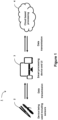
- FIG. 1 schematically illustrates a system 1 in which the present invention may be implemented.
- this system 1 includes a hair styling device 2 (e.g. a hair curling / hair straightening device) and a processing device 3 (for example a smartphone, a tablet computer, a laptop, or a personal computer) which are coupled to each other via appropriate data communication means that allows data to be transmitted wirelessly or over a wired connection between the hair styling device 2 and the processing device 3.
- a hair styling device 2 e.g. a hair curling / hair straightening device
- a processing device 3 for example a smartphone, a tablet computer, a laptop, or a personal computer
- the system 1 may also use cloud based processing functionality (herein represented by a cloud server 4 coupled to the processing device 3) for additional cloud based data processing / data storage related to the operation of the hair styling device 2.
- cloud server 4 coupled to the processing device 3
- the hair styling device 2 and/or the processing device 3 are configured to access the cloud server 4 via a computer network, e.g. an Internet Protocol (IP) network such as the Internet, using an appropriate wired and/or a wireless connection.
- IP Internet Protocol
- the hair styling device 2 includes a number of functional components appropriate for the regular functionality of the hair styling device 2, including for example a handle, one or more heating plates, one or more cooling zones, a cooling fan, an on/off switch, a temperature pre-selector, a temperature regulator/control circuitry, etc. (depending on the type of the hair styling device 2).
- the hair styling device 2 includes additional functionality and associated (hardware and/or software) components that help to provide usage feedback to the end user and for facilitating training / guiding of the user in achieving a desired styling effect.
- the hair styling device 2 is provided with one or more of the following sensors: a temperature sensor (surface temperature sensor, hair temperature sensor); a gyroscope; an accelerometer; a humidity sensor; a gas sensor; a dielectric sensor; and a power sensor.
- a temperature sensor surface temperature sensor, hair temperature sensor
- a gyroscope an accelerometer
- a humidity sensor a humidity sensor
- a gas sensor a gas sensor
- a dielectric sensor a power sensor
- Sensor data obtained from these sensors is collected by the hair styling device 2 and packetized and transmitted to the processing device 3 for processing to identify how the hair styling device 2 is being used and to determine feedback to give to the user to help them achieve a desired styling effect.
- the feedback may be output to the user as an audible or a visual signal via a user interface of the hair styling device 2 or of the processing device 3 (or indeed on the user interface of some other associated device (such as the screen of a nearby television)).
- the above described system beneficially allows users to improve their use of their hair styling devices and allows them to obtain better styles without the help of a stylist.
- the data that is collected on usage can also be collected and communicated to other devices (e.g. a remote server) for statistical purposes, product improvement, and/or the like.
- Using sensor based information in combination with real-time user feedback may also help to avoid incorrect usage of the hair styling device 2.
- the sensor data obtained from a first user's device can be used to control the feedback given to other users to allow for those other users to copy the style of the first user.
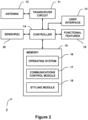
- FIG 2 is a block diagram illustrating the main data collection and communication components of the hair styling device 2 shown in Figure 1 .
- the hair styling device 2 has a transceiver circuit 11 that is operable to transmit signals to and to receive signals from other devices (e.g. the external processing device 3) via one or more antenna 12.
- the hair styling device 2 has a controller 14 (such as a micro-processing unit) to control the operation of the hair styling device 2.
- the controller 14 is associated with a memory 15 and is coupled to the transceiver circuit 11.
- the controller 14 is configured to control overall operation of the hair styling device 2 in accordance with user inputs received from a user interface 13 and program instructions or software instructions stored within the memory 15.
- the software may be pre-installed in the memory 15 and/or may be downloaded via a telecommunications network (e.g. from the cloud server 4) or from a removable data storage device (RMD), for example.
- these software instructions include, among other things, an operating system 16, a communications control module 17, and a styling module 18.
- Figure 2 also shows that the hair styling device 2 includes hair styling device functional features 19. These functional features depend on the hair styling device concerned. These may be the heaters on opposing arms of the device or they may be the fan motor and heater in the case of a hair drying device.
- the hair styling device 2 also has one or more sensors 20 coupled to the controller 14 that are used to obtain (e.g. by the styling module 18) various parameters/data relating to the styling process and/or the operation of the hair styling device 2.
- sensors 20 may include one or more of and preferably several of:
- the communications control module 17 is operable to control the communication between the hair styling device 2 and other devices (e.g. the external processing device 3 and the cloud server 4).
- the styling module 18 is responsible for controlling the functional features 19 in accordance with the user settings input by the user via the user interface 13. In some embodiments, the styling module 18 may also vary the control of the functional features 19 based on feedback received from the external processing device 3. For example if the sensor data reveals that the user is moving the device too slowly across the user's hair then the styling module 18 may reduce the power applied to the hair to prevent it being burnt.
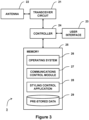
- FIG 3 is a block diagram illustrating the main components of the processing device 3 shown in Figure 1 .
- the processing device 3 has a transceiver circuit 21 for transmitting signals to and for receiving signals from the hair styling device 2 via one or more antenna 22.
- the transceiver circuit 21 may also be used for transmitting signals to and for receiving signals from remote devices, such as the cloud server 4, either wirelessly or using an appropriate wired interface (not shown).
- the processing device 3 e.g. a smartphone and/or the like
- the processing device 3 has a controller 24 (such as a micro-processing unit) to control the operation of the processing device 3.
- the controller 24 is associated with a memory 25.
- the controller 24 is configured to control the overall operation of the processing device 3 by program instructions or software instructions stored within the memory 25.
- This software may be pre-installed in the memory 25 and/or may be downloaded via a telecommunications network (e.g. from the cloud server 4) or from a removable data storage device (RMD).
- these software instructions include, among other things, an operating system 26, a communications control module 27, and a styling control application (App) 28.
- the communications control module 27 is responsible for receiving the sensor data from the hair styling device 2 and passing it to the styling control App 28.
- the styling control App 28 compares the received data which indicates how the hair styling device 2 is being used with pre-stored styling data 29 that represents a user selected style they wish to achieve. Based on this comparison, the styling control App 28 generates one or more feedback messages for feeding back to the user to help them achieve the selected style.
- the styling control App 28 either sends these feedback messages to the user interface 23 for output to the user as an audible or visual signal; or it passes the feedback messages to the communications control module 27 for transmission to another device such as the hair styling device 2.
- the pre-stored data 29 may be permanently stored in the processing device 3 or it may be downloaded from the server cloud 4 based on a desired style selected by the user via the user interface 23.
- the pre-stored data may be a set of deterministic rules or trained information of an Al algorithm (such as a trained neural network) run by the styling control App 28 that relate a sequence of sensor inputs from the hair styling device 3 to one or more feedback messages identifying actions that the user should take to achieve the desired style.
- the hair styling device 2 is a hair styling device that allows a user to create curls in their hair.
- the applicant has already developed numerous such hair styling devices and some of these are described in WO2013/104903 and WO2015/071656 .
- these documents teach that a good curl to hair can be achieved by firstly heating the hair to above the glass transition temperature of hair, applying a stress to the hair to create the curl and then rapidly cooling the hair to below the glass transition phase temperature to set the curl in place.
- the recess is a generally elongate open-ended channel which extends along the portion of the first arm which is in contact with the second arm.
- the axis of the channel is aligned with the axis of the arm, i.e. the channel extends longitudinally along the arm.
- the channel has a base and sides.
- the second arm 52 has a generally elongate section 56 which fits within the recess of the first arm 50.
- the second arm 52 has a pair of heating zones arranged to extend along at least a significant part of one long side of the elongate section 56.
- the first arm also has a pair of heating zones arranged to extend along at least a significant part of one long side of the recess.
- the heating zones extend longitudinally along the apparatus, i.e. parallel to the length or long axis of the apparatus.
- the heating zones on the first arm are adjacent and generally in contact with the heating zones on the second arm when the arms are in the closed position.
- Each heating zone is heated by a respective heater (not shown).
- Each heating zone has a generally planar contacting surface and may be formed as a heating plate, e.g. from ceramics or metal, e.g.
- One or both arms also have one or more cooling zones which are arranged adjacent to a heating zone.
- the cooling zones may be curved to help curl hair which passes through the device. By providing a pair of cooling zones, hair can be curled by pulling the apparatus in either direction along the hair. Further detail of the hair styling device 2 can be found in the above described PCT publications.
- the amount of curl that the user is imparting to their hair can be determined in real time and advice given to the user on how to get the curl they desire.
- the amount of curl can be determined by various factors, including: amount of contact of the hair with the cooling zone, speed of operation, and the angle at which the device is being held by the user during use.
- the processing algorithm used by the styling control App 28 in the processing device 3 can measure the cooling zone temperature. To make a curl, the hair has to be in contact with the cooling zone and the inventors have found that the temperature of the cooling zone will rise to over 80 degrees due to heat energy being transferred from the hair into the cooling zone.
- the algorithm can be very basic: a simple rule statement: If the maximum temperature of the cooling zone is less than 65 degC, then straight hair will be produced, otherwise a curl will be produced.
- Curl differences can also be detected.
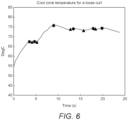
- the inventors have found that the key to detecting the difference between the types of curl (a tight curl or a loose curl) achieved can be determined by analysing the time based shape of the temperature profile of the cooling zone. Basically, the temperature profile for a loose curl is much smoother than for tight curls. This is illustrated in the plots shown in Figures 5 and 6 .
- Figure 5 is a plot showing how the sensed temperature of the cooling zone varies over time when a tight curl is being produced
- Figure 6 is a plot showing how the sensed temperature of the cooling zone varies over time when a loose curl is being produced.
- the stars and triangles show points of local maxima and minima respectively.
- the styling control App 28 first looks for the time when the temperature exceeds 55 DegC and ignores everything before it. The styling control App 28 then calculates the percentage CV (coefficient of variation) between the first and last maxima and uses this to determine if a loose or tight curl was achieved. If the percentage CV is about 3.5 then a tight curl has been achieved, else a loose curl has been achieved. The inventors have found that this approach provides a highly reliable way to differentiate between the types of curl produced (shows a significant statistical difference at the 95% confidence interval).
- the styling control App 28 can use a simple rule based inference: if the heater power is above 40W, too much hair has been loaded in the hair styling device 2, else the right amount is used.
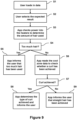
- FIG. 9 is a flowchart illustrating an example process performed by the styling control App 28 to deal with the above two factors.
- the user selects a desired style / styling group via the user interface 13 of the hair styling device 2 or via the user interface of the processing device 3.
- the styling module 18 If entered into the hair styling device 2, then the styling module 18 generates and sends (via the communications control module 17) a message to the styling control App 28 in the processing device 3 to identify the style to be achieved.
- the styling control App 28 uses this information to download from the cloud server 4 appropriate pre-stored data 29 for that style.
- step S2 the user selects the expected result from a menu, using the user interface 23 of the processing device 3 coupled to the styling device 2 (or the user interface 13 of the styling device 2).
- the user can select between performing hair straightening and hair curling using the styling device 2. It will be appreciated that further sub-options could of course be selected such as a tight or loose curl styling option.
- step S3 the styling control App 28 checks the sensor data received from the hair styling device 2 relating to the power applied to the heaters to determine the amount of hair that has been loaded into the hair styling device 2.
- step S4 the styling control App determines if too much hair has been loaded into the hair styling device 2 - by comparing the power data with the appropriate threshold power level (in this example 40W). If the power data is higher than 40W then the processing proceeds to step S5 where the styling control App 28 outputs a feedback message to the user (for example via the user interface 23) to warn them that they have placed too much hair into the hair styling device 2.
- the appropriate threshold power level in this example 40W
- the styling control App 28 determines that the right amount of hair has been loaded into the hair styling device 2 and, in step S6, reads the cool zone temperature data to allow the App 28 to check, in step S7, whether or not a curl has been achieved. If a curl has been achieved (because the temperature of the cooling zone has reached higher than 65degC), then in step S8, the styling control App 28 considers the temperature profile to determine the type of curl that has been achieved and outputs an appropriate feedback message to the user. If a curl has not been achieved then in step S9, the styling control App 28 outputs a feedback message to the user saying that straight hair has been achieved.
- the styling control App 28 also outputs a feedback message with suggested ways to achieve the desired curl. For example by informing the user to change the angle at which they are holding the device or by moving the device more slowly over their hair.
- the styling control App 28 can use sensor data from an accelerometer to detect the speed with which the user is moving the device along their hair. In this case, the feedback message given to the user may therefore be to tell the user to slow down or speed up their motion.
- the above system offers a number of greatly improved practical benefits for the ordinary user.
- the system is able to give real time feedback on what they are doing wrong and why they are not achieving the styling they want to achieve.
- the sensor data produced by one user when styling or applying a beauty treatment can be saved and provided to other users who wish to copy that user's style or treatment (for example to allow a user to copy the styling of a particular celebrity).
- the styling data obtained from the original user can be processed to create a styling profile - that effectively defines the pre-stored data 29 required by the styling control App 28 of the other user's device.
- the above description focuses on hair care products and particularly a hair curling device.
- the above described concepts may be applied widely to any hair styling product, including, for example: hair dryers, curling tongs/wands, hair straighteners, hair colouring devices, crimpers, etc.
- the hair styling device communicated with a smart processing device. This is not essential - the hair styling device may be provided with all the processing functionality of the processing device 3. Further, the processing of the sensor data could also be communicated to a central server system or cloud for processing with the result being fed back to the devices for user direction and communication.
- the feedback messages were transmitted provided to the user by way of the user interface on the hair styling device or on the processing device. This is not essential.
- the feedback messages may be provided by any suitable user interface of any nearby device. For example, they may be sent to an Amazon Echo speaker device for playout to the user as voice messages or displayed to the user on a television screen or the like.
- the method of communication between the hair styling device and the processing device could be via a cable or wireless means.
- Examples of applicable wireless communications include: Bluetooth, WiFi, LoRa, ZigBee, 802.15 standard, NFC or optical means - both visible and IR.
- the software modules may be provided in compiled or un-compiled form and may be supplied to the hair styling device or the corresponding processing device (mobile telephone and/or the like) as a signal over a computer network, or on a recording medium. Further, the functionality performed by part or all of this software may be performed using one or more dedicated hardware circuits. However, the use of software is preferred as it facilitates the updating of the hair styling device (and the processing device).
Landscapes
- Engineering & Computer Science (AREA)
- Business, Economics & Management (AREA)
- General Physics & Mathematics (AREA)
- Physics & Mathematics (AREA)
- Educational Administration (AREA)
- Educational Technology (AREA)
- Theoretical Computer Science (AREA)
- Entrepreneurship & Innovation (AREA)
- Health & Medical Sciences (AREA)
- Epidemiology (AREA)
- General Health & Medical Sciences (AREA)
- Public Health (AREA)
- Cosmetics (AREA)
- User Interface Of Digital Computer (AREA)
Claims (15)
- Frisiersystem (1) zum Frisieren der Haare eines Benutzers, wobei das System umfasst:einen Eingang (13, 23), der es dem Benutzer ermöglicht, eine gewünschte Frisur zu spezifizieren;eine Frisiervorrichtung (2), die von dem Benutzer manipulierbar ist, um die gewünschte Frisur an den Haaren des Benutzers vorzunehmen; wobei die Frisiervorrichtung (2) Sensoren (20) zum Erfassen und Ausgeben von Sensordaten aufweist, die Betriebsparameter der Frisiervorrichtung (2) während des Frisierens angeben; undeinen Prozessor (14, 24), der dazu eingerichtet ist, die Sensordaten zu verarbeiten und die Sensordaten mit vorab gespeicherten Daten (29) zu vergleichen, die der gewünschten Frisur des Benutzers zugeordnet sind, um zu bestimmen, ob die Verwendung der Frisiervorrichtung (2) durch den Benutzer die gewünschte Frisur des Benutzers erzielen wird, und basierend auf dem Vergleich eine oder mehrere Rückmeldungen für den Benutzer auszugeben, um dem Benutzer zu helfen, die gewünschte Frisur zu erzielen, wobei die eine Rückmeldung oder die mehreren Rückmeldungen Anweisungen für den Benutzer umfasst oder umfassen, wie die Frisiervorrichtung (2) zu verwenden ist, um die gewünschte Frisur zu erzielen.
- System nach Anspruch 1, wobei die Frisiervorrichtung (2) eine Kommunikationsschaltung (11) aufweist und dazu eingerichtet ist, die Sensordaten an eine externe Verarbeitungsvorrichtung (3) zu übertragen, und, vorzugsweise, wobei vorzugsweise der Prozessor (24) in der externen Verarbeitungsvorrichtung (3) bereitgestellt ist und wobei die ausgegebene eine Rückmeldung oder die ausgegebenen mehreren Rückmeldungen auf einer Benutzerschnittstelle ausgegeben wird oder werden, die dem Benutzer zugeordnet ist.
- System nach Anspruch 1 oder 2, wobei die ausgegebene eine Rückmeldung oder die ausgegebenen mehreren Rückmeldungen als hörbares oder visuelles Signal an den Benutzer ausgegeben wird oder werden.
- System nach einem der vorhergehenden Ansprüche, wobei die vorab gespeicherten Daten (29) einen Satz deterministischer Regeln umfassen oder wobei die vorab gespeicherten Daten (29) einer Frisur eines anderen Benutzers zugeordnet sind, die der Benutzer kopieren möchte.
- System nach einem der vorhergehenden Ansprüche, wobei die Sensordaten Bewegungsdaten umfassen, die angeben, wie die Frisiervorrichtung (2) von dem Benutzer bewegt wird, und wobei die vorab gespeicherten Daten Informationen darüber umfassen, wie die Vorrichtung von dem Benutzer bewegt werden sollte, um die gewünschte Frisur zu erzielen.
- System nach einem der vorhergehenden Ansprüche, wobei die Frisiervorrichtung (2) einen Sensor oder mehrere Sensoren (20) aufweist, der oder die ausgewählt ist oder sind aus: einem Temperatursensor; einem Gyroskop; einem Beschleunigungsmesser; einem Feuchtigkeitssensor; einem Gassensor; einem dielektrischen Sensor; und einem Leistungssensor, oder wobei die Frisiervorrichtung eine handgehaltene Vorrichtung ist.
- Frisiervorrichtung (2) zum Frisieren der Haare eines Benutzers, wobei die Frisiervorrichtung aufweist:einen Eingang (13), der es dem Benutzer ermöglicht, eine gewünschte Frisur, die vorgenommen werden soll, zu spezifizieren;Sensoren (20) zum Erfassen und Ausgeben, während des Frisierens, von Sensordaten, die Betriebsparameter der Frisiervorrichtung (2) angeben; undeinen Prozessor, der dazu eingerichtet ist, die Sensordaten zu verarbeiten und die Sensordaten mit vorab gespeicherten Daten zu vergleichen, die der gewünschten Frisur des Benutzers zugeordnet sind, um zu bestimmen, ob die Verwendung der Frisiervorrichtung (2) durch den Benutzer die gewünschte Frisur des Benutzers erzielen wird, und basierend auf dem Vergleich eine oder mehrere Rückmeldungen für den Benutzer auszugeben, um dem Benutzer zu helfen, die gewünschte Frisur zu erzielen, wobei die eine Rückmeldung oder die mehreren Rückmeldungen Anweisungen für den Benutzer umfasst oder umfassen, wie die Frisiervorrichtung zu verwenden ist, um die gewünschte Frisur zu erzielen.
- Frisierverfahren, umfassend:Eingeben einer gewünschten Frisur, die bereitgestellt werden soll;Bereitstellen einer Frisiervorrichtung (2), die von dem Benutzer manipuliert werden kann, um die gewünschte Frisur an den Haaren des Benutzers vorzunehmen; wobei die Frisiervorrichtung (2) Sensoren (20) zum Erfassen und Ausgeben, während des Frisierens, von Sensordaten aufweist, die Betriebsparameter der Frisiervorrichtung (2) angeben;Verarbeiten der Sensordaten und Vergleichen der Sensordaten mit vorab gespeicherten Daten, die der gewünschten Frisur des Benutzers zugeordnet sind, um zu bestimmen, ob die Verwendung der Frisiervorrichtung (2) durch den Benutzer die gewünschte Frisur des Benutzers erzielen wird; undbasierend auf dem Vergleich, Ausgeben einer oder mehrerer Rückmeldungen für den Benutzer, um dem Benutzer zu helfen, die gewünschte Frisur zu erzielen, wobei die eine Rückmeldung oder die mehreren Rückmeldungen Anweisungen für den Benutzer umfasst oder umfassen, wie die Frisiervorrichtung (2) zu verwenden ist, um die gewünschte Frisur zu erzielen.
- Verfahren nach Anspruch 8, ferner umfassend Übertragen der Sensordaten an eine externe Verarbeitungsvorrichtung (3), und, vorzugsweise, wobei das Verarbeiten in der externen Verarbeitungsvorrichtung (3) durchgeführt wird und wobei die ausgegebene eine Rückmeldung oder die ausgegebenen mehreren Rückmeldungen auf einer Benutzerschnittstelle ausgegeben wird oder werden, die dem Benutzer zugeordnet ist.
- Verfahren nach Anspruch 8 oder 9, wobei das Ausgeben die eine Rückmeldung oder die mehreren Rückmeldungen als hörbares oder visuelles Signal ausgibt.
- Verfahren nach einem der Ansprüche 8 bis 10, wobei die vorab gespeicherten Daten einen Satz deterministischer Regeln umfassen.
- Verfahren nach einem der Ansprüche 8 bis 11, wobei die vorab gespeicherten Daten einer Frisur eines anderen Benutzers zugeordnet sind, die der Benutzer kopieren möchte.
- Verfahren nach einem der Ansprüche 8 bis 12, wobei die Sensordaten Bewegungsdaten umfassen, die angeben, wie die Frisiervorrichtung (2) von dem Benutzer bewegt wird, und wobei die vorab gespeicherten Daten Informationen darüber umfassen, wie die Frisiervorrichtung von dem Benutzer bewegt werden sollte, um die gewünschte Frisur zu erzielen.
- Verfahren nach einem der Ansprüche 8 bis 13, wobei die Frisiervorrichtung (2) einen Sensor oder mehrere Sensoren (20) aufweist, der oder die ausgewählt ist oder sind aus: einem Temperatursensor; einem Gyroskop; einem Beschleunigungsmesser; einem Feuchtigkeitssensor; einem Gassensor; einem dielektrischen Sensor; und einem Leistungssensor.
- Verfahren nach einem der Ansprüche 8 bis 14, wobei die Frisiervorrichtung (2) eine handgehaltene Vorrichtung ist.
Priority Applications (1)
| Application Number | Priority Date | Filing Date | Title |
|---|---|---|---|
| EP24216607.2A EP4491061A3 (de) | 2017-12-22 | 2018-12-18 | Trainingssystem und -vorrichtung |
Applications Claiming Priority (2)
| Application Number | Priority Date | Filing Date | Title |
|---|---|---|---|
| GB1721818.1A GB2569655B (en) | 2017-12-22 | 2017-12-22 | Training system and device |
| PCT/GB2018/053650 WO2019122838A1 (en) | 2017-12-22 | 2018-12-18 | Training system and device |
Related Child Applications (1)
| Application Number | Title | Priority Date | Filing Date |
|---|---|---|---|
| EP24216607.2A Division EP4491061A3 (de) | 2017-12-22 | 2018-12-18 | Trainingssystem und -vorrichtung |
Publications (2)
| Publication Number | Publication Date |
|---|---|
| EP3729409A1 EP3729409A1 (de) | 2020-10-28 |
| EP3729409B1 true EP3729409B1 (de) | 2024-12-11 |
Family
ID=61131465
Family Applications (2)
| Application Number | Title | Priority Date | Filing Date |
|---|---|---|---|
| EP24216607.2A Pending EP4491061A3 (de) | 2017-12-22 | 2018-12-18 | Trainingssystem und -vorrichtung |
| EP18839846.5A Active EP3729409B1 (de) | 2017-12-22 | 2018-12-18 | Trainingssystem und -gerät |
Family Applications Before (1)
| Application Number | Title | Priority Date | Filing Date |
|---|---|---|---|
| EP24216607.2A Pending EP4491061A3 (de) | 2017-12-22 | 2018-12-18 | Trainingssystem und -vorrichtung |
Country Status (7)
| Country | Link |
|---|---|
| US (4) | US11574556B2 (de) |
| EP (2) | EP4491061A3 (de) |
| CN (4) | CN116420978A (de) |
| AU (2) | AU2018387403B2 (de) |
| ES (1) | ES3008923T3 (de) |
| GB (1) | GB2569655B (de) |
| WO (1) | WO2019122838A1 (de) |
Families Citing this family (22)
| Publication number | Priority date | Publication date | Assignee | Title |
|---|---|---|---|---|
| GB2569655B (en) | 2017-12-22 | 2022-05-11 | Jemella Ltd | Training system and device |
| WO2019245862A1 (en) * | 2018-06-19 | 2019-12-26 | Tornier, Inc. | Visualization of intraoperatively modified surgical plans |
| CN109288230B (zh) * | 2018-10-25 | 2024-08-02 | 深圳和而泰智能控制股份有限公司 | 一种智能美发器 |
| CN109431042B (zh) * | 2018-12-27 | 2024-06-25 | 品谱公司 | 一种偏角式扭纹头发造型器 |
| GB2597688B (en) | 2020-07-29 | 2022-09-21 | Dyson Technology Ltd | Hairstyling device |
| GB2597678B (en) * | 2020-07-29 | 2022-11-30 | Dyson Technology Ltd | Hairstyling device |
| GB2597682B (en) * | 2020-07-29 | 2022-09-07 | Dyson Technology Ltd | Hairstyling device |
| GB2597684B (en) * | 2020-07-29 | 2022-09-07 | Dyson Technology Ltd | Hairstyling device |
| GB2597680B (en) | 2020-07-29 | 2022-12-28 | Dyson Technology Ltd | Hairstyling device |
| GB2597681B (en) * | 2020-07-29 | 2022-11-30 | Dyson Technology Ltd | Hairstyling device |
| US12280271B2 (en) * | 2020-09-18 | 2025-04-22 | L'oreal | Hair treatment system with proximity sensors to detect scalp or hair distance and locality |
| KR102466011B1 (ko) * | 2021-01-13 | 2022-11-10 | 주식회사 프로레드코리아 | 인공지능을 활용하여 가열 온도를 조절하는 모발 가열 장치 및 이의 동작 방법 |
| KR102522361B1 (ko) * | 2021-01-29 | 2023-04-18 | 장이문 | 사용자 단말을 이용하여 모발 관리 장치를 제어하는 모발 관리 시스템 및 이의 동작 방법 |
| EP4042900A1 (de) * | 2021-02-16 | 2022-08-17 | Koninklijke Philips N.V. | Haarstylingvorrichtung |
| GB2614725A (en) | 2022-01-13 | 2023-07-19 | Jemella Ltd | Hair styling device |
| CN116509118B (zh) * | 2023-04-26 | 2024-08-20 | 深圳市华南英才科技有限公司 | 一种超高转速吹风机的控制方法及系统 |
| FR3154579B1 (fr) | 2023-10-25 | 2025-10-24 | Oreal | Dispositif de traitement de la chevelure |
| FR3154577A1 (fr) | 2023-10-25 | 2025-05-02 | L'oreal | Dispositif de traitement de la chevelure |
| GB2639543A (en) * | 2024-02-23 | 2025-10-01 | Jemella Ltd | Heater apparatus and method |
| WO2025149752A1 (en) * | 2024-01-12 | 2025-07-17 | Jemella Limited | Hair drying and/or styling apparatus and methods |
| FR3162968A1 (fr) | 2024-06-07 | 2025-12-12 | L'oreal | Dispositif de traitement de la chevelure |
| FR3164357A1 (fr) | 2024-07-10 | 2026-01-16 | L'oreal | Dispositif de traitement de la chevelure |
Citations (1)
| Publication number | Priority date | Publication date | Assignee | Title |
|---|---|---|---|---|
| WO2017045719A1 (en) * | 2015-09-17 | 2017-03-23 | Arcelik Anonim Sirketi | Hair styling device, hair styling system and method for using the hair styling system |
Family Cites Families (34)
| Publication number | Priority date | Publication date | Assignee | Title |
|---|---|---|---|---|
| DE19618876A1 (de) * | 1996-05-10 | 1997-11-13 | Braun Ag | Haarformgerät und Verfahren zum Umformen der Haare |
| US20050011533A1 (en) * | 2002-01-08 | 2005-01-20 | Ruben David A | Visual user interface for hair styling apparatus |
| JP2004209284A (ja) | 2004-04-06 | 2004-07-29 | Fuairudo Kk | ヘアー処理方法 |
| EP1857015A1 (de) | 2006-05-16 | 2007-11-21 | Ching-Yu Lin | Verfahren und Vorrichtung zum Frisieren |
| CN1973721A (zh) | 2006-11-03 | 2007-06-06 | 中山大学 | 一种智能美发器 |
| WO2010134050A1 (en) | 2009-05-20 | 2010-11-25 | Braun Gmbh | Personal body cleaning device |
| ES2639429T3 (es) * | 2008-11-20 | 2017-10-26 | Braun Gmbh | Dispositivo de higiene personal para el cuerpo |
| US9039527B2 (en) * | 2010-08-26 | 2015-05-26 | Blast Motion Inc. | Broadcasting method for broadcasting images with augmented motion data |
| FR2964023B1 (fr) | 2010-08-30 | 2019-11-15 | L'oreal | Procede d'aide au traitement de la chevelure. |
| GB2477834B (en) * | 2010-08-31 | 2012-02-01 | Jemella Ltd | Hair styling appliance |
| CN103732098A (zh) | 2011-06-13 | 2014-04-16 | 库维公司 | 用于动态的且最佳的头发造型温度控制的方法和护发工具 |
| GB2498516A (en) | 2012-01-10 | 2013-07-24 | Jemella Ltd | Hair styling apparatus comprising a curved cooling section |
| CN104394731B (zh) | 2012-06-20 | 2018-06-08 | 博朗有限公司 | 具有不同操作模式的个人器具 |
| US20140065588A1 (en) * | 2012-08-31 | 2014-03-06 | Ideas That Work, Llc | Toothbrush Training System |
| GB2555310B (en) | 2012-12-03 | 2018-07-18 | Jemella Ltd | Hair styling apparatus |
| FR3000877B1 (fr) * | 2013-01-15 | 2018-09-07 | Withings | Brosse a cheveux instrumentee et connectee, et systeme informatif utilisant une telle brosse |
| CN203152832U (zh) | 2013-01-29 | 2013-08-28 | 深圳市奋达电器有限公司 | 一种触摸式美发器 |
| US10357092B2 (en) * | 2013-11-06 | 2019-07-23 | Koninklijke Phiilps N.V. | System and a method for guiding a user during a shaving procedure |
| WO2015071656A1 (en) | 2013-11-12 | 2015-05-21 | Jemella Limited | Hair styling apparatus |
| US9307830B2 (en) * | 2013-12-13 | 2016-04-12 | Elwha Llc | Grooming systems, devices, and methods including detection of hair-covered skin lesions during grooming and including topographical analysis |
| EP4184483B1 (de) | 2013-12-20 | 2024-09-11 | Intuitive Surgical Operations, Inc. | Simulatorsystem zum training medizinischer eingriffe |
| CN203801925U (zh) | 2014-05-05 | 2014-09-03 | 林奕坤 | 一种直发卷发两用发型器 |
| CN106233358A (zh) | 2014-06-02 | 2016-12-14 | 林肯环球股份有限公司 | 用于人工焊工培训的系统和方法 |
| US10147236B2 (en) * | 2014-12-15 | 2018-12-04 | Autodesk, Inc. | Smart tools and workspaces for do-it-yourself tasks |
| GB2533602B (en) | 2014-12-23 | 2020-11-11 | Jemella Ltd | Method and apparatus for manipulating the shape of hair |
| US10854104B2 (en) * | 2015-08-28 | 2020-12-01 | Icuemotion Llc | System for movement skill analysis and skill augmentation and cueing |
| KR20170117262A (ko) * | 2016-04-12 | 2017-10-23 | 데이비드테크(주) | 스마트 헤어드라이어 |
| US10909881B2 (en) * | 2016-09-13 | 2021-02-02 | L'oreal | Systems, devices, and methods including connected styling tools |
| US10716391B2 (en) * | 2016-12-30 | 2020-07-21 | L'oreal | Connected hairbrush |
| WO2018143707A1 (ko) * | 2017-02-01 | 2018-08-09 | 주식회사 엘지생활건강 | 메이크업 평가 시스템 및 그의 동작 방법 |
| CN107927070A (zh) | 2017-12-07 | 2018-04-20 | 甘宗梦 | 蓝莓面包的制作方法 |
| CN107928070A (zh) * | 2017-12-21 | 2018-04-20 | 揭阳市永日科技有限公司 | 一种智能触屏控制电吹风 |
| GB2569655B (en) | 2017-12-22 | 2022-05-11 | Jemella Ltd | Training system and device |
| GB2597687B (en) | 2020-07-29 | 2022-11-30 | Dyson Technology Ltd | Hairstyling device |
-
2017
- 2017-12-22 GB GB1721818.1A patent/GB2569655B/en active Active
-
2018
- 2018-12-18 CN CN202310433770.4A patent/CN116420978A/zh active Pending
- 2018-12-18 EP EP24216607.2A patent/EP4491061A3/de active Pending
- 2018-12-18 CN CN202310433643.4A patent/CN116261989A/zh active Pending
- 2018-12-18 CN CN202310435029.1A patent/CN116268752A/zh active Pending
- 2018-12-18 EP EP18839846.5A patent/EP3729409B1/de active Active
- 2018-12-18 WO PCT/GB2018/053650 patent/WO2019122838A1/en not_active Ceased
- 2018-12-18 AU AU2018387403A patent/AU2018387403B2/en active Active
- 2018-12-18 ES ES18839846T patent/ES3008923T3/es active Active
- 2018-12-18 US US16/954,039 patent/US11574556B2/en active Active
- 2018-12-18 CN CN201880087253.3A patent/CN111630579B/zh active Active
-
2022
- 2022-12-22 US US18/145,467 patent/US12014647B2/en active Active
-
2023
- 2023-01-06 US US18/151,200 patent/US11996003B2/en active Active
- 2023-01-06 US US18/151,215 patent/US12014648B2/en active Active
-
2024
- 2024-09-11 AU AU2024219627A patent/AU2024219627A1/en active Pending
Patent Citations (1)
| Publication number | Priority date | Publication date | Assignee | Title |
|---|---|---|---|---|
| WO2017045719A1 (en) * | 2015-09-17 | 2017-03-23 | Arcelik Anonim Sirketi | Hair styling device, hair styling system and method for using the hair styling system |
Also Published As
| Publication number | Publication date |
|---|---|
| CN111630579B (zh) | 2023-05-09 |
| EP4491061A3 (de) | 2025-04-09 |
| US12014647B2 (en) | 2024-06-18 |
| AU2018387403A8 (en) | 2020-07-30 |
| AU2024219627A1 (en) | 2024-10-03 |
| US20230215292A1 (en) | 2023-07-06 |
| US12014648B2 (en) | 2024-06-18 |
| EP4491061A2 (de) | 2025-01-15 |
| US20230146631A1 (en) | 2023-05-11 |
| GB201721818D0 (en) | 2018-02-07 |
| GB2569655B (en) | 2022-05-11 |
| AU2018387403B2 (en) | 2024-06-13 |
| CN116261989A (zh) | 2023-06-16 |
| US20210082310A1 (en) | 2021-03-18 |
| CN116420978A (zh) | 2023-07-14 |
| EP3729409A1 (de) | 2020-10-28 |
| CN111630579A (zh) | 2020-09-04 |
| CN116268752A (zh) | 2023-06-23 |
| WO2019122838A1 (en) | 2019-06-27 |
| GB2569655A (en) | 2019-06-26 |
| US11996003B2 (en) | 2024-05-28 |
| US20230162616A1 (en) | 2023-05-25 |
| AU2018387403A1 (en) | 2020-06-25 |
| ES3008923T3 (en) | 2025-03-25 |
| US11574556B2 (en) | 2023-02-07 |
Similar Documents
| Publication | Publication Date | Title |
|---|---|---|
| EP3729409B1 (de) | Trainingssystem und -gerät | |
| US10909881B2 (en) | Systems, devices, and methods including connected styling tools | |
| KR102383039B1 (ko) | 최상의 건조 및 스타일링 퍼포먼스를 달성할 수 있도록 사용자를 보조하는 브러시 및 헤어 드라이어를 포함하는 시스템 | |
| US10786061B2 (en) | Connected systems, devices, and methods including a brush and hair dryer | |
| US10470545B2 (en) | System including a brush, hair dryer, and client device to assist users to achieve the best drying and styling performance | |
| GB2607168A (en) | Training system and device | |
| CN103732098A (zh) | 用于动态的且最佳的头发造型温度控制的方法和护发工具 | |
| GB2607169A (en) | Training system and device | |
| HK40085317A (en) | Training system and device | |
| HK40083982A (en) | Training system and device | |
| HK40083984A (en) | Training system and device | |
| HK40005317A (en) | Training system and device | |
| GB2608014A (en) | Training system and device |
Legal Events
| Date | Code | Title | Description |
|---|---|---|---|
| STAA | Information on the status of an ep patent application or granted ep patent |
Free format text: STATUS: UNKNOWN |
|
| STAA | Information on the status of an ep patent application or granted ep patent |
Free format text: STATUS: THE INTERNATIONAL PUBLICATION HAS BEEN MADE |
|
| PUAI | Public reference made under article 153(3) epc to a published international application that has entered the european phase |
Free format text: ORIGINAL CODE: 0009012 |
|
| STAA | Information on the status of an ep patent application or granted ep patent |
Free format text: STATUS: REQUEST FOR EXAMINATION WAS MADE |
|
| 17P | Request for examination filed |
Effective date: 20200622 |
|
| AK | Designated contracting states |
Kind code of ref document: A1 Designated state(s): AL AT BE BG CH CY CZ DE DK EE ES FI FR GB GR HR HU IE IS IT LI LT LU LV MC MK MT NL NO PL PT RO RS SE SI SK SM TR |
|
| AX | Request for extension of the european patent |
Extension state: BA ME |
|
| DAV | Request for validation of the european patent (deleted) | ||
| DAX | Request for extension of the european patent (deleted) | ||
| STAA | Information on the status of an ep patent application or granted ep patent |
Free format text: STATUS: EXAMINATION IS IN PROGRESS |
|
| 17Q | First examination report despatched |
Effective date: 20220202 |
|
| P01 | Opt-out of the competence of the unified patent court (upc) registered |
Effective date: 20230525 |
|
| GRAP | Despatch of communication of intention to grant a patent |
Free format text: ORIGINAL CODE: EPIDOSNIGR1 |
|
| STAA | Information on the status of an ep patent application or granted ep patent |
Free format text: STATUS: GRANT OF PATENT IS INTENDED |
|
| RIC1 | Information provided on ipc code assigned before grant |
Ipc: A45D 34/00 20060101ALI20240130BHEP Ipc: A45D 44/00 20060101ALI20240130BHEP Ipc: A45D 2/00 20060101ALI20240130BHEP Ipc: A45D 34/04 20060101ALI20240130BHEP Ipc: A45D 29/00 20060101ALI20240130BHEP Ipc: A45D 1/04 20060101ALI20240130BHEP Ipc: A45D 1/00 20060101ALI20240130BHEP Ipc: G09B 5/04 20060101ALI20240130BHEP Ipc: G09B 19/24 20060101ALI20240130BHEP Ipc: G09B 19/00 20060101AFI20240130BHEP |
|
| INTG | Intention to grant announced |
Effective date: 20240212 |
|
| RIN1 | Information on inventor provided before grant (corrected) |
Inventor name: RAMOS, DANIEL Inventor name: JAMES, MATT Inventor name: MOORE, THIMOTHY DAVID |
|
| GRAJ | Information related to disapproval of communication of intention to grant by the applicant or resumption of examination proceedings by the epo deleted |
Free format text: ORIGINAL CODE: EPIDOSDIGR1 |
|
| STAA | Information on the status of an ep patent application or granted ep patent |
Free format text: STATUS: EXAMINATION IS IN PROGRESS |
|
| GRAP | Despatch of communication of intention to grant a patent |
Free format text: ORIGINAL CODE: EPIDOSNIGR1 |
|
| STAA | Information on the status of an ep patent application or granted ep patent |
Free format text: STATUS: GRANT OF PATENT IS INTENDED |
|
| INTC | Intention to grant announced (deleted) | ||
| INTG | Intention to grant announced |
Effective date: 20240705 |
|
| GRAS | Grant fee paid |
Free format text: ORIGINAL CODE: EPIDOSNIGR3 |
|
| GRAA | (expected) grant |
Free format text: ORIGINAL CODE: 0009210 |
|
| STAA | Information on the status of an ep patent application or granted ep patent |
Free format text: STATUS: THE PATENT HAS BEEN GRANTED |
|
| AK | Designated contracting states |
Kind code of ref document: B1 Designated state(s): AL AT BE BG CH CY CZ DE DK EE ES FI FR GB GR HR HU IE IS IT LI LT LU LV MC MK MT NL NO PL PT RO RS SE SI SK SM TR |
|
| REG | Reference to a national code |
Ref country code: GB Ref legal event code: FG4D |
|
| RIN1 | Information on inventor provided before grant (corrected) |
Inventor name: RAMOS, DANIEL Inventor name: JAMES, MATT Inventor name: MOORE, TIMOTHY DAVID |
|
| REG | Reference to a national code |
Ref country code: CH Ref legal event code: EP |
|
| REG | Reference to a national code |
Ref country code: DE Ref legal event code: R096 Ref document number: 602018077566 Country of ref document: DE |
|
| REG | Reference to a national code |
Ref country code: CH Ref legal event code: PK Free format text: BERICHTIGUNGEN |
|
| REG | Reference to a national code |
Ref country code: IE Ref legal event code: FG4D |
|
| REG | Reference to a national code |
Ref country code: DE Ref legal event code: R081 Ref document number: 602018077566 Country of ref document: DE Owner name: JEMELLA LIMITED, GB Free format text: FORMER OWNER: JEMELLA LIMITED, LEEDS, YORKSHIRE, GB |
|
| REG | Reference to a national code |
Ref country code: CH Ref legal event code: PK Free format text: BERICHTIGUNGEN |
|
| RAP4 | Party data changed (patent owner data changed or rights of a patent transferred) |
Owner name: JEMELLA LIMITED |
|
| RIN2 | Information on inventor provided after grant (corrected) |
Inventor name: RAMOS, DANIEL Inventor name: JAMES, MATT Inventor name: MOORE, TIMOTHY DAVID |
|
| RIN2 | Information on inventor provided after grant (corrected) |
Inventor name: RAMOS, DANIEL Inventor name: JAMES, MATT Inventor name: MOORE, TIMOTHY DAVID |
|
| REG | Reference to a national code |
Ref country code: ES Ref legal event code: FG2A Ref document number: 3008923 Country of ref document: ES Kind code of ref document: T3 Effective date: 20250325 |
|
| REG | Reference to a national code |
Ref country code: LT Ref legal event code: MG9D |
|
| PG25 | Lapsed in a contracting state [announced via postgrant information from national office to epo] |
Ref country code: HR Free format text: LAPSE BECAUSE OF FAILURE TO SUBMIT A TRANSLATION OF THE DESCRIPTION OR TO PAY THE FEE WITHIN THE PRESCRIBED TIME-LIMIT Effective date: 20241211 |
|
| PG25 | Lapsed in a contracting state [announced via postgrant information from national office to epo] |
Ref country code: FI Free format text: LAPSE BECAUSE OF FAILURE TO SUBMIT A TRANSLATION OF THE DESCRIPTION OR TO PAY THE FEE WITHIN THE PRESCRIBED TIME-LIMIT Effective date: 20241211 |
|
| PG25 | Lapsed in a contracting state [announced via postgrant information from national office to epo] |
Ref country code: BG Free format text: LAPSE BECAUSE OF FAILURE TO SUBMIT A TRANSLATION OF THE DESCRIPTION OR TO PAY THE FEE WITHIN THE PRESCRIBED TIME-LIMIT Effective date: 20241211 |
|
| REG | Reference to a national code |
Ref country code: NL Ref legal event code: MP Effective date: 20241211 |
|
| PG25 | Lapsed in a contracting state [announced via postgrant information from national office to epo] |
Ref country code: NO Free format text: LAPSE BECAUSE OF FAILURE TO SUBMIT A TRANSLATION OF THE DESCRIPTION OR TO PAY THE FEE WITHIN THE PRESCRIBED TIME-LIMIT Effective date: 20250311 |
|
| PG25 | Lapsed in a contracting state [announced via postgrant information from national office to epo] |
Ref country code: GR Free format text: LAPSE BECAUSE OF FAILURE TO SUBMIT A TRANSLATION OF THE DESCRIPTION OR TO PAY THE FEE WITHIN THE PRESCRIBED TIME-LIMIT Effective date: 20250312 Ref country code: LV Free format text: LAPSE BECAUSE OF FAILURE TO SUBMIT A TRANSLATION OF THE DESCRIPTION OR TO PAY THE FEE WITHIN THE PRESCRIBED TIME-LIMIT Effective date: 20241211 |
|
| PG25 | Lapsed in a contracting state [announced via postgrant information from national office to epo] |
Ref country code: RS Free format text: LAPSE BECAUSE OF FAILURE TO SUBMIT A TRANSLATION OF THE DESCRIPTION OR TO PAY THE FEE WITHIN THE PRESCRIBED TIME-LIMIT Effective date: 20250311 |
|
| PG25 | Lapsed in a contracting state [announced via postgrant information from national office to epo] |
Ref country code: NL Free format text: LAPSE BECAUSE OF FAILURE TO SUBMIT A TRANSLATION OF THE DESCRIPTION OR TO PAY THE FEE WITHIN THE PRESCRIBED TIME-LIMIT Effective date: 20241211 |
|
| REG | Reference to a national code |
Ref country code: AT Ref legal event code: MK05 Ref document number: 1751027 Country of ref document: AT Kind code of ref document: T Effective date: 20241211 |
|
| PG25 | Lapsed in a contracting state [announced via postgrant information from national office to epo] |
Ref country code: SM Free format text: LAPSE BECAUSE OF FAILURE TO SUBMIT A TRANSLATION OF THE DESCRIPTION OR TO PAY THE FEE WITHIN THE PRESCRIBED TIME-LIMIT Effective date: 20241211 |
|
| PG25 | Lapsed in a contracting state [announced via postgrant information from national office to epo] |
Ref country code: PL Free format text: LAPSE BECAUSE OF FAILURE TO SUBMIT A TRANSLATION OF THE DESCRIPTION OR TO PAY THE FEE WITHIN THE PRESCRIBED TIME-LIMIT Effective date: 20241211 |
|
| PG25 | Lapsed in a contracting state [announced via postgrant information from national office to epo] |
Ref country code: IS Free format text: LAPSE BECAUSE OF FAILURE TO SUBMIT A TRANSLATION OF THE DESCRIPTION OR TO PAY THE FEE WITHIN THE PRESCRIBED TIME-LIMIT Effective date: 20250411 |
|
| PG25 | Lapsed in a contracting state [announced via postgrant information from national office to epo] |
Ref country code: PT Free format text: LAPSE BECAUSE OF FAILURE TO SUBMIT A TRANSLATION OF THE DESCRIPTION OR TO PAY THE FEE WITHIN THE PRESCRIBED TIME-LIMIT Effective date: 20250411 |
|
| PG25 | Lapsed in a contracting state [announced via postgrant information from national office to epo] |
Ref country code: EE Free format text: LAPSE BECAUSE OF FAILURE TO SUBMIT A TRANSLATION OF THE DESCRIPTION OR TO PAY THE FEE WITHIN THE PRESCRIBED TIME-LIMIT Effective date: 20241211 |
|
| PG25 | Lapsed in a contracting state [announced via postgrant information from national office to epo] |
Ref country code: RO Free format text: LAPSE BECAUSE OF FAILURE TO SUBMIT A TRANSLATION OF THE DESCRIPTION OR TO PAY THE FEE WITHIN THE PRESCRIBED TIME-LIMIT Effective date: 20241211 Ref country code: AT Free format text: LAPSE BECAUSE OF FAILURE TO SUBMIT A TRANSLATION OF THE DESCRIPTION OR TO PAY THE FEE WITHIN THE PRESCRIBED TIME-LIMIT Effective date: 20241211 |
|
| PG25 | Lapsed in a contracting state [announced via postgrant information from national office to epo] |
Ref country code: SK Free format text: LAPSE BECAUSE OF FAILURE TO SUBMIT A TRANSLATION OF THE DESCRIPTION OR TO PAY THE FEE WITHIN THE PRESCRIBED TIME-LIMIT Effective date: 20241211 |
|
| PG25 | Lapsed in a contracting state [announced via postgrant information from national office to epo] |
Ref country code: CZ Free format text: LAPSE BECAUSE OF FAILURE TO SUBMIT A TRANSLATION OF THE DESCRIPTION OR TO PAY THE FEE WITHIN THE PRESCRIBED TIME-LIMIT Effective date: 20241211 |
|
| REG | Reference to a national code |
Ref country code: CH Ref legal event code: PL |
|
| PG25 | Lapsed in a contracting state [announced via postgrant information from national office to epo] |
Ref country code: LU Free format text: LAPSE BECAUSE OF NON-PAYMENT OF DUE FEES Effective date: 20241218 |
|
| PG25 | Lapsed in a contracting state [announced via postgrant information from national office to epo] |
Ref country code: SE Free format text: LAPSE BECAUSE OF FAILURE TO SUBMIT A TRANSLATION OF THE DESCRIPTION OR TO PAY THE FEE WITHIN THE PRESCRIBED TIME-LIMIT Effective date: 20241211 |
|
| REG | Reference to a national code |
Ref country code: DE Ref legal event code: R097 Ref document number: 602018077566 Country of ref document: DE |
|
| PG25 | Lapsed in a contracting state [announced via postgrant information from national office to epo] |
Ref country code: MC Free format text: LAPSE BECAUSE OF FAILURE TO SUBMIT A TRANSLATION OF THE DESCRIPTION OR TO PAY THE FEE WITHIN THE PRESCRIBED TIME-LIMIT Effective date: 20241211 |
|
| REG | Reference to a national code |
Ref country code: BE Ref legal event code: MM Effective date: 20241231 |
|
| PG25 | Lapsed in a contracting state [announced via postgrant information from national office to epo] |
Ref country code: DK Free format text: LAPSE BECAUSE OF FAILURE TO SUBMIT A TRANSLATION OF THE DESCRIPTION OR TO PAY THE FEE WITHIN THE PRESCRIBED TIME-LIMIT Effective date: 20241211 |
|
| PG25 | Lapsed in a contracting state [announced via postgrant information from national office to epo] |
Ref country code: BE Free format text: LAPSE BECAUSE OF NON-PAYMENT OF DUE FEES Effective date: 20241231 |
|
| PLBE | No opposition filed within time limit |
Free format text: ORIGINAL CODE: 0009261 |
|
| STAA | Information on the status of an ep patent application or granted ep patent |
Free format text: STATUS: NO OPPOSITION FILED WITHIN TIME LIMIT |
|
| PG25 | Lapsed in a contracting state [announced via postgrant information from national office to epo] |
Ref country code: CH Free format text: LAPSE BECAUSE OF NON-PAYMENT OF DUE FEES Effective date: 20241231 |
|
| PG25 | Lapsed in a contracting state [announced via postgrant information from national office to epo] |
Ref country code: IE Free format text: LAPSE BECAUSE OF NON-PAYMENT OF DUE FEES Effective date: 20241218 |
|
| 26N | No opposition filed |
Effective date: 20250912 |
|
| PGFP | Annual fee paid to national office [announced via postgrant information from national office to epo] |
Ref country code: DE Payment date: 20251218 Year of fee payment: 8 |
|
| PGFP | Annual fee paid to national office [announced via postgrant information from national office to epo] |
Ref country code: GB Payment date: 20251223 Year of fee payment: 8 |
|
| PGFP | Annual fee paid to national office [announced via postgrant information from national office to epo] |
Ref country code: FR Payment date: 20251223 Year of fee payment: 8 |
|
| PGFP | Annual fee paid to national office [announced via postgrant information from national office to epo] |
Ref country code: ES Payment date: 20260123 Year of fee payment: 8 |
|
| PGFP | Annual fee paid to national office [announced via postgrant information from national office to epo] |
Ref country code: IT Payment date: 20251218 Year of fee payment: 8 |