EP3733574B1 - Dispositif d'alimentation en feuilles et procédé de commande destiné à un dispositif d'alimentation en feuilles - Google Patents
Dispositif d'alimentation en feuilles et procédé de commande destiné à un dispositif d'alimentation en feuilles Download PDFInfo
- Publication number
- EP3733574B1 EP3733574B1 EP18893908.6A EP18893908A EP3733574B1 EP 3733574 B1 EP3733574 B1 EP 3733574B1 EP 18893908 A EP18893908 A EP 18893908A EP 3733574 B1 EP3733574 B1 EP 3733574B1
- Authority
- EP
- European Patent Office
- Prior art keywords
- sheet
- feed roller
- roller
- conveyance
- control unit
- Prior art date
- Legal status (The legal status is an assumption and is not a legal conclusion. Google has not performed a legal analysis and makes no representation as to the accuracy of the status listed.)
- Active
Links
Images









Classifications
-
- B—PERFORMING OPERATIONS; TRANSPORTING
- B65—CONVEYING; PACKING; STORING; HANDLING THIN OR FILAMENTARY MATERIAL
- B65H—HANDLING THIN OR FILAMENTARY MATERIAL, e.g. SHEETS, WEBS, CABLES
- B65H9/00—Registering, e.g. orientating, articles; Devices therefor
- B65H9/002—Registering, e.g. orientating, articles; Devices therefor changing orientation of sheet by only controlling movement of the forwarding means, i.e. without the use of stop or register wall
-
- B—PERFORMING OPERATIONS; TRANSPORTING
- B65—CONVEYING; PACKING; STORING; HANDLING THIN OR FILAMENTARY MATERIAL
- B65H—HANDLING THIN OR FILAMENTARY MATERIAL, e.g. SHEETS, WEBS, CABLES
- B65H3/00—Separating articles from piles
- B65H3/02—Separating articles from piles using friction forces between articles and separator
- B65H3/06—Rollers or like rotary separators
-
- B—PERFORMING OPERATIONS; TRANSPORTING
- B65—CONVEYING; PACKING; STORING; HANDLING THIN OR FILAMENTARY MATERIAL
- B65H—HANDLING THIN OR FILAMENTARY MATERIAL, e.g. SHEETS, WEBS, CABLES
- B65H5/00—Feeding articles separated from piles; Feeding articles to machines
- B65H5/06—Feeding articles separated from piles; Feeding articles to machines by rollers or balls, e.g. between rollers
- B65H5/062—Feeding articles separated from piles; Feeding articles to machines by rollers or balls, e.g. between rollers between rollers or balls
-
- B—PERFORMING OPERATIONS; TRANSPORTING
- B65—CONVEYING; PACKING; STORING; HANDLING THIN OR FILAMENTARY MATERIAL
- B65H—HANDLING THIN OR FILAMENTARY MATERIAL, e.g. SHEETS, WEBS, CABLES
- B65H7/00—Controlling article feeding, separating, pile-advancing, or associated apparatus, to take account of incorrect feeding, absence of articles, or presence of faulty articles
- B65H7/02—Controlling article feeding, separating, pile-advancing, or associated apparatus, to take account of incorrect feeding, absence of articles, or presence of faulty articles by feelers or detectors
-
- B—PERFORMING OPERATIONS; TRANSPORTING
- B65—CONVEYING; PACKING; STORING; HANDLING THIN OR FILAMENTARY MATERIAL
- B65H—HANDLING THIN OR FILAMENTARY MATERIAL, e.g. SHEETS, WEBS, CABLES
- B65H7/00—Controlling article feeding, separating, pile-advancing, or associated apparatus, to take account of incorrect feeding, absence of articles, or presence of faulty articles
- B65H7/02—Controlling article feeding, separating, pile-advancing, or associated apparatus, to take account of incorrect feeding, absence of articles, or presence of faulty articles by feelers or detectors
- B65H7/14—Controlling article feeding, separating, pile-advancing, or associated apparatus, to take account of incorrect feeding, absence of articles, or presence of faulty articles by feelers or detectors by photoelectric feelers or detectors
-
- B—PERFORMING OPERATIONS; TRANSPORTING
- B65—CONVEYING; PACKING; STORING; HANDLING THIN OR FILAMENTARY MATERIAL
- B65H—HANDLING THIN OR FILAMENTARY MATERIAL, e.g. SHEETS, WEBS, CABLES
- B65H7/00—Controlling article feeding, separating, pile-advancing, or associated apparatus, to take account of incorrect feeding, absence of articles, or presence of faulty articles
- B65H7/18—Modifying or stopping actuation of separators
-
- B—PERFORMING OPERATIONS; TRANSPORTING
- B65—CONVEYING; PACKING; STORING; HANDLING THIN OR FILAMENTARY MATERIAL
- B65H—HANDLING THIN OR FILAMENTARY MATERIAL, e.g. SHEETS, WEBS, CABLES
- B65H7/00—Controlling article feeding, separating, pile-advancing, or associated apparatus, to take account of incorrect feeding, absence of articles, or presence of faulty articles
- B65H7/20—Controlling associated apparatus
-
- G—PHYSICS
- G03—PHOTOGRAPHY; CINEMATOGRAPHY; ANALOGOUS TECHNIQUES USING WAVES OTHER THAN OPTICAL WAVES; ELECTROGRAPHY; HOLOGRAPHY
- G03G—ELECTROGRAPHY; ELECTROPHOTOGRAPHY; MAGNETOGRAPHY
- G03G15/00—Apparatus for electrographic processes using a charge pattern
- G03G15/50—Machine control of apparatus for electrographic processes using a charge pattern, e.g. regulating differents parts of the machine, multimode copiers, microprocessor control
- G03G15/5029—Machine control of apparatus for electrographic processes using a charge pattern, e.g. regulating differents parts of the machine, multimode copiers, microprocessor control by measuring the copy material characteristics, e.g. weight, thickness
-
- G—PHYSICS
- G03—PHOTOGRAPHY; CINEMATOGRAPHY; ANALOGOUS TECHNIQUES USING WAVES OTHER THAN OPTICAL WAVES; ELECTROGRAPHY; HOLOGRAPHY
- G03G—ELECTROGRAPHY; ELECTROPHOTOGRAPHY; MAGNETOGRAPHY
- G03G15/00—Apparatus for electrographic processes using a charge pattern
- G03G15/65—Apparatus which relate to the handling of copy material
- G03G15/6502—Supplying of sheet copy material; Cassettes therefor
- G03G15/6511—Feeding devices for picking up or separation of copy sheets
-
- G—PHYSICS
- G03—PHOTOGRAPHY; CINEMATOGRAPHY; ANALOGOUS TECHNIQUES USING WAVES OTHER THAN OPTICAL WAVES; ELECTROGRAPHY; HOLOGRAPHY
- G03G—ELECTROGRAPHY; ELECTROPHOTOGRAPHY; MAGNETOGRAPHY
- G03G15/00—Apparatus for electrographic processes using a charge pattern
- G03G15/65—Apparatus which relate to the handling of copy material
- G03G15/6555—Handling of sheet copy material taking place in a specific part of the copy material feeding path
- G03G15/6558—Feeding path after the copy sheet preparation and up to the transfer point, e.g. registering; Deskewing; Correct timing of sheet feeding to the transfer point
- G03G15/6561—Feeding path after the copy sheet preparation and up to the transfer point, e.g. registering; Deskewing; Correct timing of sheet feeding to the transfer point for sheet registration
- G03G15/6564—Feeding path after the copy sheet preparation and up to the transfer point, e.g. registering; Deskewing; Correct timing of sheet feeding to the transfer point for sheet registration with correct timing of sheet feeding
-
- G—PHYSICS
- G03—PHOTOGRAPHY; CINEMATOGRAPHY; ANALOGOUS TECHNIQUES USING WAVES OTHER THAN OPTICAL WAVES; ELECTROGRAPHY; HOLOGRAPHY
- G03G—ELECTROGRAPHY; ELECTROPHOTOGRAPHY; MAGNETOGRAPHY
- G03G15/00—Apparatus for electrographic processes using a charge pattern
- G03G15/70—Detecting malfunctions relating to paper handling, e.g. jams
-
- B—PERFORMING OPERATIONS; TRANSPORTING
- B65—CONVEYING; PACKING; STORING; HANDLING THIN OR FILAMENTARY MATERIAL
- B65H—HANDLING THIN OR FILAMENTARY MATERIAL, e.g. SHEETS, WEBS, CABLES
- B65H2511/00—Dimensions; Position; Numbers; Identification; Occurrences
- B65H2511/50—Occurence
- B65H2511/51—Presence
-
- B—PERFORMING OPERATIONS; TRANSPORTING
- B65—CONVEYING; PACKING; STORING; HANDLING THIN OR FILAMENTARY MATERIAL
- B65H—HANDLING THIN OR FILAMENTARY MATERIAL, e.g. SHEETS, WEBS, CABLES
- B65H2511/00—Dimensions; Position; Numbers; Identification; Occurrences
- B65H2511/50—Occurence
- B65H2511/515—Absence
-
- B—PERFORMING OPERATIONS; TRANSPORTING
- B65—CONVEYING; PACKING; STORING; HANDLING THIN OR FILAMENTARY MATERIAL
- B65H—HANDLING THIN OR FILAMENTARY MATERIAL, e.g. SHEETS, WEBS, CABLES
- B65H2513/00—Dynamic entities; Timing aspects
- B65H2513/10—Speed
-
- B—PERFORMING OPERATIONS; TRANSPORTING
- B65—CONVEYING; PACKING; STORING; HANDLING THIN OR FILAMENTARY MATERIAL
- B65H—HANDLING THIN OR FILAMENTARY MATERIAL, e.g. SHEETS, WEBS, CABLES
- B65H2513/00—Dynamic entities; Timing aspects
- B65H2513/50—Timing
Definitions
- the present invention relates to a feed technique for a document sensitive to a load, for example, thin paper, a slip, old paper (history book), an already wrinkled document, an already folded document, or a broken document in a sheet feeder capable of feeding a sheet.
- a conventional sheet feeder when continuously feeding a plurality of sheets, every time one sheet is fed, an operation of moving a pickup roller (for example, 4 in Fig. 1 to be described later) to a sheet take-in position, bringing it into contact with the sheet, and rotating it, and then moving it to a retreat position is repeated.
- a pickup roller for example, 4 in Fig. 1 to be described later
- a separation roller pair for example, 6 and 7 in Fig. 1
- JP H06 9110 A As a jam measure for a sheet such as thin paper, JP H06 9110 A has been proposed.
- a pre-registration sensor (for example, 32 in Fig. 1 to be described later) detects the trailing edge of a precedingly fed sheet. After that, if the pre-registration sensor does not detect the leading edge of the next sheet after the elapse of a specific time, the pickup roller is brought into contact with the sheet and rotated. There has been proposed a technique of feeding a sheet while minimizing use of the pickup roller in this way.
- JP H10 250862 A there have been proposed a sheet feeder as specified in the preamble of claim 1 and a control method of a sheet feeder as specified in the preamble of claim 8.
- JP H06 9110 A has an effect to certain extent as a jam measure for a sheet such as thin paper with low rigidity (to be referred to as "stiffness" hereinafter).
- the sheet may be caught by a feed roller that constitutes the separation roller pair to cause jam.
- the present invention has been made to solve the above-described problem. It is an object of the present invention to provide a mechanism capable of making jam less likely to occur in feeding even if a sheet to be fed is thin paper or the like with low stiffness.
- the present invention has been made in consideration of the above-described problem, and provides a sheet feeder as specified in claim 1 and a control method of a sheet feeder as specified in claim 8.
- a sheet conveyance apparatus including a sheet feeder according to the first embodiment of the present invention will be described first.
- the sheet conveyance apparatus can also be applied to various kinds of sheet conveyance apparatuses such as an apparatus including a document conveyance system, such as a printing apparatus (printer or the like) for printing on a sheet and a multi-function peripheral that combines an image reading apparatus and a printing apparatus.
- a document conveyance system such as a printing apparatus (printer or the like) for printing on a sheet
- a multi-function peripheral that combines an image reading apparatus and a printing apparatus.
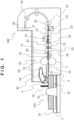
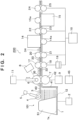
- a sheet conveyance apparatus 200 includes a sheet take-in device (sheet feeder) 101.
- a plurality of sheets are stacked on a sheet stacker (sheet placement table) 1, and the sheet stacker 1 is configured to move up and down.
- a sheet stacker drive motor 2 moves the sheet stacker 1 up and down.
- a sheet detection sensor 3 detects that a sheet stacked on the sheet stacker 1 is located at a sheet take-in position.
- a sheet stacking detection sensor 12 detects that a sheet is stacked on a sheet stacking surface 1a of the sheet stacker 1.
- a document jumping detection sensor 35 includes a plurality of sensors arranged in a direction orthogonal to the sheet stacking surface 1a, and detects jumping of a sheet stacked on the sheet stacker 1. For example, the document jumping detection sensor 35 can detect jumping of a document, which occurs when, for example, a stapled document is stacked on the sheet stacker 1 and fed. This enables control of, for example, stopping feeding of the stapled document.
- a pickup roller 4 (take-in means) as an example of a sheet pickup unit feeds a sheet on the sheet stacker 1 from the sheet stacker 1.
- a pickup roller drive motor 5 rotates the pickup roller 4 in a direction (take-in direction) of taking in the sheet.
- the state shown in Fig. 2 is a state in which the sheet upper surface is located at the sheet take-in position, and the take-in of the sheet starts when the pickup roller 4 is rotated.
- the pickup roller 4 can be driven and moved by a driving unit (not shown) to the sheet take-in position shown in Fig. 2 and a retreat position (not shown) on the upper side of the sheet take-in position.
- the pickup roller 4 is moved to the sheet take-in position when taking a sheet in, and moved to the retreat position when the take-in is ended.
- the pickup roller 4 pivots about a rotation center 64 of the pickup roller, which is provided on the downstream side of the pickup roller 4 int the conveyance direction. Hence, when the pickup roller 4 comes into contact with the sheet, the sheet can readily be pushed in the conveyance direction.
- a rotation instruction of the pickup roller 4 and a moving instruction to the sheet take-in position or the retreat position are issued by a control unit 45.
- the control unit 45 includes a CPU, a ROM, a RAM, and the like (none are shown).
- the CPU executes programs stored in the ROM, thereby implementing various kinds of control.
- the pickup roller 4 carries an auxiliary role to reliably perform separation/feeding by a separation roller pair 42 to be described later. When a sheet on the sheet stacker 1 is fed by the pickup roller 4 to the nip portion of the separation roller pair 42, separation/feeding by the separation roller pair 42 can reliably be performed.
- a feed roller 6 is driven by a feed motor 8 to rotate in a direction (feeding direction) of feeding the sheet to the downstream side in the conveyance direction.
- a separation roller 7 always receives a rotating force of rotating in a direction of pushing back the sheet to the upstream side in the conveyance direction from a separation motor 9 via a torque limiter (slip clutch) (not shown).
- the rotating force in a direction of feeding the sheet to the downstream side by the frictional force between the separation roller 7 and the sheet fed to the downstream side by the feed roller 6 is larger than the upper limit value of the rotating force transmitted by the above-described torque limiter in the direction in which the separation roller 7 pushes back the sheet to the upstream side. For this reason, the separation roller 7 rotates following the feed roller 6 (rotates together).
- the separation roller 7 receives, from the roller shaft, rotation in the direction of pushing back the sheets to the upstream side, thereby preventing sheets other than the sheet at the uppermost position from being conveyed to the downstream side.
- the feed roller 6 and the separation roller 7 form a pair of separation roller pairs 42 (sheet separation portion).
- the separation roller pair 42 is used.
- a separation belt/roller pair formed by changing one of the separation roller and the feed roller to a belt may be used.
- the separation roller may be replaced with a separation pad, and the pad may be brought into contact with a sheet to prevent a plurality of sheets from being conveyed to the downstream side.
- the sheet pickup unit formed by the thus configured pickup roller 4, feed roller 6, separation roller 7, and the like the sheets stacked on the sheet stacker 1 are separated one by one and taken into the sheet conveyance apparatus 200.
- a multiple feed detection sensor 30 when a multiple feed detection sensor 30 is provided at a position where the separated sheet passes (that is, on the downstream side of the separation roller pair 42), it can be detected whether the sheets are separated one by one by the sheet separation portion.
- a detection device using ultrasonic wave transmitting and receiving portions is used as the multiple feed detection sensor 30, and multiple feed can be detected based on the attenuation amount of an ultrasonic wave between the transmitting and receiving portions across the conveyance path.
- the multiple feed detection sensor 30 can also be used as a sensor configured to detect a sheet that has reached a predetermined position (a position corresponding to between the ultrasonic wave transmitting and receiving portions) of the conveyance path.
- a conveyance motor 10 drives other rollers (sheet conveyance unit) to convey the separated sheet to an image reading position where the image of the sheet is read by image reading sensors 14 and 15 and further convey the sheet to a discharge position. Also, the conveyance motor 10 drives the rollers to change the sheet conveyance speed in accordance with a speed optimum for sheet reading and settings such as the resolution of the sheet.
- a nip gap adjusting motor 11 adjusts the gap between the feed roller 6 and the separation roller 7 or a contact force (nip pressure) of the feed roller 6 contacting the separation roller 7 via a sheet. This can adjust the gap adapted for the thickness of the sheet or the contact force and separate the sheet.
- a registration clutch 19 transmits the rotation driving force of the conveyance motor 10 to a registration roller 18 (sheet conveyance unit) or blocks the transmission.
- a second registration roller pair formed by registration rollers 20 and 21, a conveyance roller pair formed by conveyance rollers 22 and 23, a conveyance roller pair formed by conveyance rollers 24 and 25, and a discharge roller pair formed by discharge rollers 26 and 27 convey the sheet to a discharge stacking unit 44.
- a discharge sensor 16 detects the passing of the conveyed sheet. After the discharge sensor 16 detects the trailing edge of the sheet, a discharge brake for reducing the rotation speed of the discharge roller pair (26 and 27) is applied, thereby preventing the discharged sheet from popping out and improving the discharge alignment property.
- Two guide plates including an upper guide plate 40 and a lower guide plate 41 guide the sheet conveyed by the separation roller pair, the registration roller pairs, the conveyance roller pairs, and the discharge roller pair.
- Apre-registration sensor 32 (fourth sheet detection sensor) is arranged on the upstream side of the registration roller pair (17 and 18), and detects the fed sheet.
- a post-registration sensor 34 (first sheet detection sensor) is arranged on the downstream side of the registration roller pair (20 and 21), and detects the conveyed sheet.
- a middle-registration sensor 33 (third sheet detection sensor) is arranged on the downstream side of the registration roller pair (17 and 18) and on the upstream side of the registration roller pair (20 and 21), and detects the conveyed sheet.
- the control unit 45 issues an image reading instruction to the image reading sensors 14 and 15, and the image of the conveyed sheet is read.
- reference numerals 14a and 15a denote platen rollers.
- the image of the sheet read by the image reading sensors 14 and 15 is transmitted to an external apparatus such as an information processing apparatus via an interface unit (not shown).
- Fig. 3 is a flowchart for explaining an example of the control operation in the thin paper mode (to be also referred to as a "thin paper conveyance mode" hereinafter), which is performed by the control unit 45 according to the first embodiment. That is, the processing shown in this flowchart is implemented when the CPU (not shown) of the control unit 45 executes a program stored in the ROM.
- the thin paper mode can be set from an operation unit (not shown) or an information processing apparatus (personal computer or the like) communicably connected to the sheet conveyance apparatus 200.
- step S102 the control unit 45 checks the pre-registration sensor 32 and determines whether the pre-registration sensor 32 detects a sheet leading edge.
- control unit 45 Upon determining that the pre-registration sensor 32 does not detect a sheet leading edge (NO in step S102), the control unit 45 advances the process to step S103.
- step S103 the control unit 45 determines whether the measurement time (TIME) has exceeded a specific time (TS). Upon determining that the measurement time (TIME) has not exceeded the specific time (TS) (NO in step S103), the control unit 45 returns the process to step S102.
- step S103 upon determining that the measurement time (TIME) has exceeded the specific time (TS) (YES in step S103), that is, if a sheet leading edge is not detected by the pre-registration sensor 32 even if the measurement time (TIME) has reached the specific time (TS), the control unit 45 advances the process to step S104.
- step S104 the control unit 45 moves the pickup roller 4 to the sheet take-in position and brings the pickup roller into contact with the sheet.
- step S105 the control unit 45 rotates the pickup roller 4 after the elapse of a specific time (TD) to be described later. Hence, the pickup roller 4 feeds the sheet to the feed roller 6.
- TD a specific time
- step S107 the control unit 45 checks the pre-registration sensor 32 and determines whether a sheet leading edge is detected by the pre-registration sensor 32.
- control unit 45 Upon determining that the pre-registration sensor 32 does not detect a sheet leading edge (NO in step S107), the control unit 45 advances the process to step S110.
- step S 110 the control unit 45 determines whether the measurement time (TIME) has exceeded an error time (TOUT). Upon determining that the measurement time (TIME) has not exceeded the error time (TOUT) (NO in step S110), the control unit 45 returns the process to step S107.
- step S110 upon determining that the measurement time (TIME) has exceeded the error time (TOUT) (YES in step S110), that is, if a sheet leading edge is not detected by the pre-registration sensor 32 even if the measurement time (TIME) has reached the error time (TOUT), the control unit 45 advances the process to step S111. That is, it is determined that although the pickup roller 4 is moved to the take-in position and rotated, a sheet leading edge is not detected even if reaching the error time, that is, a sheet feeding error has occurred (for example, jam has occurred).
- the control unit 45 moves the pickup roller 4 to the retreat position (step 5111), stops the rotation of the pickup roller 4 (step 5112), and error-ends the processing of the flowchart.
- step S107 upon determining in step S107 that the pre-registration sensor 32 detects a sheet leading edge (YES in step S107), the control unit 45 advances the process to step S108.
- the control unit 45 moves the pickup roller 4 to the retreat position (step S108), stops the rotation of the pickup roller 4 (step S109), and advances to step S113.
- step S113 the control unit 45 advances to step S113.
- the pickup roller 4 does not move to the contact position and remains at the retreat position. That is, in this situation, a sheet leading edge reaches the pre-registration sensor 32 even if the pickup roller 4 is not driven.
- This situation is a situation in which after a sheet has reached the feed roller 6 due to a friction or static electricity generated between the sheet and a precedingly fed sheet, the previously fed sheet passes through the feed roller 6, is conveyed by the feed roller 6, and reaches at least a point before the pre-registration sensor 32. At this time, feed by the pickup roller 4 is unnecessary. To prevent damage caused by bringing the pickup roller 4 into contact with the sheet, the pickup roller 4 is kept at the retreat position.
- step S113 the control unit 45 issues an image reading instruction to the image reading sensors 14 and 15 at a predetermined timing after the leading edge of the sheet is detected by the post-registration sensor 34, and causes the image reading sensors 14 and 15 to perform a sheet reading operation.
- the control unit 45 monitors sheet trailing edge detection by the pre-registration sensor 32 (step S114). Upon determining that the pre-registration sensor 32 does not detect the sheet trailing edge (NO in step S114), the control unit 45 returns the process to step S113.
- control unit 45 advances the process to step S115. Note that the control unit 45 ends the reading operation in step S113 at a predetermined timing after the post-registration sensor 34 detects the leading edge of the sheet.
- step S115 the control unit 45 checks whether a sheet exists on the sheet stacker 1. Upon determining that a sheet exists on the sheet stacker 1 (YES in step S115), that is, if a next sheet exists, the control unit 45 returns the process to step S101.
- the control unit 45 ends the processing of the flowchart. Note that it is preferable that before the end, if a sheet is detected by the pre-registration sensor 32 after waiting for a time equal to or more than the specific time (TS), the process advances to step S113, and if no sheet is detected, the processing is ended.
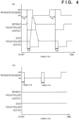
- Fig. 4 shows timing charts showing examples of the operations of the pre-registration sensor 32 and the pickup roller 4 according to the first embodiment.
- Fig. 4(a) corresponds to an example in a case in which the pre-registration sensor 32 does not detect the leading edge of a sheet even if the measurement time (TIME) has exceeded the specific time (TS) (TIME > TS).
- TIME measurement time
- TS specific time
- the pickup roller 4 moves to the contact position, and after the specific time (TD), rotates to feed the sheet to the feed roller 6. This prevents the occurrence of jam caused by the contact pressure of the pickup roller 4.
- Fig. 4(b) corresponds to an example in a case in which the pre-registration sensor 32 detects the leading edge of a sheet when the measurement time (TIME) is within the specific time (TS) (TIME ⁇ TS). In this case, the pickup roller 4 does not move to the contact position and remains at the retreat position. For this reason, jam caused by the contact pressure of the pickup roller 4 does not occur. Note that in Fig. 4(b) , the output of the pre-registration sensor 32 before counting of the measurement time (TIME) starts is OFF. This indicates that before counting of the measurement time (TIME) starts, the pre-registration sensor 32 itself is not driven, and the output is OFF.
- the next sheet may reach the pre-registration sensor 32 before counting of the measurement time (TIME) starts, and the output of the pre-registration sensor 32 is assumed to be ON. In this case, this may be confirmed before the start of counting of the measurement time (TIME), and it may be determined as YES in step S 102 of Fig. 3 .
- the pre-registration sensor 32 detects a sheet by receiving, by a light receiving portion, irradiation light that is output from a light source arranged on one side (as an example, the lower guide plate 41) of the conveyance path and returned to the one side again by a light guide member arranged on the facing other side (as an example, the upper guide plate 40).
- the light receiving level in the light receiving portion is L level.
- the output becomes ON when the light receiving level is L level.
- the irradiation light returns without being shielded.
- the light receiving level in the light receiving portion is H level.
- the output becomes OFF when the light receiving level is H level. This also applies to other sensors in this embodiment.
- the specific time (TS) is set to, for example, 1 sec in consideration of shortening of the feed time in Fig. 4(a) and reliability of sheet detection in Fig. 4(b) .
- the specific time (TS) is not limited to 1 sec.
- Fig. 5 is a graph showing a change in a contact pressure to a sheet after the pickup roller 4 is brought into contact with the sheet.
- a time longer than the contact pressure change time (TC) shown in Fig. 5 is set, and rotation is started.
- the time is set to, for example, 0.2 sec.
- the specific time (TD) is not limited to 0.2 sec.
- steps S108 and S109 or steps S111 and S112 in Fig. 3 and in Fig. 4 control is done to move the pickup roller 4 to the retreat position and then stop rotation.
- the retreat operation and the rotation stop may be simultaneously performed.
- the order may be changed to stop rotation and then perform the retreat operation.
- the frictional force between sheets is increased by the pressing pressure of the pickup roller 4, and a sheet is readily conveyed together.
- the jam preventing effect becomes high when rotation is stopped after the retreat position, or the retreat and the rotation stop are simultaneously performed.
- the first embodiment is characterized in that if the pre-registration sensor does not detect the leading edge of a next sheet after the elapse of the standby time (TS) after detecting the trailing edge of a previously separated and fed sheet, the pickup roller is moved to a position to contact a sheet stacked on the sheet stacker, after the elapse of TD, the pickup roller is rotated, and after the pre-registration sensor detects the leading edge of the sheet, the pickup roller is retreated to a position not to contact a sheet, and rotation is stopped.
- TS standby time
- the movement and rotation of the pickup roller 4 may be controlled using the middle-registration sensor 33 in place of the pre-registration sensor 32. That is, if the leading edge of the next sheet is not detected even after the elapse of the standby time (TS) after the middle-registration sensor 33 detects the trailing edge of the previously separated and fed sheet, the pickup roller 4 may be moved to the position to contact a sheet stacked on the sheet stacker, after the elapse of TD, the pickup roller 4 may be rotated, and after the middle-registration sensor 33 detects the leading edge of the sheet, the pickup roller 4 may be retreated to the position not to contact a sheet, and rotation may be stopped.
- TS standby time
- the sheet conveyance apparatus 200 has a normal paper mode (to be also referred to as a "normal conveyance mode" hereinafter) different from the above-described thin paper mode, and can selectively set these modes from an operation panel (not shown) or an information processing apparatus (for example, a personal computer) connected to the sheet conveyance apparatus 200.
- a normal paper mode to be also referred to as a "normal conveyance mode” hereinafter
- the control unit 45 controls to continuously feed the plurality of sheets by rotating and stopping the pickup roller 4 while keeping the pickup roller 4 in contact with the sheet stacked on the sheet stacker 1.
- a sheet may be caught by the feed roller 6 to cause jam of the sheet on the feed roller 6.
- thin paper mode is applied, thin paper with low stiffness is readily caught by the feed roller 6. Effective control for preventing this will be described below.
- Fig. 6 shows schematic views showing an example of the positional relationship between the leading edge of a fed document and a feed roller pair according to the first embodiment.
- Fig. 6(a) shows a state in which the document leading edge has reached a nip portion formed between the feed roller 6 and the separation roller 7.
- Fig. 6(b) shows a state in which the document leading edge has passed through the nip portion formed between the feed roller 6 and the separation roller 7.
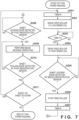
- Fig. 7 is a flowchart for explaining an example of a feeding control operation in the thin paper mode, which is performed by the control unit 45 according to the first embodiment.
- This control aims at preventing the leading edge of a sheet from being caught by the feed roller 6 when thin paper with low stiffness has reached the feed roller 6.
- the processing shown in this flowchart is implemented when the CPU (not shown) of the control unit 45 executes a program stored in the ROM. Note that the control shown in Fig. 7 and the control shown in Fig. 3 described above are performed in one feeding operation.
- the control unit 45 drives the conveyance rollers when the feeding operation in the thin paper mode is started.
- the conveyance rollers are controlled to be continuously driven from then on.
- the control unit 45 drives the feed roller 6 at a first feeding speed V3 (low speed) at which the sheet is not caught by the feed roller 6 (step S202).
- the control unit 45 continuously drives the feed roller 6 at the first feeding speed V3 during the time after the leading edge of the sheet is fed from the sheet stacker 1 until a predetermined time T3 in which the leading edge passes through the nip portion formed between the feed roller 6 and the separation roller 7 elapses (TIME ⁇ T3).
- the control unit 45 waits for the elapse of the predetermined time T3 (step S203).
- the control unit 45 Upon determining that the predetermined time T3 has elapsed (YES in step S203), the control unit 45 judges that the leading edge of the sheet has passed through the nip portion formed between the feed roller 6 and the separation roller 7, and drives the feed roller 6 by switching the feeding speed to a second feeding speed V4 (high speed) (step S204).
- the second feeding speed V4 (high speed) is higher than the first feeding speed V3 (low speed).
- the second feeding speed V4 is, for example, a speed equal to the conveyance speed to drive the registration rollers 17, 18, 20, and 21 or almost the same speed approximate to the conveyance speed.
- control unit 45 monitors whether it is detected that the sheet leading edge has reached the middle-registration sensor 33 (step S205). Upon determining that it is not detected that the sheet leading edge has reached the middle-registration sensor 33 (NO in step S205), the control unit 45 continues monitoring in step S205. Upon determining that it is detected that the sheet leading edge has reached the middle-registration sensor 33 (YES in step S205), the control unit 45 advances the process to step S206.
- the control unit 45 stops driving feed motor 8 (step S206), returns the count TIME for driving control of the feed roller 6 to "0", and stops measuring time (step S207).
- control unit 45 monitors whether it is detected that the sheet leading edge has reached the post-registration sensor 34 (step S208). If the post-registration sensor 34 does not detect that the sheet leading edge has reached (NO in step S208), the control unit 45 continues monitoring in step S208.
- control unit 45 starts the image reading operation by the image reading sensors 14 and 15 at a predetermined timing (step S209).
- control unit 45 monitors whether the sheet trailing edge has reached the post-registration sensor 34 (step S210). If the post-registration sensor 34 does not detect the reaching of the sheet trailing edge (NO in step S210), the control unit 45 continues the image reading operation in step S209.
- step S210 If the post-registration sensor 34 detects the reaching of the sheet trailing edge (YES in step S210), the control unit 45 advances the process to step S211.
- step S211 the control unit 45 checks whether a sheet exists on the sheet stacker 1. Upon determining that a sheet exists on the sheet stacker 1 (YES in step S211), that is, if the next sheet exists, the control unit 45 returns the process to step S201.
- control unit 45 ends the processing of the flowchart.
- the feed roller 6 when resuming driving of the feed roller 6 after the reaching of the trailing edge of the sheet is detected by the post-registration sensor 34, the feed roller 6 is controlled to the first feeding speed. Furthermore, upon determining that the leading edge of the sheet has passed through the nip between the feed roller 6 and the separation roller 7, the feed roller 6 is controlled to the second feeding speed higher than the first feeding speed. With this control, even if the sheet to be fed is thin paper or the like with low stiffness, jam in which, for example, a sheet is caught by the feed roller in feeding can be made less likely to occur.
- step S210 instead of detecting the reaching of the sheet trailing edge by the post-registration sensor 34, when the middle-registration sensor 33 or the pre-registration sensor 32 detects the reaching of the sheet trailing edge, the process may advance to step S211. In these cases, the sheet interval can be made small as compared to a case in which the reaching of the sheet trailing edge is detected by the post-registration sensor 34.
- step S205 if the post-registration sensor 34 detects the sheet leading edge, the process advances to step S206, and the process of step S208 is omitted.
- a method of deciding the time (T3) to drive the feed motor 8 such that the feed roller 6 is driven at the first feeding speed V3 (low speed) will be described below with reference to Fig. 8 .
- Fig. 8 is a view for explaining the relationship between sheets (documents) on the sheet stacker 1, the feed roller 6, the positions of the leading edge portions of the documents, and the feeding speed of the pickup roller 4.
- the length X of the leading edge portion of the document may be, for example, about 1/4 of the peripheral diameter of the feed roller 6. Note that the position of the nip portion between the feed roller 6 and the separation roller 7 is set here as the center position of the shaft of the feed roller 6.
- the first feeding speed V3 (low speed) is, for example, a set speed at which the peripheral speed of the feed roller 6 becomes almost the second feeding speed V4 (high speed) even if an overshoot occurs at the rising of the feed motor 8 that rotationally drives the feed roller 6.
- the set speed is obtained in advance by experiments and the like.
- the first feeding speed V3 and the feeding speed V5 by the pickup roller 4 may be set equal.
- control unit 45 controls the feed roller 6 to the second feeding speed V4 (high speed) at the start of driving of the feed roller 6.
- a plurality of stacked documents may simultaneously be fed due to friction between the documents and passed through the pickup roller 4, resulting in a so-called "fed-together" state in which a document scheduled to be fed next already exists at a position close to the nip portion between the feed roller 6 and the separation roller 7.
- the speed change is executed with the predetermined time T3, as described above, the leading edge portion of the document immediately passes through the nip portion between the feed roller 6 and the separation roller 7. That is, in this case, even if the leading edge portion of the document passes through the nip portion, and the speed can be switched to the speed V4, feeding may be continued at the speed V3 until the predetermined time T3 elapses, and throughput may lower.
- Fig. 9 shows views showing a configuration in which a thin paper conveyance registration sensor 65 (second sheet detection sensor) that is an optical sensor for the thin paper mode is arranged at a position parallel to the feed roller 6 in the conveyance direction of the document.
- a thin paper conveyance registration sensor 65 second sheet detection sensor
- Fig. 9(a) shows a state in which the document leading edge has reached the nip portion formed between the feed roller 6 and the separation roller 7.
- Fig. 9(b) shows a state in which the document leading edge has passed through the nip portion formed between the feed roller 6 and the separation roller 7 and reached the thin paper conveyance registration sensor 65.
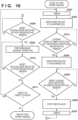
- FIG. 10 A feeding control operation according to this aspect is shown in Fig. 10 .
- Fig. 10 is a flowchart for explaining an example of a feeding control operation in the thin paper mode, which is performed by the control unit 45 in the other aspect of the first embodiment.
- the processing shown in this flowchart is implemented when the CPU (not shown) of the control unit 45 executes a program stored in the ROM.
- the same step numbers as in Fig. 7 denote the same steps.
- the control shown in Fig. 10 and the control shown in Fig. 3 described above are performed in one feeding operation.
- the control unit 45 drives the feed roller 6 at the first feeding speed V3 (low speed) (step S202), and then advances the process to step S212.
- step S212 the control unit 45 monitors whether the thin paper conveyance registration sensor 65 detects the leading edge of the document. Upon determining that the thin paper conveyance registration sensor 65 has not detected the leading edge of the document yet (NO in step S212), the control unit 45 continues monitoring in step S212.
- step S212 upon determining that the thin paper conveyance registration sensor 65 has detected the leading edge of the document (YES in step S212), the control unit 45 advances the process to step S204. Processing from step S204 is the same as in Fig. 7 , and a description thereof will be omitted.
- the control unit 45 Based on the detection of the leading edge of the document by the thin paper conveyance registration sensor 65, the control unit 45 changes the driving speed of the feed roller 6 from the first feeding speed V3 to the second feeding speed V4. With this configuration, speed control for thin paper conveyance can more effectively be executed.
- the detection position of the optical sensor is preferably located on the downstream side of the position of the nip portion formed by the feed roller 6 and the separation roller 7.
- the thin paper conveyance registration sensor 65 may be a detection sensor other than an optical sensor.
- a tracking sensor movement detection sensor
- the same effect as described above can be obtained.
- step S212 the driving speed of the feed roller 6 may be changed from V3 to V4 in accordance with not the detection of the document leading edge by the thin paper conveyance registration sensor 65 but the detection of the document leading edge by the pre-registration sensor 32.
- the driving speed of the feed roller 6 may be changed from V3 to V4 in accordance with not the detection of the document leading edge by the thin paper conveyance registration sensor 65 but the detection of the document by the multiple feed detection sensor 30.
- the feeding speed may be switched when a document is detected by the skew sensors.
- the feeding speed may be switched when a document is detected by one of the sensors provided on the downstream side of the separation roller pair 42.
- sensors As for the type of sensors, sensors of any detection type can be used.
- control unit 45 may change the driving speed of the feed roller 6 from the V3 to V4 at an earlier timing of the timing from the detection of the trailing edge of the preceding sheet by the post-registration sensor 34 to the elapse of T3 and the timing of the detection of the subsequent sheet by the thin paper conveyance registration sensor 65.
- driving of a feed roller 6 (separation roller 7) is turned on/off will be described.
- driving of a registration roller pair (17 and 18) may be turned on/off at the timing of turning on/off driving of the feed roller 6 (separation roller 7). Even concerning a case in which driving of the feed roller 6 and the separation roller 7 is turned on/off, this will be referred to as “driving of the feed roller 6 is turned on/off" hereinafter.
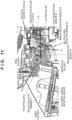
- Fig. 11 is a partial sectional view schematically showing a part of the configuration of a sheet conveyance apparatus (image reading apparatus) to which a sheet feeder according to the second embodiment of the present invention can be applied. Note that the same reference numerals as in Fig. 1 and the like denote the same components.
- a registration roller pair (20 and 21) is disposed on the downstream side of a registration roller pair (17 and 18).
- a middle-registration sensor 33 (third sheet detection sensor) is disposed on the downstream side of the registration roller pair (17 and 18) and on the upstream side of the registration roller pair (20 and 21), and detects a conveyed sheet.
- a post-registration sensor 34 is disposed on the downstream side of the conveyance path (20 and 21) and on the upstream side of image reading sensors 14 and 15, and detects a conveyed sheet.
- Fig. 12 is a timing chart showing an example of the relationship between the operations of a pickup roller, a feed roller (and the registration roller pairs) and the detection states of a pre-registration sensor and the middle-registration sensor according to the second embodiment.
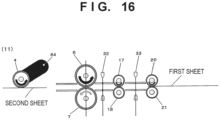
- Figs. 13 to 16 are schematic views showing an example of the relationship between the operations of the pickup roller, the feed roller, and the registration roller pairs and the detection states of the pre-registration sensor and the middle-registration sensor according to the second embodiment. Note that the same reference numerals as in (0) to (11) of Fig. 12 denote the same states. A series of procedures will be described below.
- the feed roller 6 and the registration rollers (17, 18, 20, and 21) are driven ((0) of Fig. 13 ), and a pickup roller 4 is moved to the contact position ((1) of Fig. 13 ) and rotated after the elapse of a specific time (TD) ((2) of Fig. 13 ), thereby feeding a sheet to the feed roller 6.
- TD specific time
- the pickup roller 4 is moved to the retreat position ((4) of Fig. 14 ), and the rotation is stopped ((4)' of Fig. 14 ).
- the feed roller 6 is stopped ((6) of Fig. 14 ).
- the sheet trailing edge passes through the pre-registration sensor 32 ((7) of Fig. 15 ) (the time is defined as "t0"), and after the elapse of t1 ((8) of Fig. 15 ), the feed roller 6 is rotated. After that, the sheet trailing edge passes through the middle-registration sensor 33 ((8)' of Fig. 15 ).
- the pickup roller 4 is moved to the contact position ((10) of Fig. 15 ) and rotated after the elapse of the specific time (TD) ((11) of Fig. 16 ), thereby feeding the next sheet to the feed roller 6.
- the above-described time t2 is preferably "t2 > t1 + L/V1".
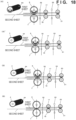
- Figs. 17 to 19 are schematic views showing an example of the relationship between the operations of the pickup roller, the feed roller, and the registration roller pairs and the detection states of the pre-registration sensor and the middle-registration sensor according to the second embodiment. These drawings correspond to a case in which the leading edge of the next sheet is detected by the pre-registration sensor 32 before the elapse of t2.
- the feed roller 6 and the registration rollers (17, 18, 20, and 21) are driven ((0) of Fig. 17 ), and the pickup roller 4 is moved to the contact position ((1) of Fig. 17 ) and rotated after the elapse of the specific time (TD) ((2) of Fig. 17 ), thereby feeding the first sheet to the feed roller 6.
- the pickup roller 4 is moved to the retreat position ((4) of Fig. 18 ), and the rotation is stopped ((4)' of Fig. 18 ).
- this example corresponds to a case in which at the point of time of (4), the second sheet is fed together with the first sheet due to a friction or static electricity between the sheets, and reaches the nip portion of the feed roller 6, as shown in Fig. 18 .
- the first sheet and the second sheet are separated by the separation roller 7 so multiple feed does not occur.
- the feed roller 6 is stopped ((6) of Fig. 18 ).
- the trailing edge of the first sheet passes through the pre-registration sensor 32 ((7) of Fig. 19 ) (the time is defined as "t0"), and after the elapse of t1 ((8) of Fig.
- the time t2 after the sheet trailing edge passes through the pre-registration sensor 32 until the movement of the pickup roller 4 to the contact position starts can be set to t2', for example, "t2' > (L - V1 ⁇ (L/V2))/V1". That is, the time can be made slightly shorter than "t2 > t1 + L/V1" in the above-described case in which the feed roller 6 is stopped.
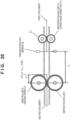
- Fig. 20 is a view for explaining the relationship between the positions of the feed roller 6, the pre-registration sensor 32, and the registration rollers 17 and 18, the feeding speed of the feed roller 6, and the conveyance speed of the registration rollers.
- the minimum condition of the wait time until the pickup roller 4 is lowered to the subsequent sheet is as follows.
- the second sheet reaches the feed roller 6 together with the feeding of the first sheet, the second sheet exists at a position ahead of the position of the feed roller 6 by "V1 ⁇ (L/V2)" at the point of time when the first sheet passes through the pre-registration sensor 32.
- the process waits for only the time "(L - V1 ⁇ (L/V2))/V1" in which the second sheet is fed from that position to the position of the pre-registration sensor 32 at the feeding speed V1, the above-described second sheet should reach the pre-registration sensor 32.
- the time "(L - V1 ⁇ (L/V2))/V1" can be set as the minimum condition of the wait time until the pickup roller 4 is lowered to the subsequent sheet.
- control is performed to stop the feed motor 8 when the leading edge of the sheet reaches the middle-registration sensor 33.
- the present invention can also be applied even to a sheet feeder having a configuration in which, for example, a pickup roller arranged below a sheet stacker comes, from the lower side, into contact with a sheet stacked on the sheet stacker with a tilt, and supplies sheets sequentially from the lower side of the sheet bundle to a feed roller.
Landscapes
- Engineering & Computer Science (AREA)
- Physics & Mathematics (AREA)
- General Physics & Mathematics (AREA)
- Mechanical Engineering (AREA)
- Microelectronics & Electronic Packaging (AREA)
- Sheets, Magazines, And Separation Thereof (AREA)
- Controlling Sheets Or Webs (AREA)
Claims (9)
- Dispositif d'introduction feuille à feuille (101) comprenant :un rouleau d'introduction (6) configuré pour introduire une feuille le long d'un trajet d'acheminement ;un rouleau de séparation (7) configuré pour former une fente avec le rouleau d'introduction (6) et séparer la feuille introduite par le rouleau d'introduction (6) depuis des autres feuilles ;un premier capteur de détection de feuille (34) disposé sur un côté aval du trajet d'acheminement par rapport au rouleau d'introduction (6) dans le trajet d'acheminement, et configuré pour détecter que la feuille est arrivée ; etune unité de contrôle (45) configurée pour contrôler la rotation du rouleau d'introduction (6),dans lequel, dans un cas où le démarrage de l'introduction d'une feuille suivante par le rouleau d'introduction (6) après avoir atteint un bord de fuite d'une feuille précédente est détecté par le premier capteur de détection de feuille (34), l'unité de contrôle (45) contrôle le rouleau d'introduction (6) de tourner à une première vitesse d'alimentation (V3), et après avoir déterminé qu'un bord d'attaque de la feuille suivante a traversé la fente, l'unité de contrôle (45) contrôle en outre le rouleau d'introduction (6) de tourner à une deuxième vitesse d'alimentation (V4) supérieure à la première vitesse d'alimentation (V3),caractérisé parun premier rouleau d'acheminement (17) situé sur le côté aval du rouleau d'introduction (6) dans le trajet d'acheminement et sur le côté amont du premier capteur de détection de feuille (34) dans le trajet d'acheminement, et configuré pour acheminer la feuille ;un deuxième rouleau d'acheminement (20) situé sur le côté aval du premier rouleau d'acheminement (17) dans le trajet d'acheminement et sur le côté amont du premier capteur de détection de feuille (34) dans le trajet d'acheminement, et configuré pour acheminer la feuille ; etun troisième capteur de détection de feuille (33) situé sur le côté aval du premier rouleau d'acheminement (17) dans le trajet d'acheminement et sur le côté amont du deuxième rouleau d'acheminement (20) dans le trajet d'acheminement, et configuré pour détecter que la feuille est arrivée,dans lequel, dans un cas où l'atteinte d'un bord d'attaque de feuille est détectée par le troisième capteur de détection de feuille (33), l'unité de contrôle (45) arrête la rotation du rouleau d'introduction (6).
- Dispositif d'introduction feuille à feuille (101) selon la revendication 1, dans lequel
dans un cas où un temps prédéterminé (T3) s'est écoulé après que l'atteinte du bord de fuite de la feuille précédente a été détectée par le premier capteur de détection de feuille (34), l'unité de contrôle (45) détermine que le bord d'attaque de la feuille suivante a traversé la fente. - Dispositif d'introduction feuille à feuille (101) selon la revendication 1 ou 2, comprenant un deuxième capteur de détection de feuille (65) situé sur le côté aval de la fente dans le trajet d'acheminement et sur un côté amont du premier capteur de détection de feuilles (34) dans le trajet d'acheminement, et configuré pour détecter que la feuille est arrivée,
dans lequel, dans un cas où l'atteinte d'un bord d'attaque de feuille est détectée par le deuxième capteur de détection de feuille (65), l'unité de contrôle (45) contrôle le rouleau d'introduction (6) de tourner à la deuxième vitesse d'alimentation (V4). - Dispositif d'introduction feuille à feuille (101) selon l'une des revendications 1 à 3, comprenant un rouleau preneur (4) disposé au-dessus de la feuille empilée sur l'empileur de feuilles (1) et configuré pour fournir la feuille au rouleau d'introduction (6).
- Dispositif d'introduction feuille à feuille (101) selon la revendication 4, comprenant :un premier rouleau d'acheminement (17) situé sur le côté aval du rouleau d'introduction (6) dans le trajet d'acheminement et sur le côté amont du premier capteur de détection de feuille (34) dans le trajet d'acheminement, et configuré pour acheminer la feuille ; etun quatrième capteur de détection de feuille (32) situé sur le côté aval du rouleau d'introduction (6) dans le trajet d'acheminement et sur le côté amont du premier rouleau d'acheminement (17) dans le trajet d'acheminement, et configuré pour détecter que la feuille est arrivée,dans un cas où, après que l'atteinte du bord de fuite de la feuille précédente a été détectée par le premier capteur de détection de feuille (34) et que l'entraînement du rouleau d'introduction (6) a repris, l'atteinte du bord d'attaque de la feuille suivante n'est pas détectée par le quatrième capteur de détection de feuille (32), même après l'écoulement d'un temps d'attente (TS) prédéfini, l'unité de contrôle (45) amène le rouleau preneur (4) de fournir la feuille, et dans un cas où l'atteinte du bord d'attaque de la feuille suivante est détectée par le quatrième capteur de détection de feuille (32) avant l'écoulement du temps d'attente (TS), l'unité de contrôle (45) contrôle le rouleau preneur (4) de ne pas fournir la feuille.
- Dispositif d'introduction feuille à feuille (101) selon l'une des revendications 1 à 5, dans lequelle dispositif d'introduction feuille à feuille (101) a un mode d'acheminement de papier fin, etpendant l'exécution du mode d'acheminement de papier fin, l'unité de contrôle (45) contrôle le rouleau d'introduction (6) de tourner à la première vitesse d'alimentation (V3) jusqu'à ce qu'un bord d'attaque d'une première feuille d'une pluralité de feuilles à introduire séquentiellement par le rouleau d'introduction (6) traverse la fente, et après que le bord d'attaque de la première feuille a traversé la fente, l'unité de contrôle (45) contrôle le rouleau d'introduction (6) de tourner à la deuxième vitesse d'alimentation (V4).
- Dispositif d'introduction feuille à feuille (101) selon la revendication 6, dans lequel le dispositif d'introduction feuille à feuille (101) a un mode d'acheminement normal, et
pendant l'exécution du mode d'acheminement normal, l'unité de contrôle (45) effectue un contrôle à la deuxième vitesse d'alimentation (V4) à un démarrage de l'entraînement du rouleau d'introduction (6). - Procédé de contrôle d'un dispositif d'introduction feuille à feuille (101) comprenant : un rouleau d'introduction (6) configuré pour introduire une feuille le long d'un trajet d'acheminement ; un rouleau de séparation (7) configuré pour former une fente avec le rouleau d'introduction (6) et séparer la feuille introduite par le rouleau d'introduction (6) des autres feuilles ; un premier capteur de détection de feuille (34) disposé sur un côté aval du trajet d'acheminement par rapport au rouleau d'introduction (6) dans le trajet d'acheminement, et configuré pour détecter qu'une feuille est arrivée ; et une unité de contrôle (45) configurée pour contrôler la rotation du rouleau d'introduction (6), le procédé de contrôle comprenant :dans un cas où le démarrage de l'introduction d'une feuille suivante par le rouleau d'introduction (6) après avoir atteint un bord de fuite d'une feuille précédente est détecté par le premier capteur de détection de feuille (34), le contrôle par l'unité de contrôle (45) du rouleau d'introduction (6) de tourner à une première vitesse d'alimentation (V3) ; etle contrôle, après avoir déterminé qu'un bord d'attaque de la feuille suivante a traversé la fente, du rouleau d'introduction (6) par l'unité de contrôle de tourner à une deuxième vitesse d'alimentation (V4) supérieure à la première vitesse d'alimentation (V3),caractérisé parle dispositif d'introduction feuille à feuille comprenant en outre : un premier rouleau d'acheminement (17) situé sur le côté aval du rouleau d'introduction (6) dans le trajet d'acheminement et sur le côté amont du premier capteur de détection de feuille (34) dans le trajet d'acheminement, et configuré pour acheminer la feuille ; un deuxième rouleau d'acheminement (20) situé sur le côté aval du premier rouleau d'acheminement (17) dans le trajet d'acheminement et sur le côté amont du premier capteur de détection de feuille (34) dans le trajet d'acheminement, et configuré pour acheminer la feuille ; et un troisième capteur de détection de feuille (33) situé sur le côté aval du premier rouleau d'acheminement (17) dans le trajet d'acheminement et sur le côté amont du deuxième rouleau d'acheminement (20) dans le trajet d'acheminement, et configuré pour détecter que la feuille est arrivé, etle procédé de contrôle comprenant en outre : dans un cas où l'atteinte d'un bord d'attaque de feuille est détectée par le troisième capteur de détection de feuille (33), l'arrêt, par l'unité de contrôle (45), de la rotation du rouleau d'introduction (6).
- Procédé de contrôle selon la revendication 8, dans lequelle dispositif d'introduction feuille à feuille (101) a un mode d'acheminement de papier fin, etpendant l'exécution du mode d'acheminement de papier fin, l'unité de contrôle (45) contrôle le rouleau d'introduction (6) de tourner à la première vitesse d'alimentation (V3) jusqu'à ce qu'un bord d'attaque d'une première feuille d'une pluralité de feuilles à introduire séquentiellement par le rouleau d'introduction (6) traverse la fente, et après que le bord d'attaque de la première feuille a traversé la fente, l'unité de contrôle (45) contrôle le rouleau d'introduction (6) de tourner à la deuxième vitesse d'alimentation (V4).
Applications Claiming Priority (6)
| Application Number | Priority Date | Filing Date | Title |
|---|---|---|---|
| JP2017249598 | 2017-12-26 | ||
| JP2017252049A JP2019118054A (ja) | 2017-12-27 | 2017-12-27 | 原稿搬送装置 |
| JP2018074167A JP7292787B2 (ja) | 2017-12-26 | 2018-04-06 | シート給送装置、シート給送装置の制御方法、及びプログラム |
| JP2018087469A JP7242194B2 (ja) | 2018-04-27 | 2018-04-27 | 原稿搬送装置 |
| JP2018149180A JP7143143B2 (ja) | 2018-08-08 | 2018-08-08 | シート給送装置、シート給送装置の制御方法、及びプログラム |
| PCT/JP2018/030870 WO2019130648A1 (fr) | 2017-12-26 | 2018-08-21 | Dispositif d'alimentation en feuilles, procédé de commande destiné à un dispositif d'alimentation en feuilles, et programme |
Publications (3)
| Publication Number | Publication Date |
|---|---|
| EP3733574A1 EP3733574A1 (fr) | 2020-11-04 |
| EP3733574A4 EP3733574A4 (fr) | 2021-07-07 |
| EP3733574B1 true EP3733574B1 (fr) | 2024-11-13 |
Family
ID=72643874
Family Applications (1)
| Application Number | Title | Priority Date | Filing Date |
|---|---|---|---|
| EP18893908.6A Active EP3733574B1 (fr) | 2017-12-26 | 2018-08-21 | Dispositif d'alimentation en feuilles et procédé de commande destiné à un dispositif d'alimentation en feuilles |
Country Status (2)
| Country | Link |
|---|---|
| US (1) | US11591175B2 (fr) |
| EP (1) | EP3733574B1 (fr) |
Families Citing this family (9)
| Publication number | Priority date | Publication date | Assignee | Title |
|---|---|---|---|---|
| JP2019176215A (ja) * | 2018-03-27 | 2019-10-10 | 日本電産サンキョー株式会社 | 画像読取装置 |
| JP7346970B2 (ja) * | 2019-07-23 | 2023-09-20 | 富士フイルムビジネスイノベーション株式会社 | 光学装置、画像読取装置、および画像形成装置 |
| JP7375472B2 (ja) * | 2019-10-31 | 2023-11-08 | ブラザー工業株式会社 | 画像形成装置 |
| US11962727B2 (en) * | 2020-09-07 | 2024-04-16 | Avision Inc. | Multi-function printer with detachable scanner body capable of directly starting vertical scanning of a sheet and printing upon detection of sheet medium |
| WO2022159104A1 (fr) * | 2021-01-22 | 2022-07-28 | Hewlett-Packard Development Company, L.P. | Réglage de positions de support sur la base d'avancées et de prédictions de support de lecture |
| JP7598772B2 (ja) * | 2021-01-22 | 2024-12-12 | 理想科学工業株式会社 | 媒体供給機構 |
| JP7608852B2 (ja) * | 2021-02-09 | 2025-01-07 | セイコーエプソン株式会社 | 画像読取装置、画像読取方法 |
| JP7553712B2 (ja) | 2021-05-31 | 2024-09-18 | 株式会社Pfu | 媒体搬送装置、制御方法及び制御プログラム |
| JP2023051570A (ja) * | 2021-09-30 | 2023-04-11 | 株式会社リコー | 分光特性取得装置および分光特性取得方法 |
Family Cites Families (18)
| Publication number | Priority date | Publication date | Assignee | Title |
|---|---|---|---|---|
| JP3139577B2 (ja) | 1992-06-25 | 2001-03-05 | キヤノン株式会社 | 給紙装置 |
| JPH09278196A (ja) | 1996-04-15 | 1997-10-28 | Ricoh Co Ltd | シート給送装置 |
| JPH10250862A (ja) * | 1997-03-11 | 1998-09-22 | Minolta Co Ltd | 給紙装置 |
| JP2004331357A (ja) * | 2003-05-09 | 2004-11-25 | Ricoh Co Ltd | 用紙搬送装置及びその用紙搬送装置を具備する画像形成装置 |
| JP2008265996A (ja) | 2007-04-24 | 2008-11-06 | Fuji Xerox Co Ltd | 給送装置及び画像形成装置 |
| JP2013119439A (ja) | 2011-12-06 | 2013-06-17 | Seiko Epson Corp | 媒体搬送装置及び記録装置 |
| JP5928098B2 (ja) | 2012-03-30 | 2016-06-01 | ブラザー工業株式会社 | 電気的装置及び設定方法 |
| JP5409857B1 (ja) | 2012-08-24 | 2014-02-05 | 株式会社Pfu | 画像読取装置 |
| JP2014119432A (ja) | 2012-12-19 | 2014-06-30 | Ricoh Elemex Corp | 検査装置及び検査方法 |
| JP2014125347A (ja) | 2012-12-27 | 2014-07-07 | Ricoh Co Ltd | シート供給用部材の劣化検出装置、シート供給装置並びに画像形成装置 |
| JP6082290B2 (ja) | 2013-03-19 | 2017-02-15 | 株式会社Pfu | 媒体供給装置 |
| JP5754477B2 (ja) * | 2013-07-24 | 2015-07-29 | コニカミノルタ株式会社 | シート搬送装置、原稿読取装置および画像形成装置 |
| US9359159B2 (en) * | 2014-02-26 | 2016-06-07 | Canon Kabushiki Kaisha | Sheet feeding apparatus and image forming apparatus |
| JP6611527B2 (ja) * | 2015-09-09 | 2019-11-27 | キヤノン株式会社 | 記録装置 |
| JP5886468B2 (ja) | 2015-10-05 | 2016-03-16 | キヤノン電子株式会社 | シート搬送装置 |
| JP6645698B2 (ja) | 2015-11-18 | 2020-02-14 | キヤノン株式会社 | 画像形成装置 |
| JP2017105623A (ja) * | 2015-12-11 | 2017-06-15 | キヤノン株式会社 | シート給送装置、画像形成装置および画像形成システム |
| JP6971775B2 (ja) * | 2017-10-24 | 2021-11-24 | キヤノン株式会社 | シート給送装置及び画像形成装置 |
-
2018
- 2018-08-21 EP EP18893908.6A patent/EP3733574B1/fr active Active
-
2020
- 2020-06-25 US US16/911,620 patent/US11591175B2/en active Active
Also Published As
| Publication number | Publication date |
|---|---|
| EP3733574A4 (fr) | 2021-07-07 |
| EP3733574A1 (fr) | 2020-11-04 |
| US11591175B2 (en) | 2023-02-28 |
| US20200324991A1 (en) | 2020-10-15 |
Similar Documents
| Publication | Publication Date | Title |
|---|---|---|
| EP3733574B1 (fr) | Dispositif d'alimentation en feuilles et procédé de commande destiné à un dispositif d'alimentation en feuilles | |
| JP5321146B2 (ja) | 原稿送り装置及び画像形成装置 | |
| CN107472947B (zh) | 输送装置、图像读取装置和图像形成装置 | |
| JP4323735B2 (ja) | シート処理装置及び該装置を備える画像形成システム | |
| JP5718621B2 (ja) | シート搬送装置及び情報読取装置 | |
| JP5587461B2 (ja) | シート給送装置、スキャナ、プリンタ、ファクシミリ、及び複写機 | |
| JP5927171B2 (ja) | シート搬送機構、原稿搬送装置及びそれを備えた画像形成装置 | |
| JP5070029B2 (ja) | シート給送装置、画像読取装置、画像形成装置、シート給送装置の制御方法、画像読取装置の制御方法及び画像形成装置の制御方法 | |
| JP5905306B2 (ja) | 媒体供給装置 | |
| US11639278B2 (en) | Media feeding apparatus and image reading apparatus | |
| JP4428302B2 (ja) | シート材供給装置 | |
| JP4391153B2 (ja) | 原稿読取装置 | |
| JP5520514B2 (ja) | 画像形成装置 | |
| JP7143143B2 (ja) | シート給送装置、シート給送装置の制御方法、及びプログラム | |
| JP2019182590A (ja) | シート給送装置、及びシート処理装置、並びに画像読取装置 | |
| JP4814066B2 (ja) | シート状媒体搬送装置、画像形成装置、シート状媒体搬送方法 | |
| JP7746249B2 (ja) | 記録装置、制御方法、及びプログラム | |
| JP7005152B2 (ja) | シート搬送装置およびプリント装置 | |
| JP2021080053A (ja) | シート給送装置 | |
| JP2025165307A (ja) | シート給送装置、シート給送装置の制御方法、及びプログラム | |
| JP4646435B2 (ja) | 記録装置、自動給紙装置及び自動給紙方法 | |
| JP7292787B2 (ja) | シート給送装置、シート給送装置の制御方法、及びプログラム | |
| JP3717465B2 (ja) | シート分離給送装置及び該装置を備えた画像読取装置と画像形成装置 | |
| JP2004059276A (ja) | シート給送装置及びこれを備えた画像形成装置 | |
| JP6541613B2 (ja) | 画像形成装置及び給送装置 |
Legal Events
| Date | Code | Title | Description |
|---|---|---|---|
| STAA | Information on the status of an ep patent application or granted ep patent |
Free format text: STATUS: THE INTERNATIONAL PUBLICATION HAS BEEN MADE |
|
| PUAI | Public reference made under article 153(3) epc to a published international application that has entered the european phase |
Free format text: ORIGINAL CODE: 0009012 |
|
| STAA | Information on the status of an ep patent application or granted ep patent |
Free format text: STATUS: REQUEST FOR EXAMINATION WAS MADE |
|
| 17P | Request for examination filed |
Effective date: 20200708 |
|
| AK | Designated contracting states |
Kind code of ref document: A1 Designated state(s): AL AT BE BG CH CY CZ DE DK EE ES FI FR GB GR HR HU IE IS IT LI LT LU LV MC MK MT NL NO PL PT RO RS SE SI SK SM TR |
|
| AX | Request for extension of the european patent |
Extension state: BA ME |
|
| DAV | Request for validation of the european patent (deleted) | ||
| DAX | Request for extension of the european patent (deleted) | ||
| A4 | Supplementary search report drawn up and despatched |
Effective date: 20210609 |
|
| RIC1 | Information provided on ipc code assigned before grant |
Ipc: B65H 3/06 20060101AFI20210603BHEP Ipc: B65H 1/06 20060101ALI20210603BHEP Ipc: B65H 5/06 20060101ALI20210603BHEP Ipc: B65H 7/02 20060101ALI20210603BHEP Ipc: B65H 7/06 20060101ALI20210603BHEP Ipc: G03G 15/00 20060101ALI20210603BHEP |
|
| STAA | Information on the status of an ep patent application or granted ep patent |
Free format text: STATUS: EXAMINATION IS IN PROGRESS |
|
| 17Q | First examination report despatched |
Effective date: 20240415 |
|
| GRAP | Despatch of communication of intention to grant a patent |
Free format text: ORIGINAL CODE: EPIDOSNIGR1 |
|
| STAA | Information on the status of an ep patent application or granted ep patent |
Free format text: STATUS: GRANT OF PATENT IS INTENDED |
|
| INTG | Intention to grant announced |
Effective date: 20240716 |
|
| GRAS | Grant fee paid |
Free format text: ORIGINAL CODE: EPIDOSNIGR3 |
|
| GRAA | (expected) grant |
Free format text: ORIGINAL CODE: 0009210 |
|
| STAA | Information on the status of an ep patent application or granted ep patent |
Free format text: STATUS: THE PATENT HAS BEEN GRANTED |
|
| AK | Designated contracting states |
Kind code of ref document: B1 Designated state(s): AL AT BE BG CH CY CZ DE DK EE ES FI FR GB GR HR HU IE IS IT LI LT LU LV MC MK MT NL NO PL PT RO RS SE SI SK SM TR |
|
| REG | Reference to a national code |
Ref country code: GB Ref legal event code: FG4D |
|
| REG | Reference to a national code |
Ref country code: CH Ref legal event code: EP |
|
| REG | Reference to a national code |
Ref country code: IE Ref legal event code: FG4D |
|
| REG | Reference to a national code |
Ref country code: DE Ref legal event code: R096 Ref document number: 602018076619 Country of ref document: DE |
|
| REG | Reference to a national code |
Ref country code: LT Ref legal event code: MG9D |
|
| REG | Reference to a national code |
Ref country code: NL Ref legal event code: MP Effective date: 20241113 |
|
| PG25 | Lapsed in a contracting state [announced via postgrant information from national office to epo] |
Ref country code: PT Free format text: LAPSE BECAUSE OF FAILURE TO SUBMIT A TRANSLATION OF THE DESCRIPTION OR TO PAY THE FEE WITHIN THE PRESCRIBED TIME-LIMIT Effective date: 20250313 Ref country code: HR Free format text: LAPSE BECAUSE OF FAILURE TO SUBMIT A TRANSLATION OF THE DESCRIPTION OR TO PAY THE FEE WITHIN THE PRESCRIBED TIME-LIMIT Effective date: 20241113 Ref country code: IS Free format text: LAPSE BECAUSE OF FAILURE TO SUBMIT A TRANSLATION OF THE DESCRIPTION OR TO PAY THE FEE WITHIN THE PRESCRIBED TIME-LIMIT Effective date: 20250313 |
|
| PG25 | Lapsed in a contracting state [announced via postgrant information from national office to epo] |
Ref country code: FI Free format text: LAPSE BECAUSE OF FAILURE TO SUBMIT A TRANSLATION OF THE DESCRIPTION OR TO PAY THE FEE WITHIN THE PRESCRIBED TIME-LIMIT Effective date: 20241113 Ref country code: NL Free format text: LAPSE BECAUSE OF FAILURE TO SUBMIT A TRANSLATION OF THE DESCRIPTION OR TO PAY THE FEE WITHIN THE PRESCRIBED TIME-LIMIT Effective date: 20241113 |
|
| REG | Reference to a national code |
Ref country code: AT Ref legal event code: MK05 Ref document number: 1741554 Country of ref document: AT Kind code of ref document: T Effective date: 20241113 |
|
| PG25 | Lapsed in a contracting state [announced via postgrant information from national office to epo] |
Ref country code: BG Free format text: LAPSE BECAUSE OF FAILURE TO SUBMIT A TRANSLATION OF THE DESCRIPTION OR TO PAY THE FEE WITHIN THE PRESCRIBED TIME-LIMIT Effective date: 20241113 |
|
| PG25 | Lapsed in a contracting state [announced via postgrant information from national office to epo] |
Ref country code: ES Free format text: LAPSE BECAUSE OF FAILURE TO SUBMIT A TRANSLATION OF THE DESCRIPTION OR TO PAY THE FEE WITHIN THE PRESCRIBED TIME-LIMIT Effective date: 20241113 |
|
| PG25 | Lapsed in a contracting state [announced via postgrant information from national office to epo] |
Ref country code: NO Free format text: LAPSE BECAUSE OF FAILURE TO SUBMIT A TRANSLATION OF THE DESCRIPTION OR TO PAY THE FEE WITHIN THE PRESCRIBED TIME-LIMIT Effective date: 20250213 |
|
| PG25 | Lapsed in a contracting state [announced via postgrant information from national office to epo] |
Ref country code: AT Free format text: LAPSE BECAUSE OF FAILURE TO SUBMIT A TRANSLATION OF THE DESCRIPTION OR TO PAY THE FEE WITHIN THE PRESCRIBED TIME-LIMIT Effective date: 20241113 Ref country code: LV Free format text: LAPSE BECAUSE OF FAILURE TO SUBMIT A TRANSLATION OF THE DESCRIPTION OR TO PAY THE FEE WITHIN THE PRESCRIBED TIME-LIMIT Effective date: 20241113 Ref country code: GR Free format text: LAPSE BECAUSE OF FAILURE TO SUBMIT A TRANSLATION OF THE DESCRIPTION OR TO PAY THE FEE WITHIN THE PRESCRIBED TIME-LIMIT Effective date: 20250214 |
|
| PG25 | Lapsed in a contracting state [announced via postgrant information from national office to epo] |
Ref country code: PL Free format text: LAPSE BECAUSE OF FAILURE TO SUBMIT A TRANSLATION OF THE DESCRIPTION OR TO PAY THE FEE WITHIN THE PRESCRIBED TIME-LIMIT Effective date: 20241113 |
|
| PG25 | Lapsed in a contracting state [announced via postgrant information from national office to epo] |
Ref country code: RS Free format text: LAPSE BECAUSE OF FAILURE TO SUBMIT A TRANSLATION OF THE DESCRIPTION OR TO PAY THE FEE WITHIN THE PRESCRIBED TIME-LIMIT Effective date: 20250213 |
|
| PG25 | Lapsed in a contracting state [announced via postgrant information from national office to epo] |
Ref country code: SM Free format text: LAPSE BECAUSE OF FAILURE TO SUBMIT A TRANSLATION OF THE DESCRIPTION OR TO PAY THE FEE WITHIN THE PRESCRIBED TIME-LIMIT Effective date: 20241113 |
|
| PG25 | Lapsed in a contracting state [announced via postgrant information from national office to epo] |
Ref country code: DK Free format text: LAPSE BECAUSE OF FAILURE TO SUBMIT A TRANSLATION OF THE DESCRIPTION OR TO PAY THE FEE WITHIN THE PRESCRIBED TIME-LIMIT Effective date: 20241113 |
|
| PG25 | Lapsed in a contracting state [announced via postgrant information from national office to epo] |
Ref country code: EE Free format text: LAPSE BECAUSE OF FAILURE TO SUBMIT A TRANSLATION OF THE DESCRIPTION OR TO PAY THE FEE WITHIN THE PRESCRIBED TIME-LIMIT Effective date: 20241113 |
|
| PG25 | Lapsed in a contracting state [announced via postgrant information from national office to epo] |
Ref country code: RO Free format text: LAPSE BECAUSE OF FAILURE TO SUBMIT A TRANSLATION OF THE DESCRIPTION OR TO PAY THE FEE WITHIN THE PRESCRIBED TIME-LIMIT Effective date: 20241113 |
|
| PG25 | Lapsed in a contracting state [announced via postgrant information from national office to epo] |
Ref country code: SK Free format text: LAPSE BECAUSE OF FAILURE TO SUBMIT A TRANSLATION OF THE DESCRIPTION OR TO PAY THE FEE WITHIN THE PRESCRIBED TIME-LIMIT Effective date: 20241113 |
|
| PG25 | Lapsed in a contracting state [announced via postgrant information from national office to epo] |
Ref country code: CZ Free format text: LAPSE BECAUSE OF FAILURE TO SUBMIT A TRANSLATION OF THE DESCRIPTION OR TO PAY THE FEE WITHIN THE PRESCRIBED TIME-LIMIT Effective date: 20241113 |
|
| PG25 | Lapsed in a contracting state [announced via postgrant information from national office to epo] |
Ref country code: IT Free format text: LAPSE BECAUSE OF FAILURE TO SUBMIT A TRANSLATION OF THE DESCRIPTION OR TO PAY THE FEE WITHIN THE PRESCRIBED TIME-LIMIT Effective date: 20241113 |
|
| REG | Reference to a national code |
Ref country code: DE Ref legal event code: R097 Ref document number: 602018076619 Country of ref document: DE |
|
| PG25 | Lapsed in a contracting state [announced via postgrant information from national office to epo] |
Ref country code: SE Free format text: LAPSE BECAUSE OF FAILURE TO SUBMIT A TRANSLATION OF THE DESCRIPTION OR TO PAY THE FEE WITHIN THE PRESCRIBED TIME-LIMIT Effective date: 20241113 |
|
| PLBE | No opposition filed within time limit |
Free format text: ORIGINAL CODE: 0009261 |
|
| STAA | Information on the status of an ep patent application or granted ep patent |
Free format text: STATUS: NO OPPOSITION FILED WITHIN TIME LIMIT |
|
| PGFP | Annual fee paid to national office [announced via postgrant information from national office to epo] |
Ref country code: DE Payment date: 20250702 Year of fee payment: 8 |
|
| PGFP | Annual fee paid to national office [announced via postgrant information from national office to epo] |
Ref country code: FR Payment date: 20250703 Year of fee payment: 8 |
|
| 26N | No opposition filed |
Effective date: 20250814 |
|
| REG | Reference to a national code |
Ref country code: CH Ref legal event code: H13 Free format text: ST27 STATUS EVENT CODE: U-0-0-H10-H13 (AS PROVIDED BY THE NATIONAL OFFICE) Effective date: 20260324 |
|
| PG25 | Lapsed in a contracting state [announced via postgrant information from national office to epo] |
Ref country code: MC Free format text: LAPSE BECAUSE OF FAILURE TO SUBMIT A TRANSLATION OF THE DESCRIPTION OR TO PAY THE FEE WITHIN THE PRESCRIBED TIME-LIMIT Effective date: 20241113 |
|
| PG25 | Lapsed in a contracting state [announced via postgrant information from national office to epo] |
Ref country code: LU Free format text: LAPSE BECAUSE OF NON-PAYMENT OF DUE FEES Effective date: 20250821 |
|
| PG25 | Lapsed in a contracting state [announced via postgrant information from national office to epo] |
Ref country code: CH Free format text: LAPSE BECAUSE OF NON-PAYMENT OF DUE FEES Effective date: 20250831 |