EP3736829A1 - Festelektrolytmaterial und batterie - Google Patents
Festelektrolytmaterial und batterie Download PDFInfo
- Publication number
- EP3736829A1 EP3736829A1 EP18898663.2A EP18898663A EP3736829A1 EP 3736829 A1 EP3736829 A1 EP 3736829A1 EP 18898663 A EP18898663 A EP 18898663A EP 3736829 A1 EP3736829 A1 EP 3736829A1
- Authority
- EP
- European Patent Office
- Prior art keywords
- solid electrolyte
- electrolyte material
- battery
- positive electrode
- negative electrode
- Prior art date
- Legal status (The legal status is an assumption and is not a legal conclusion. Google has not performed a legal analysis and makes no representation as to the accuracy of the status listed.)
- Withdrawn
Links
Images

Classifications
-
- C—CHEMISTRY; METALLURGY
- C01—INORGANIC CHEMISTRY
- C01F—COMPOUNDS OF THE METALS BERYLLIUM, MAGNESIUM, ALUMINIUM, CALCIUM, STRONTIUM, BARIUM, RADIUM, THORIUM, OR OF THE RARE-EARTH METALS
- C01F17/00—Compounds of rare earth metals
- C01F17/30—Compounds containing rare earth metals and at least one element other than a rare earth metal, oxygen or hydrogen, e.g. La4S3Br6
- C01F17/36—Compounds containing rare earth metals and at least one element other than a rare earth metal, oxygen or hydrogen, e.g. La4S3Br6 halogen being the only anion, e.g. NaYF4
-
- C—CHEMISTRY; METALLURGY
- C01—INORGANIC CHEMISTRY
- C01G—COMPOUNDS CONTAINING METALS NOT COVERED BY SUBCLASSES C01D OR C01F
- C01G15/00—Compounds of gallium, indium or thallium
- C01G15/006—Compounds containing gallium, indium or thallium, with or without oxygen or hydrogen, and containing two or more other elements
-
- C—CHEMISTRY; METALLURGY
- C01—INORGANIC CHEMISTRY
- C01G—COMPOUNDS CONTAINING METALS NOT COVERED BY SUBCLASSES C01D OR C01F
- C01G29/00—Compounds of bismuth
- C01G29/006—Compounds containing bismuth, with or without oxygen or hydrogen, and containing two or more other elements
-
- H—ELECTRICITY
- H01—ELECTRIC ELEMENTS
- H01B—CABLES; CONDUCTORS; INSULATORS; SELECTION OF MATERIALS FOR THEIR CONDUCTIVE, INSULATING OR DIELECTRIC PROPERTIES
- H01B1/00—Conductors or conductive bodies characterised by the conductive materials; Selection of materials as conductors
- H01B1/06—Conductors or conductive bodies characterised by the conductive materials; Selection of materials as conductors mainly consisting of other non-metallic substances
-
- H—ELECTRICITY
- H01—ELECTRIC ELEMENTS
- H01M—PROCESSES OR MEANS, e.g. BATTERIES, FOR THE DIRECT CONVERSION OF CHEMICAL ENERGY INTO ELECTRICAL ENERGY
- H01M10/00—Secondary cells; Manufacture thereof
- H01M10/05—Accumulators with non-aqueous electrolyte
- H01M10/052—Li-accumulators
-
- H—ELECTRICITY
- H01—ELECTRIC ELEMENTS
- H01M—PROCESSES OR MEANS, e.g. BATTERIES, FOR THE DIRECT CONVERSION OF CHEMICAL ENERGY INTO ELECTRICAL ENERGY
- H01M10/00—Secondary cells; Manufacture thereof
- H01M10/05—Accumulators with non-aqueous electrolyte
- H01M10/052—Li-accumulators
- H01M10/0525—Rocking-chair batteries, i.e. batteries with lithium insertion or intercalation in both electrodes; Lithium-ion batteries
-
- H—ELECTRICITY
- H01—ELECTRIC ELEMENTS
- H01M—PROCESSES OR MEANS, e.g. BATTERIES, FOR THE DIRECT CONVERSION OF CHEMICAL ENERGY INTO ELECTRICAL ENERGY
- H01M10/00—Secondary cells; Manufacture thereof
- H01M10/05—Accumulators with non-aqueous electrolyte
- H01M10/056—Accumulators with non-aqueous electrolyte characterised by the materials used as electrolytes, e.g. mixed inorganic/organic electrolytes
- H01M10/0561—Accumulators with non-aqueous electrolyte characterised by the materials used as electrolytes, e.g. mixed inorganic/organic electrolytes the electrolyte being constituted of inorganic materials only
- H01M10/0562—Solid materials
-
- H—ELECTRICITY
- H01—ELECTRIC ELEMENTS
- H01M—PROCESSES OR MEANS, e.g. BATTERIES, FOR THE DIRECT CONVERSION OF CHEMICAL ENERGY INTO ELECTRICAL ENERGY
- H01M4/00—Electrodes
- H01M4/02—Electrodes composed of, or comprising, active material
- H01M4/13—Electrodes for accumulators with non-aqueous electrolyte, e.g. for lithium-accumulators; Processes of manufacture thereof
-
- H—ELECTRICITY
- H01—ELECTRIC ELEMENTS
- H01M—PROCESSES OR MEANS, e.g. BATTERIES, FOR THE DIRECT CONVERSION OF CHEMICAL ENERGY INTO ELECTRICAL ENERGY
- H01M4/00—Electrodes
- H01M4/02—Electrodes composed of, or comprising, active material
- H01M4/62—Selection of inactive substances as ingredients for active masses, e.g. binders, fillers
-
- C—CHEMISTRY; METALLURGY
- C01—INORGANIC CHEMISTRY
- C01P—INDEXING SCHEME RELATING TO STRUCTURAL AND PHYSICAL ASPECTS OF SOLID INORGANIC COMPOUNDS
- C01P2004/00—Particle morphology
- C01P2004/60—Particles characterised by their size
- C01P2004/61—Micrometer sized, i.e. from 1-100 micrometer
-
- H—ELECTRICITY
- H01—ELECTRIC ELEMENTS
- H01M—PROCESSES OR MEANS, e.g. BATTERIES, FOR THE DIRECT CONVERSION OF CHEMICAL ENERGY INTO ELECTRICAL ENERGY
- H01M4/00—Electrodes
- H01M4/02—Electrodes composed of, or comprising, active material
- H01M2004/026—Electrodes composed of, or comprising, active material characterised by the polarity
- H01M2004/027—Negative electrodes
-
- H—ELECTRICITY
- H01—ELECTRIC ELEMENTS
- H01M—PROCESSES OR MEANS, e.g. BATTERIES, FOR THE DIRECT CONVERSION OF CHEMICAL ENERGY INTO ELECTRICAL ENERGY
- H01M4/00—Electrodes
- H01M4/02—Electrodes composed of, or comprising, active material
- H01M2004/026—Electrodes composed of, or comprising, active material characterised by the polarity
- H01M2004/028—Positive electrodes
-
- H—ELECTRICITY
- H01—ELECTRIC ELEMENTS
- H01M—PROCESSES OR MEANS, e.g. BATTERIES, FOR THE DIRECT CONVERSION OF CHEMICAL ENERGY INTO ELECTRICAL ENERGY
- H01M2300/00—Electrolytes
- H01M2300/0017—Non-aqueous electrolytes
- H01M2300/0065—Solid electrolytes
- H01M2300/0068—Solid electrolytes inorganic
-
- Y—GENERAL TAGGING OF NEW TECHNOLOGICAL DEVELOPMENTS; GENERAL TAGGING OF CROSS-SECTIONAL TECHNOLOGIES SPANNING OVER SEVERAL SECTIONS OF THE IPC; TECHNICAL SUBJECTS COVERED BY FORMER USPC CROSS-REFERENCE ART COLLECTIONS [XRACs] AND DIGESTS
- Y02—TECHNOLOGIES OR APPLICATIONS FOR MITIGATION OR ADAPTATION AGAINST CLIMATE CHANGE
- Y02E—REDUCTION OF GREENHOUSE GAS [GHG] EMISSIONS, RELATED TO ENERGY GENERATION, TRANSMISSION OR DISTRIBUTION
- Y02E60/00—Enabling technologies; Technologies with a potential or indirect contribution to GHG emissions mitigation
- Y02E60/10—Energy storage using batteries
Definitions
- the present disclosure relates to a solid electrolyte material and a battery.
- Patent Literature 1 discloses an all-solid battery using a sulfide solid electrolyte.
- Patent Literature 1 Japanese Patent Application Publication No. 2011-129312
- the solid electrolyte material in one aspect of the present disclosure is represented by a composition formula Li 3-3 ⁇ Y 1+ ⁇ -a M a Cl 6-x-y Br x I y , where M is at least one element selected from the group consisting of Al, Sc, Ga, and Bi;
- a solid electrolyte material having high lithium ion conductivity can be realized.
- the solid electrolyte material in the first embodiment is a solid electrolyte material represented by the following composition formula (1): Li 3-3 ⁇ Y 1+ ⁇ -a M a Cl 6-x-y Br x I y Formula (1) where M is one or more kinds of elements selected from the group consisting of Al, Sc, Ga, and Bi.
- a solid electrolyte material (halide solid electrolyte material) having high lithium ion conductivity can be realized.
- an all-solid secondary battery excellent in a charge / discharge characteristic can be realized by using the solid electrolyte material of the first embodiment.
- an all-solid secondary battery which does not including sulfur can be realized.
- the solid electrolyte material of the first embodiment does not have a configuration (for example, the configuration of Patent Literature 1) in which hydrogen sulfide is generated when exposed to the atmosphere. For this reason, an all-solid secondary battery which does not generate hydrogen sulfide and is excellent in safety can be realized.
- the solid electrolyte material in the first embodiment may satisfy 0.025 ⁇ a ⁇ 0.99 in the above composition formula (1).
- the solid electrolyte material in the first embodiment may satisfy 0.035 ⁇ a ⁇ 0.1 in the above composition formula (1).
- the solid electrolyte material in the first embodiment may satisfy -0.5 ⁇ ⁇ ⁇ 0.5 in the above composition formula (1).
- the solid electrolyte material in the first embodiment may satisfy -0.3 ⁇ ⁇ ⁇ 0.2 in the above composition formula (1).
- the solid electrolyte material in the first embodiment may be crystalline or amorphous.
- a shape of the solid electrolyte material in the first embodiment is not specifically limited, for example, an acicular shape, a spherical shape, or an elliptical spherical shape.
- the solid electrolyte material in the first embodiment may be particles. After a plurality of the particles are stacked, the plurality of the particles may be formed into a pellet shape or a plate shape by pressurization.
- the median diameter thereof may be not less than 0.1 ⁇ m and not more than 100 ⁇ m.
- the median diameter may be not less than 0.5 ⁇ m and not more than 10 ⁇ m.
- ion conductivity can be further improved.
- a better dispersion state of the solid electrolyte material and the active material in the first embodiment can be formed.
- the solid electrolyte material may be smaller than the median diameter of the active material.
- the solid electrolyte material in the first embodiment may be manufactured by the following method, for example.
- Binary halide raw material powders are prepared so as to provide a blending ratio of a target composition. For example, if Li 3 Y 0.95 Bi 0.05 Cl 6 is produced, LiCl, YCl 3 , and BiCl 3 are prepared at a molar ratio of approximately 3 : 0.95 : 0.05.
- the blending ratio may be adjusted in advance so as to cancel the change.
- the above-described values " ⁇ ", "a”, "x”, and “y” can be adjusted by adjusting the raw material, the blending ratio, and the synthesis process.
- the raw material powders are mixed well, the raw material powders are mixed and ground to react by a mechanochemical milling method. Subsequently, the powders may be sintered in a vacuum or an inert atmosphere.
- the raw material powders may be mixed well and then sintered in a vacuum or in an inert atmosphere.
- the powders are sintered within a range of 100 °C to 650 °C for 1 hour or longer.
- solid electrolyte material including the composition as described above is provided.
- the battery in the second embodiment is configured using the solid electrolyte material described in the first embodiment.
- the battery in the second embodiment comprises a solid electrolyte material, a positive electrode, a negative electrode, and an electrolyte layer.
- the electrolyte layer is a layer provided between the positive electrode and the negative electrode.
- At least one of the positive electrode, the electrolyte layer, and the negative electrode includes the solid electrolyte material in the first embodiment.
- the charge / discharge characteristic of the battery can be improved.
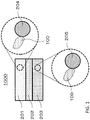
- FIG. 1 is a cross-sectional view showing a schematic configuration of a battery 1000 in the second embodiment.
- the battery 1000 in the second embodiment comprises a positive electrode 201, a negative electrode 203, and an electrolyte layer 202.
- the positive electrode 201 includes positive electrode active material particles 204 and solid electrolyte particles 100.
- the electrolyte layer 202 is disposed between the positive electrode 201 and the negative electrode 203.
- the electrolyte layer 202 includes an electrolyte material (for example, a solid electrolyte material).
- the negative electrode 203 includes negative electrode active material particles 205 and solid electrolyte particles 100.
- Each of the solid electrolyte particles 100 is a particle formed of the solid electrolyte material in the first embodiment or a particle including the solid electrolyte material in the first embodiment as a main component.
- the positive electrode 201 includes a material having a property of storing and releasing metal ions (for example, lithium ions).
- the positive electrode 201 includes, for example, a positive electrode active material (for example, the positive electrode active material particles 204).
- the positive electrode active material examples include lithium-containing transition metal oxides (e.g., Li(NiCoAl)O 2 or LiCoO 2 ), transition metal fluorides, polyanions, fluorinated polyanion materials, transition metal sulfides, transition metal oxyfluorides, transition metal oxysulfides, and transition metal oxynitrides.
- lithium-containing transition metal oxides e.g., Li(NiCoAl)O 2 or LiCoO 2
- transition metal fluorides e.g., Li(NiCoAl)O 2 or LiCoO 2
- polyanions e.g., Li(NiCoAl)O 2 or LiCoO 2
- fluorinated polyanion materials e.g., transition metal sulfides, transition metal oxyfluorides, transition metal oxysulfides, and transition metal oxynitrides.
- the median diameter of the positive electrode active material particles 204 may be not less than 0.1 ⁇ m and not more than 100 ⁇ m. If the median diameter of the positive electrode active material particles 204 is less than 0.1 ⁇ m, there is a possibility that the positive electrode active material particles 204 and the halide solid electrolyte material cannot form a good dispersion state in the positive electrode. As a result, the charge / discharge characteristic of the battery is lowered. In addition, if the median diameter of the positive electrode active material particles 204 is more than 100 ⁇ m, lithium diffusion in the positive electrode active material particles 204 is made slow. As a result, it may be difficult to operate the battery at a high output.
- the median diameter of the positive electrode active material particles 204 may be larger than the median diameter of the halide solid electrolyte material. Thereby, the good dispersion state of the positive electrode active material particles 204 and the halide solid electrolyte material can be formed.
- volume ratio "v : 100-v" between the positive electrode active material particles 204 and the halide solid electrolyte material included in the positive electrode 201 30 ⁇ v ⁇ 95 may be satisfied. If v ⁇ 30, it may be difficult to ensure an energy density of the battery sufficiently. In addition, if v > 95, it may be difficult to operate at high output.
- the thickness of the positive electrode 201 may be not less than 10 ⁇ m and not more than 500 ⁇ m. If the thickness of the positive electrode is less than 10 ⁇ m, it may be difficult to ensure an energy density of the battery sufficiently. In addition, if the thickness of the positive electrode is more than 500 ⁇ m, it may be difficult to operate at a high output.
- the electrolyte layer 202 is a layer including an electrolyte material.
- the electrolyte material is, for example, a solid electrolyte material.
- the electrolyte layer 202 may be a solid electrolyte layer.
- the solid electrolyte layer may include the solid electrolyte material in the first embodiment as a main component.
- the solid electrolyte layer may include the solid electrolyte material in the first embodiment, for example, at a weight ratio of not less than 50% (not less than 50% by weight) with respect to the entire solid electrolyte layer.
- the charge / discharge characteristic of the battery can be further improved.
- the solid electrolyte layer may include the solid electrolyte material in the first embodiment, for example, at a weight ratio of not less than 70% (not less than 70% by weight) with respect to the entire solid electrolyte layer.
- the charge / discharge characteristic of the battery can be further improved.
- the solid electrolyte layer which may include the solid electrolyte material in the first embodiment as a main component, may further include inevitable impurities.
- the solid electrolyte layer may include the starting materials used for the synthesis of the solid electrolyte material.
- the solid electrolyte layer may include by-products or decomposition products generated when the solid electrolyte material is synthesized.
- the solid electrolyte layer may include the solid electrolyte material in the first embodiment, for example, at a weight ratio of 100% (100% by weight) to the entire solid electrolyte layer, except for the inevitable impurities.
- the charge / discharge characteristic of the battery can be further improved.
- the solid electrolyte layer may be composed only of the solid electrolyte material in the first embodiment.
- the solid electrolyte layer may be composed only of a solid electrolyte material different from the solid electrolyte material in the first embodiment.
- a solid electrolyte material different from the solid electrolyte material in the first embodiment for example, Li 2 MgX 4 , Li 2 FeX 4 , Li(Al, Ga, In)X 4 , Li 3 (Al, Ga, In)X 6 , or LiI (X: CI, Br, I) may be used.
- the solid electrolyte layer may include simultaneously the solid electrolyte material in the first embodiment and the solid electrolyte material different from the solid electrolyte material in the first embodiment. At this time, both of them may be dispersed uniformly.
- the layer formed of the solid electrolyte material in the first embodiment and the layer formed of the solid electrolyte material different from the solid electrolyte material in the first embodiment may be sequentially arranged in the stacking direction of the battery.
- the thickness of the solid electrolyte layer may be not less than 1 ⁇ m and not more than 1,000 ⁇ m. If the thickness of the solid electrolyte layer is less than 1 ⁇ m, the possibility that the positive electrode 201 and the negative electrode 203 are shortcircuited increases. In addition, if the thickness of the solid electrolyte layer is more than 1,000 ⁇ m, it may be difficult to operate at a high output.
- the negative electrode 203 includes a material having a property of storing and releasing metal ions (for example, lithium ions).
- the negative electrode 203 includes, for example, a negative electrode active material (for example, the negative electrode active material particles 205).
- a metal material As the negative electrode active material, a metal material, a carbon material, an oxide, a nitride, a tin compound, or a silicon compound may be used.
- the metal material may be a single metal.
- the metal material may be an alloy.
- Examples of the metal material include a lithium metal and a lithium alloy.
- Examples of the carbon material include natural graphite, coke, graphitized carbon, carbon fiber, spherical carbon, artificial graphite, and amorphous carbon. From the viewpoint of capacity density, silicon (Si), tin (Sn), a silicon compound, or a tin compound may be preferably used. If a negative electrode active material having a low average reaction voltage is used, the effect of suppressing electrolysis by the solid electrolyte material in the first embodiment is better exhibited.
- the median diameter of the negative electrode active material particles 205 may be not less than 0.1 ⁇ m and not more than 100 ⁇ m. If the median diameter of the negative electrode active material particles 205 is less than 0.1 ⁇ m, there is a possibility that the negative electrode active material particles 205 and the solid electrolyte particles 100 cannot form a good dispersion state in the negative electrode. Thereby, the charge / discharge characteristic of a battery is lowered. On the other hand, if the median diameter of the negative electrode active material particles 205 is more than 100 ⁇ m, lithium diffusion in the negative electrode active material particles 205 is made slow. As a result, it may be difficult to operate the battery at a high output.
- the median diameter of the negative electrode active material particles 205 may be larger than the median diameter of the solid electrolyte particles 100. Thereby, the good dispersion state of the negative electrode active material particles 205 and the halide solid electrolyte material can be formed.
- volume ratio "v : 100-v" of the negative electrode active material particles 205 and the solid electrolyte particles 100 included in the negative electrode 203 30 ⁇ v ⁇ 95 may be satisfied. If v ⁇ 30, it may be difficult to ensure an energy density of the battery sufficiently. In addition, if v > 95, it may be difficult to operate at high output.
- the thickness of the negative electrode 203 may be not less than 10 ⁇ m and not more than 500 ⁇ m. If the thickness of the negative electrode is less than 10 ⁇ m, it may be difficult to ensure an energy density of the battery sufficiently. In addition, if the thickness of the negative electrode is more than 500 ⁇ m, it may be difficult to operate at a high output.
- At least one of the positive electrode 201, the electrolyte layer 202, and the negative electrode 203 may include a sulfide solid electrolyte or an oxide solid electrolyte for the purpose of improving ion conductivity, chemical stability, or electrochemical stability.
- a sulfide solid electrolyte Li 2 S-P 2 S 5 , Li 2 S-SiS 2 , Li 2 S-B 2 S 3 , Li 2 S-GeS 2 , Li 3.25 Ge 0.25 P 0.75 S 4 , or Li 10 GeP 2 S 12 may be used.
- a NASICON solid electrolyte such as LiTi 2 (PO 4 ) 3 and its element substitution products, a (LaLi)TiO 3 perovskite solid electrolyte, a LISICON solid electrolyte such as Li 14 ZnGe 4 O 16 , Li 4 SiO 4 , LiGeO 4 and its element substitution products, a garnet solid electrolyte such as Li 7 La 3 Zr 2 O 12 and its element substitution products, Li 3 N and its H substitution products, and Li 3 PO 4 and its N substitution products may be used.
- At least one of the positive electrode 201, the electrolyte layer 202, and the negative electrode 203 may include an organic polymer solid electrolyte for the purpose of increasing ion conductivity.
- an organic polymer solid electrolyte for example, a compound of a polymer compound and a lithium salt can be used.
- the polymer compound may have an ethylene oxide structure. Due to the ethylene oxide structure, a large amount of lithium salt can be included to further increase the ion conductivity.
- LiPF 6 , LiBF 4 , LiSbF 6 , LiAsF 6 , LiSO 3 CF 3 , LiN(SO 2 CF 3 ) 2 , LiN(SO 2 C 2 F 5 ) 2 , LiN(SO 2 CF 3 )(SO 2 C 4 F 9 ), or LiC(SO 2 CF 3 ) 3 may be used.
- the lithium salt one lithium salt selected from these may be used alone. Alternatively, a mixture of two or more kinds of the lithium salts selected from these may be used as the lithium salt.
- At least one of the positive electrode 201, the electrolyte layer 202, and the negative electrode 203 may include a non-aqueous electrolyte solution, a gel electrolyte, or an ionic liquid for the purpose of facilitating exchange of lithium ions and improving the output characteristic of the battery.
- the non-aqueous electrolyte solution includes a non-aqueous solvent and a lithium salt dissolved in the non-aqueous solvent.
- a non-aqueous solvent a cyclic carbonate solvent, a chain carbonate solvent, a cyclic ether solvent, a chain ether solvent, a cyclic ester solvent, a chain ester solvent, or a fluorine solvent may be used.
- the cyclic carbonate solvent include ethylene carbonate, propylene carbonate, and butylene carbonate.
- Examples of the chain carbonate solvent include dimethyl carbonate, ethyl methyl carbonate, and diethyl carbonate.
- Examples of the cyclic ether solvent include tetrahydrofuran, 1,4-dioxane, and 1,3-dioxolane.
- Examples of the chain ether solvent include 1,2-dimethoxyethane and 1,2-diethoxyethane.
- Examples of the cyclic ester solvent include ⁇ -butyrolactone.
- Examples of the chain ester solvent include methyl acetate.
- Examples of the fluorine solvent include fluoroethylene carbonate, methyl fluoropropionate, fluorobenzene, fluoroethyl methyl carbonate, and fluorodimethylene carbonate.
- the non-aqueous solvent one non-aqueous solvent selected from these may be used alone.
- the non-aqueous electrolyte solution may include at least one fluorine solvent selected from the group consisting of fluoroethylene carbonate, methyl fluoropropionate, fluorobenzene, fluoroethyl methyl carbonate, and fluorodimethylene carbonate.
- LiPF 6 , LiBF 4 , LiSbF 6 , LiAsF 6 , LiSO 3 CF 3 , LiN(SO 2 CF 3 ) 2 , LiN(SO 2 C 2 F 5 ) 2 , LiN(SO 2 CF 3 )(SO 2 C 4 F 9 ), or LiC(SO 2 CF 3 ) 3 may be used.
- the lithium salt one lithium salt selected from these may be used alone. Alternatively, a mixture of two or more kinds of lithium salts selected from these may be used as the lithium salt.
- the concentration of the lithium salt is, for example, within a range of 0.5 to 2 mol / liter.
- a polymer material including the non-aqueous electrolyte solution may be used.
- the polymer material polyethylene oxide, polyacrylonitrile, polyvinylidene fluoride, polymethyl methacrylate, or a polymer having an ethylene oxide bond may be used.
- the cation forming the ionic liquid may be:
- An anion forming the ionic liquid is PF 6 - , BF 4 - , SbF 6 - , AsF 6 - , SO 3 CF 3 - , N(SO 2 CF 3 ) 2 - , N(SO 2 C 2 F 5 ) 2 - , N(SO 2 CF 3 )(SO 2 C 4 F 9 ) - , or C(SO 2 CF 3 ) 3 - .
- the ionic liquid may include a lithium salt.
- At least one of the positive electrode 201, the electrolyte layer 202, and the negative electrode 203 may include a binder for the purpose of improving the adhesion between the particles.
- the binder is used to improve the binding property of the material forming the electrode.
- the binder include polyvinylidene fluoride, polytetrafluoroethylene, polyethylene, polypropylene, aramid resin, polyamide, polyimide, polyamideimide, polyacrylonitrile, polyacrylic acid, methyl polyacrylate ester, ethyl polyacrylate ester, hexyl polyacrylate ester, polymethacrylic acid, methyl polymethacrylate ester, ethyl polymethacrylate ester, hexyl polymethacrylate ester, polyvinyl acetate, polyvinylpyrrolidone, polyether, polyethersulfone, hexafluoropolypropylene, styrene butadiene rubber, and carboxy
- a copolymer of two or more kinds of materials selected from tetrafluoroethylene, hexafluoroethylene, hexafluoropropylene, perfluoroalkyl vinyl ether, vinylidene fluoride, chlorotrifluoroethylene, ethylene, propylene, pentafluoropropylene, fluoromethyl vinyl ether, acrylic acid, and hexadiene may be used.
- two or more kinds of selected from these may be mixed and used as the binder.
- At least one of the positive electrode 201 and the negative electrode 203 may include a conductive agent as necessary.
- the conductive agent is used to reduce electrode resistance.
- the conductive agent include graphite such as natural graphite or artificial graphite; carbon black such as acetylene black or ketjen black; a conductive fiber such as a carbon fiber or a metal fiber; carbon fluoride; metal powder such as aluminum; conductive whiskers such as zinc oxide or potassium titanate; a conductive metal oxide such as titanium oxide; or a conductive polymer compound such as polyaniline, polypyrrole, or polythiophene. Cost reduction can be achieved by using such a carbon conductive agent as the conductive agent.
- An example of the shape of the battery in the second embodiment is a coin, a cylinder, a prism, a sheet, a button, a flat type, or a stacking structure.
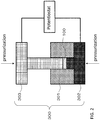
- FIG. 2 is a schematic diagram showing a method for evaluating ion conductivity.
- a pressure-molding die 300 is composed of a frame 301 formed of an electronically insulating polycarbonate, an upper punch part 303 and a lower punch part 302, both of which are formed of electron conductive stainless steel.
- the ion conductivity was evaluated by the following method.
- the inside of the pressure-molding die 300 was filled with the powder of the solid electrolyte material of the inventive example 1, and uniaxially pressed at 400 MPa to produce a conductivity measurement cell of the inventive example 1.
- lead wires were routed from the upper punch part 303 and the lower punch part 302, connected to a potentiostat (Princeton Applied Research, VersaSTAT4) equipped with a frequency response analyzer.
- the ion conductivity at room temperature was measured by an electrochemical impedance measurement method.
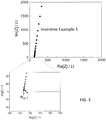
- FIG. 3 shows a Cole-Cole diagram of the results of the impedance measurement.
- the ion conductivity was calculated from the following formula (2) using the resistance value of the electrolyte.
- ⁇ R SE ⁇ S / t ⁇ 1
- S is an electrolyte area (inner diameter of the frame 301 in FIG. 2 )
- R is the resistance value of the solid electrolyte in the above-mentioned impedance measurement
- t is a thickness of the electrolyte (in FIG. 2 , the thickness of the compressed body of the plurality of the solid electrolyte particles 100).
- the ion conductivity of the solid electrolyte material of the inventive example 1 measured at 22 °C was 6.3 ⁇ 10 -4 S / cm.
- the solid electrolyte material of the inventive example 1 and LiCoO 2 (hereinafter, referred to as LCO), which was an active material, were prepared at a volume ratio of 70:30. These were mixed in an agate mortar to prepare a mixture.
- the solid electrolyte material of the inventive example 1 corresponding to 700 ⁇ m thickness, 8.54 mg of the above mixture, and 14.7 mg of Al powder were stacked in this order. This was pressure-molded at a pressure of 300 MPa to provide a first electrode and a solid electrolyte layer.
- a metal In (thickness: 200 ⁇ m) was stacked on the surface of the solid electrolyte layer opposite to the other surface which was in contact with the first electrode. This was pressure-molded at a pressure of 80 MPa to produce a stacking structure composed of the first electrode, the solid electrolyte layer, and a second electrode.
- an insulating ferrule was used to block and seal the inside of the insulating outer cylinder from the outside atmosphere.
- FIG. 4 is a graph showing an initial discharge characteristic.
- the secondary battery of the inventive example 1 was placed in a thermostatic chamber at 25 °C
- the battery was constant-current charged at a current value of 0.05 C rate (20 hour rate) with respect to the theoretical capacity of the battery, and the charge was terminated at a voltage of 3.6 V.
- the battery was discharged at a current value of 0.05 C rate, and the discharge was terminated at a voltage of 2.0 V.
- the initial discharge capacity of the secondary battery of the inventive example 1 was 888 ⁇ Ah.
- raw material powders were prepared in a glove box maintained in a dry / low oxygen atmosphere having a dew point of -90 °C or less and an oxygen value of 5 ppm or less.
- the solid electrolyte materials of the inventive examples 2 to 22 were produced in the same manner as in the inventive example 1.
- each conductivity measurement cell of the inventive examples 2 to 22 was provided in the same manner as in the inventive example 1.
- each solid electrolyte material of the inventive examples 2 to 22 and LiCoO 2 which was a positive electrode active material, were prepared at a volume ratio of 30:70. These were mixed in an agate mortar to produce a positive electrode mixture of each of the inventive examples 2 to 22.
- a charge / discharge test of each of the secondary batteries of the inventive examples 2 to 22 was performed in the same manner as in the inventive example 1.
- the initial discharge characteristic of each of the inventive examples 2 to 22 was similar to that of the inventive example 1, and a good charge / discharge characteristic was provided.
- the ion conductivity measured at 22 °C was 9 ⁇ 10 -6 S / cm.
- the solid electrolyte material of the inventive example 2 was used as a solid electrolyte used for the mixture and the solid electrolyte layer.
- the initial discharge capacity of the secondary battery of the inventive example was not more than 1 ⁇ Ah, and the charge / discharge operation failed to be observed.
- Table 1 shows each configuration and each evaluation result in the inventive examples 1 to 22 and the comparative example 1.
- Composition Anion ⁇ a M Conductivity (S/m) Inventive Example 1 Li 3 Y 0.95 Bi 0.05 Cl 6 Cl 0 0.05 Bi 6.3E-04 Inventive Example 2 Li 3 Y 0.9 Bi 0.1 Cl 6 Cl 0 0.1 Bi 6.0E-04 Inventive Example 3 Li 3 Y 0.5 Bi 0.5 Cl 6 Cl 0 0.5 Bi 1.1E-04 Inventive Example 4 Li 4.5 Y 0.475 Bi 0.025 Cl 6 Cl -0.5 0.025 Bi 6.4E-05 Inventive Example 5 Li 3.9 Y 0.665 Bi 0.035 Cl 6 Cl -0.3 0.035 Bi 1.8E-04 Inventive Example 6 Li 2.4 Y 1.14 Bi 0.06 Cl 6 Cl 0.2 0.06 Bi 5.5E-04 Inventive Example 7 Li 1.5 Y 1.425 Bi 0.075 Cl 6 Cl 0.5 0.075 Bi 6.7E-05 Inventive Example 8 Li 3 Y 0.9 Al 0.1
- inventive examples 1 to 22 show higher ion conductivity of not less than 1 ⁇ 10 -5 S / cm in the vicinity of room temperature, as compared to the comparative example 1.
- a value of a substitution amount a of M defined by the formula (1) is within the range of 0.01 ⁇ a ⁇ 0.99, higher ion conductivity is exhibited.
- a value of a substitution amount a of M defined by the formula (1) is within the range of 0.01 ⁇ a ⁇ 0.99, higher ion conductivity is exhibited.
- ⁇ which indicates an amount of Li deficiency from the stoichiometric ratio thereof, is -0.5 ⁇ ⁇ ⁇ 0.5, higher ion conductivity is exhibited.
- ⁇ is within the range of -0.3 ⁇ ⁇ ⁇ 0.2, higher ion conductivity is exhibited.
- the battery charge / discharge operation was performed at room temperature.
- the discharge capacity was hardly provided, and the battery operation failed to be observed.
- the materials of the inventive examples 1 to 22 do not include sulfur as a constituent element, hydrogen sulfide is not generated.
- the solid electrolyte material according to the present disclosure is an electrolyte material that does not generate hydrogen sulfide, exhibits high lithium ion conductivity, and can perform a good charge / discharge operation.
- the battery of the present disclosure can be used as, for example, an all solid lithium secondary battery.
Landscapes
- Chemical & Material Sciences (AREA)
- Engineering & Computer Science (AREA)
- General Chemical & Material Sciences (AREA)
- Chemical Kinetics & Catalysis (AREA)
- Electrochemistry (AREA)
- Organic Chemistry (AREA)
- Inorganic Chemistry (AREA)
- Manufacturing & Machinery (AREA)
- Materials Engineering (AREA)
- Condensed Matter Physics & Semiconductors (AREA)
- Physics & Mathematics (AREA)
- General Physics & Mathematics (AREA)
- Geology (AREA)
- Life Sciences & Earth Sciences (AREA)
- Secondary Cells (AREA)
- Conductive Materials (AREA)
- Inorganic Compounds Of Heavy Metals (AREA)
- Battery Electrode And Active Subsutance (AREA)
Applications Claiming Priority (2)
| Application Number | Priority Date | Filing Date | Title |
|---|---|---|---|
| JP2018000428 | 2018-01-05 | ||
| PCT/JP2018/041897 WO2019135320A1 (ja) | 2018-01-05 | 2018-11-13 | 固体電解質材料、および、電池 |
Publications (2)
| Publication Number | Publication Date |
|---|---|
| EP3736829A1 true EP3736829A1 (de) | 2020-11-11 |
| EP3736829A4 EP3736829A4 (de) | 2021-03-10 |
Family
ID=67143682
Family Applications (1)
| Application Number | Title | Priority Date | Filing Date |
|---|---|---|---|
| EP18898663.2A Withdrawn EP3736829A4 (de) | 2018-01-05 | 2018-11-13 | Festelektrolytmaterial und batterie |
Country Status (5)
| Country | Link |
|---|---|
| US (1) | US11784345B2 (de) |
| EP (1) | EP3736829A4 (de) |
| JP (1) | JP7417925B2 (de) |
| CN (1) | CN111448619B (de) |
| WO (1) | WO2019135320A1 (de) |
Cited By (6)
| Publication number | Priority date | Publication date | Assignee | Title |
|---|---|---|---|---|
| EP3890073A4 (de) * | 2018-11-29 | 2022-01-19 | Panasonic Intellectual Property Management Co., Ltd. | Negatives elektrodenmaterial, batterie und verfahren zur herstellung einer batterie |
| US11637287B2 (en) | 2018-01-26 | 2023-04-25 | Panasonic Intellectual Property Management Co., Ltd. | Positive electrode material and battery using same |
| US11652235B2 (en) | 2018-01-26 | 2023-05-16 | Panasonic Intellectual Property Management Co., Ltd. | Battery |
| US11682764B2 (en) | 2018-01-26 | 2023-06-20 | Panasonic Intellectual Property Management Co., Ltd. | Cathode material and battery using same |
| US11784345B2 (en) | 2018-01-05 | 2023-10-10 | Panasonic Intellectual Property Management Co., Ltd. | Solid electrolyte material and battery |
| US11955599B2 (en) | 2018-11-29 | 2024-04-09 | Panasonic Intellectual Property Management Co., Ltd. | Negative electrode material and battery |
Families Citing this family (28)
| Publication number | Priority date | Publication date | Assignee | Title |
|---|---|---|---|---|
| CN111492443B (zh) | 2018-01-05 | 2022-04-29 | 松下知识产权经营株式会社 | 固体电解质材料和电池 |
| EP3736821A4 (de) | 2018-01-05 | 2021-03-10 | Panasonic Intellectual Property Management Co., Ltd. | Festelektrolytmaterial und batterie |
| CN111344811B (zh) | 2018-01-05 | 2022-05-10 | 松下知识产权经营株式会社 | 固体电解质材料及电池 |
| JP7182114B2 (ja) | 2018-01-05 | 2022-12-02 | パナソニックIpマネジメント株式会社 | 固体電解質材料、および、電池 |
| EP3736899A4 (de) | 2018-01-05 | 2021-03-10 | Panasonic Intellectual Property Management Co., Ltd. | Batterie |
| EP3736833A4 (de) | 2018-01-05 | 2021-03-10 | Panasonic Intellectual Property Management Co., Ltd. | Festelektrolytmaterial und batterie |
| EP3736827A4 (de) | 2018-01-05 | 2021-03-10 | Panasonic Intellectual Property Management Co., Ltd. | Festelektrolytmaterial und batterie |
| JP7228816B2 (ja) | 2018-01-05 | 2023-02-27 | パナソニックIpマネジメント株式会社 | 正極材料、および、電池 |
| EP3736826A4 (de) | 2018-01-05 | 2021-03-10 | Panasonic Intellectual Property Management Co., Ltd. | Festelektrolytmaterial und batterie |
| CN111566756B (zh) | 2018-01-26 | 2022-03-08 | 松下知识产权经营株式会社 | 固体电解质材料和电池 |
| WO2021209380A1 (en) * | 2020-04-14 | 2021-10-21 | Solvay Sa | New lithium rare-earth halides |
| JP7265680B6 (ja) | 2020-04-14 | 2024-02-15 | サン-ゴバン セラミックス アンド プラスティクス,インコーポレイティド | 電解質材料および形成方法 |
| CN119786709A (zh) | 2020-04-14 | 2025-04-08 | 圣戈本陶瓷及塑料股份有限公司 | 离子导电材料、包括离子导电材料的电解质和形成方法 |
| CN111509222A (zh) * | 2020-04-15 | 2020-08-07 | 国联汽车动力电池研究院有限责任公司 | 一种卤化物固态电解质材料及其制备方法和应用 |
| CN115443567A (zh) | 2020-04-23 | 2022-12-06 | 圣戈本陶瓷及塑料股份有限公司 | 离子导电层及其形成方法 |
| US12095089B2 (en) | 2020-04-23 | 2024-09-17 | Saint-Gobain Ceramics & Plastics, Inc. | Ion conductive layer and methods of forming |
| JP7742580B2 (ja) * | 2020-05-28 | 2025-09-22 | パナソニックIpマネジメント株式会社 | 固体電解質材料およびそれを用いた電池 |
| KR102883985B1 (ko) | 2020-07-02 | 2025-11-07 | 삼성전자주식회사 | 고체이온전도체 화합물, 이를 포함하는 고체전해질, 이를 포함하는 전기화학 셀, 및 이의 제조방법 |
| KR102606795B1 (ko) | 2020-08-07 | 2023-11-29 | 세인트-고바인 세라믹스 앤드 플라스틱스, 인크. | 전해질 재료 및 형성 방법 |
| US11928472B2 (en) | 2020-09-26 | 2024-03-12 | Intel Corporation | Branch prefetch mechanisms for mitigating frontend branch resteers |
| KR20220064717A (ko) | 2020-11-12 | 2022-05-19 | 삼성전자주식회사 | 고체이온전도체 화합물, 이를 포함하는 고체전해질, 이를 포함하는 전기화학 셀, 및 이의 제조방법 |
| KR20220100297A (ko) | 2021-01-08 | 2022-07-15 | 삼성전자주식회사 | 고체이온전도체, 이를 포함하는 고체전해질 및 전기화학소자, 및 상기 고체이온전도체의 제조방법 |
| US12182317B2 (en) | 2021-02-13 | 2024-12-31 | Intel Corporation | Region-based deterministic memory safety |
| WO2022246406A1 (en) | 2021-05-17 | 2022-11-24 | Saint-Gobain Ceramics & Plastics, Inc. | Electrolyte material and methods of forming |
| US12504891B2 (en) | 2021-06-24 | 2025-12-23 | Intel Corporation | Zero-redundancy tag storage for bucketed allocators |
| US12235791B2 (en) | 2021-08-23 | 2025-02-25 | Intel Corporation | Loop driven region based frontend translation control for performant and secure data-space guided micro-sequencing |
| US12619435B2 (en) | 2022-09-27 | 2026-05-05 | Intel Corporation | Virtual idle loops |
| CN117602665A (zh) * | 2023-11-28 | 2024-02-27 | 厦门大学 | 一种无机固态电解质制备方法 |
Family Cites Families (79)
| Publication number | Priority date | Publication date | Assignee | Title |
|---|---|---|---|---|
| US4352869A (en) | 1980-12-24 | 1982-10-05 | Union Carbide Corporation | Solid state electrolytes |
| JPS57132677A (en) | 1980-12-24 | 1982-08-17 | Union Carbide Corp | Solid electrolyte |
| US5714279A (en) | 1989-10-24 | 1998-02-03 | The United States Of America As Represented By The Secretary Of The Navy | Non-aqueous lithium cells |
| JP3151925B2 (ja) | 1992-05-07 | 2001-04-03 | 松下電器産業株式会社 | 非晶質リチウムイオン伝導性固体電解質並びにその合成法 |
| US5506073A (en) | 1992-06-22 | 1996-04-09 | Arizona State University (Arizona Board Of Regents, A Body Corporate Acting On Behalf Of Arizona State University) | Lithium ion conducting electrolytes |
| JPH08171938A (ja) | 1994-12-15 | 1996-07-02 | Mitsubishi Cable Ind Ltd | Li二次電池及びその正極 |
| JPH09293516A (ja) | 1996-04-25 | 1997-11-11 | Matsushita Electric Ind Co Ltd | 全固体リチウム電池 |
| JPH11238528A (ja) | 1998-02-20 | 1999-08-31 | Ngk Insulators Ltd | リチウム二次電池 |
| EP1049183B1 (de) | 1998-11-10 | 2011-08-03 | Panasonic Corporation | Lithium sekundärzelle |
| JP2001052733A (ja) | 1999-08-05 | 2001-02-23 | Matsushita Electric Ind Co Ltd | 全固体リチウム二次電池 |
| KR100513726B1 (ko) | 2003-01-30 | 2005-09-08 | 삼성전자주식회사 | 고체 전해질, 이를 채용한 전지 및 그 고체 전해질의 제조방법 |
| JP5076134B2 (ja) | 2004-06-08 | 2012-11-21 | 国立大学法人東京工業大学 | リチウム電池素子 |
| JP5108205B2 (ja) | 2005-02-28 | 2012-12-26 | 国立大学法人静岡大学 | 全固体型リチウム二次電池 |
| JP4945182B2 (ja) * | 2006-07-13 | 2012-06-06 | シャープ株式会社 | リチウム二次電池及びその製造方法 |
| JP2008060033A (ja) | 2006-09-04 | 2008-03-13 | Sony Corp | 正極活物質、これを用いた正極および非水電解質二次電池、並びに正極活物質の製造方法 |
| JP2008234988A (ja) | 2007-03-20 | 2008-10-02 | Sony Corp | 負極およびその製造方法、ならびに電池およびその製造方法 |
| JP5448038B2 (ja) | 2009-02-27 | 2014-03-19 | 公立大学法人大阪府立大学 | 硫化物固体電解質材料 |
| JP2011065982A (ja) | 2009-08-18 | 2011-03-31 | Seiko Epson Corp | リチウム電池用電極体及びリチウム電池 |
| JP5141675B2 (ja) | 2009-12-16 | 2013-02-13 | トヨタ自動車株式会社 | 硫化物固体電解質材料の製造方法、硫化物固体電解質材料およびリチウム電池 |
| JP5510084B2 (ja) | 2010-06-03 | 2014-06-04 | ソニー株式会社 | リチウムイオン二次電池用負極、リチウムイオン二次電池、電動工具、電気自動車および電力貯蔵システム |
| US9160034B2 (en) | 2010-06-29 | 2015-10-13 | Toyota Jidosha Kabushiki Kaisha | Method for producing sulfide solid electrolyte material and method for producing lithium solid state battery |
| US20130295464A1 (en) | 2011-01-27 | 2013-11-07 | Idemitsu Kosan Co., Ltd. | Composite material of alkaline metal sulfide and conducting agent |
| JP5721540B2 (ja) | 2011-05-30 | 2015-05-20 | 株式会社オハラ | リチウムイオン伝導性無機物質 |
| JP2013073791A (ja) | 2011-09-28 | 2013-04-22 | Panasonic Corp | 非水電解質二次電池 |
| CN104412440B (zh) | 2012-07-11 | 2016-10-19 | 丰田自动车株式会社 | 全固体电池及其制造方法 |
| FR3004467B1 (fr) | 2013-04-12 | 2016-05-27 | Saint-Gobain Cristaux Et Detecteurs | Fabrication d'une elpasolite stoechiometrique |
| FR3005207B1 (fr) | 2013-04-24 | 2016-06-24 | Batscap Sa | Electrode positive pour batterie lithium |
| JP6003831B2 (ja) | 2013-06-28 | 2016-10-05 | トヨタ自動車株式会社 | 硫化物固体電解質材料、硫化物ガラス、リチウム固体電池、および、硫化物固体電解質材料の製造方法 |
| JPWO2015011937A1 (ja) | 2013-07-25 | 2017-03-02 | 三井金属鉱業株式会社 | リチウムイオン電池用硫化物系固体電解質 |
| JP2015032529A (ja) | 2013-08-06 | 2015-02-16 | トヨタ自動車株式会社 | 硫化物系固体電解質 |
| BR112016004279B1 (pt) | 2013-09-02 | 2021-12-14 | Mitsubishi Gas Chemical Company, Inc. | Bateria de estado sólido |
| JP6187069B2 (ja) | 2013-09-13 | 2017-08-30 | 富士通株式会社 | リチウム電池 |
| KR102203952B1 (ko) | 2013-10-04 | 2021-01-18 | 내셔날 인스티튜트 오브 어드밴스드 인더스트리얼 사이언스 앤드 테크놀로지 | 비정질성 (리튬) 니오븀 황화물 또는 (리튬) 티타늄 니오븀 황화물 |
| US9431753B2 (en) | 2013-12-30 | 2016-08-30 | Foxconn Interconnect Technology Limited | Connector with convenient installation |
| CN106104896B (zh) | 2014-03-11 | 2018-12-04 | 富士通株式会社 | 复合固体电解质和全固体电池 |
| CN104953175A (zh) | 2014-03-28 | 2015-09-30 | 比亚迪股份有限公司 | 一种锂离子电池固体电解质及其制备方法和锂离子电池 |
| JP5873533B2 (ja) | 2014-07-16 | 2016-03-01 | 三井金属鉱業株式会社 | リチウムイオン電池用硫化物系固体電解質 |
| US9608288B2 (en) | 2014-07-17 | 2017-03-28 | Samsung Electronics Co., Ltd. | Positive electrode for lithium ion secondary battery and lithium ion secondary battery including the same |
| US10559849B2 (en) | 2014-11-10 | 2020-02-11 | Murata Manufacturing Co., Ltd. | Glass-ceramic, lithium ion conductor, battery, electronic device, and method for producing electrode |
| JP6222134B2 (ja) | 2015-02-25 | 2017-11-01 | トヨタ自動車株式会社 | 硫化物固体電解質材料、電池および硫化物固体電解質材料の製造方法 |
| US10218032B2 (en) | 2015-03-10 | 2019-02-26 | Tdk Corporation | Li-ion conductive oxide ceramic material including garnet-type or similar crystal structure |
| JP6672848B2 (ja) | 2015-03-10 | 2020-03-25 | Tdk株式会社 | ガーネット型又はガーネット型類似の結晶構造を有するリチウムイオン伝導性酸化物セラミックス材料 |
| US10446872B2 (en) | 2015-08-04 | 2019-10-15 | Samsung Electronics Co., Ltd. | Solid electrolyte and lithium battery including the same |
| JP2017059342A (ja) | 2015-09-15 | 2017-03-23 | トヨタ自動車株式会社 | 全固体電池の製造方法 |
| JP6861399B2 (ja) | 2015-09-16 | 2021-04-21 | パナソニックIpマネジメント株式会社 | 電池 |
| JP2017091955A (ja) | 2015-11-16 | 2017-05-25 | 旭化成株式会社 | リチウムイオン伝導体及びこれを用いたリチウムイオン電池 |
| JP2017091953A (ja) | 2015-11-16 | 2017-05-25 | 旭化成株式会社 | リチウムイオン伝導体及びこれを用いたリチウムイオン電池 |
| CN105254184A (zh) * | 2015-11-27 | 2016-01-20 | 宁波大学 | 一种稀土离子掺杂的Li3YCl6微晶玻璃及其制备方法 |
| JP2017111954A (ja) | 2015-12-16 | 2017-06-22 | セイコーエプソン株式会社 | 金属酸化物成膜用組成物、正極複合体、正極複合体の製造方法、電池、および電池の製造方法 |
| WO2017108105A1 (en) * | 2015-12-22 | 2017-06-29 | Toyota Motor Europe | Materials for solid electrolyte |
| JP6881892B2 (ja) | 2015-12-25 | 2021-06-02 | 三星電子株式会社Samsung Electronics Co.,Ltd. | 固体電解質、全固体電池及び固体電解質の製造方法 |
| US11245131B2 (en) | 2015-12-25 | 2022-02-08 | Samsung Electronics Co., Ltd. | Solid electrolyte and lithium battery including the same |
| JP6748344B2 (ja) | 2016-02-26 | 2020-09-02 | 富士通株式会社 | 全固体電池 |
| EP3428929A4 (de) | 2016-03-08 | 2019-10-30 | Murata Manufacturing Co., Ltd. | Festelektrolyt, festkörperbatterie, festelektrolytherstellungsverfahren und festkörperbatterieherstellungsverfahren |
| JP6658127B2 (ja) | 2016-03-10 | 2020-03-04 | セイコーエプソン株式会社 | 固体電解質、固体電解質の製造方法およびリチウムイオン電池 |
| CN105680048B (zh) * | 2016-04-05 | 2019-05-17 | 惠州亿纬锂能股份有限公司 | 一种包含氮掺杂石墨烯的正极、其制备方法及采用该正极的锂电池 |
| WO2017176936A1 (en) | 2016-04-05 | 2017-10-12 | Massachusetts Institute Of Technology | Lithium metal electrodes and batteries thereof |
| CN107305965B (zh) | 2016-04-25 | 2022-03-29 | 松下知识产权经营株式会社 | 电池和电池制造方法 |
| JP2017224474A (ja) | 2016-06-15 | 2017-12-21 | 出光興産株式会社 | 正極合材 |
| JP6934626B2 (ja) | 2016-08-04 | 2021-09-15 | パナソニックIpマネジメント株式会社 | 固体電解質材料、および、電池 |
| CN108258358B (zh) | 2016-12-28 | 2022-11-11 | 松下知识产权经营株式会社 | 电池 |
| CN107425218B (zh) * | 2017-08-04 | 2019-10-15 | 郑州新世纪材料基因组工程研究院有限公司 | 一种锂离子固体电解质及其制备方法、应用 |
| JP7182114B2 (ja) | 2018-01-05 | 2022-12-02 | パナソニックIpマネジメント株式会社 | 固体電解質材料、および、電池 |
| EP3736833A4 (de) | 2018-01-05 | 2021-03-10 | Panasonic Intellectual Property Management Co., Ltd. | Festelektrolytmaterial und batterie |
| EP3736825A4 (de) | 2018-01-05 | 2021-03-10 | Panasonic Intellectual Property Management Co., Ltd. | Festelektrolytmaterial und batterie |
| CN111492443B (zh) | 2018-01-05 | 2022-04-29 | 松下知识产权经营株式会社 | 固体电解质材料和电池 |
| WO2019135320A1 (ja) | 2018-01-05 | 2019-07-11 | パナソニックIpマネジメント株式会社 | 固体電解質材料、および、電池 |
| EP3736821A4 (de) | 2018-01-05 | 2021-03-10 | Panasonic Intellectual Property Management Co., Ltd. | Festelektrolytmaterial und batterie |
| EP3736827A4 (de) | 2018-01-05 | 2021-03-10 | Panasonic Intellectual Property Management Co., Ltd. | Festelektrolytmaterial und batterie |
| EP3736826A4 (de) | 2018-01-05 | 2021-03-10 | Panasonic Intellectual Property Management Co., Ltd. | Festelektrolytmaterial und batterie |
| WO2019135344A1 (ja) | 2018-01-05 | 2019-07-11 | パナソニックIpマネジメント株式会社 | 固体電解質材料、および、電池 |
| WO2019135321A1 (ja) | 2018-01-05 | 2019-07-11 | パナソニックIpマネジメント株式会社 | 固体電解質材料、および、電池 |
| EP3736899A4 (de) | 2018-01-05 | 2021-03-10 | Panasonic Intellectual Property Management Co., Ltd. | Batterie |
| JP7228816B2 (ja) | 2018-01-05 | 2023-02-27 | パナソニックIpマネジメント株式会社 | 正極材料、および、電池 |
| CN111344811B (zh) | 2018-01-05 | 2022-05-10 | 松下知识产权经营株式会社 | 固体电解质材料及电池 |
| CN111566756B (zh) | 2018-01-26 | 2022-03-08 | 松下知识产权经营株式会社 | 固体电解质材料和电池 |
| JPWO2019146218A1 (ja) | 2018-01-26 | 2021-01-28 | パナソニックIpマネジメント株式会社 | 固体電解質材料、および、電池 |
| WO2019146294A1 (ja) | 2018-01-26 | 2019-08-01 | パナソニックIpマネジメント株式会社 | 電池 |
| EP3863028A4 (de) | 2018-10-01 | 2021-12-08 | Panasonic Intellectual Property Management Co., Ltd. | Halid-feststoffelektrolytmaterial und batterie damit |
-
2018
- 2018-11-13 WO PCT/JP2018/041897 patent/WO2019135320A1/ja not_active Ceased
- 2018-11-13 CN CN201880079441.1A patent/CN111448619B/zh active Active
- 2018-11-13 EP EP18898663.2A patent/EP3736829A4/de not_active Withdrawn
- 2018-11-13 JP JP2019563935A patent/JP7417925B2/ja active Active
-
2020
- 2020-06-27 US US16/914,335 patent/US11784345B2/en active Active
Cited By (8)
| Publication number | Priority date | Publication date | Assignee | Title |
|---|---|---|---|---|
| US11784345B2 (en) | 2018-01-05 | 2023-10-10 | Panasonic Intellectual Property Management Co., Ltd. | Solid electrolyte material and battery |
| US11637287B2 (en) | 2018-01-26 | 2023-04-25 | Panasonic Intellectual Property Management Co., Ltd. | Positive electrode material and battery using same |
| US11652235B2 (en) | 2018-01-26 | 2023-05-16 | Panasonic Intellectual Property Management Co., Ltd. | Battery |
| US11682764B2 (en) | 2018-01-26 | 2023-06-20 | Panasonic Intellectual Property Management Co., Ltd. | Cathode material and battery using same |
| US12206111B2 (en) | 2018-01-26 | 2025-01-21 | Panasonic Intellectual Property Management Co., Ltd. | Cathode material and battery using same |
| EP3890073A4 (de) * | 2018-11-29 | 2022-01-19 | Panasonic Intellectual Property Management Co., Ltd. | Negatives elektrodenmaterial, batterie und verfahren zur herstellung einer batterie |
| US11949064B2 (en) | 2018-11-29 | 2024-04-02 | Panasonic Intellectual Property Management Co., Ltd. | Negative electrode material, battery, and method for producing battery |
| US11955599B2 (en) | 2018-11-29 | 2024-04-09 | Panasonic Intellectual Property Management Co., Ltd. | Negative electrode material and battery |
Also Published As
| Publication number | Publication date |
|---|---|
| US20200328468A1 (en) | 2020-10-15 |
| WO2019135320A1 (ja) | 2019-07-11 |
| CN111448619B (zh) | 2021-11-05 |
| CN111448619A (zh) | 2020-07-24 |
| EP3736829A4 (de) | 2021-03-10 |
| US11784345B2 (en) | 2023-10-10 |
| JPWO2019135320A1 (ja) | 2021-01-07 |
| JP7417925B2 (ja) | 2024-01-19 |
Similar Documents
| Publication | Publication Date | Title |
|---|---|---|
| US11784345B2 (en) | Solid electrolyte material and battery | |
| EP3736831B1 (de) | Festelektrolytmaterial und batterie | |
| US12209030B2 (en) | Solid electrolyte material and battery | |
| EP3863026B1 (de) | Halid-feststoffelektrolytmaterial und batterie damit | |
| EP3736828B1 (de) | Festelektrolytmaterial und batterie | |
| EP3863025B1 (de) | Halid-festelektrolytmaterial und batterie damit | |
| EP3736820A1 (de) | Festelektrolytmaterial und batterie | |
| EP3863028A1 (de) | Halid-feststoffelektrolytmaterial und batterie damit | |
| EP3736825A1 (de) | Festelektrolytmaterial und batterie | |
| EP3745421A1 (de) | Festelektrolytmaterial und batterie | |
| EP3736824B1 (de) | Festelektrolytmaterial und batterie | |
| EP3736897A1 (de) | Festelektrolytmaterial und batterie | |
| EP3863027B1 (de) | Halid-festelektrolytmaterial und batterie damit | |
| EP4044291A1 (de) | Feststoffelektrolytmaterial und batterie mit verwendung davon | |
| EP3904278A1 (de) | Feststoffelektrolytmaterial und batterie damit | |
| EP3933857B1 (de) | Elektrolytmaterial und batterie mit verwendung davon | |
| EP3940816B1 (de) | Feststoffelektrolytmaterial und batterie mit verwendung davon | |
| EP3996166A1 (de) | Feststoffelektrolytmaterial und batterie mit verwendung davon | |
| JPWO2020137156A1 (ja) | 固体電解質およびそれを用いた電池 | |
| EP3940814B1 (de) | Feststoffelektrolytmaterial und batterie mit verwendung davon | |
| EP3940815B1 (de) | Feststoffelektrolytmaterial und batterie mit verwendung davon |
Legal Events
| Date | Code | Title | Description |
|---|---|---|---|
| STAA | Information on the status of an ep patent application or granted ep patent |
Free format text: STATUS: THE INTERNATIONAL PUBLICATION HAS BEEN MADE |
|
| PUAI | Public reference made under article 153(3) epc to a published international application that has entered the european phase |
Free format text: ORIGINAL CODE: 0009012 |
|
| STAA | Information on the status of an ep patent application or granted ep patent |
Free format text: STATUS: REQUEST FOR EXAMINATION WAS MADE |
|
| 17P | Request for examination filed |
Effective date: 20200527 |
|
| AK | Designated contracting states |
Kind code of ref document: A1 Designated state(s): AL AT BE BG CH CY CZ DE DK EE ES FI FR GB GR HR HU IE IS IT LI LT LU LV MC MK MT NL NO PL PT RO RS SE SI SK SM TR |
|
| AX | Request for extension of the european patent |
Extension state: BA ME |
|
| A4 | Supplementary search report drawn up and despatched |
Effective date: 20210209 |
|
| RIC1 | Information provided on ipc code assigned before grant |
Ipc: H01M 10/052 20100101ALI20210203BHEP Ipc: C01F 17/36 20200101AFI20210203BHEP Ipc: C01G 29/00 20060101ALI20210203BHEP Ipc: H01B 1/06 20060101ALI20210203BHEP Ipc: H01M 10/0562 20100101ALI20210203BHEP Ipc: H01M 4/13 20100101ALI20210203BHEP Ipc: H01M 4/62 20060101ALI20210203BHEP Ipc: C01G 15/00 20060101ALI20210203BHEP |
|
| DAV | Request for validation of the european patent (deleted) | ||
| DAX | Request for extension of the european patent (deleted) | ||
| STAA | Information on the status of an ep patent application or granted ep patent |
Free format text: STATUS: THE APPLICATION HAS BEEN WITHDRAWN |
|
| 18W | Application withdrawn |
Effective date: 20260324 |