EP3736892A1 - Positivelektrodenmaterial und batterie - Google Patents
Positivelektrodenmaterial und batterie Download PDFInfo
- Publication number
- EP3736892A1 EP3736892A1 EP18898874.5A EP18898874A EP3736892A1 EP 3736892 A1 EP3736892 A1 EP 3736892A1 EP 18898874 A EP18898874 A EP 18898874A EP 3736892 A1 EP3736892 A1 EP 3736892A1
- Authority
- EP
- European Patent Office
- Prior art keywords
- solid electrolyte
- positive electrode
- battery
- electrode active
- active material
- Prior art date
- Legal status (The legal status is an assumption and is not a legal conclusion. Google has not performed a legal analysis and makes no representation as to the accuracy of the status listed.)
- Pending
Links
Images

Classifications
-
- H—ELECTRICITY
- H01—ELECTRIC ELEMENTS
- H01M—PROCESSES OR MEANS, e.g. BATTERIES, FOR THE DIRECT CONVERSION OF CHEMICAL ENERGY INTO ELECTRICAL ENERGY
- H01M4/00—Electrodes
- H01M4/02—Electrodes composed of, or comprising, active material
- H01M4/36—Selection of substances as active materials, active masses, active liquids
- H01M4/362—Composites
- H01M4/366—Composites as layered products
-
- C—CHEMISTRY; METALLURGY
- C01—INORGANIC CHEMISTRY
- C01B—NON-METALLIC ELEMENTS; COMPOUNDS THEREOF; METALLOIDS OR COMPOUNDS THEREOF NOT COVERED BY SUBCLASS C01C
- C01B17/00—Sulfur; Compounds thereof
- C01B17/22—Alkali metal sulfides or polysulfides
-
- C—CHEMISTRY; METALLURGY
- C01—INORGANIC CHEMISTRY
- C01B—NON-METALLIC ELEMENTS; COMPOUNDS THEREOF; METALLOIDS OR COMPOUNDS THEREOF NOT COVERED BY SUBCLASS C01C
- C01B25/00—Phosphorus; Compounds thereof
- C01B25/14—Sulfur, selenium, or tellurium compounds of phosphorus
-
- H—ELECTRICITY
- H01—ELECTRIC ELEMENTS
- H01M—PROCESSES OR MEANS, e.g. BATTERIES, FOR THE DIRECT CONVERSION OF CHEMICAL ENERGY INTO ELECTRICAL ENERGY
- H01M10/00—Secondary cells; Manufacture thereof
- H01M10/05—Accumulators with non-aqueous electrolyte
- H01M10/052—Li-accumulators
- H01M10/0525—Rocking-chair batteries, i.e. batteries with lithium insertion or intercalation in both electrodes; Lithium-ion batteries
-
- H—ELECTRICITY
- H01—ELECTRIC ELEMENTS
- H01M—PROCESSES OR MEANS, e.g. BATTERIES, FOR THE DIRECT CONVERSION OF CHEMICAL ENERGY INTO ELECTRICAL ENERGY
- H01M10/00—Secondary cells; Manufacture thereof
- H01M10/05—Accumulators with non-aqueous electrolyte
- H01M10/056—Accumulators with non-aqueous electrolyte characterised by the materials used as electrolytes, e.g. mixed inorganic/organic electrolytes
- H01M10/0561—Accumulators with non-aqueous electrolyte characterised by the materials used as electrolytes, e.g. mixed inorganic/organic electrolytes the electrolyte being constituted of inorganic materials only
- H01M10/0562—Solid materials
-
- H—ELECTRICITY
- H01—ELECTRIC ELEMENTS
- H01M—PROCESSES OR MEANS, e.g. BATTERIES, FOR THE DIRECT CONVERSION OF CHEMICAL ENERGY INTO ELECTRICAL ENERGY
- H01M4/00—Electrodes
- H01M4/02—Electrodes composed of, or comprising, active material
- H01M4/13—Electrodes for accumulators with non-aqueous electrolyte, e.g. for lithium-accumulators; Processes of manufacture thereof
- H01M4/131—Electrodes based on mixed oxides or hydroxides, or on mixtures of oxides or hydroxides, e.g. LiCoOx
-
- H—ELECTRICITY
- H01—ELECTRIC ELEMENTS
- H01M—PROCESSES OR MEANS, e.g. BATTERIES, FOR THE DIRECT CONVERSION OF CHEMICAL ENERGY INTO ELECTRICAL ENERGY
- H01M4/00—Electrodes
- H01M4/02—Electrodes composed of, or comprising, active material
- H01M4/36—Selection of substances as active materials, active masses, active liquids
- H01M4/362—Composites
- H01M4/364—Composites as mixtures
-
- H—ELECTRICITY
- H01—ELECTRIC ELEMENTS
- H01M—PROCESSES OR MEANS, e.g. BATTERIES, FOR THE DIRECT CONVERSION OF CHEMICAL ENERGY INTO ELECTRICAL ENERGY
- H01M4/00—Electrodes
- H01M4/02—Electrodes composed of, or comprising, active material
- H01M4/36—Selection of substances as active materials, active masses, active liquids
- H01M4/48—Selection of substances as active materials, active masses, active liquids of inorganic oxides or hydroxides
- H01M4/52—Selection of substances as active materials, active masses, active liquids of inorganic oxides or hydroxides of nickel, cobalt or iron
- H01M4/525—Selection of substances as active materials, active masses, active liquids of inorganic oxides or hydroxides of nickel, cobalt or iron of mixed oxides or hydroxides containing iron, cobalt or nickel for inserting or intercalating light metals, e.g. LiNiO2, LiCoO2 or LiCoOxFy
-
- H—ELECTRICITY
- H01—ELECTRIC ELEMENTS
- H01M—PROCESSES OR MEANS, e.g. BATTERIES, FOR THE DIRECT CONVERSION OF CHEMICAL ENERGY INTO ELECTRICAL ENERGY
- H01M4/00—Electrodes
- H01M4/02—Electrodes composed of, or comprising, active material
- H01M4/62—Selection of inactive substances as ingredients for active masses, e.g. binders, fillers
-
- H—ELECTRICITY
- H01—ELECTRIC ELEMENTS
- H01M—PROCESSES OR MEANS, e.g. BATTERIES, FOR THE DIRECT CONVERSION OF CHEMICAL ENERGY INTO ELECTRICAL ENERGY
- H01M4/00—Electrodes
- H01M4/02—Electrodes composed of, or comprising, active material
- H01M4/62—Selection of inactive substances as ingredients for active masses, e.g. binders, fillers
- H01M4/624—Electric conductive fillers
-
- H—ELECTRICITY
- H01—ELECTRIC ELEMENTS
- H01M—PROCESSES OR MEANS, e.g. BATTERIES, FOR THE DIRECT CONVERSION OF CHEMICAL ENERGY INTO ELECTRICAL ENERGY
- H01M4/00—Electrodes
- H01M4/02—Electrodes composed of, or comprising, active material
- H01M2004/026—Electrodes composed of, or comprising, active material characterised by the polarity
- H01M2004/028—Positive electrodes
-
- H—ELECTRICITY
- H01—ELECTRIC ELEMENTS
- H01M—PROCESSES OR MEANS, e.g. BATTERIES, FOR THE DIRECT CONVERSION OF CHEMICAL ENERGY INTO ELECTRICAL ENERGY
- H01M2300/00—Electrolytes
- H01M2300/0017—Non-aqueous electrolytes
- H01M2300/0065—Solid electrolytes
- H01M2300/0068—Solid electrolytes inorganic
- H01M2300/0071—Oxides
-
- H—ELECTRICITY
- H01—ELECTRIC ELEMENTS
- H01M—PROCESSES OR MEANS, e.g. BATTERIES, FOR THE DIRECT CONVERSION OF CHEMICAL ENERGY INTO ELECTRICAL ENERGY
- H01M2300/00—Electrolytes
- H01M2300/0017—Non-aqueous electrolytes
- H01M2300/0065—Solid electrolytes
- H01M2300/0068—Solid electrolytes inorganic
- H01M2300/008—Halides
-
- H—ELECTRICITY
- H01—ELECTRIC ELEMENTS
- H01M—PROCESSES OR MEANS, e.g. BATTERIES, FOR THE DIRECT CONVERSION OF CHEMICAL ENERGY INTO ELECTRICAL ENERGY
- H01M2300/00—Electrolytes
- H01M2300/0088—Composites
- H01M2300/0094—Composites in the form of layered products, e.g. coatings
-
- Y—GENERAL TAGGING OF NEW TECHNOLOGICAL DEVELOPMENTS; GENERAL TAGGING OF CROSS-SECTIONAL TECHNOLOGIES SPANNING OVER SEVERAL SECTIONS OF THE IPC; TECHNICAL SUBJECTS COVERED BY FORMER USPC CROSS-REFERENCE ART COLLECTIONS [XRACs] AND DIGESTS
- Y02—TECHNOLOGIES OR APPLICATIONS FOR MITIGATION OR ADAPTATION AGAINST CLIMATE CHANGE
- Y02E—REDUCTION OF GREENHOUSE GAS [GHG] EMISSIONS, RELATED TO ENERGY GENERATION, TRANSMISSION OR DISTRIBUTION
- Y02E60/00—Enabling technologies; Technologies with a potential or indirect contribution to GHG emissions mitigation
- Y02E60/10—Energy storage using batteries
Definitions
- the present disclosure relates to a positive electrode material for a battery, and a battery.
- Patent Literature 1 discloses an all-solid battery using, as a solid electrolyte, a halide including indium.
- Patent Literature 1 Japanese Patent Application Publication No. 2006-244734
- the positive electrode material in one aspect of the present disclosure comprises:
- the charge-discharge efficiency of the battery can be improved.
- the positive electrode material in the first embodiment includes a positive electrode active material, a first solid electrolyte material, and a coating material.
- the first solid electrolyte material is a material represented by the following composition formula (1): Li ⁇ M ⁇ X ⁇ Formula (1)
- the coating material is located on a surface of the positive electrode active material.
- the charge-discharge efficiency of the battery can be improved.
- Patent Literature 1 discloses that, in the all-solid secondary battery including a solid electrolyte consisting of a compound including indium, it is preferable that the positive electrode active material has an electric potential of not more than 3.9 V with respect to Li on average, and that thereby a film consisting of a decomposition product due to oxidative decomposition is satisfactorily formed to provide a good charge-discharge characteristic.
- a general layered transition metal oxide positive electrode such as LiCoO 2 or LiNi 0.8 Co 0.15 Al 0.05 O 2 is disclosed as such a positive electrode active material having an electric potential with regard to Li of not more than 3.9 V on average.
- detailed mechanism of the oxidative decomposition has not been clarified.
- a coating material is interposed between the positive electrode active material and the halide solid electrolyte.
- the coating material suppresses the electron transfer to the halide solid electrolyte. Therefore, the side reaction of the halide solid electrolyte does not occur, and the charge-discharge efficiency can be improved.
- the formation of the oxide layer is suppressed, and the interface resistance of the electrode reaction can be lowered.
- metals refers to B, Si, Ge, As, Sb, and Te.
- metal elements refers to all elements included in Groups 1 to 12 of the periodic table except for hydrogen, and all the elements included in Groups 13 to 16 of the periodic table except for the above-mentioned metalloid elements, C, N, P, O, S, and Se. In other words, the metal element becomes a cation, if the metal element forms an inorganic compound with a halogen compound.
- the first solid electrolyte material may include Y as a metal element.
- the ion conductivity of the first solid electrolyte material can be further improved.
- the charge / discharge efficiency of the battery can be further improved.
- any of Mg, Ca, Sr, Ba, Zn, Sc, Al, Ga, Bi, Zr, Hf, Ti, Sn, Ta, and Nb, or a mixture thereof may be used.
- the ion conductivity of the first solid electrolyte material can be further improved.
- composition formula (1) 2 ⁇ ⁇ / ⁇ ⁇ 2.22 may be satisfied.
- the formulas 2.7 ⁇ ⁇ ⁇ 3, 1 ⁇ ⁇ ⁇ 1.1, and ⁇ 6 may be satisfied.
- the ion conductivity of the first solid electrolyte material can be further improved.
- the charge / discharge efficiency of the battery can be further improved.
- the ion conductivity of the first solid electrolyte material can be further improved.
- the charge / discharge efficiency of the battery can be further improved.
- the first solid electrolyte material may be a material represented by the following composition formula (A1): Li 6-3d Y d X 6 Formula (A1) where, in the composition formula (A1), X is two or more kinds of elements selected from the group consisting of CI, Br, and I.
- composition formula (A1) 0 ⁇ d ⁇ 2 is satisfied.
- the ion conductivity of the first solid electrolyte material can be further improved.
- the charge / discharge efficiency of the battery can be further improved.
- the first solid electrolyte material may be a material represented by the following composition formula (A2): Li 3 YX 6 Formula (A2) where, in the composition formula (A2), X is two or more kinds of elements selected from the group consisting of CI, Br, and I.
- the ion conductivity of the first solid electrolyte material can be further improved.
- the charge / discharge efficiency of the battery can be further improved.
- the first solid electrolyte material may be a material represented by the following composition formula (A3): Li 3-3 ⁇ Y 1+ ⁇ Cl 6 Formula (A3) where, in the composition formula (A3), 0 ⁇ ⁇ ⁇ 0.15 is satisfied.
- the ion conductivity of the first solid electrolyte material can be further improved.
- the charge / discharge efficiency of the battery can be further improved.
- the first solid electrolyte material may be a material represented by the following composition formula (A4): Li 3-3 ⁇ Y 1+ ⁇ Br 6 Formula (A4) where, in the composition formula (A4), 0 ⁇ ⁇ ⁇ 0.25 is satisfied.
- the ion conductivity of the first solid electrolyte material can be further improved.
- the charge / discharge efficiency of the battery can be further improved.
- the first solid electrolyte material may be a material represented by the following composition formula (A5): Li 3-3 ⁇ +a Y 1+ ⁇ -a Me a Cl 6-x-y Br x I y Formula (A5) where, in the composition formula (A5), Me is one or more kinds of elements selected from the group consisting of Mg, Ca, Sr, Ba, and Zn.
- the ion conductivity of the first solid electrolyte material can be further improved.
- the charge / discharge efficiency of the battery can be further improved.
- the first solid electrolyte material may be a material represented by the following composition formula (A6): Li 3-3 ⁇ Y 1+ ⁇ -a Me a Cl 6-x-y Br x I y Formula (A6) where, in the composition formula (A6), Me is one or more kinds of elements selected from the group consisting of Al, Sc, Ga, and Bi.
- the ion conductivity of the first solid electrolyte material can be further improved.
- the charge / discharge efficiency of the battery can be further improved.
- the first solid electrolyte material may be a material represented by the following composition formula (A7): Li 3-3 ⁇ -a Y 1+ ⁇ -a Me a Cl 6-x-y Br x I y Formula (A7) where, in the composition formula (A7), Me is one or more kinds of elements selected from the group consisting of Zr, Hf, and Ti.
- the ion conductivity of the first solid electrolyte material can be further improved.
- the charge / discharge efficiency of the battery can be further improved.
- the first solid electrolyte material may be a material represented by the following composition formula (A8): Li 3-3 ⁇ -2a Y 1+ ⁇ -a Me a Cl 6-x-y Br x I y Formula (A8) where, in the composition formula (A8), Me is one or more kinds of elements selected from the group consisting of Ta and Nb.
- the ion conductivity of the first solid electrolyte material can be further improved.
- the charge / discharge efficiency of the battery can be further improved.
- Li 3 YX 6 Li 2 MgX 4 , Li 2 FeX 4 , Li(Al, Ga, In)X 4 , or Li 3 (Al, Ga, In)X 6 may be used.
- the positive electrode active material includes a material having a property of storing and releasing metal ions (for example, lithium ions).
- a positive electrode active material for example, a lithium-containing transition metal oxide (e.g., Li(NiCoAl)O 2 , Li(NiCoMn)O 2 , or LiCoO 2 ), a transition metal fluoride, a polyanionic material or fluorinated polyanionic material, a transition metal sulfide, a transition metal oxysulfide, or a transition metal oxynitride may be used.
- a lithium-containing transition metal oxide is used as the positive electrode active material, cost reduction can be performed and an average discharge voltage can be increased.
- the positive electrode active material may be lithium nickel-cobalt-manganese oxide.
- the positive electrode active material may be Li(NiCoMn)O 2 .
- the energy density and the charge / discharge efficiency of the battery can be further enhanced.
- the coating material a material having low electron conductivity may be used.
- an oxide material or an oxide solid electrolyte may be used.
- oxide material SiO 2 , Al 2 O 3 , TiO 2 , B 2 O 3 , Nb 2 O 5 , WO 3 or ZrO 2 may be used, for example.
- oxide solid electrolytes include a Li-Nb-O compound such as LiNbO 3 , a Li-B-O compound such as Li B O 2 or Li 3 BO 3 , a Li-Al-O compound such as LiAlO 2 , a Li-Si-O compound such as Li 4 SiO 4 , Li 2 SO 4 , a Li-Ti-O compound such as Li 4 Ti 5 O 12 , a Li-Zr-O compound such as Li 2 ZrO 3 , a Li-Mo-O compound such as Li 2 MoO 3 , a Li-V-O compound such as LiV 2 O 5 , and a Li-W-O compound such as Li 2 WO 4 .
- Li-Nb-O compound such as LiNbO 3
- Li-B-O compound such as Li B
- the coating material may be an oxide solid electrolyte.
- the oxide solid electrolyte has high ion conductivity and high potential stability. For this reason, the charge / discharge efficiency can be further improved by using the oxide solid electrolyte.
- the oxide solid electrolyte may be lithium niobate.
- the oxide solid electrolyte may be LiNbO 3 .
- Lithium niobate has higher ion conductivity and higher potential stability. Therefore, the charge-discharge efficiency can be further improved by using lithium niobate.
- FIG. 1 is a cross-sectional view showing a schematic configuration of a positive electrode material 1000 in the first embodiment.
- the positive electrode material 1000 in the first embodiment includes first solid electrolyte particles 100, positive electrode active material particles 110, and a coating layer 111.
- the positive electrode active material particles 110 and the first solid electrolyte particles 100 are separated by the coating layer 111 and are not in direct contact with each other.
- the coating layer 111 is a layer including a coating material. In other words, the coating layer 111 is provided on the surfaces of the positive electrode active material particles 110.
- the thickness of the coating layer 111 may be not less than 1 nm and not more than 100 nm.
- the thickness of the coating layer 111 is not less than 1 nm, the direct contact between the positive electrode active material particles 110 and the first solid electrolyte particles 100 can be suppressed, and a side reaction of the first solid electrolyte material can be suppressed. As a result, the charge-discharge efficiency can be improved.
- the thickness of the coating layer 111 is not more than 100 nm, the thickness of the coating layer 111 is not too thick. Therefore, internal resistance of the battery can be sufficiently decreased. As a result, the energy density of the battery can be increased.
- the coating layer 111 may uniformly coat each of the particles of the positive electrode active material particles 110.
- the direct contact between the positive electrode active material particles 110 and the first solid electrolyte particles 100 can be suppressed, and the side reaction of the first solid electrolyte material can be suppressed. As a result, the charge-discharge efficiency can be improved.
- the coating layer 111 may coat a part of each of the particles of the positive electrode active material particles 110.
- the plurality of the positive electrode active material particles 110 are in direct contact with each other through the part in which the coating layer 111 is not formed, and electron conductivity between the particles of the positive electrode active material particles 110 is improved. As a result, the operation at high output of the battery is allowed.
- a shape of each of the first solid electrolyte particles 100 in the first embodiment is not particularly limited, and may be, for example, an acicular shape, a spherical shape, or an elliptical shape.
- the shape of the first solid electrolyte material may be particles.
- each of the first solid electrolyte particles 100 in the first embodiment is particulate (e.g., spherical)
- the median diameter thereof may be not more than 100 ⁇ m. If the median diameter is more than 100 ⁇ m, a good dispersion state of the positive electrode active material particles 110 and the first solid electrolyte particles 100 may fail to be formed in the positive electrode material. Therefore, the charge-discharge characteristic is lowered.
- the median diameter may be not more than 10 ⁇ m.
- a good dispersion state of the positive electrode active material particles 110 and the first solid electrolyte particles 100 can be formed.
- the first solid electrolyte particles 100 may be smaller than the median diameter of the positive electrode active material particles 110.
- the median diameter of the positive electrode active material particles 110 may be not less than 0.1 ⁇ m and not more than 100 ⁇ m.
- the median diameter of the positive electrode active material particles 110 is less than 0.1 ⁇ m, there is a possibility that a good dispersion state of the positive electrode active material particles 110 and the first solid electrolyte particles 100 may fail to be formed in the positive electrode material. As a result, the charge-discharge characteristic of the battery is lowered. In addition, if the median diameter of the positive electrode active material particles 110 is more than 100 ⁇ m, lithium diffusion in the positive electrode active material particles 110 is made slow. As a result, the operation at high output of the battery may be difficult.
- the median diameter of the positive electrode active material particles 110 may be larger than the median diameter of the first solid electrolyte particles 100. Thereby, a good dispersion state of the positive electrode active material particles 110 and the first solid electrolyte particles 100 can be formed.
- the first solid electrolyte particles 100 and the coating layer 111 may be in contact with each other, as shown in FIG. 1 .
- the positive electrode material 1000 in the first embodiment may include a plurality of the first solid electrolyte particles 100 and a plurality of the positive electrode active material particles 110.
- the content of the first solid electrolyte particles 100 and the content of the positive electrode active material particles 110 may be the same as or different from each other.
- the first solid electrolyte material in the first embodiment may be manufactured, for example, by the following method.
- Binary halide raw material powders are prepared so as to provide a blending ratio of a target composition. For example, if Li 3 YCl 6 is produced, LiCl and YCl 3 are prepared at a molar ratio of 3:1.
- the raw material powders are mixed and ground to react by a mechanochemical milling method.
- the raw material powders may be sintered in a vacuum.
- the configuration of the crystal phase (the crystal structure) in the solid electrolyte material can be determined by adjusting the reaction method and reaction conditions of the raw material powders.
- FIG. 2 is a cross-sectional view showing a schematic configuration of a battery 2000 in the second embodiment.
- the battery 2000 in the second embodiment comprises a positive electrode 201, an electrolyte layer 202, and a negative electrode 203.
- the positive electrode 201 includes the positive electrode material (for example, the positive electrode material 1000) according to the first embodiment.
- the electrolyte layer 202 is disposed between the positive electrode 201 and the negative electrode 203.
- the charge-discharge efficiency of the battery can be improved.
- the thickness of the positive electrode 201 may be not less than 10 ⁇ m and not more than 500 ⁇ m. If the thickness of the positive electrode 201 is less than 10 ⁇ m, it may be difficult to secure an energy density of the battery sufficiently. If the thickness of the positive electrode 201 is more than 500 ⁇ m, the operation at high output may be difficult.
- the electrolyte layer 202 is a layer including an electrolyte material.
- the electrolyte material is, for example, a solid electrolyte material (namely, a second solid electrolyte material).
- the electrolyte layer 202 may be a solid electrolyte layer.
- Examples of the second solid electrolyte material included in the electrolyte layer 202 include the first solid electrolyte material described in the first embodiment.
- the electrolyte layer 202 may include the first solid electrolyte material described in the first embodiment.
- the charge-discharge efficiency of the battery can be further improved.
- the second solid electrolyte material included in the electrolyte layer 202 may be a halide solid electrolyte material different from the first solid electrolyte material in the first embodiment.
- the electrolyte layer 202 may include a halide solid electrolyte material different from the first solid electrolyte material in the first embodiment.
- the halide solid electrolyte material included in the electrolyte layer 202 may include Y as a metal element.
- the output density and the charge / discharge efficiency of the battery can be further improved.
- the material described in the first solid electrolyte material in the first embodiment can be used.
- a sulfide solid electrolyte may be used as the second solid electrolyte material included in the electrolyte layer 202.
- the electrolyte layer 202 may include a sulfide solid electrolyte.
- a low potential negative electrode material such as graphite or metallic lithium can be used, and the energy density of the battery can be improved.
- Li 2 S-P 2 S 5 Li 2 S-SiS 2 , Li 2 S-B 2 S 3 , Li 2 S-GeS 2 , Li 3.25 Ge 0.25 P 0.75 S 4 , or Li 10 GeP 2 S 12 may be used.
- LiX (X: F, Cl, Br, I), Li 2 O, MO q , or Li p MO q (M: any of P, Si, Ge, B, Al, Ga, In, Fe, and Zn) (p, q: natural number) may be added thereto.
- an oxide solid electrolyte, a solid polymer electrolyte, or a complex hydride solid electrolyte may be used.
- oxide solid electrolyte for example, a NASICON solid electrolyte such as LiTi 2 (PO 4 ) 3 and its element substitution products, a (LaLi)TiO 3 perovskite solid electrolyte, a LISICON solid electrolyte such as Li 14 ZnGe 4 O 16 , Li 4 SiO 4 , LiGeO 4 and its element substitution products, a garnet solid electrolyte such as Li 7 La 3 Zr 2 O 12 and its element substitution products, Li 3 N and its H substitution, Li 3 PO 4 and its N substitution products, glass or glass ceramics to which Li 2 SO 4 or Li 2 CO 3 has been added using a Li-B-O compound such as LiBO 2 or Li 3 BO 3 as the base thereof, or glass ceramics may be used.
- a NASICON solid electrolyte such as LiTi 2 (PO 4 ) 3 and its element substitution products
- a LISICON solid electrolyte such as Li 14 ZnGe 4 O 16 , Li 4 Si
- a compound of a polymer compound and a lithium salt can be used.
- the polymer compound may have an ethylene oxide structure. Due to the ethylene oxide structure, a large amount of lithium salt can be included to further increase the ion conductivity.
- a lithium salt LiPF 6 , LiBF 4 , LiSbF 6 , LiAsF 6 , LiSO 3 CF 3 , LiN(SO 2 CF 3 ) 2 , LiN(SO 2 C 2 F 5 ) 2 , LiN(SO 2 CF 3 )(SO 2 C 4 F 9 ), or LiC(SO 2 CF 3 ) 3 may be used.
- a lithium salt one lithium salt selected therefrom may be used alone. Alternatively, a mixture of two or more lithium salts selected therefrom may be used as the lithium salt.
- LiBH 4 -LiI or LiBH 4 -P 2 S 5 may be used as the complex hydride solid electrolyte.
- the solid electrolyte layer may include the second solid electrolyte material as a main component.
- the solid electrolyte layer may include the second solid electrolyte material, for example, at a weight ratio of not less than 50% (not less than 50% by weight) with respect to the entire solid electrolyte layer.
- the charge-discharge characteristic of the battery can be further improved.
- the solid electrolyte layer may include the second solid electrolyte material, for example, at a weight ratio of not less than 70% (not less than 70% by weight) with respect to the entire solid electrolyte layer.
- the charge-discharge characteristic of the battery can be further improved.
- the solid electrolyte layer includes the second solid electrolyte material as the main component thereof, and the solid electrolyte layer may further include inevitable impurities.
- the solid electrolyte layer may include the starting materials used for the synthesis of the second solid electrolyte material.
- the second electrolyte layer may include by-products or decomposition products generated when the second solid electrolyte material is synthesized.
- the solid electrolyte layer may include the second solid electrolyte material, for example, at a weight ratio of 100% (100% by weight) with respect to the entire solid electrolyte layer, except for the inevitable impurities.
- the charge-discharge characteristic of the battery can be further improved.
- the solid electrolyte layer may be composed of only the second solid electrolyte material.
- the solid electrolyte layer may include two or more kinds of the materials described as the second solid electrolyte material.
- the solid electrolyte layer may include the halide solid electrolyte material and the sulfide solid electrolyte material.
- the thickness of the electrolyte layer 202 may be not less than 1 ⁇ m and not more than 300 ⁇ m. If the thickness of the electrolyte layer 202 is less than 1 ⁇ m, the possibility of short circuit between the positive electrode 201 and the negative electrode 203 is increased. In addition, if the thickness of the electrolyte layer 202 is more than 300 ⁇ m, the operation at high output may be difficult.
- the negative electrode 203 includes a material having a property of storing and releasing metal ions (e.g., lithium ions).
- the negative electrode 203 includes, for example, a negative electrode active material.
- a metal material, a carbon material, an oxide, a nitride, a tin compound, or a silicon compound may be used.
- the metal material may be a single metal.
- the metal material may be an alloy.
- Examples of the metal material include a lithium metal and a lithium alloy.
- Examples of the carbon material include natural graphite, coke, graphitized carbon, carbon fibers, spherical carbon, artificial graphite, and amorphous carbon. From the viewpoint of capacity density, silicon (Si), tin (Sn), a silicon compound, or a tin compound can be suitably used.
- the negative electrode 203 may include a solid electrolyte material. According to the above configuration, the lithium-ion conductivity in the negative electrode 203 is increased to allow the operation at high output.
- a solid electrolyte material a material exemplified as the electrolyte layer 202 may be used.
- the median diameter of the negative electrode active material particles may be not less than 0.1 ⁇ m and not more than 100 ⁇ m. If the median diameter of the negative electrode active material particles is less than 0.1 ⁇ m, there is a possibility that a good dispersion state of the negative electrode active material particles and the solid electrolyte material fails to be formed in the negative electrode. This lowers the charge-discharge characteristic of the battery. In addition, if the median diameter of the negative electrode active material particles is more than 100 ⁇ m, lithium diffusion in the negative electrode active material particles is made slow. As a result, the operation at high output of the battery may be difficult.
- the median diameter of the negative electrode active material particles may be larger than the median diameter of the solid electrolyte material. Thereby, a good dispersion state of the negative electrode active material particles and the solid electrolyte material can be formed.
- the thickness of the negative electrode 203 may be not less than 10 ⁇ m and not more than 500 ⁇ m. If the thickness of the negative electrode is less than 10 ⁇ m, it may be difficult to secure an energy density of the battery sufficiently. In addition, if the thickness of the negative electrode is more than 500 ⁇ m, the operation at high output may be difficult.
- At least one of the positive electrode 201, the electrolyte layer 202, and the negative electrode 203 may include a binder for the purpose of improving the adhesion between the particles.
- the binder is used to improve the binding property of the material forming the electrode.
- the binder includes polyvinylidene fluoride, polytetrafluoroethylene, polyethylene, polypropylene, aramid resin, polyamide, polyimide, polyamideimide, polyacrylonitrile, polyacrylic acid, methyl polyacrylate ester, ethyl polyacrylate ester, hexyl polyacrylate ester, polymethacrylic acid, methyl polymethacrylate ester, ethyl polymethacrylate ester, hexyl polymethacrylate ester, polyvinyl acetate, polyvinyl pyrrolidone, polyether, polyether sulfone, hexafluoropolypropylene, styrene butadiene rubber, and
- a binder a copolymer of two or more kinds of materials selected from tetrafluoroethylene, hexafluoroethylene, hexafluoropropylene, perfluoroalkyl vinyl ether, vinylidene fluoride, chlorotrifluoroethylene, ethylene, propylene, pentafluoropropylene, fluoromethyl vinyl ether, acrylic acid, and hexadiene can be used.
- two or more kinds selected therefrom may be mixed and used as the binder.
- At least one of the positive electrode 201 and the negative electrode 203 may include a conductive agent for the purpose of enhancing the electron conductivity.
- the conductive agent include graphite such as natural graphite or artificial graphite; carbon black such as acetylene black or ketjen black; a conductive fiber such as a carbon fiber or a metal fiber; carbon fluoride; a metal powder such as aluminum; conductive whiskers such as zinc oxide or potassium titanate; a conductive metal oxide such as titanium oxide; or a conductive polymer compound such as polyaniline, polypyrrole, or polythiophene. Cost reduction can be achieved by using a carbon conductive agent as the conductive agent.
- An example of the shape of the battery in the second embodiment may be a coin, a cylinder, a prism, a sheet, a button, a flat type, or a stacking structure.
- milling processing was performed at 600 rpm for 25 hours using a planetary ball mill (P-7 type, manufactured by Fritsch Co. Ltd.) to provide a powder of the first solid electrolyte material Li 3 YBr 2 Cl 2 I 2 .
- a tumbling fluidized bed granulating-coating machine (manufactured by Powrex Corp., FD-MP-01E) was used to form a coating layer on the positive electrode active material Li(NiCoMn)O 2 (hereinafter, referred to as NCM).
- NCM positive electrode active material Li(NiCoMn)O 2
- the amount of charge of the positive electrode active material, the number of rotations of stirring, and the liquid transfer rate were 1 kg, 400 rpm, and 6.59 g / min, respectively.
- the treated powder was put in an alumina crucible and taken out under an air atmosphere.
- the heat-treated powder was ground again in an agate mortar to provide the positive electrode active material of the inventive example 1 in which the coating layer was formed on the surface of each of the particles.
- the material of the coating layer was LiNbO 3 .
- the first solid electrolyte material of the inventive example 1 and the positive electrode active material of the inventive example 1 were prepared at a weight ratio of 30:70. By mixing these in an agate mortar, the positive electrode material of the inventive example 1 was produced.
- milling processing was performed at 600 rpm for 25 hours using a planetary ball mill (P-7 type, manufactured by Fritsch Co. Ltd.) to provide a powder of the first solid electrolyte material Li 3 YBrCl 4 I.
- the positive electrode material of the inventive example 2 was produced in the same manner as in the inventive example 1, except for the production of the first solid electrolyte material.
- a planetary ball mill P-7 type, manufactured by Fritsch Co. Ltd.
- the positive electrode material of the inventive example 3 was produced in the same manner as in the inventive example 1, except for the production of the first solid electrolyte material.
- the positive electrode material of the inventive example 4 was produced in the same manner as in the inventive example 1, except for the production of the first solid electrolyte material.
- the positive electrode material of the inventive example 5 was produced in the same manner as in the inventive example 1, except for the production of the first solid electrolyte material.
- the positive electrode material of the inventive example 6 was produced in the same manner as in the inventive example 1, except for the production of the first solid electrolyte material.
- the positive electrode material of the comparative example 1 was produced in the same manner as in the inventive example 1, except that the positive electrode active material coating layer was not produced and that NCM on which no coating layer was formed was used.
- the positive electrode material of the comparative example 2 was produced in the same manner as in the inventive example 2, except that the positive electrode active material coating layer was not produced and that NCM on which no coating layer was formed was used.
- the positive electrode material of the comparative example 3 was produced in the same manner as in the inventive example 3, except that the positive electrode active material coating layer was not produced and that NCM on which no coating layer was formed was used.
- the positive electrode material of the comparative example 4 was produced in the same manner as in the inventive example 4, except that the positive electrode active material coating layer was not produced and that NCM on which no coating layer was formed was used.
- the positive electrode material of the comparative example 5 was produced in the same manner as in the inventive example 5, except that the positive electrode active material coating layer was not produced and that NCM on which no coating layer was formed was used.
- the positive electrode material of the comparative example 6 was produced in the same manner as in the inventive example 6, except that the positive electrode active material coating layer was not produced and that NCM on which no coating layer was formed was used.
- a metal In (thickness 200 ⁇ m), a metal Li (thickness 300 ⁇ m), and a metal In (thickness 200 ⁇ m) were sequentially stacked. This was pressure-molded at a pressure of 80 MPa to provide a stacking structure consisting of the positive electrode, the solid electrolyte layer and a negative electrode.
- an insulating ferrule was used to block and seal the inside of the insulating outer cylinder from the outside atmosphere.
- a metal In (thickness 200 ⁇ m), a metal Li (thickness 300 ⁇ m), and a metal In (thickness 200 ⁇ m) were sequentially stacked. This was pressure-molded at a pressure of 80 MPa to provide a stacking structure consisting of the positive electrode, the solid electrolyte layer and a negative electrode.
- an insulating ferrule was used to block and seal the inside of the insulating outer cylinder from the outside atmosphere.
- a charge / discharge test was performed under the following conditions, using each of the batteries of the inventive examples 1 to 6 and the comparative examples 1 to 6.
- the battery was placed in a thermostatic chamber at 25 °C.
- the battery was charged at a constant current at a current value of 70 ⁇ A, which corresponded to 0.05 C rate (20 hour rate) with respect to the theoretical capacity of the battery, and the charge was terminated at a voltage of 3.7 V.
- the battery was discharged likewise at a current value of 70 ⁇ A, which corresponded to 0.05 C rate, and the discharge was terminated at a voltage of 1.9 V.
- the battery was placed in a thermostatic chamber at 25 °C.
- the battery was charged at a constant current at a current value of 70 ⁇ A, which corresponded to 0.05 C rate (20 hour rate) with respect to the theoretical capacity of the battery, and the charge was terminated at a voltage of 3.7 V.
- the AC impedance test was performed on the battery after the charge under the following conditions: "Reference voltage: Open circuit voltage”, “Voltage amplitude: 10 mV”, and “Frequency: 1 MHz-0.01 Hz”.
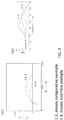
- FIG. 3 is a diagram showing results of the AC impedance measurements of the inventive example 4 and the comparative example 4.
- FIG. 3(a) shows a provided cole-cole plot
- FIG. 3(b) shows a Bode plot
- the battery of the present disclosure can be used, for example, as an all-solid lithium secondary battery.
Landscapes
- Chemical & Material Sciences (AREA)
- Chemical Kinetics & Catalysis (AREA)
- Electrochemistry (AREA)
- General Chemical & Material Sciences (AREA)
- Engineering & Computer Science (AREA)
- Composite Materials (AREA)
- Materials Engineering (AREA)
- Manufacturing & Machinery (AREA)
- Inorganic Chemistry (AREA)
- Organic Chemistry (AREA)
- Physics & Mathematics (AREA)
- Condensed Matter Physics & Semiconductors (AREA)
- General Physics & Mathematics (AREA)
- Secondary Cells (AREA)
- Battery Electrode And Active Subsutance (AREA)
- Compounds Of Alkaline-Earth Elements, Aluminum Or Rare-Earth Metals (AREA)
- Conductive Materials (AREA)
Applications Claiming Priority (2)
| Application Number | Priority Date | Filing Date | Title |
|---|---|---|---|
| JP2018000430 | 2018-01-05 | ||
| PCT/JP2018/041899 WO2019135322A1 (ja) | 2018-01-05 | 2018-11-13 | 正極材料、および、電池 |
Publications (2)
| Publication Number | Publication Date |
|---|---|
| EP3736892A1 true EP3736892A1 (de) | 2020-11-11 |
| EP3736892A4 EP3736892A4 (de) | 2021-03-17 |
Family
ID=67143693
Family Applications (1)
| Application Number | Title | Priority Date | Filing Date |
|---|---|---|---|
| EP18898874.5A Pending EP3736892A4 (de) | 2018-01-05 | 2018-11-13 | Positivelektrodenmaterial und batterie |
Country Status (5)
| Country | Link |
|---|---|
| US (1) | US11670775B2 (de) |
| EP (1) | EP3736892A4 (de) |
| JP (1) | JP7281771B2 (de) |
| CN (2) | CN120149365A (de) |
| WO (1) | WO2019135322A1 (de) |
Cited By (2)
| Publication number | Priority date | Publication date | Assignee | Title |
|---|---|---|---|---|
| EP4174022A4 (de) * | 2020-06-29 | 2023-12-27 | Panasonic Intellectual Property Management Co., Ltd. | Positivelektrodenmaterial und batterie |
| EP4134350A4 (de) * | 2020-04-09 | 2024-10-23 | Panasonic Intellectual Property Management Co., Ltd. | Positivelektrodenmaterial und batterie |
Families Citing this family (37)
| Publication number | Priority date | Publication date | Assignee | Title |
|---|---|---|---|---|
| WO2019146308A1 (ja) | 2018-01-26 | 2019-08-01 | パナソニックIpマネジメント株式会社 | 電極材料、および、電池 |
| JPWO2021132405A1 (de) * | 2019-12-27 | 2021-07-01 | ||
| JP7606475B2 (ja) * | 2020-02-05 | 2024-12-25 | パナソニックホールディングス株式会社 | 正極材料および電池 |
| EP4105179A4 (de) * | 2020-02-14 | 2023-09-27 | Panasonic Intellectual Property Management Co., Ltd. | Beschichtete positivelektroden-aktivsubstanz, positivelektrodenmaterial, batterie und verfahren zur herstellung einer beschichteten positivelektroden-aktivsubstanz |
| WO2021199618A1 (ja) | 2020-03-30 | 2021-10-07 | パナソニックIpマネジメント株式会社 | 被覆正極活物質およびそれを用いた電池 |
| JP7788640B2 (ja) * | 2020-04-02 | 2025-12-19 | パナソニックIpマネジメント株式会社 | 正極材料および電池 |
| EP4129924A4 (de) | 2020-04-02 | 2023-09-27 | Panasonic Intellectual Property Management Co., Ltd. | Positivelektrodenmaterial und batterie |
| EP4129923A4 (de) | 2020-04-02 | 2023-09-27 | Panasonic Intellectual Property Management Co., Ltd. | Positivelektrodenmaterial und batterie |
| KR102595966B1 (ko) | 2020-04-14 | 2023-11-01 | 세인트-고바인 세라믹스 앤드 플라스틱스, 인크. | 이온 전도성 재료, 이온 전도성 재료를 포함하는 전해질 및 형성 방법 |
| US11522217B2 (en) | 2020-04-14 | 2022-12-06 | Saint-Gobain Ceramics & Plastics, Inc. | Electrolyte material and methods of forming |
| CN115428214B (zh) | 2020-04-23 | 2025-08-12 | 圣戈本陶瓷及塑料股份有限公司 | 离子导电层及其形成方法 |
| WO2021217045A1 (en) | 2020-04-23 | 2021-10-28 | Saint-Gobain Ceramics & Plastics, Inc. | Ion conductive layer and methods of forming |
| JP7756339B2 (ja) * | 2020-04-28 | 2025-10-20 | パナソニックIpマネジメント株式会社 | 正極材料、および、電池 |
| JP7759623B2 (ja) * | 2020-05-12 | 2025-10-24 | パナソニックIpマネジメント株式会社 | 電池モジュール、乗り物及び電池モジュールの製造方法 |
| CN111490243B (zh) * | 2020-05-25 | 2022-03-11 | 蜂巢能源科技有限公司 | 一种锂离子电池用复合正极材料、其制备方法及用途 |
| WO2021241418A1 (ja) * | 2020-05-27 | 2021-12-02 | パナソニックIpマネジメント株式会社 | 正極活物質、正極材料、電池、および正極活物質の製造方法 |
| JP7766283B2 (ja) * | 2020-07-22 | 2025-11-10 | パナソニックIpマネジメント株式会社 | 正極材料および電池 |
| CN116133991B (zh) * | 2020-07-22 | 2025-09-23 | 松下知识产权经营株式会社 | 固体电解质材料及使用了其的电池 |
| JP7318140B2 (ja) | 2020-08-07 | 2023-07-31 | サン-ゴバン セラミックス アンド プラスティクス,インコーポレイティド | 電解質材料及び形成方法 |
| CN111785974B (zh) * | 2020-08-25 | 2022-03-08 | 中南大学 | 用于硫化物固态锂离子电池的正极包覆方法、正极及电池 |
| CN112086619B (zh) * | 2020-09-29 | 2021-09-28 | 珠海冠宇电池股份有限公司 | 全固态锂电池正极片及其制备方法以及全固态锂电池 |
| JP7484695B2 (ja) * | 2020-12-22 | 2024-05-16 | トヨタ自動車株式会社 | 全固体電池 |
| WO2022209686A1 (ja) | 2021-03-30 | 2022-10-06 | パナソニックIpマネジメント株式会社 | 被覆正極活物質、正極材料、電池、および被覆正極活物質の製造方法 |
| WO2022224611A1 (ja) * | 2021-04-20 | 2022-10-27 | パナソニックIpマネジメント株式会社 | 正極材料および電池 |
| KR102637203B1 (ko) | 2021-05-17 | 2024-02-19 | 세인트-고바인 세라믹스 앤드 플라스틱스, 인크. | 전해질 물질 및 형성 방법 |
| JPWO2022244416A1 (de) | 2021-05-20 | 2022-11-24 | ||
| EP4350802A4 (de) * | 2021-05-31 | 2025-06-25 | Panasonic Intellectual Property Management Co., Ltd. | Beschichtetes aktivmaterial, positivelektrodenmaterial, positivelektrode und batterie |
| EP4354464A4 (de) * | 2021-06-07 | 2024-12-18 | Panasonic Intellectual Property Management Co., Ltd. | Festelektrolytzusammensetzung, verfahren zur herstellung eines multialyer-körpers mit festelektrolytfolie und elektrode sowie verfahren zur herstellung einer batterie |
| CN117561620A (zh) * | 2021-06-24 | 2024-02-13 | 松下知识产权经营株式会社 | 正极活性物质、覆盖型正极活性物质、正极材料和电池 |
| WO2023008006A1 (ja) * | 2021-07-29 | 2023-02-02 | パナソニックIpマネジメント株式会社 | 正極材料、正極、および電池 |
| CN117897829A (zh) | 2021-09-13 | 2024-04-16 | 松下知识产权经营株式会社 | 被覆活性物质、被覆活性物质的制造方法、正极材料以及电池 |
| CN117916906A (zh) * | 2021-09-13 | 2024-04-19 | 松下知识产权经营株式会社 | 正极材料、正极和电池 |
| JPWO2023037756A1 (de) * | 2021-09-13 | 2023-03-16 | ||
| CN117882215A (zh) | 2021-09-13 | 2024-04-12 | 松下知识产权经营株式会社 | 被覆活性物质、被覆活性物质的制造方法、正极材料以及电池 |
| CN118369782A (zh) * | 2021-12-10 | 2024-07-19 | 松下知识产权经营株式会社 | 电极材料、电极以及电池 |
| CN115117428A (zh) * | 2022-07-21 | 2022-09-27 | 惠州亿纬锂能股份有限公司 | 一种具有核壳结构的固态电解质复合材料及其制备方法和应用 |
| WO2024247928A1 (ja) * | 2023-05-29 | 2024-12-05 | 日本碍子株式会社 | 電池および電池の製造方法 |
Family Cites Families (15)
| Publication number | Priority date | Publication date | Assignee | Title |
|---|---|---|---|---|
| JPH09213351A (ja) * | 1996-02-02 | 1997-08-15 | Osaka Gas Co Ltd | 固体電解質燃料電池の製造方法 |
| JP5108205B2 (ja) * | 2005-02-28 | 2012-12-26 | 国立大学法人静岡大学 | 全固体型リチウム二次電池 |
| JP2009193940A (ja) * | 2008-02-18 | 2009-08-27 | Toyota Motor Corp | 電極体及びその製造方法、並びに、リチウムイオン二次電池 |
| JP4948510B2 (ja) * | 2008-12-02 | 2012-06-06 | トヨタ自動車株式会社 | 全固体電池 |
| JP5158008B2 (ja) * | 2009-04-28 | 2013-03-06 | トヨタ自動車株式会社 | 全固体電池 |
| JP5455766B2 (ja) * | 2010-04-23 | 2014-03-26 | トヨタ自動車株式会社 | 複合正極活物質、全固体電池、および、それらの製造方法 |
| WO2012077225A1 (ja) * | 2010-12-10 | 2012-06-14 | トヨタ自動車株式会社 | 電極体および全固体電池 |
| JP6067511B2 (ja) * | 2013-08-16 | 2017-01-25 | トヨタ自動車株式会社 | 硫化物固体電解質材料、正極体およびリチウム固体電池 |
| JP6034265B2 (ja) * | 2013-09-12 | 2016-11-30 | トヨタ自動車株式会社 | 活物質複合粉体及びリチウム電池並びにその製造方法 |
| JP2016025027A (ja) * | 2014-07-23 | 2016-02-08 | トヨタ自動車株式会社 | 固体電池用正極の製造方法及び固体電池の製造方法、並びに、正極用スラリー |
| JP2016062683A (ja) * | 2014-09-16 | 2016-04-25 | 三星電子株式会社Samsung Electronics Co.,Ltd. | リチウムイオン(lithiumion)二次電池 |
| CN106058166B (zh) * | 2015-04-02 | 2021-08-10 | 松下知识产权经营株式会社 | 电池和电池用正极材料 |
| CN105254184A (zh) * | 2015-11-27 | 2016-01-20 | 宁波大学 | 一种稀土离子掺杂的Li3YCl6微晶玻璃及其制备方法 |
| JP6701122B2 (ja) * | 2016-05-17 | 2020-05-27 | 財團法人工業技術研究院Industrial Technology Research Institute | 金属イオンバッテリー及びその製造方法 |
| CN115036565B (zh) | 2016-08-04 | 2025-02-28 | 松下知识产权经营株式会社 | 固体电解质材料和电池 |
-
2018
- 2018-11-13 EP EP18898874.5A patent/EP3736892A4/de active Pending
- 2018-11-13 WO PCT/JP2018/041899 patent/WO2019135322A1/ja not_active Ceased
- 2018-11-13 CN CN202510310853.3A patent/CN120149365A/zh active Pending
- 2018-11-13 CN CN201880081858.1A patent/CN111492517A/zh active Pending
- 2018-11-13 JP JP2019563937A patent/JP7281771B2/ja active Active
-
2020
- 2020-06-27 US US16/914,333 patent/US11670775B2/en active Active
Cited By (3)
| Publication number | Priority date | Publication date | Assignee | Title |
|---|---|---|---|---|
| EP4134350A4 (de) * | 2020-04-09 | 2024-10-23 | Panasonic Intellectual Property Management Co., Ltd. | Positivelektrodenmaterial und batterie |
| EP4174022A4 (de) * | 2020-06-29 | 2023-12-27 | Panasonic Intellectual Property Management Co., Ltd. | Positivelektrodenmaterial und batterie |
| US12266759B2 (en) | 2020-06-29 | 2025-04-01 | Panasonic Intellectual Property Management Co., Ltd. | Positive electrode material and battery |
Also Published As
| Publication number | Publication date |
|---|---|
| CN120149365A (zh) | 2025-06-13 |
| US20200328467A1 (en) | 2020-10-15 |
| EP3736892A4 (de) | 2021-03-17 |
| JPWO2019135322A1 (ja) | 2021-01-07 |
| JP7281771B2 (ja) | 2023-05-26 |
| WO2019135322A1 (ja) | 2019-07-11 |
| CN111492517A (zh) | 2020-08-04 |
| US11670775B2 (en) | 2023-06-06 |
Similar Documents
| Publication | Publication Date | Title |
|---|---|---|
| US11670775B2 (en) | Positive electrode material and battery | |
| US11539036B2 (en) | Battery | |
| EP3745504B1 (de) | Elektrodenmaterial und batterie | |
| EP3745518B1 (de) | Batterie | |
| US20230352690A1 (en) | Cathode material and battery | |
| US11652235B2 (en) | Battery | |
| EP3745498B1 (de) | Negativelektrodenmaterial und batterie damit | |
| US11631853B2 (en) | Battery | |
| EP3736891B1 (de) | Positivelektrodenmaterial und batterie | |
| US12206111B2 (en) | Cathode material and battery using same | |
| EP3736899A1 (de) | Batterie | |
| EP3745503A1 (de) | Positivelektrodenmaterial und batterie damit | |
| EP3933978A1 (de) | Positivelektrodenmaterial und batterie |
Legal Events
| Date | Code | Title | Description |
|---|---|---|---|
| STAA | Information on the status of an ep patent application or granted ep patent |
Free format text: STATUS: THE INTERNATIONAL PUBLICATION HAS BEEN MADE |
|
| PUAI | Public reference made under article 153(3) epc to a published international application that has entered the european phase |
Free format text: ORIGINAL CODE: 0009012 |
|
| STAA | Information on the status of an ep patent application or granted ep patent |
Free format text: STATUS: REQUEST FOR EXAMINATION WAS MADE |
|
| 17P | Request for examination filed |
Effective date: 20200616 |
|
| AK | Designated contracting states |
Kind code of ref document: A1 Designated state(s): AL AT BE BG CH CY CZ DE DK EE ES FI FR GB GR HR HU IE IS IT LI LT LU LV MC MK MT NL NO PL PT RO RS SE SI SK SM TR |
|
| AX | Request for extension of the european patent |
Extension state: BA ME |
|
| A4 | Supplementary search report drawn up and despatched |
Effective date: 20210211 |
|
| RIC1 | Information provided on ipc code assigned before grant |
Ipc: H01M 10/052 20100101ALI20210205BHEP Ipc: H01M 4/525 20100101ALI20210205BHEP Ipc: C01B 25/14 20060101ALI20210205BHEP Ipc: C01F 17/00 20200101ALI20210205BHEP Ipc: H01M 10/0562 20100101ALI20210205BHEP Ipc: H01M 4/36 20060101ALI20210205BHEP Ipc: H01M 4/131 20100101ALI20210205BHEP Ipc: H01M 4/13 20100101ALI20210205BHEP Ipc: H01M 4/62 20060101AFI20210205BHEP Ipc: H01M 4/505 20100101ALI20210205BHEP Ipc: C01B 17/22 20060101ALI20210205BHEP Ipc: H01M 10/0525 20100101ALI20210205BHEP |
|
| DAV | Request for validation of the european patent (deleted) | ||
| DAX | Request for extension of the european patent (deleted) | ||
| STAA | Information on the status of an ep patent application or granted ep patent |
Free format text: STATUS: EXAMINATION IS IN PROGRESS |
|
| 17Q | First examination report despatched |
Effective date: 20240318 |