EP3748006A1 - Verfahren zur herstellung von naturkautschuk, transgene pflanze, verfahren zur herstellung eines luftreifens und verfahren zur herstellung eines kautschukprodukts - Google Patents
Verfahren zur herstellung von naturkautschuk, transgene pflanze, verfahren zur herstellung eines luftreifens und verfahren zur herstellung eines kautschukprodukts Download PDFInfo
- Publication number
- EP3748006A1 EP3748006A1 EP20174958.7A EP20174958A EP3748006A1 EP 3748006 A1 EP3748006 A1 EP 3748006A1 EP 20174958 A EP20174958 A EP 20174958A EP 3748006 A1 EP3748006 A1 EP 3748006A1
- Authority
- EP
- European Patent Office
- Prior art keywords
- rubber
- producing
- natural rubber
- plant
- cpt
- Prior art date
- Legal status (The legal status is an assumption and is not a legal conclusion. Google has not performed a legal analysis and makes no representation as to the accuracy of the status listed.)
- Pending
Links
Images
Classifications
-
- C—CHEMISTRY; METALLURGY
- C12—BIOCHEMISTRY; BEER; SPIRITS; WINE; VINEGAR; MICROBIOLOGY; ENZYMOLOGY; MUTATION OR GENETIC ENGINEERING
- C12N—MICROORGANISMS OR ENZYMES; COMPOSITIONS THEREOF; PROPAGATING, PRESERVING, OR MAINTAINING MICROORGANISMS; MUTATION OR GENETIC ENGINEERING; CULTURE MEDIA
- C12N15/00—Mutation or genetic engineering; DNA or RNA concerning genetic engineering, vectors, e.g. plasmids, or their isolation, preparation or purification; Use of hosts therefor
- C12N15/09—Recombinant DNA-technology
- C12N15/63—Introduction of foreign genetic material using vectors; Vectors; Use of hosts therefor; Regulation of expression
- C12N15/79—Vectors or expression systems specially adapted for eukaryotic hosts
- C12N15/82—Vectors or expression systems specially adapted for eukaryotic hosts for plant cells, e.g. plant artificial chromosomes (PACs)
- C12N15/8241—Phenotypically and genetically modified plants via recombinant DNA technology
- C12N15/8242—Phenotypically and genetically modified plants via recombinant DNA technology with non-agronomic quality (output) traits, e.g. for industrial processing; Value added, non-agronomic traits
- C12N15/8243—Phenotypically and genetically modified plants via recombinant DNA technology with non-agronomic quality (output) traits, e.g. for industrial processing; Value added, non-agronomic traits involving biosynthetic or metabolic pathways, i.e. metabolic engineering, e.g. nicotine, caffeine
-
- A—HUMAN NECESSITIES
- A01—AGRICULTURE; FORESTRY; ANIMAL HUSBANDRY; HUNTING; TRAPPING; FISHING
- A01H—NEW PLANTS OR NON-TRANSGENIC PROCESSES FOR OBTAINING THEM; PLANT REPRODUCTION BY TISSUE CULTURE TECHNIQUES
- A01H5/00—Angiosperms, i.e. flowering plants, characterised by their plant parts; Angiosperms characterised otherwise than by their botanic taxonomy
-
- B—PERFORMING OPERATIONS; TRANSPORTING
- B60—VEHICLES IN GENERAL
- B60C—VEHICLE TYRES; TYRE INFLATION; TYRE CHANGING; CONNECTING VALVES TO INFLATABLE ELASTIC BODIES IN GENERAL; DEVICES OR ARRANGEMENTS RELATED TO TYRES
- B60C1/00—Tyres characterised by the chemical composition or the physical arrangement or mixture of the composition
-
- C—CHEMISTRY; METALLURGY
- C08—ORGANIC MACROMOLECULAR COMPOUNDS; THEIR PREPARATION OR CHEMICAL WORKING-UP; COMPOSITIONS BASED THEREON
- C08L—COMPOSITIONS OF MACROMOLECULAR COMPOUNDS
- C08L7/00—Compositions of natural rubber
-
- C—CHEMISTRY; METALLURGY
- C12—BIOCHEMISTRY; BEER; SPIRITS; WINE; VINEGAR; MICROBIOLOGY; ENZYMOLOGY; MUTATION OR GENETIC ENGINEERING
- C12N—MICROORGANISMS OR ENZYMES; COMPOSITIONS THEREOF; PROPAGATING, PRESERVING, OR MAINTAINING MICROORGANISMS; MUTATION OR GENETIC ENGINEERING; CULTURE MEDIA
- C12N9/00—Enzymes; Proenzymes; Compositions thereof; Processes for preparing, activating, inhibiting, separating or purifying enzymes
- C12N9/10—Transferases (2.)
- C12N9/1085—Transferases (2.) transferring alkyl or aryl groups other than methyl groups (2.5)
-
- B—PERFORMING OPERATIONS; TRANSPORTING
- B29—WORKING OF PLASTICS; WORKING OF SUBSTANCES IN A PLASTIC STATE IN GENERAL
- B29D—PRODUCING PARTICULAR ARTICLES FROM PLASTICS OR FROM SUBSTANCES IN A PLASTIC STATE
- B29D30/00—Producing pneumatic or solid tyres or parts thereof
-
- B—PERFORMING OPERATIONS; TRANSPORTING
- B29—WORKING OF PLASTICS; WORKING OF SUBSTANCES IN A PLASTIC STATE IN GENERAL
- B29D—PRODUCING PARTICULAR ARTICLES FROM PLASTICS OR FROM SUBSTANCES IN A PLASTIC STATE
- B29D30/00—Producing pneumatic or solid tyres or parts thereof
- B29D30/06—Pneumatic tyres or parts thereof (e.g. produced by casting, moulding, compression moulding, injection moulding, centrifugal casting)
- B29D30/0601—Vulcanising tyres; Vulcanising presses for tyres
Definitions
- the present invention relates to methods for producing a natural rubber, transgenic plants, methods for producing a pneumatic tire, and methods for producing a rubber product.
- natural rubbers used in industrial rubber products may be obtained by cultivating rubber-producing plants, such as para rubber trees ( Hevea brasiliensis ) belonging to the family Euphorbiaceae or Indian rubber trees ( Ficus elastica ) belonging to the family Moraceae, whose laticifer cells biosynthesize natural rubbers, and manually harvesting the natural rubbers from the plants.
- rubber-producing plants such as para rubber trees ( Hevea brasiliensis ) belonging to the family Euphorbiaceae or Indian rubber trees ( Ficus elastica ) belonging to the family Moraceae, whose laticifer cells biosynthesize natural rubbers
- Hevea brasiliensis is substantially the only source of natural rubber used in industrial rubber products.
- Hevea brasiliensis is a plant that can grow in limited regions, including Southeast Asia and South America.
- Hevea brasiliensis trees take about seven years from planting to grow mature enough to yield rubber, and they yield the natural rubber only for a period of 20 to 30 years.
- the demand for natural rubbers is expected to increase in years to come, especially in developing countries, it is difficult for the above reasons to greatly increase natural rubber production from Hevea brasiliensis. Therefore, there has been a concern that natural rubber resources might dry up, and it has been desirable to provide stable natural rubber sources other than mature Hevea brasiliensis trees and to improve productivity of natural rubber from Hevea brasiliensis.
- the present inventors made extensive studies and found that natural rubbers produced by rubber-producing plants other than Hevea brasiliensis have physical properties inferior to those of the natural rubber produced by Hevea brasiliensis.
- the molecular weight of a producible natural rubber substantially depends on the type of rubber-producing plant, and that rubber-producing plants other than Hevea brasiliensis produce natural rubbers with lower molecular weights than the natural rubber produced by Hevea brasiliensis, and thus the natural rubbers produced by rubber-producing plants other than Hevea brasiliensis have physical properties inferior to those of the natural rubber produced by Hevea brasiliensis.
- the present invention aims to solve the problems discovered by the inventors and provide methods for producing a natural rubber which enable the production of a natural rubber with an increased molecular weight and transgenic plants which are able to produce a natural rubber with an increased molecular weight.
- Natural rubbers have a cis-1,4-polyisoprene structure formed of isopentenyl diphosphate (IPP) as an elementary unit. This structure suggests that cis-prenyltransferase (CPT) may be involved in natural rubber biosynthesis.
- IPP isopentenyl diphosphate
- CPT cis-prenyltransferase
- the present invention relates to a method for producing a natural rubber, the method including the steps of:
- the gene coding for a cis-prenyltransferase (CPT) family protein is preferably a gene coding for a cis-prenyltransferase (CPT) family protein derived from a plant of the genus Hevea, Ficus, Taraxacum, or Parthenium.
- the gene coding for a cis-prenyltransferase (CPT) family protein is preferably a gene coding for a cis-prenyltransferase (CPT) family protein derived from Hevea brasiliensis, Taraxacum kok-saghyz, or Parthenium argentatum.
- the present invention also relates to a method for producing a pneumatic tire, the method including the steps of:
- the present invention also relates to a method for producing a rubber product, the method including the steps of:
- the present invention also relates to a transgenic plant, produced by introducing a gene coding for a cis-prenyltransferase (CPT) family protein derived from a rubber-producing plant A into a rubber-producing plant B, the rubber-producing plant A producing a natural rubber having a higher molecular weight than a natural rubber produced by the rubber-producing plant B not transfected with the gene.
- CPT cis-prenyltransferase
- the first invention relates to a method for producing a natural rubber, the method including the steps of: introducing a gene coding for a cis-prenyltransferase (CPT) family protein derived from a rubber-producing plant A into a rubber-producing plant B to prepare a transgenic plant C; and producing a natural rubber using the transgenic plant C, the rubber-producing plant A producing a natural rubber having a higher molecular weight than a natural rubber produced by the rubber-producing plant B not transfected with the gene.
- CPT cis-prenyltransferase
- the method for producing a pneumatic tire of the first invention includes the steps of: kneading a natural rubber produced by the method for producing a natural rubber of the first invention with an additive to obtain a kneaded mixture; forming a green tire from the kneaded mixture; and vulcanizing the green tire.
- This method uses a natural rubber with an increased molecular weight to produce a pneumatic tire, and thus enables the production of a pneumatic tire having good properties.
- the method for producing a rubber product of the first invention includes the steps of: kneading a natural rubber produced by the method for producing a natural rubber of the first invention with an additive to obtain a kneaded mixture; forming a raw rubber product from the kneaded mixture; and vulcanizing the raw rubber product.
- This method uses a natural rubber with an increased molecular weight to produce a rubber product, and thus enables the production of a rubber product having good properties.
- the transgenic plant of the second invention is produced by introducing a gene coding for a cis-prenyltransferase (CPT) family protein derived from a rubber-producing plant A into a rubber-producing plant B, the rubber-producing plant A producing a natural rubber having a higher molecular weight than a natural rubber produced by the rubber-producing plant B not transfected with the gene. It is thus possible to provide a transgenic plant which is able to produce a natural rubber with an increased molecular weight.
- CPT cis-prenyltransferase
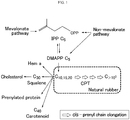
- the accompanying figure schematically illustrates a part of the biosynthetic pathway of a natural rubber.
- the first and second inventions are also referred to collectively as the present invention.
- the first invention includes a method for producing a natural rubber, a method for producing a pneumatic tire, and a method for producing a rubber product, all of which use the transgenic plant of the second invention.
- the following description of the first invention encompasses the description of the second invention.
- the method for producing a natural rubber of the first invention includes the steps of:
- the transgenic plant of the second invention is produced by introducing a gene coding for a cis-prenyltransferase (CPT) family protein derived from a rubber-producing plant A into a rubber-producing plant B, wherein the rubber-producing plant A produces a natural rubber having a higher molecular weight than the natural rubber produced by the rubber-producing plant B not transfected with the gene.
- CPT cis-prenyltransferase
- CPT cis-prenyltransferase
- the present inventors discovered that an increase or decrease in CPT gene transcription causes no change in the molecular weight of the produced natural rubber and, in contrast, that when a CPT gene derived from a rubber-producing plant which produces a natural rubber with a high molecular weight is introduced into a rubber-producing plant which produces a natural rubber with a low molecular weight, the molecular weight of the natural rubber produced by the resulting transgenic plant is increased.
- the molecular weight of the produced natural rubber depends on the nature, not the amount, of the CPT.
- a natural rubber derived from Hevea brasiliensis has a weight average molecular weight of 6.8 ⁇ 10 5 to 3.0 ⁇ 10 6 ( J. Rubb. Res., 2(3), 150-159 , incorporated herein by reference), and a natural rubber derived from Lactuca sativa has a weight average molecular weight of 1.3 ⁇ 10 6 ( Phytochemistry 67(2006), 2590-2596 , incorporated herein by reference).
- the natural rubber produced by Hevea brasiliensis has a bimodal molecular weight distribution (i.e., containing a high molecular weight component and a low molecular weight component), while the natural rubber produced by Lactuca sativa has a unimodal molecular weight distribution with only a low molecular weight component (peak top: 1.3 ⁇ 10 6 ). It is clear that since the natural rubber produced by Hevea brasiliensis has a weight average molecular weight of 6.8 ⁇ 10 5 to 3.0 ⁇ 10 6 but has a bimodal (two peaks) molecular weight distribution, the component on the high molecular weight side apparently has a higher molecular weight than the natural rubber produced by Lactuca sativa.
- the natural rubber produced by Hevea brasiliensis has a higher molecular weight than the natural rubber produced by Lactuca sativa.
- the inventors discovered that when a CPT gene derived from Hevea brasiliensis is introduced into Lactuca sativa to prepare a transgenic plant (transgenic Lactuca sativa ) , the transgenic plant can be used to produce a natural rubber having a higher molecular weight than the natural rubber produced by the untransgenic Lactuca sativa.
- the CPT derived from a rubber-producing plant which produces a natural rubber with a high molecular weight has a higher ability to elongate the isoprene chain than the CPT derived from a rubber-producing plant which produces a natural rubber with a low molecular weight.
- a natural rubber having an increased molecular weight can be produced by introducing a CPT gene derived from a rubber-producing plant A which produces a natural rubber having a high molecular weight into a rubber-producing plant B which produces a natural rubber having a lower molecular weight than that of the rubber-producing plant A to prepare a transgenic plant C, and producing a natural rubber using the transgenic plant C.
- the natural rubber having an increased molecular weight has good properties (for example, abrasion resistance, tensile strength, fracture strength, low heat-buildup properties) and can be used to produce rubber products (for example, pneumatic tires) having good properties.
- the rubber-producing plant A producing a natural rubber having a higher molecular weight than the natural rubber produced by the rubber-producing plant B not transfected with the gene it is not meant that the rubber-producing plant A produces a natural rubber having a higher weight average molecular weight than the natural rubber produced by the rubber-producing plant B not transfected with the gene, but that the rubber-producing plant A produces a natural rubber whose highest molecular weight component has a higher molecular weight than the highest molecular weight component of a natural rubber produced by the rubber-producing plant B not transfected with the gene.
- Non-limiting examples of rubber-producing plants that may be used in the present invention include: the genus Hevea, e.g. Hevea brasiliensis; the genus Sonchus, e.g. Sonchus oleraceus, Sonchus asper, and Sonchus brachyotus ; the genus Solidago, e.g. Solidago altissima, Solidago virgaurea subsp. asiatica, Solidago virgaurea subsp. leipcarpa, Solidago virgaurea subsp. leipcarpa f. paludosa, Solidago virgaurea subsp. gigantea, and Solidago gigantea Ait. var.
- the genus Hevea e.g. Hevea brasiliensis
- the genus Sonchus e.g. Sonchus oleraceus, Sonchus asper, and Sonchus brachyotus
- the genus Helianthus e.g. Helianthus annus, Helianthus argophyllus, Helianthus atrorubens, Helianthus debilis, Helianthus decapetalus, and Helianthus giganteus
- the genus Taraxacum e.g. dandelion (Taraxacum), Taraxacum venustum H.
- Ficus e.g. Ficus carica, Ficus elastica, Ficus pumila L., Ficus erecta Thumb., Ficus ampelas Burm. f., Ficus benguetensis Merr., Ficus irisana Elm.
- Ficus benghalensis the genus Parthenium, e.g. Parthenium argentatum, Parthenium hysterophorus, and Ambrosia artemisiifolia ; lettuce ( Lactuca sativa ); and Arabidopsis thaliana.
- the rubber-producing plants to be used as the rubber-producing plants A and B may be determined in view of the molecular weights of the natural rubbers produced by rubber-producing plants according to the above-mentioned technique.
- the rubber-producing plant A may be any rubber-producing plant that produces a natural rubber having a high molecular weight.
- it is preferably a plant of the genus Hevea, Ficus, Taraxacum, or Parthenium, more preferably Hevea brasiliensis, Taraxacum kok-saghyz, or Parthenium argentatum.
- the rubber-producing plant A is preferably a plant of the genus Hevea or Taraxacum, more preferably Hevea brasiliensis or Taraxacum kok-saghyz.
- the rubber-producing plant B may be any rubber-producing plant that produces a natural rubber having a lower molecular weight than that of the rubber-producing plant A. Examples include Lactuca sativa.
- the rubber-producing plant B is also preferably a plant of the genus Hevea or Taraxacum, more preferably Hevea brasiliensis or Taraxacum kok-saghyz because the use of a rubber-producing plant which originally produces a natural rubber with a high molecular weight as the rubber-producing plant B enables the production of a natural rubber with a higher molecular weight.
- the rubber-producing plant B is a plant of the genus Taraxacum, preferably Taraxacum kok-saghyz
- the rubber-producing plant A may be Hevea brasiliensis, for example.
- the usable cis-prenyltransferase (CPT) family protein may be any enzyme that catalyzes a reaction of cis-chain elongation of an isoprenoid compound.
- CPT family protein is considered to be an enzyme that catalyzes the reaction enclosed by the dotted frame in the figure.
- the CPT family protein is characterized by having an amino acid sequence contained in the cis-IPPS domain (NCBI accession No. cd00475).
- isoprenoid compound refers to a compound containing an isoprene unit (C 5 H 8 ).
- cis-isoprenoid refers to a compound including an isoprenoid compound in which isoprene units are cis-bonded, and examples include cis-farnesyl diphosphate, undecaprenyl diphosphate, and natural rubber.
- CPT family protein examples include Hevea brasiliensis -derived CPTs (HRT1, HRT2, CPT3 to CPT5), Lactuca sativa-derived CPT1 to CPT3, Taraxacum brevicorniculatum -derived CPT1 to CPT3, and Parthenium argentatum-derived CPT1 to CPT4.
- CPT family protein examples include the following protein [1]:
- the CPT family protein preferably has an amino acid sequence containing one or more, more preferably 1 to 58, still more preferably 1 to 44, further preferably 1 to 29, particularly preferably 1 to 15, most preferably 1 to 6, yet most preferably 1 to 3 amino acid substitutions, deletions, insertions, and/or additions relative to the amino acid sequence of SEQ ID NO:2.
- conservative substitutions are preferred. Specific examples include substitutions within each of the following groups in the parentheses: (glycine, alanine), (valine, isoleucine, leucine), (aspartic acid, glutamic acid), (asparagine, glutamine), (serine, threonine), (lysine, arginine), and (phenylalanine, tyrosine).
- proteins with amino acid sequences having high sequence identity to the original amino acid sequence can also have similar functions.
- specific examples of the CPT family protein also include the following protein [3]: [3] a protein having an amino acid sequence with at least 80% sequence identity to the amino acid sequence represented by SEQ ID NO:2, and having an enzyme activity that catalyzes a reaction of cis-chain elongation of an isoprenoid compound.
- sequence identity to the amino acid sequence of SEQ ID NO:2 is preferably at least 85%, more preferably at least 90%, still more preferably at least 95%, particularly preferably at least 98%, most preferably at least 99%.
- sequence identity between amino acid sequences or nucleotide sequences may be determined using the algorithm BLAST [ Pro. Natl. Acad. Sci. USA, 90, 5873 (1993 ), incorporated herein by reference] developed by Karlin and Altschul or FASTA [ Methods Enzymol., 183, 63 (1990 ), incorporated herein by reference].
- Whether it is a protein having the above enzyme activity may be determined by conventional techniques, such as by expressing a target protein in a transformant produced by introducing a gene coding for the target protein into Escherichia coli or other host organisms, and determining the presence or absence of the function of the target protein by the corresponding activity measuring method.
- the gene coding for a CPT family protein may be any gene that codes for a CPT family protein to express and produce the CPT family protein.
- the CPT gene may be any of the CPT genes coding for the known CPT family proteins listed above or may be a CPT gene coding for an unknown CPT family protein.
- screening may be performed by a known technique using, for example, a part of the nucleotide sequence of a known CPT gene as a probe to identify the DNA coding for the CPT family protein, followed by isolating the DNA.
- the method of isolating a DNA molecule of interest using a DNA molecule as a probe is described in, for example, Molecular Cloning, 2nd edition, Cold Spring Harbor Press (1989 ), incorporated herein by reference.
- the known CPT gene used as a probe here may be a CPT gene coding for a CPT family protein derived from an organism other than rubber-producing plants, such as AtCPT1 to AtCPT9 from Arabidopsis thaliana, undecaprenyl pyrophosphate synthase (UPPS) from Escherichia coli, undecaprenyl diphosphate synthase (UPS) from Micrococcus, RER 2 from yeast, DDPS from tobacco, DDPS from mouse, or HDS from human.
- UPPS undecaprenyl pyrophosphate synthase
- UPS undecaprenyl diphosphate synthase
- the gene coding for a cis-prenyltransferase (CPT) family protein may be any CPT gene derived from a rubber-producing plant which produces a natural rubber with a high molecular weight.
- CPT cis-prenyltransferase
- it is preferably a CPT gene derived from a plant of the genus Hevea, Ficus, Taraxacum, or Parthenium, more preferably a CPT gene derived from Hevea brasiliensis, Taraxacum kok-saghyz, or Parthenium argentatum.
- the CPT gene is preferably a CPT gene derived from a plant of the genus Hevea or Taraxacum, more preferably a CPT gene derived from Hevea brasiliensis or Taraxacum kok-saghyz.
- CPT gene include the following DNAs [1] and [2]:
- hybridize means a process in which a DNA hybridizes to a DNA having a specific nucleotide sequence or a part of the DNA.
- the DNA having a specific nucleotide sequence or a part of the DNA may have a nucleotide sequence long enough to be usable as a probe in Northern or Southern blot analysis or as an oligonucleotide primer in polymerase chain reaction (PCR) analysis.
- the DNA used as a probe may have a length of at least 100 bases, preferably at least 200 bases, more preferably at least 500 bases, although it may be a DNA of at least 10 bases, preferably at least 15 bases.
- the stringent conditions may include, for example, an overnight incubation at 42°C of a DNA-immobilized filter and a DNA probe in a solution containing 50% formamide, 5 ⁇ SSC (750 mM sodium chloride, 75 mM sodium citrate), 50 mM sodium phosphate (pH 7.6), 5 ⁇ Denhardt's solution, 10% dextran sulfate, and 20 ⁇ g/L denatured salmon sperm DNA, followed by washing the filter for example in a 0.2 ⁇ SSC solution at approximately 65°C. Less stringent conditions may also be employed. Changes in stringency may be accomplished through the manipulation of formamide concentration (lower percentages of formamide result in lower stringency), salt concentrations, or temperature.
- low stringent conditions include an overnight incubation at 37°C in a solution containing 6 ⁇ SSCE (20 ⁇ SSCE: 3 mol/L sodium chloride, 0.2 mol/L sodium dihydrogen phosphate, 0.02 mol/L EDTA, pH 7.4), 0.5% SDS, 30% formamide, and 100 ⁇ g/L denatured salmon sperm DNA, followed by washing in a 1 ⁇ SSC solution containing 0.1% SDS at 50°C.
- washes performed following hybridization may be done at higher salt concentrations (e.g., 5 ⁇ SSC) in the above-mentioned low stringent conditions.
- Variations in the above conditions may be accomplished through the inclusion or substitution of blocking reagents used to suppress background in hybridization experiments.
- the inclusion of blocking reagents may require modification of the hybridization conditions for compatibility.
- the DNA capable of hybridizing under stringent conditions as described above may have a nucleotide sequence with at least 80%, preferably at least 90%, more preferably at least 95%, still more preferably at least 98%, particularly preferably at least 99% sequence identity to the nucleotide sequence of SEQ ID NO:1 as calculated using a program such as BLAST or FASTA with the parameters mentioned above.
- Whether the DNA which hybridizes to the above-mentioned DNA under stringent conditions codes for a protein having a predetermined enzyme activity may be determined by conventional techniques, such as by expressing a target protein in a transformant produced by introducing a gene coding for the target protein into Escherichia coli or other host organisms, and determining the presence or absence of the function of the target protein by the corresponding activity measuring method.
- RNA is extracted from a growing plant, the mRNA is optionally purified, and a cDNA is synthesized by a reverse transcription reaction.
- degenerate primers are designed based on the amino acid sequence of a known protein corresponding to the target protein, a DNA fragment is partially amplified by RT-PCR, and the sequence is partially identified. Then, the full-length nucleotide sequence and amino acid sequence is identified, e.g., by the RACE method.
- the RACE method (rapid amplification of cDNA ends method) refers to a method in which, when the nucleotide sequence of a cDNA is partially known, PCR is performed based on the nucleotide sequence data of such a known region to clone an unknown region extending to the cDNA terminal. This method is capable of cloning full-length cDNA by PCR without preparing a cDNA library.
- the degenerate primers may each preferably be prepared from a plant-derived sequence having a highly similar sequence part to the target protein.
- nucleotide sequence coding for the protein is known, the full-length nucleotide sequence and amino acid sequence can be identified by designing a primer containing a start codon and a primer containing a stop codon using the known nucleotide sequence, followed by performing RT-PCR using a synthesized cDNA as a template.
- transgenic plant preparation step of introducing a gene coding for a cis-prenyltransferase (CPT) family protein derived from a rubber-producing plant A into a rubber-producing plant B to prepare a transgenic plant C.
- CPT cis-prenyltransferase
- the rubber-producing plants to be used as the rubber-producing plants A and B are determined in view of the molecular weights of the natural rubbers produced by rubber-producing plants according to the above-mentioned technique, a person skilled in the art can carry out the transgenic plant preparation step.
- the CPT gene derived from the rubber-producing plant A is an unknown CPT gene, one may identify the DNA coding for a CPT family protein and then isolate the CPT gene by the above-mentioned techniques.
- the CPT gene derived from the rubber-producing plant A may be introduced into the rubber-producing plant B to prepare a transgenic plant C by a known method.
- transgenic plant Although such a transgenic plant may be prepared by conventionally known methods.
- a vector containing the nucleotide sequence of a CPT gene may be used for the transformation.
- CPT-containing vector When such a vector is introduced into a rubber-producing plant to cause transformation, the CPT gene in the vector will be expressed to allow the plant to produce a natural rubber with an increased molecular weight.
- a transgenic plant transformed to express a CPT family protein having a high ability to elongate the isoprene chain can be produced by introducing a CPT-containing vector into a rubber-producing plant. Then, the CPT family protein having a high ability to elongate the isoprene chain is expressed in the transgenic plant to allow the plant to produce a natural rubber with an increased molecular weight.
- the CPT-containing vector may be prepared by inserting the nucleotide sequence of a CPT gene into a vector generally known as a plant transformation vector by conventional methods.
- vectors that can be used to prepare the CPT-containing vector include pBI vectors, binary vectors such as pGA482, pGAH, and pBIG, intermediate plasmids such as pLGV23Neo, pNCAT, and pMON200, and pH35GS containing GATEWAY cassette.
- the CPT-containing vector may contain additional nucleotide sequences, provided that the nucleotide sequence of a CPT gene is present in the vector.
- the vector contains vector-derived sequences in addition to these nucleotide sequences and further contains a promoter sequence, a restriction enzyme recognition sequence, a spacer sequence, a marker gene sequence, a reporter gene sequence, or other sequences.
- the CPT-containing vector is preferably a vector including a nucleotide sequence in which the CPT gene is functionally linked to a promoter.
- the promoter may be any promoter that functions in plant cells.
- Examples of usable promoters include a cauliflower mosaic virus (CaMV) 35S promoter, a rice actin 1 promoter, a nopaline synthase gene promoter, a tobacco mosaic virus 35S promoter, a rice-derived actin gene promoter, and a ubiquitin promoter.
- the promoter is preferably a promoter having a promoter activity that drives laticifer-specific gene expression.
- Examples of the promoter having a promoter activity that drives laticifer-specific gene expression include a promoter of a gene coding for rubber elongation factor (REF), a promoter of a gene coding for small rubber particle protein (SRPP), a promoter of a gene coding for Hevein 2.1 (HEV2.1), and a promoter of a gene coding for MYC1 transcription factor (MYC1).
- REF rubber elongation factor
- SRPP small rubber particle protein
- HEV2.1 Hevein 2.1
- MYC1 transcription factor MYC1 transcription factor
- promoter having a promoter activity that drives laticifer-specific gene expression means that the promoter has activity to control gene expression to cause a desired gene to be expressed specifically in laticifers when the desired gene is functionally linked to the promoter and introduced into a plant.
- laticifer-specific gene expression means that the gene is considered to be expressed substantially exclusively in laticifers with no or little expression of the gene in sites other than laticifers in a plant.
- expression "a gene is functionally linked to a promoter” means that the gene sequence is linked downstream of the promoter so that the gene is controlled by the promoter.
- the marker gene examples include drug-resistant genes such as a kanamycin-resistant gene, a hygromycin-resistant gene, and a bleomycin-resistant gene.
- the reporter gene is intended to be introduced to determine the expression site in a plant, and examples include a luciferase gene, a ⁇ -glucuronidase (GUS) gene, a green fluorescent protein (GFP), and a red fluorescent protein (RFP).
- GUS ⁇ -glucuronidase
- GFP green fluorescent protein
- RFP red fluorescent protein
- the CPT-containing vector may be introduced into a rubber-producing plant (including plant cells, such as calluses, cultured cells, spheroplasts, or protoplasts) by any method that can introduce DNA into plant cells.
- a rubber-producing plant including plant cells, such as calluses, cultured cells, spheroplasts, or protoplasts
- Examples include methods using Agrobacterium ( JP S59-140885 A , JP S60-70080 A , and WO94/00977 , all incorporated herein by reference), electroporation ( JP S60-251887 A , incorporated herein by reference), and methods using particle guns (gene guns) ( JP 2606856 B and JP 2517813 B , both incorporated herein by reference).
- Agrobacterium Agrobacterium method
- transgenic plant in which a gene coding for a cis-prenyltransferase (CPT) family protein derived from a rubber-producing plant A is introduced into a rubber-producing plant B.
- CPT cis-prenyltransferase
- the transgenic plant conceptually includes not only transgenic plant cells produced by the above methods, but also all of their progeny or clones and even progeny plants obtained by passaging the foregoing.
- progeny or clones can be produced from the transgenic plant cells by sexual or asexual reproduction, tissue culture, cell culture, cell fusion, or other techniques.
- the transgenic plant cells, or their progeny or clones may be used to obtain reproductive materials (e.g., seeds, fruits, cuttings, stem tubers, root tubers, shoots, adventitious buds, adventitious embryos, calluses, protoplasts), which can then be used to produce the transgenic plant on a large scale.
- reproductive materials e.g., seeds, fruits, cuttings, stem tubers, root tubers, shoots, adventitious buds, adventitious embryos, calluses, protoplasts
- Whether a target protein gene is expressed in regenerated plants may be determined by well-known methods. For example, Western blot analysis may be used to assess the expression of the target protein.
- Seeds can be obtained from the transgenic plant, for example, as follows: the transgenic plant is rooted in an appropriate medium, transplanted to water-containing soil in a pot, and grown under proper cultivation conditions to finally produce seeds, which are then collected. Furthermore, plants can be grown from seeds, for example, as follows: the seeds obtained from the transgenic plant as described above are sown in water-containing soil and grown under proper cultivation conditions into plants.
- the step (natural rubber production step) of producing a natural rubber using the transgenic plant C is described below.
- the CPT family protein having a high ability to elongate the isoprene chain is expressed to allow the plant to produce a natural rubber with an increased molecular weight.
- a natural rubber with an increased molecular weight can be produced by growing the transgenic plant C so that the transgenic plant C can produce a natural rubber.
- a natural rubber with an increased molecular weight may be produced by culturing, for example, the transgenic plant cells produced in the transgenic plant preparation step, calluses obtained from the transgenic plant cells, or cells redifferentiated from the calluses in an appropriate medium, or growing, for example, transgenic plants regenerated from the transgenic plant cells, or plants grown from seeds obtained from the transgenic plants under proper cultivation conditions, so that the transgenic plant C can produce a natural rubber.
- the natural rubber contained in the cells, culture medium, latex, or other material may be isolated and purified by known methods as needed.
- the natural rubber produced by the transgenic plant may be obtained, for example, by harvesting latex from the transgenic plant and subjecting the latex to the solidification step below.
- latex may be harvested by collecting the emulsion oozing out from cuts made in the trunk of the plant (tapping), or by collecting the emulsion oozing out from cuts made in roots or other parts of the transgenic plant, or by crushing the cut tissue followed by extraction with an organic solvent.
- the harvested latex may be subjected to a solidification step.
- the solidification may be carried out by any method, including, for example, by adding the latex to a solvent that does not dissolve natural rubber, such as ethanol, methanol, or acetone, or by adding an acid to the latex.
- the solidification step can be used to recover rubber (natural rubber) as solids from the latex.
- the obtained rubber (natural rubber) may be dried as needed before use.
- natural rubber is a generic term for polymers composed of isoprene units (C 5 H 8 ).
- isoprenoid refers to a compound having an isoprene unit (C 5 H 8 ), and conceptually includes even natural rubber.
- the method for producing a rubber product of the first invention includes the steps of: kneading a natural rubber produced by the method for producing a natural rubber of the first invention with an additive to obtain a kneaded mixture ("kneading step”); forming a raw rubber product from the kneaded mixture ("raw rubber product forming step”); and vulcanizing the raw rubber product (“vulcanization step”).
- the rubber product may be any rubber product that can be produced from rubber, preferably natural rubber, and examples include pneumatic tires, rubber rollers, rubber fenders, gloves, and medical rubber tubes.
- the method for producing a rubber product of the first invention is the method for producing a pneumatic tire of the first invention
- the raw rubber product forming step corresponds to the step of forming a green tire from the kneaded mixture
- the vulcanization step corresponds to the step of vulcanizing the green tire.
- the method for producing a pneumatic tire of the first invention includes the steps of: kneading a natural rubber produced by the method for producing a natural rubber with an additive to obtain a kneaded mixture ("kneading step”); forming a green tire from the kneaded mixture (“green tire forming step”); and vulcanizing the green tire (“vulcanization step”).
- a natural rubber produced by the method for producing a natural rubber is kneaded with an additive to obtain a kneaded mixture.
- any additive may be used including those used in production of rubber products.
- the additive include rubber components other than the natural rubber, reinforcing fillers such as carbon black, silica, calcium carbonate, alumina, clay, and talc, silane coupling agents, zinc oxide, stearic acid, processing aids, various antioxidants, softeners such as oils, waxes, vulcanizing agents such as sulfur, and vulcanization accelerators.
- the kneading in the kneading step may be carried out using a rubber kneading machine such as an open roll mill, a Banbury mixer, or an internal mixer.
- a rubber kneading machine such as an open roll mill, a Banbury mixer, or an internal mixer.
- a raw rubber product (green tire in the case of tire) is formed from the kneaded mixture obtained in the kneading step.
- the method of forming a raw rubber product is not particularly limited, and methods used to form raw rubber products may be used appropriately.
- the kneaded mixture obtained in the kneading step may be extruded according to the shape of a tire component and then assembled with other tire components in a usual manner on a tire building machine to form a green tire (unvulcanized tire).
- the raw rubber product obtained in the raw rubber product forming step is vulcanized to produce a rubber product.
- the method of vulcanizing the raw rubber product is not particularly limited, and methods used to vulcanize raw rubber products may be used appropriately.
- the green tire (unvulcanized tire) obtained in the raw rubber product forming step may be vulcanized by heating and pressing in a vulcanizer to produce a pneumatic tire.
- Total RNA was extracted from the latex of Hevea brasiliensis by the hot phenol method.
- To 6 mL of the latex were added 6 mL of 100 mM sodium acetate buffer and 1 mL of a 10% SDS solution, and then 12 mL of water-saturated phenol pre-heated at 65°C. The mixture was incubated for five minutes at 65°C, agitated in a vortex mixer, and centrifuged at 7000 rpm for 10 minutes at room temperature. After the centrifugation, the supernatant was transferred to a new tube, 12 mL of a phenol:chloroform (1:1) solution was added, and they were agitated by shaking for two minutes.
- the resulting mixture was centrifuged again at 7000 rpm for 10 minutes at room temperature. Then, the supernatant was transferred to a new tube, 12 mL of a chloroform:isoamyl alcohol (24:1) solution was added, and they were agitated by shaking for two minutes. After the agitation, the resulting mixture was centrifuged again at 7000 rpm for 10 minutes at room temperature. Then, the supernatant was transferred to a new tube, 1.2 mL of a 3M sodium acetate solution and 13 mL of isopropanol were added, and they were agitated in a vortex mixer.
- the resulting mixture was incubated for 30 minutes at -20°C to precipitate total RNA.
- the incubated mixture was centrifuged at 15000 rpm for 10 minutes at 4°C, and the supernatant was removed to collect a precipitate of total RNA.
- the collected total RNA was washed twice with 70% ethanol and then dissolved in RNase-free water.
- cDNA was synthesized from the collected total RNA.
- the cDNA synthesis was carried out using a PrimeScript II 1st strand cDNA synthesis kit (Takara) in accordance with the manual.
- the prepared 1st strand cDNA was used as a template to obtain a CPT gene.
- PCR was performed using a KOD-plus-Neo (Toyobo Co., Ltd.) in accordance with the manual.
- the PCR reaction involved 35 cycles with each cycle consisting of 10 seconds at 98°C, 30 seconds at 58°C, and 1 minute at 68°C.
- the CPT gene was obtained using the following primers.
- a CPT gene (HRT1) was produced as described above. The gene was sequenced to identify the full-length nucleotide sequence and amino acid sequence.
- the nucleotide sequence of HRT1 is given by SEQ ID NO:1.
- the amino acid sequence of HRT1 is given by SEQ ID NO:2.
- the obtained DNA fragment was subjected to dA addition and then inserted into a pGEM-T Easy vector using a pGEM-T Easy Vector System (Promega) to prepare pGEM-HRT1.
- Escherichia coli DH5 ⁇ was transformed with the prepared vector, and the transformant was cultured on LB agar medium containing ampicillin and X-gal. Then, Escherichia coli cells carrying the introduced target gene were selected by blue/white screening.
- the Escherichia coli cells transformed with the plasmid containing the target gene were cultured overnight at 37°C in LB liquid medium. After the culture, the cells were collected, and the plasmid was collected using a FastGene Plasmid mini kit (Nippon Genetics Co., Ltd.).
- the pGEM-HRT1 acquired in the above [Vector construction] and a gateway vector for Lactuca sativa expression (pBI-pLsUbi-GW) were subjected to a LR reaction (insertion reaction, 25°C, two hours) to prepare a CPT-containing vector (pBI-pLsUbi-GW-HRT1).
- the pBI-pLsUbi-GW was obtained by substituting the 35S promoter of pBI-OX-GW with Lactuca sativa ubiquitin (LsUbi) promoter.
- Seeds of Lactuca sativa (cultivar: Kaiser available from Takii & Co., Ltd.) were immersed in a five-fold dilution of a home bleaching agent for 15 minutes to sterilize the seed surface. Subsequently, the seeds were rinsed three times with sterilized water in a clean bench. Then, the surface-sterilized seeds were sown on a germination medium (MS medium + 2% sucrose + 0.3% Gelrite) at a rate of approximately 25 seeds per plant box, and then cultured at 25°C with a photoperiod of 16 hours light and 8 hours dark for five days.
- a germination medium MS medium + 2% sucrose + 0.3% Gelrite
- a glycerol stock of Agrobacterium ( Agrobacterium tumefaciens ) into which the CPT-containing vector (pBI-pLsUbi-GW-HRT1) was introduced was inoculated into LB liquid medium and then shake-cultured in the liquid for about 24 hours. After completion of the culture, the Agrobacterium cells were collected by centrifugation (3000 rpm, five minutes), and the supernatant was discarded. The Agrobacterium cells were re-suspended with an infection medium (MS medium + 3% sucrose + 0.1 mM acetosyringone + 0.01 mM mercaptoethanol), followed by adjustment of the absorbance at 600 nm (OD 600) to about 0.8. The resulting bacterial culture was used for transformation.
- an infection medium MS medium + 3% sucrose + 0.1 mM acetosyringone + 0.01 mM mercaptoethanol
- the infection medium (about 40 mL) in which the Agrobacterium cells were suspended was transferred to a sterilized dish. Then, the cotyledons produced in the above [Preparation of explant] were cut from the tip into 5 mm pieces, which were then directly dropped and introduced into the infection medium, followed by standing for about five minutes.
- the cotyledon pieces left in the infection medium were then allowed to stand on a sterilized Kimtowel so that the Agrobacterium adhered to the cotyledon pieces was adsorbed to the Kimtowel.
- the cotyledon pieces left on the Kimtowel were then plated on a co-culture medium (MS medium + 3% sucrose + 1 mg/L benzyladenine + 0.1 mg/L naphthaleneacetic acid + 0.3% Gelrite) with their adaxial surfaces being in contact with the medium. About 25 pieces were plated on a dish, which was then sealed with a surgical tape, and co-culture was conducted at 25°C in the dark for three days.
- a co-culture medium MS medium + 3% sucrose + 1 mg/L benzyladenine + 0.1 mg/L naphthaleneacetic acid + 0.3% Gelrite
- the cotyledon pieces were transplanted onto a callus-inducing medium (MS medium + 3% sucrose + 0.1 mg/L benzyladenine (BA) + 0.1 mg/L naphthaleneacetic acid (NAA) + 100 mg/L kanamycin + 375 mg/L (1 tablet/L) Augmentin + 0.3% Gelrite) and cultured at 25°C under a lighting regime of 16 hours light and 8 hours dark for three weeks while changing the medium every week. In this way, calluses were induced while selection was performed.
- a callus-inducing medium MS medium + 3% sucrose + 0.1 mg/L benzyladenine (BA) + 0.1 mg/L naphthaleneacetic acid (NAA) + 100 mg/L kanamycin + 375 mg/L (1 tablet/L) Augmentin + 0.3% Gelrite
- the grown plant tissues were transplanted onto a culture soil.
- the transplanted plants were placed in a tray and wrapped in a wrap to keep a sufficient humidity.
- the plants were acclimated to low-humidity conditions over about ten days from the beginning of the acclimation by forming holes in the wrap or moving the lid every three or four days.
- the confirmed transfected individuals were transferred to hydroponics.
- the medium used in the hydroponics was a mixture of OAT house No. 1, No. 2, and No. 5 (OAT house fertilizer series, OAT Agrio Co., Ltd.) at a ratio of 30:30:1.
- OAT house fertilizer series OAT Agrio Co., Ltd.
- the cultivation was carried out at an air temperature range of 17 to 22°C without falling below 17°C.
- the confirmed transfected individuals ( Lactuca sativa ) were cultivated for six months in hydroponics, and then latex was extracted from their stems and leaves. The extracted latex was immersed in ethanol. The formed solids were washed with ethanol to obtain a natural rubber.
- the weight average molecular weight (Mw) was measured by gel permeation chromatography (GPC) under the following conditions (1) to (7).
- Example 1 Weight average molecular weight 1.5 ⁇ 10 6 1.8 ⁇ 10 6
- the weight average molecular weights indicated in Table 1 are each the average of four weight average molecular weights measured in each example.
- a natural rubber with an increased molecular weight can be produced by a method for producing a natural rubber which includes the steps of: introducing a gene coding for a cis-prenyltransferase (CPT) family protein derived from a rubber-producing plant A ( Hevea brasiliensis ) into a rubber-producing plant B ( Lactuca sativa ) to prepare a transgenic plant C; and producing a natural rubber using the transgenic plant C, wherein the rubber-producing plant A produces a natural rubber having a higher molecular weight than the natural rubber produced by the rubber-producing plant B not transfected with the gene.
- CPT cis-prenyltransferase
- a natural rubber with an increased molecular weight can be produced by a transgenic plant produced by introducing a gene coding for a cis-prenyltransferase (CPT) family protein derived from a rubber-producing plant A ( Hevea brasiliensis ) into a rubber-producing plant B ( Lactuca sativa ), wherein the rubber-producing plant A produces a natural rubber having a higher molecular weight than the natural rubber produced by the rubber-producing plant B not transfected with the gene.
- CPT cis-prenyltransferase
- a method for producing a natural rubber including the steps of: introducing a gene coding for a cis-prenyltransferase (CPT) family protein derived from a rubber-producing plant A into a rubber-producing plant B to prepare a transgenic plant C; and producing a natural rubber using the transgenic plant C, the rubber-producing plant A producing a natural rubber having a higher molecular weight than a natural rubber produced by the rubber-producing plant B not transfected with the gene.
- CPT cis-prenyltransferase
Landscapes
- Health & Medical Sciences (AREA)
- Life Sciences & Earth Sciences (AREA)
- Genetics & Genomics (AREA)
- Engineering & Computer Science (AREA)
- Chemical & Material Sciences (AREA)
- Organic Chemistry (AREA)
- Zoology (AREA)
- Wood Science & Technology (AREA)
- Bioinformatics & Cheminformatics (AREA)
- Biotechnology (AREA)
- General Engineering & Computer Science (AREA)
- Biomedical Technology (AREA)
- Molecular Biology (AREA)
- Biochemistry (AREA)
- General Health & Medical Sciences (AREA)
- Microbiology (AREA)
- Medicinal Chemistry (AREA)
- Cell Biology (AREA)
- Physics & Mathematics (AREA)
- Biophysics (AREA)
- Nutrition Science (AREA)
- Plant Pathology (AREA)
- Chemical Kinetics & Catalysis (AREA)
- Polymers & Plastics (AREA)
- Physiology (AREA)
- Botany (AREA)
- Developmental Biology & Embryology (AREA)
- Environmental Sciences (AREA)
- Mechanical Engineering (AREA)
- Breeding Of Plants And Reproduction By Means Of Culturing (AREA)
- Tires In General (AREA)
- Preparation Of Compounds By Using Micro-Organisms (AREA)
- Tyre Moulding (AREA)
- Compositions Of Macromolecular Compounds (AREA)
Applications Claiming Priority (1)
| Application Number | Priority Date | Filing Date | Title |
|---|---|---|---|
| JP2019103713A JP2020195326A (ja) | 2019-06-03 | 2019-06-03 | 天然ゴムの製造方法、形質転換植物、空気入りタイヤの製造方法及びゴム製品の製造方法 |
Publications (1)
| Publication Number | Publication Date |
|---|---|
| EP3748006A1 true EP3748006A1 (de) | 2020-12-09 |
Family
ID=70738379
Family Applications (1)
| Application Number | Title | Priority Date | Filing Date |
|---|---|---|---|
| EP20174958.7A Pending EP3748006A1 (de) | 2019-06-03 | 2020-05-15 | Verfahren zur herstellung von naturkautschuk, transgene pflanze, verfahren zur herstellung eines luftreifens und verfahren zur herstellung eines kautschukprodukts |
Country Status (3)
| Country | Link |
|---|---|
| US (1) | US20200377901A1 (de) |
| EP (1) | EP3748006A1 (de) |
| JP (1) | JP2020195326A (de) |
Families Citing this family (2)
| Publication number | Priority date | Publication date | Assignee | Title |
|---|---|---|---|---|
| JP2023167610A (ja) * | 2022-05-12 | 2023-11-24 | 住友ゴム工業株式会社 | 木本植物の苗の製造方法、天然ゴムの製造方法、空気入りタイヤの製造方法、ゴム製品の製造方法、及び、パラゴムノキの苗 |
| CN116426536B (zh) * | 2023-03-07 | 2024-03-08 | 贵州大学 | 橡胶延长因子HbREF258基因、蛋白及应用 |
Citations (10)
| Publication number | Priority date | Publication date | Assignee | Title |
|---|---|---|---|---|
| JPS59140885A (ja) | 1983-01-13 | 1984-08-13 | マツクス・プランク・ゲゼルシヤフト・ツア・フエルデルング・デア・ヴイツセンシヤフテン・エ−・フアウ | 植物細胞ゲノムへの発現可能な遺伝子の導入法 |
| JPS6070080A (ja) | 1983-02-24 | 1985-04-20 | レイクスニベルシテイト ライデン | 双子葉植物の染色体への外来性dνaの組込方法 |
| JPS60251887A (ja) | 1984-05-11 | 1985-12-12 | ノバルティス アクチエンゲゼルシャフト | 植物のプロトプラストの形質転換法 |
| WO1994000977A1 (fr) | 1992-07-07 | 1994-01-20 | Japan Tobacco Inc. | Procede de transformation d'une monocotyledone |
| JP2517813B2 (ja) | 1990-05-29 | 1996-07-24 | イー・アイ・デュポン・ドゥ・ヌムール・アンド・カンパニー | 生きている細胞に生物学的物質を導入するための改良された方法および装置 |
| JP2606856B2 (ja) | 1986-12-05 | 1997-05-07 | アグラシータス | 生細胞中に遺伝物質担持担体粒子を注入するための装置 |
| JPH11127025A (ja) | 1997-10-24 | 1999-05-11 | Kobe Steel Ltd | アンテナ装置 |
| WO2004044173A2 (en) * | 2002-11-13 | 2004-05-27 | E.I. Du Pont De Nemours And Company | Cis-prenyltransferases from the rubber-producing plants russian dandelion (taraxacum kok-saghyz) and sunflower (helianthus annus) |
| EP3309257A1 (de) * | 2015-06-30 | 2018-04-18 | Sumitomo Rubber Industries, Ltd. | Herstellungsverfahren für polyisoprenoid, vektor, transgene pflanze, herstellungsverfahren für luftreifen und herstellungsverfahren für gummiprodukt |
| WO2018116726A1 (ja) * | 2016-12-21 | 2018-06-28 | 住友ゴム工業株式会社 | トランス型ポリイソプレノイドの製造方法、ベクター、形質転換植物、空気入りタイヤの製造方法及びゴム製品の製造方法 |
Family Cites Families (4)
| Publication number | Priority date | Publication date | Assignee | Title |
|---|---|---|---|---|
| WO2004106531A1 (en) * | 2003-05-22 | 2004-12-09 | E.I. Dupont De Nemours And Company | Method for manipulating growth, yield, and architecture in plants |
| US20090288226A1 (en) * | 2005-11-21 | 2009-11-19 | Hallahan David L | Method for manipulating growth, yield, and architecture in plants |
| JP6448194B2 (ja) * | 2014-01-20 | 2019-01-09 | 住友ゴム工業株式会社 | シス型プレニルトランスフェラーゼをコードする遺伝子、及び、NogoBreceptorをコードする遺伝子を宿主に導入することにより、該宿主において、シス型プレニルトランスフェラーゼ及びNogoBreceptorを発現させた形質転換体、並びに該形質転換体を用いたポリイソプレノイドの製造方法 |
| JP6586693B2 (ja) * | 2015-06-30 | 2019-10-09 | 住友ゴム工業株式会社 | ポリイソプレノイドの製造方法、形質転換植物、空気入りタイヤの製造方法及びゴム製品の製造方法 |
-
2019
- 2019-06-03 JP JP2019103713A patent/JP2020195326A/ja active Pending
-
2020
- 2020-05-15 EP EP20174958.7A patent/EP3748006A1/de active Pending
- 2020-05-19 US US16/878,278 patent/US20200377901A1/en not_active Abandoned
Patent Citations (10)
| Publication number | Priority date | Publication date | Assignee | Title |
|---|---|---|---|---|
| JPS59140885A (ja) | 1983-01-13 | 1984-08-13 | マツクス・プランク・ゲゼルシヤフト・ツア・フエルデルング・デア・ヴイツセンシヤフテン・エ−・フアウ | 植物細胞ゲノムへの発現可能な遺伝子の導入法 |
| JPS6070080A (ja) | 1983-02-24 | 1985-04-20 | レイクスニベルシテイト ライデン | 双子葉植物の染色体への外来性dνaの組込方法 |
| JPS60251887A (ja) | 1984-05-11 | 1985-12-12 | ノバルティス アクチエンゲゼルシャフト | 植物のプロトプラストの形質転換法 |
| JP2606856B2 (ja) | 1986-12-05 | 1997-05-07 | アグラシータス | 生細胞中に遺伝物質担持担体粒子を注入するための装置 |
| JP2517813B2 (ja) | 1990-05-29 | 1996-07-24 | イー・アイ・デュポン・ドゥ・ヌムール・アンド・カンパニー | 生きている細胞に生物学的物質を導入するための改良された方法および装置 |
| WO1994000977A1 (fr) | 1992-07-07 | 1994-01-20 | Japan Tobacco Inc. | Procede de transformation d'une monocotyledone |
| JPH11127025A (ja) | 1997-10-24 | 1999-05-11 | Kobe Steel Ltd | アンテナ装置 |
| WO2004044173A2 (en) * | 2002-11-13 | 2004-05-27 | E.I. Du Pont De Nemours And Company | Cis-prenyltransferases from the rubber-producing plants russian dandelion (taraxacum kok-saghyz) and sunflower (helianthus annus) |
| EP3309257A1 (de) * | 2015-06-30 | 2018-04-18 | Sumitomo Rubber Industries, Ltd. | Herstellungsverfahren für polyisoprenoid, vektor, transgene pflanze, herstellungsverfahren für luftreifen und herstellungsverfahren für gummiprodukt |
| WO2018116726A1 (ja) * | 2016-12-21 | 2018-06-28 | 住友ゴム工業株式会社 | トランス型ポリイソプレノイドの製造方法、ベクター、形質転換植物、空気入りタイヤの製造方法及びゴム製品の製造方法 |
Non-Patent Citations (13)
| Title |
|---|
| "Immunology methods manual", ACADEMIC PRESS, article "Molecular" |
| "Molecular Cloning", 1994, COLD SPRING HARBOR PRESS, article "Methods for General and Molecular Bacteriology" |
| AKAMA ET AL., PLANT CELL REP., vol. 12, 1992, pages 7 |
| AKHTAR TARIQ A ET AL: "The tomato cisprenyltransferase gene family", PLANT JOURNAL, vol. 73, no. 4, February 2013 (2013-02-01), pages 640 - 652 * |
| FUJIMURA ET AL., PLANT TISSUE CULTURE LETT., vol. 2, 1995, pages 74 |
| GRABINSKA KARIONA A ET AL: "cis-Prenyltransferase: New Insights into Protein Glycosylation, Rubber Synthesis, and Human Diseases", JOURNAL OF BIOLOGICAL CHEMISTRY, vol. 291, no. 35, 26 August 2016 (2016-08-26), pages 18582 - 18590 * |
| J. RUBB. RES., vol. 2, no. 3, pages 150 - 159 |
| KHAREL YUGESH ET AL: "Identification of significant residues for homoallylic substrate binding of Micrococcus luteus B-P 26 undecaprenyl diphosphate synthase", JOURNAL OF BIOLOGICAL CHEMISTRY, vol. 276, no. 30, 27 July 2001 (2001-07-27), pages 28459 - 28464, ISSN: 0021-9258 * |
| METHODS ENZYMOL., vol. 183, 1990, pages 63 |
| PHYTOCHEMISTRY, vol. 67, 2006, pages 2590 - 2596 |
| PRO. NATL. ACAD. SCI. USA, vol. 90, 1993, pages 5873 |
| SHILLITO ET AL., BIO/TECHNOLOGY, vol. 7, 1989, pages 581 |
| VISSER ET AL., THEOR. APPL. GENET., vol. 78, 1989, pages 589 |
Also Published As
| Publication number | Publication date |
|---|---|
| JP2020195326A (ja) | 2020-12-10 |
| US20200377901A1 (en) | 2020-12-03 |
Similar Documents
| Publication | Publication Date | Title |
|---|---|---|
| EP3805391A1 (de) | Verwendung des yr4ds-gens von aegilops tauschii in der gelbrostresistenzzüchtung von triticeae-pflanzen | |
| CN112301036A (zh) | 一种调控稻米镉积累的基因OsABCG38及其编码蛋白和应用 | |
| CN107541520B (zh) | 与水稻根发育和抗逆性相关OsSAUR11基因及编码蛋白与应用 | |
| CN103289972B (zh) | 一种稻类长粒相关基因及其应用 | |
| CN108026540A (zh) | 抗白粉病的小麦植物 | |
| CN108822194B (zh) | 一个植物淀粉合成相关蛋白OsFLO10及其编码基因与应用 | |
| CN110643589A (zh) | 一种提高植物抗旱性的蛋白及其应用 | |
| EP3748006A1 (de) | Verfahren zur herstellung von naturkautschuk, transgene pflanze, verfahren zur herstellung eines luftreifens und verfahren zur herstellung eines kautschukprodukts | |
| EP3194598B1 (de) | Hochtemperatur-saatkeimung | |
| KR102130550B1 (ko) | 식물체의 종자 크기, 저온발아성 및 비생물적 스트레스에 대한 내성을 조절하는 벼 유래 cyp90d2 유전자 및 이의 용도 | |
| KR102744700B1 (ko) | 식물의 건조 스트레스 저항성을 조절하는 벼 유래의 OsPUB7 유전자 및 이의 용도 | |
| US20180327770A1 (en) | Guayule with increased rubber production and yield | |
| CN111088259B (zh) | 一种矮牵牛花药发育相关PhDof4基因及其应用 | |
| EP4050024A1 (de) | Fusionsprotein, verfahren zur herstellung einer substanz, vektor, transformierte zelle, verfahren zur herstellung eines luftreifens und verfahren zur herstellung von gummiprodukten | |
| JP6923166B2 (ja) | 融合タンパク質、物質製造方法、ベクター、形質転換細胞、空気入りタイヤの製造方法及びゴム製品の製造方法 | |
| CN104087605A (zh) | 培育分蘖数增加的转基因禾本科植物的方法及其相关生物材料 | |
| CN116813729A (zh) | 一种水稻胚乳粉质相关的基因OsFLO24及其编码蛋白质和应用 | |
| CN119170092B (zh) | 一种植物广谱抗病基因的筛选方法和广谱抗病基因hsp1在防治植物病害中的应用 | |
| CN119799777B (zh) | 调控水稻抗旱的转录因子OsRAV9基因及应用 | |
| CN116355870B (zh) | 玉米核糖核苷酸还原酶大亚基ZmLSC1基因在植物品种育种中的应用 | |
| AU2018253628B2 (en) | Construct and vector for intragenic plant transformation | |
| KR101592863B1 (ko) | 왜성 표현형을 나타내는 D-h 유전자 및 이의 용도 | |
| CN119464359A (zh) | 水稻cslf6基因和/或编码的蛋白质在水稻育种调控中提高水稻镉胁迫耐受性的应用 | |
| CN118440955A (zh) | 过表达水稻p3a基因在提高植物抗非生物胁迫中的用途 | |
| CN119799777A (zh) | 调控水稻抗旱的转录因子OsRAV9基因及应用 |
Legal Events
| Date | Code | Title | Description |
|---|---|---|---|
| PUAI | Public reference made under article 153(3) epc to a published international application that has entered the european phase |
Free format text: ORIGINAL CODE: 0009012 |
|
| STAA | Information on the status of an ep patent application or granted ep patent |
Free format text: STATUS: THE APPLICATION HAS BEEN PUBLISHED |
|
| AK | Designated contracting states |
Kind code of ref document: A1 Designated state(s): AL AT BE BG CH CY CZ DE DK EE ES FI FR GB GR HR HU IE IS IT LI LT LU LV MC MK MT NL NO PL PT RO RS SE SI SK SM TR |
|
| AX | Request for extension of the european patent |
Extension state: BA ME |
|
| STAA | Information on the status of an ep patent application or granted ep patent |
Free format text: STATUS: REQUEST FOR EXAMINATION WAS MADE |
|
| 17P | Request for examination filed |
Effective date: 20210511 |
|
| RBV | Designated contracting states (corrected) |
Designated state(s): AL AT BE BG CH CY CZ DE DK EE ES FI FR GB GR HR HU IE IS IT LI LT LU LV MC MK MT NL NO PL PT RO RS SE SI SK SM TR |
|
| STAA | Information on the status of an ep patent application or granted ep patent |
Free format text: STATUS: EXAMINATION IS IN PROGRESS |
|
| 17Q | First examination report despatched |
Effective date: 20230508 |
|
| P01 | Opt-out of the competence of the unified patent court (upc) registered |
Effective date: 20230510 |