EP3764586B1 - Appareil et procédé de récupération de phase d'horloge, et puce - Google Patents
Appareil et procédé de récupération de phase d'horloge, et puce Download PDFInfo
- Publication number
- EP3764586B1 EP3764586B1 EP19782315.6A EP19782315A EP3764586B1 EP 3764586 B1 EP3764586 B1 EP 3764586B1 EP 19782315 A EP19782315 A EP 19782315A EP 3764586 B1 EP3764586 B1 EP 3764586B1
- Authority
- EP
- European Patent Office
- Prior art keywords
- output
- signal
- clock
- unit
- phase
- Prior art date
- Legal status (The legal status is an assumption and is not a legal conclusion. Google has not performed a legal analysis and makes no representation as to the accuracy of the status listed.)
- Active
Links
Images


Classifications
-
- H—ELECTRICITY
- H04—ELECTRIC COMMUNICATION TECHNIQUE
- H04L—TRANSMISSION OF DIGITAL INFORMATION, e.g. TELEGRAPHIC COMMUNICATION
- H04L7/00—Arrangements for synchronising receiver with transmitter
- H04L7/0016—Arrangements for synchronising receiver with transmitter correction of synchronization errors
- H04L7/002—Arrangements for synchronising receiver with transmitter correction of synchronization errors correction by interpolation
- H04L7/0029—Arrangements for synchronising receiver with transmitter correction of synchronization errors correction by interpolation interpolation of received data signal
-
- H—ELECTRICITY
- H04—ELECTRIC COMMUNICATION TECHNIQUE
- H04B—TRANSMISSION
- H04B10/00—Transmission systems employing electromagnetic waves other than radio-waves, e.g. infrared, visible or ultraviolet light, or employing corpuscular radiation, e.g. quantum communication
- H04B10/25—Arrangements specific to fibre transmission
- H04B10/2507—Arrangements specific to fibre transmission for the reduction or elimination of distortion or dispersion
- H04B10/2569—Arrangements specific to fibre transmission for the reduction or elimination of distortion or dispersion due to polarisation mode dispersion [PMD]
-
- H—ELECTRICITY
- H04—ELECTRIC COMMUNICATION TECHNIQUE
- H04B—TRANSMISSION
- H04B10/00—Transmission systems employing electromagnetic waves other than radio-waves, e.g. infrared, visible or ultraviolet light, or employing corpuscular radiation, e.g. quantum communication
- H04B10/60—Receivers
-
- H—ELECTRICITY
- H04—ELECTRIC COMMUNICATION TECHNIQUE
- H04B—TRANSMISSION
- H04B10/00—Transmission systems employing electromagnetic waves other than radio-waves, e.g. infrared, visible or ultraviolet light, or employing corpuscular radiation, e.g. quantum communication
- H04B10/60—Receivers
- H04B10/66—Non-coherent receivers, e.g. using direct detection
- H04B10/69—Electrical arrangements in the receiver
-
- H—ELECTRICITY
- H04—ELECTRIC COMMUNICATION TECHNIQUE
- H04B—TRANSMISSION
- H04B7/00—Radio transmission systems, i.e. using radiation field
- H04B7/02—Diversity systems; Multi-antenna system, i.e. transmission or reception using multiple antennas
- H04B7/04—Diversity systems; Multi-antenna system, i.e. transmission or reception using multiple antennas using two or more spaced independent antennas
- H04B7/0413—MIMO systems
-
- H—ELECTRICITY
- H04—ELECTRIC COMMUNICATION TECHNIQUE
- H04L—TRANSMISSION OF DIGITAL INFORMATION, e.g. TELEGRAPHIC COMMUNICATION
- H04L7/00—Arrangements for synchronising receiver with transmitter
- H04L7/0054—Detection of the synchronisation error by features other than the received signal transition
- H04L7/0058—Detection of the synchronisation error by features other than the received signal transition detection of error based on equalizer tap values
-
- H—ELECTRICITY
- H04—ELECTRIC COMMUNICATION TECHNIQUE
- H04L—TRANSMISSION OF DIGITAL INFORMATION, e.g. TELEGRAPHIC COMMUNICATION
- H04L7/00—Arrangements for synchronising receiver with transmitter
- H04L7/0079—Receiver details
Definitions
- Embodiments of this application relate to the communications technologies field, and in particular, to a clock phase recovery apparatus and method, and a chip.
- a clock phase recovery apparatus may be implemented in an analog circuit, or may be implemented in a digital circuit.
- the clock phase recovery apparatus usually includes an analog-to-digital converter (Analog-to-Digital Converter, ADC for short), a dispersion compensation unit, a polarization state compensation circuit, a clock phase extraction unit, a loop filter, and a voltage-controlled oscillator
- ADC Analog-to-Digital Converter
- the clock phase extraction unit completes calculation of an element phase error, and a calculated error signal may be fed back to the VCO through the loop filter.
- the VCO adjusts a clock phase to obtain a data element with an optimal sampling phase.
- THIGO F PORTELA ET AL "Novel Non-Data-Aided Clock Recovery Method for DP-QPSK Systems With CMA Equalizers", IEEE PHOTONICS TECHNOLOGY LETTERS, vol.
- XP011460853 discloses discloses a TED (time error detector, also referred to as TED-EQ) using information from four equalizer filters, the synchronization performance and algorithm convergence speed are determined by the number of equalizer taps
- US 8 737 847 B2 discloses an apparatus and method for performing joint equalization and timing recovery in coherent optical systems.
- the method includes equalizing signals to generate compensated polarization signals, wherein timing error in a distorted optical signal is calculated based on one of the compensated polarization signals.
- the method further includes performing resampling polarization signals to correct timing offset in an optical signal based on the calculated timing error.
- Embodiments of this application provide a clock phase recovery apparatus and method, and a chip, to reduce a clock phase delay and improve system performance.
- an embodiment of this application provides a clock phase recovery apparatus, including an ADC, a dispersion compensation unit, a digital interpolator, a MIMO equalization unit, and a clock offset phase obtaining unit.
- An output end of the ADC is connected to an input end of the dispersion compensation unit, and an output end of the dispersion compensation unit is connected to a first input end of the digital interpolator.
- An output end of the digital interpolator is connected to an input end of the MIMO equalization unit, and an output end of the MIMO equalization unit is connected to an input end of the clock offset phase obtaining unit.
- An output end of the clock offset phase obtaining unit is connected to a second input end of the digital interpolator.
- the ADC is configured to perform analog-to-digital conversion on an input analog signal, and output a second sampling signal.
- the dispersion compensation unit is configured to perform dispersion compensation on the second sampling signal output by the ADC, and output a dispersion-compensated signal to the digital interpolator.
- the digital interpolator is configured to adjust, based on first offset phase information output by the clock offset phase obtaining unit, the dispersion-compensated signal output by the dispersion compensation unit, so that a signal output by the digital interpolator is a signal at an optimal sampling moment.
- the first offset phase information is determined by the clock offset phase obtaining unit based on a tap coefficient of the MIMO equalization unit and a first output signal output by the MIMO equalization unit.
- the first output signal is an output signal corresponding to a first sampling signal
- the first sampling signal is a previous adjacent sampling signal of the second sampling signal.
- the MIMO equalization unit is configured to perform polarization mode dispersion compensation and equalization on the signal output by the digital interpolator, and output a second output signal
- the clock offset phase obtaining unit includes a decoupling module, a clock phase detector, an adder, and a filter.
- a first output end of the MIMO equalization unit is connected to an input end of the decoupling module, and a second output end of the MIMO equalization unit is connected to an input end of the clock phase detector.
- the output end of the MIMO equalization unit and an output end of the clock phase detector are separately connected to an input end of the adder.
- the decoupling module is configured to determine a compensated clock phase based on the tap coefficient of the MIMO equalization unit, and output the compensated clock phase to the adder.
- the clock phase detector is configured to obtain a clock phase of the first output signal output by the MIMO equalization unit, and output the clock phase of the first output signal to the adder.
- the adder is configured to obtain a clock offset phase based on the compensated clock phase output by the decoupling module and the clock phase that is of the first output signal and that is output by the clock phase detector, and output the clock offset phase to the filter.
- the filter is configured to perform high frequency filtering on the clock offset phase output by the adder to obtain the first offset phase information, and output the first offset phase information to the digital interpolator.
- the apparatus is defined by claim 1.
- the digital interpolator is disposed between the dispersion compensation unit and the MIMO equalization unit.
- the digital interpolator, the MIMO equalization unit, and the clock offset phase obtaining unit form a feedback loop to complete a clock phase adjustment.
- the dispersion compensation unit is not included. Therefore, a delay caused by FFT and IFFT calculation is avoided, and a loop delay is reduced. This reduces a clock phase delay and improves system performance.
- the clock phase delay is further reduced.
- Wxx, Wyy, Wyx, and Wxy are tap coefficients of the MIMO equalization unit, and angle () represents a phase function.
- the clock phase detector is a phase detector.
- the apparatus further includes a carrier recovery unit.
- An input end of the carrier recovery unit is connected to the output end of the MIMO equalization unit.
- the carrier recovery unit is configured to perform carrier recovery on the second output signal output by the MIMO equalization unit, and output a carrier-recovered signal.
- the apparatus further includes a voltage-controlled oscillator VCO and a loop filter.
- the output end of the clock offset phase obtaining unit is further connected to an input end of the loop filter, an output end of the loop filter is connected to an input end of the VCO, and an output end of the VCO is connected to the ADC.
- the loop filter is configured to perform loop low-pass filtering on the first offset phase information output by the clock offset phase obtaining unit to convert the first offset phase information into a voltage control signal.
- the VCO is configured to determine a clock adjustment signal based on the voltage control signal output by the loop filter.
- the ADC is specifically configured to adjust sampling frequency based on the clock adjustment signal output by the VCO, and perform the analog-to-digital conversion on the analog signal based on adjusted sampling frequency to obtain the second sampling signal.
- an embodiment of this application provides a clock phase recovery method, applied to a clock phase recovery apparatus.
- the clock phase recovery apparatus includes an analog-to-digital converter ADC, a dispersion compensation unit, a digital interpolator, a multiple-input multiple-output MIMO equalization unit, and a clock offset phase obtaining unit.
- An output end of the ADC is connected to an input end of the dispersion compensation unit, and an output end of the dispersion compensation unit is connected to a first input end of the digital interpolator.
- An output end of the digital interpolator is connected to an input end of the MIMO equalization unit, and an output end of the MIMO equalization unit is connected to an input end of the clock offset phase obtaining unit.
- An output end of the clock offset phase obtaining unit is connected to a second input end of the digital interpolator.
- the method includes: receiving, by the ADC, an analog signal, and performing analog-to-digital conversion on the analog signal to obtain a second sampling signal; performing, by the dispersion compensation unit, dispersion compensation on the second sampling signal to obtain a dispersion-compensated signal; adjusting, by the digital interpolator, the dispersion-compensated signal based on first offset phase information, so that an adjusted signal is a signal at an optimal sampling moment, where the first offset phase information is determined by the clock offset phase obtaining unit based on a tap coefficient of the MIMO equalization unit and a first output signal, the first output signal is an output signal corresponding to a first sampling signal, and the first sampling signal is a previous adjacent sampling signal of the second sampling signal; and performing, by the MIMO equalization unit, polarization mode dispersion compensation and equalization on the adjusted signal to obtain a second output signal, wherein the clock offset phase obtaining unit includes
- a first output end of the MIMO equalization unit is connected to an input end of the decoupling module, and a second output end of the MIMO equalization unit is connected to an input end of the clock phase detector.
- the output end of the MIMO equalization unit and an output end of the clock phase detector are separately connected to an input end of the adder.
- An output end of the adder is connected to an input end of the filter, and an output end of the filter is connected to the second input end of the digital interpolator.
- That the clock offset phase obtaining unit determines the first offset phase information based on the tap coefficient of the MIMO equalization unit and the first output signal includes: determining, by the decoupling module, a compensated clock phase based on the tap coefficient of the MIMO equalization unit; obtaining, by the clock phase detector, a clock phase of the first output signal; obtaining, by the adder, a clock offset phase based on the compensated clock phase and the clock phase of the first output signal; and performing, by the filter, high frequency filtering on the clock offset phase to obtain the first offset phase information,
- the clock phase recovery apparatus further includes a carrier recovery unit, and an input end of the carrier recovery unit is connected to the output end of the MIMO equalization unit.
- the method further includes: performing, by the carrier recovery unit, carrier recovery on the second output signal to obtain a carrier-recovered signal.
- the clock phase recovery apparatus further includes a voltage-controlled oscillator VCO and a loop filter.
- the output end of the clock offset phase obtaining unit is further connected to an input end of the loop filter, an output end of the loop filter is connected to an input end of the VCO, and an output end of the VCO is connected to the ADC.
- the method further includes: performing, by the loop filter, loop low-pass filtering on the first offset phase information to convert the first offset phase information into a voltage control signal; and determining, by the VCO, a clock adjustment signal based on the voltage control signal.
- the performing, by the ADC, analog-to-digital conversion on the analog signal to obtain a second sampling signal includes: adjusting, by the ADC, sampling frequency based on the clock adjustment signal; and performing, by the ADC, the analog-to-digital conversion on the analog signal based on adjusted sampling frequency to obtain the second sampling signal.
- an embodiment of this application provides a chip, including the clock phase recovery apparatus according to any implementation of the first aspect of this application.
- Embodiments of this application provide the clock phase recovery apparatus and method, and the chip.
- the clock phase recovery apparatus includes the ADC, the dispersion compensation unit, the digital interpolator, the MIMO equalization unit, and the clock offset phase obtaining unit.
- the digital interpolator, the MIMO equalization unit, and the clock offset phase obtaining unit form the feedback loop to complete the clock phase adjustment. There is a small quantity of modules in the feedback loop, and the loop delay is reduced. Therefore, this reduces the clock phase delay and improves the system performance.
- Embodiments 1 and 2 do not fall under the scope of the claims.
- FIG. 1 is a schematic structural diagram of an existing clock phase recovery apparatus.
- a clock phase recovery apparatus 100 may include an analog-to-digital converter 11, a dispersion compensation unit 12, a polarization state compensation circuit 13, a clock phase extraction unit, a loop filter 15, a voltage-controlled oscillator 16, and a carrier recovery module 14.
- the analog-to-digital converter 11 is configured to perform analog-to-digital conversion on an input analog signal, and then output a digital signal.
- the digital signal enters the polarization state compensation circuit 13 after passing through the dispersion compensation unit 12.
- the dispersion compensation unit 12 performs dispersion compensation.
- the dispersion compensation unit 12 usually includes two important modules: a fast Fourier transformation (Fast Fourier Transformation, FFT) module and an inverse fast Fourier transformation (Inverse Fast Fourier Transformation, IFFT) module.
- the polarization state compensation circuit 13 performs polarization mode dispersion (Polarization Mode Dispersion, PMD) compensation.
- the digital signal After signal impairment compensation is performed on the digital signal, the digital signal enters the carrier recovery module 14, so that carrier recovery (Carrier Recovery) is performed on the digital signal.
- the clock phase extraction unit completes calculation of an element phase error, and a calculated error signal may be fed back to the voltage-controlled oscillator 16 through the loop filter 15.
- the voltage-controlled oscillator 16 adjusts a clock phase to obtain a data element with an optimal sampling phase.
- the clock phase extraction unit may be disposed at different positions.
- a clock phase extraction unit 171 may be disposed at an output end of the dispersion compensation unit 12. Before a signal enters the clock phase extraction unit 171, a polarization state rotation of the signal is tracked and compensated by using a polarization rotation (Rotation) tracking module.
- the analog-to-digital converter 11, the dispersion compensation unit 12, the polarization rotation tracking module 172, the clock phase extraction unit 171, the loop filter 15, and the voltage-controlled oscillator 16 form a feedback loop, to complete adjustment of a sampling clock of the analog-to-digital converter 11.
- the dispersion compensation unit 12 needs to perform FFT and IFFT, resulting in a relatively long period of data processing time. Therefore, a clock recovery delay is very high, and system performance is affected.
- the polarization rotation tracking module 172 is difficult to be implemented in a scenario with great channel impairment. This reduces an impairment compensation effect of the polarization state rotation.
- a clock phase extraction unit 181 may be disposed at an output end of the polarization state compensation circuit 13.
- the analog-to-digital converter 11, the dispersion compensation unit 12, the polarization state compensation circuit 13, the clock phase extraction unit 181, the loop filter 15, and the voltage-controlled oscillator 16 form a feedback loop, to complete adjustment of the sampling clock of the analog-to-digital converter 11.
- the clock recovery delay is very high.
- a quantity of clock phases compensated by the polarization state compensation circuit 13 is the same as a quantity of phases that can be detected by the clock phase extraction unit 181. This usually results in a large signal phase offset and a large detection deviation, and reduces sensitivity of clock phase extraction.
- a clock phase extraction unit 191 may be disposed at an output end of the carrier recovery module 14.
- the analog-to-digital converter 11, the dispersion compensation unit 12, the polarization state compensation circuit 13, the carrier recovery module 14, the clock phase extraction unit 191, the loop filter 15, and the voltage-controlled oscillator 16 form a feedback loop, to complete adjustment of the sampling clock of the analog-to-digital converter 11. There are more modules in the feedback loop, and the clock recovery delay is higher.
- embodiments of this application provide a clock phase recovery apparatus and method, and a chip.
- a quantity of modules in the feedback loop is reduced to reduce a loop delay. This reduces a clock phase delay and improves the system performance.
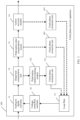
- FIG. 2 is a schematic structural diagram of a clock phase recovery apparatus according to Embodiment 1 of this application.
- a clock phase recovery apparatus 200 provided in this embodiment may include: an analog-to-digital converter (ADC) 21, a dispersion compensation unit 22 (which may be denoted as CD EQ), a digital interpolator 23 (which may be denoted as Int.), a multiple-input multiple-output (Multiple-Input Multiple-Output, MIMO) equalization unit 24 (which may be denoted as MIMO EQ), and a clock offset phase obtaining unit 25.
- ADC analog-to-digital converter
- CD EQ dispersion compensation unit 22
- CD EQ digital interpolator 23
- MIMO Multiple-Input Multiple-Output
- MIMO Multiple-Input Multiple-Output equalization unit 24
- An output end of the analog-to-digital converter 21 is connected to an input end of the dispersion compensation unit 22, and an output end of the dispersion compensation unit 22 is connected to a first input end of the digital interpolator 23.
- An output end of the digital interpolator 23 is connected to an input end of the MIMO equalization unit 24, and an output end of the MIMO equalization unit 24 is connected to an input end of the clock offset phase obtaining unit 25.
- An output end of the clock offset phase obtaining unit 25 is connected to a second input end of the digital interpolator 23.
- the analog-to-digital converter 21 is configured to perform analog-to-digital conversion on an input analog signal, and output a second sampling signal.
- the dispersion compensation unit 22 is configured to perform dispersion compensation on the second sampling signal output by the analog-to-digital converter 21, and output a dispersion-compensated signal to the digital interpolator 23.
- the digital interpolator 23 is configured to adjust, based on first offset phase information output by the clock offset phase obtaining unit 25, the dispersion-compensated signal output by the dispersion compensation unit 22, so that a signal output by the digital interpolator 23 is a signal at an optimal sampling moment.
- the first offset phase information is determined by the clock offset phase obtaining unit 25 based on a tap coefficient of the MIMO equalization unit 24 and a first output signal output by the MIMO equalization unit 24.
- the first output signal is an output signal corresponding to a first sampling signal, and the first sampling signal is a previous adjacent sampling signal of the second sampling signal.
- the MIMO equalization unit 24 is configured to perform polarization mode dispersion compensation and equalization on the signal output by the digital interpolator 23, and output a second output signal.
- a principle of clock phase recovery is as follows.
- the analog-to-digital converter 21 samples the input analog signal, and outputs a sampling signal.
- two adjacent sampling signals may be respectively referred to as a first sampling signal and a second sampling signal.
- the first sampling signal is a previous adjacent sampling signal of the second sampling signal.
- the MIMO equalization unit 24 After the first sampling signal is processed by the dispersion compensation unit 22, the digital interpolator 23, and the MIMO equalization unit 24, the MIMO equalization unit 24 outputs the first output signal corresponding to the first sampling signal.
- the clock offset phase obtaining unit 25 determines the first offset phase information based on the first output signal and the tap coefficient of the MIMO equalization unit 24, and feeds back the first offset phase information to the second input end of the digital interpolator 23.
- the first offset phase information is used by the digital interpolator 23 to adjust a dispersion-compensated signal corresponding to the second sampling signal.
- the dispersion compensation unit 22 performs the dispersion compensation on the second sampling signal, and outputs the dispersion-compensated signal to the digital interpolator 23.
- the digital interpolator 23 has two input ends, which may be respectively referred to as the first input end and the second input end.
- the dispersion-compensated signal is input at the first input end of the digital interpolator 23, and the first offset phase information fed back by the clock offset phase obtaining unit 25 is input at the second input end of the digital interpolator 23.
- the digital interpolator 23 adjusts, based on the first offset phase information, the dispersion-compensated signal corresponding to the second sampling signal, so that the signal output by the digital interpolator 23 is the signal at the optimal sampling moment.
- a basic principle of the digital interpolator is as follows: When sampling frequency or a phase of the sampling signal is not ideal, for example, when the sampling frequency becomes higher or lower than reference frequency, or when a sampling location is not at an optimal point of an element waveform, the sampling signal may be adjusted by using an interpolation method to obtain an optimal sampling signal.
- the digital interpolator 23 adjusts, based on offset phase information fed back by the clock offset phase obtaining unit 25, a signal output by the dispersion compensation unit 22.
- the signal output by the digital interpolator 23 is input at the input end of the MIMO equalization unit 24.
- the MIMO equalization unit 24 performs the polarization mode dispersion compensation and equalization on the signal output by the digital interpolator 23, and outputs the second output signal corresponding to the second sampling signal.
- the second output signal is input at the input end of the clock offset phase obtaining unit 25.
- the clock offset phase obtaining unit 25 determines second offset phase information based on the second output signal and the tap coefficient of the MIMO equalization unit 24, and feeds back the second offset phase information to the second input end of the digital interpolator 23.
- the second offset phase information is used by the digital interpolator 23 to adjust a dispersion-compensated signal corresponding to a third sampling signal.
- the third sampling signal is output by the analog-to-digital converter 21 and is a next adjacent sampling signal of the second sampling signal.
- the digital interpolator is disposed between the dispersion compensation unit and the MIMO equalization unit.
- the digital interpolator, the MIMO equalization unit, and the clock offset phase obtaining unit form a feedback loop to complete a clock phase adjustment.
- the dispersion compensation unit is not included. Therefore, a delay caused by FFT and IFFT calculation is avoided, and a loop delay is reduced. This reduces a clock phase delay and improves system performance.
- the clock phase delay is further reduced.
- polarization mode dispersion compensation and equalization are performed on a signal by using the MIMO equalization unit. This reduces damage impact on the signal caused by polarization state rotation and improves a compensation effect.
- the clock offset phase obtaining unit determines offset phase information based on an output signal from the MIMO equalization unit and the tap coefficient of the MIMO equalization unit. This improves sensitivity and accuracy of clock phase extraction.
- there is a small quantity of modules in the feedback loop This reduces the clock phase delay and improves the system performance.
- the analog-to-digital converter 21 is configured to perform the analog-to-digital conversion on the analog signal
- the dispersion compensation unit 22 is configured to perform the dispersion compensation
- the MIMO equalization unit 24 is configured to perform the polarization mode dispersion compensation and equalization.
- the digital interpolator 23 may be implemented by using any existing circuit, chip, unit, module, or device that implements a corresponding function. This is not limited in this embodiment.
- the clock phase recovery apparatus 200 provided in this embodiment may further include a carrier recovery unit 26 (which may be denoted as CR).
- a carrier recovery unit 26 (which may be denoted as CR).
- An input end of the carrier recovery unit 26 is connected to the output end of the MIMO equalization unit 24.
- the carrier recovery unit 26 is configured to perform carrier recovery on the output signal output by the MIMO equalization unit 24, and output a carrier-recovered signal.
- the MIMO equalization unit 24 outputs the first output signal corresponding to the first sampling signal.
- the carrier recovery unit 26 is configured to perform carrier recovery on the first output signal output by the MIMO equalization unit 24, and output a carrier-recovered signal.
- the MIMO equalization unit 24 outputs the second output signal corresponding to the second sampling signal.
- the carrier recovery unit 26 is configured to perform carrier recovery on the second output signal output by the MIMO equalization unit 24, and output a carrier-recovered signal.
- the carrier recovery unit 26 is configured to perform the carrier recovery, and may be implemented by using any existing circuit, chip, unit, module, or device that implements a corresponding function. This is not limited in this embodiment.
- This embodiment provides the clock phase recovery apparatus, and the clock phase recovery apparatus includes the analog-to-digital converter, the dispersion compensation unit, the digital interpolator, the MIMO equalization unit, and the clock offset phase obtaining unit.
- the digital interpolator, the MIMO equalization unit, and the clock offset phase obtaining unit form the feedback loop to complete the clock phase adjustment. There is a small quantity of modules in the feedback loop. Therefore, this reduces the clock phase delay and improves the system performance.
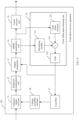
- FIG. 3 is a schematic structural diagram of a clock phase recovery apparatus according to Embodiment 2 of this application. Based on the embodiment shown in FIG. 2 , this embodiment provides another implementation of the clock phase recovery apparatus. As shown in FIG. 3 , the clock phase recovery apparatus 200 provided in this embodiment may include the analog-to-digital converter 21, the dispersion compensation unit 22, the digital interpolator 23, the MIMO equalization unit 24, and the clock offset phase obtaining unit 25.
- the clock phase recovery apparatus 200 may further include a voltage-controlled oscillator (VCO) 28 and a loop filter 27 (which may be denoted as a loop filter).
- VCO voltage-controlled oscillator
- loop filter 27 which may be denoted as a loop filter
- the output end of the clock offset phase obtaining unit 25 is further connected to an input end of the loop filter 27, an output end of the loop filter 27 is connected to an input end of the voltage-controlled oscillator 28, and an output end of the voltage-controlled oscillator 28 is connected to the analog-to-digital converter 21.
- the loop filter 27 is configured to perform loop low-pass filtering on the first offset phase information output by the clock offset phase obtaining unit 25 to convert the first offset phase information into a voltage control signal.
- the voltage-controlled oscillator 28 is configured to determine a clock adjustment signal based on the voltage control signal output by the loop filter 27.
- the digital interpolator 23, the MIMO equalization unit 24, and the clock offset phase obtaining unit 25 form a inner feedback loop (or referred to as a digital interpolator path), to complete adjustment of a clock phase.
- the clock offset phase obtaining unit 25, the voltage-controlled oscillator 28, and the loop filter 27 form a outer feedback loop (or referred to as a voltage-controlled oscillator adjustment path), and sampling frequency of the analog-to-digital converter 21 may be adjusted by adjusting the voltage-controlled oscillator 28.
- a signal that is input into the inner feedback loop is a signal with adjusted sampling frequency. Therefore, accuracy and an effect of clock phase recovery are further improved.
- the voltage-controlled oscillator adjustment path is a path with a relatively low adjustment speed. A delay of an entire loop still depends on the digital interpolator 23. Therefore, compared with the prior art, the clock phase recovery apparatus provided in this embodiment can reduce a clock phase delay is reduced, and improve system performance.
- loop filter 27 and the voltage-controlled oscillator 28 in this embodiment may be implemented by using any existing circuit, chip, unit, module, or device that implements a corresponding function. This is not limited in this embodiment.
- analog-to-digital converter 21 is specifically configured to:
- This embodiment provides the clock phase recovery apparatus, and the clock phase recovery apparatus includes the analog-to-digital converter, the dispersion compensation unit, the digital interpolator, the MIMO equalization unit, the clock offset phase obtaining unit, the voltage-controlled oscillator, and the loop filter.
- the digital interpolator, the MIMO equalization unit, and the clock offset phase obtaining unit form the feedback loop to complete the clock phase adjustment. There is a small quantity of modules in the feedback loop. Therefore, this reduces the clock phase delay and improves the system performance.
- the sampling frequency of the analog-to-digital converter is adjusted by using the voltage-controlled oscillator and the loop filter. This further improves accuracy of clock phase recovery.
- FIG. 4 is a schematic structural diagram of a clock phase recovery apparatus according to Embodiment 3 of this application. Based on the embodiments shown in FIG. 2 and FIG. 3 , this embodiment provides a specific implementation of the clock phase recovery apparatus, and in particular, provides a specific implementation of a clock offset phase obtaining unit. As shown in FIG. 4 , the clock phase recovery apparatus 200 provided in this embodiment may include the analog-to-digital converter 21, the dispersion compensation unit 22, the digital interpolator 23, the MIMO equalization unit 24, and the clock offset phase obtaining unit 25.
- the clock offset phase obtaining unit 25 may include a decoupling module 251 (which may be denoted as Uncoupling), a clock phase detector 252 (which may be denoted as Phase Det.), an adder 253, and a filter 254 (which may be denoted as a Loop Filter).
- a decoupling module 251 which may be denoted as Uncoupling
- a clock phase detector 252 which may be denoted as Phase Det.
- an adder 253 which may be denoted as a Loop Filter
- a first output end of the MIMO equalization unit 24 is connected to an input end of the decoupling module 251, and a second output end of the MIMO equalization unit 24 is connected to an input end of the clock phase detector 252.
- the output end of the MIMO equalization unit 24 and an output end of the clock phase detector 252 are separately connected to an input end of the adder 253.
- An output end of the adder 253 is connected to an input end of the filter 254, and an output end of the filter 254 is connected to the second input end of the digital interpolator 23.
- the decoupling module 251 is configured to determine a compensated clock phase based on the tap coefficient of the MIMO equalization unit 24, and output the compensated clock phase to the adder 253.
- the clock phase detector 252 is configured to obtain a clock phase of the first output signal output by the MIMO equalization unit 24, and output the clock phase of the first output signal to the adder 253.
- the adder 253 is configured to obtain a clock offset phase based on the compensated clock phase output by the decoupling module 251 and the clock phase that is of the first output signal and that is output by the clock phase detector 252, and output the clock offset phase to the filter 254.
- the filter 254 is configured to perform high frequency filtering on the clock offset phase output by the adder 253 to obtain the first offset phase information, and output the first offset phase information to the digital interpolator 23.
- a principle of clock phase recovery is as follows.
- the analog-to-digital converter 21 samples the input analog signal. According to an output sequence of a sampling signal, two adjacent sampling signals may be respectively referred to as a first sampling signal and a second sampling signal.
- the MIMO equalization unit 24 After the first sampling signal is processed by the dispersion compensation unit 22, the digital interpolator 23, and the MIMO equalization unit 24, the MIMO equalization unit 24 outputs the first output signal corresponding to the first sampling signal.
- the decoupling module 251 determines the compensated clock phase based on the tap coefficient of the MIMO equalization unit 24.
- the clock phase detector 252 obtains the clock phase of the first output signal.
- the adder 253 obtains an accurate first clock offset phase based on the input compensated clock phase and the clock phase of the first output signal.
- the filter 254 performs high frequency filtering on the accurate clock offset phase to further improve accuracy of filtered first offset phase information.
- the filter 254 feeds back the first offset phase information to the second input end of the digital interpolator 23.
- the first offset phase information is used by the digital interpolator 23 to adjust the dispersion-compensated signal corresponding to the second sampling signal.
- the dispersion compensation unit 22 After the second sampling signal is processed by the dispersion compensation unit 22, the dispersion compensation unit 22 outputs the dispersion-compensated signal to the digital interpolator 23.
- the digital interpolator 23 adjusts, based on the first offset phase information, the dispersion-compensated signal corresponding to the second sampling signal, so that the signal output by the digital interpolator 23 is the signal at the optimal sampling moment.
- the MIMO equalization unit 24 performs polarization mode dispersion compensation and equalization on the signal output by the digital interpolator 23, and outputs the second output signal corresponding to the second sampling signal.
- the decoupling module 251, the clock phase detector 252, the adder 253, and the filter 254 perform the foregoing processing on the second output signal to obtain the second offset phase information, and the second offset phase information is fed back to the second input end of the digital interpolator 23.
- the second offset phase information is used by the digital interpolator 23 to adjust the dispersion-compensated signal corresponding to the third sampling signal.
- the third sampling signal is output by the analog-to-digital converter 21 and is the next adjacent sampling signal of the second sampling signal.
- the MIMO equalization unit 24 performs specific compensation on clock offset of a signal. For example, an original phase change speed of the signal is A, and a phase change speed a is compensated by the MIMO equalization unit 24 for the phase change speed A. In this way, an output phase change speed of the signal is A - a.
- the decoupling module 251 determines a compensated clock phase a of the MIMO equalization unit 24 based on the tap coefficient of the MIMO equalization unit 24.
- the clock phase detector 252 obtains the clock phase A - a of the first output signal output by the MIMO equalization unit 24.
- the digital interpolator, the MIMO equalization unit, the decoupling module, the clock phase detector, the adder, and the filter form a feedback loop (or referred to as a digital interpolator path), to complete a clock phase adjustment.
- a feedback loop or referred to as a digital interpolator path
- an adjustment speed of the digital interpolator is relatively fast, and there is only one filter in the digital interpolator path. Therefore, this further reduces the clock phase delay.
- the decoupling module 251 is configured to determine a quantity of clock phases compensated by the MIMO equalization unit 24, and the clock phase detector 252 is configured to extract a clock phase of a signal.
- the adder 253 and the filter 254 may be implemented by using any existing circuit, chip, unit, module, or device that implements a corresponding function. This is not limited in this embodiment.
- the clock phase detector 252 may be a phase detector.
- Wxx, Wyy, Wyx, and Wxy are tap coefficients of the MIMO equalization unit 24, and angle () represents a phase function.
- the MIMO equalization unit 24 may have two input ends and two output ends. A signal in a polarization state may be separately input at the two input ends. Correspondingly, a signal in a polarization state may be separately output at the two output ends.
- the MIMO equalization unit 24 has the four tap coefficients: Wxx, Wyy, Wyx, and Wxy; and x and y may represent different polarization states, or are used to distinguish different inputs and outputs.
- this embodiment provides an implementation in which a clock phase compensated by the MIMO equalization unit 24 is determined based on the tap coefficient of the MIMO equalization unit 24 when the MIMO equalization unit 24 has the two input ends and the two output ends.
- a quantity of tap coefficients of the MIMO equalization unit 24 may be another implementation. This is not limited in this embodiment.
- the clock phase recovery apparatus 200 provided in this embodiment may further include the carrier recovery unit 26.
- the input end of the carrier recovery unit 26 is connected to the output end of the MIMO equalization unit 24.
- the carrier recovery unit 26 is configured to perform carrier recovery on an output signal output by the MIMO equalization unit 24, and output a carrier-recovered signal.
- the clock phase recovery apparatus 200 provided in this embodiment may further include the voltage-controlled oscillator 28 and the loop filter 27.
- the output end of the clock offset phase obtaining unit 25 is further connected to the input end of the loop filter 27, the output end of the loop filter 27 is connected to the input end of the voltage-controlled oscillator 28, and the output end of the voltage-controlled oscillator 28 is connected to the analog-to-digital converter 21.
- the loop filter 27 is configured to perform the loop low-pass filtering on the first offset phase information output by the clock offset phase obtaining unit 25 to convert the first offset phase information into the voltage control signal.
- the voltage-controlled oscillator 28 is configured to determine the clock adjustment signal based on the voltage control signal output by the loop filter 27.
- analog-to-digital converter 21 is specifically configured to:
- This embodiment provides the clock phase recovery apparatus, and the clock phase recovery apparatus includes the analog-to-digital converter, the dispersion compensation unit, the digital interpolator, the MIMO equalization unit, and the clock offset phase obtaining unit.
- the clock offset phase obtaining unit includes the decoupling module, the clock phase detector, the adder, and the filter.
- the digital interpolator, the MIMO equalizing unit, the decoupling module, the clock phase detector, the adder and the filter form the feedback loop to implement the clock phase adjustment. There is a small quantity of modules in the feedback loop. Therefore, this reduces the clock phase delay and improves the system performance.
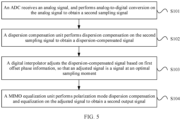
- FIG. 5 is a schematic flowchart of a clock phase recovery method according to Embodiment 1 of this application. As shown in FIG. 5 , the clock phase recovery method provided in this embodiment may be applied to a clock phase recovery apparatus.
- the clock phase recovery apparatus includes an ADC, a dispersion compensation unit, a digital interpolator, a MIMO equalization unit, and a clock offset phase obtaining unit.
- An output end of the ADC is connected to an input end of the dispersion compensation unit, and an output end of the dispersion compensation unit is connected to a first input end of the digital interpolator.
- An output end of the digital interpolator is connected to an input end of the MIMO equalization unit, and an output end of the MIMO equalization unit is connected to an input end of the clock offset phase obtaining unit.
- An output end of the clock offset phase obtaining unit is connected to a second input end of the digital interpolator.
- the clock phase recovery method provided in this embodiment may include the following steps.
- the ADC receives an analog signal, and performs analog-to-digital conversion on the analog signal to obtain a second sampling signal.
- the dispersion compensation unit performs dispersion compensation on the second sampling signal to obtain a dispersion-compensated signal.
- the digital interpolator adjusts the dispersion-compensated signal based on first offset phase information, so that an adjusted signal is a signal at an optimal sampling moment.
- the first offset phase information is determined by the clock offset phase obtaining unit based on a tap coefficient of the MIMO equalization unit and a first output signal.
- the first output signal is an output signal corresponding to a first sampling signal, and the first sampling signal is a previous adjacent sampling signal of the second sampling signal.
- the MIMO equalization unit performs polarization mode dispersion compensation and equalization on the adjusted signal to obtain a second output signal.
- the clock offset phase obtaining unit includes a decoupling module, a clock phase detector, an adder, and a filter.
- a first output end of the MIMO equalization unit is connected to an input end of the decoupling module, and a second output end of the MIMO equalization unit is connected to an input end of the clock phase detector.
- the output end of the MIMO equalization unit and an output end of the clock phase detector are separately connected to an input end of the adder.
- An output end of the adder is connected to an input end of the filter, and an output end of the filter is connected to the second input end of the digital interpolator.
- That the clock offset phase obtaining unit determines the first offset phase information based on the tap coefficient of the MIMO equalization unit and the first output signal may include:
- the clock phase recovery apparatus may further include a carrier recovery unit, and an input end of the carrier recovery unit is connected to the output end of the MIMO equalization unit.
- the clock phase recovery method provided in this embodiment may further include: performing, by the carrier recovery unit, carrier recovery on the second output signal to obtain a carrier-recovered signal.
- the clock phase recovery apparatus may further include a VCO and a loop filter.
- the output end of the clock offset phase obtaining unit is further connected to an input end of the loop filter, an output end of the loop filter is connected to an input end of the VCO, and an output end of the VCO is connected to the ADC.
- the ADC performs the analog-to-digital conversion on the analog signal to obtain the second sampling signal may include:
- the clock phase recovery method provided in this embodiment of this application may be applied to the clock phase recovery apparatus provided in the embodiments shown in FIG. 2 to FIG. 4 .
- Technical principles and technical effects thereof are similar, and details are not described herein again.
- An embodiment of this application further provides a chip, including the clock phase recovery apparatus provided in the apparatus embodiments of this application.
- the chip provided in this embodiment of this application includes the clock phase recovery apparatus provided in the embodiments shown in FIG. 2 to FIG. 4 .
- Technical principles and technical effects thereof are similar, and details are not described herein again.
Landscapes
- Engineering & Computer Science (AREA)
- Computer Networks & Wireless Communication (AREA)
- Signal Processing (AREA)
- Physics & Mathematics (AREA)
- Electromagnetism (AREA)
- Stabilization Of Oscillater, Synchronisation, Frequency Synthesizers (AREA)
- Synchronisation In Digital Transmission Systems (AREA)
Claims (12)
- Appareil de récupération de phase d'horloge (200), comprenant un convertisseur analogique-numérique, CAN, (21), une unité de compensation de dispersion (22), un interpolateur numérique (23), une unité d'égalisation à entrées multiples, sorties multiples, MIMO, (24) et une unité d'obtention de phase de décalage d'horloge (25), dans lequelune extrémité de sortie du CAN (21) est connectée à une extrémité d'entrée de l'unité de compensation de dispersion (22), une extrémité de sortie de l'unité de compensation de dispersion (22) est connectée à une première extrémité d'entrée de l'interpolateur numérique (23), une extrémité de sortie de l'interpolateur numérique (23) est connectée à une extrémité d'entrée de l'unité d'égalisation MIMO (24), une extrémité de sortie de l'unité d'égalisation MIMO (24) est connectée à une extrémité d'entrée de l'unité d'obtention de phase de décalage d'horloge (25), et une extrémité de sortie de l'unité d'obtention de phase de décalage d'horloge (25) est connectée à une seconde extrémité d'entrée de l'interpolateur numérique (23) ;le CAN (21) est configuré pour réaliser une conversion analogique-numérique sur un signal analogique d'entrée, et délivrer un second signal d'échantillonnage ;l'unité de compensation de dispersion (22) est configurée pour réaliser une compensation de dispersion sur le second signal d'échantillonnage délivré par le CAN (21), et délivrer un signal compensé de dispersion à l'interpolateur numérique (23) ;l'interpolateur numérique (23) est configuré pour ajuster, sur la base de premières informations de phase de décalage délivrées par l'unité d'obtention de phase de décalage d'horloge (25), le signal compensé en dispersion délivré par l'unité de compensation de dispersion (22), de sorte qu'un signal délivré par l'interpolateur numérique (23) soit un signal à un moment d'échantillonnage optimal, dans lequel les premières informations de phase de décalage sont déterminées par l'unité d'obtention de phase de décalage d'horloge (25) sur la base d'un coefficient de prise de l'unité d'égalisation MIMO (24) et d'un premier signal de sortie délivré par l'unité d'égalisation MIMO (24), le premier signal de sortie est un signal de sortie correspondant à un premier signal d'échantillonnage et le premier signal d'échantillonnage est un signal d'échantillonnage adjacent précédent du second signal d'échantillonnage ; etl'unité d'égalisation MIMO (24) est configurée pour réaliser une compensation et une égalisation de dispersion de mode de polarisation sur le signal délivré par l'interpolateur numérique (23), et délivrer un second signal de sortie, dans lequel l'unité d'obtention de phase de décalage d'horloge (25) comprend un module de découplage (251), un détecteur de phase d'horloge (252), un additionneur (253), et un filtre (254), dans lequelune première extrémité de sortie de l'unité d'égalisation MIMO (24) est connectée à une extrémité d'entrée du module de découplage (251), une seconde extrémité de sortie de l'unité d'égalisation MIMO (24) est connectée à une extrémité d'entrée du détecteur de phase d'horloge (252), l'extrémité de sortie de l'unité d'égalisation MIMO (24) et une extrémité de sortie du détecteur de phase d'horloge (252) sont connectées séparément à une extrémité d'entrée de l'additionneur (253), une extrémité de sortie de l'additionneur (253) est connectée à une extrémité d'entrée du filtre (254) et une extrémité de sortie du filtre (254) est connectée à la seconde extrémité d'entrée de l'interpolateur numérique (23) ;le module de découplage (251) est configuré pour déterminer une phase d'horloge compensée sur la base du coefficient de prise de l'unité d'égalisation MIMO (24), et délivrer la phase d'horloge compensée à l'additionneur (253) ;le détecteur de phase d'horloge (252) est configuré pour obtenir une phase d'horloge du premier signal de sortie délivré par l'unité d'égalisation MIMO (24), et délivrer la phase d'horloge du premier signal de sortie à l'additionneur (253) ;l'additionneur (253) est configuré pour obtenir une phase de décalage d'horloge sur la base de la phase d'horloge compensée délivrée par le module de découplage (251) et de la phase d'horloge qui est du premier signal de sortie et qui est délivré par le détecteur de phase d'horloge (252), et délivrer la phase de décalage d'horloge au filtre (254) ; etle filtre (254) est configuré pour réaliser un filtrage haute fréquence sur la phase de décalage d'horloge délivrée par l'additionneur (253) pour obtenir les premières informations de phase de décalage, et délivrer les premières informations de phase de décalage à l'interpolateur numérique (23).
- Appareil selon la revendication 1, dans lequel le module de découplage (251) est également configuré pour :
déterminer la phase d'horloge compensée a selon a = angle (Wxx * Wyy - Wyx * Wxy), où Wxx, Wyy, Wyx et Wxy sont des coefficients de prise de l'unité d'égalisation MIMO (24), et l'angle () représente une fonction de phase. - Appareil selon la revendication 1, dans lequel le détecteur de phase d'horloge (252) est un détecteur de phase.
- Appareil selon l'une quelconque des revendications 1 à 3, comprenant également une unité de récupération de porteuse (26), dans lequel une extrémité d'entrée de l'unité de récupération de porteuse (26) est connectée à l'extrémité de sortie de l'unité d'égalisation MIMO (24) ; et
l'unité de récupération de porteuse (26) est configurée pour réaliser une récupération de porteuse sur le second signal de sortie délivré par l'unité d'égalisation MIMO (24), et délivrer un signal récupéré de porteuse. - Appareil selon l'une quelconque des revendications 1 à 3, comprenant également un oscillateur commandé en tension, VCO, (28) et un filtre de boucle (27), dans lequell'extrémité de sortie de l'unité d'obtention de phase de décalage d'horloge (25) est également connectée à une extrémité d'entrée du filtre de boucle (27), une extrémité de sortie du filtre de boucle (27) est connectée à une extrémité d'entrée du VCO (28), et une extrémité de sortie du VCO (28) est connectée au CAN (21) ;le filtre de boucle (27) est configuré pour réaliser un filtrage passe-bas de boucle sur les premières informations de phase de décalage délivrées par l'unité d'obtention de phase de décalage d'horloge (25) pour convertir les premières informations de phase de décalage en un signal de tension de commande ; etle VCO (28) est configuré pour déterminer un signal d'ajustement d'horloge sur la base du signal de commande de tension délivré par le filtre de boucle (27).
- Appareil selon la revendication 5, dans lequel le CAN (21) est configuré spécifiquement pour :ajuster la fréquence d'échantillonnage sur la base du signal d'ajustement d'horloge délivré par le VCO (28) ; etréaliser la conversion analogique-numérique sur le signal analogique sur la base de la fréquence d'échantillonnage ajustée pour obtenir le second signal d'échantillonnage.
- Procédé de récupération de phase d'horloge, appliqué à un appareil de récupération de phase d'horloge (200), dans lequel l'appareil de récupération de phase d'horloge comprend : un convertisseur analogique-numérique, CAN, (21), une unité de compensation de dispersion (22), un interpolateur numérique (23), une unité d'égalisation à entrées multiples, sorties multiples, MIMO, (24) et une unité d'obtention de phase de décalage d'horloge (25), dans lequelune extrémité de sortie du CAN (21) est connectée à une extrémité d'entrée de l'unité de compensation de dispersion (22), une extrémité de sortie de l'unité de compensation de dispersion (22) est connectée à une première extrémité d'entrée de l'interpolateur numérique (23), une extrémité de sortie de l'interpolateur numérique (23) est connectée à une extrémité d'entrée de l'unité d'égalisation MIMO (24), une extrémité de sortie de l'unité d'égalisation MIMO (24) est connectée à une extrémité d'entrée de l'unité d'obtention de phase de décalage d'horloge (25), et une extrémité de sortie de l'unité d'obtention de phase de décalage d'horloge (25) est connectée à une seconde extrémité d'entrée de l'interpolateur numérique (23) ; etle procédé comprend :la réception, par le CAN (21), d'un signal analogique, et la réalisation d'une conversion analogique-numérique sur le signal analogique pour obtenir un second signal d'échantillonnage ;la réalisation, par l'unité de compensation de dispersion (22), d'une compensation de dispersion sur le second signal d'échantillonnage pour obtenir un signal compensé en dispersion ;l'ajustement, par l'interpolateur numérique (23), du signal compensé en dispersion sur la base de premières informations de phase de décalage, de sorte qu'un signal ajusté soit un signal à un moment d'échantillonnage optimal, dans lequel les premières informations de phase de décalage sont déterminées par l'unité d'obtention de phase de décalage d'horloge (25) sur la base d'un coefficient de prise de l'unité d'égalisation MIMO (24) et d'un premier signal de sortie, le premier signal de sortie est un signal de sortie correspondant à un premier signal d'échantillonnage, et le premier signal d'échantillonnage est un signal d'échantillonnage adjacent précédent du second signal d'échantillonnage ; etla réalisation, par l'unité d'égalisation MIMO (24), d'une compensation et d'une égalisation de dispersion de mode de polarisation sur le signal ajusté pour obtenir un second signal de sortie, dans lequel l'unité d'obtention de phase de décalage d'horloge (25) comprend : un module de découplage (251), un détecteur de phase d'horloge (252), un additionneur (253), et un filtre (254), dans lequelune première extrémité de sortie de l'unité d'égalisation MIMO (24) est connectée à une extrémité d'entrée du module de découplage (251), une seconde extrémité de sortie de l'unité d'égalisation MIMO (24) est connectée à une extrémité d'entrée du détecteur de phase d'horloge (252), l'extrémité de sortie de l'unité d'égalisation MIMO (24) et une extrémité de sortie du détecteur de phase d'horloge (252) sont connectées séparément à une extrémité d'entrée de l'additionneur (253), une extrémité de sortie de l'additionneur (253) est connectée à une extrémité d'entrée du filtre (254) et une extrémité de sortie du filtre (254) est connectée à la seconde extrémité d'entrée de l'interpolateur numérique (23) ; eten ce que l'unité d'obtention de phase de décalage d'horloge (25) détermine les premières informations de phase de décalage sur la base du coefficient de prise de l'unité d'égalisation MIMO (24) et que le premier signal de sortie comprend :la détermination, par le module de découplage (251), d'une phase d'horloge compensée sur la base du coefficient de prise de l'unité d'égalisation MIMO (24) ;l'obtention, par le détecteur de phase d'horloge (252), d'une phase d'horloge du premier signal de sortie ;l'obtention, par l'additionneur (253), d'une phase de décalage d'horloge sur la base de la phase d'horloge compensée et de la phase d'horloge du premier signal de sortie ; etla réalisation, par le filtre (254), d'un filtrage haute fréquence sur la phase de décalage d'horloge pour obtenir les premières informations de phase de décalage.
- Procédé selon la revendication 7, dans lequel la détermination, par le module de découplage (251), d'une phase d'horloge compensée sur la base du coefficient de prise de l'unité d'égalisation MIMO (24) comprend :
la détermination, par le module de découplage (251), de la phase d'horloge compensée a selon a = angle (Wxx * Wyy - Wyx * Wxy), où Wxx, Wyy, Wyx et Wxy sont des coefficients de prise de l'unité d'égalisation MIMO (24), et l'angle () représente une fonction de phase. - Procédé selon l'une quelconque des revendications 7 à 8, dans lequel l'appareil de récupération de phase d'horloge comprend également une unité de récupération de porteuse (26), et une extrémité d'entrée de l'unité de récupération de porteuse (26) est connectée à l'extrémité de sortie de l'unité d'égalisation MIMO (24) ; et
le procédé comprend également :
la réalisation, par l'unité de récupération de porteuse (26), d'une récupération de porteuse sur le second signal de sortie pour obtenir un signal récupéré de porteuse. - Procédé selon l'une quelconque des revendications 7 à 8, dans lequel l'appareil de récupération de phase d'horloge comprend également : un oscillateur commandé en tension, VCO (28), et un filtre de boucle (27), dans lequell'extrémité de sortie de l'unité d'obtention de phase de décalage d'horloge (25) est également connectée à une extrémité d'entrée du filtre de boucle (27), une extrémité de sortie du filtre de boucle (27) est connectée à une extrémité d'entrée du VCO (28), et une extrémité de sortie du VCO (28) est connectée au CAN (21) ; etle procédé comprend également :la réalisation, par le filtre de boucle (27), d'un filtrage passe-bas de boucle sur les premières informations de phase décalée pour convertir les premières informations de phase décalée en un signal de commande de tension ; etla détermination, par le VCO (28), d'un signal d'ajustement d'horloge sur la base du signal de commande de tension.
- Procédé selon la revendication 10, dans lequel la réalisation, par le CAN (21), d'une conversion analogique-numérique sur le signal analogique pour obtenir un second signal d'échantillonnage comprend :l'ajustement, par le CAN (21), de la fréquence d'échantillonnage sur la base du signal d'ajustement d'horloge ; etla réalisation, par le CAN (21), de la conversion analogique-numérique sur le signal analogique sur la base de la fréquence d'échantillonnage ajustée pour obtenir le second signal d'échantillonnage.
- Puce, comprenant l'appareil de récupération de phase d'horloge (200) selon l'une quelconque des revendications 1 à 6.
Applications Claiming Priority (2)
| Application Number | Priority Date | Filing Date | Title |
|---|---|---|---|
| CN201810284900.1A CN110351066B (zh) | 2018-04-02 | 2018-04-02 | 时钟相位恢复装置、方法和芯片 |
| PCT/CN2019/078028 WO2019192300A1 (fr) | 2018-04-02 | 2019-03-13 | Appareil et procédé de récupération de phase d'horloge, et puce |
Publications (3)
| Publication Number | Publication Date |
|---|---|
| EP3764586A1 EP3764586A1 (fr) | 2021-01-13 |
| EP3764586A4 EP3764586A4 (fr) | 2021-06-16 |
| EP3764586B1 true EP3764586B1 (fr) | 2025-02-26 |
Family
ID=68099879
Family Applications (1)
| Application Number | Title | Priority Date | Filing Date |
|---|---|---|---|
| EP19782315.6A Active EP3764586B1 (fr) | 2018-04-02 | 2019-03-13 | Appareil et procédé de récupération de phase d'horloge, et puce |
Country Status (4)
| Country | Link |
|---|---|
| US (1) | US11212070B2 (fr) |
| EP (1) | EP3764586B1 (fr) |
| CN (1) | CN110351066B (fr) |
| WO (1) | WO2019192300A1 (fr) |
Families Citing this family (3)
| Publication number | Priority date | Publication date | Assignee | Title |
|---|---|---|---|---|
| CN110351066B (zh) * | 2018-04-02 | 2022-03-08 | 华为技术有限公司 | 时钟相位恢复装置、方法和芯片 |
| CN112118063B (zh) * | 2019-06-21 | 2022-05-24 | 华为技术有限公司 | 一种时钟同步装置、光发射器、光接收器及方法 |
| CN115361038B (zh) * | 2022-08-03 | 2025-08-22 | 上海联虹技术有限公司 | 一种信号处理电路、方法、设备及存储介质 |
Citations (1)
| Publication number | Priority date | Publication date | Assignee | Title |
|---|---|---|---|---|
| US8737847B2 (en) * | 2012-03-19 | 2014-05-27 | Futurewei Technologies, Inc. | Method and apparatus of using joint timing recovery for a coherent optical system |
Family Cites Families (24)
| Publication number | Priority date | Publication date | Assignee | Title |
|---|---|---|---|---|
| US7532822B2 (en) * | 2005-02-28 | 2009-05-12 | Nortel Networks Limited | Clock recovery from an optical signal with polarization impairments |
| TWI322983B (en) * | 2005-07-07 | 2010-04-01 | Sunplus Technology Co Ltd | Timing recovery apparatus and method |
| WO2011022869A1 (fr) * | 2009-08-24 | 2011-03-03 | Huawei Technologies Co., Ltd. | Appareil de récupération d'horloge |
| US9673910B1 (en) * | 2009-11-02 | 2017-06-06 | Clariphy Communications, Inc. | Single-chip transceiver with electronic dispersion compensation for coherent optical channels |
| EP2375603B1 (fr) * | 2010-02-05 | 2018-05-23 | Xieon Networks S.à r.l. | Procédé de récupération d'horloge et agencement de récupération d'horloge pour les récepteurs à multiplexage par polarisation cohérente |
| CN102612811B (zh) * | 2010-02-20 | 2016-03-30 | 华为技术有限公司 | 时钟相位恢复装置 |
| WO2012109793A1 (fr) * | 2011-02-17 | 2012-08-23 | Huawei Technologies Co., Ltd. | Estimateur de biais, compensateur de biais et récepteur cohérent |
| EP2719076B1 (fr) * | 2011-06-10 | 2021-08-11 | Technion R&D Foundation | Récepteur, émetteur et procédé pour le traitement numérique de plusieurs sous-bandes |
| CN102308546B (zh) * | 2011-07-26 | 2013-12-04 | 华为技术有限公司 | 一种多载波光信号的接收方法和装置 |
| WO2013158106A1 (fr) * | 2012-04-19 | 2013-10-24 | Intel Corporation | Récupération de données d'horloge non égalisées pour récepteur e/s en série |
| CN103713194B (zh) * | 2012-10-08 | 2016-08-03 | 富士通株式会社 | 一种用于时钟恢复的相位检测方法和装置 |
| CN105612700B (zh) * | 2013-10-09 | 2017-12-29 | 华为技术有限公司 | 用于表征光接收信号的色度色散的装置 |
| CN104780037B (zh) * | 2014-01-10 | 2019-04-30 | 深圳市中兴微电子技术有限公司 | 一种时钟恢复方法、装置及系统 |
| US20170141943A1 (en) * | 2014-07-03 | 2017-05-18 | Technion Research& Developement Foundation Limited | System and method for ofdm symbol receiving and processing |
| WO2016106548A1 (fr) * | 2014-12-30 | 2016-07-07 | 华为技术有限公司 | Appareil de récupération d'horloge |
| EP3121976A1 (fr) * | 2015-07-23 | 2017-01-25 | Xieon Networks S.à r.l. | Traitement de signal dans un récepteur optique |
| US9628219B2 (en) * | 2015-07-31 | 2017-04-18 | Huawei Technologies Co., Ltd. | Apparatus and method for transmitting and receiving polarized signals |
| US9602151B1 (en) * | 2015-08-31 | 2017-03-21 | Huawei Technologies Co., Ltd. | Apparatus and method for transmitting and receiving wireless signals subject to a spectral mask |
| US9882710B2 (en) * | 2016-06-23 | 2018-01-30 | Macom Connectivity Solutions, Llc | Resolving interaction between channel estimation and timing recovery |
| WO2018053820A1 (fr) * | 2016-09-24 | 2018-03-29 | Huawei Technologies Co., Ltd. | Système et procédé de reconstitution du rythme dans un système de communication optique cohérent |
| SG10201608437WA (en) * | 2016-10-07 | 2018-05-30 | Huawei Int Pte Ltd | Active load modulation technique in near field communication |
| CN109845146B (zh) * | 2016-10-26 | 2020-07-07 | 华为技术有限公司 | 接收异步时钟的多发射机数据的方法和接收机 |
| US10505768B2 (en) * | 2017-12-12 | 2019-12-10 | Huawei Technologies Co., Ltd. | Partially disjoint equalization and carrier recovery |
| CN110351066B (zh) * | 2018-04-02 | 2022-03-08 | 华为技术有限公司 | 时钟相位恢复装置、方法和芯片 |
-
2018
- 2018-04-02 CN CN201810284900.1A patent/CN110351066B/zh active Active
-
2019
- 2019-03-13 WO PCT/CN2019/078028 patent/WO2019192300A1/fr not_active Ceased
- 2019-03-13 EP EP19782315.6A patent/EP3764586B1/fr active Active
-
2020
- 2020-10-02 US US17/062,210 patent/US11212070B2/en active Active
Patent Citations (1)
| Publication number | Priority date | Publication date | Assignee | Title |
|---|---|---|---|---|
| US8737847B2 (en) * | 2012-03-19 | 2014-05-27 | Futurewei Technologies, Inc. | Method and apparatus of using joint timing recovery for a coherent optical system |
Also Published As
| Publication number | Publication date |
|---|---|
| EP3764586A4 (fr) | 2021-06-16 |
| WO2019192300A1 (fr) | 2019-10-10 |
| CN110351066A (zh) | 2019-10-18 |
| EP3764586A1 (fr) | 2021-01-13 |
| US20210028920A1 (en) | 2021-01-28 |
| US11212070B2 (en) | 2021-12-28 |
| CN110351066B (zh) | 2022-03-08 |
Similar Documents
| Publication | Publication Date | Title |
|---|---|---|
| US10122470B2 (en) | Clock recovery for optical transmission systems | |
| EP2436128B1 (fr) | Appareil de recuperation de phase d'horloge | |
| EP2828990B1 (fr) | Procédé et appareil permettant d'utiliser une récupération du rythme conjointe pour un système optique cohérent | |
| US9048957B2 (en) | Signal processing circuit, optical receiver, detector and method for compensating for waveform distortion | |
| CN103973614B (zh) | 自适应均衡器抽头系数校正方法和光接收器 | |
| US8401403B2 (en) | Timing recovery in presence of optical impairments and optimization of equalization based on timing recovery moment strengths | |
| US7830987B2 (en) | Electronic dispersion compensation utilizing interleaved architecture and channel identification for assisting timing recovery | |
| US11212070B2 (en) | Clock phase recovery apparatus and method, and chip | |
| EP2436139B1 (fr) | Appareil de récupération d'horloge | |
| US9948448B2 (en) | Clock recovery method and device | |
| US8452186B2 (en) | Clock recovery with channel coefficients | |
| EP2798766B1 (fr) | Estimation de la synchronisation de symboles pour récepteurs optiques multiplex à polarisation cohérente | |
| KR102132437B1 (ko) | 수신장치 및 그 동작 방법 | |
| CN118509069A (zh) | 一种集成偏斜补偿的波特率采样时钟恢复方法及系统 | |
| CN105791187B (zh) | 时钟恢复均衡装置与方法 | |
| EP2502393B1 (fr) | Compensateur de déphasage | |
| EP3285448B1 (fr) | Procédé et appareil de synchronisation de symbole | |
| CN121619028A (zh) | 一种联合采样时钟恢复和自适应均衡方法及装置 | |
| Fan et al. | Parallel processing clock synchronization-dispersion equalization combining loop in 112Gb/s optical coherent receivers |
Legal Events
| Date | Code | Title | Description |
|---|---|---|---|
| STAA | Information on the status of an ep patent application or granted ep patent |
Free format text: STATUS: THE INTERNATIONAL PUBLICATION HAS BEEN MADE |
|
| PUAI | Public reference made under article 153(3) epc to a published international application that has entered the european phase |
Free format text: ORIGINAL CODE: 0009012 |
|
| STAA | Information on the status of an ep patent application or granted ep patent |
Free format text: STATUS: REQUEST FOR EXAMINATION WAS MADE |
|
| 17P | Request for examination filed |
Effective date: 20201005 |
|
| AK | Designated contracting states |
Kind code of ref document: A1 Designated state(s): AL AT BE BG CH CY CZ DE DK EE ES FI FR GB GR HR HU IE IS IT LI LT LU LV MC MK MT NL NO PL PT RO RS SE SI SK SM TR |
|
| AX | Request for extension of the european patent |
Extension state: BA ME |
|
| REG | Reference to a national code |
Ref legal event code: R079 Ipc: H04L0007020000 Ref country code: DE Ref legal event code: R079 Ref document number: 602019066535 Country of ref document: DE Free format text: PREVIOUS MAIN CLASS: H04L0007000000 Ipc: H04L0007020000 |
|
| A4 | Supplementary search report drawn up and despatched |
Effective date: 20210518 |
|
| RIC1 | Information provided on ipc code assigned before grant |
Ipc: H04L 7/02 20060101AFI20210511BHEP Ipc: H04L 7/00 20060101ALI20210511BHEP Ipc: H04B 10/60 20130101ALN20210511BHEP Ipc: H04B 10/61 20130101ALN20210511BHEP |
|
| DAV | Request for validation of the european patent (deleted) | ||
| DAX | Request for extension of the european patent (deleted) | ||
| STAA | Information on the status of an ep patent application or granted ep patent |
Free format text: STATUS: EXAMINATION IS IN PROGRESS |
|
| 17Q | First examination report despatched |
Effective date: 20240312 |
|
| GRAP | Despatch of communication of intention to grant a patent |
Free format text: ORIGINAL CODE: EPIDOSNIGR1 |
|
| STAA | Information on the status of an ep patent application or granted ep patent |
Free format text: STATUS: GRANT OF PATENT IS INTENDED |
|
| RIC1 | Information provided on ipc code assigned before grant |
Ipc: H04B 10/61 20130101ALN20240913BHEP Ipc: H04B 10/60 20130101ALN20240913BHEP Ipc: H04L 7/00 20060101ALI20240913BHEP Ipc: H04L 7/02 20060101AFI20240913BHEP |
|
| INTG | Intention to grant announced |
Effective date: 20241015 |
|
| GRAS | Grant fee paid |
Free format text: ORIGINAL CODE: EPIDOSNIGR3 |
|
| GRAA | (expected) grant |
Free format text: ORIGINAL CODE: 0009210 |
|
| STAA | Information on the status of an ep patent application or granted ep patent |
Free format text: STATUS: THE PATENT HAS BEEN GRANTED |
|
| AK | Designated contracting states |
Kind code of ref document: B1 Designated state(s): AL AT BE BG CH CY CZ DE DK EE ES FI FR GB GR HR HU IE IS IT LI LT LU LV MC MK MT NL NO PL PT RO RS SE SI SK SM TR |
|
| REG | Reference to a national code |
Ref country code: GB Ref legal event code: FG4D |
|
| REG | Reference to a national code |
Ref country code: CH Ref legal event code: EP |
|
| REG | Reference to a national code |
Ref country code: DE Ref legal event code: R096 Ref document number: 602019066535 Country of ref document: DE |
|
| REG | Reference to a national code |
Ref country code: IE Ref legal event code: FG4D |
|
| REG | Reference to a national code |
Ref country code: NL Ref legal event code: MP Effective date: 20250226 |
|
| PG25 | Lapsed in a contracting state [announced via postgrant information from national office to epo] |
Ref country code: RS Free format text: LAPSE BECAUSE OF FAILURE TO SUBMIT A TRANSLATION OF THE DESCRIPTION OR TO PAY THE FEE WITHIN THE PRESCRIBED TIME-LIMIT Effective date: 20250526 |
|
| PG25 | Lapsed in a contracting state [announced via postgrant information from national office to epo] |
Ref country code: FI Free format text: LAPSE BECAUSE OF FAILURE TO SUBMIT A TRANSLATION OF THE DESCRIPTION OR TO PAY THE FEE WITHIN THE PRESCRIBED TIME-LIMIT Effective date: 20250226 |
|
| PG25 | Lapsed in a contracting state [announced via postgrant information from national office to epo] |
Ref country code: PL Free format text: LAPSE BECAUSE OF FAILURE TO SUBMIT A TRANSLATION OF THE DESCRIPTION OR TO PAY THE FEE WITHIN THE PRESCRIBED TIME-LIMIT Effective date: 20250226 |
|
| PG25 | Lapsed in a contracting state [announced via postgrant information from national office to epo] |
Ref country code: ES Free format text: LAPSE BECAUSE OF FAILURE TO SUBMIT A TRANSLATION OF THE DESCRIPTION OR TO PAY THE FEE WITHIN THE PRESCRIBED TIME-LIMIT Effective date: 20250226 |
|
| REG | Reference to a national code |
Ref country code: LT Ref legal event code: MG9D |
|
| PG25 | Lapsed in a contracting state [announced via postgrant information from national office to epo] |
Ref country code: IS Free format text: LAPSE BECAUSE OF FAILURE TO SUBMIT A TRANSLATION OF THE DESCRIPTION OR TO PAY THE FEE WITHIN THE PRESCRIBED TIME-LIMIT Effective date: 20250626 Ref country code: NO Free format text: LAPSE BECAUSE OF FAILURE TO SUBMIT A TRANSLATION OF THE DESCRIPTION OR TO PAY THE FEE WITHIN THE PRESCRIBED TIME-LIMIT Effective date: 20250526 |
|
| PG25 | Lapsed in a contracting state [announced via postgrant information from national office to epo] |
Ref country code: NL Free format text: LAPSE BECAUSE OF FAILURE TO SUBMIT A TRANSLATION OF THE DESCRIPTION OR TO PAY THE FEE WITHIN THE PRESCRIBED TIME-LIMIT Effective date: 20250226 |
|
| PG25 | Lapsed in a contracting state [announced via postgrant information from national office to epo] |
Ref country code: HR Free format text: LAPSE BECAUSE OF FAILURE TO SUBMIT A TRANSLATION OF THE DESCRIPTION OR TO PAY THE FEE WITHIN THE PRESCRIBED TIME-LIMIT Effective date: 20250226 |
|
| PG25 | Lapsed in a contracting state [announced via postgrant information from national office to epo] |
Ref country code: PT Free format text: LAPSE BECAUSE OF FAILURE TO SUBMIT A TRANSLATION OF THE DESCRIPTION OR TO PAY THE FEE WITHIN THE PRESCRIBED TIME-LIMIT Effective date: 20250626 Ref country code: LV Free format text: LAPSE BECAUSE OF FAILURE TO SUBMIT A TRANSLATION OF THE DESCRIPTION OR TO PAY THE FEE WITHIN THE PRESCRIBED TIME-LIMIT Effective date: 20250226 |
|
| PG25 | Lapsed in a contracting state [announced via postgrant information from national office to epo] |
Ref country code: BG Free format text: LAPSE BECAUSE OF FAILURE TO SUBMIT A TRANSLATION OF THE DESCRIPTION OR TO PAY THE FEE WITHIN THE PRESCRIBED TIME-LIMIT Effective date: 20250226 Ref country code: GR Free format text: LAPSE BECAUSE OF FAILURE TO SUBMIT A TRANSLATION OF THE DESCRIPTION OR TO PAY THE FEE WITHIN THE PRESCRIBED TIME-LIMIT Effective date: 20250527 |
|
| REG | Reference to a national code |
Ref country code: AT Ref legal event code: MK05 Ref document number: 1771746 Country of ref document: AT Kind code of ref document: T Effective date: 20250226 |
|
| PG25 | Lapsed in a contracting state [announced via postgrant information from national office to epo] |
Ref country code: SE Free format text: LAPSE BECAUSE OF FAILURE TO SUBMIT A TRANSLATION OF THE DESCRIPTION OR TO PAY THE FEE WITHIN THE PRESCRIBED TIME-LIMIT Effective date: 20250226 |
|
| PG25 | Lapsed in a contracting state [announced via postgrant information from national office to epo] |
Ref country code: SM Free format text: LAPSE BECAUSE OF FAILURE TO SUBMIT A TRANSLATION OF THE DESCRIPTION OR TO PAY THE FEE WITHIN THE PRESCRIBED TIME-LIMIT Effective date: 20250226 |
|
| PG25 | Lapsed in a contracting state [announced via postgrant information from national office to epo] |
Ref country code: DK Free format text: LAPSE BECAUSE OF FAILURE TO SUBMIT A TRANSLATION OF THE DESCRIPTION OR TO PAY THE FEE WITHIN THE PRESCRIBED TIME-LIMIT Effective date: 20250226 |
|
| PG25 | Lapsed in a contracting state [announced via postgrant information from national office to epo] |
Ref country code: IT Free format text: LAPSE BECAUSE OF FAILURE TO SUBMIT A TRANSLATION OF THE DESCRIPTION OR TO PAY THE FEE WITHIN THE PRESCRIBED TIME-LIMIT Effective date: 20250226 |
|
| PG25 | Lapsed in a contracting state [announced via postgrant information from national office to epo] |
Ref country code: AT Free format text: LAPSE BECAUSE OF FAILURE TO SUBMIT A TRANSLATION OF THE DESCRIPTION OR TO PAY THE FEE WITHIN THE PRESCRIBED TIME-LIMIT Effective date: 20250226 |
|
| PG25 | Lapsed in a contracting state [announced via postgrant information from national office to epo] |
Ref country code: EE Free format text: LAPSE BECAUSE OF FAILURE TO SUBMIT A TRANSLATION OF THE DESCRIPTION OR TO PAY THE FEE WITHIN THE PRESCRIBED TIME-LIMIT Effective date: 20250226 Ref country code: CZ Free format text: LAPSE BECAUSE OF FAILURE TO SUBMIT A TRANSLATION OF THE DESCRIPTION OR TO PAY THE FEE WITHIN THE PRESCRIBED TIME-LIMIT Effective date: 20250226 |
|
| REG | Reference to a national code |
Ref country code: CH Ref legal event code: H13 Free format text: ST27 STATUS EVENT CODE: U-0-0-H10-H13 (AS PROVIDED BY THE NATIONAL OFFICE) Effective date: 20251023 |
|
| PG25 | Lapsed in a contracting state [announced via postgrant information from national office to epo] |
Ref country code: RO Free format text: LAPSE BECAUSE OF FAILURE TO SUBMIT A TRANSLATION OF THE DESCRIPTION OR TO PAY THE FEE WITHIN THE PRESCRIBED TIME-LIMIT Effective date: 20250226 |
|
| PG25 | Lapsed in a contracting state [announced via postgrant information from national office to epo] |
Ref country code: SK Free format text: LAPSE BECAUSE OF FAILURE TO SUBMIT A TRANSLATION OF THE DESCRIPTION OR TO PAY THE FEE WITHIN THE PRESCRIBED TIME-LIMIT Effective date: 20250226 |
|
| PG25 | Lapsed in a contracting state [announced via postgrant information from national office to epo] |
Ref country code: LU Free format text: LAPSE BECAUSE OF NON-PAYMENT OF DUE FEES Effective date: 20250313 |
|
| REG | Reference to a national code |
Ref country code: DE Ref legal event code: R097 Ref document number: 602019066535 Country of ref document: DE |
|
| REG | Reference to a national code |
Ref country code: BE Ref legal event code: MM Effective date: 20250331 |
|
| PG25 | Lapsed in a contracting state [announced via postgrant information from national office to epo] |
Ref country code: MC Free format text: LAPSE BECAUSE OF FAILURE TO SUBMIT A TRANSLATION OF THE DESCRIPTION OR TO PAY THE FEE WITHIN THE PRESCRIBED TIME-LIMIT Effective date: 20250226 |
|
| PLBE | No opposition filed within time limit |
Free format text: ORIGINAL CODE: 0009261 |
|
| STAA | Information on the status of an ep patent application or granted ep patent |
Free format text: STATUS: NO OPPOSITION FILED WITHIN TIME LIMIT |
|
| PG25 | Lapsed in a contracting state [announced via postgrant information from national office to epo] |
Ref country code: FR Free format text: LAPSE BECAUSE OF NON-PAYMENT OF DUE FEES Effective date: 20250426 |
|
| PG25 | Lapsed in a contracting state [announced via postgrant information from national office to epo] |
Ref country code: BE Free format text: LAPSE BECAUSE OF NON-PAYMENT OF DUE FEES Effective date: 20250331 |
|
| PG25 | Lapsed in a contracting state [announced via postgrant information from national office to epo] |
Ref country code: CH Free format text: LAPSE BECAUSE OF NON-PAYMENT OF DUE FEES Effective date: 20250331 |
|
| PG25 | Lapsed in a contracting state [announced via postgrant information from national office to epo] |
Ref country code: IE Free format text: LAPSE BECAUSE OF NON-PAYMENT OF DUE FEES Effective date: 20250313 |
|
| GBPC | Gb: european patent ceased through non-payment of renewal fee |
Effective date: 20250526 |
|
| 26N | No opposition filed |
Effective date: 20251127 |
|
| PG25 | Lapsed in a contracting state [announced via postgrant information from national office to epo] |
Ref country code: GB Free format text: LAPSE BECAUSE OF NON-PAYMENT OF DUE FEES Effective date: 20250526 |
|
| PGFP | Annual fee paid to national office [announced via postgrant information from national office to epo] |
Ref country code: DE Payment date: 20260204 Year of fee payment: 8 |