EP3772256B1 - System und verfahren zur herstellung von stammzellen aus fettgewebe - Google Patents
System und verfahren zur herstellung von stammzellen aus fettgewebe Download PDFInfo
- Publication number
- EP3772256B1 EP3772256B1 EP19780575.7A EP19780575A EP3772256B1 EP 3772256 B1 EP3772256 B1 EP 3772256B1 EP 19780575 A EP19780575 A EP 19780575A EP 3772256 B1 EP3772256 B1 EP 3772256B1
- Authority
- EP
- European Patent Office
- Prior art keywords
- centrifuge tube
- screen
- filter
- pores
- fat
- Prior art date
- Legal status (The legal status is an assumption and is not a legal conclusion. Google has not performed a legal analysis and makes no representation as to the accuracy of the status listed.)
- Active
Links
Images




Classifications
-
- A—HUMAN NECESSITIES
- A61—MEDICAL OR VETERINARY SCIENCE; HYGIENE
- A61M—DEVICES FOR INTRODUCING MEDIA INTO, OR ONTO, THE BODY; DEVICES FOR TRANSDUCING BODY MEDIA OR FOR TAKING MEDIA FROM THE BODY; DEVICES FOR PRODUCING OR ENDING SLEEP OR STUPOR
- A61M1/00—Suction or pumping devices for medical purposes; Devices for carrying-off, for treatment of, or for carrying-over, body-liquids; Drainage systems
- A61M1/89—Suction aspects of liposuction
- A61M1/892—Suction aspects of liposuction with treatment of the collected fat
-
- A—HUMAN NECESSITIES
- A61—MEDICAL OR VETERINARY SCIENCE; HYGIENE
- A61L—METHODS OR APPARATUS FOR STERILISING MATERIALS OR OBJECTS IN GENERAL; DISINFECTION, STERILISATION OR DEODORISATION OF AIR; CHEMICAL ASPECTS OF BANDAGES, DRESSINGS, ABSORBENT PADS OR SURGICAL ARTICLES; MATERIALS FOR BANDAGES, DRESSINGS, ABSORBENT PADS OR SURGICAL ARTICLES
- A61L27/00—Materials for grafts or prostheses or for coating grafts or prostheses
- A61L27/36—Materials for grafts or prostheses or for coating grafts or prostheses containing ingredients of undetermined constitution or reaction products thereof, e.g. transplant tissue, natural bone, extracellular matrix
- A61L27/38—Materials for grafts or prostheses or for coating grafts or prostheses containing ingredients of undetermined constitution or reaction products thereof, e.g. transplant tissue, natural bone, extracellular matrix containing added animal cells
- A61L27/3804—Materials for grafts or prostheses or for coating grafts or prostheses containing ingredients of undetermined constitution or reaction products thereof, e.g. transplant tissue, natural bone, extracellular matrix containing added animal cells characterised by specific cells or progenitors thereof, e.g. fibroblasts, connective tissue cells, kidney cells
- A61L27/3834—Cells able to produce different cell types, e.g. hematopoietic stem cells, mesenchymal stem cells, marrow stromal cells, embryonic stem cells
-
- A—HUMAN NECESSITIES
- A61—MEDICAL OR VETERINARY SCIENCE; HYGIENE
- A61M—DEVICES FOR INTRODUCING MEDIA INTO, OR ONTO, THE BODY; DEVICES FOR TRANSDUCING BODY MEDIA OR FOR TAKING MEDIA FROM THE BODY; DEVICES FOR PRODUCING OR ENDING SLEEP OR STUPOR
- A61M1/00—Suction or pumping devices for medical purposes; Devices for carrying-off, for treatment of, or for carrying-over, body-liquids; Drainage systems
- A61M1/88—Draining devices having means for processing the drained fluid, e.g. an absorber
-
- A—HUMAN NECESSITIES
- A61—MEDICAL OR VETERINARY SCIENCE; HYGIENE
- A61M—DEVICES FOR INTRODUCING MEDIA INTO, OR ONTO, THE BODY; DEVICES FOR TRANSDUCING BODY MEDIA OR FOR TAKING MEDIA FROM THE BODY; DEVICES FOR PRODUCING OR ENDING SLEEP OR STUPOR
- A61M1/00—Suction or pumping devices for medical purposes; Devices for carrying-off, for treatment of, or for carrying-over, body-liquids; Drainage systems
- A61M1/89—Suction aspects of liposuction
- A61M1/892—Suction aspects of liposuction with treatment of the collected fat
- A61M1/893—Suction aspects of liposuction with treatment of the collected fat with extraction of specific components, e.g. of stem cells
-
- B—PERFORMING OPERATIONS; TRANSPORTING
- B01—PHYSICAL OR CHEMICAL PROCESSES OR APPARATUS IN GENERAL
- B01L—CHEMICAL OR PHYSICAL LABORATORY APPARATUS FOR GENERAL USE
- B01L3/00—Containers or dishes for laboratory use, e.g. laboratory glassware; Droppers
- B01L3/50—Containers for the purpose of retaining a material to be analysed, e.g. test tubes
- B01L3/502—Containers for the purpose of retaining a material to be analysed, e.g. test tubes with fluid transport, e.g. in multi-compartment structures
- B01L3/5021—Test tubes specially adapted for centrifugation purposes
-
- B—PERFORMING OPERATIONS; TRANSPORTING
- B01—PHYSICAL OR CHEMICAL PROCESSES OR APPARATUS IN GENERAL
- B01L—CHEMICAL OR PHYSICAL LABORATORY APPARATUS FOR GENERAL USE
- B01L3/00—Containers or dishes for laboratory use, e.g. laboratory glassware; Droppers
- B01L3/50—Containers for the purpose of retaining a material to be analysed, e.g. test tubes
- B01L3/508—Rigid containers without fluid transport within
- B01L3/5082—Test tubes per se
- B01L3/50825—Closing or opening means, corks, bungs
-
- C—CHEMISTRY; METALLURGY
- C12—BIOCHEMISTRY; BEER; SPIRITS; WINE; VINEGAR; MICROBIOLOGY; ENZYMOLOGY; MUTATION OR GENETIC ENGINEERING
- C12N—MICROORGANISMS OR ENZYMES; COMPOSITIONS THEREOF; PROPAGATING, PRESERVING, OR MAINTAINING MICROORGANISMS; MUTATION OR GENETIC ENGINEERING; CULTURE MEDIA
- C12N5/00—Undifferentiated human, animal or plant cells, e.g. cell lines; Tissues; Cultivation or maintenance thereof; Culture media therefor
- C12N5/06—Animal cells or tissues; Human cells or tissues
- C12N5/0602—Vertebrate cells
- C12N5/0652—Cells of skeletal and connective tissues; Mesenchyme
- C12N5/0662—Stem cells
- C12N5/0667—Adipose-derived stem cells [ADSC]; Adipose stromal stem cells
-
- A—HUMAN NECESSITIES
- A61—MEDICAL OR VETERINARY SCIENCE; HYGIENE
- A61M—DEVICES FOR INTRODUCING MEDIA INTO, OR ONTO, THE BODY; DEVICES FOR TRANSDUCING BODY MEDIA OR FOR TAKING MEDIA FROM THE BODY; DEVICES FOR PRODUCING OR ENDING SLEEP OR STUPOR
- A61M1/00—Suction or pumping devices for medical purposes; Devices for carrying-off, for treatment of, or for carrying-over, body-liquids; Drainage systems
- A61M1/71—Suction drainage systems
- A61M1/79—Filters for solid matter
-
- A—HUMAN NECESSITIES
- A61—MEDICAL OR VETERINARY SCIENCE; HYGIENE
- A61M—DEVICES FOR INTRODUCING MEDIA INTO, OR ONTO, THE BODY; DEVICES FOR TRANSDUCING BODY MEDIA OR FOR TAKING MEDIA FROM THE BODY; DEVICES FOR PRODUCING OR ENDING SLEEP OR STUPOR
- A61M2202/00—Special media to be introduced, removed or treated
- A61M2202/08—Lipoids
-
- B—PERFORMING OPERATIONS; TRANSPORTING
- B01—PHYSICAL OR CHEMICAL PROCESSES OR APPARATUS IN GENERAL
- B01L—CHEMICAL OR PHYSICAL LABORATORY APPARATUS FOR GENERAL USE
- B01L2200/00—Solutions for specific problems relating to chemical or physical laboratory apparatus
- B01L2200/14—Process control and prevention of errors
- B01L2200/141—Preventing contamination, tampering
-
- B—PERFORMING OPERATIONS; TRANSPORTING
- B01—PHYSICAL OR CHEMICAL PROCESSES OR APPARATUS IN GENERAL
- B01L—CHEMICAL OR PHYSICAL LABORATORY APPARATUS FOR GENERAL USE
- B01L2300/00—Additional constructional details
- B01L2300/04—Closures and closing means
- B01L2300/041—Connecting closures to device or container
- B01L2300/042—Caps; Plugs
-
- B—PERFORMING OPERATIONS; TRANSPORTING
- B01—PHYSICAL OR CHEMICAL PROCESSES OR APPARATUS IN GENERAL
- B01L—CHEMICAL OR PHYSICAL LABORATORY APPARATUS FOR GENERAL USE
- B01L2300/00—Additional constructional details
- B01L2300/04—Closures and closing means
- B01L2300/046—Function or devices integrated in the closure
- B01L2300/049—Valves integrated in closure
-
- B—PERFORMING OPERATIONS; TRANSPORTING
- B01—PHYSICAL OR CHEMICAL PROCESSES OR APPARATUS IN GENERAL
- B01L—CHEMICAL OR PHYSICAL LABORATORY APPARATUS FOR GENERAL USE
- B01L2300/00—Additional constructional details
- B01L2300/06—Auxiliary integrated devices, integrated components
- B01L2300/0681—Filter
Definitions
- This invention generally discloses systems for preparing and using stems cells derived from adipose tissue, adipose-derived stem cells obtained with such kit, methods of using such adipose-derived stem cells, compositions containing such adipose-derived stem cells.
- a prior art device is described in US2013/164731A1 .
- Regenerative medicine can be defined as harnessing the body's regenerative mechanisms in a clinically targeted manner, using them in ways that are not part of the normal healing mechanism or by artificially amplifying normal mechanisms.
- One classic example of this process is found in bone marrow transplantation where hematopoietic stem and progenitor cells are harvested from a donor and placed into a recipient, in whom the normal hematopoietic regenerative mechanisms have been ablated or substantially depleted or impaired, thereby replacing or regenerating the blood-forming capacity of the recipient.
- This approach has been extended to the non-hematopoietic stem cells from a variety of sources for multiple therapeutic or prophylactic purposes.
- adipose tissue can readily be used as a source of multipotent mesenchymal stem cells suitable for therapeutic or prophylactic use.
- MSCs Mesenchymal Stem Cells
- MSCs Mesenchymal Stem Cells
- MSCs also known in the literature as bone marrow stem cells, skeletal stem cells, and multipotent mesenchymal stromal cells, are non-hematopoietic progenitor cells isolated from adult tissues, and are characterized in vitro by their extensive proliferative ability in an uncommitted state while retaining the potential to differentiate along various lineages of mesenchymal origin, including chondrocyte, osteoblast, and adipocyte lineages, in response to appropriate stimuli.
- Muscle Nerve Vol. 18, pg. 1417 (1995 )
- neuronal-like precursors Woodbury, et al., J. Neurosci.
- MSCs are present in multiple tissues in the body, which arise from the embryonic mesoderm (e.g., hematopoietic cells and connective tissue). As such, pluripotent cells can be isolated from any of these tissue sources and can be induced to differentiate into any of these cell types.
- adipose tissue refers to a tissue containing multiple cell types including adipocytes and microvascular cells. Adipose tissue includes stem cells and endothelial precursor cells. Accordingly, adipose tissue refers to fat including the connective tissue that stores the fat.
- a cell population from human adipose tissue may be used as a source of cells for therapeutic and cosmetic applications.
- adipose-derived stem cells either in pure form (stem cells only) or in enriched form (cell cultures with an augmented fraction of stem cells relative to those occurring in vivo in adipose tissues) may be used for regenerative medicine, such as treatment of diseases that may be ameliorated or cured through use of regenerating cells.
- Cells of a prepared population may be administered to a patient without other adipocytes or connective tissue, or may be administered mixed together with adipose tissue in a concentrated amount, as discussed herein.
- the present invention is directed to a system for obtaining a purified fraction of adipose-derived mesenchymal stem cells from adipose tissue and administering the purified fraction back into a human or animal patient.
- the present invention provides a system for extracting adipose tissue (lipoaspirate) and processing it to generate a processed lipoaspirate (PLA) which contains stem cells at a frequency of at least 0.1%, and more typically greater than 0.5%.
- PLA can in some embodiments be obtained comprising between about 2-12% stem cells, and PLA with up to 100% of cells in a population comprised of stem cells are possible. according to the invention.
- the present invention is directed to a system for obtaining a substantially purified or enriched fraction of adipose-derived mesenchymal stem cells in a clinical environment and also to compositions, methods, and systems for using stem cells derived from adipose tissue that are placed directly into a recipient along with such additives as may be necessary to promote, engender, or support a therapeutic, structural, or cosmetic benefit.
- Embodiments of the invention provide a multi-component system for extracting and processing adipose tissue to generate a therapeutically effective amount of adipose-derived stem cells for re-introduction into a patient.
- the system does not require full operating room environment or full-scale lipoaspiration and can therefore be operated outside of a hospital or laboratory environment.
- the system is therefore suitable for small and mid-size medical clinics, outpatient surgical centers, and doctor's offices of multidisciplinary specialization.
- a system called the Mini-Stem ® system, allows for small physician practices as well as surgical centers to employ affordable methods for safe extraction of MSC or Stromal Vascular Fraction (SVF) from adipose tissue of any patient for treatment or cryostorage (banking).
- SVF is a heterogeneous cell fraction that can be produced by the system. This fraction is enriched by cells bearing the properties of MSC. If the cell fraction is further cultured, the system can produce MSC from the further cultured fraction.
- the system comprises means for carrying out a secure, sterile, and closed process in which a small sample of fat is extracted (for example, by liposuction) as a lipoaspirate; materials for on-site processing and purification of MSC or SVF fractions; and optionally tools to assist in quality assessment of resulting processed lipoaspirate.
- the system is operable by a lab technician following simple method steps taught in appropriate training.
- adipose tissue processing occurs in a system that maintains a closed, sterile fluid/tissue pathway.
- a kit of sterile containers and tubing that allows for transfer of tissue and fluid elements within a closed pathway.
- a series of processing reagents e.g., saline, enzymes, etc.
- processing reagents are also provided prepackaged for introduction into the sterile containers to allow simple control of the addition of reagents, temperature, and timing of processing thus simplify the process by which operators manually manage the process.
- the entire procedure from tissue extraction through processing and placement into the recipient would all be performed in the same facility, indeed, even within the same room of the patient undergoing a procedure according to the invention.
- a small amount of raw adipose tissue is extracted from a patient into a sterile container of the kit.
- the raw adipose tissue is processed within one or more sterile containers of the kit to substantially remove mature adipocytes and connective tissue, thereby obtaining a heterogeneous plurality of adipose tissue-derived cells suitable for placement within the body of a recipient.
- Reagents needed for processing of adipose tissue are provided as part of the kit and introduced to the one or more sterile containers according to a predetermined schedule to generate a processed lipoaspirate including a desired concentration of adipose-derived stem cells.
- adipose-derived stem cells may then be placed into a recipient in combination with other cells, tissue, tissue fragments, or other stimulators of cell growth and/or differentiation.
- stem cells with any of the above-mentioned additives, are placed into a person from whom they were obtained in the context of a single operative procedure with the intention of deriving a therapeutic, structural, or cosmetic benefit to the recipient.
- a method of treating a patient includes steps of: a) providing a disposable tissue removal system as a component of the kit; b) removing adipose tissue from a patient using the disposable tissue removal system, the adipose tissue having a concentration of stem cells; c) processing within one or more sterile containers of the kit at least a part of the adipose tissue to obtain a concentration of stem cells higher than the concentration of stem cells of the adipose tissue before processing; and d) administering the stem cells to a patient from a sterile container of the kit.
- a system for extracting and processing adipose tissue to generate a therapeutically effective amount of adipose-derived stem cells comprising an adipose tissue extraction device and a modified centrifuge tube comprising a plurality of lipoaspirate inlet fittings, a plurality of processing fluid inlet fittings, and a plurality of pellet extraction tubes.
- the adipose tissue extraction device is used to extract a quantity of adipose tissue from a human being, the lipoaspirate is moved into the first modified centrifuge tube via a sterile transfer, a plurality of processing steps are performed to clean and dissociate the lipoaspirate, and a pellet containing an enhanced fraction of stem cells is obtained by centrifuging the modified centrifugal tube.
- the pellet is resuspended in a fluid and administered to a human patient for a therapeutic or cosmetic purpose.
- the system further comprises a second modified centrifuge tube of a substantially similar design as the first modified centrifuge tube, wherein the second modified centrifuge tube is used to further process the resuspended pellet to achieve a higher concentration of stem cells.
- a method for preparation of adipose-derived stem cells comprising the steps of: (a) removing adipose tissue from a human being using an adipose tissue extraction device; (b) performing a sterile transfer of the lipoaspirate to a modified centrifuge tube comprising a plurality of lipoaspirate inlet fittings, a plurality of processing fluid inlet fittings, and a plurality of pellet extraction tubes; (c) processing the lipoaspirate in the modified centrifuge tube by adding one or more fluids via the plurality of processing fluid fittings, the processing comprising one or more of cleaning and dissociating the lipoaspirate; (d) centrifuging the modified centrifuge tube containing processed lipoaspirate to concentrate a pellet comprising an enriched stem cell fraction; (e) resuspending the pellet in a fluid to obtain a cell mixture substantially enriched in stem cells relative to a concentration of stem cells of the original lipo
- a tissue processing device configured to receive and process a biological substance, the first centrifuge tube having an upper cylindrical portion and a lower conical portion, a sterile tissue inlet fitting, at least one sterile processing fluid inlet fitting, a sterile suction fitting, and at least one sterile extraction port connected to a first extraction tube.
- the first centrifuge tube further includes an internal space including a screen being positioned therein, the screen being configured to perform one or both of dividing the internal space in half and/or providing support for the biological substance processed therein, and a filter positioned therein, the filter being positioned below the screen in the lower conical portion of the first centrifuge tube.
- the device also includes a second centrifuge tube configured to receive and further process the biological substance from the first centrifuge tube, the second centrifuge tube having at least one sterile fitting.
- the second centrifuge tube is releasably connected via the at least one sterile fitting to one of the at least one sterile extraction ports of the first centrifuge tube.
- a system for processing tissue in a closed pathway for maintaining sterility includes a first centrifuge tube having an essentially cylindrical body having a top, and an inverse conical apex and an interior volume.
- the first centrifuge tube also includes at least two swabable valves, an extraction tube releasably affixed to one of the at least two swabable valves that extends a distance within the interior volume towards the apex, and a screen disposed within the interior volume of the body.
- the system also includes a second centrifuge tube comprising an essentially cylindrical body having a top, an inverse conical apex, and an interior volume.
- the second centrifuge tube further includes at least one swabable valve, and an extraction tube releasably affixed to the at least one swabable valve that extends a distance within the interior volume towards the apex.
- the second centrifuge tube is releasably connected via the at least one swabable valve to one of the at least two swabable valves of the first centrifuge tube.
- a multiple unit enabled system for processing tissue in a closed pathway for maintaining sterility includes a centrifuge tube having an essentially cylindrical body having a top, an inverse conical apex and an interior volume.
- the system further includes least two swabable valves, an extraction tube releasably affixed to each of the at least two swabable valves that extends a distance within the interior volume towards the apex, a screen disposed within the interior volume of the body, and a filter being positioned below the screen in the inverse conical apex of the centrifuge tube.
- the system also includes a container having at least one swabable valve, where the swabable valve can be releasably connected to one of the at least two swabable valves of the centrifuge tube for the sterile transfer of material contained with the closed system.
- a method for preparation of a fat graft includes the steps of:
- a method for preparation of adipose-derived cell fraction includes the steps of:
- steps may be performed simultaneously despite being described or implied as occurring non-simultaneously (e.g., because one step is described after the other step).
- the illustration of a process by its depiction in a drawing does not imply that the illustrated process is exclusive of other variations and modifications thereto, does not imply that the illustrated process or any of its steps are necessary to one or more of the invention(s), and does not imply that the illustrated process is preferred.
- steps are generally described once per embodiment, but this does not mean they must occur once, or that they may only occur once each time a process, method, or algorithm is carried out or executed. Some steps may be omitted in some embodiments or some occurrences, or some steps may be executed more than once in a given embodiment or occurrence.
- unit of adipose tissue refers to a discrete or measurable amount of adipose tissue.
- a unit of adipose tissue may be measured by determining the weight and/or volume of the unit. Based on the data identified above, a unit of processed lipoaspirate, as removed from a patient, has a cellular component in which at least 0.1% of the cellular component is stem cells.
- a unit of adipose tissue may refer to the entire amount of adipose tissue removed from a patient, or an amount that is less than the entire amount of adipose tissue removed from a patient.
- a unit of adipose tissue may be combined with another unit of adipose tissue to form a unit of adipose tissue that has a weight or volume that is the sum of the individual units.
- portion refers to an amount of a material that is less than a whole.
- a minor portion refers to an amount that is less than 50%, and a major portion refers to an amount greater than 50%.
- a unit of adipose tissue that is less than the entire amount of adipose tissue removed from a patient is a portion of the removed adipose tissue.
- stem cell refers to a multipotent cell with the potential to differentiate into a variety of other cell types, which perform one or more specific functions and have the ability to self-renew. Some of the stem cells disclosed herein may be pluripotent.
- PLA processed lipoaspirate
- active cellular component e.g., the component containing stem cells
- PLA refers to the pellet of cells obtained by washing and separating the cells from the adipose tissue. The pellet is typically obtained by centrifuging a suspension of cells so that the cells aggregate at the bottom of a centrifuge container.
- prophylactically or therapeutically effective amount refers to the amount of cells of the invention contained in the pharmaceutical composition that is capable of producing the desired therapeutic effect.
- cell numbers e.g., dosage amount
- cell numbers will vary depending upon multiple factors including, but not limited to site of administration, extent of disease, and method of administration.
- hematopoietic stem cells bone marrow or umbilical cord blood-derived stem cells used to regenerate the recipient's blood cell-forming capacity
- engraftment is cell dose-dependent with threshold effects.
- the dose of cells disclosed herein can be repeated, depending on the patient's condition and reaction, at time intervals of days, weeks or months as determined necessary by a treating physician or other healthcare professional.
- pharmaceutically acceptable vehicle refers to a composition approved by a regulatory agency of the Federal or a state government or listed in the U.S. Pharmacopeia, or
- European Pharmacopeia or other generally recognized pharmacopeia for use in animals, including humans.
- vehicle refers to a diluent, adjuvant, excipient, or carrier with which the cells of the invention are administered, thus, the vehicle must be compatible with the cells.
- the pharmaceutical compositions of the invention can also contain, when necessary, additives to enhance, control, or otherwise direct the intended therapeutic effect of the cells comprising said pharmaceutical composition, and/or auxiliary substances or pharmaceutically acceptable substances, such as minor amounts of pH buffering agents, tensioactives, co-solvents, preservatives, etc. Also, for stabilizing the cell suspension, it is possible to add metal chelating agents.
- the stability of the cells in the liquid medium of the pharmaceutical composition of the invention can be improved by means of adding additional substances, such as, for example, amino acids such as aspartic acid, glutamic acid, etc.
- additional substances such as, for example, amino acids such as aspartic acid, glutamic acid, etc.
- Pharmaceutically acceptable substances that can be used in the pharmaceutical composition of the invention are known, in general, by the skilled person in the art and are normally used in the manufacture of cellular compositions. Examples of suitable pharmaceutical vehicles are described in "Remington's Pharmaceutical Sciences" by E. W. Martin.
- Illustrative, non-limiting, examples of vehicles for the administration of cells contained in a pharmaceutical composition of the invention include, for example, a sterile saline solution (0.9% NaCl), PBS. etc.
- a number of devices have been developed for harvesting and processing cells from adipose tissue, but these devices can suffer from one or more problems which have precluded wide spread adoption. These problems include difficulty of use, and cost.
- problems include difficulty of use, and cost.
- this cell population would be obtained in a manner that is suitable for their direct placement into a recipient.
- Various embodiments of the present disclosure are directed to a system 300 for obtaining fraction of adipose-derived mesenchymal stem cells or SVF in clinical environment and also to compositions, methods, and systems for using stem cells derived from adipose tissue by placing them directly into a recipient along with additives useful to promote, engender, or support a therapeutic, structural, or cosmetic benefit.
- the invention provides a system 300 for extracting and processing adipose tissue to generate a therapeutically effective amount of adipose-derived stem cells for re-introduction into a patient, wherein the system is a simple-to-operate, low-cost system suitable for small and mid-size medical clinics of multidisciplinary specialization.
- a modified centrifuge tube 100 used in conjunction with various accessories known in the art, are comprised in a system or kit that allows for small physician practices as well as surgical centers to employ affordable methods for safe extraction of mesenchymal stem cells (MSCs) or SVF from adipose tissue of any patient or donor for use directly in treatment or for cryostorage (banking).
- the kit is comprised of centrifuge tube 100 and various other components and may be used to carry out secure, sterile, and closed processes for aspiration of small samples of adipose tissue, components for on-site processing and purification of MSC fractions or SVF, and components for quality assessment.
- the kit, including centrifuge tube 100 is generally operable by a laboratory technician or similarly qualified person, following simple method steps that are described in detail below and that may be taught in appropriate training.
- Centrifuge tube 100 maintains a closed, sterile fluid/tissue pathway, receiving adipose tissue samples, and providing as an output more or less enriched samples of mesenchymal stem cells or SVF, as desired.
- a kit of sterile containers and tubing which allows for transfer of tissue and fluid elements within a closed pathway.
- a series of processing reagents e.g., saline, enzymes, etc.
- the entire procedure from tissue extraction through processing and placement into the recipient is performed in a single facility (indeed, even within a single room, such as preferably the room of a patient undergoing a procedure that uses MSCs obtained via the invention).
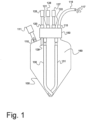
- Tube 100 comprises a main body of conventional design and encompassing an inner volume 160, typically available in various sizes from about 10 ml to as much as 500 ml, and adapted to be used in standard centrifuges equipped to use tubes of the conventional geometry shown in FIG. 1 (although any suitable centrifuge tube geometry known in the art and compatible with centrifuges available in the art may be used, according to the invention).
- the kit or system comprises three principal components: (1) a permanent set of equipment, all of which is known in the art: aspiration pump, shaker, centrifuge and mini-incubator; (2) a plurality of single-use disposable equipment items: aspiration needle/cannula, collection bag, syringes, filters, flasks, and centrifuge tubes 100; and (3) various processing solutions/reagents.
- the components are preferably adapted to cooperate with one another in order to facilitate extraction and processing of adipose tissue to obtain MSCs, while maintaining sterility and simplifying the process.
- Tube 100 is provided with a cap 150 that is penetrated by several openings 115, 120, 121, and 122, and a separate fitting 110 mounted generally on a top portion of tube 100 near cap 150 (in fact, it should be appreciated by one having ordinary skill in the art that the various fittings, while all affixed to the upper portion of tube 100, may be arranged variously, with some, all, or none of the fittings passing through cap 150. and in fact cap 150 could optionally be omitted in favor of a tube 100 of unitary construction, which may be disposed of after use).
- Fitting 120 is penetrated by tube 129, which is fitted with a sterile fitting 125 (such as a luer lock), to allow various reagents or other fluids to be introduced via tube 129 without violating sterile conditions within tube 100.
- a sterile syringe is used to add fluids to tube 100 via tube 129.
- Tubes 130 and 131 penetrate through cap 150 at fittings 121 and 122 respectively, and are provided with sterile fittings 126 and 127, so that cells or other materials contained in a pellet at the bottom (the point of the inverted cone that makes up the lower portion of tube 100 after centrifuging (the creation of pellets of matter of relatively higher specific gravity during centrifuging is well known in the art).
- Fittings 126 and 127 may be of any type, such as a luer lock, known in the art and suitable for establishing a sterile connection between tubes 130, 131 and a syringe or other device capable of applying suction to remove cells from a pellet at the bottom of tube 100.
- Fitting 115 is penetrated by tube 116, which is fitted with a sterile fitting 117 at its end, and may be used to apply suction from the upper portion of tube 100 to establish a vacuum within tube 100 (for example, to facilitate rapid introduction of lipoaspirate into tube 100 through fitting 110).
- Fitting 110 is connected via a short tube or stub to fitting 111, which (like all the other fittings passing into tube 100) is suitable to maintaining sterile conditions within tube 100 at all times.
- Fitting 110 is generally used to inject lipoaspirate into tube 100 as an initial step of a process of extracting and potentially purifying or concentrating MSCs from the lipoaspirate into a pellet that can be withdrawn via either of tubes 130 and 131.
- two tubes 131, 131 are provided to ensure that pellet extraction will be possible even if one of the tubes becomes clogged.
- FIG. 2 illustrates illustrated a modified centrifuge tube 200 for extracting stem cells from adipose tissue that comprises a novel atomization means, according to an embodiment of the invention.
- tube 200 is very similar to tube 100, but provides more illustrative detail regarding fitting 125-127.
- Tube 116 also is terminated in a secure way to a vacuum pump 220 (details of the sterile connection between tube 116 and pump 220 are not shown, but are well known in the art).
- Vacuum pump may be provided, already sterilely connected to tube 116, as a component of a portable kit for MSC isolation from lipoaspirate, or more commonly it may be connected as needed to tube 116 during performance of a process for MSC extraction from a lipoaspirate.
- a turbo or screen 210 may be provided, which comprises a plurality of holes 211 through which lipoaspirate must pass when entering tube 100 through fitting 110; the presence of holes 211 helps to break down clumps of adipose tissues that make up at least part of the entering lipoaspirate.
- lipoaspirate may be drawn into tube 100 using a vacuum provided by pump 220 or another means of drawing suction through tube 116, or by direct injection of lipoaspirate (such as with a plunger-type syringe) through fitting 110.
- lipoaspirate is forced through fitting 110 and then holes 211, it is broken up into small droplets or small clumps of cells and tissue fragments, which are more readily washed and otherwise processed according to methods described elsewhere herein (for example, with reference to FIG. 4 ).
- FIG. 3 is a diagram illustrating a system 300 for preparing mesenchymal stem cells or SVF from adipose tissue for clinical use, according to an embodiment of the invention.
- a kit comprising various components, as described above, is provided to allow extraction of adipose tissue from a patient 301 (although a non-patient donor may also provide adipose tissue, according to the embodiment, using system 300).
- Adipose tissue may, as discussed above, be obtained in a number of ways known in the art.
- system 300 comprises a syringe 302 and a sterile, sealed bag 303 for use in obtaining adipose tissue from patient 301.
- Syringe 302 may be of any conventional type known in the art that is suitable for use in withdrawing, via manual suction, varying amounts of adipose tissue, typically from 1 to a few hundred milliliters.
- kits according to system 300 may provide one or more means for dissociating adipose tissues, such as ultrasonic chamber 305.
- Adipose tissue may be placed in ultrasonic chamber 305 while still in sterile bag 303, or it may be passed through ultrasonic chamber 305 via a sterile tube, as shown.
- System 300 typically comprises at least one medium size (about 100 milliliters) modified centrifuge tube 310 (such as those described above with reference to FIGS. 1 and 2 ).
- Adipose tissue may be drawn into tube 310 by application of a vacuum 350 to an inner region 340-341 of tube 310, or by injection from a syringe directly or via a sterile tube.
- Lipoaspirate is generally admitted via a turbo or screen 210 perforated by a plurality of holes 211, which as described above serves to assist in breaking down incoming adipose tissue samples into small droplets that are more amenable to efficient processing within tube 310.
- washing agents 320 or reagents 321 may be injected from sterile containers provided as part of a kit of system 300 via one or more sterile fittings (such as those shown in FIGS. 1 and 2 , for example fitting 125).
- tube 310 is adapted for easy use within a centrifuge (which may be provided as part of a kit of system 300, or which alternatively may be a standard desktop or other centrifuge present in a location where system 300 is to be used; centrifuges are well known in the art and are generally readily available in a wide range of medical facilities), so lipoaspirates in tube 310 may be easily centrifuged in order for example to separate stem cells from other cell or tissue fractions.
- Tube 310 is generally provided with one or more fittings 330, 331 for removal of separated stem cells or other cells or material contained in a pellet at the apex of conical section 340 of tube 310. Examples of such fittings 330. 331 are shown in FIGS.
- lipoaspirate treated in tube 310 (by any of washing, dissociating, and centrifuging) is administered directly to patient 301; in other embodiments, system 300 may comprise a second, generally smaller tube 360 that may be used to further process lipoaspirate after its removal from tube 310.
- a partially enriched lipoaspirate (that is, a processed lipoaspirate with a higher stem cell fraction than was present when the lipoaspirate was initially drawn from patient or donor 301) may be injected (or drawn by vacuum 350) into tube 360, which may be for example of a volume of 10 to 20 milliliters (although other volumes may be used, including the same or a greater volume as that of tube 310; the relative sizes shown and described are merely exemplary and should not be taken as limiting, particularly as various treatment protocols may require different specific tube sizes).
- tube 360 which may be for example of a volume of 10 to 20 milliliters (although other volumes may be used, including the same or a greater volume as that of tube 310; the relative sizes shown and described are merely exemplary and should not be taken as limiting, particularly as various treatment protocols may require different specific tube sizes).
- FIG. 3 is exemplary, and shows a variety of apparatus that may be comprised, along with various reagents and washing agents in sterile containers for use as needed, in a kit suitable for use in a single treatment in which lipoaspirate is drawn from a patient 301, processed in a portable, continuous sterile environment comprised of elements of system 300 delivered as a kit, and administered without requiring stem cell culturing or differentiation to the same or another patient 301.
- cells such as mesenchymal stem cells or SVF
- adipose tissue may be obtained by various methods known to a person of ordinary skill in the art.
- adipose tissue may be removed from a patient by suction-assisted lipoplasty, ultrasound-assisted lipoplasty, and excisionallipectomy.
- the procedures may include a combination of such procedures, such as a combination of excisionallipectomy and suction-assisted lipoplasty.
- tissue extraction should preferably be performed in a sterile or aseptic manner to minimize contamination.
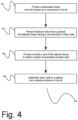
- FIG. 4 is a method diagram of a high-level process 400 for preparing mesenchymal stem cells or SVF from adipose tissue for clinical use, according to an embodiment of the invention.
- a disposable tissue removal system is provided as a component of a sterile kit intended for obtaining processed stem cell-rich lip aspirates (for example, a syringe 302). Then, in step 402, a technician, physician, or other professional removes adipose tissue from a patient (or donor), the adipose tissue having an initial concentration of stem cells (particularly MSCs).
- adipose tissue may be collected by insertion of a cannula into or near an adipose tissue deposit present in a patient 301, followed by aspiration of adipose tissue into a suction device.
- a small cannula may be coupled to a syringe 302, and adipose tissue may be aspirated using manual force.
- a syringe 302 or other similar device may be desirable to harvest relatively small to moderate amounts of adipose tissue (e.g., from 0.1 ml to several hundred milliliters of adipose tissue).
- Suction-assisted lipoplasty may be desirable to remove adipose tissue from a patient 301, as it provides a minimally invasive method of collecting tissue with a correspondingly minimal potential for stem cell damage.
- the system includes a single-use disposable aspiration system, which allows extraction of adipose tissue into a sterile sealed bag for further processing.
- the system employs a relatively small device such as a small syringe 302, with the concomitant advantage that lipoaspiration may be performed with only local (or even no) anesthesia, as opposed to general anesthesia.
- Adipose tissue removed from a patient may be collected into a sterile container (such as sterile sealed container 303) for further processing.
- a device is designed for and dedicated to the purpose of collecting tissue for manufacture of a processed adipose tissue cell population, which includes stem cells and/or endothelial precursor cells.
- the device is a single-use disposable aspiration system that extracts adipose tissue from a patient into a sterile sealed bag 303.
- the device may be any conventional device that is typically used for tissue collection by physicians performing the extraction procedure.
- the utility of this invention is not limited to individuals with large amounts of adipose tissue.
- the amount of tissue to be collected will be dependent on a number of variables including, but not limited to, donor body mass index, availability of accessible adipose tissue harvest sites, concomitant and pre-existing medications and conditions (such as anticoagulant therapy), and the clinical purpose for which adipose tissue is being collected.
- stem cell concentrations present in lipoaspirates vary widely from individual to individual, so that, when a specific amount of stem cells are required, more or less volume of adipose tissue may be required to obtain a specific desired amount. For example, concentration of stem cells in tissue extracted from a lean individual will typically be greater than that extracted from an obese donor (this reflects a typical dilutive effect of increased fat content in adipose tissue in obese individuals).
- a preferred method to obtain human adipose tissue is by excision or liposuction procedures well known in the art.
- Pluripotent cells of the invention are present in an initially excised or extracted adipose tissue, regardless of the method by which the adipose tissue is obtained.
- Adipose tissue may then be processed to facilitate separation/concentration of stem cells.
- pluripotent cells may be obtained by washing collected adipose tissue with a physiologically-compatible solution, such as phosphate buffer saline (PBS).
- PBS phosphate buffer saline
- a washing step consists of rinsing a sample of adipose tissue with PBS or Lactated Ringer Solution, agitating or centrifuging the sample, and allowing the tissue in the sample to be separated from fluid.
- adipose tissue may be dissociated. Dissociation may occur by enzyme degradation (e.g., collagenase, trypsin treatment). Alternatively, or in conjunction with such enzymatic treatment, other dissociation methods may be used, such as mechanical agitation, sonic or ultrasonic energy, or thermal energy. Cells may then be centrifuged, and the resulting pellet (containing pluripotent cells) may be further treated after resuspension in an appropriate solution (e.g., PBS).
- an appropriate solution e.g., PBS
- step 403 at least part of the adipose tissue obtained in step 402 is processed (as described above, for example) to obtain a higher concentration of stem cells, and in step 404 the processed stem cells are administered to a patient 301 from a sterile container that may be provided in a kit of system 300 or may be available in a medical facility.
- Pluripotent cells in a resuspended pellet can be separated from other cells of the resuspended pellet by methods that include, but are not limited to, cell sorting, size fractionation, granularity, density, molecularly, morphologically, and immuno-histologically (e.g., by panning, using magnetic beads, fluorescence-activated cell sorting/FACS, magnetically activated cell sorting/MACS, or affinity chromatography).
- a pluripotent cell may be obtained by positive selection, via use of an antibody or other specific-binding protein, which binds to an epitope on the cell surface.
- pluripotent cells may be isolated by negative selection.
- stem cell collection kits may comprise sterile containers and/or reagents to facilitate separation or concentration of stem cells in a lipoaspirate sample. The presence of pluripotent cells is preferably assessed prior to reintroduction using, for example, specific cell surface markers and/or counting techniques known in the art.
- Pluripotent cells obtained using system 300 of the present invention will typically be introduced (or reintroduced) to a patient without expansion or differentiation.
- pluripotent cells may be expanded and or differentiated in vitro. That is, after isolation, pluripotent cells may be maintained and allowed to proliferate in a culture medium.
- Pluripotent cells may be induced to differentiate (or to phenotypically change) into a desired cell type using techniques known in the art. It is within the skill of one in the art to modify or modulate concentrations of media and/or media supplements as necessary for the cells used.
- pluripotent cells of the invention may be expanded in a culture medium of definite composition, in which serum is replaced by a combination of serum albumin, serum transferrin, selenium, and recombinant proteins including, but not limited to: insulin, platelet-derived growth factor (PDGF), and basic fibroblast growth factor (bFGF), as known in the art.
- Maintenance conditions of pluripotent cell population(s) of the invention may also comprise one or more cellular factors that allow cells to remain in an undifferentiated form.
- one or more additional substances may be added to a culture to induce a specific desired phenotypic change.
- Such substances may comprise one or more activators of intracellular signaling pathways (e.g., mitogen-activated protein kinases and SMADs), activators of transcription factors (e.g., sox9, L-sox5. and L-sox6), activators of production and interaction with extracellular matrix proteins (e.g., collagen II, aggrecan, and cartilage oligomeric matrix protein), growth factors, cytokines, chemokines, hormones, and environmental factors (e.g., oxygen tension).
- mitogen-activated protein kinases and SMADs activators of transcription factors
- extracellular matrix proteins e.g., collagen II, aggrecan, and cartilage oligomeric matrix protein
- growth factors e.g., cytokines, chemokines, hormones, and environmental factors (e.g., oxygen tension).
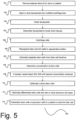
- FIG. 5 is a method diagram of a detailed process 500 for preparing and using mesenchymal stem cells or SVF from adipose tissue in clinical applications, according to a preferred embodiment of the invention.
- adipose tissue is removed from a donor or patient 301.
- lipoaspirate is injected or drawn by vacuum 350 in a modified centrifuge tube 310.
- the extracted lipoaspirate may be washed using washing agents known in the art, such as PBS.
- lipoaspirate may optionally be dissociated to break down adipose tissues and cell clumps, in order to facilitate subsequent processing.
- the cells or lipoaspirate may be centrifuged to separate cell and tissue fractions with varying specific gravities.
- MSCs may be formed into a pellet at the apex of conical volume 340 of tube 310 and thus be isolated to an appreciable extent from lighter cells or tissue fragments.
- a pellet produced as a result of step 505 may have a slightly enriched stem cell concentration (relative to the concentration of stem cells present in lipoaspirate as it was extracted from the donor or patient in step 501), and further enrichment may be desired.
- a stem cell rich pellet may be resuspended in an appropriate solution for further treatment (including potentially repeating of steps 502 through 505).
- stem cells may optionally be further segregated from other cell fractions using techniques known in the art.
- Pluripotent cells in a resuspended pellet can be separated from other cells of the resuspended pellet by methods that include, but are not limited to, cell sorting, size fractionation, granularity, density, molecularly, morphologically, and immuno-histologically (e.g., by panning, using magnetic beads, fluorescence-activated cell sorting/FACS, magnetically activated cell sorting/MACS, or affinity chromatography).
- a pluripotent cell may be obtained by positive selection, via use of an antibody or other specific-binding protein, which binds to an epitope on the cell surface.
- recovery of cells from antibodies to which they have adhered may be performed by one or more washes with suitable buffers, as is known to one skilled in the art.
- pluripotent cells may be isolated by negative selection.
- the concentration of stem cells in a processed lipoaspirate sample may be determined using any of various means known in the art.
- the presence of pluripotent cells is preferably assessed prior to reintroduction using, for example, specific cell surface markers and/or counting techniques known in the art.
- step 509 a determination may be made, based at least in part on the concentration determined in step 508, as to whether further processing of a lipoaspirate to further concentrate it (that is, to make the concentration of stem cells higher), and if so such further processing may be undertaken through repetition of one or more of steps 502 through 508.
- step 510 stem cells may optionally be cultured to obtain a larger quantity of stem cells, using techniques well established in the art.
- step 511 pluripotent stem cells may be differentiated into one or more types of precursor cell types using techniques known in the art.
- stem cells or precursor cells extracted and processed as described above with reference to steps 501 through 511 may be administered to one or more patients 301, or banked for later use in therapeutic, cosmetic, or other applications.
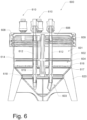
- FIGS. 6 and 7 show another embodiment of a centrifuge tube 600 which may be used as an injectable fat graft preparation tool or as a cell fraction harvest tool as mentioned above.
- the centrifuge tube 600 includes a body 602 having an inner volume 604.
- the body 602 includes a generally cylindrical portion 601 and a generally conical portion 603.
- the centrifuge tube 600 further includes a cap 606 which is secured to the tube by a cap ring 608 by a fastening mechanism 609. Although screw threads are shown as the fastening mechanism in FIG. 6 , it should be understood that any suitable fastening mechanism could be used to secure the cap ring to the tube 600.
- the cap 606 includes a plurality of openings 607 (shown in FIG. 7 ). Each opening may include a fitting which may be a swabable valve 610 connected thereto.
- the swabable valves 610 are similar to the fittings 125-127 described above, and allow for the sterile extraction of a sample from the body 602.
- the swabable valves 610 may include at least one sterile tissue inlet fitting, at least one sterile processing fluid inlet fitting, at least one sterile suction fitting, and at least one sterile extraction port.
- the valves 610 also allow for the extraction and introduction of reagents to/from the body 602. In other embodiments, additional or less swabable valves 610 may be present.
- the centrifuge tube 600 also includes a plurality of tubes 612, which are similar to tubes 130, 131 as described above, and provide a passageway for removal of a sample out of the body 602.
- the centrifuge tube 600 further includes a mixing ring 614 located within the inner volume which facilitates homogenization of the fat before centrifugation, and also traps the threads of connective tissue during enzymatic digestion. The latter prevents clotting of the screen 616 and filter 618 (described below) by these residuals.
- a screen 616 is positioned below the mixing ring 614.
- the screen 616 is configured to divide the internal volume 604 of the body 602 in half (e.g., substantially in half), and to provide support for viscous tissue introduced into the container 600.
- the screen 616 is configured to provide support for viscous tissue introduced into the container 600 and to divide the internal volume 604 of the body 602 in a proportion other than in half (e.g., 60% of the internal volume 604 above the screen and 40% of the internal volume 604 below the screen; 70% of the internal volume 604 above the screen and 30% of the internal volume 604 below the screen; 80% of the internal volume 604 above the screen and 20% of the internal volume 604 below the screen; 40% of the internal volume 604 above the screen and 60% of the internal volume 604 below the screen; 30% of the internal volume 604 above the screen and 70% of the internal volume 604 below the screen; 20% of the internal volume 604 above the screen and 80% of the internal volume 604 below the screen).
- a proportion other than in half e.g., 60% of the internal volume 604 above the screen and 40% of the internal volume 604 below the screen; 70% of the internal volume 604 above the screen and 30% of the internal volume 604 below the screen; 80% of the internal volume 604 above the screen.
- the screen 616 has a plurality of pores 617 sized at about 1 mm, thereby allowing liquids to be washed down while dense fraction (e.g., fat graft) remains on top.
- the screen 616 also serves to break down the tissue into small particles smaller than 1mm, such as when g force is applied during centrifugation.
- the plurality of pores 617 are sized to have a diameter of about 1 mm.
- the pores 617 are sized to have a diameter no greater than 1.2 mm (e.g., in a range of 1 mm to 1.2 mm).
- the pores are sized to have a diameter less than about 1 mm (e.g., .9 mm to 1 mm; .8 mm to 1 mm; .7 mm to 1 mm; .6 mm to 1 mm; .5 mm to 1 mm; .5 mm to .6 mm; .6 mm to.7 mm; .7 mm to .8 mm; .8 mm to .9 mm).
- the pores 617 are sized to have a diameter less than 500 microns.
- the pores 617 are sized to be 350 microns to 450 microns.
- the distribution and/or the density of the pores may be configured depending on the application.
- the pores are evenly distributed across the surface of screen 616.
- the screen 616 has greater than 50% of its surface area as pores 617.
- the pores over 1 ⁇ 2 of the surface area of the screen 616 is the pores.
- the screen 616 has greater than or equal to 60% of its surface area as pores 617 (e.g., 60% to 70% of the surface area are pores 617).
- the screen 616 has greater than or equal to 70% of its surface area as pores 617 (e.g., 70% to 80% of the surface area of screen 616 are the surface area of the pores 617).
- the screen 616 has greater than or equal to 80% of its surface area as pores 617 (e.g., 80% to 90% of the surface area of screen 616 are the surface area of the pores 617). In a fourth specific implementation, the screen 616 has greater than or equal to 90% of its surface area as pores 617 (e.g.. 90% to 95% of the surface area of screen 616 are the surface area of the pores 617).
- the screen 616 may be configured to: provide support for the liquid/non-liquid faction of the tissue; and when forces (such as centrifugal forces) are applied, produces fat graft with certain properties.
- forces such as centrifugal forces
- the screen may produce fat graft that is injectable and is solid enough to be applied topically.
- the produced fat graft has a certain viscosity, such as a certain centipoise (cP) or a certain Pascal-second (Pa.s) that is selected for the application at hand.
- cP centipoise
- Pa.s Pascal-second
- the fat graft may be characterized by viscoelasticity, which comprises viscosity (e.g., a fluid property and a measure of resistance to flow) and elasticity (a solid material property).
- viscosity e.g., a fluid property and a measure of resistance to flow
- elasticity a solid material property
- decreasing the size of the pores 617 e.g., such that the pores 617 have a diameter between 350-450 microns
- increasing the total surface area of the pores on the screen 616 e.g., such that the surface area of the pores 617 is 80% to 90%
- the subsequent tissue generated with centrifugation may be used in different contexts.
- a screen 616 with pore size of the pores 617 on the order of 1 mm such as 1.2 mm
- centrifugation may produce a break-down of tissue of a size that is less than 1.2 mm.
- the broken-down tissue which such a pore size of the pores 617 of screen 616 and being on the order of 1 mm, may preserve the stem cells therein so that the broken-down tissue may be clinically applicable.
- the broken-down tissue may be used in a variety of contexts, such as injected through a particular-size needle and/or for topical application for wound healing.
- the fat graft generated via centrifugation may be used with a 3D bioprinter for 3D bioprinting.
- 3D bioprinting utilizes the fat graft generated via centrifugation with specialized materials to create three-dimensional tissues and organs. These specialized materials may be termed bioinks.
- the bioinks may be hydrogel-based to enable the maintenance of cells after printing.
- bioprinting comprises utilizing three-dimensional, precise deposition of cells via methodology that is compatible with an automated, computer-aided, three-dimensional prototyping device (e.g., a bioprinter).
- Various 3D bioprinting procedures are contemplated.
- One example bioprinting procedure comprises microextrusion, which utilizes an applied force to squeeze out the bioink through the printing head.
- a pore size of the pores 617 in the range of 350 microns to 450 microns may produce micronized fat, which may be compatible for use with 3D bioprinting, such as with the nozzle diameter (which may be on the order of 450 microns or less than 450 microns) of a 3D bioprinter for the 3D bioprinting along with hydrogel toward 3D tissue structure.
- a fat graft contains rich fraction of endothelial progenitors, which may endorse and sustain neovascularization in ischemic tissues, organs and wounds.
- the centrifuge tube 600 with a certain pore size (e.g., 350 microns to 450 microns) of the pores 617 may generate the material that may be used with microextrusion.
- any one, any combination, or all of size of pores 617. distribution of pores 617, or density of pores 617 may be adjusted depending of the application.
- any one, any combination, or all of size of pores, distribution of pores, or density of pores may be adjusted to produce different types of fat grafts with different physical properties (e.g., including different viscosity and/or liquidity).
- the centrifuge tube 600 further includes a filter 618 positioned below the screen 616 within the lower conical portion of the internal volume 604.
- the filter 618 serves as a collection platform for tissue substance that breaks through past the screen 616.
- the filter 18 may also include tubes 619 extending therefrom that are configured to connect to tubes 612 within the body 602. As shown in FIGS. 6 and 7 , there are two tubes 619.
- the centrifuge tube 600 includes only a single tube 619.
- the filter 618 includes pores of about 100 microns. Therefore the tissue, upon centrifugation, is squeezed through the screen and collected on top of the filter surface, while liquid fraction moves down to the bottom of the tube 600. Thus, this "micronized” tissue (usually fat) could be collected from the compartment between the screen 616 and the filter 618 in the middle part of the body 602. The proper tubing is connected to the top cap inlets. That way, the device serves as injectable fat graft preparation tool.
- stromal cell fraction is separated.
- the cells of size under 100 microns may be collected by centrifugation through the filter 618 at the bottom of the conical section 603.
- the filter 618 allows for separation and purification of particular cell fraction out of digested tissue.
- centrifuge tube 700 may be similar to centrifuge tube 360, as described above.
- Centrifuge tube 700 may include a body 702 having an internal volume of about 50 ml, for example.
- the tube 700 may further include a cap 704 having a plurality of openings 706, which may be swabable valves or fittings as described above.
- the centrifuge tube 700 also includes one or more tubes 708, which are similar to tubes 130, 131, 612 as described above, and provide a passageway for removal of a sample out of the body 702.
- the second tube 700 maybe continuously connected to the tube 600 by applying negative pressure by a pump or syringe.
- the material collected by the first tube 600 may be transferred to the second tube 700 by direct collection from the first tube 600 into a syringe, and then releasing the material into the second tube 700, where the material is washed and concentrated by centrifugation.
- the final product is collected through corresponding inlet mounted on the top of the second centrifuge tube 700, similarly to the ones in the tube 600.
- the second centrifuge tube 700 is not used for fat graft preparation.
- a method for preparation of a fat graft includes performing a sterile transfer of lipoaspirate to the first centrifuge tube 600.
- the lipoaspirate is washed in the first centrifuge tube 600 by adding one or more fluids via at least one fluid inlet fitting or swabable valve 610.
- the first centrifuge tube 600 containing the lipoaspirate is centrifuged at low speed to separate the contaminants and dense fat fraction.
- the dense fat remains on top of the screen 616, and liquids are collected in the lower conical potion 603.
- the first centrifuge tube 600 containing the washed dense fat is then centrifuged at a higher speed to pass the dense fat through the pores of the screen 616 by centrifuge force, and accumulate broken fat particles (fat graft) in the compartment between the screen 616 and the filter 618.
- the first centrifuge tube 600 is first centrifuged at the low speed, and then centrifuged at the higher speed (e.g., 400g).
- the filter surface serves as a bottom for accumulating fat particles, and broken fat (oil) and debris are filtered down through the filter 618 to the lower conical potion 603.
- the accumulated fat graft can then be collected by a syringe, by attaching the syringe to at least one of the inlets or swabable valves 610 with corresponding tubing leading to the intermediate compartment between the filter 618 and the screen 616. Lastly, the fat graft may be administered to a patient for a therapeutic or cosmetic purpose.
- centrifuging may be performed for the first centrifuge tube 600 with screens 616 of different pores sizes.
- the first centrifuge tube 600 may first be spun at the lower speed, and thereafter spun at the higher speed (e.g., 400g).
- the first centrifuge tube 600 may first be spun at the lower speed, and thereafter spun at the higher speed that is less than 400g (e.g., 200g).
- the higher (or second) speed may be selected depending on the desired rheometry (e.g., fluidity).
- the system may select the properties of screen 616 (e.g., the pore size of pores adjust the parameters for processing so that the desired rheometry is obtained in order to create fat of printable properties for a variety of applications (e.g., centrifuging may be performed on a machine that includes a plurality of discreet higher (or second) speed settings in which to select the higher speed for a corresponding desired rheology of the fat graft).
- properties of screen 616 e.g., the pore size of pores adjust the parameters for processing so that the desired rheometry is obtained in order to create fat of printable properties for a variety of applications (e.g., centrifuging may be performed on a machine that includes a plurality of discreet higher (or second) speed settings in which to select the higher speed for a corresponding desired rheology of the fat graft).
- the system of FIGS. 6 and 7 bears dual function, allowing for either fat graft preparation or cell fraction harvest. Similar to the systems disclosed above, the process is performed in a completely closed and sterile manner, while being transparent and flexible for the user. In some embodiments, the system of FIGS. 6 and 7 may be used with the tube 700 shown in FIGS. 8-9 .
- the centrifuge tube such as centrifuge tube 600 illustrated in FIGS. 6 and 7 , is configured to produce fat graft and/or to produce cell fraction extraction.
- the centrifuge tube is configured for processing of the fat graft preparation and for processing of the cell fraction harvest, allowing for greater flexibility as discussed herein.
- the centrifuge tube provides the capability to make cell enriched fat graft.
- the cell enriched fat graft may be produced by returning/mixing into the fat graft (e.g., the fat graft previously produced by the centrifuge tube) the extracted cell fraction. In practice, this may be accomplished by dividing the original lipoaspirate into at least two portions, with a first portion being used to produce the fat graft and the second portion used for enzymatic digestion in order to produce the cell fraction extraction.
- the same centrifuge tube may be used to produce the fat graft and to be at least a part of the cell fraction extraction process in order to produce the cell enriched fat graft.
- the step of producing the fat graft and at least one of the steps of producing the cell fraction extraction may be performed by using the same centrifuge tube sequentially, such as by sequential application of the fat graft protocol and the cell extraction protocol (e.g., applying the fat graft protocol to produce the fat graft in the centrifuge tube, removing the produced fat graft from the centrifuge tube, then applying the cell extraction protocol using the same centrifuge tube in order to produce the cell fraction extraction, and thereafter returning/mixing into the fat graft the extracted cell faction).
- producing cell fraction extraction may be performed using two centrifuge tubes including: the biological substance first being processed in the first centrifuge tube; after processing in the first centrifuge tube, the processed biological substance is removed from the first centrifuge tube and then inserted into the second centrifuge tube for further processing.
- at least one of the centrifuge tubes used in the cell fraction extraction process for the patient may likewise be used to produce fat graft for the same patient.
- different centrifuge tubes may be used to produce the fat graft (e.g., the fat graft is produced in a first centrifuge tube of the type disclosed in FIGS. 6 and 7 ) and to produce the cell fraction extraction (e.g., the cell fraction extraction being produced in one or more centrifuge tubes of the type disclosed in FIGS. 6 and 7 ). After which, the cell fraction extraction may be mixed into the fat graft.
- the centrifuge tube either with a commonly used centrifuge tube (e.g., common to steps of performing the fat graft protocol and cell fraction extraction protocol) as disclosed in FIGS. 6 and 7 or with multiple centrifuge tubes of the same type as disclosed in FIGS. 6 and 7 ) may be used for the cells to be mixed into the fat graft, thereby providing additional enforcement for the regenerative properties of the fat graft.
- 3D printing may involve the sequential printing of fat and cells.
- 3D printing may comprise multilayer fabrication for targeted geometry of the implant, with the desired concentration of cells within a general porose construct that is composed of bioink and fat.
- the 3D printer may include a plurality of nozzles, such as a first nozzle and a second nozzle.
- the fat graft of a desired rheometric property in combination with another material may be delivered through the first nozzle.
- the 3D printer may operate the second nozzle with the first nozzle, with the second nozzle delivering the extracted cell fraction encapsulated in a carrier (such as a printable polymeric carrier).
- a carrier such as a printable polymeric carrier
- the 3D printer may operate the second nozzle in parallel with the first nozzle.
- the 3D printer may operate the second nozzle in series with the first nozzle.
- the 3D printer may operate the second nozzle at least partly in series and at least partly in parallel with the first nozzle.
- Example carriers include, but are not limited to polymers, including collagen, gelatin, alginate, and hyaluronic acid (HA), and synthetic polymers, such as PVA and polyethylene glycol (PEG), with the construct being crosslinked, such as by UV or chemically.
- the 3D printer may be tasked to print a 3-D shape composed of the fat graft (with the bioink for structural rigidity) and one or more structures within the 3-D shape (such as one or more blood vessels inside the printed fat).
- the 3-D printer may print the cells and the fat in a particular pattern, thereby creating locations within the 3-D printed structure where the cells are more concentrated (e.g., in the blood vessel example, the locations of the blood vessels in the 3-D printed structure).
- the centrifuge tube 600 illustrated in FIGS. 6 and 7 is particularly attuned to working in combination with 3-D printing since the centrifuge tube 600 (either using a single centrifuge tube 600 or multiple centrifuge tubes 600) may generate the fat graft and the cell fraction extraction, which when combined with bioinks and carriers, respectively, may be used with the nozzles of a 3-D printer in a cost effective manner.
- Kits according to system 300 of the present invention may be used to generate a pharmaceutical composition that contains a prophylactically or therapeutically effective amount of mesenchymal stem cells or SVF of the invention, preferably in a substantially purified form, together with a suitable vehicle in appropriate amounts, in order to provide stem cells in a form suitable for safe and efficacious administration to a patient.
- Patients undergoing treatment in accordance with various embodiments of the invention may receive different concentrations of stem cells than other treatments employing adipose tissue or stem cells derived from adipose tissue.
- adipose tissue that is removed from a patient may be processed to change the concentration of stem cells that are administered to a patient.
- patients receive a higher concentration of stem cells than the concentration of stem cells typically present in adipose tissue transplants and other similar stem cell based therapies.
- the concentrated stem cells may be administered in a composition comprising adipose-derived stem cells and/or endothelial precursor cells substantially free from mature adipocytes and connective tissue, or, as another example, the concentrated stem cells may be administered in a composition comprising a unit of adipose tissue with an increased amount of stem cells.
- the pharmaceutical composition of the invention may be formulated according to a specific chosen form of administration.
- a pharmaceutical composition may be prepared in a liquid dosage form, e.g.. as a suspension, to be injected into a subject in need of treatment.
- Illustrative (non-limiting) examples include formulating the pharmaceutical composition of the invention in a sterile suspension with a pharmaceutically acceptable vehicle, such as saline solution, phosphate buffered saline solution (PBS), or any other suitable pharmaceutically acceptable carrier, for administration to a subject, e.g., a human being, preferably via intravenous, intraperitoneal, subcutaneous, etc., although further administration routes may be also possible.
- a pharmaceutically acceptable vehicle such as saline solution, phosphate buffered saline solution (PBS), or any other suitable pharmaceutically acceptable carrier
- a pharmaceutical composition may be administered to a subject in need by intravenous administration using devices such as syringes, catheters, trocars, cannulas, etc.
- a pharmaceutical composition of the invention may be administrated using any appropriate equipment, apparatus, and devices known to persons having ordinary skill in the art.
- a device for administering a pharmaceutical composition is provided as part of a kit described above, or is adapted for use with a kit described above to facilitate transfer of a pharmaceutical composition to a subject without contamination.
Landscapes
- Health & Medical Sciences (AREA)
- Life Sciences & Earth Sciences (AREA)
- Engineering & Computer Science (AREA)
- Biomedical Technology (AREA)
- Chemical & Material Sciences (AREA)
- Heart & Thoracic Surgery (AREA)
- General Health & Medical Sciences (AREA)
- Hematology (AREA)
- Public Health (AREA)
- Veterinary Medicine (AREA)
- Animal Behavior & Ethology (AREA)
- Developmental Biology & Embryology (AREA)
- Cell Biology (AREA)
- Vascular Medicine (AREA)
- Anesthesiology (AREA)
- Surgery (AREA)
- Chemical Kinetics & Catalysis (AREA)
- Zoology (AREA)
- Organic Chemistry (AREA)
- Analytical Chemistry (AREA)
- Wood Science & Technology (AREA)
- Genetics & Genomics (AREA)
- Bioinformatics & Cheminformatics (AREA)
- Biotechnology (AREA)
- Clinical Laboratory Science (AREA)
- Botany (AREA)
- Epidemiology (AREA)
- Rheumatology (AREA)
- Transplantation (AREA)
- Oral & Maxillofacial Surgery (AREA)
- Medicinal Chemistry (AREA)
- Microbiology (AREA)
- Dermatology (AREA)
- Biochemistry (AREA)
- General Engineering & Computer Science (AREA)
- Urology & Nephrology (AREA)
- Medicines Containing Material From Animals Or Micro-Organisms (AREA)
- Micro-Organisms Or Cultivation Processes Thereof (AREA)
Claims (15)
- Mehrgerätefähiges System zum Bearbeiten von Gewebe in einem geschlossenen Pfad zur Aufrechterhaltung der Sterilität, umfassend:ein Zentrifugenröhrchen (600), das einen im Wesentlichen zylindrischen Körper (602) mit einer Oberseite, einem inversen konischen Apex (603) und einem Innenvolumen aufweist und ferner umfasst:mindestens zwei abwischbare Ventile (610);ein Extraktionsröhrchen (612, 619), das lösbar an jedem der mindestens zwei abwischbaren Ventile befestigt ist und sich innerhalb des Innenvolumens in Richtung des inversen konischen Apex (603) erstreckt;ein Sieb (616), das innerhalb des Innenvolumens des Körpers (602) angeordnet ist, wobei das Sieb (616) eine Vielzahl von Poren (617) enthält, wobei das Sieb (616) konfiguriert ist, um Gewebe zu unterstützen, das in das Zentrifugenröhrchen (600) eingebracht wird; undeinen Filter (618), der unterhalb des Siebes in dem inversen konischen Apex (603) des Zentrifugenröhrchen (600) positioniert ist, wobei der Filter (618) eine Vielzahl von Poren enthält, wobei die Vielzahl von Poren für den Filter (618) kleiner ist als die Vielzahl von Poren (617) für das Sieb (616); undeinen Behälter mit mindestens einem abwischbaren Ventil,wobei das abwischbare Ventil mit einem der mindestens zwei abwischbaren Ventile des Zentrifugenröhrchens zum sterilen Transfer von im geschlossenen System enthaltenem Material lösbar verbunden werden kann;wobei ein Ende des Röhrchens (612, 619) in einem Abschnitt des Körpers (602) zwischen dem Sieb (616) und dem Filter (618) positioniert ist;wobei die Vielzahl von Poren (617) des Siebs (616) so bemessen sind, dass beim Zentrifugieren viskoses Gewebe der biologischen Substanz in kleinere Partikel zerlegt wird; undwobei die Vielzahl von Poren des Filters (618) so bemessen sind, dass beim Zentrifugieren das mikronisierte Gewebe durch das Sieb (616) gepresst und auf einer Oberfläche des Filters (618) gesammelt wird, während eine flüssige Fraktion unterhalb des Filters (618) nach unten bewegt wird.
- System nach Anspruch 1, wobei das Sieb so konfiguriert ist, dass es das Innenvolumen in zwei Hälften teilt.
- System nach Anspruch 1, wobei die Vielzahl von Poren (617) in dem Sieb (616) einen Durchmesser zwischen 350-450 Mikrometer aufweisen; und
wobei beim Zentrifugieren das Zentrifugenröhrchen (600) ein verflüssigtes Fetttransplantat erzeugt, das ausreichend viskos ist und dessen Stammzellen noch so erhalten sind, dass das verflüssigte Fetttransplantat als Biotinte druckbar und mit 3D-Biodruck kompatibel ist. - System nach Anspruch 1, wobei das Zentrifugenröhrchen (600) konfiguriert ist, um Fetttransplantat zu produzieren und mindestens einen der Schritte zur Erzeugung von Zellfraktionsextraktion durchzuführen, und zwar durch:Anwenden eines Fetttransplantationsprotokoll zur Erzeugung des Fetttransplantats im Zentrifugenröhrchen; Entfernen des erzeugten Fetttransplantats aus dem Zentrifugenröhrchen;Anwenden eines Zellextraktionsprotokolls unter Verwendung desselben Zentrifugenröhrchens (600), umHerstellen einer Zellfraktionsextraktion; unddie extrahierte Zellfraktion in das Fetttransplantat zurückzuführen/zu mischen.
- System nach Anspruch 1, wobei das System mehrere Zentrifugenröhrchen zur Verarbeitung durch Folgendes umfasst:Verarbeiten einer biologischen Substanz unter Verwendung eines ersten Zentrifugenröhrchens (600);nach der Verarbeitung im ersten Zentrifugenröhrchen (600), Entfernen der verarbeiteten biologischen Substanz aus dem ersten Zentrifugenröhrchen (600) und Einsetzen in ein zweites Zentrifugenröhrchen (600) zur weiteren Verarbeitung.
- System nach Anspruch 1, ferner umfassend einen Mischring (614), wobei der Mischring (614) in dem im Allgemeinen zylindrischen Abschnitt (602) und weiter vom Boden des inversen konischen Apex (603) als das Sieb (616) positioniert ist, wobei der Mischring (614) konfiguriert ist, um eine Homogenisierung von Fett in der biologischen Substanz vor dem Zentrifugieren zu erleichtern.
- System nach Anspruch 1, wobei eine Oberfläche des Filters (618) als Boden zum Ansammeln von Fettpartikeln dient und abgebautes Fett und Schmutz durch den Filter (618) bis zum inversen konischen Apex (603) gefiltert werden.
- System nach Anspruch 1, wobei das Zentrifugenröhrchen (600) konfiguriert ist, um entweder Fetttransplantat oder Zellfraktionsextraktion zu erzeugen.
- Verfahren zum Betreiben eines mehrgerätefähigen Systems zum Bearbeiten von Gewebe in einem geschlossenen Pfad zur Aufrechterhaltung der Sterilität, wobei das Verfahren umfasst:
Bereitstellen eines Zentrifugenröhrchens (600) mit einem im Wesentlichen zylindrischen Körper (602) mit einer Oberseite, einem inversen konischen Apex (603) und einem Innenvolumen und ferner umfassend:mindestens zwei abwischbare Ventile (610);ein Extraktionsröhrchen (612, 619), das lösbar an jedem der mindestens zwei abwischbaren Ventile befestigt ist und sich innerhalb des Innenvolumens in Richtung des inversen konischen Apex (603) erstreckt;ein Sieb (616), das innerhalb des Innenvolumens des Körpers (602) angeordnet ist, wobei das Sieb (616) eine Vielzahl von Poren (617) enthält, wobei das Sieb (616) konfiguriert ist, um Gewebe zu unterstützen, das in das Zentrifugenröhrchen (600) eingebracht wird; undeinen Filter (618), der unterhalb des Siebes in dem inversen konischen Apex (603) des Zentrifugenröhrchen (600) positioniert ist, wobei der Filter (618) eine Vielzahl von Poren enthält, wobei die Vielzahl von Poren für den Filter (618) kleiner ist als die Vielzahl von Poren (617) für das Sieb (616); undeinen Behälter mit mindestens einem abwischbaren Ventil,wobei das abwischbare Ventil mit einem der mindestens zwei abwischbaren Ventile des Zentrifugenröhrchens zum sterilen Transfer von im geschlossenen System enthaltenem Material lösbar verbunden ist;wobei ein Ende des Röhrchens (612, 619) in einem Abschnitt des Körpers (602) zwischen dem Sieb (616) und dem Filter (618) positioniert ist;wobei das Verfahren ferner Folgendes umfasst:
Zentrifugieren des Zentrifugenröhrchens (600), wobei die Vielzahl von Poren (617) des Siebs (616) so bemessen sind, dass viskoses Gewebe der biologischen Substanz in kleinere Partikel zerlegt wird; und wobei die Vielzahl von Poren des Filters (618) so bemessen sind, dass das mikronisierte Gewebe durch das Sieb (616) gepresst und auf einer Oberfläche des Filters (618) gesammelt wird, während eine flüssige Fraktion unterhalb des Filters (618) nach unten bewegt wird. - Verfahren nach Anspruch 9, wobei die Vielzahl von Poren (617) in dem Sieb (616) einen Durchmesser zwischen 350-450 Mikrometer aufweisen;wobei beim Zentrifugieren das Zentrifugenröhrchen (600) ein verflüssigtes Fetttransplantat erzeugt, das ausreichend viskos ist und dessen Stammzellen noch so erhalten sind, dass das verflüssigte Fetttransplantat als Biotinte druckbar ist; undferner umfassend 3D-Biodruck unter Verwendung des verflüssigten Fetttransplantats.
- Verfahren nach Anspruch 9, wobei das Zentrifugenröhrchen (600) ein Fetttransplantat erzeugt und mindestens einen der Schritte zur Erzeugung von Zellfraktionsextraktion durchführt, und zwar durch:Anwenden eines Fetttransplantationsprotokoll zur Erzeugung des Fetttransplantats im Zentrifugenröhrchen;Entfernen des erzeugten Fetttransplantats aus dem Zentrifugenröhrchen;Anwenden eines Zellextraktionsprotokolls unter Verwendung desselben Zentrifugenröhrchens (600), um die Zellfraktionsextraktion zu erzeugen; unddie extrahierte Zellfraktion in das Fetttransplantat zurückzuführen/zu mischen.
- Verfahren nach Anspruch 9, ferner umfassend:Verarbeiten einer biologischen Substanz unter Verwendung eines ersten Zentrifugenröhrchens (600);nach der Verarbeitung im ersten Zentrifugenröhrchen (600), Entfernen der verarbeiteten biologischen Substanz aus dem ersten Zentrifugenröhrchen (600) und Einsetzen in ein zweites Zentrifugenröhrchen (600) zur weiteren Verarbeitung.
- Verfahren nach Anspruch 9, wobei das Zentrifugenröhrchen (600) einen Mischring (614) umfasst, wobei der Mischring (614) in dem im Allgemeinen zylindrischen Abschnitt (602) und weiter vom Boden des inversen konischen Apex (603) als das Sieb (616) positioniert ist; und
wobei der Mischring (614) eine Homogenisierung von Fett in der biologischen Substanz vor dem Zentrifugieren erleichtert. - Verfahren nach Anspruch 9, wobei eine Oberfläche des Filters (618) als Boden zum Ansammeln von Fettpartikeln dient und abgebautes Fett und Schmutz durch den Filter (618) bis zum inversen konischen Apex (603) gefiltert werden.
- Verfahren nach Anspruch 9, wobei das Zentrifugenröhrchen (600) entweder Fetttransplantat oder Zellfraktionsextraktion erzeugt.
Applications Claiming Priority (2)
| Application Number | Priority Date | Filing Date | Title |
|---|---|---|---|
| US15/942,793 US10967110B2 (en) | 2011-07-08 | 2018-04-02 | System and methods for preparation of adipose-derived stem cells |
| PCT/US2019/025325 WO2019195242A1 (en) | 2018-04-02 | 2019-04-02 | System and methods for preparation of adipose-derived stem cells |
Publications (4)
| Publication Number | Publication Date |
|---|---|
| EP3772256A1 EP3772256A1 (de) | 2021-02-10 |
| EP3772256A4 EP3772256A4 (de) | 2022-01-05 |
| EP3772256B1 true EP3772256B1 (de) | 2025-05-14 |
| EP3772256C0 EP3772256C0 (de) | 2025-05-14 |
Family
ID=68101106
Family Applications (1)
| Application Number | Title | Priority Date | Filing Date |
|---|---|---|---|
| EP19780575.7A Active EP3772256B1 (de) | 2018-04-02 | 2019-04-02 | System und verfahren zur herstellung von stammzellen aus fettgewebe |
Country Status (3)
| Country | Link |
|---|---|
| EP (1) | EP3772256B1 (de) |
| CN (2) | CN111542350B (de) |
| WO (1) | WO2019195242A1 (de) |
Families Citing this family (10)
| Publication number | Priority date | Publication date | Assignee | Title |
|---|---|---|---|---|
| CN110747119A (zh) * | 2019-11-29 | 2020-02-04 | 安徽惠恩生物科技股份有限公司 | 一种适用于干细胞恒温密闭的离心采集装置 |
| WO2021214162A1 (en) * | 2020-04-22 | 2021-10-28 | Cellunite Gmbh | Modular cell processing |
| CN113996366B (zh) * | 2020-07-27 | 2024-12-24 | 苏州戴氏电子信息科技有限公司 | 一种封闭式离心装置 |
| CN112852624B (zh) * | 2021-03-15 | 2025-09-23 | 上海交通大学医学院附属第九人民医院 | 一种全自动脂肪干细胞提取系统 |
| CN113941454B (zh) * | 2021-09-29 | 2023-06-30 | 复旦大学附属肿瘤医院 | 一种收集Cyr61靶点条件培养基用离心装置及离心方法 |
| CN113832003A (zh) * | 2021-10-20 | 2021-12-24 | 上海芙普瑞生物科技有限公司 | 一种便于提取制备脂肪干细胞外泌体的设备及提取工艺 |
| CN113976339A (zh) * | 2021-10-25 | 2022-01-28 | 安然 | 改进式脂肪移植装置 |
| CN117305078B (zh) * | 2023-09-25 | 2024-08-27 | 成都赛恩吉诺生物科技有限公司 | 一种组织解离方法 |
| ES3023107A1 (es) * | 2023-11-29 | 2025-05-29 | Herrera Fernando Godoy | Dispositivo de purificación y aislamiento de componentes de un tejido adiposo |
| CN118146872A (zh) * | 2024-03-22 | 2024-06-07 | 赞恩医疗科技(江苏)有限公司 | 基于自体脂肪微片段的提纯处理方法 |
Family Cites Families (25)
| Publication number | Priority date | Publication date | Assignee | Title |
|---|---|---|---|---|
| US5372945A (en) * | 1985-06-06 | 1994-12-13 | Alchas; Paul G. | Device and method for collecting and processing fat tissue and procuring microvessel endothelial cells to produce endothelial cell product |
| BR0008552A (pt) * | 1999-03-10 | 2002-05-07 | Univ Pittsburgh | Células tronco e redes derivadas de tecido adiposo |
| US20050076396A1 (en) * | 1999-03-10 | 2005-04-07 | Katz Adam J. | Adipose-derived stem cells and lattices |
| EP1406492B1 (de) * | 2001-06-06 | 2009-12-30 | Perfusion Partners & Associates, Inc. | Zentrifugenröhrenanordnung |
| JP4653952B2 (ja) * | 2001-12-07 | 2011-03-16 | サイトリ セラピューティクス インコーポレイテッド | 処理済み脂肪吸引細胞で患者を治療するためのシステムと方法 |
| US7832566B2 (en) * | 2002-05-24 | 2010-11-16 | Biomet Biologics, Llc | Method and apparatus for separating and concentrating a component from a multi-component material including macroparticles |
| US20050124073A1 (en) * | 2003-12-09 | 2005-06-09 | Entire Interest | Fat collection and preparation system and method |
| DE102007000308A1 (de) * | 2007-06-05 | 2008-12-18 | Andreas Hettich Gmbh & Co. Kg | Einsatz und Zentrifuge mit Einsatz |
| US8790519B2 (en) * | 2009-06-16 | 2014-07-29 | Biomet Biologics, Llc | Liquid separation from adipose tissue |
| US8540078B2 (en) * | 2009-06-16 | 2013-09-24 | Biomet Biologics, Llc | Liquid separation from adipose tissue |
| US20110117650A1 (en) * | 2009-11-10 | 2011-05-19 | Riordan Neil H | Vessel and method for isolating cells from tissue portions |
| US8591391B2 (en) * | 2010-04-12 | 2013-11-26 | Biomet Biologics, Llc | Method and apparatus for separating a material |
| US9260697B2 (en) * | 2010-07-09 | 2016-02-16 | The Gid Group, Inc. | Apparatus and methods relating to collecting and processing human biological material containing adipose |
| US20120156177A1 (en) * | 2010-10-07 | 2012-06-21 | Scarpone Michael A | Methods and devices for harvesting and processing connective tissue precursor cells from autologous fat |
| KR101951055B1 (ko) * | 2010-12-16 | 2019-02-21 | 인제네론 인코포레이티드 | 조직 검체로부터 세포 및 세포가 풍부한 기질의 강화된 회수를 위한 방법 및 기구 |
| US10967110B2 (en) * | 2011-07-08 | 2021-04-06 | Jointechlabs, Inc. | System and methods for preparation of adipose-derived stem cells |
| US9931445B2 (en) * | 2011-07-08 | 2018-04-03 | Jointechlabs, Inc. | System and methods for preparation of adipose-derived stem cells |
| KR20150051026A (ko) * | 2013-11-01 | 2015-05-11 | (주)디올메디바이오 | 대용량 지방유래 줄기세포 분리용 튜브 및 이를 이용한 분리방법 |
| US11491480B2 (en) * | 2014-06-13 | 2022-11-08 | Children's Medical Center Corporation | Products and methods to isolate mitochondria |
| KR101762833B1 (ko) * | 2014-06-20 | 2017-07-28 | (주)프로스테믹스 | 지방 조직으로부터 지방유래 줄기세포와 엑소좀을 분리하는 방법 |
| JP6505837B2 (ja) * | 2014-10-23 | 2019-04-24 | ソリン・グループ・イタリア・ソシエタ・ア・レスポンサビリタ・リミタータSorin Group Italia S.r.l. | 流体の構成成分を分離するための自己血輸血システム、及び、それを組み立てる方法 |
| JP6700282B2 (ja) * | 2014-12-19 | 2020-05-27 | ビオセフ エス・アー | 生物学的液体の連続処理 |
| IL259095B (en) * | 2015-11-03 | 2022-08-01 | Jointechcell Llc Jtc Llc | Device for isolating cell fractions from human and animal tissues and method for the use thereof |
| KR101736374B1 (ko) * | 2016-06-07 | 2017-05-17 | (주)시지바이오 | 원심 분리기용 용기 및 이를 이용한 svf 분리 방법 |
| CN107224614A (zh) * | 2017-05-11 | 2017-10-03 | 黎洪棉 | 一种富含细胞因子的脂肪源性基质细胞复合移植材料的制备及其临床应用 |
-
2019
- 2019-04-02 CN CN201980006337.4A patent/CN111542350B/zh active Active
- 2019-04-02 CN CN202211453471.9A patent/CN115722351B/zh active Active
- 2019-04-02 EP EP19780575.7A patent/EP3772256B1/de active Active
- 2019-04-02 WO PCT/US2019/025325 patent/WO2019195242A1/en not_active Ceased
Also Published As
| Publication number | Publication date |
|---|---|
| CN111542350B (zh) | 2022-10-18 |
| CN115722351A (zh) | 2023-03-03 |
| EP3772256A4 (de) | 2022-01-05 |
| WO2019195242A1 (en) | 2019-10-10 |
| CN115722351B (zh) | 2026-01-06 |
| CN111542350A (zh) | 2020-08-14 |
| EP3772256A1 (de) | 2021-02-10 |
| EP3772256C0 (de) | 2025-05-14 |
Similar Documents
| Publication | Publication Date | Title |
|---|---|---|
| EP3772256B1 (de) | System und verfahren zur herstellung von stammzellen aus fettgewebe | |
| US10967110B2 (en) | System and methods for preparation of adipose-derived stem cells | |
| US9931445B2 (en) | System and methods for preparation of adipose-derived stem cells | |
| US11766459B2 (en) | System and methods for preparation of adipose-derived stem cells | |
| JP5883553B2 (ja) | 処理済み脂肪吸引細胞で患者を治療するためのシステムと方法 | |
| US9463203B2 (en) | Methods of using regenerative cells in the treatment of cartilage defects | |
| EP1778293B1 (de) | Verfahren zur verwendung von regenerativen zellen bei der behandlung von muskel- und skeletterkrankungen | |
| CN107921182A (zh) | 用于分离基质血管部分的机械仪器和方法 | |
| US12239669B2 (en) | System and methods for preparation of adipose-derived stem cells | |
| US20250186502A1 (en) | System and Methods for Preparation of Adipose-Derived Stem Cells | |
| EP3271454B1 (de) | System und verfahren zur bereitstellung isolierter konzentrierter multipotenter stromazellen zur verabreichung | |
| HK1153382A (en) | A method of making a soft tissue filter and a method of making an adipose tissue implant |
Legal Events
| Date | Code | Title | Description |
|---|---|---|---|
| STAA | Information on the status of an ep patent application or granted ep patent |
Free format text: STATUS: THE INTERNATIONAL PUBLICATION HAS BEEN MADE |
|
| PUAI | Public reference made under article 153(3) epc to a published international application that has entered the european phase |
Free format text: ORIGINAL CODE: 0009012 |
|
| STAA | Information on the status of an ep patent application or granted ep patent |
Free format text: STATUS: REQUEST FOR EXAMINATION WAS MADE |
|
| 17P | Request for examination filed |
Effective date: 20201006 |
|
| AK | Designated contracting states |
Kind code of ref document: A1 Designated state(s): AL AT BE BG CH CY CZ DE DK EE ES FI FR GB GR HR HU IE IS IT LI LT LU LV MC MK MT NL NO PL PT RO RS SE SI SK SM TR |
|
| AX | Request for extension of the european patent |
Extension state: BA ME |
|
| DAV | Request for validation of the european patent (deleted) | ||
| DAX | Request for extension of the european patent (deleted) | ||
| A4 | Supplementary search report drawn up and despatched |
Effective date: 20211206 |
|
| RIC1 | Information provided on ipc code assigned before grant |
Ipc: C12N 5/00 20060101ALI20211130BHEP Ipc: B01L 3/00 20060101ALI20211130BHEP Ipc: B04B 5/04 20060101ALI20211130BHEP Ipc: B04B 3/00 20060101ALI20211130BHEP Ipc: A61M 5/34 20060101ALI20211130BHEP Ipc: A61L 27/36 20060101ALI20211130BHEP Ipc: A61K 35/35 20150101ALI20211130BHEP Ipc: A61M 1/00 20060101AFI20211130BHEP |
|
| RAP3 | Party data changed (applicant data changed or rights of an application transferred) |
Owner name: JOINTECHLABS, INC. |
|
| GRAP | Despatch of communication of intention to grant a patent |
Free format text: ORIGINAL CODE: EPIDOSNIGR1 |
|
| STAA | Information on the status of an ep patent application or granted ep patent |
Free format text: STATUS: GRANT OF PATENT IS INTENDED |
|
| RIC1 | Information provided on ipc code assigned before grant |
Ipc: A61L 27/38 20060101ALI20241023BHEP Ipc: C12N 5/0775 20100101ALI20241023BHEP Ipc: A61L 27/36 20060101ALI20241023BHEP Ipc: A61M 5/34 20060101ALI20241023BHEP Ipc: B04B 3/00 20060101ALI20241023BHEP Ipc: B04B 5/04 20060101ALI20241023BHEP Ipc: B01L 3/00 20060101ALI20241023BHEP Ipc: A61K 35/35 20150101ALI20241023BHEP Ipc: A61M 1/00 20060101AFI20241023BHEP |
|
| INTG | Intention to grant announced |
Effective date: 20241113 |
|
| GRAS | Grant fee paid |
Free format text: ORIGINAL CODE: EPIDOSNIGR3 |
|
| GRAA | (expected) grant |
Free format text: ORIGINAL CODE: 0009210 |
|
| STAA | Information on the status of an ep patent application or granted ep patent |
Free format text: STATUS: THE PATENT HAS BEEN GRANTED |
|
| AK | Designated contracting states |
Kind code of ref document: B1 Designated state(s): AL AT BE BG CH CY CZ DE DK EE ES FI FR GB GR HR HU IE IS IT LI LT LU LV MC MK MT NL NO PL PT RO RS SE SI SK SM TR |
|
| REG | Reference to a national code |
Ref country code: GB Ref legal event code: FG4D |
|
| REG | Reference to a national code |
Ref country code: CH Ref legal event code: EP |
|
| REG | Reference to a national code |
Ref country code: DE Ref legal event code: R096 Ref document number: 602019070000 Country of ref document: DE |
|
| REG | Reference to a national code |
Ref country code: IE Ref legal event code: FG4D |
|
| U01 | Request for unitary effect filed |
Effective date: 20250608 |
|
| U07 | Unitary effect registered |
Designated state(s): AT BE BG DE DK EE FI FR IT LT LU LV MT NL PT RO SE SI Effective date: 20250612 |
|
| PG25 | Lapsed in a contracting state [announced via postgrant information from national office to epo] |
Ref country code: ES Free format text: LAPSE BECAUSE OF FAILURE TO SUBMIT A TRANSLATION OF THE DESCRIPTION OR TO PAY THE FEE WITHIN THE PRESCRIBED TIME-LIMIT Effective date: 20250514 |
|
| PG25 | Lapsed in a contracting state [announced via postgrant information from national office to epo] |
Ref country code: NO Free format text: LAPSE BECAUSE OF FAILURE TO SUBMIT A TRANSLATION OF THE DESCRIPTION OR TO PAY THE FEE WITHIN THE PRESCRIBED TIME-LIMIT Effective date: 20250814 Ref country code: GR Free format text: LAPSE BECAUSE OF FAILURE TO SUBMIT A TRANSLATION OF THE DESCRIPTION OR TO PAY THE FEE WITHIN THE PRESCRIBED TIME-LIMIT Effective date: 20250815 |
|
| PG25 | Lapsed in a contracting state [announced via postgrant information from national office to epo] |
Ref country code: PL Free format text: LAPSE BECAUSE OF FAILURE TO SUBMIT A TRANSLATION OF THE DESCRIPTION OR TO PAY THE FEE WITHIN THE PRESCRIBED TIME-LIMIT Effective date: 20250514 |
|
| PG25 | Lapsed in a contracting state [announced via postgrant information from national office to epo] |
Ref country code: HR Free format text: LAPSE BECAUSE OF FAILURE TO SUBMIT A TRANSLATION OF THE DESCRIPTION OR TO PAY THE FEE WITHIN THE PRESCRIBED TIME-LIMIT Effective date: 20250514 |
|
| PG25 | Lapsed in a contracting state [announced via postgrant information from national office to epo] |
Ref country code: RS Free format text: LAPSE BECAUSE OF FAILURE TO SUBMIT A TRANSLATION OF THE DESCRIPTION OR TO PAY THE FEE WITHIN THE PRESCRIBED TIME-LIMIT Effective date: 20250814 |
|
| PG25 | Lapsed in a contracting state [announced via postgrant information from national office to epo] |
Ref country code: IS Free format text: LAPSE BECAUSE OF FAILURE TO SUBMIT A TRANSLATION OF THE DESCRIPTION OR TO PAY THE FEE WITHIN THE PRESCRIBED TIME-LIMIT Effective date: 20250914 |
|
| PG25 | Lapsed in a contracting state [announced via postgrant information from national office to epo] |
Ref country code: SM Free format text: LAPSE BECAUSE OF FAILURE TO SUBMIT A TRANSLATION OF THE DESCRIPTION OR TO PAY THE FEE WITHIN THE PRESCRIBED TIME-LIMIT Effective date: 20250514 |
|
| PG25 | Lapsed in a contracting state [announced via postgrant information from national office to epo] |
Ref country code: CZ Free format text: LAPSE BECAUSE OF FAILURE TO SUBMIT A TRANSLATION OF THE DESCRIPTION OR TO PAY THE FEE WITHIN THE PRESCRIBED TIME-LIMIT Effective date: 20250514 |
|
| PG25 | Lapsed in a contracting state [announced via postgrant information from national office to epo] |
Ref country code: SK Free format text: LAPSE BECAUSE OF FAILURE TO SUBMIT A TRANSLATION OF THE DESCRIPTION OR TO PAY THE FEE WITHIN THE PRESCRIBED TIME-LIMIT Effective date: 20250514 |
|
| PLBE | No opposition filed within time limit |
Free format text: ORIGINAL CODE: 0009261 |
|
| STAA | Information on the status of an ep patent application or granted ep patent |
Free format text: STATUS: NO OPPOSITION FILED WITHIN TIME LIMIT |
|
| REG | Reference to a national code |
Ref country code: CH Ref legal event code: L10 Free format text: ST27 STATUS EVENT CODE: U-0-0-L10-L00 (AS PROVIDED BY THE NATIONAL OFFICE) Effective date: 20260325 |
|
| U20 | Renewal fee for the european patent with unitary effect paid |
Year of fee payment: 8 Effective date: 20260312 |
|
| 26N | No opposition filed |
Effective date: 20260217 |