EP3778558A1 - Dérivé de glycérol, son procédé de préparation et immunomodulateur le comprenant en tant que principe actif - Google Patents
Dérivé de glycérol, son procédé de préparation et immunomodulateur le comprenant en tant que principe actif Download PDFInfo
- Publication number
- EP3778558A1 EP3778558A1 EP19792728.8A EP19792728A EP3778558A1 EP 3778558 A1 EP3778558 A1 EP 3778558A1 EP 19792728 A EP19792728 A EP 19792728A EP 3778558 A1 EP3778558 A1 EP 3778558A1
- Authority
- EP
- European Patent Office
- Prior art keywords
- carbon atoms
- glycerol derivative
- reaction
- chemical formula
- compound
- Prior art date
- Legal status (The legal status is an assumption and is not a legal conclusion. Google has not performed a legal analysis and makes no representation as to the accuracy of the status listed.)
- Pending
Links
- 0 CC(C)(C)OC(NC(CN*I)CO*(C)=O)=O Chemical compound CC(C)(C)OC(NC(CN*I)CO*(C)=O)=O 0.000 description 4
- QTTIKVUAJNXEKT-UHFFFAOYSA-N CC(C)NC(CO)CO Chemical compound CC(C)NC(CO)CO QTTIKVUAJNXEKT-UHFFFAOYSA-N 0.000 description 1
Images


Classifications
-
- C—CHEMISTRY; METALLURGY
- C07—ORGANIC CHEMISTRY
- C07C—ACYCLIC OR CARBOCYCLIC COMPOUNDS
- C07C233/00—Carboxylic acid amides
- C07C233/01—Carboxylic acid amides having carbon atoms of carboxamide groups bound to hydrogen atoms or to acyclic carbon atoms
- C07C233/16—Carboxylic acid amides having carbon atoms of carboxamide groups bound to hydrogen atoms or to acyclic carbon atoms having the nitrogen atom of at least one of the carboxamide groups bound to a carbon atom of a hydrocarbon radical substituted by singly-bound oxygen atoms
- C07C233/17—Carboxylic acid amides having carbon atoms of carboxamide groups bound to hydrogen atoms or to acyclic carbon atoms having the nitrogen atom of at least one of the carboxamide groups bound to a carbon atom of a hydrocarbon radical substituted by singly-bound oxygen atoms with the substituted hydrocarbon radical bound to the nitrogen atom of the carboxamide group by an acyclic carbon atom
- C07C233/20—Carboxylic acid amides having carbon atoms of carboxamide groups bound to hydrogen atoms or to acyclic carbon atoms having the nitrogen atom of at least one of the carboxamide groups bound to a carbon atom of a hydrocarbon radical substituted by singly-bound oxygen atoms with the substituted hydrocarbon radical bound to the nitrogen atom of the carboxamide group by an acyclic carbon atom having the carbon atom of the carboxamide group bound to a carbon atom of an acyclic unsaturated carbon skeleton
-
- C—CHEMISTRY; METALLURGY
- C07—ORGANIC CHEMISTRY
- C07C—ACYCLIC OR CARBOCYCLIC COMPOUNDS
- C07C235/00—Carboxylic acid amides, the carbon skeleton of the acid part being further substituted by oxygen atoms
- C07C235/02—Carboxylic acid amides, the carbon skeleton of the acid part being further substituted by oxygen atoms having carbon atoms of carboxamide groups bound to acyclic carbon atoms and singly-bound oxygen atoms bound to the same carbon skeleton
- C07C235/28—Carboxylic acid amides, the carbon skeleton of the acid part being further substituted by oxygen atoms having carbon atoms of carboxamide groups bound to acyclic carbon atoms and singly-bound oxygen atoms bound to the same carbon skeleton the carbon skeleton being acyclic and unsaturated
-
- A—HUMAN NECESSITIES
- A23—FOODS OR FOODSTUFFS; TREATMENT THEREOF, NOT COVERED BY OTHER CLASSES
- A23L—FOODS, FOODSTUFFS OR NON-ALCOHOLIC BEVERAGES, NOT OTHERWISE PROVIDED FOR; PREPARATION OR TREATMENT THEREOF
- A23L33/00—Modifying nutritive qualities of foods; Dietetic products; Preparation or treatment thereof
- A23L33/10—Modifying nutritive qualities of foods; Dietetic products; Preparation or treatment thereof using additives
- A23L33/115—Fatty acids or derivatives thereof; Fats or oils
- A23L33/12—Fatty acids or derivatives thereof
-
- A—HUMAN NECESSITIES
- A61—MEDICAL OR VETERINARY SCIENCE; HYGIENE
- A61K—PREPARATIONS FOR MEDICAL, DENTAL OR TOILETRY PURPOSES
- A61K31/00—Medicinal preparations containing organic active ingredients
- A61K31/13—Amines
- A61K31/133—Amines having hydroxy groups, e.g. sphingosine
-
- A—HUMAN NECESSITIES
- A61—MEDICAL OR VETERINARY SCIENCE; HYGIENE
- A61K—PREPARATIONS FOR MEDICAL, DENTAL OR TOILETRY PURPOSES
- A61K31/00—Medicinal preparations containing organic active ingredients
- A61K31/21—Esters, e.g. nitroglycerine, selenocyanates
- A61K31/215—Esters, e.g. nitroglycerine, selenocyanates of carboxylic acids
- A61K31/22—Esters, e.g. nitroglycerine, selenocyanates of carboxylic acids of acyclic acids, e.g. pravastatin
- A61K31/23—Esters, e.g. nitroglycerine, selenocyanates of carboxylic acids of acyclic acids, e.g. pravastatin of acids having a carboxyl group bound to a chain of seven or more carbon atoms
- A61K31/231—Esters, e.g. nitroglycerine, selenocyanates of carboxylic acids of acyclic acids, e.g. pravastatin of acids having a carboxyl group bound to a chain of seven or more carbon atoms having one or two double bonds
-
- A—HUMAN NECESSITIES
- A61—MEDICAL OR VETERINARY SCIENCE; HYGIENE
- A61P—SPECIFIC THERAPEUTIC ACTIVITY OF CHEMICAL COMPOUNDS OR MEDICINAL PREPARATIONS
- A61P29/00—Non-central analgesic, antipyretic or antiinflammatory agents, e.g. antirheumatic agents; Non-steroidal antiinflammatory drugs [NSAID]
-
- A—HUMAN NECESSITIES
- A61—MEDICAL OR VETERINARY SCIENCE; HYGIENE
- A61P—SPECIFIC THERAPEUTIC ACTIVITY OF CHEMICAL COMPOUNDS OR MEDICINAL PREPARATIONS
- A61P31/00—Antiinfectives, i.e. antibiotics, antiseptics, chemotherapeutics
- A61P31/04—Antibacterial agents
-
- A—HUMAN NECESSITIES
- A61—MEDICAL OR VETERINARY SCIENCE; HYGIENE
- A61P—SPECIFIC THERAPEUTIC ACTIVITY OF CHEMICAL COMPOUNDS OR MEDICINAL PREPARATIONS
- A61P31/00—Antiinfectives, i.e. antibiotics, antiseptics, chemotherapeutics
- A61P31/12—Antivirals
-
- A—HUMAN NECESSITIES
- A61—MEDICAL OR VETERINARY SCIENCE; HYGIENE
- A61P—SPECIFIC THERAPEUTIC ACTIVITY OF CHEMICAL COMPOUNDS OR MEDICINAL PREPARATIONS
- A61P35/00—Antineoplastic agents
-
- A—HUMAN NECESSITIES
- A61—MEDICAL OR VETERINARY SCIENCE; HYGIENE
- A61P—SPECIFIC THERAPEUTIC ACTIVITY OF CHEMICAL COMPOUNDS OR MEDICINAL PREPARATIONS
- A61P37/00—Drugs for immunological or allergic disorders
- A61P37/02—Immunomodulators
- A61P37/06—Immunosuppressants, e.g. drugs for graft rejection
-
- A—HUMAN NECESSITIES
- A61—MEDICAL OR VETERINARY SCIENCE; HYGIENE
- A61P—SPECIFIC THERAPEUTIC ACTIVITY OF CHEMICAL COMPOUNDS OR MEDICINAL PREPARATIONS
- A61P37/00—Drugs for immunological or allergic disorders
- A61P37/08—Antiallergic agents
-
- C—CHEMISTRY; METALLURGY
- C07—ORGANIC CHEMISTRY
- C07C—ACYCLIC OR CARBOCYCLIC COMPOUNDS
- C07C233/00—Carboxylic acid amides
- C07C233/01—Carboxylic acid amides having carbon atoms of carboxamide groups bound to hydrogen atoms or to acyclic carbon atoms
- C07C233/16—Carboxylic acid amides having carbon atoms of carboxamide groups bound to hydrogen atoms or to acyclic carbon atoms having the nitrogen atom of at least one of the carboxamide groups bound to a carbon atom of a hydrocarbon radical substituted by singly-bound oxygen atoms
- C07C233/17—Carboxylic acid amides having carbon atoms of carboxamide groups bound to hydrogen atoms or to acyclic carbon atoms having the nitrogen atom of at least one of the carboxamide groups bound to a carbon atom of a hydrocarbon radical substituted by singly-bound oxygen atoms with the substituted hydrocarbon radical bound to the nitrogen atom of the carboxamide group by an acyclic carbon atom
- C07C233/18—Carboxylic acid amides having carbon atoms of carboxamide groups bound to hydrogen atoms or to acyclic carbon atoms having the nitrogen atom of at least one of the carboxamide groups bound to a carbon atom of a hydrocarbon radical substituted by singly-bound oxygen atoms with the substituted hydrocarbon radical bound to the nitrogen atom of the carboxamide group by an acyclic carbon atom having the carbon atom of the carboxamide group bound to a hydrogen atom or to a carbon atom of an acyclic saturated carbon skeleton
-
- C—CHEMISTRY; METALLURGY
- C07—ORGANIC CHEMISTRY
- C07C—ACYCLIC OR CARBOCYCLIC COMPOUNDS
- C07C233/00—Carboxylic acid amides
- C07C233/01—Carboxylic acid amides having carbon atoms of carboxamide groups bound to hydrogen atoms or to acyclic carbon atoms
- C07C233/34—Carboxylic acid amides having carbon atoms of carboxamide groups bound to hydrogen atoms or to acyclic carbon atoms having the nitrogen atom of at least one of the carboxamide groups bound to a carbon atom of a hydrocarbon radical substituted by amino groups
- C07C233/35—Carboxylic acid amides having carbon atoms of carboxamide groups bound to hydrogen atoms or to acyclic carbon atoms having the nitrogen atom of at least one of the carboxamide groups bound to a carbon atom of a hydrocarbon radical substituted by amino groups with the substituted hydrocarbon radical bound to the nitrogen atom of the carboxamide group by an acyclic carbon atom
- C07C233/38—Carboxylic acid amides having carbon atoms of carboxamide groups bound to hydrogen atoms or to acyclic carbon atoms having the nitrogen atom of at least one of the carboxamide groups bound to a carbon atom of a hydrocarbon radical substituted by amino groups with the substituted hydrocarbon radical bound to the nitrogen atom of the carboxamide group by an acyclic carbon atom having the carbon atom of the carboxamide group bound to a carbon atom of an acyclic unsaturated carbon skeleton
-
- C—CHEMISTRY; METALLURGY
- C07—ORGANIC CHEMISTRY
- C07C—ACYCLIC OR CARBOCYCLIC COMPOUNDS
- C07C235/00—Carboxylic acid amides, the carbon skeleton of the acid part being further substituted by oxygen atoms
- C07C235/02—Carboxylic acid amides, the carbon skeleton of the acid part being further substituted by oxygen atoms having carbon atoms of carboxamide groups bound to acyclic carbon atoms and singly-bound oxygen atoms bound to the same carbon skeleton
- C07C235/04—Carboxylic acid amides, the carbon skeleton of the acid part being further substituted by oxygen atoms having carbon atoms of carboxamide groups bound to acyclic carbon atoms and singly-bound oxygen atoms bound to the same carbon skeleton the carbon skeleton being acyclic and saturated
- C07C235/06—Carboxylic acid amides, the carbon skeleton of the acid part being further substituted by oxygen atoms having carbon atoms of carboxamide groups bound to acyclic carbon atoms and singly-bound oxygen atoms bound to the same carbon skeleton the carbon skeleton being acyclic and saturated having the nitrogen atoms of the carboxamide groups bound to hydrogen atoms or to acyclic carbon atoms
-
- C—CHEMISTRY; METALLURGY
- C07—ORGANIC CHEMISTRY
- C07C—ACYCLIC OR CARBOCYCLIC COMPOUNDS
- C07C327/00—Thiocarboxylic acids
- C07C327/20—Esters of monothiocarboxylic acids
- C07C327/28—Esters of monothiocarboxylic acids having sulfur atoms of esterified thiocarboxyl groups bound to carbon atoms of hydrocarbon radicals substituted by singly-bound oxygen atoms
-
- C—CHEMISTRY; METALLURGY
- C07—ORGANIC CHEMISTRY
- C07C—ACYCLIC OR CARBOCYCLIC COMPOUNDS
- C07C69/00—Esters of carboxylic acids; Esters of carbonic or haloformic acids
- C07C69/66—Esters of carboxylic acids having esterified carboxylic groups bound to acyclic carbon atoms and having any of the groups OH, O—metal, —CHO, keto, ether, acyloxy, groups, groups, or in the acid moiety
- C07C69/67—Esters of carboxylic acids having esterified carboxylic groups bound to acyclic carbon atoms and having any of the groups OH, O—metal, —CHO, keto, ether, acyloxy, groups, groups, or in the acid moiety of saturated acids
- C07C69/708—Ethers
-
- C—CHEMISTRY; METALLURGY
- C07—ORGANIC CHEMISTRY
- C07C—ACYCLIC OR CARBOCYCLIC COMPOUNDS
- C07C69/00—Esters of carboxylic acids; Esters of carbonic or haloformic acids
- C07C69/66—Esters of carboxylic acids having esterified carboxylic groups bound to acyclic carbon atoms and having any of the groups OH, O—metal, —CHO, keto, ether, acyloxy, groups, groups, or in the acid moiety
- C07C69/73—Esters of carboxylic acids having esterified carboxylic groups bound to acyclic carbon atoms and having any of the groups OH, O—metal, —CHO, keto, ether, acyloxy, groups, groups, or in the acid moiety of unsaturated acids
-
- C—CHEMISTRY; METALLURGY
- C07—ORGANIC CHEMISTRY
- C07C—ACYCLIC OR CARBOCYCLIC COMPOUNDS
- C07C2601/00—Systems containing only non-condensed rings
- C07C2601/02—Systems containing only non-condensed rings with a three-membered ring
-
- C—CHEMISTRY; METALLURGY
- C07—ORGANIC CHEMISTRY
- C07C—ACYCLIC OR CARBOCYCLIC COMPOUNDS
- C07C2601/00—Systems containing only non-condensed rings
- C07C2601/12—Systems containing only non-condensed rings with a six-membered ring
- C07C2601/14—The ring being saturated
Definitions
- the present invention relates to a glycerol derivative, a preparation method therefor, and an immunomodulator comprising same as effective ingredient, more particularly, to a glycerol derivative which inhibits overexpression of various inflammatory cytokines such as IL-4, IL-6 and so on, and CXCL8, and thereby is useful for improving, preventing or treating inflammation-related diseases, a preparation method therefor, and an immunomodulator containing the same as active ingredient.
- Immunity is a defense mechanism of a living body against various pathogens, and immunodeficiency is an occurrence of defects in some components of the immune system.
- immune response does not occur for many types of antigens, and these immune deficiencies are largely divided into a congenital or primary immunodeficiency and an acquired or secondary immunodeficiency.
- the congenital immunodeficiency can only be treated by gene therapy, antibody injection, or bone marrow transplantation, as immune cells such as B cells and T cells do not exist originally.
- the acquired immunodeficiency syndrome the immune component itself originally exists, but an abnormality occurs in the immune response process exhibited by them. Therefore, the immunodeficiency status can be improved by enhancing the function of immune components.
- 10-2006-0047447 discloses a monoacetyldiacyl glycerol compound of the following Chemical formula 1.
- the compound of Formula 1 is 1-palmitoyl-2-linoleoyl-3-acetylglycerol, and is commonly known as EC-18 or PLAG.
- the compound of Chemical formula 1 is known to have efficacy in the inhibition, prevention, and treatment of diseases caused by a decrease in various immune functions and cell damage caused by autoimmune function, for example cancer, sepsis, arthritis, infection, dementia, aging, diabetes, skin disease, asthma, atopy, stress, nervous breakdown, chronic fatigue syndrome and so on.
- diseases caused by a decrease in various immune functions and cell damage caused by autoimmune function for example cancer, sepsis, arthritis, infection, dementia, aging, diabetes, skin disease, asthma, atopy, stress, nervous breakdown, chronic fatigue syndrome and so on.
- an object of the present invention is to provide a glycerol derivative having an immunomodulatory function similar to 1-palmitoyl-2-linoleoyl-3-acetylglycerol (EC-18), a conventional immunomodulatory substance, preparation method therefor, and immunomodulator containing same as active ingredient.
- Another object of the present invention is to provide a glycerol derivative for improving, preventing or treating inflammation-related diseases by inhibiting overexpression of inflammatory cytokines such as IL-4, IL-6 and so on, or chemokine CXCL8 involved in a migration of inflammatory cells, preparation method therefor, and immunomodulator containing same as active ingredient.
- inflammatory cytokines such as IL-4, IL-6 and so on
- chemokine CXCL8 involved in a migration of inflammatory cells, preparation method therefor, and immunomodulator containing same as active ingredient.
- the present invention provides a glycerol derivative represented by the following Chemical formula 2 or 3.
- R 6 and R 7 are independently a fatty acid group having 2 to 18 carbon atoms
- R 8 is -OR 9 or -NHR 9 (herein, R 9 is alkyl group having 1 to 3 carbon atoms).
- the present invention provides an immunomodulator comprising the glycerol derivative represented by Chemical formula 2 or 3 as an active ingredient.
- the present invention provides a health functional food composition for modulating immunity comprising the glycerol derivative represented by Chemical formula 2 or 3 as an active ingredient.
- glycerol derivative, preparation method therefor, and immunomodulator containing same as active ingredient of the present invention it is provided a compound useful for improving, preventing or treating inflammation-related diseases by inhibiting overexpression of inflammatory cytokines such as IL-4 and IL-6, or chemokine CXCL8 involved in the migration of inflammatory cells.
- inflammatory cytokines such as IL-4 and IL-6, or chemokine CXCL8 involved in the migration of inflammatory cells.
- the present invention provides a novel glycerol derivative represented by the following Chemical formula 2 or 3. Specifically, a novel glycerol derivative represented by the following Chemical formula 2, and a novel glycerol derivative in which a carbonyl group is introduced into a backbone represented by the following Chemical formula 3 are provided.
- the fatty acid group in R 4 refers to an acyl group from which a hydroxy group (-OH) has been removed from a chain or branched and saturated or unsaturated fatty acid.
- a hydroxy group e.g., it may be acetyl, palmitoyl, linoleoyl, myristoyl, and so on.
- the aliphatic hydrocarbon group in R 5 includes chain, branched or cyclic and saturated or unsaturated hydrocarbons, excluding aromatics.
- it may be ethyl, propyl, butyl, pentadexyl, heptadecyl-8,11-diene, 1-methylpropyl, tert-butyl, cyclopropyl, cyclohexyl, and so on.
- R 6 and R 7 are each independently a fatty acid group having 2 to 18 carbon atoms, and R 8 is -OR 9 or -NHR 9 , and the R 9 is alkyl group having 1 to 3 carbon atoms.
- the R 6 and R 7 may each independently be palmitoyl, linoleoyl, etc., and the R9 may be ethyl, etc.
- the glycerol derivative represented by Chemical formula 2 or 3 can be prepared by various methods, for example, the glycerol derivative represented by Chemical formula 2 can be prepared using serinol (2-Amino-1,3-propanediol, C 3 H 9 NO 2 , molecular weight: 91.11)as a starting material.
- the synthesis method using serinol as the starting material can be typically performed according to the following Reaction 1 to 2.
- the glycerol derivative represented by Formula 2 may be obtained.
- the glycerol derivative of the present invention similar to the monoacetyldiacylglycerol derivative (EC-18) represented by Formula 1, which shows an effect in various acute and chronic inflammatory diseases as a conventional immunomodulator and anticancer agent, can regulate the expression of inflammatory cytokines in macrophages that initially respond to human infection, and can be used as an immunomodulator.
- the 1,2-diacylglycerol compound of the present invention can inhibit overexpression of IL-6, an inflammatory cytokine, and reduce STAT3 activity, an IL-6 expression regulate factor. Therefore, it can be used as an improvement, prevention and therapeutic agent of various acute and chronic inflammatory diseases and diseases related to immune diseases.
- the glycerol derivative of the present invention regulates and reduces the expression of IL-4 expressed in T hepler 2 type (Th2) T cells, which affects the microenvironment of various allergic and autoimmune diseases, and further cancer.
- the expression regulate factor of these cytokines can be used as a preventive and therapeutic agent for Th2-related chronic diseases and cancer.
- it has the effect of inhibiting the expression of IL-6, an inflammatory cytokine in RAW 265.7 cells, one of the macrophage cell lines, and has the effect of reducing the activity of STAT3, an IL-6 expression regulator.
- As an agent for improving various inflammatory diseases it is not toxic and can be usefully used as a preventive and therapeutic agent for various grade, chronic inflammatory diseases and diseases related to immune diseases.
- an immunomodulator that modulates the inflammatory response due to excessive neutrophil migration it is a therapeutic agent that responds to initial infection and is not toxic and can be usefully used as a preventive and therapeutic agent for various grade, chronic inflammatory diseases and diseases related to immune diseases.
- the migration of the HL-60 cell line which is an undifferentiated neutrophil cell line, is reduced, and can be usefully used as a prevention and therapeutic agent for cancer-related diseases by inhibiting metastasis and changing the cancer microenvironment.
- prevention or “preventing” includes any activity to suppress the overexpression of immunity by administering the derivative of the present invention.
- treatment or “treating” includes any activity to improve or beneficially alter the symptoms of immune-related diseases by the derivative of the present invention.
- the glycerol derivative of present invention may be used as an immunomodulator alone without mixing other substance, or in the form of a pharmaceutical composition containing the glycerol derivative as an active ingredient.
- glycerol derivative of present invention is used in the pharmaceutical composition, conventional pharmaceutically acceptable carriers, excipients, or diluents can be included therein.
- the amount of glycerol derivative in the pharmaceutical composition can be widely varied without specific limitation, and is specifically 0.0001 to 100.0 weight%, specifically, 0.001 to 95.0 weight%.
- the amount of the glycerol derivative in the composition may be included in an amount of 0.01 to 50% by weight, more specifically 1 to 20% by weight.
- the amount of the glycerol derivative in the composition may be included in an amount of 50 to 100% by weight, more specifically 50 to 95% by weight.
- the pharmaceutical composition may be formulated into any one selected from the group consisting of tablets, bolus, powders, granules, capsules, suspensions, liquid solutions, emulsions, syrups, sterilized aqueous solutions, non-aqueous solutions, suspensions, emulsions, freeze-dried agents, and suppositories and so on, and may be formulated into various forms for oral or non-oral administration.
- conventional excipients, or diluents such as fillers, bulking agents, binders, wetting agents, disintegrating agents, and surfactants can be used.
- the solid formulation for oral administration includes tablet, bolus, powder, granule, capsule and so on, and such solid formulations can be prepared by mixing one or more of the components and at least one excipient such as starch, calcium carbonate, sucrose, lactose, gelatin, and so on. Besides the excipient, a lubricant such as Magnesium stearate and talc can also be used.
- the liquid formulation for oral administration includes suspension, liquid solutions, emulsion, syrup, and so on, and may include conventional diluents such as water and liquid paraffin or may include various excipients such as wetting agents, sweeting agents, flavoring agents, and preserving agents.
- the formulation for non-oral administration includes sterilized aqueous solution, non-aqueous solution, suspension, emulsion, freeze-dried formulation, suppository, and so on, and solvent for solution such as non-aqueous solution, suspension may include propylene glycol, polyethylene glycol, vegetable oils such as olive oil, and ester for syringe injection such as ethyl oleate.
- Base materials of the suppository may include witepsol, macrogol, tween 61, cacao butter, Laurin and glycerogelatin.
- composition of present invention can be administered in a pharmaceutically effective amount.
- pharmaceutically effective amount is used to refer to an amount that is sufficient to treat a disease at a reasonable benefit/risk ratio applicable to achieve a desired result in a medical treatment.
- the "pharmaceutically effective amount” can be determined according to the subject's category, age, sex, severity and type of disease, activity of drug, sensitivity to drug, administration time, administration route, excretion rate, duration of treatment, factors including concurrent drugs, and other factors well known in the medical field.
- the composition of the present invention can be administered alone or with other therapeutic agents sequentially or simultaneously.
- the composition of the present invention can be administered once or multiple times.
- the preferable amount of the composition of the present invention can be varied according to the condition and weight of patient, severity of disease, formulation type of drug, administration route and period of treatment.
- An appropriate total amount of administration per 1 day can be determined by a physician, and is generally about 0.001 to about 1000 mg/kg, preferably about 0.05 to 200 mg/kg, more preferable about 0.1 to about 100 mg/kg once a day or can be administered in divided doses multiple times daily.
- the compound or composition can be applied to any subject without specific limitation as long as it is an individual for the purpose of preventing immunity reduction, of enhancing immunity, or of treating an immune disease.
- the composition of the present invention can be administered to not only human but also non-human animal (specifically mammals) such as monkey, dog, cat, rabbit, guinea pig, rat, mouse, cow, sheep, pig, goat, and birds and fishes, and so on.
- the composition of the present invention can be administered by conventional various methods, for example, by oral or rectum administration, or by intravenous (i.v.), intramuscular (i.m.), subcutaneous (s.c.), intrauterine dural or cerebrovascular injection.
- the present invention provides health functional food compositions for regulating immunity, which comprises a 1,2-diacylglycerol compound represented by Formula 1 above as an active ingredient.
- the glycerol derivative of the present invention may be included in a health functional food composition for preventing immunity overexpression, enhancing immunity, preventing or improving immune-related diseases.
- improved or “improving” refers to any activity to improve or ameliorate the symptoms of an individual who is suspicious of an immune-related disease or developing an immune-related disease.
- the health functional food composition may consist of only or substantially pure compound of the present invention or may include compound of the present invention together with other conventional ingredients of health functional food.
- the amount of the active ingredient in the health food composition can be determined suitably according to the intended use. Generally, when the compound of the present invention is included in food or beverages, the amount of the composition according to the present invention is preferably less than 15 weight%, more preferably less than 10 weight %, with respect to the total amount of the raw material. In case of a long term use for the purpose of the health control and hygiene, the amount can be less than the above range. Since there is no problem in terms of safety, amount of the active component is greater than the above range.
- Foods to which the compound of the present invention can be added are not limited, and include various foods, for example, meats, sausages, breads, chocolates, candies, snacks, pizzas, noodles, gums, daily products such as ice creams, soups, beverages, teas, drinks, alcoholic beverages, vitamin complexes and any health functional food, and also include food used as feed for animals.
- the beverage product may include sweeting agents, flavoring agents or natural carbohydrates.
- natural carbohydrates include monosaccharides such as glucose and fructose, disaccharides such as maltose and sucrose, polysaccharides such as dextrin and cyclodextrin, and sugar alcohols such as xylitol, sorbitol and erythritol.
- the amount of carbohydrate in the beverage composition can be widely varied without specific limitation, and is preferably 0.01 to 0.04 g, more preferably, 0.02 to 0.03 g per 100 ml of the beverage.
- sweeting agents include natural sweeteners such as thaumatin and stevia extract and artificial sweeteners such as saccharin and aspartame.
- the health functional food composition of the present invention may include various nutrients, vitamins, electrolytes, flavoring agents, colorants, pectic acid and salts thereof, alginic acid and salts thereof, organic acids, protective colloidal thickening agents, pH controlling agents, stabilizing agents, preserving agents, glycerin, alcohol, carbonizing agents used in carbonated beverages and so on.
- the health functional food composition of the present invention may include fruits, as used in preparing natural fruit juices and fruit juice beverages and vegetable beverages.
- the present disclosure provides methods for regulating immunity or preventing or treating an immune overexpression or immune-related disease, comprising administering the pharmaceutical composition to a patient in need thereof.
- a patient in need includes any animal including human that suffers from immune-related disease or can develop immune-related disease.
- Immune overexpression or immune-related disease can be treated or prevented by administering an effective amount of a pharmaceutical composition containing a compound of the present invention or containing the compound of the present invention and pharmaceutically acceptable salt thereof to a patient in need thereof.
- administration means introducing the pharmaceutical composition of the present invention to a patient in need by any suitable method.
- the composition of the present disclosure can be administered by conventional various methods, for example, by oral or non-oral administration as far as the target organization can be reached.
- the method of the present disclosure comprises administering a therapeutically effective amount of a pharmaceutical composition comprising 1,2-diacylglycerol compound of chemical formula 1 to a patient in need thereof.
- An appropriate total amount of administration per 1 day can be determined by a physician and is generally about 0.001 to about 1000 mg/kg, preferably, about 0.05 to 200 mg/kg, more preferably about 0.1 to about 100 mg/kg.
- the total administration amount per day can be administered once a day or can be administered in divided doses multiple times daily.
- the specific therapeutically effective amount of pharmaceutical composition administered to a particular patient can be varied depending on the type and degree of the response to be achieved in the treatment, the specific composition, including whether another agent is included in the composition, the patient's age, body weight, general health status, sex, diet, administration time, administration route, the ratio of composition, treatment period, other drugs used together in the treatment and a variety of factors well known in the medical field.
- Linoleic acid (588.9mg, 2.1mmole, 1eq.) was added to 10ml of anhydrous MC.
- Oxalyl chloride (CI-CO-CO-CI, 2eq.) was dissolved in 1.1 ml of MC, and added to the reaction mixture, and stirred.
- a solution of 20 ml of MC and DMF (0.1 eq.) was added to the reaction mixture and stirred at 20 °C for 1 hour.
- 627.67 mg of linoleic chloride a crude product obtained by concentrating the reaction product, was directly used in the next step.
- a glycerol derivative compound was synthesized.
- the structure of the target compound (EC-60A) was that in compound 36, R 1 was palmitoyl and R 2 was linoleoyl, and the yield of the final synthesis step was 62.14%.
- a glycerol derivative compound was synthesized.
- the structure of the target compound (EC-59A) was that in compound 42, R 1 was palmitoyl and R 2 was linoleoyl, and the yield of the final synthesis step was 80.94%.
- RAW264.7 cells In DMEM(Hyclone, Thermo Scientific) medium to which 10% Fetal Bovine Serum was added, RAW264.7 cells, a mouse macrophage family, were suspended at a concentration of 1 x 10 5 cells/ml, and the cells were maintained in a 5% CO 2 humidified incubator at 37 °C, and cultured. The cultured RAW264.7 cells were inoculated into a 48 well plate by 5 x 10 4 cells/ml and stabilized for 15 hours.
- the culture solution was treated with a glycerol derivative compounds of the type shown in Table 2 and 3 below for 1 hour and then was treated with 1 ⁇ g/ml of Lipopolysaccaride(LPS) of a cell stimulator, and subsequent further incubation was conducted for 24 hours. Thereafter 0.5 ml of the culture supernatant was collected for each well and centrifuged (at 3000 rpm, 5 minutes) to recover the supernatant. The IL-6 level in the recovered supernatant was measured according to the manual provided by the Mouse IL-6 ELISA set (BD Biosciences).
- the IL-6 capture antibody was diluted in phosphate buffered saline, coated on a microwell, and then stored at 4 °C overnight. Each well was washed three times with a washing buffer solution and then blocked with 2% Bovine Serum Albumin (BSA) for 1 hour at room temperature. After washing with buffer solution three times, 100 ⁇ l of sample was dispensed into each well and left at room temperature for 2 hours. Detection antibody which was washed 3 times with washing buffer solution and diluted was dispensed into each well and allowed to react at room temperature for 1 hour and left at room temperature for 1 hour.
- BSA Bovine Serum Albumin
- the secondary HRP conjugated antibody was reacted at room temperature for 30 minutes, washed three times with a washing buffer solution, and treated with 50 ⁇ l of stop solution for each well, and then the optical density was measured at 450 nm with an ELISA microplate leader.
- the results of the expression reduction rate are shown in Table 2 and Table 3 below.
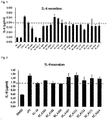
- FIG. 1 and FIG. 2 are graphs which show the values in Table 2 and Table 3 above, which shows the degree of IL-6 secretion induced by the LPS.
- Table 2 Table 3, FIG. 1 and FIG. 2 , it was confirmed that when RAW264.7 cells were treated with LPS, an inflammation-induced factor, the secretion of IL-6, a inflammatory cytokines, was increased by about six to ten times compared to the negative control group.
- EC-18 (1-palmitoyl-2-linoleoyl-3-acetylglycerol, PLAG) compound
- PLAG a substance that inhibits the expression of inflammatory cytokines
- IL-6 expression was decreased about 30% compared to the LPS-treated group
- A04, A04-2, A04-3, A05, A06, A06A, A44, A59, A59A, A60, A60A, A73, A73A, A74, A75, A76, A77, A105, A106 are a derivative similar to or more inhibiting IL-6 expression as EC-18 (PLAG), and it was confirmed that IL-6 cytokine secretion was reduced in RAW264.7 cells by as little as 30% and as much as 50%.
- compounds A04-2 and A04-3 showed the level of IL-6 expression in the negative control group not treated with LPS, and completely inhibited the activity of LPS.
- HEK-BlueTM IL-6 cells were cultured at a concentration of 1 x 10 5 cells/ml, and the cells were maintained in a 5% CO 2 humidified incubator at 37 °C, and cultured.
- the cultured HEK-BlueTM IL-6 cells were inoculated by 1 x 10 5 cells/ml, and treat with a glycerol derivative compounds of the type shown in Table 3 below in the culture solution for 1 hour, and then IL-6 (5ng/ml) was further incubated for 24 hours for STAT3 activity.
- the culture supernatant was collected for each well and centrifuged (at 3000 rpm, 5 minutes) to recover the supernatant.
- the SEAP expression level in the recovered supernatant was mixed with Quanti blue reagent and the supernatant at a ratio of 1:10 and left at 37°C for about 30 minutes. Then, the SEAP concentration was confirmed at 650nm wavelength using a spectrophotometer, and the results thereof are shown in Table 4 below.
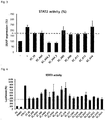
- FIG. 3 is a graph which shows the values in Table 4 above, which shows the degree of STAT3 activity induced by the IL-6.
- Table 4 and FIG. 3 it was confirmed that when IL-6 cytokine was treated in HEK-BlueTM IL-6 cells, the STAT3 activity was increased by about 2.3 times compared to the negative control group.
- the EC-18 (PLAG)-treated group decreased STAT3 activity by about 25% compared to the LPS-treated group.
- derivatives that reduce STAT3 activity to a degree similar to EC-18 (PLAG) include A04, A06, and A11 A12, and it was confirmed that most of them reduce STAT3 activity by about 25%.
- A04-2 and A04-3 it was confirmed that STAT3 activity by LPS was inhibited as much as that of the negative control without IL-6 treatment.
- RAW264.7 cells were cultured at a concentration of 1 x 10 5 cells/ml, and the cells were maintained in a 5% CO 2 humidified incubator at 37 °C, and cultured.
- the cultured RAW264.7 cells were inoculated into a 48 well plate by 1 x 10 5 cells/ml and stabilized for 18 hours.
- the pGL4.47 [luc2P/SIE/Hygro] vector containing sis-Inducible Element was mixed with Attractene to induce complex formation at room temperature for 15 minutes. This complex was treated with the cells and then further incubated for 18 hours.
- the culture solution was treated with a glycerol derivative compounds of the type shown in Table 5 below in the culture solution for 1 hour and then LPS(1 ⁇ g/ml) was treated and further incubated for 18 hours for STAT3 activity. Thereafter, the culture supernatant was removed for each well, and the remaining cells were lysed with a cell lysis buffer, and then cell lysate was recovered. 90 ⁇ l of luciferase reagent was mixed with 10 ⁇ l of the recovered cell lysate, and the degree of fluorescence was confirmed using a luminometer. The results are shown in Table 5 below.
- FIG. 4 is a graph which shows the values in Table 5 above, which shows the degree of STAT3 activity induced by the IL-6.
- Table 5 and FIG. 4 it was confirmed that when LPS was treated in RAW264.7 cells, the STAT3 activity was increased by about 8.5 times compared to the negative control group, and the EC-18 (PLAG)-treated group decreased the activity by about 50%.
- the glycerol derivative compound of the present invention it was confirmed that there are A59, A59A, A104, A111, A113, and A114 derivatives that reduce STAT3 activity to a degree similar to that of EC-18 (PLAG).
- THP-1 cells In RPMI (Hyclone, Thermo Scientific) medium to which 10% Fetal Bovine Serum was added, THP-1 cells, a human macrophage family, were suspended at a concentration of 1 x 10 5 cells/ml, and the cells were maintained in a 5% CO 2 humidified incubator at 37 °C, and cultured.
- the cultured THP-1 cells were inoculated into a 12 well plate by 1 x 10 6 cells/ml and stabilized for 30 minutes. Then, the culture solution was treated with a glycerol derivative compounds of the type shown in Table 6 below for 1 hour and then was treated with Gemcitabine (2 ⁇ g/ml) of a cell stimulator, and subsequent further incubation was conducted for 24 hours.
- the CXCL8 (IL-8) level in the recovered supernatant was measured according to the manual provided by the human IL-8 ELISA set (BD Biosciences). The day before ELISA was carried out, the IL-8 capture antibody was diluted in phosphate buffered saline, coated on a microwell, and then stored at 4 °C overnight. Each well was washed three times with a buffer solution and then blocked with 2% Bovine Serum Albumin (BSA) for 1 hour at room temperature.
- BSA Bovine Serum Albumin
- FIG. 5 is a graph which shows the values in Table 6 above, which shows the degree of CXCL8(IL-8) expression. As shown in Table 6 and FIG. 5 , it was confirmed that when Gemcitabine, an anticancer drug, was treated in THP-1 cells, the secretion of CXCL8 (IL-8) chemokine, a neutrophil cell recruitment factor, was increased by about 13 times compared to the negative control group. When the EC-18 (PLAG) was treated, it was reduced CXCL8 expression by about 20%.
- derivatives that reduce the secretion of CXCL8 (IL-8) chemokine to a similar degree to EC-18 include A04-3, A05, A44, and A45. In the case of A04-3, it was confirmed that it was reduced to about 35%.
- THP-1 cells In RPMI (Hyclone, Thermo Scientific) medium to which 10% Fetal Bovine Serum was added, THP-1 cells, a human macrophage family, were subcultured at a concentration of 1 x 10 5 cells/ml, and the cells were maintained in a 5% CO 2 humidified incubator at 37 °C, and cultured.
- RPMI Hyclone, Thermo Scientific
- THP-1 cells a human macrophage family
- the cells were maintained in a 5% CO 2 humidified incubator at 37 °C, and cultured.
- the cultured THP-1 cells were inoculated into a 12 well plate by 1 x 10 6 cells/ml and stabilized for 30 minutes.
- the culture solution was treated with a glycerol derivative compounds of the type shown in Table 7 below for 1 hour and then was treated with Gemcitabine (2 ⁇ g/ml) of a cell stimulator, and subsequent further incubation was conducted for 24 hours. Thereafter 1.5 ml of the culture supernatant was collected for each well and centrifuged (at 3000 rpm, 5 minutes) to recover the supernatant.
- the CXCL8 (IL-8) level in the recovered supernatant was measured according to the manual provided by Cultrex 96 well Laminin Cell Invasion assay. The day before Transmigration assay was carried out, a 1 x Lamin I solution was treated in the upper Invasion Chamber and coated.
- the cultured HL-60 cells were despensed of 5 x 10 4 cells/chamber, and 150 ⁇ l of the THP-1 culture supernatant prepared in advance was added to the lower chamber. Thereafter the upper chamber was removed, and the cells were attached to the bottom of the lower chamber by a centrifuge, and then the supernatant was removed. Cell dissociation/Calcein-AM solution was added and reacted for 1 hour. Then, the value obtained using a fluorescence spectroscopy was calculated by converting the number of cells. The results of the reduction in migration of HL-60 cells were shown in Table 7 below.
- FIG. 6 is a graph which shows the values in Table 7 above, which shows the degree of migration of HL-60 cell line using Transwell.
- Table 7 and FIG. 6 it was confirmed that when Gemcitabine, an anticancer drug, was treated in THP-1 cells, a neutrophil cell migration was increased by about twice compared to the negative control group.
- the EC-18 (PLAG) was treated, the migration of HL-60 cells was reduced to a degree similar to that of the negative control group.
- the treatment of the glycerol derivative compound of the present invention was added, it was confirmed that there are A73 and A75 derivatives that reduce cell migration similar to EC-18 (PLAG).
- A549 cells were subcultured at a concentration of 1 x 10 5 cells/ml, and the cells were maintained in a 5% CO 2 humidified incubator at 37 °C, and cultured.
- the cultured A549 cells were inoculated into a 48 well plate by 1 x 10 5 cells/ml and stabilized for 18 hours.
- pGL4-STAT6 reporter vector containing a STAT6 binding promoter portion was mixed with Attractene to induce complex formation at room temperature for 15 minutes. This complex was treated with the cells and then further incubated for 24 hours.
- the culture solution was treated with a glycerol derivative compounds of the type shown in Table 8 and Table 9 below for 1 hour in the culture solution, and then IL-4 (2 ng/ml or 10 ng/ml) was further incubated for 20 hours for STAT6 activity. Thereafter, the culture supernatant was removed for each well, and the remaining cells were lysed with a cell lysis buffer, and then cell lysate was recovered. 90 ⁇ l of luciferase reagent was mixed with 10 ⁇ l of the recovered cell lysate, and the degree of fluorescence was confirmed using a luminometer. The results are shown in Table 8 and Table 9 below.
- FIG. 7 and FIG. 8 are graphs which show the values in Table 8 and Table 9 above, which show the degree of STAT6 activity induced by the IL-4.
- Table 8 Table 9, FIG. 7 and FIG. 8 , it were confirmed that when IL-4 was treated in A549 cells, the STAT6 activity was increased according to amount of the treated IL-4 by about 120 to 2000 times compared to the negative control group.
- the STAT6 activity was reduced by about 50%.
- A04-2, A04-3, A06, A12, A59, A60A, A73, A73A and A76 are a derivative that significantly decreases STAT6 activity to a similar degree to EC-18 (PLAG), and it was confirmed that the STAT6 activity decreased to a degree similar to the results of most of the EC-18 treatment group. Among them, it was confirmed that A04-2, A04-3, and A73A significantly reduced STAT6 activity by up to about 80% compared to the EC-18 treatment group.
- EL-4 cells a mouse lymphoma family, were subcultured at a concentration of 1 x 10 5 cells/ml, and the cells were maintained in a 5% CO 2 humidified incubator at 37 °C, and cultured.
- the cultured EL-4 cells were inoculated into a 48 well plate by 5 x 10 4 cells/ml and stabilized for 30 hours. Then, the culture solution was treated with a glycerol derivative compounds of the type shown in Table 10 and Table 11 below for 2 hours.
- IL-4 level in the recovered supernatant was measured according to the manual provided by the Mouse IL-4 ELISA set (BD Biosciences). The day before ELISA was carried out, the IL-4 capture antibody was diluted in phosphate buffered saline, coated on a microwell, and then stored at 4 °C overnight.
- Each well was washed three times with a buffer solution and then blocked with 2% Bovine Serum Albumin (BSA) for 1 hour at room temperature. After washing with a washing buffer solution three times, 100 ⁇ l of sample was dispensed into each well and left at room temperature for 2 hours. Detection antibody which was washed three times with a washing buffer solution and diluted was dispensed into each well and allowed to react at room temperature for 1 hour and left at room temperature for 1 hour. Thereafter, the secondary HRP conjugated antibody was reacted at room temperature for 30 minutes, washed three times with a washing buffer solution, and treated with 50 ⁇ l of stop solution for each well, and then the optical density was measured at 450 nm with an ELISA microplate leader.
- BSA Bovine Serum Albumin
- FIG. 9 and FIG. 10 are graphs which show the values in Table 8 and Table 9 above, which show the degree of IL-4 secretion induced by the PKC activator.
- Table 10 Table 11, FIG. 9 and FIG. 10 , it were confirmed that when PKC activator were treated in mouse EL-4 cells, the secretion of IL-4 cytokine was rapidly increased by compared to the negative control group(Experiment 2). when EC-18 (PLAG) compound was treated, the IL-4 expression was decrease about 20% to 60% (Experiment 3).
- derivatives that reduce the secretion of IL-4 chemokine to a similar degree to EC-18 include A74, A75, A77, A104, A105, A106, A107, A111, A112 and A113. It was confirmed that the reduction was reduced from about 20% to 60%.
Landscapes
- Chemical & Material Sciences (AREA)
- Organic Chemistry (AREA)
- Health & Medical Sciences (AREA)
- Life Sciences & Earth Sciences (AREA)
- Veterinary Medicine (AREA)
- Pharmacology & Pharmacy (AREA)
- Public Health (AREA)
- General Health & Medical Sciences (AREA)
- Medicinal Chemistry (AREA)
- Animal Behavior & Ethology (AREA)
- Nuclear Medicine, Radiotherapy & Molecular Imaging (AREA)
- General Chemical & Material Sciences (AREA)
- Chemical Kinetics & Catalysis (AREA)
- Immunology (AREA)
- Engineering & Computer Science (AREA)
- Bioinformatics & Cheminformatics (AREA)
- Oncology (AREA)
- Communicable Diseases (AREA)
- Epidemiology (AREA)
- Transplantation (AREA)
- Rheumatology (AREA)
- Pain & Pain Management (AREA)
- Virology (AREA)
- Nutrition Science (AREA)
- Polymers & Plastics (AREA)
- Emergency Medicine (AREA)
- Food Science & Technology (AREA)
- Pulmonology (AREA)
- Mycology (AREA)
- Oil, Petroleum & Natural Gas (AREA)
- Acyclic And Carbocyclic Compounds In Medicinal Compositions (AREA)
- Coloring Foods And Improving Nutritive Qualities (AREA)
- Organic Low-Molecular-Weight Compounds And Preparation Thereof (AREA)
Applications Claiming Priority (2)
| Application Number | Priority Date | Filing Date | Title |
|---|---|---|---|
| KR1020180046890A KR102062291B1 (ko) | 2018-04-23 | 2018-04-23 | 글리세롤 유도체, 이의 제조방법 및 이를 유효성분으로 함유하는 면역조절제 |
| PCT/KR2019/004789 WO2019208980A1 (fr) | 2018-04-23 | 2019-04-19 | Dérivé de glycérol, son procédé de préparation et immunomodulateur le comprenant en tant que principe actif |
Publications (2)
| Publication Number | Publication Date |
|---|---|
| EP3778558A1 true EP3778558A1 (fr) | 2021-02-17 |
| EP3778558A4 EP3778558A4 (fr) | 2022-08-10 |
Family
ID=68293615
Family Applications (1)
| Application Number | Title | Priority Date | Filing Date |
|---|---|---|---|
| EP19792728.8A Pending EP3778558A4 (fr) | 2018-04-23 | 2019-04-19 | Dérivé de glycérol, son procédé de préparation et immunomodulateur le comprenant en tant que principe actif |
Country Status (6)
| Country | Link |
|---|---|
| US (1) | US12297163B2 (fr) |
| EP (1) | EP3778558A4 (fr) |
| JP (1) | JP7105916B2 (fr) |
| KR (1) | KR102062291B1 (fr) |
| CN (1) | CN112041297B (fr) |
| WO (1) | WO2019208980A1 (fr) |
Families Citing this family (2)
| Publication number | Priority date | Publication date | Assignee | Title |
|---|---|---|---|---|
| US12567586B2 (en) * | 2023-02-06 | 2026-03-03 | Ut-Battelle, Llc | Facile surface coatings for performance improvement of battery material |
| KR102807284B1 (ko) * | 2023-05-25 | 2025-05-19 | 광동제약 주식회사 | 1-팔미토일-2-리놀레오일-3-아세틸-rac-글리세롤의 효소적 제조방법 |
Family Cites Families (16)
| Publication number | Priority date | Publication date | Assignee | Title |
|---|---|---|---|---|
| DE277700C (fr) * | ||||
| DE2820893C2 (de) | 1978-05-12 | 1986-02-20 | A. Nattermann & Cie GmbH, 5000 Köln | Strukturanaloga von natürlichen Phospholipiden und Verfahren zur Herstellung dieser Verbindungen |
| DE2820892A1 (de) | 1978-05-12 | 1979-11-22 | Nattermann A & Cie | Neue strukturanaloga von glyveriden und verfahren zu deren herstellung |
| DD277700A1 (de) * | 1988-12-06 | 1990-04-11 | Akad Wissenschaften Ddr | Verfahren zur herstellung von enantiomeren glycerinsaeurederivaten |
| US5059442A (en) * | 1989-09-19 | 1991-10-22 | Nabisco Brands, Inc. | Primary amide esters as low calorie fat mimetics |
| WO2004015077A2 (fr) | 2002-08-08 | 2004-02-19 | University Of Georgia Research Foundation, Inc. | Compositions et methodes de differentiation neuronale de cellules souches embryonnaires humaines |
| EP1550651A4 (fr) * | 2002-09-26 | 2006-06-14 | Kyowa Hakko Kogyo Kk | Derive glycerol |
| CA2562897C (fr) * | 2004-04-24 | 2011-03-15 | Sang-Hee Kim | Agent immunomodulateur, agent anticancereux et aliments sante contenant des derives du monoacetyldiacylglycerol |
| NZ552205A (en) | 2006-12-20 | 2009-10-30 | Ind Res Ltd | Phosphatidylinositol mannosides and analogues thereof |
| CA2677670C (fr) | 2007-03-20 | 2010-08-03 | Centre De Recherche Sur Les Biotechnologies Marines | Compositions comprenant des monoglycerides d'acides gras polyinsatures ou des derives de ceux-ci et leurs utilisations |
| IL187247A0 (en) | 2007-11-08 | 2008-12-29 | Hadasit Med Res Service | Novel synthetic analogs of sphingolipids |
| KR20110088991A (ko) | 2010-01-29 | 2011-08-04 | 부산대학교 산학협력단 | 신규 카나비노이드 유도체 및 이의 의학적 용도 |
| CA2921849C (fr) * | 2013-08-19 | 2018-05-08 | Korea Research Institute Of Bioscience And Biotechnology | Composition contenant un compose monoacetyldiacylglycerol comme principe actif pour la prevention ou le traitement de maladies pulmonaires obstructives chroniques |
| WO2016086136A1 (fr) | 2014-11-26 | 2016-06-02 | Catabasis Pharmaceuticals, Inc. | Conjugués de cystéamine d'acide gras de modulateurs de cftr et leur utilisation dans le traitement de troubles médicaux |
| RU2730871C1 (ru) * | 2015-09-30 | 2020-08-26 | Сионоги Энд Ко., Лтд. | Производное нуклеиновой кислоты, обладающее иммуностимулирующей активностью |
| US10940201B2 (en) | 2015-09-30 | 2021-03-09 | Shionogi & Co., Ltd. | Nucleic acid derivative having immunostimulatory activity |
-
2018
- 2018-04-23 KR KR1020180046890A patent/KR102062291B1/ko active Active
-
2019
- 2019-04-19 WO PCT/KR2019/004789 patent/WO2019208980A1/fr not_active Ceased
- 2019-04-19 EP EP19792728.8A patent/EP3778558A4/fr active Pending
- 2019-04-19 US US17/047,123 patent/US12297163B2/en active Active
- 2019-04-19 CN CN201980027923.7A patent/CN112041297B/zh active Active
- 2019-04-19 JP JP2020558931A patent/JP7105916B2/ja active Active
Also Published As
| Publication number | Publication date |
|---|---|
| CN112041297B (zh) | 2023-10-20 |
| US20210198183A1 (en) | 2021-07-01 |
| JP7105916B2 (ja) | 2022-07-25 |
| KR20190123123A (ko) | 2019-10-31 |
| EP3778558A4 (fr) | 2022-08-10 |
| KR102062291B1 (ko) | 2020-01-03 |
| WO2019208980A1 (fr) | 2019-10-31 |
| US12297163B2 (en) | 2025-05-13 |
| CN112041297A (zh) | 2020-12-04 |
| JP2021519807A (ja) | 2021-08-12 |
Similar Documents
| Publication | Publication Date | Title |
|---|---|---|
| EP3750867B1 (fr) | Composé 1,2-diacylglycérol, son procédé de préparation et immunomodulateur le contenant en tant qu'ingrédient actif | |
| KR101621851B1 (ko) | 모노아세틸디아실글리세롤 화합물을 유효성분으로 함유하는 혈액암 또는 암전이 억제용 조성물 | |
| EP3778558A1 (fr) | Dérivé de glycérol, son procédé de préparation et immunomodulateur le comprenant en tant que principe actif | |
| JP5141553B2 (ja) | 抗炎症用組成物 | |
| KR101710474B1 (ko) | 갈아마이드 유도체 및 이의 용도 | |
| KR100570936B1 (ko) | 시클로펜텐 고리 또는 시클로펜탄 고리를 갖는 화합물 | |
| WO2007145253A1 (fr) | INHIBITEUR DE L'ACTIVATION DU NF-ϰB | |
| JP6923100B1 (ja) | 新規イソフラボン化合物 | |
| TW202304497A (zh) | 新穎多酚化合物 | |
| KR101247802B1 (ko) | 피페린 또는 이의 약학적으로 허용가능한 염을 유효성분으로 포함하는 염증성 질환 예방 및 치료용 조성물 | |
| JP7050174B2 (ja) | ジアシルグリセロールラクトン化合物、その製造方法及びこれを有効成分として含有する免疫増進剤 | |
| US11191746B2 (en) | Composition for inhibiting a growth of cancer stem cells comprising ciclesonide | |
| KR102776801B1 (ko) | 플라본 유도체를 이용한 항암 조성물 | |
| WO1999029647A1 (fr) | Inducteurs de l'apoptose | |
| JP2018172296A5 (fr) | ||
| KR101839356B1 (ko) | 프리마퀸을 포함하는, 암 줄기세포 성장 억제용 조성물 | |
| KR101323157B1 (ko) | 3-카페오일-4-다이하이드로카페오일 퀴닉산을 함유하는 암 전이 억제용 약학 조성물 | |
| JP2016196413A (ja) | モニエロサイドa及びその誘導体、又はそれを有効成分として含有する医薬用組成物、健康食品又は化粧品 | |
| CN114539092A (zh) | 一种燕麦麸酚酰胺生物碱及其制备方法与在制备止痒产品中的应用 |
Legal Events
| Date | Code | Title | Description |
|---|---|---|---|
| STAA | Information on the status of an ep patent application or granted ep patent |
Free format text: STATUS: THE INTERNATIONAL PUBLICATION HAS BEEN MADE |
|
| PUAI | Public reference made under article 153(3) epc to a published international application that has entered the european phase |
Free format text: ORIGINAL CODE: 0009012 |
|
| STAA | Information on the status of an ep patent application or granted ep patent |
Free format text: STATUS: REQUEST FOR EXAMINATION WAS MADE |
|
| 17P | Request for examination filed |
Effective date: 20201028 |
|
| AK | Designated contracting states |
Kind code of ref document: A1 Designated state(s): AL AT BE BG CH CY CZ DE DK EE ES FI FR GB GR HR HU IE IS IT LI LT LU LV MC MK MT NL NO PL PT RO RS SE SI SK SM TR |
|
| AX | Request for extension of the european patent |
Extension state: BA ME |
|
| DAV | Request for validation of the european patent (deleted) | ||
| DAX | Request for extension of the european patent (deleted) | ||
| RIC1 | Information provided on ipc code assigned before grant |
Ipc: A61P 35/00 20060101ALI20220221BHEP Ipc: A61P 29/00 20060101ALI20220221BHEP Ipc: A61P 31/12 20060101ALI20220221BHEP Ipc: A61K 31/133 20060101ALI20220221BHEP Ipc: C07C 235/28 20060101AFI20220221BHEP |
|
| REG | Reference to a national code |
Ref country code: DE Ref legal event code: R079 Free format text: PREVIOUS MAIN CLASS: C07C0235280000 Ipc: A61K0031133000 |
|
| A4 | Supplementary search report drawn up and despatched |
Effective date: 20220708 |
|
| RIC1 | Information provided on ipc code assigned before grant |
Ipc: C07C 327/28 20060101ALI20220704BHEP Ipc: C07C 235/06 20060101ALI20220704BHEP Ipc: C07C 233/20 20060101ALI20220704BHEP Ipc: C07C 233/18 20060101ALI20220704BHEP Ipc: A61P 35/00 20060101ALI20220704BHEP Ipc: A61P 29/00 20060101ALI20220704BHEP Ipc: A61P 31/12 20060101ALI20220704BHEP Ipc: A61K 31/133 20060101AFI20220704BHEP |
|
| STAA | Information on the status of an ep patent application or granted ep patent |
Free format text: STATUS: EXAMINATION IS IN PROGRESS |
|
| 17Q | First examination report despatched |
Effective date: 20241223 |