EP3778657A1 - Härtbare zusammensetzung, gehärtetes produkt daraus und elektronisches bauteil enthaltend diesem gehärteten produkt - Google Patents
Härtbare zusammensetzung, gehärtetes produkt daraus und elektronisches bauteil enthaltend diesem gehärteten produkt Download PDFInfo
- Publication number
- EP3778657A1 EP3778657A1 EP19776498.8A EP19776498A EP3778657A1 EP 3778657 A1 EP3778657 A1 EP 3778657A1 EP 19776498 A EP19776498 A EP 19776498A EP 3778657 A1 EP3778657 A1 EP 3778657A1
- Authority
- EP
- European Patent Office
- Prior art keywords
- curable composition
- manufactured
- meth
- acrylate
- cured product
- Prior art date
- Legal status (The legal status is an assumption and is not a legal conclusion. Google has not performed a legal analysis and makes no representation as to the accuracy of the status listed.)
- Withdrawn
Links
Images
Classifications
-
- C—CHEMISTRY; METALLURGY
- C09—DYES; PAINTS; POLISHES; NATURAL RESINS; ADHESIVES; COMPOSITIONS NOT OTHERWISE PROVIDED FOR; APPLICATIONS OF MATERIALS NOT OTHERWISE PROVIDED FOR
- C09D—COATING COMPOSITIONS, e.g. PAINTS, VARNISHES OR LACQUERS; FILLING PASTES; CHEMICAL PAINT OR INK REMOVERS; INKS; CORRECTING FLUIDS; WOODSTAINS; PASTES OR SOLIDS FOR COLOURING OR PRINTING; USE OF MATERIALS THEREFOR
- C09D11/00—Inks
- C09D11/02—Printing inks
- C09D11/10—Printing inks based on artificial resins
- C09D11/101—Inks specially adapted for printing processes involving curing by wave energy or particle radiation, e.g. with UV-curing following the printing
-
- B—PERFORMING OPERATIONS; TRANSPORTING
- B41—PRINTING; LINING MACHINES; TYPEWRITERS; STAMPS
- B41M—PRINTING, DUPLICATING, MARKING, OR COPYING PROCESSES; COLOUR PRINTING
- B41M5/00—Duplicating or marking methods; Sheet materials for use therein
- B41M5/0023—Digital printing methods characterised by the inks used
-
- C—CHEMISTRY; METALLURGY
- C08—ORGANIC MACROMOLECULAR COMPOUNDS; THEIR PREPARATION OR CHEMICAL WORKING-UP; COMPOSITIONS BASED THEREON
- C08F—MACROMOLECULAR COMPOUNDS OBTAINED BY REACTIONS ONLY INVOLVING CARBON-TO-CARBON UNSATURATED BONDS
- C08F2/00—Processes of polymerisation
- C08F2/44—Polymerisation in the presence of compounding ingredients, e.g. plasticisers, dyestuffs, fillers
-
- C—CHEMISTRY; METALLURGY
- C08—ORGANIC MACROMOLECULAR COMPOUNDS; THEIR PREPARATION OR CHEMICAL WORKING-UP; COMPOSITIONS BASED THEREON
- C08F—MACROMOLECULAR COMPOUNDS OBTAINED BY REACTIONS ONLY INVOLVING CARBON-TO-CARBON UNSATURATED BONDS
- C08F2/00—Processes of polymerisation
- C08F2/46—Polymerisation initiated by wave energy or particle radiation
- C08F2/48—Polymerisation initiated by wave energy or particle radiation by ultraviolet or visible light
-
- C—CHEMISTRY; METALLURGY
- C08—ORGANIC MACROMOLECULAR COMPOUNDS; THEIR PREPARATION OR CHEMICAL WORKING-UP; COMPOSITIONS BASED THEREON
- C08F—MACROMOLECULAR COMPOUNDS OBTAINED BY REACTIONS ONLY INVOLVING CARBON-TO-CARBON UNSATURATED BONDS
- C08F220/00—Copolymers of compounds having one or more unsaturated aliphatic radicals, each having only one carbon-to-carbon double bond, and only one being terminated by only one carboxyl radical or a salt, anhydride ester, amide, imide or nitrile thereof
- C08F220/02—Monocarboxylic acids having less than ten carbon atoms; Derivatives thereof
- C08F220/10—Esters
- C08F220/12—Esters of monohydric alcohols or phenols
- C08F220/16—Esters of monohydric alcohols or phenols of phenols or of alcohols containing two or more carbon atoms
- C08F220/18—Esters of monohydric alcohols or phenols of phenols or of alcohols containing two or more carbon atoms with acrylic or methacrylic acids
-
- C—CHEMISTRY; METALLURGY
- C08—ORGANIC MACROMOLECULAR COMPOUNDS; THEIR PREPARATION OR CHEMICAL WORKING-UP; COMPOSITIONS BASED THEREON
- C08K—Use of inorganic or non-macromolecular organic substances as compounding ingredients
- C08K3/00—Use of inorganic substances as compounding ingredients
- C08K3/01—Use of inorganic substances as compounding ingredients characterized by their specific function
- C08K3/013—Fillers, pigments or reinforcing additives
-
- C—CHEMISTRY; METALLURGY
- C08—ORGANIC MACROMOLECULAR COMPOUNDS; THEIR PREPARATION OR CHEMICAL WORKING-UP; COMPOSITIONS BASED THEREON
- C08K—Use of inorganic or non-macromolecular organic substances as compounding ingredients
- C08K3/00—Use of inorganic substances as compounding ingredients
- C08K3/18—Oxygen-containing compounds, e.g. metal carbonyls
- C08K3/20—Oxides; Hydroxides
- C08K3/22—Oxides; Hydroxides of metals
-
- C—CHEMISTRY; METALLURGY
- C09—DYES; PAINTS; POLISHES; NATURAL RESINS; ADHESIVES; COMPOSITIONS NOT OTHERWISE PROVIDED FOR; APPLICATIONS OF MATERIALS NOT OTHERWISE PROVIDED FOR
- C09D—COATING COMPOSITIONS, e.g. PAINTS, VARNISHES OR LACQUERS; FILLING PASTES; CHEMICAL PAINT OR INK REMOVERS; INKS; CORRECTING FLUIDS; WOODSTAINS; PASTES OR SOLIDS FOR COLOURING OR PRINTING; USE OF MATERIALS THEREFOR
- C09D11/00—Inks
- C09D11/30—Inkjet printing inks
- C09D11/32—Inkjet printing inks characterised by colouring agents
- C09D11/322—Pigment inks
-
- C—CHEMISTRY; METALLURGY
- C09—DYES; PAINTS; POLISHES; NATURAL RESINS; ADHESIVES; COMPOSITIONS NOT OTHERWISE PROVIDED FOR; APPLICATIONS OF MATERIALS NOT OTHERWISE PROVIDED FOR
- C09K—MATERIALS FOR MISCELLANEOUS APPLICATIONS, NOT PROVIDED FOR ELSEWHERE
- C09K11/00—Luminescent materials, e.g. electroluminescent or chemiluminescent
- C09K11/06—Luminescent materials, e.g. electroluminescent or chemiluminescent containing organic luminescent materials
-
- H—ELECTRICITY
- H05—ELECTRIC TECHNIQUES NOT OTHERWISE PROVIDED FOR
- H05K—PRINTED CIRCUITS; CASINGS OR CONSTRUCTIONAL DETAILS OF ELECTRIC APPARATUS; MANUFACTURE OF ASSEMBLAGES OF ELECTRICAL COMPONENTS
- H05K3/00—Apparatus or processes for manufacturing printed circuits
- H05K3/22—Secondary treatment of printed circuits
- H05K3/28—Applying non-metallic protective coatings
- H05K3/285—Permanent coating compositions
- H05K3/287—Photosensitive compositions
-
- C—CHEMISTRY; METALLURGY
- C08—ORGANIC MACROMOLECULAR COMPOUNDS; THEIR PREPARATION OR CHEMICAL WORKING-UP; COMPOSITIONS BASED THEREON
- C08K—Use of inorganic or non-macromolecular organic substances as compounding ingredients
- C08K3/00—Use of inorganic substances as compounding ingredients
- C08K3/18—Oxygen-containing compounds, e.g. metal carbonyls
- C08K3/20—Oxides; Hydroxides
- C08K3/22—Oxides; Hydroxides of metals
- C08K2003/2237—Oxides; Hydroxides of metals of titanium
-
- C—CHEMISTRY; METALLURGY
- C08—ORGANIC MACROMOLECULAR COMPOUNDS; THEIR PREPARATION OR CHEMICAL WORKING-UP; COMPOSITIONS BASED THEREON
- C08K—Use of inorganic or non-macromolecular organic substances as compounding ingredients
- C08K3/00—Use of inorganic substances as compounding ingredients
- C08K3/18—Oxygen-containing compounds, e.g. metal carbonyls
- C08K3/20—Oxides; Hydroxides
- C08K3/22—Oxides; Hydroxides of metals
- C08K2003/2237—Oxides; Hydroxides of metals of titanium
- C08K2003/2241—Titanium dioxide
-
- H—ELECTRICITY
- H05—ELECTRIC TECHNIQUES NOT OTHERWISE PROVIDED FOR
- H05K—PRINTED CIRCUITS; CASINGS OR CONSTRUCTIONAL DETAILS OF ELECTRIC APPARATUS; MANUFACTURE OF ASSEMBLAGES OF ELECTRICAL COMPONENTS
- H05K2201/00—Indexing scheme relating to printed circuits covered by H05K1/00
- H05K2201/20—Details of printed circuits not provided for in H05K2201/01 - H05K2201/10
- H05K2201/2054—Light-reflecting surface, e.g. conductors, substrates, coatings, dielectrics
-
- H—ELECTRICITY
- H05—ELECTRIC TECHNIQUES NOT OTHERWISE PROVIDED FOR
- H05K—PRINTED CIRCUITS; CASINGS OR CONSTRUCTIONAL DETAILS OF ELECTRIC APPARATUS; MANUFACTURE OF ASSEMBLAGES OF ELECTRICAL COMPONENTS
- H05K2203/00—Indexing scheme relating to apparatus or processes for manufacturing printed circuits covered by H05K3/00
- H05K2203/01—Tools for processing; Objects used during processing
- H05K2203/0104—Tools for processing; Objects used during processing for patterning or coating
- H05K2203/013—Inkjet printing, e.g. for printing insulating material or resist
-
- H—ELECTRICITY
- H05—ELECTRIC TECHNIQUES NOT OTHERWISE PROVIDED FOR
- H05K—PRINTED CIRCUITS; CASINGS OR CONSTRUCTIONAL DETAILS OF ELECTRIC APPARATUS; MANUFACTURE OF ASSEMBLAGES OF ELECTRICAL COMPONENTS
- H05K3/00—Apparatus or processes for manufacturing printed circuits
- H05K3/30—Assembling printed circuits with electric components, e.g. with resistors
- H05K3/32—Assembling printed circuits with electric components, e.g. with resistors electrically connecting electric components or wires to printed circuits
- H05K3/34—Assembling printed circuits with electric components, e.g. with resistors electrically connecting electric components or wires to printed circuits by soldering
- H05K3/3452—Solder masks
Definitions
- the present invention relates to a curable composition and, in particular, a curable composition applicable to an inkjet printing method.
- the present invention relates to a cured product of the curable composition and an electronic component having the cured product.
- LEDs light-emitting diodes
- LEDs are widely used as light sources for lighting apparatuses.
- a solder resist which is used as a permanent film provided on the surface of a printed wiring board, is white colored for reflection for effective utilization of the LED emission.
- Such method is used for enhancing the backlight effect in the liquid crystal displays or LED lightings.
- Patent Document 1 proposed the use of a white colorant such as titanium oxide.
- Patent Document 2 also disclosed a fluorescent whitening agent added to a curable composition for improving the reflectance.
- printed wiring boards have been manufactured by use of a photographic developing method and a screen printing method, for a coating step wherein a substrate of the printing board is coated with a composition for a solder resist.
- Those methods are used for protecting a conductor circuit on the substrate from solder adhesion, i.e., for applying the solder resist only to desired portions on the substrate.
- patterning is performed by applying to a substrate, a photosensitive resin material with a photomask, followed by light exposure. Then, the portions of the photosensitive resin material which are not covered by the photomask are exclusively cured, while the uncured portions are dissolved with a developer. Thereafter, and then heat application or the like is carried out for further curing, to complete the patterning.
- This photographic developing method is a complex method involving a large number of steps such as application of a photosensitive resin material to the entire surface of a substrate, positioning of a photomask having a desired shape, light exposure, development, and thermal curing. As a result, cost including equipment investment and material is to be increased.
- a resist ink is applied to a screen (a stencil printing plate) having a preformed pattern.
- the resist ink is transferred to a substrate via the screen by the pressure application to the stencil printing plate with rubber plate called a squeegee.
- This method is also carried out with a relatively large number of steps, and the printing accuracy could not be evaluated satisfactory.
- Patent Documents 3 and 4 a further printing technology has been developed, for applying a solder resist to a substrate using an inkjet printer.
- the inkjet method is an excellent method which enables highly precise image formation, eliminating complex procedures with a large number of steps required in the photographic developing method and the screen printing method. Moreover, the inkjet method is advantageous because of the significantly lowered investment on equipment, and the amount to be consumed of a developer, a resist ink, a cleaning solvent or the like can be minimized.
- the ink to be used has a predetermined flowability, irrespective of the type and color of a solder resist. Therefore, it is impossible to directly use existing inks designed for screen printing or the like, of which viscosity is about 20,000 mPa ⁇ s.
- white curable compositions are proposed , which are applicable to inkjet printers, having excellent resist ink film forming property and dispersibility, as well as excellent coat film hardness and heat resistance (Patent Documents 5 and 6).
- Patent Documents 5 and 6 it is so described in Patent Documents 5 and 6 that the cured coat films obtained from the white curable compositions give favorable results with respect to reflectance and yellowing suppression.
- the yellowing suppression is not necessarily satisfactory, and a further improvement would be possible in terms of solder heat resistance and crack resistance upon reflowing.
- an object of the present invention is to provide a curable composition that does not have prior art drawbacks and that has excellent reflectance, yellowing suppression, solder heat resistance, and crack resistance.
- the curable composition of the present invention comprises (A) a white colorant, (B) a photopolymerization initiator, (C) a di- or higher functional (meth)acrylate monomer having a heterocycle, and (D) a thermosetting compound.
- the di- or higher functional (meth)acrylate monomer having a heterocycle in the curable composition of the present invention is preferably a 5- or 6-membered alicyclic heterocycle compound having 1 or 2 heteroatoms.
- the curable composition of the present invention further comprises (E) a hyperbranched polymer or oligomer.
- the white colorant (A) contained in the curable composition of the present invention preferably has an average particle diameter of 1 ⁇ m or less.
- the curable composition of the present invention further comprises (F) a fluorescent whitening agent and (G) a diluent for dissolving the fluorescent whitening agent.
- the curable composition of the present invention is preferably used with inkjet printing.
- the cured product of the present invention is obtained by curing any of the above curable compositions, and the electronic component of the present invention comprises the cured product.
- the curable composition of the present invention comprises (A) a white colorant, (B) a photopolymerization initiator, (C) a di- or higher functional (meth)acrylate monomer having a heterocycle, and (D) a thermosetting compound, and thus forms, after being cured, as a white cured product having an improved crack resistance upon reflowing and solder heat resistance as well as a high reflectance. Moreover, the cured coat film (the cured product) of the present invention shows well restricted yellowing even after a long period of time, maintaining the whiteness.
- the electronic component comprising the cured product of the present invention exhibits excellent light reflectance by the cured product, restricted yellowing , further having solder heat resistance and crack resistance upon reflowing.
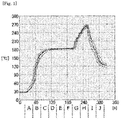
- Fig. 1 is a graph showing the conditions of reflow treatment to be applied to the cured products (test substrates) from the curable compositions as embodiments of the present invention.
- the curable composition of the present invention comprises (A) a white colorant, (B) a photopolymerization initiator, (C) a di- or higher functional (meth)acrylate monomer having a heterocycle, and (D) a thermosetting compound. Having such formulation, the curable composition of the present invention exhibits not only excellent surface curability and coat film hardness, but also such a tendency not to have cracks during reflowing and good solder heat resistance.
- a fluorescent whitening agent and (G) a diluent for dissolving the fluorescent whitening agent are also used. Therefore, (F) the fluorescent whitening agent is well dissolved by (G) the diluent, and the resultant cured coating film (the cured product) has an improved reflectance as well as excellent insulating properties.
- the cured product of present invention preferably reflects light having a wavelength especially in the region of 400 to 500 nm and has an excellent reflectance for the light in this region.
- the curable composition of the present invention forms a white coating film that has an improved reflectance and restricted yellowing with time. In other words, it is possible to suppress yellowing for a long period of time and maintain an excellent reflectance.
- the curable composition of the present invention has a viscosity of 150 mPa ⁇ s or less at room temperature (25°C) and is suitable for use with inkjet printers.
- Examples of the white colorant (A) include titanium oxide, zinc oxide, potassium titanate, zirconium oxide, antimony oxide, white lead, zinc sulfide, and lead titanate. Titanium oxide is preferably used because of the large thermal discoloration restriction effect.
- the composition of the present invention can be white colored, and a high reflectance can be obtained.
- Titanium oxide may be titanium oxide having either one of rutile type, anatase type, and ramsdellite type, and one of these types may be used singly or two or more of these can be used in combination.
- ramsdellite type titanium oxide can be obtained by performing lithium desorption treatment on ramsdellite type Li0.5TiO2 by chemical oxidation.
- rutile type titanium oxide which will reduce discoloration tendency to be caused by light irradiation, and can prevent the product from the quality deterioration even in a severe application environment.
- a rutile type titanium oxide having a surface treated with aluminum oxide such as alumina or silica may be used.
- rutile type titanium oxide can be used. There are two methods for producing rutile type titanium oxide, i.e., a sulfuric acid method and a chlorine method. In the present invention, rutile type titanium oxide produced by either one of the methods can be appropriately used.
- Examples of the commercially available rutile type titanium oxide include Tipaque R-820, Tipaque R-830, Tipaque R-930, Tipaque R-550, Tipaque R-630, Tipaque R-680, Tipaque R-670, Tipaque R-680, Tipaque R-670, Tipaque R-780, Tipaque R-850, Tipaque CR-50, Tipaque CR-57, Tipaque CR-80, Tipaque CR-90, Tipaque CR-93, Tipaque CR-95, Tipaque CR-97, Tipaque CR-60, Tipaque CR-63, Tipaque CR-67, Tipaque CR-58, Tipaque CR-85, and Tipaque UT771 (all manufactured by ISHIHARA SANGYO KAISHA, LTD.); Ti-Pure R-100, Ti-Pure R-101, Ti-
- anatase type titanium oxide is usable.
- examples of usable commercially available anatase type titanium oxide include TITONE A-110, TITONE TCA-123E, TITONE A-190, TITONE A-197, TITONE SA-1, and TITONE SA-1L (manufactured by Sakai Chemical Industry Co., Ltd.); TA-100, TA-200, TA-300, TA-400, TA-500, and TP-2 (manufactured by Fuji Titanium Industry Co., Ltd.); TITANIX JA-1, TITANIX JA-3, TITANIX JA-4, TITANIX JA-5, TITANIX JA-C (manufactured by TAYCA CORPORATION); KA-10, KA-15, KA-20, and KA-30 (manufactured by Titan Kogyo, Ltd.); and Tipaque A-100, Tipaque A-220, and Tipaque W-10 (manufactured
- the average particle diameter (the number average diameter (MN)) of the white colorant is preferably in the range of 1 ⁇ m or less, and particularly preferably in the range of 0.01 ⁇ m to 1 ⁇ m or less.
- the particle diameter is 1 ⁇ m or less, the dispersibility of the pigment is improved, and the injection property of the curable composition is improved when used with an inkjet method. Further, the use of particles having particle diameter of 0.01 ⁇ m or more hardly brings about aggregation.
- the average particle diameter as used herein is the average particle diameter (D50) obtained by including not only primary particles but also secondary particles (aggregates).
- D50 is measured by a laser diffraction method.
- An exemplary measurement apparatus for the laser diffraction method is a Microtrac series manufactured by NIKKISO CO., LTD.
- the amount of the white colorant blended is preferably in the range of 5 to 80% by mass and more preferably in the range of 10 to 50% by mass based on the total amount of the composition.
- the blending ratio of the white colorant being set to be 5% by mass or more, the film forming property of the curable composition improves, the warp deformation (curling) of the cured product hardly occurs, and the reflectance of the cured product is also improved.
- the blending ratio of the white colorant is 80% by mass or less, the injection property in the inkjet printing is improved.
- photopolymerization initiator (B) is applicable without particularly limitation, as long as the initiator can polymerize (meth)acrylate under the irradiation of an energy ray, making it possible to use a radical polymerization initiator.
- any types of compound can be used, which produces a radical with irradiation of light, laser, electron beam or the like, to initiate a radical polymerization reaction.
- the radical photopolymerization initiator include benzoin/benzoin alkyl ethers such as benzoin, benzoin methyl ether, benzoin ethyl ether, and benzoin isopropyl ether; acetophenones such as acetophenone, 2,2-dimethoxy-2-phenylacetophenone, 2,2-diethoxy-2-phenylacetophenone, and 1,1-dichloroacetophenone; aminoacetophenones such as 2-methyl-1-[4-(methylthio)phenyl]-2-morpholinopropan-1-one, 2-benzyl-2-dimethylamino-1-(4-morpholinophenyl)-butan-1-one, and N,N-dimethylaminoacetophenone; anthr
- Examples of the commercially available photopolymerization initiators include Omnirad 907, Omnirad 127, Omnirad 81, Omnirad 819, Omnirad BDK, and Omnirad TPO (all manufactured by IGM Resins).
- Each of the above radical photopolymerization initiators can be used singly, or a plurality of them can be used as a mixture.
- photoinitiator aids such as tertiary amines such as N,N-dimethylaminobenzoic acid ethyl ester, N,N-dimethylaminobenzoic acid isoamyl ester, pentyl-4-dimethylaminobenzoate, triethylamine, and triethanolamine can be used.
- Titanocene compounds and the like such as CGI-784 (manufactured by BASF Japan Ltd.) having absorption in the visible light region can also be added to a radical photopolymerization initiator for promoting an optical reaction.
- Components which may be added to the radical photopolymerization initiator are not limited to the above.
- a single one or multiple number of combined ones of the additives can be used, without being limited to the photopolymerization initiator and photoinitiator aids as long as the additive absorbs light in the ultraviolet light or visible light region and causes radical polymerization of an unsaturated group such as a (meth)acryloyl group.
- the photopolymerization initiator (B) in an amount of 0.1 to 50% by mass, and particularly in an amount of 1 to 40% by mass, based on the total amount of the curable composition.
- the photopolymerization initiator (B) is blended in this range, photocurability on copper becomes satisfactory, and the curability and tack property of a coating film becomes excellent.
- the curable composition of the present invention contains a di- or higher functional (meth)acrylate monomer having a heterocycle (C) .
- (Meth)acrylate as used herein is a collective term referring to acrylate, methacrylate, and a mixture of these, and the same also applies to other similar expressions.
- the inclusion of the di- or higher functional (meth)acrylate monomer having a heterocycle (C) contributes to have a cured product of which high reflectance obtained from the white colorant (A) is maintained, with discoloration (yellowing) being restricted for a long period of time.
- the di- or higher functional (meth)acrylate monomer having a heterocycle (C) use in the present invention may have at least one cyclic group selected from a group consisting of an alicyclic group and an aromatic group, each having one or two hetero atom(s).
- the one or two (meth) acryloyl group (s) is/are structured to bond to two or more carbon atoms in the cyclic group directly or via a linear or branched lower alkylene group (such as methylene group, ethylene group, n-propylene group, i-propylene group, n-butylene group, or i-butylene group).
- a linear or branched lower alkylene group such as methylene group, ethylene group, n-propylene group, i-propylene group, n-butylene group, or i-butylene group.
- the carbon(s) with or without a bond with the (meth)acryloyl group may be further substituted with a linear or branched lower alkyl group (such as methyl group, ethyl group, n-propyl group, i-propyl group, n-butyl group, or i-butyl group).
- a linear or branched lower alkyl group such as methyl group, ethyl group, n-propyl group, i-propyl group, n-butyl group, or i-butyl group.
- One or two heteroatoms contained in the heterocycle are any one or two in any combination of oxygen, nitrogen, and sulfur, and are preferably one or two oxygen atoms and in particular two oxygen atoms.
- cyclic groups having a hetero atom include divalent groups of alicyclic groups such as azolidine, oxolane, thiolane, piperidine, tetrahydropyran, tetrahydrothiopyran, hexamethyleneimine, hexamethyleneoxide, hexamethylenesulfide, dioxane, and dioxolane; and aromatic groups such as azole, oxole, thiol, pyridine, pyridinium, azepine, oxepin, thiepine, imidazole, pyrazole, oxazole, thiazole, imidazoline, morpholine, pyridazine, pyrimidine, and pyrazine.
- aromatic groups such as azole, oxole, thiol, pyridine, pyridinium, azepine, oxepin, thiepine, imidazole,
- the di- or higher functional (meth)acrylate monomer having a heterocycle (C) in the present invention is preferably a 5- or 6-membered alicyclic heterocycle compound having 1 or 2 heteroatoms (particularly preferably oxygen).
- the heterocycle as a part of the monomer is preferably a 5- or 6-membered alicyclic heterocycle group such as tetrahydrofuran, tetrahydropyran, dioxane, or dioxolane, and, particularly preferably a difunctional acrylate having a dioxolane ring, such as 2-[5-ethyl-5-[(acryloyloxy)methyl]- 1,3-dioxan-2-yl]-2,2-dimethylethyl or 1,3-dioxane-5,5-dimethanol diacrylate.
- the viscosity of the di- or higher functional (meth)acrylate monomer having a heterocycle (C) is preferably 500 mPa ⁇ s or less at room temperature (25°C) and in particular 200 to 400 mPa ⁇ s. Accordingly, the viscosity of the curable composition of the present invention is lowered as an effect.
- KAYARAD R604 manufactured by Nippon Kayaku Co., Ltd.
- C heterocycle
- the amount to blend the di- or higher functional (meth)acrylate monomer having a heterocycle (C) is preferably 1 to 60% by mass and in particular 4 to 40% by mass, based on the total mass of the curable composition of the present invention. By adding it in an amount of 1% by mass or more, the curability and hardness of the curable composition of the present invention is stably obtained. The addition in an amount of 60% by mass or less prevents the viscosity increase.
- thermosetting compound (D) can be added to the curable composition of the present invention.
- the thermosetting component (D) used in the present invention known thermosetting compounds can be used, for example amino resins such as melamine resins, benzoguanamine resins, melamine derivatives, and benzoguanamine derivatives, block isocyanate compounds, cyclocarbonate compounds, thermosetting compounds having a cyclic (thio)ether group, bismaleimide, and carbodiimide resins. Having excellent storage stability, block isocyanate compounds are particularly preferable.
- One thermosetting compound (D) may be used, or two or more may be used in combination.
- thermosetting compound having a cyclic (thio)ether group may be a compound having any one of 3-, 4-, or 5-membered cyclic (thio)ether groups within the molecule or two or more of those, for example, a compound having a plurality of epoxy groups within the molecule, i.e., a polyfunctional epoxy compound, a compound having a plurality of oxetanyl groups within the molecule or a polyfunctional oxetane compound, and a compound having a plurality of thioether groups within the molecule, e.g. an episulfide resin.
- polyfunctional epoxy compound examples include epoxidized vegetable oils such as Adeka Cizer O-130P, Adeka Cizer O-180A, Adeka Cizer D-32, and Adeka Cizer D-55 manufactured by ADEKA Corporation; bisphenol A epoxy resins such as jER 828, jER 834, jER 1001, and jER 1004 manufactured by Mitsubishi Chemical Corporation, EHPE3150 manufactured by Daicel Chemical Industries, Ltd., Epicron 840, Epicron 850, Epicron 1050, and Epicron 2055 manufactured by DIC Corporation, Epotohto YD-011, YD-013, YD-127, and YD-128 manufactured by Tohto Kasei Co., Ltd., D.E.R.
- epoxidized vegetable oils such as Adeka Cizer O-130P, Adeka Cizer O-180A, Adeka Cizer D-32, and Adeka Cizer D-55 manufactured by ADEKA Corporation
- bisphenol A epoxy resins such as jER
- ECN-235 and ECN-299 manufactured by Asahi Kasei Corporation (trade names); biphenyl novolak epoxy resins such as NC-3000 and NC-3100 manufactured by Nippon Kayaku Co., Ltd.; bisphenol F epoxy resins such as Epiclon 830 manufactured by DIC Corporation, jER 807 manufactured by Mitsubishi Chemical Corporation, and Epotohto YDF-170, YDF-175, and YDF-2004 manufactured by Tohto Kasei Co., Ltd.
- epoxy resins can be used singly or in combinations of two or more. Of these, particular preference is given to novolac epoxy resins, bixylenol epoxy resins, biphenyl epoxy resins, biphenyl novolac epoxy resins, naphthalene epoxy resins, or mixtures thereof are preferable.
- polyfunctional oxetane compound examples include polyfunctional oxetanes such as bis[(3-methyl-3-oxetanylmethoxy)methyl] ether, bis[(3-ethyl-3-oxetanylmethoxy)methyl] ether, 1,4-bis[(3-methyl-3-oxetanylmethoxy)methyl]benzene, 1,4-bis[(3-ethyl-3-oxetanylmethoxy)methyl]benzene, (3-methyl-3-oxetanyl)methyl acrylate, (3-ethyl-3-oxetanyl)methyl acrylate, (3-methyl-3-oxetanyl)methyl methacrylate, (3-ethyl-3-oxetanyl)methyl acrylate, oligomers or copolymers from the above, and etherified of oxetane alcohol with a resin having a hydroxyl group such as a novolac resin, poly(p
- An example of the compound having a plurality of cyclic thioether groups within the molecule is bisphenol A episulfide resin YL7000 manufactured by Mitsubishi Chemical Corporation.
- An episulfide resin, in which the oxygen atom of the epoxy group of a novolac epoxy resin is replaced with a sulfur atom by using the same synthesis method, or the like can also be used.
- amino resins such as melamine derivatives and benzoguanamine derivatives
- examples of amino resins include methylol melamine compounds, methylol benzoguanamine compounds, methylol glycoluril compounds, and methylolurea compounds.
- alkoxymethylated melamine compounds, alkoxymethylated benzoguanamine compounds, alkoxymethylated glycoluril compounds, and alkoxymethylated urea compounds can be obtained by converting the methylol groups of corresponding methylol melamine compounds, methylol benzoguanamine compounds, methylol glycoluril compounds, and methylolurea compounds, into alkoxymethyl groups, respectively.
- the kinds of the alkoxymethyl group are not particularly limited, and may be, for example, methoxymethyl group, ethoxymethyl group, propoxymethyl group, butoxymethyl group, or the like.
- a melamine derivatives having a formalin concentration of 0.2% or less, which are physically and environmentally friendly, are preferably used.
- Examples of the commercially available products for the above include Cymel 300, Cymel 301, Cymel 303, Cymel 370, Cymel 325, Cymel 327, Cymel 701, Cymel 266, Cymel 267, Cymel 238, Cymel 1141, Cymel 272, Cymel 202, Cymel 1156, Cymel 1158, Cymel 1123, Cymel 1170, Cymel 1174, Cymel UFR65, Cymel 300 (manufactured by Mitsui Cyanamid Ltd.), and Nikalac Mx-750, Nikalac Mx-032, Nikalac Mx-270, Nikalac Mx-280, Nikalac Mx-290, Nikalac Mx-706, Nikalac Mx-708, Nikalac Mx-40, Nikalac Mx-31, Nikalac Ms-11, Nikalac Mw-30, Nikalac Mw-30HM, Nikalac Mw-390, Nikalac Mw-100LM, and Nikalac Mw-750LM (manufactured by SANWA Chemical Co
- the isocyanate compound and the block isocyanate compound are compounds having a plurality of isocyanate groups or block isocyanate groups, respectively, within the molecule.
- Examples of such compounds having a plurality of isocyanate groups or block isocyanate groups within the molecule include polyisocyanate compounds and block polyisocyanate compounds.
- the block isocyanate group is a group obtained by reacting an isocyanate group with a blocking agent to protect and temporarily inactivate it, and when the block isocyanate group is heated to a specific temperature, the blocking agent dissociates, and an isocyanate group is produced. It was confirmed that curing property, and the rigidity of an obtained cured product, can be increased by adding the polyisocyanate compound or the block isocyanate compound,.
- polyisocyanate compound for example, aromatic polyisocyanate, aliphatic polyisocyanate, or alicyclic polyisocyanate may be used.
- aromatic polyisocyanate include 4,4'-diphenylmethane diisocyanate, 2,4-tolylene diisocyanate, 2,6-tolylene diisocyanate, naphthalene-1,5-diisocyanate, o-xylylene diisocyanate, m-xylylene diisocyanate, and 2,4-tolylene dimer.
- aliphatic polyisocyanate examples include tetramethylene diisocyanate, hexamethylene diisocyanate, methylene diisocyanate, trimethylhexamethylene diisocyanate, 4,4-methylene bis (cyclohexyl isocyanate), and isophorone diisocyanate.
- alicyclic polyisocyanate examples include bicycloheptane triisocyanate.
- examples include adducts, burettes, and isocyanurates of the isocyanate compounds listed above.
- a block isocyanate compound it is possible use a product of an addition reaction of an isocyanate compound with an isocyanate blocking agent.
- the isocyanate compound which can react with the blocking agent include the polyisocyanate compounds described above.
- isocyanate blocking agent examples include phenol-based blocking agents such as phenol, cresol, xylenol, chlorophenol, and ethylphenol; lactam-based blocking agents such as ⁇ -caprolactam, ⁇ -valerolactam, ⁇ -butyrolactam, and ⁇ -propiolactam; active methylene-based blocking agents such as ethyl acetoacetate and acetylacetone; alcohol-based blocking agents such as methanol, ethanol, propanol, butanol, amyl alcohol, ethylene glycol monomethyl ether, ethylene glycol monoethyl ether, ethylene glycol monobutyl ether, diethylene glycol monomethyl ether, propylene glycol monomethyl ether, benzyl ether, methyl glycolate, butyl glycolate, diacetone alcohol, methyl lactate, and ethyl lactate; oxime-based blocking agents such as formaldehyde oxime, acetal
- Examples of the commercially available product of block isocyanates include BI7982 and BI7992 (all manufactured by Baxenden Chemicals Ltd.).
- the amount to blend the thermosetting compound blended is preferably 1 to 30% by mass based on the total amount of the composition.
- the amount is 1% by mass or more, sufficient rigidity and heat resistance of a coating film are obtained.
- the amount is 30% by mass or less, which is considered to be sufficient rate to have the performance as a photocurable compound(s), the optical and thermal curing/setting properties can be attained.
- thermosetting compound (D) or block isocyanate will impart improved strength to the resultant coat film and improved solder heat resistance thereof, as well as remarkably high crack resistance during reflowing.
- the curable composition of the present invention preferably contains a hyperbranched polymer or a hyperbranched polymer having an ethylenically unsaturated group (E) (also referred to as a "hyperbranched compound").
- E ethylenically unsaturated group
- the curable composition of the present invention may further contain a hyperbranched oligomer or a hyperbranched polymer.
- the hyperbranched oligomer or polymer having an ethylenically unsaturated group is a compound in which the hyperbranched oligomer or polymer (which refers to an oligomer or polymer having a plurality of branched chains within one molecule) skeleton has at least one ethylenically unsaturated group.
- the ethylenically unsaturated group can be derived from a functional group such as a (meth)acryloyl group, or the like and may have a plurality of ethylenically unsaturated groups within the molecule.
- the (meth)acryloyl group is a concept encompassing both an acryloyl group and a methacryloyl group.
- the hyperbranched oligomer and/or polymer having an ethylenically unsaturated group is preferably a compound having a dendrimer structure (a dendritic structure) (hereinafter also simply referred to as a dendrimer), a compound having a hyperbranched structure (hereinafter also simply referred to as a hyperbranch (oligomer, polymer)), a compound (oligomer, polymer) having a star structure, and a compound (oligomer, polymer) having a graft structure, wherein the compound has a functional group having an ethylenically unsaturated bond, such as a (meth)acryloyl group.
- a dendrimer structure a dendritic structure
- a hyperbranch oligomer, polymer
- the dendrimer in the present invention is a generic nomination referring to compounds having a structure in which branched chains are radially extended.
- the specific kind of the dendrimer is not particularly limited, and one or more can be selected from known dendrimers such as amidoamine-based dendrimers, phenyl ether-based dendrimers, and hyperbranched polyethylene glycols.
- the hyperbranched oligomer or polymer generally has a weight average molecular weight (Mw) of 1000 to 20000 and preferably 1000 to 8000.
- the weight average molecular weight (Mw) herein has been measured through a molecular weight distribution curve based on gel permeation chromatography measurement, under the conversion by use of polystyrene.
- the number of the functional group, in particular (meth)acryloyl group, corresponding to the ethylenically unsaturated group in the molecule of the hyperbranched compound (E) for use in the present invention can be selected not to impair a desired effect of the invention.
- the number of the functional group is preferably 3 or more and, in particular, in the range of 4 to 30.
- a photocurable composition in particular, for use in inkjet can include a hyperbranched oligomer or polymer having 30 or less of functional groups in number, to have a viscosity of 150 mPa ⁇ s or less at room temperature (25°C).
- the method for producing the dendrimer is not particularly limited, and a known production method can be employed.
- the production methods are a divergent method wherein molecules are bonded to a central core molecule in the sequence of respective generations to form branches; a convergent method wherein a branch moieties synthesized in advance are bonded to a core molecule; and a method of a one-step synthesis performed using a monomer ABx having in the molecule a branched moiety with two or more reaction points B and a link moiety with further reaction point A.
- dendrimers are usable, and examples include Etercure 6361-100 (manufactured by Eternal Materials Co., Ltd.), Doublermer (DM) 2015 (manufactured by Double Bond Chemical Ind. Co., Ltd.), SP1106 (manufactured by Miwon Specialty Chemical Co., Ltd.), and Viscoat #1000 (manufactured by Osaka Organic Chemical Industry Ltd.).
- dendrimers are available from Iris Biotech GmbH, Kanto Chemical Co., Inc., Merk Millipore S.A.S, QIAGEN N.V., Sigma-Aldrich Co. LLC., Techno Chemical Corp., Double Bond Chemical Ind. Co., Ltd., Osaka Organic Chemical Industry Ltd., Hakuto Co., Ltd., or the like.
- the use of a hyperbranched oligomer or polymer having an ethylenically unsaturated group (E) improves the adhesion between the curable composition and a substrate. Moreover, the cured product will have an improved hardness. Also, plating resistance, even under severe plating treatment conditions, can be increased.
- the hyperbranched oligomer or polymer having an ethylenically unsaturated group (E) provides a relatively low viscosity even when the number of functional groups or the amount of the oligomer or polymer used is increased, the oligomer or polymer has a significance in order to impart improved hardness to the curable composition.
- the amount to blend the hyperbranched oligomer or polymer having an ethylenically unsaturated group (E) is preferably 0.1 to 40% by mass, based on the total mass of the curable composition. With the amount of 0.1 or more, the hardness of a coat film is increased, and with the amount being 40% by mass or less, a viscosity increase of the curable composition can be restricted.
- the curable composition of the present invention can also have a formulation including a fluorescent whitening agent (F).
- the fluorescent whitening agent (F) is a material for absorbing ultraviolet rays and convert them into bluish white light (fluorescence) in the visible light region. Therefore, the fluorescent whitening agent increases reflectance and thus functions to amplify the whiteness of the cured product of the curable composition, when added to the curable composition of the present invention containing the white colorant (A).
- fluorescent dye examples include benzoxazole derivatives, coumarin derivatives, styrene biphenyl derivatives, pyrazolone derivatives, and bis(triazinylamino)stilbene disulfonic acid derivatives.
- benzoxazole derivatives are preferably used.
- the amount of the fluorescent whitening agent (F) to be blended in the composition of the present invention can be 0.01 to 3% by mass and preferably 0.1 to 1% by mass based on the following diluent (G) that dissolves the fluorescent whitening agent.
- G diluent
- a diluent for dissolving the fluorescent whitening agent can also be contained in the curable composition.
- the diluent (G) of the present invention for dissolving the fluorescent whitening agent a reactive diluent, a non-reactive organic solvent, or both are used.
- the diluent (G) for dissolving the fluorescent whitening agent refers to a diluent that forms a state in which fluorescent whitening agent particles cannot be visually recognized at all when 0.5% by mass of the fluorescent whitening agent (F) is added to the amount of the diluent (G) for dissolving the fluorescent whitening agent (F) and is then stirred for 30 minutes at a diluent temperature of 40°C.
- the insulating properties are affected when undissolved residue of the fluorescent whitening agent remains in the curable composition. Therefore, the excellent insulating property of the curable composition of the present invention can be ensured by the use of the diluent (G) for dissolving the fluorescent whitening agent.
- the diluent (G) for dissolving the fluorescent whitening agent having a solubility parameter (the Sp value) of 9.4 or less.
- Examples of the diluent (G) for dissolving the fluorescent whitening agent include linear or branched alkyl (meth)acrylates such as n-butyl acrylate, isooctyl acrylate, isodecyl acrylate, lauryl acrylate, and isostearyl acrylate; alkylene di(meth)acrylates such as 1,9-nonanediol diacrylate and 1,6-hexanediol diacrylate; mono(meth)acrylates of alkylene glycols such as ethylene glycol, methoxytetraethylene glycol, polyethylene glycol, propylene glycol, and diethylene glycol; dialkylene glycol di(meth)acrylates such as diethylene glycol diacrylate and dipropylene glycol diacrylate; and acrylates having a cyclic group, such as (2-methyl-2-ethyl-1,3-dioxolan-4-yl)methyl acrylate and isoborny
- vinyl ether such as diethylene glycol divinyl ether
- the above-described radically polymerizable acrylates are preferably used from the viewpoint of reaction rate and curability.
- alkyl acrylates or alkylene diacrylates in particular, alkylene diacrylates such as 1,6-hexanediol diacrylate and 1,9-nonanediol diacrylate are preferably used.
- any organic solvent which can be used as the diluent (G) for dissolving the fluorescent whitening agent, any organic solvent may be used, without restrictions, as long as it works as a diluent for dissolving the fluorescent whitening agent.
- organic solvents can be used, e.g., ketones such as methyl isopropyl ketone, methyl propyl ketone, and methyl ethyl ketone; glycol ethers such as dipropylene glycol dimethyl ether, dipropylene glycol methyl-n-propyl ether, and dipropylene glycol methyl ether acetate, acetic acid esters such as ethyl acetate, butyl acetate, isopropyl acetate, isobutyl acetate, dipropylene glycol diacetate, dipropylene glycol methyl ether acetate, propylene glycol monomethyl ether acetate, and dipropylene glycol monomethyl ether acetate, alicyclic group-containing acetic acid esters such as cyclohexanol acetate, and aliphatic hydrocarbons such as n-pentane, n-hexane, diethyl
- ketones
- the diluent (G) for dissolving the fluorescent whitening agent in the curable composition of the present invention preferably contains a diacrylate having an alkylene skeleton or alkyl acrylate, and, in particular, a diacrylate having an alkylene skeleton.
- the amount of the diluent (G) for dissolving the fluorescent whitening agent is preferably in the range of 40 to 70% by mass and, in particular, in the range of 50 to 65% by mass, based on the total mass of the curable composition.
- the diluent (G) for dissolving the fluorescent whitening agent.
- the diluent(s) would not evaporate even when continuous printing is performed for a long period of time.
- printing can be performed with the viscosity being maintained stably.
- the amount of the diluent (G) for dissolving the fluorescent whitening agent is 40% by mass or more, it is possible to prevent the film from having the thickness decreased at the curing of the curable composition of the present invention.
- the amount is 70% by mass or less, the heat resistance of the resultant cured product can be satisfactory
- the curable composition of the present invention may contain, in addition to the above-described di- or higher functional (meth)acrylate monomer having a heterocycle (C) and the hyperbranched polymer or oligomer (E) having a (meth)acryloyl group, a photocurable compound different therefrom.
- a compound having one or more (meth)acryloyl groups within the molecule can be used as the photocurable compound.
- Examples of the commercially available (meth)acrylate compounds, which can be used as the photocurable compounds in the present invention, include Neomer DA-600 (manufactured by Sanyo Chemical Industries, Ltd.), Aronix M-309, M-7100, and M-309 (manufactured by TOAGOSEI CO., LTD.), A-DCP (manufactured by SHIN-NAKAMURA CHEMICAL Co., Ltd.), 1.6HX-A (manufactured by Kyoeisha Chemical Co., Ltd.), FA-125 (manufactured by Hitachi Chemical Company, Ltd.), EPTRA and HDDA (manufactured by Daicel Cytec Co., Ltd.), and A-NOD-N (manufactured by SHIN-NAKAMURA CHEMICAL Co., Ltd.).
- Neomer DA-600 manufactured by Sanyo Chemical Industries, Ltd.
- Aronix M-309, M-7100, and M-309 manufactured by TOAGOSEI CO., LTD
- Photocurable compounds may be used singly or in combinations of two or more of those.
- monofunctional and bifunctional (meth)acrylate monomers are preferably used.
- the photocurable compound is preferably used in the range of 1% by mass to 80% by mass and, in particular, in the range of 10% by mass to 65% by mass based on the total mass of the curable composition.
- the photocurable compound is used in the above range, the hardness of the curable composition can be satisfactory.
- photocurable compound examples include (meth)acrylates such as isobornyl (meth)acrylate, tetrahydrofurfuryl (meth)acrylate, glycidyl (meth)acrylate, ⁇ -butyrolactone (meth)acrylate, and ⁇ -butyrolactone (meth)acrylate; (meth)acryloyls such as acryloylmorpholine; 2-hydroxy-3-acryloyloxypropyl (meth)acrylate, hydroxypivalyl hydroxypivalate di(meth)acrylate, 1,3-butylene glycol di(meth)acrylate), 2,methyl-1,3-butylene glycol di(meth)acrylate, 1,4-butanediol di(meth)acrylate, 1,6-hexanediol di(meth)acrylate, 1,9-nonanediol di(meth)acrylate, 1,10-decanediol di(meth)acrylate
- a compound having one or more (meth)acryloyl groups within one molecule and a functional group capable of reacting with isocyanate can be used as a photothermally reactive compound.
- the functional group capable of reacting with isocyanate is a functional group having an active hydrogen atom, and examples include an OH group, an NH group, an NH2 group, an SH group, and a COOH group.
- the photothermally reactive compound having the above functional group causes a photocurable reaction as well as a thermosetting reaction with a thermosetting compound even when an isocyanate-reactive component is not used further.
- photothermally reactive compounds examples include monofunctional alcohols such as 2-hydroxyethyl acrylate, 2-hydroxypropyl acrylate, 4-hydroxybutyl acrylate, 2-hydroxymethyl methacrylate, and pentaerythritol triacrylate; any one of acrylates from ethylene oxide adducts and propylene oxide adducts of polyfunctional alcohols such as trimethylolpropane and hydrogenated bisphenol A or polyphenols such as bisphenol A and biphenol; polyfunctional or monofunctional polyurethane acrylates that are isocyanate modified products of hydroxyl group-containing acrylate, bisphenol A diglycidyl ether, hydrogenated bisphenol A diglycidyl ether, or epoxy acrylates that are (meth)acrylic acid adducts of phenol novolac epoxy resins; and oxetanyl group-containing acrylates such as oxetanyl acrylate and corresponding methacrylate compounds.
- Acrylic acid can also be used.
- Examples of the commercially available products for the above include 4HBA (manufactured by Osaka Organic Chemical Industry Ltd.) and 4HBA (manufactured by Nihon Kasei Co., Ltd.); epoxy acrylates such as UNIDIC V-5500, UNIDIC V-5502, and UNIDIC V-5508 (all manufactured by DIC Corporation); and EA-1010N (manufactured by SHIN-NAKAMURA CHEMICAL Co., Ltd.).
- the curable composition of the present invention can contain, in addition to the indispensable component, i.e., photocurable compound (A), either one of or both the above thermosetting compound and the photothermally reactive compound. It is preferable that the curable composition contains all of the photocurable compound (A), the thermosetting compound, and the photothermally reactive compound.
- additives such as antifoaming /leveling agents, thixotropy imparting agents/thickeners, coupling agents, dispersants, flame retardants, rust inhibitor or antioxidants, and fluorescent whitening agents can be contained in the curable composition of the present invention as necessary.
- antifoaming agents/leveling agents usable are compounds such as silicone, modified silicone, mineral oil, vegetable oil, fatty alcohol, fatty acid, metal soap, fatty acid amide, polyoxyalkylene glycol, polyoxyalkylene alkyl ether, and polyoxyalkylene fatty acid ester.
- thixotropy imparting agents/thickeners usable are viscous minerals such as kaolinite, smectite, montmorillonite, bentonite, talc, mica, and zeolite, fine particle silica, silica gel, amorphous inorganic particles, polyamide-based additives, modified urea-based additives, and wax-based additives.
- the surface properties of a cured product and the properties of a composition can be regulated.
- coupling agents usable are compounds containing a methoxy group, an ethoxy group, acetyl, or the like as the alkoxy group, and vinyl, methacryl, acryl, epoxy, cyclic epoxy, mercapto, amino, diamino, acid anhydride, ureido, sulfide, isocyanate, or the like as the reactive functional group, for example, silane coupling agents such as vinyl-based silane compounds such as vinyl ethoxysilane, vinyl trimethoxysilane, vinyl ⁇ tris( ⁇ -methoxyethoxy)silane, and ⁇ -methacryloxypropyltrimethoxysilane, amino-based silane compounds such as ⁇ -aminopropyltrimethoxysilane, N- ⁇ - (aminoethyl)- ⁇ -aminopropyltrimethoxysilane, N- ⁇ - (aminoethyl)- ⁇ -aminopropylmethyldimeth
- dispersants usable are high-molecular dispersants such as polycarboxylic acid-based, naphthalene sulfonic acid formalin condensation-based, polyethylene glycol, polycarboxylic acid partial alkyl ester-based, polyether-based, and polyalkylene polyamine-based dispersants, and low-molecular dispersants such as alkyl sulfonic acid-based, quaternary ammonium-based, higher alcohol alkylene oxide-based, polyhydric alcohol ester-based, and alkyl polyamine-based dispersants.
- high-molecular dispersants such as polycarboxylic acid-based, naphthalene sulfonic acid formalin condensation-based, polyethylene glycol, polycarboxylic acid partial alkyl ester-based, polyether-based, and polyalkylene polyamine-based dispersants
- low-molecular dispersants such as alkyl sulfonic acid-based, quaternary ammonium-based,
- hydrated metal-based flame retardants such as aluminum hydroxide and magnesium hydroxide, red phosphorus, ammonium phosphate, ammonium carbonate, zinc borate, zinc stannate, molybdenum compound-based, bromine compound-based, chlorine compound-based, phosphoric acid ester, phosphorus-containing polyol, phosphorus-containing amine, melamine cyanurate, melamine compound, triazine compound, guanidine compound, silicone polymer flame retardants, and the like.
- aluminum hydroxide and magnesium hydroxide red phosphorus, ammonium phosphate, ammonium carbonate, zinc borate, zinc stannate, molybdenum compound-based, bromine compound-based, chlorine compound-based, phosphoric acid ester, phosphorus-containing polyol, phosphorus-containing amine, melamine cyanurate, melamine compound, triazine compound, guanidine compound, silicone polymer flame retardants, and the like.
- rust inhibitor or antioxidants it is possible to use sulfur-based antioxidants, phosphorus-based antioxidants, aromatic amine-based antioxidants, phenol-based antioxidants, and the like.
- fluorescent whitening agents it is possible to use benzoxazoyl derivatives, coumarin derivatives, styrenebiphenyl derivatives, pyrazolone derivatives, bis(triazinylamino)stilbenedisulfonic acid derivatives, and the like.
- the curable composition of the present invention is applicable to printing by an inkjet method.
- the curable composition preferably has a viscosity such that the composition can be jetted by an inkjet printer.
- Viscosity refers to viscosity measured according to JIS Z 8803.
- the viscosity of the curable composition for inkjet is preferably 150 mPa ⁇ s or less at room temperature (25°C).
- the viscosity of the ink used in the inkjet printer is preferably about 20 mPa ⁇ s or less at the temperature at which the coating through inkjet printing is carried out.
- the viscosity of 150 mPa ⁇ s or less at room temperature the above conditions can be satisfied even by heating before or at coating (printing). Accordingly, with the curable composition of the present invention, a pattern can be printed directly on a printed wiring board substrate or the like.
- the curable composition of the present invention contains a photopolymerization initiator, a light of 50 mJ/cm 2 to 1000 mJ/cm 2 can be irradiated to a layer of the curable composition immediately after being printed to optically cure the layer.
- Light irradiation is performed by irradiation of active energy rays such as ultraviolet rays, electron beams, and actinic rays, and preferably ultraviolet rays.
- the composition layer can be photocured by ultraviolet irradiation.
- Ultraviolet irradiation in an inkjet printer can be performed by, for example, attaching a light source such as a high-pressure mercury lamp, a metal halide lamp, or an ultraviolet LED to a lateral side of the print head, and performing scanning by moving the print head or a substrate. In this case, printing and ultraviolet irradiation can be performed almost simultaneously.
- a light source such as a high-pressure mercury lamp, a metal halide lamp, or an ultraviolet LED
- the curable composition after being photocured is thermally cured by using a known heating means, e.g., a heating oven such as a hot air oven, an electric oven, or an infrared induction heating oven.
- a heating oven such as a hot air oven, an electric oven, or an infrared induction heating oven.
- heating conditions heating at 150°C to 170°C for 5 minutes to 120 minutes is preferable.
- the curable composition is suitable for printing by an inkjet method, and an example of the printing target is, but is not limited to, a printed wiring board.
- an electronic component having the cured product of the present invention is a product having excellent reliability and durability due to the excellent physical properties of the cured product.
- the electronic component refers to a component for use in an electronic circuit, including in addition to active components such as printed wiring boards, transistors, light emitting diodes, and laser diodes, passive components such as resistors, capacitors, inductors, and connectors.
- active components such as printed wiring boards, transistors, light emitting diodes, and laser diodes
- passive components such as resistors, capacitors, inductors, and connectors.
- a cured coat film of the curable composition of the present invention provides the effects of the present invention.
- Examples 1 to 12 and Comparative Examples 1 to 4 were applied to a copper foil using an applicator, exposed to UV light (a high pressure mercury lamp at 500 mJ/cm 2 ), and heat-treated in a convection type drying oven at 150°C for 60 minutes, to obtain cured coat films having a thickness of 20 ⁇ m.
- the reflectance in the vicinity of 450 nm of the obtained cured coat films was measured using a spectrocolorimeter CM-2600d manufactured by KONICA MINOLTA, INC., and the evaluation results based on the following criteria are shown in Table 1.
- the curable composition samples of Examples and Comparative Examples were applied to a copper foil using an applicator, exposed to UV light (a high pressure mercury lamp at 500 mJ/cm 2 ), and heat-treated in a convection type drying oven at 150°C for 60 minutes, to obtain cured coat films having a thickness of 20 ⁇ m.
- the L*a*b* of the cured coat films immediately after the preparation was measured (measurement of an initial value) using a spectrocolorimeter CM-2600d manufactured by KONICA MINOLTA, INC.
- L*1, a*1, and b*1 represent the initial L*, a*, and b* values, respectively, and L*2, a*2, and b*2 represent the values of L*, a*, and b* after reflow treatment, respectively.
- ⁇ E*ab is the difference between the initial value and the value after accelerated deterioration in the L*a*b* color system, wherein the greater the value, the greater the color change.
- the curable compositions of Examples and Comparative Examples were applied to a copper foil using an applicator, exposed to UV light (a high pressure mercury lamp at 500 mJ/cm 2 ), and heat-treated in a convection type drying oven at 150°C for 60 minutes, to obtain cured coat films having a thickness of 20 ⁇ m.
- the cured coat films were subjected to a solder heat resistance test by a solder float method according to the method of JIS C-5012. Each sample was immersed in a solder bath at 260°C for 10 seconds, then removed from the solder bath, spontaneously cooled, washed with propylene glycol monomethyl ether acetate, and dried. This test was repeated 3 times, then the state of the coat films was visually observed, and then a peeling test with cellophane adhesive tape was performed. The evaluation results are shown in Table 1.
- the evaluation criteria are as follows.
- the curable compositions of Examples and Comparative Examples were applied to FR-4 (a substrate) using an applicator, exposed to UV light (a high pressure mercury lamp at 500 mJ/cm 2 ), and heat-treated in a convection type drying oven at 150°C for 60 minutes, to obtain cured coat films having a thickness of 20 ⁇ m. Then, the temperature inside a reflowing oven was measured 5 times, in advance, by use of NIS-20-82C manufactured by Eightech Tectron Co., Ltd., under the same conditions as the reflow conditions to be performed, with the conveyor speed and heat source setting temperature shown below (see Fig. 1 ), to confirm that there was no significant deviation. Thereafter, reflow treatment was performed 3 times on the test substrates obtained above, with the above mentioned conditions being maintained. The external appearance was visually inspected, and the results are shown in Table 1. The evaluation criteria are as follows.
- Conveyor speed Passing at the rate of 1.0 m/min ⁇ 1 zone (about 35 cm) in about 20 seconds
- Heat source temperature A. 210°C, B. 190°C, C. to F. 185°C, G. 265°C, H. 285°C, I. to J. Cooling step with a fan
- Example 1 For each Example and Comparative Example, one of the fluorescent whitening agents to be used was added to a diluent and stirred at a liquid temperature of 40°C for 30 minutes. The undissolved residue was visually observed to evaluate the solubility of the fluorescent whitening agents in the diluent. The results are shown in Table 1. The evaluation criteria are as follows.
- Grain marks were observed by use of a grind gauge having a maximum depth of 25 ⁇ m, in accordance with JIS K-5101 and K 5600. More precisely, the curable compositions immediately after preparation of each Example and Comparative Example were dripped to the grind gauge from the deepest side of the gauge to such an extent that the composition slightly overflowed the groove. The inks were scraped off with the scraper being swept from one side having a 25 ⁇ m-groove depth to the other side having a 0 ⁇ m-groove depth, with holding the scraper to have the same speed and the same pressure. The grain mark(s) and streaks drawn on the grind gauge were evaluated. The results are shown in Table 1.
- the evaluation criteria are as follows.
- Example 12 (A) White colorant *1 30 30 30 30 30 30 30 30 30 30 30 30 30 30 (B) Acylphosphine oxide-based initiator *2 5 5 5 5 5 5 5 5 5 5 5 5 Acylphosphine oxide-based initiator *3 2 2 2 2 2 2 2 2 2 2 2 2 2 2 2 (C) Bifunctional (meth)acrylate monomer having heterocycle *4 9 20 40 60 5 5 5 5 5 5 5 9 Bisphenol A difunctional acrylate *5 0 0 0 0 0 0 0 0 0 0 0 0 0 0 Dioxolane acrylate *6 0 0 0 0 0 0 0 0 0 0 0 0 0 0 0 (D) Block isocyanate *7 10 10 10 10 10 10 10 10 10 10 10 10 10 10 (E) Hyperbranched oligomer *8 1 1 1 1 5 5 5 5 5 5 1 4-Hydroxybutyl
- composition of the present invention is excellent in all of the injection property, crack resistance upon solder reflowing, solder heat resistance, reflectance, and discoloration ratio. It is considered that the composition of the present invention is extremely suitable to the application as a white solder resist that requires these properties.
Landscapes
- Chemical & Material Sciences (AREA)
- Organic Chemistry (AREA)
- Chemical Kinetics & Catalysis (AREA)
- Medicinal Chemistry (AREA)
- Polymers & Plastics (AREA)
- Health & Medical Sciences (AREA)
- Engineering & Computer Science (AREA)
- Materials Engineering (AREA)
- Life Sciences & Earth Sciences (AREA)
- Wood Science & Technology (AREA)
- Manufacturing & Machinery (AREA)
- Microelectronics & Electronic Packaging (AREA)
- Inks, Pencil-Leads, Or Crayons (AREA)
- Polymerisation Methods In General (AREA)
- Non-Metallic Protective Coatings For Printed Circuits (AREA)
Applications Claiming Priority (3)
| Application Number | Priority Date | Filing Date | Title |
|---|---|---|---|
| JP2018069301 | 2018-03-30 | ||
| JP2018069385 | 2018-03-30 | ||
| PCT/JP2019/012874 WO2019189190A1 (ja) | 2018-03-30 | 2019-03-26 | 硬化性組成物、その硬化物およびこれを有する電子部品 |
Publications (2)
| Publication Number | Publication Date |
|---|---|
| EP3778657A1 true EP3778657A1 (de) | 2021-02-17 |
| EP3778657A4 EP3778657A4 (de) | 2021-12-08 |
Family
ID=68058954
Family Applications (1)
| Application Number | Title | Priority Date | Filing Date |
|---|---|---|---|
| EP19776498.8A Withdrawn EP3778657A4 (de) | 2018-03-30 | 2019-03-26 | Härtbare zusammensetzung, gehärtetes produkt daraus und elektronisches bauteil enthaltend diesem gehärteten produkt |
Country Status (6)
| Country | Link |
|---|---|
| US (1) | US20210032486A1 (de) |
| EP (1) | EP3778657A4 (de) |
| JP (1) | JPWO2019189190A1 (de) |
| KR (1) | KR20200140290A (de) |
| CN (1) | CN111902432A (de) |
| WO (1) | WO2019189190A1 (de) |
Cited By (2)
| Publication number | Priority date | Publication date | Assignee | Title |
|---|---|---|---|---|
| WO2024017864A1 (en) * | 2022-07-19 | 2024-01-25 | Agfa-Gevaert Nv | A curable inkjet composition for the manufacturing of printed circuit boards |
| WO2024017926A1 (en) * | 2022-07-19 | 2024-01-25 | Agfa-Gevaert Nv | A curable inkjet composition for the manufacturing of printed circuit boards |
Families Citing this family (4)
| Publication number | Priority date | Publication date | Assignee | Title |
|---|---|---|---|---|
| JP2020117586A (ja) * | 2019-01-22 | 2020-08-06 | 株式会社リコー | 硬化型組成物、収容容器、2次元又は3次元の像形成装置、2次元又は3次元の像形成方法、及び硬化物 |
| KR20240127336A (ko) * | 2021-12-21 | 2024-08-22 | 세키스이가가쿠 고교가부시키가이샤 | 격벽 형성용 잉크젯 조성물, led 모듈, led 모듈의 제조 방법 및 잉크젯 조성물 |
| CN115216178B (zh) * | 2022-08-11 | 2023-11-28 | 西安思摩威新材料有限公司 | 一种oled封装用的油墨组合物及其制备方法 |
| EP4632021A4 (de) * | 2022-12-05 | 2026-04-01 | Fujifilm Corp | Aktivenergiestrahlenhärtbare tintenstrahltinte, aktivenergiestrahlenhärtbarer tintensatz und bildaufzeichnungsverfahren |
Family Cites Families (14)
| Publication number | Priority date | Publication date | Assignee | Title |
|---|---|---|---|---|
| JPS5666089A (en) | 1979-11-01 | 1981-06-04 | Minolta Camera Kk | Method of manufacturing printed board |
| JPS56157089A (en) | 1980-05-08 | 1981-12-04 | Fujitsu Ltd | Method of manufacturing printed circuit board |
| JPH07103245B2 (ja) * | 1990-07-30 | 1995-11-08 | 積水化学工業株式会社 | 被覆物の製造方法 |
| JP4086131B2 (ja) * | 2001-01-30 | 2008-05-14 | 日本化薬株式会社 | 樹脂組成物、ソルダーレジスト樹脂組成物及びこれらの硬化物 |
| US8042976B2 (en) * | 2007-11-30 | 2011-10-25 | Taiyo Holdings Co., Ltd. | White hardening resin composition, hardened material, printed-wiring board and reflection board for light emitting device |
| JP5667080B2 (ja) | 2009-11-30 | 2015-02-12 | 株式会社タムラ製作所 | 硬化性組成物、その硬化物及びその用途 |
| JP6134090B2 (ja) * | 2011-03-16 | 2017-05-24 | セイコーエプソン株式会社 | 紫外線硬化型インクジェット用インク組成物 |
| JP5758172B2 (ja) * | 2011-03-31 | 2015-08-05 | 太陽ホールディングス株式会社 | インクジェット用光硬化性熱硬化性組成物及びこれを用いたプリント配線板 |
| CN103403106B (zh) * | 2011-03-31 | 2015-07-08 | 太阳控股株式会社 | 喷墨用光固化性热固化性组合物以及使用其的印刷电路板 |
| JP5968291B2 (ja) * | 2013-09-30 | 2016-08-10 | 太陽インキ製造株式会社 | プリント配線板用白色硬化型組成物、これを用いた硬化塗膜及びプリント配線板 |
| JP2016035042A (ja) | 2014-07-31 | 2016-03-17 | 太陽インキ製造株式会社 | 硬化性樹脂組成物、ドライフィルム、硬化物およびプリント配線板 |
| WO2016071304A1 (en) * | 2014-11-04 | 2016-05-12 | Lamberti Spa | Photocurable compositions |
| KR102456796B1 (ko) | 2015-03-31 | 2022-10-21 | 다이요 잉키 세이조 가부시키가이샤 | 경화성 수지 조성물, 드라이 필름, 경화물 및 프린트 배선판 |
| JP2015173269A (ja) * | 2015-04-03 | 2015-10-01 | 太陽インキ製造株式会社 | プリント配線板用白色硬化型組成物、これを用いた硬化塗膜及びプリント配線板 |
-
2019
- 2019-03-26 WO PCT/JP2019/012874 patent/WO2019189190A1/ja not_active Ceased
- 2019-03-26 EP EP19776498.8A patent/EP3778657A4/de not_active Withdrawn
- 2019-03-26 CN CN201980021744.2A patent/CN111902432A/zh active Pending
- 2019-03-26 JP JP2020510917A patent/JPWO2019189190A1/ja active Pending
- 2019-03-26 US US17/043,277 patent/US20210032486A1/en not_active Abandoned
- 2019-03-26 KR KR1020207029763A patent/KR20200140290A/ko not_active Withdrawn
Cited By (2)
| Publication number | Priority date | Publication date | Assignee | Title |
|---|---|---|---|---|
| WO2024017864A1 (en) * | 2022-07-19 | 2024-01-25 | Agfa-Gevaert Nv | A curable inkjet composition for the manufacturing of printed circuit boards |
| WO2024017926A1 (en) * | 2022-07-19 | 2024-01-25 | Agfa-Gevaert Nv | A curable inkjet composition for the manufacturing of printed circuit boards |
Also Published As
| Publication number | Publication date |
|---|---|
| WO2019189190A1 (ja) | 2019-10-03 |
| KR20200140290A (ko) | 2020-12-15 |
| US20210032486A1 (en) | 2021-02-04 |
| CN111902432A (zh) | 2020-11-06 |
| JPWO2019189190A1 (ja) | 2021-04-01 |
| EP3778657A4 (de) | 2021-12-08 |
Similar Documents
| Publication | Publication Date | Title |
|---|---|---|
| KR102263331B1 (ko) | 프린트 배선판용 백색 경화형 조성물, 이것을 사용한 경화 도막 및 프린트 배선판 | |
| US11535766B2 (en) | Curable composition for inkjet printing, cured product of same, and electronic component having the cured product | |
| JP7543567B2 (ja) | ソルダーレジスト組成物、ドライフィルム、印刷配線基板、及びそれらの製造方法 | |
| EP3778657A1 (de) | Härtbare zusammensetzung, gehärtetes produkt daraus und elektronisches bauteil enthaltend diesem gehärteten produkt | |
| EP3778794A1 (de) | Härtbare zusammensetzung für tintenstrahldruck, gehärtetes produkt daraus und elektronisches bauteil mit dem gehärteten produkt | |
| EP3778805B1 (de) | Härtbare zusammensetzung für tintenstrahl, gehärtetes produkt daraus und elektronisches bauteil mit diesem gehärteten produkt | |
| JP6399905B2 (ja) | 硬化性樹脂組成物、ソルダーレジスト形成用硬化性樹脂組成物、硬化塗膜およびプリント配線板 | |
| KR102691213B1 (ko) | 잉크젯용 경화성 조성물, 경화물 및 프린트 배선판 | |
| JP2019178287A (ja) | インクジェット印刷用の硬化性組成物、その硬化物及びその硬化物を有する電子部品 | |
| JP2020152772A (ja) | インクジェット印刷用硬化性組成物、その硬化物、及びその硬化物を有する電子部品 | |
| JP2015173269A (ja) | プリント配線板用白色硬化型組成物、これを用いた硬化塗膜及びプリント配線板 | |
| KR20140050550A (ko) | 경화성 수지 조성물, 솔더 레지스트 형성용 경화성 수지 조성물, 경화 도막 및 프린트 배선판 | |
| JP7362992B2 (ja) | 硬化性組成物、その硬化物およびこれを有する電子部品 | |
| JP2019178288A (ja) | インクジェット印刷用の硬化性組成物、その硬化物及びその硬化物を有する電子部品 | |
| JP6488345B2 (ja) | プリント配線板用白色硬化型組成物、これを用いた硬化物及びプリント配線板 | |
| JP2016105522A (ja) | プリント配線板用白色硬化型組成物、これを用いた硬化塗膜及びプリント配線板 |
Legal Events
| Date | Code | Title | Description |
|---|---|---|---|
| STAA | Information on the status of an ep patent application or granted ep patent |
Free format text: STATUS: THE INTERNATIONAL PUBLICATION HAS BEEN MADE |
|
| PUAI | Public reference made under article 153(3) epc to a published international application that has entered the european phase |
Free format text: ORIGINAL CODE: 0009012 |
|
| STAA | Information on the status of an ep patent application or granted ep patent |
Free format text: STATUS: REQUEST FOR EXAMINATION WAS MADE |
|
| 17P | Request for examination filed |
Effective date: 20201008 |
|
| AK | Designated contracting states |
Kind code of ref document: A1 Designated state(s): AL AT BE BG CH CY CZ DE DK EE ES FI FR GB GR HR HU IE IS IT LI LT LU LV MC MK MT NL NO PL PT RO RS SE SI SK SM TR |
|
| AX | Request for extension of the european patent |
Extension state: BA ME |
|
| DAV | Request for validation of the european patent (deleted) | ||
| DAX | Request for extension of the european patent (deleted) | ||
| A4 | Supplementary search report drawn up and despatched |
Effective date: 20211105 |
|
| RIC1 | Information provided on ipc code assigned before grant |
Ipc: H05K 3/34 20060101ALI20211029BHEP Ipc: H05K 3/28 20060101ALI20211029BHEP Ipc: C09D 11/101 20140101ALI20211029BHEP Ipc: C09D 11/322 20140101ALI20211029BHEP Ipc: C08L 101/00 20060101ALI20211029BHEP Ipc: C08K 3/22 20060101ALI20211029BHEP Ipc: C08F 2/48 20060101ALI20211029BHEP Ipc: B41M 5/00 20060101ALI20211029BHEP Ipc: C08F 2/44 20060101AFI20211029BHEP |
|
| STAA | Information on the status of an ep patent application or granted ep patent |
Free format text: STATUS: THE APPLICATION IS DEEMED TO BE WITHDRAWN |
|
| 18D | Application deemed to be withdrawn |
Effective date: 20220604 |