EP3779689A1 - Verfahren und system zur planung einer virtuellen maschine - Google Patents
Verfahren und system zur planung einer virtuellen maschine Download PDFInfo
- Publication number
- EP3779689A1 EP3779689A1 EP19785670.1A EP19785670A EP3779689A1 EP 3779689 A1 EP3779689 A1 EP 3779689A1 EP 19785670 A EP19785670 A EP 19785670A EP 3779689 A1 EP3779689 A1 EP 3779689A1
- Authority
- EP
- European Patent Office
- Prior art keywords
- consumption data
- virtual machine
- power consumption
- rack
- host computer
- Prior art date
- Legal status (The legal status is an assumption and is not a legal conclusion. Google has not performed a legal analysis and makes no representation as to the accuracy of the status listed.)
- Pending
Links
Images



Classifications
-
- G—PHYSICS
- G06—COMPUTING OR CALCULATING; COUNTING
- G06F—ELECTRIC DIGITAL DATA PROCESSING
- G06F9/00—Arrangements for program control, e.g. control units
- G06F9/06—Arrangements for program control, e.g. control units using stored programs, i.e. using an internal store of processing equipment to receive or retain programs
- G06F9/46—Multiprogramming arrangements
- G06F9/50—Allocation of resources, e.g. of the central processing unit [CPU]
- G06F9/5061—Partitioning or combining of resources
- G06F9/5072—Grid computing
-
- G—PHYSICS
- G06—COMPUTING OR CALCULATING; COUNTING
- G06F—ELECTRIC DIGITAL DATA PROCESSING
- G06F9/00—Arrangements for program control, e.g. control units
- G06F9/06—Arrangements for program control, e.g. control units using stored programs, i.e. using an internal store of processing equipment to receive or retain programs
- G06F9/46—Multiprogramming arrangements
- G06F9/50—Allocation of resources, e.g. of the central processing unit [CPU]
- G06F9/5083—Techniques for rebalancing the load in a distributed system
- G06F9/5088—Techniques for rebalancing the load in a distributed system involving task migration
-
- G—PHYSICS
- G06—COMPUTING OR CALCULATING; COUNTING
- G06F—ELECTRIC DIGITAL DATA PROCESSING
- G06F18/00—Pattern recognition
- G06F18/20—Analysing
- G06F18/21—Design or setup of recognition systems or techniques; Extraction of features in feature space; Blind source separation
- G06F18/214—Generating training patterns; Bootstrap methods, e.g. bagging or boosting
-
- G—PHYSICS
- G06—COMPUTING OR CALCULATING; COUNTING
- G06F—ELECTRIC DIGITAL DATA PROCESSING
- G06F9/00—Arrangements for program control, e.g. control units
- G06F9/06—Arrangements for program control, e.g. control units using stored programs, i.e. using an internal store of processing equipment to receive or retain programs
- G06F9/44—Arrangements for executing specific programs
- G06F9/455—Emulation; Interpretation; Software simulation, e.g. virtualisation or emulation of application or operating system execution engines
- G06F9/45533—Hypervisors; Virtual machine monitors
- G06F9/45558—Hypervisor-specific management and integration aspects
-
- G—PHYSICS
- G06—COMPUTING OR CALCULATING; COUNTING
- G06F—ELECTRIC DIGITAL DATA PROCESSING
- G06F9/00—Arrangements for program control, e.g. control units
- G06F9/06—Arrangements for program control, e.g. control units using stored programs, i.e. using an internal store of processing equipment to receive or retain programs
- G06F9/46—Multiprogramming arrangements
- G06F9/48—Program initiating; Program switching, e.g. by interrupt
- G06F9/4806—Task transfer initiation or dispatching
- G06F9/4843—Task transfer initiation or dispatching by program, e.g. task dispatcher, supervisor, operating system
- G06F9/4881—Scheduling strategies for dispatcher, e.g. round robin, multi-level priority queues
- G06F9/4893—Scheduling strategies for dispatcher, e.g. round robin, multi-level priority queues taking into account power or heat criteria
-
- G—PHYSICS
- G06—COMPUTING OR CALCULATING; COUNTING
- G06F—ELECTRIC DIGITAL DATA PROCESSING
- G06F9/00—Arrangements for program control, e.g. control units
- G06F9/06—Arrangements for program control, e.g. control units using stored programs, i.e. using an internal store of processing equipment to receive or retain programs
- G06F9/46—Multiprogramming arrangements
- G06F9/50—Allocation of resources, e.g. of the central processing unit [CPU]
- G06F9/5061—Partitioning or combining of resources
- G06F9/5077—Logical partitioning of resources; Management or configuration of virtualized resources
-
- G—PHYSICS
- G06—COMPUTING OR CALCULATING; COUNTING
- G06F—ELECTRIC DIGITAL DATA PROCESSING
- G06F9/00—Arrangements for program control, e.g. control units
- G06F9/06—Arrangements for program control, e.g. control units using stored programs, i.e. using an internal store of processing equipment to receive or retain programs
- G06F9/46—Multiprogramming arrangements
- G06F9/50—Allocation of resources, e.g. of the central processing unit [CPU]
- G06F9/5094—Allocation of resources, e.g. of the central processing unit [CPU] where the allocation takes into account power or heat criteria
-
- G—PHYSICS
- G06—COMPUTING OR CALCULATING; COUNTING
- G06N—COMPUTING ARRANGEMENTS BASED ON SPECIFIC COMPUTATIONAL MODELS
- G06N20/00—Machine learning
-
- H—ELECTRICITY
- H05—ELECTRIC TECHNIQUES NOT OTHERWISE PROVIDED FOR
- H05K—PRINTED CIRCUITS; CASINGS OR CONSTRUCTIONAL DETAILS OF ELECTRIC APPARATUS; MANUFACTURE OF ASSEMBLAGES OF ELECTRICAL COMPONENTS
- H05K7/00—Constructional details common to different types of electric apparatus
- H05K7/14—Mounting supporting structure in casing or on frame or rack
- H05K7/1485—Servers; Data center rooms, e.g. 19-inch computer racks
- H05K7/1488—Cabinets therefor, e.g. chassis or racks or mechanical interfaces between blades and support structures
- H05K7/1492—Cabinets therefor, e.g. chassis or racks or mechanical interfaces between blades and support structures having electrical distribution arrangements, e.g. power supply or data communications
-
- G—PHYSICS
- G06—COMPUTING OR CALCULATING; COUNTING
- G06F—ELECTRIC DIGITAL DATA PROCESSING
- G06F9/00—Arrangements for program control, e.g. control units
- G06F9/06—Arrangements for program control, e.g. control units using stored programs, i.e. using an internal store of processing equipment to receive or retain programs
- G06F9/44—Arrangements for executing specific programs
- G06F9/455—Emulation; Interpretation; Software simulation, e.g. virtualisation or emulation of application or operating system execution engines
- G06F9/45533—Hypervisors; Virtual machine monitors
- G06F9/45558—Hypervisor-specific management and integration aspects
- G06F2009/45562—Creating, deleting, cloning virtual machine instances
-
- G—PHYSICS
- G06—COMPUTING OR CALCULATING; COUNTING
- G06F—ELECTRIC DIGITAL DATA PROCESSING
- G06F9/00—Arrangements for program control, e.g. control units
- G06F9/06—Arrangements for program control, e.g. control units using stored programs, i.e. using an internal store of processing equipment to receive or retain programs
- G06F9/44—Arrangements for executing specific programs
- G06F9/455—Emulation; Interpretation; Software simulation, e.g. virtualisation or emulation of application or operating system execution engines
- G06F9/45533—Hypervisors; Virtual machine monitors
- G06F9/45558—Hypervisor-specific management and integration aspects
- G06F2009/4557—Distribution of virtual machine instances; Migration and load balancing
-
- Y—GENERAL TAGGING OF NEW TECHNOLOGICAL DEVELOPMENTS; GENERAL TAGGING OF CROSS-SECTIONAL TECHNOLOGIES SPANNING OVER SEVERAL SECTIONS OF THE IPC; TECHNICAL SUBJECTS COVERED BY FORMER USPC CROSS-REFERENCE ART COLLECTIONS [XRACs] AND DIGESTS
- Y02—TECHNOLOGIES OR APPLICATIONS FOR MITIGATION OR ADAPTATION AGAINST CLIMATE CHANGE
- Y02D—CLIMATE CHANGE MITIGATION TECHNOLOGIES IN INFORMATION AND COMMUNICATION TECHNOLOGIES [ICT], I.E. INFORMATION AND COMMUNICATION TECHNOLOGIES AIMING AT THE REDUCTION OF THEIR OWN ENERGY USE
- Y02D10/00—Energy efficient computing, e.g. low power processors, power management or thermal management
Definitions
- the present application relates to the field of cloud computing, and particularly to virtual machine scheduling methods and systems.
- cloud computing scheduling in the industry generally uses static factors such as CPU, memory, etc., and dynamic factors such as CPU utilization rates, network utilization rates, etc. to jointly restrict whether a virtual machine can be scheduled on a host computer, i.e., existing methods of scheduling a virtual machine is implemented based on CPU parameters only. Also, power consumption for a host computer is not evenly distributed.
- Embodiments of the present application provide a method and a system for scheduling a virtual machine to at least solve the technical problems of unbalanced power consumption scheduling caused by virtual machine scheduling methods that are implemented only according to CPU parameters in the existing technologies.
- a method for scheduling a virtual machine includes: obtaining energy consumption data of a rack and energy consumption data of host computers, wherein the rack is used to place the host computers; determining power consumption data of a virtual machine; determining a target host computer corresponding to the virtual machine according to the energy consumption data of the rack, the energy consumption data of the host computers, and the power consumption data of the virtual machine; and dispatching the virtual machine to the target host computer.
- a method for scheduling a virtual machine includes: obtaining energy consumption data of a rack, energy consumption data of host computers and power consumption data of a virtual machine, wherein multiple host computers are placed in the rack; determining a target host computer corresponding to the virtual machine based on the energy consumption data of the rack, the energy consumption data of the host computers and the power consumption data of the virtual machine; dispatching the virtual machine to the host computer; and obtaining a shelf density of the rack based on the energy consumption data of the rack and the energy consumption data of the host computers, wherein the shelf density is used to characterize a number of host computers placed on the same rack.
- a storage medium includes a stored program.
- the program controls a device where the storage medium is located to perform the following steps: obtaining energy consumption data of a rack and energy consumption data of host computers, wherein the rack is used to place the host computers; determining power consumption data of a virtual machine; determining a target host computer corresponding to the virtual machine according to the energy consumption data of the rack, the energy consumption data of the host computers, and the power consumption data of the virtual machine; and dispatching the virtual machine to the target host computer.
- a processor is also provided, the processor is used to run a program, wherein the program executes the following steps when the program is running: obtaining energy consumption data of a rack and energy consumption data of host computers, wherein the rack is used to place the host computers; determining power consumption data of a virtual machine; determining a target host computer corresponding to the virtual machine according to the energy consumption data of the rack, the energy consumption data of the host computers, and the power consumption data of the virtual machine; and dispatching the virtual machine to the target host computer.
- a virtual machine scheduling system which includes: a processor; and a memory, coupled to the processor, and configured to provide the processor with instructions for processing the following processing steps: obtaining energy consumption data of a rack and energy consumption data of host computers, wherein the rack is used to place the host computers; determining power consumption data of a virtual machine; determining a target host computer corresponding to the virtual machine according to the energy consumption data of the rack, the energy consumption data of the host computers, and the power consumption data of the virtual machine; and dispatching the virtual machine to the target host computer.
- energy consumption data of a rack and host computers can be obtained, and power consumption data of a virtual machine can be determined at the same time.
- a target host computer can be determined based on the energy consumption data of the rack and the host computers and the power consumption data of the virtual machine.
- the virtual machine can be dispatched to the target host computer. As such, a purpose of scheduling virtual machines based on real-time perception of power consumption is achieved.
- a target host computer corresponding to a virtual machine is determined according to energy consumption data of a rack, energy consumption data of host computers, and power consumption data of the virtual machine, not only CPU parameters are considered, but also the power consumption of the rack and the host computers are considered when virtual machine scheduling is performed, as compared with the existing technologies. Balancing of power consumption scheduling of host computers at a granularity of a rack of a data center is achieved, and the technical effects of improving a resource utilization rate of the cloud computing data center are achieved.
- the solutions provided by the present application solve the technical problems of unbalanced power consumption scheduling caused by virtual machine scheduling methods that are implemented merely according to CPU parameters in the existing technologies.
- VM scheduling When creating a virtual machine, this can be a process of how a scheduling system allocates the virtual machine to a specific host computer (NC).
- NC host computer
- RACK This can be a shelf where a host computer (NC) is placed in a computer room, having a limit for rated power consumption.
- Shelf density This can be the number of host computers (NC) placed under a same rack.
- TDP Thermal design power
- NC host computer
- an embodiment of a method for scheduling a virtual machine is also provided. It needs to be noted that steps shown in a flowchart of the accompanying drawings can be executed in a computer system such as a set of computer executable instructions. Also, although a logical order is shown in the flowchart, in some cases, the steps may be performed in an order different from the one shown or described herein.
- FIG. 1 shows a block diagram of the hardware structure of a computer terminal (or a mobile device) used to implement a virtual machine scheduling method.
- a computer terminal 10 may include one or more (shown as 102a, 102b, ..., 102n in the figure) processors 102 (the processor 102 may include, but is not limited to, a processing device such as a micro-processor MCU or a programmable logic device FPGA), a memory 104 used for storing data, and a transmission device 106 used for communication functions.
- a processing device such as a micro-processor MCU or a programmable logic device FPGA
- memory 104 used for storing data
- a transmission device 106 used for communication functions.
- a display an input/output interface (I/O interface), a universal serial bus (USB) port (which may be included as one of the ports of I/O interface), a network interface, a power supply and/or a camera may also be included.
- I/O interface input/output interface
- USB universal serial bus
- FIG. 1 is intended for illustration only, and is not construed as a limitation to the structure of the above electronic device.
- the computer terminal 10 may also include more or fewer components than those shown in FIG. 1 , or have a configuration different from that shown in FIG. 1 .
- the one or more processors 102 and/or other data processing circuits may generally be referred to as "data processing circuits" herein.
- the data processing circuit can be embodied in whole or in part as software, hardware, firmware or any other combination.
- the data processing circuit may be a single independent processing module, or fully or partially integrated into any one of other components in the computer terminal 10 (or the mobile device).
- the data processing circuit is used as a type of processor control (for example, a selection of a variable resistance terminal path that is connected to an interface).
- the memory 104 may be configured to store software programs and modules of application software, such as program instructions/data storage devices corresponding to the virtual machine scheduling method in the embodiments of the present application.
- the processor(s) 102 execute(s) various functional applications and data processing by software program(s) and module(s) stored in the memory 104, i.e., implementing the virtual machine scheduling method.
- the memory 104 may include a high-speed random access memory, and may also include a non-volatile memory, such as one or more magnetic storage devices, flash memory, or other non-volatile solid-state memory.
- the memory 104 may further include storage devices that are remotely deployed with respect to processor(s) 102, and these storage devices may be connected to the computer terminal 10 via a network. Examples of the network include, but are not limited to, the Internet, a corporate intranet, a local area network, a mobile communication network, and a combination thereof.
- the transmission device 106 is configured to receive or send data via a network.
- the network may include a wireless network provided by a communication provider of the computer terminal 10.
- the transmission device 106 includes a network adapter (Network Interface Controller, NIC), which can be connected to other network devices through a base station to communicate with the Internet.
- the transmission device 106 may be a radio frequency (RF) module, which is used to communicate with the Internet wirelessly.
- NIC Network Interface Controller
- RF radio frequency
- the display may be, for example, a touch screen liquid crystal display (LCD), which may enable a user to interact with a user interface of the computer terminal 10 (or the mobile device).
- LCD liquid crystal display
- the computer device (or the mobile device) as shown in FIG. 1 may include hardware elements (including circuits) and software elements (including computer codes stored on a computer-readable medium), or a combination of hardware and software components.
- FIG. 1 is only an example of specific embodiments, and is intended to show types of components that may be present in the computer device (or mobile device) as described above.
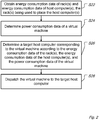
- Fig. 2 is a flowchart of a method for scheduling a virtual machine according to a first embodiment of the present application.
- Step S22 Obtain energy consumption data of rack(s) and energy consumption data of host computer(s), the rack(s) being used to place the host computer(s).
- the virtual machine scheduling method provided in the present application is applied to a cloud computing data center.
- the energy consumption data includes: power consumption data and electric heating data.
- a host computer as described above may be a server placed on a rack.
- the energy consumption data may be real-time power consumption data and electric heating data of the rack(s) or the NC(s).
- the electric heating data mainly refers to respective temperature(s) of the rack(s) or the NC(s).
- Both the power consumption data and the electric heating data include an inventory level and an early warning level, wherein the early warning level can be a minimum inventory level that is configured in advance according to actual usage requirements.
- Step S24 Determine power consumption data of a virtual machine.
- a virtual machine as described above may be a newly created virtual machine (VM), or a VM that needs to be scheduled or migrated for a second time, which includes a server VM and a user VM.
- VM virtual machine
- power consumption model corresponding to a server VM may be a correlation model
- a power consumption model corresponding to a user VM may be a user behavior model.
- Step S26 Determine a target host computer corresponding to the virtual machine according to the energy consumption data of the rack(s), the energy consumption data of the host computer(s), and the power consumption data of the virtual machine.
- a scheduling system can perform power-aware scheduling based on power consumption data, inventory level, etc., i.e., combining energy consumption data of racks and NCs, and power consumption data of VMs to perform balanced scheduling of VMs, in order to minimize a variance of power consumptions between racks, to ensure that high-power VMs are preferentially scheduled to NCs with sufficient power consumption.
- respective power consumptions of the racks and CPUs of the host computers are made to be as even as possible.
- Step S28 Dispatch the virtual machine to the target host computer.
- the power consumption data and the electric heating data of the rack(s) and the NC(s) placed on the rack(s) can be collected in real time, and the power consumption data and future power consumption data of the VM can be predicted at the same time.
- a determination is made that the VM needs to be dispatched to a corresponding rack and a corresponding NC i.e., determining a NC corresponding to the VM), and the virtual machine is then dispatched to that NC.
- power consumption data of racks and NCs and electric heating data of an IDC Internet Data Center, short for Internet Data Center
- Power consumption data of the VM is obtained using power consumption model(s) of server VM(s) and power consumption model(s) of user VM(s).
- the power consumption data of the racks and the NCs, the electric heating data of the IDC and the power consumption data of the VM is inputted into the scheduling system.
- scheduling of the VM is performed to select a cluster, a rack and a server.
- the solutions provided in the first embodiment of the present application can obtain energy consumption data of rack(s) and host computer(s), determine power consumption data of a virtual machine at the same time, determine a target host computer according to the energy consumption data of the rack(s) and the host computer(s) and the power consumption data of the virtual machine, and dispatch the virtual machine to the target host computer, thereby achieving the purpose of dispatching virtual machines based on real-time perception of power consumption.
- a target host computer corresponding to a virtual machine is determined according to energy consumption data of a rack, energy consumption data of host computers, and power consumption data of the virtual machine, not only CPU parameters are considered, but also the power consumption of the rack and the host computers are considered when virtual machine scheduling is performed, as compared with the existing technologies. Balancing of power consumption scheduling of host computers at a granularity of a rack of a data center is achieved, and the technical effects of improving a resource utilization rate of the cloud computing data center are achieved.
- the solutions of the first embodiment provided by the present application solve the technical problems of unbalanced power consumption scheduling caused by virtual machine scheduling methods that are implemented merely according to CPU parameters in the existing technologies.
- determining the target host computer corresponding to the virtual machine according to the energy consumption data of the rack(s), the energy consumption data of the host computer(s), and the power consumption data of the virtual machine at step S26 includes: Step S262: Determine first rack(s) having normal energy consumption according to the energy consumption data of the rack(s).
- the first rack is a rack whose power consumption data does not exceed a first threshold, and whose electric heating data does not exceed a second threshold.
- filtering of racks can be performed to eliminate racks having a high power consumption and a high temperature before scheduling the VM.
- racks with normal energy consumption are determined from all the racks, and racks with abnormal energy consumption are eliminated.
- the first threshold may be the maximum power consumption for determining that a power consumption of a rack is normal. If power consumption data of a rack exceeds the first threshold, a determination is made that power consumption of the rack is too high, and the rack is a rack with abnormal energy consumption.
- the second threshold may be the highest temperature for determining that the temperature of a rack is normal. If electric heating data of a rack exceeds the second threshold, a determination is made that the temperature of the rack is too high, and the rack is a rack with abnormal energy consumption.
- Step S264 Determine first host computer(s) with a normal energy consumption according to energy consumption data of host computer(s) placed on the first rack(s).
- the first host computer is placed on the first rack, and having power consumption data that does not exceed a third threshold, electric heating data that does not exceed a fourth threshold, and a hardware detection result indicating a host computer to have no abnormality.
- NCs can be filtered to eliminate NCs with high power consumption, high temperature, and abnormal hardware (such as abnormal fans), i.e., determining NCs with normal energy consumption and eliminating NCs with abnormal energy consumption from among all the NCs that are placed on racks with normal energy consumption.
- abnormal hardware such as abnormal fans
- the third threshold may be the maximum power consumption for determining that a power consumption of a NC is normal. If power consumption data of a NC exceeds the third threshold, a determination is made that the power consumption of the NC is too high, and the NC is an NC with abnormal energy consumption.
- the fourth threshold may be the highest temperature for determining that the temperature of a NC is normal. If electric heating data of a NC exceeds the fourth threshold, a determination is made that the temperature of the NC is too high, and the NC is an NC with abnormal energy consumption.
- the hardware detection result may be a result obtained by an abnormal detection mechanism that automatically performs detection on hardware components of a NC and puts a mark on the NC.
- no VM is not allowed to be dispatched to any NC on a rack with abnormal energy consumption, and no VM is not allowed to be dispatched to an NC with abnormal energy consumption. In other words, all NCs on racks with abnormal energy consumption and NCs with abnormal energy consumption are not allowed to perform VM scheduling.
- Step S266 Determine a target host computer according to the energy consumption data of the first host computer(s) and power consumption data of a virtual machine.
- a target NC corresponding to a VM can be determined according to respective power consumptions of NCs and power consumption of the VM after filtering, so as to ensure preferentially dispatching a high-power VM to a NC having a sufficient power consumption level, i.e., high-power VMs corresponding to NCs having lower power consumption.
- determining the target host computer according to the energy consumption data of the first host computer(s) and the power consumption data of the virtual machine at step S266, includes: Step S2662: Determine weight value(s) of the first host computer(s) according to the power consumption data of the first host computer(s), wherein the power consumption data is inversely proportional to the weight value(s).
- a corresponding weight value can be calculated according to power consumption of the NC.
- a weight value of a NC with high power consumption is small.
- Step S2664 Obtain the target host computer according to the weight value(s) of the first host computer(s) and the power consumption data of the virtual machine.
- the scheduling system can be divided into a filter and a weighting device.
- Step S210 Determine whether the virtual machine is a preset virtual machine, wherein the preset virtual machine is a virtual machine that cannot be scheduled.
- the preset virtual machine may be a VM that cannot be actively migrated, which is set in advance according to security requirements, for example, a VM with a large memory, or a VM that cannot be hot-migrated.
- Step S212 Determine the target host computer corresponding to the virtual machine according to the energy consumption data of the rack(s), the energy consumption data of the host computer(s), and the power consumption data of the virtual machine if the virtual machine is not a preset virtual machine.
- racks can be filtered according to energy consumption data of the racks, and NCs can be further filtered according to energy consumption data of the NCs.
- energy consumption data of NCs remained after the filtering, corresponding weight values are calculated.
- weighted scoring is performed for the NCs remained after the filtering, thereby selecting a NC with the highest ranking to obtain the target NC, and further dispatching the VM to the NC.
- Step S214 Perform, if the virtual machine is a preset virtual machine, power-limiting processing on the preset virtual machine according to the power consumption data of the rack(s) and the host computer(s), and the power consumption data of the virtual machine.
- power capping can be performed on the VMs that cannot be actively migrated based on energy consumption data of racks and NCs collected in real time and power consumption data of the VMs, to ensure the safety of rack levels.
- power capping can be performed on a VM that cannot be actively migrated, so as to ensure the safety of a rack level and achieve the purpose of scheduling with power capping that eliminates spikes in real time. For example, for a rack of 10000W, the real-time power consumption reaches 90% (9000W). A VM migration starts, and the real-time power consumption reaches 95% (9500).
- a NC can be selected for power capping.
- a scheduling system can select a cluster, a rack and a server for a VM that can be actively migrated based on power consumption data of racks and NCs, electric heating data of an IDC, and power data consumption of the VM that is obtained.
- a power capping configuration can be selected based on power consumption data of racks and NCs, electric heating data of an IDC, and power consumption data of the VM that is obtained.
- determining the power consumption data of the virtual machine at step S24 includes: Step S242: Obtain first power consumption data of the virtual machine through a correlation model, wherein the correlation model is used to characterize a correlation between feature parameters of the virtual machine.
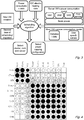
- power consumption data of the VM can be obtained through a correlation model, for example, a correlation matrix shown in FIG. 4 (colors and sizes of circles in FIG. 4 are different, indicating that correlations thereof are different).
- a diagonal element of the matrix is an autocorrelation of a certain feature (such as Volt).
- An autocorrelation is 1, that is, values of diagonal elements of the matrix are all 1, and the matrix is a symmetric matrix.
- the feature parameters can be CFreq, Util, Temp, etc., as shown in FIG. 4 and FIG. 5 .
- the feature parameters can include: Dev, CFreq, X.Util, X.C0, DTS, Temp, and Volt.
- corresponding power consumption data can be obtained through a correlation model.
- Step S244 Obtain second power consumption data of the virtual machine according to historical power consumption data and feature data of the virtual machine.
- the historical power consumption data may be user historical power consumption data of a user VM
- the feature data may be user features, for example, whether it is a big data user or an offline computing user.
- historical data i.e., historical power consumption data
- user specifications i.e., feature data
- Step S246 Determine the power consumption data of the virtual machine according to the first power consumption data and the second power consumption data.
- power consumption of VMs needs to be determined.
- power consumption of server VMs can be obtained through power consumption models (i.e., correlation models) of the server VMs.
- the consumption data can include VM1, VM2, VM3, a host service, and a basic power.
- power consumption data of user VMs can be obtained using power consumption models of the user VMs, in combination with historical data and user specifications.
- obtaining the first power consumption data of the virtual machine through the correlation model at step S242 includes: Step S2422: Obtain a feature vector of the virtual machine and power consumption data of a host computer where the virtual machine is located.
- the feature vector may be composed of feature dimensions such as CFreq, Util, and Temp.
- Step S2424 Input the feature vector of the virtual machine and the power consumption data of the host computer where the virtual machine is located into the correlation model to obtain the first power consumption data.
- a VM power consumption model i.e., a correlation model
- Step S248 Construct an initial model.
- the initial model may be a model determined according to a power consumption allocation problem and a correlation matrix.
- Step S2410 Obtain sample data by obtaining historical power consumption data of virtual machines, feature vectors of the virtual machines and historical power consumption data of host computers where the virtual machines are located.
- sample data of a training model can be composed of historical power consumption data and feature vectors of VMs, and power consumption data of corresponding NCs.
- the historical power consumption data of VMs can be used as tags for feature vectors of the VMs and the power consumption data of the NCs.
- Step S2412 Train the initial model using the sample data to obtain a correlation model.
- the initial model is trained through the sample data that is obtained.
- W and b can be calculated, training is completed until W and b satisfy training requirements, thereby obtaining a correlation model.
- a process of training the model is a process of solving W and b.
- the method may further include the following steps: Step S216: Obtain historical sales rates of the host computers.
- the historical sales rate is used to represent a frequency of uses of the host computer by users.
- Step S218 Obtain second host computer(s) satisfying a preset condition according to the historical sales rates.
- the preset condition may represent a sales rate threshold for host computers having a relatively high sales rate.
- Step S220 Obtain a shelf density of a rack based on power consumption data of the second host computer(s), a preset degree of reliability, and rated power consumption data of the rack, wherein the shelf density is used to characterize the number of host computers placed on the same rack.
- the preset degree of reliability may be obtained according to a ratio between service-specific power capping and abnormal power consumption. For example, if a ratio between service-specific power capping and abnormal power consumption is 5%, a preset degree of reliability may be 95%, i.e., it is credible when the shelf density is 95%.
- the foregoing preset degree of reliability may not be a defined value, but may also be a confidence interval.
- a rack has rated power consumption. To ensure safety, total power consumption of all host computers after being placed on the rack cannot exceed the rated power consumption of the rack. Due to an existence of a preset degree of reliability, NCs can be filtered and selected based on the preset degree of reliability and power consumption data of the NCs, and a shelf density can be obtained based on power consumption data of the selected NCs and the total power consumption of the rack.
- the safety of services can be ensured by specifying a shelf density.
- a shelf standard can also be given, so that there is no need to reserve a space in advance to prevent the rack from powering down, and the purpose of saving cost can be realized.
- obtaining the shelf density of the rack based on the power consumption data of the second host computer, the preset degree of reliability and the rated power consumption data of the rack at step S220 includes:
- NCs with lower power consumption can be selected according to a preset confidence level, in order to ensure the safety of services.
- ranking can be performed according to an ascending order of power consumption data of NCs, and NCs with higher ranks can be selected according to a preset degree of reliability.
- the preset degree of reliability is 95%
- 1000 NCs are ranked in an ascending order of power consumption (for example, 1 to 1000w)
- first 95% of the NCs for example, 1 to 950w
- the top 950 NCs are selected.
- Step S2206 Obtain maximum power consumption data from power consumption data of the third host computer(s).
- Step S2208 Obtain a ratio between the rated power consumption data of the rack and the maximum power consumption data to obtain the shelf density.
- the maximum power consumption of the corresponding NC can be selected for the shelf according to the preset degree of reliability.
- obtaining the second host computer(s) satisfying the preset condition according to the historical sales rates at step S218, includes:
- the preset sales rate threshold may be a minimum sales rate used for filtering and selecting NCs with a relatively high sales rate, which may be 90%, for example.
- NCs in order to calculate the shelf density, it is necessary to filter and select NCs with a relatively high sales rate. All NCs can be sorted according to a descending order of sales rates, and top-ranked NCs are selected. For example, after the NCs are sorted, the top 90% of NCs can be selected. At the same time, it is necessary to ensure that the number of NCs is sufficient.
- an embodiment of a method for scheduling a virtual machine is also provided. It needs to be noted that steps shown in a flowchart of the accompanying drawings can be executed in a computer system such as a set of computer executable instructions. Also, although a logical order is shown in the flowchart, in some cases, the steps may be performed in an order different from the one shown or described herein.
- Fig. 6 is a flowchart of a method for scheduling a virtual machine according to a second embodiment of the present application. As shown in FIG. 6 , the method may include the following steps: Step S62: Obtain energy consumption data of a rack, energy consumption data of host computer(s) and the power consumption data of a virtual machine, where multiple host computers are placed on the rack.
- the virtual machine scheduling method provided in the present application is applied to a cloud computing data center.
- the energy consumption data includes: power consumption data and electric heating data.
- a host computer as described above may be a server placed on a rack.
- the energy consumption data may be real-time power consumption data and electric heating data of the rack(s) or the NC(s).
- the electric heating data mainly refers to respective temperature(s) of the rack(s) or the NC(s).
- Both the power consumption data and the electric heating data include an inventory level and an early warning level, wherein the early warning level can be a minimum inventory level that is configured in advance according to actual usage requirements.
- a virtual machine as described above may be a newly created virtual machine (VM), or a VM that needs to be scheduled or migrated for a second time, which includes a server VM and a user VM.
- VM virtual machine
- a power consumption model corresponding to a server VM may be a correlation model
- a power consumption model corresponding to a user VM may be a user behavior model
- Step S64 Determine a target host computer corresponding to the virtual machine according to the energy consumption data of the rack, the energy consumption data of the host computer(s), and the power consumption data of the virtual machine.
- a scheduling system can perform power-aware scheduling based on power consumption data, inventory level, etc., i.e., combining energy consumption data of racks and NCs, and power consumption data of VMs to perform balanced scheduling of VMs, in order to minimize a variance of power consumptions between racks, to ensure that high-power VMs are preferentially scheduled to NCs with sufficient power consumption.
- respective power consumptions of the racks and CPUs of the host computers are made to be as even as possible.
- Step S66 Dispatch the virtual machine to the host computer.
- the power consumption data and the electric heating data of the rack(s) and the NC(s) placed on the rack(s) can be collected in real time, and the power consumption data and future power consumption data of the VM can be predicted at the same time.
- a determination is made that the VM needs to be dispatched to a corresponding rack and a corresponding NC i.e., determining a NC corresponding to the VM), and the virtual machine is then dispatched to that NC.
- power consumption data of racks and NCs and electric heating data of an IDC can be collected.
- Power consumption data of the VM is obtained using power consumption model(s) of server VM(s) and power consumption model(s) of user VM(s).
- the power consumption data of the racks and the NCs, the electric heating data of the IDC and the power consumption data of the VM is inputted into the scheduling system.
- scheduling of the VM is performed to select a cluster, a rack and a server.
- Step S68 Obtain a shelf density of the rack according to the energy consumption data of the rack and the energy consumption data of the host computer(s), wherein the shelf density is used to represent the number of host computer(s) placed on the same rack.
- a rack has rated power consumption. To ensure safety, total power consumption of all host computers after being placed on the rack cannot exceed the rated power consumption of the rack.
- the shelf density of the rack can be obtained based on power consumption data of the NCs and rated power consumption data of the host computers. A standard for shelf density is thereby given. There is no need to reserve a machine space in advance to prevent the rack from powering down and achieve the purpose of saving costs.
- the solutions provided in the second embodiment of the present application can obtain energy consumption data of a rack and host computers, determine power consumption data of a virtual machine at the same time, determine a target host computer according to the energy consumption data of the rack and the host computers and the power consumption data of the virtual machine, dispatch the virtual machine to the target host computer, and obtain a shelf density of the rack according to the energy consumption data of the rack and the energy consumption data of the host computers. This thereby realizes scheduling of virtual machines based on real-time power consumption awareness, and realizes the purpose of giving a standard for shelf density.
- a target host computer corresponding to a virtual machine is determined according to energy consumption data of a rack, energy consumption data of host computers, and power consumption data of the virtual machine.
- a shelf density of a rack is obtained based on the energy consumption data of the rack and the energy consumption data of the host computers.
- An accurate shelf density can be obtained, thereby achieving a balance of scheduling of power consumption of host computers at a granularity of racks in a data center, increase a shelf density, and improve technical effects of resource utilization rates of the cloud computing data center.
- obtaining the shelf density of the rack based on the energy consumption data of the rack and the energy consumption data of the host computers at step S68 includes: Step S682: Obtain historical sales rates of the host computers.
- the historical sales rate is used to represent a frequency of uses of the host computer by users.
- Step S684 Obtain second host computer(s) satisfying a preset condition according to the historical sales rates.
- the preset condition may represent a sales rate threshold for host computers having a relatively high sales rate.
- Step S686 Obtain a shelf density of a rack based on power consumption data of the second host computer(s), a preset degree of reliability, and rated power consumption data of the rack.
- the preset degree of reliability may be obtained according to a ratio between service-specific power capping and abnormal power consumption. For example, if a ratio between service-specific power capping and abnormal power consumption is 5%, a preset degree of reliability may be 95%, i.e., it is credible when the shelf density is 95%.
- the foregoing preset degree of reliability may not be a defined value, but may also be a confidence interval.
- NCs can be filtered and selected based on the preset degree of reliability and power consumption data of the NCs, and a shelf density can be obtained based on power consumption data of the selected NCs and the total power consumption of the rack.
- the apparatus 700 includes: a first acquisition module 702, a first determination module 704, a second determination module 706 and a first scheduling module 708.
- the first acquisition module 702 is configured to obtain energy consumption data of a rack and energy consumption data of host computers, wherein the rack is used to place the host computers.
- the first determining module 704 is configured to determine power consumption data of a virtual machine.
- the second determining module 706 is configured to determine a target host computer corresponding to the virtual machine according to the energy consumption data of the rack, the energy consumption data of the host computers, and the power consumption data of the virtual machine.
- the first scheduling module 708 is configured to dispatch the virtual machine to the target host computer.
- the energy consumption data includes: power consumption data and electric heating data.
- a host computer as described above may be a server placed on a rack.
- the energy consumption data may be real-time power consumption data and electric heating data of the rack(s) or the NC(s).
- the electric heating data mainly refers to respective temperature(s) of the rack(s) or the NC(s).
- Both the power consumption data and the electric heating data include an inventory level and an early warning level, wherein the early warning level can be a minimum inventory level that is configured in advance according to actual usage requirements.
- a virtual machine as described above may be a newly created virtual machine (VM), or a VM that needs to be scheduled or migrated for a second time, which includes a server VM and a user VM.
- VM virtual machine
- a power consumption model corresponding to a server VM may be a correlation model
- a power consumption model corresponding to a user VM may be a user behavior model
- the first acquisition module 702, the first determination module 704, the second determination module 706, and the first scheduling module 708 correspond to steps S22 to S28 in the first embodiment. Examples of implementations and application scenarios of these four modules are the same as those of corresponding steps, but are not limited to the content disclosed in the first embodiment. It should be noted that the described modules can run in the computer terminal 10 provided in the first embodiment as a part of the apparatus.
- the solutions provided in the third embodiment of the present application can obtain energy consumption data of rack(s) and host computer(s), determine power consumption data of a virtual machine at the same time, determine a target host computer according to the energy consumption data of the rack(s) and the host computer(s) and the power consumption data of the virtual machine, and dispatch the virtual machine to the target host computer, thereby achieving the purpose of dispatching virtual machines based on real-time perception of power consumption.
- a target host computer corresponding to a virtual machine is determined according to energy consumption data of a rack, energy consumption data of host computers, and power consumption data of the virtual machine, not only CPU parameters are considered, but also the power consumption of the rack and the host computers are considered when virtual machine scheduling is performed, as compared with the existing technologies. Balancing of power consumption scheduling of host computers at a granularity of a rack of a data center is achieved, and the technical effects of improving a resource utilization rate of the cloud computing data center are achieved.
- the solutions of the third embodiment provided by the present application solve the technical problems of unbalanced power consumption scheduling caused by virtual machine scheduling methods that are implemented merely according to CPU parameters in the existing technologies.
- the apparatus 800 includes: a second acquisition module 802, a third determination module 804, a second scheduling module 806, and a processing module 808.
- the second acquisition module 802 is configured to obtain energy consumption data of a rack, energy consumption data of host computers and power consumption data of a virtual machine, wherein multiple host computers are placed in the rack.
- the third determination module 804 is configured to determine a target host computer corresponding to the virtual machine based on the energy consumption data of the rack, the energy consumption data of the host computers and the power consumption data of the virtual machine.
- the second scheduling module 806 is configured to dispatch the virtual machine to the host computer; and obtaining a shelf density of the rack based on the energy consumption data of the rack and the energy consumption data of the host computers, wherein the shelf density is used to characterize a number of host computers placed on the same rack.
- the energy consumption data includes: power consumption data and electric heating data.
- a host computer as described above may be a server placed on a rack.
- the energy consumption data may be real-time power consumption data and electric heating data of the rack(s) or the NC(s).
- the electric heating data mainly refers to respective temperature(s) of the rack(s) or the NC(s).
- Both the power consumption data and the electric heating data include an inventory level and an early warning level, wherein the early warning level can be a minimum inventory level that is configured in advance according to actual usage requirements.
- a virtual machine as described above may be a newly created virtual machine (VM), or a VM that needs to be scheduled or migrated for a second time, which includes a server VM and a user VM.
- VM virtual machine
- a power consumption model corresponding to a server VM may be a correlation model
- a power consumption model corresponding to a user VM may be a user behavior model
- the second acquisition module 802, the third determination module 804, the second scheduling module 806, and the processing module 808 correspond to steps S62 to S68 in the second embodiment. Examples of implementations and application scenarios of these four modules are the same as those of corresponding steps, but are not limited to the content disclosed in the second embodiment. It should be noted that the described modules can run in the computer terminal 10 provided in the first embodiment as a part of the apparatus.
- the solutions provided in the fourth embodiment of the present application can obtain energy consumption data of a rack and host computers, determine power consumption data of a virtual machine at the same time, determine a target host computer according to the energy consumption data of the rack and the host computers and the power consumption data of the virtual machine, dispatch the virtual machine to the target host computer, and obtain a shelf density of the rack according to the energy consumption data of the rack and the energy consumption data of the host computers. This thereby realizes scheduling of virtual machines based on real-time power consumption awareness, and realizes the purpose of giving a standard for shelf density.
- a target host computer corresponding to a virtual machine is determined according to energy consumption data of a rack, energy consumption data of host computers, and power consumption data of the virtual machine.
- a shelf density of a rack is obtained based on the energy consumption data of the rack and the energy consumption data of the host computers.
- An accurate shelf density can be obtained, thereby achieving a balance of scheduling of power consumption of host computers at a granularity of racks in a data center, increase a shelf density, and improve technical effects of resource utilization rates of the cloud computing data center.
- a virtual machine scheduling system which includes:
- the solutions provided in the fifth embodiment of the present application can obtain energy consumption data of rack(s) and host computer(s), determine power consumption data of a virtual machine at the same time, determine a target host computer according to the energy consumption data of the rack(s) and the host computer(s) and the power consumption data of the virtual machine, and dispatch the virtual machine to the target host computer, thereby achieving the purpose of dispatching virtual machines based on real-time perception of power consumption.
- a target host computer corresponding to a virtual machine is determined according to energy consumption data of a rack, energy consumption data of host computers, and power consumption data of the virtual machine, not only CPU parameters are considered, but also the power consumption of the rack and the host computers are considered when virtual machine scheduling is performed, as compared with the existing technologies. Balancing of power consumption scheduling of host computers at a granularity of a rack of a data center is achieved, and the technical effects of improving a resource utilization rate of the cloud computing data center are achieved.
- the solutions of the fifth embodiment provided by the present application solve the technical problems of unbalanced power consumption scheduling caused by virtual machine scheduling methods that are implemented merely according to CPU parameters in the existing technologies.
- the embodiments of the present application may provide a computer terminal.
- the computer terminal may be any computer terminal device in a computer terminal group.
- the computer terminal may also be replaced with a terminal device such as a mobile terminal.
- the computer terminal may be located in at least one network device among multiple network devices in a computer network.
- the computer terminal can execute program codes of the following steps in a virtual machine scheduling method: obtaining energy consumption data of a rack and energy consumption data of host computers, wherein the rack is used to place the host computers; determining power consumption data of a virtual machine; determining a target host computer corresponding to the virtual machine according to the energy consumption data of the rack, the energy consumption data of the host computers, and the power consumption data of the virtual machine; and dispatching the virtual machine to the target host computer.
- FIG. 9 is a structural block diagram of a computer terminal according to the embodiments of the present application.
- such computer terminal A may include: one or more (only one is shown in the figure) processors 902 and memory 904.
- the memory can be configured to store software programs and modules, such as program instructions/modules corresponding to the methods and apparatuses of scheduling virtual machine in the embodiments of the present application.
- the processor(s) execute(s) various functional applications and data processing by running the software programs and modules stored in the memory, i.e., implementing the above-mentioned methods of scheduling virtual machine.
- the memory may include a high-speed random access memory, and may also include a non-volatile memory, such as one or more magnetic storage devices, flash memory, or other non-volatile solid-state memory.
- the memory may further include storage devices deployed remotely with respect to the processor, and these remote storage devices may be connected to the terminal A through a network. Examples of the network include, but are not limited to, the Internet, a corporate intranet, a local area network, a mobile communication network, and a combination thereof.
- the processor(s) may call information and application programs stored in the memory through a transmission device to perform the following steps: obtaining energy consumption data of rack(s) and energy consumption data of host computers, wherein the rack(s) is/are used to place the host computers; determining power consumption data of a virtual machine; determining a target host computer corresponding to the virtual machine according to the energy consumption data of the rack(s), the energy consumption data of the host computers, and the power consumption data of the virtual machine; and dispatching the virtual machine to the target host computer.
- the processor(s) may also execute program codes of the following steps: the energy consumption data including power consumption data and electric heating data.
- the processor(s) may also execute program codes of the following steps: determining first rack(s) having normal energy consumption according to the energy consumption data of the rack(s); determining first host computer(s) with a normal energy consumption according to energy consumption data of host computer(s) placed on the first rack(s); and determining a target host computer according to the energy consumption data of the first host computer(s) and power consumption data of a virtual machine.
- the processor(s) may also execute program codes of the following steps: determining weight value(s) of the first host computer(s) according to the power consumption data of the first host computer(s), wherein the power consumption data is inversely proportional to the weight value(s); and obtaining the target host computer according to the weight value(s) of the first host computer(s) and the power consumption data of the virtual machine.
- the processor(s) may also execute program codes of the following steps: the first rack(s) being rack(s) whose power consumption data does not exceed a first threshold and whose electric heating data does not exceed a second threshold; and the first host computer(s) being placed on the first rack(s), and having power consumption data that does not exceed a third threshold, electric heating data that does not exceed a fourth threshold, and a hardware detection result indicating a host computer to have no abnormality.
- the processor(s) may also execute program codes of the following steps: before determining the target host computer corresponding to the virtual machine according to the energy consumption data of the rack(s), the energy consumption data of the host computer(s), and the power consumption data of the virtual machine, determining whether the virtual machine is a preset virtual machine, wherein the preset virtual machine is a virtual machine that cannot be scheduled; determining the target host computer corresponding to the virtual machine according to the energy consumption data of the rack(s), the energy consumption data of the host computer(s), and the power consumption data of the virtual machine if the virtual machine is not a preset virtual machine; and performing, if the virtual machine is a preset virtual machine, power-limiting processing on the preset virtual machine according to the power consumption data of the rack(s) and the host computer(s), and the power consumption data of the virtual machine.
- the processor(s) may also execute program codes of the following steps: obtaining first power consumption data of the virtual machine through a correlation model, wherein the correlation model is used to characterize a correlation between feature parameters of the virtual machine; obtaining second power consumption data of the virtual machine according to historical power consumption data and feature data of the virtual machine; and determining the power consumption data of the virtual machine according to the first power consumption data and the second power consumption data.
- the processor(s) may also execute program codes of the following steps: obtaining a feature vector of the virtual machine and power consumption data of a host computer where the virtual machine is located; and inputting the feature vector of the virtual machine and the power consumption data of the host computer where the virtual machine is located into the correlation model to obtain the first power consumption data.
- the processor(s) may also execute program codes of the following steps: before obtaining the first power consumption data of the virtual machine through the correlation model, constructing an initial model; obtaining sample data by obtaining historical power consumption data of virtual machines, feature vectors of the virtual machines and historical power consumption data of host computers where the virtual machines are located; and training the initial model using the sample data to obtain a correlation model.
- the processor(s) may also execute program codes of the following steps: after dispatching the virtual machine to the target host computer, obtaining historical sales rates of the host computers; obtaining second host computer(s) satisfying a preset condition according to the historical sales rates; and obtaining a shelf density of a rack based on power consumption data of the second host computer(s), a preset degree of reliability, and rated power consumption data of the rack, wherein the shelf density is used to characterize the number of host computers placed on the same rack.
- the processor(s) may also execute program codes of the following steps: ranking the second host computer(s) according to the power consumption data in an ascending order; obtaining third host computer(s) from the ranked second host computer(s) according to the preset degree of reliability; obtaining maximum power consumption data from power consumption data of the third host computer(s); and obtaining a ratio between the rated power consumption data of the rack and the maximum power consumption data to obtain the shelf density.
- the processor(s) may also execute program codes of the following steps: ranking the host computer(s) in a descending order of the historical sales rates; and obtaining the second host computer(s) from the ranked host computer(s) according to a preset sales rate threshold.
- energy consumption data of rack(s) and host computers can be obtained, and power consumption data of a virtual machine can be determined at the same time.
- a target host can be determined based on the energy consumption data of the rack(s) and the host computers and the power consumption data of the virtual machine, and the virtual machine can be dispatched to the target host computer, so as to achieve the purpose of dispatching virtual machines based on real-time perception of power consumption.
- a target host computer corresponding to a virtual machine is determined according to energy consumption data of a rack, energy consumption data of host computers, and power consumption data of the virtual machine, not only CPU parameters are considered, but also the power consumption of the rack and the host computers are considered when virtual machine scheduling is performed, as compared with the existing technologies. Balancing of power consumption scheduling of host computers at a granularity of a rack of a data center is achieved, and the technical effects of improving a resource utilization rate of the cloud computing data center are achieved.
- the solutions provided by the present application solve the technical problems of unbalanced power consumption scheduling caused by virtual machine scheduling methods that are implemented merely according to CPU parameters in the existing technologies.
- the computer terminal can also be a smart phone (such as an Android phone, an iOS phone, etc.), a tablet computer, a handheld computer, and a mobile Internet device (Mobile Internet Devices, MID), a PAD, and other terminal devices.
- FIG. 8 does not limit the structure of the above electronic device.
- the computer terminal may also include more or fewer components (such as a network interface, a display device, etc.) than those shown in FIG. 8 , or have a configuration different from that shown in FIG. 9 .
- the program can be stored in a computer-readable storage medium, which may include a flash disk, read-only memory (Read-Only Memory, ROM), random access memory (Random Access Memory, RAM), a magnetic disk, or an optical disk, etc.
- a computer-readable storage medium which may include a flash disk, read-only memory (Read-Only Memory, ROM), random access memory (Random Access Memory, RAM), a magnetic disk, or an optical disk, etc.
- the embodiments of the present application also provide a storage medium.
- the storage medium may be configured to store program codes executed by the virtual machine scheduling method provided in the first embodiment.
- the storage medium may be located in any computer terminal in a computer terminal group in a computer network, or located in any mobile terminal in a mobile terminal group.
- the storage medium is configured to store program codes for performing the following steps: obtaining energy consumption data of rack(s) and energy consumption data of host computers, wherein the rack(s) is/are used to place the host computers; determining power consumption data of a virtual machine; determining a target host computer corresponding to the virtual machine according to the energy consumption data of the rack(s), the energy consumption data of the host computers, and the power consumption data of the virtual machine; and dispatching the virtual machine to the target host computer.
- the storage medium is further configured to store program codes for executing the following steps: the energy consumption data including power consumption data and electric heating data.
- the storage medium is further configured to store program codes for executing the following steps: determining first rack(s) having normal energy consumption according to the energy consumption data of the rack(s); determining first host computer(s) with a normal energy consumption according to energy consumption data of host computer(s) placed on the first rack(s); and determining a target host computer according to the energy consumption data of the first host computer(s) and power consumption data of a virtual machine.
- the storage medium is further configured to store program codes for executing the following steps: determining weight value(s) of the first host computer(s) according to the power consumption data of the first host computer(s), wherein the power consumption data is inversely proportional to the weight value(s); and obtaining the target host computer according to the weight value(s) of the first host computer(s) and the power consumption data of the virtual machine.
- the storage medium is further configured to store program codes for executing the following steps: the first rack(s) being rack(s) whose power consumption data does not exceed a first threshold and whose electric heating data does not exceed a second threshold; and the first host computer(s) being placed on the first rack(s), and having power consumption data that does not exceed a third threshold, electric heating data that does not exceed a fourth threshold, and a hardware detection result indicating a host computer to have no abnormality.
- the storage medium is further configured to store program codes for executing the following steps: before determining the target host computer corresponding to the virtual machine according to the energy consumption data of the rack(s), the energy consumption data of the host computer(s), and the power consumption data of the virtual machine, determining whether the virtual machine is a preset virtual machine, wherein the preset virtual machine is a virtual machine that cannot be scheduled; determining the target host computer corresponding to the virtual machine according to the energy consumption data of the rack(s), the energy consumption data of the host computer(s), and the power consumption data of the virtual machine if the virtual machine is not a preset virtual machine; and performing, if the virtual machine is a preset virtual machine, power-limiting processing on the preset virtual machine according to the power consumption data of the rack(s) and the host computer(s), and the power consumption data of the virtual machine.
- the storage medium is further configured to store program codes for executing the following steps: obtaining first power consumption data of the virtual machine through a correlation model, wherein the correlation model is used to characterize a correlation between feature parameters of the virtual machine; obtaining second power consumption data of the virtual machine according to historical power consumption data and feature data of the virtual machine; and determining the power consumption data of the virtual machine according to the first power consumption data and the second power consumption data.
- the storage medium is further configured to store program codes for executing the following steps: obtaining a feature vector of the virtual machine and power consumption data of a host computer where the virtual machine is located; and inputting the feature vector of the virtual machine and the power consumption data of the host computer where the virtual machine is located into the correlation model to obtain the first power consumption data.
- the storage medium is further configured to store program codes for executing the following steps: before obtaining the first power consumption data of the virtual machine through the correlation model, constructing an initial model; obtaining sample data by obtaining historical power consumption data of virtual machines, feature vectors of the virtual machines and historical power consumption data of host computers where the virtual machines are located; and training the initial model using the sample data to obtain a correlation model.
- the storage medium is further configured to store program codes for executing the following steps: after dispatching the virtual machine to the target host computer, obtaining historical sales rates of the host computers; obtaining second host computer(s) satisfying a preset condition according to the historical sales rates; and obtaining a shelf density of a rack based on power consumption data of the second host computer(s), a preset degree of reliability, and rated power consumption data of the rack, wherein the shelf density is used to characterize the number of host computers placed on the same rack.
- the storage medium is further configured to store program codes for executing the following steps: ranking the second host computer(s) according to the power consumption data in an ascending order; obtaining third host computer(s) from the ranked second host computer(s) according to the preset degree of reliability; obtaining maximum power consumption data from power consumption data of the third host computer(s); and obtaining a ratio between the rated power consumption data of the rack and the maximum power consumption data to obtain the shelf density.
- the storage medium is further configured to store program codes for executing the following steps: ranking the host computer(s) in a descending order of the historical sales rates; and obtaining the second host computer(s) from the ranked host computer(s) according to a preset sales rate threshold.
- the units described as separate components may or may not be physically separated.
- the components displayed as units may or may not be physical units, i.e., may be located in one place, or may be distributed over multiple network units. Some or all of the units may be selected according to actual needs to achieve the objectives of the solutions of the embodiments.
- each unit may exist alone physically.
- two or more units may be integrated into one unit.
- the above-mentioned integrated unit can be realized in a form of hardware or software functional unit.
- the integrated unit can be stored in a computer readable storage medium.
- a computer readable storage medium includes a number of instructions to cause a computing device (which may be a personal computer, a server, or a network device, etc.) to execute all or part of the steps of the method in each embodiment of the present application.
- the storage media include various types of media that are capable of storing program codes, such as a flash disk, read-only memory (ROM, Read-Only Memory), random access memory (RAM, Random Access Memory), a mobile hard disk, a magnetic disk, or an optical disk, etc.
- program codes such as a flash disk, read-only memory (ROM, Read-Only Memory), random access memory (RAM, Random Access Memory), a mobile hard disk, a magnetic disk, or an optical disk, etc.
Landscapes
- Engineering & Computer Science (AREA)
- Theoretical Computer Science (AREA)
- Software Systems (AREA)
- General Engineering & Computer Science (AREA)
- Physics & Mathematics (AREA)
- General Physics & Mathematics (AREA)
- Data Mining & Analysis (AREA)
- Computer Vision & Pattern Recognition (AREA)
- Artificial Intelligence (AREA)
- Evolutionary Computation (AREA)
- Mathematical Physics (AREA)
- Computing Systems (AREA)
- Medical Informatics (AREA)
- Computer Hardware Design (AREA)
- Microelectronics & Electronic Packaging (AREA)
- Evolutionary Biology (AREA)
- Bioinformatics & Computational Biology (AREA)
- Bioinformatics & Cheminformatics (AREA)
- Life Sciences & Earth Sciences (AREA)
- Power Sources (AREA)
- Management, Administration, Business Operations System, And Electronic Commerce (AREA)
Applications Claiming Priority (2)
| Application Number | Priority Date | Filing Date | Title |
|---|---|---|---|
| CN201810312065.8A CN110362398B (zh) | 2018-04-09 | 2018-04-09 | 虚拟机的调度方法和系统 |
| PCT/CN2019/080946 WO2019196701A1 (zh) | 2018-04-09 | 2019-04-02 | 虚拟机的调度方法和系统 |
Publications (2)
| Publication Number | Publication Date |
|---|---|
| EP3779689A1 true EP3779689A1 (de) | 2021-02-17 |
| EP3779689A4 EP3779689A4 (de) | 2022-01-05 |
Family
ID=68163407
Family Applications (1)
| Application Number | Title | Priority Date | Filing Date |
|---|---|---|---|
| EP19785670.1A Pending EP3779689A4 (de) | 2018-04-09 | 2019-04-02 | Verfahren und system zur planung einer virtuellen maschine |
Country Status (6)
| Country | Link |
|---|---|
| US (1) | US11782769B2 (de) |
| EP (1) | EP3779689A4 (de) |
| JP (1) | JP7366054B2 (de) |
| CN (1) | CN110362398B (de) |
| SG (1) | SG11202009426VA (de) |
| WO (1) | WO2019196701A1 (de) |
Families Citing this family (17)
| Publication number | Priority date | Publication date | Assignee | Title |
|---|---|---|---|---|
| CN111078365A (zh) * | 2019-12-20 | 2020-04-28 | 中天宽带技术有限公司 | 一种虚拟数据中心的映射方法及相关装置 |
| CN113760441A (zh) * | 2020-08-31 | 2021-12-07 | 北京京东尚科信息技术有限公司 | 容器创建方法、装置、电子设备及存储介质 |
| WO2022048674A1 (zh) * | 2020-09-07 | 2022-03-10 | 华为云计算技术有限公司 | 基于服务器机柜的虚拟机管理方法及装置 |
| CN112260878A (zh) * | 2020-11-04 | 2021-01-22 | 罗鑫龙 | 互联网数据中心机房人工智能管理系统及方法 |
| US12353925B2 (en) * | 2021-08-26 | 2025-07-08 | Microsoft Technology Licensing, Llc | Allocating compute nodes as storage in a power-constrained environment |
| US12307281B2 (en) * | 2022-03-15 | 2025-05-20 | Dell Products L.P. | Virtual machine migration based on power utilization |
| CN114546602B (zh) * | 2022-03-22 | 2025-09-05 | 阿里巴巴(中国)有限公司 | 虚拟机调度方法及装置 |
| US12450090B2 (en) * | 2022-05-19 | 2025-10-21 | Red Hat, Inc. | Scheduler incorporating thermal awareness |
| CN114840345B (zh) * | 2022-05-25 | 2024-12-13 | 中国电信股份有限公司 | 资源的分配的方法及装置、非易失性存储介质、处理器 |
| CN115016949A (zh) * | 2022-08-09 | 2022-09-06 | 中智关爱通(南京)信息科技有限公司 | 为客户机选择宿主机的方法、计算设备和计算机介质 |
| US12314108B2 (en) * | 2022-12-20 | 2025-05-27 | Microsoft Technology Licensing, Llc | Utilizing power-draw device signals to improve the recovery of virtual machine host devices |
| US12566645B2 (en) * | 2023-02-23 | 2026-03-03 | Dell Products L.P. | Predicted-temperature-based virtual machine management system |
| US12386409B2 (en) * | 2023-11-21 | 2025-08-12 | Nvidia Corporation | Power-aware scheduling in data centers |
| KR102902659B1 (ko) * | 2023-12-05 | 2025-12-23 | 주식회사 이노그리드 | 하이브리드 cpu를 이용한 지능형 엣지 클라우드 가상자원 할당 관리 방법 및 시스템 |
| WO2025133405A1 (en) * | 2023-12-22 | 2025-06-26 | Ncipher Security Limited | Monitoring secure execution of programs |
| WO2025133407A1 (en) * | 2023-12-22 | 2025-06-26 | Ncipher Security Limited | Monitoring proper operation of programs in a secure environment |
| CN119849872B (zh) * | 2025-03-18 | 2025-06-27 | 国网湖北省电力有限公司信息通信公司 | 一种电力供配电智能调度预警检测方法及系统 |
Family Cites Families (26)
| Publication number | Priority date | Publication date | Assignee | Title |
|---|---|---|---|---|
| JP2009110404A (ja) * | 2007-10-31 | 2009-05-21 | Toshiba Corp | 仮想計算機システム及び同システムにおけるゲストosスケジューリング方法 |
| US8359594B1 (en) | 2009-06-30 | 2013-01-22 | Sychron Advanced Technologies, Inc. | Automated rapid virtual machine provisioning system |
| US9081621B2 (en) | 2009-11-25 | 2015-07-14 | Microsoft Technology Licensing, Llc | Efficient input/output-aware multi-processor virtual machine scheduling |
| US8862914B2 (en) | 2010-02-26 | 2014-10-14 | Microsoft Corporation | Virtual machine power consumption measurement and management |
| US8627123B2 (en) * | 2010-03-25 | 2014-01-07 | Microsoft Corporation | Managing power provisioning in distributed computing |
| US8589932B2 (en) | 2010-07-02 | 2013-11-19 | International Business Machines Corporation | Data processing workload control |
| US8448006B2 (en) | 2010-10-19 | 2013-05-21 | International Business Machines Corporation | Performing virtual and/or physical resource management for power management |
| US9250962B2 (en) | 2011-01-10 | 2016-02-02 | International Business Machines Corporation | Optimizing energy use in a data center by workload scheduling and management |
| US9183030B2 (en) | 2011-04-27 | 2015-11-10 | Microsoft Technology Licensing, Llc | Virtual processor allocation techniques |
| CN102759979B (zh) | 2011-04-29 | 2016-03-30 | 国际商业机器公司 | 一种虚拟机能耗估计方法及装置 |
| WO2013042271A1 (ja) * | 2011-09-22 | 2013-03-28 | 富士通株式会社 | 電子計算機システム及び仮想マシン配置方法 |
| JP5785050B2 (ja) * | 2011-10-27 | 2015-09-24 | 株式会社日立製作所 | 情報処理システム、その省電力制御方法、及び装置 |
| JP5165104B2 (ja) * | 2011-12-16 | 2013-03-21 | 株式会社日立製作所 | 情報処理システムおよびそのシステムにおける省電力制御方法 |
| JP5801732B2 (ja) * | 2012-01-24 | 2015-10-28 | 株式会社日立製作所 | 情報処理システムの運用管理方法 |
| JP5765279B2 (ja) | 2012-03-26 | 2015-08-19 | 株式会社Jvcケンウッド | カメラ制御装置、カメラ制御方法及びカメラ制御プログラム |
| EP2775399A4 (de) | 2012-12-26 | 2015-04-29 | Huawei Tech Co Ltd | Betriebsmittelverwaltungsverfahren eines virtuellen maschinensystems, virtuelles maschinensystem und vorrichtung dafür |
| US10386900B2 (en) | 2013-09-24 | 2019-08-20 | Intel Corporation | Thread aware power management |
| US20150227397A1 (en) * | 2014-02-10 | 2015-08-13 | Ca, Inc. | Energy efficient assignment of workloads in a datacenter |
| CN104360893A (zh) * | 2014-10-23 | 2015-02-18 | 西安未来国际信息股份有限公司 | 一种基于环境能耗的虚拟资源调度方法 |
| CN105426229A (zh) * | 2015-12-07 | 2016-03-23 | 中国联合网络通信集团有限公司 | 虚拟机迁移方法及装置 |
| JP2017134668A (ja) * | 2016-01-28 | 2017-08-03 | 富士通株式会社 | 情報処理システム、情報処理システムの制御方法および管理装置の制御プログラム |
| CN105893113A (zh) * | 2016-03-29 | 2016-08-24 | 上海携程商务有限公司 | 虚拟机的管理系统及管理方法 |
| CN105955795B (zh) * | 2016-04-20 | 2019-04-09 | 南京邮电大学 | 一种面向绿色云计算的虚拟机迁移方法 |
| US10423455B2 (en) * | 2017-02-03 | 2019-09-24 | Microsoft Technology Licensing, Llc | Method for deploying virtual machines in cloud computing systems based on predicted lifetime |
| CN107193640B (zh) * | 2017-06-26 | 2020-08-04 | 浙江工业大学 | 一种基于Rendezvous哈希算法的虚拟机初始放置策略方法 |
| CN107479949A (zh) * | 2017-08-21 | 2017-12-15 | 重庆电子工程职业学院 | 低能耗云计算任务调度方法 |
-
2018
- 2018-04-09 CN CN201810312065.8A patent/CN110362398B/zh active Active
-
2019
- 2019-04-02 EP EP19785670.1A patent/EP3779689A4/de active Pending
- 2019-04-02 WO PCT/CN2019/080946 patent/WO2019196701A1/zh not_active Ceased
- 2019-04-02 SG SG11202009426VA patent/SG11202009426VA/en unknown
- 2019-04-02 JP JP2020555379A patent/JP7366054B2/ja active Active
-
2020
- 2020-10-08 US US17/066,362 patent/US11782769B2/en active Active
Also Published As
| Publication number | Publication date |
|---|---|
| WO2019196701A1 (zh) | 2019-10-17 |
| JP7366054B2 (ja) | 2023-10-20 |
| US11782769B2 (en) | 2023-10-10 |
| CN110362398A (zh) | 2019-10-22 |
| JP2021521520A (ja) | 2021-08-26 |
| EP3779689A4 (de) | 2022-01-05 |
| CN110362398B (zh) | 2023-09-12 |
| US20210034436A1 (en) | 2021-02-04 |
| SG11202009426VA (en) | 2020-10-29 |
Similar Documents
| Publication | Publication Date | Title |
|---|---|---|
| US11782769B2 (en) | Virtual machine scheduling method and system | |
| CN110362377B (zh) | 虚拟机的调度方法和装置 | |
| US11126242B2 (en) | Time varying power management within datacenters | |
| CN111522652B (zh) | 用于增加负荷密度和改进能效的功率平衡 | |
| EP2823373B1 (de) | Batterievirtualisierung in einer gruppe von personalisierten mobilen vorrichtungen | |
| US9116181B2 (en) | Method, apparatus, and system for virtual cluster integration | |
| Mazzucco et al. | Optimizing cloud providers revenues via energy efficient server allocation | |
| Zhou et al. | Reducing energy costs for IBM Blue Gene/P via power-aware job scheduling | |
| CN103812199B (zh) | 充电控制方法和充电控制设备 | |
| CN103677958A (zh) | 一种虚拟化集群的资源调度方法及装置 | |
| RU2016130887A (ru) | Технологии для выделения конфигурируемых вычислительных ресурсов | |
| CN104102523A (zh) | 迁移虚拟机的方法和资源调度平台 | |
| CN102844724A (zh) | 管理分布式计算系统中的功率供应 | |
| CN108429304B (zh) | 充电电流控制方法及装置、计算机装置、可读存储介质 | |
| CN106506670A (zh) | 一种云平台虚拟资源高速调度方法与系统 | |
| CN104793982A (zh) | 一种创建虚拟机的方法和设备 | |
| Nagpal et al. | Comparative Analysis of the Power Consumption Techniques in the Cloud Computing Environment | |
| US12117881B2 (en) | Automated power-related device usage determinations using artificial intelligence techniques | |
| CN111475251A (zh) | 一种集群容器调度方法、系统、终端及存储介质 | |
| Vilaplana et al. | An SLA and power-saving scheduling consolidation strategy for shared and heterogeneous clouds | |
| Lin et al. | Resource allocation in cloud virtual machines based on empirical service traces | |
| CN109960572B (zh) | 设备资源管理方法和装置以及智能终端 | |
| CN112540844A (zh) | 集群内容器调度方法、装置、存储介质和电子设备 | |
| EP2981872A1 (de) | In zonen einteilbare leistungsregelung | |
| KR102183274B1 (ko) | 분산 처리 시스템 및 그 방법, 그리고 이에 적용되는 장치 |
Legal Events
| Date | Code | Title | Description |
|---|---|---|---|
| STAA | Information on the status of an ep patent application or granted ep patent |
Free format text: STATUS: THE INTERNATIONAL PUBLICATION HAS BEEN MADE |
|
| PUAI | Public reference made under article 153(3) epc to a published international application that has entered the european phase |
Free format text: ORIGINAL CODE: 0009012 |
|
| STAA | Information on the status of an ep patent application or granted ep patent |
Free format text: STATUS: REQUEST FOR EXAMINATION WAS MADE |
|
| 17P | Request for examination filed |
Effective date: 20201005 |
|
| AK | Designated contracting states |
Kind code of ref document: A1 Designated state(s): AL AT BE BG CH CY CZ DE DK EE ES FI FR GB GR HR HU IE IS IT LI LT LU LV MC MK MT NL NO PL PT RO RS SE SI SK SM TR |
|
| AX | Request for extension of the european patent |
Extension state: BA ME |
|
| DAV | Request for validation of the european patent (deleted) | ||
| DAX | Request for extension of the european patent (deleted) | ||
| A4 | Supplementary search report drawn up and despatched |
Effective date: 20211207 |
|
| RIC1 | Information provided on ipc code assigned before grant |
Ipc: G06F 9/50 20060101AFI20211201BHEP |
|
| P01 | Opt-out of the competence of the unified patent court (upc) registered |
Effective date: 20230418 |
|
| STAA | Information on the status of an ep patent application or granted ep patent |
Free format text: STATUS: EXAMINATION IS IN PROGRESS |
|
| 17Q | First examination report despatched |
Effective date: 20251010 |