EP3780881A1 - Procédés de réception d'informations de découverte de dispositif et d'envoi d'informations de découverte de dispositif et équipement utilisateur - Google Patents
Procédés de réception d'informations de découverte de dispositif et d'envoi d'informations de découverte de dispositif et équipement utilisateur Download PDFInfo
- Publication number
- EP3780881A1 EP3780881A1 EP20186472.5A EP20186472A EP3780881A1 EP 3780881 A1 EP3780881 A1 EP 3780881A1 EP 20186472 A EP20186472 A EP 20186472A EP 3780881 A1 EP3780881 A1 EP 3780881A1
- Authority
- EP
- European Patent Office
- Prior art keywords
- information
- discovery
- device discovery
- capability
- mary
- Prior art date
- Legal status (The legal status is an assumption and is not a legal conclusion. Google has not performed a legal analysis and makes no representation as to the accuracy of the status listed.)
- Pending
Links
Images


Classifications
-
- H—ELECTRICITY
- H04—ELECTRIC COMMUNICATION TECHNIQUE
- H04W—WIRELESS COMMUNICATION NETWORKS
- H04W8/00—Network data management
- H04W8/005—Discovery of network devices, e.g. terminals
-
- H—ELECTRICITY
- H04—ELECTRIC COMMUNICATION TECHNIQUE
- H04W—WIRELESS COMMUNICATION NETWORKS
- H04W40/00—Communication routing or communication path finding
- H04W40/24—Connectivity information management, e.g. connectivity discovery or connectivity update
- H04W40/246—Connectivity information discovery
-
- H—ELECTRICITY
- H04—ELECTRIC COMMUNICATION TECHNIQUE
- H04W—WIRELESS COMMUNICATION NETWORKS
- H04W48/00—Access restriction; Network selection; Access point selection
- H04W48/16—Discovering, processing access restriction or access information
-
- H—ELECTRICITY
- H04—ELECTRIC COMMUNICATION TECHNIQUE
- H04W—WIRELESS COMMUNICATION NETWORKS
- H04W52/00—Power management, e.g. Transmission Power Control [TPC] or power classes
- H04W52/02—Power saving arrangements
- H04W52/0209—Power saving arrangements in terminal devices
- H04W52/0212—Power saving arrangements in terminal devices managed by the network, e.g. network or access point is leader and terminal is follower
-
- H—ELECTRICITY
- H04—ELECTRIC COMMUNICATION TECHNIQUE
- H04W—WIRELESS COMMUNICATION NETWORKS
- H04W76/00—Connection management
- H04W76/10—Connection setup
- H04W76/14—Direct-mode setup
-
- H—ELECTRICITY
- H04—ELECTRIC COMMUNICATION TECHNIQUE
- H04W—WIRELESS COMMUNICATION NETWORKS
- H04W8/00—Network data management
- H04W8/22—Processing or transfer of terminal data, e.g. status or physical capabilities
- H04W8/24—Transfer of terminal data
-
- H—ELECTRICITY
- H04—ELECTRIC COMMUNICATION TECHNIQUE
- H04W—WIRELESS COMMUNICATION NETWORKS
- H04W68/00—User notification, e.g. alerting and paging, for incoming communication, change of service or the like
-
- H—ELECTRICITY
- H04—ELECTRIC COMMUNICATION TECHNIQUE
- H04W—WIRELESS COMMUNICATION NETWORKS
- H04W88/00—Devices specially adapted for wireless communication networks, e.g. terminals, base stations or access point devices
- H04W88/02—Terminal devices
- H04W88/04—Terminal devices adapted for relaying to or from another terminal or user
-
- H—ELECTRICITY
- H04—ELECTRIC COMMUNICATION TECHNIQUE
- H04W—WIRELESS COMMUNICATION NETWORKS
- H04W92/00—Interfaces specially adapted for wireless communication networks
- H04W92/16—Interfaces between hierarchically similar devices
- H04W92/18—Interfaces between hierarchically similar devices between terminal devices
-
- Y—GENERAL TAGGING OF NEW TECHNOLOGICAL DEVELOPMENTS; GENERAL TAGGING OF CROSS-SECTIONAL TECHNOLOGIES SPANNING OVER SEVERAL SECTIONS OF THE IPC; TECHNICAL SUBJECTS COVERED BY FORMER USPC CROSS-REFERENCE ART COLLECTIONS [XRACs] AND DIGESTS
- Y02—TECHNOLOGIES OR APPLICATIONS FOR MITIGATION OR ADAPTATION AGAINST CLIMATE CHANGE
- Y02D—CLIMATE CHANGE MITIGATION TECHNOLOGIES IN INFORMATION AND COMMUNICATION TECHNOLOGIES [ICT], I.E. INFORMATION AND COMMUNICATION TECHNOLOGIES AIMING AT THE REDUCTION OF THEIR OWN ENERGY USE
- Y02D30/00—Reducing energy consumption in communication networks
- Y02D30/70—Reducing energy consumption in communication networks in wireless communication networks
Definitions
- the present invention relates to the field of communication, and in particular to a method for receiving device discovery information, a method for sending device discovery information, and User Equipment (UE).
- UE User Equipment
- a conventional base-station-centred cellular network has obvious limitations to high data rate and proximity service supporting, and under such a requirement background, a Device-to-Device (D2D) technology representative of a new development direction of a communication technology in the future emerges.
- D2D Device-to-Device
- a burden of a cellular network may be reduced, battery power consumption of UE may be reduced, a data rate may be increased, robustness of a network infrastructure may be improved, and requirements of high-data-rate services and proximity services may be well met.
- a D2D technology may work in an authorized frequency band or an unauthorized frequency band, and allows direct discovery and/or direct communication of multiple pieces of D2D UE under a condition of presence of network infrastructure or absence of the network infrastructure.
- a D2D technology usually includes a D2D discovery technology and a D2D communication technology, wherein the D2D discovery technology refers to a technology used to judge/determine that two or more pieces of D2D UE are adjacent (for example, within a direct D2D communication range) or used to judge/determine that first UE is adjacent to second UE.
- D2D UE may usually be discovered by each other by sending or receiving discovery signals/information, and under the condition of presence of cellular network coverage, the D2D discovery of the D2D UE may be assisted by a network; and D2D communication technology refers to a technology capable of realizing direct communication in a manner that a part or all of communication data between the D2D UE does not pass through network infrastructure.
- a main D2D discovery method includes that D2D UE (first UE) sends identity information capable of identifying the D2D UE which sends the discovery information, and discovery-end D2D UE (second UE) performs corresponding D2D UE identity information searching and identifies the received D2D identity information, thereby finishing a D2D UE discovery process.
- D2D UE first UE
- discovery-end D2D UE second UE performs corresponding D2D UE identity information searching and identifies the received D2D identity information, thereby finishing a D2D UE discovery process.
- the embodiment of the present invention provides methods for receiving device discovery information and sending device discovery information, and UE, so as to at least solve the technical problem of difficulty in meeting a requirement on D2D communication diversity caused by the related technological feature that only an Identifier (ID) is contained in device discovery information.
- ID Identifier
- a method for receiving device discovery information includes that: first UE receives device discovery information sent by second UE, wherein the device discovery information contains at least one piece of the following information: UE identification information and attribute information of the UE; and the first UE performs D2D discovery and/or D2D communication under the condition that the device discovery information is consistent with a preset condition.
- the UE identification information includes at least one piece of the following information: a D2D discovery ID of the second UE and a D2D discovery ID of UE which is expected to be discovered by the second UE.
- the UE identification information includes at least one piece of the following information: a device ID of the second UE, a device ID of UE which is expected to be discovered by the second UE, an ID allocated by a network entity and used for device discovery and a UE ID determined according to a system specification.
- the network entity includes, but not limited to, at least one of the followings: an Evolved Node B (eNB), a Mobility Management Entity (MME), a D2D server and a network element which executes device discovery ID allocation.
- eNB Evolved Node B
- MME Mobility Management Entity
- D2D server D2D server
- network element which executes device discovery ID allocation.
- UE identification information of different UE is allowed to be with different lengths.
- the attribute information of the UE includes at least one piece of the following information: attribute information of the second UE and attribute information of the UE which is expected to be discovered by the second UE.
- the attribute information of the UE includes at least one piece of the following information: an attribute update count value, UE capability information, UE type information, UE group information, UE state information, UE coverage information and application related information.
- the attribute update count value is used for indicating an updating condition of at least one piece of the following attribute information of the UE: the UE capability information, the UE type information, the UE group information, the UE state information, the UE coverage information and the application related information; and/or the UE capability information includes at least one piece of the following information: a UE power level, information about whether the UE has a relay capability or not, information about whether the UE has a D2D communication capability or not and a D2D capability profile, wherein the UE power level is used for indicating a power level of current residual power of the UE, information about whether the UE has the relay capability or not is used for indicating whether the UE can forward control signalling and/or service data of other D2D UE or not, information about whether the UE has the D2D communication capability or not is used for indicating whether the UE can perform D2D communication with the other D2D UE or not, and the D2D capability profile is used for indicating a D2D
- the power level of the current residual power includes one of the followings: unlimited, high, middle and low, whether the UE has the relay capability or not is implicitly indicated by the power level of the UE, and a D2D capability includes at least one of the followings: a D2D communication capability, the relay capability, the power level, a transmission mode, multi-antenna, retransmission, security, multimode multi-system supporting, a load indicator and a supported service type; and/or the UE type includes at least one of: an emergency help calling user, an ordinary user and a system management user; and/or the D2D group ID of the D2D UE contains D2D group information of one or more D2D groups to which the UE belongs; and/or the state of the UE is indicated in one of manners as follows: an explicit state field, implicit indication with a D2D discovery ID and implicit indication with a resource for sending the discovery information, wherein different resource sets bearing the device discovery information are allocated to the UE in different states; and/or
- the D2D discovery ID and the resource set bearing the device discovery information are broadcasted to the second UE by the eNB via an air interface or sent to the second UE through special signalling, wherein the D2D discovery ID and the resource set bearing the device discovery information are pre-configured by a system.
- the resource set bearing the device discovery information includes any combination of resources as follows: time, a frequency point and a code.
- the ID used for distinguishing the adjacent eNBs includes at least one of: a UE serving eNB ID, a UE serving cell ID and a UE serving cell physical ID.
- the ID used for distinguishing the adjacent eNBs is an ID configured by a network manager for each eNB to distinguish the adjacent eNBs, or is an ID that each eNB actively selects own distinguishing ID, and performs interaction, via an X2 interface, with the eNB in an adjacent cell to ensure uniqueness of the distinguishing ID.
- a message bearing the ID configured to distinguish the adjacent eNBs in the X2 interface includes at least one of: an X2 establishment message and an adjacent cell configuration message.
- the method further includes that: the first UE and/or the second UE receive/receives the IDs sent by own eNBs in the air interface broadcasting manner or through the proprietary signalling to distinguish the adjacent eNBs.
- the step that the second UE sends the device discovery information includes that: the second UE sends the device discovery information through a synchronous signal and/or a broadcast channel.
- the step that the first UE executes D2D discovery and/or D2D communication under the condition that the device discovery information is consistent with the preset condition includes that: the first UE sends a discovery response message to the second UE under the condition that a D2D discovery ID of the UE which is expected to be discovered by the second UE in the device discovery information is the same as a D2D discovery ID of the first UE.
- the step that the first UE sends the discovery response message to the second UE includes that: the first UE directly sends the discovery response message to the second UE; or, the first UE sends the discovery response message to the second UE through a network entity.
- the method further includes that: the second UE receives the discovery response message.
- the step that the first UE executes D2D discovery and/or D2D communication under the condition that the device discovery information is consistent with the preset condition includes that: under the condition that the device discovery information contains an attribute update count value, the first UE judges whether the information of the second UE and the corresponding attribute update count value have been received or not, and if the information of the first UE and the corresponding attribute update count value have not been received and/or the received attribute update count value is different, the first UE stores the attribute update count value in the device discovery information, and acquires other attribute information; and/or under the condition that the device discovery information contains relay capability information of the second UE, the first UE stores the second UE, and when the first UE searches for a relay node for signalling and data forwarding, the second UE is employed as a candidate relay node; and/or under the condition that the device discovery information contains indication information about whether the second UE has D2D communication capability information or not, the first UE judges whether to initiate D2D communication with the second UE or
- the step that the first UE executes the D2D discovery and D2D communication flows according to the state of the second UE includes that: under the condition that the second UE is in an idle state, the first UE pages the second UE to enable the second UE to access a network and establish a communication connection when the first UE initiates D2D communication with the second UE; and/or under the condition that the second UE is in a connected state, the first UE searches for a serving eNB of the second UE, and establishes the D2D communication connection through the found serving eNB.
- the step that the first UE executes D2D discovery and/or D2D communication under the condition that the device discovery information contains the attribute information of the UE which is expected to be discovered by the second UE includes that: the first UE judges whether its own attribute is consistent with the attribute information, in the device discovery information, of the UE which is expected to be discovered by the second UE or not, and if YES, the first UE sends the discovery response message to the second UE directly or through the network entity.
- the discovery response message contains the D2D discovery ID of the first UE and/or the D2D discovery ID of the second UE.
- a method for sending device discovery information includes that: first UE sends device discovery information, wherein the device discovery information contains UE identification information and/or attribute information of the UE.
- the step that the first UE sends the device discovery information includes that: the first UE sends the device discovery information which is borne in a synchronous signal and/or a broadcast channel.
- the UE identification information includes: a D2D discovery ID of the first UE and/or a D2D discovery ID of UE which is expected to be discovered by the first UE.
- the UE identification information includes at least one piece of the following information: a device ID of the first UE, a device ID of UE which is expected to be discovered by the first UE, an ID allocated by a network entity and used for device discovery and a UE ID determined according to a system specification.
- the network entity includes, but not limited to, at least one of: an eNB, an MME, a D2D server and a network element which executes device discovery ID allocation.
- UE identification information of different UE is allowed to be with different lengths.
- the attribute information of the UE includes at least one of: attribute information of the first UE and/or attribute information of the UE which is expected to be discovered by the first UE.
- the attribute information of the UE includes at least one piece of the following information: an attribute update count value, UE capability information, UE type information, UE group information, UE state information, UE coverage information and application related information.
- the attribute update count value is used for indicating an updating condition of at least one piece of the following attribute information of the UE: the UE capability information, the UE type information, the UE group information, the UE state information, the UE coverage information and the application related information; and/or the UE capability information includes at least one piece of the following information: a UE power level, information about whether the UE has a relay capability or not, information about whether the UE has a D2D communication capability or not and a D2D capability profile, wherein the UE power level is used for indicating a power level of current residual power of the UE, information about whether the UE has the relay capability or not is used for indicating whether the UE can forward control signalling and/or service data of other D2D UE or not, information about whether the UE has the D2D communication capability or not is used for indicating whether the UE can perform D2D communication with the other D2D UE or not, and the D2D capability profile is used for indicating a D2D
- the power level of the current residual power includes one of: unlimited, high, middle and low, whether the UE has the relay capability or not is implicitly indicated by the power level of the UE, and a D2D capability includes at least one of: a D2D communication capability, the relay capability, the power level, a transmission mode, multi-antenna, retransmission, security, multimode multi-system supporting, a load indicator and a supported service type; and/or the UE type includes at least one of: an emergency help calling user, an ordinary user and a system management user; and/or the D2D group ID of the D2D UE contains D2D group information of one or more D2D groups to which the UE belongs; and/or the state of the UE is indicated in one of manners as follows: an explicit state field, implicit indication with a D2D discovery ID and implicit indication with a resource for sending the discovery information, wherein different resource sets bearing the device discovery information are allocated to the UE in different states; and/or whether the UE is covered
- UE which includes: a receiving element, configured to receive device discovery information sent by another piece of UE, wherein the device discovery information contains at least one piece of the following information: UE identification information and attribute information of the UE; and an execution element, configured to execute D2D discovery and/or D2D communication under the condition that the device discovery information is consistent with a preset condition.
- the attribute information of the UE includes at least one piece of the following information: attribute information of the other UE and attribute information of UE which is expected to be discovered by the other UE.
- the attribute information of the UE includes at least one piece of the following information: an attribute update count value, UE capability information, UE type information, UE group information, UE state information, UE coverage information and application related information.
- the attribute update count value is used for indicating an updating condition of at least one piece of the following attribute information of the UE: the UE capability information, the UE type information, the UE group information, the UE state information, the UE coverage information and the application related information; and/or the UE capability information includes at least one of: a UE power level, whether the UE has a relay capability or not, whether the UE has a D2D communication capability or not and a D2D capability profile, wherein the UE power level is configured to indicate a power level of current residual power of the UE, whether the UE has the relay capability or not is configured to indicate whether the UE can forward control signalling and/or service data of other D2D UE or not, whether the UE has the D2D communication capability or not is configured to indicate whether the UE can perform D2D communication with the other D2D UE or not, and the D2D capability profile is configured to indicate a D2D capability set of the UE; and/or the UE type information includes
- the power level of the current residual power includes one of: unlimited, high, middle and low, whether the UE has the relay capability or not is implicitly indicated by the power level of the UE, and a D2D capability includes at least one of: a D2D communication capability, the relay capability, the power level, a transmission mode, multi-antenna, retransmission, security, multimode multi-system supporting, a load indicator and a supported service type; and/or the UE type includes at least one of: an emergency help calling user, an ordinary user and a system management user; and/or the D2D group ID of the D2D UE contains D2D group information of one or more D2D groups to which the UE belongs; and/or the state of the UE is indicated in on one of manners as follows: an explicit state field, implicit indication with a D2D discovery ID and implicit indication with a resource for sending the discovery information, wherein different resource sets bearing the device discovery information are allocated to the UE in different states; and/or whether the UE is
- the execution element is further configured to send a discovery response message to the other UE under the condition that a D2D discovery ID of the UE which is expected to be discovered by the other UE in the device discovery information is the same as a D2D discovery ID of the UE where the execution element is located.
- the execution element includes: a first execution component, configured to, under the condition that the device discovery information contains an attribute update count value, judge whether the information of the UE where the execution element is located and the corresponding attribute update count value have been received or not, and if the information of the UE where the execution element is located and the corresponding attribute update count value have not been received and/or the received attribute update count value is different, store the attribute update count value in the device discovery information, and acquire other attribute information; and/or a second execution component, configured to, under the condition that the device discovery information contains relay capability information of the other UE, store the other UE, and when the UE where the execution element is located searches for a relay node for signalling and data forwarding, employ the other UE as a candidate relay node; and/or a third execution component, configured to, under the condition that the device discovery information contains indication information about whether the other UE has D2D communication capability information or not, judge whether to initiate D2D communication with the other UE or not according to the indication information about whether the
- UE which includes: a sending element, configured to send device discovery information, wherein the device discovery information contains UE identification information and/or attribute information of the UE.
- the sending element is further configured to send the device discovery information which is born in a synchronous signal and/or a broadcast channel.
- the attribute information of the UE includes at least one piece of the following information: an attribute update count value, UE capability information, UE type information, UE group information, UE state information, UE coverage information and application related information.
- the attribute update count value is used for to indicating an updating condition of at least one piece of the following attribute information of the UE: the UE capability information, the UE type information, the UE group information, the UE state information, the UE coverage information and the application related information; and/or the UE capability information includes at least one piece of the following information: a UE power level, information about whether the UE has a relay capability or not, information about whether the UE has a D2D communication capability or not and a D2D capability profile, wherein the UE power level is used for indicating a power level of current residual power of the UE, information about whether the UE has the relay capability or not is used for indicating whether the UE can forward control signalling and/or service data of other D2D UE or not, information about whether the UE has the D2D communication capability or not is used for indicating whether the UE can perform D2D communication with the other D2D UE or not, and the D2D capability profile is used for indicating a D2
- the device discovery information sent by the second UE contains the attribute information of the UE, so that the UE receiving the device discovery information may further determine whether to perform D2D discovery and/or D2D communication or not according to the attribute information of the UE therein.
- the problem of difficulty in meeting a requirement on D2D communication diversity caused by containing of only an ID in the device discovery information in the related technology is effectively solved, and the technical effect of improving D2D communication effectiveness and flexibility is achieved.
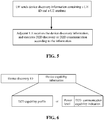
- the embodiment of the present invention provides a preferred method for receiving device discovery information, and as shown in Fig. 2 , the method includes the following steps:
- the device discovery information sent by the second UE contains the attribute information of the UE, so that the UE receiving the device discovery information may further determine whether to execute D2D discovery and/or D2D communication or not according to the attribute information of the UE therein.
- the problem of difficulty in meeting a requirement on D2D communication diversity caused by containing of only an ID in the device discovery information in the related technology is effectively solved, and the technical effect of improving D2D communication effectiveness and flexibility is achieved.
- both the first UE and the second UE enable a D2D discovery function.
- the method further includes that: the second UE sends the device discovery information, wherein the device discovery information contains the UE identification information and/or the attribute information of the UE.
- the UE identification information (i.e. a UE ID) in the device discovery information includes, but not limited to: a D2D discovery ID of the second UE and/or a D2D discovery ID of UE which is expected to be discovered by the second UE, that is, the device discovery information may contain D2D discovery identification information of the second UE to enable other UE to discover the second UE, and the device discovery information may further contain a D2D discovery ID of the UE which is expected to be discovered by the second UE, so that the other UE may determine that whether it is the UE which is expected to be discovered by the second UE or not through the D2D discovery ID.
- the D2D discovery ID of the UE may be a device ID of the UE, and may also be an ID allocated by a network entity for device discovery or another UE ID specified according to a system specification. It is worth noting that forms of the above-listed device IDs of the UE are only intended to better describe the present invention, and other UE IDs may also be adopted as long as the adopted UE IDs may uniquely identify the UE.
- the network entity may include, but not limited to, at least one of: an eNB, an MME, a D2D server and other network elements which execute device discovery ID allocation.
- a system allows setting of UE identification information with different lengths for different UE.
- the UE ID may be the D2D discovery ID of the UE which is expected to be discovered by the second UE, and may also be D2D discovery identification information which corresponds to the UE expected to be discovered and has been acquired before the second UE sends the D2D discovery ID of the UE expected to be discovered by the second UE.
- the second UE sends the device discovery information, both the D2D discovery ID of the UE which is expected to be discovered by the second UE and a D2D discovery ID of the second UE may be contained.
- the attribute information of the UE in the device discovery information is described specifically as follows: the attribute information of the UE includes: attribute information of the second UE and attribute information of the UE which is expected to be discovered by the second UE. That is, one kind of information may be contained, both kinds may also be contained, and the information may be selectively contained according to a requirement.
- the attribute information of the UE includes, but not limited to, at least one of the followings: an attribute update count value, UE capability information, UE type information, UE group information, UE state information, UE coverage information and application related information.
- an attribute update count value UE capability information
- UE type information UE type information
- UE group information UE state information
- UE coverage information UE coverage information
- application related information UE is specifically described below.
- the device discovery information received by the first UE from the second UE in Step 202 may be sent by the second UE through a synchronous signal and/or a broadcast channel.
- Step 204 i.e. a process of processing after the first UE receives the device discovery information, is specifically described below.
- the first UE sends the discovery response message to the second UE.
- the first UE may send the discovery response message to the second UE directly, and may also send the discovery response message to the second UE through a network entity.
- the method may further include that: the second UE receives the discovery response message.
- the discovery response message received by the second UE may initiate D2D communication with the first UE, and may also play a role in notification only without initiating D2D communication therebetween.
- Step 204 the following main processing strategies are adopted for different message types in the device discovery information.
- the step that the first UE executes the D2D discovery and D2D communication flows according to the state of the second UE includes that: preferably, in Step 204, the first UE judges whether its own attribute is consistent with the attribute information of the UE which is expected to be discovered by the second UE in the device discovery information or not, and if YES, the first UE sends the discovery response message to the second UE directly or through the network entity.
- the discovery response message sent to the second UE by the first UE may simultaneously contain the D2D discovery ID of the first UE and/or the D2D discovery ID of the second UE.
- One embodiment further provides a D2D communication system, which includes multiple pieces of first UE and one piece of second UE.
- the system is configured to implement the abovementioned embodiments and preferred embodiments, and that what has been described will not be repeated.
- a term "unit” or “component”, used below, is a combination of software and/or hardware capable of realizing preset functions.
- the device described in the following embodiment is preferably implemented by software, but the implementation of the device with hardware or the combination of software and hardware is also possible and conceivable.
- Fig. 3 is a preferred structure of a D2D communication system according to an embodiment of the present invention, and as shown in Fig.
- the first UE includes: a receiving element 302 and an execution element 304
- the second UE includes: a sending element 306. It is worth noting that the first UE and the second UE are peer UE, the second UE also includes each functional element in the first UE, and similarly, the first UE also includes each functional element in the second UE.
- the structure is specifically described below.
- the sending element 306 is configured to send device discovery information, wherein the device discovery information contains at least one piece of the following information: UE identification information and attribute information of the UE.
- the receiving element 302 is coupled with the sending element 306, and is configured to receive the device discovery information sent by the second UE, wherein the device discovery information contains at least one piece of the following information: the UE identification information and the attribute information of the UE; and
- the execution element 304 is coupled with the receiving element 302, and is configured to execute D2D discovery and/or D2D communication under the condition that the device discovery information is consistent with a preset condition.
- the execution element 304 is further configured to send a discovery response message to the second UE under the condition that a D2D discovery ID, which is contained in the device discovery information, of UE which is expected to be discovered by the second UE is the same as a D2D discovery ID of the first UE.
- the second UE receives the discovery response message, and preferably, the second UE may initiate D2D communication with the first UE in response to the discovery response message.
- the execution element may include the following execution components:
- D2D UE Before D2D equipment perform D2D communication, it is necessary to finish discovering other adjacent D2D equipment.
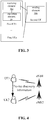
- D2D UE may be discovered by each other by sending or receiving discovery information, and the discovery information (i.e. the abovementioned device discovery information) includes identity information capable of identifying the D2D UE sending the discovery information and attribute information. Specifically, as shown in Fig.
- D2D UE1 sends device discovery information containing a UE ID and a UE attribute
- adjacent D2D UE may search for the device discovery information and parse the received device discovery information to identify an identity, capability, state, type, coverage, group and application condition of the D2D UE1, thereby finishing a D2D UE discovery process and probable D2D communication according to the information.
- a corresponding method for sending device discovery information on the basis of a network coverage scenario (communication mode 1 in Fig. 1 ).
- both devices performing D2D discovery and communication are covered by eNBs, and the devices are assisted by the eNBs to perform D2D discovery and D2D communication.
- eNBs devices performing D2D discovery and communication
- the devices are assisted by the eNBs to perform D2D discovery and D2D communication.
- a social application scenario is taken as an example, and Mary, John and Peter all have D2D UE.
- APP1 is a social application, and the social application may utilize a D2D UE discovery and communication function provided by a network side. It is supposed that Mary, John and Peter all have registered on APP1 and Mary is mutually added as a friend with John and Peter on APP1. If Mary decides to determine whether the friends are nearby or not through APP1 after the UE of Mary accesses a network, Mary runs APP1 through the UE, and enables the D2D discovery and communication function of the UE.
- the UE of Mary After the UE of Mary enables a D2D discovery and communication component, interaction between the D2D discovery and communication component on the UE side and a network-side entity (for example: an eNB, an MME, a ProSe Server or other network elements with a D2D management function) may be initiated, and it is necessary to allocate a D2D discovery ID.
- a network-side entity for example: an eNB, an MME, a ProSe Server or other network elements with a D2D management function
- the network-side entity may also allocate the D2D discovery ID to the UE when the UE accesses or is attached to the network.
- the D2D discovery ID may be an ID specially configured for D2D device discovery, and may also adopt an existing ID, used for identifying the UE, of the network side, and for example, each of a Cell Radio Network Temporary Identity (CRNTI), an S Temporary Mobile Subscriber Identity (STMSI), an SI Application Protocol Identity (S1APID), an International Mobile Subscriber Identity (IMSI), a Globally Unique Temporary UE Identity (GUTI) and an International Protocol (IP) may be used as the D2D discovery ID.
- CNTI Cell Radio Network Temporary Identity
- STMSI S Temporary Mobile Subscriber Identity
- SI Application Protocol Identity S1APID
- IMSI International Mobile Subscriber Identity
- GUI Globally Unique Temporary UE Identity
- IP International Protocol
- the UE of Mary and an eNB negotiate to acquire an air interface resource required by the sending of device discovery information
- the air interface resource used for sending the device discovery information may be a synchronous signal and/or a broadcast channel resource (for example: a set of time, frequency and code resources).
- the resource may be sent to the UE by the eNB in a manner of special signaling, and the eNB may also broadcast a resource set for sending the device discovery information and then the UE acquires an available resource therein in a competition manner.
- the device discovery information includes a D2D discovery ID allocated to the UE of Mary and a D2D capability profile.
- the D2D capability profile indicates a D2D capability set of the UE, for example: a D2D communication capability, a relay capability, a power level, a transmission mode, multi-antenna, retransmission and security).
- the type of the D2D capability profile is set by a system in a unified manner, and the UE selects a proper D2D capability profile according to own capability, and the selected proper D2D capability profile is contained in the device discovery information.
- the UE only indicates the power level of the UE and whether the UE has the D2D communication capability or not in the device discovery information.
- the power level of the UE indicates a current residual power level of the UE, for example: unlimited, high, middle and low, and information about whether the UE has the D2D communication capability or not indicates whether the UE can perform D2D communication with other D2D UE or not.
- the UE contains the power level of the UE and an indicator about whether the UE has the D2D communication capability or not in the device discovery information, and also contains the D2D capability profile, and the D2D capability profile mainly includes the capability information of the transmission mode, multi-antenna, retransmission, security and the like.
- the device discovery information is broadcasted on the air interface resource which is allocated or selected by competition. If John and Peter are nearby Mary at this moment and the UE of John and Peter also accesses the network and the APP1 and D2D discovery and communication components are enabled in the UE of John and Peter, the UE of John and Peter may detect the device discovery information sent by the UE of Mary in the broadcasting manner, and the UE of John and Peter receives and parses the device discovery information, and stores the D2D discovery ID corresponding to the UE of Mary and the device capability information of the UE of Mary in the device discovery information.
- the D2D discovery and communication components of the UE of John and Peter send received D2D discovery ID list information to the network-side entity to require the network side to check whether the UE can be discovered by each other or not, and if the network side verifies that the UE can be discovered by each other, information about that the UE of Mary is nearby is presented to the UE of John and Peter through running APP1.
- the UE of John may initiate sending of a video file to the UE of Mary in a D2D manner when necessary. If the stored device capability information of the UE of Mary also includes the D2D capability profile indicator, the capabilities of power, transmission mode, multi-antenna, retransmission, security and the like of the UE of John and Mary are considered to establish a proper connection during establishment of a D2D communication connection between the UE of John and the UE of Mary.
- the UE of John quits establishing the D2D communication connection with the UE of Mary.
- Instance II also takes a social application scenario as an example, and both Mary and John have D2D UE.
- APP1 is a social application, and the social application may utilize a D2D UE discovery and communication function provided by a network side. It is supposed that both Mary and John have registered on APP1 and Mary is mutually added as a friend with John on APP1. If Mary decides to have a look at whether friend John is nearby or not through APP1 after the UE of Mary accesses a network, APP1 runs on the UE of Marry, and the D2D discovery and communication function of the UE of Marry is enabled. The UE of Mary acquires a D2D discovery ID and an air interface resource which is used for sending device discovery information by virtue of flows similar to those in instance II.
- the device discovery information includes the D2D discovery ID (i.e. a target D2D discovery ID) allocated to the UE of John and the D2D discovery ID (i.e. a source D2D discovery ID) allocated to the UE of Mary.
- the device discovery information is broadcasted on the air interface resource which is allocated or selected by competition. If John is nearby Mary at this moment and the UE of John also accesses the network and the APP1 runs in the UE of John and a D2D discovery and communication component is enabled in the UE of John, the UE of John may detect the device discovery information broadcasted by the UE of Mary, and the UE of John receives and parses the device discovery information, and stores the target D2D discovery ID and the source D2D discovery ID in the device discovery information.
- the UE of John sends a discovery response message to the UE sending the device discovery information through a network entity or directly.
- the discovery response message at least contains the D2D discovery ID of the UE and the D2D discovery ID of the UE sending the device discovery information.
- the discovery response message may also be sent to the network-side entity through the UE of John, and the network-side entity forwards the discovery response message to the UE, sending the device discovery information, of Mary after receiving the discovery response message.
- the network-side entity includes, but not limited to, an eNB, an MME, a D2D server and other network elements with a D2D service processing function.
- the UE of Mary After the UE of Mary receives the discovery response message forwarded by the network-side entity or directly sent by the UE of John, the UE of Mary determines that the UE of John is found, and the UE of Mary may initiate D2D communication with the UE of John when necessary.
- the device discovery information in instance II may also contain the device capability information in instance I.
- the UE of Mary decides to enable a D2D discovery and communication function to look for adjacent D2D UE nearby.
- the UE of Mary acquires a D2D discovery ID and an air interface resource used for sending device discovery information by virtue of flows similar to those in instance I.
- the UE of Mary may also be identified by allocated air interface resource information used for sending the device discovery information. For example, a certain piece of UE may be uniquely identified by virtue of a combination of specific time, frequency and code resources of an air interface resource allocated by an eNB to send the device discovery information. Under such a condition, the device discovery information sent by the UE of Mary is not required to explicitly contain the D2D discovery ID, and the UE is implicitly indicated by the air interface resource for sending the device discovery information.
- the network supports group-based discovery and communication, group here may be a group with a plurality of members or a group with a few of members, a Public Land Mobile Network (PLMN) may belong to a group, an operating company may also divide a group (similar to a short number group set for certain group company users) according to a group client, and in addition, users with UE may also set friend groups (for example, groups set by the users according to contact information in mobile phones).
- PLMN Public Land Mobile Network
- One piece of D2D UE may belong to a group, but may also simultaneously belong to multiple groups.
- Group-based discovery has the advantage that D2D UE may not know an ID of other adjacent UE but may judge whether the UE is adjacent UE in which a user is interested or not according to a group ID.
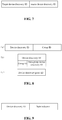
- the UE of Mary If the UE of Mary is allocated into group 1 according to a certain rule and acquires an ID of group 1, the UE of Mary expects to initiate adjacent UE discovery based on group 1. After the D2D discovery ID, the air interface resource for sending the device discovery information and the ID of group 1 are determined, the UE of Mary assembles the device discovery information, and a format of the assembled device discovery information is shown in Fig. 8 .
- the device discovery information may include the D2D discovery ID allocated to the UE of Mary and identification information of group 1, as shown by a in Fig. 8 .
- the ID of the group to which the UE belongs is optionally implicitly contained through the D2D discovery ID, and for example, a plurality of high order bits of the D2D discovery ID are used for indicating the group where the UE is located, as shown by b in Fig. 8 .
- the device discovery information sent by the air interface resource may only contain one piece of D2D group information. If the UE simultaneously belongs to multiple groups, multiple pieces of device discovery information may be sent, and different device discovery information contains different group IDs.
- the device discovery information is sent on the air interface resource which is allocated or selected by competition in a broadcasting manner. If John is nearby Mary at this moment and the UE of John also accesses the network and a D2D discovery and communication component is enabled, the UE of John may detect the device discovery information broadcasted by Mary. The UE of John receives and parses the device discovery information, and stores the D2D discovery ID corresponding to the UE of Mary and the identification information of group 1.
- the UE of John is allocated into group 1 and acquires the ID of group 1. If the group ID in the device discovery information parsed by the UE of John is consistent with the group ID to which the UE of John belongs, corresponding processing is performed according to a predefined rule. For example, if the UE of John is discovered to belong to the same group with the UE of Mary, the UE of John sends a discovery response message to the UE of Mary, and confirms that the UE of John and the UE of Mary have been discovered by each other. Optionally, the UE of John judges whether it is necessary to forward the device discovery information sent by the UE of Mary or not according to the predefined rule, or establishes corresponding D2D communication with the UE of Mary.
- the UE of Mary acquires a D2D discovery ID and an air interface resource used for sending device discovery information by virtue of flows similar to those in instance I. If the UE of Mary is currently in a connected state, the UE of Mary assembles the device discovery information after the D2D discovery ID and the air interface resource for sending the device discovery information are determined.
- the device discovery information may include the D2D discovery ID allocated to the UE of Mary shown in Fig. 9 and a connected state ID of the UE of Mary.
- State information of the UE is used for indicating whether the UE is in a connected state or an idle state, and may be indicated by an explicit state field, for example: 0 represents the idle state and 1 represents the connected state, and different D2D ID sets may also be allocated to the UE in different states, and the state information of the UE may be implicitly indicated by the D2D ID contained in the device discovery information.
- different resource sets bearing the device discovery information may also be allocated to the UE in different states, and the state information of the UE is implicitly indicated by the device discovery information.
- a network-side entity needs to allocate D2D discovery IDs to the UE if different D2D discovery ID sets are allocated to the UE in different states, wherein the two D2D discovery IDs are used for the D2D discovery of the UE in the connected state and the idle state respectively.
- the D2D discovery ID sets which are used for distinguishing the UE in different states, and information about the resource sets bearing the device discovery information are required to be pre-configured by a system or sent to the UE in an air interface broadcasting manner or through proprietary signalling, and the UE is required to reacquire a corresponding device discovery information sending resource during state switching.
- the device discovery information is broadcasted on the air interface resource which is allocated or selected by competition. If John is nearby Mary at this moment and the UE of John also accesses the network and a D2D discovery and communication component is enabled, the UE of John may detect the device discovery information broadcasted by Mary. The UE of John receives and parses the device discovery information, and stores the D2D discovery ID corresponding to the UE of Mary and the state information of the UE therein.
- the UE of John expects to establish corresponding D2D communication with the UE of Mary, it is necessary to execute D2D discovery and D2D communication flows on the basis of the stored state of the UE of Mary. Specifically, if the UE is in the idle state, the adjacent UE is required to page the UE to enable the UE to access the network and establish a communication connection when initiating D2D communication with the UE. If the UE is in the connected state, the adjacent UE may directly find a serving eNB of the UE, and establishes the D2D communication connection through the serving eNB of the UE when necessary.
- the UE of Mary acquires a D2D discovery ID and an air interface resource used for sending device discovery information by virtue of flows similar to those in instance I. It is supposed that the UE of Mary suddenly enters an emergency help calling state or Mary is a subscribed user with a higher priority. After the D2D discovery ID and the air interface resource for sending the device discovery information are determined, the UE of Mary assembles the device discovery information, and a format of the assembled device discovery information is shown in Fig. 10 .
- the device discovery information may include the D2D discovery ID allocated to the UE of Mary, the priority and/or user type information.
- the user type information may indicate whether the UE is an emergency help calling user, an ordinary user or a system management user.
- the device discovery information is broadcasted on the air interface resource which is allocated or selected by competition. If John is nearby Mary at this moment and the UE of John also accesses the network and a D2D discovery and communication component runs in the UE of John, the UE of John may detect the device discovery information broadcasted by Mary. The UE of John receives and parses the device discovery information, and stores the D2D discovery ID corresponding to the UE of Mary and user state information therein. If the user type information indicates that the UE of Mary has a higher priority or is an emergency help calling user or a system management user, the UE of John preferably responds to the UE of Mary in a subsequent discovery and D2D communication flow.
- the UE of Mary acquires a D2D discovery ID and an air interface resource used for sending device discovery information by virtue of flows similar to those in instance I. After the D2D discovery ID and the air interface resource for sending the device discovery information are determined, the UE of Mary assembles the device discovery information, the device discovery information may include the D2D discovery ID allocated to the UE of Mary and coverage information of the UE of Mary, and a format of the assembled device discovery information is shown in Fig. 11 .
- the coverage information of the UE is used for indicating whether the UE is covered by an eNB or not as well as a UE serving eNB indicator.
- the UE serving eNB indicator may adopt a UE serving eNB ID, or a UE serving cell ID, or a UE serving cell physical ID or other IDs capable of distinguishing adjacent eNBs.
- an ID indicator capable of distinguishing the adjacent eNBs is adopted, it is further necessary to configure IDs capable of distinguishing the adjacent eNBs to the eNBs by a network manager, or the adjacent eNBs select distinguishing IDs and perform interaction to ensure uniqueness of the IDs in adjacent regions through X2 interfaces, and messages bearing the distinguishing IDs of the eNBs in the X2 interfaces may include, but not limited to: X2 establishment messages, adjacent cell configuration messages or other X2 messages capable of bearing the distinguishing IDs of the eNBs.
- the eNBs may broadcast the distinguishing IDs to the UE via an air interface or send the distinguishing IDs through proprietary signalling.
- the device discovery information After the UE of Mary finishes assembling the device discovery information, the device discovery information, which is borne on the air interface resource which is allocated or selected by competition, is broadcasted. If John is nearby Mary at this moment and the UE of John also accesses the network and a D2D discovery and communication component runs in the UE of John, the UE of John may detect the device discovery information broadcasted by Mary. The UE of John receives and parses the device discovery information, and stores the D2D discovery ID corresponding to the UE of Mary and the coverage information of the UE therein.
- the UE of John If the UE of John expects to establish corresponding D2D communication with the UE of Mary, it is necessary to execute D2D discovery and D2D communication flows on the basis of the stored coverage of the UE of Mary. For example, when the UE of John initiates establishment of a D2D communication connection with the UE of Mary, information about a serving eNB to which the UE of Mary belongs may be contained in a request message sent to a serving eNB to which the UE of John belongs, the serving eNB of the UE of John may judge whether the UE of John and the UE of Mary belong to the same serving eNB or not after receiving the information, and if the UE of John and the UE of Mary do not belong to the same serving eNB, it is necessary to perform X2 interface negotiation during the establishment of the D2D communication connection.
- Mary has D2D UE, and drives into a parking lot. After the UE of Mary accesses a network, the UE of Mary decides to enable a D2D discovery and communication function to look for an adjacent idle parking space.
- Each parking space in the parking lot corresponds to one piece of D2D UE.
- the D2D UE of each parking space acquires a D2D discovery ID and an air interface resource required by sending of device discovery information by virtue of flows similar to those in instance II.
- the UE of the idle parking spaces assembles the device discovery information, and the device discovery information may include the allocated D2D discovery IDs and parking application information, wherein the parking application information includes, but not limited to: an application type, an application ID and specific application information.
- the specific application information may be information such as numbers, positions and cost about the idle parking spaces.
- the information may be indicated by specially coded D2D discovery IDs.
- the device discovery information After the UE of the idle parking spaces finishes assembling the device discovery information, the device discovery information, which is borne on the air interface resources which are allocated or selected by competition, is broadcasted. If the UE of Mary gradually drives into the parking lot, the UE of Mary may detect the device discovery information broadcasted by the idle parking spaces. The UE of Mary receives and parses the device discovery information, and stores the D2D discovery ID corresponding to the UE of Mary and the parking application information therein.
- the UE of Mary finds the nearest parking space according to the indication of the numbers, positions and cost of the idle parking spaces provided by the parking application information, and is parked at the corresponding position.
- a corresponding method for sending device discovery information on the basis of a partial network coverage scenario (communication mode 2 in Fig. 1 ) is provided.
- the preferred embodiment has the characteristic that D2D equipment covered by a network serves as relays (i.e. relay nodes) and D2D equipment positioned in a coverage edge region of the network or uncovered by the network communicates with an eNB as D2D equipment serving as the relays.
- relays i.e. relay nodes
- the UE of Mary and John have D2D UE, and the UE of Mary accesses a network and enables a D2D discovery and communication function of the UE of Mary.
- the UE of Mary is positioned on an edge of a cell, and the UE of Mary decides to serve as a relay node to help other adjacent UE out of coverage of the eNB nearby to forward data.
- the UE of Mary acquires a D2D discovery ID and an air interface resource used for sending device discovery information by virtue of flows similar to those in instance I to instance VII. After the D2D discovery ID and the air interface resource for sending the device discovery information are determined, the UE of Mary assembles the device discovery information, and a format of the assembled device discovery information is shown in Fig. 6 .
- the device discovery information includes the D2D discovery ID allocated to the UE of Mary and D2D capability profile.
- the D2D capability profile indicates a D2D capability set of the UE, for example: a D2D communication capability, a relay capability, a power level, a transmission mode, multi-antenna, retransmission, multimode multi-system supporting, a load capability and security.
- a type of the D2D capability profile is set by a system in a unified manner, and the UE selects a proper D2D capability profile according to own capability, and the selected D2D capability profile is indicated in the device discovery information.
- the device discovery information sent by the UE only indicates the power level of the UE and whether the UE has the D2D communication capability or not.
- the power level of the UE indicates a current residual power level of the UE, for example: unlimited, high, middle and low.
- Information about whether the UE has the D2D communication capability or not indicates whether the UE can perform D2D communication with other D2D UE or not.
- the device discovery information sent by the UE contains the power level of the UE and indication information about whether the UE has the D2D communication capability or not, and also contains the D2D capability profile, and the D2D capability profile mainly includes the capability information of the transmission mode, multi-antenna, retransmission, security and the like.
- the device discovery information After the UE of Mary finishes assembling the device discovery information, the device discovery information, which is borne on the air interface resource which is allocated or selected by competition, is broadcasted. If UE of John is nearby Mary at this moment but is not within the coverage of an eNB or a signal of the UE of the John is very weak, the UE of John enables a D2D discovery and communication component and detects the device discovery information broadcasted by Mary, and the UE of John receives and parses the device discovery information, and stores the D2D discovery ID corresponding to the UE of Mary and the device capability information of the UE of Mary in the device discovery information.
- the UE of John may initiate forwarding for communication with a serving eNB of the UE of Mary through the UE of Mary when necessary.
- a corresponding method for sending device discovery information on the basis of a network coverage-free scenario (communication mode 3 in Fig. 1 ) is provided.
- D2D equipment uncovered by a network directly communicates with one another or performs multi-hop forwarding communication through other D2D equipment serving as relays. Detailed description is given below with reference to instance IX.
- the UE of Mary and John have D2D UE, and the UE of Mary and John is supposed not to be within coverage of an eNB.
- the UE of Mary and John employs device IDs as D2D discovery IDs or automatically selects non-conflicting device discovery IDs according to a system specification, and then competes to acquire air interface resources required by sending of device discovery information. After the D2D discovery IDs and the air interface resources for sending the device discovery information are determined, the UE of Mary assembles the device discovery information.
- the device discovery information includes the D2D discovery ID allocated to the UE of Mary, an attribute update cont value and a D2D capability profile.
- the D2D capability profile indicates a D2D capability set of the UE, for example: a D2D communication capability, a relay capability, a power level, a transmission mode, multi-antenna, retransmission, multimode multi-system supporting, a load capability and security.
- a type of the D2D capability profile is set by the system in a unified manner, and the UE selects a proper D2D capability profile according to own capability, and the selected D2D capability profile is contained in the device discovery information.
- the device discovery information borne on the air interface resource which is allocated or selected by competition is broadcasted. If UE of John is nearby Mary at this moment, the UE of John detects the device discovery information broadcasted by the UE of Mary, the UE of John receives and parses the device discovery information, and if information corresponding to the device discovery ID is not received, the UE of John stores the D2D discovery ID corresponding to the UE of Mary, the attribute update count value and the device capability information of the UE of Mary in the device discovery information; and if the information corresponding to the device discovery ID is received and the attribute update count value is different from an attribute update count value which is stored before and corresponds to the UE of Mary, the UE of John updates the attribute update count value and the device capability information of the UE of Mary.
- the UE of John may initiate forwarding for communication with other UE adjacent to Mary, such as UE of Peter, through the UE of Mary when necessary.
- the UE of John reduces data forwarding or data communication through the UE of Mary as much as possible.
- the UE of Mary and John have D2D UE, and the UE of Mary and John is supposed not to be within coverage of an eNB.
- the UE of Mary decides to enable a D2D discovery and communication function to look for adjacent D2D UE nearby.
- the UE of Mary is allocated into group 1 according to a certain rule and acquires an ID of group 1 and the UE of Mary expects to initiate adjacent UE discovery based on group 1.
- the UE of Mary After a D2D discovery ID and an air interface resource for sending device discovery information are determined, the UE of Mary assembles the device discovery information, and a format of the assembled device discovery information is shown by c in Fig. 8 .
- the device discovery information may include identification information, which is allocated to the UE of Mary, of group 1, as shown by c in Fig. 8 .
- the device discovery information sent by the air interface resource optionally contains multiple pieces of device discovery information.
- the device discovery information borne on the air interface resource which is allocated or selected by competition is broadcasted. If John is nearby Mary at this moment and the UE of John also accesses a network and a D2D discovery and communication component runs in the UE of John, the UE of John may detect the device discovery information broadcast by Mary. The UE of John receives and parses the device discovery information, and stores the identification information of group 1 corresponding to the UE of Mary in the device discovery information.
- the UE of John is allocated into group 1 and acquires the ID of group 1. If the group ID in the device discovery information parsed by the UE of John is consistent with its own group ID, corresponding processing is performed according to a predefined rule. For example, if the UE of John is discovered to belong to the same group with the UE of Mary, the UE of John sends a discovery response message to the UE of Mary, and confirms that the UE of John and the UE of Mary have been discovered by each other. Optionally, the UE of John judges whether it is necessary to forward the device discovery information sent by the UE of Mary or not according to the predefined rule, or establishes corresponding D2D communication with the UE of Mary.
- Each preferred instance discloses the methods for sending the device discovery information and gives information types and information formats in discovery signalling in various scenarios for the D2D UE to rapidly judge whether the UE is UE in which the D2D UE is interested in and simplify the D2D discovery and communication flows.
- a storage medium in which the abovementioned software is stored, the storage medium including, but not limited to: a compact disc, a floppy disk, a hard disk, an erasable memory and the like.
- the present invention has technical effects as follows: in the preferred embodiments, the device discovery information sent by the second UE contains the attribute information of the UE, so that the UE receiving the device discovery information may further determine whether to execute D2D discovery and/or D2D communication or not according to the attribute information of the UE therein. In such a manner, the problem of difficulty in meeting a requirement on D2D communication diversity caused by containing of only an ID in the device discovery information in the related technology is effectively solved, and the technical effect of improving D2D communication effectiveness and flexibility is achieved.
- each module or step of the present invention may be implemented by a universal computing device, and the modules or steps can be concentrated on a single computing device or distributed on a network formed by a plurality of computing devices, and may optionally be implemented by programmable codes executable for the computing devices, so that the modules or steps may be stored in a storage device for execution with the computing devices, or the shown or described steps may be executed in a sequence different from the sequence here under a certain condition, or the modules or steps may form each integrated circuit module, or multiple modules or steps therein may form a single integrated circuit module for implementation.
- the present invention is not limited to any specific hardware and software combination.
- the technical solutions provided by the embodiment of the present invention may be applied to the field of communication, the problem difficulty in meeting a requirement on D2D communication diversity caused by containing of only an ID in device discovery information in the related technology is effectively solved, and the technical effect of improving D2D communication effectiveness and flexibility is achieved.
Landscapes
- Engineering & Computer Science (AREA)
- Computer Networks & Wireless Communication (AREA)
- Signal Processing (AREA)
- Databases & Information Systems (AREA)
- Computer Security & Cryptography (AREA)
- Mobile Radio Communication Systems (AREA)
- Telephone Function (AREA)
Applications Claiming Priority (3)
| Application Number | Priority Date | Filing Date | Title |
|---|---|---|---|
| CN201310111450.3A CN104105155B (zh) | 2013-04-01 | 2013-04-01 | 接收设备发现信息、发送设备发现信息的方法和用户设备 |
| EP14779381.4A EP2983426A4 (fr) | 2013-04-01 | 2014-01-24 | Procédés de réception d'informations de découverte de dispositif et d'envoi d'informations de découverte de dispositif et équipement utilisateur |
| PCT/CN2014/071334 WO2014161383A1 (fr) | 2013-04-01 | 2014-01-24 | Procédés de réception d'informations de découverte de dispositif et d'envoi d'informations de découverte de dispositif et équipement utilisateur |
Related Parent Applications (1)
| Application Number | Title | Priority Date | Filing Date |
|---|---|---|---|
| EP14779381.4A Division EP2983426A4 (fr) | 2013-04-01 | 2014-01-24 | Procédés de réception d'informations de découverte de dispositif et d'envoi d'informations de découverte de dispositif et équipement utilisateur |
Publications (1)
| Publication Number | Publication Date |
|---|---|
| EP3780881A1 true EP3780881A1 (fr) | 2021-02-17 |
Family
ID=51657549
Family Applications (2)
| Application Number | Title | Priority Date | Filing Date |
|---|---|---|---|
| EP20186472.5A Pending EP3780881A1 (fr) | 2013-04-01 | 2014-01-24 | Procédés de réception d'informations de découverte de dispositif et d'envoi d'informations de découverte de dispositif et équipement utilisateur |
| EP14779381.4A Withdrawn EP2983426A4 (fr) | 2013-04-01 | 2014-01-24 | Procédés de réception d'informations de découverte de dispositif et d'envoi d'informations de découverte de dispositif et équipement utilisateur |
Family Applications After (1)
| Application Number | Title | Priority Date | Filing Date |
|---|---|---|---|
| EP14779381.4A Withdrawn EP2983426A4 (fr) | 2013-04-01 | 2014-01-24 | Procédés de réception d'informations de découverte de dispositif et d'envoi d'informations de découverte de dispositif et équipement utilisateur |
Country Status (5)
| Country | Link |
|---|---|
| US (1) | US10194304B2 (fr) |
| EP (2) | EP3780881A1 (fr) |
| JP (1) | JP2016521483A (fr) |
| CN (1) | CN104105155B (fr) |
| WO (1) | WO2014161383A1 (fr) |
Families Citing this family (83)
| Publication number | Priority date | Publication date | Assignee | Title |
|---|---|---|---|---|
| EP2842288A1 (fr) * | 2012-04-27 | 2015-03-04 | Interdigital Patent Holdings, Inc. | Systèmes et procédés pour personnaliser et/ou adapter une interface de service |
| CN104185162B (zh) * | 2013-05-20 | 2018-10-19 | 华为终端有限公司 | 发现终端方法、终端、服务器、基站、管理实体及系统 |
| CN108990063A (zh) * | 2013-06-28 | 2018-12-11 | 日本电气株式会社 | 通信系统、网络和用户设备及其通信方法 |
| CN105723778B (zh) * | 2013-11-06 | 2019-08-23 | 诺基亚技术有限公司 | 用于控制d2d发现过程的方法和装置 |
| JP6343672B2 (ja) * | 2013-12-20 | 2018-06-13 | 京セラ株式会社 | 装置間通信リソースの管理 |
| WO2015111909A1 (fr) * | 2014-01-21 | 2015-07-30 | 엘지전자(주) | Procédé de détermination d'identifiant de terminal dans un système de communications sans fil supportant une communication de dispositif à dispositif, et appareil associé |
| WO2015115862A1 (fr) * | 2014-01-30 | 2015-08-06 | 엘지전자 주식회사 | Procédé de fonctionnement de d2d mis en œuvre par un terminal dans un système de communication sans fil et terminal l'utilisant |
| EP3116251A4 (fr) | 2014-03-07 | 2017-08-02 | Kyocera Corporation | Procédé de commande de communication, serveur de gestion, et terminal d'utilisateur |
| EP3120592B1 (fr) * | 2014-03-21 | 2019-05-22 | Telefonaktiebolaget LM Ericsson (publ) | Authentification dans une découverte de dispositif à dispositif |
| US20170171690A1 (en) * | 2014-07-20 | 2017-06-15 | Lg Electronics Inc. | Method for terminal-condition-based d2d communication, and apparatus therefor in wireless communication system |
| US20160142897A1 (en) * | 2014-11-14 | 2016-05-19 | Telefonaktiebolaget L M Ericsson (Publ) | Enriched D2D Discovery Content |
| CN107005799B (zh) * | 2014-12-08 | 2020-06-30 | Lg 电子株式会社 | 无线通信系统中执行设备对设备通信的方法和执行该方法的设备 |
| CN106211026B (zh) | 2014-12-22 | 2019-05-24 | 中兴通讯股份有限公司 | 一种实现设备直通中继选择的方法、网络控制节点及用户设备 |
| CN105828453A (zh) * | 2015-01-04 | 2016-08-03 | 中兴通讯股份有限公司 | 中继通信的数据传输方法和装置 |
| WO2016113849A1 (fr) * | 2015-01-13 | 2016-07-21 | 富士通株式会社 | Système de communication sans fil, station de commande et terminal |
| WO2016112551A1 (fr) * | 2015-01-17 | 2016-07-21 | 华为技术有限公司 | Procédé et système de configuration d'appel et équipement utilisateur |
| JP6554798B2 (ja) * | 2015-01-28 | 2019-08-07 | 富士通株式会社 | 無線通信システム |
| KR102462369B1 (ko) * | 2015-02-16 | 2022-11-02 | 삼성전자주식회사 | 사용자 단말기(ue)-대-네트워크 릴레이 지시의 전송을 트리거하는 방법 |
| JP6385298B2 (ja) * | 2015-03-03 | 2018-09-05 | シャープ株式会社 | 通信システム |
| JPWO2016142974A1 (ja) * | 2015-03-06 | 2017-12-21 | 日本電気株式会社 | 近接サービス通信のための装置及び方法 |
| JP6416663B2 (ja) * | 2015-03-09 | 2018-10-31 | シャープ株式会社 | 通信システム |
| CN104661177B (zh) * | 2015-03-12 | 2018-05-15 | 深圳酷派技术有限公司 | 一种实现d2d通信的方法、系统及设备 |
| GB2536663A (en) * | 2015-03-24 | 2016-09-28 | Faxi Ltd | A method, system and device for determining close proximity of two or more persons |
| US10021621B2 (en) * | 2015-04-03 | 2018-07-10 | Qualcomm Incorporated | UE-to-UE relay list and determination of floor arbitrator |
| KR102415672B1 (ko) * | 2015-04-09 | 2022-07-04 | 삼성전자주식회사 | 디바이스 간 메시지 송수신 방법 및 장치 |
| US20180110001A1 (en) * | 2015-04-09 | 2018-04-19 | Ntt Docomo, Inc. | User terminal and radio communication method |
| CN106162777B (zh) * | 2015-04-09 | 2021-03-26 | 中兴通讯股份有限公司 | 中继节点切换方法及系统 |
| WO2016161607A1 (fr) * | 2015-04-09 | 2016-10-13 | 华为技术有限公司 | Procédé et appareil d'envoi d'un canal physique de découverte de liaison latérale (psdch) |
| EP3282770A4 (fr) * | 2015-04-10 | 2018-08-22 | Fujitsu Limited | Procédé de transmission d'informations de découverte, dispositif et système de communication |
| US10356676B2 (en) | 2015-04-20 | 2019-07-16 | Huawei Technologies Co., Ltd. | Resource switching method, apparatus, and system |
| CN104796852B (zh) * | 2015-04-27 | 2019-02-01 | 宇龙计算机通信科技(深圳)有限公司 | 用于终端直连通信的设备发现方法、装置和终端 |
| EP3282765B1 (fr) * | 2015-04-30 | 2020-12-02 | Huawei Technologies Co., Ltd. | Procédé, dispositif et système de sélection de voie |
| CN107409292B (zh) | 2015-05-14 | 2021-04-13 | 富士通株式会社 | 边链路信息传输方法、装置以及通信系统 |
| EP3273745B1 (fr) * | 2015-05-15 | 2020-12-09 | Huawei Technologies Co., Ltd. | Procédé et système de sélection de relais dans des communications de dispositif à dispositif |
| CN106303900B (zh) * | 2015-05-15 | 2020-10-30 | 索尼公司 | 无线通信设备和无线通信方法 |
| CN107534482B (zh) | 2015-05-15 | 2021-01-29 | 索尼公司 | 移动通信系统、通信终端和方法 |
| WO2016186438A1 (fr) * | 2015-05-18 | 2016-11-24 | 삼성전자 주식회사 | Procédé et appareil destinés à établir des communications de service de proximité dans un système de communication sans fil |
| CN105007610B (zh) * | 2015-05-28 | 2020-03-06 | 海尔优家智能科技(北京)有限公司 | 一种多跳发现资源的方法和装置 |
| CN105657783A (zh) * | 2015-05-29 | 2016-06-08 | 宇龙计算机通信科技(深圳)有限公司 | 一种终端直连通信方法及装置 |
| FR3038477B1 (fr) * | 2015-07-03 | 2018-07-06 | Somfy Sas | Procede de controle d’une installation domotique |
| CN106341805B (zh) * | 2015-07-17 | 2019-09-06 | 上海交通大学 | 邻居设备发现方法及装置 |
| CN106488411B (zh) * | 2015-08-28 | 2019-08-16 | 普天信息技术有限公司 | 脱网直通终端资源冲突的监控方法 |
| EP3322221B1 (fr) | 2015-09-11 | 2021-04-07 | Huawei Technologies Co., Ltd. | Procédé, dispositif et système de transmission de données de dispositif à dispositif (d2d) |
| US10524108B2 (en) * | 2015-10-19 | 2019-12-31 | Qualomm Incorporated | D2D communication for eMTC design considerations |
| CA3003146C (fr) * | 2015-10-30 | 2020-08-25 | Lutron Electronics Co., Inc. | Mise en service de systemes de commande de charge |
| CN107079370B (zh) * | 2015-11-09 | 2021-08-27 | 华为技术有限公司 | 一种信号强度测量方法及设备 |
| EP3402246B1 (fr) | 2016-02-05 | 2021-08-18 | Huawei Technologies Co., Ltd. | Procédés et dispositifs pour une affectation de ressource de communication |
| WO2017146523A1 (fr) * | 2016-02-26 | 2017-08-31 | 엘지전자 주식회사 | Procédé et équipement utilisateur de requête de connexion à un réseau |
| EP3379866A4 (fr) * | 2016-03-18 | 2019-05-22 | Guangdong OPPO Mobile Telecommunications Corp., Ltd. | Procédé et terminal de communication de dispositif à dispositif |
| JP6833859B2 (ja) * | 2016-03-28 | 2021-02-24 | オッポ広東移動通信有限公司Guangdong Oppo Mobile Telecommunications Corp., Ltd. | デバイスツーデバイス通信方法 |
| CN108464048A (zh) * | 2016-03-30 | 2018-08-28 | Oppo广东移动通信有限公司 | 数据传输的方法、终端及基站 |
| CN107295585B (zh) * | 2016-04-13 | 2021-05-18 | 华为技术有限公司 | 一种数据传输方法、网络设备、终端设备及基站 |
| JP6886508B2 (ja) * | 2016-07-28 | 2021-06-16 | 京セラ株式会社 | 近隣ueの支援によるロバストなマルチキャスト、sc−ptm及びブロードキャスト配信 |
| KR101892269B1 (ko) * | 2016-09-30 | 2018-09-28 | 삼성전자주식회사 | MCPTT(Mission Critical Push To Talk) 서비스를 제공하는 방법 및 단말기 |
| US10284605B2 (en) | 2016-09-30 | 2019-05-07 | Samsung Electronics Co., Ltd | Method and terminal for providing MCPTT service |
| CN106792438A (zh) * | 2016-11-26 | 2017-05-31 | 宇龙计算机通信科技(深圳)有限公司 | 一种终端状态管理方法及装置 |
| CN106535301B (zh) * | 2016-12-30 | 2020-02-21 | 珠海赛纳打印科技股份有限公司 | 建立通信连接的方法、设备及系统 |
| EP3562261B1 (fr) * | 2017-01-26 | 2023-09-27 | Huawei Technologies Co., Ltd. | Procédé et appareil de détermination de relais |
| CN108632919A (zh) * | 2017-03-23 | 2018-10-09 | 索尼公司 | 用于无线通信的电子装置以及无线通信方法 |
| WO2018184180A1 (fr) * | 2017-04-07 | 2018-10-11 | Apple Inc. | Dispositif, système et procédé pour des opérations de collecte de données adaptatives |
| WO2018228527A1 (fr) * | 2017-06-16 | 2018-12-20 | Telefonaktiebolaget Lm Ericsson (Publ) | Procédé, dispositif terminal et dispositif de réseau destinés à la gestion de coexistence de dispositifs terminaux comportant différents ensembles de capacité de liaison latérale |
| CN112564880B (zh) * | 2017-08-11 | 2022-11-01 | Oppo广东移动通信有限公司 | 数据处理方法及相关设备 |
| CN110139340A (zh) * | 2018-02-09 | 2019-08-16 | 电信科学技术研究院有限公司 | 一种连接建立方法及终端 |
| WO2019174054A1 (fr) * | 2018-03-16 | 2019-09-19 | Oppo广东移动通信有限公司 | Procédé de détermination d'un premier mode de transmission, et dispositif terminal et dispositif de réseau |
| US10419077B1 (en) * | 2018-03-28 | 2019-09-17 | Google Llc | Wireless communication via a mobile relay |
| CN108566686B (zh) * | 2018-03-29 | 2020-07-21 | 维沃移动通信有限公司 | 一种d2d连接建立的方法、装置和系统 |
| CN109471736A (zh) * | 2018-09-14 | 2019-03-15 | 叮联信息技术有限公司 | 事件信息不间断随机传递及实时共享方法 |
| PL3869905T3 (pl) * | 2018-10-18 | 2024-04-02 | Beijing Xiaomi Mobile Software Co., Ltd. | Połączenie unicast i transmisja danych na podstawie bezpośredniego połączenia rzecz z rzeczą |
| US12231996B2 (en) | 2018-10-31 | 2025-02-18 | Interdigital Patent Holdings, Inc. | Radio vehicle sidelink discovery |
| US12143185B2 (en) * | 2019-04-18 | 2024-11-12 | Ntt Docomo, Inc. | User terminal and radio communication method |
| CN113661772B (zh) | 2019-04-30 | 2024-10-11 | 富士通株式会社 | 边链路传输中用户设备能力的标识方法及装置 |
| CN111800820B (zh) * | 2019-08-21 | 2023-06-27 | 维沃移动通信有限公司 | 一种侧链路中继处理的方法和用户设备 |
| US11496987B2 (en) * | 2019-09-16 | 2022-11-08 | Qualcomm Incorporated | Relay discovery in wireless communication systems |
| CN112654021B (zh) * | 2019-10-09 | 2022-06-10 | 华为技术有限公司 | 一种设备间通信的方法、相关设备及系统 |
| US11672016B2 (en) * | 2019-12-09 | 2023-06-06 | Qualcomm Incorporated | RACH configuration for different power classes |
| US12363517B2 (en) * | 2020-04-24 | 2025-07-15 | Adept Tech Solutions Inc. | Communication device, system and method |
| CN113596743B (zh) * | 2020-04-30 | 2022-11-04 | 大唐移动通信设备有限公司 | 信号的发送方法、信号的接收方法、装置及存储介质 |
| JP2021022951A (ja) * | 2020-11-05 | 2021-02-18 | オッポ広東移動通信有限公司Guangdong Oppo Mobile Telecommunications Corp., Ltd. | デバイスツーデバイスに基づく通信方法及び通信端末 |
| WO2022155313A1 (fr) * | 2021-01-14 | 2022-07-21 | Kyocera Corporation | Transmission d'un indicateur de couverture par un dispositif d'équipement utilisateur (ue) distant |
| US12143223B2 (en) * | 2021-02-18 | 2024-11-12 | Qualcomm Incorporated | HARQ procedure for cooperative relay in sidelink networks |
| US11985631B2 (en) | 2021-08-25 | 2024-05-14 | Qualcomm Incorporated | Reconfigurable surfaces for sidelink communications |
| US20250008318A1 (en) * | 2022-01-10 | 2025-01-02 | Mediatek Inc. | Method and appratus for capability reporting in relay communications |
| CN116546478A (zh) * | 2022-01-25 | 2023-08-04 | 维沃移动通信有限公司 | 近距离通信的发现方法、装置、ue及介质 |
Citations (4)
| Publication number | Priority date | Publication date | Assignee | Title |
|---|---|---|---|---|
| WO2011130630A1 (fr) * | 2010-04-15 | 2011-10-20 | Qualcomm Incorporated | Émission et réception d'un signal de détection de proximité pour la découverte de pairs |
| GB2488847A (en) * | 2011-07-28 | 2012-09-12 | Renesas Mobile Corp | Compiling a beacon and filtering received beacons using beacon identifiers |
| CN102857901A (zh) * | 2012-09-12 | 2013-01-02 | 中兴通讯股份有限公司 | 终端的发现、发现处理方法及装置 |
| US20130028177A1 (en) * | 2011-07-28 | 2013-01-31 | Renesas Mobile Corporation | Network Controlled Filtering Over Wireless Device Communications |
Family Cites Families (10)
| Publication number | Priority date | Publication date | Assignee | Title |
|---|---|---|---|---|
| WO2010028690A1 (fr) * | 2008-09-12 | 2010-03-18 | Nokia Corporation | Lancement de session pour la communication entre dispositifs |
| CN101771586B (zh) * | 2008-11-14 | 2013-10-09 | 华为终端有限公司 | Wi-Fi点对点网络实现添加设备的方法、系统和设备 |
| US10250678B2 (en) * | 2010-07-07 | 2019-04-02 | Qualcomm Incorporated | Hybrid modes for peer discovery |
| US20120303459A1 (en) * | 2011-05-26 | 2012-11-29 | Qualcomm Incorporated | Methods and apparatus for communicating advertising control information |
| CN102547871B (zh) * | 2012-02-07 | 2015-07-29 | 华为技术有限公司 | 一种d2d通信中的资源协商方法及设备 |
| CN102547984B (zh) * | 2012-02-23 | 2015-03-11 | 华为技术有限公司 | 一种设备到设备通信中寻呼的方法及装置 |
| CN102625252B (zh) * | 2012-03-16 | 2014-08-06 | 北京邮电大学 | D2d多播通信系统中避免冲突的分时传输方法 |
| EP3145226A1 (fr) * | 2012-07-27 | 2017-03-22 | Kyocera Corporation | Etablissement d'une connexion terminal à terminal |
| US11496948B2 (en) * | 2012-10-19 | 2022-11-08 | Samsung Electronics Co., Ltd. | System and method for ad-hoc/network assisted device discovery protocol for device to device communications |
| KR101833187B1 (ko) * | 2013-02-22 | 2018-02-27 | 인텔 아이피 코포레이션 | 액세스 네트워크 선택 및 트래픽 라우팅을 위한 시스템 및 방법 |
-
2013
- 2013-04-01 CN CN201310111450.3A patent/CN104105155B/zh active Active
-
2014
- 2014-01-24 US US14/781,361 patent/US10194304B2/en active Active
- 2014-01-24 JP JP2016505685A patent/JP2016521483A/ja active Pending
- 2014-01-24 EP EP20186472.5A patent/EP3780881A1/fr active Pending
- 2014-01-24 WO PCT/CN2014/071334 patent/WO2014161383A1/fr not_active Ceased
- 2014-01-24 EP EP14779381.4A patent/EP2983426A4/fr not_active Withdrawn
Patent Citations (4)
| Publication number | Priority date | Publication date | Assignee | Title |
|---|---|---|---|---|
| WO2011130630A1 (fr) * | 2010-04-15 | 2011-10-20 | Qualcomm Incorporated | Émission et réception d'un signal de détection de proximité pour la découverte de pairs |
| GB2488847A (en) * | 2011-07-28 | 2012-09-12 | Renesas Mobile Corp | Compiling a beacon and filtering received beacons using beacon identifiers |
| US20130028177A1 (en) * | 2011-07-28 | 2013-01-31 | Renesas Mobile Corporation | Network Controlled Filtering Over Wireless Device Communications |
| CN102857901A (zh) * | 2012-09-12 | 2013-01-02 | 中兴通讯股份有限公司 | 终端的发现、发现处理方法及装置 |
Also Published As
| Publication number | Publication date |
|---|---|
| EP2983426A1 (fr) | 2016-02-10 |
| CN104105155A (zh) | 2014-10-15 |
| WO2014161383A1 (fr) | 2014-10-09 |
| CN104105155B (zh) | 2019-07-16 |
| JP2016521483A (ja) | 2016-07-21 |
| US10194304B2 (en) | 2019-01-29 |
| US20160150390A1 (en) | 2016-05-26 |
| EP2983426A4 (fr) | 2016-04-13 |
Similar Documents
| Publication | Publication Date | Title |
|---|---|---|
| US10194304B2 (en) | Methods for receiving device discovery information and sending device discovery information and user equipment | |
| US12101714B2 (en) | Procedure to update the parameters related to unified access control | |
| US10484866B2 (en) | Device-to-device identification conflict solution method and device-to-device user equipment | |
| US11546840B2 (en) | Method and apparatus for discovering and selecting private cellular network by terminal | |
| JP6389952B2 (ja) | デバイスツーデバイスリソースプールの設定方法、装置及びシステム | |
| KR102014796B1 (ko) | D2d 서비스 타입 또는 d2d 어플리케이션 타입에 따른 d2d 통신 방법 및 이를 위한 장치 | |
| CN106664643B (zh) | 装置至装置(d2d)通信中由用户设备(ue)执行公共陆地移动网络间发现的方法 | |
| US10624057B2 (en) | Telecommunications apparatus and methods | |
| US10477512B2 (en) | Telecommunications apparatus and methods for paging mobile terminals in a wireless communication system | |
| EP3461153B1 (fr) | Détermination de proximité et d'intérêt par un dispositif sans fil | |
| US9088967B2 (en) | Wireless communication system and connection method between user equipment and a mobility management entity | |
| CN108307528B (zh) | 一种信息传输方法、装置及系统 | |
| EP3169094A1 (fr) | Procédé de communication de dispositif à dispositif, système et support d'informations basés sur le partage de réseau | |
| KR102301801B1 (ko) | 디바이스 대 디바이스 방식을 지원하는 통신 시스템에서 네트워크 제어 다이렉트 연결 성립 장치 및 방법 | |
| US11729614B2 (en) | Connection of wearable devices | |
| CN106162676A (zh) | 一种设备直通系统中继状态确定方法及装置 | |
| CN106162777A (zh) | 中继节点切换方法及系统 | |
| KR102358105B1 (ko) | 단말 간 탐색을 이용해 지역을 기반으로 광고하는 방법 및 장치 | |
| CN106028427A (zh) | 终端节电方法及装置 | |
| US12363524B2 (en) | IP-based system supporting multi-USIMs | |
| KR102233595B1 (ko) | 단말 간 근접 발견을 위한 방법 및 장치 | |
| US20170034687A1 (en) | Adaptive d2d discovery operations | |
| CN104982085B (zh) | 一种寻呼方法、装置及系统 | |
| EP4664946A1 (fr) | Procédés et appareils de communication sans fil, dispositif, et support de stockage |
Legal Events
| Date | Code | Title | Description |
|---|---|---|---|
| PUAI | Public reference made under article 153(3) epc to a published international application that has entered the european phase |
Free format text: ORIGINAL CODE: 0009012 |
|
| STAA | Information on the status of an ep patent application or granted ep patent |
Free format text: STATUS: THE APPLICATION HAS BEEN PUBLISHED |
|
| AC | Divisional application: reference to earlier application |
Ref document number: 2983426 Country of ref document: EP Kind code of ref document: P |
|
| AK | Designated contracting states |
Kind code of ref document: A1 Designated state(s): AL AT BE BG CH CY CZ DE DK EE ES FI FR GB GR HR HU IE IS IT LI LT LU LV MC MK MT NL NO PL PT RO RS SE SI SK SM TR |
|
| STAA | Information on the status of an ep patent application or granted ep patent |
Free format text: STATUS: REQUEST FOR EXAMINATION WAS MADE |
|
| 17P | Request for examination filed |
Effective date: 20210816 |
|
| RBV | Designated contracting states (corrected) |
Designated state(s): AL AT BE BG CH CY CZ DE DK EE ES FI FR GB GR HR HU IE IS IT LI LT LU LV MC MK MT NL NO PL PT RO RS SE SI SK SM TR |
|
| STAA | Information on the status of an ep patent application or granted ep patent |
Free format text: STATUS: EXAMINATION IS IN PROGRESS |
|
| 17Q | First examination report despatched |
Effective date: 20220527 |