EP3785701A1 - Composition pharmaceutique comprenant le variant ph20 de la hyaluronidase humaine et un médicament, pour injection sous-cutanée - Google Patents
Composition pharmaceutique comprenant le variant ph20 de la hyaluronidase humaine et un médicament, pour injection sous-cutanée Download PDFInfo
- Publication number
- EP3785701A1 EP3785701A1 EP20776465.5A EP20776465A EP3785701A1 EP 3785701 A1 EP3785701 A1 EP 3785701A1 EP 20776465 A EP20776465 A EP 20776465A EP 3785701 A1 EP3785701 A1 EP 3785701A1
- Authority
- EP
- European Patent Office
- Prior art keywords
- pharmaceutical composition
- amino acid
- composition according
- variant
- receptor
- Prior art date
- Legal status (The legal status is an assumption and is not a legal conclusion. Google has not performed a legal analysis and makes no representation as to the accuracy of the status listed.)
- Pending
Links
Images






Classifications
-
- A—HUMAN NECESSITIES
- A61—MEDICAL OR VETERINARY SCIENCE; HYGIENE
- A61K—PREPARATIONS FOR MEDICAL, DENTAL OR TOILETRY PURPOSES
- A61K9/00—Medicinal preparations characterised by special physical form
- A61K9/0012—Galenical forms characterised by the site of application
- A61K9/0019—Injectable compositions; Intramuscular, intravenous, arterial, subcutaneous administration; Compositions to be administered through the skin in an invasive manner
- A61K9/0021—Intradermal administration, e.g. through microneedle arrays or needleless injectors
-
- A—HUMAN NECESSITIES
- A61—MEDICAL OR VETERINARY SCIENCE; HYGIENE
- A61K—PREPARATIONS FOR MEDICAL, DENTAL OR TOILETRY PURPOSES
- A61K9/00—Medicinal preparations characterised by special physical form
- A61K9/0012—Galenical forms characterised by the site of application
- A61K9/0019—Injectable compositions; Intramuscular, intravenous, arterial, subcutaneous administration; Compositions to be administered through the skin in an invasive manner
-
- A—HUMAN NECESSITIES
- A61—MEDICAL OR VETERINARY SCIENCE; HYGIENE
- A61K—PREPARATIONS FOR MEDICAL, DENTAL OR TOILETRY PURPOSES
- A61K38/00—Medicinal preparations containing peptides
- A61K38/16—Peptides having more than 20 amino acids; Gastrins; Somatostatins; Melanotropins; Derivatives thereof
- A61K38/43—Enzymes; Proenzymes; Derivatives thereof
- A61K38/46—Hydrolases (3)
- A61K38/47—Hydrolases (3) acting on glycosyl compounds (3.2), e.g. cellulases, lactases
-
- A—HUMAN NECESSITIES
- A61—MEDICAL OR VETERINARY SCIENCE; HYGIENE
- A61K—PREPARATIONS FOR MEDICAL, DENTAL OR TOILETRY PURPOSES
- A61K39/00—Medicinal preparations containing antigens or antibodies
- A61K39/395—Antibodies; Immunoglobulins; Immune serum, e.g. antilymphocytic serum
-
- A—HUMAN NECESSITIES
- A61—MEDICAL OR VETERINARY SCIENCE; HYGIENE
- A61K—PREPARATIONS FOR MEDICAL, DENTAL OR TOILETRY PURPOSES
- A61K39/00—Medicinal preparations containing antigens or antibodies
- A61K39/395—Antibodies; Immunoglobulins; Immune serum, e.g. antilymphocytic serum
- A61K39/39533—Antibodies; Immunoglobulins; Immune serum, e.g. antilymphocytic serum against materials from animals
- A61K39/3955—Antibodies; Immunoglobulins; Immune serum, e.g. antilymphocytic serum against materials from animals against proteinaceous materials, e.g. enzymes, hormones, lymphokines
-
- A—HUMAN NECESSITIES
- A61—MEDICAL OR VETERINARY SCIENCE; HYGIENE
- A61K—PREPARATIONS FOR MEDICAL, DENTAL OR TOILETRY PURPOSES
- A61K39/00—Medicinal preparations containing antigens or antibodies
- A61K39/395—Antibodies; Immunoglobulins; Immune serum, e.g. antilymphocytic serum
- A61K39/39533—Antibodies; Immunoglobulins; Immune serum, e.g. antilymphocytic serum against materials from animals
- A61K39/39558—Antibodies; Immunoglobulins; Immune serum, e.g. antilymphocytic serum against materials from animals against tumor tissues, cells, antigens
-
- A—HUMAN NECESSITIES
- A61—MEDICAL OR VETERINARY SCIENCE; HYGIENE
- A61K—PREPARATIONS FOR MEDICAL, DENTAL OR TOILETRY PURPOSES
- A61K39/00—Medicinal preparations containing antigens or antibodies
- A61K39/395—Antibodies; Immunoglobulins; Immune serum, e.g. antilymphocytic serum
- A61K39/39591—Stabilisation, fragmentation
-
- A—HUMAN NECESSITIES
- A61—MEDICAL OR VETERINARY SCIENCE; HYGIENE
- A61K—PREPARATIONS FOR MEDICAL, DENTAL OR TOILETRY PURPOSES
- A61K45/00—Medicinal preparations containing active ingredients not provided for in groups A61K31/00 - A61K41/00
- A61K45/06—Mixtures of active ingredients without chemical characterisation, e.g. antiphlogistics and cardiaca
-
- A—HUMAN NECESSITIES
- A61—MEDICAL OR VETERINARY SCIENCE; HYGIENE
- A61K—PREPARATIONS FOR MEDICAL, DENTAL OR TOILETRY PURPOSES
- A61K47/00—Medicinal preparations characterised by the non-active ingredients used, e.g. carriers or inert additives; Targeting or modifying agents chemically bound to the active ingredient
- A61K47/06—Organic compounds, e.g. natural or synthetic hydrocarbons, polyolefins, mineral oil, petrolatum or ozokerite
- A61K47/16—Organic compounds, e.g. natural or synthetic hydrocarbons, polyolefins, mineral oil, petrolatum or ozokerite containing nitrogen, e.g. nitro-, nitroso-, azo-compounds, nitriles, cyanates
- A61K47/18—Amines; Amides; Ureas; Quaternary ammonium compounds; Amino acids; Oligopeptides having up to five amino acids
- A61K47/183—Amino acids, e.g. glycine, EDTA or aspartame
-
- A—HUMAN NECESSITIES
- A61—MEDICAL OR VETERINARY SCIENCE; HYGIENE
- A61K—PREPARATIONS FOR MEDICAL, DENTAL OR TOILETRY PURPOSES
- A61K47/00—Medicinal preparations characterised by the non-active ingredients used, e.g. carriers or inert additives; Targeting or modifying agents chemically bound to the active ingredient
- A61K47/06—Organic compounds, e.g. natural or synthetic hydrocarbons, polyolefins, mineral oil, petrolatum or ozokerite
- A61K47/20—Organic compounds, e.g. natural or synthetic hydrocarbons, polyolefins, mineral oil, petrolatum or ozokerite containing sulfur, e.g. dimethyl sulfoxide [DMSO], docusate, sodium lauryl sulfate or aminosulfonic acids
-
- A—HUMAN NECESSITIES
- A61—MEDICAL OR VETERINARY SCIENCE; HYGIENE
- A61K—PREPARATIONS FOR MEDICAL, DENTAL OR TOILETRY PURPOSES
- A61K47/00—Medicinal preparations characterised by the non-active ingredients used, e.g. carriers or inert additives; Targeting or modifying agents chemically bound to the active ingredient
- A61K47/06—Organic compounds, e.g. natural or synthetic hydrocarbons, polyolefins, mineral oil, petrolatum or ozokerite
- A61K47/26—Carbohydrates, e.g. sugar alcohols, amino sugars, nucleic acids, mono-, di- or oligo-saccharides; Derivatives thereof, e.g. polysorbates, sorbitan fatty acid esters or glycyrrhizin
-
- A—HUMAN NECESSITIES
- A61—MEDICAL OR VETERINARY SCIENCE; HYGIENE
- A61K—PREPARATIONS FOR MEDICAL, DENTAL OR TOILETRY PURPOSES
- A61K47/00—Medicinal preparations characterised by the non-active ingredients used, e.g. carriers or inert additives; Targeting or modifying agents chemically bound to the active ingredient
- A61K47/30—Macromolecular organic or inorganic compounds, e.g. inorganic polyphosphates
- A61K47/42—Proteins; Polypeptides; Degradation products thereof; Derivatives thereof, e.g. albumin, gelatin or zein
-
- A—HUMAN NECESSITIES
- A61—MEDICAL OR VETERINARY SCIENCE; HYGIENE
- A61P—SPECIFIC THERAPEUTIC ACTIVITY OF CHEMICAL COMPOUNDS OR MEDICINAL PREPARATIONS
- A61P35/00—Antineoplastic agents
-
- A—HUMAN NECESSITIES
- A61—MEDICAL OR VETERINARY SCIENCE; HYGIENE
- A61P—SPECIFIC THERAPEUTIC ACTIVITY OF CHEMICAL COMPOUNDS OR MEDICINAL PREPARATIONS
- A61P37/00—Drugs for immunological or allergic disorders
- A61P37/02—Immunomodulators
-
- C—CHEMISTRY; METALLURGY
- C07—ORGANIC CHEMISTRY
- C07K—PEPTIDES
- C07K16/00—Immunoglobulins [IG], e.g. monoclonal or polyclonal antibodies
- C07K16/18—Immunoglobulins [IG], e.g. monoclonal or polyclonal antibodies against material from animals or humans
- C07K16/28—Immunoglobulins [IG], e.g. monoclonal or polyclonal antibodies against material from animals or humans against receptors, cell surface antigens or cell surface determinants
- C07K16/2803—Immunoglobulins [IG], e.g. monoclonal or polyclonal antibodies against material from animals or humans against receptors, cell surface antigens or cell surface determinants against the immunoglobulin superfamily
- C07K16/2818—Immunoglobulins [IG], e.g. monoclonal or polyclonal antibodies against material from animals or humans against receptors, cell surface antigens or cell surface determinants against the immunoglobulin superfamily against CD28 or CD152
-
- C—CHEMISTRY; METALLURGY
- C07—ORGANIC CHEMISTRY
- C07K—PEPTIDES
- C07K16/00—Immunoglobulins [IG], e.g. monoclonal or polyclonal antibodies
- C07K16/18—Immunoglobulins [IG], e.g. monoclonal or polyclonal antibodies against material from animals or humans
- C07K16/32—Immunoglobulins [IG], e.g. monoclonal or polyclonal antibodies against material from animals or humans against translation products of oncogenes
-
- C—CHEMISTRY; METALLURGY
- C12—BIOCHEMISTRY; BEER; SPIRITS; WINE; VINEGAR; MICROBIOLOGY; ENZYMOLOGY; MUTATION OR GENETIC ENGINEERING
- C12N—MICROORGANISMS OR ENZYMES; COMPOSITIONS THEREOF; PROPAGATING, PRESERVING, OR MAINTAINING MICROORGANISMS; MUTATION OR GENETIC ENGINEERING; CULTURE MEDIA
- C12N9/00—Enzymes; Proenzymes; Compositions thereof; Processes for preparing, activating, inhibiting, separating or purifying enzymes
- C12N9/14—Hydrolases (3)
- C12N9/24—Hydrolases (3) acting on glycosyl compounds (3.2)
- C12N9/2402—Hydrolases (3) acting on glycosyl compounds (3.2) hydrolysing O- and S- glycosyl compounds (3.2.1)
- C12N9/2474—Hyaluronoglucosaminidase (3.2.1.35), i.e. hyaluronidase
-
- A—HUMAN NECESSITIES
- A61—MEDICAL OR VETERINARY SCIENCE; HYGIENE
- A61K—PREPARATIONS FOR MEDICAL, DENTAL OR TOILETRY PURPOSES
- A61K39/00—Medicinal preparations containing antigens or antibodies
- A61K2039/505—Medicinal preparations containing antigens or antibodies comprising antibodies
-
- A—HUMAN NECESSITIES
- A61—MEDICAL OR VETERINARY SCIENCE; HYGIENE
- A61K—PREPARATIONS FOR MEDICAL, DENTAL OR TOILETRY PURPOSES
- A61K39/00—Medicinal preparations containing antigens or antibodies
- A61K2039/54—Medicinal preparations containing antigens or antibodies characterised by the route of administration
-
- C—CHEMISTRY; METALLURGY
- C07—ORGANIC CHEMISTRY
- C07K—PEPTIDES
- C07K2317/00—Immunoglobulins specific features
- C07K2317/20—Immunoglobulins specific features characterized by taxonomic origin
- C07K2317/24—Immunoglobulins specific features characterized by taxonomic origin containing regions, domains or residues from different species, e.g. chimeric, humanized or veneered
-
- C—CHEMISTRY; METALLURGY
- C07—ORGANIC CHEMISTRY
- C07K—PEPTIDES
- C07K2317/00—Immunoglobulins specific features
- C07K2317/90—Immunoglobulins specific features characterized by (pharmaco)kinetic aspects or by stability of the immunoglobulin
- C07K2317/94—Stability, e.g. half-life, pH, temperature or enzyme-resistance
-
- C—CHEMISTRY; METALLURGY
- C12—BIOCHEMISTRY; BEER; SPIRITS; WINE; VINEGAR; MICROBIOLOGY; ENZYMOLOGY; MUTATION OR GENETIC ENGINEERING
- C12Y—ENZYMES
- C12Y302/00—Hydrolases acting on glycosyl compounds, i.e. glycosylases (3.2)
- C12Y302/01—Glycosidases, i.e. enzymes hydrolysing O- and S-glycosyl compounds (3.2.1)
- C12Y302/01035—Hyaluronoglucosaminidase (3.2.1.35), i.e. hyaluronidase
Definitions
- the present disclosure relates to a pharmaceutical composition including a human hyaluronidase PH20 variant having enhanced enzymatic activity and thermal stability and one or more drugs, and a method of treating a disease using the same.
- the pharmaceutical composition according to the present disclosure may preferably be used for subcutaneous injection.
- Drugs which should be administered in a high dose or in multiple doses, especially antibody drugs and the like, are generally administered via intravenous injection, and such injection takes about 90 minutes or longer, an additional preparation procedure should be accompanied for intravenous injection, thus both a patient, doctors and medical staff are inconvenienced, and additional costs are incurred.
- subcutaneous injection has the advantage of enabling immediate administration, but the absorption rate is relatively low compared to intravenous injection, and when the injection amount is 3-5 mL or more, it may cause swelling and pain at the injection site, as absorption occurs slowly. As For this reason, subcutaneous injection of protein therapeutic agents is usually limited to solution injection of a small amount of 2 mL or less.
- hyaluronidase upon subcutaneous administration (or subcutaneous injection) of hyaluronidase along with a therapeutic drug, hyaluronic acid distributed in the extracellular matrix is hydrolyzed by the action of hyaluronidase, and thus the viscosity of the subcutaneous area is reduced and the permeability of a substance is increased, and therefore, a high dose or multiple doses of a medicine can easily be delivered into the body.
- Hyal1 and Hyal2 are expressed in most tissues, and PH20/SPAM1 (hereinafter, referred to as PH20) is expressed in the sperm cell membrane and the acrosomal membrane.
- HyalPS1 is not expressed because it is a pseudogene.
- PH20 is an enzyme (EC 3.2.1.35) that cleaves ⁇ -1,4 bonds between N-acetylglucosamine and glucuronic acid, which are sugars constituting hyaluronic acid.
- Human hyaluronidase PH20 has an optimal pH of 5.5, but exhibits some activity even at a pH of 7-8, whereas other human hyaluronidases, including Hyal1, have an optimal pH of 3-4 and have very weak activity at a pH of 7-8.
- the pH of subcutaneous areas in a human is about 7.4, which is substantially neutral, and thus, among various types of hyaluronidases, PH20 is widely applied in clinical use.
- Examples of the clinical use of PH20 include subcutaneous injection of an antibody therapeutic agent, use as an eye relaxant and an anesthetic additive in ophthalmic surgery, use in increase the access of an anticancer therapeutic agent to the tumor cells by hydrolyzing hyaluronic acid in the extracellular matrix of tumor cells, and use in promoting the resorption of body fluids and blood, which are excessively present in tissue.
- PH20 is in a form extracted from the testes of cattle or sheep.
- Examples thereof include Amphadase® (bovine hyaluronidase) and Vitrase® (sheep hyaluronidase).
- Bovine testicular hyaluronidase (BTH) is obtained by removing a signal peptide and 56 amino acids on the C-terminus from bovine wild-type PH20 during post-translational modification.
- BTH is also a glycoprotein, and has a mannose content of 5% and a glucosamine content of 2.2%, based on the total constitution thereof including amino acids (Borders and Raftery, 1968).
- a neutralizing antibody can be produced, and other animal-derived biomaterials contained as impurities in addition to PH20 may cause an allergic reaction.
- the use of PH20 extracted from cattle is limited due to concern over mad cow disease. In order to overcome these problems, studies on recombinant human PH20 proteins have been conducted.
- Recombinant human PH20 proteins have been reported to be expressed in yeast ( P. pastoris ), DS-2 insect cells, animal cells, and the like (Chen et al., 2016, Hofinger et al., 2007).
- the recombinant PH20 proteins produced in insect cells and yeast differ from human PH20 in terms of the pattern of N-glycosylation during post-translational modification.
- Hyal1 is composed of two domains, a catalytic domain and an EGF-like domain, and the catalytic domain is in the form of ( ⁇ / ⁇ ) 8 , in which an alpha helix and a beta-strand, which characterize the secondary structure of the protein, are each repeated eight times (Chao et al., 2007).
- the EGF-like domain is completely conserved in variants in which the C-terminus of Hyal1 is spliced differently.
- the amino acid sequences of Hyal1 and PH20 are 35.1% identical, and the protein tertiary structure of PH20 has not yet been found.
- the C-terminal region of PH20 was found to be important for protein expression and enzymatic activity, and in particular, it has been reported that termination of the C-terminus with amino acids 477-483 is important for enzymatic expression and activity (Frost, 2007).
- the activity of full-length PH20 (amino acids 1-509) or a pH20 variant having a C-terminus truncated at position 467 was merely 10% or less of that of a pH20 variant having a C-terminus truncated at one site among positions 477 to 483 (Frost, 2007).
- Halozyme Therapeutics developed rHuPH20 (amino acids 36-482), which is a recombinant protein in which the C-terminus of mature PH20 was cleaved at Y482 (Bookbinder et al., 2006; Frost, 2007).
- human PH20 variants including one or more amino acid residue substitutions in an alpha-helix 8 region (S347 to C381) and a linker region (A333 to R346) between alpha-helix 7 and alpha-helix 8 in the amino acid sequence of wild-type hyaluronidase PH20, and in which some of amino acids located at the N-terminus and/or the C-terminus of PH20 are cleaved, had very high enzymatic activity and thermal stability, and thus filed a patent application therefor ( PCT/KR 2019/009215 ).
- the PH20 variants according to the present disclosure may be applied to pharmaceutical compositions or formulations including drugs, e.g., antibody drugs, particularly high-dose anti-HER2 antibodies or immune checkpoint antibodies, and accordingly, pharmaceutical compositions and formulations according to the present disclosure including PH20 variants along with drugs such as anti-HER2 antibodies or immune checkpoint antibodies can be used for subcutaneous injection, and the activities of drugs such as antibody drugs and the PH20 variants are very stable and can be maintained for a long time, thus completing the present disclosure.
- drugs e.g., antibody drugs, particularly high-dose anti-HER2 antibodies or immune checkpoint antibodies
- the present disclosure has been made in view of the above problems, and it is an object of the present disclosure to provide a novel pharmaceutical composition including a PH20 variant having enhanced enzymatic activity and thermal stability and a drug, wherein the thermal stability and activity of the drug and the PH20 variant can be maintained for a long time, particularly a pharmaceutical composition that can be used for subcutaneous injection.
- a pharmaceutical composition including (a) a drug and (b) a PH20 variant.
- the PH20 variant included in the pharmaceutical composition according to the present disclosure may include one or more amino acid residue substitutions selected from the group consisting of S343E, M345T, K349E, L353A, L354I, N356E, and I361T in wild-type human PH20 having an amino acid sequence of SEQ ID NO: 1, and may further include amino acid residue substitution(s) in one or more regions selected from an alpha-helix 8 region (S347 to C381) and/or a linker region (A333 to R346) between alpha-helix 7 and alpha-helix 8, wherein some amino acid residues located at an N-terminus and/or a C-terminus are selectively cleaved.
- amino acid residue substitutions selected from the group consisting of S343E, M345T, K349E, L353A, L354I, N356E, and I361T in wild-type human PH20 having an amino acid sequence of SEQ ID NO: 1, and may further
- the pharmaceutical composition according to the present disclosure may further include one or more selected from pharmaceutically acceptable additives, particularly a buffer, a stabilizer, and a surfactant.
- the pharmaceutical composition according to the present disclosure may be used in the form of an injection formulation for subcutaneous injection.
- An embodiment of the present disclosure relates to a pharmaceutical composition including (a) a drug and (b) a PH20 variant, and the pharmaceutical composition according to the present disclosure may be used for the prevention or treatment of a disease, and is preferably used for subcutaneous injection.
- the human PH20 variant included in the pharmaceutical composition according to the present disclosure has some amino acid residue substitutions in the region corresponding to an alpha-helix region and/or a linker region thereof, preferably an alpha-helix 8 region (S347 to C381) and/or a linker region (A333 to R346) between alpha-helix 7 and alpha-helix 8, more preferably an amino acid region among T341 to N363, and most preferably T341 to 1361, L342 to 1361, S343 to 1361, 1344 to 1361, M345 to 1361, or M345 to N363, in the amino acid sequence of wild-type PH20 (having the amino acid sequence of SEQ ID NO: 1), preferably mature wild-type PH20 (having the sequence consisting of L36 to S490 in the amino acid sequence of SEQ ID NO: 1).
- mature wild-type PH20 refers to a protein comprising amino acid residues L36 to S490 of SEQ ID NO: 1, which lack M1 to T35, which form a signal peptide, and A491 to L509, which are not related to the substantial function of PH20, in the amino acid sequence of wild-type PH20 having the sequence of SEQ ID NO: 1.
- the PH20 variant or fragment thereof included in the pharmaceutical composition according to the present disclosure includes one or more mutations, preferably amino acid residue substitutions selected from the group consisting of S343E, M345T, K349E, L353A, L354I, N356E, and I361T, and most preferably one or more amino acid residue substitutions selected from the group consisting of L354I and N356E, in wild-type PH20 having the sequence of SEQ ID NO: 1.
- PH20 variant is intended to include mutation of some amino acid residues, preferably substitution of amino acid residues in the sequence of wild-type human PH20, as well as the deletion of some amino acid residues at the N-terminus and/or the C-terminus together with such substitution of amino acid residues, and is used with substantially the same meaning as the expression "PH20 variant or a fragment thereof.”
- the inventors of the present disclosure have verified novel PH20 variants or fragments thereof with increased enzymatic activity and thermal stability compared to wild-type PH20 can be provided through previous studies, based on experimental results in which, enzymatic activity and a protein aggregation temperature (Tagg) at a neutral pH are increased, when the amino acid sequences of an alpha-helix 8 region and a linker region between alpha-helix 7 and alpha-helix 8 of human PH20 are partially substituted with the amino acid sequences of an alpha-helix 8 region and a linker region between alpha-helix 7 and alpha-helix 8 of Hyall with high hydrophilicity.
- Tagg protein aggregation temperature
- the PH20 variant included in the pharmaceutical composition according to the present disclosure includes one or more amino acid residue substitutions selected from the group consisting of S343E, M345T, K349E, L353A, L354I, N356E, and I361T, preferably one or more amino acid residue substitutions selected from the group consisting of L354I and N356E, in the amino acid sequence of wild-type PH20 (having the amino acid sequence of SEQ ID NO: 1), preferably mature wild-type PH20 (having a sequence consisting of L36 to S490 in the amino acid sequence of SEQ ID NO: 1),
- the alpha-helix 8 region (S347 to C381) and/or the linker region (A333 to R346) of alpha-helix 7 and alpha-helix 8 of wild-type PH20, preferably mature wild-type PH20 may be substituted with some amino acid residues in the amino acid sequence of a corresponding region of Hyall having the sequence of SEQ ID NO: 51 (see Tables 2 and 3), but the present disclosure is not limited thereto. Table 3.
- the PH20 variant or fragment thereof included in the pharmaceutical composition according to the present disclosure preferably includes an amino acid residue substitution of L354I and/or N356E in the amino acid sequence of wild-type PH20, preferably mature wild-type PH20, and preferably further includes an amino acid residue substitution at one or more positions selected from T341 to N363, particularly at one or more positions selected from the group consisting of T341, L342, S343, 1344, M345, S347, M348, K349, L352, L353, D355, E359, 1361, and N363, but the present disclosure is not limited thereto, and more preferably, further includes one or more amino acid residue substitutions selected from the group consisting of T341S, L342W, S343E, I344N, M345T, S347T, M348K, K349E, L352Q, L353A, D355K, E359D, I361T, and N363G, but the present disclosure is
- the PH20 variant or fragment thereof included in the pharmaceutical composition according to the present disclosure may include an amino acid residue substitution selected from M345T, S347T, M348K, K349E, L352Q, L353A, L354I, D355K, N356E, E359D, and I361T, and may further include one or more amino acid residue substitutions selected from the group consisting of T341S, L342W, S343E, I344N, and N363G, but the present disclosure is not limited thereto.
- the PH20 variant or fragment thereof included in the pharmaceutical composition according to the present disclosure may include, but is not limited to, any one substitution selected from the following groups:
- an expression which is described by one-letter amino acid residue code together with numbers, such as "S347", means the amino acid residue at the corresponding position in the amino acid sequence of SEQ ID NO: 1.
- S347 means that the amino acid residue at position 347 in the amino acid sequence of SEQ ID NO: 1 is serine.
- S347T means that serine at position 347 of SEQ ID NO: 1 is substituted for threonine.
- the PH20 variant included in the pharmaceutical composition according to the present disclosure is interpreted as including variants in which the amino acid residue at a specific amino acid residue position is conservatively substituted.
- the term "conservative substitution” refers to modifications of a PH20 variant that involves the substitution of one or more amino acids with amino acids having similar biochemical properties that do not cause loss of the biological or biochemical function of the corresponding PH20 variant.
- a “conservative amino acid substitution” is one in which the amino acid residue is replaced with an amino acid residue having a similar side chain.
- Families of amino acid residues having similar side chains have been defined and are well known in the art. These families include amino acids with basic side chains (e.g., lysine, arginine, and histidine), amino acids with acidic side chains (e.g., aspartic acid and glutamic acid), amino acids with uncharged polar side chains (e.g., glycine, asparagine, glutamine, serine, threonine, tyrosine, and cysteine), amino acids with nonpolar side chains (e.g., alanine, valine, leucine, isoleucine, proline, phenylalanine, methionine, and tryptophan), amino acids with beta-branched side chains (e.g., threonine, valine, and isoleucine), and amino acids with aromatic side chains (e.g.,
- PH20 variant included in the pharmaceutical composition according to the present disclosure will still retain the activity thereof despite having conservative amino acid substitutions.
- the PH20 variant or fragment thereof included in the pharmaceutical composition according to the present disclosure is interpreted as including PH20 variants or fragments thereof having substantially the same function and/or effect as those/that of the PH20 variant or the fragment thereof according to the present disclosure, and having an amino acid sequence homology of at least 80% or 85%, preferably at least 90%, more preferably at least 95%, and most preferably at least 99% with the PH20 variant or fragment thereof according to the present disclosure.
- the PH20 variants according to the present disclosure have increased expression levels in animal cells and an increased protein refolding rate, thereby having increased thermal stability compared to mature wild-type PH20. Furthermore, the enzymatic activity of the PH20 variants exceeded or was similar to that of mature wild-type PH20 despite the increase in thermal stability.
- the PH20 variants according to the present disclosure showed increased thermal stability and increased or similar enzymatic activities compared to mature wild-type PH20 even though the C-terminus of mature wild-type PH20 has an additionally cleaved sequence.
- the PH20 variants maintained enzymatic activities thereof when up to five amino acid residues were cleaved from the N-terminal amino acids, which indicates that residues starting from P41 of the N-terminus played an important role in protein expression and enzymatic activity.
- the PH20 variant included in the pharmaceutical composition according to the present disclosure includes some amino acid residue substitutions in the alpha-helix 8 region (S347 to C381) and/or the linker region (A333 to R346) between alpha-helix 7 and alpha-helix 8 of wild-type PH20, and further includes some amino acid residue deletions at the C-terminus and/or the N-terminus, but the present disclosure is not limited thereto.
- the PH20 variant included in the pharmaceutical composition according to the present disclosure may include some amino acid residue deletions at the N-terminus resulting from cleavage before an amino acid residue selected from the group consisting of M1 to P42 at the N-terminus of the amino acid sequence of SEQ ID NO: 1, preferably before an amino acid residue L36, N37, F38, R39, A40, P41, or P42, and/or some amino acid residue deletions at the C-terminus resulting from cleavage after an amino acid residue selected from the group consisting of V455 to W509 at the C-terminus, preferably after an amino acid residue selected from the group consisting of V455 to S490, and most preferably, after an amino acid reside V455, C458, D461, C464, 1465, D466, A467, F468, K470, P471, P472, M473, E474, T475, E476, P478, 1480, Y482, A484, P486, T488, or S490.
- cleavage before L36, N37, F38, R39, A40, P41, or P42 at the N-terminus means, respectively, that all amino acid residues from M1 to T35 immediately before L36, all amino acid residues from M1 to L36 immediately before N37, all amino acid residues from M1 to N37 immediately before F38, all amino acid residues from M1 to F38 immediately before R39, all amino acid residues from M1 to R39 immediately before A40, all amino acid residues from M1 to A40 immediately before P41, or all amino acid residues from M1 to P41 immediately before P42 in the amino acid sequence of SEQ ID NO: 1 are cleaved and removed.
- cleavage before M1 at the N-terminus of SEQ ID NO: 1 means that no cleavage occurs at the N-terminus.
- cleavage after V455, C458, D461, C464, 1465, D466, A467, F468, K470, P471, P472, M473, E474, T475, E476, P478, 1480, Y482, A484, P486, T488, or S490 of the C-terminus means cleavage and removal of the amino acid residue following the V455, C458, D461, C464, 1465, D466, A467, F468, K470, P472, M473, E474, T475, E476, P478, 1480, Y482, A484, P486, T488, or S490, respectively, in the sequence of SEQ ID NO: 1.
- cleavage after S490 means cleavage between S490 and A491.
- the human PH20 variant included in the pharmaceutical composition according to the present disclosure may have an amino acid sequence selected from the group consisting of the amino acid sequences of SEQ ID NOS: 5 to 50, more preferably the amino acid sequence of SEQ ID NO: 44, but the present disclosure is not limited thereto.
- the sequences of substituted or cleaved amino acids are shown in Table 4 below. Table 4.
- HM1 5 12 amino acids are substituted with M345T, S347T, M348K, K349E, L352Q, L353A, L354I, D355K, N356E, E359D, I361T, and N363G.
- HM2 6 7 amino acids are substituted with Y365F, I367L, L371S, A372G, K374L, M375L, and V379A.
- HM3 7 19 amino acids are substituted with M345T, S347T, M348K, K349E, L352Q, L353A, L354I, D355K, N356E, E359D, I361T, N363G, Y365F, I367L, L371S, A372G, K374L, M375L, and V379A.
- HM4 8 17 amino acids are substituted with G340V, T341S, L342W, S343E, I344N, M345T, S347T, M348K, K349E, L352Q, L353A, L354I, D355K, N356E, E359D, I361T, and N363G.
- HM6 9 11 amino acid residues are substituted with M345T, S347T, M348K, K349E, L352Q, L353A, L354I, D355K, N356E, E359D, and I361T.
- HM7 10 16 amino acids are substituted with G340V, T341S L342W, S343E, I344N, M345T, S347T, M348K, K349E, L352Q, L353A, L354I, D355K, N356E, E359D, and I361T.
- HM8 11 12 amino acids are substituted with I344N, M345T, S347T, M348K, K349E, L352Q, L353A, L354I, D355K, N356E, E359D, and I361T.
- HM9 12 13 amino acids are substituted with S343E, I344N, M345T, S347T, M348K, K349E, L352Q, L353A, L354I, D355K, N356E, E359D, and I361T.
- HM10 13 14 amino acid residues are substituted with L342W, S343E, I344N, M345T, S347T, M348K, K349E, L352Q, L353A, L354I, D355K, N356E, E359D, and I361T.
- HMl1 14 13 amino acid residues are substituted with M345T, S347T, M348K, K349E, L352Q, L353A, L354I, D355K, N356E, E359D, I361T, Y365F, and I367L.
- HM12 15 15 amino acid residues are substituted with M345T, S347T, M348K, K349E, L352Q, L353A, L354I, D355K, N356E, E359D, I361T, Y365F, I367L, L371S, and A372G.
- HM13 16 11 amino acid residues are substituted with M345T, S347T, M348K, K349E, L352Q, L353A, L354I, D355K, N356E, E359D, and I361T, and cleavage is performed before residue F38 at the N-terminus.
- HM14 17 11 amino acids are substituted with M345T, S347T, M348K, K349E, L352Q, L353A, L354I, D355K, N356E, E359D, and I361T, and cleavage is performed after the carboxyl group of 1465.
- HM15 18 11 amino acids are substituted with M345T, S347T, M348K, K349E, L352Q, L353A, L354I, D355K, N356E, E359D, and I361T, and cleavage is performed after the carboxyl group of F468.
- HM16 19 11 amino acids are substituted with M345T, S347T, M348K, K349E, L352Q, L353A, L354I, D355K, N356E, E359D, and I361T, and cleavage is performed after the carboxyl group of P471.
- HM17 20 Amino acids L36 to V47 are substituted with FRGPLLPNR, and 11 amino acids are substituted with M345T, S347T, M348K, K349E, L352Q, L353A, L354I, D355K, N356E, E359D, and I361T.
- HM18 21 Amino acids L36 to A52 are substituted with FRGPLLPNRPFTTV, and 11 amino acids are substituted with M345T, S347T, M348K, K349E, L352Q, L353A, L354I, D355K, N356E, E359D, and I361T.
- HM19 22 14 amino acid residues are substituted with L342W, S343E, I344N, M345T, S347T, M348K, K349E, L352Q, L353A, L354I, D355K, N356E, E359D, and I361T, and cleavage is performed before residue F38 at the N-terminus and after residue K470 at the C-terminus.
- HM20 23 14 amino acid residues are substituted with L342W, S343E, I344N, M345T, S347T, M348K, K349E, L352Q, L353A, L354I, D355K, N356E, E359D, and I361T, and cleavage is performed before residue F38 at the N-terminus and after residue F468 at the C-terminus.
- HM21 24 15 amino acid residues are substituted with T341S, L342W, S343E, I344N, M345T, S347T, M348K, K349E, L352Q, L353A, L354I, D355K, N356E, E359D, and I361T.
- HM24 25 11 amino acid residues are substituted with M345T, S347T, M348K, K349E, L352Q, L353A, L354I, D355K, N356E, E359D, and I361T, and cleavage is performed before residue A40 at the N-terminus.
- HM25 26 11 amino acids are substituted with M345T, S347T, M348K, K349E, L352Q, L353A, L354I, D355K, N356E, E359D, and I361T, and cleavage is performed before residue P42 at the N-terminus.
- HM29 27 14 amino acid residues are substituted with L342W, S343E, I344N, M345T, S347T, M348K, K349E, L352Q, L353A, L354I, D355K, N356E, E359D, and I361T, and cleavage is performed before residue L36 at the N-terminus and after residue A467 at the C-terminus.
- HM30 28 14 amino acid resides are substituted with L342W, S343E, I344N, M345T, S347T, M348K, K349E, L352Q, L353A, L354I, D355K, N356E, E359D, and I361T, and cleavage is performed before residue L36 at the N-terminal and after residue C464 at the C-terminus.
- HM31 29 14 amino acid residues are substituted with L342W, S343E, I344N, M345T, S347T, M348K, K349E, L352Q, L353A, L354I, D355K, N356E, E359D, and I361T, and cleavage is performed before residue L36 at the N-terminus and after residue D461 at the C-terminus.
- HM32 30 14 amino acid residues are substituted with L342W, S343E, I344N, M345T, S347T, M348K, K349E, L352Q, L353A, L354I, D355K, N356E, E359D, and I361T, and cleavage is performed before residue L36 at the N-terminus and after residue C458 at the C-terminus.
- HM33 31 14 amino acid residues are substituted with L342W, S343E, I344N, M345T, S347T, M348K, K349E, L352Q, L353A, L354I, D355K, N356E, E359D, and I361T, and cleavage is performed before residue L36 at the N-terminus and after residue V455 at the C-terminus.
- HP34 32 15 amino acid residues are substituted with T341S, L342W, S343E, I344N, M345T, S347T, M348K, K349E, L352Q, L353A, L354I, D355K, N356E, E359D, and I361T, and cleavage is performed before residue F38 at the N-terminus and after residue K470 at the C-terminus.
- HM35 33 14 amino acid residues are substituted with L342W, S343E, I344N, M345T, S347T, M348K, K349E, L352Q, L353A, L354I, D355K, N356E, E359D, and I361T, and cleavage is performed before residue F38 at the N-terminus and after residue P472 at the C-terminus.
- HM36 34 14 amino acid residues are substituted with L342W, S343E, I344N, M345T, S347T, M348K, K349E, L352Q, L353A, L354I, D355K, N356E, E359D, and I361T, and cleavage is performed before residue F38 at the N-terminus and after residue M473 at the C-terminus.
- HM37 35 14 amino acid residues are substituted with L342W, S343E, I344N, M345T, S347T, M348K, K349E, L352Q, L353A, L354I, D355K, N356E, E359D, and I361T, and cleavage is performed before residue F38 at the N-terminus and after residue E474 at the C-terminus.
- HM38 36 14 amino acid residues are substituted with L342W, S343E, I344N, M345T, S347T, M348K, K349E, L352Q, L353A, L354I, D355K, N356E, E359D, and I361T, and cleavage is performed before residue F38 at the N-terminus and after residue T475 at the C-terminus.
- HM39 37 14 amino acid residues are substituted with L342W, S343E, I344N, M345T, S347T, M348K, K349E, L352Q, L353A, L354I, D355K, N356E, E359D, and I361T, and cleavage is performed before residue F38 at the N-terminus and after residue E476 at the C-terminus.
- HM40 38 11 amino acid residues are substituted with M345T, S347T, M348K, K349E, L352Q, L353A, L354I, D355K, N356E, E359D, and I361T, and cleavage is performed before residue N37 at the N-terminus.
- HM41 39 11 amino acid residues are substituted with M345T, S347T, M348K, K349E, L352Q, L353A, L354I, D355K, N356E, E359D, and I361T, and cleavage is performed before residue R39 at the N-terminus.
- HM42 40 11 amino acid residues are substituted with M345T, S347T, M348K, K349E, L352Q, L353A, L354I, D355K, N356E, E359D, and I361T, and cleavage is performed before residue P41 at the N-terminus.
- HM43 41 14 amino acid residues are substituted with L342W, S343E, I344N, M345T, S347T, M348K, K349E, L352Q, L353A, L354I, D355K, N356E, E359D, and I361T, and cleavage is performed before residue F38 at the N-terminus and after residue 1465 at the C-terminus.
- HM44 42 14 amino acid residues are substituted with L342W, S343E, I344N, M345T, S347T, M348K, K349E, L352Q, L353A, L354I, D355K, N356E, E359D, and I361T, and cleavage is performed before residue F38 at the N-terminus and after residue D466 at the C-terminus.
- HM45 43 14 amino acid residues are substituted with L342W, S343E, I344N, M345T, S347T, M348K, K349E, L352Q, L353A, L354I, D355K, N356E, E359D, and I361T, and cleavage is performed before residue F38 at the N-terminus and after residue A467 at the C-terminus.
- HP46 44 15 amino acid residues are substituted with T341S, L342W, S343E, I344N, M345T, S347T, M348K, K349E, L352Q, L353A, L354I, D355K, N356E, E359D, and I361T, and cleavage is performed before residue F38 at the N-terminus and after residue F468 at the C-terminus.
- HM47 45 14 amino acid residues are substituted with L342W, S343E, I344N, M345T, S347T, M348K, K349E, L352Q, L353A, L354I, D355K, N356E, E359D, and I361T, and cleavage is performed before residue F38 at the N-terminus and after residue P478 at the C-terminus.
- HM48 46 14 amino acid residues are substituted with L342W, S343E, I344N, M345T, S347T, M348K, K349E, L352Q, L353A, L354I, D355K, N356E, E359D, and I361T, and cleavage is performed before residue F38 at the N-terminal and after residue 1480 at the C-terminus.
- HM49 47 14 amino acid residues are substituted with L342W, S343E, I344N, M345T, S347T, M348K, K349E, L352Q, L353A, L354I, D355K, N356E, E359D, and I361T, and cleavage is performed before residue F38 at the N-terminus and after residue Y482 at the C-terminus.
- HM50 48 14 amino acid residues are substituted with L342W, S343E, I344N, M345T, S347T, M348K, K349E, L352Q, L353A, L354I, D355K, N356E, E359D, and I361T, and cleavage is performed before residue F38 at the N-terminus and after residue A484 at the C-terminus.
- HM51 49 14 amino acid residues are substituted with L342W, S343E, I344N, M345T, S347T, M348K, K349E, L352Q, L353A, L354I, D355K, N356E, E359D, and I361T, and cleavage is performed before residue F38 at the N-terminus and after residue P486 at the C-terminus.
- HM52 50 14 amino acid residues are substituted with L342W, S343E, I344N, M345T, S347T, M348K, K349E, L352Q, L353A, L354I, D355K, N356E, E359D, and I361T, and cleavage is performed before residue F38 at the N-terminus and after residue T488 at the C-terminus.
- the PH20 variant included in the pharmaceutical composition according to the present disclosure may include, at the N-terminus thereof, a signal peptide derived from human hyaluronidase-1 (Hyall), a human growth hormone, or human serum albumin, instead of a signal peptide of wild-type PH20, which consists of M1 to T35, and preferably may include, as shown in Table 5, a human-growth-hormone-derived signal peptide having the amino acid sequence of MATGSRTSLLLAFGLLCLPWLQEGSA according to SEQ ID NO: 2, a human serum albumin-derived signal peptide having the amino acid sequence of MKWVTFISLLFLFSSAYS according to SEQ ID NO: 3, or a human Hyall-derived signal peptide having the amino acid sequence of MAAHLLPICALFLTLLDMAQG according to SEQ ID NO: 4, but the present disclosure is not limited thereto.
- Hyall human hyaluronidase-1
- human growth hormone or human serum albumin
- Amino acid sequence of signal peptide of human growth hormone, human serum albumin, or human Hyall Origin of signal peptide Amino acid sequence SEQ ID NO: Human growth hormone MATGSRTSLLLAFGLLCLPWLQEGSA 2 Human serum albumin MKWVTFISLLFLFSSAYS 3 Human Hyal1 MAAHLLPICALFLTLLDMAQG 4
- PH20 variants included in the pharmaceutical composition according to the present disclosure a variant having a 6xHis-tag attached to the C-terminus was named HM, and a variant without the 6xHis-tag was named HP.
- mature wild-type PH20 (L36-S490) with a 6xHis-tag attached to the C-terminus thereof was named WT
- mature wild-type PH20 (L36 to Y482) without the 6xHis-tag and in which the C-terminus is cleaved after Y482 was named HW2.
- HP46 (SEQ ID NO: 44) is a human PH20 variant obtained by modeling a protein structure using Hyall (PDB ID: 2PE4) (Chao et al., 2007), which is human hyaluronidase, with a known protein tertiary structure, and then substituting the amino acid sequence of amino acids of alpha-helix 8 and the linker region between alpha-helix 7 and alpha-helix 8 with the amino acid sequence of Hyall, and subjecting the N-terminal to cleavage at F38 and subjecting the C-terminus to cleavage after F468.
- Hyall PDB ID: 2PE4
- alpha-helix 8 is located outside the protein tertiary structure of PH20 and has less interaction with neighboring alpha helices or beta-strands than other alpha helices.
- enzymatic activity and thermal stability have a trade-off relationship therebetween, and thus the higher the thermal stability of a protein, the lower the enzymatic activity, whereas, when the enzymatic activity is increased due to an improvement in the flexibility of the protein structure, the thermal stability tends to be reduced.
- the specific activity of HP46 measured by Turbidimetric assay at a pH of 7.0, was about 46 units/ ⁇ g, which was evaluated to be about two times that of wild-type PH20, which was about 23 units/ ⁇ g.
- the thermal stability of a protein may be evaluated based on a melting temperature Tm, at which 50% of the protein tertiary structure is denatured, and on an aggregation temperature Tagg, at which aggregation between proteins occurs.
- Tm melting temperature
- Tagg aggregation temperature
- the aggregation temperature of a protein tends to be lower than the melting temperature thereof.
- the alpha-helix 8 of Hyall exhibits greater hydrophilicity than the alpha-helix 8 of PH20.
- the substituted alpha-helix 8 of Hyal1 increases the protein surface hydrophilicity of HP46, thereby causing the effect of delaying aggregation between proteins that occurs due to hydrophobic interactions, and thus the aggregation temperature is 51°C, which is observed to be an increase of 4.5°C compared to the aggregation temperature of wild-type PH20, which is 46.5°C.
- HP46 is a variant in which amino acid residues in the alpha-helix 8 and the linker region between alpha-helix 7 and alpha-helix 8 are substituted, wherein T341 is substituted with serine.
- amino acid residue 341 is threonine
- the enzyme activity is similar to that of wild-type PH20, but upon substitution with serine, the enzyme activity is increased about 2-fold, and it was confirmed that, even in a substrate gel assay, the resultant variant hydrolyzed hyaluronic acid 5 to 6 times more than wild-type PH20.
- Substrate gel assay involves protein denaturation and refolding processes, which means that the protein tertiary structure refolding and restoration of HP46 are enhanced compared to wild-type PH20.
- the amount of the PH20 variant in the pharmaceutical composition according to the present disclosure is at least 50 units/mL, preferably in the range of 100 units/mL to 20,000 units/mL, more preferably in the range of about 150 units/mL to about 18,000 units/mL, still more preferably in the range of 1,000 units/mL to 16,000 units/mL, and most preferably in the range of 1,500 units/mL to 12,000 units/mL.
- Examples of the drug included in the pharmaceutical composition according to the present disclosure include, but are not limited to, protein drugs, antibody drugs, small molecules, aptamers, RNAi, antisenses, and cellular therapeutic agents such as chimeric antigen receptor (CAR)-T or CAR-natural killer (NK), and it is possible to use not only currently commercially available drugs but also drugs in clinical trials or under development.
- CAR chimeric antigen receptor
- NK CAR-natural killer
- a protein drug or an antibody drug may preferably be used.
- the "protein drug” included in the pharmaceutical composition according to the present disclosure is a drug that consists of amino acids, and thus exhibits the effect of treating or preventing a disease through the activity of a protein, is a drug consisting of a protein other than the antibody drug, and may be selected from the group consisting of a cytokine, a therapeutic enzyme, a hormone, a soluble receptor and a fusion protein thereof, insulin or an analogue thereof, bone morphogenetic protein (BMP), erythropoietin, and a serum-derived protein, but the present disclosure is not limited thereto.
- BMP bone morphogenetic protein
- the cytokine included in the pharmaceutical composition according to the present disclosure may be selected from the group consisting of interferon, interleukin, colony-stimulating factor (CSF), tumor necrosis factor (TNF), and tissue growth factor (TGF), but the present disclosure is not limited thereto.
- CSF colony-stimulating factor
- TGF tissue growth factor
- the therapeutic enzyme may include, but is not limited to, ⁇ -glucocerebrosidase and agalsidase ⁇ .
- the soluble receptor included in the pharmaceutical composition according to the present disclosure is an extracellular domain of the receptor, and the fusion protein thereof is a protein in which the Fc region or the like of an antibody is fused to the soluble receptor.
- the soluble receptor is a soluble form of a receptor to which a disease-related ligand binds, and examples thereof include a form in which an Fc region is fused to the TNF- ⁇ soluble receptor (e.g., a product containing the ingredient etanercept and forms similar thereto), a form in which an Fc region is fused to the VEGF soluble receptor (a product containing the ingredient alefacept and forms similar thereto), a form in which an Fc region is fused to CTLA-4 (e.g., a product containing the ingredient abatacept or belatacept and forms similar thereto), a form in which an Fc region is fused to the interleukin 1 soluble receptor (e.g., a product containing the ingredient ril
- the hormone included in the pharmaceutical composition according to the present disclosure refers to a hormone injected into the body or an analog thereof for the treatment or prevention of diseases caused by hormone deficiency and the like, and examples thereof include, but are not limited to, human growth hormone, estrogen, and progesterone.
- the serum-derived protein included in the pharmaceutical composition according to the present disclosure is a protein present in plasma, and includes both proteins extracted from plasma and produced recombinant proteins, and examples thereof may include, but are not limited to, fibrinogen, von Willebrand factor, albumin, thrombin, factor II (FII), factor V (FV), factor VII (FVII), factor IX (FIX), factor X (FX), and factor XI (FXI).
- the antibody drug included in the pharmaceutical composition according to the present disclosure may be a monoclonal antibody drug or a polyclonal antibody drug.
- the monoclonal antibody drug according to the present disclosure is a protein containing a monoclonal antibody and a monoclonal antibody fragment that are capable of specifically binding to an antigen related to a specific disease.
- the monoclonal antibody also includes a bispecific antibody, and the protein containing a monoclonal antibody or fragment thereof conceptually includes an antibody-drug conjugate (ADC).
- ADC antibody-drug conjugate
- antigen related to a specific disease examples include 4-1BB, integrin, amyloid beta, angiopoietin (angiopoietin 1 or 2), angiopoietin analog 3, B-cell-activating factor (BAFF), B7-H3, complement 5, CCR4, CD3, CD4, CD6, CD11a, CD19, CD20, CD22, CD30, CD33, CD38, CD52, CD62, CD79b, CD80, CGRP, Claudin-18, complement factor D, CTLA4, DLL3, EGF receptor, hemophilia factor, Fc receptor, FGF23, folate receptor, GD2, GM-CSF, HER2, HER3, interferon receptor, interferon gamma, IgE, IGF-1 receptor, interleukin 1, interleukin 2 receptor, interleukin 4 receptor, interleukin 5, interleukin 5 receptor, interleukin 6, interleukin 6 receptor, interleukin 7, interleukin 12/23, interleuk
- proteins including monoclonal antibodies or monoclonal antibody fragments against the antigens related to a specific disease:
- HER2 human epidermal growth factor receptor 2
- trastuzumab which is a monoclonal antibody drug targeting HER2, specifically binds to HER2 on the surfaces of HER2-overexpressing cancer cells to inhibit the signal transduction of cell replication and proliferation, thereby slowing tumor progression.
- trastuzumab was approved by the United States Food and Drug Administration (FDA) in 1998 for the treatment of breast cancer in the United States, and in 2003 by the Korea Food and Drug Administration (KFDA). Since then, the efficacy of trastuzumab was also recognized in HER2-overexpressing gastric cancer, and thus has been used as a therapeutic agent for gastric cancer.
- FDA United States Food and Drug Administration
- KFDA Korea Food and Drug Administration
- a Roche's Herceptin intravenous injection formulation (commercial name: Herceptin) consists of 440 mg of trastuzumab as a main ingredient, and lyophilized trastuzumab is mixed with physiological saline and injected into a vein.
- a subcutaneous injection formulation of trastuzumab (commercial name: Herceptin SC) is a 5 mL liquid formulation, and contains 600 mg (120 mg/mL) of trastuzumab as a main ingredient, and includes, as additives, 20 mM histidine (pH 5.5), 210 mM trehalose, 10 mM methionine, 0.04% polysorbate 20, and 10,000 units of rHuPH20 (2,000 Units/mL, 0.004%, 40 ⁇ g/mL).
- the shelf life of Herceptin subcutaneous injection formulations is 21 months.
- the intravenous injection formulation of trastuzumab is in a lyophilized form and has a shelf life of 30 months, but the subcutaneous injection formulation of trastuzumab is in a liquid state and has a short shelf life of 21 months. For this reason, it can be estimated that the stability of one or more of trastuzumab and recombinant human hyaluronidase PH20 in liquid formulations is limited.
- the shelf life of the subcutaneous injection formulation is set to a long-term period, preferably 21 months or longer.
- the content of the antibody drug in the pharmaceutical composition according to the present disclosure may be in the range of 5 mg/mL to 500 mg/mL, preferably 20 mg/mL to 200 mg/mL, more preferably 100 mg/mL to 150 mg/mL, and most preferably 120 ⁇ 18 mg/mL, for example, about 110 mg/mL, about 120 mg/mL, or about 130 mg/mL.
- the polyclonal antibody included in the pharmaceutical composition according to the present disclosure is preferably a serum antibody extracted from serum such as immune globulin, but is not limited thereto.
- any drug that requires a rapid effect for prevention or treatment may be used without limitation.
- morphine-based painkillers may be used (Thomas et al., 2009).
- the small-molecule compound when used as a therapeutic agent for tissue necrosis caused by anticancer drugs, the small-molecule compound may be used alone or in combination with antidote drugs such as Vinca alkaloids and Taxanes (Kreidieh et al., 2016).
- the pharmaceutical composition according to the present disclosure may further include one or more selected from the group consisting of a buffer, a stabilizer, and a surfactant.
- the buffer included in the composition according to the present disclosure may be used without limitation, as long as it enables realization of a pH of 4 to 8, preferably 5 to 7, and the buffer is preferably one or more selected from the group consisting of malate, formate, citrate, acetate, propionate, pyridine, piperazine, cacodylate, succinate, 2-(N-morpholino)ethanesulfonic acid (MES), histidine, Tris, bis-Tris, phosphate, ethanolamine, carbonate, piperazine-N,N'-bis(2-ethanesulfonic acid) (PIPES), imidazole, BIS-TRIS propane, N,N-bis(2-hydroxyethyl)-2-aminoethanesulfonic acid (BES), 3-(N- morpholino) propanesulfonic acid) (MOPS), hydroxyethyl piperazine ethane sulfonic acid (HEPES), pyrophosphate, and triethanolamine, more preferably
- the concentration of the buffer may be in the range of 0.001 mM to 200 mM, preferably 1 mM to 50 mM, more preferably 5 mM to 40 mM, and most preferably 10 mM to 30 mM.
- Stabilizers in the composition according to the present disclosure may be used without limitation, as long as they are commonly used in the art for the purpose of stabilizing proteins, and preferably, the stabilizers may be, for example, one or more selected from the group consisting of carbohydrates, sugars or hydrates thereof, sugar alcohols or hydrates thereof, and amino acids.
- Carbohydrates, sugars, or sugar alcohols used as the stabilizer may be one or more selected from the group consisting of trehalose or hydrates thereof, sucrose, saccharin, glycerol, erythritol, threitol, xylitol, arabitol, ribitol, mannitol, sorbitol, galactitol, fucitol, iditol, inositol, volemitol, isomalt, maltitol, polyglycitol, cyclodextrin, hydroxylpropyl cyclodextrin, and glucose, but is not limited thereto.
- the amino acid may be one or more selected from the group consisting of glutamine, glutamic acid, glycine, lysine, lysilysine, leucine, methionine, valine, serine, selenomethionine, citrulline, arginine, asparagine, aspartic acid, ornithine, isoleucine, taurine, theanine, threonine, tryptophan, tyrosine, phenylalanine, proline, pyrrolysine, histidine, and alanine, but is not limited thereto.
- the concentration of the sugars or sugar alcohols used as a stabilizer in the pharmaceutical composition according to the present disclosure may be in the range of 0.001 mM to 500 mM, preferably 100 mM to 300 mM, more preferably 150 mM to 250 mM, and most preferably 180 mM to 230 mM, and particularly, may be about 210 mM.
- the concentration of amino acids used as a stabilizer in the pharmaceutical composition according to the present disclosure may be in the range of 1 mM to 100 mM, preferably 3 mM to 30 mM, more preferably 5 mM to 25 mM, and most preferably 7 mM to 20 mM, and specifically, may be in the range of 8 mM to 15 mM.
- composition according to the invention may further include a surfactant.
- the surfactant may be a non-ionic surfactant such as polyoxyethylene-sorbitan fatty acid ester (polysorbate or Tween), polyethylene-polypropylene glycol, polyoxyethylene-stearate, polyoxyethylene alkyl ethers, e.g., polyoxyethylene monolauryl ether, alkylphenyl polyoxyethylene ether [Triton-X], and a polyoxyethylene-polyoxypropylene copolymer [Poloxamer and Pluronic], and sodium dodecyl sulfate (SDS), but is not limited thereto.
- polyoxyethylene-sorbitan fatty acid ester polysorbate or Tween
- polyethylene-polypropylene glycol polyoxyethylene-stearate
- polyoxyethylene alkyl ethers e.g., polyoxyethylene monolauryl ether, alkylphenyl polyoxyethylene ether [Triton-X], and a polyoxyethylene-polyoxypropylene copoly
- polysorbate may be used.
- the polysorbate may be polysorbate 20 or polysorbate 80, but is not limited thereto.
- the concentration of the nonionic surfactant in the pharmaceutical composition according to the present disclosure may be in the range of 0.0000001 %(w/v) to 0.5% %(w/v), preferably 0.000001 %(w/v) to 0.4 %(w/v), more preferably 0.00001 %(w/v) to 0.3 %(w/v), and most preferably 0.001 %(w/v) to 0.2 %(w/v).
- the pharmaceutical composition according to the present disclosure may include 50-350 mg/mL of an antibody, for example, an anti-HER2 antibody or an immune checkpoint antibody, histidine buffer providing a pH of 5.5 ⁇ 2.0, 10-400 mM ⁇ , ⁇ -trehalose, 1-50 mM methionine, and 0.0000001 %(w/v) to 0.5 %(w/v) of polysorbate.
- an antibody for example, an anti-HER2 antibody or an immune checkpoint antibody
- histidine buffer providing a pH of 5.5 ⁇ 2.0
- 10-400 mM ⁇ , ⁇ -trehalose 1-50 mM methionine
- 0.0000001 %(w/v) to 0.5 %(w/v) of polysorbate for example, an anti-HER2 antibody or an immune checkpoint antibody
- histidine buffer providing a pH of 5.5 ⁇ 2.0
- 10-400 mM ⁇ , ⁇ -trehalose 1-50 mM methionine
- the pharmaceutical composition according to the present disclosure may include 120 mg/mL of an anti-HER2 antibody or an immune checkpoint antibody, 20 mM histidine buffer that provides a pH of 5.5 ⁇ 2.0, 210 mM ⁇ , ⁇ -trehalose, 10 mM methionine, and 2,000 units/mL of a PH20 variant, and may further include 0.005 %(w/v) to 0.1 %(w/v) polysorbate.
- the pharmaceutical composition according to the present disclosure may be administered via intravenous injection, subcutaneous injection, intramuscular injection, intraperitoneal injection, endothelial administration, topical administration, intranasal administration, intrapulmonary administration, intrarectal administration, and the like, and subcutaneous administration is preferably performed via subcutaneous injection, and it is more preferable to use the pharmaceutical composition as an injection formulation for subcutaneous injection.
- another embodiment of the present disclosure provides a formulation including the pharmaceutical composition according to the present disclosure, preferably an injection formulation for subcutaneous injection.
- the injection formulation for subcutaneous injection may be provided in a ready-to-inject form without an additional dilution process, and may be provided after being contained in a pre-filled syringe, a glass ampoule, or a plastic container.
- the present disclosure also relates to a method of treating a disease using the pharmaceutical composition or formulation according to the present disclosure.
- the disease that can be treated using the pharmaceutical composition or formulation according to the present disclosure is not particularly limited, and there is no limitation thereto, as long as it is a disease that can be treated with a drug used in combination with the PH20 variant according to the present disclosure.
- the disease that can be treated using the pharmaceutical composition or formulation according to the present disclosure may be cancer or an autoimmune disease, but is not limited thereto.
- the cancer or carcinoma treatable with the pharmaceutical composition or formulation according to the present disclosure is not particularly limited, and includes both solid cancers and blood cancers.
- Examples of such cancers include skin cancer such as melanoma, liver cancer, hepatocellular carcinoma, gastric cancer, breast cancer, lung cancer, ovarian cancer, bronchial cancer, nasopharyngeal cancer, laryngeal cancer, pancreatic cancer, bladder cancer, colorectal cancer, colon cancer, cervical cancer, brain cancer, prostate cancer, bone cancer, thyroid cancer, parathyroid cancer, kidney cancer, esophageal cancer, biliary tract cancer, testicular cancer, rectal cancer, head and neck cancer, cervical cancer, ureteral cancer, osteosarcoma, neuroblastoma, fibrosarcoma, rhabdomyosarcoma, astrocytoma, neuroblastoma, and glioma, but is not limited thereto.
- the cancer that can be treated using the pharmaceutical composition or formulation of the present disclosure may
- Autoimmune diseases treatable with the pharmaceutical composition or formulation according to the present disclosure include rheumatoid arthritis, asthma, psoriasis, multiple sclerosis, allergic rhinitis, Crohn's disease, ulcerative colitis, systemic erythematous lupus, type I diabetes, inflammatory bowel disease (IBD), and atopic dermatitis, but is not limited thereto.
- the present disclosure also provides a method of treating a disease including administering the pharmaceutical composition or formulation according to the present disclosure to a subject in need of treatment, and the present disclosure further provides the use of the pharmaceutical composition or formulation according to the present disclosure for the treatment of a disease.
- trastuzumab subcutaneous injection formulations were prepared as shown in Table 6.
- Formulations 1 to 4 commonly contain 120 mg/mL of trastuzumab and consist of 20 mM histidine/histidine-HCl (pH 5.5), 210 mM trehalose, 10 mM methionine, and a PH20 variant.
- the difference among formulations 1-4 is the concentration of a nonionic surfactant, wherein formulation 1: 0% polysorbate 20, formulation 2: 0.005% polysorbate 20, formulation 3: 0.04% polysorbate 20, and formulation 4: 0.1% polysorbate 20.
- Table 6 Table 6.
- composition of formulations Formulation 1 Formulation 2 Formulation 3 Formulation 4 Antibody Trastuzumab (120 mg/mL) Buffer 20 mM histidine/histidine-HCl Stabilizer 1 210 mM trehalose Stabilizer 2 10 mM methionine Polysorbate 20 0% 0.005% 0.04% 0.1% Hyaluronidase HP46 of SEQ ID NO: 44 (2,000 units/mL)
- Formulations 1 to 4 were left for 14 days at 45°C, and changes in protein concentration were analyzed using a spectrophotometer manufactured by Beckman. Each sample was diluted with distilled water so that the concentration of the sample was 0.4 mg/mL, and then absorbance at 280 nm of the protein was measured using a spectrophotometer. In a stability test under harsh conditions, i.e., at 45°C for 14 days, there was no significant change in protein concentration of formulations 1 to 4. However, the activity of hyaluronidase was rapidly reduced at 45°C, and thus, in the present example, enzymatic activity was not measured (see FIG. 6 ).
- Dynamic light scattering is used to analyze the denaturation properties of proteins attributable to heat.
- a change in the size of a protein molecule according to the temperature change was measured and used for the purpose of calculating the protein aggregation temperature.
- a Zetasizer-nano-ZS instrument available from Malvern, and a quartz cuvette (ZEN2112) were used.
- the temperature was increased from 25°C to 85°C at intervals of 1°C, and the sample was diluted to 1 mg/mL using each formulation buffer, and then 150 ⁇ L of the sample was added to the cuvette for analysis.
- the aggregation temperature in formulation 1, not containing polysorbate 20, was 74°C, and the aggregation temperature in formulations 2 to 4 was 76°C (see FIG. 2 )).
- a HPLC system available from Shimadzu Prominence, and as columns, a TSKgel CM-STAT column (4.6 x 100 mm, 7 ⁇ m), a TSKgel guard gel CMSTAT (3.2 mm i.d. x 1.5 cm), and the like were used.
- Mobile phase A is 10 mM sodium phosphate (pH 7.5) and mobile phase B is 10 mM sodium phosphate (pH 7.2) containing 0.1 M NaCl. Analysis was carried out for 55 minutes with a linear concentration gradient of 0-30% mobile phase B at a flow rate of 0.8 mL/min.
- the sample was diluted with mobile phase A so that the final concentration was 1.0 mg/mL, 80 ⁇ L of the sample was injected into HPLC, and then absorbance of a column eluate at 280 nm was recorded. The monomer ratio of trastuzumab in the HPLC chromatogram was calculated and graphed.
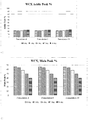
- Formulations 1 to 4 showed similar change patterns when WCX analysis was performed in a stability test under harsh conditions, i.e., at 45°C for 14 days. Specific changes include an increase in the relative content of acidic variants (approximately 30% change for 14 days), a decrease in the main peak relative content (approximately 44% change for 14 days), and an increase in the relative content of basic variants (approximately 15% change for 14 days), and there was no significant difference according to formulation.
- protein stability according to polysorbate 20 0-0.1%
- Formulations 5 to 7 commonly include 120 mg/mL of trastuzumab, 20 mM histidine/histidine-HCl (pH 5.5), 210 mM trehalose, 10 mM methionine, and HP46.
- the difference among formulations 5-7 is the ingredient of stabilizer 3: formulation 5: 0.04% polysorbate 20, formulation 6: 50 mm Lys-Lys, and formulation 3: glycine.
- composition of formulations Formulation 5 Formulation 6 Formulation 7 Antibody Trastuzumab (120 mg/mL) Buffer 20 mM histidine/histidine-HCl Stabilizer 1 210 mM trehalose Stabilizer 2 10 mM methionine Stabilizer 3 0.04% polysorbate 20 50 mM Lys-Lys 50 mM glycine Hyaluronidase HP46 of SEQ ID NO: 44 (2,000 units/mL)
- Formulations 5 to 7 were left for 14 days at 45°C, and changes in protein concentration were analyzed using a spectrophotometer manufactured by Beckman. Each sample was diluted with distilled water so that the concentration of the sample was 0.4 mg/mL, and then absorbance of the protein at 280 nm was measured using a spectrophotometer. In a stability test under harsh conditions, i.e., at 45°C for 14 days, there was no significant change in protein concentration of formulations 5 to 7. However, the activity of hyaluronidase was rapidly reduced at 45°C, and thus, in the present example, enzymatic activity was not measured (see FIG. 6 ).
- a HPLC system available from Shimadzu Prominence, and as columns, a TSKgel CM-STAT (4.6 x 100 mm, 7 ⁇ m), a TSKgel guard gel CMSTAT (3.2 mm i.d.x 1.5 cm), and the like were used.
- Mobile phase A is 10 mM sodium phosphate (pH 7.5) and mobile phase B is 10 mM sodium phosphate (pH 7.2) containing 0.1 M NaCl.
- Analysis was performed for 55 minutes by applying a separation mode of a linear concentration gradient of 0-30% at a flow rate of 0.8 mL/min n.
- the sample was diluted with mobile phase A so that the final concentration was 1.0 mg/mL, 80 ⁇ L of the sample was injected into HPLC, and then absorbance at 280 nm was recorded. The monomer ratio of trastuzumab in the HPLC chromatogram was calculated and graphed.
- Formulations 5 to 7 showed similar change patterns when WCX analysis was performed in a stability test under harsh conditions, i.e., at 45°C for 14 days. Specific changes include an increase in the relative content of acidic variants (approximately 30% change for 14 days), a decrease in the main peak relative content (approximately 44% change for 14 days), and an increase in the relative content of basic variants (approximately 15% change for 14 days), and there was no significant difference according to formulation.
- similar protein stability was shown in 0.04% polysorbate 20, 50 mM Lys-Lys, and 50 mM glycine formulations (see FIG. 5 ).
- trastuzumab 120 mg/mL
- PH20 2000 units/mL
- the buffer used contained 20 mM Histidine (pH 5.5), 210 mM trehalose, 10 mM methionine, and 0.04% polysorbate 20.
- the enzymatic activity of a control sample was measured on day 0, and the experimental samples were left at 40°C or 45°C for 1 day, and then the enzymatic activity of each sample was measured.
- trastuzumab + HW2 trastuzumab + HP46 was left at 40°C for 1 day, and then the activity of hyaluronidase was measured, and as a result, the respective cases exhibited activity of 51%, 47%, and 94%, which indicates that HP46 had the greatest thermal stability at 40°C (see FIG. 6 ).
- Herceptin subcutaneous injection formulation, trastuzumab + HW2, and trastuzumab + HP46 were left at 45°C for 1 day, and then the activity of hyaluronidase was measured, and as a result, the Herceptin subcutaneous injection formulation and trastuzumab + HW2 had no enzymatic activity, but the enzymatic activity of trastuzumab + HP46 remained (see FIG. 6 ).
- Formulations 8 to 10 commonly contain 120 mg/mL of trastuzumab, 20 mM histidine/histidine-HCl (pH 5.5), 210 mM trehalose, 10 mM methionine, and a PH20 variant.
- the difference among formulations 8-10 is the concentration of a nonionic surfactant, wherein formulation 8: 0% polysorbate 20, formulation 9: 0.005% polysorbate 20, and formulation 10: 0.04% polysorbate 20.
- Table 8 concentration of a nonionic surfactant
- composition of formulations Formulation 8 Formulation 9 Formulation 10
- Antibody Trastuzumab 120 mg/mL
- Polysorbate 20 0% 0.005% 0.04%
- Buffer 20 mM histidine/histidine-HCl Stabilizer 1
- 210 mM trehalose Stabilizer 2
- Hyaluronidase HP46 of SEQ ID NO: 44 2,000 units/mL
- Formulations 8 to 10 were left for 14 days at 40°C, and changes in protein concentration were analyzed using a spectrophotometer manufactured by Beckman. Each sample was diluted with distilled water so that the concentration of the sample was 0.4 mg/mL, and then absorbance at 280 nm of the protein was measured using a spectrophotometer. In a stability test under harsh conditions, i.e. at 40°C for 14 days, there was no significant change in protein concentration of formulations 8 to 10.
- Dynamic light scattering is used to analyze the denaturation properties of proteins attributable to heat in the protein drug field.
- a change in the size of a protein molecule according to the temperature change was measured and used for the purpose of calculating the protein aggregation temperature.
- a Zetasizer-nano-ZS instrument available from Malvern, and a quartz cuvette (ZEN2112) were used.
- the temperature was increased from 25°C to 85°C at intervals of 1°C, and the sample was diluted to 1 mg/mL using each formulation buffer, and then 150 ⁇ L of the sample was added to the cuvette for analysis.
- the aggregation temperature in formulation 8, not containing polysorbate 20, was 78.3°C
- formulation 9 exhibited an aggregation temperature of 77.3°C
- formulation 10 exhibited an aggregation temperature of 77.7°C.
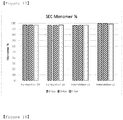
- Example 13 no change in monomer ratio of the protein was shown despite not containing polysorbate 20, and as a result of comparing the case of not containing polysorbate 20 with the case of containing polysorbate 20, it was confirmed that there was no difference in aggregation between proteins.
- These results indicate that a minimum amount of polysorbate 20 is not necessarily required for subcutaneous injection formulations of trastuzumab (see FIG. 8 ) .
- a HPLC system available from Shimadzu Prominence, and as columns, a TSKgel CM-STAT column (4.6 x 100 mm, 7 ⁇ m), a TSKgel guard gel CMSTAT (3.2 mm i.d. x 1.5 cm), and the like were used.
- Mobile phase A is 10 mM sodium phosphate (pH 7.5) and mobile phase B is 10 mM sodium phosphate (pH 7.2) containing 0.1 M NaCl. Analysis was carried out for 55 minutes with a linear concentration gradient of 0-30% mobile phase B at a flow rate of 0.8 mL/min.
- the sample was diluted with mobile phase A so that the final concentration was 1.0 mg/mL, 80 ⁇ L of the sample was injected into HPLC, and then absorbance of a column eluate at 280 nm was recorded. The monomer ratio of trastuzumab in the HPLC chromatogram was calculated and graphed.
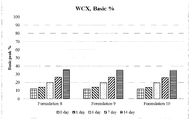
- Formulations 8 to 10 showed similar change patterns when WCX analysis was performed in a stability test under harsh conditions, i.e., at 40°C for 14 days. Specific changes include an increase in the relative content of acidic variants (approximately 10% change for 14 days), a decrease in the main peak relative content (approximately 40% change for 14 days), and an increase in the relative content of basic variants (approximately 300% change for 14 days), and there was no significant difference according to formulation.
- protein stability according to polysorbate 20 0-0.04%) was similar (see FIG. 9 ).
- Turbidimetric assay for measuring enzymatic activity is a method of measuring, by absorbance, the degree to which an aggregate is formed by binding of residual hyaluronic acid to acidified albumin (BSA), and when hyaluronic acid is hydrolyzed by PH20, the extent of binding to albumin is reduced, resulting in reduced absorbance.
- BTH Sigma as a standardized product was diluted to 1 unit/mL, 2 units/mL, 5 units/mL, 7.5 units/mL, 10 units/mL, 15 units/mL, 20 units/mL, 30 units/mL, 50 units/mL, and 60 unit/mL and prepared in each tube.
- Purified PH20 variant samples were diluted with enzyme diluent buffer (20 mM Tris-HCl, pH 7.0, 77 mM NaCl, 0.01 %(w/v) bovine serum albumin) to 100X, 300X, 600X, 1200X, and 2400X and prepared in each tube.
- enzyme diluent buffer (20 mM Tris-HCl, pH 7.0, 77 mM NaCl, 0.01 %(w/v) bovine serum albumin
- the hyaluronidase solution having a concentration of 3 mg/mL, was diluted 10-fold to a concentration of 0.3 mg/mL so that the volume of each tube became 180 ⁇ L.
- 60 ⁇ L of the sample containing hyaluronidase was added to the diluted hyaluronic acid solution and mixed therewith, and allowed to react at 37°C for 45 minutes.
- Formulations 11 to 13 commonly contain 120 mg/mL of trastuzumab, 20 mM histidine/histidine-HCl (pH 5.5), 210 mM trehalose, 10 mM methionine, and a PH20 variant.
- the difference among formulations 11-13 is the concentration of a nonionic surfactant, wherein formulation 11: 0% polysorbate 80, formulation 12: 0.005% polysorbate 80, and formulation 13: 0.04% polysorbate 80.
- composition of formulations Formulation 11 Formulation 12 Formulation 13 Antibody Trastuzumab (120 mg/mL) Polysorbate 80 0% 0.005% 0.04% Buffer 20 mM histidine/histidine-HCl Stabilizer 1 210 mM trehalose Stabilizer 2 10 mM methionine pH 5.5 Hyaluronidase HP46 of SEQ ID NO: 44 (2,000 units/mL)
- a HPLC system available from Shimadzu Prominence and as columns, a TSKgel CM-STAT column (4.6 x 100 mm, 7 ⁇ m), a TSKgel guard gel CMSTAT (3.2 mm i.d. x 1.5 cm), and the like were used.
- Mobile phase A is 10 mM sodium phosphate (pH 7.5) and mobile phase B is 10 mM sodium phosphate (pH 7.2) containing 0.1 M NaCl. Analysis was carried out for 55 minutes with a linear concentration gradient of 0-30% mobile phase B at a flow rate of 0.8 mL/min.
- the sample was diluted with mobile phase A so that the final concentration was 1.0 mg/mL, 80 ⁇ L of the sample was injected into HPLC, and then absorbance of a column eluate at 280 nm was recorded. The monomer ratio of trastuzumab in the HPLC chromatogram was calculated and graphed.
- Formulations 11 to 13 showed similar change patterns when WCX analysis was performed in a stability test under harsh conditions, i.e. at 40°C for 14 days. Specific changes include an increase in the relative content of acidic variants (approximately 10% change for 14 days), a decrease in the main peak relative content (approximately 40% change for 14 days), and an increase in the relative content of basic variants (approximately 300% change for 14 days), and there was no significant difference according to formulation.
- protein stability according to polysorbate 80 0-0.04%) was similar (see FIG. 12 ).
- Turbidimetric assay for measuring enzymatic activity is a method of measuring, by absorbance, the degree to which an aggregate is formed by binding of residual hyaluronic acid to acidified albumin (BSA), and when hyaluronic acid is hydrolyzed by PH20, the extent of binding to albumin is reduced, resulting in reduced absorbance.
- BTH Sigma as a standardized product was diluted to 1 unit/mL, 2 units/mL, 5 units/mL, 7.5 units/mL, 10 units/mL, 15 units/mL, 20 units/mL, 30 units/mL, 50 units/mL, and 60 unit/mL and prepared in each tube.
- Purified protein samples were diluted with enzyme diluent buffer (20 mM Tris-HCl, pH 7.0, 77 mM NaCl, 0.01 %(w/v) bovine serum albumin) to 100X, 300X, 600X, 1200X, and 2400X and prepared in each tube.
- enzyme diluent buffer (20 mM Tris-HCl, pH 7.0, 77 mM NaCl, 0.01 %(w/v) bovine serum albumin
- the hyaluronidase solution having a concentration of 3 mg/mL, was diluted 10-fold to a concentration of 0.3 mg/mL so that the volume of each tube became 180 ⁇ L.
- 60 ⁇ L of the sample containing hyaluronidase was added to the diluted hyaluronic acid solution, mixed therewith, and allowed to react at 37°C for 45 minutes.
- Formulations 14 to 16 commonly include 120 mg/mL of rituximab, 20 mM histidine/histidine-HCl (pH 5.5), 210 mM trehalose, 10 mM methionine, and a PH20 variant.
- the difference among formulations 14-16 is the concentration of a non-ionic surfactant: formulation 14: 0% polysorbate 80, formulation 15: 0.005% polysorbate 80, and formulation 16: 0.06% polysorbate 80.
- Table 10 Composition of formulations Formulation 14 Formulation 15 Formulation 16 Rituximab 120 mg/mL ( ⁇ 10) PS 80 0% 0.005% 0.
- Turbidimetric assay for measuring enzymatic activity is a method of measuring, by absorbance, the degree to which an aggregate is formed by binding of residual hyaluronic acid to acidified albumin (BSA), and when hyaluronic acid is hydrolyzed by PH20, the extent of binding to albumin is reduced, resulting in reduced absorbance.
- BTH Sigma as a standardized product was diluted to 1 unit/mL, 2 units/mL, 5 units/mL, 7.5 units/mL, 10 units/mL, 15 units/mL, 20 units/mL, 30 units/mL, 50 units/mL, and 60 unit/mL and prepared in each tube.
- Purified protein samples were diluted with enzyme diluent buffer (20 mM Tris-HCl, pH 7.0, 77 mM NaCl, 0.01 %(w/v) bovine serum albumin) to 100X, 300X, 600X, 1200X, and 2400X and prepared in each tube.
- enzyme diluent buffer (20 mM Tris-HCl, pH 7.0, 77 mM NaCl, 0.01 %(w/v) bovine serum albumin
- the hyaluronidase solution having a concentration of 3 mg/mL, was diluted 10-fold to a concentration of 0.3 mg/mL so that the volume of each tube became 180 ⁇ L.
- 60 ⁇ L of the sample containing hyaluronidase was added to the diluted hyaluronic acid solution, mixed therewith, and allowed to react at 37°C for 45 minutes.
- Formulation 17 is a commercially available buffer for subcutaneous injection formulations
- formulation 18 is a commercially available buffer for intravenous injection formulations.
- Formulations 17 and 18 contain a PH20 variant and rituximab at 120 mg/mL and 100 mg/mL, respectively, but do not contain polysorbate 80 unlike formulations of commercially available products. Table 11.
- composition of formulations Formulation 17 Formulation 18 Rituximab 120 mg/mL 100 mg/mL Buffer 20 mM histidine/histidine-HCl 25 mM Sodium citrate Stabilizer 1 210 mM trehalose 145 mM NaCl Stabilizer 2 10 mM methionine 10 mM methionine pH 5.5 6.5 Hyaluronidase HP46 of SEQ ID NO: 44 (2,000 units/mL)
- Turbidimetric assay for measuring enzymatic activity is a method of measuring, by absorbance, the degree to which an aggregate is formed by binding of residual hyaluronic acid to acidified albumin (BSA), and when hyaluronic acid is hydrolyzed by PH20, the extent of binding to albumin is reduced, resulting in reduced absorbance.
- BTH Sigma as a standardized product was diluted to 1 unit/mL, 2 units/mL, 5 units/mL, 7.5 units/mL, 10 units/mL, 15 units/mL, 20 units/mL, 30 units/mL, 50 units/mL, and 60 unit/mL and prepared in each tube.
- Purified protein samples were diluted with enzyme diluent buffer (20 mM Tris-HCl, pH 7.0, 77 mM NaCl, 0.01 %(w/v) bovine serum albumin) to 100X, 300X, 600X, 1200X, and 2400X and prepared in each tube.
- enzyme diluent buffer (20 mM Tris-HCl, pH 7.0, 77 mM NaCl, 0.01 %(w/v) bovine serum albumin
- the hyaluronidase solution having a concentration of 3 mg/mL, was diluted 10-fold to a concentration of 0.3 mg/mL so that the volume of each tube became 180 ⁇ L.
- 60 ⁇ L of the sample containing hyaluronidase was added to the diluted hyaluronic acid solution, mixed therewith, and allowed to react at 37°C for 45 minutes.
- formulations 19, 20, and 21 commonly include 25 mg/mL of pembrolizumab, 10 mM histidine (pH 5.5), 7% sucrose, 10 mM methionine, and a PH20 variant.
- the difference among formulations 19-21 is the concentration of a non-ionic surfactant: formulation 19: 0% polysorbate 80, formulation 20: 0.005% polysorbate 80, and formulation 21: 0.02% polysorbate 80.
- Formulation 22 contains 25 mg/mL of pembrolizumab and consists of 10 mM histidine (pH 5.5), 210 mM trehalose, 10 mM methionine, 0.02% polysorbate 80, and a PH20 variant. Table 12.
- composition of formulations Formulation 19 Formulation 20 Formulation 21 Formulation 22 Antibody Pembrolizumab (25 mg/mL) Buffer 10 mM histidine (pH 5.5) Stabilizer 1 7% sucrose 7% sucrose 7% sucrose 210 mM trehalose Stabilizer 2 10 mM methionine 10 mM methionine 10 mM methionine 10 mM methionine Polysorbate 80 0% 0.005% 0.02% 0.02% Hyaluronidase HP46 of SEQ ID NO: 44 (2,000 units/mL)
- Formulations 19, 20, 21, and 22 were left for 7 days at 40°C, and changes in protein concentration were analyzed using a spectrophotometer manufactured by Beckman. Each sample was diluted with distilled water so that the concentration of the sample was 0.4 mg/mL, and then absorbance of the protein at 280 nm was measured using a spectrophotometer.
- a turbidimetric assay for measuring enzymatic activity is a method of measuring, by absorbance, the extent to which an aggregate is formed by binding of residual hyaluronic acid to acidified albumin (BSA), and when hyaluronic acid is hydrolyzed by PH20, the extent of binding to albumin is reduced, resulting in reduced absorbance.
- BTH Sigma as a standardized product was diluted to 1 unit/mL, 2 units/mL, 5 units/mL, 7.5 units/mL, 10 units/mL, 15 units/mL, 20 units/mL, 30 units/mL, 50 units/mL, and 60 unit/mL and prepared in each tube.
- Purified protein samples were diluted with enzyme diluent buffer (20 mM Tris-HCl, pH 7.0, 77 mM NaCl, 0.01 %(w/v) bovine serum albumin) to 100X, 300X, 600X, 1200X, and 2400X and prepared in each tube.
- enzyme diluent buffer (20 mM Tris-HCl, pH 7.0, 77 mM NaCl, 0.01 %(w/v) bovine serum albumin
- the hyaluronidase solution having a concentration of 3 mg/mL, was diluted 10-fold to a concentration of 0.3 mg/mL so that the volume of each tube became 180 ⁇ L.
- 60 ⁇ L of the sample containing the enzyme was added to the diluted hyaluronic acid solution, mixed therewith, and allowed to react at 37°C for 45 minutes.
- a microturbidimetric assay method was used for an experiment for confirming the pH-activity profiles of HP46 and wild-type HW2.
- a hyaluronic acid buffer for dissolving hyaluronic acid as a substrate and an enzyme buffer for diluting the enzyme were prepared for each pH.
- a total of three 96-well plates were prepared for a reaction between the enzyme and the substrate and designated as A, B, and C, and an experiment was carried out.
- a hyaluronic acid buffer at a pH of 4.0, 4.5, or 5.0 was prepared using 20 mM acetic acid and 70 mM NaCl, and a hyaluronic acid solution at a pH of 5.5, 6.0, 6.5, 7.0, or 8.0 was prepared using 20 mM sodium phosphate and 70 mM NaCl.
- hyaluronic acid 20 mg was dissolved in 10 mL of each of the prepared hyaluronic acid buffers to prepare a final hyaluronic acid substrate solution, which was then diluted with each hyaluronic acid buffer prepared according to pH to prepare 500 ⁇ L of the resultant solution to a concentration of 0.1 mg/mL, 0.25 mg/mL, 0.45 mg/mL, or 0.7 mg/mL, and 100 ⁇ L of each solution was dispensed into each well of the 96-well plate designated as A.
- the hyaluronic acid buffers, diluted and prepared according to concentration, were used as calibration curves for measuring the concentration of hyaluronic acid.
- An enzyme buffer at a pH of 4.0, 4.5, or 5.0 was prepared using 20 mM acetic acid, 0.01 %(w/v) BSA, and 70 mM NaCl, and an enzyme buffer at a pH of 5.5, 6.0, 6.5, 7.0, or 8.0 was prepared using 20 mM sodium phosphate, 0.01 %(w/v) BSA, and 70 mM NaCl.
- HP46 and wild-type HW2 enzymes were diluted with the enzyme buffer prepared according to pH to 10 units/mL, and 50 ⁇ L of the resultant solution was dispensed into each well of the 96-well plate designated as B.
- Example 28 Test for Pharmacokinetics Using Herceptin Subcutaneous Injection Formulation and Trastuzumab and HP46 in Sprague-Dawley Rats
- trastuzumab and HP46 exhibits the same pharmacokinetic properties as those of a Herceptin subcutaneous injection formulation.
- the dose of administered Herceptin and trastuzumab was 18 mg/kg of rat body weight, the amount of rHuPH20 included in the Herceptin subcutaneous injection formulation was 100 U, and the amount of HP46 was also 100 U.
- trastuzumab and HP46 showed the same Area Under the Curve (AUC) as that of the Herceptin subcutaneous injection formulation (see FIG. 20 ).
- a pharmaceutical composition according to the present disclosure can be used for subcutaneous injection and is also very stable, and the activity of PH20 variants along with a drug, preferably an antibody drug or the like, can be maintained for a long time.
- the pharmaceutical composition can contribute to a reduction not only in the cost of producing subcutaneous injection formulations but also in medical costs, and is very effective in terms of convenience of patients.
Landscapes
- Health & Medical Sciences (AREA)
- Chemical & Material Sciences (AREA)
- Life Sciences & Earth Sciences (AREA)
- Medicinal Chemistry (AREA)
- General Health & Medical Sciences (AREA)
- Animal Behavior & Ethology (AREA)
- Pharmacology & Pharmacy (AREA)
- Veterinary Medicine (AREA)
- Public Health (AREA)
- Organic Chemistry (AREA)
- Epidemiology (AREA)
- Engineering & Computer Science (AREA)
- Immunology (AREA)
- Bioinformatics & Cheminformatics (AREA)
- Biochemistry (AREA)
- Genetics & Genomics (AREA)
- Molecular Biology (AREA)
- Chemical Kinetics & Catalysis (AREA)
- General Chemical & Material Sciences (AREA)
- Proteomics, Peptides & Aminoacids (AREA)
- Wood Science & Technology (AREA)
- Zoology (AREA)
- Microbiology (AREA)
- Dermatology (AREA)
- Oncology (AREA)
- Biophysics (AREA)
- Nuclear Medicine, Radiotherapy & Molecular Imaging (AREA)
- Oil, Petroleum & Natural Gas (AREA)
- General Engineering & Computer Science (AREA)
- Mycology (AREA)
- Biomedical Technology (AREA)
- Biotechnology (AREA)
- Inorganic Chemistry (AREA)
- Endocrinology (AREA)
- Gastroenterology & Hepatology (AREA)
- Medicines That Contain Protein Lipid Enzymes And Other Medicines (AREA)
- Peptides Or Proteins (AREA)
- Medicinal Preparation (AREA)
- Enzymes And Modification Thereof (AREA)
- Medicines Containing Antibodies Or Antigens For Use As Internal Diagnostic Agents (AREA)
Priority Applications (1)
| Application Number | Priority Date | Filing Date | Title |
|---|---|---|---|
| EP24185844.8A EP4461811A3 (fr) | 2019-03-25 | 2020-03-24 | Composition pharmaceutique, comprenant un variant ph20 de l'hyaluronidase humaine et médicament, pour injection sous-cutanée |
Applications Claiming Priority (2)
| Application Number | Priority Date | Filing Date | Title |
|---|---|---|---|
| KR20190033880 | 2019-03-25 | ||
| PCT/KR2020/003975 WO2020197230A1 (fr) | 2019-03-25 | 2020-03-24 | Composition pharmaceutique comprenant le variant ph20 de la hyaluronidase humaine et un médicament, pour injection sous-cutanée |
Related Child Applications (1)
| Application Number | Title | Priority Date | Filing Date |
|---|---|---|---|
| EP24185844.8A Division EP4461811A3 (fr) | 2019-03-25 | 2020-03-24 | Composition pharmaceutique, comprenant un variant ph20 de l'hyaluronidase humaine et médicament, pour injection sous-cutanée |
Publications (2)
| Publication Number | Publication Date |
|---|---|
| EP3785701A1 true EP3785701A1 (fr) | 2021-03-03 |
| EP3785701A4 EP3785701A4 (fr) | 2022-03-16 |
Family
ID=72611090
Family Applications (2)
| Application Number | Title | Priority Date | Filing Date |
|---|---|---|---|
| EP24185844.8A Pending EP4461811A3 (fr) | 2019-03-25 | 2020-03-24 | Composition pharmaceutique, comprenant un variant ph20 de l'hyaluronidase humaine et médicament, pour injection sous-cutanée |
| EP20776465.5A Pending EP3785701A4 (fr) | 2019-03-25 | 2020-03-24 | Composition pharmaceutique comprenant le variant ph20 de la hyaluronidase humaine et un médicament, pour injection sous-cutanée |
Family Applications Before (1)
| Application Number | Title | Priority Date | Filing Date |
|---|---|---|---|
| EP24185844.8A Pending EP4461811A3 (fr) | 2019-03-25 | 2020-03-24 | Composition pharmaceutique, comprenant un variant ph20 de l'hyaluronidase humaine et médicament, pour injection sous-cutanée |
Country Status (25)
| Country | Link |
|---|---|
| US (2) | US12570766B2 (fr) |
| EP (2) | EP4461811A3 (fr) |
| JP (4) | JP7295150B2 (fr) |
| KR (3) | KR102507853B1 (fr) |
| CN (7) | CN117100867A (fr) |
| AU (2) | AU2020248612B9 (fr) |
| BR (1) | BR112021019076A2 (fr) |
| CA (1) | CA3131052A1 (fr) |
| CL (1) | CL2021002464A1 (fr) |
| CO (1) | CO2021012380A2 (fr) |
| CR (1) | CR20210489A (fr) |
| DO (1) | DOP2021000197A (fr) |
| EA (1) | EA202192588A1 (fr) |
| EC (1) | ECSP21070640A (fr) |
| IL (1) | IL286539A (fr) |
| JO (1) | JOP20210262A1 (fr) |
| MX (2) | MX2021011278A (fr) |
| MY (1) | MY204342A (fr) |
| NI (1) | NI202100085A (fr) |
| PE (1) | PE20220283A1 (fr) |
| PH (1) | PH12021552351A1 (fr) |
| SA (1) | SA521430398B1 (fr) |
| SG (1) | SG11202110512WA (fr) |
| WO (1) | WO2020197230A1 (fr) |
| ZA (2) | ZA202108027B (fr) |
Cited By (15)
| Publication number | Priority date | Publication date | Assignee | Title |
|---|---|---|---|---|
| US11103552B2 (en) | 2018-05-10 | 2021-08-31 | Regeneron Pharmaceuticals, Inc. | High concentration VEGF receptor fusion protein containing formulations |
| EP2687202B1 (fr) | 2009-07-31 | 2023-05-10 | F. Hoffmann-La Roche AG | Formulation d'anticorps anti-her2 sous-cutané |
| WO2023169986A1 (fr) * | 2022-03-07 | 2023-09-14 | Mabxience Research, S.L. | Formulations stables pour anticorps |
| JP2024510480A (ja) * | 2021-03-16 | 2024-03-07 | カシーヴ バイオサイエンシズ,リミテッド・ライアビリティ・カンパニー | 融合タンパク質の新規製剤 |
| US11952600B2 (en) | 2011-12-30 | 2024-04-09 | Halozyme, Inc. | PH20 polypeptide variants, formulations and uses thereof |
| US12221638B2 (en) | 2020-08-07 | 2025-02-11 | Alteogen Inc. | Method for producing recombinant hyaluronidase |
| EP4267105B1 (fr) | 2020-12-28 | 2025-03-26 | Bristol-Myers Squibb Company | Compositions d'anticorps et leurs procédés d'utilisation |
| US12371683B2 (en) | 2018-07-25 | 2025-07-29 | Alteogen Inc. | Hyaluronidase variants and pharmaceutical composition comprising the same |
| EP4424301A4 (fr) * | 2021-10-29 | 2025-11-19 | Alteogen Inc | Composition pharmaceutique comprenant une ph20 hyaluronidase humaine et un médicament |
| RU2852853C2 (ru) * | 2021-10-29 | 2025-12-16 | Алтеоген Инк. | Фармацевтическая композиция, включающая гиалуронидазу ph20 человека и лекарственное средство |
| US12565526B2 (en) | 2018-10-18 | 2026-03-03 | Merck Sharpe & Dohme LLC | Formulations of anti-RSV antibodies and methods of use thereof |
| US12570766B2 (en) | 2019-03-25 | 2026-03-10 | Alteogen Inc. | Pharmaceutical composition for subcutaneous administration containing human hyaluronidase PH20 variant and drug |
| US12576159B2 (en) | 2018-10-31 | 2026-03-17 | Merck Sharp & Dohme Llc | Anti-human PD-1 antibody crystals and methods of use thereof |
| US12582713B2 (en) | 2020-12-28 | 2026-03-24 | Bristol-Myers Squibb Company | Methods of treating tumors |
| AU2021347967B2 (en) * | 2020-09-24 | 2026-04-09 | Merck Sharp & Dohme Llc | Stable formulations of programmed death receptor 1 (pd-1) antibodies and hyaluronidase variants and fragments thereof and methods of use thereof |
Families Citing this family (41)
| Publication number | Priority date | Publication date | Assignee | Title |
|---|---|---|---|---|
| KR102460040B1 (ko) | 2016-04-27 | 2022-11-01 | 애브비 인코포레이티드 | 항-il-13 항체를 이용한 il-13 활성이 유해한 질환의 치료 방법 |
| WO2018156180A1 (fr) | 2017-02-24 | 2018-08-30 | Kindred Biosciences, Inc. | Anticorps anti-il31 à usage vétérinaire |
| IL322315A (en) | 2019-05-14 | 2025-09-01 | Provention Bio Inc | Methods and preparations for preventing type 1 diabetes |
| CN118718181A (zh) | 2019-06-05 | 2024-10-01 | 里珍纳龙药品有限公司 | 用于精确剂量递送的装置及方法 |
| EP3992285A4 (fr) * | 2020-01-23 | 2023-01-25 | Alteogen, Inc. | Nouveau mutant de l'enzyme hydrolysant l'acide hyaluronique et composition pharmaceutique le comprenant |
| AU2021287998B2 (en) | 2020-06-11 | 2026-03-12 | Benaroya Research Institute At Virginia Mason | Methods and compositions for preventing type 1 diabetes |
| JP2023534295A (ja) | 2020-07-17 | 2023-08-08 | ジェロン・コーポレーション | 皮下テロメラーゼ阻害剤組成物及びそれらを使用するための方法 |
| IL303350A (en) | 2020-12-04 | 2023-08-01 | Macrogenics Inc | Pharmaceutical compositions of a her2/neu antibody and use of the same |
| CN114681592A (zh) * | 2020-12-31 | 2022-07-01 | 天境生物科技(杭州)有限公司 | 包含可溶性gp130二聚体的制剂和使用方法 |
| TW202305009A (zh) * | 2021-04-08 | 2023-02-01 | 美商默沙東有限責任公司 | 以皮下投予抗pd1抗體治療癌症之方法 |
| US12565529B2 (en) | 2021-05-24 | 2026-03-03 | Provention Bio, Inc. | Methods for treating type 1 diabetes |
| CN115671267A (zh) * | 2021-07-23 | 2023-02-03 | 上海宝济药业有限公司 | 一种皮下抗生素药物组合物 |
| WO2023012515A2 (fr) | 2021-08-02 | 2023-02-09 | argenx BV | Formes posologiques unitaires sous-cutanées |
| CA3232451A1 (fr) | 2021-09-14 | 2023-03-23 | Takeda Pharmaceutical Company Limited | Administration facilitee de formulations d'anticorps concentrees a l'aide d'hyaluronidase |
| US20250099612A1 (en) | 2022-03-01 | 2025-03-27 | Exuma Biotech Corp. | Viral particles with membrane-bound hyaluronidase |
| JP2025513510A (ja) * | 2022-04-20 | 2025-04-24 | アルトス バイオロジックス インク. | オクレリズマブを含む薬学的組成物とその用途 |
| CN119095620A (zh) * | 2022-04-22 | 2024-12-06 | 台康生技股份有限公司 | 用于皮下投予的包含抗-her2抗体的药学组合物 |
| EP4531916A1 (fr) | 2022-06-02 | 2025-04-09 | Bristol-Myers Squibb Company | Compositions d'anticorps et leurs procédés d'utilisation |
| WO2023249408A1 (fr) * | 2022-06-22 | 2023-12-28 | (주)알테오젠 | Polypeptide ph20 soluble clivé aux extrémités n et/ou c et son utilisation |
| WO2024005502A1 (fr) * | 2022-06-29 | 2024-01-04 | 주식회사 오디스젠 | Variante de la hyaluronidase hyal1 présentant une activité à ph neutre |
| KR20240038901A (ko) * | 2022-09-16 | 2024-03-26 | (주)피앤피바이오팜 | 신규한 히알루로니다제 ph-20 변이체 및 그 용도 |
| WO2024117476A1 (fr) * | 2022-11-28 | 2024-06-06 | 주식회사 대웅제약 | Composition contenant du niclosamide à biodisponibilité améliorée |
| USD1120314S1 (en) | 2022-11-30 | 2026-03-24 | Regeneron Pharmaceuticals, Inc. | Dose delivery device |
| IL321611A (en) | 2022-12-22 | 2025-08-01 | Halozyme Inc | High-dose hyaluronidase enzyme formulations |
| KR102554775B1 (ko) * | 2023-02-07 | 2023-07-12 | 한국코러스 주식회사 | 히알루로니다제의 안정화제 및 이를 포함하는 히알루로니다제 제형 |
| CN120936711A (zh) * | 2023-03-23 | 2025-11-11 | 阿特根公司 | 新型透明质酸酶变体及包括其的药物组合物 |
| EP4727534A1 (fr) * | 2023-06-19 | 2026-04-22 | Stanislaw R. Burzynski | Compositions comprenant des antinéoplastons et méthodes de traitement du cancer du sein |
| IL325726A (en) * | 2023-07-11 | 2026-03-01 | Genentech Inc | Compositions and methods for treating multiple sclerosis |
| WO2025071366A1 (fr) * | 2023-09-27 | 2025-04-03 | 삼성바이오에피스 주식회사 | Formulation liquide à tamponnage spontané d'un anticorps anti-il-23 |
| KR20250086876A (ko) * | 2023-12-06 | 2025-06-16 | (주)한국비엠아이 | 히알루로니다제 폴리펩티드와 약물을 포함하는 피하투여용 조성물 |
| KR102896967B1 (ko) * | 2023-12-21 | 2025-12-09 | 주식회사 오디스젠 | 개선된 특성을 갖는 히알루로니다제 Hyal2 변이체 |
| WO2025136032A1 (fr) * | 2023-12-21 | 2025-06-26 | 주식회사 오디스젠 | Variant d'hyaluronidase hyal2 présentant des propriétés améliorées |
| WO2025168089A1 (fr) * | 2024-02-08 | 2025-08-14 | 上海宝济药业股份有限公司 | Combinaison pharmaceutique pour administration sous-cutanée et utilisation associée |
| WO2025188901A1 (fr) * | 2024-03-05 | 2025-09-12 | Halozyme, Inc. | Multithérapie utilisant des conjugués anticorps-médicament et des hyaluronidases |
| WO2025231015A1 (fr) * | 2024-04-30 | 2025-11-06 | Context Therapeutics Inc. | Compositions comprenant des anticorps bispécifiques qui se lient à claudine 6 et cd3, et leurs utilisations |
| WO2025249934A1 (fr) * | 2024-05-29 | 2025-12-04 | (주)알테오젠 | Composition pharmaceutique pour injection sous-cutanée comprenant un antagoniste du récepteur de l'hormone de croissance et un support à action prolongée |
| WO2025264960A1 (fr) | 2024-06-21 | 2025-12-26 | Apogee Therapeutics, Inc. | Anticorps qui se lient à il -13 et anticorps qui se lient à ox40l |
| WO2025264972A1 (fr) | 2024-06-21 | 2025-12-26 | Apogee Therapeutics, Inc. | Anticorps se liant à il -4 ralpha et anticorps se liant |
| WO2026001707A1 (fr) * | 2024-06-27 | 2026-01-02 | 上海复宏汉霖生物技术股份有限公司 | Nouveau variant d'hyaluronidase |
| WO2026043335A1 (fr) * | 2024-08-22 | 2026-02-26 | (주)셀트리온 | Formulation pharmaceutique stable |
| KR20260044819A (ko) * | 2024-09-25 | 2026-04-02 | (주)알테오젠 | 항체-약물 접합체와 병용하여 사용되는 히알루로니다제를 포함하는 피하 투여 제형의 용도, 및 이를 이용한 질병의 치료 방법 |
Family Cites Families (65)
| Publication number | Priority date | Publication date | Assignee | Title |
|---|---|---|---|---|
| US5721348A (en) | 1990-12-14 | 1998-02-24 | University Of Connecticut | DNA encoding PH-20 proteins |
| US5958750A (en) | 1996-07-03 | 1999-09-28 | Inctye Pharmaceuticals, Inc. | Human hyaluronidase |
| US7871607B2 (en) | 2003-03-05 | 2011-01-18 | Halozyme, Inc. | Soluble glycosaminoglycanases and methods of preparing and using soluble glycosaminoglycanases |
| US20060104968A1 (en) | 2003-03-05 | 2006-05-18 | Halozyme, Inc. | Soluble glycosaminoglycanases and methods of preparing and using soluble glycosaminogly ycanases |
| ES2532399T3 (es) | 2003-03-05 | 2015-03-26 | Halozyme, Inc. | Glicoproteína hialuronidasa soluble (sHASEGP), proceso para prepararla, usos y composiciones farmacéuticas que la comprenden |
| US20090123367A1 (en) | 2003-03-05 | 2009-05-14 | Delfmems | Soluble Glycosaminoglycanases and Methods of Preparing and Using Soluble Glycosaminoglycanases |
| CN101384621A (zh) | 2005-11-10 | 2009-03-11 | 受体生物公司 | 产生受体和配体同种型的方法 |
| WO2009037566A2 (fr) | 2007-06-19 | 2009-03-26 | Uvarkina Tamara P | Hyaluronidase et son procédé d'utilisation |
| ITMI20072225A1 (it) | 2007-11-23 | 2009-05-24 | Luso Farmaco Inst | "composizioni farmaceutiche a base di antagonisti della bradichinina ed acido ialuronico e loro uso" |
| KR20140130512A (ko) | 2008-03-06 | 2014-11-10 | 할로자임, 아이엔씨 | 가용성 히알루로니다아제의 대규모 제조 |
| TWI489994B (zh) * | 2008-03-17 | 2015-07-01 | Baxter Healthcare Sa | 供免疫球蛋白及玻尿酸酶之皮下投藥之用的組合及方法 |
| KR20100135291A (ko) | 2008-04-14 | 2010-12-24 | 할로자임, 아이엔씨 | 히알루로난 관련 질환 및 상태 치료용 변형된 히알루로니다제 및 그 용도 |
| CN103205407B (zh) | 2008-12-09 | 2016-03-16 | 哈洛齐梅公司 | 延长的可溶性ph20多肽及其用途 |
| ES2573462T3 (es) | 2008-12-09 | 2016-06-08 | Halozyme, Inc. | Polipéptidos de PH20 soluble extendida y usos de los mismos |
| ES2385251B1 (es) | 2009-05-06 | 2013-05-06 | Fundació Privada Institut D'investigació Biomèdica De Bellvitge | Adenovirus oncolíticos para el tratamiento del cáncer. |
| US20100305500A1 (en) | 2009-05-29 | 2010-12-02 | Pacira Pharmaceuticals, Inc. | Hyaluronidase as an adjuvant for increasing the injection volume and dispersion of large diameter synthetic membrane vesicles containing a therapeutic agent |
| AU2013202020B2 (en) | 2009-07-31 | 2014-11-27 | F. Hoffmann-La Roche Ag | Subcutaneous anti-HER2 antibody formulation |
| US9345661B2 (en) | 2009-07-31 | 2016-05-24 | Genentech, Inc. | Subcutaneous anti-HER2 antibody formulations and uses thereof |
| AR078161A1 (es) | 2009-09-11 | 2011-10-19 | Hoffmann La Roche | Formulaciones farmaceuticas muy concentradas de un anticuerpo anti cd20. uso de la formulacion. metodo de tratamiento. |
| MX2012003282A (es) | 2009-09-17 | 2012-04-30 | Baxter Healthcare Sa | Co-formulacion estable de hialuronidasa e inmunoglobulina, y metodos de su uso. |
| ES2676205T3 (es) | 2011-03-31 | 2018-07-17 | Merck Sharp & Dohme Corp. | Formulaciones estables de anticuerpos para el receptor PD-1 humano de muerte programada y tratamientos relacionados |
| EP2720712B1 (fr) | 2011-06-17 | 2016-03-02 | Halozyme, Inc. | Formulations stables d'enzyme de dégradation d'hyaluronane |
| EP3130347B1 (fr) | 2011-12-30 | 2019-09-18 | Halozyme, Inc. | Variants polypeptidiques ph20, formulations et utilisations de ceux-ci |
| CN103173474B (zh) | 2013-03-27 | 2014-08-27 | 广州白云山拜迪生物医药有限公司 | 一种用于cho细胞表达可溶性重组人透明质酸酶ph20的基因序列 |
| JP6357363B2 (ja) | 2013-06-26 | 2018-07-11 | 株式会社半導体エネルギー研究所 | 記憶装置 |
| TW201534726A (zh) * | 2013-07-03 | 2015-09-16 | Halozyme Inc | 熱穩定ph20玻尿酸酶變異體及其用途 |
| MX2016006275A (es) | 2013-11-13 | 2017-01-05 | Tillotts Pharma Ag | Sistema multiparticulado para administrar drogas. |
| WO2015095404A2 (fr) | 2013-12-17 | 2015-06-25 | Genentech, Inc. | Procédés de traitement de cancers à l'aide d'antagonistes se liant à l'axe pd-1 et de taxanes |
| AU2014364606A1 (en) | 2013-12-17 | 2016-07-07 | Genentech, Inc. | Combination therapy comprising OX40 binding agonists and PD-1 axis binding antagonists |
| JP6537076B2 (ja) * | 2014-07-31 | 2019-07-03 | 国立大学法人神戸大学 | 分泌シグナルペプチドならびにそれを利用したタンパク質の分泌および細胞表層提示 |
| HRP20190881T1 (hr) | 2014-08-28 | 2019-07-12 | Halozyme, Inc. | Kombinacijska terapija s hijaluronan-razgrađujućim enzimom i inhibitorom imunološke kontrolne točke |
| ES2753391T3 (es) | 2014-10-14 | 2020-04-08 | Halozyme Inc | Composiciones de adenosina desaminasa 2 (ADA2), variantes de la misma y métodos de uso de las mismas |
| CN104745553B (zh) | 2015-03-27 | 2017-11-28 | 杭州北斗生物技术有限公司 | 重组人透明质酸酶及其制备方法和采用聚乙二醇共价修饰的化合物和方法 |
| CA2896038C (fr) | 2015-07-03 | 2022-08-09 | Glycobiosciences Inc. | Compositions de matrice polymere renfermant une concentration elevee d'hyalluonate de sodium bio-fermente et leurs utilisations |
| US9995753B2 (en) | 2015-09-25 | 2018-06-12 | Merck Sharp & Dohme Corp. | Anti-pembrolizumab antibodies |
| KR101843927B1 (ko) * | 2015-10-27 | 2018-03-30 | 주식회사 이에이치엘바이오 | 15-pgdh 억제제를 처리한 세포 또는 그것의 배양물을 포함하는 조성물과 그의 용도 |
| DK3827845T3 (da) | 2015-11-03 | 2022-05-23 | Janssen Biotech Inc | Subkutane formuleringer af anti-cd38-antistoffer og anvendelser deraf |
| AR107483A1 (es) | 2016-01-29 | 2018-05-02 | Hanmi Pharm Ind Co Ltd | Conjugado de enzimas terapéuticas |
| CN105567606B (zh) | 2016-03-02 | 2019-03-19 | 青岛海洋生物医药研究院股份有限公司 | 一种球形节杆菌及其产生的透明质酸酶 |
| WO2018052818A1 (fr) | 2016-09-16 | 2018-03-22 | Henlix, Inc. | Anticorps anti-pd-1 |
| EP3548096B1 (fr) | 2016-11-30 | 2024-11-20 | Memorial Sloan Kettering Cancer Center | Nanoparticules ultra-petites fonctionnalisées par un inhibiteur et méthodes associées |
| US11077189B2 (en) | 2017-03-02 | 2021-08-03 | Genentech Inc. | Adjuvant treatment of HER2-positive breast cancer |
| KR102775647B1 (ko) | 2017-03-31 | 2025-03-06 | 브리스톨-마이어스 스큅 컴퍼니 | 종양을 치료하는 방법 |
| JOP20190260A1 (ar) * | 2017-05-02 | 2019-10-31 | Merck Sharp & Dohme | صيغ ثابتة لأجسام مضادة لمستقبل الموت المبرمج 1 (pd-1) وطرق استخدامها |
| SG11201910134SA (en) | 2017-05-02 | 2019-11-28 | Merck Sharp & Dohme | Stable formulations of anti-ctla4 antibodies alone and in combination with programmed death receptor 1 (pd-1) antibodies and methods of use thereof |
| EP3630179A2 (fr) | 2017-05-30 | 2020-04-08 | Bristol-Myers Squibb Company | Compositions comprenant un anticorps anti-lag-3 ou un anticorps anti-lag-3 et un anticorps anti-pd-1 ou anti-pd-l1 |
| MA52789A (fr) | 2018-02-13 | 2021-04-14 | Merck Sharp & Dohme | Méthodes de traitement du cancer avec des anticorps anti-pd-1 |
| US20190351031A1 (en) | 2018-05-16 | 2019-11-21 | Halozyme, Inc. | Methods of selecting subjects for combination cancer therapy with a polymer-conjugated soluble ph20 |
| EP3636752A4 (fr) | 2018-07-25 | 2021-04-28 | Alteogen, Inc. | Nouveau mutant de l'enzyme hydrolysant l'acide hyaluronique et composition pharmaceutique le comprenant |
| TWI852940B (zh) | 2018-09-04 | 2024-08-21 | 美商泰沙羅公司 | 治療癌症之方法 |
| WO2020097141A1 (fr) | 2018-11-07 | 2020-05-14 | Merck Sharp & Dohme Corp. | Formulations stables d'anticorps du récepteur de mort programmé 1 (mp-1) et leurs méthodes d'utilisation |
| AU2020225631A1 (en) | 2019-02-22 | 2021-09-16 | Memorial Sloan Kettering Cancer Center | CD33 antibodies and methods of using the same to treat cancer |
| MY204342A (en) | 2019-03-25 | 2024-08-24 | Alteogen Inc | Pharmaceutical composition, comprising human hyaluronidase ph20 variant and drug, for subcutaneous injection |
| ES3063234T3 (en) | 2019-12-20 | 2026-04-15 | Formycon Ag | Formulations of anti-pd1 antibodies |
| MX2022008208A (es) | 2020-01-03 | 2022-10-21 | Incyte Corp | Terapia de combinación que comprende inhibidores de a2a/a2b y proteína de muerte programada 1 /ligando de muerte programada 1 (pd-1/pdl1). |
| EP3992285A4 (fr) | 2020-01-23 | 2023-01-25 | Alteogen, Inc. | Nouveau mutant de l'enzyme hydrolysant l'acide hyaluronique et composition pharmaceutique le comprenant |
| JP7622088B2 (ja) | 2020-08-07 | 2025-01-27 | アルテオジェン・インコーポレイテッド | 組換えヒアルロニダーゼの生産方法 |
| IL301533A (en) | 2020-09-24 | 2023-05-01 | Merck Sharp ַ& Dohme Llc | Stable compositions of programmed death receptor 1 (PD-1) antibodies and hyaluronidase variants and parts thereof and methods of using them |
| IL302346A (en) | 2020-10-28 | 2023-06-01 | Ikena Oncology Inc | Combination of an ahr inhibitor with a pdx inhibitor or doxorubicine |
| TW202305009A (zh) | 2021-04-08 | 2023-02-01 | 美商默沙東有限責任公司 | 以皮下投予抗pd1抗體治療癌症之方法 |
| EP4424301A4 (fr) | 2021-10-29 | 2025-11-19 | Alteogen Inc | Composition pharmaceutique comprenant une ph20 hyaluronidase humaine et un médicament |
| KR20250054235A (ko) | 2022-07-28 | 2025-04-22 | 머크 샤프 앤드 돔 엘엘씨 | 프로그램화된 사멸 수용체 1 (PD-1) 항체 및 rHuPH20 또는 그의 변이체 또는 단편의 제약 조성물 |
| EP4562048A1 (fr) | 2022-07-28 | 2025-06-04 | Merck Sharp & Dohme LLC | Compositions pharmaceutiques d'anticorps de récepteur 1 de mort programmée (pd-1) et de variants de ph20 ou de fragments de ceux-ci |
| AU2023361392A1 (en) | 2022-10-12 | 2025-05-29 | Merck Sharp & Dohme Llc | Compositions and methods for treating cancer with subcutaneous administration of anti-pd1 antibodies |
| WO2024081274A1 (fr) | 2022-10-12 | 2024-04-18 | Merck Sharp & Dohme Llc | Compositions et méthodes de traitement du cancer avec administration sous-cutanée d'anticorps anti-pd1 |
-
2020
- 2020-03-24 MY MYPI2021005542A patent/MY204342A/en unknown
- 2020-03-24 CN CN202310758097.1A patent/CN117100867A/zh active Pending
- 2020-03-24 US US17/052,952 patent/US12570766B2/en active Active
- 2020-03-24 KR KR1020227016935A patent/KR102507853B1/ko active Active
- 2020-03-24 CN CN202510219592.4A patent/CN120053665A/zh active Pending
- 2020-03-24 PH PH1/2021/552351A patent/PH12021552351A1/en unknown
- 2020-03-24 JP JP2020569741A patent/JP7295150B2/ja active Active
- 2020-03-24 EA EA202192588A patent/EA202192588A1/ru unknown
- 2020-03-24 AU AU2020248612A patent/AU2020248612B9/en active Active
- 2020-03-24 CN CN202080003052.8A patent/CN112203642B/zh active Active
- 2020-03-24 JO JOP/2021/0262A patent/JOP20210262A1/ar unknown
- 2020-03-24 WO PCT/KR2020/003975 patent/WO2020197230A1/fr not_active Ceased
- 2020-03-24 CN CN202510217756.XA patent/CN121015892A/zh active Pending
- 2020-03-24 KR KR1020237007559A patent/KR20230037691A/ko active Pending
- 2020-03-24 EP EP24185844.8A patent/EP4461811A3/fr active Pending
- 2020-03-24 CA CA3131052A patent/CA3131052A1/fr active Pending
- 2020-03-24 CN CN202310416462.0A patent/CN116870164B/zh active Active
- 2020-03-24 PE PE2021001563A patent/PE20220283A1/es unknown
- 2020-03-24 KR KR1020207030248A patent/KR102650991B1/ko active Active
- 2020-03-24 BR BR112021019076A patent/BR112021019076A2/pt unknown
- 2020-03-24 CN CN202510225530.4A patent/CN120053666A/zh active Pending
- 2020-03-24 MX MX2021011278A patent/MX2021011278A/es unknown
- 2020-03-24 CN CN202510236310.1A patent/CN120053667A/zh active Pending
- 2020-03-24 EP EP20776465.5A patent/EP3785701A4/fr active Pending
- 2020-03-24 CR CR20210489A patent/CR20210489A/es unknown
- 2020-03-24 SG SG11202110512WA patent/SG11202110512WA/en unknown
-
2021
- 2021-09-15 MX MX2024009997A patent/MX2024009997A/es unknown
- 2021-09-19 IL IL286539A patent/IL286539A/en unknown
- 2021-09-22 DO DO2021000197A patent/DOP2021000197A/es unknown
- 2021-09-22 NI NI202100085A patent/NI202100085A/es unknown
- 2021-09-22 CL CL2021002464A patent/CL2021002464A1/es unknown
- 2021-09-22 EC ECSENADI202170640A patent/ECSP21070640A/es unknown
- 2021-09-22 CO CONC2021/0012380A patent/CO2021012380A2/es unknown
- 2021-09-24 SA SA521430398A patent/SA521430398B1/ar unknown
- 2021-10-20 ZA ZA2021/08027A patent/ZA202108027B/en unknown
-
2022
- 2022-04-18 JP JP2022068166A patent/JP7166478B2/ja active Active
- 2022-05-13 US US17/744,575 patent/US20220289864A1/en active Pending
- 2022-08-22 ZA ZA2022/09369A patent/ZA202209369B/en unknown
-
2023
- 2023-02-24 JP JP2023026863A patent/JP2023078146A/ja active Pending
-
2024
- 2024-02-23 AU AU2024201238A patent/AU2024201238B2/en active Active
-
2025
- 2025-02-10 JP JP2025019727A patent/JP2025102750A/ja active Pending
Cited By (32)
| Publication number | Priority date | Publication date | Assignee | Title |
|---|---|---|---|---|
| US12427193B2 (en) | 2009-07-31 | 2025-09-30 | Genentech, Inc. | Subcutaneous anti-HER2 antibody formulations and uses thereof |
| EP2687202B1 (fr) | 2009-07-31 | 2023-05-10 | F. Hoffmann-La Roche AG | Formulation d'anticorps anti-her2 sous-cutané |
| US12054758B2 (en) | 2011-12-30 | 2024-08-06 | Halozyme, Inc. | PH20 polypeptide variants, formulations and uses thereof |
| US12195773B2 (en) | 2011-12-30 | 2025-01-14 | Halozyme, Inc. | PH20 polypeptide variants, formulations and uses thereof |
| US11952600B2 (en) | 2011-12-30 | 2024-04-09 | Halozyme, Inc. | PH20 polypeptide variants, formulations and uses thereof |
| US12018298B2 (en) | 2011-12-30 | 2024-06-25 | Halozyme, Inc. | PH20 polypeptide variants, formulations and uses thereof |
| US12037618B2 (en) | 2011-12-30 | 2024-07-16 | Halozyme, Inc. | PH20 polypeptide variants, formulations and uses thereof |
| US12049652B2 (en) | 2011-12-30 | 2024-07-30 | Halozyme, Inc. | PH20 polypeptide variants, formulations and uses thereof |
| US12152262B2 (en) | 2011-12-30 | 2024-11-26 | Halozyme, Inc. | PH20 polypeptide variants, formulations and uses thereof |
| US12060590B2 (en) | 2011-12-30 | 2024-08-13 | Halozyme, Inc. | PH20 polypeptide variants, formulations and uses thereof |
| US12077791B2 (en) | 2011-12-30 | 2024-09-03 | Halozyme, Inc. | PH20 polypeptide variants with a modification at position 309 of the PH20 polypeptide and a method of making thereof |
| US12091692B2 (en) | 2011-12-30 | 2024-09-17 | Halozyme, Inc. | PH20 polypeptide variants, formulations and uses thereof |
| US12104185B2 (en) | 2011-12-30 | 2024-10-01 | Halozyme, Inc. | PH20 polypeptide variants, formulations and uses thereof |
| US12104184B2 (en) | 2011-12-30 | 2024-10-01 | Halozyme, Inc. | PH20 polypeptide variants, formulations and uses thereof |
| US12110520B2 (en) | 2011-12-30 | 2024-10-08 | Halozyme, Inc. | PH20 polypeptide variants, formulations and uses thereof |
| US12123035B2 (en) | 2011-12-30 | 2024-10-22 | Halozyme, Inc. | PH20 polypeptide variants, formulations and uses thereof |
| US12371685B2 (en) | 2011-12-30 | 2025-07-29 | Halozyme, Inc. | PH20 polypeptide variants with a modification at position 324 of the PH20 polypeptide and a method of making thereof |
| US12264345B1 (en) | 2011-12-30 | 2025-04-01 | Halozyme, Inc. | PH20 polypeptide variants, formulations and uses thereof |
| US12168036B2 (en) | 2018-05-10 | 2024-12-17 | Regeneron Pharmaceuticals, Inc. | Methods for treating angiogenic eye disorders with high doses of VEGF receptor fusion proteins |
| US11103552B2 (en) | 2018-05-10 | 2021-08-31 | Regeneron Pharmaceuticals, Inc. | High concentration VEGF receptor fusion protein containing formulations |
| US12371683B2 (en) | 2018-07-25 | 2025-07-29 | Alteogen Inc. | Hyaluronidase variants and pharmaceutical composition comprising the same |
| US12565526B2 (en) | 2018-10-18 | 2026-03-03 | Merck Sharpe & Dohme LLC | Formulations of anti-RSV antibodies and methods of use thereof |
| US12576159B2 (en) | 2018-10-31 | 2026-03-17 | Merck Sharp & Dohme Llc | Anti-human PD-1 antibody crystals and methods of use thereof |
| US12570766B2 (en) | 2019-03-25 | 2026-03-10 | Alteogen Inc. | Pharmaceutical composition for subcutaneous administration containing human hyaluronidase PH20 variant and drug |
| US12221638B2 (en) | 2020-08-07 | 2025-02-11 | Alteogen Inc. | Method for producing recombinant hyaluronidase |
| AU2021347967B2 (en) * | 2020-09-24 | 2026-04-09 | Merck Sharp & Dohme Llc | Stable formulations of programmed death receptor 1 (pd-1) antibodies and hyaluronidase variants and fragments thereof and methods of use thereof |
| EP4267105B1 (fr) | 2020-12-28 | 2025-03-26 | Bristol-Myers Squibb Company | Compositions d'anticorps et leurs procédés d'utilisation |
| US12582713B2 (en) | 2020-12-28 | 2026-03-24 | Bristol-Myers Squibb Company | Methods of treating tumors |
| JP2024510480A (ja) * | 2021-03-16 | 2024-03-07 | カシーヴ バイオサイエンシズ,リミテッド・ライアビリティ・カンパニー | 融合タンパク質の新規製剤 |
| EP4424301A4 (fr) * | 2021-10-29 | 2025-11-19 | Alteogen Inc | Composition pharmaceutique comprenant une ph20 hyaluronidase humaine et un médicament |
| RU2852853C2 (ru) * | 2021-10-29 | 2025-12-16 | Алтеоген Инк. | Фармацевтическая композиция, включающая гиалуронидазу ph20 человека и лекарственное средство |
| WO2023169986A1 (fr) * | 2022-03-07 | 2023-09-14 | Mabxience Research, S.L. | Formulations stables pour anticorps |
Also Published As
Similar Documents
| Publication | Publication Date | Title |
|---|---|---|
| AU2024201238B2 (en) | Pharmaceutical composition for subcutaneous administration containing human hyaluronidase ph20 variant and drug | |
| US20250009850A1 (en) | Pharmaceutical composition comprising human hyaluronidase ph20 and drug | |
| HK40120858A (en) | Pharmaceutical composition, comprising human hyaluronidase ph20 variant and drug, for subcutaneous injection | |
| TWI881239B (zh) | 用於皮下注射之包含人類玻尿酸酶ph20變異體及藥物的醫藥組合物 | |
| TWI788188B (zh) | 用於皮下注射之包含人類玻尿酸酶ph20變異體及藥物的醫藥組合物 | |
| RU2810952C2 (ru) | Фармацевтическая композиция, включающая вариант рн20 гиалуронидазы человека, и лекарственное средство для подкожного введения | |
| TWI781415B (zh) | 用於皮下注射之包含人類玻尿酸酶ph20變異體及藥物的醫藥組合物 | |
| RU2810952C9 (ru) | Фармацевтическая композиция, включающая вариант рн20 гиалуронидазы человека, и лекарственное средство для подкожного введения | |
| TW202313112A (zh) | 用於皮下注射之包含人類玻尿酸酶ph20變異體及藥物的醫藥組合物 | |
| EA047666B1 (ru) | Фармацевтическая композиция, включающая вариант ph20 гиалуронидазы человека, и лекарственное средство, для подкожного введения | |
| HK40092420B (zh) | 用於皮下注射的包含人透明质酸酶ph20变体和药物的药物组合物 | |
| HK40092420A (zh) | 用於皮下注射的包含人透明质酸酶ph20变体和药物的药物组合物 | |
| HK40097669A (zh) | 用於皮下注射的包含人透明质酸酶ph20变体和药物的药物组合物 |
Legal Events
| Date | Code | Title | Description |
|---|---|---|---|
| STAA | Information on the status of an ep patent application or granted ep patent |
Free format text: STATUS: THE INTERNATIONAL PUBLICATION HAS BEEN MADE |
|
| PUAI | Public reference made under article 153(3) epc to a published international application that has entered the european phase |
Free format text: ORIGINAL CODE: 0009012 |
|
| STAA | Information on the status of an ep patent application or granted ep patent |
Free format text: STATUS: REQUEST FOR EXAMINATION WAS MADE |
|
| 17P | Request for examination filed |
Effective date: 20201030 |
|
| AK | Designated contracting states |
Kind code of ref document: A1 Designated state(s): AL AT BE BG CH CY CZ DE DK EE ES FI FR GB GR HR HU IE IS IT LI LT LU LV MC MK MT NL NO PL PT RO RS SE SI SK SM TR |
|
| AX | Request for extension of the european patent |
Extension state: BA ME |
|
| A4 | Supplementary search report drawn up and despatched |
Effective date: 20220211 |
|
| RIC1 | Information provided on ipc code assigned before grant |
Ipc: C12N 9/26 20060101ALI20220207BHEP Ipc: A61P 35/00 20060101ALI20220207BHEP Ipc: A61K 45/06 20060101ALI20220207BHEP Ipc: A61K 39/395 20060101ALI20220207BHEP Ipc: A61K 47/42 20170101ALI20220207BHEP Ipc: A61K 9/00 20060101AFI20220207BHEP |
|
| DAV | Request for validation of the european patent (deleted) | ||
| DAX | Request for extension of the european patent (deleted) | ||
| P01 | Opt-out of the competence of the unified patent court (upc) registered |
Effective date: 20230604 |
|
| STAA | Information on the status of an ep patent application or granted ep patent |
Free format text: STATUS: EXAMINATION IS IN PROGRESS |
|
| 17Q | First examination report despatched |
Effective date: 20240716 |
|
| RAP3 | Party data changed (applicant data changed or rights of an application transferred) |
Owner name: ALTEOGEN INC. |
|
| RIN1 | Information on inventor provided before grant (corrected) |
Inventor name: PARK, SOON JAE Inventor name: CHUNG, HYE-SHIN Inventor name: LEE, SEUNG JOO Inventor name: KIM, KYUWAN Inventor name: BYUN, MINSOO Inventor name: NAM, KI SEOK Inventor name: YOU, SUN-AH Inventor name: SONG,HYUNG-NAM Inventor name: LEE, CHANG WOO |