EP3793209A1 - Appareil auditif avec annulation active du bruit et procédé de fonctionnement de lequel - Google Patents
Appareil auditif avec annulation active du bruit et procédé de fonctionnement de lequel Download PDFInfo
- Publication number
- EP3793209A1 EP3793209A1 EP20190884.5A EP20190884A EP3793209A1 EP 3793209 A1 EP3793209 A1 EP 3793209A1 EP 20190884 A EP20190884 A EP 20190884A EP 3793209 A1 EP3793209 A1 EP 3793209A1
- Authority
- EP
- European Patent Office
- Prior art keywords
- hearing
- frequency components
- hearing aid
- user
- suppressed
- Prior art date
- Legal status (The legal status is an assumption and is not a legal conclusion. Google has not performed a legal analysis and makes no representation as to the accuracy of the status listed.)
- Granted
Links
Images
Classifications
-
- H—ELECTRICITY
- H04—ELECTRIC COMMUNICATION TECHNIQUE
- H04R—LOUDSPEAKERS, MICROPHONES, GRAMOPHONE PICK-UPS OR LIKE ACOUSTIC ELECTROMECHANICAL TRANSDUCERS; ELECTRIC HEARING AIDS; PUBLIC ADDRESS SYSTEMS
- H04R25/00—Electric hearing aids
- H04R25/70—Adaptation of deaf aid to hearing loss, e.g. initial electronic fitting
-
- H—ELECTRICITY
- H04—ELECTRIC COMMUNICATION TECHNIQUE
- H04R—LOUDSPEAKERS, MICROPHONES, GRAMOPHONE PICK-UPS OR LIKE ACOUSTIC ELECTROMECHANICAL TRANSDUCERS; ELECTRIC HEARING AIDS; PUBLIC ADDRESS SYSTEMS
- H04R25/00—Electric hearing aids
- H04R25/50—Customised settings for obtaining desired overall acoustical characteristics
- H04R25/505—Customised settings for obtaining desired overall acoustical characteristics using digital signal processing
-
- H—ELECTRICITY
- H04—ELECTRIC COMMUNICATION TECHNIQUE
- H04R—LOUDSPEAKERS, MICROPHONES, GRAMOPHONE PICK-UPS OR LIKE ACOUSTIC ELECTROMECHANICAL TRANSDUCERS; ELECTRIC HEARING AIDS; PUBLIC ADDRESS SYSTEMS
- H04R1/00—Details of transducers, loudspeakers or microphones
- H04R1/10—Earpieces; Attachments therefor ; Earphones; Monophonic headphones
- H04R1/1083—Reduction of ambient noise
-
- G—PHYSICS
- G10—MUSICAL INSTRUMENTS; ACOUSTICS
- G10K—SOUND-PRODUCING DEVICES; METHODS OR DEVICES FOR PROTECTING AGAINST, OR FOR DAMPING, NOISE OR OTHER ACOUSTIC WAVES IN GENERAL; ACOUSTICS NOT OTHERWISE PROVIDED FOR
- G10K11/00—Methods or devices for transmitting, conducting or directing sound in general; Methods or devices for protecting against, or for damping, noise or other acoustic waves in general
- G10K11/16—Methods or devices for protecting against, or for damping, noise or other acoustic waves in general
- G10K11/175—Methods or devices for protecting against, or for damping, noise or other acoustic waves in general using interference effects; Masking sound
- G10K11/178—Methods or devices for protecting against, or for damping, noise or other acoustic waves in general using interference effects; Masking sound by electro-acoustically regenerating the original acoustic waves in anti-phase
- G10K11/1783—Methods or devices for protecting against, or for damping, noise or other acoustic waves in general using interference effects; Masking sound by electro-acoustically regenerating the original acoustic waves in anti-phase handling or detecting of non-standard events or conditions, e.g. changing operating modes under specific operating conditions
- G10K11/17837—Methods or devices for protecting against, or for damping, noise or other acoustic waves in general using interference effects; Masking sound by electro-acoustically regenerating the original acoustic waves in anti-phase handling or detecting of non-standard events or conditions, e.g. changing operating modes under specific operating conditions by retaining part of the ambient acoustic environment, e.g. speech or alarm signals that the user needs to hear
-
- G—PHYSICS
- G10—MUSICAL INSTRUMENTS; ACOUSTICS
- G10K—SOUND-PRODUCING DEVICES; METHODS OR DEVICES FOR PROTECTING AGAINST, OR FOR DAMPING, NOISE OR OTHER ACOUSTIC WAVES IN GENERAL; ACOUSTICS NOT OTHERWISE PROVIDED FOR
- G10K11/00—Methods or devices for transmitting, conducting or directing sound in general; Methods or devices for protecting against, or for damping, noise or other acoustic waves in general
- G10K11/16—Methods or devices for protecting against, or for damping, noise or other acoustic waves in general
- G10K11/175—Methods or devices for protecting against, or for damping, noise or other acoustic waves in general using interference effects; Masking sound
- G10K11/178—Methods or devices for protecting against, or for damping, noise or other acoustic waves in general using interference effects; Masking sound by electro-acoustically regenerating the original acoustic waves in anti-phase
- G10K11/1787—General system configurations
- G10K11/17873—General system configurations using a reference signal without an error signal, e.g. pure feedforward
-
- G—PHYSICS
- G10—MUSICAL INSTRUMENTS; ACOUSTICS
- G10K—SOUND-PRODUCING DEVICES; METHODS OR DEVICES FOR PROTECTING AGAINST, OR FOR DAMPING, NOISE OR OTHER ACOUSTIC WAVES IN GENERAL; ACOUSTICS NOT OTHERWISE PROVIDED FOR
- G10K11/00—Methods or devices for transmitting, conducting or directing sound in general; Methods or devices for protecting against, or for damping, noise or other acoustic waves in general
- G10K11/16—Methods or devices for protecting against, or for damping, noise or other acoustic waves in general
- G10K11/175—Methods or devices for protecting against, or for damping, noise or other acoustic waves in general using interference effects; Masking sound
- G10K11/178—Methods or devices for protecting against, or for damping, noise or other acoustic waves in general using interference effects; Masking sound by electro-acoustically regenerating the original acoustic waves in anti-phase
- G10K11/1787—General system configurations
- G10K11/17879—General system configurations using both a reference signal and an error signal
- G10K11/17881—General system configurations using both a reference signal and an error signal the reference signal being an acoustic signal, e.g. recorded with a microphone
-
- H—ELECTRICITY
- H04—ELECTRIC COMMUNICATION TECHNIQUE
- H04R—LOUDSPEAKERS, MICROPHONES, GRAMOPHONE PICK-UPS OR LIKE ACOUSTIC ELECTROMECHANICAL TRANSDUCERS; ELECTRIC HEARING AIDS; PUBLIC ADDRESS SYSTEMS
- H04R25/00—Electric hearing aids
- H04R25/60—Mounting or interconnection of hearing aid parts, e.g. inside tips, housings or to ossicles
- H04R25/603—Mounting or interconnection of hearing aid parts, e.g. inside tips, housings or to ossicles of mechanical or electronic switches or control elements
-
- G—PHYSICS
- G10—MUSICAL INSTRUMENTS; ACOUSTICS
- G10K—SOUND-PRODUCING DEVICES; METHODS OR DEVICES FOR PROTECTING AGAINST, OR FOR DAMPING, NOISE OR OTHER ACOUSTIC WAVES IN GENERAL; ACOUSTICS NOT OTHERWISE PROVIDED FOR
- G10K2210/00—Details of active noise control [ANC] covered by G10K11/178 but not provided for in any of its subgroups
- G10K2210/10—Applications
- G10K2210/108—Communication systems, e.g. where useful sound is kept and noise is cancelled
- G10K2210/1081—Earphones, e.g. for telephones, ear protectors or headsets
-
- G—PHYSICS
- G10—MUSICAL INSTRUMENTS; ACOUSTICS
- G10K—SOUND-PRODUCING DEVICES; METHODS OR DEVICES FOR PROTECTING AGAINST, OR FOR DAMPING, NOISE OR OTHER ACOUSTIC WAVES IN GENERAL; ACOUSTICS NOT OTHERWISE PROVIDED FOR
- G10K2210/00—Details of active noise control [ANC] covered by G10K11/178 but not provided for in any of its subgroups
- G10K2210/30—Means
- G10K2210/301—Computational
- G10K2210/3011—Single acoustic input
-
- G—PHYSICS
- G10—MUSICAL INSTRUMENTS; ACOUSTICS
- G10K—SOUND-PRODUCING DEVICES; METHODS OR DEVICES FOR PROTECTING AGAINST, OR FOR DAMPING, NOISE OR OTHER ACOUSTIC WAVES IN GENERAL; ACOUSTICS NOT OTHERWISE PROVIDED FOR
- G10K2210/00—Details of active noise control [ANC] covered by G10K11/178 but not provided for in any of its subgroups
- G10K2210/30—Means
- G10K2210/301—Computational
- G10K2210/3014—Adaptive noise equalizers [ANE], i.e. where part of the unwanted sound is retained
-
- G—PHYSICS
- G10—MUSICAL INSTRUMENTS; ACOUSTICS
- G10K—SOUND-PRODUCING DEVICES; METHODS OR DEVICES FOR PROTECTING AGAINST, OR FOR DAMPING, NOISE OR OTHER ACOUSTIC WAVES IN GENERAL; ACOUSTICS NOT OTHERWISE PROVIDED FOR
- G10K2210/00—Details of active noise control [ANC] covered by G10K11/178 but not provided for in any of its subgroups
- G10K2210/30—Means
- G10K2210/301—Computational
- G10K2210/3025—Determination of spectrum characteristics, e.g. FFT
-
- G—PHYSICS
- G10—MUSICAL INSTRUMENTS; ACOUSTICS
- G10K—SOUND-PRODUCING DEVICES; METHODS OR DEVICES FOR PROTECTING AGAINST, OR FOR DAMPING, NOISE OR OTHER ACOUSTIC WAVES IN GENERAL; ACOUSTICS NOT OTHERWISE PROVIDED FOR
- G10K2210/00—Details of active noise control [ANC] covered by G10K11/178 but not provided for in any of its subgroups
- G10K2210/30—Means
- G10K2210/301—Computational
- G10K2210/3027—Feedforward
-
- G—PHYSICS
- G10—MUSICAL INSTRUMENTS; ACOUSTICS
- G10K—SOUND-PRODUCING DEVICES; METHODS OR DEVICES FOR PROTECTING AGAINST, OR FOR DAMPING, NOISE OR OTHER ACOUSTIC WAVES IN GENERAL; ACOUSTICS NOT OTHERWISE PROVIDED FOR
- G10K2210/00—Details of active noise control [ANC] covered by G10K11/178 but not provided for in any of its subgroups
- G10K2210/30—Means
- G10K2210/301—Computational
- G10K2210/3044—Phase shift, e.g. complex envelope processing
-
- H—ELECTRICITY
- H04—ELECTRIC COMMUNICATION TECHNIQUE
- H04R—LOUDSPEAKERS, MICROPHONES, GRAMOPHONE PICK-UPS OR LIKE ACOUSTIC ELECTROMECHANICAL TRANSDUCERS; ELECTRIC HEARING AIDS; PUBLIC ADDRESS SYSTEMS
- H04R2430/00—Signal processing covered by H04R, not provided for in its groups
- H04R2430/03—Synergistic effects of band splitting and sub-band processing
-
- H—ELECTRICITY
- H04—ELECTRIC COMMUNICATION TECHNIQUE
- H04R—LOUDSPEAKERS, MICROPHONES, GRAMOPHONE PICK-UPS OR LIKE ACOUSTIC ELECTROMECHANICAL TRANSDUCERS; ELECTRIC HEARING AIDS; PUBLIC ADDRESS SYSTEMS
- H04R2460/00—Details of hearing devices, i.e. of ear- or headphones covered by H04R1/10 or H04R5/033 but not provided for in any of their subgroups, or of hearing aids covered by H04R25/00 but not provided for in any of its subgroups
- H04R2460/01—Hearing devices using active noise cancellation
-
- H—ELECTRICITY
- H04—ELECTRIC COMMUNICATION TECHNIQUE
- H04R—LOUDSPEAKERS, MICROPHONES, GRAMOPHONE PICK-UPS OR LIKE ACOUSTIC ELECTROMECHANICAL TRANSDUCERS; ELECTRIC HEARING AIDS; PUBLIC ADDRESS SYSTEMS
- H04R2460/00—Details of hearing devices, i.e. of ear- or headphones covered by H04R1/10 or H04R5/033 but not provided for in any of their subgroups, or of hearing aids covered by H04R25/00 but not provided for in any of its subgroups
- H04R2460/03—Aspects of the reduction of energy consumption in hearing devices
-
- H—ELECTRICITY
- H04—ELECTRIC COMMUNICATION TECHNIQUE
- H04R—LOUDSPEAKERS, MICROPHONES, GRAMOPHONE PICK-UPS OR LIKE ACOUSTIC ELECTROMECHANICAL TRANSDUCERS; ELECTRIC HEARING AIDS; PUBLIC ADDRESS SYSTEMS
- H04R2460/00—Details of hearing devices, i.e. of ear- or headphones covered by H04R1/10 or H04R5/033 but not provided for in any of their subgroups, or of hearing aids covered by H04R25/00 but not provided for in any of its subgroups
- H04R2460/05—Electronic compensation of the occlusion effect
Definitions
- the invention relates to a method for operating a hearing aid and a corresponding hearing aid.
- a hearing aid is used to output noises to a user of the hearing aid.
- the user wears the hearing aid on or in the ear.
- the hearing aid has a receiver for outputting noises.
- Some hearing aids also have at least one microphone and are designed as hearing aids in order to pick up noises from the environment and then output them to the user.
- the noises are typically additionally modified by the hearing aid, e.g. to compensate for a hearing loss of the user.
- a hearing aid in the present case is understood to mean not only hearing aids for hearing impaired users, but also headphones and the like, which can also be used by users with a hearing deficit, but which do not necessarily compensate for this.
- a hearing aid can, for example, have active noise suppression, or ANC (active noise cancellation) for short, by means of which noises from the environment, especially background noises, are suppressed so that the user experiences a calm hearing situation.
- ANC active noise cancellation
- AOR active occlusion reduction
- noises are suppressed that enter the user's auditory canal from the outside world.
- an AOR suppresses those noises which are created by the user himself or which result from standing waves in the ear canal. This is especially the case when the ear canal is predominantly or completely closed off from the environment by an earpiece. In both cases, noises which are usually perceived as annoying by the user are suppressed and a calm listening situation is thereby created.
- ANC and AOR and in general any active noise suppression consume correspondingly energy when used and thus contribute to the energy consumption of a hearing aid.
- An energy store of the hearing aid or of an external device connected to it is loaded accordingly. With hearing aids and especially with hearing aids, however, high energy consumption conflicts with requirements with regard to installation space and mobility. The energy store cannot be selected to be of any size and should nevertheless allow the hearing aid to be used as long and uninterrupted as possible.
- the method is used to operate a hearing aid and is therefore an operating method. This is carried out in particular when the hearing aid is used as intended, namely when a user wears the hearing aid on or in the ear and when the hearing aid is switched on.
- the hearing aid has active noise suppression to suppress noise. Noises are acoustic signals, i.e. sound signals.
- the term "noises” also includes individual noises without restricting the generality. However, there are typically multiple sounds.
- the noise cancellation is suppressed Noises in such a way that a calm listening situation is created for the user.
- “Active” is understood in particular to mean that the noise suppression generates counter noises, for example in the form of anti-noise, in order to at least partially and preferably completely cancel some or all of the noises.
- the counter noises are generated in such a way that they are superimposed with the noises and are out of phase with them in such a way that the noises are suppressed as a result. This reduces the level of noise for the
- passive noise suppression is understood to mean that noise is suppressed by sound insulation, e.g. in the form of special materials or special closing or covering of the ear or the auditory canal of the user.
- passive noise suppression in addition to active noise suppression, is not mandatory, but advantageous.
- active noise suppression requires energy, which is taken from an energy storage device, e.g. a battery. The energy store is preferably part of the hearing aid.
- An audiogram of the user of the hearing aid is also provided.
- the audiogram indicates a hearing threshold of the user depending on the frequency.
- the audiogram is stored in a memory of the hearing aid.
- the audiogram is determined in particular in a corresponding test or calibration method, for example by an audiologist or in a suitable operating mode by the hearing aid itself.
- the audiogram typically differs from user to user.
- the audiogram indicates a hearing threshold for several frequency components of a frequency spectrum, from which the respective frequency component can be heard by the user. In other words: the audiogram indicates the user-specific hearing threshold for a total frequency spectrum, depending on the frequency.
- the audiogram thus contains a function which indicates the individual hearing threshold of the user for a given frequency component.
- the hearing threshold is a level, i.e.
- the hearing thresholds of the various frequencies together form an auditory curve.
- the auditory curve divides the space spanned by the two dimensions of level and frequency into two areas, namely an actually inaudible area below the auditory curve and an actually audible area above the auditory curve.
- Frequency component is understood to mean a single frequency or a frequency range with several frequencies.
- the hearing aid preferably breaks down the noises into several successive frequency bands and thereby into a correspondingly large number of frequency components, so that each frequency component is then assigned to exactly one of the frequency bands of the hearing aid.
- the separation is not necessarily sharp; rather, in a possible embodiment, the frequency bands and accordingly also the frequency components overlap in an edge area for technical reasons.
- the audiogram is thus designed in such a way that it can be used to determine which noises are audible to the user and which are not audible.
- a respective noise consists either of audible and inaudible frequency components or exclusively of audible or inaudible frequency components.
- the composition is logically dependent on the user and can also be different for the same sound for different users.
- a frequency component is audible to the user precisely when this frequency component has a level which exceeds the hearing threshold of the user for this frequency range. Otherwise the frequency range is inaudible.
- the audiogram predetermines which frequency components of those noises exceed the associated hearing threshold and are therefore actually audible for the user and which do not exceed the associated hearing threshold and are therefore not audible.
- the audiogram also generally indicates which frequency components are better audible for the user, ie for which the hearing threshold is low, and which are less audible, ie for which the hearing threshold is high.
- the audiogram is used to determine which frequency components of the noises are audible to the user and which are inaudible. This determination is preferably made as part of the method and thus during operation. This is understood in particular to mean that the noises that are actually present at a given point in time during operation are examined and their audible and non-audible frequency components are identified. Which frequency components are audible and which are not audible based on the audiogram, on the other hand, is already specified in advance by the audiogram itself and does not necessarily have to be determined during the procedure, since the audiogram is usually established during the procedure. In other words: the noises are divided into audible and inaudible frequency components on the basis of the previously known audiogram.
- the noises are recorded in particular with a microphone of the hearing aid and fed to a control unit of the hearing aid.
- the audible and inaudible frequency components are not necessarily sharply separated from one another, but rather overlap under certain circumstances, but typically only slightly.
- dead regions so-called “dead regions”, on the cochlea it is not easily possible to assign individual cells on the basilar membrane to exactly specific frequency components.
- a respective frequency range can be served by several cells in an overlapping manner, so that the hearing loss for certain frequency components occurs progressively and, so to speak, creeping with the increased failure of cells. For example, an increased amplitude is then gradually required in order to still be able to hear the frequency component.
- the noise suppression is operated selectively, in that audible frequency components of the noises are suppressed and inaudible frequency components of the noises are not suppressed.
- audible frequency components are actively suppressed and the inaudible frequency components are not actively suppressed.
- all audible frequency components are not necessarily, but preferably, suppressed.
- not necessarily, but preferably all inaudible frequency components are not suppressed either. Only audible frequency components are preferred suppressed so that all non-audible frequency components are also not suppressed.
- the audible and inaudible frequency components determined on the basis of the audiogram preferably correspond to actually audible or actually inaudible frequency components. Initially, however, this is not strictly necessary; rather, it is sufficient that it is or is determined on the basis of the audiogram that a respective frequency component is actually audible or inaudible with a predominant probability or in a predominant number of listening situations or the like.
- a frequency component for which the hearing threshold is very high e.g. 100 dB
- is regarded as an inaudible frequency component although at least noises above 100 dB would actually be audible at the corresponding frequencies, but such levels occur less often than levels below 100 dB .
- Whether a frequency component is determined as audible and inaudible on the basis of the audiogram can therefore differ from whether it is actually audible or inaudible. This depends, in particular, on the specific manner in which the noise suppression is operated selectively. In general, however, the noise suppression is expediently operated selectively in such a way that a respective frequency component is identified as audible or inaudible with the predominant probability by determining it on the basis of the audiogram.
- An essential aspect of the invention consists in particular in that the audiogram is used to differentiate between audible and inaudible frequency components in a user-specific manner, ie individually, and the noises are then suppressed in a user-adapted manner.
- the noise suppression is therefore used selectively only for those frequency components for which suppression is also of sufficient benefit to the user.
- the noise suppression acts like a filter, which only filters out audible frequency components and is therefore a user-specific filter.
- Inaudible frequency components are not suppressed either, which saves energy accordingly, since no active measures, such as the generation of anti-noise, are carried out for inaudible frequency components.
- the noise suppression thus loads the energy store of the hearing aid significantly less and leads overall to a lower-energy operation of the hearing aid.
- the invention is based in particular on the knowledge that those frequency components which the user does not hear at all do not have to be actively suppressed either. Therefore, these inaudible frequency components are omitted in the present case in the suppression, in that the noise suppression is operated selectively accordingly.
- the acoustic spectrum that can be perceived by humans is generally limited to a frequency range of 10 Hz to 20 kHz, so that frequency components outside the acoustic spectrum are expediently also not taken into account by the noise suppression, regardless of the user.
- it is relevant that one or more frequency ranges within the acoustic spectrum are selectively not suppressed, i.e. are excluded from noise suppression.
- the inaudible frequency ranges within the acoustic spectrum are determined in a user-specific manner on the basis of the audiogram and can therefore be positioned differently and of different extent with regard to the overall frequency spectrum.
- the user has a hearing deficit at which the hearing threshold in the range from 1 kHz to 2 kHz is at least 100 dB. Noises at these frequencies and below this hearing threshold are then imperceptible to the user, ie are not audible, and are therefore not actively suppressed if present.
- the user is hearing impaired, i.e. has a hearing loss, hearing impairment or a hearing deficit in the sense of a pathological condition. It is already advantageous that the individual hearing ability of the user, regardless of whether they are healthy or hearing impaired, is taken into account by means of the individual audiogram. Since the selective operation of the noise suppression is dependent on the audiogram of the user, the noise suppression is correspondingly a personalized noise suppression. This procedure is particularly preferred in the case of a hearing impaired user, since the audiogram is typically measured anyway in order to quantitatively determine the hearing ability. Consequently, the measurement and the consideration of the audiogram are also advantageous for a healthy user, since here too the consideration of the individual hearing ability through personalized noise suppression leads to energy savings in the operation of the hearing aid.
- the method is not only suitable for hearing aids which are designed as hearing aids, i.e. are designed to compensate for a hearing deficit of the user.
- the method is also suitable for headphones, headsets and the like, which initially only output useful noises, e.g. music, to the user, but these useful noises are overlaid by other noises, e.g. from the environment. These other noises are then suppressed in a user-specific manner by means of noise suppression.
- This is in contrast to a simple, broadband noise suppression, which suppresses any frequency components without distinguishing between audible and inaudible frequency ranges and thus requires more energy than the selective noise suppression described here.
- two variants are particularly suitable for distinguishing between audible and non-audible frequency components and thereby implementing selective noise suppression. These two variants are explained in more detail below and are referred to as the first variant and the second variant.
- the noise suppression is operated in an amplitude-selective manner by adding frequency components which have a level below the hearing threshold have, are not suppressed, so that only those frequency components are actively suppressed in which the level is above the hearing threshold.
- the respective level of a frequency component is compared with the associated hearing threshold of the audiogram and those frequency components that have a level above the hearing threshold are regarded as audible frequency components, whereas those frequency components that have a level below the hearing threshold are regarded as inaudible frequency components be considered.
- a distinction is therefore made according to the level, ie the amplitude of the frequency components relative to the audiogram, so that the noise suppression is then amplitude-selective.
- a maximum level is preferably specified which indicates a power limit of the hearing aid, and those frequency components whose level is above the maximum level are not suppressed.
- the maximum level is also referred to as the direct sound threshold value or the external sound threshold value, since the maximum level is compared with an input level, i.e. the level of the noise actually present, and not with an output level, i.e. the level of the noise that is transmitted through the listener issued to the user.
- the output level is limited due to the power limit.
- the maximum level indicates the level from which a suppression of the respective frequency component is no longer sensible or no longer possible due to technical limitations of the hearing aid. Such technical restrictions result, for example, from a maximum output of the listener or an output stage of the hearing aid.
- the maximum level is regularly above the respective hearing threshold, but this is not absolutely necessary, especially in those frequency ranges in which the user has a hearing deficit.
- a frequency-dependent maximum level is suitable, but a constant maximum level is preferred for all frequency components.
- a suitable maximum level is 140 dB, for example.
- the use of a maximum level in combination with an amplitude-selective noise suppression is particularly advantageous, but not mandatory; rather, a maximum level, as described, can also be used generally in the case of selective noise suppression
- the audiogram has one or more dead areas within which the hearing threshold is above a minimum level, and the noise suppression is operated in a frequency-selective manner in that those frequency components that are within a dead range of the audiogram are not suppressed, so that only such frequency components are not suppressed are actively suppressed which are not within a dead zone of the audiogram.
- one or more frequency ranges are each defined as a dead range in that the respective hearing threshold of the frequencies within the dead range is above the minimum level.
- a respective dead zone thus characterizes a frequency range in which the user can hear particularly poorly.
- the minimum level is 90 dB. In the dead zones, there is generally no noise suppression, regardless of the level.
- Any frequency components that lie within a dead zone are regarded as inaudible and are also not suppressed.
- Frequency components which, however, lie outside of all dead zones are regarded as audible and expediently actively suppressed.
- the distinction as to whether a frequency component is audible or inaudible is thus made by checking whether the frequency component is within a dead zone or not and is therefore initially independent of whether its level is the Exceeds hearing threshold or not.
- a dead area is particularly characterized in that exceeding the hearing threshold, which is high compared to the rest of the audiogram, is rather improbable or even impossible within the dead area.
- a dead zone of the audiogram extends from a lower frequency to an upper frequency and between these two frequencies, also referred to as limit frequencies, the hearing threshold is consistently above the minimum level.
- limit frequencies also referred to as limit frequencies
- a special dead zone also indicates an actual hearing deficit of a hearing-impaired user, whereas a general dead zone indicates a natural hearing deficit, which can also be individual, but which is not due to a pathological condition and is present in one form or another for all users.
- a special dead area is therefore also referred to as the hearing deficit dead area and a general dead area is referred to as the natural dead area.
- a local maximum of the hearing threshold is preferably within the dead zone, so that this as it were frames the maximum and thus includes a frequency range in which the user hears particularly poorly.
- Such a local maximum arises in particular in the case of a hearing deficit dead area, but typically not in the case of a natural dead area at the edge of the acoustic spectrum.
- the noise suppression is therefore advantageously operated in an amplitude-selective or frequency-selective manner, as described above.
- Particularly preferred is an embodiment in which these two variants are combined with one another so that the noise suppression is then operated in an amplitude- and frequency-selective manner.
- one or more regions are then formed by overlapping the auditory curve with the dead areas, which result as the difference between the audible area and the dead areas.
- These regions accordingly include all frequency components which are not in a dead zone and whose level is above the associated hearing threshold.
- only those frequency components which, due to their frequency and level, lie in one of these regions are actively suppressed by means of noise suppression, whereas the remaining frequency components are not actively suppressed.
- the regions are therefore also referred to as active regions. In this case, only those frequency components are suppressed which are both outside the dead zones and above the respective hearing threshold, whereas the other frequency ranges are not actively suppressed, since these in particular are not perceived by the user anyway.
- the noises are either background noises or useful noises or a combination thereof.
- the hearing aid is expediently designed to distinguish useful noises from interfering noises and to suppress predominantly or exclusively the interfering noises by means of active noise suppression, whereas the useful noises predominate or are output to the user completely unaffected by the noise suppression.
- Useful noises are, for example, the language of a conversation partner, the language of the user, music, warning signals or the like.
- Interfering noises are in particular noise, system or machine noises, background noises and the like.
- the active noise suppression is therefore preferably only applied to the background noise.
- the active noise suppression preferably has active noise suppression, which suppresses background noises from the environment by picking up the noise with an external microphone of the hearing aid and outputting it inverted via a receiver of the hearing aid.
- the external microphone is in particular on or in a housing of the hearing aid attached and generally points outwards, so it does not sit in the user's ear canal.
- the external microphone therefore primarily picks up noises from the user's surroundings, including, if necessary, interfering noises.
- the active noise suppression is then used to suppress background noises from the user's surroundings. Active noise suppression is also known as ANC (active noise cancellation).
- the active noise suppression has an active occlusion reduction, which suppresses interfering noises that result from an occlusion of an auditory canal of the user in that the interfering noises are picked up with an internal microphone of the hearing aid in the user's ear canal and inverted via a receiver Hearing aid are issued.
- Active occlusion reduction is also known for short as AOR (active occlusion reduction).
- AOR active occlusion reduction
- an occlusion results in particular from an earpiece of the hearing aid.
- the earpiece is, for example, a so-called dome, an ear tip or an otoplastic and is generally inserted into the ear canal of the user and thus closes the ear canal to the outside.
- the inner microphone is expediently attached to the earpiece and, in the inserted state, preferably also arranged in the resonator, so that the user's own noises and standing waves in the ear canal are recorded particularly efficiently and are correspondingly suppressed by means of the noise suppression.
- the audiogram preferably indicates the hearing threshold in a frequency range of at least 10 Hz to at most 20 kHz, that is to say comprises an overall frequency spectrum which corresponds to the acoustic spectrum.
- the hearing threshold is typically above 90 dB. Therefore, there are frequency components at these edges expediently likewise not actively suppressed by the active noise suppression.
- a frequency range for speech is not suppressed by the noise suppression, regardless of whether the user hears well or poorly here.
- Speech usually represents a useful signal, which is preferably not extinguished by the noise suppression if possible.
- a suitable frequency range for speech extends in particular from 300 Hz to 5 kHz or over a subrange thereof.
- a hearing aid according to the invention has a control unit which is designed to carry out a method as described above.
- the control unit is also referred to as a controller and is arranged in particular within a housing of the hearing aid.
- the audiogram is expediently stored in a memory which is part of the control unit or is connected to it.
- the memory is preferably also part of the hearing aid.
- the hearing aid is designed as a hearing aid and for this purpose has signal processing for modifying input signals in order to compensate for a hearing deficit of the user.
- the input signals are picked up by means of a microphone, specifically an external microphone, of the hearing aid.
- the input signals are modified in the signal processing depending on the audiogram, i.e. user-specific.
- the modified input signals are then output signals of the signal processing and are passed on to a listener of the hearing aid for output to the user.
- the input signals are not or not exclusively generated by means of a microphone of the hearing aid, but are electrical audio signals, which are transmitted from a suitable playback device to the hearing aid or are stored in the hearing aid.
- the input signals are preferably divided into several frequency bands by means of a filter bank of the hearing aid, specifically the signal processing.
- the filter bank has 48 channels and accordingly generates 48 frequency bands. A respective frequency component is then suppressed in that that frequency band is suppressed in which the frequency component to be suppressed lies.
- the hearing aid is preferably designed binaurally and has two individual devices, one for each of the two ears of the user.
- the method is then expediently carried out separately on both sides, i.e. for both ears, since the hearing ability of the user is usually not identical for both ears.
- Two audiograms are then provided accordingly, one for each side.
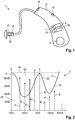
- FIG. 1 an embodiment of a hearing aid 2 is shown.
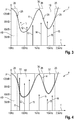
- FIGs. 2 to 4 An example of an audiogram 4 of a user is shown, on the basis of which an active noise suppression 6 of the hearing aid 2 is selectively operated in different ways within the scope of a method for operating the hearing aid 2.
- the active noise suppression 6 is generally used to suppress noise, the term "noise" without restricting the generality also individual noises are meant.
- the noise suppression 6 suppresses noises in such a way that a calm listening situation is produced for the user.
- counter noises are generated in order to partially or even completely cancel out the noises.
- energy is required, which in the present case is taken from an energy store 8 of the hearing aid 2.
- the hearing aid 2 in Fig. 1 has a control unit 10 which is designed to carry out the method.
- the control unit 10 is arranged within a housing 12 of the hearing aid 2.
- the audiogram 4 is stored in a memory 14.
- the memory 14 and the noise suppression 6 are each part of the control unit 10. However, this is not mandatory.
- the hearing aid 2 shown is designed as a hearing aid to compensate for a hearing deficit of the user, and for this purpose has a signal processing system 15, which here is also part of the control unit 10.
- the signal processing 15 is used to modify input signals in order to compensate for the hearing deficit of the user.
- the input signals are recorded by means of a microphone 16 of the hearing aid 2, in Fig. 1 two outer microphones 16 are shown.
- the input signals are modified in the signal processing unit 15 as a function of the audiogram 4, that is to say in a user-specific manner.
- the modified input signals are then output signals of the signal processing 15 and are passed on to a receiver 18 of the hearing aid 2 for output to the user.
- the earpiece 18 is part of an earpiece 20 which is inserted into the ear canal of the user.
- the receiver 18 is arranged in the housing 12 and the sound signals which are generated by the receiver 18 are passed into the auditory canal via a sound tube.
- the input signals are electrical audio signals which are transmitted from a suitable playback device to the hearing device 2 or are stored in the hearing device 2.
- the input signals are divided into several frequency bands by means of a filter bank, not shown in detail, as part of the signal processing 15 of the hearing aid 2, ie in the present case within the control unit 10.
- the filter bank has 48 channels and accordingly generates 48 frequency bands.
- a respective Frequency component f1-f8 is then suppressed in that that frequency band is suppressed in which the frequency component f1-f8 to be suppressed lies.
- a hearing aid with only a single device is shown.
- the hearing aid 2 is designed binaurally and has two individual devices, for example as in FIG Fig. 1 , one for each of the user's two ears.
- the audiogram 4 generally indicates a frequency-dependent hearing threshold 22 of the user and is determined, for example, in a corresponding test or calibration method.
- the audiogram 4 typically differs from user to user. That in the Figs. 2 to 4
- the audiogram 4 shown is therefore only one example of a large number of possible audiograms 4.
- the audiogram 4 shown specifies a hearing threshold 22 for each frequency f of a frequency spectrum from 10 Hz to 20 kHz, from which the respective frequency f can be heard by the user , ie the user-specific hearing threshold 22 is indicated as a function of the frequency.
- the hearing threshold 22 is a level p, that is to say an amplitude. In the Figs.
- various frequency components f1-f8 are represented by several vertical arrows, each of which has a specific level p.
- the frequency components f1-f8 shown by way of example here are individual frequencies, but are alternatively frequency ranges with several frequencies.
- the hearing thresholds 22 of the various frequencies f together form an auditory curve H.
- the auditory curve H divides the space spanned by the two dimensions level p and frequency f into two areas, namely an actually inaudible area nB below the auditory curve H and an actually audible area hB above the auditory curve H.
- the audiogram 4 is thus designed in such a way that it can be used to determine which noises are audible to the user and which are not audible.
- a respective noise consists of one or more frequency components f1 - f8, which are audible or inaudible, or a combination thereof.
- a frequency component f1-f8 is audible to the user exactly when this frequency component f1-f8 has a level p which exceeds the hearing threshold 22 of the user for this frequency range.
- the frequency components f1 - f5 can actually be heard by the user, but the frequency components f6 - f8 are not.
- Fig. 2 the frequency components f1 - f5 can actually be heard by the user, but the frequency components f6 - f8 are not.
- the frequency components f1, f2, f5 can actually be heard by the user, but the frequency components f4, f6 cannot.
- the frequency components f1 - f3 can actually be heard by the user, but the frequency components f4 - f6 cannot.
- the noise suppression 6 continues to be operated selectively in that audible frequency components f1-f8 of the noises are suppressed and inaudible frequency components f1-f8 of the noises are not suppressed.
- the noise suppression 6 is therefore used selectively only for those frequency components f1-f8 for which suppression is also of sufficient benefit for the user.
- Such frequency components f1-f8 which the user does not hear at all do not have to be actively suppressed either and are therefore left out during the suppression. In this case, not only those frequency components f1-f8 are not suppressed which are anyway outside the acoustic spectrum, that is to say in the Fig.
- the individual audiogram 4 of the user is used in a targeted manner in order to carry out the suppression individually.
- the user is hearing impaired and has a hearing deficit at which the hearing threshold 22 is at least about 100 dB in the range from 1 kHz to 2 kHz. Noises at these frequencies and below this hearing threshold 22 are then imperceptible to the user, ie are not audible, and are therefore not actively suppressed.
- the non-user is hearing impaired in the sense of a pathological condition.
- the noise suppression 6 is generally a personalized noise suppression 6.
- the method is not only suitable for hearing aids 2, which, for example, as in FIG Fig. 1 are designed as hearing aids, but also for headphones, headsets and the like, which initially only output useful noises to the user, but these useful noises are different from other noises are superimposed. These other noises are then suppressed in a user-specific manner by means of the noise suppression 6.
- Which frequency components f1-f8 of the noises are audible to the user and which are inaudible is determined on the basis of the audiogram 4. More precisely: it is determined which frequency components f1-f8 can be accepted as audible or not on the basis of the audiogram 4. The noises are therefore divided into audible and inaudible frequency components f1-f8 on the basis of the previously known audiogram 4. Whether a frequency component f1-f8 is determined as audible and inaudible on the basis of the audiogram 4 can in principle differ, depending on the type of selective operation of the noise suppression 6, from whether it is actually audible or inaudible. In general, however, the goal is to operate the noise suppression selectively in such a way that the frequency component f1-f8 is correctly identified as audible or inaudible with the predominant probability by means of determination on the basis of the audiogram 4.
- two variants are particularly suitable for distinguishing between audible and non-audible frequency components f1-f8 and thereby implementing selective noise suppression 6.
- FIG. 2 an embodiment of the first variant is explained with reference to FIG Fig. 3 an embodiment of the second variant, in the embodiment according to Fig. 4 both variants are combined with each other.
- FIGs. 2-4 Several frequency components f1-f8 are also shown as examples, which form one or more noises.
- the frequency components f1-f8 shown represent the noises actually present, that is to say not the noises which are output to the user via the receiver 18. These actual noises regularly get directly into the ear canal of the user, but may be weakened in the process due to the earpiece 18. In the present case, the actual noises also reach the microphone 16, are recorded with it, if necessary processed in the control unit 10 and output to the user via the receiver 18.
- the noise suppression 6 is operated in an amplitude-selective manner by using such frequency components f6-f8 which have a level p below the respectively associated hearing threshold 22, are not suppressed, so that only those frequency components f1-f5 in which the level p is above the respectively associated hearing threshold 22 are actively suppressed.
- the respective level p of a frequency component f1-f8 is compared with the associated hearing threshold 22 of the audiogram 4 and those frequency components f1-f5 which have a level p above the hearing threshold 22 are regarded as audible frequency components f1-f5, whereas those frequency components f6 f8, which have a level p below the hearing threshold 22, are regarded as inaudible frequency components f6-f8.
- a distinction is therefore made according to the level p, ie the amplitude of the frequency components f1 - f8 relative to the audiogram 4, more precisely relative to the auditory curve H.
- active suppression of the noises only takes place above the hearing curve H and not unnecessarily below it during the process.
- a maximum level 24 is also specified, which indicates a power limit of the hearing aid 2, and those frequency components f4, f5 whose level p is above the maximum level 24 are not suppressed.
- the maximum level 24 indicates the level p from which a suppression of the respective frequency component f1-f8 is no longer sensible or no longer possible due to technical limitations of the hearing aid 2. Such technical restrictions result, for example, from a maximum output of the listener 18 or an output stage of the hearing aid 2.
- the hearing aid 2 Since above the maximum level 24, that is, the hearing aid 2 cannot effectively suppress it, but rather results automatically when the output limit is exceeded, in In this case, a suppression is dispensed with and the frequency components f4, f5 remain excluded from the noise suppression 6, although they are audible in the present case. When outputting, however, these frequency components f4, f5 are automatically reduced to the maximum level 24 due to the power limit. How out Fig. 2 becomes clear, the maximum level 24 is regularly above the respective hearing threshold 22. However, this is not mandatory. In the present case, the maximum level 24 is constant for all frequencies f, whereas in a variant not shown, the maximum level 24 is frequency-dependent. The use of a maximum level 24 as described is independent of the amplitude-selective noise suppression 6 described and can also be omitted.
- the noise suppression 6 is operated in a frequency-selective manner.
- the audiogram 4 also has one or more dead areas 26, within which the hearing threshold 22 is above a minimum level 28 in each case.
- the frequency-selective operation is now implemented in such a way that those frequency components f4 which lie within a dead zone 26 of the audiogram 4 are not suppressed, so that only those frequency components f1-f3, f5, f6 are actively suppressed which are not within a dead zone 26 of the audiogram 4 lie.
- a respective dead zone 26 thus characterizes a frequency range in which the user can hear particularly poorly.
- a dead area 26 of the audiogram 4 extends from a lower frequency to an upper frequency. Between these two frequencies, the hearing threshold 22 is consistently above the minimum level 28.
- Fig. 3 A total of three dead areas 26 are shown, the two outer dead areas 26 being at the edge of the acoustic spectrum and only natural dead areas 26, i.e. dead areas 26 in the general sense and thus not necessarily attributable to a hearing deficit.
- the middle dead area 26, on the other hand, is a hearing deficit dead area, that is to say can be traced back to a hearing deficit of the user and therefore a dead area 26 in the special sense.
- a special dead area 26 can have a local maximum 30 of the hearing threshold 22 and, as it were, frame the local maximum 30, as shown in FIG Fig. 3 for the middle dead zone 26 is the case.
- Fig. 4 it is now clear that the amplitude-selective and frequency-selective operation of the noise suppression 6 can also be combined.
- one or more active regions 32 are then formed in the audiogram in such a way that only those frequency components f1-f3 are suppressed which are both outside the dead areas 26 and above the respective hearing threshold 22, whereas the other frequency ranges f4-f6 are not are actively suppressed, since these are not noticed by the user anyway. How out Fig. 4 becomes clear, the active regions 32 result as the difference between the audible area hB and the dead areas 26.
- the audiogram 4 indicates the hearing threshold 22 in a frequency range from 10 Hz to 20 kHz, that is, it comprises an overall frequency spectrum which corresponds to the acoustic spectrum. At the edges of the audiogram, in particular below 20 Hz and above 16 kHz, the hearing ability of most people is, as already indicated, regularly poor, regardless of whether they are hearing impaired or not.
- the hearing threshold 22 here is typically above 90 dB, so that natural dead areas 26 arise here.
- it makes sense to exclude those frequency ranges in which mainly useful signals are to be expected from the noise suppression 6 from the outset, provided that these useful signals are not already separated from the hearing aid 2 beforehand and processed separately.
- a frequency range for speech similar to the dead areas 26 is not suppressed by the noise suppression 6, regardless of whether the user hears well or poorly here. Speech usually represents a useful signal, which is therefore not extinguished by the noise suppression 6 if possible.
- a suitable frequency range for speech extends from 300 Hz to 5 kHz or over a sub-range thereof.
- the active noise suppression 6 has an active noise suppression (ANC for short), more precisely, it is designed. Correspondingly suppresses the noise suppression 6 interfering noises from the environment in that the interfering noises are picked up with one or both of the external microphones 16 of the hearing aid 2 and output in inverted form via the receiver 18 of the hearing aid 2.
- ANC active noise suppression
- the active noise suppression 6 has an active occlusion reduction (AOR for short) or is designed as such, and suppresses interfering noises which result from an occlusion of an auditory canal of the user, in that the interfering noises with an internal microphone 34 of the hearing aid 2 are received in the ear canal of the user and are output inverted via the receiver 18 of the hearing aid 2.
- AOR active occlusion reduction
- an inner microphone 34 is shown as part of the earpiece 18. Without the AOR, the inner microphone 34 is merely optional.
Landscapes
- Physics & Mathematics (AREA)
- Engineering & Computer Science (AREA)
- Acoustics & Sound (AREA)
- Health & Medical Sciences (AREA)
- General Health & Medical Sciences (AREA)
- Signal Processing (AREA)
- Neurosurgery (AREA)
- Otolaryngology (AREA)
- Multimedia (AREA)
- Audiology, Speech & Language Pathology (AREA)
- Soundproofing, Sound Blocking, And Sound Damping (AREA)
- Circuit For Audible Band Transducer (AREA)
Applications Claiming Priority (1)
| Application Number | Priority Date | Filing Date | Title |
|---|---|---|---|
| DE102019213807.1A DE102019213807A1 (de) | 2019-09-11 | 2019-09-11 | Verfahren zum Betrieb eines Hörgeräts sowie Hörgerät |
Publications (2)
| Publication Number | Publication Date |
|---|---|
| EP3793209A1 true EP3793209A1 (fr) | 2021-03-17 |
| EP3793209B1 EP3793209B1 (fr) | 2023-04-26 |
Family
ID=72086739
Family Applications (1)
| Application Number | Title | Priority Date | Filing Date |
|---|---|---|---|
| EP20190884.5A Active EP3793209B1 (fr) | 2019-09-11 | 2020-08-13 | Appareil auditif avec annulation active du bruit et procédé de fonctionnement de lequel |
Country Status (5)
| Country | Link |
|---|---|
| US (1) | US11595770B2 (fr) |
| EP (1) | EP3793209B1 (fr) |
| CN (1) | CN112492493B (fr) |
| DE (1) | DE102019213807A1 (fr) |
| DK (1) | DK3793209T3 (fr) |
Cited By (1)
| Publication number | Priority date | Publication date | Assignee | Title |
|---|---|---|---|---|
| EP4171069A1 (fr) | 2021-10-21 | 2023-04-26 | Sivantos Pte. Ltd. | Dispositif auditif et procédé de fonctionnement d'un tel dispositif auditif |
Families Citing this family (3)
| Publication number | Priority date | Publication date | Assignee | Title |
|---|---|---|---|---|
| DK202070513A1 (en) * | 2020-08-05 | 2022-02-14 | Gn Hearing As | Hearing device for occlusion reduction and components thereof |
| CN117678243A (zh) * | 2021-07-12 | 2024-03-08 | 索尼集团公司 | 声音处理装置、声音处理方法和助听装置 |
| DE102021208735B3 (de) * | 2021-08-10 | 2022-11-17 | Sivantos Pte. Ltd. | Verfahren zum Erstellen eines Audiogramms einer Testperson mittels eines Hörinstruments |
Citations (2)
| Publication number | Priority date | Publication date | Assignee | Title |
|---|---|---|---|---|
| US20110026724A1 (en) * | 2009-07-30 | 2011-02-03 | Nxp B.V. | Active noise reduction method using perceptual masking |
| US20180151172A1 (en) * | 2015-05-29 | 2018-05-31 | Sorizenplus Co., Ltd. | Earphone device having noise cancellation function and noise cancellation method |
Family Cites Families (9)
| Publication number | Priority date | Publication date | Assignee | Title |
|---|---|---|---|---|
| US7010131B1 (en) * | 1998-05-15 | 2006-03-07 | Cirrus Logic, Inc. | Quasi-differential power amplifier and method |
| DE102006051071B4 (de) | 2006-10-30 | 2010-12-16 | Siemens Audiologische Technik Gmbh | Pegelabhängige Geräuschreduktion |
| US8144909B2 (en) * | 2008-08-12 | 2012-03-27 | Cochlear Limited | Customization of bone conduction hearing devices |
| CN102625220B (zh) * | 2012-03-22 | 2014-05-07 | 清华大学 | 一种确定助听设备听力补偿增益的方法 |
| US9129588B2 (en) * | 2012-09-15 | 2015-09-08 | Definitive Technology, Llc | Configurable noise cancelling system |
| DK2904972T3 (da) * | 2014-02-05 | 2021-08-16 | Oticon As | Indretning til bestemmelse af dødt cochlear-område |
| US10238546B2 (en) * | 2015-01-22 | 2019-03-26 | Eers Global Technologies Inc. | Active hearing protection device and method therefore |
| WO2018004547A1 (fr) * | 2016-06-28 | 2018-01-04 | Cirrus Logic, Inc. | Surveillance de l'impédance d'un haut-parleur |
| US10580427B2 (en) * | 2017-10-30 | 2020-03-03 | Starkey Laboratories, Inc. | Ear-worn electronic device incorporating annoyance model driven selective active noise control |
-
2019
- 2019-09-11 DE DE102019213807.1A patent/DE102019213807A1/de not_active Withdrawn
-
2020
- 2020-08-13 EP EP20190884.5A patent/EP3793209B1/fr active Active
- 2020-08-13 DK DK20190884.5T patent/DK3793209T3/da active
- 2020-09-09 CN CN202010939735.6A patent/CN112492493B/zh active Active
- 2020-09-11 US US17/018,242 patent/US11595770B2/en active Active
Patent Citations (2)
| Publication number | Priority date | Publication date | Assignee | Title |
|---|---|---|---|---|
| US20110026724A1 (en) * | 2009-07-30 | 2011-02-03 | Nxp B.V. | Active noise reduction method using perceptual masking |
| US20180151172A1 (en) * | 2015-05-29 | 2018-05-31 | Sorizenplus Co., Ltd. | Earphone device having noise cancellation function and noise cancellation method |
Non-Patent Citations (1)
| Title |
|---|
| WALTER J KOZACKY ET AL: "An active noise control algorithm with gain and power constraints on the adaptive filter", EURASIP JOURNAL ON ADVANCES IN SIGNAL PROCESSING, vol. 2013, no. 1, 1 December 2013 (2013-12-01), XP055766685, DOI: 10.1186/1687-6180-2013-17 * |
Cited By (4)
| Publication number | Priority date | Publication date | Assignee | Title |
|---|---|---|---|---|
| EP4171069A1 (fr) | 2021-10-21 | 2023-04-26 | Sivantos Pte. Ltd. | Dispositif auditif et procédé de fonctionnement d'un tel dispositif auditif |
| DE102021211879A1 (de) | 2021-10-21 | 2023-04-27 | Sivantos Pte. Ltd. | Hörgerät und Verfahren zum Betrieb eines solchen |
| US12219323B2 (en) | 2021-10-21 | 2025-02-04 | Sivantos Pte. Ltd. | Hearing device and method for operating a hearing device |
| DE102021211879B4 (de) * | 2021-10-21 | 2025-05-08 | Sivantos Pte. Ltd. | Hörgerät und Verfahren zum Betrieb eines solchen |
Also Published As
| Publication number | Publication date |
|---|---|
| US20210076146A1 (en) | 2021-03-11 |
| CN112492493A (zh) | 2021-03-12 |
| EP3793209B1 (fr) | 2023-04-26 |
| US11595770B2 (en) | 2023-02-28 |
| CN112492493B (zh) | 2022-09-06 |
| DK3793209T3 (da) | 2023-07-17 |
| DE102019213807A1 (de) | 2021-03-11 |
Similar Documents
| Publication | Publication Date | Title |
|---|---|---|
| EP3793209B1 (fr) | Appareil auditif avec annulation active du bruit et procédé de fonctionnement de lequel | |
| EP3451705B1 (fr) | Procédé et dispositif de reconnaissance rapide de voix propre | |
| EP2164283B1 (fr) | Appareil auditif et fonctionnement d'un appareil auditif doté d'une transposition de fréquence | |
| EP2229010B1 (fr) | Appareil auditif et procédé de compensation du bruit dans un appareil auditif | |
| EP3266222B1 (fr) | Dispositif et procédé pour l'excitation des compresseurs dynamiques d'un appareil auditif binaural | |
| DE102018208657B3 (de) | Verfahren zur Verringerung eines Auftretens einer akustischen Rückkopplung in einem Hörgerät | |
| EP3373599B1 (fr) | Procédé d'ajustement fréquentiel d'un signal audio et dispositif auditif fonctionnant selon ledit procédé | |
| EP3951780B1 (fr) | Procédé de fonctionnement d'un appareil auditif et appareil auditif | |
| EP2129167B1 (fr) | Procédé de fonctionnement d'un appareil auditif et système de microphone pour un appareil auditif | |
| DE102017203947A1 (de) | Verfahren zum Betreiben einer Hörhilfevorrichtung sowie Hörhilfevorrichtung | |
| EP4093052A1 (fr) | Procédé et dispositif de traitement sélectif en fréquence d'un signal audio à faible latence | |
| DE102019213810B3 (de) | Verfahren zum Betrieb eines Hörgeräts und Hörgerät | |
| EP1351550B1 (fr) | Procédé d'adaptation d'une amplification de signal dans une prothèse auditive et prothèse auditive | |
| EP4247007B1 (fr) | Procédé de fonctionnement d'un système auditif binaural | |
| EP3834723A1 (fr) | Procédé de détermination du seuil auditif d'un sujet humain | |
| EP1649719B1 (fr) | Dispositif et procédé pour exploiter des systèmes à assistance vocale dans des automobiles | |
| DE602006000772T2 (de) | Hörinstrument | |
| DE602004010317T2 (de) | Verfahren zum Betreiben eines Hörhilfegerätes und Hörhilfegerät | |
| EP1416764A2 (fr) | Procédé d'établissement des paramètres d'une prothèse auditive et dispositif pour la mise en oeuvre du procédé | |
| EP3955241A1 (fr) | Procédé de fonctionnement d'un appareil auditif et appareil auditif | |
| EP3364668A1 (fr) | Procédé de fonctionnement d'un dispositif auditif et dispositif auditif | |
| DE102023200581B4 (de) | Verfahren zum Betrieb eines Hörinstruments | |
| WO2024104945A1 (fr) | Procédé de fonctionnement d'une prothèse auditive, et prothèse auditive | |
| DE102023204769A1 (de) | Hörgerät und Verfahren zum Betrieb eines Hörgeräts | |
| EP4664931A1 (fr) | Procédé de suppression de bruit dans une prothèse auditive |
Legal Events
| Date | Code | Title | Description |
|---|---|---|---|
| PUAI | Public reference made under article 153(3) epc to a published international application that has entered the european phase |
Free format text: ORIGINAL CODE: 0009012 |
|
| STAA | Information on the status of an ep patent application or granted ep patent |
Free format text: STATUS: THE APPLICATION HAS BEEN PUBLISHED |
|
| AK | Designated contracting states |
Kind code of ref document: A1 Designated state(s): AL AT BE BG CH CY CZ DE DK EE ES FI FR GB GR HR HU IE IS IT LI LT LU LV MC MK MT NL NO PL PT RO RS SE SI SK SM TR |
|
| AX | Request for extension of the european patent |
Extension state: BA ME |
|
| STAA | Information on the status of an ep patent application or granted ep patent |
Free format text: STATUS: REQUEST FOR EXAMINATION WAS MADE |
|
| 17P | Request for examination filed |
Effective date: 20210805 |
|
| RBV | Designated contracting states (corrected) |
Designated state(s): AL AT BE BG CH CY CZ DE DK EE ES FI FR GB GR HR HU IE IS IT LI LT LU LV MC MK MT NL NO PL PT RO RS SE SI SK SM TR |
|
| GRAP | Despatch of communication of intention to grant a patent |
Free format text: ORIGINAL CODE: EPIDOSNIGR1 |
|
| STAA | Information on the status of an ep patent application or granted ep patent |
Free format text: STATUS: GRANT OF PATENT IS INTENDED |
|
| INTG | Intention to grant announced |
Effective date: 20221201 |
|
| GRAS | Grant fee paid |
Free format text: ORIGINAL CODE: EPIDOSNIGR3 |
|
| GRAA | (expected) grant |
Free format text: ORIGINAL CODE: 0009210 |
|
| STAA | Information on the status of an ep patent application or granted ep patent |
Free format text: STATUS: THE PATENT HAS BEEN GRANTED |
|
| AK | Designated contracting states |
Kind code of ref document: B1 Designated state(s): AL AT BE BG CH CY CZ DE DK EE ES FI FR GB GR HR HU IE IS IT LI LT LU LV MC MK MT NL NO PL PT RO RS SE SI SK SM TR |
|
| REG | Reference to a national code |
Ref country code: GB Ref legal event code: FG4D Free format text: NOT ENGLISH |
|
| REG | Reference to a national code |
Ref country code: CH Ref legal event code: EP |
|
| REG | Reference to a national code |
Ref country code: DE Ref legal event code: R096 Ref document number: 502020003068 Country of ref document: DE |
|
| REG | Reference to a national code |
Ref country code: AT Ref legal event code: REF Ref document number: 1563702 Country of ref document: AT Kind code of ref document: T Effective date: 20230515 |
|
| REG | Reference to a national code |
Ref country code: IE Ref legal event code: FG4D Free format text: LANGUAGE OF EP DOCUMENT: GERMAN |
|
| REG | Reference to a national code |
Ref country code: DK Ref legal event code: T3 Effective date: 20230711 |
|
| REG | Reference to a national code |
Ref country code: LT Ref legal event code: MG9D |
|
| REG | Reference to a national code |
Ref country code: NL Ref legal event code: MP Effective date: 20230426 |
|
| PG25 | Lapsed in a contracting state [announced via postgrant information from national office to epo] |
Ref country code: NL Free format text: LAPSE BECAUSE OF FAILURE TO SUBMIT A TRANSLATION OF THE DESCRIPTION OR TO PAY THE FEE WITHIN THE PRESCRIBED TIME-LIMIT Effective date: 20230426 |
|
| PG25 | Lapsed in a contracting state [announced via postgrant information from national office to epo] |
Ref country code: SE Free format text: LAPSE BECAUSE OF FAILURE TO SUBMIT A TRANSLATION OF THE DESCRIPTION OR TO PAY THE FEE WITHIN THE PRESCRIBED TIME-LIMIT Effective date: 20230426 Ref country code: PT Free format text: LAPSE BECAUSE OF FAILURE TO SUBMIT A TRANSLATION OF THE DESCRIPTION OR TO PAY THE FEE WITHIN THE PRESCRIBED TIME-LIMIT Effective date: 20230828 Ref country code: NO Free format text: LAPSE BECAUSE OF FAILURE TO SUBMIT A TRANSLATION OF THE DESCRIPTION OR TO PAY THE FEE WITHIN THE PRESCRIBED TIME-LIMIT Effective date: 20230726 Ref country code: ES Free format text: LAPSE BECAUSE OF FAILURE TO SUBMIT A TRANSLATION OF THE DESCRIPTION OR TO PAY THE FEE WITHIN THE PRESCRIBED TIME-LIMIT Effective date: 20230426 |
|
| PG25 | Lapsed in a contracting state [announced via postgrant information from national office to epo] |
Ref country code: RS Free format text: LAPSE BECAUSE OF FAILURE TO SUBMIT A TRANSLATION OF THE DESCRIPTION OR TO PAY THE FEE WITHIN THE PRESCRIBED TIME-LIMIT Effective date: 20230426 Ref country code: PL Free format text: LAPSE BECAUSE OF FAILURE TO SUBMIT A TRANSLATION OF THE DESCRIPTION OR TO PAY THE FEE WITHIN THE PRESCRIBED TIME-LIMIT Effective date: 20230426 Ref country code: LV Free format text: LAPSE BECAUSE OF FAILURE TO SUBMIT A TRANSLATION OF THE DESCRIPTION OR TO PAY THE FEE WITHIN THE PRESCRIBED TIME-LIMIT Effective date: 20230426 Ref country code: LT Free format text: LAPSE BECAUSE OF FAILURE TO SUBMIT A TRANSLATION OF THE DESCRIPTION OR TO PAY THE FEE WITHIN THE PRESCRIBED TIME-LIMIT Effective date: 20230426 Ref country code: IS Free format text: LAPSE BECAUSE OF FAILURE TO SUBMIT A TRANSLATION OF THE DESCRIPTION OR TO PAY THE FEE WITHIN THE PRESCRIBED TIME-LIMIT Effective date: 20230826 Ref country code: HR Free format text: LAPSE BECAUSE OF FAILURE TO SUBMIT A TRANSLATION OF THE DESCRIPTION OR TO PAY THE FEE WITHIN THE PRESCRIBED TIME-LIMIT Effective date: 20230426 Ref country code: GR Free format text: LAPSE BECAUSE OF FAILURE TO SUBMIT A TRANSLATION OF THE DESCRIPTION OR TO PAY THE FEE WITHIN THE PRESCRIBED TIME-LIMIT Effective date: 20230727 |
|
| PG25 | Lapsed in a contracting state [announced via postgrant information from national office to epo] |
Ref country code: FI Free format text: LAPSE BECAUSE OF FAILURE TO SUBMIT A TRANSLATION OF THE DESCRIPTION OR TO PAY THE FEE WITHIN THE PRESCRIBED TIME-LIMIT Effective date: 20230426 |
|
| PG25 | Lapsed in a contracting state [announced via postgrant information from national office to epo] |
Ref country code: SK Free format text: LAPSE BECAUSE OF FAILURE TO SUBMIT A TRANSLATION OF THE DESCRIPTION OR TO PAY THE FEE WITHIN THE PRESCRIBED TIME-LIMIT Effective date: 20230426 |
|
| REG | Reference to a national code |
Ref country code: DE Ref legal event code: R097 Ref document number: 502020003068 Country of ref document: DE |
|
| PG25 | Lapsed in a contracting state [announced via postgrant information from national office to epo] |
Ref country code: SM Free format text: LAPSE BECAUSE OF FAILURE TO SUBMIT A TRANSLATION OF THE DESCRIPTION OR TO PAY THE FEE WITHIN THE PRESCRIBED TIME-LIMIT Effective date: 20230426 Ref country code: SK Free format text: LAPSE BECAUSE OF FAILURE TO SUBMIT A TRANSLATION OF THE DESCRIPTION OR TO PAY THE FEE WITHIN THE PRESCRIBED TIME-LIMIT Effective date: 20230426 Ref country code: RO Free format text: LAPSE BECAUSE OF FAILURE TO SUBMIT A TRANSLATION OF THE DESCRIPTION OR TO PAY THE FEE WITHIN THE PRESCRIBED TIME-LIMIT Effective date: 20230426 Ref country code: EE Free format text: LAPSE BECAUSE OF FAILURE TO SUBMIT A TRANSLATION OF THE DESCRIPTION OR TO PAY THE FEE WITHIN THE PRESCRIBED TIME-LIMIT Effective date: 20230426 Ref country code: CZ Free format text: LAPSE BECAUSE OF FAILURE TO SUBMIT A TRANSLATION OF THE DESCRIPTION OR TO PAY THE FEE WITHIN THE PRESCRIBED TIME-LIMIT Effective date: 20230426 |
|
| PLBE | No opposition filed within time limit |
Free format text: ORIGINAL CODE: 0009261 |
|
| STAA | Information on the status of an ep patent application or granted ep patent |
Free format text: STATUS: NO OPPOSITION FILED WITHIN TIME LIMIT |
|
| PG25 | Lapsed in a contracting state [announced via postgrant information from national office to epo] |
Ref country code: MC Free format text: LAPSE BECAUSE OF FAILURE TO SUBMIT A TRANSLATION OF THE DESCRIPTION OR TO PAY THE FEE WITHIN THE PRESCRIBED TIME-LIMIT Effective date: 20230426 |
|
| PG25 | Lapsed in a contracting state [announced via postgrant information from national office to epo] |
Ref country code: MC Free format text: LAPSE BECAUSE OF FAILURE TO SUBMIT A TRANSLATION OF THE DESCRIPTION OR TO PAY THE FEE WITHIN THE PRESCRIBED TIME-LIMIT Effective date: 20230426 |
|
| 26N | No opposition filed |
Effective date: 20240129 |
|
| PG25 | Lapsed in a contracting state [announced via postgrant information from national office to epo] |
Ref country code: LU Free format text: LAPSE BECAUSE OF NON-PAYMENT OF DUE FEES Effective date: 20230813 |
|
| PG25 | Lapsed in a contracting state [announced via postgrant information from national office to epo] |
Ref country code: LU Free format text: LAPSE BECAUSE OF NON-PAYMENT OF DUE FEES Effective date: 20230813 |
|
| PG25 | Lapsed in a contracting state [announced via postgrant information from national office to epo] |
Ref country code: SI Free format text: LAPSE BECAUSE OF FAILURE TO SUBMIT A TRANSLATION OF THE DESCRIPTION OR TO PAY THE FEE WITHIN THE PRESCRIBED TIME-LIMIT Effective date: 20230426 |
|
| REG | Reference to a national code |
Ref country code: BE Ref legal event code: MM Effective date: 20230831 |
|
| REG | Reference to a national code |
Ref country code: IE Ref legal event code: MM4A |
|
| PG25 | Lapsed in a contracting state [announced via postgrant information from national office to epo] |
Ref country code: SI Free format text: LAPSE BECAUSE OF FAILURE TO SUBMIT A TRANSLATION OF THE DESCRIPTION OR TO PAY THE FEE WITHIN THE PRESCRIBED TIME-LIMIT Effective date: 20230426 Ref country code: IT Free format text: LAPSE BECAUSE OF FAILURE TO SUBMIT A TRANSLATION OF THE DESCRIPTION OR TO PAY THE FEE WITHIN THE PRESCRIBED TIME-LIMIT Effective date: 20230426 |
|
| PG25 | Lapsed in a contracting state [announced via postgrant information from national office to epo] |
Ref country code: IE Free format text: LAPSE BECAUSE OF NON-PAYMENT OF DUE FEES Effective date: 20230813 |
|
| PG25 | Lapsed in a contracting state [announced via postgrant information from national office to epo] |
Ref country code: IE Free format text: LAPSE BECAUSE OF NON-PAYMENT OF DUE FEES Effective date: 20230813 |
|
| PG25 | Lapsed in a contracting state [announced via postgrant information from national office to epo] |
Ref country code: BE Free format text: LAPSE BECAUSE OF NON-PAYMENT OF DUE FEES Effective date: 20230831 |
|
| PG25 | Lapsed in a contracting state [announced via postgrant information from national office to epo] |
Ref country code: BG Free format text: LAPSE BECAUSE OF FAILURE TO SUBMIT A TRANSLATION OF THE DESCRIPTION OR TO PAY THE FEE WITHIN THE PRESCRIBED TIME-LIMIT Effective date: 20230426 |
|
| PG25 | Lapsed in a contracting state [announced via postgrant information from national office to epo] |
Ref country code: BG Free format text: LAPSE BECAUSE OF FAILURE TO SUBMIT A TRANSLATION OF THE DESCRIPTION OR TO PAY THE FEE WITHIN THE PRESCRIBED TIME-LIMIT Effective date: 20230426 |
|
| PG25 | Lapsed in a contracting state [announced via postgrant information from national office to epo] |
Ref country code: CY Free format text: LAPSE BECAUSE OF FAILURE TO SUBMIT A TRANSLATION OF THE DESCRIPTION OR TO PAY THE FEE WITHIN THE PRESCRIBED TIME-LIMIT; INVALID AB INITIO Effective date: 20200813 |
|
| PG25 | Lapsed in a contracting state [announced via postgrant information from national office to epo] |
Ref country code: HU Free format text: LAPSE BECAUSE OF FAILURE TO SUBMIT A TRANSLATION OF THE DESCRIPTION OR TO PAY THE FEE WITHIN THE PRESCRIBED TIME-LIMIT; INVALID AB INITIO Effective date: 20200813 |
|
| PGFP | Annual fee paid to national office [announced via postgrant information from national office to epo] |
Ref country code: DE Payment date: 20250724 Year of fee payment: 6 Ref country code: DK Payment date: 20250723 Year of fee payment: 6 |
|
| PGFP | Annual fee paid to national office [announced via postgrant information from national office to epo] |
Ref country code: GB Payment date: 20250725 Year of fee payment: 6 |
|
| PGFP | Annual fee paid to national office [announced via postgrant information from national office to epo] |
Ref country code: AT Payment date: 20251020 Year of fee payment: 5 Ref country code: FR Payment date: 20250725 Year of fee payment: 6 |
|
| PGFP | Annual fee paid to national office [announced via postgrant information from national office to epo] |
Ref country code: CH Payment date: 20250901 Year of fee payment: 6 |
|
| PG25 | Lapsed in a contracting state [announced via postgrant information from national office to epo] |
Ref country code: TR Free format text: LAPSE BECAUSE OF FAILURE TO SUBMIT A TRANSLATION OF THE DESCRIPTION OR TO PAY THE FEE WITHIN THE PRESCRIBED TIME-LIMIT Effective date: 20230426 |