EP3796230B1 - Méthode permettant de déterminer les limites de procédé d'un procédé semi-conducteur - Google Patents
Méthode permettant de déterminer les limites de procédé d'un procédé semi-conducteur Download PDFInfo
- Publication number
- EP3796230B1 EP3796230B1 EP19197794.1A EP19197794A EP3796230B1 EP 3796230 B1 EP3796230 B1 EP 3796230B1 EP 19197794 A EP19197794 A EP 19197794A EP 3796230 B1 EP3796230 B1 EP 3796230B1
- Authority
- EP
- European Patent Office
- Prior art keywords
- images
- score
- query
- image
- dataset
- Prior art date
- Legal status (The legal status is an assumption and is not a legal conclusion. Google has not performed a legal analysis and makes no representation as to the accuracy of the status listed.)
- Active
Links
Images



Classifications
-
- G—PHYSICS
- G06—COMPUTING OR CALCULATING; COUNTING
- G06T—IMAGE DATA PROCESSING OR GENERATION, IN GENERAL
- G06T7/00—Image analysis
- G06T7/0002—Inspection of images, e.g. flaw detection
- G06T7/0004—Industrial image inspection
-
- G—PHYSICS
- G06—COMPUTING OR CALCULATING; COUNTING
- G06N—COMPUTING ARRANGEMENTS BASED ON SPECIFIC COMPUTATIONAL MODELS
- G06N3/00—Computing arrangements based on biological models
- G06N3/02—Neural networks
- G06N3/08—Learning methods
- G06N3/088—Non-supervised learning, e.g. competitive learning
-
- G—PHYSICS
- G03—PHOTOGRAPHY; CINEMATOGRAPHY; ANALOGOUS TECHNIQUES USING WAVES OTHER THAN OPTICAL WAVES; ELECTROGRAPHY; HOLOGRAPHY
- G03F—PHOTOMECHANICAL PRODUCTION OF TEXTURED OR PATTERNED SURFACES, e.g. FOR PRINTING, FOR PROCESSING OF SEMICONDUCTOR DEVICES; MATERIALS THEREFOR; ORIGINALS THEREFOR; APPARATUS SPECIALLY ADAPTED THEREFOR
- G03F7/00—Photomechanical, e.g. photolithographic, production of textured or patterned surfaces, e.g. printing surfaces; Materials therefor, e.g. comprising photoresists; Apparatus specially adapted therefor
- G03F7/70—Microphotolithographic exposure; Apparatus therefor
- G03F7/70483—Information management; Active and passive control; Testing; Wafer monitoring, e.g. pattern monitoring
- G03F7/70491—Information management, e.g. software; Active and passive control, e.g. details of controlling exposure processes or exposure tool monitoring processes
- G03F7/70508—Data handling in all parts of the microlithographic apparatus, e.g. handling pattern data for addressable masks or data transfer to or from different components within the exposure apparatus
-
- G—PHYSICS
- G03—PHOTOGRAPHY; CINEMATOGRAPHY; ANALOGOUS TECHNIQUES USING WAVES OTHER THAN OPTICAL WAVES; ELECTROGRAPHY; HOLOGRAPHY
- G03F—PHOTOMECHANICAL PRODUCTION OF TEXTURED OR PATTERNED SURFACES, e.g. FOR PRINTING, FOR PROCESSING OF SEMICONDUCTOR DEVICES; MATERIALS THEREFOR; ORIGINALS THEREFOR; APPARATUS SPECIALLY ADAPTED THEREFOR
- G03F7/00—Photomechanical, e.g. photolithographic, production of textured or patterned surfaces, e.g. printing surfaces; Materials therefor, e.g. comprising photoresists; Apparatus specially adapted therefor
- G03F7/70—Microphotolithographic exposure; Apparatus therefor
- G03F7/70483—Information management; Active and passive control; Testing; Wafer monitoring, e.g. pattern monitoring
- G03F7/70491—Information management, e.g. software; Active and passive control, e.g. details of controlling exposure processes or exposure tool monitoring processes
- G03F7/70525—Controlling normal operating mode, e.g. matching different apparatus, remote control or prediction of failure
-
- G—PHYSICS
- G03—PHOTOGRAPHY; CINEMATOGRAPHY; ANALOGOUS TECHNIQUES USING WAVES OTHER THAN OPTICAL WAVES; ELECTROGRAPHY; HOLOGRAPHY
- G03F—PHOTOMECHANICAL PRODUCTION OF TEXTURED OR PATTERNED SURFACES, e.g. FOR PRINTING, FOR PROCESSING OF SEMICONDUCTOR DEVICES; MATERIALS THEREFOR; ORIGINALS THEREFOR; APPARATUS SPECIALLY ADAPTED THEREFOR
- G03F7/00—Photomechanical, e.g. photolithographic, production of textured or patterned surfaces, e.g. printing surfaces; Materials therefor, e.g. comprising photoresists; Apparatus specially adapted therefor
- G03F7/70—Microphotolithographic exposure; Apparatus therefor
- G03F7/70483—Information management; Active and passive control; Testing; Wafer monitoring, e.g. pattern monitoring
- G03F7/70605—Workpiece metrology
- G03F7/70616—Monitoring the printed patterns
- G03F7/70625—Dimensions, e.g. line width, critical dimension [CD], profile, sidewall angle or edge roughness
-
- G—PHYSICS
- G03—PHOTOGRAPHY; CINEMATOGRAPHY; ANALOGOUS TECHNIQUES USING WAVES OTHER THAN OPTICAL WAVES; ELECTROGRAPHY; HOLOGRAPHY
- G03F—PHOTOMECHANICAL PRODUCTION OF TEXTURED OR PATTERNED SURFACES, e.g. FOR PRINTING, FOR PROCESSING OF SEMICONDUCTOR DEVICES; MATERIALS THEREFOR; ORIGINALS THEREFOR; APPARATUS SPECIALLY ADAPTED THEREFOR
- G03F7/00—Photomechanical, e.g. photolithographic, production of textured or patterned surfaces, e.g. printing surfaces; Materials therefor, e.g. comprising photoresists; Apparatus specially adapted therefor
- G03F7/70—Microphotolithographic exposure; Apparatus therefor
- G03F7/70483—Information management; Active and passive control; Testing; Wafer monitoring, e.g. pattern monitoring
- G03F7/70605—Workpiece metrology
- G03F7/70616—Monitoring the printed patterns
- G03F7/7065—Defects, e.g. optical inspection of patterned layer for defects
-
- G—PHYSICS
- G06—COMPUTING OR CALCULATING; COUNTING
- G06F—ELECTRIC DIGITAL DATA PROCESSING
- G06F16/00—Information retrieval; Database structures therefor; File system structures therefor
- G06F16/50—Information retrieval; Database structures therefor; File system structures therefor of still image data
- G06F16/53—Querying
-
- G—PHYSICS
- G06—COMPUTING OR CALCULATING; COUNTING
- G06F—ELECTRIC DIGITAL DATA PROCESSING
- G06F16/00—Information retrieval; Database structures therefor; File system structures therefor
- G06F16/50—Information retrieval; Database structures therefor; File system structures therefor of still image data
- G06F16/58—Retrieval characterised by using metadata, e.g. metadata not derived from the content or metadata generated manually
- G06F16/583—Retrieval characterised by using metadata, e.g. metadata not derived from the content or metadata generated manually using metadata automatically derived from the content
-
- G—PHYSICS
- G06—COMPUTING OR CALCULATING; COUNTING
- G06N—COMPUTING ARRANGEMENTS BASED ON SPECIFIC COMPUTATIONAL MODELS
- G06N20/00—Machine learning
-
- G—PHYSICS
- G06—COMPUTING OR CALCULATING; COUNTING
- G06N—COMPUTING ARRANGEMENTS BASED ON SPECIFIC COMPUTATIONAL MODELS
- G06N3/00—Computing arrangements based on biological models
- G06N3/02—Neural networks
- G06N3/04—Architecture, e.g. interconnection topology
- G06N3/045—Combinations of networks
-
- G—PHYSICS
- G06—COMPUTING OR CALCULATING; COUNTING
- G06N—COMPUTING ARRANGEMENTS BASED ON SPECIFIC COMPUTATIONAL MODELS
- G06N3/00—Computing arrangements based on biological models
- G06N3/02—Neural networks
- G06N3/04—Architecture, e.g. interconnection topology
- G06N3/045—Combinations of networks
- G06N3/0455—Auto-encoder networks; Encoder-decoder networks
-
- G—PHYSICS
- G06—COMPUTING OR CALCULATING; COUNTING
- G06N—COMPUTING ARRANGEMENTS BASED ON SPECIFIC COMPUTATIONAL MODELS
- G06N3/00—Computing arrangements based on biological models
- G06N3/02—Neural networks
- G06N3/04—Architecture, e.g. interconnection topology
- G06N3/047—Probabilistic or stochastic networks
-
- G—PHYSICS
- G06—COMPUTING OR CALCULATING; COUNTING
- G06N—COMPUTING ARRANGEMENTS BASED ON SPECIFIC COMPUTATIONAL MODELS
- G06N3/00—Computing arrangements based on biological models
- G06N3/02—Neural networks
- G06N3/04—Architecture, e.g. interconnection topology
- G06N3/0475—Generative networks
-
- G—PHYSICS
- G06—COMPUTING OR CALCULATING; COUNTING
- G06N—COMPUTING ARRANGEMENTS BASED ON SPECIFIC COMPUTATIONAL MODELS
- G06N3/00—Computing arrangements based on biological models
- G06N3/02—Neural networks
- G06N3/08—Learning methods
- G06N3/094—Adversarial learning
-
- G—PHYSICS
- G06—COMPUTING OR CALCULATING; COUNTING
- G06T—IMAGE DATA PROCESSING OR GENERATION, IN GENERAL
- G06T2207/00—Indexing scheme for image analysis or image enhancement
- G06T2207/10—Image acquisition modality
- G06T2207/10056—Microscopic image
- G06T2207/10061—Microscopic image from scanning electron microscope
-
- G—PHYSICS
- G06—COMPUTING OR CALCULATING; COUNTING
- G06T—IMAGE DATA PROCESSING OR GENERATION, IN GENERAL
- G06T2207/00—Indexing scheme for image analysis or image enhancement
- G06T2207/30—Subject of image; Context of image processing
- G06T2207/30108—Industrial image inspection
- G06T2207/30148—Semiconductor; IC; Wafer
Definitions
- a semiconductor device such as an integrated circuit chip is produced by a sequence of hundreds of process steps. Many of them require a lithographic mask through which a two-dimensional pattern is imprinted on a photoresist layer, followed by one or more etch processes for producing the pattern in the form of three-dimensional features formed in the material of a semiconductor wafer or of layers on the wafer.
- the design of such lithographic masks nowadays involves the prediction of the printed pattern taking into account optical, resist and etch phenomena, which occur at the scale of the mask features and below. These effects cause unavoidable deviations on the printed pattern with respect to the design intent.
- the printable window and the defect-related process window are examples of process limits needed for evaluating an OPC based mask design and/or for correctly printing a given set of features on a semiconductor wafer.
- Process limits are determined not only in terms of dose and focus applied in lithography processes, but also as a function of various other process parameters, such as etch parameters or parameters related to deposition or planarization processes. Today, the determination of these process limits equally requires a primarily manual analysis of CD-SEM images.
- the above described problems are related to the difficulty of distinguishing between different images of a die area obtained by a semiconductor process, wherein the different images are obtained by varying one or more process parameters.
- the different images are obtained by varying one or more process parameters.
- no reliable technique is available that allows to make this distinction without requiring extensive time and manual effort.
- the invention aims to provide a method for determining process limits that does not suffer from the above described problems. This aim is achieved by the method according to the appended claims.
- a dataset of detailed images of the same die area preferably CD-SEM images
- the images of the dataset correspond to different settings of one or more process parameters, for example different dose and focus settings applied in a lithographic process.
- One or more images from the dataset are used as training images of an unsupervised generative machine learning algorithm.
- the algorithm creates a latent vector space, comprising latent vectors that allow the algorithm to synthesize a large quantity of synthetic images.
- the method then presents one or more images from the dataset as query images to the algorithm, and a score is attributed to a set of object images from the dataset, based on the distances between the query image and respective object images, said distances being determined in the latent vector space.
- the score is representative of one or more characteristics of the images, such as the critical dimensions of one or more 2 or 3-dimensional features appearing in the images. This allows to extract the process limits directly from the score values, rather than from a manual comparison of the images.
- Obtaining a score value representative of a given image characteristic is enabled by a targeted choice of one or more of the query images and object images, and/or by determining the score as an aggregate score value, calculated from the scores obtained with respect to a set of different query images.
- the aggregate score may for example be the maximum or the average of the scores of the object images, obtained with respect to a set of query images.
- one or more synthetic images, generated by the algorithm are added to the dataset, and wherein one or more of said synthetic images are used as query images.
- the machine learning algorithm may be an algorithm of the type Generative Adversarial Network (GAN) or Variational Auto Encoder (Var-AE).
- GAN Generative Adversarial Network
- Var-AE Variational Auto Encoder
- the method may be used for determining a process window for one or more parameters of the process, wherein the process window determination is based on a predefined known relation between the scores and said one or more characteristics of the images.
- the predefined known relation may be based on one or more calibration steps performed prior to performing the method.
- the invention is equally related to an apparatus for determining process limits in accordance with the method of the invention, the apparatus comprising a computer configured to :
- the invention is equally related to a computer program product applicable in an apparatus according to the invention, and configured to
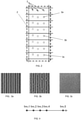
- the wafer portion 2 indicated in figure 1 is shown in an enlarged view in figure 2 , after printing the FEM wafer in a lithographic tool, at the various settings.
- Multiple pattern areas 3 on the die are examined, in order to determine the printable window in terms of the exposure and focus parameters, i.e. the ranges of exposure dose and focus within which the feature patterns as designed in these areas are effectively reproduced.
- CD-SEM images are taken of the areas in question.
- the printable window is linked to a step in the graph that sets out the CD as a function of dose and/or focus, i.e. a sudden rise or fall of the CD-curve.
- the present invention provides a way of automatically detecting the printable window.
- One or more of the CD-SEM images are used as training images for an unsupervised machine learning algorithm that creates a latent vector space on the basis of a pixel-by-pixel analysis of the training images. For example, if each of the images consist of an array of 256 by 256 pixels, each pixel may be attributed a value and a probability distribution, preferably a unit Gaussian.
- the algorithm transforms these data into a latent vector space through a neural network.
- the algorithm learns by a self-correcting sequence of image-synthesis and comparison to the training images, and thereby creates a large number of synthesized images, each image being defined by the values of its specific n-dimensional latent vector.
- this is done by selecting a single query image from the dataset, and comparing the query image to a set of other images from the dataset. These images will be referred to hereafter as 'object images'.
- the comparison is based on the distance in the latent vector space between the query image and the respective object images.
- the distance is the Euclidean distance between two n-dimensional latent vectors in the vector space.
- a score is attributed to the object images.
- the score is representative of the respective distances in the latent vector space, from the query image to the object images.
- the score may be the distance as such or any linear function of the distance. For example, the distance may be divided by a constant to obtain a normalized value of the distance, so that all scores are between 0 and 1.
- the maximum score is a suitable 'aggregate score' value, i.e. a score value based on the comparison of object images 1 to 5 to multiple query images, given that the outlier image 5 is in any case not related to a realistic CD.
- multiple images are used as query images, and at least one of the query images is an outlier image, i.e. an image for which it is known that it does not correspond to a CD value (or the value of another characteristic) within a predefined range of interest.
- the choice of the maximum score as the 'aggregate' score is one example of how the aggregate score is defined. Another possibility is taking the average of the scores of each column. Still other ways to define the aggregate score are included in the scope of the invention. What is needed is an aggregate score that behaves in a monotonic way for a sequence of images for which it is known that the CD (or another characteristic of the images) equally behaves monotonically in a given range of interest. If this is the case, the aggregate score will exhibit the same or very similar behaviour as the actual CD or other characteristic, as a function of dose and focus, and will therefore allow to extract a printable window.
- the score table as shown in tables 2 and 3 may be drawn up for the totality of the dataset, i.e. each of the 200 images is taken as the query image and each of the images is 'scored' as an object image relative to itself and to the other 199 images.
- the number of query images may however be smaller than the number of object images.
- the full set of 200 images may be 'scored' in relation to a smaller number, for example 50, query images.
- the dataset may be expanded by adding one or more synthetic images to it, for example a number of synthetic images for which it is known that they correspond to outlier images, and these synthetic images may be added to the list of query images in the first column of the table, and possibly also to the list of object images. This may help to obtain an aggregate score that corresponds well with the CD in the range of interest.
- Figure 6 shows an example of a score distribution obtained by the method of the invention, on the dies of a FEM wafer.
- Each number represents a score obtained in the above-described way, and wherein the query images, the object images and the definition of the aggregate score are chosen in such a way that the aggregate score behaves in the same way as the actual CD of a feature in the respective images.
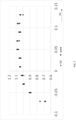
- This is illustrated by the graph in Figure 7 , which shows normalized values of the CD and of the score relative to the same scale, as a function of the focus and for a dose setting of 41mJ/cm 2 , i.e. for the values of the column 10 highlighted in Figure 6 .
- the values of the CD and of the scores are normalized to the same dimensionless value.
- the scores furthermore closely follow the variations of the CD beyond the sharp rise.
- This result shows that it is possible to determine a CD-related process-window (i.e. a more narrow window within the limits of the printable window) on the basis of the score values alone, provided a preliminary calibration is performed.
- the calibration could entail the measurement of CDs on a limited number of images and the determination of a scale factor that allows to estimate the CD from the score values, possibly applying different scale factors in different ranges along the focus or dose axis, or determining a more intricate function that links the scores to the CD values. This allows to reconstruct the CDs from the scores, and to determine directly a CD-based process window from the score graph, without necessitating the manual inspection of a large number of CD-SEM images.
- the invention is therefore also related to such an apparatus and to a computer program product applicable in such an apparatus.
- the latter is a software product that includes the machine learning algorithm and that may further allow the user to perform a number of actions, such as the selection of training images, query images and object images, or the definition of the score.
- the software may also be configured to apply some of these actions automatically according to predefined selection and calculation criteria.
Landscapes
- Engineering & Computer Science (AREA)
- Physics & Mathematics (AREA)
- Theoretical Computer Science (AREA)
- General Physics & Mathematics (AREA)
- Data Mining & Analysis (AREA)
- General Engineering & Computer Science (AREA)
- Software Systems (AREA)
- Computing Systems (AREA)
- Artificial Intelligence (AREA)
- Mathematical Physics (AREA)
- Evolutionary Computation (AREA)
- Biophysics (AREA)
- General Health & Medical Sciences (AREA)
- Computational Linguistics (AREA)
- Biomedical Technology (AREA)
- Life Sciences & Earth Sciences (AREA)
- Health & Medical Sciences (AREA)
- Molecular Biology (AREA)
- Library & Information Science (AREA)
- Computer Vision & Pattern Recognition (AREA)
- Databases & Information Systems (AREA)
- Probability & Statistics with Applications (AREA)
- Quality & Reliability (AREA)
- Medical Informatics (AREA)
- Image Analysis (AREA)
Claims (14)
- Procédé de détermination de limites de traitement pour un ou plusieurs paramètres d'un traitement de semi-conducteur, le procédé comprenant les étapes consistant à :- fournir un ou plusieurs substrats de test comprenant une pluralité de surfaces de puce (1),- appliquer le traitement sur différentes zones de puce des un ou plusieurs substrats de test, dans lequel les un ou plusieurs paramètres de traitement sont incrémentés, en commençant par une valeur établie des paramètres au niveau de l'une des zones de puce, et en augmentant et/ou diminuant le paramètre ou les paramètres par étapes dans les autres surfaces de puce,- obtenir un ensemble de données d'images (3a, 3b, 3c) de la même partie des différentes zones de puce, traitées en appliquant différentes valeurs de paramètres,- déterminer les limites de traitement par une séquence d'étapes de procédé comprenant : une création d'un espace vectoriel propre en effectuant l'apprentissage d'un algorithme d'apprentissage automatique génératif non supervisé sur la base d'une ou plusieurs des images de l'ensemble de données,- sélectionner une ou plusieurs images d'interrogation à partir de l'ensemble de données d'image,- pour chaque image d'interrogation, déterminer les distances dans l'espace vectoriel propre de l'image d'interrogation à une pluralité d'images provenant de l'ensemble de données, cette dernière pluralité d'images étant appelée ci-après images d'objet,- attribuer un score à chacune desdites images d'objet, sur la base des distances entre ladite pluralité d'images d'objet et les une ou plusieurs images d'interrogation, dans lequel les images d'interrogation, les images d'objet et la définition du score sont choisies de telle manière que le score soit représentatif des une ou plusieurs caractéristiques des images, au moins dans une plage donnée desdites une ou plusieurs caractéristiques,- extraire les limites de traitement de la relation entre le score et les un ou plusieurs paramètres de traitement.
- Procédé selon la revendication 1, dans lequel une seule image d'interrogation est sélectionnée, et dans lequel le score est ladite distance ou une fonction linéaire de celle-ci.
- Procédé selon la revendication 1, dans lequel de multiples images d'interrogation sont sélectionnées, et dans lequel le score est un score agrégé basé sur la totalité des scores pour chaque image d'objet.
- Procédé selon la revendication 3, dans lequel le score agrégé est le maximum des scores de chacune des images d'objet.
- Procédé selon la revendication 3, dans lequel le score agrégé est la moyenne des scores de chacune des images d'objet.
- Procédé selon l'une quelconque des revendications 3 à 5, dans lequel une ou plusieurs images synthétiques, générées par l'algorithme, sont ajoutées à l'ensemble de données, et dans lequel une ou plusieurs desdites images synthétiques servent d'images d'interrogation.
- Procédé selon l'une quelconque des revendications précédentes, dans lequel au moins une des images d'interrogation et/ou au moins une des images d'objet est une image aberrante, c'est-à-dire une image qui ne correspond pas à des valeurs des une ou plusieurs caractéristiques qui s'inscrivent dans une plage d'intérêt prédéfinie pour lesdites une ou plusieurs caractéristiques.
- Procédé selon l'une quelconque des revendications précédentes, dans lequel l'algorithme d'apprentissage automatique est un algorithme du type réseau antagoniste génératif (GAN) ou auto codeur variationnel (Var-AE).
- Procédé selon l'une quelconque des revendications précédentes, dans lequel le traitement est un traitement lithographique, dans lequel le procédé est utilisé pour déterminer une fenêtre imprimable en termes de dose et de mise au point appliquées dans le traitement lithographique, et dans lequel les limites de la fenêtre imprimable sont détectées en déterminant une étape dans la relation entre le score et la dose et/ou la mise au point.
- Procédé selon l'une quelconque des revendications 1 à 8, dans lequel le procédé est utilisé pour déterminer une fenêtre de traitement pour un ou plusieurs paramètres du traitement, et dans lequel la détermination de fenêtre de traitement est basée sur une relation connue prédéfinie entre les scores et lesdites une ou plusieurs caractéristiques des images.
- Procédé selon la revendication 10, dans lequel la relation connue prédéfinie est basée sur une ou plusieurs étapes d'étalonnage réalisées avant de réaliser le procédé.
- Procédé selon l'une quelconque des revendications précédentes, dans lequel les une ou plusieurs caractéristiques des images comprennent la dimension critique d'un ou plusieurs attributs de modèle en 2 ou 3 dimensions apparaissant dans les images.
- Appareil de détermination de limites de traitement conformément au procédé selon l'une quelconque des revendications précédentes, l'appareil comprenant un ordinateur configuré pour :- recevoir les images de l'ensemble de données,- effectuer l'apprentissage de l'algorithme sur la base d'une ou plusieurs desdites images,- calculer la distance dans l'espace vectoriel propre entre une ou plusieurs images d'interrogation et une pluralité d'images d'objet,- calculer ledit score sur la base desdites distances,- extraire les limites de traitement.
- Produit programme d'ordinateur applicable dans un appareil selon la revendication 13, et configuré pour- recevoir les images de l'ensemble de données,- effectuer l'apprentissage de l'algorithme sur la base d'une ou plusieurs desdites images,- calculer la distance dans l'espace vectoriel propre entre une ou plusieurs images d'interrogation et une pluralité d'images d'objet,- calculer ledit score sur la base desdites distances,- extraire les limites de traitementlorsque le produit de programme tourne sur l'ordinateur.
Priority Applications (2)
| Application Number | Priority Date | Filing Date | Title |
|---|---|---|---|
| EP19197794.1A EP3796230B1 (fr) | 2019-09-17 | 2019-09-17 | Méthode permettant de déterminer les limites de procédé d'un procédé semi-conducteur |
| CN202010982374.3A CN112529833B (zh) | 2019-09-17 | 2020-09-17 | 一种用于确定半导体工艺的工艺极限的方法和装置 |
Applications Claiming Priority (1)
| Application Number | Priority Date | Filing Date | Title |
|---|---|---|---|
| EP19197794.1A EP3796230B1 (fr) | 2019-09-17 | 2019-09-17 | Méthode permettant de déterminer les limites de procédé d'un procédé semi-conducteur |
Publications (2)
| Publication Number | Publication Date |
|---|---|
| EP3796230A1 EP3796230A1 (fr) | 2021-03-24 |
| EP3796230B1 true EP3796230B1 (fr) | 2022-03-09 |
Family
ID=67997362
Family Applications (1)
| Application Number | Title | Priority Date | Filing Date |
|---|---|---|---|
| EP19197794.1A Active EP3796230B1 (fr) | 2019-09-17 | 2019-09-17 | Méthode permettant de déterminer les limites de procédé d'un procédé semi-conducteur |
Country Status (2)
| Country | Link |
|---|---|
| EP (1) | EP3796230B1 (fr) |
| CN (1) | CN112529833B (fr) |
Family Cites Families (7)
| Publication number | Priority date | Publication date | Assignee | Title |
|---|---|---|---|---|
| JP2013542404A (ja) * | 2010-07-30 | 2013-11-21 | ケーエルエー−テンカー コーポレイション | 領域ベースの仮想フーリエ・フィルタ |
| EP3398123B1 (fr) * | 2015-12-31 | 2025-03-12 | KLA - Tencor Corporation | Formation accélérée d'un modèle fondé sur l'apprentissage automatique destiné à des applications semi-conductrices |
| US11580375B2 (en) * | 2015-12-31 | 2023-02-14 | Kla-Tencor Corp. | Accelerated training of a machine learning based model for semiconductor applications |
| EP3392712A1 (fr) * | 2017-04-21 | 2018-10-24 | IMEC vzw | Procédé d'analyse de conception d'un circuit intégré |
| US10551827B2 (en) * | 2017-07-25 | 2020-02-04 | Kla-Tencor Corporation | Hybrid inspection system for efficient process window discovery |
| US10580673B2 (en) * | 2018-01-05 | 2020-03-03 | Kla Corporation | Semiconductor metrology and defect classification using electron microscopy |
| US11199506B2 (en) * | 2018-02-21 | 2021-12-14 | Applied Materials Israel Ltd. | Generating a training set usable for examination of a semiconductor specimen |
-
2019
- 2019-09-17 EP EP19197794.1A patent/EP3796230B1/fr active Active
-
2020
- 2020-09-17 CN CN202010982374.3A patent/CN112529833B/zh active Active
Also Published As
| Publication number | Publication date |
|---|---|
| CN112529833A (zh) | 2021-03-19 |
| EP3796230A1 (fr) | 2021-03-24 |
| CN112529833B (zh) | 2023-06-23 |
Similar Documents
| Publication | Publication Date | Title |
|---|---|---|
| US7383530B2 (en) | System and method for examining mask pattern fidelity | |
| TWI808815B (zh) | 半導體製作製程控制之系統及方法,以及電腦程式產品 | |
| JP4302965B2 (ja) | 半導体デバイスの製造方法及びその製造システム | |
| US8057967B2 (en) | Process window signature patterns for lithography process control | |
| US10720367B2 (en) | Process window analysis | |
| CN106407490B (zh) | 在芯片设计布局中发现未知问题图案的系统与方法 | |
| WO2002075793B1 (fr) | Systeme et procede d'analyse d'imprimabilite en termes de masque et de defectuosites | |
| CN1825323A (zh) | 用处理灵敏度模型识别布局中制造问题区域的方法和装置 | |
| KR102886571B1 (ko) | 전자 설계의 피처들을 분류하기 위한 방법 및 시스템 | |
| TW202213166A (zh) | 用於生成用於電子設計之形狀資料之方法及系統 | |
| CN110763696B (zh) | 用于晶圆图像生成的方法和系统 | |
| KR102596144B1 (ko) | 프로세스 제어를 위한 인-다이 계측 방법 및 시스템 | |
| TW201606854A (zh) | 用於晶粒對資料庫光罩檢查之自動校準樣本選擇 | |
| CN1441316A (zh) | 光掩模的制造方法和使用该光掩模的半导体装置制造方法 | |
| JP4607380B2 (ja) | パターン検出方法、パターン検査方法およびパターン修正、加工方法 | |
| EP3796230B1 (fr) | Méthode permettant de déterminer les limites de procédé d'un procédé semi-conducteur | |
| JP7445003B2 (ja) | マルチステッププロセス検査方法 | |
| US10008422B2 (en) | Method for assessing the usability of an exposed and developed semiconductor wafer | |
| US9086634B2 (en) | Production method and evaluation apparatus for mask layout | |
| US9885949B2 (en) | Method for designing a lithographic mask | |
| US20160062227A1 (en) | Mask monitor mark and method for marking the mark | |
| US7587700B2 (en) | Process monitoring system and method for processing a large number of sub-micron measurement targets | |
| Hu et al. | Pattern-Centric Computational System for Logic and Memory Manufacturing and Process Technology Development | |
| US10699971B2 (en) | Method for processing of a further layer on a semiconductor wafer | |
| CN119356019A (zh) | Opc模型的建立方法和装置、光学临近修正方法和设备、存储介质 |
Legal Events
| Date | Code | Title | Description |
|---|---|---|---|
| PUAI | Public reference made under article 153(3) epc to a published international application that has entered the european phase |
Free format text: ORIGINAL CODE: 0009012 |
|
| STAA | Information on the status of an ep patent application or granted ep patent |
Free format text: STATUS: THE APPLICATION HAS BEEN PUBLISHED |
|
| AK | Designated contracting states |
Kind code of ref document: A1 Designated state(s): AL AT BE BG CH CY CZ DE DK EE ES FI FR GB GR HR HU IE IS IT LI LT LU LV MC MK MT NL NO PL PT RO RS SE SI SK SM TR |
|
| AX | Request for extension of the european patent |
Extension state: BA ME |
|
| STAA | Information on the status of an ep patent application or granted ep patent |
Free format text: STATUS: REQUEST FOR EXAMINATION WAS MADE |
|
| 17P | Request for examination filed |
Effective date: 20210624 |
|
| RBV | Designated contracting states (corrected) |
Designated state(s): AL AT BE BG CH CY CZ DE DK EE ES FI FR GB GR HR HU IE IS IT LI LT LU LV MC MK MT NL NO PL PT RO RS SE SI SK SM TR |
|
| REG | Reference to a national code |
Ref country code: DE Ref legal event code: R079 Ref document number: 602019012300 Country of ref document: DE Free format text: PREVIOUS MAIN CLASS: G06N0003080000 Ipc: G06N0003040000 |
|
| GRAP | Despatch of communication of intention to grant a patent |
Free format text: ORIGINAL CODE: EPIDOSNIGR1 |
|
| STAA | Information on the status of an ep patent application or granted ep patent |
Free format text: STATUS: GRANT OF PATENT IS INTENDED |
|
| RIC1 | Information provided on ipc code assigned before grant |
Ipc: G03F 7/20 20060101ALI20211018BHEP Ipc: G06T 7/00 20170101ALI20211018BHEP Ipc: G06N 3/08 20060101ALI20211018BHEP Ipc: G06N 3/04 20060101AFI20211018BHEP |
|
| INTG | Intention to grant announced |
Effective date: 20211124 |
|
| GRAS | Grant fee paid |
Free format text: ORIGINAL CODE: EPIDOSNIGR3 |
|
| GRAA | (expected) grant |
Free format text: ORIGINAL CODE: 0009210 |
|
| STAA | Information on the status of an ep patent application or granted ep patent |
Free format text: STATUS: THE PATENT HAS BEEN GRANTED |
|
| AK | Designated contracting states |
Kind code of ref document: B1 Designated state(s): AL AT BE BG CH CY CZ DE DK EE ES FI FR GB GR HR HU IE IS IT LI LT LU LV MC MK MT NL NO PL PT RO RS SE SI SK SM TR |
|
| REG | Reference to a national code |
Ref country code: CH Ref legal event code: EP Ref country code: AT Ref legal event code: REF Ref document number: 1474780 Country of ref document: AT Kind code of ref document: T Effective date: 20220315 |
|
| REG | Reference to a national code |
Ref country code: IE Ref legal event code: FG4D |
|
| REG | Reference to a national code |
Ref country code: DE Ref legal event code: R096 Ref document number: 602019012300 Country of ref document: DE |
|
| REG | Reference to a national code |
Ref country code: LT Ref legal event code: MG9D |
|
| REG | Reference to a national code |
Ref country code: NL Ref legal event code: MP Effective date: 20220309 |
|
| PG25 | Lapsed in a contracting state [announced via postgrant information from national office to epo] |
Ref country code: SE Free format text: LAPSE BECAUSE OF FAILURE TO SUBMIT A TRANSLATION OF THE DESCRIPTION OR TO PAY THE FEE WITHIN THE PRESCRIBED TIME-LIMIT Effective date: 20220309 Ref country code: RS Free format text: LAPSE BECAUSE OF FAILURE TO SUBMIT A TRANSLATION OF THE DESCRIPTION OR TO PAY THE FEE WITHIN THE PRESCRIBED TIME-LIMIT Effective date: 20220309 Ref country code: NO Free format text: LAPSE BECAUSE OF FAILURE TO SUBMIT A TRANSLATION OF THE DESCRIPTION OR TO PAY THE FEE WITHIN THE PRESCRIBED TIME-LIMIT Effective date: 20220609 Ref country code: LT Free format text: LAPSE BECAUSE OF FAILURE TO SUBMIT A TRANSLATION OF THE DESCRIPTION OR TO PAY THE FEE WITHIN THE PRESCRIBED TIME-LIMIT Effective date: 20220309 Ref country code: HR Free format text: LAPSE BECAUSE OF FAILURE TO SUBMIT A TRANSLATION OF THE DESCRIPTION OR TO PAY THE FEE WITHIN THE PRESCRIBED TIME-LIMIT Effective date: 20220309 Ref country code: BG Free format text: LAPSE BECAUSE OF FAILURE TO SUBMIT A TRANSLATION OF THE DESCRIPTION OR TO PAY THE FEE WITHIN THE PRESCRIBED TIME-LIMIT Effective date: 20220609 |
|
| REG | Reference to a national code |
Ref country code: AT Ref legal event code: MK05 Ref document number: 1474780 Country of ref document: AT Kind code of ref document: T Effective date: 20220309 |
|
| PG25 | Lapsed in a contracting state [announced via postgrant information from national office to epo] |
Ref country code: LV Free format text: LAPSE BECAUSE OF FAILURE TO SUBMIT A TRANSLATION OF THE DESCRIPTION OR TO PAY THE FEE WITHIN THE PRESCRIBED TIME-LIMIT Effective date: 20220309 Ref country code: GR Free format text: LAPSE BECAUSE OF FAILURE TO SUBMIT A TRANSLATION OF THE DESCRIPTION OR TO PAY THE FEE WITHIN THE PRESCRIBED TIME-LIMIT Effective date: 20220610 Ref country code: FI Free format text: LAPSE BECAUSE OF FAILURE TO SUBMIT A TRANSLATION OF THE DESCRIPTION OR TO PAY THE FEE WITHIN THE PRESCRIBED TIME-LIMIT Effective date: 20220309 |
|
| PG25 | Lapsed in a contracting state [announced via postgrant information from national office to epo] |
Ref country code: NL Free format text: LAPSE BECAUSE OF FAILURE TO SUBMIT A TRANSLATION OF THE DESCRIPTION OR TO PAY THE FEE WITHIN THE PRESCRIBED TIME-LIMIT Effective date: 20220309 |
|
| PG25 | Lapsed in a contracting state [announced via postgrant information from national office to epo] |
Ref country code: SM Free format text: LAPSE BECAUSE OF FAILURE TO SUBMIT A TRANSLATION OF THE DESCRIPTION OR TO PAY THE FEE WITHIN THE PRESCRIBED TIME-LIMIT Effective date: 20220309 Ref country code: SK Free format text: LAPSE BECAUSE OF FAILURE TO SUBMIT A TRANSLATION OF THE DESCRIPTION OR TO PAY THE FEE WITHIN THE PRESCRIBED TIME-LIMIT Effective date: 20220309 Ref country code: RO Free format text: LAPSE BECAUSE OF FAILURE TO SUBMIT A TRANSLATION OF THE DESCRIPTION OR TO PAY THE FEE WITHIN THE PRESCRIBED TIME-LIMIT Effective date: 20220309 Ref country code: PT Free format text: LAPSE BECAUSE OF FAILURE TO SUBMIT A TRANSLATION OF THE DESCRIPTION OR TO PAY THE FEE WITHIN THE PRESCRIBED TIME-LIMIT Effective date: 20220711 Ref country code: ES Free format text: LAPSE BECAUSE OF FAILURE TO SUBMIT A TRANSLATION OF THE DESCRIPTION OR TO PAY THE FEE WITHIN THE PRESCRIBED TIME-LIMIT Effective date: 20220309 Ref country code: EE Free format text: LAPSE BECAUSE OF FAILURE TO SUBMIT A TRANSLATION OF THE DESCRIPTION OR TO PAY THE FEE WITHIN THE PRESCRIBED TIME-LIMIT Effective date: 20220309 Ref country code: CZ Free format text: LAPSE BECAUSE OF FAILURE TO SUBMIT A TRANSLATION OF THE DESCRIPTION OR TO PAY THE FEE WITHIN THE PRESCRIBED TIME-LIMIT Effective date: 20220309 Ref country code: AT Free format text: LAPSE BECAUSE OF FAILURE TO SUBMIT A TRANSLATION OF THE DESCRIPTION OR TO PAY THE FEE WITHIN THE PRESCRIBED TIME-LIMIT Effective date: 20220309 |
|
| PG25 | Lapsed in a contracting state [announced via postgrant information from national office to epo] |
Ref country code: PL Free format text: LAPSE BECAUSE OF FAILURE TO SUBMIT A TRANSLATION OF THE DESCRIPTION OR TO PAY THE FEE WITHIN THE PRESCRIBED TIME-LIMIT Effective date: 20220309 Ref country code: IS Free format text: LAPSE BECAUSE OF FAILURE TO SUBMIT A TRANSLATION OF THE DESCRIPTION OR TO PAY THE FEE WITHIN THE PRESCRIBED TIME-LIMIT Effective date: 20220709 Ref country code: AL Free format text: LAPSE BECAUSE OF FAILURE TO SUBMIT A TRANSLATION OF THE DESCRIPTION OR TO PAY THE FEE WITHIN THE PRESCRIBED TIME-LIMIT Effective date: 20220309 |
|
| REG | Reference to a national code |
Ref country code: DE Ref legal event code: R097 Ref document number: 602019012300 Country of ref document: DE |
|
| PLBE | No opposition filed within time limit |
Free format text: ORIGINAL CODE: 0009261 |
|
| STAA | Information on the status of an ep patent application or granted ep patent |
Free format text: STATUS: NO OPPOSITION FILED WITHIN TIME LIMIT |
|
| PG25 | Lapsed in a contracting state [announced via postgrant information from national office to epo] |
Ref country code: DK Free format text: LAPSE BECAUSE OF FAILURE TO SUBMIT A TRANSLATION OF THE DESCRIPTION OR TO PAY THE FEE WITHIN THE PRESCRIBED TIME-LIMIT Effective date: 20220309 |
|
| 26N | No opposition filed |
Effective date: 20221212 |
|
| PG25 | Lapsed in a contracting state [announced via postgrant information from national office to epo] |
Ref country code: SI Free format text: LAPSE BECAUSE OF FAILURE TO SUBMIT A TRANSLATION OF THE DESCRIPTION OR TO PAY THE FEE WITHIN THE PRESCRIBED TIME-LIMIT Effective date: 20220309 |
|
| PG25 | Lapsed in a contracting state [announced via postgrant information from national office to epo] |
Ref country code: MC Free format text: LAPSE BECAUSE OF FAILURE TO SUBMIT A TRANSLATION OF THE DESCRIPTION OR TO PAY THE FEE WITHIN THE PRESCRIBED TIME-LIMIT Effective date: 20220309 |
|
| REG | Reference to a national code |
Ref country code: CH Ref legal event code: PL |
|
| REG | Reference to a national code |
Ref country code: BE Ref legal event code: MM Effective date: 20220930 |
|
| P01 | Opt-out of the competence of the unified patent court (upc) registered |
Effective date: 20230513 |
|
| PG25 | Lapsed in a contracting state [announced via postgrant information from national office to epo] |
Ref country code: LU Free format text: LAPSE BECAUSE OF NON-PAYMENT OF DUE FEES Effective date: 20220917 |
|
| PG25 | Lapsed in a contracting state [announced via postgrant information from national office to epo] |
Ref country code: LI Free format text: LAPSE BECAUSE OF NON-PAYMENT OF DUE FEES Effective date: 20220930 Ref country code: IT Free format text: LAPSE BECAUSE OF FAILURE TO SUBMIT A TRANSLATION OF THE DESCRIPTION OR TO PAY THE FEE WITHIN THE PRESCRIBED TIME-LIMIT Effective date: 20220309 Ref country code: IE Free format text: LAPSE BECAUSE OF NON-PAYMENT OF DUE FEES Effective date: 20220917 Ref country code: FR Free format text: LAPSE BECAUSE OF NON-PAYMENT OF DUE FEES Effective date: 20220930 Ref country code: CH Free format text: LAPSE BECAUSE OF NON-PAYMENT OF DUE FEES Effective date: 20220930 |
|
| PG25 | Lapsed in a contracting state [announced via postgrant information from national office to epo] |
Ref country code: BE Free format text: LAPSE BECAUSE OF NON-PAYMENT OF DUE FEES Effective date: 20220930 |
|
| PG25 | Lapsed in a contracting state [announced via postgrant information from national office to epo] |
Ref country code: CY Free format text: LAPSE BECAUSE OF FAILURE TO SUBMIT A TRANSLATION OF THE DESCRIPTION OR TO PAY THE FEE WITHIN THE PRESCRIBED TIME-LIMIT Effective date: 20220309 |
|
| GBPC | Gb: european patent ceased through non-payment of renewal fee |
Effective date: 20230917 |
|
| PG25 | Lapsed in a contracting state [announced via postgrant information from national office to epo] |
Ref country code: MK Free format text: LAPSE BECAUSE OF FAILURE TO SUBMIT A TRANSLATION OF THE DESCRIPTION OR TO PAY THE FEE WITHIN THE PRESCRIBED TIME-LIMIT Effective date: 20220309 Ref country code: HU Free format text: LAPSE BECAUSE OF FAILURE TO SUBMIT A TRANSLATION OF THE DESCRIPTION OR TO PAY THE FEE WITHIN THE PRESCRIBED TIME-LIMIT; INVALID AB INITIO Effective date: 20190917 |
|
| PG25 | Lapsed in a contracting state [announced via postgrant information from national office to epo] |
Ref country code: GB Free format text: LAPSE BECAUSE OF NON-PAYMENT OF DUE FEES Effective date: 20230917 |
|
| PG25 | Lapsed in a contracting state [announced via postgrant information from national office to epo] |
Ref country code: GB Free format text: LAPSE BECAUSE OF NON-PAYMENT OF DUE FEES Effective date: 20230917 |
|
| PG25 | Lapsed in a contracting state [announced via postgrant information from national office to epo] |
Ref country code: MT Free format text: LAPSE BECAUSE OF FAILURE TO SUBMIT A TRANSLATION OF THE DESCRIPTION OR TO PAY THE FEE WITHIN THE PRESCRIBED TIME-LIMIT Effective date: 20220309 |
|
| PGFP | Annual fee paid to national office [announced via postgrant information from national office to epo] |
Ref country code: DE Payment date: 20250820 Year of fee payment: 7 |
|
| PG25 | Lapsed in a contracting state [announced via postgrant information from national office to epo] |
Ref country code: TR Free format text: LAPSE BECAUSE OF FAILURE TO SUBMIT A TRANSLATION OF THE DESCRIPTION OR TO PAY THE FEE WITHIN THE PRESCRIBED TIME-LIMIT Effective date: 20220309 |