EP3796576A1 - Procédé d'écoute de signal, dispositif associé, et système - Google Patents
Procédé d'écoute de signal, dispositif associé, et système Download PDFInfo
- Publication number
- EP3796576A1 EP3796576A1 EP19802925.8A EP19802925A EP3796576A1 EP 3796576 A1 EP3796576 A1 EP 3796576A1 EP 19802925 A EP19802925 A EP 19802925A EP 3796576 A1 EP3796576 A1 EP 3796576A1
- Authority
- EP
- European Patent Office
- Prior art keywords
- channel occupancy
- channel
- signal
- information
- occupancy signal
- Prior art date
- Legal status (The legal status is an assumption and is not a legal conclusion. Google has not performed a legal analysis and makes no representation as to the accuracy of the status listed.)
- Granted
Links
Images







Classifications
-
- H—ELECTRICITY
- H04—ELECTRIC COMMUNICATION TECHNIQUE
- H04W—WIRELESS COMMUNICATION NETWORKS
- H04W74/00—Wireless channel access
- H04W74/08—Non-scheduled access, e.g. ALOHA
- H04W74/0808—Non-scheduled access, e.g. ALOHA using carrier sensing, e.g. carrier sense multiple access [CSMA]
- H04W74/0816—Non-scheduled access, e.g. ALOHA using carrier sensing, e.g. carrier sense multiple access [CSMA] with collision avoidance
-
- H—ELECTRICITY
- H04—ELECTRIC COMMUNICATION TECHNIQUE
- H04B—TRANSMISSION
- H04B17/00—Monitoring; Testing
- H04B17/30—Monitoring; Testing of propagation channels
-
- H—ELECTRICITY
- H04—ELECTRIC COMMUNICATION TECHNIQUE
- H04L—TRANSMISSION OF DIGITAL INFORMATION, e.g. TELEGRAPHIC COMMUNICATION
- H04L5/00—Arrangements affording multiple use of the transmission path
- H04L5/003—Arrangements for allocating sub-channels of the transmission path
- H04L5/0078—Timing of allocation
- H04L5/0082—Timing of allocation at predetermined intervals
-
- H—ELECTRICITY
- H04—ELECTRIC COMMUNICATION TECHNIQUE
- H04W—WIRELESS COMMUNICATION NETWORKS
- H04W74/00—Wireless channel access
- H04W74/002—Transmission of channel access control information
-
- H—ELECTRICITY
- H04—ELECTRIC COMMUNICATION TECHNIQUE
- H04L—TRANSMISSION OF DIGITAL INFORMATION, e.g. TELEGRAPHIC COMMUNICATION
- H04L5/00—Arrangements affording multiple use of the transmission path
- H04L5/0001—Arrangements for dividing the transmission path
- H04L5/0003—Two-dimensional division
- H04L5/0005—Time-frequency
- H04L5/0007—Time-frequency the frequencies being orthogonal, e.g. OFDM(A) or DMT
- H04L5/001—Time-frequency the frequencies being orthogonal, e.g. OFDM(A) or DMT the frequencies being arranged in component carriers
-
- H—ELECTRICITY
- H04—ELECTRIC COMMUNICATION TECHNIQUE
- H04L—TRANSMISSION OF DIGITAL INFORMATION, e.g. TELEGRAPHIC COMMUNICATION
- H04L5/00—Arrangements affording multiple use of the transmission path
- H04L5/003—Arrangements for allocating sub-channels of the transmission path
- H04L5/0053—Allocation of signalling, i.e. of overhead other than pilot signals
-
- H—ELECTRICITY
- H04—ELECTRIC COMMUNICATION TECHNIQUE
- H04L—TRANSMISSION OF DIGITAL INFORMATION, e.g. TELEGRAPHIC COMMUNICATION
- H04L5/00—Arrangements affording multiple use of the transmission path
- H04L5/003—Arrangements for allocating sub-channels of the transmission path
- H04L5/0053—Allocation of signalling, i.e. of overhead other than pilot signals
- H04L5/0055—Physical resource allocation for ACK/NACK
-
- H—ELECTRICITY
- H04—ELECTRIC COMMUNICATION TECHNIQUE
- H04L—TRANSMISSION OF DIGITAL INFORMATION, e.g. TELEGRAPHIC COMMUNICATION
- H04L5/00—Arrangements affording multiple use of the transmission path
- H04L5/003—Arrangements for allocating sub-channels of the transmission path
- H04L5/0053—Allocation of signalling, i.e. of overhead other than pilot signals
- H04L5/0057—Physical resource allocation for CQI
Definitions
- This application relates to the field of wireless communications technologies, and in particular, to a signal sensing method applied to an unlicensed frequency band, a related device, and a system.
- a sending device needs to sense a channel. After the channel is idle and a corresponding backoff procedure is completed, the sending device obtains a corresponding maximum channel occupancy time (maximum channel occupancy time, MCOT), and may send the data within the time.
- maximum channel occupancy time maximum channel occupancy time
- a device A and a device C use only a physical carrier sensing mechanism.
- the device A and the device C determine a channel state by detecting energy at a physical layer and cannot detect that the other party is transmitting data. Consequently, a collision occurs when the device A and the device C receive a signal from a device B.
- This application provides a signal sensing method, a related device, and a system, so that a collision between devices that need to perform transmission can be avoided, thereby improving communication efficiency.
- this application provides a channel sensing method applied to a sending device.
- the method may be applied to a network device side or a terminal side.
- the method includes: performing, by the sending device, LBT; and sending, by the sending device, a first channel occupancy signal after the LBT succeeds, where the first channel occupancy signal is used to indicate, to a first receiving device that receives the first channel occupancy signal, a to-be-protected channel occupancy time on a channel occupied by the sending device after the LBT succeeds.
- the sending device obtains a maximum channel occupancy time MCOT after the LBT, the maximum channel occupancy time includes one or more intervals, and the sending device sends the first channel occupancy signal before one of the one or more intervals.
- the first channel occupancy signal includes first information, and the first information is used to indicate a part of the first receiving device to respond to the first channel occupancy signal, so that the first receiving device sends a second channel occupancy signal, and the second channel occupancy signal is used to indicate, to a second receiving device that receives the second channel occupancy signal, the to-be-protected channel occupancy time on the channel occupied by the sending device after the LBT succeeds.
- the second channel occupancy signal is sent before one of the one or more intervals.
- the sending device sends a channel release signal
- the channel release signal is used to indicate the first receiving device or the second receiving device to release the to-be-protected channel occupancy time indicated by the first channel occupancy signal.
- this application provides a channel sensing method applied to a receiving device.
- the method may be applied to a network device side or a terminal side.
- the method includes: receiving, by the receiving device, a first channel occupancy signal from a sending device, where the first channel occupancy signal is used to indicate, to the receiving device, a to-be-protected channel occupancy time on a channel occupied by the sending device after LBT succeeds.
- the sending device obtains a maximum channel occupancy time MCOT after the LBT, the maximum channel occupancy time includes one or more intervals, and the receiving device receives the first channel occupancy signal before one of the one or more intervals.
- the first channel occupancy signal includes first information, and the first information is used to indicate the receiving device to respond to the first channel occupancy signal, so that the receiving device sends a second channel occupancy signal based on the specific indication information, and the second channel occupancy signal is used to indicate, to one or more other receiving devices that receive the second channel occupancy signal, an occupancy time on the channel occupied by the sending device after the LBT succeeds.
- the second channel occupancy signal is sent before one of the one or more intervals.
- the receiving device further receives a channel release signal from the sending device, and the channel release signal is used to indicate the one or more other receiving devices to release the to-be-protected channel occupancy time indicated by the first channel occupancy signal; and the receiving device sends a release acknowledgement signal in response to the release signal, and the release acknowledgement signal is used to indicate the one or more other receiving devices to release the to-be-protected channel occupancy time indicated by the second channel occupancy time.
- this application provides a sending device.
- the sending device may be a network device or a terminal, and the sending device includes a processor and a transceiver connected to the processor.
- the processor is configured to control the transceiver to perform LBT; and the processing is configured to control the transceiver to send a first channel occupancy signal after the LBT succeeds, where the first channel occupancy signal is used to indicate, to a first receiving device that receives the first channel occupancy signal, a to-be-protected channel occupancy time on a channel occupied by the sending device after the LBT succeeds.
- the processor controls the transceiver to obtain a maximum channel occupancy time MCOT after the LBT succeeds, the maximum channel occupancy time includes one or more intervals, and the processor is configured to control the transceiver to send the first channel occupancy signal before one of the one or more intervals.
- the first channel occupancy signal includes first information, and the first information is used to indicate a part of the first receiving device to respond to the first channel occupancy signal, so that the first receiving device sends a second channel occupancy signal, and the second channel occupancy signal is used to indicate, to a second receiving device that receives the second channel occupancy signal, the to-be-protected channel occupancy time on the channel occupied by the sending device after the LBT succeeds.
- the second channel occupancy signal is sent before one of the one or more intervals.
- the transceiver is further configured to send a channel release signal, and the channel release signal is used to indicate the first receiving device or the second receiving device to release the to-be-protected channel occupancy time indicated by the first channel occupancy signal.
- this application provides a receiving device.
- the receiving device may be a network device or a terminal, and the receiving device includes a processor and a transceiver connected to the processor.
- the processor is configured to control the transceiver to receive a first channel occupancy signal from a sending device, and the first channel occupancy signal is used to indicate, to the receiving device, a to-be-protected channel occupancy time on a channel occupied by the sending device after LBT succeeds.
- the sending device obtains a maximum channel occupancy time MCOT after the LBT, the maximum channel occupancy time includes one or more intervals, and the transceiver is configured to receive the first channel occupancy signal before one of the one or more intervals.
- the first channel occupancy signal includes first information, and the first information is used to indicate the receiving device to respond to the first channel occupancy signal.
- the processor is configured to control the transceiver to send a second channel occupancy signal based on the specific indication information, and the second channel occupancy signal is used to indicate, to one or more other receiving devices that receive the second channel occupancy signal, the to-be-protected channel occupancy time on the channel occupied by the sending device after the LBT succeeds.
- the second channel occupancy signal is sent before one of the one or more intervals.
- the transceiver further receives a channel release signal from the sending device, and the release signal is used to indicate the one or more other receiving devices to release the to-be-protected occupancy time indicated by the first channel occupancy signal.
- the processor is configured to control, in response to the release signal, the transceiver to send a release acknowledgement signal, and the release acknowledgement signal is used to indicate the one or more other receiving devices to release the to-be-protected occupancy time indicated by the second channel occupancy time.
- a network device includes a plurality of functional units, configured to correspondingly perform the method according to any one of the possible implementations of the first aspect or the third aspect.
- a terminal includes a plurality of functional units, configured to correspondingly perform the method according to any one of the possible implementations of the second aspect or the fourth aspect.
- a network device configured to perform the channel sensing method according to the first aspect or the third aspect.
- the network device may include a memory, and a processor, a transmitter, and a receiver that are coupled to the memory.
- the transmitter is configured to send a signal to another wireless communications device, for example, a terminal.
- the receiver is configured to receive the signal sent by the another wireless communications device, for example, the terminal.
- the memory is configured to store implementation code of the channel sensing method according to the first aspect or the second aspect.
- the processor is configured to execute program code stored in the memory, in other words, perform the channel sensing method according to any one of the possible implementations of the first aspect or the second aspect.
- a terminal configured to perform the channel sensing method according to the second aspect or the fourth aspect.
- the terminal may include a memory, and a processor, a transmitter, and a receiver that are coupled to the memory.
- the transmitter is configured to send a signal to another wireless communications device, for example, a network device.
- the receiver is configured to receive the signal sent by the another wireless communications device, for example, the network device.
- the memory is configured to store implementation code of the channel sensing method according to the first aspect or the second aspect.
- the processor is configured to execute program code stored in the memory, in other words, perform the channel sensing method according to any one of the possible implementations of the first aspect or the second aspect.
- a communications system includes a network device and a terminal.
- the network device may be the foregoing network device.
- the terminal may be the foregoing terminal.
- a computer-readable storage medium stores an instruction, and when the instruction is run on a computer, the computer is enabled to perform the channel sensing method according to the first aspect or the second aspect.
- another computer-readable storage medium stores an instruction, and when the instruction is run on a computer, the computer is enabled to perform the channel sensing method according to the first aspect or the second aspect.
- a computer program product including an instruction is provided.
- the computer program product runs on a computer, the computer is enabled to perform the channel sensing method according to the first aspect or the second aspect.
- another computer program product including an instruction is provided.
- the computer program product runs on a computer, the computer is enabled to perform the channel sensing method according to the first aspect or the second aspect.
- FIG. 2 shows a wireless communications system 100 in this application.
- the wireless communications system 100 may operate in a licensed frequency band or an unlicensed frequency band. It may be understood that use of the unlicensed frequency band can increase a system capacity of the wireless communications system 100.
- the wireless communications system 100 includes one or more network devices (only one network device is shown in the figure), for example, a gNB, an eNodeB, or a WLAN access point, and one or more terminals (Terminal) 1 to 6.
- the network device may be configured to communicate with the terminals 1 to 6 under control of a network device controller (for example, a base station controller) (not shown).
- a network device controller for example, a base station controller
- the network device controller may be a part of a core network (not shown), or may be integrated into the network device.
- the network device may be configured to transmit control information (control information) or user data (user data) to the core network through a backhaul (backhaul) interface (for example, an S1 interface).
- control information control information
- user data user data
- backhaul backhaul interface
- the network device may perform wireless communication with the terminal by using one or more antennas.
- Network devices 101 may communicate with each other through a backhaul (backhaul) link 211 directly or indirectly.
- the backhaul link 111 herein may be a wired or wireless communication connection.
- the network device 101 may include a base transceiver station (Base Transceiver Station), a radio transceiver, a basic service set (Basic Service Set, BSS), an extended service set (Extended Service Set, ESS), a NodeB, an eNodeB, a network device (such as a gNB), and the like.
- the wireless communications system 100 may include several different types of network devices 101, for example, a macro base station (macro base station) and a micro base station (micro base station).
- the network device 101 may use different wireless technologies, for example, a cell radio access technology or a WLAN radio access technology.
- the terminal may be distributed in the entire wireless communications system 100, and may be static or mobile.
- the terminal may include but is not limited to a mobile device, a mobile station (mobile station), a mobile unit (mobile unit), a radio unit, a remote unit, a user agent, a mobile client, and the like.
- the terminal may also be understood as a terminal device.
- the wireless communications system 100 may be an LTE communications system that can operate in the unlicensed frequency band, for example, an LTE-U system, or may be a new radio communications system that can operate in the unlicensed frequency band, for example, an NR-U system, or may be another communications system that operates in the unlicensed frequency band in the future.
- the wireless communications system 100 may further include a Wi-Fi network.
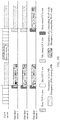
- FIG. 3A and FIG. 3B show two types of LBT sensing mechanisms.
- a type-A (Type A) LBT device may perform independent backoff on a plurality of component carriers (component carrier, CC).
- component carriers component carrier, CC
- backoff is completed on a carrier
- transmission is delayed to wait for another component carrier on which backoff is still performed.
- the device needs to perform additional one-shot CCA (25 ⁇ s clear channel assessment) to ensure that all the carriers are idle. If all the carriers are idle, an eNB simultaneously performs transmission on the idle carriers.
- a type-B (Type B) LBT device performs backoff only on a selected component carrier, and performs one-shot CCA (25 ⁇ s clear channel assessment) look-back on another component carrier when the backoff is completed. If the component carrier is idle, data is transmitted; or if the component carrier is not idle, data cannot be transmitted on the component carrier this time.
- CCA clear channel assessment
- a device that performs LBT may be LTE LAA, Wi-Fi, NR-U, or another communications device that operates in an unlicensed (unlicensed) frequency band.
- the device that performs LBT is interfered with by a Wi-Fi system.
- the device that performs LBT may alternatively be interfered with by LTE LAA, NR-U, or another communications system that operates in the unlicensed frequency band. This is not limited in this application.
- an LBT sensing mechanism used in an NR-U system may also change. This does not affect implementation of this application.
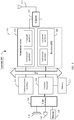
- FIG. 4 shows a terminal 300 according to some embodiments of this application.
- the terminal 300 may include input/output modules (including an audio input/output module 318, a key input module 316, a display 320, and the like), a user interface 302, one or more terminal processors 304, a transmitter 306, a receiver 308, a coupler 310, an antenna 314, and a memory 312. These components may be connected by using a bus or in another manner. In FIG. 4 , an example in which these components are connected by using a bus is used.
- a communications interface 301 may be used by the terminal 300 to communicate with another communications device, for example, a base station.
- the base station may be a network device 400 shown in FIG. 4 .
- the communications interface 301 is an interface between the terminal processor 304 and a transceiver system (including the transmitter 306 and the receiver 308), for example, an X1 interface in LTE.
- the communications interface 301 may include one or more of a global system for mobile communications (Global System for Mobile Communication, GSM) (2G) communications interface, a wideband code division multiple access (Wideband Code Division Multiple Access, WCDMA) (3G) communications interface, a long term evolution (Long Term Evolution, LTE) (4G) communications interface, and the like, or may be a 4.5G, 5G, or future new radio communications interface.
- GSM Global System for Mobile Communication
- WCDMA Wideband Code Division Multiple Access
- 3G wideband Code Division Multiple Access
- LTE Long Term Evolution
- 4G Long Term Evolution
- a wired communications interface 301 for example, a local area network (Local Access Network, LAN) interface, may further be configured for the terminal 300.
- LAN local area network
- the antenna 314 may be configured to convert electromagnetic energy in a transmission line into an electromagnetic wave in free space, or convert an electromagnetic wave in free space into electromagnetic energy in a transmission line.
- the coupler 310 is configured to: divide a mobile communication signal received by the antenna 314 into a plurality of signals, and allocate the plurality of signals to a plurality of receivers 308.
- the transmitter 306 may be configured to perform transmission processing on a signal output by the terminal processor 304, for example, modulate the signal in a licensed or unlicensed frequency band.
- the transmitter 306 may support the terminal 300 in transmitting signals on one or more unlicensed spectrums, or may support the terminal 300 in transmitting signals on one or more licensed spectrums.
- the receiver 308 may be configured to perform receiving processing on the mobile communication signal received by the antenna 314. For example, the receiver 308 may demodulate a received signal that has been modulated in an unlicensed or licensed frequency band. In other words, the receiver 308 may support the terminal 300 in receiving a signal that is modulated onto an unlicensed spectrum, or may support the terminal 300 in receiving a signal that is modulated onto a licensed spectrum.
- the transmitter 306 and the receiver 308 may be considered as a wireless modem.
- the terminal 300 there may be one or more transmitters 306 and one or more receivers 308.
- the terminal 300 may further include other communications components, for example, a GPS module, a Bluetooth (Bluetooth) module, and a wireless fidelity (Wireless Fidelity, Wi-Fi) module.
- the terminal 300 may further support other wireless communication signals, for example, a satellite signal and a shortwave signal. This application is not limited to wireless communication.
- a wired network interface (for example, a LAN interface) may further be configured for the terminal 300 to support wired communication.
- the input/output modules may be configured to implement interaction between the terminal 300 and a user or an external environment, and may mainly include the audio input/output module 318, the key input module 316, the display 320, and the like. In specific implementation, the input/output modules may further include a camera, a touchscreen, a sensor, or the like. All the input/output modules communicate with the terminal processor 304 by using the user interface 302.
- the memory 312 is coupled to the terminal processor 304, and is configured to store various software programs and/or a plurality of sets of instructions.
- the memory 312 may include a high-speed random access memory, and may also include a nonvolatile memory, such as one or more disk storage devices, a flash memory device, or another nonvolatile solid-state storage device.
- the memory 312 may store an operating system (referred to as a system for short below), for example, an embedded operating system such as Android, iOS, Windows, or Linux.
- the memory 312 may further store a network communications program.
- the network communications program may be used to communicate with one or more additional devices, one or more terminal devices, and one or more network devices.
- the memory 312 may further store a user interface program.
- the user interface program may use a graphical operation interface to visually display content of an application program, and use input controls such as menus, dialog boxes, and keys to receive control operations of a user on an application program.
- the memory 312 may be configured to store a program for implementing, on the terminal 300 side, a channel sensing method provided in one or more embodiments of this application.
- a channel sensing method provided in one or more embodiments of this application.
- the terminal processor 304 may be configured to read and execute a computer-readable instruction. Specifically, the terminal processor 304 may be configured to invoke a program stored in the memory 312, for example, the program for implementing, on the terminal 300 side, the channel sensing method provided in one or more embodiments of this application, and execute an instruction included in the program.
- the terminal processor 304 may be a modem (Modem) processor, and is a module that implements main functions in wireless communications standards such as 3GPP and ETSI.
- the modem may be used as an independent chip, or may be combined with another chip or circuit to form a system-level chip or an integrated circuit. These chips or integrated circuits may be applied to all devices that implement a wireless communication function, including mobile phones, computers, laptops, tablets, routers, wearable devices, automobiles, and home appliances.
- the terminal processor 304 may be used as an independent chip and is coupled to an off-chip memory, that is, the chip does not include a memory.
- the terminal processor 304 is coupled to an on-chip memory and is integrated into a chip, that is, the chip includes a memory.
- the terminal 300 may be the terminal in the wireless communications system 100 shown in FIG. 2 , and may be implemented as a mobile device, a mobile station (mobile station), a mobile unit (mobile unit), a radio unit, a remote unit, a user agent, a mobile client, or the like.
- the terminal 300 shown in FIG. 4 is merely an implementation of this application. During actual application, the terminal 300 may alternatively include more or fewer components. This is not limited herein.
- FIG. 5 shows a network device 400 according to some embodiments of this application.
- the network device 400 may include a communications interface 403, one or more network device processors 401, a transmitter 407, a receiver 409, a coupler 411, an antenna 413, and a memory 405. These components may be connected by using a bus or in another manner. In FIG. 5 , an example in which these components are connected by using a bus is used.
- the communications interface 403 may be used by the network device 400 to communicate with another communications device, for example, a terminal device or another base station.
- the terminal device may specifically be the terminal 300 shown in FIG. 9 .
- the communications interface 301 is an interface between the network device processor 401 and a transceiver system (including the transmitter 407 and the receiver 409), for example, an S1 interface in LTE.
- the communications interface 403 may include one or more of a global system for mobile communications (GSM) (2G) communications interface, a wideband code division multiple access (WCDMA) (3G) communications interface, a long term evolution (LTE) (4G) communications interface, and the like, or may be a 4.5G, 5G, or future new radio communications interface.
- GSM global system for mobile communications
- WCDMA wideband code division multiple access
- LTE long term evolution
- a wired communications interface 403 may further be configured for the network device 400 to support wired communication.
- the antenna 413 may be configured to convert electromagnetic energy in a transmission line into an electromagnetic wave in free space, or convert an electromagnetic wave in free space into electromagnetic energy in a transmission line.
- the coupler 411 may be configured to: divide a mobile communication signal into a plurality of signals, and allocate the plurality of signals to a plurality of receivers 409.
- the transmitter 407 may be configured to perform transmission processing on a signal output by the network device processor 401, for example, modulate the signal in a licensed or unlicensed frequency band.
- the transmitter 407 may support the network device 400 in transmitting signals on one or more unlicensed spectrums, or may support the network device 400 in transmitting signals on one or more licensed spectrums.
- the receiver 409 may be configured to perform receiving processing on the mobile communication signal received by the antenna 413. For example, the receiver 409 may demodulate a received signal that has been modulated in an unlicensed or licensed frequency band. In other words, the receiver 409 may support the network device 400 in receiving a signal that is modulated onto an unlicensed spectrum, or may support the network device 400 in receiving a signal that is modulated onto a licensed spectrum.
- the transmitter 407 and the receiver 409 may be considered as a wireless modem.
- the network device 400 there may be one or more transmitters 407 and one or more receivers 409.
- the memory 405 is coupled to the network device processor 401, and is configured to store various software programs and/or a plurality of sets of instructions.
- the memory 405 may include a high-speed random access memory, and may also include a nonvolatile memory, such as one or more disk storage devices, a flash memory device, or another nonvolatile solid-state storage device.
- the memory 405 may store an operating system (referred to as a system for short below), for example, an embedded operating system such as uCOS, VxWorks, or RTLinux.
- the memory 405 may further store a network communications program.
- the network communications program may be used to communicate with one or more additional devices, one or more terminal devices, and one or more network devices.
- the network device processor 401 may be configured to: manage radio channels, establish or disconnect a call or communication link, control cross-cell handover of user equipment in a local control cell, and the like.
- the network device processor 401 may include an administration module/communication module (Administration Module/Communication Module, AM/CM) (a center for speech channel switching and information exchange), a basic module (Basic Module, BM) (configured to implement call processing, signaling processing, radio resource management, radio link management, and circuit maintenance functions), a transcoder and submultiplexer (Transcoder and SubMultiplexer, TCSM) (configured to implement multiplexing/demultiplexing and transcoding functions), and the like.
- AM/CM Administration Module/Communication Module
- Base Basic Module
- TCSM transcoder and submultiplexer
- the network device processor 401 may be configured to read and execute a computer-readable instruction. Specifically, the network device processor 401 may be configured to invoke a program stored in the memory 405, for example, a program for implementing, on a network device 400 side, a channel sensing method provided in one or more embodiments of this application, and execute an instruction included in the program.
- the network device processor 401 may be a modem (Modem) processor, and is a module that implements main functions in wireless communications standards such as 3GPP and ETSI.
- the modem may be used as an independent chip, or may be combined with another chip or circuit to form a system-level chip or an integrated circuit.
- These chips or integrated circuits may be applied to all network side devices that implement a wireless communication function.
- the network side device in an LTE network, the network side device is referred to as an evolved NodeB (evolved NodeB, eNB or eNodeB).
- the network side device In a 3rd generation (the 3rd Generation, 3G) network, the network side device is referred to as a NodeB (Node B).
- the network side device is referred to as a 5G base station (NR NodeB, gNB).
- NR NodeB 5G base station
- the network device processor 401 may be used as an independent chip and is coupled to an off-chip memory, that is, the chip does not include a memory.
- the network device processor 401 is coupled to an on-chip memory and is integrated into a chip, that is, the chip includes a memory.
- the network device 400 may be the network device 101 in the wireless communications system 100 shown in FIG. 2 , and may be implemented as a base transceiver station, a wireless transceiver, a basic service set (BSS), an extended service set (ESS), a NodeB, an eNodeB, or the like.
- the network device 400 may be implemented by several different types of base stations, for example, a macro base station and a micro base station.
- the base station 400 may use different wireless technologies, for example, a cell radio access technology or a WLAN radio access technology.
- the network device 400 shown in FIG. 5 is merely an implementation of this application. During actual application, the network device 400 may alternatively include more or fewer components. This is not limited herein.
- this application provides a channel sensing method, and provides a technical solution of performing channel sensing in a communications system (the following uses the NR-U system as an example) that operates in the unlicensed frequency band.
- a main inventive idea of one aspect of this application may include sending, by a sending device after obtaining a channel through contention, a first channel occupancy signal to another peripheral device, where the first channel occupancy signal indicates, to the another device, transmission duration that the sending device needs to occupy on the channel obtained through contention, so that a collision between the sending device and the another device is avoided, thereby improving communication efficiency.
- a sending device may be a network device or a terminal. Specifically, if a device that initiates an LBT procedure is a network device, the sending device is the network device; or if a device that initiates an LBT procedure is a terminal, the sending device is the terminal.
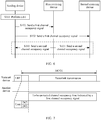
- a channel sensing method includes the following steps.
- S101 The sending device performs LBT, and performs S102 if the LBT succeeds.
- the sending device may perform the LBT based on the LBT mechanisms shown in FIG. 3A and FIG. 3B .
- the LBT sensing mechanism used by the sending device may also change. However, it may be understood that, because basic principles of channel sensing are similar, even if another LBT sensing mechanism is used, implementation of this application is not affected.
- the sending device sends a first channel occupancy signal after the LBT succeeds, where the first channel occupancy signal is used to indicate, to another device, a to-be-protected channel occupancy time on a channel obtained by the sending device through contention.
- the sending device obtains channel use permission, and obtains a corresponding maximum channel occupancy time.
- the sending device may perform transmission within the obtained maximum channel occupancy time without being interfered with by the another device.
- the channel occupancy time obtained by the sending device may be an MCOT, or may be a transmission opportunity (transmission opportunity, TXOP).
- TXOP transmission opportunity
- the "MCOT" is used as an example of the maximum channel occupancy time, and a device that obtains the MCOT may be referred to as an "owner of the MCOT".
- the to-be-protected occupancy time indicated by the first channel occupancy signal may be less than or equal to the MCOT.
- a device other than the sending device or a receiving device indicated by the sending device cannot perform transmission within the to-be-protected channel occupancy time, to avoid a collision.
- the sending device when the sending device is the network device, downlink transmission is performed within a corresponding MCOT; or when the sending device is the terminal, uplink transmission is performed within a corresponding MCOT.
- the sending device may share the obtained channel use permission within the MCOT with the another device.
- the network device may share the channel use permission with the terminal for use, that is, the terminal is allowed to perform transmission within the MCOT.
- there may be switching between uplink transmission and downlink transmission within an MCOT.
- the first channel occupancy signal may also be referred to as a request-to-send (request to send, RTS) signal or a first channel reservation (reservation) signal
- the first channel occupancy signal includes one or both of first information and second information.
- the first information is used to indicate channel reservation information (reservation information).
- the first information may be carried on a common control channel, for example, a common-physical downlink control channel (common-physical downlink control channel, C-PDCCH).
- C-PDCCH common-physical downlink control channel
- the first information is carried on a data channel (PDSCH) scheduled by a common control channel.
- PDSCH data channel
- a part of the first information is carried on a common control channel, and the other part of the first information is carried on a data channel scheduled by the common control channel.
- the receiving device may detect the first information in the first channel occupancy signal in common search space.
- the receiving device may receive the C-PDCCH in common search space, and receive the PDSCH scheduled by the C-PDCCH, to obtain the first information in the first channel occupancy signal.
- the channel reservation information may be obtained after the first information is detected.
- the receiving device may be a device other than the sending device.
- the channel reservation information is used to indicate the to-be-protected channel occupancy time for subsequent transmission performed by the sending device.
- the another device does not perform transmission within the to-be-protected channel occupancy time, to avoid a collision.
- the another device updates NAV information of the another device, starts a timer, and does not perform transmission within the to-be-protected time.
- the another device may set an NAV value, and correspondingly starts the timer.
- the channel occupancy time may be in a unit of microseconds ( ⁇ s), or may be in a unit of an orthogonal frequency division multiplexing (orthogonal frequency division multiplexing, OFDM) symbol, or may be in a unit of a slot (slot), or may be in a unit of a mini-slot (mini-slot).
- a subcarrier spacing corresponding to the OFDM symbol or the slot may be a subcarrier spacing pre-specified in a standard, or may be the same as a subcarrier spacing of the first channel occupancy signal.
- the channel reservation information may include information about a cell identity (cell ID) of the network device, so that the receiving device determines a source of the channel reservation information.
- cell ID cell identity
- a scrambling (scrambling) sequence and a demodulation reference signal (demodulation reference signal, DMRS) sequence that correspond to the common control channel carrying the first information and/or the data channel that carries the first information and that is scheduled by the common control channel may be decoupled from the cell ID.
- DMRS demodulation reference signal
- the second information is used to indicate a receiving device (for example, a terminal) that needs to respond to the first channel occupancy signal.
- the second information includes information about N scheduled receiving devices (where N is an integer greater than or equal to 1).
- the second information may be carried on a common control channel, for example, a common-physical downlink control channel (common-physical downlink control channel, C-PDCCH) or a group common-physical downlink control channel (group common-physical downlink control channel, GC-PDCCH).
- the second information is carried on a data channel (PDSCH) scheduled by a common control channel.
- PDSCH data channel
- a part of the second information is carried on a common control channel, and the other part of the second information is carried on a data channel scheduled by the common control channel.
- the receiving device may detect, in the common search space, whether the second information includes the information about the receiving device.
- the receiving device may receive the C-PDCCH/GC-PDCCH in the common search space, and receive the PDSCH scheduled by the C-PDCCH/GC-PDCCH, to detect whether the second information includes the information about the receiving device.
- the information about the N scheduled receiving devices in the second information may alternatively be carried on N user-specific downlink control channels.
- the information about the N scheduled receiving devices is carried on N data channels (PDSCHs) scheduled by N user-specific downlink control channels.
- PDSCHs data channels scheduled by N user-specific downlink control channels.
- a part of the information about the N scheduled receiving devices is carried on N user-specific downlink control channels, and the other part of the information about the N scheduled receiving devices is carried on N data channels scheduled by the N user-specific downlink control channels.
- the receiving device may detect, in user-specific search space and/or the common search space, whether the second information includes the information about the receiving device.
- the receiving device may detect the user-specific downlink control channels in user-specific search space and/or the common search space, and receive the PDSCHs scheduled by the user-specific downlink control channels, to detect whether the second information includes the information about the receiving device.
- the second information includes identification information of the terminal that needs to respond to the first channel occupancy signal.
- the identification information may be indicated in the second information in an explicit manner, or may be indicated in an implicit manner.
- the second information is scrambled by using the identification information, where the identification information may be a terminal ID.
- the indicated receiving device determines, by receiving the second information, that the second information includes identification information consistent with the identification information of the receiving device, the receiving device responds according to the indication.
- a specific response manner is described below.
- the second information includes indication information of a resource location of a user-specific uplink channel of the terminal that needs to respond to the first channel occupancy signal.
- the receiving device responds according to an indication of the first channel occupancy signal. A specific response manner is described below.
- the first channel occupancy signal does not include the second information
- all terminal devices in a cell in which the network device is located need to respond.
- a specific response manner is also described below.
- the method shown in FIG. 6 further includes: S103: A first receiving device receives the first channel occupancy signal, and sends a second channel occupancy signal based on the first information and/or the second information in the first channel occupancy signal.
- the second channel occupancy signal is used to indicate, to a second receiving device that receives the second channel occupancy signal, channel reservation information that is on the channel and that is sent by the sending device corresponding to the first receiving device, and/or is used to respond to the sending device corresponding to the first receiving device.
- the LBT needs to succeed before the receiving device receives the first channel occupancy signal; or if the method is applied to a licensed frequency band, the LBT does not need to be performed before the receiving device receives the first channel occupancy signal.
- the second channel occupancy signal may also be referred to as a clear-to-send (clear to send, CTS) signal, or may be referred to as a second channel reservation signal.
- CTS clear-to-send
- the second channel occupancy signal includes one or both of third information and fourth information.
- the third information is used to indicate the channel reservation information (reservation information).
- the third information may be carried on a common uplink channel.
- the common uplink channel may be an uplink control channel or an uplink data channel.
- the common uplink channel is carried on a common resource.
- the common resource may be a set of common RBs or REs that satisfy a specific structure, for example, may be a group of RBs or REs distributed at equal intervals in frequency domain, or may be interlaced (interlace) resources.
- the common resource may be predefined in a standard.
- the common resource may be indicated in the first channel occupancy signal.
- the second receiving device may detect the third information on the common uplink channel. After detecting the third information, the second receiving device may obtain the channel reservation information that is on the channel and that is sent by the sending device corresponding to the first receiving device.
- the second receiving device may be a device other than the first receiving device.
- the second receiving device is a device in a cell different from a cell in which the first receiving device is located.
- the channel reservation information is used to indicate the to-be-protected channel occupancy time for transmission after transmission of the second channel occupancy signal.
- the second receiving device updates duration for which no transmission is performed, and does not perform transmission within the to-be-protected channel occupancy time, to avoid a collision.
- the another device updates NAV information of the another device, starts a timer, and does not perform transmission within the to-be-protected time.
- the channel occupancy time includes an indication of remaining duration of the MCOT.
- the channel occupancy time includes a plurality of groups of time indications within the MCOT, the plurality of groups of time are used to indicate the remaining duration of the MCOT by segment, and each group of time corresponds to uplink transmission duration and downlink transmission duration of the MCOT.
- the channel occupancy time may be in a unit of microseconds ( ⁇ s), or may be in a unit of an OFDM symbol, or may be in a unit of a slot, or may be in a unit of a mini-slot.
- a subcarrier spacing corresponding to the OFDM symbol or the slot may be a subcarrier spacing pre-specified in a standard, or may be the same as a subcarrier spacing of the first channel occupancy signal.
- the channel reservation information needs to carry information about a cell identity (cell ID).
- a scrambling (scrambling) sequence and/or a demodulation reference signal DMRS (demodulation reference signal) sequence that correspond/corresponds to the common uplink channel are/is unrelated to the cell ID and a UE ID.
- the fourth information includes response information sent to the network device, and the fourth information is carried on the user-specific uplink channel.
- the user-specific uplink channel may be the uplink control channel or the uplink data channel.
- a resource on which the user-specific uplink channel is located is indicated in the first channel occupancy signal in an implicit manner.
- resources on which the user-specific uplink channel is located are arranged in fixed order.
- the fixed order may be order of the identification information of the terminals included in the second information in the first channel occupancy signal.
- a resource on which the user-specific uplink channel is located may alternatively be indicated in the first channel occupancy signal in an explicit manner.
- the second information in the first channel occupancy signal indicates a resource location of the user-specific uplink channel.
- the fourth information may include channel state information, and the channel state information is used by the sending device corresponding to the first receiving device to optimize scheduling, thereby increasing a system throughput.
- the channel occupancy time mentioned in this application may be or may include the indication of the remaining duration of the MCOT.
- the channel occupancy time may be or may include an indication of a plurality of segments of duration, and each segment of duration may be a segment of continuous downlink transmission duration or a segment of continuous uplink transmission duration in the MCOT, or may be duration of a transmission interval that satisfies a preset condition (for example, a transmission interval greater than 25 ⁇ s or 100 ⁇ s).
- each segment of duration may include a plurality of segments of transmission. The plurality of segments of transmission may be uplink transmission and/or downlink transmission, and an interval between the plurality of segments of transmission satisfies a preset condition (for example, less than 25 ⁇ s or 100 ⁇ s).
- the exchanged first channel occupancy signal and/or the exchanged second channel occupancy signal may be sent in a licensed frequency band, or may be sent in an unlicensed frequency band, or may be sent in a manner of mutual combination. This is not limited in this application.
- the first channel occupancy signal is sent in the licensed frequency band, and the second channel occupancy signal is sent in the licensed frequency band; or the first channel occupancy signal is sent in the unlicensed frequency band, and the second channel occupancy signal is sent in the unlicensed frequency band; or both the first channel occupancy signal and the second channel occupancy signal are sent in the unlicensed frequency band; or both the first channel occupancy signal and the second channel occupancy signal are sent in the licensed frequency band.
- a long CP transmission mode is used for the exchanged first channel occupancy signal and/or the exchanged second channel occupancy signal by default, and a normal CP transmission mode is used for other transmission within the MCOT.
- the sending device is the network device and the receiving device is the terminal. It may be understood that a similar solution is also applicable to a case in which the sending device is the terminal and the receiving device is the network device.
- the network device obtains channel use permission, and obtains a corresponding MCOT.
- the network device sends a first channel occupancy signal, where the first channel occupancy signal is carried in common control information for sending.
- the network device sends the first channel occupancy signal by using the common control information.
- First information in the first channel occupancy signal is used to indicate a to-be-protected channel occupancy time for subsequent transmission performed by the network device.
- another device may learn, based on the first information in the first channel occupancy signal, of a time that the network device needs to occupy, thereby avoiding a collision.
- the another device may be a terminal in a cell in which the network device is located, or the another device may be another network device in a cell neighboring to a cell in which the network device is located or a terminal in a cell in which the another network device is located.
- the first channel occupancy signal may further include information about an identity ID of a cell in which the network device is located, to indicate a source of the first channel occupancy signal to the receiving device.
- the information about the identity ID may alternatively be information about a physical cell identifier (physical cell identifier, PCI) similar to that in an LTE system.
- the first channel occupancy signal may further include second information, and the second information is used to indicate a terminal that needs to respond to the first channel occupancy signal sent by the network device.
- the second information may be decoupled from the first channel occupancy signal, that is, the network device separately sends the second information.
- a terminal that receives the second information needs to send response information, for example, a second channel occupancy signal.
- the response information is used to indicate the to-be-protected channel occupancy time, that is, reserve the channel use permission for subsequent transmission.
- the another device that receives the first channel occupancy signal from the network device needs to determine to-be-protected transmission duration based on the first information in the first channel occupancy signal, and cannot occupy the channel within the time period. For example, the another device updates a network allocation vector (network allocation vector, NAV) of the another device, or uses another manner.
- Another device that receives the response information from the terminal needs to determine the to-be-protected channel occupancy time based on occupancy time information carried in the response information, and cannot occupy the channel within the time period.
- the another device updates an NAV of the another device.
- the another device includes but is not limited to one or more of the following devices: another device that is in a cell in which the terminal sending the response information is located and that does not need to send the response information, or a network device or a terminal in another cell.
- the first channel occupancy signal and/or the second channel occupancy signal need/needs to further include duration information of the one or more intervals.
- the channel use permission may be released during the one or more intervals.
- the another device may access the channel during the one or more intervals.
- information about the one or more intervals may be represented by using starting points and ending points of the one or more intervals.
- a specific condition may be set for one or more transmission intervals within the MCOT. The channel use permission is released during the one or more intervals only when the one or more intervals satisfy the specific condition, for example, when the one or more intervals are greater than or less than a threshold; otherwise, the channel use permission is not released during the one or more intervals.
- duration whose length is equal to a total length of the one or more intervals may be compensated for, that is, duration of the one or more corresponding transmission intervals is prolonged from an ending point of the MCOT.
- the channel use permission is released during the one or more transmission intervals within the MCOT by exchanging information, thereby improving frequency utilization, and further improving a system throughput.
- a new common control channel is designed, and the common control information is used for exchange. Therefore, the channel is protected in advance, thereby avoiding a collision; and the channel use permission is further released in time during the one or more transmission intervals, thereby improving spectrum utilization.
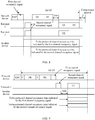
- the following uses an example in which the sending device is the network device and the receiving device is the terminal, to further describe a case in which there are one or more intervals within one MCOT, especially information exchange during the one or more intervals within the MCOT.
- related devices in a same cell have been synchronized, and related devices between cells have also been synchronized. It may be understood that a similar solution is also applicable to a case in which the sending device is the terminal and the receiving device is the network device.
- the network device obtains a corresponding MCOT after LBT succeeds. After downlink transmission is completed, there is still a remaining MCOT. If uplink data arrives, the network device may choose to share the remaining MCOT with a terminal that needs to transmit the uplink data. In another embodiment, when the sending device is the terminal, the terminal obtains a corresponding MCOT after LBT succeeds. After uplink transmission is completed, there is still a remaining MCOT. If the network device needs to send downlink data, the terminal may choose to share the remaining MCOT with a terminal that needs to transmit the downlink data. Alternatively, if another terminal needs to send uplink data, the terminal may choose to share the remaining MCOT with a terminal that needs to transmit the uplink data.
- channel use permission may be reserved for the remaining MCOT through information exchange after the network device completes the downlink transmission.
- the one or more intervals may be caused by another reason that is not limited to the foregoing case, and the one or more intervals may exist between uplink transmission and uplink transmission, or may exist between downlink transmission and downlink transmission.
- channel use permission may further be released during the one or more intervals by using the exchanged information, thereby further improving channel utilization.
- the network device sends a first channel occupancy signal when the downlink transmission is completed.
- First information included in the first channel occupancy signal is used to determine a to-be-protected channel occupancy time, so that the channel use permission is reserved for subsequent uplink transmission performed by a terminal 1 and a terminal 2.
- the another device determines the to-be-protected channel occupancy time based on an occupancy time indicated by the first information in first channel occupancy signal, and cannot occupy the channel within the time period. For example, the another device updates an NAV, starts or updates a timer, or uses another manner. In this way, the another device does not occupy the channel within the occupancy time, thereby avoiding a collision.
- the terminal 1 and the terminal 2 are indicated to send a second channel occupancy signal.
- Third information in the second channel occupancy signal is used to indicate a subsequent to-be-protected channel occupancy time, that is, reserve the channel use permission.
- Another device that is not indicated by the second information and that receives the first channel occupancy signal needs to update the to-be-protected channel occupancy time based on the first information carried in the first channel occupancy signal, and cannot occupy the channel within the time period. For example, the another device updates an NAV, or starts or updates a timer.
- Another device that receives the second channel occupancy signal also needs to determine to-be-protected transmission duration based on the third information carried in the second channel occupancy signal, and cannot occupy the channel within the time period. For example, the another device updates NAV information of the another device, or uses another manner, and cannot occupy the channel within the time period.
- the channel permission can be released.
- first channel occupancy signal and the second channel occupancy signal For the first channel occupancy signal and the second channel occupancy signal, refer to the foregoing detailed descriptions of the first channel occupancy signal and the second channel occupancy signal. Details are not described herein again.
- information is further exchanged between a transmit end and a receive end during the one or more intervals, thereby avoiding a channel loss and avoiding a collision caused by another device.
- one or more transmission intervals within the MCOT are released by exchanging information, thereby improving frequency utilization, and further improving a system throughput.
- a new common control channel is designed, and common control information is used for exchange. Therefore, the channel is protected in advance, thereby avoiding a collision; and the channel is further released in time during the one or more transmission intervals, thereby improving spectrum utilization.
- the sending device is the network device and the receiving device is the terminal to describe information exchange when an MCOT owner terminates transmission in advance within an MCOT.
- related devices in a same cell have been synchronized, and related devices between cells have also been synchronized. It may be understood that a similar solution is also applicable to a case in which the sending device is the terminal and the receiving device is the network device.
- the network device obtains a corresponding MCOT after LBT succeeds.
- information is exchanged at a starting moment of the MCOT and/or an interval within the MCOT, to indicate a subsequent to-be-protected channel occupancy time, so that channel use permission is reserved.
- the network device and/or the terminal may exchange a termination signal after the transmission is terminated.
- the network device sends a channel release (release) signal, and the channel release signal is referred to as a release signal for short below.
- the terminal sends a channel release acknowledgment signal, and the channel release acknowledgment signal is referred to as a release acknowledgement signal for short below. In this way, the channel use permission is released.
- the transmission may be terminated in advance when there is still a remaining MCOT after the network device and/or the terminal complete/completes the transmission, or may be terminated in advance due to another reason.
- Another device that receives the release signal may update to-be-protected transmission duration that is previously determined, and cannot occupy the channel within the update time period. For example, the another device updates NAV information, updates a timer, or uses another manner. After the channel is released, the another device is allowed to access the channel. In other words, the another device that receives the release signal is allowed to access the channel after the channel is released.
- the another device updates a corresponding NAV or uses another manner.
- the another device further starts or updates the timer, and cannot perform transmission within the time.
- the network device sends the release signal after the transmission is terminated, to determine the to-be-protected channel occupancy time for subsequent sending of the release acknowledgement signal by the terminal, so that the channel use permission is reserved.
- the release signal needs to include channel reservation information, to indicate the subsequent to-be-protected channel occupancy time.
- the channel reservation information may be carried on a common control channel.
- the release signal needs to include information about a cell identity ID, to distinguish a cell to which the signal belongs.
- the release signal may further include fifth information that is similar to the second information in the first channel occupancy signal and that is used to indicate a terminal that needs to respond.
- the another device that receives the release signal sent by the network device updates the NAV based on the indicated time information, to determine the updated to-be-protected transmission duration, and cannot occupy the channel within the update time period. For example, the another device updates the NAV, starts or updates the timer, or uses another manner. After the channel is released, the another device is allowed to access the channel.
- a terminal that receives the fifth information sends the release acknowledgement signal, to release the channel use permission.
- another device After receiving the release acknowledgment signal sent by the terminal, another device that can receive the release acknowledgment signal sets the NAV information to zero, and then is allowed to occupy the channel.
- the channel reservation information carried in the release signal is used to indicate the subsequent to-be-protected channel occupancy time.
- the channel occupancy time may be in a unit of ⁇ s.
- the channel occupancy time may alternatively be in a unit of an OFDM symbol, or may be in a unit of a slot.
- a subcarrier spacing corresponding to the OFDM symbol or the slot may be a subcarrier spacing pre-specified in a standard, or may be the same as a subcarrier spacing of the release signal.
- exchange of the channel release signal may alternatively be initiated by the UE, that is, the UE first sends the release signal, and a base station sends the release acknowledgement signal.
- a specific procedure is consistent with the foregoing procedure. It may be understood that the release signal and the release acknowledgement signal herein are merely intended to facilitate description of the solutions, and do not constitute a limitation.
- the release signal includes one or both of the fifth information and sixth information, and may also be referred to as a "third channel occupancy signal".
- the fifth information may be designed with reference to a configuration of the first information in the first channel occupancy signal, and is used to reserve the to-be-protected channel occupancy time.
- the sixth information may be designed with reference to a configuration of the second information in the first channel occupancy signal, and is used to indicate the terminal that needs to respond.
- the to-be-protected channel occupancy time indicated by the fifth information may be zero.
- the release signal may further include a channel release flag (flag). The flag is used to indicate whether to release the channel use permission, and is a difference between the release signal and the first channel occupancy signal. It may be understood that, if there is no channel release flag, the release signal may alternatively be understood as a specially configured first channel occupancy signal.
- a release signal is described from another perspective.
- the release signal needs to further carry the channel reservation information, and the channel reservation information is used to indicate the subsequent to-be-protected occupancy time, to reserve, for the terminal that needs to respond, duration for sending the release acknowledgement signal.
- the channel reservation information may be carried on the common control channel, for example, a C-PDCCH.
- the receiving device may retrieve the release signal in common search space corresponding to the C-PDCCH, and may obtain the channel reservation information after detecting the release signal
- the channel reservation information may include information about a cell identity (cell ID) of the network device, so that the receiving device determines a source of the channel reservation information.
- cell ID cell identity
- a scrambling (scrambling) sequence and a DMRS sequence that correspond to the common control channel C-PDCCH may be decoupled from the cell ID.
- a device in a cell in which another network device other than the sending device is located may also receive the release signal.
- the release signal indicating that a response is required may further carry specific indication information.
- the specific indication information may be carried on the C-PDCCH or a group common-physical downlink control channel (group common-physical downlink control channel, GC-PDCCH), and a physical downlink shared channel (physical downlink shared channel, PDSCH) corresponding to the specific indication information includes identification information of all receiving devices that need to respond.
- the identification information may be a terminal ID.
- the specific indication information may alternatively be carried by using user-specific downlink control information (downlink control information, DCI).
- DCI downlink control information
- the terminal may respond according to an indication in the DCI, that is, send the release acknowledgement signal.
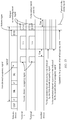
- FIG. 13 shows an embodiment in which a total length of one or more intervals within an MCOT needs to be compensated for when the one or more intervals satisfy a threshold.
- the release acknowledgement signal includes one or both of seventh information and eighth information, and may also be referred to as a "fourth channel occupancy signal".
- the seventh information may be designed with reference to a configuration of the third information in the second channel occupancy signal, and is used to reserve the to-be-protected channel occupancy time.
- the eighth information may be designed with reference to a configuration of the fourth information in the second channel occupancy signal.
- the to-be-protected channel occupancy time indicated by the seventh information may be zero.
- the release acknowledgement signal may further include a channel release flag (flag). The flag is used to indicate whether to release the channel use permission, and is a difference between the release acknowledgement signal and the second channel occupancy signal. It may be understood that, if there is no channel release flag, the release acknowledgement signal may alternatively be understood as a specially configured second channel occupancy signal.
- the release acknowledgement signal further includes acknowledgment information (ACK) sent to the network device.
- ACK acknowledgment information
- the ACK is carried on a user-specific PUCCH.
- a resource on which the PUCCH is located is indicated in an implicit manner.
- PUCCH resources corresponding to all UEs that are indicated to perform end acknowledgment are arranged in fixed order.
- a resource on which the PUCCH is located may alternatively be indicated in an explicit manner.
- the user-specific downlink control information included in the release signal indicates a resource location of a corresponding PUCCH.
- the exchanged release signal and/or the exchanged release acknowledgement signal may be sent in a licensed frequency band, or may be sent in an unlicensed frequency band, or may be sent in a manner of mutual combination. This is not limited in this application.
- the release signal is sent in the licensed frequency band, and the release acknowledgement signal is sent in the licensed frequency band; or the release signal is sent in the unlicensed frequency band, and the release acknowledgement signal is sent in the unlicensed frequency band; or both the release signal and the release acknowledgement signal are sent in the unlicensed frequency band; or both the release signal and the release acknowledgement signal are sent in the licensed frequency band.
- the channel use permission is released in advance by exchanging the channel release information, thereby improving frequency utilization, and further improving a system throughput.
- a new common control channel for example, the PUCCH and a common control channel in a broader sense, is designed, and common control information is used to exchange the channel release information, thereby improving spectrum utilization.
- the sending device is the network device and the receiving device is the terminal, that is, a case in which an MCOT owner is the network device. It may be understood that a similar solution is also applicable to a case in which the sending device is the network device and the receiving device is the terminal, that is, a case in which an MCOT owner is the terminal.
- the network device After LBT succeeds, the network device obtains channel use permission, and obtains a corresponding MCOT, so that the network device can reserve the channel use permission by sending reservation sequence information.
- the reservation sequence information may be grouped, and reservation sequences in different groups may be used to indicate remaining to-be-protected transmission duration with different lengths.
- the reservation sequence information may alternatively be grouped, and whether the information belongs to the sending device or the receiving device may be distinguished by using information about a group to which a reservation sequence belongs.
- the reservation sequence information may be designed based on a ZC sequence (Zadoff-Chu) such as a preamble (preamble) sequence (sequence) or a sounding reference signal (sounding reference signal, SRS) sequence in random access in an existing LTE/NR system.
- ZC sequence Zadoff-Chu
- preamble preamble
- SRS sounding reference signal
- the terminal that needs to respond also needs to send a corresponding acknowledgment sequence to reserve the channel use permission, that is, to indicate remaining to-be-protected transmission duration of the terminal.
- acknowledgment sequences may be grouped, and acknowledgment sequences in different groups may be used to indicate remaining to-be-protected transmission duration with different lengths.
- the acknowledgment sequences may alternatively be grouped, and whether the information belongs to the sending device or the receiving device may be distinguished by using information about a group to which an acknowledgment sequence belongs.
- the acknowledgment sequence may be designed based on a ZC sequence (Zadoff-Chu) such as a preamble sequence or a sounding reference signal SRS sequence in random access in an existing LTE/NR system.
- ZC sequence Zadoff-Chu
- Another device that can receive the reservation sequence and/or the acknowledgment sequence needs to update a to-be-protected channel occupancy time based on a subsequent remaining to-be-protected transmission duration corresponding to the reservation sequence and/or the acknowledgment sequence, and is not allowed to occupy the channel within the corresponding time.
- the another device updates NAV information, updates or starts a timer, or uses another manner.
- a sequence set may be divided into several groups (group), for example, a group A and a group B.
- a sequence in the group A is used as a reservation sequence
- a sequence in the group B is used as an acknowledgment sequence.
- group A may further be grouped, and sequences in different groups may indicate remaining to-be-protected transmission duration with different lengths.
- group B may further be grouped, and sequences in different groups may indicate remaining to-be-protected transmission duration with different lengths.
- different sequence sets may separately be used as reservation sequences and acknowledgment sequences.
- the transmit end and the receive end may alternatively indicate the one or more transmission intervals by exchanging sequence information.
- the transmit end and the receive end perform exchange by using the sequences in different groups or by using a sequence with an identifier, to indicate the one or more transmission intervals.
- the one or more transmission intervals may be released, or channel reservation information may be exchanged based on the one or more transmission intervals.
- Another device that can receive the indication of the one or more transmission intervals may learn of information about the one or more transmission intervals according to the indication. When the one or more transmission intervals are released, the another device may access a channel during the one or more transmission intervals.
- a group C is defined, and the one or more transmission intervals may be indicated by using a sequence in the group C. Further, the group C may further be grouped, and sequences in different groups may be used to indicate the one or more transmission intervals with different lengths. It may be understood that the information about the one or more transmission intervals may alternatively be indicated by using different sequence sets.
- the transmit end and the receive end may alternatively release the channel use permission in advance by exchanging the sequence information.
- Another device that can receive a sequence used to indicate early release may learn, based on the sequence information, that the channel is released in advance, so that the another device can access the channel.
- a sequence in a group D may be used to indicate that a channel is released in advance within the MCOT. It may be understood that the channel may alternatively be released by using a new sequence set.
- sequence groups may be indicated by using radio resource control (radio resource control, RRC) signaling.
- RRC radio resource control
- a total quantity of sequences and a quantity of sequences included in each group may be separately indicated in RRC, to indicate the groups.
- numberofsequence may be defined in the RRC signaling to indicate a total quantity of all sequences
- sizeofsequencegroupA, sizeofsequencegroupB, sizeofsequencegroupC, and sizeofsequencegroupD each are used to indicate a quantity of sequences included in each group.
- the sequences of each group may be determined in order.
- the first sizeofsequencegroupA sequences correspond to sequences in the group A; the next sizeofsequencegroupB sequences correspond to sequences in the group B; and so on.
- the channel use permission is reserved and released through exchange based on the ZC sequence.
- no synchronization is implemented, a collision can be effectively avoided, and the channel can be released in advance, thereby improving spectrum utilization and a system capacity.
- a sequence similar to a preamble sequence is introduced, and the sequences are exchanged to reserve the channel use permission, release the one or more intervals, and release the channel in advance, so that a collision caused by a hidden node problem is finally avoided, and the channel use permission can be released in time, thereby improving the spectrum utilization.
- channel exchange information that is designed in this application and that is used for channel reservation and/or transmission interval indication and/or channel release may be implemented based on directional transmission.
- the network device when sending the first channel occupancy signal, the network device chooses to send the first channel occupancy signal on a transmit beam corresponding to the network device.
- the device that needs to respond also sends the second channel occupancy signal on a transmit beam corresponding to the device.
- another device that is located within coverage of the beam used by the network device to send the first channel occupancy signal cannot perform transmission within the to-be-protected channel occupancy time indicated by the first information in the first channel occupancy signal.
- FIG. 15 shows a wireless communications system 10 according to an embodiment of this application, and a sending device 500 and a receiving device 400 in the wireless communications system 10.
- the sending device 500 may be the network device or the terminal in the foregoing method embodiments
- the receiving device 400 may be the network device or the terminal in the foregoing method embodiments.
- the sending device 500 may include a communications unit 501 and a processing unit 503.
- the processing unit 503 is configured to control the communications unit 501 to send a first channel occupancy signal after LBT succeeds, where the first channel occupancy signal is used to indicate, to a first receiving device that receives the first channel occupancy signal, a to-be-protected channel occupancy time on a channel occupied by the sending device after the LBT succeeds.
- the communications unit 501 may be configured to send the first channel occupancy signal to the receiving device (for example, a terminal and a network device and a terminal in another cell).
- the receiving device for example, a terminal and a network device and a terminal in another cell.
- processing unit 503 and the communications unit 501 may be further configured to perform an LBT procedure.
- LBT procedure For details about the LBT procedure, refer to related regulations in 3GPP R13. Details are not described herein.
- the receiving device 400 may include a processing unit 401 and a communications unit 403.
- the communications unit 403 may be configured to receive a first channel occupancy signal from a network device, where the first channel occupancy signal is used to indicate, to the receiving device, a to-be-protected channel occupancy time on a channel occupied by the sending device after LBT succeeds.
- the processing unit 401 may be configured to: receive the first channel occupancy signal, to obtain information about the occupancy time, and control the receiving device not to perform transmission within the to-be-protected channel occupancy time.
- an embodiment of this application further provides a wireless communications system.
- the wireless communications system may be the wireless communications system 100 shown in FIG. 2 , or the wireless communications system 10 shown in FIG. 15 , and may include a network device and a terminal.
- the terminal may be the terminal in the foregoing embodiments, and the network device may be the network device in the foregoing embodiments.
- the terminal may be the terminal 300 shown in FIG. 10
- the network device may be the network device 400 shown in FIG. 11 .
- the terminal may be the terminal 400 shown in FIG. 15
- the network device may be the network device 500 shown in FIG. 15 .
- the network and the terminal refer to the foregoing embodiments. Details are not described herein again.
- the network device processor 405 is configured to: control the transmitter 407 to perform sending in an unlicensed frequency band and/or a licensed frequency band, and control the receiver 409 to perform receiving in the unlicensed frequency band and/or the licensed frequency band.
- the transmitter 407 is configured to support the network device in performing a process of transmitting data and/or signaling.
- the receiver 409 is configured to support the network device in performing a process of receiving the data and/or the signaling.
- the transmitter 407 and the receiver 409 may also be coupled as a transceiver 410.
- the memory 405 is configured to store program code and data of the network device.
- the processor 405 is configured to control the transceiver 410 to perform LBT; and the processor 405 is configured to control the transceiver to send a first channel occupancy signal after the LBT succeeds, where the first channel occupancy signal is used to indicate, to a first receiving device that receives the first channel occupancy signal, a to-be-protected channel occupancy time on a channel occupied by the sending device after the LBT succeeds.
- the processor 405 is configured to control the transceiver 410 to receive a first channel occupancy signal from a sending device, where the first channel occupancy signal is used to indicate, to the receiving device, a to-be-protected channel occupancy time on a channel occupied by the sending device after LBT succeeds.
- the processor 405 is further configured to decode the first channel occupancy signal, to obtain the to-be-protected channel occupancy time indicated by the first channel occupancy signal.
- the terminal processor 304 is configured to invoke an instruction stored in the memory 312 to control the transmitter 306 to perform sending in an unlicensed frequency band and/or a licensed frequency band and control the receiver 308 to perform receiving in an unlicensed frequency band and/or a licensed frequency band.
- the transmitter 306 is configured to support the terminal in performing a process of transmitting data and/or signaling.
- the receiver 308 is configured to support the terminal in performing a process of receiving the data and/or the signaling.
- the transmitter 306 and the receiver 308 may also be coupled as a transceiver 310.
- the memory 312 is configured to store program code and data of the terminal.
- the processor 304 is configured to control the transceiver 310 to perform LBT; and the processor 405 is configured to control the transceiver to send a first channel occupancy signal after the LBT succeeds, where the first channel occupancy signal is used to indicate, to a first receiving device that receives the first channel occupancy signal, a to-be-protected channel occupancy time on a channel occupied by the sending device after the LBT succeeds.
- the processor 304 is configured to control the transceiver 310 to receive a first channel occupancy signal from a sending device, where the first channel occupancy signal is used to indicate, to the receiving device, a to-be-protected channel occupancy time on a channel occupied by the sending device after LBT succeeds.
- the processor 405 is further configured to decode the first channel occupancy signal, to obtain the to-be-protected channel occupancy time indicated by the first channel occupancy signal.
- FIG. 16 is a schematic structural diagram of an apparatus according to this application.
- an apparatus 50 may include a processor 501, and one or more interfaces 502 coupled to the processor 501.
- the processor 501 may be configured to read and execute a computer-readable instruction.
- the processor 501 may mainly include a controller, an arithmetic unit, and a register.
- the controller is mainly responsible for decoding an instruction, and sends a control signal for an operation corresponding to the instruction.
- the arithmetic unit is mainly responsible for performing a fixed-point or floating-point arithmetic operation, a shift operation, a logic operation, and the like, or may perform an address operation and an address conversion.
- the register is mainly responsible for storing a quantity of register operations, intermediate operation results, and the like that are temporarily stored during instruction execution.
- a hardware architecture of the processor 501 may be an application-specific integrated circuit (Application Specific Integrated Circuits, ASIC) architecture, an MIPS architecture, an ARM architecture, an NP architecture, or the like.
- ASIC Application Specific Integrated Circuits
- MIPS Micro-Integrated Circuits
- ARM Application Specific Integrated Circuit
- NP Network-to-Network Interface
- the processor 501 may be a single-core or multi-core processor.
- the interface 502 may be configured to input to-be-processed data to the processor 501, and may output a processing result of the processor 501.
- the interface 502 may be a general-purpose input/output (General Purpose Input Output, GPIO) interface, and may be connected to a plurality of peripheral devices (such as a radio frequency module).
- the interface 502 may further include a plurality of independent interfaces, for example, an Ethernet interface and a mobile communications interface (for example, an X1 interface). The plurality of independent interfaces are separately responsible for communication between different peripheral devices and the processor 501.
- the processor 501 may be configured to: invoke, from a memory, a program for implementing, on a network device side or a terminal side, the signal sensing method provided in one or more embodiments of this application, and execute an instruction included in the program.
- the interface 502 may be configured to output an execution result of the processor 501.
- the interface 503 may be specifically configured to output the processing result of the processor 501.
- functions corresponding to the processor 501 and the interface 502 may be implemented by using a hardware design, or may be implemented by using a software design, or may be implemented by combining software and hardware. This is not limited herein.
- the software instruction may include a corresponding software module.
- the software module may be stored in a RAM, a flash memory, a ROM, an erasable programmable read-only memory (Erasable Programmable ROM, EPROM), an electrically erasable programmable read-only memory (Electrically EPROM, EEPROM), a register, a hard disk, a removable hard disk, a compact disc read-only memory (CD-ROM), or any other form of storage medium well-known in the art.
- a storage medium is coupled to the processor, so that the processor can read information from the storage medium or write information into the storage medium.
- the storage medium may be a component of the processor.
- the processor and the storage medium may be located in the ASIC.
- the ASIC may be located in a transceiver or a relay device.
- the processor and the storage medium may exist in a radio access network device or a terminal device as discrete assemblies.
- the computer-readable medium includes a computer storage medium and a communications medium, and the communications medium includes any medium that enables a computer program to be transmitted from one place to another.
- the storage medium may be any available medium accessible to a general-purpose or dedicated computer.
Landscapes
- Engineering & Computer Science (AREA)
- Signal Processing (AREA)
- Computer Networks & Wireless Communication (AREA)
- Physics & Mathematics (AREA)
- Electromagnetism (AREA)
- Mobile Radio Communication Systems (AREA)
Applications Claiming Priority (2)
| Application Number | Priority Date | Filing Date | Title |
|---|---|---|---|
| CN201810483194.3A CN110505026B (zh) | 2018-05-18 | 2018-05-18 | 信号侦听的方法、相关设备及系统 |
| PCT/CN2019/087238 WO2019219060A1 (fr) | 2018-05-18 | 2019-05-16 | Procédé d'écoute de signal, dispositif associé, et système |
Publications (3)
| Publication Number | Publication Date |
|---|---|
| EP3796576A1 true EP3796576A1 (fr) | 2021-03-24 |
| EP3796576A4 EP3796576A4 (fr) | 2021-07-21 |
| EP3796576B1 EP3796576B1 (fr) | 2024-08-07 |
Family
ID=68539464
Family Applications (1)
| Application Number | Title | Priority Date | Filing Date |
|---|---|---|---|
| EP19802925.8A Active EP3796576B1 (fr) | 2018-05-18 | 2019-05-16 | Procédés d'écoute de signal, dispositif associé, supports lisible par ordinateur et système |
Country Status (5)
| Country | Link |
|---|---|
| US (1) | US20210068154A1 (fr) |
| EP (1) | EP3796576B1 (fr) |
| CN (1) | CN110505026B (fr) |
| CA (1) | CA3100765A1 (fr) |
| WO (1) | WO2019219060A1 (fr) |
Families Citing this family (18)
| Publication number | Priority date | Publication date | Assignee | Title |
|---|---|---|---|---|
| US11166310B2 (en) * | 2018-11-02 | 2021-11-02 | Qualcomm Incorporated | Channel access mechanism for wireless communications |
| US11968716B2 (en) * | 2019-07-23 | 2024-04-23 | Beijing Xiaomi Mobile Software Co., Ltd. | Information configuration methods, and information reporting methods, base station, and user equipment |
| WO2021019740A1 (fr) * | 2019-07-31 | 2021-02-04 | 株式会社Nttドコモ | Terminal |
| WO2021138866A1 (fr) * | 2020-01-09 | 2021-07-15 | Oppo广东移动通信有限公司 | Procédé de détermination d'informations, procédé d'indication d'informations, dispositif terminal et dispositif réseau |
| US11696327B2 (en) * | 2020-02-24 | 2023-07-04 | Qualcomm Incorporated | Dwell time based channel contention in wireless communications |
| CN113767669B (zh) * | 2020-04-07 | 2024-09-24 | 北京小米移动软件有限公司 | 数据的传输方法、装置、设备及计算机可读存储介质 |
| CN113497658B (zh) * | 2020-04-07 | 2024-01-09 | 展讯通信(上海)有限公司 | 用于复杂通信场景的防干扰方法及装置、存储介质、终端 |
| CN113543143A (zh) * | 2020-04-21 | 2021-10-22 | 维沃移动通信有限公司 | 信道接入的方法、终端设备和网络设备 |
| US11856603B2 (en) * | 2020-05-26 | 2023-12-26 | Qualcomm Incorporated | Sharing channel occupancy time across nodes of an integrated access backhaul network |
| US11589388B2 (en) * | 2020-05-26 | 2023-02-21 | Qualcomm Incorporated | Sharing channel occupancy time of a node in an integrated access backhaul network |
| US12418913B2 (en) | 2020-05-28 | 2025-09-16 | Beijing Xiaomi Mobile Software Co., Ltd. | Method for transmitting downlink data on physical downlink shared channel (PDSCH) resource according to occupancy signal |
| EP4201093A1 (fr) * | 2020-10-22 | 2023-06-28 | Sony Group Corporation | Procédés, dispositifs de communication et équipement d'infrastructure |
| CN114846894B (zh) * | 2020-11-13 | 2025-07-29 | 北京小米移动软件有限公司 | 一种数据传输方法、装置及电子设备 |
| US12088329B2 (en) * | 2020-12-23 | 2024-09-10 | Intel Corporation | Wireless chip to chip communication with selective frequency multiplexing with different modulation schemes |
| CN114727421B (zh) * | 2021-01-05 | 2024-09-06 | 展讯通信(上海)有限公司 | 上行信号传输方法及装置、存储介质、终端、基站 |
| WO2022217411A1 (fr) * | 2021-04-12 | 2022-10-20 | Qualcomm Incorporated | Réception d'écoute avant de parler assistée avec de multiples faisceaux candidats et forme d'onde en tant qu'accusé de réception unique de pré-autorisation |
| WO2023283963A1 (fr) * | 2021-07-16 | 2023-01-19 | Nec Corporation | Procédés, dispositifs et supports de stockage informatiques pour des communications |
| EP4691092A1 (fr) * | 2023-04-06 | 2026-02-11 | Guangdong Oppo Mobile Telecommunications Corp., Ltd. | Équipement utilisateur et procédé d'occupation de canal dans une communication de liaison latérale |
Family Cites Families (8)
| Publication number | Priority date | Publication date | Assignee | Title |
|---|---|---|---|---|
| US7054329B2 (en) * | 2000-07-07 | 2006-05-30 | Koninklijke Philips Electronics, N.V. | Collision avoidance in IEEE 802.11 contention free period (CFP) with overlapping basic service sets (BSSs) |
| CN101651925B (zh) * | 2009-08-25 | 2012-08-22 | 新邮通信设备有限公司 | 点对多点信道预约方法 |
| CN102316518A (zh) * | 2010-07-08 | 2012-01-11 | 北京邮电大学 | 一种改进的rts/cts通信控制方法 |
| CN102045745A (zh) * | 2010-12-17 | 2011-05-04 | 北京星网锐捷网络技术有限公司 | 隐藏节点的检测方法和设备 |
| US9924511B2 (en) * | 2015-09-22 | 2018-03-20 | Qualcomm Incorporated | Listen-before-talk for LTE direct on unlicensed radio frequency spectrum band |
| CN106788927B (zh) * | 2016-05-13 | 2019-09-17 | 北京展讯高科通信技术有限公司 | Srs的发送方法及装置 |
| DE102017211971B4 (de) * | 2016-07-13 | 2022-03-03 | Apple Inc. | LAA-Kommunikation (License Assisted Access) mit dynamischer Verwendung von Sendeaufforderungs- und Sendeerlaubnisnachrichten |
| CN107809805B (zh) * | 2016-09-08 | 2020-07-24 | 华为技术有限公司 | 一种上行lbt信道检测和上行数据发送方法、设备 |
-
2018
- 2018-05-18 CN CN201810483194.3A patent/CN110505026B/zh active Active
-
2019
- 2019-05-16 CA CA3100765A patent/CA3100765A1/fr not_active Abandoned
- 2019-05-16 WO PCT/CN2019/087238 patent/WO2019219060A1/fr not_active Ceased
- 2019-05-16 EP EP19802925.8A patent/EP3796576B1/fr active Active
-
2020
- 2020-11-17 US US16/950,834 patent/US20210068154A1/en not_active Abandoned
Also Published As
| Publication number | Publication date |
|---|---|
| EP3796576B1 (fr) | 2024-08-07 |
| CN110505026A (zh) | 2019-11-26 |
| CA3100765A1 (fr) | 2019-11-21 |
| WO2019219060A1 (fr) | 2019-11-21 |
| US20210068154A1 (en) | 2021-03-04 |
| CN110505026B (zh) | 2022-03-29 |
| EP3796576A4 (fr) | 2021-07-21 |
Similar Documents
| Publication | Publication Date | Title |
|---|---|---|
| EP3796576B1 (fr) | Procédés d'écoute de signal, dispositif associé, supports lisible par ordinateur et système | |
| AU2021215138B2 (en) | Method for configuring transmission direction of time-frequency resource, and apparatus | |
| US12477580B2 (en) | Controlling AUL transmissions when coexisting with scheduled UEs | |
| RU2663220C1 (ru) | Беспроводное устройство, первый сетевой узел и способы в них | |
| EP3694273B1 (fr) | Procédé de transmission de signal de liaison montante, terminal, dispositif de réseau et système | |
| WO2019080817A1 (fr) | Procédé de configuration de signal et dispositif correspondant | |
| WO2019019982A1 (fr) | Procédé de configuration d'accès aléatoire, dispositif réseau et dispositif terminal | |
| CN113329493B (zh) | 一种通信方法及装置 | |
| WO2019056370A1 (fr) | Procédé et appareil de communication | |
| EP3346793B1 (fr) | Procédé et appareil de transmission de données dans un système de communication sans fil | |
| CN114946256B (zh) | 一种通信方法及装置 | |
| WO2019141069A1 (fr) | Procédé et dispositif de gestion de la durée d'occupation de canaux d'une bande de fréquences sans licence | |
| US11856560B2 (en) | System information transmission method, and related device and system | |
| EP3886496B1 (fr) | Procédé de réservation de ressources et dispositif associé | |
| EP4468639A1 (fr) | Procédé et appareil de communication | |
| CN112586069A (zh) | 非调度传输的资源向调度传输的分配 |
Legal Events
| Date | Code | Title | Description |
|---|---|---|---|
| STAA | Information on the status of an ep patent application or granted ep patent |
Free format text: STATUS: THE INTERNATIONAL PUBLICATION HAS BEEN MADE |
|
| PUAI | Public reference made under article 153(3) epc to a published international application that has entered the european phase |
Free format text: ORIGINAL CODE: 0009012 |
|
| STAA | Information on the status of an ep patent application or granted ep patent |
Free format text: STATUS: REQUEST FOR EXAMINATION WAS MADE |
|
| 17P | Request for examination filed |
Effective date: 20201217 |
|
| AK | Designated contracting states |
Kind code of ref document: A1 Designated state(s): AL AT BE BG CH CY CZ DE DK EE ES FI FR GB GR HR HU IE IS IT LI LT LU LV MC MK MT NL NO PL PT RO RS SE SI SK SM TR |
|
| AX | Request for extension of the european patent |
Extension state: BA ME |
|
| REG | Reference to a national code |
Ref country code: DE Ipc: H04W0074080000 Ref country code: DE Ref legal event code: R079 Ref document number: 602019056656 Country of ref document: DE Free format text: PREVIOUS MAIN CLASS: H04B0017300000 Ipc: H04W0074080000 |
|
| A4 | Supplementary search report drawn up and despatched |
Effective date: 20210623 |
|
| RIC1 | Information provided on ipc code assigned before grant |
Ipc: H04W 74/08 20090101AFI20210617BHEP Ipc: H04L 5/00 20060101ALI20210617BHEP |
|
| DAV | Request for validation of the european patent (deleted) | ||
| DAX | Request for extension of the european patent (deleted) | ||
| STAA | Information on the status of an ep patent application or granted ep patent |
Free format text: STATUS: EXAMINATION IS IN PROGRESS |
|
| 17Q | First examination report despatched |
Effective date: 20231018 |
|
| REG | Reference to a national code |
Ref country code: DE Ref legal event code: R079 Free format text: PREVIOUS MAIN CLASS: H04W0074080000 Ipc: H04W0074081600 Ref document number: 602019056656 Country of ref document: DE |
|
| GRAP | Despatch of communication of intention to grant a patent |
Free format text: ORIGINAL CODE: EPIDOSNIGR1 |
|
| STAA | Information on the status of an ep patent application or granted ep patent |
Free format text: STATUS: GRANT OF PATENT IS INTENDED |
|
| RIC1 | Information provided on ipc code assigned before grant |
Ipc: H04L 5/00 20060101ALN20240220BHEP Ipc: H04W 74/0816 20240101AFI20240220BHEP |
|
| RIC1 | Information provided on ipc code assigned before grant |
Ipc: H04L 5/00 20060101ALN20240229BHEP Ipc: H04W 74/0816 20240101AFI20240229BHEP |
|
| RIC1 | Information provided on ipc code assigned before grant |
Ipc: H04L 5/00 20060101ALN20240307BHEP Ipc: H04W 74/0816 20240101AFI20240307BHEP |
|
| INTG | Intention to grant announced |
Effective date: 20240320 |
|
| GRAS | Grant fee paid |
Free format text: ORIGINAL CODE: EPIDOSNIGR3 |
|
| GRAA | (expected) grant |
Free format text: ORIGINAL CODE: 0009210 |
|
| STAA | Information on the status of an ep patent application or granted ep patent |
Free format text: STATUS: THE PATENT HAS BEEN GRANTED |
|
| AK | Designated contracting states |
Kind code of ref document: B1 Designated state(s): AL AT BE BG CH CY CZ DE DK EE ES FI FR GB GR HR HU IE IS IT LI LT LU LV MC MK MT NL NO PL PT RO RS SE SI SK SM TR |
|
| REG | Reference to a national code |
Ref country code: GB Ref legal event code: FG4D |
|
| REG | Reference to a national code |
Ref country code: CH Ref legal event code: EP |
|
| REG | Reference to a national code |
Ref country code: DE Ref legal event code: R096 Ref document number: 602019056656 Country of ref document: DE |
|
| REG | Reference to a national code |
Ref country code: IE Ref legal event code: FG4D |
|
| REG | Reference to a national code |
Ref country code: LT Ref legal event code: MG9D |
|
| REG | Reference to a national code |
Ref country code: NL Ref legal event code: MP Effective date: 20240807 |
|
| PG25 | Lapsed in a contracting state [announced via postgrant information from national office to epo] |
Ref country code: NO Free format text: LAPSE BECAUSE OF FAILURE TO SUBMIT A TRANSLATION OF THE DESCRIPTION OR TO PAY THE FEE WITHIN THE PRESCRIBED TIME-LIMIT Effective date: 20241107 |
|
| REG | Reference to a national code |
Ref country code: AT Ref legal event code: MK05 Ref document number: 1712285 Country of ref document: AT Kind code of ref document: T Effective date: 20240807 |
|
| PG25 | Lapsed in a contracting state [announced via postgrant information from national office to epo] |
Ref country code: FI Free format text: LAPSE BECAUSE OF FAILURE TO SUBMIT A TRANSLATION OF THE DESCRIPTION OR TO PAY THE FEE WITHIN THE PRESCRIBED TIME-LIMIT Effective date: 20240807 Ref country code: NL Free format text: LAPSE BECAUSE OF FAILURE TO SUBMIT A TRANSLATION OF THE DESCRIPTION OR TO PAY THE FEE WITHIN THE PRESCRIBED TIME-LIMIT Effective date: 20240807 Ref country code: PL Free format text: LAPSE BECAUSE OF FAILURE TO SUBMIT A TRANSLATION OF THE DESCRIPTION OR TO PAY THE FEE WITHIN THE PRESCRIBED TIME-LIMIT Effective date: 20240807 Ref country code: GR Free format text: LAPSE BECAUSE OF FAILURE TO SUBMIT A TRANSLATION OF THE DESCRIPTION OR TO PAY THE FEE WITHIN THE PRESCRIBED TIME-LIMIT Effective date: 20241108 Ref country code: PT Free format text: LAPSE BECAUSE OF FAILURE TO SUBMIT A TRANSLATION OF THE DESCRIPTION OR TO PAY THE FEE WITHIN THE PRESCRIBED TIME-LIMIT Effective date: 20241209 |
|
| PG25 | Lapsed in a contracting state [announced via postgrant information from national office to epo] |
Ref country code: BG Free format text: LAPSE BECAUSE OF FAILURE TO SUBMIT A TRANSLATION OF THE DESCRIPTION OR TO PAY THE FEE WITHIN THE PRESCRIBED TIME-LIMIT Effective date: 20240807 |
|
| PG25 | Lapsed in a contracting state [announced via postgrant information from national office to epo] |
Ref country code: LV Free format text: LAPSE BECAUSE OF FAILURE TO SUBMIT A TRANSLATION OF THE DESCRIPTION OR TO PAY THE FEE WITHIN THE PRESCRIBED TIME-LIMIT Effective date: 20240807 |
|
| PG25 | Lapsed in a contracting state [announced via postgrant information from national office to epo] |
Ref country code: AT Free format text: LAPSE BECAUSE OF FAILURE TO SUBMIT A TRANSLATION OF THE DESCRIPTION OR TO PAY THE FEE WITHIN THE PRESCRIBED TIME-LIMIT Effective date: 20240807 Ref country code: IS Free format text: LAPSE BECAUSE OF FAILURE TO SUBMIT A TRANSLATION OF THE DESCRIPTION OR TO PAY THE FEE WITHIN THE PRESCRIBED TIME-LIMIT Effective date: 20241207 |
|
| PG25 | Lapsed in a contracting state [announced via postgrant information from national office to epo] |
Ref country code: HR Free format text: LAPSE BECAUSE OF FAILURE TO SUBMIT A TRANSLATION OF THE DESCRIPTION OR TO PAY THE FEE WITHIN THE PRESCRIBED TIME-LIMIT Effective date: 20240807 |
|
| PG25 | Lapsed in a contracting state [announced via postgrant information from national office to epo] |
Ref country code: ES Free format text: LAPSE BECAUSE OF FAILURE TO SUBMIT A TRANSLATION OF THE DESCRIPTION OR TO PAY THE FEE WITHIN THE PRESCRIBED TIME-LIMIT Effective date: 20240807 Ref country code: RS Free format text: LAPSE BECAUSE OF FAILURE TO SUBMIT A TRANSLATION OF THE DESCRIPTION OR TO PAY THE FEE WITHIN THE PRESCRIBED TIME-LIMIT Effective date: 20241107 |
|
| PG25 | Lapsed in a contracting state [announced via postgrant information from national office to epo] |
Ref country code: RS Free format text: LAPSE BECAUSE OF FAILURE TO SUBMIT A TRANSLATION OF THE DESCRIPTION OR TO PAY THE FEE WITHIN THE PRESCRIBED TIME-LIMIT Effective date: 20241107 Ref country code: PT Free format text: LAPSE BECAUSE OF FAILURE TO SUBMIT A TRANSLATION OF THE DESCRIPTION OR TO PAY THE FEE WITHIN THE PRESCRIBED TIME-LIMIT Effective date: 20241209 Ref country code: PL Free format text: LAPSE BECAUSE OF FAILURE TO SUBMIT A TRANSLATION OF THE DESCRIPTION OR TO PAY THE FEE WITHIN THE PRESCRIBED TIME-LIMIT Effective date: 20240807 Ref country code: NO Free format text: LAPSE BECAUSE OF FAILURE TO SUBMIT A TRANSLATION OF THE DESCRIPTION OR TO PAY THE FEE WITHIN THE PRESCRIBED TIME-LIMIT Effective date: 20241107 Ref country code: NL Free format text: LAPSE BECAUSE OF FAILURE TO SUBMIT A TRANSLATION OF THE DESCRIPTION OR TO PAY THE FEE WITHIN THE PRESCRIBED TIME-LIMIT Effective date: 20240807 Ref country code: LV Free format text: LAPSE BECAUSE OF FAILURE TO SUBMIT A TRANSLATION OF THE DESCRIPTION OR TO PAY THE FEE WITHIN THE PRESCRIBED TIME-LIMIT Effective date: 20240807 Ref country code: IS Free format text: LAPSE BECAUSE OF FAILURE TO SUBMIT A TRANSLATION OF THE DESCRIPTION OR TO PAY THE FEE WITHIN THE PRESCRIBED TIME-LIMIT Effective date: 20241207 Ref country code: HR Free format text: LAPSE BECAUSE OF FAILURE TO SUBMIT A TRANSLATION OF THE DESCRIPTION OR TO PAY THE FEE WITHIN THE PRESCRIBED TIME-LIMIT Effective date: 20240807 Ref country code: GR Free format text: LAPSE BECAUSE OF FAILURE TO SUBMIT A TRANSLATION OF THE DESCRIPTION OR TO PAY THE FEE WITHIN THE PRESCRIBED TIME-LIMIT Effective date: 20241108 Ref country code: FI Free format text: LAPSE BECAUSE OF FAILURE TO SUBMIT A TRANSLATION OF THE DESCRIPTION OR TO PAY THE FEE WITHIN THE PRESCRIBED TIME-LIMIT Effective date: 20240807 Ref country code: ES Free format text: LAPSE BECAUSE OF FAILURE TO SUBMIT A TRANSLATION OF THE DESCRIPTION OR TO PAY THE FEE WITHIN THE PRESCRIBED TIME-LIMIT Effective date: 20240807 Ref country code: BG Free format text: LAPSE BECAUSE OF FAILURE TO SUBMIT A TRANSLATION OF THE DESCRIPTION OR TO PAY THE FEE WITHIN THE PRESCRIBED TIME-LIMIT Effective date: 20240807 Ref country code: AT Free format text: LAPSE BECAUSE OF FAILURE TO SUBMIT A TRANSLATION OF THE DESCRIPTION OR TO PAY THE FEE WITHIN THE PRESCRIBED TIME-LIMIT Effective date: 20240807 |
|
| PG25 | Lapsed in a contracting state [announced via postgrant information from national office to epo] |
Ref country code: DK Free format text: LAPSE BECAUSE OF FAILURE TO SUBMIT A TRANSLATION OF THE DESCRIPTION OR TO PAY THE FEE WITHIN THE PRESCRIBED TIME-LIMIT Effective date: 20240807 Ref country code: RO Free format text: LAPSE BECAUSE OF FAILURE TO SUBMIT A TRANSLATION OF THE DESCRIPTION OR TO PAY THE FEE WITHIN THE PRESCRIBED TIME-LIMIT Effective date: 20240807 Ref country code: SM Free format text: LAPSE BECAUSE OF FAILURE TO SUBMIT A TRANSLATION OF THE DESCRIPTION OR TO PAY THE FEE WITHIN THE PRESCRIBED TIME-LIMIT Effective date: 20240807 |
|
| PG25 | Lapsed in a contracting state [announced via postgrant information from national office to epo] |
Ref country code: EE Free format text: LAPSE BECAUSE OF FAILURE TO SUBMIT A TRANSLATION OF THE DESCRIPTION OR TO PAY THE FEE WITHIN THE PRESCRIBED TIME-LIMIT Effective date: 20240807 |
|
| PG25 | Lapsed in a contracting state [announced via postgrant information from national office to epo] |
Ref country code: CZ Free format text: LAPSE BECAUSE OF FAILURE TO SUBMIT A TRANSLATION OF THE DESCRIPTION OR TO PAY THE FEE WITHIN THE PRESCRIBED TIME-LIMIT Effective date: 20240807 |
|
| PG25 | Lapsed in a contracting state [announced via postgrant information from national office to epo] |
Ref country code: SK Free format text: LAPSE BECAUSE OF FAILURE TO SUBMIT A TRANSLATION OF THE DESCRIPTION OR TO PAY THE FEE WITHIN THE PRESCRIBED TIME-LIMIT Effective date: 20240807 |
|
| REG | Reference to a national code |
Ref country code: DE Ref legal event code: R097 Ref document number: 602019056656 Country of ref document: DE |
|
| PLBE | No opposition filed within time limit |
Free format text: ORIGINAL CODE: 0009261 |
|
| STAA | Information on the status of an ep patent application or granted ep patent |
Free format text: STATUS: NO OPPOSITION FILED WITHIN TIME LIMIT |
|
| PGFP | Annual fee paid to national office [announced via postgrant information from national office to epo] |
Ref country code: DE Payment date: 20250402 Year of fee payment: 7 |
|
| PGFP | Annual fee paid to national office [announced via postgrant information from national office to epo] |
Ref country code: GB Payment date: 20250401 Year of fee payment: 7 |
|
| 26N | No opposition filed |
Effective date: 20250508 |
|
| PG25 | Lapsed in a contracting state [announced via postgrant information from national office to epo] |
Ref country code: SE Free format text: LAPSE BECAUSE OF FAILURE TO SUBMIT A TRANSLATION OF THE DESCRIPTION OR TO PAY THE FEE WITHIN THE PRESCRIBED TIME-LIMIT Effective date: 20240807 |
|
| REG | Reference to a national code |
Ref country code: CH Ref legal event code: H13 Free format text: ST27 STATUS EVENT CODE: U-0-0-H10-H13 (AS PROVIDED BY THE NATIONAL OFFICE) Effective date: 20251223 |
|
| PG25 | Lapsed in a contracting state [announced via postgrant information from national office to epo] |
Ref country code: LU Free format text: LAPSE BECAUSE OF NON-PAYMENT OF DUE FEES Effective date: 20250516 |
|
| PG25 | Lapsed in a contracting state [announced via postgrant information from national office to epo] |
Ref country code: CH Free format text: LAPSE BECAUSE OF NON-PAYMENT OF DUE FEES Effective date: 20250531 |
|
| PG25 | Lapsed in a contracting state [announced via postgrant information from national office to epo] |
Ref country code: IT Free format text: LAPSE BECAUSE OF FAILURE TO SUBMIT A TRANSLATION OF THE DESCRIPTION OR TO PAY THE FEE WITHIN THE PRESCRIBED TIME-LIMIT Effective date: 20240807 |
|
| REG | Reference to a national code |
Ref country code: BE Ref legal event code: MM Effective date: 20250531 |
|
| PG25 | Lapsed in a contracting state [announced via postgrant information from national office to epo] |
Ref country code: MC Free format text: LAPSE BECAUSE OF FAILURE TO SUBMIT A TRANSLATION OF THE DESCRIPTION OR TO PAY THE FEE WITHIN THE PRESCRIBED TIME-LIMIT Effective date: 20240807 |
|
| PG25 | Lapsed in a contracting state [announced via postgrant information from national office to epo] |
Ref country code: IE Free format text: LAPSE BECAUSE OF NON-PAYMENT OF DUE FEES Effective date: 20250516 |
|
| PG25 | Lapsed in a contracting state [announced via postgrant information from national office to epo] |
Ref country code: BE Free format text: LAPSE BECAUSE OF NON-PAYMENT OF DUE FEES Effective date: 20250531 |
|
| PG25 | Lapsed in a contracting state [announced via postgrant information from national office to epo] |
Ref country code: FR Free format text: LAPSE BECAUSE OF NON-PAYMENT OF DUE FEES Effective date: 20250531 |