EP3799893A1 - Procédé d'élimination d'alpha-galactose - Google Patents
Procédé d'élimination d'alpha-galactose Download PDFInfo
- Publication number
- EP3799893A1 EP3799893A1 EP20203388.2A EP20203388A EP3799893A1 EP 3799893 A1 EP3799893 A1 EP 3799893A1 EP 20203388 A EP20203388 A EP 20203388A EP 3799893 A1 EP3799893 A1 EP 3799893A1
- Authority
- EP
- European Patent Office
- Prior art keywords
- tissue
- alpha
- galactose
- matrix
- collagen
- Prior art date
- Legal status (The legal status is an assumption and is not a legal conclusion. Google has not performed a legal analysis and makes no representation as to the accuracy of the status listed.)
- Withdrawn
Links
Images

Classifications
-
- A—HUMAN NECESSITIES
- A61—MEDICAL OR VETERINARY SCIENCE; HYGIENE
- A61L—METHODS OR APPARATUS FOR STERILISING MATERIALS OR OBJECTS IN GENERAL; DISINFECTION, STERILISATION OR DEODORISATION OF AIR; CHEMICAL ASPECTS OF BANDAGES, DRESSINGS, ABSORBENT PADS OR SURGICAL ARTICLES; MATERIALS FOR BANDAGES, DRESSINGS, ABSORBENT PADS OR SURGICAL ARTICLES
- A61L27/00—Materials for grafts or prostheses or for coating grafts or prostheses
- A61L27/36—Materials for grafts or prostheses or for coating grafts or prostheses containing ingredients of undetermined constitution or reaction products thereof, e.g. transplant tissue, natural bone, extracellular matrix
- A61L27/3683—Materials for grafts or prostheses or for coating grafts or prostheses containing ingredients of undetermined constitution or reaction products thereof, e.g. transplant tissue, natural bone, extracellular matrix subjected to a specific treatment prior to implantation, e.g. decellularising, demineralising, grinding, cellular disruption/non-collagenous protein removal, anti-calcification, crosslinking, supercritical fluid extraction, enzyme treatment
- A61L27/3687—Materials for grafts or prostheses or for coating grafts or prostheses containing ingredients of undetermined constitution or reaction products thereof, e.g. transplant tissue, natural bone, extracellular matrix subjected to a specific treatment prior to implantation, e.g. decellularising, demineralising, grinding, cellular disruption/non-collagenous protein removal, anti-calcification, crosslinking, supercritical fluid extraction, enzyme treatment characterised by the use of chemical agents in the treatment, e.g. specific enzymes, detergents, capping agents, crosslinkers, anticalcification agents
-
- A—HUMAN NECESSITIES
- A61—MEDICAL OR VETERINARY SCIENCE; HYGIENE
- A61L—METHODS OR APPARATUS FOR STERILISING MATERIALS OR OBJECTS IN GENERAL; DISINFECTION, STERILISATION OR DEODORISATION OF AIR; CHEMICAL ASPECTS OF BANDAGES, DRESSINGS, ABSORBENT PADS OR SURGICAL ARTICLES; MATERIALS FOR BANDAGES, DRESSINGS, ABSORBENT PADS OR SURGICAL ARTICLES
- A61L27/00—Materials for grafts or prostheses or for coating grafts or prostheses
- A61L27/14—Macromolecular materials
- A61L27/22—Polypeptides or derivatives thereof, e.g. degradation products
- A61L27/24—Collagen
-
- A—HUMAN NECESSITIES
- A61—MEDICAL OR VETERINARY SCIENCE; HYGIENE
- A61L—METHODS OR APPARATUS FOR STERILISING MATERIALS OR OBJECTS IN GENERAL; DISINFECTION, STERILISATION OR DEODORISATION OF AIR; CHEMICAL ASPECTS OF BANDAGES, DRESSINGS, ABSORBENT PADS OR SURGICAL ARTICLES; MATERIALS FOR BANDAGES, DRESSINGS, ABSORBENT PADS OR SURGICAL ARTICLES
- A61L27/00—Materials for grafts or prostheses or for coating grafts or prostheses
- A61L27/36—Materials for grafts or prostheses or for coating grafts or prostheses containing ingredients of undetermined constitution or reaction products thereof, e.g. transplant tissue, natural bone, extracellular matrix
- A61L27/3604—Materials for grafts or prostheses or for coating grafts or prostheses containing ingredients of undetermined constitution or reaction products thereof, e.g. transplant tissue, natural bone, extracellular matrix characterised by the human or animal origin of the biological material, e.g. hair, fascia, fish scales, silk, shellac, pericardium, pleura, renal tissue, amniotic membrane, parenchymal tissue, fetal tissue, muscle tissue, fat tissue, enamel
- A61L27/362—Skin, e.g. dermal papillae
-
- A—HUMAN NECESSITIES
- A61—MEDICAL OR VETERINARY SCIENCE; HYGIENE
- A61L—METHODS OR APPARATUS FOR STERILISING MATERIALS OR OBJECTS IN GENERAL; DISINFECTION, STERILISATION OR DEODORISATION OF AIR; CHEMICAL ASPECTS OF BANDAGES, DRESSINGS, ABSORBENT PADS OR SURGICAL ARTICLES; MATERIALS FOR BANDAGES, DRESSINGS, ABSORBENT PADS OR SURGICAL ARTICLES
- A61L27/00—Materials for grafts or prostheses or for coating grafts or prostheses
- A61L27/36—Materials for grafts or prostheses or for coating grafts or prostheses containing ingredients of undetermined constitution or reaction products thereof, e.g. transplant tissue, natural bone, extracellular matrix
- A61L27/3683—Materials for grafts or prostheses or for coating grafts or prostheses containing ingredients of undetermined constitution or reaction products thereof, e.g. transplant tissue, natural bone, extracellular matrix subjected to a specific treatment prior to implantation, e.g. decellularising, demineralising, grinding, cellular disruption/non-collagenous protein removal, anti-calcification, crosslinking, supercritical fluid extraction, enzyme treatment
- A61L27/3695—Materials for grafts or prostheses or for coating grafts or prostheses containing ingredients of undetermined constitution or reaction products thereof, e.g. transplant tissue, natural bone, extracellular matrix subjected to a specific treatment prior to implantation, e.g. decellularising, demineralising, grinding, cellular disruption/non-collagenous protein removal, anti-calcification, crosslinking, supercritical fluid extraction, enzyme treatment characterised by the function or physical properties of the final product, where no specific conditions are defined to achieve this
-
- A—HUMAN NECESSITIES
- A61—MEDICAL OR VETERINARY SCIENCE; HYGIENE
- A61L—METHODS OR APPARATUS FOR STERILISING MATERIALS OR OBJECTS IN GENERAL; DISINFECTION, STERILISATION OR DEODORISATION OF AIR; CHEMICAL ASPECTS OF BANDAGES, DRESSINGS, ABSORBENT PADS OR SURGICAL ARTICLES; MATERIALS FOR BANDAGES, DRESSINGS, ABSORBENT PADS OR SURGICAL ARTICLES
- A61L27/00—Materials for grafts or prostheses or for coating grafts or prostheses
- A61L27/36—Materials for grafts or prostheses or for coating grafts or prostheses containing ingredients of undetermined constitution or reaction products thereof, e.g. transplant tissue, natural bone, extracellular matrix
- A61L27/38—Materials for grafts or prostheses or for coating grafts or prostheses containing ingredients of undetermined constitution or reaction products thereof, e.g. transplant tissue, natural bone, extracellular matrix containing added animal cells
-
- A—HUMAN NECESSITIES
- A61—MEDICAL OR VETERINARY SCIENCE; HYGIENE
- A61L—METHODS OR APPARATUS FOR STERILISING MATERIALS OR OBJECTS IN GENERAL; DISINFECTION, STERILISATION OR DEODORISATION OF AIR; CHEMICAL ASPECTS OF BANDAGES, DRESSINGS, ABSORBENT PADS OR SURGICAL ARTICLES; MATERIALS FOR BANDAGES, DRESSINGS, ABSORBENT PADS OR SURGICAL ARTICLES
- A61L27/00—Materials for grafts or prostheses or for coating grafts or prostheses
- A61L27/50—Materials characterised by their function or physical properties, e.g. injectable or lubricating compositions, shape-memory materials, surface modified materials
- A61L27/54—Biologically active materials, e.g. therapeutic substances
-
- A—HUMAN NECESSITIES
- A61—MEDICAL OR VETERINARY SCIENCE; HYGIENE
- A61L—METHODS OR APPARATUS FOR STERILISING MATERIALS OR OBJECTS IN GENERAL; DISINFECTION, STERILISATION OR DEODORISATION OF AIR; CHEMICAL ASPECTS OF BANDAGES, DRESSINGS, ABSORBENT PADS OR SURGICAL ARTICLES; MATERIALS FOR BANDAGES, DRESSINGS, ABSORBENT PADS OR SURGICAL ARTICLES
- A61L27/00—Materials for grafts or prostheses or for coating grafts or prostheses
- A61L27/50—Materials characterised by their function or physical properties, e.g. injectable or lubricating compositions, shape-memory materials, surface modified materials
- A61L27/58—Materials at least partially resorbable by the body
-
- G—PHYSICS
- G01—MEASURING; TESTING
- G01N—INVESTIGATING OR ANALYSING MATERIALS BY DETERMINING THEIR CHEMICAL OR PHYSICAL PROPERTIES
- G01N33/00—Investigating or analysing materials by specific methods not covered by groups G01N1/00 - G01N31/00
- G01N33/48—Biological material, e.g. blood, urine; Haemocytometers
- G01N33/50—Chemical analysis of biological material, e.g. blood, urine; Testing involving biospecific ligand binding methods; Immunological testing
- G01N33/53—Immunoassay; Biospecific binding assay; Materials therefor
- G01N33/573—Immunoassay; Biospecific binding assay; Materials therefor for enzymes or isoenzymes
-
- A—HUMAN NECESSITIES
- A61—MEDICAL OR VETERINARY SCIENCE; HYGIENE
- A61L—METHODS OR APPARATUS FOR STERILISING MATERIALS OR OBJECTS IN GENERAL; DISINFECTION, STERILISATION OR DEODORISATION OF AIR; CHEMICAL ASPECTS OF BANDAGES, DRESSINGS, ABSORBENT PADS OR SURGICAL ARTICLES; MATERIALS FOR BANDAGES, DRESSINGS, ABSORBENT PADS OR SURGICAL ARTICLES
- A61L2300/00—Biologically active materials used in bandages, wound dressings, absorbent pads or medical devices
- A61L2300/40—Biologically active materials used in bandages, wound dressings, absorbent pads or medical devices characterised by a specific therapeutic activity or mode of action
- A61L2300/412—Tissue-regenerating or healing or proliferative agents
-
- A—HUMAN NECESSITIES
- A61—MEDICAL OR VETERINARY SCIENCE; HYGIENE
- A61L—METHODS OR APPARATUS FOR STERILISING MATERIALS OR OBJECTS IN GENERAL; DISINFECTION, STERILISATION OR DEODORISATION OF AIR; CHEMICAL ASPECTS OF BANDAGES, DRESSINGS, ABSORBENT PADS OR SURGICAL ARTICLES; MATERIALS FOR BANDAGES, DRESSINGS, ABSORBENT PADS OR SURGICAL ARTICLES
- A61L2430/00—Materials or treatment for tissue regeneration
- A61L2430/34—Materials or treatment for tissue regeneration for soft tissue reconstruction
-
- A—HUMAN NECESSITIES
- A61—MEDICAL OR VETERINARY SCIENCE; HYGIENE
- A61L—METHODS OR APPARATUS FOR STERILISING MATERIALS OR OBJECTS IN GENERAL; DISINFECTION, STERILISATION OR DEODORISATION OF AIR; CHEMICAL ASPECTS OF BANDAGES, DRESSINGS, ABSORBENT PADS OR SURGICAL ARTICLES; MATERIALS FOR BANDAGES, DRESSINGS, ABSORBENT PADS OR SURGICAL ARTICLES
- A61L2430/00—Materials or treatment for tissue regeneration
- A61L2430/40—Preparation and treatment of biological tissue for implantation, e.g. decellularisation, cross-linking
Definitions
- the present disclosure relates generally to methods of preparing and using tissue matrices lacking some or all galactose alpha-1,3-galactose epitopes.
- tissue-derived products are used to repair, regenerate, heal, or otherwise treat diseased or damaged tissues and organs.
- Such products can include intact tissue grafts and/or partially or completely decellularized tissues.
- These tissue products can be provided from various donor sources, including tissue harvested from the recipient (i.e., autografts), from another member of the same species (i.e., allografts), or from a different species (i.e., xenografts). While autografts and allografts may reduce the possibility of rejection due to the expression of species-specific proteins in the donor tissue, those donor sources may be impractical or incapable of providing sufficient material at the time of surgical use.
- xenograft sources may be sought.
- the donor may express enzymes or other proteins in the tissue that are not expressed by the recipient, heightening the possibility of rejection.
- animals e.g., humans or other primates
- UDP-galactose:beta-D-galactosyl-1,4-N-acetyl-D-glucosaminide alpha-1,3-galactosyl-transferase alpha-1,3 galactosyltransferase
- alpha-1,3 galactosyltransferase or "alpha GT”
- alpha-gal catalyzes the formation of the terminal disaccharide galactose alpha-1,3 galactose
- alpha-gal can exhibit an increased immune response and hyperacute rejection of xenografts from animals (e.g., pigs or other non-primate mammals) expressing the alpha-gal epitope on the surface of cells in a tissue
- Elimination of the alpha-gal epitopes from a tissue product may diminish the immune response against the composition.
- methods are needed for removing alpha-gal epitopes from donor tissues intended for implantation into recipients (e.g., humans) that do not express alpha-gal epitopes.
- methods for removing alpha-gal from a decellularized tissue.
- the methods can comprise selecting at least one collagen-containing tissue matrix containing galactose alpha-1,3-galactose moieties; and contacting the at least one tissue matrix with at least one proteolytic enzyme under conditions sufficient to remove galactose alpha-1,3-galactose moieties from the tissue.
- the enzymes can include alcalase, bromelain, dispase, or trypsin.
- the method can further comprise performing an assay to determine if galactose alpha-1,3-galactose moieties have been removed from the at least collagen-containing tissue matrix.
- tissue products produced using the methods are also provided.
- methods of treatment using the tissue products or tissue products produced by the disclosed methods are provided.
- An enzymatically treated tissue product is further provided.
- the tissue product can include an acellular tissue matrix prepared from a wild-type porcine collagen-containing tissue, wherein the collagen-containing tissue has been enzymatically treated to remove substantially all galactose alpha-1,3-galactose moieties from the tissue using a protease that is not specifically directed towards galactose alpha-1,3-galactose moieties.
- the tissue matrix is from a non-primate animal that produces alpha-galactose, and the tissue matrix has been further processes to substantially or completely remove alpha-galactose from the collagen-containing tissue matrix.
- the at least one collagen-containing tissue matrix can be contained within a cellular tissue, and the method can further comprise decellularizing the cellular tissue.
- the tissue matrix is completely decellularized; and the tissue matrix can comprise an acellular matrix.
- the proteolytic enzyme removes galactose alpha-1,3-galactose moieties without damaging the at least one tissue matrix.
- the assay comprises measuring a concentration of galactose alpha-1,3-galactose moieties.
- the assay can comprise an histochemical assay or an immuno assay.
- the protease can include at least one of alcalase and trypsin, and the protease is used at a concentration ranging from about 0.0001 % to about 0.1% and for a period of time ranging from about 0.5 hours to about 24 hours.
- the protease can also include at least one of bromelain and dispase, and the protease is used at a concentration ranging from about 10 units/liter to about 200 units/liter and for a period of time ranging from about 1 hour to about 24 hours.
- the method can further comprise contacting the tissue with an alpha-galactosidase.
- the at least one collagen-containing tissue matrix can comprise a tissue matrix from at least one of bone, skin, adipose tissue, dermis, intestine, urinary bladder, tendon, ligament, muscle, fascia, vascular, neurologic, vessel, liver, heart, lung, kidney, and cartilage tissue.
- the tissue can be obtained from one or more different animals or tissue sources.
- the at least one collagen-containing tissue matrix can be a porcine tissue matrix such as a porcine acellular dermal tissue matrix
- the method can further comprise adding one or more viable and histocompatible cells to the tissue product, such as mammalian cells, including mammalian stem cells.
- At least one additional factor selected from an anti-inflammatory agent, an analgesic, a cell growth factor, an angiogenic factor, a differentiation factor, a cytokine, a hormone, and a chemokine is added to the tissue product.
- the at least one additional factor can be encoded by a nucleic acid sequence contained within an expression vector, which may be contained within one or more viable and histocompatible cells.
- the method can further comprise treating the at least one collagen-containing tissue matrix to reduce bioburden. Treating the at least one collagen-containing tissue matrix to reduce bioburden can comprise irradiating the tissue product.
- compositions can be prepared by selecting a porcine tissue; optionally decellularizing the tissue to produce a collagen-containing tissue matrix; and exposing the tissue to one or more proteases, e.g., alcalase, bromelain, trypsin, and/or dispase, for a period of time and at a concentration sufficient to remove a desired amount of alpha-gal moieties.
- proteases e.g., alcalase, bromelain, trypsin, and/or dispase
- the removal of alpha-gal moieties can be measured and/or confirmed following exposure to the protease.
- the enzyme can include an enzyme that is not an alpha-galactosidase, i.e., is not specific for alpha-galactose cleavage.
- the tissue products can comprise intact tissue, partially or completely decellularized tissue matrices, and/or decellularized tissues that have been seeded with one or more cells.
- removal of some or all of the alpha-gal epitopes can be confirmed, e.g., by direct measurement and comparison of the alpha-gal concentration on the surface of a sample of the protease-treated tissue product against the concentration in an untreated tissue.
- removal can be confirmed by comparison of the immune and/or inflammatory response in the protease treated tissue against the response in an untreated tissue.
- tissue matrix refers to a three-dimensional collagen and protein structure forming a network of fibers having a shape and orientation similar to the shape and orientation of a the collagen and protein network found in a naturally occurring tissue. Cells from the naturally occurring tissue can be removed to provide an acellular tissue matrix.
- a tissue product that is a biocompatible implant (e.g., a biocompatible tissue graft).
- a biocompatible implant is one that has the ability to support the migration and proliferation of native cells from surrounding tissue into an implanted tissue product and/or to be implanted without inducing a substantial immune response.
- the terms "native cells” and “native tissue” mean the cells or tissue present in the recipient organ or tissue prior to implantation of a tissue product, or the cells or tissue produced by the host animal after implantation.
- Biocompatible implants may support native cellular activity necessary for tissue regeneration, repair, healing, or treatment and may not elicit a substantial immune response that prevents such cellular activity.
- a "substantial immune response” is one that prevents partial or complete tissue regeneration, repair, healing, or treatment.
- the tissue products produced according to the methods discussed herein can be used, in certain embodiments, to regenerate, repair, replace, heal, augment, reinforce, and/or treat native tissues that have been damaged or lost due to various diseases and/or structural damage (e.g., from trauma, surgery, atrophy, and/or long-term wear and degeneration).
- the compositions of the present disclosure can also be used, in certain embodiments, for cosmetic purposes to repair or alter the appearance or feel of a native tissue.
- the tissue products made using the methods discussed herein can have reduced inflammatory responses or other responses and therefore may reduce the possibility of implant rejection (e.g., due to an immune response to xenogenic epitopes such as alpha-gal on a tissue product).
- a tissue product substantially free of alpha-gal moieties can be used as a tissue graft, thereby reducing the risk of rejection or an inflammatory immune response to the graft.
- alpha-gal epitopes can be removed from a tissue product prior to transplantation by exposing the tissue product to a protease such as alcalase, bromelain, trypsin, or dispase at a sufficient concentration and for a period of time sufficient to remove a desired amount of alpha-gal epitopes.
- the protease enzyme is selected for its ability to remove alpha-gal while minimizing damage to the extracellular matrix of the tissue.
- the methods herein are used to remove alpha-gal without damaging the extracellular matrix of the tissue.
- the enzymes, enzyme concentrations, and treatment times are also selected to control other mechanical or biological properties.
- the enzymes and treatment conditions may be selected to produce a tissue product with desirable mechanical or biological properties as described in copending U.S. Application Numbers 13/457,791 and 14/019,274 .
- the methods disclosed herein can be used to remove a sufficient amount of alpha-gal moieties such that the tissue product does not induce a substantial immune response following implantation. In some embodiments, the methods disclosed herein can be used to remove substantially all the alpha-gal epitopes on a tissue product (e.g., at least about 95, 96, 97, 98, 99, 99.5, 99.9, or 99.99%, or 100%, or any percentage in between).
- a sufficient percentage of alpha-gal epitopes are removed such that the tissue products have at least about a 10, 20, 30, 40, 50, 60, 70, 80, 90, or 100% reduction in inflammation or immune response following implantation, as compared to the response to an untreated tissue (or any percentage in between). In some embodiments, a sufficient percentage of alpha-gal epitopes are removed such that the tissue products have at least about a 2, 3, 4, 5, or more fold reduction in inflammation or immune response, as compared to the response to an untreated tissue.
- the tissue products disclosed herein can comprise any tissue suitable for implantation from an animal (e.g., pigs or other non-primate mammals) following removal of alpha-gal epitopes.
- Tissue from one or more different animals can be used in the tissue products.
- the tissue can be, e.g., one or more of fascia, pericardial tissue, dura, adipose tissue, umbilical cord tissue, placental tissue, cardiac valve tissue, ligament tissue, tendon tissue, arterial tissue, venous tissue, neural connective tissue, urinary bladder tissue, ureter tissue, skin, dermal tissue, heart tissue, lung tissue, liver tissue, and intestinal tissue, among other exemplary tissue sources.
- the tissue can be acellular, partially decellularized, and/or decellularized tissue that has been repopulated with exogenous cells, so long as the tissue retains at least some of the extracellular matrix scaffold found in native tissue prior to decellularizing. If a decellularized tissue is used, it can be decellularized before, at the same time, or after treatment to remove alpha-gal epitopes.
- the tissue in a tissue product is provided by harvesting from a donor tissue source.
- the harvested tissue provides a porous extracellular scaffold structure into which cells from surrounding native tissue can migrate and proliferate after implantation of a tissue product into a host site.
- the tissue is partially or completely decellularized.
- any other suitable decellularized tissue matrices may be used.
- a number of biological scaffold materials are described by Badylak et al., and the methods of the present disclosure can be used to produce a tissue product using any of those materials, or any other similar materials.
- alpha-gal epitopes can be removed from a tissue in a tissue product by exposure to a protease enzyme, such as alcalase, bromelain, trypsin, or dispase at a sufficient concentration and for a period of time sufficient to remove a desired percentage of epitopes.
- a sample of tissue can be exposed to alcalase and/or trypsin at a concentration ranging from about 0.0001 % to about 0.1 % (e.g., about 0.0001, 0.0002, 0.0003, 0.0004, 0.0005, 0.0006, 0.0007, 0.0008, 0.0009, 0.001, 0.005, 0.01, 0.05, or 0.1%, or any percentage in between).
- the tissue can be exposed to the about 0.0001 % to about 0.1 % alcalase and/or trypsin for a period of time ranging from about 0.5 hours to about 24 hours (e.g., about 0.5, 1, 1.5, 2, 2.5, 3, 3.5, 4, 4.5, 5, 6, 7, 8, 9, 10, 15, 20, or 24 hours, or any time period in between).
- a higher concentration of enzyme is paired with a shorter incubation time, or a lower concentration with a longer incubation time.
- the exposure to alcalase and/or trypsin can be at a temperature ranging from about 15-40 °C.
- a sample of tissue can be exposed to bromelain and/or dispase at a concentration ranging from about 10 units/liter to about 200 units/liter (e.g., about 10, 15, 20, 25, 50, 75, 100, 125, 150, 175, or 200 units/liter, or any concentration in between).
- the tissue can be exposed to about 10 units/liter to about 200 units/liter bromelain and/or dispase for a period of time ranging from about 1 hour to about 24 hours (e.g., about 1, 1.5, 2, 2.5, 3, 3.5, 4, 4.5, 5, 6, 7, 8, 9, 10, 15, 20, or 24 hours, or any time period in between).
- a higher concentration of enzyme is paired with a shorter incubation time, and a lower concentration with a longer incubation time.
- the exposure to bromelain and/or dispase can be at a temperature ranging from about 15-40°C.
- an advantage of removing alpha-gal epitopes by exposing a tissue to one or more of alcalase, bromelain, trypsin, and dispase is that these enzymes can also serve to alter the mechanical properties of the tissue, e.g., to provide a tissue exhibiting a desired level of pliability and/or softness (such as the softness and pliability of a native human tissue that is being replaced by a xenograft).
- the use of these enzymes therefore may avoid or reduce the need for separate treatment steps to remove alpha-gal and to alter the mechanical properties of the tissue product, is so desired. This may reduce the processing time for the preparation of a tissue product and/or reduce the risk of tissue damage during processing and subsequent washing procedures.
- the concentration and/or duration of exposure to one or more of alcalase, bromelain, trypsin, and/or dispase is selected to substantially remove alpha-gal epitopes and to produce a tissue product having a desired degree of pliability and/or softness.
- a tissue exposed to one or more of alcalase, bromelain, trypsin, and/or dispase can be exposed to one or more additional enzymatic or chemical treatments to further remove alpha-gal epitopes or other undesirable antigens, e.g., other antigens not normally expressed by the recipient animal and thus likely to lead to an immune response and/or rejection of the implanted tissue product.
- the tissue can be treated with alpha-galactosidase to further remove alpha-galactose ( ⁇ -gal) moieties.
- any suitable alpha-galactosidase concentration and buffer can be used, as long as sufficient antigen removal is achieved.
- the presence or absence of alpha-gal in treated tissues can be evaluated in a number of ways.
- immunohistochemical staining or immunoassays such as ELISA assays can be used.
- staining can include, for example, binding of anti-body specific to alpha-gal to a tissue sample, and causing a reporter molecule to be formed (e.g., by binding an enzyme to the anti-body using one or more additional antibodies).
- a tissue product can comprise an intact or decellularized tissue from a non-primate mammal that expresses alpha-gal epitopes and from which the alpha-gal epitopes have been removed by exposing the tissue to one or more protease enzymes, such as alcalase, bromelain, trypsin, and/or dispase.
- the tissue can be partially or completely decellularized but retains at least some components of the extracellular matrix into which native cells from tissue surrounding an implanted tissue product can migrate and proliferate, thereby enhancing the speed or overall level of repair, regeneration, healing, or treatment of native tissue.
- Decellularization can be done before, at the same time, and/or after exposing the tissue to one or more protease enzymes, such as alcalase, bromelain, trypsin, and/or dispase. In one embodiment, decellularization is done after exposure to the one or more proteases.
- protease enzymes such as alcalase, bromelain, trypsin, and/or dispase. In one embodiment, decellularization is done after exposure to the one or more proteases.
- a tissue product can be derived from any tissue that is suitable for decellularization and subsequent implantation.
- tissue include, but are not limited to, bone, skin, adipose tissue, dermis, intestine, urinary bladder, tendon, ligament, muscle, fascia, neurologic tissue, vessel, liver, heart, lung, kidney, cartilage, and/or any other suitable tissue.
- the tissue product can include a decellularized soft tissue.
- the tissue product can include partially or completely decellularized dermis.
- the tissue product can comprise partially or completely decellularized small intestine submucosa.
- the general steps involved in the production of a partially or completely decellularized tissue matrix include harvesting tissue from a donor source and removing cells under conditions that preserve biological and structural function.
- the harvested tissue can be washed to remove any residual cryoprotectants and/or other contaminants.
- Solutions used for washing can be any physiologically-compatible solution. Examples of suitable wash solutions include distilled water, phosphate buffered saline (PBS), or any other biocompatible saline solution.
- the decellularization process includes chemical treatment to stabilize the harvested tissue so as to avoid biochemical and structural degradation before, during, or after cell removal.
- the stabilizing solution arrests and prevents osmotic, hypoxic, autolytic, and/or proteolytic degradation; protects against microbial contamination; and/or reduces mechanical damage that can occur during decellularization of tissues that contain, for example, smooth muscle components (e.g., blood vessels).
- the stabilizing solution may contain an appropriate buffer, one or more antioxidants, one or more oncotic agents, one or more antibiotics, one or more protease inhibitors, and/or one or more smooth muscle relaxants.
- the tissue is then placed in a decellularization solution to remove some or all viable cells (e.g., epithelial cells, endothelial cells, smooth muscle cells, and fibroblasts, etc.) from the extracellular matrix without damaging the biological and/or structural integrity of the extracellular matrix.
- the decellularization solution may contain an appropriate buffer, salt, an antibiotic, one or more detergents (e.g., TRITON X-100TM, sodium dodecyl sulfate, sodium deoxycholate, polyoxyethylene (20) sorbitan mono-oleate, etc.), one or more agents to prevent cross-linking, one or more protease inhibitors, and/or one or more enzymes.
- decellularization completely or substantially removes all cells normally present in the tissue from which the tissue product is derived.
- substantially free of all cells means that the tissue product contains less than 20%, 10%, 5%, 1 %, 0.1 %, 0.01 %, 0.001 %, or 0.0001 % (or any percentage in between) of the cells that normally grow within the acellular matrix of the tissue prior to decellularization.
- Tissue products can comprise one or more elements comprising partially or completely decellularized tissues having an acellular tissue matrix and/or intact tissues that have not been decellularized.
- the tissue product comprises elements having an acellular dermal tissue matrix.
- the decellularized tissue is selected from one or more of fascia, pericardial tissue, dura, umbilical cord tissue, placental tissue, cardiac valve tissue, ligament tissue, tendon tissue, arterial tissue, venous tissue, neural connective tissue, urinary bladder tissue, ureter tissue, skin, dermal tissue, heart tissue, lung tissue, liver tissue, and intestinal tissue.
- histocompatible/viable cells may optionally be seeded in the acellular tissue matrix.
- histocompatible viable cells may be added to the matrices by standard in vitro cell co-culturing techniques prior to transplantation, or by in vivo repopulation following transplantation. In vivo repopulation can be by the migration of native cells from surrounding tissue into the tissue matrix or by infusing or injecting histocompatible cells obtained from the recipient or from another donor into the tissue matrix in situ.
- Various cell types can be used, including stem cells such as embryonic stem cells and/or adult stem cells. Any other viable cells that are histocompatible with the patient in which they are being implanted can also be used.
- the histocompatible cells are mammalian cells. Such cells can promote native tissue migration, proliferation, and/or vascularization.
- the cells can be directly applied to the tissue matrix just before or after implantation.
- a tissue product can be treated to reduce a bioburden (i.e., to reduce the number of microorganisms growing on the tissue).
- the tissue product is treated such that it lacks substantially all bioburden (i.e., the tissue product is aseptic or sterile).
- substantially all bioburden means that the concentration of microorganisms growing on the tissue product is less than 1%, 0.1%, 0.01%, 0.001%, or 0.0001 % of that growing prior to bioburden treatment, or any percentage in between.
- Suitable bioburden reduction methods are known to one of skill in the art and may include exposing the tissue product to radiation. Irradiation may reduce or substantially eliminate bioburden.
- Suitable forms of radiation can include gamma radiation, e-beam radiation, and X-ray radiation. Other irradiation methods are described in U.S. Application 2010/0272782 , the disclosure of which is hereby incorporated by reference in its entirety.
- one or more additional agents can be added to the tissue product.
- the additional agent can comprise an anti-inflammatory agent, an analgesic, or any other desired therapeutic or beneficial agent.
- the additional agent can comprise at least one added growth or signaling factor (e.g., a cell growth factor, an angiogenic factor, a differentiation factor, a cytokine, a hormone, and/or a chemokine). These additional agents can promote native tissue migration, proliferation, and/or vascularization.
- the growth or signaling factor is encoded by a nucleic acid sequence contained within an expression vector.
- the expression vector is in one or more of the viable cells that can be added, optionally, to the tissue product.
- expression vector refers to any nucleic acid construct that is capable of being taken up by a cell, contains a nucleic acid sequence encoding a desired protein, and contains the other necessary nucleic acid sequences (e.g. promoters, enhancers, termination codon, etc.) to ensure at least minimal expression of the desired protein by the cell.
- tissue products as described above, may be provided packaged, frozen, freeze-dried, and/or dehydrated.
- the packaged tissue products are sterile.
- a kit can comprise a hydrated, frozen, freeze-dried, and/or dehydrated tissue product and instructions for preparing and/or using the tissue products.
- Porcine skin was collected from an abattoir and split by physically removing the epidermis and subcutaneous fat. The remaining dermal tissue was decontaminated using antibiotic solutions. Following de-contamination, the tissue was processed under aseptic conditions.
- the dermal tissue was treated with one of the enzymes (bromelain, alcalase, or trypsin) for the specified amount of time.
- the concentrations used ranged from 0.1% to 0.00039% and the treatment time used ranged from 1 hour to overnight (probably 16-18 hours).
- the temperatures used were room temperature and 37°C.
- the concentrations used ranged from 25 units/liter to 200 units/liter and the treatment used ranged from 6 hours to overnight (probably 16-18 hours).
- the temperatures used were room temperature and 37°C.
- lower concentrations and/or shorter treatment times will probably also still work but those have not been tested yet. Generally, the lower the concentration, the longer the treatment time will have to be for the enzyme(s) to have an effect on the tissues. Treatment at 37°C may also enhance the rate and/or activity of enzyme treatment such that lower concentrations and/or shorter treatment times can be used.
- porcine acellular dermal matrix (pADM) was stored at ambient temperature until ready for use.
- alpha-gal can be detected using a series of antibodies and colormetric detection reagents.
- Tissues are first preserved in a sucrose solution and then embedded in an embedding medium (OCT) and frozen in liquid nitrogen.
- OCT embedding medium
- the frozen blocks containing the tissues were then cut into thin (micron) sections using a cryostat microtome and placed onto a microscope slide.
- the slides containing the tissues were blocked with a solution to prevent non-specific binding and then incubated with a primary antibody, which is a biotinylated antibody that specifically binds to alpha-gal residues.
- a second antibody was added to the slides.
- the streptavidin in the second antibody binds to the biotin in the primary antibody. After a period of incubation, the second antibody was also washed off after which a detection reagent (DAB) is added to the slides. DAB deposits a brown stain on the slide in the presence of horseradish peroxidase.
- DAB detection reagent
- Figures 1A-1H are include black and white drawings representative of immunohistochemical staining for alpha-gal moieties with untreated porcine acellular dermis (no enzyme used to remove alpha-gal)( Fig. 1A ), of porcine acellular dermis samples treated with bromelain ( Figs. 1E-1F ), alcalase ( Figs. 1C-D ), and trypisin ( Figs. 1G-H ), each with and without alpha-galactosidase treatment, according to the methods of Example 1. As shown, samples treated with bromelain, trypsin, and alcalase show no staining for alpha-gal moieties.
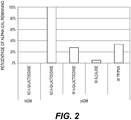
- ⁇ -Gal content was measured using an inhibition ELISA assay.
- Various acellular dermal matrices (ADMs) were minced and incubated with anti- ⁇ -Gal antibody. After the incubation period, the supernatant containing any unbound antibody was transferred to a 96 well plate coated with ⁇ -Gal. The amount of unbound antibody present in the supernatant, which subsequently bound to the well plate, was detected using an alkaline phosphatase conjugated secondary antibody followed by p-Nitrophenyl phosphate detection substrate.
- ADMs that contain high levels of ⁇ -Gal captured most if not all anti- ⁇ -Gal antibodies, leaving very little in the supernatant and thus, a low reading on the well plate.
- ADMs which contain low levels of ⁇ -Gal only capture low levels, if any, of anti- ⁇ -Gal antibodies, leaving the majority of the antibodies in the supernatant.
- supernatants from these samples produced very high readings on the well plate.
- ⁇ -Gal is absent in human tissues but present in porcine tissues
- human acellular dermal matrices (hADM) and porcine acellular dermal matrices (pADM) without ⁇ -galactosidase treatment were used as the negative control and positive controls, respectively.
- Treatment of pADM with ⁇ -galactosidase reduced the content of ⁇ -Gal to approximately 30% of untreated pADM.
- Enzyme Alcalase or Trypsin treatment of pADMs, in the absence of ⁇ -galactosidase, reduced ⁇ -Gal content to levels comparable to, or lower than ⁇ -galactosidase treatment ( Figure 3).
Landscapes
- Health & Medical Sciences (AREA)
- Life Sciences & Earth Sciences (AREA)
- Chemical & Material Sciences (AREA)
- Engineering & Computer Science (AREA)
- Medicinal Chemistry (AREA)
- Biomedical Technology (AREA)
- General Health & Medical Sciences (AREA)
- Oral & Maxillofacial Surgery (AREA)
- Veterinary Medicine (AREA)
- Transplantation (AREA)
- Epidemiology (AREA)
- Animal Behavior & Ethology (AREA)
- Dermatology (AREA)
- Public Health (AREA)
- Molecular Biology (AREA)
- Chemical Kinetics & Catalysis (AREA)
- Botany (AREA)
- Immunology (AREA)
- Urology & Nephrology (AREA)
- Hematology (AREA)
- General Chemical & Material Sciences (AREA)
- Cell Biology (AREA)
- Zoology (AREA)
- Biophysics (AREA)
- Pathology (AREA)
- Food Science & Technology (AREA)
- Physics & Mathematics (AREA)
- Analytical Chemistry (AREA)
- Biochemistry (AREA)
- General Physics & Mathematics (AREA)
- Microbiology (AREA)
- Biotechnology (AREA)
- Materials For Medical Uses (AREA)
- Medicines Containing Material From Animals Or Micro-Organisms (AREA)
- Medicines That Contain Protein Lipid Enzymes And Other Medicines (AREA)
- Micro-Organisms Or Cultivation Processes Thereof (AREA)
- Investigating Or Analysing Biological Materials (AREA)
- Detergent Compositions (AREA)
- Pharmaceuticals Containing Other Organic And Inorganic Compounds (AREA)
Applications Claiming Priority (3)
| Application Number | Priority Date | Filing Date | Title |
|---|---|---|---|
| US201361899647P | 2013-11-04 | 2013-11-04 | |
| PCT/US2014/063796 WO2015066668A1 (fr) | 2013-11-04 | 2014-11-04 | Procédé d'élimination d'alpha-galactose |
| EP14802997.8A EP3065790B1 (fr) | 2013-11-04 | 2014-11-04 | Procédé d'élimination d'alpha-galactose |
Related Parent Applications (1)
| Application Number | Title | Priority Date | Filing Date |
|---|---|---|---|
| EP14802997.8A Division EP3065790B1 (fr) | 2013-11-04 | 2014-11-04 | Procédé d'élimination d'alpha-galactose |
Publications (1)
| Publication Number | Publication Date |
|---|---|
| EP3799893A1 true EP3799893A1 (fr) | 2021-04-07 |
Family
ID=51982769
Family Applications (2)
| Application Number | Title | Priority Date | Filing Date |
|---|---|---|---|
| EP20203388.2A Withdrawn EP3799893A1 (fr) | 2013-11-04 | 2014-11-04 | Procédé d'élimination d'alpha-galactose |
| EP14802997.8A Active EP3065790B1 (fr) | 2013-11-04 | 2014-11-04 | Procédé d'élimination d'alpha-galactose |
Family Applications After (1)
| Application Number | Title | Priority Date | Filing Date |
|---|---|---|---|
| EP14802997.8A Active EP3065790B1 (fr) | 2013-11-04 | 2014-11-04 | Procédé d'élimination d'alpha-galactose |
Country Status (10)
| Country | Link |
|---|---|
| US (2) | US10307510B2 (fr) |
| EP (2) | EP3799893A1 (fr) |
| JP (1) | JP6524597B2 (fr) |
| CN (1) | CN105682697B (fr) |
| AU (2) | AU2014341866B2 (fr) |
| BR (1) | BR112016009178B1 (fr) |
| CA (1) | CA2925332C (fr) |
| DK (1) | DK3065790T3 (fr) |
| ES (1) | ES2846758T3 (fr) |
| WO (1) | WO2015066668A1 (fr) |
Families Citing this family (11)
| Publication number | Priority date | Publication date | Assignee | Title |
|---|---|---|---|---|
| HUE055940T2 (hu) | 2016-09-12 | 2022-01-28 | Gebauer Klopotek Patent Verwaltungs Ug | Lencsék intrastromális szaruhártya-beültetéshez |
| CN106860861B (zh) * | 2017-03-03 | 2020-11-03 | 北京博辉瑞进生物科技有限公司 | 一种免疫增强组合物、制备方法及其应用 |
| EP4046667A1 (fr) | 2017-03-06 | 2022-08-24 | Tei Biosciences, Inc. | Greffe de tissu perforée |
| CN112292099A (zh) * | 2018-07-02 | 2021-01-29 | 盖鲍厄-克洛波泰克佩坦特弗瓦尔屯格斯-尤格公司 | 胶原蛋白支架的稳定 |
| US12350144B2 (en) | 2018-07-02 | 2025-07-08 | Gebauer-Klopotek Patent Verw Altungs-Ug | Stabilization of collagen scaffolds |
| US20210052775A1 (en) * | 2019-08-20 | 2021-02-25 | Lifecell Corporation | Method of manufacturing particulate tissue products |
| CN111632196A (zh) * | 2020-06-01 | 2020-09-08 | 内蒙古自治区中医药研究所 | 一种去α-半乳糖基抗原脱细胞基质的制备方法 |
| CN115591020A (zh) * | 2021-06-28 | 2023-01-13 | 金佩奇生物科技(南京)有限公司(Cn) | 疝修复真皮补片材料的制备及应用 |
| CN115591019A (zh) * | 2021-06-28 | 2023-01-13 | 金佩奇生物科技(南京)有限公司(Cn) | 脱细胞材料制备方法及其应用 |
| CN114377206B (zh) * | 2021-12-24 | 2022-09-30 | 杭州华迈医疗科技有限公司 | 一种脱细胞基质生物材料的制备方法 |
| CN114276974A (zh) * | 2021-12-24 | 2022-04-05 | 上海理工大学 | 封装细胞的间质材料及其制备方法和应用 |
Citations (6)
| Publication number | Priority date | Publication date | Assignee | Title |
|---|---|---|---|---|
| WO2000047131A1 (fr) * | 1999-02-11 | 2000-08-17 | Crosscart, Inc. | Xenogreffes de tissus mous appauvries en proteoglycane |
| US6933326B1 (en) | 1998-06-19 | 2005-08-23 | Lifecell Coporation | Particulate acellular tissue matrix |
| WO2006095342A2 (fr) * | 2005-03-07 | 2006-09-14 | Technion Research & Development Foundation Ltd. | Matrice naturelle decellularisee derivee d'un tissu et procedes permettant de generer et d'utiliser celle-ci |
| US20100272782A1 (en) | 2007-07-10 | 2010-10-28 | Owens Rick T | Acellular tissue matrix compositions for tissue repair |
| US20120276213A1 (en) * | 2011-04-28 | 2012-11-01 | Lifecell Corporation | Method for enzymatic treatment of tissue products |
| US20130236439A1 (en) * | 2012-03-08 | 2013-09-12 | Lifecell Corporation | Enzyme-activated collagen and tissue matrices |
Family Cites Families (133)
| Publication number | Priority date | Publication date | Assignee | Title |
|---|---|---|---|---|
| JPS5230097A (en) | 1975-09-02 | 1977-03-07 | Kaneyasu Miyata | Method of mounting different substitute blood vessel |
| US4801299A (en) | 1983-06-10 | 1989-01-31 | University Patents, Inc. | Body implants of extracellular matrix and means and methods of making and using such implants |
| US5116615A (en) | 1989-01-27 | 1992-05-26 | Immunolytics, Inc. | Method for treating benign prostatic hypertrophy |
| CA2067235A1 (fr) | 1989-10-12 | 1991-04-13 | David J. G. White | Materiel biologique modifie |
| US6482404B1 (en) | 1989-10-12 | 2002-11-19 | David James White | Transplantation of tissue comprising a DNA sequence encoding a homologous complement restriction factor |
| US5846715A (en) | 1990-05-11 | 1998-12-08 | The Austin Research Institute | CD46 variants |
| US5336616A (en) | 1990-09-12 | 1994-08-09 | Lifecell Corporation | Method for processing and preserving collagen-based tissues for transplantation |
| CA2051092C (fr) | 1990-09-12 | 2002-07-23 | Stephen A. Livesey | Methode et appareillage pour la cryopreservation, la stabilisation a sec et la rehydratation de suspensions biologiques |
| US8067149B2 (en) | 1990-09-12 | 2011-11-29 | Lifecell Corporation | Acellular dermal matrix and method of use thereof for grafting |
| US5374539A (en) | 1991-06-17 | 1994-12-20 | Nimni; Marcel E. | Process for purifying collagen and generating bioprosthesis |
| EP0689597A4 (fr) | 1993-03-16 | 1998-10-21 | Austin Research Inst | UTILISATION DE GAL-g(a) (1,3) GALACTOSYL-TRANSFERASE PORCINE DANS LE TRAITEMENT DE XENOGREFFES |
| US6331658B1 (en) | 1993-04-20 | 2001-12-18 | Integris Baptist Medical Center, Inc. | Genetically engineered mammals for use as organ donors |
| US5460962A (en) | 1994-01-04 | 1995-10-24 | Organogenesis Inc. | Peracetic acid sterilization of collagen or collagenous tissue |
| US5849991A (en) | 1994-01-27 | 1998-12-15 | Bresatch Limited | Mice homozygous for an inactivated α 1,3-galactosyl transferase gene |
| JPH09508277A (ja) | 1994-01-27 | 1997-08-26 | ブレサゲン リミテッド | ヒト異種移植における超急性拒絶の管理のための物質及び方法 |
| EP0755402B1 (fr) | 1994-04-13 | 2008-05-14 | Biotransplant, Inc | Porc negatif pour l'alpha(1,3) galactosyltranferase |
| WO1995034202A1 (fr) | 1994-06-15 | 1995-12-21 | Alexion Pharmaceuticals, Inc. | Procedes permettant de reduire le rejet suraigu d'heterogreffes |
| US5547681A (en) | 1994-07-14 | 1996-08-20 | Union Carbide Chemicals & Plastics Technology Corporation | Dermal patch |
| AUPM772494A0 (en) | 1994-08-30 | 1994-09-22 | Austin Research Institute, The | Improvements in production of proteins in host cells |
| WO1996032905A1 (fr) | 1995-04-19 | 1996-10-24 | St. Jude Medical, Inc. | Substrat matriciel destine a une prothese derivee d'un tissu biologique vivant et son procede de fabrication |
| US5782915A (en) | 1995-09-15 | 1998-07-21 | Stone; Kevin R. | Articular cartilage heterografts |
| US6166288A (en) | 1995-09-27 | 2000-12-26 | Nextran Inc. | Method of producing transgenic animals for xenotransplantation expressing both an enzyme masking or reducing the level of the gal epitope and a complement inhibitor |
| ATE374816T1 (de) | 1996-08-02 | 2007-10-15 | Austin Research Inst | Verbesserte nukleinsäuren, welche für eine chimäre glycosyltransferase kodieren |
| US6455037B1 (en) | 1996-11-01 | 2002-09-24 | Mount Sinai School Of Medicine Of The City University Of New York | Cells expressing an αgala nucleic acid and methods of xenotransplantation |
| WO1998019719A1 (fr) | 1996-11-05 | 1998-05-14 | Purdue Research Foundation | Constructions de greffons mycoardiques |
| DE69720252T2 (de) | 1996-12-10 | 2003-12-04 | Purdue Research Foundation, West Lafayette | Gewebetransplantat aus der magensubmukosa |
| AU732726B2 (en) | 1996-12-10 | 2001-04-26 | Purdue Research Foundation | Biomaterial derived from vertebrate liver tissue |
| US6423316B1 (en) | 1997-03-26 | 2002-07-23 | Imperial College Innovative Limited | Anticoagulant fusion protein anchored to cell membrane |
| AU746318B2 (en) | 1997-04-11 | 2002-04-18 | Cryolife, Inc. | Tissue decellularization |
| ES2175753T3 (es) | 1997-06-27 | 2002-11-16 | Augustinus Bader | Injerto biosintetico y metodo para su produccion. |
| US6482584B1 (en) | 1998-11-13 | 2002-11-19 | Regeneration Technologies, Inc. | Cyclic implant perfusion cleaning and passivation process |
| US6613278B1 (en) | 1998-11-13 | 2003-09-02 | Regeneration Technologies, Inc. | Tissue pooling process |
| US6652818B1 (en) | 1998-11-13 | 2003-11-25 | Regeneration Technologies, Inc. | Implant sterilization apparatus |
| US6371992B1 (en) | 1997-12-19 | 2002-04-16 | The Regents Of The University Of California | Acellular matrix grafts: preparation and use |
| WO1999044533A1 (fr) | 1998-03-06 | 1999-09-10 | Crosscart, Inc. | Xenogreffes de tissus mous |
| US6383732B1 (en) | 1999-02-11 | 2002-05-07 | Crosscart, Inc. | Method of preparing xenograft heart valves |
| CN101818145A (zh) | 1998-03-20 | 2010-09-01 | 联邦科学和工业研究组织 | 控制基因表达 |
| AUPP249298A0 (en) | 1998-03-20 | 1998-04-23 | Ag-Gene Australia Limited | Synthetic genes and genetic constructs comprising same I |
| GB9809280D0 (en) | 1998-04-30 | 1998-07-01 | Rpms Technology Ltd | Immunosupression |
| US6432710B1 (en) | 1998-05-22 | 2002-08-13 | Isolagen Technologies, Inc. | Compositions for regenerating tissue that has deteriorated, and methods for using such compositions |
| ES2257050T3 (es) | 1998-05-26 | 2006-07-16 | Lifecell Corporation | Conservacion por el frio de hematies humanos. |
| CA2335686C (fr) | 1998-06-19 | 2008-11-18 | Lifecell Corporation | Matrice tissulaires acellulaires particulaires |
| US6734018B2 (en) | 1999-06-07 | 2004-05-11 | Lifenet | Process for decellularizing soft-tissue engineered medical implants, and decellularized soft-tissue medical implants produced |
| US6743574B1 (en) | 2000-09-12 | 2004-06-01 | Lifenet | Process for devitalizing soft-tissue engineered medical implants, and devitalized soft-tissue medical implants produced |
| US8563232B2 (en) | 2000-09-12 | 2013-10-22 | Lifenet Health | Process for devitalizing soft-tissue engineered medical implants, and devitalized soft-tissue medical implants produced |
| GB2345638A (en) | 1998-09-11 | 2000-07-19 | Tissue Science Lab Limited | Injectable collagen compositions |
| US20020110609A1 (en) | 1998-12-28 | 2002-08-15 | David Hung | Increasing retrievable fluid from a breast duct |
| NZ550899A (en) | 1999-01-13 | 2008-07-31 | Revivicor Inc | Double nuclear transfer method and the production of a non human animal thereby |
| US20030068815A1 (en) | 1999-02-11 | 2003-04-10 | Stone Kevin R. | Sterilized xenograft tissue |
| US20020012660A1 (en) | 1999-03-04 | 2002-01-31 | Alan Colman | Method of preparing a somatic cells for nuclear transfer |
| CN1266716A (zh) | 1999-03-12 | 2000-09-20 | 中国人民解放军第四军医大学第一附属医院 | 交联型猪脱细胞真皮片 |
| US6381026B1 (en) | 1999-03-15 | 2002-04-30 | Lifecell Corp. | Method of measuring the contour of a biological surface |
| US8236335B2 (en) | 1999-04-28 | 2012-08-07 | The Regents Of The University Of Michigan | Antimicrobial nanoemulsion compositions and methods |
| AU1099701A (en) | 1999-10-22 | 2001-05-08 | University Of Pittsburgh | Alpha1-3 galactosyltransferase gene and promoter |
| US6576265B1 (en) | 1999-12-22 | 2003-06-10 | Acell, Inc. | Tissue regenerative composition, method of making, and method of use thereof |
| US6866686B2 (en) | 2000-01-28 | 2005-03-15 | Cryolife, Inc. | Tissue graft |
| WO2001078798A1 (fr) | 2000-02-10 | 2001-10-25 | Regeneration Technologies, Inc. | Implant constitue |
| US20070009586A1 (en) | 2000-02-29 | 2007-01-11 | Cohen Kelman I | Wound dressings containing complexes of transition metals and alginate for elastase sequestering |
| AU2001261650A1 (en) | 2000-05-15 | 2001-11-26 | Geron Corporation | Ovine tissue for xenotransplantation |
| WO2002014480A2 (fr) | 2000-08-16 | 2002-02-21 | Duke University | Constructions de tissu decellularise issues de l'ingenierie tissulaire et tissus ainsi produits |
| AU2001288458A1 (en) | 2000-08-28 | 2002-03-13 | Collagenesis, Inc. | Methods for processing animal tissues |
| US20020077697A1 (en) | 2000-12-15 | 2002-06-20 | Ranieri John Paul | Processed ratite carotid arteries as xenogeneic small bore vascular grafts |
| US7126039B2 (en) | 2001-03-21 | 2006-10-24 | Geron Corporation | Animal tissue with carbohydrate antigens compatible for human transplantation |
| US6933103B1 (en) | 2001-03-21 | 2005-08-23 | Brennen Medical, Inc. | Biocompatible tissue for therapeutic use and method of making same |
| AU2002242538B2 (en) | 2001-03-21 | 2007-06-28 | Geron Corporation | Animal tissue with carbohydrate antigens compatible for human transplantation |
| US7166278B2 (en) | 2001-04-30 | 2007-01-23 | Rbc Biotechnology, Inc. | Modified organs and cells for xenotransplantation |
| EP1392202A4 (fr) | 2001-05-07 | 2009-10-21 | Crosscart Inc | Xenogreffe sous muqueuse |
| US20030092174A1 (en) | 2001-05-14 | 2003-05-15 | Monika Liljedahl | Tissues or organs for use in xenotransplantation |
| GB2375771A (en) | 2001-05-24 | 2002-11-27 | Univ Leeds | Decellularisation of tissue implant material |
| JP4426285B2 (ja) | 2001-06-28 | 2010-03-03 | クック・バイオテック・インコーポレーテッド | 腎被膜コラーゲンを含有する移植片プロテーゼ用具 |
| TWI284665B (en) | 2001-08-17 | 2007-08-01 | Univ Nat Cheng Kung | Fabrication method of the porous collagen matrix |
| JP2005502383A (ja) | 2001-09-27 | 2005-01-27 | ティモシー アルバート ホルトン | 核酸ライブラリーを作製する方法 |
| WO2003032735A1 (fr) | 2001-10-18 | 2003-04-24 | Lifecell Corporation | Remodelage de tissus et d'organes |
| WO2003055302A1 (fr) | 2001-12-21 | 2003-07-10 | The Curators Of The University Of Missouri | Porc knock-out et leurs procedes de fabrication |
| US20050076399A1 (en) | 2001-12-29 | 2005-04-07 | Lee So H. | "Gfp-transfected clon pig, gt knock-out clon pig and methods for productions thereof |
| CA2476999C (fr) | 2002-02-22 | 2015-09-15 | Intracel Resources Llc | Compositions de cellules tumorales non oncogenes immunogenes steriles et methodes |
| CA2480912A1 (fr) | 2002-04-05 | 2003-10-23 | Novozymes North America, Inc. | Amelioration de la solidite et de la resistance a l'abrasion des matieres cellulosiques ayant subi un appret d'infroissabilite permanent |
| WO2003092381A1 (fr) | 2002-05-02 | 2003-11-13 | Purdue Research Foundation | Constructions de greffe ameliorees de vascularisation |
| AUPS242702A0 (en) | 2002-05-21 | 2002-06-13 | Colltech Australia Limited | Improved method for the extraction and purification of collagen |
| US6835385B2 (en) | 2002-06-14 | 2004-12-28 | Carol J. Buck | Compositions and methods for softening, thinning and removing hyperkeratotic tissue |
| EP1517715A2 (fr) | 2002-06-28 | 2005-03-30 | Cardio, Inc. | Tissu decellularise |
| WO2004016742A2 (fr) | 2002-08-14 | 2004-02-26 | Immerge Biotherapeutics, Inc. | Cellules depourvues d'$g(a)(1,3)-galactosyltransferase, procedes de selection et porc depourvu d'$g(a)(1,3)-galactosyltransferase ainsi obtenu |
| DK1534819T3 (da) | 2002-08-21 | 2010-04-19 | Revivicor Inc | Griselignende dyr, som mangler enhver ekspression af funktionel alfa-1,3-galactosyltransferase |
| US20040037735A1 (en) | 2002-08-23 | 2004-02-26 | Depaula Carl Alexander | Allograft tissue purification process for cleaning bone |
| AU2003211379A1 (en) | 2002-08-28 | 2004-03-19 | Kinki University | Process for producing collagen treated with cysteine protease and collagen treated with cysteine protease |
| JP3658385B2 (ja) | 2002-09-20 | 2005-06-08 | 佳宏 高見 | 皮膚の無細胞化方法、該方法による無細胞化真皮マトリックス及びその製造方法並びに該マトリックスを用いた複合培養皮膚 |
| US7402319B2 (en) | 2002-09-27 | 2008-07-22 | Board Of Regents, The University Of Texas System | Cell-free tissue replacement for tissue engineering |
| US7064187B2 (en) | 2002-11-26 | 2006-06-20 | Crosscart, Inc. | Substantially non-immunogenic injectable collagen |
| US20040187877A1 (en) * | 2002-12-04 | 2004-09-30 | Badylak Stephen F. | Method for repair of liver tissue |
| US20040191226A1 (en) | 2002-12-04 | 2004-09-30 | Badylak Stephen F. | Method for repair of body wall |
| DE60335602D1 (de) | 2002-12-18 | 2011-02-17 | Roche Diagnostics Gmbh | Rekombinante Desoxyribonuclease I aus Rinder-Pankreas mit hoher spezifischer Aktivität |
| US20040176855A1 (en) | 2003-03-07 | 2004-09-09 | Acell, Inc. | Decellularized liver for repair of tissue and treatment of organ deficiency |
| US20040175366A1 (en) | 2003-03-07 | 2004-09-09 | Acell, Inc. | Scaffold for cell growth and differentiation |
| US7067298B2 (en) | 2003-03-31 | 2006-06-27 | Ambion, Inc. | Compositions and methods of using a synthetic Dnase I |
| EP1639083A4 (fr) | 2003-06-06 | 2008-05-28 | Univ Pittsburgh | Gene porcin de l'hydroxylase d'acide cmp-n-acetylneuraminique |
| US20050013870A1 (en) | 2003-07-17 | 2005-01-20 | Toby Freyman | Decellularized extracellular matrix of conditioned body tissues and uses thereof |
| CA2533259C (fr) | 2003-07-21 | 2014-01-28 | Lifecell Corporation | Matrices de tissus acellulaires realisees a partir de tissus deficitaires en galactose .alpha.-1,3-galactose |
| WO2005047469A2 (fr) | 2003-11-05 | 2005-05-26 | University Of Pittsburgh | Proteine isogloboside 3 synthase porcine, adnc, organisation genomique, et region regulatrice |
| CA2546853C (fr) | 2003-11-21 | 2020-04-21 | Revivicor, Inc. | Utilisation d'arn d'interference dans la production d'animaux transgeniques |
| US20050186286A1 (en) | 2004-02-25 | 2005-08-25 | Yoshihiro Takami | Skin decellularization method, acellular dermal matrix and production method therefore employing said decellularization method, and composite cultured skin employing said matrix |
| AU2005223617A1 (en) | 2004-03-17 | 2005-09-29 | Revivicor, Inc. | Tissue products from animals lacking functional alpha 1,3 galactosyl transferase |
| US7732180B2 (en) | 2004-05-07 | 2010-06-08 | University Of Pittsburgh Of The Commonwealth System Of Higher Education | Porcine Forssman synthetase protein, cDNA, genomic organization, and regulatory region |
| US20050266390A1 (en) | 2004-06-01 | 2005-12-01 | Yuichiro Ueda | Processes for removing cells and cell debris from tissue and tissue constructs used in transplantation and tissue reconstruction |
| US20060073592A1 (en) | 2004-10-06 | 2006-04-06 | Wendell Sun | Methods of storing tissue matrices |
| WO2006074373A2 (fr) | 2005-01-06 | 2006-07-13 | Crosscart, Inc. | Xenogreffes et allogreffes immunochimiquement modifiees et sterilisees |
| US7723108B2 (en) | 2005-03-16 | 2010-05-25 | Musculoskeletal Transplant Foundation | Soft tissue processing |
| US20100112543A1 (en) | 2005-03-16 | 2010-05-06 | Manh-Dan Ngo | Processing soft tissue, methods and compositions related thereto |
| MX369594B (es) | 2005-08-26 | 2019-11-13 | Univ Minnesota | Descelularizacion y recelularizacion de organos y tejidos. |
| JP5002805B2 (ja) | 2005-10-14 | 2012-08-15 | 財団法人ヒューマンサイエンス振興財団 | 生物由来スキャフォールドの作製方法 |
| GB0606231D0 (en) | 2006-03-29 | 2006-05-10 | Univ Leeds | Improvements relating to decellurisation of tissue matrices for bladder implantation |
| US20070248575A1 (en) | 2006-04-19 | 2007-10-25 | Jerome Connor | Bone graft composition |
| JP5050197B2 (ja) | 2006-07-31 | 2012-10-17 | 財団法人ヒューマンサイエンス振興財団 | 生物由来スキャフォールドの作製方法 |
| KR20230146124A (ko) | 2006-10-06 | 2023-10-18 | 셀룰래리티 인코포레이티드 | 천연(텔로펩티드) 태반 콜라겐 조성물 |
| US8956411B2 (en) | 2006-11-16 | 2015-02-17 | University Of Leeds | Preparation of tissue for meniscal implantation |
| EP2167149A2 (fr) | 2007-04-16 | 2010-03-31 | Tissue Science Laboratories PLC | Implant vasculaire |
| AU2008237732B2 (en) | 2007-04-16 | 2014-05-22 | Covidien Ag | Methods and compositions for tissue regeneration |
| US20100119577A1 (en) | 2007-05-06 | 2010-05-13 | Byoung-Hyun Min | Therapeutic composite for cartilage disorder using extracellular matrix (ecm) scaffold |
| US20080306610A1 (en) | 2007-06-07 | 2008-12-11 | Zimmer Orthobiologics, Inc. | Tissue processing for nonimmunogenic implants |
| WO2008154628A2 (fr) | 2007-06-12 | 2008-12-18 | Musculoskeletal Transplant Foundation | Procédé pour la stérilisation d'un tissu mou acellulaire sous vide |
| WO2008154623A2 (fr) | 2007-06-12 | 2008-12-18 | Musculoskeletal Transplant Foundation | Procédé pour la stérilisation d'un tissu mou accellulaire par rayonnements |
| CZ301086B6 (cs) | 2007-10-17 | 2009-11-04 | Bio-Skin, A. S. | Sterilní autologní, allogenní nebo xenogenní implantát a zpusob jeho výroby |
| TWI353845B (en) | 2008-03-19 | 2011-12-11 | Food Industry Res & Dev Inst | Process for preparing peptide products for promoti |
| GB0807868D0 (en) | 2008-04-30 | 2008-06-04 | Knight David P | Cartilage repair material and a method for the preparation thereof |
| CA2726350C (fr) | 2008-06-06 | 2016-07-19 | Lifecell Corporation | Traitement par elastase de matrices de tissu |
| BRPI1008628A2 (pt) | 2009-02-18 | 2016-03-01 | Cormatrix Cardiovascular Inc | método de tratamento ou prevenção de arritmia cardíaca em um indivíduo |
| US9155323B2 (en) | 2009-05-15 | 2015-10-13 | Siebte Pmi Verwaltungs Gmbh | Aqueous process for preparing protein isolate and hydrolyzed protein from an oilseed |
| US8198408B2 (en) | 2009-07-27 | 2012-06-12 | National Cheng Kung University | Method for preparing porous collagen matrices |
| US9888999B2 (en) | 2009-08-11 | 2018-02-13 | Aziyo Biologics, Inc. | Acellular dermal allografts and method of preparation |
| CA2791158C (fr) | 2010-02-26 | 2020-07-21 | Decell Technologies Inc. | Procede de decellularisation de tissu |
| GB2482166A (en) | 2010-07-22 | 2012-01-25 | Tissue Science Lablratories Ltd | Manufacture of collagenous material from use in therapy from collagen particles |
| US9238793B2 (en) | 2011-04-28 | 2016-01-19 | Lifecell Corporation | Method for enzymatic treatment of tissue products |
| US10207025B2 (en) | 2011-04-28 | 2019-02-19 | Lifecell Corporation | Method for enzymatic treatment of tissue products |
| US20130122583A1 (en) | 2011-11-10 | 2013-05-16 | Celxcel Pty Ltd | Sterilization process |
-
2014
- 2014-11-04 WO PCT/US2014/063796 patent/WO2015066668A1/fr not_active Ceased
- 2014-11-04 DK DK14802997.8T patent/DK3065790T3/da active
- 2014-11-04 AU AU2014341866A patent/AU2014341866B2/en active Active
- 2014-11-04 JP JP2016527404A patent/JP6524597B2/ja not_active Expired - Fee Related
- 2014-11-04 CN CN201480058533.3A patent/CN105682697B/zh not_active Expired - Fee Related
- 2014-11-04 US US14/532,089 patent/US10307510B2/en active Active
- 2014-11-04 BR BR112016009178-7A patent/BR112016009178B1/pt not_active IP Right Cessation
- 2014-11-04 EP EP20203388.2A patent/EP3799893A1/fr not_active Withdrawn
- 2014-11-04 ES ES14802997T patent/ES2846758T3/es active Active
- 2014-11-04 EP EP14802997.8A patent/EP3065790B1/fr active Active
- 2014-11-04 CA CA2925332A patent/CA2925332C/fr active Active
-
2018
- 2018-10-02 AU AU2018236910A patent/AU2018236910A1/en not_active Abandoned
-
2019
- 2019-04-09 US US16/379,276 patent/US20190231931A1/en not_active Abandoned
Patent Citations (6)
| Publication number | Priority date | Publication date | Assignee | Title |
|---|---|---|---|---|
| US6933326B1 (en) | 1998-06-19 | 2005-08-23 | Lifecell Coporation | Particulate acellular tissue matrix |
| WO2000047131A1 (fr) * | 1999-02-11 | 2000-08-17 | Crosscart, Inc. | Xenogreffes de tissus mous appauvries en proteoglycane |
| WO2006095342A2 (fr) * | 2005-03-07 | 2006-09-14 | Technion Research & Development Foundation Ltd. | Matrice naturelle decellularisee derivee d'un tissu et procedes permettant de generer et d'utiliser celle-ci |
| US20100272782A1 (en) | 2007-07-10 | 2010-10-28 | Owens Rick T | Acellular tissue matrix compositions for tissue repair |
| US20120276213A1 (en) * | 2011-04-28 | 2012-11-01 | Lifecell Corporation | Method for enzymatic treatment of tissue products |
| US20130236439A1 (en) * | 2012-03-08 | 2013-09-12 | Lifecell Corporation | Enzyme-activated collagen and tissue matrices |
Non-Patent Citations (3)
| Title |
|---|
| BADYLAK ET AL.: "Extracellular Matrix as a Biological Scaffold Material: Structure and Function", ACTA BIOMATERIALIA, 2008 |
| U. GALILI ET AL., J. BIOL. CHEM., vol. 263, 1988, pages 17755 |
| XU ET AL., TISSUE ENGINEERING, vol. 15, 2009, pages 1 - 13 |
Also Published As
| Publication number | Publication date |
|---|---|
| WO2015066668A1 (fr) | 2015-05-07 |
| CN105682697B (zh) | 2022-10-14 |
| US10307510B2 (en) | 2019-06-04 |
| AU2014341866B2 (en) | 2018-07-05 |
| EP3065790A1 (fr) | 2016-09-14 |
| EP3065790B1 (fr) | 2020-10-28 |
| US20150126453A1 (en) | 2015-05-07 |
| JP2016536315A (ja) | 2016-11-24 |
| DK3065790T3 (da) | 2021-02-01 |
| AU2018236910A1 (en) | 2018-10-18 |
| AU2014341866A1 (en) | 2016-04-07 |
| CN105682697A (zh) | 2016-06-15 |
| CA2925332A1 (fr) | 2015-05-07 |
| BR112016009178A8 (pt) | 2020-03-24 |
| CA2925332C (fr) | 2022-07-12 |
| BR112016009178B1 (pt) | 2020-12-15 |
| ES2846758T3 (es) | 2021-07-29 |
| US20190231931A1 (en) | 2019-08-01 |
| WO2015066668A8 (fr) | 2015-07-02 |
| JP6524597B2 (ja) | 2019-06-05 |
Similar Documents
| Publication | Publication Date | Title |
|---|---|---|
| EP3065790B1 (fr) | Procédé d'élimination d'alpha-galactose | |
| US20250195721A1 (en) | Natural tissue scaffolds as tissue fillers | |
| CA2832731C (fr) | Procede de traitement enzymatique de produits tissulaires | |
| US10207025B2 (en) | Method for enzymatic treatment of tissue products | |
| JP6816202B2 (ja) | 組織製品の酵素処理方法 | |
| HK40016155A (en) | Method for enzymatic treatment of tissue products | |
| HK40016155B (en) | Method for enzymatic treatment of tissue products |
Legal Events
| Date | Code | Title | Description |
|---|---|---|---|
| PUAI | Public reference made under article 153(3) epc to a published international application that has entered the european phase |
Free format text: ORIGINAL CODE: 0009012 |
|
| STAA | Information on the status of an ep patent application or granted ep patent |
Free format text: STATUS: REQUEST FOR EXAMINATION WAS MADE |
|
| 17P | Request for examination filed |
Effective date: 20201022 |
|
| AC | Divisional application: reference to earlier application |
Ref document number: 3065790 Country of ref document: EP Kind code of ref document: P |
|
| AK | Designated contracting states |
Kind code of ref document: A1 Designated state(s): AL AT BE BG CH CY CZ DE DK EE ES FI FR GB GR HR HU IE IS IT LI LT LU LV MC MK MT NL NO PL PT RO RS SE SI SK SM TR |
|
| STAA | Information on the status of an ep patent application or granted ep patent |
Free format text: STATUS: THE APPLICATION IS DEEMED TO BE WITHDRAWN |
|
| 18D | Application deemed to be withdrawn |
Effective date: 20211008 |