EP3801507B1 - Extraits et composés interagissant avec tomm6 destinés à être utilisés dans le traitement et la prophylaxie de maladies du système nerveux, de l'athérosclérose, d'une infection par le virus de l'hépatite b et d'une infection par le papillomavirus humain (pvh) - Google Patents
Extraits et composés interagissant avec tomm6 destinés à être utilisés dans le traitement et la prophylaxie de maladies du système nerveux, de l'athérosclérose, d'une infection par le virus de l'hépatite b et d'une infection par le papillomavirus humain (pvh) Download PDFInfo
- Publication number
- EP3801507B1 EP3801507B1 EP19728338.5A EP19728338A EP3801507B1 EP 3801507 B1 EP3801507 B1 EP 3801507B1 EP 19728338 A EP19728338 A EP 19728338A EP 3801507 B1 EP3801507 B1 EP 3801507B1
- Authority
- EP
- European Patent Office
- Prior art keywords
- compound
- substituted
- alkyl
- tomm6
- disease
- Prior art date
- Legal status (The legal status is an assumption and is not a legal conclusion. Google has not performed a legal analysis and makes no representation as to the accuracy of the status listed.)
- Active
Links
Images






Classifications
-
- A—HUMAN NECESSITIES
- A61—MEDICAL OR VETERINARY SCIENCE; HYGIENE
- A61K—PREPARATIONS FOR MEDICAL, DENTAL OR TOILETRY PURPOSES
- A61K31/00—Medicinal preparations containing organic active ingredients
- A61K31/12—Ketones
- A61K31/122—Ketones having the oxygen directly attached to a ring, e.g. quinones, vitamin K1, anthralin
-
- A—HUMAN NECESSITIES
- A61—MEDICAL OR VETERINARY SCIENCE; HYGIENE
- A61K—PREPARATIONS FOR MEDICAL, DENTAL OR TOILETRY PURPOSES
- A61K31/00—Medicinal preparations containing organic active ingredients
- A61K31/185—Acids; Anhydrides, halides or salts thereof, e.g. sulfur acids, imidic, hydrazonic or hydroximic acids
- A61K31/19—Carboxylic acids, e.g. valproic acid
- A61K31/192—Carboxylic acids, e.g. valproic acid having aromatic groups, e.g. sulindac, 2-aryl-propionic acids, ethacrynic acid
-
- A—HUMAN NECESSITIES
- A61—MEDICAL OR VETERINARY SCIENCE; HYGIENE
- A61K—PREPARATIONS FOR MEDICAL, DENTAL OR TOILETRY PURPOSES
- A61K31/00—Medicinal preparations containing organic active ingredients
- A61K31/33—Heterocyclic compounds
- A61K31/395—Heterocyclic compounds having nitrogen as a ring hetero atom, e.g. guanethidine or rifamycins
- A61K31/41—Heterocyclic compounds having nitrogen as a ring hetero atom, e.g. guanethidine or rifamycins having five-membered rings with two or more ring hetero atoms, at least one of which being nitrogen, e.g. tetrazole
- A61K31/42—Oxazoles
- A61K31/421—1,3-Oxazoles, e.g. pemoline, trimethadione
-
- A—HUMAN NECESSITIES
- A61—MEDICAL OR VETERINARY SCIENCE; HYGIENE
- A61K—PREPARATIONS FOR MEDICAL, DENTAL OR TOILETRY PURPOSES
- A61K31/00—Medicinal preparations containing organic active ingredients
- A61K31/33—Heterocyclic compounds
- A61K31/395—Heterocyclic compounds having nitrogen as a ring hetero atom, e.g. guanethidine or rifamycins
- A61K31/435—Heterocyclic compounds having nitrogen as a ring hetero atom, e.g. guanethidine or rifamycins having six-membered rings with one nitrogen as the only ring hetero atom
- A61K31/44—Non condensed pyridines; Hydrogenated derivatives thereof
- A61K31/4418—Non condensed pyridines; Hydrogenated derivatives thereof having a carbocyclic group directly attached to the heterocyclic ring, e.g. cyproheptadine
-
- A—HUMAN NECESSITIES
- A61—MEDICAL OR VETERINARY SCIENCE; HYGIENE
- A61K—PREPARATIONS FOR MEDICAL, DENTAL OR TOILETRY PURPOSES
- A61K31/00—Medicinal preparations containing organic active ingredients
- A61K31/33—Heterocyclic compounds
- A61K31/395—Heterocyclic compounds having nitrogen as a ring hetero atom, e.g. guanethidine or rifamycins
- A61K31/435—Heterocyclic compounds having nitrogen as a ring hetero atom, e.g. guanethidine or rifamycins having six-membered rings with one nitrogen as the only ring hetero atom
- A61K31/44—Non condensed pyridines; Hydrogenated derivatives thereof
- A61K31/4427—Non condensed pyridines; Hydrogenated derivatives thereof containing further heterocyclic ring systems
- A61K31/4439—Non condensed pyridines; Hydrogenated derivatives thereof containing further heterocyclic ring systems containing a five-membered ring with nitrogen as a ring hetero atom, e.g. omeprazole
-
- A—HUMAN NECESSITIES
- A61—MEDICAL OR VETERINARY SCIENCE; HYGIENE
- A61K—PREPARATIONS FOR MEDICAL, DENTAL OR TOILETRY PURPOSES
- A61K31/00—Medicinal preparations containing organic active ingredients
- A61K31/33—Heterocyclic compounds
- A61K31/395—Heterocyclic compounds having nitrogen as a ring hetero atom, e.g. guanethidine or rifamycins
- A61K31/435—Heterocyclic compounds having nitrogen as a ring hetero atom, e.g. guanethidine or rifamycins having six-membered rings with one nitrogen as the only ring hetero atom
- A61K31/44—Non condensed pyridines; Hydrogenated derivatives thereof
- A61K31/445—Non condensed piperidines, e.g. piperocaine
- A61K31/4523—Non condensed piperidines, e.g. piperocaine containing further heterocyclic ring systems
- A61K31/454—Non condensed piperidines, e.g. piperocaine containing further heterocyclic ring systems containing a five-membered ring with nitrogen as a ring hetero atom, e.g. pimozide, domperidone
-
- A—HUMAN NECESSITIES
- A61—MEDICAL OR VETERINARY SCIENCE; HYGIENE
- A61K—PREPARATIONS FOR MEDICAL, DENTAL OR TOILETRY PURPOSES
- A61K36/00—Medicinal preparations of undetermined constitution containing material from algae, lichens, fungi or plants, or derivatives thereof, e.g. traditional herbal medicines
- A61K36/18—Magnoliophyta (angiosperms)
- A61K36/185—Magnoliopsida (dicotyledons)
- A61K36/48—Fabaceae or Leguminosae (Pea or Legume family); Caesalpiniaceae; Mimosaceae; Papilionaceae
-
- A—HUMAN NECESSITIES
- A61—MEDICAL OR VETERINARY SCIENCE; HYGIENE
- A61K—PREPARATIONS FOR MEDICAL, DENTAL OR TOILETRY PURPOSES
- A61K36/00—Medicinal preparations of undetermined constitution containing material from algae, lichens, fungi or plants, or derivatives thereof, e.g. traditional herbal medicines
- A61K36/18—Magnoliophyta (angiosperms)
- A61K36/185—Magnoliopsida (dicotyledons)
- A61K36/70—Polygonaceae (Buckwheat family), e.g. spineflower or dock
-
- A—HUMAN NECESSITIES
- A61—MEDICAL OR VETERINARY SCIENCE; HYGIENE
- A61K—PREPARATIONS FOR MEDICAL, DENTAL OR TOILETRY PURPOSES
- A61K36/00—Medicinal preparations of undetermined constitution containing material from algae, lichens, fungi or plants, or derivatives thereof, e.g. traditional herbal medicines
- A61K36/18—Magnoliophyta (angiosperms)
- A61K36/185—Magnoliopsida (dicotyledons)
- A61K36/72—Rhamnaceae (Buckthorn family), e.g. buckthorn, chewstick or umbrella-tree
-
- A—HUMAN NECESSITIES
- A61—MEDICAL OR VETERINARY SCIENCE; HYGIENE
- A61K—PREPARATIONS FOR MEDICAL, DENTAL OR TOILETRY PURPOSES
- A61K36/00—Medicinal preparations of undetermined constitution containing material from algae, lichens, fungi or plants, or derivatives thereof, e.g. traditional herbal medicines
- A61K36/18—Magnoliophyta (angiosperms)
- A61K36/185—Magnoliopsida (dicotyledons)
- A61K36/74—Rubiaceae (Madder family)
-
- A—HUMAN NECESSITIES
- A61—MEDICAL OR VETERINARY SCIENCE; HYGIENE
- A61K—PREPARATIONS FOR MEDICAL, DENTAL OR TOILETRY PURPOSES
- A61K36/00—Medicinal preparations of undetermined constitution containing material from algae, lichens, fungi or plants, or derivatives thereof, e.g. traditional herbal medicines
- A61K36/18—Magnoliophyta (angiosperms)
- A61K36/185—Magnoliopsida (dicotyledons)
- A61K36/85—Verbenaceae (Verbena family)
-
- A—HUMAN NECESSITIES
- A61—MEDICAL OR VETERINARY SCIENCE; HYGIENE
- A61K—PREPARATIONS FOR MEDICAL, DENTAL OR TOILETRY PURPOSES
- A61K36/00—Medicinal preparations of undetermined constitution containing material from algae, lichens, fungi or plants, or derivatives thereof, e.g. traditional herbal medicines
- A61K36/18—Magnoliophyta (angiosperms)
- A61K36/88—Liliopsida (monocotyledons)
- A61K36/896—Liliaceae (Lily family), e.g. daylily, plantain lily, Hyacinth or narcissus
-
- A—HUMAN NECESSITIES
- A61—MEDICAL OR VETERINARY SCIENCE; HYGIENE
- A61P—SPECIFIC THERAPEUTIC ACTIVITY OF CHEMICAL COMPOUNDS OR MEDICINAL PREPARATIONS
- A61P25/00—Drugs for disorders of the nervous system
- A61P25/28—Drugs for disorders of the nervous system for treating neurodegenerative disorders of the central nervous system, e.g. nootropic agents, cognition enhancers, drugs for treating Alzheimer's disease or other forms of dementia
-
- A—HUMAN NECESSITIES
- A61—MEDICAL OR VETERINARY SCIENCE; HYGIENE
- A61P—SPECIFIC THERAPEUTIC ACTIVITY OF CHEMICAL COMPOUNDS OR MEDICINAL PREPARATIONS
- A61P9/00—Drugs for disorders of the cardiovascular system
- A61P9/10—Drugs for disorders of the cardiovascular system for treating ischaemic or atherosclerotic diseases, e.g. antianginal drugs, coronary vasodilators, drugs for myocardial infarction, retinopathy, cerebrovascula insufficiency, renal arteriosclerosis
Definitions
- the present invention is directed to a TOMM6 (Translocase of Outer Membrane 6kDa subunit homologue; Mitochondrial import receptor subunit TOM6 homolog)-interacting compound of formula II for use in the treatment or prophylaxis of a nervous system disease, atherosclerosis, Hepatitis B infection and/or human papilloma virus (HPV) infection.
- TOMM6 Translocase of Outer Membrane 6kDa subunit homologue
- Mitochondrial import receptor subunit TOM6 homolog Mitochondrial import receptor subunit TOM6 homolog
- Nervous system diseases or disorders also known as nervous system or neurological diseases or disorders, refer to medical conditions affecting the nervous system.
- This category encompasses central nervous and peripheral nervous diseases or disorders, including genetic disorders, seizure disorders (such as epilepsy), conditions of cardiovascular origin (such as stroke), congenital and developmental disorders (such as spina bifida), degenerative disorders such as multiple sclerosis (MS), Parkinson's disease (PD), and amyotrophic lateral sclerosis (ALS) and forms of dementia such as vascular dementia, Lewy Body dementia, frontotemporal dementia, and Alzheimer's disease (AD).
- seizure disorders such as epilepsy
- conditions of cardiovascular origin such as stroke
- congenital and developmental disorders such as spina bifida
- degenerative disorders such as multiple sclerosis (MS), Parkinson's disease (PD), and amyotrophic lateral sclerosis (ALS)
- forms of dementia such as vascular dementia, Lewy Body dementia, frontotemporal dementia, and Alzheimer's disease (AD).
- AD Alzheimer's disease
- Major neuropathological features related to AD and other nervous system diseases are characterized by protein aggregation, neurotoxic tau filaments and mitochondrial dysfunction.
- AD Age is the best-established non-genetic risk factor for dementia and AD, and with increasing life expectancy, the incidence of dementia is on the rise world-wide.
- AD dementia
- the currently used drugs can only retard the disease progression by several months and cannot modify disease progression and/or relief AD symptoms only for a short time period.
- TOMM6 Translocase of Outer Membrane 6kDa subunit homolog; Mitochondrial import receptor subunit TOM6 homolog
- TOMM machinery i.e. the multisubunit translocases in the outer mitochondrial membrane, which are required for the import of nucleus-encoded precursor proteins.
- the TOMM machinery contains import receptors for the binding of cytosolically synthesized preproteins and the general import pore (GIP).
- GIP general import pore
- Tomm20, Tomm22 and Tomm70 are the import receptors for preproteins. These receptors are attached to the other components of the Tom machinery, which form the core complex.
- Tomm6 is a subunit of the core complex, which together with the other subunits (Tomm40, Tomm22, Tomm7, Tomm5) is embedded in the outer membrane and forms the translocation pore ( Dembowski et al., J. Biol. Chem. 276, 17679-17685, 2001 ). Tomm6 stabilizes the interaction between the receptors, specifically Tomm22, and the general insertion pore ( Dekker et al., Mol. Cell. Biol. 18, 6515-6525, 1998 ). However, the in vivo role of TOMM6 was not investigated so far. Moreover, a pathophysiological role of TOMM6 has not been established.
- Anthraquinones also called anthracenediones and specifically 9,10-anthraquinones are used as digester additive in the production of paper pulp by alkaline processes, like the Kraft-, the alkaline sulfite- or the Soda-AQ-processes.
- Anthraquinones also have utility as drugs, in particular as laxatives (e.g. dantron, emodin, aloe emodin, and some of the senna glycosides), antimalarials (e.g. rufigallol), antineoplastics (treatment of cancer, mitoxantrone, pixantrone, and the anthracyclines), and DNA dyes / nuclear counterstains (e.g.
- DRAQ5, DRAQ7 and CyTRAK Orange for use in flow cytometry and fluorescence microscopy.
- anthraquinones such as, e.g. rhein, emodin, aloe emodin, physcion, and chrysophanol can also be toxic, e.g. by causing hepatomyoencephalopathy in children.
- anthraquinone-comprising plant families include but are not limited to Rubiaceae, Verbenaceae, Bignoniaceae, Rhamnaceae, Polygonaceae, Leguminosae, Scropulariaceae, Fabaceae, and Liliaceae.
- the Rubiaceae are a family of flowering plants, commonly known as the coffee, madder, or bedstraw family.
- This family is mostly known as a source of a variety of alkaloids, the most familiar of which is quinine, one of the first agents effective in treating malaria.
- Woodruff Galium odoratum
- Carapichea ipecacuanha is the source of the emetic ipecac.
- the leaves of the Kratom plant Mitragyna speciosa ) contain a variety of alkaloids, including several psychoactive alkaloids and are traditionally prepared and consumed in Southeast Asia for both painkilling and stimulant qualities. It functions as a p-opioid receptor agonist, and is often used in traditional Thai medicine similar to opioids, and often as a replacement for opioid painkillers like morphine.
- the Galium and Rubia genera of the Rubiaceae family are known to comprise glycosides of colored anthraquinone derivatives and related hydroxyanthraquinone compounds ( Hill and Richter, J. Chem. Soc. 1714-1719, 1936 ).
- Antioxidant effects are comparable to vitamin E and C ( Priya and Siril, Int. J. Pharm. Sci. Rev. Res.
- a nervous system disease or disorder preferably a human nervous system disease or disorder, preferably a central nervous system (CNS) or peripheral nervous system (PNS) disease or disorder, atherosclerosis, hepatitis B infection and HPV infection.
- a nervous system disease or disorder preferably a human nervous system disease or disorder, preferably a central nervous system (CNS) or peripheral nervous system (PNS) disease or disorder, atherosclerosis, hepatitis B infection and HPV infection.
- CNS central nervous system
- PNS peripheral nervous system
- the present invention is directed to a TOMM6 (Translocase of Outer Membrane 6kDa subunit homologue)-interacting compound according to the claims for use in the treatment or prophylaxis of a disease selected from the group consisting of: (a) nervous system disease or disorder, preferably a human nervous system disease or disorder, preferably a central nervous system (CNS) or peripheral nervous system (PNS) disease or disorder; (b) atherosclerosis; (c) Hepatitis B infection and (d) human papilloma virus (HPV) infection.
- a disease selected from the group consisting of: (a) nervous system disease or disorder, preferably a human nervous system disease or disorder, preferably a central nervous system (CNS) or peripheral nervous system (PNS) disease or disorder; (b) atherosclerosis; (c) Hepatitis B infection and (d) human papilloma virus (HPV) infection.
- HPV infection rely on aggregation of the highly amyloidogenic protein E1 ⁇ E4, also known as the HPV E4 protein ( McIntosh et al., 82, 8196-8203 (2008).
- HPV E4 can constitute between 20 % and 30 % of the total wart protein ( Doorbar et al., EMBO J. 5, 355-362 (1986 )) and its expression relies on self-aggregation (Bryan et al., Virology 241, 49-60 (1998 )).
- TOMM6 refers to the Translocase of Outer Membrane 6kDa subunit homolog and the Mitochondrial import receptor subunit TOMM6 homolog, which are synonyms.
- TOMM6 is a protein comprising, preferably consisting of an amino acid sequence selected from the group of SEQ ID NO: 1, 2 and 3.
- TOMM6 also preferably encompasses homologs of TOMM6, termed “TOMM6 homolog(s)", with TOMM6 activity that comprise, preferably consist of an amino acid sequence having a sequence identity of at least 85%, preferably 90%, more preferably 95%, most preferably 98% sequence identity with the amino acid sequence of TOMM6, preferably with an amino acid sequence selected from the group consisting of SEQ ID NO: 1, 2 and 3.
- the BLAST programs can be obtained from the National Center for Biotechnology Information (NCBI) and from other sources ( BLAST handbook, Altschul et al., NCB NLM NIH Bethesda, MD 20894 ).
- the ClustalW program can be obtained from http://www.clustal.org.
- TOMM6-interacting compound or composition is meant to encompass any compound or composition that (i) directly or indirectly binds to TOMM6 and thus stabilizes and/or enhances its physiological activity, preferably vs. an untreated control (as can be determined, e.g., in the assay of Example 9 below), and/or (ii) induces the expression (increases the protein content) of TOMM6 in a cell, preferably vs. an untreated control (as can be determined, e.g. in an immunoblot assay using anti-TOMM6 antibodies, e.g. as described in Example 13 below).
- the terms "induction, stabilization and/or activation of TOMM6", as used herein, also refer to any stabilization and/or enhancement of TOMM6's physiological activity and/or induction of expression of TOMM6 as defined above.
- the compounds selected from the group consisting of Formula (II) are TOMM6-inducing compounds, which are generally devoid of any antioxidant activity.
- an antioxidant activity of TOMM6-interacting compounds is not a prerequisite for the technical effect of the compounds and extracts for use in the present invention.
- the compounds of Formulae (II) without antioxidant activity also show neuroprotective activity and prevent neuronal loss in AD models.
- cell-protective TOMM6-stabilizing activity of small molecule compounds does not require antioxidant activity.
- the compounds described herein are generally named by using the nomenclature that was computed based on the structural drawings by the software ACD/Chemsketch 2015 provided by Advanced Chemistry Development, Inc., Canada and BIOVIA Draw 2016 provided by BIOVIA, USA.
- the compounds can be obtained by chemical synthesis and/or by extraction from plants or other organisms, preferably fungal organisms.
- each stereogenic carbon may be in the ( R) - or ( S) - configuration or a combination of configurations if not indicated differently.
- compounds with two or more asymmetric elements can be present as mixtures of diastereomers.
- the compounds of the present invention preferably have a diastereomeric purity of at least 50%, preferably at least 60%, 70%, 80%, 85%, more preferably at least 90%, 95%, 96%, 97%, most preferably at least 98%, 99% or 100%.
- Recited compounds are further intended to encompass compounds in which one or more atoms are replaced with an isotope, i.e., an atom having the same atomic number but a different mass number.
- isotopes of hydrogen include tritium and deuterium and isotopes of carbon include 11 C, 13 C, and 14 C.
- Compounds according to the formulas provided herein, which have one or more stereogenic center(s), have an enantiomeric excess of at least 50%.
- such compounds may have an enantiomeric excess of at least 60%, 70%, 80%, 85%, preferably at least 90%, 95%, or 98%.
- Some embodiments of the compounds have an enantiomeric excess of at least 99%.
- single enantiomers optically active forms
- a “substituent” or “residue” or “R” refers to a molecular moiety that is covalently bound to an atom within a molecule of interest.
- a “substituent”, “R” or “residue” may be a moiety such as a halogen, alkyl group, haloalkyl group or any other substituent described herein that is covalently bonded to an atom, preferably a carbon or nitrogen atom, that forms part of a molecule of interest.
- a pyridyl group substituted by oxo is a pyridone.
- a first compound, a substituent or a residue ends, e.g., in the name "-yl", this ending indicates that the first compound, substituent or residue is covalently bound to a second compound, substituent or residue.
- linear or branched, substituted or non-substituted alkyl, alkenyl, alkynyl, carbocycle encompasses linear or branched, substituted or non-substituted alkyl; linear or branched, substituted or non-substituted alkenyl; linear or branched, substituted or non-substituted alkynyl; linear or branched, substituted or non-substituted alkylidene; and linear or branched, substituted or non-substituted carbocycle.
- the term “(C 2-10 ) alkenyl, alkynyl or alkylidene” indicates the group of compounds having 2 to 10 carbons and alkenyl
- alkenyl refers to an at least partially unsaturated, substituted or non-substituted straight-chain or branched hydrocarbon group that contains the number of carbon atoms indicated, e.g. "(C 2-10 )alkenyl” denotes a hydrocarbon residue containing from 2 to 10 carbon atoms, for example an ethenyl (vinyl), propenyl (allyl), iso-propenyl, butenyl, isoprenyl or hex-2-enyl group, or, for example, a hydrocarbon group comprising a methylene chain interrupted by one double bond as, for example, found in monounsaturated fatty acids or a hydrocarbon group comprising methylene-interrupted polyenes, e.g.
- Alkenyl groups have one or more, preferably 1, 2, 3, 4, 5, or 6 double bond(s).
- alkynyl refers to at least partially unsaturated, substituted or non-substituted straight-chain or branched hydrocarbon groups that contain the number of carbon items indicated, e.g. "(C 2-10 )alkynyl” denotes a hydrocarbon residue containing from 2 to 10 carbon atoms, for example an ethinyl, propinyl, butinyl, acetylenyl, or propargyl group.
- alkynyl groups have one or two (especially preferably one) triple bond(s).
- alkyl refers to groups in which one or more hydrogen atom(s) have been replaced, e.g. by a halogen atom, preferably F or Cl, such as, for example, a 2,2,2-trichloroethyl or a trifluoromethyl group.
- carbocycle shall be understood to mean a substituted or non-substituted hydrocarbon cycle containing the number of carbon items indicated, e.g. "(C 3-10 )carbocycle” or from 3 to 20, preferably from 3 to 12 carbon atoms, more preferably 5 or 6 carbon atoms.
- carbocycles may be either aromatic or non-aromatic systems.
- the non-aromatic ring systems may be mono- or polyunsaturated.
- carbocycle refers to a carbocycle as defined above comprising more than 1 ring, preferably two rings.
- Preferred carbocycles and carbobicycles include but are not limited to cyclopropyl, cyclobutyl, cyclopentyl, cyclopentenyl, cyclohexyl, cyclohexenyl, cycloheptanyl, cycloheptenyl, phenyl, indanyl, indenyl, benzocyclobutanyl, dihydronaphthyl, tetrahydronaphthyl, naphthyl, decahydronaphthyl, benzocycloheptanyl, benzocycloheptenyl, spiro[4,5]decanyl, norbornyl, decalinyl, bicyclo[4.3.0]nonyl, tetraline, or cyclopentylcyclohexyl.
- Carbocycle shall also include “cycloalkyl” which is to be understood to mean aliphatic hydrocarbon-containing rings preferably having from 3 to 12 carbon atoms. These non-aromatic ring systems may be mono- or polyunsaturated, i.e. the term encompasses cycloalkenyl and cycloalkynyl.
- heterocycle refers to a stable substituted or non-substituted, aromatic or non-aromatic, preferably 3 to 20 membered, more preferably 3-12 membered, most preferably 5 or 6 membered, monocyclic, heteroatom-containing cycle.
- Each heterocycle consists of carbon atoms and one or more, preferably 1 to 4, more preferably 1 to 3 heteroatoms preferably chosen from nitrogen, oxygen and sulphur.
- a heterocycle may contain the number of carbon atoms in addition to the non-carbon atoms as indicated: a "(C 3-6 )heterocycle” is meant to have 3 to 6 carbon atoms in addition to a given number of heteroatoms.
- heterocycle refers to a heterocycle as defined above comprising more than 1 ring, preferably two rings.
- hetero- and/or heterobicyclic residue may be bound to the remaining structure of the complete molecule by any atom of the cycle, which results in a stable structure.
- exemplary heterocycles and heterobicycles include, but are not limited to pyrrolidinyl, pyrrolinyl, morpholinyl, thiomorpholinyl, thiomorpholinyl sulfoxide, thiomorpholinyl sulfone, dioxalanyl, piperidinyl, piperazinyl, tetrahydrofuranyl, 1-oxo- ⁇ 4-thiomorpholinyl, 13-oxa-11-aza-tricyclo[7.3.1.0-2,7]tridecy-2,4,6-triene, tetrahydropyranyl, 2-oxo-2H-pyranyl, tetrahydrofuranyl, 1,3-dioxolanone, 1,3-dioxanone, 1,4-dioxanyl, 8
- alkyl/alkenyl/alkynyl ether refer to a saturated or non-saturated, straight-chain or branched hydrocarbon group that contains the number of carbon items indicated.
- (C 1-10 )alkyl ether denotes a hydrocarbon residue containing from 1 to 10 carbon atoms, and any suitable number of oxygen atoms that will result in an ether structure.
- Alkyl/alkenyl/alkynyl ether groups as used herein shall be understood to mean any linear or branched, substituted or non-substituted alkyl/alkenyl/alkynyl chain comprising an oxygen atom either as an ether motif, i.e. an oxygen bound by two carbons.
- the ether residue can be attached to the Formulas provided in the present invention either via the carbon atom or via the oxygen atom of the ether residue.
- R 1a , R 1b , R 2a , R 2b , R 3a , R 3b , R 4a , R 4b , R 5 , R 6 , R 7 , R 8 , R 9a , R 9b , and/or R 10 can be attached directly to the Formulae provided in the present invention or by means of a linker.
- Said linker may be a polyethyleneglycol.
- polyethyleneglycol refers to a chain of substituted or non-substituted ethylene oxide monomers.
- nitrogen or "N” and “sulphur” or “S” include any oxidized form of nitrogen and sulphur and the quaternized form of any basic nitrogen as long as the resulting compound is chemically stable.
- -S-C 1-6 alkyl radical shall be understood to include -S(O)-C 1-6 alkyl and -S(O) 2 -C 1-6 alkyl.
- a wording defining the limits of a range of length such as, e. g., "from 1 to 5" or "(C 1-5 )” means any integer from 1 to 5, i. e. 1, 2, 3, 4 and 5.
- any range defined by two integers explicitly mentioned is meant to comprise and disclose any integer defining said limits and any integer comprised in said range.
- substituted in meta position or substituted in para position means that a compound is either substituted by at least one given substituent in para position to the position where the compound is attached to another compound or residue, or substituted in two of its meta positions by at least one substituent.
- the meta position denotes the position meta to the position where the compound is attached to another compound or residue.
- the invention includes pharmaceutically acceptable salts or solvates of the compounds of the present invention.
- Pharmaceutically acceptable salts include those derived from pharmaceutically acceptable inorganic and organic acids and bases.
- suitable acids include hydrochloric, hydrobromic, sulphuric, nitric, perchloric, fumaric, maleic, phosphoric, glycolic, lactic, salicylic, succinic, toluene-p-sulfuric, tartaric, acetic, citric, methanesulfonic, formic, benzoic, malonic, naphthalene-2-sulfuric and benzenesulfonic acids.
- Other acids such as oxalic acid, while not themselves pharmaceutically acceptable, may be employed in the preparation of salts useful as intermediates in obtaining the compounds and their pharmaceutically acceptable acid addition salts.
- Salts derived from appropriate bases include alkali metal (e.g., sodium), alkaline earth metal (e.g. magnesium), ammonium and N-(C 1 -C 4 alkyl) 4 + salts.
- the compound of Formula(II) for use in the present invention is one according to claim 1 or 2.
- the compound of Formula (II) for use in the present invention is selected from the group consisting of
- the TOMM6 (Translocase of Outer Membrane 6kDa subunit homologue)-interacting compound for use in the present invention is one, wherein the nervous system disease or disorder is selected from the group consisting of:
- the compounds may be administered in any conventional dosage form in any conventional manner.
- Routes of administration include, but are not limited to oral, (trans)dermal, topical, nasal, parenteral, intravenous, intramuscular and subcutaneous administration, preferably injections.
- the preferred modes of administration are oral, nasal, topical, intravenous or subcutaneous.
- the present invention also teaches a pharmaceutical composition comprising a TOMM6 (Translocase of Outer Membrane 6kDa subunit homologue)-interacting compound or composition for use in the present invention.
- TOMM6 Translocase of Outer Membrane 6kDa subunit homologue
- the compounds, compositions or pharmaceutical compositions for use in the invention may be administered alone or in combination with adjuvants that enhance stability of the compounds, facilitate administration of pharmaceutical compositions containing them in certain embodiments, provide increased dissolution or dispersion, increase activity, provide adjunct therapy (e.g. an acetylcholinesterase inhibitor, memantine, a renin-angiotensin system-inhibiting agent such as an ACE inhibitor and/or an AT1 antagonist, and/or an L-type calcium channel inhibitor such as amlodipine), and the like, including other active ingredients.
- adjunct therapy e.g. an acetylcholinesterase inhibitor, memantine, a renin-angiotensin system-inhibiting agent such as an ACE inhibitor and/or an AT1 antagonist, and/or an L-type calcium channel inhibitor such as amlodipine
- combination therapies utilize lower dosages of the conventional therapeutics, thus avoiding possible toxicity and adverse side effects incurred when those agents are used as monotherapies.
- the above-described compounds and compositions may be physically combined with conventional therapeutics or other adjuvants into a single pharmaceutical composition.
- Reference in this regard may be made to Cappola et al.: U.S. patent application no. 09/902,822 , PCT/US 01/21860 und US provisional application no. 60/313,527 .
- the compounds or compositions may then be administered together in a single dosage form.
- the (pharmaceutical) compositions comprising such combinations of compounds contain at least about 5 %, but more preferably at least about 20 %, of a compound for use in the present invention (w/w).
- the optimum percentage (w/w) of a compound of the invention may vary and is within the purview of those skilled in the art.
- the compounds may be administered separately (either serially or in parallel). Separate dosing allows for greater flexibility in the dosing regime.
- dosage forms of the compounds described herein include pharmaceutically acceptable carriers and adjuvants known to those of ordinary skill in the art. Methods for preparing such dosage forms are known (see, for example, H. C. Ansel and N. G. Popovish, Pharmaceutical Dosage Forms and Drug Delivery Systems, 5th ed., Lea and Febiger (1990 )). Dosage levels and requirements are well-recognized in the art and may be selected by those of ordinary skill in the art from available methods and techniques suitable for a particular patient. In some embodiments, dosage levels range from 1-500 mg/dose for a 70 kg patient. Although one dose per day may be sufficient, up to 5 doses per day may be given. For oral doses, up to 2500 mg/day may be required.
- TOMM6 homolog describes homologs of TOMM6 with TOMM6 activity that comprise, preferably consist of an amino acid sequence having a sequence identity of at least 85%, preferably 90%, more preferably 95% most preferably 98% sequence identity with the amino acid sequence of, preferably human or rodent TOMM6, preferably sequence identity with the amino acid sequence selected from the group consisting of SEQ ID NOs: 1, 2 and 3.
- ApoE-/- mice (Taconic Biosciences, Rensselaer, NY, USA) with deficiency of apolipoprotein E (ApoE-/-) due to disruption of the endogenous ApoE gene were used as a genetic model of atherosclerosis ( Piedrahita et al., Proc. Natl. Acad. Sci. U.S.A., 89, 4471-4475, 1992 ). Atherosclerotic lesion area was determined by quantitative image analysis with oil red O-stained aortas. Total plasma cholesterol was determined by a commercial kit (Sigma).
- mice were kept on a 12h dark and 12h light cycle, had free access to food and water, and were fed a standard rodent chow (AIN-95-based diet without vitamin E supplementation and with 7 % fat and 0.15 % cholesterol).
- ApoE-/- mice on a B6 (C57BL/6J) background and non-transgenic B6 control mice.
- Alizarin treatment (10 mg/kg/day in drinking water) was initiated at an age of 4 weeks and continued for eight months until the end of the observation period.
- mice were anesthetized (ketamine/xylazine, 100/10 mg/kg) and perfused intracardially with sterile PBS.
- Aortas were isolated, rapidly dissected free of adipose tissue on ice and immediately frozen in liquid nitrogen or processed for further use.
- the study analyzed the treatment effect of topical administration of Compound-1 on warts.
- the study was performed according to the study protocol.
- Study design The study was a phase-1, placebo-controlled study of Compound-1. The primary end-point was safety and tolerability. Secondary objectives were treatment effects on wart lesion size.
- Abeta plaques were stained with monoclonal mouse antibody BAM-10 (crossreactive with residues 1-12 of the Abeta peptide, Sigma-Aldrich, St. Louis, MO, USA); antibodies against AT2R (AGTR2) were raised in rabbit against an antigen encompassing amino acids 320-349 of the human AT2R (AGTR2) sequence ( AbdAlla et al., J. Biol. Chem. 276, 39721-39726 (2001 ); J. Biol. Chem. 284, 6566-6574 (2009 ).
- HBsAg was detected with polyclonal antibodies raised against an antigen encompassing amino acids 1-20 of surface antigen HBsAg, and by a monoclonal HBsAg antibody produced in mouse (SAB4700767, Sigma-Aldrich, St. Louis, MO, USA). Suitable antibodies for detection of HBsAg expression, aggregation and monomerization were also isolated from human blood from individuals undergoing vaccination against Hepatitis B. Antibodies against TOMM6 were raised in rabbit against a recombinant human TOMM6 protein (HPA004801, Sigma-Aldrich, St.
- paraffin-embedded brain sections (8 microm, 10-15 sections/brain taken at 30-50 microm intervals) were prepared from sham-treated Tg2576 mice (controls), and Tg2576 mice with 6 months of treatment with P3 extract and Compound-1, respectively. After antigen retrieval, sections were stained with monoclonal BAM-10 antibody (Sigma Aldrich, St. Louis, MO, USA), which cross-reacts with residues 1-12 of the Abeta peptide. Plaque burden was analyzed by computerized quantitative image analysis ( AbdAlla et al., Int. J. Mol. Sci. 14, 16917-16942 (2013 )).
- Hyperphosphorylated Tau was detected with AT8 antibody on paraffin-embedded brain sections from 12 months-old Tg-TauP301L mice (Model 2508, Taconic Biosciences, Rensselaer, NY, USA) without and with treatment with P3 extract, and Compound-1 for 6 months.
- Recombinant HBsAg cDNA was inserted into the expression vector p42K-TEF (D3011001-1 Dualsystems Biotech AG, Zurich).
- Yeast transformants were selected in the presence of G418 in the yeast growth medium (YPD; Bacto-yeast extract 10 g/L, Bacto-peptone 20 g/L and D-Glucose 20 %).
- Yeast (Saccharomyces cerevisae) strain INVSc1 was used (Invitrogen GmbH, Nr. C810-00). After 3-4 days of cultivation to allow for protein expression, yeast cells were harvested by centrifugation, followed by washing with ice-cold PBS.
- the yeast cell pellet was immediately frozen at -70°C. Proteins were extracted for 30 min. at 4°C with solubilization buffer (1 % sodium deoxycholate, 0.1 % SDS, 0.1% NP40, 5 mM EDTA, 50 mM Tris, pH 8.0) supplemented with protease/phosphatase inhibitors (Cat. No. P8349, and/or PPC1010, Sigma-Aldrich, St. Louis, MO, USA). Particulate material was removed by centrifugation at 50 000 x g for 20 min at 4 °C. Solubilized proteins were concentrated and delipidated by precipitation with ice-cold acetone/methanol (12:2, final concentration 83 %) for 90 min at 4 °C.
- solubilization buffer (1 % sodium deoxycholate, 0.1 % SDS, 0.1% NP40, 5 mM EDTA, 50 mM Tris, pH 8.0
- protease/phosphatase inhibitors Cat. No
- the pellet was dissolved in SDS-sample buffer supplemented with 2 % SDS, 0.1 M DTT (or 5 % mercaptoethanol), and 6 M urea for 90 min at room temperature. Proteins were stored at a concentration of 0.5 mg - 1 mg/ml at -70 °C for further use.
- HBsAg proteins were separated by urea-containing SDS-PAGE (7.5-10 %) under reducing conditions, transferred to PVDF membranes by electrophoretic protein transfer in a tank transfer cell (Mini Trans-Blot cell, Bio-Rad GmbH, Ober, Germany), and transferred HBsAg proteins were detected in immunoblot with HBsAg-specific antibodies raised in rabbit against an N-terminal epitope of HBsAg, or by a monoclonal HBsAg antibody produced in mouse (SAB4700767, Sigma-Aldrich, St. Louis, MO, USA). Suitable antibodies for detection of HBsAg expression and aggregation were also isolated from human blood from individuals undergoing vaccination against Hepatitis B.
- Bound antibodies were visualized with F(ab) 2 fragments of enzyme-coupled secondary antibodies (Dianova GmbH, Hamburg, Germany), or by enzyme-coupled protein A (EMD Millipore, Merck KGaA, Darmstadt, Germany), and followed by enhanced chemiluminescent detection (ECL Prime, Amersham, GE Healthcare Life Sciences, Glattbrugg, Switzerland).
- hippocampi were isolated from 5-10 aged Tg2576 mice, pulverized under liquid nitrogen and solubilized for 30 min at 4°C in solubilization buffer (1 % sodium deoxycholate, 0.05 % SDS, 0.05 % Tween 20 in PBS, pH 7.4, supplemented with protease inhibitors). Insoluble material was removed by centrifugation. The supernatant was diluted 1:5 in PBS (supplemented with protease inhibitors). To this solubilisate, Compound-1 was added at a concentration of 10 pM.
- Buffer exchange into 20 mM Tris pH 7.4 was performed by centrifugation over Amicon Ultra Centrifugal Filter Units (MWCO 3kDa; EMD Millipore Merck KGaA, Darmstadt, Germany).
- the concentrated proteins were dissolved in Laemmli sample buffer (Bio-Rad GmbH, Ober, Germany) supplemented with mercaptoethanol (355 mM) and subjected to 8% SDS-PAGE under reducing conditions.
- Compound-1-interacting proteins were identified by co-migration, protein bands were cut and subjected to nano-LC-ES-MS/MS (performed by Proteome Factory AG, Berlin, Germany).
- Proteins were identified using MS/MS ion search of the Mascot search engine (Matrix Science, London, England) and nr protein database (National Center for Biotechnology Information, Bethesda, MD). Ion charge in search parameters for ions from ESI-MS/MS data acquisition were set to '1+, 2+, or 3+'according to the common charge state distribution for the instrument and the method.
- (hippocampal or HEK cell) proteins e.g. Tomm6/TOMM6 and Atp6vla/ATP6V1A
- (hippocampal) tissue was pulverized under liquid nitrogen, and HEK cell pellets were directly subjected to protein extraction. Proteins were extracted for 30 min at 4°C with solubilization buffer (1 % sodium deoxycholate, 0.1 % SDS, 0.1% NP40, 5 mM EDTA, 50 mM Tris, pH 8.0) supplemented with protease/phosphatase inhibitors (Cat. No. P8349, and/or PPC1010, Sigma-Aldrich, St. Louis, MO, USA).
- solubilization buffer (1 % sodium deoxycholate, 0.1 % SDS, 0.1% NP40, 5 mM EDTA, 50 mM Tris, pH 8.0
- protease/phosphatase inhibitors Cat. No. P8349, and/or PPC1010, Sigma-A
- Particulate material was removed by centrifugation at 50 000 x g for 20 min at 4 °C. Solubilized proteins were concentrated and delipidated by precipitation with ice-cold acetone/methanol (12:2, final concentration 83 %) for 90 min at 4 °C. The pellet was dissolved in SDS-sample buffer supplemented with 2 % SDS, 0.1 M DTT (or 5 % mercaptoethanol), and 6 M urea for 90 min at room temperature. Proteins were stored at a concentration of 0.5 mg - 1 mg/ml at -70 °C for further use.
- Immunoblot detection of proteins was performed with affinity-purified antibodies or F(ab) 2 fragments of the respective antibodies after separation of proteins by urea-containing SDS-PAGE (7.5 % -10 %) under reducing conditions and electrophoretic protein transfer to PVDF membranes in a tank transfer cell (Mini Trans-Blot cell, Bio-Rad GmbH, Ober, Germany).
- Bound antibodies were visualized with F(ab) 2 fragments of enzyme-coupled secondary antibodies (Dianova GmbH, Hamburg, Germany) pre-absorbed to mouse serum proteins, or by enzyme-coupled protein A (EMD Millipore, Merck KGaA, Darmstadt, Germany) as applicable, and followed by enhanced chemiluminescent detection (ECL Plus, and/or ECL Prime, Amersham, GE Healthcare Life Sciences, Glattbrugg, Switzerland).
- ECL Plus enhanced chemiluminescent detection
- Proteins were also extracted from yeast cells and HEK cells expressing the indicated protein (i.e. HBsAg or AGTR2) as described above.
- Neuronal cell loss and hyperphosphorylated Tau in hippocampi of 15 months-old Tg2576 mice subjected to the CUMS protocol for 3 months was determined with crude homogenates of dissected hippocampi by direct binding assay with neuron-specific [ 125 I]-labeled anti-NeuN antibody (MAB377, clone A60, EMD Millipore, Merck KGaA, Darmstadt, Germany) and [ 125 I]-labeled AT8 antibody similarly as described ( AbdAlla et al., J. Biol. Chem. 284, 6554-6565 (2009 )).
- Serum concentrations of alizarin were determined with serum isolated from the blood of male and female German shepherd dogs (age: 8-9 months) taken at different time points (0.5h, 1h, 2h, 4h, 6h, 8h, 24h) after oral intake of the indicated doses for 4 weeks.
- serum concentrations of alizarin Compound-1 were determined in male and female Sprague Dawley rats (body weight: 200-250 g) treated for 1 month and/or three months by oral gavage of alizarin at a once daily dose of 100 mg/kg, 50 mg/kg, 25 mg/kg and 12.5 mg/kg.
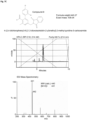
- Serum proteins were removed by acetonitrile precipitation, and alizarin was extracted by chloroform before separation on an HPLC-C18 column (Poroshell 120 EC-C18, 3.0x50 mm, Agilent) with an HPLC system (Agilent 1100 Series) and detection at OD245 nm.
- HPLC-C18 column Poroshell 120 EC-C18, 3.0x50 mm, Agilent
- HPLC system Algilent 1100 Series
- serum proteins were also removed by acetonitrile precipitation before HPLC analysis as detailed above and detection at OD254 nm.
- AT2R-Cer is a fusion protein, in which full-length AGTR2 is fused C-terminally with a 5-Gly linker to the Cerulean variant (Cer) of the enhanced green fluorescent protein.
- AGTR2-Cer and AGTR1-Cer were expressed in HEK cells with and without TOMM6 (cDNA coding for TOMM6 was inserted into EcoRI and XhoI sites of pcDNA3.1 plasmid; Figure 1 ).
- cDNA coding for TOMM6 was inserted into EcoRI and XhoI sites of pcDNA3.1 plasmid; Figure 1 ).
- cells were detached by 0.05 % Trypsin-EDTA solution, trypsin-EDTA was rapidly removed by washing with PBS, cells were collected by centrifugation and suspended in incubation buffer (335 mg KCI, 294 mg CaCl2, 407 mg MgCl2, 8.2 g NaCl, 2.4 g HEPES-Na+ ad 1000 ml H2O, pH 7.4).
- RNA was processed for whole genome microarray gene expression profiling with the GeneChip One-Cycle Target Labeling System (Affymetrix) according to the protocol of the manufacturer (Affymetrix GeneChip Expression Analysis Technical Manual Rev. 5).
- Hybridization with the GeneChip (Mouse genome MG430 2.0 Array; Affymetrix) was done with 15 microg of fragmented cRNA in 200 microl of hybridization solution in a Hybridization Oven 640 (Affymetrix) at 45 °C for 16h. Washing and staining of gene chips was done with the Affymetrix Fluidics Station 450 followed by scanning (Affymetrix GeneChip Scanner 7G). Signal processing was performed with GCOS (v. 1.4. Affymetrix).
- Probe sets (with call present and/or signal intensity ⁇ 100) with significantly different signal intensity (p ⁇ 0.05) indicative of different gene expression between different groups were identified by TIGR MultiExperiment Viewer (MeV v4.9).
- Example 2 Identification of Tomm6 as an interacting/stabilizing protein of Compound-1, Compound-2, and extract P1 and P3 from Galium aparine and Rubia cordifolia
- Compound-1 The major target of the prototypical anthraquinone, Compound-1 (alizarin) was searched for. To this end, a solubilisate of hippocampal proteins from aged Tg2576 mice supplemented with 10 microM Compound-1 was prepared, and the mixture was separated by SDS-PAGE under reducing conditions. The Compound-1-interacting proteins were identified by co-migration, cut from the gel, and subjected to protein identification. Nano-LC-ESI-MS/MS analysis identified Tomm6 (Mitochondrial import receptor subunit TOMM6 homolog) as a major Compound-1-interacting protein ( Figure 1A ).
- Tomm6 Mitochondrial import receptor subunit TOMM6 homolog
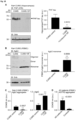
- TOMM6 is an essential component of the TOM machinery, i.e. the multisubunit translocases in the outer mitochondrial membrane, which are required for the import of nucleus-encoded precursor proteins. It was investigated whether treatment with Compound-1, Compound-2, extract P1 and P3 from Galium aparine and Rubia cordifolia mediated protein stabilization of Tomm6 in the hippocampus of Tg2576 mice. Aged Tg2576 mice were treated for 6 months with Compound-1, Compound-2, P1 and P3 extract. Hippocampal protein contents of Tomm6 were determined in immunoblot.
- the cDNA of TOMM6 was inserted into the EcoRI and Xhol sites of the expression plasmid pcDNA3.1, which enables transient and stable expression of a cDNA under control of the ubiquitous CMV immediate-early promoter/enhancer in cells and in vivo ( Figure 2A,B ).
- the AT2R-Cerulean (AT2R-Cer) was generated by fusion of the AT2 receptor at the carboxyl-terminus with Cerulean similarly as described for the AT1R-Cer construct ( Quitterer et al., Biochem. Biophys. Res. Commun. 409, 544-549 (2011 )).
- the Cerulean variant of the ECFP was used because Cerulean is 2.5-fold brighter than the cognate ECFP ( Rizzo et al., Nat. Biotechnol. 22, 445-449 (2004 )).
- AT1R-Cerulean In contrast to AT2R-Cer, the related AT1R-Cer (AGTR1-Cerulean) was not increased by TOMM6 but AT1R-Cer was significantly decreased by TOMM6 ( Figure 3B ). This finding is significant because the AT1R (AGTR1) protein is enhanced by reactive oxygen species, ROS ( Banday et al., Hypertension 57, 452-459 (2011 )). Moreover, an increased expression/activation of AT1R contributes to neurodegeneration and increases Alzheimer pathology in vivo ( AbdAlla et al., Int. J. Mol. Sci. 14, 16917-16942 (2013 ); AbdAlla et al., Biomed. Res. Int.
- TOMM6 reduced the protein level of neurotoxic AT1R.
- transgenic mice with expression of TOMM6 under control of the neuron-specific hamster prion protein (HaPrP) promoter were generated.
- the cDNA of TOMM6 was inserted into the Sall site of the CosSHa.Tet vector ( Figure 4A ), which directs neuron-specific expression under control of the Syrian hamster prion protein (HaPrP) promoter ( Hsiao et al., Science 274, 99-103 (1996 ); Scott et al., Protein Sci. 1, 986-997 (1992 ); InPro Biotechnology Inc. San Francisco, CA, USA). Plasmid sequences were removed by NotI digestion. The purified linear DNA (2ng/microL) was injected into fertilized oocytes dissected out from super-ovulated FVB or B6 (C57BL/6J) mice.
- HaPrP Syrian hamster prion protein
- oocytes were kept in M2 medium. After DNA injection, injected embryos were transferred into M16 medium and incubated overnight in M16 medium in the presence of 10 % CO 2 at 37°C in a humidified incubator. Thereafter, double-cell stage embryos were selected and transferred into the oviduct of pseudo-pregnant CD-1 foster mice. Pseudopregnancy was induced by overnight breeding with an infertile (vasectomized) male and detected by the presence of a vaginal plug. After birth, genomic DNA from F0 mice was isolated from ear punch biopsies taken at 3-4 weeks of age. Mice with stable genomic integration of the TOMM6 transgene were identified by genotyping PCR and used for further breeding.
- Tg-2576-TOMM6 mice To generate double-transgenic Tg-2576-TOMM6 mice, homozygous Tg-TOMM6 mice were crossed with heterozygous Tg2576 AD mice and double-transgenic Tg2576-TOMM6 mice were identified by genotyping PCR (sequences of primers used for genotyping PCR are derived from TOMM6-flanking CosSHa.Tet vector sequences and from the TOMM6 cDNA sequence) ( Figure 4B ).
- Double-transgenic Tg-2576-TOMM6 mice were used and it was analyzed whether an increased hippocampal TOMM6 protein level affected the neuropathological features in double-transgenic Tg2576-TOMM6 mice compared to single-transgenic Tg2576 controls. Hippocampal contents of SDS-insoluble Abeta1-40 and Abeta 1-42 were significantly decreased in double-transgenic Tg2576-TOMM6 mice compared to single-transgenic Tg2576 controls ( Figure 5B,C ). Thus, an increased hippocampal TOMM6 protein level is sufficient to retard the development of a major neuropathological feature of AD, i.e. the accumulation of SDS-insoluble Abeta peptides in the hippocampus of Tg2576-TOMM6 mice.
- Tg2586 AD model is largely devoid of major symptoms of clinical AD, i.e. neuronal loss and gross memory impairment ( AbdAlla et al., J. Biol. Chem. 284, 6566-6574 (2009 ); Ashe and Zahs, Neuron 66, 631-645 (2010 )).
- Tg2576 AD mice we subjected Tg2576 mice to chronic mild environmental stress ( AbdAlla et al., J. Biol. Chem. 284, 6554-6565, (2009 ); Briones et al., Br. J. Pharmacol.
- hippocampal neuronal loss was also prevented by transgenic TOMM6 expression, as determined by direct binding assay with [ 125 I]-labeled anti-NeuN antibody ( Figure 5E ).
- TOMM6-inducing compounds were searched for and a screening system was established in HEK cells.
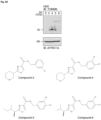
- HEK cells were cultured in the absence and presence of a test compound at a final concentration of 20 microM. Cells were harvested, proteins were extracted and TOMM6 protein levels were determined in immunoblot with TOMM6-specific antibodies. This assay identified compound 3 - 10 as TOMM6-interacting compounds and inducers of TOMM6 ( Figure 6 and Figure 7 ).
- TOMM6-interacting (inducing) compounds were identified: Compound-3: N-[(3-chlorophenyl)methyl]-2-(3-piperidyl)oxazole-4-carboxamide; Compound-4: N-[(3,4-dichlorophenyl)methyl]-2-(3-piperidyl)oxazole-4-carboxamide; Compound-5: 2-[(1S)-1-amino-2-methyl-butyl]-N-[(3,4-dichlorophenyl)methyl]oxazole-4-carboxamide; Compound-6: 2-[(1S)-1-amino-2-methyl-propyl]-N-[(3,4-dichlorophenyl)methyl]oxazole-4-carboxamide; Compound-7: 6-(aminomethyl)-4-(4-chlorophenyl)-2-methyl-pyridine-3-carboxamide; Compound-8: 4-(2,4-dichlorophenyl)-6-[(1,3
- Example 7 TOMM6-interacting (inducing) Compound-4 and Compound-7 inhibit symptoms of AD and neurodegeneration in AD model mice
- the TOMM6-interacting (inducing) Compound-4 and Compound-7 were selected for in vivo testing.
- Treatment with Compound-4 and Compound-7 also decreased hippocampal PHF tau hyperphosphorylation ( Figure 8C ) and retarded overt neuronal loss in Tg2576 mice subjected to chronic mild stress with the CUMS protocol ( Figure 8D ).
- Figure 8C hippocampal PHF tau hyperphosphorylation
- Figure 8D retarded overt neuronal loss in Tg2576 mice subjected to chronic mild stress with the CUMS protocol
- Example 8 Emodin in vivo tests.
- pseudopurpurin 0.5% pseudopurpurin was added to diet, which corresponds to a daily intake of pseudopurpurin of ⁇ 250 mg/kg/day ( Wu et al., Int. J. Mol. Sci. 13, 3431-3443, 2012 ).
- Compound-1 alizarin
- Compound-2 pseudopurpurin
- Tomm6/TOMM6 inducers in cells and in vivo and exert neuroprotection in different models of neurodegenerative diseases, e.g. familial AD, sporadic AD and tauopathy.
- the laxative anthrachinone, emodin has some adverse effects.
- alizarin and pseudopurpurin can be isolated from alizarin- and pseudopurpurin-containing plants, and also can be synthesized, e.g. with bio-catalysed reactions applying glycosyltransferases ( Ati et al., Beilstein J. Org. Chem. 13, 1857-1865, 2017 ).
- alizarin and other anthrachinone derivatives can be fed to recombinant E. coli as a substrate for biotransformation to generate alizarin-glucosides ( Nguyen et al., Molecules 23, 2171, 2018 ).
- Alizarin is not a tumor promotor in mammalian cells and in vivo ( Westendorf et al., Mutat. Res. 240, 1-12, 1990 ; Marec et al., Planta Med. 67, 127-131, 2001 ; Wölfle et al., Cancer Res. 50, 6540-6544, 1990 ; Poginsky et al., Carcinogenesis 12, 1265-1271, 1991 ).
- alizarin could be mutagenic in the Salmonella strain TA1537 ( Westendorf et al., Mutat. Res.
- the present invention in general and for all embodiments encompasses the use of all halogen- (e.g., F, Cl, Br) -substituted compounds described herein, preferably of alizarin and pseudopurpurin, more preferably fluorine-substituted alizarin and pseudopurpurin and/or mimetics of alizarin and pseudopurpurin (see Fig. 10C ).
- halogen- e.g., F, Cl, Br
- Example 10 Medical uses of alizarin for supplementary treatment and prevention of Hepatitis B virus infection, and treatment and prevention of human papilloma virus (HPV) infection
- the present invention encompasses the medical use of the compounds claimed herein for preventive and supportive treatment of Hepatitis B infection because it was surprisingly found that not only plant extracts P1 and P2 but also their active isolated ingredient alizarin (Compound-1) inhibited the aggregation and assembly of HBsAg ( Fig. 10D ). HBsAg aggregation and assembly is required and mandatory for HBV virion formation and HBV infection (Venkatakrishnan and Zlotnick, Annu. Rev Virol. 3, 429-451, 2016 ).
- the treatment modality of the present invention in general and for all embodiments could supplement current antiviral treatment regimens of Hepatitis B infection, which include according to WHO guidelines potent nucleos(t)ide analogues with high barrier to resistance, i.e. entecavir, tenofovir disoproxil, and tenofovir alafenamide. Nevertheless, chronic persistent Hepatitis B infection, which affects ⁇ 240 million patients worldwide cannot be cured and accounts for ⁇ 650 000 deaths/year worldwide (WHO publication, Guidelines for the prevention, care and treatment of persons with chronic hepatitis B infection, March 2015).
- Compound-1 e.g. a Compound-1-containing hydrogel
- HPV human papillomaviruses
- HPV E4 protein which uses the amyloid-fold as does amyloid-beta, is the most abundantly expressed viral transcript/protein in HPV-infected epithelia, and mediates HPV-mediated disruption of cellular integrity, HPV release from infected epithelial cells and virus transmission (McIntosh et al., 82, 8196-8203 (2008); Doorbar, Virology 445, 80-98 (2013 )).
- the aggregation-prone HPV E4 protein can constitute between 20 % and 30 % of the total wart protein ( Doorbar et al., EMBO J. 5, 355-362 (1986 )).
- the expression of E1 ⁇ E4 relies on self-aggregation of the HPV E4 protein ( Bryan et al., Virology 241, 49-60 (1998 )).
- Treatment approaches include minor surgery, laser surgery, cryotherapy, peeling agents such as salicylic acid, medications (e.g. bleomycin, and imiquimod, which is an immunotherapy).
- Most treatment approaches are painful such as surgery, cryotherapy, laser therapy, and/or cause side effects such as burning and stinging and even may leave a scar.
- warts tend to recur or spread. Therefore, there is an urgent need to improve the therapy and/or develop a new treatment approach for HPV.
- Example 11 Alizarin (Compound-1) retards the development of atherosclerosis in ApoE-deficient mice as a model of atherosclerosis.
- AD Alzheimer's Disease
- vascular dementia Appleton et al., Clin. Sci 131, 1561-1578, 2017
- vascular dementia and AD coexist ( ladecola, Neuron 80, 844-866, 2013 ).
- Atherosclerosis and ensuing cardiovascular disease are major risk factors for vascular dementia ( Javanshiri et al., J. Alzheimers Dis. 65, 1247-1258, 2018 ).
- Cardiovascular risk factors are also considered to enhance AD pathology ( Tublin et al., Circ. Res. 124, 142-149, 2019 ).
- Atherosclerotic vascular lesions are causally related to the pathogenesis of vascular dementia, mixed forms of vascular dementia and even AD ( Li et a., Chin. Med. J. (Engl) 131, 471-476, 2018 ).
- Cholesterol-lowering statin use reduces the risk of dementia in patients with stroke ( Pan et al., J. Stroke Cerebrovasc. Dis. 27, 3001-3007, 2018 ).
- These data clearly indicate that atherosclerotic vascular disease is a contributor to dementia.
- cholesterol-lowering treatment could enhance or even cause cognitive problems ( Li et a., Chin. Med. J. (Engl) 131, 471-476, 2018 ).
- Alizarin (Compound-1) is a TOMM6/Tomm6 inducer, and TOMM6 induction restores the function of the angiotensin II type-2 receptor, AGTR2.
- ApoE-/- mice were treated for 8 months with alizarin (10 mg/kg/d in drinking water) starting at an age of 4 weeks. Atherosclerotic lesion area was assessed with oil red O-stained aortas isolated from 9-month-old ApoE-/- mice ( Fig. 11A ). Alizarin treatment led to a significantly decreased atherosclerotic lesion area, which was 3.6-fold lower compared to that of untreated ApoE-/- mice ( Fig. 11A ). As a control, alizarin treatment did not alter the increased plasma cholesterol level of ApoE-/- mice ( Fig. 11B ). Whole genome gene expression analysis was performed to identify atherosclerosis-related genes altered by alizarin treatment.
- Atherosclerosis-induced neurodegeneration of vascular neurons in ApoE-/- mice is documented by decreased aortic expression levels of neuronal marker genes ( Abd Alla et al., Front. Physiol. 4, 148, 2013 ).
- the aortic expression levels of neuronal marker genes of alizarin-treated ApoE-/- mice were determined compared to untreated ApoE-/- mice and untreated B6 mice without atherosclerosis ( Fig. 11D,E ).
- the present invention in general and for all embodiments also encompasses the medical use of the compounds described herein, preferably alizarin (Compound-1) and the TOMM6/Tomm6-inducing compounds, for the prevention and treatment of atherosclerosis, atherosclerosis-induced neurodegeneration, diabetic neuropathy and autonomic neuropathy (for which atherosclerosis are major risk factors; Meyer et al., Diabet. Med. 21, 746-751, 2004 ) and other atherosclerosis-induced diseases, e.g. stroke, vascular dementia, coronary artery disease, myocardial infarction.
- alizarin Compound-1
- TOMM6/Tomm6-inducing compounds for the prevention and treatment of atherosclerosis, atherosclerosis-induced neurodegeneration, diabetic neuropathy and autonomic neuropathy (for which atherosclerosis are major risk factors; Meyer et al., Diabet. Med. 21, 746-751, 2004 ) and other atherosclerosis-induced diseases, e.g. stroke,
- alizarin Compound-1
- Fig. 12 further in vivo characterization of alizarin (Compound-1) was performed in dogs as a non-rodent animal model.
- Example 13 Sub-chronic toxicity study of alizarin in rats documents a wide therapeutic index.
- alizarin Compound-1
- Rats were treated for 3 months with a once daily oral dose of alizarin of 25 mg/kg/day, 50 mg/kg/day and 100 mg/kg/day.
- the study did not find any significant adverse effects of alizarin up to a daily dose of 100 mg/kg/day regarding body weight, liver, heart and kidney weight, serum levels of calcium, creatinine, blood urea nitrogen (BUN), alanine transaminase (ALT) and aspartate aminotransferase (AST) ( Fig. 13A-I ). Histopathology analysis of major organs (heart, liver, kidney) did not show any detectable alterations ( Fig. 13J ).
- Example 14 Pharmacokinetic data of Compound-7 in dogs and rats.
- Pharmacokinetic data of Compound-7 were determined as another representative TOMM6/Tomm6 inducer with a different chemical structure than alizarin (Compound-1).
- the oral bioavailability of Compound-7 in dogs was much higher than in rats because oral doses of Compound-7 required to achieve equivalent peak serum concentrations were approximately 10-fold higher in rats compared to dogs ( Fig. 14B ).
- Compound-7 did not show any detectable toxic side effects up to an oral dose of 12.5 mg/kg/day in dogs and up to an oral dose of 50 mg/kg/day in rats during four weeks of treatment. At a daily oral dose of 100 mg/kg/d in rats, a slightly decreased daily food intake was observed. These findings indicate a wide therapeutic index of Compound-7 in vivo with an almost 10-fold difference between therapeutic and toxic doses because neuroprotective effects of Compound-7 in rodent animal models of AD and neurodegeneration were seen at a once daily oral dose of 10 mg/kg/d (cf. Fig. 8 ).
- Compound-10F was developed because the introduction of a fluorine into a small molecule can modulate various pharmacokinetic and physicochemical properties such as metabolic stability and enhanced membrane permeation ( Shah and Westwell, J. Enzyme Inhibition Med. Chem. 22, 527-540, 2007 ; Böhm et al., Chembiochem 5, 637-643. 2004 ).
- Another potential application of the fluorine atom is the potential use of 18F as a radiolabel tracer atom in positron-emission tomography (PET) imaging ( Shah and Westwell, J. Enzyme Inhibition Med. Chem. 22, 527-540, 2007 ).
- Example 16 Pharmacokinetic data of Compound-10F.
- Example 17 Compound-10F is a Tomm6 inducer and retards symptoms of AD and neurodegeneration in vivo.
- the present invention in general and for all embodiments encompasses the medical use of Compound-10F as Tomm6/TOMM6 inducer for the treatment and prophylaxis of nervous system diseases, neurodegenerative diseases, atherosclerosis and atherosclerosis-related diseases.
- the present invention in general and for all embodiments further encompasses the medical use, preferably as described herein, of (A) halogenated Compound-10, and Compound-7 and (B) of esters, ethers and amides of Compound-7 and Compound-10.
- the present invention in general and for all embodiments encompasses the medical use, preferably as described herein, of Compound-7, Compound-10 and Compound-10F, in which the 2-methyl group is removed or replaced by other substituents, e.g. by a halogene substituent.
- Example 18 Compound-10F prevents hippocampal PHF tau hyperphosphorylation and peripheral Agtr2 aggregation in the CUMS model with early symptoms of sporadic AD.
- the Tg2576 AD mouse model recapitulates major features of familial AD (FAD), which only encompasses 1-3 % of all AD cases.
- the most frequent form of AD is the sporadic form of AD, which usually is not caused by a single disease-causing mutation ( Quitterer and AbdAlla, Pharmacol Res. 2019 Apr 13. pii: S1043-6618(18)31950-9 ).
- the CUMS model was used and aged, 15-month-old rats were subjected to 4 weeks of CUMS (AbdAlla et al., Biomed Res. Int. 2015:917156, 2015). Hippocampal contents of hyperphosphorylated PHF tau were strongly increased by 4 weeks of CUMS ( Fig.
- peripheral blood mononuclear cells PBMCs
- PBMCs peripheral blood mononuclear cells
- the PBMC content of monomeric and neuroprotective Agtr2 was significantly higher compared to untreated controls ( Fig. 18B ).
- the PBMC content of aggregated Agtr2 protein was determined next by ELISA ( Fig. 18C ).
- the ELISA results showed that treatment with Compound-10F significantly retarded the CUMS-induced accumulation of Agtr2 aggregates in PBMC of aged rats ( Fig. 18C ).
- the increased content of aggregated Agtr2 in PBMC of CUMS rats as a model of sporadic AD is also related to AD pathology in human AD patients because the ELISA technique also detected an increased content of aggregated AGTR2 in PBMC of human patients with Alzheimer Disease compared to age-matched healthy controls without dementia ( Fig. 18D ).
- CNS neuroprotective treatment effects of the Tomm6/TOMM6-inducing Compound-10F as a prototypic TOMM6/Tomm6 inducer can be monitored in peripheral blood cells by detection of Agtr2/AGTR2 and quantitation of monomeric and aggregated Agtr2/AGTR2.
- the present invention in general and for all embodiments encompasses the detection of monomeric, dimeric, oligomeric and misfolded/aggregated AGTR2/Agtr2 in peripheral blood (mononuclear) cells as a peripheral marker to monitor the neuroprotective treatment effect of TOMM6/Tomm6 inducers.
- the present invention in general and for all embodiments encompasses the use of the detection of Agtr2/AGTR2 as a peripheral blood marker to monitor neurodegeneration and treatment outcome with neuroprotective compounds.
Landscapes
- Health & Medical Sciences (AREA)
- Life Sciences & Earth Sciences (AREA)
- Natural Medicines & Medicinal Plants (AREA)
- Pharmacology & Pharmacy (AREA)
- Chemical & Material Sciences (AREA)
- Veterinary Medicine (AREA)
- Public Health (AREA)
- General Health & Medical Sciences (AREA)
- Animal Behavior & Ethology (AREA)
- Medicinal Chemistry (AREA)
- Epidemiology (AREA)
- Engineering & Computer Science (AREA)
- Mycology (AREA)
- Microbiology (AREA)
- Medical Informatics (AREA)
- Botany (AREA)
- Biotechnology (AREA)
- Alternative & Traditional Medicine (AREA)
- Bioinformatics & Cheminformatics (AREA)
- Nuclear Medicine, Radiotherapy & Molecular Imaging (AREA)
- Organic Chemistry (AREA)
- Neurology (AREA)
- Neurosurgery (AREA)
- Biomedical Technology (AREA)
- Chemical Kinetics & Catalysis (AREA)
- General Chemical & Material Sciences (AREA)
- Psychiatry (AREA)
- Hospice & Palliative Care (AREA)
- Urology & Nephrology (AREA)
- Vascular Medicine (AREA)
- Cardiology (AREA)
- Heart & Thoracic Surgery (AREA)
- Acyclic And Carbocyclic Compounds In Medicinal Compositions (AREA)
- Pharmaceuticals Containing Other Organic And Inorganic Compounds (AREA)
- Medicines Containing Plant Substances (AREA)
- Cosmetics (AREA)
Claims (4)
- Composé interagissant avec TOMM6 (translocase de l'homologue de sous-unité de 6 kDa de la membrane externe) selon la Formule (II) :
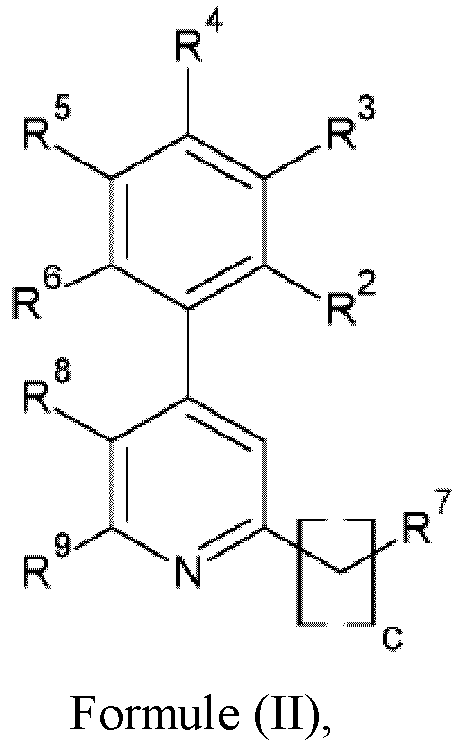 R2 à R6 sont chacun indépendamment choisis dans le groupe constitué de :(i) H, Cl, Br, F, -CN ou -OH,(ii) -O(C1-10)alkyle, de préférence -OMe et -OEt, ou -O(C3-10)cycloalkyle,(iii) -O(C=O)(C1-10)alkyle, de préférence -O(C=O)Me, ou -O(C=O)(C3-10)cycloalkyle,(iv) -COOH, -COO(C1-10)alkyle, -COO(C3-6)cycloalkyle, -COONH2, -COON((C1-10)alkyle)2 ou -COONH(C1-10)alkyle, de préférence -COOH, -COOMe ou -COOEt,de préférence R4 est Cl et R2, R3, R5 et R6 sont H, plus préférablement R2 et R4 sont Cl et R3, R5 et R6 sont H ;R7 est choisi dans le groupe constitué de :(i) NH2, NH(C1-10)alkyle, -OH, -O(C1-10)alkyle ou -CN, de préférence -NH2 ou -OH ;(ii) -COOH, -COO(C1-10)alkyle, -COO(C3-6)cycloalkyle, -COONH2, -COON((C1-10)alkyle)2 ou -COONH(C1-10)alkyle, de préférence -COOH, -COOMe ou -COOEt ;(iii) carbocycle substitué ou non substitué choisi dans le groupe constitué de : (C3-10)carbocycle, de préférence (C3)carbocycle et (C5-6)carbocycle, de préférence (C6)carbocycle aromatique, plus préférablement un phényle non substitué ou un phényle qui est substitué par un substituant choisi dans le groupe constitué de : Cl, F, Br, méthyle substitué ou non substitué, de préférence -(CF3), éthyle, propyle et cyclopropyle ; et(iv) (C3-6)hétérocycle ou (C7-10)carbo- ou hétéro-bicycle substitués ou non substitués possédant 1 à 3 hétéroatomes, chacun indépendamment choisi parmi N, O et S, de préférence hétérobicycle substitué ou non substitué possédant 1 atome d'azote, plus préférablement isoindoline-1,3-dione, le plus préférablement
 R8 est choisi dans le groupe constitué de : -C(=O)NH2, -CN (à la place de R8-CO), -C(=O)NH(C1-10)alkyle, -C(=O)OH ou -C(=O)O(C1-10)alkyle, de préférence -C(=O)NH2 ou -CN ;R9 est choisi dans le groupe constitué de :(i) -H, -Me, -Et, halogène, de préférence -F, ou -CN ;(ii) -COOH, -COO(C1-10)alkyle, -COO(C3-6)cycloalkyle, -COONH2, -COON((C1-10)alkyle)2 ou -COONH(C1-10)alkyle, de préférence -COOH, -COOMe ou -COOEt ;(iii) -OH, -O(C1-10)alkyle, de préférence -OMe et -OEt, ou -O(C3-10)cycloalkyle ;(iv) (C3-10)carbocycle substitué ou non substitué, de préférence (C3)carbocycle et (C5-6)carbocycle, de préférence (C6)carbocycle aromatique, plus préférablement un phényle non substitué ou un phényle substitué par un substituant choisi dans le groupe constitué de : Cl, F, Br, méthyle substitué ou non substitué, de préférence -(CF3), éthyle, propyle et cyclopropyle ; etc est un nombre entier entre 0 et 4 ;et des sels et solvates pharmaceutiquement acceptables de celui-ci ;pour utilisation dans le traitement ou la prophylaxie d'une maladie choisie dans le groupe constitué de :(a) une maladie ou un trouble du système nerveux, de préférence une maladie ou un trouble du système nerveux humain, de préférence une maladie ou un trouble du système nerveux central (SNC) ou du système nerveux périphérique (SNP) ;(b) une athérosclérose ;(c) une infection par l'hépatite B ; et(d) une infection par le papillomavirus humain (PVH).
 - Composé selon la Formule (II) pour utilisation selon la revendication 1, dans lequel :R2 à R6 sont chacun indépendamment choisis dans le groupe constitué de : H, Cl, Br ou F,de préférence R4 est Cl ou F et R2, R3, R5 et R6 sont H ou F, plus préférablement R2 et R4 sont Cl ou F et R3, R5 et R6 sont H ou F ;R7 est choisi dans le groupe constitué de :(i) NH2, NH(C1-10)alkyle, -OH, -CN, de préférence -NH2 ou -OH ;(ii) -O(C1-10)alkyle, de préférence -OMe et -OEt, ou -O(C3-10)cycloalkyle ;(iii) -COOH, -COO(C1-10)alkyle, -COO(C3-6)cycloalkyle, -COONH2, -COON((C1-10)alkyle)2 ou -COONH(C1-10)alkyle, de préférence -COOH, -COOMe ou -COOEt ; et(iv) (C3-6)hétérocycle ou (C7-10)carbo- ou hétéro-bicycle substitués ou non substitués possédant 1 à 3 hétéroatomes, chacun indépendamment choisi parmi N, O et S, de préférence hétérobicycle substitué ou non substitué possédant 1 atome d'azote, plus préférablement isoindoline-1,3-dione, le plus préférablement
 R8 est -C(=O)NH2 ou -CN ;R9 est choisi dans le groupe constitué de :(i) -H, -Me, -Et, halogène, de préférence -F, ou -CN ;(ii) -COOH, -COO(C1-10)alkyle, -COO(C3-6)cycloalkyle, -COONH2, -COON((C1-10)alkyle)2 ou -COONH(C1-10)alkyle, de préférence -COOH, -COOMe ou -COOEt ;(iii) -OH, -O(C1-10)alkyle, de préférence -OMe et -OEt, ou -O(C3-10)cycloalkyle ; et(iv) (C3-10)carbocycle substitué ou non substitué, de préférence (C3)carbocycle et (C5-6)carbocycle, de préférence (C6)carbocycle aromatique, plus préférablement un phényle non substitué ou un phényle substitué par un substituant choisi dans le groupe constitué de : Cl, F, Br, méthyle substitué ou non substitué, de préférence -(CF3), éthyle, propyle et cyclopropyle ; et/ouc est 0 ou 1.
 - Composé selon la Formule (II) pour utilisation selon la revendication 1 ou 2, où le composé est choisi dans le groupe constitué de :


- Composé interagissant avec TOMM6 (translocase de l'homologue de sous-unité de 6 kDa de la membrane externe) pour utilisation selon l'une quelconque des revendications 1 à 3, où la maladie ou le trouble du système nerveux est choisi dans le groupe constitué de :
lésions du cerveau ; maladies cérébrovasculaires ; conséquences de maladies cérébrovasculaires ; maladie du neurone moteur ; démences ; ALS ; sclérose en plaques ; lésion du cerveau traumatique ; maladie cérébrovasculaire sur les vaisseaux de petit calibre ; formes familiales de la maladie d'Alzheimer ; formes sporadiques de la maladie d'Alzheimer ; démence vasculaire ; leucoencéphalopathie sous-corticale et encéphalopathie athérosclérotique sous-corticale ; formes mixtes de démence ; maladie de Parkinson ; paralysie supranucléaire progressive et autres formes de parkinsonisme atypique ; démence fronto-temporale ; démence sous-corticale ; CADASIL (artériopathie dominante autosomale cérébrale avec infarctus et leucoencéphalopathie sous-corticaux) ; paralysie cérébrale ; encéphalite léthargique ; dégénérescence corticobasale ; atrophie multisystématisée ; encéphalopathie traumatique chronique ; maladie de Lytico-Bodig ; FTDP-17 ; Parkinson lié au chromosome 17 ; neuropathie diabétique ; symptômes de dépression et symptômes liés à une dépression, de préférence anhédonie et anorexie ; schizophrénie avec démence ; psychose de Korsakoff ; maladies à corps de Lewy ; paralysie supranucléaire progressive ; dégénérescence corticobasale ; maladie de Pick ; maladie de Huntington ; dégénérescence thalamique ; maladie de Creutzfeld-Jacob ; démence due au VIH ; troubles avec dysfonctionnement mitochondrial, de préférence maladies neurodégénératives du vieillissement ; trouble lié au cognitif ; trouble cognitif léger ; dégradation de la mémoire associée à l'âge ; diminution cognitive associée à l'âge ; dégradation cognitive vasculaire ; symptômes central et périphérique d'athérosclérose et d'ischémie ; maladies cardiovasculaires liées à une athérosclérose ; accident vasculaire cérébral ; maladie périvasculaire ; dysfonctionnement rénal et insuffisance rénale ; troubles liés au stress ; troubles de déficit de l'attention ; troubles de déficit de l'attention avec hyperactivité ; et troubles de la mémoire chez l'enfant.
Priority Applications (1)
| Application Number | Priority Date | Filing Date | Title |
|---|---|---|---|
| EP21190816.5A EP3943085A3 (fr) | 2018-05-24 | 2019-05-23 | Extraits et composés interagissant avec tomm6 destinés à être utilisés dans le traitement et la prophylaxie de maladies du système nerveux, de l'athérosclérose, d'une infection par le virus de l'hépatite b et d'une infection par le papillomavirus humain (pvh) |
Applications Claiming Priority (2)
| Application Number | Priority Date | Filing Date | Title |
|---|---|---|---|
| EP18174145.5A EP3572078A1 (fr) | 2018-05-24 | 2018-05-24 | Extraits et composés à interaction tomm6 destinés à être utilisés dans le traitement et la prophylaxie de maladies du système nerveux |
| PCT/EP2019/063318 WO2019224300A2 (fr) | 2018-05-24 | 2019-05-23 | Extraits et composés interagissant avec tomm6 destinés à être utilisés dans le traitement et la prophylaxie de maladies du système nerveux, de l'athérosclérose, d'une infection par le virus de l'hépatite b et d'une infection par le papillomavirus humain (pvh) |
Related Child Applications (2)
| Application Number | Title | Priority Date | Filing Date |
|---|---|---|---|
| EP21190816.5A Division-Into EP3943085A3 (fr) | 2018-05-24 | 2019-05-23 | Extraits et composés interagissant avec tomm6 destinés à être utilisés dans le traitement et la prophylaxie de maladies du système nerveux, de l'athérosclérose, d'une infection par le virus de l'hépatite b et d'une infection par le papillomavirus humain (pvh) |
| EP21190816.5A Division EP3943085A3 (fr) | 2018-05-24 | 2019-05-23 | Extraits et composés interagissant avec tomm6 destinés à être utilisés dans le traitement et la prophylaxie de maladies du système nerveux, de l'athérosclérose, d'une infection par le virus de l'hépatite b et d'une infection par le papillomavirus humain (pvh) |
Publications (3)
| Publication Number | Publication Date |
|---|---|
| EP3801507A2 EP3801507A2 (fr) | 2021-04-14 |
| EP3801507B1 true EP3801507B1 (fr) | 2025-01-01 |
| EP3801507C0 EP3801507C0 (fr) | 2025-01-01 |
Family
ID=62386039
Family Applications (3)
| Application Number | Title | Priority Date | Filing Date |
|---|---|---|---|
| EP18174145.5A Withdrawn EP3572078A1 (fr) | 2018-05-24 | 2018-05-24 | Extraits et composés à interaction tomm6 destinés à être utilisés dans le traitement et la prophylaxie de maladies du système nerveux |
| EP19728338.5A Active EP3801507B1 (fr) | 2018-05-24 | 2019-05-23 | Extraits et composés interagissant avec tomm6 destinés à être utilisés dans le traitement et la prophylaxie de maladies du système nerveux, de l'athérosclérose, d'une infection par le virus de l'hépatite b et d'une infection par le papillomavirus humain (pvh) |
| EP21190816.5A Pending EP3943085A3 (fr) | 2018-05-24 | 2019-05-23 | Extraits et composés interagissant avec tomm6 destinés à être utilisés dans le traitement et la prophylaxie de maladies du système nerveux, de l'athérosclérose, d'une infection par le virus de l'hépatite b et d'une infection par le papillomavirus humain (pvh) |
Family Applications Before (1)
| Application Number | Title | Priority Date | Filing Date |
|---|---|---|---|
| EP18174145.5A Withdrawn EP3572078A1 (fr) | 2018-05-24 | 2018-05-24 | Extraits et composés à interaction tomm6 destinés à être utilisés dans le traitement et la prophylaxie de maladies du système nerveux |
Family Applications After (1)
| Application Number | Title | Priority Date | Filing Date |
|---|---|---|---|
| EP21190816.5A Pending EP3943085A3 (fr) | 2018-05-24 | 2019-05-23 | Extraits et composés interagissant avec tomm6 destinés à être utilisés dans le traitement et la prophylaxie de maladies du système nerveux, de l'athérosclérose, d'une infection par le virus de l'hépatite b et d'une infection par le papillomavirus humain (pvh) |
Country Status (5)
| Country | Link |
|---|---|
| US (1) | US20210186947A1 (fr) |
| EP (3) | EP3572078A1 (fr) |
| ES (1) | ES3010264T3 (fr) |
| PL (1) | PL3801507T3 (fr) |
| WO (1) | WO2019224300A2 (fr) |
Families Citing this family (7)
| Publication number | Priority date | Publication date | Assignee | Title |
|---|---|---|---|---|
| CA3152752A1 (fr) | 2019-10-01 | 2021-04-08 | Thomas Henley | Genie genetique de champignons pour moduler l'expression de tryptamine |
| CN111534483B (zh) * | 2020-05-23 | 2020-12-18 | 广东壹加再生医学研究院有限公司 | 一种胰岛素样生长因子结合蛋白7激活剂在人脐带间充质干细胞成软骨分化中的应用 |
| CN111925405B (zh) * | 2020-08-20 | 2023-03-28 | 湖南省人民医院 | 一种甲基异茜草素a环糖基化衍生物及其制备方法和应用 |
| CN118984868A (zh) | 2021-12-31 | 2024-11-19 | 恩派瑞安神经科学公司 | 用于产生精神药物生物碱的遗传修饰的生物体 |
| CN116008445B (zh) * | 2022-08-18 | 2024-09-27 | 广西中医药大学 | 一种猪殃殃一测多评的质量控制方法 |
| AU2024306907A1 (en) * | 2023-06-28 | 2026-01-22 | Debut Biotechnology, Inc. | Cell-free production of carminic acid |
| FR3157801A1 (fr) * | 2024-01-02 | 2025-07-04 | Le Rouge Francais | Matière première colorante issue de plantes particulières selon un procédé mettant en œuvre une extraction particulière et un enrobage particulier. |
Family Cites Families (21)
| Publication number | Priority date | Publication date | Assignee | Title |
|---|---|---|---|---|
| FR2476072A1 (fr) * | 1980-02-18 | 1981-08-21 | Fabre Sa Pierre | Phenyl-4 benzoate de nicotinamido methyle, nouveaux derives utiles en therapeutique comme normolipemiants choleretiques |
| US5231170A (en) * | 1986-08-27 | 1993-07-27 | Paul Averback | Antibodies to dense microspheres |
| US6797727B2 (en) * | 2001-07-16 | 2004-09-28 | Transition Therapeutics Inc. | Use of rhein or diacerhein compounds for the treatment or prevention of vascular diseases |
| US20050202109A1 (en) * | 2004-03-10 | 2005-09-15 | Palu Afa K. | Methods and compositions for inhibiting monoamine oxidase and catechol-o-methyltransferase |
| EP1727894A1 (fr) * | 2004-03-22 | 2006-12-06 | Government of the United States of America as represented by The Secretary of the Department of Health and Human Services | Inactivation cellulaire et virale |
| CN1562313A (zh) * | 2004-04-12 | 2005-01-12 | 北京乾露春科技有限公司 | 一种大黄蟅虫泡腾片剂及其制备方法 |
| GB2463833B (en) * | 2007-06-26 | 2012-02-08 | Parkinson S Inst | Compositions that prevent or reverse alpha-synuclein fibrillation for use in the treatment of neurological disorders |
| AU2014265137A1 (en) * | 2008-11-14 | 2014-12-11 | Neuraltus Pharmaceuticals, Inc. | Compositions and methods for the treatment of altered alpha-synuclein function |
| CN101732293B (zh) * | 2008-11-21 | 2012-05-23 | 上海医药工业研究院 | 9,10-蒽醌类化合物的应用 |
| KR101623209B1 (ko) * | 2009-10-12 | 2016-05-23 | 경희대학교 산학협력단 | 결명자 또는 초결명에서 분리된 화합물을 유효성분으로 함유하는 인지기능 장애의 예방 및 치료용 조성물 |
| CN102224933B (zh) * | 2011-05-13 | 2013-07-17 | 烟台新时代健康产业有限公司 | 辅助调节血脂的组合物、保健食品及其应用 |
| RU2505289C2 (ru) * | 2011-11-07 | 2014-01-27 | Общество С Ограниченной Ответственностью "Консорциум-Пик" | Фармацевтическая композиция на основе растительной докозагексаеновой кислоты для лечения и профилактики заболеваний печени |
| CN104324089A (zh) * | 2014-09-28 | 2015-02-04 | 江西百神昌诺药业有限公司 | 各种成分比例稳定均一的大黄总蒽醌及其组合物用于乙型病毒性肝炎的退黄治疗 |
| CN104257769A (zh) * | 2014-09-28 | 2015-01-07 | 江西百神昌诺药业有限公司 | 各种成分比例稳定均一的大黄总蒽醌及其组合物用于抗乙肝病毒 |
| CN104257770A (zh) * | 2014-09-28 | 2015-01-07 | 江西百神药业股份有限公司 | 大黄总蒽醌及其组合物用于治疗老年痴呆症 |
| KR20160136855A (ko) * | 2015-05-21 | 2016-11-30 | 경남과학기술대학교 산학협력단 | 법제 하수오 추출물을 함유하는 인지기능 개선용 조성물 |
| CN104940178A (zh) * | 2015-06-19 | 2015-09-30 | 贵阳中医学院 | 治疗高脂血症、动脉粥样硬化的药物及制备方法和应用 |
| CN105596321A (zh) * | 2015-12-22 | 2016-05-25 | 贵州施普德生物科技有限公司 | 一种治疗帕金森病的复方药物组合物及其应用 |
| CN106074507A (zh) * | 2016-05-30 | 2016-11-09 | 新乡医学院 | 预防动脉粥样硬化的药物组合物及其应用 |
| KR101841604B1 (ko) * | 2017-04-26 | 2018-03-26 | 순천대학교 산학협력단 | 퍼푸린을 유효성분으로 포함하는 우울증 및 불안증의 예방 또는 치료용 조성물 |
| CN107233351A (zh) * | 2017-06-07 | 2017-10-10 | 新乡医学院 | 一种治疗阿尔海默式综合症的药物组合物及应用 |
-
2018
- 2018-05-24 EP EP18174145.5A patent/EP3572078A1/fr not_active Withdrawn
-
2019
- 2019-05-23 ES ES19728338T patent/ES3010264T3/es active Active
- 2019-05-23 EP EP19728338.5A patent/EP3801507B1/fr active Active
- 2019-05-23 PL PL19728338.5T patent/PL3801507T3/pl unknown
- 2019-05-23 US US17/058,440 patent/US20210186947A1/en active Pending
- 2019-05-23 EP EP21190816.5A patent/EP3943085A3/fr active Pending
- 2019-05-23 WO PCT/EP2019/063318 patent/WO2019224300A2/fr not_active Ceased
Non-Patent Citations (4)
| Title |
|---|
| FISICARO PAOLA ET AL: "Targeting mitochondrial dysfunction can restore antiviral activity of exhausted HBV-specific CD8 T cells in chronic hepatitis B", NATURE MEDICINE, vol. 23, no. 3, 6 February 2017 (2017-02-06), New York, pages 327 - 336, XP093178169, ISSN: 1078-8956, Retrieved from the Internet <URL:http://www.nature.com/articles/nm.4275> DOI: 10.1038/nm.4275 * |
| JUI-CHIH CHANG: "Regulatory role of mitochondria in oxidative stress and atherosclerosis", WORLD JOURNAL OF CARDIOLOGY, vol. 2, no. 6, 1 January 2010 (2010-01-01), pages 150, XP055467851, ISSN: 1949-8462, DOI: 10.4330/wjc.v2.i6.150 * |
| MANSOURI ABDELLAH ET AL: "Mitochondrial Dysfunction and Signaling in Chronic Liver Diseases", GASTROENTEROLOGY, ELSEVIER INC, US, vol. 155, no. 3, 2 August 2018 (2018-08-02), pages 629 - 647, XP085461158, ISSN: 0016-5085, DOI: 10.1053/J.GASTRO.2018.06.083 * |
| RAJ KENNETH ET AL: "E1 [and] E4 Protein of Human Papillomavirus Type 16 Associates with Mitochondria", JOURNAL OF VIROLOGY, vol. 78, no. 13, 1 July 2004 (2004-07-01), US, pages 7199 - 7207, XP093178177, ISSN: 0022-538X, DOI: 10.1128/JVI.78.13.7199-7207.2004 * |
Also Published As
| Publication number | Publication date |
|---|---|
| EP3572078A1 (fr) | 2019-11-27 |
| WO2019224300A3 (fr) | 2020-02-06 |
| EP3801507A2 (fr) | 2021-04-14 |
| US20210186947A1 (en) | 2021-06-24 |
| ES3010264T3 (en) | 2025-04-01 |
| EP3943085A2 (fr) | 2022-01-26 |
| EP3943085A3 (fr) | 2022-02-23 |
| EP3801507C0 (fr) | 2025-01-01 |
| PL3801507T3 (pl) | 2025-04-28 |
| WO2019224300A2 (fr) | 2019-11-28 |
Similar Documents
| Publication | Publication Date | Title |
|---|---|---|
| EP3801507B1 (fr) | Extraits et composés interagissant avec tomm6 destinés à être utilisés dans le traitement et la prophylaxie de maladies du système nerveux, de l'athérosclérose, d'une infection par le virus de l'hépatite b et d'une infection par le papillomavirus humain (pvh) | |
| Xiang et al. | Physalin D attenuates hepatic stellate cell activation and liver fibrosis by blocking TGF-β/Smad and YAP signaling | |
| Liu et al. | Targeting heme oxygenase-1 by quercetin ameliorates alcohol-induced acute liver injury via inhibiting NLRP3 inflammasome activation | |
| Choi et al. | Minocycline attenuates neuronal cell death and improves cognitive impairment in Alzheimer's disease models | |
| Yuan et al. | Activation of ERK–Drp1 signaling promotes hypoxia‐induced Aβ accumulation by upregulating mitochondrial fission and BACE1 activity | |
| Ban et al. | Catechin and epicatechin from Smilacis chinae rhizome protect cultured rat cortical neurons against amyloid β protein (25–35)-induced neurotoxicity through inhibition of cytosolic calcium elevation | |
| Chen et al. | Procyanidin from peanut skin induces antiproliferative effect in human prostate carcinoma cells DU145 | |
| CN106619600B (zh) | 巨大戟醇及其衍生物在增强溶酶体生成中的应用 | |
| Ham et al. | Investigation of the component of Lycopodium serratum extract that inhibits proliferation and mediates apoptosis of human HL-60 leukemia cells | |
| KR20150081422A (ko) | mTOR 경로 관련 질병 치료를 위한 화합물 | |
| Li et al. | Thamnolia vermicularis extract improves learning ability in APP/PS1 transgenic mice by ameliorating both Aβ and Tau pathologies | |
| Hu et al. | Synthesis and identification of new flavonoids targeting liver X receptor β involved pathway as potential facilitators of Aβ clearance with reduced lipid accumulation | |
| JP2022527329A (ja) | 神経疾患を処置するために有用なレトロマー安定化剤としてのアミノグアニジンヒドラゾン | |
| Yuan et al. | S1R mediates NRF2 dependent ferroptosis of renal tubular epithelial cells to promote renal fibrosis in diabetic nephropathy | |
| Tang et al. | A novel mechanism of Dimethyl ester of Alpha-ketoglutarate in suppressing Paraquat-induced BEAS-2B cell injury by alleviating GSDME dependent pyroptosis | |
| Wang et al. | Research on the anti-hepatic fibrosis effects and active components of the medicinal plant Tithonia diversifolia | |
| Wu et al. | Pongamol Prevents Neurotoxicity via the Activation of MAPKs/Nrf2 Signaling Pathway in H2O2-Induced Neuronal PC12 Cells and Prolongs the Lifespan of Caenorhabditis elegans | |
| JP5161239B2 (ja) | フタリド化合物のダイマーの抗腫瘍作用 | |
| KR20130106600A (ko) | 헤디치움 코로나리움 유래 랍단 디터펜 화합물 및 이의 용도 | |
| KR101418161B1 (ko) | 네퍼린을 유효성분으로 포함하는 간암 예방 또는 치료용 약제학적 조성물 | |
| US20130323330A1 (en) | Methods for inhibiting prostate cancer by kinases and angiogenesis inhibitory mechanisms of ball moss extract | |
| CN104173390B (zh) | 黄烷醇糖苷在抑制星状细胞活化上的应用 | |
| Sun et al. | Proliferation related acidic leucine-rich protein PAL31 functions as a caspase-3 inhibitor | |
| US11643428B2 (en) | Therapeutic drug for neurodegenerative disease and application thereof | |
| Zhou et al. | Notopterygium incisum root extract (NRE) alleviates epileptiform symptoms in PTZ-induced acute seizure mice |
Legal Events
| Date | Code | Title | Description |
|---|---|---|---|
| STAA | Information on the status of an ep patent application or granted ep patent |
Free format text: STATUS: UNKNOWN |
|
| STAA | Information on the status of an ep patent application or granted ep patent |
Free format text: STATUS: THE INTERNATIONAL PUBLICATION HAS BEEN MADE |
|
| PUAI | Public reference made under article 153(3) epc to a published international application that has entered the european phase |
Free format text: ORIGINAL CODE: 0009012 |
|
| STAA | Information on the status of an ep patent application or granted ep patent |
Free format text: STATUS: REQUEST FOR EXAMINATION WAS MADE |
|
| 17P | Request for examination filed |
Effective date: 20201203 |
|
| AK | Designated contracting states |
Kind code of ref document: A2 Designated state(s): AL AT BE BG CH CY CZ DE DK EE ES FI FR GB GR HR HU IE IS IT LI LT LU LV MC MK MT NL NO PL PT RO RS SE SI SK SM TR |
|
| AX | Request for extension of the european patent |
Extension state: BA ME |
|
| DAV | Request for validation of the european patent (deleted) | ||
| DAX | Request for extension of the european patent (deleted) | ||
| STAA | Information on the status of an ep patent application or granted ep patent |
Free format text: STATUS: EXAMINATION IS IN PROGRESS |
|
| 17Q | First examination report despatched |
Effective date: 20230313 |
|
| RIC1 | Information provided on ipc code assigned before grant |
Ipc: A61P 9/10 20060101ALI20240624BHEP Ipc: A61P 31/20 20060101ALI20240624BHEP Ipc: A61P 25/28 20060101ALI20240624BHEP Ipc: A61P 25/00 20060101ALI20240624BHEP Ipc: A61K 36/74 20060101ALI20240624BHEP Ipc: A61K 36/09 20060101ALI20240624BHEP Ipc: A61K 36/07 20060101ALI20240624BHEP Ipc: A61K 36/062 20060101ALI20240624BHEP Ipc: A61K 31/454 20060101ALI20240624BHEP Ipc: A61K 31/4439 20060101ALI20240624BHEP Ipc: A61K 31/122 20060101ALI20240624BHEP Ipc: A61K 31/4418 20060101ALI20240624BHEP Ipc: A61K 31/421 20060101AFI20240624BHEP |
|
| RIC1 | Information provided on ipc code assigned before grant |
Ipc: A61P 9/10 20060101ALI20240702BHEP Ipc: A61P 31/20 20060101ALI20240702BHEP Ipc: A61P 25/28 20060101ALI20240702BHEP Ipc: A61P 25/00 20060101ALI20240702BHEP Ipc: A61K 36/74 20060101ALI20240702BHEP Ipc: A61K 36/09 20060101ALI20240702BHEP Ipc: A61K 36/07 20060101ALI20240702BHEP Ipc: A61K 36/062 20060101ALI20240702BHEP Ipc: A61K 31/454 20060101ALI20240702BHEP Ipc: A61K 31/4439 20060101ALI20240702BHEP Ipc: A61K 31/122 20060101ALI20240702BHEP Ipc: A61K 31/4418 20060101ALI20240702BHEP Ipc: A61K 31/421 20060101AFI20240702BHEP |
|
| GRAP | Despatch of communication of intention to grant a patent |
Free format text: ORIGINAL CODE: EPIDOSNIGR1 |
|
| STAA | Information on the status of an ep patent application or granted ep patent |
Free format text: STATUS: GRANT OF PATENT IS INTENDED |
|
| INTG | Intention to grant announced |
Effective date: 20240826 |
|
| GRAS | Grant fee paid |
Free format text: ORIGINAL CODE: EPIDOSNIGR3 |
|
| GRAA | (expected) grant |
Free format text: ORIGINAL CODE: 0009210 |
|
| STAA | Information on the status of an ep patent application or granted ep patent |
Free format text: STATUS: THE PATENT HAS BEEN GRANTED |
|
| AK | Designated contracting states |
Kind code of ref document: B1 Designated state(s): AL AT BE BG CH CY CZ DE DK EE ES FI FR GB GR HR HU IE IS IT LI LT LU LV MC MK MT NL NO PL PT RO RS SE SI SK SM TR |
|
| REG | Reference to a national code |
Ref country code: GB Ref legal event code: FG4D |
|
| REG | Reference to a national code |
Ref country code: CH Ref legal event code: EP |
|
| REG | Reference to a national code |
Ref country code: DE Ref legal event code: R096 Ref document number: 602019064248 Country of ref document: DE |
|
| REG | Reference to a national code |
Ref country code: IE Ref legal event code: FG4D |
|
| U01 | Request for unitary effect filed |
Effective date: 20250201 |
|
| U07 | Unitary effect registered |
Designated state(s): AT BE BG DE DK EE FI FR IT LT LU LV MT NL PT RO SE SI Effective date: 20250206 |
|
| REG | Reference to a national code |
Ref country code: ES Ref legal event code: FG2A Ref document number: 3010264 Country of ref document: ES Kind code of ref document: T3 Effective date: 20250401 |
|
| U20 | Renewal fee for the european patent with unitary effect paid |
Year of fee payment: 7 Effective date: 20250331 |
|
| PGFP | Annual fee paid to national office [announced via postgrant information from national office to epo] |
Ref country code: PL Payment date: 20250516 Year of fee payment: 7 |
|
| PGFP | Annual fee paid to national office [announced via postgrant information from national office to epo] |
Ref country code: GB Payment date: 20250527 Year of fee payment: 7 |
|
| PG25 | Lapsed in a contracting state [announced via postgrant information from national office to epo] |
Ref country code: NO Free format text: LAPSE BECAUSE OF FAILURE TO SUBMIT A TRANSLATION OF THE DESCRIPTION OR TO PAY THE FEE WITHIN THE PRESCRIBED TIME-LIMIT Effective date: 20250401 Ref country code: IS Free format text: LAPSE BECAUSE OF FAILURE TO SUBMIT A TRANSLATION OF THE DESCRIPTION OR TO PAY THE FEE WITHIN THE PRESCRIBED TIME-LIMIT Effective date: 20250501 |
|
| PG25 | Lapsed in a contracting state [announced via postgrant information from national office to epo] |
Ref country code: HR Free format text: LAPSE BECAUSE OF FAILURE TO SUBMIT A TRANSLATION OF THE DESCRIPTION OR TO PAY THE FEE WITHIN THE PRESCRIBED TIME-LIMIT Effective date: 20250101 |
|
| PG25 | Lapsed in a contracting state [announced via postgrant information from national office to epo] |
Ref country code: GR Free format text: LAPSE BECAUSE OF FAILURE TO SUBMIT A TRANSLATION OF THE DESCRIPTION OR TO PAY THE FEE WITHIN THE PRESCRIBED TIME-LIMIT Effective date: 20250402 |
|
| PGFP | Annual fee paid to national office [announced via postgrant information from national office to epo] |
Ref country code: CH Payment date: 20250601 Year of fee payment: 7 |
|
| PG25 | Lapsed in a contracting state [announced via postgrant information from national office to epo] |
Ref country code: CZ Free format text: LAPSE BECAUSE OF FAILURE TO SUBMIT A TRANSLATION OF THE DESCRIPTION OR TO PAY THE FEE WITHIN THE PRESCRIBED TIME-LIMIT Effective date: 20250101 |
|
| PG25 | Lapsed in a contracting state [announced via postgrant information from national office to epo] |
Ref country code: SM Free format text: LAPSE BECAUSE OF FAILURE TO SUBMIT A TRANSLATION OF THE DESCRIPTION OR TO PAY THE FEE WITHIN THE PRESCRIBED TIME-LIMIT Effective date: 20250101 |
|
| PGFP | Annual fee paid to national office [announced via postgrant information from national office to epo] |
Ref country code: ES Payment date: 20250630 Year of fee payment: 7 |
|
| PG25 | Lapsed in a contracting state [announced via postgrant information from national office to epo] |
Ref country code: SK Free format text: LAPSE BECAUSE OF FAILURE TO SUBMIT A TRANSLATION OF THE DESCRIPTION OR TO PAY THE FEE WITHIN THE PRESCRIBED TIME-LIMIT Effective date: 20250101 |
|
| PLBE | No opposition filed within time limit |
Free format text: ORIGINAL CODE: 0009261 |
|
| STAA | Information on the status of an ep patent application or granted ep patent |
Free format text: STATUS: NO OPPOSITION FILED WITHIN TIME LIMIT |
|
| REG | Reference to a national code |
Ref country code: CH Ref legal event code: L10 Free format text: ST27 STATUS EVENT CODE: U-0-0-L10-L00 (AS PROVIDED BY THE NATIONAL OFFICE) Effective date: 20251112 |
|
| 26N | No opposition filed |
Effective date: 20251002 |
|
| REG | Reference to a national code |
Ref country code: CH Ref legal event code: R17 Free format text: ST27 STATUS EVENT CODE: U-0-0-R10-R17 (AS PROVIDED BY THE NATIONAL OFFICE) Effective date: 20251212 |
|
| PG25 | Lapsed in a contracting state [announced via postgrant information from national office to epo] |
Ref country code: MC Free format text: LAPSE BECAUSE OF FAILURE TO SUBMIT A TRANSLATION OF THE DESCRIPTION OR TO PAY THE FEE WITHIN THE PRESCRIBED TIME-LIMIT Effective date: 20250101 |
|
| PG25 | Lapsed in a contracting state [announced via postgrant information from national office to epo] |
Ref country code: IE Free format text: LAPSE BECAUSE OF NON-PAYMENT OF DUE FEES Effective date: 20250523 |