EP3808844A1 - Protéines de liaison à l'adn inductibles et outils pour la perturbation du génome et leurs applications - Google Patents
Protéines de liaison à l'adn inductibles et outils pour la perturbation du génome et leurs applications Download PDFInfo
- Publication number
- EP3808844A1 EP3808844A1 EP20195578.8A EP20195578A EP3808844A1 EP 3808844 A1 EP3808844 A1 EP 3808844A1 EP 20195578 A EP20195578 A EP 20195578A EP 3808844 A1 EP3808844 A1 EP 3808844A1
- Authority
- EP
- European Patent Office
- Prior art keywords
- tale
- crispr
- eukaryotic cell
- domain
- sequence
- Prior art date
- Legal status (The legal status is an assumption and is not a legal conclusion. Google has not performed a legal analysis and makes no representation as to the accuracy of the status listed.)
- Pending
Links
Images
































Classifications
-
- C—CHEMISTRY; METALLURGY
- C12—BIOCHEMISTRY; BEER; SPIRITS; WINE; VINEGAR; MICROBIOLOGY; ENZYMOLOGY; MUTATION OR GENETIC ENGINEERING
- C12N—MICROORGANISMS OR ENZYMES; COMPOSITIONS THEREOF; PROPAGATING, PRESERVING, OR MAINTAINING MICROORGANISMS; MUTATION OR GENETIC ENGINEERING; CULTURE MEDIA
- C12N15/00—Mutation or genetic engineering; DNA or RNA concerning genetic engineering, vectors, e.g. plasmids, or their isolation, preparation or purification; Use of hosts therefor
- C12N15/09—Recombinant DNA-technology
- C12N15/63—Introduction of foreign genetic material using vectors; Vectors; Use of hosts therefor; Regulation of expression
- C12N15/635—Externally inducible repressor mediated regulation of gene expression, e.g. tetR inducible by tetracyline
-
- C—CHEMISTRY; METALLURGY
- C12—BIOCHEMISTRY; BEER; SPIRITS; WINE; VINEGAR; MICROBIOLOGY; ENZYMOLOGY; MUTATION OR GENETIC ENGINEERING
- C12N—MICROORGANISMS OR ENZYMES; COMPOSITIONS THEREOF; PROPAGATING, PRESERVING, OR MAINTAINING MICROORGANISMS; MUTATION OR GENETIC ENGINEERING; CULTURE MEDIA
- C12N15/00—Mutation or genetic engineering; DNA or RNA concerning genetic engineering, vectors, e.g. plasmids, or their isolation, preparation or purification; Use of hosts therefor
- C12N15/09—Recombinant DNA-technology
- C12N15/87—Introduction of foreign genetic material using processes not otherwise provided for, e.g. co-transformation
- C12N15/90—Stable introduction of foreign DNA into chromosome
- C12N15/902—Stable introduction of foreign DNA into chromosome using homologous recombination
- C12N15/907—Stable introduction of foreign DNA into chromosome using homologous recombination in mammalian cells
-
- C—CHEMISTRY; METALLURGY
- C12—BIOCHEMISTRY; BEER; SPIRITS; WINE; VINEGAR; MICROBIOLOGY; ENZYMOLOGY; MUTATION OR GENETIC ENGINEERING
- C12N—MICROORGANISMS OR ENZYMES; COMPOSITIONS THEREOF; PROPAGATING, PRESERVING, OR MAINTAINING MICROORGANISMS; MUTATION OR GENETIC ENGINEERING; CULTURE MEDIA
- C12N15/00—Mutation or genetic engineering; DNA or RNA concerning genetic engineering, vectors, e.g. plasmids, or their isolation, preparation or purification; Use of hosts therefor
- C12N15/09—Recombinant DNA-technology
- C12N15/10—Processes for the isolation, preparation or purification of DNA or RNA
- C12N15/102—Mutagenizing nucleic acids
-
- C—CHEMISTRY; METALLURGY
- C12—BIOCHEMISTRY; BEER; SPIRITS; WINE; VINEGAR; MICROBIOLOGY; ENZYMOLOGY; MUTATION OR GENETIC ENGINEERING
- C12N—MICROORGANISMS OR ENZYMES; COMPOSITIONS THEREOF; PROPAGATING, PRESERVING, OR MAINTAINING MICROORGANISMS; MUTATION OR GENETIC ENGINEERING; CULTURE MEDIA
- C12N15/00—Mutation or genetic engineering; DNA or RNA concerning genetic engineering, vectors, e.g. plasmids, or their isolation, preparation or purification; Use of hosts therefor
- C12N15/09—Recombinant DNA-technology
- C12N15/11—DNA or RNA fragments; Modified forms thereof; Non-coding nucleic acids having a biological activity
- C12N15/62—DNA sequences coding for fusion proteins
-
- C—CHEMISTRY; METALLURGY
- C12—BIOCHEMISTRY; BEER; SPIRITS; WINE; VINEGAR; MICROBIOLOGY; ENZYMOLOGY; MUTATION OR GENETIC ENGINEERING
- C12N—MICROORGANISMS OR ENZYMES; COMPOSITIONS THEREOF; PROPAGATING, PRESERVING, OR MAINTAINING MICROORGANISMS; MUTATION OR GENETIC ENGINEERING; CULTURE MEDIA
- C12N15/00—Mutation or genetic engineering; DNA or RNA concerning genetic engineering, vectors, e.g. plasmids, or their isolation, preparation or purification; Use of hosts therefor
- C12N15/09—Recombinant DNA-technology
- C12N15/63—Introduction of foreign genetic material using vectors; Vectors; Use of hosts therefor; Regulation of expression
-
- C—CHEMISTRY; METALLURGY
- C12—BIOCHEMISTRY; BEER; SPIRITS; WINE; VINEGAR; MICROBIOLOGY; ENZYMOLOGY; MUTATION OR GENETIC ENGINEERING
- C12N—MICROORGANISMS OR ENZYMES; COMPOSITIONS THEREOF; PROPAGATING, PRESERVING, OR MAINTAINING MICROORGANISMS; MUTATION OR GENETIC ENGINEERING; CULTURE MEDIA
- C12N15/00—Mutation or genetic engineering; DNA or RNA concerning genetic engineering, vectors, e.g. plasmids, or their isolation, preparation or purification; Use of hosts therefor
- C12N15/09—Recombinant DNA-technology
- C12N15/63—Introduction of foreign genetic material using vectors; Vectors; Use of hosts therefor; Regulation of expression
- C12N15/79—Vectors or expression systems specially adapted for eukaryotic hosts
- C12N15/85—Vectors or expression systems specially adapted for eukaryotic hosts for animal cells
-
- C—CHEMISTRY; METALLURGY
- C12—BIOCHEMISTRY; BEER; SPIRITS; WINE; VINEGAR; MICROBIOLOGY; ENZYMOLOGY; MUTATION OR GENETIC ENGINEERING
- C12N—MICROORGANISMS OR ENZYMES; COMPOSITIONS THEREOF; PROPAGATING, PRESERVING, OR MAINTAINING MICROORGANISMS; MUTATION OR GENETIC ENGINEERING; CULTURE MEDIA
- C12N15/00—Mutation or genetic engineering; DNA or RNA concerning genetic engineering, vectors, e.g. plasmids, or their isolation, preparation or purification; Use of hosts therefor
- C12N15/09—Recombinant DNA-technology
- C12N15/63—Introduction of foreign genetic material using vectors; Vectors; Use of hosts therefor; Regulation of expression
- C12N15/79—Vectors or expression systems specially adapted for eukaryotic hosts
- C12N15/85—Vectors or expression systems specially adapted for eukaryotic hosts for animal cells
- C12N15/86—Viral vectors
-
- C—CHEMISTRY; METALLURGY
- C12—BIOCHEMISTRY; BEER; SPIRITS; WINE; VINEGAR; MICROBIOLOGY; ENZYMOLOGY; MUTATION OR GENETIC ENGINEERING
- C12N—MICROORGANISMS OR ENZYMES; COMPOSITIONS THEREOF; PROPAGATING, PRESERVING, OR MAINTAINING MICROORGANISMS; MUTATION OR GENETIC ENGINEERING; CULTURE MEDIA
- C12N9/00—Enzymes; Proenzymes; Compositions thereof; Processes for preparing, activating, inhibiting, separating or purifying enzymes
- C12N9/14—Hydrolases (3)
- C12N9/16—Hydrolases (3) acting on ester bonds (3.1)
- C12N9/22—Ribonucleases [RNase]; Deoxyribonucleases [DNase]
-
- C—CHEMISTRY; METALLURGY
- C07—ORGANIC CHEMISTRY
- C07K—PEPTIDES
- C07K2319/00—Fusion polypeptide
- C07K2319/01—Fusion polypeptide containing a localisation/targetting motif
- C07K2319/09—Fusion polypeptide containing a localisation/targetting motif containing a nuclear localisation signal
-
- C—CHEMISTRY; METALLURGY
- C12—BIOCHEMISTRY; BEER; SPIRITS; WINE; VINEGAR; MICROBIOLOGY; ENZYMOLOGY; MUTATION OR GENETIC ENGINEERING
- C12N—MICROORGANISMS OR ENZYMES; COMPOSITIONS THEREOF; PROPAGATING, PRESERVING, OR MAINTAINING MICROORGANISMS; MUTATION OR GENETIC ENGINEERING; CULTURE MEDIA
- C12N2310/00—Structure or type of the nucleic acid
- C12N2310/10—Type of nucleic acid
- C12N2310/20—Type of nucleic acid involving clustered regularly interspaced short palindromic repeats [CRISPR]
-
- C—CHEMISTRY; METALLURGY
- C12—BIOCHEMISTRY; BEER; SPIRITS; WINE; VINEGAR; MICROBIOLOGY; ENZYMOLOGY; MUTATION OR GENETIC ENGINEERING
- C12N—MICROORGANISMS OR ENZYMES; COMPOSITIONS THEREOF; PROPAGATING, PRESERVING, OR MAINTAINING MICROORGANISMS; MUTATION OR GENETIC ENGINEERING; CULTURE MEDIA
- C12N2740/00—Reverse transcribing RNA viruses
- C12N2740/00011—Details
- C12N2740/10011—Retroviridae
- C12N2740/16011—Human Immunodeficiency Virus, HIV
- C12N2740/16041—Use of virus, viral particle or viral elements as a vector
- C12N2740/16043—Use of virus, viral particle or viral elements as a vector viral genome or elements thereof as genetic vector
-
- C—CHEMISTRY; METALLURGY
- C12—BIOCHEMISTRY; BEER; SPIRITS; WINE; VINEGAR; MICROBIOLOGY; ENZYMOLOGY; MUTATION OR GENETIC ENGINEERING
- C12N—MICROORGANISMS OR ENZYMES; COMPOSITIONS THEREOF; PROPAGATING, PRESERVING, OR MAINTAINING MICROORGANISMS; MUTATION OR GENETIC ENGINEERING; CULTURE MEDIA
- C12N2750/00—MICROORGANISMS OR ENZYMES; COMPOSITIONS THEREOF; PROPAGATING, PRESERVING, OR MAINTAINING MICROORGANISMS; MUTATION OR GENETIC ENGINEERING; CULTURE MEDIA ssDNA viruses
- C12N2750/00011—Details
- C12N2750/14011—Parvoviridae
- C12N2750/14111—Dependovirus, e.g. adenoassociated viruses
- C12N2750/14141—Use of virus, viral particle or viral elements as a vector
- C12N2750/14143—Use of virus, viral particle or viral elements as a vector viral genome or elements thereof as genetic vector
Definitions
- the present invention generally relates to methods and compositions used for the spatial and temporal control of gene expression, such as genome perturbation, that may use inducible transcriptional effectors.
- LITEs light-inducible transcriptional effectors
- Inducible gene expression systems have typically been designed to allow for chemically induced activation of an inserted open reading frame or shRNA sequence, resulting in gene overexpression or repression, respectively.
- Disadvantages of using open reading frames for overexpression include loss of splice variation and limitation of gene size.
- Gene repression via RNA interference despite its transformative power in human biology, can be hindered by complicated off-target effects.
- Certain inducible systems including estrogen, ecdysone, and FKBP12/FRAP based systems are known to activate off-target endogenous genes. The potentially deleterious effects of long-term antibiotic treatment can complicate the use of tetracycline transactivator (TET) based systems.
- TET tetracycline transactivator
- US Patent Publication No. 20030049799 relates to engineered stimulus-responsive switches to cause a detectable output in response to a preselected stimulus.
- the invention provides a non-naturally occurring or engineered TALE or CRISPR-Cas system which may comprise at least one switch wherein the activity of said TALE or CRISPR-Cas system is controlled by contact with at least one inducer energy source as to the switch.
- the control as to the at least one switch or the activity of said TALE or CRISPR-Cas system may be activated, enhanced, terminated or repressed.
- the contact with the at least one inducer energy source may result in a first effect and a second effect.
- the first effect may be one or more of nuclear import, nuclear export, recruitment of a secondary component (such as an effector molecule), conformational change (of protein, DNA or RNA), cleavage, release of cargo (such as a caged molecule or a co-factor), association or dissociation.
- the second effect may be one or more of activation, enhancement, termination or repression of the control as to the at least one switch or the activity of said TALE or CRISPR-Cas system.
- the first effect and the second effect may occur in a cascade.
- the TALE or CRISPR-Cas system may further comprise at least one nuclear localization signal (NLS), nuclear export signal (NES), functional domain, flexible linker, mutation, deletion, alteration or truncation.
- the one or more of the NLS, the NES or the functional domain may be conditionally activated or inactivated.
- the mutation may be one or more of a mutation in a transcription factor homology region, a mutation in a DNA binding domain (such as mutating basic residues of a basic helix loop helix), a mutation in an endogenous NLS or a mutation in an endogenous NES.
- the inducer energy source may be heat, ultrasound, electromagnetic energy or chemical.
- the inducer energy source may be an antibiotic, a small molecule, a hormone, a hormone derivative, a steroid or a steroid derivative.
- the inducer energy source maybe abscisic acid (ABA), doxycycline (DOX), cumate, rapamycin, 4-hydroxytamoxifen (4OHT), estrogen or ecdysone.
- ABA abscisic acid
- DOX doxycycline
- 4OHT 4-hydroxytamoxifen
- the at least one switch may be selected from the group consisting of antibiotic based inducible systems, electromagnetic energy based inducible systems, small molecule based inducible systems, nuclear receptor based inducible systems and hormone based inducible systems.
- the at least one switch may be selected from the group consisting of tetracycline (Tet)/DOX inducible systems, light inducible systems, ABA inducible systems, cumate repressor/operator systems, 4OHT/estrogen inducible systems, ecdysone-based inducible systems and FKBP12/FRAP (FKBP12-rapamycin complex) inducible systems.
- Tet tetracycline
- DOX light inducible systems
- ABA inducible systems cumate repressor/operator systems
- 4OHT/estrogen inducible systems ecdysone-based inducible systems
- FKBP12/FRAP FKBP12-rapamycin complex
- the inducer energy source is electromagnetic energy.
- the electromagnetic energy may be a component of visible light having a wavelength in the range of 450nm-700nm.
- the component of visible light may have a wavelength in the range of 450nm-500nm and may be blue light.
- the blue light may have an intensity of at least 0.2mW/cm 2 , or more preferably at least 4mW/cm 2 .
- the component of visible light may have a wavelength in the range of 620-700nm and is red light.
- the invention comprehends systems wherein the at least one functional domain may be selected from the group consisting of: transposase domain, integrase domain, recombinase domain, resolvase domain, invertase domain, protease domain, DNA methyltransferase domain, DNA hydroxylmethylase domain, DNA demethylase domain, histone acetylase domain, histone deacetylases domain, nuclease domain, repressor domain, activator domain, nuclear-localization signal domains, transcription-regulatory protein (or transcription complex recruiting) domain, cellular uptake activity associated domain, nucleic acid binding domain, antibody presentation domain, histone modifying enzymes, recruiter of histone modifying enzymes; inhibitor of histone modifying enzymes, histone methyltransferase, histone demethylase, histone kinase, histone phosphatase, histone ribosylase, histone deribosylase, histone ubi
- the invention also provides for use of the system for perturbing a genomic or epigenomic locus of interest. Also provided are uses of the system for the preparation of a pharmaceutical compound.
- the invention provides a method of controlling a non-naturally occurring or engineered TALE or CRISPR-Cas system, comprising providing said TALE or CRISPR-Cas system comprising at least one switch wherein the activity of said TALE or CRISPR-Cas system is controlled by contact with at least one inducer energy source as to the switch.
- the invention provides methods wherein the control as to the at least one switch or the activity of said TALE or CRISPR-Cas system may be activated, enhanced, terminated or repressed.
- the contact with the at least one inducer energy source may result in a first effect and a second effect.
- the first effect may be one or more of nuclear import, nuclear export, recruitment of a secondary component (such as an effector molecule), conformational change (of protein, DNA or RNA), cleavage, release of cargo (such as a caged molecule or a co-factor), association or dissociation.
- the second effect may be one or more of activation, enhancement, termination or repression of the control as to the at least one switch or the activity of said TALE or CRISPR-Cas system.
- the first effect and the second effect may occur in a cascade.
- the TALE or CRISPR-Cas system may further comprise at least one nuclear localization signal (NLS), nuclear export signal (NES), functional domain, flexible linker, mutation, deletion, alteration or truncation.
- the one or more of the NLS, the NES or the functional domain may be conditionally activated or inactivated.
- the mutation may be one or more of a mutation in a transcription factor homology region, a mutation in a DNA binding domain (such as mutating basic residues of a basic helix loop helix), a mutation in an endogenous NLS or a mutation in an endogenous NES.
- the inducer energy source may be heat, ultrasound, electromagnetic energy or chemical.
- the inducer energy source may be an antibiotic, a small molecule, a hormone, a hormone derivative, a steroid or a steroid derivative.
- the inducer energy source maybe abscisic acid (ABA), doxycycline (DOX), cumate, rapamycin, 4-hydroxytamoxifen (4OHT), estrogen or ecdysone.
- ABA abscisic acid
- DOX doxycycline
- 4OHT 4-hydroxytamoxifen
- the at least one switch may be selected from the group consisting of antibiotic based inducible systems, electromagnetic energy based inducible systems, small molecule based inducible systems, nuclear receptor based inducible systems and hormone based inducible systems.
- the at least one switch may be selected from the group consisting of tetracycline (Tet)/DOX inducible systems, light inducible systems, ABA inducible systems, cumate repressor/operator systems, 4OHT/estrogen inducible systems, ecdysone-based inducible systems and FKBP12/FRAP (FKBP12-rapamycin complex) inducible systems.
- Tet tetracycline
- DOX light inducible systems
- ABA inducible systems cumate repressor/operator systems
- 4OHT/estrogen inducible systems ecdysone-based inducible systems
- FKBP12/FRAP FKBP12-rapamycin complex
- the inducer energy source is electromagnetic energy.
- the electromagnetic energy may be a component of visible light having a wavelength in the range of 450nm-700nm.
- the component of visible light may have a wavelength in the range of 450nm-500nm and may be blue light.
- the blue light may have an intensity of at least 0.2mW/cm 2 , or more preferably at least 4mW/cm 2 .
- the component of visible light may have a wavelength in the range of 620-700nm and is red light.
- the invention comprehends methods wherein the at least one functional domain may be selected from the group consisting of: transposase domain, integrase domain, recombinase domain, resolvase domain, invertase domain, protease domain, DNA methyltransferase domain, DNA hydroxylmethylase domain, DNA demethylase domain, histone acetylase domain, histone deacetylases domain, nuclease domain, repressor domain, activator domain, nuclear-localization signal domains, transcription-regulatory protein (or transcription complex recruiting) domain, cellular uptake activity associated domain, nucleic acid binding domain, antibody presentation domain, histone modifying enzymes, recruiter of histone modifying enzymes; inhibitor of histone modifying enzymes, histone methyltransferase, histone demethylase, histone kinase, histone phosphatase, histone ribosylase, histone deribosylase, histone ubi
- TALE system comprises a DNA binding polypeptide comprising:
- the system or method of the invention provides the N-terminal capping region or fragment thereof comprises 147 contiguous amino acids of a wild type N-terminal capping region, or the C-terminal capping region or fragment thereof comprises 68 contiguous amino acids of a wild type C-terminal capping region, or the N-terminal capping region or fragment thereof comprises 136 contiguous amino acids of a wild type N-terminal capping region and the C-terminal capping region or fragment thereof comprises 183 contiguous amino acids of a wild type C-terminal capping region.
- the at least one RVD may be selected from the group consisting of (a) HH, KH, NH, NK, NQ, RH, RN, SS, NN, SN, KN for recognition of guanine (G); (b) NI, KI, RI, HI, SI for recognition of adenine (A); (c) NG, HG, KG, RG for recognition of thymine (T); (d) RD, SD, HD, ND, KD, YG for recognition of cytosine (C); (e) NV, HN for recognition of A or G; and (f) H*, HA, KA, N*, NA, NC, NS, RA, S*for recognition of A or T or G or C, wherein (*) means that the amino acid at X13 is absent.
- the at least one RVD may be selected from the group consisting of (a) HH, KH, NH, NK, NQ, RH, RN, SS for recognition of guanine (G); (b) SI for recognition of adenine (A); (c) HG, KG, RG for recognition of thymine (T); (d) RD, SD for recognition of cytosine (C); (e) NV, HN for recognition of A or G and (f) H*, HA, KA, N*, NA, NC, NS, RA, S*for recognition of A or T or G or C, wherein (*) means that the amino acid at X13 is absent.
- the RVD for the recognition of G is RN, NH, RH or KH; or the RVD for the recognition of A is SI; or the RVD for the recognition of T is KG or RG; and the RVD for the recognition of C is SD or RD.
- at least one of the following is present [LTLD] or [LTLA] or [LTQV] at X1-4, or [EQHG] or [RDHG] at positions X30-33 or X31-34 or X32-35.
- the TALE system is packaged into a AAV or a lentivirus vector.
- the CRISPR system may comprise a vector system comprising: a) a first regulatory element operably linked to a CRISPR-Cas system guide RNA that targets a locus of interest, b) a second regulatory inducible element operably linked to a Cas protein, wherein components (a) and (b) may be located on same or different vectors of the system, wherein the guide RNA targets DNA of the locus of interest, wherein the Cas protein and the guide RNA do not naturally occur together.
- the Cas protein is a Cas9 enzyme.
- the invention also provides for the vector being a AAV or a lentivirus.
- the invention particularly relates to inducible methods of altering expression of a genomic locus of interest and to compositions that inducibly alter expression of a genomic locus of interest wherein the genomic locus may be contacted with a non-naturally occurring or engineered composition comprising a deoxyribonucleic acid (DNA) binding polypeptide.
- DNA deoxyribonucleic acid
- This polypeptide may include a DNA binding domain comprising at least five or more Transcription activator-like effector (TALE) monomers and at least one or more half-monomers specifically ordered to target the genomic locus of interest or at least one or more effector domains linked to an energy sensitive protein or fragment thereof.
- the energy sensitive protein or fragment thereof may undergo a conformational change upon induction by an energy source allowing it to bind an interacting partner.
- the polypeptide may also include a DNA binding domain comprising at least one or more variant TALE monomers or half-monomers specifically ordered to target the genomic locus of interest or at least one or more effector domains linked to the interacting partner, wherein the energy sensitive protein or fragment thereof may bind to the interacting partner upon induction by the energy source.
- the method may also include applying the energy source and determining that the expression of the genomic locus is altered.
- the genomic locus may be in a cell.
- the invention also relates to inducible methods of repressing expression of a genomic locus of interest and to compositions that inducibly repress expression of a genomic locus of interest wherein the genomic locus may be contacted with a non-naturally occurring or engineered composition comprising a DNA binding polypeptide.
- the polypeptide may include a DNA binding domain comprising at least five or more Transcription activator-like effector (TALE) monomers and at least one or more half-monomers specifically ordered to target the genomic locus of interest or at least one or more repressor domains linked to an energy sensitive protein or fragment thereof.
- the energy sensitive protein or fragment thereof may undergo a conformational change upon induction by an energy source allowing it to bind an interacting partner.
- the polypeptide may also include a DNA binding domain comprising at least one or more variant TALE monomers or half-monomers specifically ordered to target the genomic locus of interest or at least one or more effector domains linked to the interacting partner, wherein the energy sensitive protein or fragment thereof may bind to the interacting partner upon induction by the energy source.
- the method may also include applying the energy source and determining that the expression of the genomic locus is repressed.
- the genomic locus may be in a cell.
- the invention also relates to inducible methods of activating expression of a genomic locus of interest and to compositions that inducibly activate expression of a genomic locus of interest wherein the genomic locus may be contacted with a non-naturally occurring or engineered composition comprising a DNA binding polypeptide.
- the polypeptide may include a DNA binding domain comprising at least five or more TALE monomers and at least one or more half-monomers specifically ordered to target the genomic locus of interest or at least one or more activator domains linked to an energy sensitive protein or fragment thereof.
- the energy sensitive protein or fragment thereof may undergo a conformational change upon induction by an energy source allowing it to bind an interacting partner.
- the polypeptide may also include a DNA binding domain comprising at least one or more variant TALE monomers or half-monomers specifically ordered to target the genomic locus of interest or at least one or more effector domains linked to the interacting partner, wherein the energy sensitive protein or fragment thereof may bind to the interacting partner upon induction by the energy source.
- the method may also include applying the energy source and determining that the expression of the genomic locus is activated.
- the genomic locus may be in a cell.
- the inducible effector may be a Light Inducible Transcriptional Effector (LITE).
- LITE Light Inducible Transcriptional Effector
- the inducible effector may be a chemical.
- the present invention also contemplates an inducible multiplex genome engineering using CRISPR (clustered regularly interspaced short palindromic repeats)/Cas systems.
- the present invention also encompasses nucleic acid encoding the polypeptides of the present invention.
- the nucleic acid may comprise a promoter, advantageously human Synapsin I promoter (hSyn).
- the nucleic acid may be packaged into an adeno associated viral vector (AAV).
- AAV adeno associated viral vector
- the invention further also relates to methods of treatment or therapy that encompass the methods and compositions described herein.
- nucleic acid refers to a deoxyribonucleic or ribonucleic oligonucleotide in either single- or double-stranded form.
- the term encompasses nucleic acids, i.e., oligonucleotides, containing known analogues of natural nucleotides.
- the term also encompasses nucleic-acid-like structures with synthetic backbones, see, e.g., Eckstein, 1991; Baserga et al., 1992; Milligan, 1993; WO 97/03211 ; WO 96/39154 ; Mata, 1997; Strauss-Soukup, 1997; and Straus, 1996.
- recombinant refers to a polynucleotide synthesized or otherwise manipulated in vitro (e.g., “recombinant polynucleotide”), to methods of using recombinant polynucleotides to produce gene products in cells or other biological systems, or to a polypeptide ("recombinant protein") encoded by a recombinant polynucleotide.
- “Recombinant means” encompasses the ligation of nucleic acids having various coding regions or domains or promoter sequences from different sources into an expression cassette or vector for expression of, e.g., inducible or constitutive expression of polypeptide coding sequences in the vectors of invention.
- heterologous when used with reference to a nucleic acid, indicates that the nucleic acid is in a cell or a virus where it is not normally found in nature; or, comprises two or more subsequences that are not found in the same relationship to each other as normally found in nature, or is recombinantly engineered so that its level of expression, or physical relationship to other nucleic acids or other molecules in a cell, or structure, is not normally found in nature.
- a similar term used in this context is "exogenous".
- a heterologous nucleic acid is typically recombinantly produced, having two or more sequences from unrelated genes arranged in a manner not found in nature; e.g., a human gene operably linked to a promoter sequence inserted into an adenovirus-based vector of the invention.
- a heterologous nucleic acid of interest may encode an immunogenic gene product, wherein the adenovirus is administered therapeutically or prophylactically as a carrier or drug-vaccine composition.
- Heterologous sequences may comprise various combinations of promoters and sequences, examples of which are described in detail herein.
- a “therapeutic ligand” may be a substance which may bind to a receptor of a target cell with therapeutic effects.
- a “therapeutic effect” may be a consequence of a medical treatment of any kind, the results of which are judged by one of skill in the field to be desirable and beneficial.
- the “therapeutic effect” may be a behavioral or physiologic change which occurs as a response to the medical treatment. The result may be expected, unexpected, or even an unintended consequence of the medical treatment.
- a “therapeutic effect” may include, for example, a reduction of symptoms in a subject suffering from infection by a pathogen.
- a “target cell” may be a cell in which an alteration in its activity may induce a desired result or response.
- a cell may be an in vitro cell.
- the cell may be an isolated cell which may not be capable of developing into a complete organism.
- a “ligand” may be any substance that binds to and forms a complex with a biomolecule to serve a biological purpose.
- ligand may also refer to an "antigen” or “immunogen”.
- antigen and “immunogen” are used interchangeably.
- “Expression” of a gene or nucleic acid encompasses not only cellular gene expression, but also the transcription and translation of nucleic acid(s) in cloning systems and in any other context.
- a "vector” is a tool that allows or facilitates the transfer of an entity from one environment to another.
- some vectors used in recombinant DNA techniques allow entities, such as a segment of DNA (such as a heterologous DNA segment, such as a heterologous cDNA segment), to be transferred into a target cell.
- the present invention comprehends recombinant vectors that may include viral vectors, bacterial vectors, protozoan vectors, DNA vectors, or recombinants thereof.
- exogenous DNA for expression in a vector e.g., encoding an epitope of interest and/or an antigen and/or a therapeutic
- documents providing such exogenous DNA as well as with respect to the expression of transcription and/or translation factors for enhancing expression of nucleic acid molecules, and as to terms such as "epitope of interest", “therapeutic”, “immune response”, “immunological response”, “protective immune response”, “immunological composition”, “immunogenic composition”, and “vaccine composition”, inter alia, reference is made to U.S. Patent No.
- aspects of the invention comprehend the TALE and CRISPR-Cas systems of the invention being delivered into an organism or a cell or to a locus of interest via a delivery system.
- a vector wherein the vector is a viral vector, such as a lenti- or baculo- or preferably adeno-viral/adeno-associated viral vectors, but other means of delivery are known (such as yeast systems, microvesicles, gene guns/means of attaching vectors to gold nanoparticles) and are provided.
- the viral or plasmid vectors may be delivered via nanoparticles, exosomes, microvesciles, or a gene-gun.
- the terms “drug composition” and “drug”, “vaccinal composition”, “vaccine”, “vaccine composition”, “therapeutic composition” and “therapeutic-immunologic composition” cover any composition that induces protection against an antigen or pathogen.
- the protection may be due to an inhibition or prevention of infection by a pathogen.
- the protection may be induced by an immune response against the antigen(s) of interest, or which efficaciously protects against the antigen; for instance, after administration or injection into the subject, elicits a protective immune response against the targeted antigen or immunogen or provides efficacious protection against the antigen or immunogen expressed from the inventive adenovirus vectors of the invention.
- pharmaceutical composition means any composition that is delivered to a subject. In some embodiments, the composition may be delivered to inhibit or prevent infection by a pathogen.
- a “therapeutically effective amount” is an amount or concentration of the recombinant vector encoding the gene of interest, that, when administered to a subject, produces a therapeutic response or an immune response to the gene product of interest.
- viral vector includes but is not limited to retroviruses, adenoviruses, adeno-associated viruses, alphaviruses, and herpes simplex virus.
- the present invention comprehends spatiotemporal control of endogenous or exogenous gene expression using a form of energy.
- the form of energy may include but is not limited to electromagnetic radiation, sound energy, chemical energy and thermal energy.
- the form of energy is electromagnetic radiation, preferably, light energy.
- switch refers to a system or a set of components that act in a coordinated manner to affect a change, encompassing all aspects of biological function such as activation, repression, enhancement or termination of that function.
- switch encompasses genetic switches which comprise the basic components of gene regulatory proteins and the specific DNA sequences that these proteins recognize.
- switches relate to inducible and repressible systems used in gene regulation. In general, an inducible system may be off unless there is the presence of some molecule (called an inducer) that allows for gene expression. The molecule is said to "induce expression”.
- a repressible system is on except in the presence of some molecule (called a corepressor) that suppresses gene expression.
- the molecule is said to "repress expression”.
- the manner by which this happens is dependent on the control mechanisms as well as differences in cell type.
- the term "inducible” as used herein may encompass all aspects of a switch irrespective of the molecular mechanism involved. Accordingly a switch as comprehended by the invention may include but is not limited to antibiotic based inducible systems, electromagnetic energy based inducible systems, small molecule based inducible systems, nuclear receptor based inducible systems and hormone based inducible systems.
- the switch may be a tetracycline (Tet)/DOX inducible system, a light inducible systems, a Abscisic acid (ABA) inducible system, a cumate repressor/operator system, a 4OHT/estrogen inducible system, an ecdysone-based inducible systems or a FKBP12/FRAP (FKBP12-rapamycin complex) inducible system.
- Tet tetracycline
- ABA Abscisic acid
- 4OHT/estrogen inducible system an ecdysone-based inducible systems
- FKBP12/FRAP FKBP12-rapamycin complex
- At least one switch may be associated with a TALE or CRISPR-Cas system wherein the activity of the TALE or CRISPR-Cas system is controlled by contact with at least one inducer energy source as to the switch.
- contact refers to any associative relationship between the switch and the inducer energy source, which may be a physical interaction with a component (as in molecules or proteins which bind together) or being in the path or being struck by energy emitted by the energy source (as in the case of absorption or reflection of light, heat or sound).
- the contact of the switch with the inducer energy source is brought about by application of the inducer energy source.
- the invention also comprehends contact via passive feedback systems.
- this energy source may be a molecule or protein already existent in the cell or in the cellular environment.
- Interactions which bring about contact passively may include but are not limited to receptor/ligand binding, receptor/chemical ligand binding, receptor/protein binding, antibody/protein binding, protein dimerization, protein heterodimerization, protein multimerization, nuclear receptor/ligand binding, post-translational modifications such as phosphorylation, dephosphorylation, ubiquitination or deubiquitination.
- TAL photoresponsive transcription activator-like
- DNA binding specificity of engineered TAL effectors is utilized to localize the complex to a particular region in the genome.
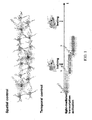
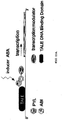
- light-induced protein dimerization is used to attract an activating or repressing domain to the region specified by the TAL effector, resulting in modulation of the downstream gene.
- Inducible effectors are contemplated for in vitro or in vivo application in which temporally or spatially specific gene expression control is desired.
- In vitro examples temporally precise induction/suppression of developmental genes to elucidate the timing of developmental cues, spatially controlled induction of cell fate reprogramming factors for the generation of cell-type patterned tissues.
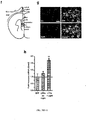
- In vivo examples combined temporal and spatial control of gene expression within specific brain regions.
- the inducible effector is a Light Inducible Transcriptional Effector (LITE).
- LITE Light Inducible Transcriptional Effector
- TALE transcription activator like effector
- VP64 the activation domain VP64 are utilized in the present invention.
- LITEs are designed to modulate or alter expression of individual endogenous genes in a temporally and spatially precise manner.
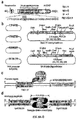
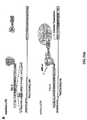
- Each LITE may comprise a two component system consisting of a customized DNA-binding transcription activator like effector (TALE) protein, a light-responsive cryptochrome heterodimer from Arabadopsis thaliana, and a transcriptional activation/repression domain.
- TALE DNA-binding transcription activator like effector
- the TALE is designed to bind to the promoter sequence of the gene of interest.
- the TALE protein is fused to one half of the cryptochrome heterodimer (cryptochrome-2 or CIB1), while the remaining cryptochrome partner is fused to a transcriptional effector domain.
- Effector domains may be either activators, such as VP16, VP64, or p65, or repressors, such as KRAB, EnR, or SID.
- activators such as VP16, VP64, or p65
- repressors such as KRAB, EnR, or SID.
- the TALE-cryptochrome2 protein localizes to the promoter of the gene of interest, but is not bound to the CIB1-effector protein.
- cryptochrome-2 Upon stimulation of a LITE with blue spectrum light, cryptochrome-2 becomes activated, undergoes a conformational change, and reveals its binding domain.
- CIB1 binds to cryptochrome-2 resulting in localization of the effector domain to the promoter region of the gene of interest and initiating gene overexpression or silencing.
- Activator and repressor domains may selected on the basis of species, strength, mechanism, duration, size, or any number of other parameters.
- Preferred effector domains include, but are not limited to, a transposase domain, integrase domain, recombinase domain, resolvase domain, invertase domain, protease domain, DNA methyltransferase domain, DNA demethylase domain, histone acetylase domain, histone deacetylases domain, nuclease domain, repressor domain, activator domain, nuclear-localization signal domains, transcription-protein recruiting domain, cellular uptake activity associated domain, nucleic acid binding domain or antibody presentation domain.
- Gene targeting in a LITE or in any other inducible effector may be achieved via the specificity of customized TALE DNA binding proteins.
- a target sequence in the promoter region of the gene of interest is selected and a TALE customized to this sequence is designed.
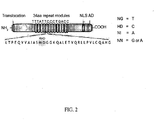
- the central portion of the TALE consists of tandem repeats 34 amino acids in length. Although the sequences of these repeats are nearly identical, the 12th and 13th amino acids (termed repeat variable diresidues) of each repeat vary, determining the nucleotide-binding specificity of each repeat.
- a DNA binding protein specific to the target promoter sequence is created.
- the methods provided herein use isolated, non-naturally occurring, recombinant or engineered DNA binding proteins that comprise TALE monomers or TALE monomers or half monomers as a part of their organizational structure that enable the targeting of nucleic acid sequences with improved efficiency and expanded specificity.
- Naturally occurring TALEs or "wild type TALEs" are nucleic acid binding proteins secreted by numerous species of proteobacteria.
- TALE polypeptides contain a nucleic acid binding domain composed of tandem repeats of highly conserved monomer polypeptides that are predominantly 33, 34 or 35 amino acids in length and that differ from each other mainly in amino acid positions 12 and 13.
- the nucleic acid is DNA.
- polypeptide monomers As used herein, the term "polypeptide monomers", “TALE monomers” or “monomers” will be used to refer to the highly conserved repetitive polypeptide sequences within the TALE nucleic acid binding domain and the term “repeat variable di-residues" or “RVD” will be used to refer to the highly variable amino acids at positions 12 and 13 of the polypeptide monomers.
- a general representation of a TALE monomer which is comprised within the DNA binding domain is X 1-11 -(X 12 X 13 )-X 14-33 or 34 or 35 , where the subscript indicates the amino acid position and X represents any amino acid.
- X 12 X 13 indicate the RVDs.
- the variable amino acid at position 13 is missing or absent and in such monomers, the RVD consists of a single amino acid.
- the RVD may be alternatively represented as X*, where X represents X 12 and (*) indicates that X 13 is absent.
- the DNA binding domain comprises several repeats of TALE monomers and this may be represented as (X 1-11 -(X 12 X 13 )-X 14-33 or 34 or 35 )z, where in an advantageous embodiment, z is at least 5 to 40. In a further advantageous embodiment, z is at least 10 to 26.
- the TALE monomers have a nucleotide binding affinity that is determined by the identity of the amino acids in its RVD.
- polypeptide monomers with an RVD of NI preferentially bind to adenine (A)
- monomers with an RVD of NG preferentially bind to thymine (T)
- monomers with an RVD of HD preferentially bind to cytosine (C)
- monomers with an RVD of NN preferentially bind to both adenine (A) and guanine (G).
- monomers with an RVD of IG preferentially bind to T.
- the number and order of the polypeptide monomer repeats in the nucleic acid binding domain of a TALE determines its nucleic acid target specificity.
- monomers with an RVD of NS recognize all four base pairs and may bind to A, T, G or C.
- the structure and function of TALEs is further described in, for example, Moscou et al., Science 326:1501 (2009 ); Boch et al., Science 326:1509-1512 (2009 ); and Zhang et al., Nature Biotechnology 29:149-153 (2011 ), each of which is incorporated by reference in its entirety.
- polypeptides used in methods of the invention are isolated, non-naturally occurring, recombinant or engineered nucleic acid-binding proteins that have nucleic acid or DNA binding regions containing polypeptide monomer repeats that are designed to target specific nucleic acid sequences.
- polypeptide monomers having an RVD of HN or NH preferentially bind to guanine and thereby allow the generation of TALE polypeptides with high binding specificity for guanine containing target nucleic acid sequences.
- polypeptide monomers having RVDs RN, NN, NK, SN, NH, KN, HN, NQ, HH, RG, KH, RH and SS preferentially bind to guanine.
- polypeptide monomers having RVDs RN, NK, NQ, HH, KH, RH, SS and SN preferentially bind to guanine and thereby allow the generation of TALE polypeptides with high binding specificity for guanine containing target nucleic acid sequences.
- polypeptide monomers having RVDs HH, KH, NH, NK, NQ, RH, RN and SS preferentially bind to guanine and thereby allow the generation of TALE polypeptides with high binding specificity for guanine containing target nucleic acid sequences.
- the RVDs that have high binding specificity for guanine are RN, NH RH and KH.
- polypeptide monomers having an RVD of NV preferentially bind to adenine and guanine.
- monomers having RVDs of H*, HA, KA, N*, NA, NC, NS, RA, and S* bind to adenine, guanine, cytosine and thymine with comparable affinity.
- the RVDs that have a specificity for adenine are NI, RI, KI, HI, and SI.
- the RVDs that have a specificity for adenine are HN, SI and RI, most preferably the RVD for adenine specificity is SI.
- the RVDs that have a specificity for thymine are NG, HG, RG and KG.
- the RVDs that have a specificity for thymine are KG, HG and RG, most preferably the RVD for thymine specificity is KG or RG.
- the RVDs that have a specificity for cytosine are HD, ND, KD, RD, HH, YG and SD.
- the RVDs that have a specificity for cytosine are SD and RD.
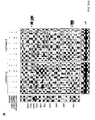
- the variant TALE monomers may comprise any of the RVDs that exhibit specificity for a nucleotide as depicted in FIG. 7A .
- the RVD NT may bind to G and A.
- the RVD NP may bind to A, T and C.
- At least one selected RVD may be NI, HD, NG, NN, KN, RN, NH, NQ, SS, SN, NK, KH, RH, HH, KI, HI, RI, SI, KG, HG, RG, SD, ND, KD, RD, YG, HN, NV, NS, HA, S*, N*, KA, H*, RA, NA or NC.
- the predetermined N-terminal to C-terminal order of the one or more polypeptide monomers of the nucleic acid or DNA binding domain determines the corresponding predetermined target nucleic acid sequence to which the polypeptides of the invention will bind.
- the monomers and at least one or more half monomers are "specifically ordered to target" the genomic locus or gene of interest.
- the natural TALE-binding sites always begin with a thymine (T), which may be specified by a cryptic signal within the nonrepetitive N-terminus of the TALE polypeptide; in some cases this region may be referred to as repeat 0.
- TALE binding sites do not necessarily have to begin with a thymine (T) and polypeptides of the invention may target DNA sequences that begin with T, A, G or C.
- T thymine
- the tandem repeat of TALE monomers always ends with a half-length repeat or a stretch of sequence that may share identity with only the first 20 amino acids of a repetitive full length TALE monomer and this half repeat may be referred to as a half-monomer ( FIG. 8 ). Therefore, it follows that the length of the nucleic acid or DNA being targeted is equal to the number of full monomers plus two.
- nucleic acid binding domains may be engineered to contain 5, 6, 7, 8, 9, 10, 11, 12, 13, 14, 15, 16, 17, 18, 19, 20, 21, 22, 23, 24, 25, or more polypeptide monomers arranged in a N-terminal to C-terminal direction to bind to a predetermined 5, 6, 7, 8, 9, 10, 11, 12, 13, 14, 15, 16, 17, 18, 19, 20, 21, 22, 23, 24, 25 nucleotide length nucleic acid sequence.
- nucleic acid binding domains may be engineered to contain 5, 6, 7, 8, 9, 10, 11, 12, 13, 14, 15, 16, 17, 18, 19, 20, 21, 22, 23, 24, 25, 26 or more full length polypeptide monomers that are specifically ordered or arranged to target nucleic acid sequences of length 7, 8, 9, 10, 11, 12, 13, 14, 15, 16, 17, 18, 19, 20, 21, 22, 23, 24, 25, 26, 27 and 28 nucleotides, respectively.
- the polypeptide monomers are contiguous.
- half-monomers may be used in the place of one or more monomers, particularly if they are present at the C-terminus of the TALE polypeptide.
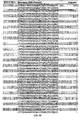
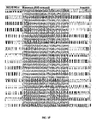
- Polypeptide monomers are generally 33, 34 or 35 amino acids in length. With the exception of the RVD, the amino acid sequences of polypeptide monomers are highly conserved or as described herein, the amino acids in a polypeptide monomer, with the exception of the RVD, exhibit patterns that effect TALE activity, the identification of which may be used in preferred embodiments of the invention. Representative combinations of amino acids in the monomer sequence, excluding the RVD, are shown by the Applicants to have an effect on TALE activity ( FIG. 10 ).
- the DNA binding domain comprises (X 1-11 -X 12 X 13 -X 14-33 or 34 or 35 ) z , wherein X 1-11 is a chain of 11 contiguous amino acids, wherein X 12 X 13 is a repeat variable diresidue (RVD), wherein X 14-33 or 34 or 35 is a chain of 21, 22 or 23 contiguous amino acids, wherein z is at least 5 to 26, then the preferred combinations of amino acids are [LTLD] or [LTLA] or [LTQV] at X 1-4 , or [EQHG] or [RDHG] at positions X 30-33 or X 31-34 or X 32-35 .
- RVD repeat variable diresidue
- amino acid combinations of interest in the monomers are [LTPD] at X 1-4 and [NQALE] at X 16-10 and [DHG] at X 32-34 when the monomer is 34 amino acids in length.
- the monomer is 33 or 35 amino acids long, then the corresponding shift occurs in the positions of the contiguous amino acids [NQALE] and [DHG]; preferably, embodiments of the invention may have [NQALE] at X 15-19 or X 17-11 and [DHG] at X 31-33 or X 33-35 .
- amino acid combinations of interest in the monomers are [LTPD] at X 1-4 and [KRALE] at X 16-20 and [AHG] at X 32-34 or [LTPE] at X 1-4 and [KRALE] at X 16-20 and [DHG] at X 32-34 when the monomer is 34 amino acids in length.
- the monomer is 33 or 35 amino acids long, then the corresponding shift occurs in the positions of the contiguous amino acids [KRALE], [AHG] and [DHG].
- the positions of the contiguous amino acids may be ([LTPD] at X 1-4 and [KRALE] at X 15-19 and [AHG] at X 31-33 ) or ([LTPE] at X 1-4 and [KRALE] at X 15-19 and [DHG] at X 31-33 ) or ([LTPD] at X 1-4 and [KRALE] at X 17-21 and [AHG] at X 33-35 ) or ([LTPE] at X 1-4 and [KRALE] at X 17-11 and [DHG] at X 33-35 ).
- contiguous amino acids [NGKQALE] are present at positions X 14-10 or X 13-19 or X 15-11 . These representative positions put forward various embodiments of the invention and provide guidance to identify additional amino acids of interest or combinations of amino acids of interest in all the TALE monomers described herein ( FIGs .9A-F and 10 ).
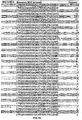
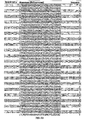
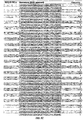
- exemplary amino acid sequences of conserved portions of polypeptide monomers The position of the RVD in each sequence is represented by XX or by X* (wherein (*) indicates that the RVD is a single amino acid and residue 13 (X 13 ) is absent).
- TALE monomers excluding the RVDs which may be denoted in a sequence (X 1-11 -X 14-34 or X 1-11 -X 14-35 ), wherein X is any amino acid and the subscript is the amino acid position is provided in FIG. 9A-F . The frequency with which each monomer occurs is also indicated.
- TALE polypeptide binding efficiency may be increased by including amino acid sequences from the "capping regions" that are directly N-terminal or C-terminal of the DNA binding region of naturally occurring TALEs into the engineered TALEs at positions N-terminal or C-terminal of the engineered TALE DNA binding region.
- the TALE polypeptides described herein further comprise an N-terminal capping region and/or a C-terminal capping region.
- An exemplary amino acid sequence of a N-terminal capping region is:
- An exemplary amino acid sequence of a C-terminal capping region is:
- the DNA binding domain comprising the repeat TALE monomers and the C-terminal capping region provide structural basis for the organization of different domains in the d-TALEs or polypeptides of the invention.
- N-terminal and/or C-terminal capping regions are not necessary to enhance the binding activity of the DNA binding region. Therefore, in certain embodiments, fragments of the N-terminal and/or C-terminal capping regions are included in the TALE polypeptides described herein.
- the TALE polypeptides described herein contain a N-terminal capping region fragment that included at least 10, 20, 30, 40, 50, 54, 60, 70, 80, 87, 90, 94, 100, 102, 110, 117, 120, 130, 140, 147, 150, 160, 170, 180, 190, 200, 210, 220, 230, 240, 250, 260 or 270 amino acids of an N-terminal capping region.
- the N-terminal capping region fragment amino acids are of the C-terminus (the DNA-binding region proximal end) of an N-terminal capping region.
- N-terminal capping region fragments that include the C-terminal 240 amino acids enhance binding activity equal to the full length capping region, while fragments that include the C-terminal 147 amino acids retain greater than 80% of the efficacy of the full length capping region, and fragments that include the C-terminal 117 amino acids retain greater than 50% of the activity of the full-length capping region.
- the TALE polypeptides described herein contain a C-terminal capping region fragment that included at least 6, 10, 20, 30, 37, 40, 50, 60, 68, 70, 80, 90, 100, 110, 120, 127, 130, 140, 150, 155, 160, 170, 180 amino acids of a C-terminal capping region.
- the C-terminal capping region fragment amino acids are of the N-terminus (the DNA-binding region proximal end) of a C-terminal capping region.
- C-terminal capping region fragments that include the C-terminal 68 amino acids enhance binding activity equal to the full length capping region, while fragments that include the C-terminal 20 amino acids retain greater than 50% of the efficacy of the full length capping region.
- the capping regions of the TALE polypeptides described herein do not need to have identical sequences to the capping region sequences provided herein.
- the capping region of the TALE polypeptides described herein have sequences that are at least 50%, 60%, 70%, 80%, 85%, 90%, 91%, 92%, 93%, 94%, 95%, 96%, 97%, 98% or 99% identical or share identity to the capping region amino acid sequences provided herein. Sequence identity is related to sequence homology. Homology comparisons may be conducted by eye, or more usually, with the aid of readily available sequence comparison programs.
- the capping region of the TALE polypeptides described herein have sequences that are at least 95% dentical or share identity to the capping region amino acid sequences provided herein.
- Sequence homologies may be generated by any of a number of computer programs known in the art, which include but are not limited to BLAST or FASTA. Suitable computer program for carrying out alignments like the GCG Wisconsin Bestfit package may also be used. Once the software has produced an optimal alignment, it is possible to calculate % homology, preferably % sequence identity. The software typically does this as part of the sequence comparison and generates a numerical result.
- the TALE polypeptides of the invention include a nucleic acid binding domain linked to the one or more effector domains.
- effector domain or “regulatory and functional domain” refer to a polypeptide sequence that has an activity other than binding to the nucleic acid sequence recognized by the nucleic acid binding domain.
- the polypeptides of the invention may be used to target the one or more functions or activities mediated by the effector domain to a particular target DNA sequence to which the nucleic acid binding domain specifically binds.
- effector domain and “functional domain” are used interchangeably throughout this application.
- the activity mediated by the effector domain is a biological activity.
- the effector domain is a transcriptional inhibitor (i.e., a repressor domain), such as an mSin interaction domain (SID). SID4X domain or a Krüppel-associated box (KRAB) or fragments of the KRAB domain.
- the effector domain is an enhancer of transcription (i.e. an activation domain), such as the VP16, VP64 or p65 activation domain.
- an activation domain such as the VP16, VP64 or p65 activation domain.
- VP16 is a herpesvirus protein. It is a very strong transcriptional activator that specifically activates viral immediate early gene expression.
- the VP16 activation domain is rich in acidic residues and has been regarded as a classic acidic activation domain (AAD).
- AAD acidic activation domain
- VP64 activation doamin is a tetrameric repeat of VP16's minimal activation domain.
- p65 is one of two proteins that the NF-kappa B transcription factor complex is composed of. The other protein is p50.
- the p65 activation domain is a part of the p65 subunit is a potent transcriptional activator even in the absence of p50.
- the effector domain is a mammalian protein or biologically active fragment thereof. Such effector domains are referred to as "mammalian effector domains.”
- the nucleic acid binding is linked, for example, with an effector domain or functional domain that includes but is not limited to transposase domain, integrase domain, recombinase domain, resolvase domain, invertase domain, protease domain, DNA methyltransferase domain, DNA hydroxylmethylase domain, DNA demethylase domain, histone acetylase domain, histone deacetylases domain, nuclease domain, repressor domain, activator domain, nuclear-localization signal domains, transcription-regulatory protein (or transcription complex recruiting) domain, cellular uptake activity associated domain, nucleic acid binding domain, antibody presentation domain, histone modifying enzymes, recruiter of histone modifying enzymes; inhibitor of histone modifying enzymes, histone methyltransferase, histone demethylase, histone kinase, histone phosphatase, histone ribosylase, histone deribo
- the effector domain is a protein domain which exhibits activities which include but are not limited to transposase activity, integrase activity, recombinase activity, resolvase activity, invertase activity, protease activity, DNA methyltransferase activity, DNA demethylase activity, histone acetylase activity, histone deacetylase activity, nuclease activity, nuclear-localization signaling activity, transcriptional repressor activity, transcriptional activator activity, transcription factor recruiting activity, or cellular uptake signaling activity.
- Other preferred embodiments of the invention may include any combination the activities described herein.
- a TALE polypeptide having a nucleic acid binding domain and an effector domain may be used to target the effector domain's activity to a genomic position having a predetermined nucleic acid sequence recognized by the nucleic acid binding domain.
- TALE polypeptides are designed and used for targeting gene regulatory activity, such as transcriptional or translational modifier activity, to a regulatory, coding, and/or intergenic region, such as enhancer and/or repressor activity, that may affect transcription upstream and downstream of coding regions, and may be used to enhance or repress gene expression.
- TALEs polypeptide may comprise effector domains having DNA-binding domains from transcription factors, effector domains from transcription factors (activators, repressors, co-activators, co-repressors), silencers, nuclear hormone receptors, and/or chromatin associated proteins and their modifiers (e.g., methylases, kinases, phosphatases, acetylases and deacetylases).
- the TALE polypeptide may comprise a nuclease domain.
- the nuclease domain is a non-specific FokI endonucleases catalytic domain.
- useful domains for regulating gene expression may also be obtained from the gene products of oncogenes.
- effector domains having integrase or transposase activity may be used to promote integration of exogenous nucleic acid sequence into specific nucleic acid sequence regions, eliminate (knock-out) specific endogenous nucleic acid sequence, and/or modify epigenetic signals and consequent gene regulation, such as by promoting DNA methyltransferase, DNA demethylase, histone acetylase and histone deacetylase activity.
- effector domains having nuclease activity may be used to alter genome structure by nicking or digesting target sequences to which the polypeptides of the invention specifically bind, and may allow introduction of exogenous genes at those sites.
- effector domains having invertase activity may be used to alter genome structure by swapping the orientation of a DNA fragment.
- the polypeptides used in the methods of the invention may be used to target transcriptional activity.
- transcription factor refers to a protein or polypeptide that binds specific DNA sequences associated with a genomic locus or gene of interest to control transcription. Transcription factors may promote (as an activator) or block (as a repressor) the recruitment of RNA polymerase to a gene of interest. Transcription factors may perform their function alone or as a part of a larger protein complex.
- transcription factors include but are not limited to a) stabilization or destabilization of RNA polymerase binding, b) acetylation or deacetylation of histone proteins and c) recruitment of co-activator or co-repressor proteins.
- transcription factors play roles in biological activities that include but are not limited to basal transcription, enhancement of transcription, development, response to intercellular signaling, response to environmental cues, cell-cycle control and pathogenesis.
- basal transcription See Latchman and DS (1997) Int. J. Biochem. Cell Biol. 29 (12): 1305-12 ; Lee TI, Young RA (2000) Annu. Rev. Genet. 34: 77-137 and Mitchell PJ, Tjian R (1989) Science 245 (4916): 371-8 , herein incorporated by reference in their entirety.
- Light responsiveness of a LITE is achieved via the activation and binding of cryptochrome-2 and CIB1.
- blue light stimulation induces an activating conformational change in cryptochrome-2, resulting in recruitment of its binding partner CIB1.
- This binding is fast and reversible, achieving saturation in ⁇ 15 sec following pulsed stimulation and returning to baseline ⁇ 15 min after the end of stimulation.
- Crytochrome-2 activation is also highly sensitive, allowing for the use of low light intensity stimulation and mitigating the risks of phototoxicity.
- variable light intensity may be used to control the size of a LITE stimulated region, allowing for greater precision than vector delivery alone may offer.
- activator and repressor domains may be selected on the basis of species, strength, mechanism, duration, size, or any number of other parameters.
- the first example is a LITE designed to activate transcription of the mouse gene NEUROG2.
- the sequence TGAATGATGATAATACGA, located in the upstream promoter region of mouse NEUROG2 was selected as the target and a TALE was designed and synthesized to match this sequence.
- the TALE sequence was linked to the sequence for cryptochrome-2 via a nuclear localization signal (amino acids: SPKKKRKVEAS) to facilitate transport of the protein from the cytosol to the nuclear space.
- a second vector was synthesized comprising the CIB1 domain linked to the transcriptional activator domain VP64 using the same nuclear localization signal.
- This second vector also a GFP sequence, is separated from the CIB1-VP64 fusion sequence by a 2A translational skip signal.
- Expression of each construct was driven by a ubiquitous, constitutive promoter (CMV or EF1- ⁇ ).
- CMV or EF1- ⁇ ubiquitous, constitutive promoter
- Mouse neuroblastoma cells from the Neuro 2A cell line were co-transfected with the two vectors. After incubation to allow for vector expression, samples were stimulated by periodic pulsed blue light from an array of 488 nm LEDs. Unstimulated co-tranfected samples and samples transfected only with the fluorescent reporter YFP were used as controls. At the end of each experiment, mRNA was purified from the samples analyzed via qPCR.
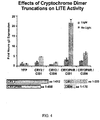
- Truncated versions of cryptochrome-2 and CIB1 were cloned and tested in combination with the full-length versions of cryptochrome-2 and CIB1 in order to determine the effectiveness of each heterodimer pair.
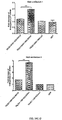
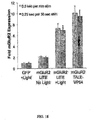
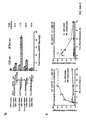
- the combination of the CRY2PHR domain, consisting of the conserved photoresponsive region of the cryptochrome-2 protein, and the full-length version of CIB1 resulted in the highest upregulation of Neurog2 mRNA levels ( ⁇ 22 fold over YFP samples and ⁇ 7 fold over unstimulated co-transfected samples).
- Speed of activation and reversibility are critical design parameters for the LITE system.
- constructs consisting of the Neurog2 TALE-CRY2PHR and CIB1-VP64 version of the system were tested to determine its activation and inactivation speed. Samples were stimulated for as little as 0.5 h to as long as 24 h before extraction. Upregulation of Neurog2 expression was observed at the shortest, 0.5 h, time point ( ⁇ 5 fold vs YFP samples). Neurog2 expression peaked at 12 h of stimulation ( ⁇ 19 fold vs YFP samples).
- Inactivation kinetics were analyzed by stimulating co-transfected samples for 6 h, at which time stimulation was stopped, and samples were kept in culture for 0 to 12 h to allow for mRNA degradation.
- Neurog2 mRNA levels peaked at 0.5h after the end of stimulation ( ⁇ 16 fold vs. YFP samples), after which the levels degraded with an ⁇ 3 h half-life before returning to near baseline levels by 12 h.
- the second prototypical example is a LITE designed to activate transcription of the human gene KLF4.
- the TALE sequence was linked to the sequence for CRY2PHR via a nuclear localization signal (amino acids: SPKKKRKVEAS).
- SPKKKRKVEAS amino acids
- the identical CIB1-VP64 activator protein described above was also used in this manifestation of the LITE system.
- Human embryonal kidney cells from the HEK293FT cell line were co-transfected with the two vectors. After incubation to allow for vector expression, samples were stimulated by periodic pulsed blue light from an array of 488 nm LEDs. Unstimulated co-tranfected samples and samples transfected only with the fluorescent reporter YFP were used as controls. At the end of each experiment, mRNA was purified from the samples analyzed via q
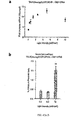
- the light-intensity response of the LITE system was tested by stimulating samples with increased light power (0-9 mW/cm 2 ). Upregulation of KLF4 mRNA levels was observed for stimulation as low as 0.2 mW/cm 2 . KLF4 upregulation became saturated at 5 mW/cm 2 (2.3 fold vs. YFP samples). Cell viability tests were also performed for powers up to 9 mW/cm 2 and showed >98% cell viability. Similarly, the KLF4 LITE response to varying duty cycles of stimulation was tested (1.6-100%). No difference in KLF4 activation was observed between different duty cycles indicating that a stimulation paradigm of as low as 0.25 sec every 15 sec should result in maximal activation.
- the invention contemplates energy sources such as electromagnetic radiation, sound energy or thermal energy.
- the electromagnetic radiation is a component of visible light.
- the light is a blue light with a wavelength of about 450 to about 495 nm.
- the wavelength is about 488 nm.
- the light stimulation is via pulses.
- the light power may range from about 0-9 mW/cm 2 .
- a stimulation paradigm of as low as 0.25 sec every 15 sec should result in maximal activation.
- the invention particularly relates to inducible methods of perturbing a genomic or epigenomic locus or altering expression of a genomic locus of interest in a cell wherein the genomic or epigenomic locus may be contacted with a non-naturally occurring or engineered composition comprising a deoxyribonucleic acid (DNA) binding polypeptide.
- DNA deoxyribonucleic acid
- the cells of the present invention may be a prokaryotic cell or a eukaryotic cell, advantageously an animal cell, more advantageously a mammalian cell.
- This polypeptide may include a DNA binding domain comprising at least five or more Transcription activator-like effector (TALE) monomers and at least one or more half-monomers specifically ordered to target the genomic locus of interest or at least one or more effector domains linked to a chemical sensitive protein or fragment thereof.
- TALE Transcription activator-like effector
- the chemical or energy sensitive protein or fragment thereof may undergo a conformational change upon induction by the binding of a chemical source allowing it to bind an interacting partner.
- the polypeptide may also include a DNA binding domain comprising at least one or more variant TALE monomers or half-monomers specifically ordered to target the genomic locus of interest or at least one or more effector domains linked to the interacting partner, wherein the chemical or energy sensitive protein or fragment thereof may bind to the interacting partner upon induction by the chemical source.
- the method may also include applying the chemical source and determining that the expression of the genomic locus is altered.
- ABI-PYL based system inducible by Abscisic Acid (ABA) see, e.g., http://stke.sciencemag.org/cgi/content/abstract/sigtrans;4/164/rs2
- FKBP-FRB based system inducible by rapamycin or related chemicals based on rapamycin
- GID1-GAI based system inducible by Gibberellin GA
- Another system contemplated by the present invention is a chemical inducible system based on change in sub-cellular localization.
- the polypeptide include a DNA binding domain comprising at least five or more Transcription activator-like effector (TALE) monomers and at least one or more half-monomers specifically ordered to target the genomic locus of interest linked to at least one or more effector domains are further linker to a chemical or energy sensitive protein.
- TALE Transcription activator-like effector
- This type of system could also be used to induce the cleavage of a genomic locus of interest in a cell when the effector domain is a nuclease.
- ER estrogen receptor
- 4OHT 4-hydroxytamoxifen
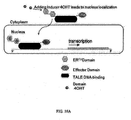
- ERT2 mutated ligand-binding domain of the estrogen receptor called ERT2 translocates into the nucleus of cells upon binding of 4-hydroxytamoxifen.
- Two tandem ERT2 domains were linked together with a flexible peptide linker and then fused to the TALE protein targeting a specific sequence in the mammalian genome and linked to one or more effector domains.
- This polypeptide will be in the cytoplasm of cells in the absence of 4OHT, which renders the TALE protein linked to the effector domains inactive.
- 4OHT the binding of 4OHT to the tandem ERT2 domain will induce the transportation of the entire peptide into nucleus of cells, allowing the TALE protein linked to the effector domains become active.
- the present invention may comprise a nuclear exporting signal (NES).
- the NES may have the sequence of LDLASLIL.
- any naturally occurring or engineered derivative of any nuclear receptor, thyroid hormone receptor, retinoic acid receptor, estrogren receptor, estrogen-related receptor, glucocorticoid receptor, progesterone receptor, androgen receptor may be used in inducible systems analogous to the ER based inducible system.
- TRP Transient receptor potential
- This type of system could also be used to induce the cleavage of a genomic locus of interest in a cell when the effector domain is a nuclease.
- the light could be generated with a laser or other forms of energy sources.
- the heat could be generated by raise of temperature results from an energy source, or from nano-particles that release heat after absorbing energy from an energy source delivered in the form of radio-wave.
- While light activation may be an advantageous embodiment, sometimes it may be disadvantageous especially for in vivo applications in which the light may not penetrate the skin or other organs.
- other methods of energy activation are contemplated, in particular, electric field energy and/or ultrasound which have a similar effect.
- the proteins pairings of the LITE system may be altered and/or modified for maximal effect by another energy source.
- Electric field energy is preferably administered substantially as described in the art, using one or more electric pulses of from about 1 Volt/cm to about 10 kVolts/cm under in vivo conditions.
- the electric field may be delivered in a continuous manner.
- the electric pulse may be applied for between 1 ⁇ s and 500 milliseconds, preferably between 1 ⁇ s and 100 milliseconds.
- the electric field may be applied continuously or in a pulsed manner for 5 about minutes.
- 'electric field energy' is the electrical energy to which a cell is exposed.
- the electric field has a strength of from about 1 Volt/cm to about 10 kVolts/cm or more under in vivo conditions (see WO97/49450 ).
- the term "electric field” includes one or more pulses at variable capacitance and voltage and including exponential and/or square wave and/or modulated wave and/or modulated square wave forms. References to electric fields and electricity should be taken to include reference the presence of an electric potential difference in the environment of a cell. Such an environment may be set up by way of static electricity, alternating current (AC), direct current (DC), etc, as known in the art.
- the electric field may be uniform, non-uniform or otherwise, and may vary in strength and/or direction in a time dependent manner.
- the ultrasound and/or the electric field may be delivered as single or multiple continuous applications, or as pulses (pulsatile delivery).
- Electroporation has been used in both in vitro and in vivo procedures to introduce foreign material into living cells.
- a sample of live cells is first mixed with the agent of interest and placed between electrodes such as parallel plates. Then, the electrodes apply an electrical field to the cell/implant mixture.
- Examples of systems that perform in vitro electroporation include the Electro Cell Manipulator ECM600 product, and the Electro Square Porator T820, both made by the BTX Division of Genetronics, Inc (see U.S. Pat. No 5,869,326 ).
- the known electroporation techniques function by applying a brief high voltage pulse to electrodes positioned around the treatment region.
- the electric field generated between the electrodes causes the cell membranes to temporarily become porous, whereupon molecules of the agent of interest enter the cells.
- this electric field comprises a single square wave pulse on the order of 1000 V/cm, of about 100 .mu.s duration.
- Such a pulse may be generated, for example, in known applications of the Electro Square Porator T820.
- the electric field has a strength of from about 1 V/cm to about 10 kV/cm under in vitro conditions.
- the electric field may have a strength of 1 V/cm, 2 V/cm, 3 V/cm, 4 V/cm, 5 V/cm, 6 V/cm, 7 V/cm, 8 V/cm, 9 V/cm, 10 V/cm, 20 V/cm, 50 V/cm, 100 V/cm, 200 V/cm, 300 V/cm, 400 V/cm, 500 V/cm, 600 V/cm, 700 V/cm, 800 V/cm, 900 V/cm, 1 kV/cm, 2 kV/cm, 5 kV/cm, 10 kV/cm, 20 kV/cm, 50 kV/cm or more.
- the electric field has a strength of from about 1 V/cm to about 10 kV/cm under in vivo conditions.
- the electric field strengths may be lowered where the number of pulses delivered to the target site are increased.
- pulsatile delivery of electric fields at lower field strengths is envisaged.
- the application of the electric field is in the form of multiple pulses such as double pulses of the same strength and capacitance or sequential pulses of varying strength and/or capacitance.
- pulse includes one or more electric pulses at variable capacitance and voltage and including exponential and/or square wave and/or modulated wave/square wave forms.
- the electric pulse is delivered as a waveform selected from an exponential wave form, a square wave form, a modulated wave form and a modulated square wave form.
- a preferred embodiment employs direct current at low voltage.
- Applicants disclose the use of an electric field which is applied to the cell, tissue or tissue mass at a field strength of between 1V/cm and 20V/cm, for a period of 100 milliseconds or more, preferably 15 minutes or more.
- Ultrasound is advantageously administered at a power level of from about 0.05 W/cm 2 to about 100 W/cm 2 . Diagnostic or therapeutic ultrasound may be used, or combinations thereof.
- ultrasonic refers to a form of energy which consists of mechanical vibrations the frequencies of which are so high they are above the range of human hearing. Lower frequency limit of the ultrasonic spectrum may generally be taken as about 20 kHz. Most diagnostic applications of ultrasound employ frequencies in the range 1 and 15 MHz' ( From Ultrasonics in Clinical Diagnosis, P. N. T. Wells, ed., 2nd. Edition, Publ. Churchill Livingstone [Edinburgh, London & NY, 1977 ]).
- Ultrasound has been used in both diagnostic and therapeutic applications.
- diagnostic ultrasound When used as a diagnostic tool (“diagnostic ultrasound"), ultrasound is typically used in an energy density range of up to about 100 mW/cm 2 (FDA recommendation), although energy densities of up to 750 mW/cm 2 have been used.
- FDA recommendation energy densities of up to 750 mW/cm 2 have been used.
- physiotherapy ultrasound is typically used as an energy source in a range up to about 3 to 4 W/cm 2 (WHO recommendation).
- WHO recommendation W/cm 2
- higher intensities of ultrasound may be employed, for example, HIFU at 100 W/cm up to 1 kW/cm 2 (or even higher) for short periods of time.
- the term "ultrasound" as used in this specification is intended to encompass diagnostic, therapeutic and focused ultrasound.
- Focused ultrasound allows thermal energy to be delivered without an invasive probe (see Morocz et al 1998 Journal of Magnetic Resonance Imaging Vol.8, No. 1, pp.136-142 .
- Another form of focused ultrasound is high intensity focused ultrasound (HIFU) which is reviewed by Moussatov et al in Ultrasonics (1998) Vol.36, No.8, pp.893-900 and TranHuuHue et al in Acustica (1997) Vol.83, No.6, pp.1103-1106 .
- HIFU high intensity focused ultrasound
- a combination of diagnostic ultrasound and a therapeutic ultrasound is employed.
- This combination is not intended to be limiting, however, and the skilled reader will appreciate that any variety of combinations of ultrasound may be used. Additionally, the energy density, frequency of ultrasound, and period of exposure may be varied.
- the exposure to an ultrasound energy source is at a power density of from about 0.05 to about 100 Wcm -2 . Even more preferably, the exposure to an ultrasound energy source is at a power density of from about 1 to about 15 Wcm -2 .
- the exposure to an ultrasound energy source is at a frequency of from about 0.015 to about 10.0 MHz. More preferably the exposure to an ultrasound energy source is at a frequency of from about 0.02 to about 5.0 MHz or about 6.0 MHz. Most preferably, the ultrasound is applied at a frequency of 3 MHz.
- the exposure is for periods of from about 10 milliseconds to about 60 minutes. Preferably the exposure is for periods of from about 1 second to about 5 minutes. More preferably, the ultrasound is applied for about 2 minutes. Depending on the particular target cell to be disrupted, however, the exposure may be for a longer duration, for example, for 15 minutes.
- the target tissue is exposed to an ultrasound energy source at an acoustic power density of from about 0.05 Wcm -2 to about 10 Wcm -2 with a frequency ranging from about 0.015 to about 10 MHz (see WO 98/52609 ).
- an ultrasound energy source at an acoustic power density of above 100 Wcm -2 , but for reduced periods of time, for example, 1000 Wcm -2 for periods in the millisecond range or less.
- the application of the ultrasound is in the form of multiple pulses; thus, both continuous wave and pulsed wave (pulsatile delivery of ultrasound) may be employed in any combination.
- continuous wave ultrasound may be applied, followed by pulsed wave ultrasound, or vice versa. This may be repeated any number of times, in any order and combination.
- the pulsed wave ultrasound may be applied against a background of continuous wave ultrasound, and any number of pulses may be used in any number of groups.
- the ultrasound may comprise pulsed wave ultrasound.
- the ultrasound is applied at a power density of 0.7 Wcm -2 or 1.25 Wcm -2 as a continuous wave. Higher power densities may be employed if pulsed wave ultrasound is used.
- ultrasound is advantageous as, like light, it may be focused accurately on a target. Moreover, ultrasound is advantageous as it may be focused more deeply into tissues unlike light. It is therefore better suited to whole-tissue penetration (such as but not limited to a lobe of the liver) or whole organ (such as but not limited to the entire liver or an entire muscle, such as the heart) therapy. Another important advantage is that ultrasound is a non-invasive stimulus which is used in a wide variety of diagnostic and therapeutic applications. By way of example, ultrasound is well known in medical imaging techniques and, additionally, in orthopedic therapy. Furthermore, instruments suitable for the application of ultrasound to a subject vertebrate are widely available and their use is well known in the art.
- LITEs may be used to study the dynamics of mRNA splice variant production upon induced expression of a target gene.
- mRNA degradation studies are often performed in response to a strong extracellular stimulus, causing expression level changes in a plethora of genes.
- LITEs may be utilized to reversibly induce transcription of an endogenous target, after which point stimulation may be stopped and the degradation kinetics of the unique target may be tracked.
- LITEs may provide the power to time genetic regulation in concert with experimental interventions.
- targets with suspected involvement in long-term potentiation may be modulated in organotypic or dissociated neuronal cultures, but only during stimulus to induce LTP, so as to avoid interfering with the normal development of the cells.
- LTP long-term potentiation
- targets suspected to be involved in the effectiveness of a particular therapy may be modulated only during treatment.
- genetic targets may be modulated only during a pathological stimulus. Any number of experiments in which timing of genetic cues to external experimental stimuli is of relevance may potentially benefit from the utility of LITE modulation.
- LITEs may be used in a transparent organism, such as an immobilized zebrafish, to allow for extremely precise laser induced local gene expression changes.
- the present invention also contemplates a multiplex genome engineering using CRISPR/Cas sytems. Functional elucidation of causal genetic variants and elements requires precise genome editing technologies.
- the type II prokaryotic CRISPR (clustered regularly interspaced short palindromic repeats) adaptive immune system has been shown to facilitate RNA-guided site-specific DNA cleavage.
- Applicants engineered two different type II CRISPR systems and demonstrate that Cas9 nucleases can be directed by short RNAs to induce precise cleavage at endogenous genomic loci in human and mouse cells. Cas9 can also be converted into a nicking enzyme to facilitate homology-directed repair with minimal mutagenic activity.
- multiple guide sequences can be encoded into a single CRISPR array to enable simultaneous editing of several sites within the mammalian genome, demonstrating easy programmability and wide applicability of the CRISPR technology.
- CRISPR system refers collectively to transcripts and other elements involved in the expression of or directing the activity of CRISPR-associated (“Cas”) genes, including sequences encoding a Cas gene, a tracr (trans-activating CRISPR) sequence (e.g. tracrRNA or an active partial tracrRNA), a tracr-mate sequence (encompassing a "direct repeat” and a tracrRNA-processed partial direct repeat in the context of an endogenous CRISPR system), a guide sequence (also referred to as a "spacer” in the context of an endogenous CRISPR system), or other sequences and transcripts from a CRISPR locus.
- a tracr trans-activating CRISPR
- tracr-mate sequence encompassing a "direct repeat” and a tracrRNA-processed partial direct repeat in the context of an endogenous CRISPR system
- guide sequence also referred to as a "spacer” in the context of an endogenous CRISPR system
- one or more elements of a CRISPR system is derived from a type I, type II, or type III CRISPR system. In some embodiments, one or more elements of a CRISPR system is derived from a particular organism comprising an endogenous CRISPR system, such as Streptococcus pyogenes. In general, a CRISPR system is characterized by elements that promote the formation of a CRISPR complex at the site of a target sequence (also referred to as a protospacer in the context of an endogenous CRISPR system).
- target sequence refers to a sequence to which a guide sequence is designed to have complementarity, where hybridization between a target sequence and a guide sequence promotes the formation of a CRISPR complex.
- a target sequence may comprise any polynucleotide, such as DNA or RNA polynucleotides.
- a target sequence is located in the nucleus or cytoplasm of a cell.
- a CRISPR complex comprising a guide sequence hybridized to a target sequence and complexed with one or more Cas proteins
- formation of a CRISPR complex results in cleavage of one or both strands in or near (e.g. within 1, 2, 3, 4, 5, 6, 7, 8, 9, 10, 20, 50, or more base pairs from) the target sequence.
- all or a portion of the tracr sequence may also form part of a CRISPR complex, such as by hybridization to all or a portion of a tracr mate sequence that is operably linked to the guide sequence.
- one or more vectors driving expression of one or more elements of a CRISPR system are introduced into a host cell such that expression of the elements of the CRISPR system direct formation of a CRISPR complex at one or more target sites.
- a Cas enzyme, a guide sequence linked to a tracr-mate sequence, and a tracr sequence could each be operably linked to separate regulatory elements on separate vectors.
- two or more of the elements expressed from the same or different regulatory elements may be combined in a single vector, with one or more additional vectors providing any components of the CRISPR system not included in the first vector.
- CRISPR system elements that are combined in a single vector may be arranged in any suitable orientation, such as one element located 5' with respect to ("upstream” of) or 3' with respect to ("downstream” of) a second element.
- the coding sequence of one element may be located on the same or opposite strand of the coding sequence of a second element, and oriented in the same or opposite direction.
- a single promoter drives expression of a transcript encoding a CRISPR enzyme and one or more of the guide sequence, tracr mate sequence (optionally operably linked to the guide sequence), and a tracr sequence embedded within one or more intron sequences (e.g. each in a different intron, two or more in at least one intron, or all in a single intron).
- the CRISPR enzyme, guide sequence, tracr mate sequence, and tracr sequence are operably linked to and expressed from the same promoter.
- a vector comprises one or more insertion sites, such as a restriction endonuclease recognition sequence (also referred to as a "cloning site").
- one or more insertion sites e.g. about or more than about 1, 2, 3, 4, 5, 6, 7, 8, 9, 10, or more insertion sites are located upstream and/or downstream of one or more sequence elements of one or more vectors.
- a vector comprises an insertion site upstream of a tracr mate sequence, and optionally downstream of a regulatory element operably linked to the tracr mate sequence, such that following insertion of a guide sequence into the insertion site and upon expression the guide sequence directs sequence-specific binding of a CRISPR complex to a target sequence in a eukaryotic cell.
- a vector comprises two or more insertion sites, each insertion site being located between two tracr mate sequences so as to allow insertion of a guide sequence at each site.
- the two or more guide sequences may comprise two or more copies of a single guide sequence, two or more different guide sequences, or combinations of these.
- a single expression construct may be used to target CRISPR activity to multiple different, corresponding target sequences within a cell.
- a single vector may comprise about or more than about 1, 2, 3, 4, 5, 6, 7, 8, 9, 10, 15, 20, or more guide sequences. In some embodiments, about or more than about 1, 2, 3, 4, 5, 6, 7, 8, 9, 10, or more such guide-sequence-containing vectors may be provided, and optionally delivered to a cell.
- a vector comprises a regulatory element operably linked to an enzyme-coding sequence encoding a CRISPR enzyme, such as a Cas protein.
- Cas proteins include Cas1, Cas1B, Cas2, Cas3, Cas4, Cas5, Cas6, Cas7, Cas8, Cas9 (also known as Csn1 and Csx12), Cas10, Csy1, Csy2, Csy3, Cse1, Cse2, Csc1, Csc2, Csa5, Csn2, Csm2, Csm3, Csm4, Csm5, Csm6, Cmr1, Cmr3, Cmr4, Cmr5, Cmr6, Csb1, Csb2, Csb3, Csx17, Csx14, Csx10, Csx16, CsaX, Csx3, Csx1, Csx15, Csf1, Csf2, Csf3, Csf4, homologues thereof, or modified versions thereof.
- the unmodified CRISPR enzyme has DNA cleavage activity, such as Cas9.
- the CRISPR enzyme directs cleavage of one or both strands at the location of a target sequence, such as within the target sequence and/or within the complement of the target sequence. In some embodiments, the CRISPR enzyme directs cleavage of one or both strands within about 1, 2, 3, 4, 5, 6, 7, 8, 9, 10, 15, 20, 25, 50, 100, 200, 500, or more base pairs from the first or last nucleotide of a target sequence.
- a vector encodes a CRISPR enzyme that is mutated to with respect to a corresponding wild-type enzyme such that the mutated CRISPR enzyme lacks the ability to cleave one or both strands of a target polynucleotide containing a target sequence.
- an aspartate-to-alanine substitution (D10A) in the RuvC I catalytic domain of Cas9 from S. pyogenes converts Cas9 from a nuclease that cleaves both strands to a nickase (cleaves a single strand).
- mutations that render Cas9 a nickase include, without limitation, H840A, N854A, and N863A.
- two or more catalytic domains of Cas9 may be mutated to produce a mutated Cas9 substantially lacking all DNA cleavage activity.
- a D10A mutation is combined with one or more of H840A, N854A, or N863A mutations to produce a Cas9 enzyme substantially lacking all DNA cleavage activity.
- a CRISPR enzyme is considered to substantially lack all DNA cleavage activity when the DNA cleavage activity of the mutated enzyme is less than about 25%, 10%, 5%, 1%, 0.1%, 0.01%, or lower with respect to its non-mutated form.
- an enzyme coding sequence encoding a CRISPR enzyme is codon optimized for expression in particular cells, such as eukaryotic cells.
- the eukaryotic cells may be those of or derived from a particular organism, such as a mammal, including but not limited to human, mouse, rat, rabbit, dog, or non-human primate.
- codon optimization refers to a process of modifying a nucleic acid sequence for enhanced expression in the host cells of interest by replacing at least one codon (e.g. about or more than about 1, 2, 3, 4, 5, 10, 15, 20, 25, 50, or more codons) of the native sequence with codons that are more frequently or most frequently used in the genes of that host cell while maintaining the native amino acid sequence.
- Codon bias differs in codon usage between organisms
- mRNA messenger RNA
- tRNA transfer RNA
- the predominance of selected tRNAs in a cell is generally a reflection of the codons used most frequently in peptide synthesis. Accordingly, genes can be tailored for optimal gene expression in a given organism based on codon optimization. Codon usage tables are readily available, for example, at the "Codon Usage Database" available at www.kazusa.orjg/codon/ (visited Jul.
- a vector encodes a CRISPR enzyme comprising one or more nuclear localization sequences (NLSs), such as about or more than about 1, 2, 3, 4, 5, 6, 7, 8, 9, 10, or more NLSs.
- the CRISPR enzyme comprises about or more than about 1, 2, 3, 4, 5, 6, 7, 8, 9, 10, or more NLSs at or near the amino-terminus, about or more than about 1, 2, 3, 4, 5, 6, 7, 8, 9, 10, or more NLSs at or near the carboxy-terminus, or a combination of these (e.g. one or more NLS at the amino-terminus and one or more NLS at the carboxy terminus).
- NLS When more than one NLS is present, each may be selected independently of the others, such that a single NLS may be present in more than one copy and/or in combination with one or more other NLSs present in one or more copies.
- an NLS is considered near the N- or C-terminus when the nearest amino acid of the NLS is within about 1, 2, 3, 4, 5, 10, 15, 20, 25, 30, 40, 50, or more amino acids along the polypeptide chain from the Nor C-terminus.
- NLSs include an NLS sequence derived from: the NLS of the SV40 virus large T-antigen, having the amino acid sequence PKKKRKV; the NLS from nucleoplasmin (e.g.
- the one or more NLSs are of sufficient strength to drive accumulation of the CRISPR enzyme in a detectable amount in the nucleus of a eukaryotic cell.
- strength of nuclear localization activity may derive from the number of NLSs in the CRISPR enzyme, the particular NLS(s) used, or a combination of these factors.
- Detection of accumulation in the nucleus may be performed by any suitable technique.
- a detectable marker may be fused to the CRISPR enzyme, such that location within a cell may be visualized, such as in combination with a means for detecting the location of the nucleus (e.g. a stain specific for the nucleus such as DAPI).
- Cell nuclei may also be isolated from cells, the contents of which may then be analyzed by any suitable process for detecting protein, such as immunohistochemistry, Western blot, or enzyme activity assay. Accumulation in the nucleus may also be determined indirectly, such as by an assay for the effect of CRISPR complex formation (e.g. assay for DNA cleavage or mutation at the target sequence, or assay for altered gene expression activity affected by CRISPR complex formation and/or CRISPR enzyme activity), as compared to a control no exposed to the CRISPR enzyme or complex, or exposed to a CRISPR enzyme lacking the one or more NLSs.
- an assay for the effect of CRISPR complex formation e.g. assay for DNA cleavage or mutation at the target sequence, or assay for altered gene expression activity affected by CRISPR complex formation and/or CRISPR enzyme activity
- the invention relates to an inducible CRISPR which may comprise an inducible Cas9.
- the CRISPR system may be encoded within a vector system which may comprise one or more vectors which may comprise I. a first regulatory element operably linked to a CRISPR/Cas system chimeric RNA (chiRNA) polynucleotide sequence, wherein the polynucleotide sequence may comprise (a) a guide sequence capable of hybridizing to a target sequence in a eukaryotic cell, (b) a tracr mate sequence, and (c) a tracr sequence, and II.
- chiRNA chimeric RNA
- a second regulatory element operably linked to an enzyme-coding sequence encoding a CRISPR enzyme which may comprise at least one or more nuclear localization sequences, wherein (a), (b) and (c) are arranged in a 5' to 3'orientation, wherein components I and II are located on the same or different vectors of the system, wherein when transcribed, the tracr mate sequence hybridizes to the tracr sequence and the guide sequence directs sequence-specific binding of a CRISPR complex to the target sequence, and wherein the CRISPR complex may comprise the CRISPR enzyme complexed with (1) the guide sequence that is hybridized to the target sequence, and (2) the tracr mate sequence that is hybridized to the tracr sequence, wherein the enzyme coding sequence encoding the CRISPR enzyme further encodes a heterologous functional domain.
- the inducible Cas9 may be prepared in a lentivirus.
- FIG. 61 depicts Tet Cas9 vector designs and FIG. 62 depicts a vector and EGFP expression in 293FT cells.
- an inducible tetracycline system is contemplated for an inducible CRISPR.
- the vector may be designed as described in Markusic et al., Nucleic Acids Research, 2005, Vol. 33, No. 6 e63 .
- the tetracycline-dependent transcriptional regulatory system is based on the Escherichia coli Tn10 Tetracycline resistance operator consisting of the tetracycline repressor protein (TetR) and a specific DNA-binding site, the tetracycline operator sequence (TetO). In the absence of tetracycline, TetR dimerizes and binds to the TetO. Tetracycline or doxycycline (a tetracycline derivative) can bind and induce a conformational change in the TetR leading to its disassociation from the TetO.
- TetR tetracycline repressor protein
- TetO tetracycline operator sequence
- the vector may be a single Tet-On lentiviral vector with autoregulated rtTA expression for regulated expression of the CRISPR complex.
- Tetracycline or doxycycline may be contemplated for activating the inducible CRISPR complex.
- a cumate gene-switch system is contemplated for an inducible CRISPR.
- the inducible cumate system involves regulatory mechanisms of bacterial operons (cmt and cym) to regulate gene expression in mammalian cells using three different strategies.
- cmt and cym regulatory mechanisms of bacterial operons
- regulation is mediated by the binding of the repressor (CymR) to the operator site (CuO), placed downstream of a strong constitutive promoter. Addition of cumate, a small molecule, relieves the repression.
- a chimaeric transactivator (cTA) protein formed by the fusion of CymR with the activation domain of VP16, is able to activate transcription when bound to multiple copies of CuO, placed upstream of the CMV minimal promoter. Cumate addition abrogates DNA binding and therefore transactivation by cTA.
- the invention also contemplates a reverse cumate activator (rcTA), which activates transcription in the presence rather than the absence of cumate.
- CymR may be used as a repressor that reversibly blocks expression from a strong promoter, such as CMV. Certain aspects of the Cumate repressor/operator system are further described in US patent No. 7745592 .
- the present invention also encompasses nucleic acid encoding the polypeptides of the present invention.
- the nucleic acid may comprise a promoter, advantageously human Synapsin I promoter (hSyn).
- the nucleic acid may be packaged into an adeno associated viral vector (AAV).
- AAV adeno associated viral vector
- adenovirus vectors may display an altered tropism for specific tissues or cell types (Havenga, M.J.E. et al., 2002), and therefore, mixing and matching of different adenoviral capsids, i.e., fiber, or penton proteins from various adenoviral serotypes may be advantageous. Modification of the adenoviral capsids, including fiber and penton may result in an adenoviral vector with a tropism that is different from the unmodified adenovirus. Adenovirus vectors that are modified and optimized in their ability to infect target cells may allow for a significant reduction in the therapeutic or prophylactic dose, resulting in reduced local and disseminated toxicity.
- Viral vector gene delivery systems are commonly used in gene transfer and gene therapy applications. Different viral vector systems have their own unique advantages and disadvantages.
- Viral vectors that may be used to express the pathogen-derived ligand of the present invention include but are not limited to adenoviral vectors, adeno-associated viral vectors, alphavirus vectors, herpes simplex viral vectors, and retroviral vectors, described in more detail below.
- adenoviruses are such that the biology of the adenovirus is characterized in detail; the adenovirus is not associated with severe human pathology; the adenovirus is extremely efficient in introducing its DNA into the host cell; the adenovirus may infect a wide variety of cells and has a broad host range; the adenovirus may be produced in large quantities with relative ease; and the adenovirus may be rendered replication defective and/or non-replicating by deletions in the early region 1 ("E1") of the viral genome.
- E1 early region 1
- Adenovirus is a non-enveloped DNA virus.
- the genome of adenovirus is a linear double-stranded DNA molecule of approximately 36,000 base pairs ("bp") with a 55-kDa terminal protein covalently bound to the 5'-terminus of each strand.
- the adenovirus DNA contains identical inverted terminal repeats ("ITRs") of about 100 bp, with the exact length depending on the serotype.
- ITRs inverted terminal repeats
- the viral origins of replication are located within the ITRs exactly at the genome ends. DNA synthesis occurs in two stages. First, replication proceeds by strand displacement, generating a daughter duplex molecule and a parental displaced strand.
- the displaced strand is single stranded and may form a "panhandle" intermediate, which allows replication initiation and generation of a daughter duplex molecule.
- replication may proceed from both ends of the genome simultaneously, obviating the requirement to form the panhandle structure.
- the viral genes are expressed in two phases: the early phase, which is the period up to viral DNA replication, and the late phase, which coincides with the initiation of viral DNA replication.
- the early phase only the early gene products, encoded by regions E1, E2, E3 and E4, are expressed, which carry out a number of functions that prepare the cell for synthesis of viral structural proteins (Berk, A.J., 1986).
- the late phase the late viral gene products are expressed in addition to the early gene products and host cell DNA and protein synthesis are shut off. Consequently, the cell becomes dedicated to the production of viral DNA and of viral structural proteins (Tooze, J., 1981).
- the E1 region of adenovirus is the first region of adenovirus expressed after infection of the target cell. This region consists of two transcriptional units, the E1A and E1B genes, both of which are required for oncogenic transformation of primary (embryonal) rodent cultures.
- the main functions of the E1A gene products are to induce quiescent cells to enter the cell cycle and resume cellular DNA synthesis, and to transcriptionally activate the E1B gene and the other early regions (E2, E3 and E4) of the viral genome. Transfection of primary cells with the E1A gene alone may induce unlimited proliferation (immortalization), but does not result in complete transformation.
- E1A results in induction of programmed cell death (apoptosis), and only occasionally is immortalization obtained (Jochemsen et al., 1987).
- Co-expression of the E1B gene is required to prevent induction of apoptosis and for complete morphological transformation to occur.
- high-level expression of E1A may cause complete transformation in the absence of E1B (Roberts, B.E. et al., 1985).
- the E1B encoded proteins assist E1A in redirecting the cellular functions to allow viral replication.
- the E1B 55 kD and E4 33 kD proteins which form a complex that is essentially localized in the nucleus, function in inhibiting the synthesis of host proteins and in facilitating the expression of viral genes. Their main influence is to establish selective transport of viral mRNAs from the nucleus to the cytoplasm, concomitantly with the onset of the late phase of infection.
- the E1B 21 kD protein is important for correct temporal control of the productive infection cycle, thereby preventing premature death of the host cell before the virus life cycle has been completed.
- Mutant viruses incapable of expressing the E1B 21 kD gene product exhibit a shortened infection cycle that is accompanied by excessive degradation of host cell chromosomal DNA (deg-phenotype) and in an enhanced cytopathic effect (cyt-phenotype; Telling et al., 1994).
- the deg and cyt phenotypes are suppressed when in addition the E1A gene is mutated, indicating that these phenotypes are a function of E1A (White, E. et al., 1988).
- the E1B 21 kDa protein slows down the rate by which E1A switches on the other viral genes. It is not yet known by which mechanisms EIB 21 kD quenches these E1A dependent functions.
- adenoviruses do not efficiently integrate into the host cell's genome, are able to infect non-dividing cells, and are able to efficiently transfer recombinant genes in vivo (Brody et al., 1994). These features make adenoviruses attractive candidates for in vivo gene transfer of, for example, an antigen or immunogen of interest into cells, tissues or subjects in need thereof.
- Adenovirus vectors containing multiple deletions are preferred to both increase the carrying capacity of the vector and reduce the likelihood of recombination to generate replication competent adenovirus (RCA).
- RCA replication competent adenovirus
- the adenovirus contains multiple deletions, it is not necessary that each of the deletions, if present alone, would result in a replication defective and/or non-replicating adenovirus.
- the additional deletions may be included for other purposes, e.g., to increase the carrying capacity of the adenovirus genome for heterologous nucleotide sequences.
- more than one of the deletions prevents the expression of a functional protein and renders the adenovirus replication defective and/or non-replicating and/or attenuated. More preferably, all of the deletions are deletions that would render the adenovirus replication-defective and/or non-replicating and/or attenuated.
- the invention also encompasses adenovirus and adenovirus vectors that are replication competent and/or wild-type, i.e . comprises all of the adenoviral genes necessary for infection and replication in a subject.
- Embodiments of the invention employing adenovirus recombinants may include E1-defective or deleted, or E3-defective or deleted, or E4-defective or deleted or adenovirus vectors comprising deletions of E1 and E3, or E1 and E4, or E3 and E4, or E1, E3, and E4 deleted, or the "gutless" adenovirus vector in which all viral genes are deleted.
- the adenovirus vectors may comprise mutations in E1, E3, or E4 genes, or deletions in these or all adenoviral genes.
- the E1 mutation raises the safety margin of the vector because E1-defective adenovirus mutants are said to be replication-defective and/or non-replicating in non-permissive cells, and are, at the very least, highly attenuated.
- the E3 mutation enhances the immunogenicity of the antigen by disrupting the mechanism whereby adenovirus down-regulates MHC class I molecules.
- the E4 mutation reduces the immunogenicity of the adenovirus vector by suppressing the late gene expression, thus may allow repeated re-vaccination utilizing the same vector.
- the present invention comprehends adenovirus vectors of any serotype or serogroup that are deleted or mutated in E1, or E3, or E4, or E1 and E3, or E1 and E4. Deletion or mutation of these adenoviral genes result in impaired or substantially complete loss of activity of these proteins.
- the "gutless" adenovirus vector is another type of vector in the adenovirus vector family. Its replication requires a helper virus and a special human 293 cell line expressing both E1a and Cre, a condition that does not exist in a natural environment; the vector is deprived of all viral genes, thus the vector as a vaccine carrier is non-immunogenic and may be inoculated multiple times for re-vaccination.
- the "gutless" adenovirus vector also contains 36 kb space for accommodating antigen or immunogen(s) of interest, thus allowing co-delivery of a large number of antigen or immunogens into cells.
- Adeno-associated virus is a single-stranded DNA parvovirus which is endogenous to the human population. Although capable of productive infection in cells from a variety of species, AAV is a dependovirus, requiring helper functions from either adenovirus or herpes virus for its own replication. In the absence of helper functions from either of these helper viruses, AAV will infect cells, uncoat in the nucleus, and integrate its genome into the host chromosome, but will not replicate or produce new viral particles.
- the genome of AAV has been cloned into bacterial plasmids and is well characterized.
- the viral genome consists of 4682 bases which include two terminal repeats of 145 bases each. These terminal repeats serve as origins of DNA replication for the virus. Some investigators have also proposed that they have enhancer functions.
- the rest of the genome is divided into two functional domains. The left portion of the genome codes for the rep functions which regulate viral DNA replication and vital gene expression.
- the right side of the vital genome contains the cap genes that encode the structural capsid proteins VP1, VP2 and VP3. The proteins encoded by both the rep and cap genes function in trans during productive AAV replication.
- AAV is considered an ideal candidate for use as a transducing vector, and it has been used in this manner.
- Such AAV transducing vectors comprise sufficient cis-acting functions to replicate in the presence of adenovirus or herpes virus helper functions provided in trans.
- Recombinant AAV rAAV
- rAAV Recombinant AAV
- these vectors the AAV cap and/or rep genes are deleted from the viral genome and replaced with a DNA segment of choice.
- Current vectors may accommodate up to 4300 bases of inserted DNA.
- plasmids containing the desired vital construct are transfected into adenovirus-infected cells.
- a second helper plasmid is cotransfected into these cells to provide the AAV rep and cap genes which are obligatory for replication and packaging of the recombinant viral construct.
- the rep and cap proteins of AAV act in trans to stimulate replication and packaging of the rAAV construct.
- rAAV is harvested from the cells along with adenovirus. The contaminating adenovirus is then inactivated by heat treatment.
- Herpes Simplex Virus 1 (HSV-1) is an enveloped, double-stranded DNA virus with a genome of 153 kb encoding more than 80 genes. Its wide host range is due to the binding of viral envelope glycoproteins to the extracellular heparin sulphate molecules found in cell membranes (WuDunn & Spear, 1989). Internalization of the virus then requires envelope glycoprotein gD and fibroblast growth factor receptor (Kaner, 1990). HSV is able to infect cells lytically or may establish latency. HSV vectors have been used to infect a wide variety of cell types (Lowenstein, 1994; Huard, 1995; Miyanohara, 1992; Liu, 1996; Goya, 1998).
- HSV vectors There are two types of HSV vectors, called the recombinant HSV vectors and the amplicon vectors.
- Recombinant HSV vectors are generated by the insertion of transcription units directly into the HSV genome, through homologous recombination events.
- the amplicon vectors are based on plasmids bearing the transcription unit of choice, an origin of replication, and a packaging signal.
- HSV vectors have the obvious advantages of a large capacity for insertion of foreign genes, the capacity to establish latency in neurons, a wide host range, and the ability to confer transgene expression to the CNS for up to 18 months (Carpenter & Stevens, 1996).
- Retroviruses are enveloped single-stranded RNA viruses, which have been widely used in gene transfer protocols. Retroviruses have a diploid genome of about 7-10 kb, composed of four gene regions termed gag, pro, pol and env. These gene regions encode for structural capsid proteins, viral protease, integrase and viral reverse transcriptase, and envelope glycoproteins, respectively. The genome also has a packaging signal and cis-acting sequences, termed long-terminal repeats (LTRs), at each end, which have a role in transcriptional control and integration.
- LTRs long-terminal repeats
- the most commonly used retroviral vectors are based on the Moloney murine leukaemia virus (Mo-MLV) and have varying cellular tropisms, depending on the receptor binding surface domain of the envelope glycoprotein.
- Mo-MLV Moloney murine leukaemia virus
- Recombinant retroviral vectors are deleted from all retroviral genes, which are replaced with marker or therapeutic genes, or both. To propagate recombinant retroviruses, it is necessary to provide the viral genes, gag, pol and env in trans.
- Lentiviruses are complex retroviruses that have the ability to infect and express their genes in both mitotic and post-mitotic cells.
- the most commonly known lentivirus is the human immunodeficiency virus (HIV), which uses the envelope glycoproteins of other viruses to target a broad range of cell types.
- HIV human immunodeficiency virus
- Alphaviruses including the prototype Sindbis virus (SIN), Semliki Forest virus (SFV), and Venezuelan equine encephalitis virus (VEE), constitute a group of enveloped viruses containing plus-stranded RNA genomes within icosahedral capsids.
- the viral vectors of the present invention are useful for the delivery of nucleic acids expressing antigens or immunogens to cells both in vitro and in vivo.
- the inventive vectors may be advantageously employed to deliver or transfer nucleic acids to cells, more preferably mammalian cells.
- Nucleic acids of interest include nucleic acids encoding peptides and proteins, preferably therapeutic (e.g., for medical or veterinary uses) or immunogenic (e.g., for vaccines) peptides or proteins.
- the codons encoding the antigen or immunogen of interest are "optimized" codons, i.e., the codons are those that appear frequently in, e.g.., highly expressed genes in the subject's species, instead of those codons that are frequently used by, for example, an influenza virus.
- Such codon usage provides for efficient expression of the antigen or immunogen in animal cells.
- the codon usage pattern is altered to represent the codon bias for highly expressed genes in the organism in which the antigen or immunogen is being expressed. Codon usage patterns are known in the literature for highly expressed genes of many species (e.g., Nakamura et al., 1996; Wang et al., 1998; McEwan et al. 1998).
- the viral vectors may be used to infect a cell in culture to express a desired gene product, e.g., to produce a protein or peptide of interest.
- the protein or peptide is secreted into the medium and may be purified therefrom using routine techniques known in the art.
- Signal peptide sequences that direct extracellular secretion of proteins are known in the art and nucleotide sequences encoding the same may be operably linked to the nucleotide sequence encoding the peptide or protein of interest by routine techniques known in the art.
- the cells may be lysed and the expressed recombinant protein may be purified from the cell lysate.
- the cell is an animal cell, more preferably a mammalian cell.
- cells that are competent for transduction by particular viral vectors of interest include PER.C6 cells, 911 cells, and HEK293 cells.
- a culture medium for culturing host cells includes a medium commonly used for tissue culture, such as M199-earle base, Eagle MEM (E-MEM), Dulbecco MEM (DMEM), SC-UCM102, UP-SFM (GIBCO BRL), EX-CELL302 (Nichirei), EX-CELL293-S (Nichirei), TFBM-01 (Nichirei), ASF104, among others.
- Suitable culture media for specific cell types may be found at the American Type Culture Collection (ATCC) or the European Collection of Cell Cultures (ECACC).
- Culture media may be supplemented with amino acids such as L-glutamine, salts, anti-fungal or anti-bacterial agents such as Fungizone®, penicillin-streptomycin, animal serum, and the like.
- the cell culture medium may optionally be serum-free.
- the present invention also relates to cell lines or transgenic animals which are capable of expressing or overexpressing LITEs or at least one agent useful in the present invention.
- the cell line or animal expresses or overexpresses one or more LITEs.
- the transgenic animal is typically a vertebrate, more preferably a rodent, such as a rat or a mouse, but also includes other mammals such as human, goat, pig or cow etc.
- transgenic animals are useful as animal models of disease and in screening assays for new useful compounds.
- the effect of such polypeptides on the development of disease may be studied.
- therapies including gene therapy and various drugs may be tested on transgenic animals.
- Methods for the production of transgenic animals are known in the art. For example, there are several possible routes for the introduction of genes into embryos. These include (i) direct transfection or retroviral infection of embryonic stem cells followed by introduction of these cells into an embryo at the blastocyst stage of development; (ii) retroviral infection of early embryos; and (iii) direct microinjection of DNA into zygotes or early embryo cells.
- the gene and/or transgene may also include genetic regulatory elements and/or structural elements known in the art.
- a type of target cell for transgene introduction is the embryonic stem cell (ES).
- ES cells may be obtained from pre-implantation embryos cultured in vitro and fused with embryos ( Evans et al., 1981, Nature 292:154-156 ; Bradley et al., 1984, Nature 309:255-258 ; Gossler et al., 1986, Proc. Natl. Acad. Sci. USA 83:9065-9069 ; and Robertson et al., 1986 Nature 322:445-448 ).
- Transgenes may be efficiently introduced into the ES cells by a variety of standard techniques such as DNA transfection, microinjection, or by retrovirus-mediated transduction.
- the resultant transformed ES cells may thereafter be combined with blastocysts from a non-human animal.
- the introduced ES cells thereafter colonize the embryo and contribute to the germ line of the resulting chimeric animal ( Jaenisch, 1988, Science 240: 1468-1474 ).
- LITEs may also offer valuable temporal precision in vivo.
- LITEs may be used to alter gene expression during a particular stage of development, for example, by repressing a particular apoptosis gene only during a particular stage of C elegans growth.
- LITEs may be used to time a genetic cue to a particular experimental window. For example, genes implicated in learning may be overexpressed or repressed only during the learning stimulus in a precise region of the intact rodent or primate brain.
- LITEs may be used to induce gene expression changes only during particular stages of disease development. For example, an oncogene may be overexpressed only once a tumor reaches a particular size or metastatic stage.
- proteins suspected in the development of Alzheimer's may be knocked down only at defined time points in the animal's life and within a particular brain region.
- these examples do not exhaustively list the potential applications of the LITE system, they highlight some of the areas in which LITEs may be a powerful technology.
- compositions of the invention are administered to an individual in amounts sufficient to treat or diagnose disorders.
- the effective amount may vary according to a variety of factors such as the individual's condition, weight, sex and age. Other factors include the mode of administration.
- compositions may be provided to the individual by a variety of routes such as subcutaneous, topical, oral and intramuscular.
- the present invention also has the objective of providing suitable topical, oral, systemic and parenteral pharmaceutical formulations for use in the novel methods of treatment of the present invention.
- the compositions containing compounds identified according to this invention as the active ingredient may be administered in a wide variety of therapeutic dosage forms in conventional vehicles for administration.
- the compounds may be administered in such oral dosage forms as tablets, capsules (each including timed release and sustained release formulations), pills, powders, granules, elixirs, tinctures, solutions, suspensions, syrups and emulsions, or by injection.
- they may also be administered in intravenous (both bolus and infusion), intraperitoneal, subcutaneous, topical with or without occlusion, or intramuscular form, all using forms well known to those of ordinary skill in the pharmaceutical arts.
- compounds of the present invention may be administered in a single daily dose, or the total daily dosage may be administered in divided doses of two, three or four times daily.
- compounds for the present invention may be administered in intranasal form via topical use of suitable intranasal vehicles, or via transdermal routes, using those forms of transdermal skin patches well known to those of ordinary skill in that art.
- the dosage administration will, of course, be continuous rather than intermittent throughout the dosage regimen.
- the active agents may be administered concurrently, or they each may be administered at separately staggered times.
- the dosage regimen utilizing the compounds of the present invention is selected in accordance with a variety of factors including type, species, age, weight, sex and medical condition of the patient; the severity of the condition to be treated; the route of administration; the renal, hepatic and cardiovascular function of the one patient; and the particular compound thereof employed.
- a physician of ordinary skill may readily determine and prescribe the effective amount of the drug required to prevent, counter or arrest the progress of the condition.
- Optimal precision in achieving concentrations of drug within the range that yields efficacy without toxicity requires a regimen based on the kinetics of the drug's availability to target sites. This involves a consideration of the distribution, equilibrium, and elimination of a drug.
- TALEs transcription activator-like effectors
- the system responds to light in the range of 450nm - 500nm and is capable of inducing a significant increase in the expression of pluripotency factors after stimulation with light at an intensity of 6.2 mW/cm 2 in mammalian cells.
- Applicants are developing tools for the targeting of a wide range of genes. Applicants believe that a toolbox for the light-mediated control of gene expression would complement the existing optogenetic methods and may in the future help elucidate the timing-, cell type- and concentrationdependent role of specific genes in the brain.
- TALE transcription activator like effector
- CRY2 light-sensitive dimerizing protein domains cryptochrome 2
- CIB1 from Arabidopsis thaliana
- Applicants show that blue-light stimulation of HEK293FT and Neuro-2a cells transfected with these LITE constructs designed to target the promoter region of KLF4 and Neurog2 results in a significant increase in target expression, demonstrating the functionality of TALE-based optical gene expression modulation technology.
- FIG. 1 shows a schematic depicting the need for spatial and temporal precision.
- FIG. 2 shows transcription activator like effectors (TALEs).
- TALEs consist of 34 aa repeats at the core of their sequence. Each repeat corresponds to a base in the target DNA that is bound by the TALE. Repeats differ only by 2 variable amino acids at positions 12 and 13.
- the code of this correspondence has been elucidated ( Boch, J et al. , Science, 2009 and Moscou, M et al. , Science, 2009 ) and is shown in this figure.
- Applicants developed a method for the synthesis of designer TALEs incorporating this code and capable of binding a sequence of choice within the genome Zhang, F et al. , Nature Biotechnology, 2011 ).
- FIG. 3 depicts a design of a LITE: TALE/Cryptochrome transcriptional activation.
- Each LITE is a two-component system which may comprise a TALE fused to CRY2 and the cryptochrome binding partner CIB1 fused to VP64, a transcription activor.
- the TALE localizes its fused CRY2 domain to the promoter region of the gene of interest.
- CIB1 is unable to bind CRY2, leaving the CIB1-VP64 unbound in the nuclear space.
- CRY2 Upon stimulation with 488 nm (blue) light, CRY2 undergoes a conformational change, revealing its CIB1 binding site ( Liu, H et al. , Science, 2008 ). Rapid binding of CIB1 results in recruitment of the fused VP64 domain, which induces transcription of the target gene.
- FIG. 4 depicts effects of cryptochrome dimer truncations on LITE activity. Truncations known to alter the activity of CRY2 and CIB1 () were compared against the full length proteins. A LITE targeted to the promoter of Neurog2 was tested in Neuro-2a cells for each combination of domains. Following stimulation with 488 nm light, transcript levels of Neurog2 were quantified using qPCR for stimulated and unstimulated samples.
- FIG. 5 depicts a light-intensity dependent response of KLF4 LITE.
- FIG. 6 depicts activation kinetics of Neurog2 LITE and inactivation kinetics of Neurog2 LITE.
- LITEs light-inducible transcriptional effectors
- Inducible gene expression systems have typically been designed to allow for chemically inducible activation of an inserted open reading frame or shRNA sequence, resulting in gene overexpression or repression, respectively.
- Disadvantages of using open reading frames for overexpression include loss of splice variation and limitation of gene size. Gene repression via RNA interference, despite its transformative power in human biology, may be hindered by complicated off-target effects.
- Certain inducible systems including estrogen, ecdysone, and FKBP12/FRAP based systems are known to activate off-target endogenous genes. The potentially deleterious effects of long-term antibiotic treatment may complicate the use of tetracycline transactivator (TET) based systems.
- TET tetracycline transactivator
- LITEs are designed to modulate expression of individual endogenous genes in a temporally and spatially precise manner.
- Each LITE is a two component system consisting of a customized DNA-binding transcription activator like effector (TALE) protein, a light-responsive crytochrome heterodimer from Arabadopsis thaliana, and a transcriptional activation/repression domain.
- TALE transcription activator like effector
- the TALE is designed to bind to the promoter sequence of the gene of interest.
- the TALE protein is fused to one half of the cryptochrome heterodimer (cryptochrome-2 or CIB1), while the remaining cryptochrome partner is fused to a transcriptional effector domain.
- Effector domains may be either activators, such as VP16, VP64, or p65, or repressors, such as KRAB, EnR, or SID.
- activators such as VP16, VP64, or p65
- repressors such as KRAB, EnR, or SID.
- the TALE-cryptochrome2 protein localizes to the promoter of the gene of interest, but is not bound to the CIB1-effector protein.
- cryptochrome-2 Upon stimulation of a LITE with blue spectrum light, cryptochrome-2 becomes activated, undergoes a conformational change, and reveals its binding domain.
- CIB1 binds to cryptochrome-2 resulting in localization of the effector domain to the promoter region of the gene of interest and initiating gene overexpression or silencing.
- Gene targeting in a LITE is achieved via the specificity of customized TALE DNA binding proteins.
- a target sequence in the promoter region of the gene of interest is selected and a TALE customized to this sequence is designed.
- the central portion of the TALE consists of tandem repeats 34 amino acids in length. Although the sequences of these repeats are nearly identical, the 12th and 13th amino acids (termed repeat variable diresidues) of each repeat vary, determining the nucleotide-binding specificity of each repeat.
- a DNA binding protein specific to the target promoter sequence is created.
- Light responsiveness of a LITE is achieved via the activation and binding of cryptochrome-2 and CIB1.
- blue light stimulation induces an activating conformational change in cryptochrome-2, resulting in recruitment of its binding partner CIB1.
- This binding is fast and reversible, achieving saturation in ⁇ 15 sec following pulsed stimulation and returning to baseline ⁇ 15 min after the end of stimulation.
- Crytochrome-2 activation is also highly sensitive, allowing for the use of low light intensity stimulation and mitigating the risks of phototoxicity.
- variable light intensity may be used to control the size of a LITE stimulated region, allowing for greater precision than vector delivery alone may offer.
- activator and repressor domains may be selected on the basis of species, strength, mechanism, duration, size, or any number of other parameters.
- the first example is a LITE designed to activate transcription of the mouse gene NEUROG2.
- the sequence TGAATGATGATAATACGA, located in the upstream promoter region of mouse NEUROG2 was selected as the target and a TALE was designed and synthesized to match this sequence.
- the TALE sequence was linked to the sequence for cryptochrome-2 via a nuclear localization signal (amino acids: SPKKKRKVEAS) to facilitate transport of the protein from the cytosol to the nuclear space.
- a second vector was synthesized comprising the CIB1 domain linked to the transcriptional activator domain VP64 using the same nuclear localization signal.
- This second vector also a GFP sequence, is separated from the CIB1-VP64 fusion sequence by a 2A translational skip signal.
- Expression of each construct was driven by a ubiquitous, constitutive promoter (CMV or EF1- ⁇ ).
- CMV or EF1- ⁇ ubiquitous, constitutive promoter
- Mouse neuroblastoma cells from the Neuro 2A cell line were co-transfected with the two vectors. After incubation to allow for vector expression, samples were stimulated by periodic pulsed blue light from an array of 488 nm LEDs. Unstimulated co-tranfected samples and samples transfected only with the fluorescent reporter YFP were used as controls. At the end of each experiment, mRNA was purified from the samples analyzed via qPCR.
- Truncated versions of cryptochrome-2 and CIB1 were cloned and tested in combination with the full-length versions of cryptochrome-2 and CIB1 in order to determine the effectiveness of each heterodimer pair.
- the combination of the CRY2PHR domain, consisting of the conserved photoresponsive region of the cryptochrome-2 protein, and the full-length version of CIB1 resulted in the highest upregulation of Neurog2 mRNA levels ( ⁇ 22 fold over YFP samples and ⁇ 7 fold over unstimulated co-transfected samples).
- Speed of activation and reversibility are critical design parameters for the LITE system.
- constructs consisting of the Neurog2 TALE-CRY2PHR and CIB1-VP64 version of the system were tested to determine its activation and inactivation speed. Samples were stimulated for as little as 0.5 h to as long as 24 h before extraction. Upregulation of Neurog2 expression was observed at the shortest, 0.5 h, time point ( ⁇ 5 fold vs YFP samples). Neurog2 expression peaked at 12 h of stimulation ( ⁇ 19 fold vs YFP samples).
- Inactivation kinetics were analyzed by stimulating co-transfected samples for 6 h, at which time stimulation was stopped, and samples were kept in culture for 0 to 12 h to allow for mRNA degradation.
- Neurog2 mRNA levels peaked at 0.5h after the end of stimulation ( ⁇ 16 fold vs. YFP samples), after which the levels degraded with an ⁇ 3 h half-life before returning to near baseline levels by 12 h.
- the second prototypical example is a LITE designed to activate transcription of the human gene KLF4.
- the TALE sequence was linked to the sequence for CRY2PHR via a nuclear localization signal (amino acids: SPKKKRKVEAS).
- SPKKKRKVEAS amino acids
- the identical CIB1-VP64 activator protein described above was also used in this manifestation of the LITE system.
- Human embryonal kidney cells from the HEK293FT cell line were co-transfected with the two vectors. After incubation to allow for vector expression, samples were stimulated by periodic pulsed blue light from an array of 488 nm LEDs. Unstimulated co-tranfected samples and samples transfected only with the fluorescent reporter YFP were used as controls. At the end of each experiment, mRNA was purified from the samples analyzed via q
- the light-intensity response of the LITE system was tested by stimulating samples with increased light power (0-9 mW/cm 2 ). Upregulation of KLF4 mRNA levels was observed for stimulation as low as 0.2 mW/cm 2 . KLF4 upregulation became saturated at 5 mW/cm 2 (2.3 fold vs. YFP samples). Cell viability tests were also performed for powers up to 9 mW/cm 2 and showed >98% cell viability. Similarly, the KLF4 LITE response to varying duty cycles of stimulation was tested (1.6-100%). No difference in KLF4 activation was observed between different duty cycles indicating that a stimulation paradigm of as low as 0.25 sec every 15 sec should result in maximal activation.
- LITEs represent an advantageous choice for gene expression control.
- LITEs have the advantage of inducing endogenous gene expression with the potential for correct splice variant expression.
- LITE activation is photoinducible
- spatially defined light patterns created via masking or rasterized laser scanning, may be used to alter expression levels in a confined subset of cells. For example, by overexpressing or silencing an intercellular signaling molecule only in a spatially constrained set of cells, the response of nearby cells relative to their distance from the stimulation site may help elucidate the spatial characteristics of cell non-autonomous processes.
- overexpression of sets of transcription factors may be utilized to transform one cell type, such as fibroblasts, into another cell type, such as neurons or cardiomyocytes. Further, the correct spatial distribution of cell types within tissues is critical for proper organotypic function. Overexpression of reprogramming factors using LITEs may be employed to reprogram multiple cell lineages in a spatially precise manner for tissue engineering applications.
- LITEs may be used to study the dynamics of mRNA splice variant production upon induced expression of a target gene.
- mRNA degradation studies are often performed in response to a strong extracellular stimulus, causing expression level changes in a plethora of genes.
- LITEs may be utilized to reversibly induce transcription of an endogenous target, after which point stimulation may be stopped and the degradation kinetics of the unique target may be tracked.
- LITEs may provide the power to time genetic regulation in concert with experimental interventions.
- targets with suspected involvement in long-term potentiation may be modulated in organotypic or dissociated neuronal cultures, but only during stimulus to induce LTP, so as to avoid interfering with the normal development of the cells.
- LTP long-term potentiation
- targets suspected to be involved in the effectiveness of a particular therapy may be modulated only during treatment.
- genetic targets may be modulated only during a pathological stimulus. Any number of experiments in which timing of genetic cues to external experimental stimuli is of relevance may potentially benefit from the utility of LITE modulation.
- LITEs The in vivo context offers equally rich opportunities for the use of LITEs to control gene expression.
- photoinducibility provides the potential for previously unachievable spatial precision.
- a stimulating fiber optic lead may be placed in a precise brain region. Stimulation region size may then be tuned by light intensity. This may be done in conjunction with the delivery of LITEs via viral vectors, or, if transgenic LITE animals were to be made available, may eliminate the use of viruses while still allowing for the modulation of gene expression in precise brain regions.
- LITEs may be used in a transparent organism, such as an immobilized zebrafish, to allow for extremely precise laser induced local gene expression changes.
- LITEs may also offer valuable temporal precision in vivo.
- LITEs may be used to alter gene expression during a particular stage of development, for example, by repressing a particular apoptosis gene only during a particular stage of C elegans growth.
- LITEs may be used to time a genetic cue to a particular experimental window. For example, genes implicated in learning may be overexpressed or repressed only during the learning stimulus in a precise region of the intact rodent or primate brain.
- LITEs may be used to induce gene expression changes only during particular stages of disease development. For example, an oncogene may be overexpressed only once a tumor reaches a particular size or metastatic stage.
- proteins suspected in the development of Alzheimer's may be knocked down only at defined time points in the animal's life and within a particular brain region.
- these examples do not exhaustively list the potential applications of the LITE system, they highlight some of the areas in which LITEs may be a powerful technology.
- TALE repressor architectures to enable researchers to suppress transcription of endogenous genes.
- TALE repressors have the potential to suppress the expression of genes as well as non-coding transcripts such as microRNAs, rendering them a highly desirable tool for testing the causal role of specific genetic elements.
- a TALE targeting the promoter of the human SOX2 gene was used to evaluate the transcriptional repression activity of a collection of candidate repression domains ( FIG. 12a ).
- Repression domains across a range of eukaryotic host species were selected to increase the chance of finding a potent synthetic repressor, including the PIE-1 repression domain (PIE-1) ( Batchelder, C. et al. Transcriptional repression by the Caenorhabditis elegans germ-line protein PIE-1. Genes Dev. 13, 202-212 (1999 )) from Caenorhabditis elegans, the QA domain within the Ubx gene (Ubx-QA) ( Tour, E., Hittinger, C.T. & McGinnis, W. Evolutionarily conserved domains required for activation and repression functions of the Drosophila Hox protein Ultrabithorax.
- IAA28-RD IAA28 repression domain
- SID mSin interaction domain
- Tbx3 repression domain Tbx3-RD
- KRAB Krüppel-associated box
- Kruppel-associated boxes are potent transcriptional repression domains. Proc. Natl. Acad. Sci. USA 91, 4509-4513 (1994 )) repression domain from Homo Sapiens. Since different truncations of KRAB have been known to exhibit varying levels of transcriptional repression ( Margolin, J.F. et al. Kruppel-associated boxes are potent transcriptional repression domains. Proc. Natl. Acad. Sci. USA 91, 4509-4513 (1994 )), three different truncations of KRAB were tested ( FIG. 12c ).
- TALEs carrying two widely used mammalian transcriptional repression domains the SID ( Ayer, D.E., Laherty, C.D., Lawrence, Q.A., Armstrong, A.P. & Eisenman, R.N. Mad proteins contain a dominant transcription repression domain. Mol. Cell. Biol. 16, 5772-5781 (1996 )) and KRAB ( Margolin, J.F. et al. Kruppel-associated boxes are potent transcriptional repression domains. Proc. Natl. Acad. Sci.
- TALEs may be easily customized to recognize specific sequences on the endogenous genome.
- a series of screens were conducted to address two important limitations of the TALE toolbox.
- the identification of a more stringent G-specific RVD with uncompromised activity strength as well as a robust TALE repressor architecture further expands the utility of TALEs for probing mammalian transcription and genome function.
- SID4X is a tandem repeat of four SID domains linked by short peptide linkers.
- TALE Since different truncations of TALE are known to exhibit varying levels of transcriptional activation activity, two different truncations of TALE fused to SID or SID4X domain were tested, one version with 136 and 183 amino acids at N- and C- termini flanking the DNA binding tandem repeats, with another one retaining 240 and 183 amino acids at N- and C-termini ( FIG. 13b , c ) .
- the candidate TALE repressors were expressed in mouse Neuro2A cells and it was found that TALEs carrying both SID and SID4X domains were able to repress endogenous p11 expression up to 4.8 folds, while the GFP-encoding negative control construct had no effect on transcriptional of target gene ( FIG.
- the mSin interaction domain (SID) and SID4X domain were codon optimized for mammalian expression and synthesized with flanking Nhe I and Xba I restriction sites (Genscript). Truncation variants of the TALE DNA binding domains are PCR amplified and fused to the SID or the SID4X domain using Nhe I and Xba I restriction sites. To control for any effect on transcription resulting from TALE binding, expression vectors carrying the TALE DNA binding domain alone using PCR cloning were constructed. The coding regions of all constructs were completely verified using Sanger sequencing. A comparison of two different types of TALE architecture is seen in FIG. 14 .
- Customized TALEs may be used for a wide variety of genome engineering applications, including transcriptional modulation and genome editing.
- Applicants describe a toolbox for rapid construction of custom TALE transcription factors (TALE-TFs) and nucleases (TALENs) using a hierarchical ligation procedure.
- TALE-TFs custom TALE transcription factors
- TALENs nucleases
- This toolbox facilitates affordable and rapid construction of custom TALE-TFs and TALENs within 1 week and may be easily scaled up to construct TALEs for multiple targets in parallel.
- Applicants also provide details for testing the activity in mammalian cells of custom TALE-TFs and TALENs using quantitative reverse-transcription PCR and Surveyor nuclease, respectively.
- the TALE toolbox will enable a broad range of biological applications.
- TALEs are natural bacterial effector proteins used by Xanthomonas sp. to modulate gene transcription in host plants to facilitate bacterial colonization ( Boch, J. & Bonas, U. Xanthomonas AvrBs3 family-type III effectors: discovery and function. Annu. Rev. Phytopathol. 48, 419-436 (2010 ) and Bogdanove, A.J., Schornack, S. & Lahaye, T. TAL effectors: finding plant genes for disease and defense. Curr. Opin. Plant Biol. 13, 394-401 (2010 )).
- the central region of the protein contains tandem repeats of 34-aa sequences (termed monomers) that are required for DNA recognition and binding ( Romer, P.
- RVDs repeat variable diresidues
- each monomer targets one nucleotide and the linear sequence of monomers in a TALE specifies the target DNA sequence in the 5' to 3' orientation.
- the natural TALE-binding sites within plant genomes always begin with a thymine ( Boch, J. et al. Breaking the code of DNA binding specificity of TAL-type III effectors. Science 326, 1509-1512 (2009 ) and Moscou, M.J. & Bogdanove, A.J. A simple cipher governs DNA recognition by TAL effectors. Science 326, 1501 (2009 )), which is presumably specified by a cryptic signal within the nonrepetitive N terminus of TALEs.
- the tandem repeat DNA-binding domain always ends with a half-length repeat (0.5 repeat, FIG. 8 ) . Therefore, the length of the DNA sequence being targeted is equal to the number of full repeat monomers plus two.
- pathogens are often host-specific.
- Fusarium oxysporum f. sp. lycopersici causes tomato wilt but attacks only tomato
- Plants have existing and induced defenses to resist most pathogens. Mutations and recombination events across plant generations lead to genetic variability that gives rise to susceptibility, especially as pathogens reproduce with more frequency than plants. In plants there can be non-host resistance, e.g., the host and pathogen are incompatible.
- Horizontal Resistance e.g., partial resistance against all races of a pathogen, typically controlled by many genes
- Vertical Resistance e.g., complete resistance to some races of a pathogen but not to other races, typically controlled by a few genes.
- Plant and pathogens evolve together, and the genetic changes in one balance changes in other. Accordingly, using Natural Variability, breeders combine most useful genes for Yield, Quality, Uniformity, Hardiness, Resistance.
- the sources of resistance genes include native or foreign Varieties, Heirloom Varieties, Wild Plant Relatives, and Induced Mutations, e.g., treating plant material with mutagenic agents.
- plant breeders are provided with a new tool to induce mutations. Accordingly, one skilled in the art can analyze the genome of sources of resistance genes, and in Varieties having desired characteristics or traits employ the present invention to induce the rise of resistance genes, with more precision than previous mutagenic agents and hence accelerate and improve plant breeding programs.
- Applicants have further improved the TALE assembly system with a few optimizations, including maximizing the dissimilarity of ligation adaptors to minimize misligations and combining separate digest and ligation steps into single Golden Gate ( Engler, C., Kandzia, R. & Marillonnet, S. A one pot, one step, precision cloning method with high throughput capability.
- PLoS ONE 3, e3647 2008
- Golden gate shuffling a one-pot DNA shuffling method based on type IIs restriction enzymes.
- a second Golden Gate digestion-ligation with the appropriate TALE cloning backbone yields a fully assembled, sequence-specific TALE.
- the backbone contains a ccdB negative selection cassette flanked by the TALE N and C termini, which is replaced by the tandem repeat DNA-binding domain when the TALE has been successfully constructed.
- ccdB selects against cells transformed with an empty backbone, thereby yielding clones with tandem repeats inserted ( Cermak, T. et al. Efficient design and assembly of custom TALEN and other TAL effector-based constructs for DNA targeting. Nucleic Acids Res. 39, e82 (2011 )).
- TALE-TFs are constructed by replacing the natural activation domain within the TALE C terminus with the synthetic transcription activation domain VP64 ( Zhang, F. et al. Efficient construction of sequence-specific TAL effectors for modulating mammalian transcription. Nat. Biotechnol. 29, 149-153 (2011 ); FIG. 8 ) .
- TALE-TFs recruit the transcription complex in a site-specific manner and initiate gene transcription.
- TALENs are constructed by fusing a C-terminal truncation (+63 aa) of the TALE DNA-binding domain ( Miller, J.C. et al. A TALE nuclease architecture for efficient genome editing. Nat. Biotechnol. 29, 143-148 (2011 )) with the nonspecific FokI endonuclease catalytic domain ( FIG. 14 ) .
- the +63-aa C-terminal truncation has also been shown to function as the minimal C terminus sufficient for transcriptional modulation ( Zhang, F. et al. Efficient construction of sequence-specific TAL effectors for modulating mammalian transcription. Nat. Biotechnol. 29, 149-153 (2011 )).
- TALENs form dimers through binding to two target sequences separated by ⁇ 17 bases. Between the pair of binding sites, the FokI catalytic domains dimerize and function as molecular scissors by introducing double-strand breaks (DSBs; FIG. 8 ) . Normally, DSBs are repaired by the nonhomologous end-joining ( Huertas, P. DNA resection in eukaryotes: deciding how to fix the break. Nat. Struct. Mol. Biol. 17, 11-16 (2010 )) pathway (NHEJ), resulting in small deletions and functional gene knockout.
- nonhomologous end-joining Huertas, P. DNA resection in eukaryotes: deciding how to fix the break. Nat. Struct. Mol. Biol. 17, 11-16 (2010 )
- NHEJ nonhomologous end-joining pathway
- TALEN-mediated DSBs may stimulate homologous recombination, enabling site-specific insertion of an exogenous donor DNA template ( Miller, J.C. et al. A TALE nuclease architecture for efficient genome editing. Nat. Biotechnol. 29, 143-148 (2011 ) and Hockemeyer, D. et al. Genetic engineering of human pluripotent cells using TALE nucleases. Nat. Biotechnol. 29, 731-734 (2011 )).
- TALE-TFs being constructed with the VP64 activation domain
- other embodiments of the invention relate to TALE polypeptides being constructed with the VP16 and p65 activation domains.
- a graphical comparison of the effect these different activation domains have on Sox2 mRNA level is provided in FIG. 11 .
- FIG. 17 depicts an effect of cryptochrome2 heterodimer orientation on LITE functionality.
- Two versions of the Neurogenin 2 (Neurog2) LITE were synthesized to investigate the effects of cryptochrome 2 photolyase homology region (CRY2PHR)/calcium and integrin-binding protein 1 (CIB1) dimer orientation.
- the CIB1 domain was fused to the C-terminus of the TALE (Neurog2) domain, while the CRY2PHR domain was fused to the N-terminus of the VP64 domain.
- the CRY2PHR domain was fused to the C-terminus of the TALE (Neurog2) domain
- the CIB1 domain was fused to the N-terminus of the VP64 domain.
- Each set of plasmids were transfected in Neuro2a cells and stimulated (466 nm, 5 mW/cm 2 , 1 sec pulse per 15 sec, 12 h) before harvesting for qPCR analysis.
- Stimulated LITE and unstimulated LITE Neurog2 expression levels were normalized to Neurog2 levels from stimulated GFP control samples.
- the TALE-CRY2PHR/CIB1-VP64 LITE exhibited elevated basal activity and higher light induced Neurog2 expression, and suggested its suitability for situations in which higher absolute activation is required. Although the relative light inducible activity of the TALE-CIB1/CRY2PHR-VP64 LITE was lower that its counterpart, the lower basal activity suggested its utility in applications requiring minimal baseline activation. Further, the TALE-CIB1 construct was smaller in size, compared to the TALE-CRY2PHR construct, a potential advantage for applications such as viral packaging.
- FIG. 18 depicts metabotropic glutamate receptor 2 (mGlur2) LITE activity in mouse cortical neuron culture.
- a mGluR2 targeting LITE was constructed via the plasmids pAAV-human Synapsin I promoter (hSyn)-HA-TALE(mGluR2)-CIB1 and pAAV-hSyn-CRY2PHR-VP64-2A-GFP. These fusion constructs were then packaged into adeno associated viral vectors (AAV). Additionally, AAV carrying hSyn-TALE-VP64-2A-GFP and GFP only were produced.
- Embryonic mouse (E16) cortical cultures were plated on Poly-L-lysine coated 24 well plates.
- FIG. 19 depicts transduction of primary mouse neurons with LITE AAV vectors.
- Primary mouse cortical neuron cultures were co-transduced at 5 days in vitro with AAV vectors encoding hSyn-CRY2PHR-VP64-2A-GFP and hSyn-HA-TALE-CIB1, the two components of the LITE system.
- Left panel at 6 days after transduction, neural cultures exhibited high expression of GFP from the hSyn-CRY2PHR-VP64-2A-GFP vector.
- FIG. 20 depicts expression of a LITE component in vivo.
- An AAV vector of seratype 1/2 carrying hSyn-CRY2PHR-VP64 was produced via transfection of HEK293FT cells and purified via heparin column binding. The vector was concentrated for injection into the intact mouse brain. 1 uL of purified AAV stock was injected into the hippocampus and infralimbic cortex of an 8 week old male C57BL/6 mouse by steroeotaxic surgery and injection. 7 days after in vivo transduction, the mouse was euthanized and the brain tissue was fixed by paraformaldehyde perfusion. Slices of the brain were prepared on a vibratome and mounted for imaging. Strong and widespread GFP signals in the hippocampus and infralimbic cortex suggested efficient transduction and high expression of the LITE component CRY2PHR-VP64.
- Estrogen receptor T2 (ERT2) has a leakage issue.
- the ERT2 domain would enter the nucleus even in the absence of 4-Hydroxytestosterone (4OHT), leading to a background level of activation of target gene by TAL.
- NES nuclear exporting signal
- Applicants aim to prevent the entering of ERT2-TAL protein into nucleus in the absence of 4OHT, lowering the background activation level due to the "leakage" of the ERT2 domain.
- FIG. 21 depicts an improved design of the construct where the specific NES peptide sequence used is LDLASLIL.
- FIG. 22 depicts Sox2 mRNA levels in the absence and presence of 4OH tamoxifen.
- Y-axis is Sox2 mRNA level as measured by qRT-PCR.
- X-axis is a panel of different construct designs described on top. Plus and minus signs indicate the presence or absence of 0.5uM 4OHT.
- CRISPR clustered regularly interspaced short palindromic repeats
- adaptive immune system has been shown to facilitate RNA-guided site-specific DNA cleavage.
- Cas9 nucleases can be directed by short RNAs to induce precise cleavage at endogenous genomic loci in human and mouse cells.
- Cas9 can also be converted into a nicking enzyme to facilitate homology-directed repair with minimal mutagenic activity.
- multiple guide sequences can be encoded into a single CRISPR array to enable simultaneous editing of several sites within the mammalian genome, demonstrating easy programmability and wide applicability of the CRISPR technology.
- Prokaryotic CRISPR adaptive immune systems can be reconstituted and engineered to mediate multiplex genome editing in mammalian cells.
- genome-editing technologies such as designer zinc fingers (ZFs) ( M. H. Porteus, D. Baltimore, Chimeric nucleases stimulate gene targeting in human cells. Science 300, 763 (May 2, 2003 ); J. C. Miller et al., An improved zinc-finger nuclease architecture for highly specific genome editing. Nat Biotechnol 25, 778 (Jul, 2007 ); J. D. Sander et al., Selection-free zinc-finger-nuclease engineering by context-dependent assembly (CoDA). Nat Methods 8, 67 (Jan, 2011 ) and A. J.
- the Streptococcus pyogenes SF370 type II CRISPR locus consists of four genes, including the Cas9 nuclease, as well as two non-coding RNAs: tracrRNA and a pre-crRNA array containing nuclease guide sequences (spacers) interspaced by identical direct repeats (DRs) ( FIG. 27 ) ( E. Deltcheva et al., CRISPR RNA maturation by trans-encoded small RNA and host factor RNase III. Nature 471, 602 (Mar 31, 2011 )).
- DRs direct repeats
- RNA-programmable nuclease system to introduce targeted double stranded breaks (DSBs) in mammalian chromosomes through heterologous expression of the key components. It has been previously shown that expression of tracrRNA, pre-crRNA, host factor RNase III, and Cas9 nuclease are necessary and sufficient for cleavage of DNA in vitro ( M. Jinek et al., A programmable dual-RNA-guided DNA endonuclease in adaptive bacterial immunity. Science 337, 816 (Aug 17, 2012 ) and G. Gasiunas, R. Barrangou, P. Horvath, V.
- Siksnys, Cas9-crRNA ribonucleoprotein complex mediates specific DNA cleavage for adaptive immunity in bacteria.
- Proc Natl Acad Sci USA 109, E2579 (Sep 25, 2012 )) and in prokaryotic cells R. Sapranauskas et al., The Streptococcus thermophilus CRISPR/Cas system provides immunity in Escherichia coli. Nucleic Acids Res 39, 9275 (Nov, 2011 ) and A. H. Magadan, M. E. Dupuis, M. Villion, S. Moineau, Cleavage of phage DNA by the Streptococcus thermophilus CRISPR3-Cas system.
- PLoS One 7, e40913 (2012 )).
- SpCas9 and RNase III SpRNase III
- NLS nuclear localization signals
- Expression of these constructs in human 293FT cells revealed that two NLSs are required for targeting SpCas9 to the nucleus ( FIG. 23A ).
- Applicants used the U6 promoter to drive the expression of a pre-crRNA array comprising a single guide spacer flanked by DRs ( FIG. 23B ).
- Applicants designed an initial spacer to target a 30-basepair (bp) site (protospacer) in the human EMX1 locus that precedes an NGG, the requisite protospacer adjacent motif (PAM) ( FIG. 23C and FIG. 27 )
- PAM protospacer adjacent motif
- FIG. 23C and FIG. 27 H. Deveau et al., Phage response to CRISPR-encoded resistance in Streptococcus thermophilus. J Bacteriol 190, 1390 (Feb, 2008 ) and F. J. Mojica, C. Diez-Villasenor, J. Garcia-Martinez, C. Almendros, Short motif sequences determine the targets of the prokaryotic CRISPR defence system. Microbiology 155, 733 (Mar, 2009 )).
- Applicants transfected 293FT cells with different combinations of CRISPR components. Since DSBs in mammalian DNA are partially repaired by the indel-forming non-homologous end joining (NHEJ) pathway, Applicants used the SURVEYOR assay ( FIG. 29 ) to detect endogenous target cleavage ( FIG.23D and FIG.28B ). Co-transfection of all four required CRISPR components resulted in efficient cleavage of the protospacer ( FIG. 23D and FIG.
- FIG. 24A Applicants explored the generalizability of CRISPR-mediated cleavage in eukaryotic cells by targeting additional protospacers within the EMX1 locus.
- FIG. 24B Applicants designed an expression vector to drive both pre-crRNA and SpCas9 ( FIG. 31 ).
- RNA:tracrRNA design demonstrates the broad applicability of the CRISPR system in modifying different loci across multiple organisms (Table 1).
- cleavage efficiencies of chimeric RNAs were either lower than those of crRNA:tracrRNA duplexes or undetectable. This may be due to differences in the expression and stability of RNAs, degradation by endogenous RNAi machinery, or secondary structures leading to inefficient Cas9 loading or target recognition.
- CRISPR is able to mediate genomic cleavage as efficiently as a pair of TALE nucleases (TALEN) targeting the same EMX1 protospacer ( FIG. 25 , C and D).
- TALEN TALE nucleases
- SpCas9n DNA nickase
- FIG. 27 the natural architecture of CRISPR loci with arrayed spacers suggests the possibility of multiplexed genome engineering.
- Applicants detected efficient cleavage at both loci ( FIG. 26F ).
- Applicants further tested targeted deletion of larger genomic regions through concurrent DSBs using spacers against two targets within EMX1 spaced by 119-bp, and observed a 1.6% deletion efficacy (3 out of 182 amplicons; FIG. 26G ), thus demonstrating the CRISPR system can mediate multiplexed editing within a single genome.
- RNA to program sequence-specific DNA cleavage defines a new class of genome engineering tools.
- S. pyogenes CRISPR system can be heterologously reconstituted in mammalian cells to facilitate efficient genome editing; an accompanying study has independently confirmed high efficiency CRISPR-mediated genome targeting in several human cell lines (Mali et al.).
- CRISPR system can be further improved to increase its efficiency and versatility.
- the requirement for an NGG PAM restricts the S. pyogenes CRISPR target space to every 8-bp on average in the human genome ( FIG. 33 ), not accounting for potential constraints posed by crRNA secondary structure or genomic accessibility due to chromatin and DNA methylation states.
- HEK Human embryonic kidney
- DMEM Dulbecco's modified Eagle's Medium
- HyClone 10% fetal bovine serum
- 2mM GlutaMAX Human embryonic kidney
- streptomycin 100U/mL
- streptomycin 100 ⁇ g/mL
- 293FT or N2A cells were seeded into 24-well plates (Corning) one day prior to transfection at a density of 200,000 cells per well. Cells were transfected using Lipofectamine 2000 (Life Technologies) following the manufacturer's recommended protocol. For each well of a 24-well plate a total of 800ng plasmids was used.
- 293FT or N2A cells were transfected with plasmid DNA as described above. Cells were incubated at 37°C for 72 hours post transfection before genomic DNA extraction. Genomic DNA was extracted using the QuickExtract DNA extraction kit (Epicentre) following the manufacturer's protocol. Briefly, cells were resuspended in QuickExtract solution and incubated at 65°C for 15 minutes and 98°C for 10 minutes.
- Genomic region surrounding the CRISPR target site for each gene was PCR amplified, and products were purified using QiaQuick Spin Column (Qiagen) following manufacturer's protocol.
- a total of 400ng of the purified PCR products were mixed with 2 ⁇ l 10X Taq polymerase PCR buffer (Enzymatics) and ultrapure water to a final volume of 20 ⁇ l, and subjected to a re-annealing process to enable heteroduplex formation: 95°C for 10min, 95C to 85°C ramping at - 2°C/s, 85°C to 25°C at - 0.25°C/s, and 25°C hold for 1 minute.
- HEK 293FT and N2A cells were transfected with plasmid DNA, and incubated at 37°C for 72 hours before genomic DNA extraction as described above.
- the target genomic region was PCR amplified using primers outside the homology arms of the homologous recombination (HR) template.
- PCR products were separated on a 1% agarose gel and extracted with MinElute GelExtraction Kit (Qiagen). Purified products were digested with HindIII (Fermentas) and analyzed on a 6% Novex TBE poly-acrylamide gel (Life Technologies).
- RNA extraction and purification HEK 293FT cells were maintained and transfected as stated previously. Cells were harvested by trypsinization followed by washing in phosphate buffered saline (PBS). Total cell RNA was extracted with TRI reagent (Sigma) following manufacturer's protocol. Extracted total RNA was quantified using Naonodrop (Thermo Scientific) and normalized to same concentration.
- RNAs were mixed with equal volumes of 2X loading buffer (Ambion), heated to 95°C for 5 min, chilled on ice for 1 min and then loaded onto 8% denaturing polyacrylamide gels (SequaGel, National Diagnostics) after pre-running the gel for at least 30 minutes. The samples were electrophoresed for 1.5 hours at 40W limit. Afterwards, the RNA was transferred to Hybond N+ membrane (GE Healthcare) at 300 mA in a semi-dry transfer apparatus (Bio-rad) at room temperature for 1.5 hours. The RNA was crosslinked to the membrane using autocrosslink button on Stratagene UV Crosslinker the Stratalinker (Stratagene).
- the membrane was pre-hybridized in ULTRAhyb-Oligo Hybridization Buffer (Ambion) for 30 min with rotation at 42°C and then probes were added and hybridized overnight. Probes were ordered from IDT and labeled with [gamma-32P] ATP (Perkin Elmer) with T4 polynucleotide kinase (New England Biolabs). The membrane was washed once with pre-warmed (42°C) 2xSSC, 0.5% SDS for 1 min followed by two 30 minute washes at 42°C. The membrane was exposed to phosphor screen for one hour or overnight at room temperature and then scanned with phosphorimager (Typhoon).
- AAV-promoter-TALE-effector backbone For construction of AAV-promoter-TALE-effector a backbone was cloned by standard subcloning methods. Specifically, the vector contained an antibiotics resistance gene, such as ampicillin resistance and two AAV inverted terminal repeats (itr's) flanking the promoter-TALE-effector insert (sequences, see below). The promoter (hSyn), the effector domain (VP64, SID4X or CIB1 in this example)/ the N- and C-terminal portion of the TALE gene containing a spacer with two typeIIS restriction sites (BsaI in this instance) were subcloned into this vector.
- an antibiotics resistance gene such as ampicillin resistance and two AAV inverted terminal repeats (itr's) flanking the promoter-TALE-effector insert (sequences, see below).
- the promoter (hSyn) the effector domain (VP64, SID4X or CIB
- each DNA component was amplified using polymerase-chain reaction and then digested with specific restriction enzymes to create matching DNA sticky ends.
- the vector was similarily digested with DNA restriction enzymes. All DNA fragments were subsequently allowed to anneal at matching ends and fused together using a ligase enzyme.
- AAV vectors containing different promoters, effector domains and TALE monomer sequences can be easily constructed.
- LITEs Light-Inducible Transcriptional Effectors
- TULIPs tunable, light-controlled interacting protein tags for cell biology. Nature methods 9, 379-384, doi:10.1038/nmeth.1904 (2012 ); Kennedy, M. J. et al. Rapid blue-light-mediated induction of protein interactions in living cells. Nature methods 7, 973-975, doi:10.1038/nmeth.1524 (2010 ); Shimizu-Sato, S., Huq, E., Tepperman, J. M. & Quail, P. H. A light-switchable gene promoter system. Nature biotechnology 20, 1041-1044, doi:10.1038/nbt734 (2002 ); Ye, H., Daoud-El Baba, M., Peng, R. W.
- LITEs Light-Inducible Transcriptional Effectors
- TALEs transcription activator-like effectors
- LITEs can be packaged into viral vectors and genetically targeted to probe specific cell populations. Applicants demonstrate the application of this system in primary neurons as well as in the mouse brain in vivo.
- the LITE system contains two independent components ( FIG. 36A ):
- the first component is the genomic anchor and consists of a customized TALE DNA-binding domain fused to the light-sensitive CRY2 protein (TALE-CRY2).
- the second component consists of CIB1 fused to the desired transcriptional effector domain (CIB1-effector).
- CIB1-effector To ensure effective nuclear targeting, Applicants attached a nuclear localization signal (NLS) to both modules.
- NLS nuclear localization signal
- TALE-CRY2 binds the promoter region of the target gene while CIB1-effector remains free within the nuclear compartment.
- Illumination with blue light triggers a conformational change in CRY2 and subsequently recruits CIB1-effector (VP64 shown in FIG. 36A ) to the target locus to mediate transcriptional modulation.
- This modular design allows each LITE component to be independently engineered.
- the same genomic anchor can be combined with activating or repressing effectors ( Beerli, R. R., Segal, D. J., Dreier, B. & Barbas, C. F., 3rd.
- CIB1 For CIB1, Applicants tested the full-length protein as well as an N-terminal domain-only fragment (CIBN, amino acids 1-170) ( Kennedy, M. J. et al. Rapid blue-light-mediated induction of protein interactions in living cells. Nature methods 7, 973-975, doi:10.1038/nmeth.1524 (2010 )). 3 out of 4 initial LITE pairings produced significant light-induced Neurog2 mRNA upregulation in Neuro 2a cells (p ⁇ 0.001, FIG. 36B ). Of these, TALE-CRY2PHR::CIB1-VP64 yielded the highest absolute light-mediated mRNA increase when normalized to either GFP-only control or unstimulated LITE samples ( FIG. 36B ), and was therefore applied in subsequent experiments.
- CIBN amino acids 1-170
- Manipulation of endogenous gene expression presents various challenges, as the rate of expression depends on many factors, including regulatory elements, mRNA processing, and transcript stability ( Moore, M. J. & Proudfoot, N. J. Pre-mRNA processing reaches back to transcription and ahead to translation. Cell 136, 688-700, doi:10.1016/j.cell.2009.02.001 (2009 ) and Proudfoot, N. J., Furger, A. & Dye, M. J. Integrating mRNA processing with transcription. Cell 108, 501-512 (2002 )). Although the interaction between CRY2 and CIB1 occurs on a subsecond timescale ( Kennedy, M. J. et al. Rapid blue-light-mediated induction of protein interactions in living cells.
- LITE-mediated activation is likely to be limited by the inherent kinetics of transcription.
- AAV adeno-associated virus
- the ssDNA-based genome of AAV is less susceptible to recombination, providing an advantage over lentiviral vectors ( Holkers, M. et al. Differential integrity of TALE nuclease genes following adenoviral and lentiviral vector gene transfer into human cells. Nucleic acids research 41, e63, doi:10.1093/nar/gks1446 (2013 )).
- Applicants constructed a panel of TALE-VP64 transcriptional activators targeting 28 murine loci in all, including genes involved in neurotransmission or neuronal differentiation, ion channel subunits, and genes implicated in neurological diseases. DNase I-sensitive regions in the promoter of each target gene provided a guide for TALE binding sequence selections ( FIG. 46 ). Applicants confirmed that TALE activity can be screened efficiently using Applicants' AAV-TALE production process ( FIG. 45 ) and found that TALEs chosen in this fashion and delivered into primary neurons using AAV vectors activated a diverse array of gene targets to varying extents ( FIG. 37C ).
- Applicants next sought to use AAV as a vector for the delivery of LITE components. To do so, Applicants needed to ensure that the total viral genome size of each recombinant AAV, with the LITE transgenes included, did not exceed the packaging limit of 4.8 kb ( Wu, Z., Yang, H. & Colosi, P. Effect of Genome Size on AAV Vector Packaging. Mol Ther 18, 80-86 (2009 )).
- Applicants shortened the TALE N- and C-termini (keeping 136 aa in the N-terminus and 63 aa in the C-terminus) and exchanged the CRY2PHR (1.5kb) and CIB1 (1kb) domains (TALE-CIB1 and CRY2PHR-VP64; FIG. 38A ).
- These LITEs were delivered into primary cortical neurons via co-transduction by a combination of two AAV vectors ( FIG. 38B ; delivery efficiencies of 83-92% for individual components with >80% co-transduction efficiency).
- AAV vectors 10 12 DNAseI resistant particles/mL carrying the Grm2- targeting TALE-CIB1 and CRY2PHR-VP64 LITE components into ILC of wildtype C57BL/6 mice.
- Applicants implanted a fiber optic cannula at the injection site FIG. 38F and FIG. 48 ) ( Zhang, F. et al. Optogenetic interrogation of neural circuits: technology for probing mammalian brain structures. Nat Protoc 5, 439-456, doi:10.1038/nprot.2009.226 (2010 )).
- CIB1 is a plant transcription factor and may have intrinsic regulatory effects even in mammalian cells ( Liu, H. et al. Photoexcited CRY2 Interacts with CIB1 to Regulate Transcription and Floral Initiation in Arabidopsis. Science 322, 1535-1539, doi:10.1126/science.1163927 (2008 )). Applicants sought to eliminate these effects by deleting three CIB1 regions conserved amongst the basic helix-loop-helix transcription factors of higher plants ( FIG. 51 ).
- Applicants aimed to prevent TALE-CIB1 from binding the target locus in the absence of light.
- Applicants engineered TALE-CIB1 to localize in cytoplasm until light-induced dimerization with the NLS-containing CRY2PHR-VP64 ( FIG. 52 ).
- Applicants evaluated 73 distinct LITE architectures and identified 12 effector-targeting domain pairs (denoted by the "+" column in FIG. 51 and FIG. 53 ) with both improved light-induction efficiency and reduced overall baseline (fold mRNA increase in the no-light condition compared with the original LITE1.0; p ⁇ 0.05).
- SID histone methyltransferases
- FIG. 39A Applicants hypothesized that TALE-mediated targeting of histone effectors to endogenous loci could induce specific epigenetic modifications, enabling the interrogation of epigenetic as well as transcriptional dynamics ( FIG. 39A ).
- HDACs histone methyltransferases
- HAT histone acetyltransferase
- levels of H3K9me1, H4K20me3, H3K27me3, H3K9ac, and H4K8ac were altered by epiTALEs derived from, respectively, KYP (A. thaliana), TgSET8 ( T. gondii ), NUE and PHF19 (C.
- LITEs can be used to enable temporally precise, spatially targeted, and bimodal control of endogenous gene expression in cell lines, primary neurons, and in the mouse brain in vivo.
- the TALE DNA binding component of LITEs can be customized to target a wide range of genomic loci, and other DNA binding domains such as the RNA-guided Cas9 enzyme ( Cong, L. et al. Multiplex genome engineering using CRISPR/Cas systems.
- Novel modes of LITE modulation can also be achieved by replacing the effector module with new functionalities such as epigenetic modifying enzymes ( de Groote, M. L., Verschure, P. J. & Rots, M. G. Epigenetic Editing: targeted rewriting of epigenetic marks to modulate expression of selected target genes. Nucleic acids research 40, 10596-10613, doi:10.1093/nar/gks863 (2012 )). Therefore the LITE system enables a new set of capabilities for the existing optogenetic toolbox and establishes a highly generalizable and versatile platform for altering endogenous gene regulation using light.
- LITE constructs were transfected into in Neuro 2A cells using GenJet.
- AAV vectors carrying TALE or LITE constructs were used to transduce mouse primary embryonic cortical neurons as well as the mouse brain in vivo.
- RNA was extracted and reverse transcribed and mRNA levels were measured using TaqMan-based RT-qPCR.
- Light emitting diodes or solid-state lasers were used for light delivery in tissue culture and in vivo respectively.
- Neuro 2a culture and experiments Neuro 2a culture and experiments.
- Neuro 2a cells (Sigma-Aldrich) were grown in media containing a 1:1 ratio of OptiMEM (Life Technologies) to high-glucose DMEM with GlutaMax and Sodium Pyruvate (Life Technologies) supplemented with 5% HyClone heat-inactivated FBS (Thermo Scientific), 1% penicillin/streptomycin (Life Technologies), and passaged at 1:5 every 2 days.
- 120,000 cells were plated in each well of a 24-well plate 18-20 h prior to transfection. 1 h before transfection, media was changed to DMEM supplemented with 5% HyClone heat-inactivated FBS and 1% penicillin/streptomycin.
- Relative mRNA levels were measured by quantitative real-time PCR (qRT-PCR) using TaqMan probes specific for the targeted gene as well as GAPDH as an endogenous control (Life Technologies, see Table 3 for Taqman probe IDs). ⁇ Ct analysis was used to obtain fold-changes relative to negative controls transduced with GFP only and subjected to light stimulation. Toxicity experiments were conducted using the LIVE/DEAD assay kit (Life Technologies) according to instructions.
- 293FT cells (Life Technologies) were grown in antibiotic-free D10 media (DMEM high glucose with GlutaMax and Sodium Pyruvate, 10% heat-inactivated Hyclone FBS, and 1% 1M HEPES) and passaged daily at 1:2-2.5. The total number of passages was kept below 10 and cells were never grown beyond 85% confluence.
- 1x10 6 cells in 21.5 mL of D10 media were plated onto 15 cm dishes and incubated for 18-22 hours or until ⁇ 80% confluence.
- 1 mg/mL of PEI "Max" Polysciences
- pDF6 helper plasmid For AAV production, 10.4 ⁇ g of pDF6 helper plasmid, 8.7 ⁇ g of pAAV1 serotype packaging vector, and 5.2 ⁇ g of pAAV vector carrying the gene of interest were added to 434 ⁇ L of serum-free DMEM and 130 ⁇ L of PEI "Max" solution was added to the DMEM-diluted DNA mixture.
- the DNA/DMEM/PEI cocktail was vortexed and incubated at room temperature for 15 min. After incubation, the transfection mixture was added to 22 mL of complete media, vortexed briefly, and used to replace the media for a 15 cm dish of 293FT cells.
- transfection supernatant was harvested at 48 h, filtered through a 0.45 ⁇ m PVDF filter (Millipore), distributed into aliquots, and frozen for storage at -80°C.
- Cortices were gently triturated in 2 ml of HBSS and plated at 150,000 cells/well in poly-D-lysine coated 24-well plates (BD Biosciences). Neurons were maintained in Neurobasal media (Life Technologies), supplemented with IX B27 (Life Technologies), GlutaMax (Life Technologies) and 1% penicillin/streptomycin.
- RNA extraction and reverse transcription were performed using the Cells-to-Ct kit according to the manufacturers instructions (Life Technologies). Relative mRNA levels were measured by quantitative real-time PCR (qRT-PCR) using TaqMan probes as described above for Neuro 2a cells.
- Immunohistochemistry of primary neurons For immunohistochemistry of primary neurons, cells were plated on poly-D-lysine/laminin coated coverslips (BD Biosciences) after harvesting. AAV1-transductions were performed as described above. Neurons were fixed 7 days post-transduction with 4% paraformaldehyde (Sigma Aldrich) for 15 min at RT. Blocking and permeabilization were performed with 10% normal goat serum (Life Technologies) and 0.5% Triton-X100 (Sigma-Aldrich) in DPBS (Life Technologies) for 1 h at room temperature. Neurons were incubated with primary antibodies overnight at 4°C, washed 3X with DPBS and incubated with secondary antibodies for 90 min at RT.
- DPBS Triton-X100
- AAV1/2 vectors Production of concentrated and purified AAV1/2 vectors. Production of concentrated and purified AAV for stereotactic injection in-vivo was done using the same initial steps outlined above for production of AAV 1 supernatant. However, for transfection, equal ratios of AAV1 and AAV2 serotype plasmids were used instead of AAV1 alone. 5 plates were transfected per construct and cells were harvested with a cell-scraper 48 h post transfection. Purification of AAV1/2 particles was performed using HiTrap heparin affinity columns (GE Healthcare) ( McClure, C., Cole, K. L., Wulff, P., Klugmann, M. & Murray, A. J.
- Applicants added a second concentration step down to a final volume of 100 ⁇ l per construct using an Amicon 500 ⁇ l concentration column (100 kDa cutoff, Millipore) to achieve higher viral titers.
- Titration of AAV was performed by qRT-PCR using a custom Taqman probe for WPRE (Life Technologies). Prior to qRT-PCR, concentrated AAV was treated with DNaseI (New England Biolabs) to achieve a measurement of DNaseI-resistant particles only. Following DNaseI heat-inactivation, the viral envelope was degraded by proteinase K digestion (New England Biolabs). Viral titer was calculated based on a standard curve with known WPRE copy numbers.
- an optical cannula with fiber Doric Lenses
- ILC intracranial pressure
- Cannula with fiber Doric Lenses
- the cannula was affixed to the skull using Metabond dental cement (Parkell Inc) and Jet denture repair (Lang dental) to build a stable cone around it.
- the incision was sutured and proper post-operative analgesics were administered for three days following surgery.
- mice Light stimulation and mRNA level analysis in ILC. 8 days post-surgery, awake and freely moving mice were stimulated using a 473 nm laser source (OEM Laser Systems) connected to the optical implant via fiber patch cables and a rotary joint. Stimulation parameters were the same as used on primary neurons: 5 mW (total output), 0.8% duty cycle (500 ms light pulses at 0.016 Hz) for a total of 12 h. Experimental conditions, including transduced constructs and light stimulation are listed in Table 5.
- mice were euthanized using CO 2 and the prefrontal cortices (PFC) were quickly dissected on ice and incubated in RNA later (Qiagen) at 4°C overnight. 200 ⁇ m sections were cut in RNA later at 4°C on a vibratome (Leica Biosystems). Sections were then frozen on a glass coverslide on dry ice and virally transduced ILC was identified under a fluorescent stereomicroscope (Leica M165 FC). A 0.35 mm diameter punch of ILC, located directly ventrally to the termination of the optical fiber tract, was extracted (Harris uni-core, Ted Pella).
- PFC prefrontal cortices
- the brain punch sample was then homogenized using an RNase-free pellet-pestle grinder (Kimble Chase) in 50 ⁇ l Cells-to-Ct RNA lysis buffer and RNA extraction, reverse transcription and qRT-PCR was performed as described for primary neuron samples.
- RNase-free pellet-pestle grinder Karl Chase
- Chromatin Immunoprecipitation Neurons or Neuro2a cells were cultured and transduced or transfected as described above. ChIP samples were prepared as previously described ( Blecher-Gonen, R. et al. High-throughput chromatin immunoprecipitation for genome-wide mapping of in vivo protein-DNA interactions and epigenomic states. Nature protocols 8, 539-554 (2013 )) with minor adjustments for the cell number and cell type. Cells were harvested in 24-well format, washed in 96-well format, and transferred to microcentrifuge tubes for lysis. Sample cells were directly lysed by water bath sonication with the Biorupter sonication device for 21 minutes using 30s on/off cycles (Diagenode). qPCR was used to assess enrichment of histone marks at the targeted locus.
- LIVE/DEAD® assay using ImageJ software Quantification of LIVE/DEAD® assay using ImageJ software. Images of LIVE/DEAD (Life Technologies) stained cells were captured by fluorescence microscopy and processed as follows: Background was subtracted (Process ⁇ Subtract Background ). A threshold based on fluorescence area was set to ensure accurate identification of cell state (Image ⁇ Adjust ⁇ Threshold). A segmentation analysis was performed to enable automated counting of individual cells (Process ⁇ Binary ⁇ Watershed). Finally, debris signals were filtered and cells were counted (Analyze ⁇ Analyze Particles). Toxicity was determined as the percentage of dead cells.
- Neuro2A cells were grown in a medium containing a 1:1 ratio of OptiMEM (Life Technologies) to high-glucose DMEM with GlutaMax and Sodium Pyruvate (Life Technologies) supplemented with 5% HyClone heat-inactivated FBS (Thermo Scientific), 1% penicillin/streptomycin (Life Technologies) and 25mM HEPES (Sigma Aldrich). 150,000 cells were plated in each well of a 24-well plate 18-24 hours prior to transfection. Cells were transfected with 1 ⁇ g total of construct DNA (at equimolar ratios) per well and 2 ⁇ L of Lipofectamine 2000 (Life Technologies) according to the manufacturer's recommended protocols.
- qRT-PCR quantitative real-time PCR
- HEK 293FT cells were co-transfected with mutant Cas9 fusion protein and a synthetic guide RNA (sgRNA) using Lipofectamine 2000 (Life Technologies) 24 hours after seeding into a 24 well dish. 72 hours post-transfection, total RNA was purified (RNeasy Plus, Qiagen). 1ug of RNA was reverse transcribed into cDNA (qScript, Quanta BioSciences).
- sgRNA synthetic guide RNA
- Quantitative real-time PCR was done according to the manufacturer's protocol (Life Technologies) and performed in triplicate using TaqMan Assays for hKlf4 (Hs00358836_m1), hSox2 (Hs01053049_s1), and the endogenous control GAPDH (Hs02758991_g1).
- the hSpCas9 activator plasmid was cloned into a lentiviral vector under the expression of the hEFla promoter (pLenti-EF1a-Cas9-NLS-VP64).
- the hSpCas9 repressor plasmid was cloned into the same vector (pLenti-EF1a-SID4x-NLS-Cas9-NLS).
- Guide sequences (20bp) targeted to the KLF4 locus are: GCGCGCTCCACACAACTCAC, GCAAAAATAGACAATCAGCA, GAAGGATCTCGGCCAATTTG.
- Spacer sequences for guide RNAs targeted to the SOX2 locus are: GCTGCCGGGTTTTGCATGAA, CCGGGCCCGCAGCAAACTTC, GGGGCTGTCAGGGAATAAAT.
- Optogenetic actuators Microbial and plant-derived light-sensitive proteins have been engineered as optogenetic actuators, allowing optical control of cellular functions including membrane potential ( Deisseroth, K. Optogenetics. Nature methods 8, 26-29, doi:10.1038/nmeth.f.324 (2011 ); Zhang, F. et al. The microbial opsin family of optogenetic tools. Cell 147, 1446-1457, doi:10.1016/j.cell.2011.12.004 (2011 ) and Yizhar, O., Fenno, L. E., Davidson, T. J., Mogri, M. & Deisseroth, K. Optogenetics in neural systems.
- Ambient light exposure All cells were cultured at low light levels ( ⁇ 0.01 mW/cm 2 ) at all times except during stimulation. These precautions were taken as ambient light in the room (0.1-0.2 mW/cm 2 ) was found to significantly activate the LITE system ( FIG. 36D ). No special precautions were taken to shield animals from light during in vivo experiments - even assuming ideal propagation within the implanted optical fiber, an estimation of light transmission at the fiber terminal due to ambient light was ⁇ 0.01 mW (based on 200 ⁇ m fiber core diameter and 0.22 numerical aperture).
- Applicants performed an ethidium homodimer-1 cytotoxicity assay with a calcein counterstain for living cells and found a significantly higher percentage of ethidium-positive cells at the higher stimulation intensity of 10 mW/cm 2 . Conversely, the ethidium-positive cell count from 5 mW/cm 2 stimulation was indistinguishable from unstimulated controls. Thus 5 mW/cm 2 appeared to be optimal for achieving robust LITE activation while maintaining low cytotoxicity.
- CRY2 absorption spectrum An illustration of the absorption spectrum of CRY2 was shown in FIG. 42 .
- the spectrum showed a sharp drop in absorption above 480 nm ( Banerjee, R. et al. The Signaling State of Arabidopsis Cryptochrome 2 Contains Flavin Semiquinone. Journal of Biological Chemistry 282, 14916-14922, doi:10.1074/jbc.M700616200 (2007 )).
- Wavelengths > 500 nm were virtually not absorbed, which could be useful for future multimodal optical control with yellow or red-light sensitive proteins.
- This process was also successfully adapted to a 96-well format, enabling the production of 125 ul AAV1 supernatant from up to 96 different constructs in parallel. 35ul of supernatant can then be used to transduce one well of primary neurons cultured in 96-well format, enabling the transduction in biological triplicate from a single well.
- Grm2 mRNA levels in the ipsilateral LITE-expressing hemisphere are compared with the contralateral mCherry-expressing control hemisphere for all three experimental conditions shown in FIG. 39J.
- norvegicus 492 207-492 (Nan) 286 - Sin3a MBD2b - - H. sapiens 262 45-262 (Boeke) 218 - Sin3a Sin3a - - H. sapiens 1273 524-851 (Laherty) 328 627-829: HDAC1 interaction NcoR NcoR - - H. sapiens 2440 420-488 (Zhang) 69 - NuRD SALL1 - - M. musculus 1322 1-93 (Lauberth) 93 - CoREST RCOR1 - - H. sapiens 482 81-300 (Gu, Ouyang) 220 - Nan, X. et al.
- albicans 331 1-331 (Hnisz) 331 - SIRT I CobB - - E. coli (K12) 242 1-242 (Landry) 242 - SIRT I HST2 - - S. cerevisiae 357 8-298 (Wilson) 291 - SIRT III SIRT5 H4K8Ac H4K16Ac - H. sapiens 310 37-310 (Gertz) 274 41-309: SIRT SIRT III Sir2A - - P. falciparum 273 1-273 (Zhu) 273 19-273: SIRT SIRT IV SIRT6 H3K9Ac H3K56Ac - H.
- HDAC11 a novel member of the human histone deacetylase family. Journal of Biological Chemistry 277, 25748-25755 (2002 ). Wu, K., Tian, L., Malik, K., Brown, D. & Miki, B. Functional analysis of HD2 histone deacetylase homologues in Arabidopsis thaliana. The Plant Journal 22, 19-27 (2000 ). Scher, M. B., Vaquero, A. & Reinberg, D. SirT3 is a nuclear NAD+-dependent histone deacetylase that translocates to the mitochondria upon cellular stress. Genes & development 21, 920-928 (2007 ).
- HMT Histone Methyltransferase
- aa Selected truncation
- aa Final size
- HMT Histone Methyltransferase
- aa Selected truncation
- aa Final size
- musculus 191 73-191 119 (Hatha way) 121-179: chromoshadow - PHF19 - H3K27me3 H.
- musculus 289 1-289 (Cervoni) 289 - Cervoni, N., Detich, N., Seo, S.-B., Chakravarti, D. & Szyf, M.
- the oncoprotein Set/TAF-1 ⁇ an inhibitor of histone acetyltransferase, inhibits active demethylation of DNA, integrating DNA methylation and transcriptional silencing. Journal of Biological Chemistry 277, 25026-25031 (2002 )
- Applicants constructed six TALE-DNA binding domains targeting the genetic loci of three mouse neurotransmitter receptors: Grm5, Grin2a, and Grm2, which encode mGluR5, NMDA subunit 2A and mGluR2, respectively ( FIG. 58 ) .
- Grm5 mouse neurotransmitter receptors
- Grm2a mouse neurotransmitter receptors
- Grm2a mouse neurotransmitter receptors
- NMDA subunit 2A and mGluR2 NMDA subunit 2A and mGluR2
- VP64 as a transcriptional activator or a quadruple tandem repeat of the mSin3 interaction domain (SID)
- SID mSin3 interaction domain
- TALE-VP64 constructs T1, T2, T5 and T6 efficiently activated their target genes Grm5 and Grm2 in AAV-transduced primary neurons by up to 3- and 8-fold, respectively ( FIG. 58 ).
- TALE-SID4X repressors T9, T10, T11, T12
- FIG. 58 shows that constitutive TALEs can positively or negatively modulate endogenous target gene expression in neurons.
- efficient activation or repression by a given TALE did not predict its efficiency at transcriptional modulation in the opposite direction. Therefore, multiple TALEs may need to be screened to identify the most effective TALE for a particular locus.
- Applicants selected the Grm2 TALE (T6), which exhibited the strongest level of target upregulation in primary neurons, based on Applicants' comparison of 6 constitutive TALE activators ( FIG. 58 ).
- Applicants observed significant upregulation of mGluR2 protein after stimulation demonstrating that changes effected by LITEs at the mRNA level are translated to the protein domain ( FIG. 38E ). Taken together, these results confirm that LITEs enable temporally precise optical control of endogenous gene expression in neurons.
- Constitutive Grm2 TALEs (T11 and T12, FIG. 59A ) mediated the highest level of transcription repression, and were chosen as LITE repressors ( FIG. 59A, B ).
- Both light-induced repressors mediated significant downregulation of Grm2 expression, with 1.95-fold and 1.75-fold reductions for T11 and T12, respectively, demonstrating the feasibility of optically controlled repression in neurons ( FIG. 38G ).
- Applicants shortened the TALE N- and C-termini (keeping 136 aa in the N-terminus and 63 aa in the C-terminus) and exchanged the CRY2PHR and CIB1 domains (TALE-CIB1 and CRY2PHR-VP64; FIG. 38A ).
- This switch allowed each component of LITE to fit into AAV vectors and did not reduce the efficacy of light-mediated transcription modulation ( FIG. 60 ).
- These LITEs can be efficiently delivered into primary cortical neurons via co-transduction by a combination of two AAV vectors ( FIG. 38B ; delivery efficiencies of 83-92% for individual components with >80% co-transduction efficiency).
- OptiMEM serum-free
- lentiviral transfer plasmid pCasES10
- pMD2.G VSV-g pseudotype
- psPAX2 gag/pol/rev/tat
- Transfection was done in 4mL OptiMEM with a cationic lipid delivery agent (50uL Lipofectamine 2000 and 100ul Plus reagent). After 6 hours, the media was changed to antibiotic-free DMEM with 10% fetal bovine serum.
- Viral supernatants were harvested after 48 hours. Supernatants were first cleared of debris and filtered through a 0.45um low protein binding (PVDF) filter. They were then spun in a ultracentrifuge for 2 hours at 24,000 rpm. Viral pellets were resuspended in 50ul of DMEM overnight at 4C. They were then aliquotted and immediately frozen at -80C.
- PVDF 0.45um low protein binding
- FACS fluorescence-assisted cell sorting
- FIG. 61 depicts Tet Cas9 vector designs
- FIG. 62 depicts a vector and EGFP expression in 293FT cells.
Landscapes
- Health & Medical Sciences (AREA)
- Genetics & Genomics (AREA)
- Life Sciences & Earth Sciences (AREA)
- Engineering & Computer Science (AREA)
- Chemical & Material Sciences (AREA)
- Bioinformatics & Cheminformatics (AREA)
- Organic Chemistry (AREA)
- Zoology (AREA)
- Wood Science & Technology (AREA)
- Biomedical Technology (AREA)
- Biotechnology (AREA)
- General Engineering & Computer Science (AREA)
- Molecular Biology (AREA)
- General Health & Medical Sciences (AREA)
- Biochemistry (AREA)
- Microbiology (AREA)
- Physics & Mathematics (AREA)
- Biophysics (AREA)
- Plant Pathology (AREA)
- Medicinal Chemistry (AREA)
- Crystallography & Structural Chemistry (AREA)
- Virology (AREA)
- Mycology (AREA)
- Cell Biology (AREA)
- Micro-Organisms Or Cultivation Processes Thereof (AREA)
- Peptides Or Proteins (AREA)
- Medicines That Contain Protein Lipid Enzymes And Other Medicines (AREA)
- Measuring Or Testing Involving Enzymes Or Micro-Organisms (AREA)
- Enzymes And Modification Thereof (AREA)
- Medicines Containing Material From Animals Or Micro-Organisms (AREA)
- Pharmacology & Pharmacy (AREA)
- Epidemiology (AREA)
- Animal Behavior & Ethology (AREA)
- Public Health (AREA)
- Veterinary Medicine (AREA)
- Medicines Containing Antibodies Or Antigens For Use As Internal Diagnostic Agents (AREA)
- Pharmaceuticals Containing Other Organic And Inorganic Compounds (AREA)
Applications Claiming Priority (7)
| Application Number | Priority Date | Filing Date | Title |
|---|---|---|---|
| US201261675778P | 2012-07-25 | 2012-07-25 | |
| US201261721283P | 2012-11-01 | 2012-11-01 | |
| US201261736465P | 2012-12-12 | 2012-12-12 | |
| US201361794458P | 2013-03-15 | 2013-03-15 | |
| US201361835973P | 2013-06-17 | 2013-06-17 | |
| EP13744916.1A EP2877213B1 (fr) | 2012-07-25 | 2013-07-21 | Protéines de liaison à l'adn inductibles et outils pour la perturbation du génome et leurs applications |
| PCT/US2013/051418 WO2014018423A2 (fr) | 2012-07-25 | 2013-07-21 | Protéines de liaison à l'adn inductibles et outils de perturbation du génome et leurs applications |
Related Parent Applications (2)
| Application Number | Title | Priority Date | Filing Date |
|---|---|---|---|
| EP13744916.1A Division EP2877213B1 (fr) | 2012-07-25 | 2013-07-21 | Protéines de liaison à l'adn inductibles et outils pour la perturbation du génome et leurs applications |
| EP13744916.1A Division-Into EP2877213B1 (fr) | 2012-07-25 | 2013-07-21 | Protéines de liaison à l'adn inductibles et outils pour la perturbation du génome et leurs applications |
Publications (1)
| Publication Number | Publication Date |
|---|---|
| EP3808844A1 true EP3808844A1 (fr) | 2021-04-21 |
Family
ID=48914461
Family Applications (3)
| Application Number | Title | Priority Date | Filing Date |
|---|---|---|---|
| EP18200462.2A Active EP3494997B1 (fr) | 2012-07-25 | 2013-07-21 | Protéines de liaison à l'adn inductibles, outils de perturbation du génome et leurs applications |
| EP20195578.8A Pending EP3808844A1 (fr) | 2012-07-25 | 2013-07-21 | Protéines de liaison à l'adn inductibles et outils pour la perturbation du génome et leurs applications |
| EP13744916.1A Active EP2877213B1 (fr) | 2012-07-25 | 2013-07-21 | Protéines de liaison à l'adn inductibles et outils pour la perturbation du génome et leurs applications |
Family Applications Before (1)
| Application Number | Title | Priority Date | Filing Date |
|---|---|---|---|
| EP18200462.2A Active EP3494997B1 (fr) | 2012-07-25 | 2013-07-21 | Protéines de liaison à l'adn inductibles, outils de perturbation du génome et leurs applications |
Family Applications After (1)
| Application Number | Title | Priority Date | Filing Date |
|---|---|---|---|
| EP13744916.1A Active EP2877213B1 (fr) | 2012-07-25 | 2013-07-21 | Protéines de liaison à l'adn inductibles et outils pour la perturbation du génome et leurs applications |
Country Status (12)
| Country | Link |
|---|---|
| US (4) | US20150291966A1 (fr) |
| EP (3) | EP3494997B1 (fr) |
| JP (2) | JP2015527889A (fr) |
| KR (2) | KR20230065381A (fr) |
| CN (2) | CN105188767A (fr) |
| AU (3) | AU2013293270B2 (fr) |
| CA (1) | CA2879997A1 (fr) |
| DK (1) | DK3494997T3 (fr) |
| ES (1) | ES2757623T3 (fr) |
| PL (1) | PL3494997T3 (fr) |
| PT (1) | PT3494997T (fr) |
| WO (1) | WO2014018423A2 (fr) |
Families Citing this family (557)
| Publication number | Priority date | Publication date | Assignee | Title |
|---|---|---|---|---|
| CA2831144A1 (fr) | 2011-03-23 | 2012-09-27 | Pioneer Hi-Bred International, Inc. | Procedes de production d'un locus complexe de caracteristique transgenique |
| US20160144003A1 (en) * | 2011-05-19 | 2016-05-26 | The Scripps Research Institute | Compositions and methods for treating charcot-marie-tooth diseases and related neuronal diseases |
| JP6214530B2 (ja) | 2011-07-15 | 2017-10-18 | ザ ジェネラル ホスピタル コーポレイション | 転写活性化因子様エフェクターの組立て方法 |
| US10323236B2 (en) | 2011-07-22 | 2019-06-18 | President And Fellows Of Harvard College | Evaluation and improvement of nuclease cleavage specificity |
| US10465042B2 (en) | 2011-12-02 | 2019-11-05 | Yale University | Poly(amine-co-ester) nanoparticles and methods of use thereof |
| GB201122458D0 (en) | 2011-12-30 | 2012-02-08 | Univ Wageningen | Modified cascade ribonucleoproteins and uses thereof |
| US10322949B2 (en) | 2012-03-15 | 2019-06-18 | Flodesign Sonics, Inc. | Transducer and reflector configurations for an acoustophoretic device |
| US10967298B2 (en) | 2012-03-15 | 2021-04-06 | Flodesign Sonics, Inc. | Driver and control for variable impedence load |
| US10704021B2 (en) | 2012-03-15 | 2020-07-07 | Flodesign Sonics, Inc. | Acoustic perfusion devices |
| US9458450B2 (en) | 2012-03-15 | 2016-10-04 | Flodesign Sonics, Inc. | Acoustophoretic separation technology using multi-dimensional standing waves |
| US10689609B2 (en) | 2012-03-15 | 2020-06-23 | Flodesign Sonics, Inc. | Acoustic bioreactor processes |
| US9745548B2 (en) | 2012-03-15 | 2017-08-29 | Flodesign Sonics, Inc. | Acoustic perfusion devices |
| US9950282B2 (en) | 2012-03-15 | 2018-04-24 | Flodesign Sonics, Inc. | Electronic configuration and control for acoustic standing wave generation |
| US9752113B2 (en) | 2012-03-15 | 2017-09-05 | Flodesign Sonics, Inc. | Acoustic perfusion devices |
| US10737953B2 (en) | 2012-04-20 | 2020-08-11 | Flodesign Sonics, Inc. | Acoustophoretic method for use in bioreactors |
| SG11201406547YA (en) | 2012-04-25 | 2014-11-27 | Regeneron Pharma | Nuclease-mediated targeting with large targeting vectors |
| WO2013163628A2 (fr) | 2012-04-27 | 2013-10-31 | Duke University | Correction génétique de gènes ayant subi une mutation |
| AU2013266968B2 (en) | 2012-05-25 | 2017-06-29 | Emmanuelle CHARPENTIER | Methods and compositions for RNA-directed target DNA modification and for RNA-directed modulation of transcription |
| US9890364B2 (en) | 2012-05-29 | 2018-02-13 | The General Hospital Corporation | TAL-Tet1 fusion proteins and methods of use thereof |
| AU2013293270B2 (en) | 2012-07-25 | 2018-08-16 | Massachusetts Institute Of Technology | Inducible DNA binding proteins and genome perturbation tools and applications thereof |
| EP3789405A1 (fr) | 2012-10-12 | 2021-03-10 | The General Hospital Corporation | Protéines de fusion effecteur de type activateur de transcription (tale) - déméthylase 1 spécifique de la lysine (lsd1) |
| AU2013335451C1 (en) | 2012-10-23 | 2024-07-04 | Toolgen Incorporated | Composition for cleaving a target DNA comprising a guide RNA specific for the target DNA and Cas protein-encoding nucleic acid or Cas protein, and use thereof |
| PL3360964T3 (pl) | 2012-12-06 | 2020-03-31 | Sigma-Aldrich Co. Llc | Modyfikacja i regulacja genomu oparta na crispr |
| EP2954042B1 (fr) | 2013-02-07 | 2017-12-06 | The General Hospital Corporation | Activateurs transcriptionnels tale |
| RU2662932C2 (ru) | 2013-03-14 | 2018-07-31 | Карибо Биосайенсиз, Инк. | Композиции и способы с участием нуклеиновых кислот, нацеленных на нуклеиновые кислоты |
| CN112301024A (zh) * | 2013-03-15 | 2021-02-02 | 通用医疗公司 | 使用RNA引导的FokI核酸酶(RFN)提高RNA引导的基因组编辑的特异性 |
| US10760064B2 (en) | 2013-03-15 | 2020-09-01 | The General Hospital Corporation | RNA-guided targeting of genetic and epigenomic regulatory proteins to specific genomic loci |
| US9828582B2 (en) | 2013-03-19 | 2017-11-28 | Duke University | Compositions and methods for the induction and tuning of gene expression |
| DK3456831T3 (da) | 2013-04-16 | 2021-09-06 | Regeneron Pharma | Målrettet modifikation af rottegenom |
| WO2014186435A2 (fr) | 2013-05-14 | 2014-11-20 | University Of Georgia Research Foundation, Inc. | Compositions et procédés de réduction de la formation de néo-intima |
| US9873907B2 (en) | 2013-05-29 | 2018-01-23 | Agilent Technologies, Inc. | Method for fragmenting genomic DNA using CAS9 |
| MX374532B (es) * | 2013-06-17 | 2025-03-06 | Broad Inst Inc | Suministro, uso y aplicaciones terapéuticas de los sistemas y composiciones crispr-cas, para actuar sobre trastornos y enfermedades utilizando componentes víricos. |
| US10421957B2 (en) | 2013-07-29 | 2019-09-24 | Agilent Technologies, Inc. | DNA assembly using an RNA-programmable nickase |
| US9163284B2 (en) | 2013-08-09 | 2015-10-20 | President And Fellows Of Harvard College | Methods for identifying a target site of a Cas9 nuclease |
| US9359599B2 (en) | 2013-08-22 | 2016-06-07 | President And Fellows Of Harvard College | Engineered transcription activator-like effector (TALE) domains and uses thereof |
| CN120574876A (zh) | 2013-08-22 | 2025-09-02 | 纳幕尔杜邦公司 | 使用向导rna/cas内切核酸酶系统的植物基因组修饰及其使用方法 |
| US9322037B2 (en) | 2013-09-06 | 2016-04-26 | President And Fellows Of Harvard College | Cas9-FokI fusion proteins and uses thereof |
| US9228207B2 (en) | 2013-09-06 | 2016-01-05 | President And Fellows Of Harvard College | Switchable gRNAs comprising aptamers |
| US9526784B2 (en) | 2013-09-06 | 2016-12-27 | President And Fellows Of Harvard College | Delivery system for functional nucleases |
| IL312865B2 (en) | 2013-09-11 | 2025-06-01 | Eagle Biologics Inc | Liquid protein formulations containing viscosity-lowering agents |
| US9745569B2 (en) | 2013-09-13 | 2017-08-29 | Flodesign Sonics, Inc. | System for generating high concentration factors for low cell density suspensions |
| WO2015065964A1 (fr) | 2013-10-28 | 2015-05-07 | The Broad Institute Inc. | Génomique fonctionnelle utilisant des systèmes crispr-cas, compositions, procédés, cribles et applications de ces systèmes |
| CN106459995B (zh) | 2013-11-07 | 2020-02-21 | 爱迪塔斯医药有限公司 | 使用统治型gRNA的CRISPR相关方法和组合物 |
| KR102170502B1 (ko) | 2013-12-11 | 2020-10-28 | 리제너론 파마슈티칼스 인코포레이티드 | 게놈의 표적화된 변형을 위한 방법 및 조성물 |
| EP3080259B1 (fr) | 2013-12-12 | 2023-02-01 | The Broad Institute, Inc. | Ingénierie de systèmes, procédés et compositions guides optimisées avec de nouvelles architectures pour la manipulation de séquences |
| JP7103750B2 (ja) | 2013-12-12 | 2022-07-20 | ザ・ブロード・インスティテュート・インコーポレイテッド | ゲノム編集のためのCRISPR-Cas系及び組成物の送達、使用及び治療適用 |
| JP6712948B2 (ja) | 2013-12-12 | 2020-06-24 | ザ・ブロード・インスティテュート・インコーポレイテッド | 組成物、及びヌクレオチドリピート障害におけるcrispr−cas系の使用方法 |
| WO2015089364A1 (fr) | 2013-12-12 | 2015-06-18 | The Broad Institute Inc. | Structure cristalline d'un système crispr-cas, et ses utilisations |
| SG10201804975PA (en) | 2013-12-12 | 2018-07-30 | Broad Inst Inc | Delivery, Use and Therapeutic Applications of the Crispr-Cas Systems and Compositions for HBV and Viral Diseases and Disorders |
| JP6793547B2 (ja) | 2013-12-12 | 2020-12-02 | ザ・ブロード・インスティテュート・インコーポレイテッド | 最適化機能CRISPR−Cas系による配列操作のための系、方法および組成物 |
| US20150165054A1 (en) | 2013-12-12 | 2015-06-18 | President And Fellows Of Harvard College | Methods for correcting caspase-9 point mutations |
| EP3470089A1 (fr) | 2013-12-12 | 2019-04-17 | The Broad Institute Inc. | Administration, utilisation et applications thérapeutiques des systèmes et compositions crispr-cas pour cibler les troubles et les maladies au moyen de composants d'administration de particules |
| WO2015105955A1 (fr) | 2014-01-08 | 2015-07-16 | Flodesign Sonics, Inc. | Dispositif d'acoustophorèse avec double chambre acoustophorétique |
| WO2015113063A1 (fr) | 2014-01-27 | 2015-07-30 | Georgia Tech Research Corporation | Procédés et systèmes pour l'identification de sites hors cible crispr/cas |
| US10287590B2 (en) | 2014-02-12 | 2019-05-14 | Dna2.0, Inc. | Methods for generating libraries with co-varying regions of polynuleotides for genome modification |
| EP3105325B2 (fr) | 2014-02-13 | 2024-10-23 | Takara Bio USA, Inc. | Procédés d'appauvrissement d'une molécule cible d'une ensemble initial d'acides nucléiques, et compositions et kits pour la mise en oeuvre de ceux-ci |
| US10907219B2 (en) * | 2014-02-18 | 2021-02-02 | Unm Rainforest Innovations | Compositions and methods for controlling cellular function |
| EP3110971B1 (fr) | 2014-02-27 | 2019-05-08 | The Broad Institute Inc. | Expression de gènes d'équilibrage des lymphocytes t et leurs procédés d'utilisation |
| ES2898460T3 (es) | 2014-02-27 | 2022-03-07 | Monsanto Technology Llc | Composiciones y procedimientos para la modificación genómica dirigida al sitio |
| EP3115457B1 (fr) * | 2014-03-05 | 2019-10-02 | National University Corporation Kobe University | Procédé de modification de séquence génomique permettant la conversion de façon spécifique de bases d'acide nucléique de séquences d'adn ciblées et complexe moléculaire destiné à être utilisée dans ce dernier |
| US11028388B2 (en) | 2014-03-05 | 2021-06-08 | Editas Medicine, Inc. | CRISPR/Cas-related methods and compositions for treating Usher syndrome and retinitis pigmentosa |
| US11339437B2 (en) | 2014-03-10 | 2022-05-24 | Editas Medicine, Inc. | Compositions and methods for treating CEP290-associated disease |
| ES2745769T3 (es) | 2014-03-10 | 2020-03-03 | Editas Medicine Inc | Procedimientos y composiciones relacionados con CRISPR/CAS para tratar la amaurosis congénita de Leber 10 (LCA10) |
| US11141493B2 (en) | 2014-03-10 | 2021-10-12 | Editas Medicine, Inc. | Compositions and methods for treating CEP290-associated disease |
| EP3122880B1 (fr) | 2014-03-26 | 2021-05-05 | Editas Medicine, Inc. | Méthodes liées à crispr/cas et compositions pour le traitement de la drépanocytose |
| EP3540061A1 (fr) | 2014-04-02 | 2019-09-18 | Editas Medicine, Inc. | Méthodes se rapportant à crispr/cas, et compositions pour traiter le glaucome à angle ouvert primaire |
| CN106170550A (zh) * | 2014-04-03 | 2016-11-30 | 麻省理工学院 | 用于产生导引rna的方法和组合物 |
| WO2015157070A2 (fr) * | 2014-04-09 | 2015-10-15 | Editas Medicine, Inc. | Méthodes et compositions se rapportant à crispr/cas et destinées au traitement de la fibrose kystique |
| CN103952424B (zh) | 2014-04-23 | 2017-01-11 | 尹熙俊 | 生产mstn双侧基因敲除的双肌性状体细胞克隆猪的方法 |
| CN104630267B (zh) * | 2014-07-17 | 2017-10-31 | 清华大学 | 利用tale转录抑制子在哺乳动物细胞中模块化构建合成基因线路的试剂盒 |
| ES2966886T3 (es) | 2014-05-09 | 2024-04-24 | Univ Yale | Partículas recubiertas con poliglicerol hiperramificado y métodos de elaboración y uso de las mismas |
| US11918695B2 (en) | 2014-05-09 | 2024-03-05 | Yale University | Topical formulation of hyperbranched polymer-coated particles |
| WO2015188056A1 (fr) * | 2014-06-05 | 2015-12-10 | Sangamo Biosciences, Inc. | Méthodes et compositions de conception de nucléase |
| CN106715693A (zh) | 2014-06-13 | 2017-05-24 | 伊卢米纳剑桥有限公司 | 用于制备序列文库的方法和组合物 |
| CN112430641A (zh) | 2014-06-30 | 2021-03-02 | 亿明达股份有限公司 | 使用单侧转座的方法和组合物 |
| US9744483B2 (en) | 2014-07-02 | 2017-08-29 | Flodesign Sonics, Inc. | Large scale acoustic separation device |
| US10676754B2 (en) | 2014-07-11 | 2020-06-09 | E I Du Pont De Nemours And Company | Compositions and methods for producing plants resistant to glyphosate herbicide |
| CA2954791C (fr) * | 2014-07-14 | 2025-11-18 | The Regents Of The University Of California | Modulation transcriptionnelle par crispr/cas |
| US10077453B2 (en) | 2014-07-30 | 2018-09-18 | President And Fellows Of Harvard College | CAS9 proteins including ligand-dependent inteins |
| WO2016025759A1 (fr) | 2014-08-14 | 2016-02-18 | Shen Yuelei | Système "knock-in" d'adn |
| WO2016028682A1 (fr) | 2014-08-17 | 2016-02-25 | The Broad Institute Inc. | Édition du génome à l'aide de nickases cas9 |
| SG11201701245QA (en) | 2014-08-27 | 2017-03-30 | Caribou Biosciences Inc | Methods for increasing cas9-mediated engineering efficiency |
| MX2017002930A (es) | 2014-09-12 | 2017-06-06 | Du Pont | Generacion de sitios de integracion especifica de sitio para loci de rasgos complejos en maiz y soja, y metodos de uso. |
| WO2016049024A2 (fr) | 2014-09-24 | 2016-03-31 | The Broad Institute Inc. | Administration, utilisation et applications thérapeutiques des systèmes crispr-cas et compositions permettant de modéliser la concurrence de multiples mutations cancéreuses in vivo |
| WO2016049251A1 (fr) | 2014-09-24 | 2016-03-31 | The Broad Institute Inc. | Administration, utilisation et applications thérapeutiques de systèmes crispr-cas et compositions de modélisation de mutations dans des leucocytes |
| WO2016049163A2 (fr) | 2014-09-24 | 2016-03-31 | The Broad Institute Inc. | Utilisation et production d'animaux transgéniques chd8 +/- possédant des phénotypes de comportement caractéristiques d'un trouble du spectre autistique |
| WO2016049258A2 (fr) | 2014-09-25 | 2016-03-31 | The Broad Institute Inc. | Criblage fonctionnel avec systèmes crisp-cas fonctionnels optimisés |
| WO2016049531A1 (fr) | 2014-09-26 | 2016-03-31 | Purecircle Usa Inc. | Marqueurs de polymorphisme mononucléotidique (snp) pour le stévia |
| AU2015325055B2 (en) | 2014-10-01 | 2021-02-25 | Eagle Biologics, Inc. | Polysaccharide and nucleic acid formulations containing viscosity-lowering agents |
| AU2015330699B2 (en) | 2014-10-10 | 2021-12-02 | Editas Medicine, Inc. | Compositions and methods for promoting homology directed repair |
| EP3212788A2 (fr) | 2014-10-27 | 2017-09-06 | The Broad Institute, Inc. | Compositions, procédés et utilisation de criblage létal synthétique |
| EP4464338A3 (fr) | 2014-11-07 | 2025-02-12 | Editas Medicine, Inc. | Systèmes pour améliorer l'édition génomique médiée par crispr/cas |
| KR102531016B1 (ko) | 2014-11-21 | 2023-05-10 | 리제너론 파마슈티칼스 인코포레이티드 | 쌍 형성된 가이드 rna를 사용하는 표적화된 유전자 변형을 위한 방법 및 조성물 |
| EP3224381B1 (fr) | 2014-11-25 | 2019-09-04 | The Brigham and Women's Hospital, Inc. | Méthode d'identification d'une personne présentant une prédisposition à souffrir ou souffrant d'une maladie cardiométabolique |
| CA2969145A1 (fr) | 2014-11-26 | 2016-06-02 | The Regents Of The University Of California | Compositions therapeutiques comprenant des facteurs de transcription et leurs procedes de preparation et d'utilisation |
| GB201421096D0 (en) | 2014-11-27 | 2015-01-14 | Imp Innovations Ltd | Genome editing methods |
| CN116059378A (zh) | 2014-12-10 | 2023-05-05 | 明尼苏达大学董事会 | 用于治疗疾病的遗传修饰的细胞、组织和器官 |
| WO2016094880A1 (fr) | 2014-12-12 | 2016-06-16 | The Broad Institute Inc. | Administration, utilisation et applications thérapeutiques de systèmes crispr et compositions pour l'édition de génome de cellules souches hématopoïétiques (hsc) |
| WO2016094872A1 (fr) | 2014-12-12 | 2016-06-16 | The Broad Institute Inc. | Guides désactivés pour facteurs de transcription crispr |
| WO2016094874A1 (fr) | 2014-12-12 | 2016-06-16 | The Broad Institute Inc. | Guides escortés et fonctionnalisés pour systèmes crispr-cas |
| EP3889260A1 (fr) | 2014-12-12 | 2021-10-06 | The Broad Institute, Inc. | Arn guides protégés (pgrnas) |
| EP3234192B1 (fr) | 2014-12-19 | 2021-07-14 | The Broad Institute, Inc. | Identification non biaisée de cassures bicaténaires et réarrangement génomique par séquençage de capture d'insert à l'échelle du génome |
| WO2016098078A2 (fr) * | 2014-12-19 | 2016-06-23 | Novartis Ag | Commutateurs de dimérisation et leurs utilisations |
| WO2016106236A1 (fr) | 2014-12-23 | 2016-06-30 | The Broad Institute Inc. | Système de ciblage d'arn |
| CA2970370A1 (fr) | 2014-12-24 | 2016-06-30 | Massachusetts Institute Of Technology | Crispr presentant ou associe avec un domaine de destabilisation |
| EP3237017A4 (fr) * | 2014-12-24 | 2018-08-01 | Dana-Farber Cancer Institute, Inc. | Systèmes et procédés de modification et de régulation du génome |
| WO2016108926A1 (fr) | 2014-12-30 | 2016-07-07 | The Broad Institute Inc. | Modélisation et dépistage génétique in vivo, médiés par crispr, de la croissance tumorale et de métastases |
| US9650617B2 (en) | 2015-01-28 | 2017-05-16 | Pioneer Hi-Bred International. Inc. | CRISPR hybrid DNA/RNA polynucleotides and methods of use |
| WO2016130600A2 (fr) | 2015-02-09 | 2016-08-18 | Duke University | Compositions et procédés pour l'édition de l'épigénome |
| WO2016138488A2 (fr) | 2015-02-26 | 2016-09-01 | The Broad Institute Inc. | Expression génique influant sur l'équilibre entre lymphocytes t, compositions de matières et leurs procédés d'utilisation |
| EP3265560B1 (fr) | 2015-03-02 | 2021-12-08 | Sinai Health System | Facteurs de recombinaison homologue |
| JP2018508221A (ja) * | 2015-03-16 | 2018-03-29 | 中国科学院遺▲伝▼与▲発▼育生物学研究所Institute of Genetics and Developmental Biology, Chinese Academy of Sciences | 植物ゲノムの部位特異的改変の実施に非遺伝物質を適用する方法 |
| BR112017017260A2 (pt) | 2015-03-27 | 2018-04-17 | Du Pont | construções de dna, vetor, célula, plantas, semente, método de expressão de rna e método de modificação de local alvo |
| EP3284749B1 (fr) * | 2015-04-13 | 2024-08-14 | The University of Tokyo | Ensemble de polypeptides faisant preuve d'activité nucléase ou d'activité nickase en fonction de de la lumière ou en présence de médicament ou supprimant ou activant l'expression d'un gène cible |
| JP2018522249A (ja) | 2015-04-24 | 2018-08-09 | エディタス・メディシン、インコーポレイテッド | Cas9分子/ガイドrna分子複合体の評価 |
| US11021699B2 (en) | 2015-04-29 | 2021-06-01 | FioDesign Sonics, Inc. | Separation using angled acoustic waves |
| US11708572B2 (en) | 2015-04-29 | 2023-07-25 | Flodesign Sonics, Inc. | Acoustic cell separation techniques and processes |
| US11377651B2 (en) | 2016-10-19 | 2022-07-05 | Flodesign Sonics, Inc. | Cell therapy processes utilizing acoustophoresis |
| EP3711488A1 (fr) | 2015-05-06 | 2020-09-23 | Snipr Technologies Limited | Modification de populations microbiennes et de microbiotes |
| WO2016182893A1 (fr) | 2015-05-08 | 2016-11-17 | Teh Broad Institute Inc. | Génomique fonctionnelle utilisant des systèmes crispr-cas pour la mutagenèse de saturation d'éléments non codants, compositions, procédés, bibliothèques et leurs applications |
| CA2986310A1 (fr) | 2015-05-11 | 2016-11-17 | Editas Medicine, Inc. | Systemes crispr/cas9 optimises et procedes d'edition de genes dans des cellules souches |
| EP3095870A1 (fr) | 2015-05-19 | 2016-11-23 | Kws Saat Se | Procédés pour la transformation in planta de plantes et procédés de fabrication basés sur ceux-ci et produits pouvant être obtenus à partir de ceux-ci |
| WO2016191684A1 (fr) * | 2015-05-28 | 2016-12-01 | Finer Mitchell H | Vecteurs d'édition de génome |
| CN108025188A (zh) | 2015-06-01 | 2018-05-11 | 天普大学-联邦高等教育系统 | 用于hiv感染的rna导向治疗的方法和组合物 |
| CN108026526B (zh) | 2015-06-09 | 2023-05-12 | 爱迪塔斯医药公司 | 用于改善移植的crispr/cas相关方法和组合物 |
| WO2016205728A1 (fr) | 2015-06-17 | 2016-12-22 | Massachusetts Institute Of Technology | Enregistrement d'événements cellulaires médié par crispr |
| WO2016205745A2 (fr) | 2015-06-18 | 2016-12-22 | The Broad Institute Inc. | Tri cellulaire |
| US9790490B2 (en) | 2015-06-18 | 2017-10-17 | The Broad Institute Inc. | CRISPR enzymes and systems |
| WO2016205749A1 (fr) | 2015-06-18 | 2016-12-22 | The Broad Institute Inc. | Nouvelles enzymes crispr et systèmes associés |
| US10954513B2 (en) * | 2015-06-18 | 2021-03-23 | University Of Utah Research Foundation | RNA-guided transcriptional regulation and methods of using the same for the treatment of back pain |
| AU2016279077A1 (en) | 2015-06-18 | 2019-03-28 | Omar O. Abudayyeh | Novel CRISPR enzymes and systems |
| WO2017004261A1 (fr) | 2015-06-29 | 2017-01-05 | Ionis Pharmaceuticals, Inc. | Arn crispr modifié et arn crispr simple modifié et utilisations correspondantes |
| US11459540B2 (en) | 2015-07-28 | 2022-10-04 | Flodesign Sonics, Inc. | Expanded bed affinity selection |
| US11474085B2 (en) | 2015-07-28 | 2022-10-18 | Flodesign Sonics, Inc. | Expanded bed affinity selection |
| GB2592821B (en) | 2015-07-31 | 2022-01-12 | Univ Minnesota | Modified cells and methods of therapy |
| EP4512819A3 (fr) | 2015-08-12 | 2025-08-06 | The General Hospital Corporation | Compositions et procédés qui favorisent la réponse à l'hypoxie ou à l'hypoxie pour le traitement et la prévention d'un dysfonctionnement mitochondrial et de troubles du stress oxydatif |
| CA3033909A1 (fr) | 2015-08-14 | 2017-02-23 | The University Of Sydney | Inhibition de la connexine 45 pour la therapie |
| WO2017031370A1 (fr) | 2015-08-18 | 2017-02-23 | The Broad Institute, Inc. | Procédés et compositions permettant de changer la fonction et la structure de boucles et/ou de domaines de chromatine |
| WO2017035416A2 (fr) * | 2015-08-25 | 2017-03-02 | Duke University | Compositions et procédés d'amélioration de la spécificité dans l'ingénierie génomique à l'aide d'endonucléases guidées par arn |
| US9926546B2 (en) | 2015-08-28 | 2018-03-27 | The General Hospital Corporation | Engineered CRISPR-Cas9 nucleases |
| US9512446B1 (en) | 2015-08-28 | 2016-12-06 | The General Hospital Corporation | Engineered CRISPR-Cas9 nucleases |
| WO2017048316A1 (fr) * | 2015-09-18 | 2017-03-23 | President And Fellows Of Harvard College | Biocapteurs de petites molécules |
| JP6799058B2 (ja) * | 2015-09-21 | 2020-12-09 | アークトゥラス・セラピューティクス・インコーポレイテッドArcturus Therapeutics,Inc. | アレル選択的な遺伝子編集およびその使用 |
| EP3353296B1 (fr) | 2015-09-24 | 2020-11-04 | Editas Medicine, Inc. | Utilisation d'exonucléases pour améliorer l'édition de génome à médiation par crispr/cas |
| CN105177038B (zh) * | 2015-09-29 | 2018-08-24 | 中国科学院遗传与发育生物学研究所 | 一种高效定点编辑植物基因组的CRISPR/Cas9系统 |
| JP7097070B2 (ja) | 2015-10-01 | 2022-07-07 | ゴレイニ インコーポレイテッド | クロライドチャネルの標的発現及びその使用方法 |
| US12241053B2 (en) | 2015-10-09 | 2025-03-04 | The Brigham And Women's Hospital, Inc. | Modulation of novel immune checkpoint targets |
| EP4089175A1 (fr) | 2015-10-13 | 2022-11-16 | Duke University | Ingénierie génomique avec systèmes crispr de type i dans des cellules eucaryotes |
| JP6936952B2 (ja) | 2015-10-16 | 2021-09-22 | アストラゼネカ アクチボラグ | 細胞ゲノムの誘導性改変 |
| CN116814590A (zh) | 2015-10-22 | 2023-09-29 | 布罗德研究所有限公司 | Vi-b型crispr酶和系统 |
| IL310721B2 (en) | 2015-10-23 | 2025-11-01 | Harvard College | Nucleobase editors and uses thereof |
| EP3368687B1 (fr) | 2015-10-27 | 2021-09-29 | The Broad Institute, Inc. | Compositions et procédés de ciblage de variations de séquences spécifiques du cancer |
| WO2017075465A1 (fr) | 2015-10-28 | 2017-05-04 | The Broad Institute Inc. | Compositions et procédés d'évaluation et de modulation des réponses immunitaires par détection et ciblage de gata3 |
| WO2017075451A1 (fr) | 2015-10-28 | 2017-05-04 | The Broad Institute Inc. | Compositions et procédés d'évaluation et de modulation des réponses immunitaires par détection et ciblage de pou2af1 |
| WO2017075294A1 (fr) | 2015-10-28 | 2017-05-04 | The Board Institute Inc. | Dosages utilisés pour le profilage de perturbation massivement combinatoire et la reconstruction de circuit cellulaire |
| US11092607B2 (en) * | 2015-10-28 | 2021-08-17 | The Board Institute, Inc. | Multiplex analysis of single cell constituents |
| WO2017075478A2 (fr) | 2015-10-28 | 2017-05-04 | The Broad Institute Inc. | Compositions et méthodes d'évaluation et de modulation des réponses immunitaires à l'aide de signatures génétiques de cellules immunitaires |
| WO2017078631A1 (fr) * | 2015-11-05 | 2017-05-11 | Agency For Science, Technology And Research | Technologie de génie génomique pouvant être chimiquement induite |
| AU2016355178B9 (en) | 2015-11-19 | 2019-05-30 | Massachusetts Institute Of Technology | Lymphocyte antigen CD5-like (CD5L)-interleukin 12B (p40) heterodimers in immunity |
| KR102787119B1 (ko) | 2015-11-30 | 2025-03-27 | 듀크 유니버시티 | 유전자 편집에 의한 인간 디스트로핀 유전자의 교정을 위한 치료용 표적 및 사용 방법 |
| US12110490B2 (en) | 2015-12-18 | 2024-10-08 | The Broad Institute, Inc. | CRISPR enzymes and systems |
| RU2018127657A (ru) | 2015-12-30 | 2020-01-31 | Новартис Аг | Виды терапии на основе иммуноэффекторных клеток с улучшенной эффективностью |
| MX2018008345A (es) * | 2016-01-11 | 2018-12-06 | Univ Leland Stanford Junior | Proteínas quiméricas y métodos de inmunoterapia. |
| IL260532B2 (en) | 2016-01-11 | 2023-12-01 | Univ Leland Stanford Junior | Chimeric proteins- containing systems and uses thereof in regulating gene expression |
| JP2019508037A (ja) | 2016-02-16 | 2019-03-28 | イェール ユニバーシティーYale Universit | 標的化遺伝子編集を増強するための組成物およびその使用方法 |
| US20200308590A1 (en) | 2016-02-16 | 2020-10-01 | Yale University | Compositions and methods for treatment of cystic fibrosis |
| US20190144942A1 (en) | 2016-02-22 | 2019-05-16 | Massachusetts Institute Of Technology | Methods for identifying and modulating immune phenotypes |
| WO2017147278A1 (fr) | 2016-02-25 | 2017-08-31 | The Children's Medical Center Corporation | Commutateur de classe personnalisé de gènes d'immunoglobuline dans un lymphome et un hybridome par la technologie crispr/cas9 |
| JP2019507610A (ja) | 2016-03-04 | 2019-03-22 | インドア バイオテクノロジーズ インコーポレイテッド | CRISPR−Casゲノム編集に基づく、Fel d1ノックアウト並びに関連組成物及び方法 |
| US11427861B2 (en) | 2016-03-17 | 2022-08-30 | Massachusetts Institute Of Technology | Methods for identifying and modulating co-occurant cellular phenotypes |
| CN109476716A (zh) | 2016-03-23 | 2019-03-15 | 加利福尼亚大学董事会 | 治疗线粒体障碍的方法 |
| US11512311B2 (en) | 2016-03-25 | 2022-11-29 | Editas Medicine, Inc. | Systems and methods for treating alpha 1-antitrypsin (A1AT) deficiency |
| US11597924B2 (en) | 2016-03-25 | 2023-03-07 | Editas Medicine, Inc. | Genome editing systems comprising repair-modulating enzyme molecules and methods of their use |
| US20190117799A1 (en) | 2016-04-01 | 2019-04-25 | The Brigham And Women's Hospital, Inc. | Stimuli-responsive nanoparticles for biomedical applications |
| EP3443088B1 (fr) | 2016-04-13 | 2024-09-18 | Editas Medicine, Inc. | Molécules arng de fusion, systèmes d'édition de gènes et leurs procédés d'utilisation |
| US20190127713A1 (en) | 2016-04-13 | 2019-05-02 | Duke University | Crispr/cas9-based repressors for silencing gene targets in vivo and methods of use |
| US11236313B2 (en) | 2016-04-13 | 2022-02-01 | Editas Medicine, Inc. | Cas9 fusion molecules, gene editing systems, and methods of use thereof |
| EP3445853A1 (fr) | 2016-04-19 | 2019-02-27 | The Broad Institute, Inc. | Complexes cpf1 à activité d'indel réduite |
| AU2017257274B2 (en) | 2016-04-19 | 2023-07-13 | Massachusetts Institute Of Technology | Novel CRISPR enzymes and systems |
| KR20260004568A (ko) | 2016-04-19 | 2026-01-08 | 더 브로드 인스티튜트, 인코퍼레이티드 | 신규한 crispr 효소 및 시스템 |
| HUE055862T2 (hu) | 2016-04-20 | 2021-12-28 | Centro De Investig Energeticas | Készítmények és eljárások PKLR fokozott génexpressziójára |
| CN117925730A (zh) * | 2016-04-21 | 2024-04-26 | 国立大学法人神户大学 | 提高基因组序列修饰技术中的突变导入效率的方法、及其使用的分子复合体 |
| WO2017189870A1 (fr) | 2016-04-27 | 2017-11-02 | Massachusetts Institute Of Technology | Ensembles d'acides nucléiques nanométriques stables et procédés associés |
| WO2017189914A1 (fr) | 2016-04-27 | 2017-11-02 | Massachusetts Institute Of Technology | Espace de mémoire vive en polymère contrôlé en séquence |
| US11214789B2 (en) | 2016-05-03 | 2022-01-04 | Flodesign Sonics, Inc. | Concentration and washing of particles with acoustics |
| US11085035B2 (en) | 2016-05-03 | 2021-08-10 | Flodesign Sonics, Inc. | Therapeutic cell washing, concentration, and separation utilizing acoustophoresis |
| EP3452094B1 (fr) | 2016-05-06 | 2021-11-17 | The Brigham and Women's Hospital, Inc. | Gels auto-assemblés binaires pour l'administration contrôlée d'agents encapsulés dans un cartilage |
| WO2017197128A1 (fr) | 2016-05-11 | 2017-11-16 | Yale University | Nanoparticules de poly(amine-co-ester) et leurs procédés d'utilisation |
| CN113831407B (zh) | 2016-05-20 | 2024-06-11 | 瑞泽恩制药公司 | 用于使用多个引导rna来破坏免疫耐受性的方法 |
| GB201609811D0 (en) | 2016-06-05 | 2016-07-20 | Snipr Technologies Ltd | Methods, cells, systems, arrays, RNA and kits |
| CN109642231A (zh) | 2016-06-17 | 2019-04-16 | 博德研究所 | Vi型crispr直向同源物和系统 |
| US11293021B1 (en) | 2016-06-23 | 2022-04-05 | Inscripta, Inc. | Automated cell processing methods, modules, instruments, and systems |
| US12595478B2 (en) | 2016-06-29 | 2026-04-07 | The Broad Institute, Inc. | Crispr-Cas systems having destabilization domain |
| KR20190039703A (ko) * | 2016-07-05 | 2019-04-15 | 더 존스 홉킨스 유니버시티 | Crispr/cas9-기반 조성물 및 망막 변성을 치료하기 위한 방법 |
| JP7305534B2 (ja) | 2016-07-06 | 2023-07-10 | バーテックス ファーマシューティカルズ インコーポレイテッド | 疼痛関連障害を処置するための物質及び方法 |
| CN109843914B (zh) | 2016-07-06 | 2024-03-15 | 沃泰克斯药物股份有限公司 | 用于治疗疼痛相关病症的材料和方法 |
| MA45670A (fr) | 2016-07-13 | 2019-05-22 | Vertex Pharma | Procédés, compositions et kits pour augmenter l'efficacité d'édition du génome |
| JP7490211B2 (ja) | 2016-07-19 | 2024-05-27 | デューク ユニバーシティ | Cpf1に基づくゲノム編集の治療適用 |
| WO2018020323A2 (fr) * | 2016-07-25 | 2018-02-01 | Crispr Therapeutics Ag | Matériels et méthodes pour le traitement de troubles liés aux acides gras |
| ES2972406T3 (es) | 2016-08-01 | 2024-06-12 | Virogin Biotech Canada Ltd | Vectores del virus oncolítico del herpes simple que expresan moléculas estimuladoras del sistema inmunitario |
| BR112019001887A2 (pt) | 2016-08-02 | 2019-07-09 | Editas Medicine Inc | composições e métodos para o tratamento de doença associada a cep290 |
| CN110214183A (zh) | 2016-08-03 | 2019-09-06 | 哈佛大学的校长及成员们 | 腺苷核碱基编辑器及其用途 |
| WO2018031683A1 (fr) | 2016-08-09 | 2018-02-15 | President And Fellows Of Harvard College | Protéines de fusion cas9-recombinase programmables et utilisations associées |
| EP4485466A3 (fr) | 2016-08-17 | 2025-04-02 | The Broad Institute Inc. | Nouvelles enzymes crispr et systèmes |
| WO2018035364A1 (fr) | 2016-08-17 | 2018-02-22 | The Broad Institute Inc. | Produit et procédés utiles pour moduler et évaluer des réponses immunitaires |
| EP3500967A1 (fr) | 2016-08-17 | 2019-06-26 | The Broad Institute, Inc. | Méthodes d'identification de systèmes crispr-cas de classe 2 |
| WO2018035387A1 (fr) | 2016-08-17 | 2018-02-22 | The Broad Institute, Inc. | Nouveaux systèmes et enzymes crispr |
| US11542509B2 (en) | 2016-08-24 | 2023-01-03 | President And Fellows Of Harvard College | Incorporation of unnatural amino acids into proteins using base editing |
| JP7179354B2 (ja) | 2016-08-29 | 2022-11-29 | ザ リージェンツ オブ ザ ユニバーシティ オブ カリフォルニア | 皮膚処置のためのイオン種に基づく局所処方物 |
| WO2018049025A2 (fr) | 2016-09-07 | 2018-03-15 | The Broad Institute Inc. | Compositions et procédés pour évaluer et moduler des réponses immunitaires |
| KR20240151726A (ko) * | 2016-09-08 | 2024-10-18 | 센트로 데 인베스띠가씨오네스 에너제티까스 메디오암비엔딸레스 와이 테크놀로지까스, 오.에이., 엠.피. | 판코니 빈혈 환자를 위한 유전자 치료 |
| US12499971B2 (en) | 2016-09-28 | 2025-12-16 | The Broad Institute, Inc. | Systematic screening and mapping of regulatory elements in non-coding genomic regions, methods, compositions, and applications thereof |
| US12447213B2 (en) | 2016-10-07 | 2025-10-21 | The Broad Institute, Inc. | Modulation of novel immune checkpoint targets |
| JP7623784B2 (ja) | 2016-10-13 | 2025-01-29 | ジュノー セラピューティクス インコーポレイテッド | トリプトファン代謝経路調節剤を含む免疫療法の方法および組成物 |
| KR102622411B1 (ko) | 2016-10-14 | 2024-01-10 | 프레지던트 앤드 펠로우즈 오브 하바드 칼리지 | 핵염기 에디터의 aav 전달 |
| CN110520530A (zh) | 2016-10-18 | 2019-11-29 | 明尼苏达大学董事会 | 肿瘤浸润性淋巴细胞和治疗方法 |
| WO2018075830A1 (fr) | 2016-10-19 | 2018-04-26 | Flodesign Sonics, Inc. | Extraction par affinité de cellules par un procédé acoustique |
| WO2018081138A1 (fr) | 2016-10-24 | 2018-05-03 | Yale University | Implants contraceptifs biodégradables |
| EP3535396A1 (fr) | 2016-11-01 | 2019-09-11 | Novartis AG | Procédés et compositions pour améliorer l'édition de gènes |
| CN109906030B (zh) | 2016-11-04 | 2022-03-18 | 安健基因公司 | 用于产生仅重链抗体的经基因修饰的非人动物和方法 |
| WO2018089386A1 (fr) | 2016-11-11 | 2018-05-17 | The Broad Institute, Inc. | Modulation de la différenciation, du maintien et/ou de la fonction de cellules épithéliales intestinales par l'action des lymphocytes t |
| US20190359661A1 (en) * | 2016-11-25 | 2019-11-28 | Nanoscope Technologies, LLC | Method and device for pain modulation by optical activation of neurons and other cells |
| US12404514B2 (en) | 2016-12-09 | 2025-09-02 | The Broad Institute, Inc. | CRISPR-systems for modifying a trait of interest in a plant |
| WO2018112470A1 (fr) | 2016-12-16 | 2018-06-21 | The Brigham And Women's Hospital, Inc. | Co-administration d'acides nucléiques pour la suppression et l'expression simultanées de gènes cibles |
| EP3555297A1 (fr) | 2016-12-19 | 2019-10-23 | Editas Medicine, Inc. | Évaluation du clivage de nucléases |
| WO2018119359A1 (fr) | 2016-12-23 | 2018-06-28 | President And Fellows Of Harvard College | Édition du gène récepteur ccr5 pour protéger contre l'infection par le vih |
| US11597947B2 (en) | 2016-12-29 | 2023-03-07 | Asc Therapeutics Inc. | Gene editing method using virus |
| JP7229923B2 (ja) | 2017-01-06 | 2023-02-28 | エディタス・メディシン、インコーポレイテッド | ヌクレアーゼ切断を評価する方法 |
| TW201839136A (zh) | 2017-02-06 | 2018-11-01 | 瑞士商諾華公司 | 治療血色素異常症之組合物及方法 |
| US12390514B2 (en) | 2017-03-09 | 2025-08-19 | President And Fellows Of Harvard College | Cancer vaccine |
| EP3592853A1 (fr) | 2017-03-09 | 2020-01-15 | President and Fellows of Harvard College | Suppression de la douleur par édition de gène |
| US11542496B2 (en) | 2017-03-10 | 2023-01-03 | President And Fellows Of Harvard College | Cytosine to guanine base editor |
| WO2018170184A1 (fr) | 2017-03-14 | 2018-09-20 | Editas Medicine, Inc. | Systèmes et méthodes pour le traitement d'hémoglobinopathies |
| JP2020511141A (ja) | 2017-03-15 | 2020-04-16 | ザ・ブロード・インスティテュート・インコーポレイテッド | 新規Cas13bオルソログCRISPR酵素及び系 |
| WO2018170515A1 (fr) | 2017-03-17 | 2018-09-20 | The Broad Institute, Inc. | Méthodes d'identification et de modulation de phénotypes cellulaires présents en même temps |
| JP2020509786A (ja) | 2017-03-17 | 2020-04-02 | レスキュー ヒヤリング インコーポレイテッド | 聴覚損失の治療のための遺伝子治療構成物および方法 |
| US12391936B2 (en) | 2017-03-17 | 2025-08-19 | Rescue Hearing, Inc. | Gene therapy systems and related methods for treatment of hearing loss |
| KR20240116572A (ko) | 2017-03-23 | 2024-07-29 | 프레지던트 앤드 펠로우즈 오브 하바드 칼리지 | 핵산 프로그램가능한 dna 결합 단백질을 포함하는 핵염기 편집제 |
| WO2018175924A1 (fr) | 2017-03-24 | 2018-09-27 | The Broad Institute, Inc. | Procédés et compositions pour réguler les réponses inflammatoires des cellules lymphoïdes innées |
| US11963966B2 (en) | 2017-03-31 | 2024-04-23 | Dana-Farber Cancer Institute, Inc. | Compositions and methods for treating ovarian tumors |
| WO2018183921A1 (fr) | 2017-04-01 | 2018-10-04 | The Broad Institute, Inc. | Méthodes et compositions de détection et de modulation d'une signature génique de résistance à l'immunothérapie d'un cancer |
| WO2018187493A1 (fr) | 2017-04-04 | 2018-10-11 | Yale University | Compositions et procédés d'administration in utero |
| EP3610266A4 (fr) | 2017-04-12 | 2021-04-21 | Massachusetts Eye and Ear Infirmary | Signature tumorale pour métastase, compositions de matière et leurs procédés d'utilisation |
| US12590288B2 (en) | 2017-04-12 | 2026-03-31 | The Broad Institute, Inc. | Method of treating an inflammatory disease by administering an agent which binds a surface receptor on a tuft cell that induces an ILC class 2 inflammatory response |
| AU2018251801B2 (en) | 2017-04-12 | 2024-11-07 | Massachusetts Institute Of Technology | Novel type VI CRISPR orthologs and systems |
| US12331319B2 (en) | 2017-04-12 | 2025-06-17 | The Broad Institute, Inc. | Respiratory and sweat gland ionocytes |
| WO2018191750A2 (fr) | 2017-04-14 | 2018-10-18 | The Broad Institute Inc. | Nouvelle distribution de grandes charges utiles |
| MX2019012398A (es) | 2017-04-18 | 2020-09-25 | Broad Inst Inc | Composiciones para detectar secreciones y metodos de uso. |
| US12208140B2 (en) | 2017-04-21 | 2025-01-28 | The Broad Institute, Inc. | Targeted delivery to beta cells |
| US11499151B2 (en) | 2017-04-28 | 2022-11-15 | Editas Medicine, Inc. | Methods and systems for analyzing guide RNA molecules |
| US11591601B2 (en) | 2017-05-05 | 2023-02-28 | The Broad Institute, Inc. | Methods for identification and modification of lncRNA associated with target genotypes and phenotypes |
| WO2018208960A1 (fr) * | 2017-05-09 | 2018-11-15 | Dimension Therapeutics, Inc. | Procédé modulable de production de réactifs de transfection |
| EP3622070A2 (fr) | 2017-05-10 | 2020-03-18 | Editas Medicine, Inc. | Crispr/arn-guidé systèmes et procédés nucléases transgéniques |
| EP3622092A4 (fr) | 2017-05-11 | 2021-06-23 | The Broad Institute, Inc. | Procédés et compositions d'utilisation de sous-types de lymphocytes infiltrant les tumeurs cd8 + et leurs signatures géniques |
| US11560566B2 (en) | 2017-05-12 | 2023-01-24 | President And Fellows Of Harvard College | Aptazyme-embedded guide RNAs for use with CRISPR-Cas9 in genome editing and transcriptional activation |
| WO2018213726A1 (fr) | 2017-05-18 | 2018-11-22 | The Broad Institute, Inc. | Systèmes, procédés et compositions d'édition ciblée d'acides nucléiques |
| US11866697B2 (en) | 2017-05-18 | 2024-01-09 | The Broad Institute, Inc. | Systems, methods, and compositions for targeted nucleic acid editing |
| CA3102054A1 (fr) | 2017-06-05 | 2018-12-13 | Fred Hutchinson Cancer Research Center | Havres genomiques securitaires pour therapies genetiques dans des cellules souches humaines et nanoparticules modifiees pour permettre des therapies genetiques ciblees |
| MX2019014640A (es) | 2017-06-09 | 2020-10-05 | Editas Medicine Inc | Nucleasas de repeticiones palíndromicas agrupadas y regularmente interespaciadas de proteina asociada 9 (cas9) genomanipuladas. |
| KR102634727B1 (ko) * | 2017-06-14 | 2024-02-07 | 위스콘신 얼럼나이 리서어치 화운데이션 | 변형된 가이드 rna, crispr-리보뉴클레오프로테인 복합체 및 사용 방법 |
| WO2018232195A1 (fr) | 2017-06-14 | 2018-12-20 | The Broad Institute, Inc. | Compositions et procédés ciblant le composant 3 du complément pour inhiber la croissance tumorale |
| US9982279B1 (en) | 2017-06-23 | 2018-05-29 | Inscripta, Inc. | Nucleic acid-guided nucleases |
| US10011849B1 (en) | 2017-06-23 | 2018-07-03 | Inscripta, Inc. | Nucleic acid-guided nucleases |
| KR102761791B1 (ko) | 2017-06-26 | 2025-02-05 | 더 브로드 인스티튜트, 인코퍼레이티드 | 표적화된 핵산 편집을 위한 crispr/cas-아데닌 데아미나아제 기반 조성물, 시스템 및 방법 |
| EP3645021A4 (fr) | 2017-06-30 | 2021-04-21 | Intima Bioscience, Inc. | Vecteurs viraux adéno-associés destinés à la thérapie génique |
| US20200140896A1 (en) | 2017-06-30 | 2020-05-07 | Novartis Ag | Methods for the treatment of disease with gene editing systems |
| JP2020530979A (ja) | 2017-06-30 | 2020-11-05 | インスクリプタ, インコーポレイテッド | 自動細胞処理方法、モジュール、機器及びシステム |
| CN109207518B (zh) * | 2017-07-07 | 2020-12-01 | 中国科学院动物研究所 | 用于基因转录激活的药物诱导型CRISPR/Cas9系统 |
| CN109207516B (zh) * | 2017-07-07 | 2020-12-01 | 中国科学院动物研究所 | 一种药物诱导的基因转录激活方法 |
| CN109207517B (zh) * | 2017-07-07 | 2020-12-01 | 中国科学院动物研究所 | 用于基因组编辑和转录调控的药物诱导型CRISPR/Cas9系统 |
| CN109206520A (zh) * | 2017-07-07 | 2019-01-15 | 中国科学院动物研究所 | 用于基因组编辑的药物诱导型融合蛋白及其编码基因与应用 |
| US12415000B2 (en) | 2017-07-07 | 2025-09-16 | The Broad Institute, Inc. | CRISPR system based antiviral therapy |
| KR102655021B1 (ko) | 2017-07-11 | 2024-04-04 | 시그마-알드리치 컴퍼니., 엘엘씨 | 표적된 게놈 변형을 개선하기 위한 뉴클레오솜 상호작용 단백질 도메인 사용 |
| US11866726B2 (en) | 2017-07-14 | 2024-01-09 | Editas Medicine, Inc. | Systems and methods for targeted integration and genome editing and detection thereof using integrated priming sites |
| US12049643B2 (en) | 2017-07-14 | 2024-07-30 | The Broad Institute, Inc. | Methods and compositions for modulating cytotoxic lymphocyte activity |
| US12105089B2 (en) | 2017-07-17 | 2024-10-01 | The Broad Institute, Inc. | Cell atlas of the healthy and ulcerative colitis human colon |
| US12239646B2 (en) | 2017-07-19 | 2025-03-04 | Dana-Farber Cancer Institute, Inc. | Cancer diagnostic and treatment |
| CN111801345A (zh) | 2017-07-28 | 2020-10-20 | 哈佛大学的校长及成员们 | 使用噬菌体辅助连续进化(pace)的进化碱基编辑器的方法和组合物 |
| BR112019028146A2 (pt) * | 2017-07-31 | 2020-07-07 | Sigma-Aldrich Co. Llc | rna guia sintético para sistemas ativadores de crispr/cas |
| EP3663310A4 (fr) | 2017-08-04 | 2021-08-11 | Peking University | Rvd de tale reconnaissant spécifiquement une base d'adn modifiée par méthylation et application correspondante |
| WO2019028686A1 (fr) | 2017-08-08 | 2019-02-14 | 北京大学 | Procédé d'inactivation génique |
| JP7414281B2 (ja) * | 2017-08-08 | 2024-01-16 | クイーンズランド ユニバーシティ オブ テクノロジー | 初期心不全の診断方法 |
| US20210095251A1 (en) * | 2017-08-10 | 2021-04-01 | University Of Massachusetts | Human adipose tissue progenitors for autologous cell therapy for lipodystrophy |
| US10738327B2 (en) | 2017-08-28 | 2020-08-11 | Inscripta, Inc. | Electroporation cuvettes for automation |
| EP3676376B1 (fr) | 2017-08-30 | 2025-01-15 | President and Fellows of Harvard College | Éditeurs de bases à haut rendement comprenant une gam |
| CN109495227B (zh) | 2017-09-11 | 2020-10-20 | 维沃移动通信有限公司 | 一种控制资源集的配置方法、网络设备及终端 |
| EP3686275A4 (fr) | 2017-09-18 | 2021-09-29 | Edigene Inc. | Lymphocyte t d'édition de gènes et utilisation associée |
| JP2020536580A (ja) * | 2017-09-19 | 2020-12-17 | ザ ステート オブ イスラエル, ミニストリー オブ アグリカルチャー アンド ルーラル ディヴェロプメント, アグリカルチュラル リサーチ オーガニゼーション (エーアールオー) (ボルカニ センター) | ゲノム編集された鳥 |
| AU2018338318B2 (en) | 2017-09-21 | 2022-12-22 | Massachusetts Institute Of Technology | Systems, methods, and compositions for targeted nucleic acid editing |
| JP6985508B2 (ja) | 2017-09-30 | 2021-12-22 | インスクリプタ, インコーポレイテッド | フロースルーエレクトロポレーション機器編成 |
| WO2019070755A1 (fr) | 2017-10-02 | 2019-04-11 | The Broad Institute, Inc. | Procédés et compositions pour détecter et moduler une signature génétique de résistance à l'immunothérapie dans un cancer |
| WO2019071054A1 (fr) | 2017-10-04 | 2019-04-11 | The Broad Institute, Inc. | Procédés et compositions permettant de modifier la fonction et la structure de boucles et/ou de domaines de chromatine |
| WO2019071240A1 (fr) | 2017-10-06 | 2019-04-11 | The Research Foundation For The State University For The State Of New York | Détection optique sélective aqueuse et non aqueuse de sulfites libres |
| KR20250107288A (ko) | 2017-10-16 | 2025-07-11 | 더 브로드 인스티튜트, 인코퍼레이티드 | 아데노신 염기 편집제의 용도 |
| SG11202002263TA (en) | 2017-10-16 | 2020-04-29 | Centro De Investigaciones Energeticas Medioambientales Y Tecnologicas | Lentiviral vectors for delivery of pklr to treat pyruvate kinase deficiency |
| US11680296B2 (en) | 2017-10-16 | 2023-06-20 | Massachusetts Institute Of Technology | Mycobacterium tuberculosis host-pathogen interaction |
| KR101870694B1 (ko) * | 2017-10-18 | 2018-06-25 | 주식회사 무진메디 | Cas9 단백질, SRD5A2 유전자의 발현을 억제하는 가이드 RNA 및 양이온성 폴리머의 복합체가 봉입된 나노 리포좀-마이크로버블 결합체 및 이를 함유하는 탈모 개선 또는 치료용 조성물 |
| CA3079681A1 (fr) | 2017-10-20 | 2019-04-25 | Fred Hutchinson Cancer Research Center | Systemes et methodes pour produire des lymphocytes b genetiquement modifies pour exprimer des anticorps selectionnes |
| WO2019135816A2 (fr) * | 2017-10-23 | 2019-07-11 | The Broad Institute, Inc. | Nouveaux modificateurs d'acide nucléique |
| CN109722414A (zh) | 2017-10-27 | 2019-05-07 | 博雅辑因(北京)生物科技有限公司 | 一种高效制备成熟红细胞的方法以及用于制备成熟红细胞的培养基 |
| WO2019089803A1 (fr) | 2017-10-31 | 2019-05-09 | The Broad Institute, Inc. | Procédés et compositions pour l'étude de l'évolution cellulaire |
| EP3704245A1 (fr) | 2017-11-01 | 2020-09-09 | Novartis AG | Arn synthétiques et procédés d'utilisation |
| US10940171B2 (en) | 2017-11-10 | 2021-03-09 | Massachusetts Institute Of Technology | Microbial production of pure single stranded nucleic acids |
| WO2019094955A1 (fr) | 2017-11-13 | 2019-05-16 | The Broad Institute, Inc. | Méthodes et compositions pour cibler des programmes oncogènes et de développement dans les gliomes h3k27m |
| US12221720B2 (en) | 2017-11-13 | 2025-02-11 | The Broad Institute, Inc. | Methods for determining spatial and temporal gene expression dynamics during adult neurogenesis in single cells |
| CN120310773A (zh) | 2017-11-16 | 2025-07-15 | 阿斯利康(瑞典)有限公司 | 用于改善基于Cas9的敲入策略的有效性的组合物和方法 |
| CN107858430B (zh) * | 2017-11-20 | 2019-01-04 | 武汉迈特维尔生物科技有限公司 | 一种用于诊断预示Her-2过表达型乳腺癌骨转移的基因诊断试剂盒 |
| EP3713644B1 (fr) | 2017-11-20 | 2024-08-07 | University of Georgia Research Foundation, Inc. | Compositions et procédés pour moduler hif-2a afin d'améliorer la production et la réparation des muscles |
| EP3717505A4 (fr) | 2017-12-01 | 2021-12-01 | Encoded Therapeutics, Inc. | Protéines de liaison à l'adn modifiées |
| WO2019113506A1 (fr) | 2017-12-07 | 2019-06-13 | The Broad Institute, Inc. | Procédés et compositions pour multiplexer un séquençage de noyaux isolés et de cellules isolées |
| KR102439221B1 (ko) | 2017-12-14 | 2022-09-01 | 프로디자인 소닉스, 인크. | 음향 트랜스듀서 구동기 및 제어기 |
| US12406749B2 (en) | 2017-12-15 | 2025-09-02 | The Broad Institute, Inc. | Systems and methods for predicting repair outcomes in genetic engineering |
| EP3727587A4 (fr) * | 2017-12-22 | 2022-02-23 | Massachusetts Institute Of Technology | Compositions et méthodes de thérapie du syndrome de williams (sw) |
| WO2019126709A1 (fr) | 2017-12-22 | 2019-06-27 | The Broad Institute, Inc. | Systèmes cas12b, procédés et compositions pour l'édition de base d'adn ciblée |
| US11994512B2 (en) | 2018-01-04 | 2024-05-28 | Massachusetts Institute Of Technology | Single-cell genomic methods to generate ex vivo cell systems that recapitulate in vivo biology with improved fidelity |
| JP7267289B2 (ja) * | 2018-01-12 | 2023-05-01 | セルジーン コーポレイション | セレブロン改変化合物のスクリーニング方法 |
| MA51619A (fr) | 2018-01-17 | 2021-04-14 | Vertex Pharma | Inhibiteurs de la protéine kinase dépendante de l'adn |
| BR112020013626A2 (pt) | 2018-01-17 | 2020-12-01 | Vertex Pharmaceuticals Incorporated | compostos de quinoxalinona, composições, métodos e kits para aumentar a eficiência de edição de genoma |
| JP7466448B2 (ja) | 2018-01-17 | 2024-04-12 | バーテックス ファーマシューティカルズ インコーポレイテッド | Dna-pk阻害剤 |
| EP3740580A4 (fr) | 2018-01-19 | 2021-10-20 | Duke University | Ingénierie génomique avec des systèmes crispr-cas dans des eucaryotes |
| CN109507429A (zh) * | 2018-02-14 | 2019-03-22 | 复旦大学 | 基于CRISPR/cas9和过氧化物酶APEX2系统识别分析特异性位点相互作用蛋白的方法 |
| WO2019165168A1 (fr) | 2018-02-23 | 2019-08-29 | Pioneer Hi-Bred International, Inc. | Nouveaux orthologues de cas9 |
| KR102907245B1 (ko) | 2018-03-14 | 2026-01-05 | 에디타스 메디신, 인코포레이티드 | 혈색소병증 치료를 위한 시스템 및 방법 |
| CN112040986A (zh) | 2018-03-15 | 2020-12-04 | Ksq治疗公司 | 用于改进的免疫疗法的基因调控组合物和方法 |
| CN112512594A (zh) * | 2018-03-23 | 2021-03-16 | 瑞非生物科技有限公司 | 经由基因调节多肽的条件性核定位的基因调节 |
| US10760075B2 (en) | 2018-04-30 | 2020-09-01 | Snipr Biome Aps | Treating and preventing microbial infections |
| US10443031B1 (en) | 2018-03-29 | 2019-10-15 | Inscripta, Inc. | Methods for controlling the growth of prokaryotic and eukaryotic cells |
| WO2019200167A1 (fr) | 2018-04-11 | 2019-10-17 | Rocket Pharmaceuticals, Ltd. | Compositions et procédés pour transplantation de cellules souches |
| CN108410909B (zh) * | 2018-04-12 | 2021-08-03 | 吉林大学 | 一种利用植物激素aba及小分子物质pyr调节细胞通路的方法 |
| WO2019200004A1 (fr) | 2018-04-13 | 2019-10-17 | Inscripta, Inc. | Instruments de traitement cellulaire automatisés comprenant des cartouches de réactif |
| WO2019204585A1 (fr) | 2018-04-19 | 2019-10-24 | Massachusetts Institute Of Technology | Détection de rupture simple brin dans un adn double brin |
| US10858761B2 (en) | 2018-04-24 | 2020-12-08 | Inscripta, Inc. | Nucleic acid-guided editing of exogenous polynucleotides in heterologous cells |
| WO2019209926A1 (fr) | 2018-04-24 | 2019-10-31 | Inscripta, Inc. | Instrumentation automatisée pour la production de bibliothèques de peptides |
| HUE059223T2 (hu) | 2018-04-24 | 2022-10-28 | Kws Saat Se & Co Kgaa | Jobb emészthetõségû növények és marker haplotípusok |
| US10557216B2 (en) | 2018-04-24 | 2020-02-11 | Inscripta, Inc. | Automated instrumentation for production of T-cell receptor peptide libraries |
| US11957695B2 (en) | 2018-04-26 | 2024-04-16 | The Broad Institute, Inc. | Methods and compositions targeting glucocorticoid signaling for modulating immune responses |
| WO2019210268A2 (fr) | 2018-04-27 | 2019-10-31 | The Broad Institute, Inc. | Protéomique basée sur le séquençage |
| MX2020011386A (es) | 2018-04-27 | 2021-01-29 | Spacecraft Seven Llc | Terapia genica para la degeneracion del snc. |
| WO2019213660A2 (fr) | 2018-05-04 | 2019-11-07 | The Broad Institute, Inc. | Compositions et procédés de modulation de la signalisation du cgrp pour réguler les réponses inflammatoires des cellules lymphoïdes innées |
| KR20210045360A (ko) | 2018-05-16 | 2021-04-26 | 신테고 코포레이션 | 가이드 rna 설계 및 사용을 위한 방법 및 시스템 |
| US12157760B2 (en) | 2018-05-23 | 2024-12-03 | The Broad Institute, Inc. | Base editors and uses thereof |
| WO2019232542A2 (fr) | 2018-06-01 | 2019-12-05 | Massachusetts Institute Of Technology | Procédés et compositions pour détecter et moduler des signatures géniques micro-environnementales à partir du lcr de patients présentant des métastases |
| US10227576B1 (en) | 2018-06-13 | 2019-03-12 | Caribou Biosciences, Inc. | Engineered cascade components and cascade complexes |
| US12227776B2 (en) | 2018-06-13 | 2025-02-18 | Caribou Biosciences, Inc. | Engineered cascade components and cascade complexes |
| US12036240B2 (en) | 2018-06-14 | 2024-07-16 | The Broad Institute, Inc. | Compositions and methods targeting complement component 3 for inhibiting tumor growth |
| EP3814519A1 (fr) | 2018-06-26 | 2021-05-05 | The Broad Institute, Inc. | Compositions, systèmes et procédés d'amplification à base de crispr/cas et de transposase |
| WO2020006036A1 (fr) | 2018-06-26 | 2020-01-02 | Massachusetts Institute Of Technology | Procédés et systèmes d'amplification fondés sur un système effecteur crispr et diagnostics associés |
| EP3823633A4 (fr) | 2018-06-29 | 2023-05-03 | Editas Medicine, Inc. | Molécules de guidage synthétiques, compositions et procédés associés |
| CA3108767A1 (fr) | 2018-06-30 | 2020-01-02 | Inscripta, Inc. | Instruments, modules et procedes pour une detection amelioree de sequences editees dans des cellules vivantes |
| US12522807B2 (en) | 2018-07-09 | 2026-01-13 | The Broad Institute, Inc. | RNA programmable epigenetic RNA modifiers and uses thereof |
| US12497624B2 (en) * | 2018-07-13 | 2025-12-16 | Lonza Ltd | Methods for improving production of biological products by reducing the level of endogenous protein |
| US12559721B2 (en) * | 2018-07-16 | 2026-02-24 | Agency For Science, Technology And Research | Method for isolating a cardiomyocyte population |
| SG11202102068TA (en) | 2018-07-31 | 2021-03-30 | Broad Inst Inc | Novel crispr enzymes and systems |
| US11939593B2 (en) | 2018-08-01 | 2024-03-26 | University Of Georgia Research Foundation, Inc. | Compositions and methods for improving embryo development |
| JP2021532815A (ja) | 2018-08-07 | 2021-12-02 | ザ・ブロード・インスティテュート・インコーポレイテッド | 新規Cas12b酵素およびシステム |
| US11142740B2 (en) | 2018-08-14 | 2021-10-12 | Inscripta, Inc. | Detection of nuclease edited sequences in automated modules and instruments |
| US10532324B1 (en) | 2018-08-14 | 2020-01-14 | Inscripta, Inc. | Instruments, modules, and methods for improved detection of edited sequences in live cells |
| US10752874B2 (en) | 2018-08-14 | 2020-08-25 | Inscripta, Inc. | Instruments, modules, and methods for improved detection of edited sequences in live cells |
| US20210324357A1 (en) | 2018-08-20 | 2021-10-21 | The Brigham And Women's Hospital, Inc. | Degradation domain modifications for spatio-temporal control of rna-guided nucleases |
| US12421507B2 (en) | 2018-08-20 | 2025-09-23 | The Broad Institute, Inc. | Methods and compositions for optochemical control of CRISPR-CAS9 |
| CN110857440B (zh) * | 2018-08-23 | 2021-02-19 | 武汉纽福斯生物科技有限公司 | 重组人ⅱ型线粒体动力蛋白样gtp酶基因序列及其应用 |
| WO2020081149A2 (fr) | 2018-08-30 | 2020-04-23 | Inscripta, Inc. | Détection améliorée de séquences à édition par nucléase dans des modules automatisés et des instruments |
| EP3844287B1 (fr) | 2018-08-31 | 2024-05-22 | Yale University | Compositions et méthodes permettant d'améliorer l'édition génique à base d'oligonucléotides donneur |
| CA3111186A1 (fr) | 2018-08-31 | 2020-03-05 | Yale University | Compositions et procedes pour ameliorer l'edition de genes a base de triplex et de nuclease |
| US12338443B2 (en) * | 2018-08-31 | 2025-06-24 | Japan Science And Technology Agency | Photoactivatable Tet expression control system |
| WO2020051507A1 (fr) | 2018-09-06 | 2020-03-12 | The Broad Institute, Inc. | Ensembles d'acides nucléiques destinés à être utilisés dans une administration ciblée |
| CN112654702B (zh) | 2018-09-07 | 2025-05-13 | 阿斯利康(瑞典)有限公司 | 改进的核酸酶的组合物和方法 |
| WO2020056170A1 (fr) | 2018-09-12 | 2020-03-19 | Fred Hutchinson Cancer Research Center | Réduction de l'expression de cd33 pour protéger sélectivement des cellules thérapeutiques |
| AU2019343045A1 (en) | 2018-09-18 | 2021-05-13 | Vnv Newco Inc. | ARC-based capsids and uses thereof |
| CN109408766B (zh) * | 2018-09-26 | 2023-05-16 | 国网山西省电力公司电力科学研究院 | 一种梯形图频率计算的方法 |
| CN109557315B (zh) * | 2018-09-28 | 2020-04-17 | 山东大学 | 一种光控微管示踪剂及其应用 |
| US12331320B2 (en) | 2018-10-10 | 2025-06-17 | The Research Foundation For The State University Of New York | Genome edited cancer cell vaccines |
| WO2020074729A1 (fr) * | 2018-10-11 | 2020-04-16 | Ospedale San Raffaele S.R.L | Sélection au moyen de transactivateurs artificiels |
| US20220411783A1 (en) | 2018-10-12 | 2022-12-29 | The Broad Institute, Inc. | Method for extracting nuclei or whole cells from formalin-fixed paraffin-embedded tissues |
| US11851663B2 (en) | 2018-10-14 | 2023-12-26 | Snipr Biome Aps | Single-vector type I vectors |
| US20210379057A1 (en) | 2018-10-16 | 2021-12-09 | Massachusetts Institute Of Technology | Nutlin-3a for use in treating a mycobacterium tuberculosis infection |
| WO2020086475A1 (fr) | 2018-10-22 | 2020-04-30 | Inscripta, Inc. | Enzymes modifiées |
| US11214781B2 (en) | 2018-10-22 | 2022-01-04 | Inscripta, Inc. | Engineered enzyme |
| CN109406469B (zh) * | 2018-10-24 | 2021-04-09 | 中国医科大学 | 基于蛋白结合诱导dna双链变构的检测色氨酸的方法 |
| WO2020092453A1 (fr) | 2018-10-29 | 2020-05-07 | The Broad Institute, Inc. | Éditeurs de nucléobases comprenant geocas9 et utilisations associées |
| WO2020092057A1 (fr) | 2018-10-30 | 2020-05-07 | Yale University | Compositions et procédés de génération rapide et modulaire de lymphocytes t récepteurs d'antigènes chimériques |
| WO2020091069A1 (fr) * | 2018-11-01 | 2020-05-07 | 国立大学法人東京大学 | Protéine cpf1 divisée |
| US11739320B2 (en) | 2018-11-05 | 2023-08-29 | Wisconsin Alumni Research Foundation | Gene correction of Pompe disease and other autosomal recessive disorders via RNA-guided nucleases |
| WO2020097370A2 (fr) | 2018-11-08 | 2020-05-14 | Triton Algae Innovations, Inc. | Procédés de surproduction de protoporphyrine ix dans des algues et compositions à base de celle-ci |
| WO2020097411A1 (fr) * | 2018-11-08 | 2020-05-14 | Massachusetts Institute Of Technology | Chiffrement et stéganographie de circuits géniques synthétiques |
| US12402610B2 (en) | 2018-11-09 | 2025-09-02 | The Broad Institute, Inc. | Methods and compositions for modulating innate lymphoid cell pathogenic effectors |
| US12165743B2 (en) | 2018-11-09 | 2024-12-10 | The Broad Institute, Inc. | Compressed sensing for screening and tissue imaging |
| WO2020112195A1 (fr) | 2018-11-30 | 2020-06-04 | Yale University | Compositions, technologies et procédés d'utilisation de plérixafor pour améliorer l'édition de gènes |
| WO2020117715A1 (fr) | 2018-12-03 | 2020-06-11 | Board Of Regents, The University Of Texas System | Analogues d'oligo-benzamide et leur utilisation dans le traitement du cancer |
| WO2020123887A2 (fr) | 2018-12-14 | 2020-06-18 | Pioneer Hi-Bred International, Inc. | Nouveaux systèmes crispr-cas d'édition du génome |
| US12264323B2 (en) | 2018-12-17 | 2025-04-01 | The Broad Institute, Inc. | CRISPR CPF1 direct repeat variants |
| CN113544266A (zh) | 2018-12-17 | 2021-10-22 | 博德研究所 | Crispr相关转座酶系统和其使用方法 |
| US20220062394A1 (en) | 2018-12-17 | 2022-03-03 | The Broad Institute, Inc. | Methods for identifying neoantigens |
| US11739156B2 (en) | 2019-01-06 | 2023-08-29 | The Broad Institute, Inc. Massachusetts Institute of Technology | Methods and compositions for overcoming immunosuppression |
| CN113557036A (zh) | 2019-01-18 | 2021-10-26 | 奥泽生物疗法公司 | 基因编辑以改善关节功能 |
| US12351837B2 (en) | 2019-01-23 | 2025-07-08 | The Broad Institute, Inc. | Supernegatively charged proteins and uses thereof |
| WO2020154595A1 (fr) | 2019-01-24 | 2020-07-30 | Massachusetts Institute Of Technology | Plateforme de nanostructure d'acide nucléique pour présentation d'antigène et formulations de vaccin formées grâce à son utilisation |
| US12215382B2 (en) | 2019-03-01 | 2025-02-04 | The General Hospital Corporation | Liver protective MARC variants and uses thereof |
| WO2020178759A1 (fr) | 2019-03-04 | 2020-09-10 | King Abdullah University Of Science And Technology | Compositions et procédés d'enrichissement d'acide nucléique cible par protection d'adaptateur de boucle et digestion par exonucléase |
| KR20210137499A (ko) | 2019-03-05 | 2021-11-17 | 더 스테이트 오브 이스라엘, 미니스트리 오브 애그리컬처 & 루럴 디벨로프먼트, 애그리컬처럴 리서치 오거니제이션, (에이.알.오.), 볼카니 센터 | 게놈-편집 조류 |
| US12534714B2 (en) | 2019-03-18 | 2026-01-27 | The Broad Institute, Inc. | Type VII CRISPR proteins and systems |
| WO2020191233A1 (fr) | 2019-03-19 | 2020-09-24 | The Broad Institute, Inc. | Procédés et compositions pour l'édition de séquences nucléotidiques |
| AU2020247900A1 (en) | 2019-03-25 | 2021-11-04 | Inscripta, Inc. | Simultaneous multiplex genome editing in yeast |
| US11001831B2 (en) | 2019-03-25 | 2021-05-11 | Inscripta, Inc. | Simultaneous multiplex genome editing in yeast |
| WO2020206036A1 (fr) | 2019-04-01 | 2020-10-08 | The Broad Institute, Inc. | Nouveau modificateur d'acide nucléique |
| CN111778277B (zh) * | 2019-04-04 | 2023-02-28 | 中国科学院动物研究所 | 克氏综合征动物模型和其应用 |
| CN114072505B (zh) | 2019-04-11 | 2023-05-30 | 香港大学 | 核酸mazzocchio及其制造和使用方法 |
| WO2020214619A1 (fr) * | 2019-04-15 | 2020-10-22 | Emendobio Inc. | Compositions crispr et méthodes pour favoriser l'édition génique de gata2 |
| US12473543B2 (en) | 2019-04-17 | 2025-11-18 | The Broad Institute, Inc. | Adenine base editors with reduced off-target effects |
| SG11202111339WA (en) * | 2019-04-18 | 2021-11-29 | Meter Health Inc | Methods and compositions for treating respiratory arrhythmias |
| AU2020265060A1 (en) | 2019-04-30 | 2021-12-16 | Edigene (Guangzhou) Inc. | Method for predicting effectiveness of treatment of hemoglobinopathy |
| WO2020229533A1 (fr) | 2019-05-13 | 2020-11-19 | KWS SAAT SE & Co. KGaA | Tolérance à la sécheresse dans le maïs |
| CA3140049A1 (fr) * | 2019-05-14 | 2020-11-19 | Duke University | Compositions et procedes pour le traitement de maladies mediees par l'atpase |
| WO2020236972A2 (fr) | 2019-05-20 | 2020-11-26 | The Broad Institute, Inc. | Systèmes de ciblage d'acides nucléiques à constituants multiples autres que de classe i |
| US20220235340A1 (en) | 2019-05-20 | 2022-07-28 | The Broad Institute, Inc. | Novel crispr-cas systems and uses thereof |
| AR118995A1 (es) | 2019-05-25 | 2021-11-17 | Kws Saat Se & Co Kgaa | Mejorador de la inducción de haploides |
| PL3976798T3 (pl) | 2019-05-29 | 2026-04-07 | Encoded Therapeutics, Inc. | Kompozycje i sposoby selektywnej regulacji genów |
| WO2020243661A1 (fr) | 2019-05-31 | 2020-12-03 | The Broad Institute, Inc. | Méthodes de traitement de troubles métaboliques par ciblage de l'adcy5 |
| AU2020288623A1 (en) | 2019-06-06 | 2022-01-06 | Inscripta, Inc. | Curing for recursive nucleic acid-guided cell editing |
| CN110244048A (zh) * | 2019-06-19 | 2019-09-17 | 中国人民解放军总医院第八医学中心 | Serping1蛋白作为标志物在开发诊断活动性结核病的试剂中的应用 |
| US10907125B2 (en) | 2019-06-20 | 2021-02-02 | Inscripta, Inc. | Flow through electroporation modules and instrumentation |
| WO2020257395A1 (fr) | 2019-06-21 | 2020-12-24 | Inscripta, Inc. | Mutations de conception rationnelle à l'échelle du génome conduisant à une production améliorée de lysine dans e. coli |
| US11905532B2 (en) | 2019-06-25 | 2024-02-20 | Massachusetts Institute Of Technology | Compositions and methods for molecular memory storage and retrieval |
| US10927385B2 (en) | 2019-06-25 | 2021-02-23 | Inscripta, Inc. | Increased nucleic-acid guided cell editing in yeast |
| CN110373459B (zh) * | 2019-06-27 | 2023-06-27 | 郑湘榕 | 基于STIP1基因rs2236647位点用于儿童哮喘病检测的试剂、试剂盒及应用 |
| SG11202111943UA (en) | 2019-07-02 | 2021-11-29 | Hutchinson Fred Cancer Res | Recombinant ad35 vectors and related gene therapy improvements |
| WO2021011649A2 (fr) * | 2019-07-15 | 2021-01-21 | National University Of Singapore | Méthodes et compositions pour la déméthylation et l'activation spécifiques d'un gène |
| KR102183208B1 (ko) * | 2019-07-25 | 2020-11-25 | 한국과학기술연구원 | Ngn2(neurogenin-2)를 이용하여 척수 손상 모델에서 반응성 성상세포를 신경세포로 리프로그래밍하는 방법 |
| CN110551755A (zh) * | 2019-07-26 | 2019-12-10 | 天津大学 | 一种光控蛋白降解系统及构建方法和光调控蛋白降解的方法 |
| EP3772542A1 (fr) | 2019-08-07 | 2021-02-10 | KWS SAAT SE & Co. KGaA | Modification de variation génétique dans des cultures par modulation de la protéine du point de contrôle de pachytène 2 |
| CN112646009B (zh) * | 2019-08-27 | 2022-02-08 | 上海交通大学 | 灵芝免疫调节蛋白突变体及应用 |
| WO2021042060A1 (fr) | 2019-08-30 | 2021-03-04 | Yale University | Compositions et méthodes d'administration d'acides nucléiques à des cellules |
| WO2021041922A1 (fr) | 2019-08-30 | 2021-03-04 | The Broad Institute, Inc. | Systèmes de transposase mu associés à crispr |
| JP2022547105A (ja) | 2019-09-04 | 2022-11-10 | 博雅▲輯▼因(北京)生物科技有限公司 | オフターゲット評価に基づく遺伝子編集治療の評価方法 |
| EP4028064A1 (fr) | 2019-09-12 | 2022-07-20 | The Broad Institute, Inc. | Capsides de virus adéno-associés modifiées |
| US12264367B2 (en) | 2019-09-19 | 2025-04-01 | The Broad Institute, Inc. | Methods of in vivo evaluation of gene function |
| CN115175996A (zh) | 2019-09-20 | 2022-10-11 | 博德研究所 | 新颖vi型crispr酶和系统 |
| JP2022169813A (ja) * | 2019-09-30 | 2022-11-10 | 国立研究開発法人産業技術総合研究所 | Cas9ヌクレアーゼのDNA切断活性を制御する方法 |
| US12297426B2 (en) | 2019-10-01 | 2025-05-13 | The Broad Institute, Inc. | DNA damage response signature guided rational design of CRISPR-based systems and therapies |
| US11981922B2 (en) | 2019-10-03 | 2024-05-14 | Dana-Farber Cancer Institute, Inc. | Methods and compositions for the modulation of cell interactions and signaling in the tumor microenvironment |
| US12435330B2 (en) | 2019-10-10 | 2025-10-07 | The Broad Institute, Inc. | Methods and compositions for prime editing RNA |
| EP4045522A1 (fr) | 2019-10-17 | 2022-08-24 | KWS SAAT SE & Co. KGaA | Amélioration de la résistance aux maladies des cultures par la régulation à la baisse de gènes répresseurs |
| US20220389393A1 (en) * | 2019-10-21 | 2022-12-08 | The Regents Of The University Of California | Compositions and methods for editing of the cdkl5 gene |
| US11203762B2 (en) | 2019-11-19 | 2021-12-21 | Inscripta, Inc. | Methods for increasing observed editing in bacteria |
| WO2021111466A1 (fr) * | 2019-12-02 | 2021-06-10 | Council Of Scientific & Industrial Research | Procédé et kit de détection d'un polynucléotide |
| CA3157131A1 (fr) | 2019-12-10 | 2021-06-17 | Inscripta, Inc. | Nouvelles nucleases mad |
| US10704033B1 (en) | 2019-12-13 | 2020-07-07 | Inscripta, Inc. | Nucleic acid-guided nucleases |
| AU2020407048A1 (en) | 2019-12-18 | 2022-06-09 | Inscripta, Inc. | Cascade/dCas3 complementation assays for in vivo detection of nucleic acid-guided nuclease edited cells |
| CN114901813A (zh) | 2019-12-30 | 2022-08-12 | 博雅缉因(北京)生物科技有限公司 | 一种靶向t细胞淋巴瘤细胞的通用型car-t及其制备方法和应用 |
| EP4086341A1 (fr) | 2019-12-30 | 2022-11-09 | Edigene Biotechnology Inc. | Procédé de purification de cellule ucart et utilisation associée |
| US11859172B2 (en) | 2020-01-02 | 2024-01-02 | The Trustees Of Columbia University In The City Of New York | Programmable and portable CRISPR-Cas transcriptional activation in bacteria |
| US10689669B1 (en) | 2020-01-11 | 2020-06-23 | Inscripta, Inc. | Automated multi-module cell processing methods, instruments, and systems |
| US11225674B2 (en) | 2020-01-27 | 2022-01-18 | Inscripta, Inc. | Electroporation modules and instrumentation |
| EP3872190A1 (fr) | 2020-02-26 | 2021-09-01 | Antibodies-Online GmbH | Procédé d'utilisation de protocoles cut&run ou cut&tag pour valider le ciblage crispr-cas |
| BR112022019617A2 (pt) * | 2020-04-13 | 2022-11-16 | Neiker Instituto Vasco De Investig Y Desarrollo Agrario S A | Método in vitro para diagnóstico de indivíduos infectados com espécies de mycobacterium |
| CN111376422B (zh) * | 2020-04-18 | 2021-08-27 | 山东宇能环境工程有限公司 | 一种保温毡的自动成型生产线 |
| US20210332388A1 (en) | 2020-04-24 | 2021-10-28 | Inscripta, Inc. | Compositions, methods, modules and instruments for automated nucleic acid-guided nuclease editing in mammalian cells |
| CN111534590A (zh) * | 2020-04-30 | 2020-08-14 | 福建西陇生物技术有限公司 | 一种结直肠癌多基因甲基化联合检测试剂盒及其应用 |
| IL297761A (en) | 2020-05-08 | 2022-12-01 | Broad Inst Inc | Methods and compositions for simultaneously editing two helices of a designated double-helix nucleotide sequence |
| US11787841B2 (en) | 2020-05-19 | 2023-10-17 | Inscripta, Inc. | Rationally-designed mutations to the thrA gene for enhanced lysine production in E. coli |
| AR122206A1 (es) | 2020-05-29 | 2022-08-24 | Kws Saat Se & Co Kgaa | Inducción de haploides en plantas |
| US20230220391A1 (en) * | 2020-06-09 | 2023-07-13 | Genethon | CILP-1 Inhibitors for Use in the Treatment of Dilated Cardiomyopathies |
| CN111850043A (zh) * | 2020-06-28 | 2020-10-30 | 武汉纽福斯生物科技有限公司 | Ecel1重组腺相关病毒载体及应用 |
| FR3111917B1 (fr) * | 2020-06-30 | 2025-04-11 | Oreal | Signature moléculaire d’un état alopécique commun, associée aux jonctions cellulaires |
| CN111778333B (zh) * | 2020-07-03 | 2022-11-18 | 东莞市滨海湾中心医院 | 测定edar表达水平的试剂的应用和试剂盒 |
| US20230272379A1 (en) | 2020-07-06 | 2023-08-31 | Edigene Therapeutics (Beijing ) Inc. | Improved rna editing method |
| CN111849991B (zh) * | 2020-08-05 | 2022-04-08 | 武汉纽福斯生物科技有限公司 | 一种寡核苷酸及其应用 |
| KR20230043869A (ko) | 2020-08-07 | 2023-03-31 | 스페이스크래프트 세븐, 엘엘씨 | Aav 벡터를 사용한 플라코필린-2(pkp2) 유전자 요법 |
| AU2021325947A1 (en) | 2020-08-13 | 2023-03-02 | Yale University | Compositions and methods for engineering and selection of CAR T cells with desired phenotypes |
| WO2022040030A1 (fr) * | 2020-08-17 | 2022-02-24 | Thrive Bioscience, Inc. | Procédés de traitement d'image de segmentation de cellules |
| CN116529266A (zh) | 2020-08-31 | 2023-08-01 | 耶鲁大学 | 用于将核酸递送到细胞的组合物和方法 |
| US11299731B1 (en) | 2020-09-15 | 2022-04-12 | Inscripta, Inc. | CRISPR editing to embed nucleic acid landing pads into genomes of live cells |
| CN112138146B (zh) * | 2020-09-25 | 2022-08-09 | 安徽医科大学 | Manf蛋白的应用 |
| US12031161B2 (en) | 2020-10-09 | 2024-07-09 | University Of Massachusetts | Targeting Nrip1 to alleviate metabolic disease |
| US11512297B2 (en) | 2020-11-09 | 2022-11-29 | Inscripta, Inc. | Affinity tag for recombination protein recruitment |
| EP4001429A1 (fr) | 2020-11-16 | 2022-05-25 | Antibodies-Online GmbH | Analyse de sites de liaison crispr-cas et de clivage suivie d'un séquençage à haut débit (abc-seq) |
| CN116917340A (zh) * | 2020-11-20 | 2023-10-20 | 森迪生物科学公司 | 诱导型细胞死亡系统 |
| CN112618963A (zh) * | 2020-12-12 | 2021-04-09 | 安徽省旌一农业旅游发展有限公司 | 一种用于光疗箱的新生儿保护装置 |
| US11777863B2 (en) * | 2020-12-21 | 2023-10-03 | Landis+ Gyr Innovations | Optimized route for time-critical traffic in mesh network |
| CN112516288B (zh) * | 2020-12-22 | 2023-04-18 | 西藏阿那达生物医药科技有限责任公司 | N-糖基化修饰之灵芝免疫调节蛋白的应用 |
| AU2021415461A1 (en) | 2021-01-04 | 2023-08-17 | Inscripta, Inc. | Mad nucleases |
| EP4274890A4 (fr) | 2021-01-07 | 2024-11-27 | Inscripta, Inc. | Nucléases mad |
| JP2024502630A (ja) | 2021-01-12 | 2024-01-22 | マーチ セラピューティクス, インコーポレイテッド | コンテキスト依存性二本鎖dna特異的デアミナーゼ及びその使用 |
| CN114814217A (zh) * | 2021-01-19 | 2022-07-29 | 首都医科大学附属北京世纪坛医院 | 磷脂酰肌醇聚糖特异性磷脂酶d及其多肽片段在淋巴水肿中的应用 |
| US11884924B2 (en) | 2021-02-16 | 2024-01-30 | Inscripta, Inc. | Dual strand nucleic acid-guided nickase editing |
| CN113444730A (zh) * | 2021-03-17 | 2021-09-28 | 昆明市延安医院 | 一种原发性肝细胞klotho基因转导干细胞筛选构建方法 |
| CN113181218A (zh) * | 2021-03-22 | 2021-07-30 | 中国福利会国际和平妇幼保健院 | 人羊膜上皮细胞在制备修复子宫瘢痕细胞制剂中的应用 |
| CN117178057A (zh) * | 2021-04-12 | 2023-12-05 | 加利福尼亚大学董事会 | 用于致心律失常性右心室心肌病的基因治疗 |
| CN113124052B (zh) * | 2021-04-16 | 2022-08-23 | 中国航空发动机研究院 | 电磁轴承-转子系统不平衡振动控制方法及电子设备 |
| JP2024516168A (ja) | 2021-04-22 | 2024-04-12 | デイナ ファーバー キャンサー インスティチュート,インコーポレイテッド | がんを治療するための組成物および方法 |
| CN113178263A (zh) * | 2021-04-30 | 2021-07-27 | 上海市公共卫生临床中心 | 肺结核病变活动性标志物、试剂盒、方法及模型构建方法 |
| CN113416713A (zh) * | 2021-05-11 | 2021-09-21 | 中国农业科学院哈尔滨兽医研究所(中国动物卫生与流行病学中心哈尔滨分中心) | 一种重组腺病毒的构建及其应用 |
| US20240279687A1 (en) | 2021-06-07 | 2024-08-22 | Yale University | Peptide nucleic acids for spatiotemporal control of crispr-cas binding |
| CN113519460B (zh) * | 2021-06-30 | 2023-02-17 | 华南农业大学 | 一种诱导型子宫上皮特异性基因工程鼠的构建及应用 |
| WO2023006933A1 (fr) | 2021-07-30 | 2023-02-02 | KWS SAAT SE & Co. KGaA | Plantes présentant une digestibilité et des haplotypes marqueurs améliorés |
| WO2023018674A1 (fr) * | 2021-08-09 | 2023-02-16 | Amicus Therapeutics, Inc. | Détermination de la puissance de transduction des gènes dans les cellules de type neuronal |
| JP7125727B1 (ja) | 2021-09-07 | 2022-08-25 | 国立大学法人千葉大学 | 核酸配列改変用組成物および核酸配列の標的部位を改変する方法 |
| CA3232376A1 (fr) | 2021-09-20 | 2023-03-23 | Maria KOKKINAKI | Porcs sceniques multitran comprenant dix modifications genetiques pour une xenogreffe |
| WO2023052508A2 (fr) | 2021-09-30 | 2023-04-06 | Astrazeneca Ab | Utilisation d'inhibiteurs pour augmenter l'efficacité d'insertions de crispr/cas |
| US20250241999A1 (en) | 2021-10-15 | 2025-07-31 | Georgia State University Research Foundation, Inc. | Delivery of therapeutic recombinant uricase using nanoparticles |
| WO2023070043A1 (fr) | 2021-10-20 | 2023-04-27 | Yale University | Compositions et procédés pour l'édition et l'évolution ciblées d'éléments génétiques répétitifs |
| WO2023093862A1 (fr) | 2021-11-26 | 2023-06-01 | Epigenic Therapeutics Inc. | Procédé de modulation de pcsk9 et ses utilisations |
| US20230302423A1 (en) | 2022-03-28 | 2023-09-28 | Massachusetts Institute Of Technology | Rna scaffolded wireframe origami and methods thereof |
| IL316038A (en) | 2022-04-04 | 2024-11-01 | Univ California | Preparations and methods for genetic complementation |
| CN114632156B (zh) * | 2022-05-17 | 2022-08-16 | 中国人民解放军军事科学院军事医学研究院 | Tim-3在预防、治疗或减轻疼痛中的应用 |
| CN115060901A (zh) * | 2022-06-21 | 2022-09-16 | 中国医学科学院基础医学研究所 | 苹果酸酶2在制备矽肺病或肺纤维化相关疾病诊断试剂或治疗药物中的应用 |
| IL317874A (en) | 2022-06-24 | 2025-02-01 | Tune Therapeutics Inc | Compounds, systems and methods for reducing low density lipoproteins through targeted gene suppression |
| GB202209518D0 (en) | 2022-06-29 | 2022-08-10 | Snipr Biome Aps | Treating & preventing E coli infections |
| CN115350176B (zh) * | 2022-07-14 | 2023-10-13 | 深圳大学 | 一种胃癌肿瘤细胞和胃癌肿瘤干细胞治疗药物及其应用 |
| JP2025525569A (ja) | 2022-07-18 | 2025-08-05 | レナゲード セラピューティクス マネージメント インコーポレイテッド | 遺伝子編集成分、システム、及び使用方法 |
| CN114990110B (zh) * | 2022-07-19 | 2023-07-14 | 江西农业大学 | 一种野外蝴蝶监测无损伤取样方法 |
| CA3262625A1 (fr) | 2022-07-22 | 2024-01-25 | The Johns Hopkins University | Administration de système crispr/cas intracellulaire ciblé activé par dendrimère et édition de gène |
| AU2023316015A1 (en) * | 2022-07-25 | 2025-02-13 | Centre Hospitalier Universitaire De Toulouse | Use of apelin for the treatment of lymphedema |
| CN115177730B (zh) * | 2022-08-05 | 2024-02-27 | 华中科技大学同济医学院附属协和医院 | Ptpn22及其表达抑制剂的新用途 |
| WO2024044723A1 (fr) | 2022-08-25 | 2024-02-29 | Renagade Therapeutics Management Inc. | Rétrons modifiés et méthodes d'utilisation |
| CA3265393A1 (fr) | 2022-08-26 | 2024-02-29 | KWS SAAT SE & Co. KGaA | Utilisation de gènes appariés pour la sélection hybride |
| WO2024047587A1 (fr) | 2022-08-31 | 2024-03-07 | Regel Therapeutics, Inc. | Compositions cas-phi et méthodes d'utilisation |
| WO2024064824A2 (fr) | 2022-09-21 | 2024-03-28 | Yale University | Compositions et procédés d'identification de cibles membranaires pour l'amélioration d'une thérapie par cellules nk |
| EP4602078A2 (fr) | 2022-10-11 | 2025-08-20 | Yale University | Compositions et procédés d'utilisation d'anticorps de pénétration cellulaire |
| CN115747222B (zh) * | 2022-10-26 | 2025-01-03 | 华中农业大学 | prdm15基因在制备环境敏感型突变体鱼中的应用 |
| CN115487301B (zh) * | 2022-11-08 | 2023-07-07 | 四川大学华西医院 | Il-13抑制剂在制备延缓或治疗视网膜色素变性的药物中的用途 |
| JP2025540052A (ja) | 2022-12-01 | 2025-12-11 | イェール ユニバーシティー | 細胞内ペイロード送達用刺激応答性トレースレス操作プラットフォーム |
| CN120457489A (zh) | 2022-12-07 | 2025-08-08 | 赛诺菲 | 预测插入缺失频率 |
| CN116004825B (zh) * | 2022-12-08 | 2024-12-31 | 上海交通大学医学院附属上海儿童医学中心 | Reg3a在制备辅助诊断或治疗肝母细胞瘤的试剂或药物中的应用 |
| CN115792220B (zh) * | 2022-12-12 | 2025-06-27 | 武汉大学中南医院 | 血管生成素受体Tie-2用作烟雾病诊断生物标志物的应用 |
| WO2024136952A1 (fr) * | 2022-12-20 | 2024-06-27 | Florida Atlantic University Board Of Trustees | Modulateurs de système phosphagène et leurs utilisations |
| CN115952468A (zh) * | 2022-12-20 | 2023-04-11 | 中移信息技术有限公司 | 特征处理方法、装置、设备及计算机存储介质 |
| WO2024168253A1 (fr) | 2023-02-10 | 2024-08-15 | Possible Medicines Llc | Distribution d'un système de recombinaison guidé par arn |
| WO2024168265A1 (fr) | 2023-02-10 | 2024-08-15 | Possible Medicines Llc | Distribution de virus adéno-associé d'un système de recombinaison guidé par arn |
| EP4680626A1 (fr) * | 2023-03-13 | 2026-01-21 | Biogen MA Inc. | Cellules et lignées cellulaires modifiées pour la production de vaa et leurs procédés de fabrication et d'utilisation |
| EP4689155A1 (fr) | 2023-03-29 | 2026-02-11 | Astrazeneca AB | Utilisation d'inhibiteurs pour augmenter l'efficacité d'insertions crispr/cas |
| CN116519950B (zh) * | 2023-05-10 | 2023-11-07 | 首都医科大学附属北京天坛医院 | 一种预测卒中后抑郁的生物标志物及其应用 |
| WO2024236547A1 (fr) | 2023-05-18 | 2024-11-21 | Inceptor Bio, Llc | Cellules phagocytaires modifiées exprimant des récepteurs antigéniques chimériques comprenant un domaine co-stimulateur de médiateur d'entrée du virus de l'herpès (hvem) et utilisations associées |
| WO2024253957A1 (fr) | 2023-06-07 | 2024-12-12 | Northwestern University | Ciblage de lymphocytes t associés à l'auto-immunité par régulation de facteurs de transcription |
| KR20260030105A (ko) | 2023-06-16 | 2026-03-05 | 에피제닉 테라퓨틱스 피티이 리미티드 | B형 간염 바이러스 유전자를 표적으로 하는 후성유전학적 편집 도구 |
| CN116908454A (zh) * | 2023-07-14 | 2023-10-20 | 复旦大学附属肿瘤医院 | Gdp-m在预测hrd水平和增敏dna损伤性药物中的应用 |
| WO2025046513A1 (fr) | 2023-08-29 | 2025-03-06 | Inceptor Bio, Llc | Procédés de fabrication de cellules d'origine myéloïde à partir de cellules souches hématopoïétiques et compositions et utilisations associées |
| AU2024335327A1 (en) | 2023-09-01 | 2026-03-26 | Renagade Therapeutics Management Inc. | Gene editing systems, compositions, and methods for treatment of vexas syndrome |
| WO2025072383A1 (fr) | 2023-09-25 | 2025-04-03 | The Broad Institute, Inc. | Cadres de lecture ouverts de virus, leurs utilisations et leurs procédés de détection |
| WO2025097055A2 (fr) | 2023-11-02 | 2025-05-08 | The Broad Institute, Inc. | Compositions et méthodes d'utilisation de lymphocytes t en immunothérapie |
| CN117797249A (zh) * | 2023-11-14 | 2024-04-02 | 苏州祥沁医疗科技有限公司 | 基于mRNA的抗衰老抗老年痴呆预防及治疗疫苗 |
| CN117257958B (zh) * | 2023-11-21 | 2024-02-09 | 四川大学华西医院 | Trps1抑制剂的新用途及用于治疗和/或预防雄激素性秃发的药物 |
| WO2025129158A1 (fr) | 2023-12-15 | 2025-06-19 | The Broad Institute, Inc. | Vésicules d'administration contenant des polypeptides arc modifiés et leurs utilisations |
| WO2025155753A2 (fr) | 2024-01-17 | 2025-07-24 | Renagade Therapeutics Management Inc. | Système, guides et procédés d'édition de gènes améliorés |
| WO2025158400A1 (fr) | 2024-01-24 | 2025-07-31 | Yale University | Compositions et procédés de renforcement de cellules tueuses naturelles pour l'amélioration d'une thérapie par cellules nk |
| WO2025196502A1 (fr) | 2024-03-20 | 2025-09-25 | North Carolina Agricultural & Technical State University | Inhibiteurs de choline kinase utilisés en tant que traitement thérapeutique contre l'obésité |
| WO2025226836A1 (fr) | 2024-04-24 | 2025-10-30 | Sarepta Therapeutics, Inc. | Traitement d'états neurologiques génétiques avec édition génomique |
| WO2025224715A1 (fr) | 2024-04-26 | 2025-10-30 | King Abdullah Univeristy Of Science And Technology | Procédés d'amélioration de modification précise du génome et de réduction de mutations indésirables par édition de crispr-cas |
| WO2025250808A1 (fr) | 2024-05-29 | 2025-12-04 | The Brigham And Women’S Hospital, Inc. | Compositions et méthodes d'administration anti-crispr |
| US20260022380A1 (en) | 2024-06-10 | 2026-01-22 | Northwestern University | Genetic modulators of kras protein expression and their uses |
| WO2026006542A2 (fr) | 2024-06-26 | 2026-01-02 | Yale University | Compositions et méthodes de réactivation basée sur crispr/cas9 du syndrome d'angelman humain |
| WO2026006832A1 (fr) | 2024-06-28 | 2026-01-02 | University Of Connecticut | Modulation génique pour le traitement du cancer |
| WO2026047626A1 (fr) | 2024-08-30 | 2026-03-05 | Inceptor Bio, Llc | Compositions et méthodes impliquant des cellules immunitaires modifiées pour se lier à des anticorps bispécifiques destinés à être utilisés en thérapie cellulaire |
| WO2026060399A2 (fr) | 2024-09-16 | 2026-03-19 | Northwestern University | Mutations dans un lymphome à cellules t, compositions et utilisations pour améliorer des thérapies par cellules t modifiées |
| WO2026060398A2 (fr) | 2024-09-16 | 2026-03-19 | Northwestern University | Mutations de lymphome à cellules b, compositions et utilisations pour améliorer des thérapies par cellules t modifiées |
| CN119185312B (zh) * | 2024-10-11 | 2026-04-21 | 浙江大学 | 盐酸胺苯吖啶在制备防治纤维化疾病的药物中的应用 |
| CN119818681A (zh) * | 2025-01-07 | 2025-04-15 | 重庆医科大学附属第二医院 | Pax 9激动剂在制备预防或治疗头颈部鳞状细胞癌中的应用 |
Citations (23)
| Publication number | Priority date | Publication date | Assignee | Title |
|---|---|---|---|---|
| US5232308A (en) | 1991-01-17 | 1993-08-03 | Funderingstechnieken Verstraeten B. V. | Emergency spill basin |
| WO1996039154A1 (fr) | 1995-06-06 | 1996-12-12 | Isis Pharmaceuticals, Inc. | Oligonucleotides de grande purete chirale ayant des liaisons phosphorothioate |
| WO1997003211A1 (fr) | 1995-07-13 | 1997-01-30 | Isis Pharmaceuticals, Inc. | Inhibition antisens de la replication du virus de l'hepatite b |
| WO1997049450A1 (fr) | 1996-06-24 | 1997-12-31 | Genetronics, Inc. | Administration intravasculaire par electroporation |
| WO1998000166A1 (fr) | 1996-07-03 | 1998-01-08 | Merial, Inc. | ADENOVIRUS CANIN DE RECOMBINAISON (ACR) CONTENANT DE l'ADN EXOGENE |
| WO1998052609A1 (fr) | 1997-05-19 | 1998-11-26 | Nycomed Imaging As | Therapie sonodynamique mettant en oeuvre un compose sensibilisant ultrasonore |
| US5869326A (en) | 1996-09-09 | 1999-02-09 | Genetronics, Inc. | Electroporation employing user-configured pulsing scheme |
| WO1999008713A1 (fr) | 1997-08-13 | 1999-02-25 | The Uab Research Foundation | Vaccination par application topique de vecteurs genetiques |
| US5990091A (en) | 1997-03-12 | 1999-11-23 | Virogenetics Corporation | Vectors having enhanced expression, and methods of making and uses thereof |
| WO1999060164A1 (fr) | 1998-05-15 | 1999-11-25 | Quark Biotech, Inc. | Genes induits par la contrainte mecanique, produits d'expression de ces genes et utilisations associees |
| US6348450B1 (en) | 1997-08-13 | 2002-02-19 | The Uab Research Foundation | Noninvasive genetic immunization, expression products therefrom and uses thereof |
| US20030049799A1 (en) | 2000-10-23 | 2003-03-13 | Schwartz John Jacob | Engineered stimulus-responsive switches |
| US6706693B1 (en) | 1997-08-13 | 2004-03-16 | The Uab Research Foundation | Vaccination by topical application of genetic vectors |
| US6716823B1 (en) | 1997-08-13 | 2004-04-06 | The Uab Research Foundation | Noninvasive genetic immunization, expression products therefrom, and uses thereof |
| US20100076057A1 (en) * | 2008-09-23 | 2010-03-25 | Northwestern University | TARGET DNA INTERFERENCE WITH crRNA |
| US7745592B2 (en) | 2001-05-01 | 2010-06-29 | National Research Council Of Canada | Cumate-inducible expression system for eukaryotic cells |
| WO2013142578A1 (fr) * | 2012-03-20 | 2013-09-26 | Vilnius University | Clivage d'adn dirigé par arn par le complexe cas9-arncr |
| WO2013176772A1 (fr) * | 2012-05-25 | 2013-11-28 | The Regents Of The University Of California | Procédés et compositions permettant la modification de l'adn cible dirigée par l'arn et la modulation de la transcription dirigée par l'arn |
| WO2014065596A1 (fr) * | 2012-10-23 | 2014-05-01 | Toolgen Incorporated | Composition pour le clivage d'un adn cible comprenant un arn guide spécifique de l'adn cible et un acide nucléique codant pour la protéine cas ou la protéine cas, et leur utilisation |
| WO2014089290A1 (fr) * | 2012-12-06 | 2014-06-12 | Sigma-Aldrich Co. Llc | Modification et régulation du génome basées sur crispr |
| WO2014093712A1 (fr) * | 2012-12-12 | 2014-06-19 | The Broad Institute, Inc. | Fabrication de systèmes, procédés et compositions de guide optimisées pour la manipulation de séquences |
| US9816739B2 (en) | 2011-09-02 | 2017-11-14 | Carrier Corporation | Refrigeration system and refrigeration method providing heat recovery |
| US11696305B2 (en) | 2020-06-18 | 2023-07-04 | Qualcomm Incorporated | Scheduling uplink transmissions using relay devices |
Family Cites Families (28)
| Publication number | Priority date | Publication date | Assignee | Title |
|---|---|---|---|---|
| AT395893B (de) | 1990-01-10 | 1993-03-25 | Mayreder Kraus & Co Ing | Befestigungsvorrichtung zum verbinden von bauteilen |
| US6534261B1 (en) * | 1999-01-12 | 2003-03-18 | Sangamo Biosciences, Inc. | Regulation of endogenous gene expression in cells using zinc finger proteins |
| US20050220796A1 (en) | 2004-03-31 | 2005-10-06 | Dynan William S | Compositions and methods for modulating DNA repair |
| MX2010003371A (es) * | 2007-09-28 | 2010-05-05 | Intrexon Corp | Constructos interruptores genicos terapeuticos y biorreactores para la expresion de moleculas bioterapeuticas y usos de los mismos. |
| WO2010075424A2 (fr) | 2008-12-22 | 2010-07-01 | The Regents Of University Of California | Compositions et procédés de réduction de gènes procaryotes |
| JP5940977B2 (ja) * | 2009-08-11 | 2016-06-29 | サンガモ バイオサイエンシーズ, インコーポレイテッド | 標的改変によるホモ接合生物 |
| US8586526B2 (en) | 2010-05-17 | 2013-11-19 | Sangamo Biosciences, Inc. | DNA-binding proteins and uses thereof |
| WO2011072246A2 (fr) * | 2009-12-10 | 2011-06-16 | Regents Of The University Of Minnesota | Modification de l'adn induite par l'effecteur tal |
| EP2660318A1 (fr) * | 2010-02-09 | 2013-11-06 | Sangamo BioSciences, Inc. | Modification génomique ciblée de molécules partiellement donneuses à simple brin |
| US9315825B2 (en) | 2010-03-29 | 2016-04-19 | The Trustees Of The University Of Pennsylvania | Pharmacologically induced transgene ablation system |
| MX2012013037A (es) | 2010-05-10 | 2013-07-29 | Univ California | Composiciones de endorribonucleasa y metodos de uso de las mismas. |
| EP2714936B1 (fr) * | 2011-06-01 | 2018-12-12 | Precision Biosciences, Inc. | Procédés et produits pour la production de lignées cellulaires génétiquement modifiées de mammifère par des transgènes amplifiés |
| US9243234B2 (en) * | 2011-08-04 | 2016-01-26 | Rutgers, The State University Of New Jersey | Sequence-specific MRNA interferase and uses thereof |
| US20130137173A1 (en) | 2011-11-30 | 2013-05-30 | Feng Zhang | Nucleotide-specific recognition sequences for designer tal effectors |
| US8450107B1 (en) * | 2011-11-30 | 2013-05-28 | The Broad Institute Inc. | Nucleotide-specific recognition sequences for designer TAL effectors |
| AU2013293270B2 (en) | 2012-07-25 | 2018-08-16 | Massachusetts Institute Of Technology | Inducible DNA binding proteins and genome perturbation tools and applications thereof |
| WO2014093655A2 (fr) * | 2012-12-12 | 2014-06-19 | The Broad Institute, Inc. | Fabrication et optimisation de systèmes, de procédés et de compositions pour la manipulation de séquence avec des domaines fonctionnels |
| US20140310830A1 (en) * | 2012-12-12 | 2014-10-16 | Feng Zhang | CRISPR-Cas Nickase Systems, Methods And Compositions For Sequence Manipulation in Eukaryotes |
| EP2840140B2 (fr) * | 2012-12-12 | 2023-02-22 | The Broad Institute, Inc. | Procédé utilisant de composants CRISPR-cas pour la mutation de cellules procaryotiques |
| CN113355357B (zh) * | 2012-12-12 | 2024-12-03 | 布罗德研究所有限公司 | 对用于序列操纵的改进的系统、方法和酶组合物进行的工程化和优化 |
| US8697359B1 (en) * | 2012-12-12 | 2014-04-15 | The Broad Institute, Inc. | CRISPR-Cas systems and methods for altering expression of gene products |
| WO2014204724A1 (fr) * | 2013-06-17 | 2014-12-24 | The Broad Institute Inc. | Administration, modification et optimisation de systèmes guides tandems, méthodes et compositions pour la manipulation de séquence |
| JP6712948B2 (ja) * | 2013-12-12 | 2020-06-24 | ザ・ブロード・インスティテュート・インコーポレイテッド | 組成物、及びヌクレオチドリピート障害におけるcrispr−cas系の使用方法 |
| WO2015089427A1 (fr) * | 2013-12-12 | 2015-06-18 | The Broad Institute Inc. | Systèmes crispr-cas et méthodes de modification de l'expression de produits géniques, informations structurales et enzymes cas modulaires inductibles |
| EP3889260A1 (fr) * | 2014-12-12 | 2021-10-06 | The Broad Institute, Inc. | Arn guides protégés (pgrnas) |
| TWI906646B (zh) * | 2015-06-18 | 2025-12-01 | 美商博得學院股份有限公司 | 降低脫靶效應的crispr酶突變 |
| WO2016205759A1 (fr) * | 2015-06-18 | 2016-12-22 | The Broad Institute Inc. | Modification et optimisation de systèmes, de méthodes, d'enzymes et d'échafaudages guides d'orthologues de cas9 et variant pour la manipulation de séquences |
| WO2020053940A1 (fr) | 2018-09-10 | 2020-03-19 | 株式会社Nttドコモ | Terminal utilisateur |
-
2013
- 2013-07-21 AU AU2013293270A patent/AU2013293270B2/en active Active
- 2013-07-21 ES ES18200462T patent/ES2757623T3/es active Active
- 2013-07-21 DK DK18200462T patent/DK3494997T3/da active
- 2013-07-21 EP EP18200462.2A patent/EP3494997B1/fr active Active
- 2013-07-21 PT PT182004622T patent/PT3494997T/pt unknown
- 2013-07-21 CN CN201380049665.5A patent/CN105188767A/zh active Pending
- 2013-07-21 EP EP20195578.8A patent/EP3808844A1/fr active Pending
- 2013-07-21 EP EP13744916.1A patent/EP2877213B1/fr active Active
- 2013-07-21 KR KR1020237014846A patent/KR20230065381A/ko active Pending
- 2013-07-21 CN CN202310274470.6A patent/CN116622704A/zh active Pending
- 2013-07-21 WO PCT/US2013/051418 patent/WO2014018423A2/fr not_active Ceased
- 2013-07-21 CA CA2879997A patent/CA2879997A1/fr not_active Abandoned
- 2013-07-21 PL PL18200462T patent/PL3494997T3/pl unknown
- 2013-07-21 KR KR1020157004939A patent/KR102530118B1/ko active Active
- 2013-07-21 JP JP2015524358A patent/JP2015527889A/ja active Pending
-
2015
- 2015-01-23 US US14/604,641 patent/US20150291966A1/en not_active Abandoned
-
2016
- 2016-12-22 US US15/388,248 patent/US20170166903A1/en not_active Abandoned
-
2017
- 2017-12-26 JP JP2017249186A patent/JP2018082709A/ja active Pending
-
2018
- 2018-08-03 AU AU2018211340A patent/AU2018211340A1/en not_active Abandoned
- 2018-10-12 AU AU2018247306A patent/AU2018247306B2/en active Active
-
2019
- 2019-03-08 US US16/297,560 patent/US20190203212A1/en not_active Abandoned
- 2019-08-07 US US16/535,042 patent/US20190390204A1/en active Pending
Patent Citations (23)
| Publication number | Priority date | Publication date | Assignee | Title |
|---|---|---|---|---|
| US5232308A (en) | 1991-01-17 | 1993-08-03 | Funderingstechnieken Verstraeten B. V. | Emergency spill basin |
| WO1996039154A1 (fr) | 1995-06-06 | 1996-12-12 | Isis Pharmaceuticals, Inc. | Oligonucleotides de grande purete chirale ayant des liaisons phosphorothioate |
| WO1997003211A1 (fr) | 1995-07-13 | 1997-01-30 | Isis Pharmaceuticals, Inc. | Inhibition antisens de la replication du virus de l'hepatite b |
| WO1997049450A1 (fr) | 1996-06-24 | 1997-12-31 | Genetronics, Inc. | Administration intravasculaire par electroporation |
| WO1998000166A1 (fr) | 1996-07-03 | 1998-01-08 | Merial, Inc. | ADENOVIRUS CANIN DE RECOMBINAISON (ACR) CONTENANT DE l'ADN EXOGENE |
| US5869326A (en) | 1996-09-09 | 1999-02-09 | Genetronics, Inc. | Electroporation employing user-configured pulsing scheme |
| US5990091A (en) | 1997-03-12 | 1999-11-23 | Virogenetics Corporation | Vectors having enhanced expression, and methods of making and uses thereof |
| WO1998052609A1 (fr) | 1997-05-19 | 1998-11-26 | Nycomed Imaging As | Therapie sonodynamique mettant en oeuvre un compose sensibilisant ultrasonore |
| US6348450B1 (en) | 1997-08-13 | 2002-02-19 | The Uab Research Foundation | Noninvasive genetic immunization, expression products therefrom and uses thereof |
| WO1999008713A1 (fr) | 1997-08-13 | 1999-02-25 | The Uab Research Foundation | Vaccination par application topique de vecteurs genetiques |
| US6706693B1 (en) | 1997-08-13 | 2004-03-16 | The Uab Research Foundation | Vaccination by topical application of genetic vectors |
| US6716823B1 (en) | 1997-08-13 | 2004-04-06 | The Uab Research Foundation | Noninvasive genetic immunization, expression products therefrom, and uses thereof |
| WO1999060164A1 (fr) | 1998-05-15 | 1999-11-25 | Quark Biotech, Inc. | Genes induits par la contrainte mecanique, produits d'expression de ces genes et utilisations associees |
| US20030049799A1 (en) | 2000-10-23 | 2003-03-13 | Schwartz John Jacob | Engineered stimulus-responsive switches |
| US7745592B2 (en) | 2001-05-01 | 2010-06-29 | National Research Council Of Canada | Cumate-inducible expression system for eukaryotic cells |
| US20100076057A1 (en) * | 2008-09-23 | 2010-03-25 | Northwestern University | TARGET DNA INTERFERENCE WITH crRNA |
| US9816739B2 (en) | 2011-09-02 | 2017-11-14 | Carrier Corporation | Refrigeration system and refrigeration method providing heat recovery |
| WO2013142578A1 (fr) * | 2012-03-20 | 2013-09-26 | Vilnius University | Clivage d'adn dirigé par arn par le complexe cas9-arncr |
| WO2013176772A1 (fr) * | 2012-05-25 | 2013-11-28 | The Regents Of The University Of California | Procédés et compositions permettant la modification de l'adn cible dirigée par l'arn et la modulation de la transcription dirigée par l'arn |
| WO2014065596A1 (fr) * | 2012-10-23 | 2014-05-01 | Toolgen Incorporated | Composition pour le clivage d'un adn cible comprenant un arn guide spécifique de l'adn cible et un acide nucléique codant pour la protéine cas ou la protéine cas, et leur utilisation |
| WO2014089290A1 (fr) * | 2012-12-06 | 2014-06-12 | Sigma-Aldrich Co. Llc | Modification et régulation du génome basées sur crispr |
| WO2014093712A1 (fr) * | 2012-12-12 | 2014-06-19 | The Broad Institute, Inc. | Fabrication de systèmes, procédés et compositions de guide optimisées pour la manipulation de séquences |
| US11696305B2 (en) | 2020-06-18 | 2023-07-04 | Qualcomm Incorporated | Scheduling uplink transmissions using relay devices |
Non-Patent Citations (162)
| Title |
|---|
| "From Ultrasonics in Clinical Diagnosis", 1977, PUBL. CHURCHILL LIVINGSTONE |
| A. H. MAGADANM. E. DUPUISM. VILLIONS. MOINEAU: "Cleavage of phage DNA by the Streptococcus thermophilus CRISPR3-Cas system", PLOS ONE, vol. 7, 2012, pages e40913 |
| A. J. WOOD ET AL.: "Targeted genome editing across species using ZFNs and TALENs", SCIENCE, vol. 333, 15 July 2011 (2011-07-15), pages 307, XP055102329, DOI: 10.1126/science.1207773 |
| AIRAN, R. D.THOMPSON, K. R.FENNO, L. E.BERNSTEIN, H.DEISSEROTH, K.: "Temporally precise in vivo control of intracellular signalling", NATURE, vol. 458, 2009, pages 1025 - 1029, XP002631861, DOI: 10.1038/nature07926 |
| AYER, D.E.LAHERTY, C.D.LAWRENCE, Q.A.ARMSTRONG, A.P.EISENMAN, R.N.: "Mad proteins contain a dominant transcription repression domain", MOL. CELL. BIOL., vol. 16, 1996, pages 5772 - 5781 |
| AYER, D.E.LAHERTY, C.D.LAWRENCE, Q.A.ARMSTRONG, A.P.EISENMAN, R.N.: "Mad proteins contain a dominant transcription repression domain", MOLECULAR AND CELLULAR BIOLOGY, vol. 16, 1996, pages 5772 - 5781 |
| B. L. STODDARD: "Homing endonuclease structure and function", QUARTERLY REVIEWS OF BIOPHYSICS, vol. 38, February 2005 (2005-02-01), pages 49, XP008065807, DOI: 10.1017/S0033583505004063 |
| BALLARE, C. ET AL.: "Phfl9 links methylated Lys36 of histone H3 to regulation of Polycomb activity", NATURE STRUCTURAL & MOLECULAR BIOLOGY, vol. 19, 2012, pages 1257 - 1265 |
| BANERJEE, R. ET AL.: "The signaling state of Arabidopsis cryptochrome 2 contains flavin semiquinone", J BIOL CHEM, vol. 282, 2007, pages 14916 - 14922 |
| BANERJEE, R. ET AL.: "The Signaling State of Arabidopsis Cryptochrome 2 Contains Flavin Semiquinone", JOURNAL OF BIOLOGICAL CHEMISTRY, vol. 282, 2007, pages 14916 - 14922 |
| BANERJEE, R. ET AL.: "The signaling state of Arabidopsis cryptochrome 2 contains flavin semiquinone", THE JOURNAL OF BIOLOGICAL CHEMISTRY, vol. 282, 2007, pages 14916 - 14922 |
| BATCHELDER, C. ET AL.: "Transcriptional repression by the Caenorhabditis elegans germ-line protein PIE-1", GENES DEV, vol. 13, 1999, pages 202 - 212, XP000882525 |
| BEERLI, R. R.SEGAL, D. J.DREIER, B.BARBAS, C. F.: "3rd. Toward controlling gene expression at will: specific regulation of the erbB-2/HER-2 promoter by using polydactyl zinc finger proteins constructed from modular building blocks", PROCEEDINGS OF THE NATIONAL ACADEMY OF SCIENCES OF THE UNITED STATES OF AMERICA, vol. 95, 1998, pages 14628 - 14633, XP002924795, DOI: 10.1073/pnas.95.25.14628 |
| BEERLI, R.R.SEGAL, D.J.DREIER, B.BARBAS, C.F.: "3rd Toward controlling gene expression at will: specific regulation of the erbB-2/HER-2 promoter by using polydactyl zinc finger proteins constructed from modular building blocks", PROC NATL ACAD SCI U S A, vol. 95, 1998, pages 14628 - 14633, XP002924795, DOI: 10.1073/pnas.95.25.14628 |
| BEERLI, R.R.SEGAL, D.J.DREIER, B.BARBAS, C.F.: "3rd Toward controlling gene expression at will: specific regulation of the erbB-2/HER-2 promoter by using polydactyl zinc finger proteins constructed from modular building blocks", PROC NATL ACAD SCI U SA, vol. 95, 1998, pages 14628 - 14633, XP002924795, DOI: 10.1073/pnas.95.25.14628 |
| BLECHER-GONEN, R. ET AL.: "High-throughput chromatin immunoprecipitation for genome-wide mapping of in vivo protein-DNA interactions and epigenomic states", NATURE PROTOCOLS, vol. 8, 2013, pages 539 - 554, XP055200053, DOI: 10.1038/nprot.2013.023 |
| BOCH, J.BONAS, U.: "Xanthomonas AvrBs3 family-type III effectors: discovery and function", ANNU. REV. PHYTOPATHOL., vol. 48, 2010, pages 419,436 - 436 |
| BOEKE, J.AMMERPOHL, O.KEGEL, S.MOEHREN, U.RENKAWITZ, R.: "The minimal repression domain of MBD2b overlaps with the methyl-CpG-binding domain and binds directly to Sin3A", JOURNAL OF BIOLOGICAL CHEMISTRY, vol. 275, 2000, pages 34963 - 34967, XP002215833, DOI: 10.1074/jbc.M005929200 |
| BOGDANOVE, A.J.SCHORNACK, S.LAHAYE, T.: "TAL effectors: finding plant genes for disease and defense", CURR. OPIN. PLANT BIOL., vol. 13, 2010, pages 394 - 401, XP027173294 |
| BRADLEY ET AL., NATURE, vol. 309, 1984, pages 255 - 258 |
| BRINSTER RL ET AL., NATURE (LONDON, vol. 296, 1982, pages 39 - 42 |
| BUGAJ, L. J.CHOKSI, A. T.MESUDA, C. K.KANE, R. S.SCHAFFER, D. V.: "Optogenetic protein clustering and signaling activation in mammalian cells", NATURE METHODS, 2013 |
| C. D. MALONEG. J. HANNON: "Small RNAs as guardians of the genome", CELL, vol. 136, 20 February 2009 (2009-02-20), pages 656 |
| CERMAK, T. ET AL.: "Efficient design and assembly of custom TALEN and other TAL effector-based constructs for DNA targeting", NUCLEIC ACIDS RES., vol. 39, 2011, pages e82 |
| CODON USAGE DATABASE, 9 July 2002 (2002-07-09), Retrieved from the Internet <URL:www.kazusa.orjp/codon> |
| CONG, L. ET AL.: "Multiplex genome engineering using CRISPR/Cas systems", SCIENCE, vol. 339, 2013, pages 819 - 823, XP055458249, DOI: 10.1126/science.1231143 |
| CONG, L.ZHOU, R.KUO, Y.-C.CUNNIFF, M.ZHANG, F.: "Comprehensive interrogation of natural TALE DNA-binding modules and transcriptional repressor domains", NAT COMMUN, vol. 3, 2012, pages 968, XP002700145, DOI: 10.1038/ncomms1962 |
| COUTURE, J.-F.COLLAZO, E.BRUNZELLE, J. S.TRIEVEL, R. C.: "Structural and functional analysis of SET8, a histone H4 Lys-20 methyltransferase", GENES & DEVELOPMENT, vol. 19, 2005, pages 1455 - 1465 |
| D. BHAYAM. DAVISONR. BARRANGOU: "CRISPR-Cas systems in bacteria and archaea: versatile small RNAs for adaptive defense and regulation", ANNU REV GENET, vol. 45, 2011, pages 273, XP055118832, DOI: 10.1146/annurev-genet-110410-132430 |
| D. REYON ET AL.: "FLASH assembly of TALENs for high-throughput genome editing", NAT BIOTECHNOL, vol. 30, May 2012 (2012-05-01), pages 460 |
| D. Y. GUSCHIN ET AL., METHODS MOL BIOL, vol. 649, 2010, pages 247 |
| DANA CARROLL: "A CRISPR Approach to Gene Targeting", MOLECULAR THERAPY, vol. 20, no. 9, 1 September 2012 (2012-09-01), pages 1658 - 1660, XP055106489, ISSN: 1525-0016, DOI: 10.1038/mt.2012.171 * |
| DE GROOTE, M. L.VERSCHURE, P. J.ROTS, M. G.: "Epigenetic Editing: targeted rewriting of epigenetic marks to modulate expression of selected target genes", NUCLEIC ACIDS RESEARCH, vol. 40, 2012, pages 10596 - 10613, XP002744895, DOI: 10.1093/nar/gks863 |
| DEISSEROTH, K.: "Optogenetics", NATURE METHODS, vol. 8, 2011, pages 26 - 29 |
| DONG JY, F.P.FRIZZELL RA: "Quantitative analysis of the packaging capacity of recombinant adeno-associated virus", HUMAN GENE THERAPY, vol. 7, 1996, pages 2101 - 2112, XP000985472 |
| E. DELTCHEVA ET AL.: "CRISPR RNA maturation by trans-encoded small RNA and host factor RNase III", NATURE, vol. 471, 31 March 2011 (2011-03-31), pages 602, XP055619637, DOI: 10.1038/nature09886 |
| ENGLER, C.GRUETZNER, R.KANDZIA, R.MARILLONNET, S.: "Golden gate shuffling: a one-pot DNA shuffling method based on type 11s restriction enzymes", PLOS ONE, vol. 4, 2009, pages e5553 |
| ENGLER, C.KANDZIA, R.MARILLONNET, S.: "A one pot, one step, precision cloning method with high throughput capability", PLOS ONE, vol. 3, 2008, pages e3647 |
| EVANS ET AL., NATURE, vol. 292, 1981, pages 154 - 156 |
| F. J. MOJICAC. DIEZ-VILLASENORJ. GARCIA-MARTINEZC. ALMENDROS: "Short motif sequences determine the targets of the prokaryotic CRISPR defence system", MICROBIOLOGY, vol. 155, March 2009 (2009-03-01), pages 733 |
| F. ZHANG ET AL.: "Efficient construction of sequence-specific TAL effectors for modulating mammalian transcription", NAT BIOTECHNOL, vol. 29, February 2011 (2011-02-01), pages 149, XP055005146, DOI: 10.1038/nbt.1775 |
| FUSSENEGGER M, BIOTECHNOL PROG, vol. 17, 2001, pages 1 - 51 |
| G. GASIUNASR. BARRANGOUP. HORVATHV. SIKSNYS: "Cas9-crRNA ribonucleoprotein complex mediates specific DNA cleavage for adaptive immunity in bacteria", PROC NATL ACAD SCI U S A, vol. 109, 25 September 2012 (2012-09-25), pages E2579 |
| G. GASIUNASR. BARRANGOUP. HORVATHV. SIKSNYS: "Cas9-crRNA ribonucleoprotein complex mediates specific DNA cleavage for adaptive immunity in bacteria", PROC NATL ACAD SCI USA, vol. 109, 25 September 2012 (2012-09-25), pages E2579 |
| G. MEISTERT. TUSCHL: "Mechanisms of gene silencing by double-stranded RNA", NATURE, vol. 431, 16 September 2004 (2004-09-16), pages 343 |
| GAO, L.CUETO, M. A.ASSELBERGS, F.ATADJA, P.: "Cloning and functional characterization of HDAC 11, a novel member of the human histone deacetylase family", JOURNAL OF BIOLOGICAL CHEMISTRY, vol. 277, 2002, pages 25748 - 25755, XP002324623, DOI: 10.1074/jbc.M111871200 |
| GERTZ, M.STEEGBORN, C.: "Function and regulation of the mitochondrial Sirtuin isoform Sirt5 in Mammalia", BIOCHIMICA ET BIOPHYSICA ACTA (BBA)-PROTEINS AND PROTEOMICS, vol. 1804, 2010, pages 1658 - 1665, XP027085431, DOI: 10.1016/j.bbapap.2009.09.011 |
| GOSSLER ET AL., PROC. NATL. ACAD. SCI. USA, vol. 83, 1986, pages 9065 - 9069 |
| GREGORETTI, I.LEE, Y.-M.GOODSON, H. V.: "Molecular evolution of the histone deacetylase family: functional implications of phylogenetic analysis", JOURNAL OF MOLECULAR BIOLOGY, vol. 338, 2004, pages 17 - 31, XP004499171, DOI: 10.1016/j.jmb.2004.02.006 |
| GRIEGER, J. C.CHOI, V. W.SAMULSKI, R. J.: "Production and characterization of adeno-associated viral vectors", NAT PROTOC, vol. 1, 2006, pages 1412 - 1428, XP001525224 |
| GU, H.ROIZMAN, B., HERPES SIMPLEX VIRUS-INFECTED CELL PROTEIN 0 BLOCKS THE SILENCING OF VIRAL DNA BY DISSOCIATING HISTONE DEACETYLASES FROM THE COREST,AIREST COMPLEX |
| H. DEVEAU ET AL.: "Phage response to CRISPR-encoded resistance in Streptococcus thermophilus", J BACTERIOL, vol. 190, February 2008 (2008-02-01), pages 1390, XP002679468, DOI: 10.1128/JB.01412-07 |
| H. DEVEAUJ. E. GARNEAUS. MOINEAU: "CRISPR/Cas system and its role in phage-bacteria interactions", ANNUAL REVIEW OF MICROBIOLOGY, vol. 64, 2010, pages 475, XP055067789, DOI: 10.1146/annurev.micro.112408.134123 |
| HATHAWAY, N. A. ET AL.: "Dynamics and memory of heterochromatin in living cells", CELL, 2012 |
| HNISZ, D.SCHWARZMV°LLER, T.KUCHLER, K.: "Transcriptional loops meet chromatin: a dual, Äêlayer network controls white,Aiopaque switching in Candida albicans", MOLECULAR MICROBIOLOGY, vol. 74, 2009, pages 1 - 15 |
| HOCKEMEYER, D. ET AL.: "Genetic engineering of human pluripotent cells using TALE nucleases", NAT. BIOTECHNOL., vol. 29, 2011, pages 731 - 734, XP037152052, DOI: 10.1038/nbt.1927 |
| HOLKERS, M. ET AL.: "Differential integrity of TALE nuclease genes following adenoviral and lentiviral vector gene transfer into human cells", NUCLEIC ACIDS RESEARCH, vol. 41, 2013, pages e63, XP055073312, DOI: 10.1093/nar/gks1446 |
| HSU, P. D.ZHANG, F.: "Dissecting neural function using targeted genome engineering technologies", ACS CHEMICAL NEUROSCIENCE, vol. 3, 2012, pages 603 - 610 |
| HUERTAS, P.: "DNA resection in eukaryotes: deciding how to fix the break", NAT. STRUCT. MOL. BIOL., vol. 17, 2010, pages 11 - 16 |
| HYNES NE ET AL., PROC NATL ACAD SCI USA, vol. 78, 1981, pages 2038 - 2042 |
| J. BOCH ET AL.: "Breaking the code of DNA binding specificity of TAL-type III effectors", SCIENCE, vol. 326, 11 December 2009 (2009-12-11), pages 1509, XP055250971, DOI: 10.1126/science.1178811 |
| J. C. MILLER ET AL.: "A TALE nuclease architecture for efficient genome editing", NAT BIOTECHNOL, vol. 29, February 2011 (2011-02-01), pages 143, XP055568321, DOI: 10.1038/nbt.1755 |
| J. C. MILLER ET AL.: "An improved zinc-finger nuclease architecture for highly specific genome editing", NAT BIOTECHNOL, vol. 25, July 2007 (2007-07-01), pages 778, XP002465119, DOI: 10.1038/nbt1319 |
| J. D. SANDER ET AL.: "Selection-free zinc-finger-nuclease engineering by context-dependent assembly (CoDA", NAT METHODS, vol. 8, January 2011 (2011-01-01), pages 67 |
| J. E. GARNEAU ET AL.: "The CRISPR/Cas bacterial immune system cleaves bacteriophage and plasmid DNA", NATURE, vol. 468, 4 November 2010 (2010-11-04), pages 67, XP055181397, DOI: 10.1038/nature09523 |
| JACKSON, J. P. ET AL.: "Dimethylation of histone H3 lysine 9 is a critical mark for DNA methylation and gene silencing in Arabidopsis thaliana", CHROMOSOMA, vol. 112, 2004, pages 308 - 315 |
| JAENISCH, SCIENCE, vol. 240, 1988, pages 1468 - 1474 |
| JEFFREY C MILLER ET AL: "A TALE nuclease architecture for efficient genome editing", NATURE BIOTECHNOLOGY, vol. 29, no. 2, 22 December 2010 (2010-12-22), us, pages 143 - 148, XP055568321, ISSN: 1087-0156, DOI: 10.1038/nbt.1755 * |
| JIN, Q. ET AL.: "The protein phosphatase-1 (PP1) regulator, nuclear inhibitor of PP1 (NIPP1), interacts with the polycomb group protein, embryonic ectoderm development (EED), and functions as a transcriptional repressor", JOURNAL OF BIOLOGICAL CHEMISTTY, vol. 278, 2003, pages 30677 - 30685, XP055403593, DOI: 10.1074/jbc.M302273200 |
| K. S. MAKAROVA ET AL.: "Evolution and classification of the CRISPR-Cas systems", NAT REV MICROBIOL, vol. 9, June 2011 (2011-06-01), pages 467 |
| KAY, S.HAHN, S.MAROIS, E.HAUSE, G.BONAS, U.: "A bacterial effector acts as a plant transcription factor and induces a cell size regulator", SCIENCE, vol. 318, 2007, pages 648 - 651, XP009125817 |
| KAY, S.HAHN, S.MAROIS, E.WIEDUWILD, R.BONAS, U.: "Detailed analysis of the DNA recognition motifs of the Xanthomonas type III effectors AvrBs3 and AvrBs3Deltarep16", PLANT J, vol. 59, 2009, pages 859 - 871 |
| KENNEDY M ET AL., NATURE METHODS, 2010 |
| KENNEDY, M. J. ET AL.: "Rapid blue-light-mediated induction of protein interactions in living cells", NATURE METHODS, vol. 7, 2010, pages 973 - 975, XP055039821, DOI: 10.1038/nmeth.1524 |
| KLOCK G ET AL., NATURE (LONDON, vol. 329, 1987, pages 734 - 736 |
| LAHERTY, C. D. ET AL.: "Histone deacetylases associated with the mSin3 corepressor mediate mad transcriptional repression", CELL, vol. 89, 1997, pages 349 - 356 |
| LANDRY, J. ET AL.: "The silencing protein SIR2 and its homologs are NAD-dependent protein deacetylases", PROCEEDINGS OF THE NATIONAL ACADEMY OF SCIENCES, vol. 97, 2000, pages 5807 - 5811, XP002963941, DOI: 10.1073/pnas.110148297 |
| LATCHMAN AND DS, INT. J. BIOCHEM. CELL BIOL., vol. 29, no. 12, 1997, pages 1305 - 12 |
| LAUBERTH, S. M.RAUCHMAN, M.: "A conserved 12-amino acid motif in Salll recruits the nucleosome remodeling and deacetylase corepressor complex", JOURNAL OF BIOLOGICAL CHEMISTRY, vol. 281, 2006, pages 23922 - 23931 |
| LEE F ET AL., NATURE (LONDON, vol. 294, 1981, pages 228 - 232 |
| LEE TIYOUNG RA, ANNU. REV. GENET., vol. 34, 2000, pages 77 - 137 |
| LEVSKAYA, A.WEINER, O. D.LIM, W. A.VOIGT, C. A.: "Spatiotemporal control of cell signalling using a light-switchable protein interaction", NATURE, vol. 461, 2009, pages 997 - 1001, XP055060672, DOI: 10.1038/nature08446 |
| LEWIS P.D. ET AL: "Spontaneous mutation spectra in supF: comparative analysis of mammalian cell line base substitution spectra", MUTAGENESIS, vol. 16, no. 6, 1 November 2001 (2001-11-01), pages 503 - 515, XP055777990, Retrieved from the Internet <URL:https://www.genetics.org/content/126/2/435.long> DOI: 10.1093/mutage/16.6.503 * |
| LIU, H. ET AL.: "Photoexcited CRY2 interacts with CIB1 to regulate transcription and floral initiation in Arabidopsis", SCIENCE, vol. 322, 2008, pages 1535 - 1539, XP055087542, DOI: 10.1126/science.1163927 |
| LOCK M, A. M.VANDENBERGHE LHSAMANTA ATOELEN JDEBYSER ZWILSON JM.: "Rapid, Simple, and Versatile Manufacturing of Recombinant Adeno-Associated Viral Vectors at Scale", HUMAN GENE THERAPY, vol. 21, 2010, pages 1259 - 1271, XP055533350, DOI: 10.1089/hum.2010.055 |
| M. CHRISTIAN ET AL.: "Targeting DNA double-strand breaks with TAL effector nucleases", GENETICS, vol. 186, October 2010 (2010-10-01), pages 757, XP002632806, DOI: 10.1534/GENETICS.110.120717 |
| M. H. PORTEUSD. BALTIMORE: "Chimeric nucleases stimulate gene targeting in human cells", SCIENCE, vol. 300, 2 May 2003 (2003-05-02), pages 763 |
| M. J. MOSCOUA. J. BOGDANOVE: "A simple cipher governs DNA recognition by TAL effectors", SCIENCE, vol. 326, 11 December 2009 (2009-12-11), pages 1501, XP002599998 |
| M. JINEK ET AL., SCIENCE, vol. 337, 17 August 2012 (2012-08-17), pages 816 |
| M. JINEK ET AL.: "A programmable dual-RNA-guided DNA endonuclease in adaptive bacterial immunity", SCIENCE, vol. 337, 17 August 2012 (2012-08-17), pages 816, XP055549487, DOI: 10.1126/science.1225829 |
| M. JINEK ET AL: "A Programmable Dual-RNA-Guided DNA Endonuclease in Adaptive Bacterial Immunity", SCIENCE, vol. 337, no. 6096, 17 August 2012 (2012-08-17), US, pages 816 - 821, XP055549487, ISSN: 0036-8075, DOI: 10.1126/science.1225829 * |
| M. JINEKJ. A. DOUDNA: "A three-dimensional view of the molecular machinery of RNA interference", NATURE, vol. 457, 22 January 2009 (2009-01-22), pages 405 |
| M. T. CERTO ET AL.: "Tracking genome engineering outcome at individual DNA breakpoints", NAT METHODS, vol. 8, August 2011 (2011-08-01), pages 671, XP002770350, DOI: 10.1038/nmeth.1648 |
| MARGOLIN, J.F. ET AL.: "Kruppel-associated boxes are potent transcriptional repression domains", PROC. NATL. ACAD. SCI. U S A, vol. 91, 1994, pages 4509 - 4513, XP002136979, DOI: 10.1073/pnas.91.10.4509 |
| MARGOLIN, J.F. ET AL.: "Kruppel-associated boxes are potent transcriptional repression domains", PROC. NATL. ACAD. SCI. USA, vol. 91, 1994, pages 4509 - 4513, XP002136979, DOI: 10.1073/pnas.91.10.4509 |
| MARKUSIC ET AL., NUCLEIC ACIDS RESEARCH, vol. 33, no. 6, 2005, pages e63 |
| MAYO KE ET AL., CELL, vol. 29, 1982, pages 99 - 108 |
| MCCLURE, C.COLE, K. L.WULFF, P.KLUGMANN, M.MURRAY, A. J.: "Production and titering of recombinant adeno-associated viral vectors", J VIS EXP, 2011, pages e3348 |
| MILLER, J. C. ET AL.: "A TALE nuclease architecture for efficient genome editing", NATURE BIOTECHNOLOGY, vol. 29, 2011, pages 143 - 148, XP055568321, DOI: 10.1038/nbt.1755 |
| MILLER, J.C. ET AL.: "A TALE nuclease architecture for efficient genome editing", NAT. BIOTECHNOL., vol. 29, 2011, pages 143 - 148, XP055568321, DOI: 10.1038/nbt.1755 |
| MITCHELL PJTJIAN R, SCIENCE, vol. 245, no. 4916, 1989, pages 371 - 8 |
| MOORE, M. J.PROUDFOOT, N. J.: "Pre-mRNA processing reaches back to transcription and ahead to translation", CELL, vol. 136, 2009, pages 688 - 700 |
| MOROCZ ET AL., JOURNAL OF MAGNETIC RESONANCE IMAGING, vol. 8, no. 1, 1998, pages 136 - 142 |
| MOSCOU, M ET AL.: "Breaking the code of DNA binding specificity of TAL-type III effectors", SCIENCE, vol. 326, 2009, pages 1509 - 1512 |
| MOSCOU, M. J.BOGDANOVE, A. J.: "A simple cipher governs DNA recognition by TAL effectors", SCIENCE, vol. 326, 2009, pages 1501, XP002599998 |
| MOUSSATOV ET AL., ULTRASONICS, vol. 36, no. 8, 1998, pages 893 - 900 |
| MUJTABA, S. ET AL.: "Epigenetic transcriptional repression of cellular genes by a viral SET protein", NATURE CELL BIOLOGY, vol. 10, 2008, pages 1114 - 1122 |
| MULLICK AMASSIE B, TRANSCRIPTION, TRANSLATION AND THE CONTROL OF GENE EXPRESSION |
| MULLICK ET AL., BMC BIOTECHNOLOGY, vol. 6, 2006, pages 43 |
| NAKAMURA, Y. ET AL.: "Codon usage tabulated from the international DNA sequence databases: status for the year 2000", NUCL. ACIDS RES., vol. 28, 2000, pages 292, XP002941557, DOI: 10.1093/nar/28.1.292 |
| NAN, X. ET AL.: "Transcriptional repression by the methyl-CpG-binding protein MeCP2 involves a histone deacetylase complex", NATURE, vol. 393, 1998, pages 386 - 389 |
| NE SANJANAL CONGY ZHOUM M CUNNIFFG FENGF ZHANG: "A transcription activator-like effector toolbox for genome engineering", NATURE PROTOCOLS, vol. 7, 2012, pages 171 - 192 |
| NO D ET AL., PROC NATL ACAD SCI USA, vol. 93, 1996, pages 3346 - 3351 |
| NOUER L: "Heat Shock Response. Boca Raton, FL", 1991, CRC |
| OUYANG, J.SHI, Y.VALIN, A.XUAN, Y.GILL, G.: "Direct binding of CoRESTl to SUMO-2/3 contributes to gene-specific repression by the LSDl/CoRESTl/HDAC complex", MOLECULAR CELL, vol. 34, 2009, pages 145 - 154 |
| P. A. CARRG. M. CHURCH: "Genome engineering", NAT BIOTECHNOL, vol. 27, December 2009 (2009-12-01), pages 1151 |
| P. HORVATHR. BARRANGOU: "CRISPR/Cas, the immune system of bacteria and archaea", SCIENCE, vol. 327, 8 January 2010 (2010-01-08), pages 167, XP055016971, DOI: 10.1126/science.1179555 |
| PENNINI, M. E.PERRINET, S. P.DAUTRY-VARSAT, A.SUBTIL, A.: "Histone methylation by NUE, a novel nuclear effector of the intracellular pathogen Chlamydia trachomatis", PLOS PATHOGENS, vol. 6, 2010, pages e1000995 |
| POLSTEIN, L. R.GERSBACH, C. A.: "Light-inducible spatiotemporal control of gene activation by customizable zinc finger transcription factors", J AM CHEM SOC, vol. 134, 2012, pages 16480 - 16483, XP055493231, DOI: 10.1021/ja3065667 |
| POLSTEIN, L. R.GERSBACH, C. A.: "Light-inducible spatiotemporal control of gene activation by customizable zinc finger transcription factors", JOURNAL OF THE AMERICAN CHEMICAL SOCIETY, vol. 134, 2012, pages 16480 - 16483, XP055493231, DOI: 10.1021/ja3065667 |
| PROUDFOOT, N. J.FURGER, A.DYE, M. J.: "Integrating mRNA processing with transcription", CELL, vol. 108, 2002, pages 501 - 512 |
| R. SAPRANAUSKAS ET AL.: "The Streptococcus thermophilus CRISPR/Cas system provides immunity in Escherichia coli", NUCLEIC ACIDS RES, vol. 39, November 2011 (2011-11-01), pages 9275, XP055265024, DOI: 10.1093/nar/gkr606 |
| R. SAPRANAUSKAS ET AL: "The Streptococcus thermophilus CRISPR/Cas system provides immunity in Escherichia coli", NUCLEIC ACIDS RESEARCH, vol. 39, no. 21, 3 August 2011 (2011-08-03), pages 9275 - 9282, XP055265024, ISSN: 0305-1048, DOI: 10.1093/nar/gkr606 * |
| RATHERT, P.ZHANG, X.FREUND, C.CHENG, X.JELTSCH, A.: "Analysis of the substrate specificity of the Dim-5 histone lysine methyltransferase using peptide arrays", CHEMISTRY & BIOLOGY, vol. 15, 2008, pages 5 - 11, XP022428212, DOI: 10.1016/j.chembiol.2007.11.013 |
| RIVERA VM ET AL., NAT MED, vol. 2, 1996, pages 1028 - 1032 |
| ROBERTSON ET AL., NATURE, vol. 322, 1986, pages 445 - 448 |
| ROMER, P. ET AL.: "Plant pathogen recognition mediated by promoter activation of the pepper Bs3 resistance gene", SCIENCE, vol. 318, 2007, pages 645 - 648 |
| ROMER, P. ET AL.: "Recognition of AvrBs3-like proteins is mediated by specific binding to promoters of matching pepper Bs3 alleles", PLANT PHYSIOL, vol. 150, 2009, pages 1697 - 1712, XP002570747, DOI: 10.1104/PP.109.139931 |
| SAEZ E ET AL., PROC NATL ACAD SCI USA, vol. 97, 2000, pages 14512 - 14517 |
| SAUTEL, C. L. F. ET AL.: "SET8-mediated methylations of histone H4 lysine 20 mark silent heterochromatic domains in apicomplexan genomes", MOLECULAR AND CELLULAR BIOLOGY, vol. 27, 2007, pages 5711 - 5724 |
| SCHER, M. B.VAQUERO, A.REINBERG, D.: "SirT3 is a nuclear NAD+-dependent histone deacetylase that translocates to the mitochondria upon cellular stress", GENES & DEVELOPMENT, vol. 21, 2007, pages 920 - 928 |
| SEARLE PF ET AL., MOL CELL BIOL, vol. 5, 1985, pages 1480 - 1489 |
| SHAMIM H. RAHMAN ET AL: "Zinc-Finger Nucleases for Somatic Gene Therapy: The Next Frontier", HUMAN GENE THERAPY, vol. 22, no. 8, 1 August 2011 (2011-08-01), GB, pages 925 - 933, XP055265386, ISSN: 1043-0342, DOI: 10.1089/hum.2011.087 * |
| SHIMIZU-SATO, S.HUQ, E.TEPPERMAN, J. M.QUAIL, P. H.: "A light-switchable gene promoter system", NAT BIOTECHNOL, vol. 20, 2002, pages 1041 - 1044, XP002302655, DOI: 10.1038/nbt734 |
| SHIMIZU-SATO, S.HUQ, E.TEPPERMAN, J. M.QUAIL, P. H.: "A light-switchable gene promoter system", NATURE BIOTECHNOLOGY, vol. 20, 2002, pages 1041 - 1044, XP002302655, DOI: 10.1038/nbt734 |
| SNOWDEN, A. W.GREGORY, P. D.CASE, C. C.PABO, C. O.: "Gene-specific targeting of H3K9 methylation is sufficient for initiating repression in vivo", CURRENT BIOLOGY, vol. 12, 2002, pages 2159 - 2166, XP009157323, DOI: 10.1016/S0960-9822(02)01391-X |
| STRICKLAND, D. ET AL.: "TULIPs: tunable, light-controlled interacting protein tags for cell biology", NATURE METHODS, vol. 9, 2012, pages 379 - 384, XP055450693, DOI: 10.1038/nmeth.1904 |
| TACHIBANA, M.MATSUMURA, Y.FUKUDA, M.KIMURA, H.SHINKAI, Y.: "G9a/GLP complexes independently mediate H3K9 and DNA methylation to silence transcription", THE EMBO JOURNAL, vol. 27, 2008, pages 2681 - 2690 |
| TENNEN, R. I.BERBER, E.CHUA, K. F.: "Functional dissection of SIRT6: identification of domains that regulate histone deacetylase activity and chromatin localization", MECHANISMS OF AGEING AND DEVELOPMENT, vol. 131, 2010, pages 185 - 192, XP026983455 |
| THORSTENSEN, T. ET AL.: "The Arabidopsis SUVR4 protein is a nucleolar histone methyltransferase with preference for monomethylated H3K9", NUCLEIC ACIDS RESEARCH, vol. 34, 2006, pages 5461 - 5470 |
| TOUR, E.HITTINGER, C.T.MCGINNIS, W.: "Evolutionarily conserved domains required for activation and repression functions of the Drosophila Hox protein Ultrabithorax", DEVELOPMENT, vol. 132, 2005, pages 5271 - 5281 |
| TRANHUUHUE ET AL., ACUSTICA, vol. 83, no. 6, 1997, pages 1103 - 1106 |
| VANNIER, D.BALDERES, D.SHORE, D.: "Evidence that the transcriptional regulators SIN3 and RPD3, and a novel gene (SDS3) with similar functions, are involved in transcriptional silencing in S. cerevisiae", GENETICS, vol. 144, 1996, pages 1343 - 1353 |
| VIELLE, A. ET AL.: "H4K20me1 Contributes to Downregulation of X-Linked Genes for C. elegans Dosage Compensation", PLOS GENETICS, vol. 8, 2012, pages e1002933 |
| WANG, X.CHEN, X.YANG, Y.: "Spatiotemporal control of gene expression by a light-switchable transgene system", NATURE METHODS, vol. 9, 2012, pages 266 - 269, XP055087617, DOI: 10.1038/nmeth.1892 |
| WEBER, E.ENGLER, C.GRUETZNER, R.WERNER, S.MARILLONNET, S.: "A modular cloning system for standardized assembly of multigene constructs", PLOS ONE, vol. 6, 2011, pages e16765, XP055110994, DOI: 10.1371/journal.pone.0016765 |
| WILSON, J. M.LE, V. Q.ZIMMERMAN, C.MARMORSTEIN, R.PILLUS, L.: "Nuclear export modulates the cytoplasmic Sir2 homologue Hst2", EMBO REPORTS, vol. 7, 2006, pages 1247 - 1251 |
| WITTEN, LIANA B. ET AL.: "Recombinase-Driver Rat Lines: Tools, Techniques, and Optogenetic Application to Dopamine-Mediated Reinforcement", NEURON, vol. 72, 2011, pages 721 - 733, XP028391748, Retrieved from the Internet <URL:doi:http://dx.doi.ora/l0.1016/i.neuron.2011.10.028> DOI: 10.1016/j.neuron.2011.10.028 |
| WU, K.TIAN, L.MALIK, K.BROWN, D.MIKI, B.: "Functional analysis of HD2 histone deacetylase homologues in Arabidopsis thaliana", THE PLANT JOURNAL, vol. 22, 2000, pages 19 - 27, XP002240551, DOI: 10.1046/j.1365-313x.2000.00711.x |
| WU, Z.YANG, H.COLOSI, P.: "Effect of Genome Size on AAV Vector Packaging", MOL THER, vol. 18, 2009, pages 80 - 86, XP055235504, DOI: 10.1038/mt.2009.255 |
| YAZAWA, M.SADAGHIANI, A. M.HSUEH, B.DOLMETSCH, R. E.: "Induction of protein-protein interactions in live cells using light", NAT BIOTECHNOL, vol. 27, 2009, pages 941 - 945, XP055051950, DOI: 10.1038/nbt.1569 |
| YAZAWA, M.SADAGHIANI, A. M.HSUEH, B.DOLMETSCH, R. E.: "Induction of protein-protein interactions in live cells using light", NATURE BIOTECHNOLOGY, vol. 27, 2009, pages 941 - 945, XP055051950, DOI: 10.1038/nbt.1569 |
| YE, H.DAOUD-EL BABA, M.PENG, R. W.FUSSENEGGER, M.: "A synthetic optogenetic transcription device enhances blood-glucose homeostasis in mice", SCIENCE, vol. 332, 2011, pages 1565 - 1568, XP002699843, DOI: 10.1126/science.1203535 |
| YIZHAR, O.FENNO, L. E.DAVIDSON, T. J.MOGRI, M.DEISSEROTH, K.: "Optogenetics in neural systems", NEURON, vol. 71, 2011, pages 9 - 34, XP028379910, DOI: 10.1016/j.neuron.2011.06.004 |
| ZHANG, F ET AL., NATURE BIOTECHNOLOGY, vol. 29, 2011, pages 149 - 153 |
| ZHANG, F. ET AL.: "Efficient construction of sequence-specific TAL effectors for modulating mammalian transcription", NAT BIOTECHNOL, vol. 29, 2011, pages 149 - 153, XP055005146, DOI: 10.1038/nbt.1775 |
| ZHANG, F. ET AL.: "Efficient construction of sequence-specific TAL effectors for modulating mammalian transcription", NAT. BIOTECHNOL., vol. 29, 2011, pages 149 - 153, XP055005146, DOI: 10.1038/nbt.1775 |
| ZHANG, F. ET AL.: "Multimodal fast optical interrogation of neural circuitry", NATURE, vol. 446, 2007, pages 633 - 639, XP002487911, DOI: 10.1038/nature05744 |
| ZHANG, F. ET AL.: "Optogenetic interrogation of neural circuits: technology for probing mammalian brain structures", NAT PROTOC, vol. 5, 2010, pages 439 - 456, XP009172355, DOI: 10.1038/nprot.2009.226 |
| ZHANG, F. ET AL.: "The microbial opsin family of optogenetic tools", CELL, vol. 147, 2011, pages 1446 - 1457, XP028348924, DOI: 10.1016/j.cell.2011.12.004 |
| ZHANG, J.KALKUM, M.CHAIT, B. T.ROEDER, R. G.: "The N-CoR-HDAC3 nuclear receptor corepressor complex inhibits the JNK pathway through the integral subunit GPS2", MOLECULAR CELL, vol. 9, 2002, pages 611 - 623 |
| ZHU, A. Y. ET AL.: "Plasmodium falciparum Sir2A preferentially hydrolyzes medium and long chain fatty acyl lysine", ACS CHEMICAL BIOLOGY, vol. 7, 2011, pages 155 - 159 |
Also Published As
| Publication number | Publication date |
|---|---|
| KR102530118B1 (ko) | 2023-05-08 |
| US20190390204A1 (en) | 2019-12-26 |
| KR20230065381A (ko) | 2023-05-11 |
| WO2014018423A2 (fr) | 2014-01-30 |
| ES2757623T3 (es) | 2020-04-29 |
| EP3494997B1 (fr) | 2019-09-18 |
| CA2879997A1 (fr) | 2014-01-30 |
| JP2015527889A (ja) | 2015-09-24 |
| KR20150056539A (ko) | 2015-05-26 |
| CN105188767A (zh) | 2015-12-23 |
| US20190203212A1 (en) | 2019-07-04 |
| US20150291966A1 (en) | 2015-10-15 |
| CN116622704A (zh) | 2023-08-22 |
| EP2877213A2 (fr) | 2015-06-03 |
| AU2013293270B2 (en) | 2018-08-16 |
| EP2877213B1 (fr) | 2020-12-02 |
| AU2018247306A1 (en) | 2018-11-08 |
| AU2018211340A1 (en) | 2018-08-23 |
| US20170166903A1 (en) | 2017-06-15 |
| HK1210965A1 (en) | 2016-05-13 |
| AU2018247306B2 (en) | 2021-08-19 |
| WO2014018423A8 (fr) | 2014-06-19 |
| PL3494997T3 (pl) | 2020-04-30 |
| JP2018082709A (ja) | 2018-05-31 |
| WO2014018423A3 (fr) | 2014-04-03 |
| PT3494997T (pt) | 2019-12-05 |
| EP3494997A1 (fr) | 2019-06-12 |
| DK3494997T3 (da) | 2019-12-02 |
| AU2013293270A1 (en) | 2015-02-26 |
Similar Documents
| Publication | Publication Date | Title |
|---|---|---|
| AU2018247306B2 (en) | Inducible dna binding proteins and genome perturbation tools and applications thereof | |
| US11332719B2 (en) | Recombinant virus and preparations thereof | |
| JP7094323B2 (ja) | 最適化機能CRISPR-Cas系による配列操作のための系、方法および組成物 | |
| CN113151215B (zh) | 工程化的Cas12i核酸酶及其效应蛋白以及用途 | |
| ES3029138T3 (en) | Rna-guided gene editing and gene regulation | |
| CA3034369A1 (fr) | Methodes d'edition de la methylation de l'adn | |
| EP4349979A1 (fr) | Nucléase cas12i modifiée, protéine effectrice et utilisation de celle-ci | |
| WO2023051734A1 (fr) | Système crispr-cas13f modifié et ses utilisations | |
| EP4582541A2 (fr) | Molécule d'acide nucléique fonctionnelle et procédé | |
| HK1210965B (en) | Inducible dna binding proteins and genome perturbation tools and applications thereof | |
| Kurokawa | Initiation of transcription generates divergence of long noncoding RNAs | |
| JP2025525067A (ja) | 機能性核酸分子及び方法 | |
| Konermann et al. | NOT FINAL PROOF | |
| HK40109303A (en) | Engineered cas12i nuclease, effector protein and use thereof |
Legal Events
| Date | Code | Title | Description |
|---|---|---|---|
| PUAI | Public reference made under article 153(3) epc to a published international application that has entered the european phase |
Free format text: ORIGINAL CODE: 0009012 |
|
| STAA | Information on the status of an ep patent application or granted ep patent |
Free format text: STATUS: THE APPLICATION HAS BEEN PUBLISHED |
|
| AC | Divisional application: reference to earlier application |
Ref document number: 2877213 Country of ref document: EP Kind code of ref document: P |
|
| AK | Designated contracting states |
Kind code of ref document: A1 Designated state(s): AL AT BE BG CH CY CZ DE DK EE ES FI FR GB GR HR HU IE IS IT LI LT LU LV MC MK MT NL NO PL PT RO RS SE SI SK SM TR |
|
| STAA | Information on the status of an ep patent application or granted ep patent |
Free format text: STATUS: REQUEST FOR EXAMINATION WAS MADE |
|
| 17P | Request for examination filed |
Effective date: 20211021 |
|
| RBV | Designated contracting states (corrected) |
Designated state(s): AL AT BE BG CH CY CZ DE DK EE ES FI FR GB GR HR HU IE IS IT LI LT LU LV MC MK MT NL NO PL PT RO RS SE SI SK SM TR |
|
| P01 | Opt-out of the competence of the unified patent court (upc) registered |
Effective date: 20230523 |
|
| STAA | Information on the status of an ep patent application or granted ep patent |
Free format text: STATUS: EXAMINATION IS IN PROGRESS |
|
| 17Q | First examination report despatched |
Effective date: 20240625 |