EP3816208A1 - Procédé de production de poudre, procédé de production d'article moulé par fusion, poudre, article moulé par compression, et article moulé par fusion - Google Patents
Procédé de production de poudre, procédé de production d'article moulé par fusion, poudre, article moulé par compression, et article moulé par fusion Download PDFInfo
- Publication number
- EP3816208A1 EP3816208A1 EP19843505.9A EP19843505A EP3816208A1 EP 3816208 A1 EP3816208 A1 EP 3816208A1 EP 19843505 A EP19843505 A EP 19843505A EP 3816208 A1 EP3816208 A1 EP 3816208A1
- Authority
- EP
- European Patent Office
- Prior art keywords
- powder
- dispersant
- molded article
- melt
- production method
- Prior art date
- Legal status (The legal status is an assumption and is not a legal conclusion. Google has not performed a legal analysis and makes no representation as to the accuracy of the status listed.)
- Withdrawn
Links
Images



Classifications
-
- C—CHEMISTRY; METALLURGY
- C08—ORGANIC MACROMOLECULAR COMPOUNDS; THEIR PREPARATION OR CHEMICAL WORKING-UP; COMPOSITIONS BASED THEREON
- C08J—WORKING-UP; GENERAL PROCESSES OF COMPOUNDING; AFTER-TREATMENT NOT COVERED BY SUBCLASSES C08B, C08C, C08F, C08G or C08H
- C08J3/00—Processes of treating or compounding macromolecular substances
- C08J3/20—Compounding polymers with additives, e.g. colouring
- C08J3/205—Compounding polymers with additives, e.g. colouring in the presence of a continuous liquid phase
- C08J3/21—Compounding polymers with additives, e.g. colouring in the presence of a continuous liquid phase the polymer being premixed with a liquid phase
- C08J3/215—Compounding polymers with additives, e.g. colouring in the presence of a continuous liquid phase the polymer being premixed with a liquid phase at least one additive being also premixed with a liquid phase
-
- B—PERFORMING OPERATIONS; TRANSPORTING
- B29—WORKING OF PLASTICS; WORKING OF SUBSTANCES IN A PLASTIC STATE IN GENERAL
- B29B—PREPARATION OR PRETREATMENT OF THE MATERIAL TO BE SHAPED; MAKING GRANULES OR PREFORMS; RECOVERY OF PLASTICS OR OTHER CONSTITUENTS OF WASTE MATERIAL CONTAINING PLASTICS
- B29B7/00—Mixing; Kneading
- B29B7/002—Methods
- B29B7/007—Methods for continuous mixing
-
- B—PERFORMING OPERATIONS; TRANSPORTING
- B29—WORKING OF PLASTICS; WORKING OF SUBSTANCES IN A PLASTIC STATE IN GENERAL
- B29B—PREPARATION OR PRETREATMENT OF THE MATERIAL TO BE SHAPED; MAKING GRANULES OR PREFORMS; RECOVERY OF PLASTICS OR OTHER CONSTITUENTS OF WASTE MATERIAL CONTAINING PLASTICS
- B29B7/00—Mixing; Kneading
- B29B7/80—Component parts, details or accessories; Auxiliary operations
- B29B7/82—Heating or cooling
-
- B—PERFORMING OPERATIONS; TRANSPORTING
- B29—WORKING OF PLASTICS; WORKING OF SUBSTANCES IN A PLASTIC STATE IN GENERAL
- B29B—PREPARATION OR PRETREATMENT OF THE MATERIAL TO BE SHAPED; MAKING GRANULES OR PREFORMS; RECOVERY OF PLASTICS OR OTHER CONSTITUENTS OF WASTE MATERIAL CONTAINING PLASTICS
- B29B7/00—Mixing; Kneading
- B29B7/80—Component parts, details or accessories; Auxiliary operations
- B29B7/86—Component parts, details or accessories; Auxiliary operations for working at sub- or superatmospheric pressure
-
- B—PERFORMING OPERATIONS; TRANSPORTING
- B29—WORKING OF PLASTICS; WORKING OF SUBSTANCES IN A PLASTIC STATE IN GENERAL
- B29B—PREPARATION OR PRETREATMENT OF THE MATERIAL TO BE SHAPED; MAKING GRANULES OR PREFORMS; RECOVERY OF PLASTICS OR OTHER CONSTITUENTS OF WASTE MATERIAL CONTAINING PLASTICS
- B29B7/00—Mixing; Kneading
- B29B7/80—Component parts, details or accessories; Auxiliary operations
- B29B7/88—Adding charges, i.e. additives
- B29B7/90—Fillers or reinforcements, e.g. fibres
-
- B—PERFORMING OPERATIONS; TRANSPORTING
- B29—WORKING OF PLASTICS; WORKING OF SUBSTANCES IN A PLASTIC STATE IN GENERAL
- B29B—PREPARATION OR PRETREATMENT OF THE MATERIAL TO BE SHAPED; MAKING GRANULES OR PREFORMS; RECOVERY OF PLASTICS OR OTHER CONSTITUENTS OF WASTE MATERIAL CONTAINING PLASTICS
- B29B9/00—Making granules
- B29B9/12—Making granules characterised by structure or composition
-
- B—PERFORMING OPERATIONS; TRANSPORTING
- B29—WORKING OF PLASTICS; WORKING OF SUBSTANCES IN A PLASTIC STATE IN GENERAL
- B29C—SHAPING OR JOINING OF PLASTICS; SHAPING OF MATERIAL IN A PLASTIC STATE, NOT OTHERWISE PROVIDED FOR; AFTER-TREATMENT OF THE SHAPED PRODUCTS, e.g. REPAIRING
- B29C43/00—Compression moulding, i.e. applying external pressure to flow the moulding material; Apparatus therefor
- B29C43/003—Compression moulding, i.e. applying external pressure to flow the moulding material; Apparatus therefor characterised by the choice of material
-
- B—PERFORMING OPERATIONS; TRANSPORTING
- B29—WORKING OF PLASTICS; WORKING OF SUBSTANCES IN A PLASTIC STATE IN GENERAL
- B29C—SHAPING OR JOINING OF PLASTICS; SHAPING OF MATERIAL IN A PLASTIC STATE, NOT OTHERWISE PROVIDED FOR; AFTER-TREATMENT OF THE SHAPED PRODUCTS, e.g. REPAIRING
- B29C43/00—Compression moulding, i.e. applying external pressure to flow the moulding material; Apparatus therefor
- B29C43/006—Pressing and sintering powders, granules or fibres
-
- C—CHEMISTRY; METALLURGY
- C08—ORGANIC MACROMOLECULAR COMPOUNDS; THEIR PREPARATION OR CHEMICAL WORKING-UP; COMPOSITIONS BASED THEREON
- C08J—WORKING-UP; GENERAL PROCESSES OF COMPOUNDING; AFTER-TREATMENT NOT COVERED BY SUBCLASSES C08B, C08C, C08F, C08G or C08H
- C08J3/00—Processes of treating or compounding macromolecular substances
- C08J3/12—Powdering or granulating
-
- C—CHEMISTRY; METALLURGY
- C08—ORGANIC MACROMOLECULAR COMPOUNDS; THEIR PREPARATION OR CHEMICAL WORKING-UP; COMPOSITIONS BASED THEREON
- C08J—WORKING-UP; GENERAL PROCESSES OF COMPOUNDING; AFTER-TREATMENT NOT COVERED BY SUBCLASSES C08B, C08C, C08F, C08G or C08H
- C08J3/00—Processes of treating or compounding macromolecular substances
- C08J3/20—Compounding polymers with additives, e.g. colouring
- C08J3/205—Compounding polymers with additives, e.g. colouring in the presence of a continuous liquid phase
- C08J3/21—Compounding polymers with additives, e.g. colouring in the presence of a continuous liquid phase the polymer being premixed with a liquid phase
-
- C—CHEMISTRY; METALLURGY
- C08—ORGANIC MACROMOLECULAR COMPOUNDS; THEIR PREPARATION OR CHEMICAL WORKING-UP; COMPOSITIONS BASED THEREON
- C08K—Use of inorganic or non-macromolecular organic substances as compounding ingredients
- C08K3/00—Use of inorganic substances as compounding ingredients
- C08K3/02—Elements
- C08K3/04—Carbon
- C08K3/041—Carbon nanotubes
-
- C—CHEMISTRY; METALLURGY
- C08—ORGANIC MACROMOLECULAR COMPOUNDS; THEIR PREPARATION OR CHEMICAL WORKING-UP; COMPOSITIONS BASED THEREON
- C08L—COMPOSITIONS OF MACROMOLECULAR COMPOUNDS
- C08L27/00—Compositions of homopolymers or copolymers of compounds having one or more unsaturated aliphatic radicals, each having only one carbon-to-carbon double bond, and at least one being terminated by a halogen; Compositions of derivatives of such polymers
- C08L27/02—Compositions of homopolymers or copolymers of compounds having one or more unsaturated aliphatic radicals, each having only one carbon-to-carbon double bond, and at least one being terminated by a halogen; Compositions of derivatives of such polymers not modified by chemical after-treatment
- C08L27/12—Compositions of homopolymers or copolymers of compounds having one or more unsaturated aliphatic radicals, each having only one carbon-to-carbon double bond, and at least one being terminated by a halogen; Compositions of derivatives of such polymers not modified by chemical after-treatment containing fluorine atoms
- C08L27/18—Homopolymers or copolymers or tetrafluoroethene
-
- C—CHEMISTRY; METALLURGY
- C09—DYES; PAINTS; POLISHES; NATURAL RESINS; ADHESIVES; COMPOSITIONS NOT OTHERWISE PROVIDED FOR; APPLICATIONS OF MATERIALS NOT OTHERWISE PROVIDED FOR
- C09D—COATING COMPOSITIONS, e.g. PAINTS, VARNISHES OR LACQUERS; FILLING PASTES; CHEMICAL PAINT OR INK REMOVERS; INKS; CORRECTING FLUIDS; WOODSTAINS; PASTES OR SOLIDS FOR COLOURING OR PRINTING; USE OF MATERIALS THEREFOR
- C09D5/00—Coating compositions, e.g. paints, varnishes or lacquers, characterised by their physical nature or the effects produced; Filling pastes
-
- B—PERFORMING OPERATIONS; TRANSPORTING
- B29—WORKING OF PLASTICS; WORKING OF SUBSTANCES IN A PLASTIC STATE IN GENERAL
- B29B—PREPARATION OR PRETREATMENT OF THE MATERIAL TO BE SHAPED; MAKING GRANULES OR PREFORMS; RECOVERY OF PLASTICS OR OTHER CONSTITUENTS OF WASTE MATERIAL CONTAINING PLASTICS
- B29B7/00—Mixing; Kneading
- B29B7/30—Mixing; Kneading continuous, with mechanical mixing or kneading devices
- B29B7/34—Mixing; Kneading continuous, with mechanical mixing or kneading devices with movable mixing or kneading devices
- B29B7/38—Mixing; Kneading continuous, with mechanical mixing or kneading devices with movable mixing or kneading devices rotary
- B29B7/40—Mixing; Kneading continuous, with mechanical mixing or kneading devices with movable mixing or kneading devices rotary with single shaft
- B29B7/42—Mixing; Kneading continuous, with mechanical mixing or kneading devices with movable mixing or kneading devices rotary with single shaft with screw or helix
-
- B—PERFORMING OPERATIONS; TRANSPORTING
- B29—WORKING OF PLASTICS; WORKING OF SUBSTANCES IN A PLASTIC STATE IN GENERAL
- B29B—PREPARATION OR PRETREATMENT OF THE MATERIAL TO BE SHAPED; MAKING GRANULES OR PREFORMS; RECOVERY OF PLASTICS OR OTHER CONSTITUENTS OF WASTE MATERIAL CONTAINING PLASTICS
- B29B7/00—Mixing; Kneading
- B29B7/80—Component parts, details or accessories; Auxiliary operations
- B29B7/84—Venting or degassing ; Removing liquids, e.g. by evaporating components
- B29B7/845—Venting, degassing or removing evaporated components in devices with rotary stirrers
-
- B—PERFORMING OPERATIONS; TRANSPORTING
- B29—WORKING OF PLASTICS; WORKING OF SUBSTANCES IN A PLASTIC STATE IN GENERAL
- B29K—INDEXING SCHEME ASSOCIATED WITH SUBCLASSES B29B, B29C OR B29D, RELATING TO MOULDING MATERIALS OR TO MATERIALS FOR MOULDS, REINFORCEMENTS, FILLERS OR PREFORMED PARTS, e.g. INSERTS
- B29K2027/00—Use of polyvinylhalogenides or derivatives thereof as moulding material
- B29K2027/12—Use of polyvinylhalogenides or derivatives thereof as moulding material containing fluorine
- B29K2027/18—PTFE, i.e. polytetrafluoroethylene, e.g. ePTFE, i.e. expanded polytetrafluoroethylene
-
- B—PERFORMING OPERATIONS; TRANSPORTING
- B29—WORKING OF PLASTICS; WORKING OF SUBSTANCES IN A PLASTIC STATE IN GENERAL
- B29K—INDEXING SCHEME ASSOCIATED WITH SUBCLASSES B29B, B29C OR B29D, RELATING TO MOULDING MATERIALS OR TO MATERIALS FOR MOULDS, REINFORCEMENTS, FILLERS OR PREFORMED PARTS, e.g. INSERTS
- B29K2105/00—Condition, form or state of moulded material or of the material to be shaped
- B29K2105/06—Condition, form or state of moulded material or of the material to be shaped containing reinforcements, fillers or inserts
- B29K2105/16—Fillers
-
- B—PERFORMING OPERATIONS; TRANSPORTING
- B29—WORKING OF PLASTICS; WORKING OF SUBSTANCES IN A PLASTIC STATE IN GENERAL
- B29K—INDEXING SCHEME ASSOCIATED WITH SUBCLASSES B29B, B29C OR B29D, RELATING TO MOULDING MATERIALS OR TO MATERIALS FOR MOULDS, REINFORCEMENTS, FILLERS OR PREFORMED PARTS, e.g. INSERTS
- B29K2995/00—Properties of moulding materials, reinforcements, fillers, preformed parts or moulds
- B29K2995/0003—Properties of moulding materials, reinforcements, fillers, preformed parts or moulds having particular electrical or magnetic properties, e.g. piezoelectric
- B29K2995/0005—Conductive
-
- B—PERFORMING OPERATIONS; TRANSPORTING
- B82—NANOTECHNOLOGY
- B82Y—SPECIFIC USES OR APPLICATIONS OF NANOSTRUCTURES; MEASUREMENT OR ANALYSIS OF NANOSTRUCTURES; MANUFACTURE OR TREATMENT OF NANOSTRUCTURES
- B82Y30/00—Nanotechnology for materials or surface science, e.g. nanocomposites
-
- B—PERFORMING OPERATIONS; TRANSPORTING
- B82—NANOTECHNOLOGY
- B82Y—SPECIFIC USES OR APPLICATIONS OF NANOSTRUCTURES; MEASUREMENT OR ANALYSIS OF NANOSTRUCTURES; MANUFACTURE OR TREATMENT OF NANOSTRUCTURES
- B82Y40/00—Manufacture or treatment of nanostructures
-
- C—CHEMISTRY; METALLURGY
- C08—ORGANIC MACROMOLECULAR COMPOUNDS; THEIR PREPARATION OR CHEMICAL WORKING-UP; COMPOSITIONS BASED THEREON
- C08J—WORKING-UP; GENERAL PROCESSES OF COMPOUNDING; AFTER-TREATMENT NOT COVERED BY SUBCLASSES C08B, C08C, C08F, C08G or C08H
- C08J2327/00—Characterised by the use of homopolymers or copolymers of compounds having one or more unsaturated aliphatic radicals, each having only one carbon-to-carbon double bond, and at least one being terminated by a halogen; Derivatives of such polymers
- C08J2327/02—Characterised by the use of homopolymers or copolymers of compounds having one or more unsaturated aliphatic radicals, each having only one carbon-to-carbon double bond, and at least one being terminated by a halogen; Derivatives of such polymers not modified by chemical after-treatment
- C08J2327/12—Characterised by the use of homopolymers or copolymers of compounds having one or more unsaturated aliphatic radicals, each having only one carbon-to-carbon double bond, and at least one being terminated by a halogen; Derivatives of such polymers not modified by chemical after-treatment containing fluorine atoms
- C08J2327/18—Homopolymers or copolymers of tetrafluoroethylene
-
- C—CHEMISTRY; METALLURGY
- C08—ORGANIC MACROMOLECULAR COMPOUNDS; THEIR PREPARATION OR CHEMICAL WORKING-UP; COMPOSITIONS BASED THEREON
- C08K—Use of inorganic or non-macromolecular organic substances as compounding ingredients
- C08K2201/00—Specific properties of additives
- C08K2201/001—Conductive additives
-
- C—CHEMISTRY; METALLURGY
- C08—ORGANIC MACROMOLECULAR COMPOUNDS; THEIR PREPARATION OR CHEMICAL WORKING-UP; COMPOSITIONS BASED THEREON
- C08K—Use of inorganic or non-macromolecular organic substances as compounding ingredients
- C08K2201/00—Specific properties of additives
- C08K2201/011—Nanostructured additives
-
- Y—GENERAL TAGGING OF NEW TECHNOLOGICAL DEVELOPMENTS; GENERAL TAGGING OF CROSS-SECTIONAL TECHNOLOGIES SPANNING OVER SEVERAL SECTIONS OF THE IPC; TECHNICAL SUBJECTS COVERED BY FORMER USPC CROSS-REFERENCE ART COLLECTIONS [XRACs] AND DIGESTS
- Y02—TECHNOLOGIES OR APPLICATIONS FOR MITIGATION OR ADAPTATION AGAINST CLIMATE CHANGE
- Y02P—CLIMATE CHANGE MITIGATION TECHNOLOGIES IN THE PRODUCTION OR PROCESSING OF GOODS
- Y02P20/00—Technologies relating to chemical industry
- Y02P20/50—Improvements relating to the production of bulk chemicals
- Y02P20/54—Improvements relating to the production of bulk chemicals using solvents, e.g. supercritical solvents or ionic liquids
Definitions
- the present invention relates to a production method for powder, a production method for a melt-molded article, powder, a compression-molded article, and a melt-molded article.
- Patent Document 1 A technique for imparting conductivity to a resin material is known.
- a composite resin containing a conductive filler such as carbon nanotubes and a resin material such as a thermomeltable fluororesin is known (Patent Document 1).
- Patent Document 1 discloses a production method for a composite resin by drying a composite resin dispersion containing resin material particles, a carbon nanomaterial, a ketone-based solvent, and a dispersant.
- the carbon nanomaterial can be dispersed in the ketone-based solvent using the dispersant, the carbon nanomaterial is fixed in a dispersed state on the surface of the resin material particles, and the composite resin is uniformly conductive.
- Patent Document 1 Japanese Unexamined Patent Application, First Publication No. 2015-30821
- the melt may foam during melt-molding. Therefore, pores, irregularities, and the like are formed on the surface of the molded article, and the appearance may be impaired.
- One problem to be solved by the present invention is to provide a production method for powder that can produce powder which can suppress foaming of a melt and can produce a molded-article with good conductivity and appearance by melt-molding.
- the present invention provides the following production method for powder, powder, a compression-molded article, and a melt-molded article.
- thermomeltable resin means a resin which melts by heating and exhibits fluidity to the extent that melt-molding can be performed.
- the "average particle size" of the thermomeltable resin is a value measured using a particle size distribution meter, and is a mode diameter in the frequency distribution.
- the "average length" of the conductive filler is, for example, a value measured by observation using a scanning electron microscope.
- the " ⁇ " indicating a numerical range means that the numerical values before and after that are included as the lower limit value and the upper limit value, respectively.
- the present production method powder containing a composite resin is produced.
- the composite resin contains a thermomeltable resin and a conductive filler.
- the conductive filler is dispersed and fixed on at least a part of the surface of the thermomeltable resin.
- a first dispersion is prepared by mixing a raw material powder, a conductive filler, a dispersion medium, and a dispersant.
- the raw material powder contains a thermomeltable resin.
- the raw material powder may contain components other than the thermomeltable resin as long as the effects of the present invention are not impaired.
- thermomeltable resin is not particularly limited as long as it is a resin that exhibits fluidity when heated.
- specific examples of the thermomeltable resin include polyethylene resin, polypropylene resin, polystyrene resin, acrylic resin, polyurethane resin, polyamide resin, and polyether ether ketone resin.
- the thermomeltable resin is not limited to these examples.
- the thermomeltable resin may be a synthetic product or a commercially available product.
- thermomeltable resin a thermomeltable fluororesin is preferable because the molded article is excellent in chemical resistance, heat resistance and the like.
- thermomeltable fluororesin examples include polytetrafluoroethylene, polyvinyl fluoride, polychlorotrifluoroethylene, polyvinylidene fluoride, a polytetrafluoroethylene-perfluoroalkyl vinyl ether copolymer, a tetrafluoroethylene-hexafluoropropylene copolymer, and an ethylene-tetrafluoroethylene copolymer.
- the thermomeltable fluororesin is not limited to these examples.
- thermomeltable fluororesin examples include Fluon® PFA (manufactured by AGC Co., Ltd.) and NEOFLON PFA (manufactured by Daikin Industries, Ltd.).
- Fluon® PFA manufactured by AGC Co., Ltd.
- NEOFLON PFA manufactured by Daikin Industries, Ltd.
- the commercially available thermomeltable fluororesins are not limited to these examples.
- fluororesin One type of fluororesin may be used alone, or two or more types may be used in combination.
- the conductive filler is not particularly limited as long as it can be fixed by attaching to the surface of the thermomeltable resin.
- the conductive filler examples include carbon nanotubes, carbon nanofibers, carbon nanohoms, carbon nanocoils, and graphenes.
- the conductive filler is not limited to these examples.
- One type of conductive filler may be used alone, or two or more types may be used in combination.
- carbon nanotubes are preferable because the moldability of the powder is further excellent and the conductivity of the powder tends to be further excellent.
- the average length of the carbon nanotubes is not particularly limited.
- the average length of the carbon nanotubes can be, for example, in a range of 1 to 600 ⁇ m, and preferably in the range of 3 to 100 ⁇ m.
- the conductivity of the molded article of the powder is further excellent.
- the average length of the carbon nanotubes is 100 ⁇ m or less, the carbon nanotubes tend to attach uniformly to the thermomeltable resin.
- the dispersion medium is a liquid medium in which the raw material powder and the conductive filler are dispersed.
- the dispersion medium is liquid at room temperature.
- a liquid medium having a high affinity to a solid such as a thermomeltable resin is preferable.
- a liquid medium having a high affinity to a thermomeltable resin is used as the dispersion medium, the surface of the raw material powder can be easily wetted with the dispersion medium.
- the dispersion medium examples include an ethanol-based medium such as methanol, ethanol, isopropyl alcohol, n-butyl alcohol, ethylene glycol, and propylene glycol; a ketone-based medium such as acetone, ethyl methyl ketone, diethyl ketone, methyl propyl ketone, and cyclohexanone; an ether-based medium such as diethyl ether, dimethyl ether, and ethyl methyl ether; an aliphatic compound-based medium such as dichloromethane, chloroform, dimethylformamide, n-hexane, acetic acid, ethyl acetate, and cyclohexane; and an aromatic compound-based medium such as benzene, and toluene.
- One type of dispersion medium may be used alone, or two or more types may be used in combination.
- a ketone-based medium such as acetone, ethyl methyl ketone, diethyl ketone, methyl propyl ketone, and cyclohexanone is preferable.
- ethyl methyl ketone is particularly preferable.
- the dispersant is a compound which disperses the conductive filler in the dispersion medium.
- the dispersant can be selected according to the type of the raw material powder, the conductive filler, and the dispersion medium.
- dispersant examples include polymers such as acrylic polymers having a structural unit derived from acrylic monomers, polyallylamine, polystyrene imine, and cellulose derivatives.
- the dispersant is not limited to these examples.
- thermomeltable resin and the conductive filler are dispersed in the dispersion medium.
- the conductive filler When preparing the first dispersion, it is preferable to disperse the conductive filler in the dispersion medium in advance and use a second dispersion in which the conductive filler is dispersed in the dispersion medium.
- the amount of the conductive filler is preferably 0.01 to 2% by mass, and more preferably 0.01 to 0.5% by mass with respect to 100% by mass of the second dispersion.
- the amount of the conductive filler is 0.01% by mass or more, the molded article of the powder has further excellent conductivity.
- the amount of the conductive filler is 2% by mass or less, the powder has further excellent moldability, and the molded article of the powder has further excellent mechanical properties.
- thermomeltable resin and the conductive filler in the dispersion medium As a method for dispersing the thermomeltable resin and the conductive filler in the dispersion medium, a method capable of suppressing the shearing force applied to the particles of the thermomeltable resin is preferable. As a specific example, stirring using a stirrer is preferable.
- the temperature of the dispersion medium is preferably room temperature.
- the conductive filler attaches to the surface of the thermomeltable resin, and a composite resin is formed in the dispersion medium.
- the first dispersion containing the composite resin, the dispersion medium, and the dispersant can be obtained in this production method.
- the amount of the thermomeltable resin in the first dispersion is preferably 94.5 to 99.97% by mass with respect to 100% by mass of the total of the thermomeltable resin, the conductive filler, and the dispersant.
- the amount of the conductive filler in the first dispersion is preferably 0.01 to 0.5% by mass with respect to 100% by mass of the total of the thermomeltable resin, the conductive filler, and the dispersant.
- the amount of the dispersant in the first dispersion is preferably 0.02 to 5% by mass with respect to 100% by mass of the total of the thermomeltable resin, the conductive filler, and the dispersant.
- the amount of the dispersion medium in the first dispersion is preferably 200 to 1000% by mass with respect to 100% by mass of the total of the thermomeltable resin, the conductive filler, and the dispersant.
- the powder has further excellent moldability, and the appearance and conductivity of the molded article of the powder are further improved.
- the amount of the conductive filler is 0.5% by mass or less with respect to 100% by mass of the total of the thermomeltable resin, the conductive filler, and the dispersant, there is a risk of contamination due to the conductive filler being reduced in the production process.
- thermomeltable resin When preparing the first dispersion, the thermomeltable resin, the conductive filler, and the dispersant may be mixed in the presence of the dispersion medium.
- the average particle size of the thermomeltable resin is preferably 5 to 100 ⁇ m. When the average particle size of the thermomeltable resin is 5 ⁇ m or more, the conductivity of the molded article of the powder is further improved. When the average particle size of the thermomeltable resin is 100 ⁇ m or less, the uniformity of the appearance of the molded article of the powder is further improved.
- the dispersion medium is removed from the first dispersion, and the intermediate powder containing the composite resin and the dispersant is recovered.
- the surface of the thermomeltable resin is dried and the conductive filler is immobilized on the surface of the thermomeltable resin.
- the method for removing the dispersion medium from the first dispersion is not particularly limited.
- a solid content and a liquid may be separated by performing solid-liquid separation.
- solid-liquid separation it is preferable that the solid content after solid-liquid separation be allowed to stand at room temperature and atmospheric pressure to dry naturally.
- the dispersant is then removed from the intermediate powder in the production method according to the present embodiment.
- Examples of the method for removing the dispersant include the following removal methods (1) to (3).
- the removal methods (1) to (3) may be used individually or in combination of each.
- the removal method (1) will be described.
- the intermediate powder When the removal method (1) is used when removing the dispersant from the intermediate powder, the intermediate powder may be immersed in a solvent stored in the container. At this time, the intermediate powder may be stirred in the solvent. As a result, the dispersion medium can be eluted in the solvent. Then, the powder is produced by removing the solvent.
- the solvent is a liquid compound capable of dissolving the dispersant.
- a compound other than the dispersion medium is preferable from the viewpoint of maintaining the conductivity of the composite resin.
- the solvent be selected so that the difference between the surface tension of the solvent and the surface tension of the intermediate powder is equal to or greater than the difference between the surface tension of the dispersion medium and the surface tension of the raw material powder.
- the affinity between the solvent and the intermediate powder becomes relatively lower than the affinity between the dispersion medium and the raw material powder. Therefore, it becomes easy to prevent the intermediate powder from getting wet again due to immersion in the solvent, and it becomes difficult for the conductive filler to be separated from the surface of the thermomeltable resin.
- the surface tension of polytetrafluoroethylene is 18 mN / m, and the surface tension of ethyl methyl ketone is 24.5 mN / m.
- the difference in surface tension between the dispersion medium and the thermomeltable resin is 6.5 mN / m. Therefore, as the solvent used for removing the dispersant, it is preferable to select a solvent such that the difference from the surface tension of the intermediate powder is larger than 6.5 mN/m, for example, toluene (surface tension: 29 mN m).
- the surface tension can be measured by, for example, a surface tension meter ("High-performance surface tension meter DY-500" manufactured by Kyowa Interface Science Co., Ltd.).
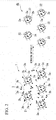
- FIG. 1 is a schematic diagram for explaining the removal method (1).
- the intermediate powder 1 contains the composite resin 2 and the dispersant 3.
- the composite resin 2 has a thermomeltable resin 2a and conductive fillers 2b.
- the dispersant 3 contains attach dispersant 3a that is attached to the conductive filler 2b, a first free dispersant 3b existing between the composite resins 2, and a second free dispersant 3c that exists near the surface of the composite resin 2 by attaching to the attach dispersant 3a.
- the removing method (1) when the removing method (1) is used to remove the intermediate powder 1, powder 4a containing the composite resin 21 is obtained.
- the removal method (1) when the removal method (1) is used in this way, among the attach dispersant 3a, the first free dispersant 3b, and the second free dispersant 3c, the first free dispersant 3b and the second free dispersant 3c can be effectively removed. Therefore, in the powder 4a containing the composite resin 21, the amounts of the first free dispersant 3b and the second free dispersant 3c are relatively small.
- the entire amount of the intermediate powder may be immersed in the solvent at once, or the intermediate powder may be divided into a plurality of parts and each of them immersed in the solvent.
- the removal method (2) will be described.
- a supercritical fluid may be supplied to the intermediate powder stored in the container.
- the intermediate powder can be impregnated with the supercritical fluid. After that, the powder is produced by removing the supercritical fluid.
- a preferable specific example of the supercritical fluid is a supercritical fluid of carbon dioxide.
- the supercritical fluid of carbon dioxide can be generated under the conditions of a temperature: 31.1°C or higher and a pressure: 72.8 atm or higher.
- the amount of carbon dioxide supplied as the supercritical fluid is preferably 0.25 g/min or less, preferably 0.20 g/min or less, and more preferably 0.15 g/min or less with respect to 1 mg of the dispersant contained in the intermediate powder, because it is easy to reduce the aggregation of the conductive filler.
- the lower limit of the supply amount of the supercritical fluid of carbon dioxide is not particularly limited, but can be, for example, 0.05 g/min or more. When the supply amount of the supercritical fluid of carbon dioxide is 0.25 g/min or less, it becomes easier to further reduce the aggregation of the conductive filler.
- the conditions relating to the temperature, pressure, and supply amount of the carbon dioxide supercritical fluid may be applied to the removal method (2) alone or in combination.
- the supercritical fluid is carbon dioxide having a temperature of 31.1°C or higher and a pressure of 72.8 atm or higher, and the supply amount of the supercritical fluid is 0.25 g/min or less with respect to 1 mg of the dispersant contained in the intermediate powder.
- the supercritical fluid is carbon dioxide having a temperature of 31.1 °C or higher and a pressure of 72.8 atm or higher, and the supply amount of the supercritical fluid is 0.20 g/min or less with respect to 1 mg of the dispersant contained in the intermediate powder.
- the supercritical fluid is carbon dioxide having a temperature of 31.1 °C or higher and a pressure of 72.8 atm or higher, and the supply amount of the supercritical fluid is 0.15 g/min or less with respect to 1 mg of the dispersant contained in the intermediate powder.
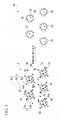
- FIG. 2 is a schematic diagram for explaining the removal method (2). As shown in FIG. 2 , the intermediate powder 1 contains the composite resin 2 and the dispersant 3.
- the supercritical fluid may be supplied to the entire amount of the intermediate powder at once, or the intermediate powder may be divided into a plurality of parts and the supercritical fluid may be supplied to each of them.
- the intermediate powder may be divided into a plurality of parts and supply the supercritical fluid to each of them.
- the removal method (3) will be described.
- the intermediate powder may be heated to, for example, 200 to 250°C.
- the heating temperature of the intermediate powder is not particularly limited as long as it is a temperature equal to or higher than the decomposition temperature or the boiling point of the dispersant. Therefore, the heating temperature of the intermediate powder is appropriately set depending on the type of the dispersant. For example, when the dispersant is a copolymer of an acrylic monomer or a cellulose derivative, the heating temperature can be 200°C or higher. For example, when the dispersant is polyallylamine or polystyrene imine, the heating temperature can be 250°C or higher.
- the pressure at the time of heating is preferably 1 atm or less (that is, atmospheric pressure or less), more preferably 0.5 atm or less, further preferably 0.3 atm or less, and particularly preferably a vacuum state of 0.1 atm.
- the pressure during the heating is 1 atm or less, the volatilization rate of the dispersant becomes even higher. Then, the volatilized dispersant is easily discharged from the processing container, and the desorbed dispersant is less likely to attach to the powder again.
- the heat treatment time is not particularly limited.
- the heat treatment time can be, for example, 24 hours.
- FIG. 3 is a schematic diagram for explaining the removal method (3).
- the intermediate powder 1 contains the composite resin 2 and the dispersant 3.
- the entire amount of the intermediate powder may be heated at once, or the intermediate powder may be divided into a plurality of parts and heated.
- the thermodynamic degree of freedom of the conductive filler is relatively lower than when the removing method (1) or the removing method (2) is used. Therefore, the conductive filler is less likely to be detached, and the conductive filler is less likely to aggregate. Therefore, in the removal method (3), it is preferable to heat the intermediate powder at once from the viewpoint of production efficiency.
- FIG. 4 is a flow chart showing a preferred embodiment of the present production method after recovering the intermediate powder. As shown in FIG. 4 , the intermediate powder is recovered and the dispersant is removed. When removing the dispersant, any one of the removal methods (1) to (3) may be used alone, or each may be used in combination.
- the amount of the dispersant in the powder after removing the dispersant is 50% by mass or less with respect to the total 100% by mass of the dispersants contained in the intermediate powder.
- the amount of the dispersant is 50% by mass or less with respect to 100% by mass of the total amount of the dispersants contained in the intermediate powder, the production of the powder is completed.
- any of the removal methods (1) to (3) may be used alone, or each may be used in combination.
- the dispersant is removed from the intermediate powder, the melt of the composite resin is less likely to foam during melt-molding, and the conductivity and surface appearance of the molded article are improved.
- the dispersant is removed from the powder, a thread-like molded article can be easily produced by melt-molding.
- melt-molding machine may be used for melt-molding.
- the production method for a melt-molded article according to the present embodiment can be suitably used in the production of a thread-like melt-molded article such as a conductive tube. Then, the obtained thread-like melt-molded article can be suitably used in the production of conductive pellets.
- conductive pellets can be produced by dividing the thread-like melt-molded article into a plurality of pieces.
- the melt of the composite resin is less likely to foam during the melt-molding.
- a melt-molded article with a good surface appearance can be obtained. Then, a thread-like melt-molded article can be easily produced.
- the present powder the powder according to the present embodiment (hereinafter, referred to as “the present powder”) will be described.
- the present powder contains a composite resin and a dispersant.
- the present powder may contain arbitrary components other than the composite resin and the dispersant as long as the effects of the present invention are not impaired.
- the composite resin contains a thermomeltable resin and a conductive filler.
- the conductive filler attaches to and is fixed to a part of the surface of the thermomeltable resin.
- the dispersant may be present between the composite resins.
- the dispersant is a compound that coordinates on the surface of the composite resin.
- the dispersant is not particularly limited as long as it is a compound capable of coordinating on the surface of the conductive filler by chemically interacting with the conductive filler.
- specific examples of the dispersant the same ones as described in the " ⁇ Production method for powder>" above can be exemplified.
- the amount of the dispersant is 0.5% by mass or less, preferably 0.3% by mass or less, and more preferably 0.1% by mass or less, with respect to 100% by mass of the total of the thermomeltable resin, the conductive filler, and the dispersant.
- the present powder can be produced according to " ⁇ Production method for powder>" above in the present description.
- the amount of the dispersant is 0.5% by mass or less, the melt of the composite resin is less likely to foam during melt-molding, and the appearance of the surface of the molded article is improved. Then, since the amount of the dispersant is 0.5% by mass or less, the conductivity is improved.
- the compression-molded article of the present embodiment (hereinafter, referred to as "the present compression-molded article") will be described.
- the present compression-molded article is a compression-molded article of the powder described above.
- the volume resistivity of the present compression-molded article is preferably 10 -1 to 10 5 ⁇ cm, and more preferably 10 1 to 10 2 ⁇ cm.
- the volume resistivity of the present compression-molded article can be measured, for example, with a resistivity meter ("Loresta GPMCP-T160" manufactured by Mitsubishi Chemical Analytech Co., Ltd.).
- the surface resistivity of the powder in the present compression-molded article is estimated to be about 10 8 to 10 14 Q/ ⁇ .
- the surface resistivity of the powder in the present compression-molded article is measured by a surface resistivity measuring instrument ("Model: H0709” manufactured by Shishido Electrostatic, Ltd.).
- the production method for the present compression-molded article is not particularly limited. For example, it can be produced by compression-molding the powder above.
- a compression-molding machine may be used for compression-molding.
- the pressure during compression-molding can be, for example, 10 to 60 MPa.
- the temperature during compression-molding can be, for example, 10 to 40°C.
- the present compression-molded article explained above is a compression-molded product of the powder above, so the conductivity is improved.
- the melt-molded article of the present embodiment (hereinafter, referred to as "the present melt-molded article") will be described.
- the present melt-molded article is a melt-molded article of the powder above.
- the volume resistivity of the present melt-molded article is preferably 10 4 to 10 7 ⁇ cm.
- the volume resistivity of the present melt-molded article can be measured by, for example, a resistivity meter ("Loresta GP MCP-T160 type” manufactured by Mitsubishi Chemical Analytech Co., Ltd.).
- the production method for the present melt-molded article is not particularly limited. For example, it can be produced by melt-molding the powder above.
- the temperature at the time of melt-molding can be, for example, 320 to 400°C.
- the extrusion speed of the melt during melt-molding can be, for example, 5 to 40 rpm.
- the melt-molded article described above is a melt-molded article of the powder or the compression-molded article, so it has good conductivity and a good surface appearance.
- thermogravimetric/differential thermal analyzer (“TG-DTA2000SATG-DTA” manufactured by Bruker AX)
- the powder was heated in the range of 20°C to 250°C, and the amount of volatile components and decomposition components generated was measured.
- the atmospheric gas used for the measurement was air.
- the extrusion molding machine is a device that creates a melt-molded article by internally heating and melting and extruding a resin at a die portion. In the single-screw extruder, the number of screws used when transferring the resin inside the device is one (single-screw).
- Powder obtained in each of the Examples and Comparative Example below was used as a sample.
- the sample was melt-molded under the condition of 320°C.
- a thread-like melt-molded article strand
- a strand came out it was judged as "good”.
- a strand did not come out it was judged as "inferior”.
- Powder obtained in each of the Examples and Comparative Example below was used as a sample.
- a strand having a diameter of 3 mm was produced by melt-molding under the condition of 320°C using the single-screw extrusion molding machine above.
- the appearance of the strands obtained in each Example and Comparative Example was visually observed. When the number of the surface unevenness was 1 or less within the range of the strand length of 1 m, it was judged as "good”. When the surface had more than one unevenness within the range of the strand length of 1 m, it was judged as "inferior".
- a pellet-shaped melt-molded article (150 mm ⁇ 75 mm) obtained by melt-molding the powder obtained in each of the Examples and Comparative Example below for 5 minutes under the conditions of 320°C and 12 MPa was used as a sample.
- a melt-molding machine (“single-acting compression-molding machine” manufactured by Shinto Metal Industry Co., Ltd.) was used.
- the volume resistivity of the sample was measured using a resistivity meter ("Loresta GP MCP-T160 type" manufactured by Mitsubishi Chemical Analytech Co., Ltd.). When the volume resistivity of the melt-molded article was 10 10 ⁇ cm or less, which is the detection limit value, it was judged as "good”. When the volume resistivity of the melt-molded article exceeds the detection limit of 10 10 ⁇ cm, it was judged as "inferior”.
- Powder obtained in each of the Examples and Comparative Example below was used as a sample.
- 5 g of the sample was placed in a mold so as to have an even height.
- the pressure was gradually applied by a compression-molding machine ("manual 5 ton table press" manufactured by Sansho Industry Co., Ltd.) and kept at a pressure of 40 MPa for 1 minute to prepare a compression-molded article.
- the compression-molded article ( ⁇ 30 mm, thickness 3 mm) as a measurement sample, the volume resistivity of the compression-molded article was measured.
- the volume resistivity of the compression-molded article was measured by the four-terminal method using a resistivity meter (manufactured by Mitsubishi Chemical Analytech Co., Ltd., Loresta GP MCP-T610 type).
- Neoflon PFA manufactured by Daikin Industries, Ltd. was used as the raw material powder containing the thermomeltable resin. Carbon nanotubes (“long carbon nanotubes” manufactured by Taiyo Nippon Sanso Co., Ltd.) were used as the conductive filler. An acrylic polymer was used as the dispersant.
- a CNT dispersion (the amount of the carbon nanotubes: 0.2% by mass).
- 10 kg of the raw material powder and 5 kg of the CNT dispersion were placed in a stirring container and stirred for 10 minutes using a stirring motor ("Three One Motor BLh600" manufactured by Shinto Kagaku Co., Ltd.) to prepare a composite resin slurry.
- a stirring motor (“Three One Motor BLh600" manufactured by Shinto Kagaku Co., Ltd.) to prepare a composite resin slurry.
- the amount of the thermomeltable resin in the composite resin slurry was 99.6% by mass with respect to 100% by mass of the total of the thermomeltable resin, the carbon nanotubes, and the dispersant.
- the amount of the carbon nanotubes in the composite resin slurry was 0.1% by mass with respect to 100% by mass of the total of the thermomeltable resin, the carbon nanotubes, and the dispersant.
- the amount of the dispersant in the composite resin slurry was 0.3% by mass with respect to 100% by mass of the total of the thermomeltable resin, the carbon nanotubes, and the dispersant.
- the intermediate powder and a solvent were put in a stirring container, and the intermediate powder was immersed in the solvent. Then, the mixture was stirred under the conditions of 20°C for 1 hour using a stirring motor to elute the dispersant in the solvent to obtain a slurry state. Then, the slurry was dried again under the conditions of 80°C for 24 hours and the solvent was removed to obtain powder.
- a solvent toluene
- Example 1 the dispersant was removed by using the removal method (1) in the embodiments above. Evaluations 1 to 5 were carried out on the obtained powder according to the description above. The results are shown in Table 1.
- Powder was produced in the same manner as in Example 1 except that the intermediate powder was heated instead of being immersed in the solvent. During heating, the intermediate powder was heated using a square vacuum dryer ("Square vacuum dryer ADP300" manufactured by Yamato Scientific Co., Ltd.) under a pressure: 0.1 kPa or less, and a temperature: 200°C, for 24 hours. Thereby, the dispersant contained in the intermediate powder was removed.
- a square vacuum dryer (“Square vacuum dryer ADP300” manufactured by Yamato Scientific Co., Ltd.) under a pressure: 0.1 kPa or less, and a temperature: 200°C, for 24 hours.
- Example 2 the dispersant was removed by using the removal method (3) in the embodiments above. Evaluations 1 to 5 were carried out on the obtained powder according to the description above. The results are shown in Table 1.
- Example 2 Intermediate powder was produced in the same manner as in Example 1 except that the amount of the carbon nanotubes used was changed so that the amount of the carbon nanotubes in the composite resin slurry was 0.3% by mass. Then, the dispersant was removed by using the removal method (3) under the same conditions as in Example 2. Evaluations 1 to 5 were carried out on the obtained powder according to the description above. The results are shown in Table 2. Moreover, the results of Example 2 are redisplayed in Table 2 for reference.
- Example 2 Intermediate powder was produced in the same manner as in Example 1 except that the amount of the carbon nanotubes used was changed so that the amount of the carbon nanotubes in the composite resin slurry was 0.5% by mass. Then, the dispersant was removed by using the removal method (3) under the same conditions as in Example 2. Evaluations 1 to 5 were carried out on the obtained powder according to the description above. The results are shown in Table 2.
- Powder of Comparative Example 1 was produced in the same manner as in Example 1 except that the intermediate powder was not immersed in the solvent and the dispersant was not removed.
- FIG. 5 is a graph showing the results of thermogravimetric analysis of the powders obtained in Examples and Comparative Example.
- a peak of the ketone-based solvent ethyl methyl ketone
- Comparative Example 1 no peak derived from the dispersant was observed in the powders of Examples 1 and 2
- Comparative Example 1 no peak derived from the dispersant was observed in the powders of Examples 1 and 2
- Comparative Example 1 no peak derived from the dispersant was observed in the powders of Examples 1 and 2
- Comparative Example 1 a peak derived from the dispersant was observed in Comparative Example 1. From this result, it was confirmed that the dispersant could be removed from the intermediate powder in Examples 1 and 2.
- by comparing the peak sizes it was determined that 95% or more of the dispersants contained in the intermediate powder could be removed in the powders of Examples 1 and 2.
- Example 1 in which the dispersant was removed, foaming of the melt was not observed during melt-molding, and the surface of the strand was smooth.
- the volume resistivity of the melt-molded articles obtained in Examples 1 and 2 was about 10 6 to 10 7 ⁇ cm, which had excellent conductivity.
- the volume resistivity of the compression-molded article of the powder obtained in Examples 1 and 2 was 10 to 10 2 ⁇ cm. As described above, the conductivity of the powder before melting was sufficient.
- the surface resistivity of the powders obtained in Examples 1 and 2 was estimated to be about 10 8 to 10 14 ⁇ / ⁇ .
- Example 3 The volume resistivity of the melt-molded article obtained in Example 3 was about 10 3 to 10 6 ⁇ cm, and the volume resistivity of the melt-molded article obtained in Example 4 was 10 1 to 10 4 ⁇ cm. All melt-molded articles had excellent conductivity.
- FIG. 6 is a graph showing the relationship between the carbon nanotube content: C (% by mass) and the volume resistivity of the melt-molded article.
- E represents an exponent.
- “1.00E + 04” is “1.00 ⁇ 10 4 " and “1.00E + 07” is “1.00 ⁇ 10 7 ".
- "e” indicates the number of Napiers (2.71).
- the volume resistivity Y of the melt-molded article is characterized by satisfying the following equation (1) in the range of carbon nanotube content: C of 0.1 to 0.5% by mass. 3 ⁇ 10 4 ⁇ exp ⁇ 11.51 ⁇ C ⁇ Y ⁇ 3 ⁇ 10 7 ⁇ exp ⁇ 11.51 ⁇ C
- the powder obtained by removing the dispersant can suppress foaming of the melt during melt-molding, can stably produce strands, and the obtained strands have excellent conductivity.
Landscapes
- Chemical & Material Sciences (AREA)
- Engineering & Computer Science (AREA)
- Organic Chemistry (AREA)
- Health & Medical Sciences (AREA)
- Chemical Kinetics & Catalysis (AREA)
- Medicinal Chemistry (AREA)
- Polymers & Plastics (AREA)
- Mechanical Engineering (AREA)
- Materials Engineering (AREA)
- Nanotechnology (AREA)
- Life Sciences & Earth Sciences (AREA)
- Wood Science & Technology (AREA)
- Compositions Of Macromolecular Compounds (AREA)
- Processes Of Treating Macromolecular Substances (AREA)
- Manufacture Of Macromolecular Shaped Articles (AREA)
- Conductive Materials (AREA)
Applications Claiming Priority (2)
| Application Number | Priority Date | Filing Date | Title |
|---|---|---|---|
| JP2018146909A JP7179522B2 (ja) | 2018-08-03 | 2018-08-03 | 粉末の製造方法、溶融成形体の製造方法 |
| PCT/JP2019/029427 WO2020026981A1 (fr) | 2018-08-03 | 2019-07-26 | Procédé de production de poudre, procédé de production d'article moulé par fusion, poudre, article moulé par compression, et article moulé par fusion |
Publications (2)
| Publication Number | Publication Date |
|---|---|
| EP3816208A1 true EP3816208A1 (fr) | 2021-05-05 |
| EP3816208A4 EP3816208A4 (fr) | 2022-04-13 |
Family
ID=69232513
Family Applications (1)
| Application Number | Title | Priority Date | Filing Date |
|---|---|---|---|
| EP19843505.9A Withdrawn EP3816208A4 (fr) | 2018-08-03 | 2019-07-26 | Procédé de production de poudre, procédé de production d'article moulé par fusion, poudre, article moulé par compression, et article moulé par fusion |
Country Status (8)
| Country | Link |
|---|---|
| US (1) | US20210309812A1 (fr) |
| EP (1) | EP3816208A4 (fr) |
| JP (1) | JP7179522B2 (fr) |
| KR (1) | KR20210040952A (fr) |
| CN (1) | CN112638994A (fr) |
| SG (1) | SG11202100865QA (fr) |
| TW (1) | TW202017983A (fr) |
| WO (1) | WO2020026981A1 (fr) |
Families Citing this family (1)
| Publication number | Priority date | Publication date | Assignee | Title |
|---|---|---|---|---|
| JP2024515825A (ja) * | 2021-04-28 | 2024-04-10 | ネモ ナノマテエリアルズ リミテッド | カーボンナノチューブによりコートされるポリマー粒子を含有する押出可能な組成物 |
Family Cites Families (6)
| Publication number | Priority date | Publication date | Assignee | Title |
|---|---|---|---|---|
| US20090032777A1 (en) * | 2005-06-07 | 2009-02-05 | Kuraray Co., Ltd. | Carbon nanotube dispersion liquid and transparent conductive film using same |
| WO2012107991A1 (fr) * | 2011-02-07 | 2012-08-16 | 大陽日酸株式会社 | Particules résineuses composites, procédé de production de particules résineuses composites, corps moulé en résine composite et son procédé de production |
| JP5968720B2 (ja) * | 2012-08-07 | 2016-08-10 | 大陽日酸株式会社 | 複合樹脂材料粒子の製造方法、及び複合樹脂成形体の製造方法 |
| JP2015030821A (ja) | 2013-08-05 | 2015-02-16 | 大陽日酸株式会社 | 複合樹脂粒子及びその製造方法 |
| JP6442160B2 (ja) * | 2014-05-09 | 2018-12-19 | 日本ゼオン株式会社 | カーボンナノチューブ複合材料の製造方法 |
| EP3524642B1 (fr) * | 2016-10-07 | 2023-09-20 | Toho Kasei Co., Ltd. | Matériau de résine composite, et corps moulé |
-
2018
- 2018-08-03 JP JP2018146909A patent/JP7179522B2/ja active Active
-
2019
- 2019-07-26 EP EP19843505.9A patent/EP3816208A4/fr not_active Withdrawn
- 2019-07-26 CN CN201980049763.6A patent/CN112638994A/zh active Pending
- 2019-07-26 KR KR1020217002522A patent/KR20210040952A/ko not_active Withdrawn
- 2019-07-26 US US17/264,434 patent/US20210309812A1/en not_active Abandoned
- 2019-07-26 SG SG11202100865QA patent/SG11202100865QA/en unknown
- 2019-07-26 WO PCT/JP2019/029427 patent/WO2020026981A1/fr not_active Ceased
- 2019-07-31 TW TW108127184A patent/TW202017983A/zh unknown
Also Published As
| Publication number | Publication date |
|---|---|
| KR20210040952A (ko) | 2021-04-14 |
| TW202017983A (zh) | 2020-05-16 |
| CN112638994A (zh) | 2021-04-09 |
| JP7179522B2 (ja) | 2022-11-29 |
| WO2020026981A1 (fr) | 2020-02-06 |
| SG11202100865QA (en) | 2021-02-25 |
| US20210309812A1 (en) | 2021-10-07 |
| EP3816208A4 (fr) | 2022-04-13 |
| JP2020019916A (ja) | 2020-02-06 |
Similar Documents
| Publication | Publication Date | Title |
|---|---|---|
| Kukla et al. | Effect of particle size on the properties of highly-filled polymers for fused filament fabrication | |
| CN103347957B (zh) | 复合树脂材料粒子、复合树脂材料粒子的制造方法、复合树脂成型体及其制造方法 | |
| JP6386114B2 (ja) | 伝導性樹脂組成物の製造方法 | |
| KR101161715B1 (ko) | 탄소나노튜브가 고농도로 균일하게 분산된 나노복합체 제조방법 및 그 제조방법에 따라 제조된 조성물 | |
| KR102076171B1 (ko) | 복합 수지 재료 및 성형체 | |
| CN104830040A (zh) | 用于3d打印技术的聚碳酸酯组合物及其制备方法 | |
| JP2023503559A (ja) | ポリオレフィン系樹脂発泡体及びこれから製造された成形品 | |
| EP3816208A1 (fr) | Procédé de production de poudre, procédé de production d'article moulé par fusion, poudre, article moulé par compression, et article moulé par fusion | |
| EP4249256A2 (fr) | Composites piézorésistifs par fabrication additive et filaments composites associés à ceux-ci | |
| TWI753180B (zh) | 複合樹脂粒子之製造方法、樹脂成形體及複合樹脂粒子 | |
| CN105968567A (zh) | 一种抗静电母粒及其制备方法和应用 | |
| JP5269992B2 (ja) | 電気伝導性熱可塑性ポリマーのためのマスターバッチ、マスターバッチを調製するための方法及びその使用 | |
| EP4269476A1 (fr) | Composition de matière première de résine pour moulage, composition de matière première de résine pour membranes micro-poreuses, et procédés respectifs de production desdits produits | |
| EP3816207A1 (fr) | Procédé de production de particules composites de résine et particules composites de résine | |
| JP7639453B2 (ja) | カーボンナノチューブ及び熱可塑性樹脂を含む熱可塑性樹脂組成物 | |
| CN107304293B (zh) | 一种含有熔接线的聚苯硫醚树脂组合物的成型制品 | |
| JP7381498B2 (ja) | カーボンナノチューブを含む複合2次粒子及びその製造方法 | |
| JP2019099627A (ja) | セルロース含有多孔質樹脂成形体の製造方法 | |
| KR20180034148A (ko) | 전도성 필름 및 이의 제조방법 |
Legal Events
| Date | Code | Title | Description |
|---|---|---|---|
| STAA | Information on the status of an ep patent application or granted ep patent |
Free format text: STATUS: THE INTERNATIONAL PUBLICATION HAS BEEN MADE |
|
| PUAI | Public reference made under article 153(3) epc to a published international application that has entered the european phase |
Free format text: ORIGINAL CODE: 0009012 |
|
| STAA | Information on the status of an ep patent application or granted ep patent |
Free format text: STATUS: REQUEST FOR EXAMINATION WAS MADE |
|
| 17P | Request for examination filed |
Effective date: 20210128 |
|
| AK | Designated contracting states |
Kind code of ref document: A1 Designated state(s): AL AT BE BG CH CY CZ DE DK EE ES FI FR GB GR HR HU IE IS IT LI LT LU LV MC MK MT NL NO PL PT RO RS SE SI SK SM TR |
|
| DAV | Request for validation of the european patent (deleted) | ||
| DAX | Request for extension of the european patent (deleted) | ||
| RIC1 | Information provided on ipc code assigned before grant |
Ipc: C08L 27/18 20060101ALI20220303BHEP Ipc: C08J 3/215 20060101ALI20220303BHEP Ipc: C08K 7/04 20060101ALI20220303BHEP Ipc: C08K 3/04 20060101ALI20220303BHEP Ipc: C08J 3/21 20060101ALI20220303BHEP Ipc: C08F 2/08 20060101ALI20220303BHEP Ipc: B29C 43/00 20060101ALI20220303BHEP Ipc: C08J 5/00 20060101ALI20220303BHEP Ipc: C08J 3/12 20060101AFI20220303BHEP |
|
| A4 | Supplementary search report drawn up and despatched |
Effective date: 20220311 |
|
| STAA | Information on the status of an ep patent application or granted ep patent |
Free format text: STATUS: THE APPLICATION IS DEEMED TO BE WITHDRAWN |
|
| 18D | Application deemed to be withdrawn |
Effective date: 20221011 |