EP3820165A1 - Procédé de fonctionnement d'un appareil auditif ainsi qu'appareil auditif - Google Patents
Procédé de fonctionnement d'un appareil auditif ainsi qu'appareil auditif Download PDFInfo
- Publication number
- EP3820165A1 EP3820165A1 EP20200523.7A EP20200523A EP3820165A1 EP 3820165 A1 EP3820165 A1 EP 3820165A1 EP 20200523 A EP20200523 A EP 20200523A EP 3820165 A1 EP3820165 A1 EP 3820165A1
- Authority
- EP
- European Patent Office
- Prior art keywords
- hearing aid
- network
- hearing
- master
- aids
- Prior art date
- Legal status (The legal status is an assumption and is not a legal conclusion. Google has not performed a legal analysis and makes no representation as to the accuracy of the status listed.)
- Granted
Links
Images

Classifications
-
- H—ELECTRICITY
- H04—ELECTRIC COMMUNICATION TECHNIQUE
- H04L—TRANSMISSION OF DIGITAL INFORMATION, e.g. TELEGRAPHIC COMMUNICATION
- H04L67/00—Network arrangements or protocols for supporting network services or applications
- H04L67/01—Protocols
- H04L67/10—Protocols in which an application is distributed across nodes in the network
- H04L67/104—Peer-to-peer [P2P] networks
- H04L67/1044—Group management mechanisms
- H04L67/1051—Group master selection mechanisms
-
- H—ELECTRICITY
- H04—ELECTRIC COMMUNICATION TECHNIQUE
- H04R—LOUDSPEAKERS, MICROPHONES, GRAMOPHONE PICK-UPS OR LIKE ACOUSTIC ELECTROMECHANICAL TRANSDUCERS; ELECTRIC HEARING AIDS; PUBLIC ADDRESS SYSTEMS
- H04R3/00—Circuits for transducers
- H04R3/12—Circuits for transducers for distributing signals to two or more loudspeakers
- H04R3/14—Cross-over networks
-
- H—ELECTRICITY
- H04—ELECTRIC COMMUNICATION TECHNIQUE
- H04L—TRANSMISSION OF DIGITAL INFORMATION, e.g. TELEGRAPHIC COMMUNICATION
- H04L67/00—Network arrangements or protocols for supporting network services or applications
- H04L67/01—Protocols
- H04L67/10—Protocols in which an application is distributed across nodes in the network
- H04L67/104—Peer-to-peer [P2P] networks
- H04L67/1044—Group management mechanisms
- H04L67/1046—Joining mechanisms
-
- H—ELECTRICITY
- H04—ELECTRIC COMMUNICATION TECHNIQUE
- H04R—LOUDSPEAKERS, MICROPHONES, GRAMOPHONE PICK-UPS OR LIKE ACOUSTIC ELECTROMECHANICAL TRANSDUCERS; ELECTRIC HEARING AIDS; PUBLIC ADDRESS SYSTEMS
- H04R25/00—Electric hearing aids
- H04R25/30—Monitoring or testing of hearing aids, e.g. functioning, settings, battery power
-
- H—ELECTRICITY
- H04—ELECTRIC COMMUNICATION TECHNIQUE
- H04R—LOUDSPEAKERS, MICROPHONES, GRAMOPHONE PICK-UPS OR LIKE ACOUSTIC ELECTROMECHANICAL TRANSDUCERS; ELECTRIC HEARING AIDS; PUBLIC ADDRESS SYSTEMS
- H04R25/00—Electric hearing aids
- H04R25/55—Electric hearing aids using an external connection, either wireless or wired
- H04R25/554—Electric hearing aids using an external connection, either wireless or wired using a wireless connection, e.g. between microphone and amplifier or using Tcoils
-
- H—ELECTRICITY
- H04—ELECTRIC COMMUNICATION TECHNIQUE
- H04R—LOUDSPEAKERS, MICROPHONES, GRAMOPHONE PICK-UPS OR LIKE ACOUSTIC ELECTROMECHANICAL TRANSDUCERS; ELECTRIC HEARING AIDS; PUBLIC ADDRESS SYSTEMS
- H04R25/00—Electric hearing aids
- H04R25/55—Electric hearing aids using an external connection, either wireless or wired
- H04R25/558—Remote control, e.g. of amplification, frequency
-
- H—ELECTRICITY
- H04—ELECTRIC COMMUNICATION TECHNIQUE
- H04R—LOUDSPEAKERS, MICROPHONES, GRAMOPHONE PICK-UPS OR LIKE ACOUSTIC ELECTROMECHANICAL TRANSDUCERS; ELECTRIC HEARING AIDS; PUBLIC ADDRESS SYSTEMS
- H04R2225/00—Details of deaf aids covered by H04R25/00, not provided for in any of its subgroups
- H04R2225/55—Communication between hearing aids and external devices via a network for data exchange
-
- H—ELECTRICITY
- H04—ELECTRIC COMMUNICATION TECHNIQUE
- H04R—LOUDSPEAKERS, MICROPHONES, GRAMOPHONE PICK-UPS OR LIKE ACOUSTIC ELECTROMECHANICAL TRANSDUCERS; ELECTRIC HEARING AIDS; PUBLIC ADDRESS SYSTEMS
- H04R25/00—Electric hearing aids
- H04R25/55—Electric hearing aids using an external connection, either wireless or wired
Definitions
- the invention relates to a method for operating a hearing aid and a corresponding hearing aid.
- a hearing aid is usually assigned to an individual user and is worn by him in or on the ear in order to pick up sound from the environment and output it again in modified form.
- the hearing aid has a microphone which picks up sound and generates an electrical input signal. This is fed to signal processing of the hearing aid for modification. The signal processing outputs an electrical output signal as a result, which is then converted back into sound via an earpiece of the hearing aid.
- hearing aids may be useful for the hearing aids to connect to one another in a network in order to exchange data.
- Hearing aids from different users, which are connected together in a network are described in, for example EP 1 643 801 A2 and EP 3 101 919 A1 .
- the coordination of the data exchange in the network is of particular importance. There is the problem, especially when networking hearing aids in a common network, that the associated users are mobile and can accordingly come together at will, so that the composition of the network also changes spontaneously and dynamically. Individual hearing aids as participants in the network join or leave the network and the organization of the network and the exchange of data is correspondingly more difficult.
- an object of the invention to improve the networking of hearing aids from different users in a common network.
- an improved method for operating a hearing aid is to be specified.
- an improved hearing aid and a method for operating a network are to be specified.
- the object is achieved according to the invention by a method with the features according to claim 1 and by a hearing aid with the features according to claim 13.
- the object is also achieved by a method for operating a network according to claim 14 Subclaims.
- the statements in connection with the method for operating a hearing aid also apply accordingly to the hearing aid and to the method for operating a network and vice versa. If method steps are described below, advantageous configurations for the hearing aid result in particular from the fact that it is designed to carry out one or more of these method steps.
- the method is used to operate a hearing aid, which is also referred to as an ego hearing aid.
- the hearing aid is assigned to a user and is or is connected to one or more other hearing aids, which are each assigned to a different user, for data exchange in a common network.
- the ego hearing aid does not necessarily have to differ from the other hearing aids, but a combination of different hearing aids in the same network is also possible and suitable.
- the invention is described specifically from the perspective of the ego hearing aid, but the explanations apply analogously in particular to the other hearing aids.
- a respective hearing aid is in particular a monaural or a binaural hearing aid.
- a monaural hearing aid a user only wears a single device on only one side of the head; in the case of a binaural hearing aid, a user wears two individual devices on different ones Sides of the head. All hearing aids that participate in the network are hearing aids from different users, ie no two hearing aids are assigned to the same user.
- hearing aid is understood to mean all individual devices that are assigned to an individual user.
- the hearing aid or one of the other hearing aids controls the data exchange by participating in the network as a master. All other hearing aids participate in the network as slaves.
- one of the hearing aids i.e. the ego hearing aid or another hearing aid, is a master of the network, while the remaining hearing aids in the network are each slaves, whose communication is controlled by the master.
- the network has only a single master at a given point in time.
- the ego hearing aid thus joins an existing network or forms a new network with one or more other hearing aids, so that the ego hearing aid now has to be assigned a role, namely either master or slave. This assignment takes place as a function of the operability of the hearing aid relative to the respective operability of the other hearing aids with which a connection is to be established via the network.
- the invention is initially based on the observation that a networking of hearing aids in a common network is initially unorganized, since the various hearing aids by themselves regularly move their surroundings to other hearing aids and search networks and initially no fixed role allocation is specified until another hearing aid or an existing network for networking is found. Even a distribution of roles that has been defined once must be dynamically checked and adapted if the composition of the network changes, i.e. individual hearing aids join or leave the network.
- establishing a connection ie when connecting a hearing aid to one or more other hearing aids, data collisions or faulty transmissions may occur.
- Several hearing aids transmit on a predetermined channel, ie in particular frequency band, of the network. This channel often has a limited bandwidth. There is therefore a need to organize the network as clearly as possible and to assign a defined role to each participating hearing aid.
- one of the hearing aids is therefore assigned the role of a master, which controls and thus coordinates the exchange of data in the entire network.
- All other hearing aids are assigned the role of a slave, which is not currently controlling the data exchange, but is dependent on control by the master.
- This distribution of roles is made as soon as at least two hearing aids come together. For example, a respective hearing aid regularly sends out a search signal which is received and confirmed by another hearing aid, so that upon mutual reception and confirmation, two hearing aids gain knowledge of one another and then spontaneously and in particular automatically form a network. The same applies when a hearing aid joins an existing network.
- one of the hearing aids must be selected as the master.
- This selection can basically be made arbitrarily, for example by means of a random number which is generated by a respective hearing aid and which is compared with the random number of the other hearing aids.
- a special selection is made specifically, which ensures an improved operation of the network and thus a particularly reliable exchange of data.
- that hearing aid is selected as the master in the network which has the highest level of capability for this.
- This capability is expressed by the operability of a respective hearing aid compared to the operability of the other hearing aids.
- the operability indicates how safe and reliable the operation of the hearing aid is at the given point in time and preferably also how safe and reliable the operation of the hearing aid is likely to be in the future. This ensures that the data exchange is controlled by the most capable hearing aid.
- the operability of the hearing aid is derived in particular from an operating parameter of the hearing aid.
- the operating parameter is a variable which typically changes dynamically during operation of the hearing aid and thereby indicates a specific state of the hearing aid at a given point in time.
- the operating parameter quantifies, in particular, an operationally relevant property of the hearing aid or a component of the hearing aid.
- the operating parameter is directly or indirectly also a measure of the current and / or future performance of the hearing aid with regard to its functionality in the network. As a result, the operating parameter is particularly suitable for determining whether the hearing aid is suitable as a master or whether another hearing aid is more suitable.
- the operational capability is determined on the basis of a state of charge of an energy store of the hearing aid, so that the hearing aid participates in the network as a master when the state of charge of the hearing aid is greater than the state of charge of all other hearing aids in the network, and otherwise as a slave.
- the state of charge is an operating parameter of the hearing aid.
- the state of charge is increasingly reduced by the fact that the hearing aid performs one or more functions, for example a modification in signal processing or an output of sound via a Listener.
- the energy consumption will increase due to the additional function of controlling the data exchange and that the charge status will be reduced correspondingly faster compared to the role as a slave. It is therefore advisable to select the hearing aid with the highest charge level as the master.
- the operability is determined on the basis of a transmission quality of the hearing aid with regard to the transmission and / or reception of data via the network, so that the hearing aid participates in the network as a master if the transmission quality of the hearing aid is greater than the transmission quality of all other hearing aids in the network , and otherwise as a slave.
- the transmission quality is quantified, for example, by an average signal strength with which the hearing aid receives or sends data from other hearing aids, or both.
- the transmission quality depends, for example, on the position of a hearing aid relative to the other hearing aids and any obstacles that may be present.
- the transmission quality is dependent, for example, on the type and structure of an antenna of the hearing aid which is used for sending and / or receiving during data exchange.
- the operability is determined on the basis of an error rate during data exchange, so that the hearing aid participates in the network as a master if the error rate of the hearing aid is lower than the error rate of all other hearing aids in the network, and otherwise as a slave.
- This ensures that the data exchange is as error-free as possible.
- a high error rate requires frequent resending of data, i.e. redundant transmission, which is correspondingly inefficient.
- the hearing aid with the lowest error rate is therefore selected as the master.
- the error rate is, for example a so-called "bit error rate”. Similar to the transmission quality, the error rate depends, for example, on the position of a hearing aid relative to the other hearing aids and specifically on the distance to the other hearing aids.
- a combination of several of the aforementioned concepts for determining the operability with one another is also advantageous, so that this is determined as a function of several different operating parameters of a hearing aid.
- the different operating parameters are taken into account with different priorities.
- the hearing aid ie the ego hearing aid
- the hearing aid is preferably selected as the new master of the network when the hearing aid joins the network and this already has an old master whose operability, however, is worse than the operability of the hearing aid, so that the old master henceforth as a slave participates in the network. If, on the other hand, the operability of the ego hearing aid is worse than that of the old master, it remains the master of the network and the ego hearing aid participates as a slave.
- the hearing aid i.e. the ego hearing aid
- This essentially corresponds to the previously described case of the ego hearing aid joining a network, but now from a different perspective in which the ego hearing aid is already participating in the network and a new, potentially more capable participant joins. If the new hearing aid has a higher operational capability, the role of the master is assigned to it, otherwise the new hearing aid joins as a slave.
- the hearing aid ie the ego hearing aid
- the mechanisms described above for the cases of a hearing aid leaving or joining ensure that the hearing aid with the highest operational capability always takes over control of the data exchange in the network and is or remains selected as the master, so that even with a dynamic change in the composition of the network an optimal data exchange is guaranteed.
- a search mode of the hearing aid is activated if it is not currently participating in a network, with the hearing aid in search mode preferably emitting a search signal repeatedly, which contains the operational capability of the hearing aid, ie a first hearing aid, so that it comes from another hearing aid, ie a second Hearing aid, can be received and is comparable with its operability.
- a search mode is activated in which the hearing aid searches for one or more other hearing aids in order to form a network with them or to join an already existing network.
- search mode the hearing aid repeatedly sends out a search signal.
- the search signal is preferably an electromagnetic radio signal.
- the search signal is preferably a data signal, that is, it contains information from the hearing aid or about the hearing aid or both.
- the search signal contains the operational capability of the hearing aid.
- this is not mandatory for mere participation in the network; it is rather sufficient if the search signal is a simple identification signal, e.g. an identification number or simply a test signal. If, however, as described here, one's own operational capability is transmitted in search mode, another hearing aid can receive this and compare it with its operational capability.
- the hearing aid expediently hears whether one or more other hearing aids are within range and, if necessary, receives theirs Search signals, in particular to compare the respective operational capability of the other hearing aids with your own operational capability.
- the hearing and the transmission are fundamentally independent of one another, so that the hearing aid hears or transmits or both in the search mode.
- the two functions of listening and sending in search mode are expediently activated in different ways and not necessarily together.
- the search mode is preferably activated by the hearing aid recognizing speech, i.e. the presence of speech in the current environment.
- the detection takes place in particular in that a microphone of the hearing aid picks up sound from the environment and generates an electrical input signal therefrom, which is fed to an analysis unit which, for example, is part of the signal processing.
- an analysis unit which, for example, is part of the signal processing.
- at least two hearing aid users spontaneously meet and start a conversation.
- the users' hearing aids are not yet coupled to one another, so they do not yet form a common network.
- the search mode of a respective hearing aid is now preferably triggered by the fact that it recognizes speech via its microphone, e.g. the voice of the user of the hearing aid or the voice of another person.
- the hearing aid in the following the first hearing aid, recognizes the voice of its assigned user, e.g. by means of self-voice recognition of the signal processing, then this hearing aid sends out a search signal, which in particular also contains the operational capability of the hearing aid, and searches for other hearing aids in the area, potentially the Hearing aid of a conversation partner of the user.
- a hearing aid it is also conceivable and suitable for a hearing aid to send out a search signal as soon as it recognizes a voice that is not the voice of the assigned user, i.e. a foreign voice.
- the second hearing aid If the other user also wears a hearing aid, hereinafter the second hearing aid, this is suitably also in search mode and hears whether a hearing aid is nearby.
- the second hearing aid hears the search signal from the first hearing aid.
- the second hearing aid also detects the operational capability of the first hearing aid and compares this with its own Operational capability, which is expediently also transmitted, namely as a response signal, in order to be received by the first hearing aid and also to be compared with one's own operational capability. In this way, both hearing aids determine which is selected as the master and which as the slave. A common network with the appropriate distribution of roles is then formed.
- the second hearing aid does not send its operational capability to the first hearing aid itself, but only determines the distribution of roles and then communicates this to the first hearing aid by means of a response signal, so that the first hearing aid does not have to compare the two operational capabilities, but is informed of its role directly.
- the master controls the data exchange and thus takes over the coordination of the data communication.
- a third hearing aid If another user arrives with a third hearing aid, this is initially also in search mode and recognizes the existing network. From the data exchanged in the network between the first and the second hearing aid, the third hearing aid recognizes which hearing aid is the master and then logs on to it. In an expedient embodiment, it is then checked, as already described, whether the third hearing aid now takes on the role of master or participates in the network as a slave.
- the master in the network preferably keeps a list of participants in which all current participants in the network are recorded.
- the master preferably also monitors the respective operational capability of each hearing aid in the network on a recurring basis and, if necessary, transfers control of the data exchange to a more suitable participant, as already described above.
- the data that are exchanged via the network during the data exchange are audio data, ie the language of the user.
- the audio data are obtained in that a respective hearing aid picks up the speech of the assigned user.
- This recorded language is then transmitted to the other hearing aids via the network.
- a type of telephone connection for the hearing aids is then implemented by means of the network. This is beneficial in noisy or noisy environments where airborne sound transmission and direct speech understanding are difficult.
- the data are control data for the hearing aids in the network or other information.
- the network is preferably a decentralized and relay-free network in which the hearing aids are directly connected to one another.
- the hearing aids are connected to one another in the manner of a peer-to-peer network, with the difference that one of the hearing aids controls the data exchange as the master.
- additional devices that are not hearing aids are dispensed with, at least for data exchange between the hearing aids. Rather, data is exchanged directly between the hearing aids and thus not via additional relay stations, hubs, routers or the like.
- the network is thus a real hearing aid network.
- the use of additional devices that are not hearing aids is also advantageous per se.
- the network is a wireless network.
- a respective hearing aid has a corresponding wireless interface for data exchange, e.g. a WLAN, Bluetooth or radio antenna.
- the network is either a public or a private network. In contrast to a private network, no authentication is required in a public network.
- An open network with several hearing aids is preferably set up automatically as soon as several hearing aids are within a suitable range of one another.
- the range from which an automatic connection is established is determined in particular by the transmission range of the hearing aids.
- Only non-sensitive data is expediently exchanged via an open network, for example for comparing parameters or settings of the hearing aids or for joint collection of data, especially environmental data.
- An information hotspot is advantageously used as an alternative or in addition to increasing the transmission range of the hearing aids, that is to say as a relay for the exchange of data, so to speak.
- a private network is also known as a closed network.
- the challenge arises that the participants have to be explicitly specified, since not every possible hearing aid within range should actually participate in the private network.
- Authentication is therefore carried out for a hearing aid to participate in the network.
- this is done by means of a subscriber directory.
- one or more contacts are stored in the subscriber directory, each contact corresponding to a hearing aid, so that the subscriber directory is, so to speak, a telephone book.
- a respective hearing aid is now designed in such a way that those hearing aids with which the user wants to connect his own hearing aid in a shared, private network can be selected for its user on the basis of the subscriber directory, as soon as they are within range.
- the subscriber directory contains all hearing aids that are currently within range. Using the subscriber directory, the user of a hearing aid then grants permission to a hearing aid located within range to connect to their own hearing aid in a shared, private network.
- An embodiment is also advantageous in which all currently available networks are displayed in a network directory, so that the user can connect his own hearing aid to the hearing aids of this network by means of an active request to one of the networks.
- the request is from a subscriber of the network accepted or rejected, for example by any user of a hearing aid in the network or by a group administrator.
- a group administrator expediently takes on one or more other functions, for example creating a group of users who, in particular, may automatically join the network, dissolving a group of users or adding or excluding individual users to or from the network . from a group.
- An embodiment is also advantageous in which an evaluation of participants is possible, more specifically an evaluation of the individual users of the hearing aids in a network. If a user shows unacceptable behavior, the other users in the network can rate this user negatively and thereby exclude them or make the conditions for re-joining more difficult or completely prohibiting future joining. This advantageously ensures that the users in the network behave appropriately.
- a hearing aid according to the invention is designed to carry out a method as described above.
- the hearing aid expediently has a control unit which is designed in such a way that it executes the corresponding method.
- the control unit the method is implemented, in particular, in terms of programming or circuitry, or a combination thereof.
- the control unit is designed for this as a microprocessor or as an ASIC or as a combination thereof.
- the hearing aid is preferably a binaural hearing aid and then has two individual devices which are worn by the user on different sides, that is to say in or on the left and right ear.
- the hearing aid is preferably used to supply a hearing impaired user.
- the hearing aid has a microphone which picks up sound from the environment and generates an electrical input signal. This becomes a modification fed to a signal processing of the hearing aid.
- the modification takes place in particular on the basis of an individual audiogram of the user, which is assigned to the hearing aid, so that an individual hearing deficit of the user is compensated.
- the signal processing outputs an electrical output signal as a result, which is then converted back into sound via an earpiece of the hearing aid and output to the user.
- the object is also achieved by a method for operating a network with several hearing aids which are assigned to different users, one of the hearing aids being selected as a master for controlling data exchange between the hearing aids, and all other hearing aids being selected as a slave the hearing aid that has the highest operational capability compared to the other hearing aids is selected as the master.
- the master is selected either while the network is being newly formed or while it is already in existence.
- a hearing aid 2 is shown, which is used here specifically to supply a hearing-impaired user N.
- the hearing aid 2 has a microphone 4 which picks up sound from the environment and an electrical input signal generated. This is fed to a signal processor 6 of the hearing aid 2 for modification.
- the modification takes place on the basis of an individual audiogram of the user N, which is assigned to the hearing aid 2, so that an individual hearing deficit of the user N is compensated for.
- the signal processing 6 outputs an electrical output signal as a result, which is then converted back into sound via an earpiece 8 of the hearing aid 2 and is output to the user N.
- the hearing aid 2 also has a control unit 10, which is designed such that it executes a method for operating the hearing aid 2, for which an example is given below with reference to FIG Figs. 2 to 4 is described.
- the hearing aid 2 participates in a network 12 as a master or as a slave, for data exchange with other hearing aids 14, 16, which are assigned to other users O, P.
- the network 12 shown as an example is a wireless network 12. This means that a respective hearing aid 2, 14, 16 has a corresponding wireless interface 18 for data exchange, for example a WLAN, Bluetooth or radio antenna.
- Hearing aids 2, 14, 16 shown are each a binaural hearing aid and then each have two individual devices which are worn by the respective user N, O, P on different sides, that is, in or on the left and right ear.
- a single stand-alone device is as in Fig. 1 shown trained.
- a method for operating the hearing aid 2 which is also referred to as an ego hearing aid 2
- this is assigned to a user N and is or is associated with one or more other hearing aids 14, 16, which are each assigned to another user O, P, connected for data exchange in a common network 12.
- the hearing aid 2 or one of the other hearing aids 14, 16 controls the data exchange by participating in the network 12 as a master. All other hearing aids 2, 14, 16 each take part in the network 12 as a slave.
- a decision is made here as to whether the hearing aid 2 participates in the network 12 as a master or as a slave, by making this hearing aid operational 2 is determined and compared with the operability of the respective other hearing aids 14, 16.
- the hearing aid 2 then participates as a master if the hearing aid 2 has the highest operational capability, and otherwise as a slave.
- the hearing aid 2 thus joins an existing network 12 or forms a new network 12 with a number of other hearing aids 14, 16, so that the hearing aid 2 now has to be assigned a role, either master or slave.
- This assignment takes place as a function of the operability of the hearing aid 2 relative to the other hearing aids 14, 16 with which a connection is to be established via the network 12.
- the operability indicates how safe and reliable the operation of the hearing aid 2 is at the given point in time and preferably also how safe and reliable the operation of the hearing aid 2 is likely to be in the future. This ensures that the data exchange is controlled by the hearing aid 2, 14, 16 that is most capable of doing this.
- the operability of the hearing aid is derived from an operating parameter B of the hearing aid 2.
- the operating parameter B1, B2, B3 is a variable which changes dynamically during the operation of the hearing aid 2 and thereby indicates a specific state of the hearing aid 2.
- the operating parameter B1, B2, B3 is directly or indirectly also a measure of the current and / or future performance of the hearing device 2 with regard to its functionality in the network 12.
- the operational capability is determined on the basis of a state of charge B1 of an energy store 20 of the hearing aid 2, so that the hearing aid 2 participates as a master in the network 12 when the state of charge B1 of the hearing aid 2 is greater than the state of charge B1 of all other hearing aids 14, 16 in the network 12, and otherwise as a slave.
- the state of charge B1 is an operating parameter B1 of the hearing device 2.
- the operability is determined on the basis of a transmission quality B2 of the hearing aid 2 with regard to the sending and / or receiving of data via the network 12, so that the hearing aid 2 participates as a master in the network 12 if the transmission quality B2 of the hearing aid 2 is greater than that Transmission quality B2 of all other hearing aids 14, 16 in the network 12, and otherwise as a slave.
- the transmission quality B2 is, for example, an average signal strength with which the hearing aid 2 receives or sends data from the other hearing aids 14, 16 via the wireless interface 20, or both.
- the transmission quality B2 is an operating parameter B2 of the hearing device 2.
- the operability is determined using an error rate B3 during data exchange, so that the hearing aid 2 participates as master in the network 12 if the error rate B3 of the hearing aid 2 is lower than the error rate B3 of all other hearing aids 14, 16 in the network 12, and otherwise as a slave.
- the error rate B3 is an operating parameter B3 of the hearing aid 2 and is, for example, a so-called “bit error rate”.
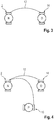
- Fig. 2 a possible initial situation is shown in which two users N, O of hearing aids 2, 14 spontaneously meet and start a conversation.
- the hearing aids 2, 14 are not yet coupled to one another, so do not yet form a common network 12. Therefore, a search mode is activated in each case in which the respective hearing aid 2, 14 searches for one or more other hearing aids 2, 14, 16 in order to use them as in Fig. 3 to form a network 12 or as shown in FIG Fig. 4 shown joining an already existing network 12.
- the hearing aid 2, 14, 16 In the search mode, the hearing aid 2, 14, 16 repeatedly sends out a search signal which in the present case also contains the operability of the hearing aid 2, 14, 16 so that this can be compared with its operability by another hearing aid 2, 14, 16. Conversely, in the search mode, the hearing aid 2, 14, 16 hears whether one or more other hearing aids 2, 14, 16 are within range and, if necessary, receives their search signals S1 in order to determine the respective operability of the others Compare hearing aids with your own operability. In the search mode, the hearing and the transmission can basically be activated independently of one another, so that the hearing device 2, 14, 16 hears or transmits or both in the search mode.
- the search mode of the hearing aids 2, 14 is now triggered by the fact that they recognize the voices of the users N, O via their microphones 4.
- the first hearing aid 2 recognizes the voice of its assigned user N, for example by means of a self-voice recognition not explicitly shown as part of the control unit 10.
- the hearing aid 2 then sends a search signal S1, which also contains the operational capability of the hearing aid 2, and searches for other hearing aids 14, 16 in the vicinity, potentially the hearing aid 14 of a conversation partner, here the user O.
- the hearing aid 2 alternatively or additionally sends a search signal S1 as soon as it detects a voice that is not the voice of the assigned user N is, ie a strange voice, e.g. that of user O.
- the other user O also wears a hearing aid 14, namely the second hearing aid 14.
- This is also in search mode and hears whether a hearing aid 2, 16 is in the vicinity.
- the second hearing aid 14 hears the search signal S1 of the first hearing aid 2, thereby detects the operability of the first hearing aid 2 and compares this with its own operability. In one possible embodiment, this is sent out as a response signal S2 in order to be received by the first hearing aid 2 and also to be compared with its own operational capability. In this way, both hearing aids 2, 14 determine which is selected as the master and which is selected as the slave.
- a common network 12 is formed with the corresponding distribution of roles.
- the second hearing aid 14 does not send its operability to the first hearing aid 2 itself, but only determines the distribution of roles and then communicates this to the first hearing aid 2 by means of a response signal S2, so that the latter does not have to compare the two operating abilities with one another, but rather communicate its role directly gets.
- the master controls the data exchange and thus takes over the coordination of the data communication.
- Fig. 4 is the case shown that starting from the network of the Fig. 3 a third user P is added, with a third hearing aid 16, which also joins the network 12.
- the first hearing aid 2 is the master.
- the third hearing aid 16 is initially in search mode, as described, and recognizes the existing network 12. From the data exchanged in the network 12 between the first and second hearing aid 2, 14, the third hearing aid 16 recognizes which hearing aid 2 , 16 is the master and then logs on to it.
- this third hearing aid 16 becomes the new master of the network 12 selected and the old master participates in network 12 as a slave from now on.
- the operability of the new hearing aid 16 is worse than that of the old master, namely the first hearing aid 2, so that it remains the master of the network 12 and the hearing aid 16 takes part as a slave.
- the first hearing aid 2 already participates as a master in the network 12 and the third hearing aid 16 joins the network 12 as a new hearing aid, it is preferably decided again whether the first hearing aid 2 will henceforth be the master or Slave in the network 12 participates. If the third, new hearing aid 16 has a higher operational capability, the role of master is assigned to it, otherwise the new hearing aid 16 joins as a slave.
- the first hearing aid 2 already participates as a slave in the network 12 and the master, for example the second or third hearing aid 14, 16, leaves the network 12, it is also decided again whether that The first hearing aid 2 henceforth participates in the network 12 as a master or as a slave. If the first hearing aid 2 has the highest operational capability after the previous master has left the network 12, the first hearing aid 2 takes on the role of the master. Otherwise, that one of the other hearing aids 14, 16 which has the highest operational capability is selected as the master.
- the data that are exchanged via the network during data exchange are in the present case audio data, ie the language of the users N, O, P.
- the audio data are obtained by the fact that a respective hearing aid 2, 14, 16 can use the language of the assigned user N, O , P picks up.
- This recorded speech is then transmitted to the other hearing aids 2, 14, 16 via the network 12.
- a type of telephone connection of the hearing aids 2, 14, 16 is then implemented by means of the network 12.
- the data are control data for the hearing aids 2, 14, 16 or other information.
- the network 12 is a decentralized and relay-free network 12 in which the hearing aids 2, 14, 16 are directly connected to one another.
- the hearing aids 2, 14, 16 are connected to one another in the manner of a peer-to-peer network, with the difference that one of the hearing aids 2, 14, 16 controls the data exchange as a master.
- additional devices that are not hearing aids are dispensed with at least for data exchange between the hearing aids 2, 14, 16. Rather, the data exchange takes place directly between the hearing aids 2, 14, 16 and thus not via additional relay stations, hubs, routers or the like.
- the network 12 is thus a real hearing aid network 12.
Landscapes
- Engineering & Computer Science (AREA)
- Computer Networks & Wireless Communication (AREA)
- Physics & Mathematics (AREA)
- Signal Processing (AREA)
- General Health & Medical Sciences (AREA)
- Otolaryngology (AREA)
- Health & Medical Sciences (AREA)
- Acoustics & Sound (AREA)
- Neurosurgery (AREA)
- Computing Systems (AREA)
- Mathematical Physics (AREA)
- Theoretical Computer Science (AREA)
- Small-Scale Networks (AREA)
- Mobile Radio Communication Systems (AREA)
Applications Claiming Priority (1)
| Application Number | Priority Date | Filing Date | Title |
|---|---|---|---|
| DE102019217398.5A DE102019217398A1 (de) | 2019-11-11 | 2019-11-11 | Verfahren zum Betrieb eines Hörgeräts sowie Hörgerät |
Publications (2)
| Publication Number | Publication Date |
|---|---|
| EP3820165A1 true EP3820165A1 (fr) | 2021-05-12 |
| EP3820165B1 EP3820165B1 (fr) | 2022-04-27 |
Family
ID=72801359
Family Applications (1)
| Application Number | Title | Priority Date | Filing Date |
|---|---|---|---|
| EP20200523.7A Active EP3820165B1 (fr) | 2019-11-11 | 2020-10-07 | Procédé de fonctionnement d'un appareil auditif ainsi qu'appareil auditif |
Country Status (5)
| Country | Link |
|---|---|
| US (1) | US11445014B2 (fr) |
| EP (1) | EP3820165B1 (fr) |
| CN (1) | CN112788490B (fr) |
| DE (1) | DE102019217398A1 (fr) |
| DK (1) | DK3820165T3 (fr) |
Citations (4)
| Publication number | Priority date | Publication date | Assignee | Title |
|---|---|---|---|---|
| EP1643801A2 (fr) | 2004-09-30 | 2006-04-05 | Siemens Audiologische Technik GmbH | Utilisation d'un système de prothèse auditive avec au moins deux prothèses auditives |
| US20100080398A1 (en) * | 2006-12-13 | 2010-04-01 | Phonak Ag | Method and system for hearing device fitting |
| US20160157026A1 (en) * | 2013-08-09 | 2016-06-02 | Sonova Ag | Hearing assistance system and method |
| EP3101919A1 (fr) | 2015-06-02 | 2016-12-07 | Oticon A/s | Système auditif pair à pair |
Family Cites Families (17)
| Publication number | Priority date | Publication date | Assignee | Title |
|---|---|---|---|---|
| US7277417B2 (en) * | 2003-04-29 | 2007-10-02 | Broadcom Corporation | Low power protocol for wireless terminal peer-to-peer communications |
| US7778432B2 (en) * | 2003-06-06 | 2010-08-17 | Gn Resound A/S | Hearing aid wireless network |
| US8073171B2 (en) * | 2006-03-02 | 2011-12-06 | Phonak Ag | Method for making a wireless communication link, antenna arrangement and hearing device |
| WO2008151624A1 (fr) * | 2007-06-13 | 2008-12-18 | Widex A/S | Système d'appareil auditif permettant d'établir un groupe de conversation entre plusieurs appareils utilisés par différents utilisateurs |
| ATE524028T1 (de) * | 2009-08-28 | 2011-09-15 | Siemens Medical Instr Pte Ltd | Verfahren zur feinanpassung eines hörhilfegerätes sowie hörhilfegerät |
| US20120099594A1 (en) | 2010-10-22 | 2012-04-26 | Phorus Llc | Media distribution architecture |
| WO2013021472A1 (fr) * | 2011-08-09 | 2013-02-14 | 富士通株式会社 | Procédé de planification et système de planification |
| CN104396179B (zh) * | 2012-05-31 | 2018-09-07 | 索诺亚公司 | 用于听觉设备的基于灵活的串行总线的主从数据传输的系统和方法 |
| US9185501B2 (en) * | 2012-06-20 | 2015-11-10 | Broadcom Corporation | Container-located information transfer module |
| US9471090B2 (en) * | 2012-11-21 | 2016-10-18 | Starkey Laboratories, Inc. | Method and apparatus for synchronizing hearing instruments via wireless communication |
| US9131322B2 (en) * | 2013-07-08 | 2015-09-08 | Starkey Laboratories, Inc. | Method and apparatus for communication between hearing assistance devices in a bluetooth network |
| EP3202160B1 (fr) * | 2014-10-02 | 2018-04-18 | Sonova AG | Procédé de provisionner d'aide d'ecoute entre des utilisateurs dans un réseau ad hoc et système correspondant |
| CN105722020B (zh) * | 2016-03-04 | 2020-03-17 | 宇龙计算机通信科技(深圳)有限公司 | 一种智能耳机、智能耳机系统及通信方法 |
| US9820323B1 (en) * | 2016-11-22 | 2017-11-14 | Bose Corporation | Wireless audio tethering system |
| EP3349366B1 (fr) * | 2017-01-17 | 2020-10-21 | Nxp B.V. | Procédé et appareil permettant l'attribution dynamique des rôles maître/esclave dans un appareil récepteur à diversité d'antennes réparties |
| DE102018209824A1 (de) * | 2018-06-18 | 2019-12-19 | Sivantos Pte. Ltd. | Verfahren zur Steuerung der Datenübertragung zwischen zumindest einem Hörgerät und einem Peripheriegerät eines Hörgerätesystems sowie Hörgerät |
| CN109275069A (zh) * | 2018-09-25 | 2019-01-25 | 倬韵科技(深圳)有限公司 | 主耳机和副耳机智能切换的方法、蓝牙播放设备及蓝牙耳机 |
-
2019
- 2019-11-11 DE DE102019217398.5A patent/DE102019217398A1/de not_active Ceased
-
2020
- 2020-10-07 EP EP20200523.7A patent/EP3820165B1/fr active Active
- 2020-10-07 DK DK20200523.7T patent/DK3820165T3/da active
- 2020-11-10 CN CN202011245438.8A patent/CN112788490B/zh active Active
- 2020-11-11 US US17/095,069 patent/US11445014B2/en active Active
Patent Citations (5)
| Publication number | Priority date | Publication date | Assignee | Title |
|---|---|---|---|---|
| EP1643801A2 (fr) | 2004-09-30 | 2006-04-05 | Siemens Audiologische Technik GmbH | Utilisation d'un système de prothèse auditive avec au moins deux prothèses auditives |
| DE102004047759B3 (de) * | 2004-09-30 | 2006-06-01 | Siemens Audiologische Technik Gmbh | Verwendung eines Hörhilfegerätesystems mit wenigstens zwei Hörhilfegeräten |
| US20100080398A1 (en) * | 2006-12-13 | 2010-04-01 | Phonak Ag | Method and system for hearing device fitting |
| US20160157026A1 (en) * | 2013-08-09 | 2016-06-02 | Sonova Ag | Hearing assistance system and method |
| EP3101919A1 (fr) | 2015-06-02 | 2016-12-07 | Oticon A/s | Système auditif pair à pair |
Also Published As
| Publication number | Publication date |
|---|---|
| DK3820165T3 (da) | 2022-07-25 |
| CN112788490A (zh) | 2021-05-11 |
| US11445014B2 (en) | 2022-09-13 |
| CN112788490B (zh) | 2022-07-12 |
| DE102019217398A1 (de) | 2021-05-12 |
| EP3820165B1 (fr) | 2022-04-27 |
| US20210144201A1 (en) | 2021-05-13 |
Similar Documents
| Publication | Publication Date | Title |
|---|---|---|
| EP1597935B1 (fr) | Procede pour gerer des sessions de communication | |
| DE69226441T2 (de) | Verfahren zur durchführung eines gruppenrufes in einem digitalen funknetzwerk | |
| EP2499842B1 (fr) | Système de réseau pour des dispositifs audio, procédé et programme informatique | |
| EP1445982A1 (fr) | Système et procédé de communication entre prothèses auditives | |
| DE10132273A1 (de) | Verfahren zum Übertragen von Multicast-Nachrichten in einem Funksystem sowie entsprechend ausgestaltetes Funksystem und entsprechend ausgestalteter Sender und Empfänger | |
| DE102007003159A1 (de) | Mobilkommunikationssystem, Funkbasisstation, mobiles Endgerät und Übertragungsverfahren | |
| EP2820770A1 (fr) | Procédé pour la communication mobile et appareil de communication | |
| EP0688139A2 (fr) | Dispositif pour étendre le domaine de fonctionnement d'un système téléphonique digital sans-fil | |
| DE60224453T2 (de) | Funkbetriebsmittelzuweisung in einem funkübertragungsnetzwerk | |
| EP1869919A1 (fr) | Procede de formation d'une session de communication commune, procede de formation d'une premiere session de communication et d'une deuxieme session de communication a partir d'une session de communication commune et serveur de commande de session de communication | |
| WO2023247300A1 (fr) | Système de communication, plus particulièrement système 5g | |
| EP3820165B1 (fr) | Procédé de fonctionnement d'un appareil auditif ainsi qu'appareil auditif | |
| DE69633826T2 (de) | Verbindungsherstellung in einem mobilen kommunikationssystem | |
| DE102004037856B4 (de) | Sprachkonferenzvorrichtung, Sprachkonferenzsystem und Verfahren zur Realisierung einer Sprachkonferenz | |
| EP2266331B1 (fr) | Système de conférence sans fil | |
| EP1719364A1 (fr) | Procede permettant d'etablir une liaison de communication dans un reseau de communication | |
| DE102004005720B3 (de) | Verfahren zum Verwalten von Kommunikationssitzungen | |
| DE102019202922B4 (de) | Verfahren zur unterbrechungsfreien Kommunikation zwischen wenigstens zwei Kommunikationspartnern, entsprechendes System sowie Kraftfahrzeug | |
| EP3820167A1 (fr) | Procédés de fonctionnement d'un réseau ainsi qu'appareil auditif | |
| DE102019217399B4 (de) | Verfahren zum Betrieb eines Netzwerks sowie Hörgerät | |
| DE10255489A1 (de) | Kommunikationsanlage und Verfahren zur Steuerung der Weiterschaltung eines Anrufs zwischen einem Mobilfunknetz und einem Festnetz | |
| DE10244981B4 (de) | Verfahren zur Realisierung einer Kommunikationsverbindung, zugehöriges Funkkommunikationsgerät sowie Netzwerkkontrolleinheit | |
| EP1294147A1 (fr) | Système pour interconnecte une système de radio simplex avec un abonnent connecte par fil | |
| DE102005050851B4 (de) | Kommunikationsverfahren in einem Kommunikationsnetzwerk | |
| EP0417425B1 (fr) | Procédé de transmission d'informations entre plusieurs postes d'abonnés et poste d'abonné pour mettre en oeuvre le procédé. |
Legal Events
| Date | Code | Title | Description |
|---|---|---|---|
| PUAI | Public reference made under article 153(3) epc to a published international application that has entered the european phase |
Free format text: ORIGINAL CODE: 0009012 |
|
| STAA | Information on the status of an ep patent application or granted ep patent |
Free format text: STATUS: THE APPLICATION HAS BEEN PUBLISHED |
|
| AK | Designated contracting states |
Kind code of ref document: A1 Designated state(s): AL AT BE BG CH CY CZ DE DK EE ES FI FR GB GR HR HU IE IS IT LI LT LU LV MC MK MT NL NO PL PT RO RS SE SI SK SM TR |
|
| STAA | Information on the status of an ep patent application or granted ep patent |
Free format text: STATUS: REQUEST FOR EXAMINATION WAS MADE |
|
| 17P | Request for examination filed |
Effective date: 20210510 |
|
| RBV | Designated contracting states (corrected) |
Designated state(s): AL AT BE BG CH CY CZ DE DK EE ES FI FR GB GR HR HU IE IS IT LI LT LU LV MC MK MT NL NO PL PT RO RS SE SI SK SM TR |
|
| GRAP | Despatch of communication of intention to grant a patent |
Free format text: ORIGINAL CODE: EPIDOSNIGR1 |
|
| STAA | Information on the status of an ep patent application or granted ep patent |
Free format text: STATUS: GRANT OF PATENT IS INTENDED |
|
| INTG | Intention to grant announced |
Effective date: 20210720 |
|
| GRAS | Grant fee paid |
Free format text: ORIGINAL CODE: EPIDOSNIGR3 |
|
| GRAA | (expected) grant |
Free format text: ORIGINAL CODE: 0009210 |
|
| STAA | Information on the status of an ep patent application or granted ep patent |
Free format text: STATUS: THE PATENT HAS BEEN GRANTED |
|
| AK | Designated contracting states |
Kind code of ref document: B1 Designated state(s): AL AT BE BG CH CY CZ DE DK EE ES FI FR GB GR HR HU IE IS IT LI LT LU LV MC MK MT NL NO PL PT RO RS SE SI SK SM TR |
|
| REG | Reference to a national code |
Ref country code: GB Ref legal event code: FG4D Free format text: NOT ENGLISH |
|
| REG | Reference to a national code |
Ref country code: CH Ref legal event code: EP |
|
| REG | Reference to a national code |
Ref country code: DE Ref legal event code: R096 Ref document number: 502020001010 Country of ref document: DE |
|
| REG | Reference to a national code |
Ref country code: AT Ref legal event code: REF Ref document number: 1487908 Country of ref document: AT Kind code of ref document: T Effective date: 20220515 |
|
| REG | Reference to a national code |
Ref country code: IE Ref legal event code: FG4D Free format text: LANGUAGE OF EP DOCUMENT: GERMAN |
|
| REG | Reference to a national code |
Ref country code: DK Ref legal event code: T3 Effective date: 20220720 |
|
| REG | Reference to a national code |
Ref country code: LT Ref legal event code: MG9D |
|
| REG | Reference to a national code |
Ref country code: NL Ref legal event code: MP Effective date: 20220427 |
|
| PG25 | Lapsed in a contracting state [announced via postgrant information from national office to epo] |
Ref country code: NL Free format text: LAPSE BECAUSE OF FAILURE TO SUBMIT A TRANSLATION OF THE DESCRIPTION OR TO PAY THE FEE WITHIN THE PRESCRIBED TIME-LIMIT Effective date: 20220427 |
|
| PG25 | Lapsed in a contracting state [announced via postgrant information from national office to epo] |
Ref country code: SE Free format text: LAPSE BECAUSE OF FAILURE TO SUBMIT A TRANSLATION OF THE DESCRIPTION OR TO PAY THE FEE WITHIN THE PRESCRIBED TIME-LIMIT Effective date: 20220427 Ref country code: PT Free format text: LAPSE BECAUSE OF FAILURE TO SUBMIT A TRANSLATION OF THE DESCRIPTION OR TO PAY THE FEE WITHIN THE PRESCRIBED TIME-LIMIT Effective date: 20220829 Ref country code: NO Free format text: LAPSE BECAUSE OF FAILURE TO SUBMIT A TRANSLATION OF THE DESCRIPTION OR TO PAY THE FEE WITHIN THE PRESCRIBED TIME-LIMIT Effective date: 20220727 Ref country code: LT Free format text: LAPSE BECAUSE OF FAILURE TO SUBMIT A TRANSLATION OF THE DESCRIPTION OR TO PAY THE FEE WITHIN THE PRESCRIBED TIME-LIMIT Effective date: 20220427 Ref country code: HR Free format text: LAPSE BECAUSE OF FAILURE TO SUBMIT A TRANSLATION OF THE DESCRIPTION OR TO PAY THE FEE WITHIN THE PRESCRIBED TIME-LIMIT Effective date: 20220427 Ref country code: GR Free format text: LAPSE BECAUSE OF FAILURE TO SUBMIT A TRANSLATION OF THE DESCRIPTION OR TO PAY THE FEE WITHIN THE PRESCRIBED TIME-LIMIT Effective date: 20220728 Ref country code: FI Free format text: LAPSE BECAUSE OF FAILURE TO SUBMIT A TRANSLATION OF THE DESCRIPTION OR TO PAY THE FEE WITHIN THE PRESCRIBED TIME-LIMIT Effective date: 20220427 Ref country code: BG Free format text: LAPSE BECAUSE OF FAILURE TO SUBMIT A TRANSLATION OF THE DESCRIPTION OR TO PAY THE FEE WITHIN THE PRESCRIBED TIME-LIMIT Effective date: 20220727 |
|
| PG25 | Lapsed in a contracting state [announced via postgrant information from national office to epo] |
Ref country code: RS Free format text: LAPSE BECAUSE OF FAILURE TO SUBMIT A TRANSLATION OF THE DESCRIPTION OR TO PAY THE FEE WITHIN THE PRESCRIBED TIME-LIMIT Effective date: 20220427 Ref country code: PL Free format text: LAPSE BECAUSE OF FAILURE TO SUBMIT A TRANSLATION OF THE DESCRIPTION OR TO PAY THE FEE WITHIN THE PRESCRIBED TIME-LIMIT Effective date: 20220427 Ref country code: LV Free format text: LAPSE BECAUSE OF FAILURE TO SUBMIT A TRANSLATION OF THE DESCRIPTION OR TO PAY THE FEE WITHIN THE PRESCRIBED TIME-LIMIT Effective date: 20220427 Ref country code: IS Free format text: LAPSE BECAUSE OF FAILURE TO SUBMIT A TRANSLATION OF THE DESCRIPTION OR TO PAY THE FEE WITHIN THE PRESCRIBED TIME-LIMIT Effective date: 20220827 |
|
| REG | Reference to a national code |
Ref country code: DE Ref legal event code: R097 Ref document number: 502020001010 Country of ref document: DE |
|
| PG25 | Lapsed in a contracting state [announced via postgrant information from national office to epo] |
Ref country code: SM Free format text: LAPSE BECAUSE OF FAILURE TO SUBMIT A TRANSLATION OF THE DESCRIPTION OR TO PAY THE FEE WITHIN THE PRESCRIBED TIME-LIMIT Effective date: 20220427 Ref country code: SK Free format text: LAPSE BECAUSE OF FAILURE TO SUBMIT A TRANSLATION OF THE DESCRIPTION OR TO PAY THE FEE WITHIN THE PRESCRIBED TIME-LIMIT Effective date: 20220427 Ref country code: RO Free format text: LAPSE BECAUSE OF FAILURE TO SUBMIT A TRANSLATION OF THE DESCRIPTION OR TO PAY THE FEE WITHIN THE PRESCRIBED TIME-LIMIT Effective date: 20220427 Ref country code: ES Free format text: LAPSE BECAUSE OF FAILURE TO SUBMIT A TRANSLATION OF THE DESCRIPTION OR TO PAY THE FEE WITHIN THE PRESCRIBED TIME-LIMIT Effective date: 20220427 Ref country code: EE Free format text: LAPSE BECAUSE OF FAILURE TO SUBMIT A TRANSLATION OF THE DESCRIPTION OR TO PAY THE FEE WITHIN THE PRESCRIBED TIME-LIMIT Effective date: 20220427 Ref country code: CZ Free format text: LAPSE BECAUSE OF FAILURE TO SUBMIT A TRANSLATION OF THE DESCRIPTION OR TO PAY THE FEE WITHIN THE PRESCRIBED TIME-LIMIT Effective date: 20220427 |
|
| PLBE | No opposition filed within time limit |
Free format text: ORIGINAL CODE: 0009261 |
|
| STAA | Information on the status of an ep patent application or granted ep patent |
Free format text: STATUS: NO OPPOSITION FILED WITHIN TIME LIMIT |
|
| PG25 | Lapsed in a contracting state [announced via postgrant information from national office to epo] |
Ref country code: AL Free format text: LAPSE BECAUSE OF FAILURE TO SUBMIT A TRANSLATION OF THE DESCRIPTION OR TO PAY THE FEE WITHIN THE PRESCRIBED TIME-LIMIT Effective date: 20220427 |
|
| 26N | No opposition filed |
Effective date: 20230130 |
|
| PG25 | Lapsed in a contracting state [announced via postgrant information from national office to epo] |
Ref country code: SI Free format text: LAPSE BECAUSE OF FAILURE TO SUBMIT A TRANSLATION OF THE DESCRIPTION OR TO PAY THE FEE WITHIN THE PRESCRIBED TIME-LIMIT Effective date: 20220427 Ref country code: MC Free format text: LAPSE BECAUSE OF FAILURE TO SUBMIT A TRANSLATION OF THE DESCRIPTION OR TO PAY THE FEE WITHIN THE PRESCRIBED TIME-LIMIT Effective date: 20220427 |
|
| REG | Reference to a national code |
Ref country code: BE Ref legal event code: MM Effective date: 20221031 |
|
| PG25 | Lapsed in a contracting state [announced via postgrant information from national office to epo] |
Ref country code: LU Free format text: LAPSE BECAUSE OF NON-PAYMENT OF DUE FEES Effective date: 20221007 |
|
| PG25 | Lapsed in a contracting state [announced via postgrant information from national office to epo] |
Ref country code: BE Free format text: LAPSE BECAUSE OF NON-PAYMENT OF DUE FEES Effective date: 20221031 |
|
| PG25 | Lapsed in a contracting state [announced via postgrant information from national office to epo] |
Ref country code: IE Free format text: LAPSE BECAUSE OF NON-PAYMENT OF DUE FEES Effective date: 20221007 |
|
| PG25 | Lapsed in a contracting state [announced via postgrant information from national office to epo] |
Ref country code: IT Free format text: LAPSE BECAUSE OF FAILURE TO SUBMIT A TRANSLATION OF THE DESCRIPTION OR TO PAY THE FEE WITHIN THE PRESCRIBED TIME-LIMIT Effective date: 20220427 |
|
| PG25 | Lapsed in a contracting state [announced via postgrant information from national office to epo] |
Ref country code: CY Free format text: LAPSE BECAUSE OF FAILURE TO SUBMIT A TRANSLATION OF THE DESCRIPTION OR TO PAY THE FEE WITHIN THE PRESCRIBED TIME-LIMIT Effective date: 20220427 |
|
| PG25 | Lapsed in a contracting state [announced via postgrant information from national office to epo] |
Ref country code: MK Free format text: LAPSE BECAUSE OF FAILURE TO SUBMIT A TRANSLATION OF THE DESCRIPTION OR TO PAY THE FEE WITHIN THE PRESCRIBED TIME-LIMIT Effective date: 20220427 |
|
| PG25 | Lapsed in a contracting state [announced via postgrant information from national office to epo] |
Ref country code: TR Free format text: LAPSE BECAUSE OF FAILURE TO SUBMIT A TRANSLATION OF THE DESCRIPTION OR TO PAY THE FEE WITHIN THE PRESCRIBED TIME-LIMIT Effective date: 20220427 |
|
| PG25 | Lapsed in a contracting state [announced via postgrant information from national office to epo] |
Ref country code: HU Free format text: LAPSE BECAUSE OF FAILURE TO SUBMIT A TRANSLATION OF THE DESCRIPTION OR TO PAY THE FEE WITHIN THE PRESCRIBED TIME-LIMIT; INVALID AB INITIO Effective date: 20201007 |
|
| PG25 | Lapsed in a contracting state [announced via postgrant information from national office to epo] |
Ref country code: MT Free format text: LAPSE BECAUSE OF FAILURE TO SUBMIT A TRANSLATION OF THE DESCRIPTION OR TO PAY THE FEE WITHIN THE PRESCRIBED TIME-LIMIT Effective date: 20220427 |
|
| PG25 | Lapsed in a contracting state [announced via postgrant information from national office to epo] |
Ref country code: BG Free format text: LAPSE BECAUSE OF FAILURE TO SUBMIT A TRANSLATION OF THE DESCRIPTION OR TO PAY THE FEE WITHIN THE PRESCRIBED TIME-LIMIT Effective date: 20220427 |
|
| PG25 | Lapsed in a contracting state [announced via postgrant information from national office to epo] |
Ref country code: BG Free format text: LAPSE BECAUSE OF FAILURE TO SUBMIT A TRANSLATION OF THE DESCRIPTION OR TO PAY THE FEE WITHIN THE PRESCRIBED TIME-LIMIT Effective date: 20220427 |
|
| PGFP | Annual fee paid to national office [announced via postgrant information from national office to epo] |
Ref country code: DK Payment date: 20250923 Year of fee payment: 6 |
|
| PGFP | Annual fee paid to national office [announced via postgrant information from national office to epo] |
Ref country code: GB Payment date: 20250923 Year of fee payment: 6 |
|
| PGFP | Annual fee paid to national office [announced via postgrant information from national office to epo] |
Ref country code: FR Payment date: 20250923 Year of fee payment: 6 |
|
| REG | Reference to a national code |
Ref country code: CH Ref legal event code: U11 Free format text: ST27 STATUS EVENT CODE: U-0-0-U10-U11 (AS PROVIDED BY THE NATIONAL OFFICE) Effective date: 20251101 |
|
| PGFP | Annual fee paid to national office [announced via postgrant information from national office to epo] |
Ref country code: DE Payment date: 20250923 Year of fee payment: 6 |
|
| PGFP | Annual fee paid to national office [announced via postgrant information from national office to epo] |
Ref country code: AT Payment date: 20260113 Year of fee payment: 5 |
|
| PGFP | Annual fee paid to national office [announced via postgrant information from national office to epo] |
Ref country code: CH Payment date: 20251101 Year of fee payment: 6 |