EP3825189A1 - Système antivol et procédé antivol - Google Patents
Système antivol et procédé antivol Download PDFInfo
- Publication number
- EP3825189A1 EP3825189A1 EP20208668.2A EP20208668A EP3825189A1 EP 3825189 A1 EP3825189 A1 EP 3825189A1 EP 20208668 A EP20208668 A EP 20208668A EP 3825189 A1 EP3825189 A1 EP 3825189A1
- Authority
- EP
- European Patent Office
- Prior art keywords
- vehicle
- position information
- terminals
- theft
- user
- Prior art date
- Legal status (The legal status is an assumption and is not a legal conclusion. Google has not performed a legal analysis and makes no representation as to the accuracy of the status listed.)
- Granted
Links
Images


Classifications
-
- B—PERFORMING OPERATIONS; TRANSPORTING
- B60—VEHICLES IN GENERAL
- B60R—VEHICLES, VEHICLE FITTINGS, OR VEHICLE PARTS, NOT OTHERWISE PROVIDED FOR
- B60R25/00—Fittings or systems for preventing or indicating unauthorised use or theft of vehicles
- B60R25/30—Detection related to theft or to other events relevant to anti-theft systems
-
- B—PERFORMING OPERATIONS; TRANSPORTING
- B60—VEHICLES IN GENERAL
- B60R—VEHICLES, VEHICLE FITTINGS, OR VEHICLE PARTS, NOT OTHERWISE PROVIDED FOR
- B60R25/00—Fittings or systems for preventing or indicating unauthorised use or theft of vehicles
- B60R25/10—Fittings or systems for preventing or indicating unauthorised use or theft of vehicles actuating a signalling device
- B60R25/1004—Alarm systems characterised by the type of sensor, e.g. current sensing means
- B60R25/1012—Zone surveillance means, e.g. parking lots, truck depots
-
- B—PERFORMING OPERATIONS; TRANSPORTING
- B60—VEHICLES IN GENERAL
- B60R—VEHICLES, VEHICLE FITTINGS, OR VEHICLE PARTS, NOT OTHERWISE PROVIDED FOR
- B60R25/00—Fittings or systems for preventing or indicating unauthorised use or theft of vehicles
- B60R25/10—Fittings or systems for preventing or indicating unauthorised use or theft of vehicles actuating a signalling device
- B60R25/102—Fittings or systems for preventing or indicating unauthorised use or theft of vehicles actuating a signalling device a signal being sent to a remote location, e.g. a radio signal being transmitted to a police station, a security company or the owner
-
- B—PERFORMING OPERATIONS; TRANSPORTING
- B60—VEHICLES IN GENERAL
- B60R—VEHICLES, VEHICLE FITTINGS, OR VEHICLE PARTS, NOT OTHERWISE PROVIDED FOR
- B60R25/00—Fittings or systems for preventing or indicating unauthorised use or theft of vehicles
- B60R25/30—Detection related to theft or to other events relevant to anti-theft systems
- B60R25/33—Detection related to theft or to other events relevant to anti-theft systems of global position, e.g. by providing GPS coordinates
Definitions
- the invention relates to an anti-theft alarm system and anti-theft alarm methods which use position information of a vehicle and a user of the vehicle to identify the theft of the vehicle at an early stage.
- anti-theft alarm systems which are attached to vehicles and generate an acoustic warning signal in the event of a possible theft.
- the acoustic warning signal can only be perceived by a corresponding vehicle owner in a certain area. It can happen that despite the warning signal, the vehicle owner does not notice a theft (attempt). The police only find out about the theft (attempt) if they are notified by a person who has heard the acoustic warning signal.
- a vehicle-mounted anti-theft alarm system can be put out of operation by vehicle manipulation.
- the EP 2 048 046 B1 describes a vehicle control system having a control section and a storage section.
- the storage section automatically generates and stores behavior pattern information of a user of the vehicle.
- This control section controls an in-vehicle device installed in a vehicle in accordance with and in accordance with a positional relationship between a current position of a mobile terminal received by a receiving portion installed in the vehicle and a current position of the vehicle detected by a vehicle position detection portion with the behavior pattern information.
- a method for determining theft of a vehicle belonging to a vehicle fleet is known.
- a current position of the driver is determined on the basis of a mobile terminal of a driver of the vehicle.
- a theft is suspected if, on the basis of a comparison of a current position of the vehicle with a position planned in time, a deviation is determined which exceeds a predetermined distance value, with a position of the driver in relation to the vehicle exceeding a further predetermined distance value. If theft is suspected, a theft notification is issued.
- a vehicle-side terminal locates a current position of a vehicle and sends early warning information, which includes the position information, to a server. The forwards the early warning information to a portable terminal.
- a current position of the portable terminal is recorded in the background of the portable device.
- the object of the present invention is to provide an improved theft warning system and an improved theft warning method.
- a current location of the vehicle can be determined from the position information of the vehicle.
- the vehicle has a corresponding (location) detection device, such as a GPS system, for detecting the current location of the vehicle.
- a movement and thus also a speed of the vehicle can also be recorded / determined from the position information of the vehicle.
- Mobile terminals such as smartphones, tablets, mobile computers (laptops), portable devices (wearables), have (location) detection devices.
- a current location of a mobile terminal can be recorded by at least one of WLAN-based positioning and GSM positioning.
- a (current) location of a desktop PC can also be recorded using suitable methods.
- movement information such as direction and speed
- direction information for the vehicle and the terminals can be derived from the position information of the vehicle and the terminals.
- the present disclosure is not restricted to a specific (location) method for detecting the locations of the terminals and the vehicle, as described here.
- Other known location methods for terminals and vehicles are also possible.
- the circuitry of the anti-theft alarm system is set up to carry out the above steps.
- the circuit arrangement is designed accordingly for this purpose.
- the circuit arrangement can include appropriate means, e.g. a communication unit for sending and receiving data, a computer unit for comparing the position information, a signal generating unit, etc.
- these means can also include servers that are in particular in the back end, i.e. not in the vehicle.
- the theft alarm system generates the warning signal when the vehicle leaves predetermined areas, each predetermined area (of the plurality of predetermined areas) of position information of a corresponding terminal from the plurality of terminals is dependent.
- this can mean that the vehicle is moving out of one of the predetermined areas.
- the vehicle travels at a predetermined (minimum) speed out of one of the predetermined areas. This ensures that no alarm is generated when the vehicle is parked.
- Each of the predetermined areas is dependent, for example, on a current location of a corresponding terminal.
- Each terminal from the plurality of terminals is associated with the user of the vehicle.
- it is end devices that belong to the user.
- they can also be terminals belonging to people associated with the user, such as family members, friends, work colleagues, acquaintances, etc.
- the vehicle It is also possible for the vehicle to have several users.
- the user of a vehicle can be the owner, vehicle keeper, renter, etc. of the vehicle. In other words, the user is authorized to use the car in advance.
- the warning signal When the vehicle leaves one of the predetermined areas, the warning signal is generated.
- the warning signal therefore indicates that theft is suspected.
- the predetermined areas are dependent on the position information of the plurality of terminal devices (associated with the user), it can be determined more reliably whether the vehicle is being stolen. So it can happen that a user forgets their smartphone on the way to work at home, but wears a wearable (e.g. smartwatch). This can reduce the number of false alarms caused by the anti-theft alarm system. At the same time, however, theft can be detected comparatively early by automatically detecting when the vehicle leaves one of the predetermined areas.
- the theft warning system is arranged outside the vehicle, for example in the form of a server in the back end, the theft warning system has a lower risk of manipulation.
- the anti-theft alarm system can also be present on the vehicle.
- no warning signal is generated if the vehicle leaves the predetermined area, but a direction of movement and a speed of the vehicle with a direction of movement and a speed of one of the terminals of the plurality of Terminals essentially match. This means that inaccuracies in the recorded and retrieved position information of the vehicle and the end devices can be included.
- a warning signal should also be generated if one of the terminals in the vehicle is forgotten and the vehicle is stolen.
- a move away / removal of the user from the vehicle is automatically recognized if at least one of the terminal devices assigned to him moves away from the vehicle and at the same time another device assigned to the same user remains at the position of the vehicle.
- the device remaining in the vehicle is temporarily removed from the list of safe devices.
- the user of the vehicle can manually remove the forgotten terminal from the plurality of terminal devices associated with the user.
- this multitude of end devices can be stored in a database that can be processed by the user via a corresponding service, e.g. an app or web application.
- the user can be notified via one of the end devices associated with him.
- a corresponding notification is sent to the corresponding end device.
- the notification can, for example, be at least one of a message (SMS, text message, email, etc.), an automated call, and the like.
- SMS short message
- text message email
- automated call and the like.
- the notification is sent to all of the terminal devices associated with the user, it can be ensured that the user or the persons associated with him are informed of the suspected theft.
- the anti-theft function can, for example, be the triggering of an alarm signal from the vehicle. In this way, passers-by can be made aware of the theft of the vehicle.
- the anti-theft function can put the vehicle into a predetermined vehicle mode in which only a limited driving speed is possible.
- the predetermined vehicle operation can prevent a restart after the vehicle has stopped. This prevents the stolen vehicle from moving too far (from the end devices).
- the authorization request can be sent to one of the user's end devices.
- these terminals can be set up to receive the authorization request through an app or notification, e.g. SMS.
- the authorization signal is sent.
- the authorization signal enables an authorized journey, i.e. there is no theft of the vehicle.
- the response to the authorization request is negative, that is, if the user does not approve the trip, the anti-theft signal is sent that triggers the anti-theft function on the vehicle side.
- the anti-theft signal can therefore correspond to the warning signal above.
- a voice connection to the vehicle can be established using appropriate means in the vehicle so that the user can contact the current driver. This can be done, for example, in such a way that a terminal of the user receiving the authorization request establishes the voice connection to the vehicle. If an observation camera is installed in the interior of the vehicle, it is also possible for the user to establish a connection to the observation camera via one of his end devices, in particular the end device receiving the authorization request. With these additional options, the user can determine for himself whether the current driver is authorized for the current vehicle use. The user can subsequently take the current driver to the ride authorize or have one of the other anti-theft functions (described above) carried out.
- the theft protection signal can also be sent accordingly.
- the user whose vehicle is leaving the predetermined areas can decide whether a journey of the vehicle without his presence is authorized. This reduces the number of false positives.
- the position information of the plurality of terminals may include at least one of past locations and current locations of the plurality of terminals.
- a location history of the end devices can thus be determined so that probable whereabouts of the user can be derived.
- the predetermined locations can then be dependent on the probable locations of the user / the terminals. This means that the anti-theft alarm system can be customized.
- the predetermined areas may further be at least one of time, day, and location dependent.
- the shape and / or size of the predetermined areas are thereby variable. For example, if the predetermined area is a circular area, a radius of the circle may be larger or smaller depending on the time, day and / or location.
- the position information of the vehicle and the position information of the plurality of terminals can be received and compared at predetermined time intervals.
- the predetermined time intervals can in particular be at least one of time, day and location-dependent. In this way, a probability of theft, which in turn depends on the time, day and place, can be taken into account. If a probability of theft is lower, the predetermined time interval can be higher, so that the theft system has to use less computing power.
- the predetermined areas can be parts of a total area and the total area can be dependent on the position information of the plurality of terminals.
- two end devices can be in two different locations.
- the two (dependent on these two terminals) predetermined areas can are not overlapping.
- a further predetermined area for example in the form of a corridor, can connect the two predetermined areas with one another.
- the further predetermined area is therefore a connecting section.
- the corridor and the two predetermined areas then form the total area in which the vehicle may be without a theft alarm being triggered. As a result, a crossing of the vehicle from one terminal device location to another terminal device location is not suspected of being theft.
- the terminals of the plurality of terminals may be one of a portable device (wearables), a mobile terminal, and a desktop computer.
- a vehicle 1 that has a (not shown) location detection device. Position information, including a current location, of vehicle 1 is determined by means of the location detection device.
- the vehicle also has communication means (not shown) in order to communicate with an anti-theft alarm system 5. So is the position information of the vehicle can be transmitted to the theft alarm system 5.
- the anti-theft alarm system 5 is arranged in a backend and can, for example, be a server.
- FIG 1 a plurality of terminals 3a, 3b shown. It goes without saying that the plurality of terminals can also have more than the two illustrated terminals 3a, 3b.
- the multiplicity of terminals 3 a, 3 b is associated with a user of the vehicle 1. This association information can be stored in the theft warning system 5, in particular in a database (not shown).
- Position information of each of the terminals 3a, 3b can be detected, for example, via (not shown) terminal-side location detection device and transmitted to the theft warning system 5 via (not shown) terminal-side communication means.
- the theft warning system 5 can locate each of the terminals 3a, 3b by means of known locating methods.
- the anti-theft alarm system 5 has a circuit arrangement which is designed and set up to receive and compare the position information of the vehicle 1 and the position information of the plurality of terminals 3a, 3b, among other things. Furthermore, the switching arrangement is designed and set up, based on the comparison of the position information of the vehicle 1 and the plurality of terminals 3a, 3b, to determine whether the vehicle 1 is leaving a predetermined range from a plurality of predetermined ranges 9a, 9b, 9c.
- the plurality of predetermined areas 9a, 9b, 9c are shown in FIG Figure 3 shown. Each predetermined area 9a, 9b, 9c is dependent on position information of a corresponding terminal from the plurality of terminals 3a, 3b.
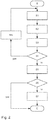
- FIG. 2 an anti-theft alarm system is shown. The method can be carried out, for example, by the theft alarm system 5.
- step S1 the position information of the vehicle 1 is received and / or retrieved.
- step S2 the position information of the plurality of terminals 3a, 3b is received and / or retrieved. Steps S1 and S2 can also be swapped.
- step S3 the plurality of predetermined areas 9a, 9b, 9c in which the vehicle 1 is allowed to be located is called up.
- the position information of the vehicle 1 and the A large number of terminals 3a, 3b and the large number of predetermined areas 9a, 9b, 9c can be deposited / stored in the database of the anti-theft alarm system 5.
- the plurality of predetermined areas 9a, 9b, 9c is dependent on the position information of the plurality of terminals 3a, 3b.
- step S4 it is checked whether the vehicle 1 is located in one of the predetermined areas 9a, 9b, 9c. If so, the process continues to step S4a.
- step S4a a predetermined time is awaited before the method continues with step S1.
- the predetermined time is arbitrary and can in particular be at least several minutes.
- step S4 If the test in step S4 shows that the vehicle 1 is leaving one of the predetermined areas 9a, 9b, 9c, a warning signal is generated.
- the warning signal can only be generated when the check steps S1 to S4 are carried out several times in succession and it results that the vehicle 1 is leaving one of the predetermined areas 9a, 9b, 9c. The susceptibility of the theft system 5 to errors can thus be reduced.
- an authorization request is sent to the user of the vehicle 1 in step S5.
- the authorization request asks whether the user would like to allow the current driver of the vehicle 1 to drive (outside of the predetermined areas 9a, 9b, 9c).
- the authorization request can be sent to all users in step S5.
- a voice connection can be set up in vehicle 1 using appropriate means in vehicle 1 in order to contact the current driver. It is also possible, if an observation camera is installed in the interior of the vehicle 1, to establish a connection to it.
- Step S5 is optional and the method can jump straight to step S6 after step S4.
- step S6 the user's response to the authorization request is received and evaluated. If there is an authorization by the user of the vehicle 1, that is, it has been approved the user stops the trip, the anti-theft alarm procedure is ended. An authorization signal is sent to a control unit (not shown) of vehicle 1, which triggers an authorized drive function on the vehicle. The current driver is therefore allowed to use the vehicle 1 up to a predetermined event or for a predetermined duration.
- the predetermined event can, for example, be the parking of the vehicle, in particular at a predetermined location. In the event that there are several users for the vehicle 1, the approval of one of the several users can also be sufficient.
- step S6 If it is determined in step S6 that there is no authorization, a theft protection signal is sent to the control unit (not shown) of vehicle 1, so that in step S7 an anti-theft function on the vehicle is carried out.
- the warning signal generated in step S4 can be sent to the vehicle control unit so that step S7 is also carried out in response to the warning signal, which indicates that the vehicle is leaving one of the predetermined areas 9a, 9b, 9c.
- a map view 11 is shown by way of example and schematically, which shows an overall area 9 in which the vehicle 1 can be located without theft being suspected.
- predetermined areas 9a and 9b are shown which correspond to a zone around the terminals 3a and 3b, respectively. When the terminals 3a and 3b move, the predetermined areas 9a and 9b move accordingly.
- the predetermined areas 9a and 9b are here circular or octagonal. These shapes are only exemplary and can be adapted as required.
- the predetermined areas 9a, 9b, in particular their shape, can thus have a multiplicity of shapes. In particular, the predetermined areas can also be dependent on the day, time and location or can also be adapted to be user-specific.
- the overall area 9 can furthermore have a connecting section 9c which connects the two predetermined areas 9a, 9b to one another.
- the connecting section 9c is thus a corridor which has corresponding driving routes which lead the vehicle 1 from one of the terminals 3a, 3b to the other. If the vehicle 1 is in the corridor 9c, it is assumed that the vehicle 1 is only on a crossing from one of the terminals 3a, 3b to the other. Accordingly, no theft will be accepted.
- the predetermined areas 9a, 9b and the connecting section 9c form the total area 9.
- the total area 9, in particular the predetermined areas 9a, 9b and the connecting section 9c form an imaginary boundary on the surface of the earth (or in the air).
Landscapes
- Engineering & Computer Science (AREA)
- Mechanical Engineering (AREA)
- Transportation (AREA)
- Radar, Positioning & Navigation (AREA)
- Remote Sensing (AREA)
- Burglar Alarm Systems (AREA)
- Alarm Systems (AREA)
Applications Claiming Priority (1)
| Application Number | Priority Date | Filing Date | Title |
|---|---|---|---|
| DE102019217921 | 2019-11-20 |
Publications (2)
| Publication Number | Publication Date |
|---|---|
| EP3825189A1 true EP3825189A1 (fr) | 2021-05-26 |
| EP3825189B1 EP3825189B1 (fr) | 2022-06-08 |
Family
ID=73497628
Family Applications (1)
| Application Number | Title | Priority Date | Filing Date |
|---|---|---|---|
| EP20208668.2A Active EP3825189B1 (fr) | 2019-11-20 | 2020-11-19 | Système antivol et procédé antivol |
Country Status (1)
| Country | Link |
|---|---|
| EP (1) | EP3825189B1 (fr) |
Cited By (2)
| Publication number | Priority date | Publication date | Assignee | Title |
|---|---|---|---|---|
| DE102024103471A1 (de) * | 2024-02-08 | 2025-08-14 | Bayerische Motoren Werke Aktiengesellschaft | Sicherung eines Kraftfahrzeugs |
| US20250256681A1 (en) * | 2024-02-09 | 2025-08-14 | GM Global Technology Operations LLC | System and method of inhibiting and restoring ignition of a vehicle |
Citations (4)
| Publication number | Priority date | Publication date | Assignee | Title |
|---|---|---|---|---|
| EP2048046B1 (fr) | 2006-08-03 | 2013-06-12 | Toyota Jidosha Kabushiki Kaisha | Système de commande de véhicule |
| CN104192094A (zh) | 2014-08-28 | 2014-12-10 | 郑州瑞合信电子科技有限公司 | 一种车辆防盗方法和系统 |
| US20170136947A1 (en) | 2015-11-12 | 2017-05-18 | Leauto Intelligent Technology (Beijing) Co. Ltd | Early warning method, system and server based on satellite positioning |
| DE102018002327A1 (de) | 2018-03-21 | 2018-09-20 | Daimler Ag | Verfahren zur Ermittlung eines Diebstahles |
-
2020
- 2020-11-19 EP EP20208668.2A patent/EP3825189B1/fr active Active
Patent Citations (4)
| Publication number | Priority date | Publication date | Assignee | Title |
|---|---|---|---|---|
| EP2048046B1 (fr) | 2006-08-03 | 2013-06-12 | Toyota Jidosha Kabushiki Kaisha | Système de commande de véhicule |
| CN104192094A (zh) | 2014-08-28 | 2014-12-10 | 郑州瑞合信电子科技有限公司 | 一种车辆防盗方法和系统 |
| US20170136947A1 (en) | 2015-11-12 | 2017-05-18 | Leauto Intelligent Technology (Beijing) Co. Ltd | Early warning method, system and server based on satellite positioning |
| DE102018002327A1 (de) | 2018-03-21 | 2018-09-20 | Daimler Ag | Verfahren zur Ermittlung eines Diebstahles |
Cited By (3)
| Publication number | Priority date | Publication date | Assignee | Title |
|---|---|---|---|---|
| DE102024103471A1 (de) * | 2024-02-08 | 2025-08-14 | Bayerische Motoren Werke Aktiengesellschaft | Sicherung eines Kraftfahrzeugs |
| US20250256681A1 (en) * | 2024-02-09 | 2025-08-14 | GM Global Technology Operations LLC | System and method of inhibiting and restoring ignition of a vehicle |
| US12409806B2 (en) * | 2024-02-09 | 2025-09-09 | GM Global Technology Operations LLC | System and method of inhibiting and restoring ignition of a vehicle |
Also Published As
| Publication number | Publication date |
|---|---|
| EP3825189B1 (fr) | 2022-06-08 |
Similar Documents
| Publication | Publication Date | Title |
|---|---|---|
| DE60127624T2 (de) | System zur Fahrzeugüberwachung | |
| DE102015013318B4 (de) | Verfahren zur Entfernung eines Kraftfahrzeugs von einer Zielfläche, Kommunikationssystem und Kraftfahrzeug | |
| EP2851885B1 (fr) | Système d'identification d'utilisateurs dans des véhicules | |
| EP0731007B1 (fr) | Procédé de sécurité pour prévenir une utilisation non-autorisée d'un véhicule, en particulier en cas de prêt ou de location de véhicules | |
| EP2953111B1 (fr) | Procédé et dispositif destinés à déterminer des aires de stationnement libres sur des parkings de camions et communication au conducteur de camion | |
| DE102013203909A1 (de) | Verfahren und mobiles Endgerät zur Erkennung eines Parkplatzes | |
| DE102012212347B4 (de) | Parkplatzmeldesystem und Verfahren zum Melden von freien Parkplätzen | |
| DE102016225982A1 (de) | System und Verfahren zum Diebstahlschutz für Fahrzeugräder eines Fahrzeuges | |
| EP1979886B1 (fr) | Procédé et dispositif de détection du trafic traversant une zone | |
| DE102018207395B3 (de) | Verfahren zur Erkennung und Sicherung wenigstens eines in einem Gepäckaufbewahrungsraum eines Kraftfahrzeugs hinterlassenen Gepäckstücks, Gepäcksicherungseinrichtung für ein Kraftfahrzeug sowie Kraftfahrzeug mit einer derartigen Gepäcksicherungseinrichtung | |
| DE102016216522A1 (de) | Verfahren zum Bereitstellen wenigstens einer Information über einen Unfall zwischen mindestens zwei Verkehrsteilnehmern | |
| EP3825189B1 (fr) | Système antivol et procédé antivol | |
| DE102017107730A1 (de) | Verfahren und Einrichtung zur Informationsbereitstellung bei einem Verkehrsereignis | |
| DE102016201932A1 (de) | Verfahren zur Assistenz für einen Parkvorgang und Parkassistenzvorrichtung | |
| DE102006004076A1 (de) | Verfahren und Vorrichtung zur Benachrichtigung von Notrufabfragestellen der Polizei, der Feuerwehr oder der Rettungsdienste über eingegangene Notrufe mit Ortungsinformationen | |
| DE102018112909B4 (de) | Verfahren und System zur Positionsüberwachung eines Objekts | |
| DE102008017790B4 (de) | Anordnung zur Identifizierung von Fahrzeuginsassen | |
| DE102006031726B4 (de) | Verfahren zum Bereitstellen einer Information über ein Fahrzeug und Fahrzeugdaten-Übertragungsvorrichtung | |
| DE102013214906A1 (de) | Vorrichtung und Verfahren zum Senden von statischen und dynamischen Informationen an ein persönliches Kommunikationsgerät in einem Fahrzeug | |
| EP0718164B1 (fr) | Protection d'objets dans un système de radiocommunications | |
| WO2017036648A1 (fr) | Procédé et système de fonctionnement d'un parc de stationnement | |
| DE102017207121A1 (de) | Verfahren zum Umparken eines Fahrzeugs | |
| DE102012218412A1 (de) | Verfahren und Vorrichtung zum Betreiben eines Kraftfahrzeugs | |
| DE102022203909A1 (de) | Verfahren und Vorrichtung zum Detektieren eines gestohlenen Fahrzeugs | |
| DE102010003890A1 (de) | Verfahren und Vorrichtung zum Erzeugen eines Informationssignals für ein Kraftfahrzeug |
Legal Events
| Date | Code | Title | Description |
|---|---|---|---|
| PUAI | Public reference made under article 153(3) epc to a published international application that has entered the european phase |
Free format text: ORIGINAL CODE: 0009012 |
|
| STAA | Information on the status of an ep patent application or granted ep patent |
Free format text: STATUS: THE APPLICATION HAS BEEN PUBLISHED |
|
| AK | Designated contracting states |
Kind code of ref document: A1 Designated state(s): AL AT BE BG CH CY CZ DE DK EE ES FI FR GB GR HR HU IE IS IT LI LT LU LV MC MK MT NL NO PL PT RO RS SE SI SK SM TR |
|
| STAA | Information on the status of an ep patent application or granted ep patent |
Free format text: STATUS: REQUEST FOR EXAMINATION WAS MADE |
|
| 17P | Request for examination filed |
Effective date: 20211126 |
|
| RBV | Designated contracting states (corrected) |
Designated state(s): AL AT BE BG CH CY CZ DE DK EE ES FI FR GB GR HR HU IE IS IT LI LT LU LV MC MK MT NL NO PL PT RO RS SE SI SK SM TR |
|
| GRAP | Despatch of communication of intention to grant a patent |
Free format text: ORIGINAL CODE: EPIDOSNIGR1 |
|
| STAA | Information on the status of an ep patent application or granted ep patent |
Free format text: STATUS: GRANT OF PATENT IS INTENDED |
|
| RIC1 | Information provided on ipc code assigned before grant |
Ipc: B60R 25/33 20130101ALI20220209BHEP Ipc: B60R 25/30 20130101ALI20220209BHEP Ipc: B60R 25/102 20130101ALI20220209BHEP Ipc: B60R 25/10 20130101AFI20220209BHEP |
|
| INTG | Intention to grant announced |
Effective date: 20220228 |
|
| GRAS | Grant fee paid |
Free format text: ORIGINAL CODE: EPIDOSNIGR3 |
|
| GRAA | (expected) grant |
Free format text: ORIGINAL CODE: 0009210 |
|
| STAA | Information on the status of an ep patent application or granted ep patent |
Free format text: STATUS: THE PATENT HAS BEEN GRANTED |
|
| AK | Designated contracting states |
Kind code of ref document: B1 Designated state(s): AL AT BE BG CH CY CZ DE DK EE ES FI FR GB GR HR HU IE IS IT LI LT LU LV MC MK MT NL NO PL PT RO RS SE SI SK SM TR |
|
| REG | Reference to a national code |
Ref country code: AT Ref legal event code: REF Ref document number: 1496728 Country of ref document: AT Kind code of ref document: T Effective date: 20220615 Ref country code: CH Ref legal event code: EP |
|
| REG | Reference to a national code |
Ref country code: DE Ref legal event code: R096 Ref document number: 502020001208 Country of ref document: DE |
|
| REG | Reference to a national code |
Ref country code: IE Ref legal event code: FG4D Free format text: LANGUAGE OF EP DOCUMENT: GERMAN |
|
| REG | Reference to a national code |
Ref country code: LT Ref legal event code: MG9D |
|
| REG | Reference to a national code |
Ref country code: NL Ref legal event code: MP Effective date: 20220608 |
|
| PG25 | Lapsed in a contracting state [announced via postgrant information from national office to epo] |
Ref country code: SE Free format text: LAPSE BECAUSE OF FAILURE TO SUBMIT A TRANSLATION OF THE DESCRIPTION OR TO PAY THE FEE WITHIN THE PRESCRIBED TIME-LIMIT Effective date: 20220608 Ref country code: NO Free format text: LAPSE BECAUSE OF FAILURE TO SUBMIT A TRANSLATION OF THE DESCRIPTION OR TO PAY THE FEE WITHIN THE PRESCRIBED TIME-LIMIT Effective date: 20220908 Ref country code: LT Free format text: LAPSE BECAUSE OF FAILURE TO SUBMIT A TRANSLATION OF THE DESCRIPTION OR TO PAY THE FEE WITHIN THE PRESCRIBED TIME-LIMIT Effective date: 20220608 Ref country code: HR Free format text: LAPSE BECAUSE OF FAILURE TO SUBMIT A TRANSLATION OF THE DESCRIPTION OR TO PAY THE FEE WITHIN THE PRESCRIBED TIME-LIMIT Effective date: 20220608 Ref country code: GR Free format text: LAPSE BECAUSE OF FAILURE TO SUBMIT A TRANSLATION OF THE DESCRIPTION OR TO PAY THE FEE WITHIN THE PRESCRIBED TIME-LIMIT Effective date: 20220909 Ref country code: FI Free format text: LAPSE BECAUSE OF FAILURE TO SUBMIT A TRANSLATION OF THE DESCRIPTION OR TO PAY THE FEE WITHIN THE PRESCRIBED TIME-LIMIT Effective date: 20220608 Ref country code: BG Free format text: LAPSE BECAUSE OF FAILURE TO SUBMIT A TRANSLATION OF THE DESCRIPTION OR TO PAY THE FEE WITHIN THE PRESCRIBED TIME-LIMIT Effective date: 20220908 |
|
| PG25 | Lapsed in a contracting state [announced via postgrant information from national office to epo] |
Ref country code: RS Free format text: LAPSE BECAUSE OF FAILURE TO SUBMIT A TRANSLATION OF THE DESCRIPTION OR TO PAY THE FEE WITHIN THE PRESCRIBED TIME-LIMIT Effective date: 20220608 Ref country code: LV Free format text: LAPSE BECAUSE OF FAILURE TO SUBMIT A TRANSLATION OF THE DESCRIPTION OR TO PAY THE FEE WITHIN THE PRESCRIBED TIME-LIMIT Effective date: 20220608 |
|
| PG25 | Lapsed in a contracting state [announced via postgrant information from national office to epo] |
Ref country code: NL Free format text: LAPSE BECAUSE OF FAILURE TO SUBMIT A TRANSLATION OF THE DESCRIPTION OR TO PAY THE FEE WITHIN THE PRESCRIBED TIME-LIMIT Effective date: 20220608 |
|
| PG25 | Lapsed in a contracting state [announced via postgrant information from national office to epo] |
Ref country code: SM Free format text: LAPSE BECAUSE OF FAILURE TO SUBMIT A TRANSLATION OF THE DESCRIPTION OR TO PAY THE FEE WITHIN THE PRESCRIBED TIME-LIMIT Effective date: 20220608 Ref country code: SK Free format text: LAPSE BECAUSE OF FAILURE TO SUBMIT A TRANSLATION OF THE DESCRIPTION OR TO PAY THE FEE WITHIN THE PRESCRIBED TIME-LIMIT Effective date: 20220608 Ref country code: RO Free format text: LAPSE BECAUSE OF FAILURE TO SUBMIT A TRANSLATION OF THE DESCRIPTION OR TO PAY THE FEE WITHIN THE PRESCRIBED TIME-LIMIT Effective date: 20220608 Ref country code: PT Free format text: LAPSE BECAUSE OF FAILURE TO SUBMIT A TRANSLATION OF THE DESCRIPTION OR TO PAY THE FEE WITHIN THE PRESCRIBED TIME-LIMIT Effective date: 20221010 Ref country code: ES Free format text: LAPSE BECAUSE OF FAILURE TO SUBMIT A TRANSLATION OF THE DESCRIPTION OR TO PAY THE FEE WITHIN THE PRESCRIBED TIME-LIMIT Effective date: 20220608 Ref country code: EE Free format text: LAPSE BECAUSE OF FAILURE TO SUBMIT A TRANSLATION OF THE DESCRIPTION OR TO PAY THE FEE WITHIN THE PRESCRIBED TIME-LIMIT Effective date: 20220608 Ref country code: CZ Free format text: LAPSE BECAUSE OF FAILURE TO SUBMIT A TRANSLATION OF THE DESCRIPTION OR TO PAY THE FEE WITHIN THE PRESCRIBED TIME-LIMIT Effective date: 20220608 |
|
| PG25 | Lapsed in a contracting state [announced via postgrant information from national office to epo] |
Ref country code: PL Free format text: LAPSE BECAUSE OF FAILURE TO SUBMIT A TRANSLATION OF THE DESCRIPTION OR TO PAY THE FEE WITHIN THE PRESCRIBED TIME-LIMIT Effective date: 20220608 Ref country code: IS Free format text: LAPSE BECAUSE OF FAILURE TO SUBMIT A TRANSLATION OF THE DESCRIPTION OR TO PAY THE FEE WITHIN THE PRESCRIBED TIME-LIMIT Effective date: 20221008 |
|
| REG | Reference to a national code |
Ref country code: DE Ref legal event code: R097 Ref document number: 502020001208 Country of ref document: DE |
|
| PG25 | Lapsed in a contracting state [announced via postgrant information from national office to epo] |
Ref country code: AL Free format text: LAPSE BECAUSE OF FAILURE TO SUBMIT A TRANSLATION OF THE DESCRIPTION OR TO PAY THE FEE WITHIN THE PRESCRIBED TIME-LIMIT Effective date: 20220608 |
|
| PLBE | No opposition filed within time limit |
Free format text: ORIGINAL CODE: 0009261 |
|
| STAA | Information on the status of an ep patent application or granted ep patent |
Free format text: STATUS: NO OPPOSITION FILED WITHIN TIME LIMIT |
|
| PG25 | Lapsed in a contracting state [announced via postgrant information from national office to epo] |
Ref country code: DK Free format text: LAPSE BECAUSE OF FAILURE TO SUBMIT A TRANSLATION OF THE DESCRIPTION OR TO PAY THE FEE WITHIN THE PRESCRIBED TIME-LIMIT Effective date: 20220608 |
|
| 26N | No opposition filed |
Effective date: 20230310 |
|
| PG25 | Lapsed in a contracting state [announced via postgrant information from national office to epo] |
Ref country code: SI Free format text: LAPSE BECAUSE OF FAILURE TO SUBMIT A TRANSLATION OF THE DESCRIPTION OR TO PAY THE FEE WITHIN THE PRESCRIBED TIME-LIMIT Effective date: 20220608 |
|
| PG25 | Lapsed in a contracting state [announced via postgrant information from national office to epo] |
Ref country code: MC Free format text: LAPSE BECAUSE OF FAILURE TO SUBMIT A TRANSLATION OF THE DESCRIPTION OR TO PAY THE FEE WITHIN THE PRESCRIBED TIME-LIMIT Effective date: 20220608 |
|
| REG | Reference to a national code |
Ref country code: BE Ref legal event code: MM Effective date: 20221130 |
|
| PG25 | Lapsed in a contracting state [announced via postgrant information from national office to epo] |
Ref country code: LU Free format text: LAPSE BECAUSE OF NON-PAYMENT OF DUE FEES Effective date: 20221119 |
|
| PG25 | Lapsed in a contracting state [announced via postgrant information from national office to epo] |
Ref country code: IE Free format text: LAPSE BECAUSE OF NON-PAYMENT OF DUE FEES Effective date: 20221119 |
|
| PG25 | Lapsed in a contracting state [announced via postgrant information from national office to epo] |
Ref country code: BE Free format text: LAPSE BECAUSE OF NON-PAYMENT OF DUE FEES Effective date: 20221130 |
|
| PG25 | Lapsed in a contracting state [announced via postgrant information from national office to epo] |
Ref country code: IT Free format text: LAPSE BECAUSE OF FAILURE TO SUBMIT A TRANSLATION OF THE DESCRIPTION OR TO PAY THE FEE WITHIN THE PRESCRIBED TIME-LIMIT Effective date: 20220608 |
|
| PG25 | Lapsed in a contracting state [announced via postgrant information from national office to epo] |
Ref country code: CY Free format text: LAPSE BECAUSE OF FAILURE TO SUBMIT A TRANSLATION OF THE DESCRIPTION OR TO PAY THE FEE WITHIN THE PRESCRIBED TIME-LIMIT Effective date: 20220608 |
|
| PG25 | Lapsed in a contracting state [announced via postgrant information from national office to epo] |
Ref country code: MK Free format text: LAPSE BECAUSE OF FAILURE TO SUBMIT A TRANSLATION OF THE DESCRIPTION OR TO PAY THE FEE WITHIN THE PRESCRIBED TIME-LIMIT Effective date: 20220608 |
|
| REG | Reference to a national code |
Ref country code: CH Ref legal event code: PL |
|
| PG25 | Lapsed in a contracting state [announced via postgrant information from national office to epo] |
Ref country code: CH Free format text: LAPSE BECAUSE OF NON-PAYMENT OF DUE FEES Effective date: 20231130 |
|
| PG25 | Lapsed in a contracting state [announced via postgrant information from national office to epo] |
Ref country code: CH Free format text: LAPSE BECAUSE OF NON-PAYMENT OF DUE FEES Effective date: 20231130 |
|
| PG25 | Lapsed in a contracting state [announced via postgrant information from national office to epo] |
Ref country code: MT Free format text: LAPSE BECAUSE OF FAILURE TO SUBMIT A TRANSLATION OF THE DESCRIPTION OR TO PAY THE FEE WITHIN THE PRESCRIBED TIME-LIMIT Effective date: 20220608 |
|
| P01 | Opt-out of the competence of the unified patent court (upc) registered |
Free format text: CASE NUMBER: UPC_APP_325732/2023 Effective date: 20230523 |
|
| PG25 | Lapsed in a contracting state [announced via postgrant information from national office to epo] |
Ref country code: BG Free format text: LAPSE BECAUSE OF FAILURE TO SUBMIT A TRANSLATION OF THE DESCRIPTION OR TO PAY THE FEE WITHIN THE PRESCRIBED TIME-LIMIT Effective date: 20220608 |
|
| PG25 | Lapsed in a contracting state [announced via postgrant information from national office to epo] |
Ref country code: BG Free format text: LAPSE BECAUSE OF FAILURE TO SUBMIT A TRANSLATION OF THE DESCRIPTION OR TO PAY THE FEE WITHIN THE PRESCRIBED TIME-LIMIT Effective date: 20220608 |
|
| PG25 | Lapsed in a contracting state [announced via postgrant information from national office to epo] |
Ref country code: HU Free format text: LAPSE BECAUSE OF FAILURE TO SUBMIT A TRANSLATION OF THE DESCRIPTION OR TO PAY THE FEE WITHIN THE PRESCRIBED TIME-LIMIT; INVALID AB INITIO Effective date: 20201119 |
|
| PG25 | Lapsed in a contracting state [announced via postgrant information from national office to epo] |
Ref country code: TR Free format text: LAPSE BECAUSE OF FAILURE TO SUBMIT A TRANSLATION OF THE DESCRIPTION OR TO PAY THE FEE WITHIN THE PRESCRIBED TIME-LIMIT Effective date: 20220608 |
|
| PGFP | Annual fee paid to national office [announced via postgrant information from national office to epo] |
Ref country code: DE Payment date: 20251130 Year of fee payment: 6 |
|
| PGFP | Annual fee paid to national office [announced via postgrant information from national office to epo] |
Ref country code: GB Payment date: 20251125 Year of fee payment: 6 |
|
| PGFP | Annual fee paid to national office [announced via postgrant information from national office to epo] |
Ref country code: AT Payment date: 20260113 Year of fee payment: 5 |
|
| PGFP | Annual fee paid to national office [announced via postgrant information from national office to epo] |
Ref country code: FR Payment date: 20251124 Year of fee payment: 6 |