EP3828609A1 - Optoelektronische gehäuseanordnungen mit lötrückflusskompatiblen faseranordnungseinheiten und verfahren zu deren zusammenbau - Google Patents
Optoelektronische gehäuseanordnungen mit lötrückflusskompatiblen faseranordnungseinheiten und verfahren zu deren zusammenbau Download PDFInfo
- Publication number
- EP3828609A1 EP3828609A1 EP20207908.3A EP20207908A EP3828609A1 EP 3828609 A1 EP3828609 A1 EP 3828609A1 EP 20207908 A EP20207908 A EP 20207908A EP 3828609 A1 EP3828609 A1 EP 3828609A1
- Authority
- EP
- European Patent Office
- Prior art keywords
- substrate
- connector
- fiber array
- array unit
- solder
- Prior art date
- Legal status (The legal status is an assumption and is not a legal conclusion. Google has not performed a legal analysis and makes no representation as to the accuracy of the status listed.)
- Pending
Links
Images



Classifications
-
- G—PHYSICS
- G02—OPTICS
- G02B—OPTICAL ELEMENTS, SYSTEMS OR APPARATUS
- G02B6/00—Light guides; Structural details of arrangements comprising light guides and other optical elements, e.g. couplings
- G02B6/24—Coupling light guides
- G02B6/42—Coupling light guides with opto-electronic elements
- G02B6/4201—Packages, e.g. shape, construction, internal or external details
- G02B6/4219—Mechanical fixtures for holding or positioning the elements relative to each other in the couplings; Alignment methods for the elements, e.g. measuring or observing methods especially used therefor
- G02B6/422—Active alignment, i.e. moving the elements in response to the detected degree of coupling or position of the elements
- G02B6/4225—Active alignment, i.e. moving the elements in response to the detected degree of coupling or position of the elements by a direct measurement of the degree of coupling, e.g. the amount of light power coupled to the fibre or the opto-electronic element
-
- H—ELECTRICITY
- H10—SEMICONDUCTOR DEVICES; ELECTRIC SOLID-STATE DEVICES NOT OTHERWISE PROVIDED FOR
- H10F—INORGANIC SEMICONDUCTOR DEVICES SENSITIVE TO INFRARED RADIATION, LIGHT, ELECTROMAGNETIC RADIATION OF SHORTER WAVELENGTH OR CORPUSCULAR RADIATION
- H10F77/00—Constructional details of devices covered by this subclass
- H10F77/40—Optical elements or arrangements
-
- G—PHYSICS
- G02—OPTICS
- G02B—OPTICAL ELEMENTS, SYSTEMS OR APPARATUS
- G02B6/00—Light guides; Structural details of arrangements comprising light guides and other optical elements, e.g. couplings
- G02B6/24—Coupling light guides
- G02B6/42—Coupling light guides with opto-electronic elements
- G02B6/4201—Packages, e.g. shape, construction, internal or external details
- G02B6/4204—Packages, e.g. shape, construction, internal or external details the coupling comprising intermediate optical elements, e.g. lenses, holograms
- G02B6/421—Packages, e.g. shape, construction, internal or external details the coupling comprising intermediate optical elements, e.g. lenses, holograms the intermediate optical component consisting of a short length of fibre, e.g. fibre stub
-
- G—PHYSICS
- G02—OPTICS
- G02B—OPTICAL ELEMENTS, SYSTEMS OR APPARATUS
- G02B6/00—Light guides; Structural details of arrangements comprising light guides and other optical elements, e.g. couplings
- G02B6/24—Coupling light guides
- G02B6/42—Coupling light guides with opto-electronic elements
- G02B6/4201—Packages, e.g. shape, construction, internal or external details
- G02B6/4219—Mechanical fixtures for holding or positioning the elements relative to each other in the couplings; Alignment methods for the elements, e.g. measuring or observing methods especially used therefor
- G02B6/4236—Fixing or mounting methods of the aligned elements
- G02B6/4238—Soldering
-
- G—PHYSICS
- G02—OPTICS
- G02B—OPTICAL ELEMENTS, SYSTEMS OR APPARATUS
- G02B6/00—Light guides; Structural details of arrangements comprising light guides and other optical elements, e.g. couplings
- G02B6/24—Coupling light guides
- G02B6/42—Coupling light guides with opto-electronic elements
- G02B6/4201—Packages, e.g. shape, construction, internal or external details
- G02B6/4219—Mechanical fixtures for holding or positioning the elements relative to each other in the couplings; Alignment methods for the elements, e.g. measuring or observing methods especially used therefor
- G02B6/4236—Fixing or mounting methods of the aligned elements
- G02B6/4245—Mounting of the opto-electronic elements
-
- H—ELECTRICITY
- H10—SEMICONDUCTOR DEVICES; ELECTRIC SOLID-STATE DEVICES NOT OTHERWISE PROVIDED FOR
- H10F—INORGANIC SEMICONDUCTOR DEVICES SENSITIVE TO INFRARED RADIATION, LIGHT, ELECTROMAGNETIC RADIATION OF SHORTER WAVELENGTH OR CORPUSCULAR RADIATION
- H10F71/00—Manufacture or treatment of devices covered by this subclass
-
- H—ELECTRICITY
- H10—SEMICONDUCTOR DEVICES; ELECTRIC SOLID-STATE DEVICES NOT OTHERWISE PROVIDED FOR
- H10F—INORGANIC SEMICONDUCTOR DEVICES SENSITIVE TO INFRARED RADIATION, LIGHT, ELECTROMAGNETIC RADIATION OF SHORTER WAVELENGTH OR CORPUSCULAR RADIATION
- H10F77/00—Constructional details of devices covered by this subclass
- H10F77/20—Electrodes
-
- H—ELECTRICITY
- H10—SEMICONDUCTOR DEVICES; ELECTRIC SOLID-STATE DEVICES NOT OTHERWISE PROVIDED FOR
- H10W—GENERIC PACKAGES, INTERCONNECTIONS, CONNECTORS OR OTHER CONSTRUCTIONAL DETAILS OF DEVICES COVERED BY CLASS H10
- H10W95/00—Packaging processes not covered by the other groups of this subclass
-
- G—PHYSICS
- G02—OPTICS
- G02B—OPTICAL ELEMENTS, SYSTEMS OR APPARATUS
- G02B6/00—Light guides; Structural details of arrangements comprising light guides and other optical elements, e.g. couplings
- G02B6/24—Coupling light guides
- G02B6/42—Coupling light guides with opto-electronic elements
- G02B6/4201—Packages, e.g. shape, construction, internal or external details
- G02B6/4204—Packages, e.g. shape, construction, internal or external details the coupling comprising intermediate optical elements, e.g. lenses, holograms
- G02B6/4214—Packages, e.g. shape, construction, internal or external details the coupling comprising intermediate optical elements, e.g. lenses, holograms the intermediate optical element having redirecting reflective means, e.g. mirrors, prisms for deflecting the radiation from horizontal to down- or upward direction toward a device
-
- G—PHYSICS
- G02—OPTICS
- G02B—OPTICAL ELEMENTS, SYSTEMS OR APPARATUS
- G02B6/00—Light guides; Structural details of arrangements comprising light guides and other optical elements, e.g. couplings
- G02B6/24—Coupling light guides
- G02B6/42—Coupling light guides with opto-electronic elements
- G02B6/4201—Packages, e.g. shape, construction, internal or external details
- G02B6/4249—Packages, e.g. shape, construction, internal or external details comprising arrays of active devices and fibres
-
- G—PHYSICS
- G02—OPTICS
- G02B—OPTICAL ELEMENTS, SYSTEMS OR APPARATUS
- G02B6/00—Light guides; Structural details of arrangements comprising light guides and other optical elements, e.g. couplings
- G02B6/24—Coupling light guides
- G02B6/42—Coupling light guides with opto-electronic elements
- G02B6/4201—Packages, e.g. shape, construction, internal or external details
- G02B6/4256—Details of housings
- G02B6/4257—Details of housings having a supporting carrier or a mounting substrate or a mounting plate
-
- G—PHYSICS
- G02—OPTICS
- G02B—OPTICAL ELEMENTS, SYSTEMS OR APPARATUS
- G02B6/00—Light guides; Structural details of arrangements comprising light guides and other optical elements, e.g. couplings
- G02B6/24—Coupling light guides
- G02B6/42—Coupling light guides with opto-electronic elements
- G02B6/4201—Packages, e.g. shape, construction, internal or external details
- G02B6/4266—Thermal aspects, temperature control or temperature monitoring
- G02B6/4273—Thermal aspects, temperature control or temperature monitoring with heat insulation means to thermally decouple or restrain the heat from spreading
-
- G—PHYSICS
- G02—OPTICS
- G02B—OPTICAL ELEMENTS, SYSTEMS OR APPARATUS
- G02B6/00—Light guides; Structural details of arrangements comprising light guides and other optical elements, e.g. couplings
- G02B6/24—Coupling light guides
- G02B6/42—Coupling light guides with opto-electronic elements
- G02B6/4292—Coupling light guides with opto-electronic elements the light guide being disconnectable from the opto-electronic element, e.g. mutually self aligning arrangements
-
- H—ELECTRICITY
- H10—SEMICONDUCTOR DEVICES; ELECTRIC SOLID-STATE DEVICES NOT OTHERWISE PROVIDED FOR
- H10W—GENERIC PACKAGES, INTERCONNECTIONS, CONNECTORS OR OTHER CONSTRUCTIONAL DETAILS OF DEVICES COVERED BY CLASS H10
- H10W72/00—Interconnections or connectors in packages
- H10W72/071—Connecting or disconnecting
- H10W72/072—Connecting or disconnecting of bump connectors
- H10W72/07231—Techniques
- H10W72/07234—Using a reflow oven
-
- H—ELECTRICITY
- H10—SEMICONDUCTOR DEVICES; ELECTRIC SOLID-STATE DEVICES NOT OTHERWISE PROVIDED FOR
- H10W—GENERIC PACKAGES, INTERCONNECTIONS, CONNECTORS OR OTHER CONSTRUCTIONAL DETAILS OF DEVICES COVERED BY CLASS H10
- H10W90/00—Package configurations
- H10W90/701—Package configurations characterised by the relative positions of pads or connectors relative to package parts
- H10W90/721—Package configurations characterised by the relative positions of pads or connectors relative to package parts of bump connectors
- H10W90/724—Package configurations characterised by the relative positions of pads or connectors relative to package parts of bump connectors between a chip and a stacked insulating package substrate, interposer or RDL
Definitions
- the present disclosure generally relates to optoelectronic package assemblies including solder reflow compatible fiber array units, and methods for assembling optoelectronic package assemblies that include solder reflow compatible fiber array units.
- Communication networks are used to transport a variety of signals such as voice, video, data transmission, and the like.
- Data centers that process data streams conventionally include rack-mounted switches that have switch circuit boards including switch application specific integrated circuits (ASICs) fed by electrical traces. As bit rates of the ASICs have increased, crosstalk and signal loss along the electrical traces has increased.
- ASICs switch application specific integrated circuits
- some ASIC designs include optoelectronic transceivers positioned on a module together with the ASIC.
- conventional methods for assembling an optoelectronic package including electronic components and optoelectronic components generally include either the temporary removal of some of the optical components as the electronic components are soldered to a substrate, and/or may include optically aligning the optical components after the electronic components are soldered to the substrate. Removal and re-installation of these optical components sometimes introduces stresses and strains to the components of the optoelectronic package, which can lead to component failure. Further, the optical alignment of the optical components after the electronic components are already soldered to the substrate may be difficult and may generally increase manufacturing costs.
- a method for assembling an optoelectronic package assembly includes engaging a connector holder with a substrate, the connector holder defining an engagement feature and the substrate including optical waveguides, engaging a connector of a fiber array unit with the engagement feature the connector holder where the engagement feature retains the connector and where the fiber array unit includes the connector and optical fibers coupled to the connector, optically coupling the optical fibers to the optical waveguides of the substrate, heating the connector holder, the fiber array unit, the substrate, and a solder positioned between the substrate and a base substrate, where the heating is sufficient to melt the solder, and cooling the solder to couple the substrate to the base substrate.
- a method for assembling an optoelectronic package assembly includes engaging a connector holder with a substrate, the connector holder defining an engagement feature and the substrate including optical waveguides, engaging a connector of a fiber array unit with the engagement feature the connector holder where the engagement feature retains the connector and where the fiber array unit includes the connector and optical fibers coupled to the connector, optically coupling the optical fibers to the optical waveguides of the substrate such that the optical fibers to the optical waveguides have a lateral alignment between the optical fibers and the optical waveguides, heating the connector holder, the fiber array unit, the substrate, and a solder positioned between the substrate and a base substrate by exposing the connector holder, the fiber array unit, the substrate, and the solder positioned between the substrate and the base substrate to temperatures between about 240 degrees Celsius and 270 degrees Celsius, and cooling the solder to couple the substrate to the base substrate, where the lateral alignment between the optical fibers and the optical waveguides changes by less than 1.0 micrometer following the heating and cooling
- an assembly in yet another embodiment, includes a fiber array unit including a connector and optical fibers coupled to the connector, a substrate including optical waveguides that are optically coupled to the optical fibers, where the optical waveguides and the optical fibers have a lateral alignment, and a connector holder engaged with the substrate, where the connector holder defines an engagement feature that is selectively engageable with and that selectively retains the connector of the fiber array unit, where the fiber array unit, the substrate, and the connector holder can be exposed to temperatures of more than 220 degrees without causing the lateral alignment to change more than 1.0 micrometer.
- an optoelectronic package assembly includes a fiber array unit including a connector and optical fibers coupled to the connector, a substrate including optical waveguides that are optically coupled to the optical fibers, where the optical waveguides and the optical fibers have a lateral alignment, an optoelectronic chip optically coupled to the optical waveguides, where the optoelectronic chip is optically coupled to the optical fibers through the optical waveguides of the substrate, and an electronic chip electrically coupled to the optoelectronic chip, where the fiber array unit, the substrate, and the optoelectronic chip can be exposed to temperatures of more than 220 degrees Celsius without causing the lateral alignment to change more than 1.0 micrometer.
- Embodiments described herein are generally directed to optoelectronic package assemblies including a fiber array unit and a substrate including optical waveguides coupled to the fiber array unit. Some embodiments further include an optoelectronic chip and an electronic chip.
- the components of the optoelectronic package assembly are dimensionally stable at temperatures exceeding 220 degrees Celsius, such that the components of the optoelectronic package can endure a solder reflow process without any meaningful effect on a previously-established alignment of the fiber array unit relative to the optical waveguides of the substrate.
- a holder retains a connector of the fiber array unit, forming a module that can be picked and placed on the base substrate in an automated process.
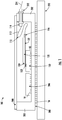
- the optoelectronic package assembly 100 generally includes a fiber array unit 110, a substrate 120, an optoelectronic chip 150, and an electronic chip 206.
- the fiber array unit 110 generally includes a connector 114 and optical fibers 112 coupled to a guide block 116.
- the optical fibers 112 are formed from materials that are dimensionally stable at comparatively high temperatures, such as glass, and may include portions with a polyamide coating or the like.
- the optical fibers 112 each include a core and a cladding.
- the cladding may be comparatively thin to provide an outside diameter of less than 125 micrometers and to allow for fiber bending, thereby allowing the fiber array unit 110 to fit within a compact optoelectronic package assembly 100.
- the cladding diameter may be less than 80 micrometers.
- the cladding diameter may be less than 50 micrometers.
- the optical fibers 112 may be un-coated, and may include, for example, double crucible drawn fibers with internal and external glass layers having different melting points.
- the connector 114 can include any suitable optical connector, and may include features from one or more different types of connectors, such as MT type ferrules from MPO-type connectors (e.g., according to TIA/EIA_61754-7-1:2014) or the like.
- the connector 114 may include axial latching and locking features that allow the connector 114 to be mechanically coupled to or inserted within features of the optoelectronic package assembly 100, as described in greater detail herein.
- the connector 114 may include an adapter such that external connectors may be coupled to the connector 114, as described in greater detail herein.
- the connector 114 may be formed from a polymer, a thermoset plastic or the like.
- the fiber array unit 110 further includes a guide block 116 coupled to the optical fibers 112.
- the optical fibers 112 terminate at the guide block 116, and the guide block 116 may arrange the optical fibers 112 such that the optical fibers 112 may be optically coupled to another component, such as optical waveguides 122 on the substrate 120.
- the guide block 116 may define v-grooves in which the optical fibers 112 are positioned; however, it is within the scope of the present disclosure that the guide block 116 may include any suitable construction to terminate the optical fibers 112.
- the guide block 116 may include an array block that allows evanescent or vertical grating coupling to the optical fibers 112.
- the guide block 116 may be formed from silica-based glass, or the like.
- the optoelectronic chip 150 and the electronic chip 206 are electrically coupled to one another.
- the electronic chip 206 and the optoelectronic chip 150 are coupled to a base substrate 200, and the base substrate 200 may include one or more traces (not shown) that electrically couple the electronic chip 206 to the optoelectronic chip 150.
- the electronic chip 206 and/or the optoelectronic chip 150 may be coupled to the base substrate 200 through solder 10.
- the electronic chip 206 may include an integrated circuit, for example, an application specific integrated circuit (ASIC), or the like.
- the optoelectronic chip 150 generally includes an optical source 152 that is structurally configured to emit an electromagnetic signal (e.g., an optical signal).
- the optical source 152 may include any suitable device for emitting an optical signal, and may include for example and without limitation, a laser source or the like.
- the optoelectronic chip 150 may be an optoelectronic transceiver or the like that is structurally configured to send and/or receive optical signals and to send and/or receive electrical signals.
- the optoelectronic chip 150 receives an optical signal and transmits a corresponding electrical signal to the electronic chip 206.
- the optoelectronic chip 150 in some embodiments, can receive an electrical signal from the electronic chip 206 and transmit a corresponding optical signal via the optical source 152.
- the substrate 120 comprises a photonic integrated circuit (PIC) including a total internal reflection (TIR) bevel 124.
- PIC photonic integrated circuit
- TIR total internal reflection
- the substrate 120 also includes optical waveguides 122.
- the optical waveguides 122 are planar waveguides extending through the substrate 120.
- the optical signals may be transmitted through the optical waveguides 122 of the substrate 120. While the embodiment depicted in FIG. 2A shows one optical waveguide 122 positioned at a bottom surface of the substrate 120, it should be understood that this is merely an example.
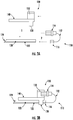
- the substrate 120 is depicted with a connector holder 130.
- the connector holder 130 is utilized to hold the connector 114 ( FIG. 1 ) during an assembly process.
- the connector holder 130 generally defines an engagement feature 132 that is selectively engagable with, and that selectively retains the connector 114.
- the engagement feature 132 comprises an aperture through which the connector 114 ( FIG. 1 ) can be selectively inserted.
- the connector holder 130 further includes a carrier 140 and a guide 138. The engagement feature 132 and the guide 138 are generally positioned on the carrier 140. As shown in FIGS.
- the guide 138 may be engaged with the substrate 120 to selectively couple the connector holder 130 to the substrate 120.
- the guide 138 is sized to fit around at least a portion of the substrate 120 and generally defines a c-shape.
- the connector holder 130 is formed from a temperature-resistant polymer, a thermoset plastic or the like.
- FIGS. 3A and 3B a side view of the connector holder 130 is depicted as being engaged with the substrate 120. As shown in FIGS. 3A and 3B , the guide 138 of the connector holder 130 may engage the substrate 120 to selectively couple the connector holder 130 to the substrate 120.
- the fiber array unit 110 is also coupled to the substrate 120.
- the guide block 116 is coupled to an end of the substrate 120, and the optical fibers 112 are optically coupled to the optical waveguides 122.
- the guide block 116 may be coupled to the substrate 120 in any suitable manner, for example and without limitation via adhesives or the like.
- the guide block 116 is coupled to the substrate 120 with UV25 adhesive available from Masterbond of Hackensack, NJ.
- the connector 114 is insertable within the engagement feature 132 of the connector holder 130, as shown in FIG. 3B .
- the position of the connector 114 may be retained, such that the substrate 120 and the fiber array unit 110 may be moved, such as by a "pick and place” robot without placing stresses on the optical fibers 112. Furthermore, by retaining the position of the connector 114, stress at the interface between the guide block 116 and the substrate 120 resulting from movement of the guide block 116 via movement of the optical fibers 112 and the connector 114 can be reduced.
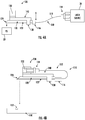
- FIG. 4A a schematic side view of the substrate 120 is depicted with the fiber array unit 110.
- the optical fibers 112 Prior to coupling the guide block 116 to the substrate 120, the optical fibers 112 are aligned with the optical waveguides 122.
- the connector 114 is optically coupled to an electromagnetic source 26 that emits electromagnetic energy, such as a laser source or the like.
- a photo detector 20 is positioned to receive signals emitted from the electromagnetic source 26.
- FIG. 4A a schematic side view of the substrate 120 is depicted with the fiber array unit 110.
- the photo detector 20 is optically coupled to the optical waveguides 122, such that signals emitted from the electromagnetic source 26 are transmitted through the connector 114, through the optical fibers 112, through the optical waveguides 122, and are received at the photo detector 20. Misalignment between the optical fibers 112 and the optical waveguides 122 contributes to signal loss evaluated between the electromagnetic source 26 and the photo detector 20. Accordingly, before coupling the guide block 116 to the substrate 120, the guide block 116 and the optical fibers 112 are moved with respect to the optical waveguides 122 to minimize detected signal loss detected at the photo detector 20 to align the optical fibers 112 with the optical waveguides 122.
- a side view of the substrate 120 is depicted being engaged with and aligned with the optoelectronic chip 150.
- the optical waveguides 122 may be aligned with the optical source 152 of the optoelectronic chip 150.
- the connector 114 of the fiber array unit 110 is optically coupled to an external connector 22, a fiber 24, and another photo detector 20'.
- signals emitted from the optical source 152 are transmitted through the optical waveguides 122 of the substrate 120, through the optical fibers 112, through the connector 114, through the external connector 22, through the fibers 24, and are received at the photo detector 20'. Similar to the alignment process described above and depicted in FIG. 4A , misalignment between the optical source 152 and the optical waveguides 122 may result in signal loss evaluated between the optical source 152 and the photo detector 20'. Accordingly, before coupling the substrate 120 and the optoelectronic chip 150, the optical waveguides 122 can be moved with respect to optical source 152 to minimize detected signal loss detected at the photo detector 20' to align the optical waveguides 122 with the optical source 152.
- the substrate 120 is mechanically coupled to the optoelectronic chip 150.
- the substrate 120 and the optical waveguides 122 may be coupled to the optoelectronic chip 150 through an adhesive or the like.
- the substrate 120 is coupled to the optoelectronic chip 150 with UV25 adhesive available from Masterbond of Hackensack, NJ.
- the substrate 120 and the optical waveguides 122 are coupled to the optoelectronic chip 150
- the substrate 120 and the optoelectronic chip 150 are coupled to the base substrate 200.
- the optoelectronic chip 150 may be positioned on solder 10 to couple the optoelectronic chip 150 to the base substrate 200.
- the electronic chip 206 may be positioned on solder 10 to couple the electronic chip 206 to the base substrate 200.
- the electronic chip 206 and the optoelectronic chip 150 may be indirectly coupled to one another through the base substrate 200 and the solder 10.
- a solder reflow process may include heating the optoelectronic package assembly 100 at a temperature greater than 220 degrees Celsius for 40 seconds or more. In some embodiments, the solder reflow process may include heating the optoelectronic package assembly 100 at a temperature greater than 220 degrees Celsius for between about 40 seconds and 120 seconds.
- the solder reflow process may include heating the optoelectronic package assembly 100 at a temperature between 240 degrees Celsius and about 270 degrees Celsius for between about 40 seconds and about 120 seconds.
- the fiber array unit 110, the substrate 120 and the optical waveguide 122, the optoelectronic chip 150, and the connector holder 130 are formed from materials that are dimensionally stable at temperatures and durations of the solder reflow processes described herein.
- the substrate 120 may be coupled to the optoelectronic chip 150 by an adhesive
- the guide block 116 may be coupled to the substrate 120 by an adhesive.
- the adhesive selected is dimensionally stable at temperatures and durations of the solder reflow processes described herein.
- the phrase "dimensionally stable" means that components of the optoelectronic package assembly 100 are formed from materials that do not plastically or elastically deform during a solder reflow process as described above in a manner that would impact alignment of one or more components of the optoelectronic package assembly 100.
- lateral alignment between the optical fibers 112 of the fiber array unit 110 and the optical waveguides 122 changes less than 1.0 micrometer after a solder reflow process (e.g., exposure to temperatures exceeding 220 degrees Celsius, temperatures between 240 degrees Celsius and 270 degrees Celsius, inclusive of the endpoints, etc., and then subsequent cooling).
- lateral alignment between the optical fibers 112 of the fiber array unit 110 and the optical waveguides 122 changes less than 0.7 micrometers during the solder reflow process (e.g., exposure to temperatures exceeding 220 degrees Celsius, temperatures between 240 degrees Celsius and 270 degrees Celsius, inclusive of the endpoints, etc., and then subsequent cooling).
- lateral alignment between the optical fibers 112 of the fiber array unit 110 and the optical waveguides 122 changes less than 0.5 micrometers during the solder reflow process (e.g., exposure to temperatures exceeding 220 degrees Celsius, temperatures between 240 degrees Celsius and 270 degrees Celsius, inclusive of the endpoints, etc., and then subsequent cooling).
- lateral alignment between the optical fibers 112 of the fiber array unit 110 and the optical waveguides 122 changes less than 0.2 micrometers during the solder reflow process (e.g., exposure to temperatures exceeding 220 degrees Celsius, temperatures between 240 degrees Celsius and 270 degrees Celsius, inclusive of the endpoints, etc., and then subsequent cooling).
- optical loss between the optical fibers 112 of the fiber array unit 110 and the optical waveguides 122 changes less than 0.10 decibels during the solder reflow process (e.g., exposure to temperatures exceeding 220 degrees Celsius, temperatures between 240 degrees Celsius and 270 degrees Celsius, inclusive of the endpoints, etc., and then subsequent cooling).
- optical loss between the optical fibers 112 of the fiber array unit 110 and the optical waveguides 122 changes less than 0.07 decibels during the solder reflow process (e.g., exposure to temperatures exceeding 220 degrees Celsius, temperatures between 240 degrees Celsius and 270 degrees Celsius, inclusive of the endpoints, etc., and then subsequent cooling).
- optical loss between the optical fibers 112 of the fiber array unit 110 and the optical waveguides 122 changes less than 0.05 decibels during the solder reflow process (e.g., exposure to temperatures exceeding 220 degrees Celsius, temperatures between 240 degrees Celsius and 270 degrees Celsius, inclusive of the endpoints, etc., and then subsequent cooling).
- the components of the optoelectronic package assembly 100 may endure a solder reflow process (e.g., exposure to temperatures exceeding 220 degrees Celsius, temperatures between 240 degrees Celsius and 270 degrees Celsius, inclusive of the endpoints, etc., and then subsequent cooling) without degrading the operation of the optoelectronic package assembly 100.
- the assembly of the optoelectronic package assembly 100 may be simplified, thereby reducing manufacturing costs.
- the components of the optoelectronic package assembly 100 can endure a solder reflow process, it is not necessary to remove any of the components prior to the solder reflow process and to re-attach the components after the solder reflow process. Accordingly, the steps required to manufacture the optoelectronic package assembly 100 may be reduced, thereby reducing manufacturing costs.
- forces applied to the components of the optoelectronic package assembly 100 during the manufacturing process e.g., through the removal and re-attachment of components of the optoelectronic package assembly 100, may be reduced, which may reduce the breakage of components of the optoelectronic package assembly 100.
- optical components of the optoelectronic package assembly 100 can be aligned with one another before the optoelectronic chip 150 is soldered to the base substrate 200. Accordingly, defects and/or misalignment of the components with optical elements (e.g ., the fiber array unit 110, the substrate 120, and the optoelectronic chip 150) can be detected early in the assembly process, thereby reducing the amount of components discarded in the case of defects or misalignment.
- the optoelectronic chip 150 is coupled to the base substrate 200 before defects and/or misalignment of the components with optical elements (e.g. , the fiber array unit 110, the substrate 120, and the optoelectronic chip 150) are detected, such as through the photo detectors 20, 20' ( FIGS. 4A , 4C ), it may be difficult or impossible to replace or align the defective components, and in some instances, it may be necessary to discard the entire optoelectronic package assembly 100.
- optical elements e.g. , the fiber array unit 110, the substrate 120, and the optoelectronic chip 150
- the amount of components of the optoelectronic package assembly 100 required to be discarded in the case of a defect or misalignment may be minimized, thereby reducing manufacturing costs.
- the substrate 120 and the fiber array unit 110 to the optoelectronic chip 150 may be installed to the base substrate 200 in an automated "pick and place” process.
- manufacturing costs may be reduced as compared to conventional assembly processes.
- the connector holder 130 thermally insulates the connector 114 during the solder reflow process.
- the engagement feature 132 of the connector holder 130 defines an aperture through which the connector 114 is inserted. With the connector 114 at least partially inserted within the aperture of the connector holder 130, the connector holder 130 may at least partially thermally insulate the connector 114 during the solder reflow process, which may reduce degradation of the connector 114 resulting from the solder reflow process.
- the optoelectronic package assembly 100 includes one or more module walls 202 extending upward from the base substrate 200.
- One or more of the module walls 202 include an adapter 204 that is structurally configured to receive the connector 114.
- the connector 114 may be positioned at least partially within the adapter 204 of the module wall 202 so that external components, such as external connectors or the like, can be optically coupled to the connector 114.
- a lid 208 is positioned over the module walls 202 to at least partially encapsulate the electronic chip 206, the optoelectronic chip 150, the substrate 120 and the optical waveguides 122, and the fiber array unit 110.
- the connector holder 130 FIG. 7
- the lid 208 may include a heat sink or the like that dissipates thermal energy from the optoelectronic package assembly 100.
- the base substrate 200 is coupled to a printed circuit board (PCB) 210 through solder 10.
- the electronic chip 206 and/or the optoelectronic chip 150 are electrically coupled to the PCB 210 through the base substrate 200 and the solder 10 positioned between the PCB 210 and the base substrate 200.
- the base substrate 200 is coupled to the PCB 210 in the same solder reflow process in which the electronic chip 206 and the optoelectronic chip 150 are coupled to the base substrate 200.
- the base substrate 200 is coupled to the PCB 210 in a separate process from the solder reflow process in which the electronic chip 206 and the optoelectronic chip 150 are coupled to the base substrate 200.
- the connector holder 130' generally defines a cover 144' that at least partially encapsulates the connector 114 of the fiber array unit 110.
- the cover 144' may assist in thermally insulating the connector 114 during the solder reflow process.
- the engagement feature 132' defines an aperture, and the connector 114 is insertable within the engagement feature 132' of the connector holder 130'.
- External components e.g ., the electromagnetic source 26 ( FIG. 4A ) and/or the external connector 22 ( FIG. 4C )
- the engagement feature 132' defines an aperture
- the cover 144' of the connector holder 130' may encapsulate the connector 114, such that the connector 114 is not accessible by external components (e.g ., the electromagnetic source 26 ( FIG. 4A ) and/or the external connector 22 ( FIG. 4C )).
- the connector holder 130' retains the connector 114 in a horizontal position, it is within the scope of the present disclosure that connector holders described herein may engage and retain the connector in any suitable orientation.
- the connector holder 130' does not include the guide 138 ( FIG. 2B ).
- the connector holder 130' may be selectively coupled to the substrate 120 by an adhesive, such as a temporary adhesive that allows the connector holder 130' to be attached to and removable from the substrate 120.
- the engagement feature 132" of the connector holder 130" comprises a post that is selectively engageable with the connector 114'.
- the connector 114' includes an adapter 115' that can slide over at least a portion of the post.
- the adapter 115' may receive external connectors to optically couple the external connectors to the connector 114'.
- the adapter 115' may include an engagement member 117' that engages at least a portion of the module wall 202 so that the adapter 115' can be coupled to the module wall 202.
- the engagement member 117' is a flange that engages a recess 207 defined by the module wall 202 to couple the adapter 115' to the module wall 202.
- Embodiments of the present disclosure are directed to optoelectronic package assemblies including a fiber array unit, a substrate including optical waveguides, an optoelectronic chip, and an electronic chip.
- the components of the optoelectronic package are dimensionally stable at temperatures exceeding 220 degrees Celsius, such that the components of the optoelectronic package can endure a solder reflow process.
- optical alignment of the fiber array unit with the substrate and the optoelectronic chip can be confirmed before the optoelectronic chip is soldered to a base substrate of the optoelectronic package assembly.
- the fiber array unit may be coupled to substrate and the optoelectronic chip forming a module that can be picked and placed on the base substrate in an automated process.
- the connector holder 130" may engage and retain multiple connectors 114'.
- the connector holder 130" includes a pair of engagement features 132" that are configured to engage and retain a pair of connectors 114' side-by-side. While the embodiment depicted in FIG. 9 shows the engagement features 132" including side-by-side posts, it is within the scope of the present disclosure that connector holders including engagement features having apertures may also engage and retain connectors in a side-by-side orientation.
- connector holder 130" is depicted as including two engagement features 132", it is within the scope of the present disclosure that connector holders described herein may include any suitable number of engagement features structurally configured to hold any suitable number of connectors.
- the engagement features 132" are depicted as being in a side-by-side orientation, it is within the scope of the present disclosure that the engagement features 132" may also be oriented in a vertical orientation, rotated on edge and arranged side-by-side in a more compact arrangement, or stacked one on top of the other.
- the engagement features 132" are oriented to face in the same direction
- the engagement features 132" can be positioned in any suitable orientation.
- the engagement features 132'" of the connector holder 130'" are oriented to face in opposing directions.
- the engagement features 132'" of the connector holder 130'" may be offset from the substrate 120.
- the connector holder 130"" and the engagement feature 132"" are offset from the substrate 120.
- connector holders and engagement features of the connector holders described herein may be positioned at different locations within the optoelectronic package assembly, which can allow the length of the optical fibers 112 to be selected to allow the connector 114 to reach the module wall 202 without requiring excess length of optical fiber 112.
- embodiments described herein are directed to optoelectronic package assemblies including a fiber array unit and a substrate including optical waveguides coupled to the fiber array unit.
- Some embodiments further include an optoelectronic chip and an electronic chip.
- the components of the optoelectronic package assembly are dimensionally stable at temperatures exceeding 220 degrees Celsius, such that the components of the optoelectronic package can endure a solder reflow process.
- a solder reflow process optical alignment of the fiber array unit with the substrate and the optoelectronic chip can be confirmed before the optoelectronic chip is soldered to a base substrate of the optoelectronic package assembly.
- a holder retains a connector of the fiber array unit forming a module that can be picked and placed on the base substrate in an automated process.
Landscapes
- Physics & Mathematics (AREA)
- General Physics & Mathematics (AREA)
- Optics & Photonics (AREA)
- Optical Couplings Of Light Guides (AREA)
- Engineering & Computer Science (AREA)
- Manufacturing & Machinery (AREA)
Applications Claiming Priority (1)
| Application Number | Priority Date | Filing Date | Title |
|---|---|---|---|
| US201962940405P | 2019-11-26 | 2019-11-26 |
Publications (1)
| Publication Number | Publication Date |
|---|---|
| EP3828609A1 true EP3828609A1 (de) | 2021-06-02 |
Family
ID=73452143
Family Applications (1)
| Application Number | Title | Priority Date | Filing Date |
|---|---|---|---|
| EP20207908.3A Pending EP3828609A1 (de) | 2019-11-26 | 2020-11-16 | Optoelektronische gehäuseanordnungen mit lötrückflusskompatiblen faseranordnungseinheiten und verfahren zu deren zusammenbau |
Country Status (2)
| Country | Link |
|---|---|
| US (1) | US11387374B2 (de) |
| EP (1) | EP3828609A1 (de) |
Families Citing this family (3)
| Publication number | Priority date | Publication date | Assignee | Title |
|---|---|---|---|---|
| CN113035858B (zh) | 2021-05-31 | 2021-09-14 | 杭州光智元科技有限公司 | 半导体装置及其制造方法 |
| US20250123451A1 (en) * | 2023-10-16 | 2025-04-17 | Cisco Technology, Inc. | Optical engine lid with optical feedthrough |
| US20250334750A1 (en) * | 2024-04-24 | 2025-10-30 | Cisco Technology, Inc. | Optical engine socket with integrated optical receptacle |
Citations (4)
| Publication number | Priority date | Publication date | Assignee | Title |
|---|---|---|---|---|
| WO2002065600A2 (en) * | 2001-02-14 | 2002-08-22 | Gemfire Corporation | Multi-channel laser pump source and packaging method therefor |
| JP2014230326A (ja) * | 2013-05-20 | 2014-12-08 | 日本電信電話株式会社 | 電子機器におけるコネクタ実装構造 |
| WO2018165016A1 (en) * | 2017-03-07 | 2018-09-13 | Corning Optical Communications LLC | Integrated electrical and optoelectronic package |
| WO2018165061A1 (en) * | 2017-03-07 | 2018-09-13 | Corning Optical Communications LLC | Universal photonic adaptor for coupling an optical connector to an optoelectronic substrate |
Family Cites Families (13)
| Publication number | Priority date | Publication date | Assignee | Title |
|---|---|---|---|---|
| JP2000227530A (ja) | 1999-02-08 | 2000-08-15 | Nippon Telegr & Teleph Corp <Ntt> | 光モジュールおよびその組立方法 |
| US6945712B1 (en) * | 2003-02-27 | 2005-09-20 | Xilinx, Inc. | Fiber optic field programmable gate array integrated circuit packaging |
| US7452140B2 (en) | 2003-07-16 | 2008-11-18 | Ibiden Co., Ltd. | Protective sealing of optoelectronic modules |
| JP2009536362A (ja) | 2006-05-05 | 2009-10-08 | リフレックス フォトニックス インコーポレイテッド | 光学有効集積回路パッケージ |
| US8469610B2 (en) | 2011-01-18 | 2013-06-25 | Avago Technologies General Ip (Singapore) Pte. Ltd. | Optical connection system with plug having optical turn |
| US9465176B2 (en) | 2012-04-11 | 2016-10-11 | Ultra Communications, Inc. | Small form factor transceiver compatible with solder processing |
| WO2016069901A1 (en) | 2014-10-29 | 2016-05-06 | Acacia Communications, Inc. | Optoelectronic ball grid array package with fiber |
| US20160377823A1 (en) * | 2015-06-25 | 2016-12-29 | Kyocera America Inc | Optical module and optical module package incorporating a high-thermal-expansion ceramic substrate |
| US11156788B2 (en) * | 2016-07-14 | 2021-10-26 | Intel Corporation | Semiconductor package with embedded optical die |
| WO2018169899A1 (en) | 2017-03-16 | 2018-09-20 | Corning Research & Development Corporation | Detachable optical connectors for optical chips and methods of fabricating the same |
| US10345535B2 (en) | 2017-03-16 | 2019-07-09 | Corning Research & Development Corporation | Glass-based ferrules and optical interconnection devices and methods of forming same |
| US10447407B2 (en) * | 2017-07-31 | 2019-10-15 | Dust Photonics Ltd. | High-frequency optoelectronic module |
| US10931080B2 (en) * | 2018-09-17 | 2021-02-23 | Waymo Llc | Laser package with high precision lens |
-
2020
- 2020-11-02 US US17/087,209 patent/US11387374B2/en active Active
- 2020-11-16 EP EP20207908.3A patent/EP3828609A1/de active Pending
Patent Citations (4)
| Publication number | Priority date | Publication date | Assignee | Title |
|---|---|---|---|---|
| WO2002065600A2 (en) * | 2001-02-14 | 2002-08-22 | Gemfire Corporation | Multi-channel laser pump source and packaging method therefor |
| JP2014230326A (ja) * | 2013-05-20 | 2014-12-08 | 日本電信電話株式会社 | 電子機器におけるコネクタ実装構造 |
| WO2018165016A1 (en) * | 2017-03-07 | 2018-09-13 | Corning Optical Communications LLC | Integrated electrical and optoelectronic package |
| WO2018165061A1 (en) * | 2017-03-07 | 2018-09-13 | Corning Optical Communications LLC | Universal photonic adaptor for coupling an optical connector to an optoelectronic substrate |
Also Published As
| Publication number | Publication date |
|---|---|
| US20210159347A1 (en) | 2021-05-27 |
| US11387374B2 (en) | 2022-07-12 |
Similar Documents
| Publication | Publication Date | Title |
|---|---|---|
| CN110023804B (zh) | 光学模块装置及制造该光学模块装置的方法 | |
| EP0968447B1 (de) | Steckerteil zum direkten ankoppeln optoelektronischer elemente | |
| EP0704732B1 (de) | Integrierter optoelektronischer Verbund und Stecker | |
| US11387374B2 (en) | Optoelectronic package assemblies including solder reflow compatible fiber array units and methods for assembling the same | |
| US10809472B2 (en) | Optical fiber ferrules incorporating a glass faceplate and methods of fabricating the same | |
| US5586207A (en) | Methods and assemblies for packaging opto-electronic devices and for coupling optical fibers to the packaged devices | |
| EP3596520A1 (de) | Lösbare optische verbinder für optische chips und verfahren zur herstellung davon | |
| WO2013016475A1 (en) | Interposer with alignment features | |
| JP2008040318A (ja) | 多チャンネル光モジュールの製造方法 | |
| US20190384019A1 (en) | Receptacle bodies for optical chips and optical connections incorporating the same | |
| US5029968A (en) | Optoelectronic hybrid package assembly including integral, self-aligned fiber optic connector | |
| US20030103740A1 (en) | Transceiver for LC connector | |
| CN101303439A (zh) | 光学组件及其形成方法 | |
| US20190064454A1 (en) | Glass-based ferrule assemblies and coupling apparatus for optical interface devices for photonic systems | |
| CA2422986A1 (en) | Method to align optical components to a substrate and other optical components | |
| US20030007750A1 (en) | Passive self-alignment technique for array laser transmitters and receivers for fiber optic applications | |
| JP6561491B2 (ja) | テープファイバの接続構造、及び、製造方法 | |
| US7093986B2 (en) | Low cost optical module | |
| JPH09243867A (ja) | 多心光モジュール及びその製造方法 | |
| US6152610A (en) | Optical transmission mechanism for mount chip and chip mounting | |
| KR20010076771A (ko) | 실리콘 광학벤치와 이것을 수용하는 플라스틱 리셉트클 및이것들을 조립한 광부모듈 | |
| KR20030094466A (ko) | 멀티포트형 광모듈 | |
| US7437038B2 (en) | Z-axis alignment of an optoelectronic component using a spacer tool | |
| US6808323B2 (en) | Passive alignment packaging structure for opto-electrical devices and optic fiber connectors | |
| CN115053163A (zh) | 光纤连接器 |
Legal Events
| Date | Code | Title | Description |
|---|---|---|---|
| PUAI | Public reference made under article 153(3) epc to a published international application that has entered the european phase |
Free format text: ORIGINAL CODE: 0009012 |
|
| STAA | Information on the status of an ep patent application or granted ep patent |
Free format text: STATUS: THE APPLICATION HAS BEEN PUBLISHED |
|
| AK | Designated contracting states |
Kind code of ref document: A1 Designated state(s): AL AT BE BG CH CY CZ DE DK EE ES FI FR GB GR HR HU IE IS IT LI LT LU LV MC MK MT NL NO PL PT RO RS SE SI SK SM TR |
|
| STAA | Information on the status of an ep patent application or granted ep patent |
Free format text: STATUS: REQUEST FOR EXAMINATION WAS MADE |
|
| 17P | Request for examination filed |
Effective date: 20211202 |
|
| RBV | Designated contracting states (corrected) |
Designated state(s): AL AT BE BG CH CY CZ DE DK EE ES FI FR GB GR HR HU IE IS IT LI LT LU LV MC MK MT NL NO PL PT RO RS SE SI SK SM TR |
|
| STAA | Information on the status of an ep patent application or granted ep patent |
Free format text: STATUS: EXAMINATION IS IN PROGRESS |
|
| 17Q | First examination report despatched |
Effective date: 20230428 |