EP3841894B1 - Mundstückpapier mit applizierter technologie zur reduzierung von tabakgeruch auf fingern und rauchartikel damit sowie verfahren zur herstellung des mundstückpapiers - Google Patents
Mundstückpapier mit applizierter technologie zur reduzierung von tabakgeruch auf fingern und rauchartikel damit sowie verfahren zur herstellung des mundstückpapiers Download PDFInfo
- Publication number
- EP3841894B1 EP3841894B1 EP20810853.0A EP20810853A EP3841894B1 EP 3841894 B1 EP3841894 B1 EP 3841894B1 EP 20810853 A EP20810853 A EP 20810853A EP 3841894 B1 EP3841894 B1 EP 3841894B1
- Authority
- EP
- European Patent Office
- Prior art keywords
- fragrance
- carrier
- tipping paper
- smoking
- ink
- Prior art date
- Legal status (The legal status is an assumption and is not a legal conclusion. Google has not performed a legal analysis and makes no representation as to the accuracy of the status listed.)
- Active
Links
Images


Classifications
-
- D—TEXTILES; PAPER
- D21—PAPER-MAKING; PRODUCTION OF CELLULOSE
- D21H—PULP COMPOSITIONS; PREPARATION THEREOF NOT COVERED BY SUBCLASSES D21C OR D21D; IMPREGNATING OR COATING OF PAPER; TREATMENT OF FINISHED PAPER NOT COVERED BY CLASS B31 OR SUBCLASS D21G; PAPER NOT OTHERWISE PROVIDED FOR
- D21H21/00—Non-fibrous material added to the pulp, characterised by its function, form or properties; Paper-impregnating or coating material, characterised by its function, form or properties
- D21H21/14—Non-fibrous material added to the pulp, characterised by its function, form or properties; Paper-impregnating or coating material, characterised by its function, form or properties characterised by function or properties in or on the paper
-
- A—HUMAN NECESSITIES
- A24—TOBACCO; CIGARS; CIGARETTES; SIMULATED SMOKING DEVICES; SMOKERS' REQUISITES
- A24D—CIGARS; CIGARETTES; TOBACCO SMOKE FILTERS; MOUTHPIECES OF CIGARS OR CIGARETTES; MANUFACTURE OF TOBACCO SMOKE FILTERS OR MOUTHPIECES
- A24D1/00—Cigars; Cigarettes
- A24D1/02—Cigars; Cigarettes with special covers
- A24D1/025—Cigars; Cigarettes with special covers the covers having material applied to defined areas, e.g. bands for reducing the ignition propensity
-
- A—HUMAN NECESSITIES
- A24—TOBACCO; CIGARS; CIGARETTES; SIMULATED SMOKING DEVICES; SMOKERS' REQUISITES
- A24C—MACHINES FOR MAKING CIGARS OR CIGARETTES
- A24C5/00—Making cigarettes; Making tipping materials for, or attaching filters or mouthpieces to, cigars or cigarettes
- A24C5/56—Making tipping materials, e.g. sheet cork for mouthpieces of cigars or cigarettes, by mechanical means
- A24C5/565—Making tipping materials, e.g. sheet cork for mouthpieces of cigars or cigarettes, by mechanical means by treating the tipping material with a liquid or viscous solution, e.g. paraffine
-
- A—HUMAN NECESSITIES
- A24—TOBACCO; CIGARS; CIGARETTES; SIMULATED SMOKING DEVICES; SMOKERS' REQUISITES
- A24D—CIGARS; CIGARETTES; TOBACCO SMOKE FILTERS; MOUTHPIECES OF CIGARS OR CIGARETTES; MANUFACTURE OF TOBACCO SMOKE FILTERS OR MOUTHPIECES
- A24D1/00—Cigars; Cigarettes
- A24D1/02—Cigars; Cigarettes with special covers
-
- A—HUMAN NECESSITIES
- A24—TOBACCO; CIGARS; CIGARETTES; SIMULATED SMOKING DEVICES; SMOKERS' REQUISITES
- A24D—CIGARS; CIGARETTES; TOBACCO SMOKE FILTERS; MOUTHPIECES OF CIGARS OR CIGARETTES; MANUFACTURE OF TOBACCO SMOKE FILTERS OR MOUTHPIECES
- A24D3/00—Tobacco smoke filters, e.g. filter tips or filtering inserts; Filters specially adapted for simulated smoking devices; Mouthpieces of cigars or cigarettes
- A24D3/04—Tobacco smoke filters characterised by their shape or structure
-
- D—TEXTILES; PAPER
- D21—PAPER-MAKING; PRODUCTION OF CELLULOSE
- D21H—PULP COMPOSITIONS; PREPARATION THEREOF NOT COVERED BY SUBCLASSES D21C OR D21D; IMPREGNATING OR COATING OF PAPER; TREATMENT OF FINISHED PAPER NOT COVERED BY CLASS B31 OR SUBCLASS D21G; PAPER NOT OTHERWISE PROVIDED FOR
- D21H17/00—Non-fibrous material added to the pulp, characterised by its constitution; Paper-impregnating material characterised by its constitution
- D21H17/03—Non-macromolecular organic compounds
- D21H17/05—Non-macromolecular organic compounds containing elements other than carbon and hydrogen only
- D21H17/06—Alcohols; Phenols; Ethers; Aldehydes; Ketones; Acetals; Ketals
-
- D—TEXTILES; PAPER
- D21—PAPER-MAKING; PRODUCTION OF CELLULOSE
- D21H—PULP COMPOSITIONS; PREPARATION THEREOF NOT COVERED BY SUBCLASSES D21C OR D21D; IMPREGNATING OR COATING OF PAPER; TREATMENT OF FINISHED PAPER NOT COVERED BY CLASS B31 OR SUBCLASS D21G; PAPER NOT OTHERWISE PROVIDED FOR
- D21H17/00—Non-fibrous material added to the pulp, characterised by its constitution; Paper-impregnating material characterised by its constitution
- D21H17/20—Macromolecular organic compounds
- D21H17/21—Macromolecular organic compounds of natural origin; Derivatives thereof
- D21H17/24—Polysaccharides
-
- D—TEXTILES; PAPER
- D21—PAPER-MAKING; PRODUCTION OF CELLULOSE
- D21H—PULP COMPOSITIONS; PREPARATION THEREOF NOT COVERED BY SUBCLASSES D21C OR D21D; IMPREGNATING OR COATING OF PAPER; TREATMENT OF FINISHED PAPER NOT COVERED BY CLASS B31 OR SUBCLASS D21G; PAPER NOT OTHERWISE PROVIDED FOR
- D21H17/00—Non-fibrous material added to the pulp, characterised by its constitution; Paper-impregnating material characterised by its constitution
- D21H17/71—Mixtures of material ; Pulp or paper comprising several different materials not incorporated by special processes
- D21H17/72—Mixtures of material ; Pulp or paper comprising several different materials not incorporated by special processes of organic material
-
- D—TEXTILES; PAPER
- D21—PAPER-MAKING; PRODUCTION OF CELLULOSE
- D21H—PULP COMPOSITIONS; PREPARATION THEREOF NOT COVERED BY SUBCLASSES D21C OR D21D; IMPREGNATING OR COATING OF PAPER; TREATMENT OF FINISHED PAPER NOT COVERED BY CLASS B31 OR SUBCLASS D21G; PAPER NOT OTHERWISE PROVIDED FOR
- D21H27/00—Special paper not otherwise provided for, e.g. made by multi-step processes
-
- D—TEXTILES; PAPER
- D21—PAPER-MAKING; PRODUCTION OF CELLULOSE
- D21H—PULP COMPOSITIONS; PREPARATION THEREOF NOT COVERED BY SUBCLASSES D21C OR D21D; IMPREGNATING OR COATING OF PAPER; TREATMENT OF FINISHED PAPER NOT COVERED BY CLASS B31 OR SUBCLASS D21G; PAPER NOT OTHERWISE PROVIDED FOR
- D21H5/00—Special paper or cardboard not otherwise provided for
- D21H5/12—Special paper or cardboard not otherwise provided for characterised by the use of special fibrous materials
- D21H5/14—Special paper or cardboard not otherwise provided for characterised by the use of special fibrous materials of cellulose fibres only
- D21H5/16—Tobacco or cigarette paper
Definitions
- the present invention relates to a tipping paper for smoking articles, and more particularly, to a tipping paper to which a technology capable of reducing a tobacco smell that may cling to fingers of a smoker is applied and a smoking article including the same and a method of producing the tipping paper.
- US 2010/108081 A1 presents a filtered cigarette that includes a smokable rod and a filter element.
- the smokable rod is secured to the filter element using tipping material.
- the tipping material includes at least one flavorant providing a sensory characteristic.
- the cigarette may include more than one layer of tipping material.
- An outer layer of tipping material can overlie at least a portion of an underlying inner layer of tipping material, and during use by the smoker, the outer layer can be removed from the cigarette.
- a cigarette manufacturer to provide a cigarette that can be used as such by the smoker, or that can be adapted by the smoker to provide a different sensory experience (e.g., the visual, organoleptic, trigeminal, aromatic, and tactile characteristics of the cigarette can be altered by removal of the outer tipping material, and or by provision of a tipping material layer that is treated with a flavorant and/or provides a desirable diffusivity).
- the use of the outer layer of tipping material can be used to improve the physical integrity of the cigarette.
- CN 109 173 948 A discloses a slow release microcapsule material capable of releasing fragrance, and a preparation method and applications thereof.
- the slow release microcapsule material comprises, by weight, 10 parts of a perfume, 10 to 60 parts of a microcapsule wall material, and 10 to 50 parts of an emulsifier.
- the amount and the placing place of the slow release microcapsule material can be adjusted based on the size, zones, and fragrance of cigarette packages; under external force effect or changed external environment, release of fragrance can be accelerated, for example, if the cigarettes are rubber by fingers, fragrance release of cigarette paper prepared from the slow release microcapsule material is achieved; in smoking process, fragrance release can be accelerated by rubbing of cigarette paper with fingers, or fragrance release of cigarette filters prepared from the slow release microcapsule material capable of releasing fragrance can be accelerated.
- WO 2007/36814 A2 discloses cigarettes which contain a filtering system and flavorants encapsulated with polyvinyl acetate, wherein deactivation of a sorbent by the flavorant is reduced through the encapsulation of the flavorant within the polyvinyl acetate.
- a preferred flavorant is menthol.
- the encapsulated flavorants are prepared by mixing at least one flavorant with polyvinyl acetate and a solvent, such as ethanol, and forming the encapsulated flavorants. Methods of making cigarettes and smoking the articles are also provided.
- the aroma sustained-release agent for cigarettes comprises an inclusion agent and an included compound, wherein the inclusion agent comprises hydroxypropyl-beta-cyclodextrin and a base fluid in a weight ratio of 1: 1 to 1: 10, the base fluid is water and water-soluble essence and flavor, and the weight percentage of the water-soluble essence and flavor is 0.25% to 50%; and the included compound comprises an alcohol-soluble essence and flavor for cigarettes and an alcohol solvent in a weight ratio of 100: 0 to 30: 70.
- the aroma sustained-release agent for cigarettes realizes coexistence of alcohol-soluble and water-soluble essence and flavor in a same system, and aroma substances can be uniformly and stably released when cigarettes are smoked.
- WO 92/18020 A1 presents a method for preparing a sheet material for the manufacture of smokable products such as cigars, cigarettes or the like, wherein flavouring substances or compositions are added to the pulp during material manufacture for release only when the smokable product is lit, said substances being incorporated by molecular encapsulation or complexing in cyclodextrins, and wherein steps are taken to ensure that all of said flavouring substances are incorporated in the cyclodextrins.
- a sheet material produced by the above mentioned method is also provided for wrapping a smokable product or for use as a leaf of reconstituted tobacco manufactured according to a known paper-making technique.
- the present invention is directed to providing a tipping paper capable of reducing a tobacco smell on fingers and a smoking article including the same.
- Some embodiments of the present invention provide a tipping paper for smoking articles that surrounds at least a partial region of a smoking material portion and a smoking article filter portion so that the smoking material portion and the smoking article filter portion are combined, the tipping paper including a fragrance carrier which consists of a fragrance material and a carrier material which includes the fragrance material, wherein the fragrance material included in the carrier material is expressed outside the tipping paper in response to moisture, saliva, or friction, and the carrier material is a material soluble in ethanol.
- the carrier material is 2-hydroxypropyl- ⁇ -cyclodextrin
- the fragrance material may include at least one or more materials of vanillin and ethyl vanillin.
- a weight ratio of the vanillin with respect to the total weight of the fragrance material may be in a range of 15% to 25%, and a weight ratio of the ethyl vanillin with respect to the total weight of the fragrance material may be in a range of 5% to 15%.
- the fragrance carrier is included in the tipping paper through a fragrance carrier printing process that uses a fragrance carrier ink including the ethanol, the fragrance material, and the carrier material.
- a weight ratio of the fragrance material with respect to the total weight of the fragrance carrier ink is greater than 0% and lower than 1.5%, and a weight ratio of the carrier material with respect to the total weight of the fragrance carrier ink is greater than 0% and lower than or equal to 15%.
- the fragrance carrier ink may further include a binder, and a weight ratio of the binder with respect to the total weight of the fragrance carrier ink may be greater than 0% and lower than or equal to 15%.
- the binder may be a polymer material that is soluble in ethanol and has a molecular weight in a range of 3,000 to 20,000 and a glass transition temperature in a range of 60 °C to 90 °C.
- the fragrance carrier ink may further include microcapsules, and a weight ratio of the microcapsules with respect to the total weight of the fragrance carrier ink may be greater than 0% and lower than or equal to 25%.
- a weight ratio of the binder with respect to the total weight of the fragrance carrier ink may be in a range of 5% to 10%, and a weight ratio of the microcapsules with respect to the total weight of the fragrance carrier ink may be in a range of 5% to 20%.
- the microcapsules may each have a diameter in a range of 1.5 ⁇ m to 5.0 ⁇ m, the microcapsules may each include polyvinyl alcohol, a fragrance, and a cross-linking agent, and a content ratio of the polyvinyl alcohol and the fragrance included in each microcapsule may be in a range of 1:3 to 1:7.
- the fragrance carrier printing process may be performed after an overprint varnish (OPV) process is applied to the tipping paper.
- OOV overprint varnish
- the present invention also provides a smoking article including a smoking material portion which is wrapped by a smoking material wrapper, a filter portion whose upstream end is combined with the smoking material portion and which is wrapped by a filter wrapper, and a tipping paper according to the invention which surrounds at least a partial region of the smoking material portion and the filter portion so that the smoking material portion and the filter portion are combined.
- the present invention also provides a method of producing a tipping paper for smoking articles according to claim 11.
- the method may further include, before the printing step, adding microcapsules to the fragrance carrier ink and stirring a solution obtained thereby, wherein a core of each microcapsule may be an ethanol-based fragrance, a shell of each microcapsule may be polyvinyl alcohol, and the microcapsules may be produced by stirring the ethanol-based fragrance and the polyvinyl alcohol at room temperature, adding a cross-linking agent to a solution in which the ethanol-based fragrance and the polyvinyl alcohol are stirred and stirring a solution obtained thereby at a temperature which is higher than or equal to 60 °C and lower than or equal to 100 °C, and cooling the solution in which the ethanol-based fragrance, the polyvinyl alcohol, and the cross-linking agent are stirred.
- a core of each microcapsule may be an ethanol-based fragrance
- a shell of each microcapsule may be polyvinyl alcohol
- the microcapsules may be produced by stirring the ethanol-based fragrance and the polyvinyl alcohol at room temperature, adding
- a fragrance material is included in a fragrance carrier material and then a process of printing a fragrance carrier on a tipping paper is applied, it is possible to effectively reduce a smell on fingers caused by smoking and solve a tipping paper curl issue and a tipping paper surface contamination problem which occur due to application of the printing process.
- solution in which the carrier material, the fragrance material, and the binder are added to ethanol is used as a fragrance carrier ink and printed on the tipping paper.
- the method may further include, before the printing step, adding microcapsules to the fragrance carrier ink and stirring a solution obtained thereby, wherein a core of each microcapsule may be an ethanol-based fragrance, a shell of each microcapsule may be polyvinyl alcohol, and the microcapsules may be produced by stirring the ethanol-based fragrance and the polyvinyl alcohol at room temperature, adding a cross-linking agent to a solution in which the ethanol-based fragrance and the polyvinyl alcohol are stirred and stirring a solution obtained thereby at a temperature which is higher than or equal to 60 °C and lower than or equal to 100 °C, and cooling the solution in which the ethanol-based fragrance, the polyvinyl alcohol, and the cross-linking agent are stirred.
- a core of each microcapsule may be an ethanol-based fragrance
- a shell of each microcapsule may be polyvinyl alcohol
- the microcapsules may be produced by stirring the ethanol-based fragrance and the polyvinyl alcohol at room temperature, adding
- a fragrance material is included in a fragrance carrier material and then a process of printing a fragrance carrier on a tipping paper is applied, it is possible to effectively reduce a smell on fingers caused by smoking and solve a tipping paper curl issue and a tipping paper surface contamination problem which occur due to application of the printing process.
- the fragrance material is included in a carrier and printed, it is possible to reduce the amount of fragrance expressed during simple storage of smoking articles and increase the amount of fragrance expressed during smoking.
- ethanol is used as a solvent for ink used in a fragrance carrier printing process, and the extent to which an ink is dried and the extent to which a curl occurs in the tipping paper are secured at an equivalent level compared to a case in which the fragrance carrier printing process is not applied, it is possible to also secure the workability of printing the fragrance carrier.
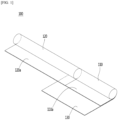
- FIG. 1 is a view illustrating a schematic configuration of a smoking article to which a tipping paper according to some embodiments of the present invention is applied.
- the fragrance material is included in a carrier and printed, it is possible to reduce the amount of fragrance expressed during simple storage of smoking articles and increase the amount of fragrance expressed during smoking.
- ethanol is used as a solvent for ink used in a fragrance carrier printing process, and the extent to which an ink is dried and the extent to which a curl occurs in the tipping paper are secured at an equivalent level compared to a case in which the fragrance carrier printing process is not applied, it is possible to also secure the workability of printing the fragrance carrier.
- smoking article may refer to anything capable of generating an aerosol, such as tobacco (cigarette) and cigar.
- the smoking article may include an aerosol-generating material or an aerosol-forming substrate.
- the smoking article may include a solid material based on tobacco raw materials, such as reconstituted tobacco leaves, shredded tobacco, and reconstituted tobacco.
- a smoking material may include a volatile compound.
- upstream or “upstream direction” refers to a direction moving away from an oral region of a user smoking a smoking article 100
- downstream or “downstream direction” refers to a direction approaching the oral region of the user smoking the smoking article 100.
- a smoking material portion 120 is disposed upstream or in an upstream direction from a filter portion 110.
- the smoking article 100 is a combustion-type cigarette
- the present invention is not limited thereto, and the smoking article 100 may also be a heating-type cigarette or the like that is used together with an aerosol generation device (not illustrated) such as an electronic cigarette device.
- FIG. 1 is a view illustrating a schematic configuration of a smoking article to which a tipping paper according to some embodiments of the present invention is applied.
- the smoking article 100 may include the filter portion 110 wrapped by a filter wrapper 110a, the smoking material portion 120 wrapped by a smoking material wrapper 120a, and a tipping paper 130 configured to combine the filter portion 110 and the smoking material portion 120.
- the filter portion 110 may be disposed downstream from the smoking material portion 120 and may be a region through which an aerosol material generated in the smoking material portion 120 passes right before being inhaled by the user.
- the filter portion 110 may be formed of various materials.
- the filter portion 110 may be a cellulose acetate filter.
- the filter portion 110 may be a cellulose acetate filter not scented with a fragrance material, but the present invention is not limited thereto.
- the filter portion 110 may also be a transfer jet nozzle system (TINS) filter scented with a fragrance material.
- TIS transfer jet nozzle system
- the filter portion 110 may be a tubular structure including a hollow formed therein.
- the filter portion 110 may also be manufactured by inserting structures such as films or tubes formed of the same or different materials thereinto (for example, into the hollow).
- a hardness of the filter portion 110 may be adjusted by controlling the content of plasticizer during manufacture of the filter portion 110.
- Triacetin may be applied as a plasticizer and included at a weight ratio in a range of 5 to 15% with respect to the total weight of the filter portion 110, but the type and content of the plasticizer are not limited thereto and may be properly controlled as necessary.
- the filter portion 110 of the present embodiment is illustrated as a mono filter formed of a single filter, but the present invention is not limited thereto.
- the filter portion 110 may, of course, be provided as a dual filter which includes two acetate filters, a triple filter, or the like in order to increase filter efficiency.
- a capsule (not illustrated) may be included inside the filter portion 110.
- the capsule may have a structure in which a liquid including a fragrance and filled therein is wrapped by a film.
- the capsule may have a spherical or cylindrical shape.
- a diameter of the capsule may be in a range of about 2.6 mm to 3.5 mm but is not limited thereto. The diameter of the capsule may vary according to the standard of the smoking article 100.
- Materials forming the film of the capsule may be a natural material, starch, and/or a gellant.
- a film made of a natural material may be composed of agar, pectin, sodium alginate, glycerin, and the like. Gellan gum or gelatin may be used as the gellant.
- a gelation auxiliary agent may be further used as a material forming the film of the capsule.
- the gelation auxiliary agent for example, calcium chloride may be used.
- a plasticizer may be further used as a material forming the film of the capsule.
- glycerin and/or sorbitol may be used.
- a coloring agent may be further used as a material forming the film of the capsule.
- a solvent for the fragrance included in the liquid filled in the capsule for example, a medium chain fatty acid triglyceride (MCTG) may be used.
- the liquid may also contain other additives such as coloring, an emulsifier, and a thickener.
- a fragrance such as menthol and an essential oil of plants may be included in the liquid filled in the capsule, but the present invention is not limited thereto.
- the filter portion 110 may be wrapped by the filter wrapper 110a.
- the filter wrapper 110a may be produced using grease-resistant wrapping paper.
- the filter wrapper 110a may be produced using grease-resistant wrapping paper.
- an aluminum foil may be further included at an inner surface of the filter wrapper 110a.
- the filter portion 110 is disposed downstream of the smoking material portion 120 and serves as a filter through which an aerosol material generated in the smoking material portion 120 passes right before being inhaled by the user.
- the smoking material portion 120 may contain an aerosol-generating material.
- the smoking material portion 120 may include tobacco strands.
- the smoking material portion 120 may have the form of a longitudinally extending rod which may have various lengths, circumferences, and diameters.
- the aerosol-generating material may include at least one of glycerin, propylene glycol, ethylene glycol, dipropylene glycol, diethylene glycol, triethylene glycol, tetraethylene glycol, and oleyl alcohol.
- the smoking material portion 120 may also contain other additives such as a flavoring agent, a wetting agent, and/or an acetate compound.
- the flavoring agent may include licorice, saccharose, fructose syrup, isosweet, cocoa, lavender, cinnamon, cardamom, celery, fenugreek, cascarilla, white sandalwood, bergamot, geranium, honey essence, rose oil, vanilla, lemon oil, orange oil, mint oil, cinnamon, caraway, cognac, jasmine, chamomile, menthol, cinnamon, ylang-ylang, sage, spearmint, ginger, cilantro, coffee, or the like.
- the wetting agent may include glycerin, propylene glycol, or the like.
- the smoking material portion 120 may include a reconstituted tobacco material which is formed in the shape of pieces of rods or the like by grinding tobacco raw materials, mixing a solvent and various additives with the ground tobacco raw materials to make a tobacco slurry, drying the tobacco slurry to form a tobacco sheet, and then processing the tobacco sheet.
- the smoking material portion 120 may include a plurality of tobacco material strands, and each strand may have a length in a range of about 10 mm to 14 mm (for example, 12 mm), a width in a range of about 0.8 mm to 1.2 mm (for example, 1 mm), and a thickness in a range of about 0.08 mm to 0.12 mm (for example, 0.1 mm), but the present invention is not limited thereto.
- the smoking material portion 120 includes a plurality of strand materials formed by processing a wide tobacco sheet, a density of tobacco materials filled in the smoking material portion 120 may increase. Accordingly, the amount of aerosol generated may be increased, and smoking characteristics of the smoking material portion 120 may be improved.
- the smoking material portion 120 may be wrapped by the smoking material wrapper 120a.
- the smoking material wrapper 120a may include a filler. Accordingly, an opacity of the smoking material wrapper 120a may be increased, porosity may be imparted to the smoking material wrapper 120a, smoothness and ash integrity of the cigarette paper may be improved, and whiteness of the cigarette paper may be increased. Materials such as calcium carbonate, titanium dioxide, and magnesium oxide may be used as the filler, but the present invention is not limited thereto.
- the smoking material wrapper 120a may have a double wrapping paper structure.
- the smoking material wrapper 120a may include an inner wrapper (not illustrated) that comes in contact with the smoking material portion 120 and surrounds the smoking material portion 120 and an outer wrapper that comes in contact with the inner wrapper and surrounds an outer portion of the inner wrapper.
- the filter portion 110 wrapped by the filter wrapper 110a and the smoking material portion 120 wrapped by the smoking material wrapper 120a may be wrapped together by the tipping paper 130. That is, the tipping paper 130 may wrap around at least a portion (for example, a partial downstream region) of the smoking material wrapper 120a and an outer boundary of the filter wrapper 110a. In other words, at least a portion of the smoking material portion 120 and the filter portion 110 may be further wrapped by the tipping paper 130 and physically combined.
- the tipping paper 130 may be produced using nonporous wrapping paper that is not treated to be grease-resistant, but the present invention is not limited thereto.
- the tipping paper 130 may be coated with a sweetener such as sucralose and citric acid.
- a predetermined material may be added into the tipping paper 130.
- Silicone may be an example of the predetermined material, but the predetermined material is not limited thereto.
- silicone has characteristics such as being heat-resistant, i.e., not changing much according to temperature, being oxidation-resistant, i.e., not being oxidized, being resistant to various chemicals, being water-repellent, and being electrically insulated.
- any material other than silicone may be applied or coated on the tipping paper 130 as long as the material has the above-described characteristics.
- the tipping paper 130 may prevent a phenomenon in which the filter portion 110 is combusted. For example, in a case in which the smoking material portion 120 is combusted up to a portion thereof adjacent to the filter portion 110, there is a possibility that the filter portion 110 may also be combusted. Even in this case, since the tipping paper 130 includes an incombustible material, the phenomenon in which the filter portion 110 is combusted may be prevented.
- the tipping paper 130 of the present invention includes a fragrance carrier which consists of a fragrance material for masking a tobacco smell and a carrier material for including the fragrance material.
- the fragrance carrier is included in the tipping paper through a process of printing the fragrance carrier on the tipping paper by using a fragrance carrier ink including ethanol, the fragrance material, and the carrier material.
- the fragrance carrier ink may be produced by sequentially adding the carrier material, the fragrance material, and a binder to the ethanol and stirring solutions obtained thereby.
- the fragrance carrier ink may be produced by: i) adding the carrier material to ethanol and stirring a solution obtained thereby for about 30 minutes to 60 minutes; ii) adding the fragrance material to the solution in which the carrier material is added to ethanol and stirring a solution obtained thereby for about 15 minutes to 45 minutes; and iii) adding the binder to the solution in which the carrier material and the fragrance material are added to ethanol and stirring a solution obtained thereby for about 15 minutes to 45 minutes.
- the method of producing the fragrance carrier ink may further include, after the step iii), iv) adding microcapsules to the solution in which the carrier material, the fragrance material, and the binder are added to ethanol and stirring a solution obtained thereby for about 15 minutes to 45 minutes.
- the fragrance carrier printing process may be performed by mixing the fragrance carrier with an ink used in an overprint varnish (OPV) process that is performed on the tipping paper.
- OOV overprint varnish
- the fragrance carrier printing process may be performed as a printing process separate from the OPV process after the OPV process.
- the fragrance carrier ink may further include a binder and/or microcapsules.
- the binder and microcapsules will be described in detail below.
- the carrier material in the present invention is a material that is soluble in ethanol but not soluble in water, isopropyl alcohol, and the like.
- the carrier material is 2-hydroxypropyl- ⁇ -cyclodextrin.
- the surface energy of the ink may be increased to about 70 mN/m to 75 mN/m and thus difficulty may occur in the drying process after the ink is printed on the tipping paper 130, and problems such as contamination of the tipping paper and a phenomenon in which the ink peels off due to weakening of a binding force between the printed ink and the tipping paper may occur. Further, in a case in which a drying temperature or drying time is increased to dry the ink of which the surface energy is increased, a curl of the tipping paper is increased.
- the fragrance material may be lost to the outside of the smoking article during a period in which the smoking article is stored, or the tipping paper may be discolored according to storage conditions such as light exposure and humidity level.
- ethanol may be used as a solvent for ink, and thus ink having a surface energy of about 20 mN/m to 50 mN/m may be used. Accordingly, it is possible to apply the printing and drying processes of the tipping paper, and not only the workability of producing smoking articles, but also the stability of storing the smoking articles may be secured because there is no discoloration issue.
- the fragrance material included in the carrier material may be expressed outside the tipping paper 130 (that is, outside the smoking article 100) in response to moisture, saliva, or friction, and the expressed fragrance material may be spread to the fingers of the smoker gripping the tipping paper portion and serve to mask the tobacco smell on the fingers.
- the fragrance material remains included in the carrier material and is not expressed before moisture or saliva is spread from the smoker to the tipping paper or friction is transmitted to the tipping paper (for example, by the smoker gripping or rubbing the tipping paper), a problem in that a scent is lost over the storage period or a problem in that a fragrance is unnecessarily expressed while the smoker is just keeping the smoking article may be solved.
- the fragrance material included in the carrier material may include at least one or more materials of vanillin and ethyl vanillin.
- a sum of weight ratios of the vanillin and ethyl vanillin in consideration of the tipping paper discoloration issue may be greater than 0% and lower than or equal to 50% with respect to the total weight of the fragrance material.
- the weight ratio of vanillin with respect to the total weight of the fragrance material may be greater than 0% and lower than or equal to 30%, and the weight ratio of ethyl vanillin with respect to the total weight of the fragrance material may be greater than 0% and lower than or equal to 20%.
- the weight ratio of the vanillin with respect to the total weight of the fragrance material may be in a range of about 15% to 25%, and the weight ratio of the ethyl vanillin with respect to the total weight of the fragrance material may be in a range of about 5% to 15%.
- the fragrance material may include various components other than the vanillin and ethyl vanillin.
- Table 1 shows components of the fragrance material which were confirmed to maximize the effect of reducing the tobacco smell on fingers.
- Classification COMPONENT RATIO (RANKING)
- ROSEMARY OIL 1 VANILLIN 2
- FERMENTED ETHYL ALCOHOL 3
- ETHYL VANILLIN 5 EUCALYPTOL 6
- LIME OIL 7 ANISE
- OIL 8 DAVANA OIL 9
- PEPPERMINT OIL 10 ETHYL MALTOL 11
- SPEARMINT OIL 12 ANGELICA ROOT OIL 13
- CLARY SAGE OIL 14 2,3,5-TRIMETHYL PYRAZINE 15 GAMMA-HEPTALACTONE 16
- HELIOTROPINE 17
- BETA-DAMASCENONE BETA-DAMASCONE
- BENZALDEHYDE 20
- RASPBERRY KETONE 21 GAMMA-OCTAL
- the fragrance material may have a component ratio in the order of rosemary oil>vanillin>fermented ethyl alcohol>lavandin oil>ethyl vanillin>eucalyptol.
- a content ratio of the vanillin and eucalyptol contained in the fragrance material may be in a range of about 2.5:1 to 3.5:1 (preferably, about 3:1), and a content ratio of the ethyl vanillin and lavandin oil contained in the fragrance material may be in a range of about 0.5:1 to 1.5:1 (preferably, about 1:1), but the present invention is not limited thereto.
- a problem may occur in that a fragrance is spread to other tipping paper, to which the fragrance should not be applied, in addition to being spread to the tipping paper of the present invention during a cigarette mass production process, and a problem may occur in that the tipping paper of the present invention is discolored while being stored after being produced.
- the weight ratio of the fragrance material with respect to the total weight of the fragrance carrier ink is greater than 0% and lower than about 1.5%, and the weight ratio of the carrier material with respect to the total weight of the fragrance carrier ink may be greater than 0% and lower than or equal to about 15%.
- the weight ratio of the fragrance material with respect to the total weight of the fragrance carrier ink may be in a range of about 0.4% to 1.3%, and the weight ratio of the carrier material with respect to the total weight of the fragrance carrier ink may be in a range of about 5% to 10%.
- the binder that may be included in the fragrance carrier ink may be an acrylic and starch-based polymer that is soluble in ethanol. Since the binder that may be included in the fragrance carrier ink is included therein, the residual amount of the fragrance material, which is included in the fragrance carrier, in the tipping paper may be increased. That is, the fragrance material or fragrance carrier that may be lost over the storage period of the smoking article after the smoking article is produced may be better preserved in the tipping paper by the binder.
- the binder may be a polymer material that has a molecular weight in a range of about 1,000 to 30,000 and a glass transition temperature in a range of about 50 °C to 100 °C.
- the binder may be a polymer material that has a molecular weight in a range of about 3,000 to 20,000 and a glass transition temperature in a range of about 60 °C to 90 °C. This is because, when the viscosity of the binder is too low, the ink may flow down, and when the viscosity of the binder is too high, the ink may become stiff, which may degrade the workability and performance of the binder itself.
- a fragrance retaining property tends to increase with an increase in an amount of applied binder, but in a case in which too much binder is applied, the curl of the tipping paper may be increased, and there may be difficulty in producing the smoking article.
- a weight ratio of the binder with respect to the total weight of the fragrance carrier ink may be greater than 0% and lower than or equal to about 15%.
- the weight ratio of the binder with respect to the total weight of the fragrance carrier ink may be in a range of about 5% to 10%.
- the microcapsules that may be included in the fragrance carrier ink may each include polyvinyl alcohol, a fragrance, and a cross-linking agent.
- a core of each microcapsule may be an ethanol-based fragrance
- a shell of each microcapsule may be polyvinyl alcohol
- sodium sulfate (Na 2 SO 4 ) may be used as the cross-linking agent.
- the fragrance may be an ethanol-based fragrance.
- the microcapsules may each have a diameter in a range of about 1.5 ⁇ m to 5.0 ⁇ m.
- the fragrance may also have the same composition as the fragrance material included in the fragrance carrier material.
- a content ratio of the polyvinyl alcohol and the fragrance in each microcapsule may be in a range of about 1:3 to 1:7.
- the content ratio of the polyvinyl alcohol and the fragrance in each microcapsule may be about 1:5.
- each microcapsule may be produced by stirring about 5% polyvinyl alcohol, about 25% fragrance, and about 1.5% cross-linking agent.
- a weight ratio of the microcapsules with respect to the total weight of the fragrance carrier ink may be greater than 0% and lower than or equal to about 25%, and preferably, may be in a range of about 5% to 20%. In this way, it is possible to address a problem in that a fragrance is excessively expressed before smoking due to breakage of the microcapsules and/or a problem in that the surface of the tipping paper is contaminated by the shells of the microcapsules and roughens, which may occur when the fragrance carrier ink contains an excessive amount of microcapsules.
- the weight ratio of the binder with respect to the total weight of the fragrance carrier ink may be in a range of about 5% to 10%, and the weight ratio of the microcapsules with respect to the total weight of the fragrance carrier ink may be in a range of about 5% to 20%.
- the weight ratios of the binder and the microcapsules with respect to the total weight of the fragrance carrier ink may each be about 5%.
- the microcapsules may be produced by: i) stirring an ethanol-based fragrance and polyvinyl alcohol at room temperature for about 15 minutes to 45 minutes; ii) adding a cross-linking agent, at a level of about 30% with respect to the polyvinyl alcohol, to a solution in which the ethanol-based fragrance and the polyvinyl alcohol are stirred and stirring a solution obtained thereby at a temperature which is higher than or equal to about 60 °C and lower than or equal to about 100 °C for about 5 hours to 10 hours; and iii) cooling the solution in which the ethanol-based fragrance, the polyvinyl alcohol, and the cross-linking agent are stirred, at room temperature for about 30 minutes to 2 hours.
- An OPV printing process was performed on a tipping paper material produced for testing of examples, which had undergone and completed a process of printing a first design and a process of printing a second design different from the first design, and then a drying process was performed at a drying speed of about 150 m/min.
- a printing process using an ink including a water-soluble fragrance carrier including a fragrance material was performed on the tipping paper material of
- Comparative Example 1 which had undergone and completed the OPV printing process and the drying process, and then a drying process was performed at a drying speed of about 150 m/min.
- a fragrance carrier ink for which water was used as a solvent and which contained about 1.25% fragrance material(s) of Table 1 above, about 9% ⁇ -cyclodextrin, and about 5% water-soluble binder, was used.
- a drying process was performed at a drying speed of about 10 m/min on the tipping paper material of Comparative Example 2, which had undergone and completed the printing process using the ink including the water-soluble fragrance carrier.
- the fragrance carrier printing process of the present invention was performed on the tipping paper material of Comparative Example 1, which had undergone and completed the OPV printing process and the drying process, and then a drying process was performed at a drying speed of about 150 m/min.
- a fragrance carrier ink for which ethanol was used as a solvent and which contained about 1.25% fragrance material(s) of Table 1 above, about 9% 2-hydroxypropyl- ⁇ -cyclodextrin, and about 5% binder, was used.
- Example 1 OPV +fragrance carrier(1.25%) +binder(5.0%) 150 29.2 Good Good 1.0 Comparative Example 1 OPV only 150 21.2 Not added Good 0.7 Comparative Example 2 OPV+water-soluble fragrance carrier(1.25%) +water-soluble binder(5.0%) 150 72.4 Good Not completely dried - Comparative Example 3 OPV+ water-soluble fragrance carrier(1.25%) + water-soluble binder (5.0%) 10 72.4 Good Good 12.0
- Example 2 As shown in Table 2, the extent to which the fragrance carrier is dissolved was good in all of Example 1 and Comparative Examples 2 and 3. However, in the tipping paper of Comparative Example 2 on which the water-soluble fragrance carrier was printed, it was confirmed that the ink was not completely dried after the printing and drying processes. This is judged to be due to the surface energy of the ink having a high value of 72.4 mN/m, which is due to using water as the solvent for the ink when printing the water-soluble fragrance carrier. In Comparative Example 3 in which the drying speed was lowered to 10 m/min to completely dry the ink for which water was used as the solvent, the extent to which the ink is dried was good, but a curl of the tipping paper occurred at a high numerical value of about 12 mm. Thus, the tipping paper of Comparative Example 3 was found to be not applicable to a cigarette mass production process.
- a tipping paper was removed from a cigarette produced for testing of examples, and a material portion and a filter portion were separated.
- a smoking article was produced by combining the separated material portion and filter portion using a tipping paper having a porosity of about 100 CU that was produced by applying the OPV process and the fragrance carrier printing process using an ethanol-based fragrance carrier ink containing 0.4% fragrance material.
- a smoking article was produced in the same way as in Example 2 except that the ethanol-based fragrance carrier ink contained 0.7% fragrance material.
- a smoking article was produced in the same way as in Example 2 except that the ethanol-based fragrance carrier ink contained 1.25% fragrance material.
- a smoking article was produced in the same way as in Example 2 except that the ethanol-based fragrance carrier ink contained 1.5% fragrance material.
- a smoking article was produced in the same way as in Example 2 except that, unlike in Examples 2 to 5, the fragrance printing process was performed by stirring the fragrance material in the ink without including the fragrance material in a carrier.
- Example 4 vanillin and ethyl vanillin components were detected in all of the examples. In this way, it was confirmed that the detected vanillin and ethyl vanillin components may serve to mask a tobacco smell on fingers by coming in contact with the fingers. Meanwhile, from the results of analysis of Example 4 and Comparative Example 4, it can be confirmed that, while the contents of the fragrance material in the ink were the same, more vanillin and ethyl vanillin components were detected in the case in which fragrance carrier printing was performed by including the fragrance material in the carrier material (Example 4) as compared to the case in which fragrance printing was performed without including the fragrance material in a carrier (Comparative Example 4).
- a smoking article was produced in the same way as in Example 4 described above with reference to Table 3, except that the ethanol-based fragrance carrier ink contained 1.0% binder.
- a smoking article was produced in the same way as in Example 6 except that the ethanol-based fragrance carrier ink contained 3.0% binder.
- a smoking article was produced in the same way as in Example 6 except that the ethanol-based fragrance carrier ink contained 5.0% binder.
- a smoking article was produced in the same way as in Example 6 except that the ethanol-based fragrance carrier ink contained 15.0% binder.
- a smoking article was produced in the same way as in Example 8 described above with reference to Table 4, except that the ethanol-based fragrance carrier ink contained 5.0% microcapsules.
- microcapsules microcapsules each having a diameter in a range of about 1.5 ⁇ m to 5.0 ⁇ m were used, wherein a core of each microcapsule was an ethanol-based fragrance, a shell of each microcapsule was made of polyvinyl alcohol, and Na 2 SO 4 was used as a cross-linking agent.
- a smoking article was produced in the same way as in Example 10 except that the ethanol-based fragrance carrier ink contained 10.0% binder.
- a smoking article was produced in the same way as in Example 11 except that the ethanol-based fragrance carrier ink contained 15.0% microcapsules.
- a smoking article was produced in the same way as in Example 12 except that the ethanol-based fragrance carrier ink contained 25.0% microcapsules.
- Example 8 the workability of printing on the tipping paper was good, a problem of adhesion between front and rear surfaces of the tipping paper, which may occur when the paper is rolled while the ink is not completely dried and the ink on the front surface is spread to the rear surface, did not occur, the slip property was good without a problem in that the surface of the tipping paper was too slippery or rough, and a curl of the tipping paper was also within an appropriate numerical value range. Accordingly, it was confirmed that, within the scope of the examples, there was no problem in terms of the workability of fragrance carrier printing using the fragrance carrier ink including the fragrance material, binder, and the microcapsules.
- a tipping paper was removed from a cigarette produced for testing of examples, and a material portion and a filter portion were separated.
- a smoking article was produced by combining the separated material portion and filter portion using a tipping paper having a porosity of about 100 CU that was produced by applying the OPV process and the fragrance carrier printing process using an ethanol-based fragrance carrier ink containing 1.25% fragrance material.
- the fragrance material contained 5% vanillin and 10% ethyl vanillin.
- a smoking article was produced in the same way as in Example 14 except that the fragrance material contained 10% vanillin.
- a smoking article was produced in the same way as in Example 14 except that the fragrance material contained 20% vanillin.
- a smoking article was produced in the same way as in Example 14 except that the fragrance material contained 30% vanillin.
- a smoking article was produced in the same way as in Example 14 except that the fragrance material contained 40% vanillin.
- a smoking article was produced in the same way as in Example 15 except that, unlike in Examples 13 to 17, the fragrance printing process was performed by stirring the fragrance material in the ink without including the fragrance material in a carrier.
- Example 16 the contents of vanillin and ethyl vanillin in the fragrance material were the same, the degree of discoloration was lower in the case in which fragrance carrier printing was performed by including the fragrance material in the carrier material (Example 16) as compared to the case in which fragrance printing was performed without including the fragrance material in a carrier (Comparative Example 5).
- a smoking article was produced in the same way as in Example 14 described above with reference to Table 7, except that the fragrance material contained 20% vanillin and 5% ethyl vanillin.
- a smoking article was produced in the same way as in Example 19 except that the fragrance material contained 20% ethyl vanillin.
- a smoking article was produced in the same way as in Example 19 except that the fragrance material contained 30% ethyl vanillin.
- a smoking article was produced in the same way as in Example 19 except that the fragrance material contained 40% ethyl vanillin.
- the sensory evaluation was performed by a panel of twenty evaluators using the smoking articles according to Example 1, Comparative Example 1, and Comparative Example 4, based on a scale of 8 points.
- FIG. 2 shows results of smoking sensory evaluation relating to smoking articles stored at room temperature for two weeks after being produced according to Example 1, Comparative Example 1, and Comparative Example 4.
- FIG. 3 shows results of smoking sensory evaluation relating to smoking articles stored at room temperature for two months after being produced according to Example 1, Comparative Example 1, and Comparative Example 4.
- Example 1 the external scent intensity had a lower numerical value in Example 1 as compared to Comparative Example 4 and the fact that the intensity of the scent remaining on the fingers after smoking had a higher numerical value in Example 1 as compared to Comparative Example 4, it can be confirmed that the amount of fragrance expressed before smoking relatively decreased and the amount of fragrance expressed during smoking relatively increased in the case in which the fragrance material was included in a carrier and printed (Example 1) as compared to the case in which the fragrance material was printed without being included in a carrier (Comparative Example 4).
- Example 1 Comparative Example 1, and Comparative Example 4 showed no significant difference in terms of tobacco taste intensity. Thus, it is predicted that the taste of tobacco smoke would not be degraded due to applying fragrance printing.
- sensory evaluation was performed with respect to external scent intensity, tobacco taste intensity, intensity of the tobacco smell on fingers after smoking, intensity of the scent remaining on the fingers after smoking, and satisfaction with the scent remaining on the fingers, for the smoking articles according to Examples 10 to 12 and Comparative Example 1.
- the sensory evaluation was performed by a panel of twenty evaluators using the smoking articles according to Example 10 to 12 and Comparative Example 1, based on a scale of 8 points.
- FIG. 4 shows results of smoking sensory evaluation relating to smoking articles two weeks after production thereof according to Examples 10 to 12 and Comparative Example 1.
- the external scent intensity, intensity of the scent remaining on the fingers after smoking, and satisfaction with the scent remaining on the fingers tended to increase and the intensity of the tobacco smell on the fingers after smoking tended to decrease with an increase in the content of the binder and/or microcapsules in the fragrance carrier ink.
- Example 16 the contents of vanillin and ethyl vanillin in the fragrance material were the same, the degree of discoloration was lower in the case in which fragrance carrier printing was performed by including the fragrance material in the carrier material (Example 16) as compared to the case in which fragrance printing was performed without including the fragrance material in a carrier (Comparative Example 5).
- a smoking article was produced in the same way as in Example 14 described above with reference to Table 7, except that the fragrance material contained 20% vanillin and 5% ethyl vanillin.
- a smoking article was produced in the same way as in Example 19 except that the fragrance material contained 20% ethyl vanillin.
- a smoking article was produced in the same way as in Example 19 except that the fragrance material contained 30% ethyl vanillin.
- a smoking article was produced in the same way as in Example 19 except that the fragrance material contained 40% ethyl vanillin.
- the sensory evaluation was performed by a panel of twenty evaluators using the smoking articles according to Example 1, Comparative Example 1, and Comparative Example 4, based on a scale of 8 points.
- FIG. 2 shows results of smoking sensory evaluation relating to smoking articles stored at room temperature for two weeks after being produced according to Example 1, Comparative Example 1, and Comparative Example 4.
- FIG. 3 shows results of smoking sensory evaluation relating to smoking articles stored at room temperature for two months after being produced according to Example 1, Comparative Example 1, and Comparative Example 4.
- Example 1 the external scent intensity had a lower numerical value in Example 1 as compared to Comparative Example 4 and the fact that the intensity of the scent remaining on the fingers after smoking had a higher numerical value in Example 1 as compared to Comparative Example 4, it can be confirmed that the amount of fragrance expressed before smoking relatively decreased and the amount of fragrance expressed during smoking relatively increased in the case in which the fragrance material was included in a carrier and printed (Example 1) as compared to the case in which the fragrance material was printed without being included in a carrier (Comparative Example 4).
- Example 1 Comparative Example 1, and Comparative Example 4 showed no significant difference in terms of tobacco taste intensity. Thus, it is predicted that the taste of tobacco smoke would not be degraded due to applying fragrance printing.
- sensory evaluation was performed with respect to external scent intensity, tobacco taste intensity, intensity of the tobacco smell on fingers after smoking, intensity of the scent remaining on the fingers after smoking, and satisfaction with the scent remaining on the fingers, for the smoking articles according to Examples 10 to 12 and Comparative Example 1.
- the sensory evaluation was performed by a panel of twenty evaluators using the smoking articles according to Example 10 to 12 and Comparative Example 1, based on a scale of 8 points.
- FIG. 4 shows results of smoking sensory evaluation relating to smoking articles two weeks after production thereof according to Examples 10 to 12 and Comparative Example 1.
- the external scent intensity, intensity of the scent remaining on the fingers after smoking, and satisfaction with the scent remaining on the fingers tended to increase and the intensity of the tobacco smell on the fingers after smoking tended to decrease with an increase in the content of the binder and/or microcapsules in the fragrance carrier ink.
Landscapes
- Engineering & Computer Science (AREA)
- Mechanical Engineering (AREA)
- Cigarettes, Filters, And Manufacturing Of Filters (AREA)
Claims (12)
- Mundstückpapier für Rauchartikel, das wenigstens einen Teilbereich eines Rauchmaterialabschnitts und eines Rauchartikel-Filterabschnitts umgibt, so dass der Rauchmaterialabschnitt und der Rauchartikel-Filterabschnitt kombiniert werden, wobei das Mundstückpapier Folgendes umfasst:einen Duftstoffträger, der aus einem Duftstoffmaterial und einem Trägermaterial, das das Duftstoffmaterial enthält, besteht, wobei das Trägermaterial 2-Hydroxypropyl-β-Cyclodextrin ist;wobei der Duftstoffträger im Mundstückpapier durch ein Duftstoffträger-Druckverfahren enthalten ist, das eine Duftstoffträgertinte verwendet, die das Ethanol, das Duftstoffmaterial und das Trägermaterial enthält; undwobei ein Gewichtsanteil des Duftstoffmaterials in Bezug auf das Gesamtgewicht der Duftstoffträgertinte größer als 0 % und kleiner als 1,5 % ist, ein Gewichtsanteil des Trägermaterials in Bezug auf das Gesamtgewicht der Duftstoffträgertinte größer als 0 % und kleiner oder gleich 15 % ist und das Duftstoffmaterial, das im Trägermaterial enthalten ist, in Reaktion auf Feuchtigkeit, Speichel oder Reibung zur Außenseite des Mundstückpapiers abgegeben wird.
- Mundstückpapier nach Anspruch 1, wobei das Duftstoffmaterial Vanillin und/oder Ethyl-Vanillin umfasst.
- Mundstückpapier nach Anspruch 2, wobei ein Gewichtsanteil des Vanillins in Bezug auf das Gesamtgewicht des Duftstoffmaterials im Bereich von 15 % bis 25 % liegt und ein Gewichtsanteil des Ethyl-Vanillins in Bezug auf das Gesamtgewicht des Duftstoffmaterials im Bereich von 5 % bis 15 % liegt.
- Mundstückpapier nach Anspruch 1, wobei die Duftstoffträgertinte ferner ein Bindemittel umfasst und ein Gewichtsanteil des Bindemittels in Bezug auf das Gesamtgewicht der Duftstoffträgertinte größer als 0 % und kleiner oder gleich 15 % ist.
- Mundstückpapier nach Anspruch 4, wobei das Bindemittel ein Polymermaterial ist, das in Ethanol löslich ist und ein Molekulargewicht im Bereich von 3000 bis 20000 und eine Glasübergangstemperatur im Bereich von 60 °C bis 90 °C aufweist.
- Mundstückpapier nach Anspruch 4, wobei die Duftstoffträgertinte ferner Mikrokapseln umfasst und ein Gewichtsanteil der Mikrokapseln in Bezug auf das Gesamtgewicht der Duftstoffträgertinte größer als 0 % und kleiner oder gleich 25 % ist.
- Mundstückpapier nach Anspruch 6, wobei ein Gewichtsanteil des Bindemittels in Bezug auf das Gesamtgewicht der Duftstoffträgertinte im Bereich von 5 % bis 10 % liegt und ein Gewichtsanteil der Mikrokapseln in Bezug auf das Gesamtgewicht der Duftstoffträgertinte im Bereich von 5 % bis 20 % liegt.
- Mundstückpapier nach Anspruch 6, wobei:die Mikrokapseln jeweils einen Durchmesser im Bereich von 1,5 µm bis 5,0 µm aufweisen;die Mikrokapseln jeweils Polyvinylalkohol, einen Duftstoff und ein vernetzendes Agens umfassen; undein Anteilsverhältnis des Polyvinylalkohols und des Duftstoffs, die in jeder Mikrokapsel enthalten sind, im Bereich von 1:3 bis 1:7 liegt.
- Mundstückpapier nach Anspruch 1, wobei das Duftstoffträger-Druckverfahren ausgeführt wird, nachdem ein Überdrucklack-Verfahren (OPV) beim Mundstückpapier (130) angewendet wurde.
- Rauchartikel (100), der Folgendes umfasst:einen Rauchmaterialabschnitt (120), der von einer Rauchmaterialhülle (120a) umhüllt ist;einen Filterabschnitt (110), dessen stromaufwärts liegendes Ende mit dem Rauchmaterialabschnitt (120) kombiniert ist und der durch eine Filterhülle (110a) umhüllt ist; undein Mundstückpapier (130) nach einem der vorhergehenden Ansprüche, das wenigstens einen Teilbereich des Rauchmaterialabschnitts (120) und des Filterabschnitts (110) umgibt, so dass der Rauchmaterialabschnitt (120) und der Filterabschnitt (110) kombiniert werden.
- Verfahren zum Herstellen eines Mundstückpapiers für Rauchartikel, das wenigstens einen Teilbereich eines Rauchmaterialabschnitts und eines Rauchartikel-Filterabschnitts umgibt, so dass der Rauchmaterialabschnitt und der Rauchartikel-Filterabschnitt kombiniert werden, und das ein Duftstoffmaterial und ein Trägermaterial, das das Duftstoffmaterial enthält, enthält, wobei das Trägermaterial 2-Hydroxypropyl-β-Cyclodextrin ist;
wobei das Verfahren die folgenden Schritte umfasst:Hinzufügen des Trägermaterials zu Ethanol und Rühren der dadurch erhaltenen Lösung;Hinzufügen des Duftstoffmaterials zur Lösung, bei der das Trägermaterial zu Ethanol hinzugefügt wurde, und Rühren der dadurch erhaltenen Lösung;Hinzufügen eines Bindemittels zur Lösung, bei der das Trägermaterial und das Duftstoffmaterial zu Ethanol hinzugefügt wurden, und Rühren der dadurch erhaltenen Lösung; undeinen Druckschritt, bei dem die Lösung, in der das Trägermaterial, das Duftstoffmaterial und das Bindemittel zu Ethanol hinzugefügt wurden, als eine Duftstoffträgertinte verwendet und auf das Mundstückpapier gedruckt wird;wobei die Duftstoffträgertinte das Ethanol, das Duftstoffmaterial und das Trägermaterial umfasst und wobei ein Gewichtsanteil des Duftstoffmaterials in Bezug auf das Gesamtgewicht der Duftstoffträgertinte größer als 0 % und kleiner als 1,5 % ist und wobei ein Gewichtsanteil des Trägermaterials in Bezug auf das Gesamtgewicht der Duftstoffträgertinte größer als 0 % und kleiner oder gleich 15 % ist. - Verfahren nach Anspruch 11, das ferner vor dem Druckschritt das Hinzufügen von Mikrokapseln zur Duftstoffträgertinte und das Rühren der dadurch erhaltenen Lösung umfasst,wobei ein Kern jeder Mikrokapsel ein Duftstoff auf Ethanolbasis ist und eine Hülle jeder Mikrokapsel Polyvinylalkohol ist, unddie Mikrokapseln durch Rühren des Duftstoffs auf Ethanolbasis und des Polyvinylalkohols bei Raumtemperatur, Hinzufügen eines vernetzenden Agens zu einer Lösung, in der der Duftstoff auf Ethanolbasis und der Polyvinylalkohol gerührt werden, Rühren einer dadurch erhaltenen Lösung bei einer Temperatur, die 60 °C oder mehr und 100 °C oder weniger beträgt, und Kühlen der Lösung, in der der Duftstoff auf Ethanolbasis, der Polyvinylalkohol und das vernetzende Agens gerührt werden, erzeugt werden.
Applications Claiming Priority (2)
| Application Number | Priority Date | Filing Date | Title |
|---|---|---|---|
| KR1020190136080A KR102313637B1 (ko) | 2019-10-30 | 2019-10-30 | 손가락 담배냄새 저감 기술이 적용된 팁페이퍼와 이를 포함하는 흡연물품, 및 상기 팁페이퍼의 제조 방법 |
| PCT/KR2020/011439 WO2021085827A1 (ko) | 2019-10-30 | 2020-08-27 | 손가락 담배냄새 저감 기술이 적용된 팁페이퍼와 이를 포함하는 흡연물품, 및 상기 팁페이퍼의 제조 방법 |
Publications (3)
| Publication Number | Publication Date |
|---|---|
| EP3841894A1 EP3841894A1 (de) | 2021-06-30 |
| EP3841894A4 EP3841894A4 (de) | 2021-12-15 |
| EP3841894B1 true EP3841894B1 (de) | 2024-10-30 |
Family
ID=75690070
Family Applications (1)
| Application Number | Title | Priority Date | Filing Date |
|---|---|---|---|
| EP20810853.0A Active EP3841894B1 (de) | 2019-10-30 | 2020-08-27 | Mundstückpapier mit applizierter technologie zur reduzierung von tabakgeruch auf fingern und rauchartikel damit sowie verfahren zur herstellung des mundstückpapiers |
Country Status (6)
| Country | Link |
|---|---|
| US (2) | US20220307200A1 (de) |
| EP (1) | EP3841894B1 (de) |
| JP (1) | JP7155475B2 (de) |
| KR (1) | KR102313637B1 (de) |
| CN (1) | CN113068395A (de) |
| WO (1) | WO2021085827A1 (de) |
Families Citing this family (6)
| Publication number | Priority date | Publication date | Assignee | Title |
|---|---|---|---|---|
| KR102436227B1 (ko) * | 2020-05-29 | 2022-08-24 | 주식회사 케이티앤지 | 기능성 물질이 코팅된 흡연물품용 팁페이퍼 및 상기 팁페이퍼의 코팅 방법 |
| KR102640562B1 (ko) * | 2021-05-20 | 2024-02-23 | 주식회사 케이티앤지 | 담배 냄새가 저감된 흡연 물품 및 그의 제조 방법 |
| CN114775333B (zh) * | 2022-04-13 | 2023-09-19 | 江苏卫星新材料股份有限公司 | 一种甜味剂接装纸及其制备方法 |
| CN117738030A (zh) * | 2023-11-29 | 2024-03-22 | 青岛嘉泽包装有限公司 | 具备摩擦生香效果的烟用接装纸制备工艺 |
| CN117702544B (zh) * | 2023-12-19 | 2025-11-18 | 湖南中烟工业有限责任公司 | 卷烟用纸及其制备方法、卷烟 |
| WO2026025227A1 (en) * | 2024-07-29 | 2026-02-05 | Philip Morris Products S.A. | Aerosol-generating device providing a fragrance |
Family Cites Families (18)
| Publication number | Priority date | Publication date | Assignee | Title |
|---|---|---|---|---|
| US4941486A (en) * | 1986-02-10 | 1990-07-17 | Dube Michael F | Cigarette having sidestream aroma |
| JPH01500639A (ja) * | 1986-08-27 | 1989-03-09 | ガラハー リミティド | 喫煙用ロッドラッパー及びそれらの製造のための組成物 |
| US5144964A (en) * | 1991-03-14 | 1992-09-08 | Philip Morris Incorporated | Smoking compositions containing a flavorant-release additive |
| JPH04290539A (ja) * | 1991-03-19 | 1992-10-15 | Origin Electric Co Ltd | マイクロカプセル複合体およびその製造方法 |
| FR2675347B1 (fr) * | 1991-04-17 | 1994-09-02 | Tabacs & Allumettes Ind | Cigarette a papier incorporant un agent modificateur de la fumee. |
| KR100211222B1 (ko) * | 1996-01-18 | 1999-07-15 | 이범진 | 포접화합물을 함유한 부위특이적 방출성 제제 |
| CN1193078C (zh) * | 2001-12-19 | 2005-03-16 | 明基电通股份有限公司 | 利用微胶囊化合物提供香味的墨水组合物 |
| BRPI0616634A2 (pt) * | 2005-09-30 | 2011-06-28 | Philip Morris Prod | cigarro flavorizado |
| JP5171634B2 (ja) | 2005-11-01 | 2013-03-27 | フィリップ・モーリス・プロダクツ・ソシエテ・アノニム | 手作業で放出可能な臭気物質を有する喫煙物品 |
| JP2012507287A (ja) * | 2008-10-31 | 2012-03-29 | アール・ジエイ・レイノルズ・タバコ・カンパニー | フィルタ付き紙巻タバコ用のチッピング材 |
| US20100108081A1 (en) * | 2008-10-31 | 2010-05-06 | Leigh Ann Blevins Joyce | Filtered cigarette with flavored tipping material |
| WO2013192268A1 (en) * | 2012-06-19 | 2013-12-27 | Videojet Technologies Inc. | Color changing inkjet ink composition |
| US20160303037A1 (en) * | 2015-04-15 | 2016-10-20 | Hemant Narahar Joshi | Composition for a perfume delivery system having a triple-action and a bi-modal release |
| KR101726501B1 (ko) * | 2015-06-23 | 2017-04-12 | 주식회사 케이티앤지 | 팁페이퍼, 및 이를 포함하는 궐련 담배 |
| GB201511605D0 (en) * | 2015-07-02 | 2015-08-19 | Givaudan Sa | Microcapsules |
| CN107365628A (zh) * | 2017-06-29 | 2017-11-21 | 云南中烟新材料科技有限公司 | 一种烟用香气缓释剂及其制备方法和应用 |
| CN109173948A (zh) * | 2018-09-27 | 2019-01-11 | 上海烟草集团有限责任公司 | 一种释放香味的缓释微胶囊材料及其制备方法和用途 |
| CN113278325A (zh) * | 2021-05-24 | 2021-08-20 | 江苏卫星新材料股份有限公司 | 一种烟用接装纸印刷的植绒油墨及其制备方法 |
-
2019
- 2019-10-30 KR KR1020190136080A patent/KR102313637B1/ko active Active
-
2020
- 2020-08-27 US US17/280,290 patent/US20220307200A1/en not_active Abandoned
- 2020-08-27 EP EP20810853.0A patent/EP3841894B1/de active Active
- 2020-08-27 WO PCT/KR2020/011439 patent/WO2021085827A1/ko not_active Ceased
- 2020-08-27 CN CN202080003075.9A patent/CN113068395A/zh active Pending
- 2020-08-27 JP JP2020560764A patent/JP7155475B2/ja active Active
-
2025
- 2025-04-23 US US19/186,757 patent/US20250250741A1/en active Pending
Also Published As
| Publication number | Publication date |
|---|---|
| KR20210051161A (ko) | 2021-05-10 |
| EP3841894A4 (de) | 2021-12-15 |
| US20220307200A1 (en) | 2022-09-29 |
| US20250250741A1 (en) | 2025-08-07 |
| EP3841894A1 (de) | 2021-06-30 |
| KR102313637B1 (ko) | 2021-10-15 |
| JP2022510742A (ja) | 2022-01-28 |
| WO2021085827A1 (ko) | 2021-05-06 |
| JP7155475B2 (ja) | 2022-10-19 |
| CN113068395A (zh) | 2021-07-02 |
Similar Documents
| Publication | Publication Date | Title |
|---|---|---|
| US20250250741A1 (en) | Tipping paper to which technology for reducing tobacco smell on fingers is applied and smoking article including the same, and method of producing the tipping paper | |
| RU2576015C2 (ru) | Содержащие ментол табачные гранулы с регулируемым высвобождением | |
| US4715390A (en) | Matrix entrapment of flavorings for smoking articles | |
| EP3481237B1 (de) | Hydrophobe kapsel | |
| RU2415618C2 (ru) | Курительное устройство с ломкой капсулой, ломкая капсула и способ ее изготовления | |
| CA2108563C (fr) | Materiau en feuille pour produit a fumer incorporant une substance aromatique | |
| EP3811794A1 (de) | Rauchartikel, bei dem eine dreifachbehandlungstechnologie zur verminderung von tabakgeruch angewendet wird | |
| WO2010079793A1 (ja) | シガレット用フィルタ | |
| JP2023504832A (ja) | タバコ組成物 | |
| EP4268630A1 (de) | Tabakprodukt zur erwärmung ohne verbrennung und elektrisch erhitztes tabakprodukt | |
| TWI816402B (zh) | 減少煙味的吸煙製品及其製備方法 | |
| JP7626319B2 (ja) | 物理性が向上した香料シート、これを含む喫煙物品およびこれらの製造方法 | |
| JP2011229481A (ja) | シガレット用フィルタおよびフィルタ付きシガレット | |
| JP2022534148A (ja) | 喫煙物品用フィルターおよびこれを含む喫煙物品 | |
| JP7725608B2 (ja) | 香持続性が増進された喫煙物品及びその製造方法 | |
| JP7702505B2 (ja) | 物品のための構成要素、及び不燃式エアロゾル供給システムで使用するための物品 | |
| EP4410118A1 (de) | Tabakfolie für verbrennungsfreien aromainhalator, verbrennungsfreier aromainhalator und verbrennungsfreies aromainhalator-heizsystem | |
| KR100816633B1 (ko) | 가향 필터권지를 이용하여 궐련에 향미를 가하는 방법 | |
| EP4643668A1 (de) | Bestandteil mit parfüm aus geschmacksrohmaterial und rauchartikel | |
| JP7662146B2 (ja) | 表面粗さが向上した香料シート、これを含む喫煙物品およびこれらの製造方法 | |
| EP4410120A1 (de) | Tabakfolie für verbrennungsfreien heizgeschmacksinhalator, verbrennungsfreier heizgeschmacksinhalator und verbrennungsfreies heizgeschmacksinhalationssystem | |
| RU2799226C1 (ru) | Оберточная бумага, к которой применена обработка, уменьшающая запах табака, остающийся на пальцах курильщика, курительное изделие, содержащее такую бумагу, и способ изготовления оберточной бумаги | |
| RU2833146C2 (ru) | Курительное изделие с пониженным уровнем запаха табака | |
| TR2023005147T2 (tr) | Tütün kokusu azaltılmış, dumanı çekilen mamul ve bunu üretme yöntemi. | |
| WO2025163780A1 (ja) | 香味マテリアル、その製造方法、および喫煙物品 |
Legal Events
| Date | Code | Title | Description |
|---|---|---|---|
| STAA | Information on the status of an ep patent application or granted ep patent |
Free format text: STATUS: UNKNOWN |
|
| STAA | Information on the status of an ep patent application or granted ep patent |
Free format text: STATUS: THE INTERNATIONAL PUBLICATION HAS BEEN MADE |
|
| PUAI | Public reference made under article 153(3) epc to a published international application that has entered the european phase |
Free format text: ORIGINAL CODE: 0009012 |
|
| STAA | Information on the status of an ep patent application or granted ep patent |
Free format text: STATUS: REQUEST FOR EXAMINATION WAS MADE |
|
| 17P | Request for examination filed |
Effective date: 20201130 |
|
| AK | Designated contracting states |
Kind code of ref document: A1 Designated state(s): AL AT BE BG CH CY CZ DE DK EE ES FI FR GB GR HR HU IE IS IT LI LT LU LV MC MK MT NL NO PL PT RO RS SE SI SK SM TR |
|
| A4 | Supplementary search report drawn up and despatched |
Effective date: 20211112 |
|
| RIC1 | Information provided on ipc code assigned before grant |
Ipc: A24D 3/04 20060101ALI20211108BHEP Ipc: A24C 5/56 20060101ALI20211108BHEP Ipc: D21H 17/06 20060101ALI20211108BHEP Ipc: A24C 5/60 20060101ALI20211108BHEP Ipc: D21H 19/60 20060101ALI20211108BHEP Ipc: D21H 17/36 20060101ALI20211108BHEP Ipc: D21H 21/14 20060101ALI20211108BHEP Ipc: D21H 21/54 20060101ALI20211108BHEP Ipc: A24C 5/00 20200101ALI20211108BHEP Ipc: A24D 1/04 20060101ALI20211108BHEP Ipc: D21H 27/00 20060101ALI20211108BHEP Ipc: A24D 1/02 20060101AFI20211108BHEP |
|
| DAV | Request for validation of the european patent (deleted) | ||
| DAX | Request for extension of the european patent (deleted) | ||
| P01 | Opt-out of the competence of the unified patent court (upc) registered |
Effective date: 20230526 |
|
| STAA | Information on the status of an ep patent application or granted ep patent |
Free format text: STATUS: EXAMINATION IS IN PROGRESS |
|
| 17Q | First examination report despatched |
Effective date: 20240125 |
|
| REG | Reference to a national code |
Ref country code: DE Ref legal event code: R079 Free format text: PREVIOUS MAIN CLASS: A24D0001020000 Ipc: D21H0017240000 Ref country code: DE Ref legal event code: R079 Ref document number: 602020040436 Country of ref document: DE Free format text: PREVIOUS MAIN CLASS: A24D0001020000 Ipc: D21H0017240000 |
|
| RIC1 | Information provided on ipc code assigned before grant |
Ipc: D21H 17/00 20060101ALI20240430BHEP Ipc: D21H 17/24 20060101AFI20240430BHEP |
|
| GRAP | Despatch of communication of intention to grant a patent |
Free format text: ORIGINAL CODE: EPIDOSNIGR1 |
|
| STAA | Information on the status of an ep patent application or granted ep patent |
Free format text: STATUS: GRANT OF PATENT IS INTENDED |
|
| INTG | Intention to grant announced |
Effective date: 20240611 |
|
| GRAS | Grant fee paid |
Free format text: ORIGINAL CODE: EPIDOSNIGR3 |
|
| GRAA | (expected) grant |
Free format text: ORIGINAL CODE: 0009210 |
|
| STAA | Information on the status of an ep patent application or granted ep patent |
Free format text: STATUS: THE PATENT HAS BEEN GRANTED |
|
| AK | Designated contracting states |
Kind code of ref document: B1 Designated state(s): AL AT BE BG CH CY CZ DE DK EE ES FI FR GB GR HR HU IE IS IT LI LT LU LV MC MK MT NL NO PL PT RO RS SE SI SK SM TR |
|
| REG | Reference to a national code |
Ref country code: GB Ref legal event code: FG4D |
|
| REG | Reference to a national code |
Ref country code: CH Ref legal event code: EP |
|
| REG | Reference to a national code |
Ref country code: IE Ref legal event code: FG4D |
|
| REG | Reference to a national code |
Ref country code: DE Ref legal event code: R096 Ref document number: 602020040436 Country of ref document: DE |
|
| REG | Reference to a national code |
Ref country code: LT Ref legal event code: MG9D |
|
| REG | Reference to a national code |
Ref country code: NL Ref legal event code: MP Effective date: 20241030 |
|
| PG25 | Lapsed in a contracting state [announced via postgrant information from national office to epo] |
Ref country code: IS Free format text: LAPSE BECAUSE OF FAILURE TO SUBMIT A TRANSLATION OF THE DESCRIPTION OR TO PAY THE FEE WITHIN THE PRESCRIBED TIME-LIMIT Effective date: 20250228 Ref country code: HR Free format text: LAPSE BECAUSE OF FAILURE TO SUBMIT A TRANSLATION OF THE DESCRIPTION OR TO PAY THE FEE WITHIN THE PRESCRIBED TIME-LIMIT Effective date: 20241030 Ref country code: PT Free format text: LAPSE BECAUSE OF FAILURE TO SUBMIT A TRANSLATION OF THE DESCRIPTION OR TO PAY THE FEE WITHIN THE PRESCRIBED TIME-LIMIT Effective date: 20250228 |
|
| PG25 | Lapsed in a contracting state [announced via postgrant information from national office to epo] |
Ref country code: FI Free format text: LAPSE BECAUSE OF FAILURE TO SUBMIT A TRANSLATION OF THE DESCRIPTION OR TO PAY THE FEE WITHIN THE PRESCRIBED TIME-LIMIT Effective date: 20241030 Ref country code: NL Free format text: LAPSE BECAUSE OF FAILURE TO SUBMIT A TRANSLATION OF THE DESCRIPTION OR TO PAY THE FEE WITHIN THE PRESCRIBED TIME-LIMIT Effective date: 20241030 |
|
| REG | Reference to a national code |
Ref country code: AT Ref legal event code: MK05 Ref document number: 1736977 Country of ref document: AT Kind code of ref document: T Effective date: 20241030 |
|
| PG25 | Lapsed in a contracting state [announced via postgrant information from national office to epo] |
Ref country code: BG Free format text: LAPSE BECAUSE OF FAILURE TO SUBMIT A TRANSLATION OF THE DESCRIPTION OR TO PAY THE FEE WITHIN THE PRESCRIBED TIME-LIMIT Effective date: 20241030 |
|
| PG25 | Lapsed in a contracting state [announced via postgrant information from national office to epo] |
Ref country code: ES Free format text: LAPSE BECAUSE OF FAILURE TO SUBMIT A TRANSLATION OF THE DESCRIPTION OR TO PAY THE FEE WITHIN THE PRESCRIBED TIME-LIMIT Effective date: 20241030 |
|
| PG25 | Lapsed in a contracting state [announced via postgrant information from national office to epo] |
Ref country code: NO Free format text: LAPSE BECAUSE OF FAILURE TO SUBMIT A TRANSLATION OF THE DESCRIPTION OR TO PAY THE FEE WITHIN THE PRESCRIBED TIME-LIMIT Effective date: 20250130 |
|
| PG25 | Lapsed in a contracting state [announced via postgrant information from national office to epo] |
Ref country code: LV Free format text: LAPSE BECAUSE OF FAILURE TO SUBMIT A TRANSLATION OF THE DESCRIPTION OR TO PAY THE FEE WITHIN THE PRESCRIBED TIME-LIMIT Effective date: 20241030 Ref country code: AT Free format text: LAPSE BECAUSE OF FAILURE TO SUBMIT A TRANSLATION OF THE DESCRIPTION OR TO PAY THE FEE WITHIN THE PRESCRIBED TIME-LIMIT Effective date: 20241030 Ref country code: GR Free format text: LAPSE BECAUSE OF FAILURE TO SUBMIT A TRANSLATION OF THE DESCRIPTION OR TO PAY THE FEE WITHIN THE PRESCRIBED TIME-LIMIT Effective date: 20250131 |
|
| PG25 | Lapsed in a contracting state [announced via postgrant information from national office to epo] |
Ref country code: PL Free format text: LAPSE BECAUSE OF FAILURE TO SUBMIT A TRANSLATION OF THE DESCRIPTION OR TO PAY THE FEE WITHIN THE PRESCRIBED TIME-LIMIT Effective date: 20241030 |
|
| PG25 | Lapsed in a contracting state [announced via postgrant information from national office to epo] |
Ref country code: RS Free format text: LAPSE BECAUSE OF FAILURE TO SUBMIT A TRANSLATION OF THE DESCRIPTION OR TO PAY THE FEE WITHIN THE PRESCRIBED TIME-LIMIT Effective date: 20250130 |
|
| PG25 | Lapsed in a contracting state [announced via postgrant information from national office to epo] |
Ref country code: SM Free format text: LAPSE BECAUSE OF FAILURE TO SUBMIT A TRANSLATION OF THE DESCRIPTION OR TO PAY THE FEE WITHIN THE PRESCRIBED TIME-LIMIT Effective date: 20241030 |
|
| PG25 | Lapsed in a contracting state [announced via postgrant information from national office to epo] |
Ref country code: DK Free format text: LAPSE BECAUSE OF FAILURE TO SUBMIT A TRANSLATION OF THE DESCRIPTION OR TO PAY THE FEE WITHIN THE PRESCRIBED TIME-LIMIT Effective date: 20241030 |
|
| PGFP | Annual fee paid to national office [announced via postgrant information from national office to epo] |
Ref country code: GB Payment date: 20250624 Year of fee payment: 6 |
|
| PG25 | Lapsed in a contracting state [announced via postgrant information from national office to epo] |
Ref country code: EE Free format text: LAPSE BECAUSE OF FAILURE TO SUBMIT A TRANSLATION OF THE DESCRIPTION OR TO PAY THE FEE WITHIN THE PRESCRIBED TIME-LIMIT Effective date: 20241030 |
|
| PGFP | Annual fee paid to national office [announced via postgrant information from national office to epo] |
Ref country code: FR Payment date: 20250624 Year of fee payment: 6 |
|
| PG25 | Lapsed in a contracting state [announced via postgrant information from national office to epo] |
Ref country code: RO Free format text: LAPSE BECAUSE OF FAILURE TO SUBMIT A TRANSLATION OF THE DESCRIPTION OR TO PAY THE FEE WITHIN THE PRESCRIBED TIME-LIMIT Effective date: 20241030 |
|
| PG25 | Lapsed in a contracting state [announced via postgrant information from national office to epo] |
Ref country code: SK Free format text: LAPSE BECAUSE OF FAILURE TO SUBMIT A TRANSLATION OF THE DESCRIPTION OR TO PAY THE FEE WITHIN THE PRESCRIBED TIME-LIMIT Effective date: 20241030 |
|
| PGFP | Annual fee paid to national office [announced via postgrant information from national office to epo] |
Ref country code: TR Payment date: 20250624 Year of fee payment: 6 |
|
| PG25 | Lapsed in a contracting state [announced via postgrant information from national office to epo] |
Ref country code: CZ Free format text: LAPSE BECAUSE OF FAILURE TO SUBMIT A TRANSLATION OF THE DESCRIPTION OR TO PAY THE FEE WITHIN THE PRESCRIBED TIME-LIMIT Effective date: 20241030 |
|
| REG | Reference to a national code |
Ref country code: DE Ref legal event code: R097 Ref document number: 602020040436 Country of ref document: DE |
|
| PLBE | No opposition filed within time limit |
Free format text: ORIGINAL CODE: 0009261 |
|
| STAA | Information on the status of an ep patent application or granted ep patent |
Free format text: STATUS: NO OPPOSITION FILED WITHIN TIME LIMIT |
|
| PG25 | Lapsed in a contracting state [announced via postgrant information from national office to epo] |
Ref country code: SE Free format text: LAPSE BECAUSE OF FAILURE TO SUBMIT A TRANSLATION OF THE DESCRIPTION OR TO PAY THE FEE WITHIN THE PRESCRIBED TIME-LIMIT Effective date: 20241030 |
|
| 26N | No opposition filed |
Effective date: 20250731 |
|
| PGFP | Annual fee paid to national office [announced via postgrant information from national office to epo] |
Ref country code: DE Payment date: 20250624 Year of fee payment: 6 |
|
| PGFP | Annual fee paid to national office [announced via postgrant information from national office to epo] |
Ref country code: IT Payment date: 20250624 Year of fee payment: 6 |
|
| REG | Reference to a national code |
Ref country code: CH Ref legal event code: H13 Free format text: ST27 STATUS EVENT CODE: U-0-0-H10-H13 (AS PROVIDED BY THE NATIONAL OFFICE) Effective date: 20260324 |
|
| PG25 | Lapsed in a contracting state [announced via postgrant information from national office to epo] |
Ref country code: MC Free format text: LAPSE BECAUSE OF FAILURE TO SUBMIT A TRANSLATION OF THE DESCRIPTION OR TO PAY THE FEE WITHIN THE PRESCRIBED TIME-LIMIT Effective date: 20241030 |
|
| PG25 | Lapsed in a contracting state [announced via postgrant information from national office to epo] |
Ref country code: LU Free format text: LAPSE BECAUSE OF NON-PAYMENT OF DUE FEES Effective date: 20250827 |
|
| PG25 | Lapsed in a contracting state [announced via postgrant information from national office to epo] |
Ref country code: CH Free format text: LAPSE BECAUSE OF NON-PAYMENT OF DUE FEES Effective date: 20250831 |