EP3845533A1 - Dérivé azabicyclique optiquement actif - Google Patents
Dérivé azabicyclique optiquement actif Download PDFInfo
- Publication number
- EP3845533A1 EP3845533A1 EP19854536.0A EP19854536A EP3845533A1 EP 3845533 A1 EP3845533 A1 EP 3845533A1 EP 19854536 A EP19854536 A EP 19854536A EP 3845533 A1 EP3845533 A1 EP 3845533A1
- Authority
- EP
- European Patent Office
- Prior art keywords
- compound
- azabicyclo
- independently
- atom
- alkyl
- Prior art date
- Legal status (The legal status is an assumption and is not a legal conclusion. Google has not performed a legal analysis and makes no representation as to the accuracy of the status listed.)
- Pending
Links
- 0 CC(C)N(C(C)C)C(c(cc(cc1)F)c1Oc1cncnc1N1C(C)(C2)*1CC(C)(C(C)CC13C)C2(C)C(C)CC1(C)N3C([C@]1NC2C(*)(*)C(*)(*)C1C2)=O)=O Chemical compound CC(C)N(C(C)C)C(c(cc(cc1)F)c1Oc1cncnc1N1C(C)(C2)*1CC(C)(C(C)CC13C)C2(C)C(C)CC1(C)N3C([C@]1NC2C(*)(*)C(*)(*)C1C2)=O)=O 0.000 description 6
- ODSNVRMKSXUVJP-HIQXDMJCSA-N O=C[C@H]([C@@H]1CC2)[N-]C2[C@H](CC2CC2)[C@@H]1F Chemical compound O=C[C@H]([C@@H]1CC2)[N-]C2[C@H](CC2CC2)[C@@H]1F ODSNVRMKSXUVJP-HIQXDMJCSA-N 0.000 description 1
Images

Classifications
-
- C—CHEMISTRY; METALLURGY
- C07—ORGANIC CHEMISTRY
- C07D—HETEROCYCLIC COMPOUNDS
- C07D471/00—Heterocyclic compounds containing nitrogen atoms as the only ring hetero atoms in the condensed system, at least one ring being a six-membered ring with one nitrogen atom, not provided for by groups C07D451/00 - C07D463/00
- C07D471/02—Heterocyclic compounds containing nitrogen atoms as the only ring hetero atoms in the condensed system, at least one ring being a six-membered ring with one nitrogen atom, not provided for by groups C07D451/00 - C07D463/00 in which the condensed system contains two hetero rings
- C07D471/10—Spiro-condensed systems
-
- A—HUMAN NECESSITIES
- A61—MEDICAL OR VETERINARY SCIENCE; HYGIENE
- A61K—PREPARATIONS FOR MEDICAL, DENTAL OR TOILETRY PURPOSES
- A61K31/00—Medicinal preparations containing organic active ingredients
- A61K31/33—Heterocyclic compounds
- A61K31/395—Heterocyclic compounds having nitrogen as a ring hetero atom, e.g. guanethidine or rifamycins
- A61K31/495—Heterocyclic compounds having nitrogen as a ring hetero atom, e.g. guanethidine or rifamycins having six-membered rings with two or more nitrogen atoms as the only ring heteroatoms, e.g. piperazine or tetrazines
- A61K31/505—Pyrimidines; Hydrogenated pyrimidines, e.g. trimethoprim
- A61K31/506—Pyrimidines; Hydrogenated pyrimidines, e.g. trimethoprim not condensed and containing further heterocyclic rings
-
- A—HUMAN NECESSITIES
- A61—MEDICAL OR VETERINARY SCIENCE; HYGIENE
- A61K—PREPARATIONS FOR MEDICAL, DENTAL OR TOILETRY PURPOSES
- A61K45/00—Medicinal preparations containing active ingredients not provided for in groups A61K31/00 - A61K41/00
- A61K45/06—Mixtures of active ingredients without chemical characterisation, e.g. antiphlogistics and cardiaca
-
- A—HUMAN NECESSITIES
- A61—MEDICAL OR VETERINARY SCIENCE; HYGIENE
- A61P—SPECIFIC THERAPEUTIC ACTIVITY OF CHEMICAL COMPOUNDS OR MEDICINAL PREPARATIONS
- A61P35/00—Antineoplastic agents
-
- A—HUMAN NECESSITIES
- A61—MEDICAL OR VETERINARY SCIENCE; HYGIENE
- A61P—SPECIFIC THERAPEUTIC ACTIVITY OF CHEMICAL COMPOUNDS OR MEDICINAL PREPARATIONS
- A61P35/00—Antineoplastic agents
- A61P35/02—Antineoplastic agents specific for leukemia
-
- A—HUMAN NECESSITIES
- A61—MEDICAL OR VETERINARY SCIENCE; HYGIENE
- A61P—SPECIFIC THERAPEUTIC ACTIVITY OF CHEMICAL COMPOUNDS OR MEDICINAL PREPARATIONS
- A61P43/00—Drugs for specific purposes, not provided for in groups A61P1/00-A61P41/00
-
- C—CHEMISTRY; METALLURGY
- C07—ORGANIC CHEMISTRY
- C07D—HETEROCYCLIC COMPOUNDS
- C07D487/00—Heterocyclic compounds containing nitrogen atoms as the only ring hetero atoms in the condensed system, not provided for by groups C07D451/00 - C07D477/00
- C07D487/02—Heterocyclic compounds containing nitrogen atoms as the only ring hetero atoms in the condensed system, not provided for by groups C07D451/00 - C07D477/00 in which the condensed system contains two hetero rings
- C07D487/10—Spiro-condensed systems
-
- C—CHEMISTRY; METALLURGY
- C07—ORGANIC CHEMISTRY
- C07D—HETEROCYCLIC COMPOUNDS
- C07D519/00—Heterocyclic compounds containing more than one system of two or more relevant hetero rings condensed among themselves or condensed with a common carbocyclic ring system not provided for in groups C07D453/00 or C07D455/00
Definitions
- the present invention relates to an optically active azabicyclo ring derivative useful as a medicament, or a pharmaceutically acceptable salt thereof, and a pharmaceutical composition comprising it, or a medicament comprising the composition for treating or preventing conditions related to the binding between menin and MLL.
- MLL leukemia is a disease that accounts for about 6 to 7 % of acute myeloid leukemia (AML) and acute lymphoblastic leukemia (ALL), and about 1100 people are newly diagnosed with MLL leukemia each year in America. It has been reported that major fusion partner genes that cause MLL leukemia are likely to be AF9, ELL, ENL, AF10, and AF6 in AML, and AF4, ENL, and AF9 in ALL (Non-patent literature 1).
- Non-patent literature 2 It is inferred that a MLL fusion protein fused with a fusion partner gene can cause unrestrained proliferation of undifferentiated hematopoietic cells to lead to leukemia. It is reported that a MLL fusion protein firstly binds to menin to form a complex. Accordingly, it is expected that canceration caused by a MLL fusion protein can be prevented by inhibiting the first binding between a MLL fusion protein and menin (Non-patent literature 3).
- MLL acts as an activation cofactor of an androgen signal in prostate cancer. Accordingly, it is expected that a small molecular inhibitor which is targeted to inhibiting the binding between menin and a MLL fusion protein is useful as a medicament for treating the cancer (Non-patent literature 4).
- Non-patent literature 5 a small molecular inhibitor which is targeted to inhibiting the binding between menin and a MLL fusion protein is useful as a medicament of the cancer.
- Patent literatures 1 to 3 disclose small molecular inhibitors which are targeted to inhibiting the binding between menin and a MLL fusion protein.
- the present compound of the following formula (1) which is an optically active azabicyclo ring derivative, however, is not disclosed or suggested in them.
- the purpose of the present invention may be to provide a compound which has an antitumor effect by inhibiting the binding between a MLL (mixed lineage leukemia) fusion protein that is fused with AF4 or AF9, which is a representative fusion partner gene causing MLL leukemia, and menin. More preferably, the purpose of the present invention may be to provide a compound which has an antitumor effect by inhibiting the binding between menin and a MLL fusion protein, and which is expected to have high safety by having a gap between the concentration at which the compound can inhibit cell proliferation and the concentration at which the compound can inhibit hERG current. In other words, the purpose of the present invention is to provide an antitumor medicament with high therapeutic effect.
- MLL mixed lineage leukemia
- the present inventors have extensively studied to reach the above purpose, and then have found that a compound of the following formula (1) or a pharmaceutically acceptable salt thereof (hereinafter, it may be referred to as "the present compound”) has an excellent antitumor effect through a potent inhibitory effect on the binding between menin and a MLL fusion protein.
- the compound of Item 1 or 2 or a pharmaceutically acceptable salt thereof wherein the optionally-substituted C 1-6 alkylene, the optionally-substituted C 2-6 alkenylene, the optionally-substituted C 2-6 alkynylene, the optionally-substituted C 3-10 cycloalkylene, the optionally-substituted 3- to 10-membered saturated heterocyclyl, the optionally-substituted C 6-10 arylene, the optionally-substituted 5- to 12-membered heteroarylene, the optionally-substituted C 1-6 alkyl, the optionally-substituted C 2-6 alkenyl, the optionally-substituted C 2-6 alkynyl, the optionally-substituted C 3-10 cycloalkyl, the optionally-substituted C 6-10 aryl, and the optionally-substituted 5- to 12-membered heteroaryl in M, Q,
- R 7 is, each independently if there are plural, hydrogen atom, C 1-6 alkyl (which may be substituted with 1 to 5 the same or different substituents selected from the group consisting of fluorine atom, phenyl, C 3-7 cycloalkyl, and 3- to 7-membered saturated heterocyclyl), C 2-6 alkenyl, C 2-6 alkynyl, C 3-10 cycloalkyl, 3- to 10-membered saturated heterocyclyl (wherein the cycloalkyl and the saturated heterocyclyl may be each independently substituted with 1 to 5 the same or different substituents selected from the group consisting of fluorine atom and C 1-3 alkyl), C 6-10 aryl, or 5- to 12-membered heteroaryl (wherein the aryl and the heteroaryl may be each independently substituted with 1 to 5 the same or different substituents selected from the group consisting of fluorine atom, chlorine
- R 7 is, each independently if there are plural, hydrogen atom, C 1-6 alkyl, or C 2-6 alkenyl, wherein the alkyl or the alkenyl may be substituted with one phenyl.
- R 12A and R 13A are each independently hydrogen atom, C 1-6 alkyl (which may be substituted with 1 to 5 the same or different substituents selected from the group consisting of fluorine atom, chlorine atom, bromine atom, hydroxy, C 2-4 alkynyl, C 1-3 alkoxy, -CONR 36A R 37A , -NR 36A R 37A , -NR 36A COR 35A ,-NR 36A SO 2 R 35A , -SO 2 R 35A , -SO 2 NR 36A R 37A and cyano), C 3-10 cycloalkyl, 3- to 10-membered saturated heterocyclyl, C 6-10 aryl, or 5- to 12-membered heteroaryl, wherein the cycloalkyl, the saturated heterocyclyl, the aryl, and the heteroaryl may be each independently substituted with 1 to 5 the same or different substituents selected from the group
- M is, each independently if there are plural, C 1-6 alkylene which may be substituted with 1 to 3 the same or different substituents selected from the group consisting of fluorine atom, hydroxy, C 2-4 alkynyl, C 1-3 alkoxy, -CONR 36A R 37A ,-NR 36A R 37A , -NR 36A COR 35A , -NR 36A SO 2 R 35A , -SO 2 R 35A , -SO 2 NR 36A R 37A and cyano;
- Q is, each independently if there are plural, C 3-10 cycloalky
- R 12A and R 13A are each independently hydrogen atom, C 1-6 alkyl (which may be substituted with 1 to 3 the same or different substituents selected from the group consisting of fluorine atom, -NR 36A SO 2 R 35A , -SO 2 NR 36A R 37A , and cyano), C 3-10 cycloalkyl (which may be substituted with 1 to 3 the same or different substituents selected from the group consisting of fluorine atom, C 1-3 alkyl, -NR 36A SO 2 R 35A , -SO 2 NR 36A R 37A and cyano), and if there are plural R 12A or R 13A , each R 12A or R 13A may be the same or different, or when R 12A and R 13A are both C 1-3 alkyl, they may be combined with the carbon atom to which they are attached to form 3- to 6-membered saturated carbocycle; R 35A is,
- R 12A and R 13A are each independently hydrogen atom, or C 3-6 cycloalkyl which may be substituted with 1 to 3 the same or different substituents selected from the group consisting of fluorine atom, C 1-3 alkyl, -NR 36A SO 2 R 35A , -SO 2 NR 36A R 37A , and cyano, and if there are plural R 12A and R 13A , each R 12A and R 13A may be the same or different; R 35A is, each independently if there are plural, C 1-6 alkyl; and R 36A and R 37A are each independently hydrogen atom or C 1-6 alkyl, and if there are plural R 36A or R 37A , each R 36A or R 37A may be the same or different, or when R 36A and R 37A are both C 1-6 alkyl, they may be combined with the nitrogen atom to which they are attached to form 3- to 6-membered nitrogen-
- M is, each independently if there are plural, C 1-3 alkylene;
- Q is, each independently if there are plural, C 3-6 cycloalkyl which may be substituted with 1 to 3 the same or different substituents selected from the group consisting of fluorine atom, C 1-3 alkyl, -NR 36A SO 2 R 35A , -SO2NR 36A R 37A , and cyano;
- R 12A and R 13A are each independently hydrogen atom, C 3-6 cycloalkyl which may be substituted with 1 to 3 the same or different substituents selected from the group consisting of fluorine atom, C 1-3 alky
- M is, each independently if there are plural, methylene;
- Q is, each independently if there are plural, C 3-6 cycloalkyl;
- a and c are 1; and both b and d are either 1 or 2.
- a medicament comprising the compound of any one of Items 1 to 60 or a pharmaceutically acceptable salt thereof as an active ingredient.
- An antitumor medicament comprising the compound of any one of Items 1 to 60 or a pharmaceutically acceptable salt thereof as an active ingredient.
- the antitumor medicament of Items 62 wherein the tumor is acute leukemia (including MLL acute leukemia, MLL partial tandem duplicate acute leukemia, NPM mutated acute leukemia, MOZ acute leukemia, NUP98 acute leukemia, and CALM acute leukemia), chronic lymphocytic leukemia, chronic myeloid leukemia, myelodysplastic syndrome, polycythemia vera, malignant lymphoma (including B-cell lymphoma), myeloma (including multiple myeloma), brain tumor, cancer of the head and neck, esophageal cancer, thyroid cancer, small cell lung cancer, non-small cell lung cancer, breast cancer, gastric cancer, gallbladder and bile duct cancer, liver cancer, hepatocellular cancer, pancreatic cancer, colon cancer, rectal cancer, anal cancer, chorionepithelioma, endometrial cancer, cervical cancer, ovarian cancer, bladder cancer, urothelial cancer, renal cancer, renal cell
- the antitumor medicament of Item 62 or 63 wherein the tumor is acute leukemia (including MLL acute leukemia, MLL partial tandem duplicate acute leukemia, NPM mutated acute leukemia, MOZ acute leukemia, NUP98 acute leukemia, and CALM acute leukemia), chronic myeloid leukemia, malignant lymphoma (including B-cell lymphoma), myeloma (including multiple myeloma), brain tumor, prostate cancer, breast cancer, neuroblastoma, Ewing's sarcoma, or liver cancer.
- acute leukemia including MLL acute leukemia, MLL partial tandem duplicate acute leukemia, NPM mutated acute leukemia, MOZ acute leukemia, NUP98 acute leukemia, and CALM acute leukemia
- chronic myeloid leukemia including malignant lymphoma (including B-cell lymphoma), myeloma (including multiple myeloma), brain tumor, prostate cancer, breast cancer, neuroblasto
- a method for treating a tumor comprising administrating the compound of any one of Items 1 to 60 or a pharmaceutically acceptable salt thereof to a patient in need thereof.
- a pharmaceutical composition comprising the compound of any one of Items 1 to 60 or a pharmaceutically acceptable salt thereof in combination with at least one different agent or a pharmaceutically acceptable salt thereof, wherein the different agent is at least one agent selected from the group consisting of an antitumor alkylating agent, an antitumor antimetabolite, an antitumor antibiotic, a plant-derived antitumor medicament, an antitumor platinum complex compound, an antitumor camptothecin derivative, an antitumor tyrosine kinase inhibitor, an antitumor serine/threonine kinase inhibitor, an antitumor phospholipid kinase inhibitor, an antitumor monoclonal antibody, interferon, an biological response modifier, a hormone preparation, an angiogenic inhibitor, an immune checkpoint inhibitor, an epigenetics-associated molecular inhibitor, a protein post-translational modification inhibitor, a proteasome inhibitor, and other antitumor medicaments.
- the different agent is at least one
- the compound of any one of Items 1 to 60 or a pharmaceutically acceptable salt thereof for treating a tumor which is used in combination with at least one different agent or a pharmaceutically acceptable salt thereof, wherein the different agent is at least one agent selected from an antitumor alkylating agent, an antitumor antimetabolite, an antitumor antibiotic, a plant-derived antitumor medicament, an antitumor platinum complex compound, an antitumor camptothecin derivative, an antitumor tyrosine kinase inhibitor, an antitumor serine/threonine kinase inhibitor, an antitumor phospholipid kinase inhibitor, an antitumor monoclonal antibody, interferon, a biological response modifier, a hormone preparation, an angiogenic inhibitor, an immune checkpoint inhibitor, an epigenetics-associated molecular inhibitor, a protein post-translational modification inhibitor, a proteasome inhibitor, and other antitumor medicaments.
- the different agent is at least one agent
- the present invention provides an inhibitor of the binding between menin and MLL fusion protein, comprising an optically-active azabicyclo ring derivative or a pharmaceutically acceptable salt thereof.
- the compound of the present invention is useful as a medicament for diseases involved in the binding between menin and MLL, and is applicable to a patient suffering from, specifically, MLL acute leukemia, NPM mutated acute leukemia, prostate cancer, breast cancer, Ewing's sarcoma, liver cancer, p53 gain-of-function mutated cancer, and the like.
- halogen atom includes, for example, fluorine atom, chlorine atom, bromine atom, iodine atom, and the like. It is preferably fluorine atom.
- C 1-6 alkyl means alkyl having 1 to 6 carbon atoms
- C 6 alkyl means alkyl having 6 carbon atoms. The same is applied to the case of the other carbon numbers.
- the "C 1-6 alkyl” means straight or branched chain saturated hydrocarbon group having 1 to 6 carbon atoms.
- the C 1-6 alkyl includes preferably “C 1-4 alkyl", more preferably “C 1-3 alkyl”.
- the "C 1-3 alkyl” includes, for example, methyl, ethyl, propyl, 1-methylethyl, and the like.
- the "C 1-4 alkyl” includes, for example, butyl, 1,1-dimethylethyl, 1-methylpropyl, 2-methylpropyl, and the like, besides the examples listed in the said "C 1-3 alkyl".
- C 1-6 alkyl includes, for example, pentyl, 1,1-dimethylpropyl, 1,2-dimethylpropyl, 1-methylbutyl, 2-methylbutyl, 4-methylpentyl, 3-methylpentyl, 2-methylpentyl, 1-methylpentyl, hexyl, and the like, besides the examples listed in the said "C 1-4 alkyl".
- the "C 2-6 alkenyl” means straight or branched chain unsaturated hydrocarbon group having 2 to 6 carbon atoms and 1 to 3 double bonds.
- the "C 2-6 alkenyl” includes preferably “C 2-4 alkenyl”.
- the "C 2-4 alkenyl” includes, for example, vinyl, propenyl, methylpropenyl, butenyl, and the like.
- the "C 2-6 alkenyl” includes, for example, pentenyl, hexenyl, and the like, besides the examples listed in the said "C 2-4 alkenyl”.
- the "C 2-6 alkynyl” means straight or branched chain unsaturated hydrocarbon group having 2 to 6 carbon atoms and a triple bond.
- the "C 2-6 alkynyl” includes preferably “C 2-4 alkynyl”.
- the "C 2-4 alkynyl” includes, for example, propynyl, methylpropynyl, butynyl, and the like.
- the "C 2-6 alkynyl” includes, for example, methylbutynyl, pentynyl, hexynyl, and the like, besides the examples listed in the said "C 2-4 alkynyl".
- the "C 1-6 alkoxy” means “C 1-6 alkyloxy", and the part "C 1-6 alkyl” is as defined in the said “C 1-6 alkyl”.
- the “C 1-6 alkoxy” includes preferably “C 1-4 alkoxy", more preferably “C 1-3 alkoxy”.
- the “C 1-3 alkoxy” includes, for example, methoxy, ethoxy, propoxy, 1-methylethoxy, and the like.
- the “C 1-4 alkoxy” includes, for example, butoxy, 1,1-dimethylethoxy, 1-methylpropoxy, 2-methylpropoxy, and the like, besides the examples listed in the said "C 1-3 alkyl”.
- C 1-6 alkoxy includes, for example, pentyloxy, 1,1-dimethylpropoxy, 1,2-dimethylpropoxy, 1-methylbutoxy, 2-methylbutoxy, 4-methylpentyloxy, 3-methylpentyloxy, 2-methylpentyloxy, 1-methylpentyloxy, hexyloxy, and the like, besides the examples listed in the said "C 1-4 alkyl".
- the "C 1-6 alkylene” means divalent straight or branched chain saturated hydrocarbon group having 1 to 6 carbon atoms.
- the "C 1-6 alkylene” includes preferably “C 1-4 alkylene", more preferably “C 1-3 alkylene”.
- the "C 1-3 alkylene” includes, for example, methylene, ethylene, propylene, trimethylene, and the like.
- the "C 1-4 alkylene” includes, for example, butylene, 1,1-dimethylethylene, 1,2-dimethylethylene, 1-methyltrimethylene, 2-methyltrimethylene, and the like, besides the examples listed in the said "C 1-3 alkylene".
- C 1-6 alkylene includes, for example, pentylene, 1,1-dimethyltrimethylene, 1,2-dimethyltrimethylene, 1-methylbutylene, 2-methylbutylene, 1-methylpentylene, 2-methylpentylene, 3-methylpentylene, hexylene, and the like, besides the examples listed in the said "C 1-4 alkylene".
- the "C 2-6 alkenylene” means divalent straight or branched chain unsaturated hydrocarbon group having 2 to 6 carbon atoms and 1 to 3 double bonds.
- the "C 2-6 alkenylene” includes preferably “C 2-4 alkenylene”.
- the "C 2-4 alkenylene” includes, for example, vinylene, propenylene, methylpropenylene, butenylene, and the like.
- the "C 2-6 alkenylene” includes, for example, pentenylene, hexenylene, and the like, besides the examples listed in the said "C 2-4 alkenyl”.
- the "C 2-6 alkynylene” means divalent straight or branched chain unsaturated hydrocarbon group having 2 to 6 carbon atoms and 1 to 3 triple bonds.
- the "C 2-6 alkynylene” includes preferably “C 2-4 alkynylene”.
- the "C 2-4 alkynylene” includes, for example, ethynylene, propynylene, butynylene, and the like.
- the "C 2-6 alkynylene” includes, for example, methylbutynylene, pentynylene, hexynylene, and the like, besides the examples listed in the said "C 2-4 alkynylene".
- the "C 3-10 cycloalkyl” means cyclic saturated hydrocarbon group having 3 to 10 carbon atoms, which may have a partially-unsaturated bond or a bridged structure.
- the "C 3-10 cycloalkyl” includes preferably “C 3-7 cycloalkyl”.
- the "C 3-7 cycloalkyl” includes, for example, cyclopropyl, cyclobutyl, cyclopentyl, cyclohexyl, cycloheptyl, and the like.
- C 3-10 cycloalkyl includes, for example, cyclooctyl, cyclononyl, cyclodecyl, adamantyl, and the like, besides the examples listed in the said "C 3-7 cycloalkyl".
- C 3-10 cycloalkyl also encompasses bicyclic compounds, i.e., C 3-10 cycloalkyl fused with an aromatic hydrocarbon ring.
- the fused ring compounds includes, for example, the following structures:
- the "C 3-10 cycloalkylene” means divalent cyclic saturated hydrocarbon group having 3 to 10 carbon atoms, which may have a partially-unsaturated bond or a bridged structure.
- the "C 3-10 cycloalkylene” includes preferably “C 3-7 cycloalkylene”.
- the "C 3-7 cycloalkylene” includes, for example, cyclopropylene, cyclobutylene, cyclopentylene, cyclohexylene, cycloheptylene, and the like.
- C 3-10 cycloalkylene includes, for example, cyclooctylene, cyclononylene, cyclodecylene, adamantylene, and the like, besides the examples listed in the said "C 3-7 cycloalkylene".
- the "3- to 8-membered saturated carbocycle” means cyclic saturated hydrocarbon group having 3 to 8 carbon atoms.
- the "3- to 8-membered saturated carbocycle” includes preferably “4- to 6-membered saturated carbocycle".
- the "4- to 6-membered saturated carbocycle” includes, for example, cyclobutane ring, cyclopentane ring, cyclohexane ring, and the like.
- the "3- to 8-membered saturated carbocycle” includes, for example, cyclopropane ring, cycloheptane ring, cyclooctane ring, and the like, besides the examples listed in the said "4- to 6-membered saturated carbocycle".
- the "3- to 10-membered saturated heterocyclyl” means monovalent or divalent saturated heterocycle consisting of 1 to 2 atoms selected independently from the group consisting of nitrogen atom, oxygen atom and sulfur atom, and 2 to 9 carbon atoms, which may have a partially-unsaturated bond and a bridged structure.
- the atoms of which the ring consists may include oxidized atoms such as -C(O)-, -S(O)-, and -SO 2 -.
- the "3- to 10-membered saturated heterocyclyl” is preferably "4-to 7-membered monocyclic saturated heterocyclyl", more preferably "5- or 6-membered monocyclic saturated heterocyclyl".
- the "5- or 6-membered monocyclic saturated heterocyclyl” includes, for example, tetrahydrofuryl, pyrrolidinyl, imidazolidinyl, piperidinyl, morpholinyl, thiomorpholinyl, dioxothiomorpholinyl, hexamethyleneiminyl, oxazolidinyl, thiazolidinyl, oxoimidazolidinyl, dioxoimidazolidinyl, oxooxazolidinyl, dioxooxazolidinyl, dioxothiazolidinyl, tetrahydrofuranyl, tetrahydropyranyl, tetrahydrofurylene, pyrrolidinylene, imidazolidinylene, piperidinylene, morpholinylene, thiomorpholinylene, dioxothiomorpholinylene, hexamethyleneiminylene, o
- the "4- to 7-membered monocyclic saturated heterocyclyl” includes, for example, oxetanyl, azetidinyl, oxetanylene, azetidinylene, and the like, besides the examples listed in the said "5- or 6-membered monocyclic saturated heterocyclyl".
- the "3- to 10-membered saturated heterocyclyl” includes, for example, oxiranyl, aziridinyl, oxiranylene, aziridinylene, and the like, besides the examples listed in the said "4- to 7-membered monocyclic saturated heterocyclyl".
- the "3- to 10-membered saturated heterocyclyl” also encompasses bicyclic compounds, i.e ., "3- to 10-membered saturated heterocyclyl” fused with a 6-membered aromatic hydrocarbon ring or a 6-membered aromatic heterocycle.
- the 6-membered aromatic hydrocarbon ring in the fused ring includes benzene ring and the like.
- the 6-membered aromatic heterocycle in the fused ring includes pyridine, pyrimidine, pyridazine, and the like.
- the bicyclic "3- to 10-membered saturated heterocyclyl” includes dihydroindolyl, dihydroisoindolyl, dihydropurinyl, dihydrothiazolopyrimidinyl, dihydrobenzodioxanyl, isoindolyl, indazolyl, tetrahydroquinolinyl, tetrahydroisoquinolinyl, tetrahydronaphthyridinyl, dihydroindolylene, dihydroisoindolylene, dihydropurinylene, dihydrothiazolopyrimidinylene, dihydrobenzodioxanylene, isoindolylene, indazolylene, tetrahydroquinolinylene, tetrahydroisoquinolinylene, tetrahydronaphthyridinylene, and the like.
- the "3- to 8-membered nitrogen-containing saturated heterocycle” means a saturated heterocycle which consists of a nitrogen atom and 2 to 7 carbon atoms.
- the "3- to 8-membered nitrogen-containing saturated heterocycle” includes preferably “4- to 6-membered nitrogen-containing saturated heterocycle".
- the "4- to 6-membered nitrogen-containing saturated heterocycle” includes, for example, azetidine ring, pyrrolidine ring, piperidine ring, and the like.
- the "3- to 8-membered nitrogen-containing saturated heterocycle” includes, for example, aziridine ring, azepane ring, azocane ring, and the like, besides the examples listed in the said "4- to 6-membered nitrogen-containing saturated heterocycle".
- the "C 6-10 aryl” means aromatic hydrocarbon ring having 6 to 10 carbon atoms.
- the “C 6-10 aryl” includes, for example, phenyl, 1-naphthyl, 2-naphthyl, and the like. It includes preferably phenyl.
- C 6-10 aryl also encompasses bicyclic compounds, i.e., C 6-10 aryl fused with C 4-6 cycloalkyl or 5- or 6-membered saturated heterocycle.
- the bicyclic "C 6-10 aryl” includes, for example, the following groups:
- the "C 6-10 arylene” means divalent aromatic hydrocarbon group having 6 to 10 carbon atoms.
- the "C 6-10 arylene” includes, for example, phenylene, 1-naphthylene, 2-naphthylene, and the like. It includes preferably phenylene.
- aromatic hydrocarbon ring means a cyclic part of the said "C 6-10 aryl” and the said "C 6-10 arylene".
- the "5- to 12-membered heteroaryl” means monocyclic 5-to 7-membered aromatic heterocyclic group or bicyclic 8- to 12-membered aromatic heterocyclic group having 1 to 4 atoms selected independently from the group consisting of nitrogen atom, oxygen atom and sulfur atom. It is preferably "5- to 7-membered monocyclic heteroaryl”. It is more preferably pyridyl, pyrimidinyl, quinolyl, or isoquinolyl. It is even more preferably pyridyl.
- the "5- to 7-membered monocyclic heteroaryl” includes, for example, pyridyl, pyridazinyl, isothiazolyl, pyrrolyl, furyl, thienyl, thiazolyl, imidazolyl, pyrimidinyl, thiadiazolyl, pyrazolyl, oxazolyl, isoxazolyl, pyrazinyl, triazinyl, triazolyl, oxadiazolyl, triazolyl, tetrazolyl, and the like.
- the "5- to 12-membered heteroaryl” includes indolyl, indazolyl, chromenyl, quinolyl, isoquinolyl, benzofuranyl, benzothienyl, benzooxazolyl, benzothiazolyl, benzoisoxazolyl, benzoisothiazolyl, benzotriazolyl, benzoimidazolyl, and the like, besides the examples listed in the said "5- to 7-membered monocyclic heteroaryl".
- the "5- to 12-membered heteroarylene” means divalent monocyclic 5- to 7-membered aromatic heterocyclic group or divalent bicyclic 8- to 12-membered aromatic heterocyclic group having 1 to 4 atoms selected independently from the group consisting of nitrogen atom, oxygen atom and sulfur atom. It is preferably "5- to 7-membered monocyclic heteroarylene”. It is more preferably pyridylene, pyrimidylene, quinolylene, or isoquinolylene. It is even more preferably pyridylene.
- the "5- to 7-membered monocyclic heteroarylene” includes, for example, pyridylene, pyridazinylene, isothiazolylene, pyrrolylene, furylene, thienylene, thiazolylene, imidazolylene, pyrimidinylene, thiadiazolylene, pyrazolylene, oxazolylene, isooxazolylene, pyrazinilene, triazinylene, triazolylene, oxadiazolylene, triazolylene, tetrazolylene, and the like.
- the "5- to 12-membered heteroarylene” includes indolylene, indazolylene, chromenylene, quinolylene, isoquinolylene, benzofuranylene, benzothienylene, benzooxazolylene, benzothiazolylene, benzoisooxazolylene, benzoisothiazolylene, benzotriazolylene, benzoimidazolylene, and the like, besides the examples listed in the said "5- to 7-membered monocyclic heteroarylene".
- aromatic heterocyclic group means a cyclic part of the said "5- to 12-membered heteroaryl" and the said "5- to 12-membered heteroarylene".
- a bond across a ring group as showed in the following formula (W) means that the bond is attached to a substituable position of the "group".
- W it represents the following formula (W-1), (W-2), or (W-3):
- the stereochemistry of substituents in the compound of formula (I) or the example compounds can be illustrated, for example, as follows:
- the bonds shown as wedged line represent substituents in front of the page;
- the bond shown as dashed line represents a substituent in back of the page;
- the bond shown as wavy line represents that the substituent exists in front and back of the page in an certain ratio, and when a bond which extends from the ring outside is shown as linear line, it represents that the bond exists either in front or back of the page.
- the "cancer” and “tumor” are used interchangeably, and the both mean malignant neoplasm, which encompasses cancer, sarcoma, and hematologic malignancy.
- the “cancer” and “tumor” include, for example, acute leukemia (including MLL acute leukemia, MLL partial tandem duplicate acute leukemia, NPM mutated acute leukemia, MOZ acute leukemia, NUP98 acute leukemia, and CALM acute leukemia), chronic lymphocytic leukemia, chronic myeloid leukemia, a myelodysplastic syndrome, polycythemia vera, malignant lymphoma (including B-cell lymphoma), myeloma (including multiple myeloma), brain tumor, cancer of the head and neck, esophageal cancer, thyroid cancer, small cell lung cancer, non-small cell lung cancer, breast cancer, gastric cancer, gallbladder and bile duct cancer, liver cancer, hepatocellular cancer, pan
- the above tumors may be accompanied by increased expression or mutation of specific genes.
- the tumors accompanied by increased expression of genes include, for example, tumors accompanied by high expression of HOXa gene cluster, tumors accompanied by high expression of MEIS gene cluster, and the like.
- the tumors accompanied by mutation of genes include tumors accompanied by p53 gain-of-function mutation and the like.
- preferred p, X, Y, Z, M, Q, a, b, c, d, U, R 1 , R 2 , R 3 , R 4 , R 5A , R 5B , R 6A , R 6B , R 6C , R 6D , R 7 , R 8 , R 9 , R 10 , R 11 , R 12A , R 12B , R 13A , R 13B , R 14 , R 15 , R 16 , R 17 , R 18 , R 19 , R 20 , R 21 , R 22 , R 23 , R 24 , R 25 , R 26 , R 27 , R 28 , R 29 , R 30 , R 31 R 32 , R 33 , R 34 , R 35A , R 35B , R 36A , R 36B , R 37A and R 37B are as follows, but the technical scope of the present invention is not limited to the scope of compounds listed below
- p includes 1. In another embodiment, p includes 2.
- X is preferably -C(O)-.
- Y is preferably -O-.
- Z includes preferably (Z-1), (Z-2), (Z-3), (Z-4), (Z-5), (Z-6), (Z-7), (Z-8), and (Z-9). It is more preferably (Z-3) .
- M includes preferably C 1-3 alkylene optionally substituted with 1 to 3 the same or different substituents selected from the group consisting of fluorine atom, C 2-4 alkynyl, C 1-3 alkoxy, -NR 36A R 37A , and cyano. It includes more preferably C 1-3 alkylene. It includes even more preferably methylene.
- Q includes preferably C 3-6 cycloalkyl optionally-substituted with 1 to 3 the same or different substituents selected from the group consisting of fluorine atom, C 1-3 alkyl, -NR 36A SO 2 R 35A , -SO2NR 36A R 37A , and cyano; 3- to 6-membered saturated heterocyclyl optionally-substituted with 1 to 3 the same or different substituents selected from the group consisting of fluorine atom, C 1-3 alkyl, -NR 36A SO 2 R 35A , -SO2NR 36A R 37A , and cyano; phenyl optionally-substituted with 1 to 3 the same or different substituents selected from the group consisting of fluorine atom, C 1-3 alkyl, -NR 36A SO 2 R 35A , -SO2NR 36A R 37A , and cyano; and 5- to 6-membered heteroaryl optionally-substituted with 1 to 3
- C 3-6 cycloalkyl optionally-substituted with 1 to 3 the same or different substituents selected from the group consisting of fluorine atom, C 1-3 alkyl, -NR 36A SO 2 R 35A , -SO2NR 36A R 37A , and cyano. It includes even more preferably C 3-6 cycloalkyl optionally-substituted with 1 to 3 the same or different substituents selected from the group consisting of fluorine atom and C 1-3 alkyl. C 3-6 cycloalkyl is especially preferable.
- the symbols a and c include preferably 1.
- both of b and d include 1. In another embodiment, both of b and d include 2.
- U is preferably nitrogen atom.
- R 1 includes preferably hydrogen atom or -M-Q.
- R 2 includes preferably hydrogen atom or -M-Q.
- R 3 includes preferably hydrogen atom or fluorine atom.
- R 4 includes preferably hydrogen atom or fluorine atom.
- R 1 is hydrogen atom
- R 2 is -M-Q
- R 3 is hydrogen atom
- R 4 is hydrogen atom or fluorine atom.
- R 1 is -M-Q
- R 2 is hydrogen atom
- R 3 is hydrogen atom or fluorine atom
- R 4 is hydrogen atom
- R 1 , R 2 , R 3 , and R 4 are both hydrogen atom, R 3 is hydrogen atom, and R 4 is fluorine atom.
- R 1 , R 2 , R 3 , and R 4 are both hydrogen atom, R 3 is fluorine atom, and R 4 is hydrogen atom.
- R 5A and R 5B are preferably hydrogen atom.
- R 6A , R 6B , and R 6D are preferably hydrogen atom.
- R 6C is preferably fluorine atom.
- R 7 includes preferably hydrogen atom, C 1-6 alkyl, or C 2-6 alkenyl, wherein the alkyl or the alkenyl may be substituted with one phenyl.
- R 8 , R 14 , R 18 , R 25 , R 31 , R 35A , and R 35B are preferably C 1-3 alkyl.
- R 9 , R 10 , R 11 , R 15 , R 16 , R 17 , R 19 , R 20 , R 21 , R 23 , R 24 , R 26 , R 27 , R 28 , R 29 , R 30 , R 32 , R 33 , R 34 , R 36A , R 36B , R 37A , and R 37B include preferably hydrogen atom or C 1-3 alkyl.
- R 12A and R 13A include preferably C 3-6 cycloalkyl optionally-substituted with 1 to 3 the same or different substituents selected from the group consisting of hydrogen atom or fluorine atom, C 1-3 alkyl, -NR 36A SO 2 R 35A , -SO2NR 36A R 37A , and cyano. It is more preferably hydrogen atom.
- R 12B and R 13B include preferably C 1-3 alkyl.
- R 22 is preferably -CF 3 or cyano.
- the present compound of formula (1) includes the following (A).
- An embodiment of the present compound of formula (1) includes the following (B): (B)
- An embodiment of the present compound of formula (1) includes the following (C): (C)
- An embodiment of the present compound of formula (1) includes the following (D): (D)
- An embodiment of the present compound of formula (1) includes the following (E): (E)
- An embodiment of the present compound of formula (1) includes the following (F): (F)
- An embodiment of the present compound of formula (1) includes the following (G): (G)
- An embodiment of the present compound of formula (1) includes the following (H): (H)
- An embodiment of the present compound of formula (1) includes the following (I): (I)
- An embodiment of the present compound of formula (1) includes the following (J): (J)
- An embodiment of the present compound of formula (1) includes the following (K): (K)
- An embodiment of the present compound of formula (1) includes the following (L): (L)
- An embodiment of the present compound of formula (1) includes the following (M): (M)
- An embodiment of the present compound of formula (1) includes the following (N): (N)
- An embodiment of the present compound of formula (1) includes the following (O): (O)
- the compound of the present invention can be prepared from known compounds as starting materials, for example, by the following methods A, B, C, D, E, F, G, H, I, J, K, L, M, N, and O, or similar methods thereto, or optionally in combination with synthetic methods well-known to a person skilled in the art.
- the compound of the present invention of formula (1) can be prepared, for example, by the following process: wherein a, b, c, d, p, R 1 , R 2 , R 3 , R 4 , R 5A , R 5B R 6A , R 6B , R 6C R 6D U, X, Y, and Z are as defined in Item 1; LG 1 is a leaving group; and P 1 is an amino-protecting group, wherein LG 1 includes, for example, halogen atom, methanesulfonyloxy, p-toluenesulfonyloxy, trifluoromethanesulfonyloxy, phenoxy, trifluorophenoxy, tetrafluorophenoxy, pentafluorophenoxy, nitrophenoxy, and the like; P 1 includes, for example, amino-protecting groups described in T. W. Greene, and P. G. M. Wuts, "Protective Groups in Organic Synthesis", John
- Compound (a3) can be prepared by reacting compound (a1) obtained in the following process with compound (a2) obtained in the following procedure in the presence or absence of an appropriate base in an appropriate solvent.
- Compound (a1) used herein can be obtained by the following preparation process B (as compound (a1)), by the following preparation process D (compound (D1)), or by the following preparation process E (compound (E1)).
- Compound (a2) used herein can be obtained by the following preparation process F (as compound (F1)), or by the following preparation process G (compound (G1)).
- the base used herein includes, for example, organic bases such as triethylamine, diisopropylethylamine, tributylamine, 1.5-diazabicyclo[4.3.0]non-5-ene (DBN), 1,8-diazabicyclo[5.4.0]undec-7-ene (DBU), pyridine, 4-dimethylaminopyridine, picoline, and N-methylmorpholine (NMM), and inorganic bases such as sodium bicarbonate, potassium bicarbonate, sodium carbonate, potassium carbonate, sodium hydroxide, and potassium hydroxide.
- the base includes preferably triethylamine, diisopropylethylamine, potassium carbonate, sodium hydroxide, and the like.
- the solvent used herein includes, for example, alcohol solvents such as methanol, ethanol, 2-propanol (isopropyl alcohol), and tert-butanol; ether solvents such as diethyl ether, diisopropyl ether, tetrahydrofuran, methylcyclopentyl ether, and 1,4-dioxane; aromatic hydrocarbon solvents such as benzene, toluene, chlorobenzene, anisole, and xylene; ester solvents such as ethyl acetate, and methyl acetate; aprotic solvents such as acetonitrile, N,N-dimethylformamide, N,N-dimethylacetamide, N-methyl-2-pyrrolidinone, 1,3-dimethyl-2-imidazolidinone, and dimethylsulfoxide; and mixtures thereof, but not specifically limited thereto unless it reacts under the reaction condition in the present processes.
- the solvent includes preferably
- the reaction temperature is generally -80°C to reflux temperature, preferably 25°C to 90°C.
- the reaction time is generally 30 minutes to 48 hours, preferably 6 to 12 hours.
- compound (a1) may be coupled with compound (a2) in the presence of an appropriate metal catalyst in an appropriate solvent.
- the reaction condition includes, for example, Ulmann-type condition (for example, heating under reflux with a metal catalyst such as copper(II) acetate in an aprotic solvent such as DMF), Buchwald-type condition (for example, heating under reflux with alkali metal carbonate such as cesium carbonate; BINAP; a palladium catalyst such as Pd 2 (dba) 3 and Pd(OAc) 2 ; and a ligand such as dppf and Xantphos, in an inert solvent under the reaction conditions such as toluene) .
- Ulmann-type condition for example, heating under reflux with a metal catalyst such as copper(II) acetate in an aprotic solvent such as DMF
- Buchwald-type condition for example, heating under reflux with alkali metal carbonate such as cesium carbonate
- BINAP a palladium catalyst
- the solvent used herein includes, for example, alcohol solvents such as methanol, ethanol, 2-propanol (isopropyl alcohol), and tert-butanol; ether solvents such as diethyl ether, diisopropyl ether, tetrahydrofuran, methylcyclopentyl ether, and 1,4-dioxane; aromatic hydrocarbon solvents such as benzene, toluene, chlorobenzene, anisole, and xylene; ester solvents such as ethyl acetate and methyl acetate; aprotic solvents such as acetonitrile, N,N-dimethylformamide, N,N-dimethylacetamide, N-methyl-2-pyrrolidinone, 1,3-dimethyl-2-imidazolidinone, and dimethylsulfoxide; water; and mixtures thereof, but should not specifically limited thereto unless it reacts under the reaction condition in the present processes.
- the solvent includes
- the reaction temperature is generally -80°C to reflux temperature, preferably 25°C to 90°C.
- the reaction time is generally 30 minutes to 48 hours, preferably 6 to 12 hours.
- Compound (1) can be prepared by removing protecting group P 1 from compound (a3).
- the present step can be carried out according to a known method described, for example, in T. W. Greene, P. G. M. Wuts, "Protective Groups in Organic Synthesis", John Wiley & Sons, Inc., (1999 ), or a similar method.
- the compound of formula (a1) can be prepared, for example, by the following process: wherein R 5A , R 5B , R 6A , R 6B , R 6C , R 6D , U, Y, and Z are as defined in Item 1, LG 1 is as defined in preparation process A, LG 2 is a leaving group, and P 2 is a hydroxy-protecting group, wherein LG 2 includes, for example, halogen atom, methanesulfonyloxy, p-toluenesulfonyloxy, trifluoromethanesulfonyloxy, phenoxy, trifluorophenoxy, tetrafluorophenoxy, pentafluorophenoxy, nitrophenoxy, and the like; and P 2 includes, for example, hydroxy-protecting groups described in T. W. Greene, and P. G. M. Wuts, "Protective Groups in Organic Synthesis", John Wiley & Sons, Inc., (1999 ), and the like
- Compound (b3) can be prepared from compound (b1) and compound (b2) according to the process of step 1 in preparation process A or a similar method.
- Compound (b4) can be prepared by removing protecting group P 2 from compound (b3).
- the present step can be carried out according to a known method described, for example, in T. W. Greene, and P. G. M. Wuts, "Protective Groups in Organic Synthesis", John Wiley & Sons, Inc., (1999 ), or a similar method.
- Compound (a1) can be prepared from compound (b4) according to a known method described in J. Med. Chem. , 53(16): 6129-6152 (2010 ), J. Med. Chem., 59(17): 7536-7349 (2016 ), J. Org. Chem., 76(10): 4149-4153 (2011 ), European Journal of Medicinal Chemistry, 44(10): 4179-4191 (2009 ), or a similar method.
- the compound of formula (b3) can be prepared, for example, by the following process: wherein R 5A , R 5B , R 6A , R 6B , R 6C , R 6D , U, Y, and Z are as defined in Item 1; and LG 2 and P 2 are as defined in preparation process B.
- Compound (c1) is commercially available, and compound (c2) can be prepared according to a known method described in WO 2017/214367 or a similar method, or can be obtained as a marketed product.
- Compound (b3) can be prepared from compound (c1) and compound (c2) according to the method described in step 1 of preparation process A or a similar method.
- the compound of formula (D1) can be prepared, for example, by the following method: wherein R 6A , R 6B , R 6C , R 6D , U, and Z are as defined in Item 1; and LG 1 is as defined in preparation process A.
- Compound (d1) can be prepared by a known method described in WO 2017/214367 or a similar method, or can be obtained as a marketed product.
- Compound (d2) can be prepared by a known method described in Bioorganic & Medicinal Chemistry Letters, 22(24): 7456-7460 (2012 ), Bioorganic & Medicinal Chemistry Letters, 12(8): 1185-1187 (2002 ), Bioorganic & Medicinal Chemistry, 23(1): 132-140 (2015 ), Bioorganic & Medicinal Chemistry, 19(1): 211-220 (2011 ), or a similar method.
- Compound (d3) can be prepared from compound (d2) by a known method described in European Journal of Medicinal Chemistry, 23(1): 53-62 (1988 ), Tetrahedron, 62(23) : 5469-5473 (2006 ), WO 2008/092049 , WO 2015/175707 , or a similar method. (Step 3)
- Compound (d4) can be prepared from compound (d3) by a known method described in J. Med. Chem. , 23(9) : 1026-1031 (1980 ), WO 2003/087067 , WO 2000/061562 , or a similar method.
- Compound (D1) can be prepared from compound (d4) by a known method described in European Journal of Medicinal Chemistry, 44 (10): 4179-4191 (2009 ), J. Org. Chem., 76(10): 4149-4153 (2011 ), J. Med. Chem., 53(16) : 6129-6152 (2010 ), J. Med. Chem., 59(17): 7936-7949 (2016 ), or a similar method.
- the compound of formula (E1) can be prepared, for example, by the following method: wherein R 6A , R 6B , R 6C , R 6D , and Z are as defined in Items 1; and LG 1 is as defined in preparation process A.
- Compound (d1) can be prepared by a known method described in WO 2017/214367 or a similar method, or can be obtained as a marketed product.
- Compound (e1) can be prepared from compound (d1) according to the method described in step 1 of preparation process C, or a similar method.
- Compound (e2) can be prepared from compound (e1) by a known method described in J. Org. Chem., 82(17) : 8933-8942 (2017 ), Tetrahedron, 68(29) : 5845-5851 (2012 ), J. Am. Chem. Soc., 139(16) : 5998-6007 (2017 ), Angewandte Chemie, International Edition, 45(46): 7781-7786 (2006 ), or a similar method.
- Compound (E1) can be prepared from compound (e2) by a known method described in WO 2017/214367 , WO 2009/137733 or a similar method.
- the compound of formula (F1) can be prepared, for example, by the following method: wherein a, b, c, d, p, R 1 , R 2 , R 3 , and R 4 are as defined in Item 1; P 1 is as defined in preparation process A; LG 3 is a leaving group; and P 3 is an amino-protecting group, wherein LG 3 includes, for example, halogen atom, hydroxy, and the like; P 3 includes, for example, amino-protecting groups described in T. W. Greene, and P. G. M. Wuts, "Protective Groups in Organic Synthesis", John Wiley & Sons, Inc., (1999 ), and the like; and the stereochemistry of the carbon with * is not inverted during reactions.
- Compound (f1) is commercially available.
- Compound (f2) can be prepared by a known method described in JP-A-2007-510619 , J. Chem. Soc., Chem. Commun., 1599-1601 (1988 ), Tetrahedron Letters, 43: 5957-5960 (2002 ), Tetrahedron Asymmetry, 2: 1263-1282 (1991 ), Tetrahedron Asymmetry, 27: 1062-1068 (2016 ), Comprehensive Organic Transformation 2nd Edition (Larock R. C., John Wiley & Sons, Inc., (1989 )) or a similar method, or can be obtained as a marketed product.
- Compound (f3) can be prepared by reacting compound (f1) with compound (f2) such as carboxylic acid compound or acid chloride compound in the presence of an appropriate condensing agent and/or an appropriate base in an appropriate solvent.
- the base used herein includes amines such as triethylamine, diisopropylethylamine, and pyridine; carbonates of alkali metal such as potassium carbonate, sodium carbonate, and sodium bicarbonate.
- the condensing agent used herein is optionally selected from condensing agents commonly-used in organic synthetic chemistry, and includes preferably 1-ethyl-3-(3-dimethylaminopropyl)carbodiimide hydrochloride, 1-hydroxybenzotriazole, and the like.
- the solvent used herein includes, for example, ether solvents such as diethyl ether, diisopropyl ether, tetrahydrofuran, methylcyclopentyl ether, and 1,4-dioxane; aromatic hydrocarbon solvents such as benzene, toluene, chlorobenzene, anisole, and xylene; ester solvents such as ethyl acetate, and methyl acetate; aprotic solvents such as acetonitrile, N,N-dimethylformamide, N,N-dimethylacetamide, N-methyl-2-pyrrolidinone, 1,3-dimethyl-2-imidazolidinone, and dimethylsulfoxide; halogenated hydrocarbon solvents such as dichloromethane (methylene chloride), chloroform, and 1,2-dichloroethane; and mixtures thereof, but should not be specifically limited thereto unless it reacts under the reaction condition of the present step.
- the solvent
- the reaction time is generally 5 minutes to 72 hours, preferably 30 minutes to 24 hours.
- the reaction temperature is generally -78°C to 200°C, preferably -78°C to 80°C.
- Compound (F1) can be prepared by removing protecting group P 3 from compound (f3).
- the present step can be carried out, for example, according to a known method described in T. W. Greene, and P. G. M. Wuts, "Protective Groups in Organic Synthesis", John Wiley & Sons, Inc., (1999 ), or a similar method.
- the compound of formula (G1) can be prepared, for example, by the following process: wherein a, b, c, d, p, R 1 , R 2 , R 3 , and R 4 are as defined in Item 1; P 1 is as defined in preparation process A; P 3 is as defined in preparation process F; and the stereochemistry of the carbon with * is not inverted during reactions.
- Compound (f1) is commercially available.
- Compound (g1) can be obtained by a known method described in JP-A-2007-510619 , J. Chem. Soc., Chem. Commun., 1599-1601 (1988 ), Tetrahedron Letters, 43: 5957-5960 (2002 ), Tetrahedron Asymmetry, 2: 1263-1282 (1991 ), Tetrahedron Asymmetry, 27: 1062-1068 (2016 ), R. C. Larock, "Comprehensive Organic Transformation 2nd Edition", John Wiley & Sons, Inc., (1989 ) or a similar method, or can be obtained as a marketed product.
- Compound (g2) can be prepared from compound (f1) and compound (g1) by a known method described in J. Am. Chem. Soc., 93(12): 2897-2904 (1971 ), J. Org. Chem., 37(10): 1673-1674 (1972 ), J. Org. Chem., 61(11): 3849-3862 (1996 ), Tetrahedron, 60: 7899-7906 (2004 ), or a similar method.
- Compound (G1) can be prepared by removing protecting group P 3 from compound (g2).
- the present step can be carried out, for example, by a known method described in T. W. Greene, and P. G. M. Wuts, "Protective Groups in Organic Synthesis", John Wiley & Sons, Inc., (1999 ), or a similar method.
- the compound of formula (H1) can be prepared, for example, by the following process: wherein a, b, c, d, p, R 1 , R 2 , R 3 , R 4 , R 5A , R 5B , R 6A , R 6B , R 6C , R 6D , U, Y, and Z are as defined in Item 1; LG 1 is as defined in preparation process A; LG 3 is as defined in preparation process F; P 1 is as defined in preparation process A; and P 4 is an amino-protecting group, wherein P 4 includes, for example, amino-protecting groups described in T. W. Greene, and P. G. M. Wuts, "Protective Groups in Organic Synthesis", John Wiley & Sons, Inc., (1999 ), and the like; and the stereochemistry of the carbon with * is not inverted during reactions.
- Compound (h1) is commercially available.
- Compound (h2) can be prepared from compound (a1) and compound (h1) by the method described in step 1 of preparation process A or a similar method.
- Compound (h3) can be prepared by removing protecting group P 4 from compound (h2).
- the present step can be carried out, for example, by a known method described in T. W. Greene, and P. G. M. Wuts, "Protective Groups in Organic Synthesis", John Wiley & Sons, Inc., (1999 ), or a similar method.
- Compound (h4) can be prepared from compound (h3) and compound (f2) by the method described in step 1 of preparation process F or a similar method.
- Compound (H1) can be prepared by removing P 1 from compound (h4).
- the present step can be carried out, for example, by a known method described in T. W. Greene, and P. G. M. Wuts, "Protective Groups in Organic Synthesis", John Wiley & Sons, Inc., (1999 ), or a similar method.
- the compound of the present invention of formula (I1) can be prepared, for example, by the following method: wherein a, b, c, d, p, R 1 , R 2 , R3, R4, R5A, R 5B , R 6A , R 6B , R 6C , R 6D , U, Y, and Z are as defined in Item 1; P 1 is as defined in preparation process A; and the stereochemistry of the carbon with * is not inverted during reactions.
- Compound (i1) can be prepared from compound (h3) and compound (g1) by a known method described in step 1 of preparation process G or a similar method.
- Compound (I1) can be prepared by removing protecting group P 1 from compound (il).
- the present step can be carried out, for example, by a known method described in T. W. Greene, and P. G. M. Wuts, "Protective Groups in Organic Synthesis", John Wiley & Sons, Inc., (1999 ), or a similar method.
- the compound of formula (J1) can be prepared, for example, by the following method: wherein p and Q are as defined in Item 1; P 1 is as defined in preparation process A; P 5 is a protecting group of carboxylic acid, wherein P 5 includes, for example, carboxylic acid-protecting groups described in T. W. Greene, and P. G. M. Wuts, "Protective Groups in Organic Synthesis", John Wiley & Sons, Inc., (1999 ), and the like; and the stereochemistry of the carbon with * is not inverted during reactions.
- Compound (j1) can be prepared by a known method described in JP-A-2007-510619 , J. Chem. Soc., Chem. Commun., 1599-1601 (1988 ), Tetrahedron Letters, 43: 5957-5960 (2002 ), Tetrahedron Asymmetry, 2: 1263-1282 (1991 ), Tetrahedron Asymmetry, 27: 1062-1068 (2016 ), R. C. Larock, "Comprehensive Organic Transformation 2nd Edition", John Wiley & Sons, Inc., (1989 ) or a similar method, or can be obtained as a marketed product.
- Compound (j2) can be prepared from compound (j1) by a known method described in Tetrahedron Letters, 27: 2567-2570 (1986 ), Synthesis, 12: 1930-1935 (2011 ), Bioorganic & Medicinal Chemistry Letters, 23: 4493-4500 (2013 ), European Journal of Organic Chemistry, 10: 2485-2490 (1999 ), or a similar method.
- Compound (j3) can be prepared from compound (j2) by a known method described in Synthetic Communications, 28: 1743-1753 (1998 ), Chemistry Letters, 6: 875-878 (1983 ), Journal of Organic Chemistry, 28: 6-16 (1963 ) or a similar method.
- Compound (j4) can be prepared from compound (j3) by a known method described in Tetrahedron Letters, 23: 477-480 (1982 ), Synlett, 443-444 (1995 ), Synlett, 96-98 (1999 ), Tetrahedron, 56: 2779-2788 (2000 ) or a similar method.
- Compound (J1) can be prepared by removing protecting group P 5 from compound (j4).
- the present step can be carried out, for example, by a known method described in T. W. Greene, and P. G. M. Wuts, "Protective Groups in Organic Synthesis", John Wiley & Sons, Inc., (1999 ), or a similar method.
- the compound of formula (K1) can be prepared, for example, by the following method: wherein p and Q are as defined in Item 1; P 1 is as defined in preparation process A; P 5 is as defined in preparation process J; and the stereochemistry of the carbon with * is not inverted during reactions.
- Compound (k1) is commercially available.
- Compound (j3) can be prepared from compound (j1) and compound (k1) by a known method described in Journal of the American Chemical Society, 126: 14206-14216 (2004 ), Synthetic Communications, 20: 839-847 (1990 ), Synthesis, 23: 3821-3826 (2011 ), Advanced Synthesis & Catalysis, 352: 153-162 (2010 ) or a similar method.
- Compound (K1) can be prepared by removing protecting group P 5 from compound (j3).
- the present step can be carried out, for example, by a known method described in T. W. Greene, and P. G. M. Wuts, "Protective Groups in Organic Synthesis", John Wiley & Sons, Inc., (1999 ), or a similar method.
- the compound of formula (L1) can be prepared, for example, by the following method: wherein p, M, and Q are as defined in Item 1; LG 4 is a leaving group; P 1 is as defined in preparation process A; P 5 is as defined in preparation process J, wherein LG 4 includes, for example, halogen atom, methanesulfonyloxy, p-toluenesulfonyloxy, trifluoromethanesulfonyloxy, phenoxy, trifluorophenoxy, tetrafluorophenoxy, pentafluorophenoxy, nitrophenoxy, and the like; and the stereochemistry of the carbon with * is not inverted during reactions.
- Compound (11) is commercially available.
- Compound (12) can be prepared from compound (j1) and compound (11) by a known method described in Journal of the American Chemical Society, 132: 1236-1237 (2010 ), Journal of Medicinal Chemistry, 49: 4409-4424 (2006 ), Advanced Synthesis & Catalysis, 357: 2803-2808 (2015 ), Tetrahedron Letters, 47(19): 3233-3237 (2006 ), Angewandte Chemie, International Edition, 44(34): 5516-5519 (2005 ), or a similar method.
- Compound (L1) can be prepared by removing protecting group P 5 from compound (12).
- the present step can be carried out, for example, by a known method described in T. W. Greene, and P. G. M. Wuts, "Protective Groups in Organic Synthesis", John Wiley & Sons, Inc., (1999 ), or a similar method.
- the compound of the present invention of formula (1) can be prepared, for example, by the following method: wherein a, b, c, d, p, R 1 , R 2 , R 3 , R4, R 5A , R 5B , R 6A , R 6B , R 6C , R 6D , U, X, Y, and Z are as defined in Item 1; LG 1 is as defined in preparation process A; and the stereochemistry of the carbon with * is not inverted during reactions.
- Compound (1) can be prepared from compound (a1) and compound (m1) which is prepared by the following preparation process, by a known method described in step 1 of preparation process A or a similar method.
- Compound (m1) used herein can be obtained by the following preparation process N (as compound (N1)), or by the following preparation process O (compound (O1)).
- the compound of formula (N1) can be prepared, for example, by the following method: wherein a, b, c, d, p, R 1 , R 2 , R 3 , and R 4 are as defined in Item 1; LG 3 is as defined in preparation process F; P 1 is as defined in preparation process A; and the stereochemistry of the carbon with * is not inverted during reactions.
- Compound (n1) is commercially available.
- Compound (n2) can be prepared from compound (n1) and compound (f2) by the method described in step 1 of preparation process F or a similar method.
- Compound (N1) can be prepared by removing protecting group P 1 from compound (n2).
- the present step can be carried out, for example, by a known method described in T. W. Greene, and P. G. M. Wuts, "Protective Groups in Organic Synthesis", John Wiley & Sons, Inc., (1999 ), or a similar method.
- the compound of formula (O1) can be prepared, for example, by the following method: wherein a, b, c, d, p, R 1 , R 2 , R 3 , and R 4 are as defined in Item 1; P 1 is as defined in preparation process A; and the stereochemistry of the carbon with * is not inverted during reactions.
- Compound (o1) can be prepared from compound (n1) and compound (g1) by a known method described in step 1 of preparation process G or a similar method.
- Compound (O1) can be prepared by removing protecting group P 1 from compound (ol).
- the present step can be carried out, for example, by a known method described in T. W. Greene, and P. G. M. Wuts, "Protective Groups in Organic Synthesis", John Wiley & Sons, Inc., (1999 ), or a similar method.
- starting materials or intermediates which are not described for preparation processes can be obtained as marketed products, or can be prepared from marketed products by a method well-known to those skilled in the art.
- protecting groups can be used as necessary, even if the use of protecting groups is not explicitly stated.
- protecting groups can be used to protect groups other than reaction sites as necessary, and can be deprotected after the reaction is completed or a series of reactions have been carried out to obtain the desired compound.
- protecting groups for example, the groups described in T. W. Greene, and P. G. M. Wuts, "Protective Groups in Organic Synthesis", John Wiley & Sons, Inc., (1999 ), and the like may be used.
- amino-protecting groups include, for example, benzyloxycarbonyl, tert-butoxycarbonyl, acetyl, benzyl, and the like.
- hydroxy-protecting groups include, for example, trialkylsilyl such as trimethylsilyl and tert-butyldimethylsilyl, acetyl, benzyl, and the like.
- protecting groups can be carried out by a method commonly-used in synthetic organic chemistry (for example, see “Protective Groups in Organic Synthesis” described above), or a similar method.
- the intermediates or the desired compounds which are described in the above preparation processes can be transformed to other compounds which fall within the present invention by optionally converting their functional groups to other groups (for example, the conversion from amino, hydroxy, carbonyl, halogen atom, and the like, while protecting or deprotecting other functional groups as necessary).
- the conversion of functional groups can be carried out by a general method which are commonly used (see, for example, R.C.Larock, "Comprehensive Organic Transformations", John Wiley & Sons Inc. (1999 )) .
- intermediates and the desired compounds described above can be isolated and purified by a purification method commonly-used in organic synthetic chemistry (for example, neutralization, filtration, extraction, washing, drying, enrichment, recrystallization, various chromatography, and the like).
- a purification method commonly-used in organic synthetic chemistry for example, neutralization, filtration, extraction, washing, drying, enrichment, recrystallization, various chromatography, and the like.
- intermediates may be used in next reaction without further purification.
- the “pharmaceutically acceptable salt” includes acid addition salts and base addition salts.
- the acid addition salt includes inorganic acid salts such as hydrochloride, hydrobromide, sulfate, hydroiodide, nitrate, and phosphate; or organic acid salts such as citrate, oxalate, phthalate, fumarate, maleate, succinate, malate, acetate, formate, propionate, benzoate, trifluoroacetate, methanesulfonate, benzenesulfonate, p-toluenesulfonate, and camphorsulfonate.
- inorganic acid salts such as hydrochloride, hydrobromide, sulfate, hydroiodide, nitrate, and phosphate
- organic acid salts such as citrate, oxalate, phthalate, fumarate, maleate, succinate, malate, acetate, formate, propionate, benzoate,
- the base addition salt includes inorganic base salts such as sodium salts, potassium salts, calcium salts, magnesium salts, barium salts, and aluminum salts; and organic base salts such as trimethylamine, triethylamine, pyridine, picoline, 2,6-lutidine, ethanolamine, diethanolamine, triethanolamine, tromethamine[tris(hydroxymethyl)methylamine], tert-butylamine, cyclohexylamine, dicyclohexylamine, and N,N-dibenzylethylamine.
- the "pharmaceutically acceptable salt” also includes amino acid salts of basic or acidic amino acids such as arginine, lysine, ornithine, aspartate, and glutamate.
- the suitable salts of starting materials and intermediates and acceptable salts of drug substances are conventional non-toxic salts.
- the suitable salt includes, for example, acid addition salts such as organic acid salts (including acetate, trifluoroacetate, maleate, fumarate, citrate, tartrate, methanesulfonate, benzenesulfonate, formate, and p-toluenesulfonate) and inorganic acid salts (including hydrochloride, hydrobromide, hydroiodide, sulfate, nitrate, and phosphate); salts with amino acids (including arginine, aspartate, and glutamate); alkali metal salts (including sodium salts, and potassium salts); alkaline earth metal salts (including calcium salts, and magnesium salts); ammonium salts; organic base salts (including trimethylamine salts, triethylamine salts, pyridine salts, picolinate, dicyclohexylamine salts, and
- the "hydrogen atom” includes 1 H and 2 H (D), and the compound of formula (1) encompasses deuterated compounds in which any one or more 1 H in the compound of formula (1) are replaced with 2 H (D) .
- the present invention encompasses compounds of formula (1) or pharmaceutically acceptable salts thereof.
- the compound of the present invention may exist in a form of hydrate and/or solvate of various solvents, including ethanolate, and these hydrate and/or solvate are included in the compound of the present invention.
- the compound of the present invention encompasses optical isomers based on an optically active center, atropisomers based on axial or planar chirality caused by restriction of intramolecular rotation, and all other isomers which can exist as stereoisomers, tautomers, and geometric isomers, and crystalline forms in various states, and mixtures thereof.
- each optical isomer and atropisomer can be obtained as a racemate, or as an optically active substance when an optically active starting material or intermediate is used.
- Racemates of corresponding starting materials, intermediates, or final products can also be physically or chemically resolved into optical enantiomers by a known isolating method such as a method with an optically active column and a fractional crystallization method, at an appropriate step in the above preparation processes, if necessary.
- These methods for resolving enantiomers include a diastereomer method in which, for example, a racemate is reacted with an optically active resolving agent to synthesize 2 kinds of diastereomers, which are resolved by fractional crystallization or a similar method through different physical properties.
- the compound of the present invention should be obtained as a pharmaceutically acceptable salt thereof, when the compound of formula (1) is obtained as a pharmaceutically acceptable salt, it may be purified without further reaction, and when it is obtained in a free form, it may be solved or suspended in an appropriate organic solvent and an acid or base may be added therein to form a salt by a common method.
- the "agent used in combination” is an antitumor medicament which can be used in combination with the compound of the present invention or can be combined with the compound of the present invention in a pharmaceutical composition.
- the "combination drug” includes, for example, an antitumor alkylating agent, an antitumor antimetabolite, an antitumor antibiotic, a plant-derived antitumor medicament, an antitumor platinum complex compound, an antitumor camptothecin derivative, an antitumor tyrosine kinase inhibitor, an antitumor serine/threonine kinase inhibitor, an antitumor phospholipid kinase inhibitor, an antitumor monoclonal antibody, interferon, an biological response modifier, a hormone preparation, an immune checkpoint inhibitor, an epigenetics-associated molecular inhibitor, a protein post-translational modification inhibitor, and other antitumor medicaments.
- Examples of the "combination drug” include, for example, azacytidine, vorinostat, decitabine, romidepsin, idarubicin, daunorubicin, doxorubicin, enocitabine, cytarabine, mitoxantrone, thioguanine, etoposide, ifosfamide, cyclophosphamide, dacarbazine, temozolomide, nimustine, busulfan, procarbazine, melphalan, ranimustine, all-trans retinoic acid, tamibarotene, cisplatin, carboplatin, oxaliplatin, irinotecan, bleomycin, mitomycin C, methotrexate, paclitaxel, docetaxel, gemcitabine, tamoxifen, thiotepa, tegafur, fluorouracil, everolimus, temsirol
- the administration route of the compound of the present invention may be oral, parenteral, intrarectal, or ophthalmic administration, and the daily dose depends on the type of compounds, administration methods, the condition or age of patients, and the like.
- oral administration about 0.01 to 1000 mg, more preferably about 0.1 to 500 mg per kg body weight of a human or mammal can be usually administrated in one to several portions.
- parenteral administration such as intravenous injection, for example, about 0.01 mg to 300 mg, more preferably about 1 mg to 100 mg per kg body weight of a human or mammal can be usually administrated.
- the compound of the present invention can be orally or parenterally administrated directly or as a suitable drug formulation.
- the dosage form includes, for example, a tablet, a capsule, a powder, a granule, a liquid, a suspension, an injection, a patch, a poultice, and the like, but it is not limited to them.
- the drug formulation is prepared by a common method using pharmaceutically acceptable additives.
- an excipient a disintegrant, a binder, a fluidizer, a lubricant, a coating agent, a solubilizer, a solubilizing adjuvant, a thickener, a dispersant, a stabilizing agent, a sweetening agent, a flavor, and the like may be used, depending on purpose.
- the additive used herein includes, for example, lactose, mannitol, crystalline cellulose, low-substituted hydroxypropylcellulose, corn starch, partially-pregelatinized starch, carmellose calcium, croscarmellose sodium, hydroxypropylcellulose, hydroxypropylmethylcellulose, polyvinyl alcohol, magnesium stearate, sodium stearyl fumarate, polyethylene glycol, propylene glycol, titanium oxide, talc, and the like.
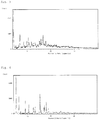
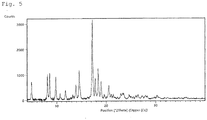
- Crystalline forms may be identified based on distinctive diffraction peaks of each crystal shown in diffraction diagrams of Fig. 1 to Fig. 5 .
- Diffraction peak values in diffraction angle 2 ⁇ (°) described in the following Examples include some measurement errors depending on detection apparatus or measurement conditions etc. Specifically, measurement errors may be within ⁇ 0.2, preferably within ⁇ 0.1.
- the titled comound (1.4 g) was prepared according to a similar procedure to step a) of Reference example 2 by using 2-[(4-chloropyrimidin-5-yl)oxy]-5-fluoro-N,N-di(propan-2-yl)benzamide (1.0 g) and 2,6-diazaspiro[3,3]heptane-2-carboxylic acid tert-butyl ester hemioxalate (1.0 g).
- the titled compound (1.0 g) was prepared according to a similar procedure to step b) of Reference example 2 by using tert-butyl 6-(5- ⁇ 2-[di(propan-2-yl)carbamoyl]-4-fluorophenoxy ⁇ pyrimidin-4-yl)-2,6-diazaspiro[3.3]heptane-2-carboxylate (1.4 g).
- the titled compound (1.60 g) was prepared according to a similar procedure to step e) by using ethyl (1S,3S,4R,6S)-6-hydroxy-2-azabicyclo[2.2.2]octane-3-carboxylate (5.05 g).
- the titled compound (2.12 g) was prepared according to a similar method to step a) of Reference example 10 by using 3-benzyl 2-tert-butyl (1S,3S,4R)-6-oxo-2-azabicyclo[2.2.2]octane-2,3-dicarboxylate (4.0 g).
- the titled compound (1.73 g) was prepared according to a similar method to step a) of Reference example 8 by using (1S,3S,4S,5R)-2-(tert-butoxycarbonyl)-5-hydroxy-2-azabicyclo[2.2.1]heptane-3-carboxylic acid (1.5 g).
- the titled compound (1.10 g) was prepared according to a similar method to step a) of Reference example 10 by using 3-benzyl 2-tert-butyl (1S,3S,4S)-5-oxo-2-azabicyclo[2.2.1]heptane-2,3-dicarboxylate (1.40 g).
- the titled compound (0.69 g) was prepared according to a similar method to Reference example 9 by using 3-benzyl 2-tert-butyl (1S,3S,4R)-5-methylidene-2-azabicyclo[2.2.1]heptane-2,3-dicarboxylate (1.10 g).
- reaction mixture was concentrated under reduced pressure, and the residue was purified by silica gel column chromatography (hexane/ethyl acetate) to yield the titled compound as a stereoisomer mixture in low polarity (9.3 g) and a stereoisomer mixture in high polarity (10.2 g).
- the stereoisomer mixture in low polarity 3-benzyl 2-tert-butyl (1S,3S,4S,5S)-6-(cyclopropylmethyl)-5-hydroxy-2-azabicyclo[2.2.2]octane-2,3-dicarboxylate LC-MS; [M+H] + 416.1/Rt (minutes) 1.13
- the stereoisomer mixture in high polarity 3-benzyl 2-tert-butyl (1S,3S,4S,5R)-6-(cyclopropylmethyl)-5-hydroxy-2-azabicyclo[2.2.2]octane-2,3-dicarboxylate LC-MS; [M+H] + 416.1/Rt (minutes) 1.01 (Analytical condition A)
- the titled compound (5.50 g) was prepared according to a similar method to step b) of Reference example 20 by using 3-benzyl 2-tert-butyl (1S,3S,4S,5R,6S)-6-(cyclopropylmethyl)-5-[(phenoxycarbonothioyl)oxy]-2-azabicyclo[2.2.2]octane-2,3-dicarboxylate (7.90 g).
- the titled compound (3.90 g) was prepared according to a similar method to step b) of Reference example 16 by using 3-benzyl 2-tert-butyl (1S,3S,4R,6S)-6-(cyclopropylmethyl)-2-azabicyclo[2.2.2]octane-2,3-dicarboxylate (5.50 g).
- the titled compound (100 mg) was prepared according to a similar method to Reference example 22 by using 2- ⁇ [4-(2,7-diazaspiro[4.4]nonan-2-yl)pyrimidin-5-yl]oxy ⁇ -5-fluoro-N,N-di(propan-2-yl)benzamide (122 mg) obtained in Reference example 4 and (1S,3S,4R)-2-(tert-butoxycarbonyl)-2-azabicyclo[2.2.2]octane-3-carboxylic acid (85 mg) which is commercially available.
- total 2H, m 2.74-2.60 (total 1H, m), 2.60-2.43 (total 1H, m), 2.34-2.23 (total 1H, m), 1.94-1.54 (total 3H, m), 1.54-1.41 (total 1H, m), 1.41-1.19 (total 9H, m).
- the reaction mixture was diluted with chloroform, and washed sequentially with saturated aqueous ammonium chloride, water, and brine.
- the resulting organic layer was dried over anhydrous sodium, and filtrated.
- the solvent was removed from the filtrate under reduced pressure, and the residue was crystallized with hexane to yield the titled compound (22.5 g).
- Methyl(triphenyl)phosphonium bromide (8.4 g) and potassium tert-butoxide (2.6 g) were further added thereto, and the mixture was stirred at room temperature for another hour.
- the reaction mixture was diluted with ethyl acetate, and washed with water and brine.
- the resulting organic layer was dried over anhydrous sodium sulfate, and filtrated.
- the solvent was removed from the filtrate under reduced pressure, and the residue was purified by silica gel column chromatography (hexane/ethyl acetate) to yield the titled compound (24.2 g).
- the titled compound (89 mg) was prepared according to a similar method to Example 1 by using tert-butyl (1R,3S,4R)-3-[7-(5- ⁇ 2-[di(propan-2-yl)carbamoyl]-4-fluorophenoxy ⁇ pyrimidin-4-yl)-2,7-diazaspiro[4.4]nonane-2-carbonyl]-2-azabicyclo[2.2.2]octane-2-carboxylate (100 mg) obtained in Reference example 24.
- the titled compound (23 mg) was prepared according to a similar method to Example 1 by using tert-butyl (1S,3S,4R)-3-[2-(5- ⁇ 2-[di(propan-2-yl)carbamoyl]-4-fluorophenoxy ⁇ pyrimidin-4-yl)-2,7-diazaspiro[3.5]nonane-7-carbonyl]-5-( 2 H 2 )methylidene-2-azabicyclo[2.2.2]octane-2-carboxylate (80 mg) obtained in Reference example 41.
- Example 4 To a solution of the compound (50 mg) of Example 4 in ethyl acetate (1 mL) was added 4 mol/L hydrochloric acid/ethyl acetate (19 ⁇ L), and the mixture was stirred at room temperature for 4 hours. The precipitated solid was filtered, washed with ethyl acetate, and dried under reduced pressure to yield the titled compound (30 mg) as a crystal (crystal form II).
- Example 4 To a solution of the compound (0.50 g) of Example 4 in ethyl acetate/ethanol (10/1, 11 mL) was added 4 mol/L hydrochloric acid/ethyl acetate (0.38 mL), and the mixture was stirred at room temperature for 3 days. The precipitated solid was filtered, washed with ethyl acetate, and dried under reduced pressure to yield dihydrochloride of the compound of Example 4 (0.49 g) as a crystal (crystal form III).
- Example 6 can also be prepared by the following procedure. To a solution of tert-butyl 7-[(1S,3S,4R)-2-(tert-butoxycarbonyl)-5-methylidene-2-azabicyclo[2.2.2]octane-3-carbonyl]-2,7-diazaspiro[3.5]nonane-2-carboxylate (7.0 g) obtained in Reference example 42 in chloroform (11 mL) was added dropwise TFA (11 mL) at room temperature, and the mixture was stirred at room temperature overnight.
- TFA 11 mL
- Test 1 Test for evaluating the inbinition of the Menin-MLL binding
- Menin 1-615 wherein 6 x His tag and HA tag are inserted in the N-terminus, and myc tag is inserted in the C-terminus (hereinafter, referred to as His-Menin 1-615 ), is diluted with an assay buffer (25 mmol/L HEPES, 150 mmol/L NaCl, 1 mmol/L dithiothreitol, 0.5 % (w/v) Tween 80, 0.3 % (w/v) BSA, 0.3 % (w/v) skim milk) to adjust the final concentration to 30 nmol/L.
- the test compounds are also diluted with the assay buffer to adjust each concentration of the test compounds to 0.005 to 5 ⁇ mol/L.
- the prepared His-Menin 1-615 and test compounds were added to a light-shielding 384-well low-volume plate (Corning, #4514) in 2 ⁇ L/well and 6 ⁇ L/well, respectively, and the plate was covered with a lid for light-shielding (Corning, #3935), and incubated at room temperature for 3 hours.
- MLL 1-172 wherein FLAG tag is inserted in the C-terminus (MLL 1-172 -FLAG) was separately diluted with the assay buffer to adjust the final concentration to 50 nmol/L.
- the prepared MLL 1-172 -FLAG was added to the above plate in 2 ⁇ L/well, and the plate was covered with a lid for light-shielding and incubated at room temperature for an hour.
- anti-6HIS-d2 antibody cisbio, 61HISDLA
- anti-FLAGM2-K antibody cisbio, 61FG2KLA
- an antibody dilution buffer 50 mmol/L Tris, 150 mmol/L NaCl, 800 mmol/L KF, pH 7.4
- the prepared antibody mixture was added to the above plate in 10 ⁇ L/well, and the plate was covered with a lid and incubated at 4°C for 17 to 24 hours. After the incubation, the signal was detected with RUBYstar (BMG LABTECH).
- binding inhibition rate (%) at each concentration of the test compounds was calculated from the following formula, and the IC 50 value was obtained, that corresponds to the concentration of the test compound at which the binding inhibition rate is 50 %.
- Binding inhibition rate % 1 ⁇ A ⁇ C / B ⁇ C ⁇ 100
- Example HTRF IC 50 (nM) Example HTRF IC 50 (nM) 1 5.3 11 7.0 2 - 12 - 3 ⁇ 3.0 13 - 4 7.1 14 - 5 4.1 15 - 6 ⁇ 3.0 16 - 7 ⁇ 3.0 17 - 8 7.9 18 - 9 6.2 19 - 10 ⁇ 3.0 20 -
- the compounds of Examples 1, 3, 4, 5, 6, 7, 8, 9, 10, and 11 showed potent Menin-MLL binding inhibition activity as shown in the above table. Among them, the compounds of Examples 3, 6, 7, and 10 showed particularly potent Menin-MLL binding inhibition activity.
- Test 2 Test for evaluating the inhibition of cell proliferation
- RS4; 11 cells were obtained from American Type Culture Collection (ATCC). The cells were cultured at 37°C in the presence of 5 % CO 2 in RPMI 1640 medium containing 10 % fetal bovine serum and 1 % penicillin/streptomycin. MOLM-13 cells were separately obtained from DSMZ (Deutsche Sammlung von Mikroorganismen und Zellkulturen GmbH). The cells were cultured at 37°C in the presence of 5 % CO 2 in RPMI 1640 medium containing 20 % fetal bovine serum and 1 % penicillin/streptomycin.
- the cells were plated to a 96-well plate in 2000 cells/well, each test compound was added thereto to adjust the final concentration of DMSO to 0.1 % of DMSO, and the cells were cultured for 7 days. After the cultivation, the cell viability was calculated with PrestoBlueTM Cell Viability Reagent (Invitrogen, A13261). The IC 50 value was calculated from a survival curve that corresponds to the concentration of the test compound at which the cell proliferation inhibition rate is 50 %.
- Example IC 50 ( ⁇ M) Example IC 50 ( ⁇ M) RS4; 11 MOLM-13 RS4; 11 MOLM-13 1 ⁇ 0.01 0.02 11 0.02 0.03 2 0.87 0.81 12 0.25 0.25 3 0.03 0.01 13 2.40 >3.00 4 0.04 0.07 14 0.02 0.04 5 0.02 0.03 15 0.02 0.02 6 0.02 0.03 16 0.03 0.04 7 0.01 0.03 17 >3.00 1.60 8 0.09 0.11 18 0.02 0.04 9 0.08 0.08 19 ⁇ 0.01 ⁇ 0.01 10 0.02 0.03 20 - ⁇ 0.03
- Test 3 Test for the inhibition of mRNA transcription with test compounds
- MV4 11 cells were obtained from American Type Culture Collection (ATCC). The cells were cultured at 37°C in the presence of 5 % CO 2 in RPMI 1640 medium containing 10 % fetal bovine serum and 1 % penicillin/streptomycin. To the MV4; 11 cells was added each test compound to adjust the final concentration to 1 ⁇ mol/L, and the cells were cultured at 37°C in the presence of 5 % CO 2 for 20 to 24 hours. After the incubation, the total RNA was extracted from the cells with RNeasyTM Mini Kit (QIAGEN, 74106), and cDNA was synthesized with SuperscriptTM VILOTM cDNA Synthesis Kit (Invitrogen, # 11754250).
- ATCC American Type Culture Collection
- Example mRNA at 1 ⁇ M (% control) MEIS1 HOXA9 1 11.8 40.2 2 - - 3 11.9 39.6 4 18.0 43.7 5 15.5 42.6 6 15.1 39.3 7 12.7 37.9 8 17.1 40.1 9 17.0 41.2 10 13.3 37.4 11 13.1 36.5 12 - - 13 - - 14 - - 15 - - 16 - - 17 - - 18 - - 19 - - 20 - - -
- the compounds of Examples 1, 3, 4, 5, 6, 7, 8, 9, 10, and 11 showed the mRNA transcription inhibition activity which is caused by the binding inhibition of Menin and a MLL fusion protein. Especially, the compound of Example 5 showed an excellent cell proliferation inhibitory activity.
- Test 4 Test for the hERG inhibition
- hERG human Ether-a-go-go Related Gene
- the compounds of Examples were tested according to Test example 4. And, the hERG/RS4; 11 was calculated by dividing the compound concentration obtained in Test example 4, at which 50 % of the hERG current is inhibited, by the compound concentration obtained in Test example 2, at which 50 % of the proliferation of RS4; 11 cells is inhibited. The results are shown in the following table.
- the compounds of the present invention can inhibit the binding of a MLL fusion protein and menin to provide the antitumor effect.
Landscapes
- Health & Medical Sciences (AREA)
- Chemical & Material Sciences (AREA)
- Organic Chemistry (AREA)
- Medicinal Chemistry (AREA)
- Pharmacology & Pharmacy (AREA)
- Life Sciences & Earth Sciences (AREA)
- Animal Behavior & Ethology (AREA)
- General Health & Medical Sciences (AREA)
- Public Health (AREA)
- Veterinary Medicine (AREA)
- Epidemiology (AREA)
- General Chemical & Material Sciences (AREA)
- Chemical Kinetics & Catalysis (AREA)
- Nuclear Medicine, Radiotherapy & Molecular Imaging (AREA)
- Hematology (AREA)
- Oncology (AREA)
- Engineering & Computer Science (AREA)
- Bioinformatics & Cheminformatics (AREA)
- Pharmaceuticals Containing Other Organic And Inorganic Compounds (AREA)
- Nitrogen Condensed Heterocyclic Rings (AREA)
- Medicines That Contain Protein Lipid Enzymes And Other Medicines (AREA)
- Medicines Containing Antibodies Or Antigens For Use As Internal Diagnostic Agents (AREA)
- Nitrogen And Oxygen Or Sulfur-Condensed Heterocyclic Ring Systems (AREA)
- Indole Compounds (AREA)
Applications Claiming Priority (2)
| Application Number | Priority Date | Filing Date | Title |
|---|---|---|---|
| JP2018158315 | 2018-08-27 | ||
| PCT/JP2019/033234 WO2020045334A1 (fr) | 2018-08-27 | 2019-08-26 | Dérivé azabicyclique optiquement actif |
Publications (2)
| Publication Number | Publication Date |
|---|---|
| EP3845533A1 true EP3845533A1 (fr) | 2021-07-07 |
| EP3845533A4 EP3845533A4 (fr) | 2022-04-27 |
Family
ID=69644540
Family Applications (1)
| Application Number | Title | Priority Date | Filing Date |
|---|---|---|---|
| EP19854536.0A Pending EP3845533A4 (fr) | 2018-08-27 | 2019-08-26 | Dérivé azabicyclique optiquement actif |
Country Status (14)
| Country | Link |
|---|---|
| US (4) | US11369605B2 (fr) |
| EP (1) | EP3845533A4 (fr) |
| JP (4) | JP6671574B1 (fr) |
| KR (1) | KR102779601B1 (fr) |
| CN (1) | CN112585140B (fr) |
| AU (1) | AU2019327006B2 (fr) |
| BR (1) | BR112021002090A8 (fr) |
| CA (1) | CA3107743A1 (fr) |
| EA (1) | EA202190623A1 (fr) |
| MX (1) | MX2021002424A (fr) |
| PH (1) | PH12021550229A1 (fr) |
| SG (1) | SG11202101085PA (fr) |
| TW (1) | TWI815954B (fr) |
| WO (1) | WO2020045334A1 (fr) |
Families Citing this family (18)
| Publication number | Priority date | Publication date | Assignee | Title |
|---|---|---|---|---|
| US10869868B2 (en) | 2016-01-26 | 2020-12-22 | Memorial Sloan Kettering Cancer Center | Targeting chromatin regulators inhibits leukemogenic gene expression in NPM1 mutant leukemia |
| ES2991898T3 (es) * | 2018-08-08 | 2024-12-05 | Sumitomo Pharma Co Ltd | Derivado de piperidina con puente ópticamente activo |
| KR102779601B1 (ko) * | 2018-08-27 | 2025-03-12 | 스미토모 파마 가부시키가이샤 | 광학 활성인 아자비시클로환 유도체 |
| JP7618567B2 (ja) * | 2019-09-27 | 2025-01-21 | 住友ファーマ株式会社 | 架橋型光学活性2級アミン誘導体 |
| TW202525813A (zh) | 2019-12-19 | 2025-07-01 | 比利時商健生藥品公司 | 經取代之直鏈螺環接衍生物 |
| JP7454520B2 (ja) * | 2020-02-26 | 2024-03-22 | 住友ファーマ株式会社 | 光学活性なアザビシクロ環誘導体からなる医薬 |
| EP4263535A1 (fr) | 2020-12-17 | 2023-10-25 | Astrazeneca AB | N-(2-(4-cyanothiazolidin-3-yl)-2-oxoéthyl)-quinoléine-4-carboxamides |
| CA3215379A1 (fr) * | 2021-05-08 | 2022-11-17 | Olivier Alexis Georges Querolle | Derives spiro substitues |
| US20240417405A1 (en) | 2021-05-08 | 2024-12-19 | Janssen Pharmaceutica Nv | Substituted Spiro Derivatives |
| IL308476A (en) * | 2021-05-14 | 2024-01-01 | Syndax Pharmaceuticals Inc | Inhibitors of the menin-mil interaction |
| IL313033A (en) * | 2021-12-03 | 2024-07-01 | Bionova Pharmaceuticals Shanghai Ltd | Carbonyl substituted diazaspiro compounds and its use |
| CA3244647A1 (fr) * | 2021-12-31 | 2025-06-13 | Hitgen Inc. | Inhibiteur de la ménine-mll et son utilisation |
| CN117069719A (zh) * | 2022-08-17 | 2023-11-17 | 烨辉医药科技(上海)有限公司 | 二氮杂螺环-哒嗪化合物及其用途 |
| CN120529900A (zh) | 2022-11-24 | 2025-08-22 | 奥莱松基因组股份有限公司 | 用于治疗癌症的LSD1抑制剂和Menin抑制剂的组合 |
| WO2025023321A1 (fr) * | 2023-07-27 | 2025-01-30 | Sumitomo Pharma Co., Ltd. | Procédé de préparation d'un dérivé cyclique azabicyclo optiquement actif et intermédiaire pour sa production |
| CN121925260A (zh) * | 2023-09-29 | 2026-04-24 | 住友制药株式会社 | 溶出性和压片性优异的制剂 |
| AU2024370777A1 (en) * | 2023-10-31 | 2026-03-12 | Sumitomo Pharma Co., Ltd. | Medicament for treating cancer comprising optically active azabicyclo ring derivative |
| WO2025098331A1 (fr) * | 2023-11-06 | 2025-05-15 | 正大天晴药业集团股份有限公司 | Dérivé cyclique à pont aza |
Family Cites Families (15)
| Publication number | Priority date | Publication date | Assignee | Title |
|---|---|---|---|---|
| US6583148B1 (en) | 1999-04-08 | 2003-06-24 | Krenitsky Pharmaceuticals, Inc. | Neurotrophic substituted pyrimidines |
| AR039208A1 (es) | 2002-04-03 | 2005-02-09 | Syngenta Participations Ag | Compuestos de fenil- y piridilalquinos, composicion herbicida que los contiene, procedimiento de preparacion de aquellos y procedimiento para combatir el crecimiento de plantas indeseadas |
| TW200528440A (en) | 2003-10-31 | 2005-09-01 | Fujisawa Pharmaceutical Co | 2-cyanopyrrolidinecarboxamide compound |
| PE20081636A1 (es) | 2007-01-26 | 2009-01-10 | Smithkline Beecham Corp | Inhibidores de antranilamida para aurora quinasa |
| US20090281114A1 (en) | 2008-05-08 | 2009-11-12 | Fabre-Kramer Pharmaceuticals, Inc. | Indolylalkyl derivatives of pyrimidinylpiperazine and metabolites thereof for treatment of anxiety, depression, and sexual dysfunction |
| JP6607870B2 (ja) | 2014-05-13 | 2019-11-20 | メモリアル スローン ケタリング キャンサー センター | Hsp70モジュレーターならびにその作製および使用方法 |
| AU2016378579A1 (en) | 2015-12-22 | 2018-06-14 | Vitae Pharmaceuticals, Inc. | Inhibitors of the menin-MLL interaction |
| WO2017214367A1 (fr) * | 2016-06-10 | 2017-12-14 | Vitae Pharmaceuticals, Inc. | Inhibiteurs de l'interaction ménine-mll |
| CA3033239A1 (fr) | 2016-09-14 | 2018-03-22 | Janssen Pharmaceutica Nv | Inhibiteurs spiro bicycliques de l'interaction menine-mll |
| CA3033020A1 (fr) | 2016-09-14 | 2018-03-22 | Janssen Pharmaceutica Nv | Inhibiteurs bicycliques fusionnes de l'interaction menine-mll |
| AU2017326006B2 (en) * | 2016-09-16 | 2021-10-28 | Vitae Pharmaceuticals, LLC. | Inhibitors of the menin-MLL interaction |
| US10815247B2 (en) * | 2016-12-28 | 2020-10-27 | Promega Corporation | Functionalized NANOLUC inhibitors |
| US11325921B2 (en) * | 2018-03-30 | 2022-05-10 | Sumitomo Dainippon Pharma Co., Ltd. | Optically active crosslinked cyclic secondary amine derivative |
| KR102779601B1 (ko) * | 2018-08-27 | 2025-03-12 | 스미토모 파마 가부시키가이샤 | 광학 활성인 아자비시클로환 유도체 |
| US10815241B2 (en) * | 2018-08-27 | 2020-10-27 | Sumitomo Dainippon Pharma Co., Ltd. | Optically active azabicyclo ring derivative |
-
2019
- 2019-08-26 KR KR1020217008548A patent/KR102779601B1/ko active Active
- 2019-08-26 WO PCT/JP2019/033234 patent/WO2020045334A1/fr not_active Ceased
- 2019-08-26 JP JP2019572251A patent/JP6671574B1/ja active Active
- 2019-08-26 MX MX2021002424A patent/MX2021002424A/es unknown
- 2019-08-26 US US16/629,739 patent/US11369605B2/en active Active
- 2019-08-26 TW TW108130415A patent/TWI815954B/zh active
- 2019-08-26 CN CN201980056344.5A patent/CN112585140B/zh active Active
- 2019-08-26 EP EP19854536.0A patent/EP3845533A4/fr active Pending
- 2019-08-26 EA EA202190623A patent/EA202190623A1/ru unknown
- 2019-08-26 SG SG11202101085PA patent/SG11202101085PA/en unknown
- 2019-08-26 BR BR112021002090A patent/BR112021002090A8/pt unknown
- 2019-08-26 CA CA3107743A patent/CA3107743A1/fr active Pending
- 2019-08-26 AU AU2019327006A patent/AU2019327006B2/en active Active
-
2020
- 2020-03-03 JP JP2020035812A patent/JP7317749B2/ja active Active
-
2021
- 2021-01-29 PH PH12021550229A patent/PH12021550229A1/en unknown
-
2022
- 2022-05-23 US US17/750,721 patent/US11911381B2/en active Active
-
2023
- 2023-07-19 JP JP2023117267A patent/JP7614262B2/ja active Active
-
2024
- 2024-01-12 US US18/412,308 patent/US12263167B2/en active Active
- 2024-12-26 JP JP2024229804A patent/JP2025060871A/ja active Pending
-
2025
- 2025-02-04 US US19/044,665 patent/US20250177395A1/en active Pending
Also Published As
| Publication number | Publication date |
|---|---|
| CA3107743A1 (fr) | 2020-03-05 |
| BR112021002090A8 (pt) | 2022-12-06 |
| JP2020105191A (ja) | 2020-07-09 |
| SG11202101085PA (en) | 2021-03-30 |
| US11911381B2 (en) | 2024-02-27 |
| JP2025060871A (ja) | 2025-04-10 |
| US20220288072A1 (en) | 2022-09-15 |
| US11369605B2 (en) | 2022-06-28 |
| CN112585140A (zh) | 2021-03-30 |
| JP7614262B2 (ja) | 2025-01-15 |
| US20250177395A1 (en) | 2025-06-05 |
| JPWO2020045334A1 (ja) | 2020-09-03 |
| US12263167B2 (en) | 2025-04-01 |
| PH12021550229A1 (en) | 2021-10-11 |
| AU2019327006B2 (en) | 2024-02-15 |
| BR112021002090A2 (pt) | 2021-05-04 |
| AU2019327006A1 (en) | 2021-03-04 |
| EA202190623A1 (ru) | 2021-05-21 |
| US20210338668A1 (en) | 2021-11-04 |
| TWI815954B (zh) | 2023-09-21 |
| MX2021002424A (es) | 2021-04-28 |
| JP6671574B1 (ja) | 2020-03-25 |
| US20240148727A1 (en) | 2024-05-09 |
| EP3845533A4 (fr) | 2022-04-27 |
| WO2020045334A1 (fr) | 2020-03-05 |
| JP2023134729A (ja) | 2023-09-27 |
| KR102779601B1 (ko) | 2025-03-12 |
| JP7317749B2 (ja) | 2023-07-31 |
| TW202024082A (zh) | 2020-07-01 |
| CN112585140B (zh) | 2023-07-04 |
| KR20210049136A (ko) | 2021-05-04 |
Similar Documents
| Publication | Publication Date | Title |
|---|---|---|
| US12263167B2 (en) | Optically active azabicyclo ring derivative | |
| US10815241B2 (en) | Optically active azabicyclo ring derivative | |
| EP3835304B1 (fr) | Dérivé de pipéridine ponté optiquement actif | |
| JP7618567B2 (ja) | 架橋型光学活性2級アミン誘導体 | |
| JP7454520B2 (ja) | 光学活性なアザビシクロ環誘導体からなる医薬 | |
| CN112105621A (zh) | 光学活性桥型环状仲胺衍生物 | |
| HK40055661A (en) | Optically active azabicyclic derivative | |
| HK40053381A (en) | Optically active bridged piperidine derivative | |
| HK40053381B (en) | Optically active bridged piperidine derivative | |
| EA041780B1 (ru) | Оптически активное азабициклическое производное |
Legal Events
| Date | Code | Title | Description |
|---|---|---|---|
| STAA | Information on the status of an ep patent application or granted ep patent |
Free format text: STATUS: THE INTERNATIONAL PUBLICATION HAS BEEN MADE |
|
| STAA | Information on the status of an ep patent application or granted ep patent |
Free format text: STATUS: REQUEST FOR EXAMINATION WAS MADE |
|
| PUAI | Public reference made under article 153(3) epc to a published international application that has entered the european phase |
Free format text: ORIGINAL CODE: 0009012 |
|
| 17P | Request for examination filed |
Effective date: 20210326 |
|
| AK | Designated contracting states |
Kind code of ref document: A1 Designated state(s): AL AT BE BG CH CY CZ DE DK EE ES FI FR GB GR HR HU IE IS IT LI LT LU LV MC MK MT NL NO PL PT RO RS SE SI SK SM TR |
|
| DAV | Request for validation of the european patent (deleted) | ||
| DAX | Request for extension of the european patent (deleted) | ||
| REG | Reference to a national code |
Ref country code: HK Ref legal event code: DE Ref document number: 40055661 Country of ref document: HK |
|
| A4 | Supplementary search report drawn up and despatched |
Effective date: 20220330 |
|
| RIC1 | Information provided on ipc code assigned before grant |
Ipc: C07D 487/10 20060101ALI20220324BHEP Ipc: A61P 43/00 20060101ALI20220324BHEP Ipc: A61P 35/02 20060101ALI20220324BHEP Ipc: A61P 35/00 20060101ALI20220324BHEP Ipc: A61K 45/00 20060101ALI20220324BHEP Ipc: A61K 31/506 20060101ALI20220324BHEP Ipc: C07D 471/10 20060101AFI20220324BHEP |
|
| RAP3 | Party data changed (applicant data changed or rights of an application transferred) |
Owner name: SUMITOMO PHARMA CO., LTD. |
|
| STAA | Information on the status of an ep patent application or granted ep patent |
Free format text: STATUS: EXAMINATION IS IN PROGRESS |
|
| 17Q | First examination report despatched |
Effective date: 20240626 |