EP3852414A1 - Datenverarbeitungsverfahren und datenverarbeitungsvorrichtung dafür - Google Patents
Datenverarbeitungsverfahren und datenverarbeitungsvorrichtung dafür Download PDFInfo
- Publication number
- EP3852414A1 EP3852414A1 EP19864557.4A EP19864557A EP3852414A1 EP 3852414 A1 EP3852414 A1 EP 3852414A1 EP 19864557 A EP19864557 A EP 19864557A EP 3852414 A1 EP3852414 A1 EP 3852414A1
- Authority
- EP
- European Patent Office
- Prior art keywords
- communications node
- node
- terminal
- blockchain
- cell
- Prior art date
- Legal status (The legal status is an assumption and is not a legal conclusion. Google has not performed a legal analysis and makes no representation as to the accuracy of the status listed.)
- Granted
Links
Images






Classifications
-
- H—ELECTRICITY
- H04—ELECTRIC COMMUNICATION TECHNIQUE
- H04L—TRANSMISSION OF DIGITAL INFORMATION, e.g. TELEGRAPHIC COMMUNICATION
- H04L9/00—Cryptographic mechanisms or cryptographic arrangements for secret or secure communications; Network security protocols
- H04L9/32—Cryptographic mechanisms or cryptographic arrangements for secret or secure communications; Network security protocols including means for verifying the identity or authority of a user of the system or for message authentication, e.g. authorization, entity authentication, data integrity or data verification, non-repudiation, key authentication or verification of credentials
- H04L9/3236—Cryptographic mechanisms or cryptographic arrangements for secret or secure communications; Network security protocols including means for verifying the identity or authority of a user of the system or for message authentication, e.g. authorization, entity authentication, data integrity or data verification, non-repudiation, key authentication or verification of credentials using cryptographic hash functions
- H04L9/3239—Cryptographic mechanisms or cryptographic arrangements for secret or secure communications; Network security protocols including means for verifying the identity or authority of a user of the system or for message authentication, e.g. authorization, entity authentication, data integrity or data verification, non-repudiation, key authentication or verification of credentials using cryptographic hash functions involving non-keyed hash functions, e.g. modification detection codes [MDCs], MD5, SHA or RIPEMD
-
- H—ELECTRICITY
- H04—ELECTRIC COMMUNICATION TECHNIQUE
- H04L—TRANSMISSION OF DIGITAL INFORMATION, e.g. TELEGRAPHIC COMMUNICATION
- H04L9/00—Cryptographic mechanisms or cryptographic arrangements for secret or secure communications; Network security protocols
- H04L9/32—Cryptographic mechanisms or cryptographic arrangements for secret or secure communications; Network security protocols including means for verifying the identity or authority of a user of the system or for message authentication, e.g. authorization, entity authentication, data integrity or data verification, non-repudiation, key authentication or verification of credentials
- H04L9/3247—Cryptographic mechanisms or cryptographic arrangements for secret or secure communications; Network security protocols including means for verifying the identity or authority of a user of the system or for message authentication, e.g. authorization, entity authentication, data integrity or data verification, non-repudiation, key authentication or verification of credentials involving digital signatures
-
- H—ELECTRICITY
- H04—ELECTRIC COMMUNICATION TECHNIQUE
- H04B—TRANSMISSION
- H04B7/00—Radio transmission systems, i.e. using radiation field
- H04B7/14—Relay systems
- H04B7/15—Active relay systems
- H04B7/185—Space-based or airborne stations; Stations for satellite systems
- H04B7/1851—Systems using a satellite or space-based relay
- H04B7/18519—Operations control, administration or maintenance
-
- H—ELECTRICITY
- H04—ELECTRIC COMMUNICATION TECHNIQUE
- H04B—TRANSMISSION
- H04B7/00—Radio transmission systems, i.e. using radiation field
- H04B7/14—Relay systems
- H04B7/15—Active relay systems
- H04B7/185—Space-based or airborne stations; Stations for satellite systems
- H04B7/1853—Satellite systems for providing telephony service to a mobile station, i.e. mobile satellite service
-
- H—ELECTRICITY
- H04—ELECTRIC COMMUNICATION TECHNIQUE
- H04L—TRANSMISSION OF DIGITAL INFORMATION, e.g. TELEGRAPHIC COMMUNICATION
- H04L9/00—Cryptographic mechanisms or cryptographic arrangements for secret or secure communications; Network security protocols
- H04L9/06—Cryptographic mechanisms or cryptographic arrangements for secret or secure communications; Network security protocols the encryption apparatus using shift registers or memories for block-wise or stream coding, e.g. DES systems or RC4; Hash functions; Pseudorandom sequence generators
- H04L9/0643—Hash functions, e.g. MD5, SHA, HMAC or f9 MAC
-
- H—ELECTRICITY
- H04—ELECTRIC COMMUNICATION TECHNIQUE
- H04L—TRANSMISSION OF DIGITAL INFORMATION, e.g. TELEGRAPHIC COMMUNICATION
- H04L9/00—Cryptographic mechanisms or cryptographic arrangements for secret or secure communications; Network security protocols
- H04L9/50—Cryptographic mechanisms or cryptographic arrangements for secret or secure communications; Network security protocols using hash chains, e.g. blockchains or hash trees
-
- H—ELECTRICITY
- H04—ELECTRIC COMMUNICATION TECHNIQUE
- H04W—WIRELESS COMMUNICATION NETWORKS
- H04W12/00—Security arrangements; Authentication; Protecting privacy or anonymity
- H04W12/08—Access security
-
- H—ELECTRICITY
- H04—ELECTRIC COMMUNICATION TECHNIQUE
- H04W—WIRELESS COMMUNICATION NETWORKS
- H04W12/00—Security arrangements; Authentication; Protecting privacy or anonymity
- H04W12/10—Integrity
- H04W12/106—Packet or message integrity
-
- H—ELECTRICITY
- H04—ELECTRIC COMMUNICATION TECHNIQUE
- H04W—WIRELESS COMMUNICATION NETWORKS
- H04W36/00—Hand-off or reselection arrangements
- H04W36/0005—Control or signalling for completing the hand-off
- H04W36/0083—Determination of parameters used for hand-off, e.g. generation or modification of neighbour cell lists
- H04W36/00837—Determination of triggering parameters for hand-off
- H04W36/008375—Determination of triggering parameters for hand-off based on historical data
-
- H—ELECTRICITY
- H04—ELECTRIC COMMUNICATION TECHNIQUE
- H04W—WIRELESS COMMUNICATION NETWORKS
- H04W36/00—Hand-off or reselection arrangements
- H04W36/08—Reselecting an access point
-
- H—ELECTRICITY
- H04—ELECTRIC COMMUNICATION TECHNIQUE
- H04W—WIRELESS COMMUNICATION NETWORKS
- H04W36/00—Hand-off or reselection arrangements
- H04W36/24—Reselection being triggered by specific parameters
- H04W36/32—Reselection being triggered by specific parameters by location or mobility data, e.g. speed data
- H04W36/322—Reselection being triggered by specific parameters by location or mobility data, e.g. speed data by location data
-
- H—ELECTRICITY
- H04—ELECTRIC COMMUNICATION TECHNIQUE
- H04W—WIRELESS COMMUNICATION NETWORKS
- H04W84/00—Network topologies
- H04W84/02—Hierarchically pre-organised networks, e.g. paging networks, cellular networks, WLAN [Wireless Local Area Network] or WLL [Wireless Local Loop]
- H04W84/04—Large scale networks; Deep hierarchical networks
- H04W84/06—Airborne or Satellite Networks
-
- H—ELECTRICITY
- H04—ELECTRIC COMMUNICATION TECHNIQUE
- H04W—WIRELESS COMMUNICATION NETWORKS
- H04W12/00—Security arrangements; Authentication; Protecting privacy or anonymity
- H04W12/06—Authentication
Definitions
- This application relates to the communications field, and in particular, to a data processing method and a data processing device.
- a satellite communications system generally includes three parts: a space segment, a ground segment, and a user segment.
- the space segment is usually communications satellites
- the ground segment is usually control centers or various gateways
- the user segment is usually terminals.
- a terminal when a terminal performs satellite handover, for example, the terminal is handed over from a source satellite to a target satellite, the terminal first needs to send a handover request to the target satellite, to complete a series of operations such as measurement reporting, handover decision, and radio resource control (radio resource control, RRC) connection configuration.
- the target satellite sends a path switching request to a gateway of the ground segment, and receives an acknowledgement message fed back by the gateway.
- the source satellite can release a network resource only after the gateway acknowledges the path switching request. In this way, a satellite handover process is completed. Subsequently, data sent by a core network is forwarded by the target satellite to the terminal, but is not forwarded by the source satellite to the terminal.
- RRC radio resource control
- the satellite handover process can be completed only after the path switching request is acknowledged between a satellite device of the space segment and a gateway device of the ground segment.
- frequent satellite handover usually occurs.
- information needs to be frequently exchanged between satellites and gateways. This causes large network overheads.
- a first aspect of this application provides a data processing method.
- the method is applied to a data processing system, the data processing system includes a first communications node and a second communications node, the first communications node corresponds to a first blockchain node, the second communications node corresponds to a second blockchain node, the first blockchain node and the second blockchain node are nodes in a same blockchain, and therefore maintain the same blockchain, and the method includes:
- the first communications node obtains to-be-verified data after a terminal camps on a target cell, where the target cell is a cell within signal coverage of the first communications node, that the terminal camps on the target cell means that the terminal enters the signal coverage of the first communications node, and the to-be-verified data is obtained by the first communications node based on camping information after the terminal camps on the target cell.
- the first communications node broadcasts the to-be-verified data to the second communications node, where there is at least one second communications node, and then the second communications node can verify the to-be-verified data based on the second blockchain node and a distributed data storage feature of the blockchain.
- the first communications node obtains a target block when a verification resultverification result of the to-be-verified data is that the verification succeeds.
- the second communications node and the first communications node each correspond to one blockchain node, and these blockchain nodes maintain the same blockchain.
- the first communications node may be a satellite
- the second communications node may be a satellite or a cellular node, for example, a control center, or gateway, or cellular base station of a ground segment.
- the first communications node obtains the to-be-verified data when the terminal accesses the target cell, where the to-be-verified data is obtained based on the camping information of the terminal.
- the first communications node sends the to-be-verified data to the second communications node, and the second communications node can obtain the verification resultverification result after verifying the to-be-verified data based on the second blockchain node.
- the terminal can complete a process of camping on the target cell.
- the to-be-verified data is sent between the first communications node and the second communications node. Because each node in the blockchain has features such as point-to-point transmission and a consensus mechanism, each node in the blockchain may obtain a verification result after verifying the to-be-verified data. This is equivalent to that a verification process of the to-be-verified data is completed by using the blockchain.
- the terminal can camp on the target cell without participation of a gateway. Therefore, in this application, the terminal can camp on the target cell only by using interaction between the first communications node and the second communications node, and data exchange between a satellite and a gateway of a ground segment is not required, thereby reducing network overheads.
- the terminal may perform the step of camping on the target cell after the terminal performs cell handover and is handed over to the target cell; and that the to-be-verified data is obtained based on camping information of the terminal includes that: the to-be-verified data is generated by the first communications node based on cell information of a cell on which the terminal camps before handed over, the cell information of the cell on which the terminal camps before handed over may be used by the second communications node to match cell information that is of the cell on which the terminal camps before handed over and that is stored in the second blockchain node, to obtain a matching result, the second blockchain node records information about a last cell on which the terminal camps before the current handover, and the information about the last cell on which the terminal camps is the cell information of the cell on which the terminal camps before handed over.
- the terminal may perform the step of camping on the target cell after the terminal performs cell handover and is handed over to the target cell; or the terminal may perform the step of camping on the target cell after the terminal performs cell location update and a cell location is updated to the target cell; and that the to-be-verified data is obtained based on camping information of the terminal includes that: the to-be-verified data is generated by the first communications node based on a permission level of the terminal, the permission level of the terminal is a security permission level granted to the terminal, the second blockchain node stores a permission level that the target cell is allowed to be accessed, and the permission level of the terminal may be used by the second communications node to verify, based on the second blockchain node, whether the terminal has permission to access the target cell.
- that the first communications node obtains a target block includes: The first communications node may generate the target block based on the to-be-verified data.
- the method further includes: After the first communications node generates the target block, the first communications node broadcasts the target block to the second communications node, and then the second communications node may add the target block to the blockchain maintained by the second blockchain node.
- the method further includes: The first communications node may perform the step of generating the target block based on a verification success message after receiving the verification success message sent by the second communications node.
- that the first communications node obtains a target block includes:
- the first communications node may alternatively obtain the target block after the second communications node generates the target block based on the to-be-verified data.
- An obtaining method is that the second communications node broadcasts the target block to the first communications node.
- the first communications node may add the target block to the blockchain maintained by the first blockchain node, to store the target block generated based on the to-be-verified data.
- the blockchain may store the target block, to verify camping information when the terminal performs next cell handover or location update. Practicability of the solution is improved.
- a second aspect of this application provides a data processing method.
- the method is applied to a data processing system, the data processing system includes a first communications node and a second communications node, the first communications node corresponds to a first blockchain node, the second communications node corresponds to a second blockchain node, the first blockchain node and the second blockchain node are nodes in a same blockchain, and therefore maintain the same blockchain, and the method includes: After a terminal camps on a target cell, the second communications node receives to-be-verified data sent by the first communications node in a broadcast manner, where the target cell is a cell within signal coverage of the first communications node, that the terminal camps on the target cell means that the terminal enters the signal coverage of the first communications node, the to-be-verified data is obtained by the first communications node based on camping information after the terminal camps on the target cell, and there is at least one second communications node.
- the second communications node may verify the to-be-verified data based on the second blockchain node and a distributed data storage feature of the blockchain.
- the second communications node obtains a target block when a verification result of the to-be-verified data is that the verification succeeds.
- the first communications node may be a satellite
- the second communications node may be a satellite or a cellular node, for example, a control center, or gateway, or cellular base station of a ground segment.
- the to-be-verified data is sent between the first communications node and the second communications node.
- each node in the blockchain may obtain a verification result after verifying the to-be-verified data. This is equivalent to that a verification process of the to-be-verified data is completed by using the blockchain.
- the terminal can camp on the target cell without participation of a gateway. Therefore, in this application, the terminal can camp on the target cell only by using interaction between the first communications node and the second communications node, and data exchange between a satellite and a gateway of the ground segment is not required, thereby reducing network overheads.
- the terminal may perform the step of camping on the target cell after the terminal performs cell handover and is handed over to the target cell; and that the second communications node verifies the to-be-verified data based on the second blockchain node includes that: the to-be-verified data is generated based on the camping information of the terminal, and the camping information includes cell information of the terminal before the cell handover.
- the second blockchain node records information about a last cell on which the terminal camps before the current handover.
- the information about the last cell on which the terminal camps is cell information of the cell on which the terminal camps before handed over.
- the second communications node may match the cell information that is of the cell on which the terminal camps before handed over and that is in the second blockchain node with the cell information that is of the cell on which the terminal camps before handed over and that is in the to-be-verified data. If the matching succeeds, a verification result is that the verification succeeds; otherwise, the verification fails.
- the terminal may perform the step of camping on the target cell after the terminal performs cell handover and is handed over to the target cell; or the terminal may perform the step of camping on the target cell after the terminal performs cell location update and a cell location is updated to the target cell; and that the second communications node verifies the to-be-verified data based on the second blockchain node includes that: the to-be-verified data is obtained based on the camping information of the terminal, the camping information includes a permission level of the terminal, the second communications node may determine the permission level of the terminal in the to-be-verified data, and the permission level of the terminal is a security permission level granted to the terminal.
- the second blockchain node stores a permission level that the target cell is allowed to be accessed.
- the second communications node may verify, based on the second blockchain node, whether the terminal has permission to access the target cell, to obtain a verification result.
- that the second communications node obtains a target block includes: The second communications node may generate the target block based on the to-be-verified data.
- the method further includes: The second communications node broadcasts the target block to the first communications node after the second communications node generates the target block, so that the first communications node adds the target block to the blockchain maintained by the first blockchain node.
- that the second communications node obtains a target block includes: The second communications node may alternatively obtain the target block after the first communications node generates the target block based on the to-be-verified data.
- An obtaining method is that the first communications node broadcasts the target block to the second communications node.
- the second communications node may add the target block to the blockchain maintained by the second blockchain node, to store the target block generated based on the to-be-verified data.
- the blockchain may store the target block, to verify camping information when the terminal performs next cell handover or location update. Practicability of the solution is improved.
- a third aspect of this application provides a data processing method.
- the method is applied to a data processing system, the data processing system includes a first communications node and a second communications node, the first communications node corresponds to a first blockchain node, the second communications node corresponds to a second blockchain node, the first blockchain node and the second blockchain node are nodes in a same blockchain, and therefore maintain the same blockchain, and the method includes:
- the first communications node obtains to-be-verified data when a terminal camps on a target cell, where the target cell is a cell within signal coverage of the first communications node, that the terminal camps on the target cell means that the terminal enters the signal coverage of the first communications node, the to-be-verified data includes first network access authentication data of the terminal, network access authentication data is data used by a communications node to perform permission verification on the terminal when the terminal accesses a network, and the first network access authentication data obtained by the first communications node is reported by the terminal.
- the first communications node verifies the to-be-verified data, and determines whether the terminal has permission to access the network; the first communications node broadcasts the to-be-verified data to the second communications node if a verification result of the first communications node is that the verification succeeds, where there is at least one second communications node, so that the second communications node also verifies the to-be-verified data and determines whether the terminal has the permission to access the network; and the first communications node may obtain the target block if a verification result of the second communications node is that the verification succeeds, where the target block is generated based on the to-be-verified data.
- the first communications node after successfully verifying the to-be-verified data, broadcasts the to-be-verified data to the second blockchain node in the blockchain for verifying. If the second blockchain node also successfully verifies the to-be-verified data, the first communications node obtains the target block and adds the target block to the blockchain, so that when the terminal accesses the network next time, the first communications node directly verifies network access authentication data by using the blockchain to which the target block is added. Data exchange between a satellite and a gateway of a ground segment is not required, thereby reducing network overheads.
- the first communications node may add the target block to the blockchain maintained by the first blockchain node. After the target block is added to the blockchain, the first blockchain node corresponding to the first communications node also stores the target block. The first communications node may verify, based on the first blockchain node, network access verification data of the terminal that is after the first network access authentication data.
- the network access authentication data of the terminal when the terminal accesses the network for the first time may be stored in the blockchain after the target block is generated, and then when the terminal accesses the network again, the first communications node may verify the to-be-verified data by using the previously stored target block. Data exchange between a satellite and a gateway of a ground segment is not required, thereby reducing network overheads.
- a fourth aspect of this application provides a data processing method.
- the method is applied to a data processing system, the data processing system includes a first communications node and a second communications node, the first communications node corresponds to a first blockchain node, the second communications node corresponds to a second blockchain node, the first blockchain node and the second blockchain node are nodes in a same blockchain, and therefore maintain the same blockchain, and the method includes: When a terminal camps on a target cell, the second communications node receives to-be-verified data sent by the first communications node, where the target cell is a cell within signal coverage of the first communications node, that the terminal camps on the target cell means that the terminal enters the signal coverage of the first communications node, the to-be-verified data includes first network access authentication data, and the to-be-verified data is data that has been verified and successfully verified by the first communications node, and network access authentication data is data used by a communications node to perform permission verification on the terminal when the terminal accesses a network.
- the second communications node may verify the to-be-verified data; and the second communications node obtains a target block if a verification result of the second communications node is that the verification succeeds, where the target block is generated based on the to-be-verified data.
- the second communications node obtains the target block and adds the target block to the blockchain, so that when the terminal accesses the network next time, the second communications node may directly verify network access authentication data by using the blockchain to which the target block is added.
- Data exchange between a satellite and a gateway of a ground segment is not required, thereby reducing network overheads.
- the second communications node may add the target block to the blockchain maintained by the second blockchain node. After the target block is added to the blockchain, the second blockchain node corresponding to the second communications node also stores the target block. The second communications node may verify, based on the second blockchain node, network access verification data of the terminal that is after the first network access authentication data.
- the network access authentication data of the terminal when the terminal accesses the network for the first time may be stored in the blockchain after the target block is generated, and then when the terminal accesses the network again, the second communications node may verify the to-be-verified data by using the previously stored target block. Data exchange between a satellite and a gateway of a ground segment is not required, thereby reducing network overheads.
- a fifth aspect of this application provides a communications node.
- the communications node is a first communications node in a data processing system, the data processing system further includes a second communications node, the first communications node corresponds to a first blockchain node, the second communications node corresponds to a second blockchain node, the first blockchain node and the second blockchain node maintain a same blockchain, and the communications node includes:
- the terminal performs the step of camping on the target cell after the terminal is handed over to the target cell;
- the communications node further includes a processing unit; and that the to-be-verified data is obtained based on camping information of the terminal includes that: the to-be-verified data is generated by the processing unit based on cell information of a cell on which the terminal camps before handed over, and the cell information of the cell on which the terminal camps before handed over is used by the second communications node to match cell information that is of the cell on which the terminal camps before handed over and that is in the second blockchain node.
- the terminal performs the step of camping on the target cell after the terminal is handed over to the target cell or a location of the terminal is updated to the target cell;
- the communications node further includes a processing unit; and that the to-be-verified data is obtained based on camping information of the terminal includes that: the to-be-verified data is generated by the processing unit based on a permission level of the terminal, and the permission level of the terminal is used by the second communications node to verify, based on the second blockchain node, access permission of the terminal relative to the first communications node.
- the obtaining unit is specifically configured to generate the target block based on the to-be-verified data; the communications node further includes:
- the obtaining unit is specifically configured to obtain the target block generated by the second communications node based on the to-be-verified data.
- the communications node further includes: a storage unit, configured to add the target block to the blockchain maintained by the first blockchain node.
- a sixth aspect of this application provides a communications node.
- the communications node is a second communications node in a data processing system, the data processing system further includes a first communications node, the first communications node corresponds to a first blockchain node, the second communications node corresponds to a second blockchain node, the first blockchain node and the second blockchain node maintain a same blockchain, and the communications node includes:
- the terminal performs the step of camping on the target cell after the terminal is handed over to the target cell; and the verification unit is specifically configured to: determine, based on a historical handover record in the second blockchain node, cell information of a cell on which the terminal camps before handed over; and match cell information that is of the cell on which the terminal camps before handed over and that is in the to-be-verified data with the cell information that is of the cell on which the terminal camps before handed over and that is in the historical handover record, to obtain a matching result.
- the terminal performs the step of camping on the target cell after the terminal is handed over to the target cell or a location of the terminal is updated to the target cell; and the verification unit is specifically configured to: determine a permission level of the terminal in the to-be-verified data; and verify, based on the second blockchain node, access permission of the terminal relative to the first communications node, to obtain a verification result.
- the obtaining unit is specifically configured to generate the target block based on the to-be-verified data; and the communications node further includes: a block broadcast unit, configured to broadcast the target block to the first communications node, so that the first communications node adds the target block to the blockchain maintained by the first blockchain node.
- the obtaining unit is specifically configured to obtain the target block generated by the first communications node based on the to-be-verified data.
- the communications node further includes: a storage unit, configured to add the target block to the blockchain maintained by the second blockchain node.
- a seventh aspect of this application provides a communications node.
- the communications node is a first communications node in a data processing system, the data processing system further includes a second communications node, the first communications node corresponds to a first blockchain node, the second communications node corresponds to a second blockchain node, the first blockchain node and the second blockchain node maintain a same blockchain, and the communications node includes:
- the communications node further includes: a storage unit, configured to add the target block to the blockchain maintained by the first blockchain node, where the first blockchain node to which the target block is added is used by the verification unit to verify network access verification data of the terminal that is after the first network access authentication data.
- An eighth aspect of this application provides a communications node.
- the communications node is a second communications node in a data processing system, the data processing system further includes a first communications node, the first communications node corresponds to a first blockchain node, the second communications node corresponds to a second blockchain node, the first blockchain node and the second blockchain node maintain a same blockchain, and the communications node includes:
- the communications node further includes: a storage unit, configured to add the target block to the blockchain maintained by the second blockchain node, where the blockchain to which the target block is added is used by the verification unit to verify network access verification data of the terminal that is after the first network access authentication data.
- a ninth aspect of this application provides a communications node, including: a memory, a transceiver, a processor, and a bus system, where the memory is configured to store program instructions; the transceiver is configured to receive or send information under control of the processor; the processor is configured to execute the program in the memory; and the bus system is configured to connect the memory, the transceiver, and the processor, so that the memory, the transceiver, and the processor communicate with each other, where the processor is configured to invoke the program instructions in the memory to perform the method according to any one of the first aspect, the first to fifth implementations of the first aspect, the second aspect, and the first to fifth implementations of the second aspect.
- the communications node is a chip.
- a tenth aspect of this application provides a computer-readable storage medium, including instructions.
- the instructions When the instructions are executed on a computer, the computer is enabled to perform the method according to any one of the first aspect, the first to fifth implementations of the first aspect, the second aspect, and the first to fifth implementations of the second aspect.
- An eleventh aspect of this application provides a computer program product including instructions.
- the instructions When the instructions are executed on a computer, the computer is enabled to perform the method according to any one of the first aspect, the first to fifth implementations of the first aspect, the second aspect, and the first to fifth implementations of the second aspect.
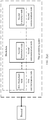
- a data processing method disclosed in this application may be applied to a data processing system.
- the data processing system includes at least two communications nodes, each communications node corresponds to one blockchain node, and these blockchain nodes maintain a same blockchain.
- a first communications node corresponds to a first blockchain node, and there is one first communications node.
- a second communications node corresponds to a second blockchain node, and there is at least one second communications node.
- the first communications node may be a satellite node, and the satellite node may be a satellite at any altitude.
- the second communications node may be a satellite node, or may be a cellular node, for example, a control center, or gateway, or cellular base station of a ground segment.
- the data processing system is connected to a terminal.
- the data processing system may process a request of the terminal without depending on a gateway device, a control device, or the like.
- This application is implemented based on features such as blockchain point-to-point transmission, a consensus mechanism, distributed data storage, and a cryptography principle.
- That a target cell is a cell within signal coverage of the first communications node indicates that a terminal enters the signal coverage of the first communications node after camping on the target cell.
- this application discloses a data processing method.
- the method may be applied to a cell handover or terminal location update scenario, and is described below.
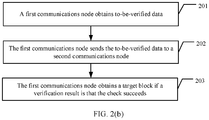
- a first communications node obtains to-be-verified data.
- the first communications node After a terminal camps on a target cell, because the target cell is a cell within signal coverage of the first communications node, the first communications node obtains camping information of the terminal and obtains the to-be-verified data based on the camping information. Then, the first communications node stores the to-be-verified data in a local storage unit. That the terminal camps on the target cell may be that the terminal accesses the target cell after performing cell handover or cell update, or that the terminal updates a location to the target cell after performing location update. This is not specifically limited herein.
- the to-be-verified data is the camping information of the terminal.
- the first communications node sends the to-be-verified data to a second communications node.
- the first communications node signs the to-be-verified data with a private key and then broadcasts the to-be-verified data to the second communications node.
- the second communications node performs decryption by using a public key of the first communications node to obtain the to-be-verified data. Then, the second communications node verifies the to-be-verified data by using historical camping information of the terminal that is stored in a corresponding second blockchain node, to obtain a verification result.
- the second communications node stores the to-be-verified data in a local storage unit of the second communications node.
- the historical camping information is a set of camping information of the terminal when the terminal camps on the first communications node or the second communications node at any one or more moments before the terminal camps on the first communications node in this application.
- the first communications node obtains a target block if the verification result is that the verification succeeds.
- the first communications node obtains the target block if the verification result of the second communications node for the to-be-verified data is that the verification succeeds.
- the to-be-verified data is sent between the first communications node and the second communications node.
- Each node in the blockchain may obtain a verification result after verifying the to-be-verified data. This is equivalent to that a verification process of the to-be-verified data is completed by using the blockchain.
- the terminal can camp on the target cell without participation of a gateway. Therefore, in this application, the terminal can camp on the target cell only by using interaction between the first communications node and the second communications node, and data exchange between a satellite and a gateway of a ground segment is not required, thereby reducing network overheads.
- the first communications node obtains the target block in a plurality of manners.
- One of blockchain nodes is determined in a contention manner or a non-contention manner, and a communications node corresponding to the blockchain node generates the target block. Therefore, the target block may be generated by the first communications node, or may be generated by the second communications node. Referring to FIG. 3(a) and FIG. 3(b) , the following separately describes the two cases.
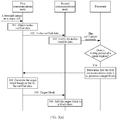
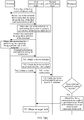
- the first communications node obtains the to-be-verified data.
- the first communications node sends the to-be-verified data to the second communications node.
- Steps 301 and 302 in this embodiment are similar to steps 201 and 202 in the foregoing embodiment. Details are not described herein again.
- the second communications node verifies the to-be-verified data.
- the first communications node If a verification result is that the verification succeeds, the first communications node generates the target block based on the to-be-verified data.
- a processor in a data processing system determines that the first communications node is to generate the target block, and the first communications node generates the target block based on all to-be-verified data that is successfully verified within the period.
- the first communications node verifies a hash (hash) value of the target block, and adds the target block to a first blockchain node after the verification succeeds.
- the first communications node and the second communications node delete the to-be-verified data stored in local storage units.
- the second communications node may further send the verification result to the first communications node, so that the first communications node generates the target block based on a verification success message after obtaining the verification success message, or the first communications node may directly generate the target block without obtaining a verification success message. This is not specifically limited herein.
- the first communications node broadcasts the target block to the second communications node.
- the first communications node After generating the target block, the first communications node broadcasts the target block to the second communications node.
- the second communications node adds the target block to a blockchain.
- the second communications node verifies the hash value of the target block, and after the verification succeeds, adds the target block to the blockchain maintained by the second blockchain node.
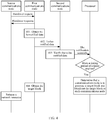
- the first communications node obtains the to-be-verified data.
- the first communications node sends the to-be-verified data to the second communications node.
- Steps 301 and 302 in this embodiment are similar to steps 201 and 202 in the foregoing embodiment. Details are not described herein again.
- the second communications node verifies the to-be-verified data.
- the second communications node If a verification result is that the verification succeeds, the second communications node generates a target block based on the to-be-verified data.
- a processor in a data processing system determines that the second communications node is to generate the target block, and the second communications node generates the target block based on all to-be-verified data that is successfully verified within the period.
- the second communications node verifies a hash value of the target block, and adds the target block to a second blockchain node after the verification succeeds.
- the first communications node and the second communications node delete the to-be-verified data stored in local storage units.
- the second communications node broadcasts the target block to the first communications node.
- the second communications node After generating the target block, the second communications node broadcasts the target block to the first communications node.
- the first communications node adds the target block to a blockchain.
- the first communications node verifies a hash value of the target block, and adds the target block to a first blockchain node after the verification succeeds.
- a communications node corresponding to the blockchain node After One of blockchain nodes is determined in a contention manner or a non-contention manner, a communications node corresponding to the blockchain node generates the target block, and the target block may be used to verify to-be-verified data of a next period when the target terminal camps on a cell served by the communications node again in the next period.
- This application may be applied to a cell handover scenario, or may be applied to a terminal location update scenario.
- a first communications node obtains to-be-verified data when a terminal is handed over to a target cell.
- the source communications node When the terminal is to be handed over from a cell within signal coverage of a source communications node to a cell within signal coverage of the first communications node, the source communications node first sends a handover request to the first communications node to request for cell handover. The first communications node feeds back a handover response identifier to allow access of the terminal. Then, the terminal performs cell handover.
- the source communications node is any communications node in a data processing system other than the first communications node.
- Step 401 in this embodiment is similar to step 201 in the foregoing embodiment.
- camping information is specifically a handover record of the terminal, and includes: information of the terminal such as a communications node identity (identity, ID) of a cell in which the terminal is located before the handover, a communications node ID of a cell in which the terminal is located after the handover, handover time, and a terminal device capability that are obtained by the first communications node.
- ID communications node identity
- the first communications node sends the to-be-verified data to the second communications node.
- Step 402 in this embodiment is similar to step 202 in the foregoing embodiment. Details are not described herein again.
- the second communications node verifies the to-be-verified data based on a second blockchain node.
- the second communications node verifies the to-be-verified data based on historical camping information in the second blockchain node, and the historical camping information is specifically a historical handover record.
- the historical camping information is specifically a historical handover record.
- the first communications node obtains a target block if the verification resultverification result is that the verification succeeds.
- step 203 is similar to step 203 in the foregoing embodiment. Details are not described herein again.
- the source node releases a network resource
- the first communications node allocates a network resource to the terminal, and the handover is completed.
- a cell handover process of the terminal can be completed only by using interaction between the first communications node and the second communications node, and data interaction between a satellite and a gateway of a ground segment is not required, thereby reducing network overheads.
- a first communications node obtains to-be-verified data when a location of the terminal is updated to the target cell.
- the terminal first obtains system information of the accessed cell, to determine a current location of the terminal, and then determines, based on the current location, whether the terminal performs location update. If the terminal performs location update, for example, the terminal moves from city A to city B, the terminal initiates a random access process to the first communications node, establishes an RRC connection, and sends a location update request to the first communications node. After the terminal accesses the target cell, the first communications node generates the to-be-verified data based on camping information.
- Step 501 in this embodiment is similar to step 201 in the foregoing embodiment.
- the camping information is specifically information such as a terminal ID, camping time, and a terminal device capability.
- the first communications node sends the to-be-verified data to the second communications node.
- Step 502 in this embodiment is similar to step 202 in the foregoing embodiment. Details are not described herein again.
- the second communications node verifies the to-be-verified data based on a second blockchain node.
- the second communications node verifies the to-be-verified data based on historical camping information in the second blockchain node, and the historical camping information is specifically historical location update information.
- a specific verification manner may be: The second communications node determines, based on the to-be-verified data, that the terminal is handed over to the target cell, determines a permission level in a historical handover record that the target cell is allowed to be accessed, determines a permission level of the terminal in the to-be-verified data or the historical handover record, and determines, based on the two permission levels, whether the terminal has permission to access the target cell. If the terminal has permission to access the target cell, the verification succeeds; otherwise, the verification fails.
- the terminal may be learned from the to-be-verified data that the terminal is handed over from cell A to cell B, and it is found from the historical handover record that security permission of the terminal in cell B is higher than a security permission level granted to the terminal, and the permission level of the terminal is not increased. Therefore, a handover record that the terminal is handed over from cell A to cell B is invalid, and the verification result is that the verification fails.
- the first communications node obtains a target block if the verification result is that the verification succeeds.
- step 203 is similar to step 203 in the foregoing embodiment. Details are not described herein again.
- the first communications node After the first communications node obtains the target block, the first communications node allocates a network resource to the terminal, and location update of the terminal is completed.
- a cell location update process of the terminal can be completed only by using interaction between the first communications node and the second communications node, and data interaction between a satellite and a gateway of a ground segment is not required, thereby reducing network overheads.
- the second communications node receives to-be-verified data sent by a first communications node.
- Step 601 in this embodiment is similar to step 201 in the foregoing embodiment. Details are not described herein again.
- the second communications node verifies the to-be-verified data based on a second blockchain node, to obtain a verification result.
- a manner in which the second communications node verifies the to-be-verified data is similar to that in the foregoing step 202. Details are not described herein again.
- the second communications node obtains a target block if the verification result is that the verification succeeds.
- the target block may be generated by the first communications node and then sent to the second communications node, or may be generated by the second communications node. Refer to the embodiments in FIG. 3(a) and FIG. 3(b) . Details are not described herein again.
- This application further provides a data processing method, which may be applied to a network access authentication process of a terminal, and is described below.
- each communications node in a data processing system verifies network access authentication data of the terminal.
- each communications node After successfully verifying the network access authentication data of the terminal, each communications node generates a target block and adds the target block to a corresponding blockchain node.
- each communications node can verify network access authentication data of the terminal by using historical network access authentication data stored in the blockchain node corresponding to the communications node. Referring to FIG. 7(a) , the following describes the method.
- a first communications node obtains to-be-verified data.
- the first communications node After a terminal camps on a target cell, because the target cell is a cell within signal coverage of the first communications node, the first communications node delivers public key information to the terminal, so that the terminal encrypts public key information of the terminal and a terminal ID by using a public key of the first communications node, and feeds back the public key information of the terminal and the terminal ID to the first communications node. Then, the first communications node performs decryption by using a private key of the first communications node, to obtain a public key of the terminal, encrypts session key information by using the public key of the terminal, and then sends the encrypted session key information to the terminal. The terminal performs decryption by using a private key of terminal, to obtain a session key. The terminal encrypts terminal information by using the session key, and sends the encrypted terminal information to the first communications node.
- the terminal information includes information of the terminal such as network access authentication data and a terminal device capability.
- the to-be-verified data is the network access authentication data.
- the first communications node After obtaining the to-be-verified data, stores the to-be-verified data in a local storage unit.
- the method includes:
- the first communications node verifies the to-be-verified data.
- the first communications node verifies the network access authentication data of the terminal, and determines whether the terminal has permission to access a network. If the terminal has the permission to access the network, a verification result is that the verification succeeds, and the first communications node stores the to-be-verified data in the local storage unit of the first communications node; otherwise, a verification result is that the verification fails.
- the first communications node sends the to-be-verified data to the second communications node if the verification result of the first communications node is that the verification succeeds.
- the first communications node signs the to-be-verified data with the private key, and then broadcasts the to-be-verified data to the second communications node.
- the second communications node performs decryption by using the public key of the first communications node, to obtain the to-be-verified data.
- the second communications node verifies the to-be-verified data.
- the second communications node verifies the network access authentication data of the terminal, and determines whether the terminal has the permission to access the network. If the terminal has the permission to access the network, a verification result is that the verification succeeds, and the second communications node stores the to-be-verified data in a local storage unit of the second communications node; otherwise, a verification result is that the verification fails.
- the first communications node obtains a target block if the verification result of the second communications node is that the verification succeeds.
- Step 705 in this embodiment is similar to step 203 in the foregoing embodiment.
- One of blockchain nodes is determined in a contention manner or a non-contention manner, and a communications node corresponding to the blockchain node generates the target block. Therefore, the target block obtained by the first communications node may be generated by the first communications node, or may be generated by the second communications node. Details are not described herein again.
- the first communications node and the second communications node each add the target block to a corresponding blockchain node, so that when the terminal accesses the network again, each blockchain node may verify network access authentication data of the terminal by using the stored target block.
- the method includes the following steps.
- a first communications node obtains to-be-verified data.
- step in this embodiment is similar to step 701 in the embodiment in FIG. 7(a) . Details are not described herein again.
- the first communications node verifies the to-be-verified data based on a first blockchain node.
- the first blockchain node stores historical network access authentication data
- the historical network access authentication data may be a target block that is stored in a blockchain node when the terminal accesses the network for the first time.
- That the first communications node verifies the network access authentication data of the terminal, and determines whether the terminal has permission to access the network is specifically: The first communications node determines whether the network access authentication data of the terminal is stored in the historical network access authentication data; if the network access authentication data of the terminal is stored in the historical network access authentication data, a verification result is that the verification succeeds, and the first communications node stores the to-be-verified data in a local storage unit of the first communications node; otherwise, a verification result is that the verification fails.
- the first communications node sends the to-be-verified data to a second communications node if the verification result of the first communications node is that the verification succeeds.
- the first communications node signs the to-be-verified data with a private key, and then broadcasts the to-be-verified data to the second communications node.
- the second communications node performs decryption by using the public key of the first communications node, to obtain the to-be-verified data.
- the second communications node verifies the to-be-verified data based on a second blockchain node.
- the second blockchain node also stores the historical network access authentication data.
- That the second communications node verifies the network access authentication data of the terminal, and determines whether the terminal has the permission to access the network is specifically: The second communications node determines whether the network access authentication data of the terminal is stored in the historical network access authentication data; if the network access authentication data of the terminal is stored in the historical network access authentication data, a verification result is that the verification succeeds, and the second communications node stores the to-be-verified data in a local storage unit of the second communications node; otherwise, a verification result is that the verification fails.
- the first communications node obtains a target block if the verification result of the second communications node is that the verification succeeds.
- Step 705 in this embodiment is similar to step 203 in the foregoing embodiment.
- One of blockchain nodes is determined in a contention manner or a non-contention manner, and a communications node corresponding to the blockchain node generates the target block. Therefore, the target block obtained by the first communications node may be generated by the first communications node, or may be generated by the second communications node. Details are not described herein again.
- FIG. 7(a) and FIG. 7(b) are applied to but are not limited to a terminal authentication scenario, and other cases similar to the terminal authentication scenario also fall within the protection scope of this application.
- the target block is generated when the terminal accesses the network for the first time, and is added to the blockchain node, so that when the terminal accesses the network not for the first time, an authentication process of the terminal can be completed only by using interaction between the first communications node and the second communications node, and data exchange between a satellite and a gateway of a ground segment is not required, thereby reducing network overheads.
- the communications node 80 is a first communications node in a data processing system, the data processing system further includes a second communications node, the first communications node corresponds to a first blockchain node, the second communications node corresponds to a second blockchain node, the first blockchain node and the second blockchain node maintain a same blockchain, and the communications node 80 includes:
- the terminal performs the step of camping on the target cell after the terminal is handed over to the target cell;
- the communications node further includes a processing unit 803; and that the to-be-verified data is obtained based on camping information of the terminal includes that: the to-be-verified data is generated by the processing unit 803 based on cell information of a cell on which the terminal camps before handed over, and the cell information of the cell on which the terminal camps before handed over is used by the second communications node to match cell information that is of the terminal before the handover and that is in the second blockchain node.
- the terminal performs the step of camping on the target cell after the terminal is handed over to the target cell or a location of the terminal is updated to the target cell;
- the communications node further includes a processing unit 803; and that the to-be-verified data is obtained based on camping information of the terminal includes that: the to-be-verified data is generated by the processing unit 803 based on a permission level of the terminal, and the permission level of the terminal is used by the second communications node to verify, based on the second blockchain node, access permission of the terminal relative to the first communications node.
- the obtaining unit 801 is specifically configured to generate the target block based on the to-be-verified data; the communications node further includes:
- the obtaining unit 801 is specifically configured to obtain the target block generated by the second communications node based on the to-be-verified data.
- the communications node further includes: a storage unit 805, configured to add the target block to the first blockchain node.
- FIG. 9 another possible structure of a communications node in this application is:
- the communications node 90 is a second communications node in a data processing system, the data processing system further includes a first communications node, the first communications node corresponds to a first blockchain node, the second communications node corresponds to a second blockchain node, the first blockchain node and the second blockchain node maintain a same blockchain, and the communications node 90 includes:
- the terminal performs the step of camping on the target cell after the terminal is handed over to the target cell; and the verification unit 902 is specifically configured to: determine, based on a historical handover record in the second blockchain node, cell information of a terminal before the handover; and match cell information that is of the terminal before the handover and that is in the to-be-verified data with the cell information that is of the terminal before the handover and that is in the historical handover record, to obtain a matching result.
- the terminal performs the step of camping on the target cell after the terminal is handed over to the target cell or a location of the terminal is updated to the target cell; and the verification unit 902 is specifically configured to: determine a permission level of the terminal in the to-be-verified data; and verify, based on the second blockchain node, access permission of the terminal relative to the first communications node, to obtain a verification result.
- the obtaining unit 903 is specifically configured to generate the target block based on the to-be-verified data; and the communications node further includes: a block broadcast unit 904, configured to broadcast the target block to the first communications node, so that the first communications node adds the target block to the first blockchain node.
- a block broadcast unit 904 configured to broadcast the target block to the first communications node, so that the first communications node adds the target block to the first blockchain node.
- the obtaining unit 903 is specifically configured to obtain the target block generated by the first communications node based on the to-be-verified data.
- the communications node further includes: a storage unit 905, configured to add the target block to the first blockchain node.
- FIG. 10 another possible structure of a communications node in this application is:
- the communications node 100 is a first communications node in a data processing system, the data processing system further includes a second communications node, the first communications node corresponds to a first blockchain node, the second communications node corresponds to a second blockchain node, the first blockchain node and the second blockchain node maintain a same blockchain, and the communications node 100 includes:
- the communications node further includes: a storage unit 1004, configured to add the target block to the first blockchain node, where the first blockchain node to which the target block is added is used by the verification unit 1002 to verify network access verification data of the terminal that is after the first network access authentication data.
- a storage unit 1004 configured to add the target block to the first blockchain node, where the first blockchain node to which the target block is added is used by the verification unit 1002 to verify network access verification data of the terminal that is after the first network access authentication data.
- FIG. 11 another possible structure of a communications node in this application is:
- the communications node 110 is a second communications node in a data processing system, the data processing system further includes a first communications node, the first communications node corresponds to a first blockchain node, the second communications node corresponds to a second blockchain node, the first blockchain node and the second blockchain node maintain a same blockchain, and the communications node 110 includes:
- the communications node further includes: a storage unit 1104, configured to add the target block to the second blockchain node, where the blockchain to which the target block is added is used by the verification unit 1102 to verify network access verification data of the terminal that is after the first network access authentication data.
- a storage unit 1104 configured to add the target block to the second blockchain node, where the blockchain to which the target block is added is used by the verification unit 1102 to verify network access verification data of the terminal that is after the first network access authentication data.
- the communications node 120 includes: a receiver 1201, a transmitter 1202, a processor 1203, and a memory 1204 (there may be one or more processors 1203 in the communications node 120, and an example in which there is one processor is used in FIG. 12 ).
- the receiver 1201, the transmitter 1202, the processor 1203, and the memory 1204 may be connected by using a bus or in another manner, and an example in which the receiver 1201, the transmitter 1202, the processor 1203, and the memory 1204 are connected by using a bus is used in FIG. 12 .
- the memory may be integrated with the processor.
- the memory 1204 may include a read-only memory and a random access memory, and provide an instruction and data to the processor 1203. A part of the memory 1204 may further include a non-volatile random access memory (English full name: non-volatile random access memory, NVRAM for short).
- the memory 1204 stores an operating system and an operation instruction, an executable module or a data structure, or a subset thereof, or an extended set thereof.
- the operation instruction may include various operation instructions used to implement various operations.
- the operating system may include various system programs used to implement various basic services and process a hardware-based task.
- the processor 1203 controls operations of the communications node 120, and the processor 1203 may also be referred to as a central processing unit (English full name: central processing unit, CPU for short).
- components of the communications node 120 are coupled together by using a bus system.
- the bus system includes a power bus, a control bus, and a status signal bus.
- various types of buses in the figure are marked as the bus system.
- the methods disclosed in the embodiments of this application may be applied to the processor 1203, or may be implemented by using the processor 1203.
- the processor 1203 may be an integrated circuit chip and has a signal processing capability.
- steps in the foregoing methods can be implemented by using a hardware integrated logical circuit in the processor 1203, or by using instructions in a form of software.
- the processor 1203 may be a general-purpose processor, a digital signal processor (English full name: digital signal processing, DSP for short), an application-specific integrated circuit (English full name: application specific integrated circuit, ASIC for short), a field-programmable gate array (English full name: field-programmable gate array, FPGA for short) or another programmable logical device, a discrete gate or a transistor logic device, or a discrete hardware component.
- the processor 1203 may implement or perform the methods, steps, and logical block diagrams that are disclosed in the embodiments of this application.
- the general-purpose processor may be a microprocessor, or the processor may be any conventional processor or the like.
- Steps of the methods disclosed with reference to the embodiments of this application may be directly performed and completed by using a hardware decoding processor, or may be performed and completed by using a combination of hardware and software modules in the decoding processor.
- a software module may be located in a mature storage medium in the art, such as a random access memory, a flash memory, a read-only memory, a programmable read-only memory, an electrically erasable programmable memory, a register, or the like.
- the storage medium is located in the memory 1204, and the processor 1203 reads information in the memory 1204 and completes the steps in the foregoing methods in combination with hardware of the processor 1203.
- the receiver 1201 may be configured to: receive input digital or character information, and generate a signal input related to a related setting and function control of the communications node.
- the transmitter 1202 may include a display device such as a display screen, and the transmitter 1202 may be configured to output digital or character information by using an external interface.
- the processor 1203 is configured to perform the foregoing methods.
- connection relationships between modules indicate that the modules have communication connections with each other, which may be specifically implemented as one or more communications buses or signal cables.
- this application may be implemented by software in addition to necessary universal hardware, or by dedicated hardware, including a dedicated integrated circuit, a dedicated CPU, a dedicated memory, a dedicated component, and the like.
- dedicated hardware including a dedicated integrated circuit, a dedicated CPU, a dedicated memory, a dedicated component, and the like.
- any functions that can be performed by a computer program can be easily implemented by using corresponding hardware.
- a specific hardware structure used to achieve a same function may be of various forms, for example, in a form of an analog circuit, a digital circuit, a dedicated circuit, or the like.
- software program implementation is a better implementation in most cases.
- the technical solutions of this application essentially or the part contributing to the prior art may be implemented in a form of a software product.
- the software product is stored in a readable storage medium, such as a floppy disk, a USB flash drive, a removable hard disk, a read-only memory (read-only memory, ROM), a random access memory (random access memory, RAM), a magnetic disk, or an optical disc of a computer, and includes several instructions for instructing a computer device (which may be a personal computer, a server, a network device, and the like) to perform the methods described in the embodiments of this application.
- a computer device which may be a personal computer, a server, a network device, and the like
- All or some of the foregoing embodiments may be implemented by using software, hardware, firmware, or any combination thereof.
- the embodiments may be implemented completely or partially in a form of a computer program product.
- the computer program product includes one or more computer instructions.
- the computer may be a general-purpose computer, a dedicated computer, a computer network, or other programmable apparatuses.
- the computer instructions may be stored in a computer-readable storage medium or may be transmitted from a computer-readable storage medium to another computer-readable storage medium.
- the computer instructions may be transmitted from a website, computer, server, or data center to another website, computer, server, or data center in a wired (for example, a coaxial cable, an optical fiber, or a digital subscriber line (DSL)) or wireless (for example, infrared, radio, and microwave, and or the like) manner.
- a wired for example, a coaxial cable, an optical fiber, or a digital subscriber line (DSL)
- wireless for example, infrared, radio, and microwave, and or the like
- the computer-readable storage medium may be any usable medium accessible by a computer, or a data storage device, such as a server or a data center, integrating one or more usable media.
- the usable medium may be a magnetic medium (for example, a floppy disk, a hard disk, or a magnetic tape), an optical medium (for example, a DVD), a semiconductor medium (for example, a solid-state drive Solid State Disk (SSD)), or the like.
Landscapes
- Engineering & Computer Science (AREA)
- Computer Networks & Wireless Communication (AREA)
- Signal Processing (AREA)
- Computer Security & Cryptography (AREA)
- Physics & Mathematics (AREA)
- Astronomy & Astrophysics (AREA)
- General Physics & Mathematics (AREA)
- Aviation & Aerospace Engineering (AREA)
- Power Engineering (AREA)
- Mobile Radio Communication Systems (AREA)
- Telephonic Communication Services (AREA)
Applications Claiming Priority (2)
| Application Number | Priority Date | Filing Date | Title |
|---|---|---|---|
| CN201811160657.9A CN110972138B (zh) | 2018-09-30 | 2018-09-30 | 一种数据处理方法及其数据处理设备 |
| PCT/CN2019/091187 WO2020062937A1 (zh) | 2018-09-30 | 2019-06-14 | 一种数据处理方法及其数据处理设备 |
Publications (3)
| Publication Number | Publication Date |
|---|---|
| EP3852414A1 true EP3852414A1 (de) | 2021-07-21 |
| EP3852414A4 EP3852414A4 (de) | 2021-11-03 |
| EP3852414B1 EP3852414B1 (de) | 2023-10-25 |
Family
ID=69950244
Family Applications (1)
| Application Number | Title | Priority Date | Filing Date |
|---|---|---|---|
| EP19864557.4A Active EP3852414B1 (de) | 2018-09-30 | 2019-06-14 | Datenverarbeitungsverfahren und datenverarbeitungsvorrichtung dafür |
Country Status (7)
| Country | Link |
|---|---|
| US (1) | US11973880B2 (de) |
| EP (1) | EP3852414B1 (de) |
| JP (1) | JP7161612B2 (de) |
| CN (1) | CN110972138B (de) |
| AU (1) | AU2019348603B2 (de) |
| CA (1) | CA3114813C (de) |
| WO (1) | WO2020062937A1 (de) |
Families Citing this family (6)
| Publication number | Priority date | Publication date | Assignee | Title |
|---|---|---|---|---|
| CN111787583B (zh) * | 2020-07-02 | 2021-03-16 | 四川观想科技股份有限公司 | 一种基于区块链的装备健康管理大数据传输方法及系统 |
| CN114567363B (zh) * | 2020-11-27 | 2025-04-04 | 中国移动通信有限公司研究院 | 卫星间信息交互的方法和卫星 |
| CN112653506B (zh) * | 2020-12-18 | 2023-03-24 | 江苏省未来网络创新研究院 | 一种基于区块链的空间信息网络的移交流程方法 |
| CN114493862B (zh) * | 2021-12-29 | 2024-11-22 | 杭州趣链科技有限公司 | 跨链交易的验证方法、装置、电子设备、系统及存储介质 |
| CN115168523A (zh) * | 2022-07-21 | 2022-10-11 | 中寰卫星导航通信有限公司 | 数据验证方法、装置及存储介质 |
| CN117749440B (zh) * | 2023-12-05 | 2025-10-31 | 天翼云科技有限公司 | 一种基于区块链的服务节点切换的溯源方法及系统 |
Family Cites Families (16)
| Publication number | Priority date | Publication date | Assignee | Title |
|---|---|---|---|---|
| US7702333B2 (en) * | 2006-05-11 | 2010-04-20 | Intel Corporation | Wireless local area network and methods for secure resource reservations for fast roaming |
| CN101001101B (zh) * | 2007-01-10 | 2010-05-12 | 北京航空航天大学 | 移动卫星网中的星地链路切换方法 |
| CN105357035B (zh) | 2010-05-28 | 2019-02-12 | 日本电气株式会社 | 通信系统、节点、控制设备、通信方法以及程序 |
| CA2847314A1 (en) * | 2014-03-21 | 2015-09-21 | Telesat Canada | System and method for satellite network capacity boost by frequency cross-strapping |
| US9681337B2 (en) * | 2015-08-05 | 2017-06-13 | Qualcomm Incorporated | Satellite-to-satellite handoff in satellite communications system |
| JP6825296B2 (ja) * | 2016-10-11 | 2021-02-03 | 富士通株式会社 | エッジサーバ,及びその暗号化通信制御方法 |
| CN107005574B (zh) * | 2016-12-23 | 2020-08-28 | 深圳前海达闼云端智能科技有限公司 | 区块生成方法、装置和区块链网络 |
| CN107147489B (zh) * | 2017-05-02 | 2019-10-18 | 南京理工大学 | 一种leo卫星网络内分布式的接入认证管理方法 |
| CN107291862A (zh) * | 2017-06-12 | 2017-10-24 | 腾讯科技(深圳)有限公司 | 业务数据存储方法、装置、存储介质及电子设备 |
| CN107249009B (zh) * | 2017-08-02 | 2020-02-21 | 广东工业大学 | 一种基于区块链的数据校验方法及系统 |
| EP3679741A1 (de) * | 2017-09-05 | 2020-07-15 | Telefonaktiebolaget LM Ericsson (PUBL) | Geplante kontinuität der verbindungskonnektivität eines unbemannten luftfahrzeugs (uav) in uav-verkehrsmanagementsystemen |
| CN107734502B (zh) * | 2017-09-07 | 2020-02-21 | 京信通信系统(中国)有限公司 | 基于区块链的微基站通信管理方法、系统及设备 |
| CN108124293B (zh) * | 2017-12-15 | 2020-07-31 | 中国人民解放军32039部队 | 空间异构一体化网络中话音业务切换方法及装置 |
| US11178579B2 (en) * | 2018-03-27 | 2021-11-16 | Skygrid, Llc | System and method for unmanned transportation management |
| US10505718B1 (en) * | 2018-06-08 | 2019-12-10 | Cisco Technology, Inc. | Systems, devices, and techniques for registering user equipment (UE) in wireless networks using a native blockchain platform |
| US11063945B2 (en) * | 2018-09-20 | 2021-07-13 | International Business Machines Corporation | Dynamic socialized collaboration nodes |
-
2018
- 2018-09-30 CN CN201811160657.9A patent/CN110972138B/zh active Active
-
2019
- 2019-06-14 CA CA3114813A patent/CA3114813C/en active Active
- 2019-06-14 EP EP19864557.4A patent/EP3852414B1/de active Active
- 2019-06-14 WO PCT/CN2019/091187 patent/WO2020062937A1/zh not_active Ceased
- 2019-06-14 AU AU2019348603A patent/AU2019348603B2/en active Active
- 2019-06-14 JP JP2021517646A patent/JP7161612B2/ja active Active
-
2021
- 2021-03-29 US US17/215,505 patent/US11973880B2/en active Active
Also Published As
| Publication number | Publication date |
|---|---|
| CN110972138B (zh) | 2021-06-15 |
| CA3114813C (en) | 2024-02-13 |
| US11973880B2 (en) | 2024-04-30 |
| AU2019348603A1 (en) | 2021-05-20 |
| CA3114813A1 (en) | 2020-04-02 |
| JP7161612B2 (ja) | 2022-10-26 |
| WO2020062937A1 (zh) | 2020-04-02 |
| JP2022501960A (ja) | 2022-01-06 |
| US20210218578A1 (en) | 2021-07-15 |
| AU2019348603B2 (en) | 2022-11-24 |
| EP3852414A4 (de) | 2021-11-03 |
| CN110972138A (zh) | 2020-04-07 |
| EP3852414B1 (de) | 2023-10-25 |
Similar Documents
| Publication | Publication Date | Title |
|---|---|---|
| US11973880B2 (en) | Data processing method and data processing device | |
| US12096207B2 (en) | Network access authentication method and device | |
| CN110798833A (zh) | 一种鉴权过程中验证用户设备标识的方法及装置 | |
| CN110073681B (zh) | 用于物联网设备的方法、装置和计算机可读介质 | |
| EP2290875B1 (de) | Erzeugungsverfahren und -system für schlüsselidentitätskennung zum zeitpunkt, wenn sich die benutzereinrichtung transferiert | |
| US9386454B2 (en) | Mechanism usable for validating a communication device for allowing usage of television radio bands/channels | |
| CN112822756A (zh) | 通信方法、系统以及基站、终端 | |
| CN104869609A (zh) | 信息提供方法和装置 | |
| CN111866872B (zh) | 一种通信方法及装置 | |
| WO2019196963A1 (zh) | 接入网络切片的方法及装置、存储介质、电子装置 | |
| CN116347513B (zh) | 通信方法及装置、通信系统、存储介质及电子装置 | |
| CN116546616A (zh) | 网络切片注册方法、装置、通信设备和存储介质、产品 | |
| EP3709580A1 (de) | Drahtloses kommunikationssystem, sicherheits-proxyvorrichtung und relaisvorrichtung | |
| CN113596792B (zh) | 电子设备的绑定方法和装置、存储介质及电子装置 | |
| CN113765950B (zh) | 物联网设备、服务器及软件更新方法 | |
| CN120343668A (zh) | 终端接入管理方法、通信系统 | |
| CN106888447B (zh) | 副usim应用信息的处理方法及系统 | |
| RU2782581C1 (ru) | Способ обработки данных и устройство обработки данных | |
| WO2024067337A1 (zh) | 终端鉴权方法、终端及网络侧设备 | |
| CN111737678B (zh) | 目标设备的绑定方法及装置、存储介质、电子装置 | |
| EP4325916A1 (de) | Authentifizierungsverfahren und -vorrichtung für netzwerk-slices sowie vorrichtung und speichermedium | |
| CN106888449B (zh) | 基于usim应用信息处理方法及系统 | |
| CN108307457B (zh) | 一种消息路由的方法及装置 | |
| EP4231681B1 (de) | Verfahren, sytem und lesbares speichermedium zur sicheren relaiskommunikation | |
| RU2831353C1 (ru) | Система связи, способ и устройство |
Legal Events
| Date | Code | Title | Description |
|---|---|---|---|
| STAA | Information on the status of an ep patent application or granted ep patent |
Free format text: STATUS: THE INTERNATIONAL PUBLICATION HAS BEEN MADE |
|
| PUAI | Public reference made under article 153(3) epc to a published international application that has entered the european phase |
Free format text: ORIGINAL CODE: 0009012 |
|
| STAA | Information on the status of an ep patent application or granted ep patent |
Free format text: STATUS: REQUEST FOR EXAMINATION WAS MADE |
|
| 17P | Request for examination filed |
Effective date: 20210412 |
|
| AK | Designated contracting states |
Kind code of ref document: A1 Designated state(s): AL AT BE BG CH CY CZ DE DK EE ES FI FR GB GR HR HU IE IS IT LI LT LU LV MC MK MT NL NO PL PT RO RS SE SI SK SM TR |
|
| A4 | Supplementary search report drawn up and despatched |
Effective date: 20211001 |
|
| RIC1 | Information provided on ipc code assigned before grant |
Ipc: H04W 12/06 20210101ALN20210927BHEP Ipc: H04B 7/185 20060101ALI20210927BHEP Ipc: H04W 36/32 20090101ALI20210927BHEP Ipc: H04W 36/08 20090101ALI20210927BHEP Ipc: H04L 9/32 20060101ALI20210927BHEP Ipc: H04W 12/106 20210101ALI20210927BHEP Ipc: H04W 12/08 20210101AFI20210927BHEP |
|
| DAV | Request for validation of the european patent (deleted) | ||
| DAX | Request for extension of the european patent (deleted) | ||
| REG | Reference to a national code |
Ipc: H04W0012080000 Ref country code: DE Ref legal event code: R079 Ref document number: 602019040288 Country of ref document: DE Free format text: PREVIOUS MAIN CLASS: H04W0012060000 |
|
| GRAP | Despatch of communication of intention to grant a patent |
Free format text: ORIGINAL CODE: EPIDOSNIGR1 |
|
| STAA | Information on the status of an ep patent application or granted ep patent |
Free format text: STATUS: GRANT OF PATENT IS INTENDED |
|
| RIC1 | Information provided on ipc code assigned before grant |
Ipc: H04W 84/06 20090101ALN20230516BHEP Ipc: H04W 12/06 20210101ALN20230516BHEP Ipc: H04B 7/185 20060101ALI20230516BHEP Ipc: H04W 36/32 20090101ALI20230516BHEP Ipc: H04W 36/08 20090101ALI20230516BHEP Ipc: H04L 9/00 20060101ALI20230516BHEP Ipc: H04L 9/32 20060101ALI20230516BHEP Ipc: H04W 12/106 20210101ALI20230516BHEP Ipc: H04W 12/08 20210101AFI20230516BHEP |
|
| RIC1 | Information provided on ipc code assigned before grant |
Ipc: H04W 84/06 20090101ALN20230531BHEP Ipc: H04W 12/06 20210101ALN20230531BHEP Ipc: H04B 7/185 20060101ALI20230531BHEP Ipc: H04W 36/32 20090101ALI20230531BHEP Ipc: H04W 36/08 20090101ALI20230531BHEP Ipc: H04L 9/00 20060101ALI20230531BHEP Ipc: H04L 9/32 20060101ALI20230531BHEP Ipc: H04W 12/106 20210101ALI20230531BHEP Ipc: H04W 12/08 20210101AFI20230531BHEP |
|
| INTG | Intention to grant announced |
Effective date: 20230614 |
|
| GRAS | Grant fee paid |
Free format text: ORIGINAL CODE: EPIDOSNIGR3 |
|
| GRAA | (expected) grant |
Free format text: ORIGINAL CODE: 0009210 |
|
| STAA | Information on the status of an ep patent application or granted ep patent |
Free format text: STATUS: THE PATENT HAS BEEN GRANTED |
|
| AK | Designated contracting states |
Kind code of ref document: B1 Designated state(s): AL AT BE BG CH CY CZ DE DK EE ES FI FR GB GR HR HU IE IS IT LI LT LU LV MC MK MT NL NO PL PT RO RS SE SI SK SM TR |
|
| REG | Reference to a national code |
Ref country code: GB Ref legal event code: FG4D |
|
| REG | Reference to a national code |
Ref country code: CH Ref legal event code: EP |
|
| REG | Reference to a national code |
Ref country code: DE Ref legal event code: R096 Ref document number: 602019040288 Country of ref document: DE |
|
| REG | Reference to a national code |
Ref country code: IE Ref legal event code: FG4D |
|
| REG | Reference to a national code |
Ref country code: LT Ref legal event code: MG9D |
|
| REG | Reference to a national code |
Ref country code: NL Ref legal event code: MP Effective date: 20231025 |
|
| REG | Reference to a national code |
Ref country code: AT Ref legal event code: MK05 Ref document number: 1625952 Country of ref document: AT Kind code of ref document: T Effective date: 20231025 |
|
| PG25 | Lapsed in a contracting state [announced via postgrant information from national office to epo] |
Ref country code: NL Free format text: LAPSE BECAUSE OF FAILURE TO SUBMIT A TRANSLATION OF THE DESCRIPTION OR TO PAY THE FEE WITHIN THE PRESCRIBED TIME-LIMIT Effective date: 20231025 |
|
| PG25 | Lapsed in a contracting state [announced via postgrant information from national office to epo] |
Ref country code: GR Free format text: LAPSE BECAUSE OF FAILURE TO SUBMIT A TRANSLATION OF THE DESCRIPTION OR TO PAY THE FEE WITHIN THE PRESCRIBED TIME-LIMIT Effective date: 20240126 |
|
| PG25 | Lapsed in a contracting state [announced via postgrant information from national office to epo] |
Ref country code: IS Free format text: LAPSE BECAUSE OF FAILURE TO SUBMIT A TRANSLATION OF THE DESCRIPTION OR TO PAY THE FEE WITHIN THE PRESCRIBED TIME-LIMIT Effective date: 20240225 |
|
| PG25 | Lapsed in a contracting state [announced via postgrant information from national office to epo] |
Ref country code: LT Free format text: LAPSE BECAUSE OF FAILURE TO SUBMIT A TRANSLATION OF THE DESCRIPTION OR TO PAY THE FEE WITHIN THE PRESCRIBED TIME-LIMIT Effective date: 20231025 |
|
| PG25 | Lapsed in a contracting state [announced via postgrant information from national office to epo] |
Ref country code: AT Free format text: LAPSE BECAUSE OF FAILURE TO SUBMIT A TRANSLATION OF THE DESCRIPTION OR TO PAY THE FEE WITHIN THE PRESCRIBED TIME-LIMIT Effective date: 20231025 |
|
| PG25 | Lapsed in a contracting state [announced via postgrant information from national office to epo] |
Ref country code: ES Free format text: LAPSE BECAUSE OF FAILURE TO SUBMIT A TRANSLATION OF THE DESCRIPTION OR TO PAY THE FEE WITHIN THE PRESCRIBED TIME-LIMIT Effective date: 20231025 |
|
| PG25 | Lapsed in a contracting state [announced via postgrant information from national office to epo] |
Ref country code: LT Free format text: LAPSE BECAUSE OF FAILURE TO SUBMIT A TRANSLATION OF THE DESCRIPTION OR TO PAY THE FEE WITHIN THE PRESCRIBED TIME-LIMIT Effective date: 20231025 Ref country code: IS Free format text: LAPSE BECAUSE OF FAILURE TO SUBMIT A TRANSLATION OF THE DESCRIPTION OR TO PAY THE FEE WITHIN THE PRESCRIBED TIME-LIMIT Effective date: 20240225 Ref country code: GR Free format text: LAPSE BECAUSE OF FAILURE TO SUBMIT A TRANSLATION OF THE DESCRIPTION OR TO PAY THE FEE WITHIN THE PRESCRIBED TIME-LIMIT Effective date: 20240126 Ref country code: ES Free format text: LAPSE BECAUSE OF FAILURE TO SUBMIT A TRANSLATION OF THE DESCRIPTION OR TO PAY THE FEE WITHIN THE PRESCRIBED TIME-LIMIT Effective date: 20231025 Ref country code: BG Free format text: LAPSE BECAUSE OF FAILURE TO SUBMIT A TRANSLATION OF THE DESCRIPTION OR TO PAY THE FEE WITHIN THE PRESCRIBED TIME-LIMIT Effective date: 20240125 Ref country code: AT Free format text: LAPSE BECAUSE OF FAILURE TO SUBMIT A TRANSLATION OF THE DESCRIPTION OR TO PAY THE FEE WITHIN THE PRESCRIBED TIME-LIMIT Effective date: 20231025 Ref country code: PT Free format text: LAPSE BECAUSE OF FAILURE TO SUBMIT A TRANSLATION OF THE DESCRIPTION OR TO PAY THE FEE WITHIN THE PRESCRIBED TIME-LIMIT Effective date: 20240226 |
|
| PG25 | Lapsed in a contracting state [announced via postgrant information from national office to epo] |
Ref country code: SE Free format text: LAPSE BECAUSE OF FAILURE TO SUBMIT A TRANSLATION OF THE DESCRIPTION OR TO PAY THE FEE WITHIN THE PRESCRIBED TIME-LIMIT Effective date: 20231025 Ref country code: RS Free format text: LAPSE BECAUSE OF FAILURE TO SUBMIT A TRANSLATION OF THE DESCRIPTION OR TO PAY THE FEE WITHIN THE PRESCRIBED TIME-LIMIT Effective date: 20231025 Ref country code: PL Free format text: LAPSE BECAUSE OF FAILURE TO SUBMIT A TRANSLATION OF THE DESCRIPTION OR TO PAY THE FEE WITHIN THE PRESCRIBED TIME-LIMIT Effective date: 20231025 Ref country code: NO Free format text: LAPSE BECAUSE OF FAILURE TO SUBMIT A TRANSLATION OF THE DESCRIPTION OR TO PAY THE FEE WITHIN THE PRESCRIBED TIME-LIMIT Effective date: 20240125 Ref country code: LV Free format text: LAPSE BECAUSE OF FAILURE TO SUBMIT A TRANSLATION OF THE DESCRIPTION OR TO PAY THE FEE WITHIN THE PRESCRIBED TIME-LIMIT Effective date: 20231025 Ref country code: HR Free format text: LAPSE BECAUSE OF FAILURE TO SUBMIT A TRANSLATION OF THE DESCRIPTION OR TO PAY THE FEE WITHIN THE PRESCRIBED TIME-LIMIT Effective date: 20231025 |
|
| PG25 | Lapsed in a contracting state [announced via postgrant information from national office to epo] |
Ref country code: DK Free format text: LAPSE BECAUSE OF FAILURE TO SUBMIT A TRANSLATION OF THE DESCRIPTION OR TO PAY THE FEE WITHIN THE PRESCRIBED TIME-LIMIT Effective date: 20231025 |
|
| PG25 | Lapsed in a contracting state [announced via postgrant information from national office to epo] |
Ref country code: CZ Free format text: LAPSE BECAUSE OF FAILURE TO SUBMIT A TRANSLATION OF THE DESCRIPTION OR TO PAY THE FEE WITHIN THE PRESCRIBED TIME-LIMIT Effective date: 20231025 |
|
| REG | Reference to a national code |
Ref country code: DE Ref legal event code: R097 Ref document number: 602019040288 Country of ref document: DE |
|
| PG25 | Lapsed in a contracting state [announced via postgrant information from national office to epo] |
Ref country code: SK Free format text: LAPSE BECAUSE OF FAILURE TO SUBMIT A TRANSLATION OF THE DESCRIPTION OR TO PAY THE FEE WITHIN THE PRESCRIBED TIME-LIMIT Effective date: 20231025 |
|
| PG25 | Lapsed in a contracting state [announced via postgrant information from national office to epo] |
Ref country code: SM Free format text: LAPSE BECAUSE OF FAILURE TO SUBMIT A TRANSLATION OF THE DESCRIPTION OR TO PAY THE FEE WITHIN THE PRESCRIBED TIME-LIMIT Effective date: 20231025 Ref country code: SK Free format text: LAPSE BECAUSE OF FAILURE TO SUBMIT A TRANSLATION OF THE DESCRIPTION OR TO PAY THE FEE WITHIN THE PRESCRIBED TIME-LIMIT Effective date: 20231025 Ref country code: RO Free format text: LAPSE BECAUSE OF FAILURE TO SUBMIT A TRANSLATION OF THE DESCRIPTION OR TO PAY THE FEE WITHIN THE PRESCRIBED TIME-LIMIT Effective date: 20231025 Ref country code: IT Free format text: LAPSE BECAUSE OF FAILURE TO SUBMIT A TRANSLATION OF THE DESCRIPTION OR TO PAY THE FEE WITHIN THE PRESCRIBED TIME-LIMIT Effective date: 20231025 Ref country code: EE Free format text: LAPSE BECAUSE OF FAILURE TO SUBMIT A TRANSLATION OF THE DESCRIPTION OR TO PAY THE FEE WITHIN THE PRESCRIBED TIME-LIMIT Effective date: 20231025 Ref country code: DK Free format text: LAPSE BECAUSE OF FAILURE TO SUBMIT A TRANSLATION OF THE DESCRIPTION OR TO PAY THE FEE WITHIN THE PRESCRIBED TIME-LIMIT Effective date: 20231025 Ref country code: CZ Free format text: LAPSE BECAUSE OF FAILURE TO SUBMIT A TRANSLATION OF THE DESCRIPTION OR TO PAY THE FEE WITHIN THE PRESCRIBED TIME-LIMIT Effective date: 20231025 |
|
| PLBE | No opposition filed within time limit |
Free format text: ORIGINAL CODE: 0009261 |
|
| STAA | Information on the status of an ep patent application or granted ep patent |
Free format text: STATUS: NO OPPOSITION FILED WITHIN TIME LIMIT |
|
| 26N | No opposition filed |
Effective date: 20240726 |
|
| PG25 | Lapsed in a contracting state [announced via postgrant information from national office to epo] |
Ref country code: SI Free format text: LAPSE BECAUSE OF FAILURE TO SUBMIT A TRANSLATION OF THE DESCRIPTION OR TO PAY THE FEE WITHIN THE PRESCRIBED TIME-LIMIT Effective date: 20231025 |
|
| PG25 | Lapsed in a contracting state [announced via postgrant information from national office to epo] |
Ref country code: SI Free format text: LAPSE BECAUSE OF FAILURE TO SUBMIT A TRANSLATION OF THE DESCRIPTION OR TO PAY THE FEE WITHIN THE PRESCRIBED TIME-LIMIT Effective date: 20231025 |
|
| PG25 | Lapsed in a contracting state [announced via postgrant information from national office to epo] |
Ref country code: MC Free format text: LAPSE BECAUSE OF FAILURE TO SUBMIT A TRANSLATION OF THE DESCRIPTION OR TO PAY THE FEE WITHIN THE PRESCRIBED TIME-LIMIT Effective date: 20231025 |
|
| REG | Reference to a national code |
Ref country code: CH Ref legal event code: PL |
|
| PG25 | Lapsed in a contracting state [announced via postgrant information from national office to epo] |
Ref country code: LU Free format text: LAPSE BECAUSE OF NON-PAYMENT OF DUE FEES Effective date: 20240614 |
|
| PG25 | Lapsed in a contracting state [announced via postgrant information from national office to epo] |
Ref country code: IE Free format text: LAPSE BECAUSE OF NON-PAYMENT OF DUE FEES Effective date: 20240614 |
|
| PG25 | Lapsed in a contracting state [announced via postgrant information from national office to epo] |
Ref country code: BE Free format text: LAPSE BECAUSE OF NON-PAYMENT OF DUE FEES Effective date: 20240630 Ref country code: CH Free format text: LAPSE BECAUSE OF NON-PAYMENT OF DUE FEES Effective date: 20240630 |
|
| REG | Reference to a national code |
Ref country code: BE Ref legal event code: MM Effective date: 20240630 |
|
| PGFP | Annual fee paid to national office [announced via postgrant information from national office to epo] |
Ref country code: DE Payment date: 20250429 Year of fee payment: 7 |
|
| PGFP | Annual fee paid to national office [announced via postgrant information from national office to epo] |
Ref country code: GB Payment date: 20250501 Year of fee payment: 7 |
|
| PGFP | Annual fee paid to national office [announced via postgrant information from national office to epo] |
Ref country code: FR Payment date: 20250508 Year of fee payment: 7 |
|
| PG25 | Lapsed in a contracting state [announced via postgrant information from national office to epo] |
Ref country code: FI Free format text: LAPSE BECAUSE OF FAILURE TO SUBMIT A TRANSLATION OF THE DESCRIPTION OR TO PAY THE FEE WITHIN THE PRESCRIBED TIME-LIMIT Effective date: 20231025 |
|
| PG25 | Lapsed in a contracting state [announced via postgrant information from national office to epo] |
Ref country code: CY Free format text: LAPSE BECAUSE OF FAILURE TO SUBMIT A TRANSLATION OF THE DESCRIPTION OR TO PAY THE FEE WITHIN THE PRESCRIBED TIME-LIMIT; INVALID AB INITIO Effective date: 20190614 |
|
| PG25 | Lapsed in a contracting state [announced via postgrant information from national office to epo] |
Ref country code: HU Free format text: LAPSE BECAUSE OF FAILURE TO SUBMIT A TRANSLATION OF THE DESCRIPTION OR TO PAY THE FEE WITHIN THE PRESCRIBED TIME-LIMIT; INVALID AB INITIO Effective date: 20190614 |