EP3854552B1 - Procédé de fabrication d'une plaque contreplaquée - Google Patents
Procédé de fabrication d'une plaque contreplaquée Download PDFInfo
- Publication number
- EP3854552B1 EP3854552B1 EP20153702.4A EP20153702A EP3854552B1 EP 3854552 B1 EP3854552 B1 EP 3854552B1 EP 20153702 A EP20153702 A EP 20153702A EP 3854552 B1 EP3854552 B1 EP 3854552B1
- Authority
- EP
- European Patent Office
- Prior art keywords
- veneer
- binder
- additive
- binding agent
- carrier plate
- Prior art date
- Legal status (The legal status is an assumption and is not a legal conclusion. Google has not performed a legal analysis and makes no representation as to the accuracy of the status listed.)
- Active
Links
Images
Classifications
-
- B—PERFORMING OPERATIONS; TRANSPORTING
- B27—WORKING OR PRESERVING WOOD OR SIMILAR MATERIAL; NAILING OR STAPLING MACHINES IN GENERAL
- B27D—WORKING VENEER OR PLYWOOD
- B27D1/00—Joining wood veneer with any material; Forming articles thereby; Preparatory processing of surfaces to be joined, e.g. scoring
-
- B—PERFORMING OPERATIONS; TRANSPORTING
- B27—WORKING OR PRESERVING WOOD OR SIMILAR MATERIAL; NAILING OR STAPLING MACHINES IN GENERAL
- B27N—MANUFACTURE BY DRY PROCESSES OF ARTICLES, WITH OR WITHOUT ORGANIC BINDING AGENTS, MADE FROM PARTICLES OR FIBRES CONSISTING OF WOOD OR OTHER LIGNOCELLULOSIC OR LIKE ORGANIC MATERIAL
- B27N7/00—After-treatment, e.g. reducing swelling or shrinkage, surfacing; Protecting the edges of boards against access of humidity
- B27N7/005—Coating boards, e.g. with a finishing or decorating layer
-
- B—PERFORMING OPERATIONS; TRANSPORTING
- B27—WORKING OR PRESERVING WOOD OR SIMILAR MATERIAL; NAILING OR STAPLING MACHINES IN GENERAL
- B27D—WORKING VENEER OR PLYWOOD
- B27D3/00—Veneer presses; Press plates; Plywood presses
-
- B—PERFORMING OPERATIONS; TRANSPORTING
- B27—WORKING OR PRESERVING WOOD OR SIMILAR MATERIAL; NAILING OR STAPLING MACHINES IN GENERAL
- B27N—MANUFACTURE BY DRY PROCESSES OF ARTICLES, WITH OR WITHOUT ORGANIC BINDING AGENTS, MADE FROM PARTICLES OR FIBRES CONSISTING OF WOOD OR OTHER LIGNOCELLULOSIC OR LIKE ORGANIC MATERIAL
- B27N3/00—Manufacture of substantially flat articles, e.g. boards, from particles or fibres
- B27N3/08—Moulding or pressing
- B27N3/18—Auxiliary operations, e.g. preheating, humidifying, cutting-off
-
- B—PERFORMING OPERATIONS; TRANSPORTING
- B32—LAYERED PRODUCTS
- B32B—LAYERED PRODUCTS, i.e. PRODUCTS BUILT-UP OF STRATA OF FLAT OR NON-FLAT, e.g. CELLULAR OR HONEYCOMB, FORM
- B32B21/00—Layered products comprising a layer of wood, e.g. wood board, veneer, wood particle board
- B32B21/02—Layered products comprising a layer of wood, e.g. wood board, veneer, wood particle board the layer being formed of fibres, chips, or particles, e.g. MDF, HDF, OSB, chipboard, particle board, hardboard
-
- B—PERFORMING OPERATIONS; TRANSPORTING
- B32—LAYERED PRODUCTS
- B32B—LAYERED PRODUCTS, i.e. PRODUCTS BUILT-UP OF STRATA OF FLAT OR NON-FLAT, e.g. CELLULAR OR HONEYCOMB, FORM
- B32B21/00—Layered products comprising a layer of wood, e.g. wood board, veneer, wood particle board
- B32B21/04—Layered products comprising a layer of wood, e.g. wood board, veneer, wood particle board comprising wood as the main or only constituent of a layer, which is next to another layer of the same or of a different material
- B32B21/042—Layered products comprising a layer of wood, e.g. wood board, veneer, wood particle board comprising wood as the main or only constituent of a layer, which is next to another layer of the same or of a different material of wood
-
- B—PERFORMING OPERATIONS; TRANSPORTING
- B32—LAYERED PRODUCTS
- B32B—LAYERED PRODUCTS, i.e. PRODUCTS BUILT-UP OF STRATA OF FLAT OR NON-FLAT, e.g. CELLULAR OR HONEYCOMB, FORM
- B32B21/00—Layered products comprising a layer of wood, e.g. wood board, veneer, wood particle board
- B32B21/04—Layered products comprising a layer of wood, e.g. wood board, veneer, wood particle board comprising wood as the main or only constituent of a layer, which is next to another layer of the same or of a different material
- B32B21/06—Layered products comprising a layer of wood, e.g. wood board, veneer, wood particle board comprising wood as the main or only constituent of a layer, which is next to another layer of the same or of a different material of paper or cardboard
-
- B—PERFORMING OPERATIONS; TRANSPORTING
- B32—LAYERED PRODUCTS
- B32B—LAYERED PRODUCTS, i.e. PRODUCTS BUILT-UP OF STRATA OF FLAT OR NON-FLAT, e.g. CELLULAR OR HONEYCOMB, FORM
- B32B21/00—Layered products comprising a layer of wood, e.g. wood board, veneer, wood particle board
- B32B21/04—Layered products comprising a layer of wood, e.g. wood board, veneer, wood particle board comprising wood as the main or only constituent of a layer, which is next to another layer of the same or of a different material
- B32B21/08—Layered products comprising a layer of wood, e.g. wood board, veneer, wood particle board comprising wood as the main or only constituent of a layer, which is next to another layer of the same or of a different material of synthetic resin
-
- B—PERFORMING OPERATIONS; TRANSPORTING
- B32—LAYERED PRODUCTS
- B32B—LAYERED PRODUCTS, i.e. PRODUCTS BUILT-UP OF STRATA OF FLAT OR NON-FLAT, e.g. CELLULAR OR HONEYCOMB, FORM
- B32B21/00—Layered products comprising a layer of wood, e.g. wood board, veneer, wood particle board
- B32B21/13—Layered products comprising a layer of wood, e.g. wood board, veneer, wood particle board all layers being exclusively wood
-
- B—PERFORMING OPERATIONS; TRANSPORTING
- B32—LAYERED PRODUCTS
- B32B—LAYERED PRODUCTS, i.e. PRODUCTS BUILT-UP OF STRATA OF FLAT OR NON-FLAT, e.g. CELLULAR OR HONEYCOMB, FORM
- B32B21/00—Layered products comprising a layer of wood, e.g. wood board, veneer, wood particle board
- B32B21/14—Layered products comprising a layer of wood, e.g. wood board, veneer, wood particle board comprising wood board or veneer
-
- B—PERFORMING OPERATIONS; TRANSPORTING
- B32—LAYERED PRODUCTS
- B32B—LAYERED PRODUCTS, i.e. PRODUCTS BUILT-UP OF STRATA OF FLAT OR NON-FLAT, e.g. CELLULAR OR HONEYCOMB, FORM
- B32B3/00—Layered products comprising a layer with external or internal discontinuities or unevennesses, or a layer of non-planar shape; Layered products comprising a layer having particular features of form
- B32B3/02—Layered products comprising a layer with external or internal discontinuities or unevennesses, or a layer of non-planar shape; Layered products comprising a layer having particular features of form characterised by features of form at particular places, e.g. in edge regions
- B32B3/06—Layered products comprising a layer with external or internal discontinuities or unevennesses, or a layer of non-planar shape; Layered products comprising a layer having particular features of form characterised by features of form at particular places, e.g. in edge regions for securing layers together; for attaching the product to another member, e.g. to a support, or to another product, e.g. groove/tongue, interlocking
-
- B—PERFORMING OPERATIONS; TRANSPORTING
- B32—LAYERED PRODUCTS
- B32B—LAYERED PRODUCTS, i.e. PRODUCTS BUILT-UP OF STRATA OF FLAT OR NON-FLAT, e.g. CELLULAR OR HONEYCOMB, FORM
- B32B37/00—Methods or apparatus for laminating, e.g. by curing or by ultrasonic bonding
- B32B37/12—Methods or apparatus for laminating, e.g. by curing or by ultrasonic bonding characterised by using adhesives
-
- B—PERFORMING OPERATIONS; TRANSPORTING
- B32—LAYERED PRODUCTS
- B32B—LAYERED PRODUCTS, i.e. PRODUCTS BUILT-UP OF STRATA OF FLAT OR NON-FLAT, e.g. CELLULAR OR HONEYCOMB, FORM
- B32B7/00—Layered products characterised by the relation between layers; Layered products characterised by the relative orientation of features between layers, or by the relative values of a measurable parameter between layers, i.e. products comprising layers having different physical, chemical or physicochemical properties; Layered products characterised by the interconnection of layers
- B32B7/02—Physical, chemical or physicochemical properties
- B32B7/022—Mechanical properties
-
- B—PERFORMING OPERATIONS; TRANSPORTING
- B32—LAYERED PRODUCTS
- B32B—LAYERED PRODUCTS, i.e. PRODUCTS BUILT-UP OF STRATA OF FLAT OR NON-FLAT, e.g. CELLULAR OR HONEYCOMB, FORM
- B32B7/00—Layered products characterised by the relation between layers; Layered products characterised by the relative orientation of features between layers, or by the relative values of a measurable parameter between layers, i.e. products comprising layers having different physical, chemical or physicochemical properties; Layered products characterised by the interconnection of layers
- B32B7/04—Interconnection of layers
- B32B7/12—Interconnection of layers using interposed adhesives or interposed materials with bonding properties
-
- B—PERFORMING OPERATIONS; TRANSPORTING
- B27—WORKING OR PRESERVING WOOD OR SIMILAR MATERIAL; NAILING OR STAPLING MACHINES IN GENERAL
- B27N—MANUFACTURE BY DRY PROCESSES OF ARTICLES, WITH OR WITHOUT ORGANIC BINDING AGENTS, MADE FROM PARTICLES OR FIBRES CONSISTING OF WOOD OR OTHER LIGNOCELLULOSIC OR LIKE ORGANIC MATERIAL
- B27N9/00—Arrangements for fireproofing
-
- B—PERFORMING OPERATIONS; TRANSPORTING
- B32—LAYERED PRODUCTS
- B32B—LAYERED PRODUCTS, i.e. PRODUCTS BUILT-UP OF STRATA OF FLAT OR NON-FLAT, e.g. CELLULAR OR HONEYCOMB, FORM
- B32B37/00—Methods or apparatus for laminating, e.g. by curing or by ultrasonic bonding
- B32B37/12—Methods or apparatus for laminating, e.g. by curing or by ultrasonic bonding characterised by using adhesives
- B32B2037/1253—Methods or apparatus for laminating, e.g. by curing or by ultrasonic bonding characterised by using adhesives curable adhesive
-
- B—PERFORMING OPERATIONS; TRANSPORTING
- B32—LAYERED PRODUCTS
- B32B—LAYERED PRODUCTS, i.e. PRODUCTS BUILT-UP OF STRATA OF FLAT OR NON-FLAT, e.g. CELLULAR OR HONEYCOMB, FORM
- B32B2250/00—Layers arrangement
- B32B2250/03—3 layers
-
- B—PERFORMING OPERATIONS; TRANSPORTING
- B32—LAYERED PRODUCTS
- B32B—LAYERED PRODUCTS, i.e. PRODUCTS BUILT-UP OF STRATA OF FLAT OR NON-FLAT, e.g. CELLULAR OR HONEYCOMB, FORM
- B32B2255/00—Coating on the layer surface
- B32B2255/08—Coating on the layer surface on wood layer
-
- B—PERFORMING OPERATIONS; TRANSPORTING
- B32—LAYERED PRODUCTS
- B32B—LAYERED PRODUCTS, i.e. PRODUCTS BUILT-UP OF STRATA OF FLAT OR NON-FLAT, e.g. CELLULAR OR HONEYCOMB, FORM
- B32B2255/00—Coating on the layer surface
- B32B2255/26—Polymeric coating
-
- B—PERFORMING OPERATIONS; TRANSPORTING
- B32—LAYERED PRODUCTS
- B32B—LAYERED PRODUCTS, i.e. PRODUCTS BUILT-UP OF STRATA OF FLAT OR NON-FLAT, e.g. CELLULAR OR HONEYCOMB, FORM
- B32B2260/00—Layered product comprising an impregnated, embedded, or bonded layer wherein the layer comprises an impregnation, embedding, or binder material
- B32B2260/02—Composition of the impregnated, bonded or embedded layer
- B32B2260/028—Paper layer
-
- B—PERFORMING OPERATIONS; TRANSPORTING
- B32—LAYERED PRODUCTS
- B32B—LAYERED PRODUCTS, i.e. PRODUCTS BUILT-UP OF STRATA OF FLAT OR NON-FLAT, e.g. CELLULAR OR HONEYCOMB, FORM
- B32B2260/00—Layered product comprising an impregnated, embedded, or bonded layer wherein the layer comprises an impregnation, embedding, or binder material
- B32B2260/04—Impregnation, embedding, or binder material
- B32B2260/046—Synthetic resin
-
- B—PERFORMING OPERATIONS; TRANSPORTING
- B32—LAYERED PRODUCTS
- B32B—LAYERED PRODUCTS, i.e. PRODUCTS BUILT-UP OF STRATA OF FLAT OR NON-FLAT, e.g. CELLULAR OR HONEYCOMB, FORM
- B32B2307/00—Properties of the layers or laminate
- B32B2307/70—Other properties
- B32B2307/718—Weight, e.g. weight per square meter
-
- B—PERFORMING OPERATIONS; TRANSPORTING
- B32—LAYERED PRODUCTS
- B32B—LAYERED PRODUCTS, i.e. PRODUCTS BUILT-UP OF STRATA OF FLAT OR NON-FLAT, e.g. CELLULAR OR HONEYCOMB, FORM
- B32B2307/00—Properties of the layers or laminate
- B32B2307/70—Other properties
- B32B2307/732—Dimensional properties
- B32B2307/734—Dimensional stability
-
- B—PERFORMING OPERATIONS; TRANSPORTING
- B32—LAYERED PRODUCTS
- B32B—LAYERED PRODUCTS, i.e. PRODUCTS BUILT-UP OF STRATA OF FLAT OR NON-FLAT, e.g. CELLULAR OR HONEYCOMB, FORM
- B32B2419/00—Buildings or parts thereof
- B32B2419/04—Tiles for floors or walls
-
- B—PERFORMING OPERATIONS; TRANSPORTING
- B32—LAYERED PRODUCTS
- B32B—LAYERED PRODUCTS, i.e. PRODUCTS BUILT-UP OF STRATA OF FLAT OR NON-FLAT, e.g. CELLULAR OR HONEYCOMB, FORM
- B32B37/00—Methods or apparatus for laminating, e.g. by curing or by ultrasonic bonding
- B32B37/12—Methods or apparatus for laminating, e.g. by curing or by ultrasonic bonding characterised by using adhesives
- B32B37/1284—Application of adhesive
-
- B—PERFORMING OPERATIONS; TRANSPORTING
- B32—LAYERED PRODUCTS
- B32B—LAYERED PRODUCTS, i.e. PRODUCTS BUILT-UP OF STRATA OF FLAT OR NON-FLAT, e.g. CELLULAR OR HONEYCOMB, FORM
- B32B37/00—Methods or apparatus for laminating, e.g. by curing or by ultrasonic bonding
- B32B37/14—Methods or apparatus for laminating, e.g. by curing or by ultrasonic bonding characterised by the properties of the layers
- B32B37/16—Methods or apparatus for laminating, e.g. by curing or by ultrasonic bonding characterised by the properties of the layers with all layers existing as coherent layers before laminating
- B32B37/18—Methods or apparatus for laminating, e.g. by curing or by ultrasonic bonding characterised by the properties of the layers with all layers existing as coherent layers before laminating involving the assembly of discrete sheets or panels only
-
- B—PERFORMING OPERATIONS; TRANSPORTING
- B32—LAYERED PRODUCTS
- B32B—LAYERED PRODUCTS, i.e. PRODUCTS BUILT-UP OF STRATA OF FLAT OR NON-FLAT, e.g. CELLULAR OR HONEYCOMB, FORM
- B32B38/00—Ancillary operations in connection with laminating processes
- B32B38/08—Impregnating
Definitions
- the invention relates to a method for producing a veneered panel and to a veneered panel.
- Veneered panels give the impression of a real wood surface, but are very economical due to the economical use of thin veneer layers in conjunction with a carrier plate.
- a typical veneered panel in which the veneer is fixed to the carrier plate using a binding agent-soaked paper, is used in the EP 2 902 196 A1 , but also the DE 103 00 347 B4 presented.
- the DE 10 2011 085 996 A1 , the IT 2018 0000 3227 A1 the DE 10 2012 2017 780 A1 , the US 2017/190156 A1 and the utility model DE 20 2013 012 020 U1 show comparable plates.
- the disadvantage of such a known veneered panel is that the structure of the veneered panel is complex and that the properties of the veneer can only be improved to a very limited extent.
- the polyurethane prepolymer (PU prepolymer) used as a binder has proven to be advantageous for fixing a veneer to a carrier board.
- PU prepolymer made from isocyanates, it is easier to process than isocyanate monomers.
- PU prepolymers are usually made from two diisocyanates and a diol or glycol. This produces a prepolymer with two isocyanate groups.
- Aliphatic e.g.
- isophorone diisocyanate 1,6-hexamethylene diisocyanate, 1,4-cyclohexyl diisocyanate, dicyclohexyl-4,4'-diisocyanate, etc.
- aromatic (toluene diisocyanate) diisocyanates can be used to produce the prepolymers.
- 1,3-propanediol or low-molecular polyethylene glycols are used as diols or glycols.
- the PU prepolymer is able to penetrate the veneer evenly and completely during pressing, so that the veneer can be well bonded to a carrier board with the PU prepolymer binder.
- the PU prepolymer hardens essentially thermally, i.e. at elevated temperatures of, for example, 100 °C to 240 °C; it is therefore a post-crosslinking polymer.
- the prepolymer penetrates the veneer, but also possibly the carrier board or its surface.
- the binder therefore not only hardens, it is also mechanically anchored between the veneer and the carrier board by pressing.
- isocyanates can react with all molecules containing OH groups (e.g. water, cellulose, hemicellulose, lignin). This means that the prepolymer chemically crosslinks with the wood matrix of the veneer and the carrier material.
- a polyurethane can be identified as a binding agent on the finished veneered panel.
- This binding agent is waterproof, so that a veneered panel made with a PU prepolymer has more potential uses than a veneered panel made with a non-waterproof binding agent.
- the binding agent according to the invention causes the veneer to become firmer, so that the mechanical properties of the veneer, in particular the compressive strength, are improved.
- the PU prepolymer is transparent, but can also be colored. Where the binding agent in the area of the surface of the veneer can be exposed to light, the use of aliphatic PU prepolymers is recommended, which do not react or react only slightly when exposed to light, i.e. remain transparent and do not discolor or yellow. Where light stability or lightfastness is not important, aromatic PU prepolymers can also be used, which react more strongly under the influence of light and tend to discolor.
- any board that is flat on at least one side and forms a firm bond with the PU prepolymer or with the polyurethane as a hardened binding agent can be used as the carrier board.
- Wood-based panels are preferably used, e.g. medium-density or high-density fiberboard (MDF, HDF), chipboard, OSB (oriented strand board), solid wood panels, plywood and strip or stick boards, but also cement-bonded chipboard or fiberboard, but also bio-composite panels, panels with a high binder content, in particular panels with a binder content of more than 50% by weight based on the total weight of the panel, panels that have a mixture of different fibers, e.g. natural fibers and bicomponent fibers.
- the carrier board has a top side to which the veneer is applied and a bottom side to which a counter-layer is optionally applied.
- Real wood layers are used as veneer, with a thickness of up to 10 mm, but preferably from 0.2 mm to 5 mm, in particular from 0.5 mm to 3 mm.
- the veneer can be made in one piece from a trunk by slicing or peeling. However, it can also be made up of individual sections that are connected to one another, for example, by a binding agent or a glue thread. It generally has a moisture content of a maximum of 20% by weight, preferably a maximum of 12% by weight, in particular a maximum of 8% by weight.
- the veneer preferably has the dimensions of the carrier plate.
- the veneer has a bottom side facing the carrier plate and a top side facing away from the carrier plate.
- the use of an additive enables the properties of the veneered carrier board to be specifically adjusted.
- the additive is applied between the veneer and the binder, whereby the additive is absorbed by the binder during the is introduced into the veneer during pressing. This procedure has proven to be particularly suitable for achieving the desired effect with economical use of the additive.
- the additive can be applied to the surface of the binder facing the veneer; alternatively, the additive can be applied to the veneer surface that faces the binder, usually the underside of the veneer.
- Various substances or compounds can be applied to the binder as an additive, individually, in mixtures or one after the other.
- additives suitable as additives according to the invention: flame retardants such as ammonium phosphates or water glass, a UV stabilizer, an infrared absorber, agents for increasing conductivity, antibacterial agents, antifungal agents, antialgaecide agents, hydrophobic agents, bleaching agents or stains.
- flame retardants such as ammonium phosphates or water glass, a UV stabilizer, an infrared absorber, agents for increasing conductivity, antibacterial agents, antifungal agents, antialgaecide agents, hydrophobic agents, bleaching agents or stains.
- any other additives can of course also be used.
- the additive can be in the form of a solid, preferably a particulate solid, e.g. B. as dust or powder, but also as granules.
- a liquid or pasty additive can be used.
- the additive can also be soluble in the binder; in this case, the additive may not be completely transported to the surface. This is a question of the dosage of the
- the additive is not soluble in the binder or is not homogeneously soluble in the binder. This ensures that the additive does not mix with the binder and thus lose its effectiveness, but rather remains on the surface of the binder and thus comes into contact with the veneer as completely as possible.
- the binder is applied to the underside of the veneer or the top of the carrier plate, as explained in more detail below.
- the additive is first applied to the underside of the veneer.
- the underside of the veneer points upwards when the additive is applied, so that the additive lies on the underside of the veneer.
- the additive can optionally be fixed, e.g. by drying or heating.
- liquid additive e.g. ink, can be dried.
- the additive can still be removed during the pressing process if the binder is after curing, it is more liquefied and penetrates the veneer at least in sections, and is transported through the veneer by the PU prepolymer, so that, for example, an aesthetic effect is reliably achieved with little use of additives.
- a binding agent is then applied to the veneer.
- the binding agent is preferably applied in liquid form, e.g. sprayed or poured on.
- Typical amounts used are from 40 g/m 2 to 400 g/m 2 , preferably between 60 g/m 2 and 250 g/m 2 , in particular between 80 g/m 2 and 200 g/m 2 .
- an amount of up to 100 g/m 2 is usually sufficient, depending on the type and thickness of the veneer.
- an application amount of 80 g/m 2 to 400 g/m 2 is required, depending on the type and thickness of the veneer.
- the binding agent has a high solids content, usually over 80% by weight, preferably over 90% by weight, based on the total weight of the prepolymer.
- the prepolymer applied as a binding agent can therefore hardly release any liquid; it usually cannot be dried, but remains liquid on the surface of the veneer or the carrier board.
- the veneer or carrier plate is preferably processed further directly.
- the binding agent has been applied to the top of the carrier plate
- the underside of the veneer is placed on the top of the carrier plate, which has been coated with binding agent, for further processing.
- the stack of pressed material is therefore designed as follows: the binding agent is placed on the top of the carrier plate, the additive is optionally placed on the binding agent, and the veneer is placed on top of this as the outer layer.
- the veneer which has been coated with binding agent and optionally one or more additives on its underside, is placed on the top of the carrier plate.
- the carrier plate, binding agent and optionally the additive and the veneer are thus layered to form a stack of pressed material.
- a counter-layer can be arranged on the underside of the carrier plate.
- the counter-layer is intended to compensate for the tensile forces caused by the veneer on the top of the carrier plate.
- the counter-layer is usually a binder-soaked paper or cardboard, but it could also be a veneer or another flat layer that is flatly bonded to the underside of the carrier plate. Paper or cardboard can also be glued to the underside of the carrier plate using the binding agent.
- a counter-coat is used that is comparable or similar to the coating on the top of the carrier plate. It is therefore advantageous to use a veneer that is coated with the binding agent and also with an additive.
- the stack of pressed material described above is pressed into a veneered plate.
- the PU prepolymer is cured under the influence of increased temperature, i.e. the viscosity of the binder is further reduced when heated.
- the PU prepolymer chemically cures to a polyurethane during pressing and solidifies when it cools.
- the pressing pressure causes the binder, as long as it has not yet cured, to penetrate into the veneer and preferably also into the surface of the carrier board. This lays the foundation for good mechanical anchoring of the binder, which ensures that any restoring forces present in the veneer are reduced or can be absorbed by the binder before the press is opened.
- the pressing time is typically between 20 seconds and 60 seconds.
- the pressing temperature is usually between 100 °C and 240 °C, preferably between 160 °C and 200 °C.
- the pressing pressure is between 25 N/mm 2 and 50 N/mm 2 .
- the liquid binding agent penetrates the veneer.
- the veneer has cavities, on the one hand cracks and gaps caused by the manufacturing process, but also cavities typical of wood, e.g. caused by cut vessels.
- the binding agent which easily penetrates the veneer, ensures that the veneer is firmly bonded to the carrier board. At least partial penetration of the binding agent into the surface of the carrier board supports the bonding of the veneer and the carrier board to one another.
- a veneered panel is created with a waterproof surface, as the binding agent is waterproof when cured.
- the veneer like all wood surfaces, is not waterproof; it is impregnated by the PU prepolymer or the polyurethane created during pressing, which makes the veneered surface waterproof.
- the production of the veneered Plate made from just two components, the veneer coated with a binding agent and optionally an additive and the carrier plate, or a carrier plate coated with the binding agent and optionally an additive and a veneer.
- all of the veneer's usage properties can be adjusted as desired, i.e. the veneered plate can be provided with a wide range of properties.
- the additive optionally lying on the binding agent in the stack of pressed material is conveyed through the veneer during the pressing process essentially without mixing with the binding agent and can therefore exert its effect directly where it is needed without major losses.
- a veneered panel comprising a carrier plate and a veneer arranged above the carrier plate, the veneer being impregnated with a binding agent at least in sections, and an additive selected from the group consisting of flame retardants, UV stabilizers, infrared absorbers, antibacterial agents, antifungal agents, antialgaecide agents, hydrophobic agents, bleaching agents and stains being optionally located on the upper side of the binding agent in the veneer.
- the additive which improves the performance properties of the veneer, is predominantly located in the veneer.
- the binding agent here polyurethane, is essentially free of additives.
- the veneered panel has a counter-sheet on the underside of the carrier panel.
- the counter-sheet can be a binding agent-soaked paper or a binding agent-soaked cardboard or paperboard, but is preferably also designed as a veneer. Paper or cardboard can also be glued to the underside of the carrier panel by the binding agent.
- the counter-sheet is pressed with the carrier panel as part of the stack of pressed material and ensures that the veneered panel does not warp because there are now approximately equal forces on both sides of the carrier panel. If a veneer is used as a counter-layer, it can be provided with a binding agent and optionally with an additive in the same way as described above for the veneer on the top of the carrier plate.
- the carrier board is preferably a wood-based panel or a biocomposite panel, as described above.
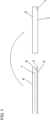
- Fig. 1 a schematic representation of a stack of pressed material provided with the binding agent
- the components of the veneered panel are a carrier plate 1 with a top side 2 and a bottom side 3.
- the veneered panel also includes a veneer 4 with a bottom side 5 and a top side 6.
- the carrier plate 1 or the veneer 4 is prepared. This is done either by arranging the veneer with the bottom side 5 facing upwards.
- An additive 7 is optionally first applied to the bottom side of the veneer 4. Alternatively, a mixture of additives can be applied or several additives can be applied in succession. If the additive(s) 7 have been applied, a layer of binding agent 8 is applied.
- a PU prepolymer is used as the binding agent here.
- the binding agent 8 is used in liquid form.
- the binding agent 8 is applied in liquid form using a roller or a casting machine.
- the binding agent according to the invention is applied to the top side 2 of the carrier plate 1.
- the further production of a veneered panel is carried out by placing the veneer 4 with its underside 5 on the upper side 2 of a carrier plate, preferably without intermediate drying, whereby a stack of pressed material is layered, in which the binding agent 8 according to the invention is arranged between the carrier plate 1 and the veneer 4.
- the stack of pressed material is pressed in a press to form a veneered panel.
- the stack of pressed material is supplemented by a counter-pull, which is attached to the underside 3 of the carrier plate 1 and which then forms the underside of the veneered plate 1.
- the counter-pull is designed in the same way as the veneer 4 on the top of the carrier plate.
- any coating on the underside of the carrier plate is suitable as a counter-pull, which at least partially absorbs the forces exerted by the veneer 4 arranged on the top 2 of the carrier plate 1.
- Binder aliphatic PU prepolymer in liquid form This binding agent is inserted between the top surface 2 of the carrier plate 1 and the oak veneer. It is exposed to light after the veneered carrier plate has been produced.
- an HDF board high density fiberboard with the format: 2800 x 2070 x 10 mm (length x width x thickness), 100g/m 2 PU prepolymer with the product name 678.05 from Jowat is applied.
- This PU prepolymer was based on aromatic isocyanates and alcohol, which have reacted to form a prepolymer.
- the PU prepolymer is liquid.
- the solids content is approximately 90% by weight based on the total weight of the PU prepolymer.
- the viscosity is approximately 65 mPas (20°C, Brookfield).
- the PU prepolymer is applied using a casting machine.
- the PU prepolymer is then applied to the birch veneer.
- the birch veneer which is to be fixed to the underside 3 of the carrier plate 1, is placed under the underside 3 of the carrier plate provided with a binding agent and thus layered to form a stack of pressed material.
- the stack of pressed material is pressed in a short-cycle press (KT press).
- the pressing conditions of the KT press are set as follows: pressing temperature 180°C, pressure 40 kg/cm 2 and pressing time 60 seconds.
- the pressing temperature ensures that the binding agent hardens during the pressing time and the pressing pressure causes the veneer to be compressed while the PU prepolymer penetrates at the same time.
- the short-cycle press is then opened and the HDF board coated on one side is allowed to cool down.
- the carrier board 1 coated on one side on the underside 3 is rotated and 200 g/m 2 of prepolymer based on aliphatic isocyanates is applied to the top side 2 of the carrier board 1.
- the oak veneer is then placed on top and this stack of pressed material is again pressed using the parameters mentioned above.
- the binding agent hardens under thermal influence and the binding agent penetrates into the veneer and the veneer is compressed under the influence of the pressing pressure.
- the board, now veneered on both sides, is cooled down.
- Floorboards with a glueless profile are then milled from the carrier board 1 veneered on both sides.
- the oak veneer side serves as the usable surface.
- an aliphatic PU prepolymer was applied which does not or hardly reacts under the influence of light, in particular it does not change its colour or yellow.
- the veneered carrier board By pressing the veneered carrier board under high pressure, the veneer is compressed - as described above - while at the same time the binding agent penetrates the veneer.
- the polyurethane that is created during pressing is a waterproof binding agent, so that even the veneer, which is not waterproof in itself, is made waterproof by the binding agent that has penetrated it at least in sections.
- Veneer Strength: 0.8 mm Type: oak This veneer is inserted on the top side 2 of the carrier plate 1.
- Binder aliphatic PU prepolymer in liquid form This binding agent is inserted between the top surface 2 of the carrier plate 1 and the oak veneer. It is exposed to light after the veneered carrier plate has been produced.
- carrier plate Strength: 10 mm Type: HDF (high-density fiberboard) countermove: melamine resin-impregnated paper
- 200g/m 2 of liquid PU prepolymer based on aliphatic isocyanates is applied to the carrier plate 1, here an HDF plate (format: 2800 x 2070 x 10 mm), using a spray device.
- An additive is optionally applied, e.g. a dye.
- the oak veneer is then placed on the polymer with the optionally applied additive.
- a paper impregnated with melamine resin is positioned on the back as a counter-sheet.
- the paper impregnated with melamine resin has a paper weight of 80 g/m 2 and a resin application of 120 wt.% based on the paper weight.
- the pressed material stack from the counter-sheet on the underside 3 of the carrier plate 1, the carrier plate 1 and the veneer 4 on the top 2 of the carrier plate 1 are pressed in a short-cycle press.
- the pressing temperature is 180 °C
- the pressing pressure is set to 30 kg/cm 2
- the pressing time is 60 seconds.
- the veneered carrier plate 1 is then allowed to cool.
- the prepolymer is pressed by the pressing pressure into the veneer and often also into the surface of the carrier plate, so that the hardening prepolymer is also mechanically anchored there.
- the pressing pressure compresses the veneer and thereby compacts it. In addition, restoring forces in the veneer are reduced or eliminated.
- the oak veneer side serves as the usable surface.
- the increased use of binding agent means that the veneer is penetrated by the binding agent and is therefore completely waterproof.
- the counter-sheet can be advantageously pressed with the carrier plate in one pressing process because melamine also hardens under the conditions chosen for pressing. In contrast to example 1, one pressing process is therefore saved here.
- an additive or a mixture of additives can also be mixed into the prepolymer to create certain properties in the product.
- additives can be, for example, dyes, agents for increasing conductivity, etc.
- the additive can also be applied between veneer 4 and binder 8 so that the additive can act close to the surface, since additives are usually used to create surface effects.
- the veneered carrier board according to the invention can be used in all applications where veneered surfaces have been used to date. Furthermore, the boards with the veneer surfaces can of course also be used to make wall or ceiling paneling in addition to making floor panels. They can also be used in the manufacture of furniture.
- Veneer Strength: 0.8 mm Type: oak This veneer is inserted on the top side 2 of the carrier plate 1.
- Binder aliphatic PU prepolymer This binding agent is inserted between the top surface 2 of the carrier plate 1 and the oak veneer. It is exposed to light after the veneered carrier plate has been produced.
- carrier plate Strength: 10 mm Type: Fiberboard comprising 48 wt.% wood fibers and 52 wt.% melamine resin, each based on the total weight of the board.
- Binder aromatic PU prepolymer678.05 Jowat The binding agent is applied between the underside 3 of the carrier plate and the birch veneer used as a counter-layer.
- Veneer Strength: 1.05 mm Type: birch
- the carrier plate (1) according to embodiment 3 is veneered in the same way as the veneered carrier plate according to embodiment 1.
- a waterproof veneered carrier plate 1 is provided.
Landscapes
- Life Sciences & Earth Sciences (AREA)
- Engineering & Computer Science (AREA)
- Wood Science & Technology (AREA)
- Forests & Forestry (AREA)
- Mechanical Engineering (AREA)
- Manufacturing & Machinery (AREA)
- Veneer Processing And Manufacture Of Plywood (AREA)
- Laminated Bodies (AREA)
- Chemical And Physical Treatments For Wood And The Like (AREA)
Claims (8)
- Procédé de fabrication d'un panneau plaqué, qui comprend un placage (4) ayant une face supérieure (6) et une face inférieure (5) et un panneau support (1) ayant une face supérieure (2) et une face inférieure (3), comprenant les étapes suivantes :- fournier un placage (4),- appliquer un additif (7) entre le liant (8) et le placage (4), puis appliquer un liant (8) sur la face supérieure (2) du panneau support (1) ou sur la face inférieure (5) du placage (4), un prépolymère PU étant utilisé comme liant,- produire une pile de matériaux à presser comprenant la panneau support (1) et le placage (4), le liant (8) étant disposé entre la panneau support (1) et le placage (4) et l'additif (7) étant disposé entre le liant (8) et le placage (4),- presser la pile de matériaux à presser pour former un panneau plaquédans lequel l'une des substances suivantes est utilisée comme additif (7), individuellement ou en mélange : retardateur de flamme, stabilisateur UV, absorbeur d'infrarouges, agent augmentant la conductivité, agent antibactérien, agent antifongique, agent antialgues, agent hydrophobe, agent de blanchiment, colorant.
- Procédé selon la revendication 1, caractérisé par l'utilisation d'un prépolymère PU aliphatique et/ou aromatique comme liant (8).
- Procédé selon l'une des revendications précédentes, caractérisée par le fait que l'additif (7) est appliqué sous forme de particules solides ou sous forme liquide.
- Procédé selon l'une des revendications précédentes, caractérisé par le fait que l'additif (7) n'est pas soluble dans le liant (8) ou n'est pas soluble de façon homogène dans le liant (8).
- Procédé selon l'une des revendications précédentes, caractérisé par le fait que le liant (8) est appliqué sous forme liquide.
- Procédé selon l'une des revendications précédentes, caractérisé par le fait que la température de pressage est comprise entre 100°C et 240°C.
- Procédé selon l'une des revendications précédentes, caractérisée par le fait que le temps de pressage est compris entre 20 secondes et 60 secondes.
- Procédé selon l'une des revendications précédentes, caractérisé par le fait que la pression de pressage est comprise entre 25 N/mm2 et 50 N/mm2.
Priority Applications (7)
| Application Number | Priority Date | Filing Date | Title |
|---|---|---|---|
| ES20153702T ES3004708T3 (en) | 2020-01-24 | 2020-01-24 | Method for producing a veneered plate |
| EP20153702.4A EP3854552B1 (fr) | 2020-01-24 | 2020-01-24 | Procédé de fabrication d'une plaque contreplaquée |
| PL20153702.4T PL3854552T3 (pl) | 2020-01-24 | 2020-01-24 | Sposób produkcji płyty fornirowanej |
| US17/794,841 US20230347546A1 (en) | 2020-01-24 | 2021-01-11 | Method for producing a veneered board |
| CA3167395A CA3167395A1 (fr) | 2020-01-24 | 2021-01-11 | Procede de fabrication de panneau plaque |
| CN202180010295.9A CN115038563B (zh) | 2020-01-24 | 2021-01-11 | 用于生产贴面板的方法 |
| PCT/EP2021/050403 WO2021148271A1 (fr) | 2020-01-24 | 2021-01-11 | Procédé de fabrication de panneau plaqué |
Applications Claiming Priority (1)
| Application Number | Priority Date | Filing Date | Title |
|---|---|---|---|
| EP20153702.4A EP3854552B1 (fr) | 2020-01-24 | 2020-01-24 | Procédé de fabrication d'une plaque contreplaquée |
Publications (3)
| Publication Number | Publication Date |
|---|---|
| EP3854552A1 EP3854552A1 (fr) | 2021-07-28 |
| EP3854552C0 EP3854552C0 (fr) | 2024-10-16 |
| EP3854552B1 true EP3854552B1 (fr) | 2024-10-16 |
Family
ID=69232783
Family Applications (1)
| Application Number | Title | Priority Date | Filing Date |
|---|---|---|---|
| EP20153702.4A Active EP3854552B1 (fr) | 2020-01-24 | 2020-01-24 | Procédé de fabrication d'une plaque contreplaquée |
Country Status (7)
| Country | Link |
|---|---|
| US (1) | US20230347546A1 (fr) |
| EP (1) | EP3854552B1 (fr) |
| CN (1) | CN115038563B (fr) |
| CA (1) | CA3167395A1 (fr) |
| ES (1) | ES3004708T3 (fr) |
| PL (1) | PL3854552T3 (fr) |
| WO (1) | WO2021148271A1 (fr) |
Citations (1)
| Publication number | Priority date | Publication date | Assignee | Title |
|---|---|---|---|---|
| US20180223529A1 (en) * | 2017-02-06 | 2018-08-09 | Terry Allen Tebb | Outdoor wood decking board |
Family Cites Families (14)
| Publication number | Priority date | Publication date | Assignee | Title |
|---|---|---|---|---|
| JP2000094402A (ja) * | 1998-09-17 | 2000-04-04 | Nippon Paper Industries Co Ltd | 木質化粧板の不良個所発見方法 |
| DE10160572A1 (de) * | 2001-12-10 | 2003-07-17 | Bayer Ag | Herstellverfahren für Schichtstoffe auf Holzfurnierbasis |
| DE10300347B4 (de) | 2003-01-05 | 2006-05-11 | Foldenauer, Willi, Dr. | Halterung und Spritzschutz für unterschiedliche Formen und verschiedene Größen von Futternäpfen |
| CN100586676C (zh) * | 2007-09-28 | 2010-02-03 | 东北林业大学 | 一种阻燃胶合板的制备方法 |
| JP2010042648A (ja) * | 2008-08-14 | 2010-02-25 | Yoshinori Ito | 暗視時における天然木突板木目導管部分の自発光による可視化 |
| DE102011085996A1 (de) * | 2011-11-09 | 2013-05-16 | Henkel Ag & Co. Kgaa | Mehrschicht-Kantenverklebung |
| DE102012201780A1 (de) * | 2012-02-07 | 2013-08-08 | Henkel Ag & Co. Kgaa | Verklebung mit unterschiedlichen Klebstoffen |
| WO2014209097A1 (fr) * | 2013-06-26 | 2014-12-31 | Welley Timber Industries Sdn. Bhd. | Panneau de bois ionisé |
| DE202013012020U1 (de) * | 2013-11-27 | 2015-02-03 | Guido Schulte | Fußboden-, Wand- oder Deckenpaneel |
| EP3100857B1 (fr) | 2014-01-30 | 2020-08-05 | Välinge Innovation AB | Revetement de sol et procede de fabrication d'un revetement de sol |
| EP3142857B1 (fr) * | 2014-05-12 | 2025-08-20 | Välinge Innovation AB | Procédé de fabrication d'un élément plaqué |
| US11065847B2 (en) * | 2016-02-23 | 2021-07-20 | Financiera Maderera, S.A. | Method for the production of multilayer laminated board and resulting board |
| UA127004C2 (uk) * | 2016-04-25 | 2023-03-08 | Велінге Інновейшн Аб | Облицьований шпоном елемент і спосіб виготовлення такого облицьованого шпоном елемента |
| IT201800003227A1 (it) * | 2018-03-02 | 2019-09-02 | Eget Srls Unipersonale | Pannello di legno rivestito, suoi usi e relativo processo di produzione. |
-
2020
- 2020-01-24 PL PL20153702.4T patent/PL3854552T3/pl unknown
- 2020-01-24 ES ES20153702T patent/ES3004708T3/es active Active
- 2020-01-24 EP EP20153702.4A patent/EP3854552B1/fr active Active
-
2021
- 2021-01-11 WO PCT/EP2021/050403 patent/WO2021148271A1/fr not_active Ceased
- 2021-01-11 CA CA3167395A patent/CA3167395A1/fr active Pending
- 2021-01-11 US US17/794,841 patent/US20230347546A1/en active Pending
- 2021-01-11 CN CN202180010295.9A patent/CN115038563B/zh active Active
Patent Citations (1)
| Publication number | Priority date | Publication date | Assignee | Title |
|---|---|---|---|---|
| US20180223529A1 (en) * | 2017-02-06 | 2018-08-09 | Terry Allen Tebb | Outdoor wood decking board |
Also Published As
| Publication number | Publication date |
|---|---|
| WO2021148271A1 (fr) | 2021-07-29 |
| US20230347546A1 (en) | 2023-11-02 |
| CA3167395A1 (fr) | 2021-07-29 |
| CN115038563B (zh) | 2024-07-26 |
| EP3854552A1 (fr) | 2021-07-28 |
| CN115038563A (zh) | 2022-09-09 |
| EP3854552C0 (fr) | 2024-10-16 |
| PL3854552T3 (pl) | 2025-03-03 |
| ES3004708T3 (en) | 2025-03-13 |
Similar Documents
| Publication | Publication Date | Title |
|---|---|---|
| DE69936870T2 (de) | Verfahren zum dampfpressen einer platte aus verbundwerkstoff mit mindestens einer bearbeiteten oberfläche | |
| EP3028847B1 (fr) | Procede destine a la fabrication d'une plaque sandwich | |
| EP3100857B1 (fr) | Revetement de sol et procede de fabrication d'un revetement de sol | |
| EP3736095B1 (fr) | Matière sous forme de plaque et son procédé de fabrication | |
| WO1989003753A1 (fr) | Procede de fabrication d'un corps en resine synthetique, eventuellement en forme de panneau, moule par compression et produit preliminaire utilise dans ce procede | |
| WO2012037950A1 (fr) | Procédé de fabrication de panneaux et panneau fabriqué selon ledit procédé | |
| EP3205496B1 (fr) | Plaque composite en materiau derive du bois comprenant un palier intermediaire en contreplaque | |
| EP3045279B1 (fr) | Procédé de fabrication d'une plaque à base de bois | |
| EP3275611B1 (fr) | Procédé de fabrication d'un panneau de fibres | |
| EP2987632A1 (fr) | Plaque composite en matériau dérivé du bois | |
| EP3725481B1 (fr) | Matériau sous forme de plaque et son procédé de fabrication | |
| EP3670176B1 (fr) | Procédé de fabrication d'un matériau dérivé du bois contreplaqué et matériau dérivé du bois constitué d'une plaque porteuse et d'au moins deux feuilles du contreplaqué | |
| EP3587108B1 (fr) | Panneau sandwich contrecollé | |
| EP3854552B1 (fr) | Procédé de fabrication d'une plaque contreplaquée | |
| DE3536417C2 (fr) | ||
| EP2008806B1 (fr) | Plaque de décor et son procédé de fabrication | |
| EP3822054B1 (fr) | Procédé de fabrication d'une plaque contreplaquée | |
| EP1749587A1 (fr) | Planche en bois reconstitué pour le bâtiment et méthode de sa fabrication | |
| EP3290174B1 (fr) | Procede de fabrication d'un panneau a particules orientees pourvu d'une surface structuree | |
| EP3822077B1 (fr) | Procédé de fabrication d'une plaque contreplaquée | |
| DE2052312A1 (de) | Verfahren zur Herstellung von Preß korpern | |
| EP4227092B1 (fr) | Procédé de fabrication d'un placage stabilisé | |
| DE10065708A1 (de) | Raumkörper aus Laub | |
| WO2005018890A1 (fr) | Procede pour produire un panneau de fibres multicouche | |
| DE102008057262A1 (de) | Beschichten von Holzwerkstoffplatten mit einer Verschleißschicht |
Legal Events
| Date | Code | Title | Description |
|---|---|---|---|
| PUAI | Public reference made under article 153(3) epc to a published international application that has entered the european phase |
Free format text: ORIGINAL CODE: 0009012 |
|
| STAA | Information on the status of an ep patent application or granted ep patent |
Free format text: STATUS: EXAMINATION IS IN PROGRESS |
|
| 17P | Request for examination filed |
Effective date: 20201201 |
|
| AK | Designated contracting states |
Kind code of ref document: A1 Designated state(s): AL AT BE BG CH CY CZ DE DK EE ES FI FR GB GR HR HU IE IS IT LI LT LU LV MC MK MT NL NO PL PT RO RS SE SI SK SM TR |
|
| GRAP | Despatch of communication of intention to grant a patent |
Free format text: ORIGINAL CODE: EPIDOSNIGR1 |
|
| STAA | Information on the status of an ep patent application or granted ep patent |
Free format text: STATUS: GRANT OF PATENT IS INTENDED |
|
| RIC1 | Information provided on ipc code assigned before grant |
Ipc: B27N 9/00 20060101ALN20240416BHEP Ipc: B32B 27/20 20060101ALI20240416BHEP Ipc: B32B 21/14 20060101ALI20240416BHEP Ipc: B27N 3/18 20060101ALI20240416BHEP Ipc: B27N 7/00 20060101AFI20240416BHEP |
|
| INTG | Intention to grant announced |
Effective date: 20240514 |
|
| GRAS | Grant fee paid |
Free format text: ORIGINAL CODE: EPIDOSNIGR3 |
|
| GRAA | (expected) grant |
Free format text: ORIGINAL CODE: 0009210 |
|
| STAA | Information on the status of an ep patent application or granted ep patent |
Free format text: STATUS: THE PATENT HAS BEEN GRANTED |
|
| AK | Designated contracting states |
Kind code of ref document: B1 Designated state(s): AL AT BE BG CH CY CZ DE DK EE ES FI FR GB GR HR HU IE IS IT LI LT LU LV MC MK MT NL NO PL PT RO RS SE SI SK SM TR |
|
| REG | Reference to a national code |
Ref country code: GB Ref legal event code: FG4D Free format text: NOT ENGLISH |
|
| REG | Reference to a national code |
Ref country code: CH Ref legal event code: EP |
|
| REG | Reference to a national code |
Ref country code: IE Ref legal event code: FG4D Free format text: LANGUAGE OF EP DOCUMENT: GERMAN |
|
| REG | Reference to a national code |
Ref country code: DE Ref legal event code: R096 Ref document number: 502020009480 Country of ref document: DE |
|
| U01 | Request for unitary effect filed |
Effective date: 20241111 |
|
| U07 | Unitary effect registered |
Designated state(s): AT BE BG DE DK EE FI FR IT LT LU LV MT NL PT RO SE SI Effective date: 20241119 |
|
| U20 | Renewal fee for the european patent with unitary effect paid |
Year of fee payment: 6 Effective date: 20250130 |
|
| REG | Reference to a national code |
Ref country code: ES Ref legal event code: FG2A Ref document number: 3004708 Country of ref document: ES Kind code of ref document: T3 Effective date: 20250313 |
|
| PG25 | Lapsed in a contracting state [announced via postgrant information from national office to epo] |
Ref country code: IS Free format text: LAPSE BECAUSE OF FAILURE TO SUBMIT A TRANSLATION OF THE DESCRIPTION OR TO PAY THE FEE WITHIN THE PRESCRIBED TIME-LIMIT Effective date: 20250216 Ref country code: HR Free format text: LAPSE BECAUSE OF FAILURE TO SUBMIT A TRANSLATION OF THE DESCRIPTION OR TO PAY THE FEE WITHIN THE PRESCRIBED TIME-LIMIT Effective date: 20241016 |
|
| PG25 | Lapsed in a contracting state [announced via postgrant information from national office to epo] |
Ref country code: NO Free format text: LAPSE BECAUSE OF FAILURE TO SUBMIT A TRANSLATION OF THE DESCRIPTION OR TO PAY THE FEE WITHIN THE PRESCRIBED TIME-LIMIT Effective date: 20250116 |
|
| PG25 | Lapsed in a contracting state [announced via postgrant information from national office to epo] |
Ref country code: GR Free format text: LAPSE BECAUSE OF FAILURE TO SUBMIT A TRANSLATION OF THE DESCRIPTION OR TO PAY THE FEE WITHIN THE PRESCRIBED TIME-LIMIT Effective date: 20250117 |
|
| PG25 | Lapsed in a contracting state [announced via postgrant information from national office to epo] |
Ref country code: RS Free format text: LAPSE BECAUSE OF FAILURE TO SUBMIT A TRANSLATION OF THE DESCRIPTION OR TO PAY THE FEE WITHIN THE PRESCRIBED TIME-LIMIT Effective date: 20250116 |
|
| PG25 | Lapsed in a contracting state [announced via postgrant information from national office to epo] |
Ref country code: SM Free format text: LAPSE BECAUSE OF FAILURE TO SUBMIT A TRANSLATION OF THE DESCRIPTION OR TO PAY THE FEE WITHIN THE PRESCRIBED TIME-LIMIT Effective date: 20241016 |
|
| PG25 | Lapsed in a contracting state [announced via postgrant information from national office to epo] |
Ref country code: SK Free format text: LAPSE BECAUSE OF FAILURE TO SUBMIT A TRANSLATION OF THE DESCRIPTION OR TO PAY THE FEE WITHIN THE PRESCRIBED TIME-LIMIT Effective date: 20241016 |
|
| PG25 | Lapsed in a contracting state [announced via postgrant information from national office to epo] |
Ref country code: CZ Free format text: LAPSE BECAUSE OF FAILURE TO SUBMIT A TRANSLATION OF THE DESCRIPTION OR TO PAY THE FEE WITHIN THE PRESCRIBED TIME-LIMIT Effective date: 20241016 |
|
| PLBE | No opposition filed within time limit |
Free format text: ORIGINAL CODE: 0009261 |
|
| STAA | Information on the status of an ep patent application or granted ep patent |
Free format text: STATUS: NO OPPOSITION FILED WITHIN TIME LIMIT |
|
| PG25 | Lapsed in a contracting state [announced via postgrant information from national office to epo] |
Ref country code: MC Free format text: LAPSE BECAUSE OF FAILURE TO SUBMIT A TRANSLATION OF THE DESCRIPTION OR TO PAY THE FEE WITHIN THE PRESCRIBED TIME-LIMIT Effective date: 20241016 |
|
| 26N | No opposition filed |
Effective date: 20250717 |
|
| PG25 | Lapsed in a contracting state [announced via postgrant information from national office to epo] |
Ref country code: IE Free format text: LAPSE BECAUSE OF NON-PAYMENT OF DUE FEES Effective date: 20250124 |
|
| REG | Reference to a national code |
Ref country code: CH Ref legal event code: U11 Free format text: ST27 STATUS EVENT CODE: U-0-0-U10-U11 (AS PROVIDED BY THE NATIONAL OFFICE) Effective date: 20260201 |
|
| U20 | Renewal fee for the european patent with unitary effect paid |
Year of fee payment: 7 Effective date: 20260128 |
|
| PGFP | Annual fee paid to national office [announced via postgrant information from national office to epo] |
Ref country code: GB Payment date: 20260122 Year of fee payment: 7 |
|
| PGFP | Annual fee paid to national office [announced via postgrant information from national office to epo] |
Ref country code: ES Payment date: 20260217 Year of fee payment: 7 |
|
| PGFP | Annual fee paid to national office [announced via postgrant information from national office to epo] |
Ref country code: TR Payment date: 20260119 Year of fee payment: 7 |
|
| PGFP | Annual fee paid to national office [announced via postgrant information from national office to epo] |
Ref country code: CH Payment date: 20260201 Year of fee payment: 7 |
|
| PGFP | Annual fee paid to national office [announced via postgrant information from national office to epo] |
Ref country code: PL Payment date: 20260115 Year of fee payment: 7 |