EP3858978A1 - Metallisches material, verfahren zur steuerung der reaktion eines fermentierenden mikroorganismus und verfahren zur herstellung von fermentiertem nahrungsmittel - Google Patents
Metallisches material, verfahren zur steuerung der reaktion eines fermentierenden mikroorganismus und verfahren zur herstellung von fermentiertem nahrungsmittel Download PDFInfo
- Publication number
- EP3858978A1 EP3858978A1 EP19867147.1A EP19867147A EP3858978A1 EP 3858978 A1 EP3858978 A1 EP 3858978A1 EP 19867147 A EP19867147 A EP 19867147A EP 3858978 A1 EP3858978 A1 EP 3858978A1
- Authority
- EP
- European Patent Office
- Prior art keywords
- crystal grain
- metal material
- fermentative microorganism
- response
- average crystal
- Prior art date
- Legal status (The legal status is an assumption and is not a legal conclusion. Google has not performed a legal analysis and makes no representation as to the accuracy of the status listed.)
- Pending
Links
Images




Classifications
-
- A—HUMAN NECESSITIES
- A23—FOODS OR FOODSTUFFS; TREATMENT THEREOF, NOT COVERED BY OTHER CLASSES
- A23C—DAIRY PRODUCTS, e.g. MILK, BUTTER OR CHEESE; MILK OR CHEESE SUBSTITUTES; PREPARATION THEREOF
- A23C9/00—Milk preparations; Milk powder or milk powder preparations
- A23C9/12—Fermented milk preparations; Treatment using microorganisms or enzymes
- A23C9/123—Fermented milk preparations; Treatment using microorganisms or enzymes using only microorganisms of the genus lactobacteriaceae; Yoghurt
-
- A—HUMAN NECESSITIES
- A23—FOODS OR FOODSTUFFS; TREATMENT THEREOF, NOT COVERED BY OTHER CLASSES
- A23L—FOODS, FOODSTUFFS OR NON-ALCOHOLIC BEVERAGES, NOT OTHERWISE PROVIDED FOR; PREPARATION OR TREATMENT THEREOF
- A23L2/00—Non-alcoholic beverages; Dry compositions or concentrates therefor; Preparation or treatment thereof
- A23L2/38—Other non-alcoholic beverages
- A23L2/382—Other non-alcoholic beverages fermented
-
- A—HUMAN NECESSITIES
- A21—BAKING; EDIBLE DOUGHS
- A21D—TREATMENT OF FLOUR OR DOUGH FOR BAKING, e.g. BY ADDITION OF MATERIALS; BAKING; BAKERY PRODUCTS
- A21D2/00—Treatment of flour or dough by adding materials thereto before or during baking
- A21D2/02—Treatment of flour or dough by adding materials thereto before or during baking by adding inorganic substances
-
- A—HUMAN NECESSITIES
- A21—BAKING; EDIBLE DOUGHS
- A21D—TREATMENT OF FLOUR OR DOUGH FOR BAKING, e.g. BY ADDITION OF MATERIALS; BAKING; BAKERY PRODUCTS
- A21D8/00—Methods for preparing or baking dough
- A21D8/02—Methods for preparing dough; Treating dough prior to baking
- A21D8/04—Methods for preparing dough; Treating dough prior to baking treating dough with microorganisms or enzymes
-
- A—HUMAN NECESSITIES
- A23—FOODS OR FOODSTUFFS; TREATMENT THEREOF, NOT COVERED BY OTHER CLASSES
- A23L—FOODS, FOODSTUFFS OR NON-ALCOHOLIC BEVERAGES, NOT OTHERWISE PROVIDED FOR; PREPARATION OR TREATMENT THEREOF
- A23L11/00—Pulses, i.e. fruits of leguminous plants, for production of food; Products from legumes; Preparation or treatment thereof
- A23L11/50—Fermented pulses or legumes; Fermentation of pulses or legumes based on the addition of microorganisms
-
- A—HUMAN NECESSITIES
- A23—FOODS OR FOODSTUFFS; TREATMENT THEREOF, NOT COVERED BY OTHER CLASSES
- A23L—FOODS, FOODSTUFFS OR NON-ALCOHOLIC BEVERAGES, NOT OTHERWISE PROVIDED FOR; PREPARATION OR TREATMENT THEREOF
- A23L19/00—Products from fruits or vegetables; Preparation or treatment thereof
- A23L19/20—Products from fruits or vegetables; Preparation or treatment thereof by pickling, e.g. sauerkraut or pickles
-
- A—HUMAN NECESSITIES
- A23—FOODS OR FOODSTUFFS; TREATMENT THEREOF, NOT COVERED BY OTHER CLASSES
- A23L—FOODS, FOODSTUFFS OR NON-ALCOHOLIC BEVERAGES, NOT OTHERWISE PROVIDED FOR; PREPARATION OR TREATMENT THEREOF
- A23L27/00—Spices; Flavouring agents or condiments; Artificial sweetening agents; Table salts; Dietetic salt substitutes; Preparation or treatment thereof
- A23L27/50—Soya sauce
-
- A—HUMAN NECESSITIES
- A23—FOODS OR FOODSTUFFS; TREATMENT THEREOF, NOT COVERED BY OTHER CLASSES
- A23L—FOODS, FOODSTUFFS OR NON-ALCOHOLIC BEVERAGES, NOT OTHERWISE PROVIDED FOR; PREPARATION OR TREATMENT THEREOF
- A23L29/00—Foods or foodstuffs containing additives; Preparation or treatment thereof
- A23L29/015—Inorganic compounds
-
- A—HUMAN NECESSITIES
- A23—FOODS OR FOODSTUFFS; TREATMENT THEREOF, NOT COVERED BY OTHER CLASSES
- A23L—FOODS, FOODSTUFFS OR NON-ALCOHOLIC BEVERAGES, NOT OTHERWISE PROVIDED FOR; PREPARATION OR TREATMENT THEREOF
- A23L29/00—Foods or foodstuffs containing additives; Preparation or treatment thereof
- A23L29/065—Microorganisms
-
- B—PERFORMING OPERATIONS; TRANSPORTING
- B21—MECHANICAL METAL-WORKING WITHOUT ESSENTIALLY REMOVING MATERIAL; PUNCHING METAL
- B21B—ROLLING OF METAL
- B21B3/00—Rolling materials of special alloys so far as the composition of the alloy requires or permits special rolling methods or sequences ; Rolling of aluminium, copper, zinc or other non-ferrous metals
- B21B3/02—Rolling special iron alloys, e.g. stainless steel
-
- C—CHEMISTRY; METALLURGY
- C12—BIOCHEMISTRY; BEER; SPIRITS; WINE; VINEGAR; MICROBIOLOGY; ENZYMOLOGY; MUTATION OR GENETIC ENGINEERING
- C12G—WINE; PREPARATION THEREOF; ALCOHOLIC BEVERAGES; PREPARATION OF ALCOHOLIC BEVERAGES NOT PROVIDED FOR IN SUBCLASSES C12C OR C12H
- C12G3/00—Preparation of other alcoholic beverages
- C12G3/02—Preparation of other alcoholic beverages by fermentation
-
- C—CHEMISTRY; METALLURGY
- C12—BIOCHEMISTRY; BEER; SPIRITS; WINE; VINEGAR; MICROBIOLOGY; ENZYMOLOGY; MUTATION OR GENETIC ENGINEERING
- C12N—MICROORGANISMS OR ENZYMES; COMPOSITIONS THEREOF; PROPAGATING, PRESERVING, OR MAINTAINING MICROORGANISMS; MUTATION OR GENETIC ENGINEERING; CULTURE MEDIA
- C12N1/00—Microorganisms; Compositions thereof; Processes of propagating, maintaining or preserving microorganisms or compositions thereof; Processes of preparing or isolating a composition containing a microorganism; Culture media therefor
- C12N1/20—Bacteria; Culture media therefor
-
- C—CHEMISTRY; METALLURGY
- C12—BIOCHEMISTRY; BEER; SPIRITS; WINE; VINEGAR; MICROBIOLOGY; ENZYMOLOGY; MUTATION OR GENETIC ENGINEERING
- C12N—MICROORGANISMS OR ENZYMES; COMPOSITIONS THEREOF; PROPAGATING, PRESERVING, OR MAINTAINING MICROORGANISMS; MUTATION OR GENETIC ENGINEERING; CULTURE MEDIA
- C12N1/00—Microorganisms; Compositions thereof; Processes of propagating, maintaining or preserving microorganisms or compositions thereof; Processes of preparing or isolating a composition containing a microorganism; Culture media therefor
- C12N1/38—Chemical stimulation of growth or activity by addition of chemical compounds which are not essential growth factors; Stimulation of growth by removal of a chemical compound
-
- C—CHEMISTRY; METALLURGY
- C12—BIOCHEMISTRY; BEER; SPIRITS; WINE; VINEGAR; MICROBIOLOGY; ENZYMOLOGY; MUTATION OR GENETIC ENGINEERING
- C12N—MICROORGANISMS OR ENZYMES; COMPOSITIONS THEREOF; PROPAGATING, PRESERVING, OR MAINTAINING MICROORGANISMS; MUTATION OR GENETIC ENGINEERING; CULTURE MEDIA
- C12N11/00—Carrier-bound or immobilised enzymes; Carrier-bound or immobilised microbial cells; Preparation thereof
- C12N11/14—Enzymes or microbial cells immobilised on or in an inorganic carrier
-
- C—CHEMISTRY; METALLURGY
- C21—METALLURGY OF IRON
- C21D—MODIFYING THE PHYSICAL STRUCTURE OF FERROUS METALS; GENERAL DEVICES FOR HEAT TREATMENT OF FERROUS OR NON-FERROUS METALS OR ALLOYS; MAKING METAL MALLEABLE, e.g. BY DECARBURISATION OR TEMPERING
- C21D6/00—Heat treatment of ferrous alloys
- C21D6/004—Heat treatment of ferrous alloys containing Cr and Ni
-
- C—CHEMISTRY; METALLURGY
- C21—METALLURGY OF IRON
- C21D—MODIFYING THE PHYSICAL STRUCTURE OF FERROUS METALS; GENERAL DEVICES FOR HEAT TREATMENT OF FERROUS OR NON-FERROUS METALS OR ALLOYS; MAKING METAL MALLEABLE, e.g. BY DECARBURISATION OR TEMPERING
- C21D8/00—Modifying the physical properties of ferrous metals or ferrous alloys by deformation combined with, or followed by, heat treatment
- C21D8/02—Modifying the physical properties of ferrous metals or ferrous alloys by deformation combined with, or followed by, heat treatment during manufacturing of plates or strips
- C21D8/0221—Modifying the physical properties of ferrous metals or ferrous alloys by deformation combined with, or followed by, heat treatment during manufacturing of plates or strips characterised by the working steps
- C21D8/0236—Cold rolling
-
- C—CHEMISTRY; METALLURGY
- C21—METALLURGY OF IRON
- C21D—MODIFYING THE PHYSICAL STRUCTURE OF FERROUS METALS; GENERAL DEVICES FOR HEAT TREATMENT OF FERROUS OR NON-FERROUS METALS OR ALLOYS; MAKING METAL MALLEABLE, e.g. BY DECARBURISATION OR TEMPERING
- C21D8/00—Modifying the physical properties of ferrous metals or ferrous alloys by deformation combined with, or followed by, heat treatment
- C21D8/02—Modifying the physical properties of ferrous metals or ferrous alloys by deformation combined with, or followed by, heat treatment during manufacturing of plates or strips
- C21D8/0247—Modifying the physical properties of ferrous metals or ferrous alloys by deformation combined with, or followed by, heat treatment during manufacturing of plates or strips characterised by the heat treatment
- C21D8/0273—Final recrystallisation annealing
-
- C—CHEMISTRY; METALLURGY
- C21—METALLURGY OF IRON
- C21D—MODIFYING THE PHYSICAL STRUCTURE OF FERROUS METALS; GENERAL DEVICES FOR HEAT TREATMENT OF FERROUS OR NON-FERROUS METALS OR ALLOYS; MAKING METAL MALLEABLE, e.g. BY DECARBURISATION OR TEMPERING
- C21D9/00—Heat treatment, e.g. annealing, hardening, quenching or tempering, adapted for particular articles; Furnaces therefor
- C21D9/46—Heat treatment, e.g. annealing, hardening, quenching or tempering, adapted for particular articles; Furnaces therefor for sheet metals
-
- A—HUMAN NECESSITIES
- A23—FOODS OR FOODSTUFFS; TREATMENT THEREOF, NOT COVERED BY OTHER CLASSES
- A23C—DAIRY PRODUCTS, e.g. MILK, BUTTER OR CHEESE; MILK OR CHEESE SUBSTITUTES; PREPARATION THEREOF
- A23C19/00—Cheese; Cheese preparations; Making thereof
- A23C19/06—Treating cheese curd after whey separation; Products obtained thereby
- A23C19/061—Addition of, or treatment with, microorganisms
-
- A—HUMAN NECESSITIES
- A23—FOODS OR FOODSTUFFS; TREATMENT THEREOF, NOT COVERED BY OTHER CLASSES
- A23C—DAIRY PRODUCTS, e.g. MILK, BUTTER OR CHEESE; MILK OR CHEESE SUBSTITUTES; PREPARATION THEREOF
- A23C9/00—Milk preparations; Milk powder or milk powder preparations
- A23C9/12—Fermented milk preparations; Treatment using microorganisms or enzymes
-
- C—CHEMISTRY; METALLURGY
- C21—METALLURGY OF IRON
- C21D—MODIFYING THE PHYSICAL STRUCTURE OF FERROUS METALS; GENERAL DEVICES FOR HEAT TREATMENT OF FERROUS OR NON-FERROUS METALS OR ALLOYS; MAKING METAL MALLEABLE, e.g. BY DECARBURISATION OR TEMPERING
- C21D2211/00—Microstructure comprising significant phases
- C21D2211/001—Austenite
Definitions
- the present invention relates to a metal material, a method of controlling a response of a fermentative microorganism, and a method of producing a fermented food product.
- Metal materials having refined crystal grains are superior in characteristics such as strength, toughness, and corrosion resistance as compared with metal materials having coarse crystal grains. Accordingly, the metal materials are widely used in various industrial applications such as steel plates and medical devices (e.g., Patent Document 1).
- Patent Document 1 JP-A-2005-169454
- the metal materials can be expected to be used as bioreactors, constituent parts of the bioreactors, and packaging materials in order to produce fermented food products at a high production rate and enhance the functions of the fermented food products.
- the metal materials can be expected to be used as bioreactors, constituent parts of the bioreactors, and packaging materials in order to produce fermented food products at a high production rate and enhance the functions of the fermented food products.
- it is required to optimize the responses and functions of the fermentative microorganisms there are wide variety of factors, and thus simple and efficient control of fermentative microorganisms has not been achieved.
- An object of the present invention is to provide a metal material capable of optimizing a response of a fermentative microorganism, a method of controlling a response of a fermentative microorganism, and a method of producing a fermented food product.
- the present inventors have conducted intensive studies to solve the above problems, and found that there is a difference in affinity between a microorganism and a metal material depending on the type of metal material. As a result of examination based on the finding, they have found that the object can be achieved by adopting the following configuration, and completed the present invention.
- the present invention relates to a metal material including a crystal grain having an average crystal grain size for controlling a response of a fermentative microorganism.
- the present inventors have speculated that the grain size of the crystal grain forming the metal material may affect an affinity between the metal material and the fermentative microorganism. Then, they have traced the change in the response of the fermentative microorganism by contacting the fermentative microorganism with the metal material having different average crystal grain sizes. Surprisingly, they have found that when the crystal grain has a specific average crystal grain size, the response of the fermentative microorganism changes significantly.
- the crystal grain forming the metal material has an average crystal grain size for controlling the response of the fermentative microorganism, so that it is possible to optimize the response of the microorganism in the process of producing a fermented food product using the metal material. As a result, it is possible to improve the production yield of the fermented food product and to enhance the function of the fermented food product.
- the average crystal grain size of the crystal grain is preferably 100 nm or more and 10 ⁇ m or less.
- the metal material can be applied to a wide range of fermentative microorganisms. Further, the affinity between the metal material and the fermentative microorganism is enhanced, as a result of which it is possible to more efficiently control the response of the fermentative microorganism.
- a method of measuring the average crystal grain size of the crystal grain is as described in examples.
- the metal material is preferably stainless steel in view of easy controllability of the crystal grain size of the crystal grain, versatility, ready availability, processability, and low toxicity.
- the response of the fermentative microorganism is adsorption or growth of the fermentative microorganism on the metal material.
- the metal material includes a crystal grain having an average crystal grain size suitable for the control of the response of the fermentative microorganism, so that it is possible to promote (i.e., control) the adsorption or growth of the fermentative microorganism as the response of the fermentative microorganism.
- the metal material has an average crystal grain size for giving optimal adsorption or growth of the fermentative microorganism which is determined from a response profile which is a result obtained by cultivating the fermentative microorganism on a metal material having crystal grains with different average crystal grain sizes and plotting a number of the microorganism after the cultivation with respect to the average crystal grain size.
- the response of the fermentative microorganism can be optimized just by obtaining a plot of the adsorption number or the growth number of the fermentative microorganisms with respect to different average crystal grain sizes without complicated processes. This can achieve the efficiency improvement of the whole process using the fermentative microorganism.
- the metal material can be suitably used to control the response of at least one selected from the group consisting of lactic acid bacteria, natto bacteria, acetic acid bacteria, koji bacteria, and yeasts, which are typical fermentative microorganisms.
- the present invention relates to a method of controlling a response of a fermentative microorganism using a metal material including a crystal grain, the method including:
- the method of controlling a response of a fermentative microorganism is based on a novel phenomenon that the response of the fermentative microorganism changes depending on the average crystal grain size of the crystal grain forming the metal material, and specificity (extreme value) occurs in the response profile of the fermentative microorganism with respect to the average crystal grain size.
- the average crystal grain size of the crystal grain for giving the optimal response of the fermentative microorganism can be easily determined by reading the extreme value in the response profile obtained by plotting the response of the fermentative microorganism for each of the different average crystal grain sizes. Consequently, it is possible to efficiently and easily achieve the optimization of the response of the fermentative microorganism.
- control of the response of the fermentative microorganism may be adsorption or growth of the fermentative microorganism on the metal material.
- the response profile is preferably a plot of a number of the fermentative microorganism after the contact with respect to the average crystal grain size of the crystal grain.
- the optimal response is maximization of the number of the fermentative microorganism. In this manner, the extreme value (the local maximum value in this case) of the response profile is read so that it is possible to numerically maximize the control of the response of the fermentative microorganism and to easily and stably provide the necessary number of the fermentative microorganism suitable for the fermentation process.
- the method of controlling a response of a fermentative microorganism can be suitably applied to at least one selected from the group consisting of lactic acid bacteria, natto bacteria, acetic acid bacteria, koji bacteria, and yeasts, which are typical fermentative microorganisms.
- the average crystal grain size of the crystal grain is preferably 100 nm or more and 10 ⁇ m or less.
- the metal material can be applied to a wide range of fermentative microorganisms. Further, the affinity between the metal material and the fermentative microorganism is enhanced, as a result of which it is possible to more efficiently control the response of the fermentative microorganism.
- the metal material is preferably stainless steel. This is because stainless steel is excellent in easy controllability of the crystal grain size of the crystal grain, versatility, ready availability, processability, and low toxicity.
- the present invention relates to a method of producing a fermented food product including contacting a fermentative microorganism with the metal material.
- the metal material capable of controlling the response of the fermentative microorganism is contacted with the fermentative microorganism to optimize the response of the fermentative microorganism. Consequently, it is possible to promote the production efficiency of the fermented food product and enhance the function of the fermented food product.
- the metal material, the method of controlling a response of a fermentative microorganism, and the method of producing a fermented food product according to one embodiment of the present invention will be described hereinbelow.
- the present invention is not limited to these embodiments.
- the crystal grain forming the metal material according to this embodiment has an average crystal grain size for controlling the response of the fermentative microorganism.
- the present invention is based on a novel concept utilizing the phenomenon that the response of the fermentative microorganism in contact with the metal material changes significantly when the crystal grains have a specific average crystal grain size.
- the response of the fermentative microorganism refers to any reaction that a target fermentative microorganism exhibits in the process utilizing the fermentative microorganism.
- Examples of responses include the growth and immobilization (adsorption), aggregation (agglutination), dispersion (disaggregation) of the fermentative microorganism, death of the fermentation microorganism according to the circumstances, the productions of fermentation products (e.g., alcohol, lactic acids, amino acids) and functional ingredients (e.g., proteins, lipids, peptides) from fermentative microorganisms, and the expression of genes from fermentative microorganisms.
- the metal material of this embodiment it is possible to optimize the response of microorganism in the process of producing a fermented food product using the metal material. As a result, it is possible to improve the production yield of the fermented food product and to achieve the enhancement of the function.
- the average crystal grain size for controlling the response of the fermentative microorganism can be determined by the method of controlling a response of a fermentative microorganism to be described later.
- metal materials for food-related applications may be used, and examples of the metal materials include iron, stainless steel, aluminum, silver, copper, titanium, tin, nickel, zinc, chromium, and alloys of these metal materials.
- stainless steel is preferable in view of easy controllability of the crystal grain size of the crystal grain, versatility, ready availability, processability, and low toxicity.
- the stainless steel is not particularly limited, and may be any of martensitic stainless steel, ferritic stainless steel, austenitic stainless steel, austenite/ferrite stainless steel, and precipitation hardening stainless steel.
- the average crystal grain size of the crystal grain is preferably 100 nm or more and 10 ⁇ m or less, more preferably 200 nm or more and 5 ⁇ m or less, and still more preferably 500 nm or more and 2 ⁇ m or less.
- the metal material is made of such a fine crystal grain, which allows for the application to a wide range of fermentative microorganisms. Further, it is possible to enhance the affinity between the metal material and the fermentative microorganism and to more efficiently control the response.
- a known refinement method can be adopted.
- the method include a rolling process for the metal raw material before refinement, a shearing process, a compression process, a deforming process, and a combination of the processes.
- cooling or heating may be carried out, or refinement may be carried out in an atmosphere in the presence or absence of a specific gas (such as oxygen or nitrogen).
- a specific gas such as oxygen or nitrogen.
- the refinement is progressed by heating leading to plastic deformation and recrystallization by cooling.
- the above procedure is carried out once or repeated multiple times, thereby obtaining a desired average crystal grain size.
- the shape of the metal material is not particularly limited, and any shape such as a plate shape, a line shape, a rod shape, a spherical shape or a cylindrical shape can be adopted.
- the fermentative microorganism is not particularly limited as long as it is a microorganism used for fermented food products. Fermentative microorganisms having a favorable effect on food and fermentative microorganisms which produce a factor having a beneficial effect on the human body are preferable. Particularly, the fermentative microorganism is preferably at least one selected from the group consisting of lactic acid bacteria, natto bacteria, acetic acid bacteria, koji bacteria, and yeasts.
- the method of controlling a response of a fermentative microorganism is a method which controls a response of a fermentative microorganism using the metal material including the crystal grain.
- the method includes a metal material providing step, a contacting step, a response profile obtaining step, and an average crystal grain size determining step. Each of the steps will be described in order below.
- a plurality of metal materials whose crystal grains have different average crystal grain sizes to each other are provided.
- a plurality of stainless steel pieces are provided in which each average crystal grain size of crystal grains is adjusted within a range of 100 nm to 10 ⁇ m.
- the number of the average crystal grain size is preferably large in that it is easy to read the extreme value of the profile of the response of the fermenting microorganism.
- typical average crystal grain size values are as follows: 0.5 ⁇ m (500 nm); 1 ⁇ m; 1.5 ⁇ m; 2 ⁇ m; 3 ⁇ m; and 9 ⁇ m.
- typical average crystal grain size values are as follows: values selected from a ranges of 0.5 ⁇ m to 0.8 ⁇ m, 1 ⁇ m to 2 ⁇ m, 2 ⁇ m to 3 ⁇ m, 4 ⁇ m to 6 ⁇ m, and 8 ⁇ m to 10 ⁇ m.
- each of the plurality of metal materials is contacted with the fermentative microorganism.
- the mode of contact is not particularly limited.
- the fermentative microorganism may be directly placed on the surface of the metal material, a dispersion liquid (or suspension) of fermentative microorganism may be placed on the surface of the metal material, the metal material may be introduced into the dispersion liquid (or suspension) of fermentative microorganism, and the fermentative microorganism (including the dispersion liquid of fermentative microorganism) may be placed in a container formed of the metal material. Treatments such as heating, cooling, stirring, and shaking may be carried out in combination therewith, if necessary.
- the mode of contact can be appropriately selected according to the response of the target fermentative microorganism.
- the contact time may be the time that the response of the target fermentative microorganism (lactic acid bacterium in this case; the same applies hereafter.) can be sufficiently obtained.
- a long period such as weeks or months
- a short period such as seconds or minutes
- the contact time required to obtain the response of the fermentative microorganism.
- the normal contact time is usually 1 second or more and 24 hours or less, preferably 1 minute or more and 20 hours or less, and more preferably 1 hour or more and 18 hours or less.
- the contact time is usually 12 hours or more and 6 weeks or less, preferably 1 day or more and 4 weeks or less, and more preferably 3 days or more and 3 weeks or less.
- the temperature condition at the time of contact may be preferably 20°C or more and 50°C or less.
- the fermentative microorganism is an anaerobic bacterium
- cultivation may also be carried out while contacting the anaerobic bacterium with the metal material by weak stirring (stirring to the extent that the medium does not foam).
- the fermentative microorganism is an aerobic bacterium
- the aerobic bacterium is placed or weakly stirred so as to contact with the metal material.
- cultivation may also be carried out while contacting the aerobic bacterium with the metal material by weak stirring (stirring to the extent that the medium does not foam). The amount of dissolved oxygen at the time of contact can be appropriately adjusted according to the bacteria.
- the pH of the environment at the time of contact may be controlled to be in a range of from 4 to 8, preferably from 4.3 to 7, and more preferably from 4.5 to 6.
- the contacting step can be carried out in a medium containing carbon sources (such as glucose and fructose), nitrogen sources (such as polypeptone, yeast extract, and malt extract), vitamins, inorganic salts or food materials (e.g., milk constituents) containing nutrients. More specifically, it is possible to use the following nutritional sources.
- carbon sources such as glucose and fructose
- nitrogen sources such as polypeptone, yeast extract, and malt extract
- vitamins inorganic salts or food materials (e.g., milk constituents) containing nutrients. More specifically, it is possible to use the following nutritional sources.
- carbon sources include monosaccharides such as glucose and fructose; disaccharides such as lactose, sucrose and maltose; oligosaccharides; polysaccharides such as cellulose, amylose, chitin, agarose; organic acids such as acetic acid and propionic acid; and alcohols such as ethanol and propanol.
- monosaccharides such as glucose and fructose
- disaccharides such as lactose, sucrose and maltose
- oligosaccharides polysaccharides such as cellulose, amylose, chitin, agarose
- organic acids such as acetic acid and propionic acid
- alcohols such as ethanol and propanol.
- glucose, fructose, lactose, sucrose and maltose are preferable, and glucose, lactose and maltose are more preferable.
- the concentration of the carbon source at the time of contact is not particularly limited.
- the concentration is, for example, in a range of from 0.5 to 20 (w/v)%, preferably from 2 to 15 (w/v)%, and more preferably from 5 to 13 (w/v)%.
- peptone refers to a substance including a plurality of amino acids bonded to each other, which is obtained by hydrolysis, enzymatic decomposition or fermentation of proteins.
- peptones derived from various species, and examples of peptones include meat extracts, casein peptone, fish peptone, soy peptone, pea peptone, wheat peptone, barley peptone, cottonseed peptone.
- casein peptone and soy peptone are preferably used in the present invention.
- the concentration of peptone in the medium is not particularly limited.
- the concentration may be in a range of from 0.5 to 10 (w/v)%, preferably from 0.8 to 8 (w/v)%, and more preferably from 1 to 5 (w/v)%.
- a yeast extract is one obtained by extracting an active ingredient in yeast by self-digestion, enzyme treatment, hot water treatment or the like.
- yeast extracts include extracts derived from baker's yeast, beer yeast, and torula yeast. Any of the yeasts may be used in the present invention.
- the concentration of the yeast extract in the medium is not particularly limited.
- the concentration may be in a range of from 0.2 to 10 (w/v)%, preferably from 0.5 to 8 (w/v)%, and more preferably from 0.8 to 4 (w/v)%.
- examples of inorganic salts include salts of acetic acid, phosphoric acid, sulfuric acid, carbonic acid, and chloride of potassium, magnesium, sodium, calcium, manganese, cobalt, nickel, molybdenum, tungsten, iron, zinc, copper.
- Particularly preferable is at least one selected from the group consisting of potassium chloride, potassium dihydrogen phosphate, dipotassium hydrogen phosphate, magnesium sulfate, magnesium phosphate, sodium chloride, sodium acetate, calcium chloride, calcium carbonate, manganese sulfate, ferrous sulfate, zinc sulfate, and copper sulfate.
- the amount of the inorganic salts to be added is not limited and can be appropriately selected by those skilled in the art.
- the total amount of the inorganic salts is from 0.1 to 1.6 (w/v)%, preferably from 0.3 to 1.3 (w/v)%, and more preferably from 0.5 to 1 (w/v)%.
- vitamins and antifoaming agents for preventing foaming at the time of contact may be added.
- the response profile of the fermentative microorganism is obtained for each of the average crystal grain sizes of the crystal grains of the metal material.
- the response profile of the fermentative microorganism can be obtained by taking the average crystal grain size of the crystal grain on the x axis and taking items corresponding to the kind of the response amount of the fermentative microorganism on the y axis to create a two-dimensional plot.
- a three-dimensional plot may be created by taking the average crystal grain size of the crystal grain on the x-axis, taking other factors (e.g., temperature) that affect the response amount on the y axis, and the items corresponding to the kind of the response amount of the fermentative microorganism on the z axis.
- Examples of items corresponding to the response amount of the fermentative microorganism include the number of growth of the fermentative microorganism, the number of immobilization (number of adsorption) of the fermentative microorganism on the metal material, the aggregation degree (agglutination degree), the dispersion degree (disaggregation degree), and the production amount of functional ingredients (e.g., proteins) and expression level of genes from fermentative microorganisms as described above.
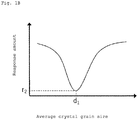
- Figs. 1A , 1B , and 1C each show an example of the response profile obtained by plotting the response amount of the fermentative microorganism with respect to the average crystal grain size of the crystal grain.
- Fig. 1A it can be seen that when the average crystal grain size is d 1 , the response amount of the fermentative microorganism takes a local maximum value (the maximum value in this case) r 1 .
- Fig. 1B contrary to Fig. 1A , it can be seen that when the average crystal grain size is d 1 , the response amount of the fermentative microorganism takes a local minimum value (the minimum value in this case) r 2 .
- Fig. 1A it can be seen that when the average crystal grain size is d 1 , the response amount of the fermentative microorganism takes a local minimum value (the minimum value in this case) r 2 .
- each of the figures shows a scatter diagram connecting the response amounts with smooth lines, however, the present invention is not limited to this. Further, the response amounts can be displayed by a bar graph or any other arbitrary method.
- the average crystal grain size of the crystal grain for giving the optimal response of the fermentative microorganism is determined based on the response profile obtained in the above procedure. Whether or not the response is the optimal response may be judged according to the type of response. This determination procedure will be described with reference to Figs. 1A , 1B , and 1C .
- the response of the fermentative microorganism is, for example, the growth of the fermentative microorganism, the immobilization (adsorption) of the fermentative microorganism on the metal material, or the production of functional ingredients
- the response amount is increased. Therefore, the average crystal grain size of the crystal grain for giving the optimal response of the fermentative microorganism can be obtained by reading the average crystal grain size for giving the maximum value from the response profiles of Figs. 1A and 1C .
- the average crystal grain size optimal for the growth and immobilization of the fermentative microorganism and the production of functional ingredients is d 1 .
- Fig. 1A it can be said that the average crystal grain size optimal for the growth and immobilization of the fermentative microorganism and the production of functional ingredients is d 1 .
- the average crystal grain size d 3 which gives the larger response amount r 4 of the two local maximum values may be read, and the read size may be defined as an average crystal grain size optimal for the growth of the fermentative microorganism.
- both the average crystal grain sizes d 2 and d 3 can be defined as the average crystal grain sizes optimal for the growth of the fermentative microorganism.
- the extreme value (the local maximum value in this case) of the response profile is read so that it is possible to numerically or quantitatively maximize the control of the response of the fermentative microorganism and to easily and stably provide the necessary number of the fermentative microorganism suitable for the fermentation process.
- the average crystal grain size of the crystal grain for giving the optimal response of the fermentative microorganism can be obtained by reading the average crystal grain size for giving the local minimum value from the response profile of Fig. 1B .
- the optimal average crystal grain size for suppressing the aggregation of fermentative microorganism is d 1 .
- the method of producing a fermented food product according to this embodiment includes contacting a fermentative microorganism with the metal material.
- the fermented food product is not particularly limited, and examples of fermented food products include the whole range of foods obtained through a fermentation process of fermenting raw materials by the action of fermentative microorganisms.
- Specific examples of fermented food products include yogurt, lactic acid bacteria beverage, cheese, bread, natto, soy sauce, miso, pickles, dried bonito, black tea, kimchi, sake, and fermented vinegar.
- the method of producing a fermented food product includes the steps of: providing a raw material (providing step); contacting the raw material with a fermentative microorganism to prepare a raw material for fermentation (preparing step); and fermenting the raw material for fermentation (fermenting step). Furthermore, the method of producing a fermented food product according to this embodiment includes a step of cultivating the fermentative microorganism (cultivating step). Although the step of contacting the metal material with the fermentative microorganism may be provided in any step of the fermentation process, the step is preferably at least one of the cultivating step and the fermenting step. In the step, the metal material is contacted with the fermentative microorganism to initiate the optimal response of the fermentative microorganism so that it is possible to promote the production efficiency of the fermented food product and enhance the function of the fermented food product.
- a dairy ingredient is provided as a raw material.
- the dairy ingredient is not particularly limited as long as it is a material made from milk as a basic ingredient.
- milk such as bovine milk and goat milk
- skimmed milk powder, condensed milk, fresh cream, milk protein, and the like may also be used.
- Carbohydrates, stabilizers, emulsifiers, acidulants, pH adjusters, flavoring agents, coloring agents, flavor adjusters, antioxidants, and the like may be added to the dairy ingredients, if necessary.
- Lactic acid bacteria also referred to as starters
- Lactic acid bacteria are not particularly limited, and lactic acid bacteria commonly used for the production of yogurt may be used.
- lactic acid bacteria which can be used include the genus Lactobacillus such as Lactobacillus casei, Lactobacillus acidophilus, Lactobacillus gasseri, Lactobacillus zeae, Lactobacillus johnsonii, Lactobacillus delbrueckii, Lactobacillus bulgaricus; the genus Streptococcus such as Streptococcus thermophilus, Streptococcus cremoris, Streptococcus lactis, and Streptococcus diacetylactis; the genus Lactococcus such as Lactococcus lactis, Lactococcus plantarum, and Lactococcus raffinolactis; the genus Le
- the raw material for fermentation is filled into a container to perform fermentation. Fermentation is performed at 25 to 45°C for 2 to 72 hours, but the condition varies depending on raw materials and lactic acid bacteria.
- the above-described metal materials may be suitably used as the material of the container.
- an inoculum of lactic acid bacteria may be cultivated.
- stainless steel (SUS 304) was subjected to rolling treatment and thermal recrystallization to adjust the average crystal grain sizes of crystal grains to 0.5 ⁇ m, 1 ⁇ m, 1.5 ⁇ m, 2 ⁇ m, 3 ⁇ m, and 9 ⁇ m, respectively.
- the metal material had a plate shape having a length of 10 mm, a width of 10 mm, and a thickness of 0.1 mm.
- the rolling treatment and thermal recrystallization were carried out according to the following procedure. Specifically, the stainless steel (SUS 304) was passed through a rotating mill several times and cold-rolled to about 40 to 65% (compression ratio of about 3 to 15% per time).
- the resulting stainless steel was subjected to annealing at 600 to 850°C for 10 to 100 seconds (heating rate: 200°C/sec) to recrystallize the stainless steel. Finally, the recrystallized stainless steel was cooled to obtain an austenitic stainless steel (cooling rate: 200 to 400°C/sec.).
- the test sample of the metal material provided above was polished with argon ions using an ion polisher ("IM 4000", manufactured by Hitachi High-Technologies Corporation). Thereafter, the average crystal grain size of the metal material was measured at room temperature in a vacuum environment (1 ⁇ 10 -3 Pa) using an electron microscope ("SU-70", manufactured by Hitachi High-Technologies Corporation) having a crystal orientation analysis function. The size of each crystal grain was determined by determining the area of each crystal grain in an arbitrary measurement range (i.e., the observed image; magnification: 1000 times) and calculating a diameter of a circle, assuming that the shape of the crystal grain is a circle having the same area as the area of the crystal grain.
- IM 4000 manufactured by Hitachi High-Technologies Corporation
- the area of the crystal grain and the diameter of the circle having the same area as the area of the crystal grain were calculated using an image processor ("TSL OMI Analysis 7", manufactured by TSL Solutions). Then, the sum of all crystal grain diameters in the arbitrary measurement range was divided by the number of crystal grains, and the resulting value was defined as an average crystal grain size (nm).
- a commercially available "Meiji Probio Yogurt LG21 (sugar-free)" (containing LG21 Lactobacillus gasseri OLL 2716 (Gram-positive bacillus and facultative anaerobe) was provided.
- Yogurt was developed in a petri dish.
- the metal materials having the average crystal grain sizes were completely embedded in the yoghurt and subjected to an adsorption reaction at 35 ⁇ 2°C for 24 hours.
- a polypropylene film (having the same shape as the metal material) was embedded in the yoghurt.
- the film was washed directly with 2 to 3 mL of PBS (sterilized) and further washed twice with 15 mL of PBS (sterilized). Then, lactic acid bacteria were liberated in 5 mL of PBS (sterilized) by vortexing for 40 seconds.
- the undiluted suspension and the 10-fold diluted suspension were developed on 3M Petrifilm Lactic Acid Bacteria Count Plate (LAB Plate), manufactured by 3M Company. A 10 6 -fold diluted yogurt sample and a 10 7 -fold diluted yogurt sample were prepared as controls.
- the samples were cultured at 35°C for 46 hours, and the number of the cultured lactic acid bacteria was counted as the number of lactic acid bacteria adsorbed per 1 cm 2 of the stainless steel piece (CFU/cm 2 (colony forming unit/cm 2 ).
- Fig. 2 shows the response profile obtained by plotting the number of lactic acid bacteria after cultivation with respect to the average crystal grain size in the example.
- the number of the lactic acid bacteria adsorbed on the metal materials was relatively increased when the average crystal grain sizes were 1.5 ⁇ m, 3 ⁇ m, and 9 ⁇ m.
- the average crystal grain size was 188 CFU/cm 2 .
- the maximum value was obtained when the average crystal grain size was 1.5 ⁇ m. It was found that the average crystal grain size optimal for adsorption of lactic acid bacteria was 1.5 ⁇ m.
- a polypropylene film (having the same shape as the metal material) was embedded in the reaction solution. After the adsorption reaction, the film was washed directly with 2 to 3 mL of PBS (sterilized) and further washed twice with 15 mL of PBS (sterilized). Then, yeasts were liberated in 5 mL of PBS (sterilized) by vortexing for 40 seconds. The undiluted suspension and the 10-fold diluted suspension were developed on 3M Petrifilm Plates For Rapidly Counting Molds and Yeasts (RYM Plate), manufactured by 3M Company. A 10 4 -fold diluted reaction solution and a 10 5 -fold diluted reaction solution were prepared as controls.
- reaction solutions were cultured at 25°C ⁇ 2°C for 48 hours, and the number of the cultured yeasts, adsorbed on 1 cm 2 of the stainless steel piece (CFU/cm 2 (colony forming unit/cm 2 )), was counted.
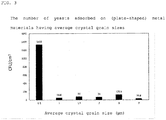
- Fig. 3 shows the response profile obtained by plotting the number of yeasts after cultivation with respect to the average crystal grain size in Example 2. From Fig. 3 , it was found that the maximum value of the number of yeasts adsorbed on metal materials was obtained when the average crystal grain size was 0.5 ⁇ m, and the average crystal grain size optimal for adsorption of yeasts was 0.5 ⁇ m. In the case of the polypropylene film as the control, the number of yeasts was 4725 CFU/cm 2 . The practical application of the results suggest the following possibility; regarding fungi which obtain energy through the fermentation, the number of the fungi adsorbed on the metal material is counted, thereby providing an indicator of the degree of the progress of fermentation by the fungi.
- stainless steel (SUS316L) was subjected to rolling treatment and thermal recrystallization to adjust the average crystal grain sizes of crystal grains to 0.7 ⁇ m, 1.5 ⁇ m, 2.8 ⁇ m, 4.9 ⁇ m, and 9.6 ⁇ m, respectively.
- the metal material had a line shape (wire shape) with a diameter of 1 mm and a length of 13 mm.
- the rolling treatment and thermal recrystallization were carried out according to the following procedure. Specifically, the stainless steel (SUS316L) was passed through a rotating mill several times and cold-rolled to about 40 to 65% (compression ratio of about 3 to 15% per time).
- the resulting stainless steel was subjected to annealing at 600 to 850°C for 10 to 3600 seconds (heating rate: 200°C/sec) to recrystallize the stainless steel. Finally, the recrystallized stainless steel was cooled to obtain an austenitic stainless steel (cooling rate: 200 to 400°C/sec.). The average crystal grain size was measured by the same procedure as in Example 1.
- the stainless steel was washed twice with 15 mL of PBS (sterilized) and then lightly rinsed with 1 mL of PBS. Then, lactic acid bacteria were liberated in 5 mL of PBS (sterilized) by vortexing for 40 seconds.
- the undiluted suspension and the 10-fold diluted suspension were developed on 3M Petrifilm (medium) Plates For Counting Lactic Acid Bacteria (LAB Plate), manufactured by 3M Company.
- a 10 6 -fold diluted yogurt sample and a 10 7 -fold diluted yogurt sample were prepared as controls. Finally, the samples were cultured at 35°C for 48 hours, and the number of the cultured lactic acid bacteria, adsorbed on 1 mm 2 of the stainless steel piece (CFU/mm 2 (colony forming unit/mm 2 ), was counted.
- Fig. 4 shows the response profile obtained by plotting the number of lactic acid bacteria after cultivation with respect to the average crystal grain size in Example 3.
- the number of the lactic acid bacteria adsorbed on the metal materials was relatively increased when the average crystal grain sizes were 1.5 ⁇ m, 4.9 ⁇ m, and 9.6 ⁇ m.
- the number of the lactic acid bacteria adsorbed on the control was 1.2 CFU/mm 2 . It is presumed that this is partly due to the fact that the average crystal grain size of the commercially available SUS316L material as the control was large, the crystal grain size varied widely, and some parts having lactic acid bacteria adsorbed thereon coexisted with some parts having no lactic acid bacteria adsorbed thereon.
- the maximum value was obtained when the average crystal grain size was 1.5 ⁇ m. It was found that the average crystal grain size optimal for adsorption of lactic acid bacteria was 1.5 ⁇ m.
- the practical application of the results suggest the following possibility; regarding fermenting microorganisms which obtain energy through the fermentation in the absence of oxygen (such as facultative anaerobe), the number of the fermenting microorganisms adsorbed on the metal material is counted, thereby providing an indicator of the degree of the progress of fermentation by the fermenting microorganisms.
Landscapes
- Chemical & Material Sciences (AREA)
- Engineering & Computer Science (AREA)
- Life Sciences & Earth Sciences (AREA)
- Health & Medical Sciences (AREA)
- Organic Chemistry (AREA)
- Zoology (AREA)
- Wood Science & Technology (AREA)
- Genetics & Genomics (AREA)
- Bioinformatics & Cheminformatics (AREA)
- Food Science & Technology (AREA)
- Microbiology (AREA)
- Biotechnology (AREA)
- Polymers & Plastics (AREA)
- Nutrition Science (AREA)
- General Engineering & Computer Science (AREA)
- General Health & Medical Sciences (AREA)
- Biochemistry (AREA)
- Mechanical Engineering (AREA)
- Biomedical Technology (AREA)
- Inorganic Chemistry (AREA)
- Physics & Mathematics (AREA)
- Crystallography & Structural Chemistry (AREA)
- Thermal Sciences (AREA)
- Materials Engineering (AREA)
- Metallurgy (AREA)
- Medicinal Chemistry (AREA)
- Tropical Medicine & Parasitology (AREA)
- Virology (AREA)
- General Chemical & Material Sciences (AREA)
- Agronomy & Crop Science (AREA)
- Botany (AREA)
- Micro-Organisms Or Cultivation Processes Thereof (AREA)
Applications Claiming Priority (2)
| Application Number | Priority Date | Filing Date | Title |
|---|---|---|---|
| JP2018183688 | 2018-09-28 | ||
| PCT/JP2019/038069 WO2020067392A1 (ja) | 2018-09-28 | 2019-09-27 | 金属材料、発酵微生物の応答制御方法及び発酵食品の製造方法 |
Publications (2)
| Publication Number | Publication Date |
|---|---|
| EP3858978A1 true EP3858978A1 (de) | 2021-08-04 |
| EP3858978A4 EP3858978A4 (de) | 2021-12-08 |
Family
ID=69949949
Family Applications (1)
| Application Number | Title | Priority Date | Filing Date |
|---|---|---|---|
| EP19867147.1A Pending EP3858978A4 (de) | 2018-09-28 | 2019-09-27 | Metallisches material, verfahren zur steuerung der reaktion eines fermentierenden mikroorganismus und verfahren zur herstellung von fermentiertem nahrungsmittel |
Country Status (4)
| Country | Link |
|---|---|
| US (1) | US20210298320A1 (de) |
| EP (1) | EP3858978A4 (de) |
| JP (1) | JP7099752B2 (de) |
| WO (1) | WO2020067392A1 (de) |
Families Citing this family (2)
| Publication number | Priority date | Publication date | Assignee | Title |
|---|---|---|---|---|
| JP2022500008A (ja) * | 2018-09-28 | 2022-01-04 | 株式会社小松精機工作所 | 生物学的特性を有する金属材料 |
| EP3880379A4 (de) * | 2019-03-22 | 2022-09-28 | Komatsuseiki Kosakusho Co., Ltd. | Metallmaterial und daraus hergestellte gegenstände mit biologischen eigenschaften |
Family Cites Families (5)
| Publication number | Priority date | Publication date | Assignee | Title |
|---|---|---|---|---|
| US4115198A (en) * | 1974-02-11 | 1978-09-19 | Coughlin Robert W | Method of immobilization of biologically active organic substances including enzymes |
| WO2001098477A1 (en) * | 2000-06-19 | 2001-12-27 | N.V. Bekaert S.A. | Immobilising carrier comprising a porous medium |
| JP2005169454A (ja) | 2003-12-11 | 2005-06-30 | Jfe Steel Kk | 鋼帯の製造設備および製造方法 |
| EP2818056A1 (de) * | 2013-06-25 | 2014-12-31 | Biosearch S.A. | Probiotische Bakterien mit Metallen, Metallnanopartikel und Verwendungen davon |
| JP6958972B2 (ja) * | 2016-12-17 | 2021-11-02 | 株式会社不二越 | オーステナイト系ステンレス鋼 |
-
2019
- 2019-09-27 WO PCT/JP2019/038069 patent/WO2020067392A1/ja not_active Ceased
- 2019-09-27 US US17/265,309 patent/US20210298320A1/en not_active Abandoned
- 2019-09-27 EP EP19867147.1A patent/EP3858978A4/de active Pending
- 2019-09-27 JP JP2020549415A patent/JP7099752B2/ja active Active
Also Published As
| Publication number | Publication date |
|---|---|
| US20210298320A1 (en) | 2021-09-30 |
| JP7099752B2 (ja) | 2022-07-12 |
| JPWO2020067392A1 (ja) | 2021-08-30 |
| WO2020067392A1 (ja) | 2020-04-02 |
| EP3858978A4 (de) | 2021-12-08 |
Similar Documents
| Publication | Publication Date | Title |
|---|---|---|
| Jakobsen et al. | Yeasts and their possible beneficial and negative effects on the quality of dairy products | |
| Rzepkowska et al. | Organic whey as a source of Lactobacillus strains with selected technological and antimicrobial properties | |
| JP4203981B2 (ja) | 生菌チーズの製造法 | |
| US12584099B2 (en) | Method for preparing cultures of lactic acid bacteria | |
| CN107118975B (zh) | 一株室温下长货架期存活的罗伊氏乳杆菌 | |
| CN104531587B (zh) | 一株植物乳杆菌及其在活性发酵乳中的应用 | |
| Zotta et al. | Urease production by Streptococcus thermophilus | |
| JPWO2016186151A1 (ja) | 発酵乳の製造方法 | |
| Georgalaki et al. | Biochemical properties of Streptococcus macedonicus strains isolated from Greek Kasseri cheese | |
| Agyei et al. | Optimisation of batch culture conditions for cell-envelope-associated proteinase production from Lactobacillus delbrueckii subsp. lactis ATCC® 7830™ | |
| CN112852684B (zh) | 一株植物乳杆菌Lactobacillus plantarum菌株Y388及其应用 | |
| Yüksekdaǧ et al. | Metabolic activities of Lactobacillus spp. strains isolated from kefir | |
| Mei et al. | Microbial diversity of a Camembert-type cheese using freeze-dried Tibetan kefir coculture as starter culture by culture-dependent and culture-independent methods | |
| KR100500875B1 (ko) | 비피더스균 발효유 및 그의 제조법 | |
| EP3858978A1 (de) | Metallisches material, verfahren zur steuerung der reaktion eines fermentierenden mikroorganismus und verfahren zur herstellung von fermentiertem nahrungsmittel | |
| Savoie et al. | Media and process parameters affecting the growth, strain ratios and specific acidifying activities of a mixed lactic starter containing aroma‐producing and probiotic strains | |
| Walia et al. | Effect of fermentation on physico-chemical, textural properties and yoghurt bacteria in mango soy fortified yoghurt | |
| US9439445B2 (en) | Use of L. casei ssp. paracasei as antifungal agent | |
| US20010049132A1 (en) | Method for supply of starter cultures having a consistent quality | |
| CN103619184B (zh) | 乳酸链球菌素抗性乳酸杆菌突变株减少食物产品中后酸化的用途 | |
| Horáčková et al. | Use of Lactiplantibacillus plantarum for dairy and non-dairy fermented products. | |
| Aktypis et al. | Studies on bacteriocin (thermophilin T) production by Streptococcus thermophilus ACA-DC 0040 in batch and fed-batch fermentation modes | |
| NZ521814A (en) | Method for supply of starter cultures having a consistent quality | |
| Shaikh et al. | Isolation and enumeration of probiotic microorganisms from fermented idli batter | |
| JPS6078582A (ja) | チ−ズ風味物質、その製造法及び用途 |
Legal Events
| Date | Code | Title | Description |
|---|---|---|---|
| STAA | Information on the status of an ep patent application or granted ep patent |
Free format text: STATUS: THE INTERNATIONAL PUBLICATION HAS BEEN MADE |
|
| PUAI | Public reference made under article 153(3) epc to a published international application that has entered the european phase |
Free format text: ORIGINAL CODE: 0009012 |
|
| STAA | Information on the status of an ep patent application or granted ep patent |
Free format text: STATUS: REQUEST FOR EXAMINATION WAS MADE |
|
| 17P | Request for examination filed |
Effective date: 20210309 |
|
| AK | Designated contracting states |
Kind code of ref document: A1 Designated state(s): AL AT BE BG CH CY CZ DE DK EE ES FI FR GB GR HR HU IE IS IT LI LT LU LV MC MK MT NL NO PL PT RO RS SE SI SK SM TR |
|
| A4 | Supplementary search report drawn up and despatched |
Effective date: 20211108 |
|
| RIC1 | Information provided on ipc code assigned before grant |
Ipc: C21D 9/46 20060101ALI20211102BHEP Ipc: C12Q 1/02 20060101ALI20211102BHEP Ipc: C12N 11/14 20060101ALI20211102BHEP Ipc: C12N 1/00 20060101ALI20211102BHEP Ipc: B21B 3/02 20060101ALI20211102BHEP Ipc: A23L 5/00 20160101ALI20211102BHEP Ipc: A23C 9/123 20060101ALI20211102BHEP Ipc: C12N 1/38 20060101AFI20211102BHEP |
|
| DAV | Request for validation of the european patent (deleted) | ||
| DAX | Request for extension of the european patent (deleted) |