EP3869202A1 - Méthode de détermination de la capacité de filtration glomérulaire - Google Patents
Méthode de détermination de la capacité de filtration glomérulaire Download PDFInfo
- Publication number
- EP3869202A1 EP3869202A1 EP19873746.2A EP19873746A EP3869202A1 EP 3869202 A1 EP3869202 A1 EP 3869202A1 EP 19873746 A EP19873746 A EP 19873746A EP 3869202 A1 EP3869202 A1 EP 3869202A1
- Authority
- EP
- European Patent Office
- Prior art keywords
- blood
- glomerular filtration
- serine
- level
- filtration capacity
- Prior art date
- Legal status (The legal status is an assumption and is not a legal conclusion. Google has not performed a legal analysis and makes no representation as to the accuracy of the status listed.)
- Pending
Links
Images



Classifications
-
- G—PHYSICS
- G01—MEASURING; TESTING
- G01N—INVESTIGATING OR ANALYSING MATERIALS BY DETERMINING THEIR CHEMICAL OR PHYSICAL PROPERTIES
- G01N33/00—Investigating or analysing materials by specific methods not covered by groups G01N1/00 - G01N31/00
- G01N33/48—Biological material, e.g. blood, urine; Haemocytometers
- G01N33/50—Chemical analysis of biological material, e.g. blood, urine; Testing involving biospecific ligand binding methods; Immunological testing
- G01N33/68—Chemical analysis of biological material, e.g. blood, urine; Testing involving biospecific ligand binding methods; Immunological testing involving proteins, peptides or amino acids
- G01N33/6803—General methods of protein analysis not limited to specific proteins or families of proteins
- G01N33/6806—Determination of free amino acids
- G01N33/6812—Assays for specific amino acids
-
- A—HUMAN NECESSITIES
- A61—MEDICAL OR VETERINARY SCIENCE; HYGIENE
- A61P—SPECIFIC THERAPEUTIC ACTIVITY OF CHEMICAL COMPOUNDS OR MEDICINAL PREPARATIONS
- A61P13/00—Drugs for disorders of the urinary system
- A61P13/12—Drugs for disorders of the urinary system of the kidneys
-
- G—PHYSICS
- G01—MEASURING; TESTING
- G01N—INVESTIGATING OR ANALYSING MATERIALS BY DETERMINING THEIR CHEMICAL OR PHYSICAL PROPERTIES
- G01N2400/00—Assays, e.g. immunoassays or enzyme assays, involving carbohydrates
- G01N2400/10—Polysaccharides, i.e. having more than five saccharide radicals attached to each other by glycosidic linkages; Derivatives thereof, e.g. ethers, esters
-
- G—PHYSICS
- G01—MEASURING; TESTING
- G01N—INVESTIGATING OR ANALYSING MATERIALS BY DETERMINING THEIR CHEMICAL OR PHYSICAL PROPERTIES
- G01N2800/00—Detection or diagnosis of diseases
- G01N2800/34—Genitourinary disorders
- G01N2800/347—Renal failures; Glomerular diseases; Tubulointerstitial diseases, e.g. nephritic syndrome, glomerulonephritis; Renovascular diseases, e.g. renal artery occlusion, nephropathy
Definitions
- the present invention relates to a method of determining glomerular filtration capacity and to a blood analysis system that determines glomerular filtration capacity.
- Glomerular filtration rate is a typical marker for indication of renal function.
- the glomerular filtration rate represents the liquid volume filtered per minute from blood by the glomeruli, with inulin clearance considered to be the international gold standard.
- measurement of inulin clearance requires continuous drip infusion of inulin over a period of 2 hours as well as urine and blood collection multiple times, which creates a burden for both the patient and the practitioner.
- measurement of inulin clearance is only carried out for limited situations such as donors for live kidney transplant, while for most cases it is substituted by measurement of other markers such as creatinine.
- Most marker values diverge significantly from the actual glomerular filtration rate according to the gold standard of inulin clearance, thus interfering with accurate diagnosis of kidney disease.
- Creatinine is routinely measured in the clinic as a marker for renal function. Creatinine is the final metabolite of creatine which is necessary for muscle contraction. Creatine formed in the liver is taken up into muscle cells and partially metabolized to creatinine, transported to the kidneys through the blood, filtered by the glomeruli, and then excreted into urine in the renal tubules without being reabsorbed. It is utilized for evaluation of renal function because it can serve as an advantageous marker for uremia, since reduced glomerular filtration capacity leads to impaired discharge and accumulation in the blood causing its numerical value to increase. However, the amount of creatinine in blood does not appear as a clearly abnormal value until GFR has reduced by 50% or greater, and it therefore cannot be considered to be a sensitive marker.
- Cystatin C is a protein of 13.36 kDa molecular weight that is produced in a fixed proportion by systemic nucleated cells, and is completely filtered out by the glomeruli and subsequently decomposed in the kidneys via reabsorption in the renal tubules, and since it is therefore thought to be removed from the blood depending on the filtration rate, its amount in blood serves as a GFR marker.
- GFR marker When renal function is greatly reduced, however, the amount of increase in blood cystatin C reaches a plateau, and in end-stage kidney disease it becomes difficult to accurately evaluate renal function.
- D-amino acids had been considered to be absent from the body of mammals, but they have since been shown to be present in various tissues and to carry out physiological functions. It has been shown that the amounts of D-serine, D-alanine, D-proline, D-glutamic acid and D-aspartic acid in blood can serve as kidney failure markers since they vary in kidney failure patients and correlate with creatinine (NPL 1, NPL 2, NPL 3, NPL 4).
- kidney disease PTL 1
- D-serine, D-threonine, D-alanine, D-asparagine, D-allothreonine, D-glutamine, D-proline and D-phenylalanine serve as pathology marker values for kidney disease (PTL 1).
- the aforementioned publications merely disclose that the fluctuation of D-amino acids in the blood of patients suffering from kidney disease compared to healthy persons can be used as markers for diagnosis of kidney disease, or that D-serine blood levels of subjects correlate with creatinine levels or with estimated corrected creatinine levels, but nowhere suggest that D-amino acid blood levels directly correlate with the gold standard of inulin clearance and allow determination (estimation) of glomerular filtration capacity.
- urine L-FABP, blood NGAL and urine KIM-1 have been disclosed as kidney disease markers in recent years, these do not correlate with glomerular filtration capacity.
- the present inventors focusing on blood D-serine and analyzing its correlation with GFR (inulin clearance), found surprisingly that blood D-serine levels in blood samples from healthy persons and kidney disease patients in the early to late stages are more highly correlated with GFR (inulin clearance) than creatinine or cystatin C levels throughout all stages, and have completed this invention based on this finding.
- GFR inulin clearance
- the present invention thus relates to the following:
- the blood D-serine level to be used in the method of determining glomerular filtration capacity of the invention correlates better with GFR (inulin clearance) than blood creatinine or cystatin C levels.
- the present invention relates to a method of determining glomerular filtration capacity based on blood D-serine level.
- glomerular filtration capacity refers to the ability of the glomeruli to filter blood. According to one aspect, it is represented as the glomerular filtration rate (GFR), but the glomerular filtration capacity is not limited to the actual glomerular filtration rate and may be determined in arbitrary units. As an example, the blood D-serine level may be represented as the glomerular filtration capacity either directly or after correction by an arbitrary value depending on the case. According to the invention, the glomerular filtration capacity may be the glomerular filtration capacity corrected for body surface area, or it may be the glomerular filtration capacity without correction for body surface area. Because glomerular filtration capacity requirement differs depending on physical size, correction for body surface area is often used for comparison, statistical processing or screening diagnosis.
- the glomerular filtration rate is represented in units of "mL/min", indicating the liquid volume filtered per minute from blood by the glomeruli. Since the glomerular filtration rate requirement varies according to physical size, it is corrected to the glomerular filtration rate per standard body surface area of 1.73 m 2 for statistical processing, comparison and screening diagnosis, and units of "mL/min/1.73 m 2 " are used. While it is common to use the body surface area-corrected value for comparison and screening diagnosis of renal function, the value without body surface area correction is used for individual renal function diagnosis and dosage determination of renal excretion drugs.
- the glomerular filtration rate is clinically determined from the clearance for inulin, sodium thiosulfate, creatinine, iotalamic acid or sinistrin.
- the present invention determines the glomerular filtration capacity based on the correlation between blood D-serine level and GFR (inulin clearance).
- D-serine used as the marker is the enantiomer of L-serine, a constituent amino acid of proteins.
- D-serine level is strictly regulated in the tissues and blood by metabolic enzymes such as serine racemase and D-amino acid oxidase, but the blood D-serine level varies with renal impairment.
- blood D-serine level may refer to the D-serine level in a specific blood volume, or it may be represented as the concentration.
- the blood D-serine level is measured as the amount in a sample of blood that has been treated by centrifugal separation, sedimentation separation or other pretreatment for analysis. Therefore, the blood D-serine level can be measured as the amount in a blood sample derived from sampled whole blood, serum or blood plasma.
- the D-serine level in a predetermined amount of blood is represented in a chromatogram, and the peak heights, areas and shapes may be quantified by analysis based on standard sample comparison and calibration.
- the D-serine concentration in the blood may be used as the blood D-serine level.
- the amino acid concentration can be calculated by quantitative analysis using a standard calibration curve.
- the D-serine and L-serine levels may be measured by any method, such as chiral column chromatography, or measurement using an enzyme method, or quantitation by an immunological method using a monoclonal antibody that distinguishes between enantiomers of amino acids. Measurement of the D-serine and L-serine levels in a sample according to the invention may be carried out using any method well known to those skilled in the art. Examples include chromatographic and enzyme methods ( Y. Nagata et al., Clinical Science, 73 (1987), 105 . Analytical Biochemistry, 150 (1985), 238 ., A. D'Aniello et al., Comparative Biochemistry and Physiology Part B, 66 (1980), 319 .
- the separative analysis system for enantiomers according to the invention may be a combination of multiple separative analysis methods. More specifically, the D-/L-amino acid level in a sample can be measured using an enantiomer analysis method comprising a step of passing a sample containing a component with enantiomers through a first column filler as the stationary phase, together with a first liquid as the mobile phase, to separate the components in the sample, a step of separately holding each of the components in the sample in a multi loop unit, a step of passing each of the components in the sample that are separately held in the multi loop unit through a flow channel in a second column filler having an optically active center, as the stationary phase, together with a second liquid as the mobile phase, to separate the enantiomers among each of the sample components, and a step of detecting the enantiomers in each of the sample components ( Japanese Patent No.
- D- and L-amino acids are sometimes pre-derivatized with a fluorescent reagent such as o-phthalaldehyde (OPA) or 4-fluoro-7-nitro-2,1,3-benzooxadiazole (NBD-F), or diastereomerized using an agent such as N- tert -butyloxycarbonyl-L-cysteine (Boc-L-Cys) ( Hamase, K. and Zaitsu, K., Bunseki Kagaku, Vol.53, 677-690(2004 )).
- a fluorescent reagent such as o-phthalaldehyde (OPA) or 4-fluoro-7-nitro-2,1,3-benzooxadiazole (NBD-F)
- Boc-L-Cys Hamase, K. and Zaitsu, K., Bunseki Kagaku, Vol.53, 677-690(2004 )
- the D-amino acids may be measured by an immunological method using a monoclonal antibody that distinguishes enantiomers of amino acids, such as a monoclonal antibody that specifically binds to D-serine or L-serine.
- a monoclonal antibody that specifically binds to D-serine or L-serine When the total of the D-form and L-form is to be used as the marker it is not necessary to separate the D-form and L-form, allowing the amino acids to be analyzed without separating the D-form and L-form. In such cases as well, separation and quantitation may be carried out using an enzyme method, antibody method, GC, CE or HPLC.
- the blood creatinine level to be used for comparison with the invention is significantly affected by the amount of muscle from which it is derived, sports athletes, acromegaly patients and persons that have ingested large amounts of meat will exhibit higher values, while patients suffering from neuromuscular disease (such as muscular dystrophy), emaciation, prolonged bed rest, frailty, sarcopenia, locomotive syndrome or amputation, or persons that have restricted their protein intake, will exhibit lower values, and therefore accurate renal function cannot be reflected.
- neuromuscular disease such as muscular dystrophy
- emaciation emaciation
- prolonged bed rest frailty
- sarcopenia sarcopenia
- locomotive syndrome or amputation or persons that have restricted their protein intake
- the accuracy of the glomerular filtration rate determined based on conventional renal function markers such as blood creatinine levels is low, and while accurate glomerular filtration rate measurement is possible based on the gold standard of inulin clearance, it involves complex methods and a burden on patients and health care professionals, and is therefore limited in its practicality.
- the method of determining glomerular filtration capacity according to the invention at least allows the glomerular filtration capacity to be more accurately determined than by blood creatinine levels, and even allows glomerular filtration capacity to be determined more accurately than by blood cystatin C levels.
- D-serine When analysis was made in correlation with inulin clearance in groups classified according to glomerular filtration rate, D-serine exhibited higher correlation coefficient r values and higher correlation with inulin clearance, than both blood cystatin C and creatinine levels across all the groups. Future experiments should be conducted to determine accuracy, but it has the potential to equal or surpass the performance obtained by the glomerular filtration rate determining method based on inulin clearance, which is the international standard for measurement. According to another aspect of the invention, therefore, it is possible to use blood D-serine level as a substitute marker for inulin clearance.
- a substitute marker is a marker whose relationship with a final evaluation can be scientifically proven.
- glomerular filtration rate can be determined based on D-serine levels instead of using a GFR determining method based on inulin clearance, as a result of having used blood D-serine levels to statistically demonstrate a relationship with evaluation based on inulin clearance.
- D-serine has the advantage of not being affected by muscle mass and thus not requiring correction for physical size as is necessary for blood creatinine.
- the method of determining glomerular filtration rate of the invention is characterized by not correcting for one or more physical size-related factors selected from the group consisting of gender, age and muscle mass.
- the glomerular filtration capacity can be determined by substituting a patient blood D-serine level into a formula derived from the correlation between inulin clearance and blood D-serine level, or a corresponding table or graph.
- the correlation between inulin clearance and D-serine level has been shown to be higher than the correlation between inulin clearance and blood creatinine level, and therefore glomerular filtration capacity determined by substituting a patient D-serine level into a formula, or a table or graph, derived from the correlation between inulin clearance and blood D-serine level is more accurate than the conventional glomerular filtration rate determined based on blood creatinine level.
- Inulin clearance used for analysis of correlation may be body surface area-corrected inulin clearance, or the inulin clearance before correcting for body surface area.
- Glomerular filtration capacity before or after correction for body surface area may be selected according to the need.
- a corresponding table derived from the correlation between inulin clearance and blood D-serine level may list values for glomerular filtration capacity corresponding to D-serine level, or it may list severity categories for kidney disease corresponding to numerical ranges.
- the severity categories for chronic kidney disease are the 6 levels of G1, G2, G3a, G3b, G4 and G5, according to the numerical ranges for glomerular filtration rate. Specifically, the definitions are normal or high value for 90 mL/min/1.73 m 2 or greater (G1), normal or mildly low for 60 to 89 mL/min/1.73 m 2 (G2), mildly to moderately low for 45 to 59 mL/min/1.73 m 2 (G3a), moderately to severely low for 30 to 44 mL/min/1.73 m 2 (G3b), severely low for 15 to 29 mL/min/1.73 m 2 (G4) and end-stage kidney disease for less than 15 mL/min/1.73 m 2 (G5) (Japanese Society of Nephrology Guidelines).
- the eGFR determined in this manner is a marker created for health examination screening or for convenient evaluation in epidemiologic research for comparison of numerous subjects, with the values being intended to be calculated with correction to average physical size, and therefore it is still recommended to use inulin clearance for accurate evaluation of renal function for individual patients including excessively lean elderly (Japanese Society of Nephrology Guidelines).
- classification may be according to the 6 severity levels of G1, G2, G3a, G3b, G4 and G5, as categories for chronic kidney disease patients.
- Treatment intervention is used for subjects classified in categories corresponding to G2 to G5.
- the treatment intervention is selected as appropriate for each category.
- the treatment intervention is guidance for one or a combination from among lifestyle habit improvement, dietary guidance, blood pressure management, anemia management, electrolyte management, uremia management, blood sugar level management, immune management or lipid management.
- Lifestyle habit improvement may be a recommendation to stop smoking or to reduce the BMI value to below 25.
- Dietary guidance may be salt or protein restriction.
- blood pressure management anemia management, electrolyte management, uremic toxin manage, blood sugar level management, immune management or lipid management in particular, treatment may involve administration of a drug.
- Blood pressure management may involve general management or administration of an antihypertensive drug, to reach below 130/80 mmHg.
- Antihypertensive drugs include diuretic drugs (thiazide diuretics such as trichlormethiazide, benzylhydrochlorothiazide and hydrochlorothiazide, thiazide-like diuretics such as meticrane, indapamide, tribamide and mefluside, loop diuretics such as furosemide, and potassium-sparing diuretics and aldosterone antagonists such as triamterene, spironolactone and eplerenone), calcium antagonists (dihydropyridine-based antagonists such as nifedipine, amlodipine, efonidipine, cilnidipine, nicardipine, nisoldipine, nitrendipine, nilvadipine, barnidipine, felodipine, benidipine, manidipine, azelnidipine and aranidipine, benzodiazepine-based antagonists
- Erythropoietin formulations, iron agents and HIF-1 inhibitors are used as anemia treatments.
- Calcium receptor agonists such as cinacalcet and etelcalcetide
- phosphorus adsorbents are used as electrolyte regulators.
- Active carbon is used as a uremic toxin adsorbent. Blood glucose level is managed to Hbalc of ⁇ 6.9%, and in some cases a hypoglycemic agent is administered.
- Hypoglycemic agents that are used include SGLT2 inhibitors (such as ipragliflozin, dapagliflozin, luseogliflozin, tofogliflozin, canagliflozin and empagliflozin), DPP4 inhibitors (such as sitagliptin phosphate, vildagliptin, saxagliptin, alogliptin, linagliptin, teneligliptin, trelagliptin, anagliptin, omarigliptin), sulfonylurea agents (such as tolbutamide, acetohexamide, chlorpropamide, glyclopyramide, glibenclamide, gliclazide and glimepiride), thiazolidine agents (such as pioglitazone), biguanide agents (such as metformin and buformin), ⁇ -glucosidase inhibitors (such as a
- dyslipidemia treatments including statins (such as rosuvastatin, pitavastatin, atorvastatin, cerivastatin, fluvastatin, simvastatin, pravastatin, lovastatin and mevastatin), fibrates (such as clofibrate, bezafibrate, fenofibrate and clinofibrate), nicotinic acid derivatives (such as nicotinic acid derivatives (tocopherol nicotinate, nicomol and niceritrol), cholesterol transporter inhibitors (such as ezetimibe), PCSK9 inhibitors (such as evolocumab) and EPA formulations.
- statins such as rosuvastatin, pitavastatin, atorvastatin, cerivastatin, fluvastatin, simvastatin, pravastatin, lovastatin and mevastatin
- fibrates such as clofibrate, bezafibrate,
- kidney transplant All of these drugs may be used as single dosage forms for mixtures.
- renal replacement therapy such as peritoneal dialysis, hemodialysis, continuous hemodialysis filtration, blood apheresis (such as blood plasma exchange or blood plasma adsorption) or kidney transplant may also be carried out.
- FIG. 5 is a block diagram of a sample analysis system of the invention.
- the sample analysis system 10 shown in Fig. 5 is constructed so as to allow the method of determining glomerular filtration capacity according to the invention to be carried out.
- the sample analysis system 10 comprises a storage unit 11, an input device 12, an analytical measurement unit 13, a data processing unit 14 and an output unit 15, and allows analysis of blood samples and output of glomerular filtration capacity.
- the sample analysis system of the invention may further include a step in which the storage unit 11 stores a threshold value inputted from the input device 12, and a step in which the data processing unit 14 compares the separated and quantified D-serine level with the threshold value. When the D-serine level is lower than the threshold value, the output unit 15 outputs an indication that the glomerular filtration capacity is high.
- the data processing unit 14 When the D-serine level is higher than the threshold value, the data processing unit 14 either substitutes the D-serine level into the formula derived from the correlation between inulin clearance and blood sample D-serine levels, or reads it out from a corresponding table or graph, to determine the glomerular filtration capacity, and the output unit 15 outputs the glomerular filtration capacity.
- the storage unit 11 has a portable storage device which may be a memory device such as a RAM, ROM or flash memory, a fixed disk device such as a hard disk drive, or a flexible disk or optical disk.
- the storage unit stores data measured by the analytical measurement unit, data and instructions inputted by the input device, and results of computation processing by the data processing unit, as well as the computer program and database to be used for processing by the information processing equipment.
- the computer program may be a computer readable recording medium such as a CD-ROM or DVD-ROM, or it may be installed via the internet. The computer program is installed in the storage unit using a commonly known setup program or the like.
- the storage unit stores data for the formula derived from the correlation between inulin clearance and blood sample D-serine levels, or for the corresponding table or graph, which have been inputted through the input device 12 beforehand. It may also store renal function categories corresponding to glomerular filtration rates.
- the input device 12 is an interface and also includes operating units such as a keyboard and mouse. This allows the input device to input data measured by the analytical measurement unit 13 and instructions for computation processing to be carried out by the data processing unit 14.
- the input device 12 may also include an interface unit allowing input of measured data through a network or storage medium, separately from the operating unit.
- the analytical measurement unit 13 carries out the measuring step for D-serine in blood samples.
- the analytical measurement unit 13 therefore has a construction allowing separation and measurement of the D-forms and L-forms of amino acids.
- the amino acids may be analyzed one at a time, or some or all of the amino acid types may be analyzed at once.
- the analytical measurement unit 13 may be a chiral chromatography system comprising a sample introduction inlet, an optical resolution column and a detector, for example, and it is preferably a high-performance liquid chromatography system. From the viewpoint of detecting the levels of only specific amino acids, quantitation may be carried out by an enzyme method or immunological method.
- the analytical measurement unit 13 may be constructed separately from the sample analysis system, and measured data may be inputted through the input device 12 using a network or storage medium.
- the data processing unit 14 can determine the glomerular filtration capacity by substituting from a measured D-serine level into the formula derived from the correlation between inulin clearance and blood sample D-serine levels, or reading it out from a corresponding table or graph.
- the formula derived from the correlation between inulin clearance and blood sample D-serine level, or the corresponding table or graph requires other correction values such as age, body weight, gender or body height, that information may also be inputted beforehand through the input device and stored in the storage unit.
- the data processing unit may access the information and input it into the formula, or read out a value from the corresponding table or graph, to calculate the glomerular filtration rate.
- the data processing unit 14 may also determine a kidney disease or renal function category from the determined glomerular filtration capacity.
- the data processing unit 14 carries out various computation processing operations on the data measured by the analytical measurement unit 13 and stored in the storage unit 11, based on a program stored in the storage unit.
- the computation processing is carried out by a CPU in the data processing unit.
- the CPU includes a functional module that controls the analytical measurement unit 13, input device 12, storage unit 11 and output unit 15, the functional module performing various control operations.
- Each of the units may be constructed by independent integrated circuits, microprocessors and firmware.
- the output unit 15 is constructed so as to output the glomerular filtration capacity which is the result of the computation processing by the data processing unit.
- the output unit 15 may be output means such as a display device with a liquid crystal display that directly displays the computation processing results, or a printer, or it may be an interface unit for output to an external memory unit or output to a network. It may output the D-serine level and/or renal function category either together with the glomerular filtration capacity or independently.
- Fig. 6 is a flow chart showing an example of operation for determining glomerular filtration rate by the program of the invention.
- the program of the invention is a program that determines glomerular filtration rate in an information processing device comprising an input device, output unit, data processing unit and storage unit.
- the program of the invention includes a command for causing the information processing device:
- the information processing device may include a command for causing the information processing device to take the value for the blood sample measured by the analytical measurement unit and store it in the storage unit, instead of having the D-serine level value inputted from an input device.
- Patient inulin clearance was calculated from the blood and urine inulin concentrations, and urine volume, according to the standard method described in Clin Exp Nephrol 13, 50-54(2009 ).
- 1% inulin IULEAD injection, Fuji Yakuhin Co., Ltd.
- the test subjects ingested 500 mL of water orally at 30 minutes before drip infusion.
- 60 mL of water was ingested 40, 60 and 90 minutes after starting inulin drip infusion.
- the initial rate of drip infusion was 300 mL/h for the first 30 minutes, and 100 mL/h for the following 90 minutes.
- Blood samples were taken at 45, 75 and 105 minutes after the start of inulin drip infusion.
- the test subjects urinated to completely empty bladder at 30 minutes after the start of drip infusion. Urine samples were then taken during the period of 30 minutes to 60 minutes, 60 minutes to 90 minutes and 90 to 120 minutes thereafter.
- Inulin was measured using an enzyme method. The average of three Cin values was used as Cin (Cin-ST) according to a standard method.
- Sample preparation from human blood plasma was carried out in the following manner: A 20-fold volume of methanol was added to the blood plasma and completely mixed with it. After centrifugation, 10 ⁇ L of supernatant obtained from the methanol homogenate was transferred to a brown tube and dried under reduced pressure. To the residue there were added 20 ⁇ L of 200 mM sodium borate buffer (pH 8.0) and 5 ⁇ L of fluorescent labeling reagent (40 mM 4-fluoro-7-nitro-2,1,3-benzooxadiazole (NBD-F) in anhydrous MeCN), and the mixture was then heated at 60°C for 2 minutes. The reaction was suspended by addition of 75 ⁇ L of aqueous 0.1% TFA (v/v), and 2 ⁇ L of the reaction mixture was supplied to two-dimensional HPLC.
- fluorescent labeling reagent 40 mM 4-fluoro-7-nitro-2,1,3-benzooxadiazole (NBD-F) in anhydrous MeCN
- the amino acid enantiomers were quantified using the following two-dimensional HPLC system. NBD derivatives of the amino acids were separated and eluted using a reversed-phase column (KSAA RP, 1.0 mm i.d. ⁇ 400 mm; Shiseido Corp.), in the mobile phase (5 to 35% MeCN, 0 to 20% THF, 0.05% TFA). The column temperature was 45°C and the mobile phase flow rate was 25 ⁇ L/min. The separated amino acid fraction was separated off using a multi loop valve, and optically resolved in a continuous manner with a chiral column (KSAACSP-001S, 1.5 mm i.d. ⁇ 250 mm; Shiseido Corp.).
- KSAACSP-001S 1.5 mm i.d. ⁇ 250 mm; Shiseido Corp.
- the mobile phase used was a MeOH/MeCN mixed solution containing citric acid (0 to 10 mM or formic acid (0 to 4%), according to the amino acid retention.
- NBD-amino acids were detected by fluorescence detection at 530 nm using excitation light of 470 nm.
- the NBD-amino acid retention time was identified from standard amino acid enantiomers and quantified by a calibration curve.
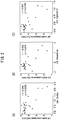
- the GFR inulin clearance
- A blood D-serine level
- B creatinine level
- C cystatin C level
- the results are shown in Fig. 2 .
- the blood D-serine level showed highest correlation with GFR (inulin clearance) without correction for body surface area.
- the 26 test subjects were classified into the following groups based on GFR determined by inulin clearance: (total data (All); GFR of ⁇ 100; ⁇ G3a: GFR of ⁇ 60); ⁇ G3b (GFR of ⁇ 45); ⁇ G4 (GFR of ⁇ 30); ⁇ G5 (GFR of ⁇ 15). There were 21 persons with GFR of ⁇ 100, 8 with ⁇ G3a, 5 with ⁇ G3b, 4 with ⁇ G4 and 3 with ⁇ G5.
- the correlation coefficient r for the GFR (inulin clearance), not corrected for body surface area, and the blood D-serine level (A), creatinine level (B) and cystatin C level (C), as well as the p value, were calculated.
- the results are shown in Fig. 4 .
- the D-serine level showed the highest correlation with GFR (inulin clearance) in each group.
- Blood creatinine level in particular exhibited relatively satisfactory correlation with ⁇ G3a and ⁇ G3b, but the correlation was low with total data (All) and GFR of ⁇ 100, a result that indicates the drawback of creatinine that it is not reflected in cases with mild renal function impairment.
- Cystatin C level showed a high correlation with GFR (inulin clearance) in the data for relatively excellent renal function such as GFR ⁇ 100 and ⁇ G3a, although a lower correlation with GFR (inulin clearance) was shown as renal function declined, such as with ⁇ G3b.
- Blood D-serine level showed a satisfactory correlation with GFR (inulin clearance) in each group.
Landscapes
- Life Sciences & Earth Sciences (AREA)
- Health & Medical Sciences (AREA)
- Engineering & Computer Science (AREA)
- Molecular Biology (AREA)
- Urology & Nephrology (AREA)
- Chemical & Material Sciences (AREA)
- Hematology (AREA)
- Physics & Mathematics (AREA)
- Immunology (AREA)
- Biomedical Technology (AREA)
- General Health & Medical Sciences (AREA)
- Medicinal Chemistry (AREA)
- Bioinformatics & Cheminformatics (AREA)
- Bioinformatics & Computational Biology (AREA)
- General Physics & Mathematics (AREA)
- Biochemistry (AREA)
- Analytical Chemistry (AREA)
- Pathology (AREA)
- Biophysics (AREA)
- Food Science & Technology (AREA)
- Proteomics, Peptides & Aminoacids (AREA)
- Microbiology (AREA)
- Biotechnology (AREA)
- Cell Biology (AREA)
- Pharmacology & Pharmacy (AREA)
- Nuclear Medicine, Radiotherapy & Molecular Imaging (AREA)
- Organic Chemistry (AREA)
- Chemical Kinetics & Catalysis (AREA)
- General Chemical & Material Sciences (AREA)
- Veterinary Medicine (AREA)
- Public Health (AREA)
- Animal Behavior & Ethology (AREA)
- Investigating Or Analysing Biological Materials (AREA)
Applications Claiming Priority (2)
| Application Number | Priority Date | Filing Date | Title |
|---|---|---|---|
| JP2018196251 | 2018-10-17 | ||
| PCT/JP2019/040960 WO2020080484A1 (fr) | 2018-10-17 | 2019-10-17 | Méthode de détermination de la capacité de filtration glomérulaire |
Publications (2)
| Publication Number | Publication Date |
|---|---|
| EP3869202A1 true EP3869202A1 (fr) | 2021-08-25 |
| EP3869202A4 EP3869202A4 (fr) | 2022-08-10 |
Family
ID=70283867
Family Applications (1)
| Application Number | Title | Priority Date | Filing Date |
|---|---|---|---|
| EP19873746.2A Pending EP3869202A4 (fr) | 2018-10-17 | 2019-10-17 | Méthode de détermination de la capacité de filtration glomérulaire |
Country Status (6)
| Country | Link |
|---|---|
| US (1) | US12360117B2 (fr) |
| EP (1) | EP3869202A4 (fr) |
| JP (1) | JP6868878B2 (fr) |
| CN (1) | CN113196062A (fr) |
| TW (1) | TW202028747A (fr) |
| WO (1) | WO2020080484A1 (fr) |
Family Cites Families (9)
| Publication number | Priority date | Publication date | Assignee | Title |
|---|---|---|---|---|
| JP4291628B2 (ja) | 2003-06-12 | 2009-07-08 | 株式会社資生堂 | 液体クロマトグラフ装置及び試料に含まれる光学異性体の分析方法 |
| JP5777149B2 (ja) * | 2011-04-27 | 2015-09-09 | 国立大学法人 宮崎大学 | 糸球体濾過膜の異常に関連した疾患の検査方法、およびこれに使用するための検査用キット |
| WO2013140785A1 (fr) | 2012-03-18 | 2013-09-26 | 国立大学法人九州大学 | Appareil, système et procédé pour l'analyse d'un échantillon d'une maladie |
| JP6207002B2 (ja) * | 2013-02-19 | 2017-10-04 | 国立大学法人 筑波大学 | 尿中メガリン測定値から糸球体濾過量を推定する方法 |
| CA2923140C (fr) * | 2013-09-05 | 2023-09-26 | Idexx Laboratories, Inc. | Methodes de detection d'une maladie renale |
| EP3081939B1 (fr) * | 2013-12-11 | 2021-02-17 | Kagami Inc. | Marqueur permettant le diagnostic précoce de l'insuffisance rénale |
| WO2016025429A1 (fr) * | 2014-08-15 | 2016-02-18 | The Johns Hopkins University | Estimation précise du débit de filtration glomérulaire à partir de plusieurs biomarqueurs |
| SG11201710246YA (en) * | 2015-06-10 | 2018-01-30 | Univ Kanazawa | Disease-state biomarker for renal disease |
| AU2017266330A1 (en) * | 2016-05-17 | 2018-12-06 | Osaka University | Kidney disease prognosis prediction method and system |
-
2019
- 2019-10-17 EP EP19873746.2A patent/EP3869202A4/fr active Pending
- 2019-10-17 CN CN201980083182.4A patent/CN113196062A/zh active Pending
- 2019-10-17 TW TW108137529A patent/TW202028747A/zh unknown
- 2019-10-17 US US17/286,359 patent/US12360117B2/en active Active
- 2019-10-17 JP JP2020541467A patent/JP6868878B2/ja active Active
- 2019-10-17 WO PCT/JP2019/040960 patent/WO2020080484A1/fr not_active Ceased
Also Published As
| Publication number | Publication date |
|---|---|
| TW202028747A (zh) | 2020-08-01 |
| US12360117B2 (en) | 2025-07-15 |
| JP6868878B2 (ja) | 2021-05-12 |
| WO2020080484A1 (fr) | 2020-04-23 |
| CN113196062A (zh) | 2021-07-30 |
| US20210373031A1 (en) | 2021-12-02 |
| JPWO2020080484A1 (ja) | 2021-02-15 |
| EP3869202A4 (fr) | 2022-08-10 |
Similar Documents
| Publication | Publication Date | Title |
|---|---|---|
| EP4083628B1 (fr) | Procédé et système d'estimation de la fonction rénale | |
| JP7733909B2 (ja) | 腎病態の評価を補助する方法、腎病態の評価システム及び腎病態の評価プログラム | |
| JP2025143471A (ja) | 腎病態の評価を補助する方法、腎病態の評価システム及び腎病態の評価プログラム | |
| JP6762529B2 (ja) | 腎臓病の病態バイオマーカー | |
| JP7471581B2 (ja) | 腎臓病の病態バイオマーカー | |
| US12360117B2 (en) | Method for determining glomerular filtration ability | |
| WO2020080482A1 (fr) | Procédé pour analyser la validité d'un résultat de test de fonction rénale selon la teneur en cystatine c dans le sang | |
| WO2020080491A1 (fr) | Procédé pour analyser la validité d'un résultat de test de fonction rénale sur la base de la teneur en créatinine dans le sang | |
| US20210373030A1 (en) | Marker for determing critical stage kidney disease | |
| WO2020080494A1 (fr) | Marqueur permettant de déterminer une lésion rénale dans un stade critique |
Legal Events
| Date | Code | Title | Description |
|---|---|---|---|
| STAA | Information on the status of an ep patent application or granted ep patent |
Free format text: STATUS: THE INTERNATIONAL PUBLICATION HAS BEEN MADE |
|
| PUAI | Public reference made under article 153(3) epc to a published international application that has entered the european phase |
Free format text: ORIGINAL CODE: 0009012 |
|
| STAA | Information on the status of an ep patent application or granted ep patent |
Free format text: STATUS: REQUEST FOR EXAMINATION WAS MADE |
|
| 17P | Request for examination filed |
Effective date: 20210504 |
|
| AK | Designated contracting states |
Kind code of ref document: A1 Designated state(s): AL AT BE BG CH CY CZ DE DK EE ES FI FR GB GR HR HU IE IS IT LI LT LU LV MC MK MT NL NO PL PT RO RS SE SI SK SM TR |
|
| DAV | Request for validation of the european patent (deleted) | ||
| DAX | Request for extension of the european patent (deleted) | ||
| A4 | Supplementary search report drawn up and despatched |
Effective date: 20220707 |
|
| RIC1 | Information provided on ipc code assigned before grant |
Ipc: G01N 33/68 20060101AFI20220701BHEP |
|
| STAA | Information on the status of an ep patent application or granted ep patent |
Free format text: STATUS: EXAMINATION IS IN PROGRESS |