EP3871702A1 - Hydrogelfilm und verwendung davon - Google Patents
Hydrogelfilm und verwendung davon Download PDFInfo
- Publication number
- EP3871702A1 EP3871702A1 EP19875491.3A EP19875491A EP3871702A1 EP 3871702 A1 EP3871702 A1 EP 3871702A1 EP 19875491 A EP19875491 A EP 19875491A EP 3871702 A1 EP3871702 A1 EP 3871702A1
- Authority
- EP
- European Patent Office
- Prior art keywords
- hydrogel
- membrane
- holes
- hydrogel membrane
- dried product
- Prior art date
- Legal status (The legal status is an assumption and is not a legal conclusion. Google has not performed a legal analysis and makes no representation as to the accuracy of the status listed.)
- Withdrawn
Links
- 239000000017 hydrogel Substances 0.000 title claims abstract description 258
- 239000012528 membrane Substances 0.000 claims abstract description 221
- 230000000149 penetrating effect Effects 0.000 claims abstract description 20
- 238000004519 manufacturing process Methods 0.000 claims description 102
- 238000001035 drying Methods 0.000 claims description 24
- 108010035532 Collagen Proteins 0.000 claims description 22
- 102000008186 Collagen Human genes 0.000 claims description 22
- 229920001436 collagen Polymers 0.000 claims description 22
- 238000000034 method Methods 0.000 claims description 14
- 108010045569 atelocollagen Proteins 0.000 claims description 13
- 230000000887 hydrating effect Effects 0.000 claims description 6
- 210000004379 membrane Anatomy 0.000 description 207
- 239000000047 product Substances 0.000 description 59
- -1 poly(methyl methacrylate) Polymers 0.000 description 24
- 239000000463 material Substances 0.000 description 21
- XLYOFNOQVPJJNP-UHFFFAOYSA-N water Substances O XLYOFNOQVPJJNP-UHFFFAOYSA-N 0.000 description 16
- LOKCTEFSRHRXRJ-UHFFFAOYSA-I dipotassium trisodium dihydrogen phosphate hydrogen phosphate dichloride Chemical compound P(=O)(O)(O)[O-].[K+].P(=O)(O)([O-])[O-].[Na+].[Na+].[Cl-].[K+].[Cl-].[Na+] LOKCTEFSRHRXRJ-UHFFFAOYSA-I 0.000 description 15
- 239000002953 phosphate buffered saline Substances 0.000 description 15
- 241000425571 Trepanes Species 0.000 description 11
- 238000001879 gelation Methods 0.000 description 10
- 150000001875 compounds Chemical class 0.000 description 9
- 238000004017 vitrification Methods 0.000 description 8
- 206010052428 Wound Diseases 0.000 description 7
- 208000027418 Wounds and injury Diseases 0.000 description 7
- LFQSCWFLJHTTHZ-UHFFFAOYSA-N Ethanol Chemical compound CCO LFQSCWFLJHTTHZ-UHFFFAOYSA-N 0.000 description 6
- 238000005406 washing Methods 0.000 description 6
- 210000003238 esophagus Anatomy 0.000 description 5
- 239000007788 liquid Substances 0.000 description 5
- 239000004017 serum-free culture medium Substances 0.000 description 5
- 238000011282 treatment Methods 0.000 description 5
- 210000000416 exudates and transudate Anatomy 0.000 description 4
- 239000000499 gel Substances 0.000 description 4
- 239000011521 glass Substances 0.000 description 4
- 239000001963 growth medium Substances 0.000 description 4
- 230000036571 hydration Effects 0.000 description 4
- 238000006703 hydration reaction Methods 0.000 description 4
- 239000007924 injection Substances 0.000 description 4
- 238000002347 injection Methods 0.000 description 4
- 102000010834 Extracellular Matrix Proteins Human genes 0.000 description 3
- 108010037362 Extracellular Matrix Proteins Proteins 0.000 description 3
- 210000002744 extracellular matrix Anatomy 0.000 description 3
- 230000001678 irradiating effect Effects 0.000 description 3
- 229920005615 natural polymer Polymers 0.000 description 3
- 230000035699 permeability Effects 0.000 description 3
- 229920000642 polymer Polymers 0.000 description 3
- 239000000126 substance Substances 0.000 description 3
- 229920001059 synthetic polymer Polymers 0.000 description 3
- 229920000178 Acrylic resin Polymers 0.000 description 2
- 239000004925 Acrylic resin Substances 0.000 description 2
- 208000007217 Esophageal Stenosis Diseases 0.000 description 2
- 239000012981 Hank's balanced salt solution Substances 0.000 description 2
- 241001465754 Metazoa Species 0.000 description 2
- 206010030194 Oesophageal stenosis Diseases 0.000 description 2
- VYPSYNLAJGMNEJ-UHFFFAOYSA-N Silicium dioxide Chemical compound O=[Si]=O VYPSYNLAJGMNEJ-UHFFFAOYSA-N 0.000 description 2
- 238000007605 air drying Methods 0.000 description 2
- 230000015572 biosynthetic process Effects 0.000 description 2
- 230000000694 effects Effects 0.000 description 2
- 239000002245 particle Substances 0.000 description 2
- 229920000058 polyacrylate Polymers 0.000 description 2
- 238000002271 resection Methods 0.000 description 2
- 150000003839 salts Chemical class 0.000 description 2
- 210000002966 serum Anatomy 0.000 description 2
- 239000000243 solution Substances 0.000 description 2
- 229910001220 stainless steel Inorganic materials 0.000 description 2
- 239000010935 stainless steel Substances 0.000 description 2
- UCSJYZPVAKXKNQ-HZYVHMACSA-N streptomycin Chemical compound CN[C@H]1[C@H](O)[C@@H](O)[C@H](CO)O[C@H]1O[C@@H]1[C@](C=O)(O)[C@H](C)O[C@H]1O[C@@H]1[C@@H](NC(N)=N)[C@H](O)[C@@H](NC(N)=N)[C@H](O)[C@H]1O UCSJYZPVAKXKNQ-HZYVHMACSA-N 0.000 description 2
- KIUKXJAPPMFGSW-DNGZLQJQSA-N (2S,3S,4S,5R,6R)-6-[(2S,3R,4R,5S,6R)-3-Acetamido-2-[(2S,3S,4R,5R,6R)-6-[(2R,3R,4R,5S,6R)-3-acetamido-2,5-dihydroxy-6-(hydroxymethyl)oxan-4-yl]oxy-2-carboxy-4,5-dihydroxyoxan-3-yl]oxy-5-hydroxy-6-(hydroxymethyl)oxan-4-yl]oxy-3,4,5-trihydroxyoxane-2-carboxylic acid Chemical compound CC(=O)N[C@H]1[C@H](O)O[C@H](CO)[C@@H](O)[C@@H]1O[C@H]1[C@H](O)[C@@H](O)[C@H](O[C@H]2[C@@H]([C@@H](O[C@H]3[C@@H]([C@@H](O)[C@H](O)[C@H](O3)C(O)=O)O)[C@H](O)[C@@H](CO)O2)NC(C)=O)[C@@H](C(O)=O)O1 KIUKXJAPPMFGSW-DNGZLQJQSA-N 0.000 description 1
- 229920002818 (Hydroxyethyl)methacrylate Polymers 0.000 description 1
- JKMHFZQWWAIEOD-UHFFFAOYSA-N 2-[4-(2-hydroxyethyl)piperazin-1-yl]ethanesulfonic acid Chemical compound OCC[NH+]1CCN(CCS([O-])(=O)=O)CC1 JKMHFZQWWAIEOD-UHFFFAOYSA-N 0.000 description 1
- RZVAJINKPMORJF-UHFFFAOYSA-N Acetaminophen Chemical compound CC(=O)NC1=CC=C(O)C=C1 RZVAJINKPMORJF-UHFFFAOYSA-N 0.000 description 1
- 229920001817 Agar Chemical class 0.000 description 1
- 229920000936 Agarose Chemical class 0.000 description 1
- 208000023514 Barrett esophagus Diseases 0.000 description 1
- 208000023665 Barrett oesophagus Diseases 0.000 description 1
- 102000004266 Collagen Type IV Human genes 0.000 description 1
- 108010042086 Collagen Type IV Proteins 0.000 description 1
- 239000006144 Dulbecco’s modified Eagle's medium Substances 0.000 description 1
- 208000000461 Esophageal Neoplasms Diseases 0.000 description 1
- 206010063560 Excessive granulation tissue Diseases 0.000 description 1
- 208000009331 Experimental Sarcoma Diseases 0.000 description 1
- 102000009123 Fibrin Human genes 0.000 description 1
- 108010073385 Fibrin Proteins 0.000 description 1
- BWGVNKXGVNDBDI-UHFFFAOYSA-N Fibrin monomer Chemical class CNC(=O)CNC(=O)CN BWGVNKXGVNDBDI-UHFFFAOYSA-N 0.000 description 1
- 108010010803 Gelatin Proteins 0.000 description 1
- 229920002683 Glycosaminoglycan Polymers 0.000 description 1
- 239000007995 HEPES buffer Substances 0.000 description 1
- 102000008055 Heparan Sulfate Proteoglycans Human genes 0.000 description 1
- 229920002971 Heparan sulfate Polymers 0.000 description 1
- 108010085895 Laminin Proteins 0.000 description 1
- 102000007547 Laminin Human genes 0.000 description 1
- 239000004677 Nylon Substances 0.000 description 1
- 206010030155 Oesophageal carcinoma Diseases 0.000 description 1
- 208000031481 Pathologic Constriction Diseases 0.000 description 1
- 229930182555 Penicillin Natural products 0.000 description 1
- JGSARLDLIJGVTE-MBNYWOFBSA-N Penicillin G Chemical compound N([C@H]1[C@H]2SC([C@@H](N2C1=O)C(O)=O)(C)C)C(=O)CC1=CC=CC=C1 JGSARLDLIJGVTE-MBNYWOFBSA-N 0.000 description 1
- 229920003171 Poly (ethylene oxide) Polymers 0.000 description 1
- 229920001305 Poly(isodecyl(meth)acrylate) Polymers 0.000 description 1
- 229920002319 Poly(methyl acrylate) Polymers 0.000 description 1
- 239000004793 Polystyrene Substances 0.000 description 1
- 239000004372 Polyvinyl alcohol Substances 0.000 description 1
- 108010067787 Proteoglycans Proteins 0.000 description 1
- 102000016611 Proteoglycans Human genes 0.000 description 1
- 108090000054 Syndecan-2 Proteins 0.000 description 1
- 239000008272 agar Chemical class 0.000 description 1
- 239000000427 antigen Substances 0.000 description 1
- 102000036639 antigens Human genes 0.000 description 1
- 108091007433 antigens Proteins 0.000 description 1
- 239000007864 aqueous solution Substances 0.000 description 1
- 239000012237 artificial material Substances 0.000 description 1
- 210000002469 basement membrane Anatomy 0.000 description 1
- 239000001913 cellulose Chemical class 0.000 description 1
- 229920002678 cellulose Chemical class 0.000 description 1
- 239000000512 collagen gel Substances 0.000 description 1
- 230000008602 contraction Effects 0.000 description 1
- 238000004925 denaturation Methods 0.000 description 1
- 230000036425 denaturation Effects 0.000 description 1
- 239000002612 dispersion medium Substances 0.000 description 1
- 238000002224 dissection Methods 0.000 description 1
- 201000004101 esophageal cancer Diseases 0.000 description 1
- 239000000284 extract Substances 0.000 description 1
- 229950003499 fibrin Drugs 0.000 description 1
- 210000001035 gastrointestinal tract Anatomy 0.000 description 1
- 239000008273 gelatin Substances 0.000 description 1
- 229920000159 gelatin Polymers 0.000 description 1
- 235000019322 gelatine Nutrition 0.000 description 1
- 235000011852 gelatine desserts Nutrition 0.000 description 1
- 210000001126 granulation tissue Anatomy 0.000 description 1
- 229920002674 hyaluronan Polymers 0.000 description 1
- 229960003160 hyaluronic acid Drugs 0.000 description 1
- 150000004677 hydrates Chemical class 0.000 description 1
- 230000002757 inflammatory effect Effects 0.000 description 1
- 230000003902 lesion Effects 0.000 description 1
- 108010082117 matrigel Proteins 0.000 description 1
- 239000002609 medium Substances 0.000 description 1
- 230000004899 motility Effects 0.000 description 1
- 210000000651 myofibroblast Anatomy 0.000 description 1
- 229920001778 nylon Polymers 0.000 description 1
- 230000001575 pathological effect Effects 0.000 description 1
- 229940049954 penicillin Drugs 0.000 description 1
- 239000012466 permeate Substances 0.000 description 1
- 239000002504 physiological saline solution Substances 0.000 description 1
- 229920001490 poly(butyl methacrylate) polymer Polymers 0.000 description 1
- 229920001483 poly(ethyl methacrylate) polymer Polymers 0.000 description 1
- 229920000212 poly(isobutyl acrylate) Polymers 0.000 description 1
- 229920000205 poly(isobutyl methacrylate) Polymers 0.000 description 1
- 229920000196 poly(lauryl methacrylate) Polymers 0.000 description 1
- 229920003229 poly(methyl methacrylate) Polymers 0.000 description 1
- 229920000184 poly(octadecyl acrylate) Polymers 0.000 description 1
- 229920002401 polyacrylamide Polymers 0.000 description 1
- 229920001610 polycaprolactone Polymers 0.000 description 1
- 239000004632 polycaprolactone Substances 0.000 description 1
- 229920000129 polyhexylmethacrylate Polymers 0.000 description 1
- 229920000197 polyisopropyl acrylate Polymers 0.000 description 1
- 239000004926 polymethyl methacrylate Substances 0.000 description 1
- 229920000182 polyphenyl methacrylate Polymers 0.000 description 1
- 229920002223 polystyrene Polymers 0.000 description 1
- 229920002451 polyvinyl alcohol Polymers 0.000 description 1
- 230000002980 postoperative effect Effects 0.000 description 1
- 230000035755 proliferation Effects 0.000 description 1
- 230000001737 promoting effect Effects 0.000 description 1
- 239000005297 pyrex Substances 0.000 description 1
- 239000000741 silica gel Substances 0.000 description 1
- 229910002027 silica gel Inorganic materials 0.000 description 1
- 239000005361 soda-lime glass Substances 0.000 description 1
- 239000007787 solid Substances 0.000 description 1
- 229960005322 streptomycin Drugs 0.000 description 1
- 210000001519 tissue Anatomy 0.000 description 1
- 239000000304 virulence factor Substances 0.000 description 1
- 230000007923 virulence factor Effects 0.000 description 1
Images





Classifications
-
- A—HUMAN NECESSITIES
- A61—MEDICAL OR VETERINARY SCIENCE; HYGIENE
- A61L—METHODS OR APPARATUS FOR STERILISING MATERIALS OR OBJECTS IN GENERAL; DISINFECTION, STERILISATION OR DEODORISATION OF AIR; CHEMICAL ASPECTS OF BANDAGES, DRESSINGS, ABSORBENT PADS OR SURGICAL ARTICLES; MATERIALS FOR BANDAGES, DRESSINGS, ABSORBENT PADS OR SURGICAL ARTICLES
- A61L27/00—Materials for grafts or prostheses or for coating grafts or prostheses
- A61L27/14—Macromolecular materials
- A61L27/22—Polypeptides or derivatives thereof, e.g. degradation products
- A61L27/24—Collagen
-
- A—HUMAN NECESSITIES
- A61—MEDICAL OR VETERINARY SCIENCE; HYGIENE
- A61L—METHODS OR APPARATUS FOR STERILISING MATERIALS OR OBJECTS IN GENERAL; DISINFECTION, STERILISATION OR DEODORISATION OF AIR; CHEMICAL ASPECTS OF BANDAGES, DRESSINGS, ABSORBENT PADS OR SURGICAL ARTICLES; MATERIALS FOR BANDAGES, DRESSINGS, ABSORBENT PADS OR SURGICAL ARTICLES
- A61L27/00—Materials for grafts or prostheses or for coating grafts or prostheses
- A61L27/50—Materials characterised by their function or physical properties, e.g. injectable or lubricating compositions, shape-memory materials, surface modified materials
- A61L27/52—Hydrogels or hydrocolloids
-
- A—HUMAN NECESSITIES
- A61—MEDICAL OR VETERINARY SCIENCE; HYGIENE
- A61L—METHODS OR APPARATUS FOR STERILISING MATERIALS OR OBJECTS IN GENERAL; DISINFECTION, STERILISATION OR DEODORISATION OF AIR; CHEMICAL ASPECTS OF BANDAGES, DRESSINGS, ABSORBENT PADS OR SURGICAL ARTICLES; MATERIALS FOR BANDAGES, DRESSINGS, ABSORBENT PADS OR SURGICAL ARTICLES
- A61L27/00—Materials for grafts or prostheses or for coating grafts or prostheses
- A61L27/50—Materials characterised by their function or physical properties, e.g. injectable or lubricating compositions, shape-memory materials, surface modified materials
- A61L27/56—Porous materials, e.g. foams or sponges
-
- A—HUMAN NECESSITIES
- A61—MEDICAL OR VETERINARY SCIENCE; HYGIENE
- A61L—METHODS OR APPARATUS FOR STERILISING MATERIALS OR OBJECTS IN GENERAL; DISINFECTION, STERILISATION OR DEODORISATION OF AIR; CHEMICAL ASPECTS OF BANDAGES, DRESSINGS, ABSORBENT PADS OR SURGICAL ARTICLES; MATERIALS FOR BANDAGES, DRESSINGS, ABSORBENT PADS OR SURGICAL ARTICLES
- A61L31/00—Materials for other surgical articles, e.g. stents, stent-grafts, shunts, surgical drapes, guide wires, materials for adhesion prevention, occluding devices, surgical gloves, tissue fixation devices
- A61L31/04—Macromolecular materials
- A61L31/043—Proteins; Polypeptides; Degradation products thereof
- A61L31/044—Collagen
-
- A—HUMAN NECESSITIES
- A61—MEDICAL OR VETERINARY SCIENCE; HYGIENE
- A61L—METHODS OR APPARATUS FOR STERILISING MATERIALS OR OBJECTS IN GENERAL; DISINFECTION, STERILISATION OR DEODORISATION OF AIR; CHEMICAL ASPECTS OF BANDAGES, DRESSINGS, ABSORBENT PADS OR SURGICAL ARTICLES; MATERIALS FOR BANDAGES, DRESSINGS, ABSORBENT PADS OR SURGICAL ARTICLES
- A61L31/00—Materials for other surgical articles, e.g. stents, stent-grafts, shunts, surgical drapes, guide wires, materials for adhesion prevention, occluding devices, surgical gloves, tissue fixation devices
- A61L31/14—Materials characterised by their function or physical properties, e.g. injectable or lubricating compositions, shape-memory materials, surface modified materials
- A61L31/145—Hydrogels or hydrocolloids
-
- A—HUMAN NECESSITIES
- A61—MEDICAL OR VETERINARY SCIENCE; HYGIENE
- A61L—METHODS OR APPARATUS FOR STERILISING MATERIALS OR OBJECTS IN GENERAL; DISINFECTION, STERILISATION OR DEODORISATION OF AIR; CHEMICAL ASPECTS OF BANDAGES, DRESSINGS, ABSORBENT PADS OR SURGICAL ARTICLES; MATERIALS FOR BANDAGES, DRESSINGS, ABSORBENT PADS OR SURGICAL ARTICLES
- A61L31/00—Materials for other surgical articles, e.g. stents, stent-grafts, shunts, surgical drapes, guide wires, materials for adhesion prevention, occluding devices, surgical gloves, tissue fixation devices
- A61L31/14—Materials characterised by their function or physical properties, e.g. injectable or lubricating compositions, shape-memory materials, surface modified materials
- A61L31/146—Porous materials, e.g. foams or sponges
-
- A—HUMAN NECESSITIES
- A61—MEDICAL OR VETERINARY SCIENCE; HYGIENE
- A61L—METHODS OR APPARATUS FOR STERILISING MATERIALS OR OBJECTS IN GENERAL; DISINFECTION, STERILISATION OR DEODORISATION OF AIR; CHEMICAL ASPECTS OF BANDAGES, DRESSINGS, ABSORBENT PADS OR SURGICAL ARTICLES; MATERIALS FOR BANDAGES, DRESSINGS, ABSORBENT PADS OR SURGICAL ARTICLES
- A61L2430/00—Materials or treatment for tissue regeneration
- A61L2430/22—Materials or treatment for tissue regeneration for reconstruction of hollow organs, e.g. bladder, esophagus, urether, uterus
-
- A—HUMAN NECESSITIES
- A61—MEDICAL OR VETERINARY SCIENCE; HYGIENE
- A61L—METHODS OR APPARATUS FOR STERILISING MATERIALS OR OBJECTS IN GENERAL; DISINFECTION, STERILISATION OR DEODORISATION OF AIR; CHEMICAL ASPECTS OF BANDAGES, DRESSINGS, ABSORBENT PADS OR SURGICAL ARTICLES; MATERIALS FOR BANDAGES, DRESSINGS, ABSORBENT PADS OR SURGICAL ARTICLES
- A61L2430/00—Materials or treatment for tissue regeneration
- A61L2430/34—Materials or treatment for tissue regeneration for soft tissue reconstruction
Definitions
- the present invention relates to a hydrogel membrane and use thereof. More specifically, the present invention relates to a hydrogel membrane, a dried product of the hydrogel membrane,, an apparatus for producing the hydrogel membrane, or the dried product of the hydrogel membrane, a method for producing a hydrogel, a method for producing a hydrogel membrane, a method for producing a dried product of a hydrogel, and a method for producing a dried product of a hydrogel membrane.
- Patent Literature 1 and Non-Patent Literature 1 disclose that the effect of preventing esophageal stricture and promoting epithelialization can be obtained by applying atelocollagen vitrigel membranes to mucosal resections of the esophagus. Similar treatments may be useful for gastrointestinal tracts other than the esophagus. Further, not only in the medical and pharmaceutical field, but there is also generally a demand for hydrogel membranes to adhere to uneven surfaces.
- Patent Literature 1 PCT International Publication No. WO2017/110776
- Non-Patent Literature 1 Aoki S., et al., High-density collagen patch prevents stricture after endoscopic circumferential submucosal dissection of the esophagus: a porcine model, Gastrointest Endosc., 85 (5), 1076-1085, 2017
- an object of the present invention is to provide a technique for adhering a hydrogel membrane to an uneven surface.
- the present invention includes the following aspects.
- the present invention provides a hydrogel membrane having a plurality of through-holes penetrating one surface and the other surface.
- Figs. 1 is schematic views illustrating an example of a hydrogel membrane of the present embodiment.
- Fig. 1A is a perspective view of a hydrogel membrane 100.
- the hydrogel membrane 100 has one surface 110 and the other surface 120. Further, the hydrogel membrane 100 has a plurality of through-holes 130 penetrating the one surface 110 and the other surface 120.
- Fig. 1B is a cross-sectional view taken along a line b-b' of Fig. 1A .
- the hydrogel membrane of the present embodiment can be easily adhered to an uneven surface. Further, even in a case where the uneven surface is the wound of a living body and exudate exudes from the uneven surface, the exudate can pass through the through-hole, so that the adhesion of the hydrogel membrane to an uneven surface can be maintained.
- the "hydrogel membrane having through-holes" may be referred to as a "porous hydrogel membrane”.
- the term "sol” means one in which dispersoid colloidal particles (particle size of about 1 to several hundred nm) using a liquid as a dispersion medium are particularly composed of a polymer compound. More specific examples of the sol include an aqueous solution of a natural polymer compound or a synthetic polymer compound. Therefore, in a case where these polymer compounds form a network structure by chemical bonding, they are transferred to "hydrogel", which is a semi-solid substance having a large amount of water in the network. That is, “hydrogel” means one obtained by gelating a sol. More specific examples of the hydrogel include those obtained by introducing crosslinks into artificial materials such as natural polymer compounds and synthetic polymer compounds to gelate them.
- the "membrane” can also be referred to as a sheet.
- the thickness of the hydrogel membrane of the present embodiment may be appropriately set as necessary, and may be, for example, 0.1 ⁇ m to 5 mm, for example, 2 ⁇ m to 1 mm, for example, 20 ⁇ m to 400 ⁇ m.
- a hydrogel having a thickness of more than 5 mm is referred to as a hydrogel, and may be distinguished from a hydrogel membrane.
- the opening area of the through-holes on the one surface of the hydrogel membrane may be the same as or different from the opening area of the through-holes on the other surface of the hydrogel membrane.
- the opening area of the through-holes on the one surface of the hydrogel membrane may be smaller than the opening area of the through-holes on the other surface of the hydrogel membrane.
- the area of the one surface of the hydrogel membrane is larger than the area of the other surface of the hydrogel membrane.
- the uneven surface is a wound of a living body
- the opening area of the through-holes is small but open on the one surface of the hydrogel membrane, the exudate can be passed through the through-holes and the adhesion of the hydrogel membrane to an uneven surface can be maintained.
- the ratio of the opening area of the through-holes on the one surface of the hydrogel membrane to the opening area of the through-holes on the other surface of the hydrogel membrane may be, for example, about 100:1 to 1:100, 50:1 to 1:50, or 10:1 to 1:10.
- the hydrogel membrane in which the opening area of the through-holes on one surface of the hydrogel membrane and the opening area of the through-holes on the other surface of the hydrogel membrane are the same can be produced by, for example, forming the through-holes by hollowing out the hydrogel membrane by using a cylindrical blade or the like after forming the hydrogel membrane.
- the cylindrical blade include a medical device such as a trepan.
- the shape of the blade may be appropriately changed according to the cross-sectional shape of the through-hole, and is not limited to the cylindrical shape.
- the hydrogel membrane in which the opening area of the through-holes on one surface of the hydrogel membrane and the opening area on the other surface of the hydrogel membrane are same can be produced by forming the through-holes in which the opening area on the one surface and the opening area on the other surface are the same by laser irradiation after forming the hydrogel membrane.
- the hydrogel membrane in which the opening area of the through-holes on one surface of the hydrogel membrane and the opening area of the through-holes on the other surface of the hydrogel membrane are different can be produced by, for example, by laser irradiation after forming the hydrogel membrane.
- laser irradiation angle and the like it is possible to produce a hydrogel membrane in which the opening area of the through-holes on one surface of the hydrogel membrane and the opening area of the through-holes on the other surface of the hydrogel membrane are different.
- the hydrogel membrane in which the opening area of the through-holes on one surface of the hydrogel membrane and the opening area of the through-holes on the other surface of the hydrogel membrane are different can be produced by a production method described later using a production apparatus described later.
- the material of the hollowed out portion is wasted.
- the material of the hollowed out portion by the laser irradiation is wasted, and the portion irradiated with the laser may be denatured by heat.
- the area of the hydrogel membrane of the present embodiment may be appropriately set as necessary, and may be, for example, 1 mm 2 to 400 cm 2 , for example, 20 mm 2 to 40 cm 2 , for example, 80 mm 2 to 4 cm 2 .
- the hydrogel membrane of the present embodiment has through-holes.
- the shape of the plane perpendicular to the axial direction of the through-holes (hereinafter, may be referred to as the cross-sectional shape of the through-holes) is not particularly limited, and examples thereof include polygons such as a triangle, a quadrangle (including a square, a rectangle, and a trapezoid), a pentagon, a hexagon, a heptagon, and an octagon; and a circle, an ellipse, an approximate circle, an ellipse, an approximate ellipse, a semicircle, and a fan.
- the cross-sectional shape of the through-hole may be constant or may change in the middle.
- the hydrogel membrane may have a plurality of kinds of through-holes having different shapes.
- the diameter of the through-holes of the hydrogel membrane refers to the diameter of a circle having the same area as the widest cross-sectional area among the cross-sectional areas of the plane perpendicular to the axial direction of the through-hole.
- the diameter of the through-hole of the hydrogel membrane of the present embodiment may be 0.1 ⁇ m to 5 mm, 1 ⁇ m to 2 mm, or 10 ⁇ m to 1 mm.
- the diameter of the through-hole may not be constant.
- a plurality of kinds of through-holes having different diameters may be mixed.
- the diameter of the through-holes may differ depending on the position of the hydrogel membrane.
- the number density of the through-holes may be set as necessary, and may be 1 to 1,000,000/cm 2 , 1 to 10,000/cm 2 , or may be 1 to 100/cm 2 . In a case where the diameter of the through-holes is about 0.1 ⁇ m, the number density of the through-holes may be more than 1,000,000/cm 2 .
- the number density of the through-holes may differ depending on the position of the hydrogel membrane.
- the central portion of the hydrogel membrane may have a higher number density of through-holes than the surroundings.
- the number density of through-holes in the central portion of the hydrogel membrane may be lower than that in the periphery.
- natural polymer compounds such as extracellular matrix-derived components that gelate, fibrin, agar, agarose, and cellulose
- synthetic polymer compounds such as polyacrylamide, polyvinyl alcohol, polyethylene oxide, and poly(II-hydroxyethylmethacrylate)/polycaprolactone.
- extracellular matrix-derived component examples include, but are not limited to, collagen (type I, type II, type III, type V, type XI, etc.), basement membrane components reconstituted from mouse EHS tumor extracts (contains type IV collagen, laminin, heparan sulfate proteoglycans, etc.) (trade name "Matrigel”), glycosaminoglycans, hyaluronic acid, proteoglycans, and gelatin.
- a desired hydrogel membrane can be produced by selecting components such as salts most suitable for each gelation, concentrations, and pH thereof.
- the sol is preferably an extracellular matrix-derived component that gelates, and more preferably collagen. Further, among collagens, still more preferred is native collagen or atelocollagen.
- the present invention provides a dried product of the hydrogel membrane described above.
- the hydrogel membrane described above may be dried to form a dried product.
- the free water in the hydrogel can be completely removed, and further the partial removal of the bound water can be advanced.
- vitrigel registered trademark
- Vitrigel refers to a gel in a stable state obtained by rehydration of a conventional hydrogel that has been vitrified by drying (vitrification), and is named by the inventor, "vitrigel”. (Registered trademark)". In the following, when the term “vitrigel” is used, the term “(registered trademark)" may be omitted.
- the vitrigel obtained by rehydration after drying for a short period of time may be washed with PBS or the like and vitrified again.
- the air drying method includes drying in a thermo-hygrostat kept sterile at 10°C and 40% relative humidity for about two days, and drying in a clean bench with a sterile condition for about 24 hours at room temperature.
- the dried product of hydrogel that has not been rehydrated after drying may be simply referred to as "hydrogel dried product”.
- the gel obtained by hydrating the hydrogel after drying may be distinguished and represented as “vitrigel”
- the dried product obtained by drying the vitrigel may be referred to as "vitrigel dried product”.
- the hydrogel in the form of a membrane may be simply referred to as a "hydrogel membrane”
- the vitrigel in the form of a membrane may be simply referred to as a "vitrigel membrane”.
- the dried product of the obtained vitrigel membrane may be irradiated with ultraviolet rays.
- a known ultraviolet irradiation device can be used for the irradiation of ultraviolet rays.
- the total irradiation dose per unit area is preferably 0.1 mJ/cm 2 to 6000 mJ/cm 2 , more preferably 10 mJ/cm 2 to 4000 mJ/cm 2 , and still more preferably 100 mJ/cm 2 to 3000 mJ/cm 2 .
- the total irradiation dose is in the above range, the transparency and strength of the vitrigel membrane material obtained by the subsequent rehydration can be made particularly preferable.
- the irradiation of the vitrigel membrane dried product with ultraviolet rays may be repeated a plurality of times.
- the vitrigel membrane material obtained in the subsequent rehydration step can be further enhanced in transparency and strength by repeatedly irradiating the vitrigel membrane dried product with ultraviolet rays by dividing it into a plurality of times. Further, the larger the number of divisions, the more preferable. For example, when the total irradiation dose per unit area of irradiation of ultraviolet rays to the vitrigel membrane dried product is in the range of 1,000 mJ/cm 2 to 4,000 mJ/cm 2 , the number times of irradiation in the range may be 2 to 10 times, or 2 to 6 times.
- the irradiation site of the ultraviolet rays may be irradiated separately on one surface and the other surface of the vitrigel membrane dried product, and the total irradiation dose thereof may be set as the total irradiation dose of ultraviolet rays per unit area to the vitrigel membrane dried product.
- the reason why the strength and transparency of the vitrigel membrane material obtained in the subsequent rehydration step are enhanced by irradiating the vitrigel membrane dried product with ultraviolet rays is considered that the polymer compounds in the vitrigel membrane material are crosslinked by the ultraviolet rays. That is, the operation can impart high transparency and strength to the vitrigel membrane material.
- the obtained vitrigel membrane dried product that has been subjected to the ultraviolet irradiation treatment may be rehydrated with PBS, a culture medium, or the like to obtain the vitrigel membrane material. Furthermore, the obtained vitrigel membrane material may be dried to be revitrified to obtain a dried product of the vitrigel membrane material.
- the product obtained by irradiating a vitrigel membrane dried product with ultraviolet rays may be referred to as "vitrigel membrane material obtained by subjecting a vitrigel membrane dried product to an ultraviolet irradiation treatment”
- the gel membrane obtained by hydrating the vitrigel membrane material may be referred to as “vitrigel membrane material”
- the dried product obtained by drying the vitrigel membrane material may be referred to as “dried product of vitrigel membrane material”. Therefore, the "vitrigel membrane” and the “vitrigel membrane material” are hydrates.
- the present invention provides a production apparatus including a container portion having a bottom surface portion and a side surface portion, and a plurality of columnar jigs configured to be arranged in contact with the bottom surface portion.
- the production apparatus of the present embodiment produces the hydrogel membrane or the dried product of the hydrogel membrane described above.
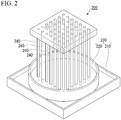
- Fig. 2 is a photograph showing an example of a production apparatus of the present embodiment.
- the production apparatus 200 includes a container portion 230 having a bottom surface portion 210 and a side surface portion 220, and a plurality of columnar jigs 240 configured to be arranged in contact with the bottom surface portion 210.
- a sol is injected into the container portion 230. Subsequently, the sol is gelated in a state where the columnar jigs 240 are arranged so as to be in contact with the bottom surface portion 210. After that, when the columnar jigs 240 are removed, a hydrogel in which the portion where the columnar jigs 240 were present remains as through-holes is obtained. That is, the through-holes of the hydrogel are formed by the columnar jigs 240. Since the gelation occurs in a state in which the columnar jigs 240 are in contact with the bottom surface portion 210, the through-holes formed are those that penetrate one surface and the other surface of the hydrogel.
- the through-holes on the bottom surface side of the hydrogel tend to be pushed from the surroundings by the weight of the hydrogel membrane and become narrower. Therefore, the opening area of the through-holes on the bottom surface side surface of the hydrogel tends to be smaller than the opening area of the through-holes on the other surface of the hydrogel membrane.
- Examples of the materials of the production apparatus 200 constituted by the bottom surface portion 210, the side surface portions 220, and the columnar jigs include, but are not limited to, glass material, polyacrylate (acrylic resin), polystyrene, nylon, and stainless steel.
- the glass material include soda-lime glass, Pyrex (registered trademark) glass, Vycor (registered trademark) glass, and quartz glass.
- the polyacrylates (acrylic resin) include, for example, poly(methyl methacrylate), poly(ethyl methacrylate), poly(butyl methacrylate), poly(isobutyl methacrylate), poly(hexyl methacrylate), poly(isodecyl methacrylate), poly(lauryl methacrylate), poly(phenyl methacrylate), poly(methyl acrylate), poly(isopropyl acrylate), poly(isobutyl acrylate), and poly(octadecyl acrylate).
- At least the side surface portion 220 is transparent, as it makes it easier to inject the sol into the container portion 230 and check the gelation during hydrogel production.
- the present invention provides a method for producing a hydrogel having a plurality of through-holes penetrating one surface and the other surface, which includes (a) injecting a sol into a container portion 230 of the production apparatus described above, (b) arranging the plurality of columnar jigs 240 to be in contact with the bottom surface portion 210 before or after injecting the sol, (c) allowing the sol to stand and gelate to obtain a hydrogel, and (d) removing the plurality of columnar jigs 240 to obtain a hydrogel having a plurality of through-holes penetrating one surface and the other surface.
- the produced hydrogel having a plurality of through-holes may be a vitrigel membrane having a plurality of through-holes by repeating the drying step and the hydration step once or a plurality of times. That is, the production method of the present embodiment may be a production method of a hydrogel membrane which further includes (e) drying the hydrogel obtained in (d) to obtain a dried product, and (f) hydrating the dried product to obtain a hydrated hydrogel membrane.
- the collagen sol may be prepared by using, for example, physiological saline, phosphate-buffered saline (PBS), HBSS (Hank's Balanced Salt Solution), a basic culture medium, a serum-free culture medium, a serum-containing culture medium, or the like, as a sol having an optimum salt concentration.
- PBS phosphate-buffered saline
- HBSS Hort's Balanced Salt Solution
- the pH of the solution at the time of gelation of collagen may be, for example, 6 to 8.
- the collagen sol may be prepared at, for example, about 4°C.
- the hydrogel membrane obtained by using the serum-free culture medium may be suitably used for medical purposes.
- the concentration of the collagen sol for producing the hydrogel is preferably 0.1 to 1.0% by mass, more preferably 0.2 to 0.6% by mass.
- the collagen sol concentration is the lower limit value or more, gelation is not too weak, and when the collagen sol concentration is the upper limit value or less, a hydrogel made of a uniform collagen gel can be obtained.
- the plurality of columnar jigs 240 are arranged so as to be in contact with the bottom surface portion 210. This may be done before the injection of the sol into the container portion 230, or after the injection.
- the sol is allowed to stand and gelate to obtain a hydrogel.
- the temperature at which the sol is kept warm can be appropriately adjusted according to the kind of sol used.
- the heat retention at the time of gelation can be set to a temperature lower than the denaturation temperature of the collagen depending on the animal species of the collagen to be used, and in general, gelation can be performed in several minutes to several hours by keeping warm at a temperature 20°C or more and 37°C or less.
- the plurality of columnar jigs 240 are removed to obtain a hydrogel having a plurality of through-holes penetrating one surface and the other surface.
- the hydrogel may be used as it is, or may be used as a vitrigel membrane by repeating drying and hydration in (e) and (f) to produce a vitrigel membrane.
- the present invention provides a method for producing a dried product of a hydrogel having a plurality of through-holes penetrating one surface and the other surface, which includes (a) injecting a sol into a container portion 230 of the production apparatus described above, (b) arranging the plurality of columnar jigs 240 to be in contact with the bottom surface portion 210 before or after injecting the sol, (c) allowing the sol to stand and gelate to obtain a hydrogel, (d) removing the plurality of columnar jigs 240 to obtain a hydrogel having a plurality of through-holes penetrating one surface and the other surface, and (e) drying the hydrogel obtained in (d) to obtain a dried product of the hydrogel.
- the produced dried hydrogel may be obtained as a vitrigel membrane dried product by repeating the hydration step and the drying step once or a plurality of times. That is, the production method of the present embodiment may be a production method which further includes (f) hydrating the dried product of the hydrogel obtained in (e) to obtain a hydrated hydrogel membrane, and (e2) drying the hydrogel membrane obtained in (f) to obtain a dried product of the hydrogel membrane.
- (a) to (e) are the same as those described above.
- (e2) is the same as (e) except that the object to be dried is a hydrogel or a hydrogel membrane.
- the hydrogel can be produced as follows without using the apparatus described above. First, a sol is injected into a suitable container. Subsequently, the sol is allowed to stand and gelate to obtain a hydrogel. Subsequently, the hydrogel is hollowed out using a cylindrical blade or the like to form through-holes. Examples of the cylindrical blade include a medical device such as a trepan. The shape of the blade may be appropriately changed according to the cross-sectional shape of the through-hole, and is not limited to the cylindrical shape.
- through-holes may be formed in the hydrogel membrane by laser irradiation after forming the hydrogel membrane.
- the produced hydrogel may be dried to obtain a dried product of the hydrogel (membrane).
- the drying step and the hydration step may be repeated once or a plurality of times to obtain a vitrigel membrane or a dried product of a vitrigel membrane.
- a hydrogel membrane was produced using the production apparatus shown in Fig. 2 .
- As the columnar member a cylindrical stainless steel shaft having a diameter of 2 mm was used.
- the production apparatus was sterilized with 70% ethanol and dried in a clean bench.
- DMEM medium (catalog number "11885-084", manufactured by Thermo Fisher Scientific) containing 20 mM HEPES (catalog number "15630-080", manufactured by Thermo Fisher Scientific), 100 units/mL penicillin, and 100 ⁇ g/mL streptomycin (catalog number "15140-148", manufactured by Thermo Fisher Scientific) was used.
- Fig. 3A is a photograph showing a state in which a side surface portion of the production apparatus is removed from the hydrogel.
- Fig. 3B is a photograph showing a state in which a columnar member is removed from the hydrogel.
- Figs. 3C and 3d are photographs of the porous hydrogel taken out from the production apparatus.
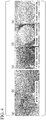
- FIGs. 4A and 4B are photographs of a hydrogel dried product after vitrification.
- Fig. 4C is a photograph of the hydrogel membrane rehydrated by a first wash with PBS addition.
- Fig. 4D is a photograph of the hydrogel membrane rehydrated by a second wash with PBS addition.
- Fig. 4E is a photograph of a hydrogel membrane rehydrated by a third wash with PBS addition.
- a hydrogel membrane having through-holes was produced using a mold having a bottom surface portion and a cylindrical side surface portion having an inner diameter of 34 mm.
- the through-holes were formed using a trepan.
- the mold was sterilized with 70% ethanol and dried in a clean bench.
- 10 mL of the same collagen sol as in Production Example 1 was injected into the mold.
- the mold was allowed to stand in an incubator set at 37°C and 5% CO 2 for 2 hours for gelation to obtain a hydrogel.
- the free water in the hydrogel was dehydrated from the gap between the bottom surface portion and the side surface portion of the mold and dried from the top surface, and at a time point at which the height of the hydrogel reached 6 mm, the hydrogel was taken out from the mold, and dried and vitrified in a thermo-hygrostat kept sterile at 10°C and 40% relative humidity.
- a porous hydrogel membrane of Production Example 3 was obtained in the same manner as in Production Example 2 except that a trepan having a diameter of 1 mm was used.
- a porous hydrogel membrane of Production Example 4 was obtained in the same manner as in Production Example 2 except that an 18G injection needle (diameter 1.2 mm) was used.
- a porous hydrogel membrane of Production Example 5 was obtained in the same manner as in Production Example 2 except that a 27G injection needle (diameter 0.4 mm) was used.
- a hydrogel membrane having through-holes was produced using a mold having a bottom surface portion and a cylindrical side surface portion having an inner diameter of 34 mm.
- the through-holes were formed using a trepan.
- the mold was sterilized with 70% ethanol and dried in a clean bench.
- 10 mL of the same collagen sol as in Production Example 1 was injected into the mold.
- the mold was allowed to stand in an incubator set at 37°C and 5% CO 2 for 2 hours for gelation to obtain a hydrogel.
- Figs. 5A to 5C are photographs of the formation of the through-holes in the hydrogel using a trepan.
- the washing step by rehydration was repeated with fresh PBS, and washing was performed a total of 3 times to obtain a porous hydrogel membrane of Production Example 6.
- the hydrogel membrane of Production Example 6 was mainly different from the hydrogel membrane of Production Example 2 in that through-holes were formed before the hydrogel was vitrified.
- the porous hydrogel membrane of Production Example 7 was obtained in the same manner as in Production example 6, except that at the time point at which the height of the hydrogel reached 10 mm, the hydrogel was not taken out from the mold and a trepan having a diameter of 2.5 mm was pressed to form the through-holes. Since the blade of the trepan was 7 mm short of the height of the gel of 10 mm, the trepan was pressed against the hydrogel and then hollowed out with tweezers to form the through-holes.
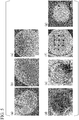
- Figs. 6A, 6D, 6G, 6J, and 6M are photographs of hydrogel membranes of Production Examples 1 to 5, respectively.
- Figs. 6B and 6C, 6E and 6F, 6H and 6I, 6K and 6L, and 6N and 6O are photomicrographs of the hydrogel membranes of Production Examples 1 to 5, respectively.
- the magnifications of Figs. 6B, 6E, 6H, 6K, and 6N are the same, and the scale bar is 1 mm.
- the magnifications of Figs. 6C, 6F, 6I, 6L, and 6O are the same, and the scale bar is 1 mm.
- the through-holes of the hydrogel of Production Example 1 look unclear because the opening area of the through-holes on one surface of the hydrogel membrane is smaller than the opening area of the through-holes on the other surface of the hydrogel membrane.
- hydrogel membranes of Production Example 1 and Production Example 2 were adhered to an uneven surface, and the state was observed. Further, for comparison, the same examination was conducted on the atelocollagen vitrigel membrane having no through-holes.
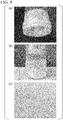
- Fig. 7A is a photograph showing the result of adhering an atelocollagen vitrigel membrane having no through-holes to an uneven surface.
- Fig. 7B is a photograph showing the result of adhering the hydrogel membrane of Production Example 2 to an uneven surface.
- Fig. 7C is a photograph showing the result of adhering the hydrogel membrane of Production Example 1 to an uneven surface.
- the hydrogel membrane having through-holes has better adhesion to an uneven surface as compared with the hydrogel membrane having no through-holes.
- the liquid permeability of the hydrogel membranes of Production Example 1 and Production Example 2 was examined. Further, for comparison, the same examination was conducted on the atelocollagen vitrigel membrane having no through-holes.
- Fig. 8 is a photograph showing a state in which each hydrogel membrane was covered on a conical tube.
- Fig. 9A is a photograph showing a state in which a conical tube to which a dried product of an atelocollagen vitrigel membrane having no through-holes was fixed was inverted.
- Fig. 9B is a photograph showing a state in which the inverted conical tube was brought into contact with cardboard.
- Fig. 9C is a photograph of a state in which no trace of water was observed as a result of contact with the cardboard. As a result, it became clear that water did not permeate at all.
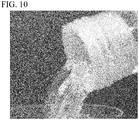
- Fig. 10 is a photograph showing a state in which a conical tube to which the dried product of the hydrogel membrane of Production Example 2 was fixed was inverted. As a result, it was observed that water permeated vigorously.
- Fig. 11A is a photograph showing a state in which a conical tube to which the dried product of the hydrogel membrane of Production Example 1 was fixed was inverted.
- Fig. 11B is a photograph showing a state in which the inverted conical tube was brought into contact with the cardboard about 15 minutes after the conical tube was inverted.
- Fig. 11C is a photograph of a state in which traces of water were observed as a result of contacting the cardboard.
Landscapes
- Health & Medical Sciences (AREA)
- Life Sciences & Earth Sciences (AREA)
- Chemical & Material Sciences (AREA)
- Veterinary Medicine (AREA)
- General Health & Medical Sciences (AREA)
- Public Health (AREA)
- Animal Behavior & Ethology (AREA)
- Epidemiology (AREA)
- Dermatology (AREA)
- Transplantation (AREA)
- Medicinal Chemistry (AREA)
- Oral & Maxillofacial Surgery (AREA)
- Dispersion Chemistry (AREA)
- Heart & Thoracic Surgery (AREA)
- Surgery (AREA)
- Vascular Medicine (AREA)
- Biophysics (AREA)
- Materials For Medical Uses (AREA)
- Colloid Chemistry (AREA)
Applications Claiming Priority (2)
| Application Number | Priority Date | Filing Date | Title |
|---|---|---|---|
| JP2018201946A JP7290302B2 (ja) | 2018-10-26 | 2018-10-26 | ハイドロゲル膜及びその使用 |
| PCT/JP2019/038854 WO2020085018A1 (ja) | 2018-10-26 | 2019-10-02 | ハイドロゲル膜及びその使用 |
Publications (2)
| Publication Number | Publication Date |
|---|---|
| EP3871702A1 true EP3871702A1 (de) | 2021-09-01 |
| EP3871702A4 EP3871702A4 (de) | 2022-07-27 |
Family
ID=70331092
Family Applications (1)
| Application Number | Title | Priority Date | Filing Date |
|---|---|---|---|
| EP19875491.3A Withdrawn EP3871702A4 (de) | 2018-10-26 | 2019-10-02 | Hydrogelfilm und verwendung davon |
Country Status (6)
| Country | Link |
|---|---|
| US (1) | US20220031910A1 (de) |
| EP (1) | EP3871702A4 (de) |
| JP (1) | JP7290302B2 (de) |
| KR (1) | KR20210086609A (de) |
| CN (1) | CN112789064A (de) |
| WO (1) | WO2020085018A1 (de) |
Family Cites Families (21)
| Publication number | Priority date | Publication date | Assignee | Title |
|---|---|---|---|---|
| DE10237531A1 (de) | 2002-08-16 | 2004-02-26 | Tutogen Medical Gmbh | Implantat |
| JPH01170453A (ja) * | 1987-12-25 | 1989-07-05 | Nippon Zeon Co Ltd | 創傷被覆材の製造方法 |
| IT1248934B (it) * | 1990-06-01 | 1995-02-11 | Fidia Spa | Membrane forate biocompatibili,processi per la loro preparazione,loro impiego come supporto per la crescita in vitro di cellule epiteliali, pelli artificiali cosi' ottenute e loro impiego nei trapianti di pelle |
| JPH05192363A (ja) * | 1991-11-07 | 1993-08-03 | Terumo Corp | 創傷被覆材 |
| JPH05337151A (ja) * | 1992-06-11 | 1993-12-21 | Terumo Corp | 創傷被覆材 |
| JP3543869B2 (ja) * | 1995-03-07 | 2004-07-21 | 株式会社メニコン | 培養皮膚およびその製造法 |
| JP3377354B2 (ja) * | 1995-12-25 | 2003-02-17 | 株式会社メニコン | 人工皮膚 |
| RU2122842C1 (ru) * | 1996-12-24 | 1998-12-10 | Межотраслевой научно-технический комплекс "Микрохирургия глаза" | Искусственный хрусталик глаза "флоут" |
| GB2377939B (en) | 2001-07-26 | 2005-04-20 | Johnson & Johnson Medical Ltd | Apertured sheet materials |
| JP2004057430A (ja) | 2002-07-29 | 2004-02-26 | Daiya Seiyaku Kk | パッド材及び携帯用パッド材 |
| JPWO2005014774A1 (ja) | 2003-08-11 | 2006-10-26 | 独立行政法人農業生物資源研究所 | 動物細胞の培養担体と、該培養担体を用いた動物細胞の培養方法および移植方法 |
| US20070110962A1 (en) * | 2003-09-23 | 2007-05-17 | Joe Tien | Three-dimensional gels that have microscale features |
| WO2006053291A2 (en) * | 2004-11-09 | 2006-05-18 | Proxy Biomedical Limited | Tissue scaffold |
| US8353967B2 (en) * | 2009-08-10 | 2013-01-15 | Osseous Technologies Of America | Self-supporting collagen tunnel for guided tissue regeneration and method of using same |
| WO2012026531A1 (ja) | 2010-08-25 | 2012-03-01 | 独立行政法人農業生物資源研究所 | ハイドロゲル乾燥体、ビトリゲル膜乾燥体およびこれらの製造方法 |
| TWI590843B (zh) * | 2011-12-28 | 2017-07-11 | 信迪思有限公司 | 膜及其製造方法 |
| JP2013179967A (ja) | 2012-02-29 | 2013-09-12 | Lastech Co Ltd | 医療用多孔プレート |
| US20170189159A1 (en) * | 2014-06-24 | 2017-07-06 | Osteogenics Biomedical, Inc. | Perforated membrane for guided bone and tissue regeneration |
| WO2017110776A1 (ja) | 2015-12-24 | 2017-06-29 | 国立大学法人 佐賀大学 | 粘膜再生用デバイスおよびこれを利用する粘膜欠損の治療方法 |
| CN107007879A (zh) | 2017-03-14 | 2017-08-04 | 暨南大学 | 一种活性人工角膜及其制备方法 |
| JP6665401B2 (ja) | 2017-06-07 | 2020-03-13 | サミー株式会社 | 遊技機 |
-
2018
- 2018-10-26 JP JP2018201946A patent/JP7290302B2/ja active Active
-
2019
- 2019-10-02 EP EP19875491.3A patent/EP3871702A4/de not_active Withdrawn
- 2019-10-02 US US17/274,959 patent/US20220031910A1/en not_active Abandoned
- 2019-10-02 KR KR1020217009685A patent/KR20210086609A/ko not_active Withdrawn
- 2019-10-02 WO PCT/JP2019/038854 patent/WO2020085018A1/ja not_active Ceased
- 2019-10-02 CN CN201980064533.7A patent/CN112789064A/zh active Pending
Also Published As
| Publication number | Publication date |
|---|---|
| EP3871702A4 (de) | 2022-07-27 |
| JP7290302B2 (ja) | 2023-06-13 |
| WO2020085018A1 (ja) | 2020-04-30 |
| CN112789064A (zh) | 2021-05-11 |
| US20220031910A1 (en) | 2022-02-03 |
| JP2020065849A (ja) | 2020-04-30 |
| KR20210086609A (ko) | 2021-07-08 |
Similar Documents
| Publication | Publication Date | Title |
|---|---|---|
| Zhang et al. | Bioinspired pagoda-like microneedle patches with strong fixation and hemostasis capabilities | |
| CN105999414A (zh) | 制备人造微环境的方法及其应用 | |
| Isfandiary et al. | Composite of chitosan-collagen-aloe vera for scaffolds application on skin tissue | |
| BR112016006038B1 (pt) | Método para a produção auto-organizada de um elemento de celulose estruturado topograficamente superficial e elemento de celulose estruturado topograficamente superficial | |
| JP6240997B2 (ja) | ガラス化後のハイドロゲル膜の製造方法、ハイドロゲル材料の製造方法、ガラス化後のハイドロゲル膜、ガラス化後のハイドロゲル膜の乾燥体および細胞シート | |
| JP7168937B2 (ja) | 糸及びその製造方法 | |
| US20220305177A1 (en) | Thread and method for preparing same | |
| EP3871702A1 (de) | Hydrogelfilm und verwendung davon | |
| Luo et al. | Biomimetic tussah silk/chitosan composite scaffolds with radial pore architecture for enhanced wound repair | |
| JP7344525B2 (ja) | 管状ビトリゲル及びその使用 | |
| JP6993740B2 (ja) | 糸及びその製造方法 | |
| JP7350238B2 (ja) | ハイドロゲル膜乾燥体又はビトリゲル膜乾燥体、その製造装置及びその製造方法、並びに、鼓膜治療デバイス及び創部治療デバイス | |
| JP7019250B2 (ja) | 伸縮性コラーゲンシート | |
| US20250276164A1 (en) | Bio-inspired needle for controlled release | |
| CN118718082B (zh) | 一种桐油烟纳米复合水凝胶的制备方法及应用 | |
| CN103041453A (zh) | 胶原/纤维蛋白胶-vegf与间充质干细胞复合构建的双层皮肤覆盖物及制备方法和应用 | |
| Fernandes | Development of Wound Dressings Based on a Pectin and Chitosan Interpenetrating Polymer Network | |
| Fernandes | Bioprinting pectin-based tissue engineered skin substitutes | |
| He et al. | High Dense Cell Patches from Acoustically Assisted 3D Bioprinting for Wound Healing | |
| CN105561400B (zh) | 一种人工真皮支架及其制备方法 | |
| Salehi Nasab et al. | Co-cultured AuNP and Human Adipose MSCs could serve as a nano-drug system with tissue regenerative applications | |
| US20220193309A1 (en) | Systems and methods for magnet-induced assembly tissue grafts | |
| WO2025154731A1 (ja) | 医療材料 | |
| Lin et al. | Peripheral nerve repair with electrospinning composite conduit | |
| CN118903520A (zh) | 一种促进伤口愈合的敷料及其制备方法与应用 |
Legal Events
| Date | Code | Title | Description |
|---|---|---|---|
| STAA | Information on the status of an ep patent application or granted ep patent |
Free format text: STATUS: THE INTERNATIONAL PUBLICATION HAS BEEN MADE |
|
| PUAI | Public reference made under article 153(3) epc to a published international application that has entered the european phase |
Free format text: ORIGINAL CODE: 0009012 |
|
| STAA | Information on the status of an ep patent application or granted ep patent |
Free format text: STATUS: REQUEST FOR EXAMINATION WAS MADE |
|
| 17P | Request for examination filed |
Effective date: 20210311 |
|
| AK | Designated contracting states |
Kind code of ref document: A1 Designated state(s): AL AT BE BG CH CY CZ DE DK EE ES FI FR GB GR HR HU IE IS IT LI LT LU LV MC MK MT NL NO PL PT RO RS SE SI SK SM TR |
|
| DAV | Request for validation of the european patent (deleted) | ||
| DAX | Request for extension of the european patent (deleted) | ||
| A4 | Supplementary search report drawn up and despatched |
Effective date: 20220627 |
|
| RIC1 | Information provided on ipc code assigned before grant |
Ipc: A61L 31/14 20060101ALI20220621BHEP Ipc: A61L 31/04 20060101ALI20220621BHEP Ipc: A61L 27/56 20060101ALI20220621BHEP Ipc: A61L 27/24 20060101ALI20220621BHEP Ipc: A61L 27/52 20060101AFI20220621BHEP |
|
| STAA | Information on the status of an ep patent application or granted ep patent |
Free format text: STATUS: THE APPLICATION HAS BEEN WITHDRAWN |
|
| 18W | Application withdrawn |
Effective date: 20230728 |