EP3882861A2 - Procédé et appareil pour synthétiser la figure d'un objet virtuel, dispositif électronique et support d'enregistrement - Google Patents
Procédé et appareil pour synthétiser la figure d'un objet virtuel, dispositif électronique et support d'enregistrement Download PDFInfo
- Publication number
- EP3882861A2 EP3882861A2 EP21178930.0A EP21178930A EP3882861A2 EP 3882861 A2 EP3882861 A2 EP 3882861A2 EP 21178930 A EP21178930 A EP 21178930A EP 3882861 A2 EP3882861 A2 EP 3882861A2
- Authority
- EP
- European Patent Office
- Prior art keywords
- face
- image
- virtual object
- face image
- original
- Prior art date
- Legal status (The legal status is an assumption and is not a legal conclusion. Google has not performed a legal analysis and makes no representation as to the accuracy of the status listed.)
- Withdrawn
Links
Images



Classifications
-
- G—PHYSICS
- G06—COMPUTING OR CALCULATING; COUNTING
- G06T—IMAGE DATA PROCESSING OR GENERATION, IN GENERAL
- G06T13/00—Animation
- G06T13/20—Three-dimensional [3D] animation
- G06T13/40—Three-dimensional [3D] animation of characters, e.g. humans, animals or virtual beings
-
- A—HUMAN NECESSITIES
- A63—SPORTS; GAMES; AMUSEMENTS
- A63F—CARD, BOARD, OR ROULETTE GAMES; INDOOR GAMES USING SMALL MOVING PLAYING BODIES; VIDEO GAMES; GAMES NOT OTHERWISE PROVIDED FOR
- A63F13/00—Video games, i.e. games using an electronically generated display having two or more dimensions
- A63F13/60—Generating or modifying game content before or while executing the game program, e.g. authoring tools specially adapted for game development or game-integrated level editor
- A63F13/65—Generating or modifying game content before or while executing the game program, e.g. authoring tools specially adapted for game development or game-integrated level editor automatically by game devices or servers from real world data, e.g. measurement in live racing competition
- A63F13/655—Generating or modifying game content before or while executing the game program, e.g. authoring tools specially adapted for game development or game-integrated level editor automatically by game devices or servers from real world data, e.g. measurement in live racing competition by importing photos, e.g. of the player
-
- G—PHYSICS
- G06—COMPUTING OR CALCULATING; COUNTING
- G06T—IMAGE DATA PROCESSING OR GENERATION, IN GENERAL
- G06T15/00—Three-dimensional [3D] image rendering
- G06T15/04—Texture mapping
-
- G—PHYSICS
- G06—COMPUTING OR CALCULATING; COUNTING
- G06T—IMAGE DATA PROCESSING OR GENERATION, IN GENERAL
- G06T17/00—Three-dimensional [3D] modelling for computer graphics
-
- G—PHYSICS
- G06—COMPUTING OR CALCULATING; COUNTING
- G06T—IMAGE DATA PROCESSING OR GENERATION, IN GENERAL
- G06T17/00—Three-dimensional [3D] modelling for computer graphics
- G06T17/20—Finite element generation, e.g. wire-frame surface description, tesselation
-
- G—PHYSICS
- G06—COMPUTING OR CALCULATING; COUNTING
- G06T—IMAGE DATA PROCESSING OR GENERATION, IN GENERAL
- G06T19/00—Manipulating three-dimensional [3D] models or images for computer graphics
- G06T19/20—Editing of three-dimensional [3D] images, e.g. changing shapes or colours, aligning objects or positioning parts
-
- G—PHYSICS
- G06—COMPUTING OR CALCULATING; COUNTING
- G06T—IMAGE DATA PROCESSING OR GENERATION, IN GENERAL
- G06T5/00—Image enhancement or restoration
- G06T5/50—Image enhancement or restoration using two or more images, e.g. averaging or subtraction
-
- G—PHYSICS
- G06—COMPUTING OR CALCULATING; COUNTING
- G06T—IMAGE DATA PROCESSING OR GENERATION, IN GENERAL
- G06T7/00—Image analysis
- G06T7/70—Determining position or orientation of objects or cameras
-
- G—PHYSICS
- G06—COMPUTING OR CALCULATING; COUNTING
- G06T—IMAGE DATA PROCESSING OR GENERATION, IN GENERAL
- G06T7/00—Image analysis
- G06T7/70—Determining position or orientation of objects or cameras
- G06T7/73—Determining position or orientation of objects or cameras using feature-based methods
-
- G—PHYSICS
- G06—COMPUTING OR CALCULATING; COUNTING
- G06V—IMAGE OR VIDEO RECOGNITION OR UNDERSTANDING
- G06V40/00—Recognition of biometric, human-related or animal-related patterns in image or video data
- G06V40/10—Human or animal bodies, e.g. vehicle occupants or pedestrians; Body parts, e.g. hands
- G06V40/16—Human faces, e.g. facial parts, sketches or expressions
- G06V40/168—Feature extraction; Face representation
- G06V40/171—Local features and components; Facial parts ; Occluding parts, e.g. glasses; Geometrical relationships
-
- G—PHYSICS
- G10—MUSICAL INSTRUMENTS; ACOUSTICS
- G10L—SPEECH ANALYSIS TECHNIQUES OR SPEECH SYNTHESIS; SPEECH RECOGNITION; SPEECH OR VOICE PROCESSING TECHNIQUES; SPEECH OR AUDIO CODING OR DECODING
- G10L15/00—Speech recognition
- G10L15/04—Segmentation; Word boundary detection
-
- H—ELECTRICITY
- H04—ELECTRIC COMMUNICATION TECHNIQUE
- H04N—PICTORIAL COMMUNICATION, e.g. TELEVISION
- H04N21/00—Selective content distribution, e.g. interactive television or video on demand [VOD]
- H04N21/40—Client devices specifically adapted for the reception of or interaction with content, e.g. set-top-box [STB]; Operations thereof
- H04N21/43—Processing of content or additional data, e.g. demultiplexing additional data from a digital video stream; Elementary client operations, e.g. monitoring of home network or synchronising decoder's clock; Client middleware
- H04N21/4302—Content synchronisation processes, e.g. decoder synchronisation
- H04N21/4307—Synchronising the rendering of multiple content streams or additional data on devices, e.g. synchronisation of audio on a mobile phone with the video output on the TV screen
-
- G—PHYSICS
- G06—COMPUTING OR CALCULATING; COUNTING
- G06T—IMAGE DATA PROCESSING OR GENERATION, IN GENERAL
- G06T2200/00—Indexing scheme for image data processing or generation, in general
- G06T2200/04—Indexing scheme for image data processing or generation, in general involving 3D image data
-
- G—PHYSICS
- G06—COMPUTING OR CALCULATING; COUNTING
- G06T—IMAGE DATA PROCESSING OR GENERATION, IN GENERAL
- G06T2207/00—Indexing scheme for image analysis or image enhancement
- G06T2207/20—Special algorithmic details
- G06T2207/20212—Image combination
- G06T2207/20221—Image fusion; Image merging
-
- G—PHYSICS
- G06—COMPUTING OR CALCULATING; COUNTING
- G06T—IMAGE DATA PROCESSING OR GENERATION, IN GENERAL
- G06T2207/00—Indexing scheme for image analysis or image enhancement
- G06T2207/30—Subject of image; Context of image processing
- G06T2207/30196—Human being; Person
- G06T2207/30201—Face
-
- G—PHYSICS
- G06—COMPUTING OR CALCULATING; COUNTING
- G06T—IMAGE DATA PROCESSING OR GENERATION, IN GENERAL
- G06T2219/00—Indexing scheme for manipulating 3D models or images for computer graphics
- G06T2219/20—Indexing scheme for editing of 3D models
- G06T2219/2021—Shape modification
Definitions
- the disclosure relates to the field of artificial intelligence (AI), specifically to the field of computer vision and deep learning (DL), and particularly to a method and an apparatus for synthesizing a figure of a virtual object, an electronic device, and a storage medium.
- AI artificial intelligence
- DL computer vision and deep learning
- a virtual object is the generating human-shaped video images by a combination of digital image, artificial intelligence (AI), and other technologies, which is widely applicable to the field of virtual object speech broadcast. That is, the virtual object may be made to reflect a speaking mouth shape in the form of normal human speaking.
- AI artificial intelligence
- the above fusion manner on the simulating human speaking through the mouth shape of the virtual object may imitate and map the coordinate relationships of key points of the mouth image to the virtual object image.
- a mouth shape reflected in the virtual object image and a mouth shape reflected in the original mouth image may not correspond to the same expression speech in the same coordinate system; on the other hand, it may imitate and map the coordinate relationships of key points of the mouth image to the virtual object image, which completely loses information of the original mouth image and may not achieve the image fusion.
- a method for synthesizing a figure of a virtual object includes: obtaining a figure image of the virtual object, and original face images corresponding to a speech segment, in which the figure image includes a face of the virtual object; extracting a first face key point of the face of the virtual object, and a second face key point of each of the original face images; processing the first face key point based on a preset algorithm, to generate a position and posture information of a first three-dimensional 3D face corresponding to the face of the virtual object; processing each second face key point based on a preset algorithm, to generate vertex information of a second 3D face corresponding to each original face image; generating a target face image corresponding to each original face image based on the position and the posture information of the first 3D face and the vertex information of each second 3D face; and synthesizing a speaking figure segment of the virtual object, corresponding to the speech segment, based on the figure image of the virtual object and each target face image.
- an apparatus for synthesizing a figure of a virtual object includes: an obtaining image, configured to obtain a figure image of the virtual object, and original face images corresponding to a speech segment, in which the figure image includes a face of the virtual object; an extracting module, configured to extract a first face key point of the face of the virtual object, and a second face key point of each of the original face images; a first generating module, configured to process the first face key point based on a preset algorithm, to generate a position and posture information of a first three-dimensional 3D face corresponding to the face of the virtual object; a second generating module, configured to process each second face key point based on a preset algorithm, to generate vertex information of a second 3D face corresponding to each original face image; a third generating module, configured to generate a target face image corresponding to each original face image based on the position and the posture information of the first 3D face and the vertex information of each second 3D face; and
- an electronic device includes: at least one processor; and a memory communicatively coupled to the at least one processor; in which, the memory is configured to store instructions executable by the at least one processor, and when the instructions are executed by the at least one processor, the at least one processor is caused to perform the method for synthesizing the figure of the virtual object as described above.
- a non-transitory computer-readable storage medium storing computer instructions, in which the computer instructions are configured to enable a computer to perform the method for synthesizing the figure of the virtual object as described above.
- a computer program is provided.
- the processor When the computer program is executing on a processor, the processor performs the method for synthesizing the figure of the virtual object as described above.
- the figure image of the virtual object and the original face images corresponding to the speech segment may be obtained, in which the figure image includes the face of the virtual object.
- the first face key point of the face of the virtual object and the second face key point of each of the original face images may be extracted.
- the first face key point may be processed based on the preset algorithm, to generate the position and the posture information of the first 3D face corresponding to the face of the virtual object.
- Each second face key point may be processed based on the preset algorithm, to generate the vertex information of the second 3D face corresponding to each original face image.
- the target face image corresponding to each original face image may be generated based on the position and the posture information of the first 3D face and the vertex information of each second 3D face.
- the speaking figure segment of the virtual object corresponding to the speech segment, may be synthesized based on the figure image of the virtual object and each target face image. Therefore, the original face images may be adjusted to be under the posture and position of the figure of the virtual object for fusion, to improve a naturalness of the fusion images, and make the fusion images to truly restore the speaking figure of the original face images.
- the disclosure proposes a multi-posture fusion solution of the figure image of the virtual object and the original mouth images.
- the original mouth image may be adjusted to be under the corresponding posture of the figure image of the virtual object, and the image fusion may be performed based on a uniform posture, which achieves fusion effect.
- AI artificial intelligence
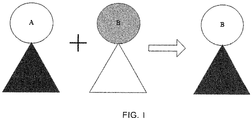
- FIG. 1 a face figure A of a virtual object is changed into a face figure B corresponding to the original mouth image. Since a posture of B is adjusted based on a posture of A, the fusion effect is natural in combination with processing technologies related to computer vision, to ensure the fused figure of the virtual object may truly reflect mouth shapes when B speaks.
- a method and an apparatus for synthesizing a figure of a virtual object, an electronic device, and a storage medium, provided in embodiments of the disclosure, are described with reference to the accompanying drawings.
- the method and the apparatus for synthesizing the figure of the virtual object, the electronic device, and the storage medium in embodiments of the disclosure may be applicable to reality simulation in artificial intelligence(AI) scenarios.
- AI artificial intelligence
- a figure of a virtual object A is controlled to display speeches in the form of reflecting mouth shapes of B. Therefore, the fused figure of the virtual object may not only retain a body posture of A, but also reflect the mouth shapes of B when speaking.
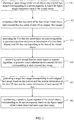
- FIG. 2 is a flowchart illustrating a method for synthesizing a figure of a virtual object according to some embodiments of the disclosure. As illustrated in FIG. 3 , the method may include the following.
- a figure image of the virtual object, and original face images corresponding to a speech segment are obtained, in which the figure image includes a face of the virtual object.
- the figure image of the virtual object which includes the face of the virtual object, in some embodiment of the disclosure, may be a background image in a fusion scenario.
- the figure image of the virtual object may further include a body part of the virtual object in addition to the face of the virtual object.
- the figure image of the virtual object may be a person image, an animal image, as well as a scenery image, which will not be limited herein.
- the original face images corresponding to the speech segment may be obtained as follows.
- a video stream that collects speeches of human beings which express the speech segment in real time may be obtained, and the original face images may be obtained by extracting image frames from the video stream.
- a plurality of deep learning (DL) models corresponding to a plurality of standard mouth shapes may be established based on experimental data in advance.
- the input of the DL model may be the standard mouth image and the speech segment
- the output of the DL model may be a plurality of mouth images corresponding to the speech segment.
- a current original face image is obtained, and the mouth image feature of the current original face image is compared with mouth image features of the plurality of preset standard mouth images, and the target standard mouth image that is most similar is determined from the plurality of preset standard mouth images based on comparison results, and the current original face image and the corresponding speech segment may be input to a DL model corresponding to the target standard mouth image, so that the original face images may be obtained based on the output of the DL model. Therefore, the manner provides technical support in order to satisfy requirements in more scenarios without collecting images in real time. For example, when a current original face image of the user A is obtained, it may reflect the animation effect of the corresponding speech segment expressed by the user A in the figure of the virtual object.
- a first face key point of the face of the virtual object, and a second face key point of each of the original face images are extracted.
- the first face key point and the second face key point may be understood as key points of the corresponding face region, which may include a plurality of key points that may define a contour of a face shape such as a canthus, a tip of a nose, corners of a mouth, a chin.
- the first face key point is processed based on a preset algorithm, to generate a position and posture information of a first three-dimensional 3D face corresponding to the face of the virtual object.
- a position and posture information of the first face key point may be collected so that the original face image is uniformed to be under this position and posture.
- the position of the first 3D face may include a coordinate position of a key point of the face in the image and the like, and the posture information may include a pitch angle, a yaw angle, a roll angle, and the like.
- the preset algorithms of processing the first face key point to generate the position and the posture information of the first 3D face corresponding to the face of the virtual object may different, illustrated in the following examples.
- processing the first face key point based on the preset algorithm, to generate the position and the posture information of the first 3D face corresponding to the face of the virtual object may include the following.
- coordinate transformation processing is performed on the first face key point based on a preset transformation parameter, to generate a first 3D face mesh model.
- the face information under the world coordinate system is transformed to the figure image of the virtual object, which relates to internal parameters and external parameters of a camera. Therefore, the transformation parameter in some embodiments may be understood as internal parameters and external parameters of the camera, or algorithm parameters reflecting internal parameters and external parameters of the camera, in which, internal parameters and external parameters of the camera may be obtained based on a checkerboard calibration method of Zhang Zhengyou.
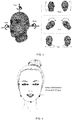
- the coordinate transformation processing is performed on the first face key point based on the preset transformation parameter, to generate the first 3D face mesh model, that is, as illustrated in FIG. 4 , the first 2D face key point may be restored to obtain the first 3D face mesh model.
- the position and the posture information of the first 3D face corresponding to the face of the virtual object are extracted from the first 3D face mesh model, in which, the posture information includes a pitch angle, a yaw angle, and a roll angle.
- the position and the posture information of the first 3D face corresponding to the face of the virtual object may be extracted in the first 3D face mesh model, so as to achieve a multi-posture grasp for the first 3D face mesh model.
- the posture information includes three Euler angles of pitch, yaw, and roll, which are the pitch angle, the yaw angle, and the roll angle respectively.
- the pitch angle, the yaw angle, and roll angle may be solved based on a rotation matrix.
- T the spatial position relation matrix of the object relative to the camera
- R the spatial posture relation matrix of the object relative to the camera
- a rotation matrix of the pixel coordinate system to the world coordinate system is calculated based on R and T.
- the above posture information may be obtained based on transformation calculation of 2D coordinates and 3D coordinates of the first face key points through the rotation matrix.
- structured light is projected to the face of the virtual object to obtain a structured light image modulated by the face of the virtual object, and the structured light image is demodulated to obtain depth information corresponding to the first face key point of the face of the virtual object, and the first 3D face mesh model corresponding to the first face key point may be constructed based on the depth information and the coordinate information of the first face key point, so that the corresponding posture information may be obtained through model analysis of the first 3D face mesh model.
- a 3D coordinate system (including three directions of x, y, z) is constructed in advance, and the first 3D face mesh model is placed in the coordinate system to collect posture information (three displacements in three directions of x, y, z may be read as posture information).
- each second face key point is processed based on a preset algorithm, to generate vertex information of a second 3D face corresponding to each original face image.
- the vertex information of the second 3D face may be understood as, as illustrated in FIG. 6 , contour information corresponding to the original face image, and the contour information further includes an irrelevant shape contour and a relative position except the face contour. It also be understood that, a contour image of the face in the original face image may be obtained based on the vertex information of the second 3D face.
- the vertex information of the second 3D face corresponding to each original face image is obtained, so as to achieve that a face figure of the original face image may be represented on the face of the figure image of the virtual object.
- the corresponding vertex information of the second 3D face is determined in a 3D model.
- processing each second face key point based on the preset algorithm, to generate the vertex information of the second 3D face corresponding to each original face image may include the following.
- coordinate transformation processing is performed on each second face key point based on a preset transformation parameter, to generate a second 3D face mesh model corresponding to each original face image.
- the face information under the world coordinate system is transformed to the figure image of the virtual object, which relates to internal parameters and external parameters of a camera. Therefore, the transformation parameter in some embodiments may be understood as internal parameters and external parameters of the camera, or algorithm parameters reflecting internal parameters and external parameters of the camera, in which, internal parameters and external parameters of the camera may be obtained based on a checkerboard calibration method of Zhang Zhengyou.
- the coordinate transformation processing is performed on each second face key point based on the preset transformation parameter, to generate the second 3D face mesh model corresponding to each original face image, that is, the second 2D face key point may be restored to obtain the second 3D face mesh model.
- the vertex information of the second 3D face is extracted from each second 3D face mesh model.
- the vertex information of the second 3D face is extracted from each second 3D face mesh model, for example, a point with obvious step changes may be determined as a vertex of the second 3D face based on depth information of the second 3D face mesh model, and coordinate information of the point may be taken as the vertex information of the second 3D face.
- each original face image is transformed to a binary image, and the corresponding second face key point is labeled in the binary image.
- a noise interference contour line in the binary image is removed based on the second face key point, that is, the contour line that does not contain the second face key point is removed.
- a key point is sampled from the remaining contour lines to obtain a vertex of the second 3D face.
- a slope difference among each sampling key point and left and right adjacent key points may be calculated in the remaining contour lines, and the sampling key point with the slope difference greater than a certain value is determined as the vertex of the second 3D face.
- a target face image corresponding to each original face image is generated based on the position and the posture information of the first 3D face and the vertex information of each second 3D face.
- the vertex information of each second 3D face is controlled to make position adjustment based on the position and the posture information of the first 3D face, thus the target face image corresponding to each original face image is generated, and the posture and position of the target face image have been aligned with the figure image of the corresponding virtual object.
- a speaking figure segment of the virtual object is synthesized based on the figure image of the virtual object and each target face image.
- each target face image When each target face image is obtained, the figure image of the virtual object and each target face image are fused. Since the figure image of the virtual object has been aligned with each target face image in the 3D view, a face image having the same mouth shape with the target face image may be rendered in the figure image of the virtual object. Obviously, when the figure image of the virtual object and each target face image are fused, a speaking figure segment of the virtual object, corresponding to the speech segment, may be obtained.
- a size of each target face image may be adjusted, to achieve the same size with the face region of the figure image of the virtual object.
- projection transformation is performed on each target face image, to achieve 2D projection of the vertex information of the second 3D face corresponding to each target face image under the position and the posture of the figure image of the virtual object.
- transparency of the coincidence point with the vertex information of the second 3D face in the figure image of the virtual object may be changed, to achieve mutual fusion.
- the pixel transparency of the coincidence point corresponding to the contour line of face features of the target face image is set as 100%, so that the synthesized figure image of the virtual object reflects the face features of the target face image.
- the pixel transparency of coincidence points in addition to the contour line of face features of the target face image is set as 0, so that the synthesized figure image of the virtual object reflects skin color information of the figure image of the virtual object, in which, the pixel transparency of the contour region of face features in the synthesized figure image of the virtual object may be set as 100%, so as to ensure the purity of the synthesized figure image of the virtual object.
- the face region of the figure image of the virtual object is replaced with the face region of the target face image to achieve fusing.
- the figure image of the virtual object and the original face images corresponding to the speech segment may be obtained, in which the figure image includes the face of the virtual object.
- the first face key point of the face of the virtual object and the second face key point of each of the original face images may be extracted.
- the first face key point may be processed based on the preset algorithm, to generate the position and the posture information of the first 3D face corresponding to the face of the virtual object.
- Each second face key point may be processed based on the preset algorithm, to generate the vertex information of the second 3D face corresponding to each original face image.
- the target face image corresponding to each original face image may be generated based on the position and the posture information of the first 3D face and the vertex information of each second 3D face.
- the speaking figure segment of the virtual object, corresponding to the speech segment may be synthesized based on the figure image of the virtual object and each target face image. Therefore, the original face images may be adjusted to be under the posture and position of the figure of the virtual object for fusion, to improve a naturalness of the fusion images, and make the fusion images to truly restore the speaking figure of the original face images.
- the target face image restores the posture and position of the face of the virtual object.
- the face of the virtual object is an aslant head, whatever posture of the face in the original face image is, it may be transformed to the target face image corresponding to the same aslant head.
- generating the target face image corresponding to each original face image based on the position and the posture information of the first 3D face and the vertex information of each second 3D face may be different.
- projection transformation may be performed on the position and the posture information of the first 3D face and the vertex information of each second 3D face respectively based on a preset transformation algorithm, to generate a first target face image corresponding to each original face image.
- the transformation algorithm for implementing the transformation between the face position and posture information and the coordination information may be pre-constructed, and the projection transformation is performed respectively on the position and the posture information of the first 3D face and the vertex information of each second 3D face based on the preset transformation algorithm. That is, the vertex information of the second 3D face in 3D space is projected to a 2D image space through the posture of the face of the virtual object, to obtain the new face image as the first target face image.
- the texture of the obtained first target face image is blank, and texture rendering needs to be aligned to obtain a complete target face image.
- texture information of the face of the virtual object is obtained by direct sampling, and the first target face image may be rendered based on the texture information.
- the rendered target face image is more close to the face of the virtual image.
- texture rendering on the first target face image may include the following.
- each second face key point is processed based on a preset algorithm, to generate a position and posture information of the second 3D face corresponding to each original face image.
- the manner of obtaining the position and the posture information of the second 3D face may refer to the manner of obtaining the position and the posture information of the first 3D face, which will not be repeated herein.
- texture information of a position corresponding to the position and the posture information of the second 3D face is obtained from each original face image based on a preset projection transformation algorithm.
- texture information of the position corresponding to the position and the posture information of the second 3D face may be found from each original face image, for example, the position corresponding to the position and the posture information of the second 3D face is "tip of nose", and texture information corresponding to "tip of nose” is found from the original face image.
- the region including corresponding pixels in each original face image is taken as the texture information of the position corresponding to the position and the posture information of the second 3D face.
- texture rendering is performed on each first target face image based on the texture information of the corresponding position, to generate a second target face image corresponding to each original face image.
- the position and the posture information of the second 3D face corresponding to the texture information may match the position and the posture information of the second 3D face mesh model corresponding to each first target face image, to determine texture information of each region of the second 3D face mesh model, further to determine the corresponding region of each region in each first target face image, and take the corresponding texture information as the texture information of the corresponding region.
- Texture rendering may be performed on each first target face image, to generate the second target face image corresponding to each original face image.
- the coordinate transformation processing is performed on each second face key point based on the preset transformation parameter, and the second 3D face mesh model corresponding to each original face image is generated.
- the position and the posture information of the second 3D face mesh model is adjusted based on the position and the posture information of the first 3D face, and the vertex information of the second 3D face in the adjusted second 3D face mesh model is projected to obtain the corresponding first target face image, in which the process of texture rendering on the first target face image to generate the second target face image may refer to the above embodiments.
- a texture value corresponding to the vertex in the original face image may be further obtained by sampling based on the projection coordinate of the vertex information of the second 3D face, that is, the corresponding texture value of the 2D planimetric position of the vertex through new posture projection transformation.
- the regions between vertexes is rendered by bilinear interpolation to calculate the coordinates of the corresponding points and sample texture rendering. The above processes may be repeated to complete rendering of a whole latest face image, further to obtain the second target face image.
- the posture of the original face image is adjusted based on the figure image of the virtual object corresponding to the face of the virtual object, to avoid the naturalness of the synthesized image
- the original face image is adjusted based on the 3D posture of the face of the virtual object, to avoid deformity of the synthesized image.
- synthesizing the speaking figure segment of the virtual object, corresponding to the speech segment, based on the figure image of the virtual object and each target face image may include the following.
- a lower-half face mask corresponding to each target face image is generated.
- the lower-half face mask corresponding to each target face image is generated to ensure the retain of the mouth image of each target face image.
- edge detection is performed on each target face image to obtain face edge points, the face edge points are connected to form a closed region, and a fixed value is filled in the closed region to generate a full face mask.
- the fixed value may be any pixel value, for example, "1".
- the lower-half face mask is intercepted from the full face mask by taking a central key point of a nose bridge as reference.
- the central key point of the nose bridge may be understood as the central point of the region of the tip of nose.
- fusion processing is performed on the figure image of the virtual object and each target face image based on a preset first fusion algorithm according to the lower-half face mask, to generate first fusion images.
- the fusion processing is performed on the figure image of the virtual object and each target face image based on the preset first fusion algorithm according to the lower-half face mask, to generate a plurality of first fusion images, in which the first fusion algorithm may be a Poisson fusion algorithm, an Alpha algorithm, etc., which will not be limited herein.
- the speaking figure segment of the virtual object corresponding to the speech segment is synthesized based on the first fusion images.
- the first fusion algorithm may achieve texture fusion of the target face image and the figure image of the virtual object, and the speaking figure segment of the virtual object corresponding to the speech segment is synthesized based on the plurality of first fusion images, which not only retains mouth information of the target face image, but also the synthesized texture boundary is not obvious and fusion effect is natural.
- a mouth region mask corresponding to each target face image is generated, in which, key points of an outer edge of a mouth of each target face image may be extracted, the key points of the outer edge of the mouth may be connected to form a closed region and a fixed value may be filled with the closed region to generate an initial mask (the fixed value may be 1), and Gaussian filtering is performed on the initial mask to obtain the mouth region mask corresponding to each target face image.
- fusion processing is performed on the figure image of the virtual object and each first fusion image based on a preset second fusion algorithm according to the mouth region mask, to generate second fusion images, in which the second fusion algorithm may be a Poisson fusion algorithm, an Alpha algorithm, etc., which will not be limited herein.
- the speaking figure segment of the virtual object corresponding to the speech segment is synthesized based on the second fusion images.
- the second fusion algorithm may achieve texture fusion of the target face image and the figure image of the virtual object, and the speaking figure segment of the virtual object corresponding to the speech segment is synthesized based on the second fusion images, which not only retains mouth information of the target face image, but also fuses both textures and enhances display effect after fusion.
- the first fusion algorithm is a Poisson fusion algorithm and the second fusion algorithm is an Alpha algorithm.
- the position and the posture information of the first 3D face corresponding to the face of the virtual object in the figure image of the virtual object, the vertex information of the second 3D face of the original face image, and the position and the posture information of the second 3D face are obtained.
- projection transformation is performed on the vertex information of the second 3D face based on the position and the posture information of the first 3D face and the vertex information of the second 3D face, to generate the first target face image corresponding to each original face image, and the generated first target face image is a 2D image.
- texture rendering is performed on the first target face image based on the position and posture information of the second 3D face, to obtain the second target face image.
- Poisson fusion is performed on the second target face image and the figure image of the virtual object based on the half-face mask, to generate the first fusion image.
- Alpha fusion is performed on the first fusion image and the figure image of the virtual object based on the mouth mask to obtain the second fusion image, which may be taken as the final fusion image.
- the speaking figure segment of the virtual object corresponding to the speech segment is obtained based on the second fusion images.
- the method for synthesizing the figure of the virtual object provided in the embodiments of the disclosure, when the figure image of the virtual object and each target face image are fused, the retain of the mouth shape of each target face image and the fused texture naturalness are taken into consideration, and the naturalness of the fused image is guaranteed.
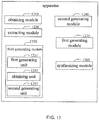
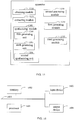
- FIG. 12 is a block diagram illustrating an apparatus for synthesizing a figured of a virtual object according to some embodiments of the disclosure.
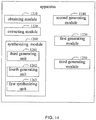
- the apparatus includes an obtaining module 1210, an extracting module 1220, a first generating module 1230, a second generating module 1240, a third generating module 1250, and a synthesizing module 1260.
- the obtaining image 1220 is configured to obtain a figure image of the virtual object, and original face images corresponding to a speech segment, in which the figure image includes a face of the virtual object.
- the extracting module 1220 is configured to extract a first face key point of the face of the virtual object, and a second face key point of each of the original face images.
- the first generating module 1230 is configured to process the first face key point based on a preset algorithm, to generate a position and posture information of a first three-dimensional 3D face corresponding to the face of the virtual object.
- the second generating module 1240 is configured to process each second face key point based on a preset algorithm, to generate vertex information of a second 3D face corresponding to each original face image.
- the third generating module 1250 is configured to generate a target face image corresponding to each original face image based on the position and the posture information of the first 3D face and the vertex information of each second 3D face.
- the synthesizing module 1260 is configured to synthesize a speaking figure segment of the virtual object, corresponding to the speech segment, based on the figure image of the virtual object and each target face image.
- the first generating module 1230 is configured to: perform coordinate transformation processing on the first face key point based on a preset transformation parameter, to generate a first 3D face mesh model; and extract the position and the posture information of the first 3D face corresponding to the face of the virtual object from the first 3D face mesh model, in which, the posture information includes a pitch angle, a yaw angle, and a roll angle.
- the second generating module 1240 is configured to: perform coordinate transformation processing on each second face key point based on a preset transformation parameter, to generate a second 3D face mesh model corresponding to each original face image; and extract the vertex information of the second 3D face from each second 3D face mesh model.
- the figure image of the virtual object and the original face images corresponding to the speech segment may be obtained, in which the figure image includes the face of the virtual object.
- the first face key point of the face of the virtual object and the second face key point of each of the original face images may be extracted.
- the first face key point may be processed based on the preset algorithm, to generate the position and the posture information of the first 3D face corresponding to the face of the virtual object.
- Each second face key point may be processed based on the preset algorithm, to generate the vertex information of the second 3D face corresponding to each original face image.
- the target face image corresponding to each original face image may be generated based on the position and the posture information of the first 3D face and the vertex information of each second 3D face.
- the speaking figure segment of the virtual object, corresponding to the speech segment may be synthesized based on the figure image of the virtual object and each target face image. Therefore, the original face images may be adjusted to be under the posture and position of the figure of the virtual object for fusion, to improve a naturalness of the fusion images, and make the fusion images to truly restore the speaking figure of the original face images.
- the target face image restores the posture and position of the face of the virtual object.
- the face of the virtual object is an aslant head, whatever posture of the face in the original face image is, it may be transformed to the target face image corresponding to the same aslant head.
- generating the target face image corresponding to each original face image based on the position and the posture information of the first 3D face and the vertex information of each second 3D face may be different.
- the third generating module 1250 is configured to: perform projection transformation on the position and the posture information of the first 3D face and the vertex information of each second 3D face respectively based on a preset transformation algorithm, to generate a first target face image corresponding to each original face image.
- the third generating module 1250 includes a first generating unit 1251, an obtaining unit 1252, and a second generating unit 1253.
- the first generating unit 1251 is configured to process each second face key point based on a preset algorithm, to generate a position and posture information of the second 3D face corresponding to each original face image.
- the obtaining unit 1252 is configured to obtain texture information of a position corresponding to the position and the posture information of the second 3D face from each original face image based on a preset projection transformation algorithm.
- the second generating unit 1253 is configured to perform texture rendering on each first target face image based on the texture information of the corresponding position, to generate a second target face image corresponding to each original face image.
- the posture of the original face image is adjusted based on the figure image of the virtual object corresponding to the face of the virtual object, to avoid the naturalness of the synthesized image
- the original face image is adjusted based on the 3D posture of the face of the virtual object, to avoid deformity of the synthesized image
- the synthesizing module 1260 includes a third generating unit 1261, a fourth generating unit 1262, and a first synthesizing unit 1263.
- the third generating unit 1261 is configured to generate a lower-half face mask corresponding to each target face image.
- the fourth generating unit 1262 is configured to perform fusion processing on the figure image of the virtual object and each target face image based on a preset first fusion algorithm according to the lower-half face mask, to generate first fusion images.
- the first synthesizing unit 1263 is configured to synthesize the speaking figure segment of the virtual object corresponding to the speech segment based on the first fusion images.
- the third generating unit is configured to: perform edge detection on each target face image to obtain face edge points; connect the face edge points to form a closed region and fill a fixed value with the closed region to generate a full face mask; and intercept the lower-half face mask from the full face mask by taking a central key point of a nose bridge as reference.
- the synthesizing module 1260 includes a fifth generating unit 1264, a sixth generating unit 1265, and a second synthesizing unit 1266.
- the fifth generating unit 1264 is configured to generate a mouth region mask corresponding to each target face image.
- the sixth generating unit 1265 is configured to perform fusion processing on the figure image of the virtual object and each first fusion image based on a preset second fusion algorithm according to the mouth region mask, to generate second fusion images.
- the second synthesizing unit 1266 is configured to synthesize the speaking figure segment of the virtual object corresponding to the speech segment based on the second fusion images.
- the fifth generating unit 1266 is configured to: extract key points of an outer edge of a mouth of each target face image; connect the key points of the outer edge of the mouth to form a closed region and fill a fixed value with the closed region to generate an initial mask; and perform Gaussian filtering on the initial mask to obtain the mouth region mask corresponding to each target face image.
- the apparatus for synthesizing the figure image of the virtual object provided in embodiments of the disclosure, when the figure image of the virtual object and each target face image are fused, the retain of the mouth shape of each target face image and the fused texture naturalness are taken into consideration, and the naturalness of the fused image is guaranteed.
- An electronic device and a readable storage medium are further provided according to embodiments of the disclosure.
- FIG. 16 is a block diagram illustrating an electronic device for implementing a method for synthesizing a figure of a virtual object according to some embodiments of the disclosure.
- Electronic devices are intended to represent various forms of digital computers, such as laptop computers, desktop computers, workbenches, personal digital assistants, servers, blade servers, mainframe computers, and other suitable computers.
- Electronic devices may also represent various forms of mobile devices, such as personal digital processing, cellular phones, smart phones, wearable devices, and other similar computing devices.
- the components shown here, their connections and relations, and their functions are merely examples, and are not intended to limit the implementation of the disclosure described and/or required herein.
- the electronic device includes: one or more processors 1601, a memory 1602, and interfaces for connecting various components, including a high-speed interface and a low-speed interface.
- the various components are interconnected using different buses and can be mounted on a common mainboard or otherwise installed as required.
- the processor may process instructions executed within the electronic device, including instructions stored in or on the memory to display graphical information of the GUI on an external input/output device such as a display device coupled to the interface.
- a plurality of processors and/or buses can be used with a plurality of memories and processors, if desired.
- a plurality of electronic devices can be connected, each providing some of the necessary operations (for example, as a server array, a group of blade servers, or a multiprocessor system).
- a processor 1601 is taken as an example in FIG. 16 .
- the memory 1602 is a non-transitory computer-readable storage medium according to the disclosure.
- the memory stores instructions executable by at least one processor, so that the at least one processor executes the method according to the disclosure.
- the non-transitory computer-readable storage medium of the disclosure stores computer instructions, which are used to cause a computer to execute the method according to the disclosure.
- the memory 1602 is configured to store non-transitory software programs, non-transitory computer executable programs and modules, such as program instructions/modules corresponding to the method in the embodiment of the disclosure.
- the processor 1601 executes various functional applications and data processing of the server by running non-transitory software programs, instructions, and modules stored in the memory 1602, that is, implementing the method in the foregoing method embodiments.
- the memory 1602 may include a storage program area and a storage data area, where the storage program area may store an operating system and application programs required for at least one function.
- the storage data area may store data created according to the use of the electronic device for implementing the method.
- the memory 1602 may include a high-speed random access memory, and a non-transitory memory, such as at least one magnetic disk storage device, a flash memory device, or other non-transitory solid-state storage device.
- the memory 1602 may optionally include a memory remotely disposed with respect to the processor 1601, and these remote memories may be connected to the electronic device for implementing the method through a network. Examples of the above network include, but are not limited to, the Internet, an intranet, a local area network, a mobile communication network, and combinations thereof.
- the electronic device for implementing the method may further include: an input device 1603 and an output device 1604.
- the processor 1601, the memory 1602, the input device 1603, and the output device 1604 may be connected through a bus or in other manners. In FIG. 16 , the connection through the bus is taken as an example.
- the input device 1603 may receive inputted numeric or character information, and generate key signal inputs related to user settings and function control of an electronic device for implementing the method, such as a touch screen, a keypad, a mouse, a trackpad, a touchpad, an indication rod, one or more mouse buttons, trackballs, joysticks and other input devices.
- the output device 1604 may include a display device, an auxiliary lighting device (for example, an LED), a haptic feedback device (for example, a vibration motor), and the like.
- the display device may include, but is not limited to, a liquid crystal display (LCD), a light emitting diode (LED) display, and a plasma display. In some embodiments, the display device may be a touch screen.
- Various embodiments of the systems and technologies described herein may be implemented in digital electronic circuit systems, integrated circuit systems, application specific integrated circuits (ASICs), computer hardware, firmware, software, and/or combinations thereof. These various embodiments may be implemented in one or more computer programs, which may be executed and/or interpreted on a programmable system including at least one programmable processor.
- the programmable processor may be dedicated or general purpose programmable processor that receives data and instructions from a storage system, at least one input device, and at least one output device, and transmits the data and instructions to the storage system, the at least one input device, and the at least one output device.
- machine-readable medium and “computer-readable medium” refer to any computer program product, device, and/or device used to provide machine instructions and/or data to a programmable processor (for example, magnetic disks, optical disks, memories, programmable logic devices (PLDs), including machine-readable media that receive machine instructions as machine-readable signals.
- machine-readable signal refers to any signal used to provide machine instructions and/or data to a programmable processor.
- the systems and techniques described herein may be implemented on a computer having a display device (e.g., a Cathode Ray Tube (CRT) or a Liquid Crystal Display (LCD) monitor for displaying information to a user); and a keyboard and pointing device (such as a mouse or trackball) through which the user can provide input to the computer.
- a display device e.g., a Cathode Ray Tube (CRT) or a Liquid Crystal Display (LCD) monitor for displaying information to a user
- LCD Liquid Crystal Display
- keyboard and pointing device such as a mouse or trackball
- Other kinds of devices may also be used to provide interaction with the user.
- the feedback provided to the user may be any form of sensory feedback (e.g., visual feedback, auditory feedback, or haptic feedback), and the input from the user may be received in any form (including acoustic input, sound input, or tactile input).
- the systems and technologies described herein can be implemented in a computing system that includes background components (for example, a data server), or a computing system that includes middleware components (for example, an application server), or a computing system that includes front-end components (For example, a user computer with a graphical user interface or a web browser, through which the user can interact with the implementation of the systems and technologies described herein), or include such background components, intermediate computing components, or any combination of front-end components.
- the components of the system may be interconnected by any form or medium of digital data communication (e.g., a communication network). Examples of communication networks include: local area network (LAN), wide area network (WAN), and the Internet.
- the computer system may include a client and a server.
- the client and server are generally remote from each other and interacting through a communication network.
- the client-server relation is generated by computer programs running on the respective computers and having a client-server relation with each other.
- the figure image of the virtual object and the original face images corresponding to the speech segment may be obtained, in which the figure image includes the face of the virtual object.
- the first face key point of the face of the virtual object and the second face key point of each of the original face images may be extracted.
- the first face key point may be processed based on the preset algorithm, to generate the position and the posture information of the first 3D face corresponding to the face of the virtual object.
- Each second face key point may be processed based on the preset algorithm, to generate the vertex information of the second 3D face corresponding to each original face image.
- the target face image corresponding to each original face image may be generated based on the position and the posture information of the first 3D face and the vertex information of each second 3D face.
- the speaking figure segment of the virtual object corresponding to the speech segment, may be synthesized based on the figure image of the virtual object and each target face image. Therefore, the original face images may be adjusted to be under the posture and position of the figure of the virtual object for fusion, to improve a naturalness of the fusion images, and make the fusion images to truly restore the speaking figure of the original face images.
Landscapes
- Engineering & Computer Science (AREA)
- Physics & Mathematics (AREA)
- General Physics & Mathematics (AREA)
- Theoretical Computer Science (AREA)
- Computer Graphics (AREA)
- Software Systems (AREA)
- Multimedia (AREA)
- Health & Medical Sciences (AREA)
- Computer Vision & Pattern Recognition (AREA)
- Oral & Maxillofacial Surgery (AREA)
- Architecture (AREA)
- Computer Hardware Design (AREA)
- General Engineering & Computer Science (AREA)
- General Health & Medical Sciences (AREA)
- Human Computer Interaction (AREA)
- Geometry (AREA)
- Computational Linguistics (AREA)
- Audiology, Speech & Language Pathology (AREA)
- Acoustics & Sound (AREA)
- Signal Processing (AREA)
- Processing Or Creating Images (AREA)
- User Interface Of Digital Computer (AREA)
Applications Claiming Priority (1)
| Application Number | Priority Date | Filing Date | Title |
|---|---|---|---|
| CN202010963014.9A CN112150638B (zh) | 2020-09-14 | 2020-09-14 | 虚拟对象形象合成方法、装置、电子设备和存储介质 |
Publications (2)
| Publication Number | Publication Date |
|---|---|
| EP3882861A2 true EP3882861A2 (fr) | 2021-09-22 |
| EP3882861A3 EP3882861A3 (fr) | 2022-01-12 |
Family
ID=73892815
Family Applications (1)
| Application Number | Title | Priority Date | Filing Date |
|---|---|---|---|
| EP21178930.0A Withdrawn EP3882861A3 (fr) | 2020-09-14 | 2021-06-11 | Procédé et appareil pour synthétiser la figure d'un objet virtuel, dispositif électronique et support d'enregistrement |
Country Status (5)
| Country | Link |
|---|---|
| US (1) | US11645801B2 (fr) |
| EP (1) | EP3882861A3 (fr) |
| JP (1) | JP7262540B2 (fr) |
| KR (1) | KR20210103435A (fr) |
| CN (1) | CN112150638B (fr) |
Cited By (1)
| Publication number | Priority date | Publication date | Assignee | Title |
|---|---|---|---|---|
| EP4152138A1 (fr) * | 2021-09-16 | 2023-03-22 | Beijing Baidu Netcom Science Technology Co., Ltd. | Procédé et appareil pour ajuster un modèle de visage virtuel, dispositif électronique et support d'informations |
Families Citing this family (51)
| Publication number | Priority date | Publication date | Assignee | Title |
|---|---|---|---|---|
| CN112150638B (zh) * | 2020-09-14 | 2024-01-26 | 北京百度网讯科技有限公司 | 虚拟对象形象合成方法、装置、电子设备和存储介质 |
| KR102766918B1 (ko) * | 2020-12-10 | 2025-02-14 | 주식회사 딥브레인에이아이 | 립싱크 영상 생성 장치 및 방법 |
| CN112785670B (zh) * | 2021-02-01 | 2024-05-28 | 北京字节跳动网络技术有限公司 | 一种形象合成方法、装置、设备及存储介质 |
| CN113781571B (zh) * | 2021-02-09 | 2025-03-18 | 北京沃东天骏信息技术有限公司 | 图像处理方法和装置 |
| CN116997934A (zh) * | 2021-03-16 | 2023-11-03 | 元平台技术有限公司 | 基于语音的三维面部动画化 |
| CN112906650B (zh) * | 2021-03-24 | 2023-08-15 | 百度在线网络技术(北京)有限公司 | 教学视频的智能处理方法、装置、设备和存储介质 |
| CN113132797A (zh) * | 2021-04-22 | 2021-07-16 | 北京房江湖科技有限公司 | 视频生成方法和装置、计算机可读存储介质、电子设备 |
| EP4322162A4 (fr) * | 2021-07-16 | 2024-10-23 | Samsung Electronics Co., Ltd. | Dispositif électronique permettant la génération d'une forme de bouche, et son procécé de fonctionnement |
| CN113948105B (zh) * | 2021-09-30 | 2024-11-01 | 深圳追一科技有限公司 | 基于语音的图像生成方法、装置、设备及介质 |
| CN113886641B (zh) * | 2021-09-30 | 2025-08-26 | 深圳追一科技有限公司 | 数字人生成方法、装置、设备及介质 |
| CN114091516B (zh) * | 2021-09-30 | 2025-02-28 | 深圳追一科技有限公司 | 图像生成方法、装置、设备及介质 |
| KR102393702B1 (ko) * | 2021-10-18 | 2022-05-04 | 주식회사 스튜디오레논 | 딥러닝 기반 최적화된 연산을 통한 가상 캐릭터의 안면 이미지를 생성하는 방법 및 이를 위한 기록 매체 및 시스템 |
| CN113989103B (zh) * | 2021-10-25 | 2024-04-26 | 北京字节跳动网络技术有限公司 | 模型训练方法、图像处理方法、装置、电子设备及介质 |
| CN113986015B (zh) * | 2021-11-08 | 2024-04-30 | 北京字节跳动网络技术有限公司 | 虚拟道具的处理方法、装置、设备和存储介质 |
| CN114332671B (zh) * | 2021-11-08 | 2022-11-01 | 深圳追一科技有限公司 | 基于视频数据的处理方法、装置、设备及介质 |
| CN114170648A (zh) * | 2021-11-11 | 2022-03-11 | 北京达佳互联信息技术有限公司 | 视频生成方法、装置、电子设备及存储介质 |
| CN114245230A (zh) * | 2021-11-29 | 2022-03-25 | 网易(杭州)网络有限公司 | 视频的生成方法、装置、电子设备及存储介质 |
| CN114245099B (zh) * | 2021-12-13 | 2023-02-21 | 北京百度网讯科技有限公司 | 视频生成方法、装置、电子设备以及存储介质 |
| CN114240741A (zh) * | 2021-12-16 | 2022-03-25 | 广州繁星互娱信息科技有限公司 | 目标图像的显示方法、存储介质和电子设备 |
| CN120388407A (zh) * | 2021-12-30 | 2025-07-29 | 广州方硅信息技术有限公司 | 虚拟上妆方法、装置、设备和计算机可读存储介质 |
| CN114449323B (zh) * | 2022-01-28 | 2024-11-26 | 维沃移动通信有限公司 | 视频生成方法和电子设备 |
| CN114782645B (zh) * | 2022-03-11 | 2023-08-29 | 科大讯飞(苏州)科技有限公司 | 虚拟数字人制作方法、相关设备及可读存储介质 |
| CN114913104B (zh) * | 2022-05-11 | 2024-06-28 | 平安科技(深圳)有限公司 | 图像处理方法、图像处理装置、电子设备及存储介质 |
| CN114881844A (zh) * | 2022-05-11 | 2022-08-09 | 咪咕文化科技有限公司 | 一种图像处理方法、装置、设备及可读存储介质 |
| CN115002345B (zh) * | 2022-05-13 | 2024-02-13 | 北京字节跳动网络技术有限公司 | 一种图像校正方法、装置、电子设备及存储介质 |
| CN115049846A (zh) * | 2022-06-14 | 2022-09-13 | 佛山虎牙虎信科技有限公司 | 人脸模型匹配方法、装置及电子设备 |
| CN114820908B (zh) * | 2022-06-24 | 2022-11-01 | 北京百度网讯科技有限公司 | 虚拟形象生成方法、装置、电子设备和存储介质 |
| CN115272570B (zh) * | 2022-07-25 | 2026-04-28 | 京东方科技集团股份有限公司 | 虚拟表情生成方法、装置、电子设备和存储介质 |
| CN115364485B (zh) * | 2022-08-22 | 2025-05-13 | 网易(上海)网络有限公司 | 一种游戏中虚拟对象模型生成方法、装置、设备及介质 |
| CN115222895B (zh) * | 2022-08-30 | 2023-06-27 | 北京百度网讯科技有限公司 | 图像生成方法、装置、设备以及存储介质 |
| CN115170912B (zh) * | 2022-09-08 | 2023-01-17 | 北京鹰瞳科技发展股份有限公司 | 图像处理模型训练的方法、生成图像的方法及相关产品 |
| CN115359171B (zh) * | 2022-10-21 | 2023-04-07 | 北京百度网讯科技有限公司 | 虚拟形象处理方法、装置、电子设备和存储介质 |
| CN115762519A (zh) * | 2022-10-28 | 2023-03-07 | 歌尔科技有限公司 | 语音识别方法、装置、设备及存储介质 |
| CN115914721A (zh) * | 2022-11-29 | 2023-04-04 | 北京达佳互联信息技术有限公司 | 直播画面处理方法、装置、电子设备及存储介质 |
| CN115830196B (zh) * | 2022-12-09 | 2024-04-05 | 支付宝(杭州)信息技术有限公司 | 虚拟形象处理方法及装置 |
| CN115861543B (zh) * | 2022-12-20 | 2023-12-29 | 北京百度网讯科技有限公司 | 三维虚拟形象生成方法、装置及电子设备 |
| CN115937373B (zh) * | 2022-12-23 | 2023-10-03 | 北京百度网讯科技有限公司 | 虚拟形象驱动方法、装置、设备以及存储介质 |
| CN115665507B (zh) * | 2022-12-26 | 2023-03-21 | 海马云(天津)信息技术有限公司 | 含虚拟形象的视频流数据的生成方法、装置、介质及设备 |
| CN115904205A (zh) * | 2022-12-30 | 2023-04-04 | 北京字跳网络技术有限公司 | 用于虚拟形象的交互展示方法、装置、设备和存储介质 |
| CN116258694A (zh) * | 2023-02-13 | 2023-06-13 | 阿里巴巴(中国)有限公司 | 图像处理方法、电子设备及人体姿态纠正系统 |
| CN116228830B (zh) * | 2023-03-13 | 2024-01-26 | 广州图语信息科技有限公司 | 一种三角网格编码结构光的三维重建方法及装置 |
| JP7713733B2 (ja) * | 2023-04-10 | 2025-07-28 | 株式会社プリズマテック | 衣服の試着シミュレーションシステム及びプログラム |
| CN116453222B (zh) * | 2023-04-19 | 2024-06-11 | 北京百度网讯科技有限公司 | 目标对象姿态确定方法、训练方法、装置以及存储介质 |
| CN116385669B (zh) * | 2023-06-06 | 2023-10-24 | 北京红棉小冰科技有限公司 | 虚拟人视频创作方法、装置和电子设备 |
| CN116543265B (zh) * | 2023-06-07 | 2025-09-19 | 厦门像甜科技有限公司 | 一种去除图片人物双下巴模型的训练方法 |
| CN116433826B (zh) * | 2023-06-08 | 2023-09-29 | 北京百度网讯科技有限公司 | 虚拟形象驱动方法、装置、设备和介质 |
| US12536739B2 (en) * | 2023-08-16 | 2026-01-27 | Hong Kong Applied Science and Technology Research Institute Company Limited | Method and apparatus for virtual avatar generation |
| CN117974950B (zh) * | 2024-01-23 | 2024-12-13 | 苏州大学 | 根据图像反向生成人像试衣效果的虚拟试穿方法和系统 |
| CN118521750B (zh) * | 2024-05-11 | 2025-10-31 | 北京度友信息技术有限公司 | 图像处理方法、装置、电子设备和存储介质 |
| CN119444977B (zh) * | 2024-09-24 | 2025-11-07 | 北京百度网讯科技有限公司 | 基于大模型的虚拟形象生成方法、装置、智能体、电子设备及存储介质 |
| CN119206005B (zh) * | 2024-11-29 | 2025-02-18 | 湖南快乐阳光互动娱乐传媒有限公司 | 一种数字人物的实时生成方法及装置 |
Family Cites Families (30)
| Publication number | Priority date | Publication date | Assignee | Title |
|---|---|---|---|---|
| JP3347508B2 (ja) | 1995-02-24 | 2002-11-20 | キヤノン株式会社 | 撮像画像処理装置および撮像画像処理方法 |
| US6072496A (en) * | 1998-06-08 | 2000-06-06 | Microsoft Corporation | Method and system for capturing and representing 3D geometry, color and shading of facial expressions and other animated objects |
| KR100422470B1 (ko) * | 2001-02-15 | 2004-03-11 | 비쥬텍쓰리디(주) | 3차원 동화상 모델 얼굴 대체 방법 및 장치 |
| US7168953B1 (en) * | 2003-01-27 | 2007-01-30 | Massachusetts Institute Of Technology | Trainable videorealistic speech animation |
| US8063905B2 (en) * | 2007-10-11 | 2011-11-22 | International Business Machines Corporation | Animating speech of an avatar representing a participant in a mobile communication |
| US9684952B2 (en) * | 2010-04-20 | 2017-06-20 | Dental Imaging Technologies Corporation | Alignment of mixed-modality data sets for reduction and removal of imaging artifacts |
| US9634855B2 (en) * | 2010-05-13 | 2017-04-25 | Alexander Poltorak | Electronic personal interactive device that determines topics of interest using a conversational agent |
| US20120069028A1 (en) * | 2010-09-20 | 2012-03-22 | Yahoo! Inc. | Real-time animations of emoticons using facial recognition during a video chat |
| US20120130717A1 (en) * | 2010-11-19 | 2012-05-24 | Microsoft Corporation | Real-time Animation for an Expressive Avatar |
| US9613450B2 (en) * | 2011-05-03 | 2017-04-04 | Microsoft Technology Licensing, Llc | Photo-realistic synthesis of three dimensional animation with facial features synchronized with speech |
| US9094576B1 (en) * | 2013-03-12 | 2015-07-28 | Amazon Technologies, Inc. | Rendered audiovisual communication |
| US10095917B2 (en) * | 2013-11-04 | 2018-10-09 | Facebook, Inc. | Systems and methods for facial representation |
| US9576188B2 (en) * | 2013-12-23 | 2017-02-21 | Atheer, Inc. | Method and apparatus for subject identification |
| US20160110922A1 (en) * | 2014-10-16 | 2016-04-21 | Tal Michael HARING | Method and system for enhancing communication by using augmented reality |
| US9830728B2 (en) * | 2014-12-23 | 2017-11-28 | Intel Corporation | Augmented facial animation |
| WO2016161553A1 (fr) * | 2015-04-07 | 2016-10-13 | Intel Corporation | Génération et animations d'avatars |
| WO2017137947A1 (fr) * | 2016-02-10 | 2017-08-17 | Vats Nitin | Production réaliste de visage parlant avec expression au moyen d'images, de texte et de voix |
| WO2017137948A1 (fr) * | 2016-02-10 | 2017-08-17 | Vats Nitin | Production d'un mouvement corporel réaliste au moyen d'images corporelles |
| WO2019060889A1 (fr) * | 2017-09-25 | 2019-03-28 | Ventana 3D, Llc | Système de personnage d'intelligence artificielle (ia) capable d'interactions verbales et visuelles naturelles avec un être humain |
| CN111200747A (zh) | 2018-10-31 | 2020-05-26 | 百度在线网络技术(北京)有限公司 | 基于虚拟形象的直播方法和装置 |
| CN111191655B (zh) * | 2018-11-14 | 2024-04-16 | 佳能株式会社 | 对象识别方法和装置 |
| US10984609B2 (en) * | 2018-11-21 | 2021-04-20 | Electronics And Telecommunications Research Institute | Apparatus and method for generating 3D avatar |
| US11553969B1 (en) * | 2019-02-14 | 2023-01-17 | Onpoint Medical, Inc. | System for computation of object coordinates accounting for movement of a surgical site for spinal and other procedures |
| CN110390704B (zh) * | 2019-07-11 | 2021-02-12 | 深圳追一科技有限公司 | 图像处理方法、装置、终端设备及存储介质 |
| US10949715B1 (en) * | 2019-08-19 | 2021-03-16 | Neon Evolution Inc. | Methods and systems for image and voice processing |
| US11574446B2 (en) * | 2019-08-30 | 2023-02-07 | National Central University | Digital image reality aligning kit and method applied to mixed reality system for surgical navigation |
| CN110866968B (zh) * | 2019-10-18 | 2025-02-28 | 平安科技(深圳)有限公司 | 基于神经网络生成虚拟人物视频的方法及相关设备 |
| US11403800B1 (en) * | 2020-07-13 | 2022-08-02 | Amazon Technologies, Inc. | Image generation from 3D model using neural network |
| CN112150638B (zh) * | 2020-09-14 | 2024-01-26 | 北京百度网讯科技有限公司 | 虚拟对象形象合成方法、装置、电子设备和存储介质 |
| US12154548B2 (en) * | 2021-01-02 | 2024-11-26 | International Institute Of Information Technology, Hyderabad | System and method for lip-syncing a face to target speech using a machine learning model |
-
2020
- 2020-09-14 CN CN202010963014.9A patent/CN112150638B/zh active Active
-
2021
- 2021-06-11 EP EP21178930.0A patent/EP3882861A3/fr not_active Withdrawn
- 2021-06-15 US US17/348,452 patent/US11645801B2/en active Active
- 2021-08-02 KR KR1020210101546A patent/KR20210103435A/ko not_active Withdrawn
- 2021-09-14 JP JP2021149542A patent/JP7262540B2/ja active Active
Cited By (1)
| Publication number | Priority date | Publication date | Assignee | Title |
|---|---|---|---|---|
| EP4152138A1 (fr) * | 2021-09-16 | 2023-03-22 | Beijing Baidu Netcom Science Technology Co., Ltd. | Procédé et appareil pour ajuster un modèle de visage virtuel, dispositif électronique et support d'informations |
Also Published As
| Publication number | Publication date |
|---|---|
| CN112150638A (zh) | 2020-12-29 |
| US20210312685A1 (en) | 2021-10-07 |
| KR20210103435A (ko) | 2021-08-23 |
| JP2021193599A (ja) | 2021-12-23 |
| US11645801B2 (en) | 2023-05-09 |
| EP3882861A3 (fr) | 2022-01-12 |
| CN112150638B (zh) | 2024-01-26 |
| JP7262540B2 (ja) | 2023-04-21 |
Similar Documents
| Publication | Publication Date | Title |
|---|---|---|
| US11645801B2 (en) | Method for synthesizing figure of virtual object, electronic device, and storage medium | |
| CN115100339B (zh) | 图像生成方法、装置、电子设备和存储介质 | |
| US12573148B2 (en) | Image rendering method, electronic device, and storage medium | |
| EP3992919B1 (fr) | Procédé et appareil de génération de modèle facial tridimensionnel, dispositif et support | |
| US12236541B2 (en) | Geometry-aware augmented reality effects with real-time depth map | |
| CN112785674A (zh) | 纹理贴图的生成方法、渲染方法、装置、设备及存储介质 | |
| CN119991885A (zh) | 使用3d表示生成可动画角色 | |
| EP3677994B1 (fr) | Procédé et dispositif d'affichage de texte en réalité virtuelle, et appareil de réalité virtuelle | |
| JP2023530895A5 (fr) | ||
| US9734616B1 (en) | Tetrahedral volumes from segmented bounding boxes of a subdivision | |
| CN120198616A (zh) | 图像渲染方法、装置、电子设备和存储介质 | |
| CN117745915B (zh) | 一种模型渲染方法、装置、设备及存储介质 | |
| CN111754431B (zh) | 一种图像区域替换方法、装置、设备及存储介质 | |
| EP3855386B1 (fr) | Procédé, appareil, dispositif et support de stockage pour transformation de coiffure et produit programme informatique | |
| US10319133B1 (en) | Posing animation hierarchies with dynamic posing roots | |
| JP2020013390A (ja) | 情報処理装置、情報処理プログラム及び情報処理方法 | |
| CN118887340A (zh) | 一种图像生成方法及装置 | |
| CN118609033A (zh) | 人体骨架驱动的视频生成方法、系统、存储介质和设备 | |
| US20190073823A1 (en) | Recording medium, information processing apparatus, influence degree deriving method, and image generation method | |
| US20240046554A1 (en) | Presenting virtual representation of real space using spatial transformation | |
| US9639981B1 (en) | Tetrahedral Shell Generation | |
| CN115861500B (zh) | 2d模型碰撞体生成方法及装置 | |
| CN112464696A (zh) | 图像处理方法、装置、设备及存储介质 | |
| CN121236190A (zh) | 生成模型的方法、装置、终端和存储介质 | |
| CN121304991A (zh) | 虚拟现实的对象显示方法、头戴显示设备及电子设备 |
Legal Events
| Date | Code | Title | Description |
|---|---|---|---|
| PUAI | Public reference made under article 153(3) epc to a published international application that has entered the european phase |
Free format text: ORIGINAL CODE: 0009012 |
|
| STAA | Information on the status of an ep patent application or granted ep patent |
Free format text: STATUS: THE APPLICATION HAS BEEN PUBLISHED |
|
| AK | Designated contracting states |
Kind code of ref document: A2 Designated state(s): AL AT BE BG CH CY CZ DE DK EE ES FI FR GB GR HR HU IE IS IT LI LT LU LV MC MK MT NL NO PL PT RO RS SE SI SK SM TR |
|
| PUAL | Search report despatched |
Free format text: ORIGINAL CODE: 0009013 |
|
| AK | Designated contracting states |
Kind code of ref document: A3 Designated state(s): AL AT BE BG CH CY CZ DE DK EE ES FI FR GB GR HR HU IE IS IT LI LT LU LV MC MK MT NL NO PL PT RO RS SE SI SK SM TR |
|
| RIC1 | Information provided on ipc code assigned before grant |
Ipc: G06T 13/40 20110101AFI20211203BHEP |
|
| STAA | Information on the status of an ep patent application or granted ep patent |
Free format text: STATUS: REQUEST FOR EXAMINATION WAS MADE |
|
| 17P | Request for examination filed |
Effective date: 20220711 |
|
| RBV | Designated contracting states (corrected) |
Designated state(s): AL AT BE BG CH CY CZ DE DK EE ES FI FR GB GR HR HU IE IS IT LI LT LU LV MC MK MT NL NO PL PT RO RS SE SI SK SM TR |
|
| STAA | Information on the status of an ep patent application or granted ep patent |
Free format text: STATUS: THE APPLICATION HAS BEEN WITHDRAWN |
|
| 18W | Application withdrawn |
Effective date: 20240311 |