EP4152138A1 - Procédé et appareil pour ajuster un modèle de visage virtuel, dispositif électronique et support d'informations - Google Patents
Procédé et appareil pour ajuster un modèle de visage virtuel, dispositif électronique et support d'informations Download PDFInfo
- Publication number
- EP4152138A1 EP4152138A1 EP22190038.4A EP22190038A EP4152138A1 EP 4152138 A1 EP4152138 A1 EP 4152138A1 EP 22190038 A EP22190038 A EP 22190038A EP 4152138 A1 EP4152138 A1 EP 4152138A1
- Authority
- EP
- European Patent Office
- Prior art keywords
- face
- virtual
- key point
- face model
- real human
- Prior art date
- Legal status (The legal status is an assumption and is not a legal conclusion. Google has not performed a legal analysis and makes no representation as to the accuracy of the status listed.)
- Withdrawn
Links
Images

Classifications
-
- G—PHYSICS
- G06—COMPUTING OR CALCULATING; COUNTING
- G06T—IMAGE DATA PROCESSING OR GENERATION, IN GENERAL
- G06T3/00—Geometric image transformations in the plane of the image
- G06T3/04—Context-preserving transformations, e.g. by using an importance map
-
- G—PHYSICS
- G06—COMPUTING OR CALCULATING; COUNTING
- G06V—IMAGE OR VIDEO RECOGNITION OR UNDERSTANDING
- G06V40/00—Recognition of biometric, human-related or animal-related patterns in image or video data
- G06V40/10—Human or animal bodies, e.g. vehicle occupants or pedestrians; Body parts, e.g. hands
- G06V40/16—Human faces, e.g. facial parts, sketches or expressions
-
- G—PHYSICS
- G06—COMPUTING OR CALCULATING; COUNTING
- G06F—ELECTRIC DIGITAL DATA PROCESSING
- G06F3/00—Input arrangements for transferring data to be processed into a form capable of being handled by the computer; Output arrangements for transferring data from processing unit to output unit, e.g. interface arrangements
- G06F3/01—Input arrangements or combined input and output arrangements for interaction between user and computer
- G06F3/011—Arrangements for interaction with the human body, e.g. for user immersion in virtual reality
- G06F3/012—Head tracking input arrangements
-
- G—PHYSICS
- G06—COMPUTING OR CALCULATING; COUNTING
- G06F—ELECTRIC DIGITAL DATA PROCESSING
- G06F3/00—Input arrangements for transferring data to be processed into a form capable of being handled by the computer; Output arrangements for transferring data from processing unit to output unit, e.g. interface arrangements
- G06F3/01—Input arrangements or combined input and output arrangements for interaction between user and computer
- G06F3/017—Gesture based interaction, e.g. based on a set of recognized hand gestures
-
- G—PHYSICS
- G06—COMPUTING OR CALCULATING; COUNTING
- G06F—ELECTRIC DIGITAL DATA PROCESSING
- G06F3/00—Input arrangements for transferring data to be processed into a form capable of being handled by the computer; Output arrangements for transferring data from processing unit to output unit, e.g. interface arrangements
- G06F3/01—Input arrangements or combined input and output arrangements for interaction between user and computer
- G06F3/048—Interaction techniques based on graphical user interfaces [GUI]
- G06F3/0481—Interaction techniques based on graphical user interfaces [GUI] based on specific properties of the displayed interaction object or a metaphor-based environment, e.g. interaction with desktop elements like windows or icons, or assisted by a cursor's changing behaviour or appearance
- G06F3/04815—Interaction with a metaphor-based environment or interaction object displayed as three-dimensional [3D], e.g. changing the user viewpoint with respect to the environment or object
-
- G—PHYSICS
- G06—COMPUTING OR CALCULATING; COUNTING
- G06T—IMAGE DATA PROCESSING OR GENERATION, IN GENERAL
- G06T19/00—Manipulating three-dimensional [3D] models or images for computer graphics
- G06T19/006—Mixed reality
-
- G—PHYSICS
- G06—COMPUTING OR CALCULATING; COUNTING
- G06T—IMAGE DATA PROCESSING OR GENERATION, IN GENERAL
- G06T19/00—Manipulating three-dimensional [3D] models or images for computer graphics
- G06T19/20—Editing of three-dimensional [3D] images, e.g. changing shapes or colours, aligning objects or positioning parts
-
- G—PHYSICS
- G06—COMPUTING OR CALCULATING; COUNTING
- G06V—IMAGE OR VIDEO RECOGNITION OR UNDERSTANDING
- G06V40/00—Recognition of biometric, human-related or animal-related patterns in image or video data
- G06V40/10—Human or animal bodies, e.g. vehicle occupants or pedestrians; Body parts, e.g. hands
- G06V40/16—Human faces, e.g. facial parts, sketches or expressions
- G06V40/161—Detection; Localisation; Normalisation
-
- A—HUMAN NECESSITIES
- A63—SPORTS; GAMES; AMUSEMENTS
- A63F—CARD, BOARD, OR ROULETTE GAMES; INDOOR GAMES USING SMALL MOVING PLAYING BODIES; VIDEO GAMES; GAMES NOT OTHERWISE PROVIDED FOR
- A63F13/00—Video games, i.e. games using an electronically generated display having two or more dimensions
- A63F13/40—Processing input control signals of video game devices, e.g. signals generated by the player or derived from the environment
- A63F13/42—Processing input control signals of video game devices, e.g. signals generated by the player or derived from the environment by mapping the input signals into game commands, e.g. mapping the displacement of a stylus on a touch screen to the steering angle of a virtual vehicle
- A63F13/428—Processing input control signals of video game devices, e.g. signals generated by the player or derived from the environment by mapping the input signals into game commands, e.g. mapping the displacement of a stylus on a touch screen to the steering angle of a virtual vehicle involving motion or position input signals, e.g. signals representing the rotation of an input controller or a player's arm motions sensed by accelerometers or gyroscopes
-
- A—HUMAN NECESSITIES
- A63—SPORTS; GAMES; AMUSEMENTS
- A63F—CARD, BOARD, OR ROULETTE GAMES; INDOOR GAMES USING SMALL MOVING PLAYING BODIES; VIDEO GAMES; GAMES NOT OTHERWISE PROVIDED FOR
- A63F13/00—Video games, i.e. games using an electronically generated display having two or more dimensions
- A63F13/60—Generating or modifying game content before or while executing the game program, e.g. authoring tools specially adapted for game development or game-integrated level editor
- A63F13/65—Generating or modifying game content before or while executing the game program, e.g. authoring tools specially adapted for game development or game-integrated level editor automatically by game devices or servers from real world data, e.g. measurement in live racing competition
- A63F13/655—Generating or modifying game content before or while executing the game program, e.g. authoring tools specially adapted for game development or game-integrated level editor automatically by game devices or servers from real world data, e.g. measurement in live racing competition by importing photos, e.g. of the player
-
- G—PHYSICS
- G06—COMPUTING OR CALCULATING; COUNTING
- G06T—IMAGE DATA PROCESSING OR GENERATION, IN GENERAL
- G06T2200/00—Indexing scheme for image data processing or generation, in general
- G06T2200/24—Indexing scheme for image data processing or generation, in general involving graphical user interfaces [GUIs]
-
- G—PHYSICS
- G06—COMPUTING OR CALCULATING; COUNTING
- G06T—IMAGE DATA PROCESSING OR GENERATION, IN GENERAL
- G06T2210/00—Indexing scheme for image generation or computer graphics
- G06T2210/44—Morphing
-
- G—PHYSICS
- G06—COMPUTING OR CALCULATING; COUNTING
- G06T—IMAGE DATA PROCESSING OR GENERATION, IN GENERAL
- G06T2210/00—Indexing scheme for image generation or computer graphics
- G06T2210/61—Scene description
-
- G—PHYSICS
- G06—COMPUTING OR CALCULATING; COUNTING
- G06T—IMAGE DATA PROCESSING OR GENERATION, IN GENERAL
- G06T2219/00—Indexing scheme for manipulating 3D models or images for computer graphics
- G06T2219/20—Indexing scheme for editing of 3D models
- G06T2219/2016—Rotation, translation, scaling
-
- G—PHYSICS
- G06—COMPUTING OR CALCULATING; COUNTING
- G06T—IMAGE DATA PROCESSING OR GENERATION, IN GENERAL
- G06T2219/00—Indexing scheme for manipulating 3D models or images for computer graphics
- G06T2219/20—Indexing scheme for editing of 3D models
- G06T2219/2021—Shape modification
Definitions
- the present invention relates to the technical field of Internet, and further relates to the field of computer vision. And in particular, the present invention relates to a method and apparatus for adjusting a virtual face model, an electronic device and a storage medium.
- the virtual image social application customizes and edits facial features and face shape of a virtual character image
- at least one key point of a face of this virtual character image on a terminal interface is generally clicked and pulled up, down, left and right to modify and adjust the facial features and face shape of the face.
- the entire operation steps are complicated and tedious, thereby affecting the user experience.
- At least some embodiments of the present invention provide a method and apparatus for adjusting a virtual face model, an electronic device and a storage medium, so as at least to partially solve the technical problem of tedious operation steps and poor user experience of solutions for adjusting a virtual image in the related art.
- a method for adjusting a virtual face model includes that: a real human face in a reality scene is identified to obtain a first virtual face model of the real human face in a virtual scene; in response to a face-pinching operation acting on the real human face, the face-pinching operation is identified to determine at least one to-be-adjusted key point in the first virtual face model and an adjustment manner of the at least one to-be-adjusted key point; and the first virtual face model is adjusted to a second virtual face model based on the adjustment manner of the at least one to-be-adjusted key point.
- an apparatus for adjusting a virtual face model includes: a first identification module, configured to identify a real human face in a reality scene to obtain a first virtual face model of the real human face in a virtual scene; a second identification module, configured to, in response to a face-pinching operation acting on the real human face, identify the face-pinching operation to determine at least one to-be-adjusted key point in the first virtual face model and an adjustment manner of the at least one to-be-adjusted key point; and an adjustment module, configured to adjust the first virtual face model to a second virtual face model based on the adjustment manner of the at least one to-be-adjusted key point.
- an electronic device in another embodiment, includes at least one processor and a memory communicatively connected with the at least one processor.
- the memory is configured to store at least one instruction executable by the at least one processor.
- the at least one instruction is performed by the at least one processor, to cause the at least one processor to perform the method for adjusting the virtual face model mentioned above.
- a non-transitory computer-readable storage medium storing at least one computer instruction.
- the at least one computer instruction is used for a computer to perform the method for adjusting the virtual face model mentioned above.
- a computer program product in another embodiment, includes a computer program.
- the method for adjusting the virtual face model mentioned above is implemented when the computer program is performed by a processor.
- An embodiment of the present invention provides a method for adjusting a virtual face model. It is to be noted that the steps shown in the flow diagram of the accompanying drawings may be executed in a computer system, such as a set of computer-executable instructions, and although a logical sequence is shown in the flow diagram, in some cases, the steps shown or described may be executed in a different order than here.
- the method embodiment provided in this present invention may be performed in a mobile terminal, a computer terminal, or a similar electronic device.
- the electronic device is intended to represent various forms of digital computers, such as laptop computers, desktop computers, workbenches, personal digital assistants, servers, blade servers, mainframe computers, and other suitable computers.
- the electronic device may also express various forms of mobile devices, such as personal digital processing, cellular phones, smart phones, wearable devices, and other similar computing devices. Connections, relationships, and functions of components shown herein are examples, and are not intended to limit the implementation of the present invention described and/or required herein.
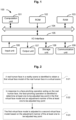
- Fig. 1 shows a structural block diagram of a hardware structure of a computer terminal (or a mobile device) configured to implement a method for adjusting a virtual face model according to an embodiment of the present invention.
- the computer terminal 100 includes a computing unit 101.
- the computing unit may perform various appropriate actions and processing operations according to a computer program stored in a read-only memory (ROM) 102 or a computer program loaded from a storage unit 108 into a random access memory (RAM) 103.
- ROM read-only memory
- RAM random access memory
- various programs and data required for the operation of the computer terminal 100 may also be stored.
- the computing unit 101, the ROM 102, and the RAM 103 are connected with each other by using a bus 104.
- An input/output (I/O) interface 105 is further connected with the bus 104.
- Multiple components in the computer terminal 100 are connected with the I/O interface 105, and include: an input unit 106, such as a keyboard and a mouse; an output unit 107, such as various types of displays and loudspeakers; the storage unit 108, such as a disk and an optical disc; and a communication unit 109, such as a network card, a modem, and a wireless communication transceiver.
- the communication unit 109 allows the computer terminal 100 to exchange information or data with other devices through a computer network, such as the Internet, and/or various telecommunication networks.
- the computing unit 101 may be various general and/or special processing assemblies with processing and computing capabilities. Some examples of computing unit 101 include, but are not limited to, a central processing unit (CPU), a graphics processing unit (GPU), various dedicated artificial intelligence (Al) computing chips, various computing units for running machine learning model algorithms, a digital signal processor (DSP), and any appropriate processors, controllers, microcontrollers, etc.
- the computing unit 101 performs the method for adjusting the virtual face model described here.
- the method for adjusting the virtual face model may be implemented as a computer software program, which is tangibly contained in a machine-readable medium, such as the storage unit 108.
- part or all of the computer program may be loaded and/or installed on the computer terminal 100 via the ROM 102 and/or the communication unit 109.
- the computer program When the computer program is loaded into the RAM 103 and performed by the computing unit 101, at least one step of the method for adjusting the virtual face model described here may be performed.
- the computing unit 101 may be configured to perform the method for adjusting the virtual face model in any other suitable manners (for example, by means of firmware).
- Various implementations of systems and technologies described here may be implemented in a digital electronic circuit system, an integrated circuit system, a field programmable gate array (FPGA), an application-specific integrated circuit (ASIC), an application-specific standard product (ASSP), a system-on-chip (SOC), a complex programmable logic device (CPLD), computer hardware, firmware, software, and/or a combination thereof.
- FPGA field programmable gate array
- ASIC application-specific integrated circuit
- ASSP application-specific standard product
- SOC system-on-chip
- CPLD complex programmable logic device
- computer hardware firmware, software, and/or a combination thereof.
- the programmable processor may be a dedicated or general programmable processor, which may receive data and instructions from a storage system, at least one input device, and at least one output device, and transmit the data and instructions to the storage system, the at least one input device, and the at least one output device.
- the electronic device shown in Fig. 1 may include a hardware element (including a circuit), a software element (including a computer code stored on the computer-readable medium), or a combination of the hardware element and the software element.
- Fig. 1 is an example of a specific example, and is intended to illustrate the types of components that may be present in the electronic device.
- Fig. 2 is a flowchart of a method for adjusting a virtual face model according to an embodiment of the present invention. As shown in Fig. 2 , a method may include the following steps.
- Step S21 a real human face in a reality scene is identified to obtain a first virtual face model of the real human face in a virtual scene.
- the reality scene may be a real scene where a user is located currently.
- the virtual scene may be a scene in a virtual image application, and may be preset by using an application underlying code.
- the virtual scene is switched in response to the scene selection operation of the user.
- the preset virtual scene may include a beach scene, a snow mountain scene, a desert scene, and a city scene.
- the user may click a scene switching control on a graphical user interface to switch the virtual scene.
- a to-be-switched scene is the snow mountain scene.
- the beach scene may be switched to the snow mountain scene by clicking the scene switching control corresponding to the snow mountain scene.
- the first virtual face model is a face model corresponding to the real human face, and may be a two-dimensional model or a three-dimensional model.
- an implementation process of identifying the real human face in the reality scene to obtain the first virtual face model of the real human face in the virtual scene may refer to any conventional face identification modeling solution, which is not described again.
- the face-pinching operation in response to a face-pinching operation acting on the real human face, is identified to determine at least one to-be-adjusted key point in the first virtual face model and an adjustment manner of the at least one to-be-adjusted key point.
- At least one key point of the real human face may be correspondingly deformed, so that the at least one to-be-adjusted key point in the first virtual face model corresponding to the real human face is changed accordingly.
- identification on the face-pinching operation includes identification on a face-pinching gesture of the user and identification on the real human face of the user. Specifically, through identifying the face-pinching gesture to act on at least one position of the real human face, the at least one key point of real human face deformation and an adjustment manner of the at least one key point are determined, so as to further identify the real human face to determine the at least one to-be-adjusted key point in the first virtual face model and the adjustment manner of the at least one to-be-adjusted key point.
- an implementation process of, in response to the face-pinching operation acting on the real human face, identifying the face-pinching operation to determine the at least one to-be-adjusted key point in the first virtual face model and the adjustment manner of the at least one to-be-adjusted key point may be further introduced with reference to the embodiments of the present invention.
- the first virtual face model is adjusted to a second virtual face model based on the adjustment manner of the at least one to-be-adjusted key point.
- the second virtual face model an adjusted virtual face model in the virtual scene, which is more in line with demands of the user.
- an implementation process of adjusting the first virtual face model to the second virtual face model based on the adjustment manner of the at least one to-be-adjusted key point may be further introduced with reference to the embodiments of the present invention.
- the real human face in the reality scene is identified to obtain the first virtual face model of the real human face in the virtual scene.
- the face-pinching operation is identified to determine the at least one to-be-adjusted key point in the first virtual face model and the adjustment manner of the at least one to-be-adjusted key point.
- the first virtual face model is adjusted to the second virtual face model based on the adjustment manner of the at least one to-be-adjusted key point.
- the step S22 of identifying the face-pinching operation to determine the at least one to-be-adjusted key point in the first virtual face model includes the following steps.
- the face-pinching operation is identified to determine an action object of the face-pinching operation.
- the at least one action object includes at least one of facial features of the real human face or a face shape of the real human face.
- the at least one to-be-adjusted key point is selected from multiple key points contained in the first virtual face model based on the at least one action object.
- the multiple key points contained in the first virtual face model include: key points of a facial feature model corresponding to facial features of the real human face and key points of a face shape model corresponding to the face shape of the real human face.
- step S22 of identifying the face-pinching operation to determine the adjustment manner of the at least one to-be-adjusted key point includes the following steps.
- the face-pinching operation is identified to determine deformation of the at least one action object caused by the face-pinching operation.
- the deformation of the at least one action object may include at least one of left and right expansion, up and down expansion, overall enlargement, or overall reduction.
- Step S224 the adjustment manner of the at least one to-be-adjusted key point is determined based on the deformation of the at least one action object.
- the adjustment manner of the at least one to-be-adjusted key point corresponds to the deformation of the at least one action object, and may include at least one of left and right expansion, up and down expansion, overall enlargement, or overall reduction.
- the adjustment manner of the at least one to-be-adjusted key point may be determined based on at least one deformations of the at least one action object.
- the one-time adjustment of the first virtual face model is not in place, multiple face-pinching operations may be continuously performed based on a current adjustment result, so that a final adjustment result is more in line with demands of a client. Therefore, the user experience of the user is further improved.
- the user pinches and pulls the upper, lower, left and right corners of the eyes and the mouth by using "thumbs and index fingers”.
- the at least one to-be-adjusted key point in the first virtual face model is determined as the eyes and the mouth.
- the adjustment manner is determined by stretching or shrinking the upper, lower, left, and right corners of the at least one to-be-adjusted key point accordingly.
- the user pinches the wing of nose or pulls the nostril by using "the thumbs and the index fingers".
- the at least one to-be-adjusted key point in the first virtual face model is determined as the wing of nose or the nostril.
- the adjustment manner is determined by stretching or shrinking the at least one to-be-adjusted key point accordingly.
- the user pinches the bridge of the nose by using "the thumbs and the index fingers”.
- the at least one to-be-adjusted key point in the first virtual face model is determined as the bridge of the nose.
- the adjustment manner is determined by stretching or shrinking the at least one to-be-adjusted key point accordingly.
- the user pinches two corners of the eyebrow by using "the thumbs and the index fingers”.
- the at least one to-be-adjusted key point in the first virtual face model is determined as the eyebrow.
- the adjustment manner is determined by stretching or shrinking left and right ends of the at least one to-be-adjusted key point accordingly.
- step S224 of determining the adjustment manner of the at least one to-be-adjusted key point based on the deformation of the at least one action object includes the following steps.
- a moving direction of the at least one to-be-adjusted key point is determined based on a deformation direction of the at least one action object.
- the deformation direction is mirror symmetrical with the moving direction.
- a moving distance of the at least one to-be-adjusted key point is determined based on a deformation amplitude of the at least one action object.
- step S23 of adjusting the first virtual face model to the second virtual face model based on the adjustment manner of the at least one to-be-adjusted key point includes the following steps.
- Step S231 an initial position of the at least one to-be-adjusted key point on the first virtual face model is acquired.
- a target position of the at least one to-be-adjusted key point is determined by using the initial position, the moving direction, and the moving distance.
- the first virtual face model is adjusted to the second virtual face model based on the target position.
- the method for adjusting a virtual face model further includes the following step.
- the at least one to-be-adjusted key point is displayed on the first virtual face model according to a preset display manner.
- the preset display manner is determined by using at least one of the following parameters: a display size, a display color, a display brightness, and a display special effect.
- the real human face in the reality scene is identified to obtain the first virtual face model of the real human face in the virtual scene.
- the face-pinching operation is identified to determine the at least one to-be-adjusted key point in the first virtual face model and the adjustment manner of the at least one to-be-adjusted key point.
- the first virtual face model is adjusted to the second virtual face model based on the adjustment manner of the at least one to-be-adjusted key point.
- the involved processing such as acquisition, storage, application, processing, transmission, providing, and present invention of personal information of the user are in compliance with relevant laws and regulations, and does not violate public order and good customs.
- the present invention further provides an apparatus for adjusting a virtual face model.
- the apparatus is configured to implement the foregoing embodiments and the exemplary implementation, and what has been described will not be described again.
- the term "module” may be a combination of software and/or hardware that implements a predetermined function.
- the apparatus described in the following embodiments is optionally implemented in software, but implementations in hardware, or a combination of software and hardware, are also possible and conceived.
- Fig. 3 is a structural block diagram of an apparatus for adjusting a virtual face model according to an embodiment of the present invention.
- the apparatus 300 for adjusting the virtual face model includes a first identification module 301, a second identification module 302, and an adjustment module 303.
- the first identification module 301 is configured to identify a real human face in a reality scene to obtain a first virtual face model of the real human face in a virtual scene.
- the second identification module 302 is configured to, in response to a face-pinching operation acting on the real human face, identify the face-pinching operation to determine at least one to-be-adjusted key point in the first virtual face model and an adjustment manner of the at least one to-be-adjusted key point.
- the adjustment module 303 is configured to adjust the first virtual face model to a second virtual face model based on the adjustment manner of the at least one to-be-adjusted key point.
- the second identification module 302 is configured to identify the face-pinching operation to determine an action object of the face-pinching operation, where the at least one action object includes at least one of facial features of the real human face or a face shape of the real human face; and select the at least one to-be-adjusted key point from multiple key points contained in the first virtual face model based on the at least one action object.
- the second identification module 302 is configured to identify the face-pinching operation to identify the face-pinching operation to determine deformation of the at least one action object caused by the face-pinching operation; and determine the adjustment manner of the at least one to-be-adjusted key point based on the deformation of the at least one action object.
- the second identification module 302 is configured to determine a moving direction of the at least one to-be-adjusted key point based on a deformation direction of the at least one action object, where the deformation direction is mirror symmetrical with the moving direction; and determine a moving distance of the at least one to-be-adjusted key point based on a deformation amplitude of the at least one action object.
- the adjustment module 303 is configured to acquire an initial position of the at least one to-be-adjusted key point on the first virtual face model; determine a target position of the at least one to-be-adjusted key point by using the initial position, the moving direction, and the moving distance; and adjust the first virtual face model to the second virtual face model based on the target position.
- the apparatus 300 for adjusting the virtual face model further includes a display module 304.
- the display module 304 is configured to display the at least one to-be-adjusted key point on the first virtual face model according to a preset display manner.
- the preset display manner is determined by using at least one of the following parameters: a display size, a display color, a display brightness, and a display special effect.
- each of the modules may be implemented by software or hardware. For the latter, it may be implemented in the following manners, but is not limited to the follow: the modules are all located in a same processor; or the modules are located in different processors in any combination.
- the present invention further provides an electronic device.
- the electronic device includes a memory and at least one processor.
- the memory is configured to store at least one computer instruction.
- the processor is configured to operation the at least one computer instruction to perform steps in the method embodiments.
- the electronic device may further include a transmission device and an input/output device.
- the transmission device is connected with the processor.
- the input/output device is connected with the processor.
- the processor may be configured to perform the following steps through the computer instruction.
- Step S1 a real human face in a reality scene is identified to obtain a first virtual face model of the real human face in a virtual scene.
- Step S2 in response to a face-pinching operation acting on the real human face, the face-pinching operation is identified to determine at least one to-be-adjusted key point in the first virtual face model and an adjustment manner of the at least one to-be-adjusted key point.
- the first virtual face model is adjusted to a second virtual face model based on the adjustment manner of the at least one to-be-adjusted key point.
- the present invention further provides a non-transitory computer-readable storage medium storing at least one computer instruction.
- the non-transitory computer-readable storage medium is configured to store the at least one computer instruction. Steps in any of the method embodiments are performed when the at least one computer instruction is operated.
- the non-transitory computer-readable storage medium may be configured to store a computer program for performing the following steps.
- Step S1 a real human face in a reality scene is identified to obtain a first virtual face model of the real human face in a virtual scene.
- Step S2 in response to a face-pinching operation acting on the real human face, the face-pinching operation is identified to determine at least one to-be-adjusted key point in the first virtual face model and an adjustment manner of the at least one to-be-adjusted key point.
- the first virtual face model is adjusted to a second virtual face model based on the adjustment manner of the at least one to-be-adjusted key point.
- the non-transitory computer-readable storage medium may include, but is not limited to, an electronic, magnetic, optical, electromagnetic, infrared, or semiconductor system, device, or apparatus, or any foregoing suitable combinations. More specific examples of the readable storage medium may include electrical connections based on at least one wire, a portable computer disk, a hard disk, a random access memory (RAM), a read-only memory (ROM), an erasable programmable read-only memory (EPROM or flash memory), an optical fiber, a portable compact disk read-only memory (CD-ROM), an optical storage device, a magnetic storage device, or any above suitable combinations.
- the present invention further provides a computer program product.
- Program codes used to implement the audio processing method of the present invention can be written in any combination of at least one programming language. These program codes can be provided to the processors or controllers of general computers, special computers, or other programmable data processing devices, so that, when the program codes are performed by the processors or controllers, functions/operations specified in the flowcharts and/or block diagrams are implemented.
- the program codes can be performed entirely on a machine, partially performed on the machine, and partially performed on the machine and partially performed on a remote machine as an independent software package, or entirely performed on the remote machine or a server.
- the disclosed technical content can be implemented in other ways.
- the apparatus embodiments described above are illustrative.
- the division of the units may be a logical function division, and there may be other divisions in actual implementation.
- multiple units or components may be combined or integrated into another system, or some features can be ignored, or not implemented.
- the displayed or discussed mutual coupling or direct coupling or communication connection may be indirect coupling or communication connection through some interfaces, units or modules, and may be in electrical or other forms.
- the units described as separate components may or may not be physically separated.
- the components displayed as units may or may not be physical units, that is, the components may be located in one place, or may be distributed on the multiple units. Part or all of the units may be selected according to actual requirements to achieve the purposes of the solutions of this embodiment.
- the functional units in the various embodiments of the present invention may be integrated into one processing unit, or each unit may exist alone physically, or at least two units may be integrated into one unit.
- the integrated unit can be implemented in the form of hardware, or can be implemented in the form of a software functional unit.
- the integrated unit When the integrated unit is implemented in the form of the software functional unit and sold or used as an independent product, it can be stored in the computer readable storage medium.
- the computer software product is stored in a storage medium, including multiple instructions for causing a computer device (which may be a personal computer, a server, or a network device, and the like) to execute all or part of the steps of the method described in the various embodiments of the present invention.
- the foregoing storage medium includes a USB flash disk, an ROM, an RAM, and various media that can store program codes, such as a mobile hard disk, a magnetic disk, or an optical disk.
Landscapes
- Engineering & Computer Science (AREA)
- Theoretical Computer Science (AREA)
- General Engineering & Computer Science (AREA)
- Physics & Mathematics (AREA)
- General Physics & Mathematics (AREA)
- Human Computer Interaction (AREA)
- Computer Graphics (AREA)
- Software Systems (AREA)
- Computer Hardware Design (AREA)
- Architecture (AREA)
- Oral & Maxillofacial Surgery (AREA)
- General Health & Medical Sciences (AREA)
- Health & Medical Sciences (AREA)
- Multimedia (AREA)
- Processing Or Creating Images (AREA)
- User Interface Of Digital Computer (AREA)
Applications Claiming Priority (1)
| Application Number | Priority Date | Filing Date | Title |
|---|---|---|---|
| CN202111089448.1A CN113808007B (zh) | 2021-09-16 | 2021-09-16 | 调整虚拟脸部模型的方法、装置、电子设备及存储介质 |
Publications (1)
| Publication Number | Publication Date |
|---|---|
| EP4152138A1 true EP4152138A1 (fr) | 2023-03-22 |
Family
ID=78941397
Family Applications (1)
| Application Number | Title | Priority Date | Filing Date |
|---|---|---|---|
| EP22190038.4A Withdrawn EP4152138A1 (fr) | 2021-09-16 | 2022-08-11 | Procédé et appareil pour ajuster un modèle de visage virtuel, dispositif électronique et support d'informations |
Country Status (5)
| Country | Link |
|---|---|
| US (1) | US12131433B2 (fr) |
| EP (1) | EP4152138A1 (fr) |
| JP (1) | JP2023043849A (fr) |
| KR (1) | KR20230040895A (fr) |
| CN (1) | CN113808007B (fr) |
Families Citing this family (2)
| Publication number | Priority date | Publication date | Assignee | Title |
|---|---|---|---|---|
| CN114758042B (zh) * | 2022-06-14 | 2022-09-02 | 深圳智华科技发展有限公司 | 新的虚拟仿真引擎、虚拟仿真方法以及装置 |
| CN115830219A (zh) * | 2022-10-11 | 2023-03-21 | 北京奇艺世纪科技有限公司 | 一种捏脸参数生成、模型训练方法及装置 |
Citations (5)
| Publication number | Priority date | Publication date | Assignee | Title |
|---|---|---|---|---|
| CN111739155A (zh) * | 2020-06-24 | 2020-10-02 | 网易(杭州)网络有限公司 | 虚拟角色捏脸方法、装置和终端设备 |
| CN112150638A (zh) * | 2020-09-14 | 2020-12-29 | 北京百度网讯科技有限公司 | 虚拟对象形象合成方法、装置、电子设备和存储介质 |
| CN112541963A (zh) * | 2020-11-09 | 2021-03-23 | 北京百度网讯科技有限公司 | 三维虚拟形象生成方法、装置、电子设备和存储介质 |
| WO2021115181A1 (fr) * | 2019-12-13 | 2021-06-17 | RealMe重庆移动通信有限公司 | Procédé de reconnaissance de geste, procédé de commande de geste, appareils, support et dispositif terminal |
| US20210183166A1 (en) * | 2018-11-30 | 2021-06-17 | Tencent Technology (Shenzhen) Company Limited | Parameter configuration method, apparatus, and device for three-dimensional face model, and storage medium |
Family Cites Families (13)
| Publication number | Priority date | Publication date | Assignee | Title |
|---|---|---|---|---|
| JP3671260B2 (ja) | 1995-05-10 | 2005-07-13 | カシオ計算機株式会社 | 画像作成装置および画像作成制御方法 |
| JP3378860B2 (ja) | 2001-02-16 | 2003-02-17 | ブラザー工業株式会社 | モンタージュ作成装置 |
| CN112215914B (zh) | 2013-02-23 | 2024-04-26 | 高通股份有限公司 | 用于由电子装置进行交互式图像漫画生成的系统和方法 |
| CN105229673B (zh) * | 2013-04-03 | 2021-12-03 | 诺基亚技术有限公司 | 一种装置和相关联的方法 |
| GB201709199D0 (en) * | 2017-06-09 | 2017-07-26 | Delamont Dean Lindsay | IR mixed reality and augmented reality gaming system |
| CN108379837A (zh) * | 2018-02-01 | 2018-08-10 | 网易(杭州)网络有限公司 | 信息处理方法及装置、存储介质、电子设备 |
| CN109636886B (zh) * | 2018-12-19 | 2020-05-12 | 网易(杭州)网络有限公司 | 图像的处理方法、装置、存储介质和电子装置 |
| US10885322B2 (en) * | 2019-01-31 | 2021-01-05 | Huawei Technologies Co., Ltd. | Hand-over-face input sensing for interaction with a device having a built-in camera |
| CN110837332A (zh) * | 2019-11-13 | 2020-02-25 | 北京字节跳动网络技术有限公司 | 面部图像变形方法、装置、电子设备和计算机可读介质 |
| CN111324250B (zh) * | 2020-01-22 | 2021-06-18 | 腾讯科技(深圳)有限公司 | 三维形象的调整方法、装置、设备及可读存储介质 |
| CN111651040B (zh) * | 2020-05-27 | 2021-11-26 | 华为技术有限公司 | 用于肌肤检测的电子设备的交互方法及电子设备 |
| CN111695471B (zh) * | 2020-06-02 | 2023-06-27 | 北京百度网讯科技有限公司 | 虚拟形象生成方法、装置、设备以及存储介质 |
| US11902710B2 (en) * | 2021-04-30 | 2024-02-13 | Zoom Video Communications, Inc. | Automated rule generation and virtual background selection for video communications |
-
2021
- 2021-09-16 CN CN202111089448.1A patent/CN113808007B/zh active Active
-
2022
- 2022-03-03 US US17/653,380 patent/US12131433B2/en active Active
- 2022-08-11 EP EP22190038.4A patent/EP4152138A1/fr not_active Withdrawn
- 2022-09-07 JP JP2022141929A patent/JP2023043849A/ja active Pending
- 2022-09-07 KR KR1020220113190A patent/KR20230040895A/ko not_active Ceased
Patent Citations (7)
| Publication number | Priority date | Publication date | Assignee | Title |
|---|---|---|---|---|
| US20210183166A1 (en) * | 2018-11-30 | 2021-06-17 | Tencent Technology (Shenzhen) Company Limited | Parameter configuration method, apparatus, and device for three-dimensional face model, and storage medium |
| WO2021115181A1 (fr) * | 2019-12-13 | 2021-06-17 | RealMe重庆移动通信有限公司 | Procédé de reconnaissance de geste, procédé de commande de geste, appareils, support et dispositif terminal |
| CN111739155A (zh) * | 2020-06-24 | 2020-10-02 | 网易(杭州)网络有限公司 | 虚拟角色捏脸方法、装置和终端设备 |
| CN112150638A (zh) * | 2020-09-14 | 2020-12-29 | 北京百度网讯科技有限公司 | 虚拟对象形象合成方法、装置、电子设备和存储介质 |
| EP3882861A2 (fr) * | 2020-09-14 | 2021-09-22 | Beijing Baidu Netcom Science And Technology Co. Ltd. | Procédé et appareil pour synthétiser la figure d'un objet virtuel, dispositif électronique et support d'enregistrement |
| CN112541963A (zh) * | 2020-11-09 | 2021-03-23 | 北京百度网讯科技有限公司 | 三维虚拟形象生成方法、装置、电子设备和存储介质 |
| US20210407216A1 (en) * | 2020-11-09 | 2021-12-30 | Beijing Baidu Netcom Science And Technology Co., Ltd. | Method and apparatus for generating three-dimensional virtual image, and storage medium |
Also Published As
| Publication number | Publication date |
|---|---|
| US12131433B2 (en) | 2024-10-29 |
| CN113808007A (zh) | 2021-12-17 |
| US20230083831A1 (en) | 2023-03-16 |
| CN113808007B (zh) | 2022-07-19 |
| JP2023043849A (ja) | 2023-03-29 |
| KR20230040895A (ko) | 2023-03-23 |
Similar Documents
| Publication | Publication Date | Title |
|---|---|---|
| US11823306B2 (en) | Virtual image generation method and apparatus, electronic device and storage medium | |
| US20230107213A1 (en) | Method of generating virtual character, electronic device, and storage medium | |
| EP3920147A1 (fr) | Procédé et appareil pour générer un avatar virtuel, dispositif, support d'enregistrement et produit programme informatique | |
| CN114187633B (zh) | 图像处理方法及装置、图像生成模型的训练方法及装置 | |
| US20230047748A1 (en) | Method of fusing image, and method of training image fusion model | |
| CN113362263B (zh) | 变换虚拟偶像的形象的方法、设备、介质及程序产品 | |
| US11409794B2 (en) | Image deformation control method and device and hardware device | |
| CN113536007A (zh) | 一种虚拟形象生成方法、装置、设备以及存储介质 | |
| JP2023029984A (ja) | 仮想イメージを生成するための方法、装置、電子機器及び可読記憶媒体 | |
| CN113407850B (zh) | 一种虚拟形象的确定和获取方法、装置以及电子设备 | |
| CN113887498B (zh) | 人脸识别方法、装置、设备和存储介质 | |
| US20220319141A1 (en) | Method for processing image, device and storage medium | |
| WO2021213067A1 (fr) | Procédé et appareil d'affichage d'objet, dispositif et support de stockage | |
| US12131433B2 (en) | Method and apparatus for adjusting virtual face model, electronic device and storage medium | |
| EP3989179B1 (fr) | Procédé et appareil de traitement de coulisseau pour la modification d'un caractère virtuel | |
| CN115393488B (zh) | 虚拟人物表情的驱动方法、装置、电子设备和存储介质 | |
| US20250039537A1 (en) | Screenshot processing method, electronic device, and computer readable medium | |
| CN113359995B (zh) | 人机交互方法、装置、设备以及存储介质 | |
| EP4002280A1 (fr) | Procédé et appareil de génération d'image | |
| CN116030185B (zh) | 三维发丝生成方法和模型的训练方法 | |
| CN114638919A (zh) | 虚拟形象的生成方法、电子设备、程序产品及用户终端 | |
| CN116563503A (zh) | 基于增强现实的显示处理方法、装置、设备及存储介质 | |
| CN113658307A (zh) | 图像处理方法及装置 | |
| CN114415997B (zh) | 显示参数设置方法、装置、电子设备及存储介质 | |
| CN114445528B (zh) | 虚拟形象生成方法、装置、电子设备及存储介质 |
Legal Events
| Date | Code | Title | Description |
|---|---|---|---|
| PUAI | Public reference made under article 153(3) epc to a published international application that has entered the european phase |
Free format text: ORIGINAL CODE: 0009012 |
|
| STAA | Information on the status of an ep patent application or granted ep patent |
Free format text: STATUS: THE APPLICATION HAS BEEN PUBLISHED |
|
| STAA | Information on the status of an ep patent application or granted ep patent |
Free format text: STATUS: REQUEST FOR EXAMINATION WAS MADE |
|
| AK | Designated contracting states |
Kind code of ref document: A1 Designated state(s): AL AT BE BG CH CY CZ DE DK EE ES FI FR GB GR HR HU IE IS IT LI LT LU LV MC MK MT NL NO PL PT RO RS SE SI SK SM TR |
|
| 17P | Request for examination filed |
Effective date: 20230316 |
|
| RBV | Designated contracting states (corrected) |
Designated state(s): AL AT BE BG CH CY CZ DE DK EE ES FI FR GB GR HR HU IE IS IT LI LT LU LV MC MK MT NL NO PL PT RO RS SE SI SK SM TR |
|
| STAA | Information on the status of an ep patent application or granted ep patent |
Free format text: STATUS: EXAMINATION IS IN PROGRESS |
|
| 17Q | First examination report despatched |
Effective date: 20230829 |
|
| STAA | Information on the status of an ep patent application or granted ep patent |
Free format text: STATUS: THE APPLICATION IS DEEMED TO BE WITHDRAWN |
|
| 18D | Application deemed to be withdrawn |
Effective date: 20240716 |