EP3895531B1 - Système d'épandage agricole, procédé d'ajustement d'une quantité d'application, ainsi que machine d'épandage agricole - Google Patents
Système d'épandage agricole, procédé d'ajustement d'une quantité d'application, ainsi que machine d'épandage agricole Download PDFInfo
- Publication number
- EP3895531B1 EP3895531B1 EP21157526.1A EP21157526A EP3895531B1 EP 3895531 B1 EP3895531 B1 EP 3895531B1 EP 21157526 A EP21157526 A EP 21157526A EP 3895531 B1 EP3895531 B1 EP 3895531B1
- Authority
- EP
- European Patent Office
- Prior art keywords
- distribution
- data processing
- accompanying
- processing device
- agricultural
- Prior art date
- Legal status (The legal status is an assumption and is not a legal conclusion. Google has not performed a legal analysis and makes no representation as to the accuracy of the status listed.)
- Active
Links
Images

Classifications
-
- A—HUMAN NECESSITIES
- A01—AGRICULTURE; FORESTRY; ANIMAL HUSBANDRY; HUNTING; TRAPPING; FISHING
- A01M—CATCHING, TRAPPING OR SCARING OF ANIMALS; APPARATUS FOR THE DESTRUCTION OF NOXIOUS ANIMALS OR NOXIOUS PLANTS
- A01M7/00—Special adaptations or arrangements of liquid-spraying apparatus for purposes covered by this subclass
- A01M7/0089—Regulating or controlling systems
-
- A—HUMAN NECESSITIES
- A01—AGRICULTURE; FORESTRY; ANIMAL HUSBANDRY; HUNTING; TRAPPING; FISHING
- A01B—SOIL WORKING IN AGRICULTURE OR FORESTRY; PARTS, DETAILS, OR ACCESSORIES OF AGRICULTURAL MACHINES OR IMPLEMENTS, IN GENERAL
- A01B79/00—Methods for working soil
- A01B79/005—Precision agriculture
-
- A—HUMAN NECESSITIES
- A01—AGRICULTURE; FORESTRY; ANIMAL HUSBANDRY; HUNTING; TRAPPING; FISHING
- A01M—CATCHING, TRAPPING OR SCARING OF ANIMALS; APPARATUS FOR THE DESTRUCTION OF NOXIOUS ANIMALS OR NOXIOUS PLANTS
- A01M9/00—Special adaptations or arrangements of powder-spraying apparatus for purposes covered by this subclass
- A01M9/0092—Regulating or controlling systems
Definitions
- the invention relates to an agricultural distribution system for distributing liquid and/or solid agricultural distribution goods on a crop, preferably for a field sprayer or a fertilizer spreader.
- the invention also relates to a method for adjusting an application rate.
- the invention relates to an agricultural distribution machine.
- agricultural distribution systems preferably field sprayers and/or fertilizer spreaders
- An embodiment variant of such a distribution machine is known from the prior art EP 3 332 639 A1 already known.
- field sprayers and/or fertilizer spreaders have a distribution boom (e.g. spray boom) that extends across a large width transversely to the direction of travel.
- distribution elements connected to a storage tank such as spray nozzles, baffle elements or the like, are attached to the distribution linkage for distributing agricultural goods, such as spray agents.
- the maximum amount of material distributed could also cause resistance.
- document DE 198 58 168 A1 discloses a device for determining the plant growth of a field section with a light source that emits a light beam, with an image sensor having an optical axis and with an electronic evaluation unit.
- the image recorder is aligned with the arable land in such a way that the image recorder optically captures a predetermined field section and that the light source is arranged such that the light beam hits the arable ground within this field section, provided there is no plant growth.
- the agricultural device includes, among other things, a location system for providing position data that includes a real-time position of the device and a time stamp, a detection system positioned on a boom and / or in front of an agricultural device and configured to provide detection data with information about the to be sprayed to provide a surface, and a map generator to generate a raster-based representation of the surface based on the detection data and position data.
- a location system for providing position data that includes a real-time position of the device and a time stamp
- a detection system positioned on a boom and / or in front of an agricultural device and configured to provide detection data with information about the to be sprayed to provide a surface
- a map generator to generate a raster-based representation of the surface based on the detection data and position data.
- EP 3 287 007 A1 discloses a method for combating harmful organisms that can occur when growing crops. The control is based on the prediction of site-specific infestation risks.
- WO 99/17606 A1 discloses a method for treating plant growth, for example in fields, which makes it possible to determine a treatment strategy for vegetation using a CCD camera and image analysis in a computing unit, the treatment strategy consisting of spraying with pesticides or applying fertilizers.
- the image processing is carried out by the camera measuring electromagnetic radiation at the pixel level in partial areas, which is processed in the computing unit by dividing the spectral ranges into several classes. Based on the classification, a distribution function for the amount of vegetation can be calculated and a treatment strategy can be determined.
- the object of the invention is therefore to further improve the targeted distribution of agricultural goods.
- the invention relates to an agricultural distribution system for distributing liquid and/or solid agricultural distribution goods on a crop, preferably for a field sprayer or a fertilizer spreader (e.g. pneumatic fertilizer spreader).
- a fertilizer spreader e.g. pneumatic fertilizer spreader
- the distribution system comprises a distribution boom (e.g. spray boom) with a plurality of distribution elements (e.g. spray nozzles, baffle elements or the like) arranged thereon and connected and/or connectable (e.g. fluidically connected) to a storage container for at least one agricultural product to be distributed.
- a distribution boom e.g. spray boom
- distribution elements e.g. spray nozzles, baffle elements or the like
- connectable e.g. fluidically connected
- the distribution system also includes a detection device which is set up to detect development stages of the plant population.
- the distribution system or rather the agricultural distribution machine, includes a data processing device.
- the data processing device is set up to adapt an application rate of agricultural distribution goods of individual, grouped or all distribution elements to development stages.
- the data processing device comprises a corresponding control and/or regulation program which is set up to adapt an output quantity of agricultural distribution goods of individual, grouped or all distribution elements to development stages.
- the invention makes use of the knowledge that for precise control of accompanying vegetation it is not crucial how much accompanying vegetation is present, but rather how large it is, i.e. at what stage of development it is, since precise control requires a critical amount of distributed material (e.g. sprays) are required, which in turn depends on the stage of development.
- distributed material e.g. sprays
- a distribution system is created in which an application quantity of individual, grouped or all distribution elements is adjusted using a data processing device based on the development stage detected by a detection device and no longer to a maximum amount of accompanying vegetation as is known from the prior art is adjusted.
- a distribution system is created with which the risk of resistance can be largely minimized.
- the definition of development stage also includes the growth stage; in particular, it includes detecting whether the plant population is large or small, preferably whether it has a minimum size (eg minimum size) or not. Detecting can also include determining, for example determining which leaf stage the plant population is in. Detecting can also include assigning and/or recording a plant population to a BBCH code. In addition, detecting can also be capturing of plant varieties of the plant population, for example also recording types of accompanying vegetation varieties.
- an alternative embodiment variant provides that the data processing device is set up to adapt the application rate to individual, grouped or all distribution elements independently of one another to development stages. This makes it possible to specifically adjust the application rate only to positions (e.g. areas) of distribution elements (and thus in areas of a plant population) where this is also necessary.
- the data processing device is set up to adapt the application rate to individual, grouped or all distribution elements by means of pulse width modulation. It can also be provided that individual, grouped or all distribution elements can be controlled with corresponding valves and the valves can be controlled with the data processing device with a required pulse width modulation.
- the application rate on individual, grouped or all distribution elements is adjusted by changing (e.g. controllable) cross sections of the lines connecting the distribution elements with the storage tank. It would also be conceivable to adapt the application rate to individual, grouped or all distribution elements by changing (e.g. controllable) pressures in the lines connecting the distribution elements to the storage tank. Other systems for adjusting the application rate would also be conceivable.
- the plant population has useful plants (e.g. agriculturally grown plants such as cereals) and accompanying vegetation (e.g. in particular types of accompanying plants such as weeds, weeds, crop plant companions, crop plant companions or the like), it being also possible for the detection device to be set up to To detect development stages of crops and/or accompanying vegetation, in particular to detect a size (e.g. based on leaf growth) of crops and/or accompanying vegetation.
- useful plants e.g. agriculturally grown plants such as cereals
- accompanying vegetation e.g. in particular types of accompanying plants such as weeds, weeds, crop plant companions, crop plant companions or the like
- the detection device to be set up to To detect development stages of crops and/or accompanying vegetation, in particular to detect a size (e.g. based on leaf growth) of crops and/or accompanying vegetation.
- the detection device is set up to detect developmental stages of accompanying vegetation, preferably to detect a size of accompanying vegetation, and that the data processing device is set up to adapt an application rate of agricultural distribution goods of individual, grouped or all distribution elements to a size, preferably of the accompanying vegetation. It can preferably be provided that the detection device is designed to detect a minimum size of the accompanying vegetation, whereby if the accompanying vegetation exceeds a minimum size, an application rate is adjusted accordingly by means of the data processing device. In this way, it can be achieved in particular that distribution material is only spread on accompanying vegetation where this is also necessary.
- the detection device can be set up so that various minimum sizes for accompanying vegetation on an arable area (e.g. a crop of plants) can be defined, which can ensure that the application rate is adjusted even more specifically. It can thus be achieved that different minimum sizes of accompanying vegetation can be defined for different types of companion plant varieties in order to be able to treat different types of companion plant varieties differently with distribution material.
- an arable area e.g. a crop of plants
- the plant population has accompanying vegetation that has different types of accompanying plants (e.g. different types of weeds, weeds, companion plants, companion plants or the like), and that the detection device is set up to detect development stages of crops and / or of companion plant varieties, in particular a Detect size and/or types of companion plant varieties.
- the data processing device is set up to adapt an output quantity of agricultural distribution goods of individual, grouped or all distribution elements to companion plant varieties, in particular to adapt to a size and/or a type of companion plant variety. This means that the distribution material is only applied to the accompanying plant varieties for which the distribution material is also suitable, i.e. can be used.
- the detection device and / or the data processing device is set up to measure a proportion of the To detect and/or define accompanying vegetation relative to the crops and that the data processing device is set up to adapt an application rate of agricultural distribution goods of individual, grouped or all distribution elements to quantitative proportions. If, for example, only a few accompanying plants are present that do not lead to any significant impairment of the crop plants, in particular the growth of the crop plants, it can also be provided in this case that the application rate is not adjusted or is kept correspondingly constant.
- the plant population has useful plants and accompanying vegetation and that the recording device and/or the data processing device is set up to measure a quantity to detect and/or define the accompanying vegetation compared to the crops and that the data processing device is set up to adapt an application quantity of agricultural distribution goods of individual, grouped or all distribution elements to proportions in such a way that a minimum amount of accompanying vegetation is retained.
- comparison variables are entered or stored in the data processing device, based on which comparison variables a minimum amount of accompanying vegetation is retained, for example these can be percentage values such as at least 5% or at least 10% or at least 25%, i.e.
- the application rate of individual, grouped or all distribution elements is adjusted in such a way that at least 5% or at least 10% or at least 25% of the accompanying vegetation is preserved, i.e., for example, is not treated with pesticides (e.g. sprayed).
- damage thresholds which damage thresholds in turn define how much accompanying vegetation may be destroyed by the distributed goods and how much is not.
- the plant population In order to reduce the risk of resistance and to positively influence biodiversity, it is possible according to a further embodiment variant of the invention for the plant population to have useful plants and accompanying vegetation, in particular to have accompanying vegetation having different varieties of accompanying plants.
- the data processing device and/or the detection device is set up to detect and/or define types of companion plant varieties and that the data processing device is set up to:
- the application rate of agricultural distribution goods of individual, grouped or all distribution elements must be adapted to types of companion plant varieties in such a way that defined and/or definable types of companion plants are not treated.
- the types of companion plants are first detected and then only the types of companion plants are treated with distribution material that can lead to impairments in the growth of the crops, whereby the species can in turn be defined in advance, for example manually an operator and/or through data transmission (e.g. from a database).
- the detection device prefferably be signal-connected online to the data processing device and/or to be signal-connectable (e.g. wirelessly) and to be formed by at least one camera and/or a sensor arranged on the distribution linkage.
- the detection device prefferably or additionally possible for the detection device to be signal-connected and/or signal-connectable to the data processing device and to be formed by at least one camera and/or sensor that is not mounted on the distribution linkage, the camera and/or the sensor preferably being mounted on an aircraft (e.g. drone ) or is attached and/or integrated on or in a mobile device (e.g. smartphone, tablet PC).
- the camera and/or the sensor preferably being mounted on an aircraft (e.g. drone ) or is attached and/or integrated on or in a mobile device (e.g. smartphone, tablet PC).
- the detection device may be signal-connected and/or signal-connectable (e.g. wirelessly) to the data processing device offline (i.e. not permanently connected or attached to the distribution machine and/or the distribution linkage) and by a cartographic system (e.g. application map , coverage map) and / or a planning system (e.g. lane planning system, route planning system) is formed, wherein the cartographic system and / or the planning system can be set up to be able to use this, for example, to define positions, quantities and / or development stages of accompanying vegetation.
- a cartographic system e.g. application map , coverage map
- a planning system e.g. lane planning system, route planning system
- the detection device prefferably be formed by at least one camera and/or a sensor.
- Other elements that detect developmental stages are also conceivable and usable.
- a detection device is assigned to individual, grouped or all distribution elements and/or is coupled to them.
- the data processing device is set up to adapt a minimum application quantity of agricultural distributed goods with individual, grouped or all distribution elements regardless of the development stage, and that the data processing device is set up for this purpose to override a minimum application rate of agricultural distribution goods for individual, grouped or all distribution elements based on development stages and/or based on accompanying vegetation.
- a basic quantity e.g. minimum application quantity
- this basic quantity is distributed to individual, grouped or all distribution elements based on development stages and/or based on types of accompanying vegetation (e.g. types of accompanying plant varieties and their development stage). is overdriven, preferably increased briefly.
- the plant population In order to achieve a targeted, preferably precise, distribution of agricultural distribution goods, it is possible for the plant population to have useful plants and accompanying vegetation and for the detection device to be set up to define a position of the accompanying vegetation, preferably on an arable land, and for the data processing device to do so is set up to adapt an output quantity of agricultural distribution goods of individual, grouped or all distribution elements to a position.
- a position of accompanying vegetation is defined by means of the detection device and the distribution elements are in turn controlled according to the position.
- the detection device can be connected and/or connectable, for example, to a positioning system (e.g. GPS system).
- a position determination system such as a GPS system (e.g. with an aircraft, mobile devices or the like) and for these GPS data (i.e. these positions) to be transmitted to the data processing device.
- the plant population has useful plants and accompanying vegetation and that the detection device is set up to detect a size of accompanying vegetation and that the data processing device is set up to do so.
- a critical amount of distribution material that is required to combat accompanying vegetation can be precisely defined and adjusted accordingly using the data processing device on individual, grouped or all distribution elements. This means that a type of goods to be distributed can also be taken into account accordingly.
- the data processing device is set up to adapt an application rate in addition to a development stage also based on a disease infestation of the crops and/or the accompanying vegetation. This disease infestation can be detected, for example, by means of the detection device.
- the data processing device is set up to adapt an application rate based on a travel speed of the distribution machine, in particular based on accelerations of the distribution linkage when cornering.
- the data processing device is set up to adapt an application rate based on a height guide of the distribution linkage.
- agricultural distribution goods for example sprays, crop protection products, fertilizers and/or the like.
- distribution goods can be present in liquid and/or solid (e.g. granular) form.
- the distribution goods can be applied and distributed in particular by means of distribution elements, and the distribution elements can be formed, for example, by spray nozzles, impact elements or the like.
- the distribution elements can be grouped, ie several distribution elements can be controlled and/or controlled together by means of the data processing device.
- a group (grouped) of distribution elements can correspond to a partial width, for example.
- a group of distribution elements can comprise, for example, 4 to 15 distribution elements (eg spray nozzles, baffle elements, or the like).
- the distribution elements for example the spray nozzles, are attached to a so-called multiple nozzle assembly, with at least two or more distribution elements having different distribution properties (e.g. atomization properties) being able to be attached to such a multiple nozzle assembly.
- different distribution elements can be controlled (e.g. activated or deactivated) based on a development stage using the data processing device.
- detection can also include or include sensory detection, determination or the like. Detecting can also include or include reading, data transmission, location, or input.
- the data processing device has, for example, a computer unit, an on-board computer and/or the like with a control and/or regulation program and also includes a control and/or regulating circuit, in particular a hydraulic and/or pneumatic and/or electrical control and/or or control circuit, wherein the control and/or regulating circuit is expediently designed for hydraulic and/or pneumatic and/or electrical signal and/or command transmission. Which signal and/or command transmission can also take place wirelessly (e.g. via WLAN).
- a control and/or regulating circuit in particular a hydraulic and/or pneumatic and/or electrical control and/or or control circuit, wherein the control and/or regulating circuit is expediently designed for hydraulic and/or pneumatic and/or electrical signal and/or command transmission.
- Which signal and/or command transmission can also take place wirelessly (e.g. via WLAN).
- the term data processing device includes, in particular, the entirety of the components for signal and/or command transmission. Accordingly, computer units, CPUs and/or the like are also included. Data processing devices integrated into the respective sensors, or sensor units, or sensor arrangements are also correspondingly included. It should also be noted that the sensors/measuring devices/detection devices etc. can each be used as feedback for a control and/or regulating variable.
- control and “regulation” or “control device” and “regulatory device” can refer to electronic and / or pneumatic and / or hydraulic controls or regulations that, depending on the training, control tasks and / or can take on control tasks. Even if the term “taxes” is used here, it can also usefully include “rules”. Likewise, when the term “rules” is used, “control” can also be included.
- the invention also includes a method for adjusting an application rate for distributing liquid and/or solid agricultural goods on a crop, preferably for a field sprayer or a fertilizer spreader (e.g. pneumatic fertilizer spreader).
- a fertilizer spreader e.g. pneumatic fertilizer spreader
- the method includes providing a distribution linkage, with a plurality of distribution elements arranged thereon, connected and/or connectable to a storage container for at least one agricultural distribution product, as well as providing a detection device which is set up to detect development stages of the plant population, and providing a Data processing device.
- the method also includes an adjustment of an application rate of agricultural distribution goods of individual, grouped or all distribution elements based on development stages using the data processing device.
- the application rate is adjusted in particular by means of a control and/or regulation program stored in the data processing device.
- the invention also includes an agricultural distribution machine, preferably a field sprayer or fertilizer spreader (e.g. pneumatic fertilizer spreader).
- an agricultural distribution machine preferably a field sprayer or fertilizer spreader (e.g. pneumatic fertilizer spreader).
- the distribution machine has a chassis that carries components of the distribution machine, as well as a distribution linkage that is mounted on the chassis in a height-adjustable manner relative to the chassis, which has a middle part and side parts that are pivotally arranged on the left and right of the middle part by means of (e.g. upright oriented) pivot axes, and a plurality of side parts arranged on this, with a Storage container for at least one agricultural distribution item has connected and / or connectable (eg fluidically connected) distribution elements.
- the distribution machine comprises a distribution system as disclosed herein, in particular a distribution system according to one of claims 1 to 14. Alternatively or additionally, it can also be provided that the distribution machine is set up to carry out a method according to claim 15.
- the distribution machine is used in particular for spreading and distributing agricultural distribution goods, for example plant protection products. And has a large working width of 24 meters, 30 meters or more.
- the distribution machine preferably the field sprayer or the fertilizer spreader, can be designed as a self-propelled (e.g. also autonomous or semi-autonomous) or as a distribution machine towed by a towing vehicle (e.g. tractor) or as a distribution machine attached to a towing vehicle (e.g. using a three-point hitch). .
- a self-propelled e.g. also autonomous or semi-autonomous
- a distribution machine towed by a towing vehicle e.g. tractor
- a distribution machine attached to a towing vehicle e.g. using a three-point hitch.
- this comprises a data processing device which is signal-connected and/or signal-connectable (e.g. wirelessly) to a detection device, the detection device being set up to detect developmental stages of accompanying vegetation in the online process and/or in the offline process .
- the detection device is not firmly connected to the distribution machine or the distribution linkage.
- the data processing device is signal-connected and/or signal-connectable to a detection device, wherein the detection device can be assigned to or include a mobile terminal, a flying object and/or a planning system.
- online includes in particular that the detection device is assigned to the distribution machine or the distribution linkage or is spatially firmly connected to it. Online can accordingly include live data detected in particular while the distribution machine is working.
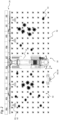
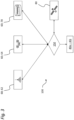
- FIG. 1 An embodiment variant of an agricultural distribution machine 10, preferably a field sprayer and/or a fertilizer spreader, is shown in the perspective view of Figure 1 and the top view of the Figure 2 out.
- the distribution machine 10 of the exemplary embodiments is designed as a self-propelled field sprayer and is equipped with a motor unit 12 and a driver's cab 14 for an operator.
- the distribution machine 10 particularly includes a distribution system 100 as described herein.
- the distribution machine comprises a distribution system 100 according to one of claims 1 to 16.
- the distribution machine 10 is alternatively or additionally designed to carry out a method for adjusting an application rate as described herein, in particular a method according to method claim 17.
- the distribution machine 10 includes a chassis 16 carrying components of the distribution machine 10 with a chassis 18 and a frame structure 20.
- the distribution machine 10 For carrying and providing agricultural distribution material (e.g. sprays, crop protection products and/or the like), the distribution machine 10 also includes a storage container 22.
- the distribution machine 10 For distributing the distribution material, the distribution machine 10 also includes a distribution rod 24 which is mounted on the chassis 16 in a height-adjustable manner relative to the chassis 16, especially in the form of a spray boom.
- the distribution linkage 24 is shown in a working position and extends across a large working width (e.g. 24 meters, 30 meters or more) transversely to the direction of travel FR.
- the distribution linkage 24 is composed of a central part 26 and side parts 28 which are pivotably arranged on the left and right of the central part 26 by means of pivot axes.
- a plurality of distribution elements e.g. spray nozzles which are arranged at a distance from one another and which are connected (e.g. fluidically) to the storage container 22 are attached to the distribution linkage 24 for distributing and discharging the agricultural material to be distributed.
- the distribution elements can be controlled individually, in groups or as a whole (i.e. all) by means of a data processing device 150.
- the distribution linkage 24 is height-adjustable relative to the chassis 16, with an adjusting device 30 being provided to change a height of the distribution linkage 24 relative to the chassis, or relative to a plant population 50 (e.g. crops 52; accompanying vegetation 54), which adjusting device 30, for example, by one or more Actuator(s) (e.g. hydraulic cylinders and/or pneumatic cylinders) can be formed, and which can be signal-connected and/or signal-connectable to a data processing device 150, wired and/or wireless.
- Actuator(s) e.g. hydraulic cylinders and/or pneumatic cylinders
- An agricultural distribution machine 10 is moved over a plant population 50, which plant population 50 has a large number of useful plants 52 and a large number of plants of accompanying vegetation 50.
- the distribution machine 10 is used to distribute solid and/or liquid agricultural distribution goods over the plant population 52 and has a plurality of distribution elements for this purpose, the distribution elements each being divided into groups of distribution elements 40a - 40j, which is according to the Figure 2 is shown schematically.
- the distribution elements of a group 40a - 40j of distribution elements extend over a partial width of the distribution linkage 24, with a group 40a - 40j of distribution elements having, for example, between 4 and 15 distribution elements (e.g. spray nozzles, Impact elements).
- the distribution elements can also be controlled individually, ie not grouped, for example by means of the data processing device 150, or that all distribution elements can be controlled independently of a grouping by means of the data processing device 150.
- the individual, grouped or all distribution elements are each connected and/or connectable (e.g. fluidly connected) to a storage container 22 for at least one agricultural product to be distributed.
- the distribution machine 10 or the distribution system 100 comprises a data processing device 150 which is set up to adapt the application rate to individual, grouped or all distribution elements, in particular to adapt it based on development stages. It is therefore possible to specifically adjust the application rate of agricultural distribution material only in areas of the plant population 50 in which this is also necessary, for example due to accompanying vegetation 54.
- the distribution machine 10 or the distribution system 100 comprises a detection device 60.
- the detection device 60 can be signal-connected and/or signal-connectable online with the data processing device and can be formed by at least one, preferably several, cameras and/or sensors 62 arranged on the distribution linkage 24.
- the detection device 60 can alternatively or additionally be signal-connected and/or signal-connectable offline to the data processing device 150, preferably wirelessly signal-connected and/or signal-connectable, and by at least one non-am Distribution linkage 24 mounted camera and / or sensor 62 can be formed.
- the camera and/or the sensor 62 can be attached to or integrated into an aircraft 64 (e.g. drone).
- the detection device 60 can be formed by a cartographic system and/or a planning system 70, the planning system 70 in turn being signal-connected and/or signal-connectable (e.g. wireless) to the data processing device 150.
- the planning system 70 can also be signal-connected and/or signal-connectable to a positioning system (e.g. GPS system, RTK system) in order to define positions of accompanying vegetation, preferably on an arable field, and thus to ensure a positionally precise distribution of agricultural distribution material in an arable field , or on a plant stand.
- a positioning system e.g. GPS system, RTK system
- the distribution machine 10 includes four sensors 62 which are mounted on the distribution linkage 24 and an aircraft 64 (e.g. drone) on which at least one camera and/or a sensor 62 can also be mounted and/or integrated.
- sensors 62 which are mounted on the distribution linkage 24 and an aircraft 64 (e.g. drone) on which at least one camera and/or a sensor 62 can also be mounted and/or integrated.
- ⁇ b> ⁇ u>Reference symbol list ⁇ /u> ⁇ /b> 10 distribution machine 54 Accompanying vegetation 12 Motor unit 14 Driver's cab 60 Detection device 16 chassis 62 sensor 18 landing gear 64 aircraft 20 Frame construction 22 storage container 70 Planning system 24 distribution linkage 80 Positioning system 26 middle section 28 Side part 100 Distribution system 30 Adjusting device 150 Data processing device 40a - 40y Group of distribution elements FR Direction of travel 50 plant population 52 crop; Crop plant
Landscapes
- Life Sciences & Earth Sciences (AREA)
- Engineering & Computer Science (AREA)
- Environmental Sciences (AREA)
- Insects & Arthropods (AREA)
- Pest Control & Pesticides (AREA)
- Wood Science & Technology (AREA)
- Zoology (AREA)
- Mechanical Engineering (AREA)
- Soil Sciences (AREA)
- Management, Administration, Business Operations System, And Electronic Commerce (AREA)
- Catching Or Destruction (AREA)
Claims (17)
- Système d'épandage (100) agricole destiné à épandre des produits d'épandage agricoles liquides et/ou solides sur un peuplement végétal (50), de préférence un pulvérisateur agricole ou un épandeur d'engrais, comprenant- une rampe d'épandage (24), comprenant une pluralité d'éléments d'épandage disposés sur celle-ci et reliés et/ou pouvant être reliés à un réservoir (22) pour au moins un produit d'épandage agricole, et- un dispositif d'acquisition (60), lequel est conçu pour détecter des stades de développement du peuplement végétal (50), et- comprenant un dispositif de traitement de données (150), le dispositif de traitement de données (150) étant conçu pour adapter une quantité d'application des produits d'épandage agricoles des éléments d'épandage individuels, groupés ou de la totalité de ceux-ci aux stades de développement,le peuplement végétal (50) possédant des plantes utiles (52) et de la végétation accompagnante (54), caractérisé en ce quele dispositif d'acquisition (60) et/ou le dispositif de traitement de données (150) est conçu pour détecter une proportion de la végétation accompagnante (54) par rapport aux plantes utiles (52) et en ce que le dispositif de traitement de données (150) est conçu pour adapter une quantité d'application des produits d'épandage agricoles des éléments d'épandage individuels, groupés ou de la totalité de ceux-ci à la proportion de la végétation accompagnante (54) de telle sorte qu'une quantité minimale de la végétation accompagnante (54) soit conservée.
- Système d'épandage (100) selon l'une des revendications précédentes, caractérisé en ce que le dispositif de traitement de données (150) est conçu pour adapter la quantité d'application au niveau des éléments d'épandage individuels, groupés ou de la totalité de ceux-ci indépendamment les uns des autres aux stades de développement.
- Système d'épandage (100) selon l'une des revendications précédentes, caractérisé en ce que le dispositif de traitement de données (150) est conçu pour mettre en œuvre l'adaptation de la quantité d'application au niveau des éléments d'épandage individuels, groupés ou de la totalité de ceux-ci par une modulation d'impulsions en largeur.
- Système d'épandage (100) selon l'une des revendications précédentes, caractérisé en ce que le dispositif d'acquisition (60) est conçu pour détecter les stades de développement de plantes utiles (52) et/ou d'une végétation accompagnante (54), notamment pour détecter une taille de plantes utiles (52) et/ou d'une végétation accompagnante (54).
- Système d'épandage (100) selon l'une des revendications précédentes, caractérisé en ce que le dispositif d'acquisition (60) est conçu pour détecter les stades de développement d'une végétation accompagnante (54), de préférence pour détecter une taille d'une végétation accompagnante (54), et en ce que le dispositif de traitement de données (150) est conçu pour adapter une quantité d'application de produits d'épandage agricoles des éléments d'épandage individuels, groupés ou de la totalité de ceux-ci à une taille, de préférence la taille de la végétation accompagnante (54).
- Système d'épandage (100) selon l'une des revendications précédentes, caractérisé en ce que la végétation accompagnante (54) peut présenter différentes variétés de plantes accompagnantes, et en ce que le dispositif d'acquisition (60) est conçu pour détecter les stades de développement de plantes utiles (52) et/ou de variétés de plantes accompagnantes, notamment une taille et/ou des types de variétés de plantes accompagnantes et en ce que le dispositif de traitement de données (150) est conçu pour adapter une quantité d'application de produits d'épandage agricoles des éléments d'épandage individuels, groupés ou de la totalité de ceux-ci à des variétés de plantes accompagnantes, notamment à la taille et/ou à un type de variétés de plantes accompagnantes.
- Système d'épandage (100) selon l'une des revendications précédentes, caractérisé en ce que la végétation accompagnante (54) peut présenter différentes variétés de plantes accompagnantes, et en ce que le dispositif de traitement de données (150) et/ou le dispositif d'acquisition (60) est conçu pour détecter et/ou définir des types de variétés de plantes accompagnantes et en ce que le dispositif de traitement de données (150) est conçu pour adapter une quantité d'application de produits d'épandage agricoles des éléments d'épandage individuels, groupés ou de la totalité de ceux-ci aux types de variétés de plantes accompagnantes de telle sorte que des types de plantes accompagnantes définis et/ou définissables ne sont pas traités.
- Système d'épandage (100) selon l'une des revendications précédentes, caractérisé en ce que le dispositif d'acquisition (60) est en connexion de signal et/ou peut être mis en connexion de signal avec le dispositif de traitement de données (150) et il est formé par au moins une caméra et/ou un capteur (62) disposé au niveau de la rampe d'épandage (24).
- Système d'épandage (100) selon l'une des revendications précédentes, caractérisé en ce que le dispositif d'acquisition (60) est en connexion de signal et/ou peut être mis en connexion de signal avec le dispositif de traitement de données (150) et il est formé par au moins une caméra et/ou un capteur (62) non disposé au niveau de la rampe d'épandage (24), la caméra et/ou le capteur (62) étant de préférence monté et/ou installé sur un engin volant ou encore sur ou dans un terminal mobile.
- Système d'épandage (100) selon l'une des revendications précédentes, caractérisé en ce que le dispositif d'acquisition (60) est formé par au moins une caméra et/ou un capteur (62).
- Système d'épandage (100) selon l'une des revendications précédentes, caractérisé en ce qu'un dispositif d'acquisition (60) est respectivement associé de manière techniquement active aux éléments d'épandage individuels, groupés ou à la totalité de ceux-ci.
- Système d'épandage (100) selon l'une des revendications précédentes, caractérisé en ce que le dispositif de traitement de données (150) est conçu pour adapter une quantité d'application minimale de produits d'épandage agricoles avec des éléments d'épandage individuels, groupés ou de la totalité de ceux-ci indépendamment du stade de développement, et en ce que le dispositif de traitement de données (150) est conçu pour adapter une quantité d'application minimale des éléments d'épandage individuels, groupés ou de la totalité de ceux-ci à l'aide des stades de développement et/ou à l'aide des types de végétation accompagnante.
- Système d'épandage (100) selon l'une des revendications précédentes, caractérisé en ce que le peuplement végétal (50) possède des plantes utiles (52) et de la végétation accompagnante (54) et en ce que le dispositif d'acquisition (60) est conçu pour définir une position de la végétation accompagnante (54), de préférence pour la définir sur une surface agricole, et en ce que le dispositif de traitement de données (150) est conçu pour adapter une quantité d'application de produits d'épandage agricoles des éléments d'épandage individuels, groupés ou de la totalité de ceux-ci à une position.
- Système d'épandage (100) selon l'une des revendications précédentes, caractérisé en ce que le peuplement végétal (50) possède des plantes utiles (52) et de la végétation accompagnante (54) et en ce que le dispositif d'acquisition (60) est conçu pour détecter une taille de la végétation accompagnante (54) et en ce que le dispositif de traitement de données (150) est conçu pour adapter une quantité d'application de produits d'épandage agricoles des éléments d'épandage individuels, groupés ou de la totalité de ceux-ci à l'aide d'une taille ou à l'aide d'un produit d'épandage agricole.
- Procédé d'adaptation d'une quantité d'application, en vue de l'épandage de produits d'épandage agricoles liquides et/ou solides sur un peuplement végétal (50), de préférence pour un pulvérisateur agricole ou un épandeur d'engrais, comprenant les étapes suivantes- fourniture d'une rampe d'épandage (24), comprenant une pluralité d'éléments d'épandage disposés sur celle-ci et reliés et/ou pouvant être reliés à un réservoir (22) pour au moins un produit d'épandage agricole, ainsi que fourniture d'un dispositif d'acquisition (60), lequel est conçu pour détecter des stades de développement du peuplement végétal (50), et fourniture d'un dispositif de traitement de données (150),- adaptation d'une quantité d'application des produits d'épandage agricoles des éléments d'épandage individuels, groupés ou de la totalité de ceux-ci aux stades de développement au moyen du dispositif de traitement de données (150),le peuplement végétal (50) possédant des plantes utiles (52) et de la végétation accompagnante (54), caractérisé en ce quele dispositif d'acquisition (60) et/ou le dispositif de traitement de données (150) est conçu pour détecter une proportion de la végétation accompagnante (54) par rapport aux plantes utiles (52) et en ce que le dispositif de traitement de données (150) est conçu pour adapter une quantité d'application des produits d'épandage agricoles des éléments d'épandage individuels, groupés ou de la totalité de ceux-ci à la proportion de la végétation accompagnante (54) de telle sorte qu'une quantité minimale de la végétation accompagnante (54) soit conservée.
- Machine d'épandage (10) agricole, de préférence pulvérisateur agricole ou épandeur d'engrais, comprenant- un châssis (16) qui porte des composants de la machine d'épandage (10),- une rampe d'épandage (24) montée sur le châssis (16) réglable en hauteur par rapport au châssis (16), laquelle possède une partie centrale et des parties latérales (28) montées pivotantes à gauche et à droite sur la partie centrale au moyen d'axes de pivotement ainsi qu'une pluralité d'éléments d'épandage disposés sur celle-ci et reliés et/ou pouvant être reliés à un réservoir (22) pour au moins un produit d'épandage agricole,caractérisée en ce que la machine d'épandage (10) comporte un système d'épandage (100) selon l'une des revendications 1 à 14 et/ou en ce que la machine d'épandage (10) est conçue pour mettre en œuvre un procédé selon la revendication 15.
- Machine d'épandage (10) selon la revendication 16, caractérisée en ce que celle-ci comporte un dispositif de traitement de données (150), lequel est en connexion de signal et/ou peut être mis en connexion de signal avec un dispositif d'acquisition (60), le dispositif d'acquisition (60) étant conçu pour détecter les stades de développement d'une végétation accompagnante (54) dans un procédé en ligne et/ou les détecter dans un procédé hors ligne.
Applications Claiming Priority (1)
| Application Number | Priority Date | Filing Date | Title |
|---|---|---|---|
| DE102020110282.8A DE102020110282A1 (de) | 2020-04-15 | 2020-04-15 | Landwirtschaftliches Verteilsystem, Verfahren zur Anpassung einer Ausbringmenge sowie landwirtschaftliche Verteilmaschine |
Publications (3)
| Publication Number | Publication Date |
|---|---|
| EP3895531A1 EP3895531A1 (fr) | 2021-10-20 |
| EP3895531B1 true EP3895531B1 (fr) | 2023-10-04 |
| EP3895531C0 EP3895531C0 (fr) | 2023-10-04 |
Family
ID=74666523
Family Applications (1)
| Application Number | Title | Priority Date | Filing Date |
|---|---|---|---|
| EP21157526.1A Active EP3895531B1 (fr) | 2020-04-15 | 2021-02-17 | Système d'épandage agricole, procédé d'ajustement d'une quantité d'application, ainsi que machine d'épandage agricole |
Country Status (2)
| Country | Link |
|---|---|
| EP (1) | EP3895531B1 (fr) |
| DE (1) | DE102020110282A1 (fr) |
Families Citing this family (2)
| Publication number | Priority date | Publication date | Assignee | Title |
|---|---|---|---|---|
| DE102021128781A1 (de) * | 2021-11-05 | 2023-05-11 | Amazonen-Werke H. Dreyer SE & Co. KG | Verfahren zum Steuern und/oder Regeln einer landwirtschaftlichen Verteilmaschine |
| DE102022104063A1 (de) * | 2022-02-22 | 2023-08-24 | Horsch Leeb Application Systems Gmbh | Landwirtschaftliche verteilmaschine und verfahren zum positionsgenauen verteilen von landwirtschaftlichem wirkmittel |
Family Cites Families (8)
| Publication number | Priority date | Publication date | Assignee | Title |
|---|---|---|---|---|
| WO1999017606A1 (fr) * | 1997-09-24 | 1999-04-15 | Hardi International A/S | Procede et appareil pour la detection, la classification et le traitement de la vegetation |
| DE19858168B4 (de) * | 1998-12-16 | 2004-07-08 | Hilker, Andreas, Dipl.-Agr.-Ing. | Vorrichtung und Verfahren zur berührungslosen Ermittlung des Pflanzenbewuchses eines Feldabschnittes |
| US8191795B2 (en) * | 2008-08-01 | 2012-06-05 | Capstan Ag Systems, Inc. | Method and system to control flow from individual nozzles while controlling overall system flow and pressure |
| DE102014226189B4 (de) * | 2014-12-17 | 2017-08-24 | Continental Automotive Gmbh | Verfahren zur Ermittlung eines Unkrautanteils und Landtechnik-Steuereinrichtung |
| EP3287007A1 (fr) * | 2016-08-24 | 2018-02-28 | Bayer CropScience AG | Lutte contre des organismes nuisibles sur la base de prediction de risques de contamination |
| DE102016123757A1 (de) | 2016-12-08 | 2018-06-14 | Horsch Leeb Application Systems Gmbh | Landwirtschaftliche Feldspritze |
| US10719709B2 (en) | 2018-04-06 | 2020-07-21 | Cnh Industrial America Llc | Augmented reality for plant stand management |
| NL2022612B1 (en) * | 2019-02-21 | 2020-08-31 | Exel Ind | Agricultural device and method for dispensing a liquid |
-
2020
- 2020-04-15 DE DE102020110282.8A patent/DE102020110282A1/de active Pending
-
2021
- 2021-02-17 EP EP21157526.1A patent/EP3895531B1/fr active Active
Also Published As
| Publication number | Publication date |
|---|---|
| EP3895531C0 (fr) | 2023-10-04 |
| EP3895531A1 (fr) | 2021-10-20 |
| DE102020110282A1 (de) | 2021-10-21 |
Similar Documents
| Publication | Publication Date | Title |
|---|---|---|
| EP4027782B1 (fr) | Procédé de distribution d'un agent liquide sur une surface agricole | |
| EP4262378B1 (fr) | Procédé d'application d'une pulvérisation sur terrain agricole | |
| DE102018222428A1 (de) | Verfahren zum Ausbringen eines Spritzmittels auf eine landwirtschaftliche Fläche | |
| EP2898773B1 (fr) | Procédé d'épandage contrôlé et/ou régulé de produits phytosanitaires ainsi qu'épandeur agricole pour l'application du procédé | |
| DE102019203394A1 (de) | Verfahren zum Einstellen eines Parameters einer landwirtschaftlichen Spritzvorrichtung | |
| DE102019129206B4 (de) | Selbstfahrende und/oder mittels Zugfahrzeug gezogene Landmaschine und Verfahren zur Steuerung und/oder Regelung einer Höhenlage eines Verteilgestänges einer derartigen Landmaschine | |
| EP3895531B1 (fr) | Système d'épandage agricole, procédé d'ajustement d'une quantité d'application, ainsi que machine d'épandage agricole | |
| WO2019174934A1 (fr) | Procédé de réglage d'une quantité d'agent actif et/ou d'une position de buse de pulvérisation dans un dispositif de pulvérisation agricole | |
| EP4404741A1 (fr) | Procédé d'application d'au moins un produit à pulvériser sur une terre agricole | |
| DE102020124792B4 (de) | Landwirtschaftliche Spritzvorrichtung, Verfahren zum Ausbringen von Spritzflüssigkeit und landwirtschaftliche Feldspritze | |
| DE102020106738A1 (de) | Kompensationssystem für eine Landmaschine, sowie Verteilmaschine und Verfahren zur Kompensation von Bodenunebenheiten für eine Landmaschine | |
| EP3895532B1 (fr) | Système pour une machine agricole de travail, procédé de détermination d'une position des éléments de travail, ainsi que machine agricole de travail | |
| WO2022223282A1 (fr) | Procédé pour épandre deux différents produits de pulvérisation sur une surface agricole | |
| WO2022223281A1 (fr) | Procédé d'application de deux produits de pulvérisation différents sur une terre agricole | |
| EP4326058A1 (fr) | Procédé d'application de deux produits de pulvérisation différents sur une terre agricole | |
| DE102006054934A1 (de) | Über eine Fläche fahrbarer Roboter | |
| EP4262380A1 (fr) | Procédé d'application d'une pulvérisation sur un terrain agricole | |
| EP4260701A1 (fr) | Machine de distribution agricole et procédé d'épandage de produit de distribution agricole | |
| DE102022112090A1 (de) | Landwirtschaftliche Verteilmaschine und Verfahren zum Ausbringen eines jeweiligen Verteilguts | |
| DE102022109214A1 (de) | Landwirtschaftliche Verteilmaschine und Verfahren zum Ausbringen von landwirtschaftlichem Verteilgut | |
| WO2020043501A1 (fr) | Procédé de distribution d'un liquide de traitement sur une surface agricole | |
| EP4230038A1 (fr) | Machine de répartition agricole et procédé de répartition précise en position d'agents actifs agricoles | |
| WO2023117541A1 (fr) | Système de configuration et procédé de mise en œuvre d'une machine de travail agricole, et machine de travail agricole | |
| DE102022212490A1 (de) | Verfahren zum Ermitteln einer Zustandsinformation bezüglich eines Zustands eines landwirtschaftlichen Arbeitswerkzeugs einer landwirtschaftlichen Arbeitsmaschine | |
| DE102022110359A1 (de) | Fahrbare landwirtschaftliche Verteilmaschine und Verfahren zum Ausbringen von zumindest zwei unterschiedlichen Verteilgütern |
Legal Events
| Date | Code | Title | Description |
|---|---|---|---|
| PUAI | Public reference made under article 153(3) epc to a published international application that has entered the european phase |
Free format text: ORIGINAL CODE: 0009012 |
|
| STAA | Information on the status of an ep patent application or granted ep patent |
Free format text: STATUS: THE APPLICATION HAS BEEN PUBLISHED |
|
| AK | Designated contracting states |
Kind code of ref document: A1 Designated state(s): AL AT BE BG CH CY CZ DE DK EE ES FI FR GB GR HR HU IE IS IT LI LT LU LV MC MK MT NL NO PL PT RO RS SE SI SK SM TR |
|
| B565 | Issuance of search results under rule 164(2) epc |
Effective date: 20210716 |
|
| STAA | Information on the status of an ep patent application or granted ep patent |
Free format text: STATUS: REQUEST FOR EXAMINATION WAS MADE |
|
| 17P | Request for examination filed |
Effective date: 20220419 |
|
| RBV | Designated contracting states (corrected) |
Designated state(s): AL AT BE BG CH CY CZ DE DK EE ES FI FR GB GR HR HU IE IS IT LI LT LU LV MC MK MT NL NO PL PT RO RS SE SI SK SM TR |
|
| GRAP | Despatch of communication of intention to grant a patent |
Free format text: ORIGINAL CODE: EPIDOSNIGR1 |
|
| RIC1 | Information provided on ipc code assigned before grant |
Ipc: A01B 79/00 20060101ALI20230327BHEP Ipc: A01M 9/00 20060101ALI20230327BHEP Ipc: A01M 7/00 20060101AFI20230327BHEP |
|
| STAA | Information on the status of an ep patent application or granted ep patent |
Free format text: STATUS: GRANT OF PATENT IS INTENDED |
|
| INTG | Intention to grant announced |
Effective date: 20230504 |
|
| GRAS | Grant fee paid |
Free format text: ORIGINAL CODE: EPIDOSNIGR3 |
|
| GRAA | (expected) grant |
Free format text: ORIGINAL CODE: 0009210 |
|
| STAA | Information on the status of an ep patent application or granted ep patent |
Free format text: STATUS: THE PATENT HAS BEEN GRANTED |
|
| AK | Designated contracting states |
Kind code of ref document: B1 Designated state(s): AL AT BE BG CH CY CZ DE DK EE ES FI FR GB GR HR HU IE IS IT LI LT LU LV MC MK MT NL NO PL PT RO RS SE SI SK SM TR |
|
| REG | Reference to a national code |
Ref country code: GB Ref legal event code: FG4D Free format text: NOT ENGLISH |
|
| REG | Reference to a national code |
Ref country code: CH Ref legal event code: EP |
|
| REG | Reference to a national code |
Ref country code: IE Ref legal event code: FG4D Free format text: LANGUAGE OF EP DOCUMENT: GERMAN |
|
| REG | Reference to a national code |
Ref country code: DE Ref legal event code: R096 Ref document number: 502021001600 Country of ref document: DE |
|
| U01 | Request for unitary effect filed |
Effective date: 20231010 |
|
| U07 | Unitary effect registered |
Designated state(s): AT BE BG DE DK EE FI FR IT LT LU LV MT NL PT SE SI Effective date: 20231018 |
|
| U20 | Renewal fee for the european patent with unitary effect paid |
Year of fee payment: 4 Effective date: 20240215 |
|
| PG25 | Lapsed in a contracting state [announced via postgrant information from national office to epo] |
Ref country code: GR Free format text: LAPSE BECAUSE OF FAILURE TO SUBMIT A TRANSLATION OF THE DESCRIPTION OR TO PAY THE FEE WITHIN THE PRESCRIBED TIME-LIMIT Effective date: 20240105 |
|
| PG25 | Lapsed in a contracting state [announced via postgrant information from national office to epo] |
Ref country code: IS Free format text: LAPSE BECAUSE OF FAILURE TO SUBMIT A TRANSLATION OF THE DESCRIPTION OR TO PAY THE FEE WITHIN THE PRESCRIBED TIME-LIMIT Effective date: 20240204 |
|
| PG25 | Lapsed in a contracting state [announced via postgrant information from national office to epo] |
Ref country code: ES Free format text: LAPSE BECAUSE OF FAILURE TO SUBMIT A TRANSLATION OF THE DESCRIPTION OR TO PAY THE FEE WITHIN THE PRESCRIBED TIME-LIMIT Effective date: 20231004 |
|
| PG25 | Lapsed in a contracting state [announced via postgrant information from national office to epo] |
Ref country code: IS Free format text: LAPSE BECAUSE OF FAILURE TO SUBMIT A TRANSLATION OF THE DESCRIPTION OR TO PAY THE FEE WITHIN THE PRESCRIBED TIME-LIMIT Effective date: 20240204 Ref country code: GR Free format text: LAPSE BECAUSE OF FAILURE TO SUBMIT A TRANSLATION OF THE DESCRIPTION OR TO PAY THE FEE WITHIN THE PRESCRIBED TIME-LIMIT Effective date: 20240105 Ref country code: ES Free format text: LAPSE BECAUSE OF FAILURE TO SUBMIT A TRANSLATION OF THE DESCRIPTION OR TO PAY THE FEE WITHIN THE PRESCRIBED TIME-LIMIT Effective date: 20231004 |
|
| PG25 | Lapsed in a contracting state [announced via postgrant information from national office to epo] |
Ref country code: RS Free format text: LAPSE BECAUSE OF FAILURE TO SUBMIT A TRANSLATION OF THE DESCRIPTION OR TO PAY THE FEE WITHIN THE PRESCRIBED TIME-LIMIT Effective date: 20231004 Ref country code: PL Free format text: LAPSE BECAUSE OF FAILURE TO SUBMIT A TRANSLATION OF THE DESCRIPTION OR TO PAY THE FEE WITHIN THE PRESCRIBED TIME-LIMIT Effective date: 20231004 Ref country code: NO Free format text: LAPSE BECAUSE OF FAILURE TO SUBMIT A TRANSLATION OF THE DESCRIPTION OR TO PAY THE FEE WITHIN THE PRESCRIBED TIME-LIMIT Effective date: 20240104 Ref country code: HR Free format text: LAPSE BECAUSE OF FAILURE TO SUBMIT A TRANSLATION OF THE DESCRIPTION OR TO PAY THE FEE WITHIN THE PRESCRIBED TIME-LIMIT Effective date: 20231004 |
|
| REG | Reference to a national code |
Ref country code: DE Ref legal event code: R097 Ref document number: 502021001600 Country of ref document: DE |
|
| PG25 | Lapsed in a contracting state [announced via postgrant information from national office to epo] |
Ref country code: CZ Free format text: LAPSE BECAUSE OF FAILURE TO SUBMIT A TRANSLATION OF THE DESCRIPTION OR TO PAY THE FEE WITHIN THE PRESCRIBED TIME-LIMIT Effective date: 20231004 |
|
| PG25 | Lapsed in a contracting state [announced via postgrant information from national office to epo] |
Ref country code: SK Free format text: LAPSE BECAUSE OF FAILURE TO SUBMIT A TRANSLATION OF THE DESCRIPTION OR TO PAY THE FEE WITHIN THE PRESCRIBED TIME-LIMIT Effective date: 20231004 |
|
| PG25 | Lapsed in a contracting state [announced via postgrant information from national office to epo] |
Ref country code: SM Free format text: LAPSE BECAUSE OF FAILURE TO SUBMIT A TRANSLATION OF THE DESCRIPTION OR TO PAY THE FEE WITHIN THE PRESCRIBED TIME-LIMIT Effective date: 20231004 Ref country code: SK Free format text: LAPSE BECAUSE OF FAILURE TO SUBMIT A TRANSLATION OF THE DESCRIPTION OR TO PAY THE FEE WITHIN THE PRESCRIBED TIME-LIMIT Effective date: 20231004 Ref country code: RO Free format text: LAPSE BECAUSE OF FAILURE TO SUBMIT A TRANSLATION OF THE DESCRIPTION OR TO PAY THE FEE WITHIN THE PRESCRIBED TIME-LIMIT Effective date: 20231004 Ref country code: CZ Free format text: LAPSE BECAUSE OF FAILURE TO SUBMIT A TRANSLATION OF THE DESCRIPTION OR TO PAY THE FEE WITHIN THE PRESCRIBED TIME-LIMIT Effective date: 20231004 |
|
| PLBE | No opposition filed within time limit |
Free format text: ORIGINAL CODE: 0009261 |
|
| STAA | Information on the status of an ep patent application or granted ep patent |
Free format text: STATUS: NO OPPOSITION FILED WITHIN TIME LIMIT |
|
| 26N | No opposition filed |
Effective date: 20240705 |
|
| PG25 | Lapsed in a contracting state [announced via postgrant information from national office to epo] |
Ref country code: MC Free format text: LAPSE BECAUSE OF FAILURE TO SUBMIT A TRANSLATION OF THE DESCRIPTION OR TO PAY THE FEE WITHIN THE PRESCRIBED TIME-LIMIT Effective date: 20231004 |
|
| REG | Reference to a national code |
Ref country code: CH Ref legal event code: PL |
|
| PG25 | Lapsed in a contracting state [announced via postgrant information from national office to epo] |
Ref country code: CH Free format text: LAPSE BECAUSE OF NON-PAYMENT OF DUE FEES Effective date: 20240229 |
|
| PG25 | Lapsed in a contracting state [announced via postgrant information from national office to epo] |
Ref country code: CH Free format text: LAPSE BECAUSE OF NON-PAYMENT OF DUE FEES Effective date: 20240229 |
|
| PG25 | Lapsed in a contracting state [announced via postgrant information from national office to epo] |
Ref country code: IE Free format text: LAPSE BECAUSE OF NON-PAYMENT OF DUE FEES Effective date: 20240217 |
|
| PG25 | Lapsed in a contracting state [announced via postgrant information from national office to epo] |
Ref country code: IE Free format text: LAPSE BECAUSE OF NON-PAYMENT OF DUE FEES Effective date: 20240217 |
|
| U20 | Renewal fee for the european patent with unitary effect paid |
Year of fee payment: 5 Effective date: 20250224 |
|
| PG25 | Lapsed in a contracting state [announced via postgrant information from national office to epo] |
Ref country code: CY Free format text: LAPSE BECAUSE OF FAILURE TO SUBMIT A TRANSLATION OF THE DESCRIPTION OR TO PAY THE FEE WITHIN THE PRESCRIBED TIME-LIMIT; INVALID AB INITIO Effective date: 20210217 |
|
| PG25 | Lapsed in a contracting state [announced via postgrant information from national office to epo] |
Ref country code: HU Free format text: LAPSE BECAUSE OF FAILURE TO SUBMIT A TRANSLATION OF THE DESCRIPTION OR TO PAY THE FEE WITHIN THE PRESCRIBED TIME-LIMIT; INVALID AB INITIO Effective date: 20210217 |
|
| GBPC | Gb: european patent ceased through non-payment of renewal fee |
Effective date: 20250217 |
|
| PG25 | Lapsed in a contracting state [announced via postgrant information from national office to epo] |
Ref country code: TR Free format text: LAPSE BECAUSE OF FAILURE TO SUBMIT A TRANSLATION OF THE DESCRIPTION OR TO PAY THE FEE WITHIN THE PRESCRIBED TIME-LIMIT Effective date: 20231004 |
|
| PG25 | Lapsed in a contracting state [announced via postgrant information from national office to epo] |
Ref country code: GB Free format text: LAPSE BECAUSE OF NON-PAYMENT OF DUE FEES Effective date: 20250217 |
|
| U20 | Renewal fee for the european patent with unitary effect paid |
Year of fee payment: 6 Effective date: 20260224 |