EP3897062A1 - Direktzugriffsverfahren und endgerätevorrichtung sowie netzwerkvorrichtung - Google Patents
Direktzugriffsverfahren und endgerätevorrichtung sowie netzwerkvorrichtung Download PDFInfo
- Publication number
- EP3897062A1 EP3897062A1 EP19909864.1A EP19909864A EP3897062A1 EP 3897062 A1 EP3897062 A1 EP 3897062A1 EP 19909864 A EP19909864 A EP 19909864A EP 3897062 A1 EP3897062 A1 EP 3897062A1
- Authority
- EP
- European Patent Office
- Prior art keywords
- information
- terminal device
- group
- resource
- network device
- Prior art date
- Legal status (The legal status is an assumption and is not a legal conclusion. Google has not performed a legal analysis and makes no representation as to the accuracy of the status listed.)
- Pending
Links
Images




Classifications
-
- H—ELECTRICITY
- H04—ELECTRIC COMMUNICATION TECHNIQUE
- H04W—WIRELESS COMMUNICATION NETWORKS
- H04W74/00—Wireless channel access
- H04W74/002—Transmission of channel access control information
- H04W74/004—Transmission of channel access control information in the uplink, i.e. towards network
-
- H—ELECTRICITY
- H04—ELECTRIC COMMUNICATION TECHNIQUE
- H04W—WIRELESS COMMUNICATION NETWORKS
- H04W48/00—Access restriction; Network selection; Access point selection
- H04W48/08—Access restriction or access information delivery, e.g. discovery data delivery
- H04W48/10—Access restriction or access information delivery, e.g. discovery data delivery using broadcasted information
-
- H—ELECTRICITY
- H04—ELECTRIC COMMUNICATION TECHNIQUE
- H04W—WIRELESS COMMUNICATION NETWORKS
- H04W72/00—Local resource management
- H04W72/50—Allocation or scheduling criteria for wireless resources
- H04W72/53—Allocation or scheduling criteria for wireless resources based on regulatory allocation policies
-
- H—ELECTRICITY
- H04—ELECTRIC COMMUNICATION TECHNIQUE
- H04W—WIRELESS COMMUNICATION NETWORKS
- H04W74/00—Wireless channel access
- H04W74/08—Non-scheduled access, e.g. ALOHA
- H04W74/0833—Random access procedures, e.g. with 4-step access
-
- H—ELECTRICITY
- H04—ELECTRIC COMMUNICATION TECHNIQUE
- H04L—TRANSMISSION OF DIGITAL INFORMATION, e.g. TELEGRAPHIC COMMUNICATION
- H04L5/00—Arrangements affording multiple use of the transmission path
- H04L5/003—Arrangements for allocating sub-channels of the transmission path
- H04L5/0044—Allocation of payload; Allocation of data channels, e.g. PDSCH or PUSCH
-
- H—ELECTRICITY
- H04—ELECTRIC COMMUNICATION TECHNIQUE
- H04L—TRANSMISSION OF DIGITAL INFORMATION, e.g. TELEGRAPHIC COMMUNICATION
- H04L5/00—Arrangements affording multiple use of the transmission path
- H04L5/003—Arrangements for allocating sub-channels of the transmission path
- H04L5/0053—Allocation of signalling, i.e. of overhead other than pilot signals
-
- H—ELECTRICITY
- H04—ELECTRIC COMMUNICATION TECHNIQUE
- H04W—WIRELESS COMMUNICATION NETWORKS
- H04W74/00—Wireless channel access
- H04W74/08—Non-scheduled access, e.g. ALOHA
- H04W74/0833—Random access procedures, e.g. with 4-step access
- H04W74/0836—Random access procedures, e.g. with 4-step access with 2-step access
Definitions
- Embodiments of the present application relate to the technical field of communication, specifically to a method for random access, a terminal device, and a network device.
- a four-step access method namely, access request (Message 1, Msg1), access response (Message 2, Msg2), scheduled transmission (Message 3, Msg3) and conflict resolution (Message 4, Msg4), can usually be adopted.
- Embodiments of the present application provide a method for random access, a terminal device and a network device, which are used for achieving a random access of a terminal device in a low-latency scenario.
- a method for random access which includes:
- a terminal device configured to perform the method in the above first aspect or in various implementation modes thereof.
- the terminal device includes function modules configured to perform the method in the above first aspect or in various implementation modes thereof.
- a network device is provided, which is configured to perform the method in the above second aspect or in various implementation modes thereof.
- the network device includes function modules configured to perform the method in the above second aspect or in various implementation modes thereof.
- a communication device which includes a processor and a memory.
- the memory is configured to store a computer program
- the processor is configured to call and run the computer program stored in the memory to perform the method in any one of the above first to second aspects or in various implementation modes thereof.
- a chip is provided, which is configured to implement the method in the above first aspect or in various implementation modes thereof.
- the chip includes a processor configured to call and run a computer program from a memory, such that a device with the chip installed therein performs the method in any one of the above first to second aspects or in various implementation modes thereof.
- a computer-readable storage medium configured to store a computer program, wherein the computer program enables a computer to perform the method in any one of the above first to second aspects or in various implementation modes thereof.
- a computer program product including computer program instructions which enable a computer to perform the method in any one of the above first to second aspects or in various implementation modes thereof.
- a computer program which, when being run on a computer, enables the computer to perform the method in any one of the above first to second aspects or in various implementation modes thereof.
- the terminal device sends the first information on the first resource and sends the second information on the second resource, and then the terminal device detects the third information on a group of third pre-configured resources in the first window, so that the terminal device can receive the fourth information on the fourth resource.
- the terminal device sends the first information on the first resource and sends the second information on the second resource, and then the terminal device detects the third information on a group of third pre-configured resources in the first window, so that the terminal device can receive the fourth information on the fourth resource.
- the network device detects the first information on a group of first pre-configured resources and detects the second information on a group of second pre-configured resources, so that the network device can send the third information on the third resource and send the fourth information on the fourth resource in the first window.
- the network device detects the first information on a group of first pre-configured resources and detects the second information on a group of second pre-configured resources, so that the network device can send the third information on the third resource and send the fourth information on the fourth resource in the first window.
- GSM Global System of Mobile communication
- CDMA Code Division Multiple Access
- WCDMA Wideband Code Division Multiple Access
- GPRS General Packet Radio Service
- LTE Long Term Evolution
- FDD Frequency Division Duplex
- TDD Time Division Duplex
- UMTS Universal Mobile Telecommunication System
- WiMAX Worldwide Interoperability for Microwave Access
- the communication system 100 may include a network device 110, wherein the network device 110 may be a device that communicates with a terminal device 120 (or referred to as a communication terminal device, or a terminal device).
- the network device 110 may provide communication coverage for a specific geographical area, and may communicate with terminal devices located within the coverage area.
- the network device 110 may be a Base Transceiver Station (BTS) in a GSM system or a CDMA system, a NodeB (NB) in a WCDMA system, an Evolutional Node B (eNB or eNodeB) in an LTE system, or a radio controller in a Cloud Radio Access Network (CRAN), or the network device may be a mobile switch center, a relay station, an access point, a vehicle-mounted device, a wearable device, a hub, a switch, a bridge, a router, or a network side device in a 5G network, or a network device in a future evolved Public Land Mobile Network (PLMN), etc.
- BTS Base Transceiver Station
- NB NodeB
- eNB or eNodeB Evolutional Node B
- CRAN Cloud Radio Access Network
- the network device may be a mobile switch center, a relay station, an access point, a vehicle-mounted device, a wearable device, a hub, a switch,
- the communication system 100 also includes at least one terminal device 120 located within the coverage area of the network device 110.
- terminal device includes, but is not limited to, a device configured to connect via a wired circuit, for example, via Public Switched Telephone Networks (PSTN), a Digital Subscriber Line (DSL), a digital cable, or a direct cable; and/or another data connection/network; and/or via a wireless interface, for example, for a cellular network, a Wireless Local Area Network (WLAN), a digital television network such as a DVB-H network, a satellite network, or an AM-FM broadcast sender; and/or an apparatus, of another terminal device, configured to receive/send a communication signal; and/or an Internet of Things (IoT) device.
- PSTN Public Switched Telephone Networks
- DSL Digital Subscriber Line
- WLAN Wireless Local Area Network
- AM-FM broadcast sender AM-FM broadcast sender
- IoT Internet of Things
- a terminal device configured to communicate via a wireless interface may be referred to as a "wireless communication terminal device", a “wireless terminal device” or a “mobile terminal device”.
- the mobile terminal device include, but are not limited to, a satellite or cellular telephone, a Personal Communication System (PCS) terminal device which may be combined with a cellular wireless telephone and data processing, faxing, and data communication capability, a PDA that may include a radio telephone, a pager, an internet/intranet access, a Web browser, a notepad, a calendar, and/or a Global Positioning System (GPS) receiver, and a conventional laptop and/or handheld receiver or another electronic apparatus including a radio telephone transceiver.
- PCS Personal Communication System
- GPS Global Positioning System
- the terminal device may be referred to as an access terminal device, a User Equipment (UE), a subscriber unit, a subscriber station, a mobile station, a mobile platform, a remote station, a remote terminal device, a mobile device, a user terminal device, a terminal device, a wireless communication device, a user agent or a user apparatus.
- UE User Equipment
- the access terminal device may be a cellular phone, a cordless phone, a Session Initiation Protocol (SIP) phone, a Wireless Local Loop (WLL) station, a Personal Digital Assistant (PDA), a handheld device with a wireless communication function, a computing device, or another processing device connected to a wireless modem, a vehicle-mounted device, a wearable device, a terminal device in a 5G network, or a terminal device in a future evolved PLMN, or the like.
- SIP Session Initiation Protocol
- WLL Wireless Local Loop
- PDA Personal Digital Assistant
- D2D communication of terminal devices may be performed between the terminal devices 120.
- the 5G system or the 5G network may also be referred to as a New Radio (NR) system or an NR network.
- NR New Radio
- FIG. 1 shows one network device and two terminal devices as an example.
- the communication system 100 may include multiple network devices, and another quantity of terminal devices may be included within a coverage area of each network device, and this is not limited in the embodiments of the present application.
- the communication system 100 may also include another network entity such as a network controller, a mobile management entity, which is not limited in the embodiments of the present application.
- another network entity such as a network controller, a mobile management entity, which is not limited in the embodiments of the present application.
- a device with a communication function in a network/system in the embodiments of the present application may be referred to as a communication device.
- the communication device may include a network device 110 and a terminal device 120 which have communication functions, and the network device 110 and the terminal device 120 may be the specific devices described above, which will not be repeated here again; and the communication device may also include another device in the communication system 100, for example, another network entity such as a network controller, a mobile management entity, which is not limited in the embodiments of the present application.
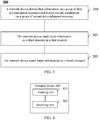
- FIG. 2A is a schematic diagram of a method for random access 200 according to an embodiment of the present application.
- a terminal device sends first information on a first resource and sends second information on a second resource.
- the terminal device detects third information on a group of third pre-configured resources in a first window.
- a start position of the first window may include, but is not limited to:
- time unit refers to a general time parameter, which may be a Sub-frame, a slot, or a symbol. This is not particularly restricted in this embodiment.
- the terminal device receives fourth information on a fourth resource.
- a main idea of the present application is to combine the first step (Msg1) and the third step (Msg3) of the existing four-step contention-based random access procedure into a first step (Message A, Msg A) of a random access procedure according to the present application, and combine the second step (Msg2) and the fourth step (Msg4) of the existing four-step contention-based random access procedure into a second step (Message B, Msg B) of the two-step contention-based random access procedure according to the present application.
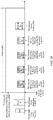
- the two-step contention-based random access procedure may be shown in FIG. 2B , and its basic features include a request message (Msg A) sent by the terminal device and a response message (Msg B) received by the terminal device.
- the terminal device needs to send the first information (e.g., Preamble) and the second information (e.g., data).
- the Preamble is sent on a Physical Random Access CHannel (PRACH) occasion (RO) resource
- the data is sent on a Physical Uplink Shared CHannel (PUSCH) resource.
- PRACH Physical Random Access CHannel
- RO Physical Uplink Shared CHannel
- the two-step contention-based random access procedure can bring advantages such as simplified steps and shortened delay of the random access.
- the terminal device may specifically send the first information to the network device on the first resource and send the second information to the network device on the second resource.
- Msg A may be formed by the first information (such as the preamble) and the second information (such as the data). Specifically, the terminal device may send the first information to the network device on the first resource and send the second information to the network device on the second resource.
- the first resource is a pre-configured resource of a group of first pre-configured resources, for example, one of a group of RO resources.
- the second resource is a pre-configured resource of a group of second pre-configured resources, for example, a pre-configured resource in a control resource set (CORESET) formed by pre-configured resources appearing periodically.
- CORESET control resource set
- the second information is transmitted through a Physical Uplink Control CHannel (PUCCH).
- PUCCH Physical Uplink Control CHannel
- the terminal device may specifically determine a group of first pre-configured resources, and then the terminal device may select a first pre-configured resource from the group of first pre-configured resources as the first resource.
- the group of first pre-configured resources may be determined by a protocol or may also be indicated by the network device, and this is not particularly restricted in this embodiment.
- the terminal device may specifically receive at least one piece of the following information sent by the network device for indicating the group of first pre-configured resources:
- the information may specifically indicate resource locations of the group of first pre-configured resources, and the resource locations may include but are not limited to time domain resource locations and/or frequency domain resource locations.
- the existing Master Information Block (MIB) or System Information Block (SIB) in a system broadcast message may be used for carrying configuration information to indicate the group of first pre-configured resources, or a new SIB may be added for carrying configuration information to indicate the group of first pre-configured resources.
- MIB Master Information Block
- SIB System Information Block
- the higher layer signaling may be a radio physical resource control (RRC) message, which may carry configuration information through an Information Element (IE) in the RRC message to indicate the group of first pre-configured resources.
- RRC message may be an RRC message in the prior art, such as an RRC connection reconfiguration message, and this is not restricted in this embodiment.
- the configuration information is carried by extending the IE of the existing RRC message to indicate the group of first pre-configured resources, or the RRC message may be different from the existing RRC messages in the prior art.
- the higher layer signaling may be a Media Access Control (MAC) Control Element (CE) message
- the configuration information may be specifically carried by adding a new MAC CE message to indicate the group of first pre-configured resources.
- MAC Media Access Control
- CE Control Element
- the physical layer signaling may be Downlink control information (DCI), and specifically, the configuration information may be carried by the DCI to indicate the group of first pre-configured resources.
- DCI Downlink control information
- a mode in which the terminal device selects a first pre-configured resource from the group of first pre-configured resources is similar to a mode in the prior art, herein a Synchronization Signal Block (SSB), that is, a SS/PBCH block may be associated with the first pre-configured resource.
- the association mode between the SSB and the first pre-configured resource may be determined by a protocol or may also be indicated by the network device, and this is not particularly restricted in this embodiment.
- a Primary Synchronization Signal (PSS), a Secondary Synchronization Signal (SSS), and a Physical Broadcasting Channel (PBCH) together form a Synchronization Signal Block (SSB), that is, a SS/PBCH block.
- PSS Primary Synchronization Signal
- SSS Secondary Synchronization Signal
- PBCH Physical Broadcasting Channel
- the terminal device may first determine an SSB, and then determine a first pre-configured resource associated with the SSB as the first resource.
- the terminal device may specifically determine a group of second pre-configured resources, and then the terminal device may select a second pre-configured resource from the group of second pre-configured resources as the second resource.
- the group of second pre-configured resources may be determined by a protocol or may also be indicated by the network device, and this is not particularly restricted in this embodiment.
- the terminal device may specifically receive at least one piece of the following information sent by the network device for indicating the group of second pre-configured resources:
- the information may specifically indicate resource locations of the group of second pre-configured resources, and the resource locations may include, but are not limited to, time domain resource locations and/or frequency domain resource locations.
- the existing Master Information Block (MIB) or System Information Block (SIB) in a system broadcast message may be used for carrying configuration information to indicate the group of second pre-configured resources, or a new SIB may be added for carrying configuration information to indicate the group of second pre-configured resources.
- MIB Master Information Block
- SIB System Information Block
- the higher layer signaling may be a radio physical resource control (RRC) message, which may carry configuration information through an Information Element (IE) in the RRC message to indicate the group of second pre-configured resources.
- RRC message may be an RRC message in the prior art, such as an RRC connection reconfiguration message, and this is not restricted in this embodiment.
- the configuration information is carried by extending the IE of the existing RRC message to indicate the group of second pre-configured resources, or the RRC message may be different from the existing RRC messages in the prior art.
- the higher layer signaling may be a Media Access Control (MAC) Control Element (CE) message
- the configuration information may be specifically carried by adding a new MAC CE message to indicate the group of first pre-configured resources.
- MAC Media Access Control
- CE Control Element
- the physical layer signaling may be Downlink control information (DCI), and specifically, the configuration information may be carried by the DCI to indicate the group of second pre-configured resources.
- DCI Downlink control information
- a mode in which the terminal device selects a second pre-configured resource from the group of second pre-configured resources may be associating an SSB with the second pre-configured resource or associating a first pre-configured resource with the second pre-configured resource.
- the association mode between the SSB and the second pre-configured resource as well as the association mode between the first pre-configured resource and the second pre-configured resource may be determined by a protocol or may also be indicated by the network device, and this is not particularly restricted in this embodiment.
- the network device indicates the association mode between the SSB and the second pre-configured resource and how the network device indicates the association mode between the first pre-configured resource and the second pre-configured resource, reference may be made to the related contents of the network device indicating the group of first pre-configured resources.
- the terminal device may first determine an SSB, and then determine a first pre-configured resource and a second pre-configured resource associated with the SSB as the first resource and the second resource, respectively.
- the terminal device may first determine an SSB, and then determine a first pre-configured resource associated with the SSB as the first resource. After determining the first resource, the terminal device may further determine a second pre-configured resource associated with the first resource as the second resource.
- the first pre-configured resource and the second pre-configured resource may be separated in time domain resources or frequency domain resources, as shown in FIG. 2C , or may be continuous, as shown in FIG. 2D .
- the terminal device may specifically detect the third information sent by the network device on a group of third pre-configured resources in the first window, and then the terminal device can detect fourth information sent by the network device on a fourth resource according to the detected third information.
- Msg B may be formed by the third information (such as control information carried on a PDCCH) and the fourth information (such as data carried on a PDSCH).
- the third resource is one of a group of third pre-configured resources, for example, a pre-configured resource in a control resource set (CORESET) formed by pre-configured resources appearing periodically.
- CORESET control resource set
- the third information is transmitted through a Physical Downlink Control CHannel (PDCCH).
- the third information may be used for indicating a resource location of the fourth resource sending the fourth information, wherein the resource location may include but is not limited to a time domain resource location and/or a frequency domain resource location.
- the group of third pre-configured resources may be determined by a protocol or may also be indicated by the network device, and this is not particularly restricted in this embodiment.
- the terminal device may specifically receive at least one piece of the following information sent by the network device for indicating the group of third pre-configured resources:
- the information may specifically indicate resource locations of the group of third pre-configured resources, and the resource locations may include but are not limited to time domain resource locations and/or frequency domain resource locations.
- the existing Master Information Block (MIB) or System Information Block (SIB) in a system broadcast message may be used for carrying configuration information to indicate the group of third pre-configured resources, or a new SIB may be added for carrying configuration information to indicate the group of third pre-configured resources.
- MIB Master Information Block
- SIB System Information Block
- the higher layer signaling may be a radio physical resource control (RRC) message, which may carry configuration information through an Information Element (IE) in the RRC message to indicate the group of third pre-configured resources.
- RRC message may be an RRC message in the prior art, such as an RRC connection reconfiguration message, and this is not restricted in this embodiment.
- the configuration information is carried by extending the IE of the existing RRC message to indicate the group of third pre-configured resources, or the RRC message may be different from the existing RRC messages in the prior art.
- the higher layer signaling may be a Media Access Control (MAC) Control Element (CE) message
- the configuration information may be specifically carried by adding a new MAC CE message to indicate the group of first pre-configured resources.
- MAC Media Access Control
- CE Control Element
- the physical layer signaling may be Downlink control information (DCI), and specifically, the configuration information may be carried by the DCI to indicate the group of third pre-configured resources.
- DCI Downlink control information
- the terminal device may detect a third channel (such as a PDCCH) on the group of third pre-configured resources, and then acquire, on the third channel, the third information (e.g., control information carried on a PDCCH) sent by the network device.
- a third channel such as a PDCCH
- the third information e.g., control information carried on a PDCCH
- the method in which the terminal device detects the third channel (such as a PDCCH) on the group of third pre-configured resources may be to detect whether there is a third channel scrambled by a third sequence on the third resource.
- the fourth information is carried on the fourth resource, and the third information indicates the resource location of the fourth resource, which may include but is not limited to a time domain resource location and/or a frequency domain resource location.
- the terminal device may specifically receive, on the fourth resource, the fourth information sent by the network device.
- the terminal device determines a receiving resources for Msg B, as shown in FIG. 2E .
- the terminal device acquires configuration information of CORESET, wherein the configuration information indicates locations of a group of CORESETs which appear periodically, and the terminal device detects Msg B on this group of CORESETs.
- a DCI message in a PDCCH carried in the CORESET indicates a time-frequency resource configuration for data reception by the terminal device and indicates other configuration information.
- the terminal device may determine time-frequency resource locations and configuration information for the data reception according to the DCI message, and receive data at the determined time-frequency resource locations based on contents indicated by the configuration information.
- the terminal device may specifically detect the third information on a group of third pre-configured resources in the first window. Specifically, the terminal device may specifically detect whether there is a third channel scrambled by a third sequence on the group of third pre-configured resources in the first window, as shown in FIG. 2F .
- the terminal device acquires configuration information of CORESET, wherein the configuration information indicates locations of a group of CORESETs which appear periodically, and the terminal device detects Msg B on this group of CORESETs.
- a DCI message in a PDCCH carried in the CORESET indicates a time-frequency resource configuration for data reception by the terminal device and indicates other configuration information.
- the terminal device determines time-frequency resource locations and configuration information for the data reception, and receives data at the determined time-frequency resource locations based on contents indicated by the configuration information.
- a value of the first time interval in the first window adopted by the terminal device may be 0, or may also be greater than 0, and this is not particularly restricted in this embodiment.
- the start position of the first window may be simplified as, including but not limited to:
- a size of the first window adopted by the terminal device may be determined by a protocol or may also be indicated by the network device, this is not particularly restricted in this embodiment.
- the terminal device may specifically receive at least one piece of the following information sent by the network device for indicating the size of the first window:
- the existing Master Information Block (MIB) or System Information Block (SIB) in a system broadcast message may be used for carrying indication information to indicate the size of the first window, or a new SIB may be added for carrying indication information to indicate the size of the first window.
- MIB Master Information Block
- SIB System Information Block
- the higher layer signaling may be a radio physical resource control (RRC) message, which may carry indication information through an Information Element (IE) in the RRC message to indicate the size of the first window.
- RRC message may be an RRC message in the prior art, such as an RRC connection reconfiguration message, and this is not restricted in this embodiment.
- the indication information is carried by extending the IE of the existing RRC message to indicate the size of the first window, or the RRC message may be different from the existing RRC messages in the prior art.
- the higher layer signaling may be a Media Access Control (MAC) Control Element (CE) message
- the indication information may be specifically carried by adding a new MAC CE message to indicate the size of the first window.
- MAC Media Access Control
- CE Control Element
- the physical layer signaling may be Downlink control information (DCI), and specifically, the indication information may be carried by the DCI to indicate the size of the first window.
- DCI Downlink control information
- the terminal device sends the first information and the second information in Msg A, but the network device only receives part of information of Msg A, such as only the first information of Msg A, but not the second information of MSG A. Then, at this time, it is obviously unnecessary for the terminal device to resend Msg A, the network device can directly send fifth information on a fifth resource based on the received first information. That is to say, the two-step contention-based random access procedure initiated by the terminal device is regressed to the existing four-step contention-based random access procedure.
- the terminal device may further detect the fifth information on a group of fifth pre-configured resources.
- the fifth resource is one of a group of fifth pre-configured resources, for example, a pre-configured resource in a control resource set (CORESET) formed by pre-configured resources appearing periodically.
- the fifth information such as a Random Access Response (RAR) message, is transmitted through a Physical Downlink Control CHannel (PDCCH).
- the fifth information may be used for indicating a resource location of a sixth resource for sending sixth information, wherein the resource location may include but is not limited to a time domain resource location and/or a frequency domain resource location.
- the group of fifth pre-configured resources may be determined by a protocol or may also be indicated by the network device, and this is not particularly restricted in this embodiment.
- the terminal device may specifically receive at least one piece of the following information sent by the network device for indicating the group of fifth pre-configured resources:
- the information may specifically indicate resource locations of the group of fifth pre-configured resources, and the resource locations may include but are not limited to time domain resource locations and/or frequency domain resource locations.
- the existing Master Information Block (MIB) or System Information Block (SIB) in a system broadcast message may be used for carrying configuration information to indicate the group of fifth pre-configured resources, or a new SIB may be added for carrying configuration information to indicate the group of fifth pre-configured resources.
- MIB Master Information Block
- SIB System Information Block
- the higher layer signaling may be a radio physical resource control (RRC) message, which may carry configuration information through an Information Element (IE) in the RRC message to indicate the group of fifth pre-configured resources.
- RRC message may be an RRC message in the prior art, such as an RRC connection reconfiguration message, and this is not restricted in this embodiment.
- the configuration information is carried by extending the IE of the existing RRC message to indicate the group of fifth pre-configured resources, or the RRC message may be different from the existing RRC messages in the prior art.
- the higher layer signaling may be a Media Access Control (MAC) Control Element (CE) message
- the configuration information may be specifically carried by adding a new MAC CE message to indicate the group of first pre-configured resources.
- MAC Media Access Control
- CE Control Element
- the physical layer signaling may be Downlink control information (DCI), and specifically, the configuration information may be carried by the DCI to indicate the group of fifth pre-configured resources.
- DCI Downlink control information
- the terminal device may specifically detect a fifth channel (such as a PDCCH carrying an RAR message) on the group of fifth pre-configured resources, and then acquire, on the fifth channel, the fifth information (such as the RAR message) sent by the network device.
- a fifth channel such as a PDCCH carrying an RAR message
- the fifth information such as the RAR message
- the method in which the terminal device detects the fifth channel (such as the PDCCH carrying the RAR message) on the group of fifth pre-configured resources may be to detect whether there is a fifth channel scrambled by a fifth sequence (such as a specific Radio Network Temporary Identity (RNTI)) on the group of fifth pre-configured resources, for example, the UE detects a PDCCH scrambled by a specific RNTI on a CORESET of a pre-configured RAR message, as shown in FIG. 2G .
- the terminal device determines a time-frequency resource location and configuration information for receiving the RAR message according to the determined PDCCH, and receive the RAR message at the determined time-frequency resource location based on contents indicated by the configuration information.
- the terminal device determines a sending resource and a sending configuration of Msg3, and continues the four-step contention-based random access procedure.
- the terminal device may specifically detect the fifth information on the group of fifth pre-configured resources in the first window.
- the terminal device detects Msg B and the fifth information at the same time in the first window. At this time, it is needed to further deal with a relation between the two kinds of detections to avoid unnecessary redundant detection operations and behavior uncertainty caused by the redundant detection of the terminal device. Based on the above considerations, there are two situations as follows.
- the terminal device may stop detecting the fifth information on the group of fifth pre-configured resources in the first window.
- the terminal device When the terminal device detects the third information in the first window, the corresponding situation is that after the terminal device sends Msg A to the network device, a received response message is not an RAR message of a four-step contention-based random access procedure, but a Msg B of a two-step contention-based random access procedure. At this time, the two-step contention-based random access procedure is normally performed.
- the terminal device may stop continuing detecting Msg B on the group of third pre-configured resources in the first window, that is, the terminal device stops continuing detecting whether there is a third channel scrambled by a third sequence on the group of third pre-configured resources in the first window.
- the terminal device may stop continuing detecting an RAR message on the group of fifth pre-configured resources in the first window, that is, the terminal device may stop continuing detecting whether there is a fifth channel scrambled by a fifth sequence on the group of fifth pre-configured resources in the first window, as shown in FIG. 2H .
- the terminal device obtains configuration information of the CORESET of the RAR message, and the terminal device detects the RAR message on this group of CORESET.
- the terminal device obtains configuration information of CORESET of Msg B, and the terminal device detects Msg B on this group of CORESET.
- the terminal device detects Msg B, and a DCI message in a PDCCH carried in the CORESET of Msg B indicates a time-frequency resource configuration for data reception by the terminal device and indicates other configuration information. According to the DCI message, the terminal device determines a time-frequency resource location and configuration information for the data reception, and receives data at the determined time-frequency resource location based on contents indicated by the configuration information.
- the terminal device may stop detecting the third information on the group of third pre-configured resources in the first window, and then the terminal device may send the sixth information on the sixth resource.
- the sixth information is carried on the sixth resource, and the fifth information indicates a resource location of the sixth resource, which may include but is not limited to a time domain resource location and/or a frequency domain resource location.
- the terminal device may specifically send the sixth information to the network device on the sixth resource.
- the terminal device When the terminal device detects an RAR message in the first window, the corresponding situation is that after the terminal sends Msg A to the network device, the received response message is not Msg B of a two-step contention-based random access procedure, but an RAR message of a four-step contention-based random access procedure. At this time, the two-step contention-based random access procedure is regressed to the four-step contention-based random access procedure.
- the terminal device may stop continuing detecting RAR message on the group of fifth pre-configured resources in the first window, that is, the terminal device stops continuing detecting whether there is a fifth channel scrambled by a fifth sequence on the group of fifth pre-configured resources in the first window.
- the terminal device may stop continuing detecting Msg B on the group of third pre-configured resources in the first window, that is, the terminal device stops continuing detecting whether there is a third channel scrambled by a third sequence on the group of third pre-configured resources in the first window.
- the terminal device After detecting the RAR message, the terminal device obtains an indication of the resource location of the sixth resource sent by Msg3 and a sending mode from the RAR message, and the terminal device sends the sixth information at the indicated resource location by using the indicated sending mode, as shown in Figure 2I .
- the terminal device obtains configuration information of the CORESET of the RAR message, and the terminal device detects the RAR message on this group of CORESET.
- the RAR message indicates required resource information for sending of Msg3.
- the terminal device obtains configuration information of CORESET of Msg B, and the terminal device detects Msg B on this group of CORESET.
- the terminal device detects the RAR message, and a DCI message in PDCCH carried in the CORESET of the RAR message indicates time-frequency resource configuration for the terminal device to receive MsgB data and indicates other configuration information.
- the terminal device determines a time-frequency resource location and configuration information for the data reception, and receives data at the determined time-frequency resource location based on contents indicated by the configuration information.
- the terminal device transmits Msg3 based on uplink scheduling information provided in the RAR message, and continues the four-step contention-based random access procedure.
- the sixth information is carried on the sixth resource, and the fifth information indicates the resource location of the sixth resource, which may include but is not limited to a time domain resource location and/or a frequency domain resource location.
- the terminal device may specifically send the sixth information to the network device on the sixth resource.
- the terminal device may specifically detect the fifth information on the group of fifth pre-configured resources in a second window.
- a start time of the second window may include but is not limited to:
- the terminal device may activate the second window, and detect the fifth information on the group of fifth pre-configured resources in the second window.
- a value of the second time interval in the first window adopted by the terminal device may be 0, or may also be greater than 0, and this is not particularly restricted in this embodiment.
- the start time of the second window may be simplified as, including but not limited to:
- a size of the second window adopted by the terminal device may be determined by a protocol or may also be indicated by the network device, and this is not particularly restricted in this embodiment.
- the terminal device may specifically receive at least one piece of the following information sent by the network device for indicating the size of the second window:
- the existing Master Information Block (MIB) or System Information Block (SIB) in a system broadcast message may be used for carrying indication information to indicate the size of the second window, or a new SIB may be added for carrying indication information to indicate the size of the second window.
- MIB Master Information Block
- SIB System Information Block
- the higher layer signaling may be a radio physical resource control (RRC) message, which may carry indication information through an Information Element (IE) in the RRC message to indicate the size of the second window.
- RRC message may be an RRC message in the prior art, such as an RRC connection reconfiguration message, and this is not restricted in this embodiment.
- the indication information is carried by extending the IE of the existing RRC message to indicate the size of the second window, or the RRC message may be different from the existing RRC messages in the prior art.
- the higher layer signaling may be a Media Access Control (MAC) Control Element (CE) message
- the indication information may be specifically carried by adding a new MAC CE message to indicate the size of the second window.
- MAC Media Access Control
- CE Control Element
- the physical layer signaling may be Downlink control information (DCI), and specifically, the indication information may be carried by the DCI to indicate the size of the second window.
- DCI Downlink control information
- the terminal device detects Msg B in the first window and detects the fifth information in the second window. At this time, there are the following two situations.
- the terminal device may stop detecting the fifth information on the group of fifth pre-configured resources in the second window.
- the terminal device When the terminal device detects the third information in the first window, the corresponding situation is that in a process of the terminal device sending Msg A to the network device (for example, after the first information is sent, the second information is not sent yet), or after the terminal device sends Msg A, a received response message is not an RAR message of a four-step contention-based random access procedure, but Msg B of a two-step contention-based random access procedure. At this time, the two-step contention-based random access procedure is normally performed.
- the terminal device may stop continuing detecting Msg B on the group of third pre-configured resources in the first window, that is, the terminal device stops continuing detecting whether there is a third channel scrambled by a third sequence on the group of third pre-configured resources in the first window.
- the terminal device may stop detecting an RAR message on the group of fifth pre-configured resources in the second window, that is, the terminal device may stop detecting whether there is a fifth channel scrambled by a fifth sequence on the group of fifth pre-configured resources in the first window.
- the terminal device may not perform the operation of sending the second information on the second resource, or the terminal device may stop detecting the third information on the group of third pre-configured resources in the first window, and the terminal device sends the sixth information on the sixth resource.
- the sixth information is carried on the sixth resource, and the fifth information indicates the resource location of the sixth resource, which may include but is not limited to a time domain resource location and/or a frequency domain resource location.
- the terminal device may specifically send the sixth information to the network device on the sixth resource.
- the terminal device may stop continuing detecting RAR message on the group of fifth pre-configured resources in the first window, that is, the terminal device stops continuing detecting whether there is a fifth channel scrambled by a fifth sequence on the group of fifth pre-configured resources in the first window.
- the terminal device may stop continuing detecting Msg B on the group of third pre-configured resources in the first window, that is, the terminal device stops continuing detecting whether there is a third channel scrambled by a third sequence on the group of third pre-configured resources in the first window.
- the terminal device After detecting the RAR message, the terminal device obtains an indication of the resource location of the sixth resource sent by Msg3 and a sending mode from the RAR message, and the terminal device sends the sixth information at the indicated resource location by using the indicated sending mode, as shown in Figure 2J .
- the terminal device acquires configuration information of CORESET, wherein the configuration information indicates locations of a group of CORESETs which appear periodically, and terminal device detects an RAR message on this group of CORESETs.
- the RAR message indicates required resource information for sending of Msg3.
- the terminal device determines a sending resource and a sending mode of Msg3.
- a DCI message in a PDCCH carried in the CORESET indicates a time-frequency resource configuration for data reception by the terminal device and indicates other configuration information.
- the terminal device detects the RAR message, and the terminal device transmits Msg3 based on uplink scheduling information provided in the RAR message, and continues the four-step contention-based random access procedure.
- the received response message is not Msg B of a two-step contention-based random access procedure, but an RAR message of a four-step contention-based random access procedure.
- the two-step contention-based random access procedure is regressed to the four-step contention-based random access procedure.
- the terminal device may stop continuing detecting RAR message on the group of fifth pre-configured resources in the first window, that is, the terminal device stops continuing detecting whether there is a fifth channel scrambled by a fifth sequence on the group of fifth pre-configured resources in the first window.
- the terminal device may stop sending the second information on the second resource, and the terminal device may stop continuing detecting Msg B on the group of third pre-configured resources in the first window, that is, the terminal device stops continuing detecting whether there is a third channel scrambled by a third sequence on the group of third pre-configured resources in the first window.
- the terminal device After detecting the RAR message, the terminal device obtains an indication of the resource location of the sixth resource sent by Msg3 and a sending mode from the RAR message, and the terminal device sends the sixth information at the indicated resource location by using the indicated sending mode, as shown in Figure 2K .
- the terminal device acquires configuration information of CORESET, wherein the configuration information indicates locations of a group of CORESETs which appear periodically, and terminal device detects an RAR message on this group of CORESETs.
- the RAR message indicates required resource information for sending of Msg3.
- the terminal device determines a sending resource and a sending mode of Msg3.
- a DCI message in a PDCCH carried in the CORESET indicates a time-frequency resource configuration for data reception by the terminal device and indicates other configuration information.
- the terminal device detects the RAR message, and the terminal device transmits Msg3 based on uplink scheduling information provided in the RAR message, and continues the four-step contention-based random access procedure.
- the terminal device needs to detect the third information on the group of third pre-configured resources and detect the fifth information on the group of fifth pre-configured resources in the overlapping part, i.e., the third window.
- the third window there are two situations as follows.
- the terminal device when the terminal device detects the third information in the third window, the corresponding situation is that after the terminal device sends Msg A to the network device, a received response message is not an RAR message of a four-step contention-based random access procedure, but Msg B of a two-step contention-based random access procedure. At this time, the two-step contention-based random access procedure is normally performed.
- the terminal device may stop continuing detecting Msg B on the group of third pre-configured resources in the first window, that is, the terminal device stops continuing detecting whether there is a third channel scrambled by a third sequence on the group of third pre-configured resources in the first window.
- the terminal device may stop continuing detecting an RAR message on the group of fifth pre-configured resources in the second window, that is, the terminal device may stop detecting whether there is a fifth channel scrambled by a fifth sequence on the group of fifth pre-configured resources in the second window.
- the terminal device when the terminal device detects an RAR message in the first window, the corresponding situation is that after the terminal sends Msg A to the network device, the received response message is not Msg B of a two-step contention-based random access procedure, but an RAR message of a four-step contention-based random access procedure. At this time, the two-step contention-based random access procedure is regressed to the four-step contention-based random access procedure.
- the terminal device may stop continuing detecting RAR message on the group of fifth pre-configured resources in the first window, that is, the terminal device stops continuing detecting whether there is a fifth channel scrambled by a fifth sequence on the group of fifth pre-configured resources in the first window.
- the terminal device may stop continuing detecting Msg B on the group of third pre-configured resources in the first window, that is, the terminal device stops continuing detecting whether there is a third channel scrambled by a third sequence on the group of third pre-configured resources in the first window.
- the terminal device After detecting the RAR message, the terminal device obtains an indication of the resource location of the sixth resource sent by Msg3 and a sending mode from the RAR message, and the terminal device sends the sixth information at the indicated resource location by using the indicated sending mode.
- the third information and the fifth information simultaneously in the overlapping part (i.e. the third window) between the first window and the second window in time, and interrupting each other, the uncertainty of the subsequent behavior of the network device and the terminal device caused by unnecessary redundant transmission and detection operations by the terminal device can be avoided, performance of the two-step contention-based random access is improved, and the delay overhead of the random access is further reduced.
- the terminal device may further receive indication information to indicate whether the terminal device is allowed to perform the operation of detecting the fifth information on the group of fifth pre-configured resources.
- the terminal device may specifically receive the indication information sent by the network device to indicate whether the terminal device is allowed to perform the operation of detecting the fifth information on the group of fifth pre-configured resources.
- the terminal device may specifically receive the indication information sent by the network device through at least one piece of the following information to indicate the size of the second window:
- an existing Master Information Block (MIB) or System Information Block (SIB) in a system broadcast message may be used for indicating whether the terminal device is allowed to perform the operation of detecting the fifth information on the group of fifth pre-configured resources, or a new SIB may be added for carrying indication information to indicate whether the terminal device is allowed to perform the operation of detecting the fifth information on the group of fifth pre-configured resources.
- MIB Master Information Block
- SIB System Information Block
- the higher layer signaling may be a radio physical resource control (RRC) message, which may carry indication information through an Information Element (IE) in the RRC message to indicate whether the terminal device is allowed to perform the operation of detecting the fifth information on the group of fifth pre-configured resources.
- RRC message may be an RRC message in the prior art, such as an RRC connection reconfiguration message, and this is not restricted in this embodiment.
- the indication information is carried by extending the IE of the existing RRC message to indicate whether the terminal device is allowed to perform the operation of detecting the fifth information on the group of fifth pre-configured resources, or the RRC message may be different from the existing RRC messages in the prior art.
- the higher layer signaling may be a Media Access Control (MAC) Control Element (CE) message
- the indication information may be specifically carried by adding a new MAC CE message to indicate whether the terminal device is allowed to perform the operation of detecting the fifth information on the group of fifth pre-configured resources.
- MAC Media Access Control
- CE Control Element
- the physical layer signaling may be Downlink control information (DCI), and specifically, the indication information may be carried by the DCI to indicate whether the terminal device is allowed to perform the operation of detecting the fifth information on the group of fifth pre-configured resources.
- DCI Downlink control information
- the indication information may be further used for instructing the terminal device to perform the operation of detecting the fifth information on the group of fifth pre-configured resources in the first window or to perform the operation of detecting the fifth information on the group of fifth pre-configured resources in the second window.
- the indication information may specifically contain information of 1 bit, wherein a value 0 of the bit indicates that the terminal device is instructed to perform the operation of detecting the fifth information on the group of fifth pre-configured resources in the first window, and a value 1 of the bit indicates that the terminal device is instructed to perform the operation of detecting the fifth information on the group of fifth pre-configured resources in the second window, or vice versa, the value 1 of the bit indicates that the terminal device is instructed to perform the operation of detecting the fifth information on the group of fifth pre-configured resources in the first window, and the value 0 of the bit indicates that the terminal device is instructed to perform the operation of detecting the fifth information on the group of fifth pre-configured resources in the second window.
- the present application provides a solution for detecting Msg B in a two-step contention-based random access procedure, and considering the situation that the two-step contention-based random access procedure is regressed to the four-step contention-based random access procedure, a detection solution design is proposed, in which reception of Msg B in the two-step random access procedure and reception of Msg 2 in the four-step random access procedure are both taken into account, a correlation between the two kinds of detections is analyzed and processed, thus unnecessary redundant operations of sending and detection in the two-step random access procedure are avoided, the performance of the two-step contention-based random access is improved, and the delay overhead of the random access is further reduced.
- the terminal device sends the first information on the first resource and sends second information on the second resource, and then the terminal device detects the third information on the group of third pre-configured resources in the first window, so that the terminal device can receive the fourth information on the fourth resource.
- the terminal device sends the first information on the first resource and sends second information on the second resource, and then the terminal device detects the third information on the group of third pre-configured resources in the first window, so that the terminal device can receive the fourth information on the fourth resource.
- FIG. 3 is a schematic diagram of another method for random access 300 according to an embodiment of the present application.
- a network device detects first information on a group of first pre-configured resources and detects second information on a group of second pre-configured resources.
- the network device sends third information on a third resource in a first window.
- a start position of the first window may include, but is not limited to:
- time unit refers to a general time parameter, which may be a Sub-frame, a slot, or a symbol. This is not particularly restricted in this embodiment.
- the network device sends fourth information on a fourth resource.
- a main idea of the present application is to combine the first step (Msg1) and the third step (Msg3) of the existing four-step contention-based random access procedure into a first step (Msg A) of a random access procedure according to the present application, and combine the second step (Msg2) and the fourth step (Msg4) of the existing four-step contention-based random access procedure into a second step (Msg B) of the two-step contention-based random access procedure according to the present application.
- the two-step contention-based random access procedure may be shown in FIG. 2B , and its basic features include a request message (Msg A) sent by the terminal device and a response message (Msg B) received by the terminal device.
- the terminal device needs to send the first information (e.g., Preamble) and the second information (e.g., data).
- the Preamble is sent on a Physical Random Access CHannel (PRACH) occasion (RO) resource
- the data is sent on a Physical Uplink Shared CHannel (PUSCH) resource.
- PRACH Physical Random Access CHannel
- RO Physical Uplink Shared CHannel
- the two-step contention-based random access procedure can bring advantages such as simplified steps and shortened delay of the random access.
- the network device may specifically detect the first information sent by the terminal device on the group of first pre-configured resources, and detect the second information sent by the terminal device on the group of second pre-configured resources.
- Msg A may be formed by the first information (such as the preamble) and the second information (such as the data). Specifically, the terminal device may send the first information to the network device on a first resource and send the second information to the network device on a second resource.
- the first resource is a pre-configured resource of a group of first pre-configured resources, for example, one of a group of RO resources.
- the second resource is a pre-configured resource of a group of second pre-configured resources, for example, a pre-configured resource in a control resource set (CORESET) formed by pre-configured resources appearing periodically.
- CORESET control resource set
- the second information is transmitted through a Physical Uplink Control CHannel (PUCCH).
- PUCCH Physical Uplink Control CHannel
- the group of first pre-configured resources may be determined by a protocol or may also be indicated by the network device, and this is not particularly restricted in this embodiment.
- the network device may send at least one piece of the following information to the terminal device to indicate the group of first pre-configured resources:
- the information may specifically indicate resource locations of the group of first pre-configured resources, and the resource locations may include but are not limited to time domain resource locations and/or frequency domain resource locations.
- the existing Master Information Block (MIB) or System Information Block (SIB) in a system broadcast message may be used for carrying configuration information to indicate the group of first pre-configured resources, or a new SIB may be added for carrying configuration information to indicate the group of first pre-configured resources.
- MIB Master Information Block
- SIB System Information Block
- the higher layer signaling may be a radio physical resource control (RRC) message, which may carry configuration information through an Information Element (IE) in the RRC message to indicate the group of first pre-configured resources.
- RRC message may be an RRC message in the prior art, such as an RRC connection reconfiguration message, and this is not restricted in this embodiment.
- the configuration information is carried by extending the IE of the existing RRC message to indicate the group of first pre-configured resources, or the RRC message may be different from the existing RRC messages in the prior art.
- the higher layer signaling may be a Media Access Control (MAC) Control Element (CE) message
- the configuration information may be specifically carried by adding a new MAC CE message to indicate the group of first pre-configured resources.
- MAC Media Access Control
- CE Control Element
- the physical layer signaling may be Downlink control information (DCI), and specifically, the configuration information may be carried by the DCI to indicate the group of first pre-configured resources.
- DCI Downlink control information
- the group of second pre-configured resources may be determined by a protocol or may also be indicated by the network device, and this is not particularly restricted in this embodiment.
- the network device may send at least one piece of the following information to the terminal device to indicate the group of second pre-configured resources:
- the information may specifically indicate resource locations of the group of second pre-configured resources, and the resource locations may include, but are not limited to, time domain resource locations and/or frequency domain resource locations.
- the existing Master Information Block (MIB) or System Information Block (SIB) in a system broadcast message may be used for carrying configuration information to indicate the group of second pre-configured resources, or a new SIB may be added for carrying configuration information to indicate the group of second pre-configured resources.
- MIB Master Information Block
- SIB System Information Block
- the higher layer signaling may be a radio physical resource control (RRC) message, which may carry configuration information through an Information Element (IE) in the RRC message to indicate the group of second pre-configured resources.
- RRC message may be an RRC message in the prior art, such as an RRC connection reconfiguration message, and this is not restricted in this embodiment.
- the configuration information is carried by extending the IE of the existing RRC message to indicate the group of second pre-configured resources, or the RRC message may be different from the existing RRC messages in the prior art.
- the higher layer signaling may be a Media Access Control (MAC) Control Element (CE) message
- the configuration information may be specifically carried by adding a new MAC CE message to indicate the group of second pre-configured resources.
- MAC Media Access Control
- CE Control Element
- the physical layer signaling may be Downlink control information (DCI), and specifically, the configuration information may be carried by the DCI to indicate the group of second pre-configured resources.
- DCI Downlink control information
- the network device may specifically send third information to the terminal device on a third resource in the first window, and then the network device may send fourth information to the terminal device on a fourth resource.
- Msg B may be formed by the third information (such as control information carried on a PDCCH) and the fourth information (such as data carried on a PDSCH).
- the third resource is one of a group of third pre-configured resources, for example, a pre-configured resource in a control resource set (CORESET) formed by pre-configured resources appearing periodically.
- CORESET control resource set
- the third information is transmitted through a Physical Downlink Control CHannel (PDCCH).
- the third information may be used for indicating a resource location of the fourth resource sending the fourth information, wherein the resource location may include but is not limited to a time domain resource location and/or a frequency domain resource location.
- the group of third pre-configured resources may be determined by a protocol or may also be indicated by the network device, and this is not particularly restricted in this embodiment.
- the network device specifically receives at least one piece of the following information to indicate the group of third pre-configured resources:
- the information may specifically indicate resource locations of the group of third pre-configured resources, and the resource locations may include, but are not limited to, time domain resource locations and/or frequency domain resource locations.
- the existing Master Information Block (MIB) or System Information Block (SIB) in a system broadcast message may be used for carrying configuration information to indicate the group of third pre-configured resources, or a new SIB may be added for carrying configuration information to indicate the group of third pre-configured resources.
- MIB Master Information Block
- SIB System Information Block
- the higher layer signaling may be a radio physical resource control (RRC) message, which may carry configuration information through an Information Element (IE) in the RRC message to indicate the group of third pre-configured resources.
- RRC message may be an RRC message in the prior art, such as an RRC connection reconfiguration message, and this is not restricted in this embodiment.
- the configuration information is carried by extending the IE of the existing RRC message to indicate the group of third pre-configured resources, or the RRC message may be different from the existing RRC messages in the prior art.
- the higher layer signaling may be a Media Access Control (MAC) Control Element (CE) message
- the configuration information may be specifically carried by adding a new MAC CE message to indicate the group of third pre-configured resources.
- MAC Media Access Control
- CE Control Element
- the physical layer signaling may be Downlink control information (DCI), and specifically, the configuration information may be carried by the DCI to indicate the group of third pre-configured resources.
- DCI Downlink control information
- the fourth information is carried on the fourth resource, and the third information indicates the resource location of the fourth resource, which may include but is not limited to a time domain resource location and/or a frequency domain resource location.
- the terminal device may specifically detect, on the fourth resource, the fourth information sent by the network device.
- the network device may specifically determine a group of third pre-configured resources, and then the network device may select a third pre-configured resource from the group of third pre-configured resources as the third resource.
- the terminal device may specifically detect the third information on a group of third pre-configured resources in the first window. Specifically, the terminal device may specifically detect whether there is a third channel scrambled by a third sequence on the group of third pre-configured resources in the first window, as shown in FIG. 2F .
- the terminal device acquires configuration information of CORESET, wherein the configuration information indicates locations of a group of CORESETs which appear periodically, and the terminal device detects Msg B on this group of CORESETs.
- a DCI message in a PDCCH carried in the CORESET indicates a time-frequency resource configuration for data reception by the terminal device and indicates other configuration information.
- a value of the first time interval in the first window adopted by the network device may be 0, or may also be greater than 0, and this is not particularly restricted in this embodiment.
- the start position of the first window may be simplified as, including but not limited to:
- a size of the first window adopted by the network device may be determined by a protocol or may also be indicated by the network device, this is not particularly restricted in this embodiment.
- a sending device may send at least one piece of the following information to indicate the size of the first window:
- the existing Master Information Block (MIB) or System Information Block (SIB) in a system broadcast message may be used for carrying indication information to indicate the size of the first window, or a new SIB may be added for carrying indication information to indicate the size of the first window.
- MIB Master Information Block
- SIB System Information Block
- the higher layer signaling may be a radio physical resource control (RRC) message, which may carry indication information through an Information Element (IE) in the RRC message to indicate the size of the first window.
- RRC message may be an RRC message in the prior art, such as an RRC connection reconfiguration message, and this is not restricted in this embodiment.
- the indication information is carried by extending the IE of the existing RRC message to indicate the size of the first window, or the RRC message may be different from the existing RRC messages in the prior art.
- the higher layer signaling may be a Media Access Control (MAC) Control Element (CE) message
- the indication information may be specifically carried by adding a new MAC CE message to indicate the size of the first window.
- MAC Media Access Control
- CE Control Element
- the physical layer signaling may be Downlink control information (DCI), and specifically, the indication information may be carried by the DCI to indicate the size of the first window.
- DCI Downlink control information
- the terminal device sends the first information and the second information in Msg A, but the network device only receives part of information of Msg A, such as only the first information of Msg A, but not the second information of MSG A. Then, at this time, it is obviously unnecessary for the terminal device to resend Msg A, the network device can directly send fifth information on a fifth resource based on the received first information. That is to say, the two-step contention-based random access procedure initiated by the terminal device is regressed to the existing four-step contention-based random access procedure.
- the network device may further send the fifth information on the fifth resource.
- an execution condition for the network device to send the fifth information on the fifth resource may be that the network device fails to detect the second information, or the execution condition may be determined by the network device according to a preset decision policy, and this is not particularly restricted in this embodiment.
- the fifth resource is one of a group of fifth pre-configured resources, for example, a pre-configured resource in a control resource set (CORESET) formed by pre-configured resources appearing periodically.
- the fifth information such as a Random Access Response (RAR) message, is transmitted through a Physical Downlink Control CHannel (PDCCH).
- the fifth information may be used for indicating a resource location of a sixth resource for sending sixth information, wherein the resource location may include but is not limited to a time domain resource location and/or a frequency domain resource location.
- the group of fifth pre-configured resources may be determined by a protocol or may also be indicated by the network device, and this is not particularly restricted in this embodiment.
- the network device may send at least one piece of the following information to the terminal device to indicate the group of fifth pre-configured resources:
- the information may specifically indicate resource locations of the group of fifth pre-configured resources, and the resource locations may include but are not limited to time domain resource locations and/or frequency domain resource locations.
- the existing Master Information Block (MIB) or System Information Block (SIB) in a system broadcast message may be used for carrying configuration information to indicate the group of pre-configured resources, or a new SIB may be added for carrying configuration information to indicate the group of fifth pre-configured resources.
- MIB Master Information Block
- SIB System Information Block
- the higher layer signaling may be a radio physical resource control (RRC) message, which may carry configuration information through an Information Element (IE) in the RRC message to indicate the group of fifth pre-configured resources.
- RRC message may be an RRC message in the prior art, such as an RRC connection reconfiguration message, and this is not restricted in this embodiment.
- the configuration information is carried by extending the IE of the existing RRC message to indicate the group of fifth pre-configured resources, or the RRC message may be different from the existing RRC messages in the prior art.
- the higher layer signaling may be a Media Access Control (MAC) Control Element (CE) message
- the configuration information may be specifically carried by adding a new MAC CE message to indicate the group of fifth pre-configured resources.
- MAC Media Access Control
- CE Control Element
- the physical layer signaling may be Downlink control information (DCI), and specifically, the configuration information may be carried by the DCI to indicate the group of fifth pre-configured resources.
- DCI Downlink control information
- the network device may specifically determine a group of fifth pre-configured resources, and then the network device may select a fifth pre-configured resource from the group of fifth pre-configured resources as the fifth resource.
- the network device may specifically send the fifth information on the fifth resource in the first window.
- the terminal device may detect the fifth information on the group of fifth pre-configured resources in the first window.
- Detailed descriptions may refer to relevant contents in the embodiment corresponding to FIG. 2 .
- the network device may receive the sixth information on the sixth resource.
- the sixth information is carried on the sixth resource, and the fifth information indicates the resource location of the sixth resource, which may include but is not limited to a time domain resource location and/or a frequency domain resource location.
- the network device may specifically detect, on the sixth resource, the sixth information sent by the terminal device.
- the network device may specifically send the fifth information on the fifth resource in the second window.
- a start time of the second window may include but is not limited to:
- the network device may activate the second window and send the fifth information to the terminal device on the fifth resource in the second window.
- a value of the second time interval in the second window adopted by the network device may be 0, or may also be greater than 0, and this is not particularly restricted in this embodiment.
- the start time of the second window may be simplified as, including but not limited to:
- a size of the second window adopted by the network device may be determined by a protocol or may also be indicated by the network device, and this is not particularly restricted in this embodiment.
- the network device may send at least one piece of the following information to the terminal device to indicate the size of the second window:
- the existing Master Information Block (MIB) or System Information Block (SIB) in a system broadcast message may be used for carrying indication information to indicate the size of the second window, or a new SIB may be added for carrying indication information to indicate the size of the second window.
- MIB Master Information Block
- SIB System Information Block
- the higher layer signaling may be a radio physical resource control (RRC) message, which may carry indication information through an Information Element (IE) in the RRC message to indicate the size of the second window.
- RRC message may be an RRC message in the prior art, such as an RRC connection reconfiguration message, and this is not restricted in this embodiment.
- the indication information is carried by extending the IE of the existing RRC message to indicate the size of the second window, or the RRC message may be different from the existing RRC messages in the prior art.
- the higher layer signaling may be a Media Access Control (MAC) Control Element (CE) message
- the indication information may be specifically carried by adding a new MAC CE message to indicate the size of the second window.
- MAC Media Access Control
- CE Control Element
- the physical layer signaling may be Downlink control information (DCI), and specifically, the indication information may be carried by the DCI to indicate the size of the second window.
- DCI Downlink control information
- the terminal device may detect the fifth information on the group of fifth pre-configured resources in the second window.
- Detailed descriptions may refer to relevant contents in the embodiment corresponding to FIG. 2 .
- the network device may stop performing an operation of detecting the second information on a group of second pre-configured resources, that is, the network device stops continuing detecting the second information on the group of second pre-configured resources.
- the network device may further send indication information to indicate whether the terminal device is allowed to perform the operation of detecting the fifth information on the group of fifth pre-configured resources.
- the network device may specifically send indication information to the terminal device through at least one piece of the following information to indicate the size of the second window:
- an existing Master Information Block (MIB) or System Information Block (SIB) in a system broadcast message may be used for indicating whether the terminal device is allowed to perform the operation of detecting the fifth information on the group of fifth pre-configured resources, or a new SIB may be added for carrying indication information to indicate whether the terminal device is allowed to perform the operation of detecting the fifth information on the group of fifth pre-configured resources.
- MIB Master Information Block
- SIB System Information Block
- the higher layer signaling may be a radio physical resource control (RRC) message, which may carry indication information through an Information Element (IE) in the RRC message to indicate whether the terminal device is allowed to perform the operation of detecting the fifth information on the group of fifth pre-configured resources.
- RRC message may be an RRC message in the prior art, such as an RRC connection reconfiguration message, and this is not restricted in this embodiment.
- the indication information is carried by extending the IE of the existing RRC message to indicate whether the terminal device is allowed to perform the operation of detecting the fifth information on the group of fifth pre-configured resources, or the RRC message may be different from the existing RRC messages in the prior art.
- the higher layer signaling may be a Media Access Control (MAC) Control Element (CE) message
- the indication information may be specifically carried by adding a new MAC CE message to indicate whether the terminal device is allowed to perform the operation of detecting the fifth information on the group of fifth pre-configured resources.
- MAC Media Access Control
- CE Control Element
- the physical layer signaling may be Downlink control information (DCI), and specifically, the indication information may be carried by the DCI to indicate whether the terminal device is allowed to perform the operation of detecting the fifth information on the group of fifth pre-configured resources.
- DCI Downlink control information
- the indication information may be further used for instructing the terminal device to perform the operation of detecting the fifth information on the group of fifth pre-configured resources in the first window or to perform the operation of detecting the fifth information on the group of fifth pre-configured resources in the second window.
- the indication information may specifically contain information of 1 bit, wherein a value 0 of the bit indicates that the terminal device is instructed to perform the operation of detecting the fifth information on the group of fifth pre-configured resources in the first window, and a value 1 of the bit indicates that the terminal device is instructed to perform the operation of detecting the fifth information on the group of fifth pre-configured resources in the second window, or vice versa, the value 1 of the bit indicates that the terminal device is instructed to perform the operation of detecting the fifth information on the group of fifth pre-configured resources in the first window, and the value 0 of the bit indicates that the terminal device is instructed to perform the operation of detecting the fifth information on the group of fifth pre-configured resources in the second window.
- the present application provides a solution for detecting Msg B in a two-step contention-based random access procedure, and considering the situation that the two-step contention-based random access procedure is regressed to the four-step contention-based random access procedure, a detection solution design is proposed, in which reception of Msg B in the two-step random access procedure and reception of Msg 2 in the four-step random access procedure are both taken into account, a correlation between the two kinds of detections is analyzed and processed, thus unnecessary redundant operations of sending and detection in the two-step random access procedure are avoided, the performance of the two-step contention-based random access is improved, and the delay overhead of the random access is further reduced.
- the network device detects the first information on the group of first pre-configured resources and detects the second information on the group of second pre-configured resources, so that the network device can send the third information on the third resource and send the fourth information on the fourth resource in the first window.
- the network device detects the first information on the group of first pre-configured resources and detects the second information on the group of second pre-configured resources, so that the network device can send the third information on the third resource and send the fourth information on the fourth resource in the first window.
- FIG. 4 is a schematic block diagram of a terminal device 400 according to an embodiment of the present application.
- the terminal device 400 may include a sending unit 410 and a receiving unit 420.
- the sending unit 410 is configured to send first information on a first resource and send second information on a second resource.
- the receiving unit 420 is configured to detect third information on a group of third pre-configured resources in a first window; wherein a start position of the first window includes:
- the receiving unit 420 is further configured to receive fourth information on a fourth resource.
- the sending unit 410 is specifically configured to determine a group of first pre-configured resources, and select a first pre-configured resource from the group of first pre-configured resources as the first resource.
- the group of first pre-configured resources is determined by a protocol or indicated by the network device.
- the sending unit 410 is specifically configured to receive at least one piece of the following information to indicate the group of first pre-configured resources:
- the sending unit 410 is specifically configured to determine a group of second pre-configured resources, and select a second pre-configured resource from the group of second pre-configured resources as the second resource.
- the group of second pre-configured resources is determined by a protocol or indicated by the network device.
- the sending unit 410 is specifically configured to receive at least one piece of the following information to indicate the group of second pre-configured resources:
- a value of the first time interval is greater than or equal to 0.
- a size of the first window is determined by a protocol or indicated by the network device.
- the receiving unit 420 is specifically configured to receive at least one piece of the following information to indicate the size of the first window:
- the group of third pre-configured resources is determined by a protocol or indicated by the network device.
- the receiving unit 420 is specifically configured to receive at least one piece of the following information to indicate the group of third pre-configured resources:
- the receiving unit 420 is further configured to detect fifth information on a group of fifth pre-configured resources.
- the group of fifth pre-configured resources is determined by a protocol or indicated by the network device.
- the receiving unit 420 is specifically configured to receive at least one piece of the following information to indicate the group of fifth pre-configured resources:
- the receiving unit 420 is specifically configured to detect the fifth information on the group of fifth pre-configured resources in the first window.
- the receiving unit 420 may be configured to stop detecting the fifth information on the group of fifth pre-configured resources in the first window if the third information is detected; stop detecting the third information on the group of third pre-configured resources in the first window if the fifth information is detected; and send sixth information on a sixth resource.
- the receiving unit 420 may be specifically configured to detect the fifth information on the group of fifth pre-configured resources in a second window.
- a start time of the second window includes:
- a value of the second time interval is greater than or equal to 0.
- a size of the second window is determined by a protocol or indicated by the network device.
- the receiving unit 420 may be specifically configured to receive at least one piece of the following information to indicate the size of the second window:
- the receiving unit 420 may be configured to stop detecting the fifth information on the group of fifth pre-configured resources in the second window if the third information is detected; not perform an operation of sending the second information on the second resource or stop detecting the third information on the group of third pre-configured resources in the first window if the fifth information is detected; and send the sixth information on the sixth resource.
- the receiving unit 420 is specifically configured to receive indication information to indicate whether the operation of detecting the fifth information on the group of fifth pre-configured resources is allowed.
- the method performed by the terminal device in the embodiment corresponding to FIG. 2A may be used for realizing the corresponding functions implemented by the terminal device in the above methods. Detailed descriptions may refer to relevant contents in the embodiment corresponding to FIG. 2A , which will not be repeated here.
- the sending unit sends the first information on the first resource and sends the second information on the second resource, and then the receiving unit detects the third information on the group of third pre-configured resources in the first window, so that the sending unit can receive the fourth information on the fourth resource.
- the sending unit sends the first information on the first resource and sends the second information on the second resource
- the receiving unit detects the third information on the group of third pre-configured resources in the first window, so that the sending unit can receive the fourth information on the fourth resource.
- FIG. 5 is a schematic block diagram of a network device 500 according to an embodiment of the present application.
- the network device 500 may include a receiving unit 510 and a sending unit 520.
- the receiving unit 510 is configured to detect first information on a group of first pre-configured resources and detect second information on a group of second pre-configured resources.
- the sending unit 520 is configured to send third information on a third resource in a first window; wherein a start position of the first window includes:
- the sending unit 520 is further configured to send fourth information on a fourth resource.
- the group of first pre-configured resources is determined by a protocol or indicated by the network device.
- the sending unit 520 is further configured to send at least one piece of the following information to indicate the group of first pre-configured resources:
- the group of second pre-configured resources is determined by a protocol or indicated by the network device.
- the sending unit 520 is further configured to send at least one piece of the following information to indicate the group of second pre-configured resources:
- a value of the first time interval is greater than or equal to 0.
- a size of the first window is determined by a protocol or indicated by the network device.
- the sending unit 520 is specifically configured to send at least one piece of the following information to indicate the size of the first window:
- the sending unit 520 is specifically configured to determine a group of third pre-configured resources, and select a third pre-configured resource from the group of third pre-configured resources as the third resource.
- the group of third pre-configured resources is determined by a protocol or indicated by the network device.
- the sending unit 520 is specifically configured to send at least one piece of the following information to indicate the group of third pre-configured resources:
- the sending unit 520 is further configured to send fifth information on a fifth resource.
- the sending unit 520 is specifically configured to determine a group of fifth pre-configured resources, select a fifth pre-configured resource from the group of fifth pre-configured resources as the fifth resource.
- the group of fifth pre-configured resources is determined by a protocol or indicated by the network device.
- the sending unit 520 is specifically configured to send at least one piece of the following information to indicate the group of fifth pre-configured resources:
- the sending unit 520 is specifically configured to send the fifth information on the fifth resource in the first window.
- the receiving unit 510 is further configured to receive sixth information on a sixth resource.
- the sending unit 520 is specifically configured to send the fifth information on the fifth resource in a second window.
- a start time of the second window includes:
- a value of the second time interval is greater than or equal to 0.
- a size of the second window is determined by a protocol or indicated by the network device.
- the sending unit 520 is specifically configured to send at least one piece of the following information to indicate the size of the second window:
- the receiving unit 510 is further configured to stop the operation of detecting the second information on the group of second pre-configured resources.
- the sending unit 520 is specifically configured to send indication information to indicate whether the terminal device is allowed to perform the operation of detecting the fifth information on a group of fifth pre-configured resources.
- the method performed by the network device in the embodiment corresponding to FIG. 3 may be used for realizing the corresponding functions implemented by the network device in the above methods. Detailed descriptions may refer to relevant contents in the embodiment corresponding to FIG. 3 , which will not be repeated here.
- the receiving unit detects the first information on the group of first pre-configured resources and detects the second information on the group of second pre-configured resources, so that the sending unit can send the third information on the third resource and send the fourth information on the fourth resource in the first window.
- the sending unit can send the third information on the third resource and send the fourth information on the fourth resource in the first window.
- FIG. 6 is a schematic diagram of a structure of a communication device 600 according to an embodiment of the present application.
- the communication device 600 shown in FIG. 4 includes a processor 610.
- the processor 610 may call and run a computer program from a memory to implement a method in an embodiment of the present application.
- the communication device 600 may further include a memory 620.
- the processor 610 may call and run a computer program from the memory 620 to implement the method in an embodiment of the present application.
- the memory 620 may be a separate device independent of the processor 610 or may be integrated in the processor 610.
- the processor in an embodiment of the present application may be an integrated circuit chip having a signal processing capability.
- the acts of the foregoing method embodiments may be implemented by using an integrated logic circuit of hardware in the processor or instructions in a form of software.
- the above processor may be a general purpose processor, a Digital Signal Processor (DSP), an Application Specific Integrated Circuit (ASIC), a Field Programmable Gate Array (FPGA) or another programmable logic device, a discrete gate or a transistor logic device, or a discrete hardware component.
- DSP Digital Signal Processor
- ASIC Application Specific Integrated Circuit
- FPGA Field Programmable Gate Array
- the processor may implement or perform methods, acts and logical block diagrams disclosed in an embodiment of the present application.
- the general purpose processor may be a microprocessor, or the processor may also be any conventional processor or the like.
- the acts of the method disclosed with reference to an embodiment of the present application may be directly implemented by a hardware decoding processor, or may be implemented by a combination of hardware and software modules in the decoding processor.
- the software modules may be located in a memory medium commonly used in the art, such as a random access memory, a flash memory, a read-only memory, a programmable read-only memory or an electrically erasable programmable memory, or a register.
- the storage medium is located in the memory, and the processor reads the information in the memory and completes the acts of the above method in combination with its hardware.
- the memory in an embodiment of the present application may be a volatile memory or a non-volatile memory, or may include both a volatile memory and a non-volatile memory.
- the non-volatile memory may be a Read-Only Memory (ROM), a Programmable ROM (PROM), an Erasable PROM (EPROM), an Electrically EPROM (EEPROM), or a flash memory.
- the volatile memory may be a random access memory (Random Access Memory, RAM), which is used as an external cache.
- RAMs may be used, for example, a Static RAM (SRAM), a Dynamic RAM (DRAM), a Synchronous DRAM (SDRAM), a Double Data Rate SDRAM (DDRSDRAM), an Enhanced SDRAM (ESDRAM), a Synchlink DRAM (SLDRAM), and a Direct Rambus RAM (DRRAM).
- SRAM Static RAM
- DRAM Dynamic RAM
- SDRAM Synchronous DRAM
- DDRSDRAM Double Data Rate SDRAM
- ESDRAM Enhanced SDRAM
- SLDRAM Synchlink DRAM
- DRRAM Direct Rambus RAM
- a memory in the embodiments of the present application may also be a Static RAM (SRAM), a Dynamic RAM (DRAM), a Synchronous DRAM (SDRAM), a double data rate SDRAM (DDR SDRAM), an enhanced SDRAM (ESDRAM), or a synchlink DRAM (SLDRAM), a Direct Rambus RAM (DR RAM), or the like. That is, memories in the embodiments of the present application are intended to include, but are not limited to, these memories and any memory of another proper type.
- SRAM Static RAM
- DRAM Dynamic RAM
- SDRAM Synchronous DRAM
- DDR SDRAM double data rate SDRAM
- ESDRAM enhanced SDRAM
- SLDRAM synchlink DRAM
- DR RAM Direct Rambus RAM
- the communication device 600 may further include a transceiver 630, and the processor 610 may control the transceiver 630 to communicate with another device.
- the transceiver may send information or data to another device or receive information or data sent by another device.
- the transceiver 630 may include a transmitter and a receiver.
- the transceiver 630 may further include antennas, and the number of the antennas may be one or more.
- the communication device 600 may specifically be a network device of an embodiment of the present application, and the communication device 600 may implement the corresponding processes implemented by the network device in various methods of the embodiments of the present application, which will not be repeated here for brevity.
- the communication device 600 may specifically be a mobile terminal/terminal device of an embodiment of the present application, and the communication device 600 may implement the corresponding processes implemented by the mobile terminal/terminal device in various methods of the embodiments of the present application, which will not be repeated here for brevity.
- FIG. 7 is a schematic diagram of structure of a chip according to an embodiment of the present application.
- the chip 700 shown in FIG. 7 includes a processor 710.
- the processor 710 may call and run a computer program from a memory to implement a method in an embodiment of the present application.
- the chip 700 may further include a memory 720.
- the processor 710 may call and run a computer program from the memory 720 to implement a method in an embodiment of the present application.
- the memory 720 may be a separate device independent of the processor 710 or may be integrated in the processor 710.
- the processor in an embodiment of the present application may be an integrated circuit chip having a signal processing capability.
- the acts of the foregoing method embodiments may be implemented by using an integrated logic circuit of hardware in the processor or instructions in a form of software.
- the above processor may be a general purpose processor, a Digital Signal Processor (DSP), an Application Specific Integrated Circuit (ASIC), a Field Programmable Gate Array (FPGA) or another programmable logic device, a discrete gate or a transistor logic device, or a discrete hardware component.
- DSP Digital Signal Processor
- ASIC Application Specific Integrated Circuit
- FPGA Field Programmable Gate Array
- the processor may implement or perform methods, acts and logical block diagrams disclosed in an embodiment of the present application.
- the general purpose processor may be a microprocessor, or the processor may also be any conventional processor or the like.
- the acts of the method disclosed with reference to an embodiment of the present application may be directly implemented by a hardware decoding processor, or may be implemented by a combination of hardware and software modules in the decoding processor.
- the software modules may be located in a memory medium commonly used in the art, such as a random access memory, a flash memory, a read-only memory, a programmable read-only memory or an electrically erasable programmable memory, or a register.
- the storage medium is located in the memory, and the processor reads the information in the memory and completes the acts of the above method in combination with its hardware.
- the memory in an embodiment of the present application may be a volatile memory or a non-volatile memory, or may include both a volatile memory and a non-volatile memory.
- the non-volatile memory may be a Read-Only Memory (ROM), a Programmable ROM (PROM), an Erasable PROM (EPROM), an Electrically EPROM (EEPROM), or a flash memory.
- the volatile memory may be a random access memory (RAM) which serves as an external cache.
- RAMs may be used, for example, a Static RAM (SRAM), a Dynamic RAM (DRAM), a Synchronous DRAM (SDRAM), a Double Data Rate SDRAM (DDRSDRAM), an Enhanced SDRAM (ESDRAM), a Synchlink DRAM (SLDRAM), and a Direct Rambus RAM (DRRAM).
- SRAM Static RAM
- DRAM Dynamic RAM
- SDRAM Synchronous DRAM
- DDRSDRAM Double Data Rate SDRAM
- ESDRAM Enhanced SDRAM
- SLDRAM Synchlink DRAM
- DRRAM Direct Rambus RAM
- the memory in the embodiments of the present application may also be a Static RAM (SRAM), a Dynamic RAM (DRAM), a Synchronous DRAM (SDRAM), a double data rate SDRAM (DDR SDRAM), an enhanced SDRAM (ESDRAM), or a synchlink DRAM (SLDRAM), a Direct Rambus RAM (DR RAM), or the like. That is, memories in embodiments of the present application are intended to include, but are not limited to, these and any other suitable types of memories.
- SRAM Static RAM
- DRAM Dynamic RAM
- SDRAM Synchronous DRAM
- DDR SDRAM double data rate SDRAM
- ESDRAM enhanced SDRAM
- SLDRAM synchlink DRAM
- DR RAM Direct Rambus RAM
- the chip 700 may further include an input interface 730.
- the processor 710 may control the input interface 730 to communicate with another device or chip.
- the processor may acquire information or data sent by another device or chip.
- the chip 700 may further include an output interface 740.
- the processor 710 may control the output interface 740 to communicate with another device or chip.
- the processor may output information or data to another device or chip.
- the chip may be applied to a network device in an embodiment of the present application, and the chip may implement the corresponding processes implemented by the network device in various methods of the embodiments of the present application, which will not be repeated here for brevity.
- the chip may be applied to a mobile terminal/terminal device in an embodiment of the present application, and the chip may implement the corresponding processes implemented by the mobile terminal/terminal device in various methods of the embodiments of the present application, which will not be repeated here for brevity.
- the chip mentioned in the embodiment of the present application may also be referred to as a system-level chip, a system chip, a chip system or a system chip-on-chip, etc.
- FIG. 8 is a schematic block diagram of a communication system 800 according to an embodiment of the present application. As shown in FIG. 8 , the communication system 800 includes a terminal device 810 and a network device 820.
- the terminal device 810 may be configured to implement the corresponding functions implemented by the terminal device in the above-mentioned methods
- the network device 820 may be configured to implement the corresponding functions implemented by the network device in the above-mentioned methods, which will not be repeated here for brevity.
- An embodiment of the present application further provides a computer readable storage medium, configured to store a computer program.
- the computer readable storage medium may be applied to a terminal device in an embodiment of the present application, and the computer program enables a computer to perform the corresponding processes implemented by the terminal device in various methods of the embodiments of the present application, which will not be repeated here for brevity.
- An embodiment of the present application further provides a computer program product including computer program instructions.
- the computer program product may be applied to a terminal device in an embodiment of the present application, and the computer program instructions enable a computer to perform the corresponding processes implemented by the terminal device in various methods of the embodiments of the present application, which will not be repeated here for brevity.
- An embodiment of the present application further provides a computer program.
- the computer program may be applied to a terminal device in an embodiment of the present application.
- the computer program When the computer program is run on a computer, the computer is enabled to perform the corresponding processes implemented by the terminal device in various methods of the embodiments of the present application, which will not be repeated here for brevity.
- the disclosed systems, apparatuses and methods may be implemented in other ways.
- the apparatus embodiments described above are only illustrative, for example, the division of the units is only a logical function division, and there may be another division manner in an actual implementation, for example, multiple units or components may be combined or integrated into another system, or some features may be ignored or not executed.
- the mutual coupling or direct coupling or communication connection shown or discussed may be indirect coupling or communication connection of apparatuses or units through some interfaces, and may be in electrical, mechanical or other forms.
- the unit described as a separate component may or may not be physically separated, and the component shown as a unit may or may not be a physical unit, i.e., it may be located in one place or may be distributed over multiple network units. Part or all of the units therein may be selected according to an actual need to achieve the purpose of the solution of the present embodiment.
- various functional units in various embodiments of the present application may be integrated in one processing unit, or the various units may be physically present separately, or two or more units may be integrated in one unit.
- the functions may be stored in a computer readable storage medium, if realized in a form of software functional units and sold or used as a separate product.
- the technical solution of the present application in essence, or the part contributing to the prior art, or the part of the technical solution, may be embodied in the form of a software product, wherein the computer software product is stored in a storage medium and includes a number of instructions for causing a computer device (which may be a personal computer, a server, or a network device, or the like) to perform all or part of the acts of the method described in various embodiments of the present application.
- the aforementioned storage medium includes various media, such as a U disk, a mobile hard disk, a read-only memory (ROM), a random access memory (RAM), a magnetic disk, or an optical disk, which are capable of storing program codes.
Landscapes
- Engineering & Computer Science (AREA)
- Computer Networks & Wireless Communication (AREA)
- Signal Processing (AREA)
- Computer Security & Cryptography (AREA)
- Mobile Radio Communication Systems (AREA)
Applications Claiming Priority (1)
| Application Number | Priority Date | Filing Date | Title |
|---|---|---|---|
| PCT/CN2019/072243 WO2020147089A1 (zh) | 2019-01-17 | 2019-01-17 | 一种随机接入方法及终端设备、网络设备 |
Publications (2)
| Publication Number | Publication Date |
|---|---|
| EP3897062A1 true EP3897062A1 (de) | 2021-10-20 |
| EP3897062A4 EP3897062A4 (de) | 2022-01-12 |
Family
ID=71614228
Family Applications (1)
| Application Number | Title | Priority Date | Filing Date |
|---|---|---|---|
| EP19909864.1A Pending EP3897062A4 (de) | 2019-01-17 | 2019-01-17 | Direktzugriffsverfahren und endgerätevorrichtung sowie netzwerkvorrichtung |
Country Status (4)
| Country | Link |
|---|---|
| US (2) | US11950293B2 (de) |
| EP (1) | EP3897062A4 (de) |
| CN (1) | CN113170491A (de) |
| WO (1) | WO2020147089A1 (de) |
Family Cites Families (26)
| Publication number | Priority date | Publication date | Assignee | Title |
|---|---|---|---|---|
| US9025455B2 (en) | 2011-04-26 | 2015-05-05 | Industrial Technology Research Institute | Prioritized random access method, resource allocation method and collision resolution method |
| CN103905378B (zh) * | 2012-12-25 | 2017-04-12 | 华为技术有限公司 | 一种传输数据的方法及装置 |
| WO2016045063A1 (zh) * | 2014-09-25 | 2016-03-31 | 华为技术有限公司 | 随机接入方法、网络设备及用户设备 |
| WO2016161510A1 (en) * | 2015-04-07 | 2016-10-13 | Sierra Wireless, Inc. | Method and apparatus for communicating system information and random access in a wireless system |
| WO2018064367A1 (en) * | 2016-09-28 | 2018-04-05 | Idac Holdings, Inc. | Random access in next generation wireless systems |
| WO2018086600A1 (en) * | 2016-11-11 | 2018-05-17 | Chou Chie Ming | Data packet delivery in rrc inactive state |
| EP3539349A4 (de) * | 2017-01-05 | 2020-06-17 | Telefonaktiebolaget LM Ericsson (PUBL) | Direktzugriffsverfahren und -vorrichtung in einem drahtloskommunikationssystem |
| CN108347318B (zh) * | 2017-01-23 | 2021-02-12 | 华为技术有限公司 | 一种上行传输方法及装置 |
| CN108811116B (zh) * | 2017-05-05 | 2021-03-05 | 华为技术有限公司 | 传输控制信道的方法、网络设备、网络控制器和终端设备 |
| CN109547947B (zh) * | 2017-07-26 | 2021-09-07 | 华为技术有限公司 | 一种用户设备协作组建立的方法及装置 |
| CN109413722B (zh) * | 2017-08-18 | 2021-10-22 | 华为技术有限公司 | 发送和接收上行信息的方法和装置 |
| US10939311B2 (en) * | 2017-10-09 | 2021-03-02 | Qualcomm Incorporated | Indication of additional system information |
| US10893543B2 (en) * | 2017-10-30 | 2021-01-12 | Samsung Electronics Co., Ltd. | Method and apparatus for random access design of NR unlicensed |
| EP3711362B1 (de) * | 2017-12-12 | 2023-01-25 | Huawei Technologies Co., Ltd. | Verfahren zur reduzierung der mobilitätslatenz in einer hierarchischen nr-architektur |
| CN111434071B (zh) * | 2018-01-11 | 2024-02-20 | 富士通株式会社 | 信号接收装置及方法、通信系统 |
| EP3695679B1 (de) * | 2018-01-11 | 2023-03-01 | Samsung Electronics Co., Ltd. | Verfahren und vorrichtungen zum bestimmen und konfigurieren einer zeit-frequenz-ressource im direktzugriffsverfahren |
| US11271701B2 (en) * | 2018-01-12 | 2022-03-08 | Qualcomm Incorporated | Physical downlink control channel (PDCCH) monitoring with overlapping resources |
| EP3738377B1 (de) * | 2018-01-12 | 2024-08-21 | Telefonaktiebolaget LM Ericsson (publ) | Steuerungssignalisierung für funkzugangsnetzwerke |
| US10925047B2 (en) * | 2018-02-07 | 2021-02-16 | Huawei Technologies Co., Ltd. | Systems and methods for scheduling wireless communications |
| EP3776959A1 (de) * | 2018-04-06 | 2021-02-17 | Nokia Technologies Oy | Harq-ack-codebuch zur unterstützung von benutzergeräten mit paralleler pdsch-empfangsfähigkeit |
| JP7170836B2 (ja) * | 2018-07-31 | 2022-11-14 | パナソニック インテレクチュアル プロパティ コーポレーション オブ アメリカ | 初期アクセスを確立するための端末、基地局及び方法 |
| US11723046B2 (en) * | 2018-09-25 | 2023-08-08 | Asustek Computer Inc. | Method and apparatus of deriving feedback resource for sidelink transmission in a wireless communication system |
| US20200100296A1 (en) * | 2018-09-26 | 2020-03-26 | Mediatek Singapore Pte. Ltd. | Listen before Talk and Channel Access Priority Class for RACH in New Radio Unlicensed |
| CN117202396A (zh) * | 2018-10-26 | 2023-12-08 | 华为技术有限公司 | 用于两步随机接入过程的系统和方法 |
| US11012979B2 (en) * | 2018-12-14 | 2021-05-18 | Qualcomm Incorporated | Signaling a subset of coresets selected in COT |
| KR20250057950A (ko) * | 2019-01-11 | 2025-04-29 | 지티이 코포레이션 | 유휴 모드에서 전용 자원들을 사전 구성하기 위한 정보 전송 |
-
2019
- 2019-01-17 WO PCT/CN2019/072243 patent/WO2020147089A1/zh not_active Ceased
- 2019-01-17 CN CN201980080187.1A patent/CN113170491A/zh active Pending
- 2019-01-17 EP EP19909864.1A patent/EP3897062A4/de active Pending
-
2021
- 2021-07-12 US US17/372,662 patent/US11950293B2/en active Active
-
2024
- 2024-03-15 US US18/606,998 patent/US20240224342A1/en active Pending
Also Published As
| Publication number | Publication date |
|---|---|
| US11950293B2 (en) | 2024-04-02 |
| CN113170491A (zh) | 2021-07-23 |
| WO2020147089A1 (zh) | 2020-07-23 |
| US20210345413A1 (en) | 2021-11-04 |
| US20240224342A1 (en) | 2024-07-04 |
| EP3897062A4 (de) | 2022-01-12 |
Similar Documents
| Publication | Publication Date | Title |
|---|---|---|
| EP3751880B1 (de) | Drahtloses kommunikationsverfahren für unlizenziertes spektrum und vorrichtung | |
| US20210136814A1 (en) | Resource configuration method and device, terminal device and network device | |
| US20240032113A1 (en) | Random Access Method, Terminal Device, Network Device, and Storage Medium | |
| US11950265B2 (en) | Data transmission method, terminal device, and network device | |
| US12003450B2 (en) | Signal transmission method and device and terminal | |
| US11963226B2 (en) | Random access method, terminal device, and network device | |
| US11895705B2 (en) | Communication method, terminal device, and network device | |
| AU2019291439B2 (en) | Channel access method and apparatus for physical random access channel transmission, and program | |
| WO2020150957A1 (zh) | 用于非授权频谱的无线通信方法和设备 | |
| CN112586078A (zh) | 一种窗口调整方法及装置、网络设备、终端 | |
| US12557079B2 (en) | Methods and apparatuses for determining and allocating resources, and terminal and network device | |
| EP3820064B1 (de) | Informationsübertragungsverfahren, endgerätevorrichtung und netzwerkvorrichtung | |
| EP3817482B1 (de) | Uplink-datenübertragungsverfahren, endgerätevorrichtung und netzwerkvorrichtung | |
| CN112237037B (zh) | 一种控制信息的传输方法、设备及存储介质 | |
| US12004219B2 (en) | Random access method, terminal device and network device | |
| US11950293B2 (en) | Random access method and terminal device, and network device | |
| RU2772977C1 (ru) | Способ передачи сигнала, терминальное устройство и сетевое устройство |
Legal Events
| Date | Code | Title | Description |
|---|---|---|---|
| STAA | Information on the status of an ep patent application or granted ep patent |
Free format text: STATUS: THE INTERNATIONAL PUBLICATION HAS BEEN MADE |
|
| PUAI | Public reference made under article 153(3) epc to a published international application that has entered the european phase |
Free format text: ORIGINAL CODE: 0009012 |
|
| STAA | Information on the status of an ep patent application or granted ep patent |
Free format text: STATUS: REQUEST FOR EXAMINATION WAS MADE |
|
| 17P | Request for examination filed |
Effective date: 20210712 |
|
| AK | Designated contracting states |
Kind code of ref document: A1 Designated state(s): AL AT BE BG CH CY CZ DE DK EE ES FI FR GB GR HR HU IE IS IT LI LT LU LV MC MK MT NL NO PL PT RO RS SE SI SK SM TR |
|
| A4 | Supplementary search report drawn up and despatched |
Effective date: 20211215 |
|
| RIC1 | Information provided on ipc code assigned before grant |
Ipc: H04L 5/00 20060101ALN20211209BHEP Ipc: H04W 74/00 20090101ALI20211209BHEP Ipc: H04W 74/08 20090101ALI20211209BHEP Ipc: H04W 72/12 20090101AFI20211209BHEP |
|
| DAV | Request for validation of the european patent (deleted) | ||
| DAX | Request for extension of the european patent (deleted) | ||
| STAA | Information on the status of an ep patent application or granted ep patent |
Free format text: STATUS: EXAMINATION IS IN PROGRESS |
|
| 17Q | First examination report despatched |
Effective date: 20240327 |