EP3906012B1 - Dérivés oxydés de fragments de gdf-11 - Google Patents
Dérivés oxydés de fragments de gdf-11 Download PDFInfo
- Publication number
- EP3906012B1 EP3906012B1 EP19702501.8A EP19702501A EP3906012B1 EP 3906012 B1 EP3906012 B1 EP 3906012B1 EP 19702501 A EP19702501 A EP 19702501A EP 3906012 B1 EP3906012 B1 EP 3906012B1
- Authority
- EP
- European Patent Office
- Prior art keywords
- skin
- peptide
- acid
- topical composition
- amino acid
- Prior art date
- Legal status (The legal status is an assumption and is not a legal conclusion. Google has not performed a legal analysis and makes no representation as to the accuracy of the status listed.)
- Active
Links
Images


Classifications
-
- A—HUMAN NECESSITIES
- A61—MEDICAL OR VETERINARY SCIENCE; HYGIENE
- A61K—PREPARATIONS FOR MEDICAL, DENTAL OR TOILETRY PURPOSES
- A61K8/00—Cosmetics or similar toiletry preparations
- A61K8/18—Cosmetics or similar toiletry preparations characterised by the composition
- A61K8/30—Cosmetics or similar toiletry preparations characterised by the composition containing organic compounds
- A61K8/64—Proteins; Peptides; Derivatives or degradation products thereof
-
- A—HUMAN NECESSITIES
- A61—MEDICAL OR VETERINARY SCIENCE; HYGIENE
- A61K—PREPARATIONS FOR MEDICAL, DENTAL OR TOILETRY PURPOSES
- A61K8/00—Cosmetics or similar toiletry preparations
- A61K8/18—Cosmetics or similar toiletry preparations characterised by the composition
- A61K8/30—Cosmetics or similar toiletry preparations characterised by the composition containing organic compounds
- A61K8/33—Cosmetics or similar toiletry preparations characterised by the composition containing organic compounds containing oxygen
- A61K8/34—Alcohols
- A61K8/342—Alcohols having more than seven atoms in an unbroken chain
-
- A—HUMAN NECESSITIES
- A61—MEDICAL OR VETERINARY SCIENCE; HYGIENE
- A61K—PREPARATIONS FOR MEDICAL, DENTAL OR TOILETRY PURPOSES
- A61K8/00—Cosmetics or similar toiletry preparations
- A61K8/18—Cosmetics or similar toiletry preparations characterised by the composition
- A61K8/30—Cosmetics or similar toiletry preparations characterised by the composition containing organic compounds
- A61K8/33—Cosmetics or similar toiletry preparations characterised by the composition containing organic compounds containing oxygen
- A61K8/34—Alcohols
- A61K8/347—Phenols
-
- A—HUMAN NECESSITIES
- A61—MEDICAL OR VETERINARY SCIENCE; HYGIENE
- A61K—PREPARATIONS FOR MEDICAL, DENTAL OR TOILETRY PURPOSES
- A61K8/00—Cosmetics or similar toiletry preparations
- A61K8/18—Cosmetics or similar toiletry preparations characterised by the composition
- A61K8/30—Cosmetics or similar toiletry preparations characterised by the composition containing organic compounds
- A61K8/33—Cosmetics or similar toiletry preparations characterised by the composition containing organic compounds containing oxygen
- A61K8/36—Carboxylic acids; Salts or anhydrides thereof
- A61K8/365—Hydroxycarboxylic acids; Ketocarboxylic acids
-
- A—HUMAN NECESSITIES
- A61—MEDICAL OR VETERINARY SCIENCE; HYGIENE
- A61K—PREPARATIONS FOR MEDICAL, DENTAL OR TOILETRY PURPOSES
- A61K8/00—Cosmetics or similar toiletry preparations
- A61K8/18—Cosmetics or similar toiletry preparations characterised by the composition
- A61K8/30—Cosmetics or similar toiletry preparations characterised by the composition containing organic compounds
- A61K8/46—Cosmetics or similar toiletry preparations characterised by the composition containing organic compounds containing sulfur
-
- A—HUMAN NECESSITIES
- A61—MEDICAL OR VETERINARY SCIENCE; HYGIENE
- A61K—PREPARATIONS FOR MEDICAL, DENTAL OR TOILETRY PURPOSES
- A61K8/00—Cosmetics or similar toiletry preparations
- A61K8/18—Cosmetics or similar toiletry preparations characterised by the composition
- A61K8/30—Cosmetics or similar toiletry preparations characterised by the composition containing organic compounds
- A61K8/67—Vitamins
- A61K8/673—Vitamin B group
- A61K8/675—Vitamin B3 or vitamin B3 active, e.g. nicotinamide, nicotinic acid, nicotinyl aldehyde
-
- A—HUMAN NECESSITIES
- A61—MEDICAL OR VETERINARY SCIENCE; HYGIENE
- A61Q—SPECIFIC USE OF COSMETICS OR SIMILAR TOILETRY PREPARATIONS
- A61Q19/00—Preparations for care of the skin
- A61Q19/08—Anti-ageing preparations
Definitions
- the present invention relates generally to peptides derivatives, in particular peptides derived from the Growth Differentiation Factor 11 (GDF-11) protein and topical formulations containing them, as well as associated non-therapeutic methods for improving the health of skin and/or diminishing the dermatological signs of aging in human skin.
- GDF-11 Growth Differentiation Factor 11
- the peptide derivatives derived from GDF-11 protein exhibit increased bioactivity than the nonderivatized GDF-11 fragments. For example, oxidation of one or more amino acid residues of GDF-11 fragments leads to increases in hyaluronic acid production and/or collagen production in fibroblasts.
- Growth factors are naturally occurring substances, usually proteins, that act as signaling molecules between cells. Their primary function is promoting cell differentiation and maturation. Growth factors play an important role in many functions, such as stimulating cell growth, proliferation, and wound healing. Many large classes, or superfamilies, of related growth factors are known.
- GDF-11 Growth Differentiation Factor 11
- TGF transforming growth factor
- TGF- ⁇ transforming growth factor superfamily
- Blood-derived GDF-11 was recently shown to be involved in reverting the aging phenotype in mice, including cardiac hypertrophy (see Loffredo et al., Cell, 2013, 153, 828-839 ), age-related sarcopenia (see Sinha et al., Science, 2014, 344:649-52 ), and decreased cognitive functions (see Villeda et al., Nat. Med. 2014, 20:659-63 ).
- WO 2010/082175 A2 discloses peptidic compounds, in particular of the KXK (lysine-AA-lysine) type, and their use in cosmetic compositions to stimulate extracellular matrix components. There are, however, drawbacks associated with the use of growth factors in topical formulations. Additionally, GDF-11 fragments have been shown to result in increases in hyaluronic acid and/or collagen production in fibroblasts. However, these fragments are also beholden to various drawbacks including stability issues.
- WO 2016/204841 A1 discloses cosmetic compositions comprising a topically acceptable vehicle and an active agent comprising a GDF-11 derived peptide and their non-therapeutic method for diminishing signs of aging.
- oxidation of peptide residues such as methionine may reduce efficacy (see Unnikrishnan et al., Agents and Actions, 1990, 31:110-112 ) or may destabilize the peptides.
- WO 2010/120691 A2 discloses compositions comprising a cosmetically or pharmaceutically acceptable base and at least 0.01% by weight of one or more oxidized peptides and methods of reducing the amount of oxidized, methionine residues in human skin.
- EP 2 649 984 A1 discloses peptidic compounds, their cosmetic or pharmaceutical compositions, and their use in medicine to inhibit neuronal exocytosis.
- RU 2 206 573 C1 discloses peptidic compounds and their use in neurotropic preparations to elicit neurotropic activity.
- the present invention provides a topical composition comprising an active agent as defined in claim 1; and a non-therapeutic method for diminishing the appearance of dermatological signs of aging as defined in claim 12.
- the active agents are believed to be useful for improving one or more signs of dermatological aging when topically applied to human integuments (e.g., skin, lips, nails, hair, etc.), particularly skin. They are also contemplated to be useful in treating a variety of dermatological disorders and improving the overall health of skin.
- the peptides of the invention may be derived from human growth factor GDF-11.
- the peptide derivatives are oxidized GDF-11 fragments (e.g., small peptide sequences of GDF-11 wherein one or more amino acid residues have bene oxidized, etc.).
- the active agents of the invention are capable of increasing collagen and/or hyaluronic acid (HA) production of skin cells and therefore will have a beneficial effect on reducing the appearance of aging on skin (e.g., diminishing the appearance of wrinkles and/or fine lines, tightening sagging skin, thickening thinning skin, evening skin tone, treating hyperpigmentation and unwanted pigmentation, etc.).
- HA hyaluronic acid
- the present invention relates to a topical composition
- an active agent comprising a peptide having an amino acid sequence comprising or consisting of M(O) 2 VV or M(O)VV, wherein the peptide may be smaller peptide sequence derivatives (e.g., 3-11 or 3 or 4 or 5 or 6 or 7 or 8 or 9 or 10 or 11 amino acids) of the full-length GDF-11 protein which increase hyaluronic acid (HA) and/or collagen in fibroblasts as compared to the nonderivatized versions of the peptide.
- Nonderivatized versions of the peptide may be disclosed in US Pat No 10,034,826 .
- peptides especially peptides similar or homologous to putative functional regions of the protein, are contemplated to have biological activity, including antiaging benefits in skin. It has been found that derivatives of these smaller peptides have increased biological activity than the nonderivatized peptide.
- smaller sequences of the GDF-11 protein may be derivatized by modification of one or more amino acid residue.
- the peptides have an amino acid sequence comprising or consisting of M(O) 2 VV or M(O)VV, wherein the methionine amino acid residue of said sequence is oxidized.
- the peptide derivative of the invention comprises a thiol or thioether functional group which has been oxidized.
- the peptide derivative is methionine sulfoxide valine valine (M(O)VV) which has the structure: or a derivative thereof (including without limitation C 1-18 acyl derivatives at the amino terminus and/or C 1-18 ester derivatives at the acid terminus) or a salt thereof.
- M(O)VV methionine sulfoxide valine valine
- Each amino acid residue or derivatized residue may be in the natural enantiomeric form.
- the amino acid residues or derivatized residues may independently be in the L optical form or the D enantiomeric form.
- each amino acid residue and derivatized residue may have the L form.
- the stereochemical assignment of the amino acid or derivatized residue may be independently selected from R or S.
- peptide derivative may have the structure: or
- the peptide derivative may also be independently functionalized at the amino and/or carboxylic acid terminus with one or more hydrocarbons.
- the peptide derivative (including M(O)VV and M(O) 2 VV) may acetylated at the amino terminus.
- the peptide derivative may be Ac-M(O) 2 VV which has the structure: or a derivative thereof (including without limitation C 1-18 acyl derivatives at the amino terminus and/or C 1-18 ester derivatives at the acid terminus) or a salt thereof.
- the peptide derivative may be Ac-M(O)VV which has the structure: or a derivative thereof (including without limitation C 1-18 acyl derivatives at the amino terminus and/or C 1-18 ester derivatives at the acid terminus) or a salt thereof.
- compositions for topical use comprising an active agent comprising a peptide (e.g. , having from 3-11 consecutive amino acids from the GDF-11 sequence) having an amino acid sequence comprising or consisting of M(O) 2 VV or M(O)VV, wherein the methionine amino acid residue of said sequence is oxidized.
- the peptide may include cyclic peptide fragments of the invention in a physiologically acceptable carrier, wherein the methionine amino acid residue of said fragmentshas been oxidized.
- one or more (e.g., one, two, three, four, five, six, seven, etc.) amino acid residues of the peptide sequence have been derivatized ( e.g ., oxidized, etc.).
- the peptide having an amino acid sequence comprising or consisting of M(O) 2 VV or M(O)VV further comprises cysteine.
- the peptide derivative comprises oxidized cysteine.
- the peptide derivatives may be present in the composition in an amount between 0.000001% to 10% (e.g., 0.0001-1%) by weight of the composition.
- Peptides useful in the practice of the invention include, for example, those comprising 3 amino acids (SEQ ID NO: 2-375); 4 amino acids (SEQ ID NO: 376-767); 5 amino acids (SEQ ID NO:768-1161); 6 amino acids (SEQ ID NO: 1162-1556); 7 amino acids (SEQ ID NO: 1557-1951); 8 amino acids (SEQ ID NO: 1952-2346); 9 amino acids (SEQ ID NO: 2347-2741); 10 amino acids (SEQ ID NO: 2742-3136); 11 amino acids (SEQ ID NO: 3137-3531) or even larger fragments of GDF-11.
- the peptide derivative may be derived from GDF-11 fragments wherein one or more amino acid residues have been oxidized.
- the present invention also provides for a non-therapeutic method for diminishing the appearance of dermatological signs of aging comprising topically applying to the skin in need thereof a topical composition as described above.
- Non-therapeutic methods are provided for ameliorating and/or preventing signs of human skin photoaging and intrinsic aging (e.g ., diminishing the appearance of wrinkles and/or fine lines, tightening sagging skin, thickening thinning skin, evening skin tone, treating hyperpigmentation, etc.) comprising topically applying to the skin (e.g ., skin of the face) a composition comprising, in a topically acceptable vehicle, a peptide within the topical composition of the invention.
- skin includes, without limitation, the lips, skin of the face, hands, arms, neck, scalp, and chest.
- thin skin includes, but is not limited to, skin that is prematurely thinned, and may be diagnosed as such by a dermatologist.
- the thin skin is skin of a female under the age of 60; 50; 40; and/or skin of a pre-menopausal, peri-menopausal or post-menopausal female.
- a hydrocarbon, alkyl, alkenyl, alkynyl, aryl, aryl-alkyl, alkyl-aryl, heteroaryl, or combination of any of those will have from 1-30 carbon atoms, optionally substituted with O, N, S, unless otherwise specified.
- Any of the alkyl, alkenyl, and alkynyl groups disclosed herein, unless otherwise specified, may be straight-chained, branched, and/or cyclic.
- amino acid is intended to include naturally occurring amino acids and non-proteinogenic amino acids as well as non-naturally occurring amino acids and includes any small molecule (MW ⁇ 1,000 Daltons) having at least one carboxyl group and at least one primary or secondary amine group capable of forming peptide bonds.
- peptide is intended to include any molecule comprising at least two amino acids joined by a peptide bond and therefore includes di-peptides, tri-peptides, oligopeptides, and polypeptides having up to 20 consecutive amino acid residues linked by peptide bonds.
- peptide also embraces structures having one or more linkers, spacers, or terminal groups which are not amino acids. It also includes cyclic peptides.
- a chemically modified peptide e.g., polypeptide
- the modification may occur anywhere in the peptide to produce the peptide derivative including the peptide backbone, the amino acid side-chains, and the amino and/or carboxyl termini.
- the peptide derivatives described herein comprise one or more amino acid residues that have been chemically modified.
- the peptide derivative may have the same modification in two or more locations or different modifications in two or more locations.
- the peptide derivative comprises one or more amino acid residues that have been chemically modified in addition to one or more modifications on the amino or carboxyl termini.
- Modifications include, for example, acetylation, acylation, amidation, covalent attachment of a lipid, covalent attachment of a fatty acid acyl residue, cross-linking, cyclization, disulfide bond formation, demthylation, formation of covalent crosslinks, hydroxylation, iodination, methylation, myritoylation, oxidation, phosphorylation, prenylation, racemization, glycosylation, selenoylation, or sulfation.
- the peptide derivative comprises one or more (e.g. , two, three, four, five, etc.) amino acid residues (e.g ., methionine, cysteine) modified by oxidation.
- the peptide derivative comprises one or more (e.g. , two, three, four, five, etc.) amino acid residues modified by oxidation and acetylation at the amino and/or carboxylic acid terminus.
- compositions of the present invention may comprise one or more peptide fragments of GDF-11 which have been derivatized.
- the peptide derivatives comprise one or more amino acid residues modified by oxidation.
- the peptides may comprise, consist essentially of, or consist of amino acid sequences derived from the Growth Differentiation Factor 11 (GDF-11) protein. Consisting essentially of, as used herein, is intended to mean that additional amino acids may be present at either terminus provided they do not substantially impair the activity of the peptide.
- any additional amino acids may be excluded from the peptide if their inclusion produces a measurable improvement (e.g ., greater than 50% reduction) of the beneficial activity, including, without limitation, upregulation of pro-collagen, collagen, elastin, fibronectin, and/or hyaluronic acid.
- the peptide comprises from 3-11 (e.g., 3, 4, 5, 6, 7, 8, 9, 10, or 11) consecutive amino acids derived from the sequence of Growth Differentiation Factor 11 (GDF-11) precursor [Homo sapiens], NCBI Reference Sequence Accession No.: NP_005802.1, shown in Table 1 (SEQ ID NO: 1).
- GDF-11 Growth Differentiation Factor 11
- the peptide comprises, consists essentially of, or consists of any one or more of the 4-mer amino acid sequences (SEQ ID NO: 376-767) listed in Table 3.
- the active agent comprise a peptide which further comprises any one or more of the 5-mer amino acid sequences (SEQ ID NO: 768-1161) listed in Table 4.
- the active agent comprises a peptide which further comprises any one or more of the 6-mer amino acid sequences (SEQ ID NO: 1162-1556) listed in Table 5.
- the active agent comprises a peptide which further comprises any one or more of the 9-mer amino acid sequences (SEQ ID NO: 2347-2741) listed in Table 8.
- the active agent comprises a peptide which further comprises any one or more of the 10-mer amino acid sequences (SEQ ID NO: 2742-3136) listed in Table 9.
- the active agent comprises a peptide which further comprises any one or more of the 11-mer amino acid sequences (SEQ ID NO: 3137-3531) listed in Table 10.
- the peptides may comprise one, two, three or more conservative substitutions of amino acids.
- a "conservative substitution” is one in which substitution of one amino acid for another does not impair the function of the peptide, including substitution of an amino acid having a side chain of a certain nature (e.g ., acidic, basic, aromatic, aliphatic uncharged, non-polar uncharged, hydrophilic uncharged) by another amino acid having a side chain of the same nature. Examples of conservative substitutions are shown in Table 11. In some embodiments, the convervative substitution is modified by oxidation.
- a proline residue in SEQ ID NOs 2-3531 may be replaced by an oxidized methionine (e.g ., methionine sulfone, methionine sulfoxide, etc.) or an oxidized cysteine.
- the peptides may comprise one, two, three or more (e.g., one, two, three, etc. ) non-natural and/or non-proteinogenic amino acids substituted or in place a comparable number of amino acids in SEQ ID NOs. 2-3531.
- the peptides of the invention may comprise modified variants of SEQ ID NOs 2-3531 wherein at least one of the amino acids is replaced by the "D" (dextrorotary) analogue of the natural "L" optical isomer found in SEQ ID Nos 2-3531.
- at least one (e.g., one, two, three, etc. ) of the amino acids found in SEQ ID Nos. 2-2531 are replaced with a non-naturally occurring and/or non-proteogenic amino acid according to Formulas (III) or (IV) as detailed below.
- the peptides of the invention can be modified to improve the lipophilicity, stability, or to enhance penetration through the stratum corneum.
- the peptides are modified with a fatty acid chain (e.g., C 6-22 ), such as palmitoyl.
- a fatty acid chain e.g., C 6-22
- at least one of the nitrogen atoms in the amide bonds between adjacent amino acids may be methylated to improve metabolic stability.
- the peptides may also be phosphorylated, for example by forming one or more phophoserine, phosphothreonine and/or phosphotyrosine residues.
- the modified peptides will have the structure according to Formula (I): R 1 - ⁇ -R 2 (I) where ⁇ represents a peptide comprising a chemically modified amino acid residue (e.g .,a peptide of SEQ ID 2-3531 wherein one or more amino acid residues have been oxidized) and R 1 and R 2 are independently either absent or are selected from hydrogen or C 1-26 (C 1-6 or C 6-12 or C 12-18 or C 18-22 ) hydrocarbons, optionally substituted with a group X 1 or with 1-20 (or 1-10 or 1-6 or 1-3) heteroatoms selected from halogen (e.g ., fluorine), oxygen, nitrogen, phosphorous, sulfur, silicon and combinations thereof (more typically, oxygen and nitrogen).
- halogen e.g ., fluorine
- one of R 1 and R 2 is a C 1-26 hydrocarbon. In some embodiments, only one of R 1 and R 2 is a C 1-26 hydrocarbon. In some embodiments, one of R 1 and R 2 is a C 1-26 hydrocarbon selected from the group consisting of alkyl, alkenyl, alkynyl, aryl, alkyl-aryl ( e.g ., benzyl), and aryl-alkyl optionally substituted with halogen ( e.g ., fluorine), oxygen, nitrogen, phosphorous, sulfur, and combinations thereof, in various embodiments comprising heteroatoms selected from halogen ( e.g ., fluorine), oxygen, nitrogen, phosphorous, sulfur, and combinations thereof, in various embodiments comprising from 1-10 or 1-6 or 1-3 heteroatoms.
- halogen e.g ., fluorine
- the peptide derivative is N-acetylated.
- a carboxyl-containing side chain e.g. , aspartic acid or glutamic acid
- R ⁇ is a C 1-10 hydrocarbon, such as methyl, ethyl, propyl, butyl, pentyl, hexyl, benzyl, phenyl, etc. Any two of R, R ⁇ , R N , R 1 , and R 2 may together form a 3-8 membered, optionally heterocyclic ring.
- R 1 or R 2 is attached covalently to the terminal carboxyl group. In some embodiments, R 1 and/or R 2 is attached to the terminal amino group. In some embodiments, R 1 and/or R 2 is attached to a side chain having a nitrogen, oxygen, or sulfur atom.
- R 1 and/or R 2 promotes adhesion to or penetration of an integument.
- R 1 and/or R 2 comprise biotin, a beta-keto ester, or a polyarginine sequence ( e.g. , having 3-15 arginines).
- R 1 and/or R 2 comprise mini-PEG ( i.e., 11-amino-3,6,9-trioxaundecanoic acid).
- the modified peptide may comprise a single modified amino acid residue.
- the modified peptide may have the structure of formula (Ia): R 1 -( ⁇ 1 ) x - ⁇ m -( ⁇ 2 ) y -R 2 (Ia)
- a modified amino acid residue (e.g., ⁇ m ) may have the structure: or wherein R L is a modified ( e.g., oxidized) sidechain of an amino acids.
- the side chain is typically a C 1-12 hydrocarbon, optionally containing from 1-4 or 1-3 or 1-2 or 1 heteroatoms selected from O, N, and S.
- the side chain of amino acid to be oxidized may be the side chain of Alanine, Cysteine, Aspartic acid, Glutamic acid, Phenylalanine, Glycine, Histidine, Isoleucine, Lysine, Leucine, Methionine, Asparagine, Pyrrolysine, Proline, Glutamine, Arginine, Serine, Threonine, Selenocysteine, Valine, Tryptophan, or Tyrosine.
- the side chain may be any of the side chains in Table 12.
- the peptide within the topical composition has an amino acid sequence comprising or consisting of M(O) 2 VV or M(O)VV, wherein the methionine amino acid residue of said sequence is oxidized.
- Amino Acid Side Chain Prior to Modification Ala -CH 3 Ser -CH 2 OH Thr -CH(CH 3 )(OH) Cys -CH 2 SH Val -CH(CH 3 ) 2 Leu -CH 2 CH(CH 3 ) 2 Ile Met Phe Tyr Trp Asp Glu Asn Gln His Lys Arg
- the side chain is the side chain of Cys, Met, Phe, Tyr, Trp, Asp, Glu, Asn, Gln, His, or Lys.
- the chemically modified peptides ⁇ may be modified to improve stability or function by incorporating one or more additional amino acids to either or both ends of SEQ ID NO: 2-3531 according to Formula (II): ⁇ 1 - ⁇ - ⁇ 2 (II) where ⁇ represents a peptide derivative of the invention having an amino acid sequence comprising or consisting of M(O) 2 VV or M(O)VV (e.g., a methionine-oxidized derivative of an amino acid sequence comprising any of SEQ ID NO: 369, 761, 762, 1155-1157, 1550 - 1553, 1945 - 1949, 2340 - 2345, 2735 - 2741, 3130 - 3136 or 3525 - 3531) and ⁇ 1 and ⁇ 2 are independently either absent or are selected from hydrogen, an amino acid, a non-natural amino acid, a non-proteinogenic amino acid, a di- or tri-peptide, or combinations thereof.
- M(O) 2 VV or M(O)VV
- Suitable amino acids include without limitation, Alanine, Cysteine, Aspartic acid, Glutamic acid, Phenylalanine, Glycine, Histidine, Isoleucine, Lysine, Leucine, Methionine, Asparagine, Pyrrolysine, Proline, Glutamine, Arginine, Serine, Threonine, Selenocysteine, Valine, Tryptophan, and Tyrosine.
- Each of the foregoing may be in the "L” or "D" optical isomeric configurations.
- the non-natural amino acid or non-proteinogenic amino acids may be, for example, a dextrorotary "D" optical isomer of a naturally occurring L-amino acid.
- the non-natural amino acid or non-proteinogenic amino acids may, for example, have the structure of formula (III) or (IV): where X is selected from X 1 , C 1-26 (C 1-6 or C 6-12 or C 12-18 or C 18-22 ) hydrocarbons, optionally substituted with a group X 1 or with from 1-20 (or 1-10 or 1-6 or 1-3) heteroatoms selected from halogen (e.g., fluorine, chlorine, bromine, iodine), oxygen, nitrogen, phosphorous, sulfur, silicon and combinations thereof.
- halogen e.g., fluorine, chlorine, bromine, iodine
- X is ethyl, propyl, butyl, pentyl, hexyl, heptyl, octyl, nonyl, decyl, undecyl, dodecyl.
- X is C 1-12 or C 26 alkyl, akenyl, akynyl, aryl, aryl-alkyl, alkyl-aryl, alkyl-aryl-alkyl, heteroaryl, alkyl-heteroaryl, heteroaryl-alkyl, alkyl-heteroaryl-alkyl, etc., optionally substituted with X 1 , or with 1-20 (or 1-10 or 1-6 or 1-3) heteroatoms selected from halogen (e.g., fluorine), oxygen, nitrogen, phosphorous, sulfur, and combinations thereof.
- X comprises a fused ring system having two, three, or more 5- or 6-membered rings.
- L 1 is a hydrocarbon spacer comprising from 1-20 carbon atoms and optionally substituted with a group X 1 or from 1-20 (or 1-10 or 1-6 or 1-3) heteroatoms selected from halogen (e.g., fluorine, chlorine, bromine, iodine), oxygen, nitrogen, phosphorous, sulfur, silicon and combinations thereof.
- L 1 will have the form-(CH 3 ) p - where "p" is an integer from 1-20 or from 1-10 or from 1-6.
- L 1 will comprise from 1-6 oxo or oxa groups.
- the amino acid of formula (IV) is aminoethanoic acid, aminopropionic acid, aminobutyric acid, aminovaleric acid, aminocaproic acid, aminoenanthic acid, aminocaprylic acid, amino pelargonicacid, or aminocapric acid.
- ⁇ 1 and/or ⁇ 2 comprises lysyl-aminovaleric acid or aminovaleric acid-lysyl.
- either terminus may be functionalized with an amino acid of the form H 2 N-(CH 2 ) q -CO 2 H where "q" is an integer from 1-10, including amino valeric acid.
- a lysine-amino valeric acid group is added at either terminus through a peptide bond.
- ⁇ 1 and/or ⁇ 2 comprise oligomers having 2-16 or 2-8 or 2-6 or 2-4 amino acids, for example, naturally occurring amino acids.
- the peptide derivatives can also be cyclized.
- the peptides of formula (II) may further be modified according to formula (I) such that they have the form of formula (V): R 1 - ⁇ 1 - ⁇ - ⁇ 2 -R 2 (V) wherein, any of R 1 , R 2 , ⁇ 1 , and ⁇ 2 may be absent but are otherwise defined as above.
- Derivatized peptides may have one or more additional amino acids joined to the amino and/or carboxy terminus via peptide bonds.
- the peptides will comprise a hydrocarbon chain on the amino and/or carboxyl terminus, including, without limitation, C 1-24 or C 6-18 or C 12-18 aliphatic hydrocarbons, which may be straight chained or branched or cyclic.
- the peptides include the reaction product of a peptide with a fatty acid or fatty alcohol.
- a fatty acid or alcohol, as used herein, contains 6-26 carbon atoms.
- the N-terminus may be reacted with a C 6-24 fatty acid (e.g., palmitic acid) to form an amide bond.
- the carboxyl terminus may be reacted with a C 6-24 fatty alcohol (e.g., cetyl alcohol) to form an ester.
- These fatty derivatives may improve the lipophilicity of the peptide.
- Topically acceptable salts and prodrugs of the peptide derivatives are also suitable.
- Salts will typically be acid addition salts formed by the reaction of the peptide derivative with an inorganic or an organic acid.
- Inorganic acids include mineral acids such as HCl and H 2 SO 4 , and the like.
- Organic acids include citric, benzoic, tartaric, malic, maleic, succinic, acetic, and propionic acid.
- the peptides may exist in zwitterionic form.
- Prodrugs include any esters or amides that hydrolyze in vivo to yield the peptide.
- the prodrug is formed by reacting the peptide with glyoxylic acid to produce peptidyl- ⁇ -hydroxylglycine derivatives having improved stability.
- the prodrugs may include terminal N-acetyl derivatives, side chain N-acetyl derivatives, N-hydroxy methylation or N-phthalidation of its N-terminus and/or side chain.
- the active agent comprises a peptide having an amino acid sequence comprising or consisting of M(O) 2 VV or M(O)VV or a derivative thereof, wherein the methionine amino acid residue of said sequence is oxidized.
- the active agent may have the structure: wheren n is 1 or 2;
- Suitable amine protecting groups include, without limitation, benzoyloxycarbonyl (Cbz), tert-butoxycarbonyl (t-Boc), and 9-flourenylmethloxycarbonyl (FMOC).
- the carboxyl group may be protected by forming an acid or base labile ester such as a methyl, ethyl, benzyl, or trimethylsilyl esters.
- the first and second amino acids are reacted in a suitable solvent such as water or DMF in the presence of an in situ activating agent such as N,N'-dicyclohexylcarbodiimide (DCCI), diisopropylcarbodiimide (DIPCDI), or 1-ethyl-3-(3'-dimethylaminopropyl)carbodiimide (EDCI) to effect peptide bond formation.
- DCCI N,N'-dicyclohexylcarbodiimide
- DIPCDI diisopropylcarbodiimide
- EDCI 1-ethyl-3-(3'-dimethylaminopropyl)carbodiimide
- selective deprotection of the amino group of the first amino acid is accomplished by acid hydrolysis under conditions that do not remove the carboxyl protecting group of the second amino acid. The procedure is repeated with additional amino protected amino acids.
- Solid phase synthesis such
- Topical compositions of the present invention may comprise an active agent comprising a peptide having an amino acid sequence comprising or consisting of M(O) 2 VV or M(O)VV of SEQ ID NO: 369, 761, 762, 1155-1157, 1550 - 1553, 1945 - 1949, 2340 - 2345, 2735 - 2741, 3130 - 3136 or 3525 - 3531 or a derivative thereof, wherein one or more amino acid residue of said sequence are oxidized.
- the active agent may have the structure: wheren n is 1 or 2;
- compositions according to the invention may be formulated in a variety of forms for topical application and will typically comprise from 0.000001% by weight to 20% by weight of the peptide derivative. More typically, the composition will comprise from 0.00001% peptide derivative by weight to 10% peptide derivative by weight, and more preferably from 0.00001% by weight to 5% peptide derivative by weight of the composition. In one embodiment, the active peptide or a fragment or derivative thereof will comprise from 0.001% by weight to 1% by weight or from 0.001% by weight or to 0.1% by weight of the composition. In some embodiments, the composition will comprise between 0.000001%-0.1% (e.g., 0.00001%-0.1%, 0.00001%-0.01%, etc.) peptide derivative by weight of the composition.
- 0.000001%-0.1% e.g., 0.00001%-0.1%, 0.00001%-0.01%, etc.
- the peptide derivatives comprising or consisting of M(O) 2 W or M(O)VV (e.g. of SEQ ID NOs: 369, 761, 762, 1155-1157, 1550 - 1553, 1945 - 1949, 2340 - 2345, 2735 - 2741, 3130 - 3136 or 3525 - 3531 wherein one or more the methionine amino acid residue are oxidized) may be provided in physiologically acceptable vehicles or carriers.
- the vehicle may be either hydrophobic or hydrophilic.
- Suitable, hydrophobic carriers include, for example, waxy non-ionic substances commonly used in cosmetics, such as esters and ethers of fatty alcohols and of fatty acids, with carbon chain length from C 4 to C 22 , typically from C 8 to C 18 , or from C 12 to C 18 .
- fatty hydrophobic carriers examples include isopropyl myristate, isopropyl palmitate, octyl palmitate, isopropyl lanolate, acetylated lanolin alcohol, the benzoate of C 12 -C 15 alcohols, cetearyl octanoate, cetyl palmitate, myristyl myristate, myristyl lactate, cetyl acetate, propylene glycol dicaprylate/caprate, decyl oleate, acetylated lanolin, stearyl heptanoate, diisostearyl malate, octyl hydroxystearate, octyl hydroxystearate, isopropyl isostearate, and the like.
- Suitable hydrophilic carriers may comprise, for example, water, lower alcohols (C 1-6 ) such as ethanol, mixtures of ethanol and water, glycols, and alkoxylated glycols commonly used in cosmetics, including ethylene glycol, diethylene glycol, triethylene glycol, propylene glycol, dipropylene glycol, and the like.
- the topically acceptable vehicle may be in the form of an emulsion.
- suitable emulsions include water-in-oil emulsions, oil-in-water emulsions, silicone-in-water emulsions, water-in-silicone emulsions, wax-in-water emulsions, water-oil-water triple emulsions or the like having the appearance of a cream, gel or microemulsions.
- the term "oil” includes silicone oils unless otherwise indicated.
- the emulsion may include an emulsifier, such as a nonionic, anionic or amphoteric surfactant, or a gellant, typically in an amount from 0.001% to 5% by weight.
- the topically acceptable vehicle may include water; vegetable oils; mineral oils; ester oils; ethers such as dicapryl ether and dimethyl isosorbide; alcohols such as ethanol and isopropanol; fatty alcohols such as cetyl alcohol, cetearyl alcohol, stearyl alcohol and behenyl alcohol; isoparaffins such as isooctane, isododecane (IDD) and isohexadecane; silicone oils such as cyclomethicone, dimethicone, dimethicone cross-polymer, polysiloxanes and their derivatives, including PDMS, dimethicone copolyol, dimethiconols, and amodimethiconols; hydrocarbon oils such as mineral oil, petrolatum, isoeicosane and polyolefins, e.g., (hydrogenated) polyisobutene; polyols such as propylene glycol, glycerin, but
- Aqueous vehicles may include one or more solvents miscible with water, including lower alcohols, such as ethanol, isopropanol, and the like.
- the vehicle may comprise from 50% to 99% by weight of the composition.
- the compositions are anhydrous.
- the compositions may include one or more additional skin actives, including but not limited to, retinoids, botanicals, keratolytic agents, desquamating agents, keratinocyte proliferation enhancers, collagenase inhibitors, elastase inhibitors, depigmenting agents, anti-inflammatory agents, steroids, anti-acne agents, antioxidants, and advanced glycation end-product (AGE) inhibitors, to name but a few.
- skin actives including but not limited to, retinoids, botanicals, keratolytic agents, desquamating agents, keratinocyte proliferation enhancers, collagenase inhibitors, elastase inhibitors, depigmenting agents, anti-inflammatory agents, steroids, anti-acne agents, antioxidants, and advanced glycation end-product (AGE) inhibitors, to name but a few.
- the amounts of these various ingredients are those conventionally used in the cosmetic field to achieve their intended purpose, and range individually or collectively typically from 0.001 w
- Exemplary anti-aging components include, without limitation, botanicals (e.g., Butea frondosa extract, Tiliacora triandra extract, Portulaca oleracea, Melicope elleryana, etc.); phytol; phytonic acid; retinoids; hydroxy acids (including alpha-hydroxy acids and beta-hydroxy acids), salicylic acid and alkyl salicylates; exfoliating agents (e.g., glycolic acid, 3,6,9-trioxaundecanedioic acid, etc.), estrogen synthetase stimulating compounds ( e.g., caffeine and derivatives); compounds capable of inhibiting 5 alpha-reductase activity ( e.g., linolenic acid, linoleic acid, finasteride, and mixtures thereof); and barrier function enhancing agents (e.g., ceramides, glycerides, cholesterol and its esters, alpha-hydroxy and omega-hydroxy fatty acids and esters thereof, etc.), to name
- retinoids include, without limitation, retinoic acid (e.g., all-trans, or 9-cis, or 13-cis), and derivatives thereof, retinaldehyde, retinol (Vitamin A) and esters thereof, such as retinyl palmitate, retinyl acetate and retinyl propionate, and salts thereof. Particular mention may be made of retinol.
- the retinoids will typically be included in amounts from 0.0001% to 5% by weight, more typically from 0.01% to 2.5% by weight, or from 0.1% to 1.0% by weight.
- compositions according to this embodiment will typically include an antioxidant such as ascorbic acid and/or BHT and/or a chelating agent such as EDTA or a salt thereof (e.g., disodium EDTA) in amounts effective to stabilize the retinoid (e.g., 0.0001% - 5%).
- an antioxidant such as ascorbic acid and/or BHT
- a chelating agent such as EDTA or a salt thereof (e.g., disodium EDTA) in amounts effective to stabilize the retinoid (e.g., 0.0001% - 5%).
- the composition may include from 0.001-10% by weight phytol.
- the topical compositions of the present invention may also include one or more of the following: a skin penetration enhancer; an emollient, such as isopropyl myristate, petrolatum, volatile or non-volatile silicones oils (e.g., methicone, dimethicone), ester oils, mineral oils, and fatty acid esters; a humectant, such as glycerin, hexylene glycol or caprylyl glycol; a skin plumper, such as palmitoyl oligopeptide, collagen, collagen and/or glycosaminoglycan (GAG) enhancing agents; an exfoliating agent; and an antioxidant.
- a skin penetration enhancer such as isopropyl myristate, petrolatum, volatile or non-volatile silicones oils (e.g., methicone, dimethicone), ester oils, mineral oils, and fatty acid esters
- a humectant such as glycerin,
- Suitable exfoliating agents include, for example, alpha-hydroxy acids, beta-hydroxy acids, oxa-acids, oxadiacids, and their derivatives such as esters, anhydrides and salts thereof.
- Suitable hydroxy acids include, for example, glycolic acid, lactic acid, malic acid, tartaric acid, citric acid, 2-hydroxyalkanoic acid, mandelic acid, salicylic acid and derivatives thereof.
- One exemplary exfoliating agent is glycolic acid.
- the exfoliating agent may comprise from 0.001% to 20% by weight of the composition.
- antioxidants examples include compounds having phenolic hydroxy functions, such as ascorbic acid and its derivatives/esters; beta-carotene; catechins; curcumin; ferulic acid derivatives (e.g., ethyl ferulate, sodium ferulate); gallic acid derivatives (e.g., propyl gallate); lycopene; reductic acid; rosmarinic acid; tannic acid; tetrahydrocurcumin; tocopherol and its derivatives, including tocopheryl acetate; uric acid; or any mixtures thereof.
- ferulic acid derivatives e.g., ethyl ferulate, sodium ferulate
- gallic acid derivatives e.g., propyl gallate
- lycopene reductic acid
- rosmarinic acid tannic acid
- tetrahydrocurcumin tocopherol and its derivatives, including tocopheryl acetate; uric acid; or any mixtures thereof
- antioxidants are those that have one or more thiol functions (-SH), in either reduced or non-reduced form, such as glutathione, lipoic acid, thioglycolic acid, and other sulfhydryl compounds.
- the antioxidant may be inorganic, such as bisulfites, metabisulfites, sulfites, or other inorganic salts and acids containing sulfur.
- the composition comprises thiodipropionic acid or a mono- or diester thereof such as dilauryl thiodipropionic acid.
- Antioxidants may comprise, individually or collectively, from 0.001% to 10 % (w/w), or from 0.01% to 5% (w/w) of the total weight of the composition.
- vitamins such as tocopherol and ascorbic acid
- vitamin derivatives such as ascorbyl monopalmitate, tocopheryl acetate, and Vitamin E palmitate
- thickeners such as hydroxyalkyl cellulose, carboxymethylcellulose, carbombers, and vegetable gums such as xanthan gum
- gelling agents such as ester-terminated polyester amides
- structuring agents metal chelating agents such as EDTA or salts thereof
- a sunscreen may be included to protect the skin from damaging ultraviolet rays.
- the sunscreen may provide both UVA and UVB protection, by using either a single sunscreen or a combination of sunscreens.
- sunscreens that can be employed in the present compositions are avobenzone, cinnamic acid derivatives (such as octylmethoxy cinnamate), octyl salicylate, homosalate, oxybenzone, octocrylene, titanium dioxide, zinc oxide, or any mixtures thereof.
- the sunscreen may be present from 1 wt % to 30 wt % of the total weight of the composition.
- the topical composition will have a pH range from 1 to 13, with a pH in the range of from 2 to 12 being typical. In some embodiment, the composition will have a pH in the range of from 3.5 to 7 or from 7-10.5. In some embodiments, the pH will be in the range of 3-4, or 4-5, or 5-6, or 6-7, or 7-8, or 8-9, or 9-10, or 10-11, or 11-12. Suitable pH adjusters such as sodium hydroxide, citric acid and triethanolamine may be added to bring the pH within the desired range.
- compositions may be formulated in a variety of product forms, such as, for example, a lotion, cream, serum, spray, aerosol, cake, ointment, essence, gel, paste, patch, pencil, towelette, mask, stick, foam, elixir, concentrate, and the like, particularly for topical administration.
- the composition is typically formulated as a lotion, cream, ointment, serum, or gel.
- non-therapeutic methods for enhancing the production of pro-collagen, collagen and/or HA in human skin comprise topically applying to an area of the skin in need thereof (e.g., sagging skin, thinning skin, skin suffering from wrinkles and fine lines, etc.) a topical composition comprising a topically acceptable vehicle, and an effective amount of a peptide derivative comprising or consisting of M(O) 2 VV or M(O)VV (e.g., a peptide comprising M(O) 2 VV or M(O)VV of any of SEQ ID NOs: 369, 761, 762, 1155-1157, 1550 - 1553, 1945 - 1949, 2340 - 2345, 2735 - 2741, 3130 - 3136 or 3525 - 3531 wherein the methionine amino acid residue of MVV in said sequence is chemically modified by oxidation), for a time sufficient to enhance the levels of pro-collagen, collagen, and/or HA in
- compositions may be applied topically to improve the aesthetic appearance of human skin.
- the non-therapeutic method may comprise topically applying to an area of the skin in need thereof a composition comprising an effective amount of the peptide derivative comprising or consisting of M(O) 2 VV or M(O)VV (e.g., a peptide comprising M(O) 2 VV or M(O)VV of any of SEQ ID NOs: 369, 761, 762, 1155-1157, 1550 - 1553, 1945 - 1949, 2340 - 2345, 2735 - 2741, 3130 - 3136 or 3525 - 3531wherein the methionine amino acid residue of MVV in said sequence is chemically modified by oxidation) for a time sufficient to improve the aesthetic appearance of said human skin.
- M(O) 2 VV or M(O)VV e.g., a peptide comprising M(O) 2 VV or M(O)VV of any of SEQ ID NOs:
- composition may optionally further comprise a retinoid (e.g., from 0.0001-5%) and/or an alpha-hydroxy acid (e.g., glycolic acid) (e.g., from 0.0001-25%) and/or a beta-hydroxy acid (e.g., salicylic acid or a derivative) (e.g., from 0.0001-15%).
- a retinoid e.g., from 0.0001-5%) and/or an alpha-hydroxy acid (e.g., glycolic acid) (e.g., from 0.0001-25%) and/or a beta-hydroxy acid (e.g., salicylic acid or a derivative) (e.g., from 0.0001-15%).
- the improvement in aesthetic appearance of human skin may be an improvement of any attribute or characteristic of skin, including without limitation:
- prosthetic improvement may be measured by evaluation of before and after pictures by panels of dermatologists, or by other objective measures known in the art.
- a non-therapeutic method for the treatment of wrinkles and/or fine lines on the skin human skin (typically, skin of the face) comprising topically applying to an area of the skin in need thereof ( e.g., applying to a wrinkle or fine line) a composition comprising the peptide derivative comprising or consisting of M(O) 2 VV or M(O)VV (e.g., a peptide comprising M(O) 2 VV or M(O)VV of any of SEQ ID NOs: 369, 761, 762, 1155-1157, 1550 - 1553, 1945 - 1949, 2340 - 2345, 2735 - 2741, 3130 - 3136 or 3525 - 3531wherein the methionine amino acid residue of MVV in said sequence is chemically modified by oxidation), for a time sufficient to reduce the visibility, number, or depth of said wrinkles and/or fine lines.
- a composition comprising the peptide derivative comprising or consisting of M(O) 2
- the treatment may be a least once or twice daily and may last for a period of at least four weeks, typically at least eight weeks, twelve weeks, or longer.
- the composition may optionally further comprise a retinoid (e.g., retinol or retinyl palmitate) and/or an alpha-hydroxy acid (e.g., glycolic acid) and/or a beta-hydroxy acid (e.g., salicylic acid or derivative) in amounts effective to improve the appearance of skin.
- a retinoid e.g., retinol or retinyl palmitate
- an alpha-hydroxy acid e.g., glycolic acid
- a beta-hydroxy acid e.g., salicylic acid or derivative
- non-therapeutic methods reduce the severity of, reduce the number of, or prevent or forestall the onset of, wrinkles or fine lines on human skin.
- the effect of a composition on the formation or appearance of fine lines and wrinkles can be evaluated qualitatively, e.g., by visual inspection, or quantitatively, e.g., by microscopic or computer assisted measurements of wrinkle morphology (e.g., the number, depth, length, area, volume and/or width of wrinkles per unit area of skin).
- wrinkle morphology e.g., the number, depth, length, area, volume and/or width of wrinkles per unit area of skin.
- Topical application of a composition comprising a peptide derivative comprising or consisting of M(O) 2 VV or M(O)VV (e.g., a peptide comprising any of SEQ ID NOs: 369, 761, 762, 1155-1157, 1550 - 1553, 1945 - 1949, 2340 - 2345, 2735 - 2741, 3130 - 3136 or 3525 - 3531wherein the methionine amino acid residues of MVV in said seqnence is chemically modified by oxidation), typically in a physiologically acceptable vehicle, over an affected area of skin may remediate, reverse, reduce, ameliorate, or prevent dermatological signs of aging.
- a composition comprising a peptide derivative comprising or consisting of M(O) 2 VV or M(O)VV (e.g., a peptide comprising any of SEQ ID NOs: 369, 761, 762, 1155-1157, 1550 - 1553, 1945 - 1949,
- the improvement in the condition and/or appearance of skin is selected from the group consisting of: reducing dermatological signs of chronological aging, photo-aging, hormonal aging, and/or actinic aging; preventing and/or reducing the appearance of lines and/or wrinkles; reducing the noticeability of facial lines and wrinkles, facial wrinkles on the cheeks, forehead, perpendicular wrinkles between the eyes, horizontal wrinkles above the eyes, and around the mouth, marionette lines, and particularly deep wrinkles or creases; improving the appearance of suborbital lines and/or periorbital lines; reducing the appearance of crow's feet; rejuvenating and/or revitalizing skin, particularly aging skin; reducing skin fragility; preventing and/or reversing of loss of glycosaminoglycans and/or collagen; ameliorating the effects of estrogen imbalance; preventing skin atrophy; preventing, reducing, and/or treating hyperpigmentation or hypopigmentation; minimizing skin discoloration; improving skin tone, radiance, clarity and//or
- compositions of the invention will be useful for treating thin skin by topically applying the composition comprising the active peptides derivatives comprising or consisting of M(O) 2 VV or M(O)VV to thin skin of an individual in need thereof.
- Thin skin is intended to include skin that is thinned due to chronological aging, menopause, or photo-damage and skin that is thinning prematurely.
- the treatment is for thin skin in men, whereas other embodiments treat thin skin in women, pre-menopausal or post-menopausal, as it is believed that skin thins differently with age in men and women, and in particular in women at different stages of life.
- the non-therapeutic method of the invention may be employed prophylactically to forestall aging including in individuals that have not manifested signs of skin aging, most commonly in individuals under 25 years of age.
- the method may also reverse or treat signs of aging once manifested as is common in individuals over 25 years of age, or to slow the progression of dermatological aging in such individuals.
- compositions of the invention comprising active peptide derivatives comprising or consisting of M(O) 2 VV or M(O)VV (e.g., a peptide comprising any of SEQ ID NOs: 2-3531 wherein in one or more amino acid residues of SEQ ID NOs 2-3531 are chemically modified such as by oxidation) are applied to human skin to reduce sebum production or improve the appearance of skin affected by cellulite, and/or reduce unwanted lipogenesis or increase lipolysis.
- active peptide derivatives comprising or consisting of M(O) 2 VV or M(O)VV
- the peptides of the invention can be formulated in topically acceptable vehicles (as described herein) and may include one or more additional agents such as anti-acne ingredients (e.g., salicylic acid, benzoyl peroxide and other peroxides, sulfur, retinoids, etc.) in the case of a facial composition, or, in the case of a cellulite treatment, the formulation may comprise any ingredients suitable for treatment of cellulite, including without limitation, perilla oil and other unsaturated fatty oils and omega-3 fatty acids such as alpha-linolenic acid; caffeine; theophylline; xanthines; retinoids ( e.g., retinol); and the like.
- anti-acne ingredients e.g., salicylic acid, benzoyl peroxide and other peroxides, sulfur, retinoids, etc.
- the formulation may comprise any ingredients suitable for treatment of cellulite, including without limitation, perilla oil and other unsaturated fatty oils
- a cellulite treatment may typically be applied topically to skin suffering from cellulite, including skin of the buttocks and thighs for a period of time sufficient to improve the appearance thereof, including for example, daily treatment for at least four weeks, at least eight weeks, at least twelve weeks, or longer.
- the compositions are topically applied to treat acne.
- compositions described herein comprising active peptide derivatives comprising or consisting of M(O) 2 VV or M(O)VV can be used to treat and/or prevent hyper-pigmentation of skin and/or of the hair, for example, to lighten skin or hair.
- the compositions are topically applied to the skin or hair, for example to an area of hyper-pigmented skin or hair.
- Hyper-pigmentation includes any coloration of an individual's skin or hair that is darker than desired by the individual and that is caused by melanocytes.
- Hyper-pigmented areas of the skin include areas of discrete or mottled hyperpigmentation.
- Areas of discrete hyper-pigmentation can be distinct, uniform areas of darker color and may appear as brown spots or freckles on the skin, including marks commonly called pigment spots or "age spots.” Areas of mottled hyper-pigmentation of the skin can be dark blotches that are larger and more irregular in size and shape than areas of discrete pigmentation. Areas of hyper-pigmentation also include areas of tanned skin, for example, skin tanned due to UV exposure. Hyper-pigmented hair includes any shade of hair that is darker than desired.
- Treating hyper-pigmentation or hyper-pigmented skin/hair refers to eradicating, reducing, ameliorating, or reversing one or more of the unwanted features associated with hyper-pigmentation, such as producing a perceptible lightening of the skin or hair in the affected area.
- Lightening hyper-pigmented areas of the skin may be effective in diminishing age spots; lightening a suntan; evening or optimizing skin tones, e.g., in areas of mottled hyper-pigmentation; in treating melasmic and chloasmic patches, freckles, after-burn scars, and post-injury hyper-pigmentation.
- Preventing hyper-pigmentation or hyper-pigmented skin refers to affording skin, not yet affected by hyper-pigmentation, a benefit that serves to avoid, delay, forestall, or minimize one or more unwanted features associated with skin hyper-pigmentation, such as reducing the darkness or size of hyper-pigmented areas that eventually develop.
- compositions of the invention are used in a rotational, alternating, or sequential treatment regimen comprising topical application of the compositions of the invention for a first period of time (e.g., at least once daily for at least one day), followed by a second period of time in which at least one additional treatment modality is administered for at least one additional day following said first period of time.
- a first period of time e.g., at least once daily for at least one day
- a second period of time in which at least one additional treatment modality is administered for at least one additional day following said first period of time.
- the second treatment modality may comprise topical application of any skin benefit agent, such as a retinoid (e.g., retinol), phytol, antioxidants (e.g., ascorbic acid or TDPA or esters thereof), botanicals, such as Tiliacora triandra, niacinamide, vitamins such as Vitamin E and Vitamin E acetate, salicylic acid, salicylates and derivatives thereof, moisturizers, emollients, etc.
- a skin benefit agent such as a retinoid (e.g., retinol), phytol, antioxidants (e.g., ascorbic acid or TDPA or esters thereof), botanicals, such as Tiliacora triandra, niacinamide, vitamins such as Vitamin E and Vitamin E acetate, salicylic acid, salicylates and derivatives thereof, moisturizers, emollients, etc.
- composition is intended for use as a non-therapeutic treatment.
- the composition is an article intended to be rubbed, poured, sprinkled, or sprayed on, introduced into, or otherwise applied to the human body for cleansing, beautifying, promoting attractiveness, or altering the appearance, in accordance with the US FD&C Act, ⁇ 201(i).
- the peptides of the invention were synthesized by GenScript (Piscataway, NJ).
- Human dermal fibroblast cells were grown in a 96 well plate in DMEM media (available from Corning, NY) supplemented with 10% Fetal Bovine Serum (FBS) and L-glutamine (0.07 ⁇ 10 5 cells/plate). After reaching 75% confluence, cells were transferred into DMEM media without FBS and incubated for 4-6 hours. Next, cells were treated with a peptide or prodrug thereof (MVV, Ac-MVV) or peptide derivative or prodrug thereof (M(O) 2 VV, Ac-M(O) 2 VV, Ac-M(O)VV) at 0.00001%, 0.0001%, 0.0005%, or 0.001% final concentration in DMEM media without FBS for 48h.
- MVV peptide or prodrug thereof
- M(O) 2 VV, Ac-M(O) 2 VV, Ac-M(O)VVV peptide derivative or prodrug thereof
- HTRF human pro-collagen I kit or an HTRF HABP kit, respectively (each available from Cisbio Inc., Bedford, MA).
- HA production following administration to the fibroblasts are summarized in Table 13 as percent change of HA production for each active relative to vehicle control. p values are given with respect to the change in HA on the fibroblasts with vehicle control administration or with respect to MVV administration.
- FIGS. 1A-1D graphically illustrate the percent increases in HA and collagen at each tested derivative concentration shown in Tables 13 and 14.
- HA hyaluronic acid
- Five different treatment regimens were assessed: (1) 0.01% by weight M(O) 2 VV in vehicle; (2) 0.002% by weight M(O) 2 VV in vehicle; (3) 0.01% by weight Ac-M(O) 2 VV in vehicle; (4) 0.002% by weight Ac-M(O) 2 VV in vehicle; and (5) vehicle alone (DMSO).
- Compositions at the indicated weight percentages in DMSO were applied to 3D skin equivalents daily for 3 consecutive days.
- Samples of explanted skin tissue were obtained from an abdominal plasty of a 47 year old Caucasian woman. Samples (33 in total) were maintained in tissue culture medium at 37°C in a humid, 5% CO2 atmosphere for the duration of the study.
- the skin tissue explants were then distributed into appropriate controls or treated samples in triplicates.
- the control received only a vehicle (DMSO), and the treatment samples received vehicle comprising either M(O) 2 VV or Ac-M(O) 2 VV at 0.0005%, 0.001%, or 0.01% by weight of the composition.
- Administration of vehicle or vehicle with the peptide occurred on days 0, 1, 2, 5, and 7.
- 8-bit grey-scale photomicrographs were captured and transformed from RGB to the standard CIE L ⁇ a ⁇ b ⁇ color space.
- the L ⁇ value for each pixel in the ROI was evaluated using ImageJ software (National Institutes of Health, Bethesda, MD) with the Color Inspector 3D plug-in.
- the amount of hyaluron present was evaluated based on the intensity and distribution of blue color in the dermis using an imaging method analogous to that used for procollagen I. Scores reflecting the amount of hyaluronan detected were assigned using an image analysis algorithm proprietary to Cutech Srl. Higher HA scores is indicative of a higher HA content.
- the amount of procollagen I was evaluated based on the intensity and distribution of immunostained procollagen I in the area corresponding to the papillary dermis, just below the epidermis.
- 8-bit grey-scale photomicrographs were captured and transformed from RGB to the standard CIE L ⁇ a ⁇ b ⁇ color space.
- the L ⁇ value for each pixel in the ROI was evaluated using ImageJ software (National Institutes of Health, Bethesda, MD) with the Color Inspector 3D plug-in. Scores reflecting the amount of procollagen I detected were assigned using an image analysis algorithm proprietary to Cutech Srl.
- Table 16 shows the measured HA scores in various samples and FIG. 2 graphically represents the results of the explant measurements for HA measured. Columns marked with " ⁇ " were highly significant (p ⁇ 0.05) with respect to untreated samples and with respect to samples administered vehicle alone (DMSO). TABLE 16 Mean SEM % Change Over Untreated % Change Over DMSO Untreated 9.9 0.3 DMSO 10.2 0.7 3% M(O) 2 VV 5 ppm 12 1.2 21% 18% 10 ppm 11.6 1.4 17% 14% 100 ppm 9.8 1.1 -1% -4% Ac-M(O) 2 VV 5 ppm 9.5 0.6 -4% -7% 10 ppm 12.7 0.7 28% 25% 100 ppm 11.1 1.3 12% 9%
- Table 17 shows the measured collagen scores in various samples and FIG. 3 graphically represents the results of the explant measurements for collagen measured. Columns marked with " ⁇ " were highly significant (p ⁇ 0.05) with respect to untreated samples and with respect to samples administered vehicle alone (DMSO. TABLE 17 Mean SEM % Change Over Untreated % Change Over DMSO Untreated 56.1 1 DMSO 54.3 1.6 -18% M(O) 2 VV 5 ppm 53.6 1.2 -25% -7% 10 ppm 57.9 1.4 18% 35% 100 ppm 55.6 1.4 -5% 13% 5 ppm 61.7 0.9 57% 73% Ac-M(O) 2 VV 10 ppm 61.9 1.2 59% 75% 100 ppm 59.6 0.9 35% 52%
Landscapes
- Health & Medical Sciences (AREA)
- Life Sciences & Earth Sciences (AREA)
- Public Health (AREA)
- Animal Behavior & Ethology (AREA)
- General Health & Medical Sciences (AREA)
- Veterinary Medicine (AREA)
- Birds (AREA)
- Epidemiology (AREA)
- Emergency Medicine (AREA)
- Dermatology (AREA)
- Gerontology & Geriatric Medicine (AREA)
- Peptides Or Proteins (AREA)
- Medicines That Contain Protein Lipid Enzymes And Other Medicines (AREA)
- Cosmetics (AREA)
- Organic Low-Molecular-Weight Compounds And Preparation Thereof (AREA)
Claims (15)
- Composition topique comprenant un agent actif comprenant un peptide doté d'une séquence d'acides aminés comprenant ou consistant en M(O)2VV ou M(O)VV, dans laquelle le résidu d'acide aminé méthionine de ladite séquence est oxydé.
- Composition topique selon la revendication 1, dans laquelle l'agent actif est présent dans une quantité de 0,0001 % à 10 % en poids de la composition.
- Composition topique selon la revendication 1 ou 2, dans laquelle l'excipient acceptable d'un point de vue topique de ladite composition topique comprend une émulsion eau-en-huile, huile-en-eau, silicone-en-eau ou eau-en-silicone, comprenant en outre un émulsifiant.
- Composition topique selon l'une quelconque des revendications 1 à 3, comprenant en outre un ingrédient actif supplémentaire choisi dans le groupe constitué par les acides alpha-hydroxy, l'acide thiodipropionique ou ses esters, l'acide salicylique, le niacinamide, l'hexyl-résorcinol, le phytol et les rétinoïdes.
- Composition topique selon l'une quelconque des revendications 1 à 4, dans laquelle ladite séquence consiste en 3 à 10 acides aminés.
- Composition topique selon l'une quelconque des revendications 1 à 5, dans laquelle ledit agent actif est N-acétylé.
- Composition topique selon l'une quelconque des revendications 1 à 4, dans laquelle ledit agent actif présente la structure :
 dans laquelle R1 est un hydrogène ou un groupe R*-(C=O)- ;R2 est un hydrogène ou R* ; etR* est choisi indépendamment à chaque occurrence parmi les hydrocarbures en C1-20 contenant éventuellement de 1 à 8 hétéroatomes.
 - Composition topique selon la revendication 7, dans laquelle R1 est R*-(C=O)- et R* est un alkyle en C1-20.
- Composition topique selon l'une quelconque des revendications 1 à 4, dans laquelle ledit agent actif présente la structure :


- Composition topique selon l'une quelconque des revendications 1 à 4, dans laquelle ledit agent actif présente la structure :
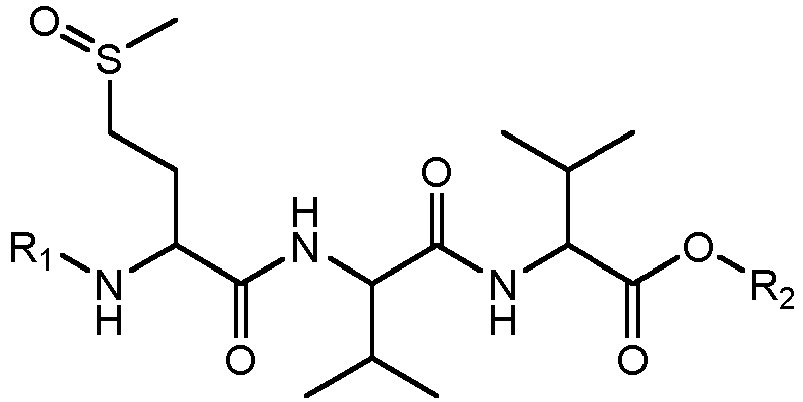 dans laquelle R1 est un hydrogène ou un groupe R*-(C=O)- ;R2 est un hydrogène ou R* ; etR* est choisi indépendamment à chaque occurrence parmi les hydrocarbures en C1-20 contenant éventuellement de 1 à 8 hétéroatomes.
 - Composition topique selon l'une quelconque des revendications 1 à 4, dans laquelle ledit dérivé peptidique présente la structure :


- Procédé non thérapeutique pour diminuer l'apparition des signes dermatologiques du vieillissement comprenant l'application topique sur la peau qui en a besoin d'une composition topique selon l'une quelconque des revendications 1 à 11.
- Procédé selon la revendication 12, dans lequel lesdits signes dermatologiques de vieillissement comprennent des ridules et/ou des rides.
- Procédé selon la revendication 12 ou 13, dans lequel ledit dérivé peptidique augmente la production de collagène dans la peau, et/ou dans lequel ledit dérivé peptidique augmente la production d'acide hyaluronique dans la peau.
- Procédé selon l'une quelconque des revendications 12 à 14, dans lequel ladite composition est appliquée au moins une fois par jour pendant au moins huit semaines.
Applications Claiming Priority (1)
| Application Number | Priority Date | Filing Date | Title |
|---|---|---|---|
| PCT/US2019/012325 WO2020142103A1 (fr) | 2019-01-04 | 2019-01-04 | Dérivés oxydés de fragments de gdf-11 |
Publications (2)
| Publication Number | Publication Date |
|---|---|
| EP3906012A1 EP3906012A1 (fr) | 2021-11-10 |
| EP3906012B1 true EP3906012B1 (fr) | 2022-08-24 |
Family
ID=65244619
Family Applications (1)
| Application Number | Title | Priority Date | Filing Date |
|---|---|---|---|
| EP19702501.8A Active EP3906012B1 (fr) | 2019-01-04 | 2019-01-04 | Dérivés oxydés de fragments de gdf-11 |
Country Status (10)
| Country | Link |
|---|---|
| US (1) | US20210338557A1 (fr) |
| EP (1) | EP3906012B1 (fr) |
| CN (1) | CN113286576B (fr) |
| BR (1) | BR112021013164B1 (fr) |
| ES (1) | ES2930730T3 (fr) |
| MX (1) | MX2021008115A (fr) |
| PL (1) | PL3906012T3 (fr) |
| PT (1) | PT3906012T (fr) |
| TW (1) | TW202042784A (fr) |
| WO (1) | WO2020142103A1 (fr) |
Families Citing this family (9)
| Publication number | Priority date | Publication date | Assignee | Title |
|---|---|---|---|---|
| US20240239839A1 (en) * | 2021-05-10 | 2024-07-18 | Dsm Ip Assets B.V. | Purification of specific tripeptide by use of ethers |
| CN117321067A (zh) * | 2021-05-10 | 2023-12-29 | 帝斯曼知识产权资产管理有限公司 | 通过酸化来纯化特定三肽 |
| JP7792583B2 (ja) * | 2021-09-06 | 2025-12-26 | 学校法人同志社 | Aβ産生抑制ペプチドおよびこれを含有する医薬組成物、飲食品 |
| EP4635973A1 (fr) * | 2022-12-16 | 2025-10-22 | Toagosei Co., Ltd. | Peptide synthétique et construction |
| KR20240133853A (ko) * | 2023-02-28 | 2024-09-05 | 루다큐어 주식회사 | 신규 펩타이드 및 이의 용도 |
| CN117243879B (zh) * | 2023-10-11 | 2025-10-17 | 苏州钧兴生物科技有限公司 | 一种兼具亲水性及促进透皮吸收性的生物材料及其制备方法和应用 |
| KR102892487B1 (ko) * | 2023-11-22 | 2025-12-05 | 한도숙 | 피부 미백용 조성물 |
| KR20250075985A (ko) * | 2023-11-22 | 2025-05-29 | 한도숙 | 상처 치료 또는 피부 주름형성 억제용 조성물 |
| KR20250075990A (ko) * | 2023-11-22 | 2025-05-29 | 한도숙 | 상처 치료 또는 피부 주름형성 억제용 조성물 |
Family Cites Families (11)
| Publication number | Priority date | Publication date | Assignee | Title |
|---|---|---|---|---|
| US5580575A (en) | 1989-12-22 | 1996-12-03 | Imarx Pharmaceutical Corp. | Therapeutic drug delivery systems |
| CA2032559C (fr) * | 1989-12-28 | 2001-11-06 | Kiyofumi Ishikawa | Pentapeptides cycliques antagonistes de l'endotheline |
| US5962292A (en) * | 1993-09-07 | 1999-10-05 | Kyowa Hakko Kogyo Co., Ltd. | Process for producing cis-3-hydroxy-L-proline |
| RU2206573C1 (ru) * | 2001-12-27 | 2003-06-20 | Институт молекулярной генетики РАН | Семейство пептидов, обладающих нейротропными свойствами |
| TWI415628B (zh) | 2006-02-28 | 2013-11-21 | Avon Prod Inc | 包含具有非天然胺基酸之胜肽之組合物及其使用方法 |
| FR2941231B1 (fr) * | 2009-01-16 | 2016-04-01 | Sederma Sa | Nouveaux peptides, compositions les comprenant et utilisations cosmetiques et dermo-pharmaceutiques. |
| EP3744729B1 (fr) * | 2009-01-16 | 2023-03-01 | Sederma | Peptides, compositions comprenant ces derniers et leurs utilisations dans les domaines cosmétique et dermopharmaceutique |
| KR101351775B1 (ko) * | 2009-04-13 | 2014-01-14 | 이엘씨 매니지먼트 엘엘씨 | 메티오닌 술폭시드 펩티드, 조성물 및 사용 방법 |
| EP2649984A1 (fr) * | 2012-04-13 | 2013-10-16 | Lipotec, S.A. | Composés qui inhibent l'exocytosis neuronale |
| RU2709778C2 (ru) | 2014-12-23 | 2019-12-20 | Эйвон Продактс, Инк. | Пептиды и их применение в уходе за кожей |
| US9597274B2 (en) * | 2015-06-17 | 2017-03-21 | Avon Products, Inc. | Peptides and their use in the treatment of skin |
-
2019
- 2019-01-04 PL PL19702501.8T patent/PL3906012T3/pl unknown
- 2019-01-04 US US17/294,532 patent/US20210338557A1/en not_active Abandoned
- 2019-01-04 WO PCT/US2019/012325 patent/WO2020142103A1/fr not_active Ceased
- 2019-01-04 ES ES19702501T patent/ES2930730T3/es active Active
- 2019-01-04 PT PT197025018T patent/PT3906012T/pt unknown
- 2019-01-04 MX MX2021008115A patent/MX2021008115A/es unknown
- 2019-01-04 EP EP19702501.8A patent/EP3906012B1/fr active Active
- 2019-01-04 CN CN201980085356.0A patent/CN113286576B/zh active Active
- 2019-01-04 BR BR112021013164-7A patent/BR112021013164B1/pt active IP Right Grant
- 2019-12-30 TW TW108148316A patent/TW202042784A/zh unknown
Also Published As
| Publication number | Publication date |
|---|---|
| PT3906012T (pt) | 2022-11-28 |
| MX2021008115A (es) | 2021-08-11 |
| CN113286576A (zh) | 2021-08-20 |
| TW202042784A (zh) | 2020-12-01 |
| BR112021013164B1 (pt) | 2023-10-17 |
| ES2930730T3 (es) | 2022-12-21 |
| BR112021013164A2 (pt) | 2021-10-19 |
| US20210338557A1 (en) | 2021-11-04 |
| CN113286576B (zh) | 2024-05-14 |
| EP3906012A1 (fr) | 2021-11-10 |
| WO2020142103A1 (fr) | 2020-07-09 |
| PL3906012T3 (pl) | 2023-04-17 |
Similar Documents
| Publication | Publication Date | Title |
|---|---|---|
| EP3906012B1 (fr) | Dérivés oxydés de fragments de gdf-11 | |
| US9597274B2 (en) | Peptides and their use in the treatment of skin | |
| EP3236992B1 (fr) | Peptides et leur utilisation dans le traitement de la peau | |
| US20170304178A1 (en) | Peptides and Their Use in the Treatment of Skin | |
| WO2014161863A1 (fr) | Peptides dermatologiques et/ou cosmétiques pour utilisation dans le traitement de la peau | |
| US20170281508A1 (en) | Peptides and Their Use in the Treatment of Skin | |
| US20170281507A1 (en) | Peptides and Their Use in the Treatment of Skin | |
| EP3380112B1 (fr) | Peptides et leur utilisation dans le traitement de la peau | |
| HK40052993A (en) | Oxidized derivatives of gdf-11 fragments | |
| WO2016105332A1 (fr) | Peptides et leur utilisation dans le traitement de la peau | |
| HK40052993B (zh) | Gdf-11片段的氧化衍生物 | |
| HK1238171A1 (en) | Peptides and their use in the treatment of skin | |
| HK1255955A1 (en) | Peptides and their use in the treatment of hair |
Legal Events
| Date | Code | Title | Description |
|---|---|---|---|
| STAA | Information on the status of an ep patent application or granted ep patent |
Free format text: STATUS: UNKNOWN |
|
| STAA | Information on the status of an ep patent application or granted ep patent |
Free format text: STATUS: THE INTERNATIONAL PUBLICATION HAS BEEN MADE |
|
| PUAI | Public reference made under article 153(3) epc to a published international application that has entered the european phase |
Free format text: ORIGINAL CODE: 0009012 |
|
| STAA | Information on the status of an ep patent application or granted ep patent |
Free format text: STATUS: REQUEST FOR EXAMINATION WAS MADE |
|
| 17P | Request for examination filed |
Effective date: 20210702 |
|
| AK | Designated contracting states |
Kind code of ref document: A1 Designated state(s): AL AT BE BG CH CY CZ DE DK EE ES FI FR GB GR HR HU IE IS IT LI LT LU LV MC MK MT NL NO PL PT RO RS SE SI SK SM TR |
|
| GRAJ | Information related to disapproval of communication of intention to grant by the applicant or resumption of examination proceedings by the epo deleted |
Free format text: ORIGINAL CODE: EPIDOSDIGR1 |
|
| GRAP | Despatch of communication of intention to grant a patent |
Free format text: ORIGINAL CODE: EPIDOSNIGR1 |
|
| GRAP | Despatch of communication of intention to grant a patent |
Free format text: ORIGINAL CODE: EPIDOSNIGR1 |
|
| STAA | Information on the status of an ep patent application or granted ep patent |
Free format text: STATUS: GRANT OF PATENT IS INTENDED |
|
| DAV | Request for validation of the european patent (deleted) | ||
| DAX | Request for extension of the european patent (deleted) | ||
| INTG | Intention to grant announced |
Effective date: 20220310 |
|
| GRAS | Grant fee paid |
Free format text: ORIGINAL CODE: EPIDOSNIGR3 |
|
| GRAA | (expected) grant |
Free format text: ORIGINAL CODE: 0009210 |
|
| STAA | Information on the status of an ep patent application or granted ep patent |
Free format text: STATUS: THE PATENT HAS BEEN GRANTED |
|
| AK | Designated contracting states |
Kind code of ref document: B1 Designated state(s): AL AT BE BG CH CY CZ DE DK EE ES FI FR GB GR HR HU IE IS IT LI LT LU LV MC MK MT NL NO PL PT RO RS SE SI SK SM TR |
|
| REG | Reference to a national code |
Ref country code: CH Ref legal event code: EP |
|
| REG | Reference to a national code |
Ref country code: IE Ref legal event code: FG4D |
|
| REG | Reference to a national code |
Ref country code: AT Ref legal event code: REF Ref document number: 1513179 Country of ref document: AT Kind code of ref document: T Effective date: 20220915 Ref country code: DE Ref legal event code: R096 Ref document number: 602019018637 Country of ref document: DE |
|
| REG | Reference to a national code |
Ref country code: PT Ref legal event code: SC4A Ref document number: 3906012 Country of ref document: PT Date of ref document: 20221128 Kind code of ref document: T Free format text: AVAILABILITY OF NATIONAL TRANSLATION Effective date: 20221121 |
|
| REG | Reference to a national code |
Ref country code: SE Ref legal event code: TRGR |
|
| REG | Reference to a national code |
Ref country code: NL Ref legal event code: FP |
|
| REG | Reference to a national code |
Ref country code: LT Ref legal event code: MG9D |
|
| REG | Reference to a national code |
Ref country code: ES Ref legal event code: FG2A Ref document number: 2930730 Country of ref document: ES Kind code of ref document: T3 Effective date: 20221221 |
|
| PG25 | Lapsed in a contracting state [announced via postgrant information from national office to epo] |
Ref country code: RS Free format text: LAPSE BECAUSE OF FAILURE TO SUBMIT A TRANSLATION OF THE DESCRIPTION OR TO PAY THE FEE WITHIN THE PRESCRIBED TIME-LIMIT Effective date: 20220824 Ref country code: NO Free format text: LAPSE BECAUSE OF FAILURE TO SUBMIT A TRANSLATION OF THE DESCRIPTION OR TO PAY THE FEE WITHIN THE PRESCRIBED TIME-LIMIT Effective date: 20221124 Ref country code: LV Free format text: LAPSE BECAUSE OF FAILURE TO SUBMIT A TRANSLATION OF THE DESCRIPTION OR TO PAY THE FEE WITHIN THE PRESCRIBED TIME-LIMIT Effective date: 20220824 Ref country code: LT Free format text: LAPSE BECAUSE OF FAILURE TO SUBMIT A TRANSLATION OF THE DESCRIPTION OR TO PAY THE FEE WITHIN THE PRESCRIBED TIME-LIMIT Effective date: 20220824 Ref country code: FI Free format text: LAPSE BECAUSE OF FAILURE TO SUBMIT A TRANSLATION OF THE DESCRIPTION OR TO PAY THE FEE WITHIN THE PRESCRIBED TIME-LIMIT Effective date: 20220824 |
|
| REG | Reference to a national code |
Ref country code: AT Ref legal event code: MK05 Ref document number: 1513179 Country of ref document: AT Kind code of ref document: T Effective date: 20220824 |
|
| PG25 | Lapsed in a contracting state [announced via postgrant information from national office to epo] |
Ref country code: IS Free format text: LAPSE BECAUSE OF FAILURE TO SUBMIT A TRANSLATION OF THE DESCRIPTION OR TO PAY THE FEE WITHIN THE PRESCRIBED TIME-LIMIT Effective date: 20221224 Ref country code: HR Free format text: LAPSE BECAUSE OF FAILURE TO SUBMIT A TRANSLATION OF THE DESCRIPTION OR TO PAY THE FEE WITHIN THE PRESCRIBED TIME-LIMIT Effective date: 20220824 Ref country code: GR Free format text: LAPSE BECAUSE OF FAILURE TO SUBMIT A TRANSLATION OF THE DESCRIPTION OR TO PAY THE FEE WITHIN THE PRESCRIBED TIME-LIMIT Effective date: 20221125 |
|
| PG25 | Lapsed in a contracting state [announced via postgrant information from national office to epo] |
Ref country code: SM Free format text: LAPSE BECAUSE OF FAILURE TO SUBMIT A TRANSLATION OF THE DESCRIPTION OR TO PAY THE FEE WITHIN THE PRESCRIBED TIME-LIMIT Effective date: 20220824 Ref country code: RO Free format text: LAPSE BECAUSE OF FAILURE TO SUBMIT A TRANSLATION OF THE DESCRIPTION OR TO PAY THE FEE WITHIN THE PRESCRIBED TIME-LIMIT Effective date: 20220824 Ref country code: DK Free format text: LAPSE BECAUSE OF FAILURE TO SUBMIT A TRANSLATION OF THE DESCRIPTION OR TO PAY THE FEE WITHIN THE PRESCRIBED TIME-LIMIT Effective date: 20220824 Ref country code: CZ Free format text: LAPSE BECAUSE OF FAILURE TO SUBMIT A TRANSLATION OF THE DESCRIPTION OR TO PAY THE FEE WITHIN THE PRESCRIBED TIME-LIMIT Effective date: 20220824 Ref country code: AT Free format text: LAPSE BECAUSE OF FAILURE TO SUBMIT A TRANSLATION OF THE DESCRIPTION OR TO PAY THE FEE WITHIN THE PRESCRIBED TIME-LIMIT Effective date: 20220824 |
|
| REG | Reference to a national code |
Ref country code: DE Ref legal event code: R097 Ref document number: 602019018637 Country of ref document: DE |
|
| PG25 | Lapsed in a contracting state [announced via postgrant information from national office to epo] |
Ref country code: SK Free format text: LAPSE BECAUSE OF FAILURE TO SUBMIT A TRANSLATION OF THE DESCRIPTION OR TO PAY THE FEE WITHIN THE PRESCRIBED TIME-LIMIT Effective date: 20220824 Ref country code: EE Free format text: LAPSE BECAUSE OF FAILURE TO SUBMIT A TRANSLATION OF THE DESCRIPTION OR TO PAY THE FEE WITHIN THE PRESCRIBED TIME-LIMIT Effective date: 20220824 |
|
| PG25 | Lapsed in a contracting state [announced via postgrant information from national office to epo] |
Ref country code: AL Free format text: LAPSE BECAUSE OF FAILURE TO SUBMIT A TRANSLATION OF THE DESCRIPTION OR TO PAY THE FEE WITHIN THE PRESCRIBED TIME-LIMIT Effective date: 20220824 |
|
| PLBE | No opposition filed within time limit |
Free format text: ORIGINAL CODE: 0009261 |
|
| STAA | Information on the status of an ep patent application or granted ep patent |
Free format text: STATUS: NO OPPOSITION FILED WITHIN TIME LIMIT |
|
| P01 | Opt-out of the competence of the unified patent court (upc) registered |
Effective date: 20230528 |
|
| 26N | No opposition filed |
Effective date: 20230525 |
|
| PG25 | Lapsed in a contracting state [announced via postgrant information from national office to epo] |
Ref country code: LU Free format text: LAPSE BECAUSE OF NON-PAYMENT OF DUE FEES Effective date: 20230104 |
|
| PG25 | Lapsed in a contracting state [announced via postgrant information from national office to epo] |
Ref country code: MC Free format text: LAPSE BECAUSE OF FAILURE TO SUBMIT A TRANSLATION OF THE DESCRIPTION OR TO PAY THE FEE WITHIN THE PRESCRIBED TIME-LIMIT Effective date: 20220824 |
|
| PG25 | Lapsed in a contracting state [announced via postgrant information from national office to epo] |
Ref country code: MC Free format text: LAPSE BECAUSE OF FAILURE TO SUBMIT A TRANSLATION OF THE DESCRIPTION OR TO PAY THE FEE WITHIN THE PRESCRIBED TIME-LIMIT Effective date: 20220824 |
|
| REG | Reference to a national code |
Ref country code: GB Ref legal event code: 732E Free format text: REGISTERED BETWEEN 20240808 AND 20240814 |
|
| PG25 | Lapsed in a contracting state [announced via postgrant information from national office to epo] |
Ref country code: BG Free format text: LAPSE BECAUSE OF FAILURE TO SUBMIT A TRANSLATION OF THE DESCRIPTION OR TO PAY THE FEE WITHIN THE PRESCRIBED TIME-LIMIT Effective date: 20220824 |
|
| PG25 | Lapsed in a contracting state [announced via postgrant information from national office to epo] |
Ref country code: BG Free format text: LAPSE BECAUSE OF FAILURE TO SUBMIT A TRANSLATION OF THE DESCRIPTION OR TO PAY THE FEE WITHIN THE PRESCRIBED TIME-LIMIT Effective date: 20220824 |
|
| PGFP | Annual fee paid to national office [announced via postgrant information from national office to epo] |
Ref country code: PL Payment date: 20241227 Year of fee payment: 7 |
|
| PGFP | Annual fee paid to national office [announced via postgrant information from national office to epo] |
Ref country code: CH Payment date: 20250201 Year of fee payment: 7 |
|
| PG25 | Lapsed in a contracting state [announced via postgrant information from national office to epo] |
Ref country code: CY Free format text: LAPSE BECAUSE OF FAILURE TO SUBMIT A TRANSLATION OF THE DESCRIPTION OR TO PAY THE FEE WITHIN THE PRESCRIBED TIME-LIMIT; INVALID AB INITIO Effective date: 20190104 |
|
| PG25 | Lapsed in a contracting state [announced via postgrant information from national office to epo] |
Ref country code: HU Free format text: LAPSE BECAUSE OF FAILURE TO SUBMIT A TRANSLATION OF THE DESCRIPTION OR TO PAY THE FEE WITHIN THE PRESCRIBED TIME-LIMIT; INVALID AB INITIO Effective date: 20190104 |
|
| PGFP | Annual fee paid to national office [announced via postgrant information from national office to epo] |
Ref country code: PT Payment date: 20251226 Year of fee payment: 8 |
|
| REG | Reference to a national code |
Ref country code: CH Ref legal event code: U11 Free format text: ST27 STATUS EVENT CODE: U-0-0-U10-U11 (AS PROVIDED BY THE NATIONAL OFFICE) Effective date: 20260201 |
|
| PG25 | Lapsed in a contracting state [announced via postgrant information from national office to epo] |
Ref country code: SI Free format text: LAPSE BECAUSE OF FAILURE TO SUBMIT A TRANSLATION OF THE DESCRIPTION OR TO PAY THE FEE WITHIN THE PRESCRIBED TIME-LIMIT Effective date: 20220824 |
|
| PGFP | Annual fee paid to national office [announced via postgrant information from national office to epo] |
Ref country code: NL Payment date: 20260121 Year of fee payment: 8 |
|
| PGFP | Annual fee paid to national office [announced via postgrant information from national office to epo] |
Ref country code: SE Payment date: 20260121 Year of fee payment: 8 |
|
| PGFP | Annual fee paid to national office [announced via postgrant information from national office to epo] |
Ref country code: GB Payment date: 20260123 Year of fee payment: 8 |
|
| PGFP | Annual fee paid to national office [announced via postgrant information from national office to epo] |
Ref country code: ES Payment date: 20260227 Year of fee payment: 8 |
|
| PGFP | Annual fee paid to national office [announced via postgrant information from national office to epo] |
Ref country code: IE Payment date: 20260122 Year of fee payment: 8 Ref country code: DE Payment date: 20260121 Year of fee payment: 8 |
|
| PGFP | Annual fee paid to national office [announced via postgrant information from national office to epo] |
Ref country code: BE Payment date: 20260121 Year of fee payment: 8 Ref country code: IT Payment date: 20260126 Year of fee payment: 8 |
|
| PGFP | Annual fee paid to national office [announced via postgrant information from national office to epo] |
Ref country code: FR Payment date: 20260123 Year of fee payment: 8 |
|
| PGFP | Annual fee paid to national office [announced via postgrant information from national office to epo] |
Ref country code: TR Payment date: 20260102 Year of fee payment: 8 |