EP3936043A1 - Systèmes et procédés pour évaluer les pathologies nasales d'un sujet - Google Patents
Systèmes et procédés pour évaluer les pathologies nasales d'un sujet Download PDFInfo
- Publication number
- EP3936043A1 EP3936043A1 EP20184764.7A EP20184764A EP3936043A1 EP 3936043 A1 EP3936043 A1 EP 3936043A1 EP 20184764 A EP20184764 A EP 20184764A EP 3936043 A1 EP3936043 A1 EP 3936043A1
- Authority
- EP
- European Patent Office
- Prior art keywords
- nasal
- subject
- nostril
- proximity
- distance
- Prior art date
- Legal status (The legal status is an assumption and is not a legal conclusion. Google has not performed a legal analysis and makes no representation as to the accuracy of the status listed.)
- Withdrawn
Links
Images



Classifications
-
- A—HUMAN NECESSITIES
- A61—MEDICAL OR VETERINARY SCIENCE; HYGIENE
- A61B—DIAGNOSIS; SURGERY; IDENTIFICATION
- A61B5/00—Measuring for diagnostic purposes; Identification of persons
- A61B5/08—Measuring devices for evaluating the respiratory organs
- A61B5/0816—Measuring devices for examining respiratory frequency
-
- A—HUMAN NECESSITIES
- A61—MEDICAL OR VETERINARY SCIENCE; HYGIENE
- A61B—DIAGNOSIS; SURGERY; IDENTIFICATION
- A61B5/00—Measuring for diagnostic purposes; Identification of persons
- A61B5/68—Arrangements of detecting, measuring or recording means, e.g. sensors, in relation to patient
- A61B5/6801—Arrangements of detecting, measuring or recording means, e.g. sensors, in relation to patient specially adapted to be attached to or worn on the body surface
- A61B5/6844—Monitoring or controlling distance between sensor and tissue
-
- A—HUMAN NECESSITIES
- A61—MEDICAL OR VETERINARY SCIENCE; HYGIENE
- A61B—DIAGNOSIS; SURGERY; IDENTIFICATION
- A61B1/00—Instruments for performing medical examinations of the interior of cavities or tubes of the body by visual or photographical inspection, e.g. endoscopes; Illuminating arrangements therefor
- A61B1/233—Instruments for performing medical examinations of the interior of cavities or tubes of the body by visual or photographical inspection, e.g. endoscopes; Illuminating arrangements therefor for the nose, i.e. nasoscopes, e.g. testing of patency of Eustachian tubes
-
- A—HUMAN NECESSITIES
- A61—MEDICAL OR VETERINARY SCIENCE; HYGIENE
- A61B—DIAGNOSIS; SURGERY; IDENTIFICATION
- A61B5/00—Measuring for diagnostic purposes; Identification of persons
- A61B5/01—Measuring temperature of body parts ; Diagnostic temperature sensing, e.g. for malignant or inflamed tissue
-
- A—HUMAN NECESSITIES
- A61—MEDICAL OR VETERINARY SCIENCE; HYGIENE
- A61B—DIAGNOSIS; SURGERY; IDENTIFICATION
- A61B5/00—Measuring for diagnostic purposes; Identification of persons
- A61B5/103—Measuring devices for testing the shape, pattern, colour, size or movement of the body or parts thereof, for diagnostic purposes
- A61B5/107—Measuring physical dimensions, e.g. size of the entire body or parts thereof
-
- A—HUMAN NECESSITIES
- A61—MEDICAL OR VETERINARY SCIENCE; HYGIENE
- A61B—DIAGNOSIS; SURGERY; IDENTIFICATION
- A61B5/00—Measuring for diagnostic purposes; Identification of persons
- A61B5/103—Measuring devices for testing the shape, pattern, colour, size or movement of the body or parts thereof, for diagnostic purposes
- A61B5/107—Measuring physical dimensions, e.g. size of the entire body or parts thereof
- A61B5/1072—Measuring physical dimensions, e.g. size of the entire body or parts thereof measuring distances on the body, e.g. measuring length, height or thickness
-
- A—HUMAN NECESSITIES
- A61—MEDICAL OR VETERINARY SCIENCE; HYGIENE
- A61B—DIAGNOSIS; SURGERY; IDENTIFICATION
- A61B5/00—Measuring for diagnostic purposes; Identification of persons
- A61B5/103—Measuring devices for testing the shape, pattern, colour, size or movement of the body or parts thereof, for diagnostic purposes
- A61B5/107—Measuring physical dimensions, e.g. size of the entire body or parts thereof
- A61B5/1073—Measuring volume, e.g. of limbs
-
- A—HUMAN NECESSITIES
- A61—MEDICAL OR VETERINARY SCIENCE; HYGIENE
- A61B—DIAGNOSIS; SURGERY; IDENTIFICATION
- A61B5/00—Measuring for diagnostic purposes; Identification of persons
- A61B5/103—Measuring devices for testing the shape, pattern, colour, size or movement of the body or parts thereof, for diagnostic purposes
- A61B5/107—Measuring physical dimensions, e.g. size of the entire body or parts thereof
- A61B5/1076—Measuring physical dimensions, e.g. size of the entire body or parts thereof for measuring dimensions inside body cavities, e.g. using catheters
-
- A—HUMAN NECESSITIES
- A61—MEDICAL OR VETERINARY SCIENCE; HYGIENE
- A61B—DIAGNOSIS; SURGERY; IDENTIFICATION
- A61B5/00—Measuring for diagnostic purposes; Identification of persons
- A61B5/103—Measuring devices for testing the shape, pattern, colour, size or movement of the body or parts thereof, for diagnostic purposes
- A61B5/107—Measuring physical dimensions, e.g. size of the entire body or parts thereof
- A61B5/1079—Measuring physical dimensions, e.g. size of the entire body or parts thereof using optical or photographic means
-
- A—HUMAN NECESSITIES
- A61—MEDICAL OR VETERINARY SCIENCE; HYGIENE
- A61B—DIAGNOSIS; SURGERY; IDENTIFICATION
- A61B5/00—Measuring for diagnostic purposes; Identification of persons
- A61B5/45—For evaluating or diagnosing the musculoskeletal system or teeth
- A61B5/4504—Bones
-
- A—HUMAN NECESSITIES
- A61—MEDICAL OR VETERINARY SCIENCE; HYGIENE
- A61B—DIAGNOSIS; SURGERY; IDENTIFICATION
- A61B5/00—Measuring for diagnostic purposes; Identification of persons
- A61B5/45—For evaluating or diagnosing the musculoskeletal system or teeth
- A61B5/4514—Cartilage
-
- A—HUMAN NECESSITIES
- A61—MEDICAL OR VETERINARY SCIENCE; HYGIENE
- A61B—DIAGNOSIS; SURGERY; IDENTIFICATION
- A61B5/00—Measuring for diagnostic purposes; Identification of persons
- A61B5/68—Arrangements of detecting, measuring or recording means, e.g. sensors, in relation to patient
- A61B5/6801—Arrangements of detecting, measuring or recording means, e.g. sensors, in relation to patient specially adapted to be attached to or worn on the body surface
- A61B5/6813—Specially adapted to be attached to a specific body part
- A61B5/6814—Head
- A61B5/6819—Nose
Definitions
- the invention relates to the field of clinical nasal examination, and more specifically to investigation of nasal pathologies.
- Pathologies of the nasal cavities, nasal septum and nostrils are often important cause for a visit to a doctor.
- Pathologies of ear include: deviated nasal septum; perforation in the nasal septum; nasal polyp; hard crust; turbinal hypertrophy; and nosebleed (epistaxis).
- epistaxis For a primary care physician, it is important to properly assess these pathologies, and either treat or refer them to respective specialists.
- nasal investigations often involve physical examination of the nasal cavity using a nasal speculum (anterior rhinoscopy).
- Nasal speculum is an instrument used to widen the opening of a nostril so the inside can be more easily seen. These methods are widely used, but are time consuming and the quality of the results is heavily dependent upon the skill of the operator.
- mitigating factors such as presence of turbinate hypertrophy, rhinitis, nasal valve collapse, nasal cycle and the complexity of the three dimensional geometry of the nasal cavity make the diagnosis nasal pathologies even more challenging.
- acoustic rhinometry assesses nasal patency based on the measurement of acoustic reflection of a sound signal in the nose by structures within the nasal cavity.
- Rhinomanometry provides a dynamic physiologic assessment of the nose by measuring transnasal pressure and nasal volume airflow to calculate nasal resistance.
- Nasal sound spectral analysis can provide an indirect method of dynamically assessing nasal airflow by analyzing noise in the nasal cavity caused by turbulent nasal airflow. As such, no simple method exists for quick detection of common nasal pathologies.
- a processor configured to:
- detected distances of an inner surface of a nostril of a subject from one or more proximity sensors may be leveraged and analysed to obtain an understanding of the shape and/or volume of the subject's nasal cavity. Based on this, an indication of one or more nasal pathologies may be determined.
- a probe with a proximity sensing arrangement may be inserted into a nostril of a subject and provide distance measurements, thus enabling the shape and/or characteristics of the subject's nostril(s) to be determined.
- nasal pathologies may be quickly and easily inferred.
- a nasal probe or nasal speculum provided with proximity sensors can be used to provide information about the characteristics of a subject's nasal cavity, and this information may be processed in accordance with various proposed methods to provide an indication of one or more nasal pathologies.
- proposed embodiments may not need to rely on complicated and/or subjective visual inspection techniques. Instead, it is proposed to leverage distance information obtained by simple insertion of a probe into a subject's nostril(s).
- a nasal probe or nasal speculum that has integrated proximity sensors (such as time-of-flight sensors) which, when inserted into a one or both nostrils of a subject, detect distances of an inner surface of a nostril of the subject from the proximity sensor(s) (e.g. compute the distance based on the time-of-flight).
- a nasal probe may comprise a single arm (i.e. probe or shaft) for insertion into one nostril of a subject at a time, or may alternatively comprise two arms for insertion into both nostrils of subject at the same time.
- the length of the arm(s) may be adjustable, so at to enable insertion into the nostril(s) to varying depths. Similarly, a distance between two arms may be adapted to adjustable according to requirements.
- the tips of both the arms are embedded with the proximity sensors. Shafts of both the arms are embedded with an array of proximity sensors in multiple directions (at least four directions perpendicular to each other). A tip of an arm may be inserted in each nostril and will be slowly moved inside the nostril.
- the arm may be kept in the middle of the nostril or can be moved up-down, left-right or in a circular manner inside the nostril to cover all the areas
- Proximity sensors may be used to probe a nasal cavity at various depths to detect an anatomical structure and measure its distance along the length of the nasal cavity.
- a nasal probe may be inserted in each nostril independently/sequentially (or two nasal probes may be inserted simultaneously into both nostril) and detected distance values may then be analysed to identify anatomical landmarks/features. Accordingly, not only may a nasal patholgy be identified using the acquired distance information, but embodiment may also determine the position of the nasal pathology in the nostril(s).
- the system may be adapted to interpret the signals obtained by way of the proximity sensors provided on a nasal probe to determine an indication of nasal pathologies present in the nostril(s) of a subject.
- nasal pathologies may comprise at least one of: deviated nasal septum; perforation in the nasal septum; nasal polyp; hard crust; turbinal hypertrophy; and nosebleed.
- the processor may be further configured to determine at least one property of the one or more nasal pathologies based on the determined one or more characteristics of the detected distances, and preferably wherein the at least one property comprises one more of: a size; a shape; a location; a depth; and a measure of severity.
- the plurality of proximity signals may be representative of a respective plurality of detected distances with respect to the same nostril of the subject
- One or more characteristics of the plurality of detected distances may comprise one or more of: variation in distance values; deviation from an expected distance value; comparison against a maximum threshold value; and comparison against a minimum threshold value.
- the processor may be configured to determine an indication of deviated nasal septum based on the determined variation in distance values and/or the determined deviation from an expected distance values. For instance, a gradual increase/decrease in detected distance value with insertion depth may indicate the gentle toward/away bend (i.e. deviation) in the nasal septum.
- the processor may be configured to determine an indication of perforation in the nasal septum based on the determined variation in distance values and/or the determined deviation from an expected distance values For instance, a sudden/step increase in detected distance value with insertion depth may indicate the presence of a hole (i.e. perforation) in the nasal septum.
- the processor may be configured to determine an indication of a perforation of the nasal septum of the subject based on the determined comparison against a maximum threshold value, and preferably wherein the maximum threshold value is based on a depth of the one or more proximity sensors in the nostril of the subject.
- the maximum threshold value may representative of a maximum expected value of detected distance to an inner surface of a nostril (i.e. expected width of a nostril). If a deteced distance exceeds this maximum expected value, it may be indicative of an inner surface not be present (i.e. a hole or perforation in the septum).
- Embodiments may further comprise a nasal probe comprising one or more proximity sensors adapted to be inserted into a single nostril of the subject, wherein each of the one or more proximity sensors is adapted to detect, when inserted into the nostril of the subject, a respective distance of an inner surface of the nostril to the proximity sensor, and to generate a respective proximity signal representative of the detected distance.
- a nasal probe that is adapted to be inserted into a single nostril of a subject at once.
- the proximity sensor(s) may generated proximity signals representative of detected distances of the proximity sensor(s) to an inner surface of the nostril.
- the proximity signals may thus provide information about the size, shape and/or internal volume of the nostril, and this information may be processed in accordance with proposed concepts to determine an indication of one or more nasal pathologies.
- the plurality of proximity signals may be representative of a respective plurality of detected distances with respect to different nostrils of the subject. Further, one or more characteristics of the plurality of detected distances may comprise one or more of: difference in distance values; and comparison against a predetermined value. Also, the processor may be configured to determine an indication of at least one of: a thickness of nasal septum; and a deviated nasal septum based on the determined difference in distance values. For instance, a gradual increase in detected distance with insertion depth may be indicatve of the septum deviating away from the proximity sensor(s).
- the processor may be configured to determine an indication of a perforation in the nasal septum of the subject based on the determined difference in distance values and/or the determined comparison against a predetermined value. Also, the predetermined value may based on a depth of the one or more proximity sensors in the nostril of the subject.
- Some embodiments may further comprise a nasal probe comprising first and second arms adapted to be simultaneously inserted into the first and second nostrils of the subject, respectively, wherein each of the first and second arms comprises at least one of the one or more proximity sensors, each proximity sensor being adapted to detect, when inserted into a nostril of the subject, a respective distance of an inner surface of the nostril to the proximity sensor, and to generate a respective proximity signal representative of the detected distance.
- a nasal probe that is adapted to be inserted into both nostrils of a subject at once.
- the processor may be configured to determine an indication of a perforation in the nasal septum of the subject based on the determined comparison against a predetermined value.
- the predetermined value may be substantially equal to the distance between a proximity sensor on the first arm and a proximity sensor of the second arm.
- the predetermined value may thus representative of a distance between arms of the nasal probe. If a deteced distance equals this value, it may be indicative of an inner surface not be present between the arms of the probe (i.e. a hole or perforation in the septum).
- Some embodiments may further comprise: a nasal probe comprising first and second arms adapted to be simultaneously inserted into the first and second nostrils of the subject, respectively, wherein the first arm comprises a transmitter adapted to transmit an optical signal and wherein the second arm comprises an optical detector adapted to detect an optical signal transmitted by the transmitter and to generate a detection signal responsive to detect an optical signal transmitted by the transmitter, and wherein the processor is configured to receive a generated detection signal from nasal probe and to determine an indication of a perforation in the nasal septum of the subject based on the received detection signal.
- a receiver one arm opposite a tranimtter on the other arm receives a signal from the transmitter, it may be indicative of an inner nostril surface not be present between the two arms of the probe (i.e. a hole or perforation in the septum).
- the processor may be configured to: identify respiratory cycles of the subject; and determine an indication of a nasal polyp based on a temporal variation in the plurality of detected distances during the identified respiratory cycles. Further, the processor may be configured to identify respiratory cycles of the subject based on at least one of: temperature signals representative of a detected temperature values in a nostril of the subject; and a temporal variation in the plurality of detected distances. Accordingly, various different supplementary sensors (e.g. thermometer, camera, accelerometer, gyroscope, air flow sensor, etc.) may be employed to verify the distance measurement and correlate those with physical changes or events occurring in the nose of a subject, so as to identify respiration of the subject for example.
- various different supplementary sensors e.g. thermometer, camera, accelerometer, gyroscope, air flow sensor, etc.
- the processor may be further configured to: determine a guidance indication of based on the determined one or more characteristics of the detected distances.
- embodiments may use the detected distances to guide a user for correct insertion and positioning of the nasal probe and/or promity sensors within a subject's nostril(s). Embodiments may thus facilitate nasal investigation by untrained and/or unsupervised users.
- determining an indication of one or more nasal pathologies is further based on analyzing the proximity signals with a machine learning algorithm, wherein the machine learning algorithm has been trained to output an indication of nasal pathologies.
- a machine-learning algorithm such as one of the variety of known machine learning algorithms, the accuracy of the determination of the indication of the nasal pathology may be improved. Further, the determination of the indication of the nasal pathology may be performed with reduced input data.
- a computer implemented method for assessing nasal pathologies of a subject comprising:
- a computer program product comprising computer program code means which, when executed on a computing device having a processing system, cause the processing system to perform all of the steps of the method described above.
- the invention provides a system for assessing nasal pathologies of a subject.
- the system comprises a processor.
- the processor is configured to receive a plurality of proximity signals representative of a respective plurality of detected distances of an inner surface of a nostril of the subject from one or more proximity sensors.
- the processor is also configured to process the plurality of proximity signals to determine one or more characteristics of the plurality of detected distances.
- the processor is yet further configured to determine an indication of one or more nasal pathologies based on the determined one or more characteristics of the detected distances.
- indication may refer to the presence or absence of a given nasal pathology.
- Figure 1 shows a system 20 for assessing nasal pathologies of a subject according to an embodiment.
- Figure 1 shows a nasal probe 15 comprising first 20 and second 25 arms adapted to be simultaneously inserted into the first and second nostrils of the subject, respectively.
- Each of the first 20 and second 25 arms comprises at least one or more proximity sensors 30, each proximity sensor being adapted to detect, when inserted into a nostril of the subject, a respective distance of an inner surface of the nostril to the proximity sensor, and to generate a respective proximity signal representative of the detected distance.
- the proximity sensors may be time-of-flight sensors (e.g. Laser or IR).
- the system comprises a processor 35 and an output (O/P) interface 40 (which in this example comprises a display unit 40).
- O/P output
- the processor 35 is configured to receive, from the nasal probe 15, a plurality of proximity signals representative of a respective plurality of detected distances of an inner surface of a nostril of the subject from the one or more proximity sensors. The processor 35 is also configured to process the received proximity signals to determine one or more characteristics of the plurality of detected distances. Based on the determined one or more characteristics of the detected distances, the processor 35 determines an indication of one or more nasal pathologies.
- one or more characteristics of the plurality of detected distances may comprise one or more of: variation in distance values; deviation from an expected distance value; comparison against a maximum threshold value; and comparison against a minimum threshold value.
- the processor 35 may be configured to determine an indication of a perforation in the nasal septum of the subject based on the determined comparison against a predetermined value.
- the predetermined value may be substantially equal to the distance between a proximity sensor on the first arm and a proximity sensor of the second arm. The predetermined value may thus representative of a distance between arms of the nasal probe. If a deteced distance equals this value, it may be indicative of an inner surface not be present between the arms of the probe (i.e. a hole or perforation in the septum).
- the processor 35 provides the indication of one or more nasal pathologies to the O/P interface 40 for output to a user of the system 10 (by way of visual signal provided by the O/P interface 40).
- the processor 35 is also configured to determine at least one property of the one or more nasal pathologies based on the determined one or more characteristics of the detected distances.
- the at least one property comprises one more of: a size; a shape; a location; a depth; and a measure of severity.
- each arm 20, 25 also comprises a respective temperature sensor 50 (e.g. thermister).
- Each temperature sensor 50 is adapted to generate, when inserted into a nostril of a subject, temperature signals representative of detected temperature values in the nostril of the subject.
- the processor 35 is adapted to receive the generated temperature signals and to identify respiratory cycles of the subject based on the temperature signals and temporal variations in the plurality of detected distances. In this way, temperature signals may be employed to verify the detected distances and/or correlate those with physical changes or events occurring in the nose of a subject, so as to identify respiration of the subject for example.
- proposed systems and methods are based on acquiring proximity signals representative of detected distances of an inner surface of a nostril of the subject from one or more proximity sensors. These distances may be used to obtain information about the shape and/or size of the nostrils and thus identify features that may be indicative of nasal pathologies.
- the proximity sensors are activated sequentially to find the distance to the nearest structure.
- the distance data can be used to profile the nasal cavity. For example, the data can be used to identify if the septum is deviated or not.
- information from a temperature sensor can be used to measure the change in temperature in the nasal cavity while inspiring and expiring. Such information about temperature change can be used to identify the respiration rate.
- Embodiments may also be adapted to provide guidance to user of the nasal probe, so as to ensure correct insertion, alignment and orientation in the nostril(s) of the subject.
- the nasal probe may be provided with an accelerometer and gyroscope arrangement that is configured to monitor and orientation of the probes. Based on signals from the accelerometer and gyroscope arrangement, the may determine a guidance indication of th user. In this way, embodiments guide a user to correctly insert and position of the nasal probe and/or promity sensors within a subject's nostril(s). This may facilitate nasal investigation by untrained and/or unsupervised users.
- Determining an indication of nasal pathologies may be performed by analyzing the proximity signals with a machine-learning algorithm, wherein the machine learning algorithm has been trained to output an indication of a nasal pathology.
- a machine-learning algorithm is any self-training algorithm that processes input data in order to produce or predict output data.
- the input data may comprise: the characteristics of the characteristics of the detected distances; subject data, such as subject age, subject gender; a known subject condition; subject demographic data; and a diagnosis of the subject.
- the output data may comprise an indication of a nasal pathology.
- Suitable machine-learning algorithms for use in embodiments will be apparent to the skilled person.
- suitable machine-learning algorithms may include decision tree algorithms and artificial neural networks.
- Other machine-learning algorithms such as logistic regression, support vector machines or Naive Bayesian models are suitable alternatives.
- Neural networks are comprised of layers, each layer comprising a plurality of neurons.
- Each neuron comprises a mathematical operation.
- each neuron may comprise a different weighted combination of a single type of transformation (e.g. the same type of transformation, sigmoid etc. but with different weightings).
- the mathematical operation of each neuron is performed on the input data to produce a numerical output, and the outputs of each layer in the neural network are fed into the next layer sequentially. The final layer provides the output.
- Methods of training a machine-learning algorithm are well known.
- such methods comprise obtaining a training dataset, comprising training input data entries and corresponding training output data entries.
- An initialized machine-learning algorithm is applied to each input data entry to generate predicted output data entries.
- An error between the predicted output data entries and corresponding training output data entries is used to modify the machine-learning algorithm. This process can be repeated until the error converges, and the predicted output data entries are sufficiently similar (e.g. ⁇ 1%) to the training output data entries. This is commonly known as a supervised learning technique.
- the machine-learning algorithm is formed from a neural network
- (weightings of) the mathematical operation of each neuron may be modified until the error converges.
- Known methods of modifying a neural network include gradient descent, backpropagation algorithms and so on.
- the training input data entries correspond to example characteristics of detected distances
- the training output data entries correspond to an example indication of a nasal pathology
- proposed embodiments process proximity signals to determine one or more characteristics of detected distances, and then determine an indication of one or more nasal pathologies based on the determined one or more characteristics of the detected distances. Examples of determining an indication of various nasal pathologies will therefore now be described with reference to proposed concepts.
- Deviation of the nasal septum is a common cause of structural nasal obstruction.
- Data from a single-armed nasal probe provided with proximity sensors may be used to determine an indication of DNS using an exemplary approach as follows:
- Nasal septum perforations are breach in continuity of nasal speculum.
- a perforated septum can vary in size and location, and are usually found deep inside the nose.
- Data from a single-armed nasal probe provided with proximity sensors may be used to determine an indication of a nasal septum perforation using an exemplary approach as follows:
- a two-armed nasal probe may be similar to that depicted in Figure 1 , wherein a set of proximity sensors is provided near the tip (i.e. distal end) of each arm.
- the proximity sensors are preferably configured to point (at least) towards the opposite arm, so as to be directed towards the nasal septum when the two-armed nasal probe in inserted into the nostrils of a subject).
- some embodiments may also include concepts of activation and/or calibration of the probes (for example to ensure correct orientation or alignment of the probe).
- the nasal speculum is switched on (i.e. activated) 210, and the method then proceed to activating 220 the top and bottom most proximity sensors of each prong/arm (on inner side) are activated in a sequential manner to detect distance of two prongs from each other. Signals from the sensors on the opposite arm are detected (step 230) and then the distance between the probes are measured (step 240) based on the detected signals from the sensors of the other arm. The measure distance between probes at top and bottom is used to determine if the two probes are parallel to each other or not. Also, in step 250, the distance between probes for the topmost (i.e. closest to the distal end) and bottommost (i.e. closest to the proximal end) is also used to determine respective lengths of the two probes.
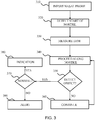
- the nasal probe is firstly inserted into both of the subject's nostrils (step 310).
- the proximity sensors on the inner side of each arm identify start of medial wall of the nostril; this detects the start of respective nasal cavities (step 320).
- the distance of each arm from the start of the medial wall of the nostril is measured (step 330) and this is considered as the distance of the individual arms from the midline (otherwise referred to as the distance from the midline (DFM)).
- the probe is inserted further into the nostrils of the subject (step 340).
- the proximity sensors at the tip of each prong are used to guide the continued insertion on each arm inside the respective nostrils. If, in step 350, no object or potential obstacle to insertion is detected, the user is prompted (step 360) to continue insertion of the probe into the nostrils and the method returns to step 340. However, if in step 350, an object or potential obstacle to insertion is detected, the detected object/obstacle is assessed (step 370) to determine if it is within normal/expected anatomical limits. If the detected object/obstacle is not within normal/expected anatomical limits, and alert is communicated to the user (step 390).
- an indication is provided to the user (step 380).
- the user may be provided with an audio-visual-haptic indication. In this way, the user can be assisted in inserting the nasal probe into the nasal cavity without touching/hurting any internal structures.
- FIG. 4 a proposed method for assisting alignment of a two-armed probe during insertion into a subject's nasal cavity is depicted in Figure 4 .
- the two-armed probe is firstly inserted into the subject's nostrils (step 410) and then along the nostrils to a greater depth (step 420) at which time the proximity sensors of the probe are activated (step 430).
- the proximity sensors are used to probe the nasal cavity at various depths to measure distance of nasal structures in all four directions along the length of each nostril (steps 440 and 450). In doing so, each arm of the probe may be kept in the middle of the nostril or can be moved up-down, left-right or in a circular manner inside the nostril to cover all the areas.
- the nasal septum is a midline structure, which separates two nostrils. When nasal septum is in exactly center it will be equidistance from the both arms of the probe (when they are inserted in the two nostrils at the same distance from the midline). The distance of the two probes on inner sides at the starting of nasal cavity (DFM) can thus continuously measured to check if the two probes are at equal distance from the midline.
- the distances between the two probes and floor of the nasal cavity are measured (step 460) and then compared (step 470) to check whether the two arms of the probe are aligned properly with respect to each other or not. If it is determined based on the measure distances that the arms are not properly aligned, an alert is communicated to the user of the probe (step 480). Conversely, if it is determined based on the measure distances that the arms are properly aligned, an indication of proper alignment and/or instruction to proceed with continued insertion of nasal probe is communicated to the user (step 490) and the method then returns to continued measuring of the distances (step 450).
- accelerometer and/or gyroscope sensors may be used to monitor rotational angle around the axis of the probes to determine alignment of the arms of a two-armed nasal probe.
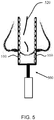
- data from a two-armed nasal probe 500 provided with proximity sensors 510 may be used to determine an indication of a nasal septum 520 perforation using an exemplary approach as follows:
- the information obtained from these readings can be also used to quantify size of nasal septum perforation.
- Data from a two-armed nasal probe provided with proximity sensors may be used to determine an indication of a nasal septum deviation using an exemplary approach as follows: (a) The proximity sensors on the arms of the nasal probe are used to probe the nasal cavity at various depths to measure distance of nasal structures in all four directions along the length of each nostril. Example distance measurements obtained in this manner are provided in Table 3 below. The information from the two nostrils can be correlated to identify anatomical landmarks in the nasal cavity and to determine position of the nasal septum in relation to the two nostrils.
- Data from a two-armed nasal probe provided with proximity sensors may also be used to quantify DNS bending.
- Example distance measurements obtained from a two-armed nasal probe in this are provided in Table 4 below.
- Table 4 Distance from nasal opening Right nostril: inner side Bending on Right (mm)
- Left nostril inner side Bending on left (mm)
- 0 DFM 7 7 5 7 0 7 -1 7 6 1 8 -6 9 2 5 13 -6 11 1 6 13 -4 13 3 4 11 -1
- Data from a two-armed nasal probe provided with proximity sensors may also be used to determine nasal septum thickness.
- the information from the different depths in the two nostrils can be collectively used to quantify degree of nasal septum deviations and its thickens at various depths. Using this, detailed anatomical details of the nasal septum can be provided to a user.
- Nasal polyps are abnormal growth in the nasal cavity, which can originate from any portion of nasal mucosa or paranasal sinuses.
- Nasal polyps are usually benign, semitransparent, well defined structures originating from roof of the nasal cavity. They can vary in size from a few millimeters to centimeters.
- Nasal polyps usually result from chronic inflammatory conditions. Multiple polyps in the nasal cavity can be also found in a few diseases conditions.
- Nasal polyps can lead to nasal obstruction, chronic sinusitis, anosmia, headache, snoring, which can eventually hamper quality of life.
- the clinical manifestation of nasal polyp depends on the size of polyp. Small polyps may not produce any noticeable symptoms and may an accidental finding during nasal examination, if they are located in anterior part of nasal cavity. However, nasal polyps are usually located deep inside the nasal cavity and hence are difficult to diagnose by routine nasal examination.
- a nasal probe may also be used to detect active bleeding in the nasal cavity by measuring temperature inside the nasal cavity.
- the nasal cavity is constantly exposed to atmospheric air. A temperature gradient from anterior to posterior parts of the nasal cavity can therefore be observed (based on outside temperature and humidity).
- Temperature measurements obtained from inside the nostrils of a subject at various depths, along with outside temperature and humidity, can be used to generated a matrix of expected temperature at various depths and dimensions of the nasal cavity.
- a model based on a representative database can be also used to generate such matrix.
- the temperature of active bleeding spot is assumed to close to core body temperature (37°c)
- a bleeding spot can be identified inside a nasal cavity.
- a nasal speculum with integrated proximity sensing capabilities can be also used to identify various structure in the nasal cavity, e.g. by measuring cross section/dimension of the nasal cavity at various depths and comparing it with reference models of nasal cavity. This information can be used to measure dimension of various internal structures (e.g., turbinate) or to detect their abnormalities. The information can be also used to detect any obstacles/obstructions in the nasal cavity.
- the nasal cavities can be assumed as having a conical shape with the base at the nostrils.
- the radius of the nostrils and the height of the nasal cavities can be determined from the measurements shown in Table 3 above.
- V 1/3 ⁇ r 2 h
- r radius of the nostril/at different depth of the nasal cavities
- h the height of the nasal cavity
- Such information might be used to rendered a 3D deformed cone (as the diameter at depths can vary) visualization of the volume for the ease of interpretation.
- Difference in the volumes of the left and right nostrils may also indicate potential deviation of the nasal septum or other pathologies.
- the discrete proximity sensors could be replaced or augmented by any (semi-)continuous proximity sensor.
- Known proximity sensors of this class include 3D laser scanner systems (using a laser beam and a rotating mirror arrangement or similar), which are often used to gain a 3D image of an empty volume. Making use of a miniaturized version of such a sensor at the end of the arm of a nasal probe may enable the immediate build-up of a 3D image of a significant part of the nasal cavity in just a few image capture sessions. Such an image may allow the extraction of clinically relevant parameters in an even more detailed manner.
- detected distances of an inner surface of a nostril from one or more proximity sensors may be analyzed to determine indication of one or more nasal pathologies. Such distances may be obtained from a proximity sensing arrangement that is inserted into the nostril(s) of a subject.
- nasal pathologies may be quickly and easily inferred.
- a nasal probe provided with proximity sensors can be used to provide information about the characteristics of a subject's nasal cavity, and this information may be processed in accordance with various proposed methods to provide an indication of one or more nasal pathologies.
- embodiments may be employed in conjunction with a nasal probe that has integrated proximity sensors (such as time-of-flight sensors) which, when inserted into a one or both nostrils of a subject, detect distances of an inner surface of a nostril of the subject from the proximity sensor(s).
- a nasal probe may comprise a single probe (i.e. arm or shaft) for insertion into one nostril of a subject at a time, or may alternatively comprise two probes for simultaneous insertion into both nostrils of subject.
- a nasal probe may be inserted in each nostril independently/sequentially (or two nasal probes may be inserted simultaneously into both nostril) and detected distance values may then be analyzed to identify nasal pathologies.
- embodiments may analyze obtained distance measurement to provide an indication of: deviated nasal septum (DNS); perforation in the nasal septum; nasal polyp; hard crust; turbinal hypertrophy; and/or nosebleed.
- DNS deviated nasal septum
- perforation in the nasal septum nasal polyp
- hard crust hard crust
- turbinal hypertrophy and/or nosebleed.
- Proposed embodiments may thus address the problem of identifying and quantifying a DNS, thus avoiding a need for subjective assessment.
- Embodiments may also address a difficulty associated with locating a DNS when it is deep inside the nasal cavity or has a complex shape with more than one bend/curve.
- Proposals may also be used to provide information on the thickness of a subject's nasal septum, which may be important for surgical repair. 4. Embodiments may further provide the advantage of being able to determine a precise location and size of septal perforation.
- a single processor or other unit may fulfill the functions of several items recited in the claims.
- a computer program may be stored/distributed on a suitable medium, such as an optical storage medium or a solid-state medium supplied together with or as part of other hardware, but may also be distributed in other forms, such as via the Internet or other wired or wireless telecommunication systems.
- a suitable medium such as an optical storage medium or a solid-state medium supplied together with or as part of other hardware, but may also be distributed in other forms, such as via the Internet or other wired or wireless telecommunication systems.
Landscapes
- Health & Medical Sciences (AREA)
- Life Sciences & Earth Sciences (AREA)
- Surgery (AREA)
- Pathology (AREA)
- General Health & Medical Sciences (AREA)
- Biophysics (AREA)
- Veterinary Medicine (AREA)
- Engineering & Computer Science (AREA)
- Biomedical Technology (AREA)
- Heart & Thoracic Surgery (AREA)
- Medical Informatics (AREA)
- Molecular Biology (AREA)
- Public Health (AREA)
- Animal Behavior & Ethology (AREA)
- Physics & Mathematics (AREA)
- Dentistry (AREA)
- Oral & Maxillofacial Surgery (AREA)
- Orthopedic Medicine & Surgery (AREA)
- Rheumatology (AREA)
- Otolaryngology (AREA)
- Nuclear Medicine, Radiotherapy & Molecular Imaging (AREA)
- Optics & Photonics (AREA)
- Radiology & Medical Imaging (AREA)
- Pulmonology (AREA)
- Physiology (AREA)
- Measurement Of The Respiration, Hearing Ability, Form, And Blood Characteristics Of Living Organisms (AREA)
- Surgical Instruments (AREA)
Priority Applications (5)
| Application Number | Priority Date | Filing Date | Title |
|---|---|---|---|
| EP20184764.7A EP3936043A1 (fr) | 2020-07-08 | 2020-07-08 | Systèmes et procédés pour évaluer les pathologies nasales d'un sujet |
| US18/014,815 US20240237945A1 (en) | 2020-07-08 | 2021-07-07 | Systems and methods system for assessing nasal pathologies of a subject |
| CN202180048576.3A CN115776870A (zh) | 2020-07-08 | 2021-07-07 | 用于评估对象的鼻病理学的系统和方法系统 |
| PCT/EP2021/068781 WO2022008577A1 (fr) | 2020-07-08 | 2021-07-07 | Systèmes et méthodes pour évaluer des pathologies nasales chez un sujet |
| EP21740492.0A EP4178432A1 (fr) | 2020-07-08 | 2021-07-07 | Systèmes et méthodes pour évaluer des pathologies nasales chez un sujet |
Applications Claiming Priority (1)
| Application Number | Priority Date | Filing Date | Title |
|---|---|---|---|
| EP20184764.7A EP3936043A1 (fr) | 2020-07-08 | 2020-07-08 | Systèmes et procédés pour évaluer les pathologies nasales d'un sujet |
Publications (1)
| Publication Number | Publication Date |
|---|---|
| EP3936043A1 true EP3936043A1 (fr) | 2022-01-12 |
Family
ID=71833113
Family Applications (2)
| Application Number | Title | Priority Date | Filing Date |
|---|---|---|---|
| EP20184764.7A Withdrawn EP3936043A1 (fr) | 2020-07-08 | 2020-07-08 | Systèmes et procédés pour évaluer les pathologies nasales d'un sujet |
| EP21740492.0A Withdrawn EP4178432A1 (fr) | 2020-07-08 | 2021-07-07 | Systèmes et méthodes pour évaluer des pathologies nasales chez un sujet |
Family Applications After (1)
| Application Number | Title | Priority Date | Filing Date |
|---|---|---|---|
| EP21740492.0A Withdrawn EP4178432A1 (fr) | 2020-07-08 | 2021-07-07 | Systèmes et méthodes pour évaluer des pathologies nasales chez un sujet |
Country Status (4)
| Country | Link |
|---|---|
| US (1) | US20240237945A1 (fr) |
| EP (2) | EP3936043A1 (fr) |
| CN (1) | CN115776870A (fr) |
| WO (1) | WO2022008577A1 (fr) |
Families Citing this family (1)
| Publication number | Priority date | Publication date | Assignee | Title |
|---|---|---|---|---|
| CN117017272B (zh) * | 2023-08-28 | 2024-06-25 | 南京诺源医疗器械有限公司 | 一种基于鼻颅镜系统的鼻颅骨矫正信息的获取方法 |
Citations (2)
| Publication number | Priority date | Publication date | Assignee | Title |
|---|---|---|---|---|
| US5316002A (en) * | 1993-06-29 | 1994-05-31 | Trustees Of Boston University | Nasopharyngealometric apparatus and method |
| US20190192045A1 (en) * | 2017-12-26 | 2019-06-27 | Biosense Webster (Israel) Ltd. | Monitoring distance to selected anatomical structures during a procedure |
Family Cites Families (4)
| Publication number | Priority date | Publication date | Assignee | Title |
|---|---|---|---|---|
| US7066180B2 (en) * | 2003-07-09 | 2006-06-27 | Airmatrix Technologies, Inc. | Method and system for measuring airflow of nares |
| US11717214B2 (en) * | 2017-05-05 | 2023-08-08 | ResMed Pty Ltd | Screening, diagnosis and monitoring of respiratory disorders |
| CN107569282A (zh) * | 2017-08-29 | 2018-01-12 | 江小兰 | 鼻内窥镜低温等离子消融系统 |
| US11123142B2 (en) * | 2018-12-06 | 2021-09-21 | Biosense Webster (Israel) Ltd. | Quick registration of coordinate systems for robotic surgery |
-
2020
- 2020-07-08 EP EP20184764.7A patent/EP3936043A1/fr not_active Withdrawn
-
2021
- 2021-07-07 US US18/014,815 patent/US20240237945A1/en active Pending
- 2021-07-07 CN CN202180048576.3A patent/CN115776870A/zh active Pending
- 2021-07-07 WO PCT/EP2021/068781 patent/WO2022008577A1/fr not_active Ceased
- 2021-07-07 EP EP21740492.0A patent/EP4178432A1/fr not_active Withdrawn
Patent Citations (2)
| Publication number | Priority date | Publication date | Assignee | Title |
|---|---|---|---|---|
| US5316002A (en) * | 1993-06-29 | 1994-05-31 | Trustees Of Boston University | Nasopharyngealometric apparatus and method |
| US20190192045A1 (en) * | 2017-12-26 | 2019-06-27 | Biosense Webster (Israel) Ltd. | Monitoring distance to selected anatomical structures during a procedure |
Non-Patent Citations (1)
| Title |
|---|
| FROM THE MANHATTAN EYE ET AL: "Preoperative and postoperative nasal septal surgery assessment with acoustic rhinometry", OTOLARYNGOLOGY AND HEAD AND NECK SURGERY, ROCHESTER, US, vol. 117, no. 4, 1 October 1997 (1997-10-01), pages 338 - 342, XP005121986, ISSN: 0194-5998, DOI: 10.1016/S0194-5998(97)70123-2 * |
Also Published As
| Publication number | Publication date |
|---|---|
| CN115776870A (zh) | 2023-03-10 |
| WO2022008577A1 (fr) | 2022-01-13 |
| EP4178432A1 (fr) | 2023-05-17 |
| US20240237945A1 (en) | 2024-07-18 |
Similar Documents
| Publication | Publication Date | Title |
|---|---|---|
| JP5443995B2 (ja) | 生理学的異常の検出を支援するシステム | |
| US8298135B2 (en) | Medical device with endoscope and insertable instrument | |
| JP6054064B2 (ja) | テンティングの検出 | |
| US20190223753A1 (en) | Intra-cardiac scar tissue identification using impedance sensing and contact measurement | |
| JP6185390B2 (ja) | 自動化された呼吸曲線の解析及び解釈 | |
| JP2018536456A (ja) | 呼吸力学パラメータ推定のための異常検出装置及び方法 | |
| CN105517487A (zh) | 用于利用自动漂移校正来评估脉管的设备、系统和方法 | |
| JP2018531067A6 (ja) | 撮像及び生理学的モニタリングを組み合わせた強化型の急性ケアマネジメント | |
| JP2018531067A (ja) | 撮像及び生理学的モニタリングを組み合わせた強化型の急性ケアマネジメント | |
| CN111449657A (zh) | 一种床旁的基于盐水造影肺通气-血流灌注电阻抗断层成像方法 | |
| JP2020513272A (ja) | 肺液を感知するためのシステムおよび方法 | |
| US20140230818A1 (en) | Methods for prediction of ventilation treatment inadequacy | |
| US20210369232A1 (en) | Systems and methods for evaluating respiratory function using a smartphone | |
| CN108968945B (zh) | 使用导管臂的分段线性模型来识别与组织的接触 | |
| US10149647B2 (en) | Weaning readiness indicator, sleeping status recording device, and air providing system applying nonlinear time-frequency analysis | |
| JP6557314B2 (ja) | 肺の健康を監視するシステム | |
| EP3936043A1 (fr) | Systèmes et procédés pour évaluer les pathologies nasales d'un sujet | |
| US20170100059A1 (en) | Lung function monitoring | |
| US20120165658A1 (en) | System, article of manufacture, and method for characterizing a medical device and/or one or more sensors mounted thereon | |
| RU2719926C1 (ru) | Способ оценки состояния внутреннего носового клапана | |
| WO2022155559A1 (fr) | Surveillance de circulation d'air avec des ultrasons en mode b | |
| JP2022019602A (ja) | 生体情報取得装置、処理装置、およびコンピュータプログラム | |
| CN120093273B (zh) | 基于肺部二叉树模型的痰液阻塞检测方法、系统、终端及介质 | |
| US20260013737A1 (en) | Systems and methods for determining filtered cardiac output | |
| US20250255512A1 (en) | Monitoring method and related products |
Legal Events
| Date | Code | Title | Description |
|---|---|---|---|
| PUAI | Public reference made under article 153(3) epc to a published international application that has entered the european phase |
Free format text: ORIGINAL CODE: 0009012 |
|
| STAA | Information on the status of an ep patent application or granted ep patent |
Free format text: STATUS: THE APPLICATION HAS BEEN PUBLISHED |
|
| AK | Designated contracting states |
Kind code of ref document: A1 Designated state(s): AL AT BE BG CH CY CZ DE DK EE ES FI FR GB GR HR HU IE IS IT LI LT LU LV MC MK MT NL NO PL PT RO RS SE SI SK SM TR |
|
| B565 | Issuance of search results under rule 164(2) epc |
Effective date: 20201203 |
|
| STAA | Information on the status of an ep patent application or granted ep patent |
Free format text: STATUS: THE APPLICATION IS DEEMED TO BE WITHDRAWN |
|
| 18D | Application deemed to be withdrawn |
Effective date: 20220713 |