EP3947246B1 - Procédé d'assistance au stockage dans un chariot de manutention et chariot de manutention - Google Patents
Procédé d'assistance au stockage dans un chariot de manutention et chariot de manutention Download PDFInfo
- Publication number
- EP3947246B1 EP3947246B1 EP20726380.7A EP20726380A EP3947246B1 EP 3947246 B1 EP3947246 B1 EP 3947246B1 EP 20726380 A EP20726380 A EP 20726380A EP 3947246 B1 EP3947246 B1 EP 3947246B1
- Authority
- EP
- European Patent Office
- Prior art keywords
- industrial truck
- superimposed
- image processing
- processing device
- image
- Prior art date
- Legal status (The legal status is an assumption and is not a legal conclusion. Google has not performed a legal analysis and makes no representation as to the accuracy of the status listed.)
- Active
Links
Images

Classifications
-
- B—PERFORMING OPERATIONS; TRANSPORTING
- B66—HOISTING; LIFTING; HAULING
- B66F—HOISTING, LIFTING, HAULING OR PUSHING, NOT OTHERWISE PROVIDED FOR, e.g. DEVICES WHICH APPLY A LIFTING OR PUSHING FORCE DIRECTLY TO THE SURFACE OF A LOAD
- B66F9/00—Devices for lifting or lowering bulky or heavy goods for loading or unloading purposes
- B66F9/06—Devices for lifting or lowering bulky or heavy goods for loading or unloading purposes movable, with their loads, on wheels or the like, e.g. fork-lift trucks
- B66F9/075—Constructional features or details
- B66F9/0755—Position control; Position detectors
-
- B—PERFORMING OPERATIONS; TRANSPORTING
- B66—HOISTING; LIFTING; HAULING
- B66F—HOISTING, LIFTING, HAULING OR PUSHING, NOT OTHERWISE PROVIDED FOR, e.g. DEVICES WHICH APPLY A LIFTING OR PUSHING FORCE DIRECTLY TO THE SURFACE OF A LOAD
- B66F9/00—Devices for lifting or lowering bulky or heavy goods for loading or unloading purposes
- B66F9/06—Devices for lifting or lowering bulky or heavy goods for loading or unloading purposes movable, with their loads, on wheels or the like, e.g. fork-lift trucks
- B66F9/075—Constructional features or details
- B66F9/20—Means for actuating or controlling masts, platforms, or forks
- B66F9/24—Electrical devices or systems
-
- G—PHYSICS
- G05—CONTROLLING; REGULATING
- G05D—SYSTEMS FOR CONTROLLING OR REGULATING NON-ELECTRIC VARIABLES
- G05D1/00—Control of position, course, altitude or attitude of land, water, air or space vehicles, e.g. using automatic pilots
- G05D1/20—Control system inputs
- G05D1/24—Arrangements for determining position or orientation
- G05D1/243—Means capturing signals occurring naturally from the environment, e.g. ambient optical, acoustic, gravitational or magnetic signals
- G05D1/2435—Extracting 3D information
-
- G—PHYSICS
- G05—CONTROLLING; REGULATING
- G05D—SYSTEMS FOR CONTROLLING OR REGULATING NON-ELECTRIC VARIABLES
- G05D1/00—Control of position, course, altitude or attitude of land, water, air or space vehicles, e.g. using automatic pilots
- G05D1/60—Intended control result
- G05D1/656—Interaction with payloads or external entities
- G05D1/667—Delivering or retrieving payloads
-
- G—PHYSICS
- G05—CONTROLLING; REGULATING
- G05D—SYSTEMS FOR CONTROLLING OR REGULATING NON-ELECTRIC VARIABLES
- G05D2105/00—Specific applications of the controlled vehicles
- G05D2105/20—Specific applications of the controlled vehicles for transportation
- G05D2105/28—Specific applications of the controlled vehicles for transportation of freight
-
- G—PHYSICS
- G05—CONTROLLING; REGULATING
- G05D—SYSTEMS FOR CONTROLLING OR REGULATING NON-ELECTRIC VARIABLES
- G05D2107/00—Specific environments of the controlled vehicles
- G05D2107/70—Industrial sites, e.g. warehouses or factories
-
- G—PHYSICS
- G05—CONTROLLING; REGULATING
- G05D—SYSTEMS FOR CONTROLLING OR REGULATING NON-ELECTRIC VARIABLES
- G05D2109/00—Types of controlled vehicles
- G05D2109/10—Land vehicles
-
- G—PHYSICS
- G05—CONTROLLING; REGULATING
- G05D—SYSTEMS FOR CONTROLLING OR REGULATING NON-ELECTRIC VARIABLES
- G05D2111/00—Details of signals used for control of position, course, altitude or attitude of land, water, air or space vehicles
- G05D2111/10—Optical signals
-
- G—PHYSICS
- G05—CONTROLLING; REGULATING
- G05D—SYSTEMS FOR CONTROLLING OR REGULATING NON-ELECTRIC VARIABLES
- G05D2111/00—Details of signals used for control of position, course, altitude or attitude of land, water, air or space vehicles
- G05D2111/10—Optical signals
- G05D2111/17—Coherent light, e.g. laser signals
Definitions
- the invention relates to a method for supporting storage in an industrial truck and a corresponding industrial truck, in particular a forklift truck.
- Visualization assistance systems are known in all types of vehicles, including industrial trucks such as forklifts.
- the state of the art is mainly characterized by the fact that areas are marked in the two-dimensional image representation, such as EP 2 653 429 B1 or EP 2 653 430 B1 known that disclose the features of the preamble of claim 1, or the image is enhanced by text information.
- areas are marked in the two-dimensional image representation, such as EP 2 653 429 B1 or EP 2 653 430 B1 known that disclose the features of the preamble of claim 1, or the image is enhanced by text information.
- the movements of a vehicle component are drawn into the image using lines, such as tire tracks in a rear-view camera, which move depending on the steering angle.
- the visualization appears completely rendered, such as the visualization of obstacles in the parking pilot via distance bars.
- a forklift truck which has a load carrier and a forward-facing optical detector which is moved together with the load carrier.
- An optical analysis unit analyses the image data from the optical detector and identifies the load carrier as a first three-dimensional object, detects a second three-dimensional object and determines the three-dimensional position of the load carrier relative to the second object. This relative positioning can be used to position the load carrier accordingly.
- messages can be displayed on a display device on how to adjust the position of the load carrier.
- the document WO 2018/186790 A1 shows a driver assistance system for a vehicle having a crane for loading objects.
- the system comprises a control unit configured to generate a presentation signal that is displayed on a display unit, and an object detection device that captures images of the vehicle and/or the surroundings of the vehicle and is configured to generate an image data signal that is fed to the control unit.
- the control unit determines a three-dimensional representation of at least one object that is part of the vehicle and/or the surroundings.
- the control unit can determine a dynamically generated augmented reality (AR) image of at least part of the three-dimensional representation of the object and insert instructions into the presentation signal so that the 3D representation overlays the AR image.
- AR augmented reality
- a method for assisting an industrial truck in which the driver's perspective is shown on a display system. Assistance is also provided in part when driving forwards, for example when large and bulky loads are being transported that prevent the driver from seeing directly ahead.
- the camera system shown in the system also has a rear view for shunting and transport routes that are driven backwards.
- the steering angle of the industrial truck is recorded by a sensor and a possible track of the industrial truck, determined by the steering angle, is determined in relation to its longitudinal axis by a computing unit and the track is presented on the display device.
- the present invention is based on the object of further improving the support of the driver of an industrial truck.
- This object underlying the invention is achieved by a method for supporting the storage of an industrial truck, in particular a forklift truck, which comprises one or more cameras, detect or detect at least part of the surroundings of the industrial truck, and comprises an image processing device which has an operator input interface and a display device at the driver's seat of the industrial truck, on which two- or three-dimensionally recorded images captured by the one or more cameras and processed by the image processing device are or can be displayed, wherein the camera or at least one of the cameras detects at least part of a load-handling device of the industrial truck, wherein after a request by means of input at the operator input interface or automatically, at least one three-dimensional object is superimposed on the displayed images and/or a view visible through the display device, which is further developed in that three-dimensional information relating to an object to be stored or retrieved or a movement of the industrial truck or its load-handling device is additionally determined with the aid of sensors and an evaluation algorithm and the result is superimposed as a three-dimensional object which expediently supports control of the industrial truck
- the present invention creates a visualization concept for assistance systems for storing and retrieving goods and for controlling industrial trucks, which actively supports the driver.
- the invention is based on the basic idea that not only the foreseeable path of the industrial truck is displayed based on the steering angle, so that the driver can judge whether the path is clear of obstacles, but the driver's work is actively supported by a spatial analysis of the environment and relevant objects as well as their informative representation, which provide the driver with information to carry out, for example, storage or retrieval processes.
- the industrial truck is equipped with sensors and an evaluation algorithm with which three-dimensional information is determined and related to the industrial truck and its moving parts. This information is used to provide targeted support when controlling the industrial truck and/or the load handling device, in particular for storing or retrieving the object to be stored or retrieved, but also for driving around obstacles and thus avoiding collisions.
- depth information recorded by one or more depth sensors is used to calculate the spatial relationships for the overlay.
- the assistance system has a camera or sensor system that can generate both 2D images and 3D images. These images and depth information can be converted into a so-called false color image for visualization, for example, by encoding the distance in the color scheme. The false colors for the distance information can also be superimposed semi-transparently over the image.
- a three-dimensional object to be superimposed represents a pallet, a shelf element, an obstacle for storage or retrieval, a load-handling device, a corridor to be followed and/or a proposed trajectory of the load-handling device for storage or retrieval and/or a direction arrow for this.
- These elements or the element are then rendered in the image displayed to the driver.
- a pallet rendered in this way is, for example, directly displayed via a real palette is projected in the image or view.
- the image processing device recognizes an object from depth information about a captured two-dimensional or three-dimensional image and records its spatial extent and position, renders this as an object to be superimposed and superimposes it on the displayed images.
- a database with possible objects can advantageously be stored, which contain the geometric representations of these objects and with which the depth information of the images processed by the image processing device is compared in order to recognize corresponding objects.
- Other object recognition methods are also possible within the scope of the present invention.
- Object recognition in two- or three-dimensional images can be carried out, for example, using machine learning, in particular neural networks trained for this purpose, or more conventional methods.
- a three-dimensional object to be superimposed represents a driving corridor for the industrial truck that the driver must follow, an obstacle for the industrial truck and/or a part of the industrial truck or the industrial truck and/or directional arrows for this.
- the object relates less to an object to be stored or retrieved, but rather to the movement of the industrial truck as a whole in relation to its surroundings.
- Directional arrows can, for example, represent a desired direction for a proposed movement sequence, or a current orientation of the industrial truck or components thereof.
- distortions of the image display are taken into account when superimposing the at least one three-dimensional object.
- the resulting distortions are properties of the recording camera system and are known if the optics of the camera system are known. This improves the scale and perspective accurate superimposition of the objects to be superimposed or the object to be superimposed over the displayed image, especially in the edge area, where distortions are usually more pronounced than in the center of the image.
- the object is advantageously rendered for overlay, particularly semi-transparently.
- the object should be rendered as true to position, dimensions and perspective as possible, but may or should be recognizable as an artificially rendered object, whereby a semi-transparent overlay has the advantage that the real object or the real environment is still clearly recognizable under the rendered object. This allows the driver to assess, in the sense of a reality check, how well the assistance system has recognized the position of the vehicle in relation to the environment and whether, for example, suggestions for movement patterns of the load-handling device or the industrial truck correspond to reality to such an extent that they can also be carried out.
- the three-dimensional object to be superimposed is superimposed in an image sequence that represents a proposed movement sequence of the three-dimensional object to be superimposed, in particular an object to be stored or retrieved, a load-carrying device of the industrial truck and/or the industrial truck itself.
- the animation by generating and superimposing an image sequence over the displayed images makes it possible to represent a planned movement sequence before it is carried out. In this way, with a stacking or retrieving assistant implemented in this way, it is possible to assess whether, for example, a storage or retrieval process can run smoothly and the targeted target positions, for example, the load lifting device of the industrial truck, can be reached precisely and without disruption.
- the industrial truck should be in front of a shelf, with the forks of the load handling device at the height of the pallet to be picked up.
- the system recognizes the pallet with its position and rotation in space and calculates a trajectory for how the driving and hydraulic functions for picking up the pallet must be controlled.
- the system can render the forks of the vehicle, which in the initial state are superimposed on the real forks in the camera image.
- the forks move into the load according to the trajectory. The same applies to a suggested driving trajectory of the industrial truck around obstacles.
- such an image sequence is played repeatedly at the operator's request and, if necessary, modified at the operator's input in order to optimize the planned movement sequence.
- the movement sequence shown in the image sequence is carried out partially automatically, preferably at the operator's request.
- partially automated means that the movement sequence is initiated by the driver himself, but runs without his intervention, as shown in the image sequence.
- the driver has the option of intervening and stopping the movement sequence if an unforeseen situation occurs or safety is otherwise at risk.
- a visualization assistance system for an industrial truck in particular a forklift truck, comprising one or more cameras that are arranged to capture at least part of the surroundings of the industrial truck, wherein the camera or at least one of the cameras is arranged to capture at least part of a load-carrying device of the industrial truck, and with an image processing device that has an operator input interface and a display device at a driver's seat of the industrial truck that is designed to display images captured by the one or more cameras and processed by the image processing device, wherein the image processing device is designed to superimpose at least one three-dimensional object on the displayed images after a request by means of input at the operator input interface or automatically, which is further developed in that the image processing device and in particular an electronic control device of the industrial truck is or are additionally designed to determine three-dimensional information regarding an object to be stored or retrieved or a movement of the industrial truck or its load-carrying device with the aid of sensors and an evaluation algorithm and that The result is to be superimposed on the displayed images and/or
- the visualization assistance system realizes the same features as the method according to the invention and therefore shares the features and advantages as well as properties of the method.
- the sensors are available in embodiments as depth sensors, in particular as a TOF camera. Also included are systems in which the imaging sensor is designed independently of the sensor for environmental detection and is calibrated in a suitable manner. For example, a 3D TOF camera can also be combined with a 2D camera to display the image for the driver. The offset of the two systems is known through calibration and is taken into account when rendering the objects in the 2D image.
- the display device comprises a permanently installed display, in particular comprising a touchscreen display as an operator input interface, and/or a portable AR headset.
- the transformation from the glasses to the reference coordinate system must also be determined, for example by tracking or inside-out tracking, and taken into account.
- a corresponding AR headset can also show the driver images from a rear camera without him having to turn around, or images from other cameras on the industrial truck that can be superimposed on the driver's view in a semi-transparent manner. This is useful, for example, if an object to be visualized is obscured by parts of the image, for example when a load is lying on top.
- a separate user input interface is provided.
- this can be designed as a touchscreen display and thus also fulfil the function of the user input interface.
- parts of the user input interface can also be separate from the display.
- the image processing device and in particular the electronic control device of the industrial truck is or are designed to carry out the method features of a previously described method according to the invention.
- An additional electronic control device separate from the image processing device may have the task of sending control pulses to the moving parts of the industrial truck and is a central part of the industrial truck in this function.
- the electronic control device and the image processing device are in communication with each other in this case and exchange control signals so that, for example, the control device can instruct the image processing device to display certain information to the driver in certain situations.
- the control device and the image processing device are also in communication with each other when a suggested movement sequence is displayed to the driver as an image sequence and the driver, after determining that the movement sequence corresponds to reality, gives the instruction to carry out the movement sequence. This movement sequence is then controlled in reality by the control device.
- control device and the image processing device can also be integrated into a common electronic central computer of the industrial truck and implemented as different functionalities using programming technology. It is also possible for the display device to have a computing unit integrated as an image processing device.
- Examples of applications of the method and the visualization system include the visualization of retrieval, the visualization of a trajectory for storage and the visualization of an "approach path" when approaching, similar to the approach corridor of an aircraft, whereby the user is shown what the ideal approach looks like.
- Other examples are the semi-transparent display of load carriers and shelf elements, the division in the form of a directional arrow that shows the compartment direction, which can also take into account a target compartment from the goods management system (WMS), or the marking of elements or pixels from the environment where there is a risk of collision with vehicle parts in the direction of movement.
- WMS goods management system
- the object underlying the invention is also achieved by an industrial truck, in particular a forklift truck, with a previously described visualization assistance system according to the invention, which thus realizes the same properties, features and advantages as the previously described visualization assistance system according to the invention and the previously described method according to the invention.
- Embodiments according to the invention can fulfill individual features or a combination of several features.
- Fig. 1 shows a schematic representation of an industrial truck 10, which has a load-carrying device 12 on a lifting frame, as well as a driver's cabin with a driver's seat 14, a display device 16 and several cameras 20, 22, 24, which record the surroundings of the industrial truck 10 and whose recorded images can be displayed on the display device 16.
- the camera 20 has a view in the direction of the load-carrying device 12, the Camera 22 provides an overview and camera 24 provides a view backwards, which is helpful for reversing the industrial truck 10.
- the industrial truck 10 also has an image processing device 30 that records and processes the images recorded by the cameras 20, 22, 24 and, if applicable, depth information and can display the processed images on the display device 16.
- a control device 32 is optionally included, which can convert operating inputs from the driver into control signals for the industrial truck 10 or the mast and the load-handling device 12, and which communicates with the image processing device 30.
- a visualization assistance system according to the invention is shown in a schematic block diagram, which comprises the cameras 20, 22, 24 and optionally a depth sensor 26, which pass on their recorded data to the image processing device 30, which processes them and displays them on a display 17 of the display device 16.
- the image processing device 30 also receives inputs from a control device 32 of the industrial truck 10, for example to simulate and suggest certain movement sequences on request or to calculate and suggest a trajectory for the industrial truck 10, similar to a flight corridor or driving corridor.
- the visualization assistance system comprises a Operator input interface 18, which is in the Fig. 2 shown example can optionally be part of the display device 16.
- the display 17 can be designed as a touchscreen display and thus also take over the function of the operator input interface 18.
- the display can also have separate operating elements, such as buttons, switches or the like, and thus also serve as an operator input interface 18.
- the operating elements of the operator input interface 18 can, however, also be separate from the display 17 and thus not be part of the display device 16.
- the display device 16 can also be designed as an AR headset through which the driver can see the surroundings, whereby the AR headset can display both three-dimensional objects to be superimposed on the surroundings visible to him, or images from the cameras 20, 22, 24, which may be displayed semi-transparently, which in turn can be superimposed with rendered three-dimensional objects.
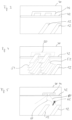
- Fig. 3 to 5 show examples of how the visualization assistance according to the invention can be implemented.
- Fig. 3 shows an image 40 that is recorded by the front camera 20 of the industrial truck 10 and shows a pallet 44 placed on a shelf 42 as well as the forks of the load handling device 12 of the industrial truck 10. If the camera 20 is fixedly attached to the industrial truck 10, the forks of the load handling device 12 will move when moving through the displayed image section of the image 40.
- the industrial truck 10 is still offset from the pallet 44 to be picked up.
- the task in this case is to to move the forks of the load-handling device 12 so that they can be inserted safely and precisely into the receiving openings of the pallet 44.
- Fig. 4 shows a first embodiment of the method according to the invention, in which a proposed movement sequence of the load-handling device 12 is simulated and rendered in an image sequence 52 and displayed as a sequence.
- a representation of the forks of the load-handling device 12 is rendered as an overlay object 54 and gradually superimposed on the image 40 at different locations in accordance with the proposed movement sequence, which correspond to the positions predetermined according to the proposed movement sequence at the individual points in time in the sequence.
- the sequence ends with the forks of the load-handling device 12 being correctly positioned and being introduced into the receiving openings of the pallet 44 by a forward movement of the industrial truck 10 or the lifting frame itself, if it is designed accordingly.
- the pallet 44 itself has been recognized as an overlay object 50 and is overlaid semi-transparently or partially transparently in the image 40 at the location of the pallet 44. This also makes it possible to display the movement sequence in which both the forks in the form of the overlay objects 54 and the pallet 44 in the form of the overlay object 50 are simulated and rendered and are lifted off the shelf 42 and removed from storage.
- Fig. 5 shows a second embodiment in which the forks of the load-carrying device 12 are also to be inserted into the receiving openings of a pallet 44.
- the superimposed objects are a corridor 60 in which the center point between the ends of the two fork tips must move, which is marked by a direction arrow 62, which, for example, represents the alignment of the fork tines or also shows the direction in which the fork tines must be aligned in order to ideally enter the receiving openings of the pallet 44. This can then deviate from the current alignment of the fork tines.
- a trajectory 64 is proposed with which the fork tines of the load-handling device 12 are ideally moved in order to reach an optimal entry position for the pallet 44.
- the overlay of the image 40 with overlay objects 50 takes place at the request of the driver through the operator input interface 18 of the industrial truck 10.
- the corresponding guidance can also take place continuously or depending on the context.
- either automatic object recognition can be introduced, for example based on known objects stored in a database, or based on operator inputs from the driver, who marks an object in the displayed image that is to be stored or retrieved.
- the driver can also mark an obstacle in the displayed image that is to be avoided.
- the depth information that is already available from the sensors of the industrial truck 10 can then be used to to calculate the relative position of the industrial truck 10 and the load handling device 12 in relation to the marked or automatically detected object and to calculate corresponding suggestions for bypassing or approaching the correspondingly marked or detected object.
Landscapes
- Engineering & Computer Science (AREA)
- Transportation (AREA)
- Structural Engineering (AREA)
- Life Sciences & Earth Sciences (AREA)
- Physics & Mathematics (AREA)
- General Physics & Mathematics (AREA)
- Automation & Control Theory (AREA)
- Remote Sensing (AREA)
- Civil Engineering (AREA)
- Radar, Positioning & Navigation (AREA)
- Aviation & Aerospace Engineering (AREA)
- Geology (AREA)
- Mechanical Engineering (AREA)
- Chemical & Material Sciences (AREA)
- Combustion & Propulsion (AREA)
- Forklifts And Lifting Vehicles (AREA)
Claims (15)
- Procédé d'assistance au stockage pour un chariot de manutention (10), en particulier un chariot élévateur, qui comprend une ou plusieurs caméras (20, 22, 24) qui enregistrent au moins une partie de l'environnement du chariot de manutention (10), et un dispositif (30) de traitement d'images, qui comprend, au niveau du poste de conduite (14) du chariot de manutention (10), une interface (18) d'entrée de commande et un dispositif d'affichage (16), sur lequel des images (40) capturées en deux ou trois dimensions par une ou plusieurs caméras (20, 22, 24) et traitées par le dispositif (30) de traitement d'images, sont affichées ou aptes à être affichées, la caméra (20) ou au moins une des caméras (20, 22, 24) détectant au moins une partie d'un moyen (12) de réception de charge du chariot de manutention (10), au moins un objet tridimensionnel étant superposé aux images affichées (40) et/ou à une vue visible au moyen du dispositif d'affichage (16), à la suite d'une demande faite au moyen d'une entrée sur l'interface (18) d'entrée de commande, ou automatiquement, caractérisé en outre par le fait que, à l'aide de capteurs et d'un algorithme d'évaluation, des informations tridimensionnelles concernant un objet (44) à stocker ou à déstocker ou un mouvement du chariot de manutention (10) ou de son moyen (12) de réception de charge sont déterminées, et en ce que le résultat est superposé sous forme d'objet tridimensionnel (50, 52, 54, 60, 62, 64), lequel assiste de manière ciblée une commande du chariot de manutention (10) et/ou du moyen (12) de réception de charge pour le stockage ou le déstockage de l'objet (44) à stocker ou à déstocker.
- Procédé selon la revendication 1, caractérisé en ce que, pour le calcul des rapports spatiaux pour la superposition, des informations de profondeur sont utilisées, qui sont enregistrées par un ou plusieurs capteurs de profondeur, notamment une caméra (20) conçue sous la forme d'une caméra 3D, en particulier une caméra TOF.
- Procédé selon la revendication 1 ou la revendication 2, caractérisé en ce qu'un objet tridimensionnel (50, 54, 60, 62, 64) à superposer représente une palette (44), un élément de rayonnage (42), un obstacle pour le stockage ou le déstockage, un moyen (12) de réception de charge, un corridor (60) à respecter et/ou une trajectoire (64) proposée du moyen (12) de réception de charge pour le stockage ou le déstockage et/ou une flèche de direction (62) à cet effet.
- Procédé selon la revendication 3, caractérisé en ce que le dispositif (30) de traitement d'images reconnaît un objet (12, 42, 44) à partir d'informations de profondeur relatives à une image bidimensionnelle ou tridimensionnelle (40) enregistrée, et enregistre son extension spatiale et sa position, l'édite sous forme d'objet (50, 54) à superposer et le superpose aux images (40) affichées.
- Procédé selon l'une des revendications 1 à 4, caractérisé en ce qu'un objet tridimensionnel à superposer représente un couloir de circulation à respecter par le conducteur pour le chariot de manutention (10), un obstacle pour le chariot de manutention (10) et/ou une partie du chariot de manutention (10) ou le chariot de manutention (10) et/ou des flèches directionnelles pour celui-ci.
- Procédé selon l'une des revendications 1 à 5, caractérisé en ce que, lors de la superposition d'au moins un objet tridimensionnel (50, 52, 60, 62, 64), il est tenu compte des distorsions de l'affichage de l'image.
- Procédé selon l'une des revendications 1 à 6, caractérisé en ce que l'objet (50, 52, 60, 62, 64) est édité pour la superposition, en particulier de manière semi-transparente.
- Procédé selon l'une des revendications 1 à 7, caractérisé en ce que l'objet tridimensionnel (54) à superposer est superposé dans une séquence d'images (52) représentant une proposition de déplacement de l'objet tridimensionnel (54) à superposer, notamment un objet (44) à stocker ou à déstocker, un moyen (12) de réception de charge du chariot de manutention (10) et/ou le chariot de manutention (10) lui-même.
- Procédé selon la revendication 8, caractérisé en ce que la séquence d'images (52) est rejouée à la demande de l'opérateur.
- Procédé selon la revendication 8 ou la revendication 9, caractérisé en ce que, sur demande de l'opérateur, le déroulement du mouvement représenté dans la séquence d'images (52) est effectué de manière partiellement automatisée.
- Système d'assistance à la visualisation pour un chariot de manutention (10), en particulier un chariot élévateur, comprenant une ou plusieurs caméras (20, 22, 24) qui sont agencées pour enregistrer au moins une partie de l'environnement du chariot de manutention (10), la caméra (20) ou au moins une des caméras (20, 22, 24) étant agencée de façon à détecter au moins une partie d'un moyen (12) de réception de charge du chariot de manutention (10), et comprenant un dispositif (30) de traitement d'images qui comprend, au niveau d'un poste de conduite (14) du chariot de manutention (10), une interface (18) d'entrée de commande et un dispositif d'affichage (16) qui est conçu pour afficher des images (40) capturées par une caméra ou par les plusieurs caméras (20, 22, 24) et traitées par le dispositif (30) de traitement d'images, le dispositif (30) de traitement d'images étant conçu de façon à superposer au moins un objet tridimensionnel aux images affichées, à la suite d'une demande faite au moyen d'une entrée sur l'interface (18) d'entrée de commande, ou automatiquement, caractérisé en ce que le dispositif (30) de traitement d'images ainsi que, notamment en supplément un dispositif de commande électronique (32) du chariot de manutention (10), est ou sont conçus en outre pour déterminer, à l'aide de capteurs et d'un algorithme d'évaluation, des informations tridimensionnelles concernant un objet à stocker ou à déstocker ou un mouvement du chariot de manutention (10) ou de son moyen (12) de réception de charge, et pour superposer le résultat aux images affichées et/ou à une vue visible par le dispositif d'affichage sous la forme d'un objet tridimensionnel, lequel assiste de manière ciblée une commande du chariot de manutention (10) et/ou du moyen (12) de réception de charge pour le stockage ou le déstockage de l'objet à stocker ou à déstocker.
- Système d'assistance à la visualisation selon la revendication 11, caractérisé en ce que les capteurs sont sous forme de capteurs de profondeur, en particulier de caméras TOF (20).
- Système d'assistance à la visualisation selon la revendication 11 ou la revendication 12, caractérisé en ce que le dispositif d'affichage (16) comprend un écran fixe (17), comprenant notamment un écran tactile en tant qu'interface (18) d'entrée de commande, et/ou un casque de RA portable.
- Système d'assistance à la visualisation selon l'une des revendications 11 à 13, caractérisé en ce que le dispositif de traitement d'images ainsi que notamment en outre le dispositif électronique de commande (32) du chariot de manutention (10) est ou sont configurés pour mettre en oeuvre les caractéristiques du procédé de l'une des revendications 2 à 9.
- Chariot de manutention (10), notamment chariot élévateur, comportant un système d'assistance à la visualisation selon l'une des revendications 11 à 14.
Applications Claiming Priority (2)
| Application Number | Priority Date | Filing Date | Title |
|---|---|---|---|
| DE102019112954.0A DE102019112954A1 (de) | 2019-05-16 | 2019-05-16 | Verfahren zur Lagerungsunterstützung bei einem Flurförderzeug und Flurförderzeug |
| PCT/EP2020/063450 WO2020229593A1 (fr) | 2019-05-16 | 2020-05-14 | Procédé d'assistance au stockage dans un chariot de manutention et chariot de manutention |
Publications (2)
| Publication Number | Publication Date |
|---|---|
| EP3947246A1 EP3947246A1 (fr) | 2022-02-09 |
| EP3947246B1 true EP3947246B1 (fr) | 2025-02-12 |
Family
ID=70740630
Family Applications (1)
| Application Number | Title | Priority Date | Filing Date |
|---|---|---|---|
| EP20726380.7A Active EP3947246B1 (fr) | 2019-05-16 | 2020-05-14 | Procédé d'assistance au stockage dans un chariot de manutention et chariot de manutention |
Country Status (3)
| Country | Link |
|---|---|
| EP (1) | EP3947246B1 (fr) |
| DE (1) | DE102019112954A1 (fr) |
| WO (1) | WO2020229593A1 (fr) |
Families Citing this family (3)
| Publication number | Priority date | Publication date | Assignee | Title |
|---|---|---|---|---|
| US12600608B2 (en) | 2021-03-04 | 2026-04-14 | The Raymond Corporation | Assistance systems and methods for a material handling vehicle |
| DE102023106344A1 (de) * | 2023-03-14 | 2024-09-19 | Jungheinrich Aktiengesellschaft | Flurförderzeug mit einem Lastaufnahmemittel und einer 2D-Kamera, Verfahren zum Betreiben desselben sowie Verfahren zum Trainieren eines neuronalen Netzwerks |
| DE102023124718A1 (de) | 2023-09-13 | 2025-03-13 | Still Gesellschaft Mit Beschränkter Haftung | Flurförderzeug und Verfahren zum Betreiben eines Flurförderzeugs |
Citations (3)
| Publication number | Priority date | Publication date | Assignee | Title |
|---|---|---|---|---|
| DE102017124788A1 (de) * | 2017-10-24 | 2019-04-25 | Jungheinrich Ag | Verfahren zur Fahrunterstützung bei einem Flurförderzeug und Flurförderzeug |
| US20190176328A1 (en) * | 2017-12-13 | 2019-06-13 | X Development Llc | Dynamically Adjusting Roadmaps for Robots Based on Sensed Environmental Data |
| US10585440B1 (en) * | 2017-01-23 | 2020-03-10 | Clearpath Robotics Inc. | Systems and methods for using human-operated material-transport vehicles with fleet-management systems |
Family Cites Families (10)
| Publication number | Priority date | Publication date | Assignee | Title |
|---|---|---|---|---|
| GB0405014D0 (en) * | 2004-03-05 | 2004-04-07 | Qinetiq Ltd | Movement control system |
| WO2008057504A2 (fr) * | 2006-11-06 | 2008-05-15 | Aman James A | Système de suivi de charge fixé sur un chariot élévateur à fourche autosuiveur |
| DE102007063226A1 (de) | 2007-12-31 | 2009-07-02 | Still Gmbh | Verfahren zur Fahrunterstützung bei einem Flurförderzeug sowie Flurförderzeug |
| DE102012108034A1 (de) | 2012-04-20 | 2013-10-24 | Still Gmbh | Steuerungsverfahren für Flurförderzeug sowie Flurförderzeug |
| DE102012108028A1 (de) * | 2012-04-20 | 2013-10-24 | Still Gmbh | Steuerverfahren für Lastabsetzung eines Flurförderzeugs sowie Flurförderzeug |
| EP3000771B1 (fr) * | 2014-09-25 | 2017-11-22 | Toyota Material Handling Manufacturing Sweden AB | Chariot élévateur à fourche |
| US10122995B2 (en) * | 2016-09-22 | 2018-11-06 | X Development Llc | Systems and methods for generating and displaying a 3D model of items in a warehouse |
| SE541180C2 (en) * | 2017-04-03 | 2019-04-23 | Cargotec Patenter Ab | Driver assistance system for a vehicle provided with a crane using 3D representations |
| DE202017102191U1 (de) * | 2017-04-12 | 2018-07-13 | Sick Ag | 3D-Lichtlaufzeitkamera zur Erfassung dreidimensionaler Bilddaten |
| WO2019066693A1 (fr) * | 2017-09-26 | 2019-04-04 | Cargotec Patenter Ab | Système d'assistance à l'opérateur et procédé associé au système |
-
2019
- 2019-05-16 DE DE102019112954.0A patent/DE102019112954A1/de active Pending
-
2020
- 2020-05-14 EP EP20726380.7A patent/EP3947246B1/fr active Active
- 2020-05-14 WO PCT/EP2020/063450 patent/WO2020229593A1/fr not_active Ceased
Patent Citations (3)
| Publication number | Priority date | Publication date | Assignee | Title |
|---|---|---|---|---|
| US10585440B1 (en) * | 2017-01-23 | 2020-03-10 | Clearpath Robotics Inc. | Systems and methods for using human-operated material-transport vehicles with fleet-management systems |
| DE102017124788A1 (de) * | 2017-10-24 | 2019-04-25 | Jungheinrich Ag | Verfahren zur Fahrunterstützung bei einem Flurförderzeug und Flurförderzeug |
| US20190176328A1 (en) * | 2017-12-13 | 2019-06-13 | X Development Llc | Dynamically Adjusting Roadmaps for Robots Based on Sensed Environmental Data |
Also Published As
| Publication number | Publication date |
|---|---|
| DE102019112954A1 (de) | 2020-11-19 |
| EP3947246A1 (fr) | 2022-02-09 |
| WO2020229593A1 (fr) | 2020-11-19 |
Similar Documents
| Publication | Publication Date | Title |
|---|---|---|
| EP3480160B1 (fr) | Procédé d'aide à la conduite d'un chariot de manutention et chariot de manutention | |
| EP1147032B1 (fr) | Dispositif pour surveiller les abords d'un vehicule en cours de stationnement | |
| EP3219533B1 (fr) | Système de vision pour un véhicule, notamment pour un véhicule utilitaire | |
| EP1037189B1 (fr) | Procédé d'affichage d'objets pour véhicule | |
| EP2653429B1 (fr) | Procédé de commande pour chariot de manutention et chariot de manutention | |
| EP3947246B1 (fr) | Procédé d'assistance au stockage dans un chariot de manutention et chariot de manutention | |
| DE102016120349A1 (de) | Anhängerrückfahrassistenzsystem mit zielmanagement | |
| EP2653430B1 (fr) | Procédé de commande pour l'enlèvement de la charge d'un chariot de manutention et chariot de manutention | |
| DE102019117270A1 (de) | Fahrzeugkupplungsunterstützungssystem | |
| DE102010028911A1 (de) | Verfahren und Vorrichtung zur Überwachung einer Bewegung eines Fahrzeugs | |
| DE102018205964A1 (de) | Verfahren und Steuergerät zum Navigieren eines autonomen Flurförderfahrzeugs | |
| DE102017218074A1 (de) | Verfahren zum Darstellen einer Umgebung eines Fahrzeugs | |
| DE102019129193A1 (de) | Anwendung einer hilfsbeleuchtung in einem automatischen kupplungsvorgang | |
| DE102019119159A1 (de) | Kupplungsunterstützungssystem | |
| DE102019129831A1 (de) | Automatisches kupplungssystem mit auswahl des betreffenden anhängers aus mehreren identifizierten anhängern | |
| EP3492291B1 (fr) | Procédé de fonctionnement d'un dispositif de commande pour un véhicule automobile pour aider un conducteur lors de l'attelage d'une remorque au véhicule automobile et dispositif de commande et véhicule automobile | |
| DE102018131649A1 (de) | Kupplungsassistenzsystem und -verfahren mit festgelegtem winkel zwischen einer fahrzeugfahrtrichtung und einer anhängerfahrtrichtung an einer endposition | |
| DE102020102667A1 (de) | System und verfahren zur fahrzeugausrichtungssteuerung | |
| DE102020215149A1 (de) | Verfahren zum Betreiben eines Fahrzeugs in einem Regalgang in Abhängigkeit von einer Fahrweginformation | |
| EP2603403B1 (fr) | Methode d'affichage d'images sur un panneau d'affichage dans un véhicule automobile, système d'aide à la conduite et véhicule | |
| DE102019132896A1 (de) | Mensch-maschine-schnittstelle zur fahrzeugausrichtung in einer akzeptablen ankuppelzone | |
| DE102019206582A1 (de) | Vorrichtung, System, Verfahren und Computerprogram zur Geschwindigkeitsregelung eines Fahrzeugs | |
| EP3514103B1 (fr) | Chariot de manutention | |
| DE102019216368A1 (de) | Verfahren zum Ausgeben eines Steuersignals an eine Einheit eines Fahrzeugs | |
| DE102021211707A1 (de) | Verfahren zum Steuern einer eine Lasthandhabungseinheit mit einer Kameraeinheit umfassenden mobilen Arbeitsmaschine |
Legal Events
| Date | Code | Title | Description |
|---|---|---|---|
| STAA | Information on the status of an ep patent application or granted ep patent |
Free format text: STATUS: UNKNOWN |
|
| STAA | Information on the status of an ep patent application or granted ep patent |
Free format text: STATUS: THE INTERNATIONAL PUBLICATION HAS BEEN MADE |
|
| PUAI | Public reference made under article 153(3) epc to a published international application that has entered the european phase |
Free format text: ORIGINAL CODE: 0009012 |
|
| STAA | Information on the status of an ep patent application or granted ep patent |
Free format text: STATUS: REQUEST FOR EXAMINATION WAS MADE |
|
| 17P | Request for examination filed |
Effective date: 20211103 |
|
| AK | Designated contracting states |
Kind code of ref document: A1 Designated state(s): AL AT BE BG CH CY CZ DE DK EE ES FI FR GB GR HR HU IE IS IT LI LT LU LV MC MK MT NL NO PL PT RO RS SE SI SK SM TR |
|
| DAV | Request for validation of the european patent (deleted) | ||
| DAX | Request for extension of the european patent (deleted) | ||
| P01 | Opt-out of the competence of the unified patent court (upc) registered |
Effective date: 20230628 |
|
| GRAP | Despatch of communication of intention to grant a patent |
Free format text: ORIGINAL CODE: EPIDOSNIGR1 |
|
| STAA | Information on the status of an ep patent application or granted ep patent |
Free format text: STATUS: GRANT OF PATENT IS INTENDED |
|
| INTG | Intention to grant announced |
Effective date: 20241010 |
|
| GRAS | Grant fee paid |
Free format text: ORIGINAL CODE: EPIDOSNIGR3 |
|
| GRAA | (expected) grant |
Free format text: ORIGINAL CODE: 0009210 |
|
| STAA | Information on the status of an ep patent application or granted ep patent |
Free format text: STATUS: THE PATENT HAS BEEN GRANTED |
|
| AK | Designated contracting states |
Kind code of ref document: B1 Designated state(s): AL AT BE BG CH CY CZ DE DK EE ES FI FR GB GR HR HU IE IS IT LI LT LU LV MC MK MT NL NO PL PT RO RS SE SI SK SM TR |
|
| REG | Reference to a national code |
Ref country code: GB Ref legal event code: FG4D Free format text: NOT ENGLISH |
|
| REG | Reference to a national code |
Ref country code: CH Ref legal event code: EP |
|
| REG | Reference to a national code |
Ref country code: DE Ref legal event code: R096 Ref document number: 502020010378 Country of ref document: DE |
|
| REG | Reference to a national code |
Ref country code: IE Ref legal event code: FG4D Free format text: LANGUAGE OF EP DOCUMENT: GERMAN |
|
| REG | Reference to a national code |
Ref country code: SE Ref legal event code: TRGR |
|
| REG | Reference to a national code |
Ref country code: NL Ref legal event code: MP Effective date: 20250212 |
|
| PG25 | Lapsed in a contracting state [announced via postgrant information from national office to epo] |
Ref country code: RS Free format text: LAPSE BECAUSE OF FAILURE TO SUBMIT A TRANSLATION OF THE DESCRIPTION OR TO PAY THE FEE WITHIN THE PRESCRIBED TIME-LIMIT Effective date: 20250512 |
|
| PG25 | Lapsed in a contracting state [announced via postgrant information from national office to epo] |
Ref country code: FI Free format text: LAPSE BECAUSE OF FAILURE TO SUBMIT A TRANSLATION OF THE DESCRIPTION OR TO PAY THE FEE WITHIN THE PRESCRIBED TIME-LIMIT Effective date: 20250212 |
|
| PG25 | Lapsed in a contracting state [announced via postgrant information from national office to epo] |
Ref country code: PL Free format text: LAPSE BECAUSE OF FAILURE TO SUBMIT A TRANSLATION OF THE DESCRIPTION OR TO PAY THE FEE WITHIN THE PRESCRIBED TIME-LIMIT Effective date: 20250212 |
|
| PG25 | Lapsed in a contracting state [announced via postgrant information from national office to epo] |
Ref country code: ES Free format text: LAPSE BECAUSE OF FAILURE TO SUBMIT A TRANSLATION OF THE DESCRIPTION OR TO PAY THE FEE WITHIN THE PRESCRIBED TIME-LIMIT Effective date: 20250212 |
|
| REG | Reference to a national code |
Ref country code: LT Ref legal event code: MG9D |
|
| PG25 | Lapsed in a contracting state [announced via postgrant information from national office to epo] |
Ref country code: NO Free format text: LAPSE BECAUSE OF FAILURE TO SUBMIT A TRANSLATION OF THE DESCRIPTION OR TO PAY THE FEE WITHIN THE PRESCRIBED TIME-LIMIT Effective date: 20250512 Ref country code: IS Free format text: LAPSE BECAUSE OF FAILURE TO SUBMIT A TRANSLATION OF THE DESCRIPTION OR TO PAY THE FEE WITHIN THE PRESCRIBED TIME-LIMIT Effective date: 20250612 |
|
| PG25 | Lapsed in a contracting state [announced via postgrant information from national office to epo] |
Ref country code: NL Free format text: LAPSE BECAUSE OF FAILURE TO SUBMIT A TRANSLATION OF THE DESCRIPTION OR TO PAY THE FEE WITHIN THE PRESCRIBED TIME-LIMIT Effective date: 20250212 |
|
| PGFP | Annual fee paid to national office [announced via postgrant information from national office to epo] |
Ref country code: IT Payment date: 20250605 Year of fee payment: 6 |
|
| PG25 | Lapsed in a contracting state [announced via postgrant information from national office to epo] |
Ref country code: HR Free format text: LAPSE BECAUSE OF FAILURE TO SUBMIT A TRANSLATION OF THE DESCRIPTION OR TO PAY THE FEE WITHIN THE PRESCRIBED TIME-LIMIT Effective date: 20250212 |
|
| PG25 | Lapsed in a contracting state [announced via postgrant information from national office to epo] |
Ref country code: PT Free format text: LAPSE BECAUSE OF FAILURE TO SUBMIT A TRANSLATION OF THE DESCRIPTION OR TO PAY THE FEE WITHIN THE PRESCRIBED TIME-LIMIT Effective date: 20250612 Ref country code: LV Free format text: LAPSE BECAUSE OF FAILURE TO SUBMIT A TRANSLATION OF THE DESCRIPTION OR TO PAY THE FEE WITHIN THE PRESCRIBED TIME-LIMIT Effective date: 20250212 |
|
| PGFP | Annual fee paid to national office [announced via postgrant information from national office to epo] |
Ref country code: FR Payment date: 20250523 Year of fee payment: 6 |
|
| PG25 | Lapsed in a contracting state [announced via postgrant information from national office to epo] |
Ref country code: GR Free format text: LAPSE BECAUSE OF FAILURE TO SUBMIT A TRANSLATION OF THE DESCRIPTION OR TO PAY THE FEE WITHIN THE PRESCRIBED TIME-LIMIT Effective date: 20250513 Ref country code: BG Free format text: LAPSE BECAUSE OF FAILURE TO SUBMIT A TRANSLATION OF THE DESCRIPTION OR TO PAY THE FEE WITHIN THE PRESCRIBED TIME-LIMIT Effective date: 20250212 |
|
| PGFP | Annual fee paid to national office [announced via postgrant information from national office to epo] |
Ref country code: SE Payment date: 20250522 Year of fee payment: 6 |
|
| PG25 | Lapsed in a contracting state [announced via postgrant information from national office to epo] |
Ref country code: SM Free format text: LAPSE BECAUSE OF FAILURE TO SUBMIT A TRANSLATION OF THE DESCRIPTION OR TO PAY THE FEE WITHIN THE PRESCRIBED TIME-LIMIT Effective date: 20250212 |
|
| PG25 | Lapsed in a contracting state [announced via postgrant information from national office to epo] |
Ref country code: DK Free format text: LAPSE BECAUSE OF FAILURE TO SUBMIT A TRANSLATION OF THE DESCRIPTION OR TO PAY THE FEE WITHIN THE PRESCRIBED TIME-LIMIT Effective date: 20250212 |
|
| PG25 | Lapsed in a contracting state [announced via postgrant information from national office to epo] |
Ref country code: EE Free format text: LAPSE BECAUSE OF FAILURE TO SUBMIT A TRANSLATION OF THE DESCRIPTION OR TO PAY THE FEE WITHIN THE PRESCRIBED TIME-LIMIT Effective date: 20250212 Ref country code: CZ Free format text: LAPSE BECAUSE OF FAILURE TO SUBMIT A TRANSLATION OF THE DESCRIPTION OR TO PAY THE FEE WITHIN THE PRESCRIBED TIME-LIMIT Effective date: 20250212 |
|
| PG25 | Lapsed in a contracting state [announced via postgrant information from national office to epo] |
Ref country code: RO Free format text: LAPSE BECAUSE OF FAILURE TO SUBMIT A TRANSLATION OF THE DESCRIPTION OR TO PAY THE FEE WITHIN THE PRESCRIBED TIME-LIMIT Effective date: 20250212 |
|
| PG25 | Lapsed in a contracting state [announced via postgrant information from national office to epo] |
Ref country code: SK Free format text: LAPSE BECAUSE OF FAILURE TO SUBMIT A TRANSLATION OF THE DESCRIPTION OR TO PAY THE FEE WITHIN THE PRESCRIBED TIME-LIMIT Effective date: 20250212 |
|
| REG | Reference to a national code |
Ref country code: DE Ref legal event code: R097 Ref document number: 502020010378 Country of ref document: DE |
|
| PLBE | No opposition filed within time limit |
Free format text: ORIGINAL CODE: 0009261 |
|
| STAA | Information on the status of an ep patent application or granted ep patent |
Free format text: STATUS: NO OPPOSITION FILED WITHIN TIME LIMIT |
|
| REG | Reference to a national code |
Ref country code: CH Ref legal event code: H13 Free format text: ST27 STATUS EVENT CODE: U-0-0-H10-H13 (AS PROVIDED BY THE NATIONAL OFFICE) Effective date: 20251223 |
|
| REG | Reference to a national code |
Ref country code: CH Ref legal event code: L10 Free format text: ST27 STATUS EVENT CODE: U-0-0-L10-L00 (AS PROVIDED BY THE NATIONAL OFFICE) Effective date: 20251224 |
|
| PGFP | Annual fee paid to national office [announced via postgrant information from national office to epo] |
Ref country code: DE Payment date: 20251020 Year of fee payment: 6 |
|
| PG25 | Lapsed in a contracting state [announced via postgrant information from national office to epo] |
Ref country code: LU Free format text: LAPSE BECAUSE OF NON-PAYMENT OF DUE FEES Effective date: 20250514 |
|
| PG25 | Lapsed in a contracting state [announced via postgrant information from national office to epo] |
Ref country code: CH Free format text: LAPSE BECAUSE OF NON-PAYMENT OF DUE FEES Effective date: 20250531 |
|
| 26N | No opposition filed |
Effective date: 20251113 |
|
| GBPC | Gb: european patent ceased through non-payment of renewal fee |
Effective date: 20250514 |
|
| REG | Reference to a national code |
Ref country code: BE Ref legal event code: MM Effective date: 20250531 |
|
| PG25 | Lapsed in a contracting state [announced via postgrant information from national office to epo] |
Ref country code: MC Free format text: LAPSE BECAUSE OF FAILURE TO SUBMIT A TRANSLATION OF THE DESCRIPTION OR TO PAY THE FEE WITHIN THE PRESCRIBED TIME-LIMIT Effective date: 20250212 |
|
| PG25 | Lapsed in a contracting state [announced via postgrant information from national office to epo] |
Ref country code: GB Free format text: LAPSE BECAUSE OF NON-PAYMENT OF DUE FEES Effective date: 20250514 |
|
| PG25 | Lapsed in a contracting state [announced via postgrant information from national office to epo] |
Ref country code: IE Free format text: LAPSE BECAUSE OF NON-PAYMENT OF DUE FEES Effective date: 20250514 |
|
| PG25 | Lapsed in a contracting state [announced via postgrant information from national office to epo] |
Ref country code: BE Free format text: LAPSE BECAUSE OF NON-PAYMENT OF DUE FEES Effective date: 20250531 |