EP3967128A1 - Ramasseuse-hacheuse - Google Patents
Ramasseuse-hacheuse Download PDFInfo
- Publication number
- EP3967128A1 EP3967128A1 EP21189038.9A EP21189038A EP3967128A1 EP 3967128 A1 EP3967128 A1 EP 3967128A1 EP 21189038 A EP21189038 A EP 21189038A EP 3967128 A1 EP3967128 A1 EP 3967128A1
- Authority
- EP
- European Patent Office
- Prior art keywords
- forage harvester
- parameters
- assistance system
- driver assistance
- harvesting process
- Prior art date
- Legal status (The legal status is an assumption and is not a legal conclusion. Google has not performed a legal analysis and makes no representation as to the accuracy of the status listed.)
- Pending
Links
- 239000004459 forage Substances 0.000 title claims abstract description 84
- 238000003306 harvesting Methods 0.000 claims abstract description 59
- 238000012545 processing Methods 0.000 claims abstract description 46
- 238000005457 optimization Methods 0.000 claims abstract description 40
- 235000005824 Zea mays ssp. parviglumis Nutrition 0.000 claims abstract description 27
- 235000002017 Zea mays subsp mays Nutrition 0.000 claims abstract description 27
- 235000005822 corn Nutrition 0.000 claims abstract description 27
- 240000008042 Zea mays Species 0.000 claims description 25
- 238000005265 energy consumption Methods 0.000 claims description 13
- 238000000034 method Methods 0.000 claims description 7
- 230000008859 change Effects 0.000 claims description 3
- 239000000446 fuel Substances 0.000 claims description 3
- 238000009877 rendering Methods 0.000 claims 1
- 241000209149 Zea Species 0.000 abstract 2
- 230000008901 benefit Effects 0.000 description 5
- 230000001276 controlling effect Effects 0.000 description 5
- 241001057636 Dracaena deremensis Species 0.000 description 4
- 241000196324 Embryophyta Species 0.000 description 2
- 241001124569 Lycaenidae Species 0.000 description 2
- 238000013507 mapping Methods 0.000 description 2
- 239000000463 material Substances 0.000 description 2
- 230000003287 optical effect Effects 0.000 description 2
- 230000008569 process Effects 0.000 description 2
- 241001465754 Metazoa Species 0.000 description 1
- 241000282849 Ruminantia Species 0.000 description 1
- 229920002472 Starch Polymers 0.000 description 1
- 230000009286 beneficial effect Effects 0.000 description 1
- 238000004891 communication Methods 0.000 description 1
- 238000012937 correction Methods 0.000 description 1
- 238000013461 design Methods 0.000 description 1
- 238000001514 detection method Methods 0.000 description 1
- 244000144972 livestock Species 0.000 description 1
- 238000005259 measurement Methods 0.000 description 1
- 230000001105 regulatory effect Effects 0.000 description 1
- 238000005096 rolling process Methods 0.000 description 1
- 235000019698 starch Nutrition 0.000 description 1
- 239000008107 starch Substances 0.000 description 1
- 238000012876 topography Methods 0.000 description 1
- 238000012800 visualization Methods 0.000 description 1
Images

Classifications
-
- A—HUMAN NECESSITIES
- A01—AGRICULTURE; FORESTRY; ANIMAL HUSBANDRY; HUNTING; TRAPPING; FISHING
- A01D—HARVESTING; MOWING
- A01D43/00—Mowers combined with apparatus performing additional operations while mowing
- A01D43/10—Mowers combined with apparatus performing additional operations while mowing with means for crushing or bruising the mown crop
- A01D43/102—Bruising control devices
-
- A—HUMAN NECESSITIES
- A01—AGRICULTURE; FORESTRY; ANIMAL HUSBANDRY; HUNTING; TRAPPING; FISHING
- A01D—HARVESTING; MOWING
- A01D43/00—Mowers combined with apparatus performing additional operations while mowing
- A01D43/08—Mowers combined with apparatus performing additional operations while mowing with means for cutting up the mown crop, e.g. forage harvesters
- A01D43/085—Control or measuring arrangements specially adapted therefor
-
- A—HUMAN NECESSITIES
- A01—AGRICULTURE; FORESTRY; ANIMAL HUSBANDRY; HUNTING; TRAPPING; FISHING
- A01D—HARVESTING; MOWING
- A01D82/00—Crop conditioners, i.e. machines for crushing or bruising stalks
- A01D82/02—Rollers for crop conditioners
Definitions
- the invention relates to a forage harvester for carrying out a harvesting process according to the preamble of claim 1 and a method for controlling a forage harvester according to claim 15.
- Forage harvesters harvest a crop from a field and process the harvested material so obtained by means of a series of working units.
- a primary and presently particularly interesting field of application for forage harvesters is the harvesting of corn. During this harvest, the entire corn plant, including the cobs, is often picked up and chopped using the forage harvester. The harvested material obtained in this way is used in particular for feeding livestock, especially ruminants. An alternative use is in biogas plants.
- the grain components of the harvested crop are broken down, i.e. broken down. It is important to break down the grain components so that the starch contained therein becomes accessible and is not protected by the shell of the grain component.
- the grain components are broken down on the one hand by chopping the crop and on the other hand essentially by a corn cracker in the forage harvester. Although this corn cracker can be adjusted in such a way that all grain components are certainly crushed, such an adjustment consumes an unnecessarily large amount of energy or fuel. This unnecessarily high amount of energy consumed cannot be converted into an increase in driving speed, so that the area output is correspondingly reduced as a result of the system.
- the well-known forage harvester ( EP 2 361 495 A1 ), from which the invention is based, has at least one working unit that can be adjusted with machine parameters.
- the forage harvester has a corn cracker as a working unit, which has two rollers which, during operation, each rotate at a speed that can be set as a machine parameter, a gap with a gap width that can be set as a machine parameter remaining between the rollers, and the rollers having a differential speed that can be set as a machine parameter.
- a user can enter a desired one here Specify the processing quality of the grain components.
- a driver assistance system on the forage harvester adjusts the gap width of the corncracker accordingly. This adjustment of the gap width is based on a chop length.
- the gap width set based on the chop length is then corrected depending on the moisture content of the crop.
- Such a sequential consideration of chop length and moisture to adjust the gap width works if only the chop length, the moisture and the gap width are considered.
- sequential adjustment reaches its limits.
- the well-known forage harvester uses optical recognition of the processing quality of the grains and then adjusts the gap width accordingly.
- this optical detection is expensive and complex.
- the invention is based on the problem of designing and developing the known forage harvester in such a way that the processing quality of the grain components can be adjusted more effectively and precisely.
- the fundamental consideration is to control the corncracker using an optimization model based on a multidimensional family of characteristics.
- multidimensional here means that at least three parameters are considered together.
- the driver assistance system controls at least the corn cracker in a control routine, in that the driver assistance system sets the machine parameters of the corn cracker, that the driver assistance system has an optimization model, that the optimization model has at least one multidimensional family of characteristics that shows a relationship between the processing quality of the grain components and maps at least three parameters, the at least three parameters comprising at least one input parameter representing a current harvesting process state and at least one machine parameter of the corncracker as an output parameter, that the at least one input parameter varies during the harvesting process and that the driver assistance system in the control routine during the harvesting process on the basis of the varying input parameter determined from the optimization model, the output parameter and set the corn cracker to a uniform, given to achieve the required processing quality of the grain components during the harvesting process.
- a further advantage of the proposed teaching is therefore that a uniform processing quality can be guaranteed during the harvesting process even with varying boundary conditions.
- varying constraints may be due to the field, field inventory, or user actions. The latter is due to the fact that the user has to pay attention to many other parameters and boundary conditions in addition to the processing quality with a forage harvester and cannot focus all his actions on the corncracker.
- Claim 4 in the present case relates to particularly relevant input parameters.
- claim 5 relates to particularly relevant output parameters. It is precisely through the combination of several of these input and output parameters that the advantages of multi-dimensional characteristic field control can be mapped in a particularly interesting design.
- Achieving a constant processing quality is the subject of the preferred embodiment according to claim 6.
- the processing quality is actively increased or even reduced.
- the energy released can preferably be used to increase the driving speed.
- the multi-dimensional family of characteristic curves also takes into account other aspects such as a driving speed of the forage harvester and/or an area output of the forage harvester and/or an energy consumption of the forage harvester.
- This configuration is the subject of claim 7.
- a multi-objective optimization can be carried out with regard to the specified treatment quality on the one hand and the minimum energy consumption and/or the maximum driving speed and/or the maximum area coverage on the other hand.
- a weighting between the respective competing variables can be specified in particular by a user. In this way, the user can decide whether to use the degrees of freedom obtained from the multidimensional family of characteristics.
- the driver assistance system proposes possible changes to the settings of the forage harvester to the user based on the multi-objective optimization. This takes into account the fact that the multi-dimensional family of characteristic curves makes it easy to analyze minor changes in the settings of the forage harvester. If there are big improvements to be made with these small changes, it is beneficial to suggest them to the user.
- Claims 12 and 13 relate to the possibility of adapting the family of characteristics based on the current harvesting process status.
- the family of characteristics is necessarily based on a number of assumptions that do not always have to apply completely in the specific harvesting process.
- the possibility of transferring such feedback into the family of characteristics is advantageous compared to a simple regulation, since such the theoretical
- the basis behind the decision-making processes is changed instead of only tracking them with measured values, but always on the wrong theoretical basis.
- This variant is also less susceptible to vibrations compared to a closed-loop control.
- the inside 1 Forage harvester 1 shown is used to carry out a harvesting process and has at least one working unit 2 for harvesting crops 3 and/or for processing crops 4 of crops 3 as part of the harvesting process.
- the crop 3 is corn plants.
- the forage harvester 1 harvests the crop 3 .
- the forage harvester 1 can also only pick up crops 3 that have already been harvested.
- the crop 4 obtained in this way is then processed by the forage harvester 1, in particular chopped.
- the harvested crop comprises 4 grain components and non-grain components.
- the grain components can be corn kernels from the corn plants.
- the non-grain components can then be leaves, stalks and the like of the corn plant.
- the at least one working unit 2 can be set with machine parameters.
- the function of the working unit 2 can be influenced to a large extent.
- the machine parameters can be various conceivable functional parameters of the working unit 2 .
- the machine parameters can relate very specifically, for example to a stream, or, more abstractly, to a travel route of the forage harvester 1.
- the term “machine parameters” is therefore to be understood broadly.
- the forage harvester 1 has a corn cracker 5 as a working unit 2 for processing the grain components.
- the corncracker 5 chops up the harvested crop 4.
- the corncracker 5 has two rollers 6, which during operation each rotate at a speed that can be set as a machine parameter.
- a gap 7 remains between the rollers 6 with a gap width that can be set as a machine parameter.
- the crop 4 is transported through the gap 7 when the forage harvester 1 is in operation.
- the rollers 6 have a differential speed that can be set as a machine parameter and by which the speed of the rollers 6 differs. Due to the differential speed of the rollers 6, the grain components transported through the gap 7 between the rollers 6 are crushed by the rollers 6.
- the gap width could be set to a minimum. However, this setting consumes more energy from the forage harvester 1 than is necessary, which is then lacking for a possible increase in driving speed.
- the forage harvester 1 has a driver assistance system 8 for controlling at least one of the working units 2 .
- This driver assistance system 8 can control various working units 2 of the forage harvester 1 , interact with a user B and, very generally, serve to control various aspects of the forage harvester 1 .
- Driver assistance system 8 has a terminal 9 for communication with user B. The user B can specify various user specifications for the driver assistance system 8 via this terminal 9 .
- driver assistance system 8 controls at least the corn cracker 5 in a control routine in that the driver assistance system 8 sets the machine parameters of the corn cracker 5 .
- driver assistance system 8 has an optimization model 10 .
- the optimization model 10 has at least one multidimensional family of characteristic curves 11, which depicts a relationship between a processing quality of the grain components and at least three parameters. With regard to the definition of the multidimensional family of characteristics 11, reference is made to the introductory part of the description.
- the at least three parameters relate to the forage harvester 1 and/or the harvesting process, but can otherwise be chosen relatively arbitrarily, although all of them must have at least a certain influence on the processing quality of the grain components.
- the at least three parameters include at least one input parameter representing a current harvesting process state and at least one machine parameter of the corncracker 5 as an output parameter.
- the third parameter can then be a further input parameter or a further output parameter. It is the case here that the input parameters are regarded as set with regard to the optimization model 10, while the processing quality of the grain components can be influenced by means of the output parameters.
- the driver assistance system 8 in the control routine during the harvesting process determines the output parameter based on the varying input parameter from the optimization model 10 and sets the output parameter on the corncracker 5 in order to achieve a uniform, specified processing quality of grain components during the harvesting process. Since various boundary conditions of the harvesting process can fluctuate during the harvesting process, the driver assistance system 8 thus adapts the corncracker 5 to the current conditions.
- control refers to controlling in the narrow sense. So what is meant is a control and not a regulation. It may even be the case here that the processing quality of the grain components is not recorded by sensors. At the very least, the processing quality of the grain components is not regulated. Only a change in the family of characteristic curves 11, which is still to be explained, allows a certain amount of feedback to be introduced into the control.
- harvesting process state is to be understood broadly in the present case. This can also involve internal states of the forage harvester 1 during the harvesting process, provided that they somehow relate to the processing of the harvested crop 4, its intake or the harvesting process in general.
- At least four parameters preferably at least five parameters, more preferably at least six parameters and even more preferably at least seven parameters, are taken into account in family of characteristics 11 . All statements regarding the at least three parameters apply accordingly to the at least four, at least five, at least six or at least seven parameters.
- the at least three parameters include at least two, preferably at least three, more preferably at least four, input parameters that represent a current harvesting process state. Additionally or alternatively, the at least three parameters can include at least two, preferably at least three, machine parameters as output parameters. The preferred parameters are explained later.
- the forage harvester 1 shown and preferred in this respect has feed rollers 12 as the working unit 2 with a speed that can be set as a machine parameter. A chopping length of the harvested crop 4 can be set via this rotational speed.
- the forage harvester 1 can additionally or alternatively have a motor 13 as a working unit 2 with a speed that can be set as a machine parameter for driving the forage harvester 1 and for supplying at least one of the other working units 2 with energy.
- the forage harvester 1 can have an attachment 14 for picking up the crop 3 as a working unit 2 . This recording may include harvesting.
- the forage harvester 1 can also have a chopper drum 15 for chopping the harvested crop 4 as a working unit 2 .
- the chop length is substantially, without changing the engine speed, only is adjustable via the feed rollers 14.
- the chop length can also be made for the chop length to be adjustable only secondarily via the feed rollers 14 .
- the forage harvester 1 can have a moisture sensor 16, in particular an NIR sensor, ie a near-infrared sensor, for determining the moisture content of the harvested crop.
- the forage harvester 1 can also have a throughput sensor 17 for determining a crop throughput.
- the input parameters include here and preferably crop parameters, in particular crop parameters detected by sensors.
- Crop parameters are all data and in particular measurement data that directly relate to the crop 4 .
- the input parameters can include machine parameters influencing the processing quality. This includes all settings on the working units 2 of the forage harvester 1 that influence the processing quality. This can also include machine parameters that cannot be set directly by user B.
- the output parameters preferably include machine parameters of the corn cracker 5 and/or machine parameters influencing the processing quality.
- the output parameters preferably include the gap width of the gap 7 of the corncracker 5 and/or the differential speed of the corncracker 5 and/or the speed of the corncracker 5. If only one output parameter is provided, this is preferably selected from those mentioned.
- the specified processing quality can be specified as a function of other variables.
- it can include a minimum processing quality to be achieved and a higher processing quality that may be desired, depending on economic considerations.
- the multidimensional family of characteristic curves 11 also depicts a relationship between a driving speed of the forage harvester 1 and/or between an area output of the forage harvester 1 and/or between an energy consumption, in particular a fuel consumption, of the forage harvester 1 on the one hand and the at least three parameters on the other hand .
- This mapping can be used for a multi-objective optimization that is preferably provided.
- the driver assistance system 8 in the control routine carries out a multi-objective optimization with several targets based on the optimization model 10, that in the multi-objective optimization one target is the specified processing quality and one target is a minimum energy consumption and/or a maximum driving speed and/or a maximum Is area performance and that the driver assistance system 8 in the control routine during the harvesting process based on the varying input parameter determines the output parameter optimized on the basis of multi-objective optimization.
- one goal is the specified processing quality and one goal is the maximum driving speed.
- the multi-objective optimization makes it possible to use the output parameters to control the forage harvester 1 in such a way that, on the one hand, a specified processing quality is achieved and, on the other hand, at least one further objective, in particular a maximum driving speed, is achieved.
- the goals of the multi-goal optimization are weighted.
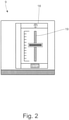
- the weighting of the goals here for example the specified processing quality and the minimum energy consumption, can be specified by a user B. It can be as in 2 be presented in such a way that user B chooses the weighting between the editing quality, in 2 above, and the minimum energy consumption, in 2 below, on a graphic 18, in particular a slide control 19, and that the graphic 18 visualizes a competition between the processing quality and the minimum energy consumption. It can also additionally be provided that the user B can continue to specify a minimum value for the processing quality.
- any other goal can be specified by user B and possibly taken into account in the above visualization. This applies in particular to the maximum driving speed, but also to all of the other objectives of multi-objective optimization mentioned above.
- the user B gives the forage harvester 1 various other user specifications B in addition to the aforementioned user specifications during the control of the forage harvester 1 . It can now happen that even small changes to these specifications would lead to significantly higher efficiency. It is therefore preferably the case that the driver assistance system 8 makes suggestions to the user B based on the multi-objective optimization for the specified processing quality and/or the setting of machine parameters and/or the weighting of the objectives, with which a higher degree of target achievement of the multi-objective optimization is possible. By mapping the interdependencies between the various parameters in the multi-dimensional family of characteristics, these small deviations can be easily analyzed. It is therefore preferably the case that the suggestions of the driver assistance system 8 deviate from the user specifications. User B can preferentially accept or reject the suggestions.
- the multi-dimensional family of characteristics 11 has at least one two-dimensional characteristic 20 and/or at least one multi-dimensional characteristic 21 .
- At least part of the characteristic curves 20, 21 is preferably based on measured relationships. Additionally or alternatively, at least part of the characteristic curves 20, 21 is based on theoretical relationships. A single characteristic curve 20, 21 can also contain combinations of measured and theoretical relationships. If the multidimensional family of characteristics 11 includes more than one characteristic 20 , 21 , these are linked accordingly to form the multidimensional family of characteristics 11 . This shortcut is in 1 using the dashed line between the two-dimensional characteristic 20 and the multidimensional characteristic 21 are indicated.
- the driver assistance system 8 adapts the multidimensional family of characteristic curves 11 to the current harvesting process state, in particular cyclically, during the ongoing harvesting process.
- This possibility has already been indicated above. This is expressly not a regulation in the actual sense. Rather, the basis of the control of the corn cracker 5 is changed. In the case of a regulation, an attempt is made to promptly correct the desired value by means of feedback. In the present case, on the other hand, an attempt is made to adapt the basis of the control in such a way that the desired value is set correctly. However, the value set in this way is not readjusted.
- the driver assistance system 8 has at least one initial characteristic curve field and carries out the determination based on the initial characteristic curve field when the at least one output parameter is determined for the first time.
- This initial family of characteristics can be stored by the manufacturer, for example.
- the multidimensional family of characteristic curves 11 maps at least one relationship between a control parameter that maps the current harvesting process state and at least one of the at least three parameters.
- the driver assistance system 8 can adapt the multidimensional family of characteristic curves 11 to the current harvesting process state on the basis of the relationship between the control parameters and the at least three parameters.
- the driver assistance system 8 preferably stores the adapted multidimensional family of characteristic curves 11 for use in subsequent harvesting processes.
- the control parameters can be various parameters, which in particular depend on the input parameters and depend on the output parameters, but are not used directly to control the corn cracker 5. An attempt can then be made to predict the control parameter on the basis of the optimization model 9 and, if the actual value of the control parameter deviates from the prediction, to adapt the optimization model 9 .
- the driver assistance system 8 can determine the output parameter again and am Set Corncracker 5.
- a method for controlling a proposed forage harvester 1 is proposed. Reference may be made to all statements relating to the proposed forage harvester 1 . In this method, it is essential that the driver assistance system 8 carries out the control routine as described above.
Landscapes
- Life Sciences & Earth Sciences (AREA)
- Environmental Sciences (AREA)
- Management, Administration, Business Operations System, And Electronic Commerce (AREA)
- Adjustment And Processing Of Grains (AREA)
Applications Claiming Priority (1)
| Application Number | Priority Date | Filing Date | Title |
|---|---|---|---|
| DE102020123526.7A DE102020123526A1 (de) | 2020-09-09 | 2020-09-09 | Feldhäcksler |
Publications (1)
| Publication Number | Publication Date |
|---|---|
| EP3967128A1 true EP3967128A1 (fr) | 2022-03-16 |
Family
ID=77168069
Family Applications (1)
| Application Number | Title | Priority Date | Filing Date |
|---|---|---|---|
| EP21189038.9A Pending EP3967128A1 (fr) | 2020-09-09 | 2021-08-02 | Ramasseuse-hacheuse |
Country Status (3)
| Country | Link |
|---|---|
| US (1) | US11944036B2 (fr) |
| EP (1) | EP3967128A1 (fr) |
| DE (1) | DE102020123526A1 (fr) |
Families Citing this family (4)
| Publication number | Priority date | Publication date | Assignee | Title |
|---|---|---|---|---|
| US12604807B2 (en) * | 2021-01-05 | 2026-04-21 | CNH Industrial America PLLC | Agricultural system for controllably optimizing harvesting of forage |
| US20220226871A1 (en) * | 2021-01-19 | 2022-07-21 | Deere & Company | Image-based roll gap optimization for roller conditioner systems |
| EP4410087B1 (fr) * | 2023-01-31 | 2025-08-20 | CLAAS Selbstfahrende Erntemaschinen GmbH | Moissonneuse agricole automotrice |
| DE102023123659A1 (de) | 2023-09-01 | 2025-03-06 | Claas Selbstfahrende Erntemaschinen Gmbh | Feldhäcksler und Betriebsverfahren dafür |
Citations (5)
| Publication number | Priority date | Publication date | Assignee | Title |
|---|---|---|---|---|
| EP2361495A1 (fr) | 2010-02-25 | 2011-08-31 | Deere & Company | Ensileuse dotée d'un dispositif de hachage et d'un dispositif de post-traitement agencé en aval du dispositif de hachage |
| EP3530102A1 (fr) * | 2018-02-26 | 2019-08-28 | CLAAS Selbstfahrende Erntemaschinen GmbH | Récolteuse-hacheuse-chargeuse de fourrage automotrice |
| DE102018104289A1 (de) * | 2018-02-26 | 2019-08-29 | Claas Selbstfahrende Erntemaschinen Gmbh | Selbstfahrender Feldhäcksler zur Abarbeitung eines landwirtschaftlichen Arbeitsprozesses |
| DE102018104287A1 (de) * | 2018-02-26 | 2019-08-29 | Claas Selbstfahrende Erntemaschinen Gmbh | Feldhäcksler und Verfahren zum Betreiben eines Feldhäckslers |
| EP3646703A1 (fr) * | 2018-10-31 | 2020-05-06 | Deere & Company | Commande d'une machine sur la base d'une détection de noyau craqué |
Family Cites Families (8)
| Publication number | Priority date | Publication date | Assignee | Title |
|---|---|---|---|---|
| DE102011088700A1 (de) * | 2011-12-15 | 2013-06-20 | Claas Selbstfahrende Erntemaschinen Gmbh | Verfahren zur Planung einer Prozesskette für einen landwirtschaftlichen Arbeitseinsatz |
| DE102018111076A1 (de) * | 2018-05-08 | 2019-11-14 | Claas Selbstfahrende Erntemaschinen Gmbh | Mähdrescher |
| DE102019108472A1 (de) * | 2019-04-01 | 2020-10-01 | Claas Selbstfahrende Erntemaschinen Gmbh | Feldhäcksler |
| US11647691B2 (en) * | 2020-08-17 | 2023-05-16 | Deere & Company | Close loop control of an illumination source based on sample heating |
| DE102020122208A1 (de) * | 2020-08-25 | 2022-03-03 | Claas Selbstfahrende Erntemaschinen Gmbh | Feldhäcksler |
| US20220217905A1 (en) * | 2021-01-12 | 2022-07-14 | Deere & Company | Processor roll gap control using crop moisture content |
| EP4140285B1 (fr) * | 2021-08-26 | 2026-01-28 | CLAAS Selbstfahrende Erntemaschinen GmbH | Mesure capacitive des paramètres dans une ramasseuse-hacheuse-chargeuse automotrice |
| US12310286B2 (en) * | 2021-12-14 | 2025-05-27 | Deere & Company | Crop constituent sensing |
-
2020
- 2020-09-09 DE DE102020123526.7A patent/DE102020123526A1/de active Pending
-
2021
- 2021-08-02 EP EP21189038.9A patent/EP3967128A1/fr active Pending
- 2021-09-09 US US17/470,151 patent/US11944036B2/en active Active
Patent Citations (5)
| Publication number | Priority date | Publication date | Assignee | Title |
|---|---|---|---|---|
| EP2361495A1 (fr) | 2010-02-25 | 2011-08-31 | Deere & Company | Ensileuse dotée d'un dispositif de hachage et d'un dispositif de post-traitement agencé en aval du dispositif de hachage |
| EP3530102A1 (fr) * | 2018-02-26 | 2019-08-28 | CLAAS Selbstfahrende Erntemaschinen GmbH | Récolteuse-hacheuse-chargeuse de fourrage automotrice |
| DE102018104289A1 (de) * | 2018-02-26 | 2019-08-29 | Claas Selbstfahrende Erntemaschinen Gmbh | Selbstfahrender Feldhäcksler zur Abarbeitung eines landwirtschaftlichen Arbeitsprozesses |
| DE102018104287A1 (de) * | 2018-02-26 | 2019-08-29 | Claas Selbstfahrende Erntemaschinen Gmbh | Feldhäcksler und Verfahren zum Betreiben eines Feldhäckslers |
| EP3646703A1 (fr) * | 2018-10-31 | 2020-05-06 | Deere & Company | Commande d'une machine sur la base d'une détection de noyau craqué |
Also Published As
| Publication number | Publication date |
|---|---|
| US11944036B2 (en) | 2024-04-02 |
| US20220071091A1 (en) | 2022-03-10 |
| DE102020123526A1 (de) | 2022-03-10 |
Similar Documents
| Publication | Publication Date | Title |
|---|---|---|
| EP3075223B1 (fr) | Moissonneuse-batteuse | |
| EP3075224B1 (fr) | Moissonneuse-batteuse | |
| EP3076248B1 (fr) | Moissonneuse-batteuse | |
| EP3967128A1 (fr) | Ramasseuse-hacheuse | |
| EP3180974B1 (fr) | Procédé de fonctionnement d'une moissonneuse-batteuse | |
| EP3566564B1 (fr) | Moissonneuse-batteuse et procédé de fonctionnement d'une moissonneuse-batteuse | |
| EP3132711B1 (fr) | Moissonneuse agricole | |
| EP1543712B1 (fr) | Procédé et dispositif pour régler les organes de travail d'une moissonneuse-batteuse | |
| EP2401905B1 (fr) | Procédé de réglage d'au moins un organe de travail d'une moissonneuse automobile | |
| EP1704767B1 (fr) | Méthode pour la sélection d'une valeur de préférence | |
| EP2401904B1 (fr) | Système d'assistance du conducteur pour machine de travail agricole | |
| EP1446997B1 (fr) | Méthode pour l'optimisation de paramètres réglables | |
| EP3566563A1 (fr) | Moissonneuse-batteuse | |
| DE102017208442A1 (de) | Selbstlernende, Korrektureingaben berücksichtigende Anordnung zur selbsttätigen Kontrolle eines Arbeitsparameters einer Erntegutförder- und/oder -bearbeitungseinrichtung | |
| EP3586596A1 (fr) | Engin de travail agricole | |
| EP4108063A1 (fr) | Procédé de détermination d'un indicateur pour une qualité de traitement d'une produit de récolte agricole | |
| EP4154699A1 (fr) | Machine de travail agricole pourvu à commande de champ caractéristique | |
| EP4508970A1 (fr) | Machine de travail agricole dotée d'un système d'aide à la conduite | |
| EP4331343A1 (fr) | Procédé de détermination optimisée de paramètres de machine d'une machine de travail agricole | |
| EP4154697A1 (fr) | Système d'aide à la conduite d'un engin d'abattage-façonnage pourvu de mécanisme de coupe de bande | |
| EP4154700A1 (fr) | Engin d'abattage-façonnage pourvu de mécanisme de coupe de bande | |
| DE102024121759A1 (de) | Mähdrescher | |
| DE102024136881A1 (de) | Erkennung mehrerer spezifischer probleme anhand einer einzigen benutzereingabe | |
| DE102023100640A1 (de) | Landwirtschaftliche Arbeitsmaschine mit Fahrerassistenzsystem | |
| DE102023123659A1 (de) | Feldhäcksler und Betriebsverfahren dafür |
Legal Events
| Date | Code | Title | Description |
|---|---|---|---|
| PUAI | Public reference made under article 153(3) epc to a published international application that has entered the european phase |
Free format text: ORIGINAL CODE: 0009012 |
|
| STAA | Information on the status of an ep patent application or granted ep patent |
Free format text: STATUS: THE APPLICATION HAS BEEN PUBLISHED |
|
| AK | Designated contracting states |
Kind code of ref document: A1 Designated state(s): AL AT BE BG CH CY CZ DE DK EE ES FI FR GB GR HR HU IE IS IT LI LT LU LV MC MK MT NL NO PL PT RO RS SE SI SK SM TR |
|
| STAA | Information on the status of an ep patent application or granted ep patent |
Free format text: STATUS: REQUEST FOR EXAMINATION WAS MADE |
|
| 17P | Request for examination filed |
Effective date: 20220916 |
|
| RBV | Designated contracting states (corrected) |
Designated state(s): AL AT BE BG CH CY CZ DE DK EE ES FI FR GB GR HR HU IE IS IT LI LT LU LV MC MK MT NL NO PL PT RO RS SE SI SK SM TR |
|
| P01 | Opt-out of the competence of the unified patent court (upc) registered |
Effective date: 20230516 |
|
| STAA | Information on the status of an ep patent application or granted ep patent |
Free format text: STATUS: EXAMINATION IS IN PROGRESS |
|
| 17Q | First examination report despatched |
Effective date: 20241022 |